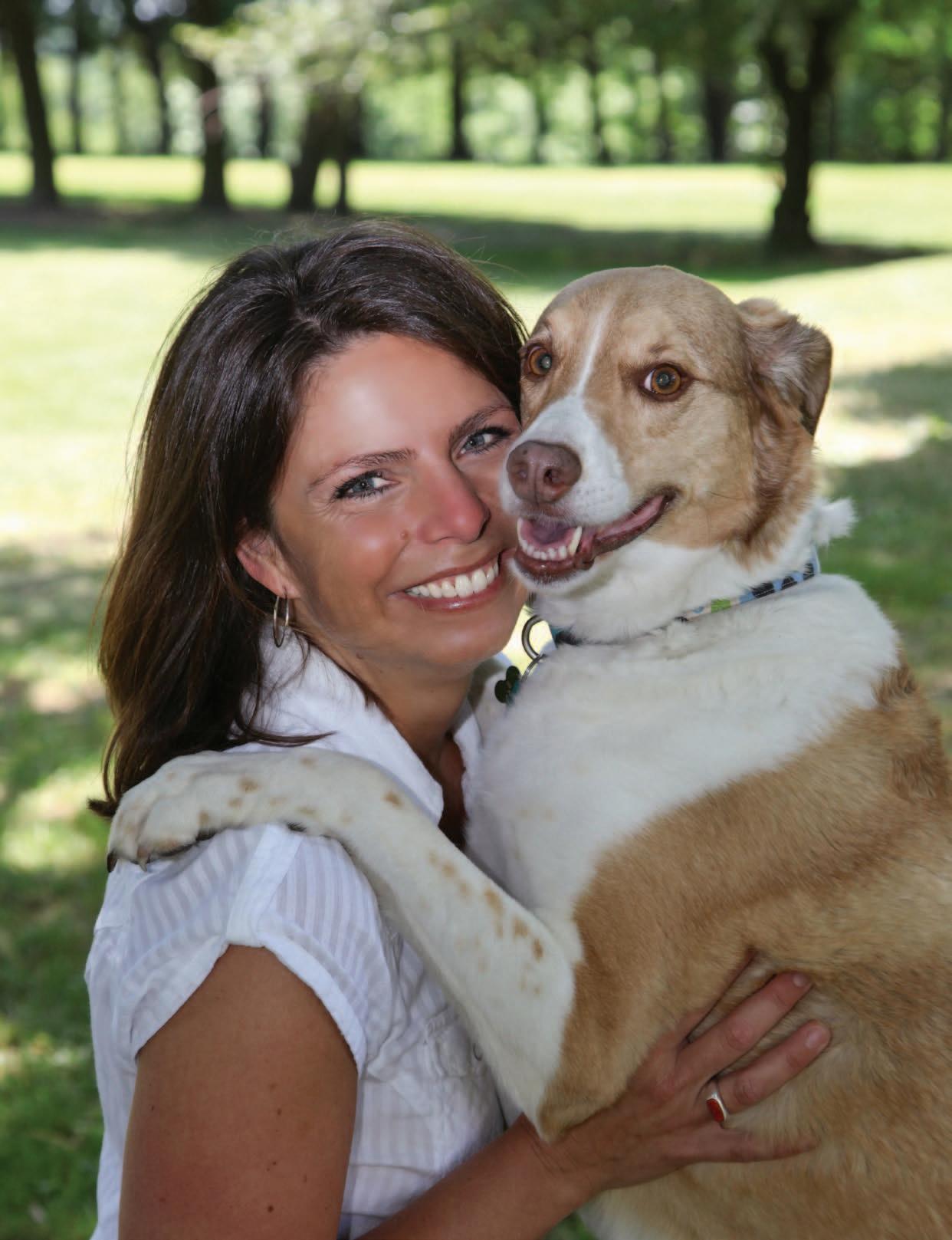
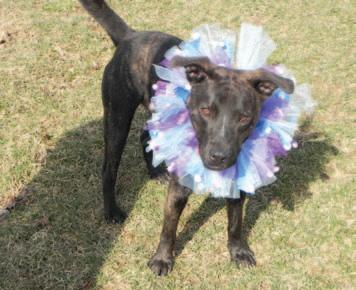
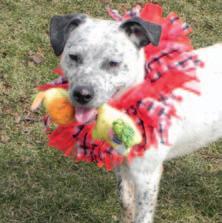
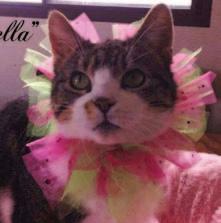
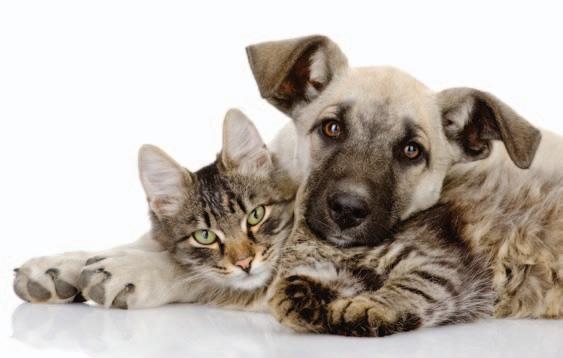
wonderful dogs, cats and horses happy, healthy and waiting to be adopted. You may make an appointment (recommended) or visit during our opening hours, 12-5 Tuesday through Sunday. For more information, visit our website at www.angelridgeanimalrescue.org, email us at aranres@yahoo.com, or phone at 724-229-7053.
FOR SPRING CLEANING…
I am very thankful and pleased to have been chosen as one of the Pittsburgh Magazine’s April Women in Business Spotlights, in their April 2014 issue! The article highlights the convergence of my career, work, passion and desire to create PetConnections, a literary and community platform, to further the mission of animal and people-related organizations. I have our staff, readers, writers, advertisers as well as many other people to thank who helped me make PetConnections a success in all ways.
The article can also viewed on Pittsburgh Magazine’s April digital issue: http://www.pittsburghmagazine-digital.com/ pittsburghmagazine/april_2014#pg92
This Issue:
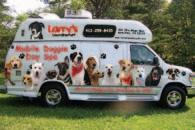
We welcome new advertisers this issue: Larry’s Laundromutt, The Canine Club, and Jenny Karlsson Photography!
Please support all our advertisers who make this publication possible and let them know you saw them in PetConnections! Visit the Map Spread and Advertiser Locator map on pages 18-19 to see all.
For National Pet First Aid Month read “The Importance of Knowing Pet First Aid and CPR” by Karen Sable. Also, more great topics such as the Rogan Rexford Animal Blood Bank by Dr. Rutter, Lyme disease by Dr. Klosterman, and Pica by Judith Levy and Sweet Adeline – the healing horse by Susan Wagner and more! Our featured business is Healthy Pet Products.
Thank you for picking up PPC Magazine. Take care of yourself, as well as your animals, and be well!
Warmly,
Carla Mader CEO & Publisher
Pittsburgh PetConnections, LLC.
Pittsburgh PetConnections Monthly
Published By: Pittsburgh PetConnections, LLC.
Pittsburgh PetConnections, LLC. was formed in 2012. Our mission is to publish a high quality, informative and Human-Animal Bond focused publication. We support local businesses and also assist local non-profit businesses for pets and people, to give back to our great Pittsburgh communities.
Photographer......................................Kara Jones Photography
Contributing Writers: Our contributing writers have many years of combined experience and expertise in the fields of veterinary medicine and the Human-Animal Bond. ADVERTISING: info@pghpetconnections.com 724-503-8695
Contact: info@pghpetconnections.com
Pet Stop Pet Fencing System of Western PA petstop.com
Pet Friendly Restaurants
North:
Double Wide Grille - Mars
724-553-5212
South:
Double Wide Grille - Southside 412-390-1111
Pet Grooming
North: 5th Avenue Fido
724-772-5511 | 5thavenuefido.com
All About Dogs
724-925-1577 | allaboutdogsgrooming.info
K-9 Kingdom
724-935-3647 | k9kingdom.com
Larry’s Laundromutt
412-534-4052 | larryslaundromutt.com
Paw Prints Pet Retreat
724-903-0063 | pawprintspetretreat.com
South:
Brush Run Styling
724-942-6352 | brushrunpetstyling.com
Canine Club
412-220-8100 | thecanineclub.com
Grand Slam Grooming
412-221-5081 | grandslamgrooming.com
Grooming With Care
412-977-5961
Petsburgh Dog & Cat Grooming
412-885-4027
Pets At Home
412-655-7297
The Pet Salon
412-279-5331 | petsalonusa.com
Woody’s Dog Wash & Pet Boutique 412-714-4644 | woodysdogbath.com
Creative Canine Cuts
724-223-9020
West:
Paws Here Awhile Pet Resort
724-573-4665 | pawshereawhile.com
Pet Grooming Schools
Golden Paws Pet Styling Academy 412-297-9383 | goldenpawspittsburghpa.com
Pet Massage
Greater Pittsburgh Area: Your Critter Sitters – Raylene Hoover
724-448-7330 | yourcrittersitters.com
Pet Resorts - Boarding, Daycare, Grooming & Training
North: 5th Avenue Fido
724-772-5511 | 5thavenuefido.com
PETCONNECTIONS DIRECTORIES
Camp Bow Wow - Ross Township campbowwowpgh.com
K-9 Kingdom
724-935-3647 | k9kingdom.com
Paw Prints Pet Retreat
724-903-0063 | pawprintspetretreat.com
South:
Camp Bow Wow - Castle Shannon campbowwowpgh.com
Grandma’s Dog Daycare
412-586-7094 | grandmasdogdaycare.com
Canine Club
412-220-8100 | thecanineclub.com
East:
Camp Bow Wow - Highland Park campbowwowpgh.com
West:
Camp Bow Wow - Greentree campbowwowpgh.com
Paws Here Awhile Pet Resort
724-573-4665 | pawshereawhile.com
Pet Retail/Supply
North:
Healthy Pet Products
412-366-0700 | healthypetproducts.net
South:
Healthy Pet Products
412-831-3700 | healthypetproducts.net
Oddball Pets & Aquariums
412-884-2333 | oddballpets.com
Woody’s Dog Wash & Pet Boutique 412-714-4644 | woodysdogbath.com
Pet Sitters
North:
Little Piggies Pet Sitting littlepiggiespetsitting.com
VCA MetVet West Animal Hospital 412-788-6400 | vcahospitals.com/met-vet-west
Veterinary Specialty & Emergency Services
Greater Pittsburgh Area: Pittsburgh Veterinary Specialty and Emergency Center, Inc. 412-366-3400 | pvs-ec.com
VCA Northview Animal Hospital Specialty Referral Center 412-364-5353 | vcanorthview.com
East
Allegheny Veterinary Emergency Trauma & Specialty
412-373-4200 | avets.us
THE HUMAN-ANIMAL BOND
A Horse A Day Keeps The Doctor Away
by Susan Wagner
The weather’s finally broken after a long harsh winter, and I’m itching to do a few farm visits. There’s something special about springtime on a farm. It must be the new life all around –lambs, foals, calves and lots of daffodils and forsythia.
There’s one special horse I can’t visit this year. She’s passed on, but her healing energy survives. Her name was Sweet Adeline, and she was one of the healing horses at Serendipity Stables in York, Ohio. I don’t think the owner had any idea of how appropriate the name was at the time she chose it. Sweet Adeline is one of the most amazing creatures to ever to walk this planet. I don’t make statements like that lightly. I was blessed to do energy medicine on Sweet Adeline a few times, and I have never felt anything so powerful before or since. I think she was helping me more than I was treating her.
Her miraculous story began as a healing horse — mostly for children with Autism Spectrum Disorders. She and her companions have helped hundreds of children from all over the world. One Sunday afternoon in 2002, Serendipity Stables was hosting its monthly open house. The barn was small and modest, no match for the F3 tornado that hit suddenly with 150 mph winds. All structures on the farm were destroyed, two horses were killed and three were severely wounded.
During this fateful day, Serendipity put 12 people next to this amazing creature. As the storm hit, Sweet Adeline kicked three people to the ground to prevent them from running out of the barn, then pinned all of them between her body and the wall. She endured flying metal that turned into shrapnel, severely injuring
her. Sweet Adeline never moved, saving the lives of everyone. The Ohio Veterinary Medical Association honored her with the Outstanding Animal Hero Award.
But her story doesn’t end there! Two years later, Sweet Adeline had an accident that crushed a joint in her left rear leg. Orthopedic specialists suggested euthanasia. The odds of a successful surgery were slim, and even if they tried, it was very likely that one of her other legs would founder during the healing process. Horses need all four legs — they just can’t survive on three. The veterinary recommendation was reasonable and compassionate, but they didn’t understand that this was Sweet Adeline they were examining.
Donations came from everywhere for the surgery. She made it through, but the leg never completely healed. Unlike any normal horse, Sweet Adeline didn’t let that stop her. She had more healing work to do. She toetouched on that back leg for years, and all three of her other legs remained healthy. I always enjoyed the looks on my veterinary students’ faces when they would see her wobbling out of her stall. She was nothing short of a miracle in action.
Sweet Adeline lived for 4 years until the leg finally became too painful for her. I’ve heard stories of people photographing her empty stall, then seeing a horse standing there once the pictures were developed. Others have said they would catch a horse out of the corner of their eye. When they turned, it was gone.
Imagination? Perhaps. One thing I know for sure is that nothing can keep energy like that down. Wherever Sweet Adeline is right now, you can be sure someone next to her is healing.
FEATURED BUSINESS
Iamsure many of you have wondered who I am and what my background is that I think I can sit here and write about pet health and wellness. I don’t have any letters trailing after my name after all, “What could I possibly know?” I hope the following will help explain who I am and why I write these articles.
While operating my own pet sitting business over an eight-year period, I became increasingly concerned about the various health afflictions that I was seeing in my customers’ dogs and cats. The list of ailments appearing over and over again included allergies, itchy skin, ear infections, auto-immune disorders and a multitude of other problems. I began researching these health concerns and discovered that every symptom seemed to point to food and environment. This made perfect sense because I am a firm believer that we are what we eat. It is apparent that our beloved pets are what they eat as well. I had to do something! Coincidentally there was a local store up for sale that only sold natural pet food and treats. I bought the store in 2008 to spread the word about how important it is to feed quality pet food to our pets.
I adopted Meg on February 12, 2002. The Animal Rescue League thought she was around 6 months to a year old. I didn’t know about raw feeding or “what’s really in grocery store kibble” till about 6 months after adopting her. There we were heading down the conventional road of low quality kibble, treats and conventional medicine. Fortunately, I was in the right
How I am making a Difference
By: Toni Shelaske
place at the right time. I walked into a grooming shop to inquire about their services. Literally, as I walked in I witnessed the owner giving her dog a raw chicken leg. I flipped out and said, “Are you crazy? You are going to kill that dog. Dogs can’t have RAW chicken bones!” The owner proceeded to tell me about raw feeding and it was as if someone flicked a switch on in my head. It made total sense to me that this is their evolutionary diet and what they should be eating for optimum health. I immediately went and bought the recommended books and began feeding Meg raw. One day Meg was eating Purina One and the next day raw! And, are you ready for this, NO DIARRHEA!
I am so thankful I did. I don’t have a tear jerking life saving story to tell. What I can say is Meg is different. She has boundless energy spending her days chasing moles, squirrels and chipmunks and often catching one! Her coat is soft as angora, which is the first thing people mention when meeting her. Meg has the clearest eyes, cleanest teeth and ears, is lean and muscular. Most people think she’s about 5 years old when meeting her and she’s around 12!
Since then I have been doing research on basic pet nutrition and the pet food industry. I have found that many of the ailments our pets are suffering from these days can be greatly improved or completely eliminated with premium pet foods, raw feeding and supplementation (and do I dare mention less vaccinations). My true passion in life is to reach as many people as I possibly can to help them to understand what better nutrition can do for their pet and in turn do for them. I hope you stop in sometime soon to meet Meg, myself and my staff and see what we can offer your pets.
Healthy Pet Products Locations:
NORTH HILLS: 9805 McKnight Road Pittsburgh, Pennsylvania 15237
SOUTH HILLS: 1742 Washington Rd. Upper St. Clair, PA. 15241
Photo courtesy of Toni Shelaske
& ANIMAL HEALTH WELLNESS
Pet First Aid & CPR
By Karen Sable, Owner of Pet Emergency Training, LLC
April
was Pet First Aid Awareness Month, and what better time to talk about the importance of knowing what to do if an emergency occurred with your pet? Owning a pet can add much joy and fun to your family, but along with it comes the responsibility for your pet’s safety and well-being. Your furry friend is not just an animal, they are a much loved member of the family and you are their guardian. Certainly it is important to provide your pet with good quality food, fresh water, a comfy place to sleep, regular vet exams, up to date vaccinations, and lots of love. But one other very important thing you can do to help them lead a long and healthy life is to take a Pet First Aid and CPR class.
When you have a furry family member, chances are you don’t think much about something going wrong, such as a sudden illness or injury. But as with any family member, accidents can and do happen. It has been estimated that 92% of all pets will experience some type of emergency situation during their lifetime, and up to 60% of animal hospital visits are emergency in nature. Moreover, preventable accidents are the leading cause of death among pre-senior dogs and cats. There is probably no worse feeling for a pet owner than seeing their furry family member injured and hurting, and not knowing what to do to help them. If your pet suddenly began to choke on a toy, ate something toxic, was hit by a car, had a seizure, chewed through an electrical cord and was shocked, had an allergic reaction to a bee sting , was bleeding from a laceration, or suffered frostbite or heatstroke, would you know what to do in those first critical moments following the accident? Unfortunately you can‘t call 911 when your pet is ill or injured. You have to be their first responder!!
According to the American Animal Hospital Association (AAHA), 1-outof-4 or 25% more pets would survive if just one pet first aid technique was applied prior to getting emergency veterinary care. Knowing the skills and techniques of pet first aid and CPR can mean the difference between a temporary and permanent disability for your pet, between a quick recovery and a long recuperation, between expensive veterinary bills and reasonable home care, and possibly even between life and death!
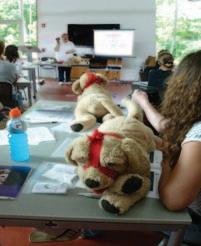
A good Pet First Aid class will teach you not just CPR and first aid skills, but also how to recognize potentially dangerous situations so that you can take steps to help prevent your pet from becoming ill or injured. You will also gain a better awareness of your pet’s well-being by learning how to perform routine examinations and assessments of every part of your pet’s body, including how to check their vital signs such as heart rate, breathing, temperature, and capillary refill time. Unfortunately your pet cannot tell you when something is wrong or they are not feeling well. Becoming familiar with what is “normal” for your pet will better enable you to detect warning signs indicating that something is not right and warrants a trip to the veterinarian. As with any member of the family, detecting a medical condition early makes it more likely that it can be treated promptly and before it becomes serious.
Having the knowledge and skills a Pet First Aid and CPR class provides will help you to prepare for and remain calm during an emergency. Think of it as an insurance policy: you hope you will never need to use it, but it will give you the confidence and peace of mind that comes with
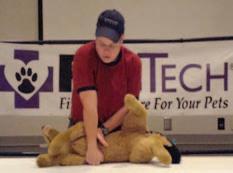
(Photo credit Pet Tech, Inc)
(Photo credit Pet Tech, Inc)
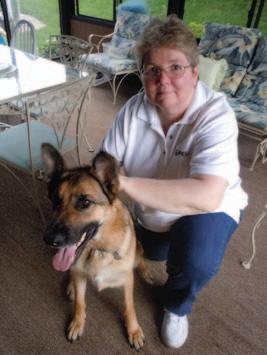
(Photo credit Bernadette Kazmarski)
knowing you will be able to help your pet in an emergency.
Karen is a Pet Tech® Instructor, and a trained responder with several national and local animal emergency response teams. Karen provides Pet First Aid and CPR classes in the Greater Pittsburgh and Western PA Area. If you would like to attend one of her Pet CPR and First Aid classes, the following are currently scheduled in the Pittsburgh area:
April 27 (11am-3pm) at Lucky Paws Pet Resort
May 3 (11:30am-4pm) at the Bridgeville Public Library
May 18 (11am-3:30pm) at Animal Friends
For more information about the classes and how to register, as well as updates to the class schedule, please visit Karen’s website at: pghpetemergencytraining.com
(Photo credit Karen Sable)
& ANIMAL HEALTH WELLNESS
The Many Manifestations of Lyme Disease
By: Emily Klosterman, DVM, MS, DACVIM
Pennsylvania and other states along the eastern seaboard are common places where dogs might contract Lyme disease. Recognizing the signs of Lyme disease can lead to quicker diagnosis and treatment. However, the disease can manifest in many different ways, thus making it difficult for even the most vigilant of dog owners to know that their pet has Lyme disease.
Lyme disease is a bacterial infection transmitted by tick bites. The bacteria (Borrelia burgorferi) lives in the digestive system of the tick and infects the dog through the tick’s saliva. The bacteria can move around the body and evades detection by the immune system much better than other bacterial infections which makes it a disease that can cause many types of clinical signs. Because the bacteria are so good at hiding in the body, even with antibiotic treatment many dogs are never cured of this infection.
Incidentally discovered infection
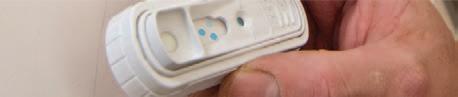
Many dogs are found to be Lyme disease positive when tested, but fortunately few have signs of disease and the positive test is found with routine screening. A Lyme disease test is incorporated into many general health labwork panels and is also included in many in-clinic tests for heartworm disease. In areas where Lyme disease is common, screening can identify dogs that might need more attention. Screening can also identify dogs that have had previous exposure to the infection but no longer have an active infection (which doesn’t require treatment).
reduced immune system function or in an attempt to prevent some of the more serious manifestations of Lyme disease discussed below. Finally, if your pet has tested positive for Lyme disease your vet will likely recommend testing for excessive protein in the urine. Protein in the urine is a manifestation of Lyme disease that can damage the kidneys but can go unnoticed unless tested for regularly.
Lyme arthritis
One form of active Lyme disease is characterized by fever, swollen lymph nodes, muscle soreness and arthritis. Once the bacteria are transmitted to the dog, they move around the body triggering swelling and inflammation as they travel. The joints appear to be very sensitive to this inflammation and chronic arthritis can become a problem in these pets. In addition, as discussed previously, sometimes the bacterial infection is never completely cleared from the body and chronic infection in the joint is possible. Cases of disease with chronic joint inflammation are complex and so your family veterinarian may recommend that your dog visit a veterinary specialist.
Lyme nephritis
The most devastating way a pet can be affected by Lyme disease is severe kidney inflammation (Lyme nephritis). Dogs are often diagnosed with this type of Lyme disease when they have signs like poor appetite, vomiting or lethargy and then blood tests performed at the veterinarian’s office reveal kidney failure. Immediate antibiotic treatment is recommended in these patients, but unfortunately the inflammation in the kidney triggered by the bacteria is often so severe that the kidneys continue to fail and never recover. Sadly, many dogs affected by Lyme nephritis will suffer the effects of kidney failure for the rest of their life and ultimately may die from severe kidney failure in a few weeks or months. Outcome in these dogs mostly depends on the severity of the kidney failure, but evaluation by a veterinary internal medicine specialist may help maximize quality of life for as long as possible.
When a dog tests positive, further testing to measure the significance of the body’s immune response is recommended with a test called the quantitative C6 antibody titer test. This test allows your veterinarian to better understand whether your pet has a newer or older infection. Dogs with a low titer probably had their infection in the past or their immune system fought off the infection and do not require treatment. If your pet has a high C6 antibody titer but no clinical signs then their body may be taking care of the infection on its own and treatment with antibiotic may be unnecessary. Sometimes, a veterinarian may recommend antibiotic treatment for dogs with no clinical signs and significant C6 antibody titers. Antibiotics might be recommended in pets with
Secondary autoimmune disease
Lyme disease can affect many different organs in the body and this can lead to autoimmune diseases (where the body inappropriately attacks its own tissues). Autoimmune disease is not directly caused by the bacteria and so even after antibiotic treatment pets can remain sick. Autoimmune blood or joint disorders are most commonly seen and require a specialized treatment course completely separate from the antibiotics for Lyme disease.
Lyme Disease Snap Test
ANIMAL BEHAVIOR Leave It 101
By: Tena Parker Success Just Clicks Dog Training
“Cooked chicken bones, deer scat, dead squirrel, and dropped dark chocolate”—
What are things dogs love to put in their mouth but really shouldn’t?
Dogs do not have hands and fingers with which to explore the world, but they do have a mouth and they know how to use it—they nibble things, bite things, chew things, pick things up, lick things, and sometimes eat things. All of this is incredibly normal behavior—within reason—but that doesn’t mean we want our dogs to put everything they encounter in their mouths. Obsessive eating of non-food items is not typical and may require the help of a veterinarian and trainer team or a veterinary behaviorist. Teaching dogs a reliable “leave it” cue is incredibly important because it can be both a life saving skill (“leave it” to the cooked bones in the park) and also a disgust reducing skill (“leave it” to the bear scat in the woods).
So, how do you go about training your dog to “leave it” reliably? Well here is my recipe for teaching a reliable “leave it” cue.
Terms of Use
that it pays out to ignore “leave it” and will continue to do so.
*Do not use “leave it” and “drop it” synonymously, they are different behaviors and have different criteria. To me, “leave it” means “don’t investigate/touch/get into that item” and “drop it” means “spit it out of your mouth!” (the words you use don’t matter).
*During the training process, if you are asking your dog to leave a hot dog on the floor, you should be rewarding with something of equal or better value. If you reward a dog for leaving a hot dog with a piece of kibble enough times, the dog will eventually figure out that it pays out more to ignore you and steal the hot dog.
*Use lower value items initially as the “leave it” item. Practice with Fido’s dry dog food before trying to have him leave steak.
How To Teach Leave it
Get the behavior
Step 1:
• Sit in a chair and place 5-10 small lower value treats/kibble in the palm of your hand
• Close your fingers around the treats (so your hand should be a fist)
• Put your fist full of treats at your dog’s nose height and allow him to investigate (sniff, nibble, lick, etc.)
• When your dog disengages from your hand (stops licking, nibbling, biting or backs away, looks away, sniffs the ground, sits), open your hand slightly...
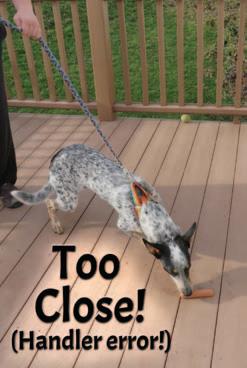
Rio was way too close to the hotdog and was able to stretch out and get the item. This could have seriously sabotaged our training!
*If you cannot prevent your dog from getting the item, do not say the “leave it” cue during the training process. The biggest mistake handlers make is that they will say “leave it” when the dog can make the choice to ignore them and then pick up the forbidden item. Every time a handler says “leave it” and Fido gets the desired item, he has learned
o IF Fido moves toward the now visible treats, immediately close your hand and try again (you may have to repeat this quite a few times in rapid sequence of opening and closing your hand). *Notice that you are not saying anything, just opening/closing your fist
o IF Fido, for even just half a second, leaves the food in your hand alone, you will mark that behavior with a “Yes!” and then reward him with one treat from your open hand (using your other hand to offer the treat/kibble). Repeat until your hand is empty.
• When your dog has been successful leaving food in your open hand untouched for at least 5 different sessions (minimum of 15 different trials), you can move on to step 2.
Advertisers
All Natural Hoof Care (see ad pg 31)
Angel Ridge Animal Rescue (see ad pg 1, 34)
Animal Care & Welfare (see ad pg 23)
The Canine Club (see pg 21)
Chris’s Canine Club (see pg 19)
Coventry Equestrian Center (see ad pg 31)
Dog Watch (see ad pg 21)
Gentle Journey (see ad pg 36)
Holistic Care for Animals (see ad pg 21)
Jenny Karlsson Photography (see ad pg 19)
Judith Levy (see ad pg 25)
J & D Home Improvements (see ad pg 1)
KS Jones Photography (see ad pg 34)
Larry’s Laundromutt (see ad pg 25)
Paws Here Awhile (see ad pg 23)
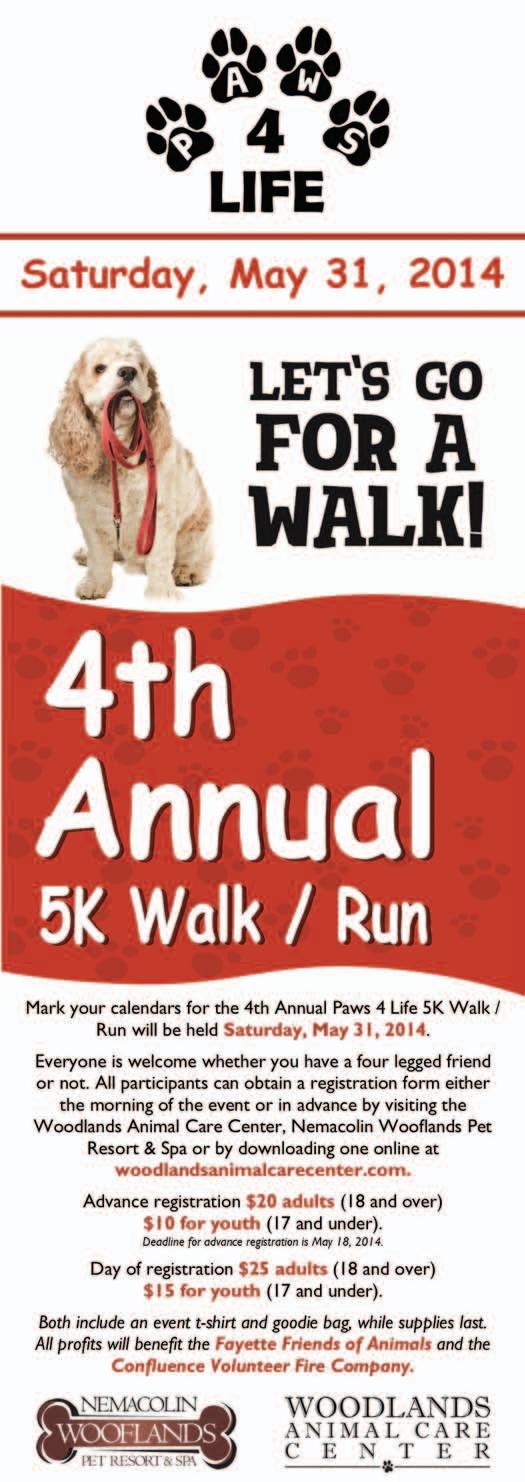
Paws 4 Life (see ad pg 13)
Pets at Home (see ad pg 19)
Portraits of Animals (see ad pg 3)
The Rogan Rexford Blood Bank (see ad pg 15)
Seraphina Sitters (see pg 19)
Sewickly Unleashed (see pg 7)
Success just Clicks (see pg 17)
Vibrant Images (see pg 31)
Westminter Presbyterian Church (see pg 29)
HAAWC is a 501(c)(3) organization that honors the Human Animal Bond as a source of wellness for individuals, families and communities. Guided by the belief that animals are a gateway to human healing, HAAWC intends to develop both urban programs and rural sanctuaries designed to impact community health, safety and wellness.
HAAWC is raising funds for upcoming animal-related programming. www.haawc.com
CANINE COMPANION
Recent events in the Pittsburgh area have increased awareness of canine blood banking and blood donation. While we are all reasonably familiar with the critical need for blood resources for humans, many people don’t realize that our furry friends have many of the same needs. Blood and plasma transfusions for pets are often emergencies, and community support is vital to maintain access to these life-saving products. Without community blood donors and the hard work of dedicated doctors and staff, exceptional emergency and critical care would not be possible. The most common conditions that require blood transfusion in dogs and cats are trauma, cancer-related illnesses, clotting disorders (including toxins), and immune mediated (autoimmune) diseases. At Pittsburgh Veterinary Specialty and Emergency Center, we perform at least one blood product transfusion every day. Our selfless community donors make this possible.
There are many similarities between human and animal blood. For example, feline blood types sound fairly familiar to our ears (A, B, and AB), with type A cats making up approximately 95% of the population. Dogs have a more complex system. They are “typed” based on the presence or absence of red cell proteins (dog erythrocyte antigens or DEA). This system is similar to the human Rh factor, which is the “positive” or “negative” that is noted after a person’s letter type. There are many different DEAs, but only a few of them are common. The most common and likely most important is DEA 1.1. Dogs are often referred to as being “positive” or “negative” based on the presence or absence of this single protein. Luckily, there are nearly the same numbers of “positive” and “negative” dogs in the companion dog population, so all blood types are equally needed. There are types that are considered universal donors, but the demand for universal donors is not as critical as they are in human medicine. Every donor is equally valued.
Many veterinarians and veterinary specialists receive specific training in blood donation and banking (storage and handling) to ensure the safety of both donors and recipients. Here in Pittsburgh, The Rogan Rexford Animal Blood Bank (RRABB) is sponsored and managed by the non-profit Animal Care and Assistance Fund (ACAF) and the critical care team at PVSEC. We provided 697 blood product transfusions to dogs and cats in 2013, which fills a need that has been increasing annually. The RRABB veterinarians and staff have the equipment and expertise to screen donors, perform donations, separate blood products for storage, and safely administer blood transfusions to canine and feline patients. We are able to process whole blood into red blood cells, plasma, and specialized plasma products. All of these components allow doctors to treat specific conditions, and allow each donation to help up to 4 different pets.
Rogan Rexford Animal Blood Bank Needs Your Support
visit: www.animalcarefund.org
contact: Jessica at jbalogh@pvs-ec.com
follow: www.facebook.com/animalbloodbank
For the present, the RRABB has enough feline donors to meet the needs of our feline patients; however, we are always in need of canine blood donors to meet our increasing demand. All potential donors should be healthy, at least 50 pounds, between 1 and 7 years of age, fully vaccinated, and on heartworm prevention. They should not have previously received a blood transfusion, and they should not be actively pregnant or nursing. It is also important that potential donors have a gentle temperament and be comfortable with handling. After all, it is a “volunteer” donation! The RRABB provides blood typing and annual blood testing, which includes a complete blood count, chemistry, and screening for heartworm and tick-borne diseases. Each donor is examined before screening and before each donation. The donation itself takes about 10-15 minutes, and dogs may get a mild sedative if they need a little help being still for that long. Afterwards, they are fed, walked, and spoiled a little. Donors are asked to donate 3-4 times every year, which is very safe. Dogs feel very much like humans do after they donate blood. They may be a little tired for 1-2 days, but their red cell levels return to normal within 1-2 weeks. It is important to remember that examination and testing provided by the blood bank does not replace or diminish the importance of preventative and healthcare checkups as recommended by your family veterinarian!
The Rogan Rexford Animal Blood Bank and so many of our patients who receive blood are a success because of community support and our volunteer donors. Using community donors helps the RRABB keep the cost of blood products down. Any proceeds generated by the RRABB are used by ACAF to support the health and welfare of animals. If you have a dog that could potentially donate blood, please contact us to schedule a screening. If you aren’t able to help provide a blood donor, please help us spread the word about the RRABB. Our community has provided funding, donors, and the support we need to provide outstanding care for our patients. Every Animal Care and Assistance Fund supporter and every blood donor is appreciated. Every donor saves lives.
Christine R. Rutter, DVM, DACVECC
Medical
Director, Emergency Department
Medical Director, Rogan Rexford ACAF Blood Bank
Pittsburgh Veterinary Specialty and Emergency Center
24 HOUR EMERGENCY CARE
HOLISTIC CARE
An AnniversaryUnexpected
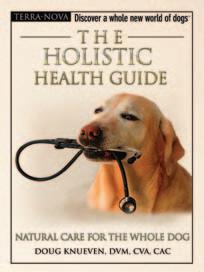
By: Dr. Doug Knueven, DVM, CVA, CVC, CVCH
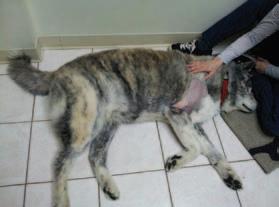
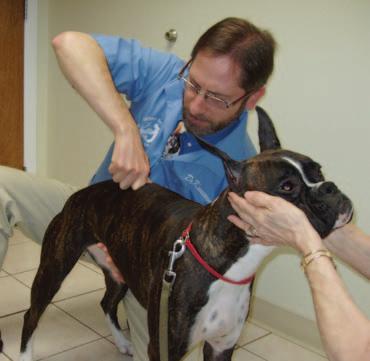
Mitsu is a wonderful 12-year-old Akita with a friendly disposition. She first came to me in May of 2012 because her caregiver wanted a holistic medical approach for her loved one. It turns out that Mitsu had been limping on her right front leg on and off for six months and her owner was concerned that she might have arthritis. I carefully examined the dog and found that she was painful in her shoulder area. I took X-rays and unfortunately found that she had osteosarcoma in her humerus (upper front leg bone).
Osteosarcoma is a very aggressive malignant cancer of the bones. By the time this cancer is noticed it has usually sent micro-tumors to other parts of the body. Standard treatment involved amputating the affected limb and chemotherapy. Dogs who undergo amputation without chemotherapy live on average about four to six months. Even with chemo, the average survival is about a year.
When confronted with such an aggressive cancer, it makes sense to employ every tool available that may help the pet’s longevity and quality of life. This is a circumstance that calls for integrative oncology.
Integrative oncology involves the use of all appropriate, conventional treatments as well as alternative therapies known to benefit cancer patients. It is unfortunate that conventional oncologists typically do not embrace this approach. From my conversations with these professionals I have learned that in general they think that the chemotherapy and radiation they use is so powerful that not much else really matters. My thought is, every helpful tool counts.
Mitsu’s caregivers decided against having her leg amputated. Removing the limb affected by osteosarcoma does not get rid of the cancer and does not prolong life. It may decrease the pain associated with the disease in the long run but it is a traumatic and disfiguring surgery.
In this case, an integrative approach to the disease was sought. Mitsu went to the conventional oncologist for
chemotherapy, pain medications and eventually radiation therapy. Mitsu also saw me for holistic options.
Diet is the foundation of health and is especially important in such cases. We are just recently becoming aware of the many anticancer nutrients provided by whole, unprocessed foods. Furthermore, studies show that processed pet foods contain cancer causing chemicals. Getting a cancer patient off of processed pet food is a no-brainer.
We also added fish oil to Mitsu’s diet. Fish oil contains DHA which has many health benefits, one of which is an anti-cancer effect.
We also used herbs to help Mitsu. Many herbs have been shown to fight cancer. There are also herbs and supplements that can relieve pain. Also, some herbs can combat the side effects of chemotherapy such as nausea and diarrhea.
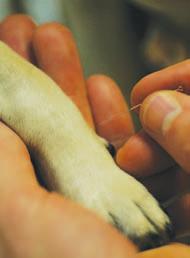
Very soon we instituted acupuncture treatments for Mitsu. Acupuncture aids with pain management and can also help alleviate the nausea associated with chemo.
Mitsu took her diet, supplements and chemotherapy like a champ. She had her ups and downs but the acupuncture has really helped her through the rough times. She has since also received radiation therapy on her leg and we have changed cancer supplements periodically.
In my experience, cancer is a disease of the entire animal even if there is only a localized tumor visible. The goal is to create an environment in the body that is inhospitable to cancer and thereby keep it at bay. True cure is only occasionally achieved but control is very possible.
It has been almost 2 years since Mitsu’s bone cancer was first diagnosed. She has outlived her caregivers’ and her oncologist’s expectations, but no pet’s life is ever long enough. Mitsu is still strong but the cancer and the cancer treatment have taken their toll and the disease is definitely progressing.
Every moment we share with our beloved pets is precious and this is especially the case for Mitsu and her family. We don’t know how much time we have left with her but we will make every minute count.
By the way, she totally LOVES her acupuncture treatments!
“Not
• Daycare, Boarding, Grooming and Training
• 13,000 S/F indoors, 6,000 s/f outdoors
• Intimate boarding with Private and SemiPrivate Suites (no warehouse boarding)
• Memberships and webcam access
• From your car Canine Curbside Service
548 Baldwin St. Bridgeville PA 15017 412-220-8100 – www.thecanineclub.com
Become a member today and start enjoying savings and benefits
only does he provide comfort measures to my dog, he also provides comfort measures to me.”
ARIES could not get up. He was in pain and cried all night. He looked uncomfortable; his eyes, stressed, anxious. We did a few visits with no results; he was getting worse. I recommended a return visit to the vet for further testing. Something else was going on here that needed to be found ASAP.
Lymphoma. Mom, Carol called me in tears. We talked and decided he wasn’t ready to leave us yet. I suggested we start seeing Aries more often to see if we could give him some FIGHT.
Two visits in, mom reported more stability and strength, and “not crying at night.” Each visit seems to give him more and more strength. Now his eyes are more peaceful and friendly. He has “good days” and is “walking pretty good.”
Mom says, “What Dr. Savko doesn’t mention is, not only does he provide comfort to my dog, he also provides comfort to me. For that I say thank you. I came in tears quite a few times. Dr Mike spends time listening and explaining, being so kind to Aries before and after his work up. I’m happy I “gave Dr. Savko a shot”. I recommend his services to anyone who thinks there is nothing else to be done. I realize Aries is not going to be cured of his cancer but at least he will now be comfortable in his final years. Notice I made that plural, years.”
We are giving the body the power to fight back, stimulating the immune system, freeing the muscles to move better, and re-charging the nervous system to allow the best functioning for the body.
Now mom smiles, and ARIES does too.
Suburban Animal Clinic, Butler, PA, Delmont Veterinary Hospital, Delmont, PA, Fox Run Equine Center, Apollo, PA DC, CCSP, CVCP
Dr. Savko works with the following veterinary clinics: Meadowlands Veterinary Hospital, Washington, PA Washington Animal Hospital, Washington, Pa
Pica in people as well as in dogs and cats refers to eating things that are nonfood items. For dogs with pica, common non nutritive objects eaten are stones. They may also consume plastic items, cigarettes, wooden objects, paper, toilet tissue, clay and soap. Dogs may also eat soil excessively.
If you find yourself stressing about what your dog is putting in his mouth or eating, it is time to consult your veterinarian and schedule a consultation for a behavioral evaluation and interventions. If your dog is lethargic or is vomiting and/or has diarrhea, get medical help immediately. Pica can be extremely damaging to the animal’s intestinal tract and stomach and be potentially life-threatening.
When is it Not Pica?
Puppies often try to eat small objects such as mulch, plastic, most anything they find during the first six months while exploring their environment. It is vitally important to monitor puppies constantly and to “puppy proof” your home. They generally grow out of this phase. I believe however that if a puppy learns that it is permissible and enjoyable to chew on dangerous items such a plastic during the early sensitive periods, this could set them up to develop a bad habit that may get worse and cause problems later.
Other isolated incidences occur when dogs eat nonfood items and it is not considered Pica. For example, a highly food motivated/excitable dog may eat a part of a plastic fork with food on it. The dog that eats a candy bar, wrapper and all, is not necessarily a dog with Pica. And then there are those attention seeking canines who will do anything to get us to chase, play with or pet them. They will continually grab a nonfood item
and begin chewing on it knowing that it will bring you in. I recommend scheduling a behavior consultation for the latter as this manipulative behavior can also lead to serious injury to the dog’s gastrointestinal system.
Causes of Pica
In my practice I have found that regardless of the cause for Pica, it is important to first address any organic/ medical causes and then address the problem holistically. There is almost always more than one aspect to this type of problem and if we don’t address all of those aspects, the problem will remain.
Possible Medical Issues:
The following are some medical issues associated with Pica as reported by various veterinarians: (www.petmed.com)
• Inflammatory bowel disease
• Diabetes
• Intestinal parasites
• Anemia
• Increased hunger
• Neurological disease
• Vitamin deficiency
• Malnutrition
• Thyroid disease
Of course each pet is different and your veterinarian will diagnose any possible issues. Once that is accomplished, it is time to put behavioral interventions in place for out of balance behavior that has likely developed along with the medical problem. These necessary behavior changes generally involve the dog and guardian.
Obsessive Compulsive Disorder
Dogs with OCD may exhibit behaviors such as tail chasing, extreme excitability when shown aluminum foil, excessive barking at anything at anytime, and chasing flies. They may also have Pica that shows up as an obsession with eating objects. It has been reported, and in my practice, the majority of dogs having OCD have a history of abuse or extreme neglect or have lived in an environment where there is a great deal of stress. OCD in dogs can also have a genetic component such as having a mother that was extremely anxious. OCD also needs to be evaluated by a veterinarian as
there can be medical issues associated with OCD such as parasites, major organ dysfunction, metabolic diseases and more. Treating OCD also requires a holistic approach. After consulting with your veterinarian, I then suggest addressing diet, changing necessary behaviors in the dog and the dog’s guardians. An exercise program is extremely important and I have found energy work such as reiki and meridian work to be extremely calming and balancing as well.
When Soil and or Grass is only nonfood item eaten
All the causes for dogs eating soil are not yet known but from a behavioral perspective, it often indicates boredom, anxiety and other behavioral issues. It can also stem from a mineral deficiency as well as other absorption and diet issues. Soil eating may look
HOLISTIC CARE
harmless but remember that there may be stones or other debris in that soil that will accumulate in your dog’s stomach. And of course this can lead to disruption in the digestive tract and can be fatal.
What to take from this article: If your dog or cat seems to be eating or even chewing objects or is eating soil in a way that seems excessive, unsafe or unusual to you, consult first with your veterinarian to rule out medical causes. Once your pet is medically cleared or you have medical treatment under way, schedule a behavior consultation to begin behavior intervention and/or the use of some complementary treatments such as reiki and meridian tapping to help your pet get back to a healthy state.
Friendship and Assistance, Old Grand Dad and Frankencat Rescued Each Other
By: Bernadette Kazmarski
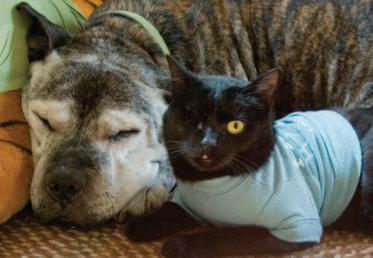
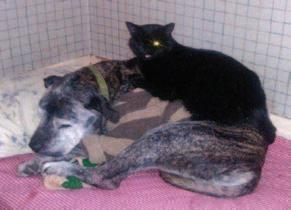
Allthe levels of their challenges and their differences from each other would make a deep friendship between two unwanted animals, a blind and deaf geriatric pit bull and a rescued one-eyed FeLV-positive black cat, highly unlikely but they are following a basic rule of rescued animals—love can live anywhere. Old Grand Dad and Frankencat aren’t concerned about rules, besides being great friends they found they need each other too.
About Frankencat
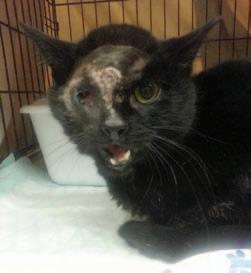
A small black cat was found on the street in November 2013 with an atrophied eye, a badly-healed broken jaw that held his mouth open and a necrotic wound between his eyes. Volunteers for the Pittsburgh Feral Cat Movement (PFCM) trapped him and took him to the Homeless Cat Management Team (HCMT) clinic in Tarentum and because of his truly frightening appearance the group named him Frankencat. Though the condition of his face made him appear wizened he turned out to be somewhere younger than three years old. His recovery from all this was progressing well after he responded immediately to an antibiotic for the necrotic wound, his eye was removed and he was neutered but then took an uncertain turn when his FeLV test came back with a faint positive. He was well enough to go to a foster home for long-term recovery but with that diagnosis he needed to wait six weeks to retest, and he needed a cat-free place to live to help reduce the chances of spreading the virus to other cats.
challenge it can be for a deaf and blind dog to settle in to a new environment, and the safety setup I had created for OGD was working, I decided that OGD could stay here, and that open spot could better be used by another dog who didn’t have any other options,” Heather said.
How Frankencat came to live there
Heather actually lives with six rescued dogs but she also enjoys cats, and in fact owns a pet care company called Au Purr, LLC where she provides home visits and hands-on in-home care for all pets and other animals. Because of her known “soft spot for special needs and physically handicapped animals” she was called out to foster and care for Franken. Two of her dogs are not cat-friendly but she decided Frankencat could safely be roomies with OGD.
Getting to know you
“I was careful, being unsure as to whether Frankencat would like dogs; and while I figured OGD would be fine in his elderly, senile state, I needed to see that before trusting them alone,” she said. OGD tends to aimlessly wander around the room and he could easily seem threatening to Frankencat, even unassumingly corner him causing a confrontation where either could hurt the other. Frankencat stayed in an extra-large dog cage for the first few days, then Heather began to let him out while she was in the room and immediately “began to see their bond blossom.”
About Old Grand Dad, or OGD
Old Grand Dad (aka OGD) is 15 years old, deaf and blind and somewhat senile, and as an unneutered pit bull in a Carrollton, OH pound he stood little chance of adoption and in fact had an appointment with the gas chamber in August 2013. Heather Long spoke for him, intending to foster him until a spot was available with a rescue in Pennsylvania that specializes in hospice care, set up a room that met his needs and ensured his safety and got him to a veterinarian. The hospice spot was quickly available, “However, since I was aware of the
Frankencat initially had a rather frightening personality but by the time he arrived at Heather’s home he was wary, though after a few days of interacting with OGD Heather noticed Frankencat wasn’t as frightened of her. “I don’t know whether seeing me care for OGD made him realize I was okay, or if it was something else. But one day, Frankencat switched gears and began vocalizing while weaving around my ankles.
“It was around this same time that Frankencat showed his devotion to OGD. When I would come to their bedroom to put Frankencat in his crate before I left the house, I’d find Frankencat cuddling contentedly with OGD, or laying on [OGD’s] back while milktreading his skin, or grooming OGD gently,” she explained. “And OGD was visibly content with this relationship too. I took that as a sign that these two were surely friends,
and began leaving Frankencat out of the crate at all times, eventually removing the crate altogether.
From friend to caretaker
“Frankencat has become OGD’s one-eyed Seeing Eye Cat,” Heather said. “OGD often gets ‘lost’ with his senility, and will begin barking while in a corner. Frankencat seems to recognize this, and assists OGD to their bed,” she remarked. “OGD is deaf and blind, but Frankencat incrementally guides OGD first by using touch, either rubbing up against him and/or wrapping his tail on him, and then scent. After Frankencat touches OGD, he will move a few steps ahead and wait. OGD appears to smell him, and walks in that direction. Frankencat will then follow up with another touch, and then move a few steps ahead to let OGD guide himself by smell again. Ultimately, Frankencat will wait on the bed, and OGD finally gets there too with him,” Heather finished.
OGD also has petit mal seizures, a minute or so of confusion and trembling. Heather isn’t certain of the cause, though they suspect OGD may have some form of cancer or it may simply be due to his age.
“Frankencat is keenly aware and concerned when OGD goes into an episode, and uses his touch to gently guide OGD down to lay on the ground. In the video I have of this, Frankencat clearly uses his tail to envelope OGD as he physically guides him downwards to safety. It is the most awe inspiring thing,” Heather said, and provided videos of both activities.
In the future
Frankencat is now clearly healed and feeling well, well enough to find another home that could accept a cat with FeLV, but for now Heather would like the two to stay together. “Given the special bond that Frankencat and OGD have formed, my plan is for them to stay together ‘til death do them part’. It seems unnatural to split them; OGD needs Frankencat, and Frankencat clearly enjoys being OGD’s friend and having a purpose in OGD’s life.”
Eventually, Old Grand Dad’s journey here will end and Heather can see Frankencat “all alone in his room”.
She’d like to begin now with a new owner who will visit Frankencat so he’ll be accustomed to the visitor before OGD’s passing and actually be able to provide comfort and familiarity in Frankencat’s grief for his friend.
“It makes me very sad to think about Frankencat not being in my life,” Heather said, a little teary-eyed, “but it wouldn’t be fair to have him live alone in a bedroom, and he can’t safely and responsibly be out because not all of my dogs are cat friendly.” As an FeLV-positive cat, Frankencat would have to go to a home with no other cats or with only other FeLV-positive cats, or cats vaccinated against FeLV, though there is risk associated with this since the vaccine is not 100% effective and FeLV is easily transmitted with shared food and water bowls and even toys.
Frankencat has met three of Heather’s other dogs since befriending OGD, and when she enters their room those dogs will often follow her in. “Frankencat greets them with his cheerful meow, and gives them affectionate headbutts too,” she said. “I don’t actually know if Frankencat even likes other cats since I’ve never seen him around one, but I can say with certainty that he loves dogs, and would love a home with any dogs who are cat friendly and enjoy cuddling.
“Frankencat is extremely loyal, gentle, friendly and affectionate once he gets to know you. He can be shy at first; but once he’s yours, he will never turn his back,” she described. He doesn’t play with too many toys but prefers cuddling and affection, and is very wellmannered, especially considering his beginnings, with no inappropriate scratching and excellent litterbox habits. “He also enjoys going out on walks with OGD to sniff around, but acts afraid of being outside on his cat harness when OGD isn’t there with him,” Heather said.
Imagine how many people along the way who would have given up on Frankencat because of how he looked and how he acted, and how many people likely did give up on Old Grand Dad for him to end up in a pound at his age. Through the efforts of so many people these two soulmates were brought together at a time when they needed each other, in a place that was safe and loving, and possibly rescued a little bit of each of us who see what can happen when you literally and figuratively can’t see each others’ differences.
KITTY KORNER
Cat Rescue Resource Guide
Low-cost Spay and Neuter Organizations and Programs
This is an ever-changing list of resources for cat owners in Pittsburgh and beyond though many of the listings, like the shelters, apply to dogs and other pets as well. It includes low-cost spay and neuter programs as well as TNR for community cats, pet-friendly rentals in Pittsburgh and across the US and links to shelters for adoption and other services. In the future we will also list clinic dates with the organizations below when they are available.
TNR And Low-Cost Spay/Neuter For The Pittsburgh Area
Homeless Cat Management Team: www.homelesscat.org
City of Pittsburgh Free Spay and Neuter for City Residents
City of Pittsburgh free spay/neuter: www.pittsburghpa.gov/animalcontrol/spay_neuter.htm
City of Pittsburgh residents can apply for free spay or neuter vouchers for up to five pets, including stray/feral cats.
Low-cost Spay/Neuter and TNR Programs at Allegheny and Surrounding County Shelters
Animal Friends: www.thingkingoutsidethecage.org
Animal Rescue League: www.animalrescue.org
Beaver County Humane Society: www.beavercountyhumanesociety.org
Washington Area Humane Society: www.washingtonpashelter.org
Western Pennsylvania Humane Society: www.wpahumane.org
Low-cost Spay/Neuter Organizations in Allegheny and surrounding counties
Fluffyjean Fund for Felines, Allegheny and Washington Counties: www.fluffyjeanfund.weebly.com
Fix Ur Cat, Washington County: www.fixurcat.org
Catnip Acres, Greene County: www.catnip-acres.org
Snip-it.org, Westmoreland/Indiana Counties, Alle-Kiski Valley (Leechburg): www.snip-it.org
Low-cost Spay/Neuter and Veterinary Clinic
Spay Neuter Clinic, Penn Hills, 412-244-1202: www.spayaz.com/pittsburgh-pa
Find Local Low-cost Spay, Neuter and Veterinary Care on the Internet
Low-cost Neuter and Spay (search by zip): http://neuterspay.org
Love That Cat (online search): http://neuterspay.org
Spay USA: http://neuterspay.org
Pet-friendly Rentals
In the Pittsburgh area, visit this list on the FosterCat website: www.fostercat.org/friendly.html Nationwide (United States only): www.rent.com/pet-friendly-apartments
Western Pennsylvania Humane Society (WPHS): www.wpahumane.org
SURROUNDING COUNTIES
Beaver County Humane Society: www.beavercountyhumanesociety.org
Butler County Humane Society: www.butlercountyhs.org
Humane Society of Westmoreland County: http://members.petfinder.com/~PA83/about.html
Washington Area Humane Society: www.washingtonpashelter.org
Non-shelter Feline Adoption
FosterCat: www.fostercat.org
Kopy Kat Sanctuary, Westmoreland County (Delmont): www.kopykatsanctuary.org
Hearts and Paws Pet Ministry of Christ United Methodist Church and the Pet Ministry of Westminster Presbyterian Church
11th Annual Pet Adoption and Care Fair
Saturday, June 21, 2014
9:30 am to 2:30 pm
Christ United Methodist Church
44 Highland Road • Bethel Park, PA 15102
Visit with local animal rescue groups and service providers. Enjoy dog agility demonstrations, pony rides, and great food.
See what’s new in pet-related products. No admission fee.
For more information call 412-277-1096.
EQUINE AFFAIRS
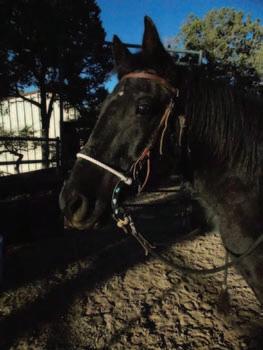
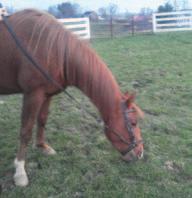
One of the first things I tell my clients when I am training or breaking their horse is that I do all of it without the use of a bit. Just like making the choice to go barefoot, this is often met with disbelief or skepticism because bit and shoes are considered just a “normal” part of the horse world. Think about it, when you were little and someone said they rode a horse, was the first picture in your mind a horse with a bridle, bit, saddle and horseshoes? This is most likely because that’s what we see in all the book and all the stories we hear growing up—it’s just “the way things are done.”
Well, there is another way—a pain free way to enjoy your horse and have it truly trust and respect you as its master. Would you trust someone who hurt you any time you were scared? The answer is undoubtedly “no” but that is exactly what we do to the horses we claim to love. When control with a bit is not enough, we get a stronger bit, and when behavior problems escalate beyond our control we send them for training that sometimes results in more fear and even punishment. It doesn’t have to be this way.
“Did you ever see a horse unable to buck because it had a bit in its mouth?” Of course not! The bit is nothing more than an “illusion” of control, and should your horse buck simply pull one rein in to the side so that the horse’s head turns in towards your leg. It simply cannot buck comfortably in this position and will cease the effort quite easily. Still think a bit is a good idea?
Well, let’s look at what’s going on inside the horses’ mouth when you use a bit for riding and control.
Natural Riding -
it’s the training, not the gear
By: Nancy Frishkorn BA, CHCP
When I work with a horse, any horse, I use body positions to help them understand exactly what I want. There are only two reasons a horse isn’t doing what you asked of it: it either tried to do as you asked but guessed wrong, or you asked it the wrong way. Training on the ground before you ride is very important, and if done correctly provides a bond between you and the horse that builds into a trusting relationship. Once you have that trust, you mount the horse, maybe for the first time, and by using those same signals steer it with gentle direction and visual aid. The horse can see either side of its head quite well since it has near 340-degree vision (only the wither area is a blind spot) so if you simply hold your arm and hand out gently to one side the horse will naturally bend to the direction of your weight shift and visual aid. Like to use a rope halter or bosel for the training process? Both of these are very light and make no contact with the mouth yet enable you to attach reins for bending and direction requests. “But what if they buck?” I’m often asked. My answer is simply,
When you use a broken or snaffle bit of any kind, the pressure is first put on the bars of the mouth just in front of the molar teeth; then as you pull, the center of the bit spikes upward and pushes directly into the center of the inner roof of the mouth. Some bits are copper to encourage salivating, but despite the fact that some do love the taste of copper, the salivating is actually a digestive distress reaction accompanied by respiratory distress. This occurs when the horse puts its tongue over the bit (to alleviate the pain) or pulls it back farther into the mouth causing blockage. Some headstalls even come with a flash noseband, which is an extra leather strap designed to keep the mouth closed and stop the tongue from restricting the bit or being pushed out past the teeth.
Think about this, if you had to run for several miles, and instead of being able to open your mouth to catch your breath when needed, you had someone tie your mouth shut under the chin. Do you think you would panic? I know I sure would if I felt I needed air and couldn’t get it—it’s just a natural reaction. Restricting the breathing can lead to sheer panic, and what do people do when a horse panics? They pull on the bit even more! It’s completely the opposite of what should be done to regain control and comfort the horse by reassuring them that they are safe and you are in control. A straight bit isn’t much better, it places all the pressure on the lower jaws of the mouth and if it has a “port” or humped area this part is then pushed forward
into the roof of the mouth with every pull of the reins. There is a lot of information available on this subject in detail and I’d highly suggest you do a little research before deciding what type of bridle to use on your beloved equine.
There are many different kinds of bitless headstalls on the market today, and I can’t say that one is better than the other. What I can tell you is that if you ride “English” or what some call split or plow reining, you may want to look at Dr. Cook’s bitless bridles. The reins cross under the head so you can use the same cues that you used with a split or snaffle. If, however, you ride “Western” style and your horse neck reins, meaning yield away from neck pressure on a bend, then you would be better suited purchasing a hackamore or perhaps having one made that is suited just for you and your horse. I had a blacksmith hand make a silver hackamore for me using a rope bosel for the noseband. It is a one of a kind, hand crafted work of art, and I even had the option to add turquoise stones from a Mexican Indian
Take my picture and show me off. Let me express myself and make you smile. I am your forever friend, I am your pet. When you look at my picture, will you always remember that I love you. I am who I am because of you.
EQUINE AFFAIRS
reservation set right into the branches. You can see it pictured in this article, and I’m happy to say that anyone interested can order one from the maker. Her name is Tammi Baker; she is linked on my Facebook webpage All Natural Hoof Care.
I hope this short article answers some of your questions. Happy trails!
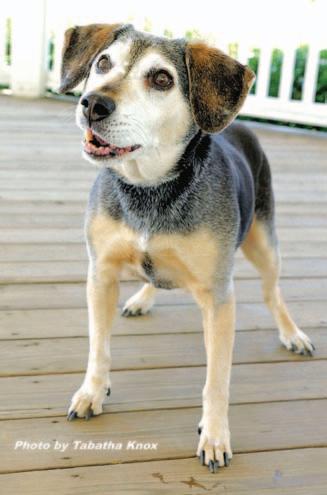
Photography by Tabatha Knox, a devoted animal and nature photographer Studio 2nd floor of Vibrant Images downtown Beaver, Pennsylvania Travel
horse’s motion. Riding bareback will reveal any gripping or tightening in any joint area that the rider may mask in a saddle. Gripping with the legs while riding bareback can sometimes be interpreted to the horse as a driving aid. Not good for the bareback rider trying to develop a seat!
To correct yourself from gripping when you ride bareback you must continually remind yourself to relax the legs, and reach them as long as possible by pushing the knee down and back to lengthen the leg. For the rider that grips, attempting to allow the legs to hang down will feel totally unstable at first, since gripping usually causes the rider to shorten the leg by drawing it up. The rider must learn to balance on the seat, and then allow the legs to fall and drape out of the hips. Only when a rider can relax on a balanced seat can she be receptive to the horse so that the signals from the rider to the horse are more easily interpreted. A rider that breaks the habit of holding and gripping with the legs and develops the ability to balance on the seat will greatly improve the ability to communicate with the aids.
Similar riding faults apply for the rider who clutches on the reins for support. If a rider is dependent on the reins, she should temporarily be put on the lunge line where security in the leg position (and not the rein) can be found. A rider who clutches at the reins for balance obviously lacks an independent seat and balance.
EQUINE AFFAIRS
teaches the seat to stay in balance as each of the rider’s aids performs their basic functions to perform lateral work. Basic lateral movements consist of leg yielding to the wall, shoulder-in and haunches-in.
Two main benefits are derived from riding bareback and performing lateral movements. First, it teaches the rider how to balance on the seat and use the limbs without tightening or gripping, because you cannot be tight and gripping and accomplish any decent lateral work. And, second, it teaches the rider how to use the aids without leaning, because you cannot do lateral work leaning. As a result, the rider learns to maintain a balanced seat while harmoniously coordinating the aids to become more effective as a rider.
Coordinating the aids in timing with the horse’s rhythm with a following balanced seat is the secret to riding: it’s called “equestrian tact.”
When the bareback rider is comfortable at the walk and trot, start riding simple arena patterns that include walk and trot transitions. By riding multiple transitions and patterns, the bareback rider becomes challenged. Suggested patterns are twenty meter circles, spiraling in and out on the circle, three and four loop serpentines, half circles, figure eights, straight lines away from the railing and across the diagonal. Riding along the railing is easiest for horse and rider, so to improve the use of a balanced seat with legs that do not grip and torsos that do not lean, the rider must ride more challenging school figures and transitions: putting themselves in situations that would normally result in gripping or leaning, and learn how to do these movements in balance instead. To find the value of bareback riding to improve the seat, ride the horse off the railing or away from the arena’s fence!
When the bareback rider can stay with the horse comfortably at the sitting trot, during transitions and for basic schooling patterns, then it is time to progress to lateral work. Performing lateral movements bareback intensifies the rider’s interaction with the horse and
For these exercises to improve the seat, the bareback horse does not have to perform ‘classical’ lateral work, but just the movements. The purpose at this point is in the training of the rider, not the quality of the horse’s training. The whole idea of riding bareback and doing lateral work and not just circles is for the rider to learn to improve balance and confidence on the seat while coordinating the aids from a balanced seat and eliminating legs or hands that grip, a torso that collapses or leans, and a pelvis that perches, slides or tilts.
Riding bareback to develop an independent seat while learning how to be “quadridextrous” as opposed to just ambidextrous with the use of the aids (or limbs) is the mission. The relaxed, following and balanced seat must remain the focal point of stability that secures the rider’s torso so that the other aids can work in efficient coordination and harmony in a rhythm with the horse. So whether you are a rider learning how to coordinate the aids from an independent seat, or an ‘accomplished rider’ showing First Level dressage, go ahead and try to do some bareback riding. There is no doubt you will discover how good or not good your desired independent seat really is!
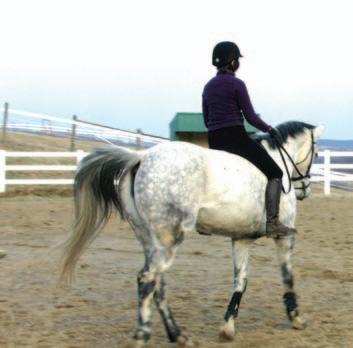
Rider turning onto a circle, but this time keeping her balanced seat and non-gripping legs.
Generously sponsored by:
IN REMEMBRANCE
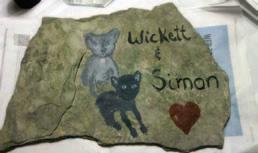
Wickett&Simon
Wickett and Simon were found orphaned at one day old and had an interesting travel to get to the person who finally gave them their best chance at life— a cleaning lady brought them into work and gave them to a rescuer, she in turn asked another rescuer for a ride home with the kittens, stopped to return an ear-tipped cat to its colony then visited the drive-thru at a Wendy’s to drop them off with their foster. She bottle fed them every few hours and snuggled them and took them to work every day, but they never truly developed normally. After six weeks they quickly began to fail and died within days of each other, simply of a “failure to thrive”. They have their stone to mark their grave, lit by crystal butterflies and watched by a person who loved and will always remember them.
In rescue the successes are celebrated and the losses mourned even if the animal shared your life for only a day, and always by more than one. Wickett and Simon are remembered by the volunteer rescuers of the Pittsburgh Feral Cat Movement.
Do you have a special pet that you would like to honor? Send submissions to info@pghpetconnections.com.
Dr. Doug Knueven practices an integrative approach to pet care. He is well versed in conventional veterinary medicine and has been licensed since 1987. He is also certifed in acupuncture, Chinese herbal medicine, and chiropractic. He is a member of the American Holistic Veterinary Medical Association and has advanced training in natural nutrition, massage therapy, homeopathy and a host of other alternative therapies. Holistic and Conventional Care:
• Full Service Animal Clinic
• Preventive Health Care
• General Surgery
• Radiology
• Dentistry
• Holistic Care
• Acupuncture
• Vaccine & Vaccine Counseling
• Nutrition Counseling
& Natural Raw Diets
• Chinese Herbal Medicine
• Therapeutic Laser
• Healing Touch & Massage Therapy
We at Beaver Animal Clinic believe in the power of caring.
Caring for our patients as our own pets.
Caring for our clients as our friends.
Caring for each other as our family.
Pittsburgh Veterinary Specialty & Emergency Center
ANESTHESIOLOGY
Dianna Ovbey, DVM, MS, Practice Ltd. To Anesthesiology CARDIOLOGY
Eva Sikorska, DVM, DACVIM
Erin Anderson, VMD, MSc, DACVIM DENTISTRY
Krista Mendoza, DVM, DAVDC DERMATOLOGY
Sandra Sargent, DVM, DACVD EMERGENCY & CRITICAL CARE