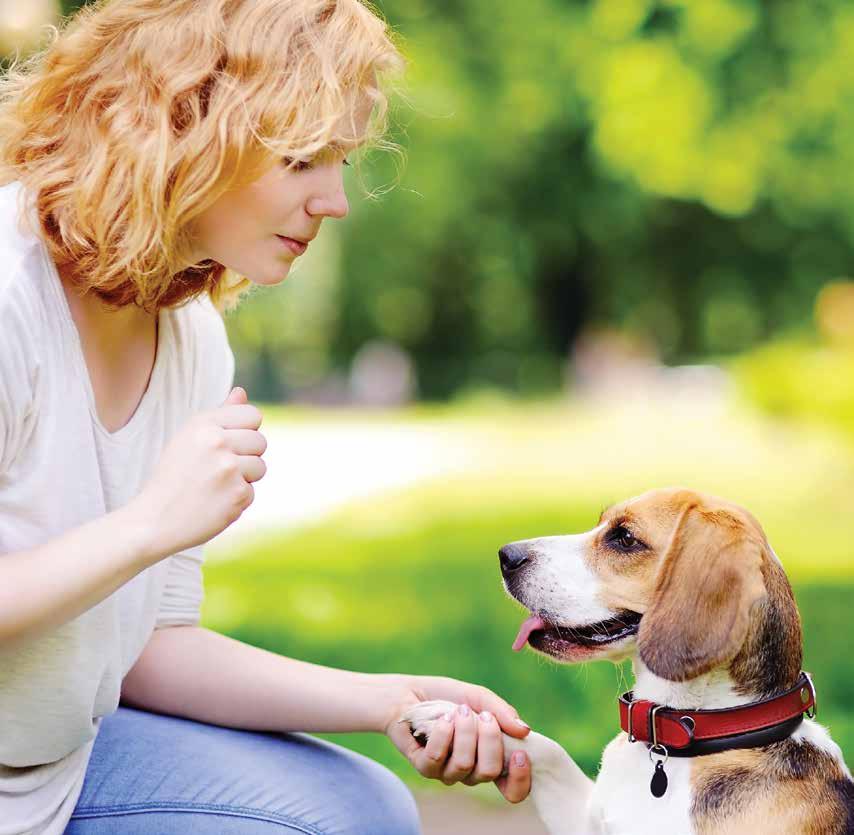
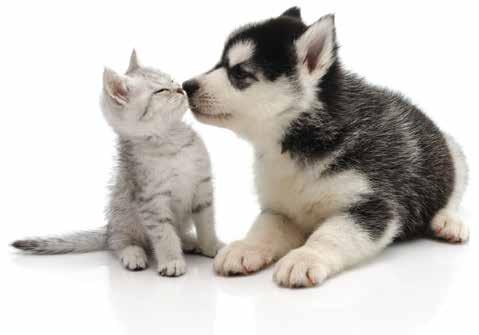
We hope that with each visit you and your pet feel like part of our hospital family.
Free exam includes:
•Status check on weight, nutrition and general health
•Dental check
•Vaccination overview
•Complete wellness services: vaccines, annual exams, etc.
•Emergency and critical care services
•Dentistry & surgery
•Therapeutic laser therapy
•Endoscopy and ultrasonography
•Over 70 years of trusted, compassionate care
MON-SAT: 8:00 AM - 8:00 PM SUN: 8:00AM - 4:00 PM
*
*Offer
N O rTh h illS: 9805 McKnight rd., McCandless 412.366.0700
Mon - Fri 9am-8pm | Sat 9am-6pm Sun 10am-5pm
C raN berry: 8001 rowan rd., Cranberry Twp 724.776.5700 Mon - Fri 9am-8pm | Sat 9am-6pm Sun 10am-5pm SOuTh h illS: 3043 Washington rd. McMurray 412.831.3700 Mon - Thur 9am-8pm | Fri-Sat 9am-6pm Sun 10am-5pm
h ealThy PeT GrOOM i NG: 2640 brandt School rd., Franklin Park 724.759.7567
CRANBERRY is op EN!
Healthy Pet Products is thrilled to announce the opening of its 3rd retail location!
Come see our brand-new expanded space in Cranberry Township located off Rte. 19 at Rowan Road.
Healthy Pet Products, Cranberry will offer a unique blend of your trusted favorites and services, along with some new special features and expanded product lines. If you are new to us, Healthy Pet Products is an independently owned and operated community store and resource center dedicated to serving our customers and the pets that they love. We believe one of the single most important decisions that we make as pet guardians is what goes into their food bowl every day. Healthy Pet Products specializes in raw and natural diets for dogs, cats, and small animals. We have spent hours researching and meeting with industry leaders to select the healthiest foods, treats, and toys to keep Pittsburgh’s pets thriving and happy!
Our new location features a self-wash station, grooming services, a community center for adoption events, and an expanded selection of healthy products for our exotic pet friends. You will find the same great service and attention, nutritional educational, and community networking that you have come to know from Toni and staff over the last 10 years! We look forward to joining the Cranberry community and promise to continue to make every effort to help all pets thrive!
We can’t wait to meet you and your pets!
Toni Shelaske, Owner, with Desoto
FROM THE PUBLISHER
to Pittsburgh PetConnections
SUMMER Volume 7 Issue 2
Welcome
to
Pittsburgh PetConnections
Winter 2019, Volume 7 Issue 1
News
We welcome advertisers Southern States, Agway and VCA Northview Animal Hospital Specialty Referral Center! Also, congratulations to Healthy Pet Products, as they just opened their third location in Cranberry!
Welcome to our Winter 2019 issue!
Magazine’s!
Introducing our new quarterly sister publication, released in March, Integrative Healing magazine for people, and, of course we have a pet section! See the digital issues on www.alllifemedia.com. Also visit our All Life Advanced Care page for upcoming clinics for people
We welcome Ease Animal Massage, Buzzy Photography, and O2 Derm Pet Topical Gel to our supporting advertisers!
Introducing our new sister publications coming out in March, Integrative Healing magazine for people (and, of course, a pet section!)
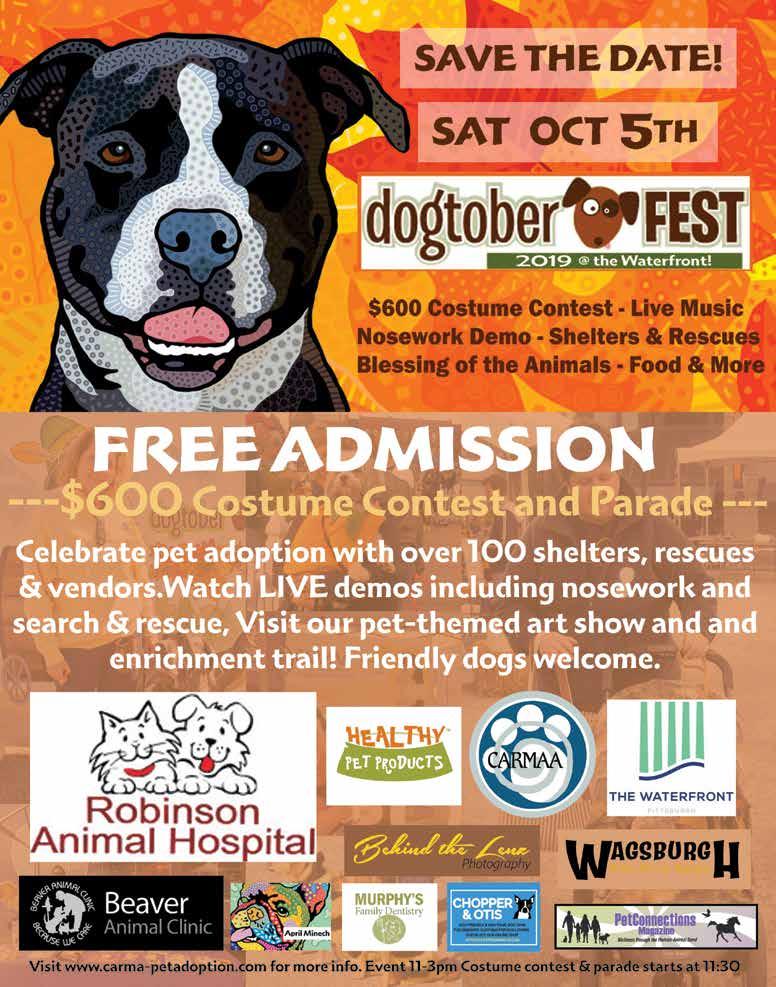
Events this summer and early fall include, CARMAA’s Dogtoberfest is Saturday October 5th this year!
info@pghpetconnections.com
We are also pleased to announce some fun new things that we have in the works for PetConnections!
Animal Friends is also hosting their annual two-day Black Tie & Tails September 20 & 21st. Stay informed about local pet events on our PetConnections Facebook page!
We will be publishing pictures of your pet from winners of our new weekly social media photo contests! Also new, our membership sign-up button on our Facebook page, where you can receive news about events and contests, special discounts from our advertisers, discount event tickets, join our PetConnections Birthday Club for Pets, submit your story to be published in our Human-Animal Bond section or Remembrance, and more!
Our cover features Hudson Reinfeld and Koby and the photo is by Buzzy Photography. Our accompanied Kids & Dogs article in the Human-Animal Bond section, covers safety tips for children around dogs.
Events
Our Featured Shelter this issue is the Beaver Area Humane Society!
This issue also many more article including, the ongoing debate regarding the link between nutrition and Dilated Cardiomyopathy in dogs by Dr. Erin Anderson, board-certified cardiologist at Pittsburgh Veterinary Specialty and Emergency Centers. Bernadette Kazmarski has updated the Homeless Cat Management Team schedule on the Cat Resource page, as well as write an article on hydration for pets and animals in the summer heat. Our Equine Affairs section features an article about Rockin’ Horse Stables. Our Remembrance section also has featured articles for events for Chartiers Custom Pet Cremation and Jefferson Memorial Cemetery, Funeral Home and Crematory.
This Issue
Chartiers Custom Pet Cremation’s Healing Hearts Pet Loss Grief Seminar, Animal Friends’ and CARMAA’s highlighted in our event section.
Our cover features Manon Farm’s Princess Showcase riding show! See the Equine Affairs section article April Minech! Also, a reader, Ruth Maloy-Carter submitted her heart-warming story, “Great to be Ginger”, Animal Bond section! Edward Moats continues his avian nutrition articles, with more great tips, in Also, we are revisiting Integrative Healing for Pets with Dr. Doug, in our Pet Holistic section.
PetConnections is published quarterly as follows: February, July, September, and November, special Holiday issue this year! Our print copy distribution sites will be replenished every 6 weeks. Our online presence has always been much greater than in print with now over 350,000 impressions this year. To subscribe to your own personal copy of PetConnections, please contact us below.
Did you know? PetConnections has evolved into a full-service specialized pet media company, providing services for advertising in print and digital marketing platforms to help our sponsors grow their businesses. Contact us below for information on advertising or sponsoring!
Our rescue section features Nate’s reptile Rescue. PVSEC/BluePearl’s article about winter safety for Korner has Homeless Cat Management Team has spay and neuter info, by Bernadette Kazmarski. Equine Hermann writes about Learning from Source.
PetConnections is published quarterly as follows: Early February, May, August, and November. distribution sites will be replenished every 6 weeks. Our online presence has always been much print with now over 350,000 impressions this year. To subscribe to your own personal copy please contact us below.
Thank you for picking up this copy of PetConnections. Be well and have a safe happy summer season with your pets!
Did you know? PetConnections has evolved into a full-service specialized pet media company, services for advertising in print and digital marketing platforms to help our sponsors grow Contact us below for information on advertising or sponsoring!
Thank you for picking up this copy of PetConnections.
Warmly,
Warmly,
Carla Mader Publisher
Carla Mader Publisher
Please submit any correspondence to: info@pghpetconnections.com
Please check us out on the web & subscribe at: www.petconnections.pet
Pittsburgh | Central Ohio PetConnections Magazine PetCon Expos
Follow PghPetMag on Twitter and “Like” us on Facebook! http://www.facebook.com/PghPetconnectionsMagazine
Please submit any correspondence to: info@pghpetconnections.com
Please check us out on the web & subscribe at:
Follow PghPetMag on Twitter and “Like” us on Facebook! http://www.facebook.com/PghPetconnectionsMagazine
Edward R. Moats
Cover Photo: Hayden and Harper Stewart Photo By: Erica Stewart
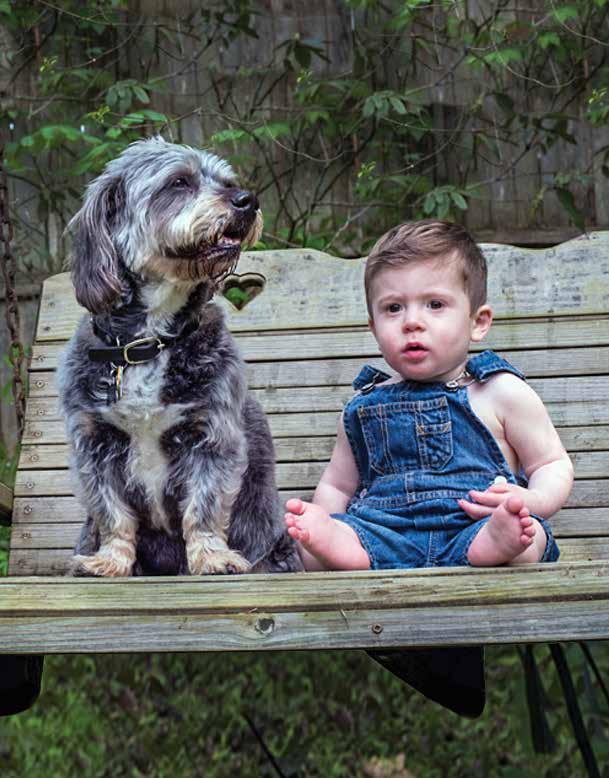
We all know the great relationships that people form with their dogs, and many had their start when we were just kids. Doesn’t everyone have a memory of their first dog, playing in the yard together or sneaking them into bed? Watching TV on the floor, trying to feed vegetables under the table or long summer walk are some of the sweet reminders of the bond between us and our first childhood fur-friend. As today’s lifestyles have changed, so has the advice and information we have about our furry friends and how to build the best relationships.
There are things parents can do to help get things off on the right foot. For example, “The dogs should be exposed to changes coming before they happen,” says Lilian Akin, local family dog trainer. You can push a stroller around, play sounds of babies crying and let the dog smell or experience what’s going to be happening in their world before the actual baby comes home. Many shelters offer a “Baby Ready Pets” course which goes over a list of situations and how to handle them that new parents might not have thought of. And there are online resources such as www.FamilyPaws.com that offer a lot of information and suggestions.
Little babies should always have a person between them and the dog, as they are at the most risk for damage from even a small incident because of their size. “Dogs should never come in direct contact with small babies” says Lilian. “You can sit on the couch with your baby on one side and your dog on your other. Or let the dog smell the baby through a baby gate. It’s also important to see things from the dog’s point of view.” Most dogs are going to be interested in a new baby, but you want to avoid encouraging bad behavior
from the dog when doing the introductions. “Some people hold the baby down to the dog’s level, then pick them up and away in their arms, which can encourage the dog to jump or try to get at the baby as if it were a toy,” Akin explains.
Along with general manners, dogs can be taught extra commands such as “back-up” or “go” so they have a cue to escape or leave the situation if it becomes uncomfortable for them. Lilian teaches other baby specific things such as not stepping on the baby blanket so your pet can know what is expected of them. You can also teach the dog to lay down and be calm when the baby is on the floor, so they can share that special time together.
“And even small children can be taught to be gentle and respectful of animals. Teaching children not to lay on the dog’s bed or go in its crate shows them how to be respectful of the dog’s space,” encourages Lilian. Most people know not to let the child go near the dog when its eating, as that makes some dogs uncomfortable, but don’t always extend that courtesy to other things the dog might view as theirs. And toddles can be scary to dogs. They walk funny, more quickly and fall and dogs don’t understand what’s going on. One of the ways to help them understand kids are good is to throw treats to the dog while the toddle is coming towards them. Or teaching the dog to lay by the highchair and reap the food that falls from the sky.
Lilian states that the number one thing people usually do that she would change is holding or trapping the dog while the child comes close to it. “Some people hold the dog by the collar or pin it down in an effort to restrain it while kids come close, and that can be very frightening experience for the dog. If it is afraid, that feeling of not being able to escape could make the dog react in a fearful way, as he has no choice. Yelling at the dog or swatting at the dog may make the dog resent the child, rather than teach him how he should act or what is good manners,” she says. And don’t punish the dog if it growls! Those growls are the dog’s way of saying “Hey, I’m uncomfortable here!” Listen to the dog and be thankful he was able to let you know so you can make good choices about how to handle things. Dogs want to be our friends and we can help show them the way with a little preparation.
Jefferson Memorial Funeral Home, Cemetery and Cremation
October 5th – Bark in the Park and followed by the Annual Pet Memorial Service www.jeffersonmemorial.biz
CARMAA
Dogtoberfest, Saturday, October 5th www.carmaa-petadoption.org
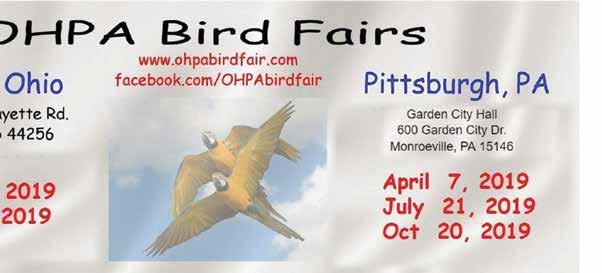
OHIO PA BIRD FAIRS
October 20th, www.ohpabirdfairs.com
Events
MEDINA, OHI0
Pittsburgh Marathon Run for Their Lives
735 West Lafayette Rd. Medina, Ohio 44256
Sunday, May 5 | 7 a.m.
Downtown Pittsburgh
PITTSBURGH, PA
Garden City Hall
May 11, 2019
Aug 17, 2019
CARMAA presents Suzanne Clothier Behavior Lecture
April 7, 2019
July 21, 2019
May 24-26
600 Garden City Dr. Monroeville, PA 15146
Oct 20, 2019
RESCUE & SHELTER
POSITIVE RESULTS with Positive Reinforcement
By Veronica Rigatti, Animal Friends’ Canine Behavior Technician
Training a canine companion takes time and patience. Sometimes, our four-legged friends struggle to understand what we are asking of them. So, how do we cross this language barrier between pups and people? At Animal Friends, we use positive reinforcement training.
The main idea behind positive reinforcement is that praising your dog has much more effective, long-term results than punishing them. But what exactly does positive reinforcement involve?
Let’s get into the specifics …
If your dog does something good, you should reward their behavior with treats, toys or positive attention. Your dog will want to repeat that behavior again and again so they can continue to be rewarded! Over time, your dog will begin to consistently exhibit the good behaviors that you’re hoping for. Positive reinforcement training makes your dog happy while the good behaviors they are learning will make you happy –everybody wins! This type of training also builds trust between you and your animal companion, which will strengthen the bond you share for years to come.
Often times, training a dog isn’t a simple task. You will likely experience bumps in the road, but that’s okay! Struggles and setbacks are all part of the learning process for you and your dog. The most important thing to remember is to be patient and give your dog time to understand what you are trying to teach them.
What should you do when your dog demonstrates an undesirable behavior? You can use positive reinforcement in these situations too! For instance, if your dog barks every time you have a visitor, try teaching them to grab their favorite toy when there’s a knock at the door. They will be distracted by their toy and they won’t be able to bark because their mouth is full!
It’s important to recognize that training a dog comes with ups and downs and it is easy to get frustrated. Remember, you want your dog to love and trust you – punishing them instead of using positive reinforcement only teaches them to be afraid of you. This type of training can also be very harmful to a dog’s development and can cause new issues like fear, anxiety and even aggression.
Using force to punish a dog – like hitting, using choke or shock collars or yelling at them – simply teaches them to be afraid to act a certain way. While this may stop the negative behavior, it does not reinforce a positive one. As a result, the dog is likely to develop something known as “learned helplessness” where they will shut down and refuse to do anything because of fear of punishment. The result is a dog who is fearful of their owner and a very weak bond between the two of them.
According to the American Veterinary Society of Animal Behavior (AVSAB) …
“The potential adverse effects [of using punishment] include but are not limited to: inhibition of learning, increased fearrelated and aggressive behaviors and injury to animals and people interacting with animals. AVSAB recommends that training should focus on reinforcing desired behaviors, removing the reinforcer for inappropriate behaviors and addressing the emotional state and environmental conditions driving the undesirable behavior. This approach promotes a better understanding of the pet’s behavior and better awareness of how humans may have inadvertently contributed to the development of the undesirable behavior.”
Punishment can have a long-lasting impact on a dog and weakens the bond they share with their humans. There are so many reasons we recommend positive reinforcement at Animal Friends. It keeps pets and their people happy, it builds confidence – and it works!
Animal Friends offers a wide variety of training classes through Animal Friends University! To learn more and register, visit ThinkingOutsideTheCage.org/Training.
University AnimalFriends
Make the most of the relationship you share with your pet with positive reinforcement techniques taught by our expert team of trainers!
Whether you’re a cat fancier, rabbit wrangler, novice pup or
PET HEALTH & WELLNESS
ADDRESSING CONCERNS OF DIET ASSOCIATIONS in Dilated Cardiomyopathy (DCM) in Dogs
Lately, there’s been a lot of discussion about a potential association between grain-free diets and dilated cardiomyopathy (DCM) in dogs. We’d like to address this concern with the most up-to-date information currently available.
Dilated cardiomyopathy (DCM) is a serious and unfortunately rather common kind of heart disease characterized by weakening of the heart muscle cells and enlargement of the heart. Dogs with DCM can experience exercise intolerance, coughing and trouble breathing associated with congestive heart failure, or arrhythmias (abnormal heart rhythms) causing sudden death. DCM is most commonly seen in large breeds (Doberman Pinschers, Great Danes, Irish Wolfhounds, Boxers), where there is a known or suspected genetic component. Recently, though, astute cardiologists started seeing a higher rate of DCM in less common breeds – like Golden Retrievers, Miniature Schnauzers, and Shih Tzus- and ultimately became suspicious of a potential common link among the affected dogs’ diets. These atypical breeds were all consuming “boutique” brand diets, those containing exotic or limited ingredients, or diets labeled as grain-free (“BEG” diets). Currently, the US Food and Drug Administration (FDA) Center for Veterinary Medicine is actively investigating cases of potential diet associations in dogs with DCM.
It is critical to recognize that this is an ongoing investigation and that our suspicions are not certainties. We’re exercising caution because DCM is devastating and any reasonable preventative measure (a change in food!) is worth considering.
What we know:
• The original investigation included 24 Golden Retrievers in California with DCM. Over the past two years, veterinary cardiologists have identified an additional 240 cases of diet-associated DCM in 29 other breeds. These dogs were all being fed grain-free diets, “boutique” brands, or foods with exotic ingredients - kangaroo, lentils, duck, pea, fava bean, buffalo, tapioca, salmon, lamb, barley, bison, venison, and chickpeas. Vegan, raw, and home-prepared diets have also been reported.
• Some (but not all) dogs with DCM eating BEG diets were shown to have low blood levels of an amino acid called taurine. Taurine deficiency has been implicated in DCM since 1987 when we learned that cats have a higher dietary demand for taurine since they cannot synthesize it on their own. When taurine was supplemented in feline diets, the cardiac changes improved. Now, commercial cat foods are supplemented appropriately and the rate of taurine-deficient DCM in cats has plummeted. The original group of Golden Retrievers who sparked this new controversy (as well as many Cocker Spaniels) had low blood taurine levels, but not all dogs with DCM on BEG diets do.
• Diet change and taurine supplementation resulted in improvement in both symptoms and echocardiographic variables of disease in affected dogs over 8-12 months of follow-up. Many of these dogs had medications reduced or discontinued altogether, an unlikely occurrence in DCM due to its traditionally irreversible nature.
What we don’t know:
• How BEG diets affect taurine levels. Possibilities include low levels of taurine or its metabolic precursors; reduced availability, poor absorption, or altered metabolism of taurine owing to non-traditional ingredients like legumes, potatoes, or rice bran or to their interactions with normal intestinal microbes.
• Factors other than taurine deficiency that may implicate BEG diets in DCM. As in the cases of diet-associated DCM in dogs with normal taurine levels, we acknowledge that the problem may not arise from what isn’t in the food, but from what is. Commonly used but less well-studied exotic ingredients may pose problems with bioavailability or interactions with other ingredients or have inadvertent cardiotoxic effects.
• How many or which dogs on BEG diets are at risk for DCM. These diets have recently exploded on the marketplace, and they are likely being fed to millions of dogs, many of whom do not develop DCM. Additional risk factors have yet to be identified.
What we can do:
• If dogs on BEG diets are experiencing any symptoms of DCM (exercise intolerance, cough or trouble breathing, fainting or looking “light-headed”), seek prompt veterinary care. This should include a thorough physical exam, radiographs of your dog’s heart, measurement of blood taurine levels, and –ideally- referral to a veterinary cardiologist for an echocardiogram, the definitive means of diagnosing DCM.
• Dogs diagnosed with DCM should be treated with a diet change and taurine supplementation and may require additional medications depending on the extent of cardiac changes. There is no one perfect diet for every dog. Currently, veterinary nutritionists advocate that affected dogs are transitioned to a diet made
by a well-established, reputable company which contains “standard” ingredients (chicken, beef, rice, corn, wheat). The diet should include the Association of American Feed Control Officials (AAFCO) Nutritional Adequacy Statement labeling it as “complete and balanced nutrition.” (Notably, all BEG diets being fed to the sentinel 24 Golden Retrievers were AAFCO approved, so this label is not exclusive validation of a “safe” food.) Raw and homemade diets are not encouraged as they may increase the risk of other nutritional deficiencies or infectious disease. Helpful resources for critically examining pet foods include: http://vetnutrition.tufts.edu/2016/12/questions-youshould-be-asking-about-your-pets-food/ and https:// www.wsava.org/WSAVA/media/Arpita-and-Emmaeditorial/The-Savvy-Dog-Owner-s-Guide-to-Nutrition-onthe-Internet.pdf The needs of dogs with additional special dietary considerations are best met in conjunction with a veterinary nutritionist (acvn.org).
• The cases of affected dogs should be reported to the FDA: https://www.fda.gov/animalveterinary/ safetyhealth/reportaproblem/ucm182403.htm Samples of the associated food should be saved, along with original packaging. Ideally, samples and packaging of all treats, chews, and supplements should also be saved.
• If dogs on BEG diets are not experiencing symptoms of DCM, it may still be worthwhile reconsider your dog’s diet. Even as we work to better understand the link between diet and DCM, it’s important to know that DCM is serious and often fatal. This risk probably outweighs any perceived benefit of a grain-free diet. Grain restriction is not supported by any reputable nutritional science, and it likely gained traction as a fad in the pet-food industry because of creative (and powerful) marketing. While some dogs with allergies may respond to dietary change, there is no evidence that grain is the source of the sensitivity.
• Stay open-minded, well informed, and savvy about the source of your information. Avoid dogma and anecdotal reports of what is “good” and “bad” – very few things, including diets, are solely one or the other. As the veterinary community works to better understand dietassociated DCM, we bring you these concerns not to vilify brands or kinds of food but because we are advocates for the best interest of your dog.
only rare instances of “reversible” DCM (such as with low thyroid function or taurine deficiency), and current evidence shows that certain diets may be included in these reversible factors.
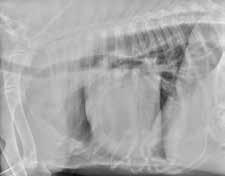
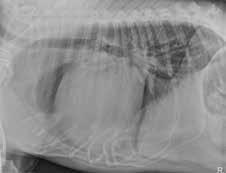
Figures a and b: Right lateral radiographs of a 10.5 year old, mixed breed dog diagnosed with DCM while consuming a grainfree diet. Figure a shows marked enlargement of the heart, prompting treatment with medications to prevent congestive heart failure as well as a change in diet. Figure b shows a smaller heart 5 months after treatment. Typically, DCM can be treated with medications to reduce symptoms, but an objective reduction in heart size is not expected. There are
•
•
•
•
•
•
•
•
Advertiser Locator
ADVERTISER LOCATOR
AGWAY - SOUTHERN STATES, see ad on page 25
A - All About Pets Veterinary Hospitals, page 7
Animal Healing Now, page 17
M - Animal Friends, page 11
D - Beaver Animal Clinic, page
Best Breed Pet Food, page 15
Buzzy Photography, page 3
Camp Bow Wow, page 23
CARMAA, page 9
Dog Stop
F - Chartiers Custom Pet Cremation, page 27
Page 15 - H Fuzzy Paws Pet Villa
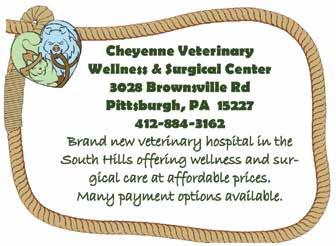
Q - Cheyenne Veterinary Wellness & Surgical Center, page 14
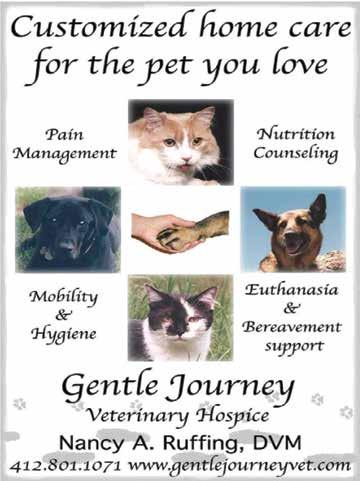
Page 15 - Gentle Journey Veterinary Hospice
Page 1 - I Healthy Pet Products
Page 29 - J Jefferson Memorial
Page 13 - P Larry’s Laundromutt
Page 6 - Paws Here Awhile
G - Coventry Stables, page 25
Dog Stop, page 23
EASE Animal Massage, page 3
H - Fuzzy Paws Pet Villa, page 15
Gentle Journey Veterinary Hospice, page 15
Page 15 - Pampered Paw Resort
I - Healthy Pet Products, page 1
Page 5 - Petagogy
Page 13 - Rogan Rexford Animal Blood Bank
J - Jefferson Memorial, page 28
P - Larry’s Laundromutt, page 13
Back Cover - N Pittsburgh Veterinary Specialty and Emergency Center
Page 27 - O Rockin Horse Stables
Page 17 - Dr. Michael Savko
Page 11
Page 6
Page 3
- CARMAA
O2 Derm Pet, page 5
Paws Here Awhile, page 6
Pampered Paw Resort, page 15
Petagogy, page 5
Pittsburgh Pet Concierge, page 14
- EASE Animal Massage
N - Pittsburgh Veterinary Specialty & Emergency Center, back cover Portraits of Animals, page 13
Page 14
- Pittsburgh Pet Concierge
- o2 Derm Pet
Page 5 - Trixie’s Dog Fashions
Page 15 Page 15 - V Woody’s Dog Wash & Boutique - Camp Bow Wow
O - Rockin Horse Stables, page 24
Rogan Rexford Animal Blood Bank, page 13
Page 13 - Portraits of Animals
Page 3 - Buzzy Photography
Please see listed pages for complete addresses.
Trixie’s Dog Fashions, page 15
S - VCA Castle Shannon, inside front cover
VCA Northview Animal Hospital Specialty Referral Center, page 29
V - Woody’s Dog Wash & Boutique, page 15
CAT RESOURCE GUIDE
NO-CHARGE CLINICS (ferals only)
• May 25 half sponsored by Jason & Julie Ray and half by anonymous donor
• June 22 sponsored in memory of Jeanne T. Richey
• July 27 sponsored in memory of Betty Moore
• August 24 sponsored by Nadine Piontka
• October 5 sponsored for National Feral Cat Day
• November 9 sponsored by Spaghetti Dinner Fundraiser
• December 7 sponsored by Stacy’s Stuff
Low-cost spay/neuter and animal services in and around Allegheny County
TNR and Low-cost Spay and Neuter Organizations and Programs
Homeless Cat Management Team
http://www.homelesscat.org
City of Pittsburgh Free Spay and Neuter for City Residents, city of Pittsburgh offers five free spays/neuters to all city residents
• June 8
• July 13
HCMT Free and Low-cost Spay/Neuter Clinics June to December 2019
Between June and December 2019 HCMT has 14 free and low-cost spay/neuter clinics scheduled for stray/feral and rescued/pet cats. Each spay and neuter reduces the number of homeless cats in the Pittsburgh region, and helps everyone be a part of the solution. Clinics fill up fast and registration well ahead of time is required.
FAST TRACK CLINICS (ferals $30)
• August 10
• September 28
• October 19
• November 23
• December 21
clinics but organize, host, sponsor or otherwise provide access to spay and neuter services.
More dates may be announced and dates are subject to change. Check www.homelesscat.org/clinic-info for the most up to date information.
This is an ever-changing list of resources for pet owners in Pittsburgh and beyond including low-cost spay and neuter programs for pets as well as TNR for community cats, after-hours emergency care, help with veterinary bills, pet-friendly rentals in Pittsburgh and across the US and links to shelters for adoption and other services. This information is provided for reference only and subject to change without notice. Please contact the organization or agency before using their services.
Low-Cost Spay/Neuter Programs at Shelters in Allegheny and surrounding counties Shelter Programs
PENNSYLVANIA
Animal Friends
www.thingkingoutsidethecage.org
Humane Animal Rescue
East Liberty Shelter (formerly Animal Rescue League) http://www.animalrescue.org/
North Shore Shelter (formerly Western Pennsylvania Humane Society) www.wpahumane.org
Clarion Paws
Serves Clarion, Forest and Jefferson County Low Cost Spay / Neuter Clinic: spayneuterclinic@clarionpaws.org Trap-Neuter-Return: tnr@clarionpaws.org http://www.clarionpaws.org/ PET & OUTDOOR OR FERAL CATS
Beaver County Humane Society http://www.beavercountyhumanesociety.org
Fluffy Jean Fund (Washington County) http://fluffyjeanfund.weebly.com/ Fund for Feral Cats of Pittsburgh
Please call each branch while the two shelters continue their merger.
Butler County Humane Society http://www.butlercountyhs.org/FelineSpayNeuter.asp
Washington Area Humane Society http://washingtonpashelter.org/services/ EASTERN OHIO
Angels for Animals
http://www.angelsforanimals.org/snWhy.asp
Low-cost Spay/Neuter Organizations in Allegheny and surrounding counties
Grooming Day CareBoardingTraining
Grooming Day CareBoardingTraining
Reimburses partial funds to help spay/neuter feral cats (funds not always available), 412-521-5352
Lawrence County Animal Relief Fund (LCARF)
http://www.lcarf.com/
Operation Spay/Neuter
http://operationspayneuter.com/ Pet Search
http://www.petsearchpa.org/
Fix ‘Ur Pet
http://fixurpet.org/
Butler, PA (for Butler County residents only)
Frankie’s Friends http://www.FrankiesFriendsCatRescue.org/ Penn Hills Spay/Neuter Clinic
http://www.spayaz.com/Pittsburgh.html
Wexford Spay/Neuter Clinic
http://www.spayaz.com/wexford-pa/
Find Local Low-cost Spay, Neuter and Veterinary Care on the Internet
Low-cost Neuter and Spay (search by zip)
http://neuterspay.org/
Love That Cat (online search)
Spay USA
http://www.spayusa.org/search.php
ASPCA searchable map of low-cost clinics in US & Canada
SNIPP: Spay and Neuter Indiana PA Pets Westmoreland/Indiana Counties, Alle-Kiski Valley (Leechburg), http://www.snippindianapa.org/ Low-cost Spay/Neuter and Veterinary Clinics These are independent clinics that offer services on site during regular business hours.
http://www.lovethatcat.com/spayneuter.html
In the Pittsburgh area, visit this list on the FosterCat website:
http://www.fostercat.org/friendly.html
Nationwide (United States only)
Adoption, surrender, low-cost clinics, pet food pantries, referrals, etc.
Humane Animal Rescue, East Liberty (Animal Rescue League), www.animalrescue.org
Animal Advocates, animaladvocates.net
Washington Area Humane Society www.washingtonpashelter.org
These are organizations which are not day-to-day
Spay and Neuter Early, a Humane Alliance Campaign http://www.whentospay.org/get-your-pet-fixed
All About Pets Veterinary Hospital 724-745-5503 | aapvet.com
All About Pets Veterinary Hospital – Washington location 724-503-4887 | www.aapvet.com
VCA Castle Shannon 412-885-2500
East:
The Big Easy Animal Hospital 412-908-9301 | tbeah.com
Monroeville Pet Hospital 412-372-1100 | www.monroevillepethospital.com
VETERINARY SPECIALTY & EMERGENCY SERVICES
North/South:
Pittsburgh Veterinary Specialty and Emergency Center, Inc. 412-366-3400 | 724-809-2000 pvs-ec.com
North:
VCA Northview Animal Hospital Specialty Referral Center 412-364-5353 | vcanorthview.com
DIRECTORIES
FEATHERED FRIENDS
PREDATOR & PREY:
understanding the predatory response
By Edward R. Moats
Whenever I meet a new parrot family, one of the first questions I ask is, “What made you decide that having a parrot in your home would be a good idea?” And many times people reply that watching videos of parrots on the internet and social media helped pique their curiosity to interact with these misunderstood animals. Sometimes the internet and social media can give the wrong impression about animals. And one particular subject that I find of the utmost importance is interactions between predators and prey animals. I’ve lost track of how many videos I have seen where parrots are interacting with dogs or cats. And along with the posted video comes a never-ending thread of responses that state how cute it is to see these animals at play. Well, at the risk of sounding abrasive; there is nothing cute about these interactions. In this article, I will discuss the dangers not only to your parrot but other pets when pet parents permit interactive play between parrots and natural born predators.
A few words can summarize this article, Instinctive Predatory and Prey Behavior. Companion birds, such as parrots; are prey animals. Parrots in the wild are cognizant of their surroundings at all times in order to survive. Wild parrots have the potential of being ambushed by a predator at any given time. And over many years of evolution, this trait has become instinctive and passed down from generation to generation in order for parrots to live and flourish in their habitats. This behavior does not diminish when parrots are introduced into our homes. During the early stages of a parrot acclimating to our home, their instinctive behavior as a prey animal is amplified while they adjust to their new surroundings. And during this time, parrots can come into contact with a variety of natural born predators.
Humans can be perceived as a predator. And it is important that the potential bird family understands how to effectively interact with parrots in a way that can enhance the human/animal
bond. Approaching a parrot in an aggressive or erratic manner can trigger the “Fight or Flight” response where a parrot will fly away to escape the potential danger. Or they will engage in aggressive behavior such as biting in order to protect themselves. If a person does not understand, and practice; the proper techniques to interact with a parrot, they can essentially “create” behaviors that are reactions to a parrot protecting themselves from what the bird perceives as a predator. And if these interactions continue, the parrot’s reactions can become a learned behavior. And this is how so many birds become labeled “aggressive.” The pet parent should approach their feathered companions in a calm deliberate fashion at all times. Rushed movements can be perceived as aggression and your parrot may act accordingly in order to protect themselves.
There are other predators that a parrot can come into contact with when living in our homes. The two most common are dogs and cats. And as discussed above, many times pet parents allow parrots to interact with these predatory animals. This practice is like playing Russian Roulette with the health and safety of not only your parrot, but all pets involved.
Just as parrots have inherited instinctive behaviors as prey animals, dogs and cats are predators. Over many years of surviving in the wild, dogs and cats have evolved into carnivores. The majority of their diet consists of meat. And in order to survive, dogs and cats have learned how to hunt prey animals. And one source of nourishment is birds from their native ecosystems. Yes, our domesticated dogs and cats differ in some ways when compared to their wild ancestry. However, these primal instincts as predators is still a portion of their physiological existence. Just as erratic movements can alert a prey animal such as a bird to be on guard, these same fast movements can trigger a predatory response in a dog or cat. A startled bird that screams and begins to flutter it’s wings in fear or excitement can trigger a predatory response that can result in severe injury and or death. And surprisingly, it’s not just the damage from a physical bite that can cause injury or death. There are other concerns that should be addressed that are as equally dangerous as a bite.
BITES & SCRATCHES can lead to infection.....
Along with the physical damage that occurs from animal bites, the pet parent should also be concerned regarding infections secondary to the bite. Dogs and cats have a variety of bacteria that colonize in their mouth and on teeth. These bacteria can be naturally occurring or manifest from ingested food. This also includes plaque that may be present on the teeth . A dog or cat only needs to break the skin of a bird in order to introduce these bacterias into the body of our feathered companions. A small puncture from the teeth that may go unnoticed by the pet parent can essentially release bacteria into a bird’s body that can cause infection and possible death.
One particular bacteria that can cause infection in birds that is transmitted from dog and cat bites is Pasteurella multocida. This gram-negative bacteria can colonize in the mouth of a dog or cat and be introduced into our companion birds with the slightest puncture of the skin. This bacteria can cause Septicemia (severe blood infection) and respiratory ailments. Sadly, the mortality rate of birds infected by Pasteurella multocida is extremely high.
Along with bites, scratches from dogs and cats also pose a concern for infection. Bacteria known as Bartonella can colonize in the mouth and nails of a dog or cat. Bartonella is a gram-negative bacteria that can cause serious infection and illness. One particular illness is known as Cat-Scratch Fever. This illness is caused by bacteria known as Bartonella henselae. Symptoms can occur within days. Crusted lesions appear at the wound site, weakness and loss of appetite. Thus, unnoticed wounds caused by scratches can lead to severe illness and or death in our companion birds.
Another concern is the bite a parrot can inflict on other pets. Parrots, such as macaws and cockatoos; can exert from 500-2,000 PSI (pounds per square inch) of pressure from their beaks. It only takes 25 pounds of pressure to break a human finger. Therefore, a parrot bite can cause serious damage to a dog or cat.
I hope that addressing the potential health risks to parrots by allowing them to interact with predatory pets such as dogs and cats will cause pet parents to re-think their opinion regarding this subject. The best way to ensure the safety of our pets is to be pro-active in acknowledging potential risks. It is possible for parrots to share their home with dogs and cats. But, it is the pet parent that sets boundaries for a pet’s safety. In my opinion, the best way to address this topic is to acknowledge that you cannot tempt Mother Nature. And predatory responses to prey animals is a natural instinct that is gifted to our pets in order for them to survive in their environments. And if a pet parent tempts nature, you take the risk of losing a beloved pet.
ROCKIN’ HORSE STABLES
By April Minech
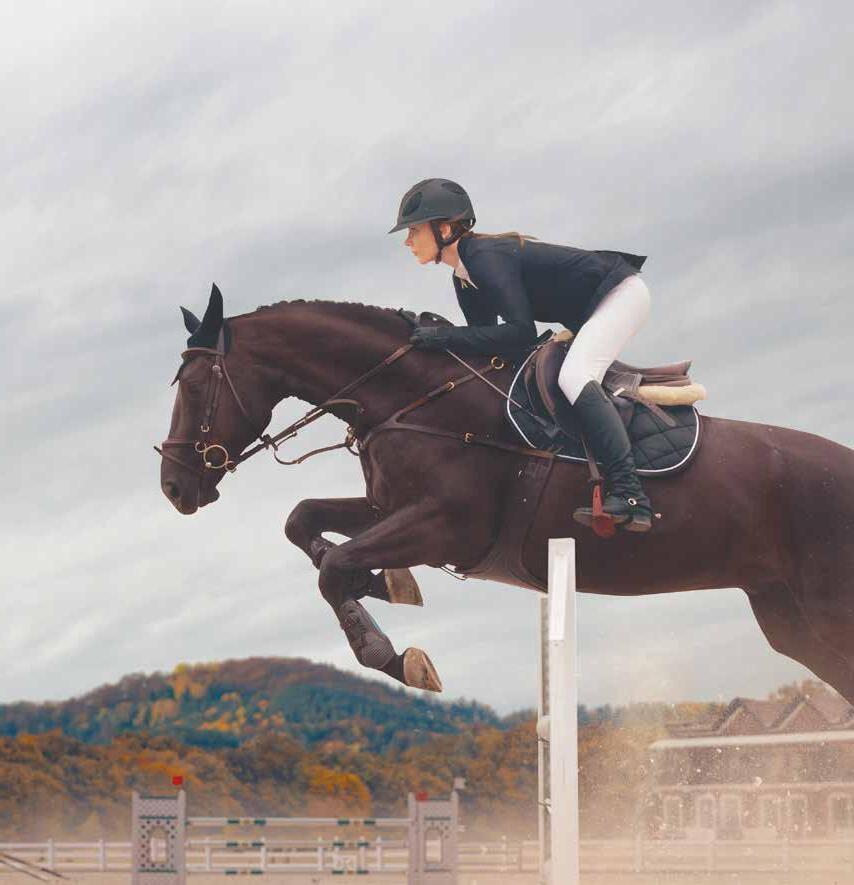
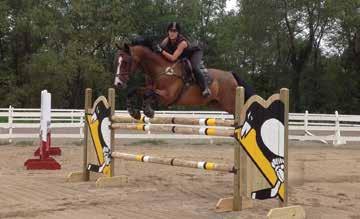
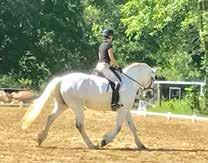
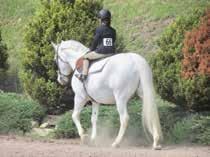
Rockin’ Horse Stables in New Sewickley Township is a full care boarding facility that offers training for all levels of riders, including a summer camp program. They about host on average about 40 horses (including about 16 of their own) which are used for lessons that are offered 6 days a week. Classes range from wee ones to adults, usually starting around age 4 when the kids can pay attention and take direction. “Summer camps are great for the little ones, where they can learn basic skills and horsemanship while playing fun games,” says owner Adam Giannamore. “Our camp programs include daily riding as well as other group activities such as crafts and games.” He and his wife Kimberly developed the
camp program, which includes learning about the equipment used, breeds and colors of horses, and names for the different type of facial markings. Each camp is a little different, so some kids sign up for more than one. A short but fun video and some pictures of previous camp activities can be viewed on their site. Note: This year’s camps are sold out, but keep in mind for next year! As for boarding, they are currently full but have a waiting list.
Offerings can be found on their website at www.rockinhorsestables.com. Or contact them directly at 412-601-4706
EQUINE AFFAIRS
Most barns have a discipline, and it is usually the one the owner embraces. My passion is dressage, and many of the riders at my barn utilize dressage. Some show dressage and then there are riders in the barn that think dressage is some kind of high falloottin thing that requires the rider to be all fancy and do piaffe or canter pirouettes.
DRESSAGE FOR EVERY RIDER & HORSE
Dressage for every rider and horse
Most barns have a discipline, and it is usually the one the owner embraces. My passion is dressage, and many of the riders at my barn utilize dressage. Some show dressage and then there are riders in the barn that think dressage is some kind of high falloottin thing that requires the rider to be all fancy and do piaffe or canter pirouettes.
By Kristin Hermann
Most barns have a discipline, and it is usually the one the owner embraces. My passion is dressage, and many of the riders at my barn utilize dressage. Some show dressage and then there are riders in the barn that think dressage is some kind of high falloottin thing that requires the rider to be all fancy and do piaffe or canter pirouettes.
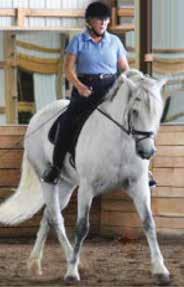
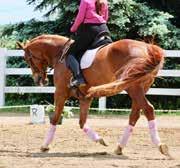
The word dressage simply means training, so whether you ride hunt seat, trail ride or do reining, in my opinion, you are doing dressage. As with all disciplines, it just depends on your intent with you're training. For instance, is your intention to ride straight lines and have your horse go relaxed over fences? Well, for the hunt seat rider, that comes from good dressage or flat work. Is your intent to train a relaxed horse on the cross-country field? Hmm, that is dressage cross country. Dressage does not have to be this misunderstood mystery. Once again, the word merely means the and I know all horses benefit when trained.
The word dressage simply means training, so whether you ride hunt seat, trail ride or do reining, in my opinion, you are doing dressage. As with all disciplines, it just depends on your intent with you’re training. For instance, is your intention to ride straight lines and have your horse go relaxed over fences? Well, for the hunt seat rider, that comes from good dressage or flat work. Is your intent to train a relaxed horse on the cross-country field? Hmm, that is dressage cross country. Dressage does not have to be this misunderstood mystery. Once again, the word merely means the training of a horse, and I know all horses benefit when trained.
The word dressage simply means training, so whether you ride hunt seat, trail ride or do reining, in my opinion, you are doing dressage. As with all disciplines, it just depends on your intent with you're training. For instance, is your intention to ride straight lines and have your horse go relaxed over fences? Well, for the hunt seat rider, that comes from good dressage or flat work. Is your intent to train a relaxed horse on the cross-country field? Hmm, that is dressage cross country. Dressage does not have to be this misunderstood mystery. Once again, the word merely means the training of a horse, and I know all horses benefit when trained.
The United States Dressage Federation (USDF) has adopted a training scale to help riders understand training the horse. The first two items on this training scale are relaxation and rhythm. This only makes sense because you cannot train a horse unless
The United States Dressage Federation (USDF) has adopted a training scale to help riders understand training the horse. The first two items on this training scale are relaxation and rhythm. This only makes sense because you cannot train a horse unless it is relaxed and rhythmic. As a matter of fact, if you have these two things you have the horse’s mind and can build with the training. The next item on the USDF training scale is contact. This is where dressage training may differ from other forms of training. Dressage riders ride with contact (with flexion at the poll) to round the horse’s back from back to front. Hunt seat riders are not too concerned if the horse is “round,” but as riders, they still want the horse balanced, rhythmic and submissive to the aids.
And who doesn’t utilize a circle for training a horse? The circle helps the horse to find rhythm, balance and to bend equally in both directions at all three gaits. When a rider shows dressage they are merely showing the judge how well they ride a circle in both directions and on straight lines. I always ask my riders, “what is dressage?” The correct answer is, “training straight lines and circles!” I call the circle, ‘the training wheel of training.’ It is training on the circle for all types of riding, that we establish basics with our horse. Someone came to me once for lessons and said do you ever ride off the circle? I said, “I keep riders on the circle till they have established the qualities of relaxation, rhythm and bending with the horse. If you want to do backward flips maybe seek out the Cirque du Soleil.” Just kidding, I did not say that, but I was thinking it!
And who doesn’t utilize a circle for training a horse? The circle helps the horse to find rhythm, balance and to bend equally in both directions at all three gaits. When a rider shows dressage they are merely showing the judge how well they ride a circle in both directions and on straight lines. I always ask my riders, “what is dressage?” The correct answer is, “training straight lines and circles!” I call the circle, ‘the training wheel of training.’ It is training on the circle for all types of riding, that we establish basics with our horse. Someone came to me once for lessons and said do you ever ride off the circle? I said, “I keep riders on the circle till they have established the qualities of relaxation, rhythm and bending with the horse. If you want to do backward flips maybe seek out the Cirque du Soleil.” Just kidding, I did not say that, but I was thinking it!
The United States Dressage Federation (USDF) has adopted a training scale to help riders understand training the horse. The first two items on this training scale are relaxation and rhythm. This only makes sense because you cannot train a horse unless it is relaxed and rhythmic. As a matter of fact, if you have these two things you have the horse’s mind and can build with the training. The next item on the USDF training scale is contact. This is where dressage training may differ from other forms of training. Dressage riders ride with contact (with flexion at the poll) to round the horse’s back from back to front. Hunt seat riders are not too concerned if the horse is “round,” but as riders, they still want the horse balanced, rhythmic and submissive to the aids.
contact. This is where dressage training may differ from other forms of training. Dressage riders ride with contact (with flexion at the poll) to round the horse’s back from back to front. Hunt seat riders are not too concerned if the horse is “round,” but as riders, they still want the horse balanced, rhythmic and submissive to the aids.
I am sure anyone reading this knows how interesting riding a circle on a horse can be. In all the books it says to ride a circle a certain way for all horses. Every horse does different things on a circle: some fall in on one half of the circle and fall out on the other half. The rider’s aids have to switch up depending on what the horse is doing. Riding / training is dynamic! So we spend hours attempting to ride a perfect circle in balance and rhythm with relaxation. This is dressage! And we train the same whether we sit in a hunt seat or western saddle.
I am sure anyone reading this knows how interesting riding a circle on a horse can be. In all the books it says to ride a circle a certain way for all horses. Every horse does different things on a circle: some fall in on one half of the circle and fall out on the other half. The rider’s aids have to switch up depending on what the horse is doing. Riding / training is dynamic! So we spend hours attempting to ride a perfect circle in balance and rhythm with relaxation. This is dressage! And we train the same whether we sit in a hunt seat or western saddle.
what dressage (basic training) establishes.
I am sure anyone reading this knows how interesting riding a circle on a horse can be. In all the books it says to ride a circle a certain way for all horses. Every horse does different things on a circle: some fall in on one half of the circle and fall out on the other half. The rider’s aids have to switch up depending on what the horse is doing. Riding / training is dynamic! So we spend hours attempting to ride a perfect circle in balance and rhythm with relaxation. This is dressage! And we train the same whether we sit in a hunt seat or western saddle. Once we have “mastered” the circle, if that is ever possible, we venture onto straight lines. And if you thought a circle was challenging wait till you start riding your horse on straight lines off the rail. All my riders spend hours off of the railing to put their horse straight. So it is first relaxation, rhythm, round over the back and now straight. Riding straight lines trains the horse to be balanced not only back to front but side to side, as does the circle. What rider doesn’t want their horse to be balanced? I think we all do. I know hunt seat riders are supposed to jump straight going over fences, in addition to being relaxed and rhythmic. All riders want the horse to be responsive to the rider and this is what dressage (basic training) establishes.
And who doesn’t utilize a circle for training a horse? The circle helps the horse to find rhythm, balance and to bend equally in both directions at all three gaits. When a rider shows dressage they are merely showing the judge how well they ride a circle in both directions and on straight lines. I always ask my riders, “what is dressage?” The correct answer is, “training straight lines and circles!” I call the circle, ‘the training wheel of training.’ It is training on the circle for all types of riding, that we establish basics with our horse. Someone came to me once for lessons and said do you ever ride off the circle? I said, “I keep riders on the circle till they have established the qualities of relaxation, rhythm and bending with the horse. If you want to do backward flips maybe seek out the Cirque du Soleil.” Just kidding, I did not say that, but I was thinking it!
Once we have “mastered” the circle, if that is ever possible, we venture onto straight lines. And if you thought a circle was challenging wait till you start riding your horse on straight lines off the rail. All my riders spend hours off of the railing to put their horse straight. So it is first relaxation, rhythm, round over the back and now straight. Riding straight lines trains the horse to be balanced not only back to front but side to side, as does the circle. What rider doesn’t want their horse to be balanced? I think we all do. I know hunt seat riders are supposed to jump straight going over fences, in addition to being relaxed and
Once a horse has rhythm and relaxation and can travel straight lines without falling in or out then the rider has pretty good basics on the horse and more specialized training can begin. However, establishing the basics of training is challenging for most riders. Basic training (or dressage) is the foundation for all future training. Dressage training is basic training, and most trainers understand this. To do “dressage” does not mean you have to do a test, ride in a show ring wearing a top hat and do a piaffe on a fancy horse.
Once a horse has rhythm and relaxation and can travel straight lines without falling in or out then the rider has pretty good basics on the horse and more specialized training can begin. However, establishing the basics of training is challenging for most riders. Basic training (or dressage) is the foundation for all future training. Dressage training is basic training, and most trainers understand this. To do “dressage” does not mean you have to do a test, ride in a show ring wearing a top hat and do a piaffe on a fancy horse.
So every time you train your horse you are training dressage. When you think, is my horse relaxed, rhythmic, or is it working over the back and bending equally left and right in both directions at all three gaits, or stretching, that is dressage! The better your horse can do all of these things the better trained it is to move onto more specialized training.
Dressage, or in other words, the gymnastic training of the horse is for all horses and for all riders. You do not need a specialized saddle or longer stirrups, all you need is a horse and an open mind that realizes that riding is training.
Once we have “mastered” the circle, if that is ever possible, we venture onto straight lines. And if you thought a circle was challenging wait till you start riding your horse on straight lines off the rail. All my riders spend hours off of the railing to put their horse straight. So it is first relaxation, rhythm, round over the back and now straight. Riding straight lines trains the horse to be balanced not only back to front but side to side, as does the circle. What rider doesn’t want their horse to be balanced? I think we all do. I know hunt seat riders are supposed to jump straight going over fences, in addition to being relaxed and rhythmic. All riders want the horse to be responsive to the rider and this is
So every time you train your horse you are training dressage. When you think, is my horse relaxed, rhythmic, or is it working over the back and bending equally left and right in both directions at all three gaits, or stretching, that is dressage! The better your horse can do all of these things the better trained it is to move onto more specialized training.
Dressage, or in other words, the gymnastic training of the horse is for all horses and for all riders. You do not need a specialized saddle or longer stirrups, all you need is a horse and an open mind that realizes that riding is training.
REMEMBRANCE
TBy Bernadette Kazmarski
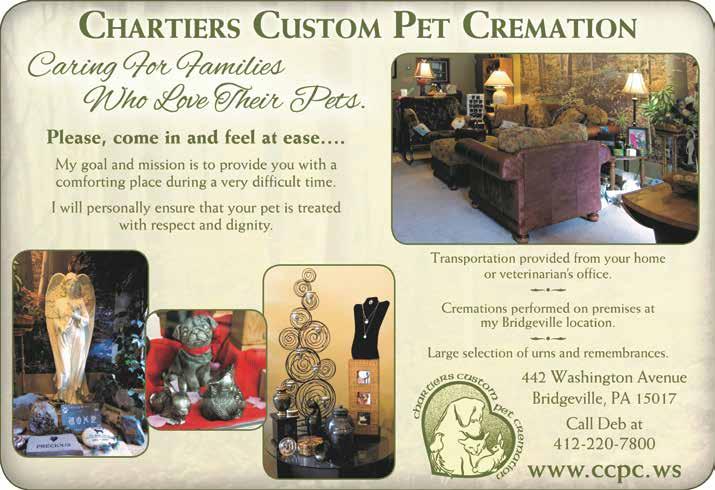
he attachment we form with our pets is remarkably strong, making their loss a uniquely hurtful experience. Chartiers Custom Pet Cremation has been providing comfort and compassionate care to families in the tri-state area for over fourteen years. Deb Chebatoris, owner of CCPC, knows the importance of a remembrance ceremony to assist human family members to deal with this huge loss. That’s one of the reasons she hosts the Pet Memorial Sunday ceremony each September.
ADeb lost both of her beloved miniature schnauzers, one in May and the other in June of this year.
Wilson, at almost 17 1/2 years, was a much sought after grief companion, having assisted hundreds of families throughout the early stages of their grief. He was accompanied by his “brother” Colby, whose manner of assisting was merely being cute and cuddly.
Pets Honored and Remembered at CCPC Pet Memorial Sunday Ceremony
“I know all the things to do to alleviate the dark cloud of grief that tends to hang over you once your pet is gone,” says Deb. “But I never expected the pain to be this intense and to last this long.”
Because she knows how her families feel when they are grieving a loss, she designed her services to address the needs those who are grieving.
Pet Memorial Sunday Remembrance Ceremony
The second Sunday of September was set aside as a time to remember our pets by the International Association of Pet Cemeteries and Crematories. Deb has hosted a ceremony on Pet Memorial Sunday since 2005 for families who have lost a pet.
Chartiers Custom Pet Cremation will host its annual Pet Memorial Day remembrance ceremony on Sunday, September 8, 2018 from 2:00 p.m. to 3:30 p.m. at Melrose Cemetery in Bridgeville. Anyone who is dealing with grief over the loss of a pet is welcome to attend.
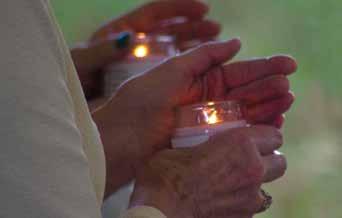
As part of the ceremony three speakers will discuss our relationships with our pets both before and after their death: “Our Last Moments Together”, “Our Grief Response” and “The Joy of Pets: Pet Parenting After Loss”. Pet owners in attendance are also invited to offer their own “Words of Tribute” which are read by the speakers as part of the ceremony followed by a release of white doves. Pets are permanently remembered in a video/ slideshow called the “Tribute Scroll” created from families’ photos and tributes.
The gathering will be held under a tent in the cemetery (rain or shine). Light refreshments are served afterward as participants are invited to share the companionship and experiences of other families who are deeply grieving the loss of their pet. Kindly call Deb to RSVP by Friday, September 6 at 412-220-7800. For more information, please visit www.ccpc.ws/pet-memorial-sunday
There is a special place in the suburbs south of Pittsburgh that is open, cozy, and tranquil, while at the same time encouraging a positive, relaxing respite from the bustle of the surrounding community. Affording beatific vistas of rolling hills and wooded glens that wrap around friendly nearby neighborhoods, Jefferson Memorial Cemetery has provided a peaceful resting place since 1929 when it was founded by Harry C. Neel.
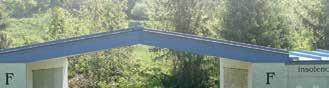
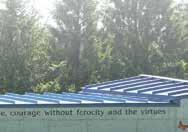
Within this garden is the Faithful Friends Mausoleum, which houses crypt spaces for your pet, or you and your pet. In that same building is niche spaces for pet and human cremated remains. The mausoleum, hand built by Jefferson workers, is quite an elegant visual feature for it expresses meaningful sayings and showcases people with their pets. In fact, most of the people are actually Jefferson employees with their companions! Similar to a full service funeral home, we also offer visitation opportunities to all pet families. We at Jefferson believe that a pet who gave love and loyalty through life deserves the respect and dignity of having their remains placed in a lasting and final resting place, just as you would your human counterpart, for they too are a part of the family.
We have developed a distinctive pet room that consists of an arrangement room, a display room for caskets, urns and memorials, as well as a visitation room.
Our before needs representatives and family service team aim to serve our pet families in every way we can.
We all love our pets and want to know they are in a safe and respectful place. Our Garden of Faithful Friends allows your pet to stay at your side forever. Jefferson Memorial will celebrate our faithful friends with
2 different events in 2019 dedicated to our faithful friends on Saturday. Oct.5th . The day starts with our first major fundraiser with the American Cancer Society - “Bark in the Park” where you and your pet can walk the beautiful peaceful grounds of Jefferson Memorial Park. Later that afternoon we will host our Annual Pet Memorial Service at the Garden of Faithful Friends. This very special memorial service will be dedicated to the loving memories of our companions that have passed.
• Preventive and routine medicine (vaccines, spay/neuter, dentistry, routine diagnostic lab tests such as heartworm, fecal, CBC/chemistry, microchipping)
• VCA CareClub® – A wellness plan to help your pet live a happy, healthy life –is available for every stage of life!
• Surgery - Orthopedic, advanced soft tissue, laparoscopy/arthroscopy
• Internal Medicine - Diagnosis and medical management of complicated cases
• Integrative Medicine and Acupuncture - A mix of conventional western medicine and alternative eastern medicine
• Advanced Diagnostics - Digital radiography, ultrasound, CT, endoscopy Mention that you saw our ad in PetConnections when you book your appointment to receive a special offer upon check-in.
• Avian and Exotic / ZooMed - Fur, scales, feathers, fins, and slime!
Avian & exotic / zoological companion animals are unique and delicate. Their anatomy and physiology is vastly different from dogs and cats, yet require the same amount of expertise and care, special dedicated equipment, housing, and staff