









The 22nd Annual All American Columbus Pet Expo, co-produced by PetConnections Magazine this year, returns to the Ohio Expo Center on March 11-13, 2016! DockDogs are back with Blue Buffalo sponsoring again this year! Exhibitor booths, including shelter and rescue organizations, will be onsite at this premier pet event March 11-13.
The 22nd Annual All American Columbus Pet Expo is the largest consumer pet tradeshow on the United States! It is an unbeatable, locally produced, one-stop venue for pet products and services! There are more than 200 exhibits and a Pet Product Showcase and also pet entertainment and hands-on attractions for the whole family, covering almost 2 acres of indoor space and much more… Over the past 21 years, up to 25,000 annually have attended The All American Columbus Pet Expo event. The combination of Pet Entertainment, Pet Training, Demos, Educational Exhibits and Seminars teach the public in a fun way about responsible pet ownership. Our theme for the All American Columbus Pet Expo has
always been “Think Adoption First.” We promote adoption of hundreds of homeless animals in the 6th Annual Mega Pet Adoption Event, held within our Expo. Over 40 non-profit animal rescue groups, Sanctuaries, Humane Societies and Animal Shelters participate in the Mega Pet Adoption Event. Our rescues and breed rescue groups are participating and presenting their organizations and adoptable dogs in the Meet the Rescue Presentations, as show is breeder vendor-free. The 6th Annual Mega Adoption Event is responsible for hundreds of pet adoptions from the show over the past 5 years. This year we are donating proceeds from rescue group ticket sales and also the Pet Pass registration fee to all rescue groups attending the show.
SPECIAL OFFER if you wish to attend the show Visit www.ColumbusPetExpo. com to purchase discount tickets, read our pet policy and register for pet passes. Also, to enter and vote in our Dress Up Your Pet, Pet Look Alike and Pet Expo Music Video Band contests!
HIGHLIGHTS: Three-day extravaganza and featured entertainment will have show times announced on www.columbuspetexpo.com:
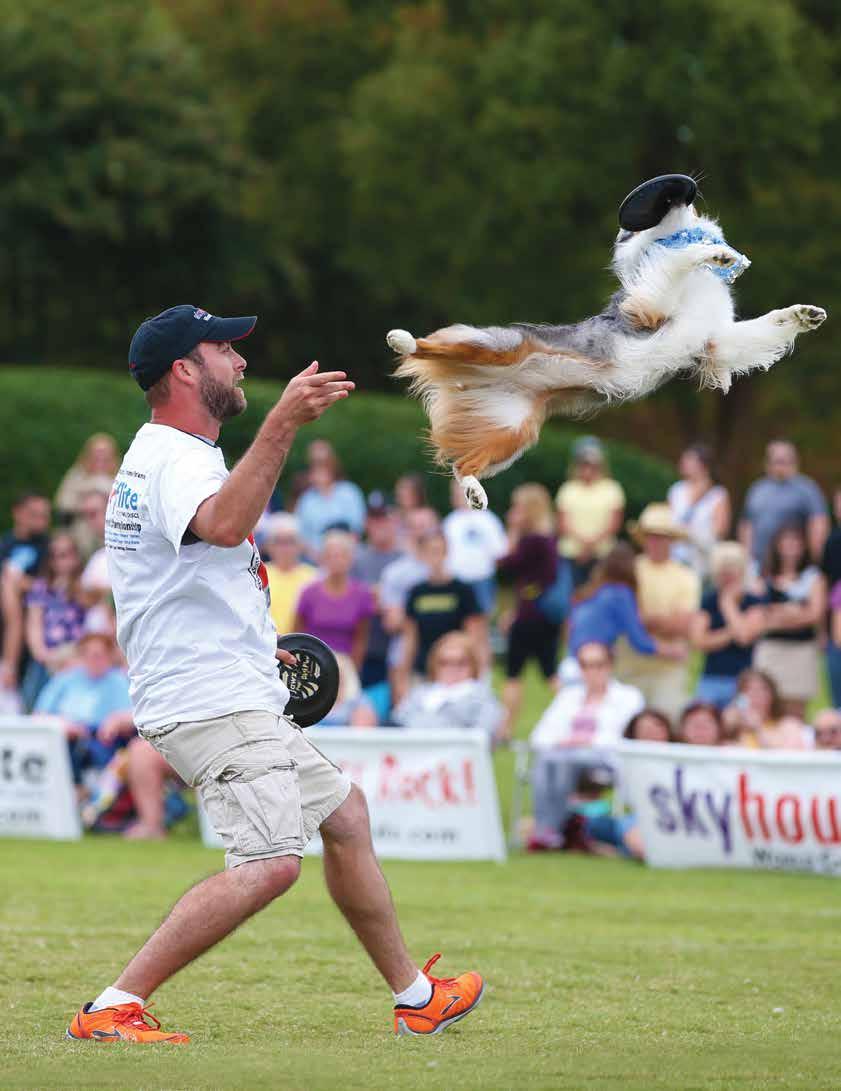
• Matt Bilderback & His High Performing Canines - See the champion canine disc dogs in action!
• DockDogs Dog Diving Competitions
• Classic K-9 with Ken Scarnegie Agility Show in DOG WORLD ARENA
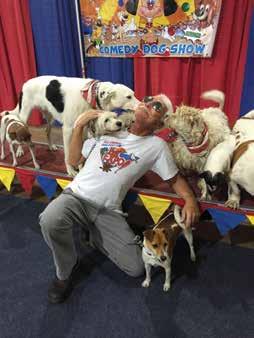
• Johnny Peers and the Muttville Comix Show – JOHNNY PEERS AND THE MUTTVILLE COMIX STAGE
• IJA SANCTIONED RESCUE ME, RODEO GROOMING COMPETITION—from the beginner groomer to the most advanced this competition is perfect for you
• EXHIBITORS—check out more than 200 pet-friendly exhibit booths
• MEGA PET ADOPTION—Find Your Best Friend waiting for you!
• Meet the Rescue Breeds Presentations
• Dress up Your Pet and Pet Look Alike Contests!
Expertly designed so you won’t miss all the nonstop shopping and entertainment!











WHEN: the first Thursday of every month. (April - Oct.) Starts at 4:30. End time varies according to sunset.



WHAT: a special evening to spend with your favorite four-legged friend WHERE: all around the Olde Gahanna downtown area / Mill Street / Creekside Plaza. (117 Mill St.) (Gahanna Exit/Rt 62) www.oldegahanna.com/paws_in_the_plaza








































































ADVERTISING INQUIRIES
PLEASE SUBMIT ANY CORRESPONDENCE TO: info@pghpetconnections.com 412-238-4233
CENTRAL OHIO PETCONNECTIONS BI-MONTHLY
Published by: Pittsburgh PetConnections, LLC. Pittsburgh PetConnections LLC. was formed in 2012. Our mission is to publish a high quality, informative publication focused on the Human-Animal Bond. We support local businesses and also assist local non-profit businesses for pets and people, to give back to our great Central Ohio communities.
MAGAZINE PUBLICATION STAFF
Carla Mader, Managing Editor
Susan Wagner, DVM, Content Editor
Jaimee D. Greenawalt, Graphic Design
Carla Mader, Sales & Distribution Manager
CONTRIBUTING WRITERS
Our contributing writers have many years of combined experience and expertise in the fields of veterinary medicine and the Human-Animal Bond.
All Rights Reserved | Copyright 2016
Cover photo:

Matt Bilderback & his High Performance Canines have competed in canine disc for over 10 years and have a total of 3 World Championships, 2 world records, multiple time long distance championships, and numerous national, international and world championship appearances to their name. Come see these amazing athletes in action and learn how to train your next disc dog.
Welcome to our Central Ohio PetConnections Magazine! January/February, 2016 Volume 2 • Issue 1
We are excited and very pleased to announce our recent partnership to coproduce with The All American Columbus Pet Expo being held at the Ohio Expo Center, March 11-13!
Please see the inside front cover Expo spread and our event page for upcoming events here in Central OH!
Our cover for this issue features Matt Bilderback and his High Performance canine in action. See him live at the All American Columbus Pet Expo! Read about our featured organization, Canine Companions of North Central Ohio. Read about Animal Assisted Therapy by Susan Wagner, February is National Pet Dental Month by Vonda Fichera, Colic in the Horse part 1, by Dr. Burks, Wellness for Guardians by Carisa Holmes from the All Life Community, Wildlife Section, by the Ohio Wildlife Center and much more!
We thank our advertisers & sponsors, the All Life Community for sponsoring our Wellness for Guardian section, ASPCA Pet Insurance, Crystal Remembrance, Beaver Animal Clinic, and Canine Health.
PetConnections supports local organizations and small business and we have established a community network of readers, writers, advertising sponsors and distribution points. Please support our advertising sponsors! See their locations on the map page. Check out our PetConnections Resource Directories for categorized listings.


The award-winning Pittsburgh PetConnections edition started publishing monthly in September of 2012-14 and is now bi-monthly and multi-regional. PetConnections has grown to be the #1 free resource for news, expert information on everything pets, as well as wellness for people with the PetConnections directories, event calendars both online and in print, in both Central Ohio and Pittsburgh. Our award-winning content was recognized by the Dog Writers Association of America.

We also have a partnership with BENN Advertising Solutions to offer more targeted and effective marketing and advertising campaigns to our sponsors for Central Ohio.
Creating awareness and raising preference for our sponsors, our print and digital editions of PetConnections magazine has become a trusted resource. Our media partnership packages now offer a unique and powerful combination of print and digital issues with a demand side platform for digital advertising with BENN, which can lead to more targeted, measurable and responsive campaigns. BENN is very competitive with DSP, offering 4 platforms and in-house campaign managers to optimize, track and report campaign progress!
For PetConnections Advertising inquiries contact: 412-738-4233 info@pghpetconnections.com PetConnections is also looking to grow our team with additional sales account manager professionals.
We encourage you to subscribe to PetConnections Magazine, as our readership is growing! Even though PetConnections is free at select locations, reserve your personal copy to be mailed every issue! Visit www.pghpetconnections.com to subscribe today!
Submit your photos and stories, as well as remembrances to be featured online and in future issues to: info@pghpetconnections.com.
Warmly,
Carla Mader Publisher Pittsburgh
& Central Ohio PetConnections Magazine
Please submit any correspondence to: info@pghpetconnections.com
Please check us out on the web & subscribe at: www.pghpetconnections.com
Follow PghPetMag on Twitter and “Like” us on Facebook! http://www.facebook.com/PghPetconnectionsMagazine
By Dr. Susan Wagner
Animals teach us about compassion, trust, boundaries and unconditional caring. Assistance animals have a long tradition of service in the United States, with guide dogs, hearing assistance dogs and disability dogs being well respected members of our communities. Police and military dogs have given their lives for their handlers, perhaps the ultimate test of the human animal bond.
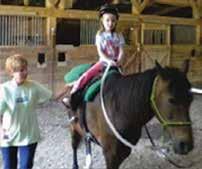
Animal assisted therapy programs have been utilized for physical disorders since the late 1800’s, and are currently gaining recognition within the medical and behavioral health arenas. Several species of animals have been used to treat a variety of physical and emotional disorders. These include dogs, cats, horses, rabbits, llamas, reptiles and even insects.
As these programs increase in popularity, so does research as to their effectiveness.
Valuable work has been published in the area of physical rehabilitation. For example, electromyography was used to measure muscle symmetry in children with cerebral palsy undergoing equine assisted therapy (hippotherapy) and children experiencing passive stretching.
Results showed that the hippotherapy group exhibited improved muscle symmetry whereas the passive stretching group did not. Interesting work has also been done using animals as adjuncts to psychotherapy. Therapists report that animals help people express themselves more freely. Children with emotional disturbances will often trust an animal long before another human being. Equine Assisted Psychotherapy adds another dimension to behavioral services. Working with a thousand pound horse builds confidence, while at the same time being
a humbling experience. The toughest troubled child can’t make a horse do something it doesn’t want to do! Horses can also be invaluable in teaching about boundaries and empowerment. While they can’t be forced to move, they can be trained to. A person’s sense of accomplishment when a huge animal does what they want is a wonderful gift.
Evidence also exists that nurturing animals can be as beneficial to the person as it is to the patient. As people assist animals in healing, they themselves can be healed. Although this at first glance doesn’t appear to be animal assisted therapy, it most certainly is!
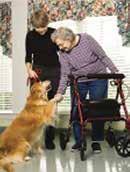
Studies have also been done to investigate the role of pets as “therapy” animals. Veterinarians have long understood the importance of pets in their guardian’s lives. Some clients have no family other than the pet, and the loss of that animal can be devastating. Nursing home residents can form a deep connection to a visiting or residence animal, which can help heal the sense of loss they feel in leaving their homes and family. Nursing home pets have even attended funerals at the request of the deceased.
mals with which they share their lives are not included.
New applications for animal assisted therapy are much needed. With the US population growing more and more unhealthy, medical costs are increasing at an alarming rate. Obesity is now an epidemic. Public health officials project that this generation will be the first to have a life expectancy less than their parents because of obesity related diseases. Stress related complaints account for 60 – 90% of physician visits, with health care costs being 147% higher in stressed or depressed workers. Violence has become a common occurrence on the news, and younger and younger children are becoming victims and perpetrators. Nearly 2 million children are seriously abused every year, 2 million women are battered and almost 1 million parents are beaten or abused by their children. The tolls of our current wars in our military personnel physically and emotionally can only be imagined. At this time, the Army estimates that one in six soldiers is suffering from depression, anxiety or posttraumatic stress disorder, and the number could increase to one in three. Animal assisted therapy can be utilized in all of these settings, and more. As animals are used for different indications, further outcome studies are imperative in gauging their validity.
Science is now catching up with this anecdotal evidence on animals’ effect on our health and well being. Pets have been shown to reduce heart rate, blood pressure and anxiety. One study revealed that patients with heart disease and arrhythmias were more likely to be alive one year later if they owned a dog. Beck and Glickman wrote in 1987 “all future studies of human health should consider the presence or absence of a pet in the home…as a significant variable. No future study of human health should be considered comprehensive if the ani-
Dr. Susan Wagner is a board certified veterinary neurologist whose pioneering work acknowledges the bioenergetic interaction between people and animals. She is an advocate for change in the area of interpersonal violence and animal cruelty, and works toward a greater understanding surrounding the health implications of the human-animal bond. Dr. Wagner is a Level IV Healing Touch for Animals practitioner and co-author of Through A Dog’s Ear PC
Adoption, Rescues & Shelters
Almost Home Dog Rescue of OH
614-766-1001
www.almosthomeohio.org
Canine Companions
1-800-572-BARK (2275) www.cci.org/northcentral
Capital Area Humane Society
614-777-7387 cahs-pets.org
CHA Animal Shelter
614-891-5280 chaanimalshelter.org
Colony Cats Adoption Center 614-593-0055 Colonycats.org
Columbus Dog Connection 614-471-9000
Columbusdogconnection.com
Cozy Cat Cottage Adoption Center 614-336-8510 cozycatcottage.org
Franklin County Dog Shelter & Adoption Center
614-525-3647
franklincountydogs.com
Pets without Parents
614-267-7297 petswithoutparents.net/
Avian & Exotics
MedVet Medical & Cancer Centers for Pets (Hilliard)
614-870-0480 medvetforpets.com
Dog Parks
Alum Creek Dog Park www.alumcreekdogpark.com
Companion Club Dog Park 740-881-2000 www.columbusdogpark.com
Godown Road Dog Park www. worthingtondogpark.com
Heritage Trail Dog Park www.hilliardohio.gov/play/heritage-trail-dog-park
Pizzurro Park and “Dog Park” www.gahanna.gov/departments/parks/ communityParks.aspx
Equestrian
Central Ohio Riding Club
614-873-6644
centralohioridingclub.com
Equus Now! 740-549-4959 Equusnow.com
OSU Veterinary Medical Center 614-292-6661 vet.osu.edu/vmc/
Landscaping & Lawncare
Finlandscape
740-927-1994 www.finlandscape.com
Good Nature Organic Lawn Care 888-529-6723 www.whygoodnature.com
PetButler of Central Ohio
1-800-PET-BUTLER
www.petbutler.com
Synthetic Turf Innovations
614-260-4404
www.syntheticturfinnovations.com
Pet Burial, Cremation & Memorial Services
Crystal Remembrance for Pets
888-930-7363
Crystalremembranceforpets.com
Day Manofsky Funeral Service
614-532-5012
Daymanofskyfuneralservice.com
Rutherford Funeral Homes
614-885-4006
Rutherfordfuneralhomes.com
Schoedinger Pet Services 614-224-2691 schoedingerpetservices.com
Pet Fencing
Invisible Fence
614-888-3647 www.columbuseast.invisiblefence.com
Pet Insurance
ASPCA Pet Health Insurance
1-888-716-1203 aspcapetinsurance.com
Pet Resorts- Boarding, Daycare, Grooming, Agility & Training
ARF! Agility and Rally for Fun! www.arfagility.com
Advanced Boarding & Grooming 740-549-9999 advancedboardingandgrooming.com
Camp Bow Wow 614-527-2267 campbowwow.com
K9 Connection 614-778-0431 www.k9connectiononline.com
Lucky Bones Pet Resort 614-367-7297 www.luckybonesdaycare.com
Park Your Paws Doggie Daycare 614-262-PAWS www.parkyourpaws.org
Pet Palace Pet Boarding Resort petpalaceresort.com
The Dog Spaw Pet Grooming 614-245-4169 thedogspawsalon.com/
List your business today! info@pghpetconnections.com
Willow Wood Pet Resort & Training Center 614-304-1921 petresortwillowwood.com
Pet Retail, Supply and Accessories
Canine Health Supplements www.mylifevantage.com/peggymills Collar Doos collardoos.com
Moochie & Co. moochieandco.com
Pet People petpeoplestores.com
Titan Bones www.titanbones.com
Pharmacies
Central Ohio Compounding Pharmacy 614-847-0109 www.compoundingpharmacycolumbus.com
SBH Medical- Compounding Pharmacy 614-847-6007 www.sbhmed.com
Veterinary Medicine
Elemental Veterinary Center & Pet Spa 614-824-4036 elementalvetcenter.com
Lifetime Pet Wellness Center 614-888-2100 lifetimepetwellness.com
Health & Harmony Animal Hospital 614-360-3941 healthandharmonyanimalhospital.com
The Animal Care Center at Granville 740-587-2229 www.animalcarecentergranville.com
Veterinary Specialty and Emergency
MedVet Medical & Cancer Centers for Pets 614-846-5800 medvetforpets.com
OSU Veterinary Medical Center 614-292-3551 vet.osu.edu/vmc/
Wellness for Guardians:
The All Life Community for Integrative Well Being 740-201-8242 www.alllifecenter.org
Wildlife
Columbus Zoo and Aquarium www.columbuszoo.org
Ohio Wildlife Center 614-793-WILD ohiowildlifecenter.org
SCRAM! Wildlife Control ohiowildlifecenter.org
The Wilds www.thewilds.columbuszoo.org
Visit our online directory at pghpetconnections.com/Dog-Cat-Directory
By Linda Forte-Spearing, Volunteer, Ohio Wildlife Center
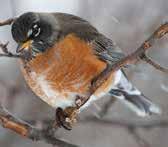
Take the American robin, for example. A fiercely territorial species, robins will work together to find food in the winter. In fact, they’ll even join forces with other fruit eating birds like Cedar waxwings. Why? The bigger the flock, the more sets of eyes, the greater the chances of locating an abundant food source.
The onset of spring however, triggers a change in behavior. As the days get longer, robins squabble more frequently within their feeding groups. They also begin to sing. And once the singing starts, it’s every robin for itself.
“It’s a progression,” says Stormy Gibson, Director of Conservation Education at Ohio Wildlife Center. “Male robins, in particular, become more aggressive as mating season approaches. They find a suitable nesting site, lay claim to a defined territory, and spend their energy defending that spot from interlopers.”
Funny enough, these interlopers are often the bird’s own reflection. Though the raucous they create when attacking that “rival” in the window is anything but entertaining.
As Stormy explains, a resident robin will use sound and posturing to scare off a competitor. If these tactics fail, he will aggressively chase an invading bird away. The issue with a reflective surface (a window, a windshield, a gazing ball in the garden, etc.) is that the perceived enemy never leaves. So the robin attacks and can continue to do so for weeks. That’s the bad news.
The good news? While it looks like the attacking bird is bashing himself silly, a life threatening injury is a rare occurrence. Other than beak damage, a smattering of blood on the window is typically the result
of broken feathers that are still growing in.
Having said this, it IS possible for the pecking perpetrator to exhibit extreme behavior and hurt itself. If this is the case, and you can approach the wounded bird, place it in a towel-lined shoebox and immediately transport it to your local wildlife rehabilitator. You can also call Ohio Wildlife Center’s monitored information hotline for assistance.

them over the vehicle until the guilty party abandons its cause.
Opaque plastic grocery bags are the perfect covering for side mirrors. Or you can simply move/park your vehicle outside of the bird’s territory.
The other good news? There are a number of things you can do to try and discourage these reflective confrontations. “Try” being the operative word.
• Windows. Suburban songbirds (robins, cardinals, house finches, etc.) are the most prone to beating up on windows, as they often nest in trees and shrubs that are close to a building—whether a residence or commercial space. To deter them, you must completely cover the window from the outside so the reflection is no longer visible.
Soaping is one alternative, though a messy one with mixed results. A medium-weight plastic painter’s cloth hanging from the top of the window works well. It eliminates the reflection while still allowing light into the home or office space. And as it hangs freely, any movement in the wind also helps to scare the bird away.
Towels and sheets will also get the job done—if you’re not concerned about the curb appeal. Though wax paper will hold up the best in the rain.
• Cars. An automobile has a multitude of reflective surfaces including but not limited to bumpers, chrome grills, side mirrors, and windows. Where possible, you can use the same materials previously listed, draping
If the culprit attacking your car is an unyielding Canada goose, you may need to call in the experts. Like many birds, this species is protected under the Migratory Bird Treaty Act. You can be prosecuted if you harm it. SCRAM! (Suburban Commercial and Residential Animal Management) Wildlife Control is a 100% non-lethal service of Ohio Wildlife Center. They will work with you to provide a natural, humane and permanent solution to any human-wildlife conflict.
Always keep in mind that a territorial bird can be persistent. In fact, if you cover one surface, some will continue to look for that imaginary foe until they find it again on a window nearby. If you can bear it, it might just be best to do nothing. The whole crazy process will come to an end—when the eggs finally hatch. Turns out a nest full of hungry babies is the perfect distraction.
For additional information about Ohio Wildlife Center, including a listing of the licensed wildlife rehabilitators in your area, visit. www.ohiowildlifecenter.org. Please call the Center’s monitored information hotline at 614-793-WILD for assistance with common wildlife situations.
You can reach SCRAM! Wildlife Control at 614-763-0696. All proceeds from SCRAM! services support Ohio Wildlife Center’s nonprofit rehabilitation and conservation education efforts. PC
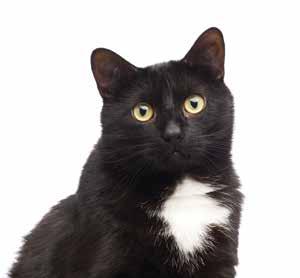
Cats, unlike dogs but like humans, are individuals and not pack animals. Their strongest form of communication is using body language, although they do communicate by using vocal language as well. In some ways the cat’s physical communication is like that of humans. For example, wide eyes indicate some sort of excitement and an upright confident body posture indicates both a feeling of security and emotional balance.
The first three interesting cat behaviors are a combination of body language and possible inherent behaviors that may be present from early kitten development. These first three are often asked about by pet guardians and so I thought I would share them with you…
KNEADING:
Haven’t you wondered why your cat stands on you or on the couch and pushes her paws in with a kneading motion? The cat has a body memory of doing this activity as a kitten to get the mother’s milk. It was such a pleasant experience for them that it “comes out” when they are feeling really content or affectionate in adulthood! A cat may also use kneading when it is in pain or dying as a way to comfort self.
By Judith Levy M.Ed.,CEHP, ACC
When cats stand or sit and their mouth is oddly hanging open it almost looks like they are laughing! They are actually taking in scents from the environment. Cats have an organ in the roof of their mouth behind their front teeth that they use to discriminate along with their sensitive sense of smell. This will sometimes happen during play when they are trying to take in what is happening around them.
Does your cat drool when being petted or when she is sitting with an open mouth? It is believed by some that drooling when being petted involves, again, a body memory from early developmental days. Often a mother cat will give affection or attention to her kittens while they are eating. So the belief is that it is a stimulus response learned behavior from this early period: When you pet your cat, the cat is reminded (body memory) of food and will begin to salivate. Cats may also salivate when they are nervous.
Here are four major feline body parts and how your cat uses them to “talk” to you!
When your cat’s ears are high and relaxed, your feline is happy. If the ears are turning at angles, she is listening to something in the environment. When the ears are half way back, your cat is becoming concerned and may become aggressive. When the ears are plastered against the head, this indicates extreme fear or irritation.
EYES:
A relaxed cat will blink at you to show friendship or contentment-- the eyes are soft and perhaps halfway closed. When
the eyes are large, dark with dilated pupils, your cat may be fearful or excited.
Check the rest of the body parts to see which state your cat is in. When on the other hand your cat’s eyes are like slits and the pupils are pinpoints, your cat is likely upset and stressed.
As you probably know, the cat uses its whiskers to determine if she can fit her body into a space or opening. The whiskers on a relaxed cat will be out to the side and hanging a bit in a soft position.
The stressed cat will pull her whiskers back against the face.
TAIL:
Cat tails are very telling with regard to the cat’s mood. When the tail is held high and has a little hook on the end, your cat is happy!
If your cat is worried she may hold her tail tucked under or close to her body when lying down. When your cat’s tail is swishing slowly and in a repetitive way, she is likely stimulated in a positive way and feeling good! But when her tail is flickering aggressively, be careful as she may be getting ready to attack!
Please join us in the next issue of Central Ohio PetConnections and find out how to help your cat if her body language indicates some discomfort or disturbance. Please note: If you have a severe anxiety or aggression issue with your feline, it is advisable to schedule a behavioral consultation.
Judith Levy M.Ed.,CEHP, ACC – Feline Behavior Consultant www.judithlevywellness.com info@judithlevywellness.com PC
Subscribe,


No website for your small home-based pet or wellness business? Add a Featured Listing on the Central Ohio PetConnections Online Director y for a small yearly fee & upload photos & detailed info about your business!



Partnership Includes:
•Advertisement in print or online
•Free Featured Director y Page on our website with your business info, photos & a link to your website
•Your logo in our monthly newsletter
•Promotion by Central Ohio PetConnections at our events
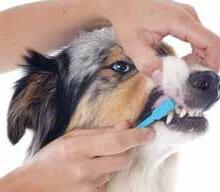
Did you know that February is Pet Dental Health Month? Well it is right around the corner, and many veterinary clinics extend this focus through January and February each year. As much as I appreciate this short term focus on the number one health concern afflicting our pets, it is really a yearlong need.
Let’s take a quick look at the why’s and what to do’s for this important animal health sector.
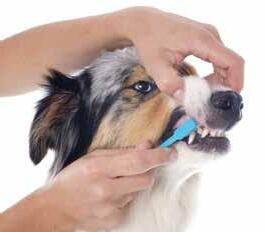
All of us can see the beautiful smile our pets give us, and while those front teeth may look nice, the root of the problem is much deeper, and more apparent if you lift the lip and look at their premolars. It has been recognized by the American Veterinary Medical Association that 80% of pets under the age of four have periodontal disease, and 100% of pets over the age of four have it!
Why is that? There are four different grades of periodontal disease. These range from a mild combination of gingivitis and tartar build up, to an excessive amount of calculus (a hard, thick crust), on the tooth enamel, and potentially ulcers or abscesses affecting the gums and roots.
Small breed dogs and Brachycephalic (flatter faced) pets, such as pugs, are at a greater risk. These pets have a crowded mouth if you will. All of their teeth are trying to fit into a small space. This crowding gives bacteria a really nice place to hide and grow.
Signs and symptoms to watch out can vary from the extremely obvious to very subtle. Pay attention to your dog’s breath. Doggy breath is not necessarily a good thing, and if it smells like “dragon” breath, there may
Signs and symptoms to watch out can vary from the extremely obvious to very subtle. Pay attention to your dog’s breath. Doggy breath is not necessarily a good thing ...
be a real problem in there. Are your pet’s teeth a pearly white with a light pink gum tissue? That would be a healthy mouth. If not, what do you see? Do you see a brown or black buildup on the enamel? Do you see red, inflamed tissue surrounding the gums? Is there an oozing spot? What about a loose or seemingly missing tooth? If you see or smell anything that concerns you, call your local veterinarian and ask if they can see you’re pet for a dental exam and estimate for home care options or dental cleaning.
Brushing is best!
Okay, okay, now we’re talking home care, does that mean I have to brush my dog’s teeth?! While brushing is the best option, it’s not always the most practical. Some
By Vonda Fichera, RVT
pets love to have their teeth brushed, it feels good, and they will sit patiently while you do this. Many others are distracted easily, and you may find it to be a challenging task, SQUIRREL!
If you’re not able to brush your dog’s teeth, take a look at some of the other options for home care. There are water additives that you can mix into your pet’s bowl. Products like Aquadent and Breathalyser are available in these formats. Make sure you are changing the water frequently though, and be sure that your pet is happily drinking as much water as he/she was before. We don’t want to be worried about dehydration because we added something new. One other word of caution, some water additives contain an ingredient called Xylitol. This artificial sweetener encourages them to drink, but can be risky for some pets. Check with your veterinarian before you use anything with xylitol in it.
Another home care option is a food additive. These are one of my favorites for the pets who have daily feedings in measured amounts. Plaque Off comes in a small container with a scoop, Perio-Support is available in two sizes, a smaller container with shaker top, and larger, more cost effective container with a scoop. All of these are top dressed on the food. In other words, store these in your food container, scoop out your pet’s meal, shake on the powder, done! A food additive is typically very palatable, and a lot of dogs will wait for you to add it after using it for a few meals. I also like that companies such as Vetri-science (Perio-support), offer a 100% guarantee on their product. If your pet won’t eat it, or you don’t think its working, you can take it back to your veterinarian. A word of caution, this guarantee does not apply if you don’t purchase from your veterinarian.
There are a lot of chews and treats on the market that claim to support dental health, I’m sure that some do, but be careful in this area. When it comes to rawhide type chews, you need to monitor your pet carefully, ask any technician, we have removed quite a few rawhide pieces from the throats of our patients. Also, your pet needs to chew on this for an extended amount of time if they are to receive the full benefit.
Dental Sticks are another options for our furry family members. Again, monitor your pet when they are chewing on any of these, you want to make sure they don’t chew off a big piece and either choke or have it lodge in the intestines. Greenies and Nutrident are available in pet stores, however, there is another great option coming this year through our veterinary clinics. Perio-Plus Stix are a combination of a chew stick, and the wonderful ingredients in perio-support powder to help neutralize those particles that cause bad breath. The ingredients found
in these sticks will also help to support the gum tissue, and as we already know, most pets have gingivitis of some classification. A feline version is called Perio-Plus Bites.
Synthetic chews I caution against. Some of these, like the Kong toys, are great for chewing and massaging the gums, but there are others on the market that may actually cause your pet to break a tooth. As with all of these options, check with your veterinarian; ask them what they recommend for your pet.
The last part of my discussion asks, “Does my pet need a dental cleaning and what is involved?” Again, check with your veterinary clinic and ask them a few questions. Each clinic does their procedures a little differently so you want to know exactly what is included. If you call around to get prices, you may find out later that a procedure at one cost at clinic A only included a cleaning, while the cost at Clinic B included the clean-
ing, radiographs, pain management, and a home care item to go home.
Dental cleanings are essential to the health of your pet. If left unattended, periodontal disease will affect the health of your pet’s heart, kidneys, liver, etc... Think about it this way, if we go twice a year for dental cleanings, how often should our pets be seen? They are aging 7 times faster than we are, that would be 14 dental visits a year!! Instead, take them in twice a year for their wellness exams, have the teeth checked then. If you do just one wellness exam, go again 6 months down the road and have a technician take a look at your pet’s mouth. They can let you know how things look in there, create an estimate for a cleaning if needed, and consult with the veterinarian if they notice a problem.
I hope you and will now pay attention to your pet’s beautiful smile. After all, it’s not just the health of his mouth at risk here, its whole body support! PC

By Tena Parker, CPDT-KA Success Just Clicks Dog Training
Having a well-trained dog opens up a world of possibilities for fun experiences and sets dog owners up for success with their pet. The definition of a “well trained dog” will vary from dog to dog and from situation to situation—not all well trained dogs can do the same things (or would want to do the same things) but there are plenty of things well-trained dogs can do that others can’t. Well trained dogs can walk nicely on leash in public, be invited into dog friendly stores (that aren’t pet stores), be invited into the work place, explore the environment off-leash (where legally permitted), help others through therapy dog visits, be trusted when visitors come over, behave appropriately in public situations, wait patiently, pose for photos nicely, and even help around the house (cleaning up their toys or even fetching you a drink!).
The Association of Professional Dog Trainers (APDT) has deemed January “National Train Your Dog Month”, so there is no better time than now to improve your dog’s training! Whether you have a new dog in your home that needs to learn the basics or you have an adult dog who has been annoyingly pulling on the leash for years, getting into training will ultimately make your life with your dog more enjoyable.
Now, you may be thinking, “It’s been like this for years, Fido’s behaviors can’t change” or “We’ve tried everything and nothing ever works!” Well, I’m here to tell you that things can change and change for the better! Getting into a training class with skilled and experienced positive trainer or hiring a private trainer can make all of the difference in the world to the efficiency of your training. You wouldn’t give up on fixing your car without taking it to a mechanic or two,
right? There is no need to just live with the behaviors your dog has without training with a trainer or two and certainly no reason to relinquish a dog to a shelter without hiring a professional.
Got a Training Problem?
Here’s where to find help…
Housetraining Problems—
If Fido is lovely except for the housetraining challenges, your best bet is to hire a private trainer who can come to your home, help you get a routine created and get a training plan in place.
Pulling On the Leash—
If your dog has a long history of pulling like a tank on leash, you may be best served by hiring a positive trainer to help coach you on that one specific problem area and teach Fido to walk nicely in your neighborhood. If your pup is a moderate puller or has some other manner issues, a group class may be appropriate for your situation.
Jumping on guests or going crazy at the doorbell
Hiring an experienced trainer to come to your home and help you create a training plan that will work for your specific situ-
ation can be helpful for multi-dog homes but a good basic level group class will also help you learn techniques to quell the jumping.
Growling at, barking at, snapping at, or biting dogs/people—
With potentially dangerous behaviors, hiring a private trainer to address the concerning behaviors is the most prudent approach. When working with behavioral problems, it’s extremely important to hire a skilled and experienced trainer to work with. Not all trainers have catered their education or experience to working with behavioral cases, so making sure you get the right trainer is important to your success. You may be able to find a growlydog class in your area as another option for some dogs/handlers, but these classes are not right for all dogs.
Generally just wild and hyper— Group classes that focus on manners may be a solution for many of these dogs. Group classes help teach a dog focus in distracting environments and trainers can help handlers learn some new exercise ideas. There are even some group classes that focus on relaxation that may be of help. Some dogs, however, may need private training to work on a relaxation protocol with individual coaching.
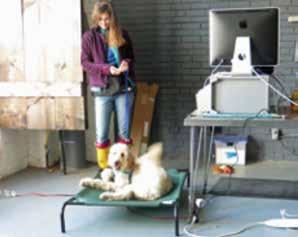
Doesn’t listen well—
basic group classes are designed for just this problem. You have a dog who doesn’t generally listen or respond to you (maybe they are great inside your home, but outside, they don’t even know you exist). Group manners classes will teach you all the basics and teach you how to get your dog to respond to these cues in the real world. Since not all dogs are right for group classes, private trainers can also be great resources for this problem as well.
absorption (raw veggies tend to go right through the GI tracts of carnivores). Start by mixing in just a small amount of finely chopped veggies. Experiment and find your pet’s favorite.
4. Skip the Snacks – Believe it or not, your dog will not die if he does not get a treat every time he goes outside (although he might carry on as if he will). Pet snack food is as unhealthy as our snack food. If you don’t believe me, look at the ingredient list on the package. Most of it is garbage wrapped in artificial flavor enhancers. I know, I know, your pet just won’t stop pestering you unless you slip him a treat every time you pass the special cupboard. Well guess what, when you give in to the terrorists demands, you’ve just reinforced the unwanted behavior. The pet has become the master. Keep in mind that food does not equal love.
Yes, that pudgy pooch or fat cat may look adorable but according to research they will start with symptoms of arthritis and other chronic diseases 3 years earlier than their slim counterparts. The heavy animals will also die almost 2 years earlier.
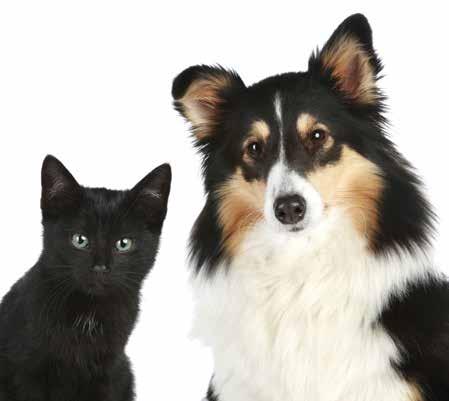
5. Diet Rotation – The tendency of most pet caregivers is to find a food that “works” for their pet and stick with it for life. This is a very unhealthy practice. For one thing, any individual pet food may have slight nutrient imbalances that escape the regulatory process but may cause problems when fed long term. Also, studies show that the best way to cause a food allergy is to feed the same thing day after day. The idea that changing a pet’s food causes diarrhea is a self-fulfilling prophecy. Eating the same thing long term and then suddenly changing to something else will almost always cause GI upset. However, pets can get used to eating a variety of foods just like we do. Yes, at first changes will need to be made gradually by tapering on the novel diet, but often over time, the changes can be made more quickly.
You are likely to run into diets that just do not agree with your pet – avoid those in the future. Try foods with different main ingredients and from various manufacturers. Find a half dozen or so foods that work for your pet and rotate through them, changing foods every week or so. Variety is the spice of life for our pets too.
There you have it – five easy, health-improving changes you can make in your pet’s eating habits. Choose one to start with and as the ad says, “Just Do It.” You just may start a revolution in your pet’s health. PC

Veterinarians are often asked about treating colic. This is a little like asking how to treat a limp. There are many causes of colic, enough to fill volumes. Most simply, colic means abdominal pain, from whatever the cause in the immediate case. There are many misconceptions about colic.
• Rolling causes the colon to twist
• Passing manure means that the horse is getting better. Trailer rides will fix the colic
• Horses colic with changes in weather
These misconceptions can lead to delays in treatment and possibly even death. The question, then, should be as follows: What is the diagnosis that is causing the colic? To answer this question, one must understand the anatomy and physiology of the equine digestive tract.
but it does not translate well into being kept in stalls and fed meals twice daily.
The equine digestive tract is unique in its ability to digest cellulose and other structural carbohydrates. This process is known as fermentation, which requires a special and complicated digestive tract. Fermentation yields copious amounts of gas due to the microfauna (bacteria and yeasts) required for digestion and works well for what horses were meant to do-- range over many acres,
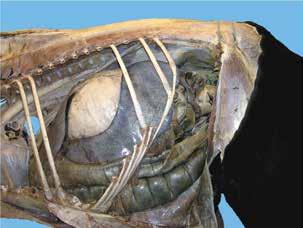
The digestive tract begins in the mouth. Prehension and mastication are important aspects here. Very sharp teeth may affect mastication and cause injury to the inside of the mouth. Food must be taken in using small bites and chewed well to stimulate saliva production, beginning digestion. Saliva contains many digestive enzymes and buffers to break down food and buffer acids in the stomach. From the nose to the stomach is about one and a half meters; a three- meter endoscope is required to examine the stomach in its entirety. The stomach normally holds around three gallons and it exits, via the pylorus, into the small intestine which is around 80 feet. The small intestinal mesentery (ligamentous attachment of the intestine to the body wall) is connected to the top of the abdomen (toward the spine) near the first and second lumbar vertebrae at the site known as the “root of the mesentery.”
Within the root of the mesentery exists the large cranial mesenteric artery. The mesentery is wide and fan-shaped and carries numerous vessels and nerves to the intestines. It is attached to the small intestine along its entire length, but because of its fan shape and singular attachment, it is highly mobile and permits the small intestine to move freely in the abdomen.
By Brian S. Burks, D.V.M., Dipl. ABVP, Board-Certified Equine Expert
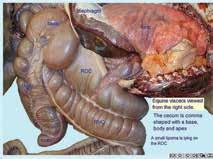
The small intestine exits into the cecum, a 3.5 foot appendix which holds around 5-7 gallons of ingesta. This is essentially a blind pouch, with an entrance and an exit lying in close proximity. The cecum mixes the ingesta, ferments feed material via microbial digestion, and absorbs water. Next comes the large colon which has several turns, including an upward hairpin curve. It is designed as a double stacked horseshoe. The large colon is about 15 feet long and varies greatly in diameter, from 8cm to as large as 50cm in the right dorsal colon.
The sequence of the limbs and flexures of the ascending colon is as follows: Right Ventral Colon passes out of the cecocolic orifice on the right side of the abdomen and continues cranially to the xiphoid region; Sternal Flexure, passes across the midline from right to left, Left Ventral Colon, which has a diameter of about 20cm, runs caudally on the left ventral abdominal floor; Pelvic Flexure, which has a diameter of about 8cm, turns dorsally just cranial to the pelvic inlet and then runs cranially to the diaphragm, Left Dorsal Colon, runs cranially, parallel and dorsal to the left ventral colon; Diaphragmatic Flexure, turns caudally at the diaphragm; Right Dorsal Colon, with a diameter of 50cm, continues caudally on the right. It is the shortest limb of the ascending colon.
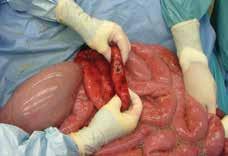
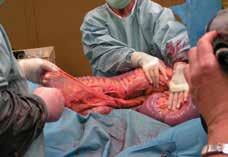
The transverse colon continues on from the right dorsal colon as the right dorsal colon turns medially. The right dorsal colon is attached by a mesentery to the dorsal abdominal wall, the base of the cecum, the root of the mesentery, and the pancreas. This anatomical arrangement of mesentery allows the left ascending colon to twist and is a common cause of colic (colonic torsion).
The large colon in turn empties into the 10 foot long small colon, where fecal balls form before exiting the rectum and anus. All told, the equine digestive tract secretes and absorbs about 100 liters of fluid every day. All of the twists and turns of the equine
GIT are to slow movement, cause mixing of the contents, and allow microbial digestion, making Volatile Fatty Acids the major source of energy in the horse.
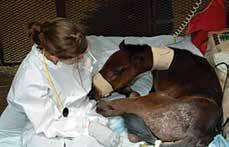
Horses are very sensitive to abdominal pain and may present differently from those of other species. Signs in horses range from mild to severe and include anorexia, lethargy, ‘ain’t doin’ right’, lip curling, teeth grinding (bruxism), flank watching, stretching as if to urinate, pawing, kicking at the abdomen, rolling, thrashing, and others.
Colic signs may emanate from any point of disturbance in the gastrointestinal tract. It may be confused with pain from other areas of the body, for example chest pain.
There are many causes of colic, depending upon the site affected. Examples include the stomach with gastric ulceration or feed impaction; the small intestine can twist at the root of the mesentery (volvulus); the large colon may have gas, impaction of feed material, or may have a torsion. Any part of the intestinal tract may be affected by inflammatory diseases or bacterial infections. There are many other potential causes.
What is causing the pain experienced during colic episodes?
• Tension on attachments to the body wall (mesentery)
• Distention or muscular spasm of colic
• Irritation to the intestinal lininggastric/colonic ulcers
• Loss of blood supply (ischemia) from mesenteric volvulus or colon torsion
Many times, horses may recover quickly and on their own. They may colic in the night or
Never give any medication without consulting a veterinarian first. Some drugs may do irreversible harm if given in the wrong situation.
when you are gone and you may never know that your horse had a mild belly ache. Where colic is identified, many resolve with time and an injection of flunixin meglumine, a potent anti-inflammatory and pain reliever; however, it is critical to understand what this medication may accomplish. For minor causes of colic it may be fine. For more severe forms of colic, it may take away the pain while the internal process continues, delaying diagnosis and treatment. It could even cost the horse its life. Never give any medication without consulting a veterinarian first. Some drugs may do irreversible harm if given in the wrong situation.
Anything that blocks normal movement of ingesta from the stomach to the rectum may result in gas and/or fluid build-up, stretching the intestine, causing increasing amounts of pain as the condition worsens. Pain relief may stop this cycle in milder forms of colic. More severe forms of colic such as a twist, displacement, or impaction will require more aggressive forms of treatment, including surgery, especially in the former two causes listed here.
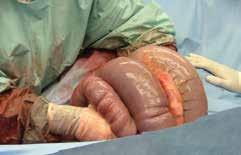
Simple observation is not enough to distinguish mild and severe cases, although more severe signs of pain that continues is more likely to be critical, but this is not always the case. An experienced veterinarian can identify the cause of colic based on signalment, history, physical examination findings, rectal palpation, and other diagnostic modalities such as abdominal ultrasound.
Roughly 5-10% of horses will experience colic in a given year. This happens in all groups, herds, breeds, and geographic locations. There are specific conditions that are more common in certain age groups, i.e. Ascarid impactions and intussusceptions are more common in younger horses. Colon torsion is common in broodmares post foaling. Horses that are kept in stalls experience more colic than those with regular exercise and also those that are fed more concentrates than forage (hay or grass).
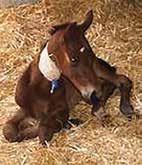
Dr. Brian Burks, Dipl. ABVP is the owner/veterinarian at Fox Run Equine Center, a 24-hour medical-surgical center near Pittsburgh, Pennsylvania. He is board certified by the American Board of Veterinary Practitioners (Equine Practice). This certifies him as an expert in all categories of equine practice. He enjoys the diagnostic and treatment challenges of internal medicine and intestinal disorders. Find out more and contact us at: www.foxrunrequine.com, brianburksdvm@comcast.net 724-727-3481 PC
By Carisa Holmes, HHA, All Life Community Content Manager, Creative Power Coach, Author & Artist
It is abundantly clear that technology has changed our world. We enjoy an unprecedented level of convenience and connectivity due to the computers and other devices on which we’ve come to rely. Instant messaging, clever apps and an international web of information make it seem the entire world is literally at our fingertips.
However, technical difficulties can make all of this progress seem more of a pain than a panacea.


Most of us forget a password from time to time. However, if you find you are always struggling to get past this ubiquitous first step, you may be stuck in a pattern.
While devices do sometimes simply malfunction, in most cases of technical difficulty there is a certain amount of ‘user error’ at play. If we are aware, we can receive a gift each time we experience a technical problem by looking deeper. Beneath the surface-level problem of needing computer repair or a new mobile phone, what themes do our recurring technological difficulties invite us to discover?
For example, are slow computers a sign that it’s time to upgrade, or could it be a sign that you need to cultivate patience?
If you find that the batteries are always dying on your devices, could it be a sign that you are chronically drained and have a tendency to forget to recharge yourself?
If you find that you have problems with using technology across the board, is it because all of those newfangled devices are more trouble than they are worth, or is your own inflexibility – a refusal to learn new life skills and to adapt to change – the real stumbling block?
Most of us forget a password from time to time. However, if you find you are always struggling to get past this ubiquitous first step, you may be stuck in a pattern. Forgotten passwords many times prevent us from getting access to information or messages, and chronically forgetting them may indicate we are not listening to the guidance we are receiving, or are not getting the message that we’re stuck in a pattern.
Alternatively, constantly forgetting passwords could indicate that we are sabotaging our own success by allowing small and easily fixable issues to prevent our forward movement.
Perhaps most importantly, our overall view of technology can send a broader message about our outlook in life. Some view all technology in a negative light; that it’s going to be difficult to use, they won’t be able to get it to work right, and that it’s easier to just avoid it. Could this be mirroring a broader life view that you expect life to be difficult, and that you are creating more struggle and frustration than is necessary on your journey?
With a little willingness to learn, a bit of patience and perhaps help from a techie friend, we can receive the messages our difficulties are sending us and begin to enjoy what technology – and life itself –brings.
Carisa Holmes is a published author, singer/songwriter, artist and content creator at the All Life Community for Integrative Well Being in Delaware, Ohio. www.CarisaHolmes.com PC
Bishop was a very good boy that came to us much later in his life. We only had him for a few years but he still touched our hearts deeply.
He had physical and neurological issues but he never let it hold him back. He could teach a thing or two about perseverance. We would always tell him how tough he was. He agreed.

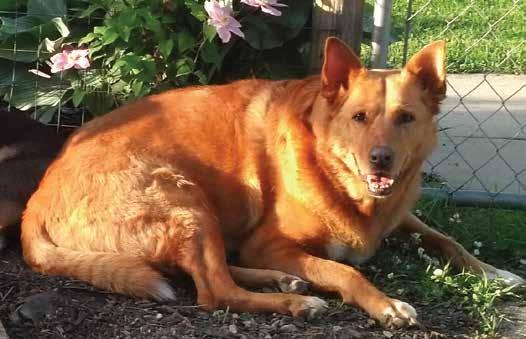
Bishop was always kind to everyone he met and to our kitties too. He quickly learned how to howl at the fire whistles so we could pretend to be “wolves” letting the neighborhood know that all was ok on our hill. He taught our Beagle Murfee to join in too.
He had a funny way of answering questions or agreeing with you using two deep, short barks...”woof woof”. This worked really well for him to be able to have a part in a song we sang to him by The Who...you may have heard it a few thousand times.... ”Whoooooo are you?”, his part was “woof woof” (for “Who, who, who, who?)... most times he got it spot on.
We could always find Bish sleeping on his back in a yoga-like “dead bug” pose. It must have alleviated some back pain for him. Even dogs know the health benefits of yoga.
He will always have his own special place in our hearts and his own special nicknames such as “Bishy”, “Bip”, “Bippity Bop” or just “Ip”, some are so silly I wouldn’t know how to spell them but he liked them all. He was loved and is missed.
Three days after Bishop passed, we took in a kitten that had been dumped off on our road. He has Bishop’s exact coloring : )
We will see you again, Bip. XOXOXOXOXXOXOXOX
David, Jaimee, Murfee, Lilly, Skritch and even Kinten...who insisted on always plopping down next to you to make you uncomfortable...loves and misses you.
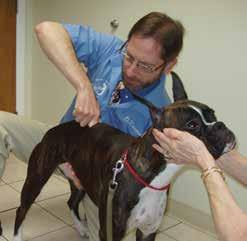
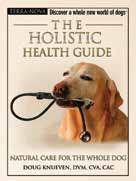
Dr. Doug Knueven practices an integrative approach to pet care. He is well versed in conventional veterinary medicine and has been licensed since 1987. He is also certified in acupuncture, Chinese herbal medicine, and chiropractic. He is a member of the American Holistic Veterinary Medical Association and has advanced training in natural nutrition, massage therapy, homeopathy and a host of other alternative therapies. Holistic and Conventional
• Full Service Animal Clinic
• Preventive Health Care
• General Surgery
• Radiology
• Dentistry
• Holistic Care
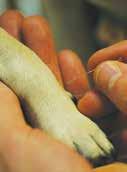
• Acupuncture
• Vaccine & Vaccine Counseling
• Nutrition Counseling & Natural Raw Diets
• Chinese Herbal Medicine
• Therapeutic Laser
• Healing Touch & Massage Therapy
We at Beaver Animal Clinic believe in the power of caring.
Caring for our patients as our own pets.
Caring for our clients as our friends.
Caring for each other as our family.