Published by: Pittsburgh PetConnections, LLC. Pittsburgh PetConnections LLC. was formed in 2012. Our mission is to publish a high quality, informative publication, focused on the Human-Animal Bond. We support local businesses, assist local non-profit businesses for pets and people, and give back to our great Pittsburgh communities.
MAGAZINE PUBLICATION STAFF
Carla Mader, Managing Editor
Kara Jones Photography, Photography
Jaimee D. Greenawalt, Art Director
Nicole Mayer, Creative Designer
Carla Mader, Sales & Distribution Manager
ADVERTISING SALES
Robin Reinfeld, Director of Sales, Pittsburgh 412-780-2254 | rrcd@aol.com
Denise Iamurri Bartman, Marketing Director, Pittsburgh & Central OH
Welcome to our Pittsburgh PetConnections bi-monthly January / February 2017 Vol. 5 Issue 3
News & Events
We are so happy to announce our PETCON Pet & Equine ExpoPetConnections in 3D! Our mission of the show, as in alignment with our magazines, is community and education. We are inviting attendees and exhibitors from Western PA and surrounding states to join us at the Washington County Fairgrounds & Expo Center May 13th & 14th for this premier indoor/outdoor event.
Sponsored by Steel City Media, we invite you to bring your well-behaved pets, family, and friends! Enjoy dog shows, horse shows, diving dogs, dog agility, tack swap, seminars, demonstrations & performance. Also, HAAWC Gala to fundraise for local organizations, Enjoy shopping with Pet, Horse & Home Exhibitors, Kids Events, Contests, Prizes & Giveaways, Face Painting, and balloon Twisting & Crafts. We will be announcing additional details soon with social media and in our March-April issue.
This Issue
Cover feature: Read how The Wrong Dog became the right dog in this delightful story written by New York Times best selling author, David Elliot Cohen. Kristin Hermann reviews another great read in our Equine Affairs section. We have many more articles in this issue that includes ground-breaking cancer treatment for pets, acupuncture, and Emotion of Freedom Technique (EFT) for pets.
Read about the exciting merger between the Western Pa Humane Society and the Animal Rescue League & Wildlife Center in our Rescue & Shelter sections. Together, they will serve the Pittsburgh area with even more strength and compassion! Also in the section Animal Friends, there are great tips for easing cabin fever with enrichment games for your pets on page 10.
Become part of the PetConnections community with a VIP Individual or Business Membership! There are special VIP benefits and offers to our Business and Non-Profit Organization memberships. Visit http://www.petconnections.pet/Subscribe/ to read about what having a VIP PetConnections Membership is all about.
Submit your photos and stories, as well as remembrances to be featured online and in future issues to: info@pghpetconnections.com.
Thank you for picking up this copy of PetConnections. Please take care of yourselves and your animals. Be well this Winter season!
Warmly,
Carla Mader Publisher
Pittsburgh | Central Ohio PetConnections Magazine
Please submit any correspondence to: info@pghpetconnections.com Please check us out on the web & subscribe at: www.petconnections.pet. Follow PghPetMag on Twitter and “Like” us
http://www.facebook.com/PghPetconnectionsMagazine
including
Human-Animal Bond
A Memoir in Review THE WRONG DOG an unlikely tale of unconditional love
By David Elliot Cohen, Published by
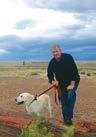
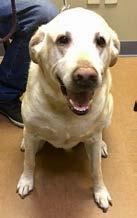
In THE WRONG DOG, New York Times bestselling author and Western Pennsylvania native David Elliot Cohen tells the humorous, engaging story of what happens when puppy pick-up instructions go disastrously awry and a boisterous rough-and-tumble ball of energy bursts onto the family scene. So begins the chronicle of the unexpected love between a big family and their giant lug of a high-spirited Lab that culminates in a once-in-a-lifetime road trip, revels in the glories of the human-canine relationship and, along the way, ponders the crucial difference between a good death and a bad death. In a memoir as poignant as it is funny, Cohen shares the true story of Simba II, a ninety-pound white Labrador retriever with honey-dipped ears and a proud bearing.
Simba enjoys most of his fourteen years living with his large blended family in bucolic Marin County, California. But then, when he is old and ailing, the family has to relocate across the country. The initial plan is to fly Simba to New York but when the vet examines the ancient dog two weeks prior to the prospective flight, she nixes that idea, citing Simba’s failing health. With the rest of his family already in Manhattan, Cohen and his best friend Erick decide that their only choice is to load Simba into the back of the family station wagon and embark on a 3,291-mile road trip across America. The goal of the journey: to reunite Simba with his loving family while hitting some of the high spots along the way—a mission complicated by the fact that Simba can only ride in the car three hours at a time without getting sick.
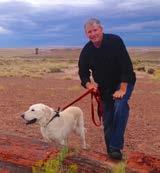
Together, this trio of unlikely adventurers motors coast to coast encountering mobs of Las Vegas tourists who want to shower Simba with affection, Simba’s sheer delight as he romps through the Petrified Forest and a host of wacky Route 66 oddities, including the world’s tallest thermometer, Meteor Crater, Cadillac Ranch and Graceland. The constant question is: Will Simba live long enough to make it to New York City?
Cohen stopped along the way in his home town of Pittsburgh to visit his ailing parents.
Traveling east bound into the city he describes his homecoming: “By noon, we found ourselves emerging into eye-blinking daylight from Pittsburgh’s half-mile long Fort Pitt Tunnel. The tunnel deposited us directly onto the Fort Pitt Bridge. And from there, we had a magnificent view of the Steel City’s dozen or so skyscrapers, which occupy a compact triangle of land bounded by two wide rivers—the Monongahela and Allegheny—that merge at that point to form the mighty Ohio. For my money, it’s the most beautiful cityscape in America—but I’m a born-and-bred western PA guy, so take that with a grain of salt.”
Cohen’s arrival in Pittsburgh is bittersweet when he quickly finds that in the six months since he had last visited, his mother’s health had declined drastically.
They leave the city after a sad couple of days, and it would ultimately be the last visit Cohen would have with his mother. He later reflects on this poignant realization, making the contrast in the book regarding his mother’s difficult passing and Simba’s meaningful transition.
THE WRONG DOG is an insightful story filled with historical and geographic trivia and told with self-deprecating wit and mature perception. It lovingly reminds readers that a good death is our final blessing.
Without giving up more of this heart-warming story of this must read, it continues as Cohen travels on to New York city with Erick and Simba in an attempt to reunite with his wife and their family.
The amazing trip across the country and personal journey, brought about an acute awareness of the Human-Animal Bond in Cohen, inspiring him to share his story with us.
A friend of Cohen sums it up at the end by saying, “…we don’t love our dogs because they give us unconditional love—even though that’s what everyone says. We love our dogs because they show us that we, ourselves, are capable of loving another being unconditionally.”
ABOUT THE AUTHOR
Author and editor David Elliot Cohen has created or co-created more than 70 books that have collectively sold more than six million copies. Most were in the very popular Day in the Life and America 24/7 photography book series. Four of Cohen’s books have been New York Times bestsellers. Seven others, including his 1999 travelogue, One Year Off, were national bestsellers in the US or abroad. Cohen has been profiled in The New York Times, People and other major periodicals. He has appeared on The Today Show, Good Morning America, CBS Sunday Morning, NPR’s All Things Considered and many other major news programs. He grew up in Erie, Pennsylvania and graduated from Yale University. He lives in Manhattan and Tiburon, California and is married to corporate attorney Laureen Seeger. Together, they have five children…and a dog. PC
Working with Animals is My
Animal Friends
February 11-12 FIND TRUE LOVE EVENT
BISCUITS BINGO
Saturday, March 4
11 a.m.-5 p.m.
BOW WOW BINGO
Saturday, April 1 6:30 p.m www.thinkingoutsidethecage.org
Animal Rescue League/ Western PA Humane Society VALENTINE WASH & WINE
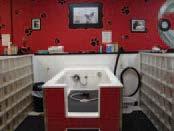
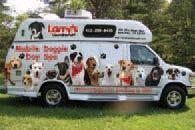
Friday, February 17 from 7:00 - 9:00pm at Larry’s Laundromutt
PC EVENT PAGE 1-17
Animal Friends
February 11-12 | Find True Love event
Biscuits Bingo Sat., March 4 | 11 a.m.-5 p.m.
Bow Wow Bingo Sat., April 1 | 6:30 p.m www.thinkingoutsidethecage.org
Animal Rescue League Sunday, May 7 PAWS OVER PITTSBURGH animalrescue.org
Animal rescue League/ Western PA Humane Society Friday, February 17 from 7:00 - 9:00pm Valentine Wash & Wine at Larry's Laundromutt
ARL Paws Over Pittsburgh Sunday, May 7
April 8
Animal Care & Assistance Fund
Uncorked & Unleashed www.animalcarefund.org
Animal Care & Assistance Fund April 8 UNCORKED & UNLEASHED www.animalcarefund.org May 7th CHASE AWAY CANINE CANCER EXPO www.chaseawayk9cancer.org
PETCON 2017
Pet & Equine Expo Symposium & Gala! May 13th & 14th
Saturday 9AM to 8PM & Sunday 9AM to 6PM
Washington County Fairgrounds & EXPO CENTER Drawing from Western PA, West Virginia & Ohio! Your Well-Behaved Pets are Welcome!
Rescue & Shelter
ANIMAL RESCUE LEAGUE AND WESTERN PA HUMANE SOCIETY HAVE NOW MERGED!
The boards of the Animal Rescue League Shelter and Wildlife Center (ARL) and the Western PA Humane Society (WPHS) approved a merger of the two animal welfare organizations, effective January 1, 2017. Each board met and voted individually at a meeting on September 29, 2016. The merger will result in a new organization that will be one of the largest open-door shelters in Pennsylvania.
“Over the years, the Animal Rescue League Shelter and Wildlife Center and the Western PA Humane Society have become more alike with regard to philosophies on animal welfare and the programs and services we offer,” says Joseph Vater, President of the Board of Directors, Animal Rescue League. “A merged organization will provide greater efficiencies in animal care processes, staff training and bringing best practices to one organization. We will be able to save more animals and serve more animals.”
Dan Rossi, currently the Executive Director of the ARL, will be the CEO of the merged organization, and Hala Nuemah, currently the Managing Director of the Humane Society, will serve as Chief Administrative Officer of the new organization. David Grubman, currently President of the Board
of Directors of the Western PA Humane Society, will be President of the new Board of Directors.
“Our two organizations have a long history of collaboration,” Grubman says. “Now, by building on the strengths of each group, we will create a singular, more powerful voice that will enhance our outreach to the western PA region. It will be beneficial to adoptions, animal care, animal control and fundraising.”
With the merger, the locations of each organization will remain open. Business continues as usual at every location.
WPHS is located on the North Side, and ARL just moved from its current location to its new facility,, both in the East End. ARL’s Wildlife Rehabilitation Center in Verona also will remain open. No programs will be eliminated as a result of the merger, and staff reductions are not anticipated.
Work will begin immediately on the integration of the two organizations. “We have a lot of details to work out,” says Rossi, “but we will be launching this new organization with a talented, compassionate staff and a phenomenal group of volunteers.
We’re excited about the expanded capacity and potential and the broad array of programs and services that will be under one organizational umbrella.”
About the Animal Rescue League Shelter and Wildlife Center (www.animalrescue.org)
The Animal Rescue League’s mission is to provide temporary shelter, food, medical attention, and comfort to all abandoned, neglected, and injured animals brought to us by the community; to restore lost animals to their owners or seek new homes for them, and to educate the public about the humane care of animals with a goal of reducing overpopulation.
About the Western PA Humane Society (www.wpahumane.com)
The mission of the Western Pennsylvania Humane Society is to provide the most comprehensive, compassionate and humane services to enhance the lives of companion animals for families and the community; to educate and to prevent the cruelty of all animals in the region we serve PC
Contact: Animal Rescue League Shelter and Wildlife Center - Ann Yeager, Director of Marketing Cell: 724-422-8554 Western PA Humane Society - Caitlin Lasky, Senior Marketing Communications Manager Cell: 412-398-0450
Rescue & Shelter
Ease Cabin Fever with Enrichment Games for Your Pets
By Suzanne Denk, Animal Enrichment Specialist at Animal Friends
Animals need ways to stay active – physically and mentally – year-round. With the weather turning from cold to colder, here are some fun indoor games you can play with your pet to ease cabin fever this winter.
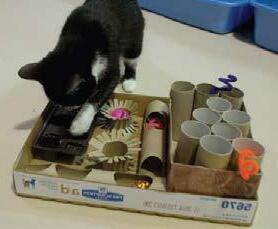
Build a Cat Activity Center
Things that would typically be thrown away can easily be made into an entertaining play station for your cat. Toilet paper tubes, pipe cleaners, ribbon spools or egg cartons can provide hours of brain-stimulating fun! Use a shallow cardboard box as the base and securely glue your items in place.
Have a Bottle Party with Your Pup
Once your activity center has taken shape, add a few pinches of catnip, jingle bells and treats. Your cat will put her brain to work and will enjoy exploring the textures, smells and sounds. Once she has lost interest, refill the goodies and move it to a new location. Your cat will think she has made a brand new discovery and you’ll be able to reuse your activity center time and time again!
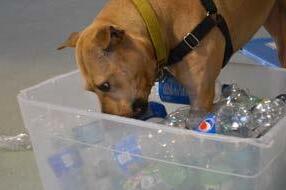
Dogs can use their superior sniffers to have some fun and put their brains to work. Fill a large box or container with empty water bottles and drop in a few treats. Let your dog sniff, search and dig for them. If you have a fearful pup and the bottles make too much noise, try crumbled newspaper instead – it’ll also help to his build confidence.
You can also lay out a trail of tiny treats –this can be done in any amount of space so use your imagination. After leading your pooch through the kitchen, around the couch and up the stairs, leave a jackpot (a small pile of treats) at the end of the trail as a reward for your little explorer.
Another fun game for your pooch is to place treats on a towel, roll the towel up and twist. Let your dog work the towel open to find the food. Too easy? Place the treats in a Kong and then roll up the Kong in the towel.
Foraging Games for Your Rabbit
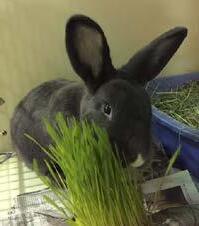
By creating a foraging game you can easily encourage your rabbit to get some exercise while searching, sniffing and thinking to find a treat.
Make a trail of fresh greens across the room, hiding some of the pieces. If your bunny makes quick work of the trail, you can take it to the next level by slowly dragging one leaf across the floor and hiding it at the end. Your rabbit’s mind will be working to follow his nose all the way to the treat. The better you hide the prize, the harder he’ll have to work to find it!
These are just a few of the countless enrichment activities you can use to keep your four-legged family members active all winter long. For more great ideas, visit ThinkingOutsideTheCage.org/Enrichment.
Animal
Friends presents ...
Sat. and Sun., 10 a.m.-5 p.m. | Animal Friends
It’s a great weekend to find true love at Animal Friends! We have plenty of dogs, cats and rabbits of all ages and temperaments that can’t wait to be your fuzzy valentine. And, High Hopes will generously underwrite all requested adoption donations – so each one of our homeless residents is truly priceless*.
*Standard adoption application procedures apply.
Friends
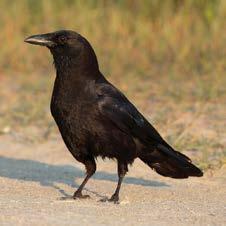
Wildlife THE AMERICAN CROW—
NOT YOUR AVERAGE BIRDBRAIN
By Linda Forte-Spearing, Volunteer, Ohio Wildlife Center
“Crows are the fairest of them all,” said nobody. Ever. And it’s no wonder. Crows have been associated with death for centuries whether following soldiers into battle, predicting untimely demise, or attacking upstanding citizens for no apparent reason—insert Alfred Hitchcock’s 1963 thriller, “The Birds.”
Cloaked in black plumage, with a black bill, legs, and feet, this macabre species even sounds sinister. Caw. Caw. Caw.
But as the saying goes, looks aren’t everything. Or perhaps, more appropriate, is the adage brains are better than brawn. It is intelligence that separates the crows from the crowds. You might say these birdbrains are brainiacs.
HABITAT
Common throughout the 88 counties of Ohio, the American crow is highly adaptable. Crows do prefer open spaces, though most any open space with some trees and a reliable food source will do. Fields, farmlands, and shorelines are popular “natural” choices. Manmade habitats like parking lots, landfills, suburban neighborhoods, and urban town centers are also suitable.
FOOD
American crows are typically ground feeders, eating just about anything from grains and seeds to earthworms and small aquatic creatures. They also consume carrion, or roadkill, though it doesn’t comprise the bulk of their diet.
Likewise, crows are known to be crafty foragers. In other words, they steal things. According to one website, The Cornell Lab of Ornithology, a group of crows (ironically called a murder) was seen distracting a river otter in order to take its fish. While in a separate incident, crows followed Common Mergansers, plucking out the
minnows the ducks had chased into shallow water.
When it comes to garbage trucks, it seems nobody knows their schedules better than the neighborhood crows. Some crows, we’re told, have memorized the routes. Too small to open the lids on their own, they wait for sanitation workers to do it for them.
And yes, crows are clever enough to make “tools.” They shape wood to retrieve insects from holes in fence posts. They ping pinecones at tree climbers too close to their nests. They’ll even use the human world to their advantage, dropping shelled nuts in front of moving cars, collecting their kernels once the automobile has passed.
FAMILY
Crows are sociable birds, more often found in groups than alone. And for the most part, they mate for life—so courtship behavior is limited. Oak trees are a favorite nesting site, as are large, mature conifers. Females are the primary incubators, but males do participate in building the nest.
Young crows can breed at the age of two, though they may not do so until the age of four (or more). In most populations, the young help their parents raise other young. Year round family groups can consist of the breeding pair and the offspring from the previous two years.
It takes a crow village to raise their youth. It also takes the village to mourn for their dead. “Calling to each other, gathering around, and paying special attention to a fallen comrade is common,” according to National Geographic.
CONSERVATION
While crows are not a threatened species, the American Crow is extremely susceptible to West Nile Virus—a mosquito-borne pathogen. Kristi Krumlauf, Hospital Director, Ohio Wildlife Center, confirms this is the case for crows in the local area.
“Of the 13 crows we admitted in 2016,” she says, “a majority exhibited West Nile symptoms.”
The hospital also receives crows with fractured wings. In fact, two such patients, Percy and Lenore, are permanently housed at Ohio Wildlife’s Conservation Education facility, in Powell.
Percy was found out of the nest, caught in a fence, after high winds in Grandview. When her parents struggled to free her, they broke her wing. Lenore was also admitted with a broken wing. Because of their injuries, both are unable to fly and now act as animal ambassadors.
Ohio Wildlife Center is a non-profit charity, relying solely on individual donations and grants for its daily monitored information hotline, the running of its hospital facility and the educational services it offers. There is no fee for these services, and all animals it accepts are treated.
For additional information about Ohio Wildlife Center, including a listing of the licensed wildlife rehabilitators in your area, visit. www.ohiowildlifecenter.org. Please call the Center’s monitored information hotline at 614-793-WILD for assistance with common wildlife situations.
Sources:
•“American Crow.” All About Birds. The Cornell Lab of Ornithology, n.d. Web. 18 Jan. 2017.
•Langley, Liz. “Do Crows Hold Funerals for Their Dead?” National Geographic. National Geographic Society, 3 Oct. 2015. Web. 18 Jan. 2017. PC
Tips for Feeding Backyard Birds in Winter
By Linda Forte-Spearing Volunteer, Ohio Wildlife Center
Winter in the Northeast is for the birds— bird watchers, that is. With little vegetation to provide camoflauge, bird activity is more visible. And with fewer food sources available, birds will flock to reliable feeders.
Not all birdseed is created equally, however. To make the most out of your feeding experience, it’s important to choose the right food.
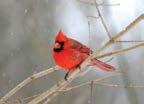
• Black-oil sunflower seeds will attract just about any bird including blue jays, cardinals, chickadees, finches, nuthatches and titmice. It’s a better choice than the white or gray-striped variety, as it is higher in oil content and easier to crack. The seed inside the shell is also bigger than its counterpart. Those birds that can’t crack the shell will pick up the bits that fall to the ground.
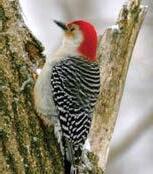
• De-shelled, dry-roasted and unsalted peanuts are also a crowd favorite. Redbellied, downy and hairy woodpeckers love this high-protein, high-energy food, as do songbirds. While high quality birdseed mixes usually do include peanut pieces, you can purchase a tube-shaped feeder specifically for this purpose.
• Suet is a formulation of animal fats and other ingredients. And while it can be
used year round, it is a quick source of heat and energy for birds in the wintertime. Offering suet cakes in a wire cage will surely lure woodpeckers to your feeding operation. You can even make a suet holder from an onion bag.
• Blackbirds, doves and sparrows are a few amongst the many species attracted to cracked corn. The advantage of “cracked” corn is its manageable size (and therefore its digestibility) versus whole kernels that are still on the cob. Mallard ducks, rabbits, squirrels and wild turkeys also love this winter treat and are a reliable clean up crew beneath the feeder.
• Niger seed, otherwise known as thistle, is an oily seed adored by goldfinches, house finches and the like. But buyers beware! Niger is not only expensive, but it has a tendency to get moldy in wet weather which means birds will turn up their beaks and not eat it.
• As mentioned previously, mixed birdseed can be a mixed bag. While it is usually the least expensive option, don’t be fooled by the price tag. Mixed seed from grocery stores, etc. is comprised mostly of filler— junk seeds the birds will toss aside while looking for all of the good stuff. Instead, look for mixed varieties comprised of black-oil sunflower, peanuts, cracked corn and suet pieces.
• No food list is complete without mentioning the importance of water. In fact, birds often suffer more from lack of water than food. When temperatures plunge below freezing, providing a consistent source of water guarantees a steady stream of backyard visitors. Heated birdbaths are reasonably priced and available at specialty bird stores.
Watching our feathered friends brave the winter elements can certainly pull at our heartstrings, but it’s important to recognize that human intervention can also make things worse. This is especially true for waterfowl.
According to Angela Latham, Community Engagement Coordinator, Ohio Wildlife Center, providing inappropriate foods, such as bread, can be lethal to ducks, geese and swans. Not only does it cause digestive issues, it can lead to malnutrition and eventual wing deformities. “Regularly feeding ducks and geese things like bread, popcorn and similar foods can be especially harmful,” she explains, “as bread can expand in the bird’s throat and can cause choking, impaction and infections.” Additional problems that come from people feeding waterfowl an unsuitable diet include: dependence on people for food, bird/human conflicts, spread of wildlife disease and altering of natural migratory behavior. PC
A Special Place For A Special Time
By guiding them through all the options they have – from transporting their pet’s body to memorializing the life they shared – Deb calms the frayed nerves of people who have been devastated by the ordeal of the loss.
Losing your pet is a very special time, a time when you want someone who understands your grief and will treat your precious one with tenderness and concern. When considering your options for the aftercare of your pet, you can either let the veterinary clinic offer you their available choices or you can choose to make the arrangements yourself directly with your selected aftercare provider.
Chartiers Custom Pet Cremation offers specialized care from the time your pet’s body is received until the time your loved one is returned to you. Deb Chebatoris, the owner of CCPC, sees you through the entire process herself—from the initial phone call, through the transportation of the body, the cremation at the facility in Bridgeville and the comforting return into your hands. Unlike any other cremation service in the city, all the steps performed to cremate your pet are carried out by Deb herself.
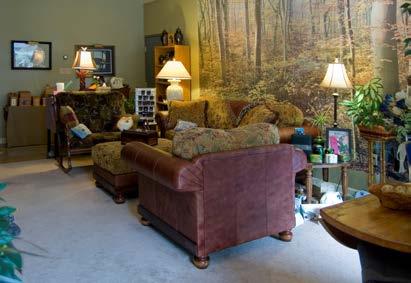
Upon entering CCPC’s facility, families are greeted with a peaceful, living room setting where they can discuss arrangements or receive their pet’s cremains. Your pet is there with you, and you may even chose to spend some quiet time, saying your final goodbyes.
Unique to CCPC is the preparation of the cremains for return to the family; each pet is returned
in a hand-made fabric bag. This bag can be made from a fabric selected from the vast collection of beautiful textiles at the facility. Alternatively, Deb can craft your precious pet’s bag from a fabric that the family provides—a winter coat, a favorite neckerchief, a baby blanket. A favorite stuffed animal can even be incorporated into the design of the bag. “When I place the pet’s cremated remains into the hands of the family member, it reminds them of the soft, warm touch of their beloved pet.”
The hallmark of Deb’s service is her gentle, reassuring voice, providing advice and suggestions to families who are generally overcome with grief. “Families most often don’t even know where to start after experiencing the gut-wrenching loss of their pet,” she says. By guiding them through all the options they have – from transporting their pet’s body to memorializing the life they shared – Deb calms the frayed nerves of people who have been devastated by the ordeal of the loss.
Believing that each pet is unique, CCPC offers an array of over 350 different urns along with several hundred jewelry options to hold the pet’s cremains. Urns are available in wood, ceramic, marble, quartz and various metals. They can be personalized with the pet’s name and can provide a place to display the pet’s picture. All these options help the family focus on highlighting the very special characteristics that made this pet precious.
Care for the family extends way beyond just the immediate needs of the cremation. Twice a year, CCPC offers events to help families deal with the overwhelming grief that often accompanies the loss of a pet. Healing Hearts is one of these events. Scheduled for February 12, 2017, attendees will hear an enlightening presentation on grief and how to work through its impact. Details for this and the other program, Pet Memorial Sunday, are available on the CCPC website (www.ccpc.ws) under the tab “Support for You”.
Healing Hearts and Pet Memorial Sunday are but two of the special programs offered free of charge by CCPC. Several other classes are periodically offered to assist pet families—Pet First Aid and Dog Aggression classes have been well attended and enthusiastically appreciated.
Chartiers Custom Pet Cremation truly is a special place for a special time.
Pet Health & Wellness
Game-Changing New Cancer Treatment Now Available To Pets In Western Pennsylvania
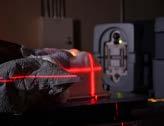
Stereotactic Radiosurgery (SRS) is a noninvasive therapy intended to improve both long-term survival and quality of life for pets with cancer.
Cancer. Just hearing the word is enough to make you cringe.
Most of us have been touched by the insidious disease in some form or fashion. Whether it has afflicted you personally or somebody you love, we hear the C-word far too often.
Fortunately, we also live in an age of amazing technology and progress. Doctors can do things today that were unheard of a decade ago. Clinical researchers are hard at work in search of a cure, determined to tip the scales in the fight against cancer. While we’re not there quite yet, advances in medicine continue to evolve at a rapid pace. A cancer diagnosis is not necessarily the death sentence it used to be.
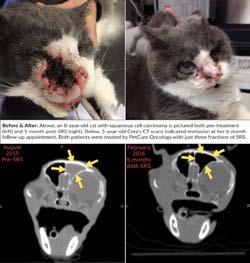
Now, thanks to a new treatment called stereotactic radiosurgery (SRS) and a progressive cancer care provider called PetCure Oncology, that is true not only for people –but for pets too.
Veterinarians and pet owners alike are beginning to hear about SRS for pets, which was introduced to Western Pennsylvania for the first time in late January. While SRS has become an integral part of human oncology over the last few decades, it has only recently become available to animals. Previously, the closest provider of SRS for pets was nearly 300 miles away in Cincinnati.
Now, SRS is available locally at Pittsburgh Veterinary Specialty and Emergency Center (PVSEC) at 807 Camp Horne Road in Pittsburgh. PetCure Oncology and PVSEC recently formed a partnership to combine PetCure’s expertise in SRS with PVSEC’s existing radiation oncology department. Throw
By Ben Chiswick
www.pvs-ec.com
in a machine upgrade and PVSEC’s full staff of veterinary specialists, and residents of Western Pennsylvania are now among only a handful of pet owners in the country that have access to cancer care for pets in line with what is already available to people.
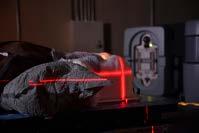
An advanced form of radiation therapy, SRS represents a game-changing option for many cancer patients with tumors. The benefits over convention radiation therapy are both significant and numerous.
Conventional radiation therapy typically requires 18-30 treatment sessions and targets an area of the body where a tumor is known
to exist. In contrast, thanks to unprecedented technology and precision, SRS requires only 1-3 treatment sessions and delivers high-dose radiation directly to the tumor, targeting the deadly mass while mostly – or event completely – sparing the surrounding healthy tissue.
Many tumors that were previously considered “untreatable” can now be targeted through SRS – noninvasively, with no incisions or sutures. Tumors in sensitive locations such as the brain, spinal column, lungs and prostate are too dangerous for conventional radiation therapy because of the risk to the healthy anatomy surrounding the tumor. The submillimeter precision of SRS, on the other hand, is capable of delivering high-dose radiation directly to the tumor without damaging those critical structures.
Instead of weeks of veterinary appointments and radiation treatments, SRS patients receive their entire treatment course in 1-3 days. Including an initial CT scan required for treatment planning, a patient will undergo no more than four anesthetic events – an 80-95% reduction compared to conventional radiation therapy. And because healthy tissue is mostly spared, the nasty side effects commonly associated with radiation are rare.
While every case is different, most patients experience an immediate improvement to their quality of life and are able to resume normal activity upon completing treatment.
Ali, an 11-year-old poodle, had to be wheeled in for treatment because of a spinal tumor that was causing paralysis to his hind legs. Three days later, he walked out of the hospital independently. Baci, a 13-year-old dog from New Jersey, was in a comatose state before undergoing treatment for a brain tumor.
Within four months of SRS, he was back to winning medals at obedience competitions.
It may not be common knowledge that the incidence of cancer in pets is similar to that in humans.
Statistics tell us that approximately 12 million dogs and cats will be diagnosed with cancer this year. Many of their owners, devastated by the news, will be told there is nothing they can do.
PetCure Oncology is telling the world that is no longer the case.
PetCure Oncology was created in 2014 by a group of pet owners with experience establishing SRS centers in human medicine. Their mission was simple. PetCure set out to take the same progressive treatment options available to human cancer patients and make them available to pets.
That mission grew out of a very personal experience for Scott Milligan, the CEO of PetCure Oncology.
When his family dog, Juliette, was diagnosed with a nasal tumor a few years back, Scott was given the same treatment options that most pet owners get after a cancer diagnosis: surgery, chemotherapy, or conventional radiation therapy. As is often the case, surgery was ruled out as too invasive and unlikely to completely remove the tumor. That left chemotherapy and conventional radiation therapy, each of which was expected to lead to undesirable side effects and diminished quality of life because of the inevitable collateral damage caused by radiation delivered to a wide swath of the body.
His kids were devastated. His wife was devastated. And given his experience with SRS in human medicine, Scott was profoundly frustrated that he couldn’t provide his dog with a treatment option that he knew existed – and worked – for humans.
Today, Scott’s vision to provide SRS to pets with cancer has come to fruition. He joined forces with Dr. Neal Mauldin, a triple-board certified veterinary specialist and one of the leading clinicians in the world when it comes to SRS for pets. PetCure Oncology launched its first treatment center in May of 2015 and has already treated more than 600 pet patients across its first four locations in Phoenix, Cincinnati, Milwaukee and Clifton (NJ). PetCure’s rapidly-growing national network is intended to make SRS geographically accessible to every pet owner in the continental United States, with a lofty goal of opening 30 centers within five years. PC
Advertiser Locator
Page 15 - A All About Pets Veterinary Hospitals
Page 36 - B Animal Elegance
Page 11 - M Animal Friends
Page 9 - C Animal Rescue League
Page 21 - D Beaver Animal Clinic
Page 21 - Best Breed Pet Food
Inside Front Cover S VCA Castle Shannon
Page 21 - Canine Health
Page 34 - F Chartiers Custom Pet Cremation
Page 2 -Q Cheyenne Veterinary Wellness and Surgical Center
Page 29 - Close 2 Ur Heart Jewelry
Page 2 - W Country Lane Pet Hotel
Page 26 - Costa Real Estate
Page 33 - G Coventry Stables
Inside Back Cover - Dog Stop
Page 27 - Fan Reps
Page 19 - H Fuzzy Paws Pet Villa
Page 5 - Gentle Journey Veterinary Hospice
Page 19 - Happy Pets Training
Page 19 - Happy Tailz Spa
Page 27 - HAAWC
Page 1 - I Healthy Pet Products
Page 36 - Invisible Fence of Pittsburgh
Page 35 - J Jefferson Memorial
Page 33 - KJones Photography
Page 36 - P Larry’s Laundromutt
Page 29 - Line Keepers
Page 2 - Lucy Pet Products
Page 19 - Manning Chiropractic and Wellness Center
Page 29 - Medical Frontiers
Page 27 - Mia Bella’s
Page 23 - K Murray Avenue Apothecary
Page 18 - Cat Around Town Grooming
Page 26 - One-Hour Heating & Cooling
Page 36 - Paws Here Awhile
Page 19 - Pampered Paw Resort
Page 18 - Petsburgh Dog & Cat Grooming
Page 5 - Pinch’s Place
Page 5 - Pittsburgh Career Institute
Page 19 - Y Pittsburgh East Nissan
Back Cover - N Pittsburgh Veterinary Specialty and Emergency Center
Page 35 - Precious Pets Memorial & Cremation
Page 5 - REAL BIG PUPPY
Page 33 - O Rockin Horse Stables
Page 23 - Dr. Michael Savko
Page 26 - Sam’s Painting
Page 35 - Thousand Hills Pet Crematory
Page 25 - U Western PA
Humane Society
Page 19 - V Woody’s Dog Wash & Boutique
Holistic Pet Care
Acupuncture
By Dr. Doug Knueven, DVM, CVA, CVC, CVCH
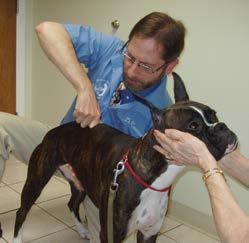
Acupuncture is the most widely practiced modality of holistic veterinary medicine. It involves the use of needles which are inserted into specific points on the body in order to affect a cure. In order to understand acupuncture it is necessary to recognize that the ancient Chinese had a much different way of looking at the body than we currently do in the West. For the ancient Chinese, health care was a way of life. Diet, exercise, massage, meditation, sleep patterns, work patterns, herbs and acupuncture were all integrated to maintain balance within the body. At the heart of Traditional Chinese Medicine (TCM) is the concept of Qi (pronounced “chee”).
Qi is regarded as the life force energy. It is what differentiates the living from the dead and has both structural and functional qualities. Qi is that substance from which all physical form is composed. It is also the energy that flows in a cyclic, orderly course throughout the channels of the body allowing for the normal functioning of organs and tissues.
In TCM, health is the state of harmonious flow of Qi and disease is caused by an interruption in this flow. Any time an organ is not functioning properly (as in kidney failure), or a limb is not moving freely (as with arthritis), we say there is a disturbance of Qi.
The Chinese consider the acupuncture points as inlets to the channels. Through these inlets, the flow of Qi can be manipulated and re-balanced, allowing the body to heal itself. Today we know that acupuncture points
have unique features. Biopsies have shown that these points have higher than normal numbers of nerve endings, blood vessels, and inflammatory cells. These features combine to amplify the effect of any stimulation of these points.
From the Western standpoint, acupuncture stimulates nerves that can block pain perception. Also, pricking acupuncture points stimulates nerves that send signals to the brain to discharge healing substances. Studies have also shown that acupuncture can be used to cause the release of hormones including cortisone as well as endorphins, which are the body’s own morphine compounds. Acupuncture can also reduce muscle spasms, increase blood circulation, improve athletic performance and strengthen the immune system.
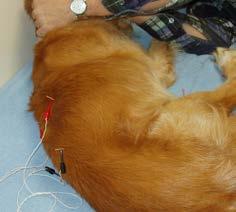
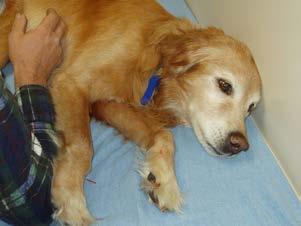
rarely objects to the prick of the needles. As a matter of fact, some animals fall asleep during the treatment which may last from five to fortyfive minutes depending on the problem being addressed. I’m more concerned about the remote possibility that the pet may decide to remove a needle with his mouth and then swallow it. In reality, the biggest obstacle to an acupuncture treatment is keeping the pet still while the needles work their magic. If the animal fidgets needles may fall out, which is not harmful but just not very helpful.
Acupuncture is not a panacea. Even in China it is only part of the medical system. If after eight to ten weekly treatments there is no improvement in the patient, then acupuncture is probably not going to help. On the other hand, I have many patients who have given it two paws up.
Acupuncture can help in the treatment of any medical condition including arthritis, kidney failure, liver failure, thyroid disease, asthma, back and joint injuries, vomiting, diarrhea, and reproductive problems. It can be used as an adjunct treatment for seizures and can even improve the quality of life for cancer patients. When applied properly, this holistic approach does not cause side effects as drugs often do. Acupuncture can be used alone or in conjunction with conventional therapies.
The biggest apprehension that most people have about acupuncture is that the needles will cause pain. In my experience, the patient
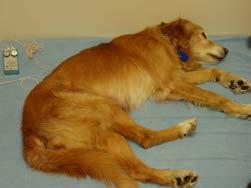
Stoney was 14 years old when he was carried into my office by his owners. His rear legs had been paralyzed for seven weeks and conventional treatments had not helped. X-rays revealed severe arthritis of his spine but that alone did not fully explain his condition. Possible causes for his neurologic deficit included a spinal tumor, a ruptured disc, or even a blood clot to the spinal cord. An MRI or myelogram was needed to be sure of what the problem was, but his owners did not think it was in his best interest to put Stoney through those testes. Acupuncture was his last chance.
An aged pet with long standing rear leg paralysis does not warrant a rosy outlook and I was not optimistic about the ability of acupuncture to help him. After hearing about the acupuncture process and the poor prognosis, Stoney’s owners decided that they wanted to give him every chance they could and we proceeded with the treatment with hope in our hearts.
continued on page 21
Stoney came to my office for weekly treatments - right on schedule. When his owners carried him in for his eighth session, I told them that I was seeing no improvement and suggested it was time to admit defeat. On the contrary, his owners were encouraged by the fact that he had begun to wag his tail so the treatments continued. You could have picked my jaw off the floor when
Stoney walked into my office two treatments later.
We were able to taper his treatments to every three to four weeks and maintain Stoney’s mobility. He enjoyed another three years with his owners until his body finally gave out and we put him to sleep at the age of 17. PC
It’s no secret that our pets pick up on our emotions. They sense how we’re getting along and especially how we are feeling. When we’re under the weather, their kind faces stare at us as their inquisitive eyes convey, “What can I do to help you?”
Our pets’ purpose, from my perspective, is to receive and give love. Additionally, they show a desire to make our lives better and vice versa.
Understandably, when we are not feeling well, neither are they. Likewise, when our pets are ill, it affects us deeply. During those times, we can feel helpless. Yet worrying can be counterproductive, and instead of helping our pets, our negativity affects them since they intuit what we’re feeling.
Enter Emotional Freedom Techniques. You may already know of EFT or tapping, which is an easy-to-learn, safe healing modality, where you “tap” on the meridian points of the body. Primarily a stress reducer for humans, EFT is equally effective for animals—and our pets.
Surrogate Tapping
Since animals are obviously unable to use EFT on themselves, that’s where we step in and tap for them. We can do this right on their bodies or indirectly through what is known as surrogate tapping. Although I have heard some EFT practitioners advise pet owners not to tap on their animals, my husband and I have done just that on many occasions. We tap lightly on the top of their heads and gently finger walk up and down their spines, sometimes even tapping on their little faces and bellies. They love it!
Simply touching your pet can be soothing and conveys to your animal that you are concerned about their well-being. You know your pet’s disposition so determine which strategy is best to follow.
that tapping agrees with them is their body language. You’ll watch as they yawn, outstretch their arms (mimicking ‘downward dog’) or sink into the blanket and relish in what might feel like the ultimate feline or canine “massage.”
For the most part, they find it relaxing and judging from their feedback (purring; calm demeanor), that’s exactly what they needed to relax and relieve their stress (perhaps a grueling stint at vacuuming proved too overwhelming for them that day!).
Conversely, when they’re not in the mood to be tapped, they’ll inch away, giving us the message to back off and may even hiss.
Let me tell you of a cherished tapping experience I had with our beloved cat.
One day, ChloeBelle (a.k.a. Chloe), whom my husband rescued from a shelter, wasn’t feeling well. To provide you with a little background, Chloe was adopted when she was one year old and pretty much had spent more than six months in the shelter. Although it took a few weeks for her to adapt to her new environment, she was still skittish around my husband and me. Nevertheless, she adored Jack, innately aware that he had saved her from a life in a community atmosphere vying for attention from the staff with tons of other cats competing for their love.”
and told me so. She lamented how horrible she felt, that her stomach really hurt, and it was getting worse. She didn’t want to make a mess on the rugs but she couldn’t hold it in any longer or make it to the litter and knew that upset me. At the same time, she related that the churning inside her gut was painful. I could feel her anguish. She further communicated that her tummy was bloated and the nausea was unbearable. I ceased being mad at Chloe and felt heartless for not understanding what she was going through, for not being compassionate. And experienced guilt for being so insensitive. After tapping that away, I continued to tap, my only wish: for Chloe’s considerable discomfort to end.
Then it was time to leave for my meeting.
When I returned home later that afternoon, I eyed Chloe sitting in her normal spot on the back of Jack’s chair. Upon seeing me, she jumped down and headed in my direction. I thought she might have been thirsty but she purposely walked to me and as I sat down on the stairs, she began licking my hands. She had never, ever done that! I was stunned. Chloe was telling me that not only was she well but that she greatly appreciated my efforts to make her healthy.
Chloe and Jack had been companions for more than two years before I entered the picture. And while she fawned incessantly over him, she pretty much didn’t give me the time of day.
Fast forward several years. As I was getting ready to leave for a meeting, I was interrupted more than once by Chloe regurgitating in the living room. That wasn’t the worse part. In addition to scooping up the vomit on the rug (eww!), I now had to scrub the stains and deodorize the carpet after Chloe missed the kitty litter—several times.
While tapping (either directly or indirectly), you can affirm, “You’re such a good kitty, dog, parrot or whatever endearment that resonates with your pet. One way our pets let us know
That’s when I decided to sit on the stairs and tap for her—and me!
After tapping for less than five minutes, first on my frustration, I then transitioned from being angry to sensing Chloe’s predicament and began sobbing. A palpable shift occurred in my body and instead of focusing on my feelings which had substantially subsided, I now accessed Chloe’s world. She was very sick
Since animals are not able to verbalize (except, of course, “Mr. Ed,” the talking horse) how they feel and what they are experiencing, we can be their voice. We can “tune in and tap,” connect with our pets energetically and concentrate on their issue or behavior that you want to alleviate.
To recap, when using surrogate tapping, it’s imperative that you clear your emotions before you address those of your pet. Had I surrogate tapped for Chloe without first clearing my frustration, it’s doubtful it would have worked, and most likely, the energy would have remained stuck in Chloe’s body (and mine) and would have done little to nothing to relieve her illness.
If this seems feasible to you, simply tap gently on the top of your pet’s head and see what happens. I’d love to hear about your experience; send me an email at: TappingWithFriends@gmail.com.
Next time, we’ll delve more into EFT and your pets! PC
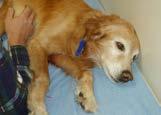
Diagnosed with brachial plexus/ nerve damage to right front leg the doctors only solutions were to amputate or put him down. The meds weren’t working, Buddy was falling over, and would not use the leg at all. Because of all this extra stress on the body his hind end became very weak.
When we first talked to his mom, she was distraught. We told her it was worth a try to see if we could help.
It took only ONE visit for Buddy to start improving. Before visit number 2 the owners exclaimed, “big difference!” By the third Buddy was better and has stayed better! He currently has full use of his leg, and his body is much more balanced. He is LIVING!
This dog would be dead or walking on three legs for the remainder of his days if a kind hearted soul did not tell them about Animal Healing NOW.
They thought they had no hope, no other options were given to this family besides death, or amputation.
How bout one visit with Dr. Savko to see if we can help?
At 10 years old, Buddy is NOW better than ever!
Please don’t keep this a secret. Without someone sharing the work, Buddy and his family would have been in big trouble.
Cat Rescue Resource Guide
Kitty Korner
Cat Rescue Resource Guide
Low-Cost Spay & Neuter Organizations & Programs
This is an ever-changing list of resources for cat owners in Pittsburgh and beyond. Though many of the listings, like the shelters, apply to dogs and other pets as well, it includes low-cost spay and neuter programs. Other listings include TNR for community cats, pet-friendly rentals in Pittsburgh and across the United States, and links to shelters for adoption and other services. In the future, we will also list clinic dates with the organizations below when they are available.
TNR & Low-Cost Spay/Neuter for the Pittsburgh Area
Homeless Cat Management Team: www.homelesscat.org
City of Pittsburgh Free Spay & Neuter for City Residents
City of Pittsburgh free spay/neuter: www.pittsburghpa.gov/animalcontrol/spay_neuter.htm
City of Pittsburgh residents can apply for free spay or neuter vouchers for up to five pets, including stray/ feral cats.
Low-Cost Spay/Neuter & TNR Programs at Allegheny & Surrounding County
Shelters
Animal Friends: www.thingkingoutsidethecage.org
Animal Rescue League: www.animalrescue.org
Beaver County Humane Society: www.beavercountyhumanesociety.org
Washington Area Humane Society: www.washingtonpashelter.org - Colony Cat Project: faith.b2@verizon.net
Western Pennsylvania Humane Society: www.wpahumane.org
Low-Cost Spay/Neuter Organizations in Allegheny & Surrounding Counties
Western Pennsylvania Humane Society (WPHS): www.wpahumane.org
Surrounding Counties: Beaver County Humane Society: www.beavercountyhumanesociety.org
Butler County Humane Society: www.butlercountyhs.org
Humane Society of Westmoreland County: http://members.petfinder.com/~PA83/about.html
Washington Area Humane Society: www.washingtonpashelter.org
Non-Shelter Feline Adoption
FosterCat: www.fostercat.org
Kopy Kat Sanctuary | Westmoreland County (Delmont): www.kopykatsanctuary.org
Wellness For Guardians
Oxidative medicine?
Are antioxidants not good anymore?
It has been a while since the supplementation with antioxidants was discovered to be beneficial to our health because antioxidants consume free radicals that are produced when cells are subjected to oxidative stress. Free radicals induced oxidation is harmful and causes direct damage to enzymes, proteins, cell membranes, DNA and even may lead to cell death.
To protect cells from free radicals, our cells are equipped with antioxidant systems that include superoxide dismutase, catalase, and glutathione. If the anti-oxidant system became depleted, cellular injury occurs. A classic example is acute liver necrosis after injections of high dose Tylenol that depletes glutathione.
Recently, however, new “theology” has emerged that “preaches” “oxidative medicine” in the context that oxidation is something good for us. I have heard statements suggesting just that on radio and read them on health blogs. I think it is because oxygen is understood as something very desirable and surly we cannot survive without oxygen.
So, we have hyperbaric chambers, oxygen peroxide infusions, or ozone therapies. At the same time, some doctors practicing “oxidative medicine” no longer recommended antioxidants.
We know from biochemistry that oxidation is a process that consumes electrons and reduction (antioxidants) contributes electrons. So, these two reactions are entirely opposite to each other and it is obvious that both cannot be good at the same time.
So, if antioxidants are beneficial to our health, does the “oxidative medicine” has any merit? The misunderstanding is in the wording and how “oxidative medicine” really works, because it has nothing to do with oxidation.
Oxidation (removal of electrons from tissue) is harmful with one exception which is the use of oxidative agents in the treatment of cancer. Cancer cells very poorly handle oxidation stress for they lack superoxide dismutase (antioxidant system) that is present in normal cells. Consequently, cancer cells can be selectively targeted for destruction without causing any harm to normal cells.
So, unless our goal is to cause cellular death, we want to avoid oxidation. This should not be confused with oxygenation which means delivery of oxygen to cells for normal metabolic processes which is essential for life.
Can the administration of oxidative agent be beneficial at all? The answer, in capital letters is YES. Injection of small concentrations of ozone (ozone prolo-therapy) or hydrogen peroxide given intravenously in small amounts creates a powerful stimulus for the body to respond with the wave of antioxidants which stimulates immune system responsible for healing and regeneration. Anti-oxidants can also be added to such therapies to enhance the effect.
In effect “oxidative medicine” has nothing to do with oxidation and the term should be changed because is misleading. Administration of oxidative agents actually increases antioxidant capacity of the cells. If oxidation was desirable giving more would be better than less, instead, doctors must be very careful when giving oxidants not to overwhelm antioxidants capacities of the cells at the risk of causing harm.
Why we need antioxidants?
They are two types of metabolic processes in the body one that requires energy and second that produces energy that is stored in a compound known as adenosino-triphosphate (ATP). The production of ATP requires oxygen and high energy electrons. These processes of energy exchange produce a lot of free radicals. As I mentioned, free radicals consume (steal) electrons from other molecules causing damage to enzymes and proteins. Antioxidant systems attenuate the free radicals. Under high oxidative stress, however, our inert antioxidant systems may become depleted and are no longer able to protect cells. That’s why it is important to supplement with antioxidants.
Depletion of electrons leads to degeneration, disease, and aging. Therefore, good medicine
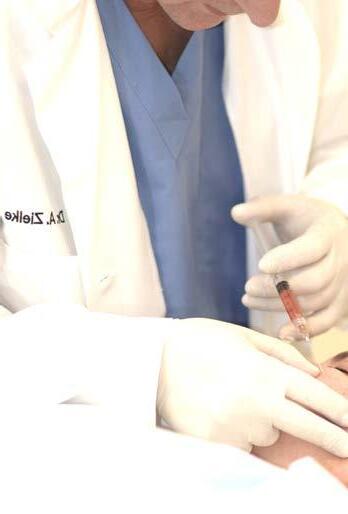
Andrzej Zielke, MD
would increase the number of electrons in our bodies, and poison would steal the electrons.
Unfortunately, in vain one would ask a doctor for prescription medication that would be an electrons donor. They all steal electrons. Probably the biggest offenders are chemotherapy drugs that are so toxic that even a healthy person would get sick not to mention cancer patients who are already under a lot of oxidative stress.
Common sources of oxidative stress:
• normal metabolism produce free radicals but easily handled by cells themselves
• cigarette smocking
• excess of sugar
• animal protein in diet
• excessive exercise
• air and water pollutants
• pesticides, herbicides
• food additives
• household chemicals
• chlorinated water
• radiation exposure
• psychological stress
• chronic and acute disease and cancer
• pharmaceuticals
Antioxidants:
Almost all antioxidants come from plants. That’s why the best diet is rich in fruits and vegetables. Animal proteins are a source of free radicals and produce oxidation especially meat well done on barbecue. Research showed that eating a steak increases oxidation parameters when measured in a blood sample taken one hour after a meal that was completely attenuated when one half of avocado fruit was added to the dish.
We all have seen antioxidant properties of avocado cutting the fruit in half and leaving to open air for few hours. From beautiful green color, it becomes dark and black. This is because it donates electrons to oxygen in the air. When we eat avocado fruit these free electrons are available to our bodies to combat oxidative stress. Avocado is called superfood not for nothing.
All fruits and vegetables are rich in antioxidants if prepared fresh. Canned fruits and vegetables have no nutritional value and are completely depleted of antioxidant properties.
Among many antioxidants available to us, one of the most important is Vitamin C.
Vitamin C is not only a great antioxidant but is also involved in collagen production, immune system activity and many metabolic processes of all cells including cardiovascular and nervous systems.
Natural sources rich in Vitamin C include:
• Kiwifruit - very rich in Vitamin C
• Fresh squeezed citrus fruits juice (grapefruits and oranges)
• Beets, broccoli, pepper, cantaloupe, tomatoes
• Drinks and juices pre-made and “enriched” with Vitamin C are very poor source of Vitamin C because Vitamin C easily becomes oxidized and loses activity.
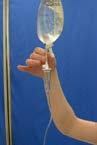
Vitamin C and Intravenous Therapies
We recommend 1 to 4 grams a day of Vitamin C for prevention and double the dose in illness. How much Vitamin C we can take orally? No more than 10 gm daily in divided doses. This is because of irritation of the stomach. Higher does require intravenous administration.
Intravenous Vitamin C flushes our cells with free electrons and increases intrinsic antioxidant systems in cells. It is also a chelation agent for heavy metals (removes heavy metals). Heavy metals load is often implicated in heart disease, cancer, or neurologic diseases.
Large doses (75 - 100 grams) of intravenous Vitamin C, can be used as supplementation to chemotherapy or radiation in the treatment of cancer.
Indications for IV Vitamin C:
• General health improvement
• Cardio-vascular disease
• Neuro-degenerative conditions
• Chronic and acute infections (Lyme disease, hepatitis c and many others)
• Heavy metals load
• Treatment of cancer in addition to other treatments
• Chronic and acute wounds including trauma and surgery
Vitamin C can be combined in infusion with other vitamins or nutraceuticals depending on the problem treated. PC
•
•
•
•
•
•
•
•
•
•
•
Directories
Animal Educational Exhibits
North:
The Pittsburgh Zoo & PPG Aquarium pittsburghzoo.org
The National Aviary nationalaviary.org
Animal Communication
Greater Pittsburgh Area: Renee Takacs, M.A. intuitguide.com
Animal-Related Art, Photography & Retail April Minech Custom Portraits | Pet Inspired Art www.ladybugdelightz.etsy.com
Grand Slam Grooming 412-221-5081 | grandslamgrooming.com
Petsburgh Dog & Cat Grooming 412-885-4027
Pets At Home
412-655-7297
The Pet Salon
412-279-5331 | petsalonusa.com
Woody’s Dog Wash & Pet Boutique 412-714-4644 | woodysdogbath.com
East:
Animal Elegance
412-361-1177 | www.animal-elegance.com
Candelore’s Barking Beauties Pet Grooming 412-872-5550 | candeloresbarkingbeauties.com
Cat Around Town Cat Grooming 412-461-3700 | cataroundtown.com
West:
Paws Here Awhile Pet Resort 724-573-4665 | pawshereawhile.com
Equine Affairs
What Horses Say… Are We Listening?
By Kristin Hermann
What Horses Say How To Hear, Help and Heal Them is a book written by British author’s Anna Clemence Mews and Julie Dicker. Animal Communicator Julie Dicker “interviewed” over two thousand horses. How did she do that? Well, intuitively of course! She is a talented healer and Animal Communicator who can translate what horses feel and think by making a direct connection with their hearts and minds.
When I was introduced to this book, at a beauty salon of all places, I immediately turned to the page where the author asked horses about how they feel when they are ridden! I was fascinated by what the horses said. The horse’s said they do not mind being ridden, but they would rather be able to understand what the rider wants! The book What Horses Say says, “The most frequent complaint was about poor communication and riders failing to give clear and understandable instructions.” Ahh ha! I thought, this is what I say to my students all the time!
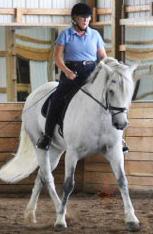
The rider needs to learn to ride with clarity, so the horse understands. This is what the “basic riding position” of the rider is all about: getting in the correct position, so the horse understands the rider no matter what type of riding you engage in whether English or Western. A horse needs a rider to send clear signals. Your communication will always be unclear if you do not have a good basic riding position.
I often use learning to play a musical instrument as an example for learning how to ride a horse. The rider is the musician, and the horse is the instrument, and if the rider is not correctly placed on the instrument or the horse, the ride they experience together will always be out of tune.
This is what I aim to do in my riding lessons, teach riders how to ride in the correct riding position, so they are riding in harmony with the horse. If the rider’s body is not correctly positioned on the horse to play or ride it correctly, they will not be in harmony, and the horse will constantly be saying, “What does this rider want?” This ‘short circuiting’ between the communication from rider to the horse is too common.
Often, rider’s try to hard and are uncoordinated, stiff or give conflicting cues, and the signals they give the horse are misunderstood. Once
again, the horse is saying, “What does this rider want?” Horses are submissive by nature, and they try their best to understand. When there is a total misunderstanding between the horse and rider and the horse does not do what the rider wants, who gets blamed? The horse!
“You people.” as the King of Horsemanship would say: George Morris. It is simple communication. Riders must learn how to ride in the correct riding position and then learn how to use the aids to signal the horse in timing with the horse’s gaits and rhythms so that both human and horse are communicating in sync. When a rider finds this connection with the horse, it is called ‘equestrian tact.’
In the book “What Horses Say,” Julie discovered from the horses that another big complaint were saddles that do not fit. A bad fitting saddle can cause a variety of problems that can be cumulative, as there is no saddle for all seasons. Horses backs change, and we need to get the saddles checked at least yearly by a saddle fitter. This can be expensive, so until you can afford the saddle fitter start to educate yourself by reading or watching saddle fitting videos on Youtube. Yes, horses are expensive. They don’t call it the “Sport of Kings” for no reason.
Another complaint horses had according to Julie, are when the shoes were too small. I had this issue with one of my horses. The shoes were too small, and the toes were too long. My Spanish Norman, Bracchus, was always about two percent off. After x-rays had confirmed the toes were too long, I reluctantly changed farriers and then my horse went one hundred percent sound. The new farrier also put shoes on that were two
sizes bigger. It never occurred to me that shoes could be too small for a horse. We all trust our farriers, but when my girlfriend, who suspected they were too tight, said, “Imagine if you wore shoes that were too small?” It finally hit home in this small noggin of mine. Sometimes, it’s just the simple comments that make sense.
Another complaint from the horses were cold bits! At Coventry Equestrian Center we have a heated bathroom, and the bridles hang in there to become all toasty until the next horse is mounted and asked to accept the bit. My horses did not have to tell me this one, I mean who wants cold metal in their mouth on a freezing day?
Bad smells are another concern to horses. Think about it, their noses are so big, (their noses are their whole head!) and their sense of smell is articulate. Julie says in the book What Horses Say, “…horses make an assessment of us through their sense of smell,…” therefore strong perfumes, tobacco, and alcohol make certain horses uncomfortable.
These are just some of the key points that I picked up on reading the book What Horses Say. I think anyone who owns a horse would find this a fascinating and light-hearted read. It is not based on scientific fact but from an Animal Communicator who loves horses and was interested in what they had to say. Any of us who own horses know that we share a bond with our horses like we do our dogs or cats. Our “fur animals” are connected to us in ways we may not understand but “fur sure” it’s a heart connection. Not being able to understand some my animals at times I often consult an Animal Communicator. I might not always like what she has to say, but I listen because she reads the energy field of my horses, dogs or cats and they know best. Our animals cannot talk to us in words. We have to read their signals, be open to the messages from their hearts and emotions and hopefully listen with our own intuition to What They Say.
In 1997 I wrote an article entitled ‘Communications between Homo Sapiens and Equus.’ by Kristin Hermann that was published in the magazine Dressage & CT. To read this article go to this link http://blythdale.tripod.com/ coventryequestriancenter/id41.html PC
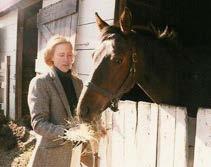
Author Kristin Hermann and her horse Blythedale Circa 1986
Sierra
Sierra, the love and joy your brought into our home is immeasurable. You were quick to love and quick to learn. Lexi, Sophie and I adored you, and still think of you daily. You taught us so many things in your short time here, including helping my girls learn to work together. Your absence is still so strongly felt, as our hearts will forever covered with your paw prints. -JC
ANESTHESIOLOGY
ANESTHESIOLOGY
Dianna Ovbey, DVM, MS, Practice Ltd. to Anesthesiology CARDIOLOGY
Isla Arcaro, DVM, MS CARDIOLOGY
Eva Sikorska, DVM, DACVIM
Eva Sikorska, DVM, DACVIM
Erin Trageser, VMD, MSc, DACVIM DENTISTRY
Erin Anderson , VMD, MSc, DACVIM DENTISTRY
Krista Mendoza, DVM, DAVDC DERMATOLOGY
Krista Mendoza, DVM, DAVDC DERMATOLOGY
Sandra Sargent, DVM, DACVD EMERGENCY & CRITICAL CARE
Sandra Sargent, DVM, DACVD EMERGENCY & CRITICAL CARE
Kenton D. Rexford, VMD
MRI & CT IMAGING
PetsDx Veterinary Imaging www.petsdx.com
PetsDx Veterinary Imaging www.petsdx.com
Gerald Frye, VMD NEUROLOGY
Gerald Frye, VMD NEUROLOGY
Edward MacKillop, DVM, DACVO
Edward MacKillop, DVM, DACVIM
Kendra Mikoloski, DVM, DACVIM ONCOLOGY
Kendra Mikoloski, DVM, DACVIM ONCOLOGY
Rebecca Newman, DVM, MS, DACVIM
Rebecca Newman, DVM, MS, DACVIM
Todd M. Erfourth, DVM, DACVIM
Todd M. Erfourth, DVM, DACVIM
Bridget Urie, DVM, MS, DACVIM OPHTHALMOLOGY
Bridget Urie, DVM, MS, DACVIM OPHTHALMOLOGY
Christine Guenther, DVM, DACVECC
Kenton D. Rexford, VMD
Lawrence Bagley, DVM, DACVO
Christine Guenther, DVM, DACVECC
Christine Rutter, DVM, DACVECC
Rachel Keller, DVM, DACVO
Lawrence Bagley, DVM, DACVO
Sarah J. Deitschel, DVM, DACVECC
Sarah J. Deitschel, DVM, DACVECC
Rachel Keller, DVM, DACVO
Amy Dickinson, DVM, DACVECC
Amy Dickinson, DVM, DACVECC
Rebecca A. Miller, DVM
Kara Osterbur, DVM, DACVECC
Joey Kallem, DVM
Rebecca A. Miller, DVM
Kristen Krisulevicz, DVM
Joey Kallem, DVM
Brendan Cloonan, DVM
Jennifer Wooderson, DVM
Carol Park, BVSc
Elissa Allen, VMD
Victoria Chu, DVM
Stephanie V. Nelson, DVM
Michael McGinley, DVM
Robin M. Dutra, DVM
Jaime LaVelle, DVM
Lindsey Rademacher, DVM
Kelly Weimer, DVM
Kristen Krisulevicz, DVM RADIOLOGY
Jennifer Daly, DVM, Resident in Emergency and Critical Care
Christopher Warrington, DVM, DACVR
Tricia Tovar, DVM, Resident in Emergency and Critical Care INTERNAL MEDICINE
Shaina Mooshian, DVM, Resident in Emergency and Critical Care
Kelsey Sutcliffe, DVM, Resident in Emergency and Critical Care
Sherwood Johnson, DVM, DACVIM
Tracey Peterson, DVM, DACVIM
Rocio Ramirez, DVM, Resident in Emergency and Critical Care INTERNAL MEDICINE