Pittsburgh PetConnections Holiday 2015 Vol 4 Issue 2 Digital Editionition
PLEASE SUBMIT ANY CORRESPONDENCE TO: info@pghpetconnections.com
ADVERTISING INQUIRIES info@pghpetconnections.com
724-503-8695
All Rights Reserved | Copyright 2015
PITTSBURGH PETCONNECTIONS BI-MONTHLY published by: Pittsburgh PetConnections, LLC. Pittsburgh PetConnections LLC. was formed in 2012. Our mission is to publish a high quality, informative publication focused on the Human-Animal Bond. We support local businesses and also assist local non-profit businesses for pets and people, to give back to our great Pittsburgh communities.
MAGAZINE PUBLICATION STAFF
Carla Mader, Managing Editor
Kara Jones Photography, Photography
Nicole Begley Photography, Photography
Jaimee D. Greenawalt, Graphic Design
Carla Mader, Sales & Distribution Manager
ADVERTISING SALES
Robin Reinfeld, Sales Pittsburgh 412-780-2254 | rrcd@aol.com
Denise Iamurri Bartman, Sales Pittsburgh & Central OH
Michael James, Sales Support Pittsburgh & Central Ohio mj.1@outlook.com
Jaime Chesney, Digital Advertising Specialist BENN Advertising Solutions
CONTRIBUTING WRITERS
Our contributing writers have many years of combined experience and expertise in the fields of veterinary medicine and the Human-Animal Bond.
This holiday season, PetConnections has many people to thank for our continued success and current expansion. Thanks to our sponsors, writers, readers and subscribers, we are into the second issue of our fourth year in publishing, and third concurrent issue offering Central Ohio edition of PetConnections magazine. THANK YOU!!!
We are excited very pleased to announce our recent partnership with The Pittsburgh PostGazette and BENN Advertising Solutions to offer more targeted and effective marketing and advertising campaigns to our sponsors. Creating awareness and raising preference for our sponsors, our print and digital editions of PetConnections magazine has become a trusted resource and our readership and subscriber base is growing. Our media partnership packages now offer a unique and powerful combination of print and digital issues with a demand side platform with BENN, which can lead to more targeted, measurable and responsive campaigns. Please see our contact info for advertising in the staff section of this page to join our family of sponsors!
Events
2015 has been a terrific year of pet events! It was a privilege to be the official print media sponsor of the Pittsburgh Pet Expo 2015, and produce the show program for the third consecutive year. Thank you to Rocco Lamanna and the other sponsors, Healthy Pet Products, VCA Animal Hospitals and Invisible Fence of Pittsburgh for making this great event possible. This year’s expo was jammed packed full of pets, people, vendors and fun!
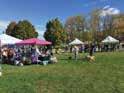
The CARMAA Dogtoberfest, Susan G. Komen Paws for the Cure, Pugtoberfest, Celebration & Blessing of Animals, The Pittsburgh Pet Expo, all were very successful and participation and attendance up this year.
This Issue
PHOTOGRAPHY
Cover photo by Kara Jones Photography
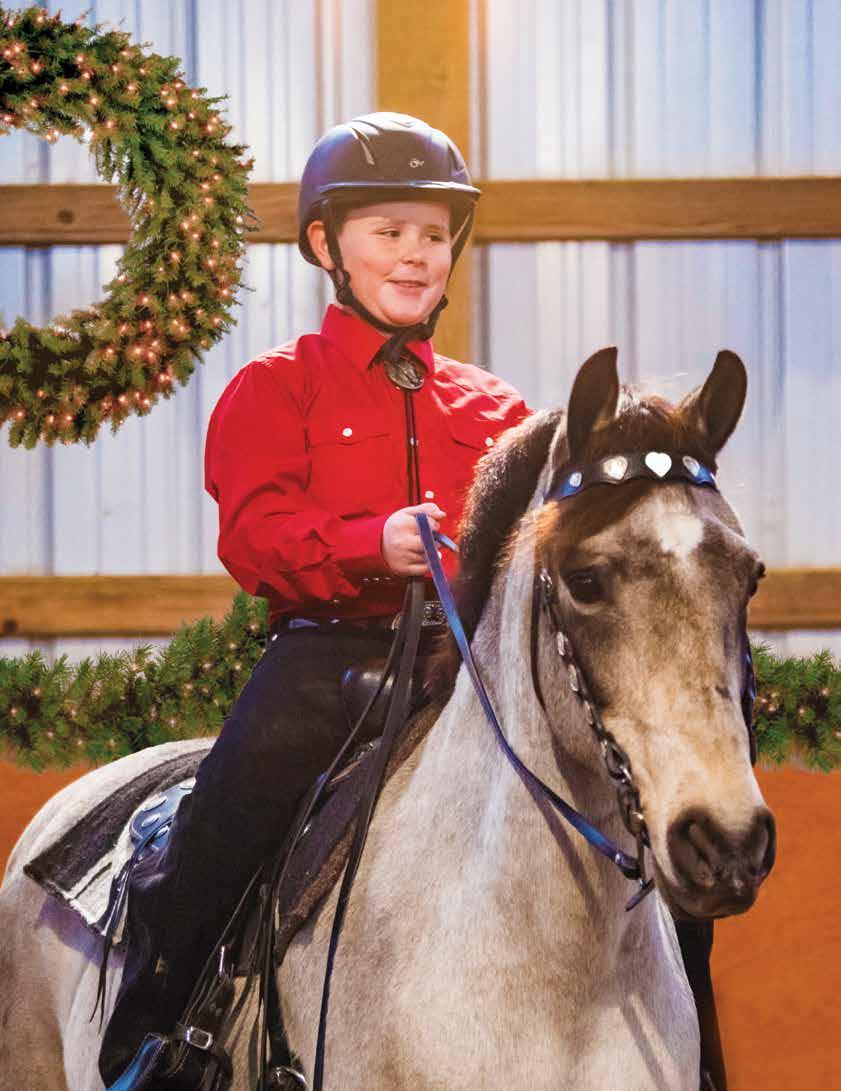
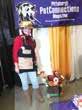
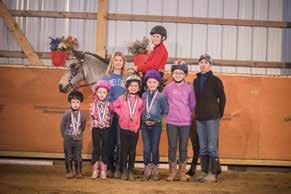
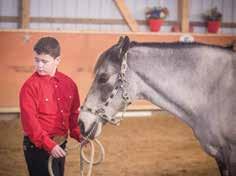
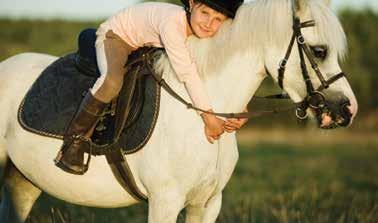
Our cover star and featured story in the Equine Affairs section, is Logan Smith and Cody, the Peruvian Paso pony and Kim Manon’s unique riding with music riding lesson program. See our 3rd Annual Thanks for Paws contest winners in the event section! Thank you to the many submissions and we wish we could pick everyone!
Our featured businesses are PittsburghVeterinarySpecialtyandEmergencyCenter,BeaverAnimalClinicand Sarver AnimalHospital.
Our featured writer, Lesley Ashworth, Human-Animal Bond Educator, National Link Coalition, writes about forgiveness and healing in Only Time Will Tell. Also, Dr. Doug writes about Adopting a Holistic Lifestyle for your Pet, Read about Choosing a Dog Trainer by Lilian Akin, and so much more in this issue. Every ad supports the donated and discounted ads for local organizations that PetConnections sponsors. Please support our advertising sponsors! See their locations on the map page. Check out our PetConnections Resource Directories for categorized listings.
We encourage you to subscribe to PetConnections Magazine, as our readership is growing!!! Even though PetConnections is free at select locations, reserve your personal copy to be mailed every issue! Visit www.pghpetconnections. com to subscribe today! Submit your photos and stories, as well as remembrances to be featured online and in future issues to: info@pghpetconnections.com.
Thank you for picking up this copy of PetConnections. Merry Christmas, Happy Hanukkah and on behalf of the staff at PetConnections, take care of yourself and your animals and be well this holiday season!
Warmly,
Carla Mader Publisher Pittsburgh
& Central Ohio PetConnections Magazine
Please submit any correspondence to: info@pghpetconnections.com Please check us out on the web & subscribe at: www.pghpetconnections.com. Follow PghPetMag on Twitter and “Like” us on Facebook! http://www.facebook.com/PghPetconnectionsMagazine Disclaimer: The
Directories
Animal Educational Exhibits
North:
The Pittsburgh Zoo & PPG Aquarium pittsburghzoo.org
Greater Pittsburgh Area: Pittsburgh Career Institute 412-281-2600 | pci.edu
List your business today! info@pghpetconnections.com
Gift Wrapping At The Galleria Of Mt. Lebanon and Pittsburgh Mills
Animal Rescue League
For all dates go to: www.animalrescue.org/event/giftwrap/
Western PA
NOVEMBER 23DECEMBER 24
Humane Society
Holiday Gift Wrapping at the Mall at Robinson
FRIDAY, DECEMBER 18
3rd Annual Thanks For Paws Contest winners!
1st place
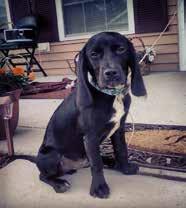
Rufus!
In May of 2010 we got our Rufus from the Onslow County Animal Shelter right near Jacksonville North Carolina where my husband was stationed at Camp Lejeune while in the Marine Corps. We had just moved there and realized base housing allowed us to have a pet. We decided to go check out the nearest shelter, which was not in the best of shape. We met Rufus and it was love at first sight with this 9-month-old Cocker Spaniel Beagle mix. His ears were ridiculously cute, but the personality is what grabbed our attention. Before making the decision to adopt him, we asked what his background was from the staff members at the shelter. Their response was that he was in a box on the door step one morning, no holes cut or anything, just sitting there. That was enough for us, so we took him home immediately. He has been the absolute best dog we could have ever asked for. My husband had injured his back in the Marines right before we moved to NC, and lil Rufus was an absolute savior for everything we endured for the following 2-3 years. He is now 6 years old, and completely spoiled by every one of our family members and friends. A huge addition to our life :-) Patrick Bickar and Cydnee Traversari
3rd place
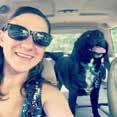
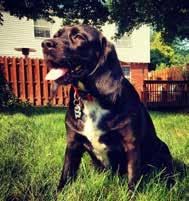
Charlie!
Mastiff/Lab aka Mastador. Adopted from the Animal Rescue League Pittsburgh. At 110 pounds, and 10 months old, I loved big mutts, no lie, but I wasn’t sure how this fella was going to be with me. In the meet and greet room, he walked over to me, sat down and put his giant head in my lap. I fell in love instantly. I am convinced he rescued me and adopted a human. What a bargain at 50 cents a pound! This handsome boy is now 170 and 10 years old. And perfect.
2nd place
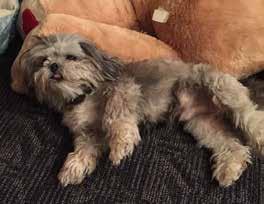
Bentley!
I am grateful for my 4 year old shitzu Bentley James because he’s my best friend . He listens to me when I’m upset when I cry he licks my tears away . He sleeps with me at night whatever I eat he gets to try. Bentley goes everywhere with me he is loved by everybody he is such a wonderful dog see I have severe depression and he helps me cope and manage by being around him I would be so loss without him he is so happy if I must let him alone for a while and I walk in the door he goes crazy he is so spoiled he knows he’s the king of my heart he is such a big baby he loves to sit on my lap when we go in the car and look out the window he is always following me we do everything possible together he is truly my best friend I love him so much anyone that meets Bentley says can I have your dog ... And I must say oh no that is my baby boy I’d be lost without him I cannot express in so many words how I feel about him he will always be in my heart till the day I die ....
Sarver Animal Hospital: Focusing on Overall Pet Health Featured Business
By Nate Lasher
When she opened Sarver Animal Hospital in February of 2015, Dr. Nicole Milligan began structuring her practice in a way that would promote the overall health and wellness of her patients.
“As our society has changed, pets have become more like our family members,” said Dr. Milligan. “They are not just animals that people have in their homes. You want your pets to stay healthy, and you want to have them in your life for as long as possible.”
Focusing less on the quantity of appointments per day and more on the quality of those appointments, Dr. Milligan and her staff are devoted to providing clients and their pets with a low-stress and educational environment. One important part of creating this environment is the implementation of extended appointment times. These longer appointments allow the staff more time to minimize any fear and/or stress pets may be experiencing while also providing owners with a large opportunity to express any questions or concerns.
While providing the usual veterinary services including, but not limited to, comprehensive physical examinations, vaccinations, diagnostics, general soft tissue surgeries, spays and neuters, deworming, and microchipping, Sarver Animal Hospital also offers nutrition and dietary counseling, preventive dental care, and behavior consultations.
“Most animals have dental disease, so dental care is very important,” said Dr. Milligan. “We recommend in-home preven-
“Everything we do here is the latest and the gold-standard for our profession,” she said. “I work to confirm that the vaccines we use are all good vaccines, and I make sure that my treatment protocols for different kinds of diseases are what the experts currently recommend. Continuing education is very important to me.”
In order to provide a few alternative therapies in the near future, co-owner, Dr. Tamara Padgelek, has been in Florida training at the Chi Institute of Traditional Chinese Veterinary Medicine. These alternative therapies are set to include acupuncture and some herbal medicines.
“I really enjoy client education, so I like to talk about everything as thoroughly as possible,” said Dr. Milligan. “I like to take my time so that clients understand all of their options and make educated decisions. I would never pressure them into doing something that they don’t want to do when it comes to the treatment of their pets.”
Sarver Animal Hospital is currently working toward certifications for low-stress handling and feline-friendly practice. They also follow fear-free practice guidelines. Stressminimizing measures are a key part of what makes the veterinary hospital unique.
tative dental care and regular dental cleanings. Just like in humans, dental health is often connected to other health issues.”
When dealing with the nutrition and diet of peoples’ pets, the staff at Sarver Animal Hospital will often provide food recommendations based on an animal’s specific medical condition or health status. They also do things like calculate ideal body weights and create feeding guidelines for owners to follow if they decide to do so.
Dr. Milligan is very focused on staying upto-date on current practices in the veterinary field.
Also planned for the future, Sarver Animal Hospital will be moving down a few doors from their current location and into a larger space.
“We will have more exam rooms and more room for hospitalization, “said Dr. Milligan. “I do also plan to add another doctor eventually so that we will be able to see more pets. We will be having an open house when we move - probably in the spring time.”
Originally from Kittanning, PA, Dr. Milligan earned her Doctor of Veterinary Medicine in 2011 from North Carolina State University. She currently shares her home with her husband Burnett, Monty the Cat, and Daisy the Golden Retriever.
Sarver Animal Hospital is a full service veterinary clinic serving the needs of dogs and cats in Sarver, PA and the surrounding area. The practice is currently located at 616 S. Pike Road, Rt. 356, Sarver, PA 16055 and can be contacted by phone at (724) 295-9933. For more information, visit their website at www.sarveranimalhospital.com or view their Facebook page at www.facebook. com/sarveranimalhospital. PC
Human-Animal Bond
The recent hiring of Michael Vick by the Pittsburgh Steelers has created quite a controversy. It has also opened the door to a very important conversation. It is allowing us to discuss critical topics, including animal abuse, child abuse, and the link between domestic violence and animal cruelty, which we have addressed in previous PetConnections articles.
Vick’s hiring has also pushed us to look at accountability among sports professionals. At what point, if any, do they relinquish right to wear a jersey that identifies them as a positive role model for children? How much violence and cruelty is too much? And after all is said and done, whether or not a player ever returns to the field, can we stay compassionate and respectful?
I hope you will continue this important conversation, and we can all work toward the day when it isn’t needed. Until then, here is another editorial from our guest writer, Lesley Ashworth.
qualities that may, or may not, exist. Case in point, perhaps the cow in the painting was just licking a tasty morsel and not planting a kiss.
Only Time Will Tell
By Lesley Ashworth Human-Animal Bond Educator, National Link Coalition
Standing in the gallery, my eye is drawn to the delightful paintings of cows. One in particular, titled “Thelma Lou and Barney “shows a cow licking the face of another. My immediate reaction is that which captures the heart of many animal lovers, yet in a flash, the aaawwwwh moment is quickly replaced with the certain knowledge that I could never hang this delightful artwork and still be an unrepentant carnivore.
Like many others who consider their domestic pets as family members, I consequently attribute them with emotions and
In what may be viewed as our glacial development toward enlightenment as a species, we are becoming more and more aware of the important role of non-humanoid animals. Their value to us is immeasurable and frequently follows us from nursery to nursing home.
It would take more space than this article allows to list all the wonderful and amazing ways we benefit from the humananimal connection, suffice to say it is a powerful bond that impacts both. Today there is rapidly growing research to support what many of us already believe – that in addition to the psychological benefits, animals provide physiological support. We are learning that pets may boost infant immunity to infections, lower our blood pressure (not so much for those of us with frenetic cats) and help with treatment of mental health disorders.
I would like, for a brief moment, to focus on just one aspect of our continued benefit from animals and that is forgiveness. They (animals) seem to display it in abundance – while we seem to have forgotten its existence. I would not be surprised to learn doubt that our increased awareness about the benefits of animals to the human condition in some way correlates to the apparent disintegration of the world as we know it.
In the late 1800’s Nietzsche observed that “Growth in wisdom can be measured precisely by decline in bile.” Perhaps, when irritated or angry we should pause and reflect on “what would Fido/Fluffy do?” I am not meaning to be irreverent here, but it cannot hurt the human condition for those of us who love pets to be inspired - to pause and consider forgiveness as an alternative to righteous indignation.
I recently read an article by Stacie Grissom about the “Vicktory Dogs” who were rescued from Michael Vicks home in 2007. These pups have contributed to some truly beautiful stories of hope, survival, love and triumph. One that resonated with me was that of Georgia. According to the article, Georgia’s adopter Amy, was surprised how quickly Georgia adapted to a loving family life. Although Georgia passed away in 2013, she “taught Amy powerful lessons of forgiveness, love, and learning to trust again.” What an an amazing and powerful legacy! Certainly one that few humans inspire.
As for Michael, who am I to doubt his contrition is not genuine? I do know his life experiences afford him the credibility to educate and impact persons few of us could ever hope to influence. If he chooses this path his value and impact on the animal world could be significant. Only time will tell. Meanwhile I encourage the City of Champions to begin healing by forgiving. PC
Beaver Animal Clinic: Because We Care
We at Beaver Animal Clinic believe in the power of caring.
Caring for our patients as our own pets. Caring for our clients as our friends. Caring for each other as our family. We strive to maintain an office where animals receive the best possible health care.
Holistic/Integrative Care by Dr. Doug Knueven
Conventional Care by Dr. Peter Kosturek
Acupuncture and Conventional Care by Dr. Rhinehart
Beaver Animal Clinic has been serving the medical needs of pets in the Beaver county area and beyond for more than 80 years. Dr. Doug Knueven purchased the practice in 1994. He immediately expanded the size
Holiday Tips & Tidbits
Dangerous Foods
Food and drink that enhance our lives sometimes can be harmful, even deadly, for our four-legged friends. The ASPCA’s Animal Poison Control Center takes calls regarding pets ingesting and being poisoned by, “people” food.
of the building and the clinic’s capabilities. At the same time, Beaver Animal Clinic has maintained its comfy atmosphere.
But don’t let the homey exterior fool you. Beaver animal clinic is equipped with all the latest medical equipment. We offer a full line of medical, surgical, and dental procedures that any pet might need. Our three compassionate veterinarians and friendly staff are here to help you and your four-legged friends.
Beaver Animal Clinic offers more than simply conventional medicine. Dr. Doug Knueven practices an integrative approach to pet care. He is well versed in conventional veterinary medicine and has been licensed since 1987. He is also certified in acupuncture, Chinese herbal medicine, and chiropractic. He is a member of the
Foods that are dangerous for your pets include:
• GRAPES AND RAISINS
• YEAST DOUGH
• RAW/UNDERCOOKED MEAT, EGGS AND BONES
• XYLITOL – A SWEETENER IN GUM AND MANY OTHER PRODUCTS
• ONIONS, GARLIC AND CHIVES
• MILK
• SALT
• CHOCOLATE, COFFEE AND CAFFEINE
• ALCOHOL
American Holistic Veterinary Medical Association and has advanced training in natural nutrition, massage therapy, homeopathy and a host of other alternative therapies.
At Beaver Animal Clinic, Dr. Doug offers a full range of options for the treatment of disease and the maintenance of health. Western medicine tends to focus on fighting disease while holistic medicine strives to strengthen the body. These two goals are not necessarily mutually exclusive. An integrative practitioner works with the best of what these two philosophies have to offer picking and choosing from the full menu of options to put together a treatment plan that is ideal for the individual pet and her caregiver.
At Beaver Animal Clinic, we treat your pets like the valued family members they are.
PC
• AVOCADOS
• MACADAMIA NUTS
If you suspect your pet has ingested any of these items, contact your veterinarian or the ASPCA’s Animal Control Center’s 24 hour hotline at 888-426-4435.
For additional information go to http://www.aspca.org
Pittsburgh Veterinary Specialty and Emergency Center
By Carla Mader
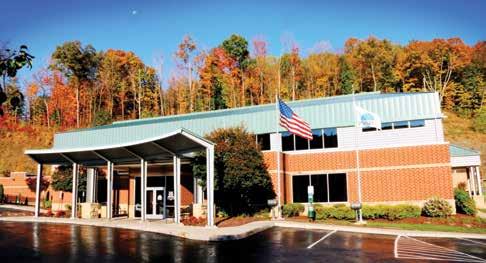
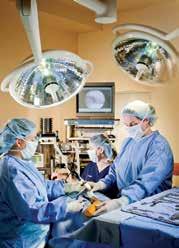
Pittsburgh Veterinary Specialty and Emergency Center (PVSEC) is western Pennsylvania’s most comprehensive multi-specialty referral and emergency veterinary center. They provide small animal veterinary services in 14 disciplines and 24/7 emergency services. PVSEC is conveniently located and easily accessible in North Hills off I-279.
Pittsburgh is very fortunate to have a premier veterinary center like PVSEC in our region. The specialty and emergency services at PVSEC support and compliment the care local veterinarians offer. PVSEC does not provide any routine or preventative veterinary care and, with the exception of the emergency service, only sees patients that have been referred by local veterinarians. PVSEC’s 34,000 sq. ft. state-of-the-art facility offers advanced diagnostics and procedures all under one roof. They are also open 24 hours a day 365 days a year, with emergency veterinarians and critical care specialists on site and able to consult with the other specialist at all times, unlike other emergency clinics.
What is a veterinary specialist?
Veterinary medicine has become sophisticated, as in human medicine. Since the
mid-seventies, specialty disciplines in veterinary medicine have been formally established and continue to grow. The American College of Veterinary Internal Medicine (ACVIM) certifies veterinarians in the specialties of Cardiology, Oncology, Neurology, Large Animal Internal Medicine, and Small Animal Internal Medicine. Additional colleges include The American College of Veterinary Surgery (ACVS), The American College of Veterinary Ophthalmologists (ACVO), The American College of Veterinary Dermatology (ACVD), The American Veterinary Dental College (AVDC), and The American College of Veterinary Emergency and Critical Care and The American College of Veterinary Radiology (ACVR).
To become a diplomate of a veterinary specialty college, it is much the same as in human medicine. Veterinarians must complete additional training usually comprised of a one-year internship, followed by two to four years in a residency program for their specialty, followed by extensive board examinations.
Veterinary Technicians also can receive specialty certification in surgery, internal medicine, critical care, nutrition, dentistry and more.
Why do veterinarians refer to PVSEC?
PVSEC’s philosophy of providing outstanding care and being a leader in veterinary medicine is recognized by our area vets. A very large referral base of veterinarians in western Pennsylvania, Ohio and West Virginia consult with and refer patients to PVSEC daily, for the advanced services and exceptional client and patient care offered. PVSEC also builds strong relationships with referring veterinarians through open communication and continuing education.
Your veterinarian may refer you to a PVSEC specialist for advanced care when medically indicated. The PVSEC specialists have extensive training and experience managing complicated and critical cases. This expertise can help achieve a
Dr. Sherwood Johnson
Pittsburgh Veterinary Specialty and Emergency Center.
better outcome or a faster diagnosis when time is of the essence. Veterinarians also know many cases are complicated and require more than one specialist. PVSEC offers the most diverse team of specialists in Pittsburgh, with fourteen veterinary services represented, allowing consultations between disciplines for the most comprehensive care possible. Advanced diagnostics such as MRI, CT, ultrasound, digital radiography, endoscopy, and much more assist them in rapidly diagnosing problems and devising an appropriate treatment plan for your pet. The value of this cannot be overstated when your pet’s health is at stake. Early referral by your veterinarian also can prevent problems from progressing, saving time, money and even your pet’s life.
The Diverse Team at PVSEC
PVSEC has an incredible team of veterinarians, veterinary technicians and client services team. The highly compassionate and qualified support staff is fostered with a work environment that encourages teamwork, supports professional advancement and rewards superior performance. This has resulted in a highly skilled staff that is passionate about their profession, and this shows in the care they give clients and patients alike.
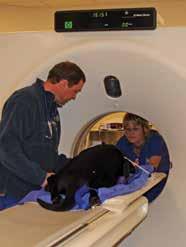
PetDx Veterinary Imaging at PVSEC is overseen by medical director Dr. Gerald Frye, VMD. PetDx offers a high-field closed magnetic resonance imaging (MRI) unit and computed tomography (CT) scanner for pet-safe imaging. These advanced imaging tools assist in obtaining a diagnosis and creating effective treatment plans. MRI is used to see soft tissues more clearly and CT scan uses x-rays to provide a better image of bony structures. PVSEC has a licensed MRI/CT technologist, Chris Wilson, R.T., CT, MR, who worked in human medicine for 18 years before joining PetsDx.
PVSEC offers the most diverse team of specialists in Pittsburgh, with fourteen veterinary services represented, allowing consultations between disciplines for the most comprehensive care possible
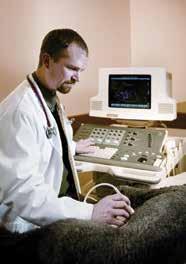
Dr. Christopher Warrington, DVM, DACVR is PVSEC’s radiologist. He works with the other specialists to assist them in obtaining a better diagnosis via his expertise in reading radiographs, CT and MRI studies and also performing ultrasound exams.
PVSEC internal medicine specialty team is headed by Dr. Sherwood Johnson, DVM, DACVIM, and includes Dr. Tracey Peterson, DVM, DACVIM, Dr. Emily Klosterman, DVM, MS, DACVIM, and Dr. Lisa Sepesy, MPH, VMD, DACVIM. They have extensive experience in management of cases referred for kidney, liver, intestinal and urinary diseases, immune-mediated disorders, infectious diseases, and endocrine disorders, such as diabetes, thyroid problems, and Cushing’s disease.
The PVSEC Comprehensive Cancer Center is comprised of medical and radiation oncologists, surgeons, and support services such as radiology. PVSEC medical oncologists Dr. Rebecca Newman, Dr. Todd
Erfourth, Dr. Bridget Urie, and Dr. Christine Anderson all are board-certified in oncology by the ACVIM, and Dr. Anderson is also board-certified in radiation therapy. Patients most commonly are referred to the oncologists for cancers of the soft tissues and bone such as lymphoma, sarcomas, carcinomas, and more. They offer diagnostics and treatment plans for chemotherapy, as well as radiation therapy.
PVSEC’s Veterinary Radiation Oncology department was founded in 2010 and joined the oncologists and surgeons to create Pittsburgh’s only comprehensive cancer treatment facility. Dr. Christine Anderson, DVM, MS, DACVIM (Oncology), DACVR (Radiation Oncology) provides radiation therapy using their state-of-the-art linear accelerator. CT scans and advanced software are used for precise positioning and planning for radiation therapy. Radiation therapy is a non-invasive form of treatment that most commonly is used for sarcomas, mast cell (and other round cell) tumors, nasal and brain tumors, bone tumors, and metastatic anal gland tumors, but has applications in many different types of cancers. Dr. Anderson routinely works with the oncologists, internists and surgeons on cases, coordinating care between all three services in order to obtain the best possible outcome.
The Neurology/Neurosurgery department at PVSEC is comprised of Dr. Edward MacKillop, DVM, DACVIM and Dr. Kendra Mikoloski, DVM, DACVIM, who are Western Pennsylvania’s only board-
certified neurologists. The Neurology department employs numerous diagnostic technologies, including MRI, CT and electro-diagnostic tools, such as auditory, muscle function and nerve conduction testing, to diagnose and treat both acute and chronic neurological disorders. They also perform surgery on the brain and spine for problems varying from tumors to ruptured vertebral discs.
The Cardiology department offers work-ups including echocardiography, ECG, blood pressure measurement, and thoracic radiography. They also offer OFA/ARCH Exams which are cardiac screenings for purebred dogs to identify hereditary cardiac diseases (i.e. subaortic stenosis, pulmonic stenosis, valvular dysplasia, patent ductus arteriosus, etc). OFA/ARCH Exams do not require a referral, and are appropriate for show or field trial dogs, or for screening prior to breeding. Dr. Eva Sikorska, DVM, DACVIM and Dr. Erin Anderson, VMD, MSc, DACVIM are PVSEC’s cardiologists.
Dr. Lawrence Bagley, DVM DACVO founded the Animal Eye Clinic of Pittsburgh in 1997. He merged with PVSEC in 2008 to form the Ophthalmology department. Along with Dr. Rachael Keller, DVM, DACVO, Dr. Michael Finn, DVM, MS, DACVO, and Dr. Kara Gornik, DVM, and Dr. Bagley sees patients referred for ocular conditions such as uveitis and glaucoma. They perform testing and procedures in their own dedicated surgical suite specialized for ocular procedures. OFA Eye Certification Registry Examinations (formerly CERF Exams) are offered without a referral. OFA exams are ophthalmic screening tests for purebred dogs that identify hereditary ocular diseases (i.e. corneal dystrophy, cataracts, PRA). OFA Eye Certification Registry Exams are appropriate for show or field trial dogs, or in preparation for breeding.
allergies, immune mediated skin disorders, hormonal abnormalities and bacterial, fungal or parasitic infections. They have video otoscopy available to treat and diagnose chronic ear infections and do in house intradermal allergy testing and vaccine formulation.
Advanced dentistry is also offered at PVSEC by the only board certified veterinary dentist in western Pennsylvania, Dr. Krista Mendoza, DVM, DAVDC. The dentistry department offers state-of-the-art diagnostics and equipment, such as digital dental radiographs, and performs tooth-saving procedures such as caps and root canals.
PVSEC is also proud to have the expertise of a board-certified veterinary anesthesiologist. Dr. Dianna Ovbey, DVM, ACVAA, assists specialists in fields as varied as surgery, ophthalmology, and radiation oncology to achieve optimal pain and anesthetic management in PVSEC patients.
The PVSEC Emergency department offers emergency medical care 24-hours a day, 7-days a week, including all holidays, providing pets with quality emergency care around the clock. The team is headed by Dr. Kenton D. Rexford, VMD and Dr. Christine Guenther, DVM, DACVECC and boasts 3 critical care specialists and 10 experienced emergency veterinarians. Along with their highly skilled technicians, the emergency department is staffed and equipped to provide your pet with the highest quality emergency medical care, including hospitalization if necessary. Because of the urgent nature of emergency care, the PVSEC Emergency department welcomes walk-ins.
Pittsburgh Veterinary Dermatology was founded in 2003. Dr. Sandra Sargent, DVM, DACVD and Dr. Bill Oldenhoff, DVM, DACVD are the only dermatologists in western Pennsylvania. They specialize in conditions affecting the skin and ears including skin
Pittsburgh Veterinary Surgery was started in 1993, by Dr. Anthony Pardo MS, DVM, DACVS. It was initially a mobile veterinary surgical service. The practice initially settled in Shaler Township, PA and became one of the founding practices of Pittsburgh Veterinary Specialty & Emergency Center. Dr. John T. Payne DVM, MS, DACVS partnered with Dr. Pardo in 2004. Dr. Pardo and Dr. Payne are joined by 5 additional AVCS board-certified surgeons, Dr. Julie L. Compton, Dr. Jonathan Anderson, Dr. Michael Doornick, Dr. Hope Chisnell, and Dr. Katrin Saile. Soft-tissue and orthopedic surgical diseases as well as traumatic injuries are treated in the state-of-the-art operating rooms. Advanced surgeries include total hip replacement, cruciate ligament repair, thoracic surgery, and minimally invasive procedures such as laparoscopy. Technicians certified in both human physical therapy and veterinary rehabilitation help PVSECs orthopedic and neurological patients get back on their feet and enjoy a better quality of life.
PVSEC offers hospitalized patients very comfortable and impressive wards, in which to rest and recover. The intensive care unit is equipped with supportive equipment, such as oxygen cages and monitoring devices, which can be observed from the main treatment room and the critical care and emergency doctor stations nearby. As with all of the veterinary technicians, the nursing staff is highly trained and gives every patient careful attention and compassionate care.
Enough cannot be said about the support staff at PVSEC. Karen Seger, Referral Liaison, states “Our technicians, assistants, and kennel assistants take excellent care of the patients, and the outstanding client care team is there to warmly support clients from the first phone call, to greeting you for a return appointment. The team is always there to answer questions and assist you through the referral process and follow-up appointments.
PVSEC is located at 807 Camp Horne Rd. Pittsburgh, PA 15237. Please call PVSEC at 412-366-3400 or visit www.pvs-ec.com for additional information. PC
Animal Eye Clinic
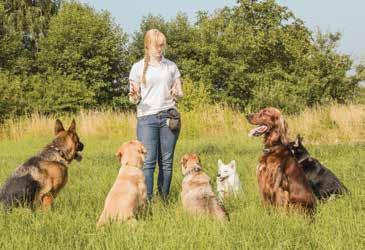
Choosing a Dog Trainer Canine Companion
Choosing a dog trainer can be confusing. The dog training industry is not regulated. Anyone can put up a shingle and call themselves a dog trainer. Having dogs and having trained dogs for many years is not necessarily a qualification that makes someone qualified to go into people’s homes and provide training or behavioral consulting. Teaching classes for years is also not necessarily a sufficient qualification. How, then, do you find a dog trainer that you can trust?
Dog training is a rapidly evolving field. My own training and behavior work has changed dramatically through the years. Dog trainers who truly care about providing the best advice to clients keep up with changes in the industry by becoming certified by an independent certificate agency and/or by attending conferences and continuing education on a regular basis.
An important question to ask is, what methodologies do you use? Ask this in an open-ended manner. Even the harshest and most traditional punishment-based trainers use positive reinforcement. Don’t get fooled by a trainer saying they use positive reinforcement. Delve further into this question. The American Veterinary Society of Animal Behavior as well as the Humane Society of the United States recommend trainers who encourage dog to work for things that motivate and reward good behavior such as food, attention, toys, etc. rather than techniques that focus on punishing undesirable behaviors. Be aware of any trainer who uses the words “dominance” and “alpha” and “pack leader” when they describe their training methodology. This shows the trainer is still basing their training techniques on outdated concepts of dog behavior. Trainers who have kept up with the changing trends and the science behind the way
dogs learn know that dogs do what works and what is reinforcing, they do not try to assert dominance or try to become alpha over people. And, trainers who call themselves “balanced” trainers are ones who use the entire realm of positive and negative reinforcement and punishment, with more of an emphasis on “correction” and punishment of bad behavior than a reward based trainer would use.
Another important question to ask is, what equipment do you use? Dog training became popular with the general public in the 1950’s when service members who had trained dogs for the armed forces
fooled; that is shock. While the purpose of this article is not to evaluate the use of shock collars in dog training, I would suggest that there is no reason to ever use electric shock to teach a dog basic obedience and/or manners, nor is there ever a reason to use one to change a dog’s behavior. Be very skeptical of any training company whose primary tool is a shock collar. A lot of damage can be done by the misuse of shock collars.
I think that certifications are important. It shows a trainer’s commitment to the industry and to providing the most up to date and scientifically valid approaches to dog behavior and training. That being said, there are very gifted trainers out there who are not certified. But, those trainers are conscientious and demonstrate a commitment to continuing their education. They attend seminars and conferences and read books. Be sure to ask about a trainer’s efforts to stay educated.
came back to the states and started using their methods on dogs from the public. I would submit that any dog trainer still using those methods, i.e. mandating the use of choke chains and not using treats and making a dog obey because it needs to respect you, has not stayed up to date with the changes in the industry and science based best training practices. I recommend you look for trainers who use dog friendly tools such as treats, toys, front clip harnesses, head halters, and/or clickers. Mandating the use of one of these is a clue that the trainer uses physical punishment in their toolbox, because their primary use it to cause discomfort to the dog. There are also trainers out there that use shock collars as their primary tool. If a trainer says they use electric collars that only “stimulate” or use “static,” do not be
No dog trainer can make any guarantee about a dog’s progress. If one does, then be skeptical. There are many variables that go into whether or not a dog will make progress, some of which the trainer has control over and some that they do not. Beware of any trainer who guarantees an outcome, especially within a short period of time.
In sum, ask questions and do your research. Make knowing decisions about what tools and methods you are comfortable employing with your dog, and most importantly have fun with your dog. Training your dog should be fun for you and for your dog. There is no reason for it to be otherwise.
By Lilian Akin, CPDT-KA, CBCC-KA
Akin Family Dog Training (412) 732-8091 PC
Washington Area Humane Society
Pictures with Santa, Dec. 12, 10am- 1pm
Budd Baer Auto Group, 71 Murtland Ave 15301
Harley is an 11 year old Carolina Dog mix. He’s still a little unsure of his surroundings and can be shy around new people, but he warms up quickly. He still has plenty of pep in his step and would be a good family dog.
Hi my name is Mercy and I’m a beautiful Maine Coon mix who is sweet as pie. I love being held and cuddled. I’m a bit older, but that doesn’t stop me! Other cats seem to stress me out so I would probably do best in a home by myself. Older kids who know not to pull my tail would be okay!
Felecia is a 9 year old boxer and lab mix. She was rescued by our humane officers when her previous owners left her tied up outside when they moved. Felecia loves people once she’s had a chance to know you. She would prefer to be the only dog in the house.
All animals are spay or neutered, up to date on their shots and microchipped prior to adoption
The Washington Area Humane Society is a 501(c)(3) no-kill shelter funded solely by private contributions & donated supplies. 1527 Rte 136, Eighty Four, PA 15330 (724) 222-7387, www.WashingtonPAShelter.org
Rescue & Shelter
How do I enjoy animals in the cold PA winter?
By Ann Yeager
Many of PA’s native animals are active, year-round residents. A list of active mammals can include squirrels (all 4 types), opossums, raccoons, fox, and deer. Bird sightings may reveal blue jays, Red-tailed Hawks, Owls, crows, and waterfowl. Not all animals migrate or hibernate. And some birds seen in Pittsburgh may be winter migrants from regions in the north. You will not need to battle cold winds or traverse frozen lands to get a good look this winter. Arranging your yard with certain aspects can provide you with hours of sightings, all while tucked in your warm home!
• Cover: Offering cover or shelter to wild animals in the winter is a great way to attract backyard visitors. Small brush piles, low trees (such as evergreens), and hedges provide natural coverage and shelter from the winds. Or leave your nesting boxes and birdhouses to provide winter havens.
• Placement: If you decide to offer food or use feeders, be aware that you may attract some interest from species you are not intending to feed. Rodents and other opportunistic feeders will find the food just as attractive as the species you are targeting. Food is hard to come by in the winter, and animals will take advantage of every situation. Some steps can be taken to safe guard your offerings, and your property:
• Many stores sell specialized feeders with repellants such as caged perches or squirrel baffles.
• Be sure to place feeders several feet or yards from your home.
• Offer a variety food for all animals, in different locations of your yard.
• Consider using a heated birdbath in your yard to provide animals with water.
Many animals can benefit from just a few small changes to any yard. Happy Animal Watching!
Ann Yeager Director of Marketing
Animal Rescue League Shelter and Wildlife Center 6620 Hamilton Avenue Pittsburgh, PA 15206
Office Address: 6000 Verona Rd Verona, PA 15147
Phone: 412-345-7300 x219
Direct: 412-345-0346
Cell: 724-422-8554
Fax: 412-661-8726
www.animalrescue.org
www.opendoorshelters.org
“Like” us on Facebook at www.facebook. com/animalrescuelg
For additional information, please Call the Animal Rescue League 412-645-7300 or visit www.animalrescue.org PC
Don’t like to gift wrap?
November 27 9am – 9pm
November 28 10am – 9pm
November 29 ....Noon – 5pm
December 5 10am – 9pm
Adoptable kitties will be available.
December 6 Noon – 5pm
Bring your gifts to us and we’ll wrap them for a donation.
December 12 9am – 9pm
December 13 .... 11am – 5pm
December 19 9am – 9pm
December 20 11am – 6pm
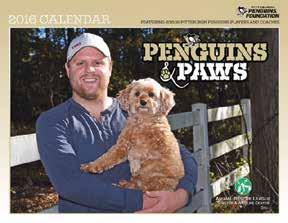
Calendar will feature members of the Pittsburgh Penguins® organization with some adoptable animals from the Animal Rescue League Shelter and Wildlife Center.
Calendars will be available and ship mid-November. Just visit our website at www.animalrescue.org/penscalendar or contact Ann Yeager at 412-345-0346 or ayeager@animalrescue.org
November 27 10am – 8pm
December 19 10am – 8pm
November 28 ... 10am – 8pm
December 20 ... 10am – 8pm
and $24.95 in
* Plus shipping and handling. $5.95 per order in the United
November 29 Noon – 6pm
December 4 10am – 8pm
December 21 10am – 8pm
December 22 10am – 8pm
December 5 10am – 8pm
December 6 10am – 8pm
December 23 10am – 8pm
December 24 10am – 4pm
December 11 10am – 8pm
Near Dick’s Sporting Goods
December 12 10am – 8pm
Proceeds from the calendar benefit the Animal Rescue League Shelter and Wildlife Center.
December 13 10am – 8pm
December 18 10am – 8pm
Pet Health & Wellness
Top 10 Pet Emergencies
No one wants to ever think about their beloved pet becoming ill or injured, but chances are, if you own a pet, you will visit an emergency room at least once.
Below is a list of the top ten pet emergencies and some tips on prevention, as well as what to do in a crisis.
Fractures/ orthopedic injuries - A few major causes of a fracture or orthopedic injury include being struck by a vehicle, a major fall, or blunt injury. Pets experiencing any one of these conditions may be limping or non-weight bearing on a particular limb. Many pet owners are inclined to administer over the counter human pain medications such as Tylenol, Ibuprofen, or Aleve, however, the use of these medications is not warranted in dogs and cats and can often be toxic.
Lacerations - A laceration is a wound produced by the tearing of body tissue, often with jagged and irregular edges. They can range in severity from mild to life-threatening. The first two objectives in treating lacerations are always to stop the bleeding and prevent infection.
Abscesses - An abscess is a localized area of infection that contains pus. It is often inflamed and painful to the touch. Abscesses are less common in dogs than in cats. In dogs, they are often found in the oral cavity and anal glands. In cats, they are generally caused by a bite wound, typically from another cat. However, abscesses can form anywhere in the body.
Allergic reaction- An allergic reaction is a highly individual inflammatory response to a foreign substance entering the body. These foreign
substances can include pollens, food, vaccines, medications, insect venom, etc. Some reactions may be localized, where as others may involve multiple body systems. Signs of an allergic reaction can include one, some, or many of the following: -Hives, redness of skin, facial swelling, wheezing, coughing, vomiting, diarrhea, and in severe cases, anaphylaxis can occur. Treatment of an allergic reaction depends on the severity of the body’s response to the allergen.
Seizures - A seizure takes place when there is a sudden and uncontrolled burst of neurologic activity. They can be very severe and result in convulsing of the whole body or be very mild and only affect a portion of the body. During a seizure, the pet may stiffen, stagger, and begin to paddle their legs. This is usually accompanied by a loss of awareness and unintentional urination and defecation. Seizures can be caused by a plethora of conditions, such as epilepsy, brain tumors, low blood sugar, toxin exposure, liver shunts, birth defects, and many other medical conditions. If you pet has a seizure, he/she should be taken to your veterinarian to determine the cause of the seizure, as well as to determine if medications are needed to control the seizures. In the event of a seizure, never put your hands near the pet’s mouth, as you run the risk of being bitten.
Toxin Ingestion - Dogs and cats are naturally inquisitive, which makes them more prone to eating toxic or poisonous products. Some common toxic agents are rodent poison, chocolate, human medications, plants, pesticides, and chewing gum containing Xylitol. Pets that have ingested a toxin may develop symptoms such as drooling, vomiting, staggering, or seizures. Some pets may exhibit no symptoms at all. If you have evidence of poisoning, or witness your pet consuming something that may be a toxin, you should immediately contact the ASPCA Animal Poison Control Center at (888) 4264435 as well as your veterinarian. Often, rapid response is very important because the longer it goes untreated, the less chance there is of a successful treatment.
Antifreeze (Ethylene Glycol) ToxicityAntifreeze can be very appealing to our pets because it has a pleasant taste. Unfortunately,
it only takes a very small amount to be lethal. Ethylene glycol breaks down in the body to form very toxic by-products, which can cause irreversible damage to your pet’s kidneys. Preventing pets from antifreeze toxicity is simple. Soak up spills with cat litter, then wash the area with detergent. Check under your vehicle for leaks, and if a leak is found, have your mechanic fix the problem right away. In addition, there are other alternative car antifreezes available that contain propylene glycol, which is less toxic than ethylene glycol.
Urinary Obstructions (FLUTD) - Urinary obstructions typically occur in male cats, but can occur in dogs as well. When urine can not flow out of the body, it backs up, the kidneys fail, and they stop making urine. Waste products build up in the bloodstream, which causes the animal to act sluggish, lose their appetite, and vomit. One of the first signs of a urinary blockage is straining to urinate. This may also be accompanied by blood in the urine or inappropriate urination. A urinary obstruction is a life-threatening condition and needs to be addressed immediately.
Gastric Dilatation (GDV or Bloat) - Often referred to as “the mother of all emergencies,” GDV is extremely painful and rapidly life-threatening. It occurs when the stomach becomes distended and rotates, thus cutting off blood supply to itself and other major organs around it. Signs of bloat include excessive drooling, frequent retching and attempts to vomit, restlessness, and a distended abdomen. Generally, this condition occurs in large, deep-chested breeds. If you suspect your dog has GDV, transport him/her to the veterinarian immediately!
Foreign Bodies - A foreign body is any object or material that becomes lodged in the stomach or small intestine, thus creating an obstruction. Common foreign bodies include socks, underwear, toys, string, and plastic. Most pets with a foreign body obstruction will experience vomiting and a loss of appetite. Frequent vomiting can cause dehydration and an electrolyte imbalance so it is important to seek veterinary care if you suspect your pet has a foreign body.
-Article Written
by
Jennifer Krantosky, Emergency Technician PC
KEEP SAFE ... KEEP HEALTHY WITH BACTRONIX
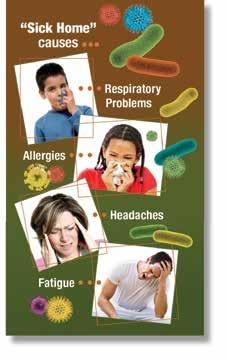
There are increasing news reports about how our homes are becoming more susceptible to molds, mildews, viruses and other harmful bacterial and fungal contamination. This has caused public concern to find new ways to reduce and prevent the emergence of these unwanted conditions. Bactronix has responded to this concern by developing new technology to help create a healthier and safer living environment.
Mold and Mold Spores:
Mold and mold spores can occur in the areas where moisture and ventilation problems develop. Mold not only compromises the structural integrity of a home, it can also cause long-term health problems.
The Bactronizing Seal of Certification is a Symbol of Health and Safety
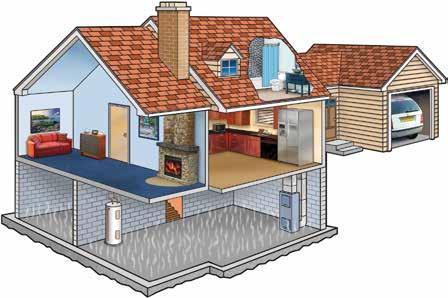
As shown in this illustration, bacteria, mold, mildew and odor problems can develop from pre-existing conditions in the home.
Pet Odors:
Pet odors are part of the home’s “biological footprint.” The Bactronizing™ Process eliminates pet odors and other unpleasant smells that develop over time. Our nanotechnology breaks down VOCs, providing a safer and fresher smelling home environment.
Bactronix Corp. serves many markets such as veterinary clinics, hospitals, schools, corporate, automotive, nursing homes, manufacturing and real estate. Bactronix uses an exclusive, safe, organic system to diagnose and treat interior environments for dangerous microorganisms. Utilizing science based practices, testing is performed on porous and non-porous surfaces to determine the level of bio-activity which may cause odor and illness. The Bactronizing Process uses a hospital grade, non-toxic “Green” disinfecting nanotechnology to kill mold, mildew and dangerous super-bugs such as MRSA, C.Diff, H1N1 and legionella. Bactronix also utilizes an advanced electrostatic spray system to treat 100% of all surface areas resulting in a highly effective sanitary finish.
Plumbing Leaks Interior Wall Moisture from Roof Leaks
Leaky Fixture Gaskets
Loose Backsplash
Delaminated Kitchen Counter Top
Older Bathroom Fixtures
Leaks in Window Seals
Advertiser Locator
Page 11 - A All About Pets Veterinary Hospital
Page 37 - Amore Property Management
Page 2 - B Animal Elegance
Page 37 - American Destiny Real Estate
Page 34 - Animals Against the Odds
Page 19 - C Animal Rescue League
Page 21 - Bactronix
Page 29 - D Beaver Animal Clinic
Page 36 - E Candelore’s Barking Beauties Pet Grooming
Page 36 - Canine Health
Page 44 - F Chartier Custom Pet Cremation
Page 17 - Cat Around Town
Page 41 - G Coventry Stables
Inside Back Cover - Dog Stop
Page 43 - Eternity Pet Memorials
Inside Back Cover - Fundvelopes
Page 23 - H Fuzzy Paws Pet Villa
Page 44 - Gentle Journey Veterinary Hospice
Page 36 - Good Nature Organic Lawn Care
Page 23 - Grandma’s Dog Daycare
Inside cover - I Healthy Pet Products
Page 9 - Invisible Fence of Pittsburgh
Page 44 - J Jefferson Memorial
Page 29 - Judith Levy Wellness
Page 34 - Judith Levy Coaching
Page 23 - Kobi Collars
Page 29 Manning Chiropractic and Wellness Center
Page 39 Manon’s Farms
Page 30 - K Murray Avenue Apothecary
Page 9 - L Martins Flowers & Shrubs Pet & Wildlife Feed
Page 33 - Nemacolin Pet Care Center
Page 31 - Oddball Pets & Aquariums
Page 34 - One Hour Heating & Air Conditioning
Page 2 - Paws Here Awhile
Page 23 - Pet Concierge
Page 6 - Petland East Side Village
Page 23 - M Petsburgh Grooming
Page 9 - Pittsburgh Pets At Home Vet Services
Back Cover - N Pittsburgh Veterinary Specialty and Emergency Center
Page 43 - Precious Pets Memorial & Cremation
Page 6 - Puppy Paws
Paw Shaped Jewelry
Page 40 - O Rockin Horse Stables
Page 17 - The Rogan Rexford Animal Blood Bank
Page 15 - P Sarver Animal Hospital
Page 30 - Dr. Michael Savko
Page 17 - Q Sit Means Sit Dog
Training
Page 23 - Skinny Tims Auto Detailing
Page 1 - R The Big Easy Animal
Hospital
Page 33 - S VCA Castle Shannon
Page 11 - T Vibrant Images
Page 23 - Walkers Pet HoTail
Page 17 - Washington Area
Humane Society
Page - 33 - Wild birds Unlimited
Page 25 - U Western PA
Humane Society
Page 23 - V Woody’s Dog Wash & Boutique
Cat Rescue Resource Guide
Kitty Korner
Cat Rescue Resource Guide
Low-Cost Spay & Neuter Organizations & Programs
This is an ever-changing list of resources for cat owners in Pittsburgh and beyond, though many of the listings, like the shelters, apply to dogs and other pets as well. It includes low-cost spay and neuter programs as well as TNR for community cats, pet-friendly rentals in Pittsburgh and across the US, and links to shelters for adoption and other services. In the future we will also list clinic dates with the organizations below when they are available.
TNR & Low-Cost Spay/Neuter for the Pittsburgh Area
Homeless Cat Management Team: www.homelesscat.org
City of Pittsburgh Free Spay & Neuter for City Residents
City of Pittsburgh free spay/neuter: www.pittsburghpa.gov/animalcontrol/spay_neuter.htm
City of Pittsburgh residents can apply for free spay or neuter vouchers for up to five pets, including stray/ feral cats.
Low-Cost Spay/Neuter & TNR Programs at Allegheny & Surrounding County
Shelters
Animal Friends: www.thingkingoutsidethecage.org
Animal Rescue League: www.animalrescue.org
Beaver County Humane Society: www.beavercountyhumanesociety.org
Washington Area Humane Society: www.washingtonpashelter.org - Colony Cat Project: faith.b2@verizon.net
Western Pennsylvania Humane Society: www.wpahumane.org
Low-Cost Spay/Neuter Organizations in Allegheny & Surrounding Counties
Western Pennsylvania Humane Society (WPHS): www.wpahumane.org
Surrounding Counties: Beaver County Humane Society: www.beavercountyhumanesociety.org
Butler County Humane Society: www.butlercountyhs.org
Humane Society of Westmoreland County: http://members.petfinder.com/~PA83/about.html
Washington Area Humane Society: www.washingtonpashelter.org
Non-Shelter Feline Adoption
FosterCat: www.fostercat.org
Kopy Kat Sanctuary | Westmoreland County (Delmont): www.kopykatsanctuary.org
CAT GROOMING MYTHS
I’m always met with raised eyebrows when I explain what I do for a living. It seems there are many “myths” being perpetuated about cat grooming that aren’t entirely true. I’d like to help dispel some of these myths for you.
* CATS GROOM THEMSELVES - Cats lick themselves. If you licked yourself all over, would you consider yourself clean? When cats “groom” themselves, they are performing multiple functions: removing dead hair, dandruff, sebum (naturally occurring oils produced by sebaceous glands in a cats skin), and sometimes even feces. And we wonder why they throw up hairballs?
*CATS HATE WATER - I’ve heard countless stories of owners being scratched and bitten while trying to put their feisty felines in the tub. I’ve even seen videos of it on Youtube. Most of them make me cringe. If introduced properly, either at an early age or in the right environment with the right techniques, most cats can adjust very well. I have groomed well over 400 cats in the last 3 years, and only one or two didn’t handle it well. Many of my clients’ phone calls start out with “my cat has never been bathed before,” to which I reply, “There is a first time for everything.”
In my experience, I find that if the cat isn’t going to like part of the process, it’s going to be the drying. There are 2 options when it comes to drying a cat: cage drying or using a high velocity dryer. Think of this as a small leaf blower that uses pinpoint air pressure to force the dead hair from a cat’s skin. While this is the best option, it can be a little bit frightening because of the noise it can make. If this happens, I recommend a combination of the 2 types of drying techniques. Unless the cat is a single-coated, Oriental-type breed, it must be dried properly and fully. The dead cat fur can actually form a type of tight bond when mixed with water—resulting in matting—if the cat has an excessive amount of dead hair, dandruff, or sebum.
Matting is not only unsightly; it can also be quite painful. The hair is tightly bonded and slowly pulls live hairs out of the skin along with dead hairs. If the area of matting is too large or tight, trying to de-matt the cat
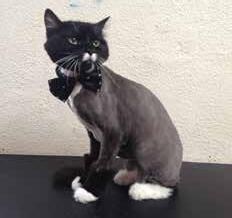
can also pull live hairs out by the roots, thus inhibiting hair re-growth. If a cat is matted, the most humane treatment is to shave the matted area and just to start fresh. Sometimes, this is just a small area; sometimes it’s the entire cat. Many think that the
cat will be embarrassed by shaving, but I can’t tell you how many of my clients have called back to say “my cat has been acting 10 years younger since its haircut.”
*ALL CATS NEED TO BE SEDATED FOR GROOMING –Every time an animal goes under sedation, there is a risk. In the right environment and in the hands of an experienced groomer, most cats can be groomed quite easily. Although some cats, and even some dogs, may have severe episodes of aggression or anxiety that require sedation for grooming, this should be reserved for only the most severe cases and should only be administered under veterinary guidance.
There are all sorts of reasons for cats to be professionally groomed. For cat lovers who also crave a meticulous house, grooming reduces shedding, dandruff, and hairballs. For older cats suffering from inflammation of the gums or arthritis, grooming substitutes for elderly cats’ decreasing ability to care for themselves. Obese cats may not be able to reach certain areas of their bodies to lick them. Some cats are just poor groomers and will not allow their owners to groom them.
In my experience, a clean cat is a happy cat. Sometimes, cats just need a little help. Unless you have an extensive knowledge of cats, a multitude of costly cat grooming tools including specialized dryers, and a pair of chainmail gloves, you and your cat will both benefit from the services of a professional groomer.
So, how do you find a cat groomer? The internet is a great place to start. Then, call and ask the groomer questions about their services and facilities. Some grooming shops will not groom cats. Others will groom cats right alongside dogs. Some grooming shops have “cat only” hours or days, while a few exclusively groom cats. You need to decide what environment would be the most comfortable for your cat and what services will benefit you and your cat the most.
By Justine Cosley, Cat Around Town Grooming (412) 461-3700 • cataroundtown.com PC
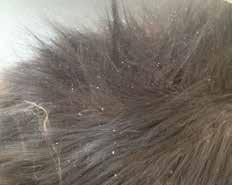
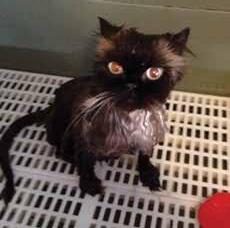
Dirty cat fur.
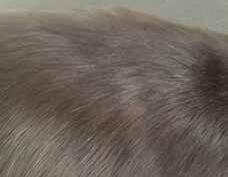
Clean cat fur.
Wet cat.
Holistic Pet Care
Adopt a Holistic Lifestyle for Your Pet
By Doug Knueven, DVM, CVA, CVC, CVCH
Holistic veterinary care is in great demand these days. The term “holistic” implies that the entire being; body, mind, and spirit, is being addressed. The whole is greater than the sum of its parts. This concept stands in direct opposition to the Western reductionistic view of life. Modern medicine tends to break systems down into smaller and smaller pieces, reducing them to their basic building blocks to gain an understanding. Often, the modern doctor loses sight of the forest for the trees.
PERFECT HEALTH
Holistic medicine takes many forms, but there are common beliefs among these various techniques. First of all, perfect health is considered to be more than simply the absence of disease. It is a state of well-being expressed as a vitality that resists disease. Health is a dynamic balance of internal and external forces. From this point of view, there is a broad spectrum of physical conditions ranging from perfect health to death.
Dis-ease begins as an imbalance, which may go undetected by conventional means. If left untreated at this early stage, detectable disease and possibly death will eventually result. Often, holistic approaches to health can detect problems at the dis-ease state and correct the imbalance before disease sets in. Holistic therapies embrace the vitalist concept that has been abandoned by conventional medicine. The vitalists believe that there is more to the body than meets the
eye. There is a vital energy that animates the flesh. The Chinese call it “Qi,” the Japanese call it “Ki,” the doctors of India call it “Prana,” homeopaths call it the “Vital Force,” and chiropractors call it the “Innate.” It is this life force energy that is the difference between life and death, and it must be nourished to maintain true health.
learning how to detect and treat diseases is an important lesson for any health care practitioner. But what if instead of focusing on disease, veterinary professionals focused on health?
Think about it, if we put more resources into preventing diseases like cancer then there would be no reason to” run for a cure.” The problem is that many of the diseases that plague our society and its pets are brought about by lifestyle. Processed convenience foods, vaccines, pharmaceuticals, lack of exercise, and a general disregard for body condition are all risk factors for chronic disease (and not-so-chronic cancer).
The holistic focus on a healthy lifestyle gives this philosophy and advantage over conventional medicine. Of course, you can’t just take your pet to the vet to make it healthy. Holistic health takes commitment. The goal is to lessen the risk factors of disease.
There are disease risk factors that we cannot avoid but there are many that we can evade. A holistic life style – eating a species-appropriate, whole-foods diet, avoiding unneeded
DIS-EASE DISEASE DEATH
While conventional medicine fights disease, holistic therapies generally strengthen the body. The body is viewed as containing its own pharmacy. Research bears this fact out. You may have heard of the “placebo effect.” This medical anomaly predicts that 30% of subjects treated with a sugar pill will improve; no matter what the disease is. High blood pressure, low blood pressure, allergies - all can be alleviated by the patients’ own bodies. It is considered a case of mind over matter but it proves that our bodies can heal themselves if conditions are right. The idea of holistic therapies is to produce the right conditions for the body to produce true health. The conventional veterinary medicine emphasis on fighting disease can be extreme. In fact, in veterinary school we do not learn much about health care. Rather, we are taught about disease care. Certainly,
vaccines, getting plenty of exercise, and using natural healing methods – increases the odds for your pet to live a long, healthy life. Unfortunately, a healthy lifestyle isn’t always easy, but in the end it is well worth it.
Katy is a 12-year-old Maltese. She has eaten raw pet food since she was 10 weeks old. Instead of getting yearly vaccines she has gotten titer tests which show that the vaccine for Distemper and Parvo that she got at 12 weeks of age is still protecting her. Keeping her healthy has been a balancing act. She has benefited from various Chinese herbal formulas to balance her energy, chiropractic to keep her spine in shape, and even therapeutic laser for a knee injury.
Katy is a bright senior who is not as spry as she once was, but is as spry once as she ever was.
Healing, not just Treating
Say Hi to Shirley! In February of 2015 she injured her back legs and could not walk, she did recover slightly, but before she saw Dr. Savko she didn’t walk as much, she had trouble getting up, she would tip toe, and she was really gimping.
After just one visit she was able to use all four legs, and was not as gimpy. After visit two, she was much happier, much better, and she was gimping much less. Clinically she was 50% better.
At a recent visit, see her smile in the photo...mom said, “she held great and ran more than she ever has for a long time, she didn’t cringe when other dogs wanted to play, and she is much more fiesty.”
Cody’s mom was told he needed an mri (1800.00), with possible surgery (several more thousands). She was made to sign a form for what they should do with his body if/when they had to put him down.
After only one visit he is walking better, jumping, and wants to play. What we want to do with his body, and soul is for him to live and be healthy and have fun!
That is our plan, no paperwork needed.
When you work with Dr. Savko the focus is HEALING, not just treating.
Greenfield Veterinary Hospital, Pittsburgh, PA
Feathered Friends
The Lost and Found Conure Parrot Story
By Ruth Carter
This story began with a phone call from my exhusband, Joe, requesting bird seed from me. I was very puzzled by this request since I knew he did not have a pet bird and that you do not give parakeet food to wild birds. When I questioned him, he told me he would be right over to get some.
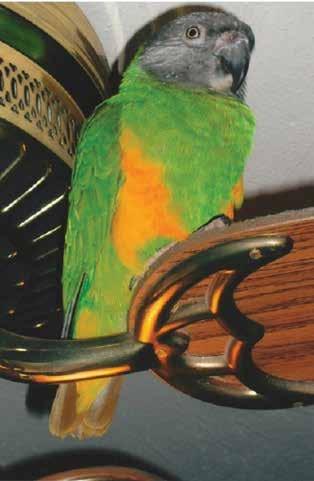
“the Conure sounded exactly like a young, distressed robin in my front yard - that was the thing that attracted my attention on the late springtime Saturday morning”. Joe said that his 2 cats, Hank & Perth, were very, very interested when he came in from his front porch with the “beauty” on his shoulder! Joe also stated “He did stay on my shoulder for the whole trip to your house.”
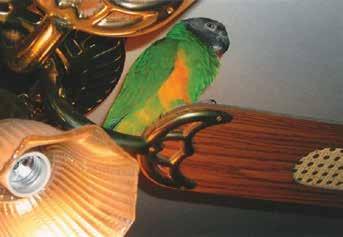
or more. His favorite “hang out” while staying with us was our ceiling fans. Our wonderful neighbors delighted in holding the bird.
Joe put an ad on Craig’s List in search of the bird’s owner. Unbelievably, he got a response! The owner had explained how he and his wife were taking the conure bird to the Vet when the cage came apart & the bird got loose. The owner also shared with us that his colorful conure parrot’s name is “Winger”. We were quite happy to return the bird to its’ rightful owner, but sorry to see him go. PC
Since I had parakeets and I happened to have an extra bird cage, he asked that I “house” the bird whilst he decide what to do about finding the owner.
Not long afterwards, I hear a knock on my back door. As I opened the door, I see Joe with this beautiful bird sitting on his shoulder. I was truly amazed. Joe explained to me that he found the bird perched on a tree in his front yard. It was so tame and friendly that he was able to coax it onto his finger. He said
The two days we spent with the conure parrot were great! He was so sweet and apparently “hand trained” since you could rest him in the palm of your hand lying flat on his back. From my phone call to Pet Smart, I found out that these birds cost around $400 - $600
We are use to our own home’s scent, but a buyer may have a dog, cat or not pets at all. Neutralize your home’s smell. This means cleaning not camou age! WAYS TO CLEAN!
- Heating and Air Cleaning puri cation systems
- Air Duct Cleaning
- Sanitize
See articles on Bactronics, page 35 and One Hour Heating and Air, page 38
“ I personally have had prospective buyers not go past the foyer door due to undesirable smells. This brings down your marketability to sell at a fair value quickly.”
Lindenbrooke
Payne Hill
you to come home from work and walk your dog!
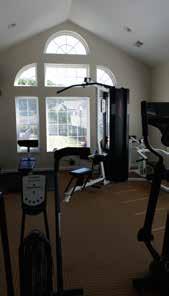
Free yourself of daily exterior maintenance and enjoy the Clubhouse & Fitness Center & Pool
Close to South Park a 2,000 recreational park, with fenced in dog park, sports, & fun galore.
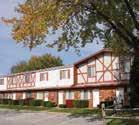
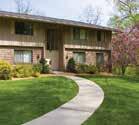
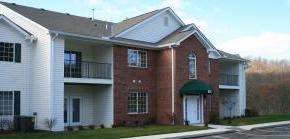
Two Bedroom for $127,900 with approx. 1200 SQ FT of living space, 2 Baths, Washer/Dryer hook up! Three Bedroom for $139,900 approx. 1400 SQ FT of living space 2 Baths, Washer/Dryer hook up! Move in Ready approx. 9 yrs of age just like new and a private balcony facing the rear of complex.
Equine Affairs Riding with the Stars Learning with Rhythm
By Carla Mader
One of my favorite places to ride my horse has been at Manon’s Farm in Washington, PA.
Tom and Kim Manon own a thirdgeneration private farm with boarding and riding with rolling pastures abound for acres. Kim offers what I’d say, is the region’s best kept secret for boarding, riding and lessons, and especially for children.
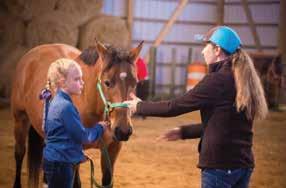
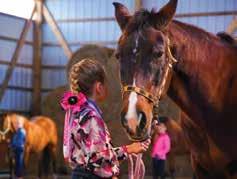
Kim by trade, has worked in hospice care for 12 years, so she gives all living (and especially aged people and horses), extra special attention and has adopted and rehabbed many horses and ponies. The horses are individually cared for with her personal touch and love. The fresh air, home-grown hay and acres of pasture to roam, show in the clear eyes of the hooved guests, as they often can be seen happily frolicking in the meadows!
Kim’s daughter, Kelly and grandson Jack, all pitch in with the care, training and instruction. Jack is, of course an avid student! Kim and Kelly have both shown Dressage, Hunter under Saddle and Western Pleasure. Safety, and the common-sense educational approach, as well as fun, are all key components to the successful way Kim runs her farm.
Kim’s caring extends to her boarders and riding students. The students range from
age 4 to 11 years old. I was invited to Kim’s August “Riding with the Stars” event to see what the kids were so excited and talking about.
I found that Kim has a very unique approach to riding lessons for childrenutilizing music in an integrative fashion, to
her lesson program. Kim has 3 lesson ponies, all of which are retired show horses and ranging in age form 19-26. They bring great joy and fun to these young riders.
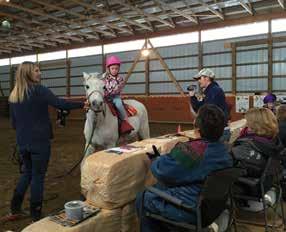
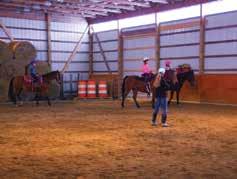
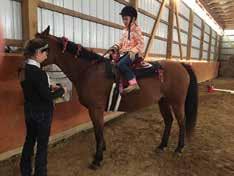
Kim allows each child to learn at his or her own pace. Starting out on a lounge line, kids learn to go forward at a walk and trot. Once this is mastered, they learn to ride on their own, walking, trotting, stopping and backing. Three times per year, Kim uses music to motivate the kids with the events, Spring Fling, Riding with the Stars and the Christmas at Manon’s Farm. The kids dress up their ponies and pick a song to compete and perform what they have learned for family, friends and the judges.
Choosing a song to ride to, makes it fun for everyone. Music helps the rider to set a pace, and use their riding aids to guide their horse through a routine. Dressage moves set to music, such as correct positioning, straight lines, circles, bending and diagonals make up the routines. Young riders enjoy watching others perform, as they learn how to ride and handle their horses.
Some of the student like Jamie Brady, Olivia and Elizabeth Clark and Molly McClay, commented when interviewed, on why they like learning to ride with music: “It helps me post –the beat”, says Olivia. And, “It’s fun and keeps me in rhythm with the gait of my horse”, Elizabeth said.
“I like dressing up my horse for the events, too”, says Molly, who also likes to “dance in the saddle”. My thought was that perhaps that will be a fun fad that will soon catch on at other barns!
Kim’s caring extends to her boarders and riding students. The students range from age 4 to 11 years old. I was invited to Kim’s August “Riding with the Stars” event to see what the kids were so excited and talking about.
One of Kim’s most responsive students and our cover star, Logan Smith, who once balked at showmanship, said he started to take lessons because he thought it would be fun, even though he was raised around horses. He said when was asked to pick out his song, Kick the Dust, by Luke Bryan, that “it really became fun.”
Logan was recognized at Kim’s “Riding with the Stars” for his accomplishments this past year, starting out as a member of the Silver Saddle Club and Silver Bits 4H Club. He worked hard this year with Kim to compete in 4H, qualified for District and State competitions and won second in show at Districts.
He and His 15 year old rehabbed pony, Cody is a Peruvian Paso, made an impressive team, amongst experienced riders and expensive show horses. This beautiful and
well-mannered pony had been retired to pasture when they found him. After weeks of re-training and lots of love, he has made a wonderful show pony.
Kim has found that working with the children and teaching them basic showmanship to riding a routine to a beat that resonates with them, really adds a special dynamic that and has made learning more effective, while making them feel like stars!
Contact Kim Manon for more information regarding her lesson program at: kmanonfarms@rocketmail. com | 724-255-8330. PC
MANON’S FARM
Equine Affairs
The Rider’s Leg Position And How It Affects The Seat
By Kristen Hermann
The rider communicates to the horse with three aids: the leg, the seat, and the hands. The rider’s leg asks the horse to go forward the seat balances the torso and the reins steer and regulate the forward energy. The more advanced rider learns to control the gaits of the horse with the seat, and the other aids become more refined.
Many classical trainers say, “if you have no seat you have no rider.” And that is right, but if the leg is not in the correct position your seat or torso will never be correct either. The rider is supposed to sit in a vertical position with the leg, hip and ankle in alignment. This is called vertical alignment. This is the same alignment a rider
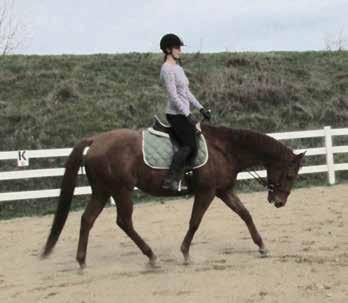
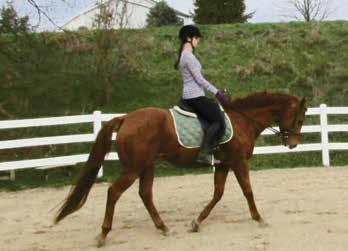
needs just to stand on the ground without the horseRider has the ankle under the hip at the posting trot. The horse is stretching nicely too!
Rider has the ankle under the hip at the posting trot. The horse is stretching nicely too!
A correct leg position will also keep the rider’s aids more clearly communicating to the horse. Riding a horse is like playing a musical instrument so if your finger placement is out of the correct position on the instrument you will play the instrument out of tune. This is the same with the leg position of the rider. If the rider’s leg is not correct, they will not be riding with the horse but will be riding out of sync. Riding a horse in harmony and, as a result in tune, with clear aids requires that the rider have all three aids
in the correct position the leg, seat, and hand, not only the leg correctly positioned under the hip!
Keeping the ankle under the hip while riding requires a conscious effort when learning how to ride until it becomes a habit. Most riders want to grip with the leg, and this brings the leg up, shortens it and causes the joints to stiffen. The rider’s joints should remain flexible to go with the horse and absorb the motion of the horse’s gaits. The best way to learn how to develop a good leg position with flexible joints is to practice jumping position or two point. When the rider can do jumping position and keep balance with no support from the hands then they learn how to post the trot, sit the trot and go up into jumping position effortlessly maintaining the leg position for all three riding seats.
If the rider grips with the legs, the joints do not work as the shock absorbers that are needed to ‘go with’ the horse and absorb the horse’s varying rhythms at all three gaits. Not only does the rider’s ankle need
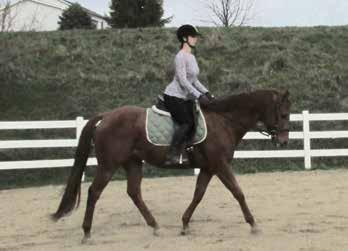
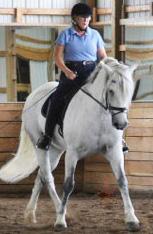
The rider has the same leg position sitting the trotas she does posting and in jumping position. The ankle is under the hip and the toes are pointing straight ahead.
to learn to stay under the hip without gripping but the knee joint needs to be able to open and close to remain reflexible as well. The rider’s hips, that also work as a joint or hinge, need to move with the action of the horse’s back when not posting. So not only do the three joints of the rider’s leg need to be flexible to move with the horse, the correct leg position keeps the rider’s torsoRiding in jumping positions helps to train the rider to get the ankle under the hip. Rider’s practice going from jumping position to a posting trot and sitting trot keeping the same leg position. Riding in jumping positions helps to train the rider to get the ankle under the hip. Rider’s practice going from jumping position to a posting trot and sitting trot keeping the same leg position.
The side of the leg is to be positioned on the horse with the toes pointing forward and not out. When the side of the leg is on the horse (the inner thigh), the rider has an open seat or hips (pelvis). If the toes are sticking out like in a ballerina’s stance called a plie, this causes the rider’s seat to become pinched. The seat is supposed to be like an upside U on the back of the horse and follow the motion of the horse’s back. Allowing the seat to be curved like an upside U will assist the rider in having a following seat that does not impede the horse’s rocking motion. If the toes stick out causing the hips to turn out (they
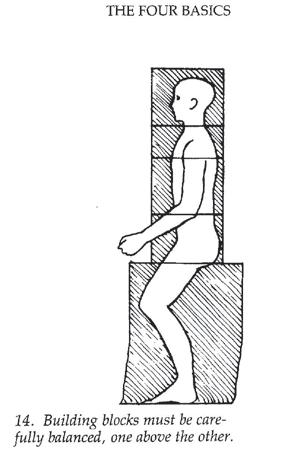
Illustration from Sally Swift’s book Centered Riding. It shows the four “building blocks” of riding alignment - the leg (ankle), hip and rider’s shoulders plus ear in vertical alignment. This correct riding alignment is for both English and Western riders.
are all connected) then the seat pinches. This has been described as a close pin seat! Hmmm, would I rather have a seat on my horse shaped like an upside U that envelopes the horse motion or a close pin seat that is pinched and not open?
Riding a horse is not an easy feat. It requires discipline and desire!The rider has the same leg position sitting the trot as she does posting and in jumping position. The ankle is under the hip and the toes are pointing straight ahead.
The rider has the same leg position sitting the trot as she does posting and in jumping position. The ankle is under the hip and the toes are pointing straight ahead. Next article the rider’s torso (seat) and following article the rider’s hands. PC
Coventry Equestrian Center
Dressage ~Gymnastic Training for all horses & riders
Learn how to ride & train with clarity for Dressage, Hunt Seat, Eventing, Western, Pleasure
All horses & riders benefit utilizing simplified gymnastic training (dressage) Kristin Hermann blythedale@comcast.net www.CoventryEquestrianCenter.com 724-206-9902
Visit the “Home Schooling Your Horse” Facebook page for simplified training tips
Riding in jumping positions helps to train the rider to get the ankle under the hip. Rider’s practice going from jumping position to a posting trot and sitting trot keeping the same leg position.
In Remembrance Sassy
Butterfly Ears by Sue Rosati
We first met Sassy one Christmas Eve, when we gathered with the family to celebrate the holiday. She was owned by my brother’s sisterin-law, Mary, who had recently become widowed with two small children. Mary adopted the two month old beagle mix in an attempt to fill a void for her seven year old son and four year old daughter.
My husband Dave had noticed the bouncy, little ball of fur as she climbed on the sofa, trying to get everyone’s attention.
“Isn’t she adorable?” Dave remarked as he tried with no success to hold her. “Look at those ears.”
Sassy was Beagle and Papillion. We were told that Papillion was French for butterfly. Her mother was Beagle and the father a pure white Papillion named Gizmo. Dave and I saw both breeds in this friendly little canine; her color was white with some
brown. Sassy was soft and cuddly, and her furry tail wagged back and forth with excitement in the event of meeting new people. However, it was the beagle’s long, brown, and floppy, yet butterfly ears that was her biggest attraction.
We played with Sassy for most of the evening, until it was time for Mary to put the puppy into the crate that was bought the night Sassy was adopted. “Wouldn’t it be neat to have a dog like Sassy?” Dave asked, smiling at the mention of her name. We did nothing but talk about that little ball of fur while driving home that night.
After the holidays were over, Dave and I made it a priority to do some doggie shopping. We stopped at the Humane Society. There were so many adorable puppies. I even held a few shaggy little critters that were so affectionate. One of them actually fell asleep in my arms. We were both impressed, however, we both knew in our hearts, that there was something missing, something we saw in no other dog, except Sassy.
We tried to find out if there were any puppies left from Sassy’s litter, and to add to our disappointment, there were none.
“Maybe we’re trying too hard,” Dave said to me one evening. “Maybe we should just take a break. Who knows, maybe there’s a dog out there that will come to us.”
We knew that Sassy belonged to someone else, and thinking she would become ours was just wishful thinking. I hated to admit it, but I realized that Dave might be right.
It was mid May that same year when we received the phone call that proved that some wishes do come true. Mary’s father
had become ill, and it was difficult for her to keep up with her job, taking care of her children and a little puppy. She asked us if we would consider adopting Sassy.
Two weeks later we drove to Mary’s house to pick up the new member of our family. She was a bit shy at first, but in a few days she became adjusted to her new home. We took her for walks, and soon the whole neighborhood became acquainted with Sassy. She became the social butterfly on our street..
I was off work for a few weeks and was trying to start a routine with Sassy. At 7 a.m., I would let Sassy out of her crate, feed her and walk her around the street. It was on a beautiful sunny morning that I put food into her bowl and while she ate, I put on my tennis shoes and threw a light jacket in preparation for a long walk.
To this day, I still wonder how this happened, but before I put the leash on Sassy, not thinking, I opened the sliding glass door to the patio, and before I could blink an eye there was Sassy making a dash to the outside. I tried to grab her by the tail, but my hands weren’t quick enough. My puppy was already out of our not fenced in yard. I chased her down our street, screaming her name. Our street is relatively quiet, the cars usually climb up our hill at a slow pace, but my concern was to stop Sassy before she left our street and ran onto the next road, a busy road with cars going anywhere between 35 and 45 mph.
I tried to chase her, but the closer I was to Sassy, the closer she moved to the busy and car congested road. I stopped and there she was, playing, with a few more steps taking her to instant death. I froze at the sight of the cars racing up and down the highway. If I moved toward her, she would run away from me into the highway, but I couldn’t just stand there.
I began to cry out, “Dear God, please help me. Get her away from there.” I sobbed until I noticed Sassy looking up the hill,
behind me. Quickly the little white ball of fur scampered up the hill, away from the highway. I saw two teenagers walking to the bus stop and cried out to them, “please stop her.” The one teenager snapped her fingers, calling Sassy, and Sassy responded, running right to the girl. I quickly ran over, scooped my puppy into my arms, hugging her while she licked my face.
Dave and I began to relax more and enjoy our beautiful pet. So many who met her would just love her butterfly ears. The people who would see us knew her name before they knew ours.
We always felt that someone was watching over Sassy, and knew that there was something so special about this beagle mix. In the fourteen years that she was ours, we watched our precious puppy come through some rough times. She survived a vicious attack with a pit bull. There were health issues, but as our veterinarian would put it, she beat the odds, as if she had nine lives.
I was the one who worried the most about our pet, but Dave would always assure me that she would be fine. “When Sassy stops eating, then we worry.” he would say, referring to the way our beloved pet could eat from her bowl at least twelve hours a day. Even as a senior dog, Sassy could inhale anything we gave her.
It was a sunny April day, that my fears became a reality. I took Sassy for our mid afternoon walk to the park. She loved the park; she loved the people, especially the people who gave her treats and hugs. This particular walk wasn’t much different from any of the other walks, except that she began to take deeper breaths than usual.
“It’s unseasonably hot for this time of the year,” Dave tried relieve my mind once again. “She’ll drink some water and she’ll be fine.”
I wanted to believe that. I kept thinking and hoping he was right. After all, Sassy still continued to eat whatever we put in her bowl. The worrying came back to me a few days later when after taking her for a walk, I noticed she hardly touched her food.
There was a horrible feeling in the pit of my stomach. Our veterinarian had ordered some tests and blood work, and after taking one look at her face that horrible feeling grew worse. She sat down with me and sadly told me the news that I had feared for some time.
The next day we had to put our Sassy to sleep. They had wrapped her in a pink blanket. Tearfully, Dave and I stroked her head and said goodbye to our precious little friend.
She was at peace and with her butterfly ears pulled back, we saw a smile on her face, as if she was telling us she was o.k.
We were saddened by losing our pride and joy, yet we knew that fourteen years with Sassy gave us more joy than we ever imagined.
We will adopt another pet again; we have a lot of love to give another dog, but we will never forget the beauty, the love, and the laughs we had with that sweet little dog with the butterfly ears. PC
ANESTHESIOLOGY
ANESTHESIOLOGY
Dianna Ovbey, DVM, MS, Practice Ltd. to Anesthesiology CARDIOLOGY
MRI & CT IMAGING
MRI
& CT IMAGING
PetsDx Veterinary Imaging www.petsdx.com
Eva Sikorska, DVM, DACVIM
Dianna Ovbey, DVM, MS, DACVAA CARDIOLOGY
Erin Trageser, VMD, MSc, DACVIM DENTISTRY
Eva Sikorska, DVM, DACVIM
Krista Mendoza, DVM, DAVDC DERMATOLOGY
Erin Anderson , VMD, MSc, DACVIM DENTISTRY
Krista Mendoza, DVM, DAVDC DERMATOLOGY
Sandra Sargent, DVM, DACVD EMERGENCY & CRITICAL CARE
Sandra Sargent, DVM, DACVD
Kenton D. Rexford, VMD
Gerald Frye, VMD NEUROLOGY
PetsDx Veterinary Imaging www.petsdx.com
Gerald Frye, VMD NEUROLOGY
Edward MacKillop, DVM, DACVO
Edward MacKillop, DVM, DACVIM
Kendra Mikoloski, DVM, DACVIM ONCOLOGY
Rebecca Newman, DVM, MS, DACVIM
Kendra Mikoloski, DVM, DACVIM ONCOLOGY
Todd M. Erfourth, DVM, DACVIM
Rebecca Newman, DVM, MS, DACVIM
Bridget Urie, DVM, MS, DACVIM OPHTHALMOLOGY
Todd M. Erfourth, DVM, DACVIM
Christine Guenther, DVM, DACVECC
Bill Oldenhoff, DVM, DACVD EMERGENCY & CRITICAL CARE
Christine Rutter, DVM, DACVECC
Kenton D. Rexford, VMD
Lawrence Bagley, DVM, DACVO
Bridget Urie, DVM, MS, DACVIM OPHTHALMOLOGY
Rachel Keller, DVM, DACVO
Lawrence Bagley, DVM, DACVO
Rachel Keller, DVM, DACVO
Christine Guenther, DVM, DACVECC
Sarah J. Deitschel, DVM, DACVECC
Amy Dickinson, DVM, DACVECC
Sarah J. Deitschel, DVM, DACVECC
Amy Dickinson, DVM, DACVECC
Kara Osterbur, DVM, DACVECC
Rebecca A. Miller, DVM
Rebecca A. Miller, DVM
Joey Kallem, DVM
Joey Kallem, DVM
Jennifer Wooderson, DVM
Elissa Allen, VMD
Robin M. Dutra, DVM
Elissa Allen, VMD
Lindsey Rademacher, DVM
Stephanie V. Nelson, DVM
Robin M. Dutra, DVM
Kristen Krisulevicz, DVM
Brendan Cloonan, DVM
Lindsey Rademacher, DVM
Carol Park, BVSc
Kristen Krisulevicz, DVM RADIOLOGY
Victoria Chu, DVM
Tricia Tovar, DVM, Resident in Emergency and Critical Care
Christopher Warrington, DVM, DACVR
Jennifer Daly, DVM, Resident in Emergency and Critical Care
Tricia Tovar, DVM, Resident in Emergency and Critical Care INTERNAL MEDICINE
Shaina Mooshian, DVM, Resident in Emergency and Critical Care
Sherwood Johnson, DVM, DACVIM
Tracey Peterson, DVM, DACVIM
Kelsey Sutcliffe, DVM, Resident in Emergency and Critical Care INTERNAL MEDICINE