Events
AUGUST 16 Mingle With Our Mutts


AUGUST 28 Mount Carmel St. Ann’s 4th Friday Dog Days of Summer
AUGUST 22 Wagfest


SEPTEMBER 3 Paws in the Plaza
SEPTEMBER 6 Mingle With Our Mutts
SEPTEMBER 13 6th Annual Steps for Sarcoma 5k
SEPTEMBER 20 The New Albany Classic
SEPTEMBER 11-13 Eastern Ohio Quarter Horse Show
SEPTEMBER 19 Capital Area Humane Society 9th Annual Defend Your Friend 5k Run/Walk
SEPTEMBER 20 Mingle With Our Mutts
SEPTEMBER 25 4th Friday Dog Days of Summer
SEPTEMBER 27 Dublin Pet Fair
SEPTEMBER 28 Drivers Fore Survivors
OCTOBER 21 Paws in the Plaza
OCTOBER 4 Mingle With Our Mutts
OCTOBER 18 Mingle With Our Mutts
OCTOBER 18 Halloween Pet Parade and Fall Festival
OCTOBER 24 Westerville Halloween Pet Parade
OCTOBER 1-25 Quarter Horse Congress
See our website for details: www.pghpetconnections.com/central-ohio-august-october-2015-pet-event-listings
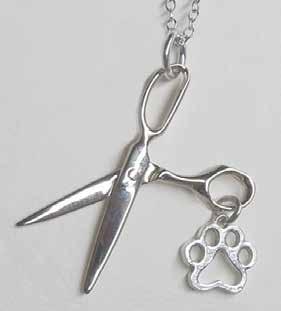
scissors just isn’t good enough for a Groomer...so, I made these.



PLEASE SUBMIT ANY CORRESPONDENCE TO: info@pghpetconnections.com
ADVERTISING INQUIRIES
Elaina Westfall westfall.80@gmail.com 614-342-0735
All Rights Reserved | Copyright 2015
CENTRAL OHIO PETCONNECTIONS BI-MONTHLY
Published by: Pittsburgh PetConnections, LLC. Pittsburgh PetConnections LLC. was formed in 2012. Our mission is to publish a high quality, informative publication focused on the Human-Animal Bond. We support local businesses and also assist local non-profit businesses for pets and people, to give back to our great Central Ohio communities.
MAGAZINE PUBLICATION STAFF
Carla Mader, Managing Editor
Susan Wagner, DVM, Content Editor Ellen Whittle, Photography
Jaimee D. Greenawalt, Graphic Design
Carla Mader, Sales & Distribution Manager
CONTRIBUTING WRITERS
Our contributing writers have many years of combined experience and expertise in the fields of veterinary medicine and the Human-Animal Bond.
ADVERTISING SALES:
Elaina Westfall, Sales & Marketing Director Central Ohio
Denise Iamurri Bartman, Sales Pittsburgh & Central OH
Michael James, Sales Support Pittsburgh & Central Ohio | mj.1@outlook.com
From the Publisher
Welcome to our Central Ohio PetConnections Magazine! July-August Issue 2015 • Volume 1 • Issue 2
News and Events
PetConnections had a great response with the launch of the first issue for May-June in Central Ohio! To view the digital edition and find out where to pick up a copy, please see our CO web page at www.pghPetConnections.com/Central-Ohio-PetConnections.
Our July/August issue helps us get ready to go back to school. In true Buckeye form, our cover features canines, Rory and Idgie Marks. Also from left to right ARE Zac Ratcliff, Ben Castle, Curtis Swartzman and John Whittle on the end. This creative photo is by Ellen S. Whittle and taken at Thorn Apple Country Club.

The Central Ohio pet event season is in full swing! Paws in the Plaza in Gahanna at Creekside is a great time for you and your pet. It’s the first Thursday of every month from August through October! Check out our event page for upcoming events like Wagfest and Fido Fest, in this and every issue in print and digital, as well as our online calendar. Log on to submit your organization’s event FREE!
This Issue
Read about our featured organization, Almost Home Dog Rescue of Ohio. Also, Feeding Your Pet Bird, Eastern Screech Owls, Home Alone Hound, Healing Touch for Animals, Barnyard Yoga and more!
We thank our advertisers & sponsors, the All Life Center for sponsoring our Wellness for Guardian section, MedVet, ASPCA Pet Insurance, Crystal Remembrance, Good Nature Organic Lawn Care and Canine Health.
PetConnections supports local organizations and small business and has established a community network of readers, advertisers and distribution points. Please support our advertising sponsors! See their locations on the map page. Check out our PetConnections Resource Directories for categorized listings.


The award-winning Pittsburgh PetConnections edition started monthly in September of 2012. PetConnections has grown to be the #1 free resource for news, information and everything pets, as well as wellness for people with the PetConnections directories, event calendars both online and in print. Our award-winning content on pets and horses was recognized by the Dog Writers Association of America in 2013. Pittsburgh PetConnections is now bimonthly and publishing concurrently bi-monthly with the Central Ohio Edition.
Our sales team is growing, and also includes Elaina Westfall and Michael James. PetConnections is also looking to grow our team with additional sales account manager professionals.
We encourage you to subscribe to PetConnections Magazine, as our readership is growing! Even though PetConnections is free at select locations, reserve your personal copy to be mailed every issue! Visit www.pghPetConnections.com to subscribe today!
Submit your photos and stories, as well as remembrances to be featured online and in future issues to: info@pghPetConnections.com.
Thank you for picking up PetConnections. Take care of yourself and your animals and be well!
Warmly,
Carla Mader Publisher Pittsburgh & Central
Ohio PetConnections Magazine
Please submit any correspondence to: info@pghpetconnections.com

Please check us out on the web & subscribe at: www.pghpetconnections.com Follow PghPetMag on Twitter and “Like” us on Facebook! http://www.facebook.com/PghPetconnectionsMagazine


Submit your business or
organization’s info for a listing on our director y No website for your small home-based pet or wellness business? Add a Featured Listing on the Central Ohio PetConnections Online Director y for a small yearly fee & upload photos & detailed info about your business! Co


•Promotion by Central Ohio PetConnections at our events Subscribe,
Partnership Includes:
•Advertisement in print or online
•Free Featured Director y Page on our website with your business info, photos & a link to your website
•Your logo in our monthly newsletter
Stay Positive!
By Susan Wagner, DVM, MS, ACVIM
As children head back to school, you may consider sending your four legged “child” to classes, too. If so, please be sure to research the instructors. Advertisements can be confusing or downright misleading, as some behavioral professionals are not what they seem. Be aware of what’s happening behind the scenes. There are no
requirements for dog trainers, nor are they licensed (although voluntary certification groups do exist).
The most important thing to remember in training your dog, or in hiring a trainer, is the word positive. Reward-based training works. Punishment-based, assertive training may also succeed, but at what cost?

Many unwanted behaviors are driven by fear. Dominance based techniques create more fear and anxiety. If you think about it, treating anxiety or fear with more anxiety and fear doesn’t make sense. Dominance and punishment based training have been shown to make aggressive behaviors much worse, ultimately resulting in euthanasia. Why take this chance when reward based training has been proven to be effective?
From an energetic perspective, all words, actions and situations have an energy, or feel, to them. We’ve all experienced this when we’ve walked into an argument or uncomfortable situation. What’s the familiar saying? The tension was so thick, you could cut it with a knife. How can we feel someone else’s tension? We sense it through the electromagnetic (energy) field that emanates from every living thing.
When we reward our pets, we are coming from a kind place — hence our energy field will feel good to them. If we’d really like to take it up a notch, we can thank them for their good behavior! After all, when they behave, our lives are easier, so why not approach training with appreciation? The instinctive feeling that accompanies gratitude is heads and tails above hearing “good job”. Our canine companions are just like us. Respect is something every being inherently desires. PC
How can we feel someone else’s tension? We sense it through the electromagnetic (energy) field that emanates from every living thing.
The Many Manifestations of Lyme Disease
By Emily Klosterman, DVM, MS, DACVIM
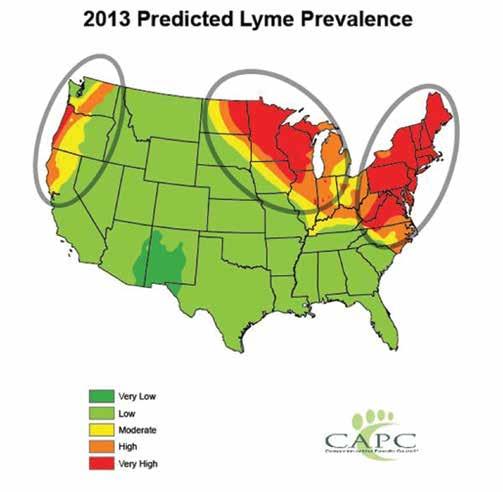
Pennsylvania and other states along the eastern seaboard are common places where dogs might contract Lyme disease. Recognizing the signs of Lyme disease can lead to quicker diagnosis and treatment. However, the disease can manifest in many different ways, thus making it difficult for even the most vigilant of dog owners to know that their pet has Lyme disease.
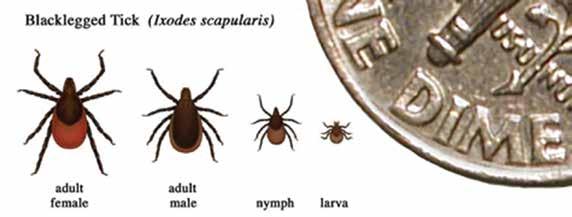
Lyme disease is a bacterial infection transmitted by tick bites. The bacteria (Borrelia burgorferi) lives in the digestive system of the tick and infects the dog through the tick’s saliva. The bacteria can move around the body and evades detection by the immune system much better than
other bacterial infections which makes it a disease that can cause many types of clinical signs. Because the bacteria are so good at hiding in the body, even with antibiotic treatment many dogs are never cured of this infection.
Incidentally discovered infection
Many dogs are found to be Lyme disease positive when tested, but fortunately few have signs of disease and the positive test is found with routine screening. A Lyme disease test is incorporated into many general health labwork panels and is also included in many in-clinic tests for heartworm disease. In areas where Lyme disease is common, screening can identify dogs

that might need more attention. Screening can also identify dogs that have had previous exposure to the infection but no longer have an active infection (which doesn’t require treatment).
When a dog tests positive, further testing to measure the significance of the body’s immune response is recommended with a test called the quantitative C6 antibody titer test. This test allows your veterinarian to better understand whether your pet has a newer or older infection. Dogs with a low titer probably had their infection in the past or their immune system fought off the infection and do not require treatment. If your pet has a high C6 antibody titer but no clinical signs then their body may be taking care of the infection on its own and treatment with antibiotic may be unnecessary. Sometimes, a veterinarian may recommend antibiotic treatment for dogs with no clinical signs and significant C6 antibody titers. Antibiotics might be recommended in pets with reduced immune system function or in an attempt to prevent some of the more serious manifestations of Lyme disease discussed below. Finally, if your pet has tested positive for Lyme disease your vet will likely recommend testing for excessive protein in the urine. Protein in the urine is a manifestation of Lyme disease that can damage the kidneys but can go unnoticed unless tested for regularly.
Lyme arthritis
One form of active Lyme disease is characterized by fever, swollen lymph nodes, muscle soreness and arthritis. Once the bacteria are transmitted to the dog, they move around the body triggering swelling and inflammation as they travel. The joints
Canine Companion
appear to be very sensitive to this inflammation and chronic arthritis can become a problem in these pets. In addition, as discussed previously, sometimes the bacterial infection is never completely cleared from the body and chronic infection in the joint is possible. Cases of disease with chronic joint inflammation are complex and so your family veterinarian may recommend that your dog visit a veterinary specialist.
Lyme nephritis
The most devastating way a pet can be affected by Lyme disease is severe kidney inflammation (Lyme nephritis). Dogs are often diagnosed with this type of Lyme disease when they have signs like poor appetite, vomiting or lethargy and then blood tests performed at the veterinarian’s office reveal kidney failure. Immediate antibiotic treatment is recommended in these patients, but unfortunately the inflammation in the kidney triggered by the bacteria is often so severe that the kidneys continue to fail and never recover. Sadly, many dogs affected by Lyme nephritis will suffer the effects of kidney failure for the rest of their life and ultimately may die from severe kidney failure in a few weeks or months. Outcome in these dogs mostly depends on the severity of the kidney failure, but evaluation by a veterinary internal medicine specialist may help maximize quality of life for as long as possible.
Secondary autoimmune disease
Lyme disease can affect many different organs in the body and this can lead to
autoimmune diseases (where the body inappropriately attacks its own tissues). Autoimmune disease is not directly caused by the bacteria and so even after antibiotic treatment pets can remain sick. Autoimmune blood or joint disorders are most commonly seen and require a specialized treatment course completely separate from the antibiotics for Lyme disease.
Prevention
The longer a tick is attached to its host (esp. > 48 hours) the more likely it is that Lyme disease will be contracted so limiting the time a tick spends on your dog’s body is an important preventative measure. Looking for ticks on your pet’s body can be helpful, but ticks that are not yet fully grown can transmit Lyme disease and they can be too small for you to see or feel. Use of tick preventative medication is an important way to limit the time a tick might spend on your dog’s body.
The Lyme disease vaccination is a unique vaccine in that it is not meant to fight the infection once it is in the body, but is designed to prevent transmission from the tick. The vaccine attempts
to fill a vaccinated dog’s blood with antibodies that will kill the bacteria in the tick’s stomach before it even enters your dog’s body. Lyme disease vaccination is recommended in dogs that live in or travel to high risk areas.
Keep a close eye on your dogs during tick season this year and cat lovers take heart, cats are generally considered resistant to Lyme disease. People cannot get Lyme disease from their dog; however, you can contract the disease from a tick too. Be aware that if your dog is being bitten by ticks carrying Lyme disease then your family could be bitten too. PC
SUMMERTIMETIPS
• Don’t walk pets on or near busy roads
• Hot pavement can burn paws
• Avoid strenuous activity during the heat of the day
• Be sure your pet has fresh water and a way to escape the heat
• Pets should remain on a leash or supervised within a restricted environment when outdoors.
• Be sure your pet has a current rabies vaccination, and keep your pet’s proof of vaccination and pet license (where required) handy for emergencies.
• Have your veterinarian’s contact info handy and know the location of the closest veterinary emergency center
The Home Alone Hound
By Traci Shreyer, MA Applied Animal Behaviorist
Summer is full of fun and activities that make our schedules different from the rest of the year. In households with children, these schedule changes are exaggerated as kids have to say goodbye to summer and begin the school year and its routines again.
Dogs with home alone issues, often take a dip in their ability to cope with being separated from their family when routines and schedules change. Predictability, not the amount of time alone, seems to be very important to these dogs. Signs that your dog may not feel safe while home alone include problematic behaviors like destruction through digging and chewing, house soiling, and escape attempts. More subtle signs may be harder to catch and include: panting, pacing, whining, digging, drooling, howling, barking or simply not eating food or treats until their people return home and they feel safer and relax. Sometimes the only clue is that something is amiss is a neighbor complaint.
If you want to check on your pup to see how she’s doing, and particularly if you have noticed any of these behaviors, turn to technology! Video recording can give you insight into what may be causing the problem behaviors. Drag out the old retro camcorder from the closet, or utilize one of the many free apps that can connect the camera in your laptop to your smart phone (e.g. http://www.ustream. tv/). A couple hours of video, in a few different scenarios (ex. day, night, week end etc.), over a few departures is often all you need. Normal videos are a yawn; they are quite boring and can be watched on fast forward. Dogs eat any treats or chews left for them and then quietly go to sleep. There is little to no movement, and silence. Nothing. Videos of dogs that aren’t coping well with departures are usually obvious and can be distressing to watch. Find comfort in knowing this is the first step in getting your dog what she needs.
If you know your dog struggles when left alone, there is help. Always see your veterinarian to rule out any medical problems that may be contributing to the issue. Bring any
video you’ve made with you to your appointment. Some veterinarians now help their clients treat behavior problems, and others may refer you to an academically trained behavior consultant. Navigating these professionals, and their ability to help you and your dog can be difficult. Allow your veterinarian to help (http://avsabonline.org/blog/view/what-is-abehavior-professional ).
Everybody could use a little help from a friend. If your schedule is changing, or even if you’d just like to be proactive and extra kind to your pooch, try these things to make home alone time feel fun and safe for your dog (hint: these strategies are also the basis for the beginning of a treatment plan for dogs with even severe separation anxiety).
1. Get plenty of exercise
• Exercise is a great stress reliever, and promotes good home alone behavior- sleeping!
• Consult your veterinarian about appropriate exercise for your dog’s body.
2. Create a quiet comfortable environment
• If you confine your dog, select areas she prefers. These are often areas where she spends time relaxing with her people.
• Provide soothing classical music, avoiding driving beats and hard rock. Though A Dog’s Ear is a piece of music specifically written for this purpose, and with research to show that it helps. (http://throughadogsear.com/)
• Utilize white noise (ex. a large box fan or commercially available machine) to block out intrusive noises from outdoors when needed.
• Pheromonal support helps many dogs. Dog appeasing pheromone (available in ADAPTIL wipes, collars, sprays, and diffusers, www.adaptil. com) is a replication of the pheromone that mothers release when nursing pups. It is soothing, and
indicates safety even to adult dogs. The collars, my favorite application due to cost effectiveness and convenience, are available only through veterinarians and online.
3. Chew, Chew, Chew! Offer lots of enrichment (https://indoorpet.osu.edu/dogs/environmental_enrichment_dogs ). Puzzle toys (ex. www.kongcompany.com/recipes ) help focus chewing on appropriate items, distract and reward dogs while alone, changing how they view or actually feel about your departure.
• They likely reduce stress due to neurochemicals known to help stress levels that are also released naturally while chewing and licking.
• Puzzles feeders help the treats last longer, supporting dogs through the first half hour of a departure which is notoriously the most difficult. Simple biscuits or treats are gone in a flash, and don’t help in this same way.
• Have fun, get creative, and mix it up. Dogs easily get bored, and love toys and new challenges.
Avoid punishment. It’s after the fact, won’t be effective anyway, and can escalate anxieties and make your dog fearful and stressed about interacting with you. This will only make problems worse. It’s temping, and these issues are frustrating, but just say “no” (to your temptation to punish that is!). It’s as simple as 1,2,3. Support your dog with the simple strategies above and you will both be happier. Enjoy the last dog days of summer together, and while apart! . PC
Approaching 1000 Dogs Rescued! Featured Organization
By Cheryl Rakich
Al most Home Dog Rescue of Ohio (AHDRO) is an allvolunteer, 501(c)(3) nonprofit organization that is approaching their 1000th dog rescued from neglect and abuse situations since their inception in 2003. AHDRO will be planning a celebration with many of the 1000 rescued collies, shelties and mix breeds. It is quite the milestone saving so many lives and placing them in their forever homes. Cheryl Rakich, President and Founder, along with her Board of Directors are the core of the organization. And all the volunteers help make all the rescues happen through multiple activities including transporting, fundraising, vet visits, etc. Lots of blood, sweat and many tears, and the love for the collie breed, fueled this organization to rescue their first 1000 dogs expected in 2015.
AHDRO’s mission is to provide homeless collies, shelties and other family-friendly dogs a safe haven where they will receive medical care, nutrition, and love until an approved home is found; to reduce the number of unwanted pets by altering all dogs in their rehoming program; to educate the public about the importance of altering pets, and to promote the message that owning a pet is a lifelong commitment.
All AHDRO dogs are placed in foster homes of approved volunteers until they are adopted into homes that have been carefully screened for placement. Upon intake into their program, each dog is examined by a veterinarian, necessary treatment is administered and vaccinations are updated.
They rescue mainly in the Columbus, Ohio area, yet have taken in dogs from as far away as Pennsylvania, Missouri, Illinois, Iowa, Indiana, Wisconsin, New York, Kentucky, Alabama, Michigan, North Carolina, Tennessee and West Virginia.
AHDRO dogs are rescued from situations ranging from lack of care to neglect to starvation and abuse. AHDRO works hand in hand with animal shelters to save dogs slated for euthanasia, and those dogs are
their top priority. Some of the dogs come from owners who, because of illness or other circumstances, are no longer able to care for their pet. Many dogs are in need of special attention or are deaf and/ or blind. They believe that every dog they bring to their rescue deserves their best efforts to provide a happy, healthy life, and they dedicate themselves to ensuring that happens.
AHDRO has rescued many heartworm-positive dogs, litters with the Parvo disease that is fatal if not treated, a 10-monthold with hip dysplasia that required hip replacement surgery, another 10-monthold with congenital heart problems that has had successful heart surgery, and a four-year-old Collie with PDA (patent ductus arteriosus) that also had successful heart surgery. They have treated multiple collies suffering from eye anomalies and rescued a dog with a broken leg that required surgery to attach a plate to her femur. The Molly Fund was developed in her name to help with future large medical expenditures.
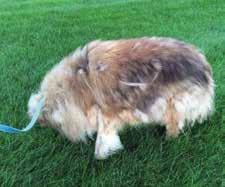
Maddie is an example of a dog that was recently rescued. She was so severely matted, she brought the groomer to tears when she needed to shave her coat exposing deeply infected puncture wounds that were coated in feces. Maddie also had dental issues that made eating painful. All these issues were addressed and after her recovery time, this gentle soul found her forever home. She is no longer crated and forgotten but has a life of love.
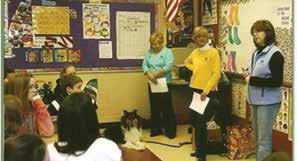
Spreading the word about special needs collies in Hudson Mills Metro Park in Michigan.
One of the solutions to the ongoing crisis of over population of dogs, leading to abuse and neglect, is education. AHDRO has partnered with area companies to provide hands-on educational experiences. Their volunteers have been guest speakers explaining the importance of spaying and neutering. The registered veterinary technician on their board is writing educational medical articles for their newsletter. They also invite guest speakers to AHDRO’s general meetings to provide continuing education.
Almost Home Dog Rescue of Ohio is educating the public on the importance of participating in the reintroduction of legislation to help Ohio companion animals and getting the word out about the horrors of puppy mills and encouraging legislation to ban dog auctions. Yes, solving the problems of abused and abandoned dogs is an uphill battle, but AHDRO feels if they can educate people, then they’re doing something to help resolve the battle, not just dealing with the end result.
AHDRO has participated in school programs designed to educate children about the responsibility of pet ownership and dog safety and works with roughly 400 girl scouts on similar endeavors. Their website has information about grooming, nutrition and general education. It is a source for helpful pet links such as, dog park etiquette, traveling with pets, dogto-dog introductions, etc.
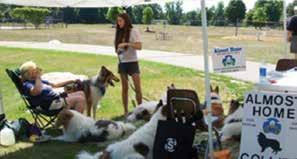
This organization’s many dedicated volunteers help raise the funds needed to care for dogs in need. It is a key part of their financial success. The Ohio State football tailgate parties (O-Zone, involving 90 volunteers each) in 2015 and the Pars FORE Pets golf outing fundraiser are two of the main fundraisers for AHDRO.
Adoption Reunion, Journey of Hope, Sarris candy sales, Flower Power, WOW (local chiropractor fundraiser), Petpalooza
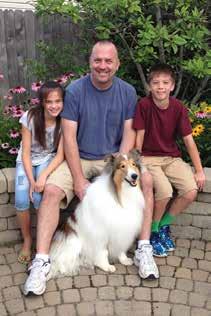
(community education), Yankee Candle sales and Butter Braids. Other initiatives include individual and company donations along with partnerships with many great stores for on-line commissions.
Fostering a dog until an approved home becomes available is very heartwarming and certainly rewarding. All donated funds go 100% directly to the care of the animals. And volunteering, in any capacity, is the heart and soul of their accomplishments. Visit their website at www. almosthomeohio.org for more information on the organization and how you can help. Foster, donate or volunteer, you will be helping many deserving lives, one thousand times over.
Congratulations, Almost Home Dog Rescue of Ohio, on being the guardian angels of your first 1000 fortunate animals that fell into your care. PC
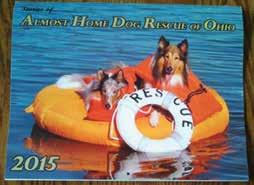
Other fundraisers include the annual calendar sales of our adopted dogs!
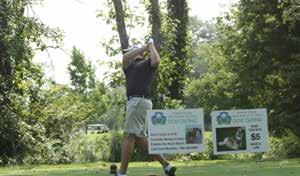
Pars FORE Pets Golf Outing Fundraiser.
Maddie – Before
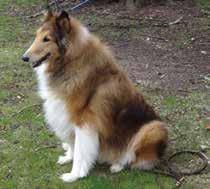
Maddie – After
Feathered Friends
Feeding Your Pet Bird
By Barbara L. Oglesbee, DVM, DABVP
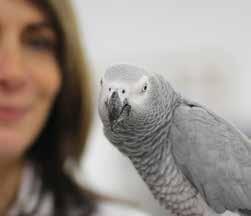
Birds should eat birdseed, shouldn’t they? This seems intuitive, especially when you see bags of seed available for sale for wild birds, and a myriad of seed mixes available for pet birds. However, seed diets are woefully inadequate for our pet birds and feeding exclusively seeds can actually cause serious health problems. Seeds are very low in vitamins, minerals, such as calcium, and virtually all other nutrients other than fat. In the wild, birds do eat some seeds, but also eat a variety of other foods such as fruits, vegetables, grains, insects and other sources of animal protein. Basically, their nutrient needs are very similar to ours. Imagine what your health would be like if you ate nothing but seed mix! This is no different for our pet birds.
This does not mean that all seed must be eliminated. Smaller pet birds, such as parakeets (budgies) and cockatiels naturally consume more seed than medium to large parrots such as Conures, Quaker (monk) parrots, Amazon or African parrots, macaws and cockatoos. For smaller birds, up to 50% of their diet can consist of seed mixtures. For larger parrots, seed mixtures should provide no more than 10-20% of their diet –or no seed at all! Seed is not a
necessary part of the diet. So, although it is alright for your bird to have some seed, offering any seed at all can make it difficult to get the bird to eat anything else. It is similar to offering a child a bowl of candy with broccoli mixed in – what would you predict that they would pick out of that mixture? Many seed mixes contain other food types, including pellets, dried fruits and dried vegetables. However, just like the child, nearly every bird will pick out the seeds and leave the pellets behind. Even if they will eat the dried fruits and vegetables, these foods are poor in nutrients as well. The drying process strips out nearly all nutrients other than sugar, making these fillers not much healthier than candy.
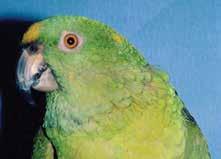
What type of health problems do we see in birds that eat all seed diets? Obesity, liver disease and heart disease top the list. Seeds are high in fat and cholesterol. High fat diets fed to mammals (such as us) results in fat deposited under the skin –around your belly, hips, etc. For birds, fat is first deposited in the liver. This is a modification to help birds convert fat to energy very quickly and efficiently – it takes a lot of ready fuel to fly! If the liver is full of fat, liver cells are damaged. After years of a high fat (seed) diet, the entire liver can become permanently destroyed. Fat is also deposited in blood vessels, leading to heart disease and stroke. Lastly, fat is laid down around the belly. So, if your bird is fat, it is very likely that he already has some degree of liver disease. Fortunately, with a change in diet and appropriate
veterinary care, most damaged livers can be repaired. Seed diets also contribute to respiratory disease, as they are deficient in Vitamins (especially Vitamin A), which are necessary to maintain healthy sinus and lung tissues, and a normal immune system. They also lack calcium, a deficiency that leads to weak bones, neurologic symptoms such as weakness or seizures, and egg laying problems in females.
So what should you feed your bird? A healthful and convenient option is a complete pelleted diet. There are many of these available, and most well known brands are nutritionally complete. Pellets come in a variety of sizes, shapes and colors. Ideally, pellets should consist of at least 50% or more of the diet – up to 100% if your bird enjoys them and it is most convenient for you. But most birds like variety, just as we do. So, the other half of the diet should consist of fresh or frozen vegetables, grains, legumes (beans), fruits and small amount of lean, cooked meats. Choose vegetables that are dark orange, red or green, as these are the highest in nutrients. Grains should be whole-grain, such as whole grain breads, cereals or pastas, and brown rice. Beans, such as pinto, black, kidney, etc. are an excellent source of protein. The only food you should never feed is avocado, including guacamole, as this is a deadly toxin for birds.
A final, strong word of caution. Don’t try to change the diet by suddenly taking all seed away. You may think that your bird will get hungry enough to eat the new diet of pellets or fresh foods. However, many will not recognize the new food and can actually starve to death. Introduce new foods gradually and make sure your bird is eating. Talk to your Avian Veterinarian about how to appropriately change the diet. The sooner you do, the healthier your bird will be! PC
Kitty Korner
Q &A with Judith Levy M.Ed.,CEHP, ACC Sleepless in Columbus
QMy cat is keeping me awake at night! She comes and jumps on me until I either play with her or feed her some canned food!! I used to use a spray bottle but it no longer works. She is great at dodging the water! How can I stop this behavior? Sleepless in Pittsburgh
QHI. I am wondering if you can help. My young cats play on my bed at night and they keep me up. If I try to put them out, they scratch under and at the door. I don’t want to be mean to them and I am so frustrated. Thank you. Carrie from North Hills
HAVE YOUR VETERINARIAN EVALUATE THE PROBLEM: The suggestions here are in regard to cats that regularly disturb you during sleep. If your cat is older or if this behavior is unusual for your cat, I suggest that you have your veterinarian evaluate the problem.
A. While it is true that a cat’s natural active state is at dusk and at dawn, it is also true we are able to either strengthen behaviors in one direction or another. That is, we can teach our cats and develop their inclination to play and ask for attention during the hours that are convenient for us or we can “feed into” their tendency to develop the desire to be active and receive attention during our sleep time. So let’s look at the ways in which we can encourage them to settle and rest during the night or at least refrain from disturbing you!
CHANGE FEEDING SCHEDULE: Instead of feeding your cat all of her food early in the day, use a measured amount of food and withhold some of it until the evening. Your cat having a full belly at your bedtime will reduce the probability that your cat will awaken you during the night for food. What you feed your cat matters as well. Make sure your cat food has some type of meat (not the word meat but fish, chicken, beef etc.) listed as the first ingredient and that there are no fillers in the food.
PLAY THERAPY and ATTENTION BEFORE BED AND DURING THE DAY: Play with your cat in the evening and before bed to vent some of that playful and predatory energy. There are many wonderful toys and stimulating games on the market. Go on the internet and explore…..What would be appealing to your cat? You may also want to purchase some interactive toys for your cat to play with independently during the day. An animal needs to exercise and have stimulation. The expression a tired dog (or cat) is a well behaved dog (or cat) is indeed true! If your cat is not exercised regularly, she may develop undesirable ways to vent. Much like us—if we exercise, we are less likely to develop unhealthy conditions and habits.
LEVEL OF LIGHT IN YOUR HOUSE: Some folks have a night light in their bedroom or they leave on the TV when they fall asleep. If your cat is easily aroused or if you have kittens, that stimulation may be enough to get them going at night.
STOP GIVING ATTENTION WHEN THE CAT IS BEHAVING INAPPROPRIATELY: The most reliable and sometimes the ONLY treatment for attention getting behavior is extinction. This means that you MUST ignore the cat when she bothers you 100% of the time! It may be difficult for a week or so but you must Completely ignore unwanted behavior. Intermittent attention strengthens a behavior. So this means that if you ignore your cat for 30 minutes and then yell at her or pet her or even push her off
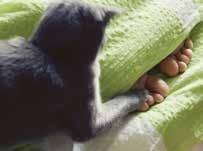
the bed, she will know that she has been successful in getting your attention. If you consistently ignore this behavior, your cat will realize that you are not willing to do it her way.
Ignoring demands for attention along with these others suggestions can yield great success!! Go for it!
If you are having a behavioral issue with your cat, visit Judith’s website @ www.judithlevywellness.com
Skype Sessions Available PC
Holistic Care
How Healing Touch for Animals Assists in Healing Pets & People
By Carla Mader
Healing Touch for Animals® (HTA) is an energy-based therapy which helps the body come into balance and assist in healing itself.
In HTA, we work with the energy of the body to stimulate a physiological response for a deeper sense of relaxation and healing. HTA is used to assist with injuries, illness, surgeries, wound healing, behavioral problems and stress related issues. Healing Touch for Animals was founded by Carol Komitor. Carol’s background as Reiki Master, Certifications in massage therapy, hospital-based massage therapy and also equine massage all contributed to her development of HTA.
Carol was already teaching the Healing Touch Program™ for humans in 1991, all around the country. Because of her additional 13 year background as a veterinary technician, she received many questions about animals in her classes. This led Carol to develop Healing Touch techniques to work best with the energy system of animals, which differs from ours.
The human energy field is layered around our bodies. Whereas, an animal’s energy is more complex, more like a matrix: Influencing the health and well-being of animals through energy and intention, Healing Touch for Animals® combines philosophies, techniques and applications to promote energy balance and healing of our animals while providing physical, emotional, mental and instinctual stability. Stabilizing the energy system allows the natural regulation of the immune system which encourages the healing process and promotes well-being. HTA is always used in cooperation with veterinary medicine. Healing Touch for Animals® uses energy medicine therapies – recognized by the National Institutes of Health (NIH) HTA works by releasing endorphins to establish a deeper relaxation and state of being, allowing the body to function at a greater level. By allowing muscles to relax, circulation is increased, sending more oxygen, nutrients, and hormones into the body to support healing. HTA techniques
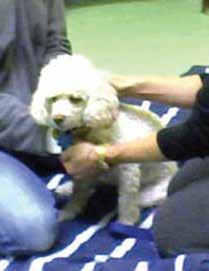
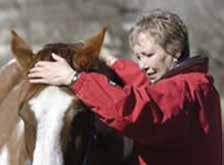
work on all levels of the body: physical, mental, emotional and instinctual. These techniques allow the animals to come into a deeper instinctual presence and knowing of their body.
HTA techniques benefit our animals in many ways:
• Help animals to understand appropriate behavior • Reduce stress and anxiety
• Support animals through injuries, illnesses, physical and emotional trauma, abuse and grief
• Build a solid foundation for cancer patients
• Develop confidence for training and competition
• Energetically support animals through the end of life transition
The Physiological Response of Energy Healing
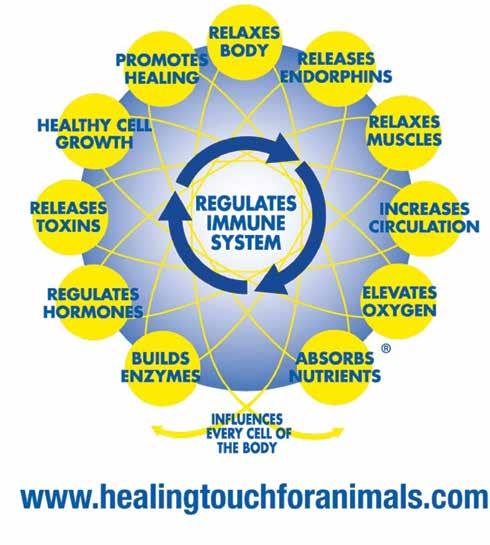
Understanding the way the body responds during energy medicine facilitation provides the fundamentals of how healing occurs. The chart on the opposite page illustrates a full perspective of the body’s reactions to energy medicine. Using energetic vocabulary, this chart explains the body’s physiological response during an energy medicine treatment. Following the chart in a clockwise direction, beginning with “Relaxes Body” and ending with “Regulates Immune System”, this chart demonstrates the body’s reactions during an energy healing session/treatment.
• Energy medicine treatment initiates relaxation to the body.
• The relaxation response releases endorphins in the brain.
• The endorphins relax the muscles.
• Relaxed muscles create more space between cells providing increased circulation.
• The increased blood flow elevates oxygen levels throughout the body.
• Accelerated blood flow allows nutrients to be absorbed more efficiently.
• Enzymes build for proper digestion.
• Hormones regulate to strengthen the body’s constitution.
• Toxins release from the body.
• Healthy cells begin to regenerate.
• A sense of well-being is established which promotes healing.
• When the body has a stable physiology, the immune system is regulated. The resulting stability within the immune system affects the physical, emotional, mental and spiritual facets of the body’s energy field supporting self-healing.
The energy based modality of Healing Touch has been recognized throughout the human medical community since 1989 and is used by more than 75,000 healthcare practitioners worldwide to help provide whole body wellness. These techniques are designed to enhance the healing process and do not replace traditional medical or veterinary healthcare, medical diagnosis, or medical treatment for illness.
These empowering courses are offered in cities throughout the United States, in Canada and in the Netherlands. As with people, these techniques for animals are meant to complement traditional health care. They can bring about pain relief, stress reduction, accelerated wound healing and improve immune system function. One of the most fundamental effect students report is the deepening of the bond between them and their animal companions.
The HTA techniques were developed by Carol Komitor under Komitor Method of Healing, Inc. The concepts and techniques come from Carol experiential understanding developed through working with clientele, people and animals, her studies and her use of other energetic modalities.
You can learn more at: www.healingtouchforanimals.com Carol Commuter PC

Carol Komitor
Equine Affairs
Barn Yard Yoga for all riders
A trained horse should move equally in both directions, tracking right and tracking left. Riders spend hours to achieve this from side to side and longitudinally, or back to front, but how many of us actually take time to supple and balance our bodies so we can become better riders? We expect our horses to perform with precision on both sides, yet we can only brush our hair with one hand. While perhaps not ambidextrous, we need to be able to use our hands and legs equally in the saddle, and be actually “quadradextrous.” In order to better train our horses to be supple and balanced, we should take responsibility of our bodies first. As renowned trainer Alois Podhajsky so smartly stated in his book, The Complete Training of Horse and Rider, “riders must first have control over themselves before they could even consider to harness and train a horse!”
Barn Yard Yoga was created to integrate exercise and our love of horses, replacing the gym with the barn where we all want to be anyway. It presents exercises that can be done while walking to the pasture, sweeping the barn, feeding, watering and grooming a horse. Barn Yard Yoga lengthens and strengthens the areas of our bodies that we use for riding, including the neck and shoulders, pelvic girdle, hips, abdominal muscles, knees, ankles and feet.
By Kristin Hermann
The correct basic riding position enables the rider to communicate clearly with the horse. If the rider’s legs, seat or hands are out of alignment, the rider will be signaling the horse incorrectly (or out of tune). I always use the analogy of the horse being an instrument the rider is learning to play. If learning to play the clarinet you first would learn where to place your fingers on the instrument. It is the same with riding a horse, only you must learn to use your whole body, not just your fingers. The rider’s legs straddle the horse’s back, the torso and seat stay in balance, the ankle, hip, shoulder and ear stay in vertical alignment, and the arms, elbows and hands communicate with the bit. Riding may look easy. Ha! Most sports require use of an inanimate object, such as a ball, golf club or tennis racket. I know of no sport other than riding where the participant straddles an animal with a mind of its own!
In order to ride in harmony with a horse, you cannot be stiff, lean to one side, grip with the legs, or grab the reins tightly. In order to ride harmoniously, the rider needs to establish a relaxed, balanced position and communicate to the horse in a clear manner. Barn Yard Yoga emphasizes working the major areas of the body used to communicate to the horse: the arms and shoulders, back, hips and legs. Here are a few simple exercises you can try.
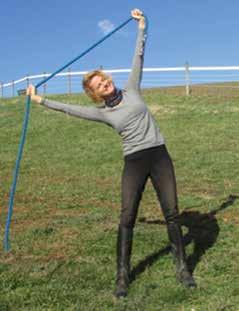
Most riders hold a lot of tension in the head, neck and shoulder area. Use of a lead rope will help you rotate your shoulders and open up your chest. It is important to keep your elbows straight to achieve symmetrical stretching in the shoulders. The wider apart your hands, the easier it will be to rotate your shoulders. Forward bends help to stretch the lower back.
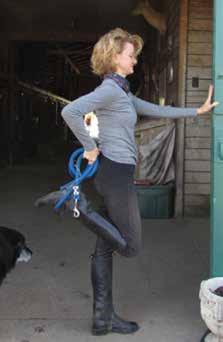
You can use the same lead rope to stretch the quadriceps. Balance is also addressed in this exercise. Try standing on one leg with your toes pointed forward. If you find that too difficult, use a wall or a feed bin for support. Never put yourself in a situation where you may tear a muscle or lose your balance. These exercises are meant to be simple stretches.
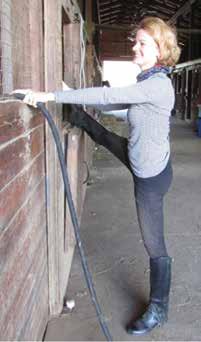
My favorite Barn Yard Yoga exercise is putting my leg up on the stall door while watering horses. Watering can be boring, so a little exercise at each stall is how I


came up with the idea! In this photo, you can see how flexible Anita is, but you can also see how this position stretches her leg and opens her hip.
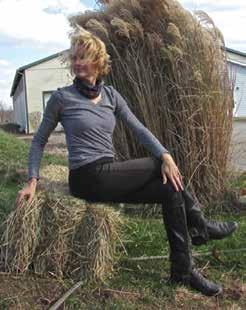
A more subtle hip opening and back stretch is to bend over a hay bale, or a small pony if you really want to be creative! While you are enjoying a beautiful day at the barn, why not stretch out on a bale of hay and open up your back?
In
order to ride harmoniously, the rider needs to establish a relaxed, balanced position and communicate to the horse in a clear manner.
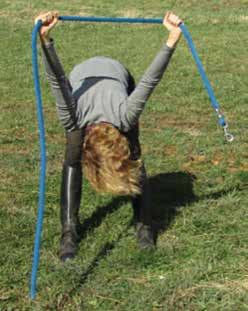
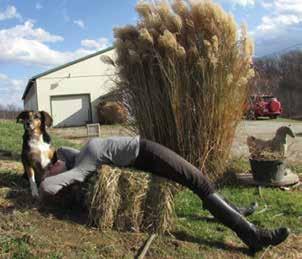
Barn Yard Yoga is for all riders. Keeping our bodies supple will keep us in the saddle longer and communicating to our horse more clearly. Enjoy these simple stretches and I am sure you will come up with several of your own! Happy stretching.
The model for Barn Yard Yoga is Anita Prentiss Buzzy. She is a professional photographer, avid equestrian and certified Pilates Instructor. She teaches Pilates at her studio in Squirrel Hill, and at Coventry Equestrian Center. She can be reached at pilatesanita@gmail.com. Author Kristin Hermann, also an avid equestrian, professional equine trainer and instructor, owns Coventry Equestrian Center. She recently
pursued Pilates to maintain her athleticism, and has been doing Barn Yard Yoga almost daily as she completes chores around the stable. Contact Kristin at blythedale@comcast.net.
Kristin Hermann blythedale@comcast.net CoventryEquestrianCenter.com PC
Eastern Screech Owls:
Ohio’s Buckeye Birds
By Linda Forte-Spearing, Volunteer For Ohio Wildlife Center
A Buckeye fan is an easy spot—just look for the scarlet and gray. From their outerwear to their underwear, OSU sports enthusiasts flaunt their team spirit, regardless of the season. Mother Nature, it seems, is no exception!
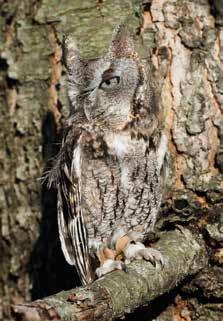
The Eastern Screech Owl comes in two familiar colors: red or gray. Though, chances are you’ll hear the haunting trill of this Ohio native before seeing one. The patterns in their feathers mimic tree bark,
making them almost invisible. And like many raptors, Eastern Screech Owls are nocturnal. They sleep in tree cavities during the day and emerge at night in search of food (rodents, small snakes, insects and the like).
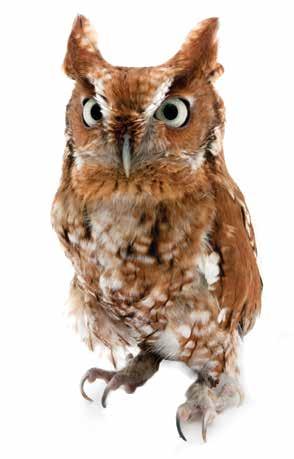
In fact, this species is so adaptable it thrives in rural areas, as well as in cities and suburbs. Such versatility, however, does come with consequences.
According to Angela Latham, Community Engagement Coordinator for Ohio Wildlife Center, 37 Eastern Screech Owls have been admitted to Ohio Wildlife Center’s hospital since 2012. Almost half of these cases were due to a collision with a window or a moving vehicle. The balance was either injured by some other means or orphaned.
“Wildlife injuries are inevitable,” explains Latham. “When we cut roadways, we create a woodland edge next to open space. Owls like to perch in trees along this edge because it’s easy to spot food in
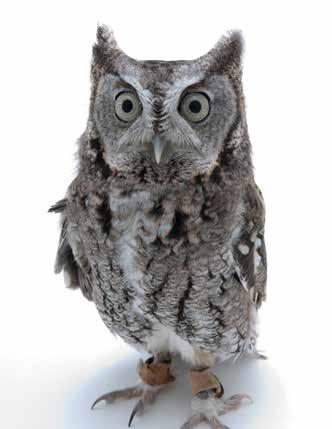
Photo by Tim Daniel, wildlife photographer for the Ohio Division of Wildlife.
Photo by Tim Neumann of Soft Lite Studios.
the plants, ditches and mowed right-ofway. When owls hunt, they have tunnel vision—focusing only on their prey. When they swoop down to make the catch, they lose sight of any obstacle they might hit or one that might strike them.”
Should you find an injured or orphaned owl, Ohio Wildlife Center recommends the following:
• First and foremost, grab a thick pair of gloves! Raptors have sharp talons whether a nestling or a pintsized, adult Eastern Screech Owl. They are also more prone to biting than other birds.
• Place the owl in a small towel-lined box, as it will grip that lining during travel. Just as with songbirds, you can alternatively line a paper bag if you are transporting an owlet. NOTE: Unless the owlet has outer feathers emerging from its downy fluff, it will require an additional heating source. In this instance, set a heating-pad on LOW and PARTIALLY place it under the box or bag until you depart.
• Transport the owl to a licensed wildlife rehabilitator. It is illegal to keep any wild animal as a pet, or attempt to rehabilitate it on your own!
Owls get all of their nutrients AND moisture from their prey, so DO NOT feed them. And most importantly, DO NOT attempt to hydrate them. Owls do not drink water and will aspirate the liquid if administered through a straw.
Rehabilitated owls are released back to the wild whenever possible. Healthy owlets are returned to their original nesting cavity if the location is known and they’ve been in human care for less than a week. Raptors are great foster parents, so if the location is not known, the owlet may be placed in a previously identified nesting box where
it will be raised with an existing clutch. A healthy owl that cannot be released due to a debilitating injury, such as wing or eye, is sometimes incorporated into an educational program at a licensed wildlife rehabilitation facility or an accredited zoo. Ohio Wildlife Center houses two such Eastern Screech Owls. Ari, a nine-year-old gray female, was admitted to Ohio Wildlife Center’s hospital in 2006 with an eye injury. Locke, a six-year-old red male, was admitted in 2009 with a broken wing.
For additional information about Ohio Wildlife Center, including a listing of the licensed wildlife rehabilitators in your area, visit www.ohiowildlifecenter.org. Please call the Center’s monitored information line at 614-793-WILD for help with common wildlife situations. PC
Wellness For Guardians
Know Your Child’s Education Rights
By Martha Orbovich
Does your child struggle in school? Is homework a nightly stressor? Have you had the nagging feeling that your child learns differently than his peers? If your answer to any of these questions is yes, keep reading! I was in your shoes once. My son is a kind, smart, funny highschool freshman who succeeds academically thanks to a wonderful private school that caters to kids with ADHD and dyslexia. (He has both.) His previous experience in our neighborhood public school, however, was frustrating and discouraging.
Here are a few things I wish I had known back then:
My Right to an Evaluation: School districts are required to find and identify all children in the district who have a disability and require special education. This could be a physical or cognitive disability, or an “invisible” disability such as ADHD or dyslexia.
Who Can Qualify:
The Individuals with Disabilities Education Act (IDEA) states that children can be found eligible for special education
within the following disability categories: autism; deaf-blindness; deafness; emotional disturbance; hearing impairment; intellectual disability; multiple disabilities; orthopedic impairment; other health impairment; specific learning disability; speech or language impairment; traumatic brain injury; and visual impairment. If you know or suspect your child has a disability, ask the school to evaluate.
The School Won’t Tell You Any of This! Unfortunately, more often than not, schools do not offer this information to parents of struggling students.
What’s an IEP?
If your child is found eligible for special education, you and other members of his educational team will develop an Individualized Education Plan. This plan is specific to the child and describes his areas of need. It lists annual goals as well as the specialized instruction the school will provide to help him meet those goals.
What’s a 504?
Similar to an IEP, a 504 plan provides accommodations to a child with a disability who needs support in order to access the general education curriculum. This is the appropriate choice if your child only needs accommodations but not the specialized instruction an IEP would provide.

this information to parents of struggling students. Worse yet, some schools brush off parents’ concerns. This happens when parents don’t know their rights.
On the bright side, here’s what you can do:
• Go to your state’s Department of Education website and search “Parent Procedural Safeguards.” This document will explain your rights as a parent as well as the obligations of your child’s school district.
• Contact your state’s Parent Training and Information Center (PTI). Every state has at least one, and the folks there are knowledgeable about special education law.
• Hire an advocate. After my own son was settled in his private school, I realized there were probably many other parents who “don’t know what they don’t know”. I’m now a professional special education advocate, and I help parents obtain the services their children need. Google “parent advocate” or “special education advocate” in your city, or consult The Wrightslaw Yellow Pages for Kids with Disabilities, which has a resource directory by state: http://www.yellowpagesforkids.com. PC
Guardian page sponsored by:
The School Won’t Tell You Any of This! Unfortunately, more often than not, schools do not offer

In Remembrance
Archiecame to me later in his life. It was just before Thanksgiving in 2009 when I saw on the schedule at the animal hospital where I work that a Chihuahua was coming in to be euthanized. Being partial to Chihuahuas, I decided to take my dinner break at that time so I would miss seeing this sad appointment. As luck (or fate) would have it, Archie and his owner showed up very early for their appointment. His owner told me that he had become vicious and her husband insisted that she get rid of him. Archie was lying on the floor with his front paws crossed, tilting his head from side to side, hanging on every word she said. She was very upset and clearly he adored her. Euthanasia was out of the question, so without hesitation I offered to adopt him. We soon learned that his “viciousness” was reserved for men and that he was especially wary around feet.
In time he relaxed about the feet, but he did want a piece of my husband for a few years. He bonded to me immediately and became my little shadow. He would sleep at my side while I read at the park. He explored nearby streams with me and posed for pictures sitting on big rocks in the water. He never needed a leash because he stayed by my side always. At work he would often sleep on a little donut bed on the counter next to my keyboard. At home he made sure he could always see me and he slept on my pillow at night. He was always ready for a ride in the car and the people at the PNC bank drive-thru knew him by name. They would talk to him through the speaker and send out a biscuit for him. Unfortunately Archie came to me with a Grade IV heart murmur. He did well on medication and was alert and energetic for many years. Sadly, on January 21, 2015 at
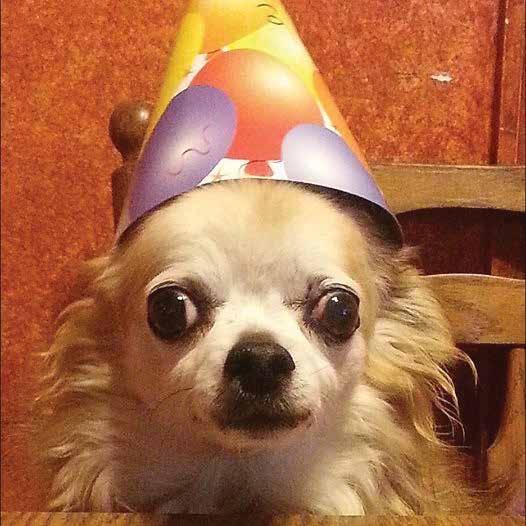
the age of 14 his little heart gave out and I had to set him free. As much as I tried to avoid meeting Archie, I believe it was meant to be. He was one of those soulmate dogs who just show up as a gift. Sometimes at night when I am sitting at my computer, I feel a cold nose against my leg but no one’s there. Perhaps soul mates stick around. I’d like to think so. RIP my little Archibald. <3
Leslie
Taylor PC


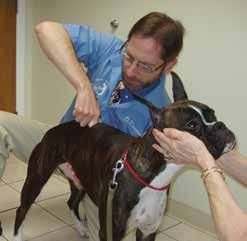
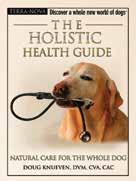
Dr. Doug Knueven practices an integrative approach to pet care. He is well versed in conventional veterinary medicine and has been licensed since 1987. He is also certified in acupuncture, Chinese herbal medicine, and chiropractic. He is a member of the American Holistic Veterinary Medical Association and has advanced training in natural nutrition, massage therapy, homeopathy and a host of other alternative therapies. Holistic and Conventional
• Full Service Animal Clinic
• Preventive Health Care
• General Surgery
• Radiology
• Dentistry
• Holistic Care
• Acupuncture
• Vaccine & Vaccine Counseling
• Nutrition Counseling & Natural Raw Diets
• Chinese Herbal Medicine
• Therapeutic Laser
• Healing Touch & Massage Therapy
We at Beaver Animal Clinic believe in the power of caring.
Caring for our patients as our own pets.
Caring for our clients as our friends.
Caring for each other as our family.