




MATTHEW HILLIER Citizen Staff
The revitalized Canadian Cancer Society Relay for Life has returned after a three-year hiatus and has already surpassed its fundraising goal.
The event was the Canadian Cancer Society’s top-ranked fundraiser in the country for four consecutive years, ending in 2017. However, due to challenges following the COVID-19 pandemic, it has not been held since 2023.
Now, 115 dedicated volunteers and an executive organizing committee made up primarily of University of Northern British Columbia students have spent more than a year bringing the event back to Prince George.
The event kicked off Saturday, June 27, with more than 300 participants on 52 teams gathering at Masich Stadium to walk and raise money for cancer research across Canada.
Zoe Younghusband, director of community engagement and site lead for Relay for Life, told The Citizen she was thrilled to see more than a year’s worth of planning by the executive committee come to fruition.
“Having it back at Masich is a dream come true for not just the committee but also the Prince George community,” Younghusband said. “It was a well-loved event when it was here. We’ve received positive feedback about its return and have worked hard to make it our own while also bringing back some of the traditions people remember.”
Before the event even began, organizers had already raised more than $70,000 for cancer research, surpassing their original goal of $50,000.
Relay for Life continued Sunday, June 28, with organizers reaching their $100,000 goal with 15 minutes left before the event’s closing, thanks to a massive fundraising push by participants that included reaching out to friends, family, local businesses, and social media for donations.
“It mostly was a little nerve-wracking having the finish line so close to sight, but once we reached the goal, I think the committee was really relieved and

the emotions were really high,” said Younghusband.
“To reach $100,000, just goes to show how well-loved this event is in Prince George and really the power of our community. We were so excited when we reached our goal even before the event started and $100,000 we knew was an ambitious goal, but I think deep down everyone knew that Prince George was capable of it, so we were surprised, but also we definitely had faith in the community.”
In total, Prince George’s Relay for Life raised $100,360 for the Canadian Cancer Society during the weekend’s events.
Younghusband said her own family’s experience with cancer inspired her to dedicate more than a year to helping organize the event.
“I had two grandparents who had cancer,” Younghusband said. “One of my grandparents stayed at Kordyban Lodge here in Prince George, which is funded by the Canadian Cancer Society. It’s really meaningful to be on the other side, raising money for people like my grandfather, who relied on those services, and my grandmother, who passed away from Stage 5 cancer.”
The executive committee worked to revive several popular features from previous Relay for Life events, including the Banner of Hope, which displays
the names of loved ones affected by cancer. A Memory Lane banner also invited attendees to post photos and share memories of family members and friends on sticky notes.
About a dozen vendors also set up booths during the event, while food trucks served attendees in the stadium parking lot.
“It’s actually a lot better than I had hoped,” Younghusband said. “Last night, we completely sold out the city’s supply of pop-up tents. We’ve expanded the vendor area, picnic space and the Hope Lounge because we had more registrations than we anticipated.”
Also returning was the hair-cutting booth operated by Loxx Hair Academy, where participants could donate their hair or make a financial contribution.
David Mothus of Mothus Financial Services, the master of ceremonies for the day’s events, challenged participants to cut their hair and pledged a $500 donation to anyone willing to do so. Prince George resident Michelle Lehoux accepted the challenge.
Relay for Life officially returned for the first time in three years with the Participants of Hope lap, led by cancer survivors taking part in the relay. They were joined on the following lap by their caregivers and supporters before the remaining teams took to the track.
One of the relay participants told The Citizen why she chose to volunteer and take part in the event.
“My grandma had lung cancer,” participant Jessica Hainstock said. “Watching her go through treatment, spending time in the hospital and hospice before recovering inspired me to volunteer and participate because she’s a cancer survivor. That’s my personal reason, but I also wanted to get involved in the community and support my peers who organized such a great event.”
Hainstock said returning to Relay for Life brought back childhood memories.
“I remember coming to the event when I was little,” Hainstock said. “Then it disappeared for a while. Having it back is very nostalgic. It reminds me of being a kid, and I’m really hoping the community turns out the way it did back then.”
Another member of the executive organizing committee is Jocelyn Kerr, the Participants of Hope co-ordinator. She also helped organize the Hope Lounge, where cancer survivors could rest, connect with one another and take part in an art workshop later in the day. Kerr is a cancer survivor who was diagnosed at 17 and the granddaughter of a three-time cancer survivor.
CONTINUED ON NEXT PAGE
She said seeing Relay for Life return after several years was especially meaningful.
“I’m emotional. I have tears in my eyes,” Kerr said. “Seeing people arrive and having our first Participants of Hope in the Hope Lounge is a full-circle moment. Nineteen people have worked tirelessly for more than a year to bring this event back to the city and back to Masich Stadium. I’m so grateful to the community for coming together, and to every cancer survivor who shared their story with me and joined us for the survivor lap.”
Like many organizers and participants, Kerr grew up attending Relay for Life events, which made joining the organizing committee an easy decision.
“When Victoria Bleaker asked me to join the committee bringing it back, I immediately said yes,” she said. “Most of us are UNBC students, and this event

means so much to me and my family. The money raised today is critical for cancer research and clinical trials supported by the Canadian Cancer Society.”
Kerr also delivered an emotional speech during the opening ceremonies, recognizing cancer survivors who attended and those who could not, including Mavrik Turnbull, who recently
entered hospice care in Vancouver.
“Mavrik is a three-year-old boy from Prince George who was diagnosed with Stage 4 high-risk neuroblastoma in October 2024,” Kerr said. “More than 20 months later, his time with us is sadly coming to a close. In the words of his mother, Vanessa, ‘His light will always burn bright.’ The funds raised here today are essential for families like Mavrik’s, who were told there were no other treatment options. We relay because childhood cancer isn’t rare, cancer isn’t rare and there is still research and advancement to be made. Mavrik, we are with you. Today we walk for Mavrik and for everyone touched by cancer.” Saturday’s events concluded with a luminary ceremony in memory of loved ones lost to cancer, then continued on Sunday.
To donate or learn more, visit support.cancer.ca/site/TR/RelayForLife/ RFL_NW_even_?fr_id=30932&pg=en-


CHRISTINE DALGLEISH Citizen Staff
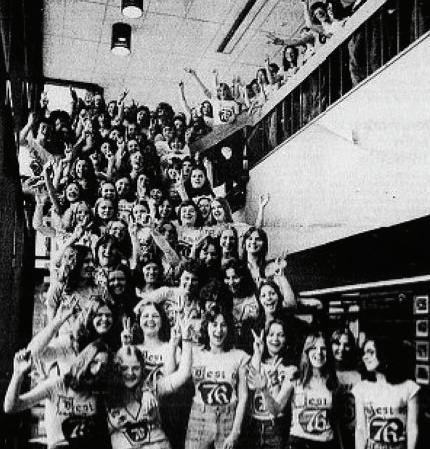
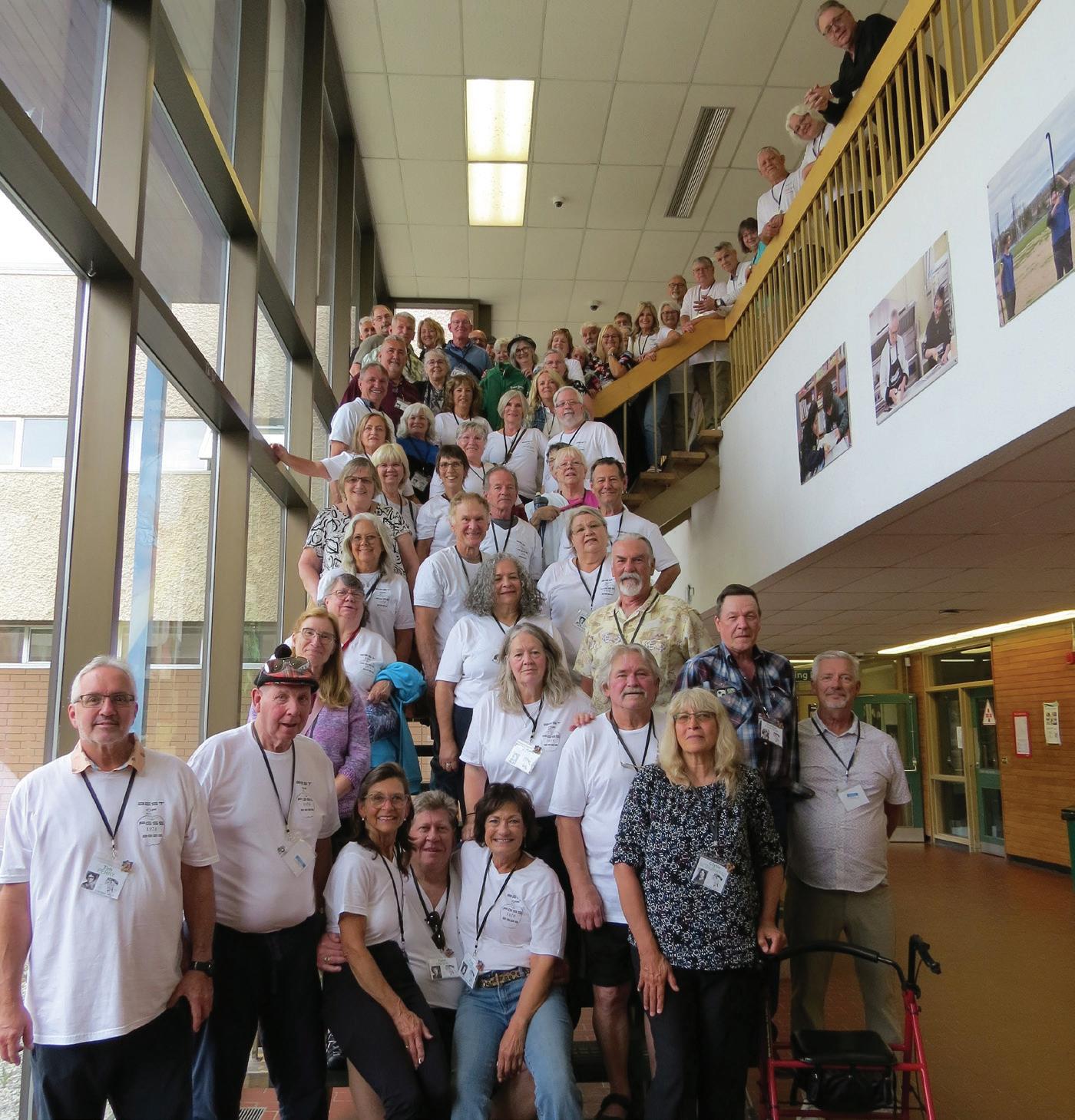
There was plenty of back-slapping and laughter as the Prince George Senior Secondary School Class of 1976 reunited at Prince George Secondary on Friday afternoon, gathering on the stairs just as they did 50 years ago.
The Citizen published the graduating class photo on its front page on June 16, 1976 — and here they were again, 50 years later.
Some things may have changed during that time, but the smiles were just as bright.
After touring the school to see what had changed and what had stayed the same, the group headed to the Coast Hotel in downtown Prince George to relax, enjoy some appetizers and share a few laughs Friday evening. The gathering was a casual prelude to Saturday
night’s dinner dance, where alumni were joined by their partners for the reunion celebration.
Tim Perry served as MC for Friday night’s event. He travelled from his home in Richmond, where he moved about 20 years ago for business.
“It’s such a strange feeling being back here,” Perry said, leaning over as though reading the imaginary lanyard around each person’s neck displaying their high school photo and name. “The first thing you do is this. Then it’s, ‘Oh hi, Tom!’ Fifty years is a long time and most of us have changed. It was a big class — more than 700 people. Even if you knew 70 people, that’s still only 10 per cent of our class.
“There are people I went to high school with that I still get together with for lunch once a month back home, but what I’m really looking forward to here is meeting people I didn’t even know in
high school.”
Perry said one aspect of high school life would likely surprise people today.
“We had a smoke room in the high school so the kids didn’t have to go outside in 30 below,” Perry said. “Can you imagine? That’s something that would just blow people’s minds today.”
Perry credited Sue McGreish as the driving force behind the organizing committee.
“There were 117 people here Friday night,” McGreish said. “There will be 172 on Saturday night, including alumni and guests.
“One of our key goals was to reach as many people as possible. I know I would have really regretted it if people hadn’t known about the reunion.”
The organizing committee began planning the Class of ‘76 reunion two years ago, she added.
Not long after chatting with McGreish,
Lee Fraser walked by, scrunching up her face at me as I wandered through the reunion space. I had spoken with her earlier after Tim Perry showed me a newspaper photo of her from the 1976 prom.
I pounced at the opportunity to chat with her about the prom, her date and how she felt about being in Prince George for her 50th reunion.
“That picture was taken when we were going to our Grade 12 prom at PGSS and my date was Kevin Wilson,” Fraser said.
“He’s living near Kelowna now and we still keep in touch. He was my date for the prom but we had been friends since Grade 8. We did band together and had a lot of classes together. And we were in a musical together. So we did a lot of artsy stuff.”
CONTINUED ON NEXT PAGE
they were neatly pressed
Citizen photographer Dave Milne took the photo of Fraser getting into the car with Wilson holding the door. The message was to drive safe during celebrations.
Fraser, who lives in Ladner, BC, said it was nice being in Prince George to see her old classmates.
“Surprisingly I recognized a lot of people,” Fraser said. “To me they look the same.”
Fraser said some things have changed since she was in school and talked about girls not being able to wear pants to school until Grade 9.
“Can you imagine trying to fit your snow pants over your dress and leotards in the freezing weather to walk to school? But that’s what we had to do,” Fraser explained.
“And we weren’t allowed jeans until Grade 10 and in protest a couple of guys wore cutoff jean shorts to school, which were really not allowed. But in high school jeans were allowed but only if they were pressed with a seam down the middle.”
Fraser and her friend Kathy had put together the In Memoriam space in the Fraser Room at the Coast Inn and she quickly turned on the battery-operated candle that sat beside the poster that held the names of 61 classmates that had passed away (that they know of). It was a beautiful tribute of remembrance. Kathy was working on getting the slideshow up and running with seating in front of the big screen so people could take a moment to reflect and wander down a rather bittersweet part of memory lane.
As the pair got back to setting up once again I went back out to the foyer where people were still signing in to get their lanyards and all I heard was a shout of ‘Wait! Let’s do that again and this time shoulders back and let’s suck in that gut, boys!’
I quickly pulled out my phone to capture the tail end of that photo op and the pic turned out great because everyone was still laughing about the
advice given. Gotta love those candid moments.
Making my way back into the party room, I chatted with Mike Doering who has had three generations of his family graduate from PGSS.
“My grandson just graduated from PGSS a couple of weeks ago and we all went out for dinner and so it was my grandson, Noah Hill and my daughter Lindsay Doering and it’s her 25th anniversary coming up and then me celebrating my 50th so that was kind of neat,” Doering said.
“I really love coming to our grad get togethers, I think this is our fourth one. Some people you haven’t seen for a while and they’ve changed a lot but it’s just good to see everybody. The organizing committee did a really good job with the reunion and I really appreciate that. We had a big grad class — there were almost 800 people — and my grandson’s grad only had 235 this year. Times have changed.”
One of the people who came from afar was Ann Rush (now Schwarz) who travelled from Ottawa.
“I came back because I love Prince George and there’s a lot of people that I wanted to come see,” Schwarz said.
“I was a little trepidatious about coming here because I heard Prince George wasn’t doing very well but we drove in from Vancouver yesterday and the trip was fantastic, the highway was amazing and the weather was great and I think Prince George looks great. I have always been proud of being from Prince George and I visited often because my parents were still here and I kept in contact with some of my old classmates over the years so it was great to see everybody.”
There was a passel of people who quickly gathered around Schwarz and me that have known each other even before high school.
“We were from Connaught Junior and we were a really close-knit crowd and we were in a band,” Schwarz said. “Some of us have known each other since Grade 1 and we always had sooooo much fun.”


The city’s latest Statement of Financial Information goes to mayor and council
COLIN SLARK Citizen Staff
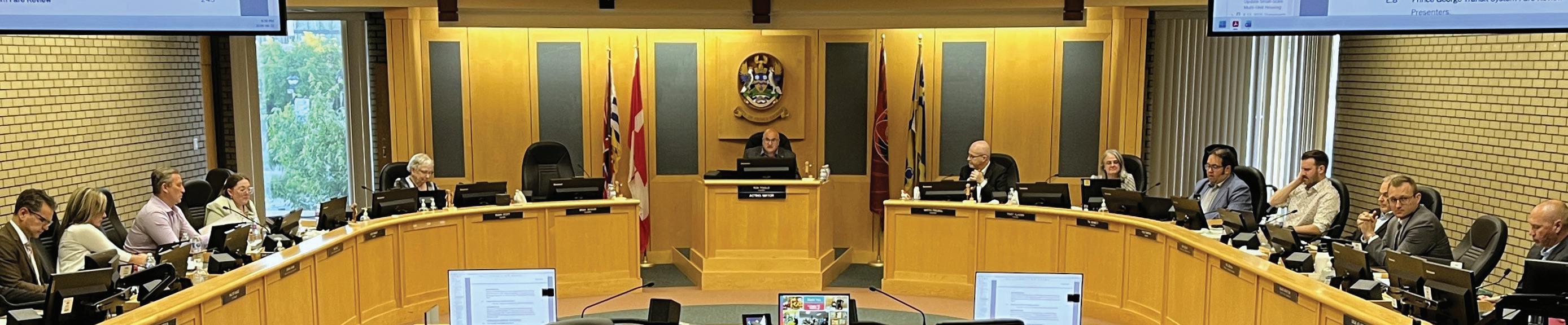
City of Prince George staff received almost $91 million in salaries and other compensation in 2025, a Statement of Financial Information presented at the Monday, June 22 city council meeting showed.
Within six months of the end of a fiscal year, BC local governments including municipalities, school districts and regional districts are required to publish a Statement of Financial Information outlining their assets, liabilities, debts, remuneration to employees, payments for goods and services and more. When it comes to employees,
governments must publish not only the total amount they paid out in salaries (including for elected officials), benefits and other compensation, but also the names and amounts earned for people who make more than $75,000 each year.
Prince George’s 2025 SOFI lists that city employees were paid out $72,498,123 in remuneration that year.
However, when you add in benefits and subtract labour charged to capital rather than operational accounts and other accounting requirements, the total amount paid out for labour and benefits is listed as $90,798,615.
The breakdown for the remuneration shows that the city had 1,024 employees in 2025. Of those, 493 earned less than $75,000 and 531 went above the threshold.
A note on page 22 states that there were two severance agreements with non-unionized employees in 2025 representing 14.76 months of compensation. There was another
severance agreement with a unionized employee representing 8.17 months of compensation.
There are too many employees to list in this article, but here are the top 10 earners among city staff when it comes to base pay, other compensation and claimed expenses combined:
• City manager Walter Babicz, $326,248.91
• Director of planning and development Deanna Wasnik, $240,556.59
• Director of civic operations Blake McIntosh, $240,502.81
• Director of civic facilities and events Andy Beesley, $239,713.58
• Director of finance and IT services Kris Dalio, $235,096.62
• Director of administrative services Eric Depenau, $234,325.98
• Deputy fire chief Clayton Sheen, $217,534.91
• Senior manager of human resources and corporate safety Sandra Caffrey, $204,061.57
• Fire chief Bryan Burleigh, $203,778.09
• Manager of emergency programs Tanya Spooner, $192,120.33
Zoning Bylaw No. 2892, 2014, Amendment Bylaw 3421, 2026
Subject property: 5945 Frenkel Road, Electoral Area C
Purpose: To permit Riding Stable use on the subject property on a site-specifc basis.
Next steps: There is an in-person public hearing meeting on Monday July 13, 2026 at 8 pm at Beaverly Fire Rescue Hall, 12615 Highway 16 West, Prince George, BC.
For more details visit rdffg.ca/landuseapps
$210.80 and he also received a $9,000 taxable vehicle allowance as well.
The Citizen published a story back in February on councillors claimed expenses for 2025 based on figures published in quarterly reports presented at council meetings.
However, the figures for each councillor and the total amount of claimed expenses are different in the SOFI. Some of the difference could be attributable to GST rebates being received for some expenses.
Each councillor can claim up to $10,000 in expenses for council-related duties each year, though the SOFI notes that the four members of the Standing Committee on Intergovernmental Affairs can claim an extra $2,000 in expenses related to those duties.
The mayor’s annual expense limit is set as a line item in each year’s budget. In 2025, that limit was set at $22,800. Here are each council member’s expenses as published back in February, in order from the highest amount claimed to the lowest:
• Mayor Simon Yu: $17,804.43
• Coun. Kyle Sampson: $10,318.55
• Coun. Cori Ramsay: $9,974.80

All these staff members are members of senior management. The fire chief being compensated less than a deputy chief could be because Burleigh was promoted from a deputy chief position to replace outgoing chief Cliff Warner at the beginning of June and so he didn’t receive a full year’s compensation at the higher rate.
Warner’s five months of service earned him enough to appear on the SOFI, with $145,966.29 in salary and benefits.
Also included are salaries, benefits and claimed expenses for the nine members of Prince George city council.
All eight councillors earned a salary of $44,161.32 while Mayor Simon Yu earned a salary of $145,861.78.
Councillors Tim Bennett, Garth Frizzell, Trudy Klassen, Ron Polillo, Cori Ramsay and Brian Skakun earned benefits worth $133.33 while councillors Susan Scott and Kyle Sampson’s benefits were listed as being worth one cent more at $133.34.
The mayor’s benefits were worth
• Coun. Trudy Klassen: $8,987.93
• Coun. Garth Frizzell: $8,452.67
• Coun. Ron Polillo: $7,353.01
• Coun. Tim Bennett: $5,488.10
• Coun. Brian Skakun: $4,892.47
• Coun. Susan Scott: $743.54
Here’s how they were listed in the SOFI:
• Mayor Simon Yu: $17,423.46
• Coun. Kyle Sampson: $10,106.69
• Coun. Cori Ramsay: $9,974.80
• Coun. Garth Frizzell: $9,031.16
• Coun. Trudy Klassen: $8,741.11
• Coun. Ron Polillo: $7,456.61
• Coun. Tim Bennett: $4,922.89
• Coun. Brian Skakun: $4,709.23
• Coun. Susan Scott: $2,160.31 Yu, Sampson, Klassen, Bennett and Skakun’s total decreased from the quarterly reports to the SOFI, while Ramsay’s stayed the same and Frizzell, Polillo and Scott’s increased. Scott’s final amount was almost triple what was claimed in the quarterly reports.
CONTINUED ON NEXT PAGE
Like with employee remuneration, there are too many suppliers of goods and services to list in this article. By far the largest supplier paid out is the Receiver General of Canada, to which payroll and tax remittances as well as other payments to the federal government are made. It received $56,058,609.24. BC’s Ministry of Finance was paid out $22,055,957.64.
After that are the Regional District of Fraser-Fort George and the Fraser-Fort George Regional Hospital District, on whose behalf the city collects property taxes and passes along their share of the proceeds.
The regional district received $20,870,052 while the hospital district received $16,238,179.18.
The Municipal Pension Plan received $12,302,949.07 in payments.
The next five highest-receiving suppliers in 2025 were:
• Amrise Canada Inc.: $6,748,319.15
• Sun Life Financial: $4,038,793.88
• IDL Projects Inc.: $4,016,803.54
• Westcana Electric Inc.: $3,429,085.26
• Municipal Finance Authority of British Columbia: $2,949,063.23
• All payments to suppliers totalled $219,032,000 in 2025.
Another list shows all recipients of city grants worth more than $25,000. There were 17, here they are listed from most to least received:
• Prince George Public Library, $4,401,235.95
• Theatre North West Society:
$466,130
• Tourism Prince George Society: $334,094
• University of Northern British Columbia: $304,000
• Prince George Chamber of Commerce, $198,300
• Prince George Downtown Business Improvement Association: $133,485
• Prince George Symphony Orches tra Society: $125,127
• Prince George Native Friendship Centre: $96,580
• Community Arts Council of Prince George & District: $95,338
• Prince George Air Improvement: $65,000
• Caledonia Nordic Cross Country Ski Club: $51,775
• Fraser Fort George Museum Society: $50,000
• Regional District of Bulkley-Nechako: $50,000
• Special Olympics BC: $35,000
• Lheidli T’enneh First Nation: $31,000
• Prince George Community Foun dation: $25,500
• Prince George Folkfest Society: $25,122
Another 87 grants under $25,000 each in value were distributed worth a collective $453,972.61. Combined, all 104 grants equalled $6,941,659.57 in value. For capital projects in 2025, the top 10 in terms of money spent are listed. Here are those, from the most to least spent:
• Road rehabilitation: $6,877,790
• Sanitary forcemain and lift station renewal: $3,617,016
• Critical signal light and traffic signal replacement: $3,273,371
• Lheidli T’enneh Memorial Park playground renewal: $2,557,639
• Stormwater system renewal: $2,537,725
• Water distribution system renewal: $2,181,019
• Mobile equipment replacement: $1,588,779
$1,567,762
• Ball diamond and sport field renewal: $1,436,075
• Elkscentre Refrigeration: $1,429,317
There was a total of $466,136,420 in capital spending in 2025. Of that total, 79.81 per cent was for the replacement or renewal of existing assets while 10.86 per cent was for upgrades and 9.37 per



KENNEDY GORDON Citizen Managing Editor
Every June, World Elder Abuse Awareness Day reminds us of a tough truth that is far too easy to ignore: some of the most vulnerable people in our communities are being abused by the people they trust the most.
The statistics should make that clear. Calls reporting elder abuse in BC have increased by 71 per cent over the past six years. Violent offences against seniors reported to the RCMP have risen by 29 per cent. An estimated 7.5 per cent of older Canadians report experiencing some form of elder abuse during their lifetime.
Yet elder abuse doesn’t dominate headlines. It rarely sparks public outrage. It isn’t talked about with the same urgency or moral clarity as child abuse. But it should be.
Nobody questions whether society has a duty to protect children. We have mandatory reporting in many settings, specialized investigative units, harsher sentencing for crimes against minors and widespread public education encouraging people to report suspected abuse.
Older adults deserve that same kind of protection.
At a recent World Elder Abuse Awareness Day event in Prince George, Community Response Network co-ordinator Melanie Babbitt described the many faces of elder abuse: physical, emotional, financial, sexual and spiritual.
More often than many people realize, the abuser is not a stranger. It’s a son, daughter, grandchild, spouse or other family member.
That reality makes these cases especially difficult.
Many seniors remain silent because they fear retaliation, losing contact with family or being forced into institutional care. Others feel ashamed that someone they love has exploited them.
The stigma should belong to the abuser, not the victim.
Financial abuse is particularly insidious. Seniors may be pressured into changing wills, signing over property, granting powers of attorney or allowing relatives to move into their homes, only to lose control of their finances and independence. In many cases, the abuse unfolds gradually until the victim feels trapped.
Some have become so isolated that no one is left to notice anything is wrong.
Isolation, Babbitt noted, is not only one of the strongest warning signs — it is also one of an abuser’s greatest weapons.
But they’re too often dismissed as private family matters rather than treated as criminal acts deserving serious investigation and meaningful consequences.
These aren’t family disagreements. They’re crimes.
That has to change.
Governments should review sentencing provisions to ensure crimes targeting seniors reflect the heightened

the past six years.
vulnerability of the victims. Just as assaults against children or people in positions of vulnerability carry greater weight before the courts, abuse of seniors should attract stronger penalties where appropriate.
Law enforcement agencies should continue expanding specialized training so officers better recognize financial exploitation, coercive control and other forms of abuse that may leave no visible bruises.
Public awareness must also become a year-round effort rather than a single annual event.
Comprehensive education programs exist to teach children about bullying, reporting abuse, and safety — both online and offline. Under the Child Family and Community Service Act (CFCSA), it is every citizen’s legal duty to report to report suspected child neglect. It is part of our shared responsibility to care
for children and youth.
Similar public campaigns should normalize checking in on elderly neighbours, recognizing warning signs and speaking up when something feels wrong.
Most importantly, we have to change the way we think about aging.
As Babbitt said, ageism often lies at the root of elder abuse. When society subtly treats older adults as less capable, less valuable or merely obstacles to inheritances and assets, exploitation becomes easier to justify in the minds of those looking to take advantage.
Prince George-Mackenzie MLA Kiel Giddens was right when he described seniors as “our wisdom and our guidance.” They built our communities, raised our families and contributed decades of work and volunteerism. They deserve more than gratitude. They deserve protection.
That’s a message we hope is heard by Health Minister Josie Osborne, who oversees seniors’ services assisted by MLA Susie Chant, parliamentary secretary for seniors’ service and long-term care.
Child abuse rightly sparks immediate condemnation. Elder abuse should evoke the same response.
If you suspect an older adult is being abused, don’t assume someone else will intervene. Speak up. Contact the appropriate authorities or organizations equipped to help.
Silence protects abusers. Communities protect seniors.
We acknowledge the fnancial support of the government of Canada.
Nous reconnaissons l’appui fnancier du gouvernement du Canada.




Kennedy Gordon Managing Editor
OFFICE (8:00a - 4:00p)
505 Fourth Avenue
Prince George, B.C. V2L 3H2
FRONT DESK & CLASSIFIED frontdesk@pgcitzen.ca 250-562-2441 NEWS AND SPORTS news@pgcitzen.ca
LETTERS TO THE EDITOR editor@pgcitzen.ca
OWNER / PUBLISHER owner@pgcitzen.ca
NATIONAL NEWSPAPER AWARDS 2025 EDITORIAL WINNER


ELI KLASNER Guest Columnist
During council’s Monday, June 22 discussion of Prince George’s Civic Core business case, one comment caught my attention.
As council members enquired about potential financing models for future civic infrastructure, philanthropy was mentioned as one possible component. The response was that donor funding can be risky.
My thought? Well, of course it can. Borrowing is risky. Construction inflation is risky. Government funding is risky. Election cycles are risky. Every significant public project involves uncertainty. The question is not whether risk exists, but which risks we may be overlooking.
In my view, a huge risk facing the Civic Core today is not philanthropy, financing, or construction barriers. It is the risk of losing momentum.
For much of this council’s term, I had the privilege of spearheading Civic Core user-group consultations. Representatives from arts organizations, sports organizations, community groups, city staff, and other stakeholders came together month after month to build relationships, challenge ideas, and develop a shared vision for the future.
That process matters because consultants can prepare reports. Architects can draw buildings. Financial advisors can model funding scenarios.
But trust, collaboration, and shared vision cannot simply be commissioned. They develop over time, through conversation, compromise, and a willingness to think beyond individual organizational interests.
Those achievements are not just milestones in a planning process. They are valuable civic assets in their own right. Unlike buildings, however, momentum is fragile. It can survive elections, but only if there is a conscious decision to carry it forward.
The Civic Core planning process has
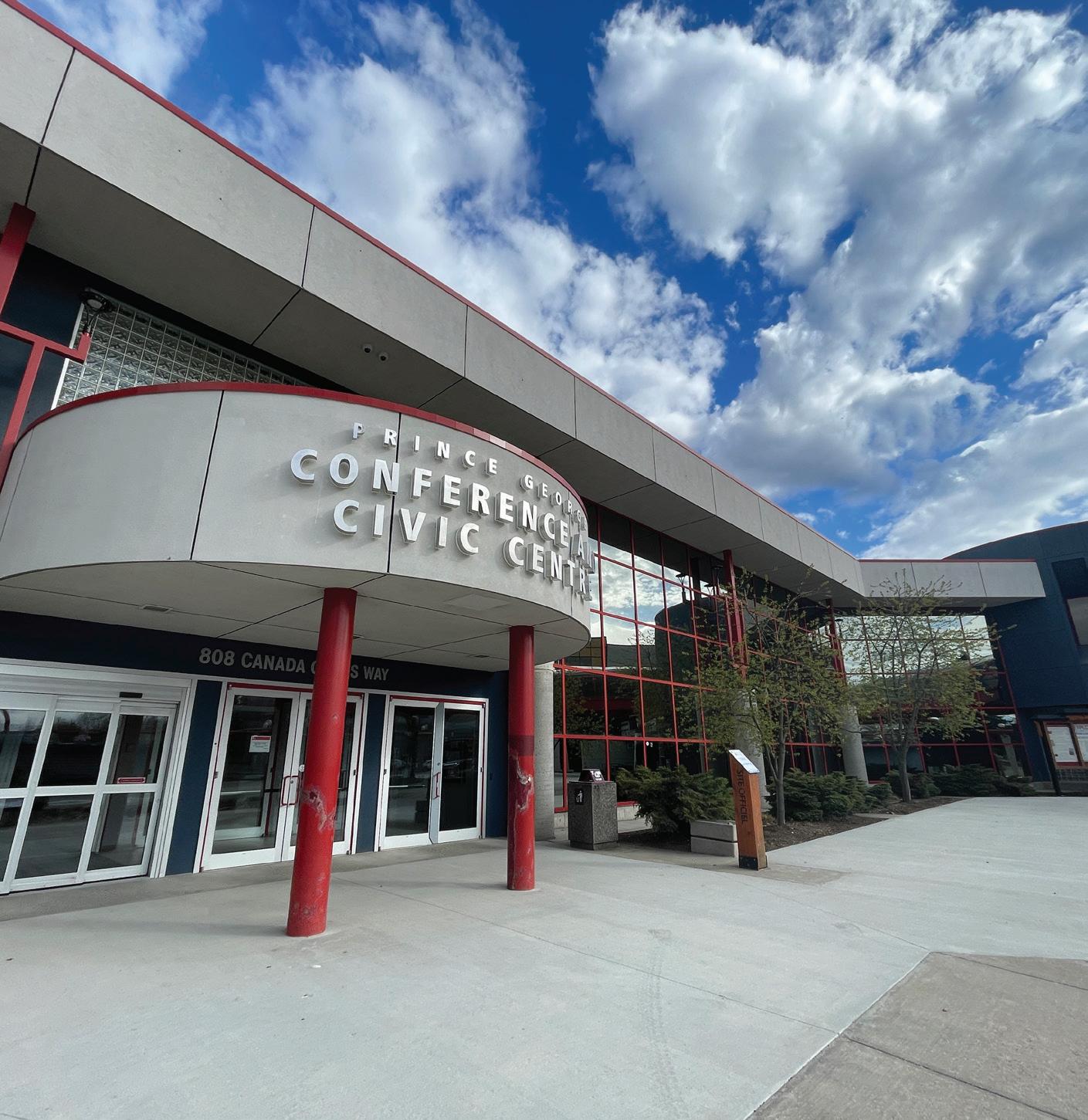
The city is moving forward with a plan to eventually redevelop Canada Games Plaza, the Civic Centre and other city-owned properties as part of a new Civic Core plan.
evolved over several years, with much of the consultation and business case work occurring during the current council’s term.
Now the final report is expected only weeks before a municipal election. That creates an unusual challenge. It would be inappropriate for an outgoing council to make far-reaching commitments that properly belong to its successor.
Yet it would be equally unfortunate if years of thoughtful work lost momentum while everyone waited for the next council to decide what happens next.
There is another option.
Before this council concludes its term, it can provide clear directions for the work to continue. It can ask administration to prepare the next
phase of planning, continue engaging stakeholders, refine partnership and funding models, and include in the draft 2027 budget the appropriate amount required to advance the next phase of project planning.
With this, the incoming council will not simply inherit a report, but a practical roadmap with associated costs for informed decision-making.
That is not about tying the hands of the next council.
It is about ensuring that years of public investment in consultant studies, staff time, volunteer participation, and community engagement do not lose their value simply because the final stages of this work now coincide with a municipal election.
The same principle applies to philanthropy, community partnerships, volunteer leadership, and public support.
Communities do not suddenly discover donors when the architectural drawings are complete, nor do they create momentum when the final report is delivered. Relationships, trust, and shared ownership are cultivated over years—and they can be lost far more quickly than they are built.
Momentum is not simply about keeping a project alive. It is about preserving the relationships, confidence, and shared vision that make ambitious projects possible in the first place.
Every major civic project carries risk. Some risks cannot be controlled. Losing momentum is not one of them.
If we allow it to dissipate, we do not simply lose time. We lose institutional knowledge, public confidence, collaborative relationships, and the energy communities need to undertake ambitious projects.
Communities rarely build transformative civic projects within a single Council term. They are built across elections, across generations, and through the combined efforts of governments, community organizations, businesses, donors, and volunteers. That requires more than vision. It requires continuity.
The Civic Core conversation has already come a long way. The question now is not whether Prince George is capable of thinking big. The question is whether we are capable of carrying big ideas forward.
A relay race is not won by the fastest runner alone. It is won by a clean handoff. As one council prepares to leave and another prepares to begin, perhaps the most important responsibility is not running the next leg of the race, but ensuring the baton is passed without losing momentum. Or worse, a complete crash out.
Eli Klasner writes about community development, civic infrastructure, and the role of culture in building strong communities.
Prince George needs a new 10,000-seat arena
It’s long overdue for the construction of a 10,000-seat arena at the northwest corner of 22nd Avenue and Ospika Boulevard. The parking is already in place, having been developed for Exhibition Park and the CN Centre. With collaboration between the Prince George Cougars and Prince George Spruce Kings organizations, it should be possible to stagger most home games.
The rodeo grounds sit empty during hockey season and could also be used for parking. The new arena would become the home of the Cougars, while the CN Centre would become the Spruce Kings’ home. The city would have two excellent tenants, creating greater opportunities to sell seats and attract larger events. It’s a winwin situation that deserves serious consideration.
Prince George is now home to more than 100,000 people, and many opportunities exist here for our community. Kopar Memorial Arena could continue to serve the general public until the site is needed for future parking.
The main design flaw with the CN Centre is that the concourse is far too narrow for fans to comfortably circulate during intermissions.
At the very least, construction of a new arena should be included as a referendum question in this fall’s municipal election.
Miles Thomas
Prince George
While some argue for renovating Kopar Memorial Arena and others call for a referendum, the facility continues to deteriorate.
Let’s be honest: this debate hasn’t really been had. We also don’t have the luxury of pretending the decision can be delayed much longer. Instead, it has become a decades-long exercise in delay, nostalgia and, “We should probably look at this again next term.” Meanwhile, the rink continues to age. This is a 68-year-old facility. “Near the

end of its life” is the polite description. “Actively defying the laws of physics” is probably closer to reality.
We’ve been treating it the way some people treat best-before dates: less as guidance and more as a suggestion. Like sour cream that expired in 2024, Kopar no longer passes the smell test, and calling visible mould “part of the charm” feels like the next step in our collective coping strategy.
I understand the attachment. Everyone loves the old-barn argument: the character, the memories, the hockey history and the smell that comes with six decades of use. I skate there too. I feel the same nostalgia.
But renovation is not a realistic option. It’s the comforting half-measure we turn to when we don’t want to confront the building’s condition. The work required would be closer to rebuilding than renovating. The arena would have to be stripped apart, ice time would be lost for years, millions would be spent and the end result would still only resemble Kopar without truly being Kopar.
At that point, nothing has really been preserved. We’ve simply spent a great deal of money recreating something
increasingly clear: the widespread adoption of electric vehicles.
Electric vehicles offer a cleaner, more sustainable alternative to gasoline-powered vehicles. By producing zero tailpipe emissions, they reduce air pollution and improve public health, particularly in urban areas where poor air quality disproportionately affects vulnerable populations.
Electric vehicles also cost roughly 50 per cent less to fuel. Because they have fewer moving parts, they require about half the maintenance of vehicles with internal combustion engines, eliminating oil changes and significantly reducing brake maintenance. As a result, the total cost of ownership is increasingly favourable for consumers.
Advances in battery technology have extended driving range, while the rapid expansion of charging infrastructure is making electric vehicles more practical than ever.
that looks similar.
We need to stop circling the same debate. That includes the belief that a referendum will somehow solve the problem. Referendums have their place, but when infrastructure is already well beyond its expected lifespan, they often become a mechanism for delay rather than decision.
Delay doesn’t save money. It simply makes the eventual decision more expensive, more complicated and accompanied by yet another round of conversations about how we should have acted sooner.
Prince George doesn’t need to keep a museum piece operating out of habit. It needs modern recreation infrastructure that reflects the size, climate and expectations of today’s community, not the community of decades ago.
Derek Baker
Prince George
As communities across the country grapple with rising fuel costs, air pollution and the growing impacts of global warming, one solution is becoming
Many governments and utilities also offer incentives that make the transition more affordable.
Owning an electric vehicle is not simply a personal choice. It is a meaningful step toward a more sustainable future. By embracing this technology, we can reduce our dependence on fossil fuels, lower greenhouse gas emissions and contribute to a healthier planet for future generations.
Ron Salder
Prince George
Just a short note to say how much I appreciate being able to keep up with Prince George and area news after moving away following 35 years in the community. Thank you so much!
Marilyn LaRusic Sydney, NS
Share your thoughts on the issues of the day with a letter to the editor. Our maximum letter length is 400 words, and letters will be edited for spelling, grammar, clarity and legality. The Citizen does not publish anonymous letters. Email your letter to editor@pgcitizen.ca.
ELI KLASNER: Culture matters — when recognition is no longer enough
I’m afraid we (Prince George and council) will not seize the crucial moment and opportunities before us.
Not because we aren’t capable. We most definitely are. But because we’ve got such a bad habit of admiring our potential instead of acting on it.
As attention on Northern BC and Prince George grows and more people come to work in the region, our non-profit recreation groups have done an excellent job of creating an attractive, livable city.
Now, the city and council need to ensure our civic core and cultural facilities rise to the same level.
She’s looking for the son she was forced to give up in 1969 People often look back at PG’s yesteryear through rosecoloured glasses, thinking everything was better than it is today. Ms. Hawkes’ tale certainly illustrates that’s not the case.
Thankfully, society’s attitudes and actions regarding teenage pregnancy have improved through the decades.
Godspeed, Ms. Hawkes, with the search for your son.
Mr Science
Share your views on our

It is good that a referendum may be used to address funding. Is council getting the message that the AAP (Alternate Approval Process) is widely recognized as an end run that undermines the secret-ballot foundation of democracy?
One may claim that the AAP is announced and advertised, but it is simply not in the face of voters the way a referendum is, especially if that referendum is presented at civic election time.
Then there is the chore of tracking down how one acquires the paperwork required to submit one’s opposition to the spending, and that is where the crux of the problem arises — you are required to certify that you are a registered voter, but your vote is not secret because the only reason to submit the paperwork is to oppose the spending. We know the AAP has never stopped a project, and that is the very reason it is used. Councils do not have the confidence in a matter to take it to a full referendum, and voters are waking up to this shoddy way of doing business!
Renoguy24
Editorial: Future councils should listen to what mining experts say
This is certainly a step in the right direction, and hopefully it amounts to more than just interest.
My main concern is the extraction of wealth by corporate entities. Forestry, as mentioned, was extremely prosperous once upon a time, but those days are long gone, and now a global corporation has cornered the forestry market. So much of the wealth generated in our region ends up elsewhere, sometimes in other countries, compared with the past, when much of it stayed in the community.
Drive around Northern BC and see all the small communities that were once bustling towns connected with mining and forestry, now replaced by work camps built by companies with headquarters in Vancouver or other countries, siphoning all the money away from Northern BC.
Mismanagement comes to mind as well. I always wondered how a country like Norway, with half the oil production of Alberta, could have generated a sovereign oil wealth fund worth $2 trillion in 36 years.
Zangief

Mining leaders eye Prince George as hub of $938-billion opportunity
Just more pie-in-the-sky dreaming by overenthusiastic people. It’s always interesting to hear these dreamers, but one thing they never touch on is what happens when commodity prices or demand drop. One case in point: the Endako moly mine. Stop getting so excited, settle down and come back to Earth.
BGeez
Mining leaders eye Prince George as hub of $938-billion opportunity
With all the natural resources Canada has, it could now be one of the richest countries in the world, if not the richest, but that potential has been constantly blocked by restrictive ideologies.
It’s interesting that those who promote those restrictive ideologies themselves live a first-class lifestyle they deny others.
HeeHaw
Mining leaders eye Prince George as hub of $938-billion opportunity
But we all know what the roadblocks to any prosperity in BC will be. They can talk numbers all they want, but because of the NDP and UNDRIP, it is most likely never going to happen until the world has secured other sources.
Chestor
BOB MACKIN Local Journalism Initiative Reporter
A 45-year-old man who microwaved his iPhone in a bid to destroy evidence of possessing child pornography was sent to jail for a year on June 26.
A man who was caught uploading child pornography to Snapchat will spend a year in jail. This story contains details some readers may nd
Judge David Simpkin also ordered William Andrew Manson — who pleaded guilty to the July 8, 2023 crime — to be on probation for two years, provide a DNA sample and be listed on the national sex offender registry for 20 years.
“I think people lose sight of the actual harm that is caused by the possession of images and videos that Mr. Manson possessed,” Simpkin said.
Simpkin also prohibited Manson for three years after his release from jail

prohibition order.
Court heard that Manson had a power engineering ticket and had been employed in the oil industry. A pre-sentencing report said he had been on medication to treat attention deficit hyperactivity disorder. While he drinks occasionally, he also consumes marijuana edibles on rare occasions. He said he was randomly screened for drugs at work from 2001 to 2016.
from going anywhere anyone under 16 is likely to gather, such as parks and community centres. He cannot use the Internet to communicate with anyone under 16 or be in a position of power over anyone under 16.
Simpkin quoted from an agreed statement of facts that said the National Center for Missing and Exploited Children detected suspected images of child pornography had been uploaded
to Snapchat by an Internet user in Prince George. RCMP in Prince George took charge of the investigation and discovered the relevant Internet address associated to Manson’s address.
When four officers attended with a search warrant on Oct. 10, 2023, the door was open and Manson retreated to the microwave oven in the kitchen.
A female entered the room and asked what was going on. The officer smelled burning plastic and suspected Manson put a device in the microwave. Manson moved when asked and the officer opened the microwave door to find the iPhone inside a plastic bowl.
Temporary Use Permit No. 296
Subject property: 13070 Ridgecrest Road, Electoral Area C
Purpose: To allow Mechanical Repair and Servicing of automobiles on the subject property for a three-year period.
Next steps: There is an in-person public consultation meeting on Monday July 13, 2026 at 7 pm at Beaverly Fire Rescue Hall, 12615 Highway 16 West, Prince George, BC.
For more details visit rdffg.ca/landuseapps
“The Otter box case on the iPhone was melted, and the device’s screen had burn marks,” Simpkin said. “The iPhone was hot to touch. The iPhone was seized as an exhibit.”
Manson acted surprised. When asked why he put the iPhone in the microwave, “he responded that he thought he put a bagel in the microwave,” Simpkin said.
In a statement to police, Manson denied responsibility for accessing child pornography. But, when his iPhone was searched and data extracted, police found 17 images and seven videos, running a total five minutes and 27 seconds. The video clips mostly depicted nude girls, as young as five years old, performing sex acts on themselves, other children and even adults.
The Crown proposed an 18-month jail sentence and two years probation, plus a three-year prohibition order. Manson’s defence lawyer asked for 18 months to two years, less a day, of home confinement and a three-year
Simpkin said Manson had no prior criminal record, acknowledged the guilty plea avoided a costly trial and his risk of reoffending was deemed low-to-moderate.
But Simpkin said Manson told the writer of a pre-sentencing report that he did not remember the crime and that he is unclear of how he accessed the child pornography material. He explained to a psychiatrist that “it was simply one of those random things.”
“He got chatting with someone on Snapchat, someone he thought was an adult, and then on receiving a link from that person, he saved it on his phone. He only watched one of the videos and thought, ‘that’s not right’. He denied knowing the ages of the children in the videos.”
Simpkin said the reports showed that Manson displays a lack of insight into his behaviour and that he failed to mention the victims of his crime when he addressed the court.
“Mr. Manson indicated that he hoped taxpayers’ money could be saved by not sending him to jail,” Simpkin said. “Mr. Manson expressed that the last two years have been the most stressful time in his life, even surpassing a brief period of incarceration in an Uzbek jail due to immigration issues.”
Manson bore a high degree of moral culpability for the terrible harm he caused to individual victims and society, at large, the judge said.
“Possession of this material diminishes the humanity and equality of children, as they are depicted as willing participants in their own exploitation, made to be seen as property or playthings for offenders, for offending adults and others,” Simpkin said.
BOB MACKIN
Local Journalism Initiative Reporter
A 14-year-old boy who beat up a girl he accused of stealing his vape pens and broke into a dead man’s house had a “very tragic background full of childhood trauma,” a Provincial Court judge said while sentencing him to 15 months under curfew and counselling.
The boy pleaded guilty June 25 to assault and break and enter with intent to commit an indictable offence. He cannot be identified under the Youth Criminal Justice Act.
Judge Cassandra Malfair said the boy had threatened to kill anyone who touched his vape pens. When a girl took two — one she believed was hers and another she believed belonged to a friend — the boy arranged to have the confrontation recorded for distribution on social media.
On Sept. 29, 2025, he found the girl, blocked her path and dared her to hit him.
When she tried to kick him, he retaliated by punching her in the head about a dozen times before another youth pulled him away.
In a statement to the court, the victim said she had lost confidence and often felt unsafe, anxious, angry and confused. “She wants to feel like herself again,” Malfair said.
A release order issued Oct. 15, 2025, required the boy to live under house arrest with his father.
On Dec. 13, 2025, he and another youth broke into a residence formerly occupied by a man they knew had died.
Malfair said there was no indication they stole anything.
A pre-sentence report said the boy has an extremely low IQ, attention-deficit/hyperactivity disorder, developed cannabis dependency at a very young age and is at moderate to high risk of reoffending.
“This is not the best way for any person to enter this world,” Malfair said, explaining that the boy’s mother used drugs and
that he was born addicted to opiates, leaving him in a neonatal intensive care unit for the first three months of his life.
When he was eight, his four-year-old brother ingested illicit drugs and died of an overdose.
The boy was removed from his parents by the Ministry of Children and Family Development and has since moved among the homes of relatives and foster parents.
“He has not attended an in-person, formal school since Grade 7,” Malfair said. “He takes alternative education classes at home. His mother is unhoused and experiencing a substance use disorder.”
Malfair said the extreme violence, the arrangement to record the assault and the boy’s knowledge that the property was vacant because of the occupant’s death were aggravating factors.
During interviews with a youth probation officer and a psychologist, the boy expressed victim-blaming attitudes and minimized and justified his actions. However, he had no prior criminal record, accepted responsibility and pleaded guilty.
His age, cognitive challenges and history of trauma and instability were mitigating factors.
In addition to concurrent 15-month intensive support and supervision program orders, the boy must complete 40 hours of community service by September 2027, have no contact with and not go near three designated people, and not possess drugs, alcohol or weapons.
“Now, it’s mom-talk time,” Malfair said after imposing the sentence.
“Be nice to your brain, because it’s the most important thing you’ll have,” Malfair said, speaking directly to the boy and encouraging him to move forward, build a good life, spend time outdoors and find alternatives to cannabis to manage his mental health.
“You only get one, and when you break it, it’s done. So don’t break it. Be kind to it.”

UNTIL AUGUST 31ST

BOB MACKIN Local Journalism Initiative Reporter
More than a year after he was found guilty of sexually assaulting his sisters, a man has been sentenced to seven years in prison.
On June 19 in BC Supreme Court in Prince George, Justice Palbinder Kaur Shergill sentenced the man to six years for offences against one victim and four years for offences against another. However, Shergill reduced those sentences to five years and two years, respectively, and ordered them served consecutively because the combined sentence must not be unduly long or harsh.
“Ultimately, the sentence reflects the serious and harmful nature of the offences, the significant harm caused to
two vulnerable victims and the need to protect the public, while remaining consistent with the applicable principles of sentencing and the range established in the authorities,” Shergill said.
The man was charged with offences committed between 2018 and 2021. On June 6, 2025, Shergill found him guilty of sexually assaulting one victim but not guilty of sexual interference involving a person under 16. He was found guilty of both charges involving the second victim.
The case is subject to a publication ban to protect the identities of the accused, the victims and witnesses.
Shergill said protecting children is an essential value in Canadian society and that courts must consider the psychological and emotional harm caused by sexual assault, not only the physical
harm.
Among the aggravating factors, Shergill said the man “abused a position of high trust and authority by committing the sexual offences against his sisters.”
Shergill said both victims described having good relationships with the man and looked to him for support and protection before the abuse.
“He committed the offences when he was tasked with looking after them while their mother was away,” Shergill said. “He breached his duty to protect and care for them. The girls were vulnerable due to their young age.”
Mitigating factors included the man’s Indigenous background, his detachment from his Métis identity and his lack of a prior criminal record. A pre-sentence report said he experienced
family instability, poverty, exposure to substance abuse and domestic conflict while growing up.
Shergill also ordered the man to provide a DNA sample for the national database and placed him on the national sex offender registry for 20 years. He is also prohibited from possessing firearms or explosives for 10 years after his release from prison.
The man testified at trial, denying the allegations and claiming he had difficulty remembering events between 2019 and 2022 because of lingering effects from a traumatic brain injury he suffered while working outdoors as a teenager. Shergill expressed significant concerns about what she described as the man’s contradictory and self-serving testimony.
BOB MACKIN
Local Journalism Initiative Reporter
A man who was banned for life from possessing firearms nearly a decade ago was sentenced to another six months in jail after being found with a loaded gun in 2024 on the Willow-Cale Forest Service Road.
Andrew Donald Woodcock, who is in custody on a drug charge, pleaded guilty June 23 in Prince George Provincial Court to possessing a firearm contrary to an order and occupying a vehicle knowing a firearm was present.
Judge David Simpkin heard that an RCMP officer spotted Woodcock, who was born in 1982, working under the hood of a pickup truck.
Crown prosecutor Rodney Withall said the officer asked Woodcock before searching the vehicle whether there was a gun inside. Woodcock replied that, if there was one, it would be under the seat. Police found a loaded gun, a flare gun and a BB gun under the driver’s seat.
Simpkin said Woodcock had been prohibited from possessing firearms

Legal proceeds, including criminal trials, are carried out at the Prince George Courthouse.
since receiving a lifetime prohibition in 2015.
“Mr. Woodcock has a very strange criminal record because there’s a huge gap from 2014 to 2024,” Simpkin said.
Woodcock’s record includes convictions for unlawful confinement, possession of a controlled substance and
trafficking.
Last December, Prince George RCMP warned that Woodcock was at large and wanted on six unendorsed warrants for firearms offences, breaching release orders and flight from police while driving a motor vehicle.
Simpkin imposed two concurrent sixmonth sentences. They will be served
consecutively to the sentence Woodcock is currently serving.
“That means Mr. Woodcock is not going to get out of custody until November,” Simpkin said.
Woodcock’s next scheduled court appearance is June 26 on a charge of possession for the purpose of trafficking stemming from July 2024.
BOB MACKIN Local Journalism Initiative Reporter
Sentencing for the man who admitted setting the fire that destroyed CrossRoads Brewing and Distillery is expected to take place sooner than anticipated.
During a June 15 hearing in BC Supreme Court in Prince George, Crown prosecutor Rodney Withall said two days would be needed “out of an abundance of caution” for the sentencing of Richard Alex Gordon Titchener.
Withall suggested the hearing could take place in September or October.
However, during a June 22 hearing, Crown prosecutor Lisa Sukkau told the court that one day would be sufficient.
Justice Sandra Sukstorf added the sentencing hearing to the assize list for the week of Aug. 31.
The exact date may not be confirmed until the afternoon before the hearing,

but it is expected to take place before the first anniversary of the fire.
When sentencing occurs, Titchener may not be in Prince George.
Defence lawyer Georges Rivard said Titchener asked whether he could appear remotely from Kamloops Regional Correctional Centre instead of travelling to Prince George.
He ended up injured in a ditch near
A man charged with criminal impaired driving pleaded guilty June 22 to driving without due care and attention under the Motor Vehicle Act, admitting he fell asleep at the wheel.
Prince George Provincial Court Judge Charles Hutchinson heard that Thys-Jan Meyburg landed in the ditch at Highway 97 North and Camp Creek Road on May 3, 2025.
He was taken to hospital and treated for scalp injuries.
Meyburg, born in 1994, has no criminal record but was convicted of speeding in 2015 and driving without a valid
licence in 2016. He was also suspended from driving for 24 hours in 2016 and for three days in 2017.
Crown prosecutor Astitwa Thapa said Meyburg pleaded guilty instead of going to trial. Under an agreement with the defence, he recommended a $1,000 fine.
“Facts are very limited,” Thapa said.
“I won’t allege any additional facts. This sentence is requested jointly by the Crown and the defence.”
Defence lawyer Hailey Friesen said her client was on a long drive from Van couver and “going through a difficult time.” He had just returned from his honeymoon and learned his father’s house was facing foreclosure.
Hutchinson accepted the joint submission and prohibited Meyburg from driving in BC for one year. He also imposed the $150 victim fine surcharge and gave Meyburg until next June to pay.


Friday, July 10, 2026
City Hall-Veteran’s Plaza





COLIN SLARK Citizen Staff
The second time was the charm for a Prince George-based software developer at the 2026 Northern Angel Summit finale event on Friday, June 26.
A year after making the final six but losing to another local company, DesignTIME Solutions and its Stackd project management platform for engineering and architectural firms were selected by a group of 24 angel investors to receive $120,000 in funding at the Civic Centre.
Shortly after accepting the grand prize, CEO Bruce Johnston told The Citizen that the difference between last year and this year was one of conviction.
“We didn’t know if we wanted to really push that business plan,” he said.
“That all changed in December of 2025. Essentially, we ran out of capital and needed to start raising money to survive and make payroll. We raised $450,000-ish before tonight and so now, this time, we’re very motivated to see this through … I think we conveyed that in the pitch.”
The summit is run by the Northern Innovation Network. It’s aimed not only at connecting investors and startups in Northern BC but also coaching them on how to pitch themselves and their projects.
For the summit’s inaugural year in 2025, Prince George-based Open Waters Solar, which manufactures lightweight solar panels for mobile applications, took home both the $100,000 grand prize and the people’s choice award voted on by audience members.
When the 2026 edition of the competition started, there were 30 competitors vying for $100,000 in funding provided jointly by several angel investors, including Citizen owner and publisher Cameron Stolz.

The Citizen was among the event’s sponsors, as well.
From that starting point, the investors chose 24 of them to enter the Dragon’s Den- and Shark Tank-styled pitch competition.
After quarter- and semi-final rounds, there were six competitors remaining:
• Enviro Integration Strategies Inc., a Saskatoon-based firm that specializes in tailings, water and mine waste management and the developer of a digital risk governance platform that can be used to protect critical infrastructure
• LineStein Tools, a Dawson Creekbased company that makes efficient, safe tools for tradespeople
• Minera Systems Ltd., a Squamish-based composting and carbon dioxide capturing company
• NANOSentinel Technologies Corp., a Burnaby-based company which produces portable technology capable of detecting trace amounts of metals
• Simply Sweet Games, an Osoyoos-based developer of digital word puzzle games
• Stackd by DesignTIME Solutions Inc., project management software for engineering and architecture firms created by a Prince
George-based developer
Representatives from all these companies, along with other guests, dignitaries and investors gathered in the Prince George Civic Centre to give a final pitch before the judges decided on the winner of the $100,000 prize.
During the festivities, there was also an innovation showcase where representatives from the some of the final 24 competitors, other startups and companies that serve other businesses had a further chance to impress prospective investors and customers.
Speaking to The Citizen before the evening’s schedule kicked off, Northern Innovation Network executive director Mary Mytting said that in the first year of the competition, many of the angel investors had a favourite in mind coming into the finale.
“This year, I don’t know,” she said. “It’s really up for grabs.”
Compared to the first year, Mytting said they spread out meetings during the early stages of the competition as many of the angel investors are busy people.
Of the innovation showcase, she said the network wants to showcase the technology coming out of Northern BC. While this year’s showcase was largely made up of startups, she said
she’d like to see more advanced companies who are promoting new products or technologies going forward.
“I would say that the general public does not really understand how much technology comes out of our industrial and our resource industries,” Mytting said.
“I think that as people are making career choices and we’re celebrating technology, we’re saying ‘if you thought you wanted to build that app, why not?’”
She used online communications platform Zoom as an example. It was a small startup when it launched in 2011, paling in size to more established applications like Skype.
At one point during the COVID-19 pandemic, when it was used to connect people stuck apart from each other, it rose to a valuation of $137 billion.
Competitors from the first year, she said, have told the network that the experience was valuable.
Even if they didn’t win, they learned valuable skills on how to pitch themselves to prospective investors going into the future.
She pointed to DesignTIME as an example, which returned for year two after competing the first time around.
During the opening ceremonies, Lheidli T’enneh Elder Darlene McIntosh was invited onto the stage to welcome guests to her First Nation’s traditional territory.
She praised the competitors for their courage and determination, saying innovation, trade and entrepreneurship are not new concepts to Indigenous people and that trading and building has been happening throughout Lheidli territory throughout their 9,000 years of history in the region.
As well, McIntosh emphasized the importance of leaving a positive legacy for future generations and safeguarding the local rivers that have been so important in the history of this area.
Among the other dignitaries providing opening remarks was BC Minister of Jobs and Economic Growth Ravi Kahlon, who sent a video telling investors that his government’s policies are helping drive economic momentum.
After the opening remarks, representatives from all six finalists came on stage one-by-one to give final five-minute pitches. Between pitches, representatives from the summit’s due diligence team came on stage to speak briefly about how they assessed the viability of each startup.
After that concluded, the angel investors left the room and retired to the Civic Centre’s second floor to deliberate.
During those deliberations, there was time for attendees to network and check out booths at the showcase.
There was also a Q&A between the audience and the founders to give attendees the chance to make an informed decision for their people’s choice award vote.
Announced first was the winner of the people’s choice award: Minera Systems. The company was provided with a stay at the Granville Island Hotel in Vancouver and master of ceremonies David Mothus said he was contributing $500 of his own funds to contribute to any ancillary expenses.
Before the winner was announced,

Representatives from all six finalists in the 2026 Northern Angel Summit participate in a question-and-answer session at the Civic Centre on Friday, June 26.
Mytting told the audience that it was a tough decision for the angels and the winner was not a unanimous decision.
“There’s going to be some sidebar deals that are going to happen,” she told the crowd. “Just so the audience knows, the cheque that gets given out is not always the only cheque. If you personally love what any of these people are doing, you are welcome to write a cheque and become an investor.”
After the audience was asked to provide an improvised drumroll, DesignTIME was announced as the second consecutive victor from the competition’s home community.
In his post-victory interview, Johnston said he and his colleagues are engineers working out of Access Engineering’s Prince George office.
“We were irritated at what was on the market and we didn’t like it,” he said of their Stackd platform. “So, we just decided to create our own and we were bootstrapped by Access Engineering, they paid for essentially the creation of the minimum viable product.”
Now the company has clients not just in Prince George, but in the Kootenays, the Lower Mainland and even in Alberta.
Johnston said until now, he’s been wearing two hats: one as a structural engineer and one as a part-time CEO. The victory at the summit represents the company reaching its fundraising target.
“I think that we have the right team in place to actually be a viable company in 18 months and be cash flow positive,” he said. “That’s a super important term in business. You’re making more money than you’re spending.”
He said it was important to have access to the summit, with the training it provided last year leading to this year’s victory.
Both Mytting and Shannon Stange from the Northern Innovation Network, he said, have provided him support before and between the summits. He also gave credit to his wife, Amanda Johnston, for helping him pursue the business.
“We’ve got two kids and a great family,” he said. “I wouldn’t be able to do
this without her support.”
Mytting said they’re ready to start hearing from prospective angel investors for next year’s edition. One of the angels from this year’s edition, she said, was in the audience in 2025 and came up to her after the night was over to sign up on the spot.
On top of that, she said they’re trying to get a program called the Venture Accelerator Program going to help provide startups with a foundation in business basics before they start pitching to angel investors.
Because the program receives some funding from the federal Pacific Economic Development Canada agency, Mytting said that there’s a chance next year’s competition may have to run earlier, but she’s pushing for it to remain a summer affair.
Prospective competitors or investors can reach out to the Northern Angel Summit by emailing angelsummit@ northerninnovation.ca.



The rm services equipment from sites across the North
MATTHEW HILLIER Citizen Staff
Metso, a Finnish industrial company specializing in the aggregates market services for the mining sector, has opened a new service centre in Prince George at 1055 Legacy Rd.
It’s described in a press release as the only dedicated mineral-processing original equipment manufacturer (OEM) facility in the area. It plans to provide advanced diagnostics, full-scope component repairs and upgrades to support Metso’s area operations.
As well, with a new service centre so close to the active northern mining sector, Metso reports that it expects to reduce turnaround times, increase safety and reliability, and provide more responsive technical support.
With Metso crews and field service technicians closer to northern mines, they will also be able to bring specialized support directly to customer sites and address operational needs during installations or shutdowns.
The service centre officially opened on June 16.
Ongoing investment in the local mining sector through expansions and projects such as the Red Chris Mine expansion, the construction of Blackwater Mine, the Mount Milligan Mine extension and the Eskay Creek Mine conversion mean establishing a centre in the northern mining sector was a natural fit for Metso, said Giuseppe Campanelli, Metso’s president of the North and Central America market area.
“We’re there because the mining industry in the area is growing,” said Campanelli. “The mining industry is a small world, so anywhere within a six- to 10-hour drive of Prince George is considered quite local. Of course, it brings into the area the type of support services that mining companies need from an OEM like Metso. It brings those services closer to these mining
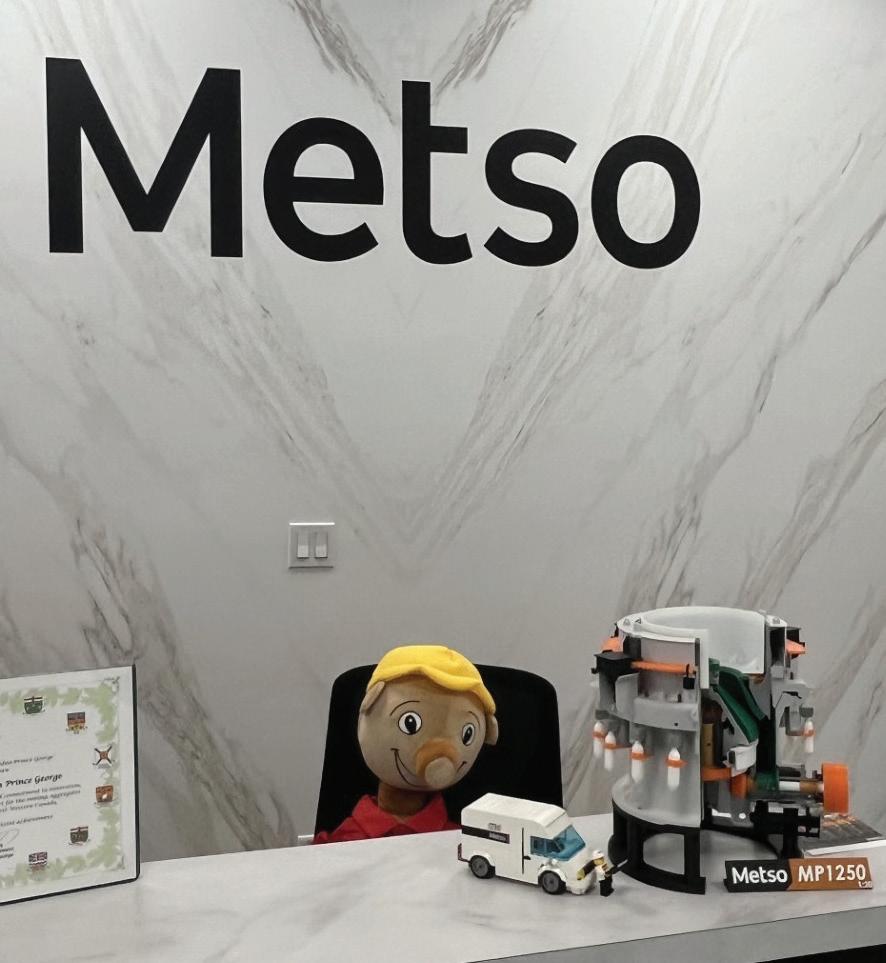
customers rather than having them serviced from afar.”
Campanelli added that the new service centre will give northern mines more control over their supply chains.
“It brings those resources much closer to them, brings people closer to them, and also gives them the ability to keep their resources and equipment nearby rather than sending components, equipment or parts far away,” said Campanelli. “It gives them a bit more control over the supply chain, and having things closer always provides a higher level of comfort for them.”
The centre cost approximately $8 million to establish in Prince George, with continued investment planned in the future, Campanelli said.
“Investments will need to continue from there,” said Campanelli. “We need
us, but it was also for us a true, longterm investment in the people and the society as such.”
Metso currently employs nine people from both the local area and Metso itself at the Prince George service centre.
“Prince George becomes kind of the staging area,” said Campanelli. “For example, we have a field service team of roughly 25 people. That number changes quite regularly depending on the different projects we have with our customers. Prince George becomes their home base. They might not be in Prince George, but they work out of Prince George because this is where they have all their tool sheds and where they plan all the different work they’ll be doing for customers.”
With breakdowns in the mining industry potentially causing days of lost work or even mine shutdowns, Campanelli hopes the new service centre can improve profitability and reduce downtime for local mines.
to have people coming in. We already have a small team there, but that team will get bigger. We’ll have to bring in more equipment and more tools. How much that’s going to be, we’re not sure. Of course, that’s all going to depend on our business goals with our customers.”
Salomeh Tafazoli, senior vice president of Professional Services at Metso, also shared her thoughts on what brought this new service centre to the area.
“It’s quite a big investment we have done,” said Tafazoli. “Over the past years we have actually decided to have more of a footprint closer to our customers, and Prince George was a natural area for us to be, especially because of the gold and copper, and so many of our customers from western Canada. So it was really a milestone for
“It’s an additional service that helps their availability,” said Campanelli. “When their availability is better, they’re more profitable. It plays into the ecosystem that helps our customers operate more efficiently. It’s just one of those additional services. We see it as a fairly significant service. The more we can do to bring services closer to our customers, the more that turnaround time is reduced.”
Tafazoli added what specific equipment the new centre is expected to be servicing as it begins to operate in the area.
“It’s mostly crushers, it’s screens, pumps, filters and flotation. I would say that’s most of the core that we do in that area. We have a workshop floor of 860 square meters and the whole repair centre is 1100 square meters, including office spaces. And we do have space to expand. So, as the business grows and as we see our customers have more demands, obviously, that will be taken into consideration what more we can and will do in that repair centre,” said Tafazoli.


Campanelli hopes the centre will boost not only the local mining economy but also the local economy of Prince George.
“We’ll be doing more things locally rather than sending them outside Prince George,” said Campanelli. “We’ll be keeping a lot more work local, but at the same time, it brings business into Prince George. When we do repairs, we have some capabilities, but we don’t have all the capabilities. So we need to reach out to different organizations in the community that are going to help us do that.”
He elaborated, saying local contractors and businesses will often help keep Metso repairs moving forward.
“We’re not going to build an army of 200 people,” said Campanelli. “The work we’ll be doing there will be done by Metso people, but it will be supplemented by other local businesses, such as contractors, inspectors and electrical companies. The work we’re providing to those companies through Metso becomes additional business for them. They’ll need to increase staffing, and that helps them as well. It’s the follow-through of business that Metso brings to the area, and we’ll support local communities that way, too.”
In addition to supporting the local community, Campanelli hopes to partner with local First Nations.
“We’re looking forward to, as we get going and as the business starts to grow, working with First Nations and having First Nations as a partner when we offer these services to our customers,” said Campanelli.
Campanelli added that Metso has received a great deal of local support in bringing the centre to Prince George.
“I think it’s a great community,” said Campanelli. “It has a great industrial history, and we’re looking forward to being part of that community and having the community support Metso as well. So far, it has been quite positive, helping us build the centre and, of course, with permitting. As we staff up, we’re going to need the community there.”
Tafazoli shared that her company values local trade education and that investment in the area’s trade schools may be a possibility in the future as the centre grows.
“I think that one other thing that is important for us is that this is actually making investments in the community and activity within the community with trade schools. We do invest in getting youngsters in. This is not just an investment in Metso, but is really to make sure to get young talent in the Prince George area ... getting the right people, the best people in the industry is extremely important and we have to work long term to make sure that we have the right people in the industry,” said Tafazoli.




MATTHEW HILLIER Citizen Staff
RCMP detachments across northern and northeastern BC now have another tool available to help respond to people experiencing mental-health crises.
HealthIM is a digital public-safety system designed to support and improve police responses to mental-health and addiction crises. The tool was launched at the Prince George RCMP detachment in late 2022 and has resulted in a significant decrease in apprehensions and an increase in hospital admissions and connections to mental-health supports.
Apprehensions decreased from 494 to 288 within the first 11 months of HealthIM’s implementation, reflecting a shift from custody toward hospital admissions and other mental-health supports for people in crisis.
“Following a successful trial implementation in Prince George, we have seen first-hand how the HealthIM model improves efficiency, keeps officers focused on front-line policing and strengthens collaboration with our health partners,” said Supt. Ken Floyd, North District commander for the BC RCMP. “In Prince George, apprehensions decreased by 42 per cent within one year of the model being introduced. Bringing this program to the North District marks an important step forward in delivering the right response for individuals in crisis while ensuring our officers remain available in the communities they serve.”
A BC government press release noted that early adopters, including the Delta Police Department, Surrey RCMP and Prince George RCMP, have collectively used HealthIM on more than 10,500 calls.
Since its implementation in Prince George, the province, along with the BC Association of Chiefs of Police, launched HealthIM at RCMP detachments throughout northern and northeastern BC on June 17, 2026.
The tool has been deployed at detachments in:
• 100 Mile House
• Alexis Creek

• Chetwynd
• Dawson Creek
• Fort St. James
• Fort St. John
• Fraser Lake
• Hudson’s Hope
• Mackenzie
• McBride
• Northern Rockies
• Quesnel/Wells
• Tsay Keh Dene
• Tumbler Ridge
• Valemount
• Vanderhoof
• Williams Lake
HealthIM has also been introduced to
BC Highway Patrol detachments in:
• 100 Mile House
• Dawson Creek
• Fort St. John
• Northern Rockies
• Prince George
• Quesnel/Wells
• Williams Lake
The system is expected to be rolled
through the use of consistent clinical language and provides critical information to doctors and nurses immediately.
According to the BC government, the tool also helps police by:
Assessing the risk of harm to a person or others to help determine the most appropriate response.
Providing specific safety and de-escalation information to support a trauma-informed approach and improve outcomes.
Alerting health-care partners when people are being escorted by emergency responders and flagging instances involving weapons or violent behaviour.
Developing a harm-analysis risk history to help inform responses to people with previous police interactions.
out in the coming months at RCMP detachments in:
• Anahim Lake
• Atlin
• Burns Lake
• Dease Lake
• Houston
• Kitimat
• Lisims/Nass Valley
• Masset
• New Hazelton
• Prince Rupert
• Daajing Giids
• Smithers
• Stewart
• Takla Landing
• Terrace
BC Highway Patrol detachments in Smithers and Terrace are also expected to receive the tool.
HealthIM guides RCMP officers through a series of questions to help them better assess a person in crisis. The system also improves communication with health-care partners
“People experiencing a mental-health or substance-use crisis deserve compassionate, timely and co-ordinated care,” said Josie Osborne, BC’s Minister of Health. “HealthIM helps support more trauma-informed responses by strengthening communication between police and health-care teams. This leads to better continuity of care throughout northern BC, helping connect people to the supports they need when they need them most.”
Additional HealthIM rollouts are planned across the province. The provincial government provides $2 million annually to the BC Association of Chiefs of Police to expand the service to municipal police departments and RCMP detachments throughout BC.
“Every person experiencing a mental-health crisis deserves a response grounded in compassion, informed decision-making and access to appropriate care, regardless of where they live,” said Andrew Chan.
“Expanding HealthIM into northern British Columbia reflects what is possible when policing, health care and government work together toward a shared goal. This milestone brings us another step closer to a co-ordinated, provincewide approach that supports front-line professionals and improves outcomes for individuals, families and communities.”
They now have standing in a court case against the farmers’ institute
Three community groups in Salmon Valley were granted standing June 23 to challenge the authority of the Salmon River Farmers Institute (SRFI) in BC Supreme Court.
In a May court filing, the Salmon Valley Community Farmers Institute, Salmon Valley Community Association and Salmon Valley Gymkhana Club described the SRFI as “a closed organization, controlled by the Cheramy family” since at least 2009.
The plaintiffs allege the SRFI refuses to accept new members from Salmon Valley and does not comply with applicable laws. The SRFI argued the plaintiffs lack
standing because they are not members of the institute, have no proprietary interest in the Salmon Valley Community Hall and have no legal basis to challenge the society’s internal affairs.
The SRFI was originally incorporated in 1921 and reincorporated under the Farmers and Women’s Institute Act in 1956. It purchased a 20-acre property in 1953, where it built the community hall in 1974.
“That was accomplished through a combination of member efforts, fundraising, community labour and government funding,” Justice Sandra Sukstorf said.
The SRFI resolved in 1974 to make the facility available to anyone wishing to use it for the purpose for which it was built. However, a dispute split the community association and the SRFI in 2008, and operation of the hall reverted to the defendant in 2009.
Sukstorf ruled that public-interest standing was warranted for the plaintiffs
BOB MACKIN
Local Journalism Initiative Reporter
ICBC must pay damages to a janitorial supply company with an office in Williams Lake after a Civil Resolution Tribunal (CRT) vice-chair determined that a company truck had been vandalized.
The June 16 decision said that Cleanway Supply Inc. discovered diesel fuel in the diesel exhaust fluid tank (DEF) of its Isuzu truck, requiring $5,657.71 of repairs. The company suspected new worker errors, until it found vandalism had occurred.
“While Cleanway had comprehensive coverage through ICBC, which includes malicious mischief, ICBC denied Cleanway’s claim,” tribunal vice-chair Christopher Rivers wrote in the decision.
ICBC denied the claim on the basis of employee error. It did not dispute that the truck was fuelled at a 100 Mile
to challenge the SRFI’s bylaws, governance practices and compliance with provincial laws.
“Taken together, the presence of a serious legal issue, a genuine and longstanding community interest and the absence of any practical alternative means of review strongly support the exercise of the court’s discretion to grant public interest standing,” Sukstorf ruled.
She added that “whether the plaintiffs’ allegations ultimately succeed is a matter for another day.”
Later, the plaintiffs’ lawyer, Sterling Hillman, cross-examined Aime Cheramy, who has served as SRFI president since 1990.
Cheramy described himself as a member committed to promoting agriculture.
“We’re concerned about the future of our air quality, our water quality, our land quality and our food quality,” Cheramy said. “We can’t have all kinds
of food if we don’t have good air to breathe. You’re done. Same as water and land.”
Hillman questioned Cheramy about how much he has spent on the society and how much he is owed. Cheramy denied receiving a salary. Asked whether he had been paid more than $20,000, he replied: “I’d have to look.”
“Are you scolding me for putting my own money into the institute so that people can use the hall?” Cheramy said. “That’s what I’m doing, and other members are doing also. They’re putting their own money so that people can use the hall, since we’re being boycotted and the regional district is refusing to give us any monies at all. That’s the situation we’re in.”
Hillman asked Cheramy why increasing the membership roster and generating additional revenue through new members was not a priority.
“How far are you going to go with $25 each per year for a membership fee?”
House gas station before it was driven 200 kilometres to Kamloops.
The truck sat for three days before a Cleanway worker noticed the warning light on the dashboard on March 11, 2024.
Dawson Truck Centres found fuel in the exhaust tank, requiring the repairs.
Rivers said that Cleanway proved, based on evidence provided, that “an employee did not accidentally put diesel fuel into the DEF tank. ICBC offered no other explanation, and there is no other explanation apparent from the evidence.”
The most likely explanation was vandalism, so ICBC must pay for repairs under the comprehensive insurance policy.
Rivers ordered ICBC to pay $5,000 in damages, $251.88 in pre-judgment interest and $175 for CRT fees. Cleanway is also entitled to post-judgment interest.




29th annual Prince George Pride Parade goes Saturday, July 4 from 11 a.m. to noon from Downtown PG to Lheidli T’enneh Memorial Park and followed by the Pride Picnic until 4 p.m. There will be a colourful procession of floats, community groups, and local organizations, all coming together to uplift 2SLGBTQIA+ voices and visibility in Northern BC. For the first time the parade will lead directly into the Pride Picnic in collaboration with the Northern BC Queer Connection Society, transforming the day into one continuous, high-energy celebration. As the parade wraps up, the festivities continue with a lively picnic featuring vendors, performances, food trucks, and lots of opportunities to connect with community. For more information visit www.facebook. com/eventsprideparadePG
The Graveyard Shift: A Horror Writing Workshop goes Monday, July 6 from 6 to 8 p.m. at the Integris Building, 530 Central St. E. Presented by the Northern BC Writers Association. This event hosted by Lizzie Van Bakel is open to everyone fond of the horror genre, whether they have written about it before or this is their first time. For more information about all the workshops available visit https:// nbcwritersfest.ca/events/ To register for the horror writing workshop at no cost visit https://www.zeffy.com/en-CA/ ticketing/the-graveyard-shift-a-horrorwriting-workshop
SunFrolics 2026 goes Wednesday, July 15 to Sunday, July 19 at Pineview Hall, 6355 Bendixon Rd. This is the Pineview Recreation Commission’s annual community celebration featuring activities and events for all ages. There is a volleyball tournament, pickleball tournament, slow pitch tournament, crib tournament, a classic car show, a junk in the trunk market, kids games and activities and concession. Whether you’re looking to compete, shop, enjoy great food, spend time with family or reconnect with friends and neighbours, there’s something for everyone at SunFrolics. For more information and

Grace Hoksbergen entertains during a Night Market at the CN Centre last July. The popular summer sale event returns Thursday, July 21.
updates visit https://www.facebook. com/pgpineviewhall
Foodie Friday Soccer Spectacular goes Friday, July 17 at 4 p.m. at Canada Games Plaza will see food vendors on site and Tourism PG’s Nanguz’An Market open, along with live entertainment showcasing Hey Day, Good Juju and Chris Goodwin Band.
Cowboy Challenge goes Sunday, July 19 at 8:30 a.m. at Dusty Trail Riders, 10597 Blackwater Road starting at 8:30 a.m. Riders will spend some time working around and with obstacles then each rider will get a chance to ‘run’ the pattern. Order of go will be assigned at random. Current HCBC required. All riders are required to wear a helmet when mounted. Lead Line: for those unable to ride alone, regardless of age (free for Dusty Trail Riders member/ $15 non), Little Britches: age up to 7 ($5 member/ $15 non), Pee Wee: 8-12 ($5 member/ $20 non), Junior: 13 to 18 ($10 member/ $20 non), Adult: 19 to 49 ($10 member/ $25 non), Jack Benny: 50+ ($10 member/ $25 non). Event will run depending on
weather and condition of the arena. For more information visit www.facebook. com/events/DustyTrailRiders
Quebec Street Night Market goes Sunday, July 19 from 5 to 9 p.m. Celebrate the excitement of the world’s biggest soccer tournament with a community Watch Party and Night Market that will feature local vendors, live music, delicious street food. Gather with friends and family, wear team colours, and enjoy a night filled with fun, food, shopping, and celebration. Best of all, proceeds from the event will help support the Canadian Mental Health Association, making this a night that gives back to our community.
Watch Party in the Plaza goes Sunday, July 19 at noon at Canada Games Plaza. Food vendors, Tourism PG’s Nanguz’An Market will be on site. After the game there is an after party at 5 p.m. with the event ending with the first ever drone show in Prince George at around 10 p.m.
CN Centre Night Market goes
Tuesday, July 21 from 5 to 9 p.m.

An unforgettable evening celebrating community, shopping local and summer fun. Browse over 100 local vendors, enjoy delicious eats from Prince George’s best food trucks, and soak in free live entertainment all evening long.
Truent/Omniesia/Hot Boii Summer goes Tuesday, July 21 at 7 p.m. at Omineca Arts Centre, 369 Victoria Street. Hot Boii Summer is a local post hardcore band that will perform and Vancouver bands Truent, death metal band and Omniesia, groovy tech death band are hitting the road and taking over Western Canada with a tour that’s guaranteed to go hard. They’ll be ripping fan favourite tracks, bringing insane energy, and… maybe some brand new music? This is an all ages event. Tickets are $25 at the door or $20 in advance at www./orangetickets. ca/truent/omniesia/hotboiisummerPG Hallowed Be Thy Name goes Saturday, July 25 at 7 p.m. at the Legion 43 PG, 101-1116 Sixth Ave. On July 20, 2025 Deanna Lemky lost her battle with cancer. Anyone who knew her knows how amazing she was and how she touched many people’s lives and hearts. She was a wife, a mother and she was a huge supporter and part of the local music metal scene for many years. Hosted by Madloon Promotions, Plagued by Fire with her husband Steve Lemky, are putting on a show to honour her memory and raise money with all proceeds going to cancer charity or research with some awesome local talent to help give cancer the middle finger. LOWR - The Lich of Willow River. Crawling from the depths of Willow River to bring the most crushing nasty metal to spit in cancer’s face. Infectious. Get ready DEAD HEADS! Deanna would love to see some zombies out in her honour, moshing to support a cancer apocalypse. This is a 19+ event - no tickets, entry by donation minimum of $10.
CONTINUED ON NEXT PAGE


BCNE Renaissance Faire goes Saturday, July 25 from noon to 8 p.m. and Sunday, July 26 from 10 a.m. to 4 p.m. at the BCNE Outdoor Ag Arena beside CN Centre. This is an outdoor celebration of Renaissance life to educate and entertain guests. There will be entertainers, food, costuming, stalls of wares including, jewelry, soap, trinkets, arts and crafts, clothing, leatherworking, costumes. There will be demonstrations, a battle arena, and other festivities including face painter, a kids zone and animals. Guests are welcome to attend in costume. Admission is $2 and 16 and under are free. For more information visit https:// www.bcne.ca/rodeo-grounds
50th Duchess Park Secondary School Reunion goes Sept. 18 and 19 at the Coast Hotel, 770 Brunswick St. Friday night is a casual gathering with doors open at 6 p.m. and welcome at 7 p.m. and Saturday night will be the bigger celebration with dinner, dance and unveiling of the time capsule starting at 5 p.m. with dinner at 6:30 p.m. Special rates deadline for hotel rooms is August 10 and for early bird prices for events register on or before June 30. For more information visit Duchess Park Class of 1976 50th Reunion Facebook page and visit the Files page for all the details or email 1976duchesspark50@gmail.com
Metis Community Picnic goes Sunday, August 23 from 11 a.m. to 4 p.m. at 1200 LeSalle Avenue. This event will see Indigenous vendors and musicians on site and a treat, Bannock, available. This is in partnership with the Fraser Fort George Family Resource Centre and Niwikowin Métis Family Services to bring the community together. Bring a lawn chair. To register call 236423-3455 or email princegeorgecc@ mnbc.ca.
Canadian Cancer Society is looking for Wheels of Hope drivers who make a significant impact on the lives of those battling cancer. For more information




Georgia Kent challenges King Vaistko of the Northern Grove AKA Brock Perri to a duel during the BCNE Renaissance Faire at the exhibition grounds Saturday, July 26, 2025. The event returns Saturday, July 25.
contact Wheels of Hope at 1-800-9393333 or email volunteer@cancer.ca or visit www.cancer.ca//living-with-cancer/ how-we-can-help/cancer-travel-and-accommodation-services-bc
Craft & Chat at the main branch of the Prince George Public Library goes every Saturday from 1 to 3 p.m. in the magazine corner, second floor, where fibre artists are invited to bring their latest projects to share, vent frustrations, brag about successes, get and give help and join in lively discussions. Snacks provided. This event is in partnership with Great Northwest Fibre Fest.
Myeloma Support Group goes every third Saturday from 1 to 3 p.m. at Commonwealth Financial, 575 Victoria St. Everyone is welcome who has been diagnosed, those who are caregivers, family members and friends. Wheelchair accessible parking at the back of the building. For more information call Viv Lougheed at 250-981-2618.
Chronic Condition Support Group takes place the first Tuesday of every month from 1 to 2 p.m. at the Nechako
Branch of the Prince George Public Library, 6547 John Hart Hwy. This is a community social group where people with any chronic condition can come together to socialize, connect and learn from each other. Free drop-in event. Curious Art Workshop goes Tuesdays until June 23 from 5 to 8 p.m. at Studio 2880, Upstairs Workshop Zone, 2880 15th Ave. This series of workshops are filled with art, mindfulness, letting go of control and building community, and of course, fun! Participants will explore watercolours with instructor Anne Beauchemin who is new to Prince George. For more information and to register visit www. studio2880.com/programs/art-classes/ curiousartworkshop
Trivia Night at Nancy O’s goes every other Wednesday at 8 p.m., 1261 Third Ave. Book a spot by calling ahead at 250-562-8066. Open Mic at Nancy O’s goes every other Wednesday from 8 to 11 p.m. Open mic is hosted by Danny Bell and friends. Come on down and share songs, poetry, dance, stories, and
anything else you can think to do on stage. All are welcome.
Teen Summer Art Club goes Wednesdays from 10 a.m. to noon at Studio 2880, 1880-15th Ave. Presented by the Community Arts Council Prince George & District these sessions feature a variety of artists. July 8 and 27 Watercolour Splash & Flow with Liana Ziemer takes place, T-shirt Madness with Cat Sivertsen goes July 15 and August 19, Acrylic on Canvas with Marylin Schmaus goes July 22 and Aug. 12 and Art Journaling with Si Transken goes July 29 and August 5. Each session is $50 and these events are geared for those ages 13 to 17. For more information and to register visit www.studio2880.com/programs/ youth-programs/summer-arts-camp
If you’ve got an event coming up email us at news@pgcitizen.ca to offer details including name of the event, the date, time and location, ticket price and where to get them and a little bit about what’s happening, too. LOCF
honey bees is a great way to start,” Young said.
Pine Centre Mall is always buzzing with activity but now there’s an even better reason.
The shopping centre is now happily hosting a rooftop beehive with three tiers.
The hive was quietly installed in early June.
“Small but impactful, this rooftop hive supports the health and biodiversity of our local ecosystem by protecting our pollinators,” came the email statement in response to a request for information about our new neighbours.
Morguard, who owns the mall and is looking to broaden its sustainability efforts, has partnered with Alvéole, a social-purpose company that brings rooftop beehives and urban biodiversity programs to commercial real estate buildings, schools and corporate campuses.
“In addition to caring for the hives, Alvéole will join Pine Centre in hosting a series of in-mall activities, including informational kiosks, candle-making workshops, and other educational experiences for the community,” the email said.
When Matthew Young, Territory Lead at Alvéole, and I started our little chat over the phone he immediately answered the question I didn’t even know I needed the answer to — what does Alvéole mean? And the answer did not disappoint.
“Alvéole is the French word for the little hexagon cells in a honey-bee hive,” Young said about the company he works for that started in Montreal.
Young is a beekeeper and said Alvéole exists in its own little scope.
“Our primary goal isn’t to produce loads of honey but more so to provide education on pollinators and to help land owners, property managers, schools and corporate partners to do something sustainable and having
“I like to think of honey bees as the gateway bug. People can very quickly fall in love with honey bees and as soon as they start to learn about bees they realize there are thousands of species of bees out there, pretty much all of which don’t make honey but are equally lovable and adorable — just like the honey bee.”
Young found his way to honey bees in a roundabout way because when he first started out he thought he wanted to be a veterinarian, he said.
“So I took a degree in microbiology and I was working at a vet clinic for a couple of years” he said. “I was looking for ways to get more experience in different varieties of animal work so I stumbled across a few research papers
talking about prescribing antibiotics to treat bacterial diseases of honey bee larvae. just thought that was the most incredible thing — I didn’t realize veterinarians would be writing prescriptions for insects and for honey bees, for that matter, and so I got real curious and reached out to a local beekeeper in the lower mainland and he took me under his wing and that quickly became a job.”

veterinarian, he said.
He really enjoyed it and wanted to go back to school for his master’s degree and decided he didn’t want to be a
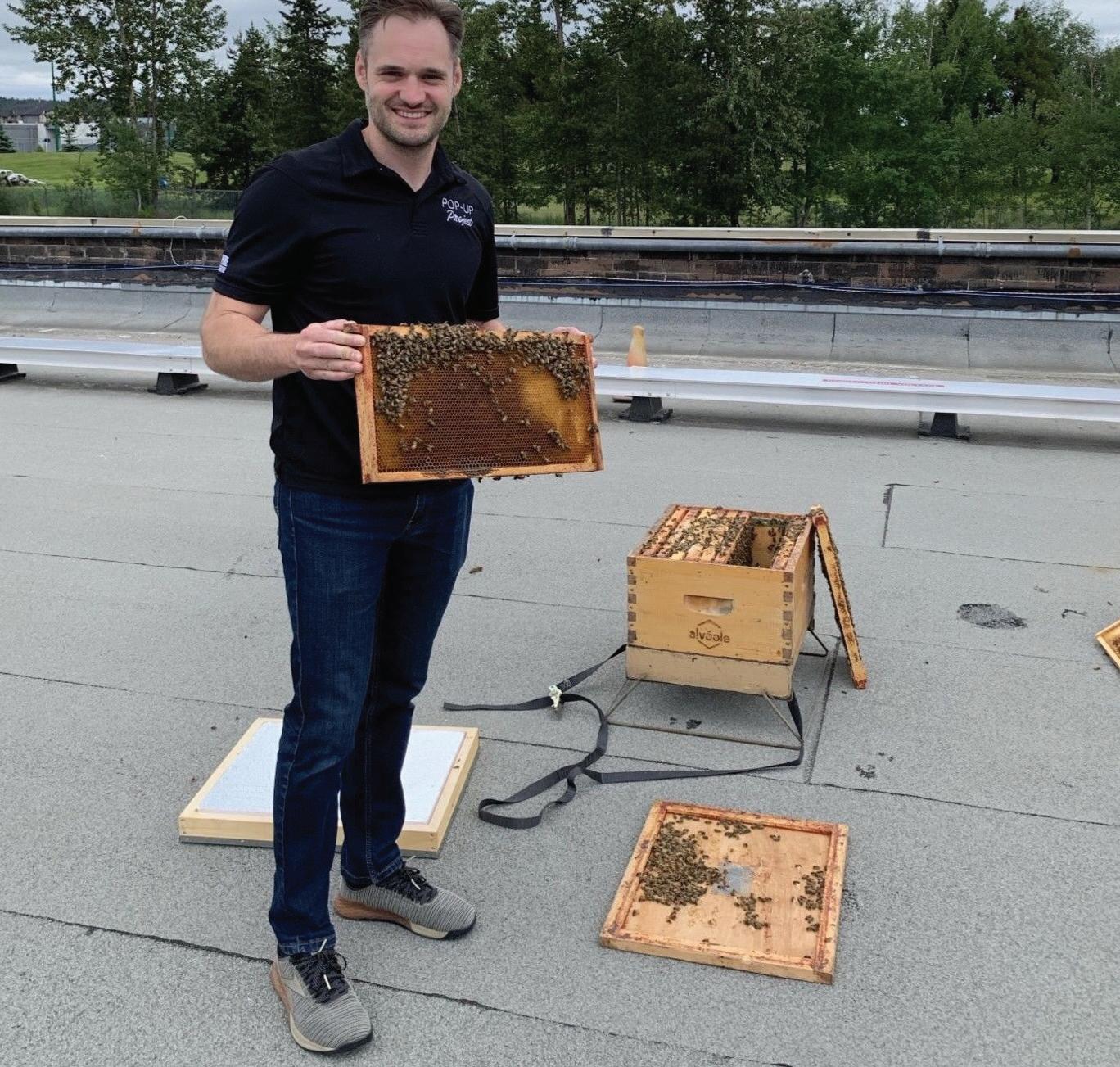
“I wanted to continue working with bees so eventually I started working with Alvéole, which is a great opportunity to not only work with bees but to get to work with people as well,” Young said.
“And that was really great and here am today.”
Management of the beehive on Pine Centre Mall’s roof depends on the time of year, Young said.
“So we have a colony there, it’s three boxes high, two brood boxes and a honey super,” Young said.
Whatty-what now? asked Young to explain slowly.
This is a typical setup for a beehive.
“There are two brood boxes which are full of baby bees — newly developing bees — and the queen has access to,” Young explained. “And there is one honey super and that means the third box on top is where all the honey that we plan on harvesting from this thing is going to come from. Between the second and third box they are separated by what we call a queen excluder so that is a plastic or metal grate that prevents the queen from moving to the top box so she cannot lay her eggs up there and by doing so we get just honey that is easy to harvest, extract and no baby bees are mixed in with our honey, which is what we want.”
So at this time of year the bees are expected to produce a large amount of honey, Young added.
‘Small but impactful, this rooftop hive supports the health and biodiversity of our local ecosystem’
A bee takes a break in this stock photo. Now that Pine Centre Mall has beehives on its roof, there’s a contest under way to name the queen bee.
colonies that are up to like 50,000 so 20,000 is a pretty moderate amount.”
At the end of each year they take the time to count every last bee in the hive for the most accurate count, he added.
“Honey bees are highly social organisms to the point where they live an exclusively social life,” Young said.
“So really beekeeping is just all about managing your hive, making sure they have enough room, they’re making sure they’re healthy, no sign of disease, particularly varroa mites, which is public enemy number one in the beekeeping world, which are responsible for a lot of colony collapse disorder. A lot of the big news in the early 2000s of the honey bees dying off was largely due to the varroa mite along with a few other things, too.”
Young said Alvéole visits the hive about every three weeks and right now they are looking for a beekeeper that would be willing to take on the care of the hive on the roof of the Pine Centre Mall.
Part of the service Alvéole provide to their clients includes a series of workshops to engage the public and provide them with some information about honey bees, Young said.
“We do beeswax candle making, we do honey extraction, we do a wildflower seed pack making workshop and talk about wild bees, we do some virtual stuff, we do a workshop at the hive where we bring people up to see the bees up close or we can run just a regular kiosk table during an event and do some honey tasting and chat with people as they come and go,” Young said.
Right now there are about 20,000 bees in the hive right now.
“The colony has a bit of growing to do,” Young said. “There are some
“And we have to think of them as a super-organism so the whole colony is one individual, not just every individual bee but the colony itself surrounding the queen. So as a super organism honey bees just can’t send out individual queens to go start new hives. They actually have to split their entire colony in half. Typically this is done in the spring when floral nectar is becoming readily available and temperatures are rising and the colony is up and running after winter. So swarming happens between April and June. Those are our swarming months in BC, at least that I am familiar with in the Lower Mainland.”
Swarming is a perfectly natural reproductive strategy that honey bees utilize, he added.
“The old queen takes off with about half the colony and they go and try to find a new place to set up shop,” Young said.
“The remaining colony is left with many developing young queens and those developing young queens typically have to fight it out to decide who gets to be in charge after the old queen leaves.”
told Young about the swarm that occurred on June 10, 2014 when thousands of bees moved from the Prince George City Hall rooftop hives down to the Ramada and as a result a number of bees had died in the street. It was very sad for me to see as I thought they had fled from a tragedy. It’s still fresh in my mind enough to share the distress I had felt about it with Young during our telephone conversation earlier this week.
“So seeing a swarm isn’t necessarily

a bad thing because it’s actually a sign your hive is healthy,” Young said.
“The hive is doing what nature intends for it to do, which is to reproduce and this is how honey bees do it — they split the colony in half and they leave.
Swarms are fascinating — they are very docile. My guess is that nobody was stung during that event. But yes, some bees do die along the way. They run out of energy on the way or they have been exposed to something, a chemical perhaps, so some bees in a swarm will die and usually after a swarm leaves a location you see there are some dead bees on the ground — totally normal. So that’s likely what happened.”
Beekeepers are always trying to prevent swarming from happening because they will lose half the honey-producers and when they go, Young said, they fill up on honey to make sure they have the strength to make the trip so beekeepers won’t harvest honey for some time after a swarm leaves so the remaining bees can rebuild.
“So we want to prevent swarming from happening,” Young said.
Especially because our hives are
situated in very urban areas, he added.
“We don’t want to scare or harm people or put them at risk in any way but I do think swarms are the most magical way to experience bees,” Young said, spoken like someone who knows.
“To see them take off in a giant hurricane of bees flying around in the air and then see them all coalesce on an object, which is usually in a tree … so we’re going to try to avoid that but it is a possibility. We gave Pine Centre two extra boxes so we left them with lots of room and that way they won’t swarm any time soon. We shouldn’t see any swarms this year.”
Young said you can only do your best to prevent the swarm and do everything in your power to diminish the risk.
“But you can never fully control nature,” Young said.
For more information about the bee hives on the roof of Pine Centre Mall visit the mall’s Facebook page.
Right now you can enter the Name the Queen Bee contest for a chance to win a $150 Pine Centre shopping spree for your creative thinking at https://www. facebook.com/pinecentre
In uential business leader dies at 80
TED CLARKE Citizen Staff
Ray Fortier learned early in life the meaning of a hard day’s work.
The third-youngest of 11 children living in a 600-square-foot farmhouse in the tiny francophone hamlet of Guy, Alta., he watched his father work the land and earn what he could as a blacksmith to pay the bills. He also saw the effort his mother put into raising a large family and making their house a home. They were the role models who shaped his character, developing traits that would serve him well years later as one of Prince George’s most successful businessmen.
The co-founder of Farr Fabricating, Farr Installations and Western Industrial Contractors, and co-owner of the Prince George Cougars, died May 6, 2026, in Penticton at age 80 after an extended illness.
The farm where Fortier grew up was about 25 kilometres south of Falher, one of four bilingual communities in Alberta, and French was his first language. At age 13, he lied about his age on his social insurance application so he could go to work. At 16, he left home with all he could carry, determined to build a life for himself.
He and a couple of friends were passing through Prince George on their way back to Alberta from a trip to the United States when an empty wallet convinced him to stay. It was a time when the city’s economy was poised to boom with construction of the pulp mills.
In 1964, at age 19, he was hired as a welder building trusses for the Northern Health Unit building near the hospital. He liked the work enough to make Prince George his permanent home, but it was meeting the love of his life, Joyce, that firmly rooted him in the community.
Fortier returned to school at the College of New Caledonia from 1970 to 1974 and became a certified
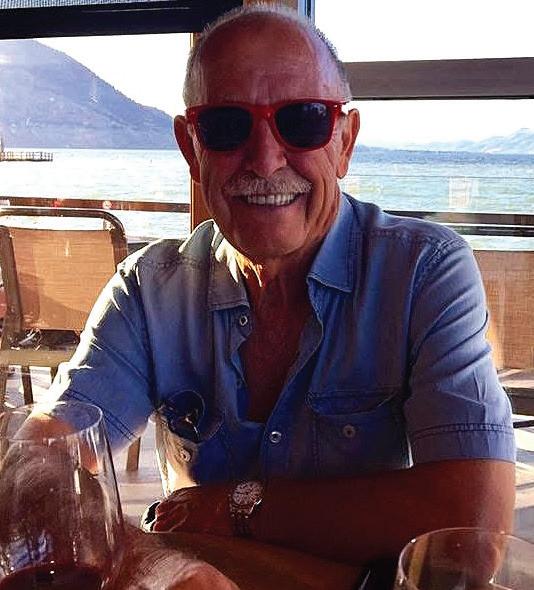
welder-boilermaker. Three years later, with a wife and two young sons to support, he launched his first business venture as co-founder of Farr Fabricating Ltd., opening a shop on 22nd Avenue.
“He had no business experience, but at 32 he took that jump,” said John Pateman, Fortier’s longtime business partner.
As busy as he was running his welding shop, Fortier saw another opportunity in the city’s industrial sector. In 1979, he co-founded Farr Installations to provide crane rentals and crews for plant shutdowns. The mechanical contracting company eventually built the largest crane fleet north of Vancouver.
The early 1980s brought difficult times. A lack of work forced him to close the 22nd Avenue shop.
Fortier worked long days, and Farr
international scale. In partnership with Dennis Schwab, he co-founded Western Industrial Contracting Ltd. in 1989, taking on large-scale civil infrastructure projects and construction management.
With his understanding of French, Fortier quickly picked up Spanish. His passport saw frequent use as he travelled to joint-venture projects in Guyana and several Caribbean countries while the company continued expanding throughout Western Canada as WIC Construction.
Business slowed during the mid-tolate 1990s, prompting Fortier to look beyond Canada’s borders. Not every venture succeeded.
Rock suitable for gravel production was scarce in Guyana, and Fortier purchased a quarry believing a nearby river would provide an economical transportation route. What he did not realize was that the river was too shallow for heavily loaded barges, ending any chance of making the venture profitable.
Fortier invested in a number of local businesses, most of which flourished under his guidance. In 1996, he and Pateman provided financial backing as silent partners for Canadian Cylinder & Gases when the company was struggling. In 2012, they sold it to Praxair for more than $10 million.
eventually reopened at its current Hart Highway location. The company grew steadily, building projects for the region’s pulp, paper and mining industries. He became the go-to contractor for local pulp-mill shutdowns, positioning Farr to benefit decades later as a supplier to the mining sector.
Christmas was especially meaningful to Fortier. Not long after the new shop opened, he hung a large illuminated Christmas tree from the boom of one of the company’s cranes. Every holiday season it lit up the sky as a landmark for motorists travelling the Hart Highway until December 1994, when a windstorm toppled the crane, knocked down power lines and blocked access to the shop, ending the tradition.
Fortier’s ambitions eventually expanded to general contracting on an
Fortier was an explorer at heart with a deep interest in BC’s gold-rush history. He tried his luck panning local rivers but never found much of value. As co-founder, director and shareholder of Richfield Ventures Corp., he eventually listed the company on the Toronto Stock Exchange and raised millions of dollars for mineral exploration.
“They were drilling around Barkerville and not having much success,” said Pateman. “The geologist suggested moving to an area that had been drilled in the 1950s, and Ray said, ‘OK, this is our last shot, but if we don’t start hitting something decent, we’re done.’”
The gamble paid off.
Fortier funded the drilling program that led to a significant gold and silver discovery.
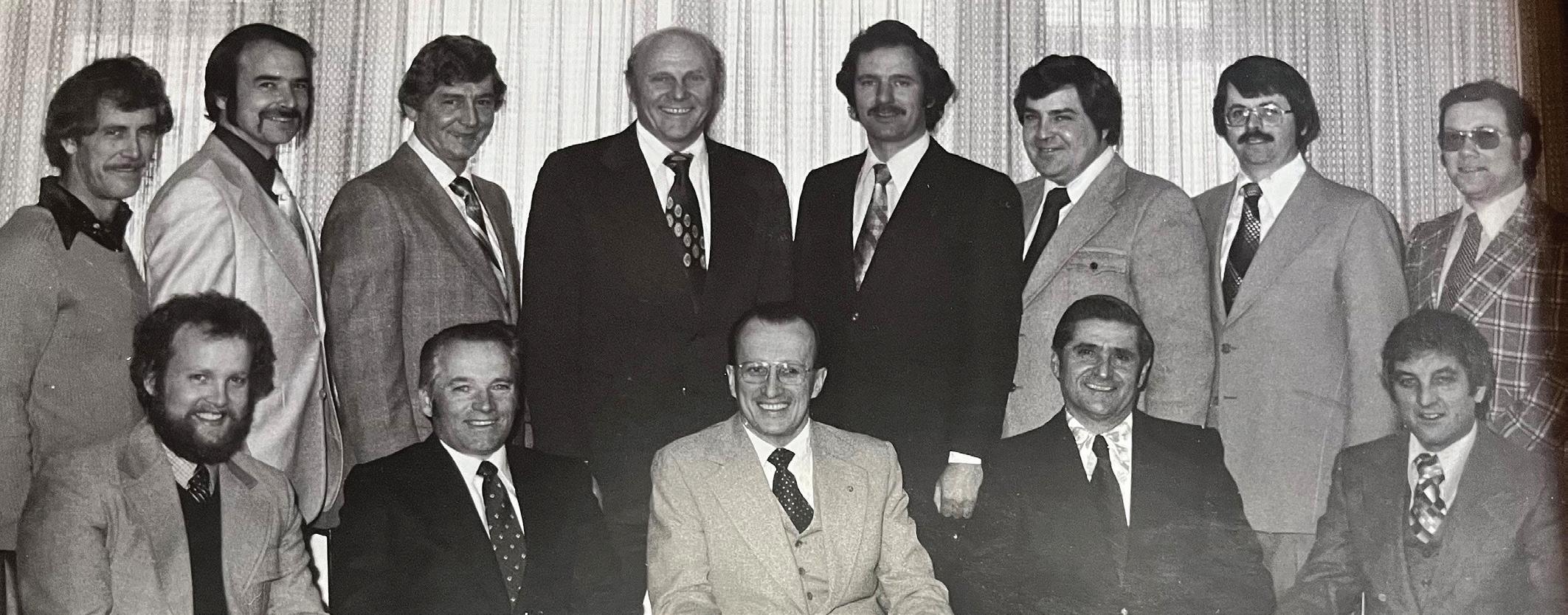
Richfield later sold the mineral rights to New Gold in 2011 for $550 million. The project, later acquired by Artemis Gold Inc. and known as Blackwater, is located about 160 kilometres southwest of Vanderhoof and is expected to become one of Canada’s largest gold mines.
Some associates believed Fortier had the Midas touch, though not every venture succeeded. His business résumé included roles as a manager, shareholder or silent partner in Pittman Asphalt, Prince George Hydromechanical, Brownridge & Company Insurance Services, Corestock Industrial Supply and Zidane Capital Corporation. He also co-founded Penticton-based real estate developer Mountain Landco and started Forecast Research & Development Corp. So what made him such a successful businessman?
“I think he had a remarkable ability to size people up,” said Pateman, who first met Fortier as his accountant in 1983. “He was a welder-boilermaker, but if he needed to do payroll and calculate deductions, he could do it. He understood income statements and balance sheets. A lot of business owners don’t. He was always learning.”
Years of welding left Fortier with diminished hearing. To those who
didn’t know him, he could seem quiet and reserved. To friends, he was warm, funny and a gifted entertainer.
“His hearing wasn’t very good, and often people would talk to him and he’d smile and nod without necessarily hearing everything,” said Pateman. “But if you sat down with him in a negotiation, he was very good at it. He wasn’t shy about letting people know where he stood, and if he needed to push people on a job site, he could.”
In April 2014, Fortier and Pateman joined local businessmen Greg Pocock and Ernest Ouellet, along with former Cougars defencemen Dan Hamhuis and Eric Brewer, to form EdgePro Sports & Entertainment Ltd. and purchase the WHL franchise from Rick Brodsky for $7 million.
The local ownership group ended years of speculation that the Cougars might relocate after a prolonged period of poor attendance and disappointing results.
“Prince George has been good to me and I want to give something back,” said Fortier at the news conference announcing the ownership group. “That’s the reason I got involved.
“I think Prince George is a good hockey town. I’ve been here at CN Centre when the place was full. Once people realize we’re serious and committed to getting the best people available, I’m
in Palm Springs.
He owned more sets of golf clubs than most golfers ever will. Friends joked he was quick to blame his equipment after slicing a shot into the woods and often arrived the next day with a new driver.
A practical joker by nature, he would occasionally run over a friend’s golf ball with his cart, burying it in the fairway. He was also known for stepping on the gas just as a buddy was halfway through a backswing.
One Christmas, he stole Pateman’s tree from the back of his pickup truck. A few days into the new year, he returned it along with a handwritten note describing his inability to afford a tree for his family and apologizing for the theft. The note was unsigned, but Pateman immediately recognized the handwriting.
sure we’ll fill the building again. You need a winning team. You have to make the playoffs, and whatever it takes, we’ll get there.”
The new ownership group immediately focused on rebuilding community connections. Sponsorships, fan interest and attendance increased.
They renovated the dressing room and weight-training facilities, hired coaches with NHL experience, expanded front-office staffing and changed team policies to treat players more professionally during road trips, reducing some of the burden of long-distance travel. The result was a winning culture that made players want to come to Prince George to develop their careers.
Fortier played hockey as a child and was a longtime supporter of the Prince George Minor Hockey Association, sponsoring representative teams since 1980. He also donated generously to the Prince George Community Foundation, Salvation Army, Canadian Red Cross, Spirit of the North Healthcare Foundation and West Lake Community Association. The annual Farr/WIC two-ball tournament remains a significant fundraiser for the Community Foundation.
As much as he loved hockey, Fortier was equally passionate about golf. He played whenever he could and extended his season at his winter home
At one point, Fortier’s companies employed nearly 700 people.
His workforce often grew during school breaks when he hired teenagers and young adults from the neighbourhood. Some became lifelong employees or business partners who contributed significantly to his success. Many became close friends, and Fortier treated them like family.
Norm Ferris was 19 when Fortier hired him as a truck driver for what was supposed to be a five-day shutdown. It became a five-year job and a lasting friendship.
“We were driving to Mackenzie one day and I asked him if he always knew his life would work out this way,” said Ferris. “He thought for a moment and said, ‘I didn’t, but I always knew how my life would go unless I took a chance.’
“Ray never shared a lot. He won quietly and he lost quietly. Everyone is Type A in business, and Ray had this iron skin, but underneath was a generous heart. No matter what he was involved in, he made sure he gave back because he never forgot where he came from.”
Predeceased by his eldest son, Wayne, in 2000, his wife, Joyce, in 2010, and all of his siblings, Fortier is survived by his son Dean, daughter-in-law Laurie, and grandsons Liam and Perry.
A celebration of life is being planned by the family.
MATTHEW HILLIER Citizen Staff
More than 30 seniors, along with community members, outreach specialists, representatives of community organizations and the Prince George Council of Seniors, gathered at the Elderly Citizens Recreation Association (ECRA) to learn more about combating elder abuse.
The gathering was organized as part of the 20th anniversary of World Elder Abuse Awareness Day, held June 15.
This year’s theme was “Be Bold — Age With Attitude,” a message seniors at ECRA unanimously supported.
Those attending heard a presentation from Melanie Babbitt, Prince George co-ordinator for the Community Response Network.
Babbitt discussed the signs of elder abuse, possible responses and how to recognize whether it is happening to someone you love.
Attendees also heard recent statistics on elder abuse, learned about the most common forms of abuse and were introduced to local initiatives and outreach programs aimed at preventing and addressing it.
Several local and provincial organizations shared information about available resources.
These included the Elizabeth Fry Society, which discussed its experiences dealing with romance scams targeting seniors; Positive Living North, which outlined its services and had its Indigenous community health educator discuss elder abuse from an Indigenous perspective; and Progressive Intercultural Community Services, which supports newcomers to Canada and shared experiences involving newcomer seniors facing abuse while adapting to life in a new country.
Seniors also had an opportunity to share their own stories and tell stories about friends and family members who had experienced abuse later in life.
Babbitt spoke to The Citizen following her presentation about why the day is important not only to seniors but also to their families.

“Twenty years ago, the World Health Organization recognized elder abuse as an issue,” said Babbitt. “We wanted to raise awareness around the globe because of concerns about elder abuse spreading and growing. It’s important to shine a light on it so people know what to watch for, recognize the signs, don’t feel alone and are aware of available resources.”
She said elder abuse can take many forms, including physical, emotional, financial, sexual and spiritual abuse, and that family members and community members need to remain vigilant for warning signs.
“It’s really important to watch for changes in behaviour,” said Babbitt. “For instance, older adults becoming less social, going out less, having bruises, flinching when touched or consistently looking to a family member or caregiver to answer questions because they’re fearful of what might happen if they share too much information.”
She emphasized that one of the primary indicators of elder abuse is social isolation.
“Social isolation is really the main warning sign,” said Babbitt. “It is so effective for abusers because it allows them to get what they feel they’re entitled to by placing that senior in an isolated situation.”
Babbitt said increases in elder abuse are often seen during periods of economic hardship, which may be contributing to the current rise in reported cases.
“Financial pressures facing adults and seniors may be contributing to the increase,” said Babbitt. “People can feel they have fewer options. We also know there are about 3,000 calls a year to the Seniors Abuse and Information Line, and that number has fluctuated over time.”
She added that increases can also reflect better reporting systems and growing public awareness, as many older adults do not report abuse because of shame, fear or isolation.
Environmental and situational factors can also contribute to elder abuse within families.
During her presentation, Babbitt noted that one-third of all elder abuse cases reported to police involved a child, spouse, sibling or another family member, while 7.5 per cent of older adults in Canada reported experiencing some form of abuse during their lives.
She also shared common situations she has encountered through her work over the years.
“We see a lot of financial abuse and misunderstanding of what documents seniors need to ensure they’re financially protected,” said Babbitt. “We also see many issues involving assets and property, including seniors being removed from their own homes so others can live there. I often see adult sons or grandsons living with mothers or grandmothers who may be more vulnerable, widowed or alone and who feel entitled to their assets and resources. Those are some common scenarios we encounter.”
In a press release shared with The Citizen, the Office of the Seniors Advocate’s Monitoring Seniors’ Services report highlighted increasing rates of elder abuse over the past six years.
The report noted that calls reporting abuse increased by 71 per cent. Violent offences against seniors reported to the RCMP also increased by 29 per cent during the same period.
“A lot of elder abuse stems from environmental and situational pressures,” said Babbitt.
“Much of it begins with ageism and a sense of entitlement to someone’s property or assets.
“The belief that younger people are somehow more valuable or important than older people, combined with challenges such as addiction, financial hardship and homelessness, can create a perfect storm for elder abuse.”
However, Babbitt said elder abuse is not a hopeless situation and pointed to resources available for people experiencing abuse or concerned about a loved one.
“The Seniors Abuse and Information Line through Seniors First BC is an excellent resource,” said Babbitt. “It offers guidance about what should be reported and to whom. Reporting concerns to the RCMP, Northern Health’s Adult Protection Program and the Office of the Public Guardian and Trustee is also important because they all have legislative responsibilities when a senior is at risk.”
Among those who spoke at the event was Prince George-Mackenzie MLA Kiel Giddens, who joined seniors and community members during the presentation.
MATTHEW HILLIER Citizen Staff
School District 57 (SD57) has provided an update on the progress of a new child-care centre at the former site of Austin Road Elementary School, 4543 W. Austin Rd.
When complete, the centre will provide 62 spaces for families in the Hart. These will include 12 child-care spaces for children under 36 months, 25 spaces for children aged 30 months to school age, and 25 school-age child-care spaces.
When a Citizen reporter visited the site on June 23, 2026, excavation work was underway. The former elementary school site has sat vacant since demolition was completed in the summer of 2024.
SD57 said in a press release that construction of the facility will begin later in June, with completion expected in summer 2027.
In an email, SD57 said Datoff Bros. Construction Ltd. was awarded the construction contract following a procurement process conducted in April 2026. Funding support was announced in September 2023 through the federal and provincial governments’ ChildCareBC New Spaces Fund. SD57 confirmed the project received $6.4 million.
SD57 superintendent and CEO Jameel Aziz said in a phone interview that both local and provincial partners are eager

Excavation work continues at 4543 W. Austin Road on Tuesday, June 23. Construction on a new childcare centre at this location is expected to begin in the next two weeks.
to see the project move forward.
“I think the Ministry of Education and Child Care and the district really want to repurpose spaces and sites in ways that meet community needs,” said Aziz. “After the former Austin Road school was demolished, plans were put in place fairly quickly to ensure child care, which is a priority for both government and the district, could be provided on that site.”
The Hart community has long faced a shortage of child-care spaces, forcing some parents to seek services elsewhere in Prince George.
Aziz said he hopes the new facility will help ease pressure on the system.
“There has historically been a sense that child-care shortages exist outside
what I would call the hub of Prince George,” said Aziz. “Making an investment in the Hart area is an important priority for both the school district and the Ministry of Education and Child Care.”
He added that while the new centre will help, it is unlikely to fully eliminate the shortage.
“It won’t completely fill the gap,” said Aziz. “When you begin planning, you identify what you believe the current need is and start addressing it, but often demand grows. I’ve seen schools planned for 400 students that needed to serve 600 by the time construction was complete. I don’t know that this project will meet all of the need, but I’m hopeful it will help address and reduce some of
the demand in the area.”
Aziz said the district will continue working with the Ministry of Education and Child Care and other partners to determine how future demand can be addressed.
The design and budgeting process for the project ran from September 2023 to February 2026, with the school board navigating several design and cost challenges along the way.
“One of our challenges was the time between the project announcement and the tender process,” said Aziz. “As everybody knows, construction costs only go up. We had to return to the ministry and explain that we couldn’t build the project based on estimates from two years earlier. We were able to work through that process and ensure all the funding was in place.”
Aziz said the greatest benefit for Hart families will be improved access to child care closer to home.
“People’s ability to work is increasingly dependent on having access to appropriate child care,” said Aziz. “Many families need both parents working, and we’re hopeful that families in the Hart won’t have to drive long distances to drop off and pick up their children. Instead, their children will be able to spend those important early learning and development years right in their own neighbourhood.”
Aziz said he expects construction to begin within the next two weeks.
Seniors have to know they aren’t alone, conference hears
During his remarks, he emphasized the importance of seniors to the community and said he would work with fellow MLAs to advocate for stronger financial protections for BC seniors, noting that many protections for older adults are regulated federally.
Giddens spoke to The Citizen afterward about why he attended and why he intends to raise the issue with fellow legislators.
“Elder abuse is something we absolutely have to raise awareness about,” said Giddens. “Seniors have built our city and our country, and we need to support and protect them from abuse, whether that’s online, through scams or, unfortunately, from family members.
“Seniors are one of the most precious resources we have in our society. They are our wisdom and our guidance. They support us and love us, and we have to do the same in return.”
He also hopes events like this will
remind community members that elder abuse can happen close to home.
“We often hear about these issues in the national news,” said Giddens. “Hearing about them locally is an important reminder that they happen right here in Prince George as well. We need to be mindful of that, stay aware of scams and find ways to look after our loved ones. That’s important for all of us, including my office as the MLA.”
Babbitt emphasized that she wants seniors to know they are not alone and
that they are more capable than others may assume.
“I want older adults to know they can be empowered to make decisions for themselves and stand firm on what’s important to them,” said Babbitt.
“Having advance-planning documents in place helps ensure they are protected financially and legally. They can also be a valuable sounding board for friends and family members who are older adults and maintain an open door for those who may need support.”
COLIN SLARK Citizen Staff
The City of Prince George decided to do a little extra to make the first edition of its new citizen recognition program special.
When city council approved the framework for the new Medal of Excellence and Good Citizenship in November 2025, it specified that there would be up to three recipients each year.
But after Carol Gass, Davy Greenlees, and David Mothus were awarded their medals and lapel pins in the second-floor foyer at Prince George City Hall, Acting Mayor Ron Polillo announced that a fourth award — the Mayor’s Award for Citizenship and Reconciliation — was being bestowed upon Lheidli T’enneh Elder Darlene McIntosh.
Recipients will also have $1,000 donated to the David Douglas Botanical Garden Society in their name to maintain a portion of its gardens at the University of Northern BC, with a plaque bearing the names of past winners.
For McIntosh, a tree will be planted in a location of her choice somewhere in the city. Polillo suggested that the final decision was up to her, but that Lheidli T’enneh Memorial Park would be a fitting place.
The first to have their name called was Gass, a longtime radio host currently working for Vista Radio, described as a “trusted voice, tireless volunteer and dedicated community champion” for more than 25 years.
“Carol has supported countless organizations and community events as an MC, an advocate, a board member and a volunteer,” Polillo said. “Her involvement has included International Women’s Day, the Festival of Trees, Canada Day in the park, the Relay for Life, Special Olympics and countless other events.”
He added that during times of crisis, like the 2017 wildfire season and through the COVID-19 pandemic, Gass has provided residents with reliable information, encouragement and hope. Gass was unable to attend but former
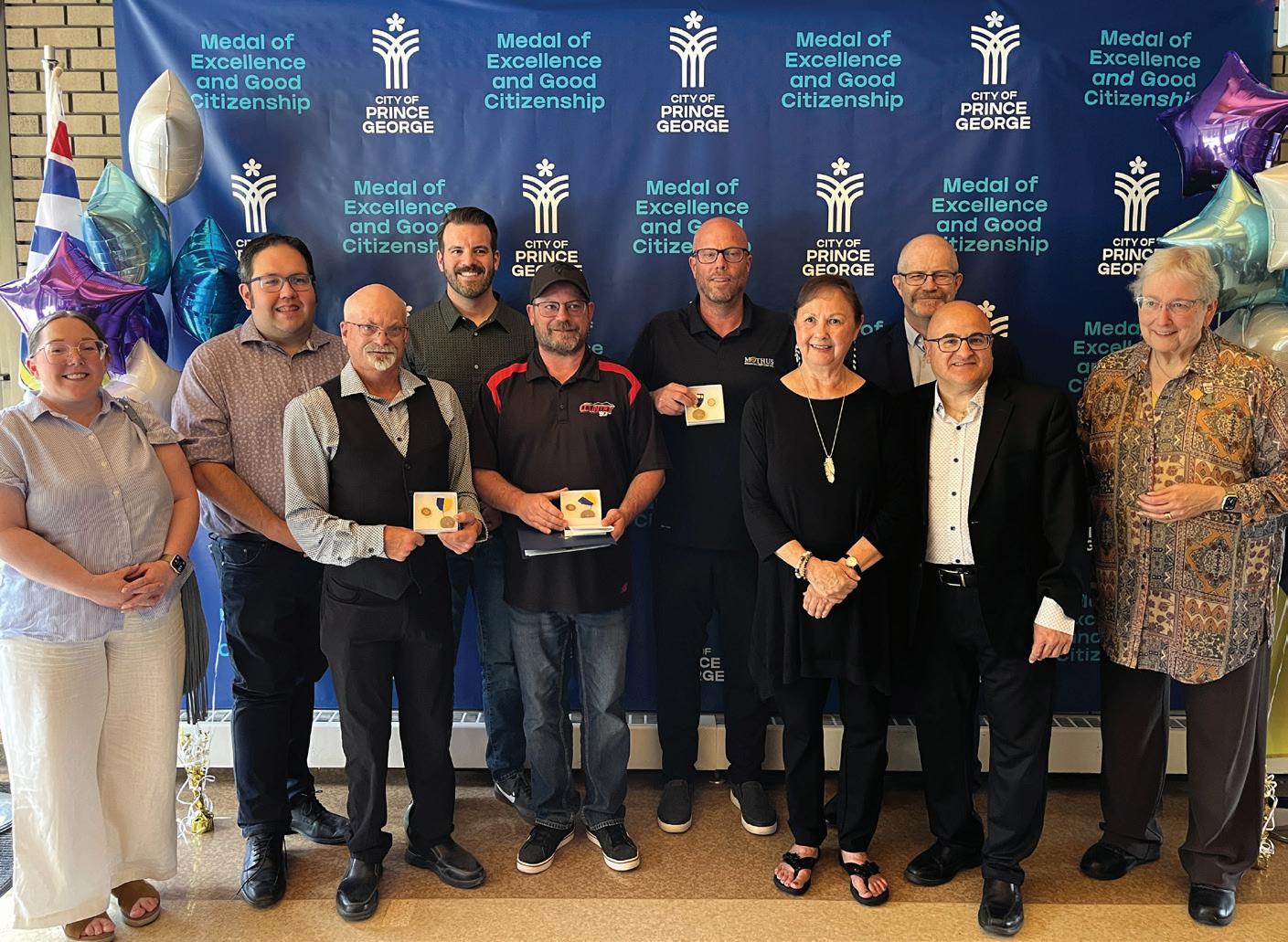
co-host Kyle Wightman accepted the award and read a statement on her behalf.
“I can’t imagine how many deserving community-minded people were put forward for this honour and to be chosen is deeply humbling,” Wightman said on her behalf.
“Turning 60 this year has made me reflect on the path that brought me here, the work I’ve done, the people I’ve met, the city that has shaped me. I feel incredibly fortunate to spend my life doing work that connects me to the heart of Prince George.”
Next up was Greenlees, a long-time volunteer with Scouts Canada and other organizations in Prince George as well as the founder of Primetime Wrestling, whose shows frequently include fundraising efforts for local charities and causes.
“His impact can be seen in the young people he has mentored, many of whom have returned as leaders themselves,”
Polillo said.
“Known affectionately by some youth as ‘Papa,’ Davy has created a supportive and mentorship-driven
friend Don Willimont, who he nominated for the award this year. He also said he didn’t think he held a candle to the work of local figures like Selen Alpay or Shirley Bond.
“Years ago, I said I would never again accept an award if I had to answer any questions about why I deserved it or had to fill out an application to receive it,” Mothus said.
“I no longer wanted to participate in getting myself recognized, so it’s incredibly flattering that this came out of nowhere. Honestly, I don’t know how I got it and to me that means the world.”
It was said that 20 people were nominated for the award’s first year.
After the three recipients of the regular award, Polillo said the city had a special award for McIntosh, who currently serves as the chancellor for UNBC.
It turned out that most of the guests for the event were there to support McIntosh, whether they were friends or family.
environment that has shaped countless lives … Davy’s generosity, leadership and unwavering dedication represent the very spirit of excellence and good citizenship.”
In his brief remarks, Greenlees said that Prince George is so full of volunteers and amazing people that “even to be nominated was overwhelming and humbling.”
“I want to acknowledge that a lot of the amazing things I’ve done over the years is fully supported by so many other volunteers,” he said. “I might be the guy steering the boat or badly swimming after them trying to figure out where they all went, but it’s really the amazing people that I work with.”
The final recipient of the regular award was David Mothus, a local financial advisor and co-founder of the popular Hell Yeah Prince George Facebook group.
Polillo highlighted his fundraising efforts to “support families in crisis and strengthen local neighbourhoods” across the community.
After accepting his award, Mothus said he wanted to acknowledge his
They let out a big cheer when the announcement was made, prompting Polillo to remark “how loved you are, and so deserved.”
McIntosh said that while they were asked to just invite a few guests to the ceremony, she invited a whole handful because she wanted to promote reconciliation, connection and collaboration.
She thanked several dignitaries in the crowd for supporting her and Lheidli T’enneh, including Chief Dolleen Logan, former Mayor Lyn Hall and Soonats’ooneh Community Health Centre executive director Shobha Sharma.
Also acknowledged were many family members in attendance, including her two-and-a-half-year-old grandson, who approached her during her speech to request some time with his grandma.
“I just am absolutely honoured with the support that I have and they walk with me in truth and reconciliation and sharing the message because Prince George is a gem in the rough,” McIntosh said.
“There is no community like ours and we need to come together and be one and not separate.”
Young artists can take part in Wednesday morning sessions
CHRISTINE DALGLEISH Citizen Staff
This summer, teens can spend their Wednesday mornings making art at Studio 2880.
Presented by the Community Arts Council Prince George & District, the Teen Summer Art Club features a variety of artists sharing their talents with youth aged 13 to 17 from July 9 to Aug. 19.
Acrylic painter Marilyn Schmaus will lead Acrylic on Canvas sessions on July 22 and Aug. 12.
Schmaus grew up in Saskatoon in a creative family. Her father played guitar and performed with artists including Johnny Cash.

“I grew up enjoying music because it was in my home every hour of every day,” said Schmaus. “By the time I was eight, I was singing with my dad in public and even doing live radio shows with him, which gave me experience that helped me in many different ways.”
Her family moved to Prince George when she was 10 years old, and she has lived there ever since.
When Schmaus was 12, she and her father secured a regular performance at the Prince George Hotel, where she sang for about eight years until 1976 or 1977.
“Art has always been part of my life,” said Schmaus. “Instead of playing with toys, I preferred drawing, colouring and painting.”
As she got older, some of her artwork was displayed in galleries in Saskatoon. “Painting began years ago, but family life and music took priority,” said Schmaus. “I spent a lot of time

will be hosting
on Canvas sessions during Teen Summer Art Club at Studio 2880 on July 22 and
performing around Prince George at outdoor events, pubs, clubs and festivals. I discovered painting as a teenager, but I never had the opportunity to develop it as much as I wanted.”
After a 30-year music career and raising two children, Schmaus said retirement gave her the opportunity to focus on painting.
“That’s when painting took over,” she said.
Schmaus also volunteers in seniors’ homes.
To honour her mother’s memory, she visits dementia support groups and performs music from their era.
“Right now, it’s all about giving back,” said Schmaus. “That’s my full intention.”
She has also recently begun exploring watercolours.
“I never took a watercolour class until this week,” said Schmaus. “I loved it, so that’s another medium I’m interested in pursuing.”
Schmaus said she enjoys working with acrylics because of their forgiving nature, which allows artists to make adjustments as they work.
“What I really enjoy is realistic painting,” said Schmaus. “I love animals, birds, scenery, old barns and weathered houses. The history in those subjects
resonates with me. Every painting has a purpose because it reminds me of a person, place or experience. I’m Métis and try to stay connected to my roots, so most of what I paint comes from nature.”
In the past, Schmaus has taught children under 12 and seniors, making the Teen Summer Art Club a new experience.
“I enjoy talking to people about what they want to create and encouraging them not to be afraid to try,” said Schmaus. “I’ll help them in any way I can.”
Each Teen Summer Art Club session begins with a theme.
“I’d like to focus on an older building and teach texturing techniques that make a structure look weathered and authentic,” said Schmaus.
Music also plays an important role in her classes.
“I’ve always painted with music because of my musical background,” said Schmaus. “People tell me they love it, so I plan to do the same with the teens and get their input on what they’d like to listen to. It helps set the tone for the class.”
Schmaus also teaches seniors’ classes and said participants often enjoy
hearing music from their own era while they work.
“It’s rewarding to watch people paint and see what they create,” said Schmaus. “When people return to my classes, I’ve seen tremendous improvement in their skills, and that’s amazing to witness.”
At the beginning of every class, Schmaus thanks participants for attending and introduces herself. She limits classes to 30 people so she can provide guidance to each student.
The Teen Summer Art Club runs Wednesdays from 10 a.m. to noon at Studio 2880, 1680 15th Ave., from July 9 to Aug. 19.
Sessions include:
• Watercolour Splash & Flow with Liana Ziemer — July 9 and July 29
• T-shirt Madness with Cat Sivertsen — July 15 and Aug. 19
• Acrylic on Canvas with Marilyn Schmaus — July 22 and Aug. 12
• Art Journaling with Si Transken — July 29 and Aug. 5
Each session costs $50 and is geared toward youth aged 13 to 17.
For more information or to register, visit Studio 2880 Youth Programs at www.studio2880.com/programs/ youth-programs/summer-arts-camp.
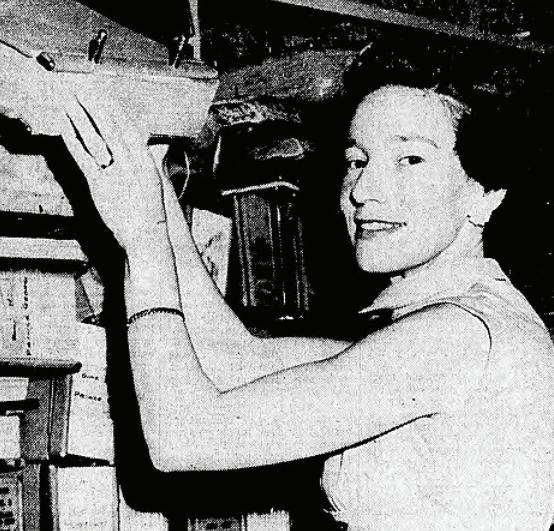
July 4, 1958: Edith Baker helped move the electrical energy inspector’s of ce into Prince George’s new provincial government building, part of the most complicated move the city had ever seen. It involved shifting two dozen government departments into the new $1,800,000 structure at 1600 Third Ave., which had been completed in March, with minimal disruption. The building is now the Prince George Native Friendship Centre. PRINCE GEORGE FILE


July 5, 1972: Playground supervisors Marie Strom (left) and Jane McInnis let London Bridge ‘fall’ on Jackie McInnis during a game at Ingledew Park. The city’s playground program operated daily at Ingledew, Harper, Seymore, Nechako, Rainbow, Gordon Bryant and Quinn Street parks. CITIZEN FILE

6, 2009: Josh
4, 1987: Harley Miller, visiting from Edmonton, cooled off in West Lake during a week of hot, dry weather in Prince
FILE






Community hosts Red Carpet Visits, all of which have resulted in accepted physician offers
SAMANTHA MTATIRO
For Northern Health
Like many Northern BC communities, Quesnel has faced challenges recruiting and retaining physicians in recent years. Residents have felt the impact through temporary emergency department service interruptions and growing waitlists for family physicians. While these challenges have been significant, they have also highlighted the importance of community collaboration, innovative recruitment efforts and a shared commitment to strengthening local healthcare services.
Today, there is much to celebrate. Through the work of health-care leaders, physicians, volunteers, community partners and recruitment teams, Quesnel is attracting new physicians and health-care professionals to the community.
Nearly 12 years ago, the City of Quesnel established a dedicated healthcare recruitment co-ordinator position funded through the Cariboo Chilcotin Regional Hospital District.
The role, currently held by Samantha Mtatiro, provides personalized recruitment support and integration services designed to help physicians and their families feel welcomed and connected as they transition into the community. Working closely with Mtatiro is Wendy Fox, whose work in physician recruitment has helped build relationships with prospective candidates while showcasing the advantages of practising medicine in Quesnel and northern BC.
In recent months, several American-trained physicians have chosen to relocate to Quesnel, a sign that the community’s recruitment approach, supportive health-care environment and partnerships are gaining recognition

their
beyond Canada.
One of the highlights of the past year has been the success of Quesnel’s “Red Carpet Visits.”
These are personalized community visits designed to introduce prospective physicians and their families to what Quesnel has to offer. They are made possible through collaboration between physician and health-care leaders, local physicians, local government representatives, NIRD representatives, community organizations, volunteers and residents who share their time, experiences and hospitality.
The results have been strong. Over the past year, Quesnel hosted four Red Carpet Visits, all of which resulted in accepted physician offers.
To date, Quesnel has welcomed two American-trained physicians — a family physician and an emergency medicine specialist — and is preparing to welcome two more physicians from the United States this summer.
In addition, over the past year, Quesnel has welcomed three internationally trained physicians and their families through BC’s Practice Ready
Assessment Program. The program supports internationally trained family physicians as they work toward full licensure in the province and helps address community health-care needs. Three more candidates are expected in the coming months, with several others currently moving through the recruitment process.
Two part-time physicians have also been added to support local care teams.
A key part of Quesnel’s recruitment success continues to be the involvement of local physicians and their families.
Whether hosting dinners, attending clinic meet-and-greets, opening their homes, introducing prospective families to community activities or sharing their experiences, physicians play an important role in helping recruits envision a future in Quesnel. Their commitment to patient care, often while managing increasing demands and health-care pressures, is deeply appreciated. While work remains, momentum is encouraging.
Northern Health, the City of Quesnel and community partners remain
committed to building on this success through continued collaboration, recruitment strategies and community partnerships.
The progress so far reflects what can be achieved when a community works toward a shared goal. Quesnel’s recruitment efforts demonstrate the impact of collaboration, community spirit and a collective commitment to strengthening health care in the region.
Samantha Mtatiro is the health-care recruitment co-ordinator for the City of Quesnel.



TED CLARKE Citizen Staff
After getting rocked by back-to-back home runs and giving up a two-run lead to the Okanese Thunderstrikers, Prince George Giants pitcher Isaiah Mahil walked to the dugout urging his teammates to try to get him off the hook in the final inning of the John Cho Cup men’s U-23 fastball tournament final. Praying for a miracle finish, he got exactly that.
Trailing 9-7, it wasn’t looking good for the Giants and their fans gathered around the Ron Wiley Field when Cam Jeffries hit into a double play that left the Thunderstrikers one out away from winning their third straight John Cho Cup title.
Just when it looked like tournament top pitcher Boston McKay was about to wrap it up, he hit Kobe Fulton with pitch and the next batter, Denny Higginbottom, used his speed to beat out an
infield hit. The runners got themselves into scoring position and took off with the pitch when Joel Henry, down to his last strike, made just enough contact to knock out a blooper that landed in shallow right field.
Fulton raced in from third and drew a throw from the outfield that sailed over the head of Thunderstrikers catcher Uly Reyes and bounced off the backstop. By the time he picked up the ball Higginbottom was already coming in with a full-speed slide. Reyes dove at the baserunner but it was too late. Higginbottom touched home plate and the 11-10 walk-off celebration was on.
“I blacked out, I just had to get it in play, that’s all I needed to do,” said the 20-year-old Henry. “There was a bit of emotion, going into the top of the seventh we thought we had it clinched and they just came out strong and hit them over the fence.
“I thought we needed another at-bat there and he overthrew it and we got it done. Hopefully we can do this again at Canadians.”
Okanese took a 6-2 lead in the third inning on a three-run double from Uly Reyes that chased Giants starter
Higginbottom off the rubber, replaced by Mahil.
The Giants clawed back in their half of the inning with an RBI double from Fulton and a passed ball that brought in another run from Jeffries to close the gap to 6-4.
Ty Yuzicappi took advantage of the breeze blowing out to left field and hit a solo shot in the top of the fourth for a 7-4 lead, but the Giants answered. They got one back on a passed ball in the fifth that scored Dion Abraham. Then in the sixth, with Higginbottom and Henry already on base, Nate Budskin singled up the middle to drive in two runs and tie the game 7-7.
Easton Linton then knocked out a triple and later scored when a ball in the dirt got away from catcher Reyes and suddenly Prince George had a 9-7 lead. But with one swing of the bat, Reyes hit a two-run home run to tie it up and the next Okanese batter, Zane Walker, followed a similar path over the right field fence with his high fly to give the Thunderstrikers a 10-9 lead.
“We got such a good lead on the bottom of the sixth and it was just up to me to go in there and do my thing,” said
Mahil. “But they’re such a good-hitting team, a bunch of good older hitters and it was tough in that last inning but I’m glad the boys pulled through for me.
“Joel walked it off. I was on deck and I was pretty nervous. I was hoping that Denny would score.”
The Giants showed aggressive baserunning, especially in the later innings and that keyed their comeback.
“Soon as I saw the throw was over him I was gone,” said the 16-year-old Higginbottom. “ I just had to take the risk at the right time to try to get the win.”
The Giants play together in the Spruce City Men’s Fastball Association and that’s not the first time head coach Lance Potskin has seen them complete a comeback.
“They just don’t quit,” said Potskin. “That’s the motto of this team and my nephews (Giants Hunter and Hudson Potskin) brought me into the fold. It’s been like that since I joined them, no lead’s safe with these guys.
“I just tried to keep the boys calm and focused and not let the emotions get the best of them and it worked out, thankfully.”
It was hard on his nerves but Thunderstrikers head coach Mark Reyes said the up-and-down final certainly gave the fans their money’s worth and vowed he and his team will make the 16-hour drive again to Prince George later this summer.
“We won it in 2024 and won it in 2025 and we were looking to threepeat and let somebody else win it next year,” he said. “It’s just unfortunate.
“The Giants are a good team and were a good team and I don’t think we disappointed either the Okanese fans or the Giants fans here in BC. It was close and back and forth and we had some clutch home runs, but somebody’s got to win and somebody’s got to lose.”
Home for the Thunderstrikers is the Okanese First Nation reserve about an hour east of Regina.
Bucked off after one second of glory, 19-year-old making plans for his next ride
TED CLARKE Citizen Staff
“Mamas, don’t let your babies grow up to be cowboys.”
Chances are, that old Waylon Jennings song isn’t on Raunak Ghuman’ playlist.
But the lyrics likely rang true for his mother, Gurpal, when she watched her 19-year-old son take his first-ever ride on a bull this past weekend at Rodeo Prince George.
Competing in the novice bull riding event Saturday, June 19 at Exhibition Park, Ghuman’s ride lasted only about a second before he was bucked off. Still, his first taste of rodeo action was a thrill ride.
“Words can’t explain how it felt,” said Ghuman. “It’s an experience you have to go through to understand. Nothing I’ve ever done is comparable to how that felt. I was terrified.”
Ghuman climbed into the chute, stood on the rail above his bull, Outsider, and wrapped the rope around his riding hand.
“Once I got into the chute, everything went quiet,” he said. “I could hear a couple of guys around me telling me how to tie my wrap, and then they told me when to put my feet down and sit on him.
“The next thing I know, I gave the chute guy the nod, the gate opened, and I’m flying in the air and landing on the ground. It wasn’t a bad landing.”
Ghuman got to know BCRA veteran bareback and bull rider Decker Passey when they both attended College Heights Secondary School, with Passey a year ahead of him. As unusual as it may seem, Passey said it isn’t the first time he’s seen someone with no rodeo experience get on a bull.
“I just told him to get out there and have fun and get up and run as soon as you’re done,” said Passey.

Passey also offered a simple piece of advice.
“He said, ‘Squeeze your knees and pray,’” said Ghuman. “I prayed, but I didn’t squeeze my knees.”
Ghuman said he doesn’t know if officials selected a gentler bull for his first ride, but he avoided one of the more aggressive animals, a quick-tempered bull named Phantom known for going after riders once they hit the ground.
Bull riders tend to be on the shorter side with wiry builds. Ghuman stands 6-foot-3 in his cowboy boots and weighs 215 pounds. He stays fit working on the cleanup and supply crew for his father’s construction company.
His parents are originally from India, but he was born and raised in Prince George and grew up aware of the city’s rodeo scene.
“Nobody in my family did rodeo,” he said. “I never expected to be here.”
It wasn’t until last October, when he attended the Canadian Finals Rodeo in Edmonton, that he decided he wanted to try it himself.
“I went there and watching the bull riders, I remember telling my buddy I’m going to ride a bull this summer,” said Ghuman.
“I just kind of fell in love with the sport. I messaged Decker asking how

I could do this, and he told me to sign up.”
He paid his $60 entry fee earlier this spring and told his parents, Navi and Gurpal, about his decision two weeks before the rodeo.
His ride on June 20, brief as it was, was not a one-off. He is now considering attending a rodeo school in Quesnel to learn the sport more seriously.
“I think it’s just the rush, the feeling of being in the chute,” he said. “I never expected to be here.”
His father, Navi, owns PG Craftsman Construction and was unable to attend
due to work commitments, but Gurpal watched from the grandstands along with six of Raunak’s friends.
“She asked me how it was, and I said it was a great time,” said Ghuman. “And then I told her I’m going to do it again, and she said, ‘You’re not doing that again.’”
He is, however, planning his next ride at the BC Rodeo Association event in Quesnel during Billy Barker Days, July 17-19.
“The rodeo in Quesnel is on July 17, and the sign-up is July 3, so I’m going to look into getting in,” Ghuman said.
Decker Passey makes the cut to compete in novice bareback at Calgary Stampede
TED CLARKE Citizen Staff
Decker Passey’s rigging came loose on him late in his bareback ride Sunday and he had a choice.
He could either jump off his bucking horse, I’m No Angel, and have a solid boot-down two-point landing or try to finish his ride and hope he didn’t end up head-over-heels dangling by the wrist from that suitcase handle.
The 20-year-old Prince George cowboy played it safe, knowing he has a busy summer ahead of him as the defending all-around champion of the BC Rodeo Association.
His bareback ride on Sunday, June 21 at the Huber Equipment

Kubota Canada Rodeo Prince George came up a bit short, but he stuck around for the full eight seconds on Saturday and ended up with a 74-point ride, two points behind Derreston Rohatinsky of Grande Prairie, who took the top day money.
Passey had the final ride of the rodeo in Sunday’s bull riding event at Exhibition Park and got into what looked like a money-in-the-bank spin riding Copper Top but couldn’t quite go the distance, bucked off 16 hundredths of a second before the horn.
Passey chose Rodeo Prince George over a Canadian Pro Rodeo Association rodeo in Sundre, Alta., knowing it might jeopardize his chances of making the cut to compete in novice bareback in this year’s Calgary Stampede. Only the top six money earners in the Calgary Stampede novice bareback standings qualify and Passey made the cut, ranked fourth.
The three-day novice bareback event

His dad Derrick competed for 15 years in amateur rodeos in bareback and bull riding. His four older sisters, Dakota, Cheyenne, Sierra and Mesa, all did barrel racing and he got the bug early growing up on the family horse-breeding ranch between Prince George and Vanderhoof.
“I started when I was six years old, riding steers, and I probably wouldn’t be riding bucking horses if (his dad) didn’t get me on my first 50,” said Decker. “Your first 50 isn’t a whole lot of fun, you just kind of crash and burn.”
Passey, who rode bulls and bareback both days this past weekend, was shut out of winning a buckle — the first time in four years he’s failed to win an event in his hometown rodeo. But give the guy a break, he was riding with a broken foot, an injury he suffered three weeks prior when he wiped out riding a dirt bike.
He broke his foot last year when he got bucked off and the bull came back and stepped on his foot. His worst rodeo injury happened eight years ago in Edson, Alta., and after he decided never to bring a saddle back to the rodeo arena.
“I was 12 years old and I was getting on a mini-saddle bronc horse and I drug from a stirrup and got my head stepped on a couple times,” he said. “I got my helmet ripped off and then got stepped on again and my head was literally used for traction. I’ll stick to bareback and bull riding, I think I’d rather get dragged by a hand than by a stirrup.”
competition starts Friday, July 4. The top five after two go-rounds make it to the final on July 6.
“I’m super-excited and it’s a big relief that my fourth-place spot held,” said Passey.
He knows there’s going be a full house of 18,000 watching on opening day at the 10-day Stampede, with the world’s
best professional cowboys and cowgirls also competing.
“It’s a dream come true at this level to be able to qualify for Calgary and not have to do it on the open (bareback event) and at least have the opportunity to do it this young on the big stage,” he said.
Passey comes from a rodeo family.
He was only 10 when he won a share of the mini-bareback championship at the 2016 BC Northern Exhibition in Prince George and last year he had more than $21,000 in earnings while finishing second in BCRA bareback and bull riding standings to win the saddle as all-around champion.
Passey was sitting pretty in the BCRA standings heading into Rodeo Prince George, ranked first in bareback and second in bull riding. He started with a 78-point ride at the first BCRA stop in Keremeos. SEE ‘LOCAL’ ON
TED CLARKE Citizen Staff
Tumbler Ridge Community Centre Arena will be a hub of hockey activity for at least two days in September.
The Prince George Cougars will be there to open their WHL preseason schedule against the Edmonton Oil Kings.
The teams meet Friday, Sept. 4 at 7 p.m., and Sunday, Sept. 6 at noon.
That marks the first time the WHL hockey has come to the Tumbler Ridge, 498 kilometres northeast of Prince George. For the Oil Kings, the rink is a 663 km bus ride from downtown Edmonton.
The Cougars finish off their exhibition schedule the following weekend with a home-and-home series against the Kamloops Blazers.
The Cats will host the Blazers on Saturday, Sept 12 at noon at West Fraser Centre in Quesnel, then play a rematch Sunday, Sept. 13 at 5 p.m. in Kamloops.
The Cougars open their 33rd season in Prince George, Sept. 18-19, when they host the Penticton Vees in a two-game set at CN Centre.
Carels’ draft notice arrives Friday
Cougars defenceman Carson Carels will finally know where his NHL future rests on Friday, June 26 when he’s chosen as a first-rounder in the NHL draft in Buffalo, N.Y.
Carels, who has signed to play next season at the University of North Dakota, is expected to be among the top 10 players chosen in the first round, which starts at 4 p.m. PT (TSN) on Friday. The draft resumes with Rounds 2-7 at 8 a.m. on Saturday.
Cougars forwards Kayden Lemire, Dmitri Yakutsenak and Brock Souch, as well as defenceman Arseni Anisimov, are considered prospects to be chosen, as is Prince George native Chase Harrington, a forward for the Spokane Chiefs.

Cougars forward Terik Parascak flips the puck around charging Oil Kings defenseman Josh Lee at CN Centre Saturday, November 22, 2025. The teams will face off again in Tumbler Ridge on Sept. 4. and Sept. 6.

CONTINUED FROM PREVIOUS PAGE
Passey’s dad Derrick got his pro card but focused on amateur rodeos closer to home.
He never rode in the Calgary Stampede but he did get to ride bulls and bareback horses in Japan, part of a twoweek demonstration tour the Calgary Stampede organizing committee put together in 1991.
“They took guys who were good at two events and I rode bareback horse and bulls and was the backup bull fighter,” said Derrick. “We basically put rodeos on twice a day for two weeks in Japan. I took my new bride (Becky) and that’s where we went, it was very different.”
Decker is obviously well on his way to carving out a rodeo career, but he has a full-time job as a shop apprentice/ welder at CC Industries in Prince George to pay the bills. He dad can see in his daily workouts he wants to put the
work in and when he gets in the arena he’s fearless, the attitude he needs to succeed.
“We always say that the buckles are won in practice and you pick them up at rodeos,” said Derrick.
“He’s got a spur board to practice in the basement and it’s nice to hear that thing getting smacked during the night, but he’s got a broken foot right now so he can’t ride it.
“It’s a huge proving ground at the beginning and it takes you 50 or 75 (rides) just to get a feeling for it. We’ve got a video of when he started and it was just a highlight reel of being destroyed and getting crunched and you have to work your way through that to get where now he’s been on over 100 horses and it’s starting to click. Now it’s going to get easier as he goes.”
Decker has another 30 or 40 rodeos coming up on his schedule before the season ends in September.




















August 21, 1950 - June 16, 2026
It is with great sadness that we announce the passing of Bea Plumridge, who passed away unexpectedly on June 16, 2026 at the age of 75.
Bea was a woman of remarkable creatvity, kindness and grace. A gifed artst in every sense, she expressed her talents through many aspects of her life, bringing beauty, warmth, and imaginaton to everything she touched. Whether through decoratng, creatng, or simply making others feel special, Bea had a natural eye for beauty and an extraordinary ability to brighten the lives of those around her.
For many years, Bea was a well-loved hairdresser whose chair was more than just a place for a haircut. It was a place of friendship, laughter, and heartelt conversaton. She formed lastng relatonships with clients and became a familiar and trusted face within the community.
Bea was also deeply involved in community life. She generously shared her artstc talents by organizing and beautfully decoratng numerous events for the Constructon Associaton, helping create memorable gatherings that brought people together. Through her volunteerism, creatvity and willingness to lend a hand, Bea touched countless lives with her generosity and dedicaton.
Above all, Bea’s heart belonged to her family. She was a devoted wife, mother, grandmother, and great-grandmother who found her greatest happiness in being surrounded by those she loved. Whether hostng family gatherings, celebratng life’s milestones, or simply spending tme together, Bea made every moment special. Her home was a place of warmth, laughter, and welcome, and the memories she created with her family will be treasured forever.
Bea will be lovingly remembered by her husband, Jim whom she shared 54 years of marriage; her children, her cherished grandchildren, and her treasured great-grandchildren. She will also be dearly missed by her siblings, many extended family members, and countless friends. She will also be deeply missed by her beloved family in Europe, who remained an important part of her life despite the distance.
Bea was predeceased by her parents, Charlote and Arnold Link. As the eldest of six children, she shared a close and lifelong bond with her siblings, whom she loved dearly.
Bea leaves behind a legacy of creatvity, generosity, and unwavering love. She made every room brighter with her smile, every gathering more beautful with her artstc touch, and every life she encountered richer by being a part of it. Through her hands she created beauty, it was her heart that lef the greatest impression. Her legacy lives on in the family she cherished and the community she helped shape. She will be deeply missed, forever loved, and always remembered.
A celebraton of life will be held to honor Bea. Those who wish to atend are kindly asked to contact the family for service details. Family and friends are warmly invited to join us as we gather to celebrate Bea’s life. An open microphone will be available during the celebraton for anyone who would like to share a story, memory, or a few words.
In keeping with Bea’s wishes, the family kindly requests that, in lieu of fowers, those who wish to honor her memory consider making a donaton to Spirit of the North or simply perform an act of kindness in her memory.
Frank Skerlak Sr. March 27, 1932 - June 23, 2026
It’s with great sadness we announce the passing of Frank Skerlak Sr. on June 23, 2026.
Frank was born March 27, 1932 in Slovenia and immigrated to Canada with his wife Jolanka in 1957. They had their son Frank shortly afer arriving in Canada and began their life in Prince George where they met numerous friends that became like family. Frank worked for many years in the saw mills around the rince eorge area and nished his career at Canfor Netherlands.
Afer retrement, Frank found joy in his garden and greenhouse, the casino and walking to and from anywhere and everywhere. He found great joy in his grandchildren and even more joy in his visits with his great grandchildren. His ability to be strong and resilient for 94 years of his life is admirable.
He may be gone from sight, But never from our hearts.
Frank leaves behind his wife Jolanka Skerlak, daughter in-law Debbie Skerlak, grand children enata ike , Frank Jessica , and great grand children Frankie, Jackson, Gracen and Carson along a numerous extended family in Slovenia.
Predeceased by his son Frank Skerlak and mother Szidonia and father Franc Skerlak.
Service for Frank will be held at Assman’s Funeral Chapel followed by burial and refreshments. Dates to be determined in near future.
each out to family or Assman’s for dates and tmes.
w local Obituaries





July 1, 1947 - May 18, 2025
A brother and a friend to all.
July 18, 1945 – July 4, 1996
Your life was a blessing…Your memory a treasure You are loved beyond words and missed beyond measure Love remains Rose
March 5, 1945 - June 20, 2026
It is with great sadness that we announce the passing of Joseph Walter Hill, who passed away peacefully at home on June 20, 2026, at the age of 81.
Joe is lovingly remembered by his loving and devoted wife, Roberta; his daughters Dianna (Norm) King, Lehann (Jay) Wallace and Christne Hill, his stepchildren Shawna (Glenn) Roy, Dawn Kennet and Wes (Christne) Church, as well as 10 grandchildren and 3 great grandchildren. He also leaves behind his brother Bill and family, many friends, business associates, fshing companions and neighbours whose lives were enriched by this friendship and humour.
Born at St. Paul’s Hospital in Vancouver on March 5, 1945, Joe was the youngest of 5 children and spent much of his youth in White Rock BC, where he develope4d a lifelong love of the outdoors. Whether huntng in the backcountry, fshing along the coast or exploring by boat, Joe felt most at home surrounded by nature.
In the mid-1960s, Joe moved to Prince George, where his entrepreneurial spirit quickly emerged. He owned and operated a brake and wheel shop before establishing Tire Town, a successful business that became well known in the community. Joe later built a respected career in heavy equipment sales, working with several companies before founding Hill Equipment Sales Ltd. In 1998. Through hard work, integrity and a gif for building relatonships, he sold logging and mining equipment throughout Canada, the Pacifc Northwest and internatonally, including markets as far away as Belgium and Russia.
One of the most important chapters of Joe’s life began when he met Roberta in 1992. Together they built a wonderful life founded on friendship, adventure, laughter and unwavering support for one another. Following retrement, they setled in Blind Bay, BC in 2015, where they enjoyed the beauty of Shuswap Lake and the slower pace of life that retrement aforded.
Joe never lost his passion for fshing. Some of his happiest days were spent on the water with family and friends, rod in hand, sharing stories, laughter and the antcipaton of the next catch. He was equally at home boatng, exploring new waters or planning his next outdoor adventure. Fishing was never simply a pastme – it was a way of life that brought him peace, connecton and countless treasured memories.
Joe lived life fully, worked hard, valued loyalty and found joy in simple pleasures – tme with family, good friends, a boat on the water and a fshing rod in hand.
As Joe embarks on his fnal journey, may the seas be calm, the fsh be plentful and may he fnally land the elusive one he was always chasing.
In keeping with Joe’s wishes, no formal service will be held.
In lieu of fowers, donatons may be made to the Shuswap Hospital Foundaton htps://www.shuswaphospitalfoundaton.org
Share condolences and memories of Joe through his obituary at www.fschersfuneralservices.com

Johanne Lucille Galbraith
June 18, 1946 - June 21, 2026
Johanne was Born June 18th 1946 and passed away June 1st 0 , days afer she had celebrated her 0th birthday.
She was predeceased by her other helma Wallace, her ex husband Fred Galbraith and her best friend milie Chapman.
Johanne was raised in Kenora ntario and grew up on a homestead on the ssex road and atended 1 school. She started working in the Kenora hospital in Laundry and then as a short order cook at the Kenricia hotel.
She later moved to Prince George BC where she started a new career in the lumber mill of Helco. When it closed she started at New mill that was just opening called Brinks Forest products where she worked in the fnger jointer, then paper wrapper and fnally fork lif operator untl she retred.
Her hobbies were gardening, fshing and and was an avid volunteer for animal rescues as well spent most of her life helping other people.
She is survived and will be deeply missed by her daughter Judy Armstrong, her grandchildren, Shelly , Kelsey , yrone Armstrong and her great grandchildren Phoenix, avrick and Cielle.
She will also be greatly missed by her companion felines wix and Callie.
In lieu of fowers, please consider a donaton to the SPCA.
Celebraton of life will be held on July 11th from 1 at the rinity Church th ave Prince George.



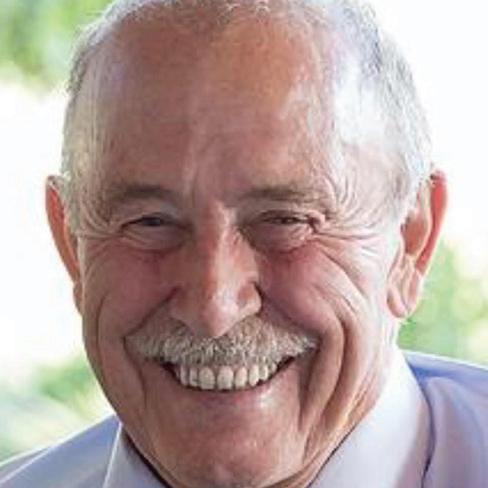
They say a person’s character is forged in the fres of their youth, and if that is true, Raymond Forter was made of the strongest northern steel.
Born on July 3, 1945, in the tny farming community of Guy, Alberta, Ray was the third youngest of eleven siblings. Life in the late 1940s and 50s was a masterclass in survival and shared sacrifce. The entre thirteen-member family lived in a tny 600-square-foot farmhouse with eleven kids stacked anywhere they could ft. Times were tough, but that litle homestead was full of music, laughter and memories. His father worked the earth and the anvil, as a farmer and blacksmith; his mother poured every ounce of her existence into keeping her busy household fed, clothed and warm
It was a tme when community wasn’t just a concept, but a lifeline. By the tender age of sixteen, following the unwriten rule of a hard generaton, Ray packed what litle he owned and lef the farm to make his own way in a vast world that promised nothing for free. He drifed for a tme, a young man searching for his place, before the compass points of the mid-1960s pulled him to Prince George. It was there, amidst the rising energy of the North, that he found the two great anchors of his life: the trade of welding and a young woman named Joyce, who would become his wife.
As the pulp mill boom began to transform the region, Ray, now a skilled boilermaker, saw a fronter of opportunity. In 1977, armed with nothing but a relentless work ethic, a young wife, and two small children to provide for, he stepped of the ledge of steady employment and founded Farr Fabricatng. The litle shop on 22nd avenue would be busy doing steel fabricaton, repairs and taking on every odd job to keep busy. He stared down the volatle ups and downs of business with a blacksmith’s determinaton. Where others saw risk, Ray saw a future. When Prince George was surging in the late 70’s , FARR was busy. When the early 80’s came along, tmes were tough and business sufered as many in PG would endure. The company would close, only to re-open in their current locaton on the Hart Highway since the mid 80’s.
He didn’t just build a business; he built an insttuton. In 1979, he launched Farr
July 3, 1945 - May 6, 2026
Installatons, providing the crane rentals and shutdown crews that became the literal backbone of regional industry. At one point FARR would have the largest crane feet north of Vancouver.
A decade later, in 1989, he co-founded Western Industrial Contractors expanding into civil work, constructon management, and internatonal projects. WIC had a great team, and grew for years to come under the guidance of wonderful people and partners.
For the next two decades he would be involved in a dozen or so successful companies in Prince George, many of them stll remain today.
His passion for mining also ran deep, as a young man he would ofen pan in the local rivers, rarely fnding a single fake. That would change decades later, when Black Water Mine was in the early stages and ready to call it a day, Ray was the lone person to step up and fund the extra drilling needed, untl they found the results to propel Black Water into a successful public gold company. A great legacy to the community, his dream of being a successful gold miner had fnally paid of.
Many of the neighborhood kids from Trader Crescent, and later on West Lake, would work for Ray’s companies. Future successful builders, and leaders, in the community would start out fueling up cranes, doing spark watch on shutdowns, sweeping the shop foors while home for the summers. Sometmes there would be crews of 200 people working around BC for FARR, it took a small army to keep it going.
He ofen spoke proudly about the group of young kids who started in the back of the shop, some would stll there 25-30 years later. It was a very big family and a source of pride for Raymond, watching everyone grow up.
His loyal managers, partners, and employees were all a very large part of his success, and crucial in navigatng the good tmes, and the bad. They would be part of the companies for decades and Raymond truly loved them like family. They were his closest friends and we watched over the past 40 years how much they cared for him as well. His most special friends from West Lake have been there through the thick and thin since the 70’s.
Yet, for all his industrial success, Ray’s heart belonged to the community that had allowed him to thrive. He loved hockey with a boyish intensity. In 2014, alongside his long-tme business partner and close friend,
John Pateman, he became a part-owner of the Prince George Cougars, rarely missing a game. The two friends would enter into countless business ventures together— some good, and some that would ofen be mentoned to each other with a grin and a queston: “What were you thinking when you got us into that?”
But his true sportng legacy lives on the local sheets of ice; since 1980, he has sponsored the Farr Fabricatng hockey team. In Prince George, the odds are high that you, your father, or your neighbor wore a jersey funded by Ray’s quiet generosity over the last forty-fve years.
He believed deeply in paying his success forward,quietly supportng the Prince George Community Foundaton, Salvaton Army, Red Cross, Spirit of the North Community Foundaton, West Lake Community Associaton and many individuals and families in need.
Beyond the boardrooms and the hockey rinks, Ray’s great passion for the last forty years was golf. It was a game that kept him busy, compettve, and endlessly entertained. Those who shared a fairway with Raymond quickly learned that he counted your strokes to absolute perfecton; his own, however, were subject to a slightly more generous arithmetc. If there was a single dollar on the line, a scoring debate could easily stretch on for days.
True to his pragmatc nature, Ray frmly believed that a slice wasn’t something to be fxed with boring lessons or practce, but rather with the immediate purchase of brand-new drivers and irons.
He was a master of psychological warfare on the course. While Ray demanded absolute, pin-drop silence during his own swing, your backswing was fair game. He had an uncanny knack for “helpfully” reminding you of the yawning water hazard staring you down right before you hit. If that didn’t work, the golf cart engine would mysteriously sputer to life mid-swing, or you would arrive at your ball only to fnd it suspiciously run over and deeply impacted into the fairway. It was all part of the game, and entrely part of the mischievous charm we will miss so desperately.
He spent decades at the Prince George Golf and Curling Club, and later in life, could be found under the warm sun of Southern California living life to the fullest. These places produced some of the most special memories and deepest friendships of his life.
To list his accolades, however, misses the true measure of the man. Ray was a captain of industry, but his greatest, most profound role came later in life. If his businesses were his pride, his grandchildren were his absolute joy, the real love of his life. They were a blessing he spoke about ofen and with an unmistakable warmth in his voice. In their laughter and their futures, the man who had started with so litle found his ultmate reward.
Ray possessed a rare, beautful ability to check in on the people around him. He didn’t just remember you; he called you by your own unique nickname, ensuring that in a crowded room or a busy life, you knew you matered to him.
He loved the old, honest storytelling of country music, but he carried the rebellious, vibrant heartbeat of the Rock and Roll era he grew up in. Prince George has lost a builder, a pioneer, and a local gem.. His family and friends have lost a singular, irreplaceable spirit.
Our family extends a heartelt thank you to everyone who helped take care of Raymond over the last few years. You are very special and forever in our hearts; your deep compassion will never be forgoten. We didn’t get to thank you enough for all the check-ins , errands, appointments and especially his loving care from his close friends in Pentcton.
In the end, Ray stubbornly scooted most of us along, requestng his daughter-in-law to care for him during his fnal weeks. She did just that untl the very end, pouring out the most love and tenderness anyone could ever ask for. We are all profoundly blessed to have someone like her in our lives.
Raymond, a beautful friend, father, grandfather - you will be missed by all who knew and loved you, but never forgoten. Rest in Peace, we will all cherish the memories you gave us and miss that smile and laugh forever.
To quote a lyric from one of the greatest songwriters and who Ray admired
“And in the end, the love you take is equal to the love you make.”
Ray requested no service, and the family plans to have a celebraton of life at a future date.
Please consider a donaton to the Prince George Hospice house or the Prince George Community Foundaton in his memory.








* On March 24, 1965, the first “teach-in” was conducted at the University of Michigan at Ann Arbor, in which 200 faculty members led special anti-war seminars while regular classes were canceled and rallies and speeches held sway for 12 hours.
• On June 22, 1611, after a winter spent trapped by ice in what is now northeastern Canada’s Hudson Bay, the starving crew of the Discovery launched a mutiny against their captain, English navigator Henry Hudson, setting him, his teenage son, and seven of his supporters adrift in a small open boat. They were never seen again.
• On June 23, 1956, Gamal Abdel Nasser was elected the first president of the Republic of Egypt. Nasser had overthrown the country’s monarchy four years earlier, in a military coup, and was the sole candidate on the ballot. His new constitution, making Egypt a one-party socialist state with Islam as its official religion, was also almost unanimously approved by voters.
* On March 25, 2001, Icelandic actress and pop singer Bjork made an unforgettable appearance at the 73rd annual Academy Awards in a nude
• On June 24, 1374 a “dancing plague” swept through Germany, causing medieval villagers to writhe and whirl uncontrollably and leaving many people in a state of exhausted collapse in the streets or dead from heart attacks and strokes. The cause is still unknown, though ergot poisoning, mass hysteria and religious devotion have all been suggested.
• On June 25, 1910, Congress passed the Mann Act, which was ostensibly intended to keep young women from being enticed into prostitution, but was more about a way to make various types of consensual sexual activity a crime.
ARIES (March 21 to April 19) Consider moving beyond the usual methods to fnd a more creatve means of handling a difcult on-the-job situaton. Avoid confrontaton and aim for cooperaton instead.
• On June 26, 1948, American and British pilots began delivering food, water, clothing, medicine and fuel by airplane to Berlin after the city was isolated by a Soviet Union blockade. Some in President Harry Truman’s administration had called for a military response to the blockade, but Truman believed such an action could incite another world war.
TAURUS (April 20 to May 20) A seasonal change creates a new look for the outdoors. It also inspires Taureans to redo their own environments, so this is a good week to start redoing both your home and workplace. Enjoy!
• On June 27, 1985, the American Association of State Highway and Transportation Officials decertified the iconic Route 66, which in its heyday stretched about 2,400 miles over a span of eight states from Chicago, Illinois, to Santa Monica, California, and voted to remove all its highway signs.
• On June 28, 2007, the bald eagle was removed from America’s List of Endangered and Threatened Wildlife.
© 2026 King Features Synd., Inc.
GEMINI (May 21 to June 20) A misunderstanding needs to be straightened out so the wrong impression isn’t allowed to stand. If necessary, ofer to support the use of a third party to act as an impartal arbitrator.
body stocking draped with a large, fake white swan. As if that weren’t enough, the artist then proceeded to “lay” six giant ostrich eggs. Whatever popular opinion said about the look, the dress went on to be honored by the Museum of Modern Art and The Metropolitan Museum of Art.
* On March 26, 1804, President Thomas Jefferson attended a public party at the Senate and led a diverse crowd in eating an enormous loaf of bread dubbed the “mammoth loaf.” The bread had been baked to go with the remnants of a giant block of cheese.
* On March 27, 1929, President Herbert Hoover had a phone installed at his desk in the Oval Office of the White House. It took a while to get the line working correctly and Hoover complained to aides when his son was unable to reach him from an outside line. Previously, Hoover had used a phone located in the foyer just outside the Oval Office.
* On March 28, 1814, the funeral of Dr. Joseph-Ignace Guillotin, inventor of the execution device that bore his name, took place outside of Paris, France. Guillotin had given the contraption to the French as

CANCER (June 21 to July 22) A career change ofering what you want in money and responsibilites could involve moving to a new locaton. Discuss this with your family members before making a decision.
LEO (July 23 to August 22) Feeling mifed over how you believe you were treated is understandable. But before you decide to “set things straight,” make sure that the whole thing wasn’t just a misinterpretaton of the facts.
VIRGO (August 23 to September 22) Showing you care makes it easier to build trust and gain an advantage in handling a delicate situaton. What you learn from this experience will also help you understand yourself beter.
a “philanthropic gesture” and was upset at how his reputation had suffered afterward when it became closely identified with political executions and abuses during the French Terror after the Revolution.
* On March 29, 1982, 19-year-old North Carolina freshman Michael Jordan scored a 16-foot jump shot with only 15 seconds left to give the Tar Heels a 63-62 win over Georgetown for the NCAA tournament championship. “To tell the truth,” he said to New Orleans reporters, “I didn’t see it go in. I didn’t want to look.”

LIBRA (September 23 to October 22) Planning for the future is fne, especially if you include the roles that family members may be asked to play. But don’t be surprised if some hidden emotons are revealed in the process.
SCORPIO (October 23 to November 21) Making choices highlights much of the week, and you have a head start here, thanks to your ability to grasp the facts of a situaton and interpret them in a clear-cut manner.
SAGITTARIUS (November 22 to December 21) Carrying a torch can be a two-way situaton: It can either keep you ted to the past or help light your way to the future. The choice, as always, has to be yours.

CAPRICORN (December 22 to January 19) Your watchwords this week are “focus, focus, focus.” Don’t let yourself be distracted from what you set out to do. There’ll be tme later to look over other possibilites.
AQUARIUS (January 20 to February 18) A workplace opportunity might require changes that you’re not keen on making. Discuss the plusses and minuses with someone familiar with the situaton before you make a decision.
PISCES (February 19 to March 20) Love and romance are strong in your aspect this week. If you’ve already met the right person, expect your relatonship to grow. And if you’re stll looking, odds are, you’ll soon be fnding what you want!


Your home’s siding is constantly exposed to the elements. Rain, wind, dust, pollen, algae, mildew, and airborne pollutants can gradually build up, leaving your home looking dull and neglected.
While regular maintenance often focuses on lawns and landscaping, pressure washing your siding is one of the simplest and most effective ways to improve both the appearance and longevity of your home.
One of the biggest advantages of pressure washing is the immediate boost to curb appeal. Over time, dirt and grime can make even a wellmaintained home appear older than it really is.
A thorough cleaning can restore the siding’s original colour, making the entire property look fresher and more inviting. Whether you’re preparing to sell your home or simply want to


take pride in its appearance, pressure washing offers impressive results in just a few hours.
Pressure washing also helps protect your investment. Organic growth such as mold, mildew, algae, and moss doesn’t just look unsightly—it can slowly damage certain types of siding if left untreated.
These organisms trap moisture against the surface, which may contribute to staining, deterioration, or even structural problems over time. Removing these contaminants helps extend the life of your siding and can reduce the need for costly repairs or premature replacement.
Another benefit is improved health around your home. Mold, mildew, and pollen can affect outdoor air quality and may trigger allergies for some family members.
Cleaning exterior surfaces helps









eliminate many of these irritants, creating a cleaner environment around windows, doors, patios, and walkways. If you’re planning to repaint or stain your home’s exterior, pressure washing is an essential first step. A clean surface allows paint and stain to adhere properly, resulting in a smoother finish and a longer-lasting paint job. Skipping this step can lead to peeling, bubbling, or uneven coverage.
While pressure washing is highly effective, it’s important to use the proper equipment and techniques. Excessive pressure can damage vinyl, wood, or fibre cement siding, force water behind panels, or strip away paint.
In many cases, a “soft wash” system that combines lower pressure with specialized cleaning solutions provides excellent results while
protecting delicate surfaces.
Experts generally recommend washing your home’s siding every one to two years, depending on your local climate and surrounding vegetation. With regular cleaning, you can preserve your home’s appearance, protect its exterior, and help maintain its value for years to come.



A driveway is one of the first things visitors notice about a home, yet it’s often overlooked until cracks, stains, or potholes become impossible to ignore. Fortunately, replacing a driveway isn’t always necessary. If the underlying structure is still sound, resurfacing can provide a cost-effective way to restore its appearance and extend its lifespan. The best resurfacing option depends on the type of driveway, its current condition, and your budget.
For asphalt driveways, resurfacing is one of the most common solutions. This process involves repairing any significant cracks or damaged areas before applying a new layer of asphalt over the existing surface. The result is a smooth, like-new finish that can last 10 to 15 years with proper maintenance. If your asphalt driveway only has minor fading and small cracks, an asphalt sealcoat may be enough. Sealcoating protects the surface from moisture, UV rays, oil spills, and winter weather while restoring its rich black appearance. Most experts recommend sealcoating every two to three years.
Concrete driveways can often be renewed without complete replacement by applying a polymer-modified concrete overlay. These resurfacing products bond to the existing concrete, covering minor cracks, discoloration, and surface imperfections. One advantage of concrete overlays is their versatility. They can be finished to resemble natural stone, brick, slate, or decorative stamped concrete at a fraction of the cost of installing those materials. Homeowners can also choose from a variety of colours and textures to complement their home’s exterior.
For homeowners looking to improve both durability and appearance, decorative coatings are becoming increasingly popular. Epoxy coatings and polyaspartic finishes create a smooth, durable surface that resists stains, chemicals, and abrasion. While these systems are most commonly used in garages, some products are designed specifically for outdoor driveways. These coatings are available in


numerous colours and decorative flake finishes, offering a modern, custom appearance.
Although technically not a resurfacing product, interlocking pavers can sometimes be installed over an existing concrete base, depending on its condition. Pavers provide excellent durability and allow individual sections to be replaced if damaged. They also offer outstanding design flexibility with countless patterns, colours, and border options.
Resurfacing works best when the foundation of the driveway remains structurally sound. If there are large potholes, widespread cracking, severe settling, drainage problems, or significant base failure, complete replacement may be the more economical long-term solution. Before committing to resurfacing, it’s wise to have the driveway professionally evaluated. A contractor can determine whether repairs are sufficient or if deeper structural issues
need to be addressed first. With proper preparation and quality materials, driveway resurfacing can dramatically improve curb appeal, protect your investment, and add years of service without the expense of a full replacement. Regular maintenance, including cleaning, sealing, and prompt crack repairs, will help keep your newly resurfaced driveway looking its best for many years.