Trudy Klassen challenges some popular ideas, page 9
diane naKamura explains how depression hits people with brain injuries, page 13

Trudy Klassen challenges some popular ideas, page 9
diane naKamura explains how depression hits people with brain injuries, page 13
Thursday may 14, 2020
Your community newspaper since 1916

Ted Clarke Citizen staff
As a reporter whose career at the Prince George Citizen spanned 31 years, Bernice Trick learned early on how to craft stories that were informative and trustworthy, written in a style that made people want to read them. retirement hasn’t taken away her thirst for knowledge and Trick stays tuned to what’s happening in the world - especially now, while the story of the century is being written. She knows future historians will look back at this time and the effects of the coViD-19 pandemic and how it has touched everyone on the planet.
She’s convinced it’s not all doom and gloom.
“i think this is the darkest hour in modern society,” said Trick. “even World War 2, it was over there. everybody in the whole world is in the same boat and
that doesn’t happen very often. Society is never going to quite be the same again and i think a lot of good things are going to come out of it.
i’m hoping this will make it easier for people. We’re being kinder to each other.”
Trick knows the vast, sparsely-populated northern Health region, an area the size of France, has gotten through the two-month pandemic relatively unscathed. That hasn’t been the case in the bigger cities like Vancouver, calgary, Montreal and Hamilton, where the virus has hit seniors homes hard, killing dozens of people.
“We’re lucky here, we don’t have anybody in here who has it,” said Trick, standing in front of her ground-floor condominium where she lives at riverBend Manor seniors residence. “in fact, northern Health is pretty lucky and i think it’s got to do partly with our location. i’d say we’ve done really well in canada compared to other nations and i’m proud of our people, not only our people in government but our doctors, nurses, first responders, bus and truck drivers. We can be really proud of them and thankful for them.”
riverBend Manor is an independent-living facility built by Bc Housing for people aged 55 and older. Despite the pandemic, which has put some seniors homes in the city on lockdown, riverBend residents are permitted to leave the building on their own. non-essential visitors are not allowed and that prohibited list includes hairstylists/barbers and personal cleaning service staff.
“The powers-that-be should be very careful when they ease restrictions because we just can’t go through another wave of this, it would just ruin the economy, and we’d have another round of deaths,” said Trick. “i just hope they’re careful.”
Trick keeps up with daily events happening in the city on the citizen’s website and looks forward to reading the weekly citizen print edition on Thursdays.
“You can get the obituaries there and that’s one of the most important things in the paper,” she laughed.
The former school teacher from Snowden, Sask., got into the newspaper business when she started a weekly publication, The Little Dipper, shortly after moving to Mackenzie with her husband John in 1966. Trick taught school for six years and was hired at the citizen in 1980, where she covered several beats - city hall, postsecondary education and health – but perhaps she is best remembered for telling the stories of the unsung heroes and their local events as the community beat writer until her retirement in 2011.
Lately, Trick has been putting her writing skills to work producing children’s stories with a holiday theme that she hopes will find their way into school classrooms.
““i’ve written a canada Day story about beavers,” Trick said. “When i was a teacher i could not find suitable stories that i wanted to read in class for certain holidays or celebrations and i thought, one day i’m going to write a story book just for teachers.”

arThur Williams Citizen staff
Prince George is featured in an episode of a new documentary series about the opioid crisis.
Good People is on cBc’s free steaming service, cBc Gem. The five-part series takes a look at the issues of homelessness, the spread of garbage in the environment, issues facing veterans, gun violence and the opioid crisis.
Series creator Mark Sakamoto said he wanted to take a look at some of biggest problems facing communities in north America, and the creative ways some communities are tackling them.
“They’re not insurmountable problems, that’s the thing,” Sakamoto said. “We really set out to look at what some communities are doing.”
Sakamoto said he chose to come to Prince George to shoot parts of the episode on the opioid crisis because he wanted to illustrate that this problem isn’t just found in places like Vancouver’s Downtown eastside.
“We wanted to show that this crisis really doesn’t’ discriminate between bigger cities and smaller cities and towns,” he said.
Good People debuted on cBc Gem a day after the B.c coroners Services announced its latest statistics on illicit drug overdose deaths. Between Jan. 1 and the end of March, seven people in Prince George died of drug overdoses. in 2019, a total of 25 people in the city died of drug overdoses and 49 in 2018.
Based on statistics from 2018 to the end of March this year, the city has the ninth-highest rate in the province of drug overdose deaths per capita. The city’s rate of deaths is the equivalent of 35.8 deaths per 100,000 people, compared to the B.c. average of 20.4 deaths per 100,000 people.
So far this year, northern Health has the highest rate of drug overdose deaths per capita, at 29.3 per 100,000 residents.
After leaving Prince George, Sakamoto’s crew went to Burlington, Vermont.
“Burlington looked eerily similar to Prince George a decade ago. Vermont was the worst state in the U.S. for opioid issues,” Sakamoto said. “Then they did something really interesting... They thought about it as a health pandemic.” instead of treating the opioid crisis as a criminal problem, they treated it as a purely medical issue. They established a command and control system that responded to increases in overdoses like an outbreak during a pandemic.
“That changed the whole ballgame in Vermont,” Sakamoto said.
The state went from one of the worst rates of opioid overdoses in the United States to one of the best, he said.

ARthuR
WILLIAMS Citizen staff
West Coast Olefins is looking to move it’s proposed $5.6 billion petrochemical complex outside of Prince George.
Last Thursday, company president and CEO Ken James announced the move during an interview with the BC Resources Coalition.
“We aren’t going to build the project where people don’t want it. We’re moving it up, just north of Prince George, into McLeod Lake (Indian Band) territory,” James said.
“We’re looking at a couple locations right now. We’re working with Chief (Harley) Chingee and his people on that. When we decide, we’ll announce that to the public.”
The proposed development was initially slated to be built on a 120-hectare site in the BCR Industrial Site in the city.
The three-part project is expected to include an ethylene plant, ethylene derivatives plant and a natural gas recovery system.
According to West Coast Olefin’s submission to the B.C. Environmental Assessment Office, the ethylene plant would use feedstock from Enbridge’s West Coast natural gas pipeline to produce about one million tonnes per year of polymer-grade ethylene.
The majority of that would be used in the adjacent ethylene derivatives plant to produce polyethylene – plastic pellets –and possibly mono-ethylene glycol to be used as antifreeze and heat transfer fluid.
“We still expect most of the work and most of the employment will come out of Prince George,” James said. “We want to be within half-an-hour of the city. We think that’s a reasonable commute.”
James said he previously worked at Nova Chemical’s petrochemical complex near Red Deer, Alta., which is a similar distance from the city and is able to operate without difficulty.
The locations the company is looking at north of the city are located on Highway 97, close to rail lines and closer to
MARK NIELSEN
Local Journalism Initiative Reporter
Crown counsel is seeking a 12-year sentence for a man convicted of a halfdozen drug and firearms charges.
Ricky Alan Frederickson, 43, was described during a sentencing hearing at the Prince George courthouse as a midlevel drug dealer who had been the subject of an RCMP surveillance operation.
He was arrested on June 1, 2017 after he was seen driving around the city and making short stops at the homes of what police alleged were known drug dealers in the city. In his vehicle, RCMP found a satchel containing quantities of methamphetamine, cocaine and heroin mixed with fentanyl, along with his wallet and identification and nearly $10,900 in cash.
They also found a lease agreement with Frederickson’s name on it for an 800-block Johnson Street home. A subsequent search of the home as well as one in the 400-block of Gillette Street where Frederickson had also been living uncovered more drugs. In all, he was found to be in possession of 252 grams of methamphetamine, 254 grams of cocaine and more than 28 grams of heroin-fentanyl with a value ranging from $25,151 to $51,698. RCMP also seized a rifle, pistol and two shotguns, one of which was sawed off and its serial number removed. Ammunition was also found. In arguing for 12 years, Crown counsel Angela Murray emphasized Frederickson’s extensive criminal record of 59 convictions over the span of some 20 years. Breaks in
his offending occurred only when he was in custody, she noted.
She also said Frederickson continues to deny responsibility for the drugs and guns found in the homes and stressed the dangers of mixing fentanyl into heroin.
Defence counsel Jason LeBlond outlined a case for a considerably shorter term of concurrent three-and-a-half year terms on the lead drug and firearms offences.
LeBlond acknowledged Frederickson’s lengthy criminal record, but also noted that just two of the convictions were for trafficking. Both were committed in Alberta and drew respective terms of a one-year conditional sentence order and 18 months in jail but no probation.
He also disputed Murray’s contention that Frederickson was a mid-level dealer, saying there was no evidence Frederickson was visiting the homes to load up lowerlevel dealers. Despite the quantities found, Frederickson was a street-level dealer, LeBlond argued.
On Frederickson’s past convictions for weapons offences, none involved firearms, LeBlond noted. He also noted that less credit for time served prior to sentencing, his client would serve the rest of the term in a provincial facility, leaving the judge open to also sentencing him to a further two to three years probation during which he could be required to go into a residential treatment program and continue to take counselling for addictions afterwards.
Judge Cassandra Malfair reserved decision to a later date.
Enbridge’s natural gas pipeline than their original site, he said.
James said he doesn’t believe the move will delay construction of the project, as some of the work that needs to be done –like formal public consultation – can’t be done currently anyway due to the COVID19 pandemic.
“It may, in a weird kind of way, have a positive effect on the schedule. We’ve always been on 2021 to start construction,” he said.
“We are prepared, if there is the political and social will, to get the project started sooner than that.”
The decision to move from an established industrial site to an undeveloped location will add some cost and complexity, but not enough to make a significant difference in a $5.6 billion project, James said.
“It may end up saving money, if (we) end up in a long, delayed public consultation process,” he said.
While the project has received sup-
port and investment dollars, from Prince George, he said, it has also seen opposition from those concerned about the city’s airshed.
James lived in Prince George in the 1970s and ‘80s, and said he can understand the concerns people have about air quality. While he doesn’t agree with them, it can be difficult to change people’s minds once they’ve decided about something, James said, so instead the company is looking to move.
According to West Coast Olefin’s application to the EAO, the first phase of the development would cost about $2.8 billion and create 2,000 to 3,000 jobs during construction from 2021 to 2023. Once complete, the ethylene plant would employ 140 to 180 people directly, and 25 to 50 additional contract employees.
Once all three phases of the complex are complete, they are expected to employ approximately 1,000 people.
“This is the biggest project Prince George has ever seen,” James said.


Christine hinZMAnn Citizen staff
With many people working from home, self-isolating or temporarily out of work because of the pandemic, fixing long-neglected problems around the house has become a priority.
Those with the time, skill and tools are tackling home renovations and while big changes should be left to the professionals, there are certainly some small things that bring big impact that home owners can do themselves.
Jody Tindill of Belledune Homes, a local member of the Canadian Construction Association, said there are new protocols put in place when professionals come into a home during the coronavirus pandemic but they are still available to do the homeimprovement jobs.
“I think paint is the number one thing people can do themselves but it is very time consuming,” Tindill said.
“It’s the trim, it’s the doors, it’s all the prep work. But the beauty of it is that you can break it into chunks by doing one room at a time. Get it all done and then put
the room back together and reconfigure the furniture or maybe look at new linens at the same time and completely give that room a new look.”
For about $150, you’ve got a new room, Tindill added.
“Taking the time to do it thoroughly and really do a good job prepping, that’s what takes the most time,” Tindill said.
Filling nail holes, sanding, all that takes time. Then paint.
“If you hate the colour do it again,” Tindill said. “Once the prep work is done the rest is just easier and painting is something that can really transform a space. You can create feelings in different ways.”
She urges people to use bedroom colours that are calming.
“Avoid a bright green so your senses are not stimulated,” Tindill said. “So really being thoughtful about the feeling you’re trying to create in the space, how you want to feel when you’re in there and knowing that every room can have a different feeling is all important to remember when choosing a room colour.”
Accessorizing is also something to con-

sider for impact in a room. A few unique pillows or throws can really change a room’s look and feel, Tindill said.
People can also tackle trimwork, she added.
“Just take your time with it,” Tindill said. “Measure carefully. Trim will shrink so you want to be mindful of that. If you’re handy with a skill saw or table saw you can cut trim and replace old trim which can really modernize a room very quickly.”
Flooring is another thing people can do themselves. Laminate or vinyl plank floor can be done even by inexperienced people.
“Watch a few videos on Youtube,” Tindill said. “Make sure you get the right product for what you’re trying to do. It’s not that difficult to lay those materials. Just take your time.”
People can also reorganize their closets to make them more functional and use simple pieces that require little time to install. Closets that don’t have doors on them is something trending right now, Tindill said.
People put a small bench into the space and use hooks to hang up their coats.
“Many people are annoyed by closet doors,” she added. “And you can turn your closet into a tiny mudroom.”
When it comes to home renovations, don’t take on too much at once, Tindill advised.
“Don’t commit to painting the whole house, start small, make a list, figure out what’s manageable and understand that things take twice as long as you think they should,” she said. “And that’s frustrating and you will throw things.”
There are definitely things that a best left to the professionals, she added.
“Electrical and plumbing should not be touched by anyone other than a professional,” Tindill said.
Be aware of structural components of a home.
“Don’t rip out walls without professional advice.” she added. “It’s not a good idea.”
Roofing, siding and windows should also be done by a professional because those keep the elements out. Water damage is serious business.
Tile work and countertops might look easy but it can be tricky, too, she added.


Christine hinZMAnn Citizen staff
In a bygone era, postcards were the best way to communicate with family and friends during a vacation or extended trip away from home.
Postcards carried short messages on the back but the picture on the front was the feature that offered a glimpse of what the visitor had seen during their adventures offering an envious glimpse of far away locales.
“I don’t know many people who collect and curate postcards the way I do - at least not in town here,” Trelle Morrow, local architect and author, said. “I would think most people have postcards put away in a shoebox tucked away in their closet.”
Morrow said some people collect postcards as ways to commemorate trips they’ve taken themselves.
“That’s what I’ve done,” Morrow said. “For this project
I’m doing now it’s a little bit different.”
Morrow will be publishing his latest book called Fort George Postcards in the fall.
Morrow wants to illustrate that not only do postcards have communication value like all postcards have since they were created during the mid-1800s but they also have a historical value that can illustrate the growth and development of a place over the years.
It was in 1900 that postcards became popular and Morrow’s collection dates back to that.
Morrow has collected postcards from before Prince George was incorporated as a city in 1915 when it was known as Fort George.
Morrow’s postcard collection currently fills two large photo albums.
“I’ve been involved with heritage work for the last 30-odd years,” Morrow said, who has sat on the Heritage
Le Cercle des Canadiens Français is celebrating 60 years in Prince George and to honour the decades Renée Trépanier, executive director of the non-porfit organization, has gathered together some historical capsules and shared them on their Facebook page.
Here are some of the excerpts: May 8, 1960: a group of 35 French Canadians, many of them from Alberta and Saskatchewan, and two visitors from the Federation of French Canadians of BC gathered in the Prince George Hotel meeting room in order to create a French Canadian Association. The reason to start an association was “To keep our language and our faith.” A Board of Directors was
newly elected with Arthur Canuel as their first President.”
In the 70s: Le Cercle des Canadiens Français opened its first office above the SpeeDee Printers store, It was called the Francophone Cultural and Information Centre and was accessible 2 hours per day with Réjeanne Moses as the first employee. In 1976, the Studio 2880 became the new site for the organisation with the help of their President Anna-Marie LeFebvre and her team. In October of the same year, Le Cercle des Canadiens Français contributed to the planning and the birth of the first Studio Fair.
According to the archives of the Cercle des Canadiens Français, the 1980s were also important milestones in the life of the
Committee many times and most recently has been a member for the last six years.
“We’re always looking for contacts to get information about particular heritage buildings in Prince George,” he said.
“We’re looking for any information that has heritage value.”
Morrow is looking to achieve a chronological history of the city through postcards in his latest book.
“I think it will be an asset to the city,” he said. “How many places in the province can you go and buy a history of a city in postcards? We might be the first! I don’t know! The driving force is I would like the community to know that postcards are heritage records and are educational tools.”
Prince George Postcards will be available at Books & Co. later this year.
association. The first official logo was created by Monique Wyse. A winter carnival was organized and officially became the Winter Festival in 1985. The first folk dance troupes were formed, including that of the adults, Les Colons Biens, under the direction of Eveline Bergeron and continues to exist today with the support of Elizabeth Eakin. There was another site move to the former Millar Addition school in 1986 and in 1987 the Cercle des Canadiens Français became its owner. A congratulation letter was received about the purchase of Le Cercle’s new facility from that year Prince George Mayor, John Backhouse.
For more information visit Le Cercle des Canadiens Français de Prince George on Facebook.


Arthur WilliAms Citizen staff
One in ten workers in Prince George is out of work, according to data released by Statistics Canada.
The city’s unemployment rate in April rose to 10.1 per cent, up from 8.8 per cent in March and 7.6 per cent in February.
B.C.’s unemployment rate hit 11.5 per cent in April, up from 7.2 per cent a month earlier. B.C. lost more than 296,000 jobs in April alone, and has shed 396,500 jobs since the start of the pandemic, provincial finance minister Carole James said.
Nationally, Canada’s unemployment rate hit 13 per cent in April, up from 7.8
per cent in March.James said the statistics don’t reflect the total cost of jobs in the economy, because some people have simply stopped looking for work because of the lack of opportunities.
Locally, the participation rate – the percentage of working-age people either working or actively seeking work – dropped to 63.7 per cent in April. In March the participation rate was 64.9 per cent, in February it was 66.4 per cent and in April 2019 the city’s participation rate was 71.8 per cent.
Between April 2019 and April 2020, the city’s labour force shrunk by 5,600 people, while the city’s population grew by 500, Statistics Canada reported.


Citizen staff
A group of Northern Medical Program students are offering a free, no-contact grocery delivery service for vulnerable people in Prince George.
Medical students Jennifer Borchert and Nora Tong are the local coordinators for the Bag-Half-Full program, which was founded by a group of medical students in Edmonton. The program is intended to ensure people who are at high risk from COVID-19 can obtain the essentials they need while staying safe at home.
Customers can place an order online
at the grocery store of their choosing, then Bag-Half-Full volunteers will pick it up and deliver it to their home.
Or customers can provide Bag-HalfFull with a grocery list and the volunteers will shop for them and deliver the groceries. To use this option, Bag-HalfFull will send the customer a receipt and will require payment before the groceries are delivered.
To place an order, go online to www. baghalffull.com/prince-george or phone 778-350-1302 or 604-916-8723.
For more information about the BagHalf-Full program, go online to www. baghalffull.com.


Arthur WilliAms Citizen staff
B.C. Wildfire Service staff have been called out to 28 human-caused fires in the Prince George Fire Centre area since April 1, despite a province-wide open burning ban.
A provincial open burning ban was put in place on April 16 to protect the health and safety of Wildfire Service staff during the COVID-19 pandemic. The burning ban doesn’t apply to campfires, but to larger Category 2 and Category 3 fires, as well as resource management fires and the use of fireworks, sky lanterns and burn barrels or burn cages.
An open burning ban has been in place around Prince George since March 30, as
part of a province-wide ban on open burning in vulnerable airsheds.
“Unfortunately, since the prohibition we have still seen a number of human caused wildfires, as many people are still unaware of these current prohibitions,” Prince George Fire Centre spokesperson Rachelle Winsor said in an email. “Over this past weekend alone, staff responded to eight different incidents throughout the PGFC.”
Wildfire Services staff have responded to 58 incidents throughout the Prince George Fire Centre since April 1. The fire centre includes the Prince George area and stretches east to the Alberta border, west to the Vanderhoof/Fort St. James area, and north to the Yukon border.
In the immediate Prince George area,
The Regional District of Fraser-Fort George and its landfill, transfer stations and recycling depots are working to keep up with the high spring demand.
Weekends are the most busy times for yard cleanups and some people are skipping the long lines at the dump and leaving their loads for regional district staff to have to haul away. Last Monday, they discovered a load of appliances and building materials left beside the bins at the Miworth transfer station. Transfer stations are designated for household waste only. Larger waste items such as construction materials and recyclables are not to be dumped at the transfer stations.
Appliances, paper, plastic, metal, cardboard and electronic items, which are recyclable, can be dropped off Quinn and Vanway stations, at the Return-It Centres in the Hart (6655 Hart Highway) or Peden Hill (2614 Peterson Rd.) and at the Foothills landfill. There’s also the Nechako Bottle Depot (1922 First Ave.) for recycling drink containers.
The landfill and transfer stations are open every day. Quinn and Vanway stations are open Monday and Tuesday from 8 a.m.-6 p.m.), Wednesday-Friday 9 a.m.-6 p.m., Saturday 8 a.m.-6 p.m. and Sunday 11 a.m.-6 p.m. The Foothills landfill operating hours are Monday-Friday 7 a.m.-5 p.m., Friday 8 a.m.-5 p.m. and Sunday 10 a.m.-4 p.m.

wildfire firefighters have been called to 15 incidents including nine human-caused fires. Seven human-caused fires were reported in the Vanderhoof/Fort St. James area, seven more in the Fort St. John area, four near Dawson Creek and one in the Robson Valley.
There have been 22 wildfires throughout the region since April 1, burning a total of 161 hectares.
“It is important we remind the public of these prohibitions in order to reduce human caused wildfires to ensure a full response capability at the height of wildfire season,” Winsor said. “At this time there will be no further restrictions (campfires are still allowed), however that can always change as we approach the
May long weekend. We strongly encourage the public to double check prior to lighting any fire.”
People found guilty of burning outside of compliance face a minimum fine of $1,150.
The B.C. Wildfire Service has launched an official mobile app that provides realtime wildfire information, a fire reporting function and a customizable interactive map. Information available through the app includes current fires, road and park closures, fire danger ratings, burning bans, evacuation alerts, a wildfire search tool, current statistics on the wildfire season and more.
The free app is available for download now for Apple (iOS) and Android devices through the App Store and Google Play.



stephen rader
Special to The Citizen
If you walked into a car factory with a sheaf of blueprints and told the manager that she had to switch to making motorcycles, she would call security.
If, however, you had hypnotic powers of persuasion or the Force was strong within you, you could get the factory to retool and make all the necessary parts, but then you would have to train the workers how to assemble the motorcycle parts in the right order. Amazingly, a virus that has taken over your cell and made it produce virus parts does not have to do this: the parts assemble themselves.
Let me say that again: the virus parts assemble themselves. Ikea furniture with no work involved. This is one of the most remarkable things about molecules and one of their properties that really highlights how limited our intuition is when it comes to the atomic world.
In my last column, I discussed vaccines and drugs and how they work to inactivate viruses. Today, I am going to describe some of the steps in viral assembly and how they provide further opportunities for developing a cure - one that does not involve your immune system.
Your cells are a bit like a factory but instead of a car factory they are factories that produce everything from rubber bands to nuclear submarines. In other words, the variety of things they make is enormous and each of those things is important for keeping you alive.
When a coronavirus takes over your cell by introducing its RNA genome, it provides the instructions for making viral parts, parts that your cell would not normally make. The coronavirus needs about 30 proteins to assemble new viruses. Some of these proteins hijack your cell’s machinery, preventing it from carrying out its normal functions and instead forcing it to work on assembling new viruses. Others do the virus-specific task of copying viral RNA into more RNAs, something that your cells never do. Yet others make molecular scissors - called proteases - that chop up the viral proteins into smaller parts that each have their own function.
Now comes the amazing part: all the things that become new virus particles - the RNA genome, the spike protein, the lipid membrane, the protein hooks that latch onto your cells - all of these parts come together by themselves and make new viruses.
Think about it. If you took all the parts for a skateboard, put them in a box, and shook, you would never end up with a skateboard. Even if you used magnets and velcro to make certain bits stick together,
there would be no way to ensure they came together in the right order.
The molecules in your cells, however, whether they are your own or imposters from a virus, are so tiny that the heat in the environment jostles them around madly. In addition, they have just the right sticky bits, hooks, latches, complimentary shapes, and so on to make them come together and stay that way.
They also fix themselves as they assemble because each new part that adds on to the assembling virus makes the previous parts more stable. If the previous parts came together incorrectly, then after a few seconds they would fall apart again, as the next piece can’t join them. Only the properly-assembled ones get stabilized by the next part adding on.
So how does this help with finding a cure? I mentioned previously that the viral machine that copies RNA into RNA - the socalled RNA-dependent RNA polymerase - is a good target for medicines, because your cells never do that. Only their viral invaders do. So a chemical that prevented the RNA copying from happening, by getting into the polymerase and jamming it, would potentially be a good drug.
Another great target is the molecular scissors I mentioned. Unlike your own proteins, which are made one at a time and the right size and shape to do their jobs right out of the box, coronavirus proteins are made in one long string. It’s very much like the little bag of important screws and hex wrenches that comes with Ikea furniture. You have to cut the bag off the furniture and then cut it open to take out the parts you need. Similarly, the viral parts are all stuck together and one of the first items on the string is the scissors that cut all the proteins apart.
Unlike the spike proteins of viruses, which change frequently and are highly variable from one virus to another, the viral proteases (molecular scissors) are highly conserved. That is why some of the best anti-HIV drugs are protease inhibitors: they stop the viral proteases from working, and the virus can’t mutate to become resistant because the molecular scissors would no longer work.
These proteases are therefore important targets for the companies and research labs that are currently looking for a cure for COVID-19. Presumably there are some candidate drugs that are similar to the ones used for HIV, but frustratingly it could still take months to test them and make sure they are safe.
Stephen Rader is a professor of biochemistry at the University of Northern British Columbia. His laboratory studies how RNA is processed by our cells and he is the founder of the Western Canada RNA Conference.
Local Journalism Initiative Reporter
Despite a significantly-lower infection rate, Northern B.C. will remain in lockstep with the rest of the province as it progresses through the lifting of pandemic restrictions, provincial health officer Dr. Bonnie Henry said.
More than 80 per cent of the cases confirmed since the outbreak have been in the Lower Mainland and Fraser Valley while the region covered by Northern Health accounts for just 2.4 per cent.
But Henry confirmed one standard will be applied to the entire province. She said
there are hundreds of people who have come into contact with those confirmed cases and could end up developing the disease themselves.
“There is no community in this province that has not been affected... so these measures we really do need to take across the province,” she said and noted cases have shown up in communities that have taken steps to keep non-residents out. “This virus doesn’t recognize our geopolitical boundaries so we have to be careful and take these precautions across the province and quite frankly, across the whole continent as we’ve seen,” Henry said.
Poor Elizabeth May.
To have one of your movement’s famous supporters turn on you and (gasp!) produce a movie about the fallacies of your movement has got to hurt. Her Twitter outrage over Micheal Moore’s newest movie was something to behold.
She demanded that the movie be removed from YouTube, only a short week or so before she issued a tweet in support of Freedom of the Press Day.
I don’t think she noticed the irony. Micheal Moore’s Planet of the Humans was released April 21 on YouTube and has about 7.5 million views. He turns our attention to the weaknesses of the Green movement and renewable energy in this documentary. He shreds the idea that renewables are the answer to addressing climate change. He does this by exposing the amount of oil and gas required not only for the production of renewable energy machines, but also their down-
TRUDY KLASSEN
right inefficiency and inability to actually produce energy at anything close to the cost of petroleum sources, or with less damage to the environment. Those of us connected to the oil and gas industry and interested in the possibility of switching to renewables have long known about this problem.
Moore’s belief, the one all modern progressives eventually arrive at, is basically “humans bad, nature good,” as if they are somehow incompatible. Well, maybe that’s not quite fair. He blames humanity’s ever-increasing appetite for energy. He doesn’t offer a solution, (except to encourage consuming less energy,) which
is fine for me, as I don’t believe people have to offer solutions when calling out problems.
I am not a fan of Moore’s style but he does have the willingness to call out sacred cows. For that, I admire him. His movie Fahrenheit 9/11, released in 2004, questioned the Bush Administration’s narrative on the Iraq war. He criticized the corporate media for its sloppy coverage of the war.
Even though I disagreed with his premise that the war was not ethical, it was good for me to have my beliefs challenged. I could disagree with his filming tactics and some of his conclusions, but the challenge to my thinking made me a bit less certain about my own beliefs. As time has passed, his critique has proven at least partially true. Has the war in Iraq made a difference to world stability? It likely has but few would say it has been a resounding success.
Moore has produced many other films,
most critiques of some kind or other. It may be that he makes these kind of documentaries simply for his pocketbook, which would be sad, but I still appreciate his contribution to public debate. Too few in the public eye are willing to do that. Perhaps that is because there is a high price to pay, since we have become so afraid of public discourse about meaningful things that we attack people rather than ideas as soon as we disagree or we are offended when someone attacks us personally. According to a recent immigrant, this is a problem particularly affecting Canadians.
This unwillingness to be challenged is a weakness in us. Only the painful practice of being challenged and having to defend our ideas, and listening to the ideas of others, will improve our public discourse and general knowledge. We will all be better for it.
On the grand scale, the survival of our democracy depends on it.



When I first moved to the Hart eight years ago, I told people I was now in South Mackenzie.
Folks in College Heights, where I had been living before, laughed.
Folks in the Bowl smiled.
Folks in the Hart smirked and nodded. They’ve heard all of the jokes and that one was less annoying than most.
The irony is rich because the way some Prince George residents (not exclusively College Heights) look down on people living up the Hart is exactly the same as the way many folks who live in Kamloops or Kelowna or Vancouver or Victoria turn their noses up at Prince George.
Sadly, the Kelly Road high school naming controversy this spring fed into that stereotype of longtime Hart residents as inbred racist rednecks. Not going to deny or apologize for the hate speech of some. It was vile, unnecessary and weakened the case to have the new Hart high school keep the Kelly Road name.
Those views also don’t reflect most Hart residents, in the same way that they don’t reflect Prince George. Racism is alive and well in the Hart and in Prince George, just as it is in B.C. and in Canada. It’s neither accurate nor fair to label the Hart as a hotbed of racists, just as it was not accurate or fair for Liberal MP Hedy Fry to claim years ago that Prince George people were burning crosses on their front lawns. What didn’t come across nearly as well as it should have (and as the editor of a local media outlet, I regret that) is that the Hart, like Prince George, is a unique place with a unique history. Part of that history is a high school named Kelly Road, located

on Handlen Road, that has served as the Hart community centre for generations.
The passionate supporters of naming the new school Shas Ti (I am guilty as charged) didn’t see the irony of dismissing the Kelly Road proponents for making such a big deal about the name. If the name isn’t important, then why does it matter so much to call the new school Shas Ti?
The Hart was amalgamated into the City of Prince George in 1975 but the community retains many of its distinct characteristics from the rest of Prince George.
Besides being geographically separated from Prince George by the Nechako River and being at a higher altitude, the Hart has seen far less commercial and residential development in the last 20 years than the rest of the city. In other words, change comes slowly. Furthermore, there’s no question in my mind (based on anecdotal evidence only) that there are more multigenerational families in the Hart than there are in any other Prince George neighbourhood. My wife, a Kelly Road grad, and her extended family are part of that demographic and they are certainly not unique.
To give me a deeper, historical understanding of the Hart, I turned to my friend and longtime Hart resident Shirley Gratton with a basic question.
What’s so special about the Hart?
It comes down to one word: family.
Shirley’s kids, grandkids and great-
grandchildren attended the previous and the current Kelly Road school (that’s right, there was an elementary/secondary school called Kelly Road before the high school about to be replaced).
The Hart attracted young, hardworking families with plenty of cheap land to settle, sustaining themselves in forestry and agriculture. That work ethic and direct connection to the landscape as a source of livelihood remains firmly in place. That also forged bonds between families. All three of Shirley’s children met their spouses in the Hart.
Those connections then branched out, as Kelly Road was used by community groups for meetings, sports, craft fairs, Girl Guides, Boy Scouts, parent advisory committees and religious gatherings.
The school and the Hart became not just a gathering place for local residents but for the outlying rural people from Chief Lake, Reid Lake, Ness Lake, Nukko Lake, Salmon Valley and Summit Lake.
“It is a community getting together with card games, picnics, pie socials, fund raiser, concerts, weddings and funerals that makes and builds a strong community just like Kelly Road,” Shirley wrote.
And just like Prince George residents find themselves on the defensive down south when they tell people where they’re from, Hart folks have found themselves in the same boat with other Prince George residents for decades.
“It seemed we were always defending ourselves! People thought it was too far to travel, we had more snow, we lived in the bush etc. etc.,” Shirley recalled. “Looking back, maybe defending ourselves is what
made us all stronger and proud of where we lived. Proud of our community, proud of our heritage and proud to be living in the best part of Prince George. Where we have gorgeous sunrises and sunsets, where the air is fresher and no pulp mill smell and where you can get out and enjoy the countryside just by stepping out your back door.”
Perhaps the thing that’s impressed me most about the Hart, compared to any other Prince George neighbourhood or any place I’ve ever lived in my life, is the class makeup. Greenforest Crescent, not far from Glenview Elementary, is a mix of new $600,000 homes with older single-wide trailers. On North Kelly, heading out to Ferguson Lake, and on Chief Lake Road past city limits, visitors will find country estates next to the stereotypical redneck acreage stocked with rusted-out old vehicles. The common ground that links those people together is the Hart – its history, its geography, this place.
There was certainly a loud and ugly racist element opposing naming the new school Shas Ti but for many more Hart residents, it simply boiled down to outsider meddling, fixing something that wasn’t broken, no different than how Prince George residents react to earnest Lower Mainland residents “Van-splaining” to northerners how to think and what to believe on social issues.
Kelly Road Secondary’s Twitter handle is @hartnation and I suspect that won’t change, regardless of the new blended name.
That’s how the Hart rolls.
As inevitable as mosquitos and weeds in spring, conspiracy theories are quick to surface after every major world event, with an alternative explanation (read: the TRUTH) about what’s really happening and why.
The COVID-19 pandemic is no different. These wild-eyed fast talkers are ready with a shocking tale of how governments, the rich, the professors, the journalists, the [insert racial and/or religious minority here] are pulling the wool over everyone’s eyes over who’s REALLY responsible for what’s going on.
Fortunately, there are a few brave souls who see through it all. They screw their tinfoil hats to the sticking place and whip up a mashed potato mountain of a tale involving tens of thousands of people spread across the world, secretly collaborating over multiple generations to impose the new world order, steal our freedoms, enslave our minds and destroy our way of life.
It doesn’t matter how much legitimate evidence is presented, they have an answer for everything in the form of the classic Easter Bunny argument.
Well, just because we can’t prove the Easter Bunny exists doesn’t mean it doesn’t. These powerful, shady elites are hiding the Easter Bunny from us but one day, some day the Easter Bunny WILL BE REVEALED (how to spot conspiracy theo-
rists in the wild – their favourite button on the keyboard is the caps-lock).
Pointing out all the conspiracy theories in the past that have never come to fruition proves nothing, of course. Like the Easter Bunny, the real truth is always right over the horizon, the horrifying takeover is sure to happen tomorrow.
And when it doesn’t happen, they take credit for it because they sounded the alarm and enough people sent money after seeing their straight-to-YouTube documentary that the incredible forces at work were suddenly too frightened to complete the final stage of their nefarious plans.
That logic is allowed, of course, but political leaders and public health officers aren’t permitted to use the same thread, supported by actual empirical evidence, to say that the restrictions on the economy and personal freedoms imposed during the pandemic are directly responsible for the dramatic reduction in the spread of COVID19, saving many people from becoming sick and dying.
Instead, the low numbers are used to argue the coronavirus was never a real threat in the first place but the same logic – the conspiracy theory isn’t true because few to none of the dire predictions have actually happened – is also not allowed.
In most conspiracy theories, the government is given supernatural powers of planning and persuasion in their bid to seize control of the world. Yet governments small and large around the world prove
Over the past couple of months, I have seen many references in the media to “parents homeschooling their children” in response to the COVID-19 pandemic. As a classroom teacher employed by School District 57, I would like to clarify that parents are not, for the most part, homeschooling. Their children are participating in remote or distance learning, with content and instruction continuing to be provided by B.C. teachers.
As defined by the BC Ministry of Education, homeschooling “is an alternative method of teaching offered outside the B.C. educational system. Typically, a family member delivers the entire educational program to children at home.”
The ministry makes clear that homeschooling programs are not:
• Supervised by a B.C.-certified teacher
• Required to meet provincial standards
• Inspected by the Ministry of Education
In the midst of school closures due to the COVID-19 pandemic, the ministry has directed teachers to provide continuity of learning for their students. Since spring break, my colleagues and I have been working to plan, prepare, disseminate and assess assignments for our students. We have offered our support as best we can
by staying in regular contact with students and their families. This may seem like a petty point of semantics but I consider it a matter of professional integrity.
With all of that said, I do not want to diminish the critically important contributions of parents. They have had to step into a new and challenging role, and they too should be recognized for their efforts to support their children’s education while balancing all of the other obligations of work and parenting.
What is currently happening in homes across the country is remote learning which, as my colleagues and I have learned during the last several weeks, requires as much, if not more, work by teachers than regular classroom instruction. Remote learning also requires cooperation between teachers, students, and parents. But remote learning is not synonymous with homeschooling.
Matt Logan, Prince George
After spending the last five years in Prince George, I am absolutely not shocked about the reaction to the KRSS name change. After working in many different places here as well as being here during the switch from Fort George Park to Lheidli T’enneh Memorial Park, I know the town is
every day they are incapable of keeping anything secret for long and require multiple committees, consultants and studies on how to assemble a two-car parade.
In the case of this pandemic, there are two simple facts working in plain sight with entire branches of science and history to support their validity.
First, nature is incredibly diverse and has a limitless ability beyond the imagination of even the most manic conspiracy theorist or mad scientist to whip up crazy creations like viruses. As UNBC’s Stephen Rader has explained in his excellent series of columns over the past six weeks, a virus isn’t even technically alive but it has the ability to hijack our own cells to replicate itself and damage/kill its host while spreading itself far and wide. In other words, nature invented zombies long before humans were even on the scene.
Second, every living creature, whether they are humans in cities, bats in caves or bees in colonies, can create incredible efficiencies by gathering in large masses but they run the risk of a disease spread rapidly through the masses, harming or destroying the collective.
It seems people would rather invent a frightening conspiracy than face reality.
For all of our intelligence and technology, humans have been and always will be minor players in the history of this planet, which existed long before us and will continue to circle the sun long after our species becomes extinct. Furthermore,
full of privileged settlers who do not understand the context of Indigenous history in Canada, let alone in Prince George. As a settler myself, I absolutely embrace and appreciate when places are renamed to reflect the Indigenous history of that area. It not only teaches me something new but also reminds me to acknowledge the land I am so grateful to live, work, learn, and play on. It is no secret that the Hart is full of hicks. In a way, I am thankful that the racists of Prince George have publicly identified themselves so that I can avoid associating with any of them. So, thank you for that. It is a silver lining that I have taken away from this embarrassing situation.
As for the quote above, I noticed many settler people struggling to understand equity vs equality. They are shouting for equality without realizing that the things that are “given” to Indigenous peoples are already readily available to settler folk. If you want to go through hundreds of years of oppression, have your children stolen, forced to lose your culture and language (god forbid we take away your plaid, 4x4s, and the name of your HIGH SCHOOL!!!!), and homes and land stolen from you to be forced to live on land that no one else wants, then have it. Because that is the equality you are searching for. You already hold all of the power, is it not time
MAILING ADDRESS
we remain in the exact same predicament as all the other animals, hemmed in by a natural world that can randomly produce forces from the microscopic (viruses) to the massive (hurricanes, floods, murder hornets) that care not whether we are here or not and will senselessly murder us because they can.
There’s no point investing in conspiracy theories because there are actual doomsday scenarios possible because they’ve already happened before.
A giant meteor colliding with Earth ended the reign of the dinosaurs and most life forms on the planet at the time, paving the way for the rise of mammals, including humans.
Could (and probably will in the vast expanse of geological time) happen again. Or just Google “solar megastorm” for some fascinating reading about how if/ when the sun burps loud and long enough in Earth’s direction, the electromagnetic impact would disable every satellite orbiting the planet, short circuit our phones, our computers and our electrical grids and instantly send us back to Victorian times.
No amount of toilet paper hoarding would protect anyone from the devastation.
Small, ignorant minds embrace flimsy conspiracy theories, even while there are numerous terrestrial and extra-terrestrial mortal threats staring us all right in the face.
- Editor-in-chief Neil Godbout
to acknowledge and recognize the people from this land that made your Canada possible?
Hope White, Prince George
With great interest, I read Neil Godbout’s recent editorial regarding the naming of the new high school in the Hart. I am not surprised with how the process played out, but I am disappointed.
Twenty-five years ago, this month, I was working with my lawyer to decide on a name for my new consulting business. Pondering this, I looked at my bookshelf and saw The Central Carrier Bilingual Dictionary. I took a quick spin through the book and saw the word shas, “the grizzly bear.” I reckoned that if I would be working in the Carrier territory, I should honour their culture by utilizing something from their culture. Hence, I picked shas, changing it slightly to Shazz, and bingo, we had a name for the business.
In this part of the world, so many things are named after old white guys like me. I believe it is time to change that and begin examining how we can get more creative while being mindful of where we live, particularly with the knowledge that most of B.C. is unceded First Nations land. Larry Leischner, Youbou, B.C.
CLASSIFIED ADVERTISING



MAILING ADDRESS
MAILING ADDRESS
505 Fourth Ave. Prince George, B.C. V2L 3H2
MAILING ADDRESS
250-562-6666 cls@pgcitizen.ca
505 Fourth Ave. Prince George, B.C. V2L 3H2
505 Fourth Ave. Prince George, B.C. V2L 3H2
OFFICE HOURS
505 Fourth Ave. Prince George, B.C. V2L 3H2
9 a.m. to 5 p.m., Monday to Friday
CLASSIFIED ADVERTISING 250-562-6666 cls@pgcitizen.ca
cls@pgcitizen.ca
CLASSIFIED ADVERTISING 250-562-6666 cls@pgcitizen.ca
OFFICE HOURS 9 a.m. to 5 p.m., Monday to Friday
OFFICE HOURS 9 a.m. to 5 p.m., Monday to Friday GENERAL
OFFICE HOURS 8:30 a.m - 3:00 p m Monday to Friday
GENERAL SWITCHBOARD 250-562-2441 info@pgcitizen.ca
SHAWN CORNELL, DIRECTOR OF ADVERTISING 250-960-2757 scornell@pgcitizen.ca
GENERAL SWITCHBOARD 250-562-2441 info@pgcitizen.ca
GENERAL NEWS news@pgcitizen.ca
GENERAL NEWS news@pgcitizen.ca
GENERAL SWITCHBOARD 250-562-2441 info@pgcitizen.ca GENERAL NEWS news@pgcitizen.ca
SPORTS INQUIRIES 250-960-2764 sports@pgcitizen.ca
SPORTS INQUIRIES 250-960-2764 sports@pgcitizen.ca
SPORTS INQUIRIES 250-960-2764 sports@pgcitizen.ca
SHAWN CORNELL, DIRECTOR OF ADVERTISING 250-960-2757 scornell@pgcitizen.ca
SHAWN CORNELL, DIRECTOR OF ADVERTISING 250-960-2757 scornell@pgcitizen.ca
SHAWN CORNELL, DIRECTOR OF ADVERTISING 250-960-2757 scornell@pgcitizen.ca
READER SALES AND SERVICES 250-562-3301 rss@pgcitizen.ca
READER SALES AND SERVICES 250-562-3301 rss@pgcitizen.ca
READER SALES AND SERVICES 250-562-3301 rss@pgcitizen.ca
READER SALES AND SERVICES 250-562-3301 rss@pgcitizen.ca
LETTERS TO THE EDITOR letters@pgcitizen.ca
LETTERS TO THE EDITOR letters@pgcitizen.ca
LETTERS TO THE EDITOR letters@pgcitizen.ca
LETTERS TO THE EDITOR letters@pgcitizen.ca
WEBSITE FEEDBACK digital@glaciermedia.ca
WEBSITE FEEDBACK digital@glaciermedia.ca
WEBSITE FEEDBACK digital@glaciermedia.ca
WEBSITE FEEDBACK digital@glaciermedia.ca
I’d like to take to acknowledge all the folks who have messaged me on Facebook and left comments on the Citizen site thanking me for this column. Your feedback has been very encouraging and much appreciated, Thank you for your support.
The focus of this article is on brain injury and depression. Given our current social distancing directive, this topic is highly relevant.
When I was attending the Rebuilding After Brain Injury classes at the Prince George Brain Injured Group, I learned that recent studies identify between 25 to 50 per cent of people with brain injuries are diagnosed with depression. This is definitely a higher percentage compared to the general population.
There are two main causes of depression after brain injury. The complex relationship between neurons and neurotransmitters becomes damaged and depression can happen as part of the grieving process. I find the word depression creeps into many conversations and the true definition is lost due to overuse. For example, if a friend told you “I had to take my car to

DIANE NAKAMURA
the mechanic, I’m so depressed,” this is an example of the “blues” that everyone experiences periodically.
Depression in its proper context isn’t a condition that just goes away because you went and had your car repaired.
Many symptoms of depression already exist with survivors after brain injury.
Some of these are:
• Physical aches and pains
• Feeling tired and drained
• Sleeping too much or too little
• Eating too much or not enough
• Trouble with concentration and decision making
• Inability to be happy
• Choosing to isolate at home and not see friends and family
• Loss of interest in favourite activities
• Lack of motivation to look after yourself and necessary tasks
Ilike to think I am not easily offended, but I have to admit a recent speech by Prime Minister Justin Trudeau at the Yom Hashoah Virtual Holocaust Remembrance Day Commemoration pierced my spirit. In this ceremony, Holocaust survivors and their descendants not only remembered the crimes committed against the Jewish people, they celebrated who they are and the beautiful traditions that persist. It was a testimony to the power of truth and love over lies and hatred. Trudeau took a historical and spiritual celebration and made it political. He equated criticisms of the State of Israel with being anti-Semitic, saying, “attacks against Israel, including calls for BDS (Boycott, Divestment and Sanctions)…. will not be tolerated…. and… we (the Canadian government) adopted the IHRA (International Holocaust Remembrance Alliance) definition of anti-Semitism.”
I believe that the Holocaust, the Shoah, is one of the most tragic episodes of human history. I believe that we must all be aware of this horrendous crime and the
Research points to depression and stress causing changes in brain activity. The area of the brain that governs memory is affected due to the damaged neurons causing reduced function. This is highly problematic because survivors of brain injury already struggle with memory issues. Decreased memory can make life seemingly unmanageable.
One thing I distinctly remember about what I learned at BIG is the ANTS and the ARTS. ANTS stands for Automatic Negative Thoughts, such as “I can’t,” “I should,” and “I failed.” All of us have a negative neuron circuit in our brain. The more a person focuses on the negative, the stronger the negative neuron circuit becomes.
On the other hand, ART is Automatic Realistic Thoughts. For example, replace “I’m going to lose it because of social isolation” to “this is temporary and I’m looking forward to life when restrictions are lifted.”
In the beginning, it takes work to strengthen the positive neuron circuit. However, by using more positive affirmations, the stronger the positive circuit becomes. Post positive affirmations around your house. Keep a journal and
write down at least one positive thing that happened every day. Repeat positive thoughts and your brain will repeat them back to you.
In addition to practicing positive affirmations, engage in positive activities. Go for a walk. Sit outside and soak in the rays. Call a friend. Read a book. Watch a funny movie. Listen to uplifting music. The more you focus on the positive, your struggles won’t feel so overwhelming.
I recently had a conversation with my friend Kelli, who also has a brain injury. We were talking about COVID-19 pandemic and she provided me with a very interesting perspective.
Kelli told me that brain injured people would cope better than most during this social isolation. Because we have already been suffering from all of the symptoms that were listed earlier, mine and Kelli’s lives have not changed much at all.
We are used to not having freedom due to our cognitive and physical deficits. Our husbands are climbing the walls and we are the voice of reason.
I can honestly say there are benefits to having a brain injury. Especially now.

racist beliefs that led to it.
I also believe in the human rights of all people. I believe that each person is sacred and deserving of respect. Trudeau insinuated that because I support the rights of Palestinians, I must be anti-Semitic. If I question the actions of the State of Israel, I have no place in Canada. These words from the leader of my country nearly drove me to tears.
I was part of the anti-Apartheid movement of the 1970s and 80s. I called for similar actions to BDS toward the state of South Africa and for the liberation of Nelson Mandela. I heard similar statements toward black South Africans to what I am hearing now regarding Palestinians. Sanctions against the South African government provided non-violent international pressure, which influenced the white-only
government to finally allow equal rights for all their citizens.
According to their website, “BDS is an inclusive, anti-racist human rights movement that is opposed on principal to all forms of discrimination, including antiSemitism and Islamophobia.” It should also be noted that many progressive Jews are a part of this international movement. Would they too be called anti-Semitic?
The IHRA definition of anti-Semitism to which Trudeau referred is very narrow. It is strongly opposed by many human-rights activists and academics, both Jewish and non-Jewish, because it could easily be skewed to categorize those who question the State of Israel as anti-Semitic. As an educator and a columnist, it even makes me fear the repercussions of writing this article.
On a hopeful note, I see great compassion between Israelis and Palestinians. It is not uncommon, for example, for Palestinians to receive medical treatment in Israeli hospitals. As noted earlier, many Jews are outspoken supporters for Palestinian rights and this is both within the State of
Lately we have been hearing of the lack of foreign workers, not only in Canada and the U.S., but also in Europe. The industrialized world has grown to rely on cheap, migrant, seasonal, foreign agricultural workers. The COVID-19 pandemic has interrupted that reliance, resulting in failures to harvest crops and planting/ seeding crops in time.
We have also seen closures of meat processing plants in the U.S. and Canada due to the lack of protecting the workers from coronavirus infections. People living from one income to another have been flooding the food banks.
In addition, the demand has shifted from supply reduction to food services such as restaurants and increases to home consumer retail. That means food processing lines, as well as trucking, needed to be adjusted. We are seeing a supply chain
ECO JO GRABER
problem at various points – increased demand along with reduced supply. While there may be enough food, it may not be our favourite and it may be inaccessible to employees laid off due to the pandemic, resulting in loss of income.
None of this should be new to anyone in research, governments as well as nongovernment organizations, responsible for protecting and assisting the population during times of crises.
For instance, a research paper published in 2015 titled “How resilient is the United States’ food system to pandemics?” stated that limiting the disruption of critical infra-
structures - such as electricity, water and food - during a pandemic is important for the survival and health of society.
It went on to state that the studies that have looked at this issue highlighted alarming gaps in preparedness. The model the study used revealed that a severe pandemic, with greater than a 25 per cent reduction in labor availability, can create significant and widespread food shortages, partly due to private companies in the food system still being unprepared for disruptions to the supply chain.
In 2020, global food supply chains remain large, vertically integrated (a single company owns or controls its suppliers, distributors, and/or retail outlets) owned by multinational public and private corporations. More than 80 per cent of food is delivered through such supply chains.
The primary focus is low cost and high efficiency at the risk of food security for
Israel and internationally.
A 2018 edition of the YouTube program Middle Ground brought together three Israeli and three Palestinian young adults. Though four of the six participants had lost loved ones in the conflict, including members of their immediate families, they dialogued respectfully and were able to not only find middle ground, but friendship and mutual respect.
Though I am an Arab-Canadian, I have never lived in the Middle East. I don’t know the solution to the Israel-Palestine conflict and it is not my place to decide but I do know the effectiveness of non-violent economic pressure and soft diplomacy. It worked in South Africa and it can work in Israel. The people of Israel and Palestine are all children of Abraham and I have confidence that they will find a way forward. The answers will not come by throwing hurtful words at one another. Trudeau needs a clearer definition of anti-Semitism. He does not seem to understand that for someone like me to be anti-Semitic, I would have to hate a part of who I am and that is something I could never do.
the local population in regions around the world. Pressure to reduce cost has led to the merging of food companies. Today, only a few companies control the largest volume of food products in the global food system. The paper concluded that to protect the public interest, the resilience of the food system must be improved against this and other hazards. That was five years ago. It was one of several similar studies. Little has changed other than that we can now see it with our own eyes, not through a model, but through reality.
To put this pandemic into context, at the time of this writing there were under 250,000 deaths globally due to the COVID19 pandemic. The 1968 flu pandemic had approximately 1 million deaths. The 19561958 H2N2 flu resulted in 2 million deaths. The 1918 Flu Pandemic is estimated to have had 20 to 50 million deaths. - See on page 14
Iwas in a funk this week and I couldn’t shake it. I was disillusioned, grumpy, lethargic. I was tired of being stuck with my family, sick of hearing the news repeat itself, worried about one of my investments, fed up with a lack of progress on some projects and at least one whole day was spent sitting and staring out into space. Not only was I feeling depressed, I was acting depressed. I know I am not alone.
According to a survey report titled Going it Alone, by the Canadian Mental Health Association in 2019, nearly 62 per cent of Canadian small business owners feel depressed at least once a week. During this time of crisis, I imagine that these numbers are probably higher and the sense of depression has lasted longer.
So what causes these bouts of depression in leaders and what can we do about it? Some of the causes of depression in entrepreneurs include:
• Burnout resulting from working long hours for extended periods of time. This is probably common with some entrepreneurs who are trying to take control of their situation during this difficult time.
• Lack of control. Understandably it is
frustrating right now when government and medical health officers have control of the economy and are making decisions to reduce health risk on businesses without fully understanding their implications.
• Inability to provide for family as a result of lack of cash flow. In 2019, 67 per cent of business owners in the CMHA study were stressed and worried about their cash flow. Extended worry in this area can bring on bouts of depression.
• Uncertainty and the inability to plan for action or move the business forward.
• Conflict with family, friends, employees or partners.
• Lack of purpose and fulfillment with their work.
It’s no wonder that many entrepreneurs are feeling discouraged and even depressed right now. Even as the economy starts to open up again, the effects of the last few weeks of closure might take months if not years to repair.
So, what do we need to do? There are many health experts who are more qualified than I am to suggest how to get through depressed states., However, in my experience and working with hundreds of business owners over the past few years I can suggest several things that might help.
Identify and acknowledge what you are going through: When we can specifically name what is bugging us, it allows us to realize that what is happening is real. I am feeling depressed and I think it is caused by… In my case I knew I was feeling depressed but it took me days to figure out the underlying cause.
Take a time out: A few years ago, after I had burned out as the result of a fouryear intense project, I made weekly time for myself to check out and be by myself. While it took months to fully recover, these time outs made a significant difference. We need to give ourselves permission to take time out and it’s important that we communicate to those around us exactly what we are doing and what we need in order to recharge ourselves. Often the people around us are worried about us and might not understand what is going on.
Determine what is within your control: Realistically, we are not in control of much.
However there are some things we can take action on that will make a difference and there are others that are outside of our control. Part of my challenge this week was that I was trying to push agendas outside of my influence. Realizing this made a difference and simply stepping back helped me to put things in perspective.
Self Care: I know when I am feeling blue that I need to take care of myself. For me, this means exercising, getting out in the sunshine, getting enough sleep, reaching out to a friend or two and taking nutritional supplements like B vitamins. It might be all well and good for me to do the other things, however if I don’t take charge of these basic areas that can have a real impact, I find I fall further.
Business can be challenging at the best of times. When the stress really mounts up, having understood from previous experience that “this too shall pass” puts a different perspective on mental health. We all have bad days and weeks and even months that can affect our thoughts and energy levels. Understanding what we can do that allows us to get through those dark days can be key to getting back to feeling normal again.
dave@profityourselfhealthy.com
- from page 13
We do not know what lies ahead, but it is time we listen to the ample warnings of the past. So, what will we do about it? What will the multinational food companies do about it? What will governments do about it? The current global food supply system has been the
major contributor to the decrease of world hunger. However, that has contributed to increasing the world’s population to an unsustainable 7 billion plus. It has also created barriers for new food supply competitors, as well as barriers to new approaches to addressing some of the resulting social inequities.
To ensure food system resilience - providing enough, nutritious and accessible food to all, including in the case of disruptions - is a difficult challenge, especially for government policy makers. Once the current pandemic is behind us, it will be up to all of us to make sure appropriate changes are made, especially locally and provincially.




Ted Clarke Citizen staff
Taylor Gauthier admits he’s starting to get bored.
COVID-19 is cramping his style, keeping the 19-year-old Prince George Cougars goalie grounded close to his home in Calgary. He’s just finishing up a couple high school courses, works out three or four times a week in his home gym or brings his ball glove to the park to field groundballs in a conditioning drill with his dad Keith. Gauthier’s social interactions with friends are mostly online and his video game/Netflix screen time is more than he’d like, so and it’s certainly not business as usual.
“(The Cougars) loaned a bunch of stuff out to a bunch of us and since this quarantine I’ve been working our right since I’ve been home, just to give me something to do,” said Gauthier. “I don’t usually start going onto the ice until mid-June and I think that will run the same course. It sounds like the rinks will be open soon and hopefully I can get on there and keep that same training schedule on ice.”
More than two months have passed since Gauthier played a game, March 7 at CN Centre, against the Vancouver Giants. Like the Cougars, he was playing his best hockey at that stage of the season. That week, he earned his second shutout of the season, a 37-save effort against the Lethbridge Hurricanes, then made 78 saves in back-to-back one-goal wins over the Giants that kept the Cougars’ playoff hopes alive. They had six games left, all on the road, and were six points behind Seattle for the

CITIZEN FILE PHOTO
Prince George Cougars goaltender Taylor Gauthier makes a stop during the 2019 Teddy and Toque Toss game on Dec. 14 at CN Centre.
final Western Conference wild-card spot when the WHL paused its season due to the pandemic threat. Two weeks later, on March 23, the rest of the regular season was canceled and a week after that the playoffs were also scrapped.
“I thought we were surging at the right time,” Gauthier said. “It’s better to peak at the end of the year and with us still being in a playoff race I liked our chances of where we were going. It’s one thing to lose out and the better team made it in, but to have it cut short like that when we were on such a good roll was pretty disappointing.”
While that sealed the Cougars’ non-playoff fate for a third-straight season, it was by far Gauthier’s best WHL campaign since
he broke into the league as a 16-year-old in 2017. He played in 50 of the 62 games, posting a 2.93 goals-against average and .917 save percentage and a 16-26-2 record with two shutouts and was the obvious choice for the Cougars Dan Hamhuis MVP Award. “I thought I made lots of big steps,” he said. “Each year I’ve come back I’ve gotten better and more consistent and it’s nice to see all the hard work I’ve put in behind the scenes, that on one has really seen, is starting to show for me. If I can help the team win in any way don’t see I want nothing more than to win with Prince George and give back to the community there that has supported myself and the team since I’ve been there.”

The six-foot-two, 190-pound Gauthier has been groomed as a national team goalie throughout his junior career, playing for the under-17 and under-18 squads, and two seasons ago represented the WHL in the CHL/NHL Top Prospects Game. But he fell off the world junior team radar last year, after being bypassed in the NHL draft in his first year of eligibility. Touted as one of the top North American goalies available, he attended the draft at Rogers Place in Vancouver and sat through the full seven rounds without hearing his name called. He used that draft-day disappointment as incentive to get himself better prepared when he resumed stopping pucks.
“Looking back, that was probably the best thing that could have happened for my career,” Gauthier said. “To not get drafted made me realize I have another level left in the tank and my work ethic improved a lot over the last year since that happened and it made me a lot hungrier.”
The NHL has yet to announce when in June it will schedule its draft. Gauthier moved up in the rankings of North American goalies available in the draft, from 27th at midterm to 19th by the end of the season. He’s the only Cougar player on NHL Central Scouting’s draft ranking list.
“Just because you don’t get (drafted) one year doesn’t mean you can’t get it the next,” he said. “It’s just another step in my career and hopefully it happens. If I not I’ll just do the same thing I did last summer. I’ll work hard, get better, and come to camp with a chip on my shoulder and show teams what they’re missing out on.”
Mark NIelSeN
Local Journalism Initiative Reporter
The annual flood of tree planters into the city has been reduced to a trickle and those who are stopping in Prince George appear to have been laying low as part of the effort to contain the COVID-19 pandemic.
Late morning last Wednesday, seven people in their 20s were in the parking lot of a local motel packing their cars for the final leg of their drives to their camps in northern B.C. following an overnight layover.
To get here, four of them drove 14 hours straight from the Kootenays while another three took a more leisurely six-day trip in their compact car from the Ottawa area in Ontario.
All the while, they have been sure to keep their distance from the locals and other crews they may come across. They also had to submit travel plans and have kept logs recording their temperatures and other indicators of their health
for the past two weeks.
Once at camp, they will be prohibited from spending their days off in nearby communities.
It won’t be easy, they admitted. For one of the young women from Ontario, now in her fourth season of planting trees in B.C., it will mean the end of some traditions.
(They declined to provide their names because they did not have permission from their employers to speak to the press.)
“A favourite café to go to on our day off, I won’t be able to do that anymore,” she said. “I’m kind of sad but we want to respect how the towns are feeling. Obviously, they don’t want things to go sideways, which is completely fair.”
Even once at their camps, they will need to keep their distance.
They have been divided into work pods and are to drive to a work site in the same truck and eat at the same table. That way, if someone gets sick, the entire pod gets quarantined.
On April 25, a day after the Provincial
Health Office issued guidelines for the industry, Prince George-based Folklore Contracting Ltd. posted a seven-page outline of the do’s and don’ts its employees must follow.
Dealing with laundry takes up a notable portion of the posting. Twice each week, “town runners” will take in half of a camp’s laundry - 30 to 35 loads each time - and planters can expect to have their cleaned clothes back by the next day or two.
“You will need to have more planting clothing that you are typically accustomed to bringing, in order to accommodate this system,” the company says. “We recommend bringing enough planting clothing for at least seven days.”
They are also urged to bring extra books and downloads of movies and TV shows, “or anything else that can help keep you healthy and happy.”
Other companies have put similar plans in place, sometimes with a blunter message.
“Do not arrive early to the region that
you will be planting in. These communities do not want to see you at all. Your presence will jeopardize our season,” says an April 6 posting on the website for Brinkman and Associates Reforestation. With the exception of domestic flights, it also says it will not accept workers who have traveled to their job sites on public transportation.
Getting everything in place has meant delaying the start of the planting season by about two weeks. It amounted to a drop-dead deadline, according to one of the planters.
“Because the season’s been pushed back, they had to freeze all of the trees and if we don’t start now they will die - hundreds of thousands of trees,” she said. Through the industry’s lobbying group, the Western Silviculture Contractors Association, companies have been hoping to get financial help from the provincial government to cover the additional costs related to meeting the requirements but so far without luck.





June 26, 2013 – May 2, 2020

We are sad to announce that Jaxon’s Journey on Earth has come to an end. On May 2, 2020, Jaxon passed away in the arms of his Mom and Dad at Canuck Place Children’s Hospice. Though it was short, Jaxon’s Journey was full of joy, happiness, and love. Jaxon had many challenges; however, he never ceased to amaze everyone who knew him and taught compassion to all those he met. Jaxon was only one week old when we received the devasting diagnosis of Trisomy 13. Since then, we knew Jaxon was our borrowed angel and that we would not have him for a long time, but we were determined to make it a good time – and that we did. Jaxon was a very loving and happy boy. At Suwilaawks Community School, he thoroughly enjoyed misbehaving in the halls with staff and friends, feeling the vibrations of the drums during drumming club, strumming the guitar during music therapy, the quietness he found in the library and feeling the wind on his face while going for walks. His smile and laughter melted the hearts of everyone he met.
Jaxon leaves behind his Mom Lisa, Dad Mike, brothers: Tyson and Bailey, Grandma and Grandpa (Ken and Heather Schweder), Vavo and Vavó (Jose and Maria da Costa), many aunties, uncles, titi, tia, and cousins and his bestfriend and intervenor, Simone Snyder.
Thank you to all those who walked along side our family through Jaxon’s Journey. No matter how long or short the duration - we are forever grateful and would have been lost without you. A very special thank you to Dr. Adlam who was with us from the very beginning right through to the end –words cannot express how fortunate we were to have you by our side every step of the way.
“Don’t Cry Because its Over, Smile because it Happened” Dr. Seuss



Porter, Gail Elaine
August 20, 1946 Passed away May 3rd 2020
Born the only child of Elsie (Miller) and Albert Bell Porter, in Prince George.
She grew up as one of the true, original Baby Boomers (1945-1952) and enjoyed a wonderful childhood where everyone knew everyone from 3rd Ave. through to 13th, Vancouver to Edmonton St. and through all the Crescents. Her grandfather built the National Hotel so the roots go far back.
Gail remembered the wooden sidewalks and the evening curfew, the skating arena with Harry Thacker tying her skates and the music. So many memories she fondly re-visited over the years. She enjoyed keeping in touch with many childhood friends and school chums.
Gail will be remembered for her love of animals, birds, flowers and all of nature, her sense of humour and straight forward outlook on life.
She is survived by her husband Gary (Boots) Boothroyd. No service by request.


1944 - 2020
Surrounded by family on Sunday, April 26th at the age of 75 Dale passed away. He was well known for many years in the Coquitlam School District followed by a career with Whistler Blackcomb. Dale will always be remembered by his wife of 54 years, Rosemary, children, Kari and Jason (Lyndsey). Dale will be forever in his two grandchildren’s hearts, Kayden and Joshua. He is also survived by his brother, Alan (Teresa) and sister, Carole (Don).
Expressions of sympathy can be made at www.GardenHill.ca
Celebrate the lives of loved ones with your stories, photographs and tributes
Donald McLarty
November 22, 1926 Neepawa, ManitobaApril 4, 2020 Quesnel, B.C.
Don died peacefully at home in the loving care of his wife, Marlene and son Grant.
The family moved to Quesnel in 1974 when he came to work as the electrician for Quesnel Airport.
Transferred to Prince George Airport in 1984, serving as Electrical Foreman until his retirement in 1991. Don returned to Quesnel, to the place he loved. To gardening and contentment.
Much loved and greatly missed. A celebration of life will follow.


With the opportunity for great personalization, the funeral service can truly reflect the uniqueness of the life it honours. Contact us to find out more.
Henry “Allan” Hope
December 15, 1931 - March 24, 2020
My candle burns at both end It will not last the night; But ah, my foes, and oh, my friendsIt gives a lovely light
Edna St. Vincent Millay
It is with deep sadness we announce the passing of Allan on March 24th, 2020 at his home in Comox, B.C. He was surrounded by his beloved wife Gloria and family members. Allan was not a conventional man so in keeping with that, this is not a conventional tribute. He was an extraordinary man and it is difficult to properly honour him but we his family members will give it a try. Allan was born on December 15, 1931 in Winnipeg, Manitoba, the sixth of seven siblings. As a young man his hunger for experience and knowledge took him to the logging camps of northern Ontario, the gold mines of the Northwest Territories, the R.C.A.F. for two years and the Merchant Marine, all by the time he was 21. Allan was a man of two hearts and inclinations: he loved the freedom and physical challenge of the outdoor life and work but his keen intellect and voracious curiosity ultimately led him on a path toward higher education and intellectual pursuits. He would abandon neither. While attending the University of Alberta in Edmonton, he worked as a reporter for the Edmonton Journal where he merited a number of by-lines. He went on to attend law school at the University of British Columbia and received his law degree in 1961. While attending law school, he also worked as Night Editor for the Vancouver Sun. Allan was articled to Victor Dryer, later The Honourable Mr. Justice Victor Dryer, a man who Allan highly regarded and who became the formative influence on his life and professional career. Allan was called to the B.C. Bar in 1962 and chose Prince George to begin his practice, a place where he could have the life he wanted; live on his farm and be 15 minutes from the office. He practiced law in Prince George until 1964 when he was appointed by Justice Dryer as Executive Director of the Board of Maritime Unions Trustees in Montreal through 1964 and 1965. This experience inspired his interest in Labour Relations which was to be his calling for the last 30 years of his professional life. Allan returned to Prince George in 1966 and became a founding member of the law firm Cashman, Hope and Heinrich, later known as Hope Heinrich and Hansen where he was a partner until 1982 and Associate Counsel after that. In his early years, Allan practiced primarily as counsel and was renowned for his courtroom abilities. During one trial when giving closing arguments with his characteristic eloquence, the Judge reportedly said, “Do you want an acquittal or an academy award?”
Commencing in 1968, while Allan continued his practice as counsel, he began doing more arbitrations and mediations. He finally left the firm in 1982 to practice solely in the field of labour arbitration. During the course of his career, he presided over several hundred labour, environmental and commercial disputes and was highly regarded as one of the finest labour arbitrators to come out of British Columbia. He was frequently the sole choice of both employers and labour unions due to his sense of fair play, compassion and his common-sense approach to the law. Labour lawyers, arbitrators and colleagues of Allan have told us he would take the time to give the issues before him thorough, and thoughtful scrutiny and give the parties a constructive and remedial award but they were struck by his compassion as well. Allan is quoted as saying “An arbitrator should have a low profile. He shouldn’t be a personality that dominates a dispute. He shouldn’t be a person who brings controversy to a dispute because there is usually already enough controversy.” Past BC Labour Relations Board Chairman Don Munroe once described Allan in this way: “Hope is an outstanding arbitrator. He presents himself in a manner, which captures the confidence of both parties. He can act at the same time judiciously and with sensitivity.”
Not only was he considered one of the finest arbitrators of his time, his awards continue to be cited as authoritative precedents in present day disputes, some being cited more than one hundred times over the years. He approached labour disputes as he did many other things; in a thoughtful way with a commitment to getting it right and to come to a fair decision without bias or self-aggrandizement.
Throughout his career, Allan was dedicated to the improvement of the legal profession for the benefit of the public it served. He served in various elected positions in the B.C. branch of the Canadian Bar Association and was a member of the Law Society of B.C. for over 20 years, then elected Bencher of the Law Society, a position he held from 1973-1982. He was elected Treasurer of the Law Society in 1982 and appointed a Life Bencher in 1983. He sat on, vice-chaired and chaired several Law Society committees overseeing the ethics and standards of the legal profession in B.C. In 1982 Allan was also awarded a Queen’s Counsel designation. It was perhaps fitting as a tribute to Allan’s reputation and national standing that in January 2010 he was appointed Vice-Chair of the Canadian Industrial Relations Board to be responsible for issues for Western Canada.
Beyond his substantial success in the legal field, Allan mentored many articled students and young lawyers shaping their career paths and encouraging them to apply an ethical framework to their approach to the practice of law that left his unique stamp on the legal profession. Several highly distinguished lawyers and arbitrators who knew and worked with Allan as students, lawyers appearing before him during arbitrations and as colleagues have contacted the family. All had stories about how he shaped their careers, influenced their professional behaviour through his common sense yet empathetic advice on difficult issues while empowering them to make their own independent decisions. He inspired courage and commitment to a high degree of professional conduct and ethics and yet was fiercely independent in thought and approach and did not hesitate to knock down an old rule or tradition if he believed it no longer served its purpose. Retired BC Supreme Court Justice Glen Parrett who was Allan’s companion often as a student, associate, partner, and close friend for many years says of Allan, “ His keen analytical mind, his knowledge of the traditional values of the profession and his readiness to seek change when it was warranted served both the profession and the public well....he was a man of superb talent who was at heart a humble man. In his life and in his career in law he left an indelible mark and lasting contribution on those who knew him and on the profession itself.” He has been described as eccentric and perhaps to some his preference for a country life as a “gentleman farmer” while simultaneously pursuing a very active and demanding role in his profession would seem so, but these were two sides of a very complex man. He chose Prince George as his home so he could have the life he wanted. He found a vibrant and dynamic group of lawyers to partner with and also the space and acreage to own a piece of wild land he eventually wrestled into a working farm with the help of his wife Gloria and their partners of 40 years, Harold and Nancy Giesbrecht. He spent many happy hours in conversation with Harold as they developed the farm business together. It went through several incarnations including a dairy farm and greenhouse but principally it was Allan’s Shangri-La where he retreated as often as his busy schedule allowed. He took great pleasure in the rustic life and rugged weather and lived there for 50 years.
There was a playful side to Allan as well. His creation of an imaginary character “Prince Stefan Franz von Beriot” while a reporter at the Vancouver Sun has been described as “one of the great howls of Vancouver newspaper lore...Given life by Hope’s imagination, Stefan was a mythical figure who graced the pages for about a year, regularly appearing in the Names In the News column.” Allan had a passion for writing. He had a brilliant, restless and creative mind and read widely, studied fields of endeavour outside his own and used his appetite for knowledge and understanding to the betterment of his profession. He was known for his razor sharp wit, infectious smile, kind and compassionate spirit, and was a gifted and avid storyteller.
A note from his children. Dad left us with this indelible lesson: the most important thing we can do is to understand we can never carry someone else’s pack but we can help them lift it. He gave us all a fierce independent spirit and helped us through life’s challenges with the same commitment and common sense he brought to his various careers and endeavours.
Allan spent the final years of his life in Comox on Vancouver Island where he resided happily with his beloved wife Gloria and four dogs until he passed away in March of 2020. Allan saw his life with his wife Gloria and their close partnership in his professional life and in the farm business as a gift that he was grateful for every day. Until the moment he left us, Allan talked about how happy he was and how lucky he was in life and love.
Allan was predeceased by his parents, Henry Fletcher Hope and Grace Hope (nee Babcock); his son Allan; his brothers, Bill, Arnold, John and Rob and sisters, Phyllis and Norma. He is survived by his beloved wife of 46 years Gloria, their four dogs, Haley, Joey, Piper and Cosmo. He loved them all, but Piper was his special one, as she loved to share his chair. He is also survived by his children Karey (Howard), Cate, Bill (Jean), Meghan (Al), grandchildren Genevieve, Casey, Wil, Patrick, Maggie, Robyn, Erin, Jacob and Avary and great-grandchildren Isabel, Haley, Cole, Garrett, Blakely and Kyler; sisters-in-law Donna, Bev, brother-in-law Ken (Louise), brother-in-law John (Mia) and numerous nieces and nephews.
The family gives special thanks to Dr. Trevor Shoesmith, the home support team and the Home Instead team for the compassionate care given to Allan and his family.
A celebration of Allan’s life will be announced and held later.
A final note: We have tried here to give a sense of who Allan was and his enormous achievements, the legacy he left to the legal and arbitration professions in BC and Canada, and the high regard so many of his colleagues, friends and family members held him in. It would have been much better for all of us if he’d written his own obituary but he was at heart a humble man and would likely have waved us off and kept to his signature farewell: “Carry On.”
Rose Novak
November 14, 1955May 4, 2020
It is with great sadness that we announce the passing of Rose Novak on May 4, 2020 when she went to be with God after a brave battle with cancer.
Rose was born in Enumclaw, Washington on November 14, 1955 to Joe and Angela Prijatel. She was raised there on a dairy farm until she married Max Novak in 1975 and moved to Prince George. Rose and Max had 3 beautiful boys and a happy family life with their large extended family. Tragically, Rose was widowed in 1985 when Max was killed in a logging accident. She exhibited unwavering perseverance, strength and courage in raising her boys. Rose found love again years later with her partner, Eric. Together they travelled the world and enjoyed spending time with, and spoiling, their grandchildren.
Our lives will all be a little less bright without Rose’s laugh and smile, her warm and welcoming nature, her endless displays of kindness and determination and with everything she shared; her baking (but never her recipes), her beautiful garden, her love of adventure & travel and her loyalty to her family, her friends and her faith.
She will be dearly missed by her partner, Eric Seemann; sons Peter (Erin), Kevin (Jessica), Erik (Sara); her six beloved grandchildren Maddy, Max, Henry, Alex, Ilse & Benny; her brother Joe; and her large extended family. Rose was predeceased by her husband, Max, and her brother, Tony.
In lieu of flowers a memorial donation may be made to the Spirit of the North Healthcare Foundation.
Kathleen Helen Rogers
July 21, 1931May 6, 2020
Kathleen Helen Rogers quietly passed away on Wednesday, May 6, following a battle with Lewy Body Dementia. She passed serenely and peacefully, slipping away to join her husband Robin. Kathleen, or Kay, was born July 21, 1931, in Bolton, England. She grew up and went to nursing school in Bolton, then travelled around North America with some friends, stopping to nurse along the way. She met Robin in Vancouver, where he was on shore leave from his Merchant ship. They married in Bolton 1 1/2 years later, May 10, 1958. Three children later, they emigrated to Canada in September of 1967, landing in Calgary, where she worked at Foothills hospital in Labor/Delivery. After a brief stay in Langley, the family moved to Prince George in 1974, where Kay eventually became the head nurse in Labor/Delivery at the Prince George Regional Hospital until her retirement in the mid-’90s. Once the children were grown, Robin and Kay embraced their love of travel, visiting many places all over the world. They were often seen enjoying Saturday lunch at the Achillion restaurant, listening to the PG Symphony Orchestra, or en route to Vancouver to go to the opera. Kay loved her sporting events, including figure skating, BC lions football, Canucks Hockey, and her beloved Prince George Cougars. Left behind to miss her deeply are her children Jayne (Al) Lukinchuk, Alyson (Phil) Schlamp, and Mark (Joanne) Rogers. Grandchildren Jessica (Jon) Osbourne, Kristine (Steve) Vanden Brink, Aaron Sclamp and Christopher Rogers. Great Grandchildren Josiah, Cadence, Ezra, Judah, Titus and Harvey. Not to forget her fluffy doggy friend, Oliver. She also leaves numerous family and friends. The family would like to thank Drs Textor, Key, MacNichol, Kelly and Carter for their excellent and compassionate care over the years. Also the staff at Birchview Residences, where she had been living the last few months. You are truly angels! A service of remembrance will be held Tuesday, May 19, 1 PM, at Prince George Funeral Home. Social Distancing rules apply. In lieu of flowers, a donation to your local SPCA would be greatly appreciated.
As you share the stories and the memories of how they lived their lives and how very much they meant, may you find comfor t...

Gertrude “Gertie” Olkanych
April 30, 1938May 2, 2020
Born in Germany to Edmund and Adele Wendland The family came to Canada under contract to work in the sugarbeet fields of Lethbridge Alberta in April of 1952. By June 1953 the family made their way to Prince George. Gertie completed Grade 8, she attended Three Hills Bible School. She remained in Prince George for most of her life; it was here she raised her family and stayed until 1992. She resided in Penticton up until her passing
Predeceased by:
Father Edmund Wendland and mother Adele Wendland
Husband Mike Olkanych
Son Michael (Sonny) Olkanych
Survived by:
Daughters Donalene Clarke and Mary-Ann Carter
Siblings Rudi Wendland, Ingred Hales and Lothar Wendland 9 grandchildren, 11 greatgrandchildren and many nieces and nephews.
A spunky, little lady who will be forever in our hearts

In loving memory of Kendall Moore Jan 11, 1997May 18, 2014

Kendall, Thoughts and memories of you will always be with me. There are no words to say how much I miss you. You should be here. I’ll always love you.
Your Gram
2 rolls of barbed wire, brand new $60 each. Call 604-864-5333






area for over 30 years.
Gross Revenues of $85,000 to $90,000 Annually and Potential to expand revenues in a growing economy. Transition support available for the right buyer.
Serious Inquires Only Office (250)997-9003 Home (250)997-5538 Cell (250)990-0152





R0011816155



The Village of McBride is offering a unique opportunity to fill the role as Chief Financial Officer/Deputy Corporate Officer and join our dynamic and dedicated team.
As the Chief Financial Officer/Deputy Corporate Officer, you will bring several years of experience in local government or the public sector to our team. This is a statutory officer position, reporting directly to the Chief Administrative Officer.




We are seeking a highly motivated team player who is a strategic thinker, has demonstrated strong work ethic and professionalism and joins us in being customer service focused. This position is a member of the Village’s senior management team.
of the Village’s senior management team
As the CFO you will provide leadership in the development of budgeting, financial planning and reporting as well as necessary policies, bylaws, collections, and asset management. As the DCO you will be responsible for performing a variety of complex and confidential administrative duties associated with relevant municipal legislation, corporate records management and Council/Committee processes and protocols. The DCO will assist with the drafting of legal documents and contracts, as well as be responsible for coordination of Freedom of Information and Protection of Privacy Act requests. The CFO/DCO attends council meetings as required to provide information and financial advice to our elected officials.

the CFO you will provide leadership in the development of budgeting, financial planning and reporting as well as necessary policies, bylaws, collections, and asset management. As the DCO you will be responsible for performing a variety complex and confidential administrative duties associated with relevant municipal legislation, corporate records management and Council/Committee processes and protocols. The DCO will assist with the drafting of legal documents contracts, as well as be responsible for coordination of Freedom of Information and Protection of Privacy Act requests. The CFO/DCO attends council meetings as required to provide information and financial advice to our elected officials.
CFO is accountable to the statutory duties of the financial officer under the Community Charter. The desirable candidate will have a professional accounting designation (CPA) or equivalent combination of education and experience enhanced by five years experience working in progressively responsible financial leadership roles preferably in local government. The candidate must also demonstrate knowledge of the Community Charter, Local Government Act and municipal accounting principles as they apply to this position. The right candidate will possess the ability to perform a wide range of tasks under tight deadlines and demonstrate excellent interpersonal, customer service, and communication skills.
The CFO is accountable to the statutory duties of the financial officer under the Community Charter. The desirable candidate will have a professional accounting designation (CPA) or equivalent combination of education and experience enhanced by five years experience working in progressively responsible financial leadership roles preferably in local government. The candidate must also demonstrate knowledge of the Community Charter, Local Government Act and municipal accounting principles as they apply to this position. The right candidate will possess the ability to perform a wide range of tasks under tight deadlines and demonstrate excellent interpersonal, customer service, and communication skills.
Village of McBride offers a competitive salary and excellent benefits package commensurate with experience and qualifications. If you are interested in this exciting career opportunity, please submit a covering letter and resume outlining your qualifications and experience, in confidence, no later than 5:00 pm on Saturday, May 30, 2020.
eila McCutcheon, CAO
Village of McBride
Box 519, 100 Robson Centre
The Village of McBride offers a competitive salary and excellent benefits package commensurate with experience and qualifications. If you are interested in this exciting career opportunity, please submit a covering letter and resume outlining your qualifications and experience, in confidence, no later than 5:00 pm on Saturday, May 30, 2020.
McBride, BC V0J 2E0
Email: cao@mcbride.ca
Sheila McCutcheon, CAO
Village of McBride
PO Box 519, 100 Robson Centre


thank all applicants for their interest, however, only those selected for further consideration will be contacted.
McBride, BC
V0J 2E0
Email: cao@mcbride.ca
We thank all applicants for their interest, however, only those selected for further consideration will be contacted. R0011816490











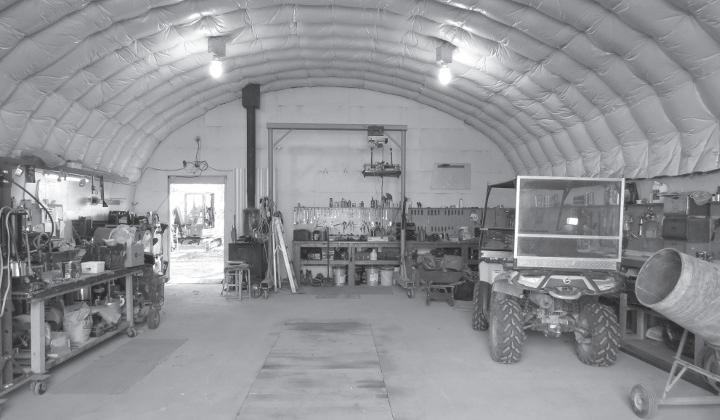
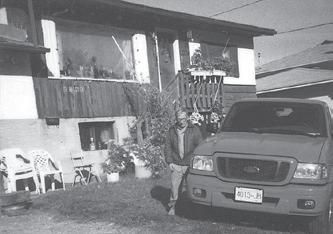

BUILDING Lot 8091 Flamingo Rd. 80'X135' with city sewer & water. Allows mobiles as well. $85,000. 563-6985, 981-1950 HART Area, 400' frontage X 100' deep, serviced $300,000. 250565-4888
LARGE Res. lot, serviced, green belt on back, Oak Ridge Cres, Hart hwy. $89,900 obo 250-5623886 LOT for Duplex, 4-plex or apartment/condo. Fully zoned. Ready for permit. Near Multiplex & Walmart. 250-961-6786




IN THE MATTER OF THE BANKRUPTCY OF RANdAll WIllIAM PRUdEN
NOTICE is hereby given that Randall William Pruden filed an Assignment in Bankruptcy on April 28, 2020, and that John S. Beverley & Associates Inc. was appointed as Trustee. The first meeting of creditors will be held on the 20th day of May 2020 (via telephone call 250-5634300) at the hour of 11:30 morning, at the office of the Trustee, 1240 5th Avenue, in the city of Prince George, in the Province of British Columbia.
Dated at Prince George, BC this 4th day of May 2020.

NLFD AUTO LTD OPA PRINCE GEORGE MOTORS
1x56.0
R0011816432
Notice of Sale of Vehicle Pursuant to the Repairer’s Lien Act
Whereas BRYAN KIRBY is indebted to PRINCE GEORGE FORD in the sum of $11,269.33 for repairs completed and payable upon a 2013 FORD F150 BEARING VIN 1FTFW1ET3DKE25708, this vehicle will be offered for sale on MAY 29, 2020 at 1331 CENTRAL STREET, PRINCE GEORGE, BC.
Please contact Mike at 250-563-8111 in order to place bids or to arrange to view.

Dunkley Lumber Ltd., has prepared a draft Management Plan (MP #5) for Tree Farm Licence # 53. The TFL is located in the HixonStrathnaver area on the east side of Highway 97 out to roughly Stony Lake and Ahbau Lake.
The primary purpose of the Management Plan is to document the timber supply analysis that looks at the timber supply implications of current management practices within TFL 53. The Chief Forester of the Province of BC will use the information in the Management Plan to help determine a new Allowable Annual Cut for the TFL.
Dunkley Lumber Ltd. invites you to review and submit comments on the draft MP #5. The review period is from May 11, 2020 to July 11, 2020. If you wish to review a copy of the draft MP #5 please contact Dunkley to arrange to receive a copy.
If you have questions, we would be pleased to discuss these with you over the phone or by email correspondence. Written comments on the plan should be received by July 11, 2020 to ensure consideration. Please send your written comments to:
Dunkley Lumber Ltd., PO Box 173, Prince George, BC, V2L 4S1
For more information please contact Doug Perdue, Chief Forester at 250-998-4205 or at dperdue@dunkleylumber.com





1. ELIMINATE DUST
Dust contains a variety of contaminants that can harm the health of your family, especially children and people with asthma. That is why vacuuming, dusting furniture and cleaning bedding thoroughly should be done on a regular basis. A tip to remember: to eliminate as much dust as possible from a carpet, vacuum each square metre of surface for at least one minute.
2. THROW OUT EXPIRED FOOD PRODUCTS
Inspect the contents of your fridge and freezer twice a month and throw out any food products that have passed their expiry date. By the way, did you know that most meat should be eaten within eight months of freezing? When it comes to your fridge, it is best not to wait for bad smells to show up before you clean.

3. USE AIR PURIFYIN PLANTS
Whether you have a green thumb or not, stock up on plants that are known to improve the air quality in homes. Here are the best choices:
•Spathiphyllum, an elegant plant that produces pretty white flowers.
• Sansevieria, commonly called “mother-in-law’s tongue.”
• Philodendron, a plant with exotic foliage often used by florists.
• Ivy, an exceptionally vigorous creeper.
• Ficus, a plant that absorbs heat and releases moisture.
• Dracaena, a very resistant plant also called “dragon tree.”
• Chlorophytum, a common species often referred to as “spider plant.”
• Aloe, whose many virtues are recognized in herbal medicine.
• Aglaonema, an easy-to-care-for houseplant.
To boost your air quality, choose at least two or three species and place them in every room of your home. A professional horticulturist will be able to tell you how to care for them properly.
Call in a professional to inspect and clean
all the heating, cooling and air circulation systems in your home.
The kinds of appliances that should be serviced regularly:
• air conditioner
• dehumidifier
• air exchanger
• furnace
• hood
• humidifier
• heat pump
• fan
Just because your walls, floors, furniture and appliances look clean, it does not mean that they really are. Most contaminants are invisible to the naked eye, so take the precaution of cleaning all surfaces using a suitable product. Don’t forget the doorknobs!

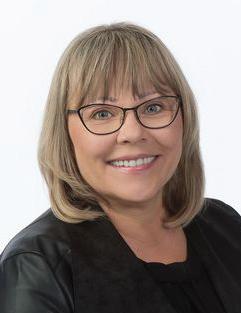












Would you like to celebrate the arrival of spring by adding some pep to your dining room? Here are three suggestions.

1. FLOWERS
A great way to bring spring into your home is with a centrepiece for your dining table. Fill a favourite vase with spring flowers — think tulips, lilies, gerbera, lilacs, daffodils or hyacinths. For a truly stunning arrangement, consult a florist.
2. BIRDS
It is true: “One swallow does not a summer make.” However, for a spring-like touch, you can use some decorative elements inspired by our feathered friends. Try a tablecloth with a bird pattern, a vintage-style metal birdcage or a slim vase filled with a few long feathers.
3. COLOUR
Welcome spring’s freshness into your dining room by opting for pastel (mint green) or citrus colours (lemon yellow).
Before welcoming the spring weather with open arms, there are a few essential jobs you need to do in order to take care of your biggest investment: your home.
1. Carefully examine the foundation for possible cracks, water in filtration or signs of moisture. If any foundation walls appear to be damaged in any way, have them repaired immediately by a professional repair service.
2. Have your heating system inspected and ser viced by a qualified technician. March is also the perfect time to clean your fireplace or wood stove. And don’t forget to have the chimney swept as well.

3. Check the gutters and make sure the water from melting snow drains as far away as possible from the foundation walls. If necessary, unblock gutters and downspouts, tighten loose joints and affix all parts securely to the house.
4. Have your French drains inspected, as they often take a lot of punishment over the winter. You definitely want to be sure they are working properly in order to avoid water infiltration and unpredictable overflows from your sump pit.


Spring has arrived and we’re finally enjoying some warm weather. However, the long, cold winter may have damaged parts of your home, including the roof. Now is the time to find out exactly what needs to be repaired. Here are a few tips to guide you in the right direction.
Use your “eagle eyes” to check for signs of damage to your roof. Don’t stand on the roof to do this; not only could you further damage it but you could also fall and se riously injure yourself. Your best bet is to look from the ground or from second floor windows, if you can see from there.
If checking your roof seems impossible from your yard, there is still the option of asking a neighbour’s permission to check your roof from their highest windows. Re member to take your binoculars with you.
Here are the seven main signs to look for:
1. Moss-like vegetation growing on the roof.
2. Flashings (metal waterproofing strips) that are rusty, damaged or even missing.
3. Nail heads sticking out.
4. The attic insulation seems damp or wet.
5. Shingles look as if they’re undulating, curling, disintegrating or losing pieces.
6. Condensation in the attic.
7. Stains or mould on the ceiling or roof trusses.
If you’ve answered “yes” to any of the above questions, you should talk to a roofing contractor to find out exactly what kind of work is required. After that, any repair or replacement work can be done. Remember that roofing requires special exper tise; only professionals can guarantee lasting work of superior quality.

Is it time to bring your bedroom’s style into this decade? Or perhaps you’d soon like to take on a really exciting renovation project? Then let yourself be inspired by the latest trends and give your bedroom a makeover worthy of the classiest home decor magazines.
The central element of any master bedroom has to be the bed. For a trendy look, opt for a model with a padded headboard, with sleek, industrial-style metallic lines, or in a rustic or Scandinavian style. Note that fourposter beds are also very up-tothe-minute. Just make sure you can leave 30-60 cm between the top of the structure and the ceiling in order to avoid overpowering the room.
Dress up your bed with fluffy, voluminous bedding. Choose classic fabrics; linen, which has a soft texture and amazing durability, is a great choice. It wrinkles easily, but that’s part of its charm. To find the kind of bedding that will make all the difference in your revamped bedroom, shop around in your local stores. And don’t forget that vibrant herringbone patterns are very fashionable this year, and no, they aren’t just for kids.
LIGHTING
Add some character to your bedroom with an unusual light fixture
in the middle of the ceiling; make sure it works with a dimmer switch. Gold, silver and bronze models are all very “in” this year; however, chandeliers always look great in the master bedroom. When matched appropriately to the decor, they add a wonderfully classic touch.
LONG LIVE THE BLUES!
Here’s a useful factoid: all shades of blue are popular for 2016. Whether it’s for the walls, curtains or bedding, this soothing colour will transform your master bedroom into a peaceful haven. Now, let’s see: do you prefer sky blue, ocean blue, sapphire blue or teal?





Spring is finally here. The days are getting longer, and people are throwing open their windows to enjoy the fresh air and hanging out laundry to dry in the sunshine. Speaking of washing, the arrival of spring also means it’s time to clean house. It’s time to sort, dust, sweep, air out, wash and scrub the house from top to bottom. Are you ready?
The list may seem daunting, but just take it one at a time: light fixtures and ceiling fans; screens and windows; drapes and blinds; cabinets and closets; appliances and upholstered furniture; carpets and floors; shed and barbecue; pool and garden. But if it really does seem like too much, you can call in the pros for some of the chores. It may be best to leave the carpets and rugs to the experts to ensure they’re thoroughly cleaned and dried. Similarly, some upholstery and curtain fabrics require dry cleaning. In other words, don’t hesitate to have your drapes, duvets or upholstered furniture cleaned professionally.
You can also ask your family for help. If your kids aren’t big enough to clean

windows or the medicine cabinet, they could still sort and tidy their drawers and closets. Think of all those clothes and toys they’ve outgrown and that other children can make use of.
Do you hate anything to do with washing and cleaning? Or perhaps you just don’t have the time to do everything yourself? You could always entrust your spring cleaning, in whole or in part, to a housecleaning service. Your home will be as clean as a whistle in the blink of an eye.


Does your kitchen need refurbishing?
Would you love to create a cutting-edge decor worthy of a decorating magazine? Draw on as many of the 2016 trends as you like and turn your kitchen into a beautiful — and functional — room that’s ideal for dreaming up mouth-watering meals for family and friends. Gasps of admiration, guaranteed.
With its cool colours and clean lines, the 2016 kitchen has the esthetic of a laboratory, but in a good way. Islands, cabinets and countertops have smooth, gleaming surfaces on which a bare minimum of objects are placed. Similarly, storage space is optimized so all the things you don’t have an immediate use for can stay out of sight. The key word: minimalism.
Add pale touches of colour (mint green, pale pink, baby blue, lilac or butter yellow) to neutral kitchens. These pastel shades from decades past are making a comeback this year, while the vintage trend is in creasingly popular. Purity, softness and comfort are the magic ingredients for a userfriendly kitchen where everyone loves to hang out.
with anthracite , brown and ivory tones.
Today’s kitchen island is no longer used exclusively for preparing meals. Now it has been transformed into a multi-purpose element that’s used as an extra table or for storage. To be really up to date, furnish your kitchen with a model that has been custom designed and made by a professional. What’s the ultimate island in 2016?
A brightly coloured one (bottle green,


Copper-coloured accents and custom-designed islands are star features in
After stainless steel, gold, chrome and bronze, designers are now going crazy over copper. To give your kitchen a modernyet-warm feel, integrate a few elements with a copper finish or even better, solid copper. This year, copper cabinet handles and knobs, light fixtures, faucets, utensils and even appliances blend perfectly


electric blue) standing in the centre of a kitchen decorated in classic shades of gray, white, black or beige. You’ll definitely create the “wow” effect!
Here is a list of 10 essential tools that always come in handy for day-to-day repair jobs:
1. box-cutter knife
2. screwdrivers (flat, square, star, etc.)
3. set of Allen keys
4. hammer
5. level
6. tape measure
7. pair of long-nose pliers
8. drill
9. metal ruler
10. saw
Add to your toolbox a roll of duct tape, tie wraps as well as some screws and nails of various sizes, and you will be all set.