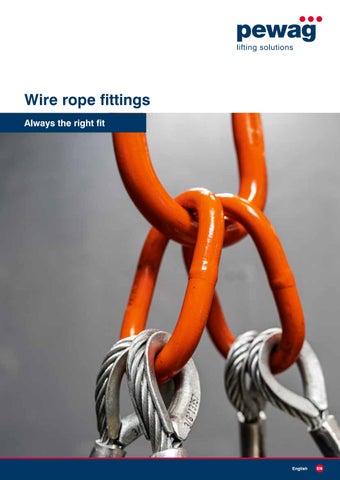
Wire rope fittings
Always the right fit
Always the right fit
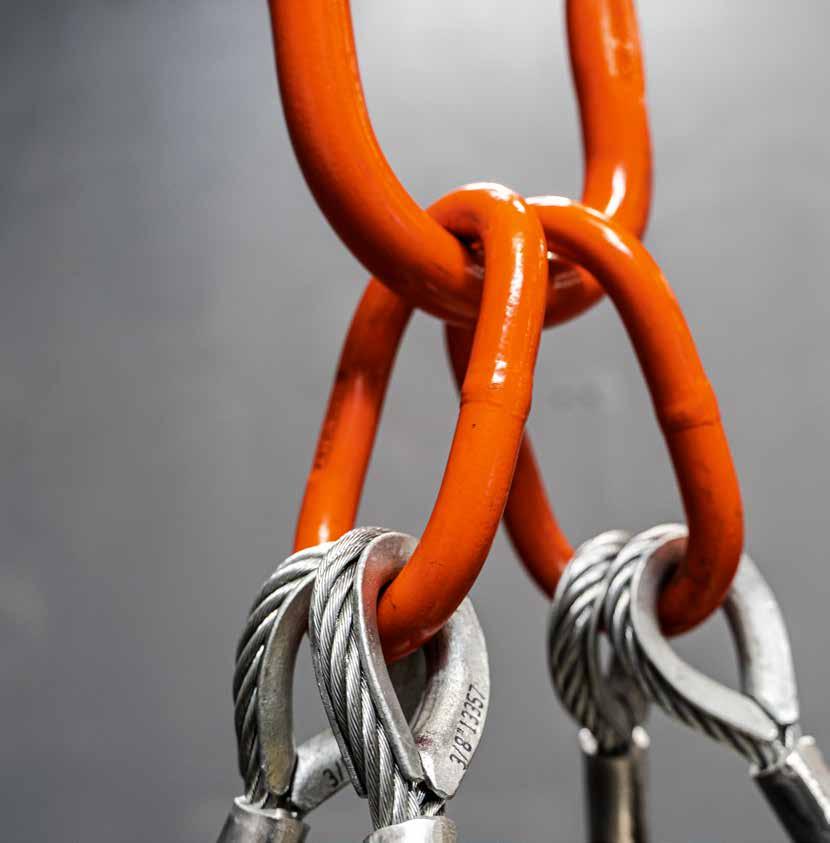
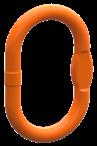
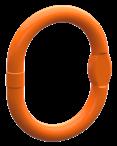
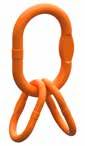
Master link and Master link assembly
Sling hooks, shackle & wire rope
Our wire rope fittings portfolio includes snatch blocks, master links, master link assemblies, a variety of hooks, shackles, wire rope clips and spare parts. To assist in selecting the appropriate fitting for your wire rope sling, we offer a dedicated comparison table that simplifies the matching process.
Additionally, we provide a comprehensive user manual containing essential information on general usage, maintenance, inspection, repair, storage, and transportation of the fittings.
You’ll also find direct links to our pewag winner offshore and pewag winner inox product lines, which feature additional solutions for rope sling applications.
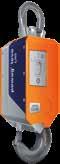
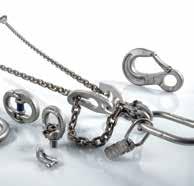
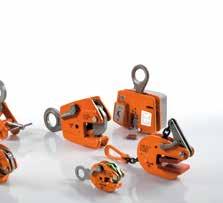
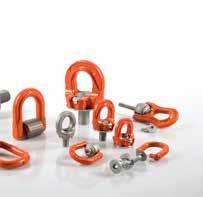
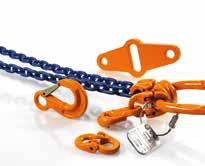

Spare parts
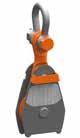

Spare parts available
Anti-corrosion coating (powder coating)
3D CAD drawing & trace parts
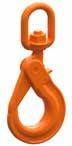
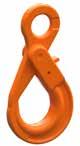
Swivel safety hook
Quick fastener
Standard test certificates Upon request Upon request Upon request Upon request Upon request
Individual test certificates *Applies only to SBRH and not to

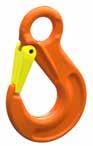
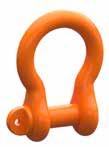
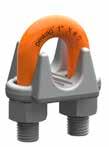
to 200°C
to 392°F
to 120°C
to 392°F
to 200°C
to 392°F
to 120°C
to 392°F
to 200°C
to 392°F
to 200°C -40°F to 392°F Results from the rope’s operating temperature Upon request Upon request Upon request Upon request Upon request Upon request
Rated Load in US — Working Load Limit (WLL) at SF 5:1.
The listed load capacities in the table are understood as the maximum values for the different slinging methods according to the standard method and the assignment of rope slings according to Flemish Eye are based on 6x19 and 6x37 classification wire rope with a steel core EIPS-MS-IWRC (Extra Improved Plow Steel, Mechanical Splice, Independent Wire Rope Core = for international 1770 N/mm²). Values shown are in pounds (lb), divided (:) ~2000 = results in unit tons (to)..
2-3/8
Chart is for reference only. Product not sold by pewag International group.
The company pewag only produces the components and not steel wire rope and/or not assembly the steel wire rope slings. Always use the sling tag for the working load limits or consult sling manufacturer.
All sling angles refer to the horizontal angle. Horizontal sling angles less than 30 degress shall not be used.
Note: Working load limits WLL (Rated loads) based on a minimum D/d ratio of 25:1. Rated load based on pin diameter no larger than natural eye
width or less than the nominal sling diameter. For choker hitch, the angle of choke is 120 deg or greater. Values listed in US lb are based on EQUAL loading of all sling legs. Do not exceed work load limits.
Reference: ASME B30.9-2021 and based on OSHA standards (Occupational Safety and Health Administration).
Typing errors are reserved.
2-3/8
2-1/2
3
Chart is for reference only. Product not sold by pewag International group.
The company pewag only produces the components and not steel wire rope and/or not assembly the steel wire rope slings. Always use the sling tag for the working load limits or consult sling manufacturer.
All sling angles refer to the horizontal angle. Horizontal sling angles less than 30 degress shall not be used.
Note: Working load limits WLL (Rated loads) based on a minimum D/d ratio of 25:1. Rated load based on pin diameter no larger than natural eye
width or less than the nominal sling diameter. For choker hitch, the angle of choke is 120 deg or greater. Values listed in US lb are based on EQUAL loading of all sling legs. Do not exceed work load limits.
Reference: ASME B30.9-2021 and based on OSHA standards (Occupational Safety and Health Administration).
Typing errors are reserved.
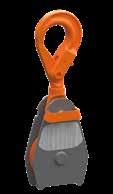
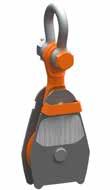
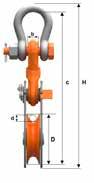
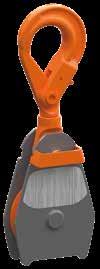
SBRH SBRS
SBRH 04 13 115
SBRH 08 22 150
SBRH 12 22 150
SBRS 04 13 115
SBRS 08 22 150
SBRS 12 22 150
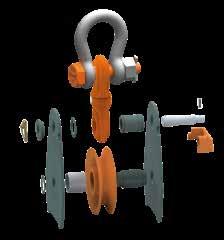
• Snatch block with removable bolts for attaching ropes
• For loads up to 4 / 8 / 12 tonnes
• Pulley for multiple rope diameters
• Maintenance free compound bushing
• SBRS equipped with pewag shackle P215
Standards Temperature
ASME B30.26 -20°C to 60°C -4°F to 140°F
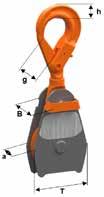
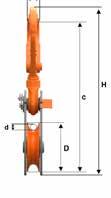
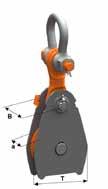
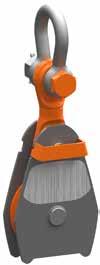
SBRS with pewag Shackle P215 – learn more about our shackles in the brochure.
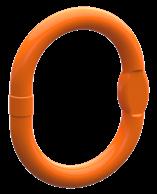
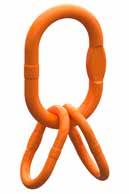
AW 10
(Formerly A 100)
AW 13 (Formerly A 130)
AW 16
(Formerly A 160)
AW 18
(Formerly A 180)
AW 22
(Formerly A 220)
AW 26
(Formerly A 260)
AW 32
(Formerly A 320)
AW 36
(Formerly A 360)
AW 45
(Formerly A 450)
AW 50
(Formerly A 500)
AW 56
(Formerly A 560)
AW 72
(Formerly A 720)
MW 10 (Formerly MW 100)
MW 13 (Formerly MW 130)
MW 16 (Formerly MW 160)
MW 18 (Formerly MW 180)
MW 22 (Formerly MW 220)
MW 26
(Formerly MW 260)
MW 32 (Formerly MW 320)
MW 36 (Formerly MW 360)
MW 56 (Formerly MW 560)
VAW 6/7
VAW 8
VAW 10
VAW 13
VAW 16
VAW 19/20
VAW 22
VAW 26
VAW 32
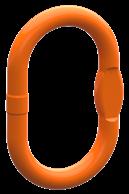
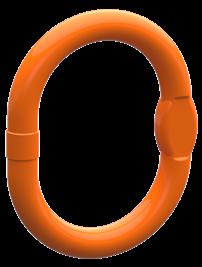
• Designed for use in the assembly of 1-leg and 2-leg rope slings
• Can also serve as an end link
• Offers universal connection options via its engineered flat section
ASTM A952/A952M-02, but higher working load limit and ASME B30.9
-40°F to 400°F
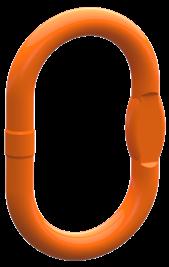
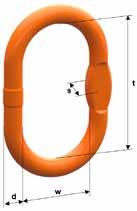
The Working Load Limit (WLL) with a safety factor of 5:1 applies specifically when used with steel wire rope slings.
The assignment of sling ropes includes matching thimbles in accordance with Federal Specification FF-T-276b. Component selection for lifting slings is based on their respective Working Load Limits (WLL), ensuring compatibility with all steel wire rope sizes
pounds [lb], using EIPS-MS-IWRC (1770 N/mm²) wire rope. For additional combination options, please contact pewag’s Technical Product Management team. For chain sling configurations, refer to the pewag winner chain system G10/Grade 100 catalog.
• Increased inner width accommodates larger crane hooks or specialized hook types (compared to the AW Master Link)
• Also suitable for use as an end link
• Offers universal connection options via its engineered flat section
ASTM A952/A952M-02, but higher working load limit and ASME B30.9
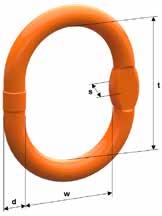
The assignment of sling ropes includes matching thimbles in accordance with Federal Specification FF-T-276b. Component selection for lifting slings is based on their respective Working Load Limits (WLL), ensuring compatibility with all steel wire rope
using EIPS-MS-IWRC (1770 N/mm²) wire rope. For additional combination options, please contact pewag’s Technical Product Management team. For chain sling configurations, refer to the pewag winner chain system G10/Grade 100 catalog.
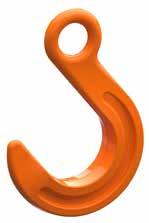
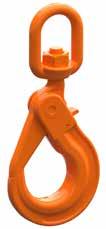
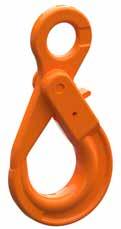
HSR 5/6-8
HSR 7/8-8
HSR 10-8
HSR 13-8
FW 7/8 (Formerly F 70/80)
FW 10 (Formerly F 100)
FW 13 (Formerly F 130)
FW 16 (Formerly F 160)
FW 19/20 (Formerly F 200)
FW 22 (Formerly F 220)
FW 26 (Formerly F 260)
FW 32 (Formerly F 320)
WLHW 5/6 (Formerly WLH 5.50)
WLHW 7/8 (Formerly WLH 70/80)
WLHW 10 (Formerly WLH 100)
WLHW 13 (Formerly WLH 130)
WLHW 16 (Formerly WLH 160)
WLHW 19/20* (Formerly WLH 200)
WLHW 22* (Formerly WLH 220)
WLHBW 5/6 (Formerly WLHB 5.50)
WLHBW 7/8 (Formerly WLHB 70/80)
WLHBW 10 (Formerly WLHB 100)
WLHBW 13 (Formerly WLHB 130)
WLHBW 16 (Formerly WLHB 160)
WLHBW 19/20 (Formerly WLHB 200)
WLHBW 22 (Formerly WLHB 220)
LHW 5/6 (Formerly LH 5.50)
LHW 7/8 (FormerlyLH 70/80)
LHW 10 (Formerly LH 100)
LHW 13 (Formerly LH 130)
LHW 16 (Formerly LH 160)
LHW 19/20 (Formerly LH 200)
LHW 22 (Formerly LH 220)
LHW 26 (Formerly LH 260)
LHW 32 (Formerly LH 320)
*Upon request
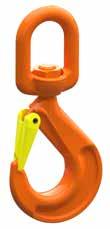
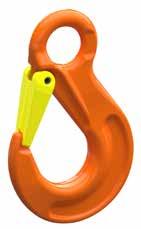
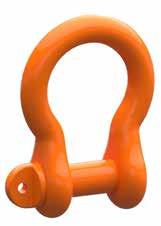
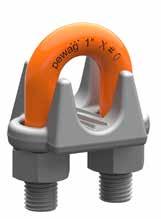
WSBW 7/8
WSBW 10
WSBW 13
HSW 5/6
(Formerly HS 5.50)
HSW 7/8 (Formerly HS 70/80)
HSW 10 (Formerly HS 100)
HSW 13 (Formerly HS 130)
HSW 16 (Formerly HS 16 )
HSW 19/20
(Formerly HS 200)
HSW 22 (Formerly HS 220)
HSW 26 (Formerly HS 260)
HSW 32 (Formerly HS 320)
GSCHW 7/8
GSCHW 10
UCR 1/8"
UCR 3/16"
UCR 1/4"
GSCHW 13 UCR 5/16"
GSCHW 16 UCR 3/8"
UCR 7/16-1/2"
UCR 9/16-5/8"
UCR 3/4"
UCR 7/8" UCR 1"
UCR 1 1/8" UCR 1 1/4" UCR 1 3/8" UCR 1 1/2"
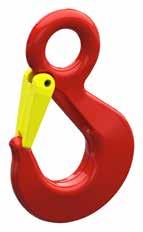
• The HSR eye sling hook offers versatile application options and is equipped with a forged safety latch.
• Enhanced safety is provided by a latch that securely locks into the tip of the hook.
• The SFGW safety latch set is also available as a replacement parts kit.
ASTM A952/A952M-02 but higher WLL and ASME B30.9 -40°F to 400°F
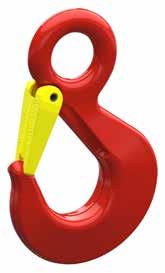
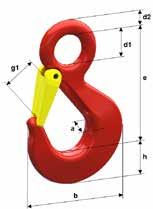
This product is intended exclusively for use in steel wire rope slings. The specified Working Load Limit (WLL) with a safety factor of 5:1 applies only in such applications.
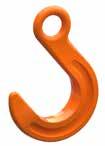
HSR Eye sling hook
The assignment of single-leg rope slings with Flemish Eye terminations is based on wire rope classified as 6x19 or 6x37, featuring a steel core (EIPSMS-IWRC — Extra Improved Plow Steel, Mechanical Splice, Independent Wire Rope Core), with an international tensile strength rating of 1770 N/mm².
Code Nominal rope diameter [inch]
HSR 5/6 1/4 to 3/8
HSR 7/8 7/16 to 1/2
HSR 10 9/16
HSR 13 5/8 to 3/4
The assignment of sling ropes includes matching thimbles in accordance with Federal Specification FF-T-276b. Component selection for lifting slings is based on their respective Working Load Limits (WLL), ensuring compatibility with all steel wire rope sizes specified in pounds [lb], using EIPS-MS-IWRC (1770 N/mm²) wire rope. For additional combination options, please contact pewag’s Technical Product Management team.
• Extra-wide jaw design for enhanced versatility
• Commonly used in foundries and performs exceptionally well with Connex and welded systems
ASTM A952/A952M-02 and ASME B30.9
-40°F to 400°F
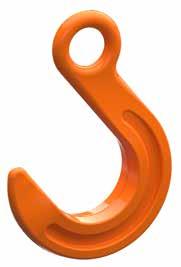
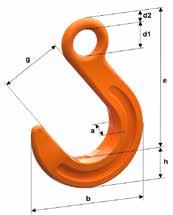
1) When used with steel wire rope slings, the Working Load Limit (WLL) is based on a safety factor of 5:1. 2) When used with chain slings, the Working Load Limit (WLL) is based on a safety factor of 4:1.
FW Foundry hook
The assignment of single-leg rope slings with Flemish Eye terminations is based on wire rope classified as 6x19 or 6x37, featuring a steel core (EIPSMS-IWRC — Extra Improved Plow Steel, Mechanical Splice, Independent Wire Rope Core), with an international tensile strength rating of 1770 N/mm². Code Nominal rope diameter [inch]
FW 7/8 3/8 to 7/16
FW 10 1/2 to 9/16
The assignment of sling ropes includes matching thimbles in accordance with Federal Specification FF-T-276b. Component selection for lifting slings is based on their respective Working Load Limits (WLL), ensuring compatibility with all steel wire rope sizes specified in pounds [lb], using EIPS-MS-IWRC (1770 N/mm²) wire rope. For additional combination options, please contact pewag’s Technical Product Management team. For chain sling configurations, refer to the pewag winner chain system G10/Grade 100 catalog.
• Automatically locks and cannot be opened while under load
• Non-rotatable and remains securely positioned when loaded
• VLHW safety latch set available as a replacement parts kit
ASTM A952/A952M-02 and ASME B30.9 -40°F to 400°F
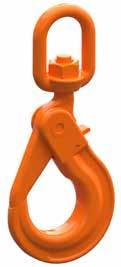
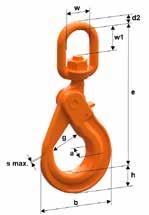
1) When used with steel wire rope slings, the Working Load Limit (WLL) is based on a safety factor of 5:1.
2) When used with chain slings, the Working Load Limit (WLL) is based on a safety factor of 4:1.
*WLHW 19/20 and 22 upon request
Swivel safety hook
Code
The assignment of single-leg rope slings with Flemish Eye terminations is based on wire rope classified as 6x19 or 6x37, featuring a steel core (EIPSMS-IWRC — Extra Improved Plow Steel, Mechanical Splice, Independent Wire Rope Core), with an international tensile strength rating of 1770 N/mm².
Nominal rope diameter [inch]
WLHW 5/6 1/4 to 5/16
WLHW 7/8 3/8 to 7/16
WLHW 10 1/2 to 9/16
WLHW 13 5/8 to 3/4
WLHW 16 7/8
WLHW 19/20* 1 to 1-1/8
WLHW 22* 1-1/4
The assignment of sling ropes includes matching thimbles in accordance with Federal Specification FF-T-276b. Component selection for lifting slings is based on their respective Working Load Limits (WLL), ensuring compatibility with all steel wire rope sizes specified in pounds [lb], using EIPS-MS-IWRC (1770 N/mm²) wire rope. For additional combination options, please contact pewag’s Technical Product Management team. For chain sling configurations, refer to the pewag winner chain system G10/Grade 100 catalog.
• Automatically locks and cannot be opened while under load
• Capable of rotating under load for added versatility
• Wider jaw opening than the HSW model, offering increased flexibility
ASTM A952/A952M-02 and ASME B30.9 -40°F to 250°F
1) When used with steel wire rope slings, the Working Load Limit (WLL) is based on a safety factor of 5:1. 2) When used with chain slings, the Working Load Limit (WLL) is based on a safety factor of 4:1.
Swivel safety hook
The assignment of single-leg rope slings with Flemish Eye terminations is based on wire rope classified as 6x19 or 6x37, featuring a steel core (EIPSMS-IWRC — Extra Improved Plow Steel, Mechanical Splice, Independent Wire Rope Core), with an international tensile strength rating of 1770 N/mm².
WLHBW 5/6 1/4 to 5/16
WLHBW 7/8 3/8 to 7/16
WLHBW 10 1/2 to 9/16
WLHBW 13 5/8 to 3/4
WLHBW 16 7/8
WLHBW 19/20 1 to 1-1/8
WLHBW 22 1-1/4
The assignment of sling ropes includes matching thimbles in accordance with Federal Specification FF-T-276b. Component selection for lifting slings is based on their respective Working Load Limits (WLL), ensuring compatibility with all steel wire rope sizes specified in pounds [lb], using EIPS-MS-IWRC (1770 N/mm²) wire rope. For additional combination options, please contact pewag’s Technical Product Management team. For chain sling configurations, refer to the pewag winner chain system G10/Grade 100 catalog.
• Securely locked when under load
• Wider jaw opening than the HSW model, providing greater flexibility
• VLHW safety latch set located on the back of the hook — available as a spare parts kit
ASTM A952/A952M-02 and ASME B30.9
-40°F to 400°F
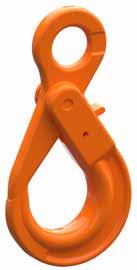
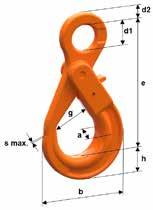
1) The working load limit with safety factor 5 applies when used for steel wire rope slings.
2) The working load limit with safety factor 4 applies when used for chain slings.
The assignment of single-leg rope slings with Flemish Eye terminations is based on wire rope classified as 6x19 or 6x37, featuring a steel core (EIPSMS-IWRC — Extra Improved Plow Steel, Mechanical Splice, Independent Wire Rope Core), with an international tensile strength rating of 1770 N/mm².
Code Nominal rope diameter [inch]
LHW 5/6 1/4 to 5/16
LHW 7/8 3/8 to 7/16
LHW 10 1/2 to 9/16
LHW 13 5/8 to 3/4
LHW 16 7/8
LHW 19/20 1 to 1-1/8
LHW 22 1-1/4
LHW 26 1-3/8 to 1-1/2
LHW 32 1-5/8 to 1-7/8
The assignment of sling ropes includes matching thimbles in accordance with Federal Specification FF-T-276b. Component selection for lifting slings is based on their respective Working Load Limits (WLL), ensuring compatibility with all steel wire rope sizes specified in pounds [lb], using EIPS-MS-IWRC (1770 N/mm²) wire rope. For additional combination options, please contact pewag’s Technical Product Management team. For chain sling configurations, refer to the pewag winner chain system G10/Grade 100 catalog.
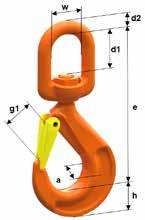
• Equipped with a die-forged safety latch that securely locks into the tip of the hook
• Allows rotation under load for enhanced handling flexibility
• SFGW safety latch set available as a replacement parts kit
Standards Temperature
ASTM A952/A952M-02 and ASME B30.9
-40°F to 250°F
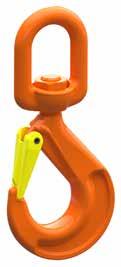
1) When used with steel wire rope slings, the Working Load Limit (WLL) is based on a safety factor of 5:1.
2) When used with chain slings, the Working Load Limit (WLL) is based on a safety factor of 4:1.
The assignment of single-leg rope slings with Flemish Eye terminations is based on wire rope classified as 6x19 or 6x37, featuring a
MS-IWRC — Extra Improved Plow Steel, Mechanical Splice, Independent Wire Rope Core), with an international tensile strength
The assignment of sling ropes includes matching thimbles in accordance with Federal Specification FF-T-276b. Component selection for lifting slings is based on their respective Working Load Limits (WLL), ensuring compatibility with all steel wire rope sizes specified in pounds [lb], using EIPS-MS-IWRC (1770 N/mm²) wire rope. For additional combination options, please contact pewag’s Technical Product Management team. For chain sling configurations, refer to the pewag winner chain system G10/Grade 100 catalog.
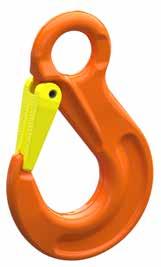
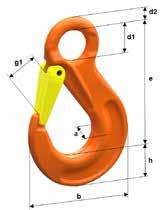
• Offers versatile application options and is equipped with a forged safety latch
• Enhanced safety through a latch that securely locks into the tip of the hook
• SFGW safety latch set is available as a replacement parts kit
Standards Temperature
ASTM A952/A952M-02 and ASME B30.9 -40°F to 400°F
1) When used with steel wire rope slings, the Working Load Limit (WLL) is based on a safety factor of 5:1. 2) When used with chain slings, the Working Load Limit (WLL) is based on a safety factor of 4:1.
Eye sling hook
Code
The assignment of single-leg rope slings with Flemish Eye terminations is based on wire rope classified as 6x19 or 6x37, featuring a steel core (EIPSMS-IWRC — Extra Improved Plow Steel, Mechanical Splice, Independent Wire Rope Core), with an international tensile strength rating of 1770 N/mm².
Nominal rope diameter [inch]
HSW 5/6 1/4 to 5/16
HSW 7/8 3/8 to 7/16
HSW 10 1/2 to 9/16
HSW 13 5/8 to 3/4
HSW 16 7/8
HSW 19/20 1 to 1-1/8
HSW 22 1-1/4
HSW 26 1-3/8 to 1-1/2
HSW 32 1-5/8 to 1-7/8
The assignment of sling ropes includes matching thimbles in accordance with Federal Specification FF-T-276b. Component selection for lifting slings is based on their respective Working Load Limits (WLL), ensuring compatibility with all steel wire rope sizes specified in pounds [lb], using EIPS-MS-IWRC (1770 N/mm²) wire rope. For additional combination options, please contact pewag’s Technical Product Management team. For chain sling configurations, refer to the pewag winner chain system G10/Grade 100 catalog.
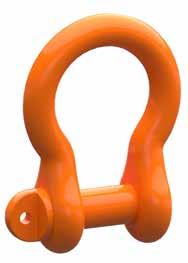
• UKCA marking available upon request
• The smooth bolt rests securely within both eyes, ensuring that the thread does not extend into the shackle opening
Standards Temperature
ASTM A952/A952M-02 and ASME B30.9
-40°F to 400°F
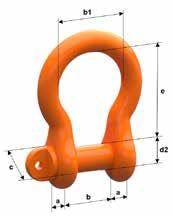
1) When used with steel wire rope slings, the Working Load Limit (WLL) is based on a safety factor of 5:1.
2) When used with chain slings, the Working Load Limit (WLL) is based on a safety factor of 4:1.
Bow shackle
The assignment of single-leg rope slings with Flemish Eye terminations is based on wire rope classified as 6x19 or 6x37, featuring a steel core (EIPSMS-IWRC — Extra Improved Plow Steel, Mechanical Splice, Independent Wire Rope Core), with an international tensile strength rating of 1770 N/mm². Code Nominal rope diameter [inch]
GSCHW 7/8 3/8 to 7/16
GSCHW 10 1/2 to 9/16
GSCHW 13 5/8 to 3/4
16
The assignment of sling ropes includes matching thimbles in accordance with Federal Specification FF-T-276b. Component selection for lifting slings is based on their respective Working Load Limits (WLL), ensuring compatibility with all steel wire rope sizes specified in pounds [lb], using EIPS-MS-IWRC (1770 N/mm²) wire rope. For additional combination options, please contact pewag’s Technical Product Management team. For chain sling configurations, refer to the pewag winner chain system G10/Grade 100 catalog.
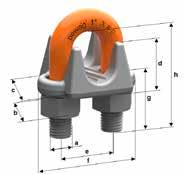
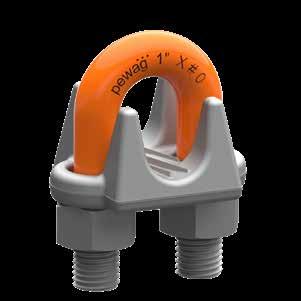
• Full traceability – Batch-marked and linked to the pewag certification tool
• Corrosion protection – Fully hot-dip galvanized, powdercoated U-bolt
• Easy identification – Laser marking with size and manufacturer ID*
• Robust construction – Forged identification on the saddle ensures reliability under load
• Engineered strength – Optimized for maximum durability
ASME B30.26 Results from the rope’s operating temperature EN 13411-5 Type B
Spare parts must only be replaced by qualified personnel with the appropriate training and expertise. Only genuine pewag spare parts are permitted for use and installation.
VLHW Trigger set
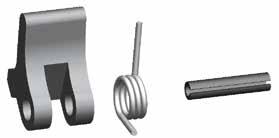
SFGW Safety catch set
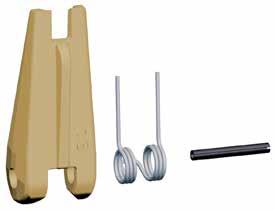
Code
VLHW 5/6
VLHW 7/8
VLHW 10
VLHW 13
VLHW 16
VLHW 19/20/22/26
For accessory part
LHW 5/6, WLH(B)W 5/6
LHW 7/8, WLH(B)W 7/8
LHW 10, WLH(B)W 10
LHW 13, WLH(B)W 13
LHW 16, WLH(B)W 16
LHW 19/20, LHW 22, LHW 26, WLH(B)W 19/20, WLH(B)W 22
VLHW 32 LHW 32
Code
For accessory part
SFGW 5/6 HSW 5/6, HSR 5/6
SFGW 7/8 HSW 7/8, HSR 7/8, WSBW 7/8
SFGW 10 HSW 10, HSR 10, WSBW 10
SFGW 13 HSW 13, HSR 13, WSBW 13
SFGW 16 HSW 16
SFGW 19/20 HSW 19/20
SFGW 22 HSW 22
SFGW 26 HSW 26, HSW 32
Shock
slight shocks
arises e.g. when the lifting or lowering movement is accelerated.
medium shocks strong shocks
occurs e.g. when the chain slips during adjustment to the shape of the load.
arises e.g. when the load falls into the unloaded chain.
Load factor 1 0.7 not permissible
Edge load not permissible
Note: This table exclusively refers to pewag lifting components. Different usage limitations may apply to lifting ropes and thimbles. For any questions regarding these components, please consult the respective manufacturer of the steel wire ropes or thimbles.
Use at temperatures below -40°F and above 700°F is prohibited!
pewag components can be used for general lifting purposes for single- and multi leg wire rope slings acc. EN 13414-1 and ASME B30.9 and are suitable for the lifting and transporting of loads, provided that the instructions of the operating manual and all national regulations are complied with. The components comply with Machinery Directive 2006/42/ EC and may only be used in accordance with the Declaration of Incorporation.
It should only be used by trained personnel, who have read and understood the instructions for use. This is available for download at www.pewag.com.
Hooks should not bear weight on the tips. Loops, suspension links and thimbles must be able to move freely in the hook. pewag lifting accessories may only be used within the specified temperature range, taking into account the corresponding
reduction factors for wire rope slings – otherwise, they must be taken out of service.
The maximum load capacities specified in the table must be reduced if the wire rope slings are subjected to adverse loading conditions.
These include, for example, high temperatures, asymmetry, edge loads, impacts or similar. In these cases, the load factors must be taken into account.
Should you still require technical information, please contact the manufacturers of wire rope slings or wire rope sling assemblies. pewag only manufactures the components and does not produce wire rope slings or wire rope sling assemblies.
If you require technical information about pewag lifting components, please contact our technical service team.
When used correctly by qualified personnel, pewag lifting accessories offer a long service life and uphold the highest safety standards. By carefully reviewing this user information and handling all lifting operations responsibly and attentively, material damage and personal injury can be effectively prevented.
• Application: pewag components are designed for assembling wire rope fittings, master links, and four-leg assemblies used in lifting and transporting loads with rope hangers.
• Load Alignment: All links and components must be able to move freely and align with the direction of the load to ensure safe operation.
• Operating Temperature Range:
Standard range: -40°F to 400°F. For temperatures exceeding this range, refer to the “Restrictions on Use” table. Use below -40°F or above 700°F is strictly prohibited
• Shock Loading: Components must not be subjected to shock loads. For situations involving impacts, consult the “Restrictions on Use” table.
• Personnel Requirements:
Only trained and qualified personnel may use these components. Before each use, components must be visually inspected for any signs of damage or defects.
To ensure safety and maintain product integrity, only original pewag parts (such as bolts, safety pins, screws, etc.) included in the scope of delivery should be used with pewag lifting components.
Any modification to the original condition—such as bending, grinding, welding, drilling, stamping, or removal of parts—compromises safety and may result in serious hazards. This includes:
• Heating components (e.g., chains) above 380°C (for pewag winner 400)
• Removing safety-critical parts like safety pins or catches
For hazardous conditions, please refer to the “Restrictions on Use” table for guidance.
• Temperature effects
Load reduction factors for elevated temperatures are listed in the table and apply until the components return to room temperature. Do not use pewag lifting components outside the specified temperature range. If components have been exposed to temperatures beyond the allowable limits, they must be immediately removed from service.
• Chemical Exposure: pewag lifting components must not be used in environments containing acids, alkalis, or chemicals, nor should they be exposed to their fumes.
Surface Treatments:
Do not apply surface coatings such as hot-dip galvanizing or electrogalvanizing to pewag chain slings. If surface treatment is necessary, always consult the pewag service department beforehand.
Chemical Treatments:
Processes like dipping or chemical stripping of coatings can introduce serious risks. These must not be performed without prior consultation.
We strongly recommend contacting the pewag technical team before making any alterations or applying treatments to ensure continued safety and compliance.
Certain industrial processes may release acids or hazardous fumes.
In high-risk environments—such as offshore operations, lifting of personnel, or handling potentially dangerous loads (e.g., molten metals, corrosive substances, or nuclear materials)—the Working Load Limit (WLL) must be adjusted based on the specific risk level. This assessment and adjustment must be carried out by qualified and trained personnel.
Hazardous conditions must always be avoided to ensure the safety of both personnel and equipment.
Spare parts must only be replaced by trained personnel with the appropriate skills and expertise. Only genuine pewag spare parts are permitted for use.
Prevention is better than cure!
The safety and longevity of pewag lifting components depend on proper use and regular maintenance. Over time, operational conditions can affect their integrity, making routine inspection, cleaning, and evaluation essential.
Maintenance Guidelines: Components should be cleaned regularly. After use in wet or corrosive environments, they must be dried and lightly oiled to prevent rust and corrosion.
Initial Inspection Before First Use Before: using any pewag component for the first time, verify the following:
• The components match the items ordered
• Test certificates and/or declarations of compliance and conformity are present
• Markings and load capacities on the components match the documentation
• Product details are recorded in a tracking system
• This manual is available and has been read and understood by all relevant personnel
Inspection Before Each Use: Operators must inspect components before every use to ensure they are in good working condition.
Pay close attention to:
• Visible damage
• Signs of wear
• Any conditions that meet the discard criteria
• If there is any doubt, the component must be removed from service immediately and evaluated by trained personnel.
Evaluation Procedures:
• Components must be clean and free from oil, dirt, and rust before inspection.
• Painting is only allowed if it does not obstruct visual evaluation.
• Prohibited cleaning methods include:
• Pickling (may cause embrittlement)
• Burning (overheating)
• Sandblasting (abrasion)
• Defects such as cracks must not be concealed.
• Ensure adequate lighting during inspection and examine the entire lifting chain thoroughly.
Inspection and Evaluation After Unforeseen Incidents: In the event of an unforeseen incident—such as an accident, overheating, overloading, collision, or exposure to acids or chemicals—pewag lifting components must be immediately removed from service and evaluated by qualified personnel. Continued use without proper assessment may compromise safety.
Periodic Inspections by Trained Personnel: Routine inspections must be conducted by trained personnel in accordance with national regulations.
Unless otherwise specified, inspections should occur at least once every twelve months.
This interval should be shortened under the following conditions:
• Frequent use at or near maximum load capacity
• Exposure to harsh environments or corrosive substances
• Signs of increased wear or corrosion Inspections must include both visual and functional assessments.
After long periods in storage, the components should be checked thoroughly by trained personnel before initial use especially if the date for inspection has been exceeded or the product was stored incorrectly - see below.
Post-Storage Inspection: If components have been stored for an extended period, especially beyond the scheduled inspection date or under improper conditions, a thorough inspection by trained personnel is required before initial use.
Load Testing Requirements: A load, visual, and functional test must be performed by trained personnel at least every two years. This interval should be shortened for components in frequent or demanding use.
• The load test should be conducted at twice the Working Load Limit (WLL).
• Alternatively, a crack detection test may be performed using methods such as: Magnetic particle inspection or Dye penetrant testing
Note: Load test intervals may vary depending on national regulatory requirements.
If any of the following conditions are identified during a visual inspection, the affected component must be immediately removed from service and referred to qualified personnel for evaluation:
• Fracture or breakage of any component
• Missing or illegible markings, including load capacity or identification details
• Unrecognizable identification or traceability markings Distortion of suspension components or accessories
• Cuts, notches, grooves, or cracks, especially those oriented across the direction of tension, as they may lead to sudden failure
• Severe corrosion, such as pitting, heat discoloration, damage to surface coatings, or signs of unauthorized welding
• Missing or defective safety features, including evidence of hook over-extension
• The hook opening must not exceed 10% of its nominal dimension
• A displaced or swing-out safety catch is a clear indication of overloading
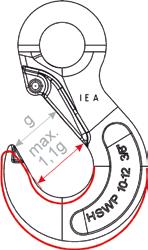
Maximum allowable dimensional deviations relative to the nominal dimension.
Repairs must only be carried out by qualified personnel with the necessary skills and expertise.
Minor surface damage such as small cuts, notches, or grooves may be carefully removed by grinding or filing. After repair, the treated area must blend smoothly with the surrounding material, without abrupt changes in cross-section.
The material dimensions must not be reduced by more than 10%, and discard criteria must not apply after the repair.
Proper Storage: Lifting components not in use should be stored on designated racks or frames, not piled on the floor, as improper storage can lead to damage.
Wire Rope Slings on Crane Hooks: If an unloaded wire rope sling remains on the crane hook, the end hook must be secured into the master link, or alternatively, the end links must be properly seated in the crane hook. This helps prevent sling legs from swinging freely or becoming unintentionally detached.
Prohibited Actions: Welding, heat treatment, or straightening of bent components is strictly forbidden. Surface coatings such as hot-dip or electro-galvanizing must not be applied unless approved by pewag.
Documentation: All inspections and repair activities must be recorded and retained for the entire service life of the component.
Long-Term Storage: For extended periods of non-use, components should be cleaned, dried, and lightly oiled or otherwise protected against corrosion before being stored.
Post-Storage Inspection: If components have been stored for a long time without regular inspections, or if they were stored improperly, a thorough inspection must be performed before reuse to ensure they are safe and fully functional.
Comprehensive operating instructions for high-quality pewag products are available for download at www.pewag.com. Our continuous improvement process ensures that all product information remains current. Always refer to the latest version to ensure safe and proper use.
The pewag winner offshore and pewag winner inox G6 plus product lines include a range of high-quality wire rope fittings designed with a safety factor of 5, suitable for demanding lifting applications.
pewag winner offshore – Wire Rope Fittings
AOS – Master link for single- and double-leg wire rope slings
AOS-FZN – Galvanized Master link assembly for single- and doubleleg wire rope slings
VOS – Master link assembly for triple- and four-leg wire rope slings
VOS-FZN – Galvanized Master link assembly for triple- and four-leg wire rope slings
Terms: Net 30 days - Credit must be established with pewag Inc. All other - cash in advance.
• Freight policy
USA & Canada pewag Inc. shipments, over 1,500 lbs. or $4,000.00 within the continental United States or Provincial Canada are prepaid. Carrier at the discretion of pewag. Shipments under 1,500 lbs. or $4,000.00 will be prepaid and added to the invoice. Minimum order of $25.00. For all shipments to Canada, customer will be responsible for duties and taxes.
• Prices:
All prices are shown in US Dollars, order will be accepted subject to prevailing prices at time of order. Prices are subject to change without notice.
• Return goods:
pewag Inc.: Please note that we will accept returns only after a return merchandise authorization has been obtained. Items must be in new condition, unused in original packaging, with manuals and certifications. NO merchandise will be accepted without prior written authorization. Items must be returned to pewag within 120 days from the day shipped - NO returns accepted after 120 days. All returns are subject to a 25% (35% if manuals and certifications are not returned) restocking/handling charge, which will be deducted from the amount of the credit memo. Returned shipments must be prepaid. Collect or unauthorized shipments will be refused.
pewag winner inox G6 plus – Stainless Steel Wire Rope Fittings
AWI – Master link for single- and double-leg wire rope slings
VAWI – Master link assembly for triple- and four-leg wire rope slings
For detailed product descriptions and technical specifications, please refer to the pewag winner offshore folder or the pewag winner inox G6 plus catalog.
Simply scan the QR code provided in the catalog to access the latest information.
• Chain slings and specialty/custome items: Specialty items, cut chain, and chain slings are custom items and are NONRETURNABLE, NONCANCELLABLE, and NONREFUNDABLE.
• For all other pewag terms and conditions of sale: https://www.pewagchain.com/footer/service/terms-and-conditions/
The information contained in our catalog is to be used only as a guide to assist with product selection.
pewag Inc. makes no representation or warranty as to the completeness or accuracy of the information contained in our catalog. The products and specifications set forth in our catalog are subject to change without notice and pewag Inc. disclaims any and all liability for such changes. The information contained in our catalog is provided without warranties of any kind, either express or implied, and pewag Inc. disclaims any and all liability for typographical, printing, or production errors or changes affecting the products and/or the specifications contained in our catalog. It is the responsibility of the customer to thoroughly analyze all aspects of the customers’ proposed application for the products. Due to the diversity of possible applications of pewag Inc. products, the customer is solely responsible for making the final selection of the product(s) to be used and to assure that all performance, safety and warning requirements of the application are satisfied.
pewag winner inox - stainless steel chain system G6 plus
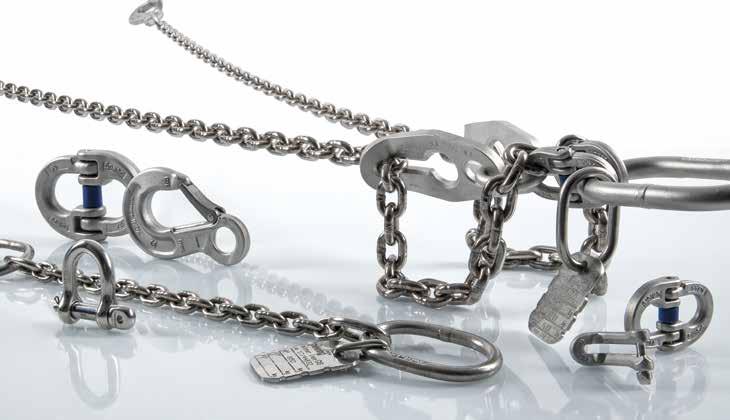
pewag winner offshore - for extreme lifting applications

pewag austria GmbH
A-8041 Graz, Gaslaternenweg 4, Phone: +43 316 6070-0, Fax: +43 316 6070-100, saleinfo@pewag.com, www.pewag.com
FO/26/00497

www.pewag.com