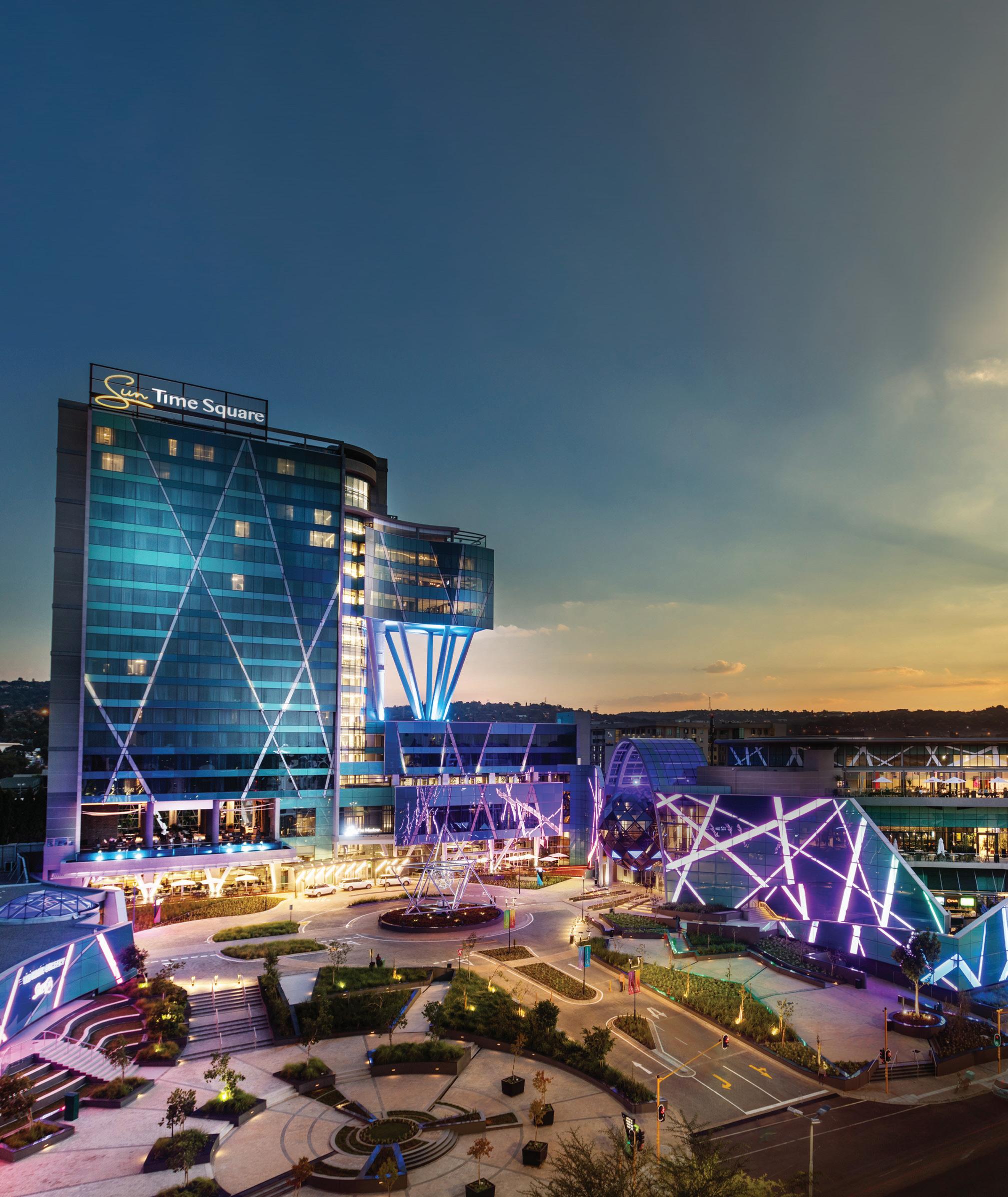
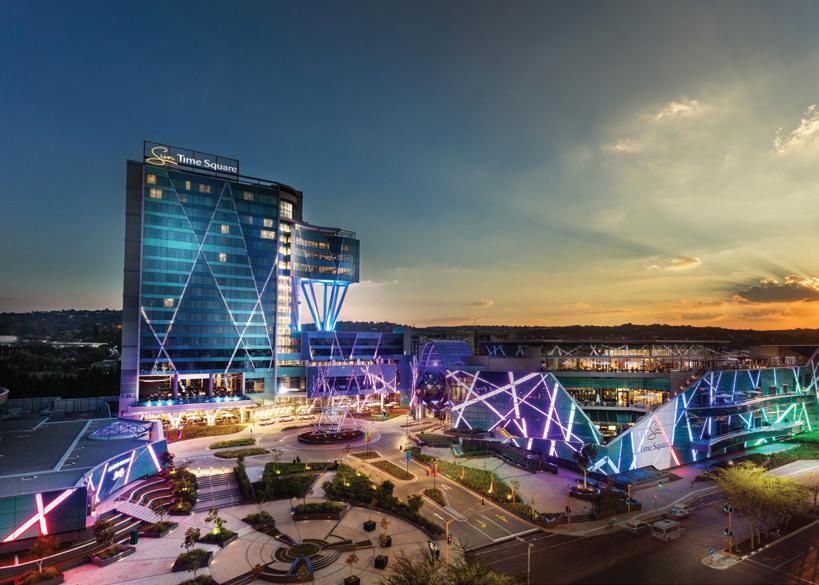
Time Square is a model of a modern casino-resort


Publisher: Peter White
Tel: +44 (0) 1892 740869
Mob: +44 (0) 7973 273714 peter@outsourcedigitalmedia.com
Editorial:
Editor in Chief : David McKee dmckee@huntingtonpress.com
Editor EMEA: Damien Connelly damien@outsourcedigitalmedia.com
Associate Editor Asia: Bill Healey healeywe@gmail.com
Online iGaming Editor: Mark McGuinness markmcguinness847@gmail.com
Columnist: Raymond Chan ymrchan@hotmail.com
Associate Editor EMEA: Andrew Behan a.behan@librasgroup.com
Las Vegas Correspondent: Ryan Slattery RyanSlats@gmail.com
International Correspondent: Lyudmyla Kyrychenko lyudmyla.kyrychenko@outsource digitalmedia.com
Production:
Designer: Stewart Hyde stewart@de5ign.co.uk www.de5ign.co.uk
Accounts: Helen Holmes accounts@outsourcedigitalmedia.com
IT Director: Pasha Kuzminskiy pasha@outsourcedigitalmedia.com
ack in the day, before he had political aspirations, Donald Trump held some strong views on iGaming. He opined that it was a multi-billion dollar industry (absolutely true) and the United States should be in on it (agreed). But that was then and, as Shakespeare wrote, the whirligig of time brings its revenges.

BI’d say there’s a brewing backlash against iGaming and sports betting in the U.S., except that it’s already upon us. Nobody seems more aware of this than Trump, who performed a political pirouette. "The whole world, unfortunately, has become somewhat of a casino” he sourly intoned. And he’d know about casinos.
This presidential flip-flop comes atop Trump making disapproving noises about the tax-deductibility of gambling losses, which the present Congress has partly nixed. Now only 90 percent of your losses can be written off, although the revenue raised by that change is going to be negligible.
Why did it happen? Blame it on political prudery and a lasting moral opprobrium against gambling, a legacy of our miserable, puritanical forefathers. Whether it was frowning upon gambling, hanging accused witches or slaughtering Native Americans, our ancestors got the country off very much upon the wrong foot.
We’re still battling their bad ideas today. One need only peruse the top 100 or 150 news stories about casinos and/or gambling and/or sports betting any given day. You’ll be inundated in a tidal wave of tut-tutting. Some take it farther. Legislators in Ohio are pushing a bundle of negative nostrums in an attempt to “reform” sports betting … largely by getting rid of it. No more parlays. No more prop bets. And no more online sports books. That’s their prescription to cure gambling addictions, namely to save the public from itself by killing the industry, which would be disemboweled, were these proposals to be enacted. (And forget about advancing iGaming in this climate.)
After weeks of dithering, some pushback is finally emerging. The Sports Betting Alliance has pointed out the obvious: Namely, that marginalizing legal sports betting is a bonanza for illegal and unregulated bookies. As lawmaker Bill DeMora said of his blue-nosed colleagues, “there was one phrase that never once crossed their lips during the press conference: personal freedom.”
While I can’t speak for other countries, the U.S. is still very much under the thumb of the “strong father” view of government. It’s an outlook which presupposes that, given a choice, people will make the wrong choice. So you’ve got to take their choices away. It’s utter – but influential – bunk.
Bottom line: The anti-gambling crowd is winning. Our industry needs to wake up and mount an effective counteroffensive – now. Public sentiment is still with us. Why are we waiting?

By Peter White
here are certain industry events that continue to remind you why the global casino business remains one of the most dynamic and resilient industries in the world. This year’s G2E Asia certainly fell into that category.
TCasino Life was delighted to once again exhibit at G2E Asia, where we enjoyed a highly successful and productive show. From the moment the exhibition opened, there was a strong sense of optimism throughout the venue, supported by the presence of senior executives and decision-makers from many of Asia’s leading integrated resorts and casino operators.
What particularly impressed me this year was the quality of the delegates attending. G2E Asia has always attracted influential figures from across the region, but there was a noticeable energy and seriousness to the conversations taking place throughout the exhibition floor. Operators, suppliers and technology providers were all clearly focused on future development, innovation, and expansion opportunities across Asia’s evolving gaming markets.
Our base during the exhibition was the superb Conrad at The Londoner Macao, which provided outstanding hospitality throughout the week. The Londoner continues to demonstrate why Macau remains one of the world’s premier integrated resort destinations, combining luxury accommodation, excellent facilities and an atmosphere perfectly suited to major international business events.
As always, one of the great strengths of attending exhibitions such as G2E Asia is the opportunity to meet people face to face. During the event, I had the pleasure of speaking with executives from some of Asia’s largest resort casinos, many of whom continue to invest heavily in both gaming and non-gaming developments as they seek to broaden their appeal to international visitors.
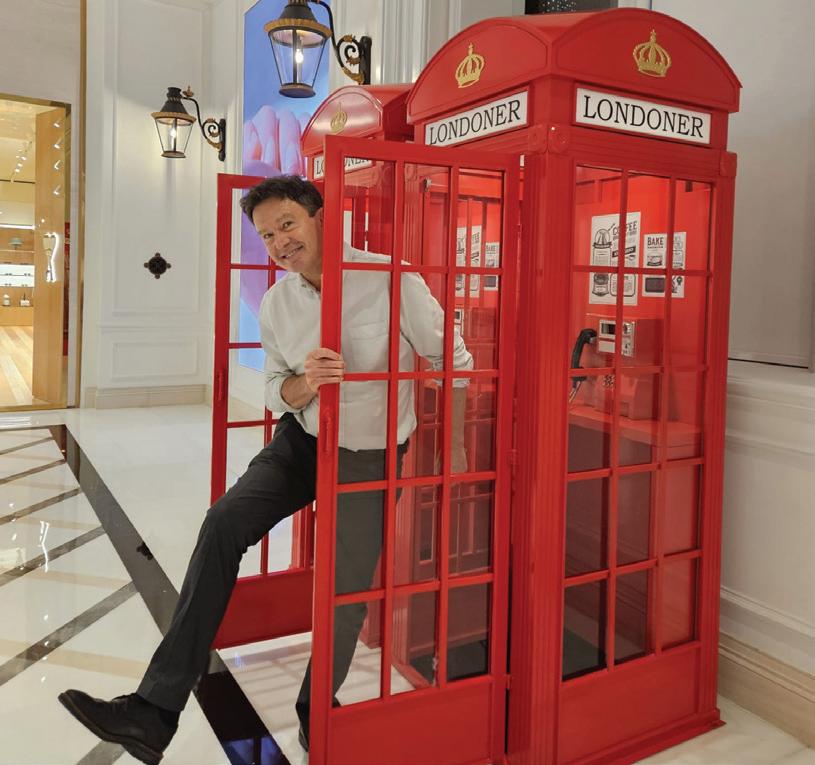
The exhibition also reinforced how important it remains for independent industry media to maintain a physical presence at major global events. Whilst some publishing groups have reduced their international attendance in recent years, Casino Life continues to believe strongly in supporting the industry directly by attending and exhibiting at the world’s leading gaming exhibitions.
The conversations, interviews and relationships developed during G2E Asia will lead to a number of exciting features and exclusive interviews in forthcoming editions of Casino Life, including a major upcoming feature connected to one of Asia’s leading integrated resort operators.
Following Macau, the international travels continue for Casino Life, with upcoming visits including Germany for the European Dealer Championship Finals. That will be followed by a guest invitation aboard a major cruise ship to experience and review its onboard casino operations.
For now, however, G2E Asia once again demonstrated that Asia’s gaming industry remains vibrant, ambitious and very much open for business.
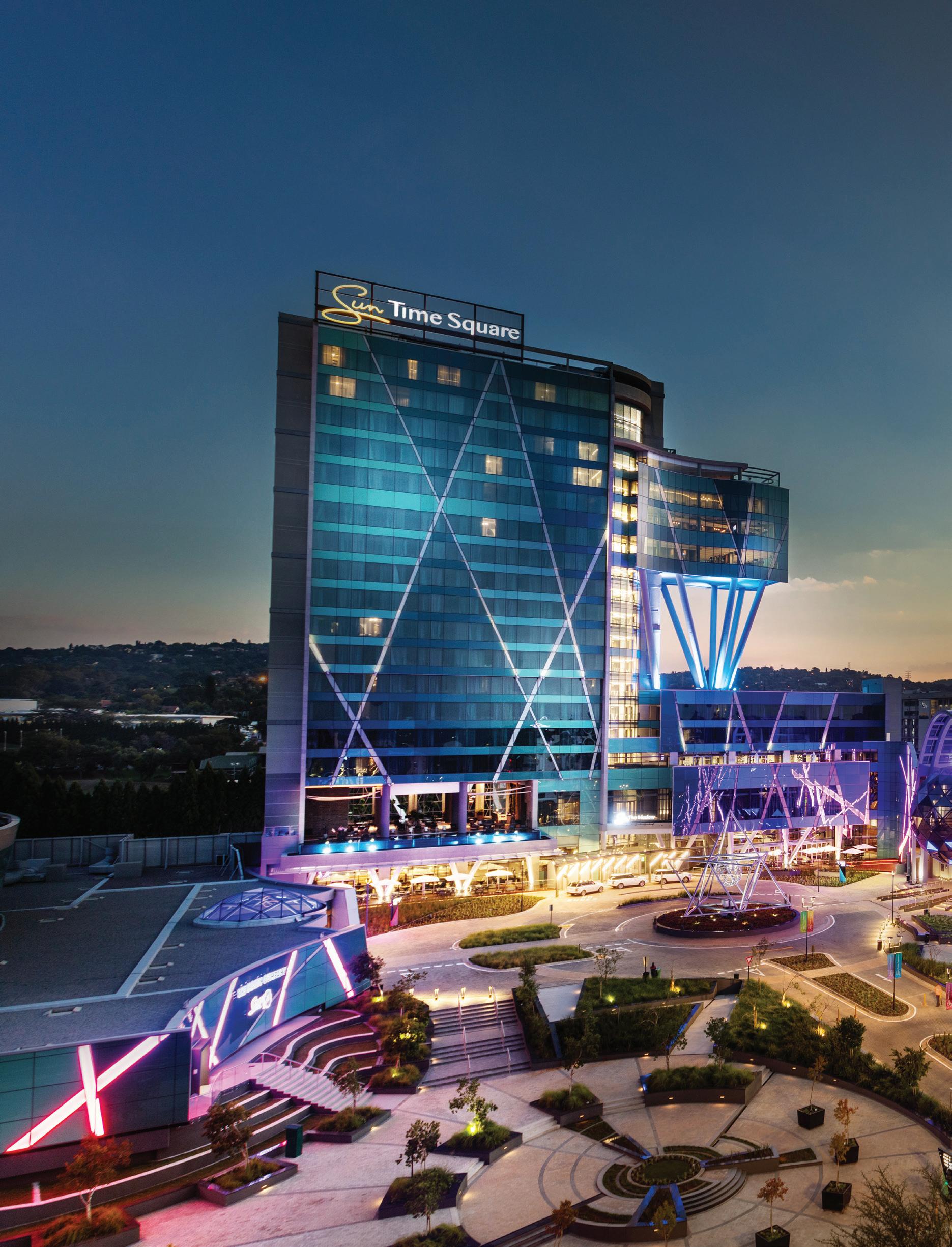
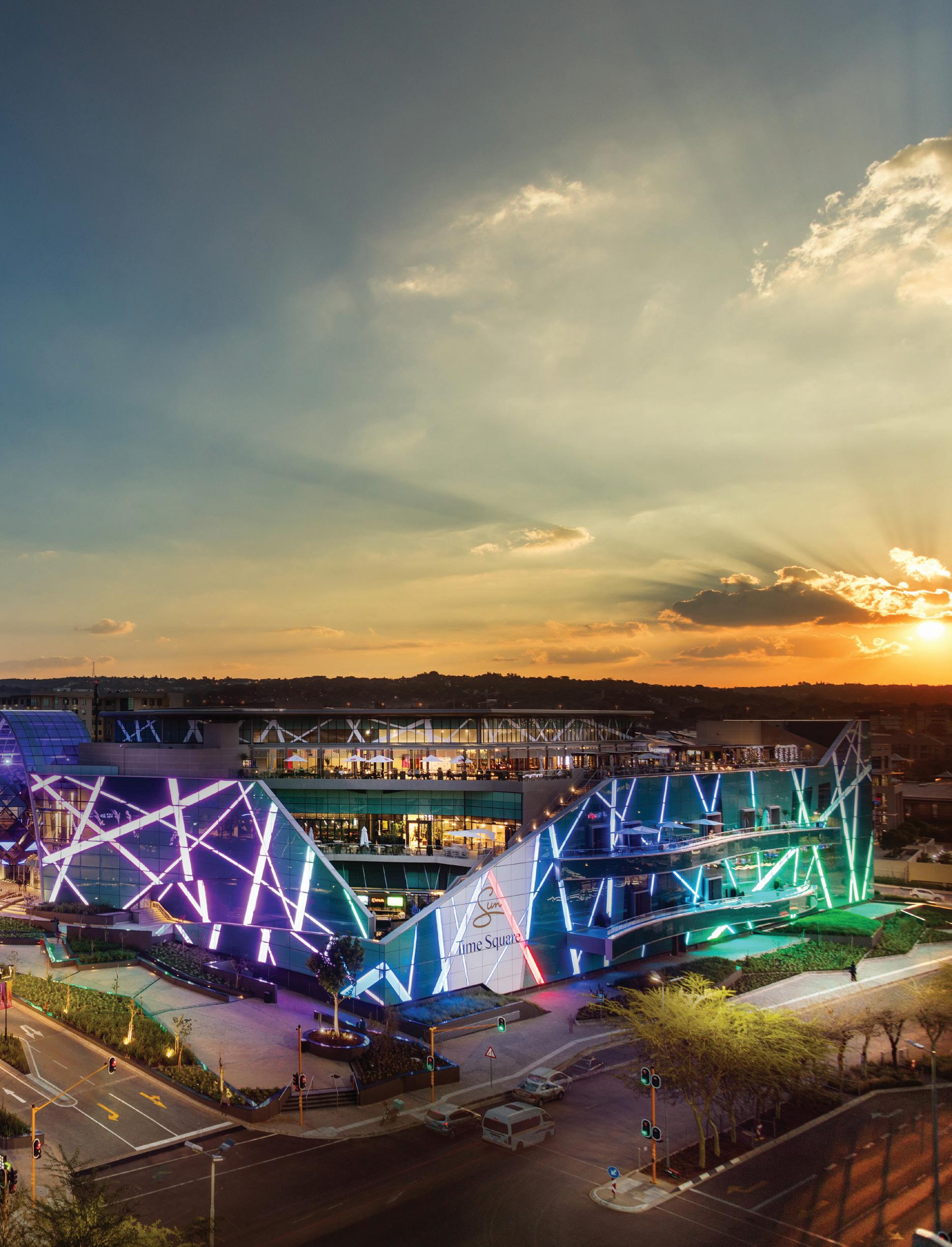
Time Square has developed into one of South Africa’s most dynamic entertainment destinations. How would you define its core identity today? Is it primarily a casino, or a broader leisure and entertainment precinct?
Time Square is fundamentally a casino-led destination, enhanced by a strong leisure and entertainment offering. While gaming remains at the core of the business, the property is differentiated by its diverse facilities, including live entertainment, hospitality, and a wide range of restaurants and bars that cater to different guest preferences, and extend the overall visitor experience.
Looking back since opening in 2017, what do you believe have been the key strategic decisions that have driven sustained growth and performance?
A key strategic decision driving sustained growth has been the development of three integrated facilities –the casino, arena and hotel – that complement and support each other throughout the year. This integrated model attracts a broad range of markets with varying disposable incomes, creating multiple reasons to visit, and ensuring that each component reinforces overall performance and resilience.
How do you see Time Square evolving over the next five to 10 years within the South African gaming and entertainment landscape?
The group is focused on delivering a robust, omnichannel strategy aligned with our online brand, SunBet, to retain customers across both platforms. Time Square will continue to differentiate itself through unique offerings and promotions, ensuring relevance, sustainability and alignment with changing customer expectations.
The casino floor remains central to the property’s success. How has player behavior changed in recent years and how has Time Square adapted to those shifts?
Player behavior has shifted in response to increasing economic pressure in South Africa. While customers continue to visit the casino, they are more priceconscious and have reduced disposable income. Time Square has adapted by refining its gaming mix, and by continuously updating slot machines and table games to ensure the offer remains relevant, engaging, and aligned with changing player expectations.
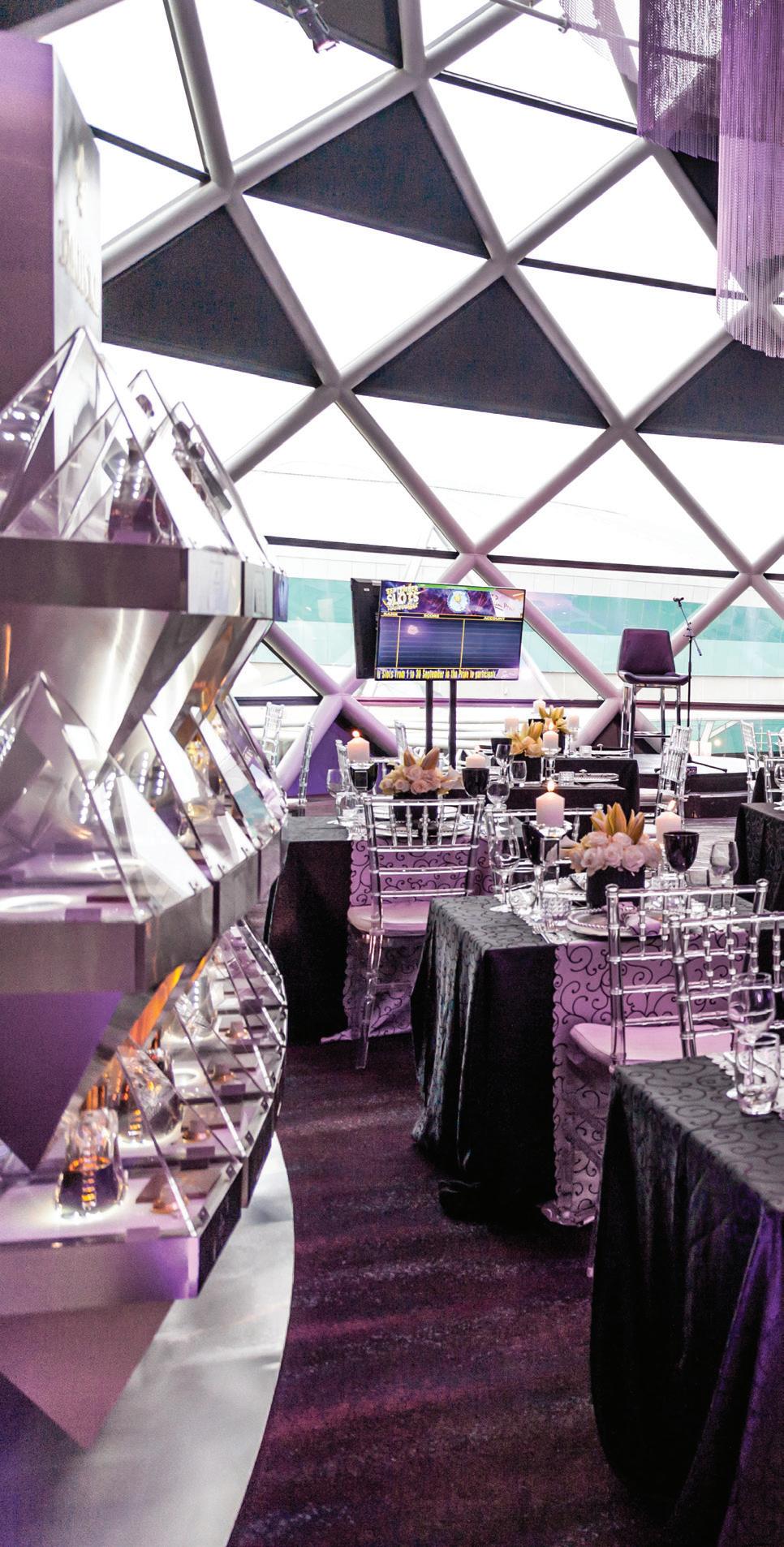
What role does innovation in gaming product, floor layout and customer engagement play in maintaining competitiveness?
They ensure ongoing relevance as the market evolves. As younger, digitally influenced players enter the casino environment, they expect an experience aligned with what they encounter online, making continual innovation critical to maintaining competitiveness.
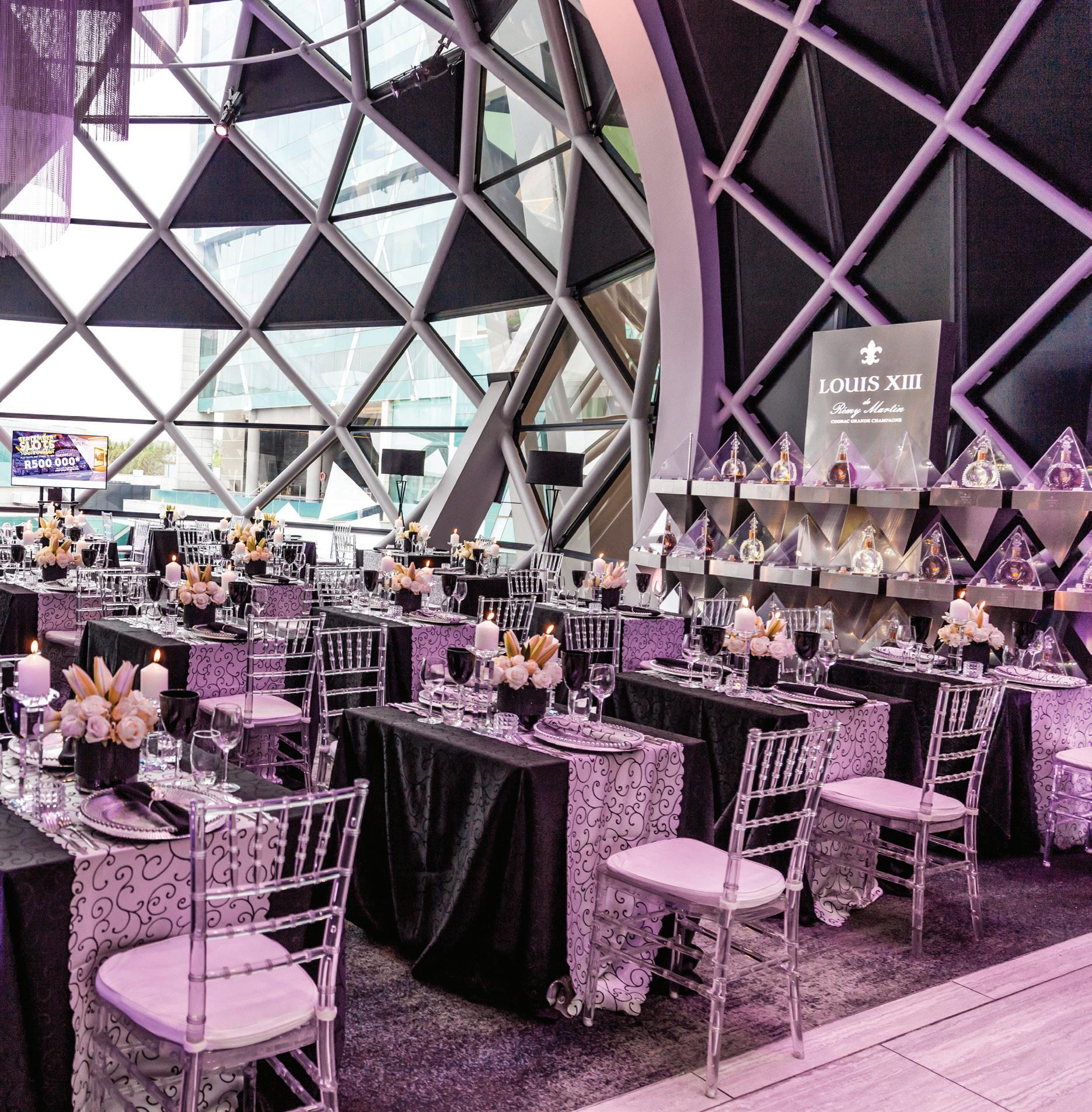
How do you balance traditional gaming revenue with the increasing importance of non-gaming income streams?
Time Square remains a gaming-led business, with the casino as the primary revenue driver. Non-gaming income streams – including the arena, hotel, and food and beverage – are strategically positioned to support and enhance the gaming business. Each is managed within its own budget and performance framework, while contributing to overall footfall, spend, and customer engagement across the property.
The SunBet Arena has hosted major international acts and large-scale events. How important is live entertainment to the overall Time Square proposition?
Live entertainment is a critical component, serving as a powerful marketing tool and a key revenue driver. Hosting the right international and large-scale events increases visitation. It materially supports gaming, hotel, and food and beverage revenue across the property.
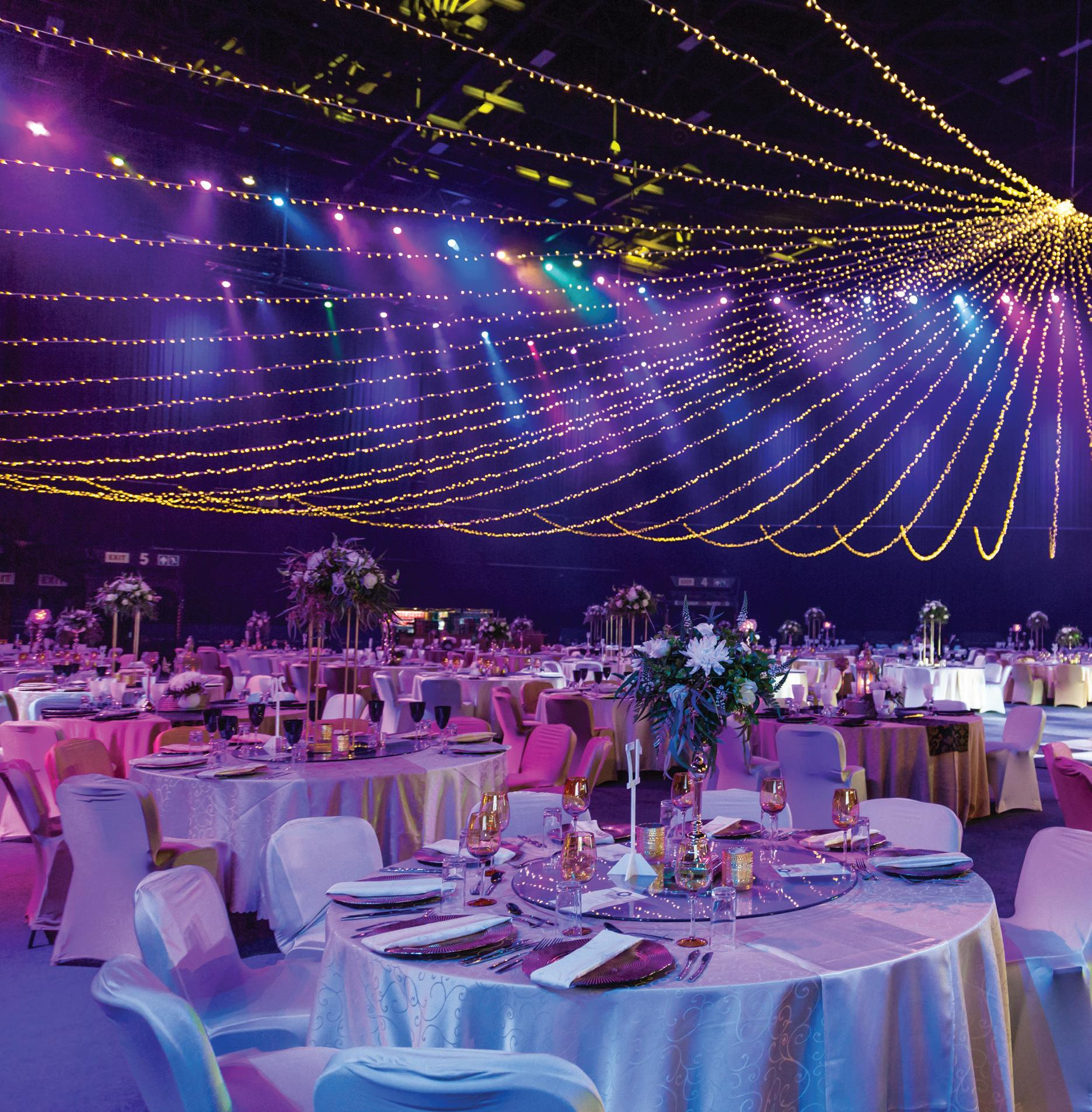
How does the integration of gaming, concerts and conferencing work operationally within a single destination model?
The integration is enabled through close collaboration across operational teams to ensure seamless service delivery across gaming, arena and banqueting functions. Gaming remains the core business and is prioritized in the allocation and use of shared spaces. Other activities are coordinated to complement and support the overall destination model.
Do you see the arena becoming as commercially significant as the casino itself in the future?
The arena is not expected to rival the casino in commercial significance, but it plays a critical supporting role by driving visitation and spend into the casino and restaurants. At the same time, the arena is managed to operate efficiently and perform strongly as a standalone business.
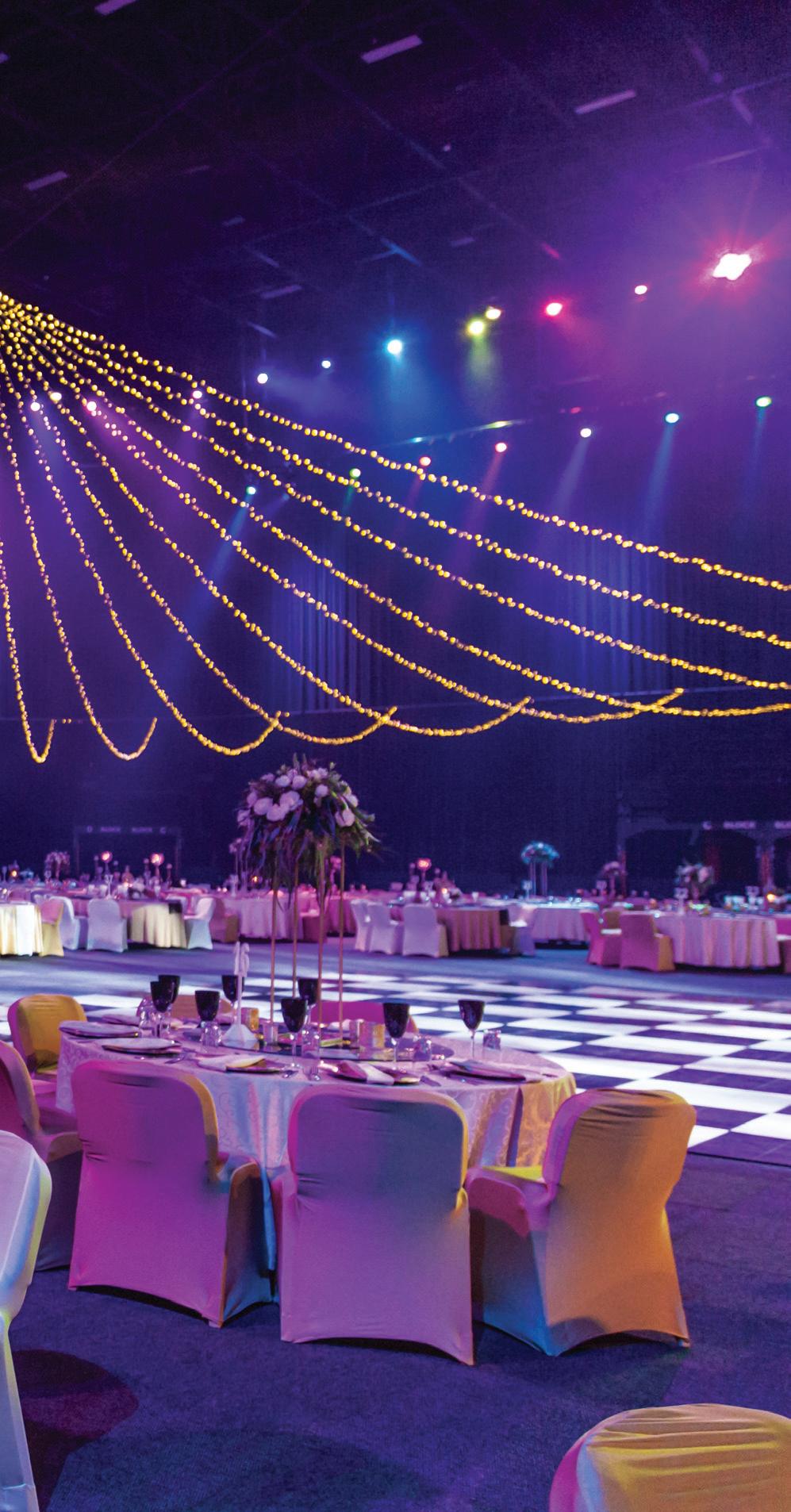
Food and beverage has become a defining element of modern casino resorts globally. How has Time Square approached F&B as part of the guestexperience strategy?
Food and beverage is a key pillar of the Time Square guest experience. We pride ourselves on a diverse and high-quality F&B offering, supported by a strong team capable of delivering both exceptional day-today dining and bespoke events. Our VIP strategy is closely integrated with F&B, leveraging curated
“
The arena is not expected to rival the casino in commercial significance, but it plays a critical supporting role by driving visitation and spend into the casino and restaurants. At the same time, the arena is managed to operate efficiently and perform strongly as a standalone business.
experiences such as chef’s tables, private dining, plated dinners in the arena, food festivals, and cooking competitions to elevate the overall guest experience and drive loyalty.
With such a large and diverse dining offering across the precinct, how do you maintain consistency and quality at scale?
It is done through robust training and development programs, underpinned by a structured induction process across all kitchens. This is complemented by strong leadership at management level, ensuring clear standards, effective skills transfer, and consistent execution across our diverse food and beverage operations.
Time Square has positioned itself strongly as a conferencing and business destination. How significant is this segment to the overall business mix?
The conferencing and business segment is a meaningful contributor to Time Square’s overall business mix. It provides strong midweek demand and supports multiple revenue streams, including events, banqueting, and food and beverage. Representing approximately 10 percent of the business mix, this segment delivers stable base business and plays an important role in balancing performance, particularly against higher leisuredriven demand over weekends.
What types of corporate clients or events are you increasingly attracting, and what does that say about the brand’s positioning?
Time Square is increasingly attracting blue-chip corporates, financial institutions, government and association conferences, alongside local and international events hosted in its multifunctional arena. This includes large-scale business events, conferences, entertainment-led gatherings and premium productions. This demand reflects a brand positioned as professional, credible and versatile, capable of delivering both complex corporate events and world-class, live experiences within one integrated precinct. It reinforces Time Square’s positioning as a destination where serious business, major events and entertainment converge, appealing to both local and international audiences.
The modern casino customer is increasingly a leisure consumer first and a gaming customer second. How is Time Square responding to this shift?
It has always been Time Square’s philosophy that gaming forms an integrated part of our overall entertainment offering, rather than existing as a separate experience. What we are experiencing now is a clear shift in consumer behavior. Guests –whether they are visiting for leisure or gaming –have become far more discerning and valuedriven in how and where they choose to spend their entertainment budget. They are increasingly selective about the quality of the experience, the environment and, ultimately, the return on experience they receive for their spend.


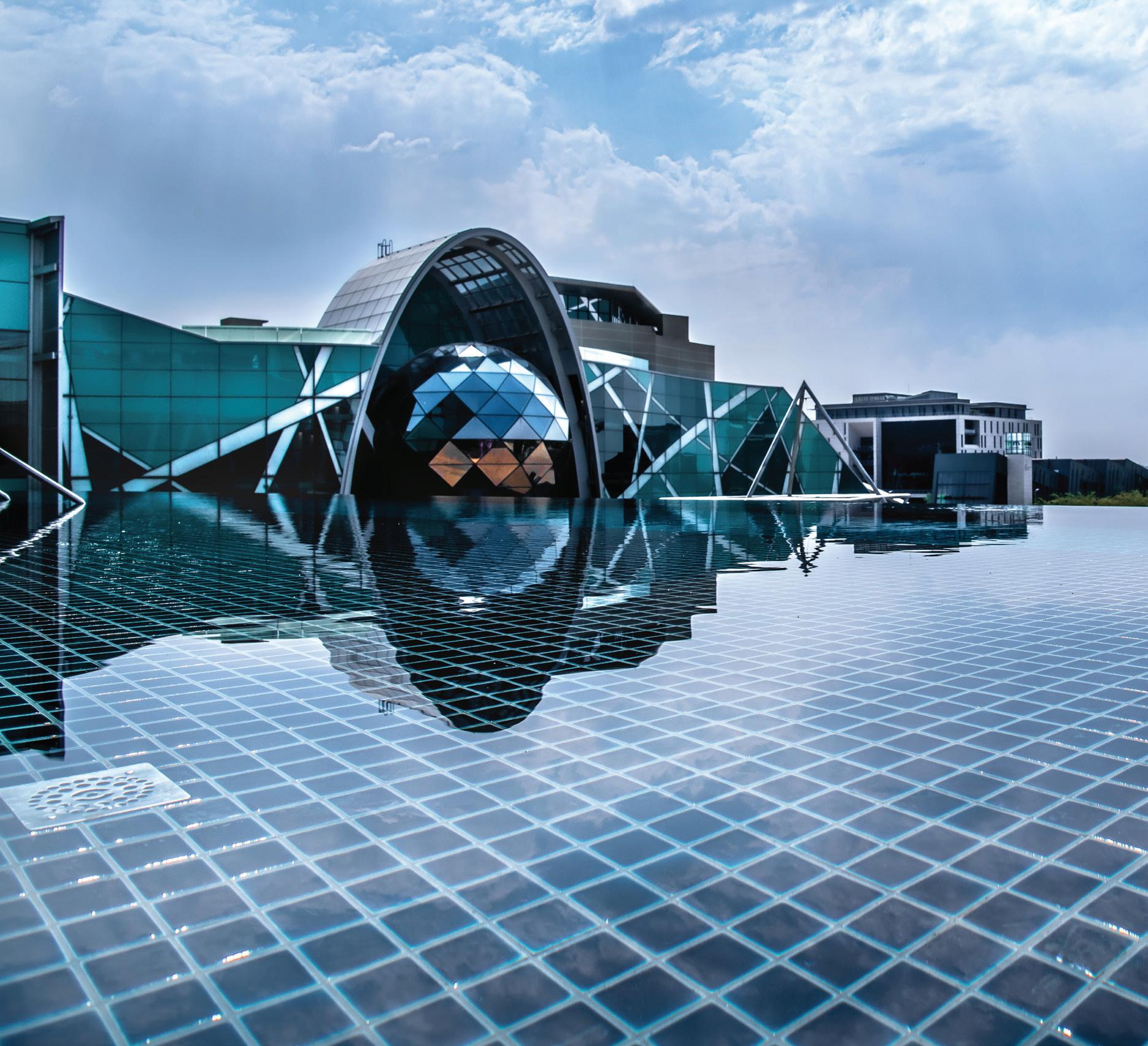
How important is it to create a complete destination experience where families, business guests and gamers all coexist in the same environment?
It is crucial to our strategy. As mentioned, Time Square delivers seamless entertainment experiences, regardless of the guest’s primary reason for visiting. In many ways, Time Square defines what seamless entertainment truly means. Under one roof, we offer the 8,500-seat SunBet Arena, the multi-star-graded Time Square Hotel, a diverse range of restaurants catering to every taste, The Magic Company and bowling complex, world-class conferencing facilities, and of course, the casino, featuring the latest slots
and table games. This fully integrated ecosystem ensures there is something for everyone.
How would you describe the competitive landscape for integrated resorts in South Africa today? It is extremely tough and increasingly unforgiving. Guests have more choice, greater access to information and higher expectations than ever before. As a result, scale and facilities alone are no longer sufficient; success is driven by seamless integration, strong execution, speed to market, service excellence and the ability to create meaningful, memorable experiences that build an emotional connection with guests.

What do you believe sets Time Square apart from other large-scale entertainment and gaming destinations in the region?
It is our continued focus on gaming innovation, particularly in how we are adapting to the evolving online and digital market landscape. We are proactive in investing in new gaming products and technologies, ensuring our offering remains relevant, competitive, and aligned to changing player preferences. This forwardthinking approach positions Time Square as a dynamic and future-ready entertainment destination.
“
Under one roof, we offer the 8,500-seat SunBet Arena, the multi-star-graded Time Square Hotel, a diverse range of restaurants catering to every taste, The Magic Company and bowling complex, world-class conferencing facilities, and of course, the casino, featuring the latest slots and table games.
What is your personal leadership philosophy when managing a complex, multi-layered operation like Time Square?
My leadership philosophy is grounded in clarity, accountability and collaboration. In managing a complex, multi-layered operation like Time Square, I focus on empowering strong teams, maintaining clear priorities, and ensuring alignment between strategy and execution. By staying close to the business, listening to customers and staff, and making data-informed decisions, I aim to drive consistent performance while remaining agile and responsive to change.
Finally, what would you most like Time Square to be known for internationally within the next decade?
We would like Time Square to be recognized internationally as a leading integrated-entertainment destination that seamlessly combines world-class gaming, live entertainment, hospitality, dining and conferencing under one roof. Our ambition is for Time Square to define the benchmark for a modern, omni-channel casino resort — delivering consistently high-quality experiences that appeal to both local and international guests through innovation, scale and flawless execution.
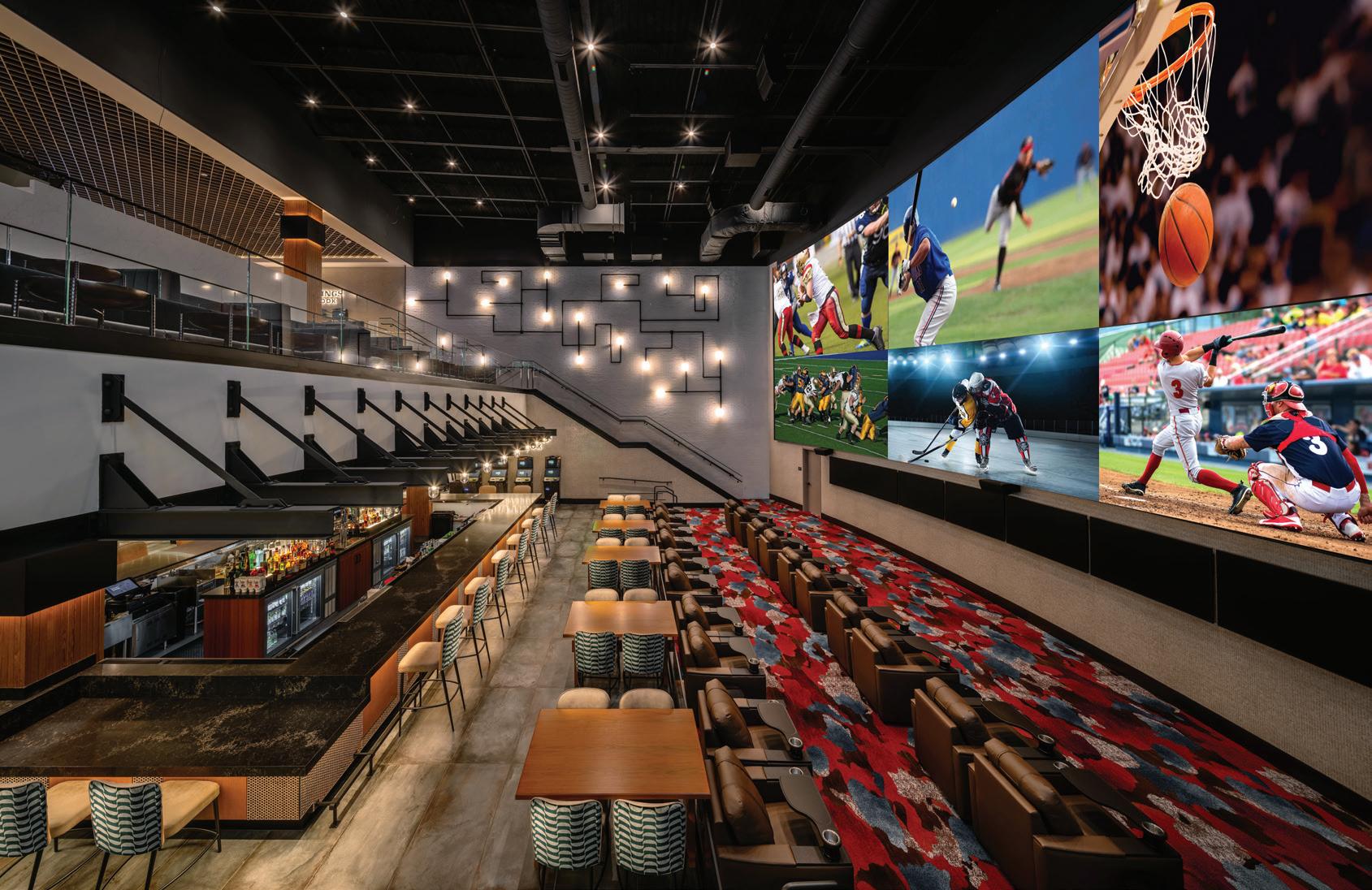
New Hampshire’s The Nash gives back to the community in a big way. By
David McKee
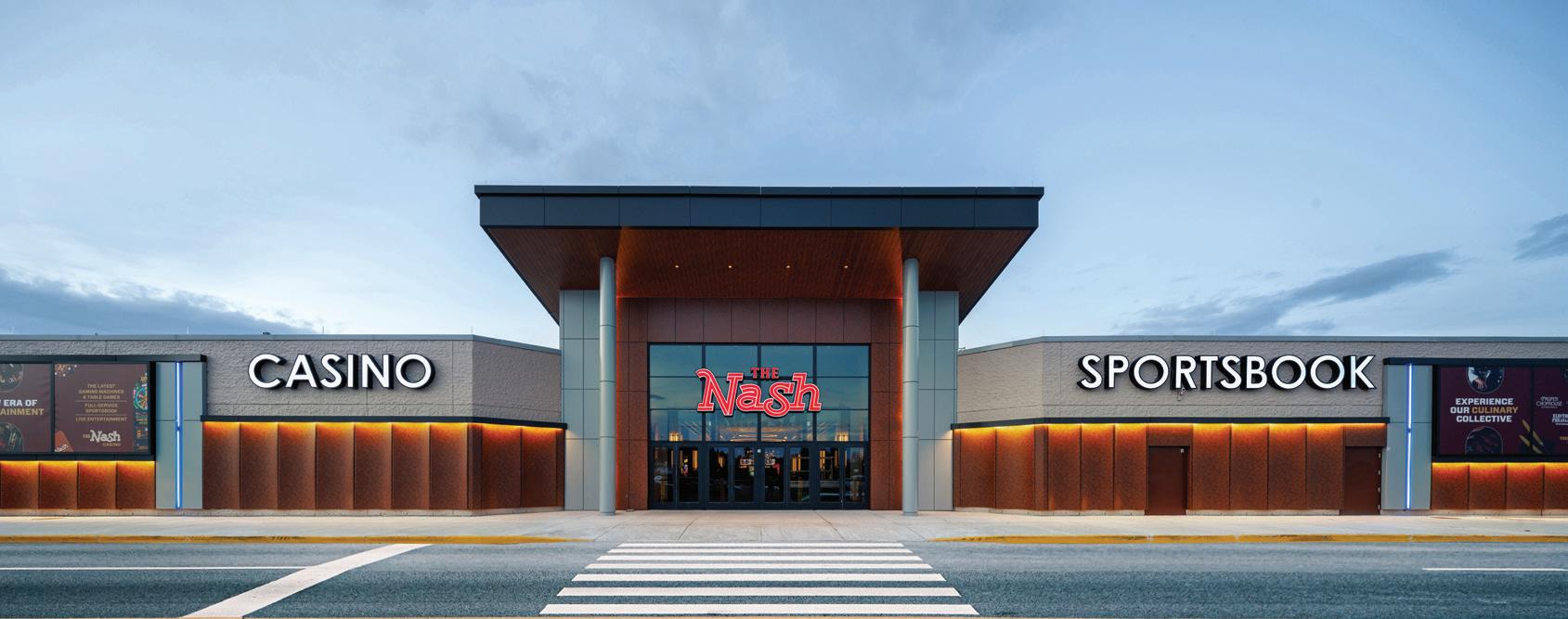
Nestled in the city of Nashua, in the southernmost part of New Hampshire, The Nash is the Granite State’s biggest and newest casino. It also aims to be the best and most charitable.
One intriguing facet of New Hampshire law is that all casino operators must partner with area charities and share the wealth. Casino monies must also be disbursed to the state’s Education Trust Fund. Table games pay a 35 percent levy to charity, VLTs about a third of that and a like amount comes from historical horse racing machines or HHRs.
In its first year of operation – it debuted in March 2024 – The Nash has engendered over $17 million for nonprofits and another $14 million for the Trust Fund, making it the Granite State’s leading charitable-gaming provider. It occupies 130,000 square feet and was developed at a cost of $250 million. Add 700 employees and a $22 million payroll,
and you have a sizable economic impact on the Nashua area.
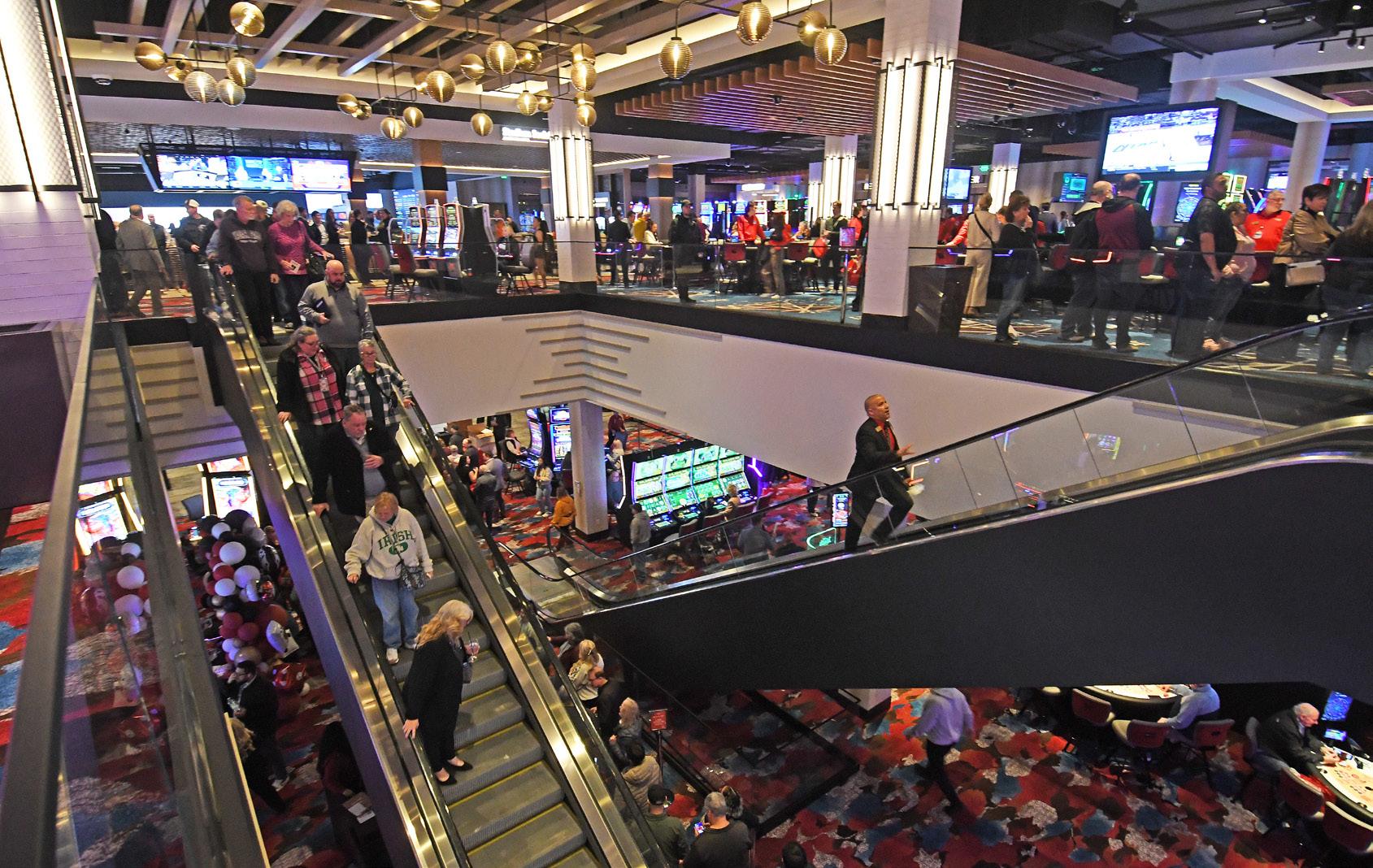
Rather than being built from the ground up, The Nash makes creative use of a former Sears department store. Sitting at the heart of the Pheasant Lane Mall, The Nash is arguably its anchor tenant – a growing trend in the United States, as casinos become more adaptive to their surroundings. Also, due to a quirk of location, if you fell out the front door of The Nash (or were 86’d from it), you’d land in neighboring Massachusetts, from whence many Nash customers come.
The Nash is the creation of far-flung, Las Vegasbased ECL Entertainment. A nexus of former Station Casinos executives, ECL owns casinos and taverns from California to Kentucky … and the East Coast, as The Nash demonstrates. Nash General Manager Eric Althaus is also a Station veteran, so that made a good place to start …
How long have you been with The Nash and what career path brought you here?
I started in November of 2024, so a little over a year and a half. I’ve been in gaming for 35 years. I broke in back in ’91, in Iowa, and then I just kind of transitioned to opening new casinos in new states. That road led me here. I worked with a couple of people at ECL in the past. One of the owners, Marc Falcone, used to be the CFO of Station Casinos out of Vegas, and my COO was also the COO of Station. So I was with Gun Lake Casino Resort, out of Grand Rapids, Michigan, for about eight years. I spent many years with Station, both there and at Station Kansas City [now Ameristar Kansas City]. Knowing how Station Casinos operated, I had a trust in those two people to make the move here.
How is the new venue working out?
Pretty well. There’s been gaming in this state, New Hampshire, for many years. But the industry has definitely changed over the last two years. The interesting thing for us, as we opened in March of last year, the law was just HHR machines. And there were set maximum wagers for the table games and the HHRs. So when the rules changed in July of last year, that allowed so many different changes. It’s the first time I’ve opened a casino that I had to pretty much completely change it in the first year and add VLTs, changing the limits—so it was a lot to get to where we are today. But we’ve definitely seen some major increases in traffic and revenue and charities as of Q4 of last year.
What is the importance of having VLTs?
You’re bringing in games that are world leaders,
games that just don’t live in the HHR box. So having some of the best-known themes and cabinets come into our property, that has definitely assisted with overall recognition. If I go to this casino and this market, and they have all these games that people love to play, having them in our property makes us more accessible to people when they think, “I want to play this game. Now I can go to The Nash.”
What is the comparative popularity of VLTs versus HHRs?
We were very proactive in getting the VLTs onto our property. right now we’re about 70 percent VLTs and 30 percent HHR.
What is your gambling inventory at present?
When we opened we had a little over 1,000 electric gaming machines. Those were primarily HHRs and some ETGs. We’re up to 1,150 now, so we’ve added to our footprint. Similarly in table games, we started out with 34 and now we’re up to 37.
What have been the best-performing periods for the casino so far?
By far, it was Q4 of last year. That’s because so many changes were started in late September, and truly came into fruition in October and November. Also you’re getting out of the summertime. In New England, it’s not a long period that it’s nice weather outside so people took their vacations and we had just opened, so we truly didn’t know who our guest was. We had a lot of trial: coming in to see the property and what was going on.
But I would say in October-November, that’s when we started to gain an understanding of who our
patrons were and what they wanted when they were here. Just to understand from an overall entertainment value what we could offer them, to make sure that when they came here they enjoyed us. Obviously you’ve been around the industry as well, so when it comes tax season you’ve definitely had an influx of people. We’ve seen that continuation from Q4 hit into January and February, into the heart of tax season in March. We’ve experienced some pretty good business over the last six months.
What are the primary amenities you offer?
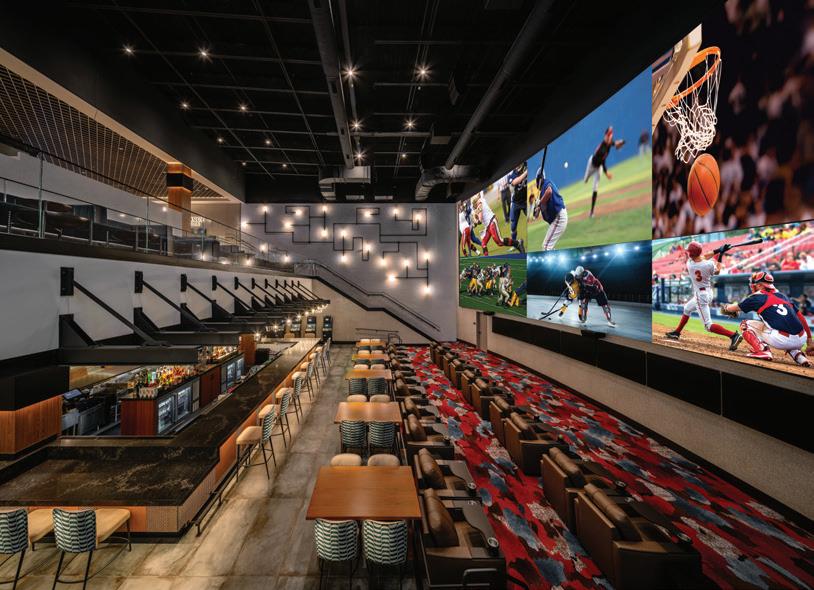
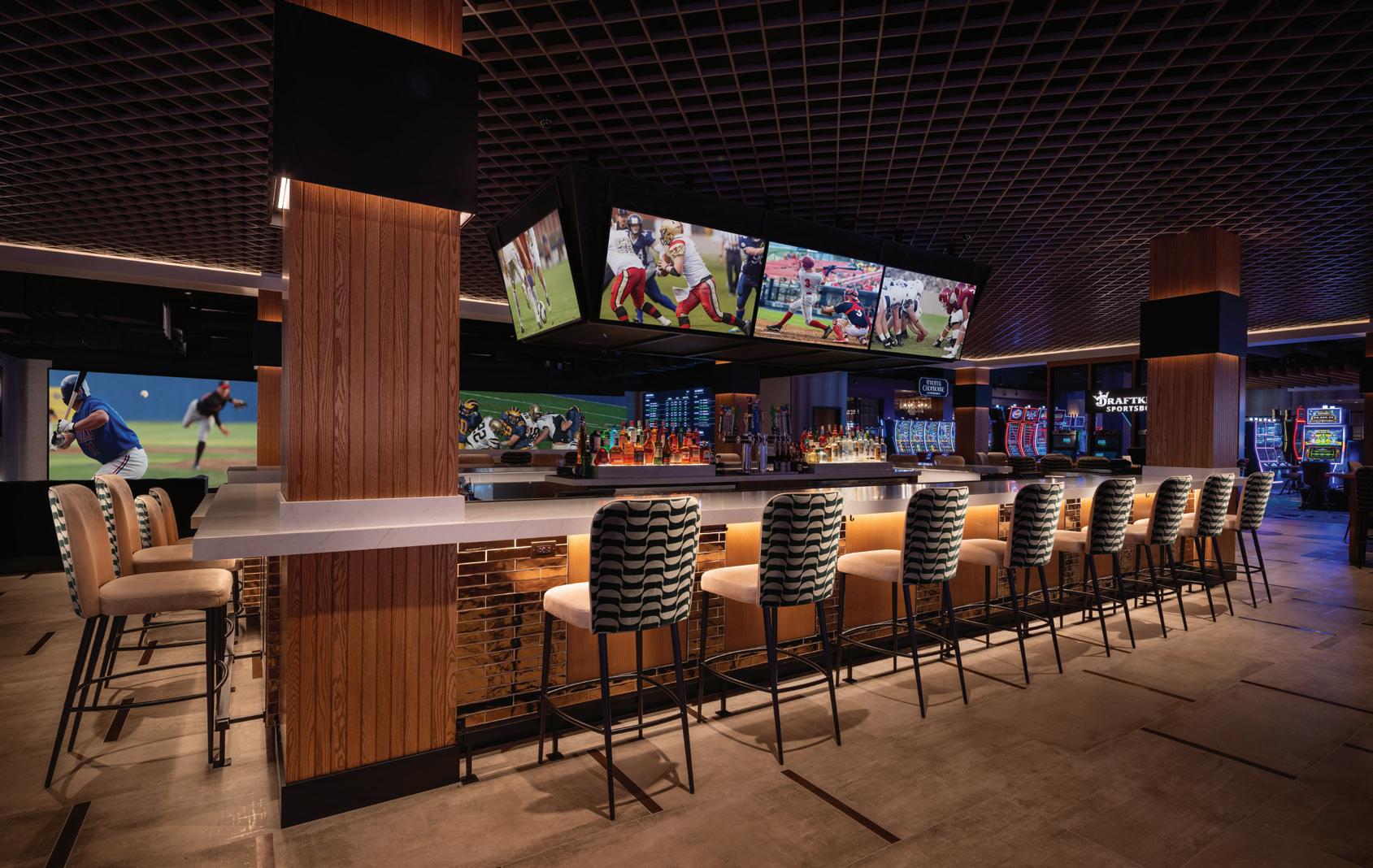
Obviously, we have the gaming. We have 19 poker tables as well. We have a two-story sports book,
partnered with DraftKings. It’s almost like a movie theater: There’s layers of viewing to the biggest screen in the New Hampshire area, which is great. It brings in tons of additional traffic. They’re very big into their home teams, so when the Boston Celtics are playing or the other teams are playing, it’s definitely more energetic. Even March, with all the conference tournaments hitting, we’ve seen a lot of people come to that space as well.
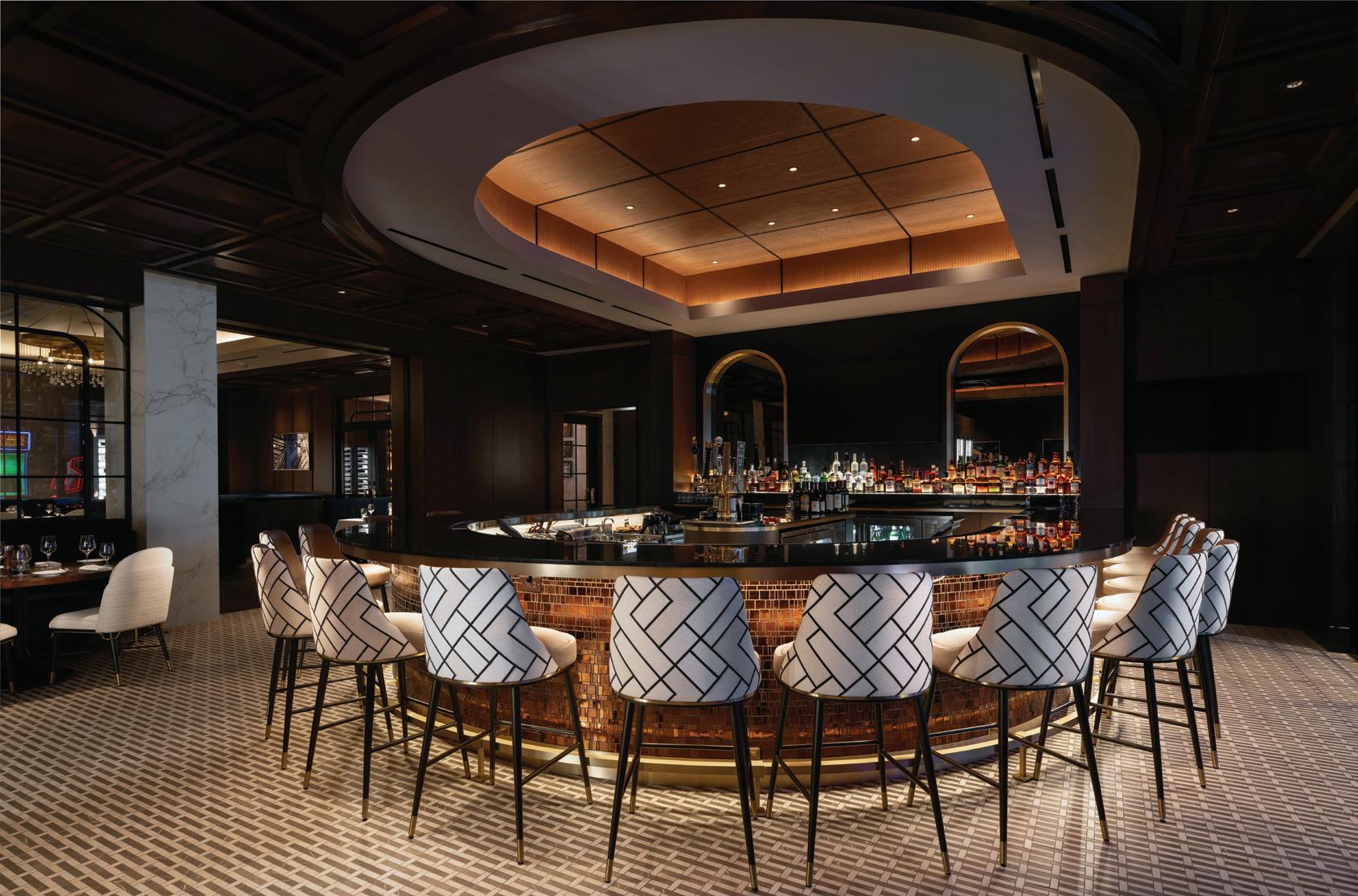
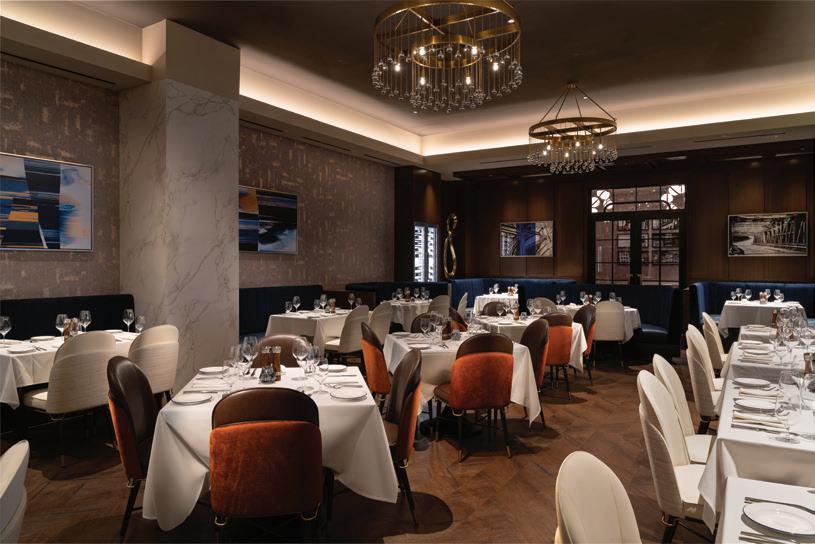
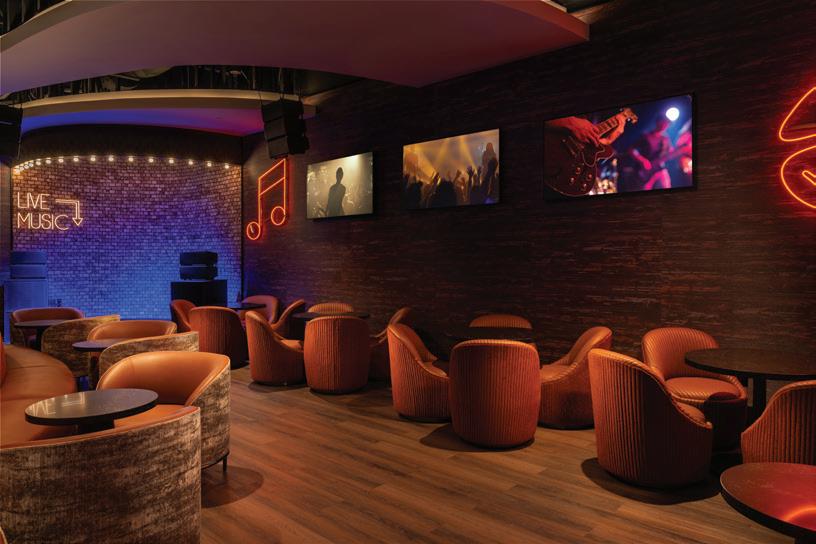
We do have a small entertainment area as well where we have free entertainment on Fridays and Saturdays. We do trivia on Tuesdays, so that has been pretty successful. We have multiple restaurants. Our staple is Proper Chophouse & Cocktails. This is our fine dining and also great steaks, great seafood, a very good vibe with the bar scene that we have there as well.
We have an Asian restaurant, Lucky Lantern Noodle House. Since we’re so close to Boston, we do get a lot of Asian play coming to the area. We have minibaccarat tables and pai gow games, so we have a pretty good offering on the table games side. Now we have a restaurant that caters to that type of food. We have a three-meal restaurant, Woodlands Café, so we have breakfast, lunch and dinner in that space. Our sports bar has your pizza, your wings, your
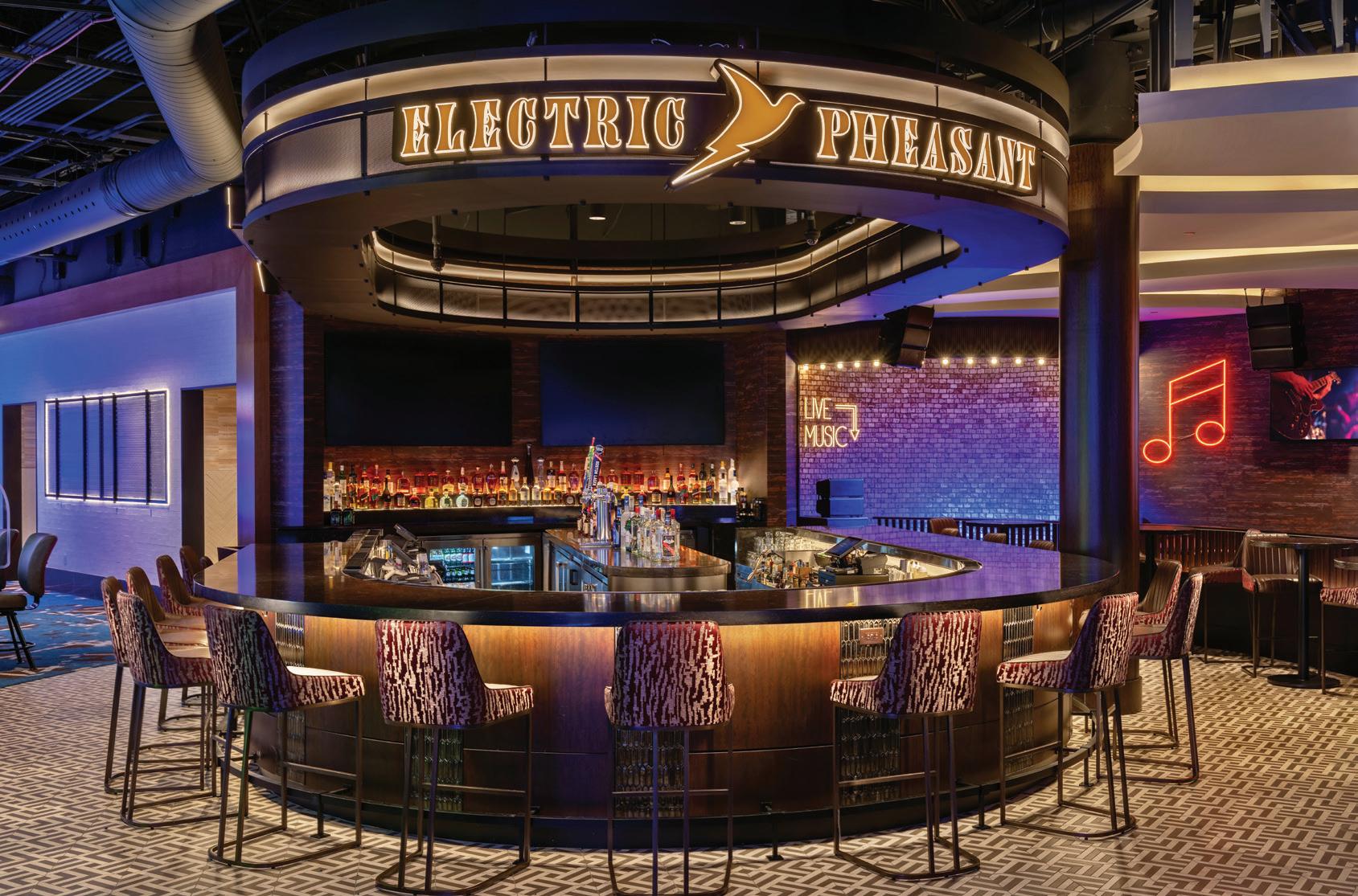
hamburgers and nachos, and all the stuff you want to get there. So it’s a pretty wide range of menu items to go with the entertainment altogether.
The only other thing that we have downstairs, we have TopGolf. We have four bays of simulated golf and it’s the full suite. So it has golf, hockey, baseball, football and some of the other fun games that go with that.
Did you see a discernible bounce in business from the New England Patriots’ playoff run?
Absolutely. Even the Boston Red Sox. They didn’t start off great but, as they got momentum in early summer and going in towards the playoffs, they truly support their teams. We didn’t know what the Patriots were going to do this year. With them having a good season it definitely made us have better Sundays—and Mondays and Thursdays, as they did get a good number of prime-time games through the year, so it was definitely good energy. As they got into the playoffs, obviously that was electric. Unfortunately, they didn’t play as well in the [Super Bowl], but even still we were packed. The second they won the AFC championship, we had a good number of tickets to watch the big game. They were sold out immediately.
How much of your clientele is drawn from Massachusetts, as opposed to New Hampshire?
It’s more than 50 percent. We’re positioned right on the state line. If you walk out of our main entrance, there’s a white line that’s on the sidewalk that shows how close we are to Massachusetts. There’s more people that live in the suburbs of Boston than in New Hampshire, so geographically there’s more people that come. But not as much as someone would think. It’s still a good balance between New Hampshire and Massachusetts.
For those unfamiliar with New Hampshire’s gaming industry, how does it differ from other states? The charitable angle is the main driver. I’ve worked in a lot of states and to have the charity component is pretty spectacular. Every month we have an event where all the charities that were part of the donations for the month before come in. We have a little party and a little ceremony. We do a check presentation and some pictures. Sometimes elected officials come as well, to see where the funds are going — but to see and talk to the people, and understand where those funds are going and how many people they’re touching.
It’s one of the best days of the month because it’s all about happiness and seeing the fruits of labor. Even for the team members on property to see that see this is just not being written off and going to someone: They’re getting to determine where those funds are going. For us to be a part of that is pretty spectacular. With the state, the current max number of days that any charity could have was 10 days. There’s a bill that is going to reduce that to seven. But we proactively reduced that to five days. Our checks have been the biggest in the state. We have produced the most revenue. So we’re trying to touch as many charities as possible. So we made the determination to reduce that, to talk to more charities.
Back before we opened, we realized we were going to have something special at The Nash. We knew that some of these offerings to charity were going to be rather large. We created a committee that has many components of the operation, including corporate. We meet every single month to vet all the charities that had requested to be a partner with us. We created these pillars that are very important to us. They touch on first responders, police, fire. We touch on education, food and homeless, on many different things that are important to us. Then at these monthly meetings we determine who our charity partners are going to be – to make sure that we’re touching things that are important and impactful to us. But that doesn’t mean that we’re not touching a charity that’s a couple of hundred of miles away in a northern part of New Hampshire. We’re pretty well-rounded to make sure we have a footprint that touches many different areas of the state.
Do you have any wishes for the state legislature of policy changes you’d like to see?
We’re going to adhere to the laws and the rules that are in front of us. Because there have been so many changes in a very short time frame, having a static market and understanding that the rules aren’t constantly going to change allows us to truly
understand what our patrons need. We had to completely change the operation within one year. That’s pretty unheard-of. Now those changes have been positive. I absolutely love the fact that we have very progressive and understanding government to understand the industry and make these changes.
Does being in a former retail space present any infrastructural challenges or benefits?
It actually has a little bit of both. Since we did take over a space, some of our property has been here for many years. We’re taking on some of the unknown challenges that come with that. Typically, as you get into November and December, a lot of people are spending their discretionary income for presents and at holiday parties. The fact that we are part of a shopping mall definitely assisted us. We had a little bit more foot traffic. Maybe it was a couple: One person goes to the mall and wants to shop, and one person didn’t want to. So now they’re going to go to the casino and watch a game or listen to music or partake in a table game. Whatever it is, we do have a very well-rounded space for entertainment.
So we did see a little bit more business in November and December than I’m used to. Since I’ve been around for decades, it’s a hit or a miss. The more history you have with your operation to understand
the highs and the lows, and what you need to do to operate within that space, it was definitely a nice surprise to see how we performed.
What are The Nash’s plans for the near future and the long term?
We’re still learning. We’re trying to get as much data as possible. We’re documenting all the successes and the areas for opportunity. As we get new people to come in or retain the people that have been coming here since opening, what do they want? What do they need when they’re here? Truly, we focus on the guest experience and hit on training as much possible. Try to give every tool imaginable to the team, so that they have the skills and ability to handle the guests when they come. So that every person, when they walk out these doors, they feel good about the property and want to come and see us again.
We’re a casino. We have the same games, the same food as other outlets. So we try to make it special and create those relationships with people so that, when someone comes, they’re coming to see Team Member X because they made me feel good. Or Team Member Y because, you know what, they gave me a good experience and I want to come back and experience it again. It truly is understanding and continuing to build on the successes that we’ve had so far in Year One.
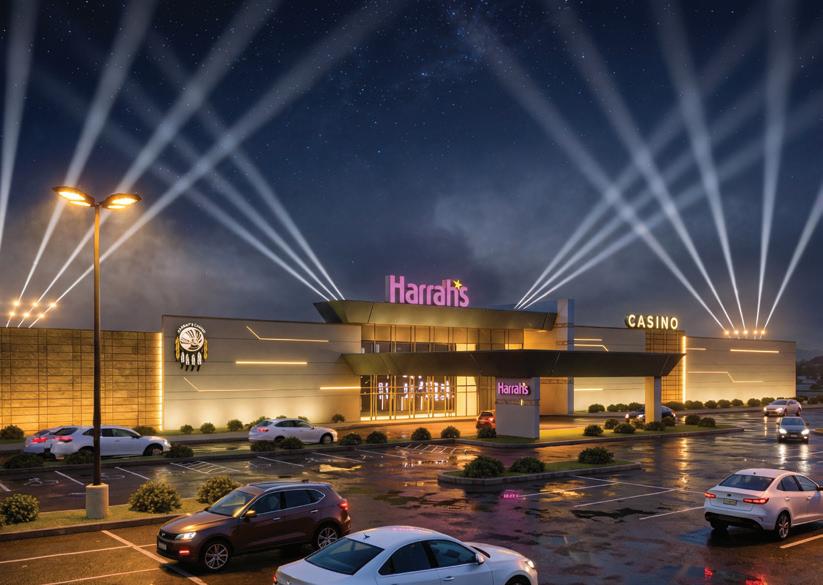
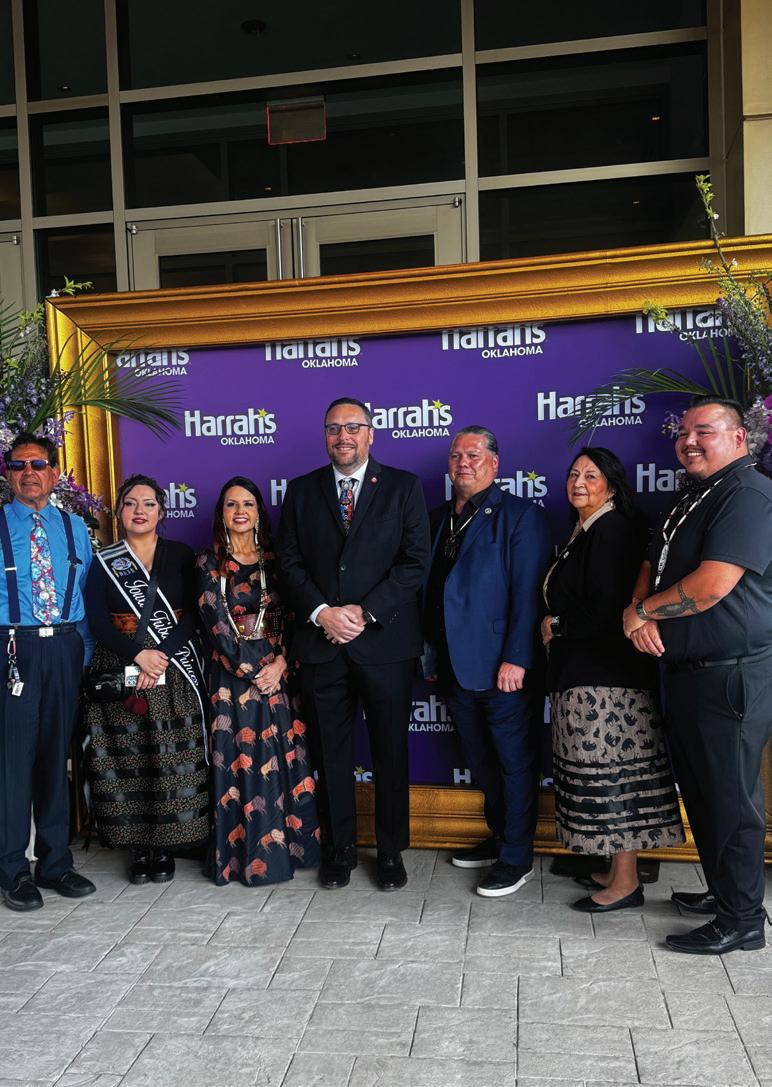
arrah’s Oklahoma, the first property managed by Caesars Entertainment in the Sooner State, has opened, bringing a new destination casino to the town of Chandler, on historic Route 66. The casino is a partnership with the Iowa Tribe of Oklahoma.
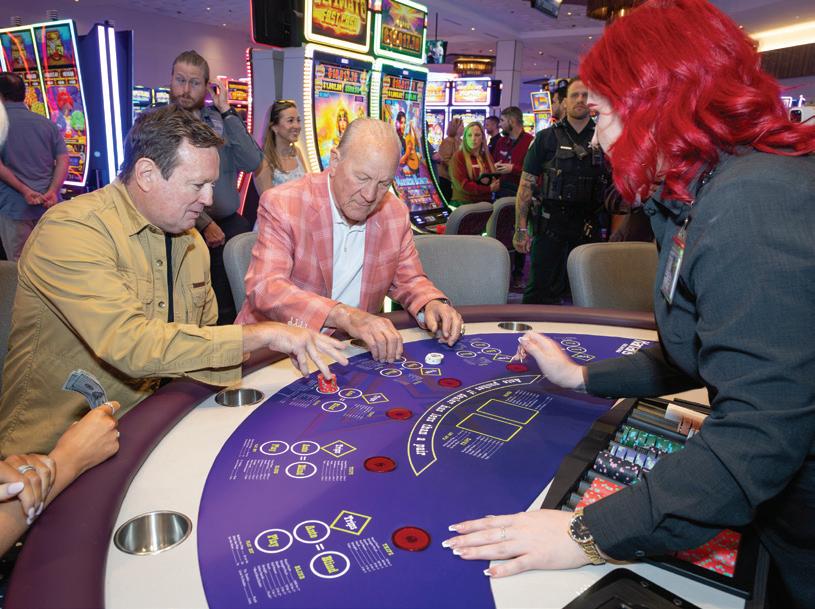
With tribal members and Caesars leadership on hand, the casino held its grand opening April 9. It was a Las Vegas-style celebration featuring live entertainment, showgirls and fireworks. Oklahoma football legends Barry Switzer and Bob Stoops were also in attendance, and took part in ceremonial first-play action on the casino floor.
“This is a milestone moment,” Joe Scibetta, senior vice president and general manager of Harrah’s Oklahoma, told Casino Life days before opening. “There’s certainly a lot of excitement for our team members. Our message to them is to enjoy it. You don’t get to do this often. It’s rare that you get an opportunity to open a casino, so make the most of it.”
While rare for most, it’s become commonplace for the Caesars Entertainment executive. Harrah’s Oklahoma is
the ninth casino Scibetta has helped open over the course of his career. While working for Rush Street Gaming, he was involved in opening several of the company’s Rivers Casino-branded properties along the East Coast.
“There’s a lot of excitement but the biggest accomplishment was watching it grow from the ground up,” Scibetta said. “What was once a dirt lot and a dream is now a beautiful casino.”
Each opening, Scibetta added, comes with its own excitement and opportunities. This is true not only for the casino’s 300 employees but especially for the 960 members of the Iowa Tribe of Oklahoma, who mostly reside in the state. For them, it’s an opportunity to bring valuable services to tribal members – including the construction of educational facilities and a new health center.
“This partnership reflects our long-term commitment to economic growth and opportunity for our people,” Jake Keyes, chairman of the Iowa Tribe of Oklahoma, said in a statement. “Harrah’s Oklahoma brings new energy to our community and creates meaningful opportunities for future generations.”
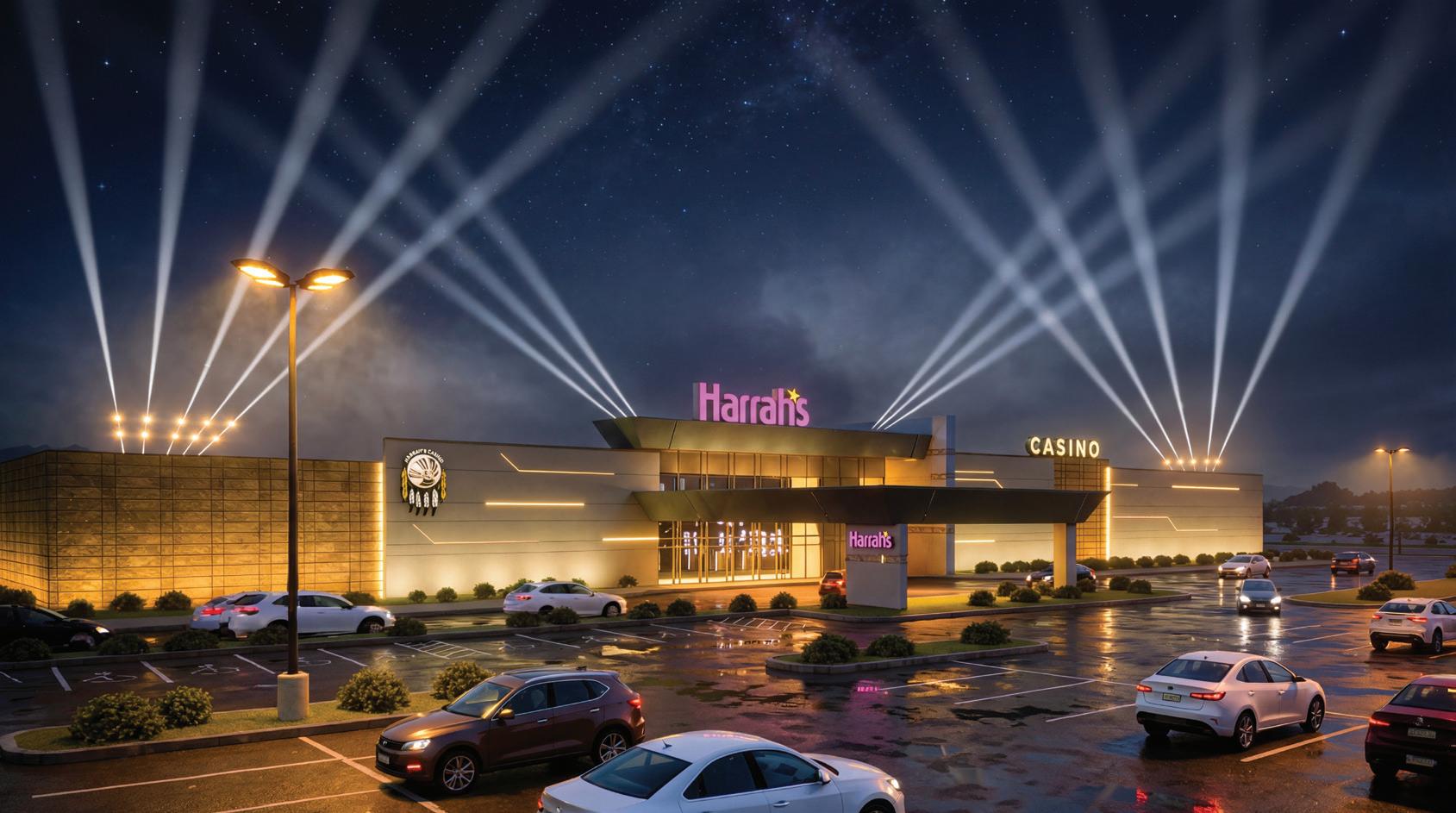
Harrah’s Oklahoma has been a long time coming. The process began in 2018 when the two sides started talking and eventually reached an agreement. Scibetta said tribal elders were impressed with Caesars Entertainment’s relationships and partnerships with other Native American tribes, and believed Caesars would “be a great fit for them.” The tribe embraced Caesars’ leadership from the beginning. Robert Livingston, senior vice president of development and the Tribal West division at Caesars Entertainment, headed up the project, which already has plans to expand.
According to Scibetta, a second phase is already in the works, with plans to add a 135- to 160-room hotel, meeting space and new restaurants. It could be finished within two years.
“The relationship that we have with other Native American tribes around the country, in Northern California, Southern California and Arizona was really important to them,” Scibetta said. “To be consistent, we wanted to keep the Harrah’s brand tied to the tribal properties.”
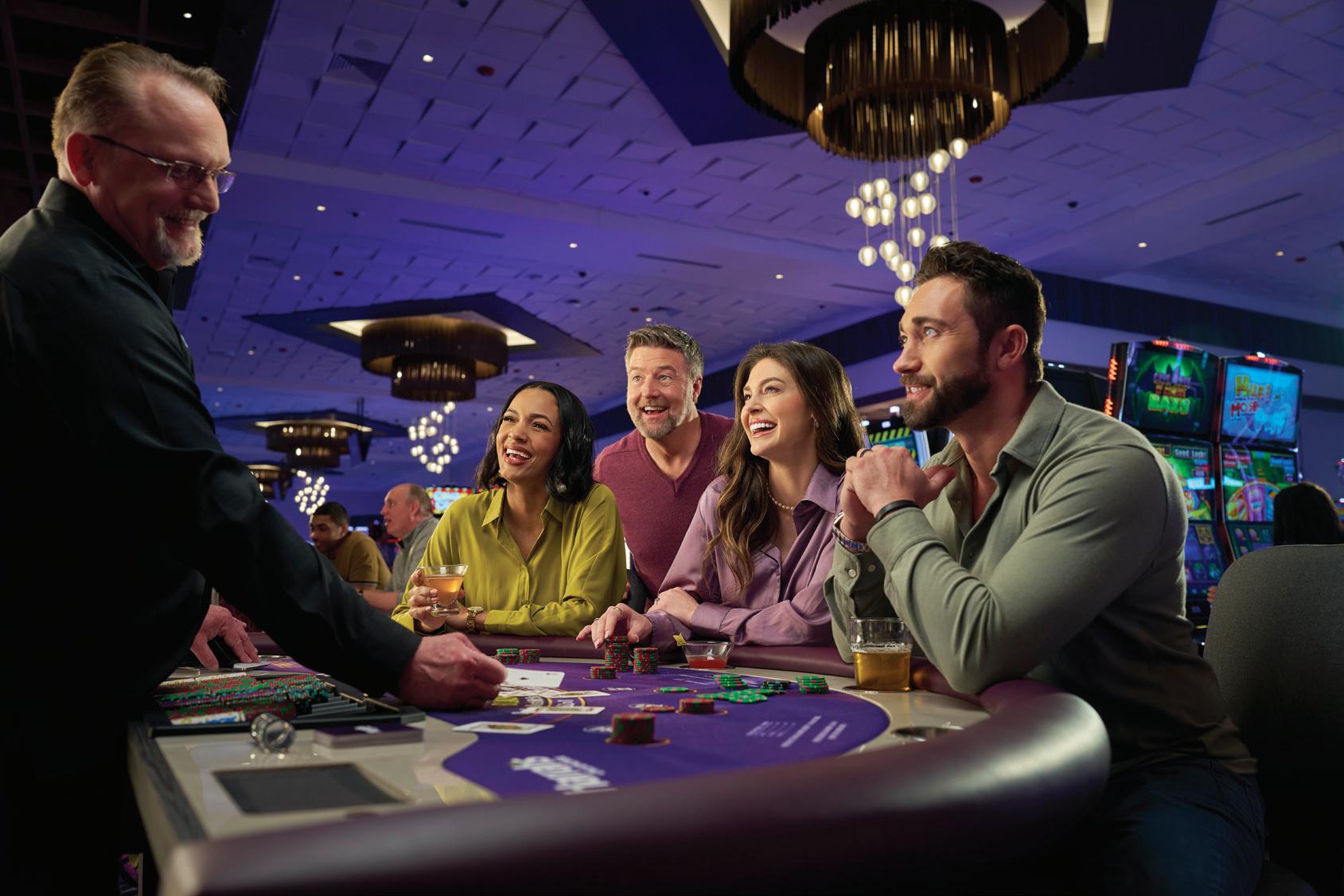
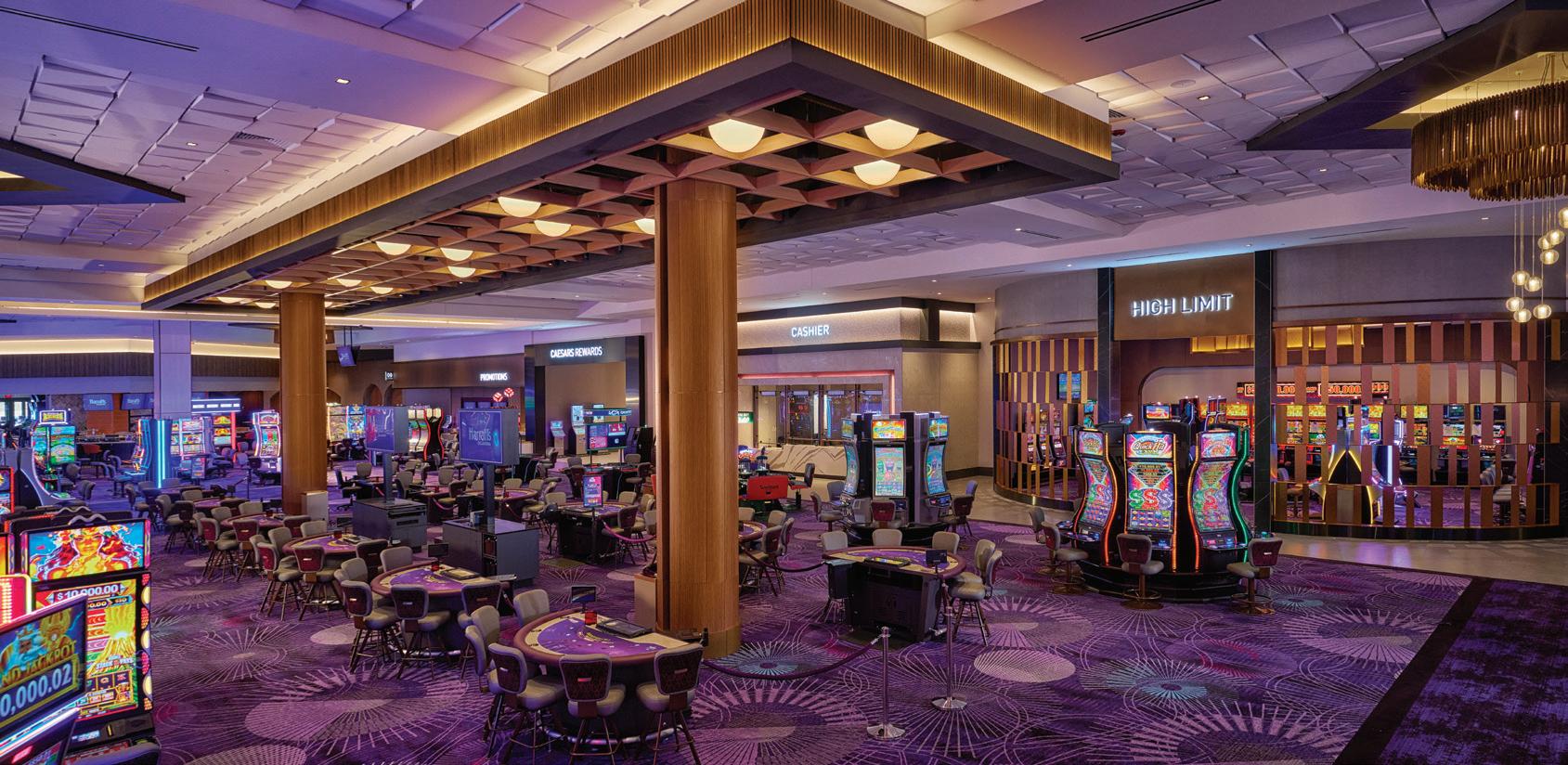
As for now, Harrah’s Oklahoma opened as a 65,000-square-foot casino with 1,012 Class II and Class III slot machines. They were deployed along with 12 table games that include blackjack, mini-baccarat and poker-related table games such Ultimate Texas Hold’em. There are also two large bars with built-in, bar-top machines.
The property also has two restaurants. Arrow & Ember, under the direction of chef Thomas Liljestrom-Abele, offers contemporary American fare with a menu consisting of lobster bisque and steaks. Quick-service outlet Dash Cafe – a staple
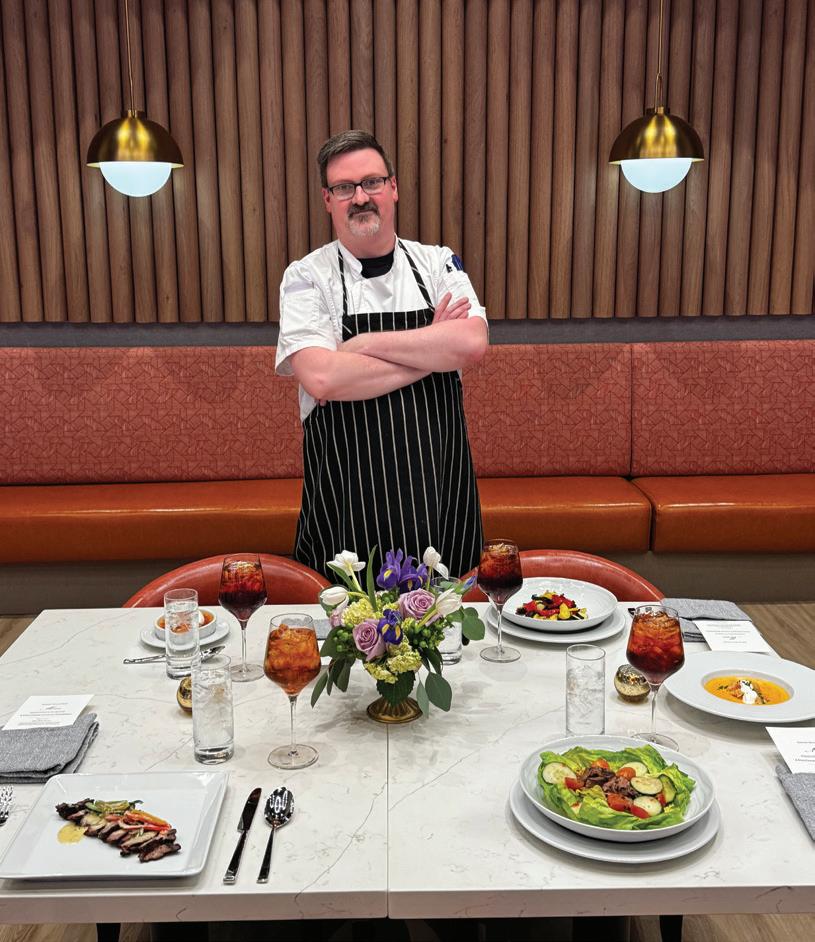
in several Harrah’s properties – serves salads, burgers, wings, pizza, and grab-and-go sandwiches.
“When you walk in this building, it should feel different because it’s designed like a Las Vegas casino,” Scibetta explained. “You could put this anywhere on the Strip and it wouldn’t feel out of place. It’s going to be a great place for people that’s exciting and approachable.”
There’s even a little taste of the Vegas Strip on the property itself, where Buck and Winnie Greenback have found a new home. The iconic statue, created by interior designer Henry Conversano and artist Mario Chiodo, which once stood guard in the casino at Harrah’s Las Vegas, has been remodeled and is on display inside Harrah’s Oklahoma.
“I worked at Harrah’s Las Vegas for about two years, and I passed that statue every day,” Scibetta said. “When Robert Livingston said, ‘Hey, you know, Buck and Winnie, right? Would you ever think about bringing them here?’ I loved the idea, so we found a way to make it happen and they’ve returned home to Oklahoma.”
And while Buck and Winnie won’t be going anywhere soon, players frequenting Harrah’s Oklahoma who join the Caesars Rewards program certainly could make a trip to Vegas or any other Caesars Entertainment property nationwide. That includes Atlantic City, Lake Tahoe or New Orleans using points they accumulate locally.
“We’re bringing Caesars Rewards to Oklahoma and it’s portable all over the country,” Scibetta said. “Our message is: Play here, stay anywhere.”
Get Into Casino Life & Sports Betting Operator TV and gain insights from Presidents, CEOs, Owners and Senior Management at the World’s Leading Resort Casino and Sports Book Operators along with latest developments from manufacturers and Suppliers along with Gaming Equipment and Systems providers from Senior representatives at a select number of leading organisations in the Global Gaming Industry.

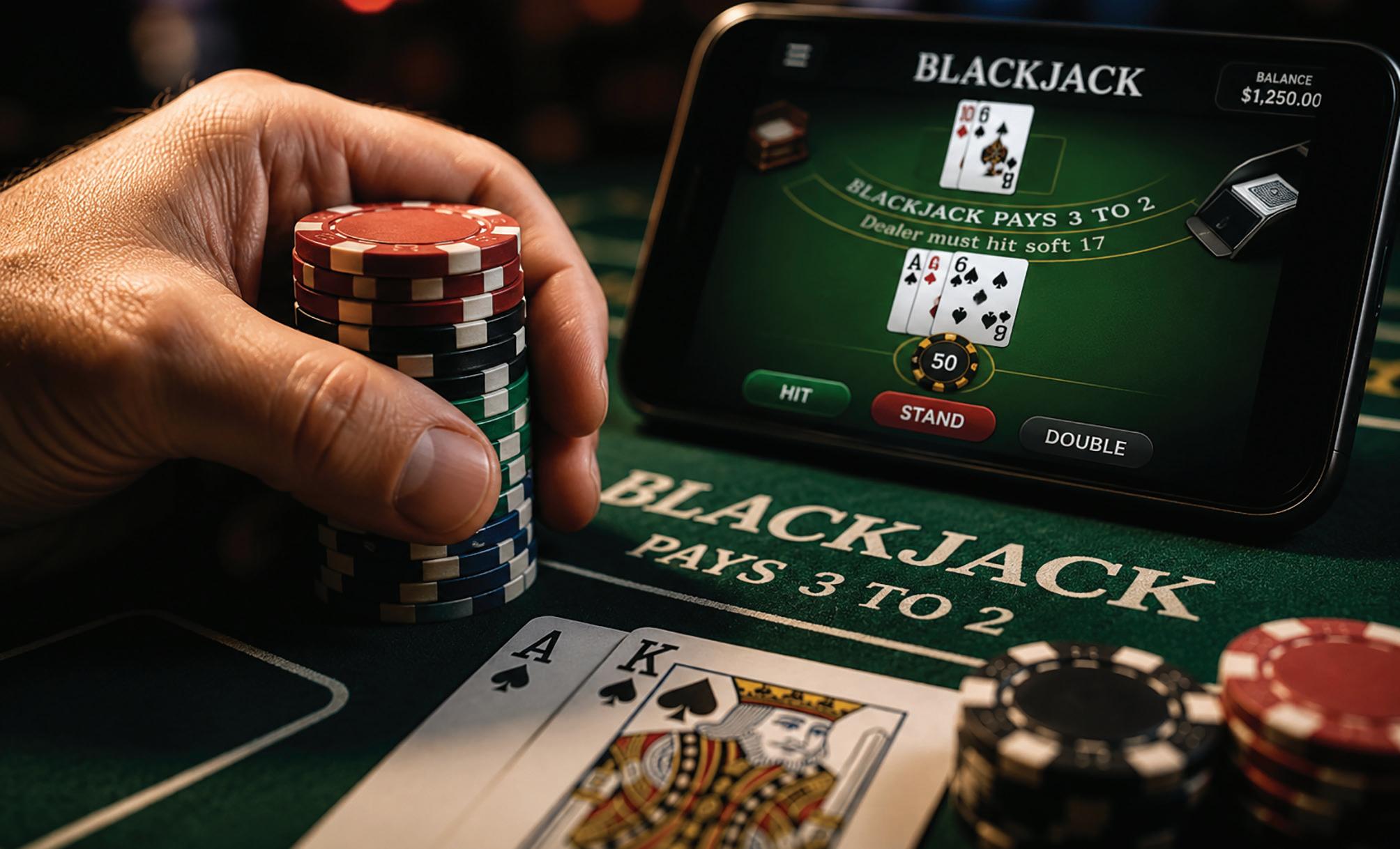
ou cannot get away from the ubiquitous cell phone. Wherever you go and whatever you do someone (especially those under 35) is always staring at that device. They can be texting a friend, checking their email, updating their Facebook page or they can be following the hottest video making the rounds on Instagram. They could also be playing blackjack on any number of Internet gaming sites that have surfaced over the last five years. So this raises the question, will online casino sites put the traditional brick-and-mortar casino out of business?
While you can be playing blackjack at home in your pajamas and not worry about dressing up to go on the town, some people still want to go out. Gambling is a form of entertainment and, for the Friday and Saturday night crowd that want to get out and do something, the
casino is a viable option. It is an experience that just cannot be replaced with the cell phone.
Blackjack isn’t just hitting and sticking. It is a social interaction with the dealer and other players. This can make the outing that much more enjoyable, but the opposite is also true, thereby making a case for the online casino. Maybe a player does not want to be surrounded by amateurs who detract from the evening. I freely admit the counterpoint does not help my case, but humans are social beings. Those looking for a social outing will outnumber those looking for a moment of solitude.
Gamblers like to hold chips in their hands. They would rather see an actual pile grow in front of them instead of a slick graphic trying to resemble the same effect. It is not the same. At any time, you can leave the table and go to the cashier’s window and get actual cash.
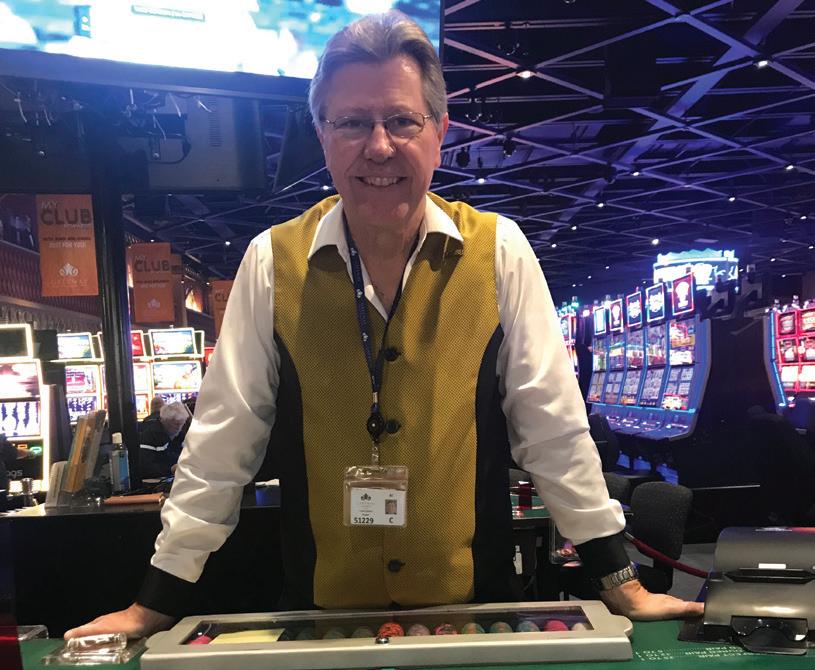
Al O'Grady
Depending on the online casino site, you may have your winnings on hold. However, if you can get paid out right away, it is an electronic funds transfer of some type. It may show up in your account but did you get to hold the cash in your hand? The one thing better than holding chips in your hand is cash. Can the cell phone match that same thrill?
There are ways how the two can complement each other. Perhaps you have someone new to the game. They might be learning basic strategy for the first time. Playing on the cell phone can give them a forum where they are playing for micro stakes and the intimidation factor is not there. They can practice until they become proficient with basic strategy without embarrassing themselves in front of expert players. This is a positive for online gambling. But the bigger picture is to train for the main event.
For those who are card counters, the old-fashioned table and chairs are the only way to go. You want to keep a running count, and you want to ensure the running count is legitimate. With an online game, how do you know true randomness is at play or if it is subjected to a certain algorithm? With actual cards and a shoe, there is no algorithm. You can experience true fluctuations and true randomness.
High-net-worth players will choose the actual casino over the online world. Why? One word: Comps. Depending on the scale of the player’s bankroll, the high-net-worth player can get free meals, free hotel rooms, tickets to shows and even plane fare to the city. I am sure the online sites have some type of rewards programs but I highly doubt it will match that of a major casino.
One area that both the traditional casinos and the online-casino industry are facing has to do with problem gamblers. Who has more of a gambling issue? The guy who showered, bought some breakfast and then played at the table for an hour or the guy who did not even get out of bed, and was playing more blackjack on his phone after playing at the tables last night?
Playing online caters more to the problem gambler than the old-fashioned table. Players can play under the veil of anonymity for as long as they want. They have no one to stop them or advise them to slow down.
Online gaming will continue to be growing issue for problem gamblers and the only thing the digital world has are self-exclusion programs. Here’s a prediction: Someday there will be a class-action lawsuit where the wife saw her husband squander the couple’s life savings and the gambling site did not show its due diligence scrutinizing the source of the funds. Just a thought.
Casinos are a multi-million-dollar industry and they will maximize profit wherever they can, end of story. If one day it shows that the online-gaming division is more profitable than the traditional tables, some 20-something business school grad might suggest closing the table games. This move would be short sighted.
From a retail perspective, the slot machine generates the most revenue on a square-footage basis. The slot machine does not take vacations, does not call in sick and does not talk back to the boss. It can generate 10 times the revenue of table games.
So why doesn’t the casino replace all table games will slot machines today? The answer is simple – product variety for the gambler The casino also knows that not everyone is a slot player and that couples go to the casino. Quite often, the wife goes to the slots while the hubby plays blackjack. One complements the other.
Casinos could get rid of table games today to maximize profit, yet they do not. There is a micro way of viewing a business and a macro way. Casinos are in it for the long haul and for the big picture. Despite the explosion of online gaming, the traditional tables are not going away in my humble opinion.
Good luck at the tables and don’t forget to tip the dealer.

The casino industry has a leadership problem – not a technology problem. By
Shaun McCauley
For more than a decade, the global casino industry has convinced itself that technology will play a significant role in shaping its future. Across Southeast Asia and Europe, operators continue to pour investment and attention into AI, cashless gaming, mobile engagement, personalization, omnichannel ecosystems, CRM platforms, loyalty technology, and data-driven customer experiences. All of these now dominate conference stages, strategy sessions and executive discussions throughout the industry.
However, the reality behind these presentations and strategy decks is quite troubling: Many casino operators have yet to establish a genuine digital business.
The worrisome aspect is that this isn’t due to a lack of available technology. Rather, it stems from a deficiency in internal leadership structures and operational capabilities needed to build such a business. Increasingly, operators are not even attempting to develop this capability in-house. Instead, they are turning to outsourcing as a solution.
This is the uncomfortable truth that the gaming industry often sidesteps in open discussions.
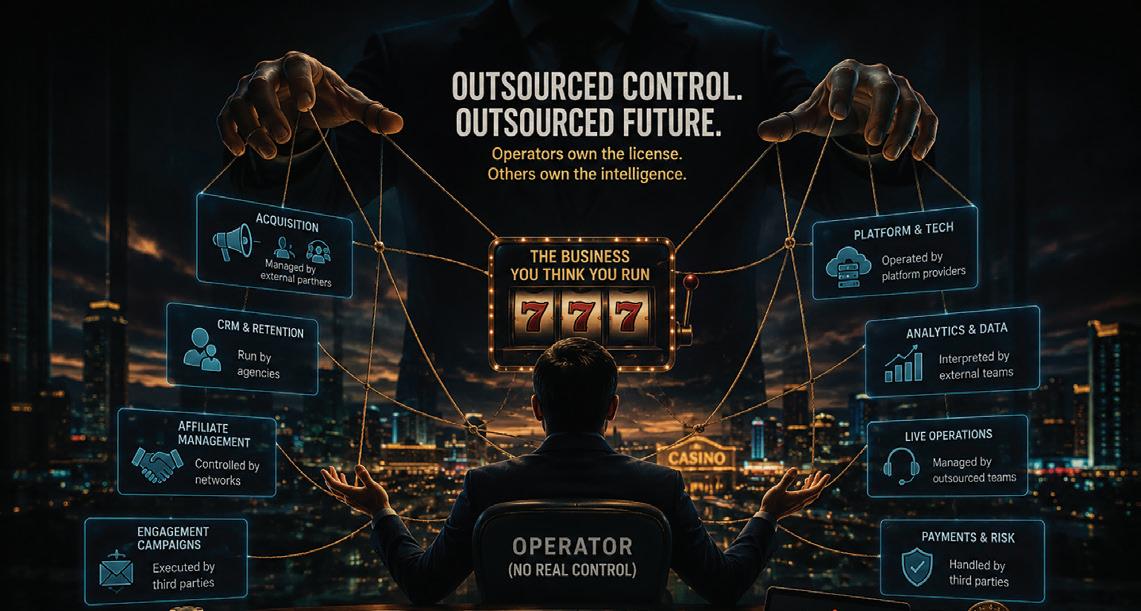
Across the casino industry, operators have become increasingly reliant on third-party ecosystems to handle critical aspects of their digital operations. This includes support from platform providers, CRM agencies, affiliate networks, managed service providers, white-label operators, acquisition specialists, external analytics teams and third-party engagement providers.
In numerous cases, these operators aren’t developing their own internal digital capabilities; instead, they are essentially renting them. This distinction is significant. While outsourcing technology can be a practical approach, outsourcing operational intelligence shifts the dynamics entirely.
Today, many operators depend on external vendors to manage key areas such as player acquisition, CRM execution, customer segmentation, retention strategies, product optimization, engagement campaigns, live operations and analytics interpretation. Increasingly, parts of the customer relationship itself are also being outsourced.
Although operators might still hold the license and the property, they often lack complete
ownership of the operational insights concerning their digital customers. This does not represent digital transformation; rather, it is operational outsourcing disguised as innovation.
The contradiction in Southeast Asia is becoming increasingly evident. The region is experiencing a surge in investment aimed at integrated resorts, entertainment infrastructure, tourism development and major gaming expansions.
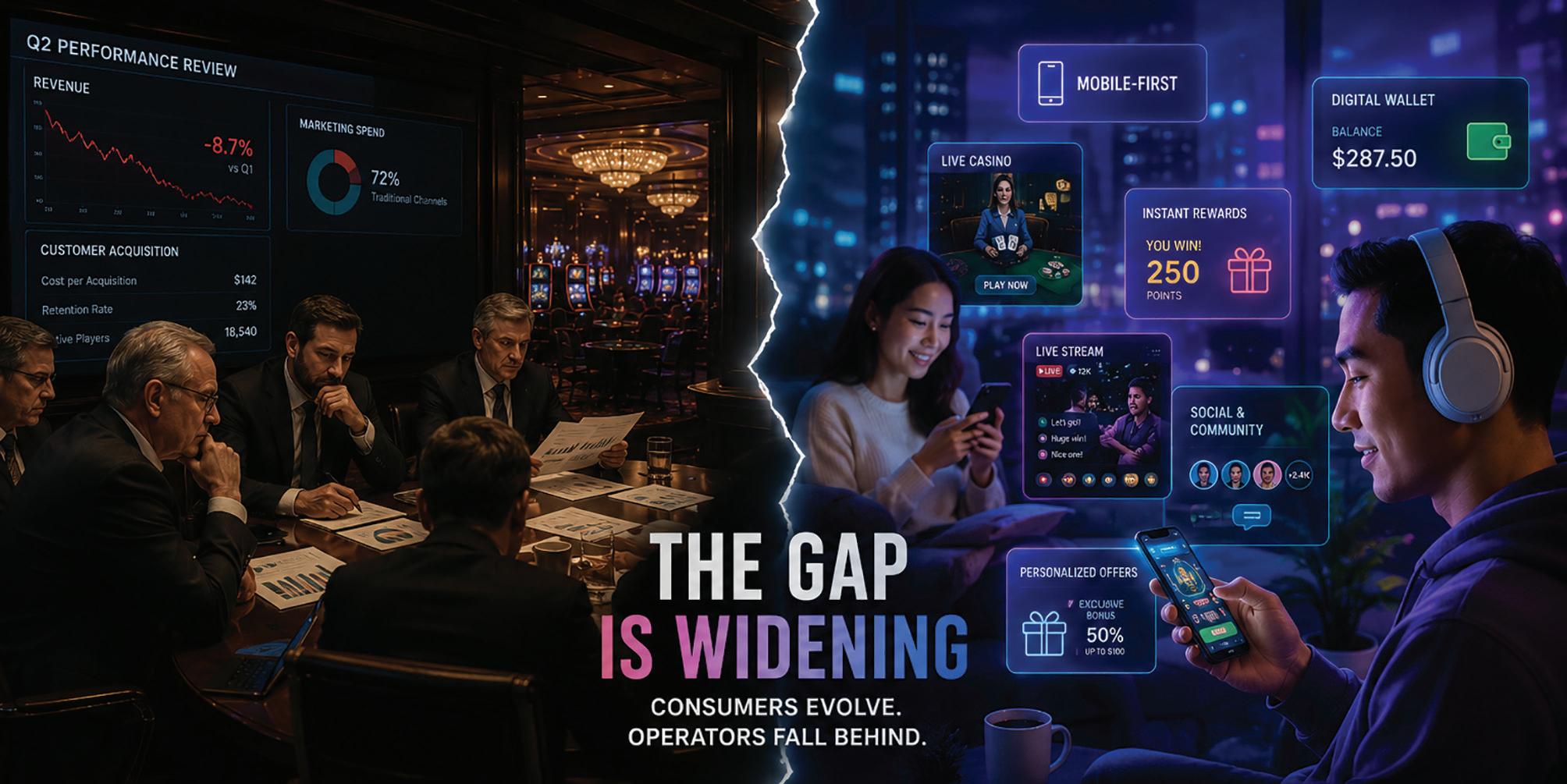
At the same time, Southeast Asia stands as one of the most digitally connected consumer markets globally. Today’s modern Asian consumer already lives inside mobile-first ecosystems built around digital wallets, super apps, gamified engagement, social commerce, streaming platforms and real-time entertainment.
Consumer behavior has already shifted significantly, yet many casino organizations haven’t kept pace. Many operators still place digital under marketing, IT, casino operations or external third-party providers. Few have established dedicated digital-leadership structures that provide genuine operational ownership and accountability. This represents a significant vulnerability within the industry.
Digital capabilities are no longer merely a support function for the casino business; they are increasingly integral to its future. Nonetheless, many operators in Southeast Asia continue to treat digital initiatives as:
* vendor relationships,
* software deployments, * or side projects managed externally.
As a result, numerous organizations remain heavily reliant on outside providers to manage the very systems that will shape future customer engagement.
Europe often presents itself as digitally mature because online gaming arrived there earlier than in many other markets. But early adoption is not the same as organizational capability.
Over the past decade, many European operators outsourced acquisition, CRM operations, affiliate management, engagement strategy, platform infrastructure and customer analytics. Initially, this created speed and efficiency; in the long term, it created dependency.
Today, many operators still lack deep internal capability around product management, behavioral analytics, retention science, live-service operations and customer-lifecycle optimization.
In some organizations, external suppliers now understand the digital customer journey better than the operators themselves. That is a strategic risk few executives openly discuss.
There is perhaps no more telling phrase within the casino industry than this: “The marketing team handles digital.” This statement encapsulates why many operators struggle to achieve sustainable digital growth.
While marketing plays a crucial role, digital businesses should not be viewed merely as marketing departments. Digital entertainment is operationally demanding and requires continuous monitoring, optimization and refinement.
The most-successful digital businesses obsess daily over engagement patterns, churn risks, feature performance, monetization behavior, customerlifecycle insights, conversion funnels and retention performance. Unfortunately, most traditional casino organizations were never set up to operate in this way and that’s where the issue lies.
The second significant oversight in the industry is viewing digital transformation primarily as a technological-infrastructure challenge. IT departments are traditionally structured around stability, security, infrastructure continuity and operational protection.
Digital businesses function on a fundamentally different paradigm. They necessitate rapid A/B testing, iterative feature development, real-time user-engagement analytics, monetization-strategy refinement and ongoing, data-driven decision-making. In contrast to this agile environment, many casinos and similar companies struggle to bridge the gaps among their marketing divisions, IT departments and external technology vendors. This often results in a lack of clear ownership over critical areas such as:
• digital-profitability metrics
• engagement-performance optimization
• retention economics
• customer-lifecycle management
Despite deploying advanced technologies, the organization may fail to evolve structurally. While new platforms are implemented, apps are launched, and dashboards are created, the underlying business processes and collaborative frameworks often remain static. Consequently, organizations find themselves ill-equipped to fully harness the potential of their digital initiatives, as they do not align with the rapid, iterative and analytical demands of today's digital landscape.
The gaming industry often confuses the acquisition of technology with true digital transformation, but these two concepts are not interchangeable. While purchasing technology is straightforward, developing the necessary capabilities is far more challenging.
This is where many operators continue to make a costly mistake. They believe that adding more vendors, systems, integrations, dashboards or simply throwing more money at marketing will solve digital-performance problems. Too often it becomes a shotgun approach –spend more, buy more, market more and hope traffic improves. It is an expensive strategy that frequently delivers little meaningful improvement.
Technology does not create capability; it merely amplifies what already exists within an organization. A well-structured digital organization can achieve exceptional results with relatively simple systems. At the same time, a lack of internal operational capability means that a weaker organization will just be a poorly functioning entity with additional software.
Across the region’s most-established gaming markets, the industry has become highly skilled at assembling a variety of vendor stacks but often struggles to build strong, internal, digital intelligence. This shortfall is why many operators are grappling with low retention rates, poor customer engagement, fragmented user journeys, disappointing monetization, weak digital profitability and underwhelming online ecosystems.
Too often, operators are not creating genuine digital businesses. They are merely piecing together vendor stacks and hoping someone else will manage them effectively.
The casino industry continues to operate largely
within a framework that is focused on managing physical properties. This model is quickly becoming outdated. Traditional casino organizations have historically centered their operations on gaming activities, hotel management, VIP services, food and beverage offerings, compliance, and physical-asset management.
In contrast, modern entertainment businesses revolve around key areas such as customer engagement, product optimization, behavioral analytics, retention strategies, monetization and effective ecosystem management. The shift in consumer behavior has already leaned toward this newer model, while many casino organizations remain tied to the outdated approach.
This growing disconnect poses an increasing risk each year, especially as younger demographics enter the market with vastly different expectations for how they consume entertainment.
Younger audiences now see gaming, entertainment, social interaction, mobile engagement, rewards, streaming and digital communities as intertwined experiences. They don’t view these aspects as separate; instead, they expect them to work together seamlessly. Their expectations include continuous engagement, personalized experiences, frictionless payments, gamified environments, instant accessibility and real-time interactions.
However, many casino organizations still break these experiences into isolated departments, each with its own management structures and priorities. This disconnect in the organizational chart fails to align with how customers actually behave. As a result, customer expectations are advancing much more quickly than traditional casino-leadership models can keep pace with.
There’s a key misunderstanding in the gaming industry today. Land-based casinos and online gaming are no longer separate; they’re coming together to form one entertainment experience. Customers now move seamlessly between physical casino environments, mobile engagement, loyalty and rewards programs, online gaming experiences, and social and
community-driven digital platforms.
While customers have already embraced this integrated ecosystem, many operators continue to run their landbased and digital businesses as separate worlds, often competing internally for budgets, resources and leadership attention. Even worse, some still make the cardinal mistake of trying to run their online business using a landbased operating mindset – applying physical-casino thinking to a business that behaves entirely differently. This old way of doing business is becoming less effective over time. The future stars of the gaming industry won't just be those with the biggest casinos or the largest advertising budgets. Instead, they'll be the operators who can create a smooth and connected customer experience, supported by strong internal systems.
Artificial intelligence is rapidly becoming the industry’s latest obsession. However, it won’t magic away the shortcomings of ineffective organizations. In fact, AI might highlight existing structural weaknesses even more quickly. AI only delivers real value when supported by strong operational discipline, integrated customer data, product intelligence, deep behavioral insight and clear digital leadership.
Many companies that are currently discussing AI still struggle to unify customer insights across both land-based and digital operations. Others lack dedicated digital leadership within their executive teams.
Without the necessary organizational capabilities, AI risks becoming just another costly addition to an already fragmented business model. The industry may find itself repeating a familiar pattern of investing in technology without fundamentally changing its operational approach.
The next generation of gaming leadership will require capabilities the traditional casino industry
has historically undervalued, including productmanagement expertise, data fluency, customerretention strategy, behavioral analytics, monetization optimization, live-service operational thinking and the ability to manage complex, digital ecosystems. Tomorrow’s gaming leaders will need to understand engagement loops as thoroughly as they understand gaming-yield management. Digital businesses don’t function on a quarterly basis; they operate continuously – hour by hour and in real time. This shift calls for an entirely new leadership mindset, which explains why many operators still face challenges after rolling out digital initiatives. They may develop platforms but often fail to build the operational capability needed to manage them effectively.
The next decade will reward capability, not scale, and it is unlikely to reward those with the largest technology budgets or the most extensive integrated resorts. Instead, success will come to organizations that recognize that digital capability needs to be a core internal competency, not something that is always outsourced.
Achieving sustainable digital success goes beyond merely installing systems; it demands active operational management. Yet many casino organizations continue to view digital as nothing more than a secondary department, a vendor relationship, an IT function or a mere marketing initiative.
While numerous operators may invest heavily in technology, they often fail to build sustainable digital enterprises. The industry isn’t suffering from a lack of technology. It is suffering from a lack of leadership capable of using it.
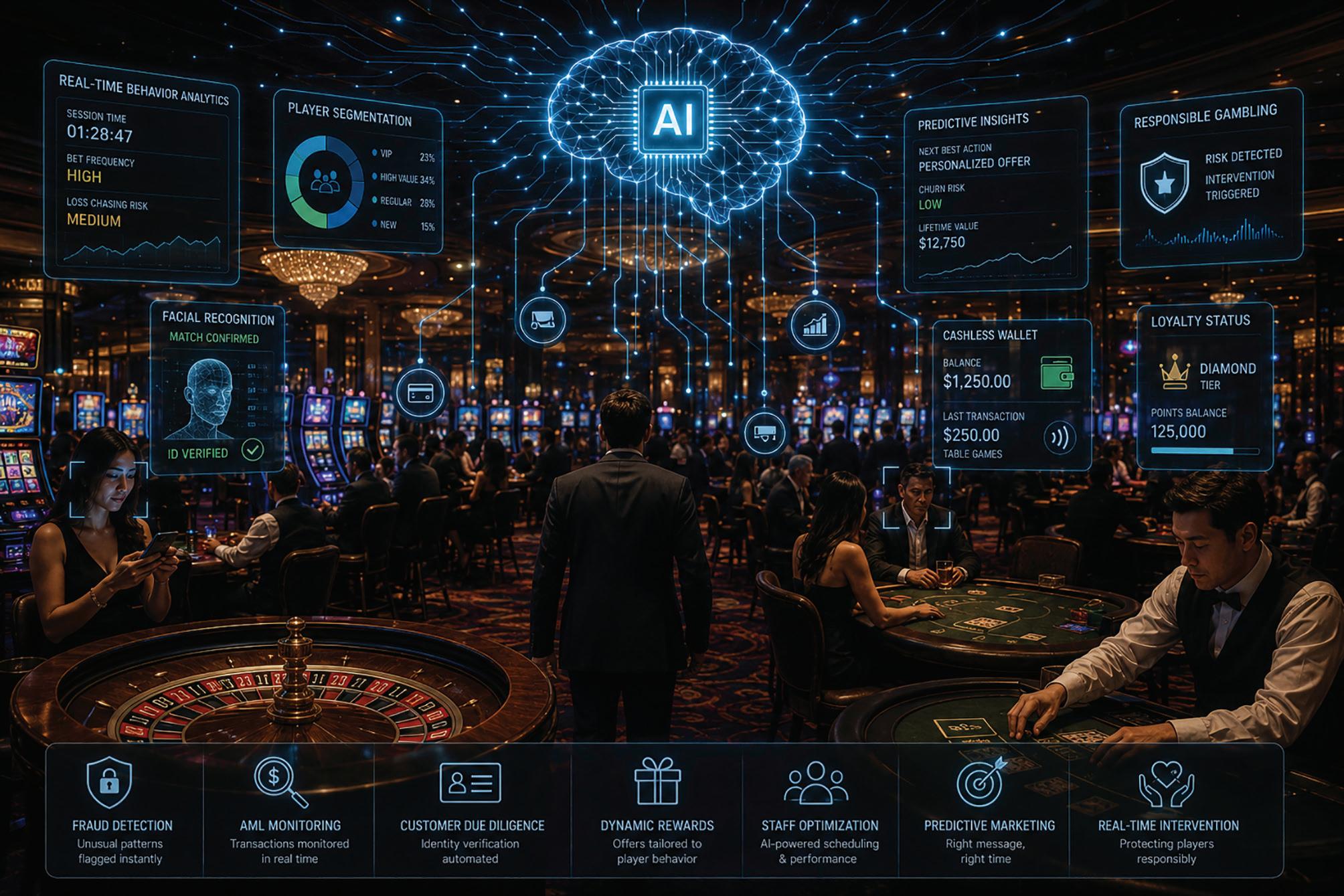
Artificial Intelligence isn’t coming. It’s here to stay. By
Edwin Ford
The casino industry is entering what may prove to be its most technologically transformative era since the arrival of online gaming. Yet much of this transformation is becoming invisible to the customer.
The tables, slots and hospitality may still look familiar but, behind the scenes, casinos are becoming increasingly data-driven, automated and predictive. Artificial intelligence, cashless payments, facial recognition, automated KYC and real-time behavioral monitoring are no longer future concepts. They are already being introduced across both online and landbased gambling environments.
The traditional casino experience was built around friction: cash handling, physical chips, manual verification, loyalty cards and human interaction.
Today, operators are attempting to remove much of that friction through digital wallets, app-based loyalty ecosystems, contactless gaming, automated onboarding and AI-driven customer-management systems.
The question is no longer whether AI will enter the casino industry. It already has. The more important question is whether operators are creating a smarter customer experience or a surveillance economy wrapped in entertainment.
Artificial intelligence has rapidly moved beyond marketing terminology and into operational reality. Across the industry, AI is increasingly being used for: • fraud detection
• anti-money-laundering monitoring
• customer due diligence
• player segmentation
• dynamic rewards
• staffing optimization
• predictive marketing
• and real-time responsible-gambling interventions
The casino floor of 2026 may look familiar but it is increasingly thinking for itself.
For operators, the commercial appeal is obvious. AI promises efficiency, automation and the ability better to understand customer behavior in an increasingly competitive market. For regulators, the technology potentially offers improved monitoring capabilities across affordability, AML compliance, suspicious transactions and player protection.
Increasingly, AI is no longer simply a feature of modern gaming operations. It is becoming core infrastructure.
One of the most significant shifts now taking place is the gradual move toward cashless gaming environments. Digital wallets, TITO systems, contactless gaming and app-based payment ecosystems are becoming central to the modern casino model, particularly as land-based venues continue to converge with online-gambling technologies.
The commercial benefits are clear:
• faster transactions
• reduced cash handling
• enhanced customer tracking
• integrated loyalty systems
• and more-seamless customer journeys
But cashless gaming changes more than payment methods. It changes player psychology.
Cash traditionally acts as a natural behavioral brake. Customers physically see money leave their hands. In a frictionless, digital environment, that spending awareness can become increasingly detached from the gambling experience itself.
This is where the debate becomes more complicated. At what point does convenience become behavioral engineering?
Perhaps the most sensitive area surrounding AI adoption is behavioral personalization. Modern gaming systems are increasingly capable of tailoring experiences to individual customers through:
• personalized bonuses
• predictive loyalty rewards
• gamified missions
• targeted promotions
• and behavioral-engagement tools
Supporters argue this creates better customer experiences and allows operators to deliver morerelevant entertainment products. Critics argue that the same systems can be used to identify behavioral weaknesses, encourage longer sessions and increase customer spend through highly targeted engagement.
The line between personalization and manipulation is becoming increasingly difficult to define. The future casino floor may therefore become less about individual gambling products and more about carefully designed behavioral ecosystems.
One of the strongest arguments in favor of AI is its potential role in responsible gambling and player protection.
AI systems are increasingly being deployed to:
• detect risky behavioral patterns
• monitor sudden changes in spending
• trigger cooling-off interventions
• automate alerts
• and identify possible markers of harm in real time
In theory, this could allow operators and regulators to intervene earlier than ever before. However, questions remain over whether these systems are genuinely preventative or whether they primarily serve as compliance tools designed to demonstrate regulatory oversight after the fact.
At the same time, regulators are now also confronting the darker side of AI itself, including deep-fake identity fraud, synthetic documents and AI-assisted financial crime. Increasingly, operators may need AI systems simply to defend themselves against AI-generated threats.
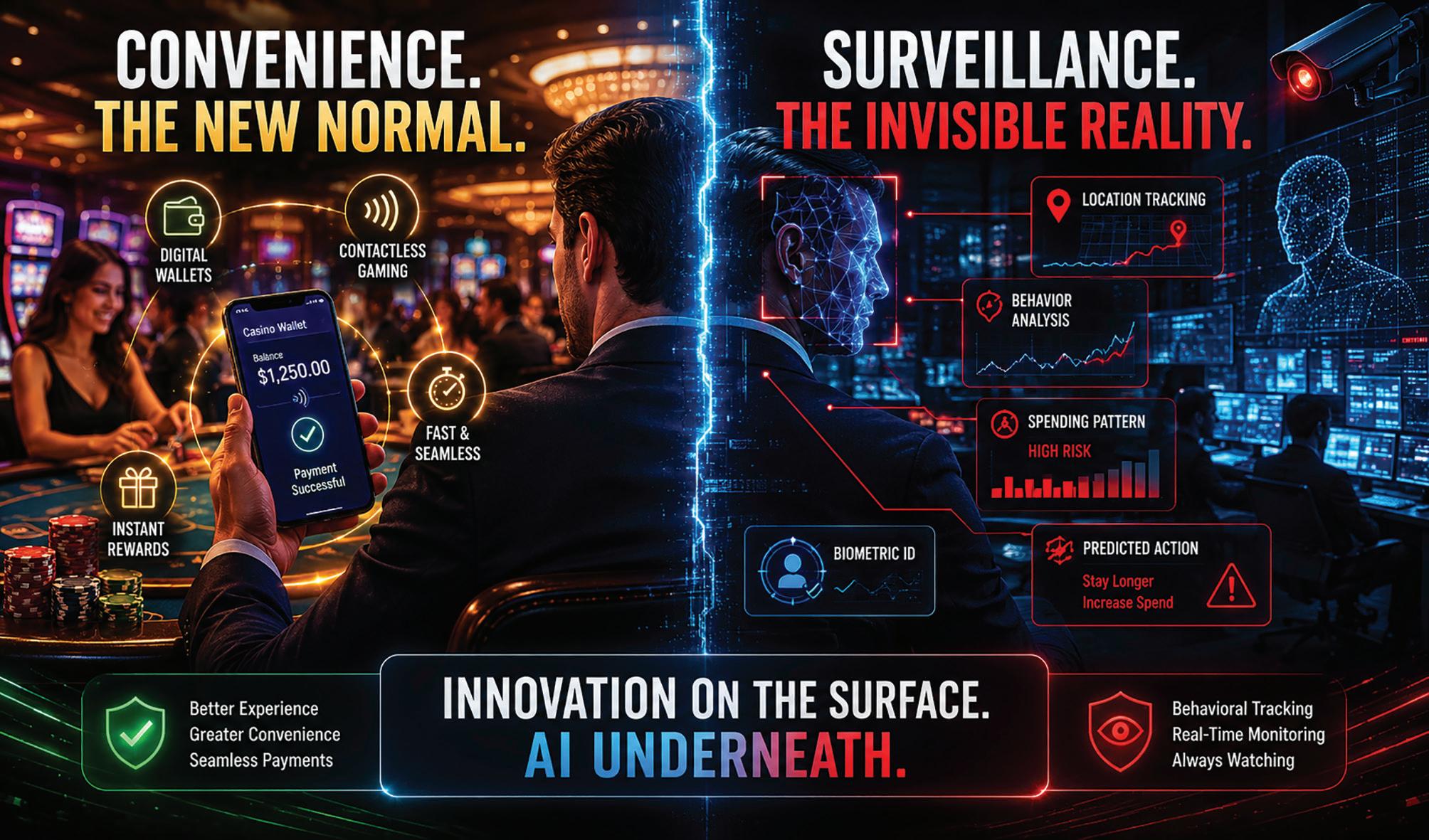
The gambling industry has always evolved alongside technology. But the current transformation feels fundamentally different because AI is not merely changing products; it is changing decision-making itself.
Operators are under increasing pressure to improve compliance, reduce fraud, enhance player protection and remain commercially competitive. Regulators are simultaneously attempting to balance innovation with consumer safeguards in an industry becoming increasingly digital and data-driven.
AI may genuinely help solve some of these challenges. It may strengthen AML systems, improve operational efficiency, enhance customer verification and support earlier responsiblegambling intervention. Yet the same tools can also increase behavioral targeting, reduce spending friction and create environments where customer activity is monitored, analyzed and influenced continuously.
The casino floor of 2026 may still look familiar but it is increasingly thinking for itself. It knows
who the customer is, how they play, what they spend, when they return and how their behavior changes over time. That intelligence can undoubtedly improve hospitality, operational efficiency, compliance and player protection. Equally, regulators may find AI one of the few practical tools capable of monitoring increasingly complex gambling ecosystems in real time.
But the technology also raises uncomfortable questions. Can an industry built around entertainment responsibly deploy systems specifically designed to predict and influence behavior? Will AI genuinely reduce gambling harm, fraud and financial crime or simply create more commercially efficient gambling environments?
Perhaps the debate is no longer whether AI should enter the gambling industry, because that process has already begun. Can the industry can adopt it responsibly, transparently and within clear ethical boundaries?
AI is unlikely to disappear from modern gaming operations. The real issue is how far the industry allows it to go.
So, the question remains: Is AI truly the solution to many of the operational and regulatory challenges facing modern gambling – or is the industry creating a new generation of risks while attempting to solve the old ones?

How the World Cup will reshape sports betting in North America. By
s prediction markets close on $50 billion of annual volume and U.S. courts divide on their legal status, the 2026 World Cup is the first global tournament where traditional sports books face a credible second front on home soil. My prediction is that the only certain winner is the fan in this gargantuan battle for player attention.
AAs a CMO of various sports books and betting exchanges, I have spent two decades watching the marketing playbook for major football tournaments harden into a formula. Build the campaign. Hammer the price boosts. Stack the in-play features. Ride the patriotic team and betting wave from group stage to final.
Mark McGuinness
For the World Cup that opens on June 11 across the United States, Canada and Mexico, that playbook still works. It just no longer works alone.
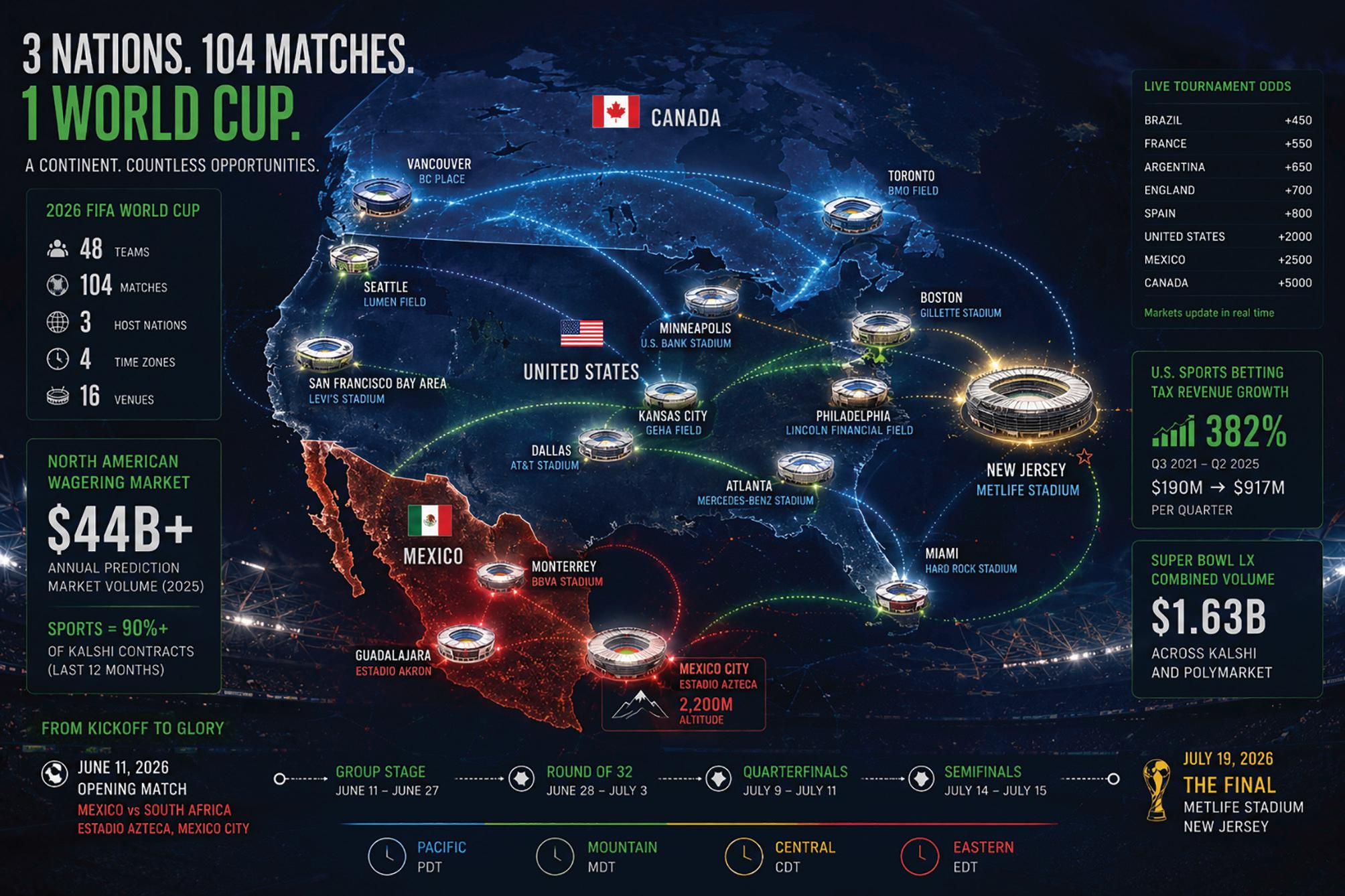
The reason sits in two numbers. In 2025, Kalshi processed $23.8 billion in notional volume, growth of more than 1,100 percent, year on year. Together with Polymarket, the two platforms cleared more than $44 billion across the year. Sports accounted for roughly nine in every 10 Kalshi contracts in the 12 months to February 2026. Super Bowl LX alone produced $1.6 billion in combined volume across the two.
That is not a niche. That is a parallel market.
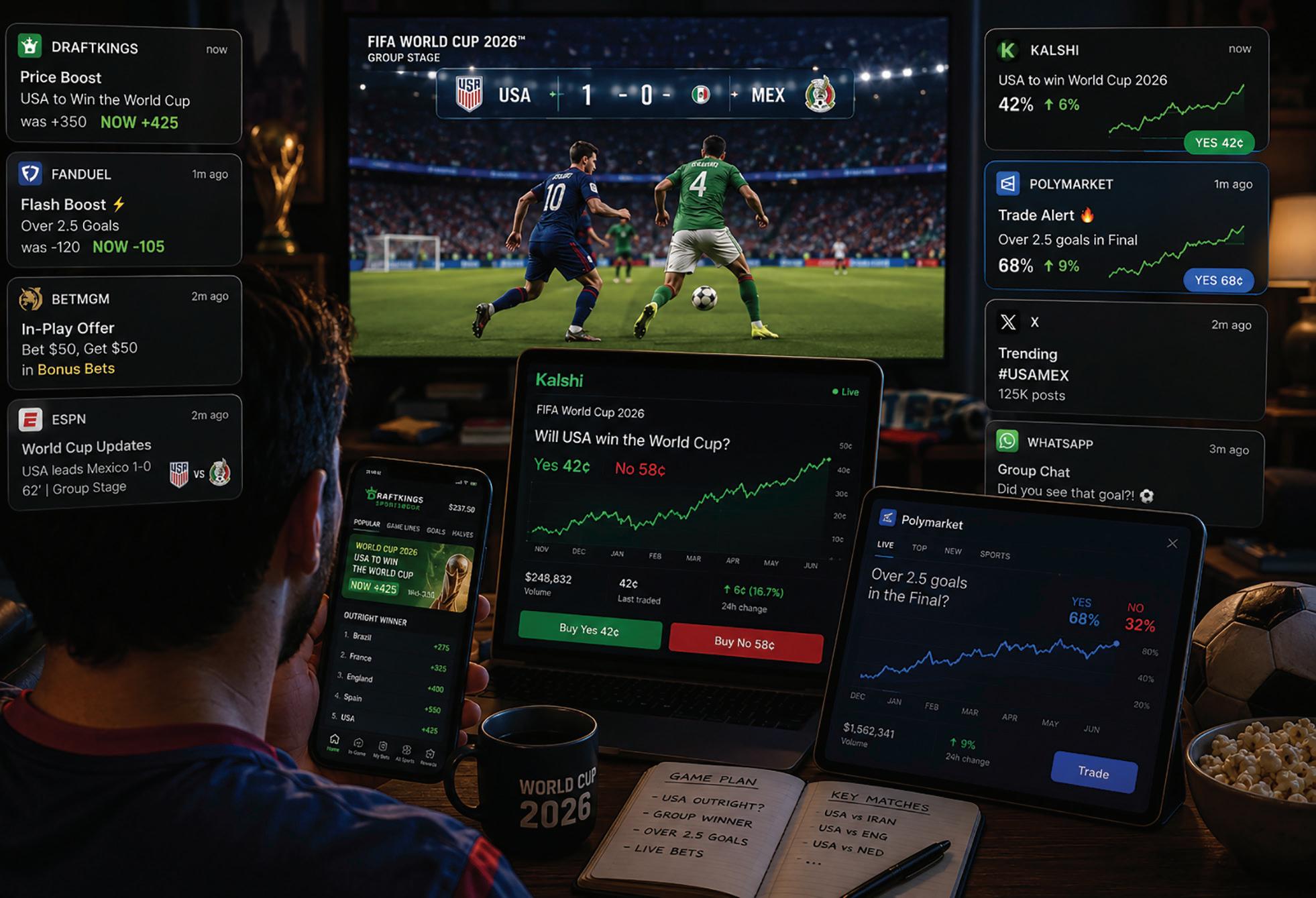
The regulatory picture is the operative variable for any North American operator preparing for the tournament. In April, the Third Circuit upheld Kalshi's right to offer sports contracts in New Jersey. In January, a Suffolk County judge in Massachusetts had ruled the opposite way. Two dozen state officials have filed challenges. In March, Sens. John Curtis and Adam Schiff introduced the Prediction Markets Are Gambling Act, designed to bar sports and casino-style event contracts from CFTC-regulated platforms.
A circuit split looks likely. The Supreme Court is the probable end point, unless Congress moves first.
For the operator board, that is unresolved risk on the demand side rather than a closed door. Kalshi is currently banned outright in at least four states and restricted in others. It remains available for trading in all 50. In May, the platform committed $2 million to a problem-gambling group even as it argued against the “gambling” label. The NHL signed licensing deals with both Kalshi and Polymarket in October 2025. Read commercially, that single move tells you how seriously rights-holders are now taking prediction-market distribution.
Outside North America the picture diverges sharply. The Netherlands ordered Polymarket to stop serving Dutch customers in February. New Zealand's Department of Internal Affairs classified prediction-
market platforms as gambling. The UK Gambling Commission published a similar position the same month. Ontario's iGaming framework has kept Polymarket out of the regulated Canadian market.
There is no global consensus emerging. There is, however, a clear pattern. Outside the U.S., regulators are treating event contracts on sport as gambling. Inside the U.S., the courts have not yet decided.
That divergence is the structural backdrop. The tournament is the test.
The World Cup format makes the test unusually demanding. Forty-eight teams. One hundred and four matches. Three host nations across four time zones. Sixteen venues. An altitude spread from sea level to 2,200 metres at Estadio Azteca in Mexico City.
The opener between Mexico and South Africa kicks off in Mexico City on June 11. The final, scheduled for MetLife Stadium in New Jersey on 19 July, will be the largest single sports-betting event ever to settle on North American soil.
The American Gaming Association projected $1.8 billion of U.S. wagering on the 2022 World Cup, the first edition with widespread access to legal U.S. sports betting. The 2026 figure will not be close to that. State sports-betting tax revenue rose 382 percent between Q3 2021 and Q2 2025, from $190 million to $917 million per quarter. The base is now an order of magnitude larger.
The marketing problem is no longer whether the demand is there. It is who captures it.
When a casual fan in Chicago or Toronto sees the U.S. national team's tournament win probability quoted on Kalshi alongside an outright price at DraftKings or FanDuel, the comparison happens whether operators engineer it or not. Operators who cannot articulate why their price is fair, why their market is the right one and why their experience is worth choosing will find themselves on the wrong side of that comparison.
Three priorities should sit at the top of the agenda for the World Cup tournament window.
The state-by-state safer-gambling regime, the AGA’s responsible-marketing code and the broader political pressure on advertising volume have not paused for the World Cup. Operators that lead with player-protection signals, transparent settlement and clear messaging on what a bet actually returns will hold customers that price-led competitors will lose. Trust is the proverbial moat. Prediction markets will spend years trying to build it for themselves.
The World Cup schedule rewards operators who treat fan engagement as a regional craft, not a continental one. The Mexico opener is a national event in a way the U.S. opener is not. Canada’s emergence as a co-host shifts what the tournament means in Ontario, where the regulated market is now mature, and across western Canada, where football engagement has historically been softer. Mexico's altitude profile alone will shape in-play volatility for European sides arriving without acclimatization. Build the narrative around those specifics. Not around a generic outright-winner pitch.
The temptation will be to chase every dollar, peso and Canadian dollar with every promotional lever the compliance team will sanction. Resist it. Operators that come out of the tournament with retained players, rather than churned acquisitions, will be those that treated the World Cup as a brand-building event first and an acquisition event second.
Prediction markets will take market share during this World Cup. Not majority share. Not enough to displace the regulated sport sbook as the primary betting product for the average North American fan /bettor. They will, however, set the cultural conversation around odds, probability and value in ways every operator will feel through its awareness metrics.
The Supreme Court question will not be resolved before the final. The competitive question already will have been answered. The operators who used the tournament to deepen player trust will gain in the long term. Those who used it to discount for temporary acquisition market share will not.
The real winner of this World Cup will be the fan who chooses well. Our job, as operators and as the marketers serving them, is to make sure that choice is ours to offer.



Sports Betting Operator provides technology features, news and new product information, keeping online gambling companies up to date with the fastest growing gambling sector in the world

A highly regarded team of Internationally experienced journalists, all of whom have a wealth of knowledge in online and land-based gaming involving, legislation, e-commerce, responsible gambling along with the latest online operating systems and solutions.

rom May 25 to 27, Yerevan became the hub of the affiliate industry, hosting the MAC Affiliate Conference. There, affiliate managers, media buyers, iGaming specialists and representatives of the largest affiliate programs gathered. During these days, the 1xAffiliates team was welcoming guests at booth E1. But the brand was also preparing its main event outside the official conference program.
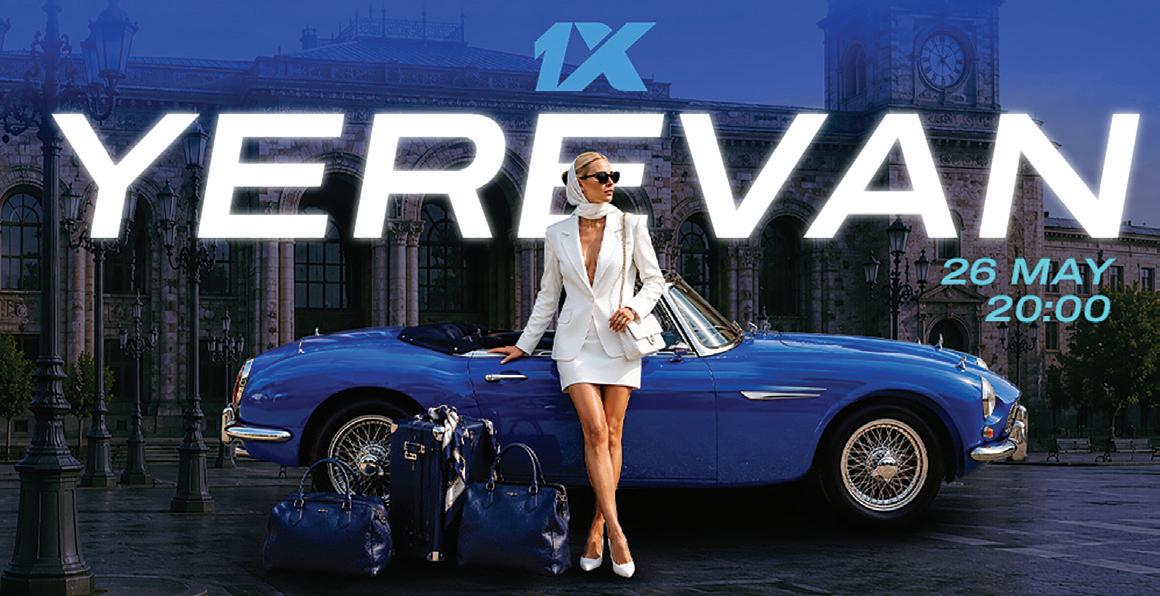
On May 26, 1xAffiliates hosted an exclusive party at a secret location, the address of which was provided only to invited guests. The organizers were deliberately keeping the location secret to highlight the event’s exclusive nature and limited access. Entry to the party was strictly limited via a personal QR code, which participants received after registering via the Telegram bot.
The theme of the evening was the aesthetic of the 90s: a decade where freedom of self-expression, bold style and street culture shaped an entire generation. However, this was not a classic retro party but rather a modern interpretation of an iconic era.
The visual concept brought together oversized silhouettes, denim, leather jackets, iconic track suits, elements of pop culture and an old-school atmosphere, enhanced with a contemporary aesthetic.
For one night, the chosen venue was transformed into an exclusive club for members of the affiliate industry. In the intimate setting of this private event, affiliate managers, media buyers, iGaming specialists and market partners, for whom such formats are a staple of international conferences, came together. Special guests from the industry were also expected
to attend the event, with their names announced closer to the date.
The highlight of the evening was the finale of the major race hosted by 1xAffiliates. During the party, the winners of the draw, which all conference participants were eagerly awaiting, was announced. Only five partners who had earned the maximum number of chances, based on FTD volume, made the shortlist. The finalists took the stage to compete for the night’s main prize.
The Rolex Datejust 41 in Oystersteel and white gold, 41 mm, is a model that has been around since 1945 and continues to set the standard. Roger Federer wore one while lifting the Wimbledon trophy after breaking Pete Sampras’s record. Among the model’s fans is Lionel Messi, whose Rolex collection is as impressive as his list of titles. A fluted gold bezel, a slate dial with a sun-ray effect that shifts with every movement and a Jubilee bracelet have made for a time-tested classic.
In addition to the grand prize, a 12,000 USDT pool was distributed among the finalists, making the finals one of the most anticipated events of the entire conference week.
We create standout designs that elevate your digital and print marketing needs
Once your project is ready, we’ll take care of all your printing needs, ensuring the best value for your budget while saving you the hassle of dealing with printers directly.
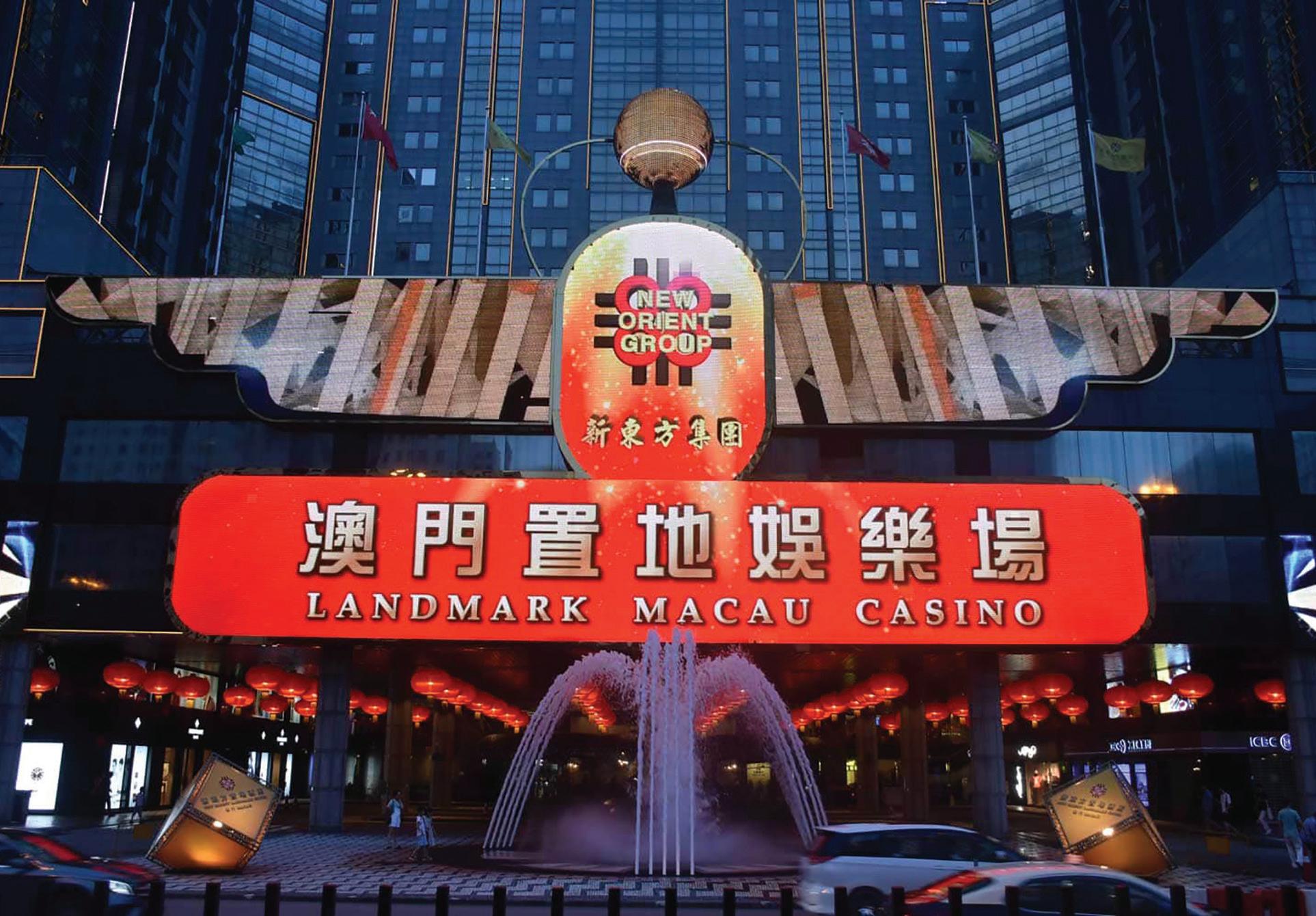
Prospects for the Chinese gambling sector are befogged at present. The ongoing Middle East war and the current problems of the Chinese economy may lead to a serious decline of Macao’s gambling revenue this year.
According to latest report of CLSA, Asia's leading capital-markets and investment group, despite strong performance in Macao’s gross gaming revenue in the first quarter of 2026, the future looks anemic. Growth forecasts for fiscal years 2026 and 2027 are estimated at five percent and four percent, respectively.
This is generally lower than earlier forecasts. Analysts at CLSA believe that the potential for serious organic growth of the Macao casino industry is limited in 2026-7. This is mainly due to an anticipated decline in industry profitability in the near term. However, a stronger currency will continue to provide support.
In fact, Macao’s total gaming revenue surpassed Las Vegas in 2006, making it the world's gambling capital. It is also the only place in populous China where citizens are legally allowed to gamble in casinos.
As a result, many tourists from China flocked to Macao to gamble heavily. In 2024, Macao received nearly 35 million tourists, with over 70 percent from China.
However, the Macao government intervened and the Chinese economy experienced a downturn. The Macanese gambling industry is now entering a painful period of change. This is reflected by the recent closure of satellite casinos within the city. If gambling revenue falls short of expectations, the Macao government may face a budget deficit.
Last June, the Macau government announced that it had received notifications from three licensed casino companies – Sociedade de Turismo e Diversões de
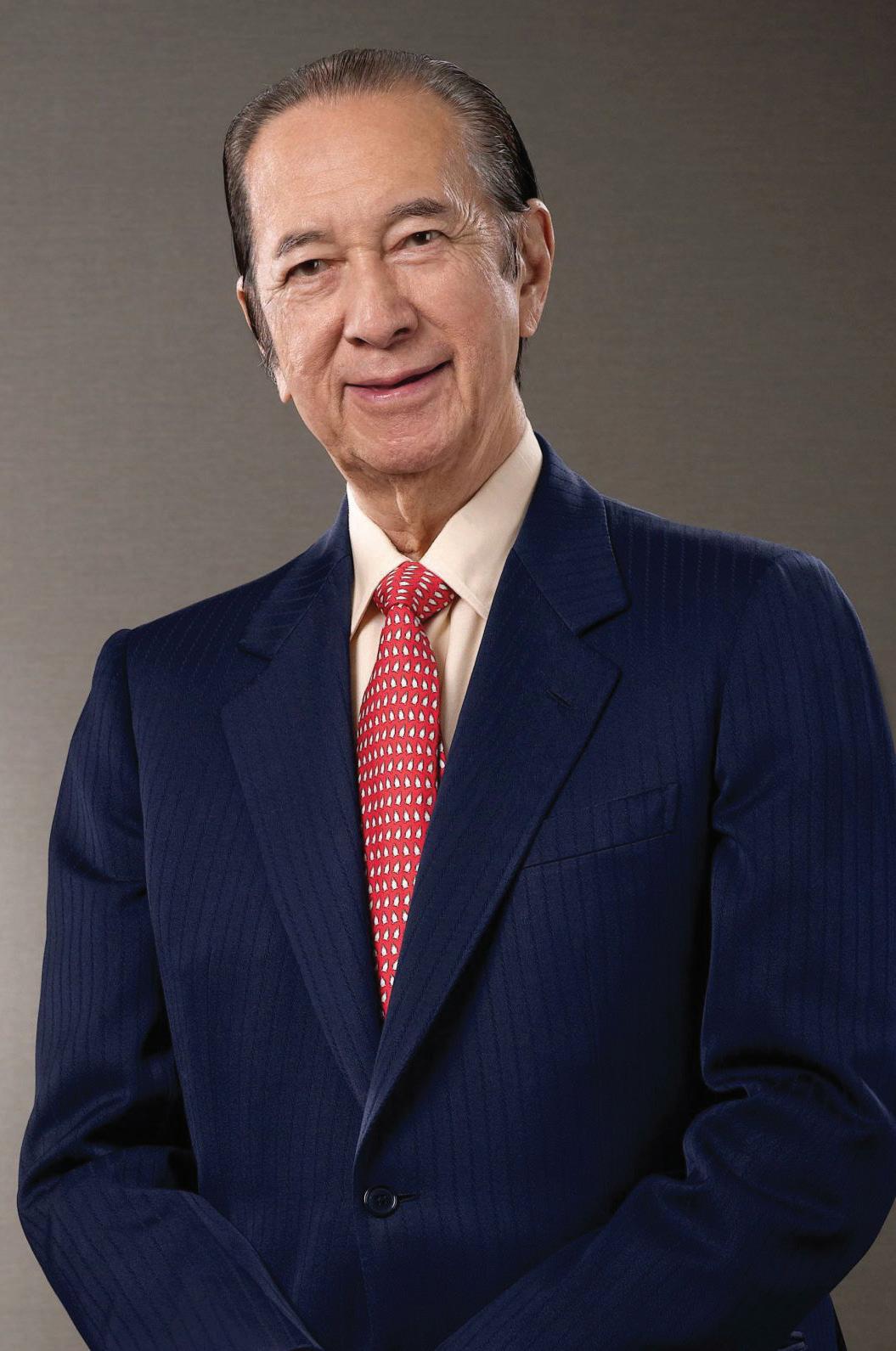
Macau, Melco Crown Entertainment, and Galaxy Entertainment Group – that they would cease operations of their satellite casinos by December 31. As a result, Macau’s last remaining satellite, Landmark Casino, ceased operations at midnight on January 1,
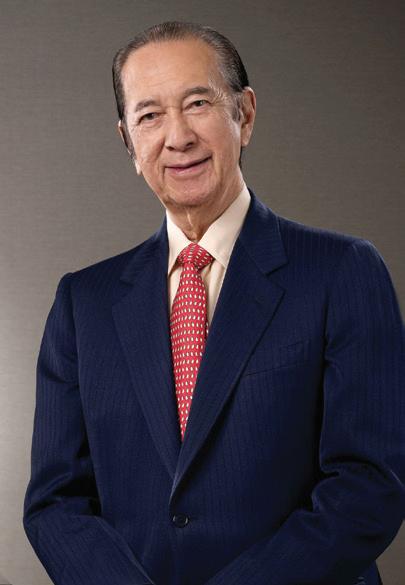
Satellite casinos are a unique operating model in Macao’s gaming industry, referring to small casinos established by large, licensed gaming companies within other, non-gaming venues. This business model originated in the 1990s when Macau had only a gambling monopoly – SJM Holdings, owned by the late Stanley Ho.
Therefore, anyone planning to open a casino had to partner with SJM, gradually leading to the satellitecasino model. The gaming company was responsible for casino operations and personnel management. It received a percentage of the profits and losses as a management fee The actual operational risks and profits were borne by the satellite casino owner.
However, after Macao’s return to China, the government liberalized gambling rights, leading to
a surge in satellite casinos. These reached over 20 at one point, but also sparked controversy over the spread of gambling. With the implementation of new gambling regulations and increased state control (as well as the impact of the Covid-19 pandemic), satellite casinos began closing down in 2022, with only 11 remaining.
Since the comprehensive revision of the Gaming Law in 2022, the Macao government has continuously strengthened its control in the gambling industry, further restricting the operation of satellite casinos. Earlier, the Macao chief executive, Cen Haohui, stated that gambling tax revenue accounted for about 80 percent of Macao’s total tax revenue in 2024. His administration aims to reduce the gaming industry's dominance in government finances.
While other industries account for nearly 50 percent of GDP, their tax revenue only represents about 20 percent, which he considered an imbalance in receipts. According to Haohui, if Macao’s monthly gaming tax revenue is less than 15 billion Macao patacas, the enclave will face a gaming-tax deficit.
A recent economic downturn in China has also indirectly affected the development of Macao's gaming industry, as Macao has long relied on Chinese gamblers. This is borne out by the fact that the vast majority of visitors to Macao come from China.
Macanese government data shows that Macao received 34.9 million tourists in 2024, a year-on-year increase of 23.6 percent but only 88.6 percent of the 2019 level, still short of pre-Covid altitudes. The official data for 2025 has not yet been published. Analysts expect slightly higher figures in 2025, compared to 2024. Of the 25 million visitors to Macao, 70.1 percent arrive from China. Most others come from Hong Kong, Taiwan and other countries.
It is also important, that Macao’s gambling win during the Lunar New Year period in February this year was also lower than expected. That was mainly due to Beijing’s continued crackdown on high-stakes gamblers, who previously accounted for half of Macao’s gaming revenue.
This has forced the casinos to rely more on mass tourism, although these tourists are more sensitive to economic pressures. Although Macao’s local
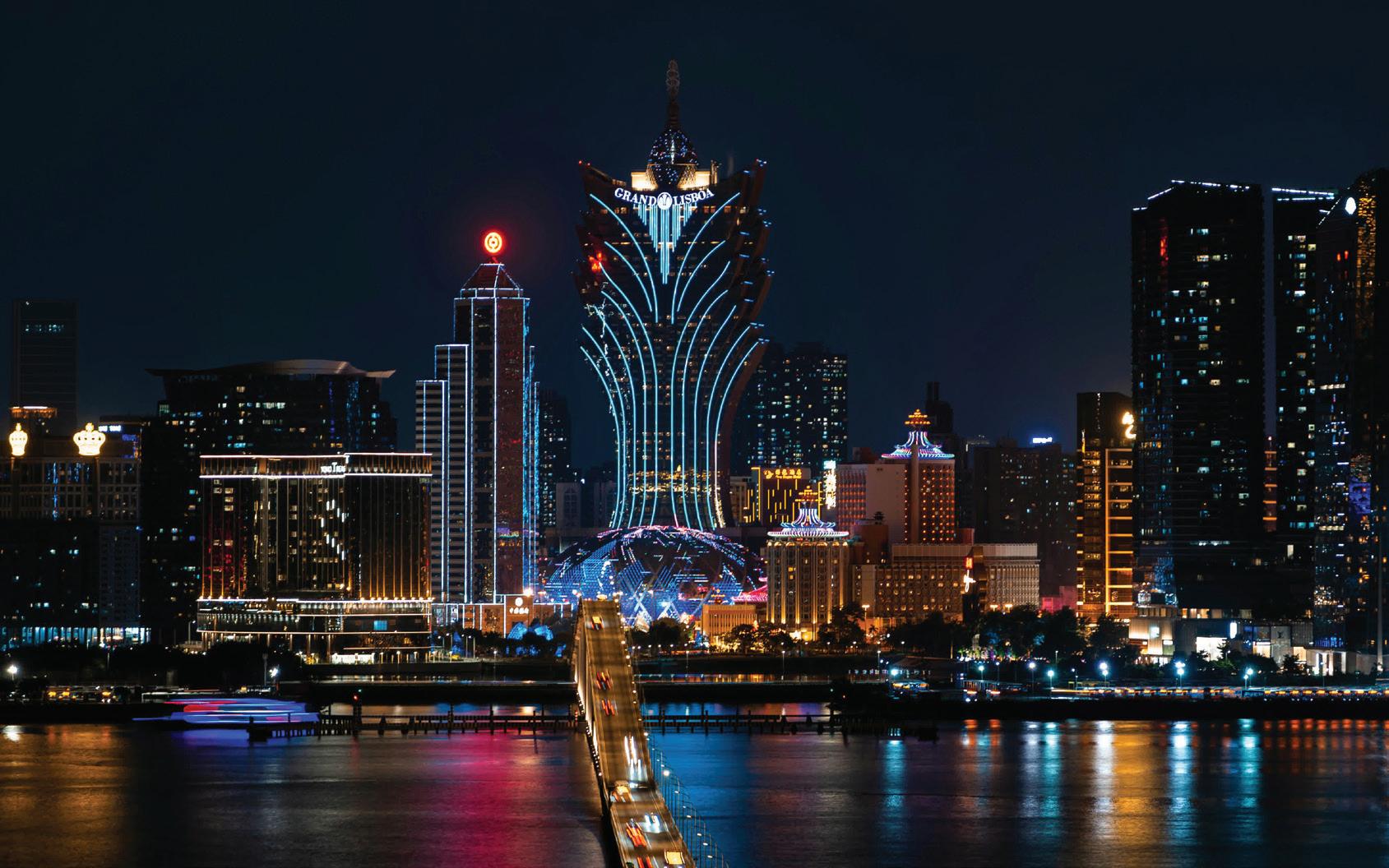
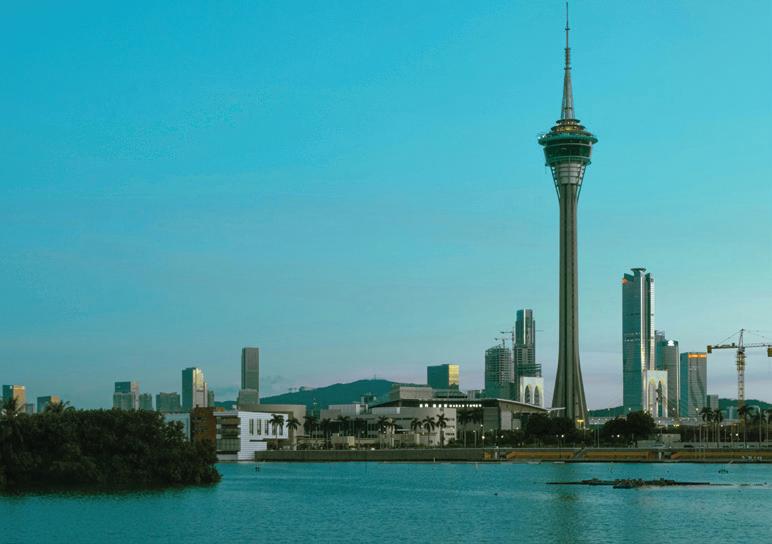
tourism industry is gradually recovering from the pandemic’s downturn, per capita spending has shown signs of slowing. This slowdown in Macao’s gaming revenue growth indicates that Chinese consumers remain cautious. Economic headwinds, falling property prices, a stock market crash and the ongoing Middle East war have led many to cut back on spending.
Analysts expect that Macao’s casino industry will continue to undergo a painful transformation. This is mainly due to a shift of the main source of revenue for Macao casinos from VIP gamblers to the mass market. This follows upon the arrest of Macanese entertainment tycoon Alvin Chau, nicknamed “Xi Mihua.”
However, industry insiders worry that the extremely high betting amounts by high-end VIP gamblers may still not be enough to fill the gap left by mass-market gamblers. They also fear that the mass market’s capacity is nearing saturation under the new system.
Secondly, the post-pandemic shift in Chinese consumer habits has led to many tourists adopting a “special forces tourism” model. These tourists use free shuttle buses between casinos and surrounding tourist attractions, and even enjoy free food and drinks at casinos, which no longer generates the same revenue as before, further impacting Macao’s economy.
Furthermore, the Macanese government's policy efforts to change the one-industry-dominated situation, increasingly favor diversified events such as concerts and sporting events. These are thought to be unlikely to stimulate casino betting.
On the other hand, competitors like Singapore and Japan are emerging, meaning tourists don't necessarily have to go to Macao to gamble. Furthermore, after the Covid-19 pandemic, Macao casinos are facing a shortage of frontline staff, with dealers becoming older. Young people are less willing to join the gambling industry, mainly because the salaries are no longer competitive.
All of these factors augur for continued uncertainty in the Pearl River delta.







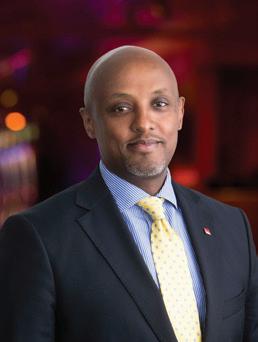
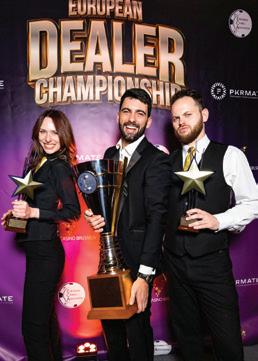




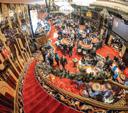


Growth strategy for early ventures. By Raymond Chan
n research-based entrepreneurship, capital is only the beginning. Once a venture achieves early proof and begins attracting initial validation, the real question shifts from “How do we get funded?” to “How do we grow in a way that the market can actually adopt?” A growth strategy is the execution plan that turns experiments, prototypes and pilot interest into repeatable demand – then scales it without breaking operations, margins or product quality.
IFor early ventures, growth is not just about increasing users. It’s about building a system: a clear value proposition, a repeatable go-to-market motion, customer feedback loops that improve productmarket fit and a scalable delivery model. The strongest founders design growth like an engineering discipline, measuring what matters, removing friction and making adoption predictable.
Many early startups make growth too “eventdriven.” They launch campaigns, attend demos or chase partnerships – but without a structured path for learning and adoption. A better approach is to grow in stages, with each stage proving something different.
• From proof to pipeline: Focus on converting technical credibility into qualified interest. Early growth efforts should aim to create a predictable pipeline (demo requests, pilot leads, LOIs and referrals), rather than hoping traction happens randomly.
• From pilots to repeatable outcomes: Pilots can be misleading if they don’t produce measurable business value. Growth requires proving that customers can achieve outcomes consistently (time saved, risk reduced, performance improved), not just “like the product.”

• From repeatable outcomes to conversion: Once value is demonstrated, growth becomes a sales and onboarding problem. Strong ventures improve the conversion process – pricing clarity, implementation playbooks, training materials and customer success.
• From conversion to scaling: Scaling means building operational capacity: delivery workflows, partner channels, support structures and scalable customer onboarding. At this point, growth must protect margins and reduce cost-to-serve. When founders treat growth as a staged de-risking journey, every effort contributes to a measurable next step – not just short-term visibility.
In research-based startups, customers don’t buy experiments, they buy outcomes. Growth strategy must therefore translate your technical advantage into customer-decision-making language.
A customer-led growth approach answers these questions early and repeatedly:
• Who is the first “right” customer segment — and why them?
Not every user is an ideal buyer. Growth accelerates
when you pick a segment with urgency, budget authority and operational readiness.
• What is the adoption barrier?
Common barriers include procurement complexity, long evaluation cycles, integration challenges, regulatory constraints or uncertainty about ROI.
• What evidence convinces skeptics?
Evidence can be pilot results, independent validation, case studies, technical certifications and quantifiable performance metrics.
• What makes onboarding fast and low-friction?
If deployment takes too long or success requires too much manual effort from the customer, scaling stalls. When growth is designed around the customer adoption journey – not the company’s internal roadmap – traction becomes durable.
As ventures move from early traction to growth, they must shift from “founder-driven selling” to “system-driven acquisition.” A repeatable go-to-market engine typically includes:
1. A clear positioning narrative (why you, why now, what outcome you deliver)
2. A defined customer journey (from discovery to pilot to decision to onboarding to retention)
3. A distribution strategy (direct sales, partnerships, channels or community-based pipelines)
4. Customer success as a growth function (onboarding, training, renewals, expansion)
5. Feedback loops into product and delivery (so each customer teaches you how to improve)
The goal is to reduce randomness. Growth becomes measurable when you can predict lead flow, pilot conversions, onboarding success and retention outcomes.
Early stage teams often track the wrong numbers because they’re easier to obtain than to interpret. Growth should be measured through indicators that reflect adoption quality. Useful growth metrics include:
• Pipeline quality (qualified opportunities, conversion rates, sales-cycle length)
• Pilot-to-paid conversion (how often pilots become contracts)
• Time-to-value (how fast customers experience measurable outcomes)
• Retention and expansion (renewals, upsells, customerlifetime value)
• Cost-to-serve (delivery cost per customer and margin implications)
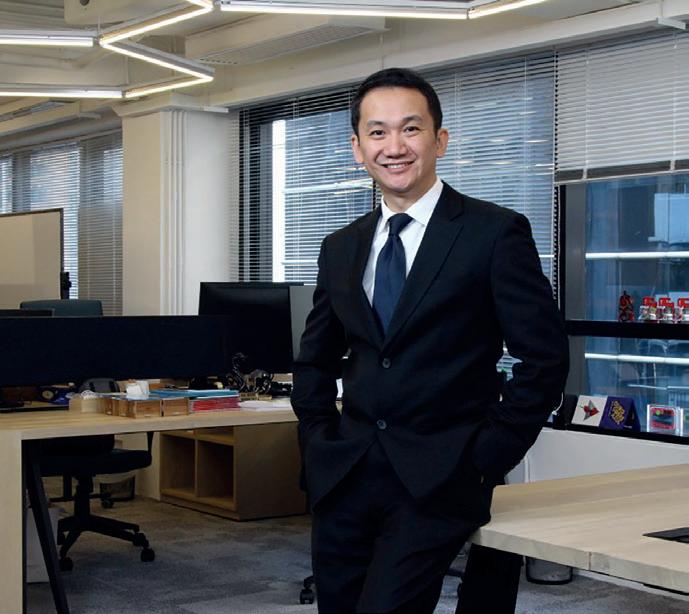
Raymond is a software engineer by profession with a track record in corporate innovation and entrepreneurship. He co-founded two prosperous startups, TGG Interactive and Global Gaming Group in USA and Asia respectively, where he served as director and CEO to lead the electronic gaming businesses from 2007 to 2018. Earlier in his career, Raymond was a founding member of the business intelligence team at ETRADE from Morgan Stanley and played a pivotal role in designing the TiVo customer intelligence system in Silicon Valley.
When teams use these metrics consistently, they can identify what’s working and what needs fixing before growth becomes expensive.
Growth strategy for early ventures is about converting early traction into scalable adoption. It requires a structured sequence – from building a qualified pipeline, to proving repeatable outcomes, to converting interest into purchase and, finally, scaling delivery operations. Research-based startups succeed when they translate technical credibility into customer outcomes, remove adoption friction and build a repeatable goto-market engine grounded in measurable metrics.
In the end, growth is not a separate goal from product development. It’s the execution layer that determines whether innovation becomes real impact.