Virus decimates monkey populations, whose deaths highlight regions most at risk and prompt vaccination campaigns
Developments in affirmative action add diversity to university admission pathways
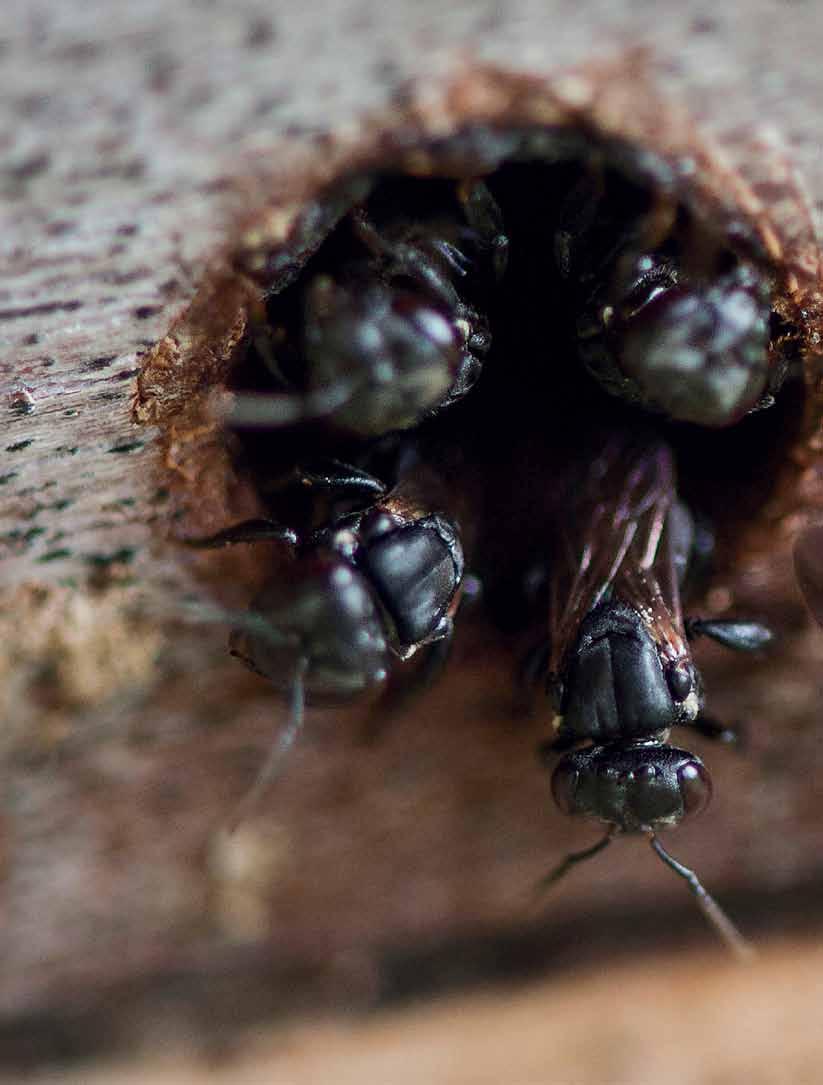
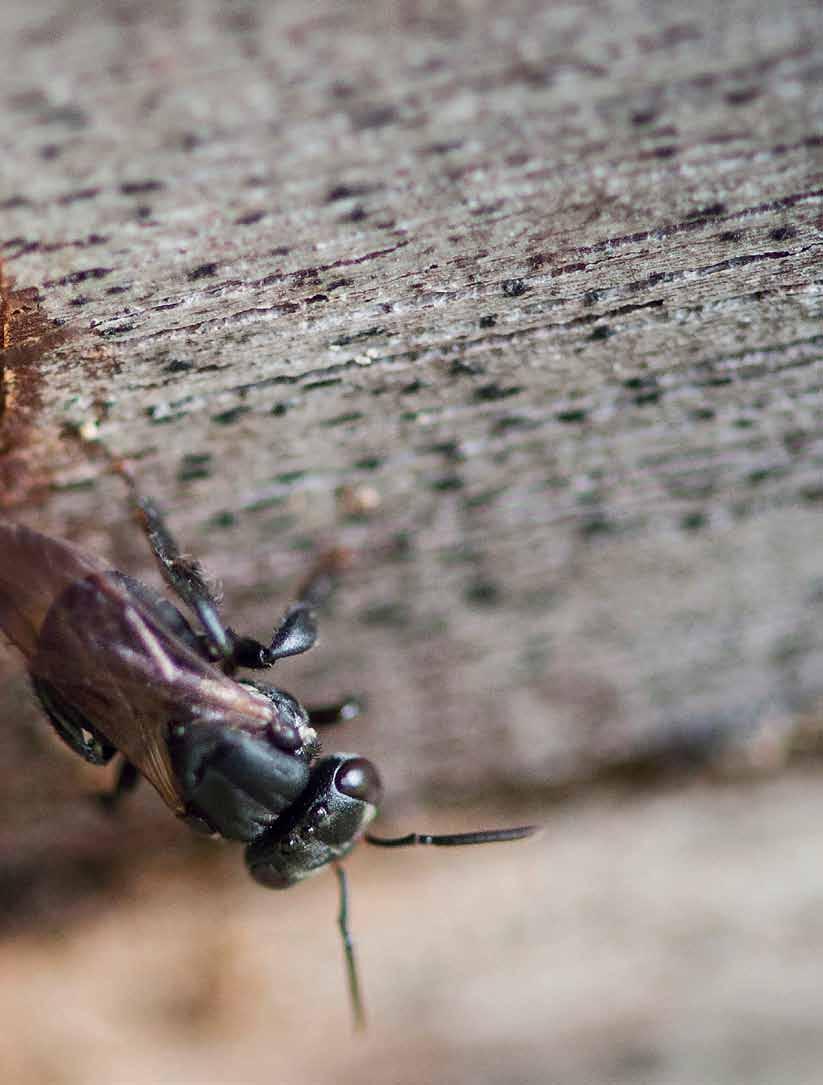
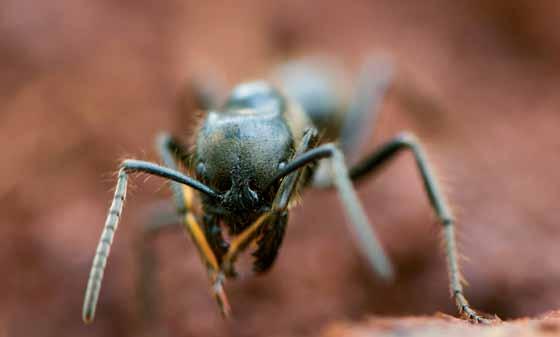
b ees and ants recognize each other through compounds that cover their bodies
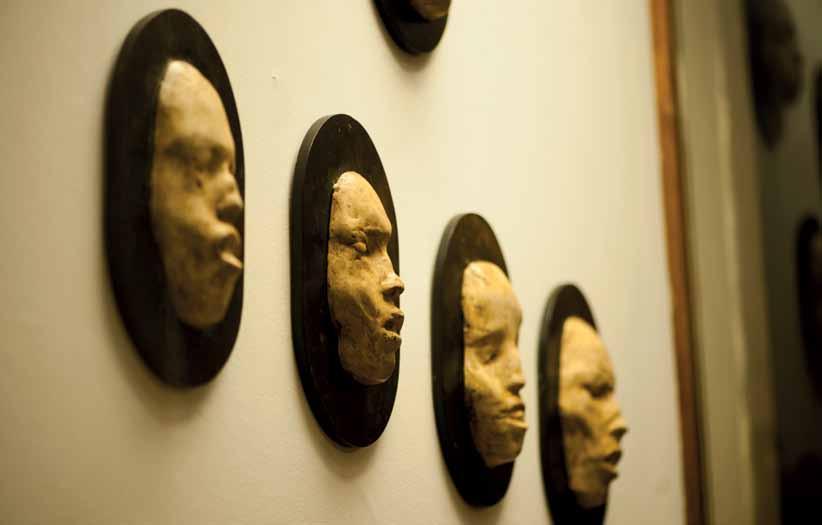
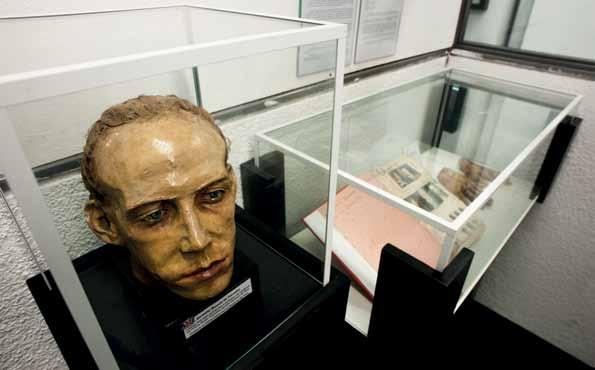
Controversy involves uncertain fate of police museum collections China and b razil may once have been neighbors nearly 2 billion years ago
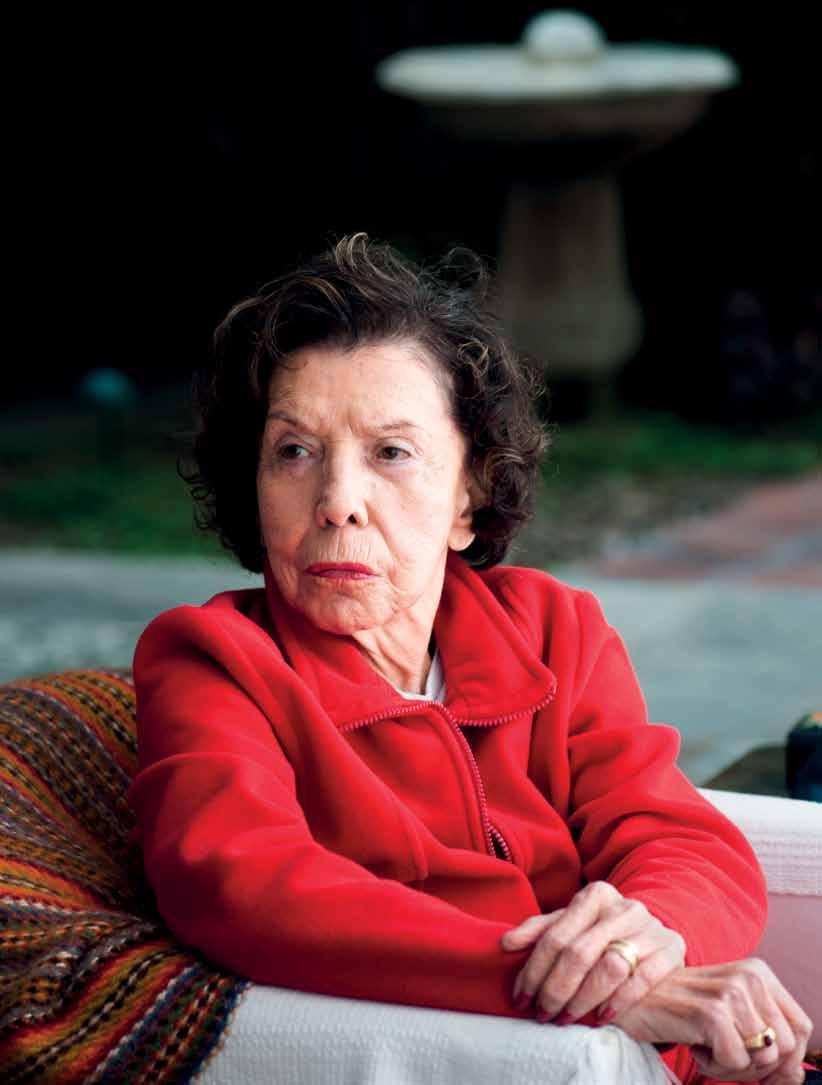
Demography expert elza b erquó, who pioneered research into reproduction, wants to study the youth
december 2018
4 COVER ARTICLE
In cities where it is controlled by vaccinations, yellow fever is decimating populations of wild monkeys
10 A FIOCRUZ team suggests a sixth form of malaria transmitted by mosquitoes infected after biting monkeys
INTERVIEW
José Roberto
Postali Parra Entomologist defends the use of biological controls to combat crop pests
p. 14
S&T POLI c Y
20 Education
Affirmative action encourages universities to create new admission pathways
28 Scientometrics
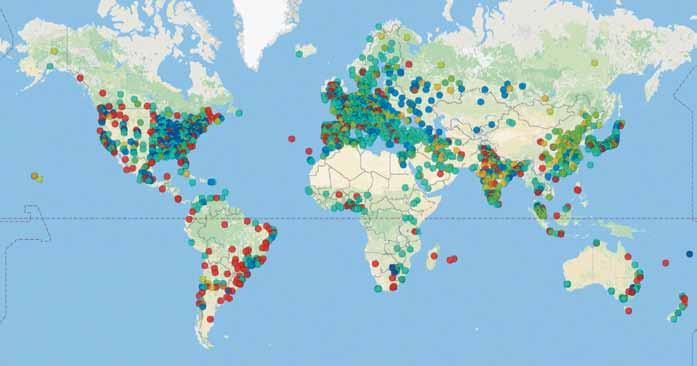
São Paulo is among the 20 cities with the highest scientific output
S c I e N ce
32 Ethology
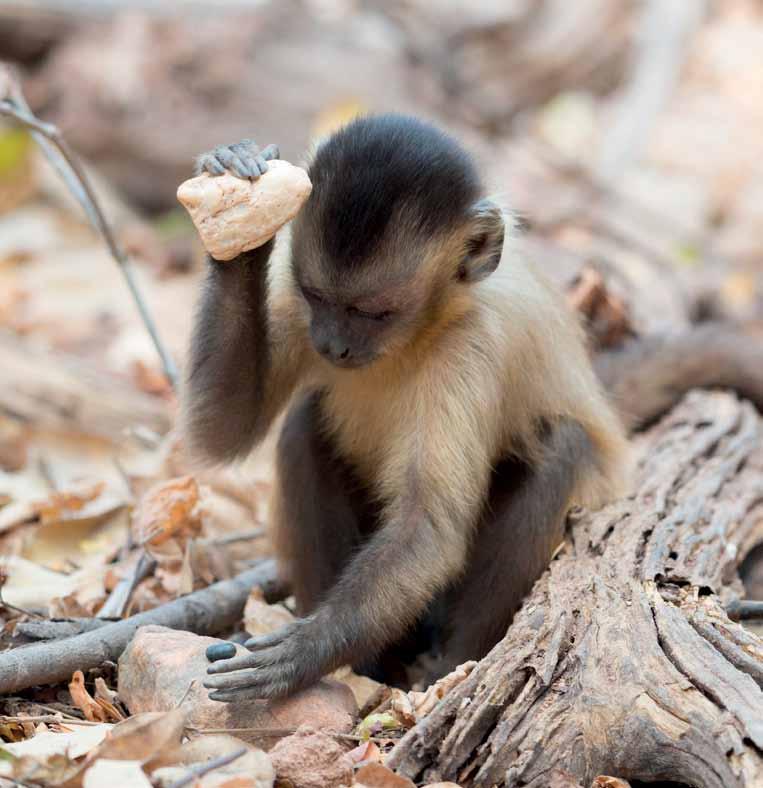
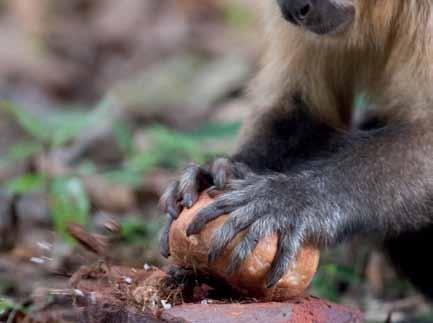
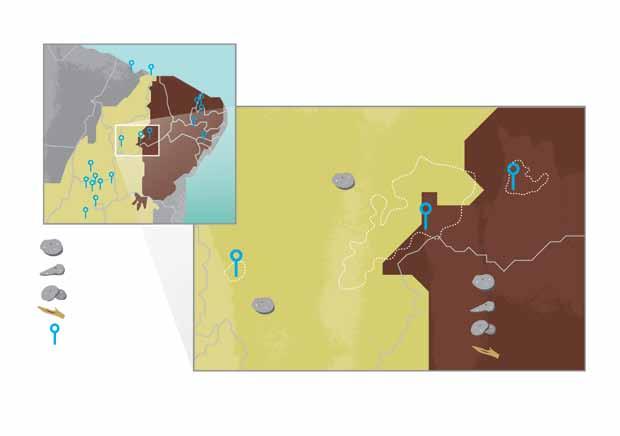
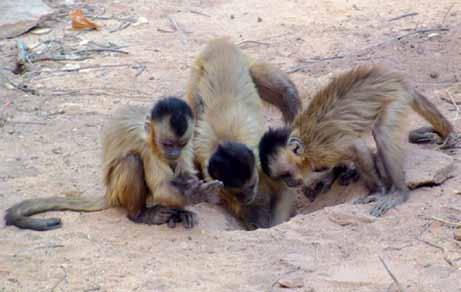
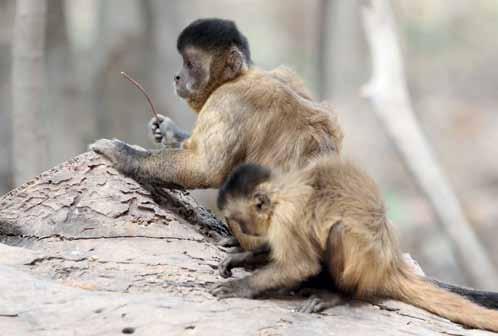
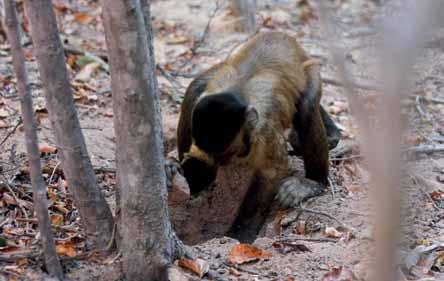
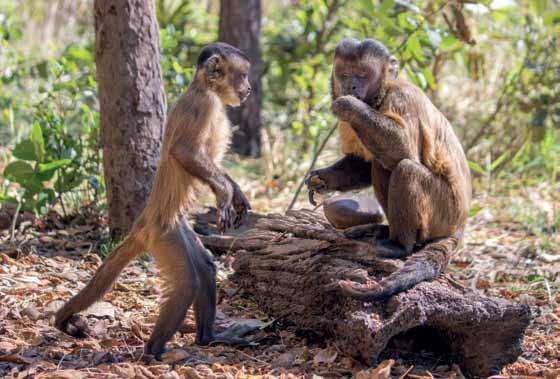
Tool-use practices among capuchin monkeys helps rethink the role of traditions in evolution
38 Biology Bees and ants recognize each other through compounds that cover their bodies
42 Astrophysics
The asteroid belt originated from remnants from the formation of the planets in the solar system
44 The Milky Way cannibalized eleven neighboring galaxies
45 Physics
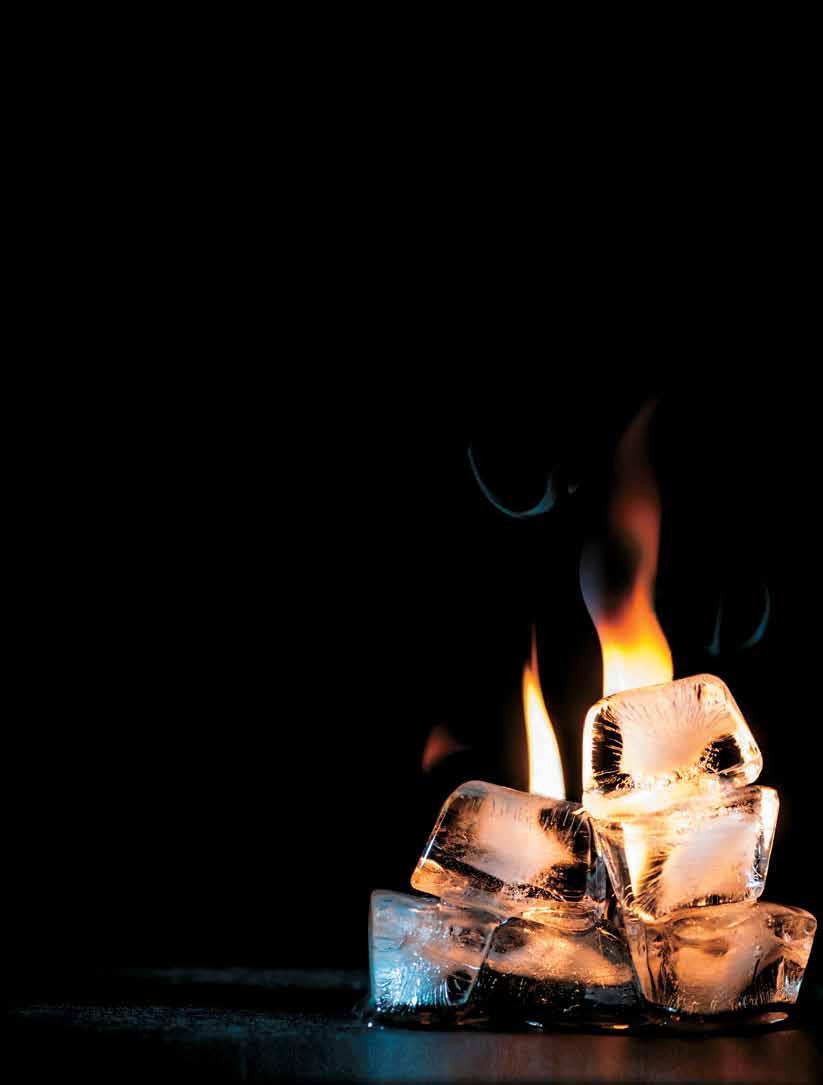
Disturbing a cloud of cold atoms produces a wave phenomenon similar to light
46 Cold particles transfer heat to hotter ones in quantum experiment, reversing the thermodynamic arrow of time
48 Geology
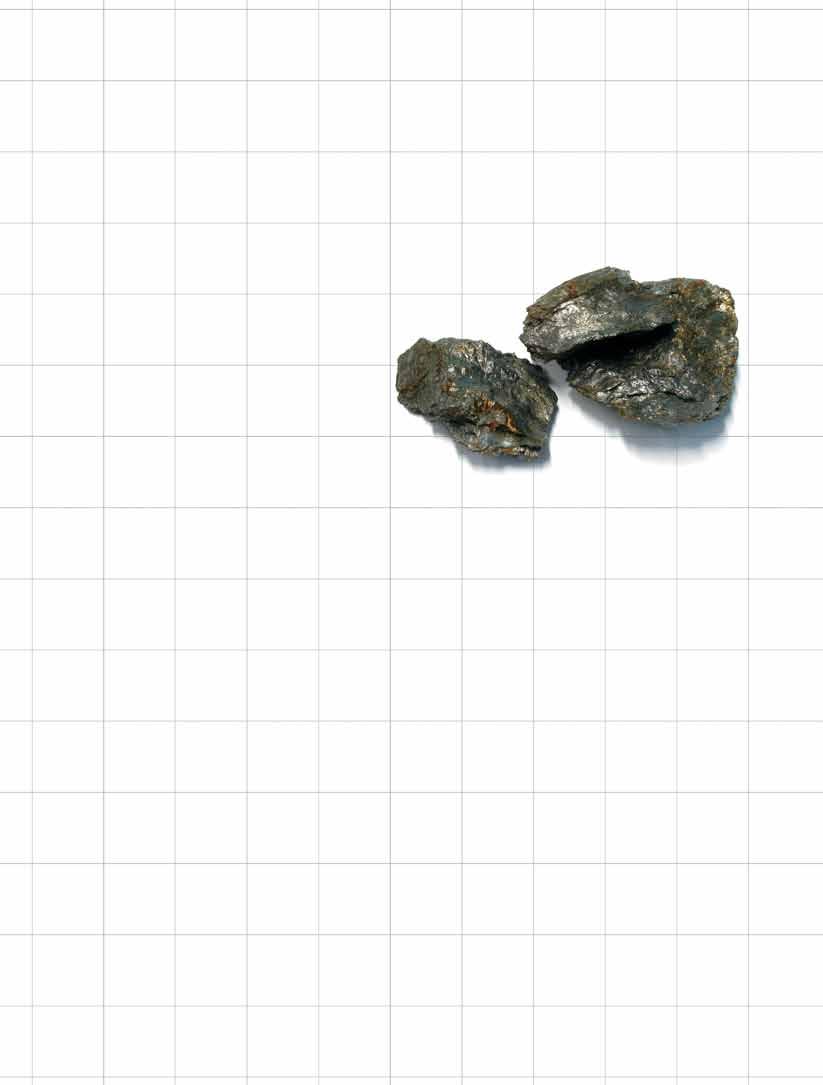
Graphite-rich rocks suggest that areas of China and Brazil were joined together
T ec HNOLOGY
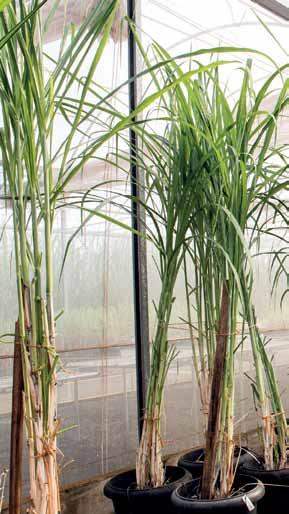
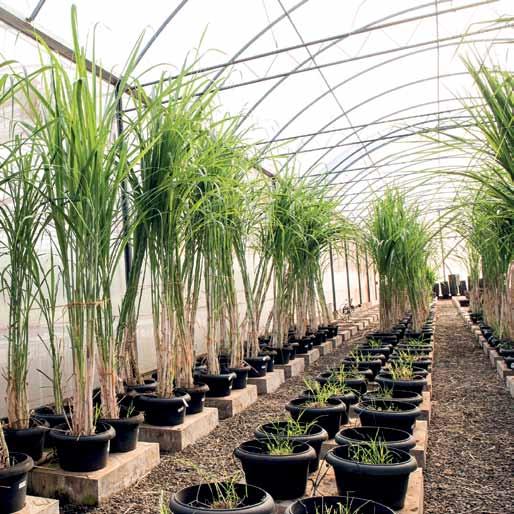
50 Paper industry Companies use sugarcane waste to produce printer paper and packaging
54 Corporate research
CTC invests in biotechnology to boost the efficiency of Brazilian sugarcane
60 Paleontology
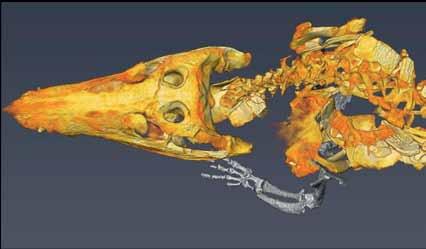
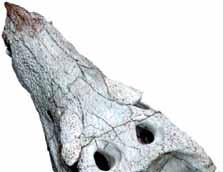
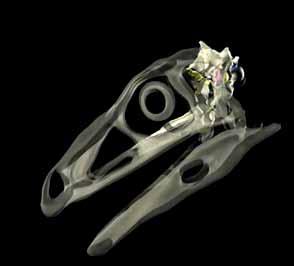
3D reconstructions highlight new characteristics of extinct crocodiles and dinosaurs
64 Archaeology
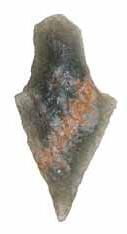
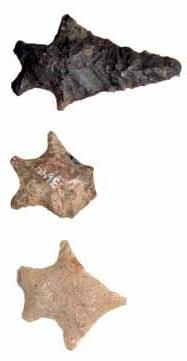
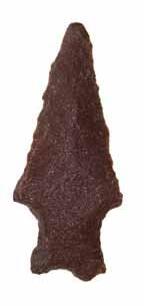
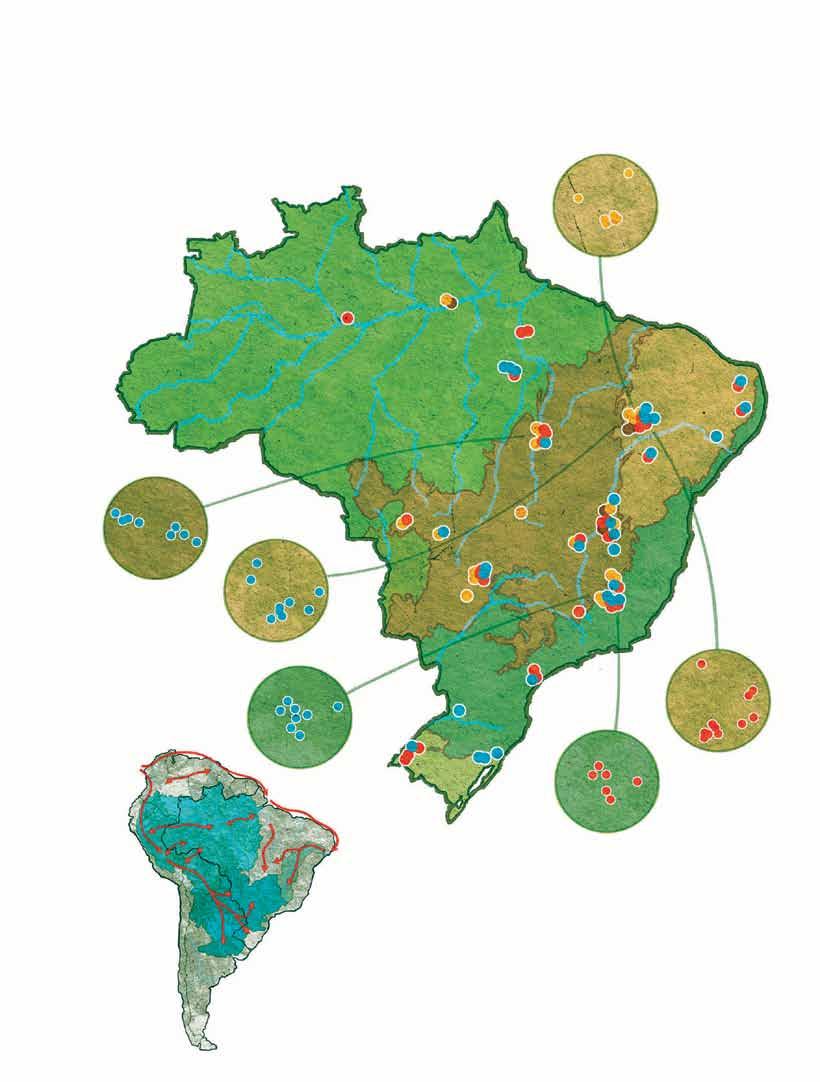
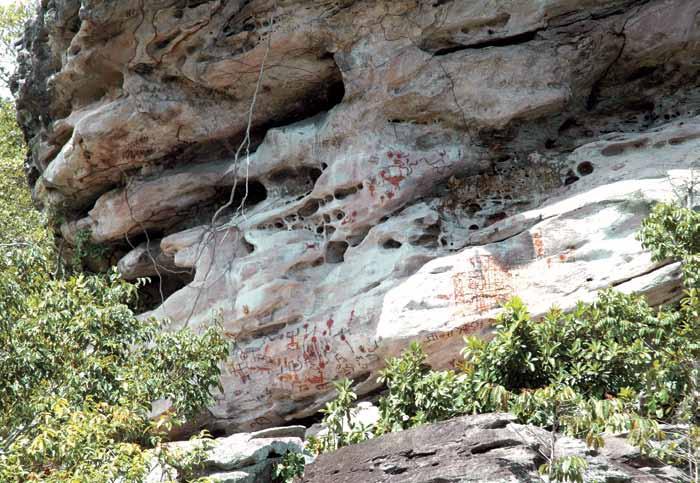
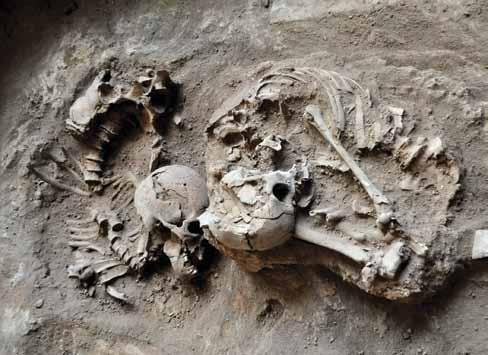
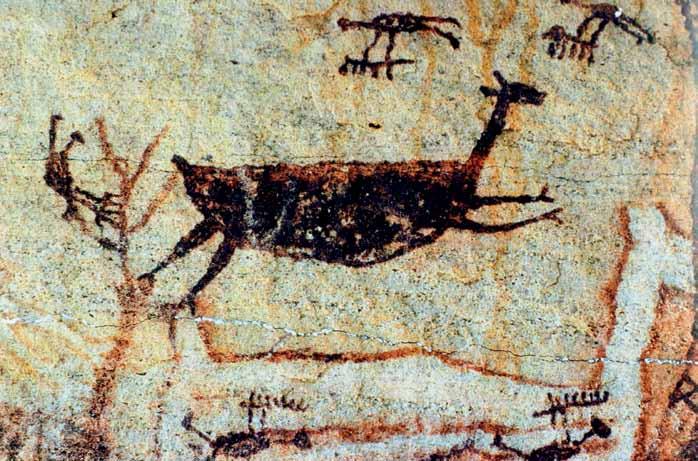
Evidence suggests that hunter-gatherers inhabited all of Brazil approximately 10,000 years ago
70 Interview
Elza Berquó Demographer wants to know more about the youth
78 Museology
Dispute involves uncertain fate of police museum collections
Sec TIONS
3 Letter from the editor
82 Art
HU m ANITI e S
São Paulo reSearch foundation
Marco antonio zago
PRE sIDEn T
eduardo Moacyr Krieger
v I cE-PRE sIDEn T
BOArd OF trUStEES
c arMino antonio de Souza, eduardo Moacyr Krieger, ignacio Maria Poveda velaSco, João fernando goMeS de oliveira, JoSé de Souza MartinS Marco antonio z ago, Marilza vieira cunha rudge, Pedro luiz BarreiroS PaSSoS Pedro WongtSchoWSKi, ronaldo aloiSe Pilli and vanderlan da Silva Bolzani
ExEcUtIvE BOArd
c arloS aMérico Pacheco
PRE sIDEn T DIREc TOR
c arloS henrique de Brito cruz
s cIEn TIFI c DIREc TOR
fernando MenezeS de alMeida
A DMInIs TRATI v E DIREc TOR
iSSn 1519-8774
EdItOrIAl BOArd carlos henrique de Brito cruz (President), caio túlio costa, eugênio Bucci, fernando reinach, José eduardo Krieger, luiz davidovich, Marcelo Knobel, Maria hermínia tavares de almeida, Marisa lajolo, Maurício tuffani and Mônica teixeira
ScIEntIFIc cOmmIttEE
luiz henrique lopes dos Santos (President), américo Martins craveiro, anamaria aranha camargo, ana Maria fonseca almeida, carlos américo Pacheco, carlos eduardo negrão, douglas eduardo zampieri, euclides de Mesquita neto, fabio Kon, francisco antônio Bezerra coutinho, francisco rafael Martins laurindo, hernan chaimovich, José roberto de frança arruda, José roberto Postali Parra, lucio angnes, luiz nunes de oliveira, Marco antonio zago, Marie-anne van Sluys, Maria Julia Manso alves, Paula Montero, roberto Marcondes cesar Júnior, Sérgio robles reis queiroz, Wagner caradori do amaral and Walter colli
ScIEntIFIc cOOrdInAtOr
luiz henrique lopes dos Santos
EdItOr In chIEF
alexandra ozorio de almeida
mAnAgIng EdItOr neldson Marcolin
EdItOrS fabrício Marques (S&TPolicy), glenda Mezarobba (Humanities), Marcos Pivetta (Science) carlos fioravanti and ricardo zorzetto (Special editors) Maria guimarães (Website) Bruno de Pierro and yuri vasconcelos (Assistant editor)
rEPOrtErS christina queiroz and rodrigo de oliveira andrade
cOPywrItErS Jayne oliveira (Website) and renata oliveira do Prado (Social media)
Art Mayumi okuyama (Editor) ana Paula campos (Infographics editor), felipe Braz (Designer digital), Júlia cherem rodrigues and Maria cecilia felli (Assistants)
PhOtOgr APhErS eduardo cesar and léo ramos chaves
ImAgE dAtABASE valter rodrigues
cOntrIBUtOrS diego freire, domingos zaparolli, estúdio rebimboca, fabio otubo, Sandro castelli and victória flório
tr AnSlAtOrS transconsult, fairfax, va – Kim olson (alberto abreu, alison carroll, Betty e. Welker, diane grosklaus Whitty, donna h Sandin, doris M. Schraft, Kathy ann Mutz, laura hafner, naomi Sutcliffe de Moraes and Steven Sachs) ricardo cunha lay (tracy Smith Miyake, tom Jamieson, danielle deremo cosimo, Peter david hunrichs and tiago van rheenen)
PrIntEr Maistype
thE rEPrIntIng OF tE xtS, PhOtOS, IllUStr AtIOnS And InFOgr APhIcS In whOlE Or In PArt, IS PrOhIBItEd wIthOUt PrIOr AUthOrIz AtIOn
AdmInIStr AtIvE mAnAgEmEnt fuSP – fundaÇão de aPoio À univerSidade de São Paulo PESQUISA FAPESP rua Joaquim antunes, no 727, 10o andar, ceP 05415-012, Pinheiros, São Paulo-SP FAPESP rua Pio Xi, no 1.500, ceP 05468-901, alto da lapa, São Paulo-SP
dePartMent for econoMic develoPMent, Science and technology SÃO PAUlO StAtE gOvErnmEnt
LETTER FROM THE EDITOR
Tracking primates against yellow fever
Alexandra Ozorio de Almeida | editor in chief
From December 2016 to August 2017, nearly 800 people contracted yellow fever in Brazil, of whom 262 died, according to the World Health Organization. In December 2017, deaths in the metropolitan region of São Paulo showed that the outbreak remained active and had reached urban areas. The Brazilian government adopted preventive vaccination campaigns targeted at areas identified by data from another type of victim: primates living in the wild, who are also susceptible to the disease.
Nearly twenty years ago, the Brazilian Ministry of Health adopted the strategy of monitoring primate deaths to identify new areas of transmission. The cover report (page 4) presents a case study of the state of São Paulo where an epidemiological model describes the direction, speed and probable paths taken by the virus causing yellow fever. These maps support the policy of vaccinating all residents within 30 kilometers of animal corpses, facilitating a more rational use of resources.
j
The increase in access to higher education is the objective of affirmative actions adopted by state-level and federal institutions in Brazil. Increasing student diversity without lowering admission standards is a complex challenge. One consequence of these policies is that direct admittance exams are no longer the only way to access higher education. The distribution of exam bonus points for public education students, quotas for people with African or Indian heritage and the use of grades obtained from government exams assessing the quality of high school education are some of the actions implemented in Brazil since the 2000s (page 20).
The mathematician, statistician and demographer Elza Berquó dedicated her life to the study of changes in Brazilian reproductive behavior. In over 70 years of work, Berquó was central to the implementation of formal, mainstream teaching of demography in Brazil. She founded and helped create schools, centers and institutions, such as Cebrap (Brazilian Center for Analysis and Planning) and Nepo, which is now named after her – the Elza Berquó Center for Population Study at the University of Campinas (Unicamp). In a rare interview, the researcher discussed her recent work interests related to adolescent suicide, which is on the rise worldwide, and her past activities (page 70). Forced to retire from the School of Public Health in 1968 during the military dictatorship, her story is intertwined with the history of Brazil.
j
Another interesting interview reproduced in this international edition, which includes highlights from editions published in Portuguese from September 2017 to February 2018, is with entomologist José Roberto Postali Parra. A leader in the field of biological controls for combatting crop pests, the researcher laments being forced to retire precisely when biological controls are gaining ground in Brazilian agriculture. Four decades of research on the biology of natural enemies of pests, such as sugarcane borers and greening of orange groves, as well as their interaction with the environment, have proven useful to farmers. The researcher acknowledges that biological control is not a universal solution, but an increase in the use of this strategy facilitates a substantial reduction in pesticide use in agriculture (page 14).
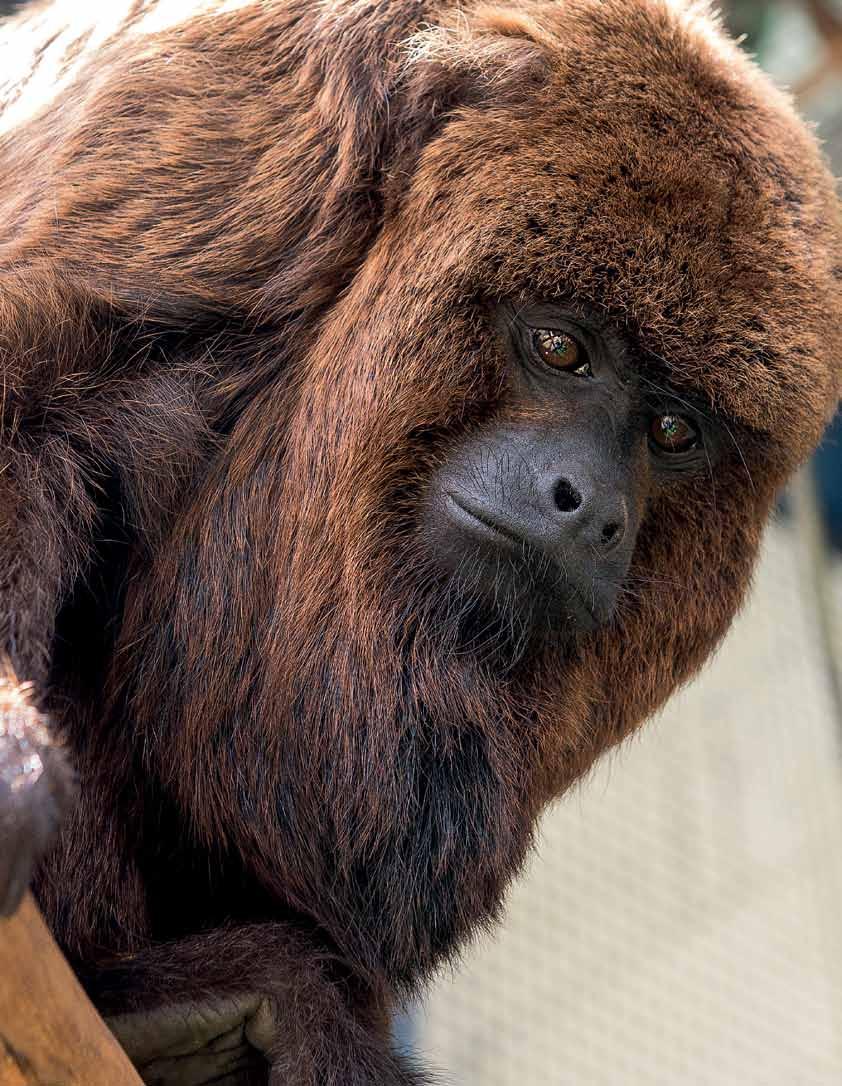
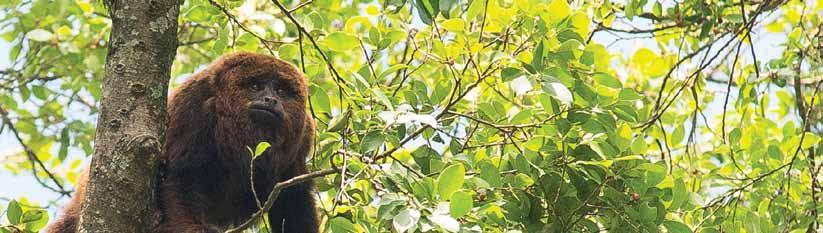
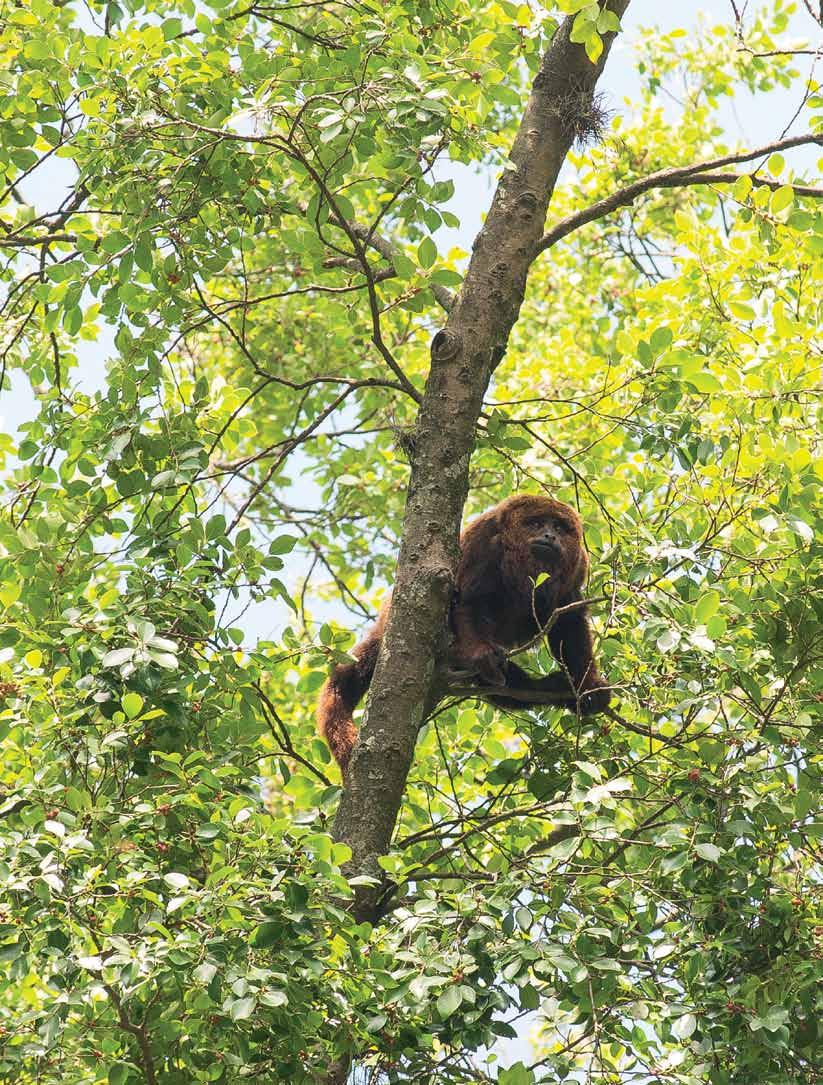
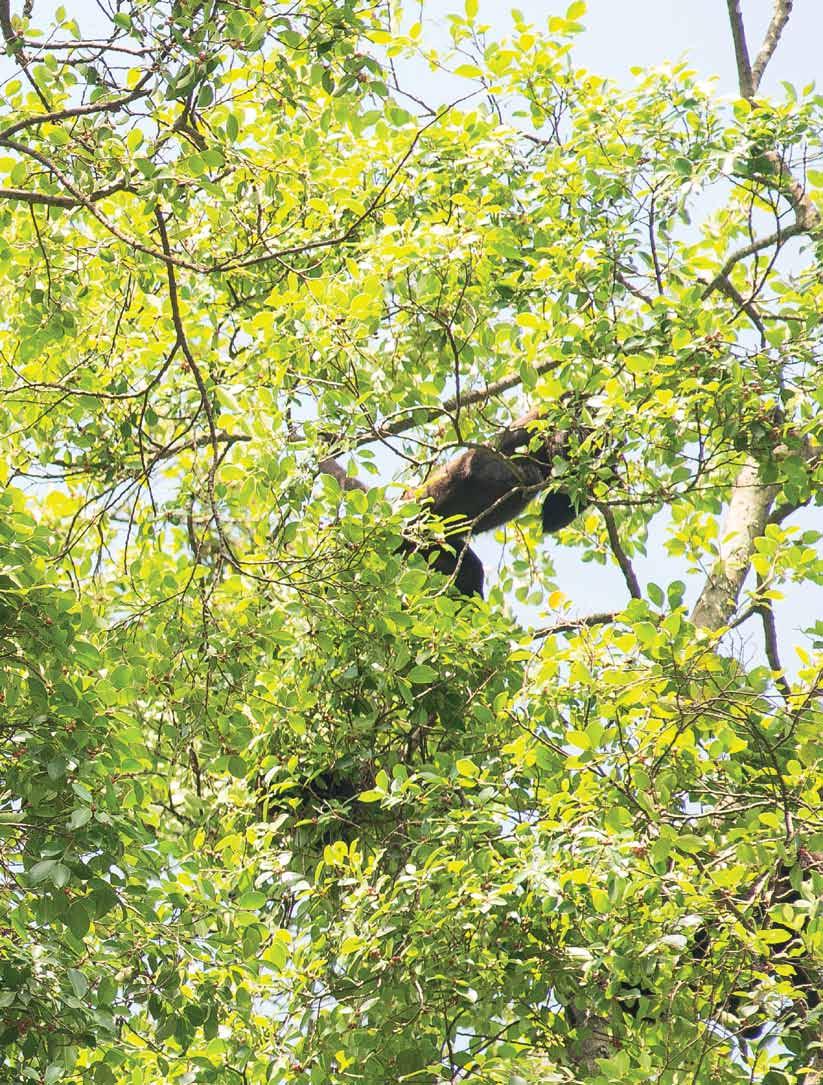
The yellow fever virus caused high mortality in howler monkeys such as these in the Horto Florestal park in the northern sector the city of São Paulo
In the last three weeks of December 2017, ecologist Márcio de Carvalho, a researcher at the Forest Institute of São Paulo, collected 65 southern brown howler monkeys (Alouatta guariba clamitans) that were killed by the yellow fever virus in Horto Florestal, a state park in the northern area of the state capital, along with other biologists and teams from the Metropolitan Civil Guard and the Environmental Police. “Almost all the howler monkeys in the Horto died. We were familiar with all 17 groups,” he says.
In humans, the yellow fever virus can be fatal but can be halted by vaccination. However, in monkeys, which do not have vaccines, it is catastrophic. Public health agencies registered the deaths of more than 2,000 of these animals (mainly howler monkeys) during an outbreak that stretched from 2008 to 2009 in the state of Rio Grande do Sul; nevertheless, the virus’s effects are thought to be more extensive. Biologists and epidemiologists estimate that the number of wild primates reported to have died in urban areas from yellow fever corresponds to only 10% of the total wiped out by the disease. The other 90% die in wild areas,
even in cities where yellow fever is controlled by vaccination, the infection is decimating populations of wild primates whose deaths indicate areas where the virus is transmitted
decompose, and are never found. It is estimated that approximately 1,300 monkeys died in Espírito Santo and 5,000 in the state of São Paulo in 2017.
The deaths of the monkeys indicate the areas of greatest risk for transmission of yellow fever virus and guide vaccination campaigns (see table). “Without the monkeys, we are unprepared to perceive the arrival and movements of the virus,” warns biologist Júlio César Bicca-Marques, professor at the Pontifical Catholic University of Rio Grande do Sul (PUC-RS). “Before the monkey deaths were monitored, yellow fever mapping was exclusively based on people who became sick and died,” says biologist Renato Pereira de Souza, technical director of the center for virally transmitted diseases at the Adolfo Lutz Institute in São Paulo. “Only severe cases appeared, because people with milder symptoms did not go to the hospitals for treatment.” In 1999, the Brazilian Ministry of Health proposed that health agencies monitor monkey deaths as a strategy to identify new areas of virus transmission and to plan measures to protect people who live in cities, particularly near wild areas.
Carlos Fioravanti | Published in January 2018
Sylvatic yellow fever is caused by a virus transmitted by Haemagogus and Sabethes, mosquitoes that feed on the blood of infected monkeys. These insects pass the virus on to new monkeys and, eventually, to humans who enter the forest. The monkeys do not directly transmit the virus to people. “Diseases such as yellow fever can cause the extinction of local primate species and should draw our attention because this type of threat combines with others, such as habitat loss and hunting,” says biologist Laurence Culot, a professor at São Paulo State University (UNESP) in Rio Claro. “The primates are victims two times over: victims of the disease, to which some species are very sensitive, and also victims of persecution by people who wrongly think that the primates cause the disease and kill them, thinking that this will solve the problem.”
Primates in the genus Alouatta (howler monkeys) are more sensitive to the virus and succumb more easily than those in the genus Sapajus (capuchins); both groups live in the Amazon and Atlantic Forests. Callithrix species (marmosets and tamarins), which are exclusive to the Atlantic Forest, have also proved resistant. As the virus circulates in forested areas, the animals continue to die of the disease, although approximately 20% of the total population survives by creating antibodies against the virus. The area for which vaccination is recommended for residents and visitors, previously limited to the Amazon, has grown and now covers nearly the entire country.
The yellow fever outbreak, which began in December 2007 and ended in April 2008, caused 40 confirmed human cases and 21 deaths. In São Paulo, 28 people were diagnosed, and 11 died of the disease. In the current outbreak, which is considered the largest in the last 14 years, between December 2016 and August 2017, 779 people were diagnosed and 262 died of yellow fever throughout Brazil, according to a December 2017 World Health Organization bulletin. Another bulletin, dated December 26, 2017, from the São Paulo State Department of Health (SES-SP), reported that 53 people were infected by the virus in the state, and 16 people died since the beginning of the year. Four more deaths were registered in the Greater São Paulo area as of January 9, 2018.
WAI t I ng FOR th E VIRUS
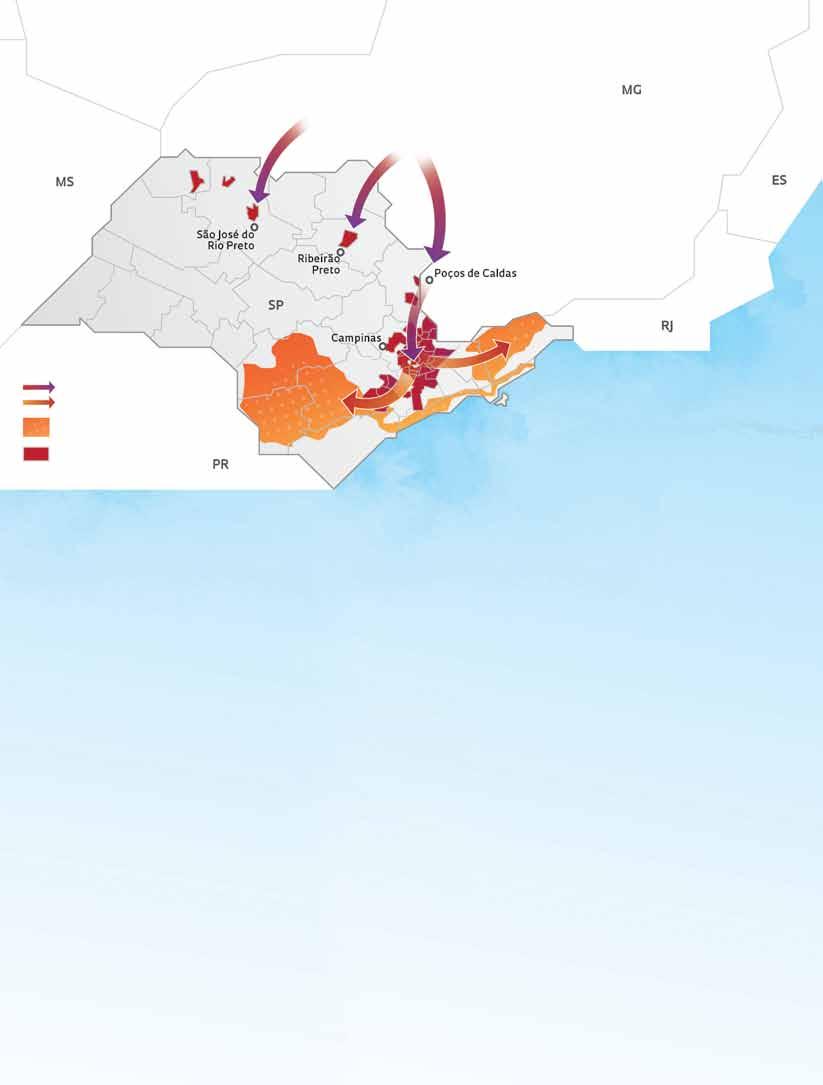
The virus that caused the current outbreak is thought to have left the Amazon in 2014 and crossed the Midwest region to enter Minas Gerais and São Paulo through forest corridors. From there, it moved toward Espírito Santo, according to a recent study from the Endemic Diseases Oversight Office (SUCEN) and the Adolfo Lutz Institute. In São Paulo, the current outbreak emerged in April 2016 in the region of São José do Rio Preto
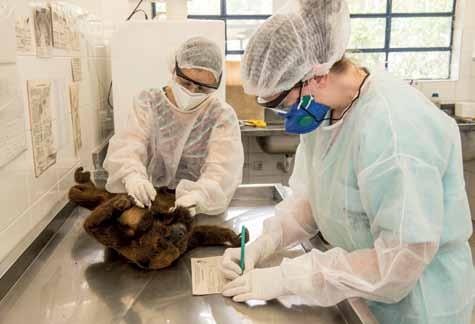
Veterinarians from the são Paulo city government begin necropsy on a howler monkey to collect organ samples and identify the cause of death
and moved to Campinas, leading to expectations that it would soon arrive in the capital (see map).
Biologist Juliana Summa, director of the São Paulo municipal Wildlife Division, noticed that, starting on the first Sunday of December, five to six dead monkeys began to arrive each day at the Wildlife Management and Conservation Center (CEMACAS) in Anhanguera Park in the northern zone of the city; this was three times the usual number, and it coincided with the intensifying summer rains and consequent proliferation of mosquitoes.
“Now yellow fever is strongly entering the northern zone of the city. Before there were just warnings that it would arrive,” Summa commented in the early afternoon of December 11. That day the center had already received five howler monkeys and a marmoset, all dead; by the end of the following week, another 12 had arrived. “We knew that the virus would reach the capital, but we can’t foresee everything,” says Summa. “In the beginning we didn’t know what to do with the young living monkeys that arrived with their dead mothers; they developed the disease within a few days and died.” The few animals that are alive upon arrival are quarantined; if they survive a week, they are transferred to the CEMACAS shelters.
Researchers from the University of São Paulo (USP), the city government, and SUCEN identified Haemagogus leucocelaenus and Sabethes melanonymphe, the mosquitoes that are the main transmitters of the yellow fever virus, in Anhanguera Park and the Cantareira Forest. “Mosquitoes feed on the blood of monkeys that live in the tree canopy, they only descend to the ground when food is lacking or the wind pushes them, and they randomly bite other animals includ -
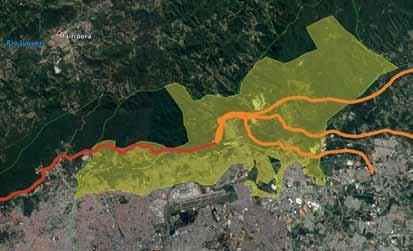
ing humans,” explains biologist Mauro Marrelli, professor at the USP School of Public Health. The deaths of marmosets and capuchin monkeys in the interior of the state and howler monkeys in the cities near the capital have intensified collaborations among experts from research institutions and teams from the state and municipal departments of health and the environment, the Forest Police, and the Metropolitan Civil Guard. In June 2017, the Coordination of Sanitary Surveillance issued a statement defining the powers and procedures of the city’s Health Department teams. At the end of July, physician Helena Keiko Sato, director of immunization at SES-SP, gave a lecture to employees of public agencies and companies that work in the Horto Park, which is adjacent to another wildland area, the Cantareira Forest; the Cantareira is the largest urban forest in the country, spanning 80 square kilometers (km2) and the municipalities of São Paulo, Mairiporã, Caieiras, and Guarulhos (see Pesquisa FAPESP, issue No. 207). Sato spoke of the outbreak in São Paulo and the vaccination campaign, which was held at the end of August. The Forestry Institute’s Carvalho then spoke about the procedures to be taken when dead monkeys are found within or near the parks.
R
A p I d RES p O n SE
Because he had attended the lecture, Manoel Ferreira Costa knew what to do on the morning of October 9 when he found a dead howler monkey in a eucalyptus plantation half an hour’s walk from the entrance to the Vila Amália arboretum, a section of forest belonging to the Horto that borders a neighborhood of approximately 3,000 inhabitants, where many areas are not walled off
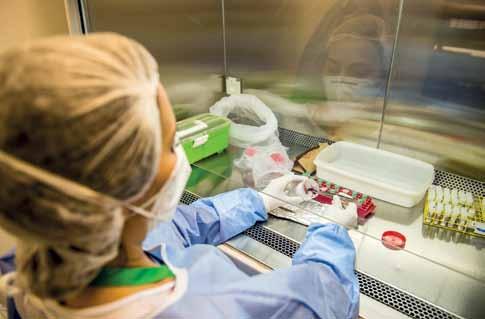
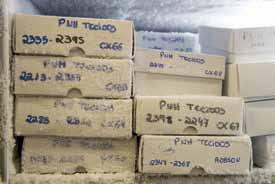
researcher at the adolfo lutz institute prepares a liver sample from the necropsied animal to detect the yellow fever virus; below, samples stored at -70 ºc
t he 22 howler monkeys kept at Anhanguera park could be strategic in repopulating the forests
and backyards merge with the forest. Carvalho and a park biologist, Paulo Roberto dos Santos, were advised and went to find the animal. Costa, who works in the park picking up trash and debris, accompanied them and saw that the monkey was a male less than a year old. There were no signs it had been attacked by dogs or other monkeys, electrocuted by power lines, or hit by a car, and it appeared to have died at least two days before. Carvalho officially advised Summa from CEMACAS, which received the animal soon after; she took samples from its liver, which she sent to the Adolfo Lutz Institute that same day for analysis.
At Adolfo Lutz, Souza has been receiving organ samples from dead howler monkeys in the state of São Paulo since 2016, but he paid special attention to this request for examination since it was the first from a city that had not yet shown signs of the yellow fever virus. His team extracted the DNA, conducted the exams, and then reran them to confirm the positive results for the virus. On the morning of October 19, he reported the results to medical biologist Regiane Cardoso de Paula, director of the Center for Epidemiological Surveillance at SES-SP. De Paula, in turn, immediately took the results to infectologist Marcos Boulos, coordina-
Yellow fever routes in São paulo
in 2018, the virus is expected to reach the region of sorocaba, the coast, and the Paraíba Valley
the virus came from the triângulo mineiro region, moving an average of 0.9 kilometers (km) per day, primarily through mosquitoes, marmosets, and capuchin monkeys in forests near rivers
minas Gerais state
route up to december 2017 route expected for 2018 area where the virus is likely to spread in 2018 municipalities with recorded monkey deaths
getting there before the virus strategy hastens vaccination of residents in areas of risk
on the basis of the dates and locations of the monkey deaths, veterinarian and epidemiologist adriano Pinter, a researcher at sucen, constructed an epidemiological model that describes the direction, velocity, and probable paths (functional ecological corridors) of the virus that causes yellow fever. his maps support the state department of health’s decision to set aside the strategy recommended by international bodies, which is to vaccinate all residents within 30 kilometers (km) of where a dead animal was found and to vaccinate only the inhabitants of risky areas, even before the dead monkeys appear and indicate the arrival of the virus.
“this strategy has been shown to be sufficiently adequate,” says physician helena Keiko sato, technical director of the immunization sector of ses -sP. “in april 2017, we were unable to vaccinate 3.5 million people in the c ampinas region, most of them outside the areas of risk. b ased on
the ecological corridors, we vaccinated only 1.4 million, in the high-risk areas of c ampinas and neighboring municipalities.” not only does this strategy optimize the use of vaccine stocks, it could also reduce potential severe reactions to the vaccine in people who have autoimmune diseases or egg white allergies; the risk of severe adverse reactions is 1:400,000, four times less than the acceptable rate for vaccines.
by January 2018, the virus had moved 2.7 km per day in a north-south direction during warmer months and 0.5 km per day in colder periods. on the basis of this information, specialists from the department of health define the areas of greatest risk and begin vaccination, in collaboration with municipal health departments, before dead monkeys appear. “in Jundiaí, vaccination began at the beginning of may and the first dead monkey was found on July 30. in mogi das cruzes, we still have no sign of the virus, but vaccination began in december,” says the medical
the yellow fever virus came from Poços de c aldas, entered the c ampinas region, and began to move up to 2.7 km per day between forest fragments, mainly through mosquitoes and monkeys
rio
biologist regiane c ardoso de Paula, director of the center for epidemiological surveillance at ses -sP. “We can act in advance, knowing where and when the virus will arrive.”
the epidemiological model forecast the arrival of the virus in the capital of são Paulo in october or november. “We were lucky to find a dead howler monkey in the middle of a forest in the city of são Paulo,” commented Pinter. he says that the first animals infected by the virus die in the woods and go unnoticed. the virus is only noticed about two months after it arrives, when many animals begin to die at the edges of the forests and are seen by residents in the suburbs. the fact that an animal was found in october in the horto florestal park moved virus preventive measures forward.
health agency teams expect to prevent further human deaths through vaccination campaigns in the areas where the virus is likely to spread in 2018 (see map). if the forecasts are correct, the virus will arrive in the area south of the capital in february in the region of sorocaba and the Paraíba Valley. ses -sP announced in January that it would divide the vaccine doses to vaccinate as many people as possible without reducing its effect, which has already been done in africa. anyone who lives or circulates in wooded regions should get the vaccine, which activates the production of antibodies against the virus only seven to ten days after it is applied.
e sPírito santo state
Sorocaba
Paraíba Valley
mato Grosso do sul state
são Paulo state
Paraná state
de Janeiro state
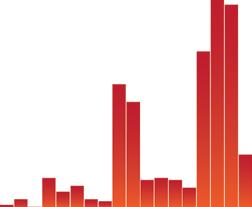
Reported monkey deaths in São paulo
from July 2016 to december 2017, 533 animals died in the state
priorities for vaccination in guarulhos
Predicted trajectories for the virus Priority vaccination area
Actual trajectories
tor of the SES-SP Centers for Disease Control and professor at the USP School of Medicine.
A day of meetings between health and environmental teams ended with two decisions: immediately begin vaccinating residents in the areas near the forest where the monkey was found and close the Horto and Cantareira areas to avoid human contact with the mosquitoes that transmit the virus. On October 20, shortly after the parks were closed, teams from the Forestry Institute, SES-SP, and the Environmental Police returned to the arboretum and found three more howler monkey carcasses; two days later, two more were found, indicating that the entire band was dead. In the last week of December, after 10 monkeys were found dead in the municipality of Itapecerica da Serra in the southern São Paulo metropolitan area, 10 other parks were closed, totaling 26.
R E p O p U l At IO n
The monkey deaths are expected to continue until the rains wind down in May, hampering the proliferation of mosquitoes that transmit the virus. “The next battle will be to repopulate the areas which were previously occupied by howler monkeys,” says Juliana Summa. The 22 animals that were maintained in 18-square-meter enclosures at CeMaCAS may be strategic in repopulating the forests. Bácaro is the oldest and most established monkey in his band. He arrived in 2009 as an adult, and he formed a family composed of a female, a young male, and an infant, which all could be released in the depopulated areas. Others, such as 6-year-old Abrolhos and 5-year-old Benjamin, arrived as juveniles and would have to be trained to survive in the forest.
The outbreak of yellow fever in 2008 and 2009 caused losses of 80% in groups of black and
southern brown howler monkeys in Rio Grande do Sul, according to a study by PUC-RS and the Federal University of Santa Maria covering 82 fragments of forest in the towns of Bossoroca and Santa Maria. “We did not find solitary individuals, indicating that the entire group had died,” reported Marques. In 2009, Marques launched a campaign to protect howler monkeys from attacks by those who believe that the monkeys transmit yellow fever, which was described in 2010 in Tropical Conservation Science. If no other similar epidemics occur, the population of howler monkeys in Rio Grande do Sul may take 100 years to reach half of what it was prior to 2008, according to the team from Santa Maria. Primate loss is a worldwide problem; according to a 2017 study in Science Advances, 75% of the 504 species of primates in the world (which are concentrated in Brazil, Congo, Mali, and Indonesia) are facing population decline, and 60% are at risk for extinction as a result of deforestation, hunting, and disease. n
Project
biodiversity of mosquitoes (diptera: culicidae) in c antareira state Park and the capivari-monos environmental protection area in the state of s ão Paulo (no. 14/50444-5); Grant Mechanism regular research Grant; Principal Investigator mauro tadeu marrelli (usP); Investment r$272,905.54.
scientific articles
bicca-marQues, J. c .; freitas, d s the role of monkeys, mosquitoes, and humans in the occurrence of a yellow fever outbreak in a fragmented landscape in south brazil: Protecting howler monkeys is a matter of public health. tropical Conservation Science. v. 3, i. 1, p. 78-89. 2010. estrada , a et al impending extinction crisis of the world’s primates: Why primates matter alejandro estrada. science advances. v. 3, no 1, e1600946. 2017.
mucci, l f et al haemagogus leucocelaenus and other mosquitoes potentially associated with sylvatic yellow fever in cantareira state Park in the são Paulo metropolitan area, brazil. Journal of the American Mosquito Control Association. v. 32, i. 4, p. 329-32. 2016.
Juqueri River
Mairiporã
A Fiocruz team suggests a sixth form of malaria that is transmitted by mosquitoes infected after biting wild primates in the Atlantic Forest
From monkeys to people
In 1966, Leônidas Deane (1914–1993), a parasitologist from Pará State who at that time was a professor at the University of São Paulo Medical School (FMUSP), described the first known case of human malaria caused by the protozoan Plasmodium simium. Previously, this parasite species was thought to cause the disease only in monkeys. The protozoan was found in the blood of a park ranger who collected mosquitoes for researchers from the forest canopy at the Horto Florestal Park in the city of São Paulo, which is a wild area in which no case of malaria had been previously recorded. The possibility that mosquitoes that had bitten infected monkeys could transmit this form of malaria to people
Carlos Fioravanti | Published in december 2017
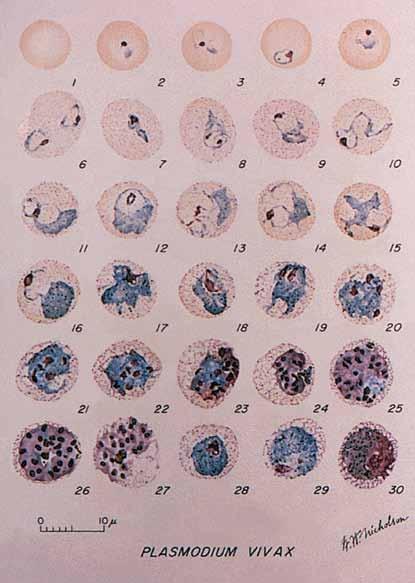
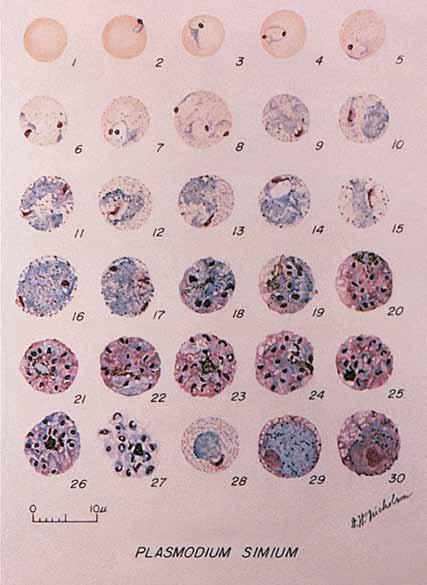
Plasmodium vivax in different stages of development in human red blood cells (left) and P. simium in monkey red blood cells (right). the first cell in each image is not infected
could not be demonstrated at the time when the case appeared. Half a century later, a team from the Oswaldo Cruz Foundation (Fiocruz) returned to Deane’s hypothesis and proposed a sixth form of human malaria that was transmitted by mosquitoes infected with P. simium after biting contaminated monkeys. This hypothesis has not been confirmed by other studies and recognized by international bodies.
Malaria is transmitted to humans by mosquitoes of genus Anopheles contaminated with infectious agents—protozoa of genus Plasmodium. The forms of malaria are differentiated by microscopic identification of Plasmodium species that multiply in red blood cells. Although the
initial symptoms are similar, including fever, chills, headache, and body aches, progression of the disease depends on its causative agent. For instance, P. vivax causes a milder form of malaria, whereas P. falciparum infection is more severe (see the table on page 13). One form (caused by P. knowlesi) was described in 1965 in Malaysia as the first type of malaria transmitted to humans by mosquitoes infected after biting monkeys; this form is a zoonotic disease involving animals, which function as reservoirs of the infectious agent. P. knowlesi was described in 1932 in monkey blood and is easily confused with P. malariae and P. falciparum . This variant is responsible for a growing number of cases in Malaysia (703
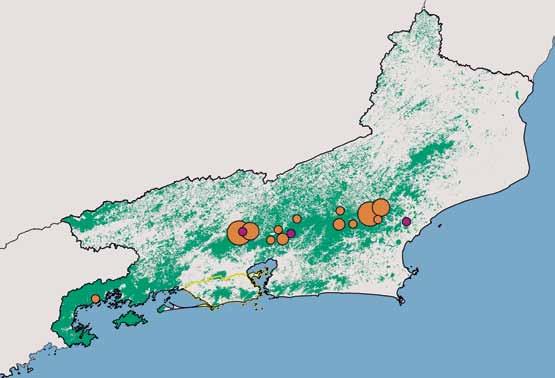
Foci of malaria in Rio de Janeiro
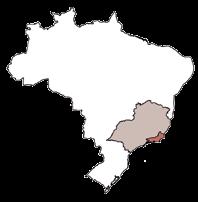
transmission by mosquitoes infected after biting monkeys could explain human cases in areas near forests in the mountainous region of the state
human cases of malaria [2015-16]
in 2011 and 996 in 2013), Thailand, Indonesia, Vietnam, and the Philippines.
The conclusion that monkeys can serve as a reservoir for the protozoa that cause malaria in Brazil was reached after analysis of blood samples from three animals and 28 residents in the mountain region of Rio de Janeiro. “We initially believed they were cases of malaria caused by P. vivax, the most common form in Brazil and in the region,” says parasitologist Cláudio Tadeu DanielRibeiro, a Fiocruz researcher in Rio de Janeiro. “Since the symptoms were slightly different, we considered the possibility that it might be the monkey malaria described by Deane.”
P. vivax and P. simium are very similar in microscopic blood tests. The Fiocruz team distinguished the two types by identifying two different stretches of the mitochondrial DNA from each species and considered the possibility that P. simium infection could explain outbreaks in Rio de Janeiro’s Atlantic Forest regions. The researchers identified P. simium in 28 of the 49 autochthonous (local) cases of malaria recorded in the region in 2015 and 2016. This work was performed by Fiocruz parasitologist Patrícia Brasil and described in an October article published in Lancet Global Health warning of the risk of malaria in areas far from the Amazon, which accounted for 99% of
the 131,000 cases recorded from January to September 2017 according to the Brazilian Ministry of Health. The World Health Organization registered 214 million cases of malaria and 438,000 deaths from the disease in 95 countries in 2015.
AFiocruz team in Minas Gerais state also used molecular analysis to identify P. simium in nine of a group of 65 brown howler monkeys (Alouatta guiariba) and robust capuchin monkeys (Sapajus spp.) living in captivity or in areas of the Atlantic Forest in the city of Indaial, Santa Catarina State, as reported in a 2014 study published in Memórias do Instituto Oswaldo Cruz . The muriqui ( Brachyteles spp.) is another primate species that can harbor this parasite; the protozoan was identified in 1951 in a monkey from a forest near the city of São Paulo and described for the first time by the parasitologist Flávio Oliveira Ribeiro da Fonseca (1900–1963), who was a native of Rio de Janeiro State and professor at FM-USP. P. simium has also been found in the blood of monkeys in the states of São Paulo, Espírito Santo, and Paraná according to biologist Cristiana Ferreira Alves de Brito, who is a researcher at Fiocruz in Belo Horizonte.
“Malaria in humans outside of the Amazon region is much more lethal, because doctors in
soURCe br A sil et al, 2017 br A
e sPírito sAnto stAte
são PAulo stAte
minA s Ger Ais stAte
rio de JAneiro stAte
City of Rio de Janeiro
subtle differences
malaria is transmitted by mosquitoes; the forms of malaria vary according to the protozoan species that causes the disease
Plasmodium vivax
Responsible for 90% of cases in Brazil, causes bouts of fever every two days. The fatality rate is low. Dormant forms of the parasite in the liver can cause relapse and are responsible for up to 40% of the malaria crises recorded in the country
Plasmodium malariae
Accounts for less than 1% of the total number of cases registered in Brazil, causes fever every 72 hours, which is generally lower than the fever caused by P. vivax. May lead to kidney complications
Plasmodium ovale
This mild form of the disease is common in Africa and is not found in Brazil. Relapses may occur after treatment
Plasmodium falciParum
This protozoan is the most common species worldwide, is responsible for approximately 10% of the cases in Brazil and is very deadly. Causes the most serious form of malaria, with intense fever every two days and a risk of brain complications
Plasmodium knowlesi
This species is not found in Brazil but is responsible for most cases in Malaysia. Fevers appear every day. Severe and lethal disease
Plasmodium simium
Species restricted to the Atlantic Forest in the south and southeast of Brazil. In humans, it is thought to cause symptoms similar to P. vivax, but this association has not been proven
(see Pesquisa FAPESP, issue No. 186). The São Paulo State Center for Epidemiological Surveillance registered eight autochthonous cases of malaria in humans in 2016 and five as of October 2017, mostly in coastal cities near forested areas.
“Because it is difficult for physicians outside the Amazon region to recognize the disease, the description of malaria cases in Rio de Janeiro as a zoonotic disease is a major challenge for control of this disease,” says biologist Silvia Di Santi, a researcher at the Endemic Diseases Oversight Office (SUCEN) and the Institute of Tropical Medicine at FM-USP. “To better understand this situation, it is essential to broaden the areas of study in regions with the same epidemiological profile and describe the complete transmission cycle with mosquitoes, monkeys, and infected humans.”
the cases of malaria transmitted in areas of the Atlantic Forest along the coast are a benign form of the disease according to Di Santi. Inhabitants of the mountainous region of Rio de Janeiro State infected with P. simium exhibit similar but milder symptoms than those caused by P. vivax and respond to treatment with a combination of chloroquine and primaquine. Two patients who were unable to take primaquine received only chloroquine and had not relapsed as of 18 months later. According to Ribeiro, the fact that malaria did not reappear in these people is an indication that P. simium, unlike P. vivax, cannot maintain dormant forms of the parasite in the liver, which are usually eliminated by primaquine.
According to Ribeiro, the infection could be caused by P. simium or P. vivax that adapted to the monkey and reached humans via mosquitoes, adding, “We will only know when we have sequenced their complete genomes.” There is no expert consensus regarding whether P. vivax and P. simium are even different species or variations of the same species. In a 2005 article in PNAS, researchers from the University of California at Irvine argued that at least two transfers of P. vivax from monkeys to humans or vice versa may have occurred over the past several thousand years. “In Africa,” says Brito, “vivax and falciparum came from monkeys to humans.” n
cities in the south and southeast of the country do not suspect that the high fever and anemia could be symptoms of malaria,” says Brito. “We need to warn doctors and health centers to make the correct diagnosis, because the treatment is efficient.” In November 2010, one traveler from Nigeria and another from the Ivory Coast died of malaria in São Paulo after seeking care in hospitals where doctors did not diagnose the disease
scientific articles
br A sil, P. et al outbreak of human malaria caused by Plasmodium simium in the Atlantic Forest in rio de Janeiro: A molecular epidemiological investigation. lancet Global health. v. 5, i. e1038-1046. 2017. costA, d c . Plasmodium simium/Plasmodium vivax infections in southern brown howler monkeys from the Atlantic Forest. memórias do Instituto oswaldo Cruz. v. 109 (5), i. 641-53. 2014. lim, c s et al. Plasmodium vivax: recent world expansion and genetic identity to Plasmodium simium. pnAs. v. 102 (43), i. 15523-28. 2005.
soURCe Fiocruz
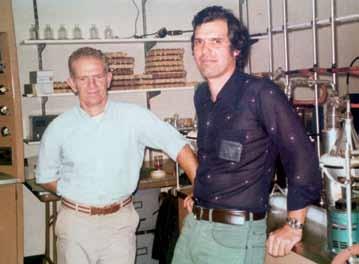
José Roberto Postali Parra
The insect farmer
Entomologist defends the use of biological control to combat crop pests
Marcos Pivetta and Marcos de Oliveira
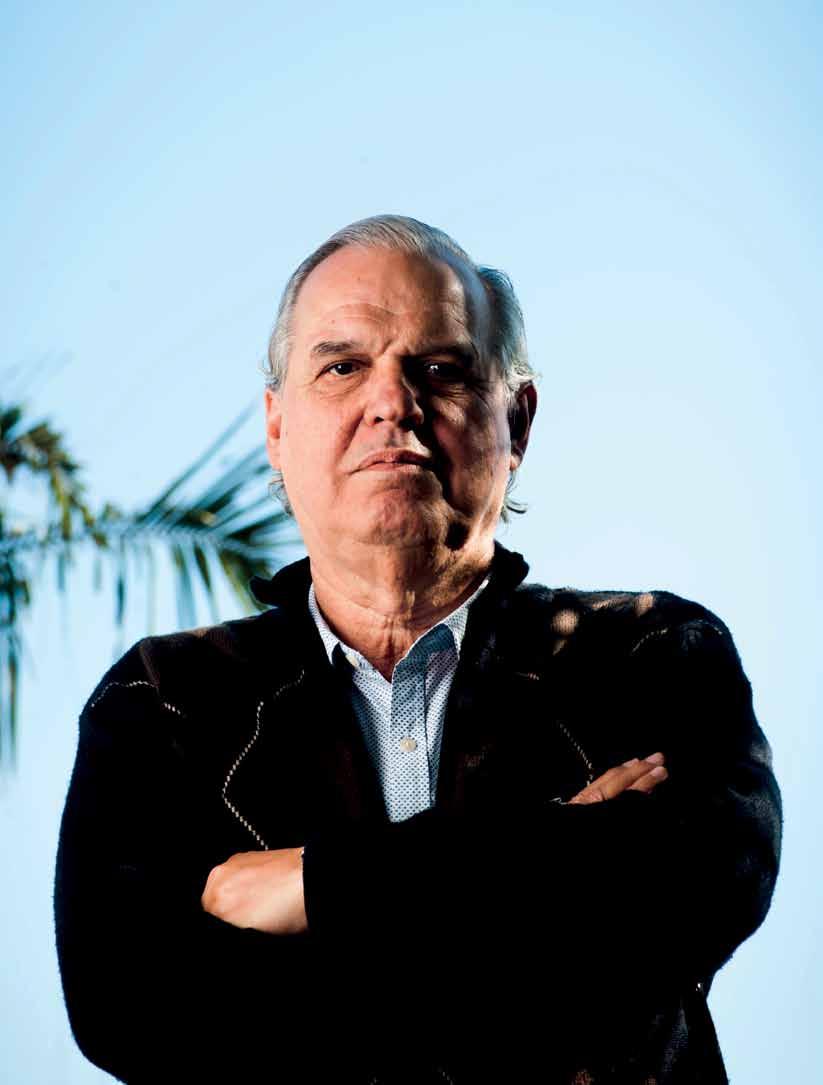
PoRTRA iT Léo Ramos Chaves
PUBLiShEd in novEmBER 2017
When he turned 70 at the end of 2014, agricultural engineer José Roberto Postali Parra was required to retire from the Luiz de Queiroz College of Agriculture (ESALQ), a unit of the University of São Paulo (USP) in Piracicaba, where he was director. However, the specialist in the biological control of agricultural pests never considered abandoning his research at the school's Department of Entomology and Acarology. "I have been fighting my whole life, and I’m not going to stop working now that biological controls are gaining ground in Brazilian agriculture," he says. This form of combating pests that affect planted crops uses their own natural enemies, such as insects, mites, and even microorganisms, to combat problems in the fields. Instead of resorting to chemical insecticides, which when used incorrectly can harm humans and the environment, farmers try to destroy or at least reduce the abundance of an attacking pest with the help of a small wasp, for example, or a fungus found in nature. Parra has dedicated more than four decades of research to understanding the biology of natural enemies of pests and their interactions with the environment for pests such as sugarcane borers and diseases such as the greening of orange groves. He has developed laboratory methods to breed insects and mites proven to help farmers. Parra is thoughtful when he admits that biological control is not the solution for all pests, but the approach can be useful
AGE 73
SPECIALTY
Biological control of agricultural pests
EDUCATION
Undergraduate degree in agronomy (1968), master’s (1972) and doctorate (1975) in entomology at the Luiz de Queiroz College of Agriculture at the University of São Paulo (ESALQ-USP)
INSTITUTION
Esalq-USP
SCIENTIFIC
PRODUCTION
Three hundred and forty-one scientific articles, 20 books written or edited, acted as advisor to 61 master’s and 50 doctoral candidates
and help reduce the use of pesticides in agriculture. "Brazil leads the world in the use of chemicals in agriculture," he states. "Our farmers have this culture." In this interview, Parra tells the story of insects and pests in Brazilian farming and comments on topics that are important to agriculture in the country, such as the use of transgenic varieties and the adoption of organic practices.
In which crop are biological controls most commonly utilized in Brazil?
Sugarcane is the classic example. Today, between 9 and 10 million hectares are planted with sugarcane in São Paulo. Nearly half of this area of sugarcane in the state uses biological controls. They are used to combat the moth whose larva is known as the sugarcane borer [ Diatraea saccharalis ] and the spittlebug Mahanarva fimbriolata, a pest that attacks the roots of the plant. To destroy the borer caterpillar, the wasp Cotesia flavipes , an insect from Trinidad and Tobago that was introduced in the country in 1971, is released. Cotesia is used in 3.5 million hectares of sugarcane. The wasp I work with Trichogramma galloi has been used to combat borer eggs in approximately 500,000 hectares of sugarcane. Different natural enemies can be used to attack different developmental stages of these insect pests, including eggs, larvae, pupae, and adults. A fungus called Metarhizium anisopliae is used to control the spittlebug.
What other crops have used this method?
An interesting story involves the biological control of citrus greening disease, also known in Asia as HLB or huanglongbing, which turns the leaves of orange trees yellow and kills the plants. The bacteria Candidatus liberibacter causes greening, which is transmitted to plants by a small insect, the psyllid Diaphorina citri. Because of greening, citrus farmers began to apply insecticides to their groves 20 to 30 times a year in an unchecked battle against the psyllid. We tried to use biological controls by releasing small wasps of the species Tamarixia radiata, which originates in Asia but was found here in São Paulo. We released the wasps in the groves, but they died. The orchards had citrus greening disease, but they did not have the psyllid Diaphorina citri.
n early half of the area of sugarcane in the state of São Paulo uses biological controls. The borer and spittlebug are combated using these methods
to use biological controls but did not use them. They thought that only improving the nutrition of the plant would be sufficient to combat the disease. Alone, biological controls do not solve all the problems and are only one component of IPM, integrated pest management, which appeared in the late 1960s and early 1970s. You must use healthy young trees, remove sick plants, and apply insecticide within reason.
The United States is not prominent in biological pest control?
Why did the orchards have the disease without the psyllid?
We found that the primary outbreaks of the disease came from areas outside the orchards, from organic areas, from backyards, from myrtle, which is the host plant of the psyllid, and from abandoned orchards. FUNDECITRUS [Brazilian Fund for Citrus Protection] estimated that these neighboring areas totaled 12,000 hectares. We began to release the wasps in these areas to avoid primary outbreaks. The release worked. Today, the Citrosuco Company has five bioproduction centers for the wasps, FUNDECITRUS has another, and a farmer is starting to breed these insects. Now, citrus growers put baits on the edges of their groves as yellow glue traps, which detect the moment that the psyllid arrives in the orchard. In the United States, citrus greening disease has practically wiped out citrus farming in Florida. They knew how
Actually, they do not use biological controls to the extent that they advocate in the books they publish on the subject. Use of chemicals is also a part of their culture, which is even true in California. IPM was a public policy that began during Richard Nixon’s term [1969–1974]. Other presidents came and went, and by the end of the Clinton administration [1983–1992], it was established that 75% of American farmers would have to use IPM. However, they only reached 4 to 8%, demonstrating that transition is not easy. Today, large companies operate in the area of biological control. The leader is Koppert, a Dutch company. Biobest is in second place, from Belgium, and third is BioBee, from Israel. The large multinationals in the area of insecticides, such as Bayer, Syngenta, and Monsanto, now also have companies for biological control. This system is most widely used in Europe, primarily in the Netherlands and Spain. Today is the perfect time for biological control in Brazil. Although I am retired and turned 70 at the end of 2014, I am not going to stop working. I have fought my entire life, and now that biological controls are becoming more established, I am not going to stop.
More recently, a wasp began to be used to fight a caterpillar that attacks various crops in central Brazil. Is the wasp working?
In March 2013, a significant pest appeared in fields in the state of Goiás, the earworm Helicoverpa armigera. The earworm attacks up to 200 host plants and affects crops including soy, cotton, oranges, and coffee. This caterpillar cannot be controlled with chemicals. Farmers had to use biological controls, utilizing a virus, NPV, which combats the caterpillar directly or wasps in the
genus Trichogramma, which attack their eggs. The problem is that occasionally the availability of insects is insufficient for everyone to use this method. Now, companies dedicated to providing biological products for this market are beginning to emerge in Brazil. Only within FAPESP’s PIPE [Innovative Research in Small Businesses] program, 11 startups involve biological controls. The Bug Company, in Piracicaba, started in my lab. ProMIP, which works mostly with mites, also began in ESALQ, from the work of professor Gilberto Moraes. Young people are very enthusiastic about establishing companies. However, I am worried that if the companies are not professional, they can tarnish the image of biological control. Our work has to be slow but safe, and we cannot rush. When a mistake occurs, farmers will be slow to return to biological control.
Did some event demonstrate this in Brazil?
The fungus Metarhizium in the 1970s is an example of such an event. An Italian who was an advisor to the FAO [the United Nations Organization for Food and Agriculture], Pietro Guagliumi, introduced this fungus in the northeast where the sugarcane spittlebug was a problem. However, in the northeast, the problem was more in the leaf of the plant, whereas in São Paulo, it was in the root system. The spittlebugs that cause these problems are very similar. They began to use the fungus in the northeast and it was a success. However, unprofessional companies soon emerged that began to sell contaminated fungi. After
that occurred, the biological controls did not work. Years were required before this method was used again not only in the region but across all of Brazil.
What type of agricultural pests can be combated by biological controls and which ones cannot?
IPM works similar to a house that has a foundation composed of some items. You must know the influence of the climate, the pest, and the right time for control. Some people confuse natural enemies with agricultural pests. The natural enemies are also part of this foundation and are responsible for the natural levels of mortality in an agricultural system. Pests have natural enemies, and these natural enemies also have their own natural enemies, describing a trophic chain. Everything would be in balance if we were not planting so much soy and sugarcane to meet human food requirements. Monocultures cause imbalances. On top of the house’s foundation are the methods of controlling pests, such as biological control, which can also use pheromones, planting different crops, chemical products, and transgenic plants. All these measures are intended to maintain pests at a level below economic damage, accounting for social and ecological criteria in addition to the economic aspect. As I said, biological control is not the solution for all problems. Some crops can use additional biological control, whereas other crops will use less. In crops with many insects, the use of biological controls is difficult. In this case, the solution is to use selective chemicals that kill the pest but not
its natural enemies. Tables are available to farmers that recommend these products for a variety of situations. In some crops, such as potatoes, tomatoes, and even cotton, Brazilian farmers use large amounts of insecticide.
Is this more of an economical or cultural question?
Brazil leads the world in the use of chemicals in agriculture. The country has an exclusively chemical culture, something that is difficult to change, which is the big problem. Farmers say that their fathers and grandfathers always used insecticides and want to see the insect that is attacking the crops dead on the ground after they apply the pesticide. We have less of a tradition of biological control than other Latin American countries such as Peru, Colombia, and Venezuela, which were highly motivated by researchers from California. Those working with chemicals significantly influenced our agriculture. DDT was synthesized in 1939, and everyone imagined that all the problems in agriculture were solved. Then, serious problems emerged, such as biological imbalances and water pollution. The American biologist Rachel Carson wrote a famous book on this topic in 1962, Silent Spring. From 1940 to 1960, biological pest control went through a dark time. Then, IPM arose as the scientific community’s response to the inappropriate use of pesticides, which is a way of controlling pests that accounts for the economic aspects (which cannot be ignored), as well as the ecological and social aspects.
When did biological control emerge? Biological control is thousands of years old. The Chinese used natural enemies to control citrus pests before Christ was born. Biological control, as we know it today, actually began in 1888 in California. Riverside and Berkeley are the two major centers. The area had a serious citrus pest, the cottony cushion scale, which is actually a scale insect, Icerya purchasi. The Americans went to Australia, which is where the insect most likely originated, obtained the Vedalia beetle ( Rodolia cardinalis ) and introduced it in California. The following year, the case was considered a success. We imported the first insect to Brazil in 1921. In São Paulo, an American wasp was introduced, which parasitizes the white
Parra (right) at the University of illinois in 1978, with marcos Kogan, his postdoctoral supervisor
peach scale insect. However, the introduction failed. Several similar episodes occurred like that. Around 1924, the coffee berry borer appeared, Hypothenemus hampei, a small beetle from Africa that attacks this crop. Researchers from the Biological Institute and a professor at ESALQ, Salvador de Toledo Piza Junior, went to Africa and brought a wasp from Uganda, Prorops nasuta; however, control of the pest was not very successful. Coincidentally, approximately 20 years ago, some researchers came to me because this wasp was found in the region of Ribeirão Preto. They wanted to reproduce the wasp, and as a result, techniques are available today to breed them.
At that time, was the technique to breed this wasp also imported?
At that time, no breeding technique was available. This period was the time of socalled classical biological control, when everything was performed in a rudimentary form and some insects could be bred on a small scale without any technology. Researchers went to the origin of the pest, obtained the natural enemies, and introduced them into the plantations that had the problem. Because no techniques existed to breed the insects, few natural enemies were introduced. This type of introduction is consequently called inoculative release. When only a few are released, the response is not immediate, and the insects must multiply in nature. This situation created an image that biological controls only produce a long-term outcome, in perennial or semiperennial crops. Today, native enemies are more widely used,
because many restrictions are placed on importing insects.
You have a patent for the production of a semiochemical, a sexual pheromone used to control a citrus pest. How did this come about?
The one who works with pheromones is José Maurício Simões Bento, my department colleague at ESALQ and vice-coordinator of the National Institute of Science and Technology for Semiochemicals in Agriculture, where I am a coordinator. We have a patent for the pheromone used to control the moth Gymnandrosoma aurantianum, which is known as the citrus fruit borer. This moth lays its eggs on the fruit, and when they hatch, the caterpillars feed in the oranges, which rot and drop. The female of this species produces a substance, a pheromone, which attracts the male for mating. We studied the sexual behavior of females to know where they mate in the tree and learned to synthesize this pheromone in the laboratory. We created a trap with a tablet that gradually releases this synthesized substance, and we put these traps in the orange trees. Thus, we deceive the males and attract them to the trap. Our partners at the University of Tsukuba in Japan created this tablet. The tablet is enclosed in plastic, a great technological idea, which controls the release of the substance over 30 days. If you remove the plastic, all the pheromone is released in one day. Some farmers remove the plastic and then complain that the method does not work. We had to give seminars to convince people not to remove the plastic. Over the 10 years during which this biological con-
trol method has been used, which cost US$50,000 for development, farmers in São Paulo saved US$1.3 billion on unnecessary application of insecticides.
Do these cases of economically successful control stimulate research in the area?
The other day I was talking with the president of Koppert, a company with a presence in 27 countries that has a subsidiary in Piracicaba. He told me that biological control is used in 90 or 95% of greenhouses in the Netherlands. These are large greenhouses, covering 10 or 20 hectares. However, that situation cannot be compared with Brazil. Here, in the Midwest, for example, a single producer might have 100,000 hectares of soybeans. I always say in lectures that Brazil is undisputedly the leader in tropical agriculture. However, because of our large size, tropical agriculture is cruel for biological controls. We must develop a model for tropical biological control. We cannot manually release insects over 100,000 hectares; a drone or a plane must be used. You cannot walk through 100,000 hectares of soybeans to know when is the right time to release the insects; remote sensing is required to track the timing. We remain in early days in this regard, but our biological control programs are among the largest in the world in terms of area managed.
How did your interest in entomology come about?
I completed the scientific track [one of the variations in the old high school curriculum, with an emphasis on the exact and natural sciences], and I had very strong leanings toward the area of biology and imagined I would be a doctor. I lived in Campinas, in the neighborhood of the IAC [the Agronomy Institute]. My house was the first one after the IAC. In the last year of the scientific program, I went on a field trip to ESALQ and fell in love with the school. I did the prep course and went to study agronomy there in 1964, always with the idea that I would stay at the IAC. During college, I went to the institute on weekends and holidays when I was in Campinas. In my second year of agronomy, I began to work with entomology. I received a scientific initiation scholarship from CNPq [the Brazilian National Council of Sci -
Parra with students at the University of São Paulo in 2004
entific and Technological Development].
When I graduated in 1968, I even had a few published articles. I entered the IAC six months after graduating, after a competitive examination process.
In the IAC were they already working with biological controls?
I started in a slightly different area, plant resistance to insects, with the cotton root borer [Eutinobothrus brasiliensis]. I did my master’s there but went to ESALQ. I was looking for a genotype of cotton that was resistant to the borer. However, I ended up leaving the area of entomology and went over to climatology at the IAC to study the influence of climatic factors on insect development. While I was still working at IAC, I also did my doctorate at ESALQ on the coffee leaf miner, the moth Leucoptera coffeella , which attacks the leaves of this crop. In 1974, I was invited to go to ESALQ. At that time, no competitive process was in place for the university. I accepted the invitation and began to work on insect biology. Then, in 1977 and 1978, my postdoctoral studies were conducted at the University of Illinois in the United States. After completing those studies, I returned to Brazil and began to work with biological controls. At ESALQ, a tradition of biological control in entomology already existed. The head, professor Domingos Galo, had previously used biological control in the cultivation of sugarcane. During my postdoc in the United States, I studied artificial diets for insects. In Brazil, I was a pioneer in this area, which is the foundation for biological control. To create natural enemies, you must know how to raise the pests. I developed this area, which had been essentially prohibited in Brazil because all the components were imported. I had to develop breeding technology that was adapted to our conditions.
Today, are there laws governing the use of biological controls in Brazil?
Because of so much ignorance, our laws are entirely based on the use of chemicals. They even wanted to put a skull on biological products, similar to the labeling of chemicals. The approval process is time consuming but is improving. Today, 41 biological products are waiting for approval by the three public bodies responsible for this process: MAPA
Brazil has a culture of using chemical products. Farmers say that their fathers and grandfathers used insecticides
What do you think about organic agriculture?
Organic agriculture may have its place. Today, even large economic groups are in this sector. However, I think a lack of knowledge exists about who is practicing this type of agriculture. Not many possibilities are available to be exclusively organic. People have many questions. However, it is an interesting market, with potential. A lack of research defines this area, leading to much romance, poetry, and ideology.
Do organic producers use biological controls?
As far as I know, they use very little. Organic producers talk a lot about biological controls, but they are not used very much.
Do you think that organic farming could be an alternative for large-scale production, or does it lend itself to small projects?
[the Brazilian Ministry of Agriculture, Livestock and Supply], ANVISA [the Brazilian Health Regulatory Agency], and IBAMA [the Brazilian Institute of the Environment and Renewable Natural Resources]. Additionally, an entity is included that brings together companies from the sector, the Brazilian Association of Biological Control, better known as ABCBio, for which I am a member of the technical committee. We advise on how to perform quality control in this sector. We cannot leave this responsibility to the companies, and it must be performed by an agency linked to a university or to some research center. Today, still, no independent quality control for biological products exists.
Are you part of any of these companies?
No. I followed and encouraged the formation of Bug. Across Brazil, everyone says I am the owner of the company because it was the product of ex-students and a technician who worked in my lab. Today, several companies operate, and my only connection with all of them is scientific.
Organic farming faces the challenges of developing tropical biological controls. Because organic areas are not that large, the use of biological control in these properties would be even easier. However, in organic agriculture, problems are related to plant growth, because fertilizers are not used and the crop is less vigorous. Not using inputs leads to other problems that must be solved, and biological control is ultimately unnoticed. Few people around the world are conducting research on organic agriculture.
Are you in favor of transgenic crops?
According to the current scientific literature, no harm has been attributed to transgenics. I think that transgenics are a control method similar to any other, but they have a limited period of validity. In a very short time, transgenic-resistant insects are selected and another transgenic will be required, with old crop varieties being replaced with newer, more pest-resistant varieties. I am not against transgenics; I am against assuming they are the solution to all our problems. Transgenic sugarcane will not be the end of biological control in this sector, as some say. Resistant pests always emerge. Transgenic soy controls the earworm Helicoverpa armigera, but not stinkbugs or other pests. For these pests, some other biological measure will be required. n
S&T Poli C y EDUCATION y
doorways New to college
|
PUblIshED IN JANUAry 2018
Fabrício Marques and Christina Queiroz
Developments in affirmative action add diversity to university admission pathways
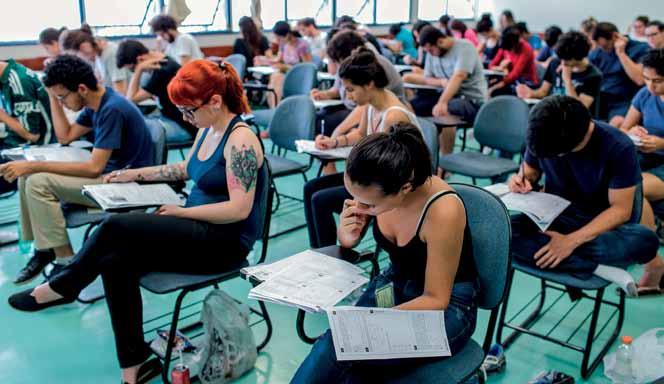
Affirmative action in student admissions to Brazilian public universities is going beyond its original goal of increasing access to education by students from public schools and ensuring that the country’s black, mixed-race and indigenous population is adequately represented in undergraduate education. State universities in São Paulo, where admission avenues were formerly limited to entrance exams, have introduced a broader selection of admission pathways designed to ensure applicant quality, including bonus points on examinations, National High School Examination (ENEM) scores and shortcuts to admission that do not rely on exams.
The new admissions framework announced in November by the University of Campinas (UNICAMP) is the most radical example of these recent developments. Starting in 2019, a system of ethnic-racial quotas will be put in place that reserves 25% of slots in the university for candidates who self-identify as black or mixed-race. The system is much more complex than the quota system instituted by law at Brazil’s 63 federal universities in 2012. Places at UNICAMP will be offered through two parallel systems: 80% via admission examinations (one-quarter of these places are reserved for candidates who self-identify as black or mixed-race) and the remainder on the basis of
candidate ENEM scores (15% for candidates from public schools and 5% for black and mixed-race candidates). UNICAMP has also maintained its two-decade policy of awarding bonus points to candidates from public schools in both admission examination phases. “Our goal with these policy measures is to ensure at least half of our freshmen are from public schools, and to increase the percentage of black and mixed-race students from 20% currently to 37%, mirroring the proportion of these two groups in São Paulo State’s population,” states UNICAMP Entrance Examination Coordinator José Alves de Freitas Neto.
Other admissions policy additions have also been approved by the University Board and will go into effect in 2019, including specially formulated entrance examinations for indigenous people and the possibility, available at no other university in Brazil, for science Olympiad medal winners to gain admission without taking entrance exams—in both cases the number of spots will be defined by each university unit. “We have created possibilities that better people’s chances of getting into university, showing that public universities can play an important role in developing new pathways for admissions,” states physicist Marcelo Knobel, Dean of UNICAMP. “It’s not just about inclusion, but about improving the admission process so we find top students, too,” he says.
UNICAMP is also considering expanding an affirmative action program created at the university in 2012 known as PROFIS (Interdisciplinary Higher Education Training Program). The initiative selects top third-year high-school students from public schools in Campinas based on their ENEM scores and offers them a two-year training program with multidisciplinary content. At the program’s conclusion, students with good grades are admitted to undergraduate degree programs at UNICAMP without having to take an entrance exam. There are plans to increase the number of cities who may participate in the program to reach a larger audience.
In recent years, the University of São Paulo (USP) and São Paulo State University (UNESP) have also reformulated their admissions policies. After a decade of awarding bonus points on entrance examinations for public school students and black, mixed-race, and indigenous candidates, in 2015, USP began offering admission slots through the Unified Admission Platform (SISU). SISU selects candidates for admission to federal universities based on ENEM scores. Of the 11,147 slots available at USP in 2018, 2,745 will be awarded via the SISU platform across three separate lists, with 423 places offered for candidates at large, 1,312 for students who completed high school in public schools, and 1,010 for public school students self-identifying as black, mixed-race, or indigenous. With its new admission policy, USP successfully increased the proportion of freshmen from public schools from 32.3% in 2014 to 36.9% in 2017.
Astudy by USP’s Office of the Associate Dean for Undergraduate Student Affairs in 2016 compared the performance of students admitted through admission examinations and via the SISU platform across 22 undergraduate majors. At the end of the second semester, students admitted through entrance examination had outperformed SISU entrants in majors such as medicine, law and social sciences, whereas SISU students had the edge in courses such as materials engineering, economics, physics, and chemistry. In both cases, the difference was marginal.
In July, USP again changed its policy and instituted a system that will allocate half of its spots to public school students, with a portion of these reserved for candidates who self-identify as black, mixed-race, or indigenous. The initiative will be phased in, with 37% of admissions in each program reserved for public school students in 2018, 40% in 2019, 45% in 2020, and finally 50% in 2021. “This is the first time that USP has adopted an institutional policy on social and racial quotas,” states USP’s associate dean for undergraduate student affairs, Antônio Carlos Hernandes.
At UNESP, initiatives like these have been in place for some time. In 2013, the university pioneered a quota system similar to the one used at federal universities. Using the system, UNESP progressively expanded its public student allocation to 50% in 2018 admissions, with part of the allocation reserved for black and mixed-race candidates with the goal of enabling them to account for 35% of total admissions. According to the university’s associate dean for undergraduate student affairs Gladis Massini-Cagliari, “UNESP has long been successful in attracting a strong freshman population from public schools, but it took quotas to meet the 50% target.”
That target—of reserving 50% of slots for public school students and 35% for black, mixedrace, and indigenous candidates—was set as part of the São Paulo State Merit-Based Higher Education Inclusion Program (PIMESP) launched at the end of 2012 by the state government and adopted in varying formats by the three state universities. “PIMESP was launched in response to public demand that a larger proportion of university students come from public schools and reflect the diversity of our population. As a result, state universities have had to redesign their admission systems,” explains Fernanda Estevan, a professor at the USP School of Economics, Administration and Accounting (FEA-USP) and an expert on affirmative action.
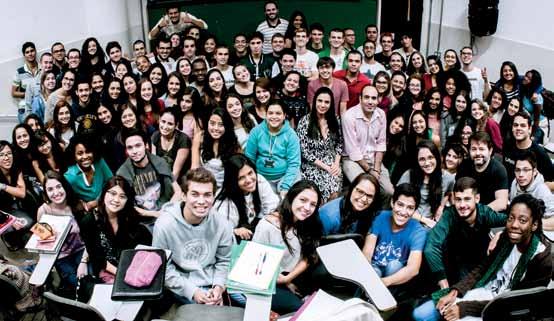
students at the Federal University of AbC (above) and medicine students at UNICAmP in 2016 (opposite), where an admission exam bonus system helped recruit 70% of freshmen from public schools
public school students to venture into the most selective majors.
a 50% target for freshmen from public schools led state universities in São Paulo to change their admission rules
In her habilitation thesis in 2017, Estevan investigated the effects of the admission examination bonus system introduced at UNICAMP in 2005, a then-innovative program designed to broaden social and racial inclusion in the university without resorting to quotas. “The program was beneficial and delivered positive results,” she concluded. The system was designed around a fact that, according to Estevan, was poorly explored in public debate. “It was based on statistical evidence that candidates from public schools whose admission exam scores did not differ significantly from those of candidates from private schools could perform very satisfactorily, and often outperform their private-school counterparts. Presumably, then, granting a 40-point bonus could help to bring talents from public schools to university.”
The researcher found that the system improved the chances of public school students being admitted to UNICAMP by 30%, in addition to increasing the proportion of students from lowincome families. No undesirable effects from the bonus policy—such as students losing the incentive to make an effort to pass the exam— were observed. According to Estevan, there are indications that the bonus system had a positive influence on career choices by emboldening
The program’s effects were constrained—the number of admissions from public schools plateaued at 35% of total admissions—by factors unrelated to its design. “When the system was first implemented in 2005, the number of candidates from public schools rose dramatically, but then remained flat the following year. This could be explained by a number of factors, such as the larger number of admissions on offer at federal universities and grants offered for tuition in private universities within the PROUNI (‘University for All’) program, but these would need to be examined in greater depth,” she explains. Renato Pedrosa, a professor at the Institute of Geosciences at UNICAMP who coordinated the admission examination from 2003 to 2011, notes that the percentage of individuals who complete high school in São Paulo has stagnated at 66% for the past decade—the national average is 55%. “We assumed it would increase, and with it the percentage of candidates from public schools applying for and passing the admission exams. But that didn’t happen.”
Two years ago, UNICAMP made an initial attempt to increase inclusion without having to resort to quotas by raising the admission exam bonus to 120 points. The proportion of freshmen coming from public schools was successfully increased to an average of 50% of the university’s total student body in 2016 and 2017, as required under PIMESP. However, this increase had unexpected effects: in highly competitive majors, such as medicine and architecture, in which the range of candidate exam scores is typically narrow, the bonus provided a large advantage to public school students, far exceeding what an
affirmative action program would be expected to provide. In less competitive degree programs, candidates admitted performing very poorly in their admission exams and later struggling to keep up. “The exaggerated bonus distorted the exam results,” Knobel acknowledges. According to the dean, the new hybrid system of bonus points, quotas and admission examinations is designed to be efficient in achieving social and racial inclusion while also attracting candidates with high potential.
Experience to date with quotas and other forms of affirmative action in Brazil has dispelled initial fears that student attainment and the quality of education would decline dramatically as a result. “When competition for admission is high, with more than 50 candidates per slot, there is virtually no risk of quota-aided students gaining admission unprepared. Because the number of high-performing candidates is always very high, there will always be plenty among them who are affirmative action beneficiaries yet able to succeed in university to become high-caliber professionals,” states Renato Pedrosa. The risks of using quotas, he says, are mostly concentrated in majors less in demand, where candidates can be admitted who are not prepared to pursue those majors. For Pedrosa, the idea that admission exams are the only appropriate method to determine whether an applicant is qualified for admission is false. “Students with the highest admission exam scores rarely are the best performers in college. We can craft admission pathways that will attract students with high potential even if they do have some weaknesses or are not adequately prepared for the admission exams.”
Sociologist Rosana Heringer has surveyed the effects of admission quotas at the Federal University of Rio de Janeiro (UFRJ), where she is a professor at the School of Education. She dismisses the idea that the system has had negative effects on the quality of education. “Students struggling to keep up and failing STEM courses may be somewhat more prevalent among quota beneficiaries, but in fact, this is common among the student population more broadly,” she states. “This has always been an issue in programs where there is little competition in the admission exam. In the pedagogy degree program, many students find it difficult to keep pace with reading assignments and have not developed good writing skills. In our licentiate in physics degree program, students often struggle with courses involving mathematics. We’re now also seeing these issues in some other majors, but the tools are there to address them.”
These tools fall into two major categories: providing the financial means for students to continue their studies, particularly through grants, and helping students through academic difficulties by providing pedagogical and psychological support. In Brazil, efforts have focused on the first category. Rosana Heringer is leading a research project that is evaluating how the education systems in Brazil and the US compare with respect to the admission and retention of black and mixed-race students. “In terms of admission to higher education, the systems in each country differ widely from each other. The proportion of people aged 18 to 24 attending university in the US is three times higher than here. There, college education is overwhelmingly paid for by students, although some may benefit
limits of self-identification
Defining who is truly black or mixed-race and eligible under racial affirmative action policies remains controversial. A recent case of a white, blonde student who was admitted to medical school at the Federal University of minas Gerais (UFmG) after self-identifying as black has added fuel to this debate. After being denounced, the student withdrew. “Isolated cases of fraud don’t warrant abolishing a policy,” states João Feres Júnior, a professor of political science at UErJ, b razil’s first university to
approve a racial quota policy, in 2002. The researcher, who heads UErJ’s multidisciplinary study Group on Affirmative Action, believes measures such as requiring students to appear in person for enrollment or creating evaluation committees can help prevent self-identification fraud.
Economist Álvaro Alberto Ferreira mendes Junior, a professor at Cândido mendes University, performed research on the subject in connection with his doctorate in economics at UFmG. he believes the racial quota system
has two main problems arising from subjective application criteria. “self-identification criteria create a risk that a significant number of white applicants could be admitted. but if students are instead evaluated by a committee, we enter into dangerous territory where people are given powers to judge the color of an individual’s skin. This will not ensure fair treatment as applicants can be classified as either white or black depending on the evaluator’s judgment,” he states.
from household-income-based tiered tuition arrangements, student loans, and grants offered by philanthropic organizations. However, student debt has become a chronic and serious problem in the US,” she notes.
There are also significant differences in student retention policies. “In the US, universities are highly committed to supporting students’ academic success and take responsibility for offering a range of support services. In this aspect, we’re still lagging,” she states. Support mechanisms available at US universities include mentoring, tutors, and student help desks.
Acommon criticism of affirmative action policies is that they fail to address the two root causes of underprivileged and black people’s struggle to gain admission to public universities: the poor quality of public basic education and social inequality. “I am in favor of inclusive policies, but I do not consider quotas to be an adequate solution,” stated anthropologist Eunice Ribeiro Durhan, a professor emeritus at USP, in a debate on quotas organized by the university’s radio station, Rádio USP, in July. “It is trying to solve Brazil’s problem of extreme social inequality through palliatives. Blacks are unable to get into universities not because they are prejudiced against, but because they are poor. Income is the single most important factor predicting academic performance. When you create quotas, you’re really just sweeping the issue under carpet.” Durhan coauthored a paper on affirmative action published in 2013 by the São Paulo State Academy of Science (ACIESP) as part of a research project coordinated by FAPESP presi-
dent physicist José Goldemberg. The paper calls for a reform of Brazil’s primary education system to ensure students are adequately prepared but also recommends short-term solutions, such as creating preparatory courses and grant programs for underprivileged students.
José Eduardo Krieger, a professor at the USP School of Medicine who headed ACIESP when the Durhan study was published believes the concept of quotas is at odds with the nature of universities that are meant to be at the forefront of science. “Many countries are now discussing issues surrounding the sustainability of research universities. These universities play a vital role in training leaders and generating knowledge, but they also cost a lot of money to operate. Particularly in Europe, there is now a debate about the need to focus resources on a limited number of institutions so that they can continue to fulfill their role,” Krieger states. A world-class university, he notes, must attract the best students regardless of skin color. “Besides not addressing the problem of Brazil’s dramatically poor primary and secondary education system, quotas can hurt our research universities. We have only a handful of them in Brazil: the three state universities in São Paulo and about a dozen federal universities throughout the country. We need to tackle inequality without undermining the decades of efforts it has taken to build high-quality institutions,” states Krieger, who also criticizes the feeble efforts of universities to seek out top talent. “You can’t simply rely on admission exams. I have long advocated inviting science Olympiad medal winners to USP, as many universities do in the US and Europe.”
A FUvE sT admission exam in 2016: admissions at UsP were partly via admission exams and partly via the sIsU platform
Affirmative action milestones at Brazilian universities
rio de Janeiro state University (UErJ) introduces social allocations in its admission examination: 20% for public school students; 20% for black or indigenous candidates; 5% for candidates with disabilities. The state University of mato Grosso do sul (UEms) reserves 10% of admission slots for indigenous candidates and 20% for black candidates
The University of Campinas (UNICAmP) begins awarding bonus points on admission examinations for students from public schools or who self-identify as black, mixed-race, or indigenous
The private university grants program “University for All” (PrOUNI) is instituted by federal act. To be eligible for a full tuition grant, candidates must pass the ENEm examination and produce proof that their monthly household income per person is not greater than 1.5 minimum salaries. A percentage of grants is reserved for individuals with disabilities or who self-identify as indigenous, mixed-race, or black
The University of são Paulo (UsP) grants a 3% bonus in both admission examination phases to candidates who have only attended public high schools
The b razilian Federal supreme Court finds policies that reserve university slots for black, mixed-race, and indigenous candidates at public universities to be constitutional in a case examining the constitutionality of the quota system introduced by the Federal University of rio Grande do sul (UFrGs)
For sociologist José de Souza Martins, the affirmative action systems in place at USP and UNICAMP are at variance with the principles according to which high-level higher education institutions ought to operate. “True universities should seek to recruit the best talent, the finest brains, regardless of race, color, origin, gender, or religion. These universities exist not to do charity or to redress social wrongs but to recruit and train the best professionals,” states Martins, a professor emeritus at USP. “If we were addressing the issue in earnest as a society, we would have education policies in place that ensure new generations are adequately trained for the new professions of modern society before they reach university. Brazil hasn’t done this. We’ve left to our top universities the burden of paying our social debts. They are not equipped to solve this problem.”
A survey by São Paulo newspaper Folha de S.Paulo on the academic performance of 252,000 Brazilian undergraduate students in the National Student Performance Examination (ENADE) between 2014 and 2016 revealed that quota students performed as well or better than nonquota students in 33 out of the 64 undergraduate majors covered by the survey. In the other 31 majors, largely in STEM fields, their average performance was at least 5% worse. Guilherme Henrique Gomes da Silva investigated this weak spot in affirmative action policy—the deficit in STEM skills among students coming from public schools—in his doctoral research on STEM
education in 2016 at UNESP Rio Claro. Currently a professor at the Federal University of Alfenas (UNIFAL) in Minas Gerais, da Silva chose to study the role of STEM education in affirmative action policies to fill a gap he had identified in the literature on the subject. “When I joined UNIFAL in 2012, there was a prediction—often prejudiced—being voiced in the university community that failure rates in STEM majors, which were already very high, would increase further as quota students were admitted to federal universities.”
da Silva interviewed professors and quota students at the Federal University of São Carlos (UFSCAR) and the Federal University of ABC (UFABC) and identified the strategies they perceived as most effective against STEM attrition. “Many students said bonding with their professors was critical in making it through the first year and continuing their studies,” states da Silva. One respondent reported how vexed he felt when he asked his calculus professor what a graph was and heard in reply that this was something he ought to have learned in elementary school. “This student never again dared to ask a question during lectures,” da Silva stated. “Quota students are often the targets of microaggressions causing them to question their ability to remain in college.” Not surprisingly, then, states da Silva, the availability of psychological support was mentioned by students as important. Grants for introductory STEM courses—which help
aid grants. “We are expanding admissions from public schools, but we lack the funds to defray the added costs,” explains Mário Sérgio Vasconcelos, student retention coordinator at UNESP.
2013
The Quotas Act enters into effect, requiring federal universities to reserve 50% of admissions for students from public schools. half of the admission slots are reserved for students with a per capita family income not exceeding 1.5 minimum salaries. Quotas are also established for black, mixed-race, and indigenous candidates, reflecting the racial makeup of each state
2014 2017
Progressive targets come into effect under the são Paulo state merit-b ased higher Education Inclusion Program (PImE sP), requiring 50% of university places to be occupied by students from public schools and 35% by black, mixed-race, or indigenous students by 2018. UNE sP introduces social quotas in its admission examinations
UsP and UNICAmP introduce admissions quotas for candidates from public schools and black, mixed-race, and indigenous applicants as a form of affirmative action
Affirmative action policies were implemented at a time when public universities in Brazil were expanding enrollment. A report titled “Faces da desigualdade no Brasil” (The faces of inequality in Brazil) from the Latin American School of Social Sciences (FLACSO) found that access to higher education (including undergraduate, master’s and doctoral degree programs) had improved throughout Brazil. Based on data from the National Household Sample Survey (PNAD) for the period 2002 to 2015, the study noted that the black student population in public and private universities had increased from 400,000 in 2002 to 1.6 million in 2015.
A criticism often leveled at affirmative action policies is that although they are originally proposed as temporary solutions they more often than not become permanent because the inequality that made them necessary remains.
a significant challenge is ensuring students can support themselves financially during their studies
students both financially and in gaining a more practical understanding of STEM subjects—and creating study groups in which quota students can support one another were also reported as having positive effects.
Another significant challenge in affirmative action policy is ensuring students can support themselves financially during their studies. At UFABC, where a quota system has been in place since 2006, half of freshmen are from public schools and one-third self-identify as black, mixed-race, or indigenous. Of the admission spots for candidates from public schools, 50% are reserved for candidates whose families have a per capita income of up to 1.5 minimum salaries. “We have about 2,500 low-income students and only 500 grants available to them,” states Fernando Mattos, associate dean for Extension and Affirmative Action at UFABC. UNESP has applied to the São Paulo State Government for a refund of the R$16.6 million it spent in the year on student retention programs, including over a thousand rent allowance grants and 2,791 financial
UNICAMP’s Renato Pedrosa notes that racial quotas were prohibited in the US in a landmark decision by the Supreme Court in 1978: “Universities that implemented these types of policies eventually saw exclusion levels return to what they had been before those policies were implemented.” However, American universities, particularly when they are publicly funded, are free to select students using different criteria, such as the diversity of the student body or targeting a given percentage of students from surrounding public schools.
Sociologist Arabela Campos Oliven, a professor at the Federal University of Rio Grande do Sul (UFRGS), is conducting a study comparing the Afro-descendant inclusion policies used at UFRGS and at the University of Illinois UrbanaChampaign. In 1968, at the height of the civil rights movement, Illinois launched a program that aimed to attract 500 black undergraduate students, or the equivalent of approximately 5% of its student body. The program was successful at the time and remains in place today. However, it has been unable to recruit as many students as before. “A half-century later, there is now a qualified body of black leadership in university management, including the dean, and the number of black professors has increased, but the total number of black undergraduates has declined, from 565 in 1968 to 356 in 2014,” states Oliven. n
The metropolis and science The metropolis and science
Study analyzes papers by authors from 2,000 cities around the world and ranks São Paulo among the 20 with the highest scientific output
Astudy published in the J ournal of Informetrics in August analyzed articles produced in 2,194 cities worldwide over the last three decades and identified a shift in scientific output from developed countries to emerging nations. According to the study, in quantitative terms, countries such as China, India, Iran, and Brazil have come to occupy prominent positions in global science.
From 1986 to 1995, the 15 cities that published the most research papers worldwide were predominantly located in the United States and Europe, but from 2006 to 2015, the sources of scientific output became more diverse, with Beijing, Seoul, Tehran, and Sao Paulo entering the list. "It seems quite clear that this is not a temporary phenomenon, but a consistent trend," says György Csomós, lead author of the study and a professor in the Engineering Department at the University of Debrecen, Hungary. "The research impact in these new regions is still lower than that of cities in the United States and Europe, but our study did not evaluate citations," he says.
The study selected locations with at least 1,000 published articles indexed in the Elsevier Scopus database between 1986 and 2015. György Csomós noted
that Tokyo, Japan had the highest scientific output from 1986 to 2005, with 366,405 published articles. Since 2006, the capital of China has taken the lead— in almost a decade, researchers from Beijing have published 664,414 articles (see table on page 29). "Beijing's growing importance has been the subject of various studies in recent years. The growth in China is mirrored in other emerging metropolises," explains the Hungarian researcher. For him, this is a sign that scientific output is spreading to new regions.
Another study, published in Scientometrics in July by researchers from France and Germany, looked at publications indexed in the Web of Science database to analyze the absolute number of citations in relation to the cities where the authors worked. Of the 30 cities with the highest number of citations in 2007, only Beijing, Shanghai, and Seoul represented emerging nations. The rest were located in the United States, Japan, Australia, Canada, and Europe. There were no Latin American cities among the top 30.
Of the 60 Brazilian cities evaluated by Csomós, São Paulo is the only one that featured in the top 100 regarding worldwide scientific output. The city
Bruno de Pierro
Beijing, China, is first in the scientific output ranking PI xabay. COM
Productivity ranking
Shifting scientific output
Cities that produced the most articles in the Scopus database in two periods: from 1986 to 1995, and from 2006 to 2015
of São Paulo ranks 19th in the list, with 190,171 articles published between 1986 and 2015—more than Berlin, Germany; Montreal, Canada; and Kyoto, Japan. "São Paulo's position in the ranking can be explained by the fact that it is the center for much of the science produced in Brazil," says Renato Garcia, a professor at the Institute of Economics of the University of Campinas (UNICAMP). He notes that the city is home to the University of São Paulo (USP), São Paulo State University (UNESP), and the Federal University of São Paulo (UNIFESP), as well as private research institutions such as the Pontifical Catholic University of São Paulo (PUC-SP) and the Getulio Vargas Foundation (FGV). USP alone, whose main campus is located in the state capital, is responsible for 22% of all Brazilian scientific output, according to Web of Science data. In a 2015 study by Méric Gertler, current dean of the University of Toronto, Canada, the Greater São Paulo region placed 4th in a list of urban areas with the highest scientific output (see Pesquisa FAPESP, issue No. 237).
The study by Csomós also identifies the fields of knowledge with the greatest output. In São Paulo, medicine is the field with the greatest number of published articles. "The city of São Paulo has two of the best medical schools in the country at USP and UNIFESP, which
São Paulo's position in the ranking can be explained by the fact that it is the main center for much of the science produced in Brazil, says Renato garcia
create a favorable environment for research," says Renato Garcia. Csomós also evaluated international collaborations. Of the 60 Brazilian cities studied, 57 work in partnership with researchers from the United States more frequently than any other country—the three exceptions were Ouro Preto, Minas Gerais State; Feira de Santana, in Bahia; and Itajaí, Santa Catarina, which mostly col-
b etween 1996 and 2005, Tokyo produced more articles than any other city in the world
laborate with Australia, the UK, and Italy, respectively.
In the first decade of the study period (1986–1995), 28% of Brazil’s scientific output came from São Paulo, increasing to 35% between 2006 and 2015. In 2011, "Knowledge, networks and nations: Global scientific collaboration in the 21st century," a report by the Royal Society, London, named São Paulo as one of the most promising cities in science and announced that China, Brazil, and India were emerging among the scientific superpowers. "One factor that could explain the growth of São Paulo's scientific output is that researchers are publishing more articles in English-language journals, giving the city a greater presence in the Scopus database," suggests Csomós.
INDEXED j OURNALS
The advances made by São Paulo and other cities in developing countries coincides with a large number of journals from emerging nations being added to international databases such as Scopus and the Web of Science, says Jacqueline Leta, a professor at the Institute of Biomedical Sciences of the Federal University of Rio de Janeiro (UFRJ). These journals, most of which are open access, publish a significant portion of the scientific output of these nations. "Earlycareer researchers under pressure to publish use these journals a lot, helping
Top fields by city
Fields with the greatest number of articles published in Scopus between 1986 and 2015 for each city studied
FIELDS OF KNOWLEDgE
agricultural and biological sciences
Genetic biochemistry and molecular biology
Chemistry
Earth and planetary sciences
Engineering
Environment
Material sciences
Medicine
Other areas of research
Physics and astronomy
Social sciences
to boost the performance of countries like Brazil and China," she says. Leta highlights the originality of Csomós's work. "Looking at cities rather than countries as a whole offers a new perspective to studies that analyze the quantitative aspects of scientific output," she says. Csomós explains that by examining the total production of a country or continent, academic diversity at a regional level is missed. "Cities differ from one another, even when they are in the same country. And thanks to its varied nature, scientific output is different in every city," he adds.
This diversity is clearly demonstrated by the data on collaborations. Cities in western Switzerland, such as Geneva, Lausanne, and Neuchâtel, mostly develop partnerships with researchers in France, while cities in the north of the country, such as Zurich, Basel, and Bern, collaborate more with Germany. Those located near the Italian border, such as Bellinzona and Lugano, mostly work with Italian researchers. "This is not evident when assessing international collaboration in Switzerland as a whole," says Csomós.
The sheer scale of many metropolises in emerging countries is one factor that could explain their rising global scientific output. These cities, the researcher notes, are generally much larger in size and population than most found in developed countries. Boston, USA is a major science and technology hub worldwide, but it only has a population of 673,000 and an area of 232 square kilometers. Its size is almost incomparable to Beijing, which has 21.7 million inhabitants and an area of 16,000 square kilometers. "It would be more suitable to compare Beijing to Greater Boston,"
suggests Csomós, referring to the city's entire metropolitan area, which has a population of 8.2 million and an area of 25,000 square kilometers.
For Renato Garcia, Csomós's research helps identify the locations most likely to experience what is known as a knowledge spillover, which occurs when companies and other sectors of society gain access to scientific and technological knowledge produced in research institutions and universities. "Cities with high scientific output are likely to transfer more knowledge to society," says Garcia. However, he notes that simply knowing the number of articles published in each location is not enough to measure the potential for spillover: "Studies are needed on the impact of private sector research and the collaborations between universities and businesses." n
Scientific articles
CSOMóS, G. a spatial scientometric analysis of the publication output of cities worldwide. journal of Informetrics Online. aug. 2017.
MaISONOb E, M. et al. The global geography of scientific visibility: a deconcentration process (1999-2011). Scientometrics. Online. june. 2017.
SOURCE a SPaTIal SCIENTOMETRIC aNalySIS OF ThE PublIC aTION OuTPuT OF CITIES wORldwIdE
Primate
culture
With a stone held high above his head, young Porthos begins vigorously pounding the sandy soil to dig a hole. His goal: a spider that he soon manages to flush out, rolling the prey between his paws to stun it before he eats it. Porthos is a capuchin monkey of the species Sapajus libidinosus, which inhabits the Serra da Capivara National Park in the Brazilian state of Piauí, and the subject of a study by researchers from the Institute of Psychology at the University of São Paulo (IP-USP). Biologist Tiago Falótico has described how these animals use tools ( see Pesquisa FAPESP Issue No. 196) and showed, in an article published in July 2017 in the journal Scientific Reports, that the action of the young male involves knowledge, learning and transmission of cultural practices—or traditions, as some prefer to call them when the subjects are not humans—among social groups. The study is central to a theoretical body of knowledge that seeks to interlace biology, the social sciences and the human sciences and recently culminated in the
Transmission of tool-use practices among capuchin monkeys helps redefine the role of traditions in evolution
Maria Guimarães
formation of the Cultural Evolution Society. Its inaugural meeting was held in Germany on September 13-15, 2017. Until now, using stones as tools for digging has only been documented among that population. When it comes to flushing out spiders in particular, experience is needed. The study, which was the result of observations made during Falótico’s doctoral studies, completed in 2011 under the supervision of biologist Eduardo Ottoni, shows that nearly 60% of adult and young capuchins (like Porthos) are successful in the task. Juvenile monkeys (which correspond to children), on the other hand, are successful in just over 30% of the cases. This is because they need to be able to recognize the silk lining that closes off the spider’s nest, a sign that the inhabitant is inside. “Juvenile capuchins sometimes dig up a nest that had just been revealed by another monkey,” Falótico says. Underground structures of Thiloa glaucocarpa tubers that look like potatoes are also more easily dug up by the adults. However, Ocotea sp. roots, another food eaten by these primates, despite involv-
The use of stones to crack fruit is common among this species
Endowed with resources
monkeys from piauí reveal variations in the use of tools
Groups at the b oa Vista farm and serra da c apivara national park allow us to relate innovative behaviors to ecology; studies at serra das confusões national park are just beginning
SoUrCE TiaGO faLóTicO/usp
stones used for food stone used for digging stones used as anvils sticks populations that use tools
ing the use of bigger stones, do not appear to be as great a challenge to these novices. Monkeys of both genders are equally adept at using stones to dig and have an equivalent rate of success, although males seem to be more interested in the activity: among the 1,702 situations observed, 77% involved males and just 23% involved females.
“We hoped to find a correlation between the use of tools and the scarcity of food, but that is not what we saw,” says Falótico. If the Serra da Capivara monkeys find something edible that requires the use of tools, they use them. Their lifestyle, in which they spend half of the time on the ground surrounded by sticks and stones, seems perfectly suited to the development of these skills. But there is more. Although there is no difference between the genders in terms of food habits, the females never use sticks, which their male counterparts wield to flush lizards out of cracks and remove insects from tree trunks. The only apparent difference is in the level of interest. “When a male sees another male using a stick, he watches closely; but a female, even if right beside the one using the tool, is not interested and looks the other way!”
Monkeys of the same species that inhabit Boa Vista Farm in Gilbués, in
n c
the state of Piauí, nearly 300 kilometers (km) to the southwest, have different traditions of tool use. There, a region more influenced by the Cerrado savannah than the Caatinga scrublands, stones are less plentiful but are necessary (and used) to crack open coconuts. There are plenty of sticks, but they are useless. That cultural difference between the groups of monkeys was explored in an experiment conducted by psychologist Raphael Moura Cardoso, during his Ph.D under Eduardo Ottoni,
and reported in a 2016 article published in the journal Biology Letters. At both the Boa Vista Farm and Serra da Capivara National Park, researchers set out acrylic boxes containing sugarcane molasses. The only way to remove the tasty treat was through a slit at the top of the box, just wide enough to fit a stick. “At Serra da Capivara, one male hit the box with a stone,” recalls Ottoni, who, with forethought, had designed the device to be “capuchin monkey-proof.” “When nothing happened, he tossed the stone
n cerrado
aatinga
female male
Serra das Confusões National Park
Boa Vista farm
Serra da Capivara National Park
Young monkeys try to take advantage of the digging done by a female
at serra da c apivara national park, sticks serve as tools for finding food
aside, scratched his head and picked up a stick.” Ottoni jokes, saying that they did not even have to edit the video to be shown at a conference—continuous activity began immediately. For the five days they were exposed to the box, 10 of the 14 males used the stick during their first exposure, and except for the three youngest, all males succeeded in approximately 90% of their attempts. The females made no attempts, nor did the males at the Fazenda Boa Vista. There, the researchers even tried to help the monkeys: after six hours of being exposed to the task, the males found a stick preinserted in the slit. Even after removing the stick and licking the molasses, none of them reinserted the tool into the box over the 13 days of the experiment. One surprise was that the monkeys at Boa Vista, experts at cracking coconuts, did not try to break the box. “They were
the ones I expected would do that, not the others,” Ottoni says.
S o CIA l lEA r NING
The surprising results may underscore the importance of the transmission of traditions among monkeys. The cover of the July 25, 2017 issue of the journal PNAS carries a photo of an adult capu-
Under the influence of hormones
The level of care given to offspring is associated with the hormone oxytocin in mammals. a few years ago, the group led by maria c átira b ortolini of the federal university of rio Grande do sul described variants of the oxytocin molecule in species of monkeys in which there are good parents (see pesquisa fapE sp issue No. 228). pharmacological tests conducted in the laboratory of biochemist claudio costa-neto, at the ribeirão preto school of medicine at usp, have now revealed the path of oxytocin inside the cells and verified that the receptors of the altered forms are more
exposed in the cell membranes so that the system does not become desensitized.
“it’s as if the monkey constantly received the instruction ‘i have to take care of the infants,’” explains b ortolini. This trait makes a difference in the survival of marmosets, which often give birth to twins.
The findings appear in an article published in august 2017 in the journal PNAS, which also describes the results of treating rats with oxytocin variants administered through nasal drops in an experiment conducted in collaboration with physiologist aldo Lucion of ufrGs. Lactating females, already awash in oxytocin, showed very little change in behavior. males treated with the hormone, however, dramatically changed their habit of ignoring their offspring and ran to sniff them, a reaction that was three times faster when using marmoset oxytocin.
chin male at Fazenda Boa Vista eating a nut he was able to crack using a large round stone, closely observed by a young male. The image advertises a special issue on how culture is related to biology, which includes a paper by the group led by primatologists Patrícia Izar, of IP-USP, Dorothy Fragaszy, of the University of Georgia in the United States, and
The cebidae family, which includes capuchin monkeys, also has a type of oxytocin that increases the propensity for paternal caregiving. The groups led by bortolini and Ottoni recently began collaborating on a study of the genetic characteristics of males that were more or less involved in caregiving. “We have already managed to extract genetic material from feces samples and we are selecting candidate genes to be tracked,” bortolini says, fascinated with the tolerance of the males and the cognitive abilities of the primates of piauí.
“The capacity to innovate on the one hand while on the other, sit and watch, are necessary for the development and transmission of adaptive cultural traits, and there is certainly a genetic scenario behind that.”
The theories behind evolution and culture
perception of integration mechanisms between organisms and behavior advance with knowledge
charles darwin and alfred Wallace propose the theory of evolution, according to which natural selection exercised by the environment favors the dissemination of particular characteristics
The German august Weismann introduces the existence of germinative cells, which exclude the inheritance of acquired traits ; the principle is known as the Weismann barrier
Elisabetta Visalberghi, of Italy’s Institute of Cognitive Sciences and Technologies, about the monkeys at Boa Vista Farm that the authors have studied systematically since 2006. Observations made over time call attention to the adults’ tolerance in relation to the young apprentices that watch closely and even eat some morsels of broken coconut. “The adults compete for resources and the immature ones are able to stay nearby,” says Izar. The analyses published in the recent article show much more than just proximity: the breakers of the coconut are able to influence the activity of the others, especially the juveniles, who also begin to handle stones and coconuts. This goes on for a few minutes. “The tradition channels the activity to the same type of important actions involved in this tradition,” she says.
Izar points out that the monkeys are born within this context. “We often see infants on the backs of their mothers while they are breaking coconuts,” she says. As a result of this continuous learning, the infants end up becoming experts at the task. However, it is not enough to just watch, and therein lies the importance of the infants’ attraction to adult activities—especially those that are most effective. “The success derives from the perception of the task and the properties of the tool,” she adds, describing a complex body-tool that constantly calls for adjustment of strength, gestures and position. When they crack open tu
Modern synthesis combines knowledge of genetics with the concept of evolution, giving rise to mathematical modeling of population genetics
Edward O. Wilson defines sociobiology: the biological bases of social behavior
richard dawkins considers genes as targets of natural selection, with little evolutionary awareness of culture
Tools of population genetics are applied to models that combine genetic and cultural heritage
cum, a slightly softer coconut, the monkeys adjust the force of the strikes when they hear the sound of the surface cracking, the group demonstrated in a 2016 article in the journal Animal Behaviour For coconuts that are more difficult to crack, the monkeys select stones that can weigh more than their own body weight. In addition, the selection of a stone is carefully made as shown in an experiment conducted by Izar and her group,
Edward O. Wilson proposes the merger of the biological sciences and the humanities into consilience, with little impact on the field
Extended synthesis views biology and culture as two evolutionary mechanisms that impact each other
where they provided artificial stones of different sizes, weights and densities. The large stones quickly attracted the attention of the monkeys, but if the stones were not dense enough—lighter than they seemed—they were abandoned. “The monkeys are able to perceive that weight is important to the act of breaking,” says Izar. These primate societies are changing the environment. Monkeys select flat-
The use of stones for digging was only described at serra da c apivara national park
tened stones or tree trunks to serve as a base on which to crack coconuts, and to those places, they carry the rare large hard stones they find in their surroundings. That setup is significant not just for creating work areas for breaking things open but also for channeling possibilities for learning, since all the monkeys know where the activity takes place and can be observed. “It doesn’t make sense to think about motor maturation outside the social and food context,” says biologist Briseida Resende, also from IPUSP, and coauthor of the PNAS paper. An individual’s development depends on the individual’s own experiences and physical abilities and the accumulated collection of group abilities, in which an innovation could be disseminated and eventually become part of the culture for generations. Resende holds that the individual and society are inseparable, although they have historically been viewed as distinct entities.
r EVISED th E orY
Combining cultural and biological evolution is precisely the focus of the extended synthesis now firmly rooted in the 2016 establishment of the Cultural Evolution Society—the first president is zoologist Peter Richerson from the University of California at Davis, whose group has expertise in statistics. This in-
tegrated vision expands the evolutionary view, since the transmission of ideas and innovations does not just occur from parents to offspring and may carry selective advantages that favor relevant cognitive and social abilities. The view also suggests that culture may influence physical aspects, such as the shape and size of the brain, or the development of skills that in turn establish behavior. Genes and culture, two channels for transmitting information, are interrelated.
The opportunity to see behaviors emerge and spread is rare, and this is why experimental approaches that promote innovations are an important addition to the various behaviors of the capuchin monkeys of Piauí. Recent statistical tools could help enhance that understanding. One such tool is networkbased diffusion analysis, which Ottoni’s group is beginning to use. “The program sets up a random social network and compares it to the actual one,” the researcher explains. This makes analyses stronger by inserting characteristics measured in these subjects. In August 2016, at the Joint Meeting of the International Primatological Society in Chicago, Ottoni presented the findings of an experiment conducted by Camila Coelho, his doctoral student, during a period at Durham University in the United Kingdom, to understand
Tolerance: juvenile capuchin monkey watches an adult male eat a nut it had just broken open at b oa Vista farm
the method. The findings indicate that, in the case of capuchin monkeys, social learning predicts the dissemination of information within the species.
Until a century ago, the use of tools was regarded as exclusively human. In observing chimpanzees in Tanzania, Great Britain’s Jane Goodall debunked this exclusivity and, to a certain extent, redefined the boundaries between people and animals. Much has been discovered since then, but discussing animal culture still gives rise to some discomfort. However, such reactions may not persist much longer. n
projects
1. Tool use by wild bearded capuchin monkeys (sapajus libidinosus): ecology, socially biased learning and behavioral traditions (no. 14/04818-0); Grant Mechanism Thematic project; Principal Investigator Eduardo benedicto Ottoni (usp); Investment r$609,276.69.
2. social behavior variability of capuchin monkeys (genus cebus): comparative analysis among populations for the study of physiological correlates (no. 08/55684-3); Grant Mechanism research Grant; Principal Investigator patrícia izar (usp); Investment r$186,187.33.
3. d evelopment of new ligands/drugs with selective antagonism action (biased agonism) for receptors of the renin-angiotensin and kallikrein-kinin systems: new properties and biotechnological applications (no. 12/20148-0); Grant Mechanism Thematic project; Principal Investigator claudio miguel da costa neto (usp); Investment r$3,169,674.21.
The chemical language of insects
Carlos Fioravanti | Published in OctOber 2017
in colonies of the stingless bee Tetragonula carbonaria, queens express fertile status through cuticular hydrocarbons, which suppress the reproductive drive of worker bees
Within colonies, bees and ants recognize each other and organize themselves through compounds that cover their bodies
How do social insects such as bees, wasps, ants, and termites recognize each other, organize themselves, and divide tasks in the complete darkness of their colonies? In 2003, when planning his postdoctorate research at the University of São Paulo’s Riberão Preto School of Philosophy, Sciences, and Languages and Literature (FFCLRP-USP), biologist Fábio Santos do Nascimento found that previous genetic analyses and behavioral studies did not provide a satisfactory answer to this question. In search of an answer, he began to study a group of chemical compounds produced by insects known as cuticular hydrocarbons (CHCs), which had already attracted attention from research groups in the United States and Europe. Nascimento and chemist Norberto Peporine Lopes, a professor at the University of São Paulo’s Ribeirão Preto School of Pharmaceutical Sciences (FCFRP-USP), soon found that CHCs signal whether a bee, wasp, ant, or termite is male or female and worker or queen. Each individual, species, and colony exhibits subtle variations in CHC composition that differentiate them from others. These compounds also proved to be crucial for the division of tasks among insect castes and for colony cohesion.
When they release CHCs, queens signal that they are fertile and inhibit the mating drive of workers. These findings were reported in a study by the USP group published in the June 2017 issue of Nature Ecology & Evolution. "It is the chemical signaling induced by queens that keeps the workers dedicated to cleaning and guarding the nest or searching for food," says Nascimento, who was hired as a professor at FFCLRP-USP in 2009. The teams at Ribeirão Preto also found that queen Melipona scutellaris bees spread CHCs onto the cells where they lay their eggs, signaling that the workers should not touch them.
The CHCs of social insects, which are produced by the subcutaneous glands, form the yellowish wax that covers the external skeleton of the insects. These substances are comprised exclusively of carbon and hydrogen atoms arranged into long, linear structures with single or double bonds between the carbon atoms. "The position of the double bonds between the carbon atoms varies according to the insect species or genus," says Lopes, "and the varia-
a network of channels known as tracheae (details below) is responsible for the blue wing coloration of Zenithoptera lanei
The bright colors of dragonfly wings
the dragonfly Zenithoptera lanei, found in the cerrado dryland region of northeastern b razil and known as morpho because of its similarity to the Morpho genus of predominantly blue butterflies, may be the first known insect to have wings in adulthood that are comprised of tissue that is alive and not dead, as previously thought.
the biologist rhainer Guillermo Ferreira, a professor at the Federal university of são c arlos (uFscar), used electron microscopy to identify a network of tubes known as tracheae within the membranes of the intense blue wings of this species.
a s described in an article published in the september 2017 issue of Biology Letters, the tracheae vary from 3 to 200 nanometers in diameter and supply oxygen to cells that produce a thick wax that covers the wings.
according to Ferreira, the wax reflects ultraviolet radiation,
tion in the structures of these molecules allows them to recognize individuals from the same hive and permits communication between them." In 2003, when he began to work with Nascimento, their chemical analysis equipment was suitable for hydrocarbons with up to 40 carbon atoms, but today, they use a new mass spectrometry technique in their lab that allows them to identify even longer carbon chains (60 atoms), which were also seen to differ between males and females and between queens and workers.
REVEALING CONTACT
This form of communication relies on physical contact between insects. For example, one ant can recognize that another ant is of the same species or colony by touching its body (particularly its head) with its antennae, which have pores or receptors specifically for identifying CHCs. Thus, the more than one thousand CHCs that have been identified to date are known as superficial or contact pheromones. This classification differentiates these pheromones from sex pheromones, which are released into the air by females that are able to reproduce.
simultaneously accentuating the blue color of the wings and protecting the insect from excessive sunlight. “One of the indications that the wing cells are alive is that the blue quickly loses its brightness after the dragonfly dies,” he says.
the network of tracheae also helps support the wings and control the temperature of these insects. “so far, this is the only species with this type of structure,” he adds.
“We looked at 40 other species of dragonflies and did not find anything like this.”
"In their hives, social insects mainly communicate through chemical signals," says Lopes. "Outside the colony, the primary form of communication between species is visual. If an insect of the same species or another species attempts to invade the anthill, the ants will recognize it as an enemy and attack it immediately." When light is present, Polistes satan wasps also recognize each other through unique signs on their faces, according to a study conducted by the biologist Ivelize Tannure Nascimento of USP at Ribeirão Preto and published in 2008 in Proceedings of the Royal Society B
Two days after hatching, the wasps are already producing the colony’s specific CHCs because of their contact with other members of the colony. The composition of these substances may change in response to variations in diet and other factors. Under the guidance of Nascimento, the biologist Lohan Valadares divided a colony of leafcutter ants into two groups: one fed rose leaves and petals, and one given leaves from crepe myrtles ( Lagerstroemia sp.), trees with pink flowers that are planted in urban settings. Valadares then transferred ants from one group to the other group; the newcomers were attacked. The analyses indicated that the ants’ smell had changed after their diets were altered. "As the chemical profile of the cuticular hydrocarbons changed, the ants that had been part of the same colony ceased to recognize each other," says Nascimento.
the ant Dinoponera australis uses chemical compounds captured by its antennae to recognize whether another ant of the same species is male or female
The ability to produce these compounds must have arisen before their ancestors started living in colonies approximately 100 million years ago.
Biologists Ricarda Kather and Stephen Martin of the University of Salford, Manchester, England, examined the chemical profiles of the CHCs of 241 insect species, including 164 species with social habits from the order Hymenoptera, which is the largest insect group with 130,000 species. As they explained in a 2015 study in Journal of Chemical Ecology, the CHC profiles of solitary species were found to be as complex as those of social species.
Another group from England showed that the antennae of Iridomyrmex purpureus ants not only receive chemical signals but also transmit them, building on the observations of Swiss psychiatrist and entomologist Auguste-Henri Forel (1848–1931). At the end of the nineteenth century, Forel removed the antennae from ants of four species and observed that they became disoriented and massed together, revealing that the antennae function as organs capable of capturing chemical signals.
DISORIENTED ANTS
Similar to the effects of antennae loss, without CHCs, social insects become disoriented, and social organization breaks down. In the behavior and evolution laboratory at Rockefeller University in the United States, biologist Daniel Kronauer’s team disabled a gene known as orco that produces CHC receptors in Ooceraea biroi ants, which are native to Japan. As soon as they emerged from the larval phase and became adults, the genetically altered ants immediately exhibited strange behavior for this species: They no longer
walked in a line but moved aimlessly, as described in a December 2016 article in Proceedings of the National Academy of Sciences (PNAS). The researchers also observed changes in the ants’ brain structures, indicating that these insects require odor receptors for the brain to develop properly. CHCs explain intriguing social behaviors in insects, far beyond their constant touching of each other with their antennae. "After they get dirty or emerge from water, the ants clean themselves or rinse themselves with their legs as a way of recovering the layer of hydrocarbons that covers their bodies. If they didn’t, the colony’s guards would not recognize them and would not let them enter,” explains Nascimento. Another solved mystery relates to the fact that worker bees of the species Melipona scutellaris decapitate seven-day-old virgin queens that could potentially attract males interested in copulation. By touching the body—mainly the head—of the virgin queens, the workers perceive that their CHCs differ from those of fertilized queens. This perceived difference leads the workers to kill the virgin queens, concludes biologist Edmilson Souza, a professor at the Federal University of Viçosa in Minas Gerais. No major damage is caused to the hive since queens in stingless bee colonies frequently produce eggs that generate queens. By combining biology and chemistry, these above-described studies complement work on bee genetics begun by the geneticist Warwick Kerr, from São Paulo, in the 1950s and other biological studies on the behavior of social insects began by biologist Vera Imperatriz Fonseca in the 1970s, and they require a multidisciplinary vision from researchers. "Here, in the laboratory," says Nascimento, "every student and researcher, even biologists, must be a bit of a chemist, learn to use the chromatograph and interpret the results it produces." n
Projects
1. evaluation of exogenous and endogenous mechanisms that influence the variability of cuticular hydrocarbons in neotropical social insects (no. 15/25301-9); Grant Mechanism research Grant; Principal Investigator Fábio s antos do nascimento; Investment r$ 191,870,92.
2. metabolism and distribution of natural and synthetic xenobiotics: From understanding reactional processes to generating tissue images (no. 14/50265-3); Grant Mechanism t hematic Project; Principal Investigator norberto Peporine lopes; Investment r$1,137,805.87.
the scientific articles consulted for this report are listed in the online version.
The rocks that remained
An alternative model suggests that the asteroid belt originated from leftovers from the formation of the planets in the solar system
Billions of irregularly shaped masses, most of which are the size of a stone but a few are hundreds of kilometers in diameter, revolve around the Sun in the region between the orbits of Mars (the last of the four rocky planets) and Jupiter, which is the largest planet in our system. This group of orbiting rocks composes what is conventionally known as the asteroid belt. The origin of this agglomeration of asteroids is a mystery; however, it is widely accepted that there was much more of this material in this region in the early days of the solar system and that 99% of it was expelled for some reason. Astrophysicists André Izidoro of the Orbital Dynamics and Planetology Group at São Paulo State University’s Guaratinguetá campus and Sean Raymond of the University of Bordeaux in France proposed a new model that is based on computational simulations to explain the origin
of the asteroid belt and is in sharp contrast with more traditional ideas. In the September 13 issue of Science Advances, these astrophysicists published an article that contained the details of their alternative model.
According to Izidoro and Raymond, the region where the belt is located today had been a large void when the solar system was born approximately 4.5 billion years ago, rather than a place where matter was concentrated, as other better-known models have maintained. In this model, the current configuration of the belt is not the result of enormous losses of matter throughout the history of the system but rather a modest gain in matter. "The most external portion of the asteroid belt originated as a byproduct of the formation of the solid nucleus of the gas giant planets, namely, Jupiter and Saturn," explains Izidoro. "And the innermost part emerged from the residues of planetary embryos that were the origins of the terrestrial planets, namely, Mercury, Venus, Earth and Mars."
According to this hypothesis, agglomerations of materials that were not part of the composition of the gaseous or the terrestrial planets, particularly Jupiter and Mars, were expelled to the area where the solar system would arise, which at that time was empty due to gravitational interactions and the dragging action of gas that was present in space. This phenomenon led to the asteroid belt. This area, which is filled with stones of various
The asteroids 433 Eros (left) and 253 Mathilde: 433 Eros is an S-type asteroid, rich in silica and typical of the interior of the belt; 253 Mathilde is a C-type asteroid containing carbon, more commonly found in the outer portion
Marcos Pivetta
Published in OctOber 2017
From nothing to the belt
According to a model that was proposed by astrophysicists from b razil and France, the inner part of the belt was formed mostly from matter that was left over from the formation of the rocky planets, especially mars. most asteroids in the outermost portion of the belt originated from what remained after the process of forming Jupiter
sizes, is described by Raymond as a "cosmic refugee camp".
The new model also explains the arrangement of the two main types of asteroids within the belt. The area that is farthest from the Sun is where C-type asteroids concentrate; they are dark and rich in carbon and comprise 75% of the objects in the belt. Within the more internal section, most objects are S-type asteroids, which are brighter, have a high concentration of silica, and account for 17% of the belt’s bodies. According to Izidoro and Raymond’s model, Ctype asteroids (which are also called wet asteroids) originated from material that remained after the formation of gas giant planets. "Water on Earth may also have come from these asteroids that eventually collided with our planet when it was still forming," says Izidoro, who, together with Raymond, addressed this issue in another recent article that was published on June 30 in the scientific journal Icarus. S-type asteroids, which are considered dry, are what remains of the materials that were
used in the formation of Mars and other terrestrial planets.
For months, Izidoro and Raymond ran more than 200 computer simulations to determine how the planets in the solar system may have formed and how the asteroid belt consequently emerged. The simulations assumed that no primal material was present between Mars and Jupiter and the researchers were able to virtually reproduce the current constitution of the belt. "Our next step is to test how each of the existing models, including our own, explain the asteroid belt and determine what we can learn about the formation of the solar system," says Raymond.
LOW DENSITY
For astrophysicist Jorge Meléndez of the Institute of Astronomy, Geophysics, and Atmospheric Sciences at the University of São Paulo (IAG-USP), the simulations by Raymond and Izidoro are very interesting and provide a new vision of the solar system. "The study shows that at the beginning of the system, a much more massive asteroid belt was
not necessary,” says Meléndez. "One of the problems with the current model is explaining how this belt [which was supposedly very large early in its development] lost so much mass." Currently, the mass of the belt is no more than 4% that of the Moon and is more than a thousand times less than that of the Earth. Although the asteroids within it spin around an enormous swath of the solar system, the belt itself has a low density of objects in relation to its area. A single celestial body, namely, the dwarf planet Ceres, has the same mass as one third of the entire asteroid belt. n
Project
Planetary formation and dynamics: From the solar system to exoplanets (no. 16/12686-2); Grant Mechanism Junior researcher; Principal Investigator André izidoro (unesP); Investment r$178,755.00.
scientific articles
r AYmOnd, s n. and iZidOrO, A. the empty primordial asteroid belt. Science Advances september 13. 2017. r AYmOnd, s n . and iZidOrO, A. Origin of water in the inner solar system: Planetesimals scattered inward during Jupiter and saturn’s rapid gas accretion. Icarus June 30. 2017.
Mars
Earth
Venus Mercury
Asteroid belt
SOUrcE André iZidOrO And se An r AYmOnd
Jupiter
Approximately 200 million years after the Big Bang, which refers to the initial explosion that gave rise to the universe 13.8 billion years ago, the first stars of what would become the Milky Way began to coalesce. Since then, the galaxy has not stopped growing. Approximately 9 billion years ago, for example, its characteristic spiral arms took form. A new study indicates that by expanding and attracting other matter in its vicinity, the Milky Way cannibalized stars from eleven smaller, neighboring galaxies. Its gravitational force, especially that of the (invisible) dark matter halo that seems to envelop the galaxy, pulled vast numbers of stars away from these little systems and drew them into its orbit, thereby forming eleven chains, or streams, of stars of external origin that revolve around the Milky Way without being incorporated into its spiral arms or the bulge at its center. "These streams tell us about the formation and structure of the Milky Way," says Nora Shipp, who is a doctoral student at the University of Michigan, in the United States, and lead
d evouring
stars
According to a survey, the Milky Way cannibalized eleven neighboring galaxies
author of the study, which is available in the arXiv repository.
These stellar streams were identified by the Dark Energy Survey (DES), an international collaboration in which Brazil is a participant. The survey's goal is to study the mysterious nature of dark energy, which makes up 71% of the universe (dark matter accounts for 24% and normal, or baryonic, matter—visible stars and other celestial bodies—makes up only 5%). Dark energy causes the expansion of the universe to accelerate. In an attempt to understand this predominant but enigmatic component of the universe, the DES looks for patterns that may explain the formation of cosmic structures. To do this, the survey produces periodic, high-resolution images of an area that corresponds to one-eighth of the observable sky. Employing a powerful 570-megapixel camera that is installed in the Blanco telescope in Chile, the DES mapped 400 million astronomical objects, such as galaxies and supernovae, during its first three years of operation (from 2014 to 2016).
One of the studied objects was the Milky Way, in which remnants of the eleven galaxies were identified. "Like comets that leave visible tails when they pass near the Sun, these stellar streams are the vestiges of galaxies that have been swallowed up by the Milky Way," observes astrophysicist Márcio Maia of the Inter-Institutional e-Astronomy Laboratory (LINEA), which provides support for Brazilian participation in the DES and other surveys. A coauthor of the study on the Milky Way, Maia says that the colors of these streams of newly discovered stars are different from those of most other stars in the galaxy. Using this variation in tone, astrophysicists were able to deduce their chemical composition and determine that the streams originated outside the Milky Way. To date, approximately 30 stellar streams that originated outside the galaxy have been discovered. n Marcos Pivetta
Illustration that depicts stellar streams circling the galaxy
Published in FebruAry 2018
The effects of quantum turbulence
Disturbing a cloud of cold rubidium atoms produces a wave phenomenon similar to light
When subjected to the conditions of quantum systems, the same atoms that form everything, from stars to living beings to a piece of paper, cease to behave as particles and begin to manifest as waves. In this state, matter can exhibit effects that contradict traditional assumptions, and atoms can cross barriers that were previously thought to be impassable. In recent experiments, a team coordinated by researchers from the São Carlos Institute of Physics at the University of São Paulo (IFSC-USP) found that the aspects of the undulatory behavior of a supercooled and confined rubidium atom cloud are preserved even after being disturbed by the generation of vortices and progressing into a state of quantum turbulence. Atoms have already been well studied under these conditions; however, the effects of introducing a major disturbance into this type of system were previously unknown.
In an article that was published in the journal PNAS in October, researchers report that a speckle pattern emerges as the cloud expands, which is characteristic of wave interference, such as when laser light is projected onto a screen, which creates a two-dimensional speckle; in the cooled rubidium atom cloud, the speckles were three-dimensional. “This is the first observation of threedimensional speckles,” explains physicist Vanderlei Bagnato from IFSC-USP, who is one of the authors of the article and
three-dimensional speckles that are generated by quantum turbulence in a Bose-einstein (above) condensate resemble the effect of a laser on a screen
coordinator of the Optics and Photonics Research Center (CEPOF), which is one of the FAPESP Research, Innovation, and Dissemination Centers (RIDC).
The USP group studied a trapped superfluid, namely, a Bose-Einstein condensate, that was formed by a cloud of hundreds of thousands of rubidium atoms that were enclosed in a magnetic trap. Quantum phenomena begin to manifest when the matter is cooled to temperatures of approximately 1 millionth of a degree above absolute zero – the absolute zero is equivalent to zero Kelvin and -273.15 degrees Celsius. Under this condition, the grouped atoms lose all viscosity and become a superfluid, which is another state of matter.
To introduce quantum turbulence into the cloud, the physicists used a magnetic field to induce the formation of vortices. Then, they turned off the trap and observed the condensate as it expanded. It was during this moment of instability that the speckle was generated.
The São Carlos team has pioneered the introduction of turbulence into a Bose-
Einstein condensate. In partnership with colleagues from the University of Florence, Italy, the researchers from São Paulo showed in 2009 that a condensate offers a simpler means of studying turbulence in superfluids than the traditionally used liquid helium. The new study provides opportunities for further investigation into the behavior of speckles and quantum turbulence. “This is a new situation in physics, which could reveal as yet unknown effects,” says Pedro Ernesto Tavares, the lead author of the PNAS article. The two-dimensional granular pattern that is generated by lasers is widely used for studying material surfaces. n
Project
CePoF – optics and Photonics research Center (no. 13/07276-1); Grant Mechanism research, Innovation, and Dissemination Centers (rIDC); principal Investigator vanderlei Salvador Bagnato (USP); Investment r$ 28,014,802.21 (for the entire project).
Scientific article
tavare S, P. e . S. et al matter wave speckle observed in an out-of-equilibrium quantum fluid. proceedings of the National Academy of Sciences (pNAS). v. 114, i. 8, p. 12691-95. 28 nov. 2017.
Victória Flório
PUBlISHeD In JanUarY 2018
Heated up
by the cold
Cold particles transfer heat to hotter ones in a quantum experiment, thereby reversing the thermodynamic arrow of time
An international team coordinated by Brazilian physicists has shown that a phenomenon that has never been observed in the macroscopic world can occur in a quantum system that is formed by particles of various temperatures: cold particles can spontaneously provide energy to hotter ones. A cold particle loses heat and cools down, while a hot particle gains heat and becomes hotter. This process is a reversal of the natural heat flow—known as the thermodynamic arrow of time—which normally travels from hot to cold. This surprising effect was induced by using magnetic resonance to manipulate the nuclei of carbon and hydrogen atoms in a system that was composed of liquid chloroform (CHCl3) diluted in acetone (the three chlorine atoms that are also part of the compound molecule are not important in the experiment). For one millionth of a second, the carbon nuclei, which were colder, transferred energy to the hotter hydrogen nuclei, which heated up further. The results of the study were shared in an article on the arXiv database in November 2017 and submitted to a scientific journal for consideration.
According to the paper, a reversal of the thermodynamic arrow of time occurs only
How to control the direction of energy
The initial conditions of the system determine how heat is transmitted between two particles with different temperatures
PARTICLES WITH NO QUANTUM ASSOCIATION
under normal conditions, heat is transferred from a hot atom to a cold one. The traditional direction of heat transfer holds and both particles become warm heat flow hoT coLd warm warm
PARTICLES WITH A QUANTUM CORRELATION
In the new experiment, a cold atom cools down and a hot atom heats up. heat is transferred from a cold particle to a hot one. The thermodynamic arrow of time is reversed heat flow hoT coLd + coLder + hoTTer
under the following conditions: when a quantum correlation is established between the spins (a magnetic property of the particles) of the carbon and hydrogen atoms, followed by the introduction of significant changes to the temperatures of the system components. Without this quantum correlation between the spins of the two elements, the system behaves traditionally, with the hotter particles heating up the colder ones.
QUANTUM REFRIGERATOR
Quantum correlation is similar to but weaker than the association that is known as entanglement, which is a type of bond between two or more particles. Entanglement makes it impossible to study one particle without considering the other. Although correlation is weaker than entanglement, it is still a strong enough bond that the nucleus of each chemical element shares information about its spin with that of the other. This type of quantum association is created
using radio pulses to manipulate carbon and hydrogen atoms.
The experiment can be compared to a microscopic quantum refrigerator. Everything inside the refrigerator cools down if the appliance is connected to an external source of electricity. “For a cold body to heat a hot one, the system needs to be supplied with extra energy,” explains physicist Roberto Serra, from the Federal University of ABC (UFABC), who is one of the researchers involved in the study, conducted by the Brazilian National Institute for Quantum Science and Technology (INCT-IQ). In the experiment, which was performed at the Brazilian Physics Research Center (CBPF) laboratory in Rio de Janeiro, additional energy was provided by applying various magnetic fields to the chloroform molecules. Thus, it was possible to make the nuclei of the hydrogen atoms hotter than those of the carbon atoms. The system was prepared in a way that causes heat to flow from cold particles to hot ones.
The results of the study could disturb the delicate boundary between classical thermodynamics and quantum mechanics. According to the second law of thermodynamics, entropy and disorder tend to increase over time in the macroscopic world; in nature, energy dissipates. This is why hot coffee does not spontaneously heat up in a cup—it cools down. However, at the limit of what can be considered atoms and electrons, strange phenomena occur: the direction of the heat flow can reverse and the entropy of the system can decline, thereby creating the impression that time has reversed. “Our research falls under the scope of thermodynamics of small quantum systems,” says Kaonan Micadei, who is the lead author of the article and a PhD student at UFABC.
Classical thermodynamics does not consider the existence of initial associations—such as those that are created by quantum correlation or entanglement—between particles such as atoms and electrons. However, this is an important issue that could help explain how microsystems dissipate energy. “The experiment is fundamental to understanding thermodynamic phenomena that are linked to the development of quantum computing,” comments CBPF’s Ivan Santos Oliveira, who coauthored the study. “The experiment helps us verify the laws of physics,” says theoretical physicist David Jennings, from Imperial College London, UK, who did not participate in the study.
Processing information generates heat. It is estimated that 20–30% of all the electricity that is produced in the world is used to cool computers. Limiting the dissipation of energy in quantum machines is one of the primary motivations of those who participated in the experiment. “Creating a quantum refrigerator is a necessary step toward producing a more complex quantum device,” says Serra. n
Project
scientific article
micadei, K. et al reversing the thermodynamic arrow of time using quantum correlations. available on arXiv
brazilian national institute for Quantum science and Technology (no. 08/57856-6); Grant mechanism Thematic
principal Investigator amir Caldeira (uniC amP); Investiment r$1,977,654.30 (for the whole project).
SOURCE mIcadeI, Kaonan, et. al
China and Brazil may once have been neighbors
Graphite-rich rocks suggest that areas of both countries, as well as Africa, were joined together nearly 2 billion years ago
In 2016, during an expedition to northern China, geologist Wilson Teixeira, a professor at the University of São Paulo’s Institute of Geosciences (IGCUSP), noted a similarity between the graphite-rich rocks of the Jiao-Liao-Ji region and those in the Brazilian municipality of Itapecerica, Minas Gerais. Upon returning to Brazil, he and four other geologists were able to confirm his conclusion. The Brazilian and Chinese graphite deposits were formed approximately 2 billion years ago during the Proterozoic geological era, when advanced singlecell organisms were emerging. Detailed in an article published in Precambrian Research in May, the age of the graphite and the characteristics of the rock in which it is embedded led the researchers to propose that the Itapecerica and JiaoLiao-Ji regions, now separated by almost 17,000 kilometers, were once neighbors in the distant past, when together they formed part of one of Earth's ancient supercontinents, known as Columbia.
Geologists estimate that Columbia was formed between 1.9 billion and 1.8
billion years ago, through the collision of landmasses that now compose the present-day continents. The supercontinent existed until approximately 1.4 billion years ago, when it began to fragment due to the movement of tectonic plates, the immense blocks that make up the planet‘s outermost rock layer.
In the Precambrian Research article, Teixeira and a team of geologists propose that in the distant past, parts of the states of Minas Gerais and Bahia in Brazil and the Congo region of western Africa could have been connected with northern China as part of the Columbia supercontinent. Teixeira worked in collaboration with Maria Helena Hollanda from USP, Elson Paiva Oliveira from the University of Campinas (UNICAMP), Elton Luis Dantas, from the University of Brasilia (UNB), and Peng Peng from the Chinese Academy of Sciences.
The main evidence for this union is the ages of the graphite-rich rocks and the geological conditions under which they were created in Minas Gerais and China. “This mineral is formed under
high temperatures and pressure and is therefore a sign of regions where huge collisions occurred between ancient continents,” explains Teixeira. According to him, the fact that the Brazilian and Chinese graphite is similar in age indicates that they originated from collision processes that occurred at the same time or very close together in time. Brazil is home to 27% of the world's graphite reserves, and China to 56%.
Teixeira believes that if what is now part of South America really was a close neighbor of present-day northern China 1.9 billion years ago, then areas of what would later become Africa were almost certainly present in the region too. In recent decades, growing evidence has suggested that Minas Gerais and Bahia were once united with the African continent, forming a geologically stable structure called the São Francisco-Congo craton.
“There is a lot of debate about Columbia’s configuration,” says geophysicist Manoel D'Agrella, a professor at USP’s Institute of Astronomy, Geophysics, and Atmospheric Sciences (IAG-USP) and a
Analysis of graphite rocks like these help reconstruct the formation and fragmentation of supercontinents
pubLiShED in nOvEmbEr 2017
fragments of the past
Two possible explanations of how present-day continents were joined together between 1.9 billion and 1.4 billion years ago
One of the most widely accepted proposals
specialist in paleomagnetism, a field of geophysics that studies the intensity and direction of the Earth’s magnetic field recorded in rocks. The magnetic information recorded within the rocks reveals their location on the planet at the time they were formed. Recently, D'Agrella and his team have attempted to establish the successive positions that the northern region of South America, called the Amazonian craton, would have occupied during Columbia’s existence, as detailed in a 2016 article in the Brazilian Journal of Geology. He recently began analyzing rocks from Minas Gerais to see if their magnetic characteristics correspond to the positions of the São Francisco-Congo and northern China cratons suggested by Teixeira and his group. Many models that attempt to explain where the current continents were positioned in
The graphite-rich rock sample was collected from the itapecerica mine in the minas Gerais State
Columbia do not place the São Francisco-Congo formation near northern China, which is often attached to what corresponds to present-day Australia.
columbia’s existence was first proposed in 2002 by geologists John Rogers from the University of North Carolina, USA, and Madhava Santosh from the University of Geosciences in Beijing, China, based on similarities between the rock formations in India and the Columbia River region of the US state of Washington. When Columbia broke up approximately 1.1 billion years ago, its fragments were rearranged, forming the supercontinent Rodinia, which later also fragmented. From the fragments of Rodinia came Laurasia, formed by North America, Greenland, Europe, and northern Asia, and then Gondwana, which was
Alternative proposal
parts of what would become b razil and northern china would have been close together approximately 1.9 billion years ago
Jiao-Liao-Ji mountain range (nanshu mine)
northern china mountain range
n Areas where blocks collided between 2.1 billion and 1.8 billion years ago (orogenic belts)
minas mountain range (itapecerica mine)
composed of South America, Africa, Australia, India, Antarctica, and Madagascar. With the continued movement of the tectonic plates, which move away from or toward each other at speeds of up to 10 centimeters per year, geologists predict that a new supercontinent called Amasia may form in the next 250 million years, resulting from a collision of North America and Asia. n Victória flório
projects
1. Evolution of Archaean landmasses in the São Francisco craton and borborema province: implications for global geodynamic and paleoenvironmental processes (no. 12/15824-6); Grant Mechanism Thematic project; Principal Investigator Elson paiva de Oliveira (unicAmp); Investment r$3,696,059.08.
2. Tectonic characteristics of the r io das mortes, nazarene, and pores de campo greenstone belts: implications for the crustal evolution of the mineiro belt (no. 9/53818-5); Grant Mechanism regular research Grant; Principal Investigator wilson Teixeira (uSp); Investment r$357,590.53.
Scientific articles
TEixEir A, w et al u-pb geochronology of the 2.0 Ga itapecerica graphite-rich supracrustal succession in the São Francisco craton: Tectonic matches with the north china craton and paleogeographic inferences. precambrian research. v. 293, p. 91-111. may. 2017.
D’AGr ELLA FiLhO, m et al paleomagnetism of the Amazon craton and its role in paleocontinents. Brazilian Journal of geology. v. 46, i. 2, p. 275-99. 2016.
soUrCEs ADApTED FrOm G. ZhAO (LArGEr mAp) AnD wiLSOn TEixEir A (SmALLEr mAp)
north china
india
East Antarctica
Siberia
South china
kalahari
Tarim
b altica
west Africa
Amazonia
São Francisco
congo
Laurentia
Australia
são francisco
angola
north china
PAPER
from cane fiber and leaves
companies use sugarcane waste to produce printer paper and packaging
Domingos Zaparolli
PUblIsheD IN JaNUarY 2018
Printer paper produced in colombia using pulp from sugarcane waste fiber
Two companies are transforming waste from sugarcane into pulp and paper. In February 2017, FibraResist opened a factory to produce pulp from sugarcane leaves in Lençóis Paulista, a sugar-growing region in the interior of São Paulo. The company prioritizes applications in the packaging industry, although the technology also allows tissues to be produced for napkins, toilet paper, and paper towels. Since 2009, GCE, a company headquartered in the city of São Paulo, produced EcoQuality printing paper in partnership with the Colombian company Propal using the fibers that remain after pressing sugarcane as a raw material.
FibraResist is the result of an innovative production process. In 2009, the industrial chemist José Sivaldo de Souza presented the board of the Cem group, which works in construction, rubber, and agriculture, with a proposal to produce pulp using sugarcane waste. He knew that Cem, where he works, was looking to diversify its activities.
The group decided to invest R$6 million in developing the project. The studies had the support of researchers from the Federal University of Viçosa (UFV), who selected cane leaf fiber as a raw material, analyzed the pulp produced, and studied a cold production process that does not use boilers to cook the fiber. The company has filed a patent request with the Brazilian National Institute of Industrial Property (INPI) to protect its entire production process. Among the products developed by the company is a biodispersant that separates cellulose from lignin, a molecule that acts as a natural glue and makes plant cells rigid. In the traditional production system, this separation occurs during cooking; however, the cold process does not require energy to feed the boilers and eliminates industrial gas emissions.
A good use for agricultural waste
Fibraresist developed a production system using sugarcane leaves to produce cellulose pulp
The process developed by the company also involves a closed circuit of water, which is treated and reused, and its end waste is used as fertilizer. “It is a process designed to be environmentally sustainable,” says Mário Welber, FibraResist’s director of institutional relations. The plant required investments of R$25 million, R$10.5 million of which was funded by Desenvolve SP, a funding agency in São Paulo. Its production capacity is 70,000 tons (t) per year. At the moment, it is in a commissioning phase during which the equipment and industrial process are tested from start to finish and produce on a small scale. Current production is 6 t of pulp per day, which is heading to the company’s first customer, Sanovo Greenpack Embalagens, a producer of egg cartons and trays for fruit. “The paper is also being tested by two other potential customers,” says Welber.
The cane leaves FibraResist uses are collected from within a 100-kilometer radius of Lençóis Paulista by an outsourced company that delivers them in 450-kilogram (kg) bales. According to Welber, only 80% of cane leaves and waste can be removed from the farms; the remaining 20% are left in the field to nourish the plantation, keep the soil moist, control weeds, and prevent soil erosion. “The leaves are needed in the cane fields, but too much encourages the spread of pests and fuels spontaneous fires,” he says.
Cane leaf waste is abundant in Brazil. The National Supply Company (CONAB) estimated that 657.18 million t of sugar-
Transformation of organic matter into pulp fits into sustainable production models
cane were harvested in the 2016/2017 season, occupying an area of 9.05 million hectares. According to Henrique Coutinho Junqueira Franco, coordinator of the Sugarcane Renewable Electricity (SUCRE) program at the Brazilian Bioethanol Science and Technology Laboratory (CTBE), each ton of sugarcane generates approximately 120 kilograms of leaves (dry mass) and another 125 kilograms of dry fiber, known as bagasse.
For Franco, regulatory policies that encourage better use of industry waste
are needed. “Most of the bagasse is already used in electricity cogeneration and production of second-generation ethanol. But the leaves are still not widely used,” he adds.
Pulp production is one alternative for the excess leaves. According to Fernando José Borges Gomes, a professor in the Department of Forest Products at the Federal Rural University of Rio de Janeiro (UFRRJ), fibers from cane leaves and bagasse are very similar to eucalyptus fibers. “It is possible to obtain high-quality pulp with similar physical and mechanical properties to that obtained from eucalyptus,” he explains. The use of alternative fibers to produce pulp from sources other than wood is not new. Bamboo, babassu palms, sisal, and agricultural waste have been used for decades, especially in countries where little land is available to grow trees.
TECHNOLOGICAL PARTNERSHIP
Sugarcane bagasse has been used to produce paper for more than 60 years. Chinese, Indian, Argentinean, and Colombian companies use it as a raw material. Entrepreneurs Luiz Machado and Guilherme de Prá, two paper executives from São Paulo who founded GCE, saw bagasse as an opportunity to stand out in the Brazilian market for copy and printing paper,
1 Fibraresist purchases leaves collected from sugarcane fields from a supplier company
2 This waste is stored in bales next to the factory in lençóis Paulista
3 Using a cold process, the cellulose is separated from the leaves using a biodispersant
4 The pulp is produced and sold to paper producers
a business involving 600,000 t per year that is dominated by two companies, Suzano and International Paper (IP). “We offer a product that does not take up plantation areas and leverages what is left over from the sugar and ethanol industry. This waste is transformed into a sophisticated material,” says Machado. GCE’s strategy to enter the paper market involved establishing a partnership with Propal, a Colombian company in the Carvajal group that was already using sugarcane bagasse in its production process but not at the quality level desired by the Brazilians. Machado and Prá brought 40 years of experience in the paper market and improved the product. They were able to achieve the standards for smoothness, thickness, opacity, and desired moisture content, resulting in the Reprograf (sold by Propal) and EcoQuality (sold by GCE) product lines. Under the agreement, the Brazilians retain 30% of the 180,000 t manufactured each year by Propal in the Colombian cities of Yumbo and Caloto. GCE sells its EcoQuality paper in Brazil, the United States, and Mexico. The decision to keep production in the neighboring country is based on two factors. The first factor is the availability of raw materials, as Colombia also cultivates sugarcane. The second factor is the cost of energy. In the
Sugarcane fibers are very similar to those of eucalyptus, the main source of paper production
Colombian factory, the boilers are gaspowered and cost 35% less than those in Brazil; energy represents 20% of the costs of paper production.
According to Machado, EcoQuality paper is sold on the Brazilian market at the same price as its largest competitors. Companies that associate their brands with sustainability campaigns are now the main client niche for printing and copy paper produced using sugarcane bagasse. Most of GCE’s revenue comes from supply contracts signed with companies that associate their brands with sustainability, such as Pfizer, Vale, Abril, and BASF. In Brazil, more than 90% of the cellulose pulp used to produce paper is derived from planted eucalyptus and pine forests. In 2016, the country produced 18.7 million t of pulp, ranking fourth in terms of worldwide production, and 5.4 million t of paper, according to data from the Brazilian Tree Industry (IBÁ).
Chemical engineer Alfredo Mokfienski, consultant to the Brazilian Pulp and Paper Technical Association (ABTCP), says that Brazilian pulp from eucalyptus and pine is very competitive. They enjoy large-scale production, as the factories are designed for production exceeding 1 million tons/year. “On this scale, it is hard for businesses that use alternative raw materials, with production of 70,000 or even 180,000 t per year, to be able to compete,” explains Mokfienski.
Fernando Gomes of UFRRJ says that, from an economic point of view, producing pulp from eucalyptus and pine is more advantageous, but transforming sugarcane waste into pulp is not insignificant, as the material has little to no value (in the case of the leaves) and fits within sustainable production models. “It is a good destination and contributes to greater sustainability in the sugar and ethanol sector,” says Gomes. n
more
fields productive
To boost the efficiency of Brazilian sugarcane, the Sugarcane Technology Center invests in biotechnology, genetic improvement, and a new form of planting
Yuri Vasconcelos
PuBliShed in FeBruary 2018
brazil is, by far, the world's largest producer of sugarcane, with 657,000 tons harvested in the 2016/2017 season, close to twice that of the second-placed country, India, which produced approximately 350,000 tons. According to projections from the Brazilian Ministry of Agriculture, Livestock, and Supply (MAPA), sugarcane fields, which occupied 9 million hectares during the last season, are expected to remain in second place among Brazil’s major agricultural crops in financial terms. MAPA states that, through October, Brazilian sugarcane fields generated gross revenues of R$71.8 billion for their producers, behind only soybean plantations (R$116 billion).
Despite good performance, one concern worries this sector. The average productivity of sugarcane yields, at approximately 73 tons per hectare, has not grown in recent years. The economic crisis, which left mill owners with fewer resources to invest in plantation management (fertilizing, pest control,
C o MPANY
sUgArCANE tEChNologY
CENtEr (C tC)
R&D Center
Piracicaba (SP)
No. of researchers
260
Main product
Sugarcane
Transgenic seedlings (right) and sugarcane seeds developed in the CTC laboratories (above)
and renovation of the fields themselves), contributed to this stagnation, as well as the increase in the planted area. Some of these new regions, which have land less suitable for sugarcane cultivation, generate a negative effect in terms of productivity. Low productivity is a challenge faced not only by companies in the sector but also by research institutes and universities, which, for decades, have devoted themselves to studying cane crops to develop new technologies and create varieties of the plant that are more resistant to diseases and better adapted to different types of soils and climates.
The Sugarcane Technology Center (CTC), a biotechnology company located in Piracicaba, in the interior of São Paulo, is responsible for one of the country's three sugarcane genetic improvement programs, together with the Inter-University Network for Development of the Sugarcane Industry (RIDESA), headquartered in Araras, São Paulo, and the Campinas Agronomic Institute (IAC).
In June of 2017, the CTC received authorization from the Brazilian National Technical Commission for Biosecurity (CTNBio), the agency responsible for assessing biosecurity in genetically modified organisms (GMO), to sell the first transgenic sugarcane in the country (see Pesquisa FAPESP, issue no. 260).
This new variety is called CTC 20 Bt and is resistant to the sugarcane borer, the larval stage of the moth Diatraea saccharalis, which is considered Brazil’s main sugarcane pest. The insect causes annual losses of around R$5 billion in the sugarcane crop from reduced productivity, poor quality of the sugar produced, and pest control expenses. The first Bt sugarcane seedlings, which contain the Cry1Ab gene from the soil bacterium Bacillus thuringiensis in their genome, are already being made available to selected customers to start the multiplication process, which should take two to three years. These plants will then be used to produce sugar and alcohol.
"The genetically modified sugarcane created by the CTC is an important advancement in technology applied to sugarcane. It will be reflected in gains in agricultural and industrial productivity and in the quality of the crop and the sugar," predicts Antonio de Padua Rodrigues,
Varietal census of sugarcane
Varieties created by the CTC occupy 31% of the country’s cultivated area soUrCE rideSa, 2016/2017 Sea Son
The cultivars developed by the company receive two names: SP (created until 2004) and CTC (launched after 2005)
technical director of the Brazilian Sugarcane Industry Association (UNICA), an entity whose members account for more than half of national production.
"Compared with other agricultural crops like soybeans, corn, and cotton, which already benefit from advanced breeding and biotechnology techniques, sugarcane is estimated to be roughly 20 years behind. This results in a lower historic gain in productivity."
The development of transgenic sugarcane, which the CTC expects to drastically reduce the rate of infestation (which today stands at approximately 3% to 5% of the country’s crop) is the result of continuous research efforts.
"Work focused on this variety began in 2011, but our studies involving genetically modified sugarcane extend back more than 10 years," says agricultural engineer William Lee Burnquist, director of genetic improvement at the CTC.
The CTC, which was created in 1969 as the COPERSUCAR Technology Center, began as a research subsidiary of the
Seedling nurseries in greenhouses in the center in Piracicaba: research focused on genetic improvement and biotechnology
A model for success
The company conducts research and development, and the main shareholders are groups from the sugar and alcohol industry
The CTC’s work in research and development (r&d) and the positive results thus far also stem from the company’s business model. The biotechnology center, which began as a research branch of CoPer SuC ar , the São Paulo State Sugarcane, Sugar, and alcohol Producers’ Cooperative in 1969, began its institutional turnaround in 2004. That was when it became a nonprofit research institution funded by CoPer SuC ar’s members and the mills and suppliers’ associations. in 2011, it was transformed into a corporation (S.a .), and its main shareholders are in the sugar and alcohol sector.
“The transformation into an S.a was meant to expand the company’s access to new technological and financial resources,” says Gustavo leite, president of the CTC. “These resources are used in r&d focused on the sugarcane industry in order to increase its competitiveness. Today, the studies are concentrated in genetic improvement, biotechnology, and technologies with revolutionary potential and great impact for the productive future of the sector, such as artificial seeds.”
in 2014, the Brazilian development Bank (Bnde S) joined the company’s shareholders. Two years later, its shares
were first listed on the São Paulo Stock e xchange (BoVe SPa). The coming years may bring an initial public offering (iPo) or capital opening, a procedure which marks the sale of shares to the public. leite believes that the progress made is the result of continuous investment in researchers and highly qualified professionals (see table on page 59). “in the model adopted by the CTC, the company keeps a fraction of the value created by the technologies it creates, passing most of the benefit to the client,” he explains. The revenue is then used to fund new research and technological advances. This form of operation could be used by other Brazilian companies because this model directs research toward the specific needs of a given sector. “This increases their sense of urgency, quality of investments, and commitment to results.”
according to rosana Caron di Giorgio, a specialist in business development and former innovation manager at the Brazilian Center for research in energy and Materials (CnPeM) who is currently responsible for designing the deployment of the Campinas agricultural Center relations Platform, the CTC’s model is uncommon in Brazil. “Bringing the companies together to share the risk, especially in the early stages of research (the precompetition phase), as well as planning r&d activities according to the demands of industry, are fundamental points of this model,”she said. She recalls that it is normally the government that assumes the risk of research investments. industry often enters later in the process, when the technology is already more mature, has been better demonstrated, and the risk is lower.
São Paulo State Sugarcane, Sugar, and Alcohol Producers’ Cooperative (COPERSUCAR). "The researchers’ focus was genetic improvement of the sugarcane. They were trying to develop cultivars with greater productivity as well as tolerance to diseases, pests, and drought," recalls Burnquist. In 2004, the CTC became a nonprofit association and, seven years later, an anonymous society. Last year, it was registered as an open company with the Brazilian Securities and Exchange Commission (CVM) and was listed on the São Paulo Stock Exchange (BOVESPA); today, it holds a B3 rating. Its main shareholders are large mill owners, who are responsible for 60% of the cane milled in the country.
Today, between 70% and 80% of the CTC’s revenues (R$146 million in 2016) are directed toward research and development (R&D). The main source of the company’s income derives from licensing to use and multiply cultivars in exchange for royalty payments. Research is the responsibility of a team comprising 260 individuals (60% of the 435 total employees); 30% of these hold master’s and doctorate degrees and have academic training in agronomy, agricultural engineering, biology, and chemical engineering. Two
research is carried out by a team comprising 260 employees, 60% of the total
years ago, the company inaugurated a complex of biotechnology laboratories spanning more than 1,400 square meters (m2), expanding its capacities in genetic transformation and molecular analyses. These units were essential to bring about revolutionary innovations such as transgenic sugarcane.
g ENE t IC IMP roVEMEN t
ReseaRCh teaM
The following are some of the professionals that conduct r&d at the CTC and academic institutions where they received their training
William lee Burnquist, agronomist, director of genetic Improvement
Francislei Vitti raposo, agronomist, research leader
university of São Paulo (uSP): undergraduate and master’s Cornell university (uSa): doctorate
São Paulo State university (uneSP): undergraduate university of Campinas (uniCaMP): direct doctorate
uSP: undergraduate, master’s, and doctorate
Federal university of lavras (uFla): undergraduate, master’s, and doctorate
Michael Keith Butterfield, geneticist, manager of genetic improvement university of natal (South africa): undergraduate and master’s university of Stellenbosch (South africa): doctorate
uSP: undergraduate and master’s unicamp: doctorate
Along with advances in biotechnology, the CTC’s R&D division is devoted to three other projects: cellulosic ethanol technology, also known as 2nd generation (E2G) production using biomass from sugarcane (leaves and bagasse, the fiber left over after pressing out the sugarcane juice, new planting systems, and conventional genetic improvement through plant breeding. Since the company’s founding, 87 new varieties have been developed by the team working on the CTC’s Genetic Improvement Program (PMG) for sugarcane. By crossing different varieties, a process known as hybridization, researchers combine the parent plants to obtain a third plant with characteristics exceeding those of its parents after several combinations. In Brazil, there are more than 500 commercial varieties of sugarcane. Fifteen of these occupy 80% of the cultivated area in the South-Central region, where 90% of the country's sugarcane is produced, and the remainder is grown in the Northeast. Seven of these 15 main varieties were developed by the CTC, accounting for approximately 30% of the planted area in the country (see graph on page 74). The cultivars produced in the company’s laboratories receive two names: CTC (released after 2005) and SP (created prior to 2004, when the CTC was still a research branch of COPERSUCAR).
During the conventional plant breeding process, varieties are crossed at the Camamu research station in Bahia, where the temperature and humidity are ideal for the natural flowering of sugarcane. Here, the company maintains one of the largest sugarcane germplasm banks in the world, with more than 5,000 parent varieties. The CTC database contains detailed information about the performance of these varieties and the history of the families they have produced. The information is used to predict the performance of new crosses in six areas
stagnant Productivity
Growth of the sugarcane crop in recent years in Brazil
where the company’s genetic improvement program operates, all located in the South-Central region of the country. The company produced customized varieties for each of these regions, meeting the specific needs of each place.
Another central line of research for the CTC is the development of new planting technology based on cane seeds, an old technique. The current model, in which cane stalks are buried in furrows in the soil using tractors and other agricultural implements, is considered inefficient because it requires large quantities of raw materials, equipment, inputs, and labor. "Any new planting technology is welcome. The current system is onerous for producers, consumes much diesel, emits pollutants into the atmosphere, and contributes to soil compaction," states industrial chemical engineer
Cláudio Lima de Aguiar, a professor in the Department of Agribusiness, Food, and Nutrition at the Luiz de Queiroz College of Agriculture (ESALQ) of the University of São Paulo (USP).
EMB rYo IN th E l AB or AtorY
The project to develop a sugarcane seed started in 2009 and is expected to take several years to complete. "Our seed is an embryo created in the laboratory, generated by biotechnology, enclosed in an artificial endosperm [the tissue that covers the embryo and is responsible for its nutrition]. We have already defined several proof-of-concept models, but we are still seeking advances in the research to achieve the results we need," emphasizes CTC agronomist and researcher Danila Montewka Melotto Passarin. "It is something really new. There is no defined format yet, but we believe that it will be the size of a soybean or slightly larger."
For Antonio de Padua Rodrigues, technical director at UNICA, the industry is anxiously awaiting the CTC's new planting technology. "It could represent an evolution in the production system for sugarcane. We hope to achieve gains in efficiency and quality, greater productivity, and cane field health," he says. "The technology will allow areas currently used as seedling nurseries to be planted for production and will especially permit gains in speed and scale for new more modern and productive varieties of sugarcane." n
Fossils on the move
5 cm
3D reconstructions highlight new characteristics of crocodiles and dinosaurs that lived millions of years ago in Brazil
Diego Freire
Finding fossils is an important—and perhaps the most celebrated— part of a paleontologist's work; however, in many cases, this activity is only the first step in an intense effort to interpret the echoes of a past so distant that they are almost inaudible. Two recent studies by Brazilian teams have shown how three-dimensional images produced by tomography can be used to reinterpret the habits and characteristics of known fossils, enabling researchers to digitally reimagine the probable movements of animals that lived hundreds of millions of years ago.
A paper by paleontologists from São Paulo and Rio de Janeiro suggests
that terrestrial locomotion was common among an extinct crocodile species discovered in Monte Alto, São Paulo, in 2004. This hypothesis is based on anatomical analysis of the limbs of the reptile, which lived 80 million years ago. Another study by paleontologists from the Brazilian states of São Paulo and Minas Gerais and from Germany reconstructed the brain of a 230-millionyear-old dinosaur found in Rio Grande do Sul State, Brazil, in the 1990s. In the corresponding article, the authors argue that the dinosaur’s neck was so flexible, the species may have been carnivorous, rather than strictly herbivorous, as is typical of its genus.
More than a decade after participating in the discovery of Montealtosuchus arrudacamposi crocodile fossils, paleontologist Sandra Simionato Tavares, director of the Monte Alto Museum of Paleontology, recreated the animal's muscle system and joints. In partnership with researchers from the Institute of Radiology at the University of São Paulo’s School of Medicine (FM-USP), she obtained tomographic images of different parts of the fossil comprising skull fragments, vertebrae, and a front limb. These images were sent to research partners at the Renato Archer Information Technology Center (CTI) and the National Synchrotron Light Laboratory (LNLS),
PuBLishED iN Oc TOBEr 2017
both in Campinas, São Paulo, who were able to recreate the reptile's movements in a virtual environment. The results of this study, which included work by Fresia Ricardi Branco from the Institute of Geosciences at the University of Campinas (UNICAMP), were published in the journal Cretaceous Research in July this year.
"The studied crocodile shares some characteristics with current species and others with its more distant ancestors," says Tavares. The mandibular joints of Montealtosuchus were similar to those of modern-day crocodiles. However, the nostrils of the extinct species were positioned at the front of the snout, and the eyes were located on the sides of the head, suggesting that Montealtosuchus inhabited terrestrial environments. By examining the tomographic images, the research group led by Tavares looked beyond the described morphological characteristics of Montealtosuchus and gained a new understanding of the biomechanics of the animal. The results of the analyses indicated that the limb posture of Montealtosuchus was more upright than that of its present-day counterparts, which are largely aquatic.
The extinct crocodile, which measured between 1.3 and 1.5 meters long, weighed 25 to 50 kilograms. The digital reconstruction suggests that the joints in the pectoral girdle and anterior appendicular skeleton, which support posture and movement, were distributed so that the limbs of Montealtosuchus could be positioned vertically below the body and not to the side. The 3D reconstruction of the bones suggests that the scapu -
5 cm
Tomographic images of the Montealtosuchus arrudacamposi crocodile and skeleton assembled using fossils of the reptile
la, coracoid, and humerus were joined, and the metacarpals were more compressed and closer together than those of present-day crocodiles, meaning the extinct crocodile was able to travel long distances on land in search of prey without depending on large bodies of water or wet environments.
Our understanding of past life on Earth must transcend the simple knowledge of the diversity of existing forms of life," says paleontologist Ismar Carvalho, who is from the Institute of Geosciences at the Federal University of Rio de Janeiro (UFRJ) and one of the coauthors of the paper. He believes that evaluating the mechanics of movement and the physiology of extinct animals allows us to improve ecological interpretations. "The anatomical and physiological solutions identified in animals reflect the ecological spaces in which they lived, but our knowledge is limited by difficulties in extracting information from fossils without damaging them. Tomographic images allow us to model muscle arrangements and insertions, aspects that are difficult to evaluate by simply observing fossil records," he reports.
Paleontological site in rio Grande do sul, Brazil, where the dinosaur was found
Brain structure suggests that the Saturnalia was a predator and not strictly a herbivore
skull bones of the Saturnalia tupiniquim dinosaur, which lived 230 million years ago
It was thanks to advances in computed tomography that researchers from the University of São Paulo in Ribeirão Preto and the Ludwig Maximilian University of Munich were able to analyze in more detail the fossils of the bones that surround the brain, known as the neurocranium, of Saturnalia tupiniquim. Found in rocks from the Triassic period in the Brazilian state of Rio Grande do Sul, S. tupiniquim is one of the oldest dinosaurs in the world. The species is part of the sauropodomorph genus, the a group that includes the largest terrestrial animals that ever inhabited the planet, namely, long-necked herbivores that were up to 40 meters long and weighed as much as 90 tons. Unlike its more famous relations, however, the Brazilian dinosaur was small, averaging approximately 1.5 meters in length. In addition to plants, S. tupiniquim may have eaten small animals. For S. tupiniquim, reconstructing the internal structure of the skull allowed scientists to estimate the size, shape, and formation of the brain, shedding light on the animal's eating habits. The analyses provided additional evidence that earlier sauropodomorphs may also have been predators.
Using digital reconstruction, researchers filled in the fossilized neurocranium of S. tupiniquim and noticed that certain areas, such as the flocculus and paraflocculus, which are part of the cerebellum and are related to the control of vision and head and neck movements, certain areas were larger than expected. "Such developed structures suggest that the animal may have exhibited behavior typical of predators, who use rapid neck and head movements to catch small and agile prey," says paleontologist Mario Bronzati Filho, the lead author of the article, which includes the results of the analysis and was published in Scientific Reports in September. Bronzati is currently studying a doctorate at the Ludwig Maximilian University of Munich.
According to Max Cardoso Langer, from the Department of Biology at USP's Ribeirão Preto School of Philosophy, Sciences, and Languages and Literature (FFCLRP-USP), this is the first time that parts of the brain of such an ancient dinosaur have been digitally reconstructed. "This study allowed us to better understand habits that are closely related to the evolution of life on Earth and that are usually inferred based only on the morphology of teeth and other parts of the skeleton," says the researcher, who was involved in the discovery of the dinosaur in the 1990s. Paleontologist Jonathas de Souza Bittencourt Rodrigues, from the Federal University of Minas Gerais (UFMG), also participated in the Saturnalia study.
Paleontologist Sérgio Alex Azevedo, from the UFRJ National Museum, who did not participate in the studies on the Monte Alto crocodile or the Brazilian dinosaur, believes that while the use of tomography in paleontological research is not new, the technique has become more effective with the development of higher-resolution technologies. The more sophisticated equipment is capable of providing greater detail than medical CT scanners. With fossils, there is no need to worry about strictly controlling radiation levels, since no living organisms are being examined. "Tomography is a noninvasive technique that does not alter the form of the object under analysis. This is fundamental when dealing with materials at risk of natural deterioration, which must not be subjected to mechanical damage. The technique gives us access to a whole range of previously unavailable information, such as the structures of internal cavities," he explains. n
Project
The origin and dispersal of dinosaurs in Gondwana (Neotriassic – Eojurassic) (No. 14/03825-3); Grant Mechanism
Thematic Project; Principal Investigator Max Langer (usP); Investment r$1,959,890.17.
scientific articles
TAVArEs, s et al. The morphofunctional design of Montealtosuchus arrudacamposi (crocodyliformes, upper cretaceous) of the Bauru Basin, Brazil. Cretaceous Research. July 11. 2017.
BrONZATi, M. et al. Endocast of the Late Triassic (c arnian) dinosaur saturnalia tupiniquim: implications for the evolution of brain tissue in sauropodomorpha. Scientific Reports. v. 7, 11931, 20 sept. 2017.
Artistic reconstruction of the dinosaur and modeling of its skull
Occupation of humanities
primordial “Brazil”
Evidence suggests that hunter-gatherers inhabited all major regions of Brazil roughly 10,000 years ago
marcos Pivetta
PuBLiSHEd in FEBRuARY 2018
Around 10,500 years ago, almost the entire region that would later become Brazil was already inhabited by hunter-gatherer populations. From the Amazon to the Pampas, passing through the areas currently known as the Cerrado, Caatinga, and Pantanal, signs of human presence dating back at least 10 millennia have been found in all of the main Brazilian biomes. The only exception seems to be the Atlantic coast; the oldest and most reliable records suggest that Homo sapiens may have taken another 500–1000 years to reach the eastern shoreline of the continent. Three major traditional cultures known to have manufactured stone artifacts, such as scrapers, flakes, and arrowheads, had also settled in the eastern region of South America by approximately 10,000 years ago. Evidence of Umbu culture has been found in the south, the peoples of Lagoa Santa were in what is now the state of Minas Gerais, and Itaparica culture occupied parts of the Brazilian
Three arrowheads from the Tunas site in Paraná (left), one from Marinheiro in Minas Gerais (top), and another from Garivaldino in Rio Grande do Sul (above). All are around 10,000 years old
age and location of ancient prehistoric sites
When humans occupied the major biomes (dates in thousands of years before the present)
15.5 to 12.8
12.8 to 11.4 11.4 to 10.2 10.2 to 8.9
Some archaeologists suggest that human settlements spread through Brazil via South America’s large rivers and hydrographic basins
São Francisco Basin
Amazon Basin
da Prata Basin
Amazonia
Pantanal
Caatinga
Cerrado
Atlantic Forest
Pampas
northeast and midwest. Despite its simplified and schematic nature, this overview of the initial colonization of Brazil condenses information and interpretations from most of the archaeological findings of the last three decades.
The picture suggests that modern humans arrived at the furthest reaches of Brazilian territory as part of a complex process, perhaps via multiple routes. To occupy an area the size of Brazil and to develop three distinct material cultures takes time, probably thousands of years. “There may have been multiple migrations into the region, starting before the latest ice age [which peaked about 20,000 years ago],” says archaeologist Astolfo Araujo from the Museum of Archaeology and Ethnology at the University of São Paulo (MAE-USP), who published a scientific paper on the subject in the journal Anais da Academia Brasileira de Ciências ( Annals of the Brazilian academy of sciences) in April 2015.
A few decades ago, archaeologists were extremely skeptical about the dating of Clovis sites at 13,000 years old or more. The Clovis people were named after the town in New Mexico, USA, where the hunter-gatherer group’s famous fluted projectile points were first found. For most of the last century, the Clovis people were considered
to be the first inhabitants of the Americas, but today, the 13,000-year barrier has been met or surpassed by several other archaeological sites around the continent, both above and below the equator, including Monte Verde in Chile; Huaca Prieta in Peru; the Paisley Caves in Oregon, USA; Triquet Island in British Columbia, Canada; and a number of sites in Brazil. “It is not a question of focusing solely on when Brazil was first inhabited by man, but how people came to inhabit such an enormous area, with such a vast range of landscapes,” says archaeologist Adriana Schmidt Dias from the Federal University of Rio Grande do Sul (UFRGS).
BY riVer
If Homo sapiens migrated across the American continent from the Northern Hemisphere to the Southern Hemisphere, they must have passed through and probably settled somewhere in Central America before reaching the Amazon and the Andes. “The problem is that we have not yet found any archaeological sites in Panama—which must have been a part of this journey—that are older than those in South America,” says archaeologist Eduardo Góes Neves from MAE-USP. Upon arriving in South America, humans prob-
Rock paintings at Pedra Pintada in Monte Alegre, Pará, where human presence dates back 12,000 years
ably followed the rivers deep into Brazilian territory. This hypothesis is corroborated by the large number of archaeological sites located near the large rivers that cross the country, such as the Amazon and the Solimões in the Amazon rainforest, the São Francisco in the northeast, and the Paraná and the Uruguay in the south. “Rivers are always the first place to look when contemplating colonization routes,” says archaeologist and anthropologist Walter Neves from the USP Biosciences Institute.
One of the oldest prehistoric sites in Brazil, with a first occupation dated at roughly 25,000 years and another between 12,000 and 2,000 years ago, is the Santa Elina rock shelter in Mato Grosso, located 30 kilometers from the Cuiabá River, an important tributary of the Paraná/Paraguay basin. The Serra da Capivara sites in Piauí, where humans may have arrived some 20,000 years ago, are approximately 100 kilometers from the São Francisco River. Stone tools dated at approximately 12,000 years old were found at Laranjito, a site located on the Brazilian side of the Uruguay River in the far west of the state of Rio Grande do Sul, on the border with Argentina.
In an article published in USP’s Revista de Estudos Avançados (Journal of advanced studies) in early 2015, Adriana Schmidt Dias and archaeologist Lucas Bueno from the Federal University of Santa Catarina (UFSC) highlighted the existence of three major river routes that may have been used by prehistoric peoples entering the region that is now Brazil: one via the Amazon basin, another by the São Francisco River, and a third through the Da Prata River basin. The paper is largely based on compiled data and interpretations presented in an earlier study, published in Quaternary International in 2013 by the same authors, together with English archaeologist James Steele from University College London (UCL).
In this review article, the three researchers analyzed the dates assigned to archaeological artifacts from 90 prehistoric sites in Brazil based on scientific articles published since the mid-1980s. The dates were obtained using carbon-14 dating and a varied set of archaeological remains, such as human bones, teeth, and hair; stone artifacts; spearheads; and many fires (apparently man-
t he atlantic Forest near the coast may have been the last area of Brazil to be colonized by man
made). The article interpreted 277 dates as reliable, with ages between 15,500 and 8,900 years (see map on page 65). “We disregarded 63 dates whose timelines were uncertain, for one reason or another,” explains Dias. Sites dated as more than 15,000 years old, which are often subject to doubts and controversy—as is the case with some sites in the Serra da Capivara National Park and Santa Elina—were also excluded.
Among the dates analyzed in the study, nine were between 15,500 and 12,800 years old. These were the oldest dates in the sample based on materials obtained from five sites. Two of the sites, Toca do Sítio do Meio and Toca do Gordo do Garrincho, are in the Serra da Capivara National Park. Another two are located in the north of Minas Gerais: Lapa do Boquete, in the valley of the Peruaçu River, where the Cerrado and Caatinga biomes intersect, and Lapa do Dragão, on the border with the state of Bahia. The fifth site is Pedra Pintada cave in the north of Pará State, near the Amazon River.
The cave made international headlines in the early 1990s when American archaeologist Anna Roosevelt, the great-granddaughter of former US president Theodore Roosevelt, dated its rock paintings at approximately 11,000 years. The material she collected was not kept in Brazil, but now the cave is being studied again by archaeologist Claide Moraes from the Federal University of Western Pará (UFOPA). “We studied the charcoal and carbonized seeds from fires likely made by humans, and dated them at about 12,000 years,” says Moraes.
After the five oldest sites in the sample, the Quaternary International paper examines locations dated between 12,800 and 11,400 years old. It was during this prehistoric period that the geographic distribution of mankind began to expand. In addition to Piauí, Amazonia, and the north of Minas Gerais, there are sites from this period in the far south of the country on the border with Uruguay and in the midwest, such as Santa Elina. There are 56 dates assigned to this period from 29 archaeological sites.
The study also counted 65 dates from 46 sites for the 11,400–10,200-year period, spread from north to south across what is now Brazil. “The number of archaeological sites begins to increase in all regions at around 10,500 years of age,” says
Dias. In the Serranópolis region of the state of Goiás, for example, there are more than 40 sites where lithic material associated with the Itaparica culture has been found. These include cave paintings in rocky shelters along the Verde River, a tributary of the Paranaíba River, and range from 10,700 to 8,400 years old. Even the state of São Paulo, long considered to be an archaeological void, has two sites from this period: Batatal I and Capelinha, both situated in the Ribeira Valley, were used by prehistoric inhabitants as kinds of rubbish heaps on the river banks, known as middens. A 10,000-year-old human skeleton, nicknamed Luzio, was found in Capelinha in the mid-2000s. The site is considered the oldest evidence of human activity in the Atlantic Forest region. Finding archaeological sites in areas near or on the coast is always a challenge—the sea level has varied over time and it is possible that old settlements are now underwater.
arroWheaDs
The arrowheads found in Brazil tell a similar story about early settlement in the region, where this kind of material vestige of prehistoric culture is considered relatively rare. These lithic artifacts, more than 10,000 years old, have been recovered from at least three archaeological sites associated with two distinct ancient cultures. Umbu
Paintings from the Serra da Capivara national Park, one of the oldest sites of human occupation in Brazil
s everal sites in s outh a merica are as old or older than the clovis culture, which arose in the usa approximately 13,000 years ago
projectile points, aged 10,000 years, were found at the Garivaldino site in the state of Rio Grande do Sul, as well as in Tunas, Paraná. Similar lithic artifacts were also discovered in the Marinheiro cave in Minas Gerais, but the culture to which they belong is still under debate. Some archaeologists believe they are Umbu relics, while others are unsure how they should be classified. “The projectile points from the Marinheiro cave are totally different from those found further south. They do not belong to the Lagoa Santa or Umbu cultures. And they are certainly not of Itaparica origin, a culture that did not even make arrowheads,” says archaeologist Mercedes Okumura from the National Museum at the Federal University of Rio de Janeiro (MN-UFRJ), one of the few researchers in the country studying this type of lithic artifact. “Such variability and diversity in the way projectiles were made would have required a number of factors, including time to develop. To put it simply, it is a similar process to biological evolution.”
It is possible that a prehistoric group that already knew how to make a certain type of arrowhead migrated to an area where there was no such knowledge. In theory, this kind of migration would shorten the time it took for a group to learn how to make points of a certain style. However, the arrowheads found in Brazil do not resemble those of the Clovis culture in North America or the fishtail style found in Argentina and Uruguay, which could be as old as 11,000 years. “There are some of these in Brazil, but they haven’t yet been dated,” says Okumura.
caliBrate D aGe
The dating of archaeological sites often results in disagreement, sometimes even controversy, when results suggest unexpected ages. Very few wellpreserved human skeletons have been found in the Americas, and of those that have resisted the passage of time, archaeologists have rarely managed to extract any biological tissue (collagen) that can be directly used in carbon-14 dating. Accurately dating human material is always a challenge. With the carbon-14 method, scientists can date material up to 50,000 years old. When it is not possible to establish an occupational timeline for an area using biological tissue from human skeletons, the next step is to look for indirect data. When there are no Homo sapiens bones, archaeologists look for man-made objects or the remains of man-made fires. If none can be found, they must date the geological layer in which the object associated with the human presence was found.
To further complicate matters, the ages provided by carbon-14 dating can be presented in two ways: calibrated or uncalibrated. These different presentations create discrepancies and confusion. The general public does not usually know whether archaeologists or the media are using one method or the other. Carbon-14 ages have to undergo a kind of correction to obtain a true equivalent in calendar years. A carbon-14 age of 10,000 years, after calibration, represents approximately 12,000 calendar years. There is more than one way to perform this correction, and depending on the technique employed and the margin of error, the calibrated results can vary significantly. As a result, some archaeologists prefer to use carbon-14 dating without calibration. “I prefer to use uncalibrated dates,” says Walter Neves. The dates used in this report are the calibrated values. n
Scientific articles
BuEnO, L. and diAS, A. Povoamento inicial da América do Sul: Contribuições do contexto brasileiro. estudos avançados. v. 29, i. 83, Jan./Apr. 2015.
ARAuJO, A. G. M. On vastness and variability: Cultural transmission, historicity, and the paleoindian record in eastern South America. Anais da Academia Brasileira de Ciências. v. 87, i. 2, p. 1239-58. 2015. BuEnO, L. et al. The late Pleistocene/early Holocene archaeological record in Brazil: A geo-referenced database. Quaternary international v. 301, p. 74-93, 8 July. 2013.
Stone artifact from the Santa Elina site in Mato Grosso State, dated at more than 25,000 years
Elza Berquó
A pioneering spirit in demography
Researcher who revealed the changes in Brazilian reproductive behavior wants to know more about youth
AGE 92 years
SPECIALTY
Demography
EDUCATION
Undergraduate degree in mathematics from PUC-Campinas (1947); doctorate in biostatistics from Columbia University, United States (1958)
INSTITUTION the Brazilian Center for analysis and Planning (CEBR aP)
SCIENTIFIC PRODUCTION
authored or edited approximately
26 books and 100 scientific articles
PUBLiShED in DECEmBER 2017
elza Salvatori Berquó is a specialist in statistics and demography with a special interest in exploring unexpected research fronts. She studied human reproduction in the city of São Paulo in the mid-1960s at the School of Public Health of the University of São Paulo (FSP-USP) and observed a decrease in the fertility rates of women in São Paulo. In May of this year, she continued in the same manner and urged researchers at the Center for Population Study at the University of Campinas (NEPO-UNICAMP) to immerse themselves in a new project to betterunderstand adolescent suicide, which has exhibited an increasing trend worldwide.
On August 8 of this year, Berquó received what she considered to be the definitive accolade to add to her collection of awards and honors when the auditorium at the Brazilian Center for Analysis and Planning (CEBRAP) in São Paulo was named in her honor. “This honor from CEBRAP was all I was lacking,” she says. “Now there’s nothing missing.” In 2014, NEPO, which she created in 1982, incorporated the demographer’s name into the Center’s title. Recently, UNICAMP Publishing released Demografia na Unicamp – Um olhar sobre a produção do Nepo (Demography at UNICAMP: A look at NEPO’s production), edited by Berquó.
She has every right to be happy. When she was forced into mandatory retirement by Institutional Act No. 5 (AI-5, which is a defunct decree implemented by the military regime) in 1968, Berquó felt utterly lost. Her research projects at FSP-USP were terminated, and she was barred from entering the institution. The following year, she received an invitation to be one of the founders of CE -
Neldson Marcolin | PoR t R ait Léo Ramos Chaves
BRAP with Fernando Henrique Cardoso (who would become President of Brazil), José Arthur Giannotti, Cândido Procópio Ferreira de Camargo (1922–1987) and a few selected persons. “She arrived with an established project, already knowing what she was going to do, and showed us the revolution that was happening in the reproduction habits of Brazilians,” recalled Giannotti during the homage.
Elza Berquó was born in Guaxupé, Minas Gerais. Due to constant relocating by her father, who was a postal service employee, she decided to study mathematics at the Pontifical Catholic University of Campinas (PUC-Campinas) when their family was based in that city. In 1950, three years after she graduated, she had the opportunity to work at FSPUSP. In her nearly 70 years as a mathematician, statistician, and demographer, she founded and helped create schools, centers, and institutions and was the principal academic responsible for the formal, mainstream teaching of demography in Brazil.
She married twice. Her first husband was the mathematician Rubens Murilo Marques, who played a significant role in the early years of UNICAMP. Her second husband was the public administrator José Ademar Dias to whom she remained married for 36 years until his death ten years ago. By choice, she had no children. Her 92 years of age, which she celebrated on October 17, are a limiting factor only with regard to the physical aspects. “Stop working; I never stopped,” she says. Until she suffered a fall, she frequented CEBRAP at least three times a week. She recently resumed her visits on a less frequent basis. She primarily stays at home in the southern district of São Paulo in a building designed by her friend, the architect Villanova Artigas (1915-1985), a professor at the USP School of Architecture and Urbanism (FAU-USP). Artigas was also persecuted by the AI-5. The house-built to order by Berquó and her first husband—was completed in 1968 and became one of Artigas’s most admired works. Berquó frequently opens her doors to groups of architecture students and documentary filmmakers who wish to show the interior of the house. In her ample living room, which is filled with memorabilia from her travels, books, and science journals, Elza Berquó granted the following interview:
If the social security reforms under discussion are approved, people will have to spend a greater number of years in the labor market before they can retire. This requirement places pressure on young people who need jobs. Do you see any solution to this conflict?
No. People can retire at only 50 years of age due to their length of time on the job. Since they started working at a very early age, they can retire early. We have not observed a similar situation in other countries. I am not aware of anyone in Germany, for example, who is retiring at age 50. I think this issue needs attention to ensure that fair policies are implemented. Now, whether it’s the right time for the current government to do this is another story.
A forecast from the Brazilian Institute of Geography and Statistics, IBGE, based on United Nations data from 2015, indicates that the profile of Brazil’s population is similar to that of more developed, older countries. Didn’t your studies predict this a long time ago?
This question was thoroughly addressed by demographers. The first phase of the demographic transition in Brazil began in the 1940s with the onset of the decline in mortality. The second phase occurred
between 1960 and 1970, when we demonstrated that fertility rates were decreasing. The person who investigated this transition was the sociologist Vilmar Faria [1942–2001] at CEBRAP. In his analysis, families needed to be large because so many children died. However, some people would survive and would care for their parents in their old age. One of the reasons for the decreased fertility rates can be linked to the evolution of social security: parents realized that having numerous children due to future retirement benefits. Another factor was the appearance of the contraceptive pill in 1965. The media revolution, especially television, also contributed to the decline in fertility.
How so?
i suggested to nEP o researchers that they reflect on teen suicide, which is a global issue
Because all soap operas, which always had large audiences, showed a small model family. I had the opportunity to interview several soap opera directors when I investigated the influence of TV on the declining fertility rate. In 1996, and 1997, [the TV network] Globo aired O Rei do Gado (The king of cattle). I asked the directors, “Is Globo responsible for you having a model family that’s small?” They said, “Not at all, we prefer soaps with multiple small, nuclear families because it’s more interesting, instead of doing it like the Mexicans, where you have the rich and the poor, and the good and evil in two large families.” This research gained a substantial amount of fame. An important group of researchers participated in the study “The social impact of television on reproductive behavior.” The anthropologist Esther Hamburger of USP was one of the coordinators of the project, which had the participation of researchers from the Center for Development and Regional Planning at the Federal University of Minas Gerais [CEDEPLAR], NEPO, and the University of Texas in the United States. We performed our research in the cities São Paulo and Montes Claros in the state of Minas Gerais. We wanted to determine the influence of television on both a metropolitan city and a small city.
Do other factors explain the decline in fertility from the 1960s to the present? The last factor is consumer credit policy. When you have credit and consumer aspirations, you need to consider how
they align with the number of children. These four factors—social security, contraception, television, and consumer credit—in the words of Vilmar Faria, were not previously considered to reduce fertility rates; however, they did cause a reduction. In the 21st century in Brazil, a woman has 1.8 children on average, which is equivalent to either one child or two children. We performed one study at CEBRAP and published in part in Revista Brasileira de Estudos da População [the Brazilian Journal of Population Studies], by ABEP [Brazilian Association of Population Studies] in 2014 about a current phenomenon. Women marry at a later stage in their lives or do not marry and postpone reproduction. Time passes and eventually they become infertile. The concepts fecundity and fertility differ. Fertility is the ability to conceive; fecundity is the ability to deliver a live birth after conception. When a woman delays reproduction, she places herself on the descending part of a fertility curve, which decreases with age. When a woman is young, she is high on the curve. When a woman cannot get pregnant, she can use reproductive assistance if she can afford it. As fertility—and mortality—declines, the number of births and young people declines. However, the other part of the popula-
tion lives longer. As a result, the aging populace increases due to fewer deaths.
How did the idea to research delayed reproduction arise?
Five years ago, when I talked to demographers who live in São Paulo but do not teach at a university, I noticed that they felt a certain anxiety because they only saw other demographers at ABEP meetings. I did not feel the same anxiety because I had my groups at CEBRAP and NEPO. I decided to create Demographic Coffee at CEBRAP. Once a month, I would meet outside researchers for coffee without an agenda. They came from the State Data Analysis Foundation [SEADE], the Carlos Chagas Foundation of the Santa Casa Charities, and the Institute of Health of the São Paulo State Department of Health. We would meet without an itinerary to discuss our research. After talking about things for a, while we decided that studying delayed reproduction was important. Subsequently, we prepared an agenda. The SEADE staff had the data on São Paulo because they have access to birth certificates with the mother’s age and socioeconomic condition. This project involved Bernadette Waldvogel and Carlos Eugenio Ferreira from SEADE, colleagues Sandra Garcia and Tânia di Giacomo do
Lago from CEBRAP, and Luís Eduardo Batista from the Institute of Health. We worked together until we finished the paper and published the first work in the ABEP journal in 2014. Prior to this work, we conducted a seminar with this same team. In the article, we confirm the decrease in fertility rates between 1960 and 2010 and demonstrate an increase in the proportion of births of the first children among women between the ages 30 and 39 from 2000–2010. These data prompt us to posit the existence of delayed reproduction, either temporary or permanent, in the women of São Paulo.
Was this project named “A woman of 30”?
This project received this name due to the postponement of childbearing. Luiz Eduardo remembered, as a joke, a song by Miltinho [1928–2014], which is named “Mulher de 30” [A woman of 30]. The first chorus includes the lyrics “You, woman / Who have already lived, already suffered / Don’t lie / A sad goodbye in your eyes / We see it, woman of 30.” This memory christened the project. We investigate the same question for the citizens of Brazil because we were previously restricted to São Paulo.
Is research available that determines whether the data for the entire country differ from the data of São Paulo? We have some results but we have not started the analysis. Over the course of my life, I have learned that an idea can slip through a crack. Sandra Garcia may be obtaining results and drawing some conclusions. The speed of her work currently is substantially greater than the speed of my work.
Did NEPO participate in this study?
No. I keep planting seeds in both places. When I attended NEPO’s 35th anniversary celebration in May of this year, I warned NEPO that I would not reminisce about previous activities. I had previously addressed these activities when NEPO celebrated their 20th, 25th and 30th anniversaries. Instead, I suggested that the researchers reflect on an important global issue, which is teen suicide. I want to work with CEBRAP on this issue, which is my most recent research interest. In Brazil, the issue became serious with a game that arrived
Cândido Procópio Ferreira de Camargo at the launch of Fertility in São Paulo by maria Coleta de oliveira and Berquó (right) in 1968
from Russia named “Blue Whale” [teenagers have to meet 50 challenges that include self-mutilation and suicide].
Have you previously observed the behavior of young people?
In 2012, I launched a project at CEBRAP with the Carlos Chagas Foundation named “Giving the young a voice.” We worked in two cities—São Paulo and Itapeva [a small university city]—in the state of São Paulo. I was very intrigued by the sexuality of young people. Today, AIDS continues to proliferate among youth. Unplanned pregnancy also continues to increase, even with the morning-after pill and various other means for avoiding conception. The question was what do they want? I thought that I should listen to young people who discuss their sexuality. We requested participation via the CEBRAP website. I needed the help of communication experts to develop appealing language. The invitation was carefully constructed word by word and disseminated via social networks. The idea was to have public high school students aged 14 to 19 send a narrative that addresses any aspect of sexuality—love, sex, dating, desires, preferences, fears, and teenage pregnancy. We received 200 responses and selected the top 20 responses. I requested that the same committee that worked on the invitation assist with consulting. The researchers involved in the collaboration included Tânia Lago; Clarice Herzog, who works in advertising; Vera Paiva, who is a USP psychologist who studies AIDS; Sandra Unbehaum, who is the Coordinator of Educational Research at Carlos Chagas; Maria Coleta de Oliveira, who is a demographer at UNICAMP; Alessandro de Oliveira dos Santos, who works in the psychology department at USP; and Jairo Bouer, who is a doctor and educator. Once the narratives were selected, we offered screenwriting workshops at CEBRAP.
How did this process work?
The students who were selected took a 90-hour workshop. We had 20 narratives. In the first workshop, each of the adolescents received 20 narratives to read. They could choose the themes that they would be working on with the screenwriter. With the scripts, audiovisual director Paula Garcia would drive around
the city with a teenager to find the best environment for shooting a movie based on the written responses of the teenager. They created ten videos; the length of each video ranged from 10 to 15 minutes. Five videos were made in São Paulo, and five videos were made in Itapeva. All the videos are available on YouTube. Itapeva was chosen because I wanted to observe the youth outside the capital, and the city’s suicide rate was slightly above average. I had been troubled by the suicide problem, and we decided to perform the research in Itapeva.
Afterwards, what was done with these videos?
We screened the videos on an open stage at the Heliópolis Cultural Center in São Paulo. The videos were also viewed in the teenagers’ homes with counselors who work with young people to observe the families’ reactions. This approach was important to us because the families had conservative members. At this point, our work was complete. Albertina Duarte, who is a physician at the USP School of Medicine, uses the videos when he works with young people. Everything has been recorded, but we have not published an article with this story.
Has the research on suicide started? We are seeking funding because we want
Receiving a bachelor’s degree in mathematics from PUC-Campinas in 1947; in 1950, she attended the School of Public health at USP
to create an app. Worldwide, 123 apps are available for prevent suicide. In Brazil, we only have one app, which is terrible. Calma is an excellent app in Argentina. When a person is in the depths of depression, they press a button and hear, “Calm down,” and begin to receive help. We want to make a good app. I am setting up a focus group.
How did you research the conclusion regarding the need to research youth suicide?
First, we contacted the students. When they write their narratives, I feel like they are asking for help. Samesex relationships have appeared in many of the stories that we received. Two of our videos addressed this topic. According to the statements of one of the young people, his family was scared by the contents of the video. The videos were also screened with the help of Jairo Bouer. In the presentation we made in Heliópolis, some family members were frightened by the video; however, they will have to travel this road. I approached numerous young people in Heliópolis. Based on the statistics, I thought that if young people know how to prevent AIDS and pregnancy and continue to engage in risky behavior, they want to take risks. I reasoned that they engage in risky behavior because they have reached a limit of disinterest in the available data.
Let’s talk a bit about your career. You received a degree in mathematics in 1947 and began to work with Professor Pedro Egydio de Oliveira Carvalho (1910–1958) at FSP-USP in 1950. What motivated you to leave Campinas?
PUC-Campinas previously hired teachers from abroad. The courses that I took were very good. Mathematics changed my concept of belief. We were educated in Euclidean geometry. However, I had teachers who taught me other geome-
tries, where parallel lines meet. These geometries were not related to the notion that God exists in infinity. In the geometry of Nikolai Lobachevsky [Russian mathematician, 1792–1856], for example, the lines meet because his geometry is built on other axioms. Prior to visiting São Paulo [the city], I taught in a middle school in Capivari [in São Paulo State]. While on vacation with my family in Serra Negra, I met a young man who lived in the capital and was also educated as a mathematician. He had been invited to go to FSP-USP. Since he could not accept the invitation because he was going abroad, he asked if I was interested. I made an appointment with Pedro Egydio de Oliveira Carvalho who headed the Statistics Department. He was a physician, mathematician, and proficient in statistics. He accepted me but imposed his rules. At this time, a couple of Americans taught at the School of Philosophy, Sciences, and Languages and Literature, and I had to attend their classes. My job was to transcribe the entire class. When we returned to the college, I had to write a clean copy, and he checked it and said, “You took good notes.” When I completed postgraduate work at Columbia University in the United States between 1954 and 1956, he said, “Send me a copy of everything you study there, so that when you come back you won’t know more than I do.”
What made you switch from math to statistics and then to demography? Although I liked math, a certain determinism made me feel hemmed in. When I entered the field of statistics, I discovered that probabilistic models were delightful because things have a certain probability of being and likewise of not being. These models enchanted me. I had numerous achievements in statistics. At some point, we say so what? What is the explanation behind the results that makes everything happen? What are the social, economic, cultural, and political determinants? I wanted to work with these elements. That is demography.
Did you reach this conclusion in the United States?
No, it was right here. When Pedro Egydio died prematurely in 1958 at age 48, I returned to Columbia for two months to prepare my doctoral thesis and compete for a professorship at FSP, which
What is the explanation behind the statistics? i wanted to work with those elements, which pertain to demography
occurred in 1960. Ruth Gold [1921–2009] and Agnes Berger [1916–2002] were two top statisticians who had worked with Jerzy Neyman [Russian-born American, 1894–1981], who was a luminary of mathematical statistics at the University of California at Berkeley, and who I subsequently met and was a considerable influence on me. At this time, Ruth and Agnes were in Columbia and said that we can collaborate on my thesis. We chose to perform statistical sequential analysis, which was new at this time, from the Hungarian Abraham Wald [1902–1950]. In sequential analysis, the sample size is not fixed in advance. A hypothesis can be accepted, rejected, or require additional work because sufficient evidence may not be available to make a decision about the hypothesis. The analysis differed from hypothesis testing, where the sample size is fixed in advance. To obtain examples to use in my thesis, we collaborated with the medical school in Columbia and used one of their studies of the use of two different drugs for premature babies. My thesis addressed the use of this statistical method for public health problems.
Five decades ago, demography seemed to have minimal importance in Brazil. Today, public administrators don’t perform any planning without considering demography. When did this change begin? I founded CEDIP [Center for the Study of Population Dynamics], which was the first center for demographic education in Brazil, at FSP in 1966. Earlier, I ran the Statistics Department when Pedro Egydio died. Since the School of Philosophy did not have a statistics or mathematics department, and I knew I would need both departments, I created a degree program for statistical mathematics with Rubens Murilo Marques, who was my first husband. I received a considerable amount of support for this group. To form the demography group, I invited the physician João Yunes [1936–2002], who became the State Secretary of Health many years later; sociologist Neide Patarra [1939–2013]; mathematician-sociologist Jair Lício Ferreira Santos; economist Paul Singer; and Cândido Procópio, who is also a sociologist and became the first president of CEBRAP. I already had the viewpoint that demography is multidisciplinary. With the exception of Procópio, who was older, the remainder of the group consisted of young people who left Colombia with scholarships from OPAS [the Pan American Health Organization] to complete graduate studies in demography, each in a different place. Yunes attended Michigan, Singer attended Princeton, and Neide and Jair attended Chicago. Procópio was well known and traveled throughout the United States and Europe to learn about demographics programs that could help us to form CEDIP. An agreement between FSP and OPAS, in which the organizations would underwrite graduate scholarships and salaries for five years, was constructed. After five years, the college would assume the expenses. After we created CEDIP and started working, FSP did not honor these commitments. For this agreement with OPAS, the dean of the college was Rodolfo dos Santos Mascarenhas [1909–1979]. An interesting situation happened during this period. I was a faculty representative on the University Council at USP. I attended a meeting with Professor Mascarenhas. The meeting was delayed, and I asked him about the reason for the delay. Appar-
ently, the student representative did not have a suit coat, was in his shirtsleeves, and could not enter the meeting room. I said, “It’s absurd that a student can’t enter in shirtsleeves.” Then, they said to me, “But would you come in here in a bikini?” I said, “If I wore a bikini around on the street, I would.” I won the argument. The student came in, and some of the teachers tore off their ties. I can picture the student to this day. He came walking in and I thought, “Is this what the University Council is all about?” I told Mascarenhas, “I really don’t want to come here anymore.” I did not return.
Before CEDIP, was demography taught or researched in Brazil?
Demography was not taught in a formal manner or linked to a university, only at IBGE in Rio [de Janeiro]. João Lira Madeira [1909–1979] was a demographer who was interested in educating other demographers. Giorgio Mortara [1885–1967], who was from Italy, coordinated two important censuses in Brazil—in 1940 and 1950. Lira Madeira worked with him. IBGE was the only place where demography was explored.
In 1965, you conducted your study “Human reproduction in the district of São Paulo.” How did that come about?
We conducted this study with Paul Singer, Neide Patarra, and Maria Coleta de Oliveira. We had the censuses from 1940 and 1950. The 1960 census was completed but was not published until 1978. Several different stories discuss this census. A computer was used to speed up production of the data with the opposite effect. One version indicates that the data had been sent to advanced data centers, such centers in Chicago, to compute everything. The research material could have been in an airplane, and the encryption could have been lost for some reason. Some people blame the disappearance of the data on the military regime, which began in 1964. According to sociologist Nelson do Valle’s version, the material with the results was lost inside a warehouse at IBGE. Since we did not have the data from 1960, we could not demonstrate the decreased fertility rate because we only knew the data from 1940 and 1950. We restricted our study to the city of São Paulo; the results showed a decreasing fertility rate.
o ne work i liked very much was the ‘Program for the education of Black researchers’
and who was connected to the Brazilian Communist Party, as was Villanova Artigas. I never joined a party. The young people who stayed here got bored and asked for something to do. They painted these tiles with burned oil [she points to part of the room]. They left that historic mark on this house. The house had just been finished and the tiles were made of natural brick.
Did Rubens ever get arrested?
He was arrested by OBAN [Operation Bandeirantes] in 1971. One Saturday, were having coffee after lunch, and he suddenly said, “Don’t move.” He had seen people starting to come down the ramp toward our house. An OBAN group took him as a prisoner. He spent a few weeks there, even though his uncle was the State Secretary of Public Safety at the time.
Why didn’t you return to the university right after the Amnesty in 1979?
A few years later, the government implemented the AI-5 in December 1968, and you were terminated. The following year, CEBRAP was founded. How did it happen so quickly?
My termination was attributed to the prestige of Fernando Henrique, who had the support of São Paulo businessmen who disagreed with the dictatorship, and the Ford Foundation, which made a large endowment to CEBRAP. In addition, his father and grandfather were military men, although this fact did not have a direct effect. Living in this house, which at that time was distant from everything, was terrible. The day after AI5 started, I could not enter FSP. I lived here, far away, and became very isolated.
However, this isolation became important at a certain point...
Yes, I wanted to tell this story. I hid some young people here who were part of the armed struggle. This house was located on the outskirts of the city, where it was easier to shelter people who were being pursued. Nearly all ten of the people we hosted, including a pregnant girl, were subsequently killed by the regime. They did not stay for a long time: they arrived, they spent a few days, they left, and others took their place. Nobody knew anybody’s name, neither my name nor Rubens, who was my husband at the time
I received invitations from FSP from Oswaldo Forattini [1924–2007], who was director of the college at the time, and the IME [Institute of Mathematics and Statistics at USP]. With the 1968 University Reform that occurred while we were banned from the university, my discipline of statistical mathematics went to IME, which was actually the best place for it. To decide between FSP and IME, I locked myself in the house for 72 hours to make a decision. My heart chose FSP. When I told them I was returning, Forattini told me that I would have to be approved by the Faculty Board, which I thought was obvious. However, when the Board voted, 50% of the Board voted against me. Forattini cast a vote in my favor. I decided not to return. The most conservative people imaginable stayed at FSP. I stayed at CEBRAP, which turned out very well.
How was the move to UNICAMP?
In 1982, UNICAMP Dean José Aristodemo Pinotti [1934–2009] invited me. I accepted his invitation with the condition that I would have no participation in university bureaucracy. I also asked for carte blanche to create a research center. These centers at the university were in the creation phase. He had already reached the conclusion that the departments were too isolated and did not communicate with each other, and he wanted to establish communications.
The research centers that he created achieved this goal. I created NEPO and coordinated it for several years, but I did not want to hold any positions, and I did not accumulate pensions.
When do you consider that the study of demography was firmly established? Demography has been established since the creation of ABEP in 1976, with the support of the Ford Foundation, and in the middle of the dictatorship. Today, we have CEDEPLAR at UFMG [Federal University of Minas Gerais], which is a beautiful center for demography, and NEPO. IBGE has achieved considerable progress with the National School of Statistics, which studies demographics; other centers exist. Ford financed ABEP because it had already funded several centers of excellence, including CEBRAP. In their experience, centers of excellence were not sufficient. An entity that connected the centers, such as associations, were needed. Ford funded several of these centers, such as ANPOCS [National Association for Graduate Studies and Research in Social Sciences], during the same period.
What was your most significant work at CEBRAP? Do you have any favorites? I worked on various important projects. One of the most interesting project was the “National Study on Human Reproduction,” which was a multidisciplinary project that was performed from 1973 to 1978. This project was a continuation of the work that we began at FSP in 1965
on the reproduction of São Paulo women, which had been interrupted by the military regime firings. This study was a large study that explored the relationships between reproductive behavior and the various methods of organization of labor and production using an innovative theoretical/methodological framework. The research plan was derived from a theoretical effort in the search for typologies of Brazilian regions, which included two dimensions: the dominant forms of the organization of production in each region and the methods of interaction between each region and the social division of labor during their development. In this study, a typology of the rural and urban sectors of Brazil was established in nine areas, from the rural servitude of Conceição do Araguaia in the state of Pará to the capitalism and socioeconomic structure of São José dos Campos in the state of São Paulo. This research strategy was established by Vilmar Faria and Juarez Brandão Lopes [1925–2011]. The histories of each region were written by CEBRAP researchers, such as Cândido Procópio, Fernando Henrique, Juarez, Vilmar, Neide Patarra, Octavio Ianni [1926–2004], Bolívar Lamounier, Vinícius Caldeira Brant [1941–1999], and Maria da Conceição Quinteiro. Fernando Henrique, for example, researched São José dos Campos. This study involved CEBRAP in a unique manner. This situation has not reoccurred—at least not in demography. Another project that I like very much is the “Program for the education of Black researchers,” which was conducted out
between 1994 and 1996. The MacArthur Foundation funded this project with a donation of US$2.3 million.
Why Black researchers?
We go back to the censuses. The item race/color was in the census of 1940 and that of 1950; the 1960 census was not published; and in 1970, the military regime removed this information. There was a long period where we did not have any data about color. We did not know how the Black population was doing in Brazil. We felt the lack of that information. When the 1980 census came out, the Black population appeared there at the bottom in every indicator. I thought we needed to do something. I began to study Black demographics, did a study on the reproductive health of Black women between 1991 and 1993, published papers, and we held several seminars at CEBRAP on this topic. I also wanted to know about Black researchers. The problem was that when we held open competitions for research grants, Blacks never won—white people won them. I decided to hold a specific competition with grants for Black researchers. In the first round of the program, I prepared four researchers, all with degrees in social sciences. For two years, they were trained to do field research and studied statistics and demography. Then, they did their doctoral work. They also researched the health of Black women. They went out in the field and filled out questionnaires, and then we did the analysis. We published this study. There is a video called Eu, mulher negra [I, Black woman], with some of the research findings. I did the second round of the program because the MacArthur Foundation thought the first was incredible. Today, these researchers are working at universities throughout Brazil or international institutions.
After performing research on these diverse fronts, what are the subjects for demography research that still excite you today?
I am interested in refugees. For example, NEPO has the Migration Observatory, which is coordinated by Rosana Baeninger. This subject is fundamental. In the area of reproduction, the delay issue is important. The problems of young people, such as sexually transmitted diseases, are relevant. n
maria Coleta de oliveira, maria isabel Baltar da Rocha, Elza Berquó, and anibal Faúndes (from left to right) during nEPo’s reproductive health course in 1993
t he uncertain fate of
police museum collections
Researchers defend the preservation of collections, while social movements and relatives demand the removal of objects and bodily remains
As one of the curators of the 3rd Bahia Biennial, São Paulo communicologist Ana Mattos Porto Pato entered the Estácio de Lima Museum of Anthropology and Ethnography in Salvador, Bahia for the first time on March 8, 2014. The museum, which had been closed to the public nine years earlier, occupied a room at the Nina Rodrigues Institute of Legal Medicine in the neoclassical-style Department of Public Safety building. Among dozens of cardboard and Styrofoam boxes, Pato and the team from the Museum of Modern Art of Bahia, which was responsible for organizing the Biennial, found photographs, documents, and approximately 500 artifacts, including weapons, folk art objects, medical instruments, and clothing, belonging to cangaceiros (northern outlaws). They also discovered hundreds of skulls with scarce information about the dates, authors, or locations regarding when, where, and by whom they were collected. The labels for two mummified bodies only stated that they were a “Carajá Indian woman” and a “half-breed.”
Mortuary masks of cangaceiros displayed at the 3rd Bahia Biennial in 2014
“We were confronted with a police museum and a history of pain, racism, and violence against the poor and marginalized,” Pato reported in a 2015 article in the journal Revista CPC, which is published by the Center for Cultural Preservation at the University of São Paulo (CPC-USP). In September 2017, when recalling the experience, she commented: “Sacred Candomblé objects seized by the police sat alongside deformed fetuses, weapons, and drugs.” She further examined the experience in her doctorate, which was completed at the beginning of this year at the School of Architecture and Urbanism at the University of São Paulo (FAU-USP) under the guidance of Giselle Beiguelman.
The opening of the boxes comprised another chapter in the debate about what to do with the collections of museums of criminal anthropology, which for some years have occupied academic environs in Bahia, Rio de Janeiro, and São Paulo. Researchers linked to the universities argue that the collections should be maintained and opened for public visitation, while social movements and family members demand the removal of the remains of close relatives still held by the museums. In general, the fates of collections such as these are uncertain throughout the world.
The field of criminal anthropology was created in the late nineteenth century by the Italian physician Cesare Lombroso (1836–1909), who applied biological determinism to the criminal field; he was confident that it was possible to identify a person’s propensity for criminality by means of their physical traits. Physicians from Bahia, Rio de Janeiro, São Paulo, and Pernambuco supported his propositions—which would prove to be unfounded decades later—to reinforce the idea of racial degeneracy. In vogue at the beginning of the twentieth century, racial degeneracy claimed that the country’s backwardness was a consequence of miscegenation with blacks and Indians, who were considered inferior. In São Paulo, German zoologist Hermann von Ihering (1850–1930), founder and first director of the Paulista Museum at the USP, defended the extermination of indigenous peoples.
In Salvador, Raimundo Nina Rodrigues (1862–1906), a physician and Lombroso follower, established a muse-
2
um at the Bahia Medical School to house a collection of objects intended to attest to the inferiority of the Negro. In 1905, a fire destroyed the collection, which included the head of Antônio Conselheiro (Antônio Vicente Mendes Maciel, 1830–1897), the leader of the Canudos rebellion. In 1958, a disciple of Rodrigues, physician Estácio Luiz Valente de Lima (1897–1984), reopened the museum at the School of Medicine. Because he was also the director of the Nina Rodrigues Institute of Legal Medicine, Lima received the heads of seven cangaçeiros who had belonged to the gang led by the legendary Brazilian bandit Lampião, who was killed by police in 1938. Lima left them on display for decades on the grounds that they were a way of identifying criminal types. After intense debate, the families of the cangaceiros buried the heads in 1969. In 2010, after the museum had already been transferred to
the Institute of Legal Medicine and as a result of negotiations that had begun approximately 10 years earlier, most of the Candomblé objects were transferred to the African Museum at the Federal University of Bahia (UFBA).
B U r IA l
In 2014, after unpacking the collection, Pato proposed to a group of artists selected for the Biennial that they work with the objects. In an exhibition at the Public Archive of the State of Bahia, Minas Gerais artist Paulo Nazareth lay among the skulls and performed symbolic burial ceremonies for the two mummified bodies, which he placed in a wooden urn after an entire day of praying for them. Those who entered the exhibition saw the urn and the video, but not the mummified bodies.
The administrative documents from the Estácio de Lima Museum remain
Riverboat figurehead that was part of the 2014 exhibition at the Public archive of the State of Bahia
lombroso was not as simple as his reinterpretations in Brazil, says UFBA anthropologist livio Sansone
in the Public Archive, where they were placed for the 2014 exhibition. The documentary collection consists of 403 text documents, 697 iconographic documents, and 8 photographic negatives. They are organized and are only available for public viewing with the permission of the Department of Public Safety of Bahia, according to Teresa Mattos, the Archive’s director. Mattos adds that the board of the Pedro Calmon Foundation (FPC), in association with the Department of Culture of the State of Bahia, sent a letter to the Department of Public Safety requesting possession of the documents in February 2017. The director of the FPC, Edvaldo Mendes Araújo, says he hopes the material will be released for public viewing by November, which is Black Awareness Month, “to serve as an example of intolerance and religious discrimination.”
The management at the Department of the Technical Police of Bahia (DPT), through a note from their communica-
tions office, said that it recognizes the historical importance of the documents, understands the need for access to them and “is still evaluating the request for the permanent housing of the collection at the Public Archive of Bahia.” In March 2017, items from the collection used in the exhibition at the Public Archive were returned to the DPT, the administrative group responsible for the Estácio de Lima Museum, which remains closed.
K EE p or rE t U rn?
Italian anthropologist Livio Sansone, a UFBA professor and one of the coordinators of the Digital Museum of African and Afro-Brazilian Memory, criticized the breaking up of the collection, which, according to him, should be kept together and open to the public as a way of promoting debate about social and racial segregation. “The skulls of the cangaceiro outlaws and the sacred objects of the Candomblé seized by the police
the São Paulo Police Museum exhibits busts of famous criminals and documents regarding the crimes they committed
elicit painful memories, but we have to deal with the contradictions instead of erasing everything,” he said. More generally, he pointed out, “we need a museological plan to organize institutions, set goals, and ensure the continuity of the collections.”
As an example of one possible course of action, Sansone cites the Cesare Lombroso Museum of Criminal Anthropology in Turin, Italy. Created by Lombroso in 1892 and closed to the public in 1914, it reopened in 2011 with a vast collection of skulls, mortuary masks, photographs, and pieces of skin from criminals. “Today’s organizers have created an antiracism museum that discusses the mistakes of a scientific theory and maintains the items in the collection without repatriating anything,” commented the UFBA professor, who is also a researcher at the Italian museum. “Lombroso was not in favor of the massacre of native peoples or imperialism, nor did he believe that interbreeding could degenerate a people. He was not as simple as his reinterpretations in Brazil,” he stated.
The rights of ownership of ethnographic museums have been questioned in several countries. On the basis of international law, the Organization for African Unity rescued the body of a 27-year-old warrior killed in 1830 that had been taken to Europe by a French merchant and kept in a museum in Spain
for 170 years. His body was buried in Botswana in 2000. In the United States, three museums in Seattle, Denver, and Chicago had to return objects and bodily remains to indigenous peoples in Canada from whom they had been taken. On the other hand, anthropologist João Pacheco de Oliveira, a researcher at the National Museum of the Federal University of Rio de Janeiro (MN-UFRJ), in a 2007 article in the journal Tempo, observed that “museums can be very useful for indigenous people who have undergone violent deculturation and have suffered from actions against their values, technologies, and beliefs. The museum is a powerful instrument for instilling and reinforcing identity boundaries, rejecting the prejudice and invisibility with which such communities are treated in other contexts.”
Bl ACK M Ag IC
American art historian Amy Buono, a professor at the University of California, Santa Barbara, considers the Rio de Janeiro Civil Police Museum an example of “a parable for understanding how Brazil’s material culture intersects with institutional power and disciplinary practice,” as she wrote in a 2015 article in the Getty Research Journal. Created in 1912 at the former police headquarters, the museum served as a classroom for corps students and was opened to the public in the 1930s. Like the Estácio de Lima Museum, it brought together objects considered illegal: weapons, gaming materials, drugs, counterfeit money, Nazi banners, and objects from Candomblé worship sites.
The images, musical instruments, gourds, conch shells, and other religious items formed the Black Magic Collection; these were registered in 1938 by the National Institute of Historic and Artistic Heritage (IPHAN). The fate of this collection, which is not on public display, is also uncertain. In June of this year, Mothers of Saints (Candomblé priestesses), black movement activists, intellectuals, and politicians launched the Libertem Nosso Sagrado (Free Our Sacred Objects) campaign through the Human Rights Commission of the Legislative Assembly of Rio de Janeiro. They plan to reclaim approximately 200 objects placed in a collection and in a museum that expresses religious prejudice.
r io de Janeiro activists demand the return of religious objects held at the Civil police Museum
p r E to A MA r A l
“We should not destroy the museums’ collections, but rather recapture the memories to show the horrors that we are still living,” suggested historian Paulo Fernando de Souza Campos, a professor at Santo Amaro University (UNISA) in São Paulo. In his doctorate, he revived the story of miner José Augusto do Amaral (1871–1927). A son of slaves freed by the Law of Free Birth and unemployed after deserting the army, Preto Amaral (Black Amaral, as he was known) was arrested in São Paulo on charges of having sexually violated and murdered three teenagers. Physician Antonio Carlos Pacheco e Silva (1898–1988), director of the Juquery Hospital and originator of the School of Psychiatry at USP, “used the
case of Preto Amaral to apply the theory of the degeneration of races,” stated Paulo Campos. “To medical science and the law of the early twentieth century, the Negro was a born criminal,” he said. Amaral died of tuberculosis five months after being arrested without ever going to trial, and he was considered Brazil’s first serial killer. In 2006, the Companhia de Teatro Pessoal do Faroeste (People of the Wild West Theater Company) staged the play “The Crimes of Preto Amaral”, which was based on his story, and in 2012, the Office of the Public Defender of the State of São Paulo organized a symbolic trial at the USP School of Law. In it, Preto Amaral was acquitted for lack of evidence.
The São Paulo Police Museum, which is known as the Crime Museum and is part of the Police Academy based within the USP (Cidade Universitária campus), kept a bust of Preto Amaral on display. At the request of relatives, the piece was removed from the exhibition space and stored. “It could have been kept on display,” Campos said, “to show how medicine and the law constructed a representation of blacks as criminals.” n
Project
contemporary art and archives: how can the public archive be made public? (no. 13/08130-0); Grant Mechanism Phd fellowship; Principal Investigator Giselle Beiguelman (USP); Fellowship Beneficiary ana Mattos Porto Pato; Investment R$160,873.04.
the four scientific articles consulted for this report are listed in the online version.
Scene at the symbolic trial of Preto amaral organized by the Office of the Public defender of the State of São Paulo
A different type of DNA
Although the double helix has been well established since its discovery in the 1950s, some parts of the DNA may actually be formed of three spiraled strands. Studying the occurrence and function of such formations has been a challenge due to the difficulty involved in locating them in the chromosomes. Until now. Geneticists Eduardo Gorab and Peter Pearson, from the University of São Paulo (USP), have described how a commercially available dye – thiazole orange –could replace specially produced antibodies in the search for triple-helix DNA. In the photo, the antibody (red) and the dye (green) mix together and highlight the chromosome in blue.
Image submitted by Eduardo Gorab, a professor at the Institute of Biosciences of the University of São Paulo (IB-USP)
Check out Pesquisa FAPESP’s website
There are many reasons to visit our new website:
› Articles from the Portuguese print version translated into English
› All the latest news on an engaging home page
› Access to international issues in English, French, and Spanish