Improving Patient Safety:
How to Tackle Inaccurate Medication Lists
Medication errors can have serious consequences for patients, including hospitalizations, longer stays, and even death. One commoncause of medication errors is inaccurate medication lists. Patients may have multiple healthcare providers, and their medication lists may not be consistently updated or accurately recorded. In this blog post, we will explore how incident reporting can prevent medication errors resulting from inaccurate medication lists.
Maintaining an accurate patientmedicationlist is essential for providing safe and effective healthcare. There are avariety of changes that can be implementedacross an organization to prevent inaccurate patient medication lists.
Culture, Leadership, and Governance
Standardizing the medication reconciliation process is crucial for ensuring patientsafety, meeting regulatory and accreditation requirements, and improving operational efficiency. Rushed or inaccurate medication histories can have serious consequences for patients.
Make sure to identify and address organizational factors such as shortened appointment times andincomplete medication lists. Recognizing andcelebrating “goodcatches” can be an effective way to promote aculture of patient safety and encourage staff to be vigilant inidentifying medicationreconciliation errors.
Patient and Family Engagement
Include the reason for taking the medication on the home medication list and throughout all documentationsystems to ensure that healthcare providers have a complete understating of the medication orders, care planning, and discharge planning.
Engaging patients in the medication reconciliation process is crucial for ensuring accuracy and completeness of their medication lists. Patient navigators can play acrucial role in educating patients on the use of portals and encouraging their use to double-check current medication lists.
Learning System
Developing a flowchart of current processes can be auseful tool for identifying areas where medication reconciliationprocesses can be streamlined and improved. The chartcan highlight unnecessary steps and define roles and responsibilities.
Sharing post-implementation audit findings is essential for driving continuous improvement activities and ensuring that medication reconciliation processes remain effective over time. These findings can include items such as staff-related knowledge deficits and barriers to staff engagement with the process.
Conducting multidisciplinary training sessions and identifying medication reconciliationcoaches can be effectiveways to ensure that staffare trained and confident in their ability to perform medication reconciliationaccurately and effectively.
Workforce Safety
Having a distraction-free environment during the intake or admission process is essential toensure staff cancollect and
document a patient's medication information accurately and thoroughly. Ensure that a culture ofhigh reliability is nurtured so staff are sensitiveto operations andfeel safe to report system issues that can lead to medication reconciliation errors. With encouraging staff to report, it is also important to have a proper and easy to use incident reportingsoftware in place.
Incident reportingsoftware allows healthcare providers to document and report incidents and near misses that occurin the delivery of patientcare. Incident reports provide a mechanism for identifying areas of concern and implementinginterventions to prevent future errors.
Examples of Medication Errors
Prevented by Incident Reporting
Incident reportingsoftware can also be used to document medication errors resulting from inaccurate medication lists.
Inconsistent knowledge and record keeping about medications cause up to 50% of medication errors in hospitals and up to 20% of
adverse drug events. By reporting these incidents, healthcare providers canidentify patterns and trends in medication errors, such as specific medications or patient populations that are at higher risk. This information can be used to develop targeted interventions to prevent future errors.
Duplicate Medications
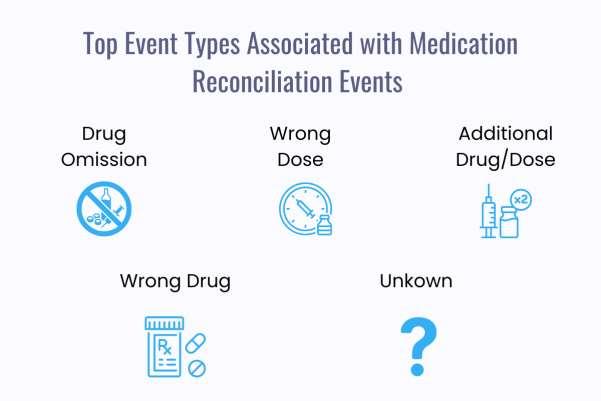
One common medication error resulting from inaccurate medication lists is the prescribing of duplicate medications. Patients may see multiple healthcare providers whoprescribe medications for the same condition, leading to duplicate medications.
In a study done involving 94 voidedmedication order errors, it was found that almost half of the errors were related to duplicate orders. This can increase the risk of adverse drug reactions and other complications.
Through incident reporting, healthcare providers can identify patients with duplicate medications and work to reconcile their medication lists. This may involve communicating with other healthcare providers or reviewing pharmacy records to ensure that the patient's medications are accurate and up-to-date.
Omitted Medications
Another medication error that can result from inaccurate medication lists is the omission of necessary medications. Patients may not remember all of their medications or may not disclose all of their medications to their healthcare provider. This can lead to important medications being left off of the patient's medication list. Medication reconciliation errors at hospital admission are noted in 36% of patients and occurmostly during the medication history gatheringphase
Incident reportingcan help identify patients who have been prescribed medications that are not included on their medication list. This can prompt healthcare providers to review the patient's medication history and reconcile their medication list to ensure that all necessary medications are included.
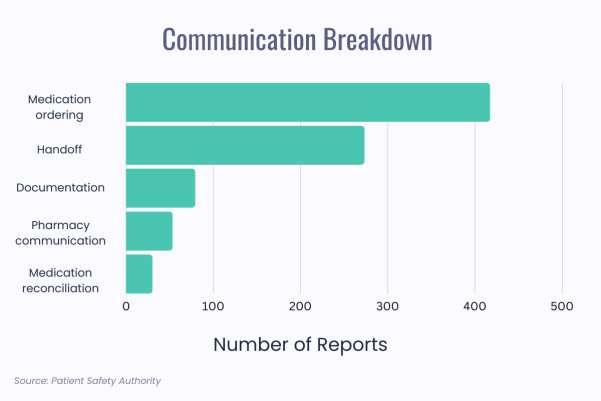
A study completed in 2018 using reports from the PA-PSRS database found the communication breakdownswere an issue in 75% of all reports. With an incident reporting software in place, these breakdowns can be caught early and it will be easier for management to see which part of the medication administration process is havingthe most communicationissues. Seeing this data will allow them to implement processes to help avoid the breakdowns fromoccurring again.
Incorrect Dosages
Inaccurate medication lists can also lead to incorrect dosages of medications being prescribed or administered.
Patients may have changed their medication regimen without informing their healthcare provider, leading to discrepancies in the medication list. This can result in patients receiving incorrect dosages of medications, whichcanhave serious consequences. Up to 91% of medication reconciliation errors are clinically significant and 1% to 2% are serious or potentially lifethreatening.
Incident reportingcan help identify patients who have been prescribed incorrect dosages of medications. This can prompt healthcare providers to review the patient's medication history and reconcile their medication list to ensure that thecorrect dosages are being prescribed and administered.
Adverse Drug Reactions
Finally, inaccurate medication lists can increase the risk of adverse drug reactions. Patients may be prescribed medications that interact with other medications they are taking, leading to adverse drug reactions. If these medications are not accurately recorded on the patient's medication list, healthcare providers may not be aware of the potential for adverse drug reactions.
A study conducted in 2019 revealed nearly 41% of hospital discharge patients had at least one medication discrepancy resulting in a potential for an adverse drug events.
Incident Reporting Software to Prevent Medication Errors
Incident reportingcan help identify patients who have experienced adverse drug reactions as a result of inaccurate medication lists. This can prompt healthcare providers to review the patient's medication history and reconcile their medication list to ensure that potential drug interactions are identified and addressed.
Inaccurate medication lists can have serious consequences for patients, including medication errors, hospitalizations, and adverse drug reactions. Incident reporting softwarecan be apowerful tool in preventing medication errors resulting from inaccurate medication lists.
By documentingand reporting medication errors, healthcare providers canidentify areas of concern and implement targeted interventions to prevent future errors. Ultimately, incident reporting can help improve patient safety and reduce the risk of medication errors.
Want to learn more about how an incident management system canimprove patient safety and outcomes at your organization? Request a free demo with our team.
