




Domonique Bennetts
On 14 April, the Palestine Film Club screened its first film – The Voice of Hind Rajab, directed by Kaouther Ben Hania – in the Humanities building. The docu-fiction film uses real cellphone recordings between a six-year-old girl, Hind Rajab, and the Palestine Red Crescent Society (PRCS) after her family is killed in an assault by the Israel Defence Force (IDF) and she remains trapped in the car, pleading for help. Rajab survives the initial attack, but is then killed after spending several hours on the phone with the PRCS operators. The paramedics who were sent to rescue her were also killed by the IDF.
The filming in the call centre was a reconstruction played by actors, but the recordings were Rajab’s own voice. The film was brutal. Despite there being no physical violence, the violent actions of the IDF could still be clearly heard. In the background of Rajab’s desperation, the sound of shots being fired at the car can be heard. The sounds of violence surrounding her get closer, and as the audience, all you can do is listen. The recordings also create a sense of frustration and hopelessness. Instead of this being a typical Hollywood narration with a clear beginning and ending, the use of recordings in the film emphasise the real nature of the situation. None of this has been scripted. There is no telling what is going to happen next. As the audience, all you have is the knowledge that Rajab does not survive the attack. And all you can do is sit and listen to the IDF murder an innocent six-year-old girl, just as the PRCS operators had to.
I say “murder” because the events that led to Rajab’s death were so calculated and cruel. There is a moment of hope when the paramedics are finally on route to rescue her. There are obstacles along the way, but they finally reach where she is and can see the car that she is trapped in. Then suddenly, through phone recordings between the paramedics and the PRCS, shots are heard and the line goes silent.
The paramedics were given a “safe” route by the IDF to rescue Rajab, and when they made it to the car, they were gunned down. Along with this, the call centre operators mention that the IDF would have had infrared sensors on their tanks. They would have known that there was a young child alive in the car. This shows the intent in their actions. Watching the car, knowing that a child was struggling inside, knowing that an ambulance is coming, making that route possible, and then striking. Soon after, Rajab’s own line goes dead, and
her body is discovered twelve days later.
One thing the film makes clear is that the conflict between Palestine and Israel is not a war. It is a genocide. The killing of Hind Rajab and her family was systematic. There was clear intention. Before the shooting happened, the IDF had told people to evacuate the area and then deliberately shot at them. There is a constant back-and-forth in discourse and on the news about what the conflict should be called and what international powers should be doing. Any person, after watching this film or even seeing any coverage of the genocide on social media, cannot still call it a war and claim neutrality. The proof is there. It is a genocide; deliberate and intentional. And Hind Rajab is just one victim in an entire nation.
This was one of the reasons behind showing this film. Ayesha Essop said that she wanted it to spark conversation and to get people to start taking action. There was a discussion at the end of the screening about the film and the experience of viewing it as a collective group. The overall feeling was one of hopelessness. Some students were crying, some just sat and took in the weight of what was screened. One argument discussed was that the screening was and is necessary, especially because the film uses the actual recordings from the attack on Hind Rajab. This not only allows for Rajab to be remembered, but it also gets people talking and pushes them to act.
seconds, you’re scrolling to the next bit of celebrity gossip. People repost. Businesses are boycotted. But sitting on the couch reposting a reel doesn’t change the conditions of what is happening in Gaza. At least, it hasn’t yet. And the same can be said for this film. What happens now that the Palestine Film Club at the University of Pretoria has collectively viewed it?

Of course there is value in this screening. These conversations are had and there is an awareness of what is happening. Beyond that, as students, what more can we be doing? This isn’t a rhetorical question. Think about what you are doing here – whether it’s supporting the Palestine Solidarity Committee at UP or signing petitions, think about going beyond a repost on social media. UP has not made any statement condemning the genocide or even standing in solidarity with Palestinians. There were students at the film screening who have family members in Gaza, some the same age as Rajab. And yet, our institution remains neutral.
A student at the screening said that the people who should be watching the film and those who should be made aware of the atrocities are unfortunately not at the film screening. So as much as films can be screened, posts reposted, and conversations had, a shockingly vast majority still have no clear stance. They still won’t call it what it is – a genocide.

www.pdby.co.za
Twitter: @PDBYMedia
Instagram: @PDBYMedia Facebook: PDBYMedia
Another argument, brought up by Prof. Nisa Paleker, was that as an audience, we are experiencing this trauma third hand. We are watching the trauma that the PRCS operators experienced while listening to the trauma that Rajab was experiencing, and in that moment, she was just trying to survive. So, it can become quite selfindulgent in the sense that as the audience, we have the privilege of walking away after the film, but for Rajab and the paramedics, these were the final moments of their lives.
I think this is quite relevant in the way awareness of the genocide is circulated online. Social media platforms are flooded with coverage, but in a few
There will be more film screenings by the Palestine Film Club throughout the year. These are incredibly beneficial as they start the conversation about what activism looks like and how we, as second or third hand witnesses of these atrocities, can bring about positive change. The biggest take away from watching The Voice of Hind Rajab is this: call it what it is, and don’t leave what you’ve viewed on your screen.
Find these articles on pdby.com
• “U Da Real Meme” by Zizo Mtshemla
• Look at My Doctor, Dawg by Mazviita Pasi
Life Imitates Art: The Meaning Behind Sinners by Tia Haswell
by UP students, about UP issues.

PDBY appreciates that freedom of speech is an inalienable right enshrined in the Constitution of the Republic South Africa. We encourage our readers to engage in discussion and debate on issues that affect them through letters to the Editor, comments on our website, tweets, or posts on Facebook. We ask our readers to keep the following in mind:
1. PDBY will not edit letters, comments, tweets, or Facebook posts in any way.
Editorial
Editor-in-chief carel.willemse@up.ac.za
Carel Willemse @Ed_in_Chief
Editor editor@pdby.co.za
Domonique Bennetts @pdbymedia
Deputy Editor digitalmanager@pdby.co.za
Jason Visser
News news@pdby.co.za
Relebogile Manana
Features features@pdby.co.za
Gabriella Hobson
Entertainment entertainment@pdby.co.za
Cara Heymans
Sport sport@pdby.co.za
Neo Paledi

Copy copy@pdby.co.za
Hannah Roberts Layout layout@pdby.co.za
Bell Visual Media multimedia@pdby.co.za
Danielle Oosthuizen
Media
Jason Visser
Web webeditor@pdby.co.za
Sivenathi Makhanda
Social Media
Amai Ngulube
Tel: (012) 420 6597 To advertise in PDBY contact Tel: 012 420 6597 Cell: 083 318 9738 carel.willemse@up.ac.za
2. PDBY will label letters, comments, tweets, or Facebook posts as opinion. These do not represent the views of PDBY in any way.
3. The PDBY editorial must approve letters, comments, tweets, or Facebook posts before they are published.
4. PDBY will not publish letters, comments, tweets, or Facebook posts that are defamatory, or libelous, or that contain offensive content.
5. PDBY reserves the right to practice discretion when publishing letters, comments, tweets, or Facebook posts.
6. PDBY reserves the right to publish any content we receive unless the sender specifically requests otherwise.
7. PDBY reserves the right to retract a letter, comment, tweet, or Facebook post after it has been published.
8. PDBY will not accept responsibility for any consequences the author of a letter, comments, tweets, or Facebook posts may experience as a result of the letter being published.
9. PDBY will only publish letters between 150 and 200 words.
10. PDBY will not publish letters unless the writer confirms their full name, student number and contact number. PDBY will not publish this information, we need it for our records.
Kofi Donkor and Londeka Mbokane
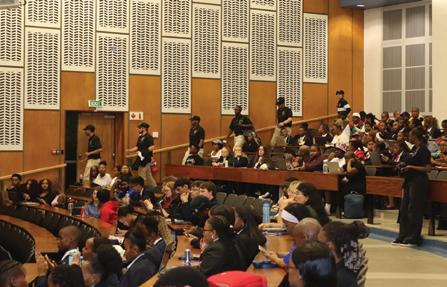
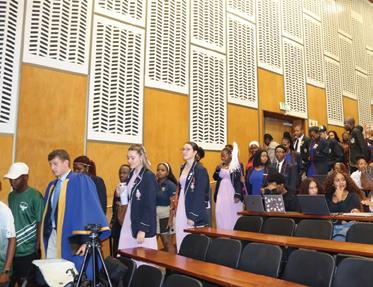
On 26 March, the UP-SRC and Constitutional Tribunal held the first quarter’s Student Forum, a platform in which student leadership can be held accountable by the greater student body. The proceedings were led by Chief Justice Realeboga Chidi of the Constitutional Tribunal, with each SRC member reading out their quarter one report. As is custom, the annual meeting was couched with controversy and disruption, with members getting into multiple arguments throughout the proceedings.
Following Chidi’s opening address, the evening commenced with immediate pushback from various student bodies. The South African Students Congress (SASCO) challenged the forum’s quorum and, thus, legitimacy. Additionally, concern was raised after alleging that the event was only advertised nine days prior as opposed to the stipulated two-weeks notice with physical posters for greater visibility. Ultimately, these allegations were dispelled by Chidi who asserted that the fourteen-day advertising period was adequately met and supported by proof through the UP-SRC’s Instagram and WhatsApp posts on 12 March.
A large point of contention was also raised by the EFF Youth Command (EFFYC) regarding the prevalence of security at the forum. The organisation expressed that having students scan their student cards at the venue’s entrance was redundant as students would have already scanned their student cards to enter the university’s campus. The Youth Command also contested the presence of security inside the venue during the proceedings, providing that they felt harassed by their excessive presence and that students should not be denied entry for not having their student cards. Chief Justice Chidi rebutted, providing that the scanning of student cards was necessary in order to take attendance as stipulated by the forum’s codified rules. However, the EFFYC still felt that taking attendance in this manner was unnecessary and inappropriate.
SASCO representatives raised that the EFFYC’s points of order were disruptive and a poor use of the forum’s time, which was the catalyst for the multiple heated exchanges between the two groups that took place throughout the evening. EFFYC representatives provided that the forum’s rules and proceedings being conducted in English may be the reason for the miscommunication and
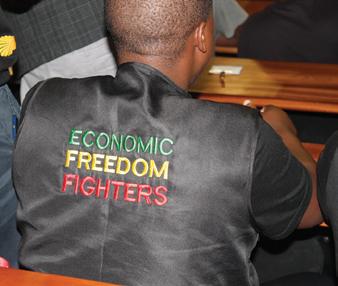
misunderstandings. They went on to label the proceedings as governed by “the coloniser’s language”. SASCO rebutted with barbed comments towards the EFFYC, providing that the organisation might better comprehend the forum’s rules if they were drafted in vernacular languages, particularly Tsonga, as a personal jab against Nxongotelo Mgabini, an EFFYC member who had raised the aforementioned point of order. Mgabini, along with many EFFYC members in attendance, challenged SASCO’s comment as a tribalistic remark and called on Chief Justice Chidi to take action, expressing that the forum cannot be expected to continue after such a comment had been made.
During the heated back and forth between the EFFYC, SASCO, and the Chief Justice, a majority of the student structures in attendance, particularly TuksRes structures, had taken their leave. Chidi ultimately provided that no member’s dignity was disrespected as per the forum’s rules and therefore proceedings could continue as normal. Mgabini concluded that he will file a complaint with the Transformation Office regarding the remark.
Proceedings continued with presentations by each SRC member, which were generally met with mixed reviews from the audience. In the latter half of the evening, during the questions without notice section, an escalation occurred between Study Finance Officer Lungisani Ngubeni and an attendee. The attendee submitted a detailed question via the provided Google form pertaining to the increased need for financial assistance among postgraduate students, which went unrecognised and unanswered. Ngubeni ultimately dismissed the question, which was a stark contrast to his political affiliation that strives for “free education, in [their] lifetime”. Furthermore, significant points were communicated by SRC Deputy President Mosa Motloutse, including a focus towards discussions of rebranding the UP logo to promote inclusivity and diversity.
Deputy Secretary Elovuyo Makohliso elaborated on the fate of the infamous test weeks. Makohliso detailed a meeting with the university’s timetable committee in which a proposed timetable of two test weeks per year would take place over the course of two weeks. This proposal was rejected on account of there being evidence of academic performance improving since the implementation of test week. According to Makohliso, the mental
health and wellbeing of students is of no concern to the committee as concerns regarding test week were ultimately disregarded as “petty”. It should be noted that this resolution is still being contemplated and awaiting approval from the Senate. Makohliso further remarked that the Department of Higher Education and Training (DHET) has expressed growing calls to reduce the amount of assessments imposed onto students.
Following the conclusion of the student forum, PDBY spoke with Mgabini, who reiterated that he will report SASCO’s tribalistic remarks to the Transformation Office. Mgabini expressed that he felt that the Chief Justice did all he could with regard to addressing the remark. Mgabini provided that the EFFYC’s tension with SASCO stems from SASCO’s failure to fight for student wellbeing, detailing that the organisation has a history of “selling out students” and engaging in politics of extortion. Mgabini also said that SASCO’s behaviour within the forum serves as an example of their lack of care for students, highlighting their focus on making inflammatory comments as opposed to acting in the interest of students. Mgabini concludes by providing the lack of seriousness in which SASCO treats discriminatory comments such as the aforementioned tribalistic remark, saying that had an EFFYC member made the same comment, they would be expelled from the organisation.
As many expected, last quarter’s student forum was rife with heated debates, unsatisfactory resolutions, and informal conduct. The mass exodus of UP Residence representatives less than halfway into the meeting may be cause for concern, which raises the question of whether said representatives were in attendance to ensure the wellbeing of their residents, or merely to fulfill an executive obligation. Additionally, the consistent chaos of the student forum raises concerns regarding the meeting’s effectiveness as a means of communication and accountability, with the conference often acting as a battleground for opposing organisations and frustrated students. Ultimately, quarter one’s student forum, while not in complete disarray, was still far from successful, causing many to wonder if the Constitutional Tribunal truly has the means to create an effective and efficient space for student to student-leadership communication.

You have just turned 18… now what? Well, it comes with a lot of fun, officially being of drinking and clubbing age, as well as finally being able to attend university. But being 18 also comes with a lot of responsibility, such as voting in your first ever election. Everyone tells first-time voters to go vote, but no one ever explains how. Many first-time voters are unsure about how registration works, and some even believe that their vote does not matter. So how exactly does one get it right? This will be a guide to know exactly how to register, vote, and make an informed decision.
National and provincial elections are held once every five years, and this is an opportunity where all South African citizens aged 18 and over are eligible to vote. This year is the local government elections where one is able to vote for leaders who run their local areas such as a town, city, or municipality. These elections choose the people responsible for everyday services such as roads, potholes, water, sanitation, electricity, refuse removal, and local housing.
During the vote, one would receive a different ballot papers where more than one vote is cast. A voter is usually expected to cast two, or sometimes even three, votes. One of the votes will be for your ward councillor. A ward is a small area of a particular municipality. In this instance, instead of voting for a particular party, one would vote for an individual candidate to represent their
specific area. The person who receives the majority of the votes wins. Then a vote would be cast for a political party to represent the mincipality in the municipal council. This happens through proportional representation where the percentage of votes received is the proportion of council seats a political party is allocated. Sometimes, an area may have a district municipality, and one would vote for a specific party here too.
The Independent Electoral Commission (IEC) recently made an announcement stating that the local government elections are set for November 2026 to January 2027. These elections give voters an important opportunity to assess the performance of their current councillors as well as the political parties in power, and to help voters decide what they want going forward. This ensures that residents hold leaders accountable and shape the future of their communities.
One can register to vote online on the IEC voter registration portal or register in person at their local IEC office. Voters can only register once unless they move to a different area or their voting district changes. To register, one must be a South African citizen with a valid South African ID. The IEC also has an official voters app where people can check whether they are registered or not. It also allows voters to change their address or find their voting station. But an important factor to note is that once the election date is officially proclaimed, the voter’s roll closes, which means
that it is incredibly important to register to vote now.
Voting is one of the most vital pillars of our democracy, and by empowering members of the community to take a stand, society is able to grow. Each and every vote carries weight – not only to achieve a better tomorrow, but to bring about a better everyday after that. So yes, people can vote because they are 18, but they can also vote because they want to drive change, justice, and unity within the country we call home.

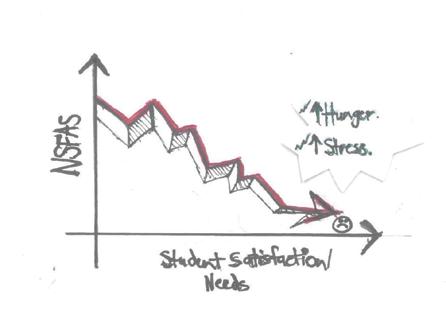
At the beginning of March, frustrated students took to the streets demanding the immediate release of delayed NSFAS allowances to NSFAS-funded students. Many students lived off of aid provided by nonprofit organisations, student structures, and donations from friends while they awaited the release of their allowances. Bezantsi Mgando, a student residing at Varsity Studios, was one of the many students affected. He explained that he had to borrow money from friends in order to survive amid the delay. Communication from the official NSFAS Instagram page explains that allowances would be released on 17 April.
PDBY spoke with an anonymous NSFAS-funded student living in TuksRes who said that the meal allowances provided by their residence help when dealing with delays from NSFAS. Mgando and the anonymous student detail a stark lack of communication from NSFAS regarding the delays, with Mgando detailing that there was no communication, and the TuksRes student explaining that there was only communication from the UP-SRC.
In the middle of March, NSFAS-funded students at NxtGen Student Living were found to have gone days without proper meals and living essentials as a result of their delayed NSFAS allowances. PDBY spoke with NxtGen House Committee Chairperson Ishmael Ubombo to gain further insight into the situation. Ubombo detailed being under immense pressure at the time as students had expressed the urgent need for aid, with many frustrated residents feeling that the accommodation was responsible for the situation and had a duty to resolve it. Ubombo engaged with the residence’s management, who responded positively by providing food parcels to residents soon after the issue was raised.
Additionally, Ubombo got in contact with M-Powerment Care, a non-profit organisation and student society that specialises in community development programmes. M-Powerment Care, in collaboration with student-led non-profit organisations UP-RAG and Aid by Youth UP, organised a food and essentials drive for the students at NxtGen. PDBY spoke with founder and CEO of M-Powerment Care Similo Siyenga who provided that the NGO was made aware of the situation at NxtGen through UP-SRC member Lihle Moncina, as well as several social media posts. The catalyst for the drive was the reports of students searching campus dustbins for food.
Siyenga explains that although the university’s Student Nutrition and Progress Programme (SNAPP) was aware of the issue and was attempting to provide aid, the programme was ultimately not able to provide immediate support due to administrative hold-ups. Therefore M-Powerment Care stepped in to provide interim relief while students awaited a more permanent solution from the university’s structures. When speaking about the success of the drive, Siyenga once again emphasised the significance of NGOs and student structures, and providing aid to struggling students as opposed to waiting for executive university structures to intervene. Siyenga also explained that following the drive, several student structures have reached out, wanting to contribute to ensure that such situations do not happen in the future.
The ongoing conflict between the United States of America (USA), Israel, and Iran has had many widespread effects on many nations, including driving up fuel prices globally. In South Africa, fuel prices increased, with petrol going up by R3.06 per litre and diesel rising by over R7 per litre despite a temporary reduction of the fuel levy by R3.00 per litre. These fuel hikes are bound to have a ripple effect on many South Africans, including the University of Pretoria (UP) students and staff.
Some students travel to campus daily, and with the spike in fuel prices, this means that they might have to pay more to get there –something that is not ideal in Ramaphosa’s economy. In a poll that was done on PDBY’s Instagram page, 44% of students said that the increase in fuel prices has significantly impacted their ability to get to campus. Lindokuhle Skosana, a BSc Computer Science student, said, “The fuel prices have made me more conscious about traveling daily by car and made me evaluate which lectures I value and when to go to campus so I don’t travel needlessly.”
While some students may miss lectures due to transport costs, for others, the impact is not always immediate in missed classes. It is rather how they plan their movements. Skosana described that he travels less nowadays and is more conscious about where he goes. Furthermore, 52% of students admitted that they have had to use alternative transport (train, taxi, busses, walking) to travel to campus.

When asked if he thinks students’ attendance will be affected, Prof. Nicola Viegi, the Head of the Department of Economics at UP, said, “The sharp increase in prices we are seeing are bound
to affect the affordability of travel for many of our students and our staff. Probably, the effect will be more pronounced the longer the crisis continues.” This leads to a broader question: how will this affect students academically? 60% of students voted that the increase in fuel prices has already affected their academic performance.
PDBY asked Dr Maryke Henning, an accounting lecturer at UP, if there are any institutional changes she would suggest to address this issue. She said, “If there are many students [affected], we may need to start considering making limited online content available.” This would be a very helpful solution if this issue continues for a long time.
The adjusting of the teaching schedule or work routine has not been considered yet because it would be premature at this stage. However, some note that fuel availability, and not just the price, could also become a concern. The situation will continue to be monitored and the necessary adjustments will be made if required.
The broader economic effects extend beyond campus life. With South Africa relying heavily on road transport, the rising fuel prices mean basic food items and courier services (such as The Courier Guy’s 12% fuel surcharge) will become more expensive.
One of the major concerns is the families that are already struggling to afford basic food and needs. The increase in fuel prices clearly has an impact on students and staff. The best thing we can hope for is that the conflict between the countries is resolved swiftly. While the full impact is still unfolding, one thing is clear: fuel hikes are no longer just an economic issue – they are a daily, reality-shaping aspect of life on campus.
Lutricia Phiri
Many people are aware of the ongoing tensions involving Iran, Israel, and the United States of America (USA), but few understand how these global conflicts indirectly affect students in South Africa.
One of the most immediate impacts is the rise in fuel prices. South Africa relies heavily on imported oil, and geopolitical instability in the Middle East often disrupts global oil supply chains. As a result, fuel prices increase, placing financial strain on students who commute using private vehicles, taxis, or ride-hailing services such as Bolt.
In addition, rising fuel costs contribute to broader inflation, affecting the price of food, accommodation, and other essential goods. For students already managing limited budgets, this significantly raises the cost of living and studying.
The war also impacts currency volatility, which can weaken the South African Rand. A weaker rand increases the cost of imported goods, further intensifying financial pressure on households and students alike. This situation has begun to affect student attendance, participation, and overall wellbeing as many are forced to reconsider their spending habits and find ways to cut costs in order to sustain their academic journeys.
PDBY spoke to an anonymous student at the University of Pretoria who confirmed that ever since the start of the academic year, she has been struggling to manage meals and transportation. She explained that she was waiting for her bursary payout so that her registration and tuition fees could be covered, but that remains unsettled as she is currently a self-funded student. She noted that home is 67km away from campus. The student went from “[commuting] from home in Johannesburg” to taking two taxis on days when she had afternoon classes. On days when she had early morning classes, she used a combination of one taxi and the Gautrain at a cost of R256 per day.
Deviano Geduld, an honours student at UP, said that he lives off-campus, which is quite a distance from campus. For Geduld, traveling to campus has become more expensive than before, causing him to limit how often he comes to classes and evaluating necessity for each trip. “There are many resourceful facilities like the library which I would usually like to make use of during times where I would not need to be on campus for compelling reasons like attending classes. Visits [to] these facilities have decreased [both in frequency] and how long I spend there. Even when I go to campus and choose to make use of these facilities, on days where I use either Bolt or Uber, it would become more expensive to travel during late hours,” said Geduld.
To help cut down on costs, Geduld said that he plans his visits to
campus based on his reasons for being there. He noted that he also learnt to use cheaper forms of transport like taxis more than ones that would be expensive. “I have also cut down on buying food on or around campus, and [I] carry food from home to reduce the amount of money I spend on campus.”
Geduld added that he knows students who pool together with others for travelling with transports like Bolt or even private cars to help cover costs per ride instead of having to pay per person. This would make it easier to buy food in bulk, which is a cheaper way of spending money on food when visiting people.
He concluded with advice to students who drive or travel a long distance to and from campus to plan their visits to campus. “If students are able to find others who travel to campus and agree on a price to cover the month and travel together, then that would work in their favour. The greatest length I would advise them to go is even finding accommodations closer to campus where they can walk instead of driving.”
PDBY spoke to UP student Linah Sindisiwe Sangweni who said, “Inflation has made transport, groceries, and basic necessities more expensive, which puts pressure on my monthly budget. As someone commuting, rising fuel prices and taxi fares affect how often I travel to campus.”
When asked about the way in which she manages to cut down on costs in the crisis, Sangweni noted that to cut costs, she plans her trips carefully, cooks at home more, and reduces non-essential spending. She mentioned cutting off gym, which was something she needed to cope mentally and added that her life has changed “a lot”.
Sangweni touched on how many students effectively cut costs. She concluded by saying the following: “I know many students are really feeling the pressure of higher transport and food costs. Most students are taking buses instead of private trips, or staying longer on campus so they do not have to travel back and forth. Others bring lunch from home, split accommodation expenses, or look for small part-time jobs to help out. It’s not easy, but these little changes are helping them cope with the rising cost of living. They put pressure on [themselves] since they still have to attend classes, which affects their studies.”
These are testing times, and each cent has to be counted and carefully spent. The current global geopolitical climate has a direct and tangible impact on student life in South Africa. Rising fuel prices, inflation, and increased living costs are forcing students to rethink their financial priorities. It is safe to say that if you cannot bank it and save it, spend it wisely.
Lutricia Phiri
On 9 April, the Faculty of Law at the University of Pretoria hosted an interesting talk. Prof. Babátúndé gave the talk under the guidance of Acting Dean Prof. SJ Cornelius. The talk was called “Framing the Scope and Study of Objects of Internationality in Pre- Africa”. It was an informative conversation that made people think about how International Law is taught and understood.
Prof. Babátúndé said that International Law has been shaped by ideas for a long time. He called this a "Euro-America validation category” that has made it difficult for non-European ideas to be heard. He explained that he thinks we should use an approach that includes African ideas and ways of thinking. This approach is not about fixing the problems; it is rather about changing the way we think about International Law.
He also talked about using "objects" to learn about International Law. These objects can include things such as clothes, stories, poems, maps, or even bones. They can help people understand how those in the past thought about law and diplomacy in the past. Prof. Babátúndé said that these objects can help us see the history of how countries interacted with each other.
The talk indicated that African customary law is not irrational or primitive. In fact, pre-colonial African societies had organised systems with rules and diplomatic procedures. They had messengers and diplomats who were respected and protected. They even had ways of making treaties like taking oaths and breaking kola nuts. These were rituals that showed they were committed to keeping their promises.
Prof. Babátúndé also thinks that the way International Law is taught should change. It should use different subjects like Storytelling, Archaeology, History, and Digital Technology. This will help students learn accurately and think about International Law in a more nuanced way. He said that people should not romanticise the past, but be faithful to the truth and include different perspectives.
The talk ended with a story from a Yoruba folktale. The story is about a goat and a monkey. It shows that knowledge is more powerful when it is original and specific. Such as the goats, African scholarship should celebrate its diversity and not try to be the same as everyone else.
In short, the talk was not about sharing ideas. It was about calling people to action. It challenged everyone to rethink International Law and to help decolonise it. By focusing on perspectives and pre-colonial systems, the talk added to the ongoing discussion and set an important
Mpho Mahlangu
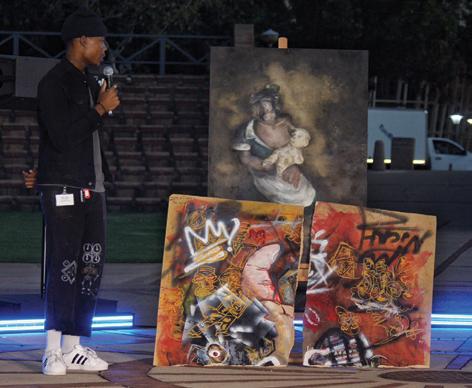
In a night of cultural passion and diversity, where unity meets uniqueness, STUKU showed up and showed off yet again this year. So often, our talents, expressions, and the depths of our identities are hidden as we try navigating university life. However, events like this remind students that they are more than their academics – they are people with creative minds and diverse expressions. The night was filled with talented performances, high spirited programme directors, and an engaged audience. This was a reminder that even though students share the same lecture halls, degrees, and faculties, they still have diverse cultures. Thus, the event was not only fun. It was educational and, most importantly, it was a bridge of cultures.
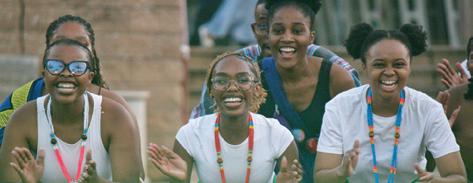
It takes courage to confidently display your culture in public, and it is events like this that make all people feel seen and heard in their peculiarity. Culture was meant to be shared, and Nothing But Vernac was the place to be if you wanted a share of beautiful diversity. There were different performances in different languages like Xhosa poetry, emotional Zulu drama, diverse cultural dances, and amazing music that was inclusive of all people. Although it was a competition, the event focused on celebrating the diversity and multiculturalism found at the university through art, poetry, singing, dancing, and drama. The audience actively engaged with all performances, supporting all kinds of cultures while showing off their own.
PDBY spoke to Phemelo Masemola, the Nothing But Vernac Officer for STUKU. “Keeping cultures alive in a diverse university matters because culture is a big part of who STUKU is. It keeps us grounded, reminds us of where we come from, and helps others understand us better.
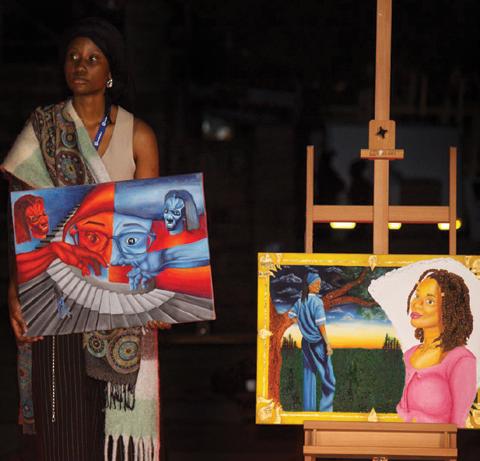

Even though trends change, culture stays. It is something we live and express every day,” she said.
“Nothing but Vernac and Expressions (NBV) is all about celebrating that. With our theme, ‘Unfiltered Identity: Trends fade, originals remain’, we wanted students to embrace their true selves and express their identity in their own unique way. Our aim was simple: give performers the spotlight and let them be themselves –no limits, no filters. We encouraged everyone to interpret the theme in a way that felt real to them, because identity looks different for everyone. And honestly, we achieved that. The performers showed up as their authentic selves, and that is exactly what NBV is about. As STUKU, we just create the stage; they bring the life,” she further elaborated.
PDBY also spoke to Madiliseng Mabaso, a second-year Information Science student. “I was there for the storytelling. Heavenly took us to her own heaven. A full house graced us with a dance. The whole night felt like a heartfelt sentimental concert as one singer performed my favourite song, ‘Ke Tlo Fihla’, and Nkanyezi took us to church with his spirited performance. STUKU ate with this event. I enjoyed it very much,” she shared. It was all about unfiltered identities because trends fade, but originals remain. Sometimes, you do not need to understand the language to be present. The most powerful performances are the ones that speak and include the audience.
agenda for future research.
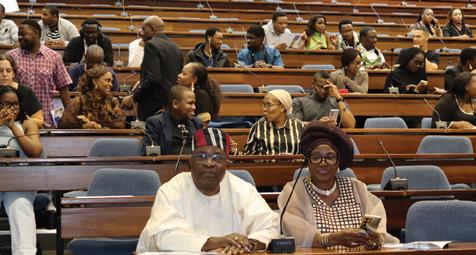
The Faculty of Law hosting this talk was a moment in starting conversations that are locally and globally relevant. It reminded attendees that the story of International Law is more complex and inclusive than they often think. International Law is international, so it should include everyone's perspectives. The Faculty of Law is helping to make International Law more inclusive by hosting talks like this one.
Mandilive Mbethe
On 11 April, TuksEkhaya hosted a social at their clubhouse called Rodney’s Revival, an event that Jason Dickinson, the First Year Guardian and Head of Clubhouse and Marketing of TuksEkhaya, described as their “biggest clubhouse of the year”. Rodney's Revival is the headline clubhouse event for the year. Traditionally, it is the first clubhouse of the second quarter, and it symbolises the return of Rodney's after its "death" at the end of the first quarter. It is one of the longer format clubhouses, lasting four hours instead of the usual three.
The clubhouse started at 18:00, and students were lining up at the gate, incentivised by the fact that the first 100 people were given free shots. The tickets to enter the clubhouse were R20, with the money going towards renovations such as “[adding] a designated sitting area in [Rodney’s]”, Dickinson said. “We would like to add recycled plastic picnic tables,” he said, so that people can sit and have a good time while chatting with their friends. The funds will also be used to maintain the clubhouse’s facilities, and the Clubhouse Committee is in the planning stages of the next addition to Rodney's Clubhouse.
The clubhouse is designed to be inclusive and welcoming for everyone, featuring amenities such as an indoor dance floor, a braai area, and pool tables at the top bar. Both of the clubhouse’s bars offer the same student-friendly prices and a wide variety of drinks, ranging from shots and beers to mixes and non-alcoholic drinks. At the braai area, there were beer pong tables set up for people to play, which served to be a good icebreaker among students.
A first-year student from TuksEkhaya said that he was looking forward to the event as he has never been disappointed when he has attended a clubhouse event. Stuart Tyrell, State President of TuksEkhaya, described the event as a “major success, with guests having enjoyed the special DJ line-up that was prepared specifically for Rodney's Revival”. The line-up included Leben, a DJ who has performed at major events across the country, as well as a few of their resident DJs. Students were seen dancing and singing along to their favourite songs during the night.
When asked how an event like this contributes towards residence culture and student life, Tyrell said, “[We] provide students with a safe and welcoming environment where they can meet new people, share unforgettable moments with the Rhino Calves and Citizens of TuksEkhaya, and sing and dance on our dance floor to enjoy their Friday or Saturday night.” This felt like a much-needed boost for students after test week and the return from recess while also reinforcing the strong sense of community within residence life and culture.












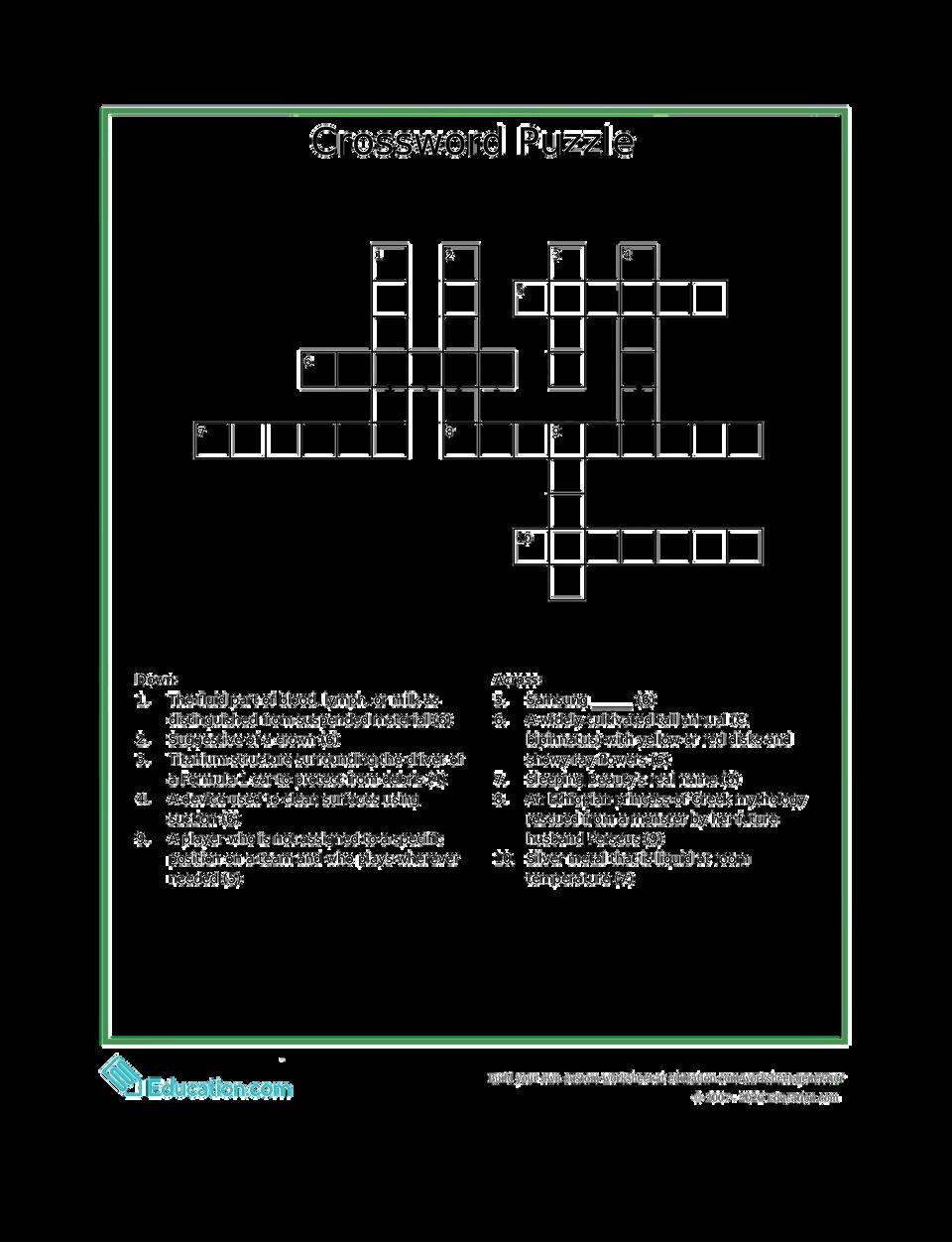
1 The fluid part of blood, lymph, or milk as distinguished from suspended material (6)
2 Suggestive of a crown (6)
3 Titanium structure surrounding the driver of a Formula 1 car to protect from debris (4)
4. A device used to clean surfaces using suction (6)
9 A player who is not assigned to a specific position on a team and who plays wherever needed (5) who

To the guy in the white Audi with a taper fade in my INF class, I think you ’ re cute and you smell amazing I can’t stop thinking about you I want you to be mine forever AND EVER

To the blonde Barbie in all of my second year classes You have an angel tattoo on your arm and piercing blue eyes Leave your situationship and let cupid ship us together
Why no follow us on Instagram, question?

To the short girl that's always playing dominoes in the piazza You are soo fine i wanna have you children You can choose the sperm donor :)

To the handsome Mr H in my SOC 110 class that was dapped up at varsity cup, you ’ re so handsome man If you ’ re in relationship your girl can be moved, all I want is friendship though



To the guy who drives the canary yellow Mercedes slk 200 in Architecture, I always see you working late, why don't you come spend those late nights somewhere else




To the short Brunette who runs past geek house from Invicta, I've seen you at run to coffee, how about we go for coffee and you run into my arms

Hello UP student – this is a safe space to shoot your shot at all those cute people you see on campus Tell those people how you feel about them, hit on your crush, or compliment a person on that outfit they were wearing the other day Anything positive really Try to be as descriptive and creative as possible with your description so it makes it easy for the person to identify themselves If both people agree, PDBY will arrange a meetup Do you think this is you?
Email: shootyourshot@pdby co za
For my loving Peppie in my BUS100 think t, I would love to argue with you forever, and when you debate about tattoos, it is so dreamy I wish to marry you

Dear S, I never knew true beauty until I met you If you were to be mine I would burn the world to the ground and spell your name in the ash
5 Samsung (6)
6. A widely cultivated tall annual (C. bipinnatus) with yellow or red disks and showy ray flowers (6)
7 Sleeping Beauty's real name (6)
8 An Ethiopian princess of Greek mythology rescued from a monster by her future husband Perseus (9)
10 Silver metal that is liquid at room temperature (7) Greek



Article: Cayden Photographer:
There are nights in sport that give you a result. And then there are nights like these – nights that give you something far deeper. Something that lingers long after the final whistle, long after the rain stops falling, long after the lights go out at Tuks Stadium.
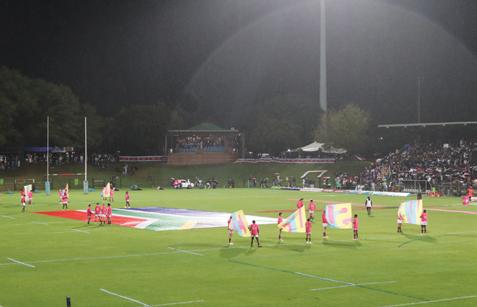
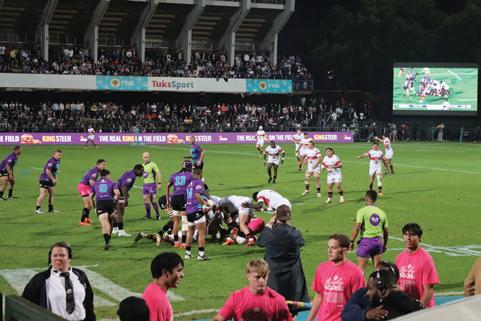
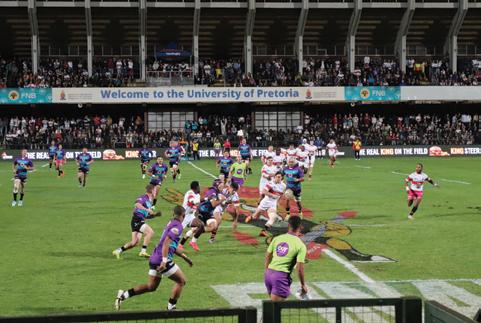
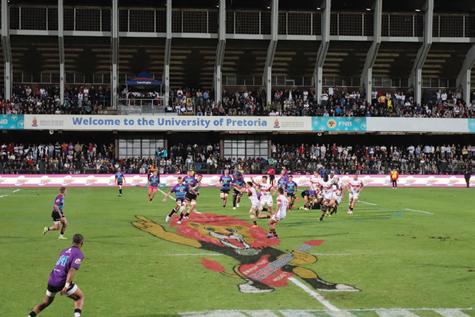
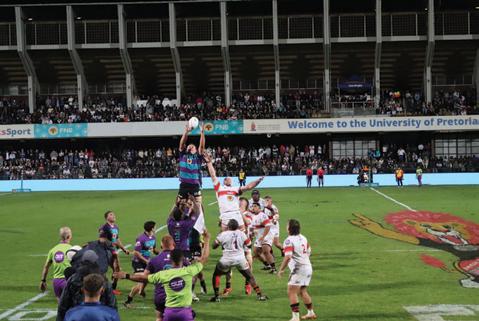
On Monday, 13 April 2026, in front of a packed and rain-drenched crowd, FNB UP-Tuks did not just win a rugby match. They did not just secure a record sixth Varsity Cup title with a dominant 31–3 victory over the FNB NWU Eagles. They told a story.
A story of pain. Of brotherhood. Of belief. Of a promise made, and a promise kept.
But the scoreboard alone cannot capture what this night truly meant. Because this was never just about rugby.
The Weight of the Past
To understand this victory, you have to understand where it began. This is a Tuks side that knows what it means to fall. A group that, not too long ago, found themselves in the Varsity Shield – far from the spotlight, far from the glory.
But sometimes, it is in those moments, away from the cameras, where the strongest teams are built.
Captain Dillon Smith reflected on that journey with raw honesty. “I don’t have words to describe it… This whole group has gone through a tough time. About 50–60% of this group was together during that Shield year… So we’ve come through hard times together.”
There is something unbreakable about a team that has suffered together. It creates more than just chemistry – it creates brotherhood. And that brotherhood carried them all the way back to the top.
There is something powerful about shared struggle. It forges bonds that cannot be replicated in easy victories. It creates teams that are not just teammates, but family.
And on this night, that family had something to show for it. And Smith could not be more proud of his family. “This is just so special, to have something to show for it at the end of the day. I’m really so proud of these guys. I love them… what a group of gentlemen –together, and on the field… animals.”
A Final Begins in the Rain
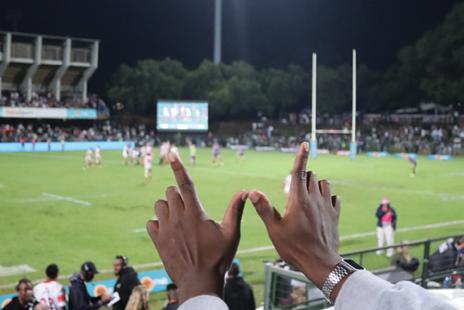
The stage was set at Tuks Stadium. The stands were packed. The rain fell relentlessly. And yet, no one moved. Because this was more than just a final – it was a moment.
From the first whistle, the intensity was undeniable. NWU came out firing, applying early pressure and silencing the home crowd with the opening points of the match. MJ Mostert slotted a penalty in the 18th minute, giving the Eagles an early lead.
For a moment, doubt crept in. But champions do not panic – they respond. Divan du Toit stepped up, calmly slotting a penalty to level the scores. From there, Tuks began to assert themselves – not with flair, but with force.
Their forward pack took control. Carry after carry. Phase after phase. Pressure building like the storm above.
And then it broke. A penalty try. Seven points. Momentum. Tuks led going into half-time, but the game was far from over.
The Second Half: A Statement of Intent
If the first half was a battle, the second half was a declaration. Tuks came out with purpose. With clarity. With hunger. They squeezed the NWU defence, turning pressure into points.
Then came the moment that lifted the stadium.
Andile Myeni – electric, fearless – sliced through the defence in a breathtaking solo run to score a point-of-origin try. It was the kind of moment that defines finals. The kind of moment that turns belief into certainty. Jean Fourie followed, crashing over the line as UP extended their lead. The rain kept falling. The crowd kept roaring. And Tuks kept coming.
Du Toit, who had earlier missed conversions in the difficult conditions, redeemed himself with a massive 50-metre penalty before adding further points to put the result beyond doubt.
31–3.
But numbers do not tell the story. For the players, this was never just about the scoreboard. It was about something deeper. Something emotional. Something personal.
Oelof de Meyer captured it perfectly. “It means everything, everything to us as a team… We’ve been talking all year, and even last year, about family and brotherhood.”

At the start of the season, they made a promise. “We made a promise to each other that we were going to win… and the fact that we’ve won shows you just how much this means to us.”
And in that moment – standing on the field, soaked in rain and glory – that promise became reality.

Cayden Coetzer
Photographer: Jason Visser
Alyx Bell
The Meaning of the Stripe
If there was one word repeated throughout the night, it was “special”. Not in a cliché sense, but in a way that carried weight.
Smith said it simply. “This is a special place. This is a special field. This is a special university, and it’s a special jersey to represent.” For Oelof, it was even more personal. “I came to Tuks straight out of school, and since then, this jersey has meant everything to me… This stripe is everything to me. It’s going to shape my rugby career. So I would give my life for this stripe.”
That is what Varsity Cup does. It reminds players why they started. It reminds them who they represent.
In the stands, belief was not quiet. It was deafening. Ruan Potgieter from House Mopane summed it up with passion. “The vibe is unbelievably big – you guys should see it… Tuks is obviously going to win… they’re going to run over them… It’s Tuks or niks.”
And on this night, it truly was.
More Than Just Rugby
What makes Varsity Cup special is that it is not just about rugby. It is about identity. About belonging. About something bigger than the game itself.
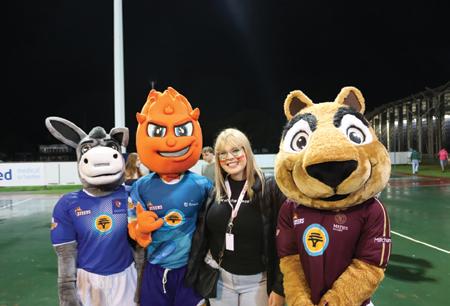
The 16th Player
While the players delivered on the field, something equally powerful unfolded off it.
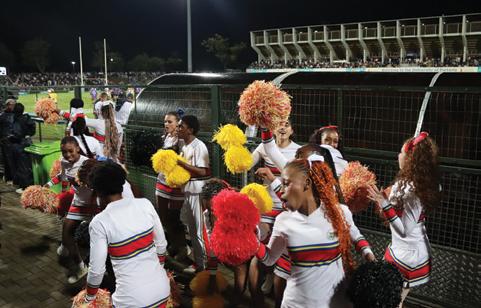
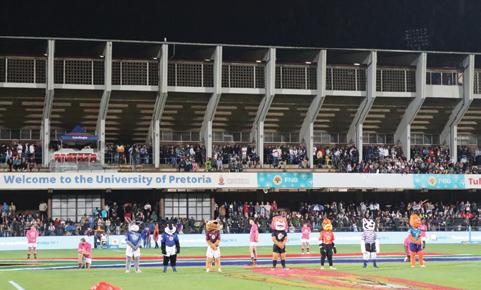
The rain did not stop the crowd. If anything, it made them louder.
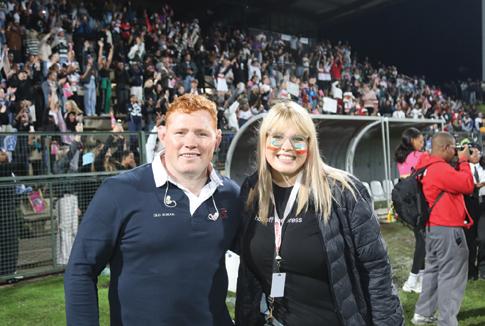
Steven Ball, Director of Sport, reflected on the atmosphere. “The boys on the field played unbelievably… but the 16th player – the students, the alumni, the fans – they just came out to support. Even when it was bucketing down with rain.”
Francois Pienaar, former Springbok and Founder of Varsity Cup, reflected on this. “Not only for South African rugby… what it means for South Africa… it’s very special. The crowd is incredible… where can you show support for your university in such a way?”
And beyond the spectacle, there is purpose. “It’s students first and then rugby… you will stop one day – what are you going to do? If you can leave university having played and won, but with a degree, that’s what it’s all about.”
Former Springbok player Steven Kitshoff added another layer to that significance. “It’s a great breeding ground for young talent… it’s the future of rugby, showcasing young players and giving them opportunities.”
Varsity Cup is not just about today. It is about tomorrow. The Other Side of the Story
In every final, there are two stories. For NWU, this was a night of heartbreak, but also of growth. NWU’s Schalk van Schalkwyk, who has captained the Eagles and was unfortunately injured at the time, reflected on the journey. “As a team and a player group, it’s very special for us to be here… we wanted to take the next step, but it’s still special.”
And even in defeat, there was gratitude. “Thank you for the support [throughout] the year… we will be back next year and we will become stronger.”
Because that is sport. It gives. And sometimes, it takes.
A Night of Emotion and Unity
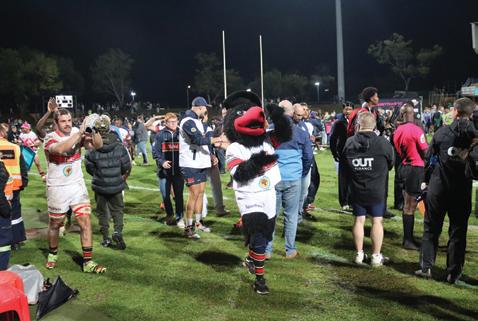
As the final whistle blew, emotions spilled over. Players embraced. Some celebrated. Some stood still, trying to process what had just happened. Francois Pienaar described the scene: “You see the tears in the eyes… the emotions… the disappointment in those who have lost. But that’s sport. That’s what sport gives you.”
And in those moments, something powerful happened. Not just victory, but unity.
Steven Ball said it best: “This brings our community together irrespective of your race, your religion, your gender… you have a space to come and support your fellow students.”
On a cold, wet night in Pretoria, the University of Pretoria became more than just a campus. It became one.
Tuks of Niks
This victory is more than a title. It is a statement. A reminder that setbacks do not define you. That brotherhood matters. That belief, when shared, becomes unstoppable.
From Varsity Shield to Varsity Cup champions. From doubt to dominance. From promise to fulfilment.
And as the rain fell and the crowd sang, one truth stood above everything else: This is Tuks.
This was a reminder of what it means to wear the stripe. Because for Tuks, it has never been just a slogan.
It is a standard.
It is a culture.
It is a belief. Tuks of Niks.




Buhle Jantjies
When Human Rights Day fell on a Saturday this year, it barely made a dent in student life. There was no long weekend, and no pause for test week. For most students, 21 March slipped by quietly. It was just another day to sleep in, catch up on assignments, or meet up with friends. And in that quiet passing, something more meaningful seemed to fade with it.
Human Rights Day exists to remember the lives lost in the Sharpeville and Langa massacres of 1960 and 1985 respectively where significant moments of ordinary people who stood up against apartheid occurred and were met with violence. As noted by South African History Online, these events became a turning point in the liberation struggle of South Africa. But beyond the history books, they are stories of real people – people who fought, resisted, and paid the ultimate price for rights many now move through without thinking twice.
And yet, on campus, that weight does not always land. Student life moves fast. There is always something due and something demanding your attention. In that kind of environment, it is easy for something like Human Rights Day to feel distant, especially when it does not come with a break. Public holidays, for many students, have quietly become less about remembrance and more about relief. A day off means rest or catching up. When that “pause” is not built in, the day itself can start to feel optional.
It is not that students do not care. It is that life does not always make space for caring in the ways people expect it to.
Studies and insights from organisations like
Statistics South Africa suggest that younger generations often engage with history in limited, surface-level ways, usually tied to school or university requirements. Names like Sharpeville are familiar, but the depth of those moments can feel far removed from everyday life. History becomes something to pass, not something to carry.
That is where public holidays are supposed to come in. They interrupt the routine. They force a pause. They remind people collectively that the present did not just happen; it was fought for. But when that interruption disappears, like it did this year, the responsibility quietly shifts. Remembering becomes a choice, not something structured into the day. And that is where things get uncomfortable. Because if the meaning of these days only shows up when they come with a break, then what does that say about how we value them?
At the same time, this moment opens up something important. It asks students to see themselves differently; not as people separate from history, but as part of it. The freedoms that shape university life today, such as the ability to study and to speak freely, are tied directly to the struggles remembered on days like 21 March. That connection is not abstract; it is lived, even if it is not always recognised.
Engaging with that does not have to be dramatic. It can be as simple
as having conversations that go a bit deeper, or even just taking a moment to sit with what the day represents. It is about intention more than anything else.
Because the truth is, Human Rights Day does not lose its meaning just because it falls on a weekend. The real question is whether that meaning is something students are willing to hold onto on their own terms, even when the calendar does not force them to.
If not, then it is worth asking: was it ever really about the day, or just the day off?
Visual: Amy Lamplough

Promise Erero
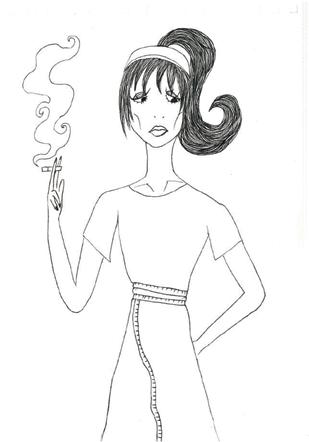
You are probably tired of hearing about 2016 and its trends coming back. Well, society cannot move past this topic without discussing global diet trends. From the rise of the King Kylie era and the over-emphasis of detoxification to the increased popularity of BBLs, there was definitely a certain look associated with the general beauty standard. This year, people are seeing something similar in terms of a global shift in the general “beauty standard”. The BBLs are being reversed and collarbones are back in fashion. 2016 brought gluten-free, plant-based whole foods, the Paleo diet, and the Keto diet. 2026 is bringing GLP-1 weight loss drugs and high-protein, high-fibre diets. Do not get me wrong – there is nothing wrong with following a diet. However, extreme dieting becomes a cause for concern, because not only could it possibly lead to health issues, but it could also affect one’s self-esteem.
The accessibility of information on social media has also sparked many opinions on diet culture. People sharing their weight loss or weight gain journeys have allowed others to see different perspectives on diet culture. With this amount of information online, the possibility of misinformation being spread is quite high, and when it comes to bodies, it is important to understand that people are different. What works for one person may not work for another. The National Institute of Health released a study in 2025 stating that only 14% of nutrition-related posts are accurate. If this is not motivation to triple-check everything you hear, then I do not know what else is.
health, but now, this is no longer their only use.
We have all seen the Ozempic rave and its increased use. The issue is that it is being rebranded as a quick-fix, over-the-counter weight loss drug when it is, in fact, not to be taken so lightly. AMA’s Dr Francavilla Brown suggests that weight loss drugs as strong as the likes of Ozempic should not be used for cosmetic weight loss because of the associated risks such as gastrointestinal issues, including diarrhoea and vomiting.
One positive aspect of the mass health journey content is the encouragement of health professionals to speak up about nutrition and the dangers of following trends without understanding your body. Food Institute Health and Wellness predicted that the newest diet trends in 2026 would be weight loss drugs and metabolic eating. Medications such as Ozempic were originally prescribed for type II diabetes and Wegovy for obesity and cardiovascular
Wegovy, “Ozempic’s sister”, as quoted by Eat-Nutrition, is another medication on the rise that is being used incorrectly. Wegovy released an article stating the dangers and risks of taking the medication, as well as a long list of who should not be taking it. This includes the note that it is not proven to be effective and safe for certain people such as young people under the age of 18. If you are not aware of your health history, it would be beneficial to check sources like these before deciding to ride the GLP-1 wave.
Before taking any weight loss drugs, it is very important to educate yourself on the health implications. The importance of understanding the body and educating oneself about these medications comes from the fact that they are not shortcuts; rather, they are treatments for chronic illnesses, and unless you fall within the brackets mentioned previously, it is not medically advised to take these drugs.
Self-love is the gospel of the 2020s. However, when it comes to embracing and enforcing it in real life, there is suddenly a hardened heart towards loving yourself. Being healthy is always a positive thing, and the main point is that even on a health journey, it is important to love and embrace yourself at every stage. Let the rest of 2026 be a testament to how far we have come as a society instead of a 2016 revert.
Rona Disetlhe
Thumpthump, your heart
Visual: Gabriella le Roux
frantically beats on Wednesday evening. Deep in the tasks of the week, the weekend is so far away, a distant dream it feels like. Outside, the low growl of thunder and the bright flashes of lightning act as a mockingly poetic backdrop to your frazzled doing.
“Well, there goes my degree”, your mind whispers or rather screams.

Everything feels conclusive. Final. There is absolutely no way to finish in time, your head is throbbing, and that module’s group chat is buzzing and driving you toward the edge.
“Let the rain pitter-patter, but it really doesn’t matter”, or whatever it is Ella Fitzgerald said in that “Lovely Day” song. “Well, it is NOT a lovely day, Ella!” It does not feel like there will ever be a lovely day in the foreseeable future.
Your heart feels about as heavy as that cloud positioned over your roof, making every raindrop sound like a drumbeat of failure.
But you close your eyes and take a breath.
Suddenly, it is morning, the golden sun pierces through the blinds and your perspective shifts.
As you open the window and smell the fresh rain enveloping your senses, you realise that the headache is gone, the group chat has gone quiet, the deadlines are still there, but so is your ability to meet them. Maybe it will be a lovely day (my bad, Ella).
That moment and feeling you thought would never pass, did. That midnight storm did not break you; it just passed. As it turns out, joy really does come in the morning.
Hannah Hambly
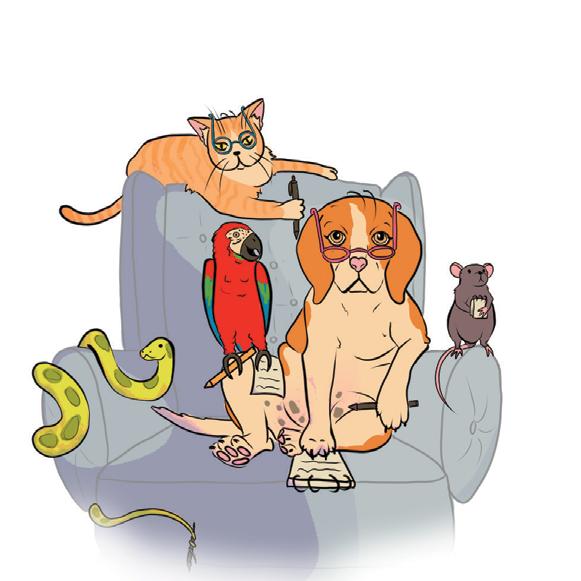
Ido not know about you, but after a long day of lectures or suffering through test week, there is nothing better than coming home and seeing your pet curled up on your bed. There is nothing more stress-relieving than a wagging tail or a purring cat. Students and people are increasingly turning to pets for comfort. This article explores whether pets truly help students manage stress and whether the responsibility is worth it.
NIH News in Health illustrated that there is medical evidence that has shown that pets do more than just keep you company. They also decrease stress, improve heart health, and even help children with their emotional and social skills. They have been seen to reduce stress by decreasing cortisol levels and lowering blood pressure. Studies have also shown that animals can reduce loneliness, increase feelings of social support, and boost your mood.
A classic example of this is therapy dogs, which are sometimes brought into hospitals or nursing homes to help reduce patients’ stress and anxiety. Studies are also being done regarding dogs in the classroom and their potential ability to help students with ADHD as well as autism spectrum disorder. These students were also seen to be calmer while playing with guinea pigs in the classroom.
The University of Pretoria has taken significant steps to accommodate guide dogs, including the construction of a dedicated rest area in the garden outside the Disability Unit’s offices (opposite the Chancellor’s Building). This area is meant to provide a safe space for visually impaired students and their guide dogs.
Pets also provide a mechanism to be more active. They give you a reason to go outside, get some fresh air, and be active – all of which improve your mood, sleep, and mental health. Recent student poll results on the PDBY Instagram mirror these suggestions that pets have a positive impact on mental health. When asked whether pets help reduce stress levels, 69% of respondents said, “Yes, a lot”, while a further 14% said, “A little”. When asked how their pets made them feel, 66% of students voted that their pets made them feel happier, 17% reported feeling less lonely, and 16% said they feel more relaxed. This emphasises the overwhelming positive emotional impact pets have.
Pets may pose an additional responsibility (as reported by many students) with the additional time, attention, and financial commitment they
Thiya Kalan
“Nothing will ruin your twenties more than thinking you should have your life together already.”
We have all been there. You are sitting with a friend, holding their hand while they cry over a failed test or a boyfriend who forgot their anniversary for the third time. You offer what you think is perfect advice. You are empathetic, calm, and supportive. But beneath that, there is a quiet, subconscious inkling, a smug little voice whispering, “This could never be me.” Shielded by vanity, you feel above the bullet. Unfortunately… you are not.
In the 10th century BC, King Solomon built the First Temple of Jerusalem. Gifted by God, he was famously the wisest man to ever live. That is, until he married his 700th wife, disobeyed his own laws, and watched his kingdom crumble into ruin.
Fast forward to the last decade, and the field of psychology has made Solomon’s downfall their primary focus. Coined in 2014 by Igor Grossmann, “The Solomon Paradox” describes the psychological tendency to provide wiser, more objective advice to others than to oneself. In experimental studies, people consistently reason more clearly when thinking
about someone else’s problems than their own. Like Solomon, we become the "wisest of fools", able to steer others through a storm, but useless when navigating our own shipwrecks. The culprit is perspective. When an issue involves you, you lose the luxury of seeing it from the outside. Conflict suddenly seems black and white until you are the one bleeding. Sticking to your guns is not always easy. So I say: forget the Julia Roberts trope of self-discovery and the soulsearching trek. Between lectures, sleep deprivation, and the chaos of daily life, who actually has time for a pilgrimage?
Instead, I propose a new approach. Finding yourself is not about adding more experiences; it is a brutal, messy process of elimination. To truly know who you are, you first have to figure out who you are not. That small voice whispering, “This could never be me”? You need to silence it. Because the beauty, and the tragedy, of life is that eventually, it will be
you. You will lose your way, say the wrong thing, or even betray a friend. And that is not failure – it is data.
But mistakes are not permission to coast. If you betray a friend, feel guilty. If you say the wrong thing, feel the distress. It is essential to sit in the discomfort of your errors so you can recognise their scent in the future. Feeling the consequences is not a detour; it is the map. You have to cross off the wrong crowds, the toxic habits, and the reflexive "yeses" that leave you hollow. But if the Solomon Paradox proves we cannot always trust our logic, what can we trust?

Our gut. According to The Guardian, intuition is not mystical – it is a sophisticated biological system. Your brain constantly updates patterns from life experiences, making split-second judgments before your conscious mind can even speak. That sinking feeling at a party, that unease in a friendship? That is your internal compass telling you, “Move on.”
Psychologists studying Behavioural Psychology
Lydia la Grange
Public health clinics are famous for their long lines and slow service, but if you are at university and do not have medical aid, they can often be your only option for medical care. Even if you have been to a public clinic before with friends or family, it can be a very daunting experience navigating the system alone or going to a different clinic than what you know.
To start with, many students are unsure about going to the University of Pretoria (UP) clinic or a public clinic. A good rule of thumb is to start at the UP clinic since they can write a referral letter for you to take to the public clinic if need be and speed up the process slightly. You are likely to be referred to a public clinic if you need specialised facilities such as radiology, labs, or specialised consultations (for instance, a psychiatrist). Usually, students are advised to visit the Skinner Clinic, next to the Tshwane District Hospital, since it is the closest to the university.
They also advised bringing a friend or family member, both for safety and emotional support since the experience can be quite draining. They said that the staff are usually quite helpful, but do not expect a high level of care since they are trying to get through the large number of patients as quickly and efficiently as possible.
If it is a medical emergency, you will likely be taken to triage and then be seen immediately. But for regular referrals, the process is a bit longer. The visit will likely comprise of the following:

Registration: You will be registered and given a sticker by the relevant security or administrative staff member that indicates your position in line.
Getting the file: You will wait in line according to the number you received and open a file at the clinic before going to the waiting area for a consultation.
Consultation: The staff will call your name to be seen by the relevant doctor.
Once you get to the public health clinic, expect a long wait. The average wait time at clinics is three hours and seven minutes according to statistics released by the National Health Service (NHS). The line to get seen to often starts forming long before the clinic opens at 07:30. It is therefore good to arrive early, so pack a snack and be prepared to stay for a while.
PDBY asked a UP student with experience using the public health system what to expect and how to prepare. They advised, “Take a book. If you have some work to do, take the work, cause you’re going to be sitting and waiting for a long time.”
Gabriella van Niekerk
Next steps: Depending on your needs and what the doctor decides after your consultation, you may be sent for more testing, have to return for a follow-up appointment, or be referred to another doctor either on- or off-site.
Visiting a public health clinic can be daunting, especially if you do not know what to expect. But it is always better to take the day off and get help than it is to put it off out of anxiety. Public clinics can take a lot of your time, be emotionally draining, and cause endless frustration, but the medical staff there will genuinely try to help you as best they can.
have long shown that behaviour is shaped by consequences, especially the ones you actually feel. Regret, guilt, discomfort… These are not detours. They are feedback mechanisms. They mark patterns. They teach your brain what to avoid next time. Think of your twenties as a laboratory. Be the scientist of your own life, and here is how:
Dabble in the Chaos: Go ahead, make the mistake. Be "naughty" enough to actually learn what a bad decision feels like so your gut recognises the feeling next time.
The Exit Strategy: Use the word "no". If the Solomon Paradox proves we are bad at logic, lean on your physiology. If your gut says a person or a habit is eroding your self-worth, believe it the first time.
Leverage Your Circle: Since you can not see your own red flags, it is vital you have a circle – or even just one friend – who will tell you when you are making blunders. You need someone who is not blinded by your perspective.
In the end, you must do the wrong things and make the wrong choices to find the right ones. You must feel the consequence, learn to be better, and make choices that actually serve you. Above all, you must “do”. Get out there and experience. These are your twenties – it would be a damn shame if you had figured it out already.
Buhle Jantjies
Most university students have had this moment. You are standing at the till, watching the total climb higher than you expected. You pause, maybe put something back, maybe swipe anyway and deal with the stress later. You walk out thinking, “Everything is just getting expensive.” But what if that moment is not random? What if it is not just “the economy”, but something much bigger quietly shaping your day?
As a student, it is easy to treat politics like background noise. It is something that feels far removed from lectures and deadlines, and you are just trying to make it through the month. But even in that distance, there is a contradiction. In a recent PDBY Instagram poll, only 38% of students said they feel informed about how international politics affects their daily lives.
Students are feeling this in very real ways. In the same poll, 37% said groceries affect them most, 32% pointed to petrol, and 26% said everything just feels expensive. This reflects the data from Statistics South Africa, which shows that food and transport are among the fastest-rising costs. That feeling at the till is not imagined. It is part of a wider pattern shaped by forces beyond your control.

Another 35% said somewhat, and 28% said not at all. Yet when asked whether rising prices have changed how they live, 76% said absolutely. So even if you feel unsure about politics, you are already feeling its effects.
Take petrol prices. When they go up, it feels frustrating but distant, like something you cannot control. According to the International Energy Agency, global oil markets are highly sensitive to political conflict. The Russia-Ukraine war in 2022 disrupted a major energy supply chain, reducing supply and pushing prices up worldwide. Because South Africa relies heavily on imported fuel, those increases reach the country quickly.
Now follow that one change. Higher fuel prices mean it costs more to transport goods. That includes groceries, takeaways, and even the cost of getting to campus. Businesses adjust their prices to keep up, and suddenly, your grocery bill is higher. Nothing about your routine has changed, but your money does not stretch the way it used to.
The rand adds another layer to this. When people say the rand is weak, it can sound distant, but it has direct consequences. The World Bank notes that global instability, especially in regions such as the Middle East, often leads to price fluctuations that affect developing economies more severely. When the rand weakens, imports become more expensive. That includes fuel and food, which pushes prices even higher.
For students, this hits differently. Most are already working with a fixed amount of money. Whether it is financial aid, support from home, or a part-time job, there is little room to absorb rising costs. When prices increase, something has to change. You buy less, cut back, and start thinking twice about things that once felt routine.
What makes this worth paying attention to is not only the impact, but the awareness. Politics is shaping your daily life, whether you are following it or not. It is there in the cost of transport, in the price of food, and in the constant effort to make your budget last.
Understanding that does not remove the pressure, but it changes how you see it. Financial stress begins to make sense in a wider context. You start to realise that your experience is shared, and that it is connected to decisions being made far beyond your control.
Politics is not distant or abstract. It is already part of your life. You feel it every time you swipe your card, every time you adjust your budget, and every time you wonder why things keep getting more expensive. And once you see that, it becomes harder to ignore.
Every student knows the panic of an early morning outfit decision. You stand in front of a wardrobe that is objectively full and subjectively useless. There are clothes. Many clothes. And yet, somehow, none of them seem correct.
Enter the capsule wardrobe: fashion’s quiet fight back against chaos. A capsule wardrobe is a curated collection of pieces that all work together, meaning every top can meet every bottom. Colours all work. Silhouettes fit. Nothing requires emotional negotiation. The result is a wardrobe that acts more like a functional group assignment and less like a caffeinefuelled scramble.
The brilliance of this approach lies in its simplicity. By reducing the number of choices, we reduce decision fatigue. Psychologists such as Roy Baumeister and Kathleen Vohs have long shown that the more decisions we make, the worse we become at making them. By the time we reach the end of the clothing decisions, our brains have already spent their daily allowance on the clothes instead of the important things like replying to emails and deciding whether a second coffee is a good idea (it always is).
A capsule wardrobe eliminates the unnecessary drama. You reach in, you pull something out, and it works. Not “works if styled correctly under ideal lighting conditions”, but works.
Consider the cultural shift from fearing repetition to embracing it. In Lizzie McGuire, the accusation “You are an outfit repeater!” lands like a scandal. Teenage horror. Social exile. Fast forward to today, and that same phrase feels less like an insult and more like a compliment.
With the long-awaited sequel to The Devil Wears Prada on the horizon, generating buzz, conversations about fashion’s future have quietly shifted. The original The Devil Wears Prada thrived on excess: endless outfits, constant reinvention, a closet that could swallow a small apartment. But today’s fashion landscape is increasingly defined by
restraint.
If the sequel reflects reality, the true marker of style will not be how much one owns, but how intelligently one repeats. After all, what would Miranda Priestly say now? Possibly something cutting about sustainability, followed by a perfectly tailored blazer worn for the third time that week.

There is also an identity angle that deserves attention. A capsule wardrobe does not erase personality. It distills it. When we remove the noise of impulse buys and trend-chasing, what remains is a clearer sense of personal style. The “blazer person”. The “all-black everything” minimalist.
The “effortless denim and white shirt” purist. These are not limitations. They are signatures. Signatures are powerful. They make getting dressed easier, yes, but they also make you recognisable. Not in a
loud, attention-seeking way, but in a quiet, consistent one.
There are practical benefits too, which we will all appreciate. Financially, a capsule wardrobe demands fewer purchases and rewards better ones. Instead of ten mediocre items, you invest in three that last. Environmentally, it pushes against fast fashion’s relentless cycle of consumption. Fewer clothes, worn more often, with less waste.
None of this means abandoning joy. A capsule wardrobe is not a beige void. It is a curated system. Accessories shift the mood. Layers change the tone. A single statement piece can carry an entire week’s worth of outfits. The difference is that these choices feel intentional, not overwhelming.
The next time you find yourself paralysed in front of your wardrobe, consider this: the goal is not more options. The goal is better ones. Fewer pieces. Smarter combinations. Less time staring into the abyss of hangers. It gives you more time to be the kind of person who walks out the door looking put together without having to think too hard about how that happened, and if anyone still dares to accuse you of being an outfit repeater, take it
Kopanyi Ramokgopa
Podcasts have quickly become one of the most influential and popular media sources. They explore a wide range of topics from politics to comedy, and they are highly accessible both for consumption and creation. Anyone with a stable internet connection and a phone can broadcast nearly anything to a global audience. This has become quite the doubleedged sword because it promotes freedom of speech on one hand, but also allows people to spread hate speech and misinformation on the other. As a result, an important question arises: do podcasts need regulation?

In a poll, an overwhelming number of students voted for regulating podcasts. Unlike traditional forms of media, such as radio and television, podcasts are not required to adhere to governing bodies such as the Broadcasting Complaints Commission of South Africa (BCCSA), which enforces codes of conduct, ensures ethical standards, and imposes sanctions to hold media outlets accountable for any transgressions. This gap in regulation enables podcasters to get away with misinformation and hate speech with virtually no consequences. In fact, creating harmful content has proven to be an effective marketing tactic as the most controversial moments of a podcast are clipped and posted on platforms such as TikTok, Facebook, and X for virality and to clickbait people into watching the full episodes the clips originate from.
This marketing strategy is one that the largest podcast in Africa, Podcast and Chill with MacG, has utilised for years, but it is not without repercussions. In 2025, the media personality Minnie Dlamini sued the podcast for hate speech and genderbased harassment when they infamously claimed that Dlamini’s
multiple failed relationships are a result of her poor feminine hygiene, which is common with the “hot girls”. A few years earlier, in 2022, presenter Bonang Matheba was awarded R300 000 by the Johannesburg High Court after winning a defamation case against podcaster now turned AI music creator Rea Gopane. On his Everything SA Music TV podcast, Gopane claimed Matheba introduced her ex-boyfriend AKA to cocaine. These instances highlight two disturbing facts: individuals can say whatever they want on podcasts, whether it is true or not, and due to the lack of regulation of podcasts, victims are left with no choice but to advocate for themselves. It is important to realise that as much as regulation is important, it also has its downsides. The appeal of podcasts very much lies in the fact that they are not restricted by the bounds of traditional media and can create a space that fosters freedom of speech and expression, which includes people who have views that may be contrary to the mainstream. Regulation has the potential to suppress dissenting voices, which could lead to censorship. Unlike traditional media, podcasts are not rigid. They are more conversational and resonate with audiences on personal levels through their diversity in content, authenticity, and intimacy, and regulation may completely remove the elements that made people fall in love with them to begin with.
Whether or not podcasts should be regulated relies on the ability to maintain a healthy balance between podcasters taking social accountability and policymakers ensuring that potential regulations do not stifle the freedom of speech and expression of creators.
How Well Do We Know Our History? And How Far Have We Come?
On an early morning in March, the stone paths of Constitution Hill carried a different kind of weight.
Walking from Park Station, I trekked through the CBD of Braamfontein, Johannesburg, reflecting on the history of the place, and contemplating on where it is now. People were commuting to work, by taxi or by foot – a daily routine of traveling to urban metros for work that echoes the persisting effects of older systems shaped by the migrant labour policies of the apartheid regime.
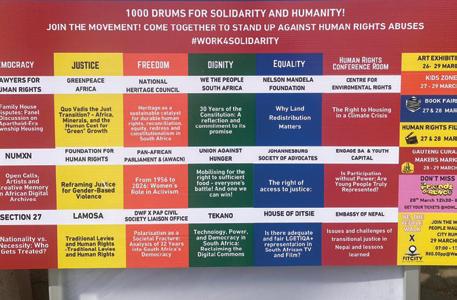
Photo: Tia Haswell
As you walk up the hill, a wall comes into view, lined with the words “We the People…” – the opening sentiment of South Africa’s Constitution, adopted in May 1996, almost exactly 30 years ago. Following each line, passersby are invited to write their hopes for the country. Except, many of these do not read like what should be – distant aspirations. “Free education”. “Service delivery”. “Jobs”. Standing there, it becomes difficult not to reflect on how these words sit alongside the promises embedded in that very document and what that distance might mean.
Human Rights Day, observed annually on 21 March, was officially declared on 8 May 1996 in honour of the Sharpeville Massacre. On that day in 1960, thousands of people gathered in Sharpeville to protest the apartheid pass laws that controlled and restricted the movement of Black South Africans. The police opened fire on the peaceful protesters, massacring the crowd of people, most shot while fleeing. This event was one of many that
drew international attention to the brutality of Apartheid and left an imprint on South Africa’s moral and political memory.
The Human Rights Festival took place at Constitution Hill, which was once a prison complex known as Old Fort Hill and now serves as a museum of South Africa’s turbulent past. It also serves as a host to the Constitutional Court as, perhaps, a glimpse into a restorative future. Setting foot in this historical monument, this layering of history is striking and inescapable. The site seems to hold both the memory of injustice and the aspiration of justice without fully reconciling the tension between the two.
This festival site, once a site of confinement, opened itself up again, drawing on this atmosphere rather than discarding it. The space was filled with songs, drums, and voices that insisted on being heard. The 2026 Human Rights Festival unfolded as a living gathering of remembrance, memorial, and defiant passion for change. The main stage pulsed with culturally infused performances from the seas of Palestine to our home South Africa. The “1000 Drums for Solidarity” was a focal point that drew audience members in. This was not just something to watch; it was also something to participate in and contribute to in an artful expression of the heavy weight of our past, present, and hope for the future. It reframed the idea of “human rights”. Often thought of as documents and political discourse, here it felt tangible and alive. Surrounding the performances were endless rows of human rights organisations. Pamphlets, books, posters, and personal stories offered insight into ongoing struggles: access to basic services, gender-based violence, migration, inequality. It presented these seemingly basic demands as fragments of a larger, unfinished picture.
I cannot offer you one single message that was defined by the festival. Instead, what remained with me was a series of encounters: a drum shared with a stranger, a poem that unsettled me, a shocking statistic I read in passing, a conversation that lingered longer than I expected. This formed a series of questions that seemed to follow me across the Hill: How well do we know our history, and how far have we come? Perhaps the festival is not an attempt to resolve this, but to simply create the space for each person to sit with it and perhaps carry it beyond the Hill. I hope you attend the festival next year or choose to read about our history, whether in learning or in remembrance, to form your own reflections and decide for yourself what, if anything, comes next.
Milan Govender

Visual: Jemma Thomson
We live in a world where the behaviours and choices of men are naturalised, and the natural existence of women is denaturalised, persecuted, and painfully removed.
Beauty standards are a prime example of this, as Western gentrification and non-Western cultural erasure expand faster than a pair of burning lips reacting to a “spicy” plumping gloss. There is the collective pressure and the nudge of societal shame to keep women as far away from their natural bodies as possible. Take body hair for example: razor cuts from shaving, nerve and skin damage from waxing or laser – it is literally an industrial laser – and let us not forget burning our upper lip because we left the hair removal cream on for too long. In addition to this, we are all hunting for the perfect skincare routine so we are blemish-free, pore-free, discoloration-free, pimplefree, wrinkle-free, and eventually human-free. One stops to wonder how fifty years ago, we survived without toners and serums and masks, but now, we panic if these liquids and potions are getting too close to the bottom of the bottle. Just putting on a bra feels like you are buckling up an oppressive bodily contraption.
Why does it take so much admin to be considered beautiful? What constitutes a 10/10? Does attraction or love become a subscription service to capitalist mating rituals of consumerism? We have all heard the tragedy of transient beauty standards changing every decade, every fashion season, and every influencer, but the real tragedy lies in the cost of beauty and the myth of its uniform, unbending manifestation. So, the invisible pink tax of doing your hair, braids, or blowout, acrylic fingernails, gel toenails, makeup, hair removal, skincare, and wearing trendy clothes that carefully balance how much of that skin is shown to land us dead-centre on the Slut-To-Prude Spectrum.
Furthermore, the denaturalisation of women and the feminine sneakily seeps into our culture and our geopolitics. Sanna Marin, former Finnish Prime Minister, was slandered for the capital crime of dancing and partying with her friends and thereafter labelled as “unserious” and a national security risk. Perhaps, the criticism of Hillary Clinton being “too prepared” to run for office tickles this misogynistic fancy. It is like firing a pilot for flying the plane “too well”. Jillian Gillard was the first female Prime Minister of Australia, and her capacity to lead came into question because she is unmarried and does not want children. Senator Bill Heffernan went as far as to call Gillard “deliberately barren”. When matters of a woman’s uterus become central to parliamentary discussions, it begs the question of our priorities and what motivates those priorities.
These women are dragged through the mud for going to the jol, doing their job, or opting out of motherhood. And yet, the world cannot possibly fathom the persecution of all-too-innocent male leaders for populist aggression, nuclear brinkmanship, sexual harassment charges, inhumane militarism, and flirting with the idea of World War III on social media? The cognitive gymnastics required to justify this would win an Alysa-Liu Olympic gold medal.
At the end of the day, the irony lies in the fact that this denaturalisation is naturalised, and it creeps into every facet of our personal, cultural, social, political, and economic realities. We have naturalised the apocalypse and denaturalised an ozempic-free diet. We can treat borders like suggestions, but fear the unthinkable existence of smile lines. If we make room in our hearts and tax brackets to excuse the naturally good-looking, strategic “Strongman” for major flops, then surely we can find room for a woman to exist without being surgically sanded-down, professionally lobotomised, and emotionally muted.
Atanda Ntlantsana
Netflix is adding their “woke agenda” to One Piece. This is the sentiment expressed by many disgruntled people regarding the new One Piece live action – particularly in relation to its casting. The slang term “woke” was initially used to describe the state of being aware of political issues faced by marginalised communities, but has, in recent years, become appropriated by more conservative groups to critique scenarios in which they feel politics and political agendas have been placed in spaces where they do not belong. The “wokeness” critique seems to be used as a blanket statement against any and all inclusion of marginalised groups in media – as if their very existence is both a political statement and a deviation from the norm.
It seems every season comes with a new casting choice that has generated a degree of discourse. In season one, we meet Koby, played by Morgan Davies – a trans man. Despite the actor’s trans identity having no impact on the character or the story, this was apparently an early example of “wokeism” seeping into One Piece. To describe Koby’s casting as being a product of the push for diversity equity and inclusivity, as some have argued, is to imply that simply being trans makes a person a political pawn in everything they do. To treat the inclusion of marginalised groups in any position as though it is merely an extension of the “woke agenda” is to strip them of their humanity and reduce them to one facet of their identity This also implies that marginalised people are a deviation from a norm. As though if someone is not a cisgender white person, they must be a diversity hire.
In season two, Bridgerton’s Charithra Chandran was cast to play Nefertari Vivi. Ironically, the revived discourse around “raceswapping” in the media is similar to the conversations that began when Bridgeton was first released. Vivi is a character from a desert kingdom that draws inspiration from Ancient Egypt, Arab cultures, and other North African and Asian nations. Many expected Vivi to be cast with an Arab actress and, while it is valid to have had such an expectation, many disgruntled fans began to turn to colourism and racism in their criticism of the casting. Emily Rudd, Nami’s actress, took to Instagram to address fans’ reactions, saying that “perceived
‘canon’ does not excuse blatant racism or hate of any kind”. In the blatant bigotry used in fans’ expression of unhappiness, it becomes increasingly clear that the criticism surrounding Vivi’s casting is less about wanting more accurate representation and more about people looking for an outlet to offload their racism.
One of the most recent (and possibly most outrageous) instances of backlash came with the casting of Bon Clay. Bon Clay has always been a fan favourite, and the backlash around his casting has left hardcore One Piece fans perplexed. Bon Clay will be joining the One Piece ensemble in season three, and will be played by non-binary actor Cole Escola. Bon Clay is canonically genderqueer, so this casting decision only makes sense. But for some reason, fans (and non-fans) have taken to the internet to accuse Netflix of pushing the elusive “gay agenda” in casting Escola for this role.
The thing about One Piece is that it is, in fact, a political story. Even from the East Blue Saga, we see the marines being portrayed as a tyrannical group of law enforcement, addressing ideas of abuse of power by political authorities. What makes One Piece political is its story and themes, not the diversity. One Piece’s story includes devil fruits which give people powers, an island in the sky, and mermaids. Incorporating trans people or people of colour – people who actually exist in real life – into the story can barely be considered “unrealistic” when weighed against other parts of the story. If the fishmen who make up the Arlong Pirates did not turn heads, then why should the genderqueer subjects of the Kamabakka Kingdom?

Firstly, it seems that the live action has simply brought One Piece to the screens of people who were otherwise unfamiliar with the source material. YouTuber Jon Del Arroz made a ten-minute video describing One Piece as “woke propaganda” despite having admitted to being unfamiliar with both the manga and anime. This brings to light the issue of backlash that is not based on the understanding of the source material, but is rather a result of people projecting their own politics and conceptions of normality onto mainstream media. Anyone who has actually seen or read One Piece understands that Eiichiro Oda’s (the creator of One Piece) storytelling is political. However, Oda never tokenises his diverse ensemble. Diversity is only natural in a story about exploring different corners of the world.
Another reason the live action may have brought rise to more discourse than the anime or manga is that it seems bigotry needs victims. It is much easier to point to a real human and make them the victim of transphobic or racist remarks compared to doing so to twodimensional drawings.
We live in a world with billions of people who all have unique backgrounds and experiences. The world is so diverse, and to reflect this in media is only natural. So, why does the One Piece live action see an amount of backlash that the anime did not necessarily get?
Kopanyi Ramokgopa
10:00
Iwake up and do the first thing any selfrespecting human does: look in the mirror. Only after I have basked in my perfection does my sacred routine commence. I begin by mewing – recessed jawlines are for betas. After I am satisfied with the results, I move on to my cheeks. I bone-smash, and only when I start to bruise do I stop. I set the shower to an optimal temperature of 37 °C before I step in. Upon finishing my shower, I moisturise, put lifts in my shoes to maximise height, and adorn my glorious body with an all-black outfit. People who have ascended do not concern themselves with things as frivolous as coloured attire. I skip breakfast and snort meth: my essential drug for lean-maxxing. I take a final look in the mirror and step outside.
13:00
I blast the song “Top G in a Bugatti” on my headphones from the most underrated musician of our generation, Andrew Tate, and the line
“you a hate cah wе nuh bruk like you” deeply resonates with me. My walk to campus is short, so is every man I pass on my journey. This confirms a fact I know to be true; I am and always will be a mogger. I catch my reflection in a window, and I take a minute to admire myself. I cannot help but notice my jawline and cheekbones are sharp enough to cut through steel, my positive canthal-tilt is unparalleled, and my hunter-eyes can seduce anyone with a mere glance. I continue my walk and pass a group of Becky’s. They sip their matchas, feigning interest in whatever conversation they are having, all in a feeble attempt not to stare at a Chad like me.
Pathetic.
13:35 to 16:20
My lectures for the day start, and I arrive at lecture venues five minutes after the class begins and the lecturer arrives. Not because I am late, but because in a world full of normies and simps, I ought to assert dominance. The lecturers go on and on about whatever topics, but true Alphas do not pay attention to mindless chatter. One yapped about the importance of media literacy, and I blocked out his rage-bait as failure to do so will spike my cortisol. I take out gum and start chewing it, not for the taste, but for jaw hypertrophy.

The Sub-5 beside me asks for a piece, but I ignore it. By the time lunch comes around, I am ready to go back home. I think of buying food before I head home, then I remember I do not need food; my aura sustains
16:45 to 20:00
When I get to my room, I put on Clavicular’s livestream and absorb his infinite knowledge. He goes in-depth about how using makeup products such as concealer and contour can help one ascend by emphasising one's facial attractiveness. His intelligence provides me with a much needed dopamine surge. Nighttime falls, so I go to my mirror and do my nightly affirmations: “I am dominant”, “My blood rages with testosterone”, “I make love like Zeus”, and finally, “I am a high-value man”. Affirmations do nothing for my confidence. Instead, they remind me that I am the standard. I get in bed and sleep – not to rest, but to reset my aura.
Yes, the One Piece live action features a diverse cast, but does this mean it is promoting a “woke agenda’? Well, the answer to this depends on whether you believe real people can be promoting an agenda by simply existing. If diversity in and of itself can be considered to be a politically motivated choice and a deviation from the norm, maybe it is time we as viewers took a bite of the “woke-woke” fruit and got real with ourselves about why diversity even bothers us. Until then, we must enjoy the story characters, and politics that come with Luffy’s journey to be King of the Pirates.
Mazviita Pasi
Are you “finna be in the pit” or a “sis” who is “dead as a chile”? While some of this may sound unfamiliar to PDBY’s older readers, a lot of students have heard these terms. Most would place them under the category of “TikTok language”, but what if I told you that they are a part of a variety of English known as AAVE.
African American Vernacular English (AAVE) is a particular variety of English mainly spoken by working class Black Americans. The origins of AAVE are controversial. Some believe it is a result of contact between West Africans and speakers of vernacular English on plantations during the slave trade. Others argue that its origins come from varieties of English spoken in the good ol’ Southern USA. Without getting too bogged down by the finer details, what is clear is that AAVE has a deep, rich history. It is made up of its own syntax, language, grammar, and pronunciation.
A study conducted by Christian Ilbury and Rianna Walcott argues that specific words are consistently lifted from AAVE and reimagined as “TikTok language” or “Gen Z language”. Often, these terms will end up with an altered meaning. “Unc” becomes uncool and “gyatt” becomes synonymous with someone’s posterior. Some other examples of misbranded TikTok language include terms like “finna”, “bussin”, and “chile”. You may have seen some of these in SNL’s infamous “Gen Z Hospital” skit, with AAVE sprinkled into dialogue delivered in a way that makes you feel a discomfort you would feel when your dad says “lit”. You may even see videos where celebrities speak in what they call “Gen Z Slang” while actually using aspects of AAVE. One thing missing from most of these videos is the credit that AAVE rightfully deserves.
While “AAVE fails” and “Blaccent imitations” may seem lighthearted and comedic to poke fun at, there can be some troubling implications. Geneva Smitherman argues that when non-Black people appropriate Black American English, they often do so to gain social benefits without paying any dues to a language born out of struggle. People will use
AAVE to gain social cultural capital. Think of the “rillist” Iggy Azalea whose accent suddenly changes to Australian once she is out of the recording booth. Maeve Eberhardt and Kara Freeman theorise that she does this to gain higher viewership and commercial success, because Azalea is never “rill” about the struggles of the Black communities whose accents she imitates.
The phenomenon of reducing AAVE to “online slang” dilutes the language, limiting words born out of a specific cultural experience to gimmicks made up by silly Gen Z kids on TikTok that can be the subject of skits. You can debate whether @taralynn really is “finna be in the pit”, but you must acknowledge that some of your favourite “TikTok” terms originate from a table that many of you are not invited to.

Zizo Mtshemla
20:00 on a weekday used to be a national watch party on SABC 1. The iconic soap opera Generations was a national treasure, and nothing like it had ever been seen before. The acting quality and storylines, paired with a predominantly black cast portrayed in an affluent manner, was revolutionary in a newly post-apartheid South Africa. Fast forward to today, and the remake, Generations: The Legacy, has become infamous for its continued downward spiral in writing, production, and acting quality. But, how did we get here?
Generations, produced by Mfundi Vundla and commissioned by the South African Broadcasting Corporation, first premiered on 4 February 1994. It came across as a Renaissance production, representing an image of successful and affluent Black people in a multi-racial South African society. It also featured progressive storylines such as, most famously, the queer love story between characters Senzo and Jason. Many veteran actors in the country had their start on Generations and went on to create illustrious careers. This speaks to how impressive and beloved the soapie was during its run up until its ending in 2014.
Generations: The Legacy first premiered on 1 December 2014 after the firing of 16 principal actors from Generations Their firing was a result of the termination of their contracts after they were striking for increased wages, longer-term contracts, and royalties from repeated airing of episodes. Although the new Generations brought intrigue and curiosity to the previous viewers of the soapie, it immediately established itself as a different story to that of its predecessor. However, many viewers have taken to social media to ridicule and question the show’s current state and reason for continuing to run, as the overall quality of the production has continued to deteriorate over the years. Furthermore, the show has consistently resorted to reviving (literally) characters from the original show in order to nostalgia-bait viewers. It is a running gag that the iconic Jack Mabaso character has been brought back to life from death more than twice. Legendary characters Karabo Moroka and Tau Mogale have also returned to the current remake. Above all, the main point of contention with Generations: The Legacy is the shoddy production, subpar acting – even from legendary actors – and lazy storylines. So, why is the show still running? Is the viewership large enough to justify its continuation, or is the SABC and Mvundla still trying to ride the wave of the original Generations?
Soap operas are notorious for continuing on for years and thousands of episodes. The dissolution of Generations, as a result, came as a major shock to viewers all over the country, especially because of how popular the show was despite running for 20 years. When talking about the currently running remake, producer Mvundla lamented that the SABC has continued to cut budgets and impose storyline visions onto the soapie. This insinuates that there is a deeper issue within the production company with regards to the soapie or production in general.
Although the soapie still pulls a large viewership, its integrity is being lost the longer it continues. In a particular episode in 2025, characters were in a scene at a cemetery. However, it was visible that a stock image of a graveyard was plastered onto a visible brick-face wall and fake bird and nature sounds were added in post-production. The scene invited extra scrutiny and led many to question why the show was continuing to run if it lacked the budget to film onsite despite being a veteran show pulling millions of views.
Over the years, many iconic and beloved soapies have ended production due to factors such as budget constraints or a lack of inspiration in the writing room, often while they were at their peak. Examples include Mzansi Magic’s Isibaya and The Queen and 1Magic’s The River. Generations: The Legacy is an exemplary case of either dying a hero or living long enough to see yourself become the villain. Had the show not been remade, it could have been solely celebrated for its trailblazing nature and impressive 20-year run. However, the longer it continues in its current state, who knows what will become of it. Perhaps Jack Mabaso will die and be resurrected… again.

Melissa Aitchison
In the streaming age where movies are cheaper, easier, and always within our reach, the burden of getting audiences into cinemas no longer falls on the viewers, but on the films themselves. It has never been easier to watch a movie and never harder to justify going out to see one.
As Ryan Gosling said, films must now earn their audience and place on the big screen by offering something convenience cannot: scale, immersion, and the shared magic of watching alongside a room full of strangers. When films are exciting and promoted well, people are more likely to get off the couch and see it.
As someone who loves movies, there is something about the cinema that just works. There is something unmatched about sitting in the dark among strangers watching a story unfold on a huge screen. Experiencing the final match in Challengers, with the camera perspective shifting between the crowd, the ball, and the court, felt electric, and it is hard to imagine it having the same effect on a smaller screen at home.
It is also a lot harder to get distracted in the cinema and easier to stay engaged in what is happening compared to watching on a laptop. Watching at home might be more convenient, but it often turns films into background noise or something half-watched between doomscrolling. Some movies can survive this kind of divided attention, but others really cannot. You cannot tell me that watching a sold out IMAX cinema will have the same impact when viewed in 25 parts on TikTok.
That is where the difference lies. When studios make films that actually demand our attention, whether it is through spectacle or strong storytelling, people

will show up. And when those films are marketed well, they stop being just another release and start feeling like an event. The success of Barbie was not just about the film itself, but about the experience of girlhood built around it. Of course, that level of hype can just as easily backfire. Going to the cinema raises expectations, and if a film fails to deliver, audiences are far less forgiving when they have paid for a ticket. Promotion plays a crucial role in building excitement around a movie. In recent years, promo tours have become increasingly extensive, giving audiences the chance to get to know the cast while also helping them understand the film’s message before they even take their seats. However, bad promotion can have the opposite effect. Timothée Chalamet was nominated for an Oscar this year for Marty Supreme, a movie about ping pong that honestly lacks a lot of actual ping pong playing. While promoting the movie at a conference on preserving cinema at the University of Texas in February, he disregarded ballet and opera as art forms that audiences supposedly do not care about.
The comments sparked immediate backlash, with many critics and fans accusing him of being dismissive and out of touch, especially when his movie is about ping pong.
Bad promo can turn audiences away from watching films, even if it is just a seemingly innocuous throwaway line.
The future of cinema does not rest on audiences suddenly abandoning streaming, but on films proving why they deserve to be seen on the big screen. The cinema experience remains powerful, but it is not always guaranteed – it has to be earned. Through thoughtful promotion and good movie plots, audiences are able to see what separates films that simply exist from those that feel unmissable. In an age of endless convenience, the movies that succeed in cinemas will be the ones that remind us why leaving the house was worth it in the first place.
Taurus (April 20–May 20)
Now is the time to stand out and shine brightly.
Gemini (May 21–June 21)
It is now the time to reflect about the past, present, and future.
Cancer (June 22 –July 22)
This month, it is out with the old and in with the new.
Leo (July 23–August 22)
You are unstoppable this month.
Virgo (August 23–September 21)
Pack your bags & book that trip.
Libra (September 22 –October 22)
You are going to be feeling uncertain - find certainty in that.
Scorpio (October 23–November 21)
It is time to actually try communication.
Sagittarius (November 22–December 21)
Take a day off in the beginning of the month to prepare for the rest of it…
Capricorn (December 22–January 19)
There are many positives around the corner: love, work, and finances.
Aquarius (January 20–February 18)
This is going to be an eventful month - prepare the best you can.
Pisces (February 19–March 20)
Throw your hat in the ring.
Aries (March 21–April 19)
You are a shining star - don’t forget that!
Anastacia Couloubis
If there is one thing South Africans know how to do, it is wait patiently for something exciting… while complaining about it the entire time. Loadshedding schedules? Memorised. Springbok fixtures? Sacred. And now, somewhere between Stage 2 and a perfectly timed braai, there is a new topic in the group chat: Formula 1 might be coming back. After more than 30 years, the idea of the South African Grand Prix returning does not feel like a distant dream anymore; it feels like something that is actually within reach. And honestly, it is about time.
Let us be real: how is there a global sport that calls itself “worldwide” when an entire continent has been left out of the calendar? Africa has been watching from the sidelines for decades, waking up at questionable hours to support races happening everywhere else. The commitment is there. The fans are there. The only thing missing is the race itself.
The obvious home for a comeback would be at the Kyalami Grand Prix Circuit – a track that already carries the history of Formula 1 in South Africa. It is close enough to Johannesburg to make it accessible, but still far enough that everyone will pretend the traffic was “not that bad” while sitting on the N1 for two hours through roadworks. Still, if South Africans can handle December
traffic to the coast, a Grand Prix weekend should be manageable. Of course, bringing Formula 1 back is not as simple as just opening the gates and hoping for the best. There are upgrades, funding, logistics, and all the serious behind-the-scenes details that do not trend on X. But these details actually determine whether this happens or not. Talks have been ongoing, plans have been floating around, and there is growing optimism that South Africa could realistically host a race within the next few years. It is not confirmed yet, but it is definitely not just wishful thinking either.
And if it does happen, it will not just be about fast cars and flashy weekends. The impact would be much bigger. Tourism would get a boost, local businesses would benefit, and South Africa would be back on the global sporting map in a major way. It would also mean something deeper: representation. For young motorsport fans across the continent, seeing a race on African soil would make the sport feel a lot more
real, and a lot more possible.
Also, imagine the vibe: a Formula 1 weekend in South Africa would not be a quiet, polite affair. It would be loud, energetic, and just a little bit chaotic in the best way. There would be Amapiano playing somewhere it probably should not be, someone selling boerewors rolls at a premium price, and at least one person insisting they “know a guy” who can get better tickets. And let us not forget about the vuvuzelas. The noise from that alone will drown out the sounds of the 1.6-litre turbocharged V6 hybrid power units in the F1 cars. It would not just be a race. It would be an experience. remains a waiting game. South Africans are used to that, even if patience is not always the strongest national trait. The conversations are happening, the interest is there, and the possibility is getting closer. So, is Formula 1 really coming back to South Africa? Maybe. Hopefully. And if it does, there is no doubt about one thing: it will not just be a return. It will be a moment.

Lindiwe Dubazane
In June 2026, the eyes of the planet will be on Mexico City's Estadio Azteca as South Africa walk out of that tunnel to face the Mexican national team. In the opening match of the largest World Cup in history, Bafana Bafana are not merely participants. They are the opening act for a 48-team spectacle, tasked with silencing 80 000 passionate Mexican fans before the world stage.
This moment carries weight that extends far beyond 90 minutes of football. South Africa has not qualified for a World Cup since 2010 when we hosted the tournament. That is 16 years of waiting. 16 years of near misses, of campaigns that promised much but delivered heartbreak, of a nation wondering whether the glory of 2010 would remain a distant memory rather than a foundation to build upon.
Before 2010, South Africa appeared in the World Cup in 1998 and 2002. The absence since then has been deeply felt. For a country that takes its football seriously, where the sight of the yellow jersey still stirs deep pride, being absent from football's greatest stage has been a wound that would not heal.
That wound finally began to close on 14 October 2025. On that night at Mbombela Stadium in Mpumalanga, Bafana Bafana beat Rwanda 3-0 to secure their place in the 2026 World Cup. The celebrations that followed stretched from Nelspruit to Soweto, from Cape Town to Durban. A nation exhaled.
Under the leadership of coach Hugo Broos, the Belgian tactician who took over a fractured squad during a turbulent period, Bafana Bafana have been rebuilt from the ground up. Broos, who has been at the helm since before the 2023 Africa Cup of Nations, has instilled discipline, belief, and a tactical

identity that had been missing for years. His leadership has been defined by tough decisions, leaving out established names in favour of hungry young talent and an unwavering belief that South Africa belongs among the world's best.
For the players, this is their chance to write their own history. For the fans, it is redemption. For the nation, it is proof that South African football is still alive.
Drawn into Group A with Mexico, South Korea, and Czechia, the narrative is set for a classic giant-killer run. But first, they have to survive the Azteca. The altitude in Mexico City sits at over 2000m above sea level. The noise from 80 000 home fans will be deafening. The pressure on Mexico to deliver in front of their own people will be immense, and that pressure can cut both ways. Broos and his squad are preparing meticulously, knowing that if they can withstand the early storm, they can exploit the anxiety of a host nation desperate to impress.
For 90 minutes in June, the world will stop to watch Mexico. Bafana Bafana have the chance to steal the spotlight, to remind the world that South Africa belongs on this stage, and to give a nation that has waited 16 years a moment of pure, unbridled joy.
Anastacia Couloubis
There is something very satisfying about the idea of a “howto”. Follow a few steps, do everything right, and suddenly you are exactly where you want to be. Simple. Except… not when it comes to football. Because there is not a neat little guide for becoming the girl who runs the club, especially in a space that has not always made room for women in the first place. If anything, it is less about following rules and more about rewriting them.
And that is exactly what the journey of Sinenjabulo Zungu shows. As CEO of AmaZulu FC, her experience is not built on shortcuts or luck; it is built on stepping into spaces that are challenging and staying there.
The first thing to understand is that this kind of leadership does not come from playing it safe. Zungu admits that being in a male-dominated industry is not always comfortable, and it is not supposed to be. But that discomfort? That is where the growth is. Those are the spaces that stretch you, test you, and, if you are willing, shape you into someone who can actually lead. And then there are the moments that do not look like challenges, but feel like them. The subtle ones. The kind that leaves you thinking, “Was

that just me, or…?” Being underestimated is not always loud. Sometimes it is quiet, and that almost makes it worse. But instead of reacting, there is a different approach: prove it. Not once, not loudly, but consistently. Let the work speak. Let the results make it clear that you are not there by chance, and definitely not by favour.
In this space, credibility is everything. You do not get to just take authority; you build it. And you build it by doing more, showing up properly, and delivering even when no one is expecting you to. Over time, that kind of consistency becomes impossible to ignore.
At the same time, football itself is slowly starting to catch up. Zungu affirms that women are no longer just watching from the sidelines; they are in the game, in the offices, and in the decisions. It might be a slow shift, but it is a real one. The more women show up in these
spaces without shrinking themselves, the harder it becomes for the industry to pretend they do not belong.
And maybe the most interesting part is that leadership does not have to look the same as it always has. There is room to do it differently. Zungu believes women bring certain unique perspectives to leadership. Being perceptive, emotionally aware, and organised are not soft skills – they are strong ones. They change how teams function, how decisions are made, and how environments feel. Leading like that does not make you less effective; if anything, it makes you more effective.
For anyone thinking there is no place for them in football, that is not true. The game is bigger than just playing. There are so many roles behind the scenes, and leadership is one of them. It is just about finding where you fit and actually going for it.
And yes, things are changing. Slowly, but surely. More women are stepping into leadership roles, more clubs are opening those doors, and that shift is only going to grow. Eventually, it will not be surprising to see women in these positions; it will be normal. So, how do you become the girl who runs the club? You do not wait to be invited. You do not shrink to fit into the space. And you definitely do not rely on anyone to hand it to you. You step in, you prove yourself, and you stay. And at some point, without even realising it, you are not just in the room anymore. You are running it.

The recent LIV Golf Tournament in Steyn City highlighted just how bright the future promises to be for South Africa, which is rapidly growing as a major international sporting destination.
Fans witnessed an exciting finale at the 2026 event as Jon Rahm and Bryson DeChambeau faced off in a sudden-death playoff. After an intense battle, DeChambeau ended an outstanding performance at 26-under par. Both players showed us that power and perfection are not only what is needed to succeed at the highest level – the mental capacity to reach success is necessary, too.
DeChambeau won the team competition with his squad, Crushers GC, which added to the fans’ excitement. They defeated the Southern Guards by just a single shot. The accomplishment was made even more spectacular by this double victory, which also brought attention to the unusual LIV Golf style
that blends team strategy and individual talent.
Beyond the competition's results, the tournament showed South Africa's growing status in international sports.
Hosting such events not only draws attention from across the world, but also increases local tourism and has positive economic effects. More importantly, it gives young South Africans the opportunity to watch worldclass athletes compete locally, encouraging the next generation to participate in sports.
The LIV event highlighted that golf can be just as exciting and unpredictable as any other sport activity despite the belief that it is a calm and steady game. The close gap in the team competition and the tension of the final round grabbed the fans’ attention until the very end. Furthermore, it revealed

that modern-day competitions like LIV Golf are contributing to the sport's reconstruction and increasing its popularity to a larger
The demand for LIV Golf in South Africa is only going to increase in the future. The 2027 tournament's tickets are now available, giving spectators another opportunity to take in the atmosphere of a top-tier athletic event. Students have a thrilling chance to see elite international athletes compete and take part in something truly
One thing is certain as excitement for the next event grows: South Africa is not only hosting international competitions. It is also emerging as a key player in the future of international sport, with LIV Golf playing an important part in that development.
Cayden Coetzer
At the University of Pretoria, student sport has always been about performance, discipline, and pride. But in 2026, there is a new layer shaping the student-athlete experience, one that exists far beyond the field, court, or track. It lives on screens, in captions, and through carefully curated highlight reels. Welcome to the era where athletes do not just play the game; they post it.
For today’s student-athletes, excelling in sport is no longer the only expectation. Platforms like TikTok, Instagram, and X have introduced a new dimension: visibility.
Athletes are increasingly aware that their performances can reach far wider audiences than the stands at Tuks Stadium. A well-edited highlight clip, a behind-the-scenes training video, or even a candid team moment can gain traction online – sometimes, it gains more attention than the match itself.
This shift has led many student-athletes to think beyond the scoreboard. Personal branding, follower counts, and engagement rates are becoming part of the conversation, especially for those hoping to pursue professional careers. What was once reserved for elite professionals has trickled down into university sport: the idea of the “athlete as a brand”.
At UP, athletes are not only representing their teams; they are building individual identities. Some share training routines, others post matchday vlogs, and many curate highlight reels that showcase their skills in a way that is accessible and appealing online.
Teams, too, have embraced this shift. Official pages now function as digital marketing hubs, posting match previews, player spotlights, and real-time updates. Social media has become a powerful promotional tool, helping university
sports reach audiences that traditional media often misses.
For some athletes, this visibility opens doors. Increased online presence can lead to recognition, networking opportunities, and even sponsorship prospects – an enticing benefit for students balancing tight budgets.
missed shot on the field might fade quickly, but online, mistakes can linger. Similarly, a lack of engagement on posts can feel like a reflection of personal worth, even when it is not. The line between authentic expression and curated perfection becomes increasingly blurred.
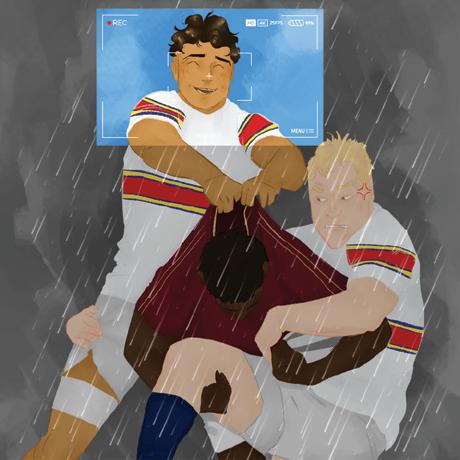
But with opportunity comes pressure. Maintaining an online presence is not effortless. It requires time, consistency, and a level of selfpresentation that can be exhausting. For studentathletes already juggling training schedules, academic responsibilities, and personal lives, social media can feel like another performance to manage.
There is also the psychological weight. Constant comparison – of performance, physique, and popularity – can take a toll. A
One of the key questions emerging is whether social media enhances or detracts from athletic performance. On the one hand, it can be motivating. Athletes may push harder knowing their performances are being watched and shared. The ability to review game footage and highlights can also aid in self-improvement. On the other hand, the need to capture content – filming workouts, editing clips, posting regularly – can become a distraction. Time spent online is time not spent resting, studying, or focusing on the sport itself.
For some, the balance is manageable. For others, it becomes overwhelming. What is clear is that social media is no longer separate from student sport; it is embedded within it.
At UP, the modern student-athlete is navigating two arenas: the physical and the digital. Success increasingly depends not only on skill and discipline, but also on adaptability in a fast-moving online environment.
The challenge lies in balance. Can athletes harness the benefits of visibility and branding without compromising their performance and well-being?
As university sport continues to evolve, one thing is certain: the game does not end at the final whistle anymore. It continues in posts, stories, and feeds where every moment has the potential to be replayed, reshared, and remembered.
Lindiwe Dubazane
In May 2026, the football world is not landing in London or Madrid. It is landing in Pretoria.
German Bundesliga giants RB Leipzig are touching down in South Africa for the first time ever to face Mamelodi Sundowns at the historic Lucas Moripe Stadium. This is not just a friendly match. It is a coronation of South African football's global standing.
The match – branded "RE KAOFELA", meaning "all together" – carries a weight that extends far beyond 90 minutes of football. For Mamelodi Sundowns, this is personal. Fresh off their participation in the 2025 FIFA Club World Cup where they tested themselves against the best from every continent, the Brazilians now have the opportunity to prove that their famous "Shoe Shine and Piano" style can dismantle one of Europe's most feared machines. RB Leipzig arrives as the corporate powerhouse of the Bundesliga – a side that regularly competes in the UEFA Champions League and has built its reputation on high-pressure, relentless football. But they are walking into a cauldron of culture. The Lucas Moripe Stadium in Atteridgeville will be packed to the rafters, with fans knowing they are witnessing something rare. The venue itself carries history. It is the same stadium where the German national team trained during the 2010 World Cup, and now, it becomes the battleground where African flair meets European efficiency.
SABC Sport will broadcast the match live on S3, ensuring that the nation can watch as Sundowns attempt to make a statement. For the Premier Soccer League, this fixture is the ultimate barometer.
A strong performance against a side of Leipzig's caliber would send a clear message that South African club football is no longer content to be a feeder for European leagues; it is ready to compete as an equal.
The atmosphere in Atteridgeville ahead of kickoff will be electric. Fans draped in yellow will fill the streets, drums will beat, and the vuvuzelas will sound. This is more than a match. It is a celebration of how far South African football has come.
If Sundowns pull this off, it will not just be a win. It will be a statement that African club football has officially arrived.