








Photo: Melissa Little

In the Douglas Adams “trilogy” The Hitchhiker’s Guide to the Galaxy, the dolphins of the world, aware of the coming destruction of earth, pack up their things and move to another dimension. In a sense that’s pretty much what it feels like I am doing now. Coming to the end of my time at PDBY, and at university, leaves a massive hole to be filled. The thought of moving towards that hole terrifies me, excites me, and makes me all stressy-depressy.
It’s a time that every student must face at some point as they move on from the training wheels of student life to a life of some serious adulting.

About my time at Perdeby, and more recently at PDBY, I say “So long, and thanks for all the fish.” My fondest memories of my time at university are in the PDBY office working on an exciting edition for you guys to read. I have had so many experiences that I would never have dreamed of if it wasn’t for my time at the newspaper, and I have learned almost more at PDBY than in my studies. Even some of the hardest parts of the job have taught me things about myself and others that I will use for years.
To all those that I have encountered along my journey, thank you for being part of it – especially my haters. You guys suck, but you taught me more than my fans. Thank you to those that have kept up with my editorials and supported me and PDBY along the way. Continue to read and keep up with our progress. I know that the coming editorial is going to bring with it something brand new, with an energy that can only be matched by a new bunch of minds, ideas, and oomph.
As a parting word, I would like to share some advice I like to think about from the great Guru Pitka, author of books such as Stop hitting yourself. Stop hitting yourself. Why are you still hitting yourself?, If you’re happy and you know it think again, Does it hurt when you do that? Don’t do that, and I know you are, but what am I — “Tonight I want you to go from nowhere to NOW HERE.™” In other words, just go wild.
“We apologise for the inconvenience”,
Shaun Sproule Editor
Our editor’s steps from Perdeby to PDBY
PDBYMedia, formerly Perdeby, is the official independent student newspaper of the University of Pretoria. We are committed to providing fresh and entertaining news content for UP students, by UP students, about UP issues.
Advertising Sales
Tel: 012 420 6600
Cell: 083 318 9738 carel.willemse@up.ac.za
www.pdby.co.za
Twitter: @PDBYnews @PDBYSport @PDBYe
Instagram: @PDBYMedia
Facebook: PDBYMedia
Tel: (012) 420 6600
Editorial
Editor-in-chief carel.willemse@up.ac.za
Carel Willemse @Ed_in_Chief
Editor perdeby@up.ac.za
Shaun Sproule @ShaunSproule
News news@pdby.co.za
Features features@pdby.co.za
Katie Atkinson @katieatkinson4
Entertainment entertainment@pdby.co.za
Sam Mukwamu @sammysouthside
Sport sport@pdby.co.za
Ricardo Teixeira @the1trueRicardo

Copyright PDBY
2015 2016
2014 2019 Joined Perdeby as an Entertainment journalist
Journalist and wrote his first “Article of the Year”
Journalist and wrote the “Article of the Year”
Entertainment Editor and co-journalist for the “Article of the Year”. Published the Literature supplement. Rotational editor of Perdeby
2018 Perdeby Editor, redesigned to PDBY 2017
PDBY Editor
Online Content onlinecontent@perdeby.co.za
Prudence Ramaboka @robyn_prudence
Web webeditor@pdby.co.za
Adivhaho Maphwanya @i_adi_m Copy copy@pdby.co.za
Georgina Glass @georginaaliceglass
Visuals visuals@pdby.co.za
Elmarie Kruger @elmarie.kruger
Multimedia multimedia@pdby.co.za
Ofentse Malele @fentse_malele
Layout layout@pdby.co.za
Kayla Thomas @kaylathomas1998
PDBY appreciates that freedom of speech is an inalienable right enshrined in the Constitution of the Republic South Africa. We encourage our readers to engage in discussion and debate on issues that affect them through letters to the Editor, comments on our website, tweets, or posts on Facebook. We ask our readers to keep the following in mind:
1. PDBY will not edit letters, comments, tweets, or Facebook posts in any way.
2. PDBY will label letters, comments, tweets, or Facebook posts as opinion. These do not represent the views of PDBY in any way.
3. The PDBY editorial must approve letters, comments, tweets, or Facebook posts before they are published.
4. PDBY will not publish letters, comments, tweets, or Facebook posts that are defamatory, or libelous, or that contain offensive content.
5. PDBY reserves the right to practice discretion when publishing letters, comments, tweets, or Facebook posts.
6.
7. PDBY reserves the right to retract a letter, comment, tweet,
Susanna Anbu
On 17 July the Musaion hosted a public lecture by astrophysicist, Professor Roger Deane, who was one of the key-players involved in the Event Horizon Telescope (EHT) project that was responsible for providing the first ever image of a black hole located in the center of Messier 87, one of the largest galaxies in the universe. The program began with an introduction by Professor Jean Lubuma, who elaborated on Prof. Deane’s illustrious career. Prof. Lubuma highlighted that “Math is the language of science”, stressing the fact that science allows mere equations to be transformed into ground breaking discoveries such as the black hole imaged by the EHT team.
Prof. Deane’s presentation began with a detailed description of the black hole phenomena, followed by explanations of how the Earth telescope worked. Eight telescopes interspersed in different geographical locations mimicked the power of an earth sized telescope. In exploring the many layers of tedious procedures, Prof. Deane explained that the dilemma that arose in imaging the black hole stemmed from the fact that the black hole itself did not emit any light. Prof. Deane explained that by using the accretion disk, which are the jets of light around the black hole, they were able to obtain the silhouette of the Event Horizon. The challenging part of imaging the super massive black hole was that scientists of the EHT team were at the mercy of weather conditions. Ideal, clear
skies were sought after at each of the eight geographical locations for a period of five days. However, Prof. Deane argues that “to image an extreme of physics, one must go to the extremes of the earth”.
The procedure used by the EHT team to obtain the image is called Very Long Baseline Interferometry (VLBI). Prof. Deane summarised the EHT as, “like a broken mirror stitched together by software”. The data collected by the EHT took half a ton of hard drives to store.
Scientists analyzed this large volume of data, sifting through the necessary pieces to construct the image of what we now know as the black hole. Despite successfully obtaining an image out of the EHT, Prof. Deane urges that “transferring the telescopes into space will be a real game changer as the telescopes will be able to stich pixels together much faster than the EHT”. This opens up a myriad of opportunities in the astronomy discipline, allowing scientists to further their understanding of the universe in a shorter span of time.
Despite the complex nature of a discipline such as astrophysics, Prof. Deane drastically simplified the infinite algorithms behind the mammoth process, into simplistic analogies that allowed the public to comprehend and participate in the lecture. One of the most notable moments in Prof. Deane’s lecture arose when he unveiled a simulation that journeyed into the centre of a milky way, demonstrating just how small the black hole is relative to us on Earth. The simulation ended with the appearance of the iconic picture of the black hole, which drew gasps

of awe from the crowd.
Furthermore, Prof. Deane ended his informative lecture by highlighting the role Africa had to play in the aftermath of the black hole imaging. He unveiled the pioneering venture to install millimeter telescopes in Africa. The first of these has been proposed to be installed on Gamsberg Mountain, Namibia, a location deemed as paradise for many astronomers. The name given to the project is Africa Millimeter Telescope (AMT) and it will be the first of its kind on the African Continent. This venture is to continue with other geographical locations in Africa, with South Africa being a possibility in the list of potential geographical locations for the AMT project.


next step for the team is to image the black hole at the center of our own milky way.
However, Prof. Deane warns that “there is still much work to be done” and the image “will definitely not be out this year”.
“ to image an extreme of physics, one must go to the extremes of the earth
In imaging the back Hole, Prof. Deane believes that we have just opened the Pandora’s Box of astronomy. A concept that was almost discarded into oblivion by the global scientific community in the past now resides in the form of an image viewed by 4.5 billion individuals.


Although the image of the black hole has reached acclaim in the scientific community, the Event Horizon team is to repeat the same procedures annually to obtain other images of the event horizon to validate their findings. Prof. Deane believes that the
Prof. Deane’s immense contribution to the EHT project and his expertise garnered in the process, equips UP with the necessary skills to increase the number of students who enroll for the astronomy discipline. Prof. Deane’s pioneering efforts coupled with the potentiality of Africa being an astronomical hub, will aid in kick starting the program that aims to deploy highly qualified professionals out of UP and into the forefront of astronomical discovery.

Katherine Atkinson
On 17 July the University of Pretoria hosted its tenth public lecture centred on curriculum transformation. The lecture was presented by Professor Shose Kessi, Associate Professor in the Department of Psychology and acting Dean of the Humanities faculty at UCT. UP’s Vice-Principal, Professor Norman Duncan, welcomed everyone by saying that the decolonial turn lecture series forms part of UP’s ongoing process to decolonise the curriculum.
Prof. Kessi explains that Photovoice is a “participatory action research tool that engages groups and communities to tell stories about their lives through photography”. Photovoice provides platforms where participants can represent themselves. This is key to the decolonial project, as methodologies like Photovoice give black people a chance to tell their stories without having colonial symbolisms projected onto them.
the way we have organised our societies and economies is fundamentally based on not seeing a huge chunk of humanity as human.” Therefore, a step toward decolonising the Humanities is redefining and recognising humanity in its fullest sense.
11 February 2019
Prof. Kessi’s lecture entitled “Towards a Decolonial Psychology: Defining and Confining Symbols of the Past” commenced by discussing colonial representations of the black body in art and society. Prof. Kessi explained that public art always functions on a political level, thereby affecting our psyche. While discussing the Cecil John Rhodes statue and Rhodes Must Fall movement, Prof. Kessi said that we must explore “psychological effects of everyday encounters with historical symbols of oppression”. Prof. Kessi explains that as a discipline, psychology focuses on “the relationship between mind and society”. This means that psychology “has much to contribute to a decolonial aesthetic, despite its historical complicity with legitimising forms of domination and control”, says Prof. Kessi. Much of Prof. Kessi’s lecture focused on Photovoice, a visual methodology used for community-based participatory action research.
Prof. Kessi showed Photovoice studies involving black students at UCT, where they documented their everyday lives on campus through photography and storytelling. She said that Photovoice is an empowering research methodology which leads to a collective consciousness and solidarity, as well as a sharing of stories and experiences and challenges.
In concluding, Prof. Kessi said that using methodologies such as Photovoice in the practice of psychology can pave the way for a decolonial aesthetic. “A decolonial psychology necessitates an engagement with everyday lived experience through participatory and collective forms of community action,” says Prof. Kessi.
The lecture was followed by a respondent session with Dr Sithembile Mbete of UP’s Political Sciences department. Dr Mbete discussed three points, the first being on what it means to decolonise. Dr Mbete says that “every human must be seen as a human being […] The way that we have been educated, the way we have organised our political systems,
Dr Mbete said that one of the ways we recognise humanity is through telling stories and that “part of what the decolonial turn is to me is about claiming our ability to tell our stories”. This is why Prof. Kessi’s use of Photovoice is a practical step toward decolonising the psychology curriculum.
This respondent session with Dr Mbete encouraged thought-provoking questions from the attendees, one of which also focused on how to practically decolonise the psychology curriculum. Prof. Kessi explained that often changes in course work rely on individuals. Therefore, there need to be more incentives from institutions, as well as support for change to be effected. In psychology a lot of content can be brought in which is decolonial in nature. This includes social psychology, political psychology, community psychology and critical psychology. Movements and discourses which are fundamentally psychological, such as the Black Consciousness Movement and issues of race, class, gender and identity, should also be included in the curriculum says Prof. Kessi.
Features | 5
In terms of decolonising curricula other than
psychology, Prof. Kessi says that it is pivotal to engage with the history of the discipline. For example, in critical psychology, you first learn how psychology was complicit in informing racial hierarchies.
UP has hosted several conversations on decolonising the curriculum, including a conference that was held on Future Africa campus from 10-12 July entitled “Unsettling Paradigms, the Decolonial Turn in the Humanities Curriculum”. This conference was part of a five-year institutional collaborative project involving universities from all over South Africa. According to Vice-Principal Prof. Norman Duncan, there will be more public lectures on the decolonial turn and transforming the curriculum later this semester.
Inge Beukes
The century-old form of communication, interaction and self-expression takes centre stage on 21 February, which observes International Mother Language Day. This day was first announced by the United Nations Educational, Scientific and Cultural Organization (UNESCO) on 17 November 1999 with the aim of promoting peace, linguistic and cultural diversity and multilingualism. Today, the day is commemorated on 21 February to recognise the 1952 Bengali Language Movement in Bangladesh.
Tare endangered. Further, it has been approximated that every two weeks a different language (including dialects) disappears completely, erasing its entire cultural and intellectual heritage.
psychological factors. “Feelings, which are important for the child’s development, are also passed on through the mother tongue,” says Prof. Cummins.
This day was first announced by the United Nations Educational, Scientific and Cultural Organization (UNESCO) on 17 November 1999 with the aim of promoting peace, linguistic and cultural diversity and multilingualism. Today, the day is commemorated on 21 February to recognise the 1952 Bengali Language Movement in Bangladesh. Further, 2019 has officially been launched as the year of indigenous languages in South Africa. This was announced by the Pan South African Language Board (PANSALB) on 1 February. PANSALB was established according to the Constitution of the Republic of South Africa to promote and create conditions for the development and use of official languages such as Khoi and San languages, including sign language. The language board also seeks to promote and ensure respect for all languages commonly used by communities in South Africa, including German, Greek, Gujarati, Hindi, Portuguese and Tami. The event was launched at the world heritage site, Didima Rock Art Centre in KwaZuluNatal, to highlight the dangers that the Khoi and San languages are facing. According to the United Nations (UN), at least 43% of the estimated 6000 languages spoken worldwide
Further, 2019 has officially been launched as the year of indigenous languages in South Africa. This was announced by the Pan South African Language Board (PANSALB) on 1 February. PANSALB was established according to the Constitution of the Republic of South Africa to promote and create conditions for the development and use of official languages such as Khoi and San languages, including sign language. The language board also seeks to promote and ensure respect for all languages commonly used by communities in South Africa, including German, Greek, Gujarati, Hindi, Portuguese and Tami. The event was launched at the world heritage site, Didima Rock Art Centre in KwaZuluNatal, to highlight the dangers that the Khoi and San languages are facing. According to the United Nations (UN), at least 43% of the estimated 6000 languages spoken worldwide
PDBY spoke to Professor Michael Le Cordeur, former chair of the Western Cape Language Committee and current Head of Curriculum Studies Department at the University of Stellenbosch, about the importance of the mother tongue in furthering education. “It is important for learning because it has been proven that learning in your mother tongue is easier, more effective and it comes with much more comprehension,” says Prof. Le Cordeur.
Prof. Le Cordeur highlights that “Mother tongue is currently only possible through Afrikaans and English because previous governments have neglected the development of our 9 African languages to such an extent that mother tongue education through those languages does not exist beyond the foundation phase. Given the financial crisis that SA finds itself in is to my mind almost impossible to achieve mother tongue education for all learners in South Africa.”
A talk based on the statements of the work “In The Light of Truth” – The Grail Message by Abd-ru-shin
“ “
Date: Saturday 27th July 2019
Learning in your mother tongue is easier “ “
Time: 14h00 for 14h30
Venue: Fortis Hotel Manor
are endangered. Further, it has been approximated that every two weeks a different language (including dialects) disappears completely, erasing its entire cultural and intellectual heritage. International Mother Language Day is laden with significance for fellow South Africans as the country houses 11 official languages, making it one of the most multilingual and diverse countries in the world. According to data taken during the 2011 census, isiZulu is the most widely spoken language in the country with 11.6 million speakers. This is followed by isiXhosa with 8.15 million speakers, and Afrikaans, with 6.85 million speakers. English falls in fourth place followed by Sepedi and Setswana. South Coast Herald highlights that fewer than two percent of South Africans speak a first language other than an official one and uniquely, most South Africans can speak more than one official language.
International Mother Language Day is laden with significance for fellow South Africans as the country houses 11 official languages, making it one of the most multilingual and diverse countries in the world. According to data taken during the 2011 census, isiZulu is the most widely spoken language in the country with 11.6 million speakers. This is followed by isiXhosa with 8.15 million speakers, and Afrikaans, with 6.85 million speakers. English falls in fourth place followed by Sepedi and Setswana. South Coast Herald highlights that fewer than two percent of South Africans speak a first language other than an official one and uniquely, most South Africans can speak more than one official language. Nurturing the mother tongue is strongly linked to overall human development beginning at birth and spanning to adolescent development. According to Moomin Language school, Professor Jim Cummins from the University of Toronto has written about the importance of mother tongue with specific reference to its vital role in child development. He says that the “stronger the children’s mother tongue, the easier it is for them to learn new languages.” The mother tongue has also been linked to emotional and
Nurturing the mother tongue is strongly linked to overall human development beginning at birth and spanning to adolescent development. According to Moomin Language school, Professor Jim Cummins from the University of Toronto has written about the importance of mother tongue with specific reference to its vital role in child development. He says that the “stronger the children’s mother tongue, the easier it is for them to learn new languages.” The mother tongue has also been linked to emotional and
Prof. Le Cordeur highlights that “Mother tongue is currently only possible through Afrikaans and English because previous governments have neglected the development of our 9 African languages to such an extent that mother tongue education through those languages does not exist beyond the foundation phase. Given the financial crisis that SA finds itself in is to my mind almost impossible to achieve mother tongue education for all learners in South Africa.”
The 1996 South African Constitution holds a number of provisions that deal specifically with the protection of languages and of rights relating to language. The most important of these is section 6 which recognises 11 languages as official languages. South Africa has also taken considerable steps within international law to protect the rights of linguistic minorities when it signed the 1992 UN Declaration on the Rights of Persons Belonging to Ethnic, Religious and Linguistic Minorities.
Universities can only do so much
The talk will address the transitional stage of physical and psychological development from childhood to adulthood. How it shapes the human being as well as how the individual can use this period of adolescence towards spiritual maturity beyond earthly existence
Universities can only do so much Learning in your mother tongue is easier
Prof. Le Cordeur acknowledges the positive role the state has played in trying its best to provide mother tongue education, yet he draws attention to the undeniable fact that there are no learning materials available in the intermediate phase, the FET phase and on tertiary level in the African languages to accommodate all our languages.
Prof. Le Cordeur acknowledges the positive role the state has played in trying its best to provide mother tongue education, yet he draws attention to the undeniable fact that there are no learning materials available in the intermediate phase, the FET phase and on tertiary level in the African languages to accommodate all our languages. Reflecting on debates regarding the language policies at Universities, Prof. Le Cordeur offers a different perspective.
1050 Burnett Str & Festival Str, Hatfield
According to Article 4, this involves a declaration to create appropriate measures for persons belonging to minorities to have adequate opportunities to learn their mother tongue. It also ensures that the state takes measures in the field of education through encouraging the knowledge of the history, traditions, language and culture of those minority groups. Yet the protection of the mother tongue remains a challenge in South Africa.
“Universities can only do so much but given the fact that no learners in South Africa matriculate with one of the African mother tongues,
RSVP via sms or email on 079 993 5229, info@alexander-bernhardt.co.za
psychological factors. “Feelings, which are important for the child’s development, are also passed on through the mother tongue,” says Prof. Cummins. PDBY spoke to Professor Michael Le Cordeur, former chair of the Western Cape Language Committee and current Head of Curriculum Studies Department at the University of Stellenbosch, about the importance of the mother tongue in furthering education. “It is important for learning because it has been proven that learning in your mother tongue is easier, more effective and it comes with much more comprehension,” says Prof. Le Cordeur. The 1996 South African Constitution holds a number of provisions that deal specifically with the protection of languages and of rights relating to language. The most important of these is section 6 which recognises 11 languages as official languages. South Africa has also taken considerable steps within international law to protect the rights of linguistic minorities when it signed the 1992 UN Declaration on the Rights of Persons Belonging to Ethnic, Religious and Linguistic Minorities. According to Article 4, this involves a declaration to create appropriate measures for persons belonging to minorities to have adequate opportunities to learn their mother tongue. It also ensures that the state takes measures in the field of education through encouraging the knowledge of the history, traditions, language and culture of those minority groups. Yet the protection of the mother tongue remains a challenge in South Africa.
Reflecting on debates regarding the language policies at Universities, Prof. Le Cordeur offers a different perspective. “Universities can only do so much but given the fact that no learners in South Africa matriculate with one of the African mother tongues, universities cannot teach in the African languages.” He goes further to highlight the role universities should play via their Department of Arts and Culture. Through this, he says that the “protection of African languages thus becomes a function of the Department of Arts and Culture. Universities have little option but to teach in English and in some instances in Afrikaans where it is possible.”
Kristin De Decker
The new semester brings the promise of a fresh start and with that, new tests and assignments begin to overcrowd timetables. Due to the high intensity of the semester, it is easy to become overwhelmed by trying to balance academic achievement, social commitments and physical exercise. A good foundation for the semester can be set by thorough planning and can be vital in coaxing us out of our holiday moods and back into university life. UP has numerous avenues available to students that can improve and strengthen mental health, physical wellbeing and academic stability.
Over time more emphasis has been placed on the importance of psychological wellness in our everyday existence and UP has followed suit. Mental health has a significant impact on all spheres of students’ lives and Student Counselling is aware of this fact. Clinical psychologist and head of Student Counselling, Dr Linda Blokland told PDBY that students should “see [their] psychological wellbeing as an integral part of general healthcare”. She advises that students “eat healthily, exercise, sleep regularly, follow a structured programme to ensure that [they] have adequate study time”. In the same vein, UP spokesperson Thamsanqa Mthembu encourages “students to plan their academic programme properly, so that they have enough study time, including enough time for their assignments”. Moreover, Dr Blokland
noted that “a social life is always part of a balanced lifestyle”, suggesting that students also need to make provisions for family and friends in their schedules in order to have a healthy and holistic second semester. This can prove difficult when academic pressure is at its peak. Students struggling academically or seeking academic advice are encouraged to speak to the faculty student advisors, specific to each department. Additionally, students are encouraged to consult their relevant study guides which contain vital information pertaining to each module, as well as attend any tutorials available in order to strengthen and solidify their knowledge base. Being academically proactive can significantly reduce stress and the risk of later academic exclusion.
Dr Blokland highlights that “anxiety is a normal healthy response to stress but when it interferes with your daily activities then you should seek help.” The Student Counselling Unit is vital resource available to students that Dr Blokland flagged as an effective tool in managing such anxiety and overwhelming stress. Psychologists can be consulted by students on Mamelodi, Prinshof, Onderstepoort, Groenkloof and Hatfield Campuses during specific time slots. Dr Blokland also told PDBY that the Student Counselling Unit has equally formed a “number of groups […] to help students help themselves”, such as a Narcotics Anonymous group and a Sexual harassment/trauma group, among others. Physical health is another critical aspect
of daily life that can positively translate into academic focus. Head of Psyche’s Mini-outreach, Sarah Oeschger, suggested to PDBY that students “take care of themselves in terms of eating healthier” which entails having a “balanced diet that suits their specific body requirements”. Oeschger equally noted that students should not “forget how mental health is tied to physical health”. This echoes Dr Blokland’s emphasis on the importance that students do “not separate physical health from mental health” as “they are integrally linked, with one aspect of health impacting on the other”. Doing regular exercises is thus pivotal in achieving optimal functioning. According to the U.S National Library of Medicine, exercise can “help you control your weight”, “reduce your risk of heart disease”, “improve your mental health and mood”, “help keep your thinking, learning and judgment skills sharp as you age” and “improve your sleep”, among others. These benefits are accessible to UP students, as anyone can partake in a myriad of sport that the university has on offer, ranging from water polo, to hockey, rowing and many more. Additionally, students can consult the Sport, Exercise, Medicine and Lifestyle Institute (SEMLI) Nutrition dieticians, via appointment, or consult Student Health Services for a comprehensive range of services, free to all registered UP students. While sport provides the opportunity to connect and bond with a group of people, the different societies on campus can provide the chance for tangible human interaction and exchange. Oeschger
Anxiety is a normal healthy response to stress but when it interferes with your daily activities then you should seek help
suggests that students should “try branch out in terms of their social groups and try get involved in more activities and societies around campus” as “for some, being part of a social group will help boast their mental wellbeing”.
Mthembu told PDBY that students should equally look to safeguard their future wellbeing and security by being financially savvy this new semester. He suggests that “saving money will assist students in ensuring that they are able to spend on the critical items” and that “in their spending and use of their financial resources, we want to remind students to keep in mind that the country awaits their skills and the sooner they graduate the better”. In line with this, Mthembu encourages students to utilise the “ready for work programmes” UP has on offer in order to swell confidence and practical skills. This new semester will bring many challenges and students are therefore encouraged to utilise the facilities and services when navigating such adversity and stress. Students are reminded to stay positive, keep active and speak up when feeling frazzled.
Stephanie Cookson
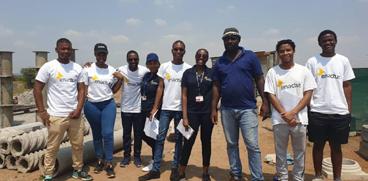
Enactus UP has partnered with the National Cleaner Production Centre of South Africa (NCPC) to form Project Phoenix, a community project that facilitates brick makers use of fly ash to produce costeffective bricks.
The benefits of the project in Mamelodi are manifold, the first being the reduction of fly ash dumped in landfills. Fly ash, also known as coal ash, is a toxic byproduct from burning coal. Studies show that living near areas where fly ash is dumped increases risks of developing multiple health problems. It also has the potential to pollute water and damage wildlife, as it is swept up by wind or rain from dumping areas such as landfills.
Enactus UP’s project helps divert fly ash by using it to make bricks through their partnership with the NCPC. The NCPC link the Project Phoenix beneficiaries, the informal brick makers, to distributers of fly ash, one of which is Isowall. A distributer agreed to provide these beneficiaries in the Mamelodi areas with fly ash for free. Enactus UP’s role is to identify beneficiaries, introduce them to fly ash as a cost-effective method of brick making, and “[impart] skills that will enable sustainable progress,” according to Enactus UP.
When fly ash is used to make bricks, not only does it divert tons of harmful waste away from landfills, but the bricks are also cheaper and of an equal quality to normal bricks. The average price of one brick is R7,00, but using fly ash, the bricks cost R3,50 each. A case study from the project shows that one beneficiary, an informal brick maker, produced 30 000 bricks in a four month period using the ash, saving over R100 000. Not only was the beneficiary able to open a new plant as a result and add three employees, but 408 tons of coal ash were diverted from landfills. 167 000 tons of greenhouse gas emissions have also been reduced in the process, as the energy required
to produce products using raw materials is much higher than recycling.
Enactus UP aim to impart the skill of brick making using fly ash, along with financial literacy training, and brick testing at testing facilities. Another goal of the project is to help formalise informal brick makers in order for them to compete with bigger companies, like Vibro. As of 2019, the project report confirms that six families rely on the income earned by the project’s beneficiaries every month, who were previously at serious risk of unemployment. This project has helped equip previously unemployed young men with skills and employment, as well as one woman and rural men who own brick making businesses.
Project Phoenix falls under four of the 17 United Nations Sustainable Development Goals: Decent Work and Economic Growth, Industry, Innovation, and Infrastructure, Sustainable Cities and Communities, and Partnerships for the goals. “Addressing these goals means we are also playing a vital role in the progress of the country,” says Enactus UP. According to the South African SDG Hub, “the SDGs are a universal call to form partnerships to end poverty, protect the planet and ensure that all people enjoy peace and prosperity.”
South Africa adopted the 2030 Agenda for Sustainable Development Goals and SDGs in 2015, which “integrates in a balanced manner the three dimensions of sustainable development – economic, social and environmental,” according to the European Commission, a branch of the European Union. Environmental sustainability is a critical issue listed in the SDGs, and Enactus UP is not the only student initiative at UP tackling it.
Greenline is a UP society that aims to “raise awareness, educate and most importantly engage with students and communities on environmental issues and potential solutions,” says Connor Smith, chairperson of the society. This is done through events with guest speakers that engage with the UP community on environmental issues as
well as solutions, and activities such as the upcoming Arbour Week in September. This week comprises of daily events concentrated on environmental issues, a movie night, and a tree planting to honour Arbour Month. Greenline also works with UP’s Department of Facilities Management in implementing projects aimed at environmental sustainability, one of which includes waste recycling. Waste thrown away by students into the UP dustbins on campus is sorted, and any recyclable waste is transported to a recycling plant. This year alone, UP has recycled 89 tons of waste.
Smith advises students who wish to get involved in eco-friendly related activities to ask their residence house committee’s Community Engagement Officer about their green initiatives, and for students who are not in a residence, to approach communities outside UP include organisations like Greenpop, 350Africa and Greenpeace Africa. Greenline plans to upload information regarding Arbour Week on the society’s social media, and Smith suggests following “The Greenline” and “thegreenlineup” on Facebook and Instagram respectively in order to find the information. “Any member of the UP community is welcome at any Greenline event,” he added, explaining that students do not need to be members to attend their events.
SRC’s Green Game Plan: a proposed project
In line with UP’s involvement with environmental sustainability projects, David Kabwa, President of the SRC, said that the SRC’s ‘The Green Game Plan’ is a large part of their role in environmental sustainability. Some of the many objectives of the proposed project include planting Spekboom, which naturally remove carbon dioxide from the atmosphere, creating compost areas to sustainably dispose of vegetable waste and maintain the Spekboom areas, implementing environmentally friendly light bulbs in study centres and solar power charging stations, as well as education programmes for students and symposiums at the Future Africa campus. The project is awaiting approval, but promises to bring a significant and positive improvement to UP’s eco-friendliness. Other opportunities to get involved are offered by the United Nations Association of South Africa (UNASA) UP, a society that is dedicated to furthering the SDGs. With multiple events throughout the year as well as projects offering volunteering opportunities, UNASA forms a large part of the already flourishing community of UP students and staff that are working to make a positive impact on the environment, as well as furthering economic, social and environmental SGDs in the wider community of Pretoria, and South Africa at large.






Cassidy Bessa and Sam Mukwamu
It’s that time of the year where the Kopanong Student Arts Festival is upon us once again.
The festival will take place from 22 to 27 of July 2019, and is hosted by the drama department. The aim of the week long festival is to showcase young artists in performing arts such as theatre productions and short films. This exciting event promises to have an amazing and diverse lineup. Plays such as, Black is Beautiful, Nomme, The Magnificent 7 and Pynk Lipstick will be performed throughout the week, with most shows having at most three performances. The shows are relatable to students and highlight some very important issues that currently form our society. PDBY spoke to the director of Pynk Lipstick, Madzanga Sikhitha, who was able to clarify exactly what you can expect from the festival.
1) Many of the performances that will be shown on stage seem to be about very hard hitting and important topics, such as those dealing with mental health and unemployment. How important is it that there is diversity within your festival?
I think diversity is very important, because our festival-goers are from varying backgrounds, and it’s important that when they come to this festival they see themselves represented, and they see their issues put up onstage. Also, not just for our goers, but also for our artists to be able to have a platform where they can have their issues that are essential to their hearts or that are close and important to them to be showcased at a festival like this.
2) The festival is marketed incredibly well, and one can see that lots of time was put in to create the extensive programme. How did you find the planning of this event and how long did it take?
In terms of marketing it was a bit of a stretch, because I believe that we didn’t really have as much time as we liked to really get the word out. But I found that our marketing was very enthusiastic though. So, we just went about the business of spreading the word as best as we
could. In terms of planning as directors, and even as the department, because Kopanong is a department kind of festival, everything kind of stops when Kopanong happens. There are no lectures that happen, so as a department I think we all tried our best to really put the work in. Our directors start working on their shows maybe two, three months ahead of time. We have first years who help us with tech, you know, moving sets around on stage. Because some Kopanong artists are showcasing their shows for exams, depending on which year we’re at, [the lecturers] will come in and help us with constructive criticism for our shows.
3) The festival includes physical theatre, comedy and musical theatre and aims to show off individual artists’ talents. How do you make sure that the performances are ones that are not only interesting to an audience, but that also allow the artist freedom of expression?
I really believe that Kopanong as a festival, as a brand, really takes pride in the fact that they put an artists’ expression above all else. There is not really much that is not allowed. Obviously there are things that you can’t say, like hate speech. They’re very passionate about letting artists say what they need to say, and give them the platform that they need. The process of getting the artists to have this space to express themselves is easily available.
4) Your festival includes students from UP, Oakfields, TUT, UCKR as well as other, independent artists. As your performances are geared to a young audience (or those young at heart), how do you make sure that the performances are geared at your target audience?
I don’t think it’s ever been a problem. As far as I’ve seen, a lot of the festival goers are young people, and many of the people that do come to Kopanong are young people themselves. So, many of the students that do come from TUT and Oakfields are around the same age as us, so second year, third year and honours, so I think it’s easier for them to relate to us and be able to spread their message without it being difficult on
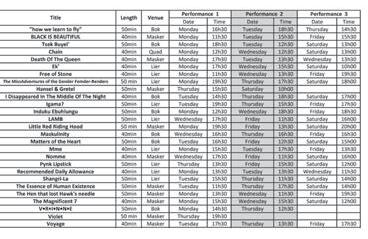
their part.
5) The festival is a place for up and coming writers, performers and directors to show their talent in a professional setting. What do you hope these young artists will get out of this experience?
I really hope young artists are given the opportunity to explore with their art. I think that is the most important thing about Kopanong. It gives young directors a chance to establish themselves in the world and they get to really just play around with what they want their image to look like. It’s a very free space. So, not only does it allow people to perfect their craft, but it’s also just a safety net for people to be able to make their mistakes, but also move on. I hope artists are able to learn, but also to just explore and have fun with the process.
6) You are the director of Pynk Lipstick, one of the plays being performed. Can you tell us a little bit about the concept of the play and what it is about?
Pynk Lipstick is about two girls who have a romantic past, and one of them is an up and coming theatre performer, the other one is a chemistry graduate. The chemistry
graduate comes all the way to come see her ex-girlfriend’s show after two years of them not communicating. The whole paly is centred around finding out what this girl’s intentions are and them trying to unearth what lead to their breakup, because it was never specifically stated why, so it’s more about closure. [The show] really delves into topics like how women in same sex relationships get to navigate femininity and love, and the claim to womanhood.
7) As the director of such a production, how did you find the process of directing the play? Was it easy to work with the artists?
In terms of working with my cast, it has been an amazing experience. I’m working with people who are very talented, very eager to get a name for themselves, but also people who truly understand my vision as a director and want to help me bring that to life. In terms of putting together a script and making an executive decision on a script it was so stressful. It is so, so stressful. I think as a drama student myself, it’s fun for when you’re the actor, if something is not working out you can kind of step aside and look to your director to figure it out. But when you’re the director it’s on you and it has to be done right there and then.
Ammaarah Mookadam
Modirwa Mercy Mathiba is a third year LLB student, musician and singer with his work just a click away on Apple Music, Spotify and YouTube. Modirwa released his EP in May titled Mercy “I chose the name they called me in high school when I wrote most of the songs that’s on there”, said Modirwa. He went on to say “It’s also when I truly saw violence towards me and my sisters. It’s a word that represents a lot of points in my life. I fell in love for the first time and got introduced to traditional music and jazz, which is one of the biggest influences on the EP.” Mercy is a “collection of voice notes, jazz chords and bedroom pop and funk. This is fused together by a thread of Mmapadi (Pedi tribal music).”
The main motifs of the EP are child abuse, women empowerment, first love and African stories of futurism and Pedi culture. But the overall theme is much darker – “ Mercy is how dark life can be for a boy even during the brightest of days. It’s about this boy who is the school’s academic trophy, the church’s music trophy and the family trophy son but he’s contemplating suicide. He is the shining sun to everyone else but in the darkness of his melancholy.” Modirwa further adds that “the biggest message is to care about children. To care about people. Just care. I was violently beaten as a child growing up. I was abused physically and verbally each week. It came to the point where I had no clothes or food. I was underweight and always writing and working, and nobody cared.”
Modirwa explained how he established his music on platforms like Apple Music, Spotify and YouTube: “Independently. I found a distributor (and there are many in Pretoria) and published it. It’s a very easy process.” On describing his music writing process, Modirwa also takes the easy route; “I start on the guitar, write the chords. I write what I feel as a poem to the music. Then I rearrange it into a
song. Then call my friends over to listen and brag about it.” But there’s nothing to brag behind his inspiration of what got him to start making music. Modirwa sheds some vulnerability when he explains that he used to feel “afraid to say how I feel. I decided to write it down and sing what I feel. I need a balance in my life but that’s a little different for me because creating is my outlet. So my balance is getting the creation done. Once it’s done, and once it’s out there, I can focus on life again.”
He draws his musical inspirations from Laura Mvula, Solange, Aurora and Nina Simone. As much as he loves their music, Modirwa describes singing his own songs instead of covers as “breathing for the first time every time I perform. You just feel free of your emotions and they no longer become you.” But with being so close to flying out of UP and finishing his degree, Modirwa has no upcoming events planned. As he said that his balance in life, and in his studies, relies on the creative outlet of making music so he started a YouTube channel, Modirwa: The Artist – “that’s where I post updates on my music. More subscribers mean more music sponsorship, so follow me on there.”
Tebogo Mamatu
Zeney Van der Walt
Sokwakhana Zazini
Carina Horn
Tatjana Schoenmaker
Kaylene Corbett
Damian Muller
Owen Diesel
Naldo le Roux
Yvonne Kok
Frederik du Toit
Jonathan Ham
Luca Govetto
Jacques du Toit
Pieter Kok
Daniel Wepener
Shaun Johnston
Michaela Robinson
Mariesa Potgieter
ResisprintMeeting
Pro Athlé tour meeting
World Student Games
he UP athletes have been busy throughout the June/July holidays racing to their best ability and focusing on their specific sports. Athletes like Tebogo Mamatu won the 100m race with a very fast time of 11.04 seconds during the 40th ResisprintMeeting in Switzerland on 30 June. Mamatu is now the second fastest South African female sprinter, just after Carina Horn who clocked a time of 10.98 seconds in Doha last year. At the World Student Games held in Italy, Zeney Van der Walt won a silver medal in the 400m-hurdle race with a time of 55.73 seconds. Van der Walt ran a season’s best despite placing second and is edging closer to the qualification time of the Tokyo Olympic Games. In order to qualify, Van der Walt will have to reach a time of 54.70 seconds. Van der Walt also managed to achieve a unique record of winning a medal at each major championship she has competed in over the last three years.
Another 400m-hurdler also won a silver medal at the World Student Games. Sokwakhana Zazini dipped under the 49 second mark for the first time making a time of 48.73, therefore setting a new African and South African junior record. Zazini is also the ninth fastest this season in senior international athletics.
Carina Horn competed in Sotteville Les Rouen, France on 16 July in an international meet. Horn competed in the 100m-race and won with a time of 11.14 seconds. Horn is trying to qualify for the World Championships in Doha and in order for her to do this she must clock a time of 11.10 seconds or less.


At TuksSwimming, Tatjana Schoenmaker impresses once again in an international competition by winning the 100m and 200m-breaststroke at the World Student Games held in Napoli, Italy in early July. Schoenmaker won the 100m-breaststroke in a time of 1:06.42 which is a new African and South African record. Schoenmaker also won the 200m-breaststroke with a time of 2:22.92. This is the second time she managed to pull off a unique double win at an international gala. She previously also achieved this at the Commonwealth Games in 2018. Schoenmaker will also be competing at the World Aquatics Championships held in Korea on 23 to 24 July.
Another Tuks swimmer, Kaylene Corbett, also competed well at the World Student Games. Corbett finished fourth in the 200m-breaststroke with a time of 2:24.93. The qualification standard for Olympic qualification is a time of 2:25.52 and Corbett successfully managed to fall in the right qualification time. Both Schoenmaker and Corbett have qualified for Tokyo Olympic Games in 2020 after their spectacular performances at the World Student Games.


The recently new TuksYachting club competed at the Intervarsity Yachting Regatta which was held at Durban’s Point Yacht club from 7 to 10 July. The Intervarsity Yachting Regatta was bigger than ever this year with 13 teams from six universities and therefore the challenge to win was big for UP. UP previously won this tournament in 2018 and was determined to do it again this year. They sent two teams to the Regatta and only managed to finish second, just after UCT. The UP A team managed to win all of their races over the three days and only stumbled when they raced against UCT. It was a close race with UP right on UCT’s tail. There were a few opportunities to overtake UCT, but UCT sailed strong enough to stay ahead and take the win. The final group race of the UP team’s was against UKZN, where UP won by the tightest of margins.
There was a scheduled final battle which would determine the winner of the whole tournament. UP and UCT were supposed to race against each other again to determine the winners, but unfortunately the wind did not allow the final battle to happen and therefore UCT became the winners since they had the most wins throughout the group stage races. The six sailors in the UP A team were Damian Muller, Owen Diesel, Naldo le Roux, Yvonne Kok, Frederik du Toit and Jonathan Ham. The six sailors in the B team were Luca Govetto, Jacques du Toit, Pieter Kok, Daniel Wepener, Shaun Johnston and Michaela Robinson.
Their next major event where TuksYachting will participate is the USSA tournament held in the Western Cape in December.
Ntokozo Zondo
TuksKarate recently competed in the African Karate Championships which was held in Gaborone. The competition is a qualifier event for the Olympic Games taking place in 2020 in Tokyo, karateka Meghan Booyens a coach for TuksKarate emerged from the tournament with a bronze medal in the over 68kg kumite category. The significance of this accomplishment for Booyens is that it provided a 450-point increase in ranking points. Booyens previously competed in the African Championships in 2018 where she earned a bronze medal in her category. During the first match, Booyens emerged with an 8-0 victory against Sanae Amirouch a Morrocan karateka. In the semi-final Booyens lost by three points to Blandine Angama a Cameroonian karateka. In the bronze medal final Booyens faced off against Irene Bechance a Mozambiquean karateka and emerged with the bronze medal with a score of 7-2 during the match. Booyens will be participating in the following upcoming international competitions: African Games in Rabat taking place from 16th August to 30th August, Premier league Tournament in Tokyo taking place during the month of September.
South African karatekas produced four bronze medals from the tournament and bronze medals in their respective kumite categories.