PDBY PDBY

Breaking Barriers: The Inspiring Journey of Relebogile Mashile

“Smile, You’re on Camera” Changing the Game: How Tuks Ladies Are Inspiring the Next Generation Purple Placards to Empty Promises: Where Is The Update?




Breaking Barriers: The Inspiring Journey of Relebogile Mashile
“Smile, You’re on Camera” Changing the Game: How Tuks Ladies Are Inspiring the Next Generation Purple Placards to Empty Promises: Where Is The Update?
Gil Hood
In recent years society has made enormous strides in acknowledging and rightfully condemning violence against women; the 16 Days of Activism and the Woman For Change’s purple movement come to mind.
This paradigm shift is worth celebrating. Women are often victims of physical, sexual and emotional violence yet it raises an uncomfortable question:
Why is this violence against men still justified, normalised and often portrayed as humorous? Not only in films and television, but increasingly in online culture?
This is not an argument that men face higher rates of gender-based violence (as that would be blatantly untrue); or an argument made to diminish the epidemic women face in South Africa. Rather, it asks whether our commitment to ending violence in all its forms should depend on the gender of the victim.
Violence against men is often treated as a source of entertainment or the punchline of a joke. Popular hashtags such as #ihatemybf and the “that boy is corrupt” trend.
Examples where a man is slapped by a woman after taking a shot to Sabrina Carpenter’s song “Nobody’s Son”, together with reverse trends in which women become the victims, such as #ihatemygf, are fundamental in analysing the normalisation of violence on social media.
The public’s reaction is often different revealing a clear double standard. When a man gets slapped and is posted on TikTok comments reacted with phrases such as “that was so mean! Do it again !!”, “he fell in love” or “thank you”. Although these trends are viewed as harmless or as “women in male dominated fields “(as a commenter posted), it reveals an underlying thought: When a victim is male, their complaints of violence are taken less serious or not serious at all.
This toxic pattern is not only confined to social media. Consider the 2011 movie Horrible Bosses where Dr Julia Harris (Jennifer Aniston) constantly sexually harasses Dale (Charlie Day). Rather than treating his complaints seriously, the film often presents his discomfort as humorous with other male characters reacting with confusion to his complaints. Although this harassment is resolved by the end of the film, the treatment of his situation as less dire or less important than Nick (his friend) not receiving a promotion is upsetting. The humour comes not only from the harassment itself but the age-old narrative that men should welcome unwanted sexual attention from a woman. In the hit TV-show, Brooklyn Nine-Nine, Gina Linetti frequently makes uncomfortable advances towards Sergeant Terry Jeffords, with the behaviour being framed as comedic even if it crosses personal boundaries. Comparatively the season 6, episode “He said, she said” treats Keri
sexual harassment from her male employer with complete seriousness, this contrast raises an important question: “If a sitcom like Brooklynn Nine-Nine can rightfully take itself serious when addressing sexual harassment women face, why is the same seriousness not afforded when the victim is male?”
Unfortunately, this narrative is not only fiction, take the case of Mary Kay Letourneau, where a twelve-yearold student, Vili Fulaau, was sexually abused and later married his thirty-four-year-old teacher. While this abuse was undeniably criminal, much of the public’s reaction framed the child as “lucky” rather than recognising him as a victim. Saturday Night Live (SNL) even produced a sketch around the cultural trope surrounding the case. Pete Davidson played a sixteen-year-old student who was sexually abused by his thirty-two-year-old teacher and later bragged about how lucky he was to receive such attention.
Canadian American psychologist Albert Bandura, whose work has had a profound influence on criminology, argued through his Social Learning Theory that people learn acceptable behaviour by observing others and the consequences of their actions. This does not mean that film or social media are direct causes of crime. However, when female-on-male violence is constantly rewarded with laughter or praise; audiences might gradually come to perceive violence against men as less serious than violence against women. If we accept that the media, in all its forms, can challenge and reform violence against women, it is equally worth asking whether repeated portrayals of abuse against men as humorous may shape the public’s perception of male victimisation. The problem in this equation is not solely the reaction of the public or the abusers of these men but rather society’s system of toxic masculinity. In the 2021 paper, Absent voices, South-African social work researcher Mankwana Othilia Kgatle, best known for her work on intimate partner violence (IPV), particularly violence against men, pointed out that men often don’t seek help after experiencing violence at the hands of a woman due to a fear of being ridiculed, anticipated disbelief, and societal expectations of masculinity. This finding is reinforced by a participant’s observation that he had “never seen an organisation supporting male victims being advertised on TV”, highlighting the limited visibility of support services available to men. According to the U.S. Centres for Disease Control and Prevention (CDC),
approximately one in six men will experience contact sexual violence, physical violence, or stalking by an intimate partner during their lifetime. Although this is much lower than the approximately one in three women who experience similar forms of violence, it represents millions of victims whose experiences should not be trivialised or dismissed.
As men we have a responsibility to challenge the very culture that discourages vulnerability. Too often male victims are told to “man up”, laugh off abuse or accept and participate in violence as it’s “what boys do”. Furthermore, it’s also society’s responsibility to acknowledge that abuse, in any form to anyone, isn’t a tool for humour or a “trend” to get views from. It is a reality that many face and often goes unreported or unacknowledged.
Violence can’t only be taken seriously only when a victim fits our expectations. If our goal is to build a society that rejects abuse, that commitment should remain constant regardless of who suffers it.


Tel: (012) 420 6597
Editorial
Editor-in-chief carel.willemse@up.ac.za
Carel Willemse @Ed_in_Chief
Editor editor@pdby.co.za
Domonique Bennetts @pdbymedia
Deputy Editor digitalmanager@pdby.co.za
Jason Visser
News news@pdby.co.za
Relebogile Manana
Features features@pdby.co.za
Gabriella Hobson
Entertainment entertainment@pdby.co.za
Cara Heymans
Sport sport@pdby.co.za
Neo Paledi

layout@pdby.co.za
Web webeditor@pdby.co.za
Sivenathi Makhanda
Ngulube

PDBY appreciates that freedom of speech is an inalienable right enshrined in the Constitution of the Republic South Africa. We encourage our readers to engage in discussion and debate on issues that affect them through letters to the Editor, comments on our website, tweets, or posts on Facebook. We ask our readers to keep the following in mind:
1. PDBY will not edit letters, comments, tweets, or Facebook posts in any way.
2. PDBY will label letters, comments, tweets, or Facebook posts as opinion. These do not represent the views of PDBY in any way.
3. The PDBY editorial must approve letters, comments, tweets, or Facebook posts before they are published.
4. PDBY will not publish letters, comments, tweets, or Facebook posts that are defamatory, or libelous, or that contain offensive content.
5. PDBY reserves the right to practice discretion when publishing letters, comments, tweets, or Facebook posts.
6. PDBY reserves the right to publish any content we receive unless the sender specifically requests otherwise.
7. PDBY reserves the right to retract a letter, comment, tweet, or Facebook post after it has been published.
8. PDBY will not accept responsibility for any consequences the author of a letter, comments, tweets, or Facebook posts may experience as a result of the letter being published.
9. PDBY will only publish letters between 150 and 200 words.
10. PDBY will not publish letters unless the writer confirms their full name, student number and contact number. PDBY will not publish this information, we need it for our records.
Phiri
Lutricia
As we celebrate Women’s Day – a day of honouring the resilience, brilliance, and leadership of women who refuse to be defined by limitations – we are reminded of the saying, "Behind every successful woman is herself.” PDBY sat down with Relebogile Mashile, a powerhouse Chartered Accountant (SA) and Senior Lecturer in the Department of Accounting at the University of Pretoria. She is also a trailblazer in the International Federation of Accountants (IFAC) Young Leaders Collective. From dusty rural roads in Mpumalanga to the corridors of academia and global leadership platforms, her story is proof that dreams, when fuelled by grit and purpose, can rewrite destinies.
Roots and Role Models
When asked what it took to rise so high, Mashile smiled with a mix of gratitude and quiet pride. Her story begins in Acornhoek, Bushbuckridge, where her mother, her first and most enduring role model, instilled in her the power of education, the dignity of hard work, and the non-negotiable value of integrity.
Numbers and problem-solving captured her heart early on, and perceptive teachers fanned that spark into a flame. “My journey has been shaped by a combination of grace, determination, discipline, and unwavering support,” she reflects, adding that curiosity and a hunger for learning have been her compass.
A Leader in the Making
By the time she was in high school, her ambitions had a clear shape. In her matric year, she wore two hats, diligent scholar and SRC president, mastering the delicate balance between leadership and academic excellence. The experience sharpened her decision-making skills and taught her about the weight of representing other people’s voices. Her efforts earned her a spot among Mpumalanga’s top ten matriculants, and she stepped into university life with her eyes set firmly on becoming a chartered accountant. Overcoming the Hurdles
But even the most determined journeys face storms. For Mashile, self-doubt sometimes whispered that she did not belong. Financial constraints threatened to stall her progress, but sponsors who believed in her potential kept her dream alive. The transition from rural schooling to the fast-paced, high-pressure university environment was overwhelming, with a sudden whirlwind of lectures, assessments, and expectations.
And just when she thought she was nearing the finish line, a setback came: having to rewrite her second board
exam. Many would have crumbled, but she leaned into resilience, faith, and her support network. “Each challenge taught me resilience, time management, and the importance of a strong support system,” she says.
The Power of Mentorship
Some chapters of her story are written in the ink of gratitude. Her late grandmother and mother remain her lifelong inspirations. She also honours the teachers who went far beyond the call of duty, mentors from her university years, and senior colleagues who lead with both excellence and compassion. For her, mentorship is not a one-way street but a cycle of empowerment, each woman lifting each other higher.
Staying True to Herself
At the core of Mashile’s success is an unshakable commitment to authenticity. “I believe in giving my best at all times, being true to my values, and not shying away from opportunities that challenge my growth,” she says. Stepping outside of her comfort zone has not only built her career, but also her confidence, proving that courage grows in the spaces where comfort ends.
Advice for the Next Generation
To the ambitious 18-year-old ready to take on the world, her advice is clear: define success for yourself, build discipline like a muscle, and develop skills beyond your textbooks, such as leadership and financial literacy. “Seek mentors, ask questions, and be willing to learn from others’ experiences,” she urges. “Your network, if built on trust and respect, will be one of your greatest assets.”
Lessons from Her Twenties
Reflecting on her own twenties, she describes them as a decade of stretching, stumbling, and soaring. She encourages young women to say yes to opportunities that scare them, because that is where growth lives. Protect your mental and physical health, she advises, and never confuse a setback with failure. “Comparison steals joy, and your path is uniquely yours,” she reminds.
A Women’s Day Message
As Women’s Day calls for unity, boldness, and the amplification of women’s voices, Mashile’s message rings clear: “Being women requires us to stand firm,” she says. “It’s about knowing you are enough, that your voice matters, and never underestimating the power of your story. Support other women, celebrate their wins, and create spaces where more voices can be heard. When women stand together, we create change that benefits entire communities and future generations.”
Mpho Mahlangu
In South Africa, a rape is reported approximately every 12 minutes. That is more than just a statistic. It is one person stripped of their basic human rights, one person whose body was violated, and one more life forever changed by a crisis that continues to plague the country.
According to the South African Police Service (SAPS), more than 42 500 rape cases were reported during the 2023/24 financial year. Experts and advocacy organisations, including Rape Crisis Cape Town Trust, caution that this figure represents only reported cases, with many survivors never reporting their assault due to shame, intimidation, or a lack of confidence in the justice system.
In a country where coercion is often mistaken for consent, understanding what consent truly means has never been more important. Consent is not a "maybe". It is not silence. It is not giving in after someone repeatedly begs or refuses to take no for an answer. Consent is a clear, voluntary, enthusiastic, and ongoing agreement between people to engage in sexual activity and consent can be withdrawn anytime.
Consent goes beyond spoken words. Body language matters too. Someone who freezes, pulls away, avoids eye contact, cries, looks uncomfortable, or appears frightened is not communicating consent. Likewise, a person who is asleep, unconscious, intoxicated, or otherwise unable to make informed decisions cannot consent. Consent must be freely given, not forced through fear, guilt, manipulation, or persistence.
No one has ownership over another person's body, regardless of the nature of their relationship. However, research consistently shows that many survivors are assaulted by people they know, including intimate partners, friends, and family members.
The World Health Organisation estimates that approximately one in three women globally
experiences sexual violence in their lifetime, most often at the hands of someone they know. Many survivors also carry the burden of the assault. Questions about what they were wearing, whether they had been drinking alcohol, why they were walking alone, why they trusted the person, or why they did not "fight back" often replace questions directed at the perpetrator. This culture of victimblaming shifts responsibility away from those who commit sexual violence and reinforce harmful myths that clothing, alcohol consumption, friendliness, or previous relationships somehow imply consent. They do not. Manipulating someone into doing what you want is not consent, it is abuse.
In an interview with PDBY, one anonymous student shared, "To be a woman is to enter every room with suspicion, as your eyes wander around seeking comfort in a space that could most likely become your crime scene.”
PDBY spoke to more than ten UP students, many of whom shared experiences of sexual harassment in different forms. Some described being catcalled, followed, touched without permission, or repeatedly pressured after refusing unwanted advances. Others said that they no longer feel safe in spaces that should offer security, including university campuses, residences, churches, apartment buildings, and even their own homes. Several students expressed that, even after clearly refusing, their boundaries were ignored.
Balungile Mhlanga, a second-year Political Science student, said "There is no safe space. We are vulnerable. We are silenced."
These stories reveal a painful truth that women are expected to change their behaviour instead of society confronting those who violate them. Sexual violence continues because rape is not caused by women's choices. It is caused by perpetrators choosing to ignore consent.
Kofi Donkor
Throughout the first half of 2026, anti-immigration sentiments have been developing within the country. Many South Africans place the blame on illegal immigrants for a lot of the country’s shortcomings – particularly crime, unemployment rates, and overcrowding in the health and education sector. Tensions came to a head on 30 June when the deadline, which was declared by anti-immigration groups, approached for foreign nationals to return to their home countries. On this day, thousands of frustrated South Africans marched throughout the country in what were supposed to be peaceful protests, urging foreign nationals to return to their home countries. Proponents of the anti-immigration movement have also called for the government to become more pro-active in resolving the alleged crisis of illegal immigration.
One of the most prominent figures influencing the rise of the anti-immigration movement within the country is Jacinta Ngobese-Zuma, the leader and founder of the March and March movement. According to their website, March and March is a citizen-led organisation that advocates for stronger immigration enforcement within South Africa and is largely concerned with issues of employment competition and access to public services. In the weeks leading up to the protests, Ngobese-Zuma has reiterated her stance on undocumented immigrants. In several interviews, she claimed that undocumented foreign nationals are responsible for the infiltration of drugs within South African communities, as well as overcrowded healthcare facilities. She also alleged that South African parents are unable to secure spots in schools for their children due to space being taken up by the children of illegal immigrants. In an interview with IOL, she explained that March and March wants undocumented immigrants to return to their home countries so that the country’s limited resources can benefit poor and vulnerable South African citizens.
During a March and March media briefing in May, Ngobese-Zuma claimed that the organisation acts as a “voice for the voiceless”, specifying that March and March speaks out for victims of crimes perpetrated by foreign nationals. She goes on to urge the government to act against supposed Nigerian drug lords operating within the country, as well as cartels allegedly run by Somalians, Pakistanis, and Ethiopians, detailing the existence of “spaza shop mafias” within local communities. Additionally, Ngobese-Zuma said that South Africa is being “invaded” and that locals have become “refugees in their own country”, going as far as to demand that a state of emergency be declared to combat this supposed invasion. She also claimed that a majority of foreign nationals within the country are not real refugees. Instead, she described them as economic migrants that seek to abuse South Africa’s laws, claiming that they have overrun the informal economy and colluded with Home Affairs officials to create fraudulent documents that allow more illegal immigrants into the country.
businesses within the CBD. She also said that lower income jobs, particularly food delivery drivers, should be reserved for South Africans and that foreign nationals should not be permitted to take up such jobs.
Regarding the reservation of jobs, she demanded that legislation be passed to bar foreign nationals from participating within the township economy, demanding that only South African small businesses be allowed to. Finally, she called for stricter border control and the mass deportation of all illegal immigrants, saying that said immigrants must be forced to pay for their own deportation to discourage them from returning. She concluded by reiterating that March and March’s demands must be met by 30 June.
Another notable figure within the realm of anti-immigration is Nkosikhona "Phakel’umthakathi" Ndabandaba, a traditional leader and staunch supporter and member of March and March. Ndabandaba is responsible for leading many marches throughout Durban, Pretoria, and Johannesburg, and he is often steeped in controversy, coming across as less diplomatic than Ngobese-Zuma. Throughout several interviews, Ndabandaba has reiterated the peaceful nature of the movement, detailing that the call to remove illegal immigrants is not a call to violence.
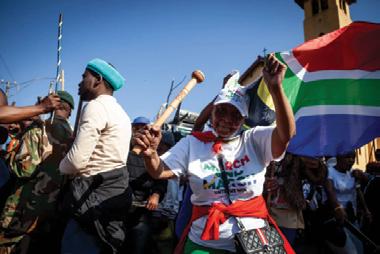
Photo: Sourced
She placed emphasis on the supposed abundance of foreign nationals operating within the economy, claiming that the township economy has been “hijacked” by Somalians, Pakistanis, and Ethiopians. Ngobese-Zuma claimed that in Durban, over 340 permits have been awarded to foreign nationals, allowing them to operate their
However, it should be noted that footage exists that captures Ndabandaba slapping an adult man during a protest. When confronted with the footage during an interview with Eyewitness News, Ndabandaba claimed that the footage is AI generated. Additionally, Ndabandaba faced criticism for leading a crowd that was chanting a song that translates to “Shangaan person, get out of the way”. “Shangaan” refers to an ethnic group largely found within South Africa and its neighbouring countries. Oftentimes, the term is also used to refer to those belonging to the Tsonga ethnic group. This chant raised concerns over the tribalistic undertones of Ndabandaba’s activism and March and March as a whole. When confronted about this, Ndabandaba said that Shangaan is not an insult and that people should stop being sensitive about it. In the build-up to the 30 June deadline, tensions rose. The frequency of protests increased and various reports were lodged regarding some protesters going door-todoor demanding immigration documents and forcibly removing immigrants from their homes. Within Alexandra, a township in Johannesburg, protesters were seen breaking into homes where they believed undocumented foreigners had resided. Once found, the alleged illegal immigrants were taken to nearby police vans and driven away. This included a woman and small child from Malawi. Total Mhlanga, a Zimbabwean national, was “arrested” by protesters despite being in the country legally. Protesters had also taken it upon themselves to conduct inspections within local businesses, visiting factories where foreign nationals were employed and forcing spaza shops owned by foreign nationals to close. Furthermore, meetings with managers of nearby businesses were held, urging them to prioritise hiring South African citizens over foreign nationals.
Several assaults took place during a march through Alexandra where residents
had broken into homes and interrogated street vendors. One man was allegedly beaten until he started bleeding. A woman selling food alongside her daughter was harassed as marchers determined that she was foreign based on her accent. They subsequently tore her stall down, threw her pots on the pavement, confiscated her table, and warned her not to return.
The violence continued as a man’s house was broken into after he was heard speaking Xitsonga by protesters. Morris Musa Mukhari, originally from Limpopo, was harassed and assaulted by protesters who demanded to see his identity documents to prove his citizenship. He said that his wife and child were also intimidated by protesters.
Similar violent events took place throughout the country leading up to the deadline. Both Ngobese-Zuma and Ndabandaba separated themselves from the perpetrators of these violent attacks, with Ngobese-Zuma explaining that these are vigilantes who are not associated with March and March, and Ndabandaba dubbing the looters as opportunists.
In an address on 7 June, President Cyril Ramaphosa responded to the rising tensions surrounding immigration throughout the country. The President warned against using immigrants as a scapegoat for the country’s problems and urged citizens to not take the law into their own hands. He acknowledged many of the frustrations surrounding the country’s economy and took cognisance of the fact that illegal immigration is still a problem that the government must undertake and resolve. Throughout the address, he emphasised the democratic basis of South Africa and promoted the welcoming of immigrants as the world becomes more globalised. He cited the constitutional principle of Ubuntu as a reason to welcome foreign nationals from different countries.
On 30 June, anti-immigration supporters mobilised throughout the country. Thousands of South Africans marched through the streets of the country’s major cities and smaller metropolitan areas. The marches remained largely peaceful, although there were incidents of looting and property damage, with several arrests taking place. Many small shops throughout the country had closed for the day, many had taken off work, and public transport had been limited. The police that were deployed for the protests had been able to largely keep the peace. One notable incident took place in Germiston in which protesters broke into a Tsonga family’s home. One of the daughters detail that protesters had called her father “ïKwerekwere”, a derogatory term used to refer to foreign nationals. She reported that her father was taken to a police van by protesters. When she exclaimed that her father was not a foreign national, protesters allegedly responded, “We don’t care, he is Tsonga.” She explained that there was substantial property damage to her home and that her sister was forcibly removed from the shower while she was naked.
As the marches calmed down, Ngobese-Zuma said that this was only the beginning, claiming that protests would take place every Thursday until undocumented immigrants are gone.
The growing sentiment around anti-immigration raises questions regarding whether South Africans are truly fighting the right enemy. Despite claims that the pushback is simply against undocumented foreigners and criminals, continuous violence has been perpetrated against individuals that simply appear foreign, regardless of whether they are legal citizens or not. Although anti-immigrant proponents deny allegations of xenophobia and Afrophobia, many immigrants find themselves treated as criminals long before proof of documentation is requested.
Londeka Mbokane and Mandilive Mbethe
The word ‘“feminism” conjures up a range of images for different people. Fortunately, within UP campuses, the true values of feminism take human embodiment within the women in leadership. Beyond the beauty and blazers, the leadership within various structures and societies further the cause, not of a matricarchy, but equality on the basis of merit and competence. This Women’s Month, PDBY interviewed them to determine the activism and politics that drive female leadership at UP.
Politics tends to be associated with a hypermasculine form of leadership and debate. House Humanities Chairperson Alwanduthando Hlabisa details that a considerate and constructive approach can also allow for an impactful engagement with others. However, this combination of compassion and empathy must not be confused with the false narrative that women are overtly emotional and incapable of making difficult executive decisions or leading effectively. Nyiko Mathe, Legal Shebeen Chairperson, further echoed these sentiments by saying that the misconception stems from women being associated with femininity, and femininity has often been equated to weakness. This begins with the belief in yourself, and that type of confidence subsequently translates into trust from the electorate. Leadership requires assertion, but when depicted by women, it can result in the label of being “dramatic” or “difficult”. However, the women at UP are challenging these stereotypes and producing meaningful results, as noted by TULIP Society Chairperson Tshiamo Mothapo. The reality is that the fight is not against the system but rather the injustices within the system, as UP&Out Chairperson Rethabile Mokhena remarked.
A consistent trend among the leaders was the concept of “legacy”. Chairperson of the Palestinian Solidarity Committee (PSC-UP) Ayesha Essop expressed an avoidance of the term “activism” as actions of basic human consideration should not be deemed as standout. Essop likens such actions to “a further stitch in the tapestry of work started by our predecessors and that will be continued by our successors” for the good of all. Fittingly, PSC-UP predecessor and current SRC Officer for Postgraduate and International Student Affairs Gulce Aksoy elaborated on the importance of legacy. Aksoy acknowledged that despite only one out of the five SRC executive members being a woman, the structure still maintains progressive values rooted in access, equity, and inclusivity. Lethabo Phahlane, SRC Treasurer, acknowledged her political legacy that values liberation and the meaningful participation of women as an EFFYC deployee.
The value of female leadership extends far beyond them demanding a seat at the table in order to satisfy diversity quotas, but rather proactive efforts by
helping shape society and the table itself. Phahlane remarks that this can be furthered by intentional alliances among female leaders through mentorship and collective advocacy because behind every great woman is another woman.
When asked who inspired their approaches to governance, a diverse spectrum of icons and revolutionaries were highlighted. For instance, Phahlane and Hlabisa praised the resilience and commitment to justice of Winnie Madikizela Mandela. Similarly, leaders such as Assata Shakur who lived and breathed for the causes in which they believed, fueled Essop’s drive. Sometimes, the rise despite adversity is needed, and Mokhena draws inspiration from Funeka Soldaat who channeled her trauma from homophobic violence into her fight for queer people. Other times, scrutiny requires intellectual leadership to best articulate your convictions in a well-informed manner as Mothapo leans on the diplomacy of Naledi Pandor.
Despite how eloquent these women are, their involvement and contributions to the UP community are the reasons why the electorate vouches for them.
This can be seen from Mathe’s support in the fight against GBV to Phahlane’s maintenance of the A Re Ageng Bokamoso Study Aid Fund through fundraising and sponsorship. Mothapo describes how this begins at grassroots level with actions as simple as assisting prospective students from disadvantaged backgrounds to apply to university at no cost. Such instances have changed the trajectory of two young women’s lives who are currently registered UP students. Moreover, Mokhena ensures that her society is educated about the multitude of UP resources at their disposal.
Essop shared similar sentiments, stressing the need for the adoption of the Transgender Protocol which has been shelved for five years now. The Transgender Protocol would further realise the safety needs and gender affirmation of transgender students. The requests directed at the UP Executive Body is to not let bureaucratic decision-making processes suppress the voices of students.
Improved institutional responses to GBV, sexual harassment, and policies relating to financial and academic concerns would greatly benefit female students. Moreover, an annual gathering of female leaders within the different structures to discuss the realities of and strategies for better governance would yield far greater productivity.
Ultimately, the women in leadership above recognised that their roles are not just about occupying a position. Rather, they are about serving the student population and enlarging the path for the next generation of female students. Womanhood is to be worn like a suit of armour in whatever form that takes. It is not a weakness, but rather the greatest strength.
Every August, Women’s Month places issues affecting women in the spotlight through awareness campaigns, public discussions, and institutional messages. Yet once the commemorations end, questions remain about what support exists for women during the rest of the year and whether those resources are visible to the people they are intended to serve.
At the University of Pretoria (UP), support for women extends beyond Women’s Month through a range of initiatives focused on gender justice, wellbeing, and prevention. However, the challenge is not only providing services but ensuring that students know where to find them and feel confident in accessing them when they need support.
The UP website describes the Centre for Sexualities, AIDS and Gender (CSA&G) as a multidisciplinary centre that promotes gender justice, social inclusion, human rights, and student wellbeing through research, education, advocacy, policy engagement, and student development. It says that the centre works across all nine faculties and collaborates with Student Affairs and other university support structures to create a safer, more inclusive campus environment.
According to the UP website, CSA&G offers educational programmes on consent, healthy relationships, sexual and reproductive health and rights, gender equality, and genderbased violence prevention throughout the year. The website also highlights initiatives such as peer education, leadership development, and awareness campaigns aimed at building a culture of inclusion rather than responding only after harm has occurred.
of sexual harassment and gender-based violence. He added that many students only seek support once their situations have become overwhelming, making ongoing awareness and early intervention essential.
He said that one of the biggest gaps is ensuring that students remain aware of available support throughout the year, including counselling services, reporting pathways, sexual and reproductive health resources, and programmes that promote gender justice.
Beyond awareness campaigns, Matsila said that CSA&G continues to facilitate initiatives such as the nine-week Just Leaders Programme, befriender training, anti-discrimination training, Trans Protocol training, and sexual and reproductive health and rights education.
Dr Pfarelo Matsila, researcher and project manager of the Just Leaders Programme at CSA&G, said that the increased visibility of Women’s Month is valuable but should not be mistaken for the entirety of the university’s work. “There is definitely a difference in visibility and energy during Women’s Month,” he said. “The challenge is ensuring that it translates into sustained action rather than temporary visibility.”
Matsila said that female students continue to face a range of challenges throughout the academic year, including financial pressure, demanding academic workloads, mental health concerns, and experiences
He said that these programmes are intended to build leadership, strengthen inclusion, and equip students with practical skills that extend beyond the classroom.
The UP website similarly states that supporting female students is a shared responsibility across the institution, involving collaboration between CSA&G, Student Affairs, Student Health Services, faculties, and other support structures. It notes that the university’s approach combines education, advocacy, prevention, and referrals to help students access appropriate support when needed. While the university outlines a range of year-round initiatives, awareness of those services may not always reach every student.
Ameerah Wanga, a postgraduate student at UP, said that she knows little about the university’s safety initiatives for women. “For me, the most important thing is to protect myself and be as safe as I possibly can,” Wanga said. “That means I don’t have to depend on UP to keep me safe, but I still expect the university to do its part if something happens.” Although Wanga stressed that she could only speak from her own experience, her comments reflect one of the challenges highlighted by Matsila: ensuring that students not only have access to support but also know it exists before they need it.
As Women’s Month approaches, the conversation extends beyond commemorating women through annual campaigns. It also raises broader questions about how universities sustain support, promote awareness, and create environments where women can participate, study, and lead with confidence throughout the academic year.
Mpho Mahlangu
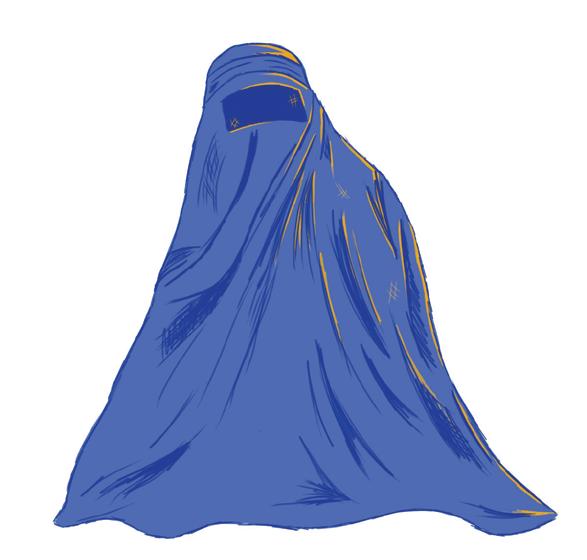
Imagine waking up one morning to discover that your future is no longer yours. Your degree has been cancelled because of your gender. You cannot leave or enter campus without permission from a male relative. Your voice cannot be heard in public. Your dreams are no longer measured by your ambition, but by someone else's idea of what a woman should be, and your presence is only tolerated if it is almost invisible. For millions of women and girls in Afghanistan, this is not fiction. It is everyday life.
Since the Taliban returned to power in 2021, Afghan women have watched decades of progress disappear through a series of decrees that have stripped away their rights. Girls are banned from secondary and higher education, women have been pushed out of most employment and public life, and restrictions continue to limit their movement, healthcare, and access to justice. UN Women describes Afghanistan as facing the world's most severe women's rights crisis, warning that the systematic exclusion of women is becoming dangerously normalised. For university students, it is difficult to imagine being told that your education has ended simply because you were born female. And yet, that reality is lived every day by thousands of Afghan women whose lecture halls have become locked gates and whose graduation ceremonies may never come.
To understand whether students at the University of Pretoria saw this as a distant issue or one worth caring about, PDBY conducted an Instagram poll asking, "In Afghanistan, many women are no longer allowed to attend university. Should this matter to students in South Africa?" An overwhelming 93% of respondents said yes, while only 7% disagreed. The results suggest something powerful: students understand that human rights cannot be viewed through borders alone. When education is denied to one group of women, it
becomes a warning to the rest of the world that rights can be taken away just as easily as they were won.
"Women's rights are human rights. If we only care when injustice happens in our own country, then we have already failed each other. Today's Afghanistan could become tomorrow's warning for another nation," Venus Nare, a final-year Political Science student, said. While it is tempting to see Afghanistan as an isolated tragedy, gender inequality is not confined by borders. It simply wears different faces.
Women in the US are confronting a different kind of regression. The overturning of constitutional abortion protections in 2022 allowed individual states to impose sweeping restrictions on reproductive healthcare. This is a reminder that rights once considered secure can still be rolled back. While American women continue to enjoy many freedoms unavailable to Afghan women, these developments reveal that gender equality is never guaranteed and it must constantly be defended.
Closer to home, South Africa tells another story. In 1956, more than 20 000 women marched to the Union Buildings to protest the Apartheid Pass Laws. They stood together with courage declaring, "You strike a woman, you strike a rock." Their march became one of the defining moments in South African history and laid the foundation for many of the rights women enjoy today. However, nearly 70 years later, South African women are constitutionally equal, but many are still not safe. Today, South Africa experiences one of the highest rates of gender-based violence and femicide in the world. Every headline about rape, intimate partner violence, or the murder of another woman raises an uncomfortable question: what good are rights on paper if women cannot exercise them safely?
The women of 1956 fought to be recognised as equal citizens. Today's generation is still fighting for
the simple right to live without fear. Another PDBY Instagram poll asked students what Women's Month means to them. While 38% viewed it as a time for celebrating progress, the majority believed that it is about continuing the fight for rights that are still denied. The poll reflects a generation that refuses to mistake progress for victory. Students recognise that while milestones deserve celebration, they cannot overshadow the realities that millions of women continue to face around the world.
Elsewhere on the African continent, inequality continues to take different forms. In the eastern Democratic Republic of the Congo, conflict has turned sexual violence into a weapon of war, leaving thousands of women and girls traumatised while many survivors struggle to access justice and healthcare. In Nigeria, child marriage, unequal educational opportunities, and gender-based violence continues to limit the potential of millions of girls despite ongoing advocacy and legal reforms. Although important progress has been made in Ghana, women continue to face barriers in political leadership and economic participation. Across many African societies, deeply rooted patriarchal traditions still influence who speaks, who leads, and who is expected to remain silent. For students, these stories should not simply be international
headlines scrolling across a phone screen between lectures. Universities are where future policymakers, lawyers, journalists, teachers, entrepreneurs, and activists are shaped. The conversations students have today will influence the societies they build tomorrow. The women who marched to the Union Buildings in 1956 did not march only for themselves. Afghan women who continue to seek education are not
gender-based violence in South Africa are not demanding justice only for themselves. They are all part of the same story. The fight for gender equality did not begin the US, and it will not end there either. Every time one woman loses her rights, the world is reminded that progress is never permanent. However, every time another woman refuses to stop fighting, the world is reminded
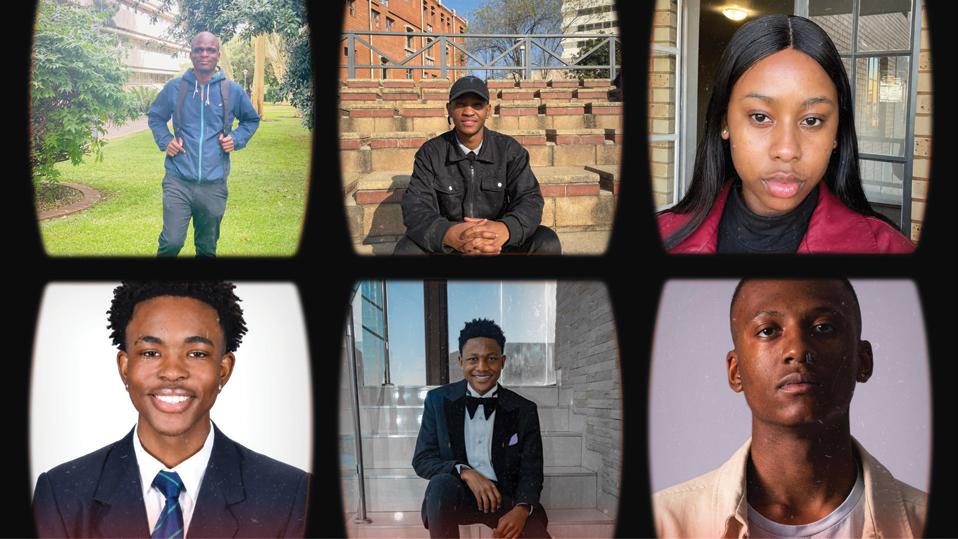
For Norton Ramavhoya, a BIS Honours student at the University of Pretoria, student entrepreneurship is about far more than making money. Through interviews with five student entrepreneurs from different academic disciplines, he explored how young people are balancing university life while building businesses with purpose.
Kelly Lesedi Lungu, a final-year Foundation Phase Teaching student and founder of The Muffin Plug, started baking to supplement her income. Inspired by her entrepreneurial parents, she hopes to one day attend pastry school and open her own bakery. "Just start with what you have," she advises, adding that discipline, consistency, and faith have been central to her journey. She believes that entrepreneurship has taught her resilience while balancing the demands of teaching practicals and running a business. Lungu also hopes that her future success will allow her to create opportunities for aspiring bakers who, like her, have talent but lack the financial means to pursue formal training.
For Nikita Mohlala, a BCom student majoring in Business Management and Taxation, entrepreneurship began by selling sweets in primary school. Today, his ambitions extend to real estate and business innovation. He believes young entrepreneurs should "talk to people who are already doing what you want to do", stressing collaboration over competition. Mohlala credits reading, networking, and continuous learning for shaping his entrepreneurial mindset from a young age. While balancing university and business remains challenging, he believes that education and entrepreneurship complement one another and provide a strong foundation for future success.
Third-year Mechanical Engineering student Malesela Ngoatje credits curiosity and surrounding himself with entrepreneurs for shaping his outlook. While funding and credibility remain significant challenges, he believes that action matters more than perfection. "A plan will always remain a plan until you execute it," he says. Ngoatje also views discipline
as something that means showing up consistently, even when circumstances are difficult, because others are watching and learning from your example. His long-term vision is to leave behind a legacy that empowers people to pursue their dreams regardless of their circumstances.
Njabulo Sithole, a BCom student, believes entrepreneurship develops resilience and independent thinking. Having started by selling sweets in primary school, he says success belongs "to the person who continues", encouraging students to learn through action rather than waiting until they feel ready. He hopes to build businesses that create lasting value while opening opportunities for others. For Sithole, success is measured not by wealth, but by the positive impact left on communities and the people around him.
Third-year Geology student Peter Legoabe draws inspiration from his humble upbringing and believes collaboration is essential for success. His advice to aspiring entrepreneurs is simple: "Just do it. Never mind the fear… look at what you love." Legoabe says that practical experience has been his greatest teacher, helping him develop confidence and perseverance despite the uncertainties of starting a business while studying. His ambition is to build an enduring legacy by creating products or systems that continue benefiting future generations long after his own career.
In an exclusive interview with PDBY, Ramavhoya said entrepreneurship empowers students to become "job creators rather than job seekers" while developing leadership, communication, and problem-solving skills. He believes that universities should be places where students discover purpose alongside earning qualifications and called for stronger support from universities, industry, and government to help student entrepreneurs succeed. Above all, he hopes that by sharing these stories, they will inspire more students to pursue ideas that create a lasting social and economic impact.
The University of Pretoria (UP) has been ranked first in South Africa for Employer Reputation in the QS World University Rankings 2026, climbing to 326th globally. While the ranking reflects how employers perceive UP graduates, it also raises a question for current students: what is behind that reputation, and how is the university preparing graduates for the world of work?
According to QS, the employer reputation indicator is based on feedback from employers and measures how they perceive graduates from universities around the world. Rather than focusing only on academic performance, it considers employers’ confidence in graduates’ skills, preparedness, and ability to succeed in the workplace.
At UP, that preparation extends beyond the lecture hall. The UP website says Career Services supports students throughout their studies by offering career guidance, employer engagement opportunities, career fairs, and resources designed to help students transition into employment. Among these are the Ready for Work Programme, employability workshops, annual career guides, and career development certificates, all aimed at equipping students with practical workplace skills alongside their academic qualifications.
Career Services manager Tando Tyakume said that the university’s employer reputation is built on a combination of academic excellence, strong industry partnerships, and a deliberate focus on graduate employability. She said that Career Services contributes by helping students develop workplace

skills, connect with employers, and better understand what is expected in professional environments.
According to Tyakume, Career Services maintains regular engagement with employers through recruitment activities, career fairs, advisory discussions, and industry partnerships. She said that feedback from employers is used to update workshops, introduce new career resources, and ensure that students are exposed to current recruitment trends and workplace expectations.
The workplace continues to evolve, with employers increasingly seeking graduates who can demonstrate more than technical knowledge. Tyakume said that communication, teamwork, adaptability, digital literacy, resilience, and problem-solving have become just as important as academic achievement. She added that Career Services continues to expand its programmes and employer engagement to help students develop these competencies before they graduate.
The impact of these initiatives can also be seen in students who have made use of them.
Postgraduate student Lelethu Dekeda said that
Mandilive Mbethe
As most students go home during the June recess, some remain in their residences. Why is this the case? For some students, going home after the June exams is important because some last saw their family members in January or February. However, various factors such as academic commitments, financial constraints, and the long distance between university and home can prevent students from traveling.
The June recess represents a convenient opportunity to go home because it is longer than the other breaks and marks the end of the first semester. This allows students to go home and recharge before the second semester begins. For some students, however, this opportunity is out of reach. Postgraduate and masters students may use this as a chance to catch up on research or coursework while balancing studies with work commitments. Undergraduate students often stay behind for vacation work or job shadowing opportunities. For international students, travelling home may be too far and too expensive.
In a poll conducted by PDBY on Instagram, 92% of students said that they went home during the July recess, while only 8% stayed at res. This high percentage highlights just how many students choose to go home. Among those who went home, 55% said that spending time with family was the main factor influencing their decision, while 22% said that home being nearby made travelling there easier. Although most students return home, those who remain in residences often do so because of financial constraints because transport costs can be expensive.
Among the students who stayed in residences, 33% said that loneliness is the biggest challenge that they experienced. Food access (26%) and no major challenges (26%) were tied as the second most common reasons. Their main reason for staying in Pretoria was that home is too far away (39%), followed closely by work or internship commitments (37%) and financial constraints (16%). Libongo Maganga, a second-year student who stays at Apartments on Williams (AOW), explained her reason for staying in Hatfield. “Honestly, I just wanted to be alone and figure out how to rest alone. Usually when I visit family during recess, there’s always chores waiting for me.” Most students can relate to Maganga’s reason for remaining behind because many are faced with a similar situation when at home.
Another factor that influences students’ decisions is the accommodation policies in TuksRes residences. TuksRes has strict procedures for students wishing to stay during the recess, which may explain why 55% of students voted “No” when asked whether UP provides enough support for students who remain in Hatfield during the recess. While TuksRes does accommodate some students who cannot return home, a valid academic reason must be provided, with residences like Xayata and TuksVillage offering accommodation during the break. Contrastingly, off-campus residences like Respublica, ThriveStudent Living, and AOW do not have the same strict requirements.
Whether students choose to go home or stay in their residences, their decisions are shaped by personal, financial, and work-related circumstances. Recognising these different experiences can help create a more supportive and inclusive university community during recess.


she has participated in several Career Services initiatives, including career fairs and the Ready for Work Programme. Although she has chosen to focus on completing her Honours degree before entering fulltime employment, she said that the programmes have helped her better understand the career path she wants to pursue and have given her confidence that she will be prepared for the workplace once she graduates.
The UP website says that Career Services also provides students with one-on-one career guidance, CV and cover letter reviews, mock interviews, mentorship opportunities, and networking events throughout the academic year. It describes these initiatives as part of the university’s broader effort to prepare students for employment by combining academic learning with career development opportunities.
For students, the university’s employer reputation is more than a position in a global ranking. It reflects how employers perceive UP graduates, but it also highlights the growing importance of developing workplace skills before graduation. As competition for graduate opportunities continues to increase, the university’s investment in career development raises a broader question not only about where students study, but how prepared they are when they leave.
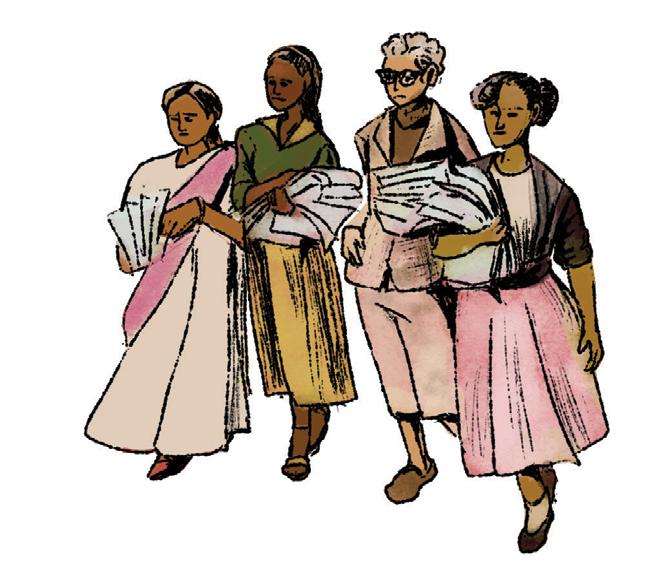
When the South African government declared gender-based violence and femicide (GBVF) a national disaster in November 2025, the announcement carried the weight of a promise. For many women, it signalled that a crisis long dismissed as inevitable had finally been recognised for what it was: an emergency. As Women's Month arrives, another question lingers beneath the headlines: has anything changed for the women who still share their location to ensure they get home safely?
A recent PDBY Instagram Poll asked the same question to students, and the results told their own story. 91% of respondents said that their day-to-day life as a woman had not changed since the declaration, while only 9% said it had. This result reflects what students describe when they talk about getting home safely.
For university students, the answer is not measured in legislation or policy documents. It is measured in phone calls made before entering an Uber, in live location pins shared with friends, in avoiding empty lecture venues after dark, and in calculating which route home feels the least dangerous. The declaration may have been historic, but the day-to-day fear has remained.
According to the FW de Klerk Foundation in GBV Declared a National Disaster: What Happens Now?, the declaration acknowledged that gender-based violence is not simply a criminal justice issue but a national crisis requiring co-ordinated intervention across government departments. It represented an admission that existing responses had failed to protect women and that extraordinary measures were necessary. Recognition, contrary to popular belief, does not always translate into reassurance.
South Africa continues to face one of the highest rates of violence against women globally. According to Confronting South Africa's Crisis of GenderBased Violence published by Human Rights Watch, victims of GBVF continue to encounter systemic failures, including inadequate investigations, limited support services, and significant barriers to justice. The organisation argues that meaningful progress depends not only on stronger legislation but also on consistent implementation, accountability, and survivor-centred support. That disconnect between political commitment and lived reality is arguably most visible among young women.
University campuses are often described as spaces of opportunity, yet they are also places where many students quietly develop routines designed around survival rather than convenience. Walking in groups, avoiding evening classes where possible, texting friends upon arriving home, and remaining constantly alert have become habits so normalised that they are rarely questioned. Safety has become another responsibility women are expected to manage themselves.
Research suggests that vulnerability is shaped by more than gender alone.
According to the Human Sciences Research Council in Violence Against Women in South Africa: Intersecting Vulnerabilities, factors such as age, socioeconomic inequality, and social exclusion compound women's exposure to violence. The report argues that GBV cannot be understood in isolation from broader structural inequalities, making it a crisis rooted as deeply in society as it is in criminality. The lived reality of many South African women helps explain why symbolic victories often feel incomplete.
Declaring GBVF a National Disaster acknowledged the scale of the problem, but declarations alone cannot restore confidence. They cannot convince a student who is walking from the library after sunset that they are suddenly safe, nor can they erase the instinct to send one final message reading "I am home".
Women's Month has always been about more than remembrance. It is also about accountability. Commemorating the women who marched in 1956 means asking difficult questions about the present, including whether enough has changed for the generations now walking university corridors with the same fears their mothers carried.
A national disaster was declared. For many women, the emergency never ended. Until safety becomes something women can assume rather than negotiate every single day, the country's most important promise remains unfinished.
Rona Disetlhe
More than halfway through the decade, the 2020s have seen their fair share of aesthetic trends. The year 2020 kicked off with a global lockdown. Confined to singular, isolated spaces, the youth took to the 1990s: bright colours and animal print. Neon lights in every bedroom with cow-print bags and furniture. The songs trending on TikTok had lively beats that inspired energetic dances.
By 2021 and 2022, the nostalgic entrance of Y2K had us embracing a time we were too young to enjoy. Baby tees, low-rise jeans, and metallic silver motifs that transported us back to an optimistic, presocial media millennium.
In 2023 and 2024 – a time when the economy was slowly repairing itself – old money ironically took over the scene. We traded bright colours for corporate-golfclub minimalism and every shade of grey and beige. Now, 2026 has decided to bring back “whimsy”: something where eccentric and youthful clothing and playful, mismatched furniture take reign. However, these aesthetics are far more than just curated outfits or superficial trends. They actively shape how we live, how we decorate our homes,
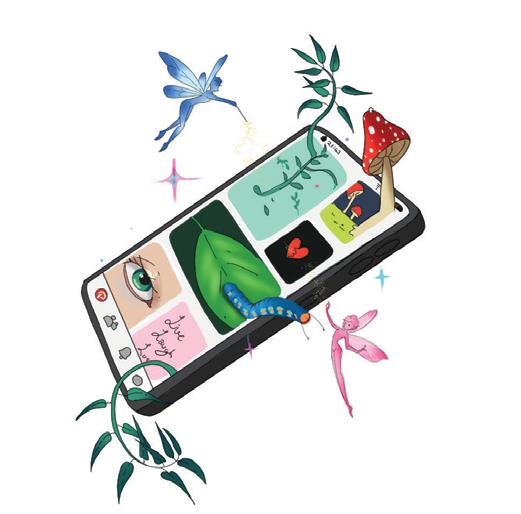
and the very nature of our conversations. When “old money” was the blueprint, the conversations were about quiet luxury and ways to attain success simply because, as they say, money whispers. Today, as we aspire towards whimsy, we value spontaneity and doing things “just for the heck of it”. We might add a playful pink brooch onto our stiff, monochromatic outfit for a corporate internship to add some whimsy and to inject joy into our everyday
Attached to each aesthetic era is a million and one micro trends – from jorts and sequins to oversized suits. They are all linked by a common thread: the past. As fast as we are going through them, it seems that we have abandoned the twentyyear rule of nostalgia. Instead, we find joy in whatever decade we collectively decide to relive. Ultimately, Gen Z and millennials seem to be looking backward for inspiration. Backward seems happier. Like every generation before us, we find ourselves longing for "simpler times". Perhaps we have abandoned the twenty-year rule of nostalgia because we can no longer afford to wait for history to catch up. In times like these, the present simply looks better through "past-coloured glasses”.
Sashika Chinsamy
Lydia la Grange
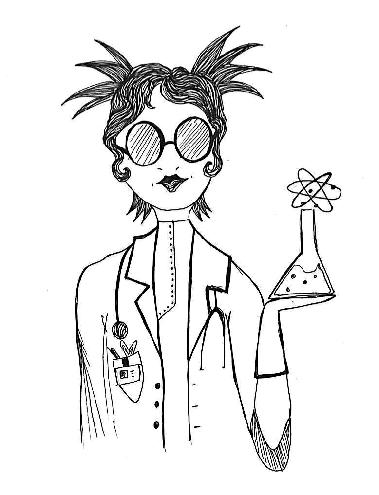
In the year 2026, women’s rights have improved… to an extent. However, there are still many problems faced by women today. Inequality in the workforce and education, especially in scientific and engineering fields, is one of them.
Even though women earn nearly half of all bachelor’s degrees in STEM (science, technology, engineering, and mathematics), according to Bizcommunity, only 29% of doctoral candidates are women, and only between 23% to 29% of senior roles in these fields are occupied by women. This phenomenon is known as the “leaky pipeline” – a term describing the predictable loss of women in STEM careers, especially in more advanced positions despite the relatively similar starting point to men.
One reason for this phenomenon is that women in STEM earn, on average, 28% less than their male counterparts. They also have fewer female role models and mentors available at an educational level since only 28.6% of white women and a mere 5.2% of black women hold STEM-related degrees. In the Staff Profiles page for Mechanical and Aeronautical Engineering on the University of Pretoria website, there are 44 staff members listed, consisting of professors, lecturers, the chairperson, instructors, helpers, and administrators. Of these, there are no female professors, and only two out of the seven associate professors listed are women. The men also largely outnumber women among the lecturers. At the time of writing this article, the university has not replied to PDBY’s request for comment and further statistics from the EBIT faculty.
underrepresentation of men in fields like Psychology. According to the Daily Maverick, only one in five registered psychologists in South Africa is male. Unlike women in STEM, this underrepresentation cannot be blamed on financial insecurity, but is a result of gender bias and expectations on men to be “emotionless” or the idea that men are less empathetic. Young men do not see themselves represented in the field of psychology and, as a result, might be put off from studying or working in it.
Much like men in fields like psychology, women in STEM also face prejudices stemming from gender stereotypes – for example, women being less logical or science-oriented.
From an early age, young girls are encouraged to pursue more feminine roles: the little girl is given a doll for Christmas while the little boy gets a chemistry set. As a result, people grow up with an unconscious idea that women cannot succeed in STEM-related fields compared
Our country does have organisations like Women in Tech South Africa that are building support structures and visibility for women in STEM. UP also has initiatives like the WISE-UP (Women in STEM) programme that aims to promote women in STEM.
It does have to be said that a lack of representation in some fields does not exclusively affect women, but is instead a reflection of restrictive gender norms pervasive in our society. This is seen in the
The STEM fields, on both a career and educational level, need to change drastically in how the field treats and appreciates women. Every single female student studying today should know that they are not simply working for a degree, but are working towards changing the STEM field for future generations of women.
Gabriella van Niekerk
We often think of guilt as a feeling that follows after doing something wrong. It is how responsibility is commonly understood. There are some times when responsibility shifts from the perpetrator to the person who endured it. Sexual assault has a way of distorting that understanding.
Under South African Law in the Sexual Offences and Related Matters Act, sexual assault is the intentional touching, violating, or forcing of another person to engage in sexual acts or witness sexual activities without their consent. It is a violation of bodily autonomy. Consent is not the absence of resistance, nor is it silence, fear, or submission. It is a free, informed, and ongoing agreement that can be withdrawn at any moment. Without it, responsibility rests entirely with the person who chooses to proceed regardless.
This principle sits at the heart of the University of Pretoria's #DontBeARedFlag campaign, which encourages students to recognise attitudes and behaviours that contribute to gender-based violence while promoting a culture built on respect, accountability, and consent. Conversations about prevention are essential. Equally important are conversations about what happens after sexual assault, particularly the emotional consequences that many survivors carry long after the event itself. One of the most common, and least understood, is survivor’s guilt. A population study of trauma-related shame and guilt after violence and sexual abuse conducted in 2016 by Helene Aakvaag shows that 40% of survivors experience overwhelming guilt despite having no control over the situation. Somewhere between what they know intellectually and what they feel emotionally, responsibility shifts from the person who committed the assault to the person who endured it.
Part of this lies in how people make sense of trauma. Faced with an experience that feels chaotic and deeply unfair, the mind often searches for something that could have been controlled. The same study by Aakvaag shows that 64.5% of people believe that they could have done something different to prevent the abuse from happening. Believing that different decisions might have prevented the assault can create the illusion that the situation was somehow manageable. Accepting that another person consciously chose to violate someone else's autonomy is often far more difficult to process.
As a result, many survivors find themselves asking impossible questions. “Why did I go?” “Why did I trust them?” “Why didn't I leave sooner?” “Why didn't I fight harder?” These questions are not evidence of responsibility; they are evidence of trauma. They focus on the survivor's actions instead of the perpetrator's decision to ignore consent. Sexual assault remains one of the few crimes where survivors are routinely encouraged to scrutinise their own behaviour before the perpetrator's actions are examined. Questions about what someone was wearing, whether they had been drinking, why they stayed, why they froze, or why they trusted the other person all stem from the same misconception: that vulnerability somehow creates responsibility. It does not. Being vulnerable simply means being human. The decision to trust another person should never be interpreted as consenting to violence. In reality, the only decision that caused the assault was the perpetrator's decision to ignore another person's autonomy.
This misplaced guilt can also become one of the greatest barriers to seeking help. According to the Campus Sexual Assault Study, 87% of sexual assault survivors do not report the crime to authorities. Researchers have found many reasons why victims do not report their accounts. Some survivors remain silent because they worry about what may happen to the person who harmed them. Others fear they will not be believed, worry about disrupting friendships or social circles, or convince themselves that speaking up will ruin another person's future. Accountability, however, does not begin when someone tells the truth. It begins when a perpetrator chooses to violate another person's consent. Speaking about assault does not create responsibility; it acknowledges where responsibility has always belonged.
The prevalence of sexual violence highlights why these conversations remain so important. According to the World Health Organisation, nearly one in three women worldwide experience physical and/or sexual violence during their lifetime. In South Africa, the South African Police Service recorded more than 42 500 reported cases of rape during the 2024/2025 financial year, averaging more than 116 reported cases of rape every day. Sexual assault remains significantly underreported, with many choosing not to report because they fear that they will not be believed or that they will be retaliated against. They might know the perpetrator personally
Lydia la Grange
Our country is built on the shoulders of women who came before us, and the same can be said for the University of Pretoria. From graduates and lecturers to chancellors, many women have filled the important roles that make up our university and have not only done what is required of them, but have revolutionised their respective fields.
Margaretha Gerarda Mes got her BSc in Agriculture at the University of Pretoria in 1923, and after years of further studying, she became a lecturer in the Department of Botany at UP in 1932. She was eventually promoted to professor and became head of the department in 1944, making her the first female ex-student to be appointed professor at the university (and the second female to be appointed overall). Under her leadership, a Plant Physiology Research Institute was established at UP, which is known today as the Margaretha Mes Institute for Plant Physiological Research.
Susan Adendorff got her PhD in Industrial Engineering from UP in 2000, making her the first woman to get such a degree in South Africa and the only woman to do so until 2012. Before that, in 2001, she joined the staff as the MBA Programme Director at the Graduate School of Management. Due, in large part, to Prof. Adendorff’s work, the MBA is one of the most diverse and

gender-equal programmes in the country today. She also helped design UP’s Broad-Based Black Economic Empowerment (B-BBEE) reporting credentials, which was accepted by the then Department of Trade and Industry and used for universities across the country. Prof. Adendorff’s accomplishments do not stop there.
In 2017, she became the first female president of the Tuks Rugby Club. Her evident contribution towards the development of UP lasted until her retirement in September 2025. Lastly, former Vice-Chancellor and Principal Prof. Cheryl de la Rey was the first Black female ViceChancellor and Principal of the University of Pretoria in 2009. Prof. De la Rey has a PhD in Psychology and is known in the field for her numerous publications on Social Psychology. The Cheryl de la Rey Scholarship Fund was established in her honour and allows students from various backgrounds to enroll at UP without financial constraints. Prof. De la Rey currently works as Vice-Chancellor at the University of Canterbury in New Zealand.
The brilliant women mentioned above are only a few of the women who have helped transform our university for today’s generation of students. The current female students, lecturers, and university staff at UP will someday make their own mark on our university and even our country, giving the young women of tomorrow even more female role models to look up to and aspire to be.
How often do you feel that tight, stubborn knot in your chest – the one you just cannot seem to swallow? Between the academic and social pressures of university life, the answer is likely more often than you would care to admit. But what if there was a simple way to help that knot fade away? Enter the ever-reliable practice of “Journaling”.
A recent PDBY Instagram Poll revealed that 52% of respondents do not journal. If you belong to that majority, you might be asking yourself, “Why journal?”. By writing down every thought and idea, you actively take care of your mental wellbeing in the following two ways: Reduced stress and anxiety: When negative thoughts and anxieties start to creep in, the best move is to “stop, drop, and write”. Putting your emotions down on paper releases their hold on you, and you may even gain some perspective, insight, and solutions.
Boosted self-confidence: Writing down your goals allows you to hold yourself accountable and track your progress. Your journal provides an easy space to brainstorm, find inspiration, and create opportunities for deep self-introspection.
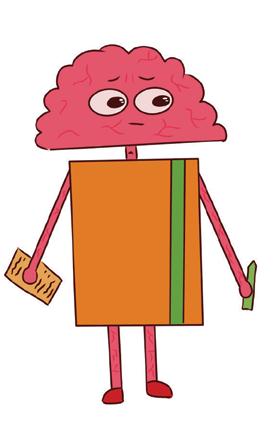
Journaling is not a clear-cut and monotonous chore. It can take many different forms to fit your lifestyle and personality. The standard journaling experience allows you to write down your thoughts and feelings exactly as they come to you. A dream journal lets you take note of your dreams as soon as you wake up. A sketch journal exists to express your thoughts and feelings through drawings and doodles. Even a to-do list is a type of journaling that lets you manage daily chaos, cross off each small or big task, and build your sense of accomplishment. Scrapbooks are there to preserve memories and create moodboards. A gratitude journal helps you start and end the day with something you are thankful for.
If you are ready to give it a try, here is how to ease yourself into the habit:
1. Get a journal: The most popular size is an A5 notebook. However, the great thing about journaling is that there is no rulebook. You can use any spare notebook you have lying around.
2. Have stationery ready: You can use all the colourful highlighters and stickers to make it fun, but a regular black pen still gets the job done.
3. Look up journal prompts: This makes it less intimidating by knowing what to journal about.
4. Set aside a time every day: Five to ten minutes is sufficient enough to build a consistent habit.
Journaling is not about writing perfect essays; it is about giving your mind a safe place to land after long days, and let us be honest – every day is a long day.
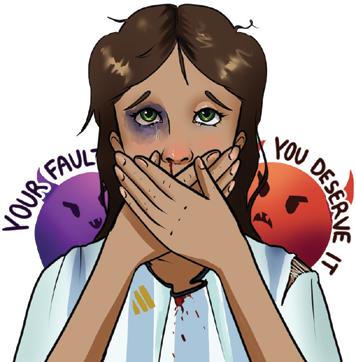
or simply cannot bear reliving the trauma. Research consistently shows that most survivors know the person who assaulted them, challenging the misconception that strangers primarily commit sexual violence. Behind every statistic is a person trying to reconcile what happened with who they are while carrying a burden that should never have been theirs to bear.
For university students, the effects often extend beyond the immediate trauma. Sexual assault can affect concentration, academic performance, attendance, relationships, and overall wellbeing. Feelings of guilt and selfblame may make it even harder to seek support, reinforcing the false belief that responsibility lies anywhere other than with the perpetrator.
The University of Pretoria does have support available. The Student Counselling Unit offers confidential psychological support to students affected by trauma. The university's Transformation Office provides mechanisms to report sexual harassment and gender-based violence involving members of the university community. The Department of Security Services can also provide immediate assistance and referrals where necessary. Beyond campus, organisations such as the TEARS Foundation, Lifeline South Africa, the Thuthuzela Care Centres, and the South African Depression and Anxiety Group (SADAG) offer counselling, medical referrals, legal guidance, and crisis support. Reaching out for support is not about having all the answers or knowing exactly what to do next. It is about recognising that healing does not have to happen alone. Your future still belongs to you. The guilt never did.
Thiya Kalan
Who is the coolest girl you know? Is she the life of the party, always travelling somewhere exotic, wearing so many bangles you hear her before you see her? Probably not – she would be “quirky”. Maybe she is the girl who wears glasses, a book in hand, always answering in class? Probably not – she is “nerdy”. Is she tall and lithe, into male-centered sports, drinks beer, and never ever makes a scene? Now she is cool. Maybe you know her, maybe you do not. Maybe you have tried to be her. Either way, you undoubtedly know the fantasy. Well, somewhere between Stanley cups and sock curls, a new trend is in: the “cool girl” is officially out.
For nearly a generation, “Cool Girl” was not just a type; it was the blueprint. She was the girl who ate hamburgers and somehow still looked like a supermodel. She watched football and drank beer. She was low-maintenance, high-reward, and never made anyone uncomfortable. She was entirely an illusion. Pop culture of the 1990s and 2000s practically mass-produced her. She was Cameron Diaz in There’s Something About Mary and Megan Fox in Transformers. But it was David Fincher’s 2014 film Gone Girl that finally gave her a name. In her now-iconic monologue, Amy Dunne laid the trap bare. "Men always say that as the defining compliment, don’t they? 'She’s a cool girl.' Cool Girl is hot. Cool Girl is game. Cool Girl is fun. Cool Girl never gets angry at her man."
Psychologically, the Cool Girl trope was a brilliant defense mechanism masquerading as female empowerment. It offers an irresistible bargain: “If I become everything that is easy to love, maybe I will never be too difficult to keep”. In a culture where women have been rewarded for being accommodating, agreeable, and endlessly pleasant, performing effortlessness often feels safer than expressing your actual needs. But the problem with pretending to be low-maintenance is that eventually, people begin treating you as though you do not have any needs at all.
To be a Cool Girl, you had to actively separate yourself from "other girls" – the ones who were "dramatic", "high-maintenance", or "too much”. Psychologists have long pointed out the burnout associated with this kind of emotional masking. When you suppress your boundaries, anger, or desires to avoid being labeled "crazy" or "nagging", you are not actually building or protecting your relationships – you are just slowly abandoning yourself.
The Cool Girl facade also required a staggering amount of hypervigilance. You had to monitor your tone, your weight, your appetite, and your reactions. It was exhausting. And the reward? Being tolerated for who you were pretending to be, rather than being loved for who you actually were.
Thankfully, the script is changing. Instead of striving for effortless perfection, the current cultural spirit embraces the messy, the hyperfeminine, and the intentionally "too much". We are less interested in women who are effortlessly agreeable and far more interested in women who are unapologetically themselves. TikTok trends are less about being the chill girlfriend and more about sharing emotions, celebrating girlhood, or admitting to highly specific, wonderfully uncool anxieties.
Dropping the Cool Girl act is not easy. It means risking rejection. It means admitting you care, asking for reassurance, setting boundaries, and accepting that not everyone will like the real version of you. But maybe that is exactly the point. Maybe the coolest thing a woman can do today is not pretending she needs less. Maybe it is refusing to apologise for needing anything at all.
The Cool Girl is dead. Long live the real one.
TothegirlthatdoesFLG 212 that sits in front, you are the love of mylife Let’smeetupfor a drink and lunch, I know you have a man with locs but I will treat you better than anyone can.You are the mother of my kidsandIneedyou now

To the tall guy who tends to be late comer in group 2 of Accounting Sciences lectures, will you audit my body?
To the girl I met in EKN 110 Winter School, every hello somehow became the highlight of my day You're already my wife in my head... and yes, I like you.
To the guy in accounting sciences, 2nd year, who lives in studios at Burnett with earrings, with a hot girlfriend, you look edible baby
The Law student whose name is M? You seem like a gym rat and you barely come to lectures I’m not looking for anything, just needed to let you know that I simp… Please come to more lectures though, I need some motivation to attend class <3
To the insanely attractive guy in BEM 120 I gave my number to (It had a pick-up line!), please message me Your number is private and I can't reach you.I really need a date for our coffee xoxo
The guy who was assisting students book Aim slots in Groenkloof campus IT lab 59 on Tuesday and wearing a white tee, I wouldn’t mind if you assisted me privately
To L in BsC Agriculture who I made out with at Jollies last year on your Birthday I don’t know if you remember me, but I remember you. I’m the blond you made out with a couple of times and at midnight.Hopefully you didnt move back to KZN.
To the guy with the curly hair that always sits and plays with his hair while he codes his assignments-You are extremely cute (and very very hot) and quite possibly the father to our future 8 children. I wish you would stop writing your code and instead inspect my internal code
Tothetallfirstyear who's forever aroundgirls, you seem so lively I really want to get to know you better, it's time to leavethosegirlsandfocus on me;)
at every table, I’ll save you a seat
Hello UP student – this is a safe space to shoot your shot at all those cute people you see on campus Tell those people how you feel about them, hit on your crush, or compliment a person on that outfit they were wearing the other day Anything positive really Tr y to be as descriptive and creative as possible with your description so it makes it easy for the person to identify themselves If both people agree, PDBY will arrange a meetup Do you think this is you?
Email: shootyourshot@pdby.co.za

Game: Cara Heymans Visuals & Layout:Alyx Bell

U
U S A N A B A C A O C A V
V I E N I C K S R U A N A
P R D M U F T A E S R E L
O N C É B T N D V T U T H
P K C E D A A E D O L J O
A S G Z I E Y L R N G A L
U H Z D N Q A E Z G P C B
N R D O Z T N B A E E K O
S H M P M B A K M R T S N
L I R Z Y R K A Y T A O N
S C Y A J I A T W R Y N I
R R R Y C H M E I U L É E
T I W M P A U B N D O T T
K T S F K N R U E E R P Y
S R I S O N A S H R S I L
B P D S E A P H O A W F E
Z V Z E M T F Q U I I L R
É P O I É I T W S N F R I
R T O N Z O T E E E T I X
T E A M K M V H G Y O O K
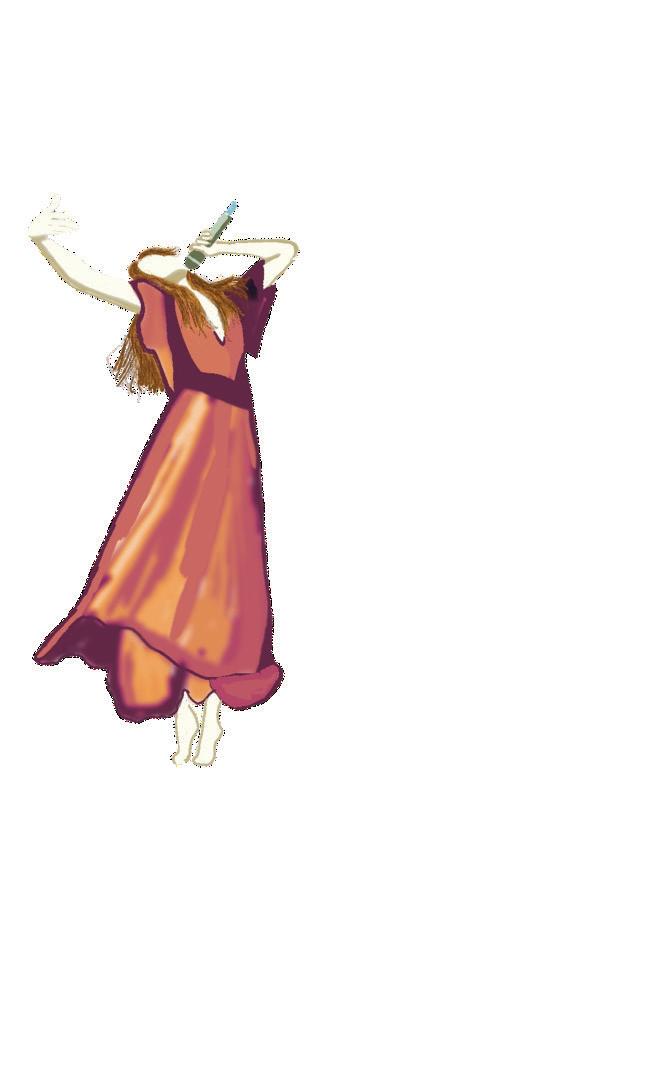
Nina Simone
Bonnie Tyler Sade
Ella Fitzgerald
Alanis Morissette
Etta James
Stevie Nicks
Natalie Imbruglia
Mary J Blige
Adele
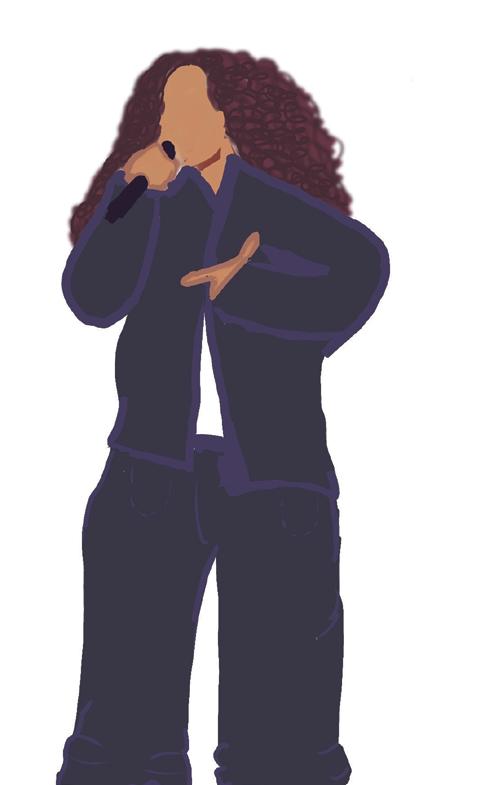
L I O T T L E O F W L A U
4. TinaTurner 5. KateBush
NinaSimone 9. BonnieTyler 10. Sade
EttaJames 14. StevieNicks
Britney Spears
SZA

Florence Welch
18. BritneySpears 19. Beyoncé
MariahCarey 23. Shakira 24. LaurynHill
Gertrude Rainey
Enya
GloriaEstefan 28. ToniBraxton
Mariah Carey
Kesha
32. BillieHoliday 33. KellyRowland
Miriam Makeba
FlorenceWelch 38. GertrudeRainey
Tracy Chapman
Amy Winehouse
Gloria Estefan
Toni Braxton
Clara Schumann
Dolly Parton
Rihanna
Billie Holiday
Kelly Rowland
Taylor Swift
Lady Gaga
Aya Nakamura
Anoushka
Shankar
Beth Carvalho
Brenda Navarrete
Celia Cruz
Cesaria Evora
Esperanza Spald ing
Janis Joplin
Susana Baca


Follow PDBY on Instagram

Zizo Mtshemla
Many people assert that reality television is almost as old as television itself.
American sociologist Danielle J. Lindemann tentatively defined it as programmes with non-actors that aim to document reality as a means to entertain. As a very heterogeneous genre, it pulls in viewers from different backgrounds and interests. From The Real Housewives to Survivor, the genre’s lasting power has a lot to do with this heterogeneity. The Love Island franchise is a reality dating show that has steadily grown in viewership over the years, but how much of this popularity has to do with us seeing the worst parts of our society put on blast in the villa?
Reality TV’s ability to resonate with viewers has a lot to do with our ability to see parts of ourselves in the contestants. Acting as social experiments, shows that use surveillance and closed societies tend to reveal the best and worst of its contestants and, by extension, the society they come from. Many people have been consistently outraged by the regular bouts of misogyny on display throughout the Love Island franchise. However, many have noted that this speaks to a broader cultural shift towards a male population that increasingly holds damaging beliefs about women.
The “manosphere” typically refers to an internet subculture that addresses varying problems men face in society such as a lack of success in dating or low self-esteem. While addressing valid issues that many men struggle with, it tends to miss the mark. This network often blames these struggles on feminism and the “loss” of male rights in society. In doing so, many misogynistic beliefs are legitimised, with followers of the manosphere believing that they are the victims of a genderequal, feminist, sociopolitical climate. Podcasters and influencers such as Fresh & Fit and Andrew Tate act as the faces of this movement. In a society that is increasingly online, the influence of the
manosphere is starting to show outside the digital world.
The eighth season of Love Island US has seen many concerning comments from the male contestants. Day one contestant KC called his former partner, Aniya, a “grandma” for not engaging in sexual acts with him despite his consistent compliments of her, insinuating that he was owed access to her body because of his kindness. Across the pond on Love Island UK, the grass is not greener. Season thirteen's Jasmine was called “off-putting” and not suitable to date because of her outspoken nature and ability to call out the poor behaviour of the male contestants. This is just a drop in the ocean of the concerning comments and behaviours exhibited by the men in the franchise over the years.
Reality TV contestants, like all humans, are a sum of the parts of the society that they come from. A cast that mainly consists of “manospheric” men speaks to a climate that is increasingly moving towards the acceptance of such rhetoric. Initially, the manosphere was ridiculed for being a small pocket of the internet that would not gain much traction. However, it is evident that it is slowly and surely bleeding its way into mainstream society. Many are aware that the often valid issues that the manosphere aims to address are mostly a symptom of the patriarchy and the pressures it places on both men and women. This is no match for the emotive and easier-to-follow rhetoric of the so-called “male self-improvement” movement.
Reality TV has a sneaky way of acting as a case study of the culture it is born from. The brazen amount of misogyny displayed by the male Islanders is a mirror of the current heterosexual dating pool: a storm of misplaced resentment towards women. Instead of solely being “trashy TV”, Love Island has shone a light on how much influence this digital subculture has on young people.

Zizo Mtshemla
The Women’s March of 1956 stands as a poignant marker of the immense impact that women had on the Anti-Apartheid Movement. However, protest art, or “artivism”, is a quiet thread that consistently runs through every movement. In many conversations regarding activism, especially in South Africa, the focus tends to be on traditional means of protest such as marching, boycotting, petitioning, or more radical means. However, women in art play(ed) an important role in bringing awareness or inspiring societal change through artivism.
The London Art Exchange defines protest art as “a tool to express beliefs and values, conveying a particular message or highlighting a cause”. Various artforms can be used to convey a story or social commentary. This may include street art, poetry, music, film, or posters and paintings. At its core, protest art aims to amplify the voices of an oppressed people, question the status quo, and plant the mental seeds for revolution.
Art is known for its ability to directly appeal to human emotions. Unlike political texts or speeches, art can immediately inspire action within people of varying levels of education and backgrounds. Furthermore, people are naturally creative and resourceful. While most protest action needs a significant amount of planning and funding to successfully occur, art is often more accessible and common. As a result, art is especially powerful because of its ability to resonate despite immense suppression. For example, South African anti-apartheid activist Govan Mbeki famously wrote large parts of his magnum opus The Peasants’ Revolt on rolls of toilet paper while he was held in solitary confinement, awaiting trial. The rolls were then smuggled out and typed up for publishing in London. This serves as an extraordinary example of how protest art is most
effective due to its reliance on resourcefulness and perseverance.
Furthermore, art’s ability to transcend language barriers to evoke emotion and inspire revolution is not to be underestimated. Mary Sibande’s use of sculpture and photography to raise awareness about the issues faced by impoverished Black South African women who are coerced into domestic work uses many nonlinguistic cues. Her palette has predominantly used the colour red to symbolise the anger experienced by South Africans as a result of continued poverty and inequality.
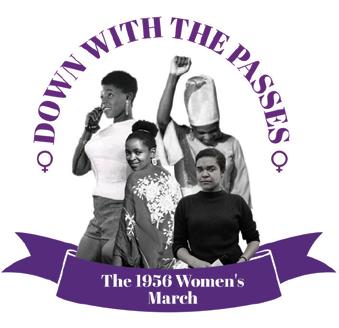
In the digital age, protest art is also widely effective as it is easily shareable. In comparison to marches that may be location-constrained, a photograph has the ability to reach millions across the globe. Art often has the ability to bypass authority and censorship. From sneaking rolls of toilet paper to sharing protest music to other countries, protest art is often a more lucrative way to spread awareness under duress.
South African women have long used artivism to assert themselves.
The world will never forget Miriam Makeba or Letta Mbuli who used their gifts as singers to expose the ills of apartheid.
More recently, there has been the iQhiya collective. In 2015, a group of female performance art students from the University of Cape Town formed in response to their male counterparts receiving more attention and opportunities. These are just a few examples of the role played by South African women in protest art. As in many fields, female activists (particularly Black women) are regularly given very few pages in history books in comparison to their male counterparts. However, the legacy of the Women's March of 1956 stands as testimony to the power that women can harness through both activism and artivism.
“Smile, you’re on camera!”
Atanda Ntlantsana
Always be on guard. Whoever you are and wherever you are, there could be a camera lurking, with the person behind it looking for content anywhere and everywhere. Unfortunately, the introduction of Meta glasses has made it much easier for people to film unaware subjects while they are simply existing. This brings about great unease regarding the invasiveness of capturing people’s private lives without them knowing. This threat to privacy is especially concerning for women who are the main victims of digital violence.
Digital violence is described by HateAid as various forms of harassment, discrimination, and social isolation on the internet and by other means of electronic communication. It is further described as a type of violence that threatens society as a whole because it happens around the clock and in front of huge audiences. It can take place in forms such as cyberbullying, stalking, and even image-based violence, such as the posting of sexually explicit content without consent from all parties involved. Meta glasses introduce a growing fear of constant surveillance as they are often used to film people with or without their consent. When paired with AI and other technology, these glasses can be easily used to collect private data.
which includes users’ credit card details captured during transactions and even footage of people in personal or private spaces such as bedrooms and bathrooms if the glasses are not turned off. But why is the invasiveness of this invention even more concerning for women? Women already bear the brunt of digital violence. From revenge porn to online degradation, women are constantly forced to be hyper-aware of the content they are in, whether posted publicly or intended for private eyes. The internet, and society in general, is far more critical of women, and, according to UN Women, 95% of online aggressive behaviour and

Meta glasses are AI-powered glasses advertised as being for “endless connection”. With technology allowing you to listen to music, take calls, and send and receive messages hands-free, the smart glasses seem like a look into the future. However, these futuristic features come at the price of your privacy and the privacy of those around you. The content recorded by Meta glasses seems invasive to wearers as well since they record any and all content collected by the glasses indiscriminately. Journalist Lucy Scotting details the kinds of content reviewed by contractors working under the Meta umbrella,
guard 24/7? UN Women suggests the need for stronger laws and enforcement against digital violence, as well as challenging online behaviours and funding organisations who support victims of digital violence. They further go on to say that laws alone are not enough. It is equally important to recognise and report abuse as we see it online. As consumers, it is also important to understand the impact new technologies could have on vulnerable groups before deciding to make a purchase and to ensure that we use our products responsibly.
There are many different elements that make up music. Whether it be instruments or vocals, everyone has a specific part of a song that stands out to them. But does anyone ever pay attention to the lyrics? Do we really hear what the artist is saying and think about what that may mean?
Music plays a big role in reflecting and shaping culture. Popular music reflects what a society enjoys listening to. Music is a form through which artists and listeners can express themselves. However, this does not mean that music is always a reflection of the positives in a society. There has been a growing concern over the normalisation of rape culture in music. Rape culture refers to a social environment which normalises, excuses, and even promotes sexual violence and misogyny. Such an environment is tied to rape by the small day-to-day actions that perpetuate and normalise violence against women, and the oppression of women creates a culture wherein more overt violations of women’s rights become more common. When Robin Thicke speaks about consent as though it can be an obscure concept rather than a necessity in “Blurred Lines”, we understand that this promotes a system of beliefs which allows sexual violence by devaluing explicit consent. Rape culture is prevalent in a lot of mainstream western music if one pays close enough attention, but have we ever stopped to consider its presence in South African music?
Living in what has been deemed the “rape capital of the world”, South African women understand all too well that rape culture is embedded into our society. When looking deeply at the lyrics of popular amapiano songs, it seems even our beloved genre is not free of problematic themes. People bond over
music and form connections with each other, and through popularising certain songs, there is an indirect expression of approval for the contents and subject matter of the song. When asked about the common subject matter of amapiano music, many feel as though the genre highlights the social aspects of life and what it looks like to have a good time. There is no inherent issue with portraying such aspects of life and it is often commonplace for popular music. However, this portrayal becomes problematic when it begins to promote misogyny. When asked about her feelings on amapiano and its subject matter, 36-year-old Ayabonga commented, “[Certain songs] speak of sleeping with women as though it's part of the events of the night, avoiding any reference to consent.”
This objectification can be seen in various lyrics of popular songs. 18-year-old Biyoza sees this entitlement as an issue prevalent across South African music, including amapiano. She notes that Amapiano lyrics that instruct women to give men “their cake” or translate to “you are going to sleep with me” take away women’s autonomy and promote male entitlement. This, in turn, normalises objectification and reinforces the idea that women belong to men. Such beliefs are fundamental to rape culture and allow it to thrive. However, some are of the opinion that the issue is not the genre itself but
specifically the songs and artists we popularise. 19-year-old Ntando says, “Amapiano as a genre is one that is easily perceived as groove music only, however this is far from the truth.” She remarks that amapiano can be spiritual and can centre love. This presents an interesting perspective. There are many artists within the genre who create songs without resorting to problematic themes, and it would not be fair to discount their work by labelling the entire genre as problematic. Maybe the issue is not the genre itself but the current tracks which have been made popular.
So whose responsibility is it to address the rampant misogyny in popular music? When it comes to the artist's role, it can be argued that artists should be able to express themselves. However, it is equally important for artists to consider the impact of their messages. Given the context of South Africa’s gender-based violence rates, some find it irresponsible for artists to spread rhetoric that is so harmful to women. On the other hand, this also means that it is just as important for listeners to be selective about the kind of music they allow to become popular as listening to harmful music enables and supports harmful behaviour. Music is an integral part of South African society. The kind of music we put out and promote is thus a reflection of our beliefs and behaviours. We cannot aim to fight GBV and in the same breath allow sexual violence and misogyny to flood our speakers and circulate our dance floors.
Kopanyi Ramokgopa
Heterosexual, 21
“Being a woman to me means displaying a sense of resilience and strength in every aspect of life – from childhood, middle childhood, and adulthood. The phenomenal concept of womanhood shows that we women use the diversity of our experiences to empower each other. It is about seeing different qualities in yourself that you have acquired from the women around you – mothers, sisters, grandmothers, and friends. Being a woman for me means being the creator and protector of life and embracing everything that comes with it.”
Pansexual, 21
“To me, being a woman means carrying both softness and steel in the same breath. Being a woman isn’t a straight and narrow pathway, and it's definitely not as easy as we make it out to be. Being a woman means [having] the ability to be courageous and dominate every room we walk into, taking leadership roles to the next level while still holding our softness dear to us, [and] creating life and nurturing those around us.”
Bisexual, 21
“For me, being a woman means being in a constant state of chaos. Don’t get me wrong, there are many lovely things about being a woman: doing your hair, hanging out with your girls, dressing up, and just being a literal fairy. However, being a Black South African woman means juggling oppressive structures like patriarchy, sexism, and racism. Your identities intersect to screw you over.
Constantly being labelled as the caregiver, the nurturer, the “perfect” daughter means shrinking yourself and compromising parts of yourself to be deemed desirable in a world that is built against you. As an alternative Black bisexual woman, this is where the chaos comes in: defying the norm means repeatedly having to remind yourself that you're good enough and don’t have to shrink yourself while also inevitably doing it because of the rigidity of the system.”
Heterosexual, 23
“Being a woman means embracing who I am with confidence, strength, and kindness. It means believing in myself even when life is challenging and continuing to grow through every experience. To me, being a woman means having a voice, making my own choices, and knowing my worth is not defined by anyone else. It is about learning, growing, and becoming the best version of myself. Every day I strive to live with courage, compassion, and purpose, and that is what being a woman means to me.”
Heterosexual, 21
“Being a woman for me means straight-up confusion and an existential crisis at least once a month. I don’t know if I'm where I'm supposed to be in life. I feel like I'm behind, but I also realise how young I am in the grand scheme of it all. On the flip side, I don’t know what life has in store for me. Am I going to die young? Am I going to die an old lady? And if I get the chance to be an old lady, will I look back on my life and deem it a life worth living? What makes a life worth living – a husband and kids or a successful career or is it both? Am I going to achieve all my dreams or be part of the enormous pool of people who have never reached their full potential? I am so insanely confused, so at this moment, being a woman in my twenties, I'm crossing my fingers [that] I’m less confused in my thirties.”
Bisexual, 24
“To me, womanhood means (among other things) perseverance, fortitude, and solidarity. It means supporting one another, even without saying a word. Above all, it means compassion.”
Pansexual, 21
“Really trying to be optimistic, but in all honesty, it’s hard to be in this current time. I think womanhood is primarily about resilience, but not in the superficial, t-shirt-feminist sense. I think womanhood is comprised of an active survival against patriarchal sensibilities in the world around us, a constant struggle to retain your own humanity in a world that genuinely doesn’t view you as an actual human being. Factors such as being a queer person of colour, not conforming to gender binaries, and being part of a different class add barriers that bar you from the title ‘human being’. Institutions like patriarchy, racism, and capitalism try to conquer you, to subjugate you, and you are constantly in a fight against that subjugation.”
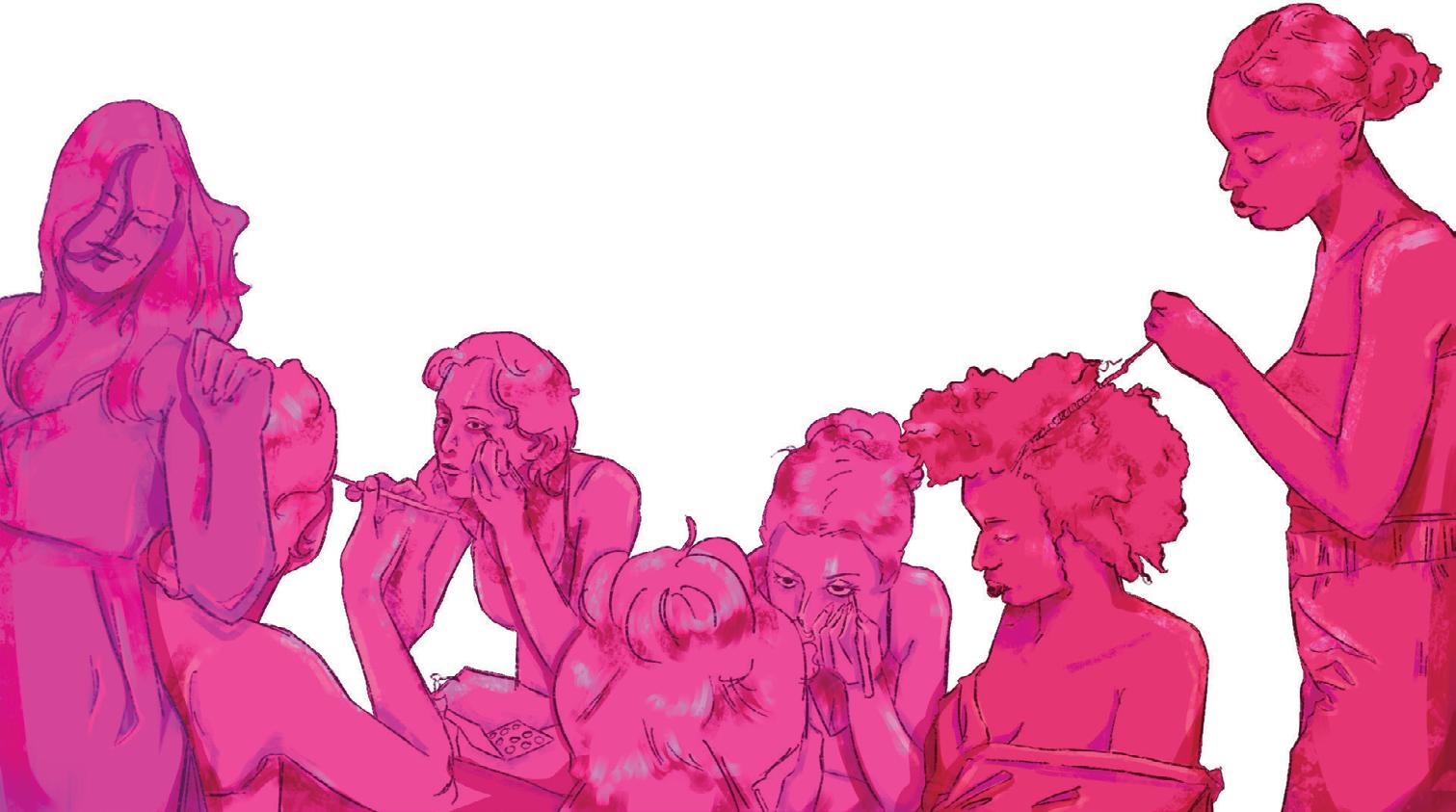
Kopanyi Ramokgopa
Women have been the custodians of South African culture for a very long time. This means that for decades, they have been the primary transmitters and preservationists of cultural values, norms, and traditions. They have done this in various ways, which include storytelling, music, food, and visual art.
Storytelling
“Nonwane! Nonwane!”, your grandmother says. “Ke leketla!”, you answer, and the age-old tale of Mmutla le Tau begins. Folktales and myths are staples in many South African cultures, often passed down by matriarchs. When we were young, these stories were just for entertainment, but only in retrospect do we recognise the invaluable nature of not only the tales themselves but the people telling the stories. The stories often involve themes of courage, tenacity, and the importance of Botho/Ubuntu, and the storytellers – women – act as oral archives containing information entrusted to them by generations prior. The Annual Nozincwadi Literary Storytelling Festival by legendary author and storyteller Dr Gcina Mhlophe takes storytelling far beyond the cosy confines of our grandmothers' homes and spreads it across South Africa. Not only does it encourage young people to write and tell their own stories, but it also acts as a hub to celebrate African literature and to pass down oral traditions.
Music
“Thula thu, thula nana, thula sana, thul’ubab uzobuya, ekuseni”, our mothers once sang to us. Folksongs are one of the first forms of cultural transmission we were introduced to, even before we could speak or understand language. Our mothers sang us lullabies in our mother tongues – lullabies that were once sung to them by their mothers. This continuous performance has acted as a tool to preserve our indigenous languages. When we eventually outgrow the songs that soothed us as children, our mothers now use those very voices to usher us through important events such as weddings, ancestral ceremonies, and initiations. The songs they sing have no known origins and seem to be as old as civilisation itself. Award-winning songstress Thandiswa Mazwai, who is known for her deeply spiritual and
Tia Haswell
Somewhere out there, there is a little girl sitting criss-crossapple-sauce in front of a too-close TV screen. A curly pigtailed head of ambitious dreams and eyes of marvel and wonder. That little girl looks a lot like you, and a lot like me.
Every Women’s Month, we celebrate women who shattered glass ceilings and achieved historic milestones, and these achievements are never just personal. They expand the confines of what it is possible to dream and achieve for a generation of women and girls restrained by society’s dull expectations. These stories contribute to the deconstruction of harmful stereotypes and fuel the wondrous aspirations of young girls, just as you and I once were. This importance is not lost on me – one small step for woman, one giant leap for womankind!
But somewhere along the way, lost between replacing the pig-tailed dreams by a rushed pony-tail and a slice of dry toast before work, another impossible standard emerged. What happens when excellence becomes the only acceptable standard worthy of recognition? As children, we are encouraged to dream beyond our limits. As we grow older, those limits become harder to dream away. Not everyone will become an Olympic champion or a Nobel laureate. But maybe, it is okay to not be the first, or the youngest, or the best. Most of us will be good, competent, and reliable in whichever field we should choose. Ordinary people.
Shouldn't that be enough? Women's achievements are still too often framed as exceptional because they are women's achievements. A man can simply be successful; his gender, coupled with his race or age for added virality, is rarely the headline.
With the men’s FIFA World Cup making its rounds this year, ask yourself: how many "ordinary" female athletes can you name? Athletes that have not made any radical statements, become tokenised, or been acknowledged as the first in their race or youngest in their field? Compare that to the countless male professionals who are widely recognised for being competently successful in the same career.
Do not get me wrong – the celebration of trailblazers is necessary. Progress has always depended on people willing to push against impossible odds. But if those are the only women we celebrate, we risk sending another message entirely: that recognition must be earned through extraordinary and exceptional achievements. Equality cannot only belong to exceptional women. And quite frankly, I do not want to be exceptional. I do not want to be an exception. I want to be one of many. Real progress is not a world where little girls dream of becoming extraordinary. It is one where she no longer has to be.
The most radical thing we can do is finally make room for women to be ordinary. Because ordinary has always been enough for everyone else. This Women’s Month, I encourage you to embrace the ordinary.
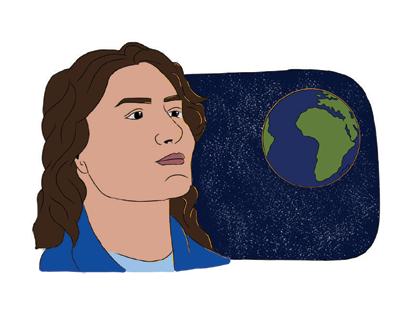
revolutionary music mostly sung in isiXhosa, once said, “I've become part of a thread throughout time… part of the song my great-grandparents used to sing… and I'm continuing the lineage of using our voices.”
Food
“Diyamaleng ga di fahle”, the proverb says. Traditional farming methods such as preserving seeds for the next farming season are unfortunately lost traditions that have not been able to overcome modernity. But traditional food preparation practices such as fermentation have stood the test of time, and at almost all traditional South African ceremonies, umqombothi is a staple. The multiday preparation of the traditional beer has always been exclusively done by women for decades and requires infinite patience. Traditional foods made by our grandmothers and mothers, such as mogodu, umqushu, and mashonja, are cooked without recipe books because the process of making these foods has become somewhat of a memory script to them – one they continue to encode into their descendants. Onezwa Mbola, a bestselling cookbook author, uses food preservation techniques such as salting, canning, and drying to make hearty meals for her child that were once made for her. She also harvests seafood ethically and sustainably, utilising methods that were taught to her as a young girl
living in a coastal village in the Eastern Cape.
Visual Art
“Inhliziyo ikhuluma ngomdwebo”, the saying goes. Beadwork, paintings, and sculptures are one of the most vibrant forms of cultural transmission and preservation. Across South African cultures, women use visual art as a form of cultural expression: they paint using indigenous tools such as chicken feathers and their fingers to maintain cultural authenticity. Not only is the art decorative, but it also functions to communicate emotions such as joy and sadness. Dr Esther Mahlangu, an internationally renowned Ndebele visual artist, first learned how to paint the vibrant Ndebele geometric patterns from her grandmother and mother at a young age, and she has made it one of her life goals to pass what she learned on to younger generations, famously saying that it was her “passion to transfer this skill” to generations after her. She opened the Esther Mahlangu Ndebele Art School in her hometown in Mpumalanga to teach the indigenous art form to the youth.
Women such as Dr Gcina Mhlophe, Thandiswa Mazwai, Onezwa Mbola, and Dr Esther Mahlangu are only some of the hundreds of thousands of South African women who have taken what they have learned from the women in their lives and made it their personal mission to carry those legacies through various art forms. Women remain the heart and soul of cultural continuity, ensuring that culture thrives and endures throughout generations.
One of the real deaths for a woman is the discomforting, annoying, and very disappointing orgasm gap – much like the pay gap but with a way wider disparity. Not only are women unnerved, persecuted, and shortchanged economically, but also sexually. The orgasm gap is the disparity between women and men experiencing orgasms during heterosexual sex.
According to The Conversation, 95% of straight men almost always orgasm when sexually intimate, and yet straight women sit at a shocking 65% while lesbians often fare better at a not-sosurprising 86%. So the questions that are so masochistically begging to be answered are: why are women not orgasming, and how can we ensure that she crosses the finish line out of breath and with a satisfied smile on her face and yours?
Approximately 92% of women orgasm when doing it themselves, according to Grace Wetzel (Postdoctoral Research Fellow at the Center for Sexual Health Promotion at Indiana University School of Public Health) and Diana Sanchez, PhD (Social Psychologist and Associate Professor at Rutgers University). But you do not need science to tell you that – she will tell you that herself. Nonetheless, statistically, you are more likely to orgasm when you do it yourself than if a man does it for you, even if he is driven with the intent to do so.
Today, most sex education is informed by the trusty sources of PornHub, unexaggerated stories from your boy, clips on Twitter, and Netflix's 365 Days. When watching Avengers, did you really believe Chris Hemsworth zapped the Chitauri with lightning? No. It was performance, acting, CGI, and editing. Pornography is just the same. Performed pleasure, staged satisfaction, and acted attraction does not portray the raw realities of sex (pun intended).
The Conversation also notes that 4% of women orgasm from penetration alone, while 96% finish from clitoral stimulation, which completely dismantles the idea that putting it in is getting everything out of it. The clitoris has over 8 000 nerve endings and over 8 types of orgasms, so the possibilities and potential are not bound by handcuffs but are rather infinite, and understanding women's sexual anatomy is one YouTube video away.
So if penetration is not the one-way ticket to an orgasm then that means you have to get creative with the journey, and there are many, many ways to do that. The journey is as important as the destination so diversifying is the right road to take. Talk dirty to them, explore different erogenous zones, have nonjudgemental conversations,
upgrade your foreplay game, try out different kinks. Sexual fantasies are more common than you think - they might also want to roleplay Batman and Catwoman, you never know.
In university, we are surrounded by a cornucopia of people who have done "stuff", done nothing, done it, and done nje, so it is particularly difficult to find common ground in these cases. One very strong recommendation I can give you is to watch Netflix's The Principles of Pleasure, a three-episode docu-series on almost everything about women's pleasure that you need to know.
Another recommendation to women who are experiencing the BS effects of the orgasm gap is a reminder that an orgasm is not necessitated by a man. There is no shame in trying sex toys… or, if you are keen, other women. To the bros – my recommendation is that if you want to be sexually active, be active in understanding her body as much as your own. Remember, pleasuring your partner is quite the pleasure in itself – try it out. Everyone deserves to orgasm and enjoy, so equal prioritisation produces a win-win scenario.
The last recommendation is an open discussion before, and even during, to discuss who likes what, how they like it, and where they like it. Do not be scared to ask your lover questions. At the end of the day, we all prefer to orgasm after a conversation than to fake that you have finished. Results may be orgasmic.


Ilitha and Corné are part of the news and sports presenting team at Tuks FM. Catch Ilitha on the Drive Show Mon, Wed, Fri 3-6PM and Corné on our Sports Talk Show, Sports In Shorts, Tuesdays 6-7PM as well as the Brunch Show doing sports 9AM-12PM Mon, Wed and Fri. Tune into Tuks FM on 107.2FM or stream us on www. tuksfm.co.za
Corné Snyman
When the 2026 Varsity Football fixtures were released, the mandate for UP-Tuks was immediately clear: if you want to rule university football, you have to go straight through the reigning kings and queens.
In a blockbuster opening week that feels more like a pair of cup finals, both the UP men’s and women’s squads have drawn the respective defending champions in round one. It is the ultimate litmus test right off the bat, and for the Stripe Generation, it is the perfect "giant-slayer" scenario to shake up the university football hierarchy.
This year’s tournament brings massive structural changes that directly impact our campus football culture. For the first time in the competition's history, the men's fixtures are moving to Friday nights under the floodlights, giving UP students the ultimate way to kick off their weekends. Meanwhile, the women’s tournament will be contested over two massive "bumper weekends", and the very first of those will be hosted right here on our doorstep at the University of Pretoria.
That home-ground advantage is going to be crucial. On Saturday, 1 August, UP will host the opening weekend of the women's tournament. While the day features multiple fixtures, the entire campus will be waiting for the 19:00 headline clash. That is when our UP-Tuks women’s team will walk out under the lights to face the ultimate powerhouse: the University of the Western Cape (UWC). UWC secured their third consecutive title
last year and is hungry to make it four. But playing the undisputed queens of the tournament on our home turf on opening night is a monumental opportunity. If the UP team can pull off an upset in front of a roaring Hatfield crowd, it will instantly establish them as serious title contenders. Just six days later, on Friday, 7 August, the men’s competition will kick off with its new Friday night lights format. Our men’s team will face an equally steep mountain, traveling to Bloemfontein to take on the defending champions, the University of the Free State (UFS), in a 17:00 clash at Shimla Park. Last year, UFS made history by claiming their maiden cup glory, and the Shimla Park crowd will undoubtedly be deafening. However, if UP-Tuks can walk into that intimidating environment and steal a victory on the opening Friday night of the season, it will send absolute shockwaves throughout the rest of the league and prove that UP are back to claim the crown.
There is no easing into the 2026 campaign for the Stripe Generation. Both UP-Tuks squads are staring down the heaviest hitters in university football for game one. But as the old saying goes, “To be the best, you have to beat the best.” With the women opening their campaign at home, the UP campus community has a massive role to play in setting the vibe. Pack the stands on 1 August, get behind the badge, and let us turn this brutal opening week into the launchpad for an unforgettable UP-Tuks football season.
his year, Tuks FM celebrates 45 great years on air with an exceptional legacy. At the turn of a new page and the beginning of a new era, the station itself receives an upgrade, symbolising the dawn of a new era under the leadership of station manager Nicole Da Silva and programming manager Chris Jordan. Speaking to the managers, a tone of enthusiasm and optimism echoes throughout the station.
The renovations are funded by a grant from the Media Development and Diversity Agency (MDDA). Tuks FM was successful in securing the grant in 2023. However, due to internal drawbacks and specifications needed for radio, the process was drawn out longer than originally anticipated. Da Silva took part in the planning and design process, keeping in mind the legacy of the studio. “The idea behind the design was a number of things. When the studios were first built, the glass between the studios was used so that the people in the studios could see each other,” Da Silva
said. These will be kept as a nod to the previous era. Design longevity was a pertinent thought and feature in the design. “I wanted the colours to be reflective of the university and station, and the equipment and facilities still look fresh and good for another 10 to 15 years.”
For programming manager Chris Jordan, the structure holds many memories. Jordan recalls a surreal feeling in the beginning of his tenure.
“You know I am sitting in the same office my boss sat in, stepping into [the] studios I broadcast from.” Jordan started at Tuks FM in 2002 with the memories of a different era, but he still carries the same zeal and passion from years before.
The station renovations include upgrades to both blue and red studios, a new desk, a new music room, and well-equipped podcasting and media rooms, opening up Tuks FM’s base as a multimedia platform and a hub for all things media and entertainment.
Project completion is estimated for the end of July, with the MDDA to officially open the new studios at the 45th birthday party. This will be an exciting opportunity to have people view the studio and see the new renovations as Tuks FM enters its new era.

Corné Snyman
The UP-Tuks Men's Rugby team is on the brink of doing something that has never been done in the university's history. Following a dominant 43-19 victory over the UFS Shimlas in the USSA 15s Championship final, the team has not only defended their tournament crown, but they have set the stage for an unprecedented four-trophy sweep in a single calendar year.
The USSA final was essentially decided in a devastating 19-minute window during the first half. UP-Tuks unleashed an absolute blitz, running in four unanswered tries to completely suffocate the Shimlas and effectively win the game early. Head Coach Dewey Swartbooi revealed that this explosive start was exactly what management drew up.
"The plan was to go out first, enjoy the occasion, get out the blocks early, have a good start, throw the first punch so to speak, and put them under pressure to take the game to them from the get-go," Swartbooi explained. "Kudos to the boys, they went out and executed against a top-class Shimlas outfit."
With that clinical performance, the 2026 squad has now secured three pieces of major silverware this year: a record-breaking sixth Varsity Cup, the Lucas Strachan Shield for topping the first round of the Sanlam
Carlton Cup, and back-to-back USSA titles.
Despite staring down the barrel of a historic "Grand Slam", the camp remains incredibly grounded. That final hurdle – the Sanlam Carlton Cup – is exactly what stands between this squad and UP sporting legend status. The university has not lifted the Carlton Trophy since 2019, and leadership is making sure the squad does not lose focus before the ultimate knockout fixtures.
The Head of Programme for TuksRugby, Conrad Boshoff, emphasised that while the prospect of sweeping the league is a massive achievement, the club is refusing to look past their next opponent. "From the Head of Programme position, I can tell you I am very proud of what the coaching staff and team are doing," Boshoff said. "To have a chance to win the league is special, and we take it game [by] game. We had the chance way back in 2012 as well, but fell short by not winning Carlton."
Coach Swartbooi is determined to keep the players focused on the immediate task at hand. "To remind the boys and management, 'You are only as good as your last game,' that is all people remember. And also, we are not getting ahead of ourselves," Swartbooi explained. "Every game left, [we] go out and give it our all because we represent many that
wore the jersey before us."
When asked what sets this 2026 team apart and allows them to be so dominant across every single competition, Swartbooi pointed straight to the culture off the pitch. "The defining quality [is something] I put down to the character of each of these boys. They just [have] good character and then brotherhood," he said. Channelling the mindset of the national setup, he added, "In the words of Doc Rassie Erasmus, 'Get the right people and not always the best people'."
That winning culture has clearly infected the entire club, not just the men's first team. Boshoff highlighted that the collective effort is paying off across the board. "Overall, TuksRugby stays humble because all our teams, women included, are on their way to qualify for the semis, with both the men's and women's first teams already qualified," he noted. "I am very proud of what we have accomplished."
The 2026 UP-Tuks squad has already proven that they are a generational team built on exactly the right people. Now, it all comes down to the final stretch to see if they can finally lay the ghosts of 2012 to rest and complete the ultimate rugby quadruple.
Anastacia Couloubis
Awoman standing in a cage, wearing gloves, waiting for the referee to signal the start of a fight. For many people, that image still feels unfamiliar. Society has long associated women with softness and gentleness while combat has traditionally been reserved for men. Yet every time a woman steps into the cage, she quietly challenges that idea. She proves that strength and femininity do not exist on opposite ends of the spectrum; they can exist in the very same person.
For EFC champion Amanda Lino, fighting has never been about proving that women can do what men do. Instead, it is about proving that women can be unapologetically themselves while competing in one of the most physically and mentally demanding sports in the world. "A massive drive throughout my career has been to help pioneer women's MMA in South Africa and show that we belong on the biggest stages," she said. "If my journey inspires more girls to step into the gym, chase their goals, and help create more opportunities for the next generation, then that's something I'm incredibly proud of."
Lino's story is not just one of championship fights and years inside the cage, it is also a story about womanhood. Because while fans see the punches, the victories, and the bruises, they rarely see the realities that come with being a female athlete.
"I don't think people always realise how much intense training can
affect a woman's body and hormones," Lino explains. Elite sport demands extraordinary things from the body, and for women, that often means navigating conversations that are still considered taboo. Lino candidly shares how years of training affected her hormones, disrupted her menstrual cycle, and even led her to question whether chasing a career in professional sport would one day affect her ability to have children. "I actually went through the very personal journey of freezing my eggs recently," she shared. "I was incredibly grateful to find out that my fertility hadn't been affected. It gave me a lot of peace of mind that I can chase my dream in the cage now while still having the opportunity to have a family one day."
It is a conversation that is seldom heard in combat sports, but perhaps one that deserves far more attention. Female athletes are not simply smaller versions of male athletes. Their bodies recover differently, their hormones fluctuate, and their training often requires an entirely different understanding of performance and health.
For Lino, recovery has become just as important as training itself. "I train hard, so I have to recover just as hard," she explained. Access to ice baths, saunas, and professional recovery specialists has become a vital part of her routine, and experience has taught her something many athletes only learn with time: "Rest is just as important as training." Perhaps the toughest part of
being an elite athlete has nothing to do with the physical demands. Lino has sacrificed birthdays, holidays, family gatherings, and even her twin sister's wedding in pursuit of her dream. "Success requires putting the sport first more often than not. It's the hardest part of the [journey]." Despite those sacrifices, she has never allowed stereotypes to dictate her journey. Growing up, she was constantly drawn to sports that were considered to be "for boys". Instead of accepting that, she played anyway, even starting girls' rugby and cricket teams so that other young women could have the opportunities she wished existed. "I've never seen being a woman in combat sports as a disadvantage," she explained. "If anything, it's been a challenge that's driven me."
Perhaps that is what Women's Month is really about. Not celebrating women because they have succeeded in spite of being women, but recognising the unique realities they navigate because they are women. Amanda Lino's greatest legacy may never be measured by championship belts or victories inside the cage. Instead, it may be measured by every young girl who walks into an MMA gym believing she does not have to choose between being feminine and being fearless. Because strength has never belonged to one gender.
Cayden Coetzer
For decades, the phrase “playing like a girl” was used as an insult. Today, women are proving that it should be taken as a compliment. Across the world, women are challenging long-held stereotypes in sports once considered exclusively male. From rugby fields and boxing rings to Formula 1 paddocks, weightlifting platforms, and cricket stadiums, female athletes are not only participating but excelling. Their success is transforming perceptions of who belongs in sport while inspiring a new generation to dream beyond traditional expectations.
This transformation has not happened overnight. It is the result of decades of perseverance by athletes who competed despite limited opportunities, unequal treatment, and persistent gender bias. While women’s sport has made remarkable progress, the journey towards true equality remains unfinished.
For much of modern sporting history, women were discouraged, or even prohibited, from competing in physically demanding sports. Concerns about femininity, strength, and social expectations often dictated which sports were considered “appropriate” for women.
As a result, sports such as rugby, boxing, wrestling, weightlifting, and motorsport developed with overwhelmingly male participation and investment. Women’s competitions received significantly less funding, fewer development opportunities, and minimal media attention. Professional pathways were scarce, leaving many talented athletes without the support needed to pursue sport at the highest level.
Despite these obstacles, female athletes continued to
challenge the status quo. Their determination gradually forced sporting organisations, sponsors, and audiences to reconsider outdated assumptions about women in competitive sport.
One of the biggest changes over the past decade has been visibility. International tournaments such as the FIFA Women’s World Cup, the Women’s Rugby World Cup, and women’s cricket competitions have attracted record-breaking television audiences and stadium attendance. Social media has also allowed female athletes to build their own platforms, engage directly with supporters, and showcase their achievements without relying solely on traditional media.
As more girls grow up watching women compete on the biggest stages, participation has increased across numerous sporting codes. Representation matters. Seeing women succeed in physically demanding and highly competitive environments sends a powerful message that talent – not gender – determines sporting ability. This increased visibility has also challenged outdated stereotypes that labelled women competing in contact or strength-based sports as “unfeminine”. Today’s athletes are demonstrating that strength, resilience, and athletic excellence are qualities that belong to everyone.
The impact of women in traditionally male-dominated sports extends far beyond competition. Female athletes have become influential advocates for gender equality, pushing for improved facilities, equal opportunities, and fair treatment. Their success has encouraged sporting organisations to invest more heavily in women’s development programmes while inspiring schools
and universities to expand opportunities for female participation.
Many sporting federations have also introduced professional leagues and increased financial support for women’s competitions. Prize money in several international events has increased substantially, reflecting both increased commercial interest and recognition of athletes’ performances. Universities have played an important role in this progress by creating environments where female student-athletes can compete, develop leadership skills, and inspire others. Campus sport has become a valuable platform for breaking stereotypes while also promoting inclusivity across sporting codes.
Despite significant progress, gender equality in sport has not yet been achieved. Women continue to receive less media coverage than their male counterparts, particularly outside of major international tournaments. Sponsorship opportunities often remain unequal, limiting financial stability for many professional athletes. Leadership positions within sporting organisations also continue to be dominated by men, reducing female representation in decision-making processes.
Online abuse and gender-based discrimination remain additional challenges, particularly for athletes competing in sports traditionally associated with men. Many continue to face criticism based on their appearance, femininity, or gender rather than their actual performances.
Participation rates also differ across communities, with access to facilities, coaching, and financial resources remaining significant barriers for many young
girls. These challenges highlight that increasing participation alone is not enough. Long-term progress requires continued investment, equal opportunities, and sustained commitment from governing bodies, educational institutions, sponsors, and supporters.
Perhaps the greatest achievement of the past generation has been changing perceptions. Women’s success in rugby, boxing, motorsport, wrestling, cricket, weightlifting, and numerous other disciplines has demonstrated that sporting excellence cannot be confined by outdated gender roles. Today’s young athletes are growing up in a world where women competing at an elite level are becoming increasingly normal rather than exceptional.
Every record broken, every championship won, and every barrier removed creates opportunities for those who follow the sports. Women’s Month offers an opportunity to celebrate these achievements while recognising that equality is not a destination that has already been reached – it is an ongoing journey.
The athletes redefining traditionally male-dominated sports are doing more than just winning medals or trophies. They are reshaping sporting culture itself.
The question is no longer whether women belong in these sports. They have already proven that they do. The challenge now is ensuring that they receive the same opportunities, investment, and recognition as the men who compete alongside them. Because when barriers are broken, sport becomes stronger – for everyone.
Betty Molefe
Members of the Tuks Comrades Marathon team raced one of the hardest endurance marathons in South Africa – the Comrades Marathon. Taking place on 14 June, the team raced in support of the #DegreesDelivered initiative. While each runner's personal goal was to cross the finish line, they also had a bigger goal in mind: spreading awareness of a campaign that assists students in overcoming financial obstacles to continue their higher education.
Race day came after months of focused training, early mornings, and mental preparation. Every participant's endurance, resilience, and determination were put to the test during the Comrades Marathon, which also showcased how athletics can bring people together in support of a worthwhile cause.
Emily, one of the many cheering fans along the road, said that the marathon was much more than a race. For her, it was a celebration of togetherness and a reminder of what can happen when people band
together to support a common goal. She attended the event to support a friend and the #DegreesDelivered programme. She described the atmosphere as "exceptional", with fans encouraging each runner and maintaining a positive vibe all day.
Seeing runners support one another during the most difficult parts of the race was one of Emily's favourite memories. Participants continued to inspire other runners despite the physical difficulties of the race, expressing the tenacity and unity that mark the Comrades race.
Emily shared that although she is not a marathon runner, the experience made her want to run a race in the future and get more active in community-based projects. "Seeing so many individuals racing for a cause that can affect lives is inspirational,” she remarked. Emily explained, "It demonstrates what we can accomplish when we unite, and those students [who] had their degree certificates on hold will [have them] released."
Additionally, Emily encouraged everyone who accepted the challenge by saying, "Keep going, you've got this! Every action you take is having an impact." When she thought back to the day, she summed it up in three words: "Inspiring, dynamic, and unforgettable."
Beyond the prizes and individual accomplishments, the marathon showcased the power of group effort. By backing the #DegreesDelivered campaign, the runners and fans showed that every kilometre run and every round of applause from the stands helped spread the word about how vital it is to ensure that students finish their education.
The event was a powerful reminder that the Comrades Marathon is a platform for optimism, generosity, and significant change, as well as a test of strength. As the runners crossed the finish line, they knew that their efforts went well beyond the race. Supporting the #DegreesDelivered initiative would enable more students to fulfil their academic goals in the future.
Cayden Coetzer
For many people, competitive gaming is still seen as little more than a hobby. Yet behind every Varsity Esports match lies hours of preparation, teamwork, tactical analysis, and dedication that rivals any traditional university sport. At the University of Pretoria, the Tuks Capitals Valorant team has spent the 2026 season proving exactly that.
After securing qualification for the Varsity Esports endof-year finals through their Split 1 performances, the team will not compete in Split 2. Instead, they now have the opportunity to focus on preparing for the championship that matters most. Their journey has been defined not only by results, but by growth, resilience, and an unwavering commitment to representing UP on South Africa's biggest university esports stage.
Representing the Tuks Capitals Valorant team is Fabio "Fabreezy" Spazzoli alongside captain Ryan "Myst" Cook, in-game leader Sean "Taki" Jones, Thomas "Langdon" Barnes, and Kristian "NerdBitz" Kappetijn. While each player has a distinct role, success depends on every member contributing to the team's collective performance.
Spazzoli has been competing in esports since 2019, with his competitive career accelerating during the COVID-19 pandemic. The opportunity to represent UP, however, gave that passion a new purpose. "I am a highly competitive individual who wants to win," he said. "As soon as I heard that it was possible to compete for the best university, I became fully committed to the Tuks Valorant team, trying my best to better my individual performance as well as the team's performance."
That commitment paid off during Split 1. One of the team's defining moments came when they defeated the University of Cape Town to book their place in the Split 1 Finals, hosted at Stellenbosch University. Travelling
to Stellenbosch and competing on a live stage marked a massive milestone for the squad. After battling back from a one-map deficit to defeat SU Supreme 2-1 in the semifinals, they advanced to face SU Odin in the final.
Although the championship ultimately went to SU Odin, the result represented something far greater than a silver medal. "We sadly were not able to win the game against SU Odin, but we're sure we can take them down in the end-of-year finals," Spazzoli said confidently. That belief is rooted in how far the team has come over the past year.
In 2025, Tuks Capitals fell short in the Split 1 semifinals before losing the third-place playoff. Rather than allowing disappointment to define them, the players used those defeats as motivation. "From that moment on, we all knew [that] we had to pick up our act and put in even more effort into improving," Spazzoli explained. "Since that day, we haven't lost to either team."
The transformation did not happen overnight. It came through countless hours of practice, honest self-reflection, and a willingness to adapt. According to Spazzoli, three qualities have shaped the team's success this season: adaptability, perseverance, and trust. "Adaptability means changing how you play to beat opponents you otherwise wouldn't. Perseverance is not giving up while you're behind. Trust is being able to rely on each other because that's vital to improving teamwork."
Preparation extends far beyond simply playing matches. Individually, players maintain their skills through ranked online games and aim training using applications such as AimLabs and Kovaaks. Two or three evenings each week are dedicated to scrimmages against other competitive teams, followed by detailed reviews where mistakes are analysed and strategies refined.
Balancing that workload with university studies
requires careful planning. The team co-ordinates weekly practice through WhatsApp availability polls, ensuring that every player can commit while still prioritising lectures, assignments, and semester tests. "This makes sure that when we have that dreaded 7:30 class or semester test, we can book ourselves off the night before to get a good night's rest," Spazzoli explained.
The team's chemistry has also evolved significantly. Although many of the players were strangers when they first joined, their shared ambitions and a mutual passion for esports have developed into close friendships built on accountability and support. "We have become a strong group of friends that support each other in any way possible. This quality ensures we can each individually put 110% in while believing our teammates are also putting in 110%."
Captain Ryan Cook has played an especially important role behind the scenes, encouraging consistent improvement while understanding the academic pressures each player faces.
Unlike many online tournaments, Varsity Esports has also introduced players to the unique atmosphere of competing in front of a live audience. "Celebrating into your headphones in comparison to giving fist bumps on stage may not seem like a huge change, but it's special," Spazzoli reflects. "Being able to look across the stage at your opponents fuels the competition. When you're able to win in-game, hearing a roar from the crowd is energising." Those experiences reflect the rapid growth of Varsity Esports across South Africa.
Spazzoli believes that the competition has introduced a new generation of students to organised competitive gaming while helping establish esports as a legitimate part of university sport. "Esports has never been huge in South Africa, but it's exciting to see the space grow into
something that could be recognised globally."
The growth has been evident at UP as well. What began with only a handful of interested players has expanded into multiple teams competing across titles such as Valorant, Rocket League, and EA FC.But still, misconceptions remain.
To those who question whether esports deserves recognition alongside traditional sporting codes, Spazzoli offered a simple perspective. "We aren't trying to replace university sport but to add to it." Behind every match are hours spent reviewing gameplay, analysing opponents, practising mechanics, and developing teamwork. Success is earned through discipline as much as talent. Now, with qualification already secured, the team's attention turns towards the end-of-year finals. Although there are months before they compete again, training has not stopped. "The hours are still being put in to improve."
Their objective remains straightforward. "Our biggest goal for this year is to win, win, and win until we can't win anymore, while still having a healthy balance with academics."
As the rest of the Varsity Esports season continues, another UP team will take centre stage in Split 2, hoping to secure qualification of their own. For the Tuks Capitals Valorant team, however, the mission has already shifted from qualifying to preparing for a shot at the national title. Their story is about far more than pixels on a screen. It is about resilience after disappointment, friendships forged through competition, and a group of studentathletes determined to prove that excellence comes in many forms.
And if the message they leave with the UP community is anything to go by, they believe that their best chapter has yet to be written. "We are far from finished. We are just getting started."

Anastacia Couloubis
Football boots, early morning lectures, late-night training sessions, and dreams of playing on the biggest stages in the country – that is just another week in the life of a UP-Tuks women’s footballer. Women's football in South Africa has come a long way, and thanks to the Hollywoodbets Super League, more young girls are beginning to see that the beautiful game is not just for boys. Behind every 90-minute match is a story of sacrifice, resilience, and determination, something UP athletes Lili Rutsch and S'bahle Ndlovu know all too well.
For Rutsch, the love affair with football started at just five years old. What began as kicking a ball around quickly turned into a dream, one that has now led her to the Hollywoodbets Super League. "Being brought up to play for Tuks Ladies means a great deal to me, not only for who I am now, but also for the little girl who first picked up a soccer ball," she said.
For Ndlovu, seeing boys from her hometown being scouted by PSL clubs sparked something bigger. "I wanted to be more than just a girl playing soccer with boys," she explained. "I wanted to represent my country
one day." It is proof that every football journey starts somewhere, whether it is a school field, a provincial camp, or simply refusing to let go of a dream.
Being a student-athlete might sound glamorous, but in reality, it is a carefully planned juggling act. While most students spend their afternoons catching up on assignments or meeting friends for coffee, UP players are swopping lecture halls for training pitches. Ndlovu explained that planning is everything. "Most of our training sessions are in the afternoon, so I attend lectures during the day. Most of our matches are on weekends, and I make sure I don't have Friday classes so I don't have to stress about missing lectures."
Rutsch remembers balancing school, compulsory sport, and UP training while she was still in matric. "I'd have school sport first, then head straight to Tuks for training, and only study once I got home." It sounds exhausting, but neither player would have it any other way. In fact, Ndlovu describes joining the UP women’s team as "the best decision [she has] ever made", while Rutsch credits the club for helping her grow in confidence, discipline and maturity both on and off the


Women's Month is a time to celebrate the achievements, strength, and courage of women. It is also a time to recognise the importance of creating spaces where women feel supported and empowered. This August, students and staff have the chance to be part of this celebration by putting on their running shoes and joining thousands of women at the Totalsports Women's Race – one of South Africa's biggest Women's Day events.
Students who choose to participate know that it is between a 5km and a 10km route, making the event suitable for women of all ages and fitness levels. Whether you are an experienced runner aiming for a personal best or someone who simply wants to enjoy a morning walk with friends, remember that there is a place for everyone.
Since the race began in 2001, the Totalsports Women's Race has become more than just a running event. It has grown into a celebration of women, bringing thousands of people from different backgrounds together to celebrate Women's Month. Every year, the streets are filled with pink as women create a "Sea of Pink" that represents unity, support, and positivity.
Moreover, university life can be stressful. With lectures, assignments, tests, and busy schedules, students do not always get enough time to focus on themselves. Taking part in events like the Totalsports Women's Race gives students a chance to take a break, stay active, and spend time with friends while improving their physical and mental wellbeing.
The best part about the race is that everyone is welcome. You do not need to be a professional runner to take part. You can run, jog, or walk
at your own pace. The event is not only about reaching the finish line, but also about enjoying the experience, meeting new people, and celebrating women supporting one another.
The race encourages everyone to celebrate each milestone and achievement. The support from runners and spectators will create a positive atmosphere where everyone feels motivated. It shows that success is not only about finishing first, but also about the confidence, friendships, and memories created along the way.
For students, the race is a chance to represent the university, connect with others, and celebrate Women's Month together. Whether you join with friends, a sports club, or on your own, the event is a chance to be part of something meaningful.
Event Details
• Event: Totalsports Women's Race
Johannesburg
Date: Sunday, 16 August 2026
Venue: Marks Park, Emmarentia, Johannesburg
Distances: 5km and 10km
Who can participate: Women of all ages and fitness levels
Women's Month reminds us to celebrate and support women in all areas of life. The Totalsports Women's Race is more than just a race. It is a celebration of strength, unity, and community. Whether you want to challenge yourself, spend time with friends, or enjoy a fun day out, every step is a chance to celebrate women. So, grab your friends, wear your pink, and join thousands of women in making this Women's Month a memorable one.
field.
Women's football has grown tremendously over the past few years, but outdated stereotypes have not disappeared completely. Both players admit they have had moments where they felt underestimated simply because they were women playing football. "There are still people who don't see women's soccer as a serious career," Rutsch said. "I choose to let my performances speak for themselves." For Ndlovu, the criticism started even earlier. Growing up, she was often judged for playing football with boys and later found herself being undermined by older teammates when she joined a new club. Instead of letting those experiences define her, they strengthened her. "Today, I look at it as a blessing in disguise," she said. "It taught me how to deal with different environments instead of running away from them."
Ask either player about the Hollywoodbets Super League, and you will get the same answer: women's football is moving in the right direction. Rutsch believes that the league has given players a platform to shine while inspiring younger girls to believe that football
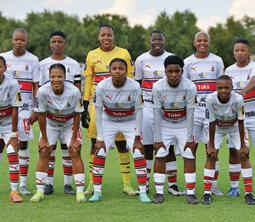
can become a viable career. Ndlovu agreed, saying, "Now all the matches are live, and more sponsors are starting to support women's football. I think in the next few years, the league will become even more exciting, competitive, and professional."
Of course, there is still room for growth. Rutsch hopes to see more investment in players, better facilities, and greater media coverage so that the women's game can continue reaching new heights.
If there is one message both players want to leave with the next generation this Women's Month, it is this: do not let anyone tell you that football is not for you. "Never stop dreaming," Ndlovu said. Rutsch echoed the same sentiment. "Believe in yourself and never let anyone tell you that your dreams are too big… If you stay committed and never give up, opportunities will come."
The next generation of South African footballers is already watching from the sidelines. Thanks to women like Lili Rutsch and S'bahle Ndlovu, they are no longer just dreaming of stepping onto the pitch; they are believing that they belong there.