TECHNICOLOR SUBLIME
Interview with the Artist
In this conversation between Ruth Pastine and Mark Roosa, dean of University Libraries and interim director of the Frederick R. Weisman Museum of Art, Pastine discusses her background, formative influences, and the works in this exhibition.
Mark Roosa Growing up in New York City, an epicenter for contemporary art, must have been a great experience. Who were some of the artists who influenced your creative directions?
Ruth Pastine As a native New Yorker raised in Manhattan, I had significant access to world-renowned cultural institutions and museums such as the Frick, the Guggenheim, the Met, MoMA, the Whitney, and the SoHo and 57th Street galleries. My life revolves around art, which influences my life choices. I am especially enthralled by painting— transcendent gateways to various movements, methodologies, and philosophies that span global cultures, presenting paradigms and principles to evolve my own work. Josef Albers, Dan Flavin, Helen Frankenthaler, Vincent van Gogh, Kazimir Malevich, Agnes Martin, John McLaughlin, Claude Monet, Ad Reinhardt, Mark Rothko, and Anne Truitt are several artists whose work inspired me to advance my minimalist color field paintings and engage my philosophical interests in the sublime.
However, it was also my early introduction to art history and color theory at the High School of Music & Art that challenged artistic traditions and fundamentally shaped my aspiration to make painting my life’s work, confirming my ambition, helping to define the essential thesis of my work and move toward refined abstraction. It was revelatory when I recognized that the interaction of color was a vast exploration into the phenomenology and conscious experience of color, defining the premise “color as content.” At the time, I was also drawn to Italian Renaissance painting, especially Fra Angelico’s frescoes. I responded to the presence of spiritual content through the tender touch of painting—illumination—and the iconographic use of color housed in definitively formal structures. I saw that by engaging
multiple panels via diptychs, triptychs, and quadriptychs, I could create a contemplative almost meditative connection between the artwork and architectural space inspiring future site-specific installations. I also responded to Monet’s and Van Gogh’s approaches to lush landscapes as a vehicle for the metaphysical experience of time and space.
I was a child when I first saw Kazmir Malevich’s White on White (1918) at MoMA and was confounded by this modest modernist painting. I questioned if it was a “good” painting, in contrast to Monet’s Water Lilies and Matisse’s Dance and The Red Studio, which were impressive in scale with bold, shimmering color. Later, at Cooper Union and Hunter College, I studied Suprematism, De Stijl, and Bauhaus teachings on color and perception. Malevich’s deceptively simple White on White presented as a groundbreaking minimalist icon as I advanced my abstract minimalist work.
MR You have mentioned visionary chemist Michel Eugène Chevreul’s The Law of Simultaneous Contrast of Colors (1839) as being impactful on your aesthetic. Could you highlight ways in which your paintings and works on paper reflect this construct?
RP I was introduced to Chevreul and his law of simultaneous contrast at Music & Art. Chevreul’s discoveries into simultaneous contrast of complementary colors—red vs. green, blue vs. orange, yellow vs. violet—
“Contrasting
complementary colors created a philosophical platform for my fascination with contradiction engaging my interests in the sublime.”
is at the forefront of investigating the mystery and rigor of engaging both optical juxtapositions and the chemical mixing of complementary color pigments. His early research influenced centuries of artists including Van Gogh, Monet, the French Impressionists, and Neo-Impressionists, as well as Josef Albers’s Homage to the Square Contrasting complementary colors created a philosophical platform for my fascination with contradiction and investigations into the interplay between opposing colors and value shifts. I’m drawn to working within refined
parameters and expanding upon proposed limitations affords limitless opportunity. I liken it to music, the most abstract creative practice—a finite system of notes and spaces, form and rhythm, symmetry and repetition, and yet there are vast centuries of diverse genres. I see limitations as paradoxes, an invitation to explore contradiction.
My explorations for the ongoing Gray Series employ nuanced blends of complementary color grays that highlight color and light’s elusive ineffability. I engage complementary colors to enhance optical luminosity and spatial depth and to extend the perceptual continuum with bold saturated pigments as well as subtle hues not easily identified.
MR Your work is often associated with the Light and Space movement. How would you characterize this movement and your place within it?
RP My work is based in geometric abstraction and minimalism. I extend the sensibilities of the 1960s Southern California Light and Space movement, which in general included artists who investigated perceptual phenomena and shared an interest in manipulating light as a
“I’m
drawn to working within refined parameters and expanding upon proposed limitations affords limitless opportunity.”
medium to alter the perception of form, space, and surface. My work brings key differences, such as my focus on metaphysical aspects of consciousness and reliance on traditional means of probing the chromatic and tonal nuances of oil paint applied with brushes. I evolve my artwork through series to invoke a contemplative connection between the works and the architectural spaces they occupy, creating an immersive viewing experience and heightened perception through resonant color relationships.
MR Is there a particular period covered by the works in the exhibit? Is there a back story surrounding the creation of these stunning works you might wish to share with our visitors?
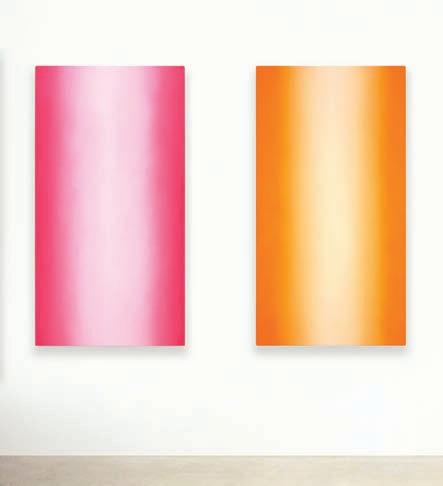
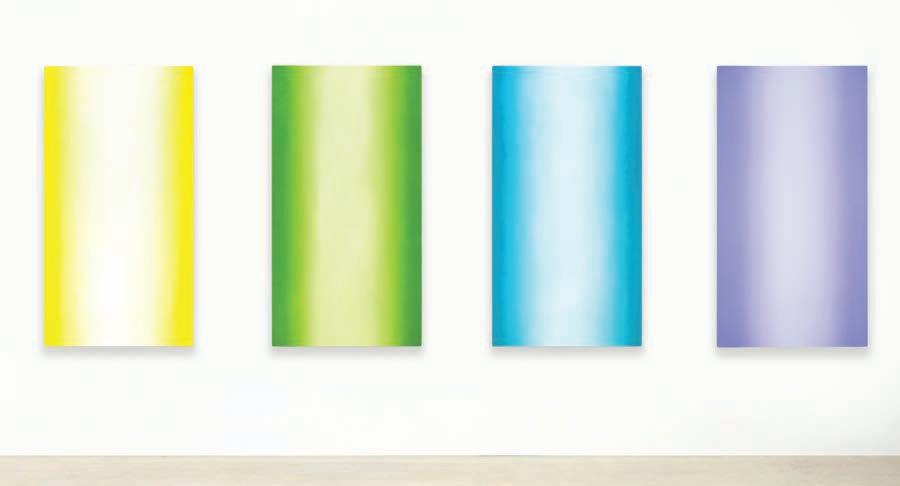
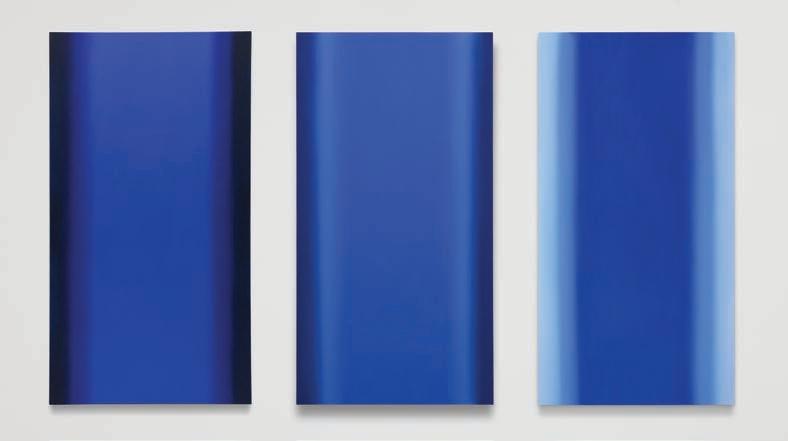
RP In 2023 Andrea Gyorody, former director of the Weisman Museum, invited me to have a solo exhibition, which subsequently coincided with the international release of my 20-year monograph published by Skira. This meaningful opportunity inspired me to create new large-scale paintings and a suite of soft pastels on paper for the Lightscapes Series that is on view alongside the recent six-panel Presence Absence spectrum, the Light as Air Series, and a selection of Depths Series oils on paper, all of which have never been exhibited. As I work in series, there’s focused orchestration as I move and shift the canvases around the studio discerning new ways to
proceed. It’s critical to observe the paintings evolve in concert and in juxtaposition with one another. My creative process embraces the dance, a counterbalance, between the known and the unknown, intention and flow of spontaneous investigations—and the revelations—present new systems and structures to advance new work. The sage understanding to take a chance. Being in that free fall of uncertainty is essential to my process of discovery; there are moments of absolute awe and beauty.
MR Commingled with your works are select paintings by Josef Albers (1888–1976) and John McLaughlin (1898–1976). What sort of dialogue do you hope will transpire between these works and yours? What connections do you hope viewers will make from these juxtapositions?
RP Recently, the Weisman Museum restored four John McLaughlin paintings and two
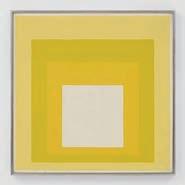
Josef Albers Homage to the Square paintings. Dr. Gyorody was planning an exhibition of geometric hard-edge abstract paintings by these two artists among others when she came to my studio. Seeing my soft-edge minimalist color field paintings on canvas and new works on paper prompted her to shift her plans, deciding to situate my work with these two predecessors. I hope that my practice will share a counterpoint for being in the contemplative and expansive present moment of discovery, which abstraction can afford.
MR We are looking forward to the publication of your monograph, Ruth Pastine: Limitless Can you provide us with a preview of what the publication will cover?
RP This monograph features highlights from numerous series of paintings and works on paper spanning the last 20 years, culminating with the most recent Lightscapes Series. Included is an interview with Julie Perlin Lee, director of the Laguna Art Museum, in which I express that I’ve come to understand that my work is meditation and mediation, rigorous in mind and method. I trust that I come to my creative practice not knowing how the work will resolve. There’s truly no knowing the future with anything, and with that I embrace mindfulness to silence my mind from its attempts to determine future outcomes.
We’re all best served without preconceived convictions of what we’re going to see and feel.
My work sets precedents for an experience and affords a perceptual and visceral call and response with the viewer. The installation and various light sources, including the changing light of day and seasons, help support the interplay between the artwork, the architecture, and the viewer’s optical adjustment to the phenomena of the paintings.
Abstraction accesses the subconscious and ineffable. It’s present and timeless and exponentially connecting. It’s exactly what it is. The universality of being in the here and now. My process affords being in the vastness of the moment, and the paintings come from this spaciousness. It’s my hope the work affords this experience, an opportunity to engage, reckon, and revel with the profound experience of human existence.
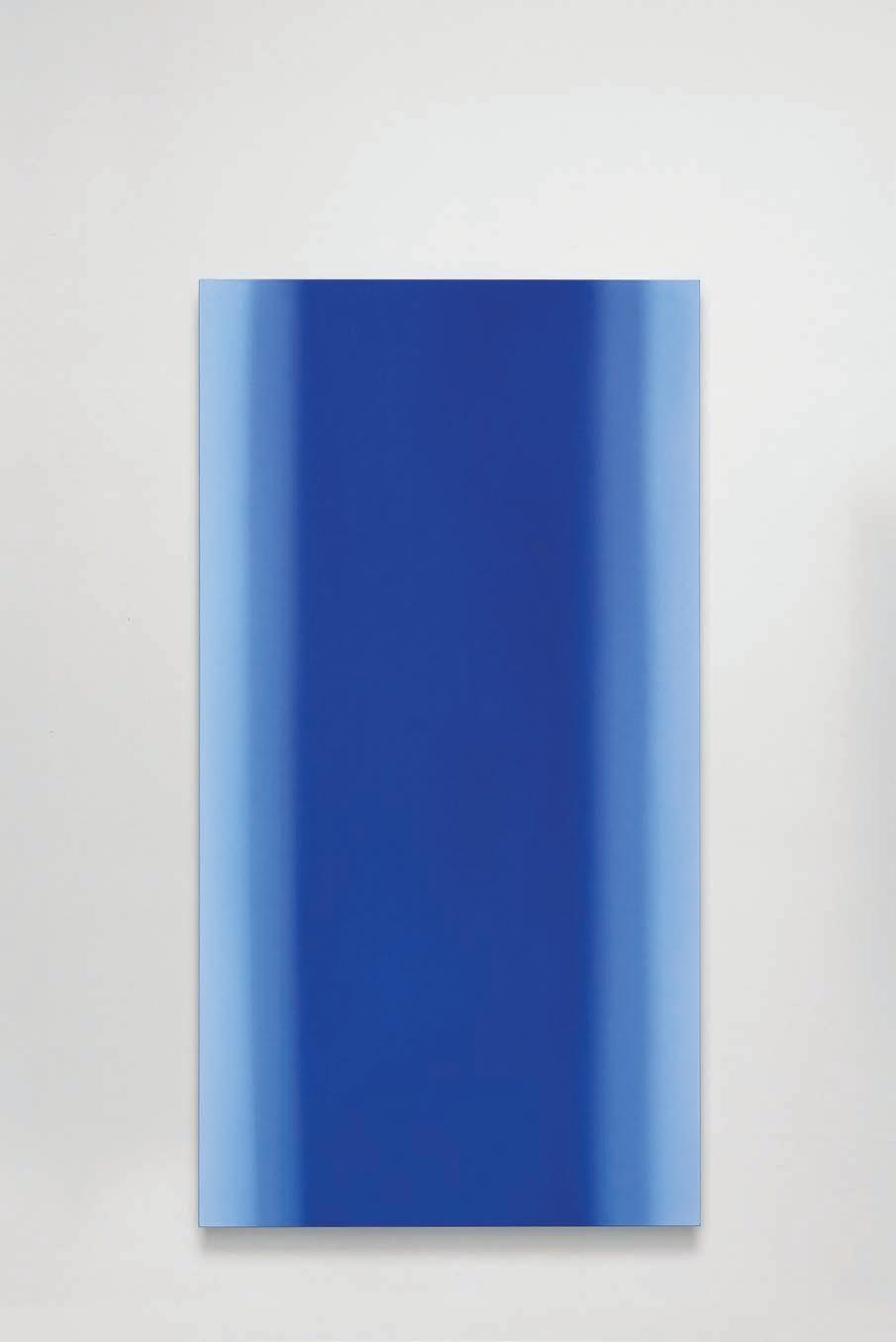
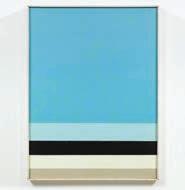
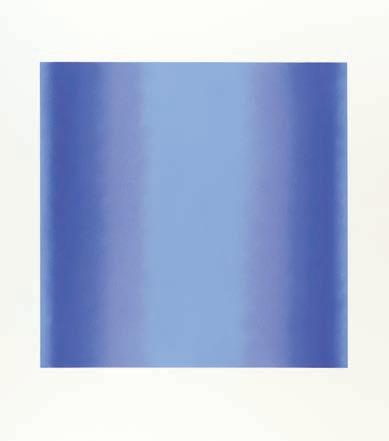
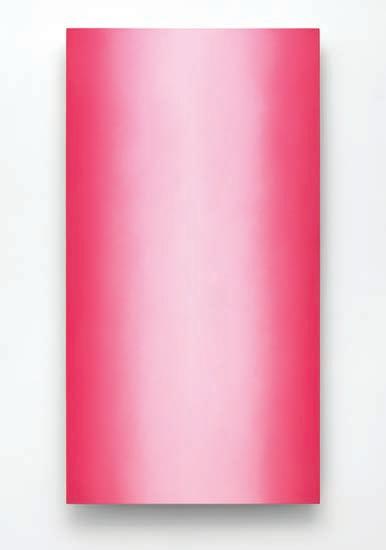
Images from left to right: Presence Absence Series, 2021–22, oil on canvas on beveled panel, 60 × 32 × 2.5 in.; Blue 1–3, Lightscapes, 2025, oil on canvas on beveled panel, 90 × 48 × 2.5 in. each; Josef Albers, Homage to the Square: Transitory, 1961, oil on board, 24½ × 24½ × 1½ in.; John McLaughlin, H-1957, 1957, oil on fabric, 48⅞ × 36 13/16 × 1¾ in.; Lightscapes 1S, 2025, pastel on archival paper, image 14 × 14 in., sheet 30 × 22 in.; Red, Presence Absence Series, 2020, oil on canvas on beveled panel, 60 x 32 x 2.5 inches
Ruth Pastine is internationally recognized for her minimalist color field paintings and multi-panel installations through which she explores the phenomenological experience of color, light, and space. Ruth Pastine: Technicolor Sublime is the artist’s first solo museum exhibition in Los Angeles.
Pastine’s work is based in geometric abstraction and minimalism. She extends the sensibilities of the 1960s Southern California Light and Space movement with key differences, such as her focus on metaphysical aspects of consciousness and her reliance on traditional means of probing the chromatic and tonal nuances of oil paint applied with brushes. She evolves her artworks through series, invoking a contemplative connection between the works and the architectural spaces they occupy. Creating an immersive viewing experience, Pastine heightens perception through resonant color relationships. Her luminous canvases engage her philosophical interests in the sublime, furthering the tensions that drive her practice: materiality and immateriality, the known and the unknown, the finite and the limitless.
The exhibition debuts Lightscapes, a series of large-scale paintings on canvas and a suite of soft pastels on paper, alongside additional new works such as the six- panel Presence Absence spectrum, the Light as Air Series, and a selection of Depths Series oil paintings on paper. Also featured are selected works from the Frederick R. Weisman Museum of Art’s permanent collection by John McLaughlin and Josef Albers, two of Pastine’s predecessors, whose geometric hard-edge abstract paintings provide a counterpoint to her soft-edge investigations into color, luminosity, depth, and perception. For more than 40 years, Ruth Pastine has pursued a phenomenological investigation of visual perception, which she explores through the materiality of painting and the elusive qualities of light’s ineffability.
Pastine (b. 1964, New York City) received her BFA from the Cooper Union for the Advancement of Science and Art and her MFA from Hunter College. In addition to being the recipient of many grants and honors, she was awarded a postgraduate residency at the Gerrit Rietveld Academie, Amsterdam, and an independent fellowship in Florence, Italy. Her paintings are included in numerous world-renowned public institutions and private collections. She lives and works between Los Angeles and Ojai, California.
The Frederick R. Weisman Museum of Art at Pepperdine University is a leading venue for modern and contemporary art in Southern California, with a particular emphasis on California-based artists and cultural themes. Since its founding in 1992, the museum has combined scholarly programming with accessible, rotating exhibitions that engage both academic and public audiences.
Exhibition organized by the Frederick R. Weisman Museum of Art in close collaboration with the artist.
FREDERICK R. WEISMAN MUSEUM OF ART
Pepperdine University 24255 Pacific Coast Highway Malibu, CA 90263
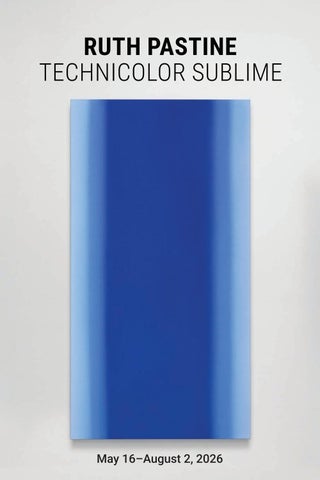
Front Cover: Blue 3, Lightscapes, 2025, oil on canvas on beveled stretcher, 90 x 48 x 2.5 inches.
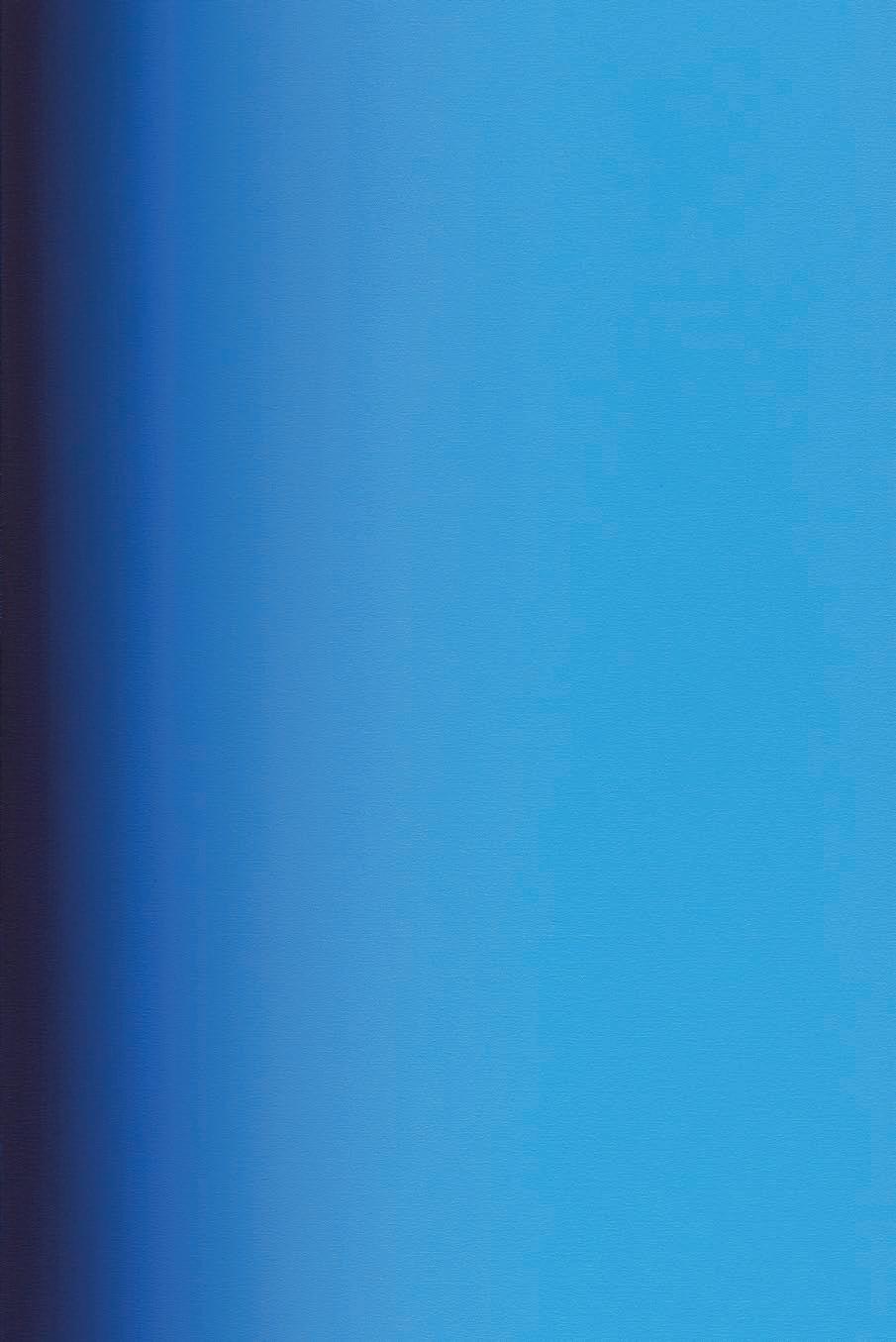
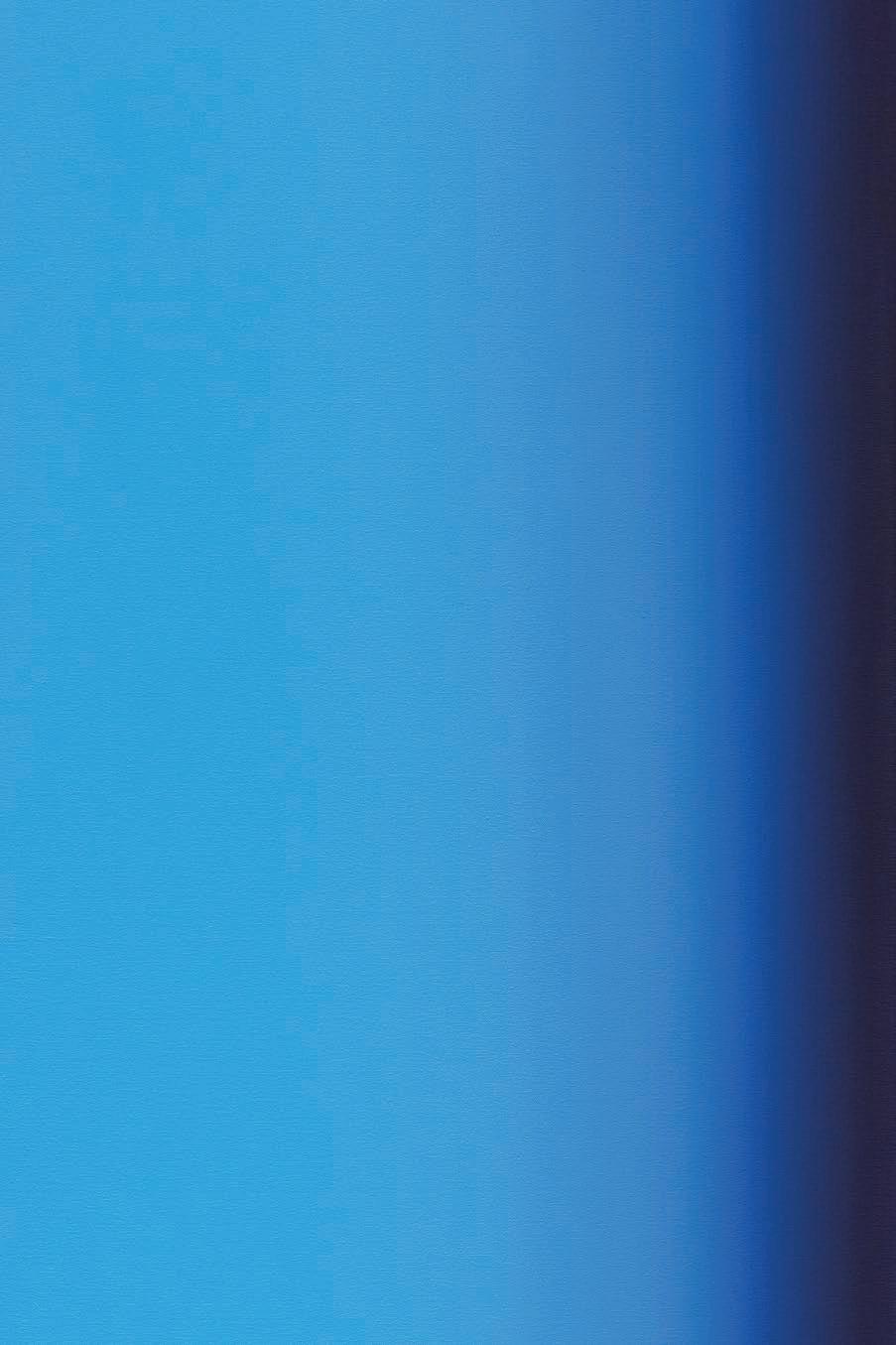
Centerfold: Cerulean, Lightscapes, 2025, oil on canvas on beveled stretched, 72 x 40 x 2.5 inches