Why there is a Need for a Cardiologist? Cardiology is the branch of study that deals with disorders and diseases of the heart. A person who has any kind of cardiovascular disease like peripheral vascular disease, coronary heart disease, heart failure, and congenital heart disease should consult a cardiologist for their treatment. Some of these diseases are life-threatening, so you should always consult good cardiologists. You can also refer to a Cardiologist in Jaipur. A cardiologist is a physician who specializes in curing abnormalities and diseases related to the heart and blood vessels. They expertise in internal medicine and perform the test and diagnostic procedures required to check the abnormalities and disabilities of the heart. Important procedures and tests carried out by cardiologists are angioplasty, pulse palpation and auscultation, and heart catheterizations.
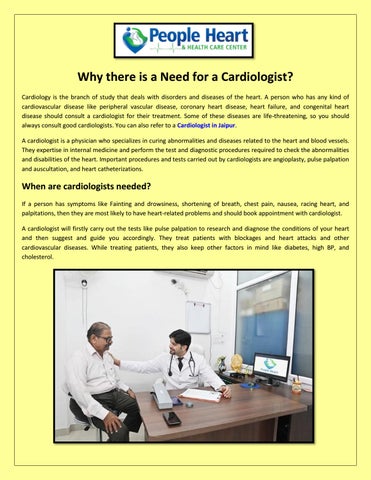
When are cardiologists needed? If a person has symptoms like Fainting and drowsiness, shortening of breath, chest pain, nausea, racing heart, and palpitations, then they are most likely to have heart-related problems and should book appointment with cardiologist. A cardiologist will firstly carry out the tests like pulse palpation to research and diagnose the conditions of your heart and then suggest and guide you accordingly. They treat patients with blockages and heart attacks and other cardiovascular diseases. While treating patients, they also keep other factors in mind like diabetes, high BP, and cholesterol.
Some of the cardiovascular diseases that can be treated by cardiologist are• Hypertension • Congenital heart and artery disease • Coronary heart disease • Heart failure • Heart valve disease • Pericardial disease • Triglycerides • Cardiomyopathy Other than these, they can also advise and help in making decisions about angioplasty, heart surgeries, and catheterization.
Procedures involved in Cardiology Firstly, your cardiologist in Jaipur will review your medical history and then examine your cholesterol level, blood pressure, and check if you have diabetes or not. He would also ask whether you smoke or not. On the basis of all this, he will conduct some tests. The tests will include• ECG provides information about the enlargement of the walls of the heart. • An ambulatory Electrocardiogram helps in monitoring heart rhythms and rates when you are performing daily daytime activities. • Exercise Electrocardiogram helps in monitoring changes in heart rate while doing rest and exercising. • A transthoracic echocardiogram helps in creating an ultrasound i.e. a picture of heart chambers and the area surrounding them. • A coronary angiogram is a procedure that helps a doctor to check and understand the functioning of the blood vessels, heart, and the electrical system • Nuclear Cardiology is an imaginative method that is used to assess the size of the heart attack. • Electrophysiology is a subspecialty of cardiology. It helps in treating the electrical activities related to the heart.
How to choose a cardiologist for you? According to AHA i.e. American Heart Association, you should always check whether the cardiologist is certified by the board through the American Board of Family Medicine. And in the case, if your cardiologist recommends a risky treatment, AHA advises you to look for a new option.
https://peopleheartcare.medium.com/why-there-is-a-need-for-a-cardiologist-2d72f318965e