MEET MARKET
summer 2026
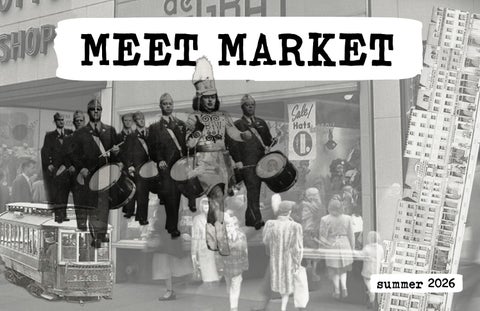
This is a portal to Market East's many lives.
This little zine is a note of gratitude and a call to memory. It accompanies a set of pop-up shops concentrated on the 900 block of Market Street, freshened up by Meantime and temporarily occupied by local, creative businesses for Summer 2026. It’s a short but potent opportunity to view Market East anew, as a civic center of gravity, animated by commerce, commemoration, and cycles of reinvention driven by preservation and new development. As entire blocks of Market East are on the verge wholesale change again, this project presents a chance to pause and look closer at Market East’s role at the heart of the heart of the city, as a stage for experimentation rooted in historic assets.
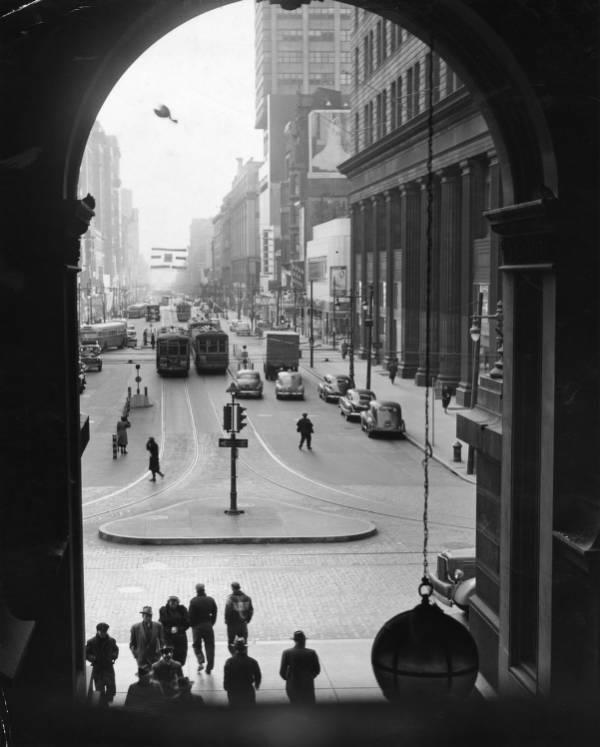
Market East from City Hall, 1950. Philadelphia Evening Bulletin. Courtesy of the Special Collections Research Center. Temple University Libraries. Philadelphia, PA.
Have a look around. Adjust your eyes.
What do you see out on Market? A wild mix of time and transit threaded through by all kinds of people. How do you “read” Market East? Is it a place between neighborhoods, with hard edges or it is a richer zone where different kinds of city life can cross paths? Maybe you can see evidence of a proud city willing to reinvent itself through impressive building projects across time.
What do you hope for Market East? What should stay the same, change, or be revived?
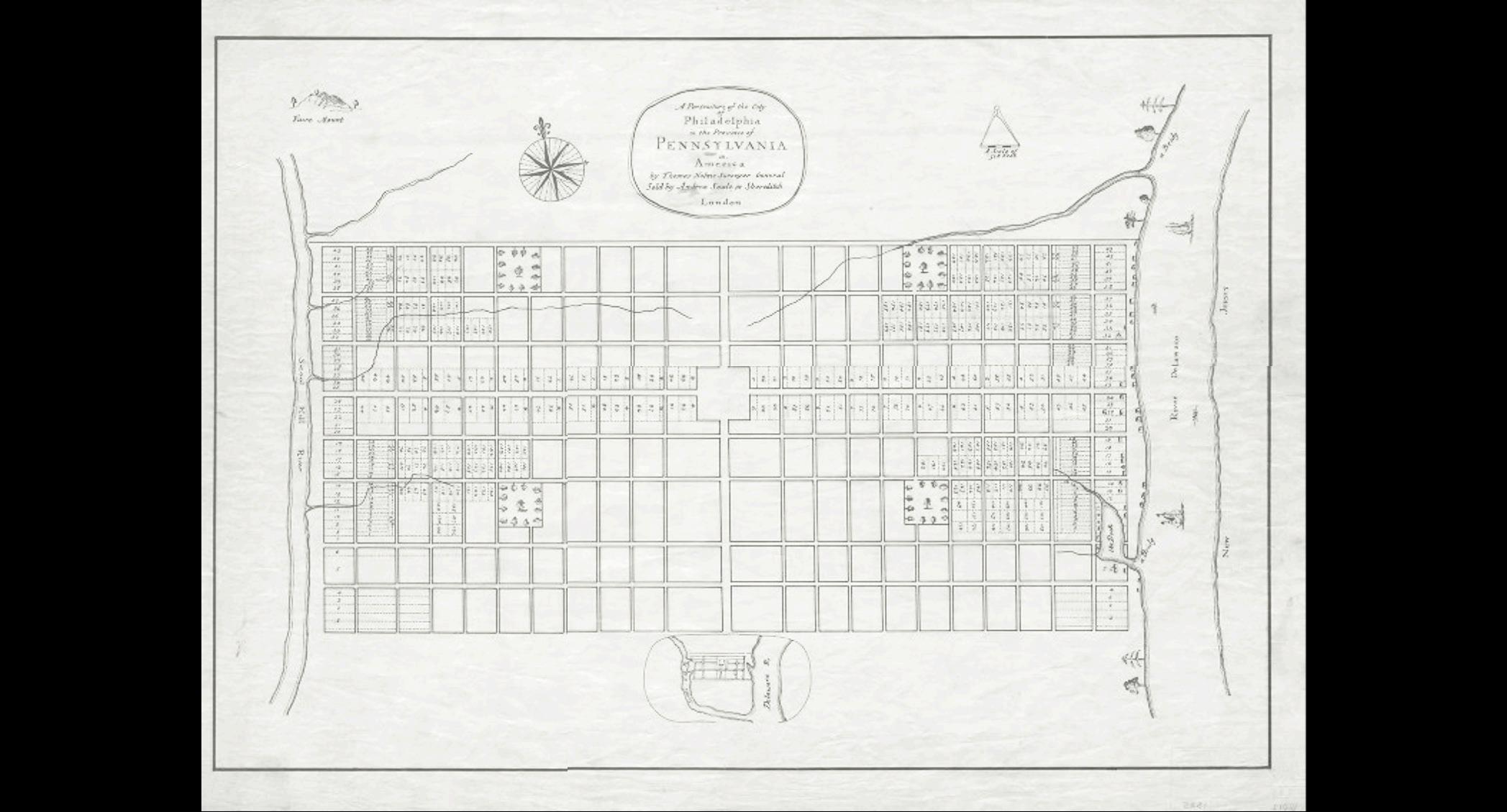
“A portraiture of the city of Philadelphia in the province of Pennsylvania in America,” Thomas Holme map, 1683. Courtesy of Philadelphia Streets Department, Survey and Designs Bureau.
You Are Here.
Chances are you found this zine on Market Street. If so, congratulations! You’re on one of Philadelphia’s founding streets.
Well, not exactly. That’s a map from 1683. But if you look at the same map view today, you'll see the same grid, rivers, and squares.
A walk west on Market Street from Front Street to City Hall is a walk through time. In Old City there are remnants and recreations of the Colonial and early Federal city. Then there’s the gaping green of Independence Mall between 5th and 6th streets. After that, you move into a hodgepodge of the 19th and 20th century commercial buildings. There’s an urban mall on top of a transit hub. Historic buildings, repurposed and revived many times over, sit next to more contemporary high rises. It’s a great big, shuffled deck showing off different eras, all of which have treated Market Street as central.
A Street Is Born.
Market Street began as an idea, before Philadelphia actually existed. It was born as the city’s primary east-west axis when it was drawn on a map in 1683 for William Penn. Penn named it High Street, which is Brit-speak for the main commercial drag of a town. In 1720, when Benjamin Franklin came to Philadelphia, he landed on the Delaware docks and wandered High Street, where he would later build his house. Today it runs like a belt across the city’s midsection: from the Delaware River in the east, across the Schuylkill River, and through West Philadelphia to the city’s western edge.
Philadelphia was the first American city planned on a grid of streets and squares, basically as a real estate scheme. High Street was intended as the center of the action. It was 100 feet wide, wider than the rest, in part to accommodate civic and commercial needs. New civic buildings, taverns, shops, and houses of notable Philadelphians all grew along High Street.
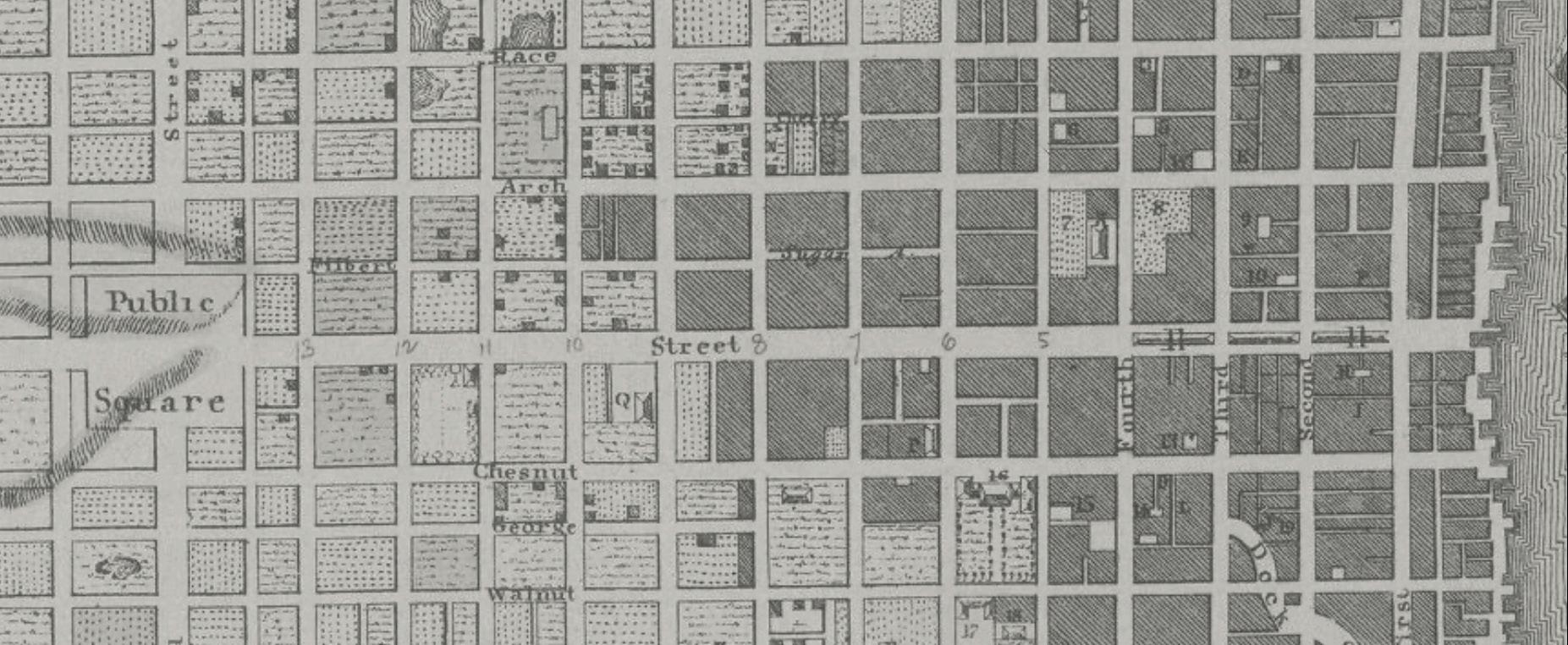
High Street
1926 reproduction of P.C. Varle map, 1794. Courtesy of Philadelphia Streets Department, Survey and Designs Bureau.
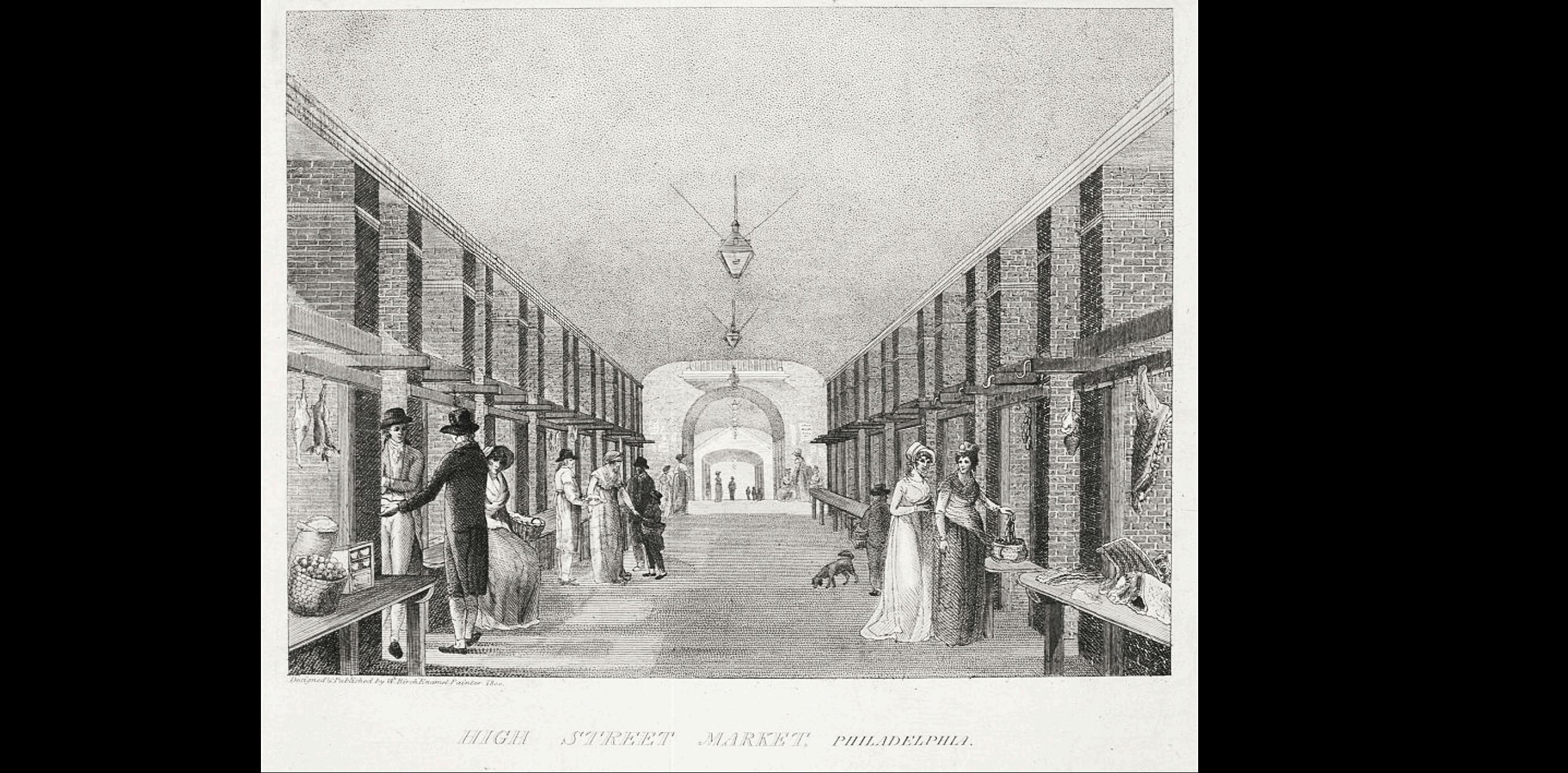
Interior view of High Street market shed, William Russell Birch. Birch’s Views of Philadelphia, 1800. Courtesy of Library Company of Philadelphia.
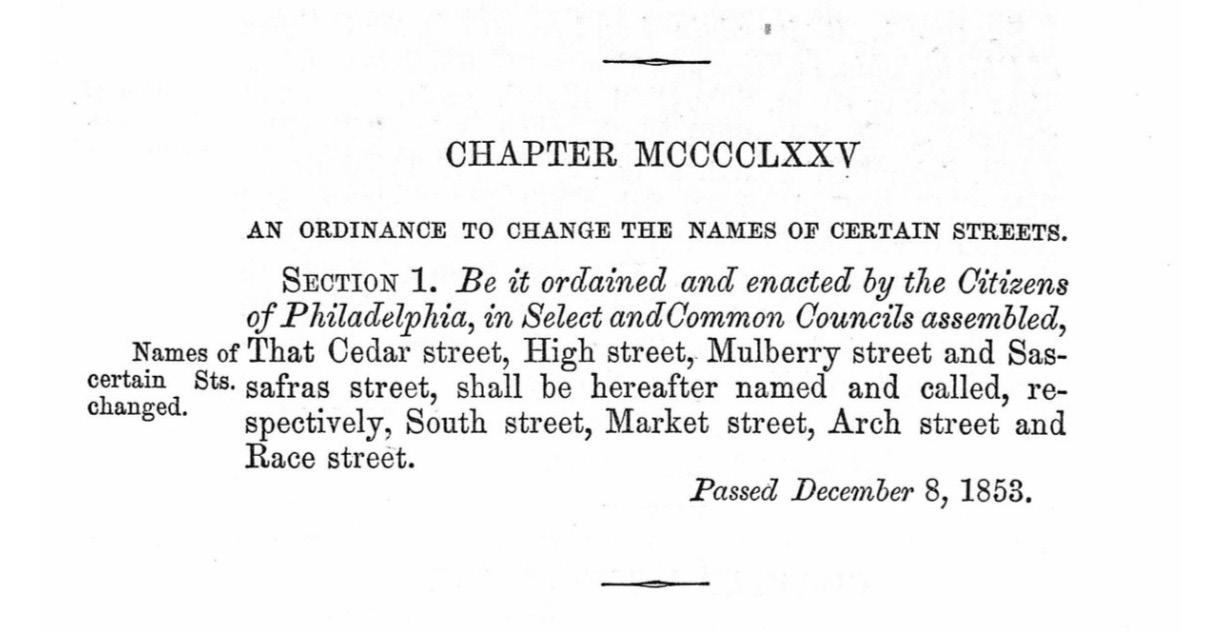

The city officially renamed “High” Street as “Market” Street in 1853, acknowledging it as the central place for commerce with a nod to the old market sheds. The renaming was also in keeping with how Philadelphians commonly referred to the street.
By the mid-19th century, Philadelphia had grown explosively and needed to update its infrastructures, partly for sensible things like public health and safety, but also to keep up with the times. In the 1854, Philadelphia “consolidated” into the city as we know it today, combining the historic core of Penn’s plan with its outer boroughs. The city was investing in improving its governance, civic infrastructure, and public image. On Market Street that included making plans to remove the dirty and disorderly old public market sheds. The city ordered market sheds to be torn down by October 1859. Market operators quickly built new market halls to replace the sheds, complete with modern amenities and cold storage.
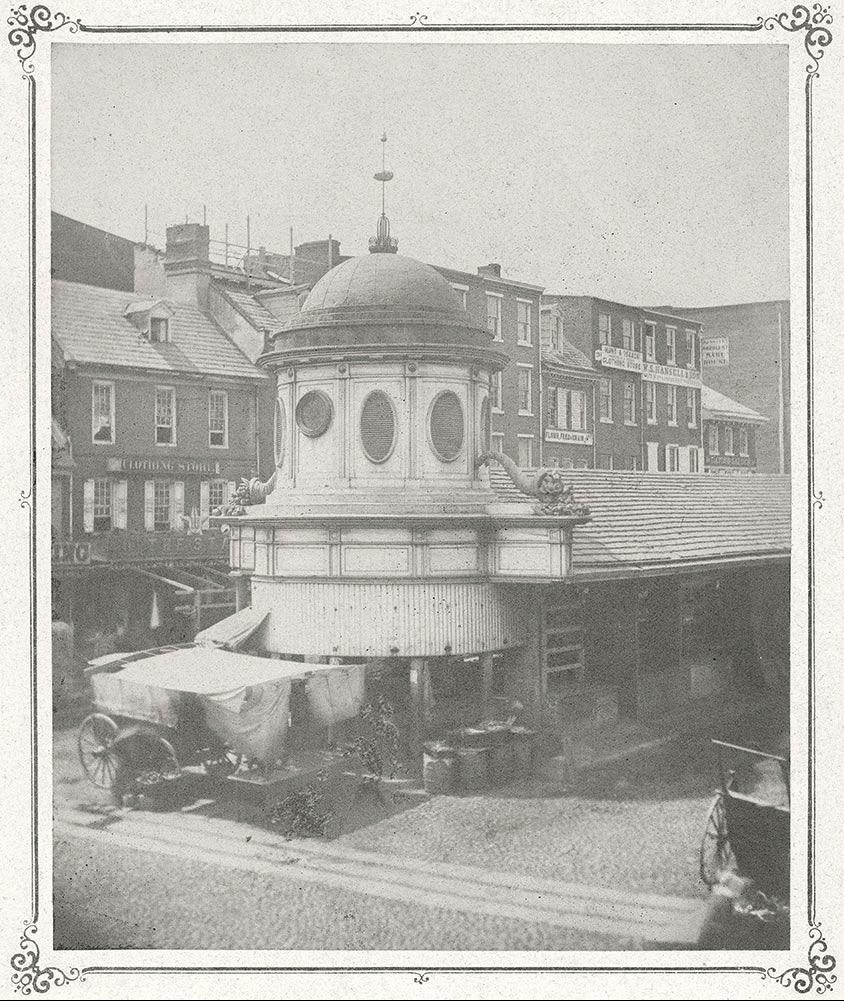
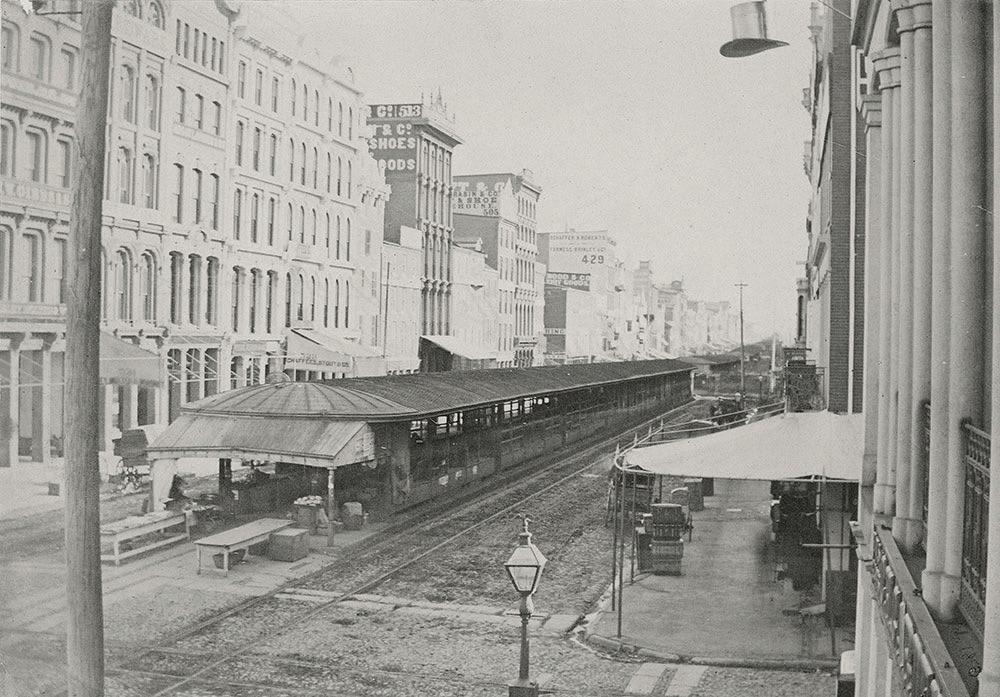
1859
1859: Market headhouse, Front and Market streets (L); Market Sheds, 700 Market Street. (R)
Courtesy of the Free Library of Philadelphia, Print and Picture Collection.
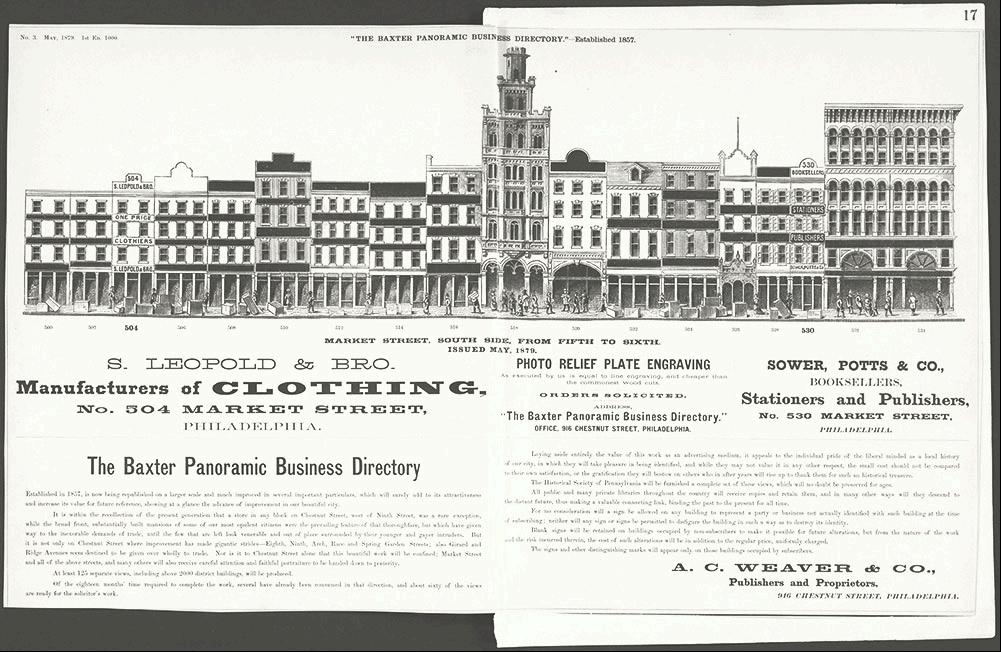
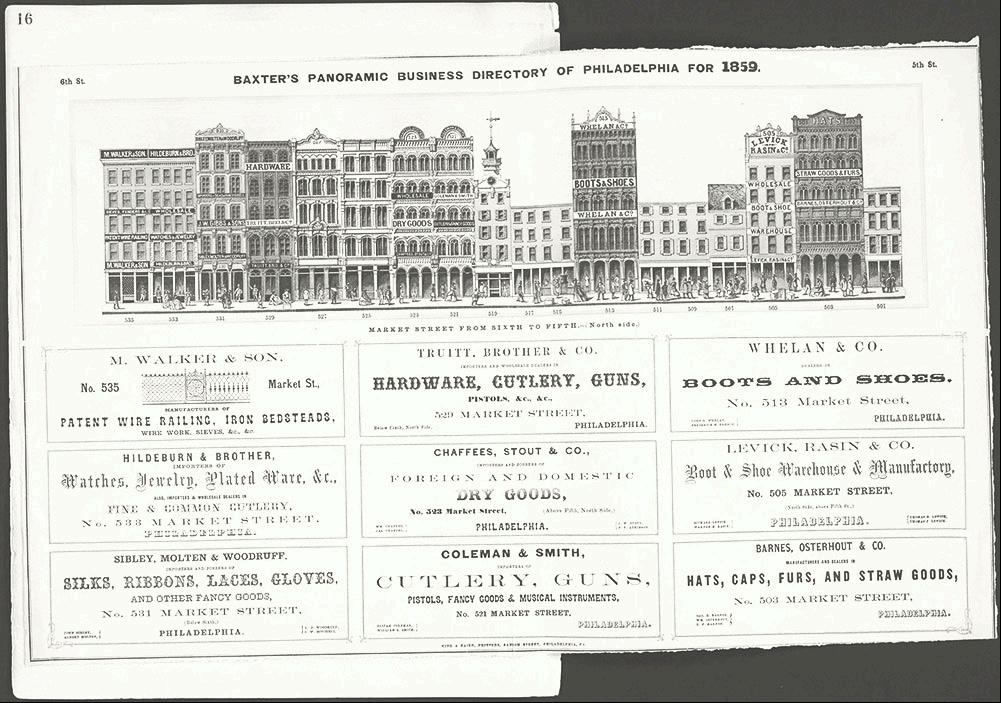
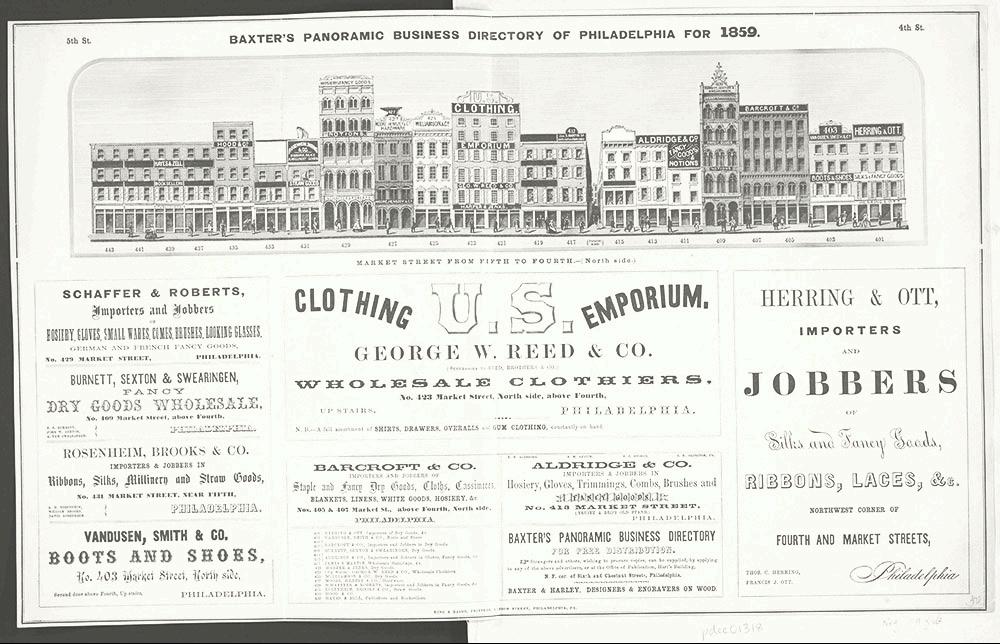
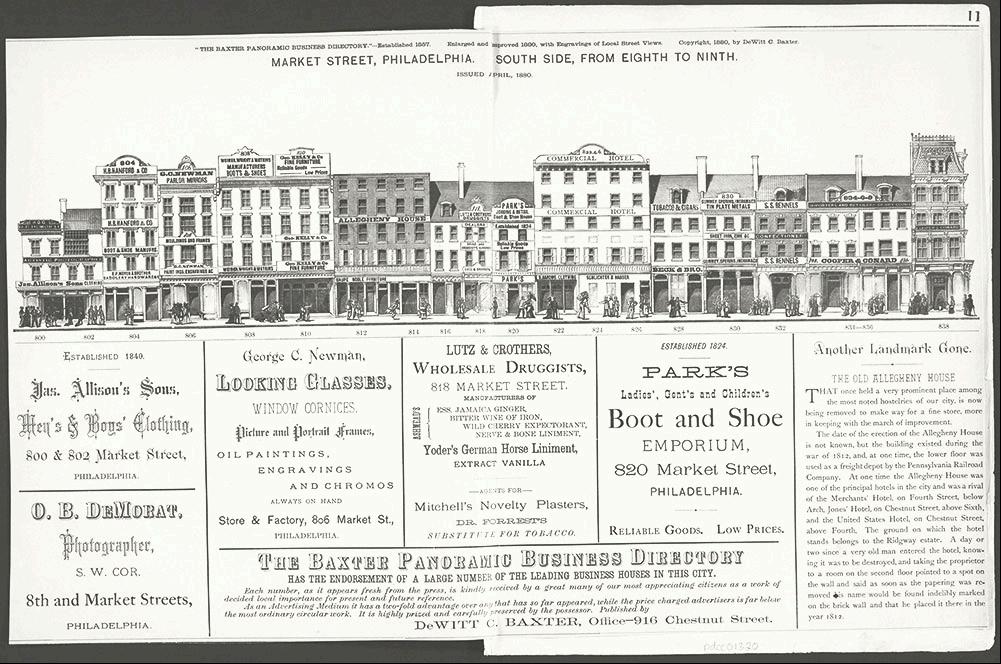
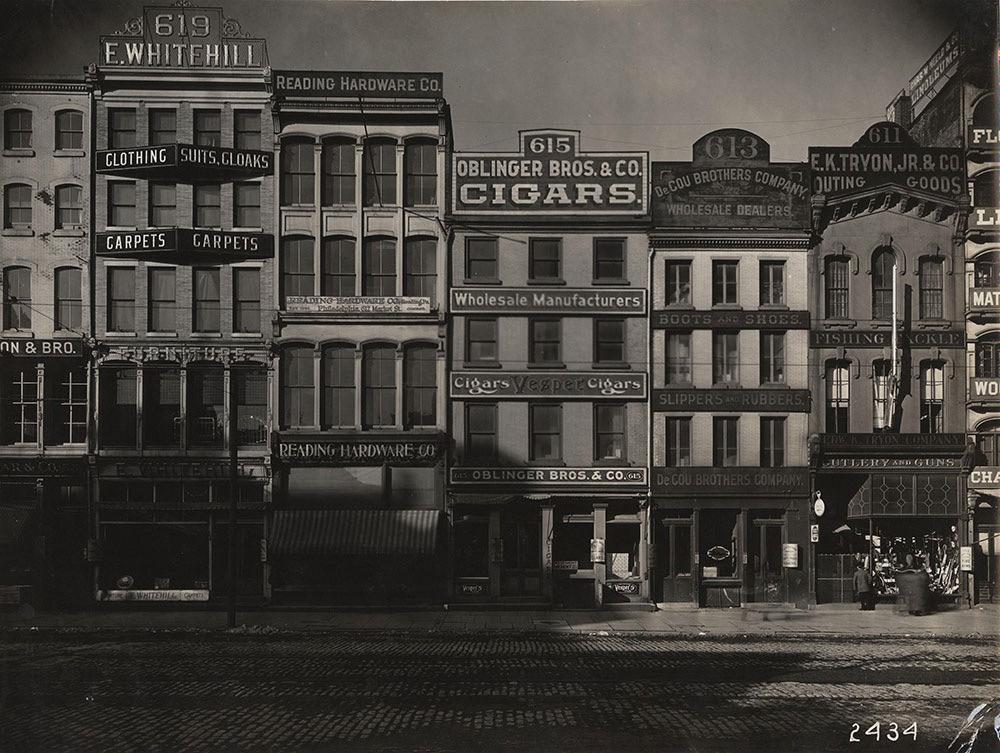
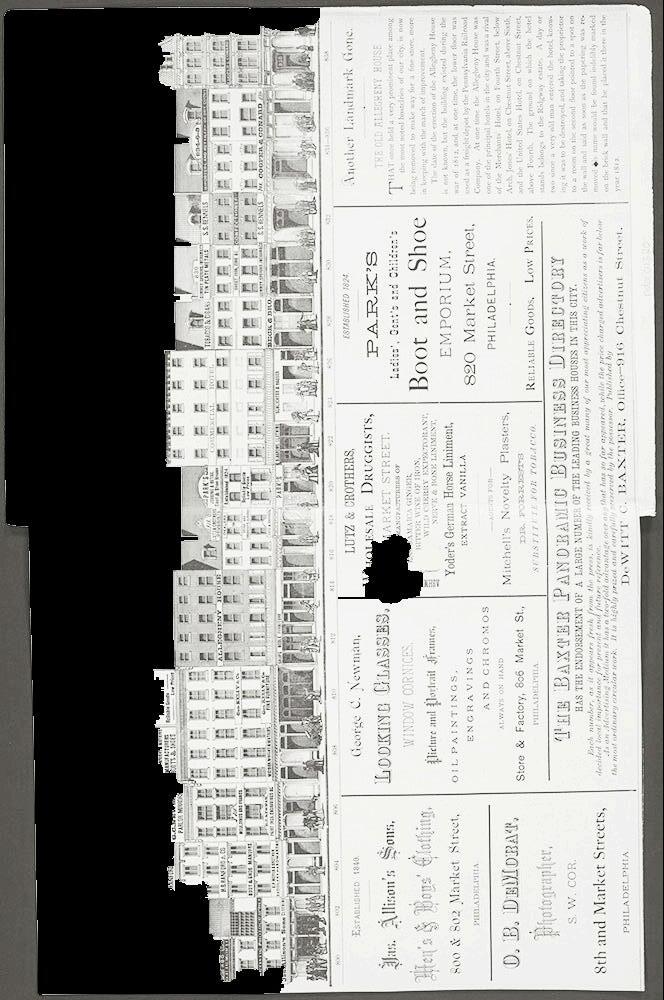
600 Block of Market Street. [undated] Courtesy of the Free Library of Philadelphia, Print and Picture Collection.
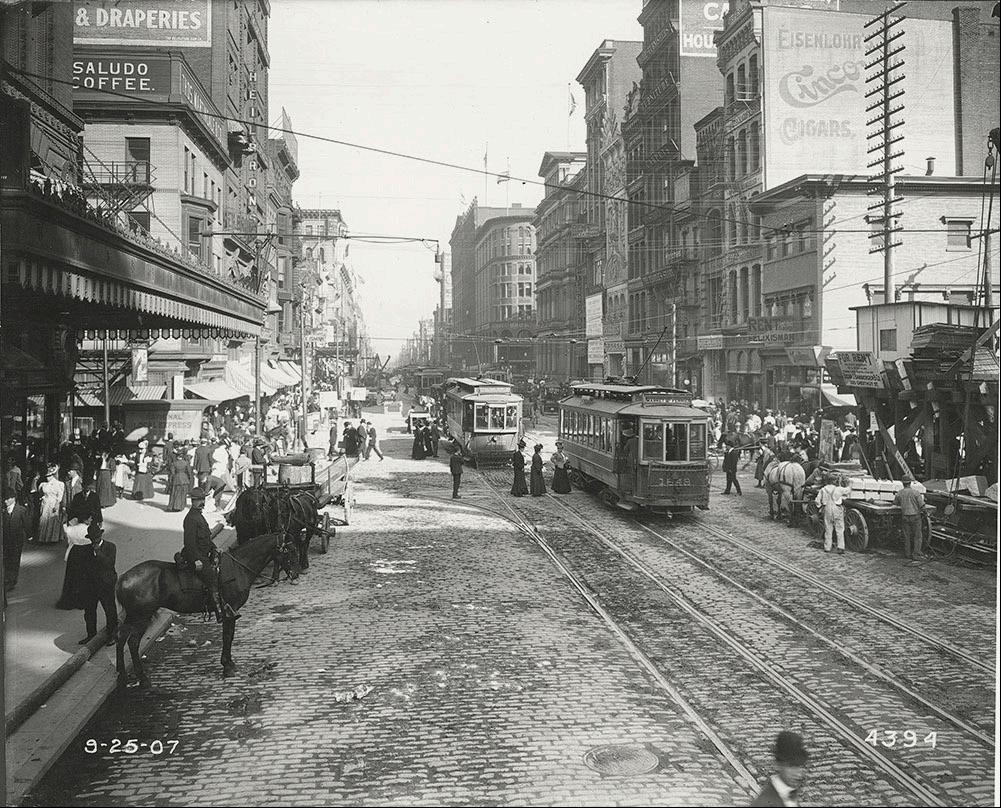
900 Market Street, Courtesy of the Free Library of Philadelphia, Print and Picture Collection.
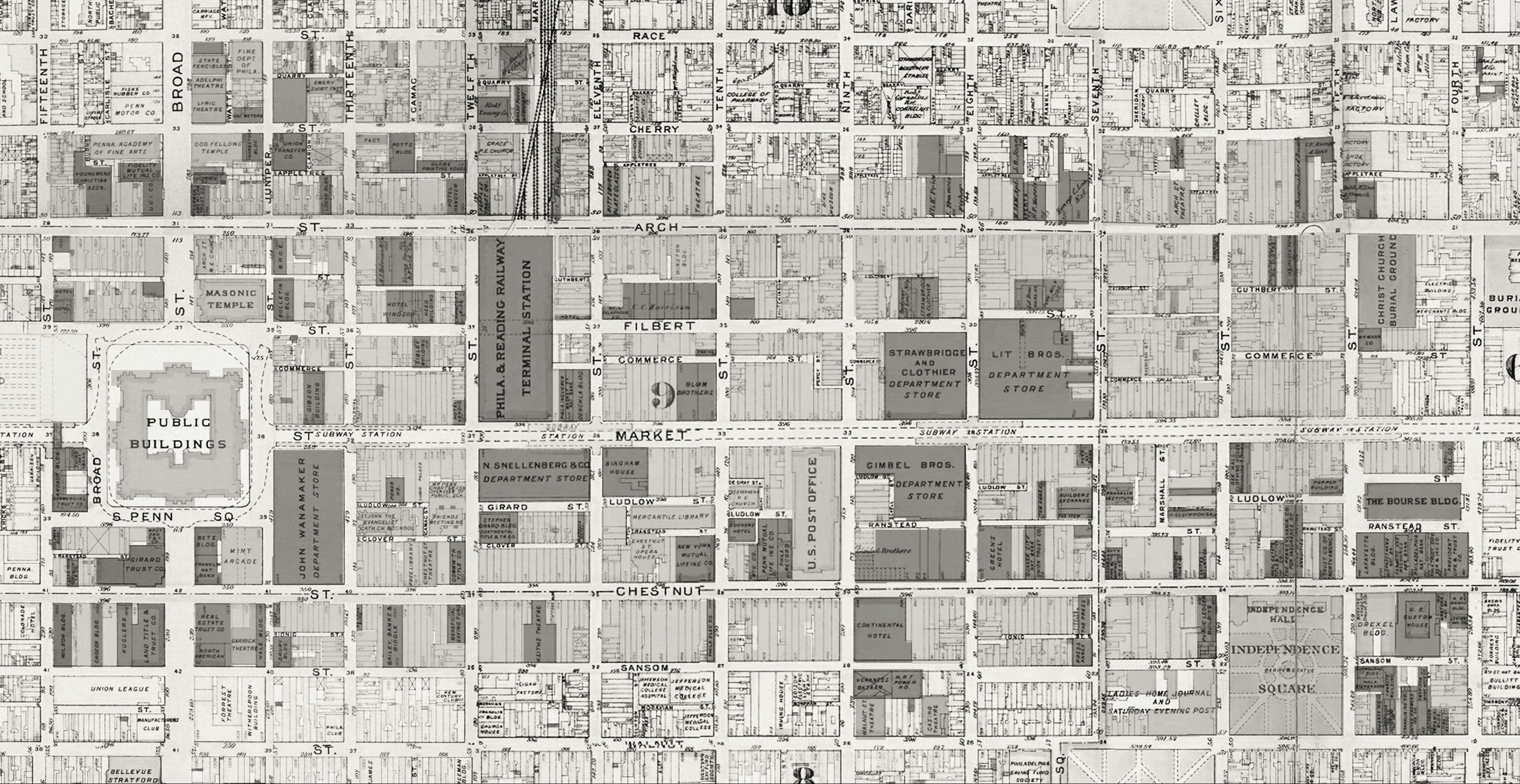
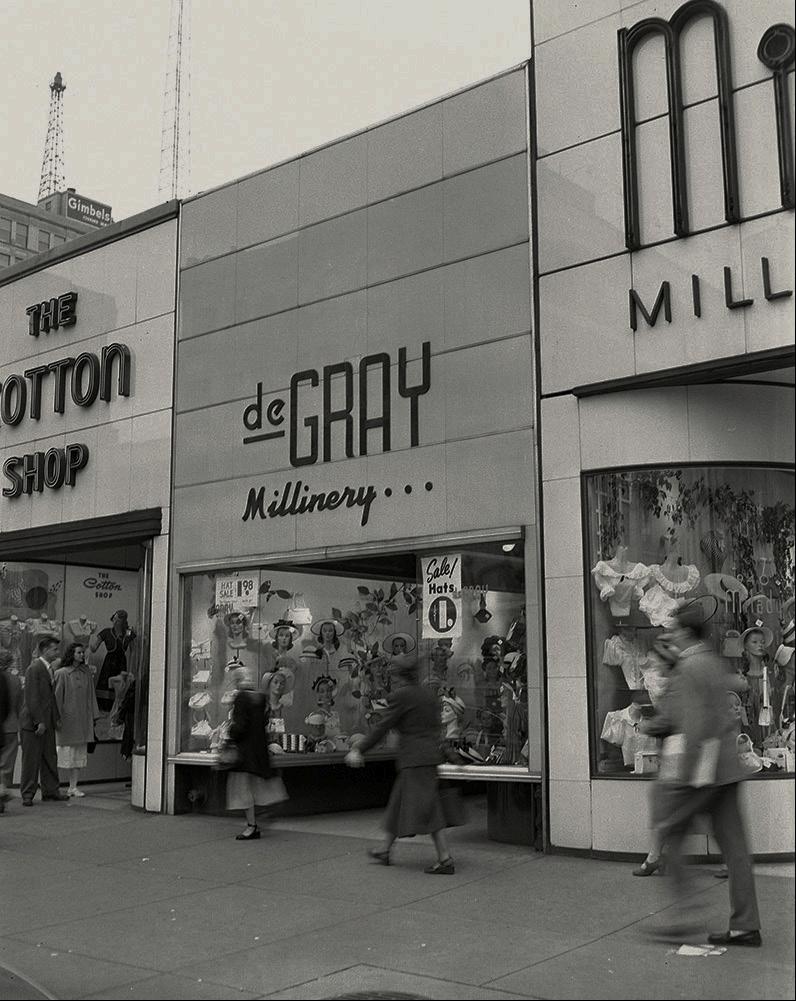
Philadelphia’s major department stores clustered along Market East, especially at the intersection of 8th and Market, where Gimbels, Strawbridge’s, and Lit Brothers faced off. Discerning shoppers and bargain hunters alike flocked to Market Street from all parts of the city. Elaborate architecture, enormous signs, neon lights, and well-dressed shop windows all served as eye-catching advertisements for the businesses within. Its density and variety made Market Street boom, easily accessible for Philadelphians via public transit.
Department stores outlined in white. Basemap: Bromley Atlas of the City of Philadelphia, 1910. Courtesy of the Athenaeum of Philadelphia via philageohistory.org
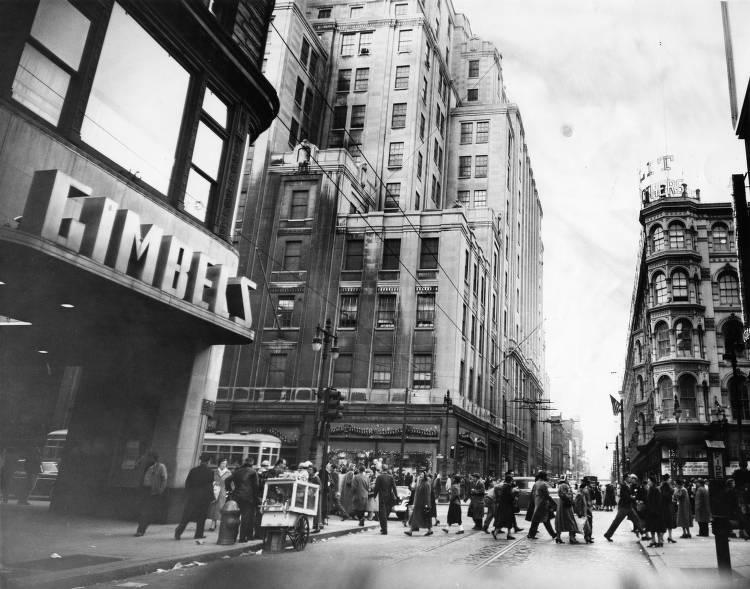
L to R: Gimbels, Strawbridge & Clothier, and Lit Brothers at 8th and Market streets, c. 1950. Philadelphia Evening Bulletin. Courtesy of the Special Collections Research Center. Temple University Libraries. Philadelphia, PA.
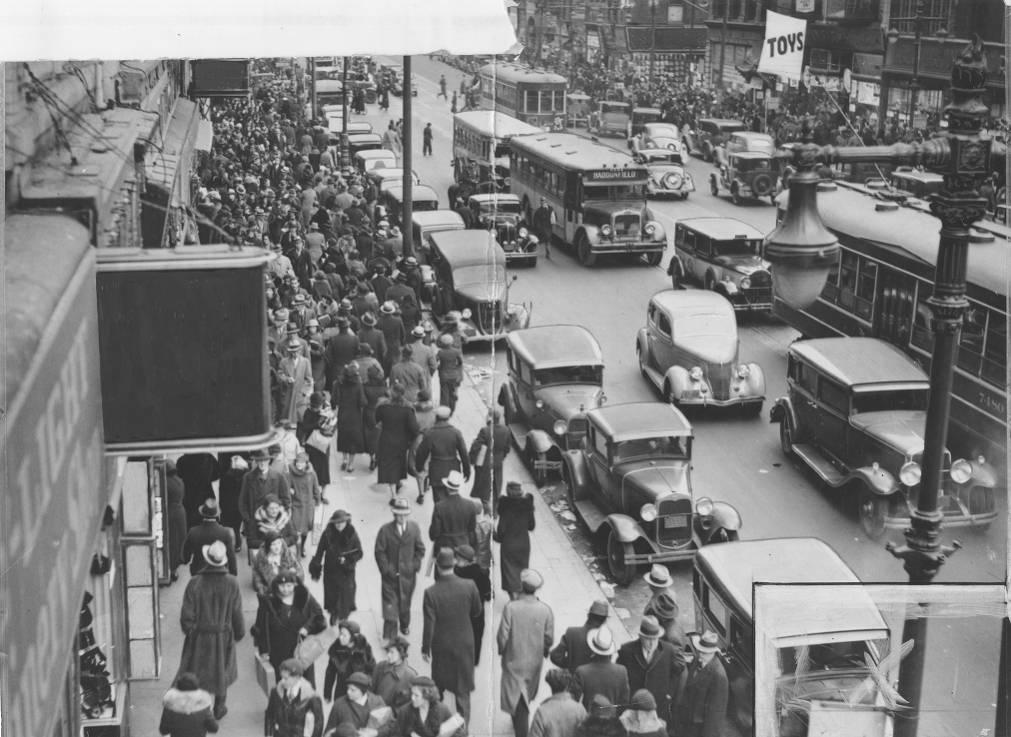
A city guide produced in the 1930s referred to the street as better for mass-market and bargain shopping than the fancier stores on Chestnut or Walnut streets.
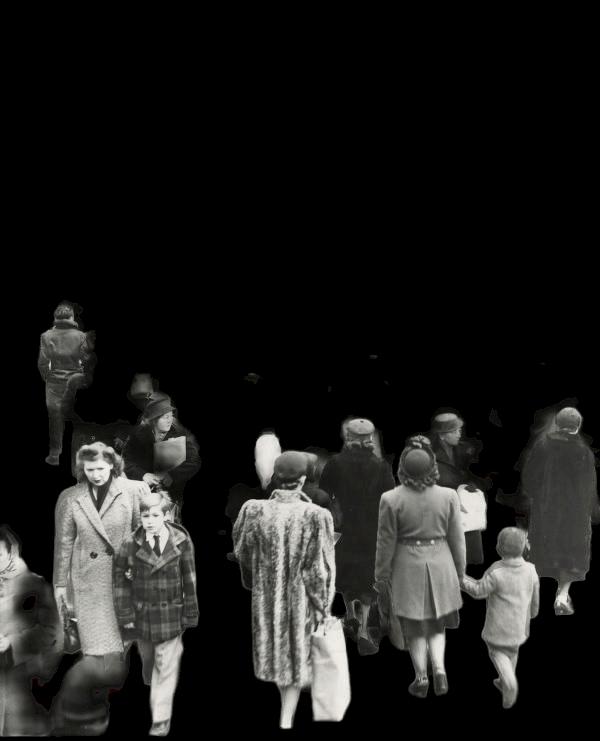
Photographs from the middle of the 20th Century show how essential Market East was for Philadelphia businesses and their customers. Sidewalks were thronged with people and storefronts were full.
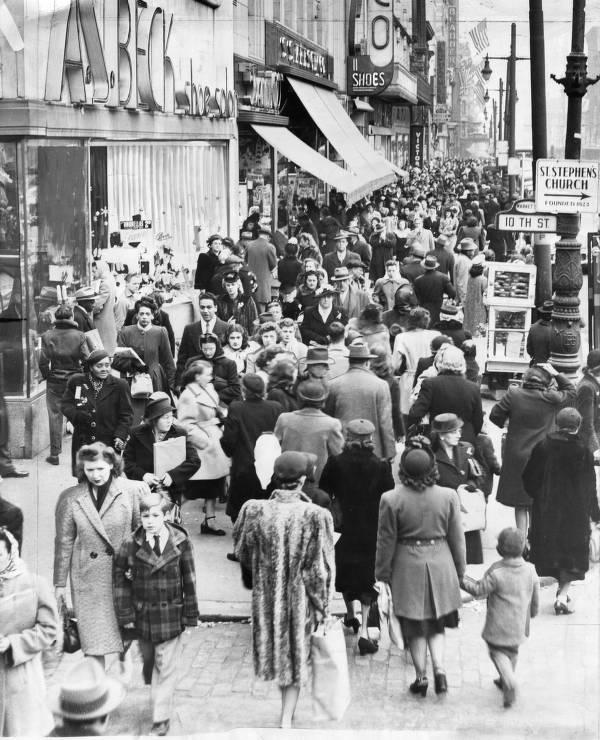
Christmas shoppers throng Market East, in 1935 (L) and 1947. (R). Philadelphia Evening Bulletin. Courtesy of the Special Collections Research Center. Temple University Libraries. Philadelphia, PA.
Market East is a stage for experiments in city building.
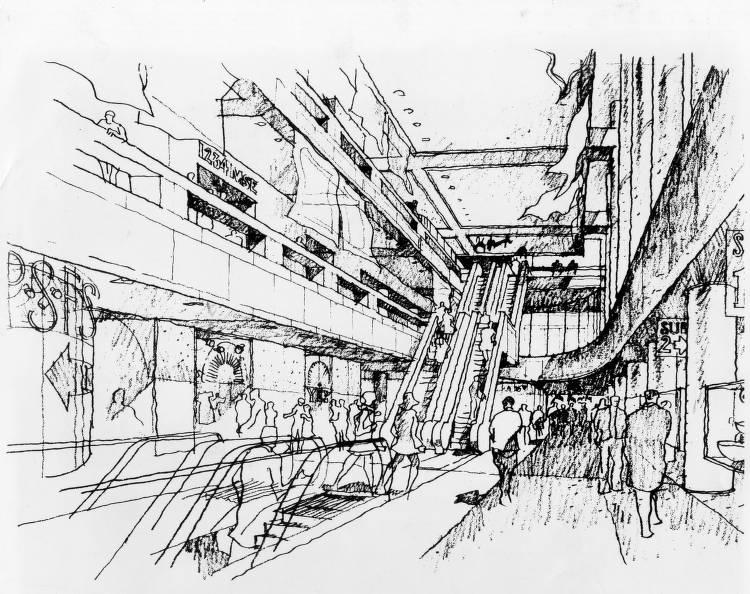
There have been so many different versions of Market Street (real and imagined) over three and a half centuries, just about the only “original” thing left is the straight line of the street.
Throughout the 20th century, Market East was where Philadelphia consistently tried on different approaches to city building and different expressions of its civic identity, in both cases leveraging the area’s enduring assets — public infrastructure, shopping habits, historic consciousness. There were waves of multi-block demolitions for new construction alongside the adaptive reuse of major historic buildings.
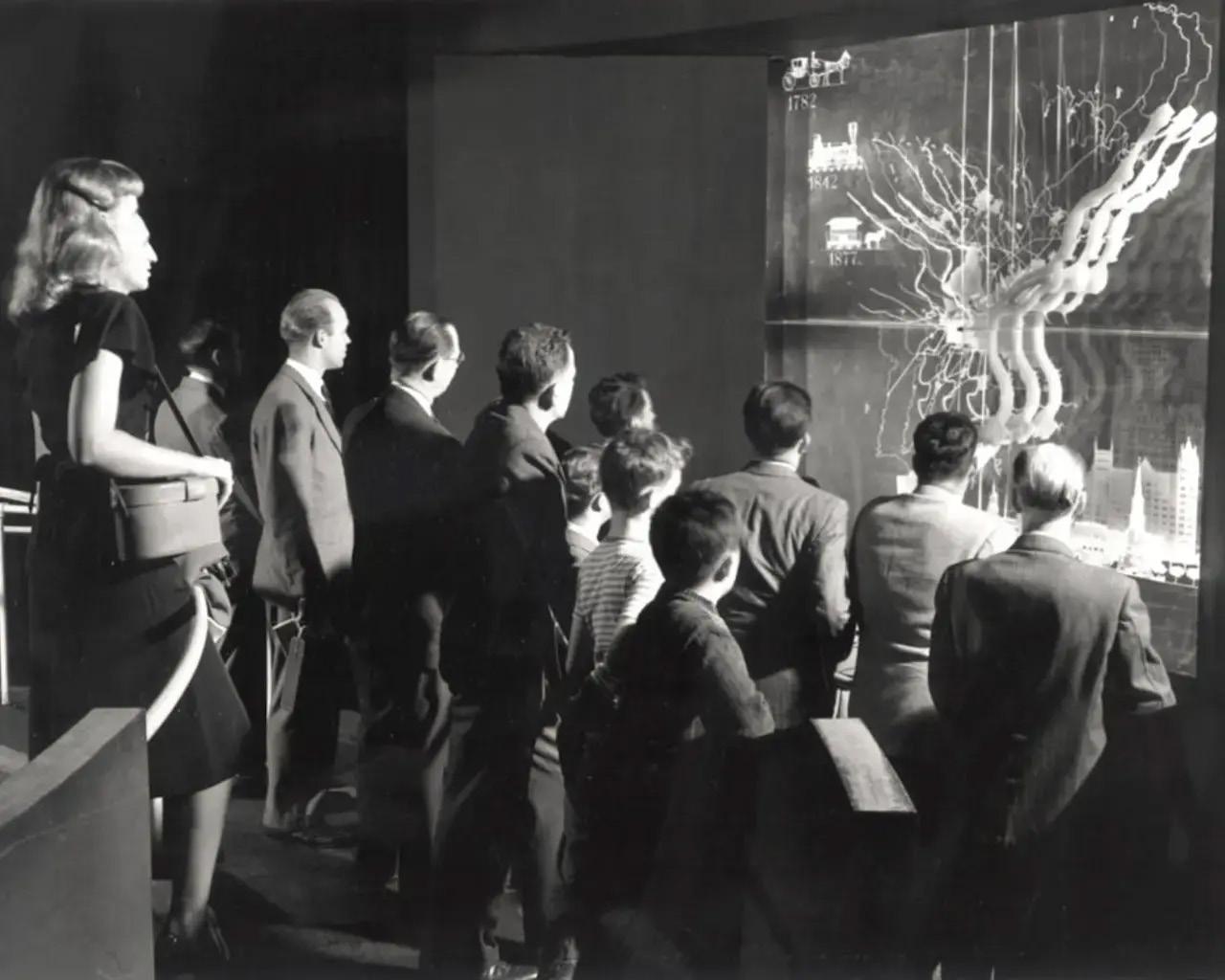
Better Philadelphia Exhibition, 1947. Courtesy of the Free Library of Philadelphia, Print and Picture Collection.
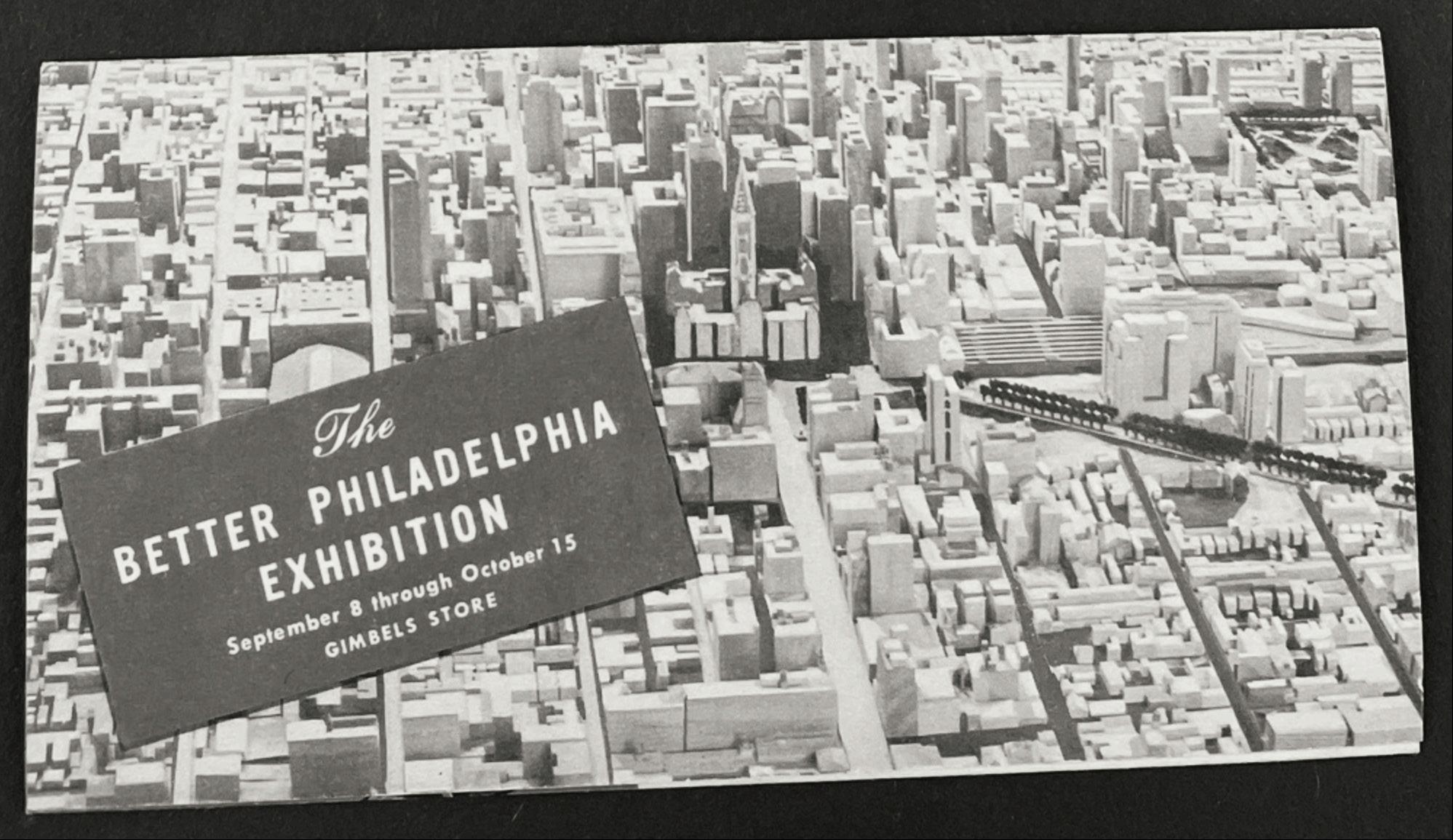
conversation about modernizing the old city. The argument at the time was, at least partly, about building a new future on the city’s past.
Better Philadelphia Exhibition, 1947. Courtesy of the Free Library of Philadelphia, Print and Picture Collection.
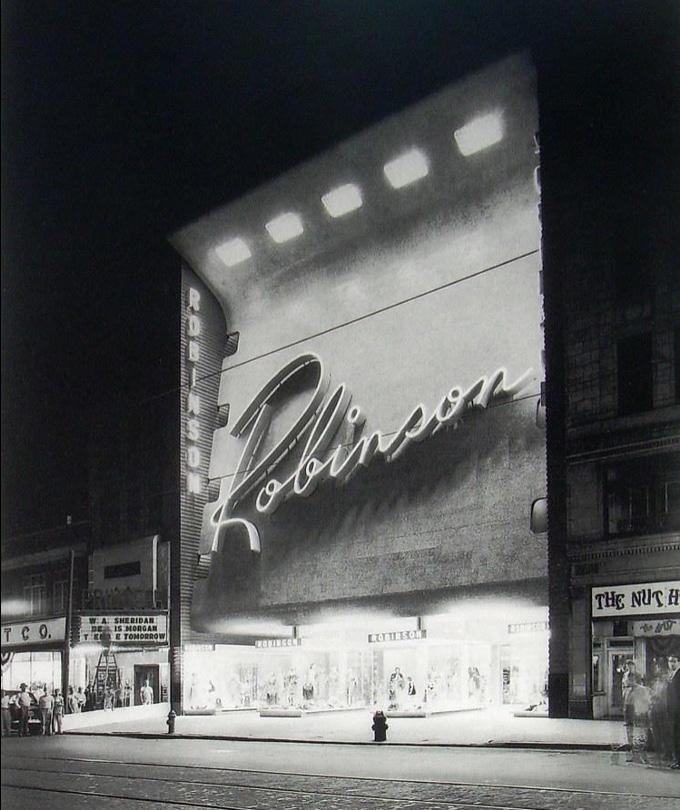
Along Market East, fusty Victorian buildings were being replaced with modern shops and offices. Some blocks were torn down en masse, leaving big regrettable holes. Elsewhere, the street gained bold modernist architecture, like the tidal wave of the Robinson’s building on the 1000 block.
In a spectacularly bizarre, recent episode, the Robinson building had its historic designation stripped by a city appeals board (which technically had no jurisdiction over such matters) in order to make the site easier to demolish as part of a whole-block property consolidation. As of May 2026, the Robinson building still stands. It remains likely its owners (the sports - entertainment conglomerate funding this very popup) will demolish the block. There is no public plan in place for its redevelopment. If this smacks of urban-renewal-eras-past, you’d be right, except back then it was the city who did the work of redevelopment and planning.
Robinson building at 1020 Market, 1946. Library of Congress.
Market East was urban renewalized in the mid-20th century.
Market Street
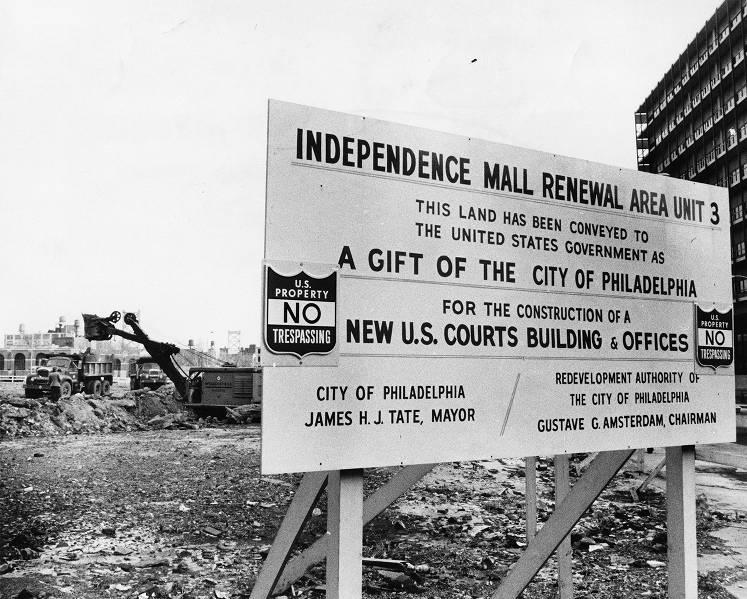
Demolition and digging on at 6th and Market streets, 1969. Philadelphia Evening Bulletin. Courtesy of the Special Collections Research Center. Temple University Libraries. Philadelphia, PA.
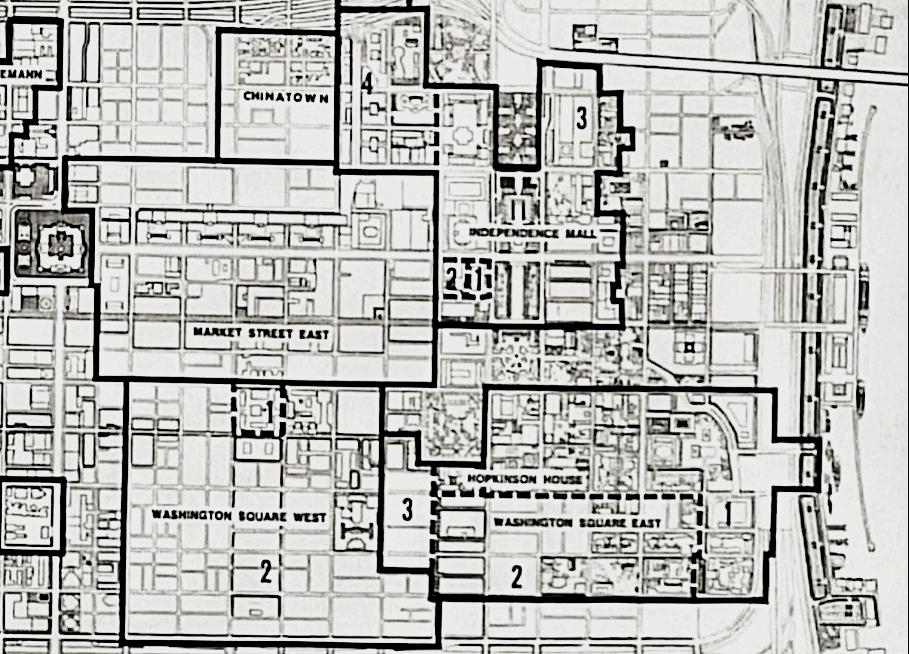
Detail of urban renewal areas in eastern Center City, Annual Report 1969, Philadelphia Redevelopment Authority.
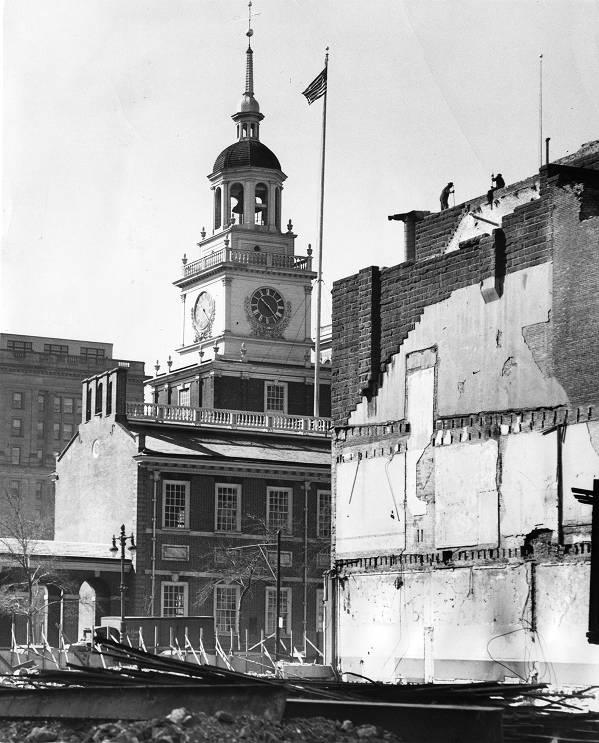
The first project cleared several blocks stretching north from Independence Hall, between 5th and 6th Streets, separating the monument out from the surrounding city. Planners at the time thought it was appropriate for this near-sacred monument to America’s founding ideals to be set apart from the bustling and dense blocks of the living city. The lawns of “Independence Mall” were then framed by important modernist buildings, including a new federal courthouse and corporate offices of companies like Rohm and Haas.
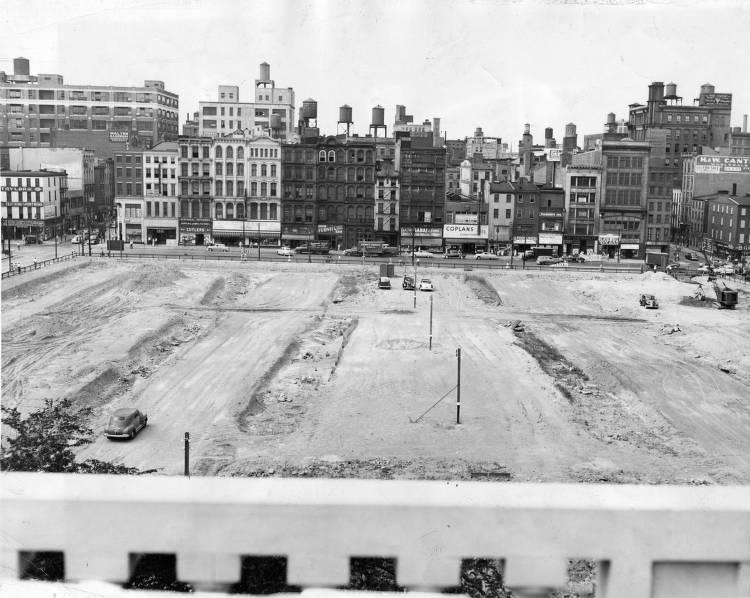
Independence Hall comes out into the open,1952. (L); View of demolition for Independence Mall, 1953. (R) Philadelphia Evening Bulletin. Courtesy of the Special Collections Research Center. Temple University Libraries. Philadelphia, PA.
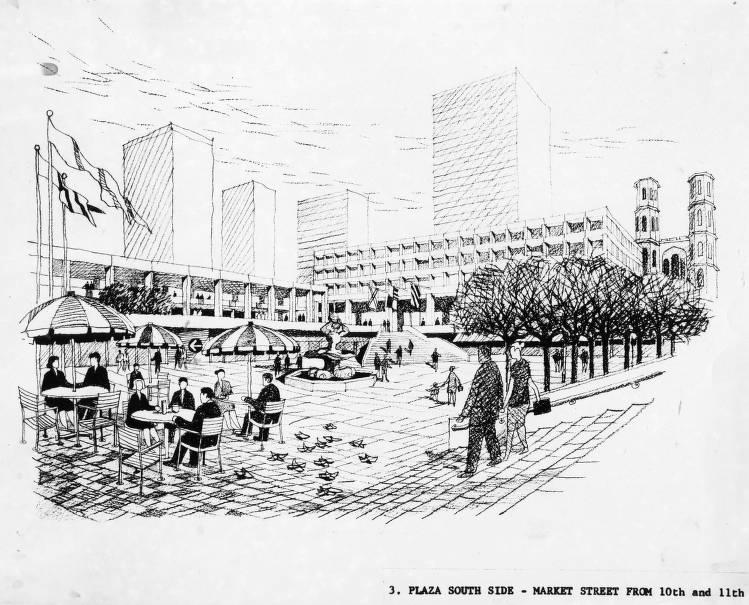
The Market East urban renewal project brought a modern transportation center topped with an urban shopping center called The Gallery (more recently rebranded as the Fashion District).
Rendering of a proposed plaza on north side of Market between 10th and 11th streets, 1960. Philadelphia Evening Bulletin. Courtesy of the Special Collections Research Center. Temple University Libraries. Philadelphia, PA.
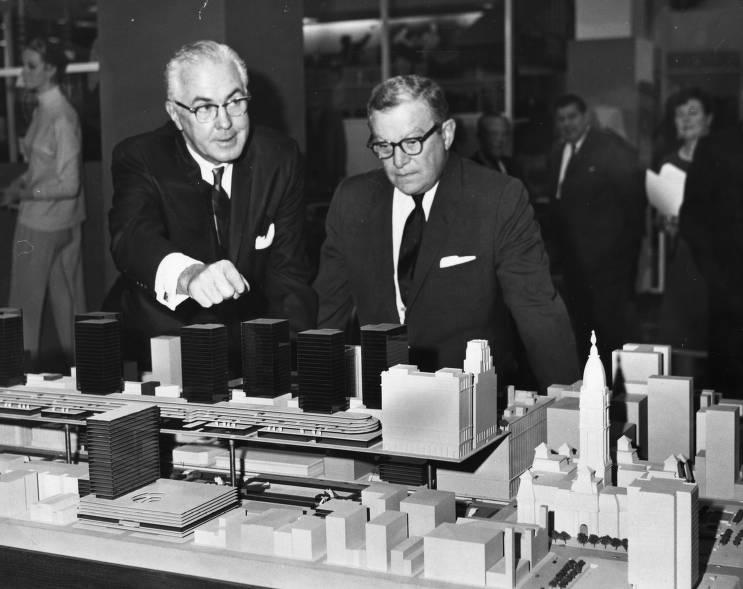
Both of these projects were expensive bets on what planners and politicians hoped would be a fresh face for the old city. They also brought cataclysmic change. Though these projects relied on public investment and infrastructure, historic assets, and cultural habits, they erased entire blocks at a time. New developments had large footprints, giving the street less variety and sidewalk interest.
1963 1968
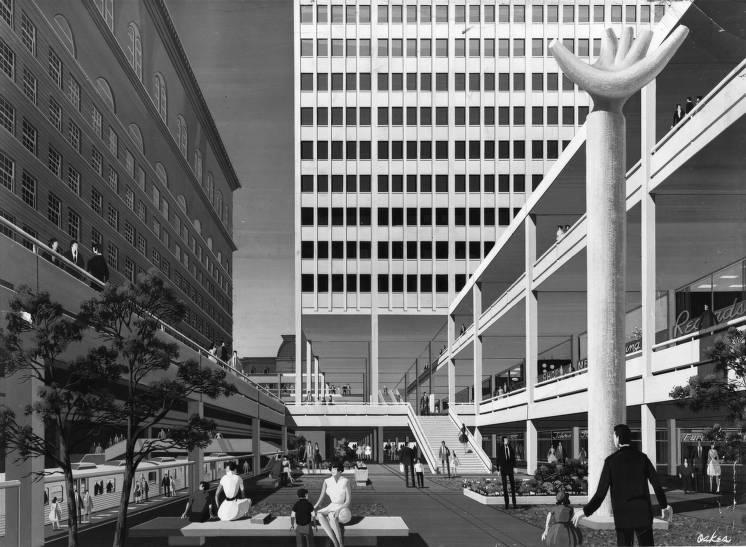
Mayor Tate (left) with Market East planning model,1968 (L); Illustration of Market East redevelopment, 1963. (R) Philadelphia Evening Bulletin. Courtesy of the Special Collections Research Center. Temple University Libraries. Philadelphia, PA.
A Fresh Shine
Today’s Market Street owes a debt to the preservationists of the late 20th century. In 1980s-90s large-scale historic preservation projects became the new redevelopment model. Major rehab and reuse projects that brought new life to the street included: PSFS tower, Lit Brother’s department store, Reading Terminal, and Reading Terminal Market.
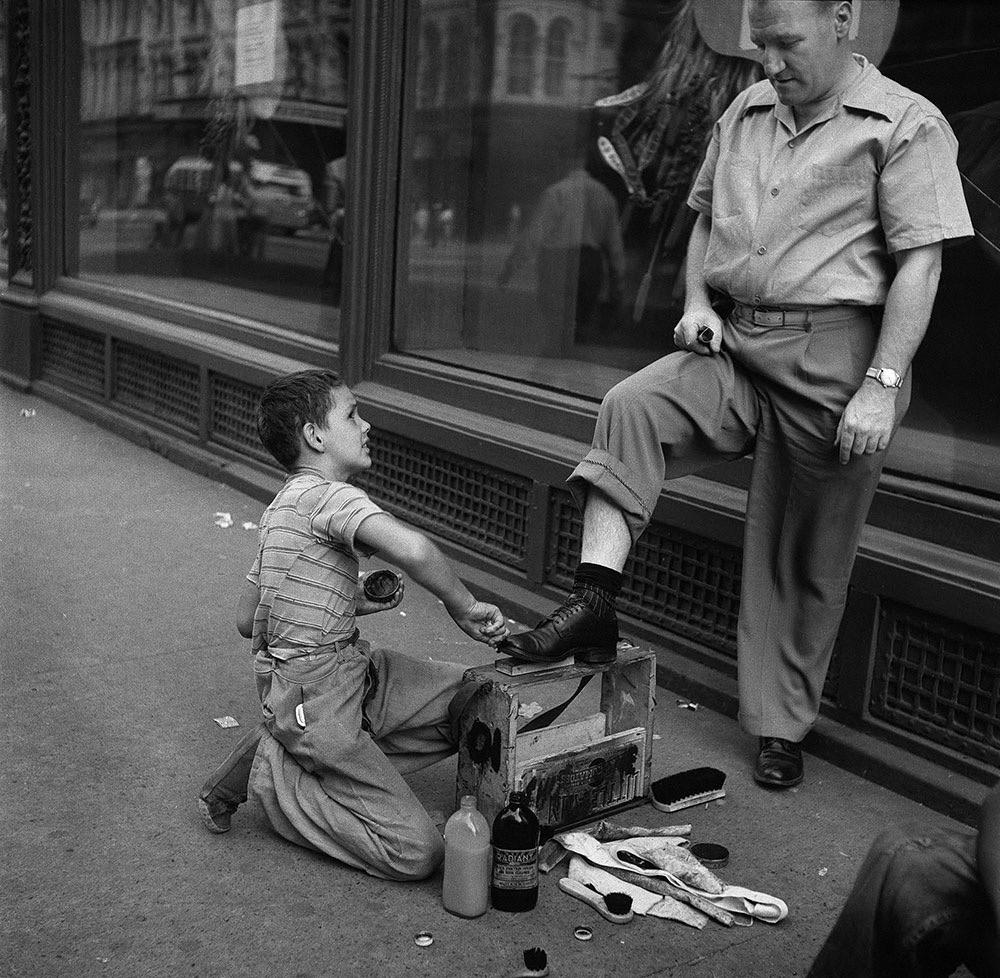
Shoeshine on 700 block of Market, Lit Brother's in window reflection. [undated] Courtesy of the Free Library of Philadelphia, Print and Picture Collection.
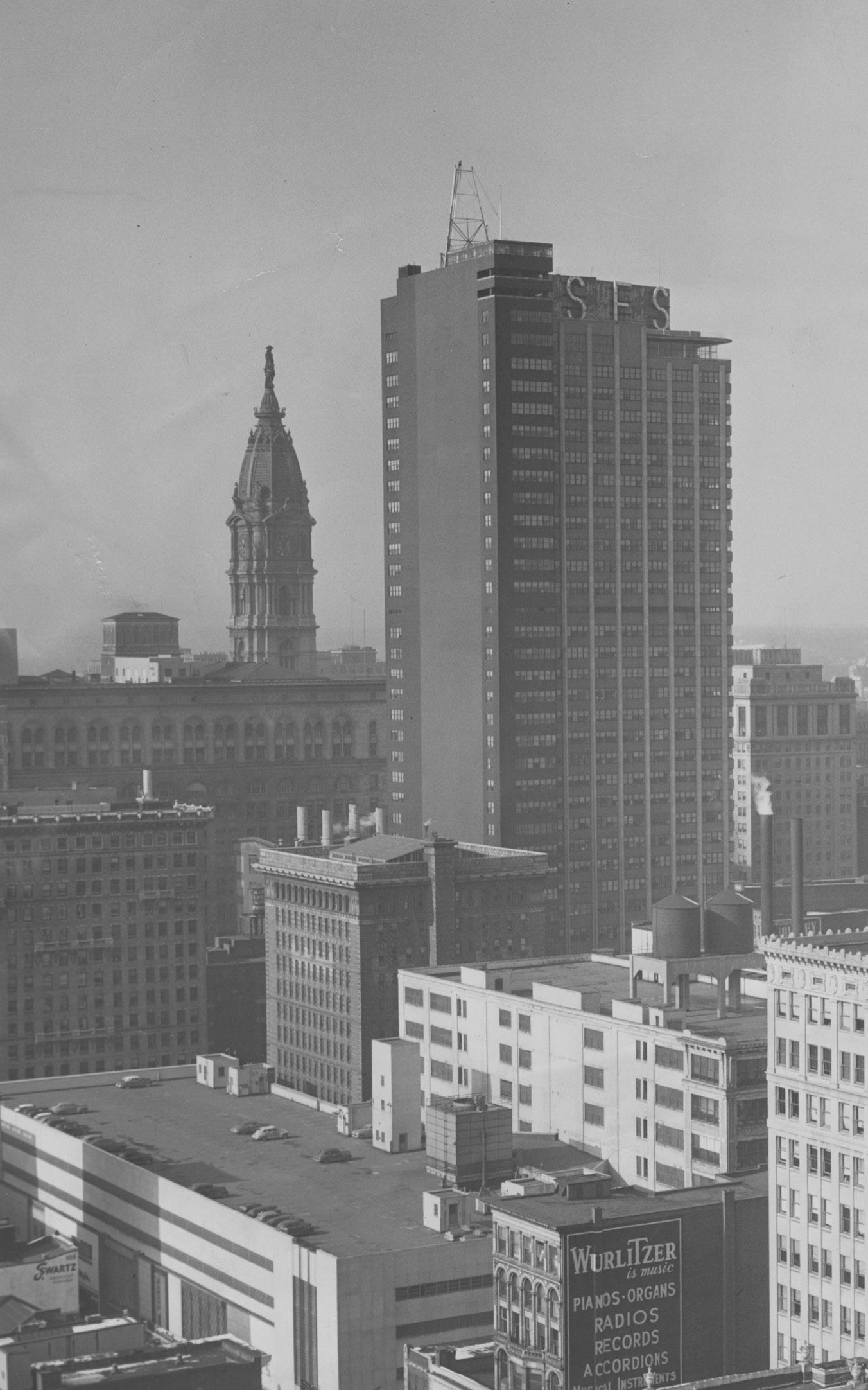
The Philadelphia Savings Fund Society (PSFS) tower was completed in 1932, the first “International Style” skyscraper in the United States. Its strong and practical modernism emerged on Market during the depths of the Great Depression. After the bank collapsed in the 1980s, the PSFS building was converted into a Loews Hotel using federal historic preservation redevelopment tax credits and reopened in 2000. (Pop into the lobby while you’re here. It’s a beaut.)
From 1891-1977, Lit Brothers department store competed for shoppers in the cluster of department stores on the corners of 8th and Market streets. When the store closed, it's block-sized complex stayed vacant for eight years and was threatened demolition. Instead, it was also repurposed with the help of federal historic rehabilitation tax credits, and a long-term lease for upstairs office spaces by Mellon Bank. Today it’s headquarters for the chain Five Below.
1948
1987
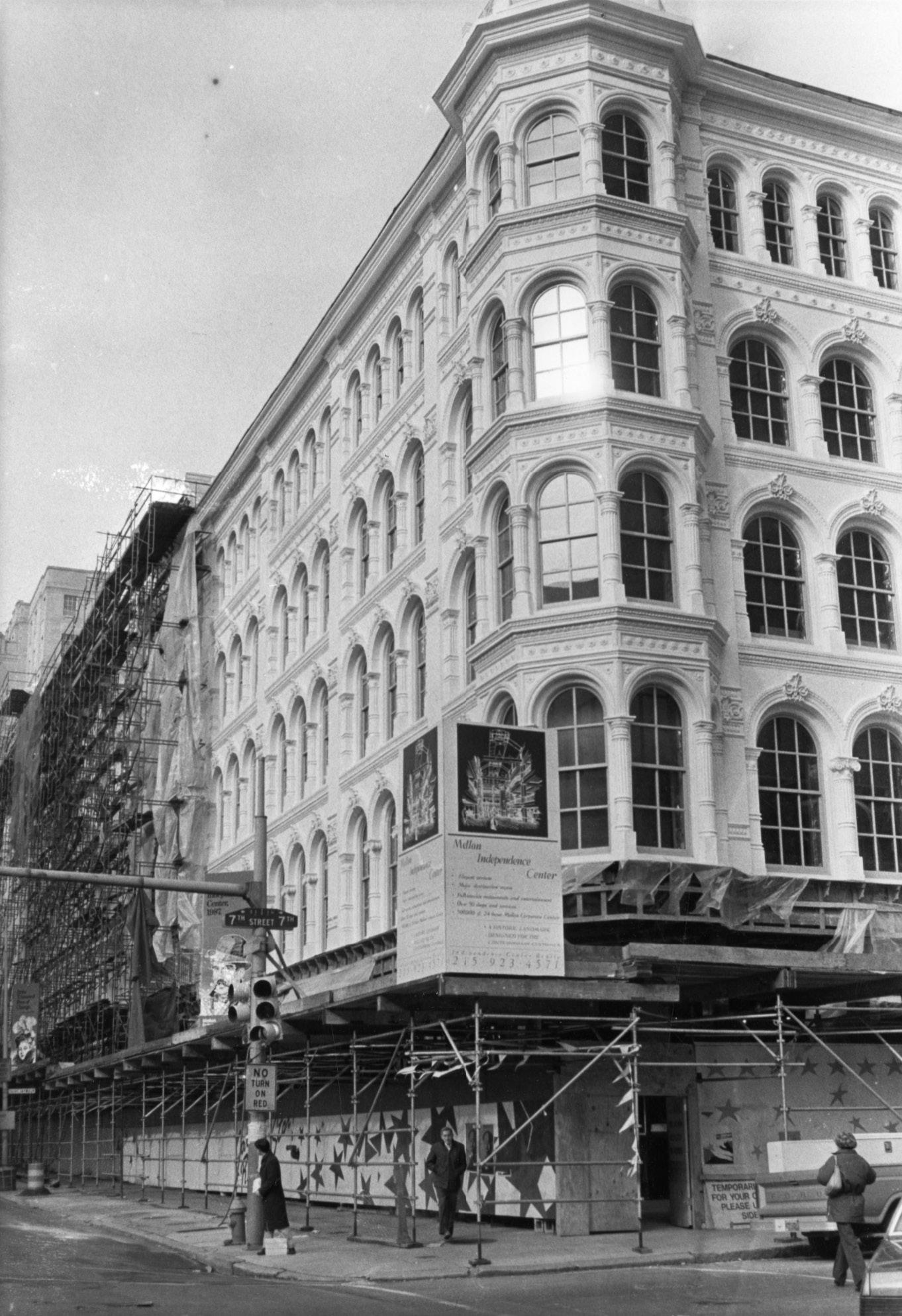
PSFS tower, 1948;.(L); Lit Brothers building with scaffolding, 1987. (R) Philadelphia Evening Bulletin. Courtesy of the Special Collections Research Center. Temple University Libraries. Philadelphia, PA.
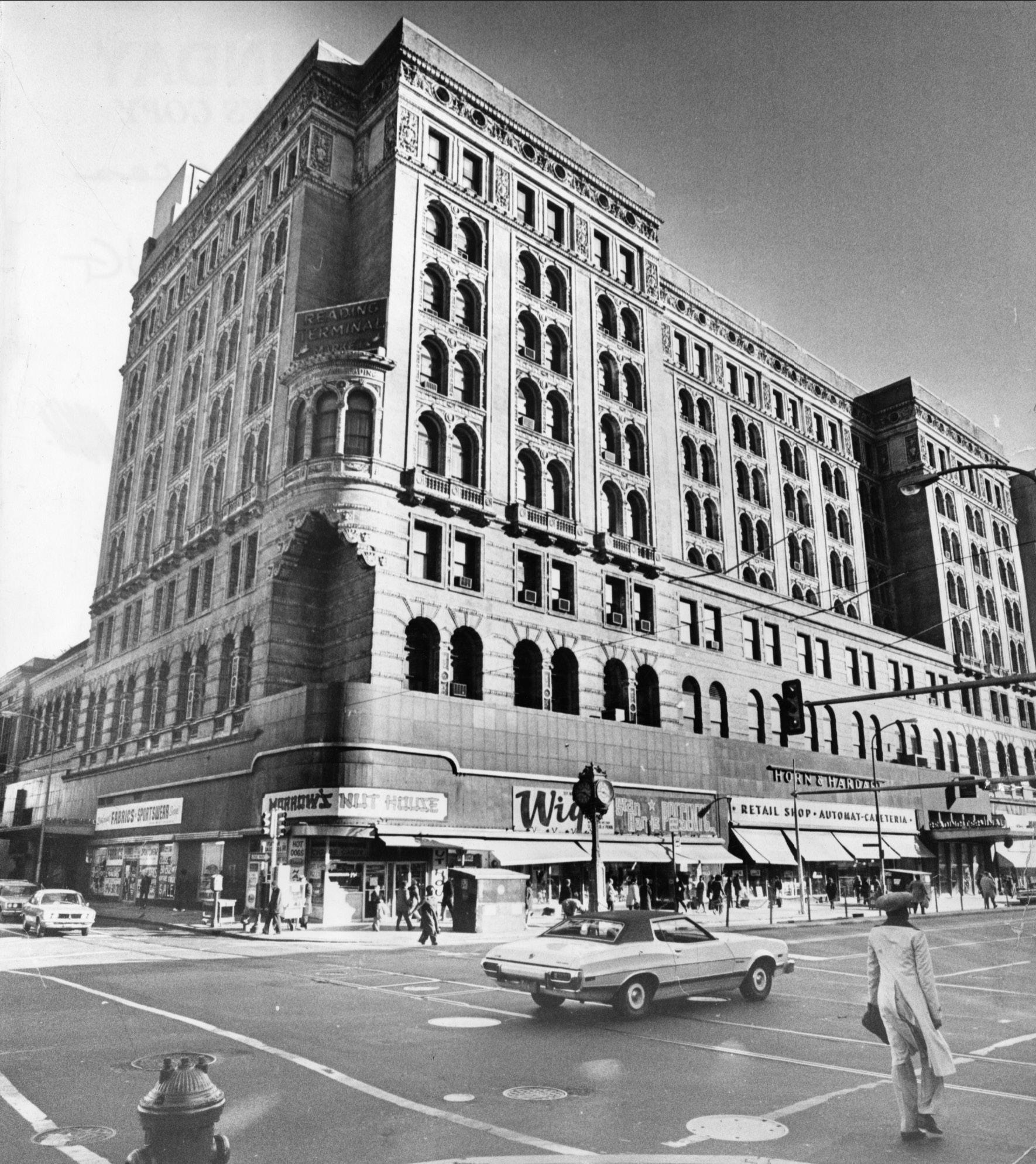
Reading Terminal served as a rail hub from 1893 until the last train left the station in November 1984. Its commuter rail functions were adopted by the new Market East station, thanks to the construction of a Commuter Tunnel which merged lines that had been run by the Reading and Pennsylvania railroads. After staring down years of vacancy and demolition threats, the old terminal was acquired from the Reading Company and incorporated into the new Pennsylvania Convention Center, which opened in 1993. Upper floors of Reading Terminal’s elegant brick, stone and terracotta “headhouse” on Market Street became hotel rooms. And the impressive single-span train shed was converted into the Convention Center’s Grand Hall. Take that, naysayers.
Reading Terminal, 1975. Philadelphia Evening Bulletin.
Courtesy of the Special Collections Research Center. Temple University Libraries. Philadelphia, PA.
c. 1869
Much as the street takes its name from public markets, there’s inspiration to be drawn from the perseverance and preservation of markets past.
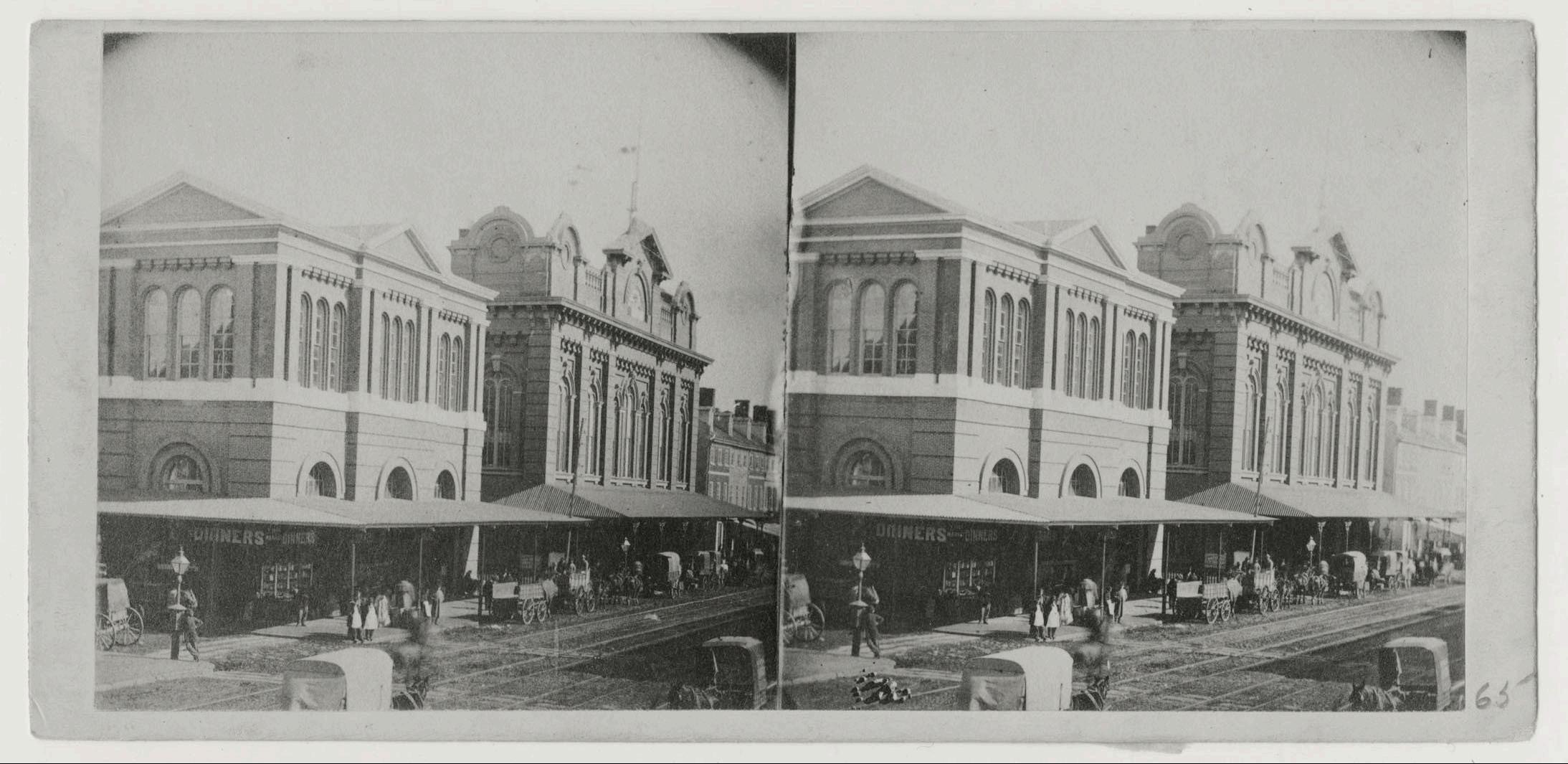
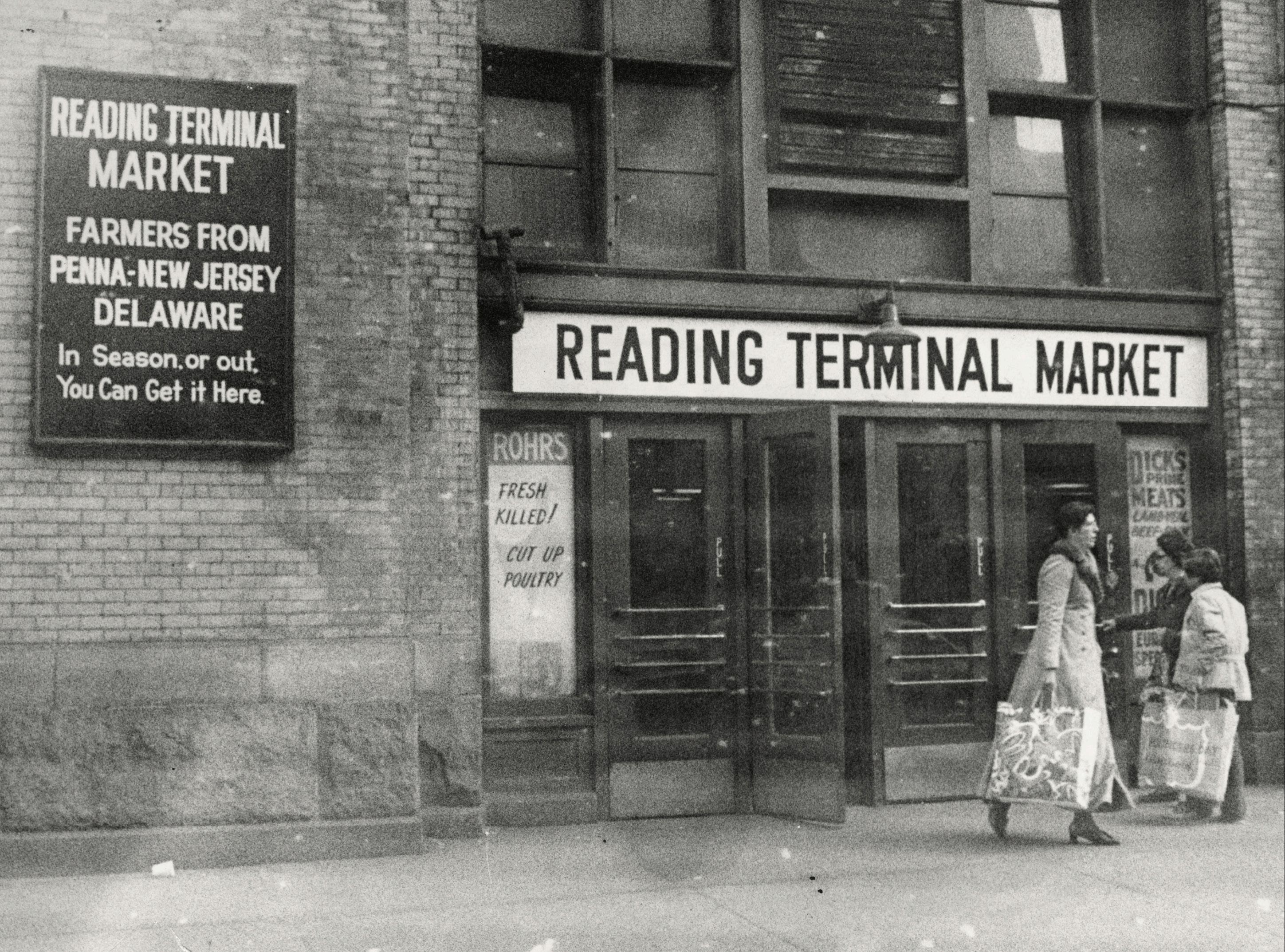
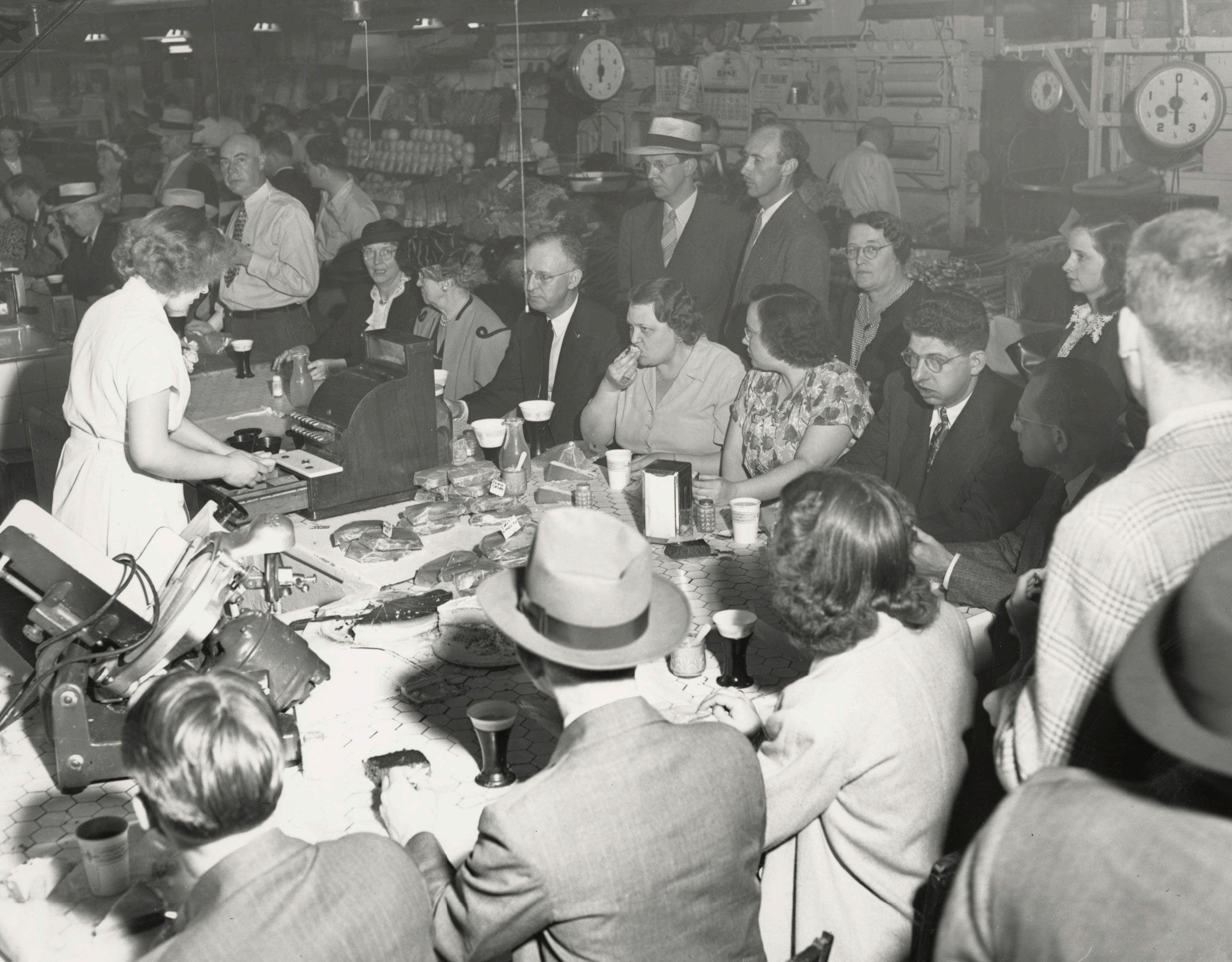
After the city ordered market sheds torn down in 1859, they were immediately replaced with new market buildings, including two on Market Street between 11th and 12th streets. When the Reading Railroad wanted to build its new station on that block, these market halls stood in the way. Merchant shareholders successfully negotiated with Reading to open a new market hall under the railroad tracks, half a block back from Market Street. Reading Terminal Market opened in 1892, even as the new station was being built above and around it. The market has operated there ever since, serving Philadelphia appetites continuously. No small feat.
Butcher’s and Farmer’s Market houses, c. 1869. Courtesy of Library Company of Philadelphia.
Reading Terminal Market entrance, 1972; Reading Terminal Market lunch counter, 1947. Philadelphia Evening Bulletin. Courtesy of the Special Collections Research Center. Temple University Libraries. Philadelphia, PA.
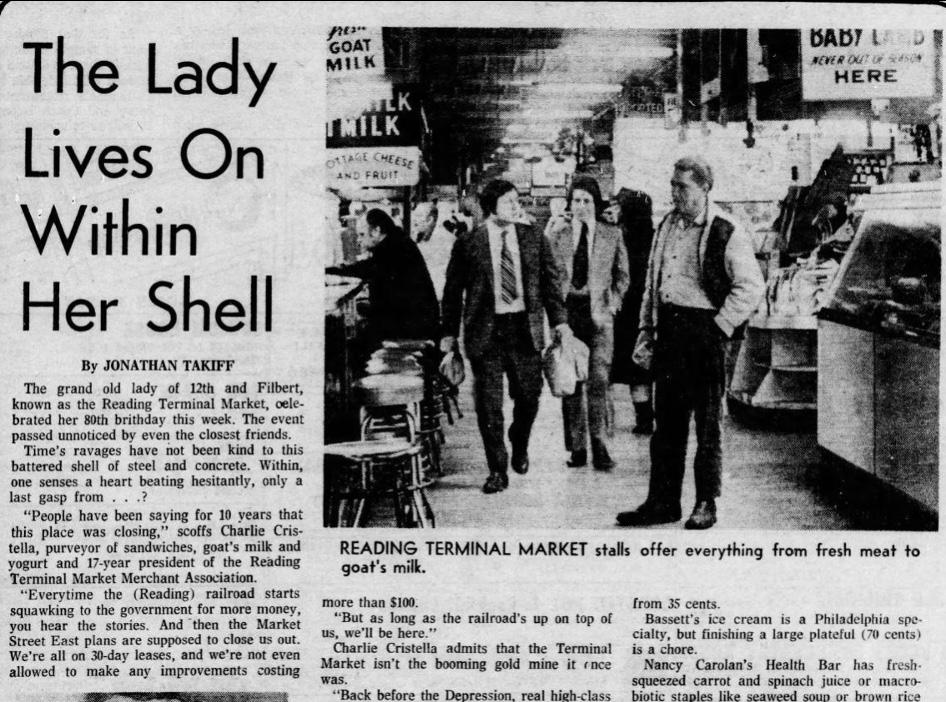
February 25, 1972. Philadelphia Daily News.
Market remains one of Philadelphia’s most lively and loved landmarks. If you haven’t been (ever or in a while), go.
Invested in Market East
Market East is no stranger to big change. Over time, department stores, urban renewal projects, and a new convention center transformed entire blocks at once.
The recent rehab of The Gallery into The Fashion District drew its corporate owners to acquire properties across the street, ultimately entire blocks of low-rise buildings, to “protect” their Fashion District reinvestment. When a new basketball arena was proposed as part The Fashion District's site, the mega-project envisioned these blocks eventually transformed into new mixed-use buildings. After much debate about the arena, and significant outcry, particularly organized by nearby Chinatown neighbors, the plans were scuttled. That left these low-rise blocks vacant and facing uncertain futures. The owners say they remain invested in the future of Market East.
The Meantime on Market block explores smaller-scale, local business creativity as a short-term activation while larger planning efforts proceed. Maybe this kind of incremental development deserves to have a real role in the future of this place.
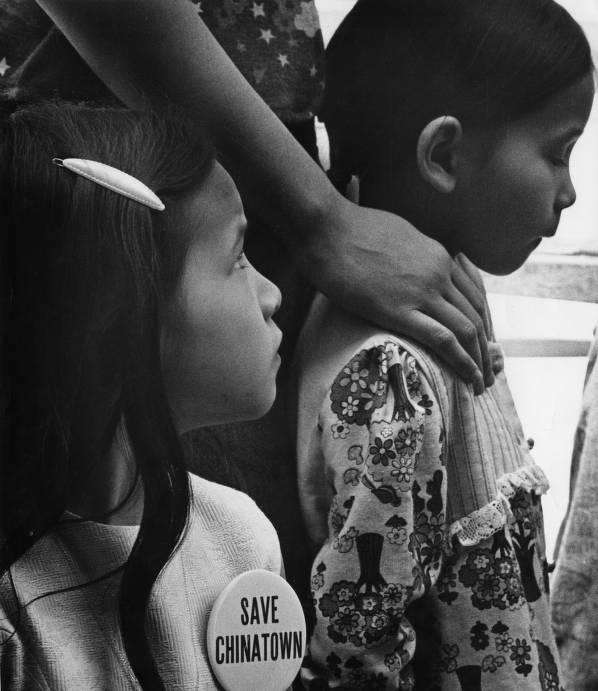
Young protester at a rally about Vine Street Expressway and Market Street East construction. April, 1973. Philadelphia Evening Bulletin. Courtesy of the Special Collections Research Center. Temple University Libraries. Philadelphia, PA.
Tomorrow’s Market East is up for grabs.
What will become of this stretch of Market East?
What do Philadelphians want?
What is in the city’s best interest?
If the past is any guide, Market Street’s future will similarly involve major intervention, paring bold vision and historic consciousness.
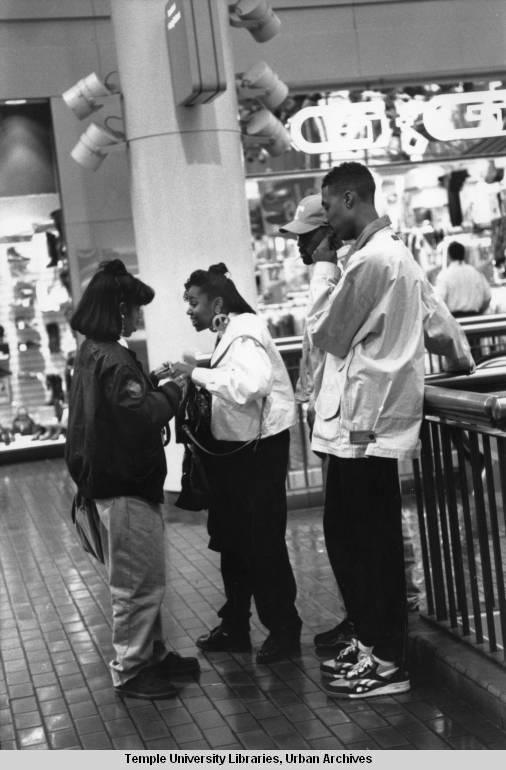
Teenagers in The Gallery, 1991. Philadelphia Evening Bulletin. Courtesy of the Special Collections Research Center. Temple University Libraries. Philadelphia, PA.
What’s America 250 to Market Street?
It’s a chance to rethink, renew, remember – including the story of an ever changeful but STILL RIGHT HERE thoroughfare in the heart of the heart of the city. From the commemorative renaming of High Street as Market Street, Market East is a place where Philadelphia has forged public memory in enduring and ephemeral ways.
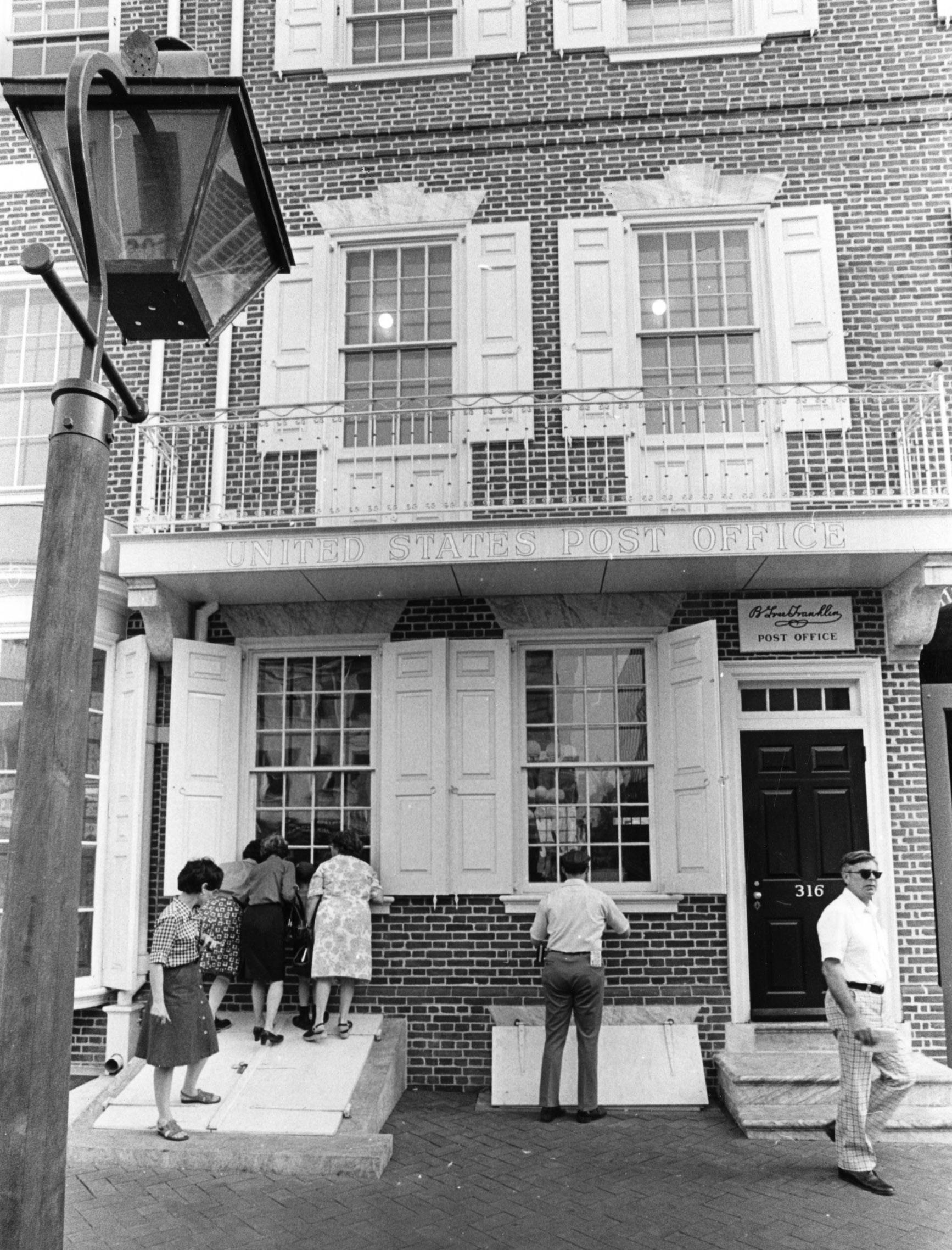
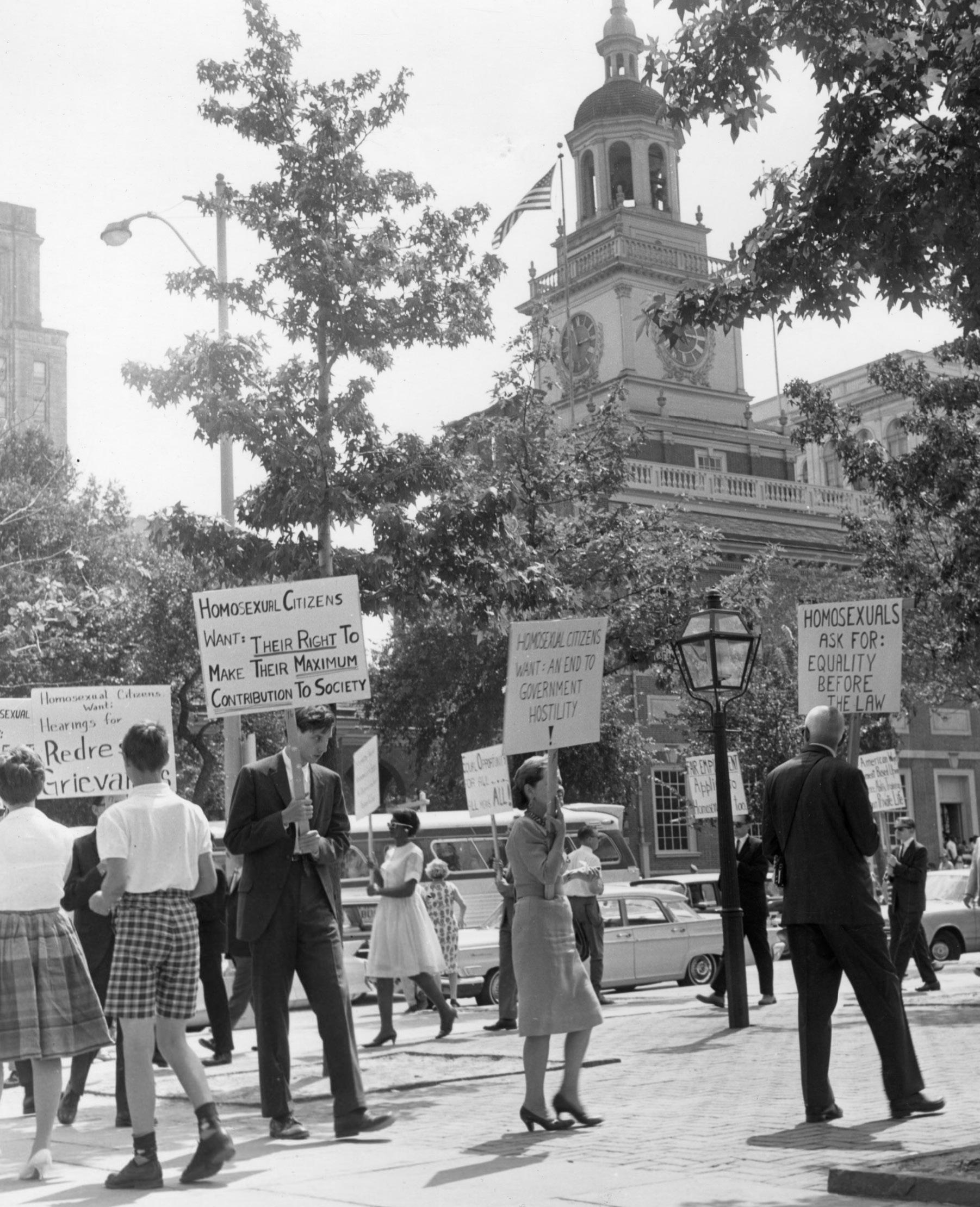
Visitors at the newly-opened Franklin Court and its USPS office, 1976. Philadelphia Evening Bulletin. (L); Annual Reminder demonstration for gay rights, 1965. Philadelphia Inquirer. (R) Courtesy of the Special Collections Research Center. Temple University Libraries. Philadelphia, PA.
1961
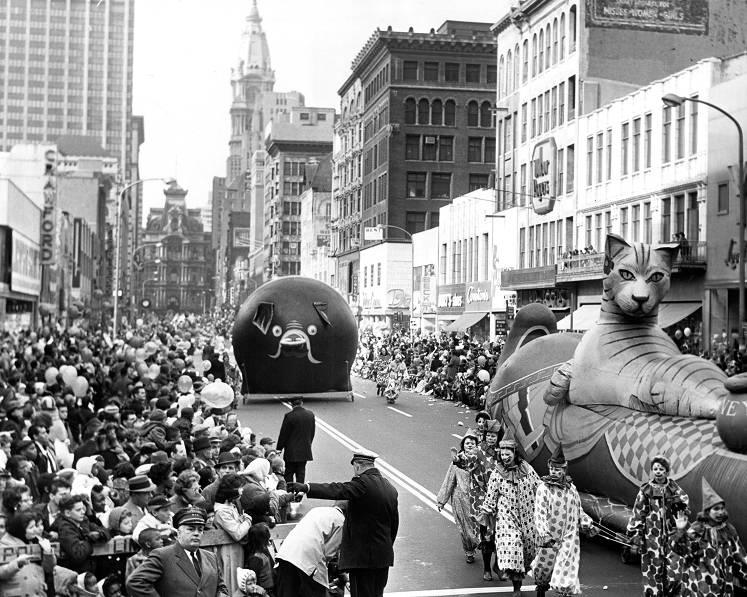
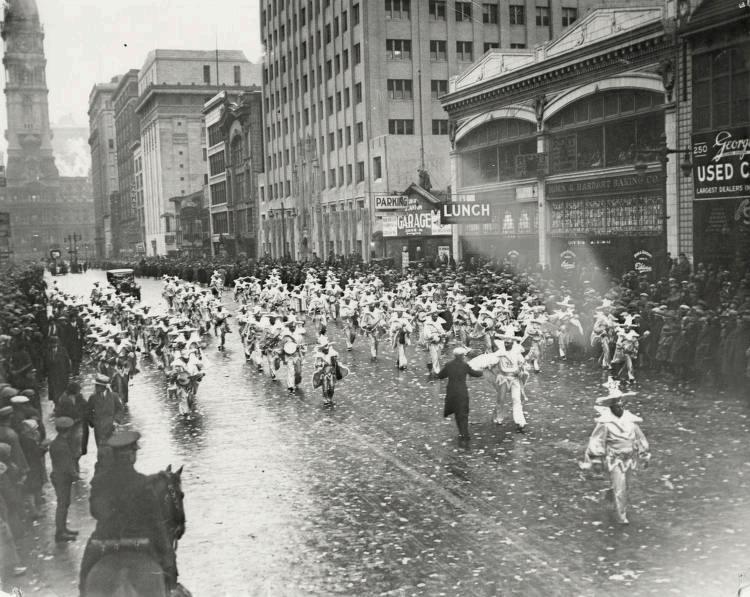
Market Street, wide as it is, has hosted parades and street festivals of every stripe, including the Mummer’s Parade on New Year’s Day, the Thanksgiving Day parade (America’s oldest). Political processions and demonstrations often end at Independence Mall, which can (when permitted by the National Park Service) hold a crowd.
Mummer's Parade on Market Street, 1929. (L) ; Thanksgiving Day Parade, 1961.
Courtesy of the Special Collections Research Center. Temple University Libraries. Philadelphia, PA.
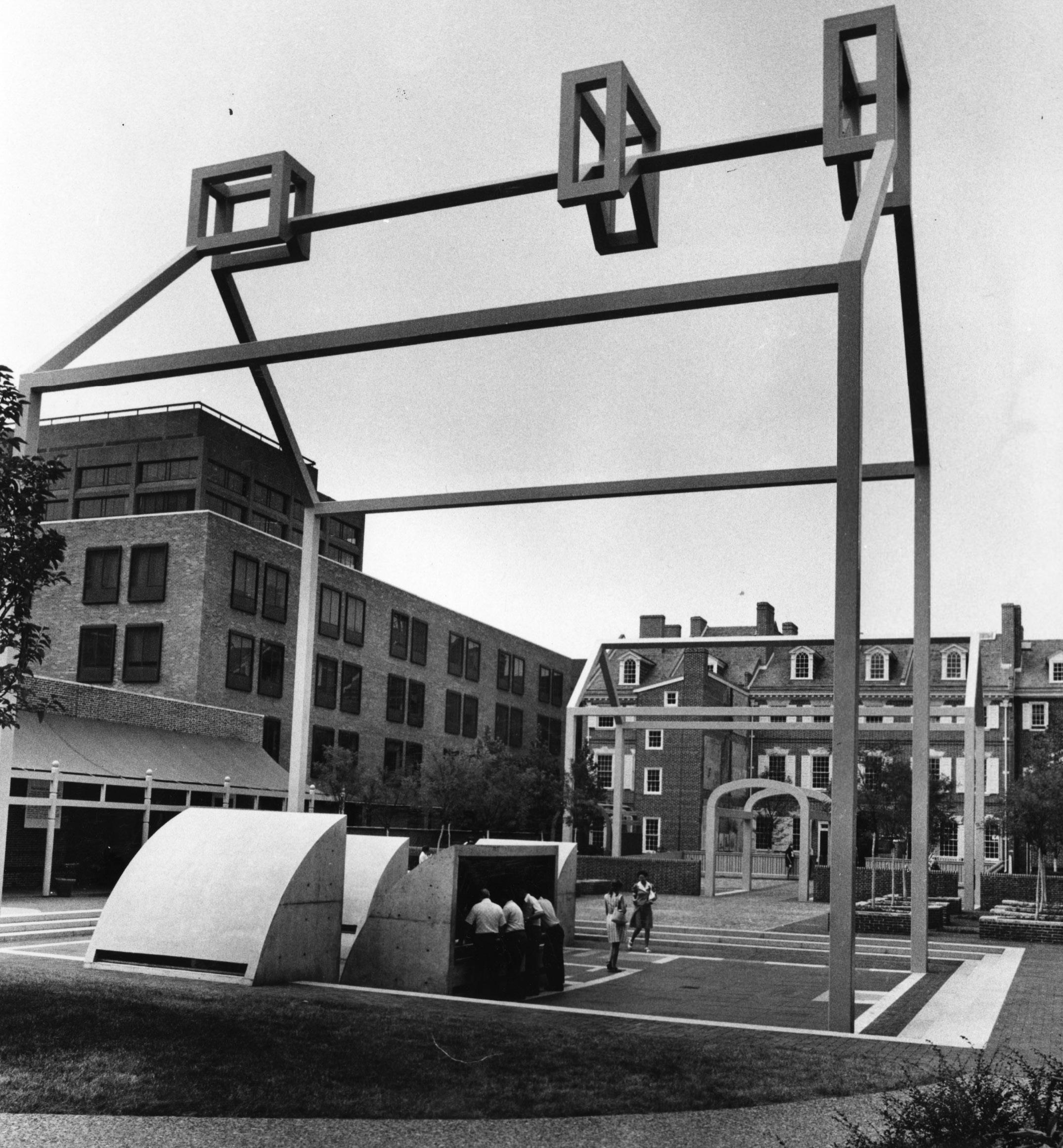
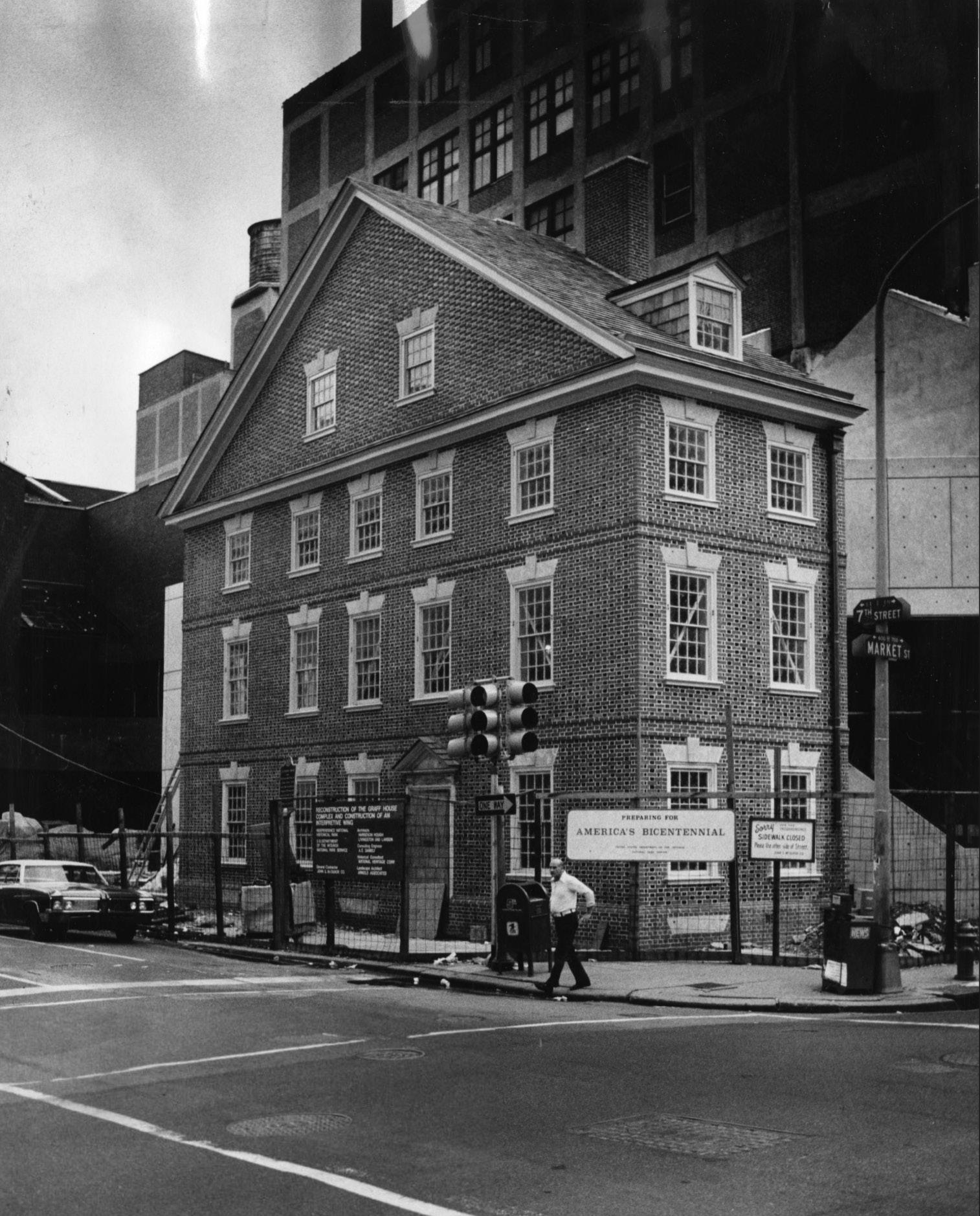
Independence National Historical Park touches Market Street at sites helping present Philadelphia and the nation’s colonial and early federal eras: At 7th and Market is the reconstructed Declaration House (a recreation of where Thomas Jefferson worked on the Declaration of Independence);
Presidents’ House (the site where George Washington and John Adams lived while they were president – now the site of memorials to Washington’s enslaved workers); and the entrance to Benjamin Franklin’s home (tucked midblock between 2nd and 3rd streets), a remarkable memorial.
Bicentennial views: Franklin Court, 1976 (L); Reconstructed "Declaration House," 1976. (R) Philadelphia Evening Bulletin. Courtesy of the Special Collections Research Center. Temple University Libraries. Philadelphia, PA.
Due to its ties to the origins of American democracy, this stretch of Market Street has drawn patriotic pomp and protests alike. At the corner of Market and 5th streets, the constitutional right to free speech and peaceable assembly are literally carved in stone. Market Street has seen students marching against the Vietnam War, residents demonstrating against police brutality, rallies for striking municipal workers, and Black Lives Matter protests. In 1965, America’s earliest demonstration for LGBTQ equal rights took place outside Independence Hall. This year has seen "No Kings" demonstrations. Consider Market Street as an open invitation for expression, for making our collective voices heard.
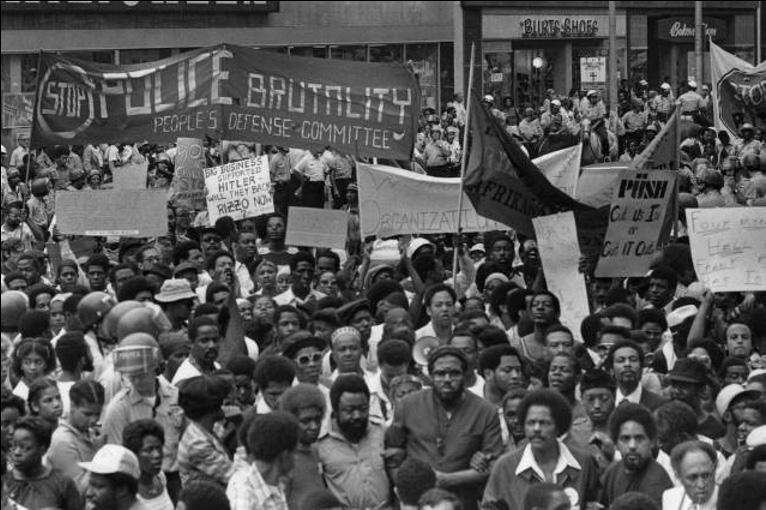
Demonstrators march on Market Street, August 25, 1978. Philadelphia Evening Bulletin. Courtesy of the Special Collections Research Center. Temple University Libraries. Philadelphia, PA.
Market Street is for people.

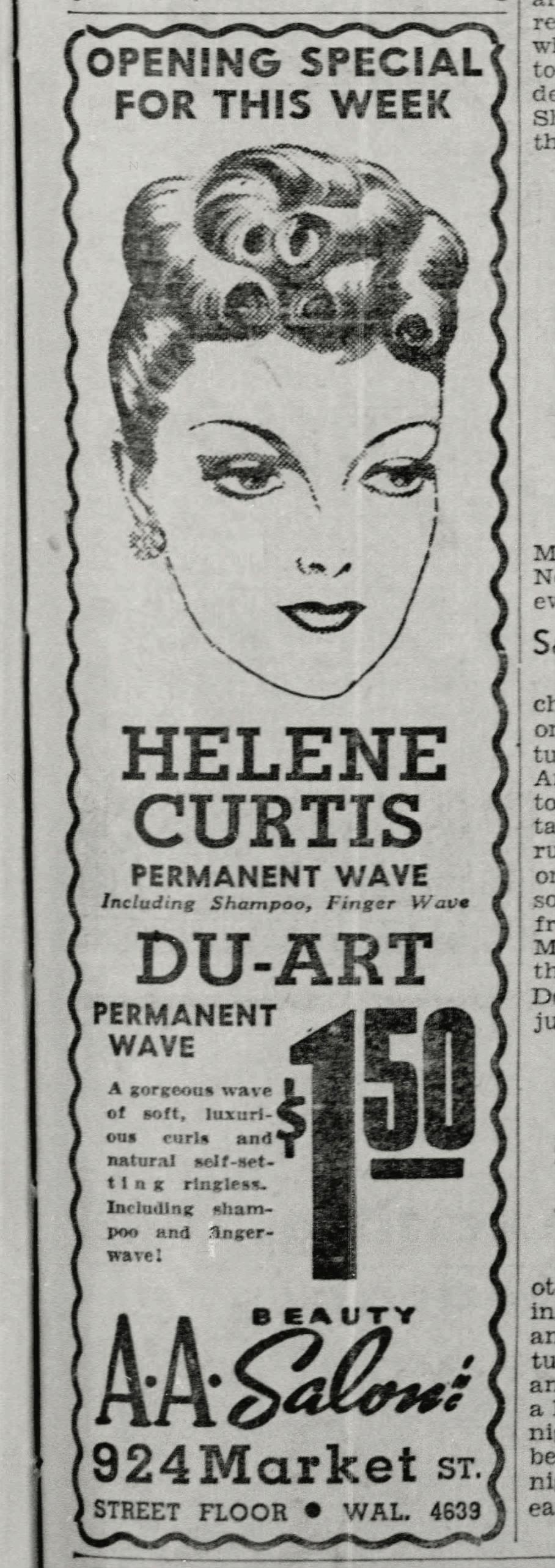

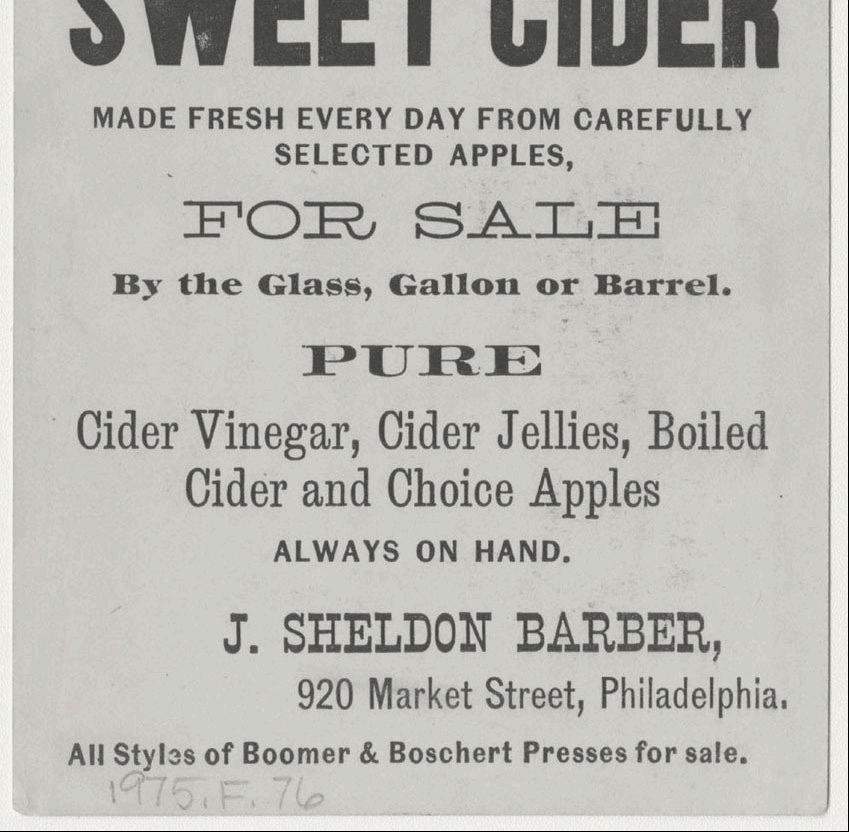
This is a project of PennPraxis
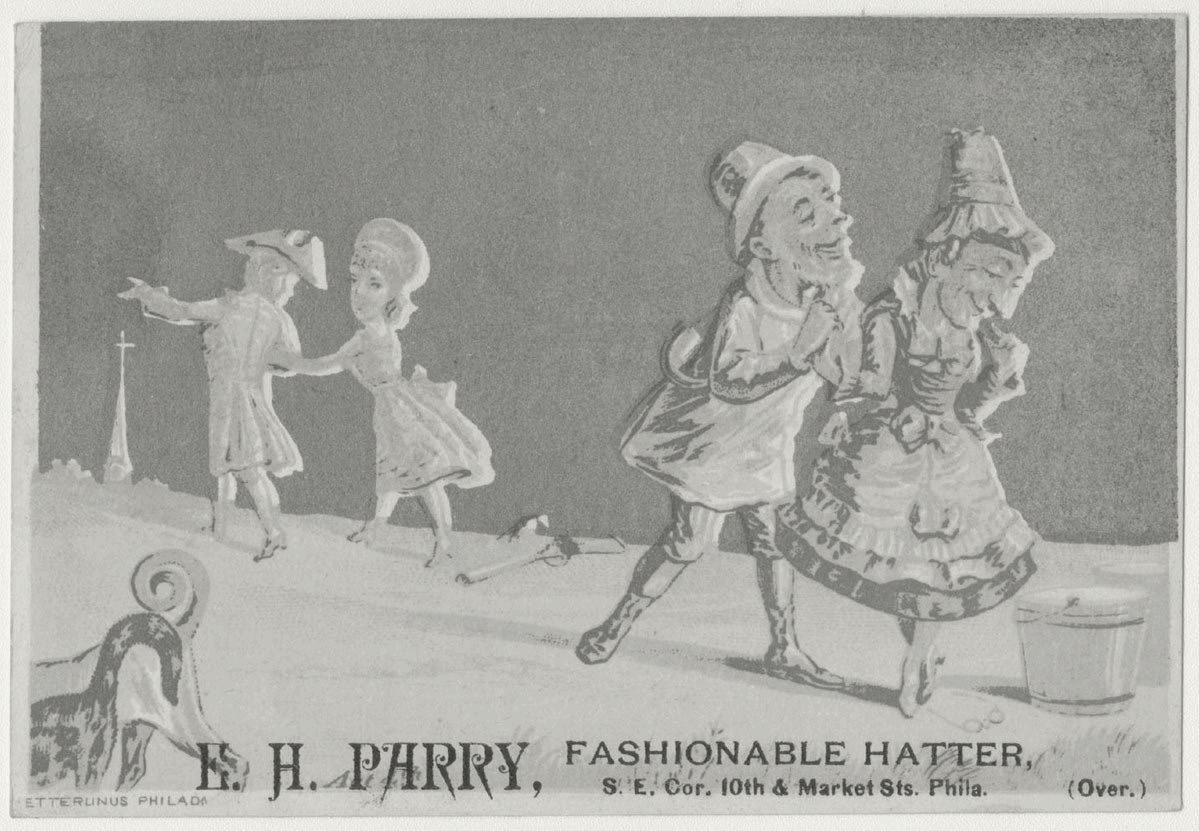
Zine and Exhibit by/for PennPraxis: Ashley Hahn, Randy Mason, Darcy Van Buskirk.
Design and Research contributions from: Margaret Balich, Jonathan Bonezzi, Shen-Tzu Chen, Iqra Khalid, Ryan Lane, and Zhijie Wang
Pop-ups by Meantime

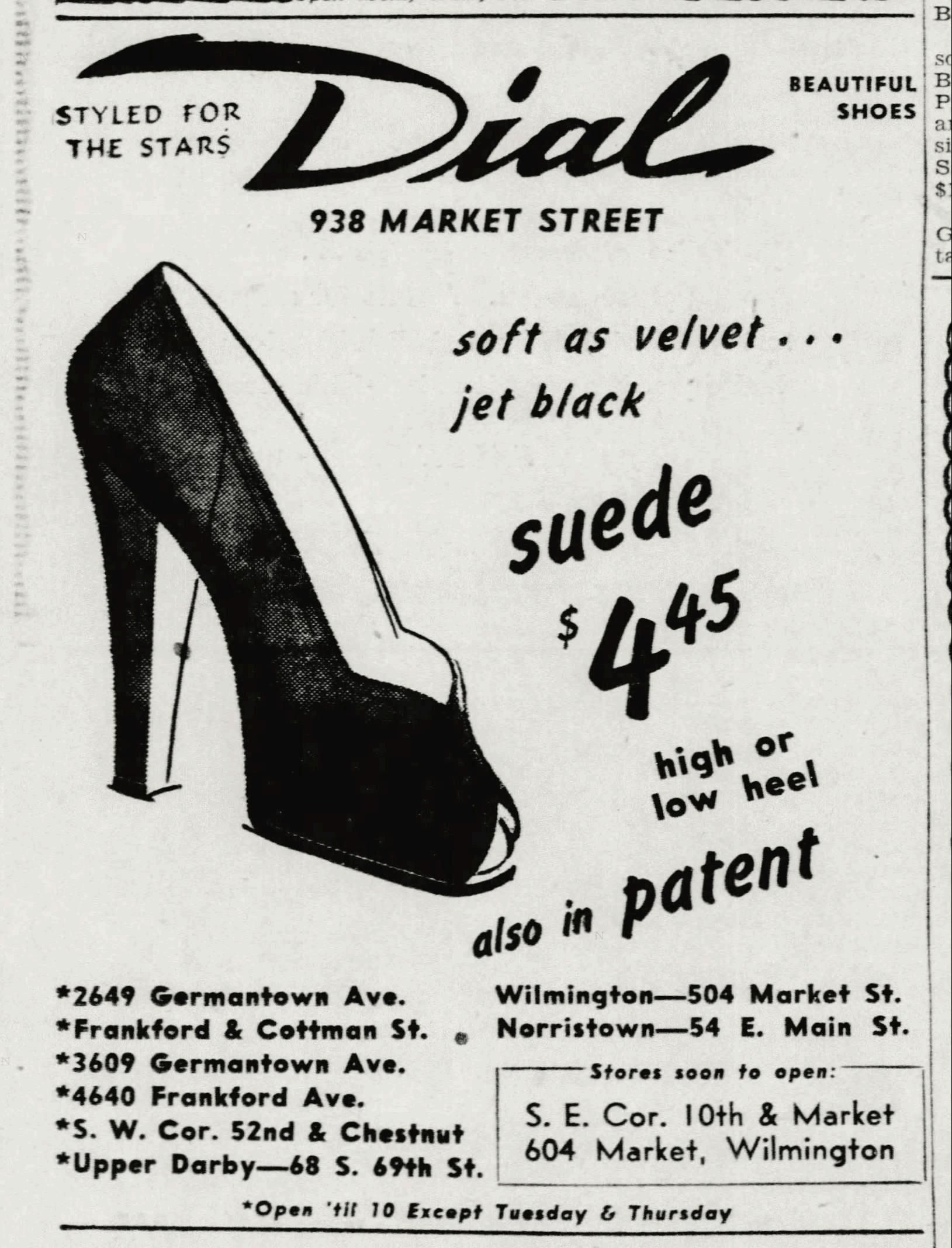

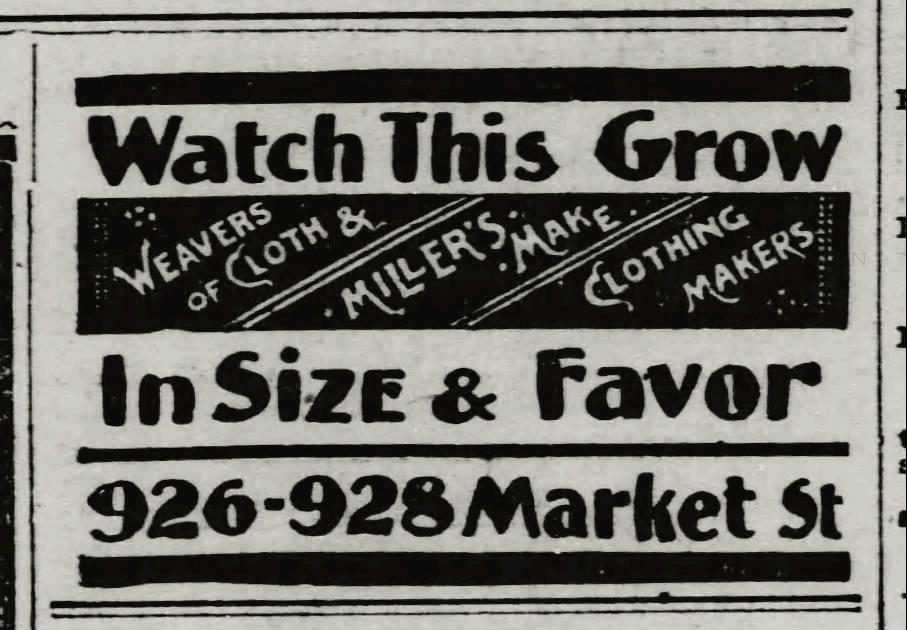

Special thanks to: Temple University Library Special Collections Research Center; Free Library of Philadelphia Print and Picture Collection; The Library Company of Philadelphia; Athenaeum of Philadelphia