




For many Winnipeggers, going to the symphony is about more than just the music. It is the ritual of an evening out. It is dinner before the concert, spotting familiar faces in the lobby, flipping through the program while the orchestra tunes, and hearing that first live note fill the hall.
And for others, the Winnipeg Symphony Orchestra has become something newer, a film night with the family, a Thursday concert with friends, or a chance to hear favourite music performed live in a more informal setting.
The WSO’s newly announced 2026/27 season leans into all of those experiences.
From Beethoven to Barbie, the upcoming season reflects how audiences enjoy music today. Some people come for the great classical works they have loved for years. Others come for movie nights, Broadway music, holiday concerts, or familiar songs performed by a full orchestra. There are many ways to enjoy the symphony, and audiences are increasingly choosing the experience that fits them best. There are many ways to enjoy the symphony, and audiences are choosing the experience that fits them best.



“Our goal is always to offer variety and imagination while keeping the orchestra at the centre of it all,” says the WSO’s Music Director, Daniel Raiskin.
Marianne Cerilli
Atheme of my social innovation work is The Politics of Unity. After a career in education, politics and community development, I have many learning activities, tools, and resources on my website for a more trauma informed politics that also applies what we know about conflict and conflict resolution, all
to address the rise in authoritarianism and strong-man politics. It is not only a problem south of the border, there is also everyday authoritarianism here, that once acknowledged can’t be unseen. For example, recently in a drop-in City of Winnipeg fitness class an instructor wanted to start barring latecomers from entering the class. She said it was about safely and -warming up, also she didn’t like the class being
interrupted, perhaps seeing this as not being respected or in control. This is a case study for how authority and punitive enforcement of rules create disadvantage and exclusion for some, that in extreme cases becomes fascism.
Rules don’t have to be explicitly discriminatory, to discriminate. In the case of our fitness class the rule did not say “working mothers with young
5 ‘politics of unity' u
Lifestyles 55 has been following this story for the past 10 years. We were very pleased to receive this note from Marilyn Williams, Secretary, of the Kennedy House Renewal Committee. Congratulations to all!
Well, after 10 years of meetings, presentations to Ministers, written proposals, and dozens of letters, we are so pleased to be able to tell you that our efforts have met with success: a tearoom operation at Kennedy House will reopen soon.
A quick recap: The Kennedy House Renewal Committee was formed by the Board of Red River North Tourism in 2016, soon after closure of the House by the provincial government due to structural concerns. The RM of St. Andrews supported our ideas and passed a resolution to allow the Committee to advocate for the House on behalf of Council. It took several years to convince the government of the day that this structure was an economic boon to the region as well as a critically important part of area history.
Repairs and upgrades to bring the facility up to code were done in phases. We were graciously invited to witness much of the refurbishment by 17 ‘Kennedy House' u




.
You should consider having the following in place
Will
The preparation of a will may seem like a daunting task, however, it is essential to ensure that your property is disposed of according to your wishes upon your death. If you pass away without a valid will, the law states what is to happen to your estate.
Power of Attorney
A power of attorney is a document which appoints an individual to handle your affairs in the event you become mentally incapable of making your own decisions. Nothing prevents you from continuing to make your own decisions while you are still competent. A power of attorney is an extremely valuable document to have in place in case anything happens to you which affects your mental ability, such as a stroke, coma or dementia.
Health Care Directive (Living Will)
A health care directive, commonly called a living will, is a document which appoints an individual to make decisions with regard to your health care only, while you are alive but unable to express your decisions yourself. This document is distinct from a power of attorney and deals only with health care decisions such as whether life sustaining treatments, such as CPR or blood transfusion, should be continued or withdrawn.
Standard Fees*
Standard Fees*
Last Will and Testament
* plus GST and PST - Rates are per person.
*Plus GST and PST - Rates are per person.
Seniors
Seniors
$275.00 $250.00
$225.00 $200.00
Home and hospital visits are also available $250.00* (includes both meetings) *plus GST and PST
TACIUM VINCENT & ASSOCIATES
206 St. Mary’s Road, Winnipeg, MB R2H 1J3 DAVID G. VINCENT (204) 989-4236 www.taciumvincent.com









Follow us online at: lifestyles55.net
Facebook: Lifestyles55
PUBLISHER
Pegasus Publications Inc.
EDITOR
Dorothy Dobbie dorothy@pegasuspublications.net
ART DIRECTOR
Karl Thomsen karl@pegasuspublications.net
GENERAL MANAGER
Shauna Dobbie shauna@pegasuspublications.net
CONTRIBUTORS
Marianne Cerilli, Romel Dhalla, Dorothy Dobbie, Shauna Dobbie, Zofia Dove, Carly Edmondson, Stefano Grande, Aaron Janzen, Evelyn Jacks, Kevin Klein, Ian Leatt, David Leis, Myron Love, Fred Morris, Seneka Samarasinghe, Krystal Simpson, Jerry Storie, Bram Strain, Sherrie Versluis, Marilyn Williams.
Canadian Publications mail product Sales agreement #40027604
PRINT ADVERTISING
Gord Gage • 204-940-2701 gord.gage@pegasuspublications.net
Nathan Avila 204-940-2726 Nathan@pegasuspublications.net
SUBSCRIPTIONS
If you would like to receive Lifestyles 55, we offer both monthly newspaper and online formats. To place your order, call 204-9402700. Subscriptions are $36.00 per year, plus tax. American Express, MasterCard, Visa and cheques are accepted. To view a back issue online visit lifestyles55.net
Published monthly by:
Pegasus Publications Inc. PO Box 47040, RPO Marion Winnipeg, MB R2H 3G9 204-940-2700
Lifestyles55.net pegasuspublications.net
DISTRIBUTION
Available at more that 20 rural towns and cities as well as more than 100 locations in Winnipeg. If you would like bulk copies of this publication, contact Gord Gage at (204) 940-2701 or gord.gage@ pegasuspublications.net. Also available digitally at whatsupwinnpeg/lifestyles and on Facebook: Lifestyles55
EDITORIAL SUBMISSIONS
Call Dorothy Dobbie at (204) 940-2716 or email dorothy@pegasuspublications.net for more information and guidelines. Any opinions expressed in columns by our contributors are their own opinions entirely and are not necessarily shared by Pegasus Publications Inc. All information presented by the contributors is the responsibility of the writers.
Lifestyles 55 is published monthly. Reproduction in part or in whole is prohibited without seeking permission in writing from the publisher.
Copyright Pegasus Publications Inc.




Time to bring readers up to date on what is happening with the second port on Hudson Bay out of Manitoba.
While the proponents of the Churchill port project have been busy in the media assuring everyone that their idea will work if only someone will cough up a billion dollars or so to make it happen, the NeeStaNan folks have been massaging plans and looking for practical ways to get this on the table. There is excitement in Saskatchewan with whom the group have been working to assure that it benefits as much from the project as will Alberta and Manitoba.
Besides grain, Saskatchewan ships potash to markets that are much easier and cheaper to reach through The Hudson Bay than by gong east west or south, but it also has one other commodity – oil and gas running in pipelines though the province in transit to Manitoba and the United States. Natural could be refined into LNG at Yorkton, providing that towns with jobs and investment, and then shipped via rail in thermos cars to Port Nelson where it would to be delivered across a floating wharf offshore, to a permanently anchored, container ship which would host downloading transport liners in deep water further out in the Bay.

underused port that has been there over a hundred years and has never lived up to its original promise? It took me a long time to admit it because I have loved and promoted Churchill since the first time I went there back in 1976 to take part in the opening ceremonies of the new Town Centre along with then Premier Ed Schreyer, but that promise will never be fulfilled. That is not to say that Churchill cannot have a viable and operational port, but it will never be the industrial giant that today’s world demands.
Dorothy Dobbie
The advantages of this are many. Number one is the speed with which this could be built. The spur line off the arctic Gateway line would be built just past Amery where it would head over a hard rail bed the short 120 miles to estuary of the Nelson River. Once consultations and engineering studies were done, the line could be built in a year. None of this is to say that a pipeline could not be added in the future, but this early phase would provide an early return on investment while the project grew and developed.
Energy products are not the only commodities that could use Hudson Bay to get to European, south American and even Asian markets. Agriculture, minerals, manufactured goods – even product from the landlocked norther United States would benefit from this egress to the sea. Manitoba could become immensely wealthy, provide an outlet for the goods produced by its amazingly talented population.
But what about Churchill, you say. Isn’t it all about the
The reasons? Space, unless they wanted to build out of the river and into the bay which seems to be off the table. Nature, which includes the Churchill estuary teeming with tens of thousands of beluga whales each summer as the babies are birth there in fresh water. The fresh water itself freezes solidly from December and stays that way until April before it begins to break up, which takes place from May to August. Shipping doesn’t start until late July at the earliest.
Well, you say, isn’t that all true of Port Nelson? No, The currents rush the fresh water away so it never freezes solidly but is slushy throughout the winter – the further out you go, the saltier and slushier the ice. And space is no issue.
The other major issue for Churchill is getting there. The terrain beyond Amery (just north of Gillam) is discontinuous permafrost over a swamp. If you know your history, the hardest part in building the CPR was though the Canadian Shield over the peat bogs that swallowed entire sections of track, cars and rail beds overnight. The line to Churchill is even more complicated because of the permafrost which tuns everything under the surface to mush when it thaws. They have tried a myriad of ways to fix this but none of the techniques used so far has created a permanent solution.
The Port Nelson line on the other hand runs over the esker ridge, a glacier created formation like what you see in western Manitoba around Riding Mountain.
Now those of you who have read about this before will find nothing new in what I have said and the provincial government continues to promulgate the myth that the Churchill road is fine, the port is viable and that they are just looking for investors.





Twelve months have passed since Canadians cast their ballots in favour of the Magic Banker. Twenty-six countries later, nothing much has changed on the world front as far as Canada is concerned. There is some slight shifting of our trade relations with countries other than the US, but our trade with key partners such as China and Mexico, has remained statistically stagnant. On the list of Canada’s top 10 trading partners in 2025 were the United States, China, Mexico, Japan, the United Kingdom, Germany, South Korea, Italy, Frence and India, in that order. As of May 2026, the list has altered very slightly. The United States still accounts for twothirds of our exports, the Netherlands has removed No. 8 from Italy, moving it to No. 10.
until another pipeline is built.
Nor can we simply pull these products out of a hat. We know how long it takes to build a pipeline. Mineral resources take years to develop – about 15 years thanks to the ridiculous fabric of over regulation that exists in Canada. Other risks such as challenges from Indigenous communities and environmental groups, often spurred on foreign interest groups, add more delays.

Overall, these top ten represent between 90 and 95% of all our trade, so investing three quarters of a billion dollars ($524,815 for 28 “official” flights, plus $472,000 for food and accommodation bring the total to $772,000) has so far not brought much of a return to taxpayers. If you are shaking your head over this, shake it some more, because in addition to these flights, he took another trip to Egypt at a cost of $736,000 for a private charter flight to watch the Gaza Peace Treaty signing – despite the fact that he had no role in the event. That is 1.244 BILLION dollars!
Look, nobody disagrees with seeking out new markets or even nurturing old ones. But there is such a thing as calculating the potential return on investment and also focusing on your ready markets. How much of what Carney is peddling can we readily provide? Since the most in-demand commodities are oil and gas and natural minerals, we are just not in a position to sell any of these except for the oil and gas, and even that has a very limited supply ceiling
Ikeep hearing that Prime Minister Mark Carney travels too much.
My first thought was, well he’s the Prime Minister, responsible for Canada’s reputation on the national stage. After thorough consideration of his travel habits, which had him away about 20 percent of the time during his first year, I still think he has been doing a great job abroad. And in today’s world political climate, that is key.
Next on the list are food supplies: peas, lentils, canola, pork and beef, where we have plenty of competitors including the US and Brazil. Next to the US, which takes about 61% of our production and Mexico, our focus has been on selling to the Indo-Pacific.
So, what is Mark selling? It is not clear. There is a lot of talk about Canada being a stable place for Global capital markets – sounds good, at least until investors examine our tax structure! Carney has talked about Canadian defence procurement but that’s about buying not selling. They only real progress has been China, removing some canola tariffs in exchange for accepting Chinese EVs. Oh yes, he also took credit for a Saskatchewan deal on uranium sales to India.
Perversely, the big environmentalist also did a small deal selling 1.2 million tonnes of coal to India.
All this to say that the travel has been much ado about nothing – or at least very little.
Good business chooses its market targets strategically. It concentrates on the low hanging fruit first, and lives on that while going after the more difficult harvest. Carney is doing none of that, revealing in the process that he is only a banker not an astute businessman, and he is not very magic at all.

Canadian companies are looking for deals on AI, energy, infrastructure, critical minerals, battery plants and clean technology. With his background at national banks, Carney already has credibility in global finance that most politicians do not. Large institutional investors prefer stable political relationships before committing billions. By seeing these potential investors in person, Carney is tipping the balance in Canadian companies’ bids.
He has attended a lot of summits and international meetings: Davos, G20, UN and NATO meetings. These are just part of the job description. Relationships built at these meetings are important for our position on the world stage.
He has also visited a number of less powerful countries, including Latvia, Poland, Ukraine and Armenia. In fact, he was invited to Armenia as a participant in a European Political Community Summit. He is forging deeper ties with Europe and the European Union, which is important in view of our dwindling relationship with the US. Europe is one of Canada’s most important defence and strategic partners.

Of course, he has visited the US and Mexico for CUSMA talks. He has also made trips to the UK and Japan to reinforce existing trade agreements and strategic coordination. He has visited India and China to repair diplomatic and trade relationships. And he has added Malaysia, Singapore, South Korea to expand Canada’s trade discussions to Asia, and the UAE and Qatar to expand into the Middle East.
But what has actually been the result of all of these trips? Well… a lot of memorandums of understanding. MOUs are not binding agreements and many never lead to major projects. They are the potential start of something, though.
Canadians are impatient for more than symbolic beginnings, though. And there have been a couple of economic gains.
After the China visit, Canada improved our canola market access: tariffs on canola seed have been dramatically reduced (from 76 percent to 6 percent) and on canola meal, tariffs have been suspended. Chinese buyers have resumed significant purchasing activity. It is difficult to imagine that happening under Trudeau. Canola oil tariffs are still high, though, at 100 percent, and our relationship with China remains fragile.
In aerospace and defence positioning, we are now firmly at the table with different European countries, which is important as the world is on high alert. We have let our position slip over the last 30 years and it is a major part of the plan for our economy and our security. We want to be involved in building our defence projects and this is how it begins.
He has also been involved in attracting global investment capital.
The real issue is that Canadians are trying to judge international politics by domestic standards. At home, we expect governments to produce visible results quickly: lower prices, shorter wait times, better roads, cheaper housing. International diplomacy rarely works that way. Relationships between countries can take years to mature and usually become important only when something goes wrong. International alliances are a bit like insurance policies. They can seem unnecessary right up until the moment you desperately need them.
Canada learned that during COVID, global supply chains were far more fragile than we assumed. Countries that were supposedly close allies sometimes competed aggressively for medical supplies, manufacturing capacity and critical goods. It was a reminder that Canada cannot afford to rely too heavily on any single country or trade relationship.
Russia’s invasion of Ukraine reinforced a different lesson: security alliances matter. At the same time, political instability in the United States has reminded Canada how dependent we remain on one dominant economic and strategic partner. Middle powers like Canada now have to work harder to maintain influence and diversify their relationships abroad.
For decades, we assumed the world would stay stable and that our relationship and proximity to the US would get us through most situations. For decades it was true. But that world is fading. As a middle power, Canada now has to work to regain our influence, diversify our trade and build our relationships beyond Washington.
That is really what Carney appears to be trying to do.
Carney is not a traditional Canadian politician. He is very international and finance-oriented, and he is comfortable operating among global institutions and investors. To some Canadians, that signals competence. To others, it comes across as detached and elite. Any politician who spends large amounts of time at international summits will risk looking disconnected from ordinary people struggling with grocery bills and mortgages back home.
And there is a fair criticism buried in all of this. Governments sometimes mistake activity for achievement. International travel produces impressive photographs, joint statements and memorandums of understanding, but those things are
The oft quoted saying, it takes a village to raise a child, is an African proverb. In the Yoruba language it literally means "two eyes birth a child, but two hundred eyes raise it."
Over the past several decades that saying has come to mean something entirely different from what villagers meant in Africa and in the small town where I grew up. The saying meant two, equally important things. It meant the community has a stake in ensuring that children are properly cared for, but the saying also meant that children must be taught and understand their obligations to the community at large.
The two hundred eyes raising the child in the village did not look away when the parents or a child failed to observe community standards. When a child disrespected someone in the community, they were corrected. The village had a clear code of conduct that governed what was expected behaviour. These mores, or societal expectations, were understood and enforced by both parents and community members.
We need to do a better job of setting expectations for both public and private behaviour and share those –unabashedly and clearly for young and old alike.
The need for setting parental and community expectations when it comes to going to school is urgent. The recent community meeting on the issue of school attendance was both timely and needed. It is not clear, however, whether the discussion included full consideration of the role and obligations of both students and parents in solving the problem.

Jerry Storie
Everyone needs to understand their societies written and unwritten rules. It is our obligation to teach our children the expectations we have of each other. When someone in the village is not following the rules, whether the adult or the child, the village, often collectively, but sometimes individually, asks the person offending the community mores, or expectations, to honour the village’s behavioural expectations.
In my village, that happened often. When I was just a teenager, hanging around town one evening, I chose to sit on the hood a parked car. The car wasn’t mine, but I sat there anyway. A villager passing by simply stopped and asked, “Is that your car?” I said no, and he said then I probably shouldn’t be sitting on it. Then he asked, what was I going to do if I dented it? I jumped down and moved on – but I never forgot the lesson.
We have forgotten that before we can ask people to follow the rules, they must know what they are.
u kids are unwelcome”. But a young mother of two preschoolers who arrived late and was turned away. Making time for herself on a Sunday morning takes a lot of work, a cooperative/supportive husband and organization, so rules like no late entry become a barrier to participation, a rule that excludes. Just like expelling students who miss school classes it is counter productive.
One participant noted that, “This is not a school problem. This is a societal problem.” It definitely is a societal problem, but the first and most obvious solution to the attendance problem relates to the adults in the child’s life. Children cannot fully understand the consequences of non-attendance –adults can.
Having students attend school is a parental obligation – a legal one. The Public Schools Act requires school boards to appoint truancy officers to deal with attendance for students aged 7 to 18. They can charge parents for violating the law if they fail to comply. As a superintendent many years ago, I discussed with a parent what the law required. It had the desired effect. Some parents do not know that getting their kids to school is, in fact, the law. Some school boards and school administrators seem to have forgotten this important fact as well.
Who exactly is being harmed by ignoring this obligation – not the parents – but the child and the rest of society who will be dealing with whatever consequences flow from that students continuing absences. Why the reluctance to enforce the Public Schools Act? Why the reluctance to use the tools we have to improve attendance. Notwithstanding the difficulties a single parent, or troubled families might face, the obligation to protect the child, in this case by getting them to school, should be a priority for parents and schools.
We are not helping children by ignoring the con-
sequences of non-attendance. We are not helping the children by ignoring the obligation of parents, or by avoiding asking the parents or adults in their lives to do better, because it would offend them. We are supposed to look after the children. That is what a village is supposed to do.
In terms of attendance, getting teenagers to high school is sometimes even more difficult. Although some school divisions are withholding credit if students miss more than 20 classes in a course, some divisions have no minimum attendance requirement for a credit to be earned. At least until the age of 18, teenagers must attend school, unless they have been excused by their parents or guardians. What is the message to our children if we ignore this obligation. What is the message to teachers who are expected, by parents and sometimes administrators, to find a way to make it possible for these absentee students to pass?
High school students can think for themselves. They can choose to attend or not. If there are obvious consequences for their absence, forgoing credit, for example, they may recalibrate their desire to skip classes. If school divisions avoid taking a stand on attendance it creates a gap that is easily exploited by high school students. Students’ parents are also capable of explaining the consequences of missed credits due to absences.
Withholding credit is a logical consequence for non-attendance – like losing pay on your paycheck when you miss work. Some school divisions have implemented credit recovery programs, so that if students miss too many classes, they can do extra work to catch up. There are ways of making it possible to overcome mistakes.
It has been said that the purpose of all education is to get you to do what needs to be done, whether you want to do it or not. It does indeed take a village to raise a child, and for the sake of our children, the adults in the village must be prepared to act, whether they want to or not, when it comes to school attendance.
Jerry Storie has been involved in education for many years and writes from Winnipeg.
Continued from page 1
This is the case, in other forms of authoritarianism, like the vitriolic animosity expressed by the Premier and the Leader of the Opposition. The hyper-partisanship and polarization in politics, is not just a problem because it’s impolite, it is a problem because it makes politics irrelevant as leaders focus on personal attacks rather than addressing substantive issues. This serves an authoritarian purpose, not an only of distraction and turning people off, which reduces accountability, it also dumbs down politics and erodes our flimsy forums for democratic engagement. The camps and tit-for-tat vindictiveness also expose the limitations of our representative democratic hierarchies of power. The authoritarian hyper-partisanship and polarization make the case for evolving a more participatory democracy and as alternative to winner takes all, wedge, cancel culture and identity politics. When teaching courses in facilitation and planning I used the book Facilitator‘s Guide to Participatory Decision-Making, which demonstrates the potential for shifting our representative democracy to more participatory forms of democracy by building skills and methods for inclusive decision making. The common argument is participatory method take too long. And sure, one person or boss, or a small cabinet they control, making decisions is quicker but not necessarily more efficient when the decisions are self serving, based on false

assumptions, no evidence, and harm other people. Instead, here are viable alternatives. 1-collaborative governance structures with multi-stakeholder committees where people actually talk with each other and make better decisions together. 2-Citizen assemblies that take community engagement to a whole new level of democracy. 3-Participatory budget processes that both educate the public on the realities of public finance and bring to the budget making process both research and lived experience. 4-The use of sortition or citizen juries to contribute to decision-making has also been proven to result in more options for better decisions. 5-More public engagement processes, not less like the Carney Liberal government is proposing, on environmental, health and democracy impact assessments to ensure we consider long term outcomes on private and public proposals. What is getting in the way is our blind spots or not knowing what we don’t know, in order to see the alternatives. There are also values that can be internalized in authoritarian cultures where 1-obedience is more important than democracy, where children are taught to respect authority or be punished physically or through shame, and ostracism.
2-Cultures where hierarchy is seen as natural, and rather than a web of life, with humans are placed at the top, specifically straight, white, able bodied, males at the pinnacle, making rules that work to keep their privileged position with others subordinate, submissive and when needed suppressed.
3-Power is viewed as a zero-sum commodity that must be fought for, won and hoarded, not shared in this conformist world view. Similarly, power is seen as force, with the use of force to get your way. Meanwhile collaboration is seen as weakness, making safety comes from dominance and control,
in a trauma informed lens. No wonder we have so much war and violence – this are the common mindsets in our culture.
In theories of moral development this world view aligns with a child’s level of development where we are seen as being good as long as we avoid punishment, follow the rules, or keep our end of the bargain. This is rather than being seen as moral based in upholding principles of democratic rights like non-violence and inclusion, and freedom of association and expression.
We say it is essential in a democracy to question and challenge those in authority to ensure power is used in democratic and fair ways, and to ensure those in positions of power don’t get too comfortable and start thinking they deserve to be there more than anyone else. But, in reality, those of us who speak up about power dynamics often are seen as disloyal and pay a price. Loyalty is rewarded, but to prevent authoritarianism we must recognize that we can’t be so loyal to our leaders and party that we can’t disagree and even criticize their comments or actions. Loyalty or partisanship ahead of speaking honesty, threatens our democracy.
Challenging and questioning leaders and our political parties is not a sign of disrespect it is a sign of respect for a thriving democracy. Disagreement is only disloyalty in an autocratic culture where are is no psychological safety. And elected officials and others in leadership who forget this or disagree is leaning towards authoritarian.
We can and must evolve our democracy from essentially electing dictatorships every few years, to practicing democracy every day through more participatory governance models and inclusion of healthy dissent. In the fitness class example late comers are welcomed in and encouraged to warm up before joining in the workout.
Marianne Cerilli is an educator, and former MLA working in community development and social innovation. Listen to Marion on CKUW radio, or check out her website at Mariannecerilli.ca.
For many Canadians, trust in public institutions is already hanging by a thread. The CBC’s latest stunt only deepens that frustration. A taxpayer-funded broadcaster helped orchestrate fake interviews designed to embarrass Canadians who hold views outside the approved cultural narrative, and it exposed just how detached the CBC has become from the people paying its bills.

Recent reports revealed that a fake production company called Forge Media, hired as part of a CBC and APTN co-production, targeted authors, historians, and politicians who questioned the modern campaign to erase Sir John A. Macdonald from Canada’s history. Among those deceived was author Lindsay Shepherd, who says she was persuaded to fly to Vancouver under false pretences for what she believed was a legitimate interview supporting historical discussion around Canada’s first prime minister. Instead, she walked into an elaborate setup intended to ridicule and discredit her.
That is not journalism. It is activism disguised as entertainment, funded by taxpayers.
Ordinary Canadians should be angry because this goes far beyond one controversial television project. It speaks to a broader culture inside publicly funded institutions where ideological activism is replacing professionalism and accountability. The CBC no longer even attempts to appear balanced on many cultural and political issues. Increasingly, it behaves like an organization convinced it is morally superior and untouchable.
That matters to the average Winnipeg household because taxpayers are footing the bill. Families working long hours to cover mortgage payments, rent, fuel, groceries, and childcare are helping fund programming designed to
mock fellow Canadians rather than inform the public. A small business owner in Winnipeg trying to keep staff employed has no choice but to contribute through taxes to a broadcaster that increasingly treats dissenting opinions as targets instead of perspectives worthy of debate.
Imagine any private media outlet pulling a stunt like this while claiming journalistic integrity. Advertisers would flee. Public trust would collapse. Executives would face consequences. Yet the CBC operates with the security of guaranteed taxpayer funding regardless of performance or conduct. That protection has created an environment where accountability appears optional.
Conservative MP Rachael Thomas was right to demand answers from CBC president Marie-Philippe Bouchard. Canadians deserve to know why public money was used to deceive citizens in pursuit of what appears to be a politically motivated smear campaign. At a time when national unity is under pressure and confidence in institutions is declining, Canada’s public broadcaster should be helping strengthen civic understanding, not inflaming division with cheap stunts.
Supporters of the project argue this was merely satire or a “Borat-style” prank. That defence fails completely. Serious journalism has standards. Deception is supposed to be reserved for rare circumstances involving major public interest investigations, not ideological hit pieces against writers, historians, and political figures. There is a difference between exposing corruption and humiliating people for entertainment.
History also shows how reckless media deception can become. In 2012, Australian radio hosts posing as Queen Elizabeth II deceived a nurse caring for Princess Catherine
into revealing confidential medical information. Days later, the nurse took her own life. That tragedy demonstrated how quickly humiliation and public exposure can spiral beyond what media personalities consider harmless fun.
The larger issue is cultural. Canada is increasingly dominated by institutions determined to reinterpret the country exclusively through the lens of shame and division. Sir John A. Macdonald was not a perfect man. No historical leader was. But reducing Canada’s founding prime minister to a caricature while targeting anyone willing to discuss his historical significance honestly is intellectually dishonest and deeply corrosive.
Countries that lose confidence in their own history eventually lose confidence in themselves. At a time when Canada faces economic uncertainty, rising social division, and growing pressure from global instability, national identity matters more than ever. Citizens need institutions that encourage informed debate and shared understanding, not publicly funded campaigns built on ridicule and deception.
The solution is straightforward. Parliament must strengthen oversight of CBC spending and require greater transparency around editorial and production practices involving taxpayer dollars. Public broadcasters should be held to stricter ethical standards than private outlets, not lower ones. Canadians also deserve a serious national discussion about whether the CBC’s current mandate still reflects the public interest.
The CBC had every right to produce a documentary examining Canadian history. What it did not have was the right to manipulate people through deception while forcing taxpayers to finance the spectacle. When a state broadcaster begins mocking the citizens it exists to serve, the problem is no longer one television project. It is the institution itself.
Kevin Klein is the publisher of the Winnipeg Sun.
For decades, immigration in this country was tied to economic need, integration and national interest. Then Ottawa abandoned that model and opened the floodgates in the name of ideology, cheap labour and political advantage.
Now Canadians are living with the consequences.
They see housing costs spiralling out of control. They see overcrowded hospitals and strained schools. They see food banks overwhelmed, public infrastructure stretched to the limit, and civic trust beginning to fray.
Then they are told none of this has anything to do with immigration. That is no longer believable.

workers and slowed when the country faced economic strain. Governments understood there were limits to how quickly the country could absorb newcomers into housing, schools, health care systems and the broader culture.
The goal was nationbuilding. But after 2015, immigration policy stopped being tied to the country’s capacity to absorb newcomers. Temporary foreign worker programs expanded rapidly, while international student streams increasingly became backdoor labour pipelines.
economic talking point and a long-term political strategy, while critics were marginalized as intolerant or anti-immigrant.
Instead, Canada was increasingly presented, in the words of former prime minister Justin Trudeau, as a “post-national” country where preserving separate identities mattered more than building a shared national culture. Today, even discussing integration into a common civic culture rooted in democratic traditions, mutual responsibility, respect for the rule of law, and social trust can provoke accusations of intolerance.
that way.
This is not about shutting the door on immigration. It is about restoring control, balance and common sense.
Canada absolutely needs immigration, but immigration must serve the country, not overwhelm it.
That means sharply reducing temporary resident streams, ending the abuse of foreign worker programs, tying immigration levels to housing and infrastructure capacity and restoring integration and citizenship as core expectations of Canadian immigration policy.
Canadians were never opposed to immigration itself. Immigration helped build this country and remains essential to its future. What Canadians increasingly oppose is an immigration system that no longer appears connected to the country’s ability to absorb people successfully or preserve the social cohesion that made Canada work in the first place.
For most of Canada’s modern history, immigration operated on what was often called a “tap on, tap off” model. Immigration levels rose when the economy needed
u not the same as measurable economic benefits. It is legitimate that Canadians ask when these relationships will start translating into visible gains. But it is also fair to recognize that many of the investments Canada wants are not made casually. Large institutional investors and multinational companies tend to favour countries
Before the pandemic, temporary residents made up less than three per cent of Canada’s population. By 2024, that figure had surged to roughly 7.5 per cent. Ottawa knowingly opened temporary streams on a scale the country could not absorb.
In 2023 alone, Canada’s population grew by more than 1.2 million people, the fastest growth rate in nearly 70 years. No housing market, healthcare system or public infrastructure could absorb that kind of surge.
Mass immigration also became politically useful. Governments increasingly treated population growth as both an
Continued from page 4
where political relationships are stable and where leaders are personally engaged. Billions of dollars in energy, artificial intelligence, critical minerals and manufacturing projects often begin with conversations long before the public ever hears about them.
In other words, some of this work is invisible until it is not.
A country cannot remain cohesive if millions of people arrive faster than they can realistically integrate into the institutions, traditions and civic culture of the nation receiving them. A country also needs a shared sense of identity and trust. Without it, fragmentation grows.
Canadians are now witnessing imported foreign conflicts spilling into their streets, rising social tensions and increasing pressure on police, courts and public institutions. Too often, political leaders appear more concerned about offending activists than defending the principles and social norms that once held the country together.
Even more troubling is the growing fear around speaking honestly about immigration itself. Canadians were shamed into silence while the country was fundamentally transformed around them.
No healthy democracy can function
Most importantly, it means rejecting the idea that borders, national identity and social cohesion are somehow outdated concepts in a modern country.
They are not outdated. They are the foundation of national stability.
A sovereign country has both the right and the responsibility to decide who comes in, in what numbers and under what conditions. That should never have become controversial.
Immigration can strengthen a nation, and Canada itself is proof of that, but immigration without limits, integration or national purpose weakens it.
And the longer Ottawa refuses to admit the damage, the harder it will become to repair what made Canada work in the first place.
David Leis is President and CEO of the Frontier Centre for Public Policy and host of the Leaders on the Frontier podcast.
If Canada succeeds in strengthening defence partnerships, expanding export markets and attracting long-term investment, Carney’s travel schedule will look strategic rather than excessive. If these trips fail to produce meaningful outcomes, we will eventually conclude we’ve paid for an expensive international tour with limited return. At this point, it is probably too early to know whether Carney’s international travel will ultimately be seen as smart long-term positioning or simply an expensive exercise in political optics. My money is on the guy with economics degrees from Oxford coming through, though.
Today’s converging geopolitical and economic pressures may be unprecedented in the modern era, but they echo the challenges faced by Canada’s leaders in the early 20th century.
Rising global conflict, U.S. protectionism, and economic uncertainty at the time demanded a new level of collaboration between governments and industries to break down internal trade barriers and connect Canadian resources to global markets.
A century later, Canada is confronted by a similar test. And once again, the path forward runs through Manitoba located at the heart of the continent.
Manitoba stands once again ready and uniquely positioned to strengthen Canada’s east-west and Arctic trade, security, and defence infrastructure.

Carly
CentrePort Canada
Nation-building investments in infrastructure and workforce development were essential then, just as they are now. Building and expanding the Canadian National Railway, the Port of Prince Rupert, the Hud son Bay Railway, the Port of Churchill, and a vast network of inland termi nals and manufacturing centres required vision, coordination, and a cleareyed understanding of global opportunity and risk.
None of it would have been possible without a shared national purpose between government and industry, working together to build a stronger and more secure Canada. That legacy endures, offering both a founda tion and a roadmap for meeting today’s increasingly complex challenges.
The Port of Churchill remains North America’s only deep-water Arctic port connected by rail. Winnipeg is the only Prairie city served by three Class I railways (CN, CPKC and BNSF). And CentrePort Canada has quickly emerged as one of North America’s largest inland ports, a world-class logistics hub integrating rail, air cargo, and international trucking.
Since it was established in 2009, CentrePort Canada has attracted more than $1.5B in private investment across key sectors including advanced manufacturing, aerospace, agri-food, energy, biotech, and life sciences. This record of success stands as a testament to what we can achieve quickly by working together to leverage our strengths and build for the future.

Together, these strategic Canadian assets located in Manitoba are ready for rapid growth to anchor the next chapter of nationbuilding infrastructure and support generational investment through Canada’s Defence Industrial Strategy.
Our European and Asian allies are urgently seeking stable and democratic sources of energy, critical minerals, agricultural goods, and advanced manufacturing. Public and private investment in

The Manitoba Advantage coalition: a delegation of business and industry groups from the Business Council of Manitoba, CentrePort Canada, Manitoba Chambers of Commerce, Manitoba Heavy Construction Association, and Winnipeg Chamber of Commerce, advocating for strong collaboration between government, industry, and Indigenous leadership toward meeting Canada’s urgent trade, security, and workforce development priorities.
trade-enabling infrastructure has never been more important— not only for economic growth, but to anchor Canada’s emerging international trade and security partnerships.
Just as important, Manitoba has developed the local partnerships needed to build at speed and scale. Equity ownership models, workforce development initiatives, and political leadership grounded in true collaboration with Indigenous Nations are already wellestablished. Manitoba offers a practical blueprint for delivering the infrastructure and workforce Canada needs to meet this moment, from coast to coast to coast.
A century ago, Canadians faced un-
certainty by looking to the centre of the continent, recognizing its potential, and building boldly. That moment has returned.
Partnering with the government, Manitoba’s business community stands united and ready to invest and lead. By working together to leverage Manitoba’s unique strengths within Confederation, we can secure a more prosperous and resilient future for all Canadians.
This piece was co-written by Carly Edmundson, President and CEO of CentrePort Canada, and Bram Strain, President and CEO of the Business Council of Manitoba, on behalf of the Manitoba Advantage coalition.
For nearly 120 years, Friesens has been part of Altona’s story. What began in 1907 as a modest confectionary store selling groceries, pencils and other rural essentials has grown into Canada’s largest independent book manufacturer serving publishers, authors and schools across North America.
Still based in southern Manitoba, the company has built its reputation on craftsmanship, service and longterm investment in people and technology. CEO Chad Friesen says the company’s location remains a strategic advantage. “We are ideally located for what we do,” he says. “Our location in Canada and proximity to the United States enables us to ship our product anywhere in North America within two days.”
expanded into commercial printing and newspaper production, and in 1965 it began selling school yearbooks in Manitoba and Saskatchewan. Yearbooks would become a defining part of the business and open the door to growth far beyond provincial borders.
The company’s roots trace back to founder D.W. Friesen, who grew up on a farm but chose a different path. He opened a small general store in Altona and also served as the town’s first postmaster and as an agent for Manitoba’s telephone system. In 1923, the business expanded when he purchased a local bookstore and added stationery, paper goods and school supplies.
By the 1930s, three of D.W. Friesen’s sons –D.K., Ted and Ray – had joined the business. Chad Friesen (who points out, incidentally, that he is not related to Friesens founder, adding that Friesen is a common name in the community) points to D.K. as the visionary who helped shift the company’s future. “It was D.K. who saw the opportunity,” he says. “In 1933, he persuaded his father and brothers to invest in a printing press. It was the height of the Depression, and people thought they were crazy.”
That decision marked the beginning of Friesens evolution into print manufacturing. The company
Today, Friesens produces books for many segments of the publishing world, from trade titles to premium illustrated and coffee-table books. “Most of our books are for the commercial market,” Friesen says. “We also do a big business in coffee-table books.”
The company also serves independent authors through Friesen Press, its self-publishing division launched in 2009. Through that arm of the business, authors can access support in editing, design, distribution, marketing and audiobook production.
“We help first-time authors bring their stories to life,” Friesen says.
Over the years, Friesens has printed books for many well-known publishers and organizations, including editions connected to the Harry Potter series and projects for brands such as National Geographic, books and autobiographies by Stephen Harper, Mark Carney, Gary Filmon, Wab Kinew and former U.S. Presidents Jimmy Carter and Barack Obama not to mention numerous celebrities.
That breadth of work reflects both the scale of its operation and its reputation for quality.
Yearbooks were also the company’s ticket to expansion beyond Manitoba. Through the 1970s and 1980s, Friesens opened yearbook sales offices across Western Canada, in Toronto and eventually in major U.S. centres, building a strong North American presence in the school market.
Another defining chapter in the company’s his-
tory is its employee-ownership model that began in the early 1950s. Over time, the Friesen family transitioned the business away from traditional family ownership and toward a structure designed to ensure the people working in the company would share in its success. Today, Friesens operates through an employee trust and is recognized as one of Canada’s largest employee-owned companies.
That model reflects a long-held belief that people do their best work when they feel a genuine stake in the outcome. At Friesens, employee-ownership is about more than profit-sharing; it shapes the company’s culture, encouraging people to think longterm, serve customers well and invest in the success of the business and their communities.
According to the company, employee-owners benefit through the trust structure while Friesens retains the freedom to prioritize values alongside profit, including customer service, environmental responsibility, community support and employee well-being.
Today, Friesens employs more than 600 people across North America, with its operations firmly rooted in Altona. Friesen, who has been with the company for more than two decades and has served as CEO since 2017, says the organization continues to welcome new people and perspectives while remaining deeply connected to the community that helped shape it.
“I believe working at Friesens is one of the best jobs in the world,” Friesen says. “I am grateful to lead a team of people who are united in our mission.”
That mission still reflects the founder’s enduring philosophy: “If our customers are successful, so will we be.” Nearly 120 years after D.W. Friesen opened his small store on Main Street, that simple idea continues to guide one of Canada’s most respected book manufacturers as it writes the next chapter of its story.
“Finger-licking doesn’t even begin to cover it.”
There are dishes that announce themselves with polite fragrance, and then there are dishes that walk into the room and command every sense without asking permission. This fried chicken belongs firmly in the second category. The moment it leaves the oil, still whispering its crackling secrets, the air around it changes — richer, warmer, filled with the kind of anticipation usually reserved for stolen moments and slow smiles. There is nothing shy about this recipe. It leans in, confident in the knowledge that one bite will make even the most disciplined guest forget their intentions and surrender to pure, unfiltered pleasure.

title — it’s an invitation. Because the truth is, once you taste the first piece, that irresistible crisp, that aromatic hum, that hot-juicy-sigh of flavour… you’ll know exactly why this fried chicken earned its name.
Chefs tip: For maximum crisp, let the seasoned chicken rest for 10 minutes after dredging. This allows the coating to hydrate and cling, giving you that signature shatter-crisp shell that holds its bite even after cooling.
Ian Leatt Foodies
Herbs bloom through the batter like soft murmurs — thyme, rosemary, cracked pepper, a brush of garlic — each one adding depth without crowding the others. The crust doesn’t cling; it embraces, holding the juices in a golden armour that fractures with the gentlest pressure. Inside, the meat stays tender, almost indecently so, releasing warmth and flavour the moment it meets the tongue. It is the kind of chicken that makes silence fall over a table, not out of politeness, but because everyone is too busy recalibrating their definition of comfort.
This dish is theatre. It is temptation. It is the memory of late-night cravings and early-morning indulgences, of meals eaten with laughter, with longing, or with the simple desire to feel something beautiful. It belongs to celebrations and to quiet nights alike, offering the same promise each time: come closer, take a bite, let the world wait a little longer.
“Between My Lips” is more than a
Wicked twist: For a crust that flirts with danger, add ½ teaspoon of smoked paprika and a whisper of brown sugar to the dredge. The sugar caramelizes just enough to create a deeper, darker crunch — the kind that crackles, teases, and leaves a little heat on the lips long after the bite is gone.
Here is what you will need:
For the marinade (the soul):
8 pieces (of thighs/breasts as you prefer)
2 cups buttermilk
1 tbsp hot sauce (optional, but mmm)
1 tsp garlic powder
1 tsp onion powder
1 tsp smoked paprika
1 tsp salt
½ tsp cracked black pepper
For the seasoned flour (the seduction):
2 cups all-purpose flour
1 tbsp cornstarch (for max crisp)
1 tsp salt
1 tsp garlic powder
1 tsp onion powder
½ tsp cayenne pepper (oh yes)
1 tsp dried thyme
1 tsp dried oregano
½ tsp ground sage
A grind or two of black pepper

For the dip (the double dip, baby): ½ cup buttermilk 2 eggs, beaten
The all important how to:
Whisk all the marinade ingredients. Submerge chicken, cover, and refrigerate it overnight if you want it begging for mercy.
Mix all the dry coating ingredients in a large bowl. Take a moment here— smell it. That’s foreplay. In another bowl, mix the eggs and buttermilk. Now you’re ready to dip and dredge. Remove chicken from the marinade (don’t rinse). Dip into seasoned flour, then egg mix, then back into seasoned flour. Press the flour in like you're sealing a deal.
Place coated chicken on a wire rack
for 15–20 minutes. This is the secret to keeping your coating on through the fry. It’s the difference between damn and holy hell.
Heat oil to 325°F (162°C). Fry chicken in batches—don’t crowd the pot—for about 12–15 minutes until golden, crispy, and internal temp hits 165°F (74°C). Flip once, maybe twice. No need to fuss. Let the fried chicken rest on a clean wire rack over a baking sheet—not paper towel (don’t steam the crisp, love). Sprinkle lightly with salt while still hot.
Serve with fresh homemade fries and a nice crisp fresh salad, you’ll be eating fried chicken much more from now on.
Ian Leatt is a trained chef from across the pond.
There is more than meets the eye in this lovely province. Under the stunning beauty of the boreal forest lies a treasure trove of riches that have only been glimpsed.
Such is the Tanco mine at Bernic Lake, discovered in the 1920s and first developed in 1930 for its tin and beryl deposits. In 1954, lithium mining began. In 1969, production focussed on tantalum and, finally, in 1996, caesium became the most important mineral at the site.
It is a little-known fact that Bernic Lake is the site of 82 percent of the world’s known supply of pollucite, which is rich in caesium, lithium, niobium, beryllium, tantalum and wodginite and so on.
In the case of caesium, the deposit at Bernic Lake represents 85 per cent of the world’s supply. Why does all this matter?
Caesium is a critical component of atomic clocks, the technology of which governs the GPS function on your phone. Caesium degrades so reliably that it loses only one second for every 100 million years.
Caesium is also used in nuclear power plants, as a vector in high temperature oil well drilling, in photo electric cells, to remove the last vestiges of air in vacuum tubes and as a catalyst in hydrogenating foods such as vegetable oils to make them solid (margarine). It is being tested in treating brain tumors. Another interesting use for caesium is as a fuel in outer space. Just one kilogram of caesium could propel a vehicle 140 times as far as burning any other known liquid or solid.
Lithium is a key component of the rechargeable batteries that power so much in the world today. Lithium is also used to treat bi-polar disorder, it is
used to absorb carbon dioxide in spaceships and as an alloy in metals used for aircraft.
Tantalum, beryllium and niobium are all used as alloys in a wide number of metal compounds that serve the aircraft and aerospace industries as well as for satellite communications, pipelines and in surgical instruments.
This is just a small peek at the possibilities in Northern Manitoba even though our mining sector is currently at an all time low.
One more thing: a Chinese firm Sinomine Corporation, bought Tanco mine Back in 2016. This consolidates Chinese control over this mineral worldwide. It should also be noted that China now controls 21 of the 35 critical minerals on the American critical mineral commodities list. Ironically, the mine was purchased from an American company.

Learn how to spot and stop scams at



One of the most popular and enjoyable birds to attract to the backyard are woodpeckers. These active birds are colourful and entertaining with most species being year-round visitors. They are part of the family Picidae and are found throughout the world excluding a few locales such as New Zealand, Madagascar, and New Guinea. There are over 250 species in this family with less than 20 of them found in Canada which also includes sapsuckers and flickers. The majority of woodpeckers dwell in mature forests and suburban areas and while others are found in desert areas where cacti are their preferred habitat. They can be seen clinging to trees as they search for insects and rarely perch but flickers spend most of their time on the ground.

give us humans a real headache but why not the woodpeckers? It does get pretty scientific but the basic protection factors include flexible skulls, a special bone called a hyoid bone that surrounds the inside of the skull to protect the brain, and even their beak is designed to absorb some of the impact. This information has been, and continues to be used in designing helmets and other protective gear in sports.
Versluis Feathered Friends
Woodpeckers range in size from as small as 8 cm in length up to 60 cm for the largest woodpecker in Canada, the amazing Pileated woodpecker. The colors of most woodpeckers are typically black, white, and red although the flickers are brown and some also have yellow in their feathers. Most species have notable patterns to their plumage like barring, speckling, or banded. Of course their most notable trait is the long pointed bill, designed to chisel into the wood of dead trees. Their nostrils are covered by bristle like hairs that protect them from debris as they hammer into the wood. They have unusual feet compared to other birds, 2 toes in the front and 2 in the back although some have 3 toes in the front like the appropriately named, Three-toed woodpecker. This design is to cater to their need to cling to trees. They also have strong tail feathers to help them maintain their balance and to help them propel through the trees.
The diet of woodpeckers is mainly insects and their larvae. If you ever see a woodpecker ‘damaging’ a tree, sadly the damage is already done internally by insects. Woodpeckers have no interest in burrowing into healthy trees. Their purpose is to find the wood-boring insects that damage or even kill our trees. Many trees may appear healthy but once the woodpeckers start their work, it is evident the damage that the insects have already done. They will also eat berries and seeds.
After excavating a cavity in a dead tree, woodpeckers will lay 2-8 eggs during nesting season. No actual nest is constructed and just the wood chips are used as bedding. The young are cared for by both parents and it is a common sight to see the whole family at birdfeeders once the young have fledged.
Woodpeckers contribute to humans more than we may realize. Their consumption of nuisance insects is significant. Bark beetles cause extensive damage to trees and infestations can be catastrophic to large areas with the population of these beetles in the billions. When this happens, woodpeckers are observed in significant numbers in these areas eating the larvae which aids greatly in reducing the beetles numbers. Orchards are often plagued with Codling moths and Hairy woodpeckers are recognized for controlling these outbreaks.
Concussions and other brain injuries are all to common in sports. Woodpeckers have contributed to the science in helping prevent these injuries. When woodpeckers drum on trees, it is recorded at 20 times per second and some may drum 800012,000 times a day! The thought of that would

At birdfeeders, woodpeckers can be attracted all year long by offering suet, nuts, and seed cakes. There are suitable types for each season to make them daily visitors. Look for suet that has more nuts than seeds and there are special feeders designed for shelled peanuts to cater to woodpeckers. Seed cakes are compressed blocks of seeds or nuts held together with gelatin and come in various shapes with accompanying feeders, select the nuttier versions and some even have insects which are a great choice! Attracting these entertaining birds is easy and they also help us gardeners out by eating all the nuisance insects we can’t reach!
Sherrie Versluis is an avid birder and owns The Preferred Perch on St. Mary’s Road in St. Vital. Phone: 204-257-3724.


66% of Canadian families haven’t discussed their final wishes*

Choosing funeral and cemetery plans can be overwhelming to a grieving spouse. Plan the details now. Together. Order your FREE Estate Planning Kit by calling or visiting the locations listed below.
Chapel Lawn Funeral Home & Cemetery 4000 Portage Ave., Winnipeg, MB 204 - 819 - 4297

Glen Lawn Funeral Home & Cemetery 455 Lagimodiere Blvd., Winnipeg, MB 204 - 900 - 8547
Glen Eden Funeral Home & Cemetery 4477 Main St., West St. Paul, MB 204 - 817- 8621
Desjardins Funeral Home 357 Des Meurons St., Winnipeg, MB 204 - 813 - 6063

*Research conducted by Willful and Arbor Memorial Inc. in a 2020 survey.

1. Leaf it be. We used to spend backbreaking hours raking leaves, piling them into bags and carrying them off to the nearest recycle bin. But the latest advice (and the wisest, too) is to use your lawn mower to mulch the fallen leaves into the lawn. Try it! It may take a couple more passes with the lawn mower to make the leaves disappear, but eventually they will be cut up into small nutritious bites that will feed your grass. Don’t leave the unmulched leaves though, or you will have snow mold issues in the springtime.
2. Your trees will love you. It is not only the lawn that will benefit from not removing the leaves. The trees from which the leaves fell will also be grateful. After all, that is the natural cycle: leaves fall. Worms and other creatures pull the fallen leaf underground. The nutrients stored in the leaf are returned to the earth and then to the tree.
3. The myth about thatch. You may also have been bagging grass clippings on the understanding that doing this will avoid “thatch” buildup. If thatch does become an issue, it won’t be from leaving or mulching lawn clippings, unless you have been mowing very long grass on a habitual basis. Thatch buildup comes mostly from the interlinking grass roots of the living plant. This happens most often with lawns growing in acidic conditions or where grass has been overwatered and overfed, causing it to grow too quickly.
4. Out damned thatch! If you do develop thatch, don’t let it get beyond a half-inch thick, because this can deprive the grass of light, repel rain or even, in wet years, keep the ground too soggy resulting in root rot and fungal disease. If true thatch does build up in your lawn, get the lawn aerated.
5. Don’t damn the thatch. It’s not all bad. A little thatch can even be good as it serves as mulch, keeping moisture in and roots cool. Grass seed will grow in it, too, and give you a nice springy lawn.
6. Nitrogen from grass. If you leave grass clippings on the lawn, and even better, mulch them with your mower, you will be adding nitrogen from a natural source (grass clippings will return about one kilogram of nitrogen to every 100 square meters). This will keep the lawn that bright green colour – if it turns yellowy, that’s a good clue that it needs fertil-

izing from an additional source. In fall, keep the nitrogen level low, while providing the grass with some phosphorus and potassium and even iron. In spring, bring on the nitrogen. And leave your lawn clippings at any time!
7. Should you be a top dresser? There are several schools of thought about top dressing a lawn; however, if you are mulching leaves and grass, this may become a moot issue. If you haven’t been doing this and want to give your lawn a treat this fall, consider this formula: six parts sand, three parts soil, one part peat moss. Add some lawn seed as a final constituent this fall. Come to think of it, add the seed whether you top dress or not.
8. The moss grows on the north side. Moss will grow where the conditions permit and if your lawn is soggy, acidic and shady, then moss can become a nuisance. Usually moss will disappear as conditions change, but if not, you can rip it away physically and then apply a moss killer (usually iron sulphate), best
applied in spring or early fall. Another remedy is to add garden lime to acidic soil, that is soil where the pH level is below 6.5 (soil testers are available commercially), which may help prevent a return of moss.
9. Scalping your lawn. Don’t! Even if you are super busy and want to reduce mowing time, resist the temptation to cut the grass too short, which can result in actually scalping in some areas where the ground may be a bit uneven. Cutting the grass too short can also cause the lawn to need more watering, make it susceptible to diseases and promote the growth of weeds. What is the best mowing height? Six to 7.5 cm (2.5 to three inches). If grass gets too long, mow it even higher up; wait a few days, then mow again.
10. Grass in the shade. Yes, you can have a green lawn under trees and in shady places. There are great new mixtures of fescue that thrive in shade, plus these plants are also drought resistant and grow slowly, reducing mowing times.
Beef Stew, page 186



Dorothy Dobbie
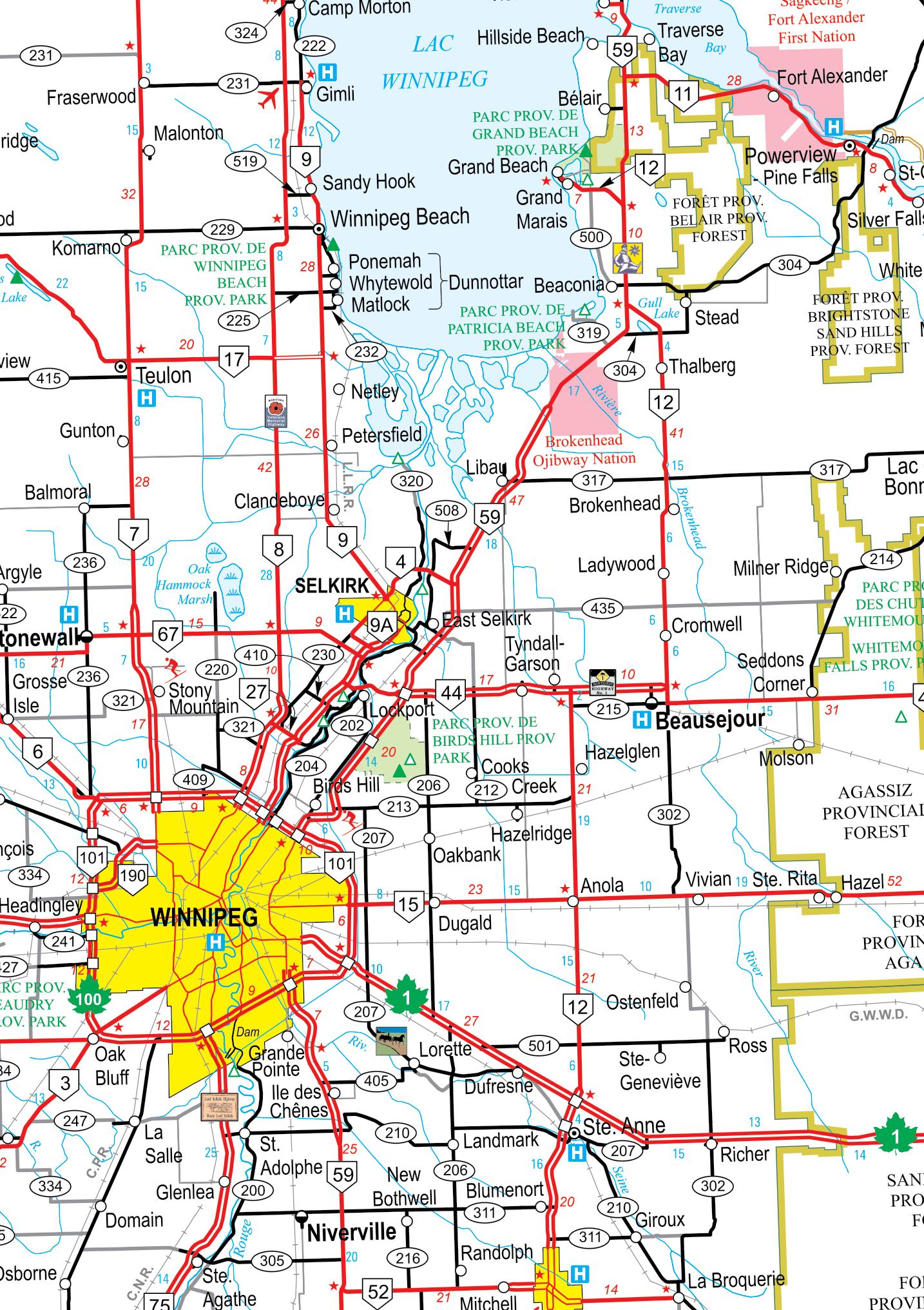
If you don’t mind a little bit of a drive on a sunny afternoon, there are a myriad of wonderful garden centres within an hour of Winnipeg, and they are all worth visiting both for the experience and for that special plant that you have been longing for.
One prime example is LeClerc Garden Center, just off the perimeter before Headingley (turn south at the Petro Can). They have some kind of magic with petunias and also with begonias. Somehow their growers manage to produce huge pots brimming with bloom from just a small number of plants. Consequently, the planter prices are reasonable. There was a 2-foot-wide pot for just $49.99 when plants half that size are selling at some city locations of $45!
I have mentioned it before, but you cannot go wrong if you drive a little further down No. 1 to Highway 13, turn south to 33. Then west and eventually come to Our Farm. Lots of vegetables and perennials – Shea Doherty always carries the latest varieties because he gets so excited about them. A great family business. And if you like succulents, this is a must see. He finally has the true orange petunias which were banned for a number of years over a mistaken idea of genetic meddling.
We have talked about Vanderveens who supplies so many greenhouses in Winnipeg. Acres of flowers and great prices. I also recommend Aubin where I bought a wonderful single white peony years ago. Both are in Carman.
If you go to the southeastern side of the city, you will only be 15 minutes from Glenlea Greenhouses which is a real treat. Lots of perennials – and for the patio vegetables gardener, you can get an assortment of those vary-coloured carrots – red, purple, white and yellow – not to mention pot beans that are great for the small city garden!

Drive a little further East to No. 59 and come to Van der Meer Garden Centre at Ille des Chenes. Buy a Goodland apply tree or a lovely Double Flowering plum shrub. They also have the dwarf hydrangea, Baby Dragon, with generous creamy cones that sticks to a smaller three feet by three feet. And take a look for blue lace hydrangea Popstar which was grown here in Manitoba. You don’t see many of these growing in the neighbour’s back yard.
You may not visit Pine Falls every day, but maybe it’s time you did, taking a side trip along the way to drop in and view the lovely Beausejour Daylily garden.
This is not even a tiny taste of all the treats you have
in store this spring if you get out of the city. It was a very late spring, so the garden centers are still chock full but don’t wait too long. The shelves can empty pretty fast when the garden bug bites.
As for me? I am not finished. I will still be doubling back to some stores and heading out to new ones for another three weeks. But I will tell you one thing that I don’t do, and that is shop in box stores. It is just not the same fun. You don’t get the family vibe and the plants show it.
So, get out there and support local business while treating yourself to a full and satisfying shopping experience. You will be glad you did.



We often hear that listening is one of the greatest skills a person, especially a leader, can possess. Yet true listening is far more than hearing words. It is presence. It is stillness. It is creating a space where another human being feels safe enough to reveal and share themselves.
Through my years working in healthcare, and through my own personal struggles, I learned that listening is one of the most profound forms of healing.
Like many parents of teenagers, I often heard:
“I don’t want your advice. I just want you to listen.”

At first, that seemed simple. Yet true listening is not simple at all. It requires restraint, humility, self-awareness, and silence. And it is the silence that many of us are uncomfortable with.
One of my greatest teachers in listening was my elderly neighbour, Ann.
For years we were simply friendly neighbours exchanging smiles and short conversations. But during the last four years of her life, before she passed away at 92, we became very close. Ann became like a Canadian mother to me.
At that time in my life, I was enduring one crisis after another. Problems seemed endless. Many days I would run to Ann’s house overwhelmed, emotionally exhausted, spilling out all my pain and worries. She would sit quietly and listen with complete attention. She rarely gave advice. Occasionally she asked me a simple question, but mostly she simply listened.
Something remarkable happened after every visit. I would leave feeling lighter, calmer, almost renewed, as if the pain inside me had been quietly lifted away.
One day I finally asked her:
“How do you do it?”
Ann smiled softly and replied, “I didn’t know I was doing that. I just listen.”
That simple answer became one of the most powerful lessons of my life.
Years later, while taking a Spiritual
Diversity course, I visited hospital patients as part of my training. During one debriefing session, I suddenly realized something uncomfortable about myself; I was afraid of silence. In conversations, I constantly felt the need to fill quiet spaces with words.
That insight changed me and my service to patients.
My fascination with listening deepened. I began studying it, practicing it, observing it. But I discovered quickly that understanding listening intellectually is easy. Living and putting it in practice is far more difficult.
Over time, I realized something important:
True listening begins with listening to ourselves.
Unless we become aware of our own fears, wounds, judgments, and hidden truths, we cannot fully create a safe space for others. Human beings often suppress painful realities until they are emotionally ready to face them. We all live within our own perceptions and inner narratives.
The more we become aware of ourselves, the less judgmental we become toward others.
And judgment is one of the greatest barriers to true listening.
I remember once catching myself silently judging a patient while they were speaking. The moment I became aware of it, I stopped analyzing and simply listened. Instantly the conversation shifted and deepened.
People sense when they are being judged. But they also sense when they are being fully accepted.
In nearly four decades of working with people, I have learned this truth repeatedly: what most people seek is not advice, it is safe presence.
One patient taught me this lesson profoundly.
The person had suffered severe trauma and was believed to have significant brain damage. They rarely spoke and had withdrawn almost completely. Staff became deeply concerned because the patient had also stopped eating.
I was asked to spend time with them.


During my first visit, I sat quietly beside the bed for nearly ninety minutes, and I hardly spoke throughout the entire visit. With the patient’s permission – a nod of their head – I gently placed my hand near theirs. I maintained calm eye contact, stayed fully present, and resisted the urge to force conversation. I had no agenda, no expectations, no plan.
Slowly, a few unclear words emerged. Then more words followed. Gradually, the patient began speaking more coherently.
Then something extraordinary happened. The patient placed their hand into mine and quietly asked, “Would you be my friend?”
Shortly afterward, they revealed what no one else had been aware of or understood. “Everyone goes out the door but me.”
Behind the silence was awareness, loneliness, fear, and pain waiting for someone safe enough to receive it. True listening created the space for that truth to emerge.
Listening is not passive. It is one of the most demanding forms of presence. We listen not only with our ears, but with our stillness, our attention, our openness, and our willingness to suspend judgment.
Recently, while recovering from my own injury and surgery, I became even more aware of how rarely people truly listen. Many ask, “How are you?” politely, but few are truly present enough to hear the answer.
And yet, when someone genuinely
listens, something healing happens.
Listening validates another person’s existence. It gives them space not only to speak, but to process, discover, and understand themselves. Perhaps that is why listening requires so much energy. I learned this final lesson from a terminally ill patient with severe lung disease. Part of my role was helping him walk short distances despite his condition. After each exhausting effort, he would sit on the edge of his bed struggling for breath.
One day, after he caught his breath, while he was speaking with great difficulty, I quietly said:
“Maybe I should do the talking now and let you rest. Talking seems to take so much out of you.” He looked at me and replied, “Listening takes more energy than talking.”
Those words stayed with me forever. Perhaps that is why so many people prefer speaking over listening. But the greatest listeners are not simply quiet people. They are people who have listened deeply to themselves first. People who have faced their own wounds, softened their judgments, and learned to sit comfortably in silence.
Because in true listening, we offer something rare – a space where another human being feels seen, safe, and no longer isolated.
And sometimes, that alone can begin healing their broken heart and soul.
Zofia Dove is an international keynote speaker, author and producer, host and director of series “Discovering Beauty Everywhere”.


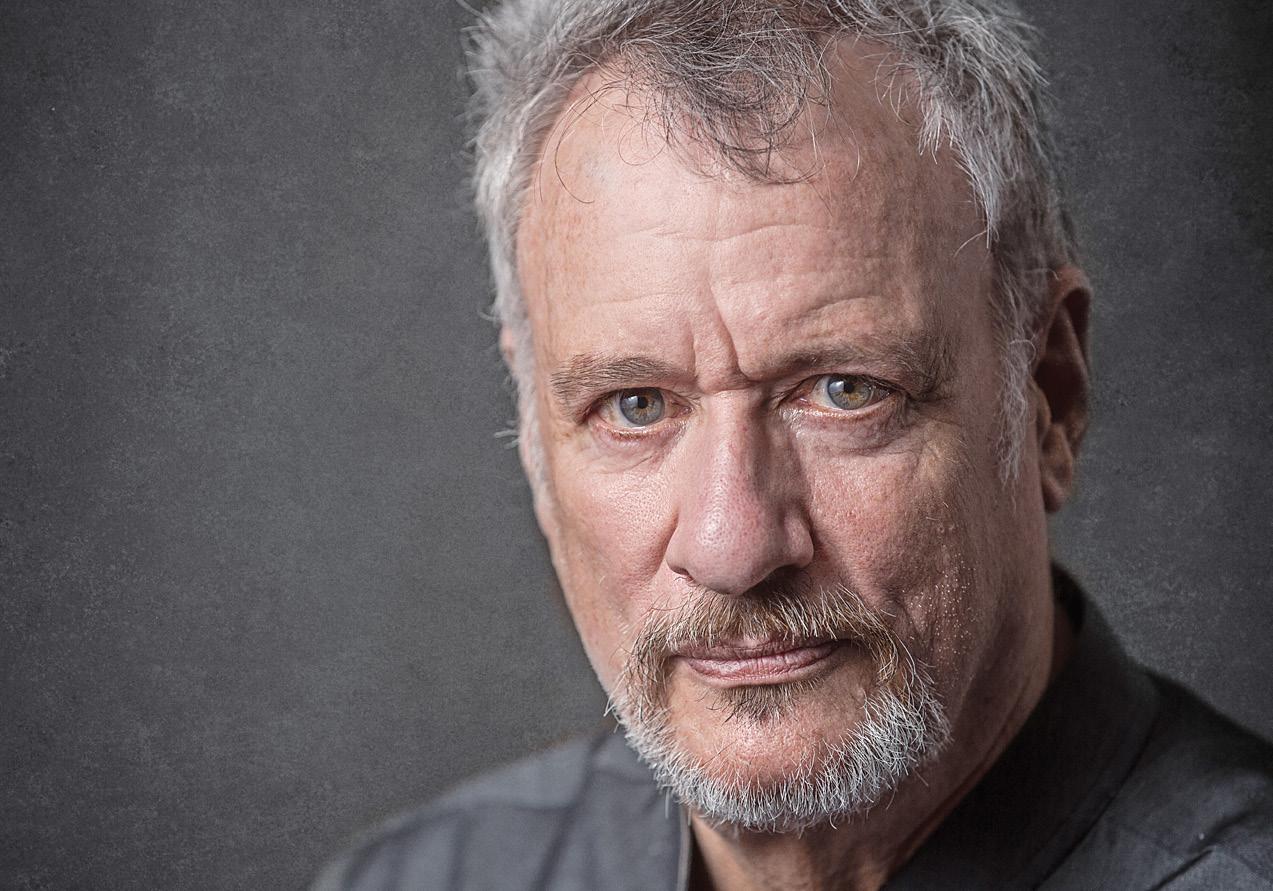
That sense of variety runs throughout the season.
For longtime symphony lovers, the BMO Masterworks series continues to anchor the year with many of the great classical works audiences return to again and again. Concertgoers can enjoy the same concert either Saturday night or Sunday afternoon, whichever works best for them.
The season opens with Beethoven’s Fifth Symphony alongside Tchaikovsky’s Fifth Symphony. Even people who do not regularly attend the symphony would likely recognize moments from both works in films, television, commercials, and popular culture. Hearing them performed live by a full orchestra is an entirely different experience.
Later concerts include Dvorˇák’s Cello Concerto, Sibelius’ First Symphony, Mozart’s Piano Concerto No. 27, Bruckner’s Fourth Symphony, and Mussorgsky’s Pictures at an Exhibition. International guest artists, including cellist Edgar Moreau, pianist Janina Fialkowska, and pianist Anna Genuishene, will join the orchestra throughout the season. WSO Concertmaster Karl Stobbe will also take the spotlight as soloist in Beethoven’s Violin Concerto.
These are the kinds of concerts many have built traditions around over the years. Evenings out or afternoon performances become part of the rhythm of the season.
At the same time, the orchestra continues to expand the ways audiences can experience classical music without feeling they need to know everything before walking through the doors.
The Thursday evening Symphonic Sessions series has become one of the WSO’s most welcoming formats. Conductors speak directly to the audience about the music, and the evening includes a complimentary beverage and post-concert conversation.
For some audience members, it removes some of the formality people sometimes associate with classical concerts.

This season’s Symphonic Sessions concerts include music by Berlioz, Schubert, Elgar, Schumann, Mendelssohn, and Stravinsky. Audiences will hear performances by soprano Andriana Chuchman, pianist Elisabeth Pion, and violinist Sueye Park.
Then there are the Untuxed Open Rehearsals, one of the WSO’s most interesting daytime offerings.
Held at noon on Symphonic Sessions Thursdays, these rehearsals allow audiences to watch the orchestra prepare for the evening performance. Conductors stop and start pieces, work through difficult passages, and explain what they are hearing.
For retirees, music students, and anyone curious about how an orchestra actually works, it offers a rare glimpse behind the curtain.
Another audience favourite returning this season is From the Inside Out, which invites audiences onto the stage itself to sit among the musicians during the performance. It is a completely different way to experience the orchestra, hearing individual instruments up close while watching the communication and teamwork that happens between musicians in real time.
The Leon and Cecilia Asper Night at the Movies series continues to grow in popularity, combining beloved films with live orchestral performance. A giant screen plays the movie while the orchestra performs the score in sync beneath it.
This season’s lineup includes Skyfall in Concert, The Addams Family in Concert, How the Grinch Stole Christmas in Concert, Barbie The Movie™: In Concert, and The Wizard of Oz with Orchestra.
For many audience members, these concerts are pure fun. Some come for nostalgia. Others come because it is their first time hearing a full orchestra live. Either way, the music has a way of surprising people when they hear it performed in real time.

The Manitoba Liquor Mart LIVE at the WSO and Manitoba Liquor Mart LIVE at the WSO POPS concerts continue that same spirit of familiarity and enjoyment.
This season includes Jeans ’n Classics joining the orchestra to perform the music of Billy Joel and Elton John, while Gravel Museum Music teams up with the WSO for an evening of Pink Floyd music, including selections from The Wall. The season also includes a concert of Christmas favourites, Broadway hits in collaboration with Rainbow Stage, and a special appearance by Canadian Brass.
These concerts appeal to audiences who love live music but may not think of themselves as traditional symphony-goers. It’s an easy and enjoyable way to experience the orchestra for the first time, or to return after many years away.
The WSO is also continuing to bring programming that delivers unexpected moments for audiences.
60 Years of TREK & Beyond celebrates six decades of exploration and adventure with music inspired by the beloved franchise, hosted by actor John de Lancie, known to many fans as the character Q.
For Winnipeg audiences, the WSO’s 2026/27 season offers a wide range of experiences, from grand symphonies and world-class guest artists to movie nights, Broadway favourites, and more informal concert formats. Whether someone attends once a year or regularly throughout the season, there are more ways than ever to enjoy what the orchestra has to offer.
Audiences can renew or subscribe now to secure the best available seats and value, along with flexible options and early access to concerts. Single tickets for the 2026/27 season will go on sale in late June.
More information about the season and ticket options is available through the Winnipeg Symphony Orchestra website.

The renewed push toward a Canada–India Comprehensive Economic Partnership Agreement (CEPA) may prove to be one of the most important economic opportunities Canada has seen in decades. At a time when Canada is actively seeking to diversify trade relationships beyond the United States and build stronger ties with the world’s fastest-growing major economy, the recent momentum between Ottawa and New Delhi offers reason for optimism. The challenge now is ensuring that momentum becomes a finalized agreement in 2026.
The relationship has already begun moving in the right direction. Following a diplomatic reset between the two countries, Canada and India formally relaunched CEPA negotiations in early 2026, signing Terms of Reference and establishing a roadmap aimed at concluding negotiations by the end of the year. Multiple rounds of negotiations have already taken place, and officials on both sides have emphasized a more pragmatic approach focused on areas of mutual benefit rather than allowing difficult issues to stall progress. That practical approach is exactly what both countries need.
sesses unique strategic advantages that could become increasingly valuable as Canada seeks to expand commercial ties with India.
Agriculture remains the most obvious opportunity. Manitoba’s producers already export significant volumes of grains, pulses, oilseeds, and food products to international markets. A successful CEPA could reduce barriers, improve market access, and create new opportunities for Manitoba farmers and processors.

Romel Dhalla On The Money
India is projected to become the world’s third-largest economy within the next several years. Its population exceeds 1.4 billion people, its middle class continues to expand rapidly, and its demand for food, energy, critical minerals, infrastructure, education, and advanced technologies is growing at a historic pace. Canada possesses many of the resources and capabilities India requires. India, meanwhile, offers Canada access to one of the largest and fastest-growing consumer and industrial markets in the world.
Few provinces understand this reality better than Saskatchewan. At the recent Western Leaders Summit hosted by the Canada-India Business Council, Saskatchewan Premier Scott Moe highlighted the province’s growing economic relationship with India. The numbers speak for themselves.
Saskatchewan currently supplies approximately half of India’s pulse imports, making it an essential contributor to Indian food security. The province is also home to roughly 35 percent of global potash production, a critical ingredient in fertilizer that helps support agricultural productivity not only in India but around the world. As India continues to modernize its agricultural sector and feed a growing population, Saskatchewan’s importance as a reliable supplier will only increase.
Perhaps the most significant recent development is the landmark $3 billion, 10-year uranium supply agreement between Cameco Corporation and India. The agreement demonstrates the scale of opportunity that exists when both countries focus on long-term strategic cooperation. It also reflects India’s growing commitment to expanding nuclear energy generation as it seeks to meet rising electricity demand while reducing emissions. Canada’s world-leading expertise in uranium production and nuclear technology positions the country as a natural partner in that effort.
The Saskatchewan example should serve as a model for the rest of Canada. While Saskatchewan’s advantages are clear in agriculture, fertilizer production, and uranium, every province has sectors that could benefit from deeper engagement with India.
British Columbia possesses enormous potential in liquefied natural gas exports, critical minerals, forestry products, and technology. Alberta’s energy sector could play a significant role in meeting India’s growing energy needs. Ontario and Quebec remain leaders in advanced manufacturing, aerospace, artificial intelligence, financial services, and education. Atlantic Canada offers opportunities in seafood exports and energy development.
Manitoba may be particularly well positioned to benefit from a stronger bilateral relationship. Historically, Manitoba has often found itself overlooked in discussions about international trade. Yet the province pos-
However, Manitoba’s greatest longterm opportunity may lie much farther north. The Port of Churchill represents one of Canada’s most underappreciated strategic assets. As North America’s only deep-water Arctic port connected directly to the continental rail network, Churchill offers unique access to international shipping routes through Hudson Bay. The port and the Hudson Bay Railway are currently undergoing modernization efforts, while governments and industry groups continue exploring ways to expand capacity and extend shipping seasons.
Recent federal studies and infrastructure initiatives have focused on unlocking the port’s long-term growth potential. New partnerships involving the Port of Churchill, CentrePort Canada, and the Winnipeg Airports Authority are also attempting to create integrated trade corridors linking inland, air, and Arctic transportation networks.
While India-bound cargo would still need to transit through Atlantic shipping routes, Churchill’s potential lies in providing an additional export gateway for Canadian commodities, critical minerals, fertilizer, agricultural products, and potentially energy-related exports. As geopolitical uncertainty continues to affect traditional trade routes and supply chains, Canada benefits from having multiple export corridors available to global markets.
Churchill also aligns with a broader national objective that is becoming increasingly important: Arctic development and sovereignty. Investments in northern infrastructure strengthen Canada’s economic resilience while creating opportunities for Indigenous communities, resource producers, and exporters across the Prairies.
Encouragingly, many of the individuals leading Canada–India relations today appear committed to advancing exactly this type of long-term thinking. His Excellency Dinesh Patnaik and His Excellency Christopher Cooter have emerged as important voices advocating for deeper engagement between the two countries.
At the Western Leaders Summit, recently held in Regina, both diplomats emphasized the enormous opportunities that remain available despite recent challenges. Among the sectors identified as highest priorities for bilateral cooperation were agriculture, energy, and education. These are areas where both countries possess clear complementary strengths and where tangible progress can be achieved relatively quickly.
Education also deserves particular attention. International students have long served as one of the strongest bridges between Canada and India. Beyond the economic benefits they generate, students create long-lasting personal, professional, and cultural connections that strengthen relationships between countries for generations. Improving visa processing, reducing uncertainty, and restoring confidence in immigration systems were identified as important priorities during discussions at the summit.
Recent efforts to improve visa processing timelines and establish more reliable long-term approvals could help rebuild confidence while ensuring legitimate students, workers, and business travelers can continue contributing to both economies.
There are, of course, challenges that remain. Political tensions over recent years created uncertainty and interrupted trade negotiations. Media narratives have often focused on areas of disagreement rather than cooperation. Certain diaspora-related disputes continue to influ-
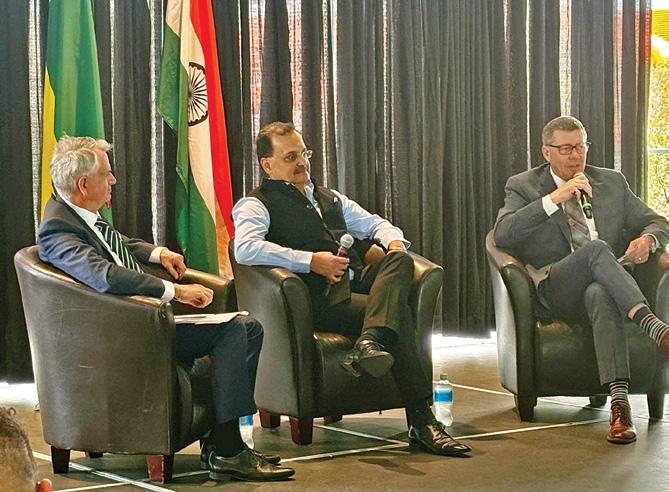
ence political discussions. Competition for talent is also intensifying, with countries such as Germany increasingly attracting highly skilled Indian students and professionals. These realities cannot simply be ignored.
Yet successful trade relationships are rarely built because two countries agree on everything. They succeed because both sides recognize that cooperation creates mutual benefits greater than the costs of disagreement.
That is why the current focus on practical outcomes is so important. Rather than attempting to solve every difficult issue simultaneously, negotiators are increasingly concentrating on achievable objectives, commercial opportunities, and areas of shared interest. This approach offers the best path toward a successful agreement and mirrors the strategy that many other countries have used when negotiating major trade deals.
The potential rewards are substantial. Canada and India have already expressed ambitions of significantly expanding bilateral trade over the coming decade, with discussions frequently referencing a goal of reaching approximately $50 billion in trade by 2030. Key growth sectors include energy, critical minerals, uranium, agriculture, aerospace, artificial intelligence, advanced manufacturing, education, and infrastructure development.
Canada currently exports products such as pulses, mineral fuels, fertilizer inputs, wood pulp, uranium, and other resource-based commodities to India, while importing pharmaceuticals, machinery, precious stones, textiles, electronics, and manufactured goods. The two economies are not competitors in most sectors. They are complementary.
Saskatchewan has already demonstrated what is possible when Canada embraces that reality. The province has built meaningful, strategic trade relationships that support jobs, investment, and economic growth on both sides of the world. The rest of Canada should take notice.
A completed Canada–India CEPA in 2026 would would represent a long-term strategic partnership between two democracies with enormous economic potential. It would provide new opportunities for Canadian exporters, investors, students, innovators, and workers. It would strengthen supply chains, diversify markets, and reduce dependence on a single trading partner. Most importantly, it would position Canada to participate more fully in the economic story that will define much of the twenty-first century: the rise of India.
The groundwork is finally being laid. The negotiations are moving. The diplomats are engaged. The opportunities are clear. Now both governments must finish the job.
A Canada–India CEPA should be signed in 2026.
Romel Dhalla, is President of Dhalla Advisory Corp., provides strategic corporate finance advice to companies and high net worth individuals. He was a portfolio manager and investment advisor with two major Canadian banks for 17 years. Contact him at romel@dacorp.ca. Any views or opinions represented in this article are personal and belong solely to the author and do not represent those of people, institutions or organizations that the author may or may not be associated with in professional or personal capacity, unless explicitly stated. Any views or opinions are not intended to malign any religion, ethnic group, club, organization, company, or individual.

Aaron Janzen
PC MLAs sat through more than 25 hours straight this week, overnight and into the day- fighting the NDP’s Bitsa Bill and budget, exhausted but determined to defend Manitobans. Despite their tireless efforts, the NDP voted down the PC proposals, leaving families with just a few dollars a year in savings from the junk food tax. Obby Kahn’s Progressive Conservatives brought forward real solutions to the NDP by suggesting the basic personal exemption be set at $30,000 saving families a great deal more than Kinew’s junk food tax.
Shockingly, NDP members barely put a single word on the record to defend their own legislation. While PCs battled through the night, asking tough questions and highlighting serious concerns, the NDP remained silent, offering no transparency, no accountability, and no answers to families worried about rising costs and public services. The NDP had every opportunity to defend its budget and legislation on the record. After more than 25 hours of debate, Manitobans were left with more questions than answers. What was made clear – Khan and his team proved themselves to be truly dedicated to bringing real affordability to Manitobans.
Editor’s note:
For some reason the premier has it in his head that raising the basic personal income tax exemption would “benefit the rich over the poor”, as he said during a recent Question and Answer Period with WOW (Women of Winnipeg). There are several responses to this, the first being that the amount saved by the “rich” would be almost meaningless to them. The second is that the rule could kick in only for people making less than some benchmark amount – say $50K a year.
For folks at the low end of the scale the savings could be significant, and it is more efficient to leave the money in their pockets rather than going to the expense of rebates and other programs.
– Dorothy Dobbie
Recent federal and provincial economic reports in budgets and economic updates have been disappointing on several fronts. Provincial governments are awash in debt. The federal government, in it’s April 28, 2026, Spring Economic Update (SEU), fell short of meaningful economic vision for the average person. Released on the busiest week of tax season, it suggests flatlined real GDP growth now until the end of the decade.
Against that backdrop, there was no meaningful focus, by either level of government, on the backbone of the economy: the small business owners of Main Street Canada, who are grappling with transformational technological change, high inflation, a seismic demographic shift, and continuous supply chain disruptions.
This is a significant missed opportunity, that warrants immediate attention. The numbers tell the story.
eration of Independent Business, entitled Canada’s Entrepreneurial Drought, a shrinking business landscape unfolds.
Consider that small to medium sized enterprises (SMEs) account for close to 99% of all employer businesses and employ 60% of the entire private sector workforce – that’s over 8 million workers. Small but mighty, they drive half of all private sector GDP.

Government needs to pay attention. The Spring Economic Update projected that real economic growth in Canada would not hit 2% in any year now until the end of this decade; averaging only 1.7% for the period 2026-2030. Inflation, meanwhile, will be higher than this; averaging 2.1%. Nominal GDP growth (the number our tax revenues are projected on), will be 3.8%.
What is eyebrow-raising is the lack of attention given to the opportunity for the small business community in Canada to kick start this lackluster forecast – by any level of government. Enter the urgency for a renewed focus. There is much that could be done. For example:
• Bring back significant graduate tax credits to refund tuition paid over time, when graduates settle in to work here.
• Make Canada – and Manitoba in particular – a personal tax haven – for young families. Provide new nonrefundable personal tax credits for each child under 16.
• Give training and innovation grants to small companies creating new intellectual properties to get ahead of the AI revolution.
• Reduce corporate property taxes to fill the many buildings available for lease when these engage in new economy innovations.
• Make it possible to improve spaces for day care providers to be on site.
• Provide tax incentives to assist in financing the next generation of business owners by the exiting owners. This could be accomplished by encouraging larger Vendor Take Back arrangements in exchange for larger capital gains exemptions on finalized business sales.
The State of the Small Business Nation. Here is why putting heads together on this brainstorm is so important: in an alarming study by the Canadian Fed-

This is backed up by the federal government’s annual Key Small Business Statistics, the last publication tweaked on April 23, 2026, for results as of December 2024. There were 1.10 million employer businesses in Canada, with 98.2% (1.08 million) being small businesses with 1-99 employees, 1.5% or 16,953 were medium-sized businesses, and less than 1% (3,380 of 0.3%) were large businesses. Just over 77% of all these businesses have less than 9 employees.
In Manitoba, of the 34,239 total business enterprise, 97.9% or 33,917 are small businesses.
But despite these impressive entrepreneurial ventures, there is big trouble brewing. According to the CFIB report, since early 2024, more businesses have been exiting rather than entering the marketplace, with the gap widening in 2025.
Looking over the longer term, business entry rates have now decreased close to 50% since the mid-1980s and are currently at historic lows. This, even though about 16% of Canadians would consider entrepreneurship and many of them are younger people.
The black clouds hanging over the usual exuberant optimism most entrepreneurs bring to the table is, well, depressing. One in two existing business owners would not recommend that people get into business today.
So what’s wrong? Our small business community is stymied by one of the most challenging business environments in decades according to the CFIB report. This includes inflation pressures that affect input costs, labour shortages and high turn over rates, regulatory pressures, and of course the daily dose of global economic uncertainty that affects spending by consumers and decisions about risk-taking for growth by business owners. This, at a time when the AI revolution is demanding investment in innovation, creation and new economy training.
Further, and often the most painful, is the regulatory complexity that comes with a mandatory relationship with the Canada Revenue Agency (CRA), which requires business owners to transact digitally. Yet its reciprocal communications and delivery timelines are spotty; some would say, unacceptably so. Under our self assessment system, the onus of proof for tax compliance rests squarely on taxpayers. But business owners are burdened by often mind bending and retroactive tax law, administered under service standards designed to serve the bureaucracy.
The Family Business Time Bomb. The high costs of marketplace entry and financing challenges are also thwarting succession planning at a time when the Baby Boomers are ready to retire. This generation owns just over 40% of all small-to-medium enterprises (SMEs) in Canada and their successful succession accounts for over $300 Billion in revenue, according to the BDC.
The opportunity to scale and regenerate these great businesses should be the most golden opportunity for the next generation of entrepreneurs. In reality, it could be said we are in a small business “succession crisis”. Business succession failure is an economic time bomb, which needs to be defused . The time for business transition is now, with 61 per cent of small and medium-sized business owners at the age of 50 or older. Over 20% are planning to leave in the next five years.
The Bottom Line. Seizing the moment to embrace the golden economic age we are about to enter could be the ticket to decades of future entrepreneurial activity and economic prosperity for all.
Former Bank of Canada Governor, Steven Poloz, did an excellent job of underscoring the importance of entrepreneurship in his March 28, 2017 speech: Canada at 150: It Takes a World to Raise a Nation: “. . .(a) quick romp through our history illustrates the importance of dreamers and visionaries, leaders who can turn difficult odds into win-win outcomes. In short, success is not guaranteed, but the key ingredients must be there for the entrepreneurial to capitalize upon: open markets, immigration and foreign investment.”
But we could miss it, if we don’t pay immediate attention to the small business community, its important role as Canada’s economic engine, and what it needs to succeed.
Evelyn Jacks is one of Canada’s Top 25 Women of Influence, the best-selling author of 55 financial books and President of Knowledge Bureau, a world class financial educational institute.
Visit to Halifax in the Province of Nova Scotia
We have taken a family trip to Halifax. We left Winnipeg airport in the afternoon of May 17th on a WestJet flight to Halifax. It was a threehour flight. Chandani’s student, Himathni, from the Visakha Girls’ School in Colombo, and her husband Ruvin, were at the airport to meet us and drive us to our hotel, the Courtyard by Marriott Halifax Downtown. Himathni and Ruvin are serving as medical doctors in Halifax Hospital. They invited us for dinner on May 18th at their home. Ruvin drove us both ways.

town Halifax, the Citadel National Historic Site, Halifax Seaport Farmers’ Market, Vibrant Waterfront, Halifax, Nova Scotia, the capital, Maritime Museum of the Atlantic, which displays the city’s link to the Titanic disaster, Halifax shipyard, public gardens, and other historic properties.
A 15-minute ferry ride across the harbour took us from Halifax to downtown Dartmouth. The bus ride was from Halifax to Peggy's Cove (Distance: 44 km / 50 min). It is a seaside fishing village with a lighthouse constructed in 1915.
Seniors Consultation:
May 8, 2026 – 134 Plaza Drive


periences, concerns, and ideas directly with elected officials and community representatives.
My good friend, Wimal Rankaduwa, who is also in Halifax called me to have dinner with him on May 19th. He is serving as a Professor at the University of Prince Edward Island. We missed Renu (Wimal’s wife). During these days, she was with her daughter in Toronto.
The hotel is in the centre of all the important locations. We visited down-
Councillors Janice Lukes and Markus Chambers, in partnership with the Human Rights Committee, hosted a seniors’ consultation.
The consultation brought together local seniors, community members, and stakeholders to discuss important issues affecting older adults in the community. The event provided residents with an opportunity to share their ex-
Residents raised several important topics during the consultation, including: Affordable and accessible housing, community safety and security, access to healthcare and support services, transportation and mobility challenges, social isolation and mental well-being, recreational and community programming for seniors, language and cultural accessibility, and maintenance and cleanliness within residential areas.
Participants also highlighted the importance of creating more inclusive spaces where seniors feel heard, respected, and connected to their community.
The consultation encouraged open dialogue and meaningful conversation. Residents appreciated the opportunity to speak directly with Councillors and committee representatives about their day-to-day experiences and the challenges they face.
Sri Lankan Sinhala and Tamil New Year 2026
The Sri Lankan Association of Manitoba celebrated its Sinhala and Tamil New Year on May 16 (SAT), 2026, featuring traditional music, more than ten cultural performances, and a community dinner. The venue of this annual ceremony was in the main hall of the Canadian Museum for Human Rights. There were more than 350 attendees.
This story will remember about 100 St. James Alumni from the 1960s. I acknowledge that there are many more that could be mentioned.
During the spring of 1962, John Waters and Jim Freeman of Rock Rapids Iowa switched schools for a week in a Canadian US Student exchange. A new CBC Quiz Program called Reach for Top debuted. Teacher Lincolin Lautermilch coached the team.
Several SJCI musicians, under the direction of Bob Gardiner, Rose Birse, Mr. Milne, and Miss Moody provided entertainment These Musicals included Hawaii, Hollywood Extra, The Boy Friend, Anything Goes, Courtney Cranstock, the Governors Daughter, Yeoman of the Guard, and Finian’s Rainbow. Roslyn Roberts, Linda Daniels, Dale Donaldson, Susan Keys, Ann Atkey, Angela Cholakis, Wendy Kellet, Judy Northcott, Bruce Tallman, Gerald Rose were some of the star student performers.

From the desk of a gadfly
Provincial Championship Deer Lodge Community Club Hockey Team played an all-star team from other St. James Community Club teams in the first ever hockey game at the St. James Civic Centre. Many of the players on both teams attended SJCI in the latter half of the 1960s. The Jimmies included Jim Johnston, the first St. James Civic Centre goal scorer; Al Lowen, Doug May, Gary Frost, Walter Barg, Gary Beauchamp, Bud Harden, Doug Titterton, Ed Forrest, Terry Wilson, Murray Sykes, Gary Yelland, Ross Baxter, Lorne Hilton, Rickey Stevenson, Allan Plesh, Bruce Spencer ,Malcolm Jackson, Terry Taylor, Wayne Hodgins, Ron Hamilton, and Doug McDonald.
After their high school years, many 1960s SJCI'ers accomplished great things. During the 1967 Pan Am Games, Maureen Dowds, then a recent grad won a Bronze Medal in the Shot Put.


During the mid-60s, snow sculptures decorated the snowy Portage Avenue SJCI Lawn. Miss Merleved’s Room 11 won the 1967 Manitoba Carnival Snow Sculpture Parliament Buildings. Harry Paul's Room 6, Grade 12 class won the Manitoba Winter Carnival Fantasy Snow contest with a replica of Bonnie and Clyde's Car.
In 1962, Bob King became the youngest person ever to win the Canadian Five Pin Open Bowling Singles. Over the 1961 Christmas Holidays, the SJCI Girls’ Basketball team won the Cloverleaf Championship. The team included Judy Bartlett, Jane Tullman, Joanne McMillan, Barb Thomson, Lynne Killberry, Judy Elliot, Kathy Pinkerton, Cathy Charleson, Cheryl Slobodzian, Sandra Leach. Elaine Dunn, Judy Wismer, and coach Esther Jeffrey.
In 1963, the rink of Wayne Johnson, Don Finkbeiner, Bruce Grant, and Eddie Taylor became the first SJCI team to represent Manitoba at the National School Boys Championship.
In 1965, Carol Betker won the Carl Peterson Manitoba Junior Athlete of the Year records. Several SJCI students reported student activities to the newspapers. Sharon Townsend and Sharon Silver reported to the St. James Leader. Catharine Shipley and Judy Morton were late 1960s correspondents for the Winnipeg Free Press.
On January 22, 1966, the Bantam B
Carol Black was Miss Manitoba during Manitoba's 1970 Centennial. Ingrid Roh was the 1972 Miss Manitoba. Ingrid and Carol were classmates in Terry Bailey's Grade 10 Class. Ann Waters was the 1965-66 Governor General Medal Recipient. Ann went to the University of Winnipeg and was named the Woman Athlete of the Year for her success with the fencing team. Linda Campbell won the 1973 Women's Singles at the Manitoba Tennis Open. Tom Thompson won a Stanley Cup as a scout for the 1988-89 Calgary Flames and a 2003 Calder Cup as an Assistant General Manager with the Houston Aeros. Don and Doug Finkbeiner 1976 and Gord Sparkes 1979 played on Manitoba teams in the Brier. Vince Orchard's 1968 and 1969 Lacrosse team, the Winnipeg North Stars, is in the Lacrosse Hall of Fame. Larry Bolonchuk, a Manitoba Hockey Hall Famer played in the NHL and was a member of the North End Flyers, the 1983 Hardy Cup Champions. In 1994 Karen Burgoyne (Crerar) won the YM YWCA Peace Medal.
Carol Vivier (White) received the Order of Manitoba and the Order of Canada for her work in the film industry. Carol helped bring the 2005 Juno Awards to Winnipeg. Howard Curle taught theatre the U of W and coedited a book called Vittorio De Sica. Dianne Woods is a member of the Manitoba Hockey Hall of Fame. Diane served as the President of the MJHL St. James Canadians.
The 1992 Winnipeg election, a 17-person contest for mayor was dominated by a couple of SJCI alumni: Greg Selinger and Susan Thompson. Susan Thompson won. Selinger later became Manitoba's Premier. Both Thompson as Mayor and Selinger as Premier served 6 years and had to deal with major floods while in office., Bruce Alexander and Eric Jonasson served on the St. James School Board. Irwin Kumka became a Councillor in Victoria Beach History teacher Norm Larson went onto a career as a Lawyer. Norm was the first staff lawyer for Manitoba Legal Aid. Jim Goodridge went on to a 30-year career as an administrator and educator at the Keewatin Community College in the Pas. Principal Ron McIntosh finished her education career as Manitoba's Deputy Education Minister. Laurie Mustard, Gordon Sinclair, and David Sinclair became media personalities. Also, Gordon a baseball pitcher is perhaps the only SJCIer ever to play professional baseball in the United States. Visitors especially disc jockeys Bob Bradburn, Jim Paulson, Bob Burns, and Boyd Kozak visited SJCI. Bands including Chad Allan +the Reflections, the Devrons, the Quid performed at SJCI. CBC's Fred Davis of Front-Page Challenge along with politicians Doug Stanes, Steve Patrick, Ben Hanashak, and Sterling Lyon rounded out the list of SJCI visitors
We lost several SJCIers much too early. Bruce McNish the 1964-65 Student Council Vice President, Roland Madson, and Glen Gibson died in accidents.
Continued from page 1
Parks and Conservation staff, an opportunity we eagerly accepted. We are grateful for the care and respect shown to the heritage of the building by project leaders, Republic Architects, and the sensitivity they demonstrated throughout the final stages of interior finishing.
As the project moved forward it became clear to the Committee that there were possibilities for other uses of the House such as telling the Kennedy’s story; showcasing area Indigenous and Métis art, culture, and craft; welcoming visitors to the region; and for meetings by small meeting groups of local not-for profit organizations.
For several summers, Red River North Tourism offered walking tours of the Kennedy House grounds, sharing the
extraordinary lives and contributions of Captain William Kennedy and his wife Eleanor. Both were leaders in the community in their day, influential politically, socially, and in their contribution to the local economy. RRNT has always promoted the lovely gardens on the property and included them in signature programs such as the Garden & Art Tour held each July, and of course it will continue to do so. Now, the Province has leased the facility for use as a tearoom once again and it will open to the public very soon. Red River North Tourism will post information on social media and on our website as it becomes available. The tearoom has joined RRNT as a member and we look forward to a summer of success and the
return of visitors.
For members of the Kennedy House Renewal Committee this truly has been a labour of love. We thank all who have supported our efforts and acknowledge all the work done by trades, government, and so many others, in supporting a positive outcome for this truly historic structure.
It is our fervent hope that a focus on Métis heritage may be a component in the future of the facility. In the meantime, we celebrate the return of this important attraction to our community and welcome everyone to enjoy historic Kennedy House once again.
Thank you for your continued interest and support over the past decade. We know Kennedy House will have a long
In July 1969. Leonard Shakespeare age 26, a St. Boniface police officer, died in the line of duty. A Windsor Park Street is named in Leonard's Memory. In 1972, Elinor Ivanoff age 49 a SJCI teacher for a decade and a half, died. Elinor had successfully lobbied for an in-school Library. In the fall of 1969, Rick Ranson and John Van Landeghem, then a couple of recent SJCI grads, went on a slightly more than 3 months canoe trip from underneath the Assiniboine Park Foot Bridge to New Orleans to publicize Manitoba's 1970 Centennial. Whenever a Canada team plays a USA team in football, an American victory is almost certain. During the 1961 football season, the Jimmies Football Team were once again forced to play only exhibition games. On Saturday October 21, 1961 at the baseball field part of Winnipeg Stadium, the Jimmies played a football team from Rugby North Dakota. The game attracted 1,000 fans. Maurice Hogue, a recent SJCI alumni, worked on the Rugby radio broadcast. After falling behind earlier in the game, the Jimmies rallied for a 25-21 come from behind victory. The key plays were Mal Symon’s 98-yard fumble return for a touchdown and a Pick 6 by Herb Cooper. Let us put our ELBOWS UP and celebrate this 98-yard FOOTBALL VICTORY.
The SJCI 75th Reunion will take place on October 23 and 24, 2026.
Full Disclosure: I attended SJCI during the later half of the 1960s.
Fred Morris is a Grandfather, Sports Fan and Political Activist.


Creative Retirement Manitoba Inc.
204-481-5030, hello@crcentre.ca www.crcentre.ca
20 Fort Street Seniors Club
2200-20 Fort Street / FortStSeniors@Shaw.ca
A&O Support Services for Older Adults Inc.
200 - 207 Donald Street
204-956-6440 / Toll Free: 1-888-333-3121 info@aosupportservices.ca www.aosupportservices.ca
Archwood 55 Plus
565 Guilbault Avenue / 204-416-1067 archwood55@shaw.ca archwood55plus.wildapricot.org/ Barbados Association of Winnipeg, MB Inc. 204-202-7197
barbadosassociaationof wpg@outlook.com
Black Seniors Support Inc.
D-50 Scurfield Boulevard / 204-599-8566 resourcecoordinator@blackseniors.ca www.blackseniors.ca
Bleak House Centre 1637 Main Street / 204-338-4723 bleakhousecentre@gmail.com www.bleakhousecentre.com
Brooklands Active Living Centre 1960 William Avenue W 204-632-8367 / bpscc@mymts.net
Centro Caboto Centre 1055 Wilkes Avenue / 204-487-4597 ext. 1 executivedirector@cabotocentre.com www.cabotocentre.com
Charleswood Active Living Centre A 357 Oakdale Drive / 204-897-5263 info@charleswoodseniorcentre.org www.charleswoodseniorcentre.org
Dakota Community Centre 1188 Dakota Street / 204-254-1010 ext. 217 seniorresources@dakotacc.com www.dakotacc.com
Delmar Seniors
110 Adamar Road / 204-421-2592
Dufferin Senior Citizens Inc.
377 Dufferin Avenue / 204-986-2608
Elmwood East Kildonan Active Living Centre 180 Poplar Avenue / 204-669-0750 healthrelations@chalmersrenewal.org chalmersrenewal.org
Garden City Community Centre Seniors 55+ 725 Kingsbury Avenue / 204-940-6111 facilities@gardencitycc.com www.gardencitycc.com/seniors
Golden Rule Seniors Resource Centre 625 Osborne Street / 204-306-1114 goldenrule@swsrc.ca facebook.com/goldenruleseniors
Good Neighbours Active Living Centre 720 Henderson Hwy / 204-669-1710 admin@gnalc.ca / www.gnalc.ca
Gwen Secter Creative Living Centre 1588 Main Street / 204-339-1701 becky@gwensecter.com / www.gwensecter.com
Headingley Seniors’ Services 5353 Portage Avenue / 204-889-3132 ext. 3 seniors@rmofheadingley.ca www.headingleyseniorsservices.ca
North Centennial Seniors Association of Winnipeg Inc. 86 Sinclair Street / 204-582-0066 ncsc@shaw.ca / www.ncseniors.ca
Old Grace Housing Co-op 100-200 Arlington Street wellness.oghc@gmail.com
Pembina Active Living (55+) 933 Summerside Avenue / 204-946-0839 office@pal55plus.ca / www.pal55plus.ca
Rady Jewish Community Centre 123 Doncaster Street / 204-477-7539 lmarjovsky@radyjcc.com / www.radyjcc.com
Rainbow Resource Centre 514 St. Mary Avenue / 204-474-0212 ext 255 OTR@rainbowresourcecentre.org www.rainbowresourcecentre.org
The Salvation Army Barbara Mitchell Family Resource Centre 51 Morrow Avenue / 204-946-9153 sheila.keys@salvationarmy.ca
Somali Help Age Association 519 Beverley Street / 204-881-6364 somalihelpage@gmail.com
South Winnipeg Seniors Resource Council 117-1 Morley Ave / 204-478-6169 resources@swsrc.ca / www.swsrc.ca
Sri Lankan Seniors Manitoba 113 Stan Bailie Drive / 204-261-9647 www.srilankanseniorsmb.ca
St. James-Assiniboia 55+ Centre 3-203 Duffield Street / 204-987-8850 info@stjamescentre.com / www.stjamescentre.com
Transcona Council for Seniors 845 Regent Ave / 204-222-9879 tcs@mymts.net / www.transconaseniors.ca
Transcona Retired Citizens Org. 328 Whittier Ave. West 204-222-8473 / trco328@shaw.ca
Winnipeg Chinese Senior Association 204-291-7798 / wcsa.wpg@hotmail.com www.winnipegchineseseniors.ca
BEYOND
ALTONA
Rhineland C.A.R.E. Inc. 240 5th St NE / 204-324-1528 carealtona.com
ASHERN
Living Independence for Elders Inc. #4-61 Main Street / 204-768-2187 lifeashern@gmail.com
BEAUSEJOUR
Beau-Head Senior Centre 645 Park Avenue / 204-268-2444 beauhead@mymts.net
BINSCARTH / RUSSELL
Senior Services of Banner County 204-532-2391 seniorservicesofbannercounty@gmail.com
BIRTLE
Valley Senior Services 663 Main Street / 204-842-3296 valleyserviceforseniors@gmail.com
BOISSEVAIN
Seniors’ Services of the Turtle Mountain Area 204-534-6816 / seniorservicetm@gmail.com
BRANDON
Indigenous Senior Resource Centre Inc. A1- 100 Robinson Avenue / 204-586-4595 executivedirector@isrcwpg.ca / www.asrcwpg.ca
Keewatin Inkster Neighbourhood Resources 1625 Logan Avenue / 204-774-3085 kinrc@mymts.net
La Fédération des aînés de la francophonie manitobaine inc.
123-400, rue Des Meurons 204-235-0670 / direction@fafm.mb.ca
Manitoba Korean 55+ Centre 900-150 River Avenue 204-996-7003 / www.ksam.ca
Brandon Seniors for Seniors Co-op Inc. 311 Park Avenue E / 204-571-2050 reception@brandons4s.ca / www.brandons4s.ca Health Checks brandonmbhealthchecks.ca healthchecksbrandon@gmail.com
CARMAN
Carman Active Living Centre 47 Ed Belfour Drive / 204-745-2356 www.activelivingcentrecarman.ca
CRANBERRY PORTAGE
Jubilee Recreation of Cranberry Portage Legion Hall 217 2nd Ave. SE / 204-271-3081
CRYSTAL CITY
Crystal City & District Friendship Club Inc. 117 Broadway St. / 431-867-0122 crystalcityfriendship@gmail.com
DAUPHIN
Dauphin Active Living Centre Inc. 55 1st Avenue SE / 204-638-6485 www.dauphinseniors.com
DELORAINE
Deloraine Community Club Inc. 111 South Railway Ave E / 204-747-2846
Seniors’ Outreach Services of BrenWin Inc. 204-747-3283 / sosbrenwin@gmail.com sosbrenwin.com
DUFRESNE
Tache Senior Services 28007 Mun Road 52 N. / 204-230-2131
ELIE
Cartier Senior Citizens Support Committee Inc. 11 Magloire Street, Suite #1 / 204-353-2470 cartierseniors55@outlook.com
ERICKSON
Comfort Drop In Centre 31 Main Street / 204-636-2047 areas@mymts.net
FLIN FLON
Flin Flon Seniors 2 North Avenue / 204-687-7308
GILBERT PLAINS
Gilbert Plains and District Community Resource Council Inc. 204-548-4131 / gpdcrc@mymts.net gpseniors.ca
Gilbert Plains Drop In Centre 22 Main Street North / 204-548-2210
GIMLI
Gimli New Horizons 55+ Activity Centre 17 Loni Beach Road / 204-642-7909 gimli55@mts.net / www.gimlinewhorizons.com
GRAND MARAIS
Grand Marais & District Seniors 36058 PTH 12 / gmdseniors@gmail.com www.gmdseniors.ca
GRANDVIEW
Grandview Seniors Drop In 432 Main Street / 204-546-2272
HAMIOTA
Hamiota 55+ Centre & Restore Community Co-op Inc. 44 Maple Avenue
KILLARNEY
Killarney New Horizons Centre 520 Mountain Avenue / www.killarneymbseniors.ca
Killarney Service for Seniors 415 Broadway Ave. / 204-523-7115 seniorservice@killarney.ca
LA BROQUERIE and STE. ANNE
Seine River Services for Seniors Inc./ Services Rivière Seine pour aînés Inc. 93 Principale Street / 204-424-5285 src@seineriverservicesforseniors.ca seineriverservicesforseniors.ca
LUNDAR
Lundar Community Resources 35 Main Street / 204-762-5378 lcrc@mymts.net
MANITOU
Pembina Community Resource Council 315 Main Street / 204-242-2241 pembinacrc@gmail.com
MINNEDOSA Minnedosa Senior Citizens Assoc. 31 Main Street S / 204-867-1956 mdsasca@gmail.com
MORDEN
Morden Activity Centre 306 N Railway Street / 204-822-3555 mordenactivitycentre@gmail.com www.mordenseniors.ca
NEEPAWA
Neepawa Drop In Centre 310 Davidson Street / 204-476-5103 Neepawa-dropin@outlook.com www.neepawa.ca/district-drop-in-center
NOTRE DAME DE LOURDES Club D’age Dor Notre Dame 204-248-7291 / ndslchezsoi@gmail.com
PILOT MOUND Pilot Mound Fellowship Centre 203 Broadway Avenue / 204-825-2873
PLUMAS Plumas Seniors Citizens Club Inc. 102 White Street / 204-386-2029
PORTAGE LA PRAIRIE
Herman Prior Senior Services Centre
40 Royal Road N. / 204-857-6951 hermanpriorcentre@gmail.com
www.hermanprior.com
Portage Service for Seniors 40A Royal Road N. / 204-239-6312 psfsmeals@shaw.ca portageservicefors.wixsite.com/psfs
RIVERTON
Riverton Seniors Activity Centre 12 Main Street / 204-378-5155 rdfc@mymts.net / www.rivertonfc.com
ROSSBURN
Rossburn Community Resource Council 71 Main Street / 204-859-3386 rosscomm@outlook.com
SANDY LAKE
Sandy Lake Drop In Centre 100 Main St. / 204-585-2411
Municipality of Harrison Park - Age Friendly Initiative Committee 204-585-5310
SELKIRK
Gordon Howard Centre 384 Eveline Street / 204-785-2092 executivedirector@gordonhoward.ca www.gordonhoward.ca
SNOW LAKE
Snow Lake Senior Centre 71 Balsam Street / 204-358-2151 snowsrs@mymts.net
SOUTH JUNCTION Piney Regional Senior Services 204-437-2604 / lgdseniors@gmail.com
STE. ANNE Villa Youville 15 Charriere Road / 204-422-5624 yannb@villayouville.ca / www.villayouville.ca
ST. LAURENT Age Friendly Committee of St. Laurent 204-906-9607
STARBUCK
MacDonald Services to Seniors 204-735-3052 / info@mcdonaldseniors.ca www.macdonaldseniors.ca
STEINBACH
Pat Porter Active Living Centre 10 Chrysler Gate / 204-320-4600 ed@patporteralc.com / www.patporteralc.com
STONEWALL
South Interlake 55 Plus 374 1st Street West - Oddfellows Hall 204-467-2582 / si55plus@mymts.net www.si55plus.org
SWAN RIVER Swan River & District Community Resource Council 126 6th Ave N / 204-734-5707 resourcecouncil@srseniorservices.com
Swan River Senior Citizens Centre 702 1st Street North / 204-734-2212 THE PAS The Pas Golden Agers 324 Ross Avenue / 204-623-3663 seniorsthepas@gmail.com
THOMPSON Thompson Seniors Community Resource Council Inc. 4 Nelson Rd. / 204-677-0987 thompsonseniors55@gmail.com thompsonseniors.ca
TREHERNE Treherne Friendship Centre 190 Broadway Street 204-723-2559 / jstate1066@gmail.com
VICTORIA BEACH
East Beaches Social Scene 3 Ateah Road / 204-756-6468 ebssinc1@gmail.com / www.ebseniorscene.ca East Beaches Resource Centre 3 Ateah Road / 204-756-6471 ebresourcec@gmail.com / ebresourcec.weebly.com
VIRDEN Seniors Access to Independent Living 204-851-2761 / sail.cao.2023@gmail.com
WINKLER Winkler & District MP Senior Centre 102-650 South Railway Avenue / 204-325-8964 director@winklerseniorcentre.com www.winklerseniorcentre.com

In June, we honour National Indigenous History Month by celebrating the history, heritage, and diversity of First Nations, Inuit, and Métis peoples. At Children’s Hospital Foundation of Manitoba, we’re seeing that heritage show up to help kids and families heal in a very special way.
Thanks to donor generosity, construction is well underway on an innovative Indigenous-led initiative at HSC Children’s Hospital — Canada’s first Indigenous healing space designed specifically for kids and their families in a children’s hospital.
it’s the only children’s hospital serving Manitoba, Northwestern Ontario, and Nunavut.
When a child feels seen and supported, healing follows. That is why this space matters so much.

The vision for this landmark project began in 2015 with project lead Dr. Melanie Morris — Canada’s first Indigenous pediatric surgeon and Physician Lead, Indigenous Health at HSC Children’s — and has been guided and supported by Indigenous Elders, Knowledge Keepers, and health care experts as well as children and families from Métis, Inuit, and First Nations communities.
We know that, at any given time, upwards of 60 per cent of the children in our hospital are Indigenous, many from remote and northern communities, but there are few visible signs of Indigenous lands, cultural beliefs, or worldviews inside the buildings. Many Indigenous kids at HSC Children’s have also travelled hundreds of kilometers from their homes, their families, and their cultural supports, as
Every decision — design, function, and purpose — has been shaped by Indigenous voices. The new space was designed by Stantec in collaboration with Indigenous designer Destiny Seymour of Indigo Arrows. It will include areas for traditional ceremony, including smudging; a comfortable gathering space for families; places for Elders, Healers, and Knowledge Keepers; Indigenous books and language resources; a breastfeeding corner; private rooms for critical conversations; and technology that allows children unable to leave their wards to participate in ceremony and stay connected to their home Communities and Elders.
This project was done in a good way — following the lead of Métis, Inuit, and First Nations Communities — by listening first, learning deeply, and implementing what families told us their children truly need.
This initiative is not just a construction project. It is ReconciliACTION — a tangible commitment to the Truth and Reconciliation Commission’s Calls to Action, particularly Call to Action 22 which recognizes Indigenous healing practices as an essential part of health care. Access to Indigenous worldview
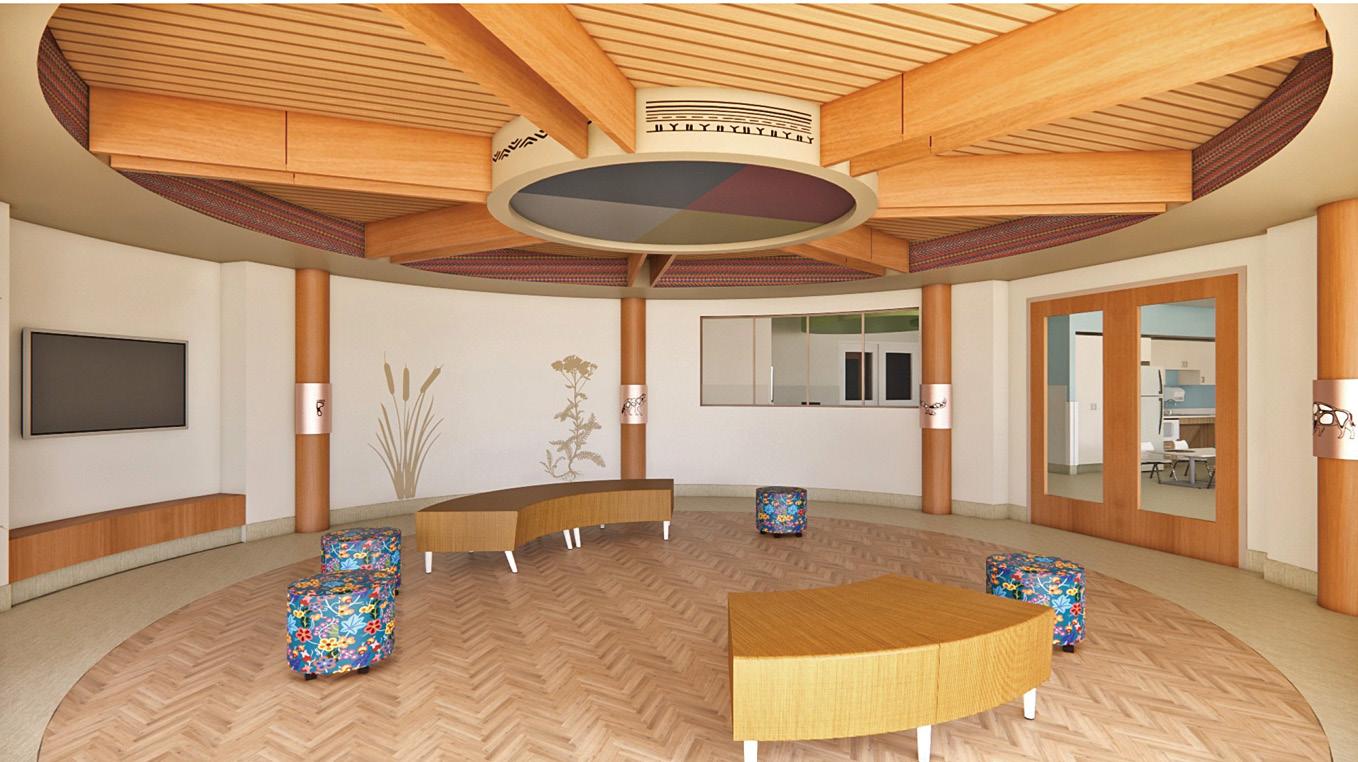
and traditional medicine is also part of the UN Declaration on the Rights of Indigenous Peoples.
The Indigenous Community Healing Space is a $2.2 million project made possible through the generosity of donors to the Children’s Hospital Foundation of Manitoba, including a significant $500,000 contribution from the Government of Manitoba.
We’re deeply grateful to all the partners who have helped bring this vision to life. While construction has begun, additional funds are still needed to complete the work, furnish the space, and develop culturally relevant programming that will sustain this healing environment for years to come.
We are also honoured to have the official endorsement of the Assembly of Manitoba Chiefs, reinforcing that this Indigenous led initiative is meaningful, necessary, and supported by leadership across the province.
propelling the body forward. We do this about 8,000 times a day without even thinking about it.
“When our feet hurt, we hurt all over.”
– Socrates
Even Socrates, the father of western philosophy who spent his days espousing the virtue of knowledge, took the time to comment on sore feet. Foot pain affects about one in four older adults, and it can become chronic and debilitating. By the time we reach age 80, the average person has walked over 100,000 miles, so it’s no surprise that these hard-working, mechanical marvels start to wear and tear over time. And while some age-related changes to your feet are inevitable, there are some steps you can take to maintain healthy, happy feet.
Our feet walk us through life one step at a time, supporting our body weight on 28 bones, 33 joints and over a hundred muscles, ligaments, and tendons. Feet are a vital part of overall health – they keep you grounded, balanced, upright and, of course, move you from one place to the next. Built tough, the skin on the soles of the feet is thicker than that on other parts of the body to meet the constant demands of weight bearing. There are also highly specialized fat pads that cushion the feet, acting like your very own insoles.
When you walk, the biomechanics of the foot provide shock absorption – the heel hits the ground first, then you roll onto the ball of your foot, and push off on your toes. The arches act like springs, flexing the foot and
As we get older, everyone’s feet start to experience normal age-related declines. Arches lose some of their elasticity, the skin is more prone to dryness, joints stiffen and those fat pads start to thin so you don’t have that natural cushion anymore. Your shoe size may even go up as the ligaments and tendons stretch out. All this can result in wider, flatter feet.
A study in the Gerontology Journal found that age-related changes in feet can contribute to a decreased range of motion, less efficient propulsion and reduced muscle strength. The journal also affirms that the older you are the more likely it is that you will experience some kind of foot pain. Foot pain can make walking extremely difficult, curtailing even the most basic activities of daily living. It can also cause problems with balance and is an independent risk factor for falls.
Obesity is a known risk factor for foot pain, and women are more likely to have sore feet than men. Years of wearing ill-fitting shoes can cause corns, calluses, bunions and toe deformities. So while those fabulous high heels you loved to wear looked good, your feet paid the ultimate price.
Certain medical conditions like arthritis, gout and diabetes can also cause foot pain. Poor circulation from vein disease could prevent cuts and sores from healing as well, opening the door to possible infection. Some older adults can no longer reach their feet as mobility and manual dexterity
decline, so routine foot care like cutting toenails becomes very difficult. Toenail hygiene is an important part of overall foot health.
So how do you maintain happy, healthy feet as you age? Here are some steps in the right direction:
• Moisturize daily to keep skin from drying and cracking. Inspect your feet often to check for cuts and sores or any changes to the skin. Consult a healthcare professional if you notice any sores or discolorations that don’t go away.
• Keep your toenails trimmed and be sure to clean underneath your nails very carefully. If you are having difficulty reaching your feet, you may need to visit a foot care clinic.
• Maintain a healthy weight – car-
This project is important for Manitoba — but it is also momentous for Canada. It sets a precedent for what children’s health care can and should look like when reconciliation moves from words to action.
This space will help Indigenous children and families feel safe, respected, and supported during some of the most challenging moments of their lives. It will support healing not only of bodies, but of hearts, minds, and spirits — and it will stand as a lasting commitment to mutual respect, understanding, and partnership.
I invite all Manitobans and Canadians to join us in completing this groundbreaking project for kids.
To learn more or support the Indigenous Community Healing Space, visit goodbear.ca/IndigenousHealth.
Stefano Grande is the president and CEO of Children’s Hospital Foundation of Manitoba.
rying around extra weight can put even more pressure on your already overworked feet.
• Wear comfortable, properly sized shoes and/or get fitted for orthotics. An orthotic is a custom foot insert placed inside the shoe. A study from The College of Science, Health and Engineering in Australia found that orthotics were effective in reducing pressure from painful regions of the foot. Their study also showed that orthotics are beneficial for balance.
• Do some simple foot exercises once a day to maintain strength and flexibility. As an example, try picking up a crumpled towel with your toes. ‘
• See a healthcare professional or a podiatrist if you have recurring foot pain.