

There is an impression that the Senate does nothing and is just an endless drag around the necks of Canadians. I disagree. The Chamber of Sober Second Thought actually fulfills that commitment and then some, taking up new initiatives as well as reviewing legislation.
Here are a few excerpts from the latest report that will give you just a glimpse into some of the work they do.
The committee learned that no single authority is responsible for wildfire preparedness, response and recovery in Canada. Provinces and territories manage wildfire suppression; federal departments provide emergency coordination, scientific advice and funding. Municipalities struggle with limited resources including adequate evacuation support and training for firefighters. Coordination challenges contribute directly to delayed response times, inconsistent planning, uneven access to equipment and personnel and a system that mobilizes only once a disaster is already underway, none of which are moving at the speed of the
current wildfire crisis.
Despite these challenges, the committee learned about solutions. For instance, prescribed and cultural burning, proactive fuel management, expanded FireSmart

Timplementation, wildfire-resilient infrastructure, modernized building codes, enhanced predictive modelling, early-warning systems, and investments in new technol-
u

A world of adventure just outside our doorstep

There is a world of adventure in Manitoba. So many of us never get to experience it. Do I sound like a travelogue? When I think of Manitoba, I feel like a travelogue – an enthusiastic one.
he conference room at the Manitoba Museum of nature was filled with invited guests to welcome the HBC Royal Charter to Winnipeg. The Charter came to Winnipeg thanks to the generosity of the Weston and Thomson families who bought it for $18 million as a gift to donate to the Manitoba Museum, the Archives of Manitoba, the Canadian Museum of History and the Royal Ontario Museum. Each insti-
This year, instead of spending our money on some far-off destination. Why not take a tour of Manitoba? Not only will you discover awesome things you never imagined, but your kids will get an education that they will cherish forever. And you will be doing our economy an enormous favour! Here is my imagined tour. You could break it up into many packages, including day trips, camping trips and two-week vacations. It takes you on an eventual journey to the far north, but lingers in the middle of Manitoba, the place where all the dreams of Manitoba’s future were begun. This land above the lakes was where commerce first happened and where the romance of a new land was woven, although eclipsed by what happened later at the junction of the Red and Assiniboine. But back in



You should consider having the following in place
Will
The preparation of a will may seem like a daunting task, however, it is essential to ensure that your property is disposed of according to your wishes upon your death. If you pass away without a valid will, the law states what is to happen to your estate.
Power of Attorney
A power of attorney is a document which appoints an individual to handle your affairs in the event you become mentally incapable of making your own decisions. Nothing prevents you from continuing to make your own decisions while you are still competent. A power of attorney is an extremely valuable document to have in place in case anything happens to you which affects your mental ability, such as a stroke, coma or dementia.
Health Care Directive (Living Will)
A health care directive, commonly called a living will, is a document which appoints an individual to make decisions with regard to your health care only, while you are alive but unable to express your decisions yourself. This document is distinct from a power of attorney and deals only with health care decisions such as whether life sustaining treatments, such as CPR or blood transfusion, should be continued or withdrawn.
Standard Fees*
Standard Fees*
Last Will and Testament
Last Will and Testament
Power of Attorney
Seniors
Seniors
$225.00 $200.00
$275.00 $250.00
$175.00 $150.00
Power of Attorney $225.00 $200.00
Health Care Directive
$ 75.00 $ 50.00
Health Care Directive $125.00 $100.00
* plus GST and PST - Rates are per person.
*Plus GST and PST - Rates are per person.
Home and hospital visits are also available $250.00* (includes both meetings)
*plus GST and PST
TACIUM VINCENT & ASSOCIATES
206 St. Mary’s Road, Winnipeg, MB R2H 1J3 DAVID G. VINCENT (204) 989-4236 www.taciumvincent.com

Installed and tax exempt Call for your complimentary quote




Follow us online at: lifestyles55.net
Facebook: Lifestyles55
PUBLISHER
Pegasus Publications Inc.
EDITOR
Dorothy Dobbie dorothy@pegasuspublications.net
ART DIRECTOR
Karl Thomsen karl@pegasuspublications.net
GENERAL MANAGER
Shauna Dobbie shauna@pegasuspublications.net
CONTRIBUTORS
Marianne Cerilli, Romel Dhalla, Dorothy Dobbie, Shauna Dobbie, Zofia Dove, Doug Eyolfson, Stefano Grande, Aaron Janzen, Evelyn Jacks, Kevin Klein, Ian Leatt, David Leis, Myron Love, Kathryn McBurney, Fred Morris, Fred Pennell, Darlene Ronald, Seneka Samarasinghe, Trudy Schroeder, Sherrie Versluis.
Canadian Publications mail product Sales agreement #40027604
PRINT ADVERTISING
Gord Gage • 204-940-2701 gord.gage@pegasuspublications.net
Nathan Avila 204-940-2726 Nathan@pegasuspublications.net
SUBSCRIPTIONS
If you would like to receive Lifestyles 55, we offer both monthly newspaper and online formats. To place your order, call 204-9402700. Subscriptions are $36.00 per year, plus tax. American Express, MasterCard, Visa and cheques are accepted. To view a back issue online visit lifestyles55.net
Published monthly by:
Pegasus Publications Inc. 70 Jewett Bay Winnipeg, MB R3R 2N1 204-940-2700
Lifestyles55.net pegasuspublications.net
DISTRIBUTION
Available at more that 20 rural towns and cities as well as more than 100 locations in Winnipeg. If you would like bulk copies of this publication, contact Gord Gage at (204) 940-2701 or gord.gage@ pegasuspublications.net. Also available digitally at whatsupwinnpeg/lifestyles and on Facebook: Lifestyles55
EDITORIAL SUBMISSIONS
Call Dorothy Dobbie at (204) 940-2716 or email dorothy@pegasuspublications.net for more information and guidelines. Any opinions expressed in columns by our contributors are their own opinions entirely and are not necessarily shared by Pegasus Publications Inc. All information presented by the contributors is the responsibility of the writers.
Lifestyles 55 is published monthly. Reproduction in part or in whole is prohibited without seeking permission in writing from the publisher.
Copyright Pegasus Publications Inc.



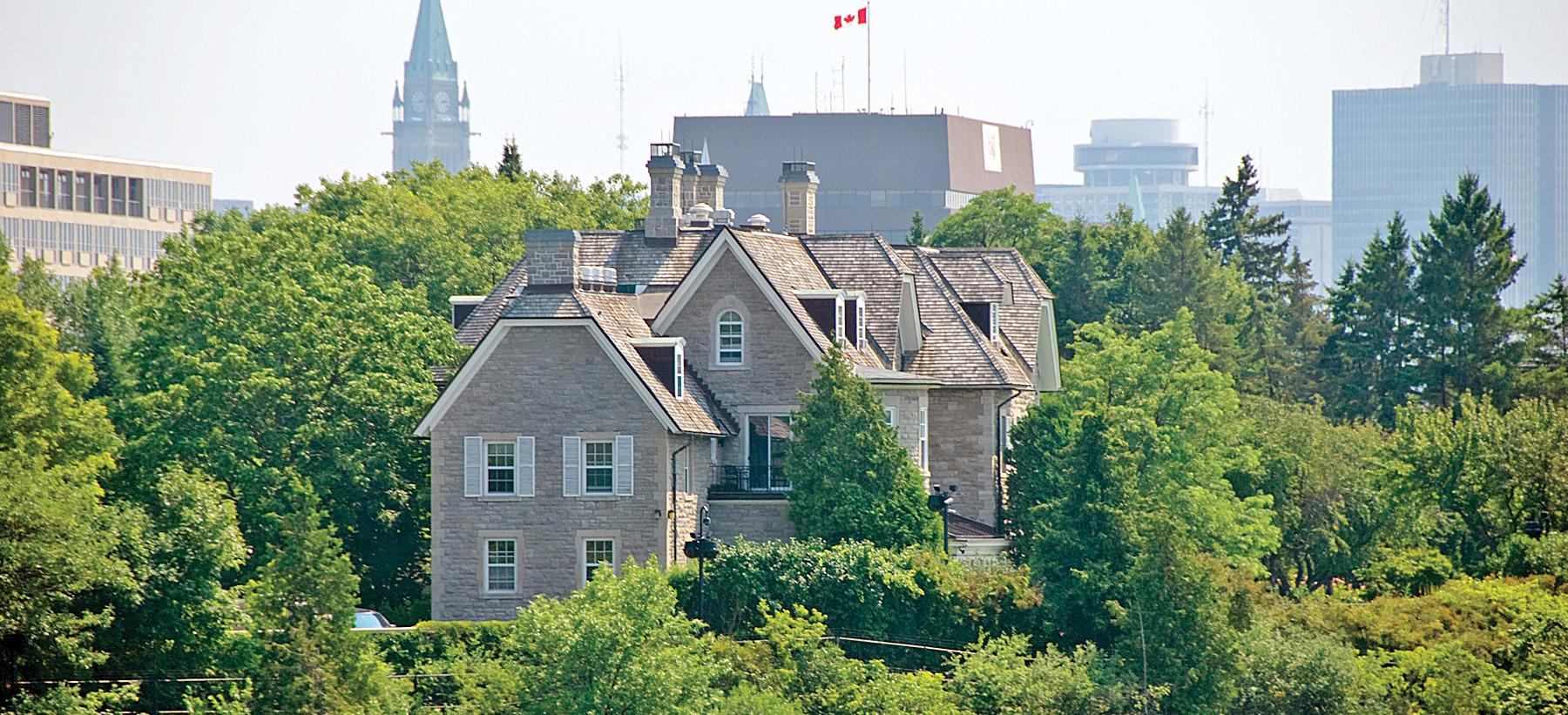
Ihave been seeing a debate on Facebook about whether 24 Sussex should be restored or replaced. Most of the comments centered around why Pierre Poilievre, the Leader of His Majesty’s Official Opposition, should vacate Stornoway and turn it over to Carney.
It seems that the great majority do not know that since Trudeau came into office, the Prime Minister has been living at Rideau Cottage on the grounds of the Governor General’s residence. Rideau Hall, set in a vast, 79-acre park, is roughly across the street from 24 Sussex, which is a much more modest lot of 5.53 acres on the bank of the Ottawa River.
24 Sussex
24 Sussex is 12,000 square feet with 35 rooms. It was built by an MP and former lumber baron, Joseph Merrel Currier. It was expropriated by the Government of Canada in 1943 from its then owner, Gordon Edwards, who died there in 1946 as he was disputing the expropriation.
During this period, the original 16-room structure underwent a $6 million restoration, so Sophie and the kids moved into a $2.1 million home next door, which was constructed to accommodate her and is now being used as a guest cottage.

Prior to the government’s acquisition of the house and its renovation (at the princely sum of $500,000) prime ministers lived wherever they could, some their own homes, but some in rented apartments, and some at the Chateau Laurier.
24 Sussex is not well suited as a primary state residence – it doesn’t even have a grand hall for events – and in my opinion, it should be razed and rebuilt from the ground up. It is currently in a state of great disrepair and neglect, including rodent infestation.
Rideau Cottage
Rideau Cottage, home to the Prime Minister since 2015, is set on the Governor General’s estate. It encompasses 10,939 square feet, housing 22 rooms. It is a lovely spacious mansion and no hardship for the PM since it is close to Parliament and completely secure within the gated grounds.
Even so, it is reported that Mark Carney does not live there but owns a house in Rockcliffe Park, an exclusive neighbourhood in Ottawa, which he has called home since he purchased it in 2020 when he returned from the United Kingdom. In 2025, he refused to answer questions about where he planned to live and there are several rumours that his wife and kids live in New York City. However, that may be a part time only thing as she is reported to be active in the Parliamentary Spouses Association.
Harrington Lake
Whatever the truth about his residence, the Prime Minister certainly has the option to live at Rideau Cottage. But that is not his only option either, the Prime Minister also has access to a home at Harrington Lake, a 13-acre property located in the Gatineau Hills. Before they separated, Sophie Trudeau lived there with her children for most of the time Trudeau was Prime Minister
Stornoway
The same year the prime minister moved into 24 Sussex, back in 1950, the leader of the Opposition took up residence at Stornoway, a much less impressive building than either 24 Sussex or Rideau Cottage. Built in 1913, it has 19 rooms and sits on an approximately one-acre lot in Rockcliffe Park.
The Farm
Incidentally, the Speaker of the house of Commons also has an official resident, known as The Farm. It was allocated to the Speaker in 1955 and is located at Kingsmere on four acres in the Gatineau Hills. It was once owned by William Lyon Mackenzie King who bequeathed the property to the People of Canada. Why should our leaders have this privilege? It is important to remember that these are not just homes but state properties where business is expected to be conducted and, traditionally, where heads of state and others were accommodated. It is also a matter of national pride to accommodate our heads of state as is done in other countries.
Is it fair? Yes, it is.
On a human level, let’s remember that when people take on these positions there is no question that they live a life different from that of everyday citizens, but that does not mean its all sunshine and roses. They live under heavy stress, where every hour can present a new challenge. Their time is our time – there are no vacations and there are no private hours. You are always on duty!
Our leaders also come with families and often have homes in various parts of Canada. Since the leaders and their spouses are always on call, it makes sense to live in Ottawa, going home to the riding on visits rather than the other way around.
We should not begrudge them this small perk. The Prime Minister is paid roughly $400,000, just under the pay of a top deputy minister and certainly nowhere near what a company CEO can make. And as governor of the Bank of England, Mr. Carney was paid $1.4 million (Canadian dollars). At Brookfield, his salary was bolstered by millions of dollars’ worth of stock options, so he has taken quite a cut in pay for his current job.
That is often the case and even though they all have small expense accounts, living the life they are forced to live is still expensive.
Let’s not be minging Canucks. Pay them well then kick butt to make sure they do a good job!





Ithink many Manitobans have forgotten what a wonderful province we live in and how many firsts, accomplishments and impacts we have had on our entire nation and around the world.
Yet we have never boasted, bragged or even acknowledged so many of our achievements and that is a shame because you need a certain amount of swagger to keep making progress.
It is important to know that we are the fifth province and that we gained this distinction because of the determination of Louis Riel, a local Metis leader. He showed the true grit this new breed of future Canadians, made up Indigenous, French and Scottish people who had already been comingling since the early 1600s, creating a combination that was enriched in the coming years by waves of other immigrants.
Here we were, in the middle of the continent with no real means of reaching the halls of power without a lot of hard work – remember, the railway didn’t reach coast to coast until 1885, and we had already been a province for a decade and a half by then. What this isolation did was make us very self-reliant. Even well into the 21st century, we were creating things from scratch that we could not readily get from commercial markets.
national industry despite having only 3% of the Canadian population) we are still missing opportunities in terms of possibility.
Think of it: We have East, West, South and, eventually, Northern routes to move goods. We should be serving the northwest and central United States, helping them get their export goods to their markets though our access to salt water in the north. Sadly, too, our mining sector has taken a huge hit from untenable regulation laid down by both the federal and successive NDP provincial governments, where exploiting our vast mineral resources has become almost impossible due to restrictive environmental overkill and “consultations” (which also frustrate the Indigenous population who just want economic activity as much as anyone else).

That is one of the factors that made Manitoba a critical manufacturing province, third only to the power houses in Ontario and Quebec. And we still retain much of that power, building buses, firetrucks, recreational vehicles, heavy duty farm equipment, not to mention aerospace manufacturing as well as maintenance, testing, and overhaul. We also build drones and, yes, we have a satellite development and astrophysics’ infrastructure.
The pharmaceutical industry has long been a key player in Canada with both manufacturing and research for both human and animal health. And even with the mass move to Asian countries over the past few decades, Manitoba still has Canada’s third largest garment industry. Agriculture continues as a mainstay with livestock production representing 30% of Canada’s swine exports, the country’s third largest beef cow herd, and health dairy and poultry industries. Our grain production is still a leader in Canada along with millions of tons of pulses and soybeans, which are also processed here, generating about $6 billion in cash receipts.
There is more and this is not even touching on the wonderful arts community which pulls more than its weight in Canada’s cultural sector, with fabulous companies such as the Royal Winnipeg Ballet, The Winnipeg Symphony Orchestra, the Royal Manitoba Theater Centre, Manitoba Opera and a host of visual arts all complementing the burgeoning film industry.
I have just scratched the surface, and I could write another long article on Manitoba “firsts”, but I still need to let you know where we are falling down. Despite having Centre Port, a huge asset from the standpoint of our transportation sector (our trucking and warehousing sector accounts for 5.1% of the
Iwas born in Winnipeg and lived here until I was 20. I moved around a bit, and now, thirty-some years later, I am so happy to be back. I need to put that up front before I embark on what sounds like harsh criticism.
Manitoba does not lack advantages; it lacks the confidence to use them.
Twenty years ago, Manitoba’s mining industry contributed 7% to the provincial GDP. This has now shrunk to 1.9%. We have had over 70 mines in the province – new we have four that are active, including one potash mine in western Manitoba. We had smelters processing vast quantities of copper, zinc and nickel, plus gold and silver. Manitoba was the dominant mining and smelting centre of North America!
And no, we did not run out of resources. Indeed, we have 30 of the 34 critical minerals so in demand in today’s battery-operated world. We have some of the purest silica in the world, but the government has denied a mining operation for Manitoba. We have one of the world’s largest deposits of this “ultrarare” mineral. The mine, which is now owned by a Chinese company, Sinomine Resource Group, which is said to hold about 84% of the world’s known deposits.
I haven’t even mentioned the energy sector which includes oil and gas as well as hydro, wind and solar power. We abandoned our nuclear research station in Pinawa in the 1980s, although I understand the province is looking into small modular reactors now.
So, given all this and the rest that I haven’t room to tell you yet, why are we not the richest province in the country?
The uninitiated will point to Indigenous blocks but although there have been two or three objections, the activity here has been more perception than reality. So, let’s not blame First nations who right now are clamoring for the right to develop lands within their treaty areas.
It all boils down to lethargy. A kind of “we can’t do it anymore” attitude, but that it not true. We CAN. We MUST. Let’s elect people who want to build to create jobs to earn the kind of money that makes good social services available without sucking all the energy out of the province. Let’s all stand up and say, Yes, we can!
Next month, I will share with you some of the wonderful things our talented and resourceful people have given to the world!
We have hydroelectricity, farmland, freshwater, critical minerals, northern access, a major city, a trade history, a growing population and a tradition of practical public works. Many places would envy that list.
Yet Manitoba often talks about itself as if it is waiting for permission to matter.
The province has become very good at explaining why things are difficult. It is less good at deciding what it wants to become.
We have to build from what cannot be moved
The strongest economic advantages are the ones that cannot simply pack up and leave. A head office, capital, talent… all these can move. A branch plant can close. But our rivers and lakes, farmland, minerals and geography are not going anywhere.
the world’s known cesium reserves. It’s a rare mineral – used in high-pressure drilling fluids, atomic clocks, telecommunications, GPS-related timing systems and specialized electronics – that most people don’t even know exists here.
The goal should be more mining. Manitoba should want exploration, new mines, mineral processing, northern jobs, Indigenous partnerships and local supply chains. But we should also want more of the value to remain here. A serious minerals strategy is not simply extraction. It is development: finding the resource, building the mine, training the workforce, powering the operation, processing where it makes sense, and ensuring Manitoba communities benefit from what leaves the ground.
Food is already one of our strongest industries

Those assets should be the foundation of a more confident provincial strategy.
Hydroelectricity is the obvious example. Manitoba’s electricity system is overwhelmingly hydroelectric, with smaller contributions from wind, backup thermal generation, remote diesel and smallscale customer generation. That gives the province unusually low-emission power today. For decades, we have treated surplus electricity as something to export. And that has had real value. Export sales help support Manitoba Hydro and keep rates lower than they would otherwise be.
But hydro is more than a product to sell. It is a tool for building industry.
The better question is not “Who will buy our electricity?” but “What can we build here because we have this electricity?”
That question is more important now than it used to be. Mines, mineral processing, food processing, manufacturing, data centres, electrified transportation and growing communities all need power. We cannot assume that every large user of electricity is equally valuable to Manitoba. Some projects will create many jobs, local supply chains and longterm tax revenue. Others may consume huge amounts of power while leaving relatively little behind.
We need to be disciplined, but we shouldn’t be timid. Our electricity should be treated as a strategic asset. It should be used to build the highest value economy possible inside the province.
Minerals should be part of the story
We do not have the oil sands of Alberta, but we do have minerals that matter.
Nickel, copper, lithium, tantalum, gold and cesium all put Manitoba inside the critical minerals conversation. The Chinese-owned Tanco mine near Bernic Lake has a globally significant cesium resource and the government says Manitoba contains about two thirds of
Food processing may be the most practical place to start.
Manitoba already grows and raises what the world needs: grains, oilseeds, pulses, potatoes, pork, poultry and beef. We also already have major processors in the province. The opportunity is not imaginary. It is sitting in front of us.
The question is how much value we keep here. There is a big difference between growing canola and selling oil for export. Every added step means more jobs, more technology, more trucking, more packaging, more maintenance, more management and more tax revenue.
Food processing also suits our temperament. It’s practical. It’s tied to farming. It’s exportable. It is less speculative than many technology ventures and less vulnerable to boom-and-bust cycles than mining or oil and gas. And it’s the kind of industry that can support communities outside Winnipeg while still strengthening Winnipeg’s role in finance, logistics, management and export services.
If Manitoba wants a growth strategy that does not depend on fantasy, food processing belongs near the centre of it.
Ownership is key
It is good when outside companies invest here. A plant owned in New Brunswick, Ontario, France, Idaho or China can still create Manitoba jobs. It can still buy from Manitoba suppliers. It can still pay taxes and support local communities. But that is not the same as building Manitoba controlled companies.
A branch plant is useful, but a head office is powerful. Head offices bring senior jobs, professional services, board networks, philanthropy, political influence and decision making. They are where strategy lives. When a company is sold or merged into a larger organization elsewhere, Manitoba may keep some jobs, but it often loses the highest value layer. And that has happened too often.
Manitoba has produced important companies, but it has not produced enough new large Manitoba-controlled companies to replace the ones lost through sale, consolidation or head office drift. Too often, a successful local firm becomes another company’s regional operation.
That may be good for the owners who sell, and I absolutely understand why they’ve done it. But it’s not always good for the province.
changing
Most Canadians assume that public land belongs to the public. That principle seems self-evident. Crown land is held by governments on behalf of citizens. Whether it is a provincial park, a fishing lake, a forest road or a remote wilderness area, Canadians reasonably expect that public land will remain accessible to the public.
But what if that principle is under attack?
Across Canada, governments are making decisions that are gradually restricting access to public lands. Sometimes the justification is conservation. Sometimes it is Indigenous reconciliation. Sometimes it is a new governance arrangement or a protected area initiative. Each case may be different, but together they point to a troubling trend.
es being contemplated.
British Columbia has seen similar tensions. At Joffre Lakes Provincial Park, access restrictions reserved portions of the season for Indigenous use only, prompting debate over whether public lands should ever be closed to some Canadians based on identity rather than managed through broader public access systems.

Canada is drifting away from the principle that Crown lands belong equally to all Canadians.
That matters because Crown land is not some obscure legal category. It encompasses most of Canada’s land mass and includes forests, parks, watersheds and countless places where Canadians hunt, fish, hike, camp and connect with the natural world.
This issue is not really about outdoor recreation, however. It is about something much bigger. It is about who controls public resources, who gets access to them and whether governments remain accountable to the citizens they serve.
For generations, Canadians have enjoyed something rare in the modern world. We inherited vast public lands and a tradition that allowed ordinary citizens to access them. Families camped on them. Anglers fished their rivers. Hunters harvested wildlife under carefully managed conservation systems. Public lands were managed for the benefit of the public.
That principle is now under pressure.
In Manitoba, concerns have emerged over proposals affecting the Seal River watershed, an area roughly the size of Nova Scotia. While details continue to evolve, proposals under discussion could significantly alter how parts of the region are governed and who ultimately makes decisions about access and land use. Critics argue that local residents, hunters, anglers and tourism operators were brought into the discussion far too late, despite the scale of the chang-
The specifics differ, but the underlying concern is the same: decisions affecting public lands are increasingly being made through processes that many citizens neither understand nor meaningfully participate in.
At the heart of the debate is a simple question: how should public resources be governed?
Any discussion of Crown land inevitably intersects with Indigenous rights and reconciliation. The question is not whether Indigenous rights should be respected. They should. The question is whether governments can uphold those rights while maintaining transparent, accountable and democratic governance of public lands.
What makes these cases troubling is the principle they reveal. Crown lands are supposed to belong equally to all Canadians. Yet governments are increasingly granting some groups access and authority that other citizens do not have, while creating governance structures that weaken democratic accountability.
That accountability matters because some recent initiatives have shifted authority away from elected governments and toward boards and management structures that operate further from public scrutiny. Regardless of who occupies those seats, citizens should retain the ability to understand how decisions are made and to hold decision-makers accountable through democratic institutions.
Conservation matters. Responsible stewardship matters. Indigenous rights matter.
But so does public access.
In fact, some of the strongest advocates for conservation are the very people now finding themselves excluded.
Hunters and anglers contribute millions of dollars annually through licence fees, habitat restoration projects, wildlife monitoring programs and volunteer efforts. When wildlife populations decline, they
are often among the first groups demanding action.
The point is not that hunters and anglers deserve special treatment. The point is that they are citizens participating in the stewardship of public resources. Excluding them does not strengthen the principle that public lands belong to everyone. It weakens it. That approach misunderstands one of the central lessons of conservation. People protect what they value. And they value what they can experience.
The more disconnected Canadians become from public lands, the less likely they are to support the long-term stewardship those lands require.
There is also a broader question of trust.
Recent polling has shown declining confidence in many public institutions. Canadians increasingly feel decisions are being made behind closed doors by people they never elected and cannot influence.
When major decisions affecting public lands emerge after years of discussions that few citizens knew were taking place, trust inevitably suffers. Citizens are far more likely to accept difficult decisions when they understand how they were reached and have had a meaningful opportunity to participate in the process.
At its core, this debate comes down to a simple principle: public lands belong to all Canadians.
That does not mean every acre should be open to every activity. Responsible management will always require balancing competing interests. But the starting point should be that public resources are held in trust for the public and managed through transparent, accountable and democratic processes.
Once governments begin treating public access as a privilege rather than a principle, we enter very different territory. Public lands cease to be truly public when access depends on political decisions that favour some citizens over others.
Canadians should think carefully before accepting that trade.
Rights and traditions rarely disappear all at once. More often, they erode gradually, one policy, one exemption and one decision at a time.
Public lands belong to all Canadians. If we stop defending that principle, we should not be surprised if one day we discover it no longer exists.
David Leis is the President and CEO of the Frontier Centre for Public Policy and host of the Leaders on the Frontier podcast. A seasoned commentator on Canadian public policy, he focuses on restoring accountability, economic common sense, and civic health to the country’s national, provincial and municipal institutions.
When a children's block party gets cancelled because a man was spotted running through the neighbourhood with a hammer and a homicide had just occurred across the street, something has gone badly wrong. Not with the community. With city leadership.
Inner City Youth Alive has hosted its annual Aberdeen Avenue block party for years. Music, face painting, a bounce castle, 1,500 people coming together in the North End. This year, founder Kent Dueck had to make the call no one wants to make: it's not safe enough to hold the event. That decision deserves respect. It also demands accountability from the people who were elected to prevent exactly this kind of situation.

Gillingham also pledged to hold property tax increases to 3.5 percent. Last year's increase came in at close to six percent. Winnipeggers are paying more and getting less. Renters are feeling it in higher costs passed through by landlords. Homeowners are watching their tax bills climb while basic public safety erodes. Families in the North End are being told, in effect, that they cannot hold a block party without serious risk of violence.
Kevin Klein
Scott Gillingham ran for mayor four years ago on a promise of safer streets. It was central to his pitch to Winnipeg voters. He won narrowly, and that mandate came with a clear expectation: make this city safer. By that measure, he has failed. Violent incidents in the North End are up, according to the people working on the ground there every day. A family event could not proceed because organizers, even with security and police support in place, could not guarantee the safety of attendees. That is not a weather problem. That is a governance problem.
The broken promise on safety is not the only one.
Some will argue the city needs more funding for recreation and prevention programs to tackle the root causes of crime. Councillor Ross Eadie made that point after the cancellation, and he is not entirely wrong. Grants to community organizations have been cut, and that is a real problem. But pointing to prevention as the answer does not address what is happening right now. It does not explain why law enforcement resources have been stretched so thin that a community celebration becomes a security liability.
Consider where policing resources have been directed. Officers have been deployed to protests. A 24-hour detail has been assigned to protect a provincial cabinet minister. Now the mayor's office is floating the idea of a special unit that would be available to provide security at community events. If that unit exists or is being planned, where was it Thursday?
The people of the North End were not asking for a new announcement. They were asking for a safe street.
The fix is not complicated, even if it is not easy. The city needs to stop spreading policing resources across lower-priority assignments and concentrate them where violent crime is concentrated. It needs to restore, not reduce, funding to organizations like Inner City Youth Alive that are doing front-line prevention work the city itself cannot do. And it needs to stop treating community safety announcements as a substitute for results.
Community events like this block party are not optional extras. They are how neighbours get to know each other, how people build the informal networks that actually reduce crime over time. When residents know the families on their block, they look out for each other. When those connections are severed, by fear or by cancelled events, the community loses something that no policing strategy can fully replace.
Dueck put it plainly: addiction is always better at creating chaos than organizations are at creating order. He is right. But that chaos does not exist in a vacuum. It grows where leadership has been absent, where resources have been misallocated, and where promises have been made and not kept. The North End deserved a block party this week. Instead, it got another reminder of what four years of broken commitments looks like in practice.
Kevin Klein is the publisher of the Winnipeg Sun.
The Facebook group Winnipeggers Against the New Transit System now has about 13,000 members. People sharing stories of missed job interviews, even job loss because Winnipeg Transit system is so unreliable, with buses always late, or too full to board. It is so bad, bus ridership is down by $18.4 million in fare revenue this year. Understandably, many people want their bus stop back and their route returned for a safer trip especially on rapid transit that does not go through empty parking lots in industrial zones with no one around.
However, there’s a larger context often missing in the concern about the decades of transit under funding of the old system and new system, with no net buses added and it’s why the Transportation and Land Use Coalition (TLUC) exists. You can’t build a functional transit system that’s efficient, affordable, safe, and reliable in a city designed for cars, or even larger gas guzzling personal vehicles.
cent more than inflation, going from $.25 to $3.45 since 1972, with Winnipeg Transit more reliant on fare revenue than transit in other Canadian cities.
We need new leadership now to design and develop our city and transportation for energy efficiency. We can’t shift modes of transportation with 50% more people taking the bus, like our Transportation Mater Plan say, without changing our approach to urban design, and development.

The TLUC logo captures our challenge. It’s an image of Winnipeg from 1971 at 180 square km with a population of a 535,100, superimposed on a map of the city’s footprint in the 2020s at about 335 square km with 845,000 people. This story of Winnipeg shows we’ve grown by 86 percent in land used, with only by 58 percent in population. That is roughly a 20% increase in land area costs per taxpayer. Kilometers more roads, sewer pipes, streetlights and other infrastructure, but a relatively smaller tax base paying, has meant cuts to most city services, including transit.
Additionally, most homes constructed have been single-family homes in new subdivisions spreading out towards the Perimeter Highway. Between 2020 and 2025 there were about 54,000 new housing units built in Winnipeg, and although more infill housing is being built in Winnipeg, too much housing construction is still low density, single-family units in car dependant suburbs.
The problem is carbon emissions from car dependant neighbourhoods is far more than transit-oriented ones. Forty cars traveling 15 km emits 85% more pollution than one bus carrying 40 people. This pollution and traffic congestion remain highly subsidized while transit fares have increased 70 per-
This is why TLUC is now focused on organizing transit users to become a constituency of informed voters for a healthy city. All Winnipeg voters must ensure urban development and mode shift is a vote determining issue in the October 2026 election. Transit organization in Toronto and Vancouver have become powerful drivers for mode shift, smart development and healthier cities. EVs can’t do it, they may reduce emissions, but they do not reduce traffic. The way to reduce traffic congestion, is more people on public transit, or bikes or even carpooling. So, drivers concerned about traffic should also support transit not road expansion.
This efficient vision for Winnipeg, therefore, rejects the proposal for Chief Peguis Trail highway expansion, at a likely construction cost of $1 billion and rejects Kenaston widening. The land use and transportation mode shift vision means no new highways or subdivisions until Winnipeg’s infill capacity for development is realized. Including a return on the investment into the bus rapid transit corridor with the mixed use, and mixed income development it was meant for.
Winnipeg must plan better and stop making costly mistakes like building the city outward instead of removing the rail yards under the Arlington Bridge, then replacing a bridge that should be torn down. It is important to know replacement of Arlington Bridge costs about as much as rehabilitating the land under the bridge. But development on the rail land is a tax generating engine by a new neighbourhood linking the North End to downtown.
Of course, rail relocation should’ve been done in the 80s and 90s after it was studied in the 70s, but the pressure from the heavy construction industry,
You can feel it in quiet conversations across Manitoba, in grocery store lineups, in break rooms, and at kitchen tables late at night when the bills are laid out one by one.
Younger people are working harder than ever, doing everything they were told would lead to stability, and still falling behind. I’ve heard from 26-year-olds who say, plainly, “I’m just living to pay my bills.” Not building a future. Not saving for a home. Just trying to stay afloat.
And it doesn’t stop there.
Seniors who spent decades building this province, raising families, volunteering, and holding communities together are now carrying a different kind of burden. After a lifetime of contribution, too many are watching their savings disappear faster than they ever imagined. Some are quietly deciding what they can afford to give up this month just to make it through the next. Concerns like these are being raised in communities across Manitoba, including by representatives such as Colleen Robbins and Carrie Hiebert, who regularly hear from seniors and families facing rising costs.
one step behind.

Aaron Janzen
At the same time, many communities are feeling more unsettled. People are seeing more visible poverty, more addiction on our streets, and rising concerns about safety in places that once felt secure. There is frustration about systems that feel overwhelmed and stretched, and a belief that too many problems are growing faster than solutions. These are issues that continue to be discussed by community leaders and elected representatives across the province, including Doyle Piwniuk and Jeff Bereza, who have spoken about the importance of stronger communities and economic opportunity.
And layered over all of it is a deeper concern, that the systems meant to support Canadians, from healthcare to housing to immigration and community planning, are struggling to keep pace with the reality people are living every day.
This isn’t about blame. It’s about pressure. It’s about a country being pulled in too many directions at once, and ordinary people feeling the strain of it in their daily lives.

home building, development companies and car sector even then was a constituency more powerful than our understaffed city planning department.
The other missing piece of this sustainable vision is inclusionary zoning to ensure that 10 to 20 percent of all new housing construction in Winnipeg is deeply affordable, rent gear income housing. It is not enough to build higher density housing, we must address our homeless crisis, as exemplified by the wait list demand for Manitoba Housing, growing since the 1980s to over 8000 families now.
We need candidates in the October election that understand this vision of a healthy city and take Winnipeg in the direction of cities around the world that are efficient, transit oriented, climate smart, equitable, resilient and deeply democratic.
Marianne Cerilli is an educator, and former MLA working in community development and social innovation. Listen to Marion on CKUW radio, or check out her website at Mariannecerilli.ca.
Manitoba has always been part of that promise, strong communities, neighbour helping neighbour, people proud of where they come from and hopeful about where they’re going.
So, when that promise starts to feel harder to reach, something important begins to slip. Not just affordability. Not just security. But trust in the idea that tomorrow can be better than today.
And that’s what hurts the most.
But even now, that belief isn’t gone.
It’s still here in the people who keep going, who keep showing up, who still care deeply about their communities even when things feel heavy. It’s in the resilience of Manitobans who have faced hard times before and didn’t give up on each other.
Because underneath everything, stress, frustration, and exhaustion, there is still something worth protecting.
A belief that Canada can work. That Manitoba can work. That communities can be safe, families can get ahead, seniors can live with dignity, and young people can believe in a future again.
We owe it to each other not to lose that belief.
Because once a country stops believing in itself, it loses far more than stability.
It loses hope.
And Canada is still worth fighting for.
become part of that conversation for many Canadians seeking change. In Alberta, Danielle Smith has emphasized a strong sense of provincial direction, while in Saskatchewan, Scott Moe continues to focus on affordability, energy, and the needs of rural communities.
Here in Manitoba, members of the Progressive Conservative team are engaged in many of the same conversations taking place around kitchen tables and in community halls across the province. Josh Guenter, Cathleen Cook, and Konrad Narth are among those contributing to discussions about affordability, public safety, economic growth, and the future of Manitoba communities.
Together, these efforts reflect a broader commitment to rebuilding trust, strengthening communities, and focusing on the everyday concerns of Manitobans. That commitment continues under the leadership of Obby Khan, whose message has centered on restoring confidence, creating opportunity, and ensuring Manitoba remains a place where hard work can still lead to a better future.
Families in the middle are squeezed from every direction, housing costs that feel out of reach, groceries that keep climbing, and a sense that no matter how hard they work, they are always
Because this is not the Canada most people grew up believing in.
This country was built on a simple promise: if you worked hard, you could build a life. You could find a home, raise a family, and grow old with dignity.
In moments of uncertainty, people naturally begin looking for leadership that is willing to restore confidence, address difficult challenges honestly, and offer a vision for the future. At the federal level, Pierre Poilievre has
At its core, this is about hope, hope in our economy, hope in our communities, and hope in the strength of our people. Manitoba and Canada have always been built by people who endure, adapt, and rebuild. That same strength is still here today. And it is that strength, more than anything, that will carry us forward into a better future.
Aaron Janzen is a Manitoba political analyst and commentator with a focus on economic development, youth opportunity, and responsible resource growth.
Continued from page 1
tution will take turns hosting it.
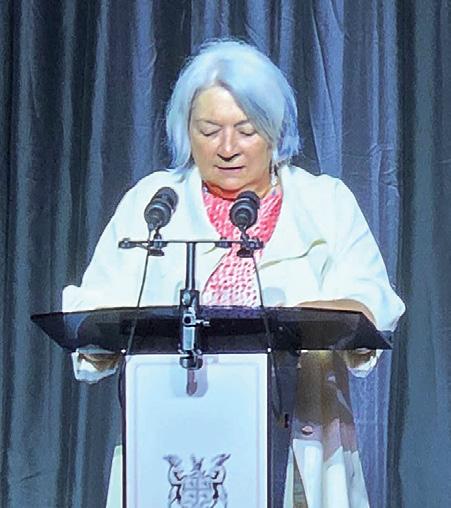
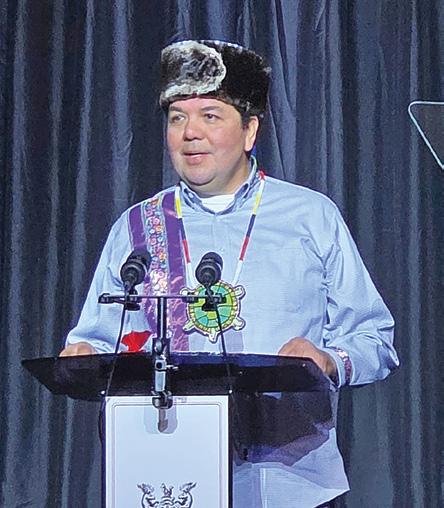
Among others, in attendance were her honour Lt. Governor Anita Neville, former Governor General Mary Simon, Former Premier Gary Doer, former National Chief of the Assembly of First Nations, Ovide Mercredi, and Chief Gordon Bluesky of Treaty No. 1.
Mary Simon spike of her early life working as a clerk for HBC in Kuujjuaq, in northern Quebec. She told of her father’s career as a factor for HBC and how severe the penalty was for white men who fraternized with native women. He eventually left the company so he could marry Mary’s mother, but she said he never had an ill word to speak of the company. Mary’s father, Bob May, was originally from Riding Mountain in Manitoba.
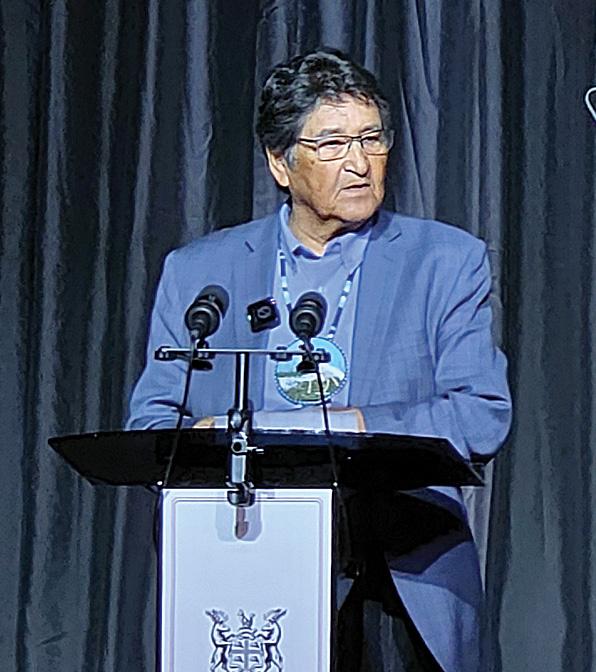
Chief Bluesky won the day with his warm speech in which he noted that folks who had been in this country for generations viewed Indigenous persons more as partners than those who came later. He retraced the history of that important trading relationship which HBC epitomized. He ended his speech with a recording of a song from a former mentor named Teddy Longbottom, a Metis. The opening lyrics of The Ballad of Gordy Ross: My name is Gordy Ross. My age is three and thirty. I’m a tripman for the HBC. My work is hard and dirty.”
From the invitation sent out by the Museum.
In 1670, King Charles II issued the HBC Royal Charter, granting exclusive land, trading, and exploration rights over the entire Hudson Bay watershed to the Governor and Company of Adventurers Trading into Hudson Bay (Hudson’s Bay Company). The HBC Royal Charter is a foundational document and critical to the historical development of Canada as a nation.
The HBC Royal Charter is a crucial and complex part of our history, with modern implications on land rights, Indigenous sovereignty, and the ongoing legacy of colonization. When the Hudson’s Bay Company filed for bankruptcy in March of 2025, the HBC Royal
Charter became subject to auction as part of the liquidation process.
There was concern among historians, museums, archives, and Indigenous communities that the document would end up in a private collection, perhaps even outside of the country.
The Weston family and David Thomson came forward with a joint bid to secure the HBC Royal Charter and to gift it to a consortium of four public institutions: the Archives of Manitoba, the Manitoba Museum, the Canadian Museum of History, and the Royal Ontario Museum.
The Consortium members each have a longstanding commitment to Canadian history, to First Nations, Inuit, and Métis communities in the spirit of Truth and Reconciliation, and to serving the public interest.
Through this partnership, the Consortium members act as co-custodians of the HBC Royal Charter on behalf of all Canadians. Additional funding was also committed by the donors and other supporters to deliver a broad range of activities including national engagement on the Charter’s future, the development of educational programming, and the delivery of public outreach initiatives.
In the fall of 2025, the Court of King’s Bench in Ontario set two conditions for the auction of the HBC Royal Charter: that it had to remain in Canada, and that it had to be donated to a public institution or institutions who would steward it on behalf of Canadians.
In December of 2025, a generous bid by two prominent Canadian families ensured that the HBC Royal Charter would remain in Canada and be made accessible to Canadians.
The Welcoming Ceremony and Reception is a historic event to formally welcome the HBC Royal Charter into the hands of Canadians. It will mark the beginning of the Consortium’s work of national engagement around the Charter’s future, ensuring robust and meaningful conversations in the year
Why not host a fundraiser for a disabled kid this summer? Have some fun and do some good.
It is always amazing to see grandparents and kids making an impact in the lives of other children. I am inspired to hear about how families are helping build the next generation of philanthropists with initiatives to raise funds for Children’s Rehabilitation Foundation.
There are so many fun ways to create Events with Impact, like the Simister family who run a lemonade stand every summer and raise around $1,000 each time, or “Bicycle Bob”, an 81-year-old cyclist who raises over $7,000 with his annual ride for rehabilitation, or the Allen family who sell pumpkins from their farm in Carmen and have raised more than $45,000 since they started!
These fundraisers support children with disabilities who require ongoing services, adaptive equipment, and inclusive programs – programs like summer camps that pair each child with a 1:1 support worker to give swimming, music and activity experiences tailored to each child’s disability or medical need.
You can support children and youth with disabilities this summer through a variety of options like bake
sales, yard sales, sports events or fun runs, a community BBQ, or some other great idea you have! To help get you started, here are four easy steps:
1. Brainstorm and set goals – determine a date, time, location and the fundraising goal so supporters know how much to support you!
2. Tell us about your fundraiser and the details above – simply email monique@crf.mb.ca or call (204) 258-6700 so we can help with further planning or promotion ideas.
3. Promote, promote, promote! Have fun making posters for community centres or set up event notices on your social media to spread interest in your community!
4. Fundraise away! And please share your photos with us via email, or on social media tagging us @childrensrehab so we can interact with your great event!
Every community fundraiser fosters inclusion and community connection! Learn more about how you can support kids through Children’s Rehabilitation Foundation at crf.mb.ca/fundraise
With gratitude!
Kathryn McBurney is the Executive Director of Children’s Rehabilitation Foundation, CRF.MB.CA

“Because sometimes pleasure wears pink and melts in your mouth.”
This isn’t your average cheesecake. This is a love letter to indulgence, sealed with a kiss and slipped under your door at midnight.
It starts with a body so smooth, so rich, it should come with a warning label. White chocolate swirled into creamy mascarpone or cream cheese – your call, depending on how much mischief you're after. It's a texture that holds its shape just long enough to tease… then gives in completely on the tongue. You know the type.
And then – the strawberries. Not sliced, not delicate surrendered. Macerated in a little sugar, maybe a whisper of liqueur if you're feeling wicked. They bleed into the cream like they’ve been waiting their whole lives to soften something. This isn’t fruit as garnish. It’s fruit as foreplay.
That buttery biscuit or graham base? It crumbles under pressure. Just like your last lover.
Serve this when you want someone to remember you. The kind of dessert you bring out with wine-stained lips and nothing underneath your apron. It’s soft, but not innocent. Sweet, but with a heavy pause. And when you drizzle that last bit of melted white chocolate over the top, slow and deliberate, you’ll know this isn't cheesecake – it’s a damn confession.
You don’t eat this quietly. You eat it with moans. With fingers. With the kind of reckless appetite that usually comes with a “we probably shouldn’t.” And yet, here you are.
You may not wake up with this cheesecake in bed the next morning –but you’ll be tasting it on your lips... and thinking about it every time you open the fridge.
Chef’s Tip: Don’t skimp on the white chocolate – go for the real cocoa butter stuff, not that waxy imposter. And blend it into the cheesecake base while it's still

warm melting into every creamy corner like a lover who knows exactly where to press.
Wicked Twist: Spike the strawberry topping with a generous splash of rosé or strawberry liqueur. Let it sit overnight. You want berries that are tipsy, loose, and just a little too eager to stain that pristine white surface.
Here is what you will need:
1 ½ cups graham cracker crumbs
¼ cup granulated sugar
6 tbsp unsalted butter, melted
12 oz white chocolate, chopped
3 (8 oz) packages cream cheese, softened
¾ cup granulated sugar
2 tsp vanilla extract
3 large eggs
1 cup heavy cream
2 cups fresh strawberries, hulled and sliced

2 tbsp powdered sugar (for strawberries)
The all important how to:
Preheat the oven to 325°F (165°C).
Grease a 9-inch springform pan and line the bottom with parchment paper.
In a medium bowl, combine the graham cracker crumbs, sugar, and melted butter. Press the mixture firmly into the bottom of the prepared pan to form the crust.
Bake the crust in the preheated oven for 10 minutes, then remove and set aside to cool.
Place a medium pot on the stove and half fill with water, bring to a boil then leave to simmer. Place the white chocolate in a stainless-steel bowl, then place the bowl inside the pot allowing the chocolate to melt slowly, stir until smooth. Set aside to
cool slightly.
In a large mixing bowl, beat the cream cheese and sugar together until smooth and creamy. Add the melted white chocolate and vanilla extract and mix until combined.
Add the eggs one at a time, beating well after each addition. Then, add the heavy cream and mix until the batter is smooth and creamy.
Pour the cheesecake filling into the prepared crust and smooth the top. Bake for 50-60 minutes, or until the center is set but still slightly jiggly. Let the cheesecake cool to room temperature, then refrigerate overnight, to set.
Before serving, toss the sliced strawberries with powdered sugar and arrange them on top of the cheesecake.
Ian Leatt is a trained chef from across the pond.


During the 1970s at SJCI, Work Experience was first introduced. Social activities included Spirit Week, the Winter Carnival, Car Rallies, teachers vs students in Reach for the Top, and the SJCI band performing at the 1978 Schmockey Night at the Winnipeg Arena. Schmockey Night was an annual fundraiser for the March of Dimes that unexpectedly disappeared in the early 1990s.
Let us remember a few of the 1970s teachers. During the 1970s Rob Gardiner continued to direct musicals and dramas. The 1970s productions included the Music Man, Guys and Dolls, Trial by Jury, and Noye Fludde. At the end of the decade, Rob transferred to John Taylor Collegiate. Guidance Councillor Lorne Hoag introduced the Jobs for Jimmies Display Board.
105 assisted for the Winnipeg Monarchs of the Western Canada Junior Hockey League. Kevin played 558 NHL Games. In 2006, Kevin won the Stanley Cup as an Assistant Coach with the Carolina Hurricanes Connections to Winnipeg seem to have been a necessary ingredient in both of Carolina's Stanley Cup Champion seasons.
Craig Heisinger is another hockey person whose hockey career started off at the Deer Lodge Community Club. Craig won the 2008-09 James Hendy Award and the 2016-17 Thomas Ebright Award for outstanding work as an AHL executive. Craig is currently the general manager of the Manitoba Moose.
In 1989, John Allardyce, in collaboration with historian Morris Mott, wrote a book called Winnipeg Curling Capital 1876-1988.
Pat Ryan played in 11 Briers. Pat won World Championships in 1993, 1994, and 2003. Dan Chase, the school president 1971-73 has been the promotions manager for the Winnipeg Goldeyes for over a quarter of a century. During this time, the Fish won three Championships: 2012, 2016, 2017.
The 1970s Governor General Medalists were Joan McCallen, Hedley Auld, Eleeta Nokes, Ronald Riopka, Carol Frampton, Jo-Anne Smith, Joanne Sprange, Ronald Klowak, Allan Stevens, Leslie Hulobow, and Carol Stewart.
In 1997, Bob McGregor a 1970s SJCI Alumnus, took over the P. A. duties from Mo Renaud, a 1940s SJCI Alumni. We can say that this SJCI connection between the Bombers and SJCI has lasted 64 consecutive seasons and counting. The Bombers have won six Grey Cups during this time frame.
From October 23-24, 2026 is the 75th St. James Collegiate Reunion. Visit sjci75.com for information and tickets.
In September 1969, Tom Dercola an English Teacher began his 38-year career as an SJHI teacher. Tom is currently one of the chairs of the 75th Reunion Committee. Tom hosts a Monday Morning Radio Show on CJNU 93.7 FM.
Miss J. Merlevede taught French at SJCI in the 50s, 60s, and 70s. Karol Bachmann is remembered for his passion for teaching Latin and encouraging students to play table tennis. Mike James hosted legendary biology field trips to Riding Mountain and Oak Hammond (full disclosure: My 1966 decision to take Physics instead of Biology added a year to my time at SJCI).
In 1970, Rosemary Head became SJCI's first ombudsman. Rosemary was on Eaton's Junior Council.
Susan Collier became the first SJCI student to be a page at the House of Commons.
During the mid-1970s, Hedley Auld won a Rhodes Scholarship.
Debra Jonasson Young held various positions during a 27-year career at Eatons: manager of the St. Vital Store and general manager for Manitoba and Northwestern Ontario.
Louise Olson an English Professor won the 2018 U of M Migizii Award at Graduation Pow Wow for making a significant impact on Indigenous students.
Jan Currier is an events and project manager. Jan is currently one of the chairs for the 75th Reunion of St. James Collegiate. Kathy Knight is a Director of the James Burns Education Center at the U of M Asper School of Business. Kathy Knight previously served as the CEO of Tech Manitoba. Cindy Jonasson and Candy Nagaramoi (twins) were long-term employees of Winnipeg Supply.
Ed Johner has owned two Windsor Plywood Franchises. After surviving prostate cancer in 2007, Ed Johner became a spokesperson for the annual Ride for Dad.
Stefan Jonasson is a Unitarian Minister and historian. Stefan was awarded the Queen Elizabeth Diamond Jubilee Award and the Icelandic Order of the Falcon.
I discovered four future school trustees: Jennifer Lawson, Craig McGregor, Gord McKinnon and Scott Johnston. Jennifer has written several books called Hands On to help teachers. Scott was an MLA between 2016-2023. Scott followed in the footsteps of his father J. Frank and became a cabinet minister. The Johnstons are one of the very few families with Manitoba multi-generational cabinet ministers.
In 1973, Dave Iverson, Pat Ryan, John Allardyce, and Robert Christie won the Manitoba Winnipeg Free Press Junior Men's Championship. In 1980 Diane Scott was the SJCI Freshman Female Athlete of the Year. Diane had previously won similar awards at Linwood School and Deer Lodge Junior High.
Many of the 1970s SJCI students enjoyed significant sports accomplishment after Graduation. Pat Doyle won the 1983 Manitoba Men's Amateur Golf Title. Nils Ling wrote a book True Blue about the 1984 Winnipeg Blue Bomber Grey Cup winning season. Dave Iverson represented Manitoba at the Brier in both 1985 and 1991. Jerry Jones the 1977-78. School president became the business manager for the St. James Canucks. The Canucks won three straight MMJHL Championships in 2022, 2023, and 2024. The first championship was remarkable because the Canucks were unable to play any games in their St. James Civic Centre home.
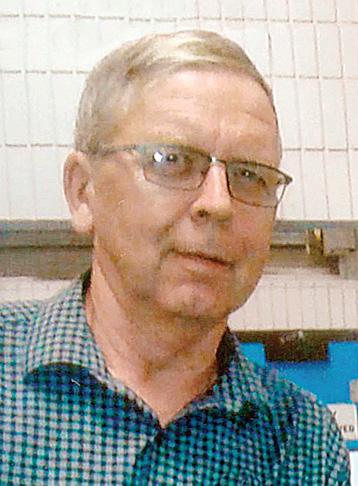
Kevin McCarthy is a member of the Manitoba Hockey Hall of Fame. In the 1976-77 season Kevin scored
Jeff Ryan was a member of Kerry Burtnyk's 1995 Men's World Curling Championship team.
Fred Morris is a Grandfather, Sports Fan and Political Activist.

66% of Canadian families haven’t discussed their final wishes*

Choosing funeral and cemetery plans can be overwhelming to a grieving spouse. Plan the details now. Together. Order your FREE Estate Planning Kit by calling or visiting the locations listed below.
Chapel Lawn Funeral Home & Cemetery

4000 Portage Ave., Winnipeg, MB 204 - 819 - 4297
Glen Lawn Funeral Home & Cemetery 455 Lagimodiere Blvd., Winnipeg, MB 204 - 900 - 8547
Glen Eden Funeral Home & Cemetery 4477 Main St., West St. Paul, MB 204 - 817- 8621
Desjardins Funeral
357 Des Meurons St., Winnipeg, MB 204 - 813 - 6063


those early days, all the action was North of 53, from The Pas and up.
Travel north to Hudson Bay
We all talk about Churchill, but what we are really talking about is Hudson Bay, the magic and romance of the ocean on our northern borders. The focus is usually on polar bears, but a summer journey would include the amazing experience of visiting the “prairie” whales, the belugas that breed here at the mouth of the Churchill river in the tens of thousands. They are white above the water, but a fluorescent green beneath the surface. Their babies stick right beside the mamas as if they were attached.
Wally Daudrich of Lazy Bear Lodge has launched a wonderful new way to see them up close – a boat with underwater windows where you can share their world as you travel among them.
To get to Churchill, you can hop an expensive flight (quite luxurious – they serve you full meals) from Winnipeg for as low as $1,035 round trip.
Or you can drive to Thompson, then hop a train for under a hundred dollars one way if you can do without a berth. The train leaves around 5:00 p.m. and gets to Churchill about 9:00 the next morning.
I would drive. Take your time. Start by going Number 6 highway and north to Thompson. Come back through Snow Lake, Flin Flon and The Pas. Steep Rock
About 2.5 hours north of Winnipeg up Highway 6 to PTH 239 is Steep Rock, a tiny village on the shores of Lake Manitoba. It has been in place for over 100 years and even had a post office back in 1915. Canada Cement operated a quarry there in the thirties.
But the main attraction is the coastline itself. Limestone cliffs line the shore, leading to caves and hidden coves fronted by lovely little beaches. This is one of Manitoba’s most photographed places. There are lots of wildflowers and berries for the hiker. If you are camping – and given the lack of population in some of the places you are going, that option might be a good idea – there is a campground here and a government dock.
A little grocery store and café are also available where you can get a meal and charge your phone if you don’t have a car charger.
Grand Rapids
It is still a long way to Thompson. And it is a very long, smooth straight road. You will be tempted to speed, but the word is that the Mounties keep a pretty close eye on this road. You still have about five and a half hours to go to Thompson.
Grand Rapids is another two and a half hours from Steep Rock. It is located at the


spot where the mighty Saskatchewan River empties into Lake Winnipeg. The terrain takes a steep drop of seventy feet over four miles, hence the rapids, which forced a portage when waterways were the main mode of transportation. La Verendrye established the short-lived Fort Bourbon here 1741, although the fort was moved in 1758 to what is now The Pas.
Grand Rapids has another special place in Manitoba history as the site of a couple of skirmishes in the Pemmican Wars between the Hudson Bay Company and the North West Company.
Grand Rapids has the distinction of being the first place in Western Canada to have a rail line. Built in 1877, the line was used as a portage to haul goods around the rapids on the river. The rapids are gone now, sacrificed to Manitoba Hydro con-
struction in the 1960s.
Take in some of the historic sites and then and stock up on snacks at one of the two gas stations before you leave.
Thompson
Now you are in for the long haul as there is virtually nothing between you and Thompson for the next three and a half hours.
Be sure to take a side trip to spectacular Pisew Falls, 46 km south of Thompson, and the one of the province’s two largest waterfalls. Beautiful Paint Lake Park, off PTH 375 has a campground, if camping is your accommodation mode.
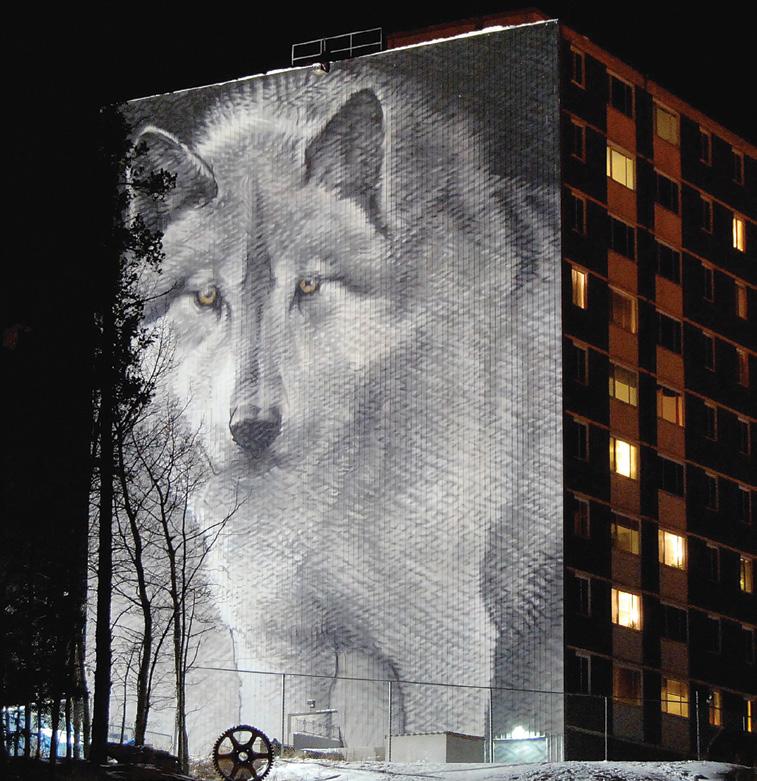
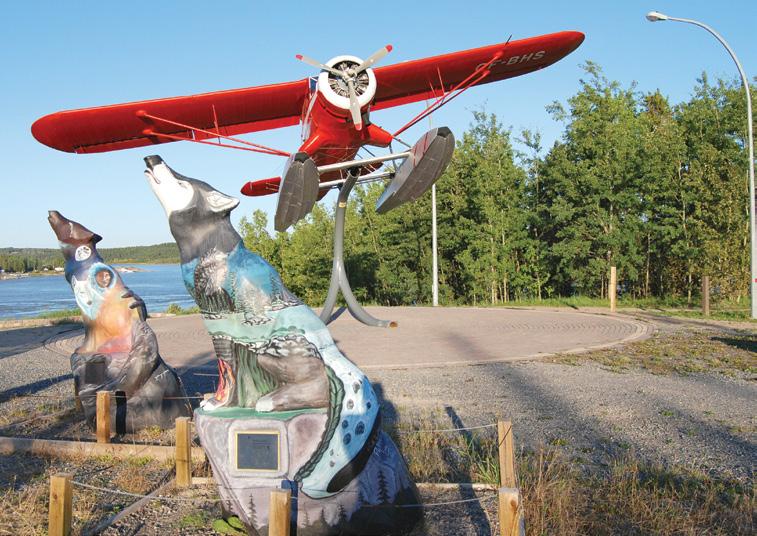
Once in Thompson, you may find yourself greeted by wolves – they are the city’s mascot and images of the howlers are everywhere. They line the Spirit Way walking-biking trail and their images adorn the
walls of on the town’s high-rises and other buildings.
Thompson was the poster child of the nickel mining-smelting-refining world back in the sixties, the only integrated operation of its kind in the Western Hemisphere then. At the town’s peak, more than 4,000 worked in the operation. That has dwindled to around 800 today and the future of the mining industry seems in doubt, but the town has transformed into an administrative centre for this part of the north where it serves a trading population of around 50,000.
There are 20 restaurants and several shopping malls as well as 8 hotels if you didn’t opt for the campground, so spend the day exploring.
Next month, it’s off to Churchill. Get ready for the great visit.
tario each June, and at a time when conversations about home care capacity, healthcare wait times, and aging at home are top of mind for families across the country.
New national data from Heart to Home Meals reveals a widening support gap in Canadian senior care, and what families say they actually need to feel at ease
Heart to Home Meals, a Canadian meal delivery service designed specifically for older adults, released new national survey data showing that most Canadians believe there's more to be done when it comes to supporting seniors who want to stay home as they age. Only 24 per cent of Canadians agree that Canada is providing adequate support for seniors living independently at home, while 61 per cent disagree, pointing to a widening support gap that families are quietly closing on their own.
From adult children logging hours of unpaid caregiving each week to seniors skipping meals because cooking has become increasingly difficult, the findings paint a picture of a support system that isn't keeping pace with how Canadians are actually aging. The data is being released in line with Seniors Month, recognized in On-
The invisible labour holding Canada's senior care system together
Behind the experience of every senior aging at home is, very often, an adult child putting in real hours of support each week. Canadians with aging loved ones are spending an average of four hours a week helping them with meals, errands, and household tasks, and a meaningful number are spending far more than that. Roughly one-in-three caregivers spends one to three hours a week on this kind of support, another 20 per cent spend four to seven hours, 8 per cent spend 8 to 14 hours, and 6 per cent are putting in 15 hours or more every single week.
The findings make it clear that conversations about aging at home need to include the people doing the helping, not just the people being helped.
A confidence divide between seniors and their families
The survey also reveals a striking gap between how seniors see themselves and how their families see them. While 94 per cent of Canadians aged 65 and older say
they are confident they can continue living independently at home for the next five years, with 64 per cent saying they are very confident, that optimism is not fully shared by the people closest to them. Only 71 per cent of Canadians with an aging loved one feel the same level of confidence about that family member, and a quarter of them have real doubts about whether their loved one can keep aging at home.
The real threats to senior independence
When Canadians were asked what stands in the way of seniors living independently at home, the answers pointed to a set of interconnected challenges rather than a single issue. Not having someone nearby to help came in at the top, with 88 per cent of Canadians agreeing it is a key difficulty, followed closely by mobility and getting around safely (87%), loneliness and social isolation (85%), managing health conditions and medications (79%), affording the cost of staying at home (75%), and meal preparation and nutrition (74%).
When someone lacks the regular support of a person nearby, meal preparation tends to suffer too, isolation deepens, and small health concerns become harder to stay on top of.
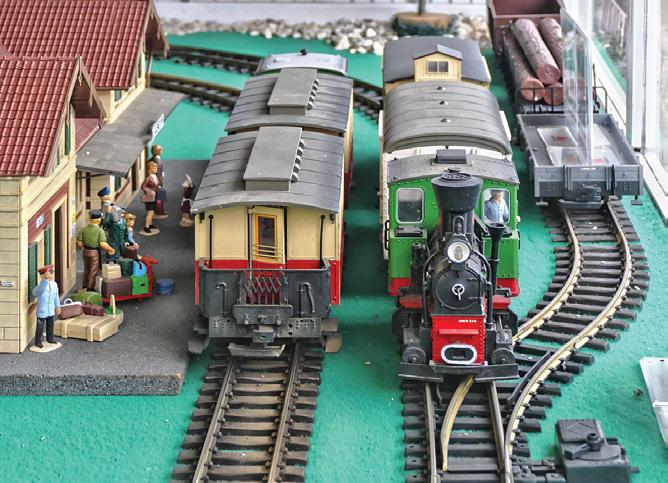
Last fall, the members of the Winnipeg Model Railroad Club (WMRC) celebrated the club’s 70th anniversary with 70th anniversary Tshrts to mark the occasion. In addition, the club unveiled a new club logo to refresh its image.
I first (and last) wrote about the WMRC somewhere around 40 years ago. The article was for an inflight magazine. I found it fascinating watching these miniature recreations in operation. The idea of revisiting the WMRC again came to me about two months ago when I and my family visited Union Station to see a few club members sharing their displays with the general public over the weekend.
WMRC President John Bate reports that the club currently has about 60 members who meet on the second Friday of the month – from September through April – at the Charleswood Royal Canadian Legion in the Tank Room.
“We begin each meeting with a short business session,” Bate notes. “After that, we may have a presentation about prototype railways or a clinic given by members to show how different aspects of the hobby can be accomplished through certain techniques and skills. We encourage members to bring in models they are working on and/or a photograph for others to see. They may have items for sale. We finish the meetings with coffee and conversation.”
The December meeting is a time for modelling clinics. Members go from table to table seeing what fellow modelers are doing or seeing demonstrations of different and often quite innovative aspects of the hobby.
“You need the time, the money and the space to participate in the hobby,” he points out. “We do attract a few younger participants, but high school and university aged members usually move away or move on with their lives after a while.”
One other factor making it more difficult to attract new members, Bate notes, is the ubiquitousness of the internet. “Younger people are not necessarily looking for the camaraderie that our club offers,” he suggests. “Today, they can get all the information they need online, on YouTube videos and through Chat groups.”
In April, the Club hosts its Annual WMRC Spring Show and Open House, which features model and photo contests open to members. Several model and photo categories are available to enter, and trophies and model certificates are awarded to each class.
A portion of the donations from the Open House, Bate notes, goes toward the Club's charity - St. Amant Foundation.
In May, the WMRC holds its annual year-end banquet and general meeting. Forty club members this year gathered at the Canad Inns for the evening during which model and photo contest winners are honoured for their achievements, several different prize draws and raffles are held and, in Bate’s words, “Everyone has a good time.”
This is also the time where next year’s club officers and directors are installed for the following years' activities.
The WMRC also publishes an informative digital newsletter, “The Lantern” from September through April, and has an extensive library where members can borrow train DVDs and literature from the many hundreds on file.
Established in 1955, the WMRC's role is to promote the interest, knowledge, operation and enjoyment of all scale railroad modeling and related photography. John Bate is representative of the WMRC’s membership. As with most of the members, Bate is a retiree who came to model railroading after retirement.


As with most local enthusiasts, Bate is not a former CN or CP employee. His introduction to model railroading came in 1983 when Winnipeg hosted the NMRA national convention.
“There were about 1,500 people at the Convention Centre,” he recalls.
But, while he became interested in model railroading at that time, he didn’t become heavily involved until he was nearing retirement from an administrative position about 15 years ago.
Bate notes that in addition to the WMRC, there are some smaller clubs in the city. The WinNtrak Model Railway Group, for example, takes a modular approach which allows individual members to join forces to easily set up displays in shopping malls and other locations then equally easily dismantle them.
The Manitoba T-Trak Model Railway Club also concentrates on modular displays that can fit on banquet tables.
A fourth group, Bate reports, meets in the basement of the Frog and Diamond Hobbyworks which is the primary supplier in Winnipeg of model trains, accessories and used equipment.
In addition to serving as president of the WMRC, Bate is one of nine directors of the National Model Railroad Association which encompasses North American, British, Australian and New Zealand modelers and sets international standards for the hobby.
Bate’s term on the International board will soon be over and, he says, he is looking forward to being able to spend more time enjoying his own model railroad installation in an upstairs room in his home.
Readers who may be interested in learning more about the WMRC can visit the club’s website at wmrctrainclub.ca
Continued from page 4
If Manitoba wants to grow again, we can’t be satisfied with more activity alone. We need more ownership. Not just more plants. More Manitoba-controlled companies that are ambitious enough to grow, and stubborn enough to stay.
Talent is the other resource
Natural resources are not enough. They do not turn themselves into wealth.
People do that.
Manitoba needs to get better at developing, attracting and keeping talent. That means tradespeople, engineers, food scientists, plant breeders, accountants, executives, entrepreneurs, nurses, software developers, logistics experts, mine workers, welders, machinists, teach-
ers and managers.
A province that wants to grow does not simply complain about labour shortages. It builds the training systems, apprenticeships, partnerships and career pathways that solve them. It connects high school students to trades. It connects colleges to industry. It connects northern communities to mining and infrastructure work. It connects universities to companies that can commercialize research here.
And then it gives ambitious people a reason to stay.
We need disciplined ambition
Manitoba’s caution did not come from nowhere.
We have seen large projects become expensive, divisive and po-
litically exhausting. Hydro development, flood protection, downtown renewal and major infrastructure have all taught Manitobans that ambition can carry real costs. But the lesson cannot be that big things should not be attempted. The lesson has to be that big things must be chosen carefully, argued honestly and built well.
Demand evidence. Be honest about costs. Protect the environment. Develop fair partnerships between Indigenous and non-indigenous communities. Do not confuse announcements with achievement. But once a project makes sense, for crying out loud, build it.
That is the attitude Manitoba needs again.



Last month, I watched a TV series on a streaming service. Somehow, when the episodes are available in this format, it is so much easier to become deeply engaged in the story line. In one season of the series, the topic covered the pandemic. As I watched these episodes, I found myself reliving the confusion, anxiety, fear and uncertainty that we all experienced during that period. I found that watching those episodes threw me back into the stresses of pandemic times, and I realized that I had many issues around the pandemic that I have not fully processed.
When the pandemic was announced in Winnipeg on March 13, 2020, we were all shocked and concerned about the impact on our communities, our businesses, and our families. With the pandemic announcement came the prohibition on gatherings of more than 500 people. At the time, I was the executive director of the Winnipeg Symphony Orchestra, and that weekend we had three concerts scheduled for which we had almost 2,000 tickets sold for each concert. After some conversations and shock, we realized that we would have to cancel all three concerts, and what would we do with the remaining 30 performances in the season?
started to run out of different kinds of products, and this seemed to bring out the worst in some people who felt compelled to travel around to different stores to purchase as much as possible and then store it at their houses. The frenzy around access to toilet paper remains one of the most ridiculous and dismaying memories of that era.

The businesses and offices in the downtown were almost empty. Restaurants were closed, the downtown area became a ghost town, and we all spent much time isolated in our homes. No one knew how long this would go on, and truly this carried on for a very long time. From March 13, 2020, till the summer of 2022, we were all caught in various states of suspended animation. When family members died or were married, a maximum of six people could be in attendance for quite a period. A complicated system of health care services evolved. Once a vaccine was approved a whole other set of problems and divisions arose as many people vied for early access to the vaccines and other refused to accept vaccination. Misinformation and misunderstandings between family members and colleagues were rampant, and dysfunction on so many levels hit our communities.

people found to reach out to each other, to maintain friendships, to continue to perform for audiences, to keep businesses, and to try to keep our institutions intact.
The worry for the more than 100 employees of the Winnipeg Symphony Orchestra and the future of the organization was significant. If you can’t gather people together, how can the musicians perform, and how can audiences be in an enclosed space to enjoy the concerts? How long would the pandemic last? How grave was the situation in Manitoba? How could the organization survive this crisis?
In our personal lives, the onset of cold or flu symptoms in ourselves or family members was cause for great concert. The logistics of daily life were completely derailed by pandemic protocols. At a certain point people were encouraged to wash everything that entered the home. We were cut off from visits to our senior family members if they lived in group housing and travelling by bus or singing in a choir were radically dangerous activities. Hospitals were overwhelmed and recommendations for care was contradictory and confusing. Reports of deaths and serious conditions in some parts of the world were daily occurrences. Stores
I have still not seen a comprehensive evaluation of best practices and approaches taken in various cities and nations to address the public health, economic, and social issues of life during a pandemic. I suspect that the distrust of our institutions and divisions and societal strife remain horrible souvenirs of our journey through the pandemic.
Bit by bit our societies started to slowly return to more normal operations, but it took a long time, and certain parts of our communities still carry significant damage from the pandemic era. The downtowns of almost every city are still suffering from business closures, and many offices have not yet returned their full work forces to their offices. Businesses have failed, marriages have been strained. Children who were not able to attend school for long periods of time continue to suffer gaps in their education and skill training.
We all lost much ground during the pandemic, and we have likely not fully realized the personal and community damages and trauma we all experienced. During the pandemic I took much hope in the ways that
I was particularly moved by the symbol of the ghost light that was kept burning in theatres around the world during the pandemic. Many of the theatres shared with all of us their tradition of putting a single light on a stand on the theatre stage when the theatres were closed during the pandemic. The ghost light is placed on a stage when a theatre is not is service as reminder that the actors, backstage personnel, and audience members will return, and the stage manager will one day be able to say “places” and the life in our theatres will return. One lovely description of this that I can recommend was created by the theatres in the Detroit area and filmed by PBS. You can find it if you search for Detroit PBS Ghost Light Project. The video gives me hope and it always brings me tears, but in a good way.
I know that this summer, I am going to do my best to build experiences and times for reflection that can help me to address some of the remaining worries and trauma from the pandemic era. Time with family and friends, spending time in nature, and listening to good music are my therapies of choice.
Trudy Schroeder provides project planning and management services to the community through Arts and Heritage Solutions.
Editor's Note: Despite the trauma, folks like Trudy Schroeder made the best of it, holding virtual dinners, putting on streaming concerts with one or two musicians playing outdoors. It was all rather beautiful in a way. But not so much that anyone would have wanted to do it all again – ever!
If you’re in the gig economy or required to use your auto to earn salary or commissions, it’s likely you will want to deduct your auto expenses. But you need to be audit-ready, as this is one of the most audited claims and if selected, you’re in for a giant time commitment if you can’t produce an auto log. Here’s what you need to know.
Are You Eligible? There are a couple of categories you could fall into. First are the self-employed who file a T1 return as unincorporated proprietors. Your tax filing deadline, by the way, just passed on June 15. The second eligible group are employees who negotiate contracts on behalf of their employers, and/or are employed commission salespeople. These folks must file a return by April 30.
What’s claimable? Auto expenses may include the costs of filling up at the pump and maintenance and repair costs like oil changes, restoring breaks and other auto parts. Also claimable are the costs of insurance, license and registration fees. Certain costs are restricted to maximum claimable amounts: monthly interest charges, leasing costs and capital cost allowance.
The Log: simplified or detailed? This, of course, is the hardest part. Remember the onus of proof is on the taxpayer. To begin, don’t forget to write down the odometer reading at the start and end of each fiscal period. For most people that’s January 1 and December 31. In between, record accurately, the details for each employment business trip, including the date, the destination, the reason for the trip and the distance covered. Good news: you can keep a “simplified” or “detailed” logbook. Here’s the difference:

Evelyn Jacks
In both cases, you must account for “mixed use” – the kilometers driven for employment or business use, compared with the personal use driving distance. Importantly, driving to and from your place of work is considered “personal” driving. That’s one of the first issues in an audit, unless you can show that you drove from home to perform a work-related function. That’s where a good auto log comes in.
• Simplified records. In the first year of using your auto for employment/business purposes, establish a detailed full-year log which acts as your “base” year. After this you can use a three-month sample logbook to make the claim for the whole year, as long as the distance driven is within 10% of the results of the base year. Should driving fluctuate more than 10%, the employment/business use of the vehicle must be re-determined. In other words, you’ll need to establish a new base year for 12 months of driving.
• Detailed records. Keep detailed records every year for the full year. This is always the best route – you’ll likely be able to claim more if you go the distance and be precise.
Defining personal use: This can be tricky. Driving from home to work is considered to be a personal expense, even if the trip is outside of normal work hours. A few exceptions to consider and record: • Employees. If your employer instructs you to
drive directly from your home to a different location than your usual work location to perform company business, or do so on the way home, the distance you travel is consider “employment” related and not personal.
• Self-employed individuals. If you operate your businesses out of your home and drive from there to meet with a client/employee, supplier or subcontractor, or perhaps to pick up supplies or the mail, your driving is for business use from the time you leave your home. Trips from home to an office at another location where you work will be considered personal driving except, when some business activity is performed enroute.
Save receipts. Save all receipts and mark any unreceipted items in your auto log which can be an electronic log. This includes parking costs, for example. The expenses are first totalled using the actual receipts and the log of cash expenditures like car washes or parking meters. Then the total amount of the expenses are pro-rated by a formula: the portion of business/employment kilometres driven, over the total kilometres driven in the year. And don’t forget, your tax records must be kept for a period of six years from the end of the tax year to which they relate. In the case of the auto logbook, there is an important additional nuance: it must be retained for the full 12-month period from the end of the tax year for which it is last used to establish business use.
Evelyn Jacks is the best-selling author of 55 books on tax preparation and planning and a multiple award-winning business leader. Tune in weekly to her new podcast: Real Tax News with Evelyn Jacks and Friends.

Darlene Ronald
Manitoba Opera has announced that Gordon Gerrard, a Manitoba-born conductor, pianist, and educator, has been selected as the company’s artistic director. Gerrard brings a wealth of artistic and administrative experience to the role and is well known as a proponent of innovative and inclusionary programming that explores social change and community engagement. Gerrard begins his five-year contract with the company Tuesday, September 1.
“We are so pleased to welcome Gordon Gerrard to the Manitoba Opera team as artistic director. Gordon is a highly respected conductor, artistic leader, and musician, who many in our community already know through his work across the country,” commented Board of Trustees Chair Lori Yorke.
“Manitoba Opera audiences are sure to remember Gordon from his impressive company debut conducting The Marriage of Figaro in April. This is an historic moment for Manitoba Opera as we look ahead to new artistic possibilities and ways that we can continue to deepen our engagement with our community, and Gordon will play a vital role in the shaping of all of this.”
The artistic director will be responsible for establishing an inspiring, aspirational artistic vision that reflects Manitoba Opera’s heritage and future ambitions. He will guide all programming choices, operational artistic priorities, and community interaction with this vision.
Also included in the artistic director’s responsibilities: developing and implementing a financially sustainable multi-year repertoire strategy that blends traditional and contemporary works that engage and challenge diverse audiences, from longtime enthusiasts to newcomers; hiring artists; curating productions, community engagement, and education programs that align with MO’s values, considering diversity, equity and inclusion, and Indigenous reconciliation; and mentor emerging and established artists.
u

The artistic director will work closely with all factions of the company: production and artistic team, marketing, public relations, and publicity, development and fundraising, education, and community engagement.
“A proud Manitoban, Gordon has built a distinguished career working with leading orchestras and opera companies across the country,” commented Executive Director Michael Blais. “He is widely recognized for his artistic excellence and collaborative leadership. We are thrilled to welcome Gordon into this leadership role, and the entire team is looking forward to working with him as we continue to build on Manitoba Opera’s strong foundation and exciting future.”
Growing up on a farm just outside of Brandon, Manitoba, Gordon Gerrard grew up with music in the house. He started piano lessons at the age of seven and left the farm at 17 for his undergrad at the University
Continued from page 1
ogy such as satellite monitoring, aerial firefighting capacity and advanced drone systems all offer pathways toward greater resilience.
Senate Report on CBC
Some of the issues that were addressed included the challenge of reflecting local realities in a changing media ecosystem; the role of CBC/Radio-Canada’s traditional and digital platforms in broadcasting local programming that reflects the communities they serve; and financial pressures.
The committee noted that CBC/Radio-Canada’s legislative mandate does not mention that local audiences must be specifically targeted. Given the importance of local programming, and more specifically local news, the committee believes that CBC/ Radio-Canada’s mandate should explicitly mention it. Stable multi-year funding should also be provided to the Corporation dedicated to strengthen local programming.
The committee noted that financial data of the local services provided by CBC/Radio-Canada are not publicly disclosed. After finding that the data is lacking in this area, the committee believes that more information is needed to identify where the needs are most urgent.
Lastly, the committee recommends that CBC/ Radio-Canada’s journalism operations be subject to regular oversight to ensure impartiality and balanced reporting.
(A Senate committee has been looking at ways to emancipate First Nations from the slavery of welfare – editor.)
The Senate recommends that Indigenous Services
Canada provide the Committee with a progress report by January 2027 on its progress to advance selfdetermination and the exercise of First Nations jurisdictions in areas such as membership, citizenship, status, lands management, fiscal management, taxation, matrimonial real property and other contemplated initiatives under negotiation or consideration for First Nations to operate outside of the constraints of the Indian Act.
That Canada Mortgage and Housing Corporation provide the Committee with detailed information by January 2027 about how many houses will be built and in what regions, as well as any impacts on the prevention of violence against Indigenous women and children under the Urban, Rural and Northern Indigenous Housing Strategy.
The progress report must include detailed outcomes of the Government of Canada’s initiatives to increase equality for Indigenous Peoples with respect to health, income, education, employment, drinking water, housing, language, culture and criminalization. In keeping with Canada’s ratification of the United Nations Convention on the Rights of the Child, the progress reports must also include details about Indigenous children’s involvement with child welfare systems and include steps taken towards the full exercise of Indigenous jurisdiction over their children.
Artificial Intelligence
In many ways, low trust is an expression of concern. As AI technologies continue to evolve, they are being embedded throughout governments, businesses, and society; producing increasingly visible, systemic, and inequitable social impacts. Hesitation as a reaction to
of Manitoba. He completed his master’s degree at the Manhattan School of Music (New York). Gerrard believes music serves as a kind of animating life force and appreciates its potential to change people.
Besides his extensive guest engagements with orchestras for both symphonic concerts and opera repertoire, Gerrard just completed a decade-long tenure as the music director for the Regina Symphony Orchestra (which resulted in him being honoured with an appointment as Conductor Emeritus). Since 2023, he has served as the artistic director for City Opera Vancouver, a professional chamber opera company. He will continue in this position in tandem with his role with Manitoba Opera.
“Coming home to join Manitoba Opera is a true full-circle moment. This is the company where I saw my first opera in the 1990s, and it's where my fascination with this art form truly began,” explains Gerrard.
“Manitoba Opera has long been a vital leader in Winnipeg’s rich and vibrant arts scene, earning a formidable reputation across the country not only for the exceptional work on its stage, but for its deeply impactful education and community engagement initiatives. It's a great privilege to work alongside the team and its many partners, including the wonderful musicians of the Winnipeg Symphony Orchestra. I'm excited to help shape the future of the arts in Manitoba.”
Manitoba Opera embarked on a year-long search to fill this newly created position following General Director and CEO Larry Desrochers’ decision to not seek a renewal of his contract which expired in May 2026. Desrochers held the position of general director & CEO for over 25 years. Following a leadership transition review, the company created two roles: executive director and artistic director. Michael Blais, who was the company’s director of operations and joined the company in 2010, was promoted to executive director last August.
The search was led by Harris Leadership Strategies, an executive search, leadership coaching, strategic planning, and career transition services company based in Winnipeg.
new technologies is not a new phenomenon and it is not uncommon with new technologies that there are more questions than answers.
It is expected that a technology that expressly aims to mimic, if not surpass human intelligence, provokes a strong response. Given that we are more likely to question what we do not understand and control, information gathering and knowledge sharing is an exercise of trust building in and of itself.
It was in this context that the Standing Senate Committee on Social Affairs, Science and Technology (the committee) began a study on the impact of AI in Canada, holding six meetings so far in 2026. Throughout the planning, evidence gathering, and reporting for this first phase of the study, which ended on May 8, 2026, the committee has been very aware of the rapidly evolving nature of this technology and has remained focused on sharing the information and recommendations it has heard while they remain relevant.
An interim report aims to establish what AI is, the major opportunities, risks and challenges it introduces, and to provide recommendations to the federal government as it implements a renewed national AI strategy. The preliminary observations and recommendations in this report reflect the degree and spectrum of fears associated with new technologies, with the balance weighted towards “risks and challenges.” In future phases of this study, the committee hopes to hear more about positive “opportunities” to promote the development of AI technologies for good, for all. (It is to be hoped that the Government will consult the work of the Senate Committee before passing legislation – Ed.).
Canada Day is more than a celebration of our nation's birthday. It is an opportunity to reflect on who we are, what we value, and the responsibility we share to build a stronger future together.
Canada is a country shaped by people from different backgrounds, cultures, and experiences. While our stories may be different, we are united by values that have long defined us as Canadians: kindness, respect, compassion, fairness, and a belief that we are strongest when we stand together.
ing local causes, community organizations serving those in need, and families working hard to create opportunities for future generations. These acts may not always make headlines, but they are the foundation of strong communities and a strong country.
In Winnipeg West, these values are reflected every day. They can be found in neighbours lending a helping hand, volunteers support-
Canada Day is also a time for gratitude. We are fortunate to live in a country where diversity is celebrated, where democratic institutions endure, and where people continue to come together in the face of challenges. The freedoms we enjoy and the opportunities we share are not things we can take for granted. They are strengthened when we remain engaged, support one another, and work toward

the common good.
At a time when it can be easy to focus on what divides us, Canada offers a different path. We are at our best when we listen to one another, respect our differences, and recognize our shared humanity. Our diversity is one of our greatest strengths, and our unity is what enables us to meet challenges with confidence and optimism.
Canada's story is still being written. Each of us has a role to play in shaping the future of our communities and our
country. By embracing the values that unite us and by standing together with purpose and compassion, we can ensure that Canada remains a place of opportunity, belonging, and hope for generations to come.
It is a tremendous privilege to serve the people of Winnipeg West. I am grateful for the trust you place in me and continually inspired by the generosity, resilience, and community spirit that make our riding such a wonderful place to call home.
As we gather with family, friends, and neighbours this Canada Day, let us celebrate our country with pride, reflect on the values that unite us, and renew our commitment to one another.
From my family to yours, I wish you a safe, joyful, and meaningful Canada Day.
Happy Canada Day.
Doug Eyolfson is the Member of Parliament for Winnipeg West.
Artificial intelligence is awesome.
Since ChatGPT came out, I have been using AI every day. At first, it was bedtime stories for my kids, dinner recipes, and answers to whatever question happened to be floating through my mind. That was then. Now, I use it constantly for business.
AI has become my part-legal, part-accounting, part-financial-advisor, and all-in-one assistant. I am still cautious with its advice, and I still check important work, but it has improved dramatically. What used to be a common hallucination, when AI seemed to lose track of itself or produce an answer that made no sense, is now far less common. Newer AI systems are better at reasoning through complex problems, checking their own work, and catching inconsistencies before they become obvious errors.
Faster and better.
Scary.
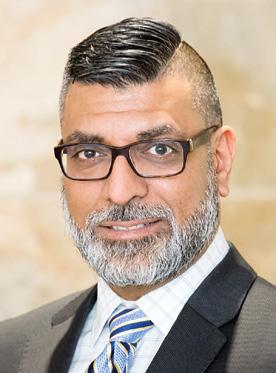
And to cap it all off, the kind of advice and support I am receiving would once have cost tens of thousands of dollars. Instead, I get access to the great, expanding universe of AI for a monthly subscription fee that costs a little more than Netflix. That is genuine value, especially for young people, entrepreneurs, and anyone just starting out. What a massive advantage.
I worked for a time with a young group on an AI business, and I am convinced they ran much of the company and its strategy through AI. How else could such young and inexperienced people do so much so fast? AI has enabled the hungry and the determined to do far more than their unaided human potential would have allowed. And again, we are only in the early stages.
massively take it for granted. People simply do not appreciate what modern society becomes without abundant, reliable power. Think about a hospital running on diesel generators. How many MRIs will that energize, and at what cost?
We are embarrassingly rich in Manitoba because we have an abundance of hydroelectric power. We have some of the lowest-cost electricity in North America. In many other places, people have to make hard choices because energy costs have risen dramatically.
So again, back to the point: AI needs energy. Energy costs are rising. Therefore, the cost of AI is likely to rise too.
The demand for AI is already so intense that it is not hard to imagine a future where computational power is effectively rationed by price. The organizations that can afford the best models, the most compute, the most reliable access, and the most integrated AI systems will be the big winners. Companies that cannot adapt, or cannot afford to adapt, may become obsolete quickly.
It has become so useful, so fast, and so capable that it has meaningfully improved my life. It helps me plan, organize, review documents, monitor tasks, check emails, write, think, test ideas, and manage details that would otherwise eat up hours of my day. I even ventured to make a short spacestation video game based on one I played as a child. Totally amazing.
The scary part is not that AI has displaced a good deal of advisory work I might otherwise have sought. It is not even that it gives me much of that work instantly, personally, and at a high level of usefulness. The scary part is that we are still just at the beginning.
AI is still learning, still growing, still getting faster and better with every passing day. At times, the difference between what AI could reasonably accomplish two months ago and what it can do today feels like the difference between an elementary student and a team of PhD-level graduates.
I recently completed a major project in five hours that would likely have taken me three months of research, writing, modeling, and painful organization. It incorporated many variables at once, and frankly, it did the job better than I could have done it before.
I cannot really tell you where AI will go. I can only repeat what I have heard, seen, and increasingly believe: it will become far more capable. It will help run complex systems. It will automate enormous amounts of coordination, communication, analysis, and decision support. It will not just do some things faster than humans. It will do many things with a level of speed, memory, and consistency that no human bureaucracy could match.
For those saying AI will not replace professions, I think they are underestimating the speed of change. AI will replace, compress, or radically alter a large share of mental work currently done through screens, documents, spreadsheets, analysis, and communication. I think this has already started to affect lawyers and accountants, and it will affect financial professionals too.
The greatest impact will be felt by professionals who do not adopt AI systems to amplify their own efforts, increase their capabilities, reduce their costs, and engage more customers. The ones who embrace AI will become more powerful. The ones who do not will be left behind.
But AI has an Achilles heel: energy.
We live in a society dominated by our consumption of energy, yet we
Some of that is because populations have grown and demand has increased. Some of it is because energy policy has become confused. We have pushed intermittent and unreliable sources like wind and solar without always being honest about the cost of backup power, transmission, storage, and grid reliability. If people truly cared about reducing carbon while preserving modern living standards, they would take nuclear energy far more seriously. The refusal to do so makes parts of the environmental movement look far less scientific than it claims to be.
Unfortunately, there may be no stopping global warming in any simple sense. We will have to prepare for it, adapt to it, and build serious infrastructure around it.
But I digress.
The point is this: energy costs are going up, and guess what loves to hog energy?
AI.
So naturally, one has to wonder: how will we pay for it?
There are proposals for badly needed data centres that will provide the computational muscle AI needs to keep meeting relentless demand. But that muscle, like any other, needs energy to function. Data centres may increasingly be paired with nuclear power, including SMRs, or small modular reactors. Yet many nuclear projects still face intense public resistance because of fear, politics, cost, regulation, and the long shadow of rare but unforgettable accidents.
Nuclear energy is among the safest forms of large-scale power ever developed. It is dense, reliable, and carbonfree. It should be central to any serious conversation about AI, energy, and climate. But instead, too much of the conversation gets swallowed by slogans and panic.
This also means many universities, small companies, independent builders, and young people pioneering the AI economy could end up with less access over time, not more. AI feels cheap today because we are still in the early phase. But the infrastructure behind it is not cheap. The spending commitments being made by corporations for AI, data centres, chips, and energy infrastructure are enormous. They are in the trillions.
Someone will have to pay for all of that.
And I am quite sure it will not continue to be covered by my monthly subscription fee at anything close to the level it is today.
The economic rationalization of AI will come upon us as quickly as AI itself came upon us. Perhaps that will slow some of the social upheaval. But probably not.
The wealth and income gaps we already live with may soon be stacked with another divide: asymmetric access to the knowledge, tools, and capabilities of AI. The rich and powerful will have more of it. The poor and the small will have less. The people and companies who can afford intelligence on demand will move faster, think faster, and build faster.
That could play out in dangerous ways. I hope it does not. But we shall see, and soon.
Romel Dhalla, is President of Dhalla Advisory Corp., provides strategic corporate finance advice to companies and high net worth individuals. He was a portfolio manager and investment advisor with two major Canadian banks for 17 years. Contact him at romel@dacorp.ca. Any views or opinions represented in this article are personal and belong solely to the author and do not represent those of people, institutions or organizations that the author may or may not be associated with in professional or personal capacity, unless explicitly stated.
Dorothy Dobbie
The story that follows was written by me back in my innocent days of late 2015. It was written in a state of horror at what I learned but also optimism about what the future would hold.
Putting an end to homelessness
Spread across the floor of a stifling room, 70 or so people sprawl sleeping, snoring, lying quietly, on two-inch-deep mats laid side by side, end to end. You want to tread very carefully to avoid stepping on a fellow sleeper if you need to get up for the bathroom in the dead of night.
This is the scene that greeted 20 or so CEO Sleepout participants when they toured the Main Street Project the last week in September.
The spectacle of those folks is seared into my brain. I see them lying there, head to tail, in their day clothes, no blankets, sleeping soundly because at least they are safe for this night. Yet when morning comes they will still have to face the prospect of having nowhere to go: just another day of endlessly trolling the streets, and if you’re lucky, maybe finding a grassy place in the sunshine near the river or in some park. Imagine if it were winter and minus 30. You have to keep moving, I was told, or you’ll freeze to death.
Nobody should have to live like this.
My goal is to make you look – to make you see what is hidden from most of us, but which festers away in the soul of our city: an ugly, shameful wound that we can no longer turn away from.
The Main Street Project is not the only host to these people, although they take everyone, intoxicated or on drugs. The Salvation Army, 80 beds, and Siloam Mission, 110 beds, also have emergency shelters for the homeless but there are limits on who they will accept. The Salvation Army, for example, requires a breathalyzer test to get in.
“We don’t turn anybody away,” said Lisa Goss, the Main Street Project executive director for the past two years. “We have 75 beds, and when those are full, we often have as many as 30 more people waiting to get inside. I try to fit them all somewhere.”
The folks she looks after are the least fortunate of the unfortunate. They are at the bottom of the barrel, with nowhere else to go and no way to cope. A mat on the floor is just about as low as you can go without staying outside in the cold. This is unacceptable as a minimum standard in a wealthy country such as ours.
“How can we let this happen?” I asked in real outrage at the end of the tour. I was shaken by what I’d seen and emotionally bruised.
“I don’t know,” Lisa answered. “The Main Street Project has been trying to deal with this for 43 years. And nothing has changed. We fight for funding every day.”
She added, “Do you think it’s because nobody cares?”
“Surely, they do care. It must be because they don’t know,” I answered. But upon reflection, I am not sure I am right. It is easier to not see these people, to pretend that everything is all right and the problem will solve itself.
And then a Faron Hall, a homeless man who twice risked his own life to save another, comes along. Or a 10 p.m. tour of a facility by a bunch of us do-gooders out for a night of feeling good about ourselves. I don’t feel so good about myself anymore; what I have seen can never be erased until homelessness is

Here are some of the statistics about our homeless population that were gathered in 2011 by the Main Street Project
• About one-third of the homeless were under 30.
• About 24% had been diagnosed with mental illness (schizophrenia or bipolar disorder).
• The average length of time people had been homeless was four years; however, 23% had been homeless more than five years. A minority, 15%, had been homeless for fewer than six months and another 37% had been homeless less than two years. About 10% had been homeless 10 years of more.
• Almost 40% were Caucasian or
ended in Winnipeg.
white. 56% were Aboriginal. The balance was of other ethnicities.
• Almost 16% had some sort of formal work, either full or part time.
• 40% were high school graduates and another 12% had college or university degrees or experience. There are many reasons why people find themselves homeless, ranging from the stereotypical drug and alcohol use (25%) to inability to find the first and last months’ rent; inability to satisfy the landlords’ demands for references; evictions due to a wide variety of reasons; relationship
I say again, there is no excuse for people to be homeless in this most blessed of lands. When almost half a billion dollars can be spent to refurbish a police station, nobody will ever convince me that we don’t have, can’t find, the money to end homelessness.
Just this week, the city of Medicine Hat announced that it has become the first community in Canada to end homelessness, and if they can do it, then surely we can, too. And it makes good financial sense for all the bean counters out there: Medicine Hat says it costs $20,000 a year to house someone, when leaving them on the street can cost up to $100,000 a year. Emergency room visits drop, police calls subside, agency administration costs dissipate.
The agencies, the Main Street Project, the Salvation Army, the Siloam Mission and many others, are doing their best, but this is really not their problem –it is ours and it should be dealt with through the tax system and by governments. A minimum standard of shelter must be delivered and that minimum is vastly higher than a mat on a floor for a night. Eliminating homelessness takes political will, and the impetus to make this happen needs to come from us, the citizens – we need to fire up our politicians at all levels to make sure this disgraceful condition is resolved.
The Bell Hotel project could be our initial benchmark – and believe me, that is a pretty low benchmark (the rooms are Spartan and tiny); but it is a start, and at least the rooms have a door with a lock and a bathroom to bathe in and do your private business.
I am told that, while we don’t have an exact count, and anyway it varies, the number of people living on the streets is in the hundreds – maybe around 300 – certainly not an overwhelming number. Creating 300 minimum-standard living units would cost much less than refurbishing the police station or even the new Liquor Control-Lotteries Commission building. It’s all about priorities and this must be priority Number One.
Addendum
So here we are, ten years later. That lovely ED, Lisa Goss, who operated the Main Street project
breakups; family problems; abusive boyfriends or parents; bedbugs in Manitoba housing units; a history of being in the care of Child and Family services; sudden illness, the list goes on.
Inadequate housing and difficult access to housing is the number one reason for homelessness, however. Those who are employed live at a bare subsistence level, and the meagre help they can glean from provincial welfare is insufficient to get other than slum housing or, at best, a bedbug-infested Manitoba housing unit.
with under a half a million dollars in 2015 has long gone, her dreams only half-realized, some of them shredded and left to die under a blanket of wasted government money that seems to have made things worse rather than better.
Lisa dreamed of getting out of the Pickle Factory on Martha Street which also housed the 19th century-style Winnipeg Police “drunk tank” that was replaced six months ago with a “detox centre” on Disraeli. The Pickle Factory is being repurposed into transitional housing and for other services. The main shelter has been moved to the former Mitchell Fabrics building at the corner of Logan and Main Street and there are additional locations for other services.
The 2025 operating budget of the Main Street Projects was $13,554,714 of which $11,953,151 was spent on salaries. They ended the year with a $389,4775 deficit.
The main Street Projects has housed 32 people over the past year.
But has the number of homeless diminished along with the burgeoning budget? City officials estimate that there are many as 2,460 people who have no home to go to on any given night. This past April 13, 2026, however, CBC reported that a staggering 8,348 people were using shelters, temporary spaces, and living on the streets as of the end of March. That was an increase of 1,328 from just one year ago. The numbers just keep growing in every category.
All this in addition to the wonderful work Marion Willis and her dedicated band of volunteers are doing in St. Boniface with Street Links. Marion will be remembered for having rescued Indigenous hero, Faron Hall, as mentioned in the reprinted 2015 article above. Marion’s group have housed 386 people and removed 62 homeless encampments. They gave done this on a slim budget, mostly fundraised, of about $2.5 million.
It is heart breaking to see how we have regressed despite the additional money. It is even more heartbreaking to see the work done by volunteers outpacing the well-funded government projects. And it is absolutely discouraging to learn that the big boys don’t want to talk to Marion and adopt some of her effective methods.
Daya: My Mentor in Canada
Felix Daya Perera (Daya) was born on 31-1-1951 to Aloysius and Bella Perera. He was the fourth of the family or eight, with four brothers and three sisters. He also lived with his siblings, namely Callista (the late Nimal), Shirani (Sarath), Sunil (Soma), the late Ranjith (Rani), Hugh (Carmel), and Nilmini (Nandalal). Daya’s father was from the Ratnapura District, whereas his mother was from the adjacent District, Kalutara. Daya’s father was employed at Hulandawa Estate in Akuressa, Matara District. However, children were boarded at two leading schools in Matara: St. Servatius (a boys’ college) and St. Mary’s Convent (a girls’ college). As a schoolboy, Daya was a talented athlete, played cricket and soccer for his school. During the school days, he selected his life partner, Sunimal, from the neighboring school, St. Mary’s Convent, Matara.
background, Sarath obtained a position in a Winnipeg Soap Manufacturing Company in 1972. With this success story, Daya followed them in 1974 and stayed with his sister and their family.
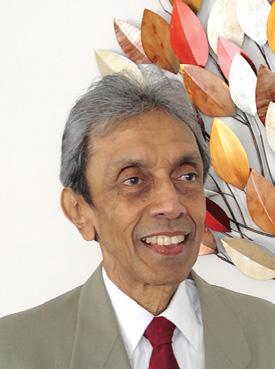
Daya’s elder sister Shirani was married to Sarath Ranadheera, who was employed at Harischandra Mills Matara, and was a highly skilled veteran in manufacturing laundry and toilet/laundry soap. With this
Within a few days, when Daya was walking along the back lane of Sarath’s home, he came across a name board of Hyster Company. It specializes in forklifts and other materials handling equipment. Daya just applied, and he was selected. After serving for six years in this company, he joined the Freshwater Fish Marketing Corporation. Until his retirement, Daya served for this company.
After a decade in Winnipeg, Daya's parents migrated. Aloysius Perea, Daya’s father, also took an initiative to establish the Sri Lankan Association of Manitoba (SLAM). There were about 50 Sri Lankan households. Out of which, 39 were able to make contact. A General Meeting was held on 4-2-1984, at which the Senior Sri Lankans were elected as the office holders of SLAM, and the Vice President was Daya’s father. Daya was elected to the Sports Committee of SLAM. He was a founding
member of the SLAM, helping to create a space where people could gather, celebrate their culture, and support one another.
On March 7th, 1999, when the Manitoba Buddhist Vihara and Cultural Association (MBVCA) was formally established, a fundraiser was held. Although Daya was a Christian, he donated a substantial amount. He served the community but not any religion or specific group.
In 2001, Daya took an initiative to launch Bloomfield Cricket and Cultural Club. His main objective in establishing this Club was to encourage the spread of cricket in Manitoba. Daya played school cricket. With these back home involvements, he thought to bring people together, foster friendship, and enhance community leadership.
As President, SLAM, I called the first Board Meeting on 22-6-2015. At this meeting, the Board decided to create the Seniors Group for the benefit of SLAM members. Daya organized a preliminary discussion at his home on 13-6-2016. More than 15 attended, including Past SLAM Presidents and SLAM Board Members, to discuss the framework of Sri Lankan Seniors. On 23-6-2016, the Seniors Group was established at the Pembina Trial Library Hall with 25 eminent seniors.
On 23-4-2016, SLAM's main event,
known as the Sinhala and Tamil New Year Ceremony, was organized at Canad Inns, Pembina, at 6.00 pm with 435 spectators. I went with our volunteers to Canad Inns at 8.00 am to arrange the main hall. I saw Daya from a long distance, coming towards me. He asked, “Senaka, did you have a good sleep last night?” We sold 435 tickets and the full capacity of the main hall. Further, this was my first massive event as a newcomer to Canada. As Daya suspected, no proper sleep last night due to this huge responsibility. I was flabbergasted by how he managed to “read my mind” (Cetopariya-ñ-ana in Pali). I said, “Daya, I did not have a proper sleep last night”. He tapped my shoulder and whispered to me. “Senaka, I will help you”. From that day, Daya was my mentor in Canada until his death on 2-3-2026.
Karaoke Singing
Sri Lankan Seniors Manitoba hosted an unusual event named Karaoke Singing. I sang four songs with our members. Followed by a potluck lunch at Whiteridge Community Centre on May 28th (THU) 2026. Mother’s Day commemoration was conducted. Sumana Akka was honored as the Oldest Mother among active seniors. As the last event, the Vesak Faith Song practices were conducted. Video credit for my songs should go to Mohamed Ismath.
When your wishes come true, they don’t just benefit you!
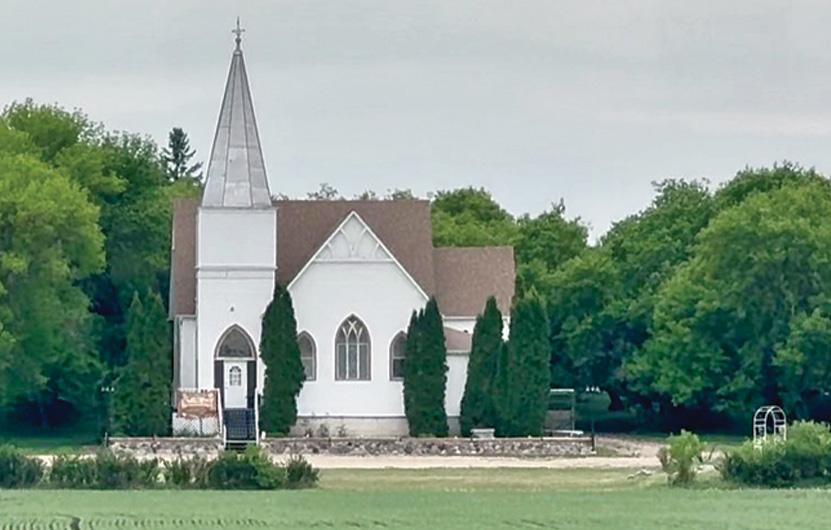

It was about three years ago when I first thought about a place like this. I have no idea why the wish formed itself. I was already travelling through Manitoba when one day I imagined staying in an original bed and breakfast – not just any bed and breakfast, but one located in an old country church.
Perhaps it was because I had seen so many closed country churches while wandering the gravel roads of our province. Maybe it was the nostalgia connected to communities that once gathered around these buildings, communities that are now mostly gone. Those small, empty churches stand as witnesses to better days when faith and community were closely intertwined.
To me, these historic structures are like the old grain elevators – reminders of times that may not have been easier, but were certainly simpler, when neighbours knew and helped one another.
Whatever inspired the idea, I spent years looking for a bed and breakfast in a small country church.
after her burial, I was scheduled to leave for Maria and Wes's place. Looking back, it turned out to be the second-best place I could have been while grieving such a profound loss.
The prairie landscape has always had a soothing effect on me, but this trip carried special meaning. My mother had a degree in agriculture and spent countless hours teaching farmers about crop rotation and maximizing harvests. As I admired the green fields along the way, I thought of her – her love for the countryside and her dedication to those who worked the land. I suppose I inherited that love from her. I feel at home among the fields.

About two months ago, I finally spotted an advertisement on Facebook. I immediately called to inquire about booking. From that very first conversation, I felt an instant connection with the person on the other end of the phone.
I have worked with people long enough to recognize authenticity and sincerity when I hear it. Maria, the owner of the church bed and breakfast, was warm, welcoming, and genuinely friendly. There was something about her voice that drew me in immediately. We connected so easily that I found myself sharing personal things with her. It felt as though I was speaking with an old friend.
We arranged my arrival and departure dates, leaving room for me to extend my stay if needed. At the time, I had no idea how important that flexibility would become.
After our conversation, I often felt like calling back and moving my visit to an earlier date. Life, however, had other plans. While attending to responsibilities and daily obligations, I found myself increasingly eager not only to escape city life but also to meet the remarkable woman I sensed Maria was.
A few days before my trip, life suddenly threw me a devastating curve. My mother, who lived in Poland, passed away unexpectedly.
To say I was heartbroken would be an understatement. Due to circumstances beyond my control, I was unable to travel and attend her funeral. The day
The drive west of Winnipeg took nearly two hours. Most of the journey followed Highway 2, with only the final few kilometres on gravel roads. I still vividly remember seeing the church steeple appear behind a hill, nestled among trees in a peaceful valley. It was picturesque and beautiful.
I parked, stepped inside, and immediately felt something special. The space radiated warmth, beauty, and coziness. Near the entrance was a sign that read, "Welcome Zofia."
I cannot begin to describe what that simple gesture meant to me.
Moments later, a tall, beautiful woman appeared from around the corner. I recognized her instantly from her vibrant voice. It was Maria.
We embraced.
Suddenly, my heart filled with an overwhelming sense of kindness and love. The feeling was so powerful it brought me to tears. Just as I had sensed during our phone conversation, I knew I was in the presence of a deeply compassionate and caring human being.
Maria had intentionally waited for my arrival so we could share breakfast together. As we sat and talked, she told me the story of the church.
Fifteen years earlier, her husband Wes had spotted the building while driving by and immediately thought, "My wife would love this place." At the time, it belonged to another couple and was only used for special events. Although Wes showed Maria the church from outside, they never had the opportunity to go inside.
From that day on, Maria dreamed of owning it. She imagined running both a bed and breakfast and a tea house there. Every time she visited a thrift store or a garage sale, she bought teapots, holding onto her dream of one day living in that magical little church.
Then one day, she learned the property was for sale.
The elderly owners were very selective about who would inherit their beloved "baby." When Maria and Wes came to view the property, the owners were there. The two couples met, connected immediately, and before long Maria and Wes became the chosen buyers.
To this day, Maria remains amazed at how everything unfolded, including the finances needed to make the purchase possible.
"It was God who did it," she told me. "I had no idea how it could ever become our reality, yet I dreamed about it for years."
As I listened, I realized something beautiful. Maria and Wes's dream had made mine possible. Because their wish came true, mine did too.
I learned three lessons:
Never give up on your dreams.
Trust that the Force of Life. God can make the impossible possible.
And remember that when your wishes come true, they don't just benefit you – they benefit others as well.
The tranquility, beauty, and peacefulness of a TeaMaria Café Bed and Breakfast turned out to be exactly what I needed during one of the most difficult times of my life. Maria's hospitality, kindness, and genuine care helped soften the shock of losing my mother and brought comfort to my grieving heart.
As I reflected on those old country churches and the communities that once gathered around them, I realized something important. What helped people through loss, hardship, and grief back then is still what helps us today – human connection. That spirit is not gone. Maria created that space for me, and through her kindness and presence, I found comfort, healing, and hope when I needed it most.
There was one more serendipitous detail. Maria shared the same name as my mother. In the midst of my grief, that felt like much more than a coincidence. Looking back, it seems that Life had arranged this encounter long before I knew I would need it. Sometimes Life quietly places the right people in our path, and only later do we understand why.
If you need a break from the noise of the city, a chance to rest, or simply a place to reconnect with yourself amid the rolling hills and prairie beauty, don't hesitate to pick up the phone and book a stay in this truly unique and magical place.
To visit or book “Tea-A- Maria Cafe Bed and Breakfast” or inquire about upcoming events call 204-3210634
Zofia Dove is a professional keynote speaker, author and producer, host and director of series “ReDISCOVERING the beauty of Manitoba, Canada”.


Creative Retirement Manitoba Inc. 204-481-5030, hello@crcentre.ca www.crcentre.ca
20 Fort Street Seniors Club
2200-20 Fort Street / FortStSeniors@Shaw.ca
A&O Support Services for Older Adults Inc.
200 - 207 Donald Street 204-956-6440 / Toll Free: 1-888-333-3121 info@aosupportservices.ca www.aosupportservices.ca
Archwood 55 Plus
565 Guilbault Avenue / 204-416-1067 archwood55@shaw.ca archwood55plus.wildapricot.org/ Barbados Association of Winnipeg, MB Inc. 204-202-7197
barbadosassociaationof wpg@outlook.com
Black Seniors Support Inc.
D-50 Scurfield Boulevard / 204-599-8566 resourcecoordinator@blackseniors.ca www.blackseniors.ca
Bleak House Centre 1637 Main Street / 204-338-4723 bleakhousecentre@gmail.com www.bleakhousecentre.com
Brooklands Active Living Centre 1960 William Avenue W 204-632-8367 / bpscc@mymts.net
Centro Caboto Centre 1055 Wilkes Avenue / 204-487-4597 ext. 1 executivedirector@cabotocentre.com www.cabotocentre.com
Charleswood Active Living Centre
A 357 Oakdale Drive / 204-897-5263 info@charleswoodseniorcentre.org www.charleswoodseniorcentre.org
Dakota Community Centre 1188 Dakota Street / 204-254-1010 ext. 217 seniorresources@dakotacc.com www.dakotacc.com
Delmar Seniors
110 Adamar Road / 204-421-2592
Dufferin Senior Citizens Inc.
377 Dufferin Avenue / 204-986-2608
Elmwood East Kildonan Active Living Centre 180 Poplar Avenue / 204-669-0750 healthrelations@chalmersrenewal.org chalmersrenewal.org
Garden City Community Centre Seniors 55+ 725 Kingsbury Avenue / 204-940-6111 facilities@gardencitycc.com www.gardencitycc.com/seniors
Golden Rule Seniors Resource Centre 625 Osborne Street / 204-306-1114 goldenrule@swsrc.ca facebook.com/goldenruleseniors
Good Neighbours Active Living Centre 720 Henderson Hwy / 204-669-1710 admin@gnalc.ca / www.gnalc.ca
Gwen Secter Creative Living Centre 1588 Main Street / 204-339-1701 becky@gwensecter.com / www.gwensecter.com
Headingley Seniors’ Services 5353 Portage Avenue / 204-889-3132 ext. 3 seniors@rmofheadingley.ca www.headingleyseniorsservices.ca
North Centennial Seniors Association of Winnipeg Inc. 86 Sinclair Street / 204-582-0066 ncsc@shaw.ca / www.ncseniors.ca
Pembina Active Living (55+) 933 Summerside Avenue / 204-946-0839 office@pal55plus.ca / www.pal55plus.ca
Rady Jewish Community Centre 123 Doncaster Street / 204-477-7539 lmarjovsky@radyjcc.com / www.radyjcc.com
Rainbow Resource Centre 514 St. Mary Avenue / 204-474-0212 ext 255 OTR@rainbowresourcecentre.org www.rainbowresourcecentre.org
Riverwood Church Community 325 Talbot Avenue / 204-668-3181 www.riverwood.cc/elmwood
The Salvation Army Barbara Mitchell Family Resource Centre 51 Morrow Avenue / 204-946-9153 sheila.keys@salvationarmy.ca
Somali Help Age Association 519 Beverley Street / 204-881-6364 somalihelpage@gmail.com
South Winnipeg Seniors Resource Council 117-1 Morley Ave / 204-478-6169 resources@swsrc.ca / www.swsrc.ca
Sri Lankan Seniors Manitoba 113 Stan Bailie Drive / 204-261-9647 www.srilankanseniorsmb.ca
St. James-Assiniboia 55+ Centre 3-203 Duffield Street / 204-987-8850 info@stjamescentre.com / www.stjamescentre.com
Transcona Council for Seniors 845 Regent Ave / 204-222-9879 tcs@mymts.net / www.transconaseniors.ca
Transcona Retired Citizens Org. 328 Whittier Ave. West 204-222-8473 / trco328@shaw.ca
Winnipeg Chinese Senior Association 204-291-7798 / wcsa.wpg@hotmail.com www.winnipegchineseseniors.ca
BEYOND WINNIPEG
ALTONA
Rhineland C.A.R.E. Inc. 240 5th St NE / 204-324-1528 carealtona.com
ASHERN
Living Independence for Elders Inc. #4-61 Main Street / 204-768-2187 lifeashern@gmail.com
BEAUSEJOUR
Beau-Head Senior Centre 645 Park Avenue / 204-268-2444 beauhead@mymts.net
BINSCARTH / RUSSELL
Senior Services of Banner County 204-532-2391 seniorservicesofbannercounty@gmail.com
BIRTLE
Valley Services for Seniors 663 Main Street / 204-842-3296 valleyserviceforseniors@gmail.com
BOISSEVAIN
Seniors’ Services of the Turtle Mountain Area 204-534-6816 / seniorservicetm@gmail.com
BRANDON
Brandon Seniors for Seniors Co-op Inc. 311 Park Avenue E / 204-571-2050 reception@brandons4s.ca / www.brandons4s.ca
Health Checks brandonmbhealthchecks.ca healthchecksbrandon@gmail.com
CARMAN
Indigenous Senior Resource Centre Inc. A1- 100 Robinson Avenue / 204-586-4595 executivedirector@isrcwpg.ca / www.asrcwpg.ca
Keewatin Inkster Neighbourhood Resources 1625 Logan Avenue / 204-774-3085 kinrc@mymts.net
La Fédération des aînés de la francophonie manitobaine inc.
123-400, rue Des Meurons 204-235-0670 / direction@fafm.mb.ca
Manitoba Korean 55+ Centre 900-150 River Avenue 204-996-7003 / www.ksam.ca
Carman & Community Active Living Centre 47 Ed Belfour Drive / 204-745-2356 www.activelivingcentrecarman.ca
CRANBERRY PORTAGE
Jubilee Recreation of Cranberry Portage Legion Hall 217 2nd Ave. SE / 204-271-3081
CRYSTAL CITY
Crystal City & District Friendship Club Inc. 117 Broadway St. / 431-867-0122 crystalcityfriendship@gmail.com
DAUPHIN
Dauphin Active Living Centre Inc. 55 1st Avenue SE / 204-638-6485 www.dauphinseniors.com

DELORAINE
Deloraine Community Club Inc. 111 South Railway Ave E / 204-747-2846
Seniors’ Outreach Services of BrenWin Inc. 204-747-3283 / sosbrenwin@gmail.com sosbrenwin.com
DUFRESNE
Tache Senior Services 28007 Mun Road 52 N. / 204-230-2131
ELIE
Cartier Senior Citizens Support Committee Inc. 11 Magloire Street, Suite #1 / 204-353-2470 cartierseniors55@outlook.com
ERICKSON
Services to Seniors Erickson, Onanole, Sandy Lake & Area Inc. 31 Main Street / 204-636-2047 areas@mymts.net
FLIN FLON
Flin Flon Seniors 2 North Avenue / 204-687-7308
GILBERT PLAINS
Gilbert Plains and District Community Resource Council Inc. 204-548-4131 / gpdcrc@mymts.net gpseniors.ca
Gilbert Plains Drop In Centre 22 Main Street North / 204-548-2210
GIMLI
Gimli New Horizons 55+ Activity Centre 17 Loni Beach Road / 204-642-7909 gimli55@mts.net / www.gimlinewhorizons.com
GLADSTONE
Gladstone Senior Support 36 Morris St N / 204-385-3026 info@gladstoneseniorsupport.com
GRAND MARAIS
Grand Marais & District Seniors 36058 PTH 12 / gmdseniors@gmail.com www.gmdseniors.ca
GRANDVIEW
Grandview Seniors Drop In 432 Main Street / 204-546-2272
HAMIOTA
Hamiota 55+ Centre Community Co-op Inc. 44 Maple Avenue
KILLARNEY
Killarney New Horizons Centre 520 Mountain Avenue / www.killarneymbseniors.ca
Municipality of Killarney-Turtle Mountain Service for Seniors 415 Broadway Ave. / 204-523-7115 seniorservice@killarney.ca
LA BROQUERIE and STE. ANNE
Seine River Services for Seniors Inc./ Services Rivière Seine pour aînés Inc. 93 Principale Street / 204-424-5285 src@seineriverservicesforseniors.ca seineriverservicesforseniors.ca Club De L'Amitie de la Broquerie Inc. 97 Rue Princiapale / 204-424-5522
LUNDAR
Lundar Community Resources 35 Main Street / 204-762-5378 lcrc@mymts.net
MANITOU
Pembina Community Resource Council 315 Main Street / 204-242-2241 pembinacrc@gmail.com
MINNEDOSA
Minnedosa Senior Citizens Assoc. 31 Main Street S / 204-867-1956 mdsasca@gmail.com
MORDEN
Morden Activity Centre 306 N Railway Street / 204-822-3555 mordenactivitycentre@gmail.com www.mordenseniors.ca
NEEPAWA
Neepawa & District Drop In Centre 310 Davidson Street / 204-476-5103 Neepawa-dropin@outlook.com www.neepawa.ca/district-drop-in-center
NOTRE DAME DE LOURDES Club D’age Dor Notre Dame 204-248-7291 / ndslchezsoi@gmail.com
PILOT MOUND
Pilot Mound Fellowship Centre 203 Broadway Avenue / 204-825-2873
PINE FALLS
Winnipeg River Senior Services 37 Maple Street / 204-367-9128
PLUMAS
Plumas Seniors Citizens Club Inc.
102 White Street / 204-386-2029
PORTAGE LA PRAIRIE
Herman Prior Senior Services Centre
40 Royal Road N. / 204-857-6951 hermanpriorcentre@gmail.com www.hermanprior.com
Portage Service for Seniors 40A Royal Road N. / 204-239-6312 psfsmeals@shaw.ca portageservicefors.wixsite.com/psfs
RIVERTON
Riverton Seniors Activity Centre 12 Main Street / 204-378-5155 rdfc@mymts.net / www.rivertonfc.com
ROSSBURN Rossburn Community Resource Council 71 Main Street / 204-859-3386 rosscomm@outlook.com
SANDY LAKE
Sandy Lake Drop In Centre 100 Main St. / 204-585-2411
Municipality of Harrison Park - Age Friendly Initiative Committee 204-585-5310
SELKIRK
Gordon Howard Active Living Centre 384 Eveline Street / 204-785-2092 executivedirector@gordonhoward.ca www.gordonhoward.ca
SNOW LAKE Snow Lake Senior Centre 71 Balsam Street / 204-358-2151 snowsrs@mymts.net
SOUTH JUNCTION
Piney Regional Senior Services 204-437-2604 / lgdseniors@gmail.com
STE. ANNE Villa Youville 15 Charriere Road / 204-422-5624 yannb@villayouville.ca / www.villayouville.ca
ST. LAURENT Age Friendly Committee of St. Laurent 204-906-9607
STARBUCK / SANFORD MacDonald Services to Seniors 204-735-3052 / info@mcdonaldseniors.ca www.macdonaldseniors.ca
STEINBACH
Pat Porter Active Living Centre 10 Chrysler Gate / 204-320-4600 ed@patporteralc.com / www.patporteralc.com
STONEWALL South Interlake 55 Plus 374 1st Street West - Oddfellows Hall 204-467-2582 / si55plus@mymts.net www.si55plus.org
SWAN RIVER Swan River & District Community Resource Council 126 6th Ave N / 204-734-5707 resourcecouncil@srseniorservices.com
Swan River Senior Citizens Centre 702 1st Street North / 204-734-2212
THE PAS The Pas Golden Agers 324 Ross Avenue / 204-623-3663 seniorsthepas@gmail.com
THOMPSON Thompson Seniors Community Resource Council Inc. 4 Nelson Rd. / 204-677-0987 thompsonseniors55@gmail.com thompsonseniors.ca
TREHERNE Treherne Friendship Centre 190 Broadway Street 204-723-2559 / jstate1066@gmail.com
VICTORIA BEACH East Beaches Social Scene 3 Ateah Road / 204-756-6468 ebssinc1@gmail.com / www.ebseniorscene.ca East Beaches Resource Centre 3 Ateah Road / 204-756-6471 ebresourcec@gmail.com / ebresourcec.weebly.com
VIRDEN Seniors Access to Independent Living 204-851-2761 / sail.cao.2023@gmail.com
WINKLER
Winkler & District MP Senior Centre 102-650 South Railway Avenue / 204-325-8964 director@winklerseniorcentre.com www.winklerseniorcentre.com



At Children's Hospital Foundation of Manitoba, innovation means more than breakthroughs in the lab. Innovation is in every new piece of equipment that speeds up a diagnosis or makes care safer and more comfortable, every Child Life program that eases a child's fear and provides comfort and distraction, and every research discovery that changes pediatric care. Your support makes innovation possible and we’re celebrating another incredible year thanks to our generous community.
At the heart of everything we do are the kids and their families. Their stories inspire generosity and bring meaning to our work. I want to extend a heartfelt thank you to Jack, our 2025 Champion, for embracing his role with such courage. We are equally grateful to his parents for sharing their journey. Jack has faced more than most, including the loss of his twin brother just days after birth, numerous surgeries, and the need for mobility aids. Yet he meets every challenge with an unwavering belief that he can do it.
City Hall for National Child Day, spent time fishing with longtime supporter Ken Talbot, explored the Manitoba Legislative Building with Premier Wab Kinew, and helped raise critical funds for child health research.

As Champion, Jack attended more than 40 events. He raised his flag at Winnipeg
As we celebrate Jack’s incredible year, we are also proud to welcome our 2026 Champion, Ireland. She is the first baby in Manitoba to receive cochlear implant surgery. She is a true trailblazer who loves gymnastics, being an older sister, and stepping into this important role. Ireland is a powerful reminder that research changes lives.
Kids like Jack and Ireland inspire us to do more, and as always donors are answering that call. Our generous community raised a transformational $13,527,465 in 2025-26! From the bottom of our hearts, thank you! It was a meaningful year, full of positive change for kids who need treatment and care, and those funds are already making an impact.
Donors are providing comforting environments for kids facing long hospital stays. Construction is underway to revitalize patient rooms, treatment areas, and
family spaces in CK5 – the childhood cancer, blood disorders, and transplants ward at HSC Children’s Hospital. This project will improve kids’ care through reimagined spaces, upgraded equipment and technology, comfortable and modern furniture, and ongoing research into childhood cancer through Children’s Hospital Research Institute of Manitoba (CHRIM). Plus, we’ve invited artists to bring colour and creativity to the spaces where kids spend so much time.
Donors are supporting reconciliation in health care. Work has begun on the Indigenous Community Healing Space at HSC Children’s – a landmark project that is fully Indigenous-led by Elders, Knowledge Keepers, and health care leaders, as well as children and families from Métis, Inuit, and First Nations communities in Manitoba. This is the first Indigenous healing space in Canada designed specifically for children and their families inside a children’s hospital, placing Manitoba at the forefront of reconciliation in health care.
Donors help make sure frontline teams have the cutting-edge equipment they need to provide kids with the best care possible. We now have more than $4 million in new equipment, including items like vein finders, ophthalmology lasers, a mini C-arm X-ray machine for Children’s Emergency, and an ENT CO2 surgical laser to make ear,
nose and throat procedures faster and safer. Plus, remote monitored bed technology is expanding at HSC Children’s so all 100 inpatient beds will be compatible with remote monitored equipment. This includes 18 new monitors for spaces like the emergency department and the neonatal and pediatric intensive care units.
Donors are revitalizing Children’s Emergency – improving patient and staff experience and safety – with construction set to begin in 2027 and over $1 million in lifesaving equipment already in use. Children and families will benefit from better care experiences and enhanced clinical capacity when they need it most, as well as specialized research focused on emergency care through CHRIM. The project has expanded through extensive clinical consultations to ensure the department fully meets the complex and evolving needs of the children and families we serve. The total project will now include critical enhancements to expand mental health capacity and support.
At the Foundation, we’re deeply grateful for the many ways our community shows up for kids like Jack and Ireland and look forward to another meaningful year.
For a full look at how donors helped make innovation possible in 2025-26, visit goodbear.ca/gratitudereport.
Stefano Grande is the president and CEO of Children’s Hospital Foundation of Manitoba.
Continued from page 1
One-in-five seniors are skipping meals because cooking has become too hard
One of the most concrete findings in the survey is also one of the most difficult to read. More than one-in-five Canadian seniors (22%) report that in the past year they have sometimes or often skipped meals, eaten less, or turned to less nutritious food because preparing meals had become too difficult. Among Canadians with aging loved ones, the picture is even sharper, with 30 per cent saying their family member has struggled with meal preparation at least sometimes in the past year.
“What this data tells us is that Canadians are already stepping up for the seniors in their lives, often invisibly and without recognition,” said Matt Diestl, Director of Heart to Home Meals. “Our role is to make that easier, and to ensure no senior ever skips a meal because cooking has become difficult. That's not just a service, that's why we exist.”
“These findings reflect what our delivery teams hear every day at the door. Seniors want to stay home, and their families want that for them too, but the support isn't always there to make it possible,” said Matt Diestl, Director of Heart to Home Meals. “Behind every senior aging at home is usually a family member doing more than most people realize – the grocery runs, the meal prep, the check-ins – and Heart to Home Meals is here to share that load, so families can spend their time on the relationship instead of the errands, and so no senior has to worry about what's for dinner."
What heart to home meals is doing for Canadian seniors and their families
Heart to Home Meals is built specifically for older Canadians who want to keep living at home with dignity, independence, and good food on the table. The service delivers a wide variety of chef-crafted frozen meals, soups, and desserts developed with the guidance of dietitians, with options for different appetites and dietary needs including low sodium, high protein and fibre, and pureed and minced diet options. Meals are dropped off by familiar, locally based de-
livery teams who know their customers by name, and there are no subscriptions or contracts, so customers can order what they want when they want it.
Powered by the same global food expertise trusted by healthcare systems around the world, and delivered through locally owned franchises across most of Ontario, Alberta, British Columbia, Nova Scotia, New Brunswick, and Manitoba, Heart to Home Meals is designed to make daily life simpler as people age. For seniors, that means knowing the next meal is taken care of. For families, it means a regular knock at the door from a familiar face, a checkin they can count on, and fewer hours spent on errands and meal prep so they can spend that time on the relationship instead.
What Canadians say would give them the most peace of mind
When asked what would give them the most peace of mind about an aging loved one at home, Canadians pointed first to knowing their loved one could quickly get help in an emergency (26%), followed by living closer to family or support networks (25%), and access to affordable in-home support services (21%). Heart to Home Meals already provides these services every week, with regular knocks at the door from a familiar driver, reliable nutrition, and a model of care that puts real human connection back into how seniors are supported at home.
To learn more about Heart to Home Meals or to place an order for yourself or a loved one, visit hearttohomemeals.ca.
About the survey
The survey was completed by Heart to Home Meals and conducted between April 21st and April 23rd, 2026. For this study, a representative sample of 1,502 online Canadian adults who are members of the Angus Reid Forum were surveyed in English and French. For comparison purposes only, a probability sample of this size would carry a margin of error of +/-2.53 percentage points, 19 times out of 20.
About Heart to Home Meals
Heart to Home Meals, part of the global Apetito group with over $1 billion in annual sales and a legacy of nu-
trition-focused care since 1958, delivers chef-crafted, nutritious meals directly to the homes of older Canadians. With a wide variety of menu options developed with the input of dietitians and tailored to a range of dietary needs, including low sodium, high protein and fibre, and pureed and minced diet options, Heart to
Home Meals helps seniors age in place with dignity and ease. Operated through locally owned franchises across most of Ontario, Alberta, British Columbia, Nova Scotia, New Brunswick, and Manitoba, Heart to Home Meals serves thousands of Canadian seniors each year. Learn more at hearttohomemeals.ca.