
5 minute read
Leadership Spotlight

with Jim Fitterling (Missouri 80)
CEO | DOW AGROSCIENCES
Advertisement



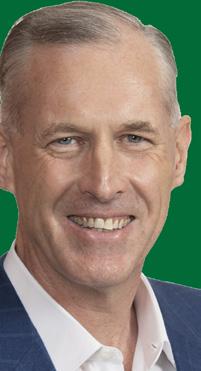

Jim Fitterling (Missouri 80) is chairman and chief executive officer of Dow AgroSciences, a global materials science company. In 2020, Dow had sales of $39 billion and a Fortune 500 ranking of 78. Fitterling joined Dow two weeks after graduating from college, in the spring of 1984. He previously served as the chief operating officer for the Materials Science Division of DowDuPont. Fitterling was in a key position during the separation of Dow and DuPont, on April 1, 2019. He’s widely recognized for his work supporting LGBT nondiscrimination and LGBT+ workplace equality. Fitterling is involved with his alma mater, serving on the University of Missouri’s College of Engineering Dean’s Advisory Council. He resides in Midland, Mich.
WHAT DO YOU ENJOY MOST ABOUT LEADING DOW?
The people I work with I would say is the first and most important thing. Then the business we are in—the business of chemistry and materials takes you into products you use every day. We work with every large brand owner and manufacturer around the world. Making everything from the clothes and the shoes you wear, to the products you buy in the grocery store, to the materials used to clean at home, like laundry detergent, to all kinds of other things, paints and coatings that are used in your house. You wouldn’t recognize it necessarily as Dow material, but if I took you into a local supermarket, or Lowe’s or Home Depot, I could almost pick up anything and show you where Dow products are. And that makes it interesting, makes it diverse and challenging.
WHAT IS YOUR LEADERSHIP PHILOSOPHY, AND HOW HAS YOUR MANAGEMENT STYLE CHANGED DUE TO COVID-19?
We believe a lot, and I believe a lot, in empowerment of the teams and having them make decisions at the front line. I think COVID-19 has actually helped that because there were certain things that just needed to be done. It was an unusual environment and you want people to be able to make decisions and move quickly. I would say the biggest management-style change is I traveled a lot before COVID-19. I would either be out to see customers or out at our manufacturing sites on a regular basis. I haven’t been able to do any of that. It’s all become video conferences, which I do a lot of. In some cases, I’ve probably seen more people in the last year, through this medium, than I would if I was doing it physically traveling. So in some cases it’s interesting. It feels like we’re a little bit closer to employees even though we haven’t physically seen each other in those settings.
TEAMS ARE INCREDIBLY IMPORTANT IN YOUR WORK. WHAT MAKES A STRONG TEAM?
I think the strongest teams tend to really understand each other‘s strengths and complement each other’s strengths. They also understand what people are going to do and how the team works together. There are times in this COVID-19 environment where a team member might not have been able to come to work because they weren’t feeling well. Teams pick up for that absent team member and carry-on with the work. I think that showed through especially strongly. We didn’t have a tremendous number of COVID-19 cases, but we did have cases like you would expect. The strong teams pull together and get things done, even in spite of the fact they might be missing a team member.
WHAT ADVICE WOULD YOU GIVE A FARMHOUSE MAN WHO ASPIRES TO BE A CEO OR LEADER OF A FORTUNE 500 COMPANY?
The most important thing, and what I try to do at Dow, is really learn and understand the business incredibly well. Maybe is just a portion you’re hired into, but understand the entire business and what’s going on. I always say to people inside the company, “there’s running a business unit, and there’s running a corporation.” They’re very different jobs. Running a business unit is all about profit and loss. Running a corporation is about a lot of different things. It’s about managing your investors, dealing with your communities, your employees, as well as the business aspects of the job. You have to really understand all those touch points. The best way to do that is get in and do your homework. Understand what makes a company tick. The better you understand that, the better your ability to elevate yourself when situations come at you. For Dow we have got a saying, “you don’t get the next job until you demonstrate you can do it in your current job.” That’s what leaders look for. They look for somebody not only able to do their current job, but they’ve demonstrated the capability to do the next level job. That’s how you get ahead.
WHAT ADVICE WOULD YOU GIVE FOR HOW TO BE INVOLVED AND GIVE BACK TO THE FRATERNITY?
If you’ve been in a business environment, even if it’s your own business, you can contribute back to the organization by helping them in certain situations. There are a lot of things that the associations or the Foundation need from a leadership perspective you could provide. There’s certainly always financial needs, so you can contribute financially, but financial needs on the planning side as well, right? There are monies to be invested, there are programs that have to be put together, and I think business experience helps FarmHouse quite a lot. Everybody can give differently at different phases in their life. Right now, my time is pretty limited, but after I retire, I would have more time to give on a volunteer basis. Everybody’s in a different circumstance, so recognize what that is, and do what you can do from your position in life.
LEADERSHIP SPOTLIGHT with Jim Fitterling (Missouri 80)
