

EDITOR-IN-CHIEF
Zainab Salam eic@the-peak.ca
COPY EDITOR Michelle Young copy@the-peak.ca
FACT CHECKER
Sasha Rubick factchecker@the-peak.ca
NEWS EDITOR Noeka Nimmervoll news@the-peak.ca
NEWS WRITERS
Niveja Assalaarachchi and Lucaiah Smith-Miodownik
OPINIONS EDITOR Corbett Gildersleve opinions@the-peak.ca
FEATURES EDITOR
Petra Chase features@the-peak.ca
ARTS & CULTURE EDITOR
Phone Min Thant arts@the-peak.ca
HUMOUR EDITOR Mason Mattu humour@the-peak.ca
STAFF WRITERS
Maya Barillas Mohan, Marie Jen Galilo, Tomos Land, and Jonah Lazar
WEB MANAGER Audrey Safikhani web@the-peak.ca
The Peak
MBC2900 8888 University Dr. Burnaby, BC V5A 1S6
READ THE PEAK
PROMOTIONS MANAGER
Juliana Manalo promotions@the-peak.ca
PRODUCTION & DESIGN EDITOR Mary Gigiberia production@the-peak.ca
ASSISTANT PRODUCTION EDITORS Abbey Perley and Minh Duc Ngo
PHOTO EDITOR Gudrun Wai-Gunnarsson photos@the-peak.ca
PROJECT ASSISTANT Corbett Gildersleve projectassistant@the-peak.ca
BUSINESS MANAGER Yuri Zhou business@the-peak.ca (778) 782-3598
BOARD OF DIRECTORS
Kalika Bhardwaj, Gurnoor Jhajj, Juliana Manalo, Riley Williams, and Yuri Zhou
DISTRIBUTION COORDINATOR
Lucaiah Smith-Miodownik
CONTRIBUTORS
Diya Brar, Ella Pendlington, and Tracey Ho
PEAK ASSOCIATE
Jackie Peng
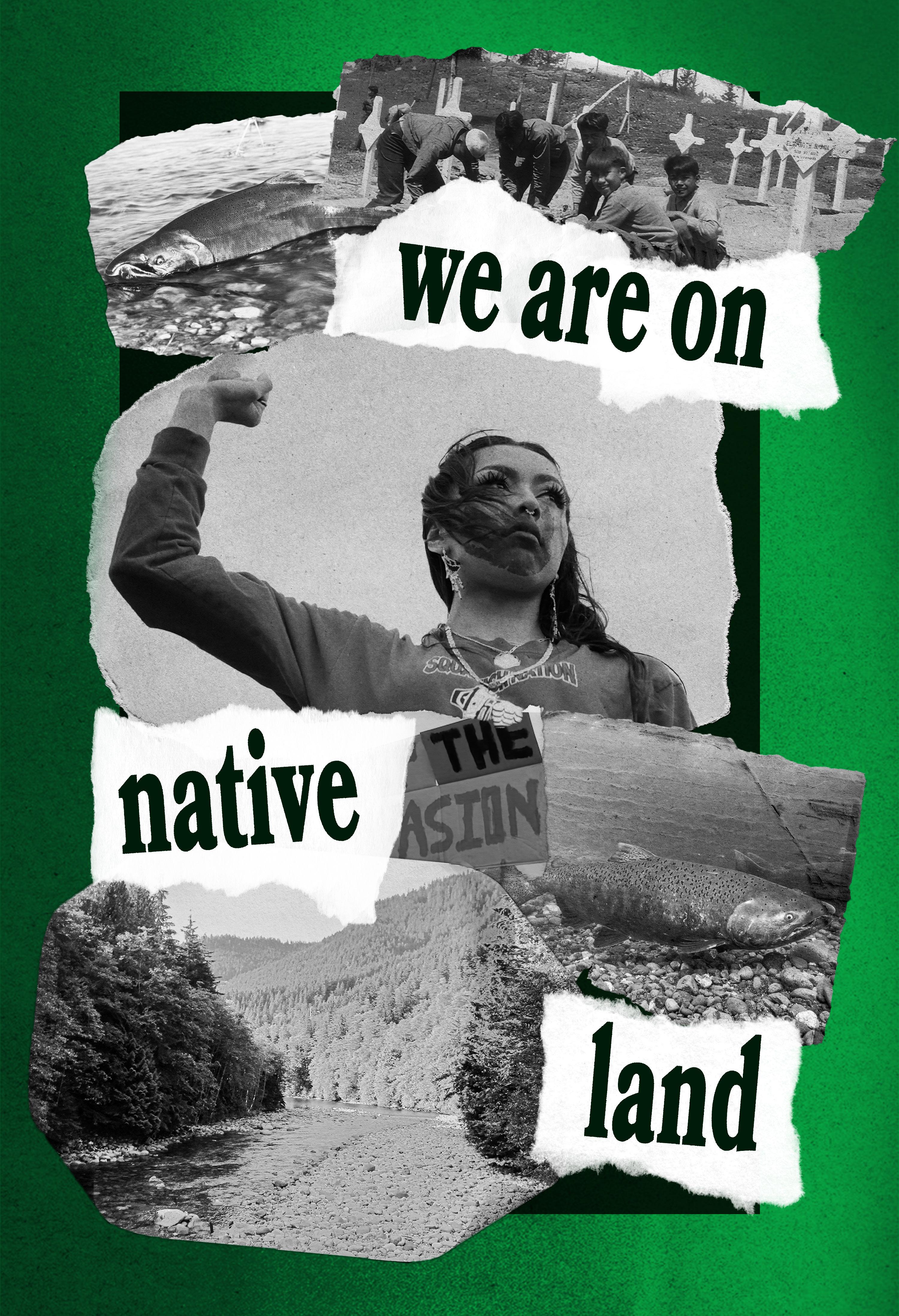
COVER ARTWORK
Gudrun Wai-Gunnarsson
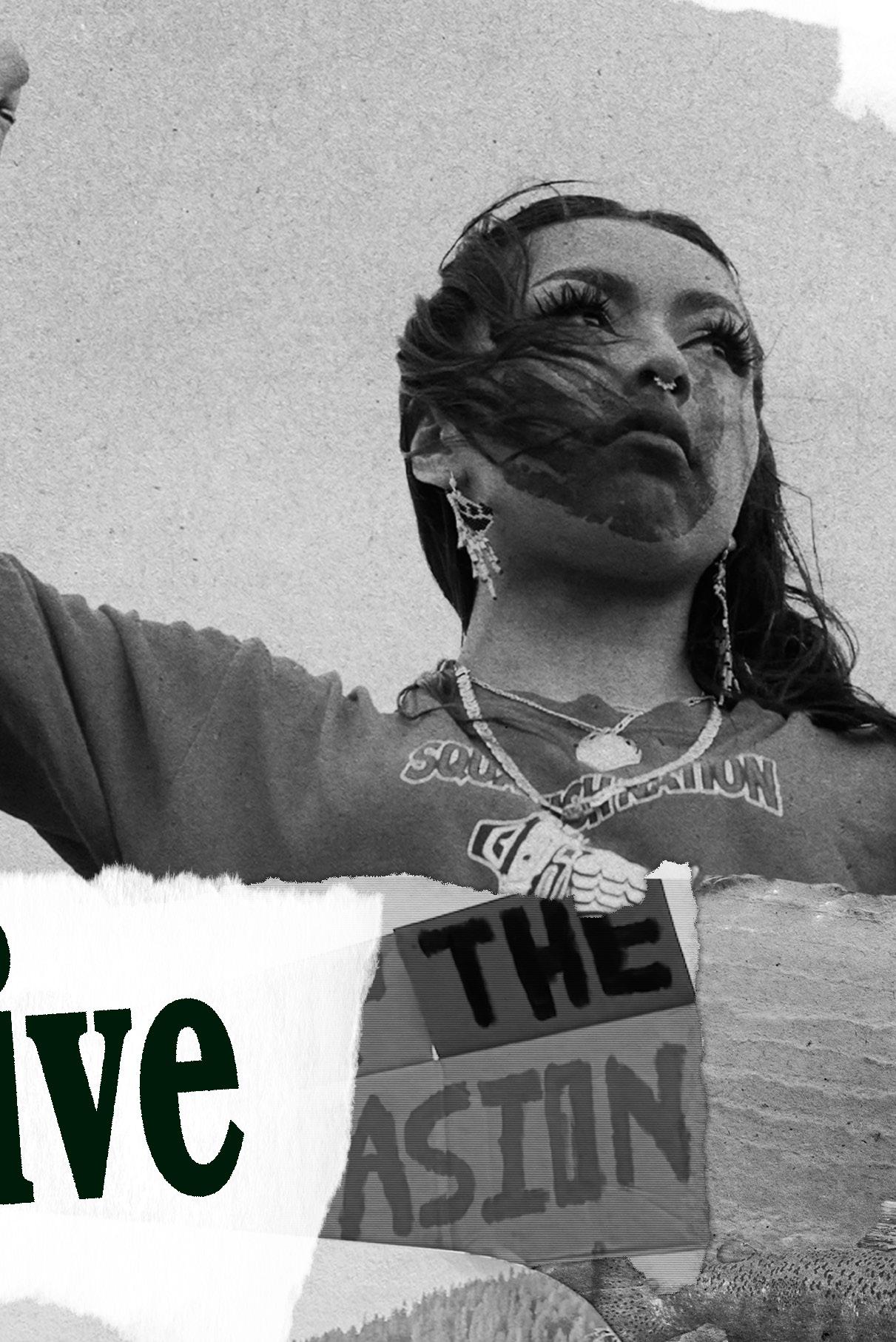
Photos: BLMIdaho / Wikimedia Commons (salmon, top left), Courtesy of SR Socially Relevant Film Festival New York / Youtube (I Am Gitxsan stills), Ryan Hagert / Wikimedia Commons (salmon, bottom right), and Mike W / Flickr (Xwmélch’sten)


Pick up paper copies at any SFU campus
Find extended, cited, and web-accessible articles at the-peak.ca Download digital issues at issuu.com/peaksfu
The Peak is SFU's weekly student newspaper published every Monday, by students, for students. We’re funded by a student levy and governed by a Board of Directors. Any SFU student can apply to become staff
We reserve the right to edit submissions for length, as well as style, grammar, and legality. We also reserve the right to reprint submissions at any time, both in print and on web. We will not publish content that is sexist, racist, or otherwise prejudiced.
TERRITORIAL ACKNOWLEDGEMENT the-peak.ca @thepeakatsfu @thepeakpublicationssociety
We acknowledge that The Peak’s office is located and our paper is produced, distributed, and read on the unceded Coast Salish Territories of the Skwxwú7mesh (Squamish), xwməθkwəy̓əm (Musqueam), səlilwətaɬ (Tsleil-Waututh), kʷikʷəƛ əm (Kwikwetlem), qʼʷa:nƛʼən (Kwantlen), qicəy (Katzie), sc̓əwaθən məsteyəxʷ (Tsawwassen), Qayqayt, and Semiahmoo Peoples. Unceded means that this land was never surrendered, relinquished, or handed over in any way. We recognize that the unceded land that we occupy includes not only the Lhuḵw’lhuḵw’áyten (Burnaby Mountain), but extends to the land occupied by the Vancouver and Surrey campuses.
SFU students can contribute and get paid for work that is published in The Peak! Email us at promotions@the-peak.ca to learn about writing, illustrating, or taking photos for us!
A call for action demands closer dialogue between the province and Elders
TOMOS LAND STAFF WRITER
Editor’s note: The Peak spells nsyilxcən words in lowercase in accordance with syilx language holders who say that capitalization implies a hierarchy of importance, which does not align with syilx ethics.
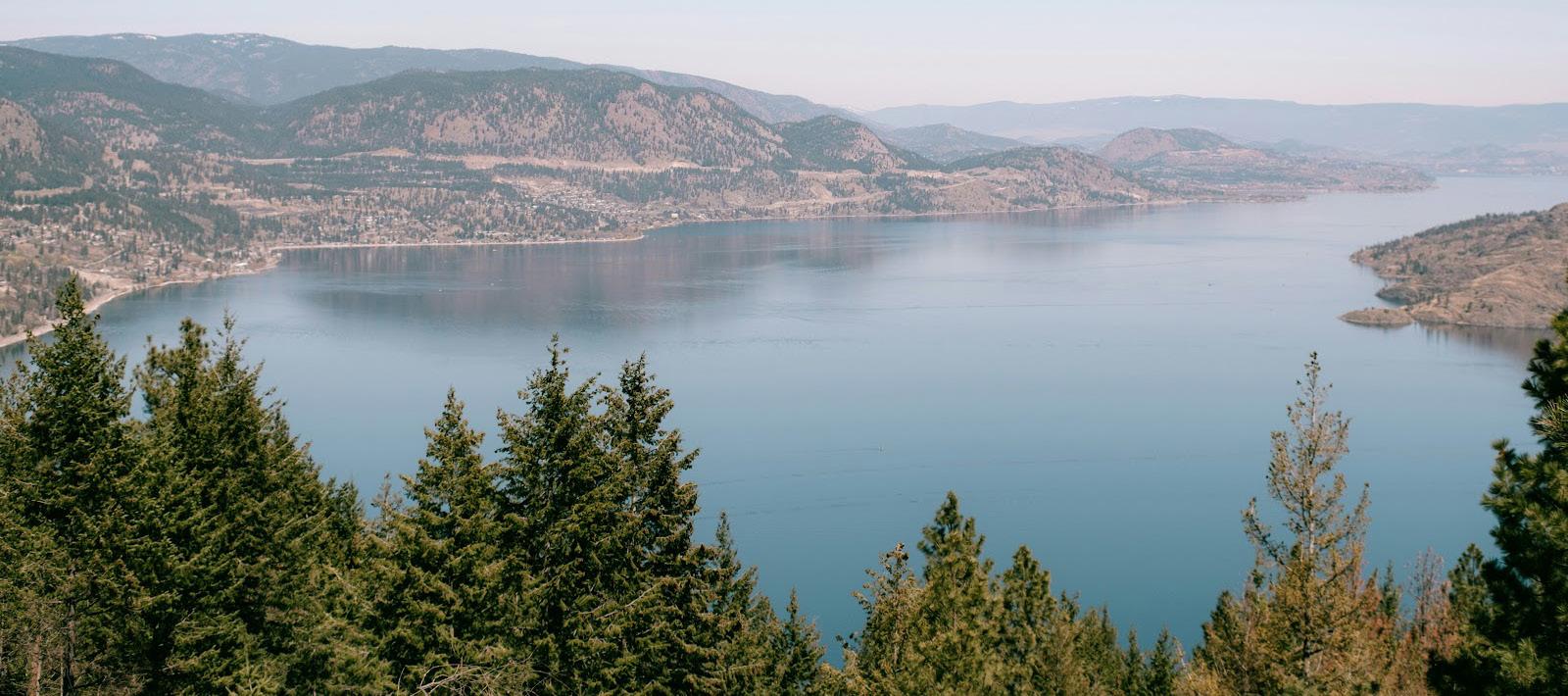
Growing water insecurity, driven by climate change and its cascading e ects in BC, has led to a recent declaration of a watershed emergency by the syilx Okanagan Nation Alliance (ONA). The alliance is a First Nations government “comprised of seven member communities in the Southern Interior of BC: Okanagan Indian Band, Osoyoos Indian Band, [snpink’tn] Penticton Indian Band, Upper Nicola Band, Upper and Lower Similkameen Indian Bands, and Westbank First Nation; and in Northern Washington State, the Colville Confederated Tribes,” according to the ONA website.
The announcement comes after members of the ONA “observed accelerating environmental changes, including early hot temperatures; low snowpack; unusually dry upper watershed creeks, springs, and wetlands; increasing water temperatures, and ecosystem stress” across multiple watersheds throughout the region. The alliance members have also noted struggles of local biodiversity, including “early dieo of spiƛ̓əm (bitterroot), and declining stream ows impacting xwəxwmínaʔ (rainbow trout) populations.”
In their statement, the alliance expressed that “current government and management systems have failed to
Working together now, with an ethos of One Valley, One Water, is required to protect water — the key to life in the Okanagan.
EXECUTIVE DIRECTOR
BC co-governance forum on water scarcity” and the “inclusion of local governments in coordinated watershed management.”
The syilx Okanagan Nation also called for “a moratorium on new surface and groundwater licences.” A moratorium — the suspension of a certain activity, often of a legal nature, for a period of time — of these licences, would prevent corporations and groups from being granted permission for various types of non-domestic water use, although license holders would be able to continue operations.
The Peak reached out to the Okanagan Basin Water Board (OBWB), a government support organization who focus on water projects in the Okanagan Valley, for comment. “The OBWB supports the ONA’s call for urgent collective action. Working together now, with an ethos of One Valley, One Water, is required to protect water — the key to life in the Okanagan,” said OBWB executive director Melissa Tesche.
The Peak reached out to the Okanagan Nation Alliance and the City of Penticton for comment, but did not receive a response prior to the time of publishing.
adequately protect watershed health. This is compounded by major knowledge gaps around headwaters, groundwater interactions, and cumulative impacts that continue to limit informed decision-making.”
In order to mitigate the impacts of the emergency, the press release called on “the province of British Columbia and all relevant agencies to take immediate and coordinated action” on the issue. This includes the “establishment of a syilx Nation-
losure in three years
Overdose prevention site prevented from opening at mayor’s request
MAYA BARILLAS MOHAN STAFF WRITER
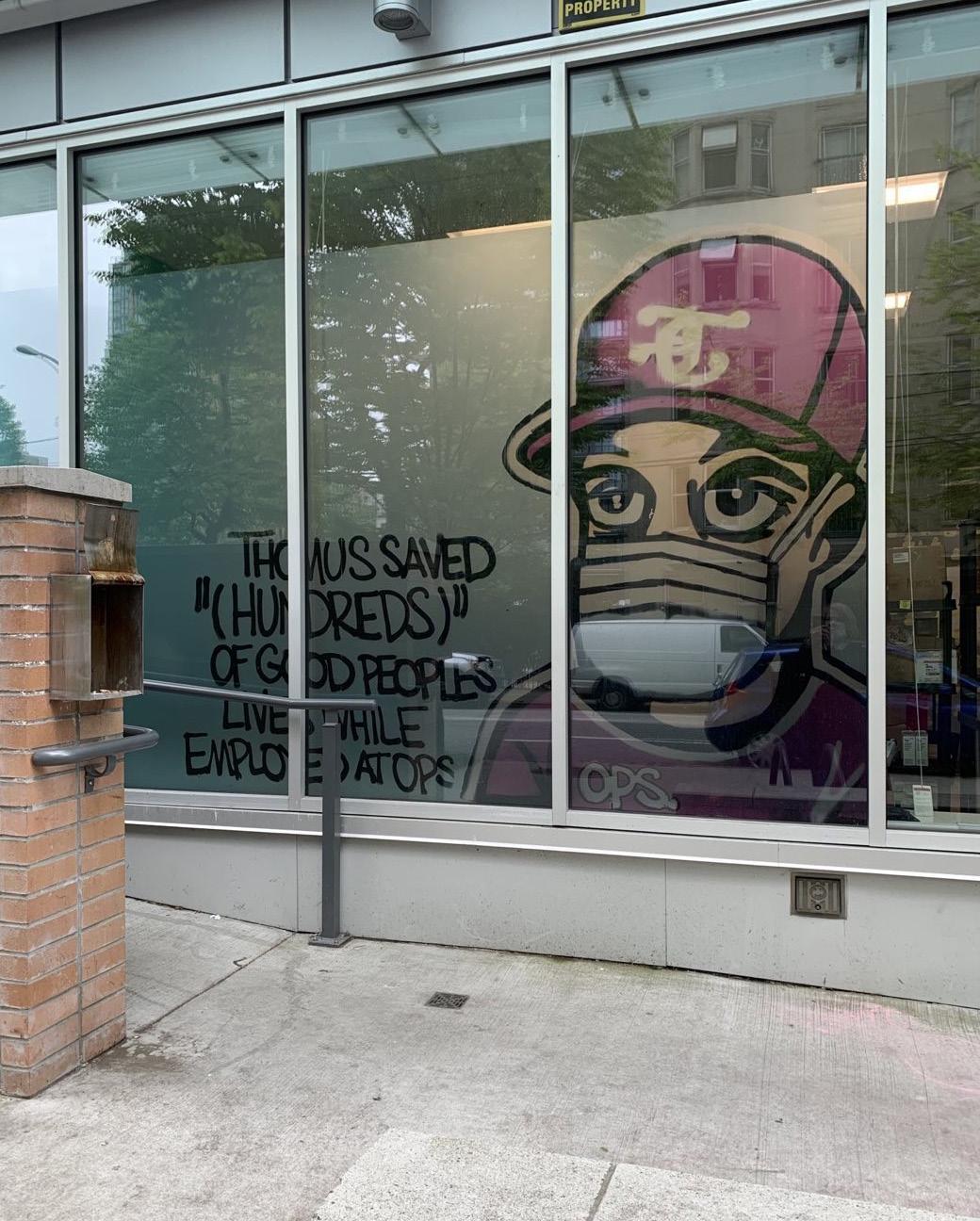
The Thomus Donaghy overdose prevention site (OPS) has experienced a series of relocations since its opening in 2021. Most recently, its planned reopening on June 1 was cancelled by the City Council.
The OPS, which was named after an OPS peer worker who was tragically killed, is a supervised space that allows drug consumption without risk of criminal persecution, instead focused on providing drug testing or other support services if necessary. According to the Vancouver Coastal Health (VCH) website, OPSs “help save lives by responding to overdoses quickly,” “prevent the transmission of infectious diseases,” and connect “people to health services.” Further, they “bring stability to the community by [ . . . ] reducing consumption taking place on the street.”
The past Thomus Donaghy locations have been the Seymour street location, which closed in 2024, and the Howe street facility, which was closed January 2026. These sites were reportedly shut at the request of building owners, according to CBC and VCH. By early May, a new location on Helmcken was secured by VCH for the Thomus Donaghy OPS.
However, the relocation was stopped in its tracks by mayor Ken Sim. According to Daily Hive, complaints have been made by business owners about “worsening street disorder, untreated mental health challenges, addiction, public safety, and the growing strain on downtown businesses.” Further, Daily Hive shared that business leaders expressed there was “not enough consultation” on the new OPS location.
On May 27, minister of health Josie Osborne released a statement saying that VCH “will not proceed with the overdose-prevention site at 900 Helmcken St. at this time, and there is currently no planned date for opening.”
According to CTV News, mayor Ken Sim proposed a motion to “use all tools available” to prevent the opening of the Thomus Donaghy OPS. CTV News reported, “The motion passed by Council on Tuesday directs city staff to conduct a ‘comprehensive review’ of permits and approvals to make sure they comply with city bylaws and rules, telling staff to consider revoking permits or licences for the facility if ‘legally supportable.’”
The Peak reached out to the City of Vancouver and VCH for a statement, but did not receive a response prior to the publication date. At the time, it is unclear what tools the Council used to prevent the OPS opening.
The Peak also reached out to the BC Centre for Substance Use (BCCSU) for a statement, and was directed to BCCSU research scientist and interim director of research, Dr. M-J Milloy. He stated, “Evidence also shows that [OPSs] work best when located within areas with high rates of drug harms, such as the local health area around the Donaghy OPS, which has the second-highest rate of fatal overdose in BC.”
Milloy expressed that OPSs are “linked to lower risks of fatal overdose, infection with blood-borne pathogens, and higher rates of uptake of medical care, including treatment for
The ONA’s emergency announcement comes at the beginning of a summer season where scientists predict record heat. This is due to the beginning of El Niño, a stage of the weatheraltering El Niño-Southern Oscillation cycle. El Niño, a “climate [pattern] in the Paci c Ocean,” happens about every two to seven years, according to the National Ocean Service. The Service shared that “areas in the northern US and Canada are dryer and warmer than usual.” El Niño will likely “turbocharge extreme weather across the planet,” according to CBC News.
substance use disorders.” He shared that “although they are not meant to resolve drug-related disorder — such as public drug use, drug-related litter, and crime — nine studies from around the world, including Vancouver [ . . . ] found [little to] no increases in crime in the wake of the opening of OPS there.
“By not worsening drug crime but improving important measures of public health, I believe OPS contribute to their communities.”
Without the Thomus Donaghy centre, there are only 11 centres to respond to a far-reaching crisis. “Vancouver City Centre Local Health Area [records] the second highest rate of overdose deaths in the VCH region, and the second highest number of calls to BC Emergency Health Services,” according to VCH. As of May 5, VCH shared that the Thomus Donaghy OPS had received almost 150,000 visits and responded to nearly 500 overdoses. Without this OPS, no overdose support is provided to users in the downtown core.
LUCAIAH SMITH - MIODOWNIK NEWS WRITER
The endangered fish remain a vital piece of ecosystem and culture The diet of a juvenile Chinook salmon doesn’t normally contain cocaine.
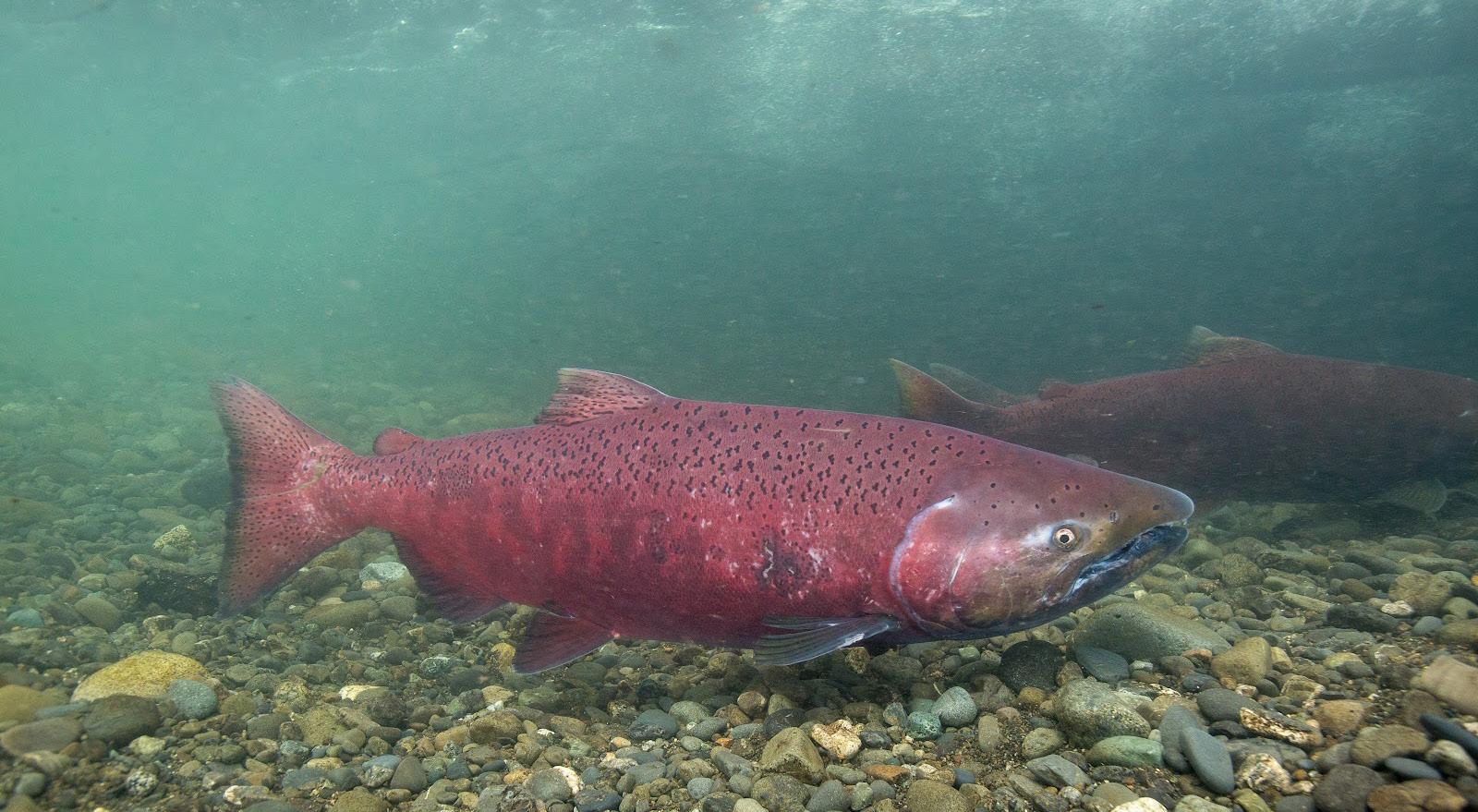
But in the Lower Fraser River, these sh are being exposed to a myriad of chemicals, toxins, and substances such as cocaine, alongside other “pharmaceuticals and personal care products, [as well as] pesticides, polycyclic aromatic hydrocarbons, ame retardants, and polychlorinated biphenyls.” For humans and salmon alike, these substances are linked to potential harms to growth and disease.
According to a recent study headed by SFU doctoral student Bonnie Lo, Harrison Chinook salmon tested for upwards of 368 organic contaminants, 16 of which are considered “priority” for their “potential for adverse e ects” for “aquatic life,” an indicator of high risk level for those studying the salmon.
The Peak corresponded with Bob (Galagame’) Chamberlin, founder and chair of the First Nation Wild Salmon Alliance, for more information.
“This science paper’s outcomes can hardly be called a surprise,” Chamberlin told The Peak. “The list of impacts and stressors to the health and abundance of wild salmon continues to grow as this science outcome clearly demonstrates.”
Still, more information is needed in order to better understand exactly how this mix of chemicals impacts the salmon. “Toxicity data is mostly based on single-chemical exposures, but these
sh are being exposed to hundreds of chemicals at once,” said senior study author Tanya Brown to SFU News. “We simply don’t yet understand the additive e ects of this chemical cocktail.”
In an SFU press release, salmon biologist and co-author of the SFU study Dave Scott noted that the young salmon “depend heavily on these [river] habitats for growth prior to entering the ocean.” The study highlights that their environment, the Lower Fraser River, has been impacted by “activities including, but not limited to, forestry, mining, pulp and paper, wood preservation, chemical manufacturing, runo (e.g. stormwater, agriculture) and wastewater (sewage) treatment.”
Researchers noted that “these past and current activities have contributed to the presence of a [wide] range of organic contaminants, including legacy contaminants and contaminants of emerging concern in the river.” Contaminants are labeled “legacy” when scientists have gathered “a rmly established body of research spanning decades on aspects relating to their prevalence, transport, and transformation in the environment,” according to Cornell University.
Serious vulnerability for the Chinook salmon is not new, with “15/17 of assessed populations classi ed as ‘endangered’ or ‘threatened.’” A lack of salmon a ects the food chain in many ways. Endangered Southern Resident killer whales rely on the sh for up to 90% of their diet during summer months, and the low numbers of Chinook salmon are a major reason for these killer whales’ endangerment. Additionally, Chamberlin shared, “Chinook salmon play an integral part to Food
ain and beyond
The new system helps the municipality prepare for its upcoming emergency exercise
learn more about the detection system and SFU’s role in the 2027 emergency exercise.
Whether for humans or whales, “salmon is far beyond a food staple or menu choice,” Chamberlin added. These sh “are foundational to traditions and culture. And not just for First Nations but many British Columbians both coastal and interior,” he added. “They form an integral component of First Nations ties to their traditional lands and waters and stewardship responsibilities handed down through generations.
“Wild salmon need to be cared for beyond the four year cycle of federal and provincial elections. Protecting and rebuilding salmon runs and associated habitats must be elevated to that of a Nation Building Project for them to have any measure of returning to what once was.” A Nation Building Project is a project supported by the federal government that is mutually bene cial to Canada’s economic and sustainability goals, alongside goals of Indigenous Nations.
The project was solidi ed into a resolution by the BC Assembly of First Nations (BCAFN) on May 5, titled, Rebuilding Wild Salmon as a Nation Building Project. It included resolutions to call “upon the Government of Canada and the province of British Columbia to formally recognize wild salmon recovery as a core Nation-to-Nation priority, requiring coordinated, longterm, and First Nations-led action” across multiple government and habitat e orts. Since this resolution, a letter has been sent to the Government of Canada, in part by the BCAFN, furthering the conversation around this project.
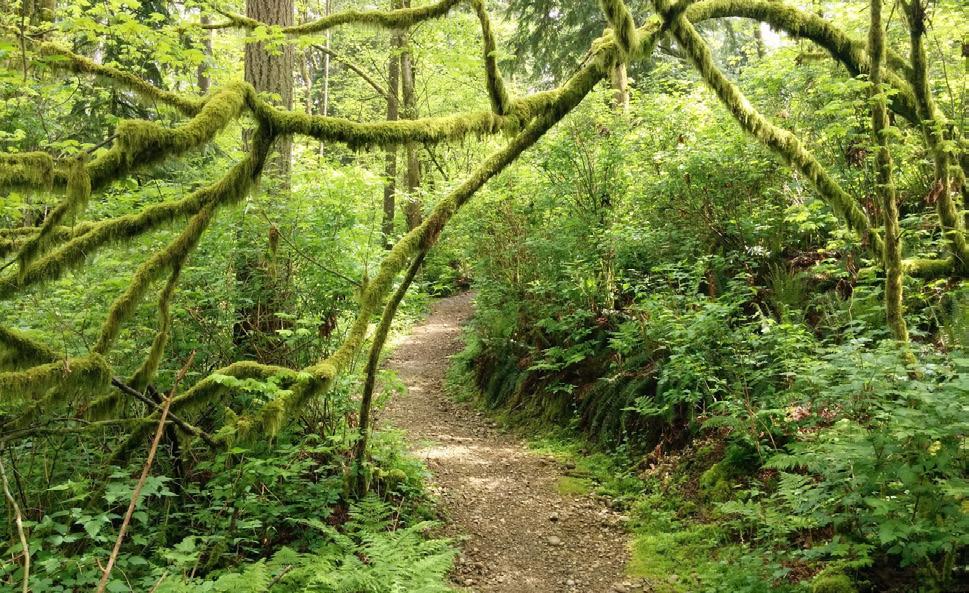
Ahead of the expected wild re season, the City of Burnaby has opened a new wild re detection system across di erent points of the city, including on Lhuḵw’lhuḵw’áyten (Burnaby Mountain). The system includes new technology such as “ground-based sensors and strategically placed smoke detection cameras to identify early signs of wild re, such as heat and smoke, in near real time,” according to an announcement from the City. The project, which is funded via an agreement with Trans Mountain, comes a year before the city’s planned full-scale emergency exercise which will use the new system.
In a statement to The Peak, the City of Burnaby said the new technology would aid emergency services to “respond quickly, helping to contain small res before they grow and protecting nearby neighbourhoods, critical infrastructure, and forested areas.”
The City noted that Lhuḵw’lhuḵw’áyten is one of the municipality’s richly forested areas, and the technology would add a “layer of protection in this area, while supporting broader wild re readiness e orts across the city.” The City also shared in a document that the mountain is “unceded land of the hənq̓əminəm and Sḵwxwú7mesh sníchim speaking peoples,” and today is a city-designated conservation area.
The Peak reached out to Sarah Thompson, director of emergency management and business continuity at SFU, to
She highlighted that the new wild re system is innovative: the cameras are designed to only detect anomalies in the environment. “The idea is that it does 360 degree scanning of the environment via a live feed, but it blurs any items that could be buildings, things like that,” shared Thompson. “It’s designed to look at forests and the horizon so that it can detect patterns, or rather anomalies to the patterns, like smoke plumes. It also does not record, so the privacy of our community was paramount in this initiative.”
According to the City of Burnaby’s website, the 2027 full-scale city-wide emergency exercise is a “multi-agency, multijurisdictional, multi-discipline exercise designed to evaluate the operational capability of interdependent emergency management systems” in the municipality. The city shared that the test, which may occur in 2027, will aim to simulate “the high stress environments that unfold during actual response conditions.” Although no details about the type of emergency this exercise plans to simulate, it will involve “multiple City departments, engagement of First Nation Host Communities, neighbouring municipalities, government and regulatory agencies, non-government stakeholders and community response partners.”
Thompson added, the exercise is planned to “test our decision making capabilities at our Safety and Risk Services Emergency Management Program,” SFU’s leadership program that “looks
at the community needs and how we’re supporting large-scale disasters.” Additionally, the team has an emergency shelter that can host 125 people. According to SFU, there are almost 29,000 undergraduates alone that attend SFU, many of whom attend classes on the mountain.
The Burnaby tank farm expansion adds more tanks between the existing ones, meaning that “bu er space that was built originally to prevent the spreading of a potential re from one tank to another will be compromised.” Following the expansion, there have been concerns raised by SFU leaders, the City of Burnaby, and community members about the heightened risk of a re, and the potential entrapment of the people on Burnaby Mountain in the case of a tank farm explosion.
To help SFU community members stay safe this summer, Thompson stressed, “it’s really important to think about [emergency planning] ahead of time.” She highlighted how your commute to campus could be impacted in the event of a disaster and carrying emergency provisions or resources “would better prepare you if something unexpected happened.”
Thompson also identi ed support systems as being key in the event of a disaster. “What is your network in the local community?” She urged individuals to talk “about disasters with that network beforehand to think through what you might do with friends, with family, with loved ones.”
Download the SFU Safe app, which has access to campus services in the event of a natural disaster and/or other disturbances on campus.
As fossil fuels continue to damage our planet, moving towards another subterranean energy source is needed
JONAH LAZAR STAFF WRITER
Would a pivot to default AIpowered Search threaten one of Google’s crown jewels?
TOMOS LAND STAFF WRITER
Last month, Google unveiled its new arti cial intelligence (AI) model, Gemini 3.5 Flash, which allows users to conduct multistep tasks. This latest iteration of Google’s AI model promises greater latitude for users who are eager to engage with an AI agent from the start of their query all the way until the end. However, this newest advancement in the company’s arti cial intelligence push threatens to further monopolize the internet by giving Google the ability to wield even more power over companies and individuals who rely on the search engine for much of their business tra c.
Initially expected to become the default setting after its unveiling, this now-scrapped idea still removes users from the process of searching, ltering, and exploring the results page that has become synonymous with Google. This latest development to Search, even if not rolled out more extensively in the future, pushes more people towards using the feature. Already, entire industries have poured millions of dollars into search engine optimization (SEO) to tweak website titles, web addresses, and backend development to rank as highly as possible on search engines results page. Now, companies who have already spent a substantial amount of resources contorting themselves to adapt to new core updates, could nd themselves back at square one.
Everyone is impacted by including AI in the search process. Small businesses and creators don’t have the disposable
Canada’s attempts to balance economic growth in the oil sector while limiting the ecological damage seem to be failing. With the new emissions and pipeline deal with Alberta, and natural gas pipeline approved for northern BC, Canada is expanding its fossil fuel infrastructure. The recent spike in the price of oil due to the war on Iran and the closure of the Strait of Hormuz increased revenue for the government and fossil fuel companies, at the continued expense of the environment. But fossil fuels shouldn’t be the way forward for Canada’s energy industries.
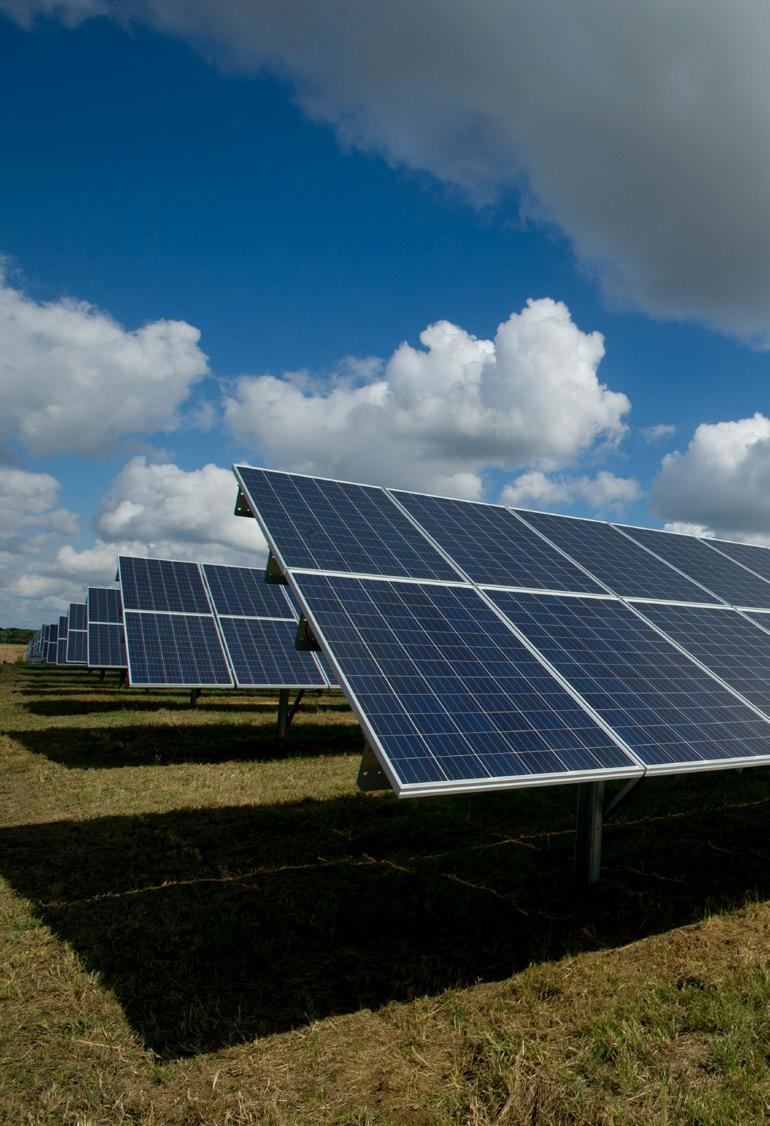
Geothermal power is a renewable energy source that stems from volcanic activity and subterranean heat stemming from the earth’s mantle. Pipes circulating water are sent deep below the surface, which is then boiled by the warmth trapped underground before returning to the surface to power a turbine to produce electricity. Canada holds vast amounts of renewable geothermal energy, particularly in the western territories and provinces, with BC considered one of the most promising areas for development.
Many sites in Western Canada, such as Mount Meager near Pemberton, BC, boast enough geothermic activity for electricity to be produced. Others, such as the Western Canada Sedimentary Basin, which ranges from parts of BC to Manitoba, have enough potential to heat homes. According to Statistics Canada, 51.5% of all energy consumption in Canadian homes is natural gas and it is the most common energy source for heating. Natural gas is not renewable, is extracted similarly to oil, and is also dependent on pipelines for transportation. A pivot towards heating our homes with geothermal energy would greatly reduce our dependence on fossil fuels, and would be accessible for much of the west of Canada.
Geothermal energy could produce 5,000 megawatts per hour of energy, which translates to roughly 43.8 million megawatts per year. Nationally, fossil fuels were burned to create roughly 224 million megawatts of electricity in 2024, meaning that geothermal energy could replace almost 20% of our electrical grid’s fossil fuel dependence. Yet, we have hardly started to develop this sustainable energy source. Currently, the Swan Hills geothermal plant in Alberta, is the only active plant in Canada. This plant repurposed an existing oil eld to co-produce geothermal and natural gas. No new land needed to be developed and much of the existing drilling and extracting infrastructure was repurposed for geothermal activity, greatly cutting down on costs and future emissions.
Long term volatility in the oil market has led to Canadian companies focusing on short-term pro ts and automation, resulting in a 17% decline in domestic employment from 2012 to 2023. Even the Trans Mountain pipeline, bought and expanded upon by the federal government, will be expected to sell at a de cit potentially in the billions, due to ballooning construction costs, leaving taxpayers to foot a monstrous $34 billion construction bill.
The economic tide is turning against fossil fuel production in Canada — reduced pro t margins have created a dependency on increased production and exportation, which has been dependent on costly and unpopular pipeline projects. Geothermal energy could reduce much of our domestic need for fossil fuels like natural gas, and evidence from the Swan Hill plant shows that older plants can be repurposed. Canada needs to invest in stable, long term green power that will diversify our energy industry and geothermal ll that need.

reliable revenue streams, making up about 56% of its revenue in the last three years.
Small businesses and creators, who are reliant on the whims of Google’s search engine rankings to reach new customer bases, will be hit hardest by these new changes.
income needed to hire an in-house SEO specialist and are reliant on the whims of Google’s search engine rankings to reach new customer bases. In addition, Google’s AI Mode has shown itself to be susceptible to being easily manipulated to spread misinformation making it harder to nd accurate information. The move to double down on a technology that lacks transparency and can produce substantially varying results raises questions about the search engine’s future role in shaping commerce. Search is one of the company’s most
In the context of the capitalist economy, the tech behemoth’s investment in AI makes perfect sense. Google’s parent company, Alphabet, who lost a groundbreaking antitrust case in 2024, knows better than most the power monopolization brings. They will be watching the imminent Initial Public O erings, where companies list and sell their shares publicly, of AI-companies such as OpenAI and Anthropic with a mix of envy and fear in the coming months. Alphabet, valued at more than $4 trillion, are well aware that a failure to adapt to the AI-age will leave them susceptible to the predatory tactics they used to reach their lofty valuation in the rst place.
Trillion dollar valuations aside, the companies and creators whose pro t margins are perilously impacted by the smallest drop in internet tra c will su er most from Google’s double down on AI. The cascading impacts of this change may drive more businesses to cheaper advertising alternatives, such as social media channels, including Alphabet-owned YouTube. In any case, small business owners and individual creators will continue to be at the mercy of international conglomerates chasing even greater dividends.
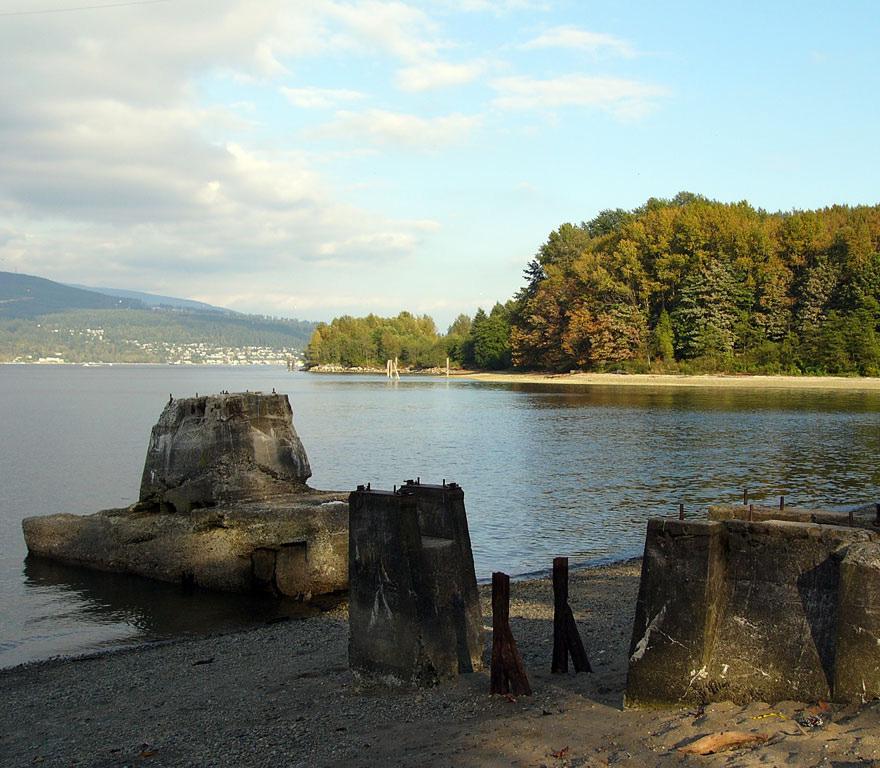
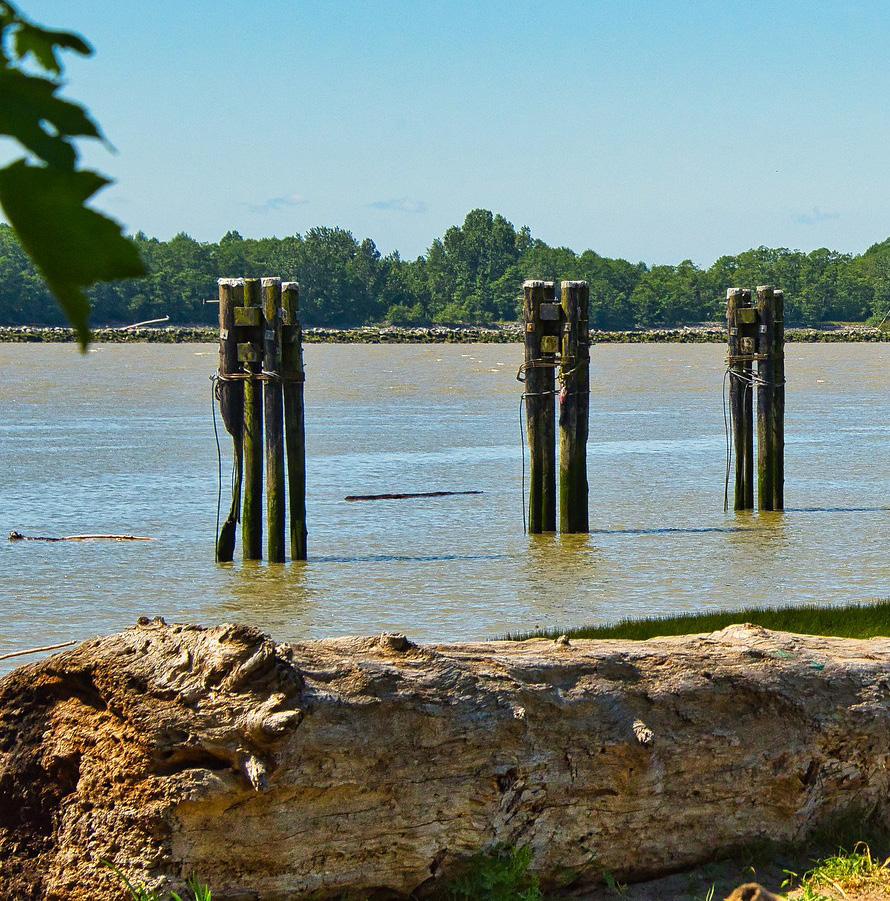

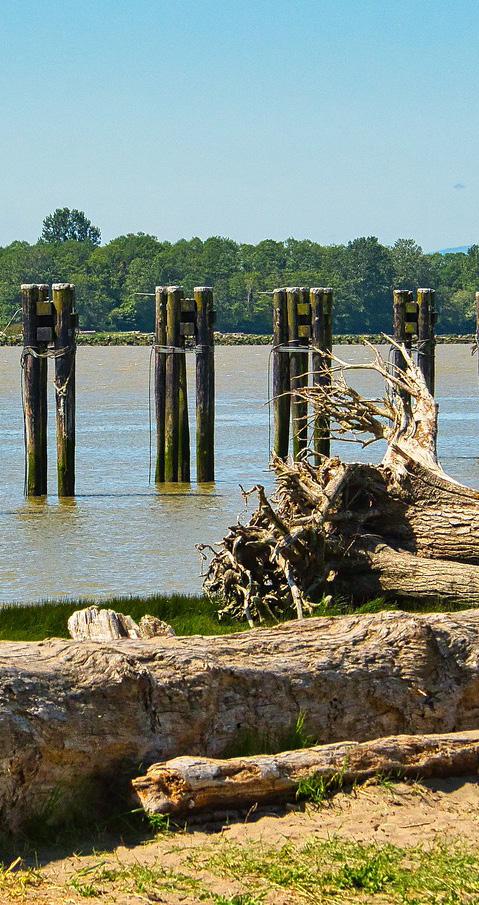
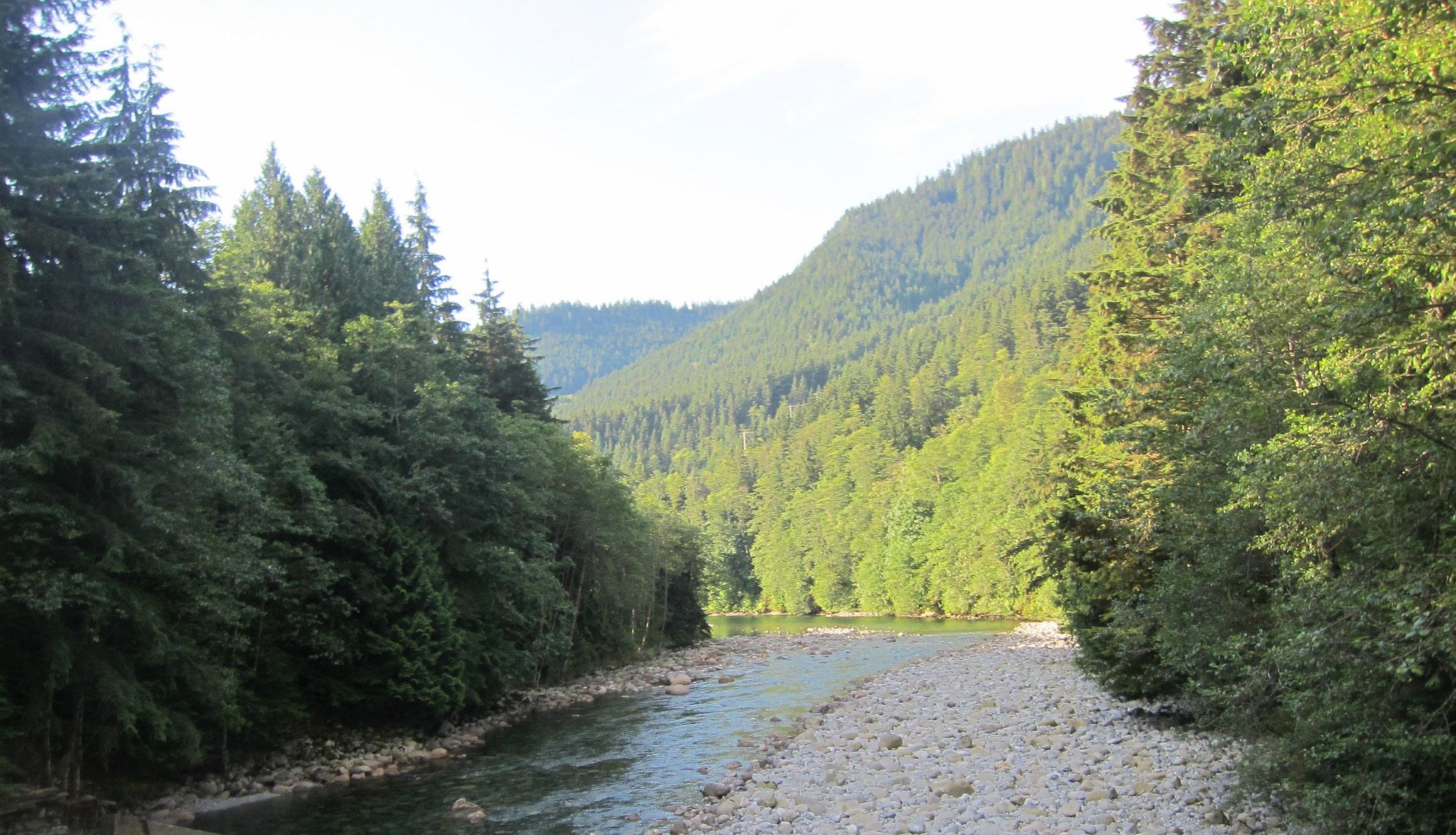


Vancouver’s lack of diverse participation in outdoor recreation is a product of colonial policies and financial barriers
Some journalers have their own “ecosystems” — a collection of journals that serve di erent purposes. My journal ecosystem consists of a junk journal, a tea journal, a random thoughts journal, and what I call my “plain writing” journal. My junk journal is a gallery of mementos and random objects that all match an aesthetic theme, while my tea journal contains envelopes of teas I’ve tried, and my random thoughts journal houses spontaneous thoughts. I like decorating my junk and tea journals with patterned papers, pictures, stickers, and other keepsakes, but these journals can be di cult to maintain. Aesthetics should not impede you from experiencing the bene ts of journaling, which is why plain writing journals exist and a good place to start.
There’s so much power in written words — in conversations, you don’t always have the time to choose your words. When you write, you can take as much time as you need to craft sentences that re$ect your sentiments.
Journals are time machines in the palm of your hands that let you look back and re$ect on your growth. When something memorable happens, I write about it as soon as possible to capture how I felt in that exact moment. How the writing looks shows a state of being that exists in that moment. When my thoughts are rushing out, it looks messier and $uid. When I’m calm, the writing looks neater, with consistently shaped letters that are evenly spaced out. Reading vivid descriptions in past journal entries lets me relive those memorable moments.
If you’ve ever thought about journaling but don’t know where to start, I encourage you to just write. Your life is a story worth writing about, and the pages of a journal are waiting to hold it.

Pristine towering snow-capped mountains, old-growth forests, and majestic coastal fjords are just a few of the natural wonders we have here on Turtle Island. Outdoor activities are now synonymous with the province’s identity. Summers are for overnight camping trips in the remote BC wilderness, while winters o er skiing or snowboarding in local mountains and resort towns. Vancouver’s culture is tied to its natural landscapes, landscapes we owe to the caretaking from Indigenous Peoples — and yet, only a subset of the region’s multiracial population is adequately represented in using these outdoor recreational spaces. The fact that the outdoors remain overwhelmingly white in representation brings us to question: where are all the BIPOC nature enthusiasts?
It’s undeniable that racialized folks are heavily underrepresented in the North American outdoors. In BC, for instance, a 2023 BC Parks visitor satisfaction survey found that an overwhelming 84% of respondents identi ed as white/Caucasian, while less than 0.1% and 1.1% identi ed as Black and Indigenous, respectively. These statistics are not exaggerated but experienced tangibly in real-life. As a person of colour, I can’t help but feel alienated in a sea of white people when frequenting Vancouver’s natural spaces. There are deeper reasons for this lack of representation which can be traced back to colonial portrayals of untouched wilderness: an oxymoron which has shaped an outdoorsoriented recreational culture that excludes participation from racialized and low-income folks.
Protected areas and national parks in both Canada and the US are sites of green colonialism, an ongoing form of land grabbing that depends upon the forceful removal and displacement of Indigenous Peoples from their traditional territories in the name of wilderness and ecosystem conservation. Since the establishment of Yellowstone National Park in 1872, national parks were marketed as leisurely retreats and playgrounds which were politically marketed to wealthy white settlers. When recreation became the only acceptable form of use on managed lands that have been reduced to sites of tourism, Indigenous Peoples were then prohibited from living, hunting, and reconnecting with their ancestral spaces. These colonial and state-sanctioned acts of violence continue to reverberate on current generations, as the erasure of Indigenous cultures combined with intergenerational trauma adds to a further detachment from the land. A CBC article summarizes this succinctly by commenting how a “lack of minority representation means some people feel unwelcome in the outdoors,” which adds to further reluctance towards heading out onto the trails.
Paradoxically, the expectations of living in Vancouver are tied to the assumption that nature is right on our doorsteps, free and accessible to all within a blink of an eye — which is not untrue for the most part — the city alone have more than 250 parks. The real issue here are the nancial barriers that prevent meaningful engagement with the outdoors. Gear is incredibly expensive. Provincial parks in the Lower Mainland such as Cypress and Mount Seymour Park are both inaccessible by public transit, instead requiring travellers to pay for a private shuttle bus service. Don’t even get me started on winter sports. Ski tickets cost $199 for a two day sky card at Cypress Mountain and $152 at Whistler for a day pass. Local nature spots are either privatized or run like they are, and catered to tourists or people with the means. The Grouse Grind may be a free hike but the gondola down costs $20. Even as a student, the Capilano Suspension Bridge entrance fee still costs between $48–$64, depending if it’s a day or evening visit. As a low-income student without a personal vehicle, the outdoors is simply out of reach.
Vancouver’s culture is tied to its natural landscapes — and yet, only a subset of the region’s multiracial population is adequately represented in these outdoor recreational spaces.
Outdoor recreation doesn’t just exclude BIPOC and lowincome individuals but also people with disabilities. The experience of connecting with nature should be a right that all humans are able to enjoy, however, a lack of accessibility in the built environment of trails means that people with mobility challenges get left behind in the face of expensive specialized gear, lack of information on accessibility features, and steep or poorly maintained trails.
Living in a city with a place identity strongly associated with the outdoors, we must consider how these spaces can be transformed to become more inclusive and accessible for all of its inhabitants.
I Am Gitxsan highlights resilience
DIYA BRAR SFU STUDENT
Content warning: mention of residential schools.
Directed by Iranian Canadian lmmaker Hossein Martin Fazeli, I Am Gitxsan was screened at the Vancouver Public Library on June 4 alongside a post- lm Q&A. The documentary follows Phoenix Apperloo, a 17-year-old, who travels to Hazelton, BC, in a quest to nd a more concrete connection to his ancestral land and Gitxsan heritage. During this time, he notes down diverse stories of residential school survivors, learns from community members, and gains a greater understanding of the culture, as well as the trials and tribulations that have shaped his people. Motivated by his knowledge and experiences, Apperloo wrote a letter to former prime minister Justin Trudeau in 2023, calling for an honest conversation about the ongoing impacts of colonization and the limitations of reconciliation e orts that stop short of meaningful change.
One of the documentary’s most compelling qualities is its visual storytelling. It opens with sweeping shots of rivers, sh, forests, and mountains accompanied by re ection on the Gitxsan relationship with the land. These calm, immersive images are sharply contrasted with footage of environmental destruction, residential school realities, and modern industrial development. The score expertly follows a similar pattern, shifting from quiet natural soundscapes to more dissonant and unsettling tones during discussions of colonial violence. This juxtaposition never feels forced; instead, it reinforces I Am Gitxsan’s central concern: the consequences of disconnection from the land, culture, and community.
The documentary is equally strengthened by the range of
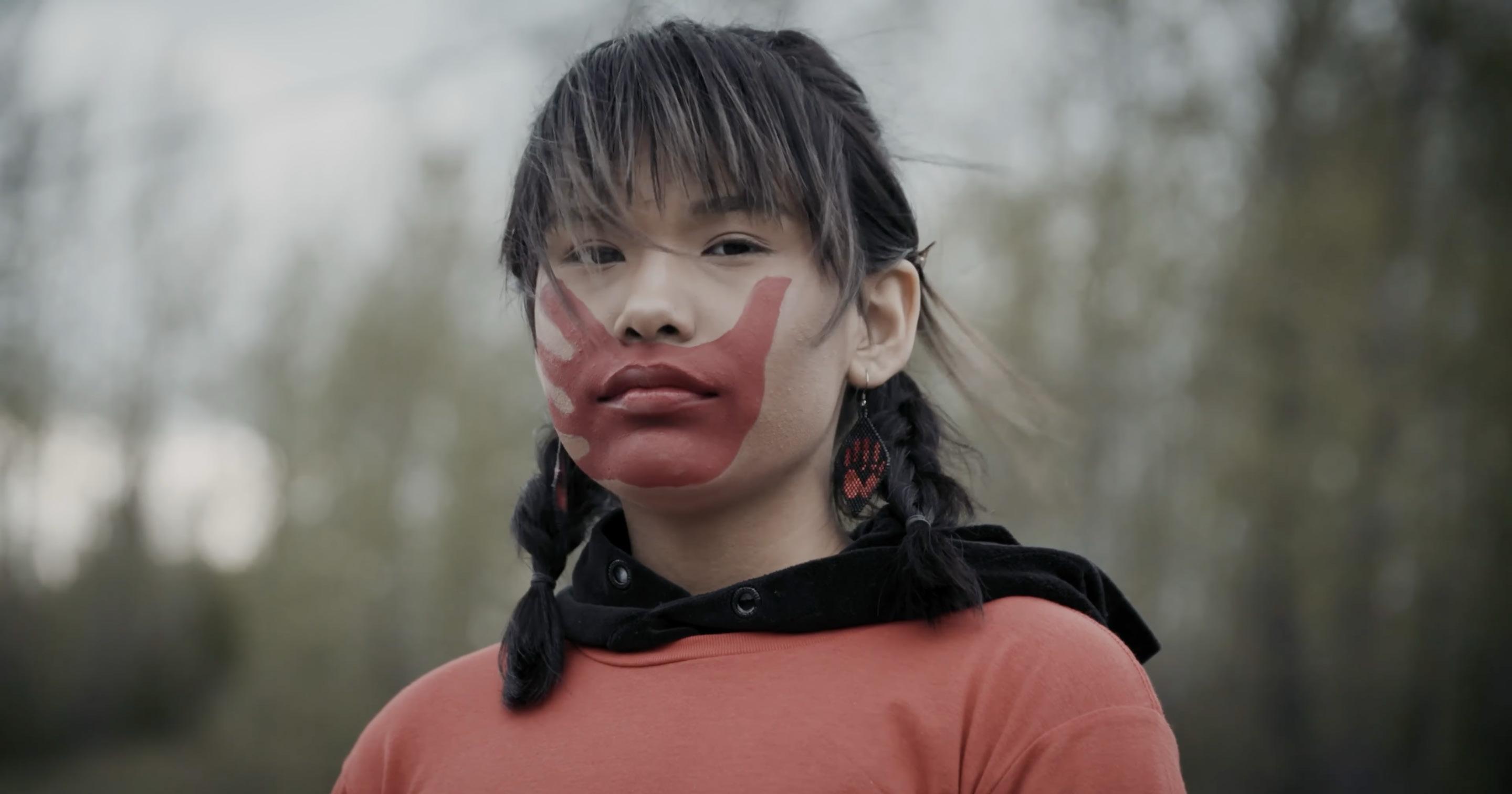
voices it incorporates. Perspectives from Chiefs, Elders, family members, survivors, and experts lend both emotional weight and historical depth to the narrative. Particularly powerful are the discussions of residential schools and their lasting e ects on families and communities. Rather than relying solely on archival footage, the lm combines survivor testimony with stark animated imagery to convey the loss of language, identity,
We’re a small island in this ocean of physical and social justice, and we’ve got to come together and make it a big island.
HOSSEIN MARTIN FAZELI DIRECTOR OF I AM GITXSAN
and belonging imposed through these institutions. These sequences are di cult to watch, but they are among the documentary’s most important moments.
Despite its heavy subject matter, I Am Gitxsan is never consumed by despair alone. Moments of humour, communal connection, and scenes of shing traditions and storytelling emphasize continuity rather than solely loss. At the same time, the lm challenges audiences to think critically about reconciliation e orts in Canada, arguing that apologies alone cannot meaningfully address ongoing inequalities.
This message was reinforced during the Q&A, where Fazeli emphasizes that the project was “about trying to create real change,” not simply collecting awards or festival recognition. He expressed hope that the documentary would only be the beginning and would inspire others to tell their stories, stating, “We’re a small island in this ocean of physical and social justice, and we’ve got to come together and make it a big island.”
By balancing di cult truths with a powerful sense of perseverance, I Am Gitxsan o ers a thoughtful and necessary contribution to conversations surrounding Indigenous history, culture, and justice. It also brutally showcases the realities of colonialism and intergenerational trauma in the Gitxsan community, while simultaneously highlighting its cultural resilience and continued resistance.
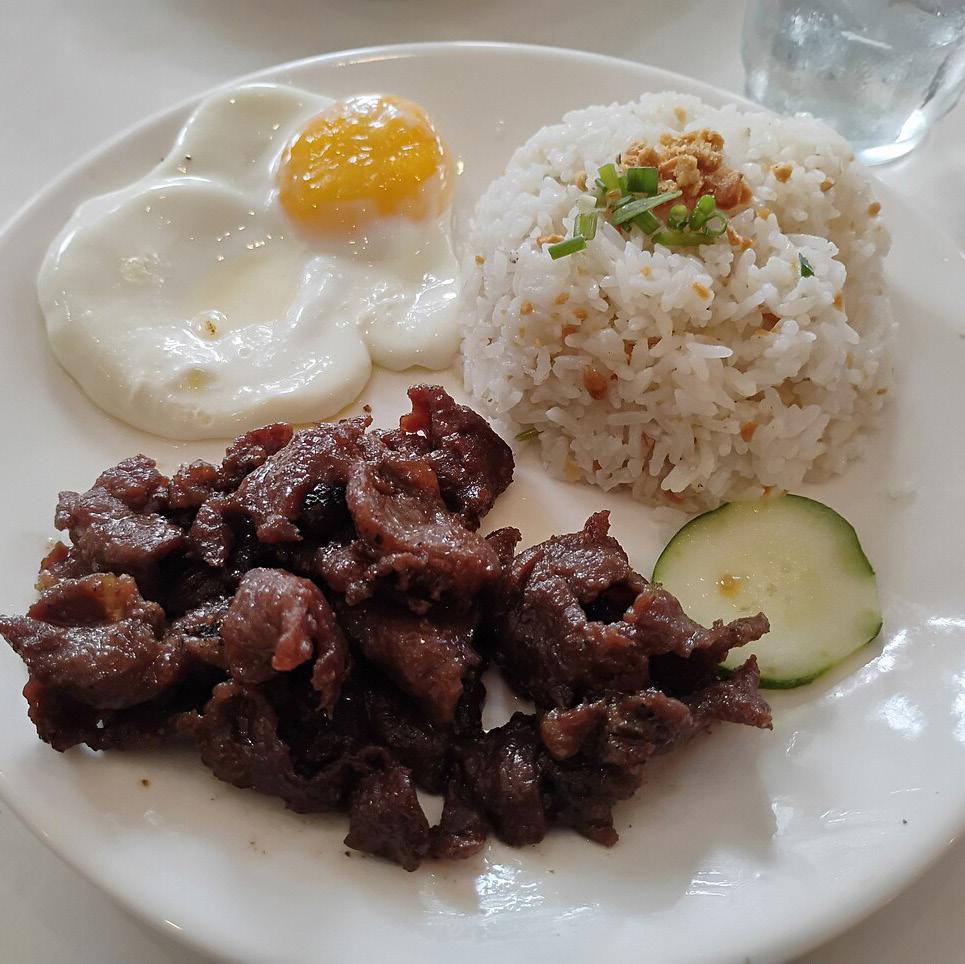
Silogs are an everyday breakfast favourite of Filipino households, consisting of three main components: sinangag (garlic fried rice), pritong itlog (fried eggs), and your choice of protein. Traditional silog proteins include tapa (marinated beef), pritong daing na bangus (fried milk sh), longanisa (Filipino sausage), and tocino (sweet cured meat, usually pork).
The word “silog” is basically born out of “si” from sinangag, and “log” from itlog. In addition to the key silog components, there’s also usually a side of fresh produce, such as diced tomatoes. Some people (including myself) also use “sawsawans,” or dipping sauces, such as vinegar. In honour of Filipino Heritage Month, I’ll be sharing a recipe from my mom for one of my favourite silogs: tapsilog.
Ingredients:
For the tapa:
1.5 lbs beef sirloin or ank (sliced thinly)
4 tbsp soy sauce
4 tbsp lemon juice or calamansi
2 cloves crushed garlic
Salt to taste
2 tsp sugar
Vegetable oil for frying
For the sinangag:
3 cups leftover rice (I like using short-grain white rice with a soft and sticky texture, but you can use any rice you prefer)
Salt to taste
• 3 cloves of garlic
Vegetable oil for frying
1–2 eggs and vegetable oil for frying eggs
Optional: Your choice of fresh produce (e.g. diced tomatoes or cucumbers) . Vinegar (often spicy vinegar, but I also use apple cider vinegar).
Instructions:
1. In a bowl, combine the soy sauce, lemon juice, crushed garlic, sugar, and salt. Add the beef afterwards and massage the sauce into the meat. Marinate the meat in the fridge overnight.
2. To cook the tapa, add oil to a pan over medium heat and cook the beef for about 3 to 5 minutes, or until the sauce has caramelized.
3. For the rice, add oil to a pan over low-medium heat and saute the garlic until light brown. Add in the rice and stir fry until the rice is heated through. Add salt and mix.
4. Fry the egg(s) sunny-side up in a pan with oil over medium heat.
5. To serve the tapsilog, place the tapa, sinangag, and fried eggs on a plate. Enjoy with vinegar sauce to balance out the tapsilog’s rich avours, and a side of refreshing tomatoes or cucumbers.
Notes: If you want the tapa to have a lighter avour, marinate it for a few hours instead of overnight.
• Use thin slices of meat if you want the marinade avour to soak in more.
Pour some of the marinade into the pan when cooking the beef and let the marinade caramelize for a more intense umami avour.
Let the rice get a bit crispy for that toasted, crispy rice texture and avour.
Tapsilog is a meal that I grew up eating, and it’s one of my favourite foods. It’s the perfect trinity that promises avour and texture — a spoonful of garlic fried rice topped with tangy tender beef and crispy edges of fried egg, all glazed in golden runny yolk. I hope you enjoy this meal as much as I do, and I hope this dish inspires you to try other silogs and Filipino dishes too.
The Body Remembers When The World Broke Open is a Vancouver vignette of Indigeneity
MAYA BARILLAS MOHAN STAFF WRITER
Content warning: mention of domestic abuse.
If the 104-minute movie The Body Remembers When The World Broke Open feels like a lifetime, it could be because it o ers a completely undiluted clip of one. The movie could also feel that way because it breathes at the same rate reality does: at red lights, you idle, and during awkward conversations, you stall while you nd the words. The lm is based on a real encounter director Elle-Máijá Apiniskim Tailfeathers had. While ctitious in its speci cs, The Body Remembers handles issues facing Indigenous women throughout the unceded lands of Vancouver with nuance.
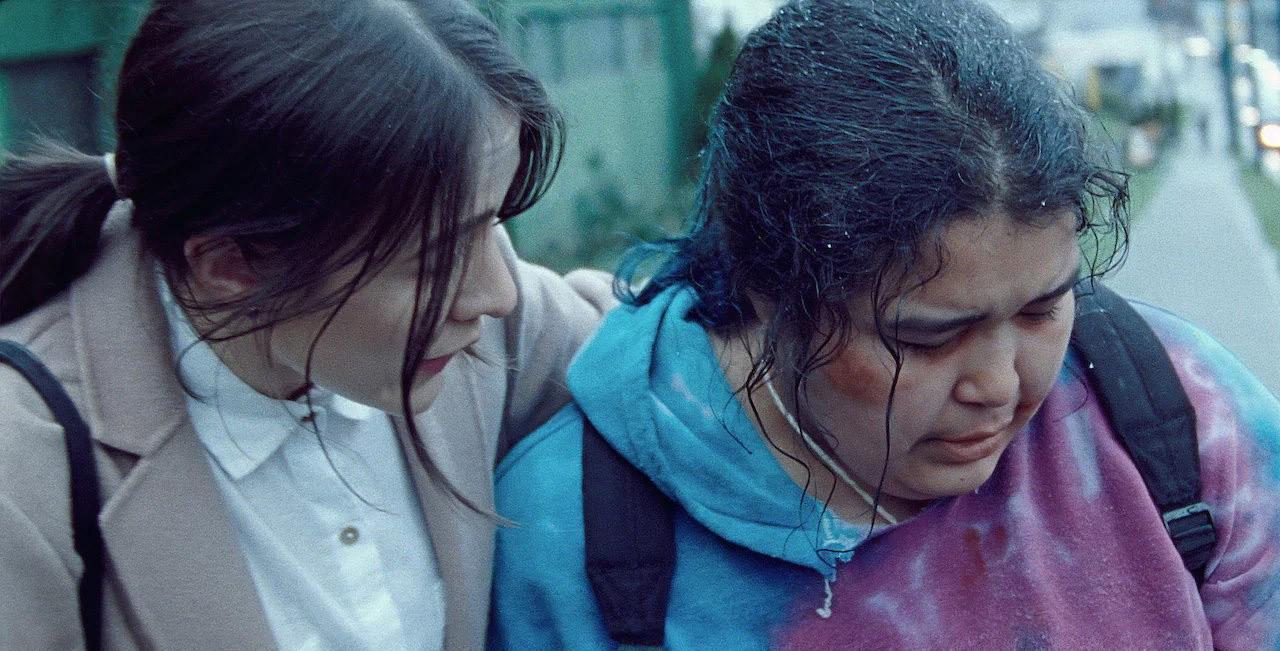
Pregnant, barefoot, and soaked from the rain, 19-year-old Rosie (Kwakwaka’wakw) meets Áila (Niisitapi/Sami), who following a particularly aggressive attack from Rosie’s boyfriend, scoops Rosie under her arm and guides her to temporary safety. Despite both being Indigenous women, their circumstances vary: Áila is white-passing and returns to a clean apartment and a gentle boyfriend of her own; motherhood is a challenge Rosie anticipates tackling independently, whereas Áila is not sure she wants to tackle it at all.
The movie’s handheld, continuous-take style deposits the viewer between two characters trying their best. Each cut is seamlessly concealed because one camera is swapped out for another when a lm cartridge is spent. The realtime tracking of the lm’s events grounds them in lifelike motivations. Yet, it’s hard to tell if Áila is speaking fully from a place of empathy, or if a glimmer of perceived (white) saviourship — underpinned by class di erence — cuts through e orts to connect Rosie with support services. At
ARTS & CULTURE
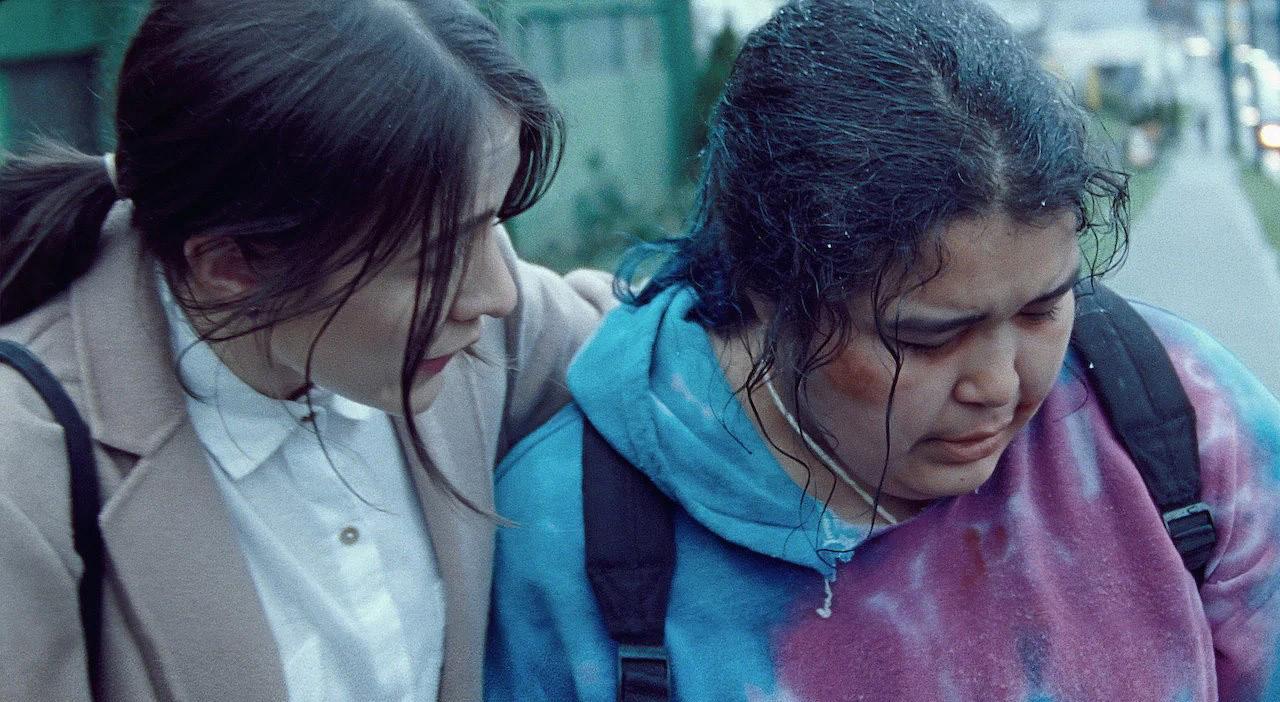
the same time it’s di cult to sympathize with Rosie due to her repeated o ences of theft and hostility towards Áila, but the movie unravels the unseen struggle of abuse facing Indigenous women. Rosie’s hostile boyfriend dominates much of her (and the plot’s) narrative despite limited time on screen. His rage is the reason she ees, but it is also the reason she returns home. This pattern is not unique, and the characters know this: pulled along bleak Vancouver streets in the backseat of a yellow cab, Rosie is reluctant to reach the
While fictitious in its specifics, The Body Remembers handles issues facing Indigenous women in Vancouver with nuance.
From courses to exhibitions, the School for Contemporary Arts has allowed me to pursue my passions while opening career doors
TRACEY HO SFU STUDENT
While I had always enjoyed arts in high school, being a student at SFU’s School for Contemporary Arts (SCA) for the past ve years made me realize just how much more there was to learn about the art world. My rst few classes with the school were focused more on artistic concepts, which allowed me to develop a strong base knowledge of di erent techniques such as durational (time-based) media, painting, and sketching. During my third and fourth years, I got to take a lot more practical classes that involved hands-on application of such techniques. While these courses allowed me to become a well-rounded artist in watercolour and oil painting, sketching, multimedia video-making, and sculpting, my time at the SCA also showed me what a student artist can do outside of the classroom.
One of my most memorable moments was getting to take CA 306, where I got to do a practicum with SFU Galleries. Eventually, I helped select several works to be displayed as part of a piece called “The Moon Project” at the Teck Gallery (now renamed “Harbour Centre Lounge”) from March 2024 to March 2025. Through these experiences, I was welcomed into a family of artists and arts enthusiasts, and more speci cally, they created a community for me at SFU outside of the lecture halls. My times with SFU Galleries and the Gibson Museum were also personally instrumental in showing me my future career path — becoming a curator. CA 306 paved a long way in rejecting the false stereotype that students who pursue arts in university go unemployed.
I also fondly remember participating in two visual arts shows
that helped me become the artist that I know today. The rst, The City of Many, at the end of my third year, and the nal graduation show called KerPlunk!. For The City of Many, my cohort worked in collaboration with professor Sabine Bitter and Spring 2025 Audain Visual Artist in Residence Sandy Kaltenborn to explore the role of art and artists in an evershifting urban landscape, through looking at themes such as diversity, identity, architecture, and urban dynamism. This show was the rst time I got to show my artwork to the public with my video, “Burnaby Malls Changing Before My Eyes,” that showcased the transformation of the three Burnaby malls (Lougheed, Brentwood, and Metrotown) over the years. For KerPlunk!, held just a few months ago, I got to explore the evolving responsibilities of contemporary artists to keep the integrity of galleries and media and how we, future professionals in contemporary art, adapt to these responsibilities. This art show provided me with one last
As I head into graduation, I will always cherish the confidence that my times at the SCA have provided me.
safe house destination.
As the viewer becomes familiarized with the women, it’s hard not to notice the stereotypes imbued into the characters. Áila is a blandly dressed millennial with an apartment adorned by subtle Indigenous motifs, clearly aware of how her marginalized identity ts on top of her position of privilege. Her kindness seems to be an obligation to her Indigenous heritage, and courtesy to Rosie’s vulnerability. Rosie has a heavier body with matted hair both of which compound the abuse she experiences, implying the correlation between a ordable food and its negative health impacts for impoverished communities. I think it was a stylistic choice intended to make composites out of Rosie and Áila, but the movie seems to imply that abuse victims or those that o er help look a particular way. I don’t think this is a aw, but I wonder if it perpetuates a stereotype rather than identifying the traits a vulnerable person could carry.
The characters diverge quietly because the movie doesn’t really end. It almost feels like the 16mm lm simply ran out for the nal time. As a viewer, you might want stories to draw to tidy resolutions, but for Indigenous women facing violence, there is really no satisfying end. I recommend this movie even though it can be a confrontational watch; it shows two di erent realities on streets the viewer recognizes in a third way of endless possibilities. It’s immersive and evocative, but most of all, I think that 104-minute runtime is the gestation period for empathy to grow.
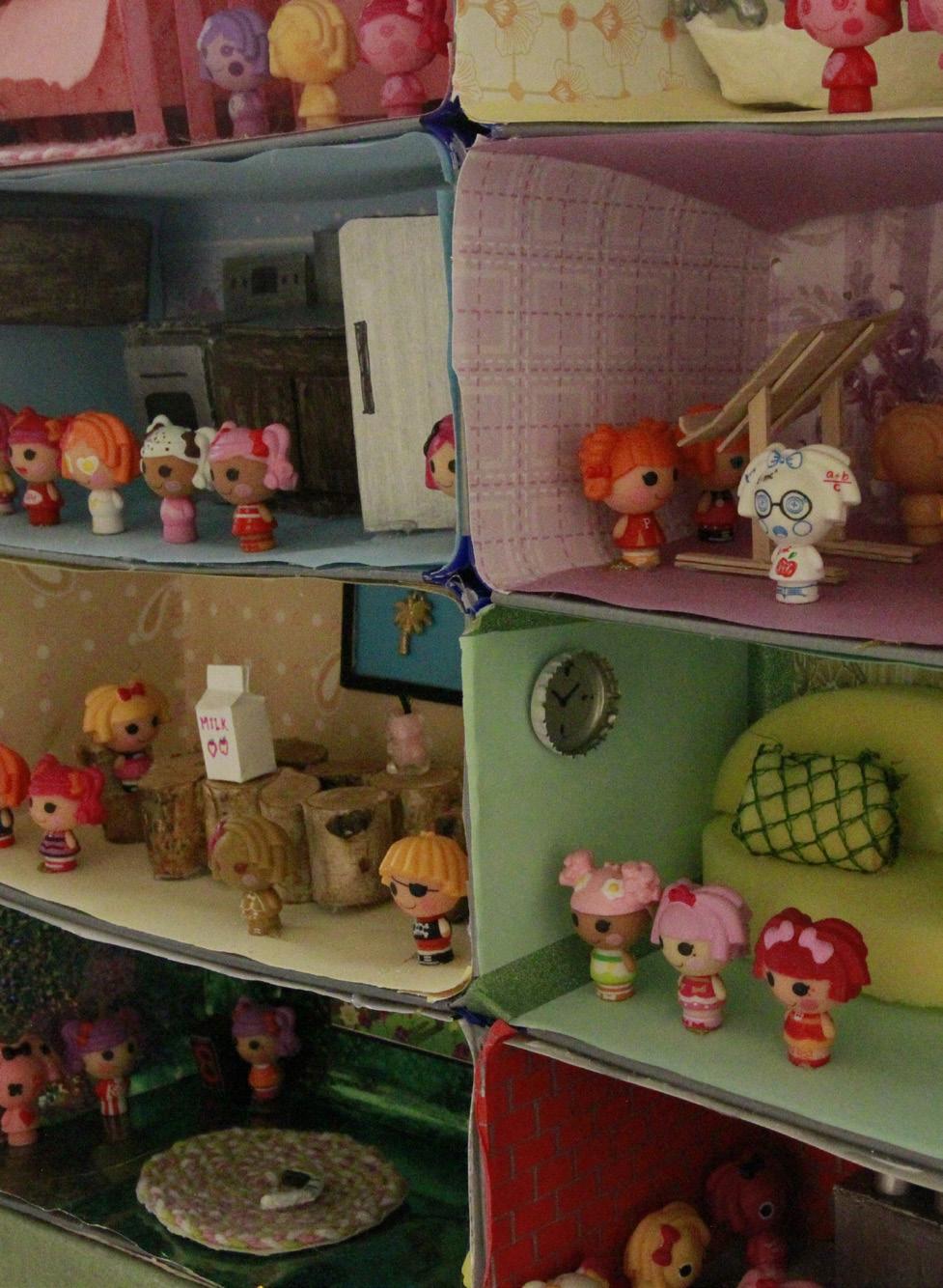
chance as an undergraduate student to publicly display my arts with, “Handmade Dollhouse Mansion,” an eight-section mansion made using recyclable items I collected, representing that old items can be given new meanings in the right environment.
As I head into graduation, I will always cherish the con dence that my times at the SCA have provided me, both in forming personal communities, and in showcasing my arts to the wider public. As I re ect on my life after graduation, I plan to keep visiting local galleries and pursuing curatorial positions. Motivated by what I saw at the SCA, in the longer term, I hope to inspire future generations of SCA students to pursue their passions in contemporary arts and reject the notion that arts deters career prospects.
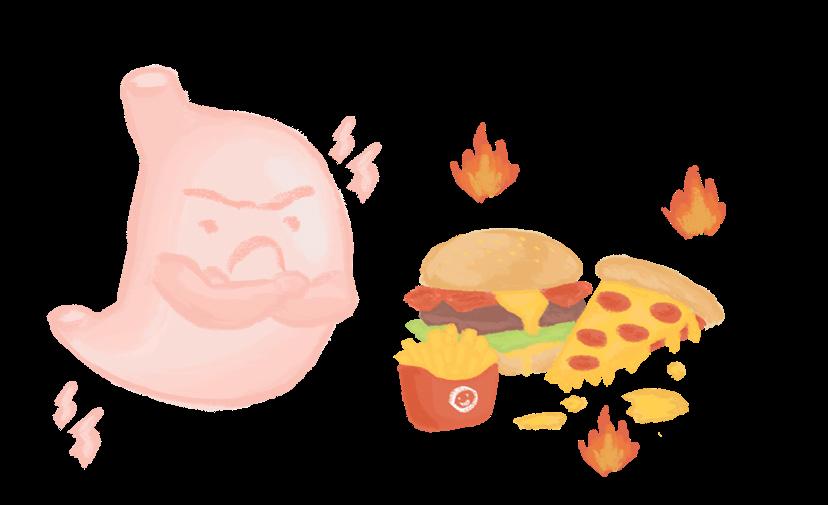
ILLUSTRATION: Jackie Peng / The Peak
A statement on a controversial online collection
In 2025, the British Museum unveiled an online exhibit titled Colonialism: A Digital Experience. The paywalled, by-subscription-only website was created to make stolen artifacts more accessible, and held the controversial mission statement, “History belongs to everyone, as long as it is nailed to the floor in London.” After facing severe backlash, the museum has released a statement, which is as follows:
In the spirit of democracy that Britain has historically propagated worldwide via peaceful invasion, the British Museum welcomes socratic dialogue. An itty-bitty verbal tiff between neoliberals — why, that’s our tea and crumpets! But myself and my wigged compatriots at the British Museum have been quaking in our wellies seeing the insurrectionist whinging of the tabloids this past year concerning our online exhibit. Nonetheless, in an act of gracious neighbourliness, we have axed the website [hold for applause]. We thusly present our defence of our actions to our noble countrymen; esteemed representatives of the Nobel Foundation; and the mob of complaining, unsavoury internationals; in that order. In the spirit of settler-colonialism, ‘tis high time that we situate this kerfuffle behind us and pretend it never existed. Off we go!
Firstly, we at the British Museum have been positively knackered by the ludicrous idea that we should somehow “return stolen artifacts to their rightful owners.” Hast thou no sense at all? The foremost concern of the British Museum is the protection of stolen artifacts. The prerequisites of a nation to protect its own artifacts are as follows: 1) an arsenal of nuclear weapons, and 2) a squadron of silent soldiers in very tall hats. Until one possesses both, they are in no position to protect their own cultural lineage, and we shall benevolently undergo the task on their behalf. By God, imagine if somebody threw soup at it, or misplaced it with their improper archival skills. Nothing like that would ever happen in London.
Moreover, we at the British Museum think that one culture is being neglected amidst this dialogue — why has nobody mentioned British culture? Theft is our great nation’s most beloved pastime; we love it even more than football and transphobia. Be it the Benin Bronzes, the Rosetta Stone, or the Parthenon sculptures; what is consistent is that we rob indiscriminately . . . or maybe a tad bit discriminantly (shhh). The British Museum has borrowed artifacts, and now we’re stealing money by loaning those artifacts to the very people we borrowed them from! Likewise, it is time-honoured British cultural practice to keep old, dusty artifacts around and claim that they’ll rake in tourist dollars. Just look at our monarchy! And do pray tell, why oughtn’t an upstanding institution such as the British Museum partake in traditional British ritual? Our online exhibit was truly ingenious, and we will not apologize for it. After all, we achieved our ultimate goal: stealing the credit for stealing! When you think of “stolen artifacts,” you think of the British Museum — that’s what we call a mighty-good PR move. We’ll gladly steal away your tourist dollars, because we profit from the belief that one needs an aeroplane ticket to see stolen artifacts. By all means, languish in the futility of seeking repatriation across the pond; and forget that collections, museums, and universities right in your neighbourhood do the exact same thing. Ta!
SASHA RUBICK FACT CHECKER
GERD emerges from the intestinal chambers and makes itself heard after years of silence
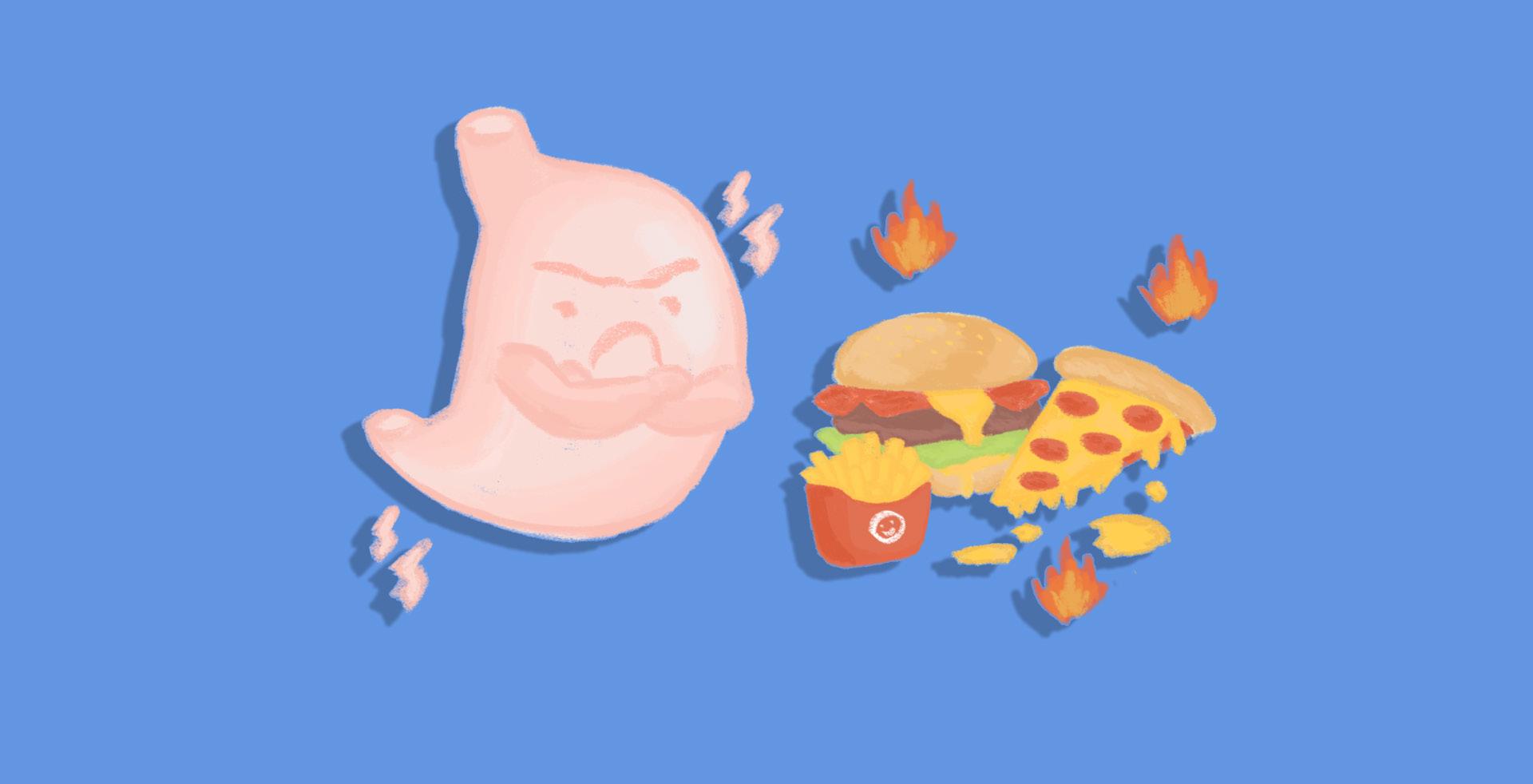
Dear — no, let’s skip the formalities, we’ve known each other long enough. You probably know who it is already, but just to make sure you don’t mistake me for the other guy you hate — AKA lactose intolerance. It’s me, Gastroesophageal Refux Disease (GERD for short). You call me “the ultimate life ruiner,” and while it lowkey stings, I try to convince myself that it’s just a term of endearment for you at this point. You may be wondering why I’m suddenly reaching out to you, considering that we’ve technically known each other for a good couple of years now, but we never had a proper conversation. Like a real, one-on-one, heart-to-heart talk. They say “better late than never,” right? So here I am, being the bigger “person” so to speak, and initiating this diffcult but much needed conversation . . . via a letter. Finally, GERD gets heard.
It’s truly upsetting seeing how estranged we’ve become and how much you’ve come to despise me, when all I’ve ever done was be here for you through thick and thin — I’ve always been the one constant in your life. Who was there for you when you’d pull all nighters studying, while eating spicy instant noodles just to stay awake? That’s right — me. Who did you use as an excuse to avoid consuming culinary biohazards, like the suspicious chocolate chip cookies made by your coworker’s fve-year-old who wipes his runny nose with his hands? ME. “Sorry — I can’t have chocolate, it’s a GERD trigger,” you said, just last week. And not once, in all these years of our union, have you ever thanked me. One might say I’m close to your heart, because . . . you know . . . the heartburn. But I don’t think you feel that way, and it really hurts my feelings!
I’d also like to point out that framing me as the villain in this story has been more than unfair. From your perspective, I ruin the fun by giving you stomachaches and heartburn, but have you ever considered how your actions affect me? I want to have some peace and quiet around here, but how can I when you consume foods that summon me from the pits of the intestinal chambers? Your doctor gave you a list of trigger foods to avoid, and yet you actively choose to consume said trigger foods. And don’t get me started on those disgusting fruit-favoured calcium carbonate tablets that you take whenever you get acid refux. Would you want to be doused in powdery fruit-favoured chalk? The golden rule is to “treat others the way you want to be treated,” so why is it okay to do that to me? And remember when you unfairly blamed me for giving you a stomachache after eating triple cheese pizza, when it was — I’d argue — mainly lactose intolerance’s fault? And yet I took all the blame until you fnally decided to get that checked out. You complain about me being “sour,” but wouldn’t you be sour too if you were me?
As heartburn-inducing as it was to write this out, it had to be done, because you really ought to refect and take responsibility for your own actions rather than blaming me for this whole ordeal. I hope that after reading this letter, you fnally see the situation from my point of view and show me a bit more compassion.
— GERD


1. ___ the season 2. Egg cells
marine creature
61. O’hare airport code
62. Frida portrayer Hayek
63. Mushroom eating plumber
64. Issa of “Insecure” and “Barbie”
65. Type of window 66. Terrible feeling
Cylindrical, to a botanist