

EDITOR-IN-CHIEF
Zainab Salam eic@the-peak.ca
COPY EDITOR Michelle Young copy@the-peak.ca
FACT CHECKER
Sasha Rubick factchecker@the-peak.ca
NEWS EDITOR Noeka Nimmervoll news@the-peak.ca
NEWS WRITERS
Niveja Assalaarachchi and Lucaiah Smith-Miodownik
OPINIONS EDITOR Corbett Gildersleve opinions@the-peak.ca
FEATURES EDITOR Petra Chase features@the-peak.ca
ARTS & CULTURE EDITOR
Phone Min Thant arts@the-peak.ca
HUMOUR EDITOR Mason Mattu humour@the-peak.ca
STAFF WRITERS
Maya Barillas Mohan, Marie Jen Galilo, Tomos Land, and Jonah Lazar
WEB MANAGER Audrey Safikhani web@the-peak.ca
PROMOTIONS MANAGER
Juliana Manalo promotions@the-peak.ca
PRODUCTION & DESIGN EDITOR Mary Gigiberia production@the-peak.ca
ASSISTANT PRODUCTION EDITORS Abbey Perley and Minh Duc Ngo
PHOTO EDITOR Gudrun Wai-Gunnarsson photos@the-peak.ca
PROJECT ASSISTANT Corbett Gildersleve projectassistant@the-peak.ca
BUSINESS MANAGER Yuri Zhou business@the-peak.ca (778) 782-3598
BOARD OF DIRECTORS
Kalika Bhardwaj, Gurnoor Jhajj, Juliana Manalo, Riley Williams, and Yuri Zhou
DISTRIBUTION COORDINATOR
Lucaiah Smith-Miodownik
CONTRIBUTORS
Ella Pendlington, Sia Garg, and Quinn Mulcahy
PEAK ASSOCIATES
Jackie Peng and Victoria Lo
COVER ARTWORK Maya Barillas Mohan
READ THE PEAK


the-peak.ca @thepeakatsfu @thepeakpublicationssociety
Pick up paper copies at any SFU campus Find extended, cited, and web-accessible articles at the-peak.ca Download digital issues at issuu.com/peaksfu
The Peak is SFU's weekly student newspaper published every Monday, by students, for students. We’re funded by a student levy and governed by a Board of Directors. Any SFU student can apply to become staff
We reserve the right to edit submissions for length, as well as style, grammar, and legality. We also reserve the right to reprint submissions at any time, both in print and on web. We will not publish content that is sexist, racist, or otherwise prejudiced.
TERRITORIAL ACKNOWLEDGEMENT
We acknowledge that The Peak’s office is located and our paper is produced, distributed, and read on the unceded Coast Salish Territories of the Skwxwú7mesh (Squamish), xwməθkwəy̓əm (Musqueam), səlilwətaɬ (Tsleil-Waututh), kʷikʷəƛ əm (Kwikwetlem), qʼʷa:nƛʼən (Kwantlen), qicəy (Katzie), sc̓əwaθən məsteyəxʷ (Tsawwassen), Qayqayt, and Semiahmoo Peoples. Unceded means that this land was never surrendered, relinquished, or handed over in any way. We recognize that the unceded land that we occupy includes not only the Lhuḵw’lhuḵw’áyten (Burnaby Mountain), but extends to the land occupied by the Vancouver and Surrey campuses.
and
that is published in The Peak! Email us at promotions@the-peak.ca to learn about writing, illustrating, or taking photos for us!
Alleged human rights abuses raises questions over Canada and Philippines’ partnership
TOMOS LAND STAFF WRITER
From July 1 to 4, Filipino President Ferdinand Marcos Jr. visited Vancouver to meet with Prime Minister Mark Carney to discuss the growing partnership between Canada and the Philippines. Carney reportedly spoke with Marcos Jr. about the Canada-ASEAN free-trade agreement. This agreement, which has been in negotiations for ve years, is slated to open new markets for Canadian goods. Additionally, Carney and Marcos Jr. continued negotiations on a Canada-Philippines free-trade agreement. This deal would theoretically reduce barriers to trade between both countries and expand bilateral cooperation in key sectors.
Local Canadian organizations were critical of Carney’s willingness to meet with Marcos Jr. He is the son and namesake of the Philippines’ former dictator Ferdinand Marcos, whose administration was marked by “political repression, human rights abuses, and the curtailment of freedoms, leading to public unrest and a growing opposition” from 1965 to 1986, according to EBSCO. The current president is accused of censoring his father’s past misdeeds from public record, selling o the country’s natural resources to outside interests, and committing a number of human rights abuses. Dahlia, a local activist group, organized protests in response to Carney’s invitation to Marcos Jr. The group is a liated with Friends of the Filipino People in Struggle, a global organization that aims to support the rights of Filipino people. The Peak corresponded with B, a spokesperson for Dahlia, to learn more.
“Marcos Jr.’s visit, the rst visit to Canada by a sitting Philippine president in 11 years, coincides with a dramatic increase
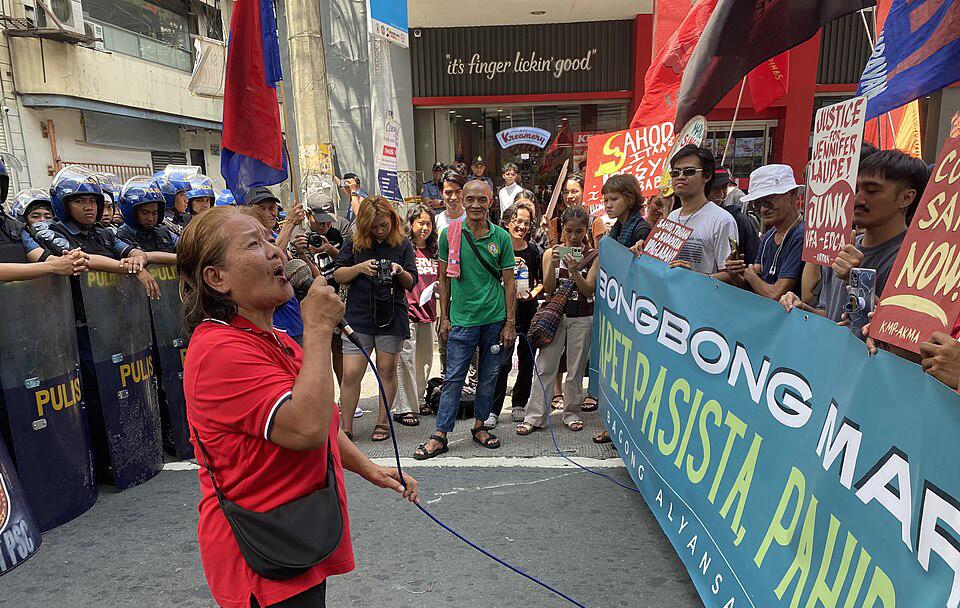
in military and economic collaboration between the two governments through the Canada-Philippines Strategic Partnership,” B stated. “On the military side, these new agreements are poised to increase the lethality of a regime that has become notorious for its violations of international humanitarian law.” Pacts such as the Status of Visiting Force Agreement pave the way for the Canadian and Filipino Armed Forces to take part in joint-military exercises together, which
Canada’s partnership with the Government of the Philippines shows “at best [ . . . ] ignorance and at worst blatant disregard for the government’s dismal human rights record.
Evacuation disproportionately affects Indigenous communities
MICHELLE YOUNG COPY EDITOR
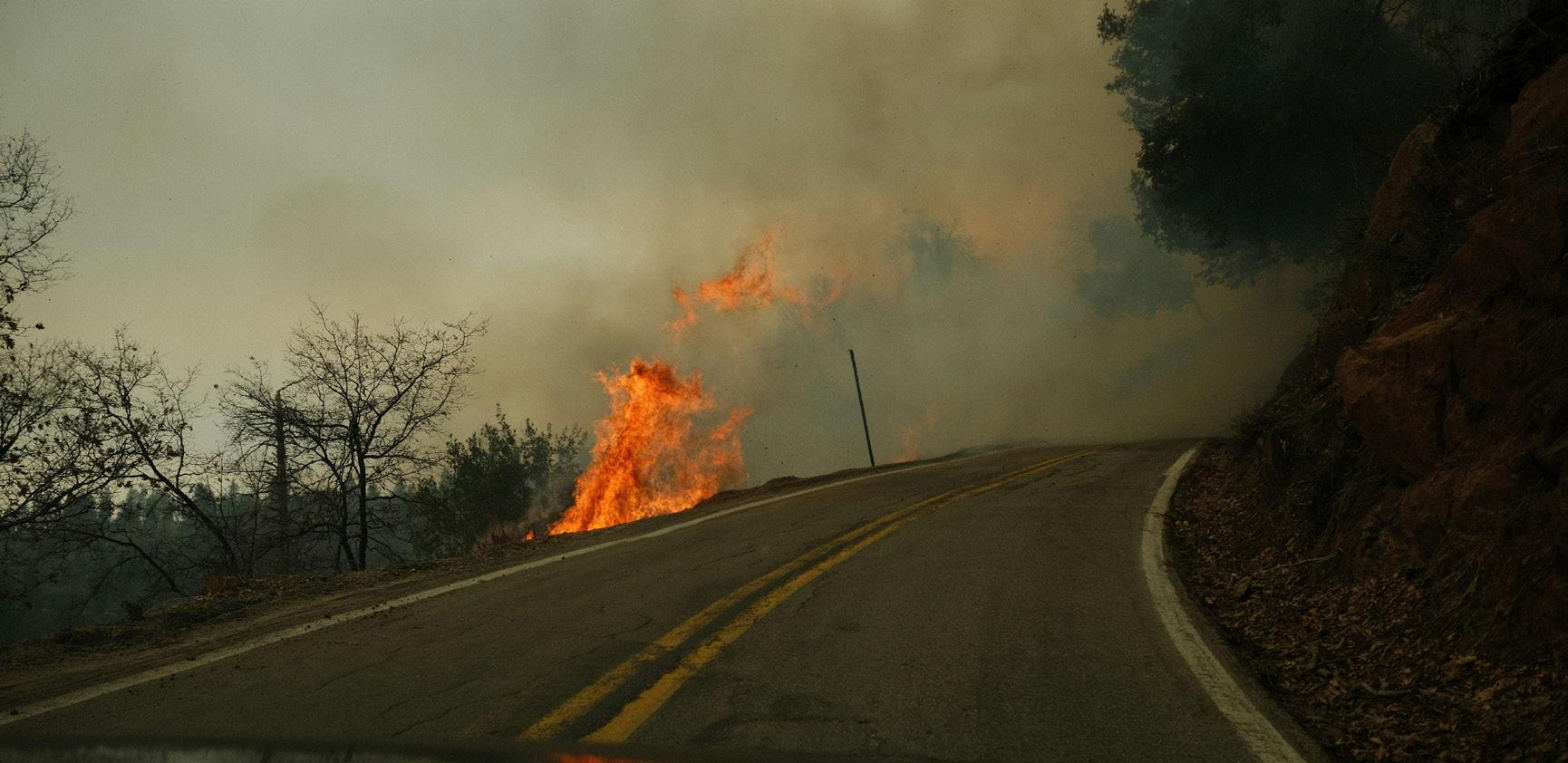
BC summers bring an elevated risk of wild res, exacerbated by climate change, and this summer is no exception. As of July 24, evacuation orders have been issued for multiple communities in the interior, including a re in the ThompsonNicola Regional District, which is quickly expanding. “89 blazes are estimated to be active across the province.
In addition to the destruction of homes and forestry, these res bring health risks due to smoke. Exposure to wild re smoke can result in headaches, chest pain, shortness of breath, heart palpitations, and more. The BCMJ reports that “physical impacts of climate change and environmental disasters are exacerbated by underlying health determinants such as poor housing, overcrowding, and geographic proximity to areas more prone to wild res.”
They add, “Indigenous communities have been overrepresented in wild re evacuations, experiencing 42% of evacuation events, despite representing only 5% of the country’s population.” Indigenous families are also displaced and separated due to di erent evacuation phases. PreventionWeb explains: “The rst phase includes pregnant women, the elderly, and people with medical conditions, while subsequent phases include those with lower risk. This phasing can mean elderly grandparents are evacuated rst to shelters hundreds of kilometres away from grandchildren in their care.”
Though “forest res are naturally occurring disturbances that contribute to the health and renewal of many forest ecosystems,” the Canadian Climate Institute says “ res are burning hotter and wilder as the climate warms, causing much greater destruction.” They report that as a result of the climate crisis, snowfall is trending down, “leading to drier conditions which increase wild re risk.”
Many have reported on the potential of Indigenous knowledge and leadership to aid in controlling wild re risk, but face “barriers to joining provincial response e orts due to safety regulations and protocols,” such as a consensus around what counts as enough personal protective equipment.
Indigenous people have always been on the front lines because our communities are just so close to the boreal forest and other fireprone areas.
BRADY HIGHWAY
WILDFIRE CONSULTANT FROM THE PETER BALLANTYNE CREE NATION
As reported by Indiginews, cultural or controlled burns entail “low-intensity controlled burns, carefully planned to maintain and replenish the health of the land and its ecosystems” and reduce wild re risk. In BC, this practice was banned in 1874 through the Bush Fire Act, which “contributed to a loss of rekeeping knowledge and impacted the ecosystems and landscape we see today,” according to BC Wild re Service. Currently, the BC Wild re Service is working with the First Nations Emergency Services Society to re-implement cultural burns.
increases capabilities and o ers capacity support.
On the economic side, B shared that this partnership was likely to “further position the Philippines as an exporter of raw materials (like nickel and copper)” while allowing Canada to “control the nancing, technology, and higher-value industries.” In 2025, copper was the top export from the Philippines to Canada.
For organizations such as Dahlia, this month’s visit raises questions about Canada and Carney’s commitment to international law and human rights. In light of the agreements signed in Vancouver, B stated that Canada’s partnership with the Government of the Philippines shows “at best [ . . . ] ignorance and at worst blatant disregard for the government’s dismal human rights record.” B shared, “The Philippines is one of the most dangerous countries in the world to be a journalist, labour organizer, or land defender.”
B highlighted the Toboso killings that occurred in April, which was the result of a military operation carried out by the Armed Forces of the Philippines, purportedly against the New People’s Army, a Maoist Guerilla Group. The operation, however, led to the killings of 19 people, including nine civilians, and was denounced by many individuals and organizations. B shared, “Carney continues to remain silent on this massacre.”
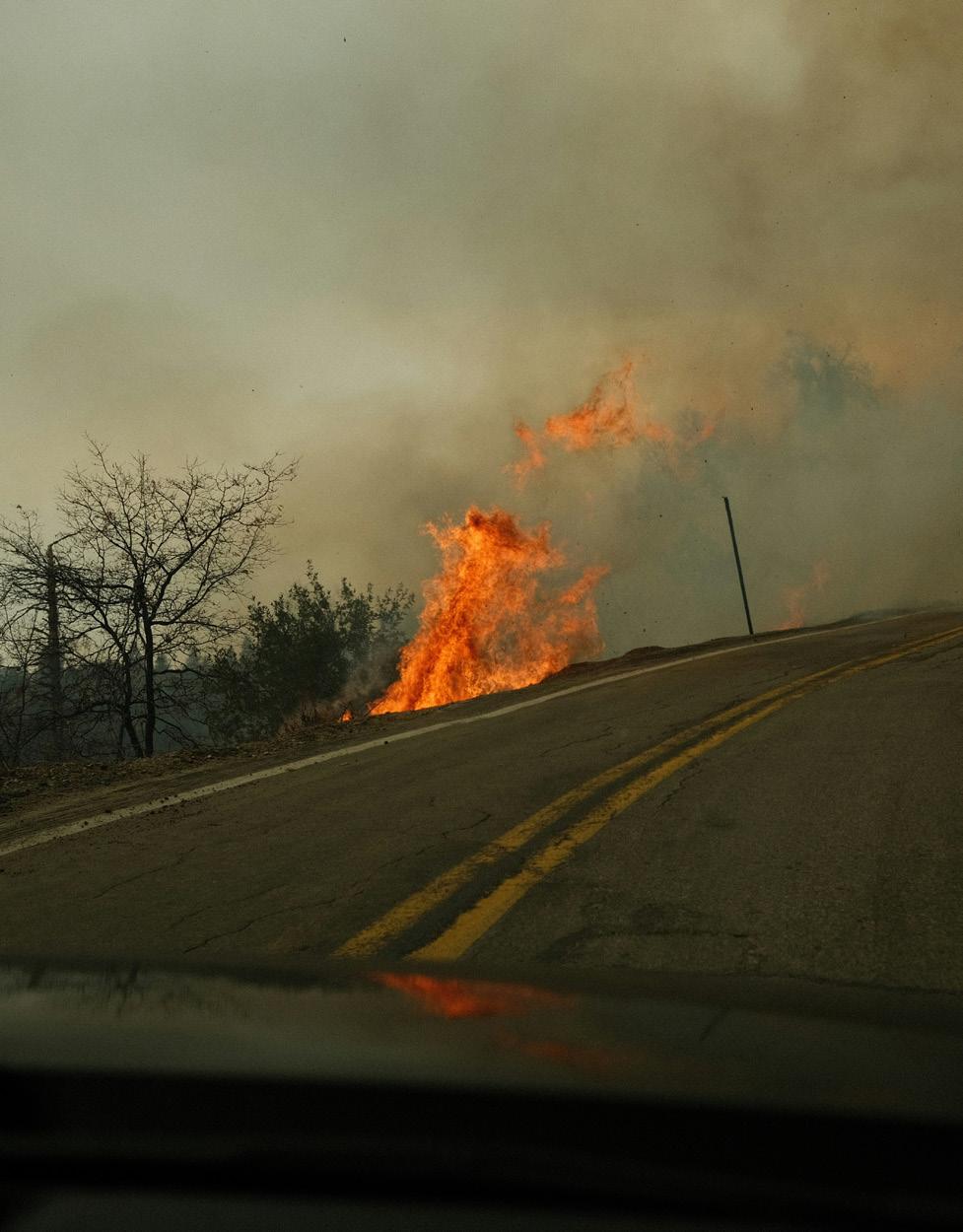
Brady Highway, a wild re consultant from the Peter Ballantyne Cree Nation, says in a video for Land Needs Guardians, “Indigenous people have always been on the front lines because our communities are just so close to the boreal forest and other re-prone areas. Indigenous guardians are going to need to start assuming some of that responsibility for managing re.
“What we want to protect, what we want to save for future generations, might not exactly be what the provincial priorities are.” In 2022, Highway told The Star Phoenix, “This is what I do for a living.” He added, “We can’t be waiting for the government to grant us that authority. We have to make it happen on our own.”
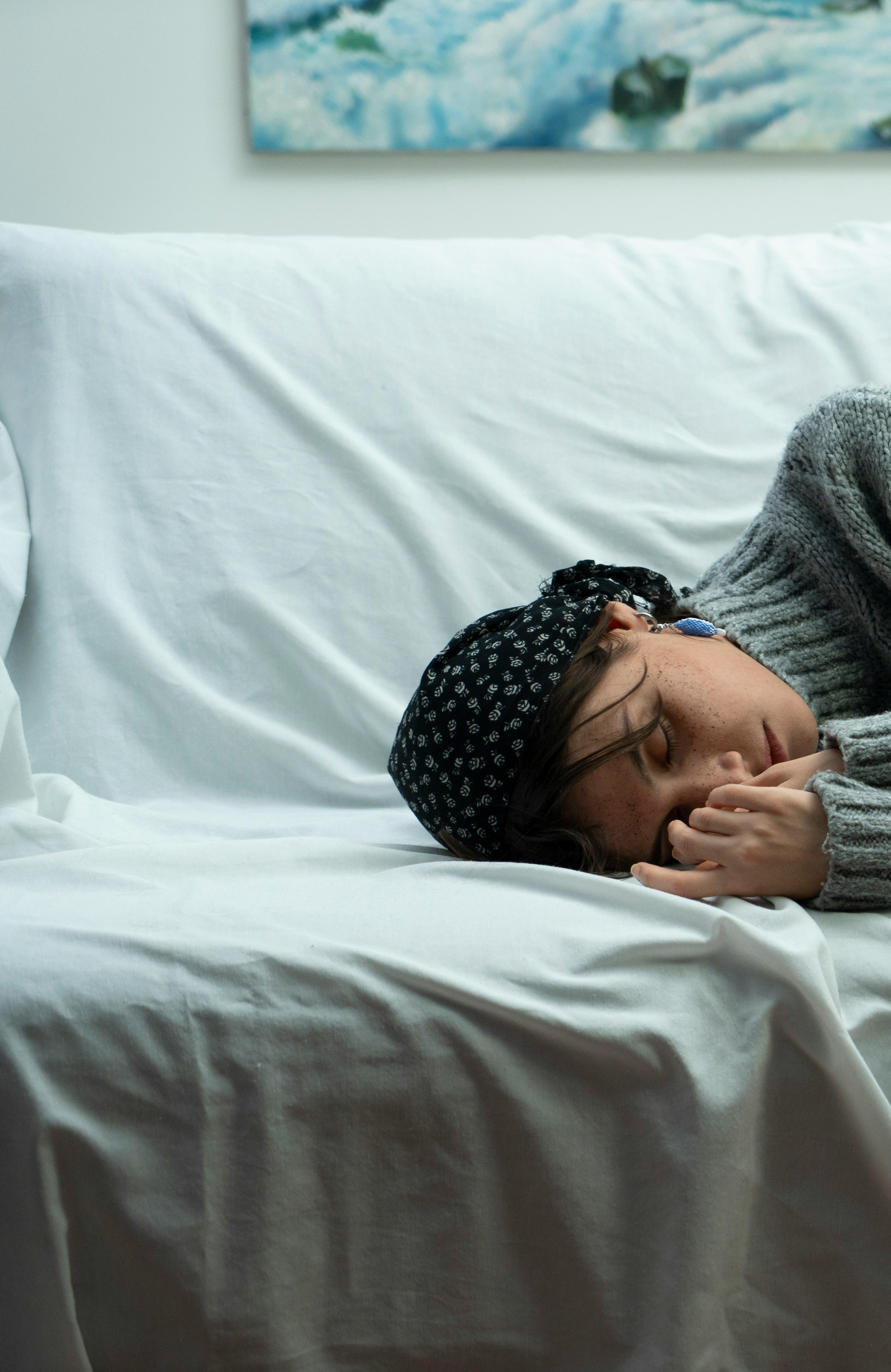



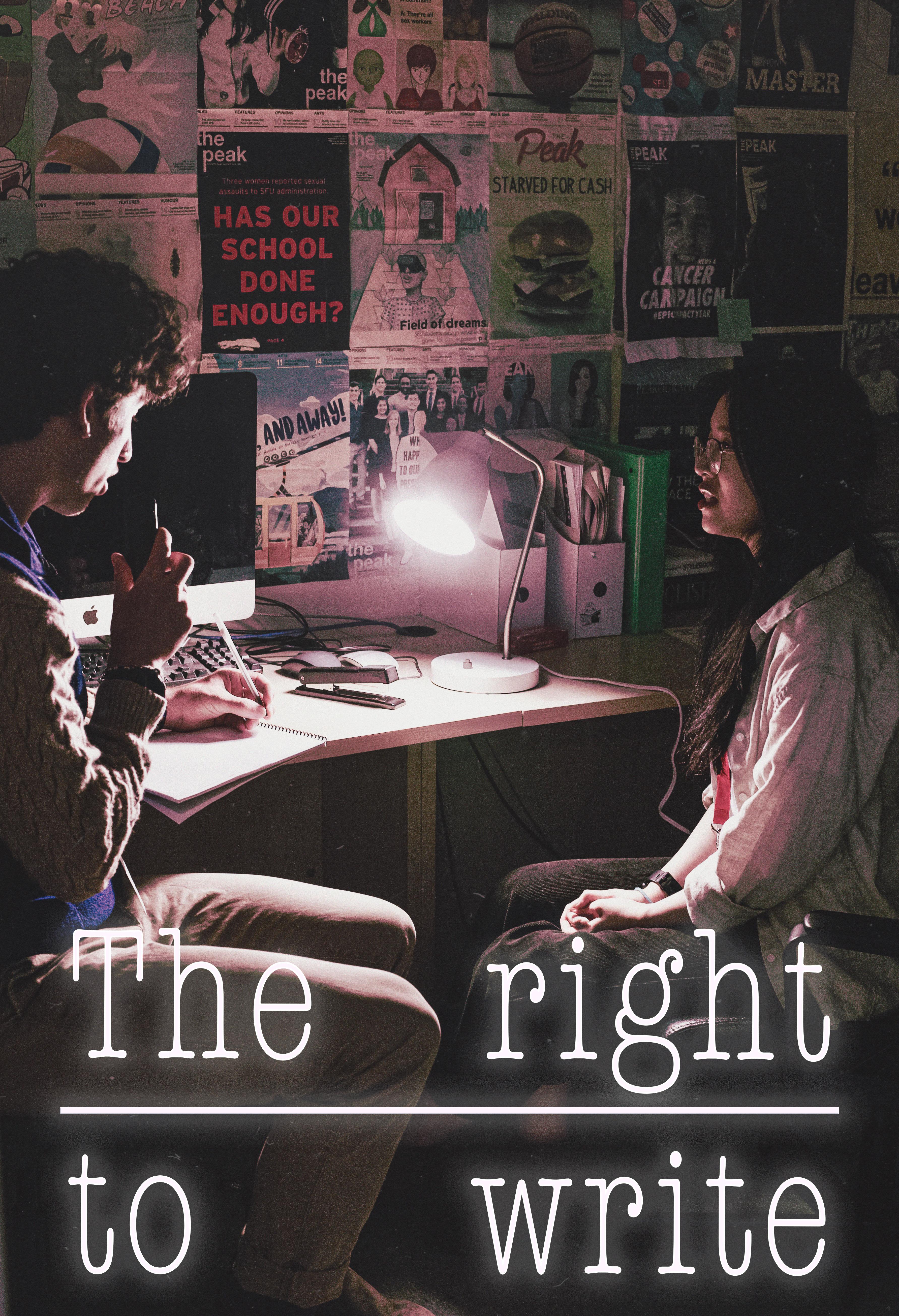
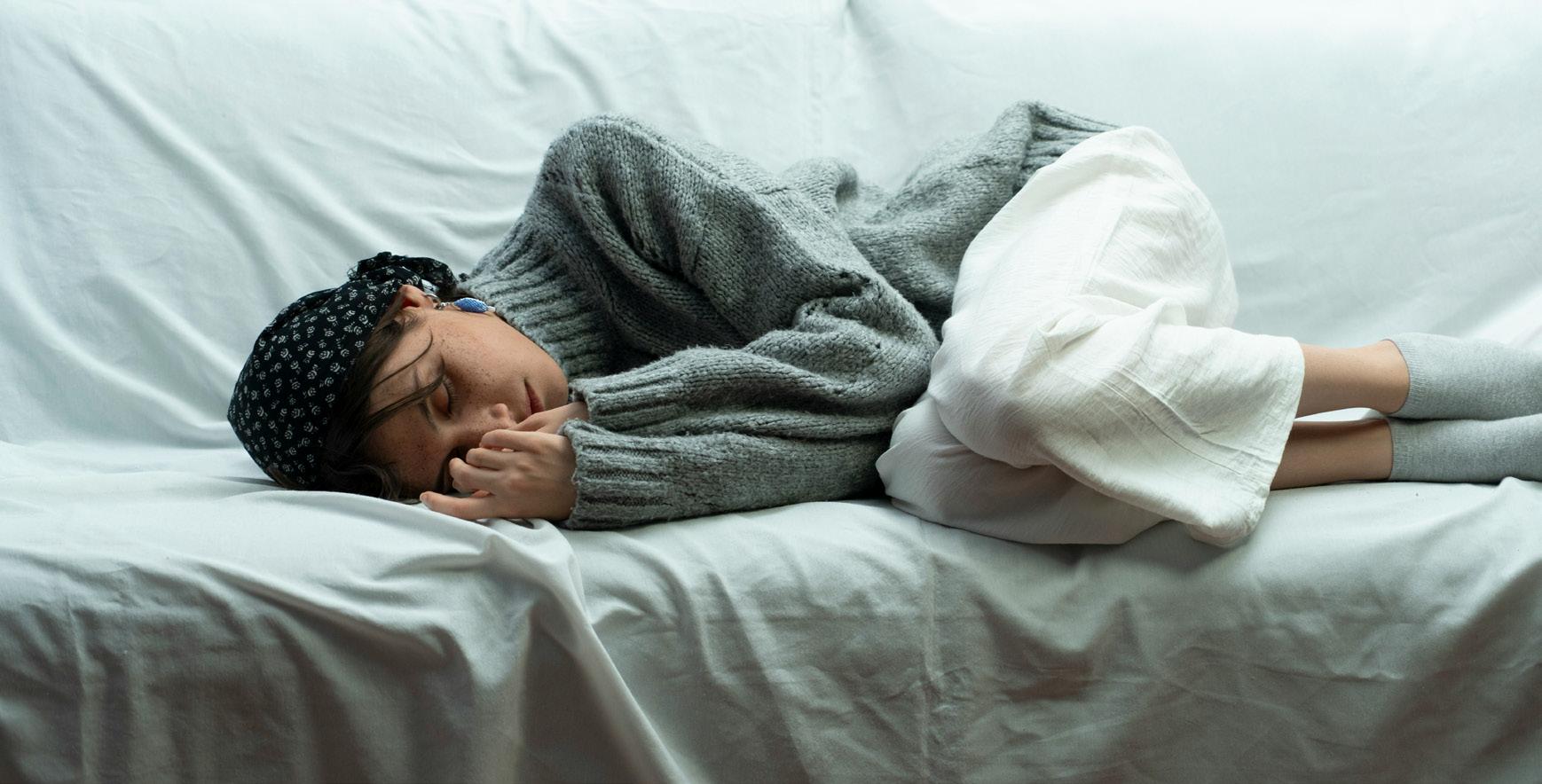
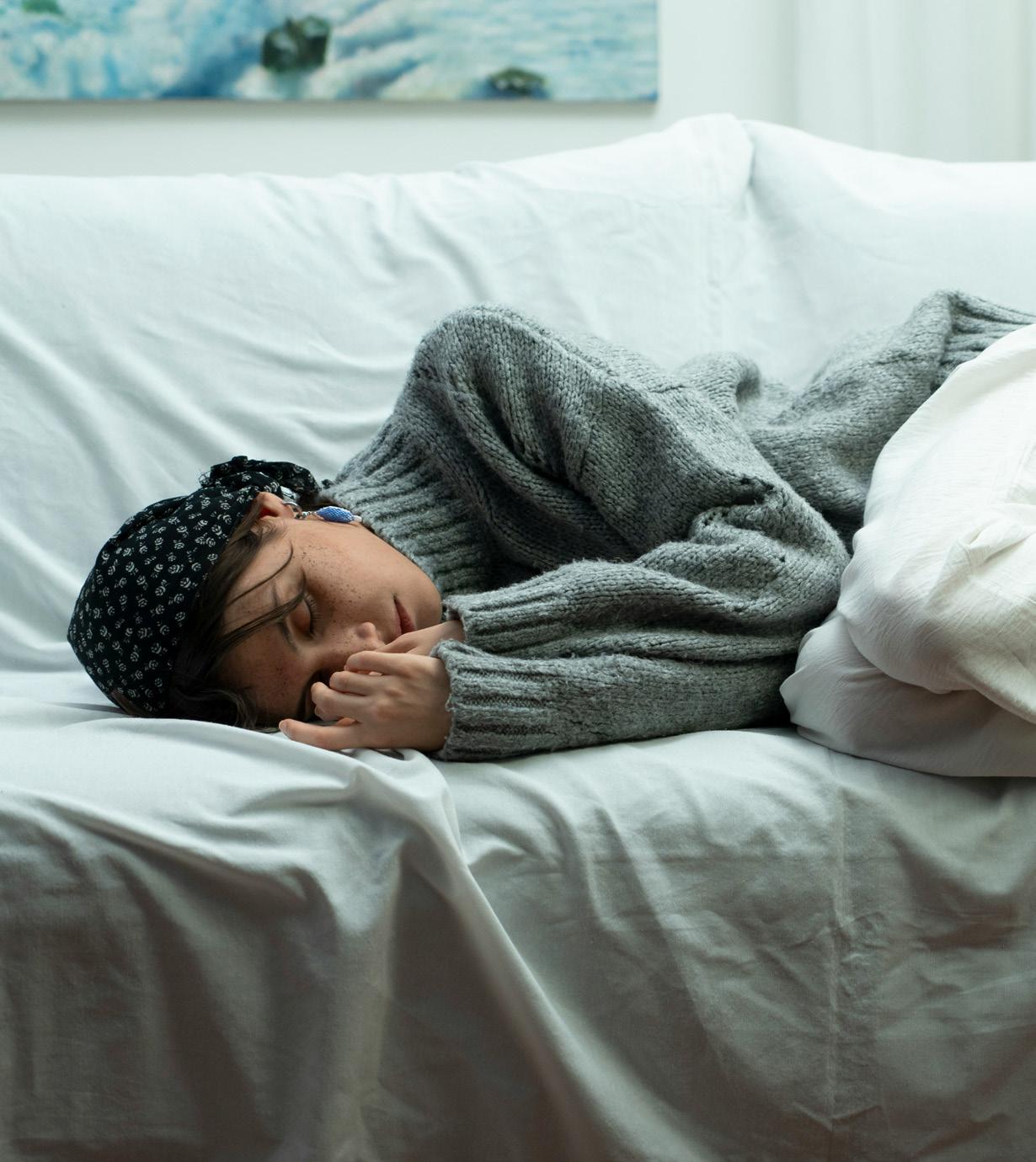
JoUrNalisM is becominG inCreAsinGly pRecariOus in Canada. For yEarS, The PeAk has tRiEd to cReAte a worKpLace enVironMenT wHere sTudenT joUrNalisTs can leArN anD tHrive, esPeciAlLy by cReAtinG an acCesSibLe worKpLace However, as cHronicalLy ilL editorS come cLoser to gRaduAtiOn, tHeY reflecT on wHetHer joUrNalisM coUlD be a viAbLe careEr, desPite joUrNalisTic exPeriEnCe
ZAINAB SALAM • EDITOR-IN- CHIEF
MICHELLE YOUNG • COPY EDITOR
ZAINAB: As I near my graduation date, I am nding myself growing increasingly nervous about how I will navigate the professional world. As a person with chronic illness and frequent are-ups, I have faced an array of discrimination in the workplace that placed me at a disadvantage. I have been overlooked for promotions, even when I was the most well-suited person for the job. I have also had to call in sick to managers who had only curt and rude replies; which does wonders to my stress levels. All while the overwhelming fatigue makes me struggle to lift my head o$ the pillow to take my medications on an empty stomach. In the past, I’ve been told to “try to not call in sick” because it ruins the way shifts are scheduled. As if I had the option to opt-out of a are-up? As if I chose to be in pain? As if I like having my body ache so badly that I can’t sleep properly? It’s hard to speak up when I am in this situation, because managers have HR on their side. They can nd a way to target me, and make it seem like I was at fault. Even with legal protections, the workplace is still a hostile terrain for myself, as I’m sure it is the same for other people with disabilities.
MICHELLE: There is a wide array of possible accommodations when it comes to disability. For someone in a wheelchair, this might include a wheelchair-accessible space. Disability journalist Bailey Martens spoke about how she “couldn’t get in the door” at her student publication. Instead, she was told to “sit in the hallway and listen to meetings from there.” Martens was later o$ered a di$erent job but was denied a “remote start,” despite the need to “ nd wheelchair-accessible housing.” Martens noted everyone was working from home at the time. This is beyond ridiculous. If someone with such a straightforward accommodation request, and an obvious need for it, is being denied this way, it’s terrifying to think about what other accommodations could be denied. Physical disabilities undoubtedly come with discrimination from employers, but chronic illness has such a uid nature that it can be hard to predict. Remote work is one way to accommodate this, however there’s a push towards in-person work to “boost real estate demand.” A few years ago, I was on the waitlist for ovarian cyst removal. I waited months for surgery, and it was painful to walk around. After the surgery and subsequent endometriosis diagnosis, I still had months of chronic pain trying to nd a treatment plan that worked for me. I would have never been able to work at The Peak if it wasn’t for our ability to work from home. COVID-19 has created an in ux of people with disabilities and chronic illnesses — new conditions and disabilities can crop up at any time. Accommodations are helpful to all of us.
ZAINAB: From my experience, disclosure of my disability, especially when I’m new at a job, is what I struggle with the most. It’s true that legally I don’t have to disclose the details of my chronic illness to my employer. However, at my current state I’m guaranteed to have to call in sick due to are-ups, which means my health issues will make themselves known quickly. During the probationary period, it takes time and e$ort to be in a more stable position in the role. Frequent sick calls when I’m aring up don’t make me seem reliable enough to keep. It looks like I’m not alone in my worry, and it doesn’t stop after the probationary period. A fellow journalist, Emily Fagan, has communicated how di cult it is to advocate for herself with her invisible disability. In an interview with CanCulture, Fagan said, “I typically don’t
mention when I’m in pain or having issues with my Crohn’s to coworkers, out of fear that it might make me seem unreliable.” I understand there is some legal protection with a doctor’s note. You can get your so-called “absence” excused, and could get some accommodations met if the workplace allows. However, it is di cult to see the doctor. I have to beg to get an appointment squeezed in every few weeks. Also, it’s expensive to pay for those doctor notes, which currently cost $50 a note at my family doctor clinic.
MICHELLE: Being disabled is expensive: doctors’ notes or medications may not be covered by insurance. Though BC mandates ve days of paid sick leave, this doesn’t cover all types of employees and it feels wasteful to use paid leave for the appointment they booked you in for six months in advance. For many, ve days isn’t enough. A stable income is deeply important to me, because I need to be able to cover medical costs. The ability to access medication is a necessity. The rates of houselessness among disabled people is high due to a number of factors and disability assistance doesn’t cover the cost of living. Getting a degree and breaking into the workforce is a challenge for anyone right now, but being chronically ill adds another barrier.
ZAINAB: That’s what makes this situation so frustrating. Years of hard work don’t seem to guarantee stability. Which is true for even the ablebodied graduates, but it does seem to feel and be more pronounced for people with disabilities. In the world of journalism, it’s hard enough to have to compete with more well-known journalists for a spot in a newsroom. For a person with a disability, it’ll be di cult to compete with new ablebodied journalists. According to the Canadian Journalism Foundation, geographical mobility would greatly help in career advancement. Being able to move from one location to another could help polish a resume, and in some cases it might be the only way to land a more stable role in a newsroom. For a chronically ill person, this is di cult to do.
MICHELLE: The thing is, we do need people with disabilities in newsrooms. Ableism is rampant in society, and hiring people with lived experience and chronic illness is valuable — not for the DEI (diversity, equity, and inclusion) statistics, but because we understand how to navigate these stories. It’s not lost on me how many people are scared of using the word “disability” for its negative connotations. We aren’t going to go away. Space for disabled journalists needs to be made now. This could include exibility around remote work, better paid sick leave for all, and a general increase in understanding from management that being a good employee and being disabled or chronically ill are not mutually exclusive.
How Strategies of Assembly dissolves the boundary between art and activism
SIA GARG SFU STUDENT
Curated by Joshua Segun-Lean, a writer, researcher, and SFU MA graduate in contemporary arts, Strategies of Assembly: Revel & Revolt in British Columbia, is a compelling exhibition currently on display at SFU’s Gibson Art Museum. This exhibition maps 40 years of BC’s radical pulse by comparing two distinctive historical archives. The rst is an expansive collection of street posters preserved by Perry Giguere, a ectionately known as “Perry the Poster Man.” The second is a series of black-and-white documentary photographs captured for the Paci c Tribune, Vancouver’s historic weekly labour newspaper that ceased its publication in 1992. These collections serve to showcase that when we examine modern activism, particularly the history of resistance and protest here in BC, the traditional boundaries between objective journalism and creative art completely dissolves.
Conventionally, people tend to recognize that a newspaper photograph is meant to be perceived as objective photojournalism, while a protest poster tends to be thought of as artistic expressions. However, when standing in the gallery, that distinction becomes harder to fall upon. Whether you are looking at a Paci c Tribune photograph or a staple-worn poster
ARTS & CULTURE
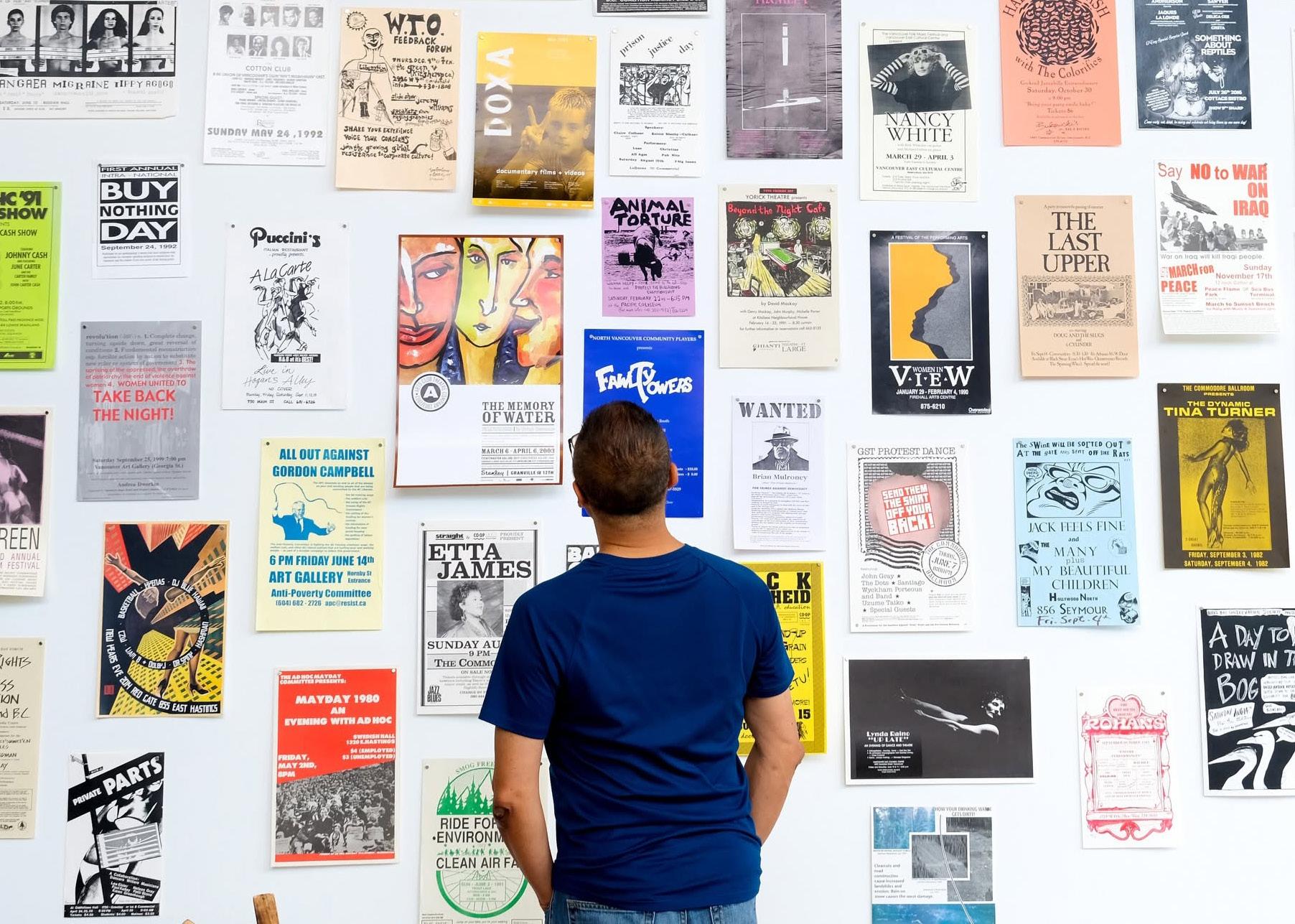
shouting for Indigenous solidarity, these pieces are executing the exact same cultural work. With bold typography, handdrawn territorial maps and portraits, and stark coastlines, these posters helped to turn utility poles and community bulletin boards into public declarations of title and rights. They are taking up space for social expression, and are documenting history while simultaneously demanding an alternative future.
It is up to the individual to use arts as a form of social organization, and to insist that things must change for the better.
Dedication to music and needing a day job
MAYA BARILLAS MOHAN STAFF WRITER
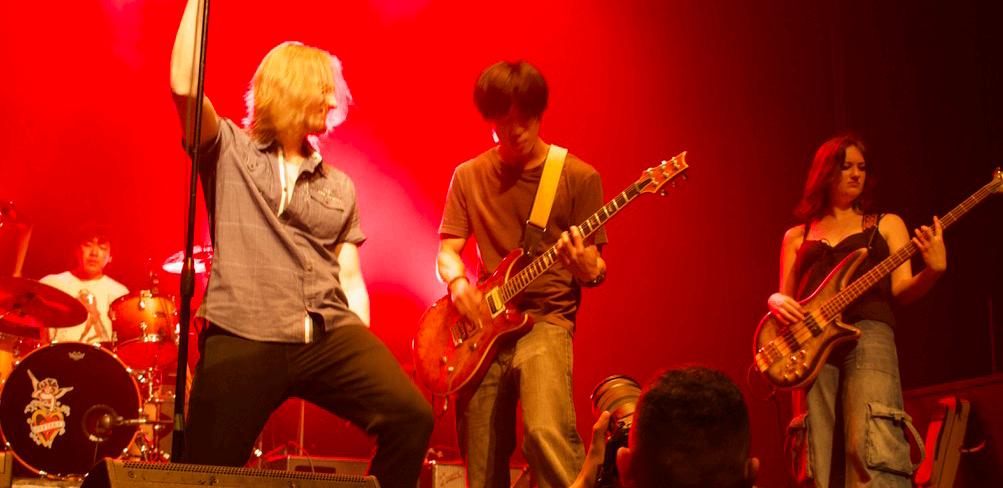
I have seen the band In Pieces live several times and can con rm: they know what they’re doing. Their sets are high energy and their members glow with the stagelights. The upand-coming Vancouver rock band is fairly new to the scene, but they’ve already played at venues like The Rickshaw, and have their rst album set to release this fall.
Founder and guitarist Paco Estrada sat down with The Peak to talk about building a career in music. “Everyone has this dream of the rock star stu ,” he began. “But that’s not the case for me. I [would say I] made it if I can make a living doing what I love in many di erent ways.” On top of working full-time at his day job, Estrada works on music until “two, three in the morning.” He mixes and writes for other bands, has projects with other singers, takes responsibility for his own band’s social media and emails, and of course, practices his solos late into the night. “How do you have the time for all of this?” I asked Estrada. “It’s my baby, for real,” he replied.
This ambitious work ethic is nothing new for Estrada. At just 12 years old, he started taking music seriously, practicing six hours a day. After graduating high school, he completed a music technology diploma at Douglas College to learn production and mixing. From there, Estrada worked in a variety of small bands. In Pieces is special; all five musicians are dedicated to the success of their band. Guitarist Caleb Liu expressed that “Paco certainly set a precedent and dedication, to which the rest of us have ascended.” Liu was a SFU student balancing a demanding job, classes, and playing shows every few weeks. “It’s about
making time, not finding it,” Liu told The Peak
Striving for success means adapting to (and also bene tting from) contemporary marketing. “The internet has done wonders for music,” Estrada said. “Back in the ‘80s, you had to get a record deal. You only really had one avenue to make it.” Now, internet algorithms allow independent artists to put themselves out there and make a career. His favourite part of performing is connecting with as many people as he can,
Everyone has this dream of the rock star stu , but that’s not the case for me. I [would say I] made it if I can make a living doing what I love in many di erent ways.
PACO ESTRADA FOUNDER AND GUITARIST OF IN PIECES
Regardless of how empowering it is, seeing these pieces is another demonstration: a history of public gathering is also fundamentally a history of exclusion. While it is important to re ect on the artistic nature of protests, we are faced with the sobering complication that the items on display are merely the survivors. For every radical poster that is carefully salvaged by a collector, countless others marginalized in BC were quietly shut down, policed, or left completely undocumented. In this way, the art that isn’t present speaks just as loudly as the print matter that is.
Being part of an assembly means weaponizing whatever tools are at your immediate disposal — be it a camera lens, a screen-print press, a sharpie, or a megaphone — and visiting community spaces of artistic protest like Strategies of Assembly; it is up to the individual to use arts as a form of social organization, and to insist that things must change for the better.
Strategies of Assembly will be on display at The Gibson until September 13, 2026.
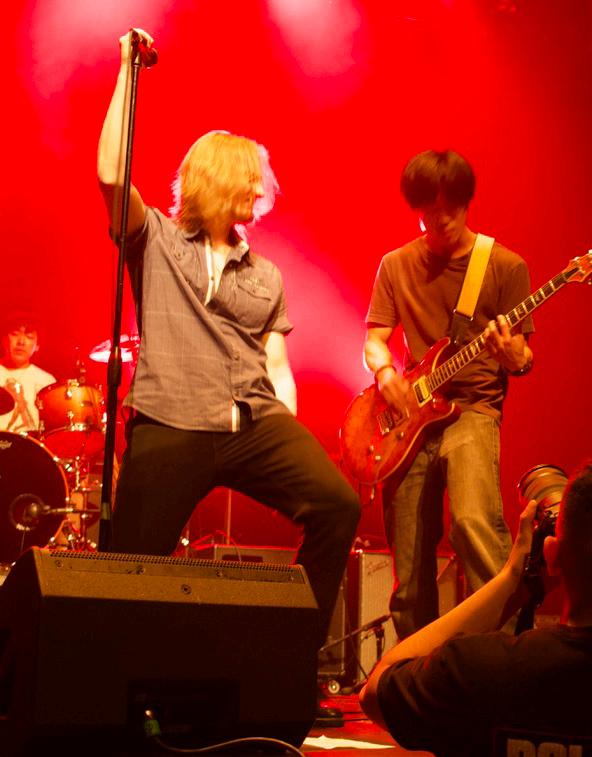
and being able to share a piece of himself with the world that is otherwise di cult — a love for sharing his work is what drives him to put real e ort into putting his band out there. While new to TikTok, Estrada nds it to be a valuable tool for outreach. “Making sure we have engaging videos is huge,” and luckily, the necessity of social media marketing doesn’t change the vision of what In Pieces is trying to create. Drawing on inspirational rock/alternative band Sleep Token’s strategies, Paco explained that posting is “useful in our niche; social media helps world-build around our work and make it bigger than just a couple pieces of music.”
Concluding our interview, Estrada wishes that readers “stay tuned” for new releases from his band.
Their next show will be at The Fox Cabaret on August 28.

July 27, 2026
By Jonah Lazar, Staff Writer
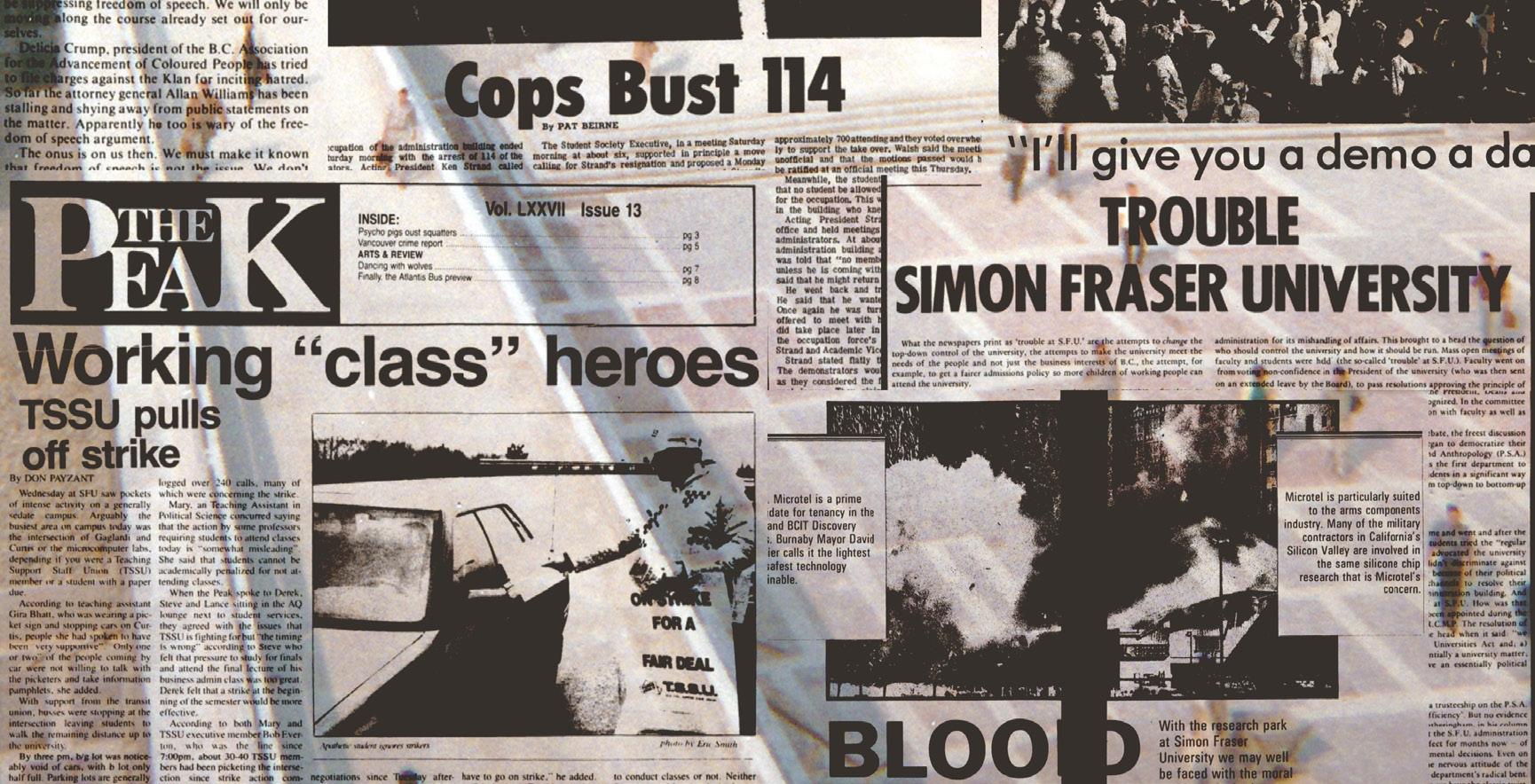
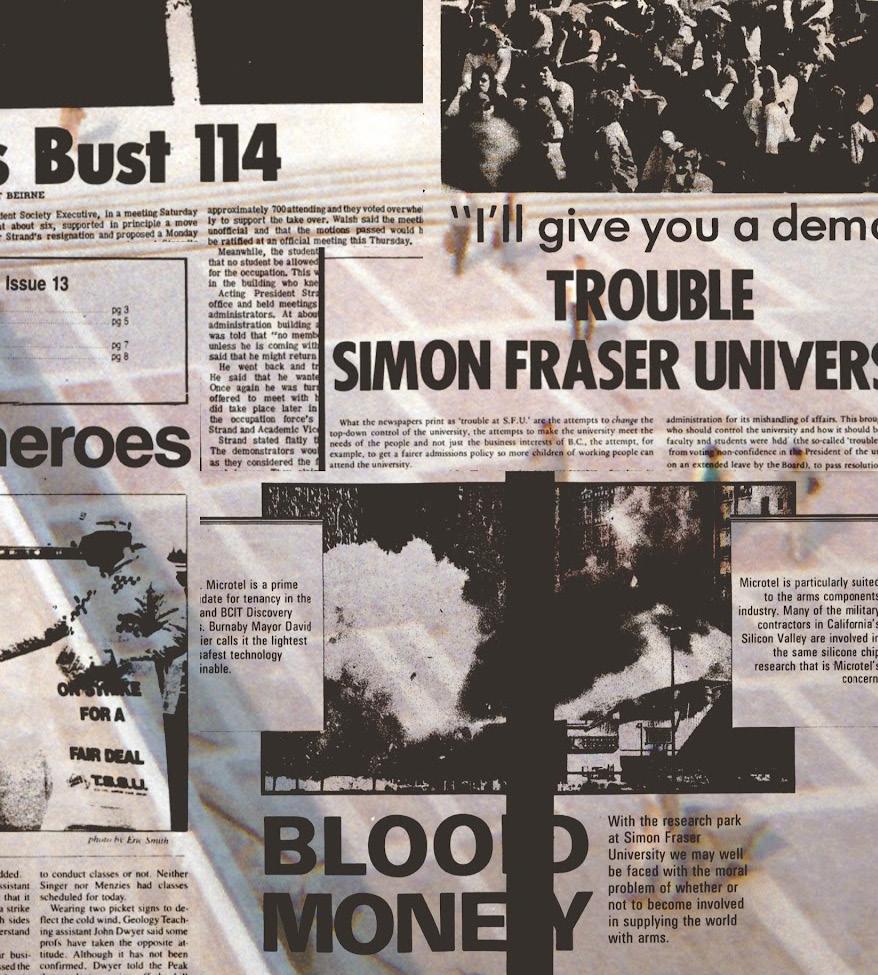
Since 1965, when The Peak frst started rolling out weekly issues for the good people on the mountain of Lhukw’lhukw’áyten and beyond, many incredible students have worked for this little publication. Through the valuable learning experience of working for a university newspaper, many of The Peak’s former writers, editors, and contributors have made a name for themselves in the feld. From novels, hiking guides, war reporting, and hockey podcasts, these writers have found success down various paths. Yet, their frst tastes of the writing and reporting world started here at The Peak, where they put together their frst articles, sweat over their frst deadlines, and pitched their frst ideas. So if you ever fnd yourself wondering about writing an article or attending a pitch meeting, just remember: you never know where The Peak might take you.
Michael Hingston
Michael Hingston’s time at The Peak as copy editor and writer in the mid-2000s was the inspiration behind his novel The Dilettantes, which recounts a fctionalized version of his time working for our publication. In this book, we follow Alex and Tracy, two editors who are battling a mass-produced newspaper stealing the attention of SFU’s students. When a disgraced Hollywood star enrolls at SFU, Alex, Tracy, and the team at The Peak see an opportunity to restore their status by covering his tumultuous behaviour at the university. The Dilettantes was a #1 regional bestseller after its release in 2013, and won awards from The Tyee and Winnipeg Free Press for its sarcastic, coming of age whimsy. Since then, Hingston has enjoyed quite a multidisciplinary career, writing another book in 2022 called Try Not to Be Strange. He has also worked as a journalist, contributing to papers such as The Washington Post The Walrus, and The Guardian among others across his journalistic career dating back to 2013. Outside of writing, he also co-founded a publishing house called Hingston & Olsen, and now runs a bookstore in Edmonton called Porch Light Books.
Luke Faulks
Luke Faulks admitted to us that he “only planned to contribute the handful of articles to The Peak necessary to get into UBC’s journalism program,” but in doing so, he ended up falling in love with The Peak. Faulks started as a staff writer before serving as the opinions editor in 2022. During this time, he worked on a wide range of topics, like the ethics of SFU claiming credit for student movements, to humour articles, like the “danger” of umbrella awnings. This experience at The Peak has since supported him in becoming a reporter for Pemberton’s local news outlet Pique News Magazine. After going from The Peak to The Pique, Faulks has written extensively on environmental, community,
and local politics. He has also written for other BC-based publications like The Tyee, where he wrote a brilliant piece about how Indigenous oral history and archeological technology are used in tandem to uncover lost villages. Speaking to The Peak, Faulks said, “The Peak taught me the value of positive writer-editor relationships, honest postmortems on a paper, collaborative newsrooms, and going the extra mile to seek out voices that are too often overlooked by mainstream outlets. Those are the qualities I look for in a newsroom. I’ve since worked in broadcast and travel writing, but I always return to the hard-news outlets I frst fell in love with at The Peak.”
Michelle Gomez
Michelle Gomez was at the helm of The Peak’s news section during the beginnings of the COVID-19 pandemic in 2020. During her time as News Editor, Gomez oversaw The Peak’s coverage of how this global pandemic impacted SFU and SFU students. “I had no idea I wanted to pursue journalism when I frst contributed to The Peak,” Gomez told us, “I was in my third year of undergrad on an exchange semester in Barcelona during a politically tumultuous time in the city, and was encouraged by one of my professors to write about it for my local student newspaper. One article led to another, which led to a staff writer position, which eventually led to me leading the news team. It was initially just a fun parttime job, but somewhere along the way I realized it was my passion,” she added. “My time at The Peak taught me to stay curious, always be skeptical, and keep an open mind.” After moving on from The Peak, Gomez went on to report for local news outft CityNews Vancouver. She is now a reporter for CBC News, continuing her coverage of the Metro-Vancouver area that she started in our news section. She has written recently about search and rescue operations, such as a hangglider being saved by an onlooker after crashing into a cliff and hikers rescued from a fall on Brunswick Mountain.
Stephen Hui
Another former news editor, Stephen Hui worked for The Peak in the early 2000s, where he reported on the need for Indigenous student housing among many other things. Since then, he has written a few books about hiking in the Southwest of BC, including 105 Hikes In and Around Southwestern British Columbia. This book functions as one of the most comprehensive guides to some of the unceded Coast Salish territories’ most beautiful hiking terrains. It offers detailed maps, descriptions, and locations of trails, supported by Hui’s personal anecdotes as he has hiked every single trail featured in the book. It also offers some of the history behind these trails, and the second edition features a foreword by Indigenous Stó:lō historian Si:yémiya, Dr. Sonny McHalsie.

Hui has also served as the web and technology editor at the Vancouver-based publication The Georgia Straight, and has been named a fellow at Canadian Geographic. Refecting on his time at The Peak, Hui told us, “Before I showed up at The Peak offering to write (really bad) music reviews, I never considered a career in journalism. I got to cover myriad campus controversies, go inside a wildfre, and see a premier cry after being caught drunk driving. In retrospect, it’s hard to imagine my life story (so far) without The Peak. It’s where I became a writer and found my voice.”
Izzy Cheung
Izzy Cheung managed both the arts and culture section from April 2024, and the sports section from August of the same year until April 2025. During her time at The Peak, Cheung wrote many articles about hockey, including writing a letter to two former Canucks players covering Red Leafs hockey games, and summaries of the Canucks’ season. This fascination for hockey did not fade! After her graduation, she has moved on to reporting extensively on hockey and the Vancouver Canucks. Her journalistic work about the Canucks has led to her becoming the site editor of The Hockey News; she also co-hosts the podcast Hockey, Actually. Cheung also spent some time working as an editorial intern at Explore Magazine. You can follow her on Instagram to see her sports interviews and other journalistic endeavors: @izzycheung37
Michelle Lang
Michelle Lang began her career as a journalist writing for The Peak in the mid-90s. Following her graduation, Lang went on to write for the Calgary Herald. Lang drummed up a career in journalism in Prince George, Moosejaw, and Regina, before settling in at the Calgary Herald. It was here where she won the National Newspaper Award for the best specialized reporting as a beat reporter covering Alberta’s health industry and national health care issues. Lang’s prolifc work was well recognized in the national journalism scene. This success quickly led to Lang being sent overseas to report in Afghanistan as a war correspondent in 2009. Tragically, only 20 days after she arrived, Lang would be the only Canadian journalist to lose her life during the Afghanistan war in Kandahar. Lang was profoundly impactful as a journalist: over a thousand tributes poured in on the Calgary Herald in an online condolences page to remember her. Lang was awarded the Canadian World Press Freedom Award shortly after her death. The Calgary Herald editor-in-chief at the time, Lorne Motley, wrote, “It creates this hole, not only for the Herald, obviously, but also for Canwest and any other news organization.” Today, a fellowship in her name continues to support up-and-coming journalists.
Ella Pendlington • SFU Student
Petra Chase • Features Editor
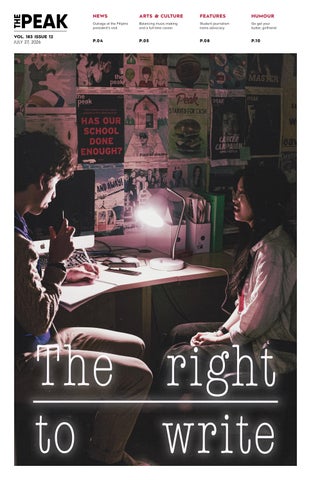
In June 2021, the Student Press Freedom Act was created by student journalists Spencer Izen and Jessica Kim, then editor-in-chief and managing editor of The Grifns’ Nest, a high school student newspaper. In response to their work investigating the Vancouver School Board’s transparency and operations in May 2021, the school’s administration informed Izen and Kim they needed the principal’s “blessing” to publish said article. Following this, Izen and Kim wrote a letter to the BC Civil Liberties Association. Eventually, with their support, the Canadian Youth Journalism Project, and the Canadian Association of Journalists, the article was published. Izen and Kim drafed the Student Press Freedom Act with the help of lawyers, journalism professors, and civil liberty advocates to protect student publications’ right to feedom of the press through legislation. The campaign received endorsements fom various civil society organizations and student publications. It was also reported on by media outlets including The Vancouver Sun and The Tyee
The Student Press Freedom Act seeks to clarif section 2 (b) in the Canadian Charter of Rights and Freedoms, the “feedom of thought, belief, opinion, and expression, including feedom of the press and other media of communication” for students. Though the Charter includes schools, the Student Press Freedom Act website notes there is no clear understanding of how this applies to student journalists: “Unlike the US, Canada does not have any case law” regarding the rights and feedoms specifcally of student journalists. In the US, the Student Press Law Centre and the New Voices Movement aim to protect student press feedom with state laws.
Izen and Kim sent a draf of the act to BC Premier David Eby in 2022, and met with him soon afer. While Eby recognized its importance, he said there were greater priorities. Today, the act has yet to be enshrined.
Currently, Izen is a managing editor at University of British Columbia’s independent student newspaper The Ubyssey. He uses his experiences to teach incoming student journalists the importance of press feedom and advocacy. The Peak corresponded with him to learn more. Izen said, “The frst time I heard an administrator remark that they had the ability to direct the content of the newspaper, I was confused.
“When I was that age, I assumed that adults were a little bit more in tune with the principles of democratic life,” he added. “The experience of censorship was one that pushed me to take on a radical amount of responsibility.”
Izen and Kim’s experiences of advocating for press feedom as student journalists are not isolated. Student journalists across Canada continue to navigate institutional pushback, a lack of support, and censorship attempts.

“I think the frst thing we need to do is actually shif the way we think about the proper relationship between an administration and between student journalists,” Izen said.
In the Western region of Canada, The Voice, Langara’s student newspaper, produced by journalism students, has shut down alongside the 60-year-old journalism program. The Runner, Kwantlen Polytechnic University’s newspaper, came under attack in 2024. While The Runner was reporting on Kwantlen Student Association mishandling student funds, they were threatened with a petition to dissolve the paper and “destroy all articles related to the Kwantlen Student Association.”
The Peak also experienced censorship by SFU’s student society, the SFSS. In September 2025, when the 2025/26 Council began, The Peak encountered various issues while trying to report on biweekly council meetings. In March 2026, the SFSS passed a motion banning recording at meetings. This motion signifcantly impacted The Peak’s news team who rely on recordings for factchecking, and thus haven’t been able to report on council meetings. The news editor at the time, Hannah Fraser stated, “If meeting minutes aren’t actively updated for the community to reference, then the 2025/26 SFSS team has not allowed the students they represent to understand their operations and future plans efectively.”
A journalist is a gatekeeper. What we want is democratic gatekeeping. We want someone who’s going to stand in the middle and say, ‘Hey, I don’t know if that’s true.’
SPENCER IZEN Managing Editor, The
Ubyssey newspaper
While Izen shared that The Ubyssey hasn’t had signifcant issues with censorship fom their student society, they’ve had their fair share of harassment, both online and with papers being removed fom stands. He added, university publications are a place to “demonstrate the right relationship between journalists and politicians fom the beginning of our careers as journalists and their careers as politicians.”
The Peak also reached out to the current managing editor of The Grifns’ Nest, Zak Tucker, to ask his thoughts regarding student press feedom, and how The Nest’s history has impacted their understanding, value, and approach
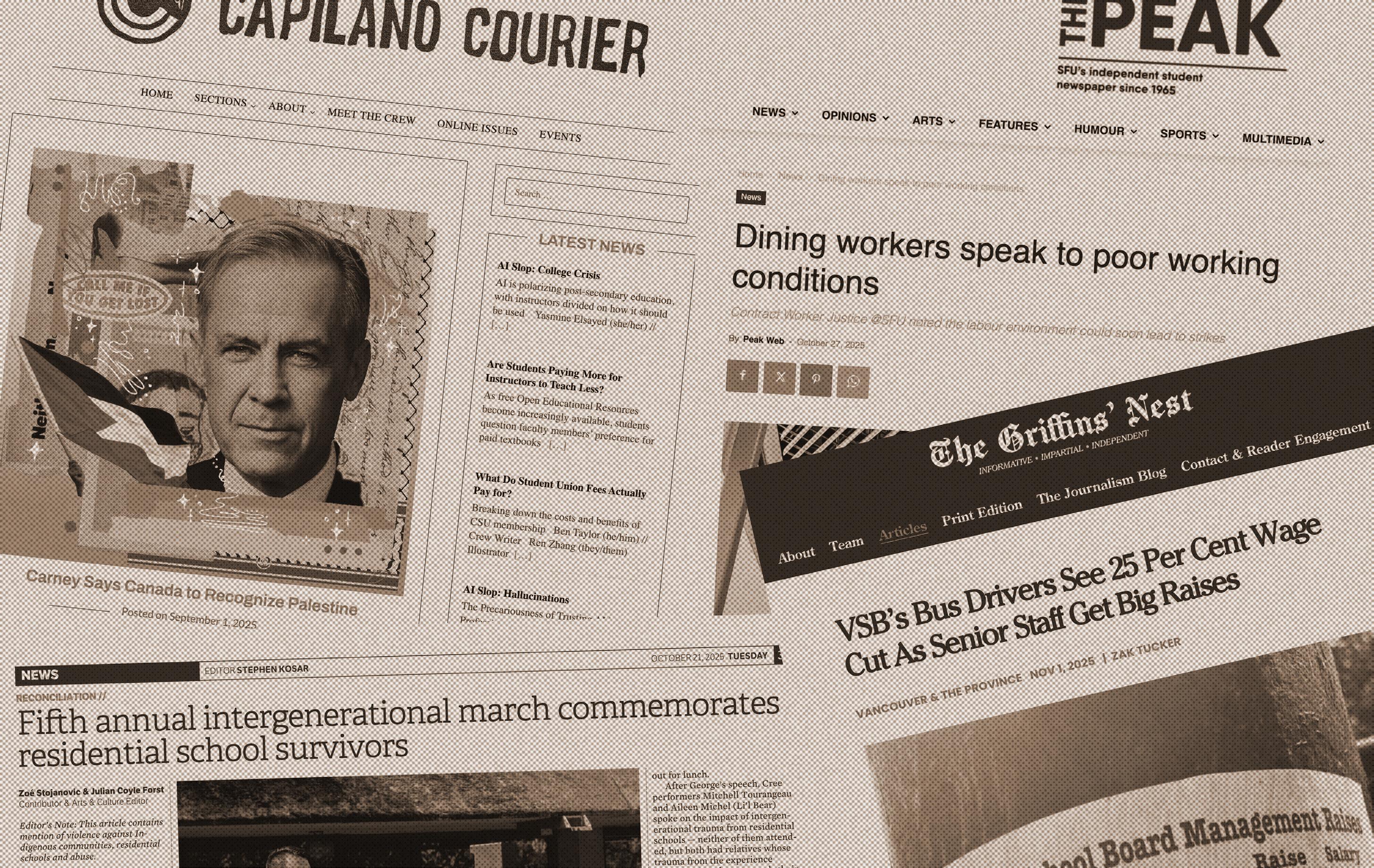
to student journalism. “The basis for student press feedom lies in a key principle that guides all of my work at The Nest: student journalists are real journalists,” Tucker said.
Tucker expressed that student journalists are obligated to tell the truth, which may sometimes hurt the reputation of others. He shared that a special report containing criticism of the Vancouver School Board underwent difculty in publication. The piece was originally supposed to be published in March 2026, but wasn’t published in its entirety until April 2026. Tucker wrote, “My school’s principal, under direction fom his superiors, [phoned] our commercial printers and [told] them not to print our newspaper until he approved it — because the newspaper contained a story that included criticism of the school board.”
When asked how and why student press feedom is relevant in Canada in 2026, Tucker responded, “Throughout history, people in positions of power have sought to prevent the dissemination of factual information, ofen in the name of advancing the public interest by combatting mischief and unrest. But suppressing truth is never the right answer. Rather, it is [putting trust in] journalists who work in the public interest, since our work serves to hold politicians accountable and promote the kind of educated discussion that raises awareness about important issues.”
Izen added that Canada has an “increasingly problematic communications culture.” He noted that public relations professionals outnumber journalists. As of March 2025, Canada’s Government Communications and Public Engagement team has over 300 employees. According to the book Manipulating the Message by journalist Cecil Rosner, “public relations consultants outnumber journalists 14–1 in Canada.”
“Student journalists themselves are now more responsible for taking on a lot of the work that professional news media are no longer able to do because there are fewer professional journalists than there were a few years ago,” said Izen, who also noted over 600 closures of news outlets in Canada since 2008 reported by the Local News Research Project, the large number of layofs by Bell Media Canada and Postmedia. Tucker shared this sentiment, expressing, “With the death of local media, student journalists are ofen the only ones lef to [ . . . ] hold elected trustees accountable.”
“For the few journalists that are still out there, it’s very difcult to talk to people,” Izen explained. “The institutions [politicians are] elected to observe, to keep accountable, are not giving us the time of day, whether it’s the City of Vancouver, whether it’s the Government of BC,” which have “a responsibility to be transparent.”

Throughout history, people in positions of power have sought to prevent the dissemination of factual information, ofen in the name of advancing the public interest by combatting mischief and unrest. But suppressing truth is never the right answer. Rather, it is journalists who work in the public interest, since our work serves to hold politicians accountable and promote the kind of educated discussion that raises awareness about important issues.
ZAK TUCKER Editor-in-Chief, The Grifns’
Nest newspaper
Izen also criticized “the way politicians represent how democratic life could be.” He mentioned Prime Minister Mark Carney’s increasing reliance on his own YouTube channel to share announcements. “Speaking directly to constituents, while it might be convenient in the short term, that’s bad democracy,” he said. “A journalist is a gatekeeper. What we want is democratic gatekeeping. We want someone who’s going to stand in the middle and say, ‘Hey, I don’t know if that’s true.’” This goes for politicians in the Government of Canada, as well as student politicians.
Further, Izen noted that as student journalists, we have a duty to stand up for our own publications in the face of unjust censorship, and other publications.
“We absolutely have to be the foremost advocates for press feedom in the country. We cannot rely on anyone else to be fuent as much as us,” he said.
Today, press feedom — in both student and non-student publications — remains critical.
Izen shared his belief that “the relationship with expertise that we’re discarding in society is really disturbing. You can’t be an expert on everything,” he added. “None of us do anything without speaking to sources because those are the objects that people are responsible for knowing stuf. That disposition towards knowledge is so, so valuable.”
Izen concluded that student journalism is a “nation building project,” and “there’s a reason that the second provision of the Constitution was dedicated to the protection of journalism, because we all recognized many a century ago how important this was and how at risk it is at any given moment.”
Quinn Mulcahy SFU Student
Mason Mattu Humour Editor

Take a walk through the archives with us . . .
I never knew that the SFU archives was actually a giant room with everything about the school ever. I thought it was just a bland hallway with some memories of the school’s past. So I ventured down there one day when I had nothing else to do. I ended up stumbling across someone’s history project from 1992 on a bunch of letters from the 1800s. The report detailed Johnestenshire and Mary, a married couple on a Pitt Meadows farm. I didn’t quite understand why the archives were keeping them nor what was so important about them. But I thought I’d share them for the kick I got out of them.
October 1, 1889
The Daisy Ranch
Dear Johnestenshire,
You woeful rodent. As I pen this letter, I can hear the sobs of Daisy, your sweet baby girl. How dare you leave me all on my lonesome with an infant? Her “moo’s” awaken me in the middle of the night because the bagpiped lullabies crafted by her dearest papa aren’t there to comfort her any longer. I admittedly do not yearn for your music as much as she — but alas, there is one thing which we both yearn for.
The butter churner.
Daisy’s udders have reached a particular zenith. A zenith at which you couldn’t have enough biscuits to accompany her milk. How dare you leave us like this?
Sometimes I wish you were still here to retire with me to the parlor and enjoy our fresh butter on sliced bread. Ah, sliced bread. Such a novel invention that brings joy to my heart. Other times, I wish you brought a pie to your face for hurtin’ me so badly. Which would require you to visit the Smiths . . . our rival farm . . . nevermind. I had told you that we needed to increase our berry yields.
I implore you to bring back what ‘twas mine. Or else I’ll send papaw out hunting for you.
With desperation,
Your not so dear Mary anymore
December 20, 1889
Somewhere aboard a random train
Dear Mary,
I regret to inform you that I am currently on a train towards Stoney Creek and am in no position to return our butter churner. Bellingham and I journey forward to begin our dream enterprise of cowboy hats with hair woven into them for those gentlepersons who lack hair (as these gentlepeople still wish to feel artifcial locks breeze in the wind as they gallop upon their horse . . . as if these locks were indeed their own).
Your assessment of the situation is a gross over-simplifcation of the matters at hand. As you know, I require the butter churner to gain the monetary means to purchase hair from the shaving saloon. Since I was nothing but a wee lad, I have dreamed of giving the power of hair follicles back to the heads of the masses. Granddaddy shaved his head because he believed he could tell fortunes in the shine, and then meemaw left him because the only fortune he had left were his golden locks. Please don’t make this all about yourself now.
Pray for a little sunshine in your soul, and perhaps I’ll think about buying you a gentlyused churner. For you are not a gentlelady. And those who are not gentleladies do not deserve to retire to the parlour and enjoy fresh butter.
With disgust, Johnestenshire
February 1, 1890
The Daisy Estate
Dear Johnestenshire,
You hornswoggling maggot. I wish I knew how much of a conniving man you were on our wedding day. My friend Beatrice tells me her husband saw you playing poker at the Rooney Rooster Pub only a day ago. A pub that is a whole FIVE MINUTES from our ranch. Your business is a sham just like the last one (you know, the one where you thought you could trade wood with the beavers to become their offcial dam builder).
In fact, Patricia Malcom told me that you are churning butter for eligiblemaidens? How dare you. You no good charlatan — RETURN THE BUTTER CHURNER!
Sincerely,
Mary
P.S.:Ifyoudon’t,I’llcalluponpawpawto comeandshaveyourhairoffamidstyour slumber. Toodle-oo.
April 25, 1890 5 minutes away from the ranch
Dear Mary,
I hope this letter reaches you fast enough you haven’t sent your father yet. Anything but my locks. I will be on the way with the butter churner soon. In fact, you will probably see me before you receive this letter.
Tell Daisy I’m sorry.
Yours truly, Johnestenshire

Having lost one of our finest storytellers, and with no adequate replacement forthcoming, the editor-in-chief has put me (the rookie reporter) in charge of picking up the trail of the sports editor’s disappearance. It’s been two years. They only thought to care now? When they realized they needed FIFA coverage? My only clue is a mysterious message graffitied on the wall of The Peak offices on the night our sports editor vanished, which read:
Dear liberal losers — I have your sports editor and will be keeping them in the bowels of a secret stadium until my mission is complete. No more reputations shall be tarnished by your despicable diatribes in the sports section of your paper until my legacy has been secured. Keep quiet now, and you will have your friend back at the end of next summer. G.
That “next summer” was last summer. For some reason, nobody wondered where the editor was . . . until now. Having dropped out of my summer courses to try to solve this riddle and bring our sports editor back home, I found myself staring

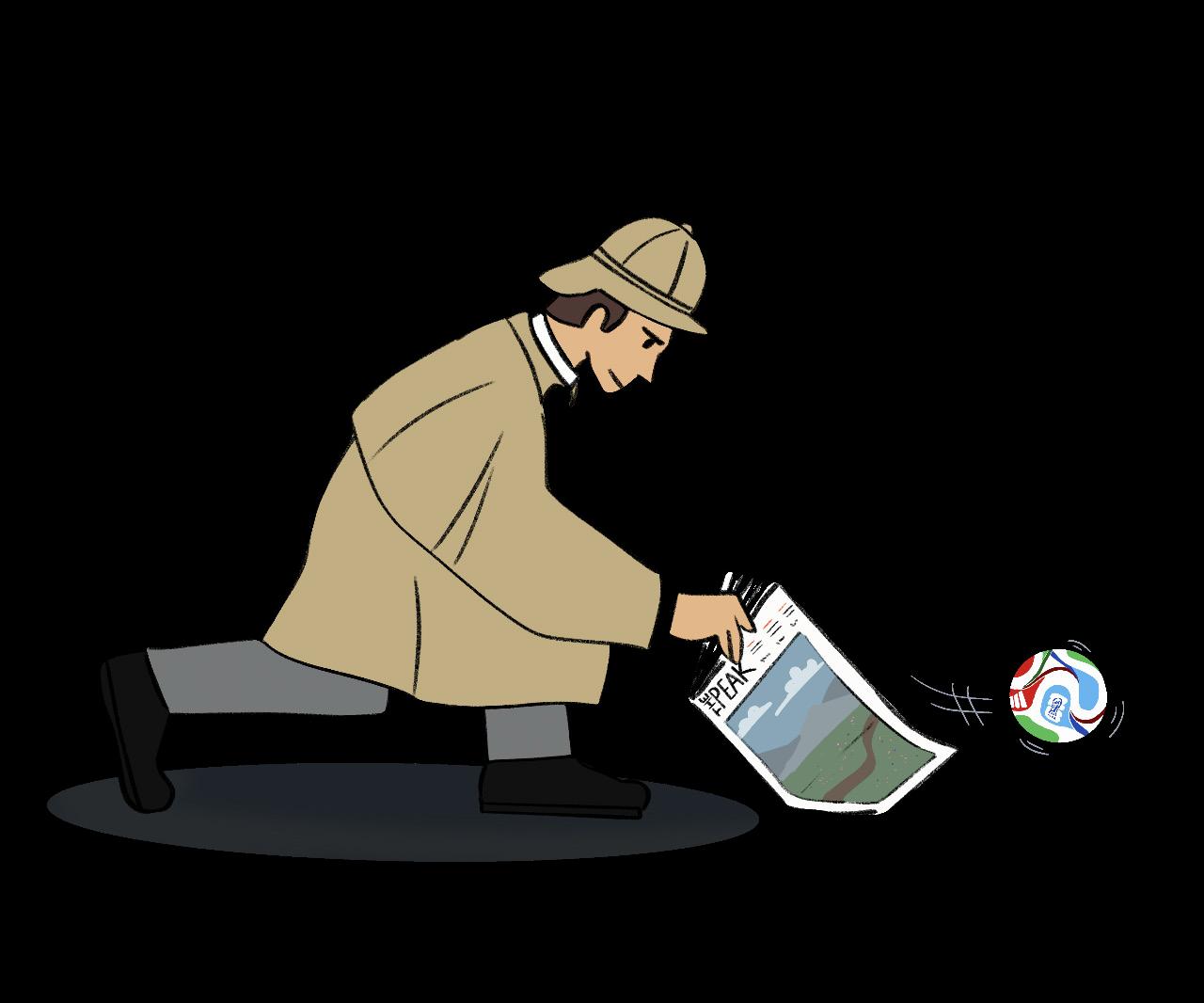
down the dark tunnel of despair, lost for any leads, until a chance encounter sparked an epiphany in the dusty recesses of my mind. Mulling over the mystery at Terry Fox Field, a varsity soccer player slumbered over towards me. Recognizing me from The Peak, he inquired about the fate of the sports editor. Someone who he was familiar with.
He told me that during the interview with the soccer team about the detrimental impact of the FIFA World Cup on the sport as a whole, the sports editor received dozens of texts from a contact named “G.” After the last barrage of texts, looking distressed, my new friend said our missing maestro had apologized and left, muttering under their breath something about getting a slurpee at a SkyTrain station.
Very interesting. I knew EXACTLY where they went. I caught the 145 bus down the mountain and arrived at Production Way-University Station, where the shirt of a 7/11 attendee caught my eye. On it, below a picture of a stadium, were the words “No more reputations shall be tarnished” in blood red. After inquiring about the origin of the t-shirt,
I learned that it was purchased at BC Place. On its back were the signatures of four players from the Canadian men’s team. However, something caught my eye. “Help me,” a scribble read. “I sign shirts — but I used to write.” Ah-HA! I immediately commandeered a random Uber with my press pass (I don’t know if this is a thing, but I want it to be one!) downtown and rushed to the stadium.
Scaling the stadium fence (and ripping my pants and underwear in the process), I descended the stairs to the basement, and set out in search of the darkest, dungiest room I could find. Finally, I came across a door marked “WC,” the bowels of the stadium! After kicking down the door, I was greeted by the back of a grotesque figure. With the words APPEASE tattooed across his chest, and a photo of him and Donald Trump on a ferris wheel together sticking out of his pocket, I would have recognized Gianni Infantino anywhere. Behind him was indeed our former sports editor, frantically signing t-shirts. The FIFA boss laughed and handed me a sharpie.
Everything then turned to black.


To think that every decision I made in my life somehow resulted in going to a frat party is no small burden. I was the classic “fifth year” SFU student, grey around the eyes from all my time spent in windowless classes, just like everyone else in my cohort.
At the door, I was asked to present “the Eventbrite thingy” by someone who wouldn’t meet my eyes. “Nice sunglasses,” I said.
The dim lighting of the Robert C. Brown hall tutorial rooms had prepared me for the damp, boozy lustre of this frat house. My eyes hardly needed any time to adjust to this stifled space illuminated by a single electric disco ball suspended from the ceiling. Within moments of my arrival, I was instructed to keep my shoes on. This hooded figure would be my guide for the night. “Drinks are over there,” an acrylic-nailed hand with hairy palms jutted out from the darkness and pointed me towards a small folding table littered with bottles and sweating cans. I missed the altar to American novelist/party animal Charles Bukowski, because at most parties I’ve been to, the solo
cups aren’t half overturned . . . and the snacks look a lot less like litter. It was possible the snacks had been foraged by raccoons. SFU, amiright?
A warm can of IPA in hand, I roamed the frat house with a distinct squelch in my step. I think it came from the stickiness coating the laminate flooring. Their decor didn’t help; the house reminded me of the inside of donation bins (more like trash bins) adjacent to the dorms on move-out day. Classy! “Don’t go upstairs,” the figure in the hoodie had cautioned me earlier. So, I went downstairs to the basement.
Nothing could have prepared me for what I saw. A beer pong table stretched nearly the whole width of the room. Groups of four wobbly players (almost as if balancing on something) flanked each side of this gargantuan table, and onlookers with beady eyes swayed as though a concert was in session. A player with silvery blonde, almost gray hair, spun in place, shot, and miserably missed the cup. There was no hollow echo of the ball as it bounced, likely totally stuck in place on the gummy flooring. The crowd erupted into a chant, each syllable
garbled as voices joined in: RE-DEMP-TION SHOT RE-DEM-SHIN SHAWT RID-EMP-SHIN SHOT RE-DEMSHIN SHAW.
The pong players quickly rearranged themselves into a triangular formation. A player with a silverish buzzcut scrambled to the centre, pupils black in anticipation. He was launched into the air. Literally standing atop a platform of pongmates, he yelled, “TRICKSHOT!” before flinging the ball towards the cups. It sank perfectly.
In my hurry to get out of the basement before anyone realized I was there, I tripped over an extension cord. The red glow of the strip lights pasted around the perimeter of the room flickered, and then glared white before cutting out completely. A hiss of surprise reverberated through the room and everyone dispersed to the corners. Before the shadows swallowed up the partygoers, I realized the flash of striped tail was not a mistake, or an IPA-addled hallucination (I had let the whole thing evaporate).
The brothers in this fraternity were racoons.