Find extended, cited, and web-accessible articles at the-peak.ca Download digital issues at issuu.com/peaksfu
The Peak is SFU's weekly student newspaper published every Monday, by students, for students. We’re funded by a student levy and governed by a Board of Directors. Any SFU student can apply to become staff
We reserve the right to edit submissions for length, as well as style, grammar, and legality. We also reserve the right to reprint submissions at any time, both in print and on web. We will not publish content that is sexist, racist, or otherwise prejudiced.
acknowledge that The Peak’s office is located and our paper is produced, distributed, and read on the Unceded Coast Salish Territories of the xwməθkwəy̓əm (Musqueam), səlilwətaɬ (TsleilWaututh), kʷikʷəƛ əm (Kwikwetlem), qʼʷa:nƛʼən (Kwantlen), qicəy (Katzie), Semiahmoo, and Skwxwú7mesh (Squamish) Peoples. Unceded means that this land was never surrendered, relinquished, or handed over in any way. We recognize that the unceded land that we occupy includes not only the SFU Burnaby campus, but extends to the land occupied by the Vancouver and Surrey campuses as well. TERRITORIAL ACKNOWLEDGEMENT
Canada West votes to include volleyball in SFU’s reinduction to U SPORTS
The athletic department will see a newly created men’s roster
LUCAIAH SMITH - MIODOWNIK NEWS WRITER
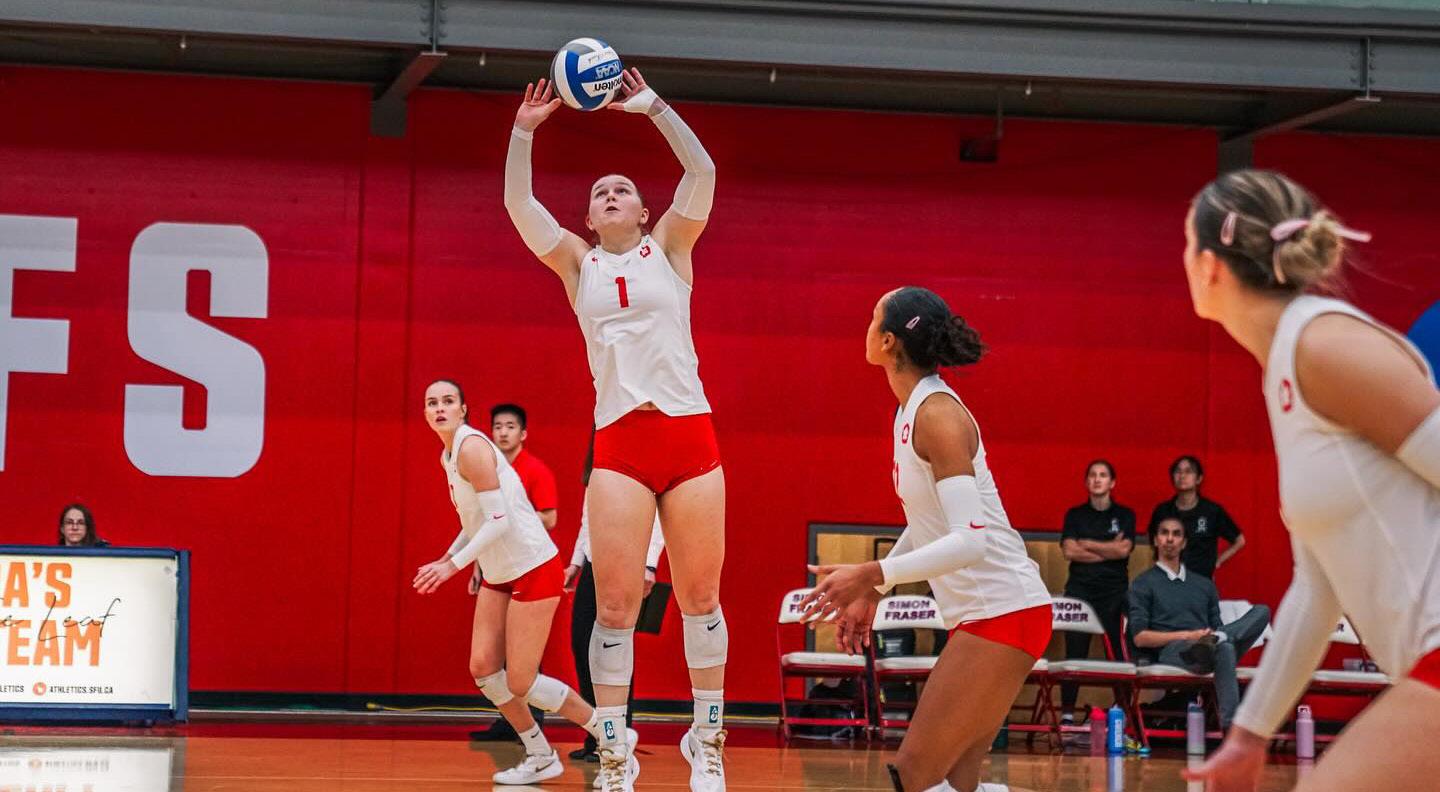
On June 4, SFU announced that it was o cially accepted to rejoin U SPORTS, departing from the National Collegiate Athletic Association (NCAA). Starting in the 2027/28 season, the university will resume its place in the Canadian organization, becoming its 59th member. The school will compete within the Canada West conference, which includes competitors from Victoria to Winnipeg.
In a June 4 Instagram post from U SPORTS, Canada West, and SFU athletics con rming the university’s reinduction, one sport was notably absent. Multiple comments pointed out the exclusion of volleyball, which is currently supported by SFU within the NCAA and is o#ered by U SPORTS on the national level. An SFU press release on June 15 clari ed that “women’s volleyball was not initially supported during the conference’s annual general meeting in May.”
The Canada West president Ben Matchett highlighted the concerns of the conference, in a statement to Castanet. “The wide geography of Canada West often presents challenges when creating league structures and formats as we look to balance multiple factors including academics, competitive integrity, nancial sustainability, and ensuring meaningful and comparable student-athlete experiences,” Matchett said. “Enough members were concerned about the potential impacts of adding a women’s program without a corresponding men’s program that the application did not receive the required 75% support at this time.”
However, the fate of the program has since changed. Women’s volleyball has been subsequently approved by Canada West, as announced by SFU on June 15. In addition, “SFU has committed to adding a men’s volleyball program alongside its existing women’s team. Both programs will begin Canada West competition in 2027/28,” the university noted.
As much as we have valued our time in the NCAA, we are looking forward to the new challenges ahead and the opportunity to compete against the top teams in Canada.
GINA SCHMIDT
SFU WOMEN’S VOLLEYBALL HEAD COACH
The Peak corresponded with SFU for more information on this change. “The decision to add a men’s volleyball team was necessary to ensure the admittance of our long-standing women’s volleyball team into Canada West,” the university stated. “Adding men’s volleyball will result in a balanced travel and competition schedule for Canada West members
Suspenders On campaign creates conversation around mental health
Organization behind the challenge hopes to inspire men
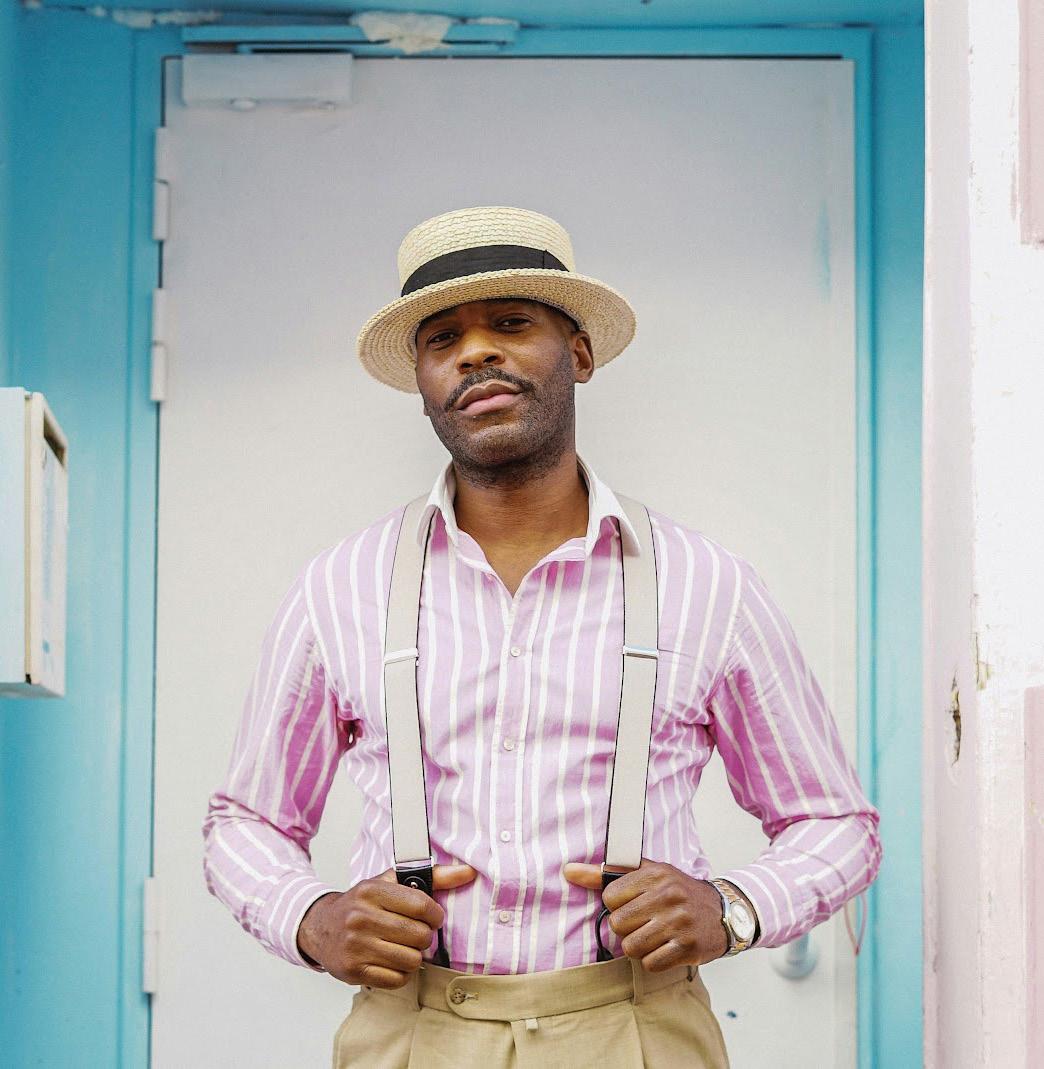
This June, the Canadian Men’s Health Foundation announced Suspenders On, a social media challenge aimed at raising awareness for Men’s Mental Health Month. The challenge called on participants to don a pair of suspenders, post themselves online with a caption that includes the #SuspendersOn hashtag and a dedication to a man in their life, and donate to the Foundation. As of July 1, the organization raised $24,751 of their goal of $120,000 for the June-long campaign.
The Peak spoke to Kenton Boston, the foundation’s president and CEO, about the campaign’s goal and future initiatives that the organization wishes to take on.
The idea for the campaign came from a coworker’s memories of his grandfather. “He was a Scottish ship builder who lounged on the beach famously wearing suspenders to keep his pants up,” Boston said. The conversation for the campaign “evolved from there.” He shared, “We kind of went around this idea of, could suspenders be that visual cue [ . . . ] of supporting men, because it can support your pants,” he said. “That’s the essence of our campaign, [to say] that it’s OK to say you need support. It’s OK to say you’re not OK and that you need help — and that’s enormous for us.”
The Canadian Men’s Health Foundation was founded in 2014 and is a nationally registered charity organization. According to their o cial website, the charity’s aim is to provide “information, tools, and motivation to inspire men and
their families to live healthier.” They provide services such as podcasts, online assessments — such as their men’s health checklist — and they produce research articles about health research. Boston noted that his organization’s focus is centered around inspiring and encouraging all people. “It’s not about isolating men or women, it’s about all communities coming together, because through that we know that families will thrive and people will thrive.”
You can be masculine. You can be courageous and tough, but you can also be caring and supportive, and you can cry, and you can talk about emotions, and that’s who we are as people.
KENTON BOSTON PRESIDENT AND CEO OF THE CANADIAN MEN’S HEALTH FOUNDATION
Boston shared that the organization was founded by Dr. Larry Goldenberg, a urologist based in Vancouver, who indicated that “70% of the diseases that people get as you age are avoidable,” including heart disease, type 2 diabetes, and low testosterone.
and ensures an equitable gender balance for SFU athletics and recreation with an equal number of women’s and men’s sports teams.”
The Peak also corresponded with current SFU women’s volleyball head coach Gina Schmidt for a deeper look at what this inclusion means.
“We’re very grateful that the Canada West has o cially approved our volleyball program, allowing us to continue our long and proud history in the sport,” Schmidt noted. “It’s also exciting that SFU will be adding a men’s volleyball team for the rst time in history. As much as we have valued our time in the NCAA, we are looking forward to the new challenges ahead and the opportunity to compete against the top teams in Canada.”
The o cial SFU women’s volleyball team was formed in 1976, competing in Vancouver city leagues for ve years before being accepted into the National Association of Intercollegiate Athletics, an American league. In 2002, the team transitioned to Canada’s U SPORTS, then called Canadian Interuniversity Sport. They played in this league until transitioning to the NCAA in 2010.
SFU shared that a return to U SPORTS would signal the end of its golf, softball, and outdoor track and eld programs in a previous announcement. These sports are not facilitated by the organization on a national scale. However, other institutions within Canada West, including UBC, do compete in golf under the National Association of Intercollegiate Athletics.
He explained that the foundation began with the mission to teach people to eat healthier. “We’ve kind of grown to focus now on physical and mental health,” he shared.
Boston highlighted how systemic and social factors can in$uence men’s mental health. He noted that society’s values of toxic masculinity have conditioned men to be hesitant to ask for help and to admit failure. “That’s really what we’re out to make sure that people understand. You can be masculine. You can be courageous and tough, but you can also be caring and supportive, and you can cry, and you can talk about emotions, and that’s who we are as people,” he said.
Men in Canada have faced increased mental health pressures. According to gures from the Government of Canada from 2012 to 2022, young men between 15 and 24 “who reported ‘very good’ or ‘excellent’ mental health fell from 70% to 52%.” Meanwhile, the government source also highlighted how the demographic has reported an increase in mood disorders and generalized anxiety disorder in that same timeframe.
PHOTO: COURTESY OF @SFU_VOLLEYBALL / INSTAGRAM
PHOTO: DOYO HERMANN / UNSPLASH
NIVEJA ASSALAARACHCHI NEWS WRITER
Canada announces updates to Men and Boys Health Strategy
Movember’s 2025 report outlines social and economic challenges of men’s health
Content warning: mentions of suicide and impacts of colonialism on Indigenous Peoples.
In most of Turtle Island (speci cally in Canada and the US), June is designated as Men’s Health Month. In Canada, this year’s iteration was marked by an update from the government concerning a new initiative, the Men and Boys Health Strategy. Starting in February, the government held various public and professional consultations to build a foundation for the project. The announcement shared some results of the three-month consultation process and highlighted that “Health Canada will analyze the ndings from the national conversation” to create a strategy focused on uplifting men and boys’ health. Movember, a charity organization focused on men’s physical and mental health, also joins the project as the country’s independent partner in this endeavor. The Peak corresponded with Mark Johnson, media relations for Health Canada, for more information.
“The Government of Canada is committed to ensuring that men and boys across Canada receive the support, care, and opportunities they need to thrive,” noted Johnson.
Such an e#ort has included input from experts, o cials, and international partners, as well as an online questionnaire for members of the public. The survey included questions like, “How can we support boys and men in understanding and dealing with traditional ideas about masculinity in healthy ways?” and, “How do we help men build healthy relationships and adopt healthy habits that improve their overall well-being?”
While the exact results and strategy details are yet to be released, data from over 5,000 responses “reinforced the importance of creating supportive environments where men and boys can thrive, seek help when they need it, and achieve their full potential,” noted Canada’s Minister of Health, the honourable Marjorie Michel, in the June 2 Health Canada press release.
“Improving men’s mental and physical health is not only a health priority, but a social and economic imperative,” noted Movember director of policy and advocacy Catherine Corriveau in the Health Canada press release.
In 2025, Movember released their own report which detailed the challenges men face in Canada today. The government shared that they will be using this report, among other countries’ national men’s health strategies, to guide the strategy’s development. Canada will be one of the rst countries in the world to develop a men’s health strategy. Canada joins Australia, the UK, Ireland, Iran, Mongolia, the Philippines, South Africa, Malaysia, and Brazil.
Improving men’s mental and physical health is not only a health priority, but a social and economic imperative.
CATHERINE CORRIVEAU MOVEMBER DIRECTOR OF POLICY AND ADVOCACY
According to Movember’s report, those with marginalized identities are more likely to struggle with mental and physical health. Speci cally, “Indigenous men have the worst health outcomes of any group in Canada,” with “suicide mortality data” showing that Indigenous men under 30 “are particularly high risk, accounting for up to 85% of suicide deaths in some locales.” The report shared, “Indigenous men are dying younger than non-Indigenous men and living longer with debilitating illness.”
The report also spoke to the gender-based challenges of long-term colonization. In Indigenous communities, “women and men have experienced avalanches of imposed norms and social codes and beliefs from newcomers in territories who brought with them heteronormative ideas based in Judeo-Christian foundations,” noted the summary. As Parks Canada noted, “Catholic religious congregations ran the majority of residential schools and were essential
to their day-to-day operation. In doing so, their intention was to convert Indigenous children and assimilate them to Euro-Canadian culture. The residential school system was imposed on Indigenous Peoples by the federal government for over a century as part of a broad set of assimilation efforts to destroy Indigenous cultures and identities and suppress their histories.”
Movember’s report said of these Judeo-Christian foundations, “These were turned into practices and policies with the goal of undermining traditional notions of gender and sexuality while invading and assimilating communities and reshaping identities.”
These ideas, according to the report, changed the power dynamics within Indigenous communities, wherein Indigenous men were incentivized to take positions of power, as was expected within Western society. “Or, worse, being punished if they resisted and rejected Western notions of manhood,” explained the report. “For all Indigenous men, a great deal of healing has been necessary to become the fullest sons, nephews, fathers, uncles, and grandfathers they can be.”
For widespread gender di#erences in accessing care, Movember noted that men “tend to be estranged from healthcare, and their health literacy is often underdeveloped.”
In the report, Movember highlights that for men, language barriers and lack of knowledge regarding speci c stigmas may represent a lack of cultural competence within healthcare, further alienating many marginalized men from treatment.
Such lack of care has sweeping e#ects, impacting social and economic sectors of life for men and those around them. The report indicated that “in 2023 alone, Canada could have saved up to $12.4 billion on avoidable cases of the ve conditions causing the most years of life lost in men (i.e., coronary heart disease, chronic obstructive pulmonary disease, lung cancer, colorectal cancer, and suicide).
“Our research indicates the scale and signi cance of the costs that could be saved through health promotion, early detection, and disease prevention interventions.”
ILLUSTRATION: VICTORIA LO / THE PEAK
LUCAIAH SMITH - MIODOWNIK NEWS WRITER
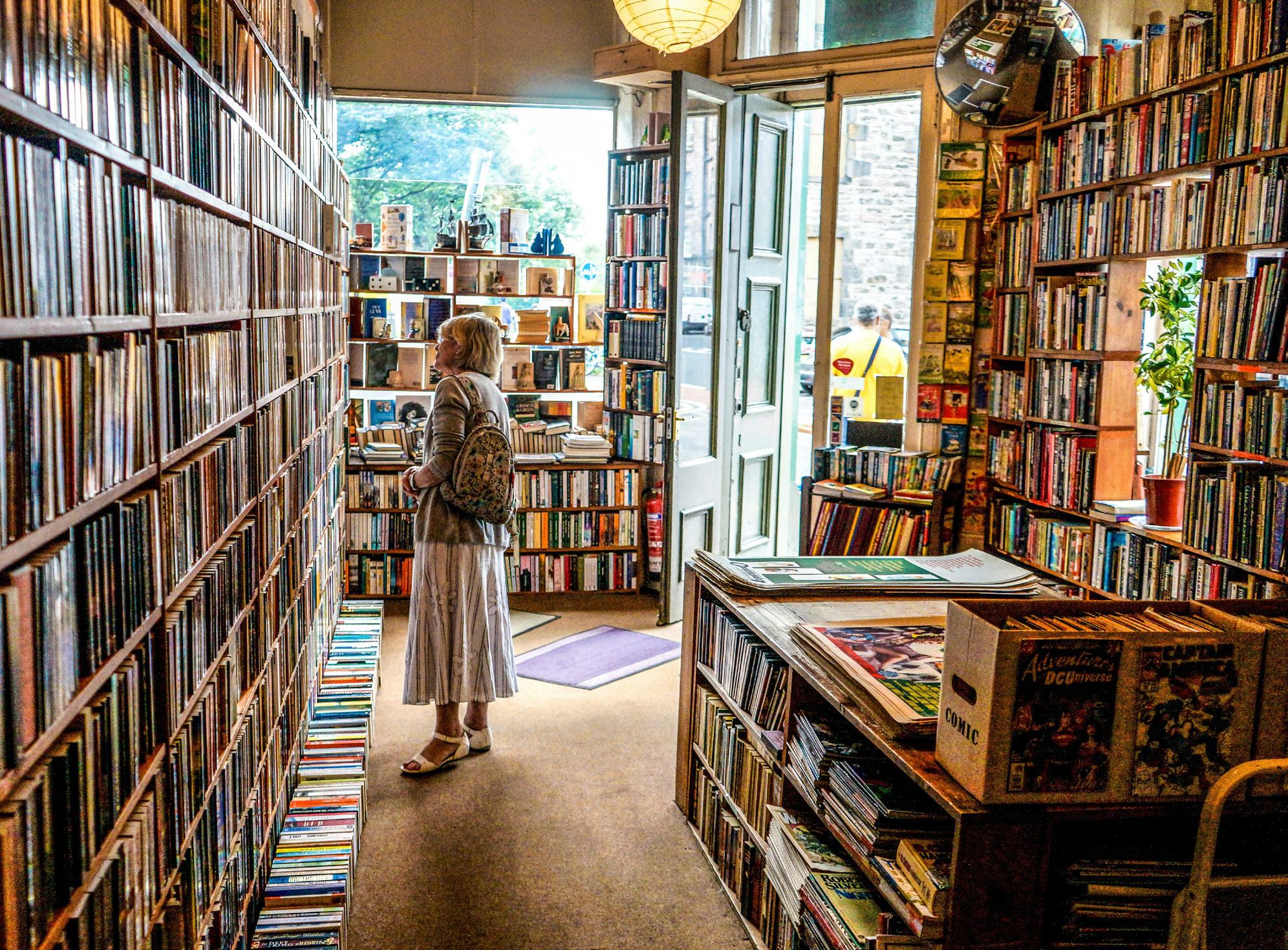
Books are too expensive
We should be able to afford the books that we want to read without breaking the bank
If you enjoy reading books, there’s a chance you wait impatiently for new book series installments or even longawaited releases from your favourite authors. I know I do this a few times a year. Each time, I’m overwhelmed by the desire to read a certain new-release. This is only made worse by people sharing their reviews of it online, and spoiling the plot or the ending. This is all to say, it is unwise to wait too long to purchase it. Consequently, this leads me to head to the nearest bookstore immediately to purchase the book only to be stunned by the price of it. Over the years, I have grown progressively taken aback by the price sticker on the back of a book. As an avid reader, I think the current book market makes books too expensive and should be made more a ordable for consumers.
Simply put, the current publishing market has made book purchasing too expensive for the average reader, and that needs to change. Reading is a joy that unfortunately has been a privilege a orded to those with resources.
support your favourite authors, and driving prices up turns readers away. It is simply getting out of hand.
Another issue that persists is when those books are published, it takes at least a few months before it enters the second-hand market, considering that people would have to either sell, trade, or donate their copies for them to enter the market. Thrifting is unpredictable — I can’t head to the nearest thrift store and expect to !nd my book of choice. If the book is popular enough, it can take anywhere from a few weeks to a few months to get your hands on a borrowed copy from the nearest library. Yes, borrowing from a digital library is an option, but currently, I am on a 37 week waitlist for a book on Libby — it’s safe to say that my patience is running thin. This, again, leaves a reader with only one option to secure their next read: buying a new copy.
While I personally dislike the feel and size of mass market paperback books, the shift in the publishing industry is incredibly worrying. There are reports of a decrease in mass market paperback books production over the past few years. This is quite industry-altering due to the way those books were made more accessible and a ordable to the public. One could stroll by a giftshop, or browse the supermarket aisle and purchase one. The decrease of their production has rami!cations that yield an even more una ordable book market, which is already being witnessed.
What Grinds our Gears
Ice cream samples need to be banned
Do you ever spend a long day at the beach and !nd yourself craving an ice cream on the way home? Since I moved to Vancouver, getting ice cream after a late night spikeball session at X̱ epx̱ páyem (Kitsilano) Beach has become a ritual. Unfortunately, the ridiculous length of the line on a summer’s evening has forced me to choose between catching the last bus or a scoop of the good stu on more than one occasion.
With every missed bus, I have become convinced that the root of all evil are those in front of me in the queue who insist on trying every avour under the sun before ordering. As a diehard fan of a single scoop of chocolate in a wa$e cone, I like to keep it simple. But o ering samples to customers, in my opinion, has gotten out of hand, and even the ice cream stores agree!
While some establishments are now limiting samples to two per customer, this does not go far enough. Think about it, does each member of the family of !ve standing in front of you really need a reminder of what blueberry ice cream tastes like? I don’t think they do, and this summer, I hope we !nally say goodbye to samples for good.
As a lover of all things books, I have found myself in an uncomfortable position to the point where I dread book launches. For one, publishing houses tend to publish books in hardcover !rst, to turn in more pro!t. These can range anywhere between $25 to $40. I could launch into a full-page tirade to explain my hatred of hardcover, and I have in the past, but for the sake of all of you reading I won’t. For the other, the price sticker on those new books has gotten progressively more expensive over the years. In a survey conducted by BookNet Canada, it was found that there was an 11% increase in the average price paid by book buyers in Canada for both hardcovers and paperbacks. What is perhaps worse, is they found a 3% increase in the price of e-books just so they can make more pro!t! It shouldn’t be a luxury to own books or
Simply put, the current publishing market has made book purchasing too expensive for the average reader, and that needs to change. Reading is a joy that unfortunately has been a privilege a orded to those with resources. Also, not everyone lives near a well-stocked or well-funded public library. There’s also the chance that requesting a book will be rejected for being “too niche” (ask me how I know). However, the rising cost of books, especially in Canada, is making their a ordability a thing of the past. It is incredibly frustrating to navigate the current economic climate as is.
The una ordability of books is an access issue that should not exist. I know I have to think about how much I am spending and how much I can spend on books, so I can safely assume that many others face a similar issue. This problem is only exacerbated with younger individuals, such as children and teens, and with people with disabilities due to the precarity of the job market where employment opportunities are decreasing so there’s less disposable income. Books are integral to a dialogue that helps better people and societies. And honestly, they are absolutely way too fun and enriching for us to allow the market to make them harder to obtain.
PHOTO: JOHN MICHAEL THOMSON / UNSPLASH
ZAINAB SALAM EDITOR - IN - CHIEF
PHOTO KATIE SMETHERMAN / UNSPLASH
TOMOS LAND STAFF WRITER
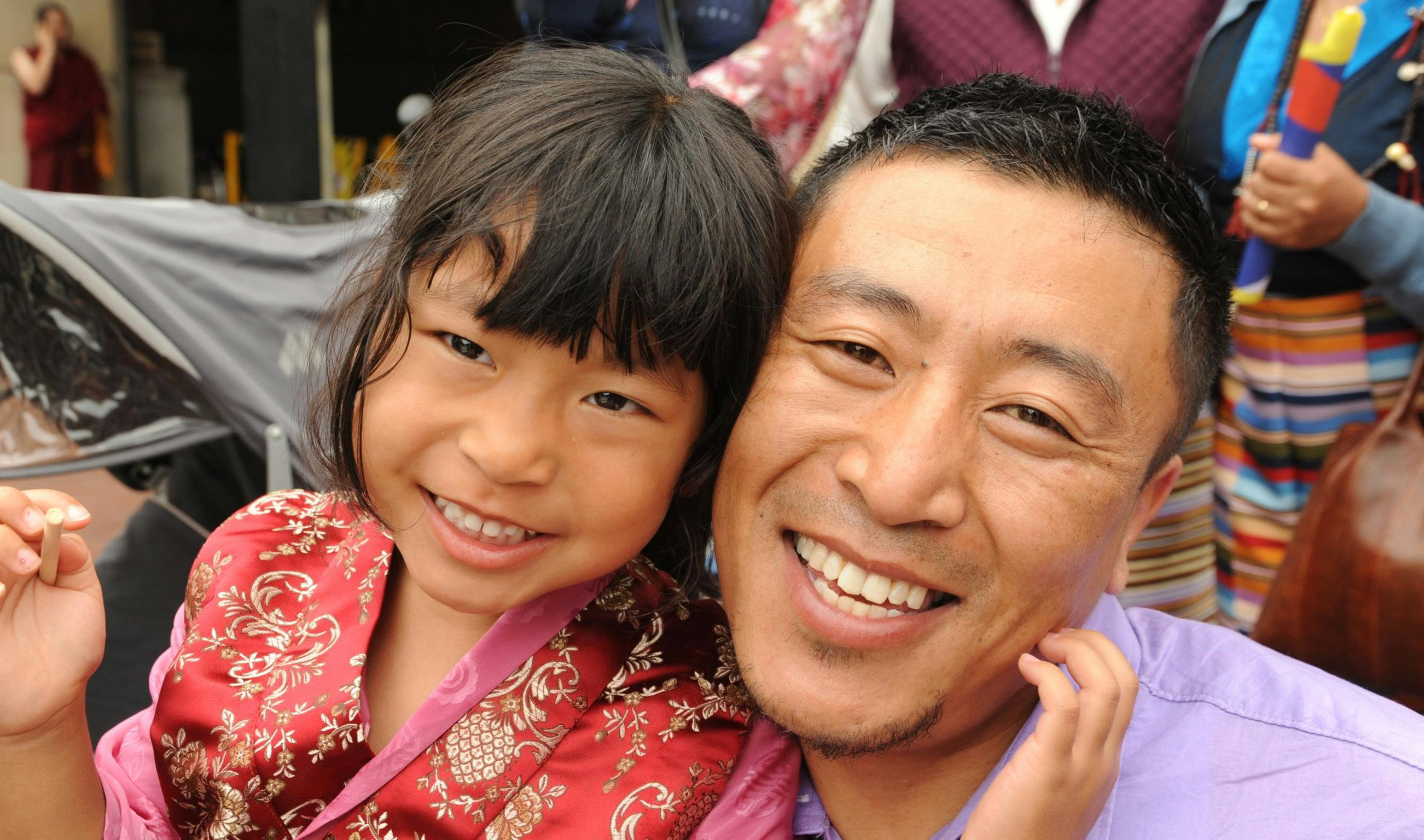
Fathers are caretakers too
Caretaking can take various forms
MICHELLE YOUNG COPY EDITOR
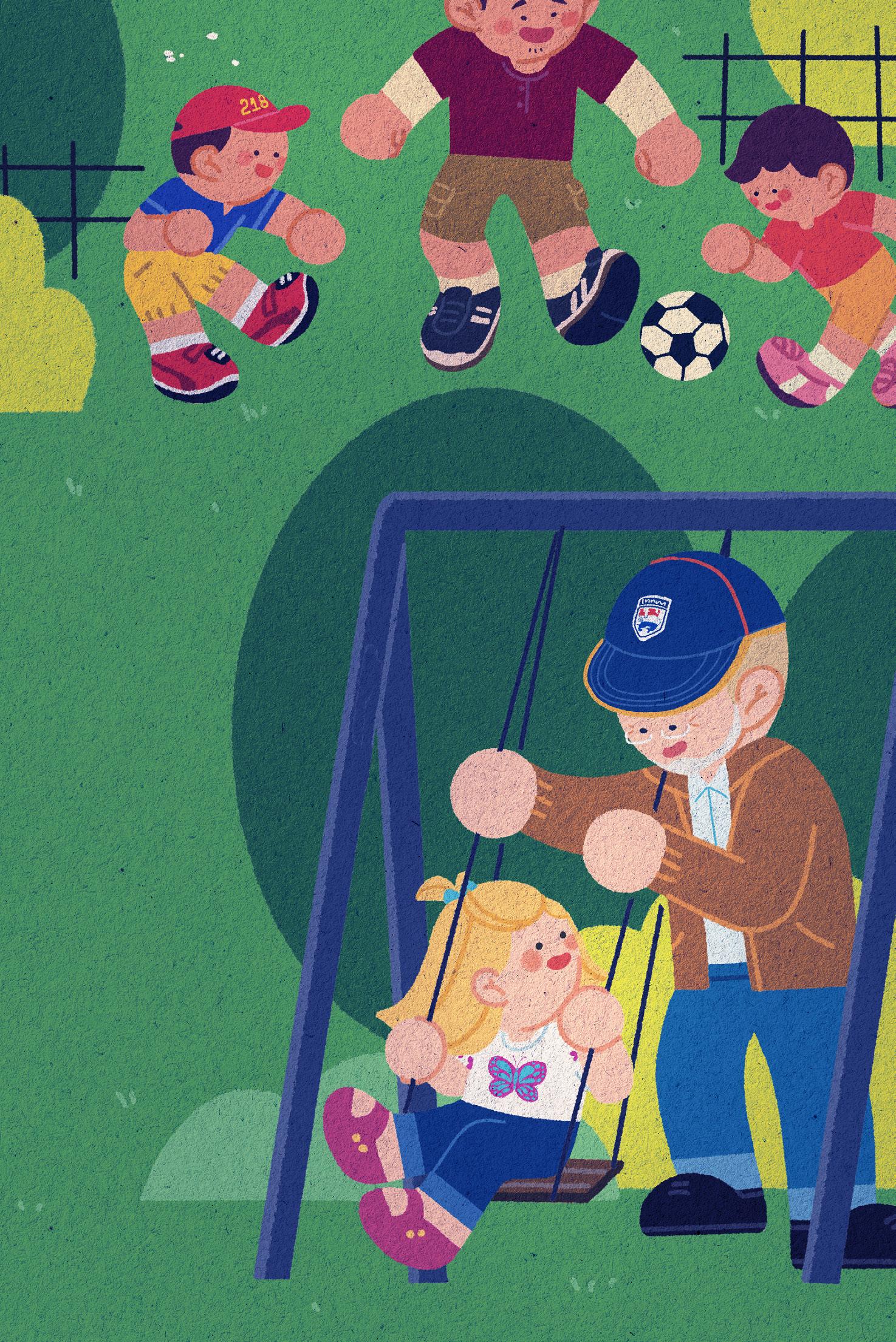
There’s lots to be said about how mothers and women take on extra caretaking: from women’s recent entry into a paid workforce, gendered expectations, to the misconception that women are “naturally” better caretakers than men. However, there’s little evidence that this is true. On a biological level, men respond just as well as women when it comes to caretaking. It’s time we set aside our preconceived notions: men are competent caretakers, and acknowledging this helps everyone.
When women are assumed to be better caretakers than men, what message does that send to single fathers raising their kids? That they aren’t as good as mothers who may not be present? What about gay men raising a child in a loving environment? It’s harmful to suggest that one person is better suited to care for another based on pseudoscienti!c ideas of biology. Maternal instinct, for example, is an exaggerated concept, and viewed as “largely a myth,” with studies showing that it can take weeks or months for mothers to feel a ection for their babies. So, when women are viewed as more capable caretakers than men, what message does it send to women who struggle to care for their children?
My parents are divorced, and I grew up between the hands of my mother, father, and stepfather. Their behaviour was not
OPINIONS
SFU’s sports teams are disconnected from students
SFU’s poor promotion of our sports games and campus impedes student engagement
MARIE JEN GALILO STAFF WRITER
Did you know that SFU has 10 sports categories, including basketball, soccer, wrestling, swimming, cross country, track and !eld, golf, and softball? Because I sure didn’t. From 2000 to 2010 SFU sports teams had major successes — the women’s wrestling team won six national championships, while the men’s wrestling team won two, and women’s basketball won !ve. Recently, the SFU track and !eld team, !nished third overall while recording 23 podium !nishes, including eight gold medals” in the Great Northwest Athletic Conference Indoor Track and Field Championships, according to Championship Mark. SFU’s athletes and sports sta pour their blood, sweat, and tears into making these achievements possible — and yet we rarely hear about our sports teams due to the jarring lack of on-campus sports promotions.
I’ve been at SFU for four years now, but I almost never hear about our sports teams or upcoming games. SFU sports sometimes come up in conversations when I have classmates who are athletes. In the AQ, I occasionally see a poster or two about sports camps and the SFU Fitness Centre. SFU’s o%cial Instagram account occasionally reposts content from their athletics department, but that’s all I’ve seen in terms of promotions.
The lack of promotion for campus sports was exacerbated by SFU’s budget cuts in 2024, which led to the dismissal of SFU’s sports and information department — the one that was in charge of promoting SFU’s sports teams on social media. This puts the responsibility on students to keep themselves up to date on campus sports — a responsibility that should be SFU’s, these are their teams after all.
It’s time we set aside our preconceived notions about caretaking: men are just as competent, and acknowledging this helps everyone.
determined by biology. Though my mom got her fair share of taking care of me as a child, there were times where I was left with my father or stepfather while she worked. It’s in these moments that the absurdity of biological determinism is revealed: my fathers were never neglectful, they played dolls
with me, cleaned up my wounds when I fell at the park, and comforted me when I had nightmares. My mother may have the ability to create countless meals out of a few ingredients, but this is not because she is a woman — it’s because she’s had the time and experience to hone her cooking skills. I am extremely grateful to have this network of people who love me, and I can con!dently say that no parent is lesser than the other. Everyone is unique.
Men have the ability to step up. Many of them do and are good at it! Caretaking can take many forms: staying at home, cooking, cleaning, driving, or other daily tasks that support a family or another person. According to Statistics Canada, men are being more involved with their loved ones. Not only should the streak continue, but we should strive for a society that increasingly accepts men as caretakers.
With all these reasons to not be connected, why should you care about SFU sports, then? For one, engaging with campus sports and identifying with our teams could help with our lack of school spirit. SFU is known to be a “commuter campus” where many students leave as soon as classes end. Attending
While we aren’t responsible for bridging the disconnect between students and campus sports, we can recognize the importance of our sports teams and increase engagement with it.
sports events gives students the opportunity to connect with each other and be part of a collective audience, which can help them feel more strongly connected to the broader campus community. Additionally, watching live sports can improve
your mental well-being by activating your brain’s reward system, resulting in positive feelings such as happiness and satisfaction.
It’s hard to know if SFU’s sports information department will ever return. Does that mean the university will train each team on social media and marketing strategies? Probably not. However, it’s also important to note that online presence can’t replace a physical one. Some students don’t use social media, or don’t interact with SFU’s posts. Posters and promotions on campus TV screens are another way to reach students. The athletics department could also host a sports team day, similar to SFSS’ clubs day, to give students an opportunity to interact with our athletes.
While we aren’t responsible for bridging the disconnect between students and campus sports, we can recognize the importance of our sports teams and increase engagement with it. This would not only improve our school spirit and personal !tness, but also give our athletes the recognition they deserve and the support they need to keep on thriving by boosting con!dence and performance.
PHOTO WONDERLANE BOIZ / UNSPLASH
PHOTO: HARMEET GILL / THE PEAK
THE IMPACT OF HEALTHY MODELS OF MASCULINITY
My opa taught me that strong men cry
Content warning: brief descriptions of parental emotional abuse.
Whether you’re grieving the death of a father, a grandfather, or an uncle (or grieving a healthy relationship with one), Father’s Day may have brought complicated feelings for many. My brother and I bond by exchanging relatable posts about neglectful dads. While ours was physically present up until adulthood, he was not present emotionally. He wielded rage and projection like weapons to combat feeling or displaying emotional vulnerability.
This time of year is also diffcult because August 3 will mark my opa’s third birthday since he passed away. I never had trouble expressing affection for my opa (Dutch for grandpa), by writing him wordy cards, spending quality time together, and giving him physical affection like hugs. It was because he made me feel safe to be myself, showing me that he cared about my thoughts and feelings. This may not seem very revolutionary if you grew up in a supportive and safe household, but for me, it meant the world. My opa was a positive masculine role model, something that was important for my brother, in probably an even more crucial way — by offering some respite from the toxic version of masculinity my dad modelled.
How deep of an imprint a father can have on their kids’ brains — I sometimes fnd myself arguing with an internalized ghost of his perspective.
My grandparents on my mom’s side settled here from the Netherlands, and my oma (Dutch for grandma) and opa got married in their early twenties. They had a traditional marriage, where my oma kept the house and raised their daughters while my opa worked. She didn’t receive a proper education due to the overwhelming sexism of the time, which had meant marrying her off was seen as far more important. She put everything into being a mother, keeping a house, and keeping company. Being connected especially within the tight-knit Dutch community they immigrated here with, and their large families, was very important. My opa never took her role for granted, and showed us what a loving and affectionate husband looks like.
My opa didn’t hold back showing his emotions. My family lived overseas for many years and would visit every summer. Oma and opa always drove me and my siblings to the airport. Every year, my opa would bring himself to tears by playing or even singing acapella to the words of “Leaving on a Jet Plane” by John Denver, and we would join in unison. Instead of avoiding the pain of having to say goodbye to his grandkids for another year, he’d let us know that he was sad, and showed us it was okay to cry and express grief. It was a safe space to feel emotion.
He had a saying: “Don’t sell yourself short!” This saying now lives on. My family will often say it to each other now in his absence, keeping his encouragement alive in our lives.
I’ve been reading the will to change: men, masculinity, and love by the late feminist author bell hooks, who uses lowercase in order to make her ideas the main focus of her work. In this book, hooks reframed the way some feminists have portrayed men as inherently power-hungry, and the idea that we should abandon them altogether rather than recognize their desire to change. More than 20 years after the book was published, it feels there is a similar feeling of hopelessness towards men. Online spaces can feel like cesspools
Ashra Proctor • SFU Student
that magnify a terrifying culture of misogyny. From the 4B movement which started in South Korea to the trend of decentring men, these are understandable responses to the way men continue to threaten women, and how patriarchy dictates our lives.
hooks explained that men who have internalized toxic masculinity are deeply hurt. The patriarchy teaches people that men are “more manly if they do not feel,” and the “only manly response” to hurt feelings is to push them away. hooks expressed that men who are controlled by toxic masculinity often turn to violence and rage because they are aware that they are “acting out a lie,” as worded by author Barbara Deming.
I can already hear my dad’s voice in my head scoffng at the term “toxic masculinity.” Even though a ridiculous defection, it shows how deep of an imprint a father can have on their kids’ brains — I sometimes fnd myself arguing with an internalized ghost of his perspective. hooks wrote about how patriarchal culture teaches children to crave a father’s love and approval more than a mother’s. She cites author Jan Waldron: “The value goes up because of its scarcity.”
My brother recently refected to me, “You fgured dad out way before I did.” By the time I was 16, I mostly avoided him and learned to grey rock, a tactic that involves withdrawing energy from someone seeking to offend or hurt you. However, the need for his approval can linger in unexpected ways. I was never allowed to argue against his opinions, and if I did, I was met with hostility and ridicule. Even now, voicing my opinion when I disagree, especially when it’s with a man, sends me into fght-or-fight. Meanwhile, my brother would often laugh and join in on the jokes he made at the expense of minorities or other peoples’ insecurities, abandoning his sense of empathy for the rare chance of bonding with his dad. Only crying in front of me or my mom. Like any child, he just wanted to be seen and acknowledged by his father, something that might have been even more important for his identity as a boy — but unfortunately, for my dad, that meant stooping to his level and infating his ego.
As the eldest daughter in my family (the front pea in a pod of two, my opa would always say), I often internalize and take responsibility for other peoples’ feelings, minimizing my own. It’s something I’ve been working on, also recognizing that a lot of the negative self-talk I project onto myself is actually his lingering judgmental voice in my head. The discomfort around emotions and intimacy peddled by the patriarchy doesn’t just affect men — I struggle opening up. Having been raised by my opa, it’s understandable that my mom has always been comfortable openly expressing her feelings. However, more often than not, I was made to feel ashamed of my feelings and self expression, something I’m working on overcoming. I imagine this would be even more diffcult to overcome if I was socialized as a man and expected to be stoic all the time.
So while Father’s Day can often elicit complex feelings of grief, resentment, and longing, I am grateful that I have the opportunity to choose the men I accept in my life now. I’m grateful for emotionally vulnerable men like my brother, my partner, and my opa’s lasting legacy. His words of encouragement are preserved in his memory, the messages in the songs he would play, and the heartfelt letters he wrote to me every birthday.
To read the will to change: men, masculinity, and love by bell hooks, which provides an empathetic perspective for men to connect with their emotions and identity, purchase it from Iron Dog Books, or borrow it from the SFU Library or your local library.
We are redefining
masculinity
We Will Be Brave challenges toxic masculinity through art
MARIE JEN GALILO STAFF WRITER
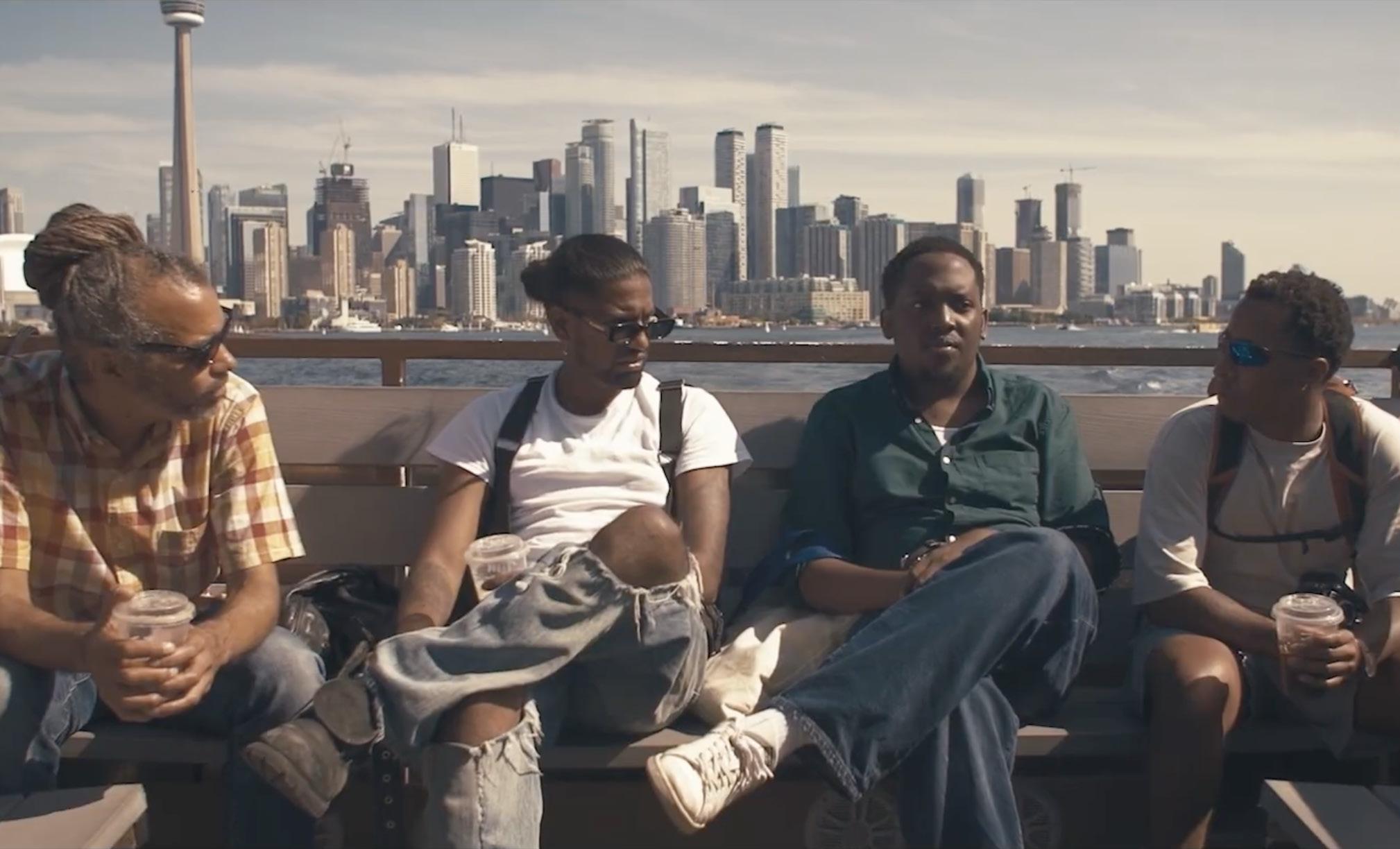
If bravery is de!ned as the ability to overcome fear, why have men been taught to perceive fear, the precondition for bravery, as a shameful sign of weakness? The !lm We Will Be Brave, directed by Canadian !lmmaker Chrissan Hessing highlights the challenges men face as they learn to be brave while confronting toxic masculinity. The !lm follows Torontobased artists, including musicians, a poet, a martial artist, and photographers who use art to understand how their experiences have shaped their perceptions of masculinity.
These artists are current or past members of the Good Guise — a group of men and non-binary people who are Black, Indigenous, Latinx, and racialized. They use various art media to encourage discussions about men’s mental health and well-being. After recognizing the harmful impact that toxic masculinity has on men’s identity development, artists Balu Kanagalingam, Beerus (Tony Dryden), and Julian Diego started the Good Guise to advocate for healthy masculinity. Toxic masculinity sees men as naturally stronger than others, and discourages them from showing emotional diversity and vulnerability while promoting views like sexism, misogyny, and homophobia, among others.
For Kanagalingam, beatboxing liberates him from the pressure of wanting to make his immigrant parents proud and from his clouded perception of how men should be treated, which was shaped by his upbringing. For Mobólúwajídìde (Bo) Joseph, poetry is a medium through which he can freely express himself without aiming for perfection. For Jah Grey, photography and community gardening help him connect with others while navigating his identity as a Black man.
Meditation is Javier Dávila’s way of reconnecting with his body after years of learning to embrace being queer and
Due to toxic masculinity, a taboo still exists around conversations about men’s mental health struggles or their ability to sustain healthy relationships. This mirrors the relative inaccessibility of arts spaces for many communities. A newly-developed digital photo exhibition by the Men’s Health Research program at UBC brings a fully-rendered gallery directly to you at your desktop computer. The program’s Men Building Intimate Partner Relationships project intended to “chronicle the connections between masculinities and men’s intimate partner relationships with an emphasis on equitable and sustainable partnerships.”
The exhibit resembles a traditional gallery from the graphics: digitally designed to look like laminate hardwood ooring. There are pillars “supporting” the second oor, and a ight of stairs to click your way up. You can pause in the middle of the stairs and check in on the gallery from an elevated vantage point. Underneath each picture lies a short caption with a title, participant age, and where the photo came from. Clicking on the image brings forward a brief blurb about the story captured inside.
The !rst oor of the exhibition’s 3D rendering is dedicated to topics like domestic work and honouring sentimental partnerships. Many of the photos tell stories about how relationships require collaboration in domestic duties to foster the feeling of connection; several entries describe the way
Latinx. Through kung fu and !re spinning, Diego channels his strength into controlled movements that are simultaneously graceful and powerful, proving that masculinity is not de!ned by aggression. Beerus left the Good Guise because his personal circumstances made him feel un!t to hold a leadership position, but his decision ultimately demonstrates accountability. In addition to its re ections on the power of
It can be challenging to think of alternative ways to conceptualize masculinity after its meaning has been perpetually distorted by toxicity, but we can redefine it if we choose to be brave — starting with We Will Be Brave.
arts, We Will Be Brave really drives home that recognizing toxic tendencies is the !rst step in breaking away from toxic masculinity; only by acknowledging the problem can we work towards !nding a solution.
One art exhibit shown in this !lm is a phone booth with pictures of men staring into the camera pasted on the walls. The silent stares say, “You are not alone — we see you, and we are right here with you.” One root problem that perpetuates toxic masculinity is the lack of support systems for men, which causes them to bottle up their emotions instead of seeking necessary help.
Near the !lm’s end, the Good Guise gathers in a community garden built by Grey. Once barren, but now bursting with life in every corner, the garden reminds the audiences that something always starts from nothing. It can be challenging to think of alternative ways to conceptualize masculinity after its meaning has been perpetually distorted by toxicity, particularly on social media, but we can rede!ne it if we choose to be brave — starting here, and starting now, and starting with We Will Be Brave
We Will Be Brave is available to stream free of charge on CBC Gem.
cooking responsibilities are shared. Some of my favourite photovoice entries go beyond domestic life and branch into the larger world. One tells about how a more outgoing partner encourages “coming out of [his] shell,” and another couple of participants from Ontario write about a ritual of taking turns picking out pastries from a stretch of cafés along a street. A shared pastry parade seems to perfectly embody the research group’s goal of describing sustainable and equitable partnerships and their importance for men’s mental and physical health.
Browsing the gallery felt like going through a camera roll. Each photo was spontaneous and casual, without the usual posture “professional” photographers apply. I think there is something very comforting about how this project incises into the daily lives of men in situations any viewer is likely familiar
with too; one entry attaches the meaning of perseverance over hardship to a set of concrete stairs, and another uses a photo of a restaurant cheque case to explain that money isn’t everything, rejecting a trope in toxic masculinity that men are breadwinners of a household. My favourite picture is one in the “top 30” gallery with a message of how deviations in routine break monotony and add colour to the tedium. Most of the entries in this gallery are classically picturesque, but I am drawn to this image of a cracked cement block imbued with coloured tiles as mortar because it shows fragility within brutalism (an architectural style that emphasizes minimalism and texture over design). “Perfection” is a moving goalpost, so embracing deviations from the plan is a valuable skill to have and even more important to be able to share.
Musing through the variety of forms a healthy relationship can take is inspiring because it proves that gender hierarchies are not only dissolving around the world, but that the barrier of candid dialogue is being lowered too. By verbalizing and visualizing strategies for sustainable relationships, I think this digital gallery rests at a very important precipice for nurturing a culture of compassion and tenderness.
IMAGE COURTESY OF REELASIANFILMFEST / YOUTUBE
Reservation Dogs is the perfect summer watch
The series avoids tropes to deliver an authentic look at Indigenous teenage life
SIA GARG SFU STUDENT
While June is National Indigenous History Month in the north of Turtle Island (Canada), re ection on the history of dispossession, resilience, and ongoing reconciliation should not be limited to a month alone. If you’re looking for a way to honour and promote such e orts from home, I believe the most accessible place to start is through cinema, and what better piece to start with than a good-humoured, scrappy comedy about four teenagers living on the Muscogee Nation reserve in Oklahoma?
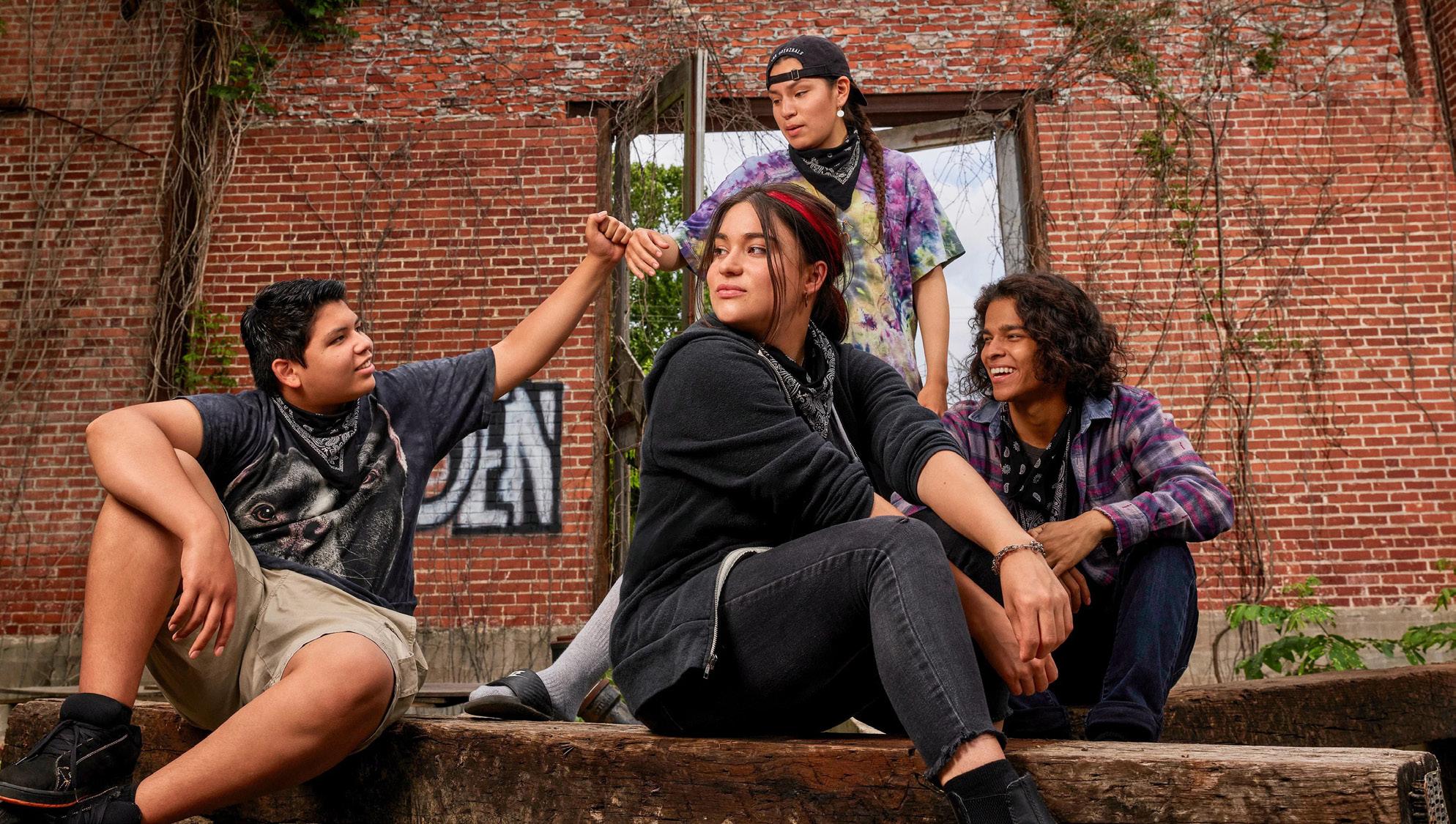
Reservation Dogs, created by Sterlin Harjo and Taika Waititi, ran for three seasons, and is available to stream for free right now on CBC Gem. It follows four Indigenous teenagers, Elora Danan, Willie Jack, Bear Smallhill, and Cheese as they steal, scheme, and dream their way towards California, a place they have mythologized as an escape from a life that feels like it’s closing in. Hovering over their plans is the absence of a !fth member, Daniel, whose death before the show’s start continues to haunt the narrative.
The show is !rst and foremost funny and lighthearted. It possesses a weird, speci!c humour that only comes from people telling stories about their own tightly-knit communities. Harjo, who grew up in Holdenville, Oklahoma, spent years making !lms about the world he knew. When you watch Reservation Dogs, you can feel the lived-in speci!city in every scene: the particular rhythm of bored teenagers who are killing time, while also perhaps creating just a little bit of mischief
around the reserve, the texture of family relationships spanning across generations, and the gallows humour that emerges in communities that have had to !nd ways to survive.
Reservation Dogs o ers something much more mundane and much more true to life; teenagers arguing about everyday things, bad plans going worse, and moments of unexpected warmth between people who know each other too well to pretend.
This series marks a massive milestone for Indigenous representation, as Reservation Dogs was the !rst American TV series to have an entirely Indigenous cast and crew. As Harjo put it at the Film Independent Spirit Awards, “We told stories
about home and they were all funny, and there was nothing on TV that was funny that had Natives in it.” Reservation Dogs !lls that gap seamlessly and without apology.
Reservation Dogs was not created to !ll the role of a guide on the lives of Indigenous communities in the US, instead, it occupies its world with what The Hollywood Reporter has described as “lived-in charm,” trusting viewers to keep up. The Elders are hilarious, and the spirit guide, played by the Dakota environmental activist Dallad Goldtooth, is a sarcastic, swearing spirit of a warrior who upends just about every tiring “mystical Indigenous ancestor trope” that continues to plague the cinematic world.
The show has been positively remarked upon by Indigenous viewers who have greatly enjoyed seeing their lives on screen as opposed to an overly romanticized or tragic caricature. Reservation Dogs o ers something much more mundane and much more true to life; teenagers arguing about everyday things, bad plans going worse, and moments of unexpected warmth between people who know each other too well to pretend. The episodes run about 25 minutes each and I have found it’s an easy watch; I can think of no better way to spend a few relaxing evenings this summer and beyond.
Nu itious Nibbles
Nu itious Nibbles
Chana chaat
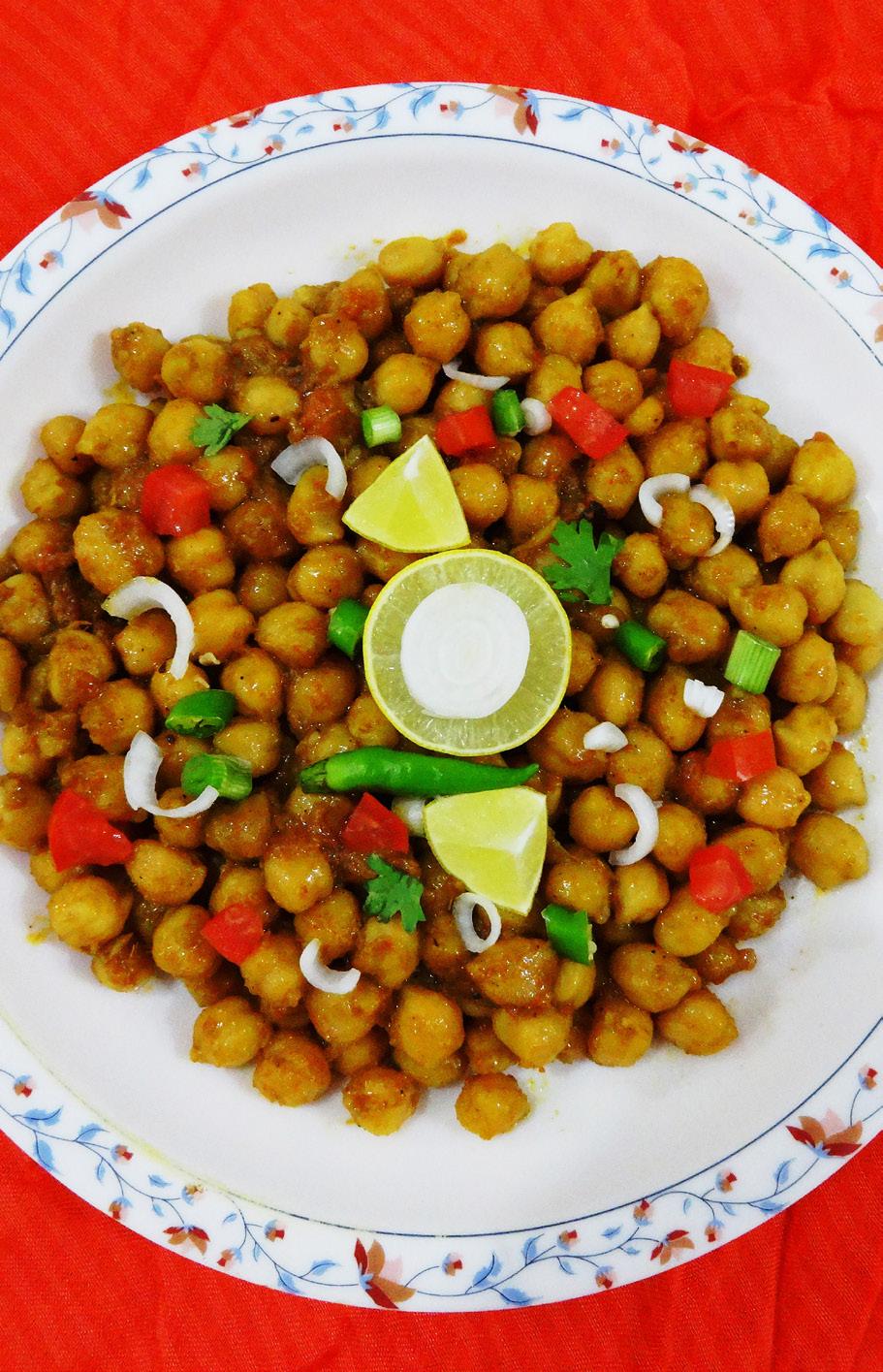
Looking for the perfect meal-prep salad? Here’s my family recipe of a fresh and avourful !bre-loaded Pakistani salad called chana (chickpea) chaat.
This salad is the most low-e ort and high-reward you can get in the kitchen. Made with staple kitchen ingredients like canned chickpeas and potatoes, while opening you up to an entire new palette with a specialty South Asian spice called chaat masala. This masala mix is made of spices like cumin and coriander, adding a tart and tangy avour to your dish of choice. Another South Asian ingredient, imli (tamarind) sauce is also an important element of this dish. The sweet sauce cuts through the avour of the chaat masala, creating a unique sweet-salty-sour avour pro!le. These distinct ingredients can be found in South Asian specialty stores or the international section of big supermarkets. The best part of this dish; it marinates itself overtime in the fridge, tasting even better as the week goes on!
Ingredients:
• 1–2 large russet potatoes
• 1 can of chickpeas
• 1 red onion
• 2 tomatoes
• 2 green chillies
• Green coriander
• Imli sauce
• Chaat masala seasoning blend
• Salt
• Red chilli powder
Instructions:
1. Peel and cut the potatoes into bite-sized cubes.
2. Boil potatoes in a pot of hot water until tender (around 10–15 minutes).
3. Rinse and drain the can of chickpeas.
4. Chop the onion and tomatoes into bite-sized pieces.
5. Mix together the boiled potatoes and chickpeas along with the chopped onion and tomato.
6. Add 1 tsp red chilli powder.
7. Add 1 tsp salt.
8. Add chaat masala to taste (starting with 1 tbsp, and building up to your spice tolerance).
9. Add 2 tbsp of imli (tamarind) sauce.
10. Give a big mix to salad.
11. Finely chop green chillies and coriander and add them as garnish.
12. Drizzle on some extra tamarind sauce to decorate.
13. Enjoy! Or store in an airtight container in the fridge as your new favourite meal-prepped salad.
IMAGE COURTESY OF WAITITI, CRAZY EAGLE MEDIA, DIVE, AND FXP
PHOTO: Miansari66 / Wikimedia Commons
REHMA ADNAN SFU STUDENT
THREE STRANGE MOVIES I WATCHED ON MY TRANSATLANTIC FLIGHT
Recently, aboard a !ight from Istanbul to Vancouver, I had the utter pleasure of perusing through a very extensive in-!ight entertainment catalogue.
Here are some of the highlights of my interesting cinematic escapade.
British Lady and Turkish Man
This charming documentary tells the story of Worcesterette, a British émigré who moved to Turkey because of the high cost of goat milk back home, and Emir, a goat herder from the northern part of the country. “I never expected to live in Turkey,” Worcesterette told the lmmaker at one point. “Now, because I married Emir and moved to Turkey, I can have over a dozen goats produce all the milk I could dream of.” The documentary captures her wandering the village, expecting people to speak English, and demanding free goat milk.
Worcesterette has earned the nickname beyaz kadın by villagers, a phrase she reckons is connected to Turkic Mythology. Honestly, what a bop of a lm. I just hoped Emir escapes that toxic relationship for his own mental health — a man’s goat milk is his prized possession . . . until I saw a post-credit scene that explained how Emir had lied about his goat breed being superior in order to convince Worcesterette to marry him instead of his neighbour. Shame on both of them, I guess.
A 3-hour hair transplant infomercial
Do you have a layover in Istanbul with absolutely nothing to do? According to the propaganda I was forced to watch, you should consider a hair transplant surgery! Mind you, I have no idea why they would be playing this infomercial on the way back from Istanbul.
Before you !ame me for watching this, please note that the whole airplane had this infomercial pop up as an ad. About halfway through the “ lm,” I heard buzzing noises coming from aisles behind me . . . I had to cover my head in fear that my beautiful, luscious hair was about to become a victim of capitalism.
To all the men aboard that !ight — you don’t need hair transplants. Don’t fall for the propaganda. Your head is beautiful the way it is. Don’t be chopped because some in!uencer in the manosphere gave you an a liate link to a sketchy Turkish hair surgery clinic.
50 Shades of Blue
In this avant-garde lm (by what I presume to be a French nepo baby), the audience is exposed to 50 shades of still-shot blue objects. Such objects ranged from paper clips, to hair brushes, to a whip-shaped ice cream cone (still not sure how they gured out the physics to make it in this shape) — most likely to pay homage to its namesake.
I put on this lm about 30 minutes before we landed, I was really in my feels and re!ecting on my incredible experience. My ve-star Letterboxd rating might not re!ect the actual quality of the lm.
So, long story short, it was a very interesting plane ride. However, the most interesting part came upon landing in Vancouver. As I lined up at customs, I heard the most strange pattering sound emerge from behind me. Funnily enough, it was beyaz kadın herself. “Worcesterette?” I said. “Aren’t you from that documentary?”
Nestled against the bridge of her nose were a pair of sunglasses. She was laved with a trench coat. “Please . . . the Turkish paparazzi can’t follow me home. I’m here on a layover,” she said. “My husband threatened to start charging me for his shite goat milk, the villagers all hate me, and I missed my mother’s Cockney accent. So I left.”
And that, kids, is how I met your mother. Just kidding. I have no quality goat milk to o er.
I
just want some flowers, please
Things men receive instead of the fowers they deserve
When I was in grade school, I used to do a lot of musical theatre. You may think, lots of shows means lots of fowers from your family, no?
No. You’re wrong.
You know the saying that men will only get fowers at their funeral? I think that’s 100% true given the horrors I’ve been gifted over the years. The closest thing I’ve ever been given to fowers after a show was a type of cactus called “roadkill cactus” by my friends. Never from my family. Warning: this piece contains some harsh realities of what it’s like to be a man. Welcome to our dull lives.
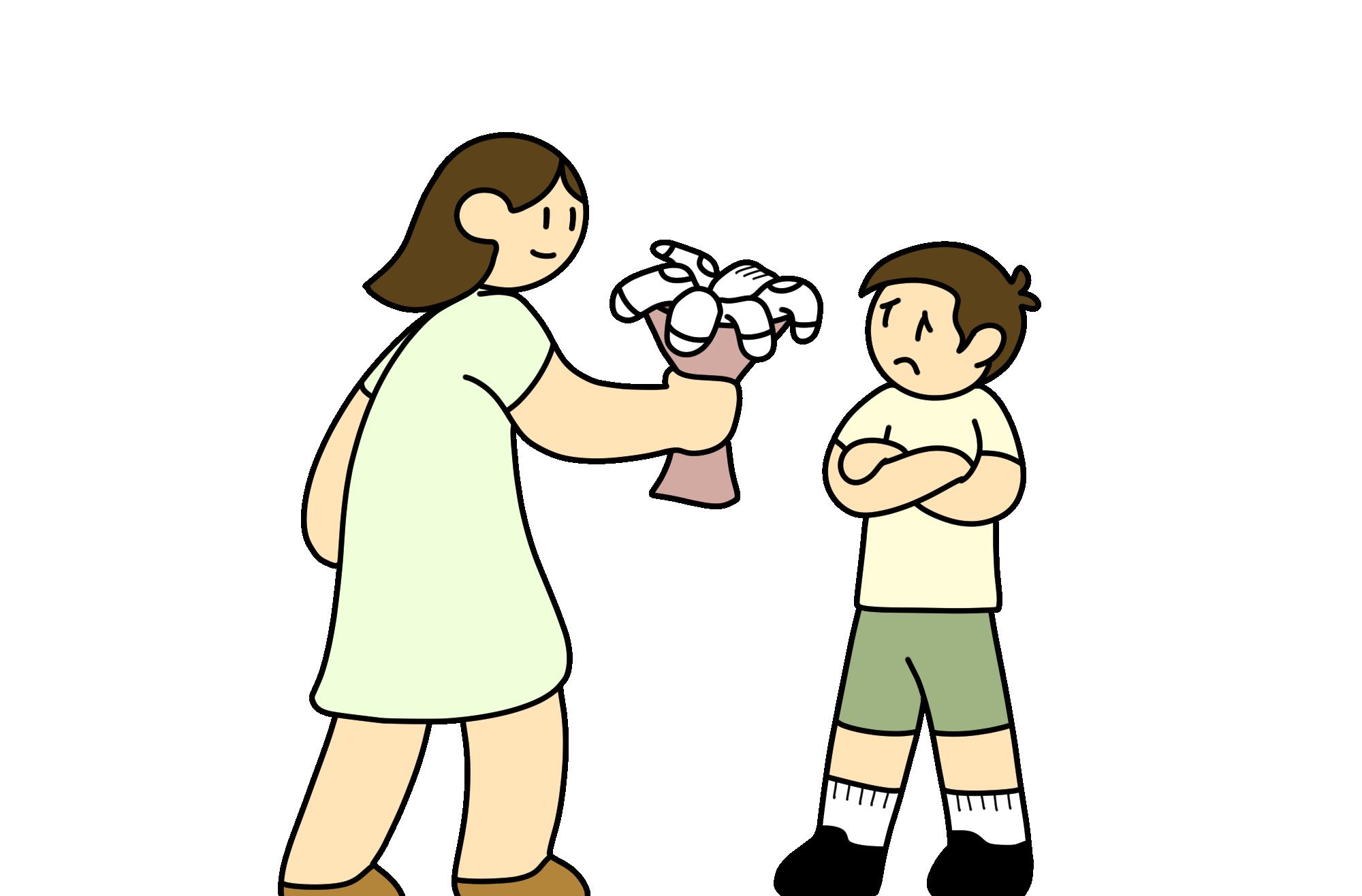
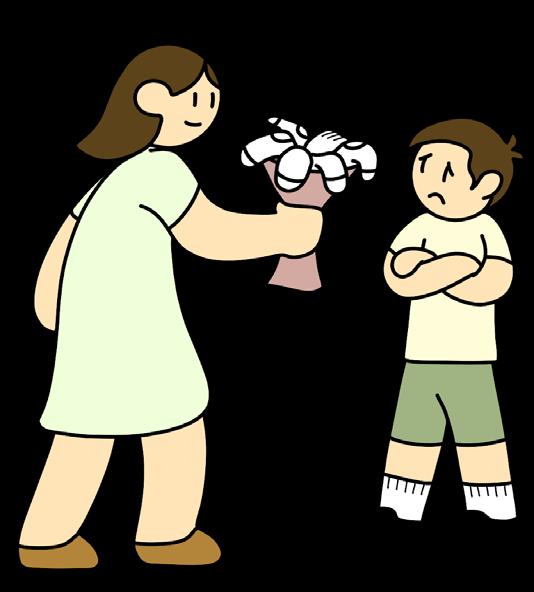
A bouquet of socks
In 2019, after my production of Grease, I walked out of the greenroom with a smile on my face. My mom gave me a giant hug and congratulated me on my job well done.
“We wanted to give you something that rewards how well you did,” my mom said with a grin on her face. Oh no.
Out from behind her back emerged a bouquet — of socks. Tied with a piece of twine and wrapped in gently-used underwear, I was genuinely ready to burst into tears. What the fuck was my life, man? “Your sweat during your rehearsals probably ruined all of your socks, so I thought I’d buy you some. And I got half-off underwear, too.”
A shovel
What a performance to remember. Back in 2020, I was casted as Link, the lead of the play Hairspray. As I looked around and saw my women co-stars greeting their family with beautiful fowers. Chocolates. Cards. I sighed as I waited to see what I would be receiving this time.
“Here’s a shovel,” my father told me, laying it in my hands. “Now that you’ve got more free time, you can do some yardwork. What do you say, bud?” Nothing says “I’m proud of you” before you even take your costume off.
Honestly, that one wasn’t even that bad. After consulting with my other guy castmates, I found out that some other gifts included garden gloves, a pair of used socks, and an air freshener (supposedly for the socks). Seriously, what’s the obsession with socks??
A chainsaw
Before my part in Mama Mia! in 2023, I had specifcally mentioned to my parents how badly I wanted some fowers. Even if it was just one singular fower that I could put in a vase in my room.
Which is why I was elated when I saw my mother holding fowers outside of my greenroom after my performance. As I reached to grab the bouquet, my dad popped out of nowhere.
With a chainsaw.
“RAWWRRRRR MOTHERFUCKER!”
I tilted my head down, hearing just the sounds of my dad laughing. As I looked up, my mother handed me the stems of the fowers. Like what the actual fuck? Who’s against giving men fowers so much that they’d send a message like that?
Well, at least I have some stems in my scrapbook now. Such is the life of a theatre boy.
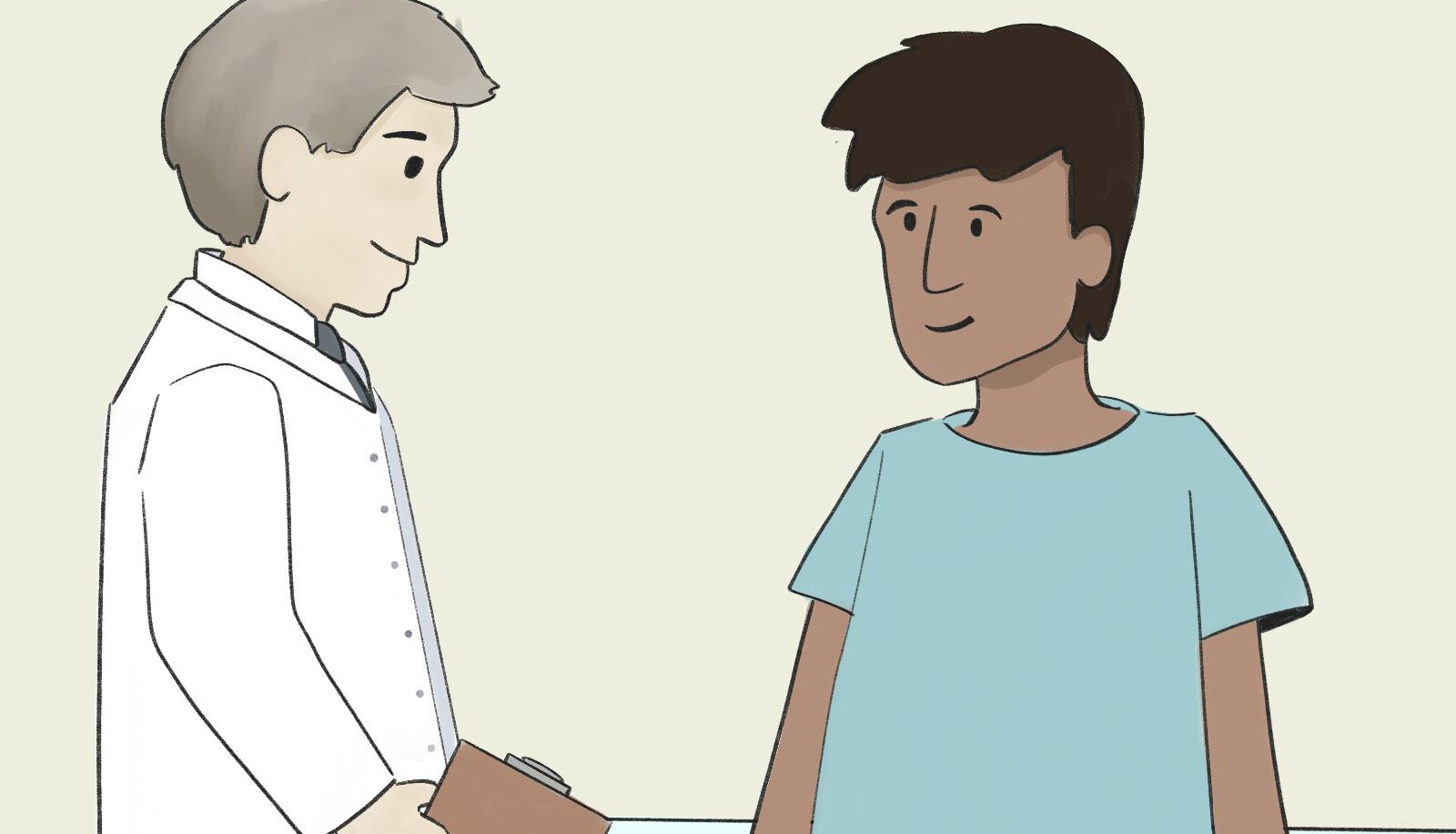
How to trick your father into getting a physical
It’s not deception if you have his best interests at heart, right?
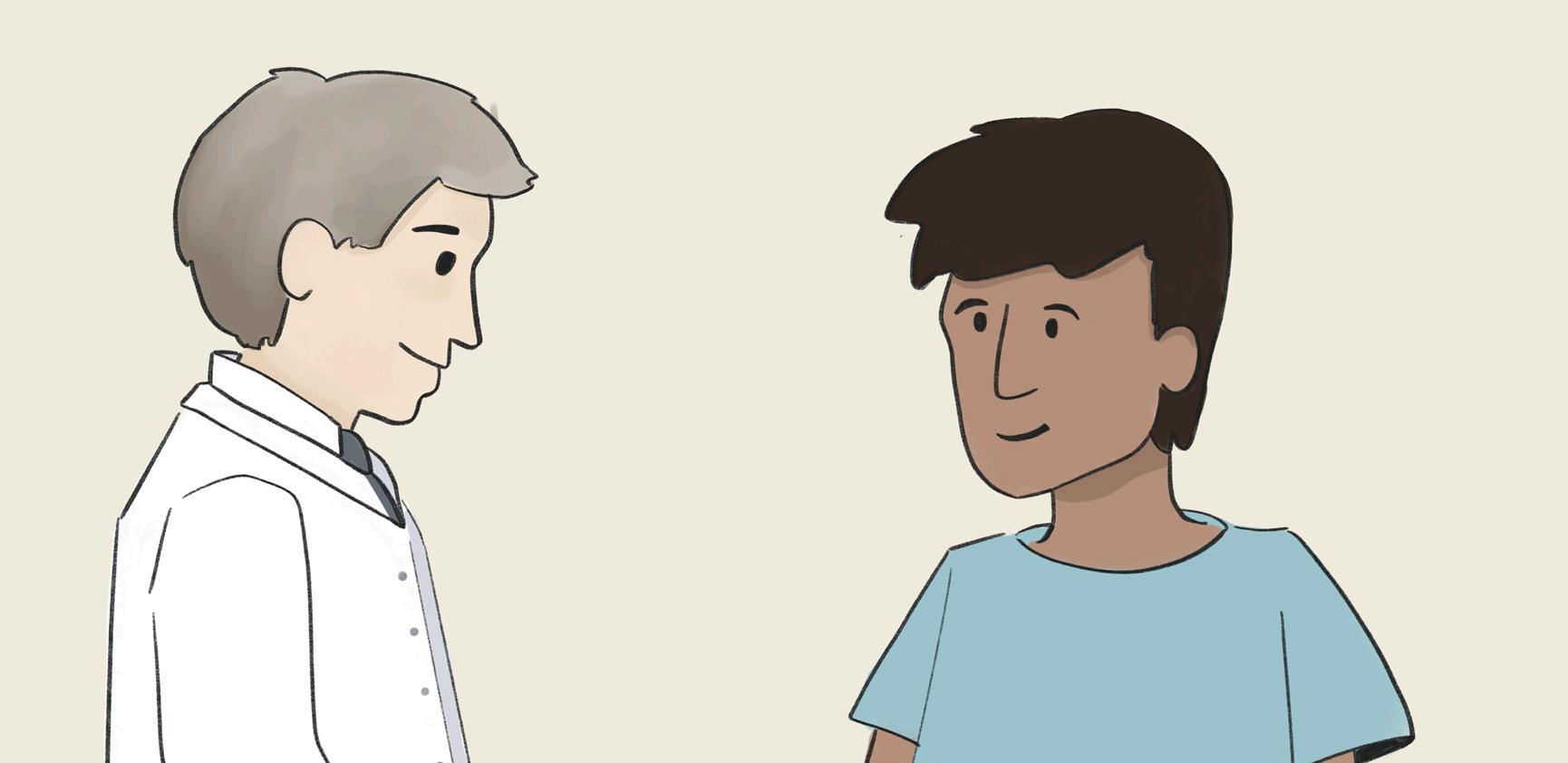
When growing up, it’s pretty common to think of your dad as the strongest man in the universe. If your dad is anything like mine, his viking beard, shiny bald head, and gigantic frame are enough to convince you pretty quickly that if anyone gets a pass on their yearly physical (and a tab opened automatically at Home Depot), it’s probably this guy. As you get older, and start to notice how he groans every time he sits down, or wakes the entire house up with his signature morning cough — his mortality slowly dawns on you. Still, he puts o every doctor’s visit, until finally, one day, you find out why — he’s never had anyone tell him it’s OK to look after his health!
Now, realizing that he is not in fact invincible and that I’m actually dealing with a sensitive soul hiding inside the body of a bricklayer, things feel di erent. Getting my dad and the millions of other healthphobic fathers out of the bathroom and into a health clinic is now my life’s work. Getting the old boy into a doctor’s o ice is akin to pulling teeth, and please don’t even get me started on scheduling dental visits. As a result, I have compiled a short overview of my tried and tested techniques for tricking (some may call it manipulating), the most stubborn man you know into seeing the doctor.
The first tactic is to lull him into a false sense of security. Find out what his favourite pastime is and go from there. For instance, subtly mention that you are just heading out to do some a bit of yardwork for an elderly neighbour. After piquing his interest, put your phone on do not disturb, find the most hideously botched lawnmowing job you can get from Google, then send it to him an hour later with the simple message, “Does this look good to you?”
Then sit back and let the chaos ensue. When he arrives at the location you have shared, unable to resist an opportunity to fix your mistakes, he conveniently finds himself walking through the back door of the family doctor’s o ice, unwittingly and unconsciously resigning himself to a fate he has for so long been trying to avoid.
If unsuccessful in tactic number one, turn instead to a foolproof second option — bribery. The blood bank had it right when they started o ering biscuits to donors, and this is the type of energy you have to tap into. Find his weakness, and exploit it. He likes sports? Tell him an ex-pro is now training to be a family doctor at your clinic. Does he like model train sets? Then he better know Francis Bourgeois is now training to be a family doctor at your clinic. Is he a sucker for a drink? Tell him that your local walk-in clinic is also a sports bar. You get the point. Lie, lie, and lie again. Anything to get him to realize that going to the doctor is a HEALTHY thing to do as a man!!
Finally, my third and favourite method is the secret barbecue. I tell my dad I’m coming home for the weekend, that the weather is nice, and that all my friends have heard what a magician he is on the grill. Simultaneously, I plaster flyers around SFU o ering free food to the new med students willing to diagnose Big Papa. Inevitably, the weekend ends with my dad chilling in a loose robe, just not the kind he originally had in mind.
All this is say that — to all the fathers out there — going to the doctor is OK.
DR. TOMOS LAND TRAINEE FATHER-O-TRICIAN
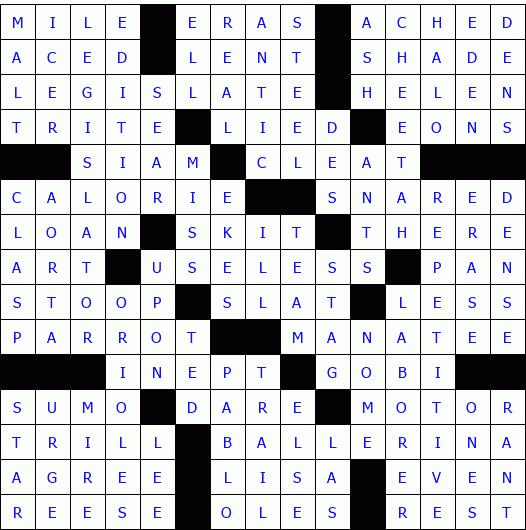
Bright star in Orion 57. Word with Dutch or Easy Bake
58. Sitting on 60. Boredom, in Paris 61. Spread usually made of liver 62. Female horse 63. Eliminate from the body
64. Jon Arbuckle’s dog 65. Refreshed 66. Malcom’s younger brother