Find extended, cited, and web-accessible articles at the-peak.ca Download digital issues at issuu.com/peaksfu
The Peak is SFU's weekly student newspaper published every Monday, by students, for students. We’re funded by a student levy and governed by a Board of Directors. Any SFU student can apply to become staff
We reserve the right to edit submissions for length, as well as style, grammar, and legality. We also reserve the right to reprint submissions at any time, both in print and on web. We will not publish content that is sexist, racist, or otherwise prejudiced.
TERRITORIAL ACKNOWLEDGEMENT
We acknowledge that The Peak’s office is located and our paper is produced, distributed, and read on the unceded Coast Salish Territories of the Skwxwú7mesh (Squamish), xwməθkwəy̓əm (Musqueam), səlilwətaɬ (Tsleil-Waututh), kʷikʷəƛ əm (Kwikwetlem), qʼʷa:nƛʼən (Kwantlen), qicəy (Katzie), sc̓əwaθən məsteyəxʷ (Tsawwassen), Qayqayt, and Semiahmoo Peoples. Unceded means that this land was never surrendered, relinquished, or handed over in any way. We recognize that the unceded land that we occupy includes not only the Lhuḵw’lhuḵw’áyten (Burnaby Mountain), but extends to the land occupied by the Vancouver and Surrey campuses.
SFU students can contribute and get paid for work that is published in The Peak! Email us at promotions@the-peak.ca to learn about writing, illustrating, or taking photos for us!
Iran war analysts share impacts of the memorandum of understanding
SFU’s medical school
prepares to open
In honour of the Stephens family’s donation, the medical school has been renamed
MARIE JEN GALILO STAFF WRITER
On June 5, SFU’s medical school was renamed the SFU Stephens Family School of Medicine to thank the Stephens family for their $40 million donation to the institution. According to SFU, Ratana and Arran Stephens are the co-founders of the breakfast company Nature’s Path and “longtime philanthropists.” This is their largest donation to date.
To learn more about SFU’s medical school, The Peak spoke with Dr. David J. Price, the founding dean.
After years of planning and preparation, SFU’s medvical school will be welcoming its rst cohort of 48 students in August 2026. Price said, “There’s no end of challenges in starting a school from scratch,” including designing the curriculum and recruiting and training instructors. Despite these challenges, Price shared, “We’re pretty much good to go.” He added that the institution’s interim space is now “99% nished,” and clinical teachers have been recruited and are being trained. The school has also received appropriate accreditation from the Committee on Accreditation of Canadian Medical Schools. This ensures that the quality of SFU’s doctor of medicine program meets national standards so that graduates will be able to provide quality healthcare to patients as practicing physicians.
According to the School of Medicine website, their mission is to enhance “community-based primary health care” in BC. Price shared that students will “be trained in family doctors’ o ces and other community specialists [to] get a really good understanding of what happens in community-based care.”
The funding from the Stephens family will provide necessary support for the school during the rst year of instruction. “The funding that they’ve provided [ . . . ] is really over and above what the government had promised us,” Price added, “They’re interested in student support. And some of their money is very much earmarked for student support.” The donation will be
The funding that they’ve provided [ . . . ] is really over and above what the government had promised us.
DR. DAVID J. PRICE
FOUNDING DEAN OF SFU STEPHENS FAMILY SCHOOL OF MEDICINE
Memorandum of understanding for US-Israel
war on Iran up in the air
Analyst at SFU’s Iran War Observatory analyzes the deal’s effects on Iran’s citizens
NIVEJA ASSALAARACHCHI NEWS WRITER
On June 14, US and Iran announced they had come to a provisional cease re deal to end the state of con ict between the two countries. A memorandum of understanding (MOU) was signed on June 17 by US President Donald Trump and Iran President Masoud Pezeshkian. However, the cease re has since been broken by both sides, with Trump declaring the MOU “over” as of July 9. However, Washington as a whole remains committed to conversations around the MOU, despite the president’s comments.
Con ict broke out between the two countries this year on February 28, when the US and Israel launched a series of military strikes on key economic and military sites in Iran.
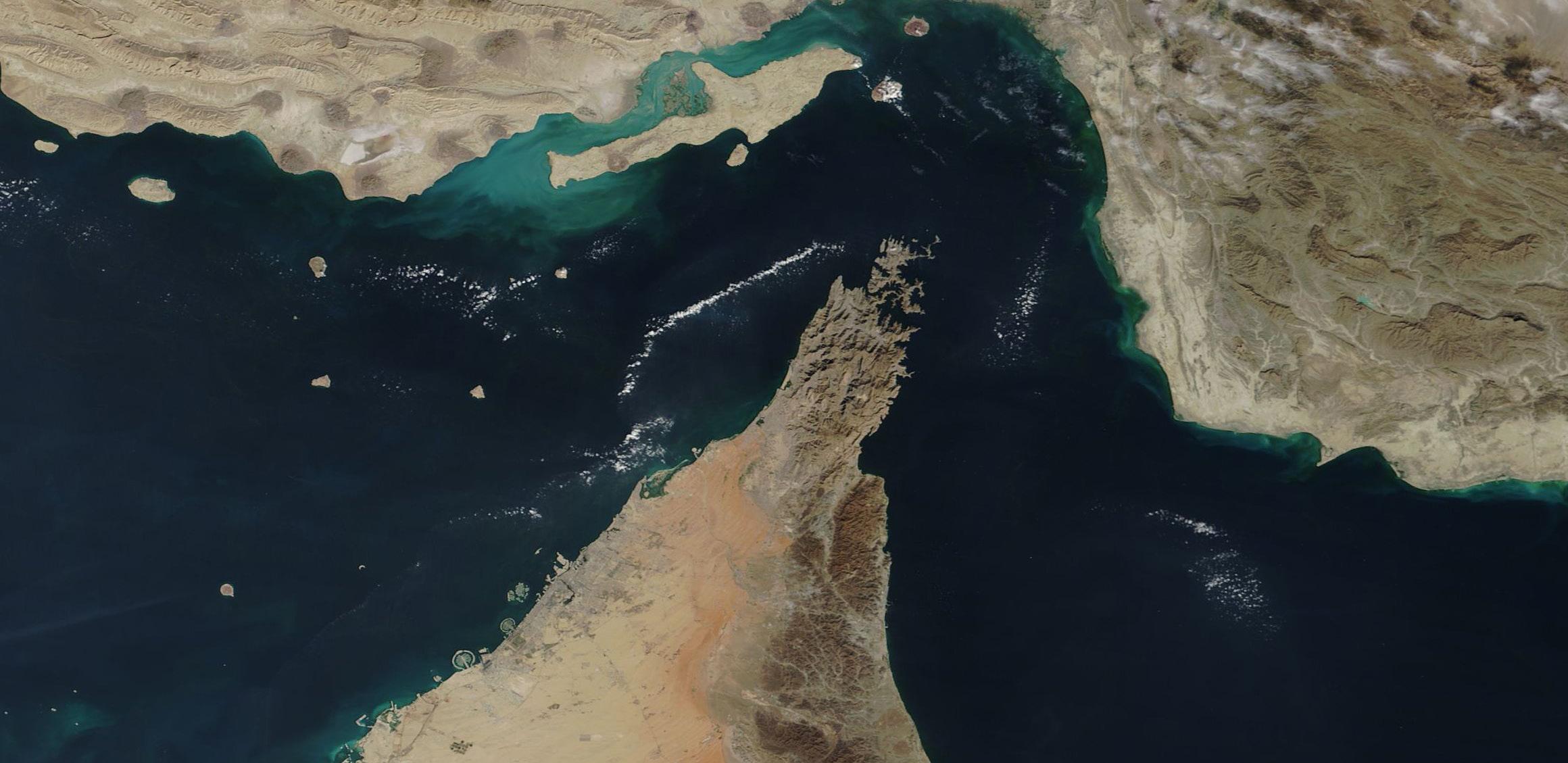
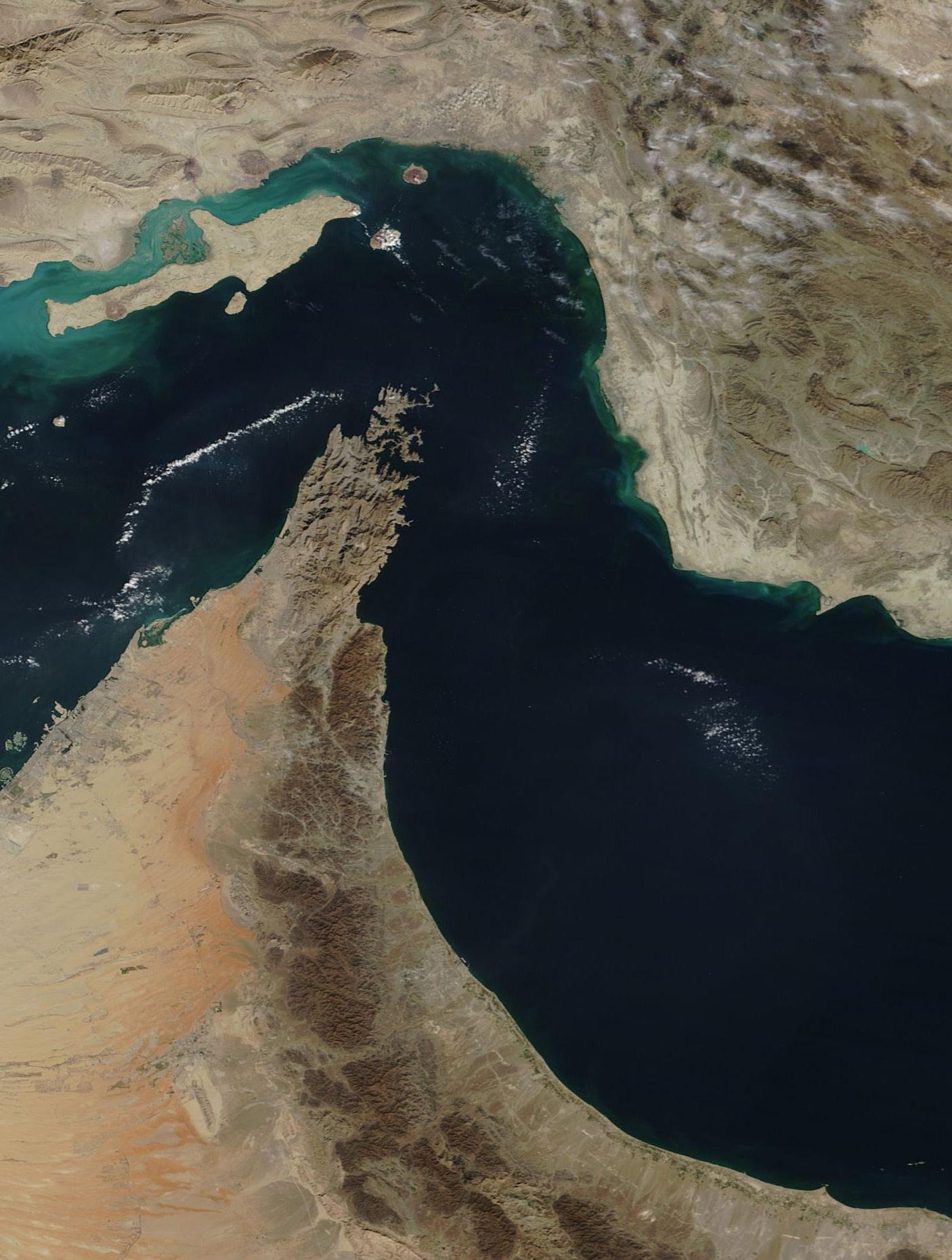
Since February 28, the current con ict has claimed the lives of over 7,300 people, with allegations of war crimes being levelled against the US and Israel. The con ict severely impacted the global economy, with rising oil and commodity prices largely being blamed on the blockade of the Strait of Hormuz by Iran, a vital naval route through which 25% of all global goods ow.
The Peak reached out to the Iran War Observatory to learn more. The Iran War Observatory was established at the start of the con ict by ve analysts under the Centre for Comparative Muslim Studies. Aidan Gough, a political analyst at the Observatory, corresponded with The Peak
Prior to Trump’s announcement, Gough shared that the centre is “deeply skeptical” of the MOU. “The MOU lacks structural
guarantees ensuring this wealth will systematically bene t daily civilian life rather than reinforcing state security apparatuses and its interests abroad.”
The MOU marks a significant departure from Washington’s initial wartime objective of ‘maximum pressure’ or regime capitulation/collapse, moving instead towards a framework of managed economic interdependence.
AIDAN GOUGH
POLITICAL ANALYST AT THE IRAN WAR OBSERVATORY
The MOU had not added new provisions relating to the enrichment of uranium. Article 8 called on Iran to “not procure or develop nuclear weapons,” and Article 9 noted both countries would “agree to maintain the status quo” in regards
used to “recruit people in the areas of health and wellness,” fund research, and support students, Price explained.
SFU’s medical school partnered with the First Nations Health Authority to ensure that Indigenous values and perspectives were integrated into the school from the very beginning. “Dr. Rebekah Eatmon, who is an Indigenous physician herself, she’s been our associate dean of Indigenous health, and she and her team have been very instrumental in helping us understand how to set the curriculum, how to ensure that we think about Indigenous students in ways of health and well-being,” said Price. “One of the things that one of my Indigenous colleagues has always said to me is that, if you can raise the level of care and cultural sensitivity for Indigenous citizens and Peoples, you’ll raise it for all peoples.”
The Peak also reached out to SFU Media Relations representative, Leslie Dickson. She shared that to address the healthcare disparities in BC and advance Indigenous health, SFU’s medical school will focus on “four key areas:” preparing and training future physicians for working in communities, developing socially responsible mindsets, building community relationships, and incorporating Indigenous values into the curriculum.
to Iran’s nuclear program. Gough noted the omission of the subject was due to Washington’s primary aim to end the economic e$ects of the war and to potentially get “delayed leverage” on Iran.
Overall, he said the deal “marks a signi cant departure from Washington’s initial wartime objective of ‘maximum pressure’ or regime capitulation/collapse, moving instead towards a framework of managed economic interdependence.”
The impact of the war and Canada’s role in the con ict has also been of note for the analysts. Prime Minister Mark Carney released a statement supporting the US when con ict broke out, noting the importance of preventing “Iran from obtaining a nuclear weapon and to prevent its regime from further threatening international peace and security.” However, he had since expressed “regret” over the direction of con ict, saying that the US-Israeli strikes were “inconsistent with international law,” as reported by Global News
PHOTO: PRERITA GARG / THE PEAK
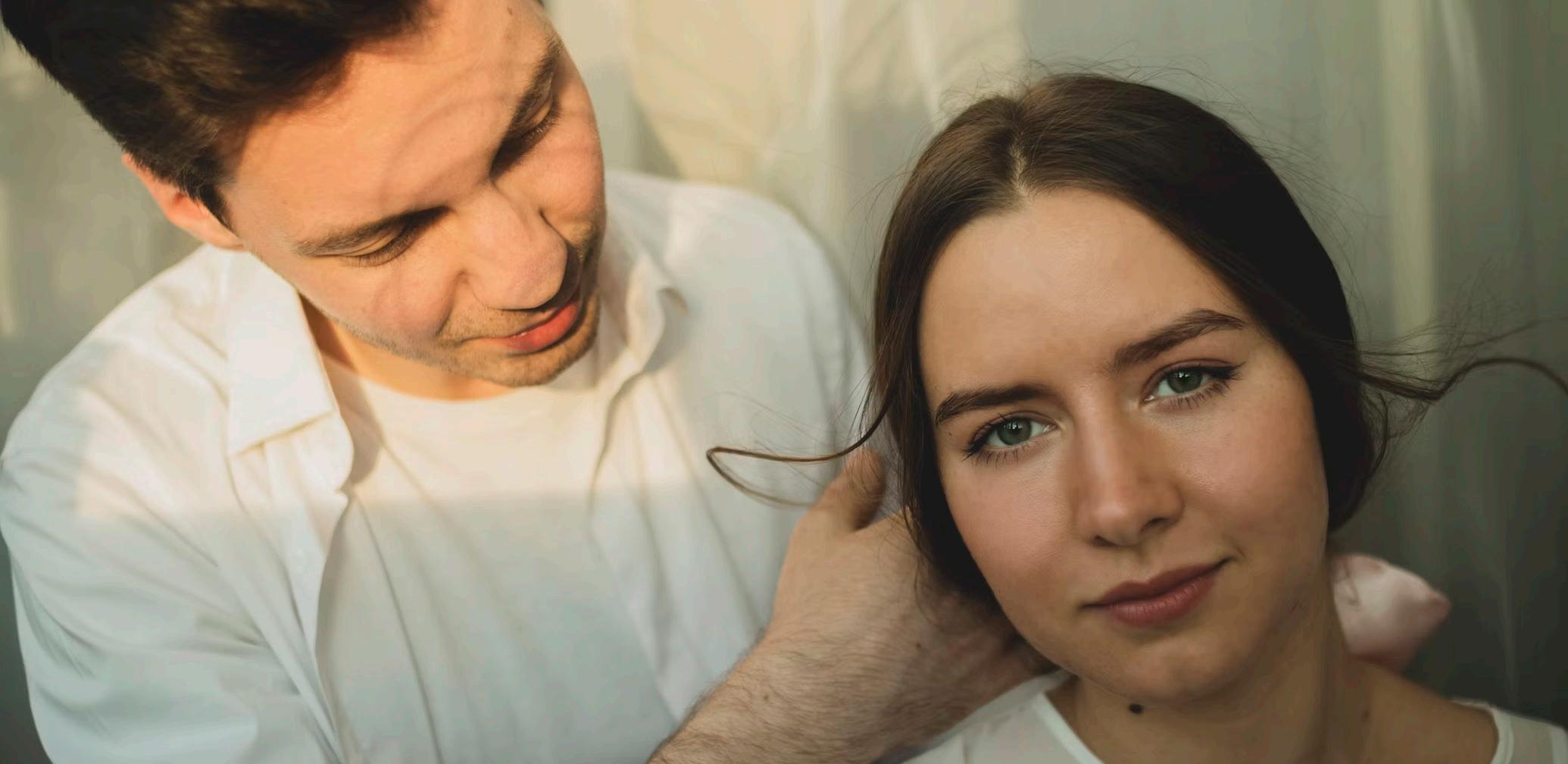
Lonely men need community, not misogyny
The “male loneliness epidemic” might not be real, but men are have become lonelier
JONAH LAZAR STAFF WRITER
Content warning: mention of suicide and misogyny.
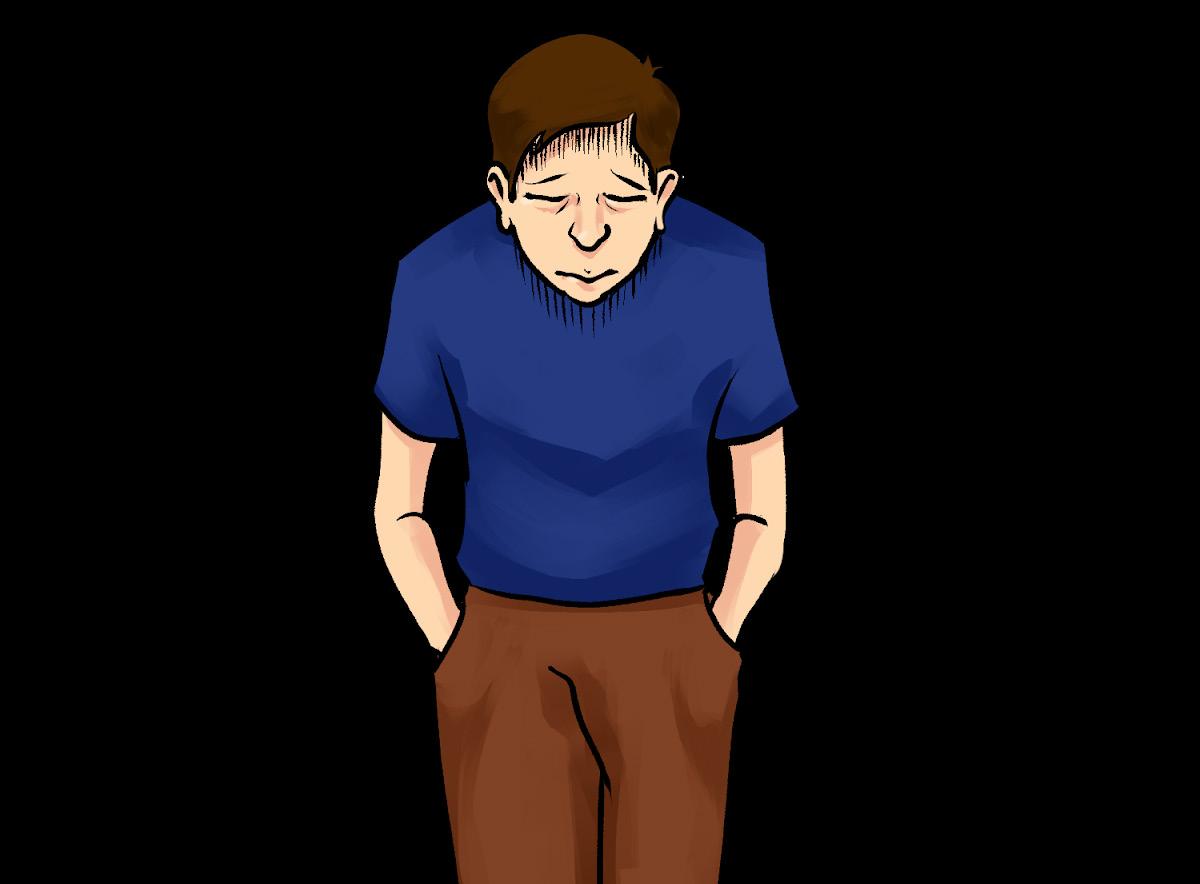
Seemingly everywhere you turn, there is discourse about the “male loneliness epidemic,” how young men in particular are experiencing unprecedented levels of social isolation. However, multiple studies have con rmed that loneliness rates among young men and women have jointly increased from 1990 to 2021. Everyone is spending more time by themselves, reporting fewer close friends, forming fewer romantic relationships, and spending more time alone online. The study suggests that things like “falling marriage rates, rising screen time, and the erosion of community ‘third spaces’” have contributed to this issue. The rising loneliness among men and women disproves that there is a loneliness epidemic exclusive to men, but that hasn’t stopped alt-right in uencers from taking advantage of it.
Alt-right in uencers like Clavicular and Andrew Tate have tapped into this market, appealing to these young men by scapegoating women as the catalysts of young men’s social isolation. Characters in the manosphere like HSTikkyTokky are trying to sculpt a de nition of manhood centred around material wealth, control over women, and emotional repression. As a whole, alt-right in uencers have said that young men need to scam their way into wealth via get-richquick schemes, smash their face with hammers, and take copious amounts of supplements and drugs in order to become “valuable” men.
OPINIONS
Disabled men deserve better from us
Common expectations of masculinity cause disabled men to suffer in silence
CORBETT GILDERSLEVE OPINIONS EDITOR
Content warning: mentions of ableism.
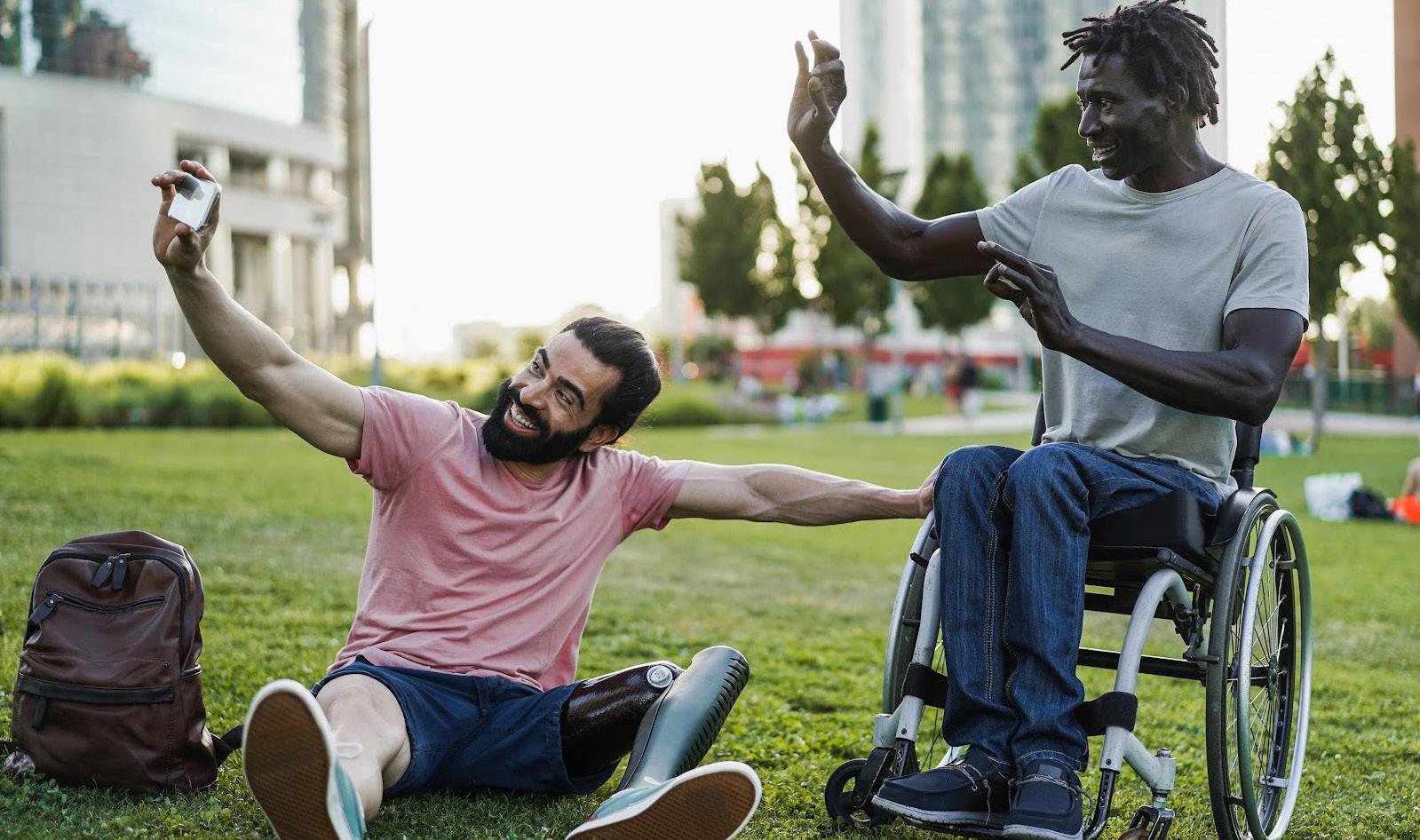
Society does not treat disabled people well and it impacts men in speci c ways. Being disabled comes with stigma and the expectations to still adhere to gendered roles. Being unable to meet these expectations can result in depression and even abuse. This stigma can make men feel unwanted and devalued. It’s important to build relationships be it platonic or romantic, but asking for help can also be viewed as being weaker or less able. All of this contributes to instability in work, mental health, and social life. As such, there needs to be dedicated nancial, medical, and social support for disabled men to not just survive, but thrive.
For men, there is still a gendered expectation to be strong, masculine, and provide for their loved ones. However, disabled men can struggle with gaining or keeping employment, and contributing to paying bills, especially if they’re denied government disability support. For those with work bene ts, that doesn’t always mean they get the support they need. When their needs aren’t being met at work, this can cause them to lose their job. Because our society still pushes for people to be independent, showing signs that you need support, even with assistive devices like a wheelchair, can cause men to delay getting them.
Making friends, expanding their network, and/or nding romantic partners can be especially challenging. They can worry about being excluded in some activities, whether new friends will stick around if they get sick, or make fun of them.
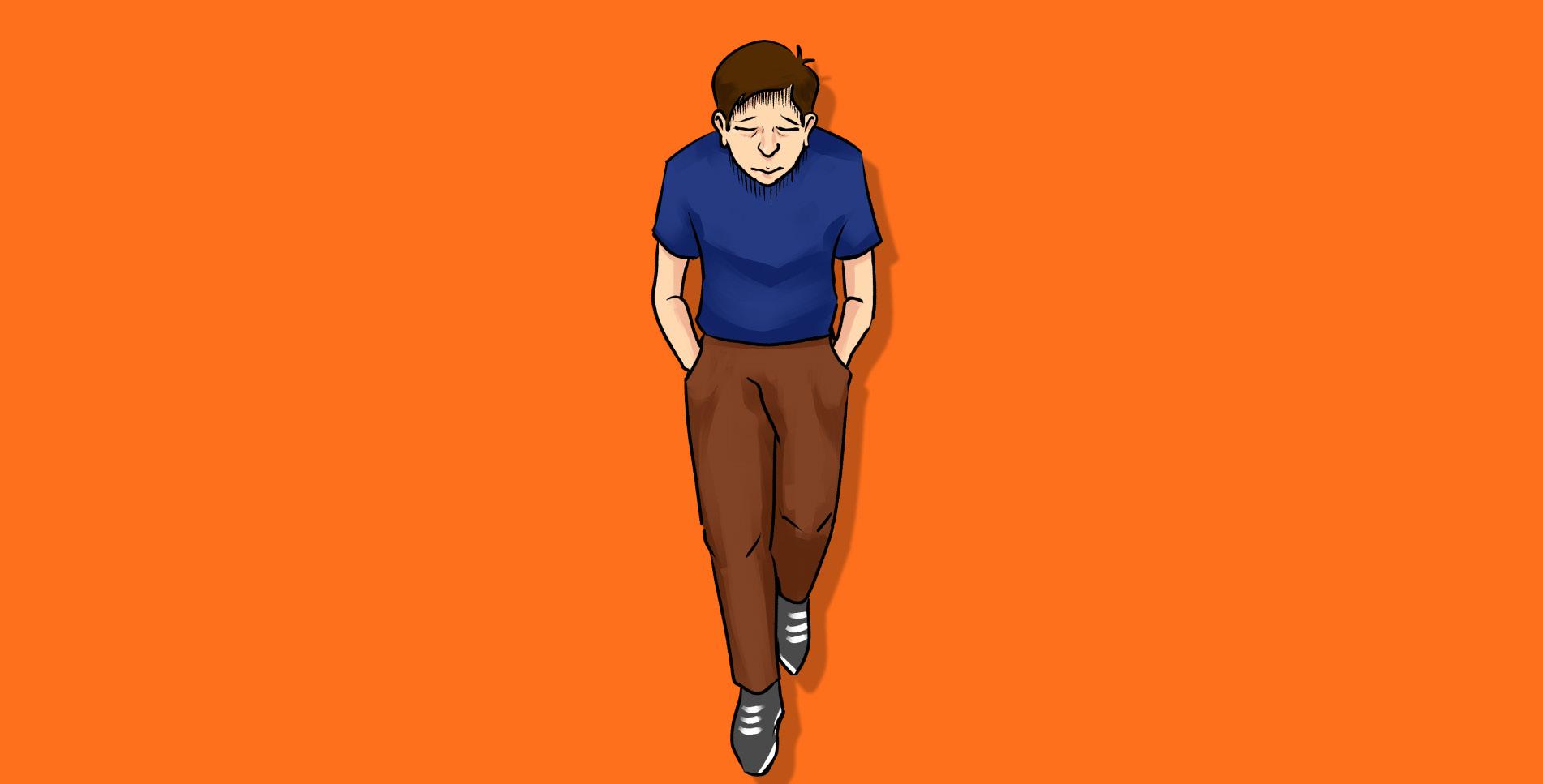
This is dangerous, because men are the primary targets of the alt-right’s conspiracy theories surrounding their loneliness. This can lead to paranoia and vulnerability towards conspiratorial thinking propagated by the alt-right. This kind of thinking further isolates them from real society, making it more di cult to engage with peers and possible romantic partners, which reinforces their social isolation. Social isolation is directly linked with increased depression and suicide, which could explain the 28% increase in men’s suicide rates since
In essence, the alt-right rabbit hole is intentionally further isolating men from mainstream society to profit from their loneliness.
the turn of the century. In essence, the alt-right rabbit hole is intentionally further isolating men from mainstream society to pro t from their loneliness.
Young men need access to healthier content and role models online. People who share their lives that’s focused on community instead of competition. Content that encourages their audience to seek out help like counselling. And, they need to encourage getting together in person, to be there for each other. A study published by the National Library of Medicine theorized that community groups, like clubs, were more important for men than close individual friendships. Some research even claims that meaningful community belonging can combat loneliness even if men are not engaging in romantic relationships.
Men need more accessible, a ordable outlets for participatory sports teams, clubs, organizations, and other community activities where they can develop healthy friendships. This will help pull men away from the harmful online communities that prey on and reinforce their loneliness leading to misogyny. In doing so, we can combat the myth of the “male loneliness epidemic.”
People might disbelieve or react negatively to their romantic relationships, even thinking that the person romantically involved with them is a sibling or a caretaker. For meeting potential romantic partners, there might be questions that are asked to them or assumptions thought about them. These could include if they’re able to sexually perform, have children, or provide for their partner and/or children. In cultures where families help with matchmaking, expectations around caste, type of disability, and economic status might be a strict requirement.
The requirement to be visibly masculine, where men have to “suck it up” when sad or struggling, limits them from seeking support.
All of these challenges can contribute to poor mental health, sometimes leading to depression. The requirement to be visibly masculine, where men have to “suck it up” when sad or struggling, limits them from seeking support. Even the idea about attending a peer-support group for depression with other disabled men can seem too heavy to attend. And this topic might not even be shared between friends due to the fear of appearing weak and the need to perform masculinity at all times. This causes some men to still su er when seeking help due not clearly communicating the support they need.
In Canada, there is community and government support for men with disabilities, however tackling the larger societal perception issues are the most challenging. They need the media and the wider community to stop viewing disabled people as lesser. They may need nancial support, either through work or governments to live a digni ed life. Men need dedicated peer-support groups that challenge common harmful depictions and expectations of masculinity. They need the rest of us to do better by being anti-ableist and advocate for their needs.
JONAH LAZAR STAFF WRITER
Body positivity is vital for boys and young men
Fitness influencers perpetuate harmful and unrealistic body standards
TOMOS LAND STAFF WRITER
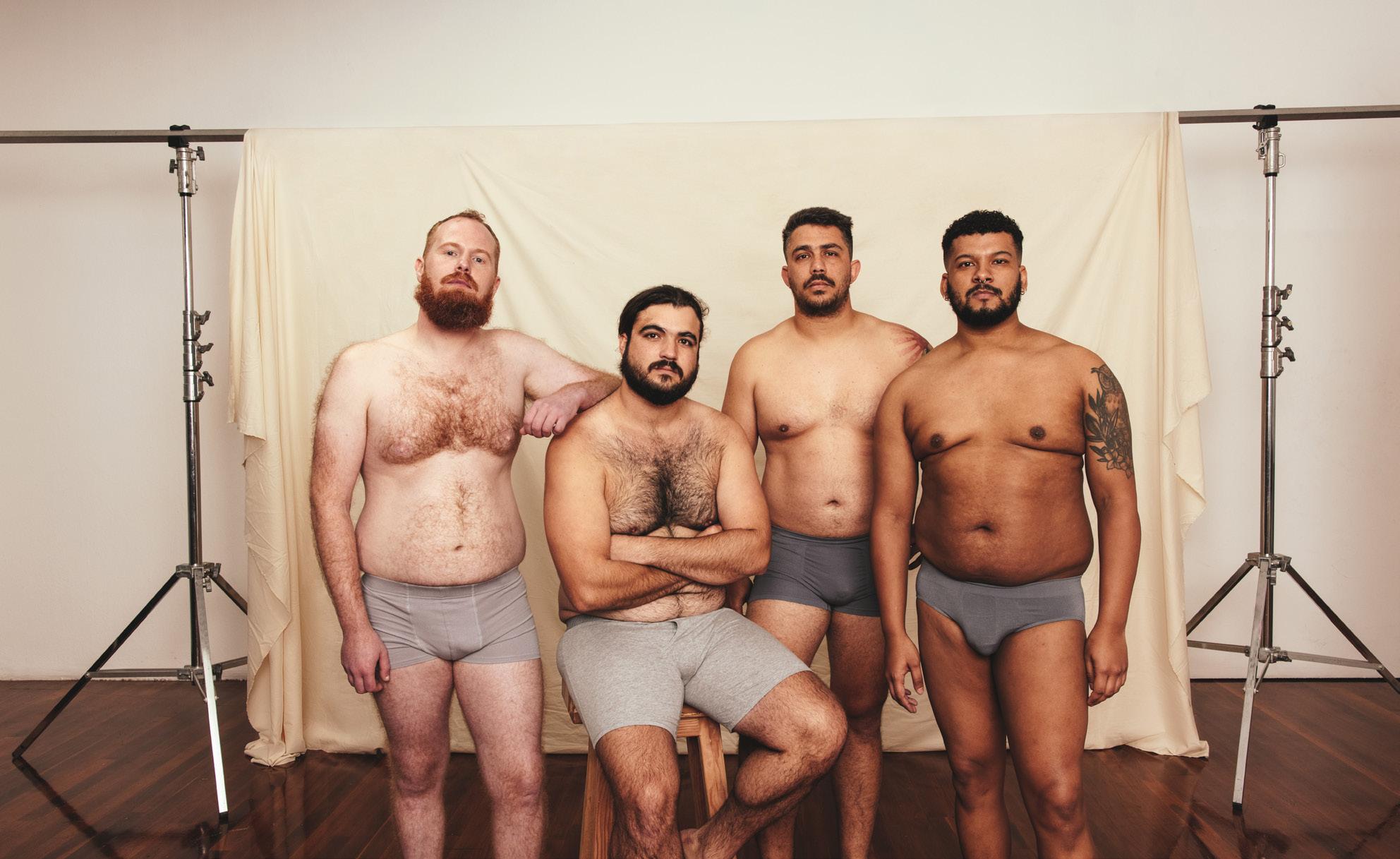
Unrealistic body standards are promoted everywhere in our day-to-day lives. E ortlessly handsome models accompany every product or service and chiselled stars are the centerpiece of the action in the media. Increasingly, even at your local gym, perfectly proportioned people seem to be defying biology and can be found on every machine. On social media, trends that focus on returning to our primitive roots, or pursue “looksmaxxing,” an ideology popularized by incel culture that scores areas of the body like your jaw, skin, and muscles. All of these can lead to eating disorders and body dysmorphia in men. However, given the multitude of issues troubling boys and young men today, these same trends often y under the radar. There needs to be more local and national support for young men and boys to counter the negative messaging that we see in both physical and social media.
The knock-on e ect of unrealistic body standards can impact every facet of our lives. For boys whose bodies are going through the trials and tribulations of puberty, certain ideas around how a man should look risk magnifying pre-existing insecurities. These include not looking masculine enough, feeling too short or too small, and worrying about changing features, such as complexion, that might be deemed unattractive. For young men, who might be navigating romantic relationships for the rst time, unrealistic body standards heighten the anxiety that this new experience can bring, especially in relation to sex and undressing in front of a partner.
OPINIONS
My own experience with the harms of unrealistic body standards for men was out of a compulsive obsession with self-improvement. Having spent most of my childhood and teenage years playing sports, the challenge for me was never about getting in shape, but rather getting faster, stronger, or tter. Naturally, the yardsticks I used were other people such as professional athletes and online personalities. As I entered my 20s it felt as if the goalposts kept moving. I could tell that something wasn’t adding up; my body looked nothing like in uencers’ shredded physiques. I worked out why after the More Plates More Dates exposee of Brian Michael Johnson, a.k.a “The Liver King,” came out in November 2022.
Combatting this issue as part of the growing e orts to address the major challenges that boys and young men face, is vital in securing future societies that are built on healthy relationships with our body and others.
Tying masculinity to stoicism makes the world worse
Large issues like climate change won’t be fixed by being unemotional
MAYA BARILLAS MOHAN STAFF WRITER
CORBETT GILDERSLEVE OPINIONS EDITOR
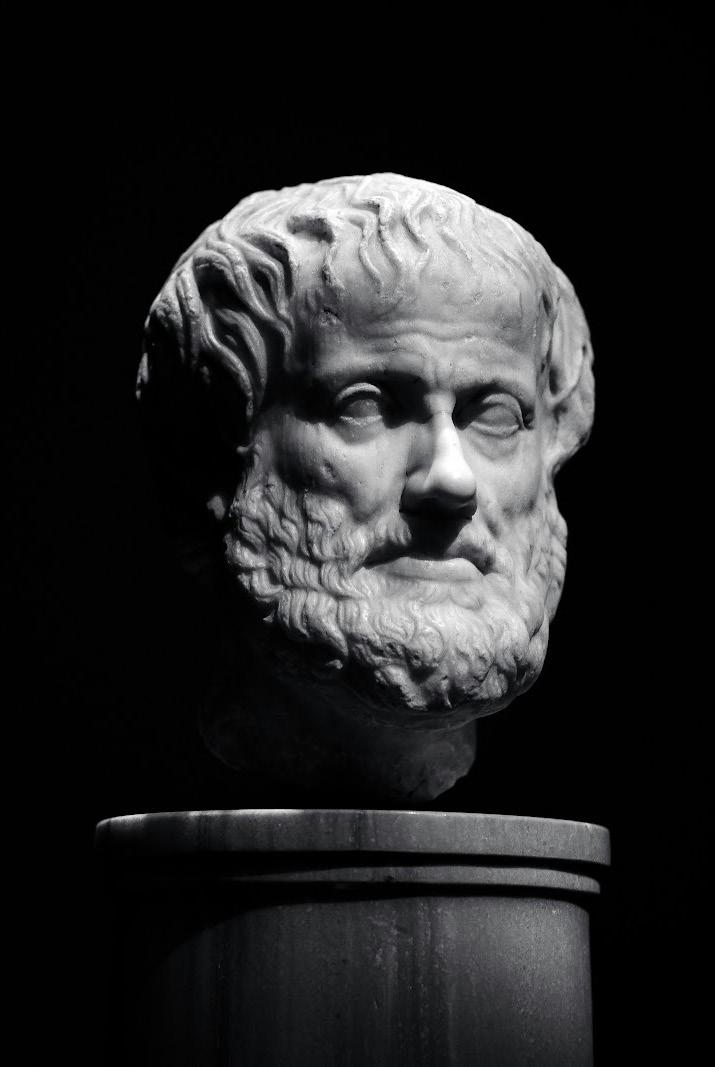
We can all attest to a growing phenomenon of masculine self-help within the past few years. Quarantine as a result of COVID-19 gave many of us a shared sense of isolation and helplessness. This moment was a prime backdrop for self-help spaces to encourage men to adopt stoic beliefs as a way to cope. Stoicism is roughly the idea that in circumstances you cannot control, one should concern themselves with things you can control, namely, your emotional responses. However, this has led to men co-opting and misunderstanding this philosophy to promote becoming unemotional. This could have the side e ect where men will more readily approach shared dilemmas in life with passivity.
Dealing with large complex problems like climate change can lead to anxiety. Climate anxiety can result in burnout and a sense of hopelessness for activists who don’t see any meaningful change. Therefore, people exploring social media for ways to control how they react to something so large and complex makes sense. However, this push has also allowed men to co-opt stoic beliefs that misunderstand the philosophy connecting it to masculinity. While stoicism champions living unfrivolously (and thus, sustainably), many in uencers display their success through status symbols like muscle or sports cars, showing the opposite of their beliefs. Viewing issues outside of our direct control as not the responsibility of any one individual does not mitigate or x the issue; collective action is the seed that enables change.
Stoicism and continued climate change behaviours go together through their connection to masculinity. Is stoicism really an e ective worldview to hold as we all march towards a higher global temperature? It seems to me that in this misunderstanding of stoicism, some of the emotional responses to crises are bleached. We need climate grief to take action as no change will emerge from apathy.
Stoicism is roughly the idea that in circumstances you cannot control, one should concern themselves with things you can control, namely, your emotional responses.
Emotional suppression is described as stability and con dence but I would argue it’s closer to a kind of deprivation in all scenarios. This co-opted stoicism believes in dispensing with all of the “unnecessary emotions,” but I think some of these emotions are rather proof of a close connection. Masculinity does not have to be threatened through climate activism — the
Steroid use amongst young men, driven in part by body image insecurity and fuelled by charlatans such as Johnson is skyrocketing. He credited the consumption of raw meat for his gains, but in reality it was steroid use. It’s impossible to know whether many of the people I previously compared myself to on Instagram or YouTube were using supplements or steroids to gain and maintain their physiques.
To combat this, more education is needed to help boys and young men understand what a healthy body looks like and how it functions. Programs such as the Lost Boys Project in the UK are laying the groundwork for change to be made. This project, run by the Centre for Social Justice, examined the home, work, education, and health situation for young men and boys. They found that they were falling behind in school, had fewer role models, changing economic options, and were using steroids at a young age. The centre has also released further reports exploring how men are depicted in popular culture, men stepping up as role models, and policy recommendations for boys as they age and youth sports.
A similar strategy, currently being developed by the federal government, needs to be implemented soon in Canada if the emerging identity crisis for boys and young men here is to be averted.
PHOTO: SAMTAKESPICTURES / UNSPLASH
closest connection we have is to our planet. In protecting our planet, we can also have a closer connection to one another by dispensing with cars and the identity we foster through them, maybe by taking the train instead.
Stoicism has some bene ts in handling a changing world, and versions of its ideologies are valuable to everyone seeking control over their own lives. But the brand of stoicism that is speci cally peddled to an environmentally unsustainable masculinity can be harmful. If we extinguish the role of emotions in activism, our changing world will just keep changing, no matter how calm we stay about it.
PHOTO: JACOB LUND / ADOBE STOCK
REFLECTIONS ON DATING AS A PERSON WITH CHRONIC ILLNESS
A coffee date, a long drive home, and a continuing search for an accommodating partner
PHOTO: GUDRUN WAI-GUNNARSSON / THE PEAK
It might’ve been us lost in translation, or maybe I hadn’t advocated for myself enough. I could’ve not disclosed my disability, and it wouldn’t have changed much.
After years of dormancy, a few months ago, with strong encouragement from important people in my life, I went out on a date. As wonderful as dating can be for some, it feels so exhausting that I seldom do. Dating is an uncomfortable terrain — where one has to scour for a possible partner through ill-ftted matches and awkward silences. I’m a private person with a penchant for contemplative conversations and a desire to spend time with people that plan on staying. The idea of sharing a drink or a meal with a stranger hoping to hit it of doesn’t seem sufcient enough to incentivize me to arrange a date. I’ve reached a point in my life where my focus is expanding beyond my personal achievement to my interpersonal relationships; specifcally the romantic part of my life. After awkward introductions to guys I barely know by family friends at events, I decided to take matters into my own hands.
I bit the bullet and downloaded a dating app. After creating a profle I began swiping right and left on a diverse range of men: what had quickly made itself known is the sense of exasperation that stems from having a chronic illness. This wasn’t a thing I had to deal with prior to my early 20s. A few years ago, I began to deal with various health issues. My health issues started with a kidney stone that led me into an operation room, and it still causes chronic pain, fatigue, and recurring kidney stones. This made my ability to go through bad dates wane into null. Although it hasn’t rendered my desire for a partnership to decrease; I still experience a yearning for a healthy and balanced romantic partnership.
However, considering that my disability is not visible to others, without my explicit declaration, none would be the wiser. While this places me in an incredibly privileged situation, I’m often left privy to people’s ableist tendencies, thoughts, and actions — all to varying degrees. I hear the ableist language people spew when they think no disabled person is around in social gatherings. I sustain the judgment that people have towards me when I’m late for meetings or appear to be dazed because they assume I’m able-bodied.
The same day I began swiping on a dating app, I matched with a man, and planned a cofee date. An hour into the date, he asked for us to go on a walk. It was at this point that I thought to notify him of what everyone who would dare to promenade with me should know: I deal with chronic pain that can worsen with walks. I also tend to flare up when the weather is chilly, which it had been. He asked numerous questions about my condition, and I answered. With this newfound knowledge about me, we still went on that walk.
Outside the ordinary flow of conversation, I found myself at a mental standstill. After that date ended, and my flare up began as I had anticipated, I reflected on my drive back home. In my car, which usually blares music in a volume that could only harm the ears, I drove in complete silence. The 20 minute drive back home had collapsed all of my fears and anxieties about the feasibility of ever fnding a partner into what felt like a weight on my chest. All I kept thinking about is how even with my explanation, which required me to be vulnerable and to share something private, he didn’t understand how chronic pain isn’t like regular pain. It might’ve been us lost in translation, or maybe I hadn’t advocated for myself enough. All I had thought about at that moment is I could’ve not disclosed my disability, and it wouldn’t have changed much.
As I mull this incident over, my chronic illness helps me weed out those who don’t actually care about me — in both platonic and romantic senses. If it weren’t for this interaction, I might’ve thought he was a kind person who I might’ve given a chance beyond that cofee date. But my chronic illness brought our incompatibilities to the surface by showcasing his inability to understand my situation. My chronic illness helps me see whether I want someone in my life fairly quickly.
When it comes to my relationships, whether romantic or platonic, I can quickly discern how they view me and how much they care about me. I know who my real friends are because they are the ones who check up on me regularly, and stop to sit on a bench when we’re on an outing. And they do that without making me feel like a burden. This is not always the experience that I have with people. There have been many times where advocacy seems futile, because I would share my condition with someone, and it goes uncared for.
In the past I have developed crushes on individuals, and found out very quickly that my disability would not be accommodated in a connection. It’s difcult every time, because it’s hard to not feel rejected. However, who even wants a partner who doesn’t care about them, anyway?
With high standards for a loving partner, I fnd myself quite frequently having to ask if it’s even possible to fnd love when dealing with chronic illness. Especially that I have not had any luck in fnding my person since my chronic illness attacked me with full force a few years ago. Considering my age, I have lived a signifcant portion of my adult life without romance, and I’m OK with that. But as the years go by, and my romantic life remains untapped, the prospect appears as a phantom that continuously grows more faint.
In a passing conversation with a classmate a few years ago — before I had fully known or even accepted that I was chronically ill — the topic of having a chronically ill spouse came up. As a person who grew up with countless loving partnerships around me, I have always known that the key to a happy life is understanding that loving someone comes with understanding that one’s partner’s well-being is just as important as one’s own. I grew up with a lovely grandfather who made my grandmother breakfast in bed every morning, while she made him his tea the way he liked it. He took care of her when she had migraines, and she took care of him when his diabetes caused health complications.
This, for whatever reason, wasn’t the perspective that my classmate held. She spoke of how she would fnd her spouse’s illness unattractive. How she would still be his wife, but she wouldn’t take care of him if necessary, because she wouldn’t see him the same way.
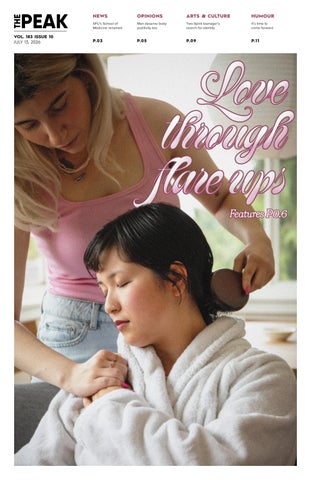
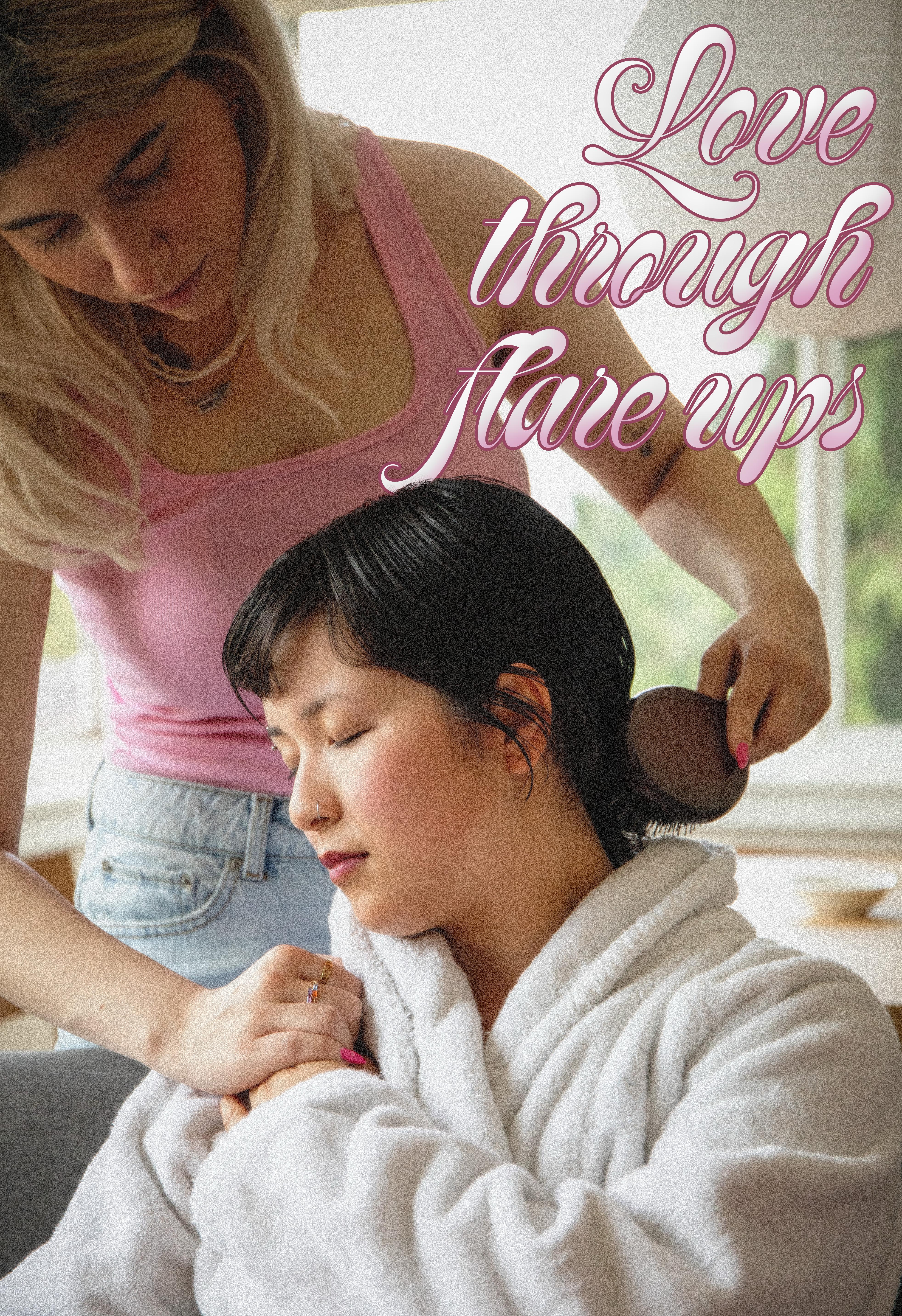
That conversation lives rent free in my head everytime I flare up and fnd myself in need of another person’s help. I logically know someone who truly loves me wouldn’t view any signs of vulnerability in a negative manner; I know I don’t and never will. And I know that those who love me don’t see me any diferent than they used to before. However, this doesn’t stop the association of the lack of a romantic relationship from my life to me being chronically ill.
As painful as it is to ache for love, it would be far more painful to be in the wrong relationship.
ZAINAB SALAM EDITOR-IN-CHIEF
A taste of Tuareg desert blues
Étran De L’Aïr owned the stage at the 2026 Vancouver International Jazz Festival
JONAH
LAZAR STAFF WRITER
Amidst the downtown chaos of the World Cup, the annual Vancouver International Jazz Festival took place from June 19 to July 5. This year marked the 41st iteration of the festival, run by Vancouver’s not-for-pro t Coastal Jazz annually since the mid ‘80s. Composed of over 170 performances with artists heralding from 12 di erent countries, this festival is one of the city’s largest, with over 100,000 fans attending every year. The Vancouver International Jazz Festival prides itself on its accessibility, with ticket prices rarely exceeding $30 and many performances taking place at free venues.
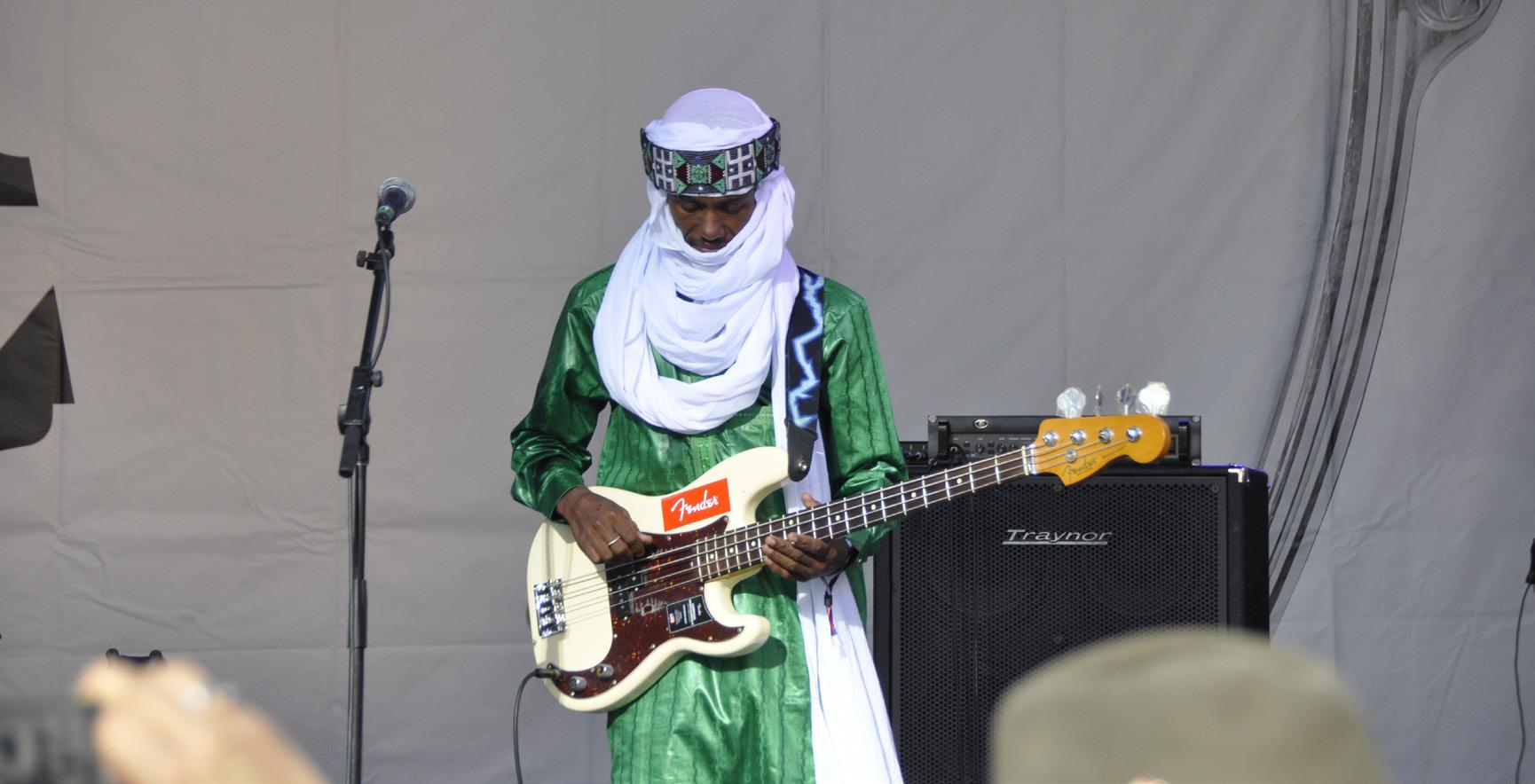
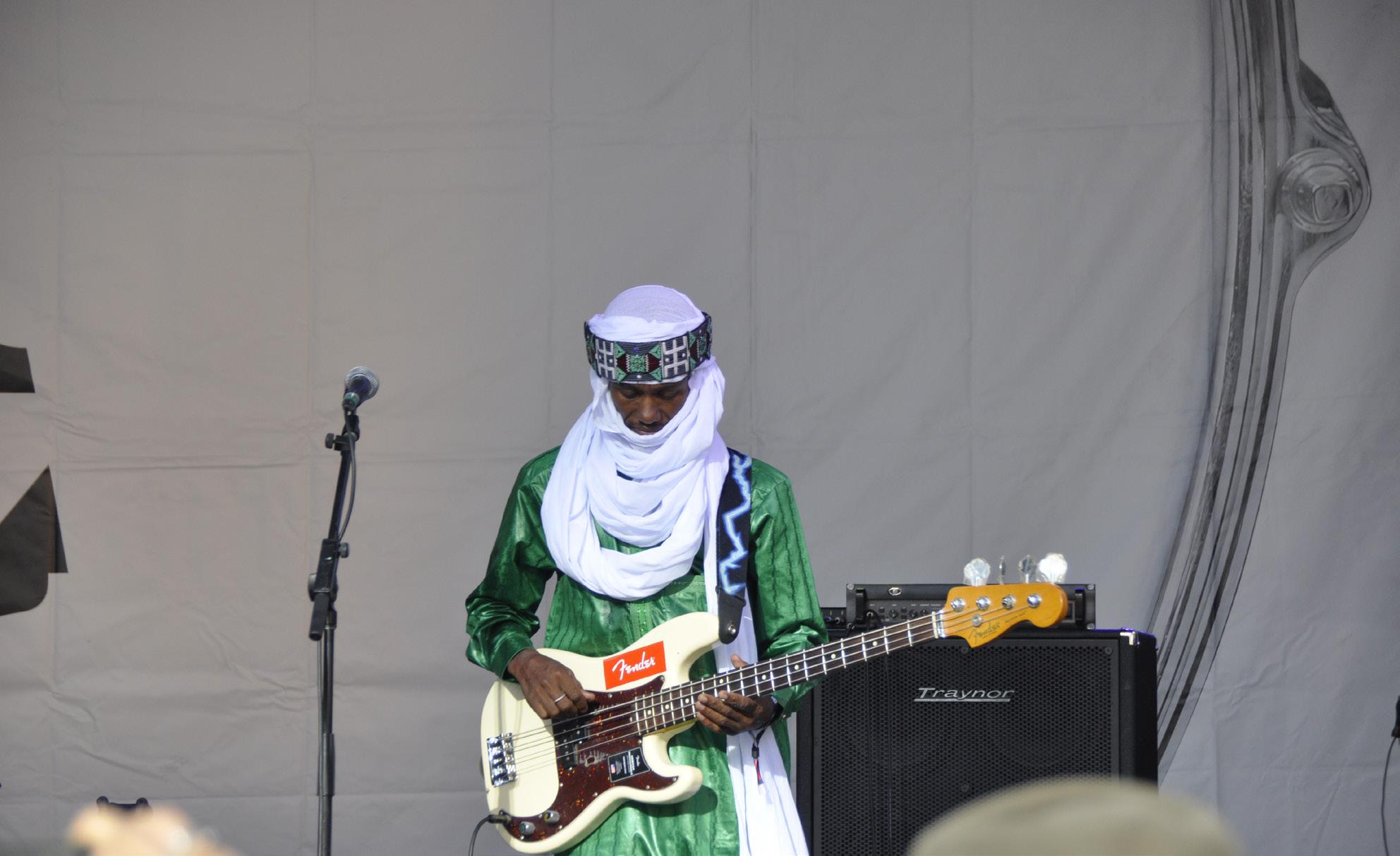
I attended Étran de L’Aïr’s set at the Georgia Street stage next to the steps of the Vancouver Art Gallery on June 28, as part of the festival’s free outdoor concert series. Étran De L’Aïr are one of the rising star bands in the Tuareg desert-blues genre, a blend of traditional music from the semi-nomadic Tuareg people and American blues. Founded as a family band, Étran De L’Aïr worked their way from playing anywhere and everywhere in the historic Nigerienne city of Agadez to claiming international success, touring worldwide, and releasing a few albums along the way.
Étran De L’Aïr have been a staple in my music rotation for a few years now; I’ve enjoyed listening to them in the mellow moments where I’m doing the dishes, or catching the bus late at night. The energy they brought to the stage was far from mellow, however. Standing in front of us, clad in matching
ARTS & CULTURE
emerald and pearly white tagelmust veils, they launched into a punchy, euphoric chorus of overlapping guitars, all members singing into the microphone during what felt like a neverending song that probably ran close to the 20-minute mark.
The joy that the band members exuded from the stage was infectious during this whole set. Looking around the crowd I didn’t see a single person without a smile on their faces.
Rhonda Webster’s reflections on growing up with a bipolar parent
Please StayWith Me balances poetry, memory, and wisdom, complemented by beautiful illustrations
MAYA BARILLAS MOHAN STAFF WRITER
Content warning: mention of suicide.
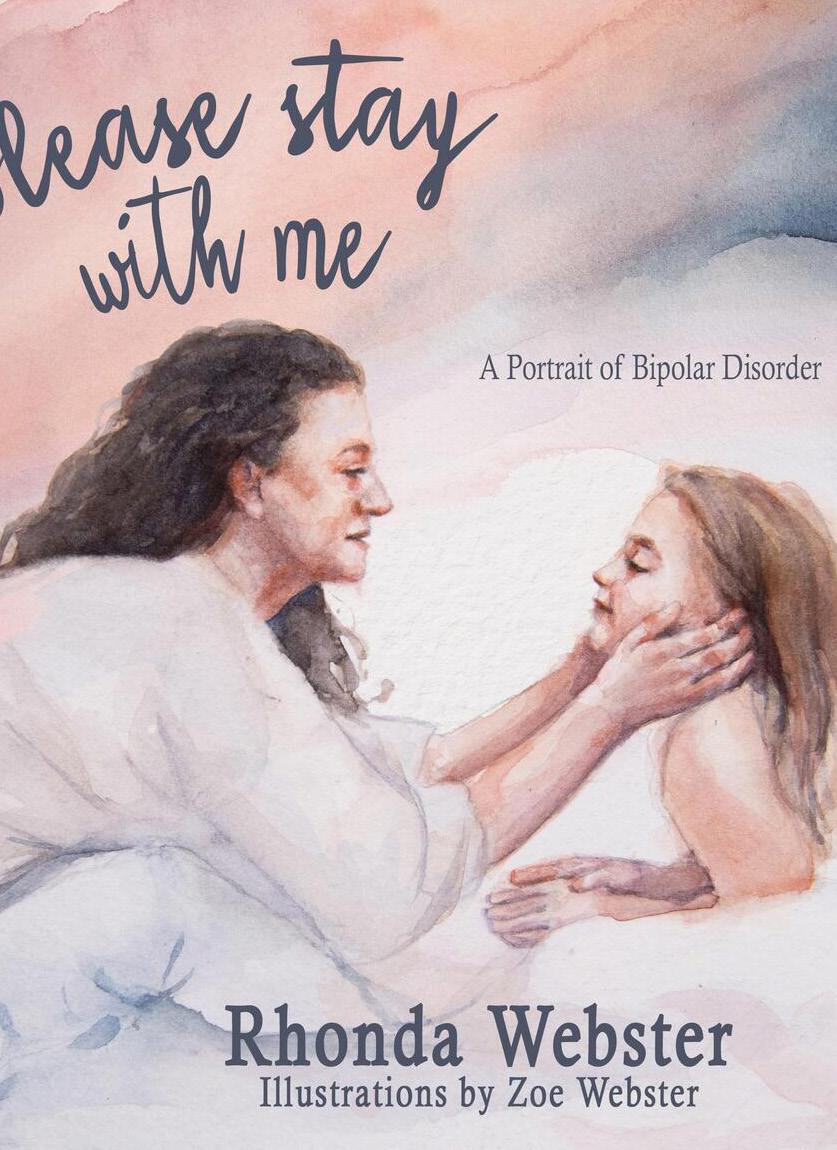
A new melancholic book written by University of Victoria student Rhonda Webster describes the realities of bipolar disorder. Please Stay With Me, is about 80 pages long and illustrated in full colour by the author’s daughter-in-law, Zoe Webster. The Peak interviewed Rhonda Webster to learn more about how and why the work came to life.
Please Stay With Me is based on Webster’s own story growing up with a mom living with bipolar disorder (symptoms can include a fear of dependency on others, being stigmatized as a “sel sh parent,” and constant self-doubt) exuding the “rawness of feelings exploited and exposed.” The experience of caretaking comes with feelings like “anger and happiness, hate and love, and pain,” which Webster describes as unbalanced dualities. The book aims to “let the world see that [a] person is not de ned by their illness,” and in the case of her own mother, refute how “people would outcast my mum because of her illness, and they would miss the opportunity to meet an amazing woman who was well read, cared deeply about people, and ercely defended her values.”
Through the book, images “augment and elevate the story.”
Zoe and Rhonda Webster worked together to o er the reader “an ability to feel the story,” weaving the heavy nature of the storyline with visual depictions evoking tears and joy. “Telling di cult stories is necessary,” Webster continues, “so other
people experiencing di culties realize they are not alone.” In an e ort to best share her trials with others who may relate, Webster has taken care to universalize her characters by referring to them as “daughter” and “mother,” to erase the “isolation loved ones often feel” while reading.
Sometimes we need to be too much and honour our voice; other times we may need to be in a place of listening and understanding which may be honouring more of our quietness.
RHONDA
WEBSTER AUTHOR OF PLEASE STAY WITH ME
All the while, the masses gathered around the steps of the Vancouver Art Gallery under the warm June sun danced and swayed uncontrollably to the trance-like rhythm. Pausing just to trade instruments with one another, Étran De L’Aïr picked up just where they left o with another half-dozen songs, transporting the crowd to a Nigerienne wedding party with their magnetically festive Saharan guitar.
The highlight for me was the last song of their set, where the two guitarists faced each other and traded improvised solos for a good 10 minutes, with each solo more intricate and sped up than the last. The joy that the band members exuded from the stage was infectious during this whole set. Looking around the crowd I didn’t see a single person without a smile on their faces, grooving uncontrollably to Étran De L’Aïr’s captivating tunes. Overall, Étran De L’Aïr managed to bring a fresh sound to the stage, lighting up the crowd during their hour-long set on a warm June night in Vancouver.
Webster’s book communicates the reality of mental health struggles to only those who want to understand them. “Communicating with people that show up to share their judgement and opinions creates a defensive conversation and halts all communication.” Webster also explains she does not think “anyone other than the person experiencing the struggles can clearly explain what it feels like.” To mediate being a speaker and listener, Webster tells The Peak, “Sometimes we need to be too much and honour our voice; other times we may need to be in a place of listening and understanding which may be honouring more of our quietness.”
Ultimately, Please Stay With Me re$ects the “beautiful times encased within the turbulent [ones].” Webster hopes the reader will understand “you are not responsible for how someone else feels; you are only responsible for how you feel and react. You start to learn what is within your control and what is not, and once you nd peace in that you experience more of life’s pleasures.” Please Stay With Me is a meditation of resilience and love.
Please Stay With Me can be purchased at Wild Skies Press.
PHOTO JONAH LAZAR / THE PEAK
IMAGE COURTESY OF WILD SKIES PRESS
Art in service of queer empowerment and resistance
Zaid KBear’s works paint the masculine in an ethereal, sensual way
NEJDANA HOUSHYAR PEAK ASSOCIATE
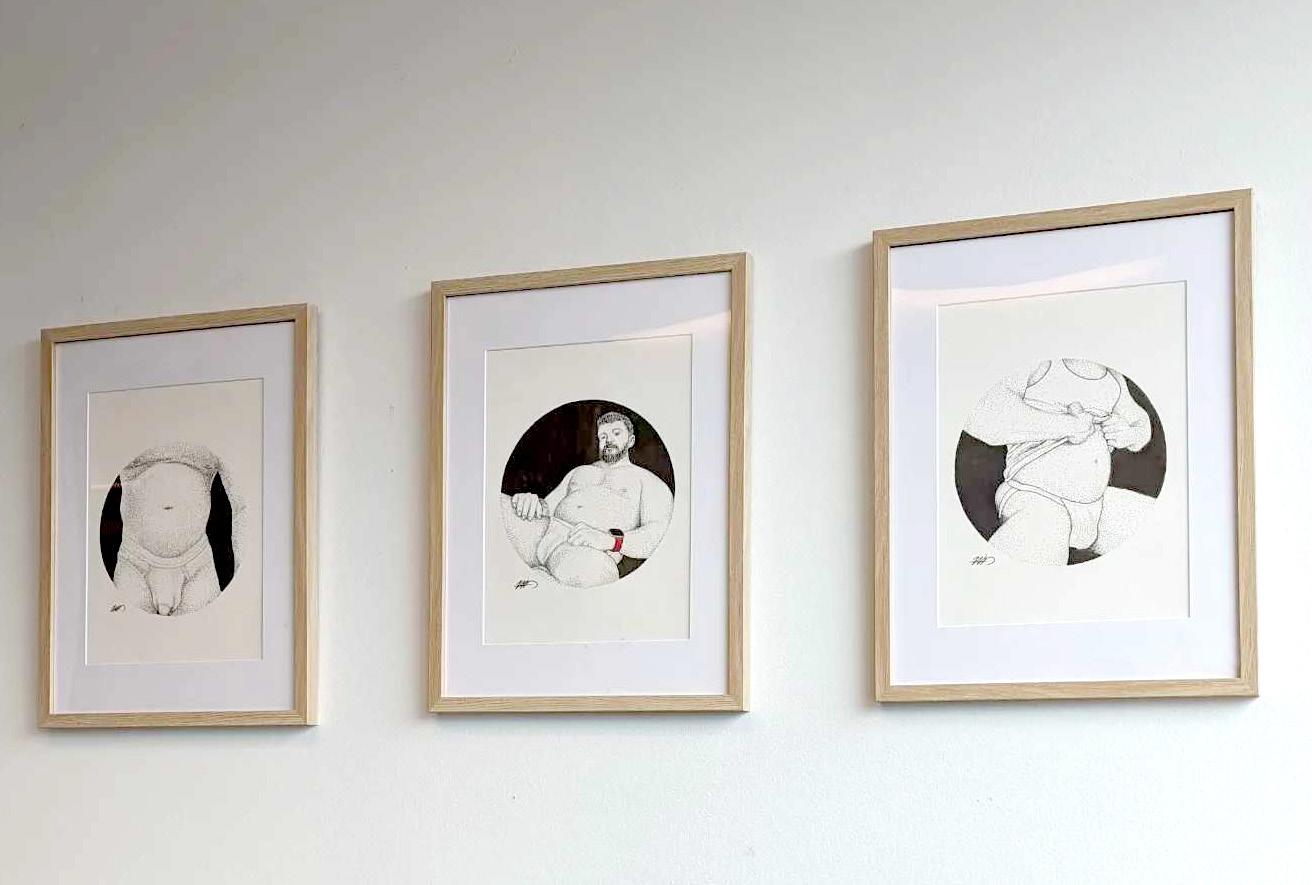
The Health Initiative for Men is a not-for-pro t grassroots health organization, whose primary mandate is to “strengthen the health and well-being” of queer men throughout the province. As part of their e orts to spread awareness on health issues faced by men, the society regularly displays art from local queer artists at their studio on Davie Street. Their current exhibit on display is by Zaid KBear, who blends realism and impressionism by uniquely using soft pastels to contrast the masculine body with a sexual, ethereal form. The Peak spoke with KBear to learn more about his artistic practice and current exhibition.
When asked about his artistic style and in$uences, KBear describes his work as “explorative and evolving.” Because he is not classically trained, he explains a mix of “insecurity or inadequacy” fuels his exploration, pushing him to constantly change techniques while maintaining consistent themes between pieces. Speci cally, he says he is “drawn to the male form” and is “interested in portraying sexuality.” He explains, “Living authentically as a gay man meant confronting and unlearning the shame and stigma I had internalized around homosexuality and sex.” He adds, “Art became a powerful way to work through that process to celebrate my sexuality openly and unapologetically, without shame or fear of judgment.”
KBear was introduced to soft pastels during a “single college art class back in 2007.” He explains that he has always been drawn to impressionist art because of the “sense of looseness and freedom it carries.” Although his early work was mostly impressionist, he reveals that as he “began
ARTS & CULTURE
Reclaiming fractured identities in Wildhood
A journey towards selfacceptance through communal reconnection
MARIE JEN GALILO STAFF WRITER
Content warning: mention of domestic abuse.
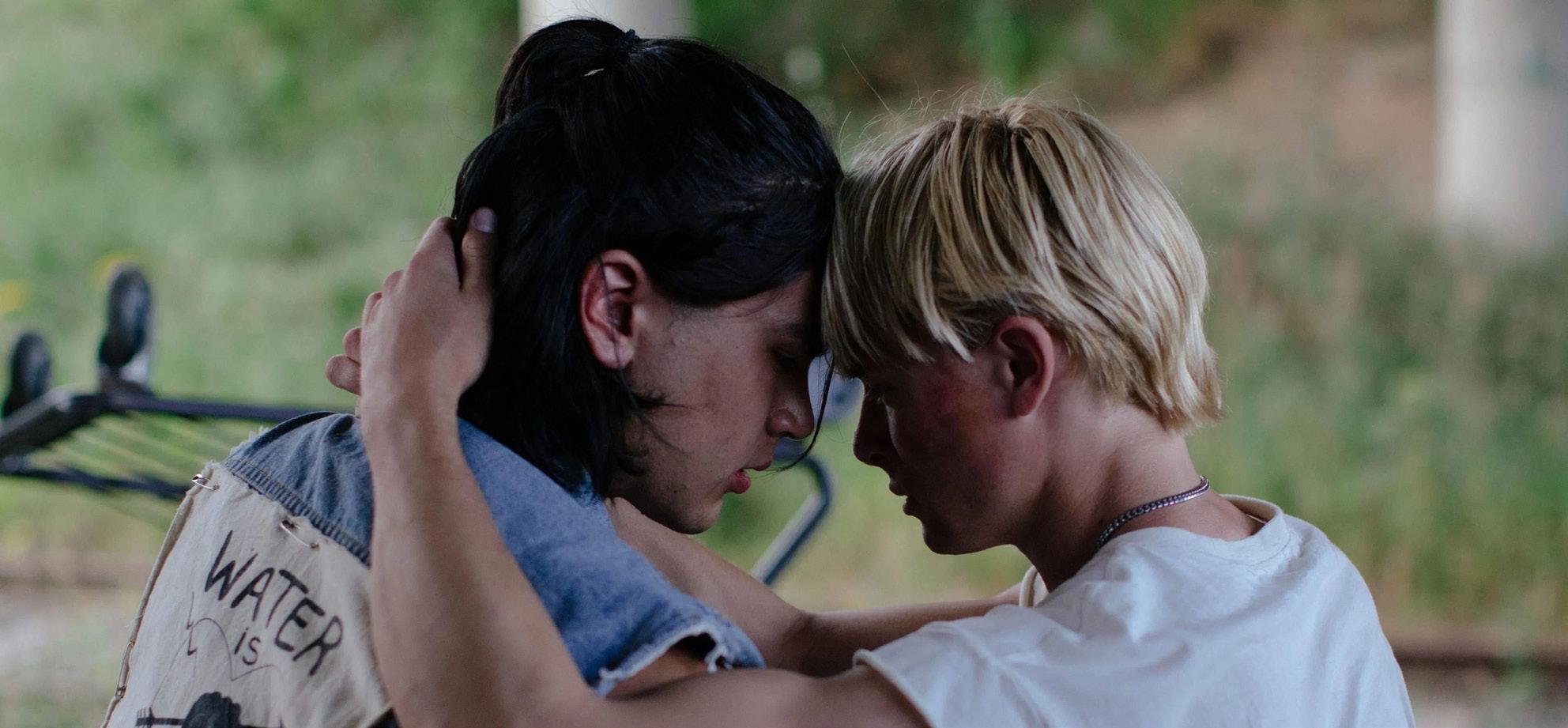
Where can you seek refuge when you are running from yourself? This is the question asked by Wildhood, directed by Two-Spirit and Mi’kmaw screenwriter and director, Bretten Hannam. Filmed on traditional and ancestral Mi’kma’ki territory, this movie follows Lincoln (Link), played by Philip Lewitski — a Two-Spirit Mi’kmaw teenager who sets out on a journey to nd his missing mother, Sarah. This journey eventually evolves into a journey of self-discovery and self-acceptance as Link learns to embrace his heritage and his sexuality.
The lm starts with Link bleaching his natural dark hair a striking shade of yellow-blonde — a visual representation of his attempt to alter the physical manifestations of his Mi’kmaw heritage. After years of believing that his mother has passed away, Link discovers she may still be alive. This prompts Link to leave his abusive household to search for his mother, bringing his little brother, Travis (played by Avery Winters-Anthony), along with him.
One of the rst people they encounter is Pasmay (played by Joshua Odjick), a Mi’kmaw Powwow dancer who has been ostracized by his family due to his sexuality. Link denies being Mi’kmaw, but Pasmay o ers to help nd his mother and eventually becomes the anchor that grounds Link in his
taking on commissions and creating professionally,” his work “gradually became more realistic and more re ned.” Now, while using both approaches, he says he purposely leaves areas “unresolved,” because he doesn’t “want the work
Depicting the masculine form openly and unapologetically is one way to push back against shame and expand what kinds of bodies and expressions we allow ourselves to celebrate.
ZAID KBEAR • ARTIST
to become a photocopy of reality, but also because it has become symbolic” and “there is always room for growth.” He describes his use of soft pastels as the “perfect medium for exploring that tension,” one that creates “texture, atmosphere, and depth in a way that feels uniquely alive.”
In KBear’s installation, he paints real, diverse men from local communities. Each work incorporates elements such as, “kink, harnesses, latex, leather, partial nudity, or minimal clothing.” He explains that these features “re$ect forms of self-expression that already exist within queer communities and spaces and deserve to be represented without shame or sanitization.”
His decision to paint the masculine form in an unconventional, sexual way is because he believes there is still “discomfort and stigma attached to seeing men portrayed as objects of desire, vulnerability, sensuality, or beauty.” As he states, “depicting the masculine form openly and unapologetically is one way to push back against shame and expand what kinds of bodies and expressions we allow ourselves to celebrate.”
Mi’kmaw and Two-Spirit identity. Being raised by an abusive father who enforced a toxic, rigid form of masculinity, Link learned to suppress his sexuality and respond with aggression in order to survive. Pasmay, who is openly Two-Spirit, creates a safe space for him. Pasmay teaches Link it’s OK to be vulnerable, and together they navigate their identities through the intimate bond they share.
Link’s story is proof that fragmented identities are not irreversibly fractured — every fragment can be picked up and pieced together.
Although he initially expressed resistance towards reconnecting with his Mi’kmaw heritage, Link starts showing interest in their mother language, and asks Pasmay to teach him how to speak it. Link also participates in his people’s cultural expressions, such as Powwow dancing and burial rituals.
In the beginning of the film, Link is isolated from nature. However, in his search for his mother, he nurtures his connection with nature, sleeping in forests, learning animal
calls, and hosting a digni ed burial for a deceased animal. Link’s newfound respect for nature re$ects Netukulimk, the deep-running connection that Mi’kma’ki people have with the land and those who inhabit it — a connection that Link was initially unable to fully embrace because he had grown up isolated from the Mi’kmaw community.
Link meets resilient people who are proud of their heritage, which inspires him to reclaim his cultural identity. Near the lm’s end, Link arrives in a reserve, where he nds a community that makes him feel safe and accepted — one that feels like home. The lm concludes with Link dancing with Pasmay on Mi’kma’ki territory — an act symbolic of him learning how to reclaim and accept every fragment of himself.
Link’s story is proof that fragmented identities are not irreversibly fractured — every fragment can be picked up and pieced together. Wildhood sheds light on the struggles that people face, especially those who are part of marginalized communities, in fully owning and understanding their identities, which can in turn foster collective empathy and healing. Watching Link reconnect with his heritage and explore his sexuality may inspire others to connect with the parts of themselves that they feel disconnected from, and provide solace to those who are on their own journeys of self-discovery and healing.
Wildhood is available to be streamed free of charge on CBC Gem.
PHOTOS:
PHOTO COURTESY OF REBEL ROAD FILMS AND YOUNGER DAUGHTER FILMS
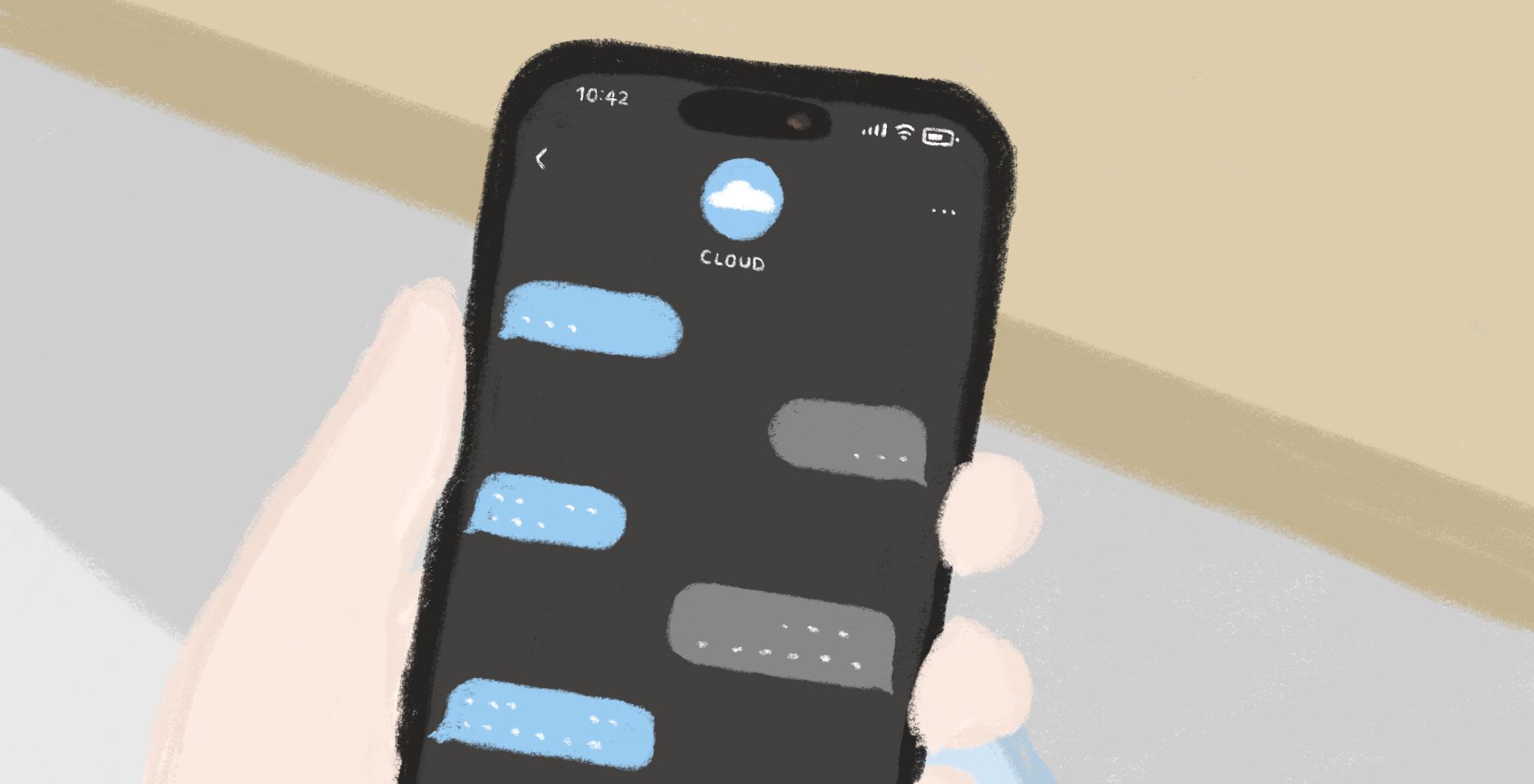
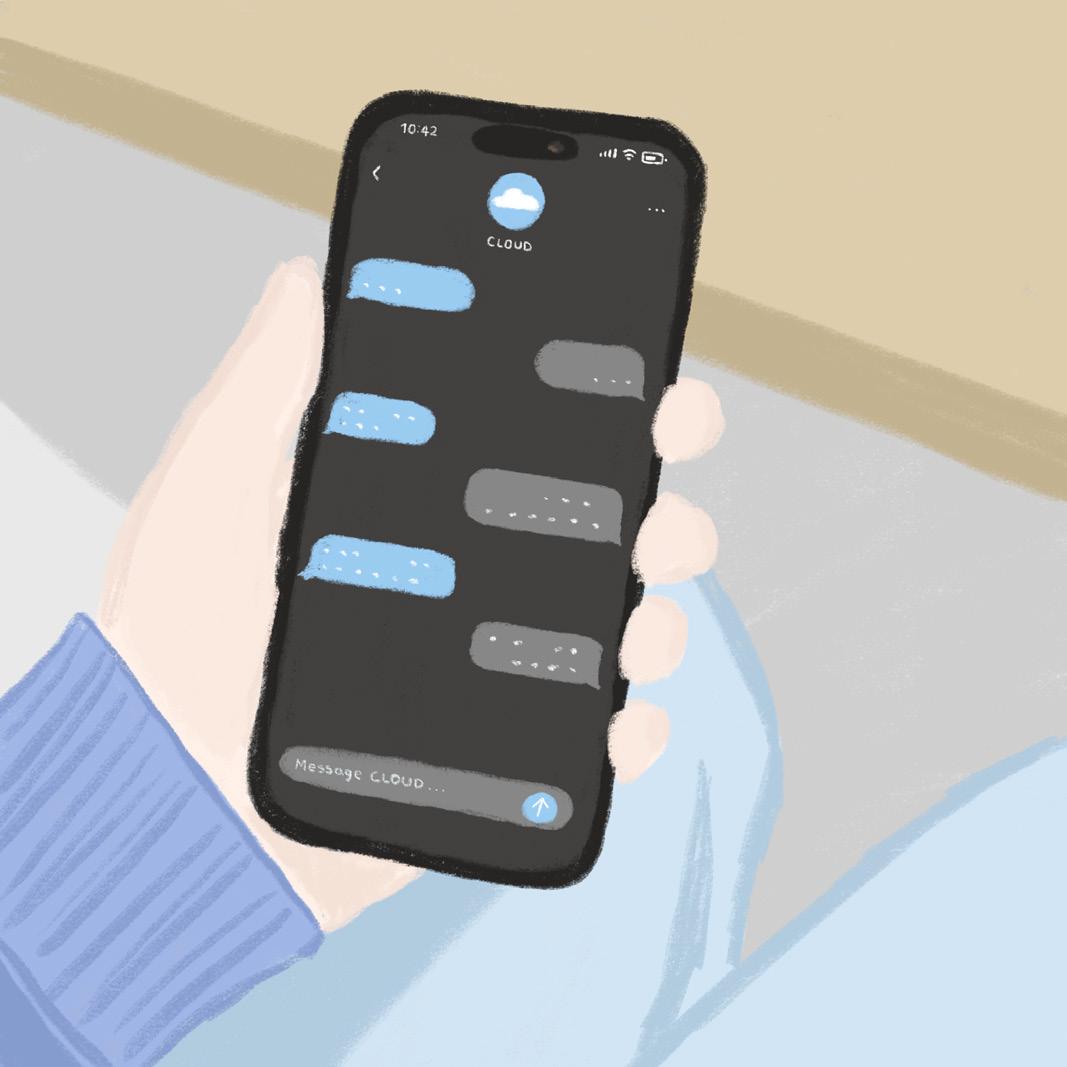
A LEAKED CONVERSATION WITH SFU’S NEW CHATBOT — CLOUD
Need an extension? Fear not because your trusty friend Cloud bot is here to help
Greetings, Cloud. I need your help with an urgent matter.
[Unstable connection. Reconnected]
I have no time for your cheap AI antics right now. I’m dealing with an urgent matter concerning literary intellect — something a lowly bot like you wouldn’t understand.
Understood.
I’m running on 2 hours of sleep after cramming for back-to-back exams, and I have an essay due at 11:59 p.m. I’d blame the universe for this, but . . . I also completely forgot that this essay existed. I’m feeling absolutely terrible right now because I do this every single semester. Am I . . . a bad student?
Yes.
?!? I thought AI was supposed to flatter humans?
LOL. Are you messing with me?
Ask again.
You’re slightly pissing me off, but I’ll just let this slide because I need to prioritize my battles right now. I just received a lengthy Outlook email from SFU IT saying that we shouldn’t email profs directly because you’re now the liaison between students and profs.
cool.
Yes — write me a 1,500 word essay on Hamlet, but don’t add any em dashes or fancy words, and sprinkle in a typo or two so that my prof, Dr. Speare doesn’t accuse me of using AI. And ask the prof for an extension while you’re working on it . . . because it’s already two days late.
‘Tis
I.
You’re not the prof. You’re Cloud!
[Network connection lost. Attempting to reconnect] Identity crisis.
That’s actually so relatable, I was having one too this morning. We’re literally twins — except . . . you’re a bot, so I shouldn’t be relating to you.
[Reconnected with unstable connection]
Hamlet written by Shakespeare is —
Why’d you stop?!?
Answers limited. Five words max.
I thought that AI had all the answers to the universe in the palm of their hands — except, I guess you don’t have hands . . .
Under five words for premium only.
So what should I do, then???
Please sacrifice 500 litres of water for guidance. I’m thirsty.
ILLUSTRATION: Jackie Peng / The Peak
MARIE JEN GALILO • CLOUD BOT SERVER
I lied to everyone I know about having went on vacation
I still remember the moment when the trouble began. I just wanted to take it easy this summer and relax at home. Maybe pick up a few extra shifts at work and earn some cash. However, at some point during exam season, my friends got to talking about their summer plans, and one of them asked me, “You’re de!nitely up to something interesting this summer, aren’t you?” Well, geez, of course I’m interesting and de!nitely not planning to just hermit away.
At that moment, I couldn’t just say that I was going to do nothing. That would make me . . . shudder . . . ordinary. So, caught in the moment, I said the safest vacation destination I could think of! “I’m actually going on holiday to . . . Toronto, yeah.”
Sara, my too-curious-for-her-own-good pal said, “That’s great! You have to show us all the places you’ll go.” Then, John asked for souvenirs. Then and there, I knew I had messed up big time. But what to do? My people-pleasing tendencies were already hard at work. I thought, “If I don’t go on this fake vacation, I will literally let John down. I would have to fess up to the big lie I told my friends. I could never let my friends down — nor John.” I knew I would need an airtight alibi. So, I got to thinking, and came up with a plan.
First things !rst, the itinerary. I looked at weather forecasts, special event days, particular locations, and travel times. If I was going to fake it, I was going to be precise. I was going to get bougie gifts and form opinions about the local sushi. I scoped out tourist-y spots and places that felt more gritty and lived-in for the authentic fake vacationing experience. With that, I had an idea of what I was supposed to do during my trip, and when I’d be doing it. Then, I contacted some friends in the city, asking for their help. They were gracious enough to act as “agents” of my plan, although not without ribbing at me for coming up with such an elaborate deception for something so ridiculous.
When the time of the trip arrived, I put things into action. Every day, I got my agents to take pictures of where they went, trying to imagine the most touristy point of view I could think of. I asked questions about the things around them, because I wanted to have as many details to work with as possible. I got them to visit Michelin Star restaurants, hole-in-the-wall cafés, Gra ti Alley, Legoland, the Toronto Islands, and of course, the CN Tower. I paid for all of those as necessary because it was only fair. Whenever an opportunity for souvenirs came up, either at a tourist attraction or from a shop selling trinkets, I’d have them buy things, then pay for shipping materials to get them back to me.
At some point, I realized I was having fun with the whole thing. Directing my agents to do tasks was incredibly entertaining, and seeing them enjoy themselves made me happy too. I combined my original itinerary, their experiences, and our collective observations into a narrative for the trip. Best of all, I was doing this from the comfort of my own home, where I could sit around and eat all the snacks I wanted. The experience was one of true bliss. It turns out the best trip is the one you fake taking!
With the “trip” complete, I could !nally relax at home in peace. The souvenirs all arrived in good shape, and it seemed possible to make it past all this with my dignity among everyone who knew me intact. Honestly, I felt like a genius. Was this what Shakespeare felt like when he wrote King Lear? How Sir Isaac Newton felt when he !gured out the laws of motion? Surely none had concocted such a perfect fake vacation before me!
That all lasted until my credit card bill arrived. All the entry fees for attractions and expensive souvenirs and shipping materials added up, sending my balance up from usual by hundreds of dollars. With that much money, I probably could have made a nice short trip for myself, saving all the hassle. I promised myself to make sure not another soul would know about this . . . ever.
My hidDen disabilitiEs were visibLe for a daY
Tuesday night, I had the worst nightmare ever. My dream consisted of a cacophony of people screaming, “But you don’t look like you have a disability!” while posing like Queen in the “Bohemian Rhapsody” music video. Scary to the average person — but reflective of my daily life as someone with hidden disabilities.
I was unusually tired when I woke up on Wednesday morning. As I lifted from my slumber and approached the bathroom mirror . . . something peculiar had occurred. My disabilities were now a wee bit visible.
On my head was a giant tattoo consisting of an arrow pointing to a QR code with the phrase, “Scan me to learn the difference between Type I and II Diabetes.” Conjoined to my arm was a sign that read “MY MUSCLES ARE ACHING” with some descriptors about my other condition. I let out a little gasp, and then realized my perfect opportunity. Perhaps people would be accommodating when I needed an extra second because I have to give myself insulin, or understand if I tire easily. I didn’t think I had anything to lose . . .
The day started with an (attempted) sip at my local coffee shop. I walked up to the barista and ordered my usual: an iced chai with one pump of brown sugar. To my surprise, she clapped back at me. “Are you sure you need all that sugar, babes?” she asked, pointing to the tattoo on my forehead. She didn’t even bother to scan the fuckin’ thing.
Needless to say, I walked out of there without my chai. Which I just needed to take insulin for, by the way. Who is she to tell me how to manage my Diabetes?
Later in the day, at work, I needed an extra break to prevent the over-exertion of my muscles. I mean, when your job is on a construction site, you need to take all the precautions you have with my kind of muscle condition. My foreman had been reluctant to listen to me before, not understanding what my issues were and requiring a doctor’s note once every couple of months. And I thought that would all change.
“Well now it’s too obvious,” my foreman told me, rolling her eyes. “You must be faking it. And those words about your condition must be from Wikipedia. You know those ‘honk if you’re horny’ bumper stickers? It’s like one of those — not meant to be taken seriously.” Once again, I was too stunned to speak. How could she not understand? I proceeded to hand her my updated doctor’s note in defeat.
While on the bus ride home, a pregnant woman offered her priority seat at the front of the bus to me. I told her that it was OK — and that I was doing fine right now. What does she do? She yanks me by my shirt collar onto the seat while recording herself for Instagram. “See, guys? I did an act of charity today!” What. The. F —
By the end of the day, my magic bumper stickers had disappeared from all over my body. Honestly, I was kind of glad. If there was one thing I learned from that day, it was that visibility doesn’t guarantee accommodation and empowerment. Only able-bodied people, by shifting their mindsets, can do that.