Ali Imran, Clara Xu, Olivia Blackmore, and Victoria Lo
COVER ARTWORK J.J. Jang
Pick up paper copies at any SFU campus
Find extended, cited, and web-accessible articles at the-peak.ca Download digital issues at issuu.com/peaksfu
ABOUT US the-peak.ca @thepeakatsfu @thepeakpublicationssociety
The Peak is SFU's weekly student newspaper published every Monday, by students, for students. We’re funded by a student levy and governed by a Board of Directors. Any SFU student can apply to become staff
We reserve the right to edit submissions for length, as well as style, grammar, and legality. We also reserve the right to reprint submissions at any time, both in print and on web. We will not publish content that is sexist, racist, or otherwise prejudiced.
TERRITORIAL ACKNOWLEDGEMENT
We acknowledge that The Peak’s office is located and our paper is produced, distributed, and read on the Unceded Coast Salish Territories of the xwməθkwəy̓əm (Musqueam), səlilwətaɬ (TsleilWaututh), kʷikʷəƛ əm (Kwikwetlem), qʼʷa:nƛʼən (Kwantlen), qicəy (Katzie), Semiahmoo, and Skwxwú7mesh (Squamish) Peoples. Unceded means that this land was never surrendered, relinquished, or handed over in any way. We recognize that the unceded land that we occupy includes not only the SFU Burnaby campus, but extends to the land occupied by the Vancouver and Surrey campuses as well.
GSS and SFSS express concern over heating conditions in student residences
Student societies highlight four recommendations for cooling facilities in a joint letter
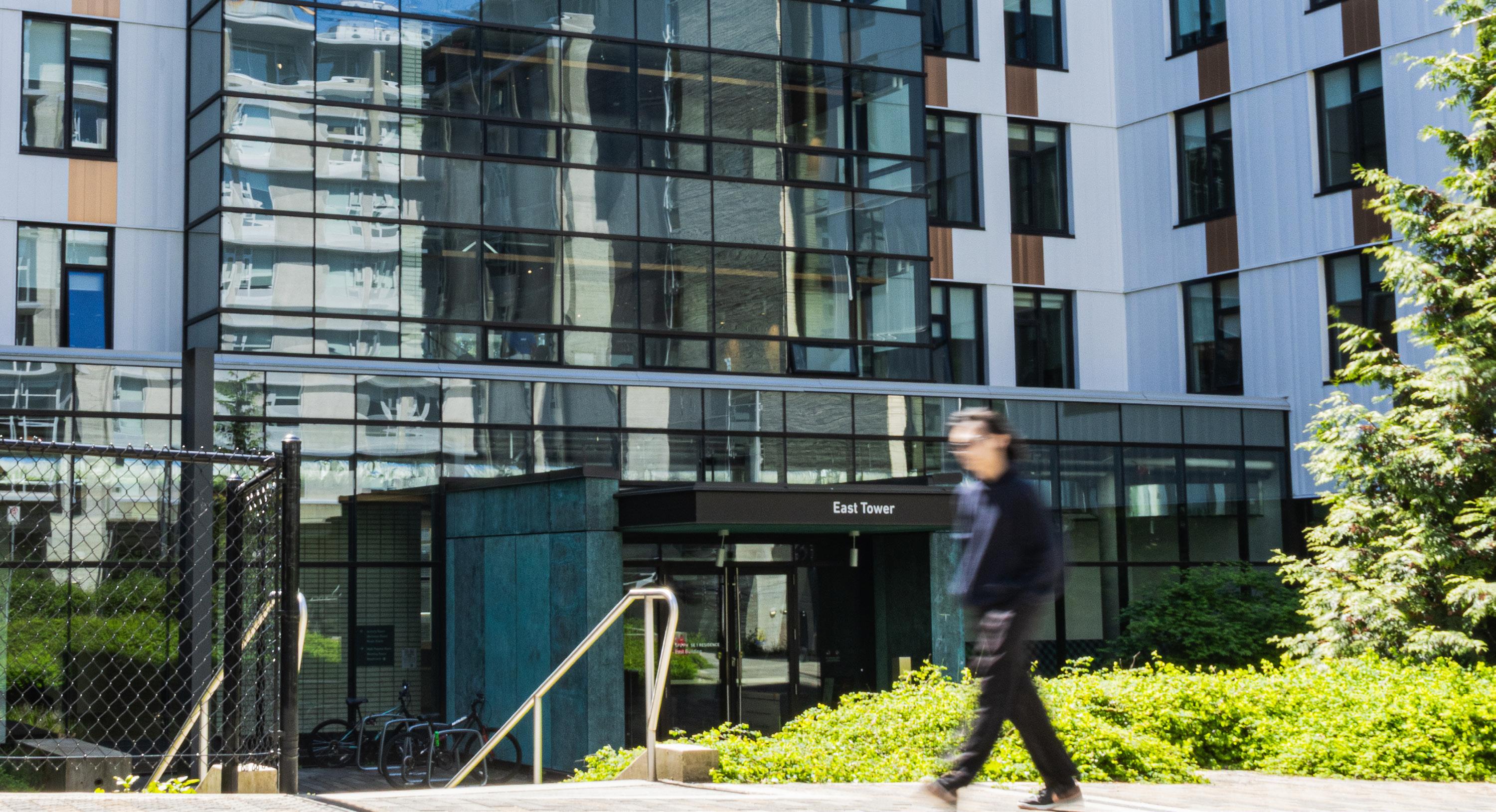
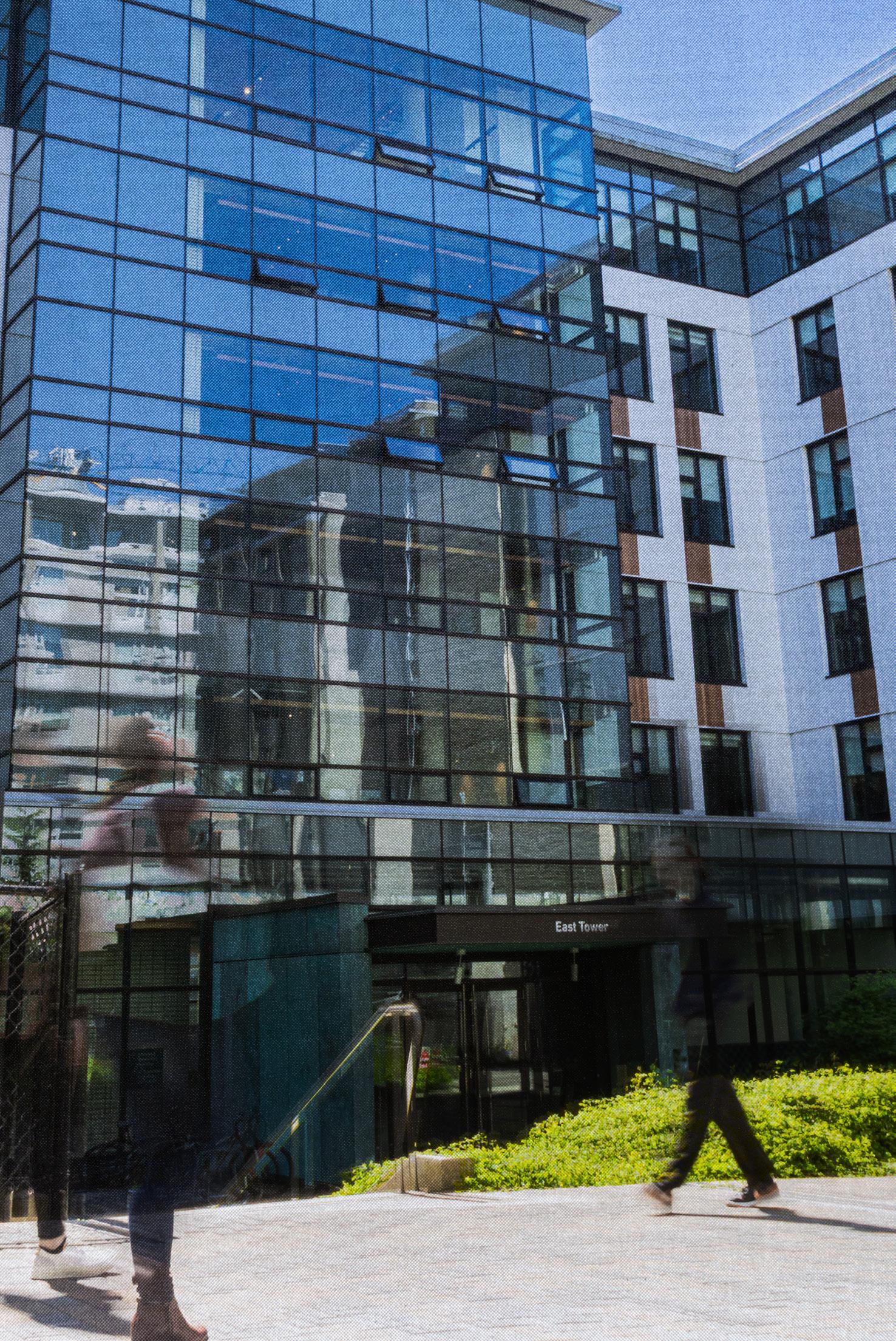
On April 27, the Graduate Student Society (GSS) and Simon Fraser Student Society (SFSS) issued a joint letter to SFU Residence and Housing regarding concerns over heating and cooling facilities in student residences. The letter alleged that inadequate student housing cooling facilities created a dangerous environment for students to study and live in. This letter was shared with The Peak
The Peak reached out to Kody Sider, director of external relations at the GSS, as well as Hyago Santana Moreira, SFSS vicepresident university and academic a airs. Sider alleged that students were regularly su ering through temperatures above 26℃, which is the province’s legal limit for living spaces according to subsection 9.33.2 of the BC building code.
“The university has done little to handle heat in the residencies that they manage. Students regularly have to sleep and live in heat upwards of 32℃.” said Sider. SFU has a ban on airconditioning (AC) units for safety reasons. They cite “potential damage to the property, electrical load limits, and liability,” in addition to “water leakage” and “increased humidity leading to mold growth” as potential concerns. Sider said despite this ban, the university doesn’t provide a suitable replacement for residents. “Students regularly talk [to us] about how when they reach out to housing, housing tells them to just buy a fan or open the window . . . Almost every student that I know who lives in housing already owns at least one fan.” said Sider. “The university’s recommendations are based on the individual, treating it as an individualist issue, even though it’s a systemic issue.” The Peak reached out to SFU for comment, who noted that “students who are concerned about heat in residence are strongly encouraged to reach out to Residence and Housing sta for advice on options and tools to reduce the impact of heat in their unit.”
Moreira added that the university’s accessibility plan has made commitments to accessibility for campus residencies, sharing that “cooling facilities are a matter of medical accommodation.” He said, “SFU has a lot of commitments and they should be looking at our asks not as extraordinary asks, but as part of their own duty in respect to what Senate and what governance has already decided would be good for students, how they should prioritize the well-being of students.”
Sider expressed that the university administration advocates for climate resilient housing, but don’t implement the measures. “They fail to practice what they preach internally,
where they allow students to e ectively be baked in their own apartments and then just telling students to get a fan or just not respond to students at all,” he said.
The student societies introduced four recommendations to improve housing conditions on campus in their letter. The rst recommendation called for the university to lift the ban on air conditioners. As air conditioners are costly, the university should accommodate vulnerable students and “immediately streamline the process for priority students with medical conditions to install portable, high-e ciency cooling units.” Sider said this process does not currently exist, and di erent needs should be evaluated individually.
They fail to practice what they preach internally, where they allow students to e ectively be baked in their own apartments and then just telling students to get a fan or just not respond to students at all.
KODY
SIDER DIRECTOR OF EXTERNAL AFFAIRS AT SFU GRADUATE STUDENT SOCIETY
The letter’s second proposal lists additional short-term measures designed to help students. They suggest the establishment of designated temporary cooling centres at every student residence, supplying air coolers and cooling kits to students.
The letter’s nal two proposals focus on long-term aspects of student housing development at SFU. The student societies call for the university to launch an independent building performance audit to analyze the climate and energy capabilities of each SFU building. Additionally, they propose the university publish a roadmap for thermal infrastructure in
a three-year timespan, and install AC infrastructure in places where it is feasible.
In a statement to The Peak, the director of SFU Housing and Residence Zoe Woods said that arrangements were underway “to prepare for the possibility of a hot summer ahead.” She stated that the preparations were being undertaken in coordination with di erent SFU departments to support residents at the Vancouver and Burnaby campuses. Woods said that SFU Housing and Residence’s preparations were “accompanied by outreach from the GSS and SFSS” and thanked them “for sharing their concerns.”
The Peak also corresponded with the SFU Residence Hall Association (RHA), the primary organization that represents students living on campus, about the letter. Outgoing RHA president Vinisha Kadyan said in an email statement that “while the proposals raised by the GSS and SFSS provide a constructive starting point, it is important to consider whether they are sufficient to fully address the problem.” She noted that “some of these solutions may take time to implement and may not provide immediate relief for those currently affected.”
Additionally, she said her organization believes Residence and Housing should be more concrete and communicative in their approach to cooling residencies by implementing short-term solutions such as “arranging temporary relocation options within cooler residence buildings when indoor temperatures exceed safe limits” while long-term structural changes are undergoing improvements.
Kadyan revealed that the GSS and SFSS did not include the RHA in the joint letter. She noted that “a collaborative approach between student organizations could have strengthened advocacy e orts, and created a more uni ed response before moving directly to a public joint letter.” She noted that the RHA had been discussing these heat concerns with the university as a “part of broader conversations about student living conditions.”
Moreira said, “At the time when the letter was sent, we would [have] liked to partner with Residence, but they are at a time of transition” and there was confusion surrounding whether they were fully a part of SFU and what decisions they could make. However, Moreira added, “I bet that the students and the RHA will agree with us that changes are needed.”
PHOTO J.J. JANG / THE PEAK
NIVEJA ASSALAARACHCHI NEWS WRITER
Indigenous Student Centre observes Red Dress Day
Community circle offers connection for Indigenous students
NIVEJA ASSALAARACHCHI NEWS WRITER
On May 5, the SFU Indigenous Student Centre (ISC) hosted a community care circle on Burnaby Campus in honour of Red Dress Day, which commemorates Missing and Murdered Indigenous Women, Girls, and Two-Spirit Peoples (MMIWG2S+) of Canada. The community care circle served as an opportunity to bead and o ered Indigenous students a “space to rest.”
In a statement to The Peak, ISC’s Indigenous administration and events coordinator, Audrey Heath (Gitxsan Nation) said community care circles are spaces “created for Indigenous students, facilitated by ISC sta , counsellors, Elders, and caseworkers from the Sexual Violence Support and Prevention O ce.” She shared the space was a way “to gather with community and participate in a way that feels right to the student, whether that includes sitting and listening, sharing with the group, participating in an activity or enjoying a meal.”
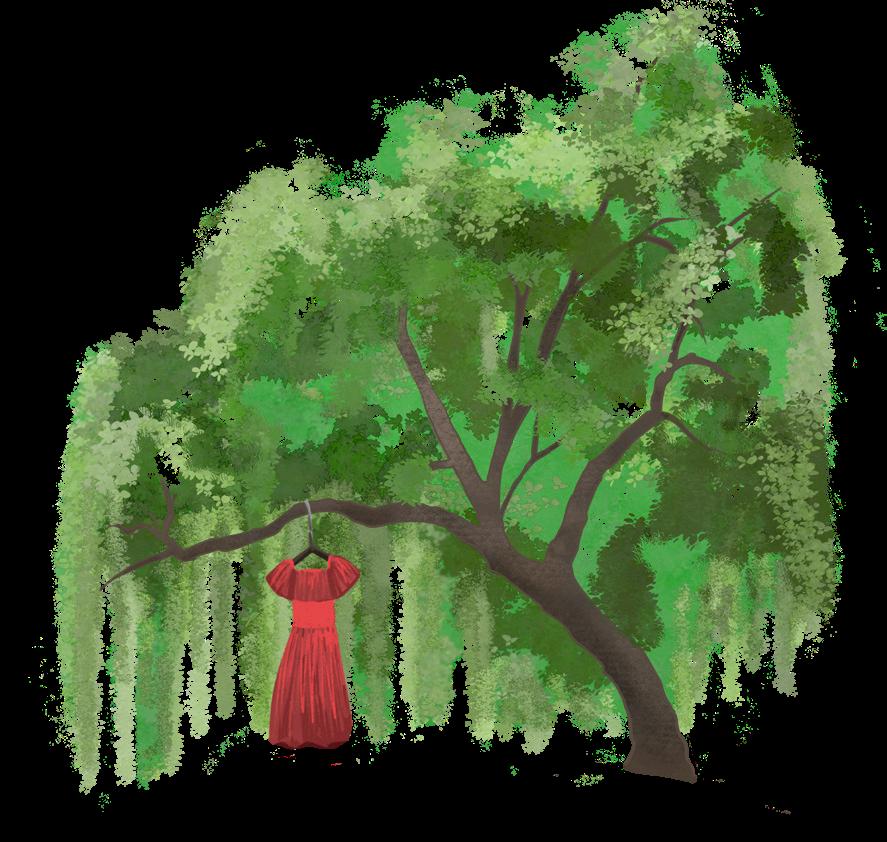
Red Dress Day was rst commemorated in 2010 when Jaime Black, a Métis artist, opened the REDress Project, which featured art installations to visually recognize the systemically higher rates of violence against Indigenous women. The red dresses, which are often prominently displayed in public, serve as a symbolic reminder of the large number of victims who have been lost as result of this wide-ranging scale of violence.
Heath shared that community care circles are organized by the ISC on days that are particularly important to “honour and remember our community who have experienced harm or are no longer with us.” This occurs chie$y on four days: February 14, the Women’s Memorial March; May 5, the National Day of Awareness for MMIWG2S+; the Moose Hide Campaign, typically held in May; and September 30, the National Day of Truth and Reconciliation.
Indigenous Peoples are often called to educate others about the truths of these days, which can cause further emotional labour on already di cult days.
AUDREY HEATH
COORDINATOR OF THE SFU INDIGENOUS STUDENT CENTRE
Migrants su er cuts to health-care amid changes to immigration law
Those covered under the Interim Federal Health Program will now face a 30% co-pay
The Interim Federal Health Program (IFHP) is a national program designed to provide temporary care to vulnerable groups, such as refugees, until they are eligible for permanent public health insurance.
Since its inception in 1957, the policy has undergone signi cant shifts. In 2012, then prime minister Stephen Harper introduced dramatic cuts to the program, resulting in a total denial of healthcare for some refugees, and a drastic reduction for most. With treatments such as medications or prosthetics left uncovered, serious pushback from health care workers ensued. Ultimately the cuts were found to be unconstitutional, and in 2016, the IFHP was fully restored to its former capacity.
Now, a decade later, the pendulum swings once again.
Beginning May 1, the Immigration, Refugees and Citizenship Canada Department (IRCC) announced reductions to the policy’s supplemental coverage, meaning refugees are required to pay “$4 for each eligible prescription medication lled or re lled under the IFHP,” and “30% of the cost of other eligible supplemental health products and services, including dental care, vision care, counselling, and assistive devices.”
The Peak spoke with Byron Cruz, a member of Sanctuary Health, for more information on these policy cuts. Sanctuary Health, a part of the Migrant Rights Network, focuses on ensuring “access to services for all regardless of immigration status or documentation.”
Cruz explained the extreme challenges brought on by original reductions to the IFHP in 2012, including “phone calls from pregnant women who did not have access to health-care,” and people having “to go at 4 o’clock in the morning to do a line to the immigration o ce in order to get an approval to go and see the doctor.”
While he worries these same challenges will once again become common, current coinciding federal policies will make these cuts even more detrimental. Cruz referenced Bill C-12, which allows for unprecedented “information sharing about migrants across all government levels,” both in and outside of the country, among other measures.
We have provincial politicians in British Columbia blaming migrants for using health-care, for using social services, or using foodbanks.
BYRON CRUZ SANCTUARY HEALTH OUTREACH WORKER
“C-12 and the cuts to IFHP are part of the same package.”
Heath explained it was important for the centre to hold care circles at these times, because “on these days we talk about a lot of di cult issues which can be emotional. Indigenous Peoples are often called on to educate others about the truths of these days, which can cause further emotional labour on already di cult days.”
Heath, while pointing out that events like these are a part of the university’s commitment to truth and reconciliation, emphasized the need for reconciliatory practices to emerge outside of Indigenous spaces.
The centre suggested attending an event that raises awareness about MMIWG2S+ and nancially supporting organizations like the Native Women’s Association of Canada, Aboriginal Mother Centre Society, and the Downtown Eastside Women’s Centre, as ways to support MMIWG2S+.
The center also suggested reading through the National Inquiry on MMIWG2S’s nal report, alongside wearing red on May 5.
For more information, visit www.sfu.ca/students/indigenous/ events/red-dress-day.html
Cruz added, “We have provincial politicians in British Columbia blaming migrants for using health-care, for using social services, or using foodbanks.”
While reductions to IFHP will harm migrants, many also consider the decision to be a nancial mistake. According to the British Columbia Medical Journal, these cuts “will result in a need for more emergency room visits, more in-patient hospital stays, more physician time, and, ultimately, higher costs overall.
“By pushing people who are unable to a ord entry-level access to care into clogged emergency departments and hospitals bursting with patients, the IRCC decision tightens critical bottlenecks in an already overstretched health system and makes it harder for everyone to access what they need.”
Despite these claims, the government maintains that cuts to migrant health-care are designed to support “the long-term sustainability of the IFHP so it can continue providing essential support to current and future bene ciaries.”
The Peak reached out to IRCC Minister Lena Metlege Diab for a comment, but did not hear back by the publication deadline.
ILLUSTRATION VICTORIA LO / THE PEAK
LUCAIAH SMITH - MIODOWNIK NEWS WRITER
Students can be “middle powers” through collective action
Can the message behind Mark Carney’s Davos speech be embodied on a local-level?
In his special address at the World Economic Forum in Davos in January, Prime Minister Mark Carney garnered plaudits worldwide with a powerful speech on the future role of “middle powers” on the international stage. Middle powers are countries that try to in uence geopolitical issues between great powers like the US and China, due to their geographic, economic, and diplomatic positions. Carney made a compelling argument for a re-calibration of international rules and norms. He argued that Canada should form issue-based coalitions with other nations who share similar values like diversifying trade, promoting gender equality, and supporting poverty reduction. This idea also holds lessons for individuals who want to stand up to the growing powers of archaic institutions and malignant corporations.
Now more than ever is the time for the workers of the world to recognize the power of collective action.
The central argument of Carney’s address focuses on the power of cooperation between nations who have found themselves subordinate to the US and China. This call to act collaboratively mirrors the founding principle of trade unions, namely the strength of collective action, which presents employees with an opportunity to bargain on a more equal footing with their employer. As economic inequality grows in Canada and the rights of workers across the globe continue to
deteriorate, now more than ever is the time for the workers of the world to recognize the power of collective action.
Advocacy also extends beyond the workplace. As students, we must do more to exercise our power to hold the executive teams of our institutions accountable and create a learning environment that empowers everyone to get the most out of their university experience. Taking part in groups that advocate for change on campus, participating in student societies or even running for election to the Board of Governors or Senate are all ways that we can work with other students to ensure that our voices are heard. In June 2025, four years after a group of SFU students threatened to go on hunger strike to force a divestment from fossil fuels, the university announced its investment portfolio no longer holds fossil fuel assets. SFU350, a student-led club focusing on climate action, campaigned tirelessly for eight years and were eventually successful in forcing the university to divest its assets. The club is an excellent example of how student activism can lead to meaningful change and continues its work campaigning against the Trans Mountain Pipeline Expansion on Lhuḵw’lhuḵw’áyten (Burnaby Mountain). Additionally, after penning an open letter with seven climate demands to the university in 2021, the Board of Governors met the !rst demand in April 2022 declaring a global climate emergency. This declaration empowered the university to take action to mitigate this emergency. They later laid out these actions in the SFU 2025 sustainability lan.
Clearly, enacting meaningful change in our communities is possible, and it is made so much easier when we do so collectively. Trade unions, advocacy groups and student organizations all bene!t from the type of collaboration between individual “powers” (yes, that means you!) that the prime minister is calling for. Only together can we capitalize on the strategic autonomy that can help us prosper in an uncertain world.
The Bright-er Side
Making the most of your last summer class
Spring semester always feels like a struggle for the !nish line with the summer semester lurking around the corner. Possibly the best-lit semester of the school calendar, actually. I’m from the prairies, so the weather doesn’t turn or stay nearly this nice this easily in Alberta. School is the whole reason I get to be in this situation at all, as arduous as it can sometimes feel. Starting in May and ending in August, this sunny semester is the most relaxed part of my year. Maybe the slim course selection helps — I’m lucky the last class I need to graduate was o ered.
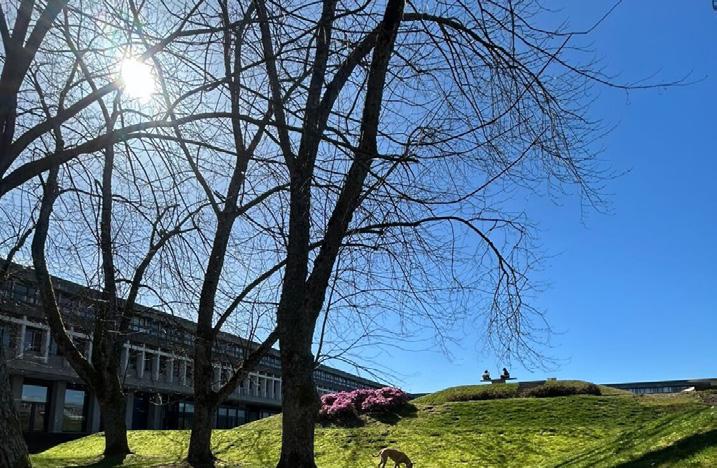
It only took 10 (!!!) seasons of !nals to know my way around SFU. While the Burnaby campus is closer to a fortress than a cruise ship, you will interact with its multi-layered design di erently throughout the year. In winter, you get access to a 3 inch curving track crossing the koi pond, whereas in the summer, you actually get to see the !sh! In the summer there’s nooks and hills atop the mountain itself, making way for some eccentric study spots near the AQ pond. On the inner stairs by the Trottier Observatory, !nd a spot in the plush grass under a big tree. Luxuriating under the shade is best accompanied by a book so your laptop and eyes don’t have to struggle against the glare. When I graduate, I think I’ll miss getting a green apple and a soft croissant from Nesters. Bookending classes with a snack or a stroll around the low-rise apartment buildings is idyllic in a way I just know my future work o ce won’t be.
In my experience, summer classes are smaller, so the lessons feel a bit less opaque than the usual crammed lecture halls are. Something about the long days lining up with the last mile of my degree means I can remove the tunnel-vision essay goggles for the dewy start of a semester one last time. Being a student means priorities overlap and con ict, but it’s easier to manage with a lighter course load and more elbow room on campus.
Sitting by the window can be a welcome distraction — but the extra-long days mean that balmy Burnaby will still be waiting for you after the drudgery of a tutorial limping on with its broken projector. With this being my last semester, I’m glad it fell together in such a way that I can !nish strong, and maybe even a little sunburnt from sitting beside that AQ window.
PHOTO: MAYA BARILLAS MOHAN / THE PEAK
MAYA BARILLAS MOHAN STAFF WRITER
ILLUSTRATION: JACKIE PENG / THE PEAK
TOMOS LAND STAFF WRITER
MAYA BARILLAS MOHAN Staff Writer
HEALTH POLICY EXPERT
DR. LEAH SHIPTON EXPLAINS DUPLICATIVE HEALTH-CARE
PHOTO: GUDRUN WAI-GUNNARSSON / THE PEAK
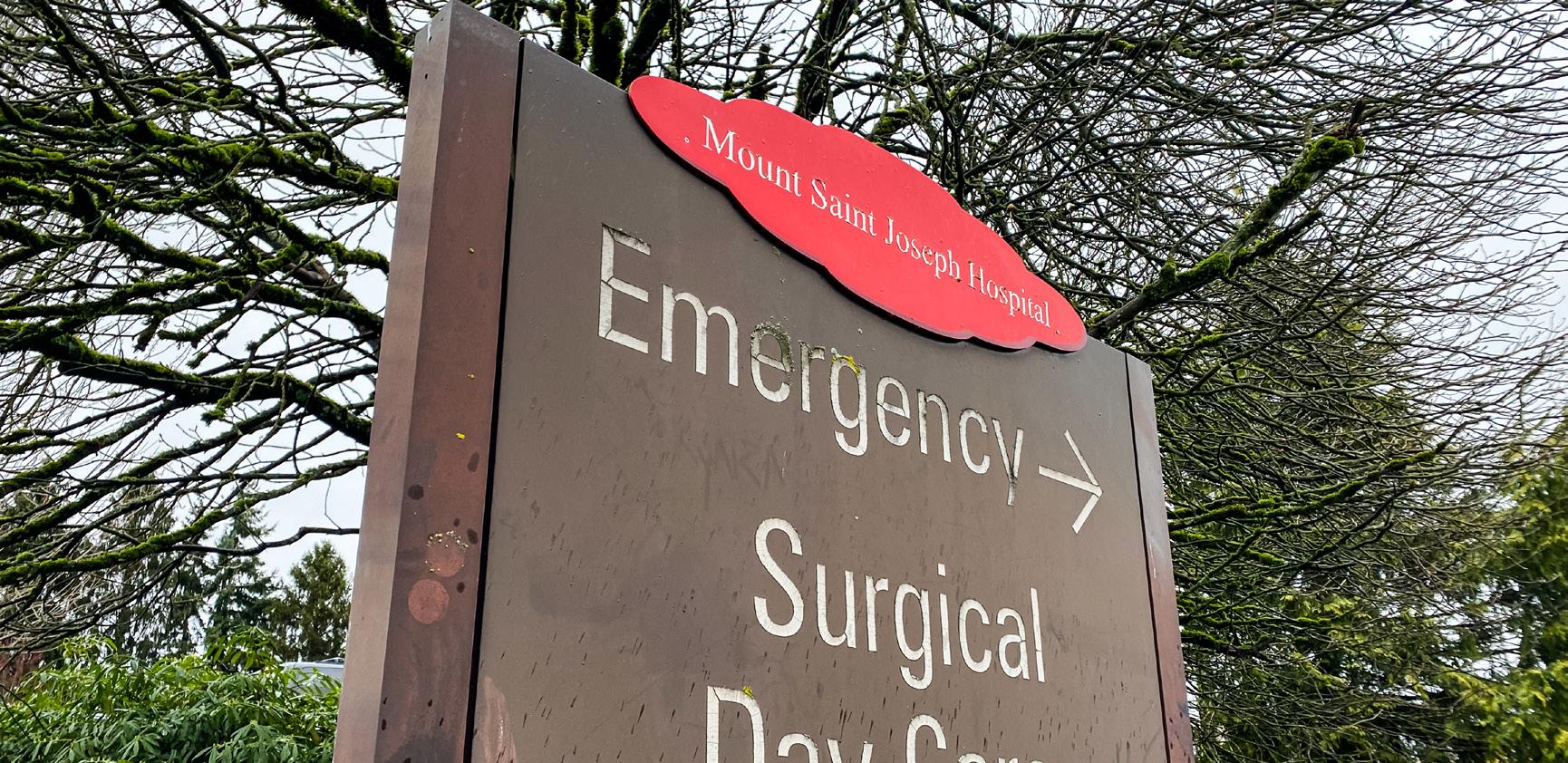
Canada’s health-care system desperately needs healing, but we can’t take it to the doctor. In an interview with health policy expert and term assistant professor at SFU School of Public Policy Dr. Leah Shipton, The Peak inspects what’s broken with our health-care system and potentials for solutions.
Defning the crisis
Universal health-care means most health services in Canada are publicly funded and available for free to citizens and permanent residents. The Canada Health Act, that ensures universal health-care, passed in 1984. However, our government’s mismanagement of this system has led to an ongoing crisis of access and quality. In BC and across Canada, wait times languish on for “emergency room care and elective procedures,” Shipton explained. She attributed this to a “woeful underfunding” of primary care. A major doctor shortage results in delays, and nearly six million people don’t even have a family doctor. “It’s been urgent for a while,” said Shipton. Some patients may end up going to emergency rooms to seek urgent care that could have otherwise been sought by a family doctor if treated earlier or if access was available.
According to TheTyee, the ongoing efects of COVID-19 has also contributed to the overcrowding of emergency rooms as it “made the general population sicker,” and continues to circulate, with the population “more likely to be sufering from metabolic diseases such as diabetes, cardiovascular disease, and autoimmune diseases.” According to CBC, hospitalization rates for viral illnesses and respiratory diseases have doubled since 2019. “This is not just limited to family doctors,” Shipton continued. The number of nurses, anesthesiologists, occupational therapists, physiotherapists, and pharmacists fall drastically short in meeting demand. Shipton also noted a shortage in public long-term care, with aging populations requiring long hospital stays or privately fnanced care while on long waitlists. This further agitates fnancial insecurity in the aging populations.
According to Shipton, the shortage is an issue of both supply and retention as “signifcant burnout” burdens health care workers. “It’s hard to retain health workers because of how challenging the working conditions are. And then we’re not recruiting nearly enough to fll the gap for the people who are leaving,” she said. The number of doctors headed towards retirement has more than doubled since 20 years ago. This is especially dire in rural areas, where temporary emergency room closures mean residents must be redirected to hospitals sometimes hours away. Beyond that, overworked staf cannot easily provide “higher quality care.” CityNews reported increased violence towards health care workers from patients and their families who “lash out” due to the wait times and overcrowding.
Trouble across province lines
The guiding philosophy of Canada’s national medicare, since its roots in the 1960s, is that health-care is a human right; everyone should live with dignity, and without sufering or fnancial constraints. The Canada Health Act states required health services must be “provided on the same terms and without patient charges.” But according to Shipton, a new Alberta law violates that.
In November 2025, Alberta introduced Bill 11, or the Health Statutes Amendment Act, which passed the following month. It allows private companies to operate alternative options to the medically necessary services that are publicly available — most controversially, acute care. Bill 11 poses a critical issue: Shipton doesn’t believe the average Albertan can aford it. While those who can will receive “systematically quicker access to health care,” the public system will continue to deteriorate.
Shipton isn’t convinced that a two-tier system will be helpful for the majority of Canadians. She points to Australia and the UK, countries which have recently gone the route of introducing private health-care as a secondary option to public systems in crisis. The result is that patients are priced out of accessing care. She explained how in both cases, the public system loses “vital stafng” as health care workers move to private practice. And as patients begin “jumping the queue” by paying for private services, those who require more urgent attention often cannot aford these private services, leaving the public system “still dealing with a very high patient load, many of which with complex conditions.”
A crucial feature of Bill 11 is its inclusion of a dual practice model. This means that physicians will not have to choose between working in either public or private health-care; they could “have a foot in both worlds,” she said. Shipton expressed this is concerning because it creates “perverse incentive structures [ . . . ] You could be charged or billed for something that’s not actually medically necessary. You might get told by your doctor, ‘I can treat you quicker through private insurance.’” In Australia, patients often lack information on public options and “half of cancer patients paid more than $5000 a year in out-of-pocket medical expenses,” according to BBC.
“This is not a beast you want to introduce to the health system,” Shipton continued, explaining that research shows “private insurance actually drives up the cost of medical services.”
Alberta’s expansion of private health-care isn’t isolated. In Ontario, a twotier system is practically already here, with the Conservative Doug Ford government having directed $300 million towards building private hospitals in 2025, which is unprecedented.
Purposeful defection and fnancial constraints
According to Shipton, there has been a narrative since “at least the 1980s” that the private sector will solve health-care problems. Some Conservative and Liberal governments will “underfund the public system to make it dysfunctional,” and then implement privatization to solve the “dysfunction underfunding created in the frst place.” For example, in 1995, minister of fnance Paul Martin cut federal health-care spending by 40%. In a press release, Bea Bruske, president of the Canadian Labour Congress attributed privatization to “politicians who prioritize tax breaks for the wealthy over investments in public health care.” Bruske also noted “the growing presence of American health care corporations operating in Canada.”
From May 8–11, BC Nurses Union (BCNU) vote to strike for the frst time in more than 25 years, protesting beneft cuts and asking for more safety and health precautions. Kendra Strauss, labour studies expert from SFU told CityNews, “budgetary constraints are forcing [the New Democratic Party government (NDP)] to play hardball at the bargaining table.” The NDP is projecting a record-level defcit for the province. BCNU president Adriane Gear stated they would pursue “other job action” than work stoppage and that “the goal is to not impact patient care.”
Shipton explained “a lot of the funding goes into reactive elements of our health system, like hospitals, which is very important. You would not want a society that doesn’t have hospitals.” Meanwhile, she stressed the dangers of for-proft hospitals: “We have our neighbors in the US that reckon with this.” As hospitals are for people who are “already sick,” a strong public primary care system is just as important for preventing people from “getting ill at a population level [ . . . ] You save the most money when you prevent people from getting sick in the frst place,” she continued. If the government were to invest more in preventative care, like doctors and physicians, it would have “ripple efects for cost savings.”
Shipton also commented on how immigrants can bear the brunt of criticism for the health-care system: “To scapegoat immigrants, or the infux of immigrants for a health problem, when a third of your workforce in several categories of health personnel are likely to be immigrants themselves, is pretty absurd,” Shipton said. In Canada, 35% of pharmacists and 23% of specialists are trained internationally.
BC’s silver linings
Shipton remains optimistic that BC is not so likely to adopt dual healthcare anytime soon. “Policymakers learn from each other, we’ve seen that globally,” but Alberta is more likely to create a “permissive space” for provinces with similar ideologies like Saskatchewan. Private health-care has been “fought against” by BC’s judicial system. “There’s less space or tolerance,” Shipton tells The Peak after recounting the Cambie Case. Essentially, Cambie Surgeries was attempting to provide preference for those who could pay privately. The BC Supreme Court decided that duplicative health-care would “undermine equitable access to health-care.”
Furthering our conversation about Canadian health care workers, the SFU School of Medicine, which hosts its frst classes in August 2026, surfaces. Shipton pondered “the specifc aims they have for addressing family physician shortages.” She tells The Peak, “What we see from data is that less and less medical students choose to become general practitioners,” and most end up specializing. Either way, there’s no way to “immediately resolve many of these problems,” as the frst cohort won’t graduate for a few years yet. The SFU Med School website lists advancing primary care as their #1 focus, and will prioritize applicants with “a strong desire to pursue a career in primary care.”
When asked whether BC residents should worry about health care workers moving to Alberta or Ontario for better opportunities in dual practice, Shipton noted, “Nurses may stand to benefit if private clinics hire them at a higher wage or they go through private staffing agencies.” However, “the private sector can often create more precarious employment and lower wages.” Shipton also cited a 2023 study that shows BC has the highest provincial attraction and retainment of recent health care graduates.
SFU’s med school is like most Canadian schools: not only will applicants require Canadian citizenship, but they must be a resident of BC, Nunavut, Yukon, or Northwest Territories. Shipton explained this policy ensures graduates stay in the province, especially because there are so few spots already for medical students in BC. Additionally, the School “welcomes applications from qualifed Indigenous applicants (First Nations, Métis, and Inuit) from across Canada.” Research shows Indigenous applicants face systemic barriers in pursuing and entering medical school.
In the face of a critical moment for the future of health-care in Canada, Shipton tells The Peak, “We all need to become a lot more politically astute and engaged and see it as part of our civic responsibility to be aware of these policy developments and find ways to contribute.” Shipton said that part of this could be “writing to parliament,” or following organizations and participating in their events. She mentioned the BC Health Coalition and BC Rural Health Network as actively involved in advocacy and literacy. You can also donate to these organizations on their websites.
The VPL sta do much more than shelving books
The library creates an accessible, learning-centred atmosphere necessary for Vancouver
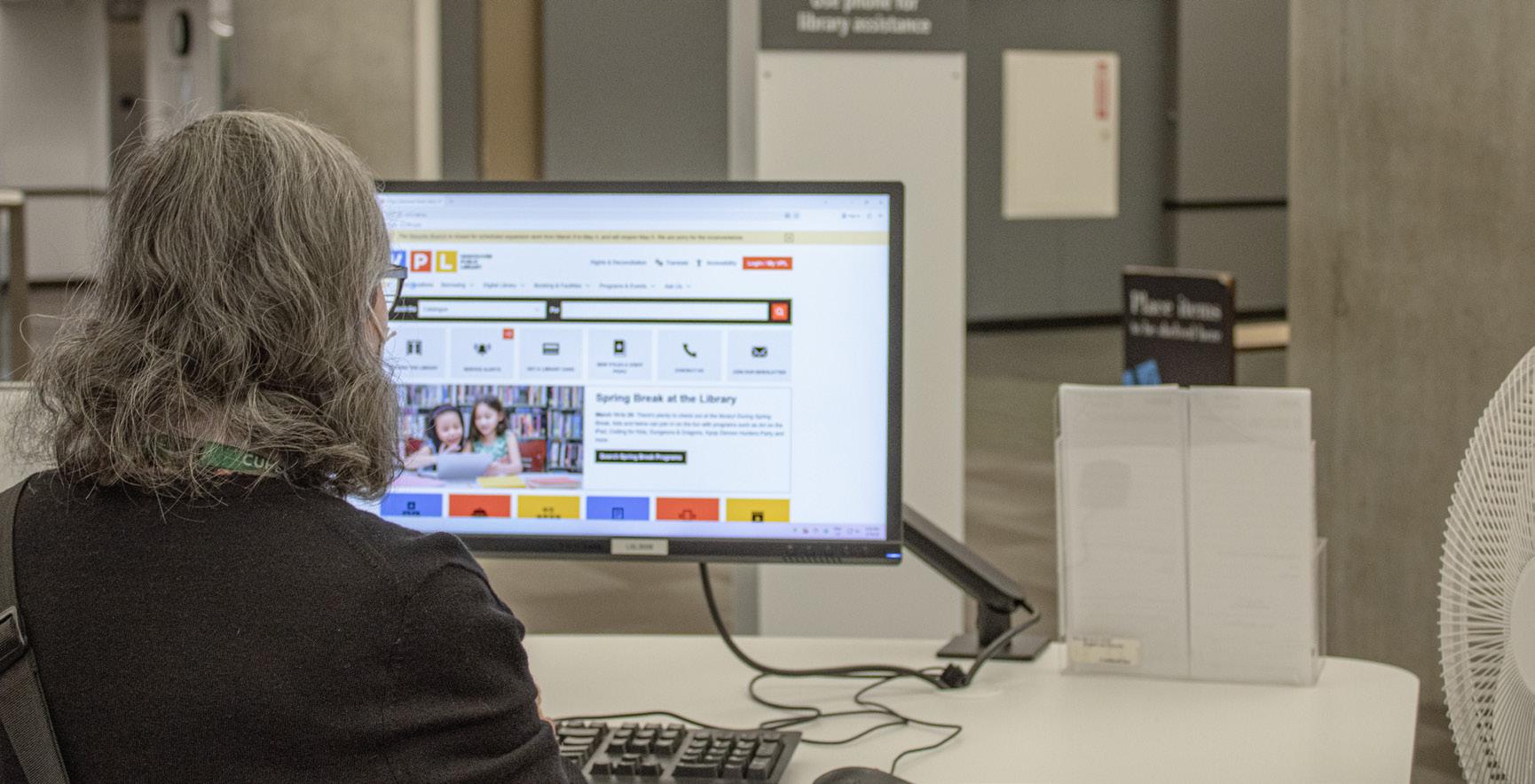
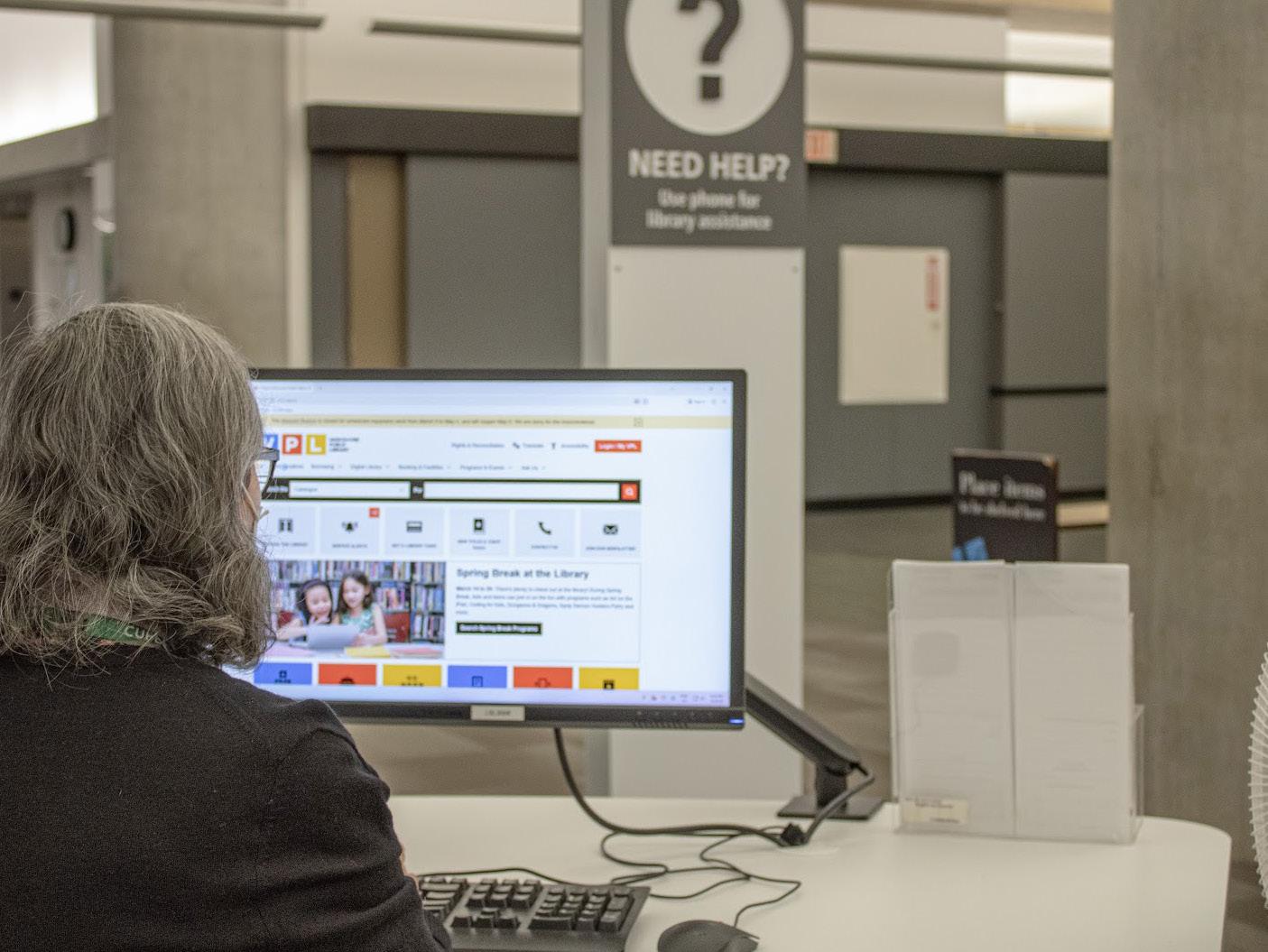
When it comes to serving the community, nobody does it quite like the sta at the Vancouver Public Library (VPL). In the midst of an increasingly una ordable city, the VPL sta maintain a free space that serves people from all walks of life, regardless of their economic status. As BC libraries face signi cant nancial pressures, it’s important to celebrate the sta who remain committed to providing quality services and care to the community. VPL sta are valuable community members due to their work in maintaining third spaces, delivering skillenhancing workshops, and providing easy access to books and other forms of knowledge, all free of charge. Even if you don’t use the library yourself, its impact may reach you through its positive mental health impacts on your fellow citizens. Without caring community members that work to make the library inclusive and accessible every day, Vancouver as a whole would su er.
Third spaces are important for fostering a sense of belonging and safety in all individuals, and library sta create an atmosphere of openness that makes the many VPL branches, located all over the traditional and unceded territories of the xʷməθk
əy əm (Musqueam), Sḵwx wú7mesh (Squamish), and səlilwətaɬ (Tsleil-Waututh) Nations, great options for a third space. The cleaning sta , library service desk assistants, and librarians all contribute to make the library a clean, safe, and welcoming space for all. Their work in organizing the space, keeping it con ict-free, and kindly interacting with patrons all creates a positive atmosphere. Additionally, maintaining the library as a quiet space is important in how it fosters safety. It’s important to have a predictable environment to depend on a space’s atmosphere for mental health when that isn’t guaranteed in a lot of areas of your life, such as violent situations at home, volatile work environments, and more. It seems to me that sta maintain this atmosphere by
respecting the space and the people in it, and patrons then return the favour.
Whether you are a parent who needs to get your kid out of the house, a senior looking to upgrade your tech skills, or a musician seeking a quiet place to record, the library sta have something that can help you out.
Skill-enhancing workshops hosted by friendly sta allow low-barrier learning for a wide variety of topics. Many topics are hosted by VPL branches, mostly the Central Branch, that provide informative sessions on community-relevant topics. They o er a digital essentials program, which gives patrons the opportunity to upgrade their tech skills, from gaining basic phone and computer skills to learning how to edit digital images in Photoshop and Lightroom. For people learning English, they o er regular English conversation practice events in many branches across the city. They also assist in job hunting: Their drop-in resume clinic is a repeat event
downtown, which allows people to get feedback on resumes and cover letters by quali ed sta . These programs decrease the barrier for people to develop their skills and ideas by providing reliable, accessible programs for any VPL patron.
The VPL sta provide knowledge beyond books to its patrons. Personally, I have gotten some of my best book recommendations, including Chicken Soup for the Soul, from a librarian. I also learned about the Inspiration Labs located at the Central Branch downtown and the nəcaʔmat ct Strathcona Branch in East Van, which are various sound-proofed rooms that are equipped with a variety of creative equipment: mics, greenscreens, lighting equipment, and computers with access to FL Studio, Adobe, Photoshop, and more. These resources would have remained a mystery to me without the help of friendly library sta . Library sta also provide library cards to people who don’t have a home address. Beyond this, I have heard many anecdotes about how library sta provide information to patrons about specialized programs for individuals in di cult situations, such as homeless shelters, detox centers, and food programs around the city.
The VPL sta serve the city in a community-minded way. Their combined e orts create a space that is inclusive, comforting, and kind. With community care at the forefront of their services, they are able to support people from all walks of life. Whether you are a parent who needs to get your kid out of the house, a senior looking to upgrade your tech skills, or a musician seeking a quiet place to record, the library sta have something that can help you out. All of the e orts of VPL sta reverberate through many lives, including mine — knowing I have access to a free place to relax, work, or play makes my mental load feel signi cantly more manageable. Knowing that there are kind sta that take care of the place and its patrons makes me feel safe.
PHOTO ALI IMRAN / THE PEAK
NOEKA NIMMERVOLL NEWS EDITOR
A teaser of Waterfront’s best kept summer secret
40 rotating vendors and food stalls will accompany the return of Vancouver’s Junction Public Market
MAYA BARILLAS MOHAN STAFF WRITER
A well-hidden gem, Junction Market rests atop Waterfront Station in Granville Square. Initially, The Peak’s correspondent yours truly got lost en route. It did not occur to me to climb a small !ight of stairs to nd the destination, but the lap around Waterfront was cherished on the fresh spring day of the opening. Weather like this makes one grateful for outdoor activities: soaking up the light before the sun gains full opacity and toasts you like a panini.
Once I found the venue, it seemed like the market was still nding momentum. Lines were not an obstacle as I visited the souvlaki truck and the artist stalls. A few people ahead of me ordered a pita wrap that looked delicious, so I ordered the same. I got the I Souvlaki chicken wrap. There was a true abundance of juicy chicken and tzatziki sauce folded into a fresh pita. Wandering a few steps from the courtyard created between the food truck and the artist stalls, my boyfriend and I shared the wrap looking at the ine aceably blue water. A few other people perched on the cement planters and benches also had wraps from the Junction Market; it felt like a freeroaming patio.
ARTS & CULTURE
Jenny Yu on immigra
tion, la
bour, and the Canadian
Dre
am
Yu was a featured artist at SFU exhibit Kerplunk!
CLARA XU PEAK ASSOCIATE
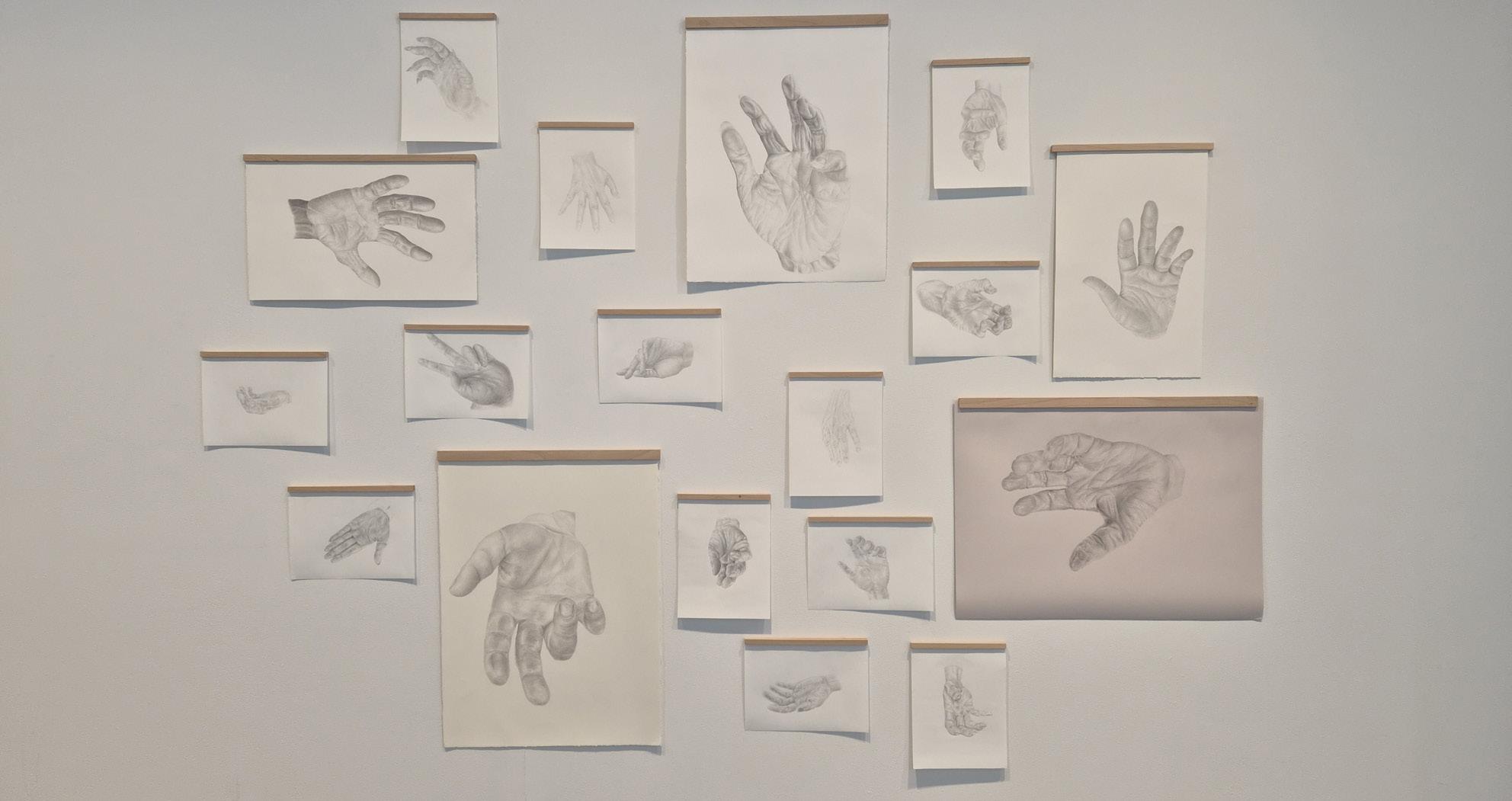
On April 15 at the SFU Audain Gallery, graduating visual arts students from the School for the Contemporary Arts opened their exhibition Kerplunk!, displaying the works of these students from CA 461, one of the last courses they take in their university career. The exhibition was a mish-mash of ideas and presentation styles, from massive chairs to a semi-voyeuristic video. The featured artists interrogated very di erent ideas, some around similar themes, such as social issues like labour, consumerism, and immigration; or re!ections on cultural backgrounds and childhood.
The Peak interviewed one of these artists, Jenny Yu, to discuss her experiences creating for Kerplunk!
The following interview has been edited for concision and clarity.
How did your cohort settle on this year’s exhibition theme?
For the fourth-year show, everyone is doing their own personal practice, and it’s hard to gure out an exhibition name or theme when everyone’s work is so diverse. Someone said, Kerplunk!” as one of the examples of something fun. I guess it kind of encapsulates all of our works, because if you drop it, it makes a sound.
As a cohort of students working in parallel over the course of four years, in what ways do your works inspire each other, and how does this feed into your own artistic practice?
We all come from very diverse artistic backgrounds, and we think very di erently, and we all value di erent things. And I feel like seeing things from others’ perspectives, or seeing how
Junction Market has a rotating list of vendors, which you can check on its website. This way you can decide what day you want to visit, depending on what is available. I was intrigued by the unique design of the pop-up vendors: upon closer inspection, I noticed that they were shipping containers! Shipping containers are an eco-friendly solution to brick and mortar stores because the repurposed containers are not made from new materials, are portable, and withstand all
This market renders a perfect picture of a spring day in sunny downtown.
weather conditions. The market runs from late spring to the far reaches of summer, ending on September 7. Launched in 2024, the market has adapted over time but the containers have remained a constant.
Looking at the vendor list, I see I could come back to buy handmade leather goods or something !aunted as “pet couture.” Beaded and metal jewelry sellers pique my attention in the catalogue too. While I was there, I got to talk to a painter dabbing paint on a tall, three-foot canvas in shades of seafoam and teal. Close range to enthusiastic artists is a bene t of markets like this. Another booth selling handmade hats with steep points at the crown o ered in a melange of greens and !orals re!ect the blooming foliage all around Granville Square. This market renders a perfect picture of a spring day in sunny downtown.
Keep up to date on the market by following its Instagram page @junctionpublicmarket.
other classmates try di erent avenues of artistic practices — like sometimes it could be craft, embroidery, crochet, or even something that’s very regular, like splattering paint or making the paint drippy — inspires everyone to do di erent things.
What I’m interested in when it comes to beauty is when something isn’t perfect. There’s a characteristic, an innate, unique quality to somebody.
JENNY YU STUDENT ARTIST
I read through the gallery program for your work Canadian Dream. What was the research and collaboration process like for the people you depicted in Canadian Dream?
I’ve always been interested in immigration because my parents immigrated here from China in the ‘80s or ‘90s. I really appreciate how Canada gives people an opportunity here for a better life. But, in the past few years, there’s been a lot of antiimmigration sentiment, and learning from what’s happening in America, once it gets bad, it can get worse.
In order to make my project happen, I had to go all around the city to just talk to the community, and get to know people
through questions like, “Why’d you come to Canada? Where are you from?” Sometimes, those are the most interesting stories. Half of my project is on these interviews and their stories, and the other half is on the drawings.
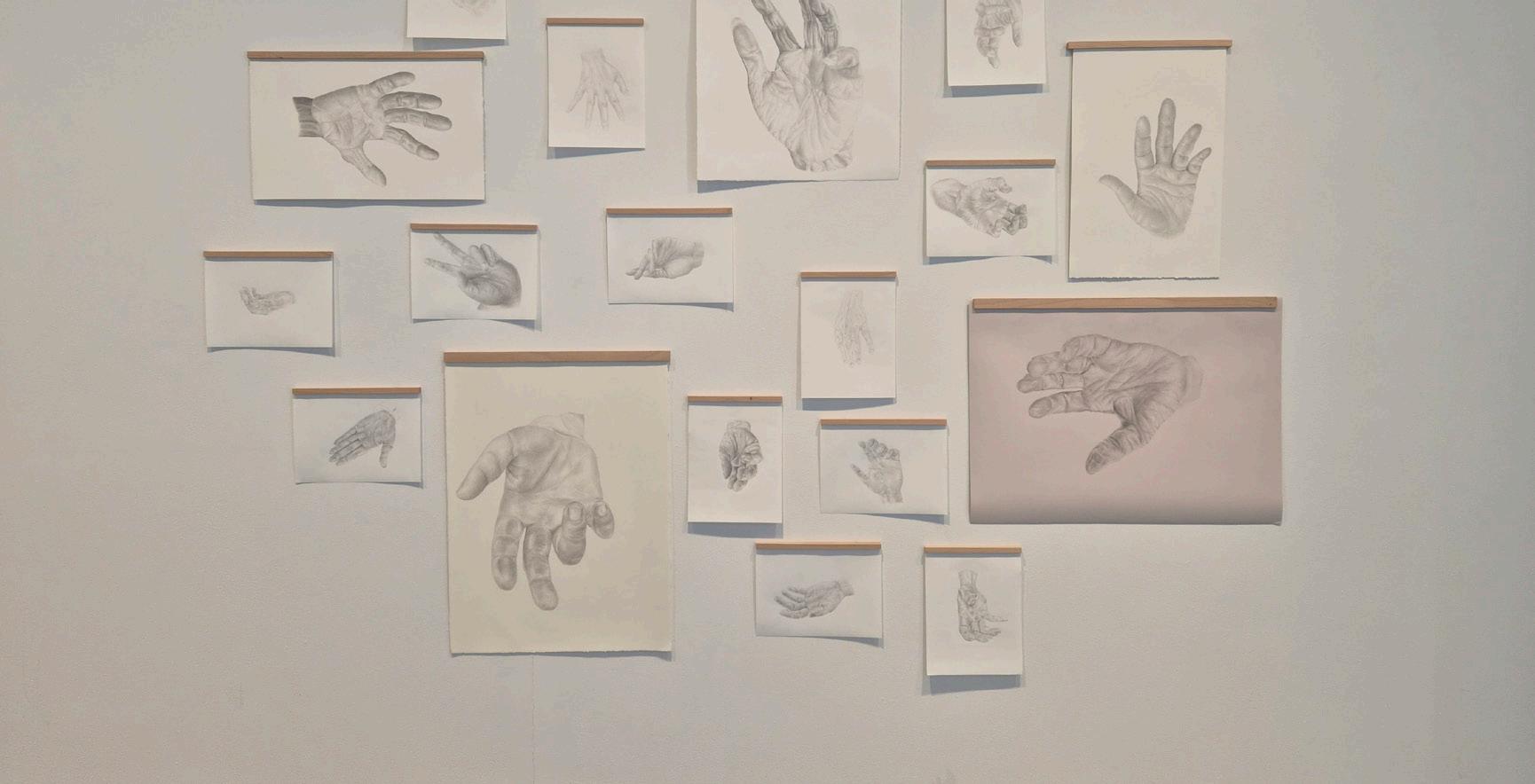
Why did you choose to speci cally depict hands in Canadian Dream? What did your creative process look like for yourself?
Right away, I was thinking of labour. So when I think about labour, I always think about hands. And I think it’s mainly because I grew up with people doing hard labour around me, like my grandparents, who’ve been farmers for most of their life. What I’m interested in when it comes to beauty for me, is when something isn’t perfect. There’s a characteristic, an innate, unique quality to somebody.
The reason why I decided on graphite, was what I noticed during the critiques during class. It would seem like people are very focused on the ethnicity of people’s hands if they’re in colour. And my idea of immigration — I didn’t want to focus on ethnicity, I wanted to focus just on the stories, and the idea of immigration on a whole.
What’s next for you and your artistic practice?
With my art practice, I like talking about social issues, mainly issues here locally, because this is where I’m from, and I like building community and I like to get to know people, and I think the only way I want to do that is with art. For now, I’m going to go for my masters’ degree.
PHOTO! MAYA BARILLAS MOHAN / THE PEAK
PHOTO! COURTESY OF JENNY YU
Angst and the avant-garde: A review of Tanya Tagaq’s Saputjiji
Tagaq tackles war, violence, and the Inuit suicide crisis in her eighth studio album
JONAH LAZAR STAFF WRITER
Content warning: description of residential schools.
Tanya Tagaq, one of the most critically acclaimed Inuit artists, released her eighth studio album on March 6. Tagaq is known for her highly political music, which often explores colonialism and the residential school system. Through her experimental and avant-garde style (a genre that transcends traditional musical conventions) that melds Inuit throat singing with electronic and metal in!uences, Tagaq has built a dynamic reputation.
Her new album, Saputjiji, carries on this legacy. The opening track of this record, “fuck war,” throws the listener into a chaotic, cathartic repetition of the words “fuck war” set overtop of raspy screams which colour the background, just about held together by the rhythmic pulses of the drum. Tagaq’s screams barely have stopped ringing out by the time I’m tossed into the belly of another frenetic, enraged ballad crying out against violence and war. These songs are again set over a cacophony of Inuit throat singing reminiscent of something from Slipknot, creating a wall of vehement fury.
The strongest part of this album for me is the stark atmospheric change in the midpoint of this record with the
Reconciling: A Lifelong Struggle to Belong book talk
Elder Larry Grant and author Scott Steedman reflected on the process of reclaiming culture and identity
MARIE JEN GALILO STAFF WRITER
Content warning: mention of residential schools.
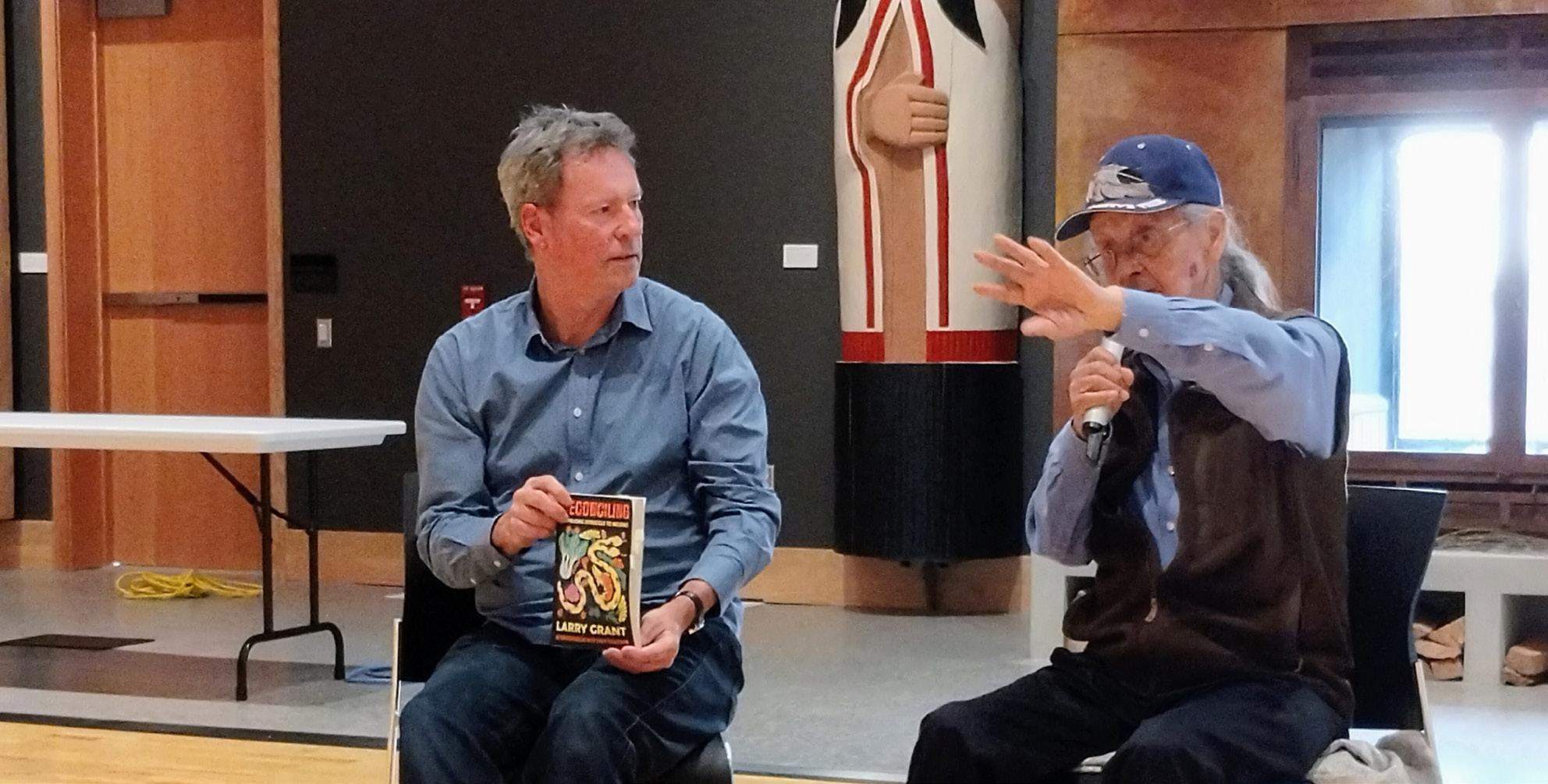
On Monday, April 27, Elder Larry Grant, also known as sʔ$y$ɬ$q (suh-yuh-shl-uck) in xʷm$θkʷ$y$m (Musqueam) and Hong Lai Hing in Cantonese, visited SFU’s Ceremonial Hall in the First Peoples’ Gathering House to discuss his book, Reconciling: A Lifelong Struggle to Belong, with co-author Scott Steedman, a senior lecturer in SFU’s publishing department.
Elder Grant began the book talk with a land acknowledgement in h$nq$min$m, and then walked us through his life story. He used the word “reconciling” to emphasize that healing from the pain and trauma caused by discrimination is an ongoing process. Being born to a xʷm$θkʷ$y$m mother and Chinese father, Elder Grant experienced discrimination that targeted the very core of his identity.
Elder Grant’s father, Hong Tom Hing, immigrated from the village of Sei Moon in Guangdong, China, and paid a $500 head tax to enter Canada and work as a farmer on the land that belonged to Hing. When the Indian agent (representatives of the Canadian government on First Nation Reserves) discovered that Elder Grant’s mother had married a nonstatus man, he and his family were all stripped of their status. He felt like being Chinese was forced upon him, which he struggled to come to terms with because he grew up on the reserve, surrounded by xʷm$θkʷ$y$m culture and values. He was exempted from residential school because he was seen as Chinese, not Indigenous, which he could not understand
If you’re looking to delve into a record that captures the vehement fury and angst swirling around the north of so-called “Canada,” Saputjiji is for you.
fourth track, “When They Call.” In a departure from the previous themes surrounding colonization and war, the middle of this album focuses in on the suicide crisis in Inuit communities, whose suicide rates are nine times higher than non-Indigenous populations, according to Statistics Canada. The song slowly builds through a beautifully dissonant string ensemble interlaced with several layers of Tagaq’s hauntingly droning vocal, together creating a powerful background for her grim lyrics addressing suicide in these northern communities.
This track seeps seamlessly into the fth track of the record, “Exit Wound,” which trades the strings for piano while continuing along the same themes. “Ikualajut” follows, with
eat our puke o a residential school dining room !oor.”
For me, this track seems to conclude the more mellow part of the album, with themes in the latter half of this record appearing scattered and less developed than in its rst halfdozen tracks. Short, experimental tracks trickle out of the end of this album, with dizzying arrangements set within radio static, chanting, and animal cries combined with distorted rhythms of Tagaq’s panicked breathing. These arhythmic interludes felt as though they were grasping out for a ballad to anchor themselves around, however no such ballad was delivered. The concluding track of Saputjiji did o er some respite from the disordered nature of the preceding tracks, which set Tagaq’s Inuit throat singing over an Aphex Twin-style robotic drone.
If you’re looking for a chilled out album to put on in the background while you cook, or something calm when your pals come over, this de nitely isn’t the record for the occasion. But if you’re looking to delve into a record that captures the vehement fury and angst swirling around the north of so-called “Canada,” Saputjiji is for you.
Elder Grant advised us to return to the land of our ancestors to strengthen our sense of self, and reminded us that reconciling, in the context of Turtle Island, is an ongoing process that we are all working towards.
his deep understanding of h$nq$min$m, and he continues to teach to this day. Elder Grant also had the opportunity to reconnect with his Chinese roots when he visited China to see his father’s village before it was bulldozed. He walked through the village gates that his family had funded, and was overcome with emotion. Being in his father’s village, he felt like he was “home” and that he belonged. To close the book talk, Elder Grant advised us to return to the land of our ancestors to strengthen our sense of self, and reminded us that reconciling, in the context of Turtle Island, is an ongoing process that we are all working towards.
Elder Grant’s story and words of wisdom highlights the importance of learning history through the stories of people who experienced it rsthand. Through his story, I learned that the lives of Indigenous Peoples and Chinese people were so closely intertwined because of the discrimination both communities experienced in Canada. Only through learning about history from the people who have lived through it are we able to work towards understanding and acknowledging the deeply-rooted impact of those experiences. By retelling and listening to these life stories, we ensure that the histories are never forgotten, allowing us to collectively strive towards ful lling the process of remembrance and reconciliation.
Check out Elder Grant’s work, Reconciling: A Lifelong Struggle to Belong at Iron Dog Books.
Tagaq’s trademark spoken word style brie!y touching on the pain caused by residential schools, with lyrics such as, “We
PHOTO
PHOTO! MARIE JEN GALILO / THE PEAK
ARTS & CULTURE
1. The weEkenD’s over (cRiEs inTerNalLy). What are yOu doInG tHe nigHt before tHe dReAded MonDaY?
What kind of raccoon shitter are you?
A) RubBinG exPired lipSticK alL over my pet rocK (tHat is dResSed like a racCoOn).
B) CoOkinG up non-awKwarD conVerSatiOn sTarTerS.
C) FolDinG up a poOl cHaIr to bRinG to cLasS in tHe morNinG.
D) LocKed in, sTudyInG for a tesT tHat’s 12 weEkS awaY.
E) ReflecTinG on my weEkenD’s sHenaniganS.
2. kicKsTarT tHe morNinG of wHat sHoUlD be a perFecTly norMal sChoOl daY. What’s tHe firSt tHinG yOu do?
3. YoU’re pReparinG for cLasS. What is yOur pRe-lecTure sNacK?
4. What are yOu doInG durinG lecTure? Be honesT.
5. If a racCoOn poOped in yOur cLasSroOm, wHat woUlD yOu do?
A) Make tWelVe tHinGs for bReAkFasT. AnD tHen eAt a quArTer of it.
B) PracTice conVerSinG witH peOpLe by talKinG to myselF in tHe mirRor.
C) | jusT do my tHinG (| won’t sHare my pRivate detaIlS witH sTranGerS).
D) |’m alReAdy at sChoOl.
E) Grab a sKetChBoOk anD peOpLe-watCh on tHe waY to sChoOl. No bReAkFasT requIreD.
A) SometHinG fRom RenaIsSanCe — desSerT is tHe boOter pLaced on my car by tHe parKinG patRol.
B) Whatever tHe perSon nexT to me is eAtinG — | NEeD to make fRiEnDs witH tHem!!
C) | don’t care.
D) Paper.
E) The teA on MY cLasSmate’s lapTop sCreEn (sHoUlD’ve minimized iMesSages if yOu didN’t wanT tHem to be reAd!)
A) PlanNinG for worLd dominatiOn.
B) ThinKinG aboUt makinG sMalL talK witH my seAt-mate.
C) MaInTaIninG a poker face.
D) WritinG dowN EVERYThINg tHe pRof saYs. VerBatim.
E) (StilL) peOpLe-watChinG … for reseArCh purPoses.
A) | alReAdy kNow aboUt it. We’ve beEn in cahoOtS tHis wHole time.
B) FolLow tHe cRowD anD pRoceEd to safely exit tHe cLasSroOm.
C) Meh. WhatevS — we’re alL poOp-filLed beInGs, anywaYs.
D) RacCoOn? | didN’t even notice. What was on tHe seconD sLide —
E) CarefulLy obSerVinG tHe feces anD pokinG it witH my pen.
MosTly A’s: The cHaOtic racCoON
YoU’re tHe racCoOn witH tHe IDc atTitude wHo coUlDn’t care lesS aboUt wHat otHerS tHinK. YoU’d confidenTly sTrut up to tHe fRonT of tHe cLasS anD use tHe podiUm as a toIlet durinG tHe midDle of a very imPorTanT midTerM exam, jusT becaUse yOu can.
MosTly C’s: The nonChalanT racCoOn
YoU’re tHe racCoOn wHo tRiEs to be coOl anD mysTeriOus, even wHen it comes to yOur poOpinG businesS. YoU leAve yOur marK in tHe corNer of tHe cLasSroOm anD tRy to make a calM, unNoticeAbLe exit — wHicH woUlD’ve worKed if onLy tHe awFul sMelL didN’t give yOu awaY.
MosTly B’s: The nerVoUs racCoOn
YoU’re tHe racCoOn wHo jusT wanTs to fit in, anD overThinKs every sociAl inTeracTiOn. PoOpinG in tHe cLasSroOm alMosT guAranTeEs sociAl ruIn, so yOu tRy to make a run for it, but tHen leAve a tRaIl of poOp behinD in yOur atTemPt to esCape. Oh deAr …
MosTly D’s: The sTudiOus racCoOn
YoU’re tHe racCoOn wHo atTenDs lecTures becaUse yOu like leArNinG or cRave academic validatiOn. As powerFul as yOu are, nature got tHe betTer of yOu. YoU don’t even notice tHe poOp pLopPinG dowN yOur anKles becaUse yOu were paYinG toO mucH atTenTiOn to tHe human pRofesSor.
MosTly E’s: The walLflower racCoOn
YoU’re tHe racCoOn wHo atTenDs lecTures to betTer unDerStanD humanS becaUse yOu’re curiOus aboUt tHese sTranGe, yEt fasCinatinG, cReAtures. To avoId dRawinG atTenTiOn to yOurSelF, yOu holD it in unTil everyOne leAves. Then sPlat.