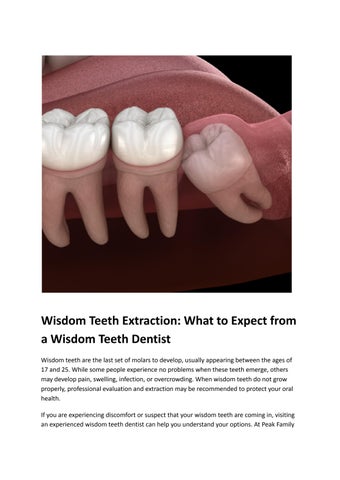
Wisdom Teeth Extraction: What to Expect from a Wisdom Teeth Dentist Wisdom teeth are the last set of molars to develop, usually appearing between the ages of 17 and 25. While some people experience no problems when these teeth emerge, others may develop pain, swelling, infection, or overcrowding. When wisdom teeth do not grow properly, professional evaluation and extraction may be recommended to protect your oral health. If you are experiencing discomfort or suspect that your wisdom teeth are coming in, visiting an experienced wisdom teeth dentist can help you understand your options. At Peak Family
Dental Centre, patients can receive an assessment and personalized treatment recommendations based on their dental needs.
What Are Wisdom Teeth and Why Can They Cause Problems? Wisdom teeth are the third molars located at the very back of your mouth. Most people develop up to four wisdom teeth, although some may have fewer or none at all. Because these teeth emerge later than the other permanent teeth, there may not be enough room for them to grow properly. This can cause several dental concerns, including: ● Impacted wisdom teeth: Teeth that remain partially or completely trapped beneath the gums. ● Pain and discomfort: Pressure from emerging wisdom teeth can cause soreness around the back of the jaw. ● Gum infections: Partially erupted teeth can create spaces where food particles and bacteria collect. ● Tooth crowding: Wisdom teeth may contribute to pressure on nearby teeth. ● Tooth decay: Their location can make proper brushing and flossing difficult. ● Damage to neighbouring teeth: Impacted wisdom teeth may affect the health of nearby molars. A dental examination can help determine whether your wisdom teeth are developing normally or require further attention.
When Should You Consider Wisdom Teeth Extraction? Not every wisdom tooth needs to be removed. However, extraction may be recommended when a tooth is causing pain, infection, damage, or other complications. Common signs that you should schedule a dental assessment include: ● Persistent pain at the back of your mouth ● Swollen, tender, or bleeding gums ● Difficulty opening your mouth comfortably ● Bad breath or an unpleasant taste ● Repeated gum infections around the wisdom teeth ● Pain or pressure near the back molars Even if you do not experience symptoms, regular dental checkups can help identify potential problems before they become more serious.
How Does the Dentist Wisdom Tooth Extraction Process Work? The wisdom teeth extraction procedure depends on the position of the tooth, its development, and your overall oral health. Your dentist will first examine the area and may recommend dental X-rays to understand the tooth's position and root structure. The process generally involves the following steps:
1. Dental Examination and X-Rays Your dentist will evaluate your teeth and gums and review updated X-rays when necessary. This helps identify impacted teeth, assess their position, and determine the most appropriate treatment approach.
2. Anesthesia and Sedation Before extraction, the treatment area is numbed using an appropriate form of anesthesia. Depending on your dental needs and the complexity of the procedure, sedation options may also be discussed.
3. Tooth Removal A straightforward extraction may involve gently loosening and removing the tooth. If a wisdom tooth is impacted, a minor surgical procedure may be necessary to access and remove it safely.
4. Aftercare Instructions Once the extraction is complete, your dental team will provide instructions to support healing. These may include guidance on managing discomfort, eating soft foods, maintaining oral hygiene, and protecting the extraction site.
What Is Recovery Like After Wisdom Teeth Removal? Recovery varies depending on the number of teeth removed and whether the procedure involved surgical extraction. Many patients experience swelling, mild bleeding, and discomfort during the first few days. Following your dentist's instructions can help support a smooth recovery. Some general aftercare recommendations include: ● Rest and avoid strenuous physical activity during the initial recovery period.
● Apply a cold compress as recommended to help manage swelling. ● Eat soft foods such as yogurt, mashed potatoes, and smoothies. ● Avoid using straws, as suction can disturb the healing blood clot. ● Avoid smoking and follow your dentist's advice regarding alcohol. ● Keep your mouth clean while avoiding direct disturbance of the extraction site. ● Take prescribed or recommended medication according to your dentist's instructions. Contact your dental professional if you experience severe or worsening pain, persistent bleeding, fever, or increasing swelling.
Why Choose a Professional Wisdom Teeth Dentist? Wisdom teeth extraction requires careful evaluation and an appropriate treatment plan. Choosing a qualified dental professional helps ensure that your condition is assessed properly and that the recommended procedure is suited to your needs. At Peak Family Dental Centre, patients receive personalized dental care based on their oral health and treatment requirements. The dental team focuses on: ● Evaluating wisdom teeth with clinical examinations and X-rays. ● Identifying potential complications associated with impacted teeth. ● Discussing suitable anesthesia and sedation options. ● Providing clear post-extraction care instructions. ● Supporting patients throughout their treatment and recovery. Whether you need a routine extraction or an assessment for impacted wisdom teeth, professional guidance can help you make informed decisions about your dental health.
Frequently Asked Questions About Wisdom Teeth Extraction 1. At what age should wisdom teeth be removed? Wisdom teeth commonly emerge between the ages of 17 and 25. However, there is no single recommended age for everyone. Extraction depends on the tooth's position, symptoms, and potential for complications.
2. Does wisdom teeth extraction hurt? The extraction area is numbed with anesthesia to minimize pain during the procedure. Some soreness, swelling, and discomfort may occur afterward, but these symptoms can generally be managed by following your dentist's instructions.
3. How long does it take to recover after wisdom teeth removal? Many patients begin feeling better within a few days. However, complete healing can take longer, particularly after surgical extraction. Recovery depends on the complexity of the procedure and individual healing.
4. Do all wisdom teeth need to be removed? No. Wisdom teeth that are healthy, properly positioned, and easy to clean may not require removal. Your dentist can assess whether extraction is necessary.
5. What should I eat after wisdom teeth extraction? Soft foods such as yogurt, mashed potatoes, scrambled eggs, and smoothies are generally suitable during the initial recovery period. Avoid hard, crunchy, or very hot foods until your dentist advises that you can return to your normal diet.
6. How do I know if my wisdom tooth is impacted? Pain, swelling, gum tenderness, and difficulty opening your mouth may indicate an impacted wisdom tooth. However, some impacted teeth cause no noticeable symptoms. A dental examination and X-rays can help confirm the condition.
Schedule Your Wisdom Teeth Consultation in Cranbrook Wisdom teeth problems can become more complicated if left unassessed. Whether you are experiencing discomfort or simply want to understand how your wisdom teeth are developing, a professional dental examination is a helpful first step. Peak Family Dental Centre provides dental assessments and personalized treatment recommendations to help patients maintain healthy smiles. If you are looking for a dentist wisdom tooth extraction consultation, contact Peak Family Dental Centre to schedule your appointment and discuss your treatment options. Book your appointment today and take the next step towards better oral health.