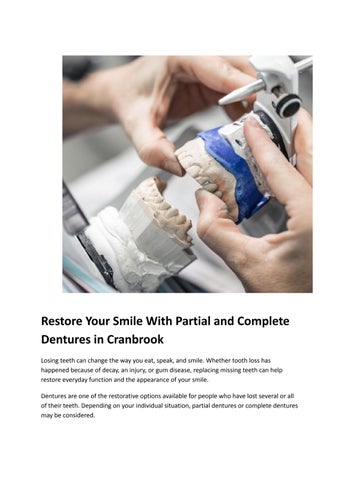
Restore Your Smile With Partial and Complete Dentures in Cranbrook Losing teeth can change the way you eat, speak, and smile. Whether tooth loss has happened because of decay, an injury, or gum disease, replacing missing teeth can help restore everyday function and the appearance of your smile. Dentures are one of the restorative options available for people who have lost several or all of their teeth. Depending on your individual situation, partial dentures or complete dentures may be considered.
At Peak Family Dental Centre, patients in Cranbrook can discuss their tooth loss concerns with a dental professional and explore suitable options for restoring their smile and oral function.
What Are Dentures? Dentures are removable dental appliances that replace missing teeth. They are designed to fit within the mouth and provide replacement teeth for patients who have experienced tooth loss. Dentures are generally divided into two main categories: ● Partial dentures for patients who still have some natural teeth ● Complete dentures for patients who have lost all teeth in an upper or lower arch The right option depends on the number of missing teeth, the health of the remaining teeth and gums, and the patient's individual needs.
When Might You Need Dentures? There are several reasons why a person may experience tooth loss. Severe decay, periodontal disease, accidental injury, and other dental problems can result in one or more missing teeth. Replacing missing teeth may be considered when tooth loss begins to affect everyday activities or the appearance of the smile. For example, missing teeth can sometimes make it harder to chew certain foods. Multiple missing teeth may also affect speech or create noticeable gaps in the smile. A dental examination can help determine whether dentures are an appropriate option for your circumstances.
Partial Dentures for Missing Teeth Partial dentures can be used when some natural teeth remain. Rather than replacing an entire arch of teeth, a partial denture is designed to fill selected spaces created by missing teeth. It can work alongside the patient's remaining natural teeth. Before recommending a partial denture, the dental team will assess the condition of the remaining teeth and the surrounding gums and tissues.
Maintaining good oral hygiene is especially important when wearing a partial denture because the natural teeth still need regular care.
Complete Dentures for Full Tooth Loss Complete dentures are designed to replace all teeth in an upper or lower dental arch. For someone who has experienced extensive tooth loss, complete dentures can provide replacement teeth for everyday activities such as chewing and speaking. They can also restore the appearance of a more complete smile. A proper fit is an important part of the denture process. Since every patient's mouth is different, dentures need to be designed with the individual's oral structures in mind. Some adjustment may also be needed after receiving new dentures as the patient becomes familiar with wearing them.
Benefits of Replacing Missing Teeth Replacing missing teeth can provide both functional and cosmetic benefits. Depending on the individual's circumstances, dentures may help: ● Replace visible gaps caused by missing teeth ● Support everyday chewing ● Make speaking more comfortable ● Restore a more complete smile ● Provide support for the lips and cheeks ● Improve confidence when smiling The results and experience can vary between patients. Your dentist can explain what you may expect based on your oral health and chosen treatment.
What Happens During a Denture Consultation? A denture consultation allows your dental team to evaluate your mouth and understand your concerns. The dentist may look at: ● The number of missing teeth ● The location of missing teeth ● The condition of remaining teeth
● Gum and oral tissue health ● Your bite ● Existing dental restorations ● Your goals for treatment Based on the examination, your dentist can discuss whether partial or complete dentures may be suitable. Other tooth replacement options may also be discussed if they are appropriate for your situation.
Getting Comfortable With New Dentures It can take time to adjust to a new set of dentures. Patients may initially notice a different feeling in the mouth while eating or speaking. With regular use and practice, many everyday activities can become more familiar. If the dentures cause persistent irritation, discomfort, or difficulty staying in place, it is important to contact your dental provider. Adjustments may be needed to improve the fit. Patients should avoid making alterations to their dentures themselves, as this can affect their fit and function.
How to Care for Your Dentures Proper care is an important part of maintaining dentures. Dentures should be cleaned according to the instructions provided by your dental professional. Regular cleaning helps remove food particles and buildup from the appliance. Your natural teeth also require continued care if you wear partial dentures. Brushing, flossing, professional cleanings, and regular dental examinations remain important. Even people with complete dentures should continue visiting their dentist. Oral tissues still need to be examined, and the fit and condition of the dentures may need to be evaluated periodically.
When Should You Visit Your Dentist? A denture may need professional attention if it no longer feels comfortable or fits properly. Consider scheduling an appointment if you notice:
● Persistent sore spots ● Gum irritation ● Difficulty chewing ● Changes in speech ● A loose or unstable denture ● Cracks or damage ● Difficulty keeping the denture in position Changes in the mouth over time can affect how dentures fit. Your dentist can determine whether an adjustment, repair, replacement, or another treatment may be appropriate.
Dentures and Other Restorative Options Dentures are one of several ways to replace missing teeth. Depending on your oral health and treatment needs, your dentist may also discuss dental bridges or dental implants. Bridges can replace missing teeth by using neighbouring teeth for support, while dental implants can support restorations through implants placed in the jaw. There is no single solution that is right for everyone. The number of missing teeth, condition of the mouth, available bone, remaining teeth, and individual treatment goals can all influence the options available.
Maintaining Your Oral Health Getting dentures does not replace the need for ongoing dental care. If you still have natural teeth, regular brushing, flossing, professional cleanings, and dental examinations are important for protecting them. For complete denture wearers, regular appointments remain valuable for checking the health of the gums and other oral tissues and evaluating the condition of the dentures. If you experience any changes in comfort, fit, or oral health, discussing them with your dental provider can help identify the appropriate next step.
Denture Care in Cranbrook
Peak Family Dental Centre provides a range of dental services for patients in Cranbrook and the surrounding area. The practice offers restorative dentistry services including dentures, dental implants, dental bridges, crowns, and fillings. Having access to different restorative treatments allows patients to discuss their tooth replacement needs and explore options based on their individual circumstances. Whether you have recently lost teeth or have been living with missing teeth for some time, a dental consultation can help you understand the available solutions.
Schedule a Denture Consultation Missing teeth do not have to mean giving up on comfortable eating, speaking, or a complete-looking smile. Partial and complete dentures can provide a removable option for replacing missing teeth and restoring everyday function. If you are considering dentures in Cranbrook, Peak Family Dental Centre can assess your oral health and discuss the options available for your needs. Contact the dental team to schedule an appointment and learn more about partial and complete dentures and other restorative dentistry solutions.