






















































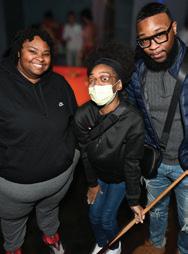
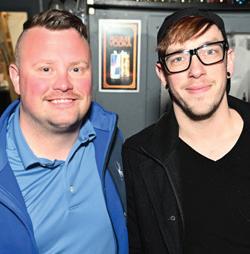
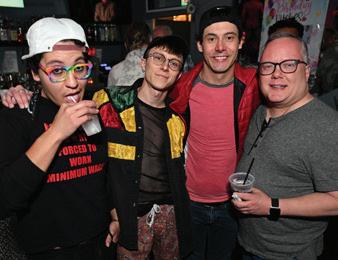













































Photos by: Russ Bowen-Youngblood































By Chris Azzopardi
courtesy of Netflix

By Chris Azzopardi
courtesy of Netflix
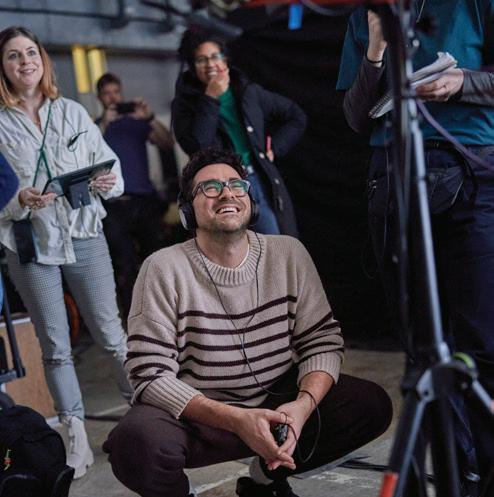
The grief was very real for Dan Levy, who lost his grandma and rescue dog, Redmond, over the span of a couple of years during the pandemic. And then he did something very Dan Levy with that grief — he opened a blank page and got to work on “Good Grief,” a Netflix film, out now, that he wrote, directed and stars in.
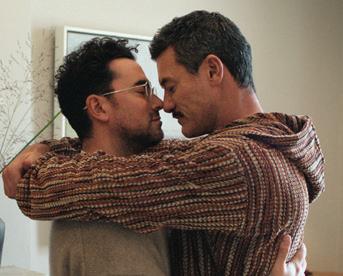
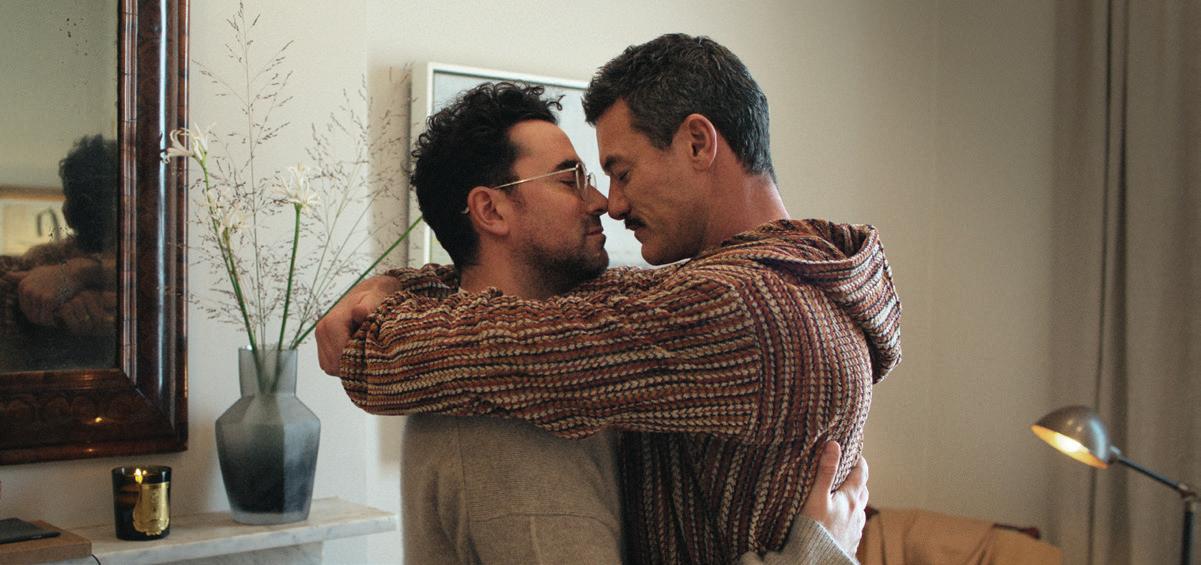
The film is the “Schitt’s Creek” creator’s first major endeavor after his Emmy-winning show became a sleeper hit as the world shut down due to the Covid pandemic when we sheltered in place (in front of our TVs). In “Good Grief,” Levy plays Marc, an artist we meet at a Christmas party that ends tragically for his husband, Oliver (Luke Evans), who dies in a car accident right outside their place. Marc is left trying to make sense of his sudden loss and what he didn’t know about Oliver’s life before it ended, which takes him to a secret flat Oliver had in Paris. With Marc on his unexpected journey to healing his shattered self are his dearest friends, Sophie (Ruth Negga) and Thomas (Himesh Patel).
I recently spoke with Levy about the film, which he sees as an opportunity to flex new creative muscles, including his portrayal of a character who may be as stylish as David Rose even if he isn’t him, exactly.
It’s nice to have you back in regular conversation, Dan. It’s been a few years. The world was on a real Dan Levy kick for a while.
[Laughs.] I think it’s nice to take a break. It’s nice for everyone to take a break. You don’t want to ever overstay your welcome. So I’m happy that there’s something that I care about that I’m able to talk about now.
What goes through your mind when something that is so personal to you gets its wings and is released into the world?
Well, it’s tough because it’s done. And I care deeply about it, and that’s all that really kind of matters to me outside of the viewers that watch it and hopefully find some point of connectivity in it. It’s always a very sort of awkward thing to kind of have to sell your work.
But I’m really happy with it and it’s a movie that I know that I would like to watch and one that speaks to my life right now in a way that I feel is quite truthful. And yeah, it’s a weird thing to put it out there and then have people do what they will with it.
But at the end of the day, I’m grateful for the opportunity, ultimately. It’s a 180 from what people have come to know me from. And those opportunities don’t get handed out all the time. So I was really grateful that some people over at Netflix were willing to go in this new direction with me. And
yeah, I’m just glad that there’s a movie out there that speaks to my life in a meaningful way, that speaks to friendship and found family and the fact that, for a lot of people out there who are without kids and without partners, that friendships are the great loves of our lives.
Did you draw from your own found family for the film?
I did. You know, I was realizing once you get into your 30s — I’m 40 now, but was 37 when I started developing the film — relationships change. Really good, long friendships. The more your life takes on weight, the more that applies to friendships and what we’re willing to compromise and what we’re willing not to, and the hard conversations we need to have in order to invest in our friendships so that they can have life
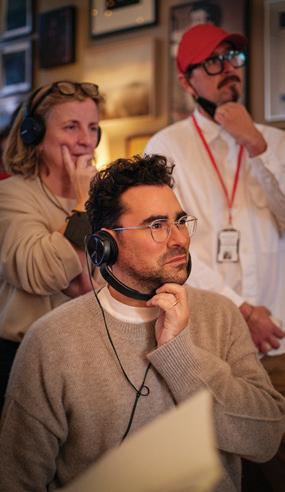
going into the next 40 years of our lives.
It’s uncomfortable at times, but I’ve been finding myself having really meaningful, truthful conversations with friends through this desire to be OK. If you have a friendship that’s a decade or two decades old, there’s going to be some stuff that you need to talk about at some point, like an actual partner. And it’s about normalizing that, and the fact that those hard conversations are essentially an act of love. It’s an investment in a meaningful relationship.
How did working on this film help you process your own feelings around grief?
Writing it really was the first step. I was going through some grief. I lost my grandmother and I lost my dog. And it was the only thing I could do, really. I wasn’t able to articulate it vocally. And I sat down at my computer and just started to write an outline for this film, and it came quite naturally. And it has nothing to do with my own personal grief, but everything to do with the feelings and the detangling of those feelings and trying to understand what it all means.
So as a writer, I tend to put everything down on the page and see what happens. Between “Schitt’s Creek” and this movie, I’ve worked through a lot of stuff. And it’s good because you can put your life into a swath of different characters, and you’re able to ask questions of yourself and others by way of dialogue and the way that different characters interact with each other and process tragedy or love.
It’s all been this wonderful catharsis of sorts, and this movie was huge for me in that sense. It led me to this path of understanding that culminates in a scene toward the end of the movie between my character and [actor] Celia Imrie, where she ultimately says, “To avoid sadness is also to avoid love.” That was one of the big takeaways from this whole experience for me, and it just ended up on the page. And I didn’t really know where it came from, and yet it all was leading to that for me, that kind of revelation of the importance of being OK with sadness and letting it in and trying to understand it.
In your own experience and through your exploration of grief, how do you think queer people are impacted differently when it comes to loss?
I guess I can only really speak to my own experience because I think the community has experienced grief in so many different ways. And people are going to process it in so many different ways. I think for me, that really manifested in the friendships. In this idea of having a safety net of friends there to help you. Because I think for a lot of people in the community, they don’t have family to turn to. I’m very lucky that I do. But I think this idea of friendships helping to soften the blow of some real tragedy speaks to the community as a whole.
In both “Schitt’s Creek” and now “Good Grief,” wealthy characters comment in various ways on social class. Is there something you’re still
trying to say about that topic with this movie?
I think so. I mean, I think in a way the character of Marc is such an avoidant, and essentially sort of ran away from his mother’s death into the arms of a very handsome and successful writer. And so Oliver’s success, I think there was something nice about showing a gay man who’s successful and living a wonderful life, despite the odds, despite where he came from. I think we hear through his father’s eulogy that it wasn’t the easiest upbringing, and yet he succeeded. So there was something nice about showing that.
But for Marc, it was all distraction. He was able to really run away from his sadness into the arms of this beautiful new life that was soft and comfortable and exciting and sexy and all of those sort of wonderful things that would allow him to quickly not forget, but repress. So this indulgence before helped to really set up Marc’s relationship to his husband’s success, and ultimately realizing that he doesn’t need it. He doesn’t need that life in the end. He needed something a little bit more grounded, and he needed a life that was more defined for himself.
When we spoke in 2018, “Schitt’s Creek” hadn’t become the cultural phenomenon that it eventually became. And kind of overnight, even though I know it was not overnight for you…
It kind of was, though. I think it was over the pandemic, which felt like both forever and a complete blink.
How weird to feel that during a pandemic, right?
It continues to be a very strange thing. I talk to the cast about it. It’s a very weird thing to go indoors for two years and come out a completely different person socially. It’s really disorienting. And you don’t get to be out and about and slowly start to understand that people know who you are.
It’s a very harsh confrontation of the fact that your life is completely different and your relationship with privacy is completely different. And it also doesn’t allow you any time to understand that you are, in fact, recognizable. So I think of that as a great opportunity, because there’s no ego attached to quote-unquote “fame” at this point because we’re all still confused about what’s going on, to be perfectly honest.
[Actor] Emma Corrin is a very close friend of mine, and they went through something very similar with “The Crown” over the pandemic as well, where suddenly everyone knew who they were, and yet we were all indoors. So we’re still kind of thawing to this new version of our lives. You can’t complain about it, obviously, because it’s off the back of great success and opportunity, but it is certainly disorienting and so weird.
Were you even more eager to leave your house after or during the pandemic to understand what it might feel like as “Schitt’s Creek” became a success?
No. It forced me into my house even more. [Laughs.] Now it takes more to get me out of the












house, to be honest. Because it’s not something that I love, frankly. I accept it because it’s part of the job, but it’s certainly not something that I’m lusting after. And so yeah, it’s been very strange. It’s been wonderful. It’s great to hear people. I think fans of the show are so generous and so kind with how they approach me and the things that they say and the comfort that the show has brought them. So I think some fandoms can be really, really intense. I think the “Schitt’s Creek” fandom community is very kind.
They have a Canadian sensibility, even though they might not be Canadian?
Exactly. We’ve somehow succeeded in just Canadianizing our wonderful fans of the show.
Did you think intentionally about how to move yourself away as an actor from David considering how iconic that character has become?
It’s a wonderful thing because there’s a real personal connection, I guess, to the character and people feeling like they know me. I’m in some ways very close to David, and in some ways completely opposite. I think 80 episodes of doing the same character was the greatest experience, and yet you come out of it and you have a desire, as I think all actors do, to flex a different kind of muscle. And for me, I wanted to get into something a bit more dramatic. Unfortunately, given the culture of our industry, I only was receiving lesser versions of David Rose to play in other shows and movies.
And so I set out to write something for myself that I thought was a challenge. It was all very guttural. It was very instinctual. I didn’t have to strategize. I tended to just listen to where my gut was telling me to go. And it was a great challenge. And as an actor, it really forced me to shake some habits that had formed over 80 episodes of playing an incredibly elastic, reactive human being. The character of Marc in this movie is so still and so calm, and shaking some of those impulses to broaden the performance was a real challenge.
But I hope for anyone who becomes identified by way of a character: We should be so lucky. There’s
that. If people recognize me as David Rose for the rest of my life, let that be the case. It’s so rare that you get to participate in anything that affects people in that kind of way. But at the same time, I wish for any actor who is kind of being put in a box by way of their previous performances, that they’d be given the opportunity to show range. I think we’ve seen historically really great comedy actors excel in drama: Robin Williams, Tom Hanks, Jim Carrey...
We have to shift this idea that if someone becomes recognizable for one thing, that that’s somehow all they can do. I love the idea of pushing actors outside of their comfort zones.
And I think this movie did that with every actor, frankly, from Ruth [Negga] and Himesh [Patel] to Kaitlyn [Dever] and Emma. Everyone was playing slightly against type, which was really exciting to me.
Have you ever sent a David meme or GIF?
No. I’ve never sent a David GIF. I have sent an Alexis GIF. I think that’s as far as I’ll allow myself to go. I’m too scared of what it looks like to send a GIF of yourself. It’s the Canadian in me. I could never. It’s way too arrogant.
I have to ask you a question that everyone has been wondering: When will there be a “Schitt’s Creek” revival?
I don’t know if we’ll ever do it. You end on a high note. Listen, we as a culture want, want, want, want, want. We want it now. It’s binge culture. We want to watch an entire season of a television show in two days because that’s what we want. And yet, I think to not give people what they want is cool. And I think it forces them to return to the show. Think about all the shows that overstayed their welcome. You will never go back and rewatch episodes of those TV shows. The shows that I go back to over and over and over again are the shows that left at just the right time, and I go back because I want that feeling again.
I think we are in a culture now that’s even more critical than when “Schitt’s Creek” ended, frankly. And so I don’t know. If I wake up one day with an idea for a movie or a Christmas special or something, and it is fucking brilliant and uses everybody to the best of their ability, and all of our actors can come back and feel excited to be there and feel like we’re doing something fresh and new, great. That idea has not come to me, and I’m not entirely sure it will. But we will see.
Chris Azzopardi is the Editorial Director of Pride Source Media Group and Q Syndicate, the national LGBTQ+ wire service. He has interviewed a multitude of superstars, including Cher, Meryl Streep, Mariah Carey and Beyoncé. His work has also appeared in The New York Times, Vanity Fair, GQ and Billboard. Reach him via Twitter @chrisazzopardi.







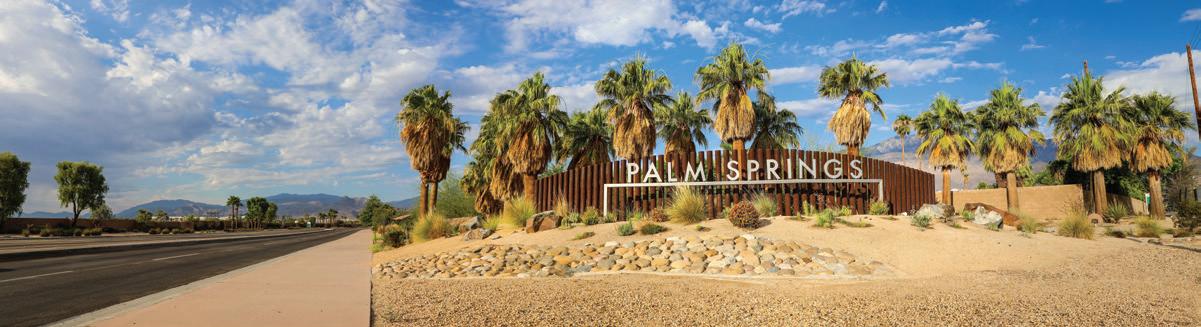
By Bill Malcolm*
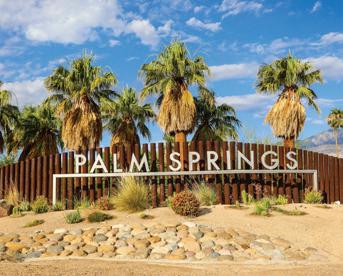
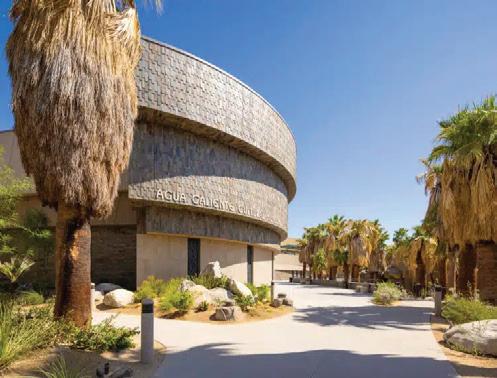
There’s always something new to do in Palm Springs, California, and this trip was no exception. The Agua Caliente Cultural Plaza is the new museum downtown that just opened and showcases the fascinating history and culture of the tribes in this area. Palm Springs is the premier LGBTQ+ vacation destination and received a 100% rating from the HRC. The city is part of eight cities in the Coachella Valley.
The Descanso Resort (288 E. Camino Monte Vista) is just north of downtown in the Uptown/ Arts and Design District. The resort features free bikes, a pool and spa, a continental breakfast, and a complimentary poolside lunch. Happy hour runs from 4 p.m. to 6 p.m. on weekends. The staff is very attentive. Guests enjoy a saltwater pool, spa, mistcooling system, and outdoor shower. Every spot in Descanso’s courtyard boasts views of Coachella Valley’s San Jacinto mountains, which rise 11,000 feet from the Valley floor. Other amenities include a 24-hour snack cantina. This was my second stay there, and I loved it. Details at DescansoResort.com.
Another alternative is the new Twin Palms Resort at 1930 S. Camino Real. They have rooms facing a pool and hot tub, plus free use of bikes (and helmets). Enjoy the madeto-order continental breakfast and lunch delivered at 12:30 p.m. Under the gaze of the San Jacinto mountains, twenty guest rooms and suites open to a swimming pool, spa, and patio space. Take the bike to the Smoke Tree Plaza to dine out at one of the restaurants like Native Foods or pick up some to-go foods at Ralph’s or Jensen’s food stores. Continue on the many bike trails and bike lanes to explore the iconic Twin Palms neighborhood nearby (the original Modernist style of homes are found here), including a ride up to Indian Canyon. Details at TwinPalmsResort.com
Most bars are on Arenas Road downtown, a one-block strip between Indian Canyon and Encilia. Hunters has a fun happy hour and outdoor patio with great drink specials. It’s my favorite (and of the same owners as the one in Wilton Manors, Florida). Streetbar (224 E. Arenas) always has something going on. Go shopping at GayMart (305 E. Arenas). Other fun bars on Arenas Road include Blackbook, Chill Bar, and Dick’s. All feature outdoor seating. Close by is the new hot
novel dance bar, Reforma (check out their website for more info). They have large video screens as well.
Down the road in the Sunny Dunes area, The Tool Shed (600 E. Sunny Dunes) has a fun leather crowd. Food is available, like tacos. They have a huge outdoor patio in the back and dancers inside. Nearby is Club 541, which I hear is fun. You can also shop at Q Trading or Gear and have breakfast at a local favorite in this strip.
Over in Cat City (aka Cathedral City, another LGBTQ-friendly city in the Coachella Valley) are several fun bars. The Barracks is known for its Sunday beer busts and Wednesday underwear night. The One11 is good for talking and has drag and bingo crowds.
The Coachella Valley is known for its dates, olives, oranges, and grapefruit. Try a date shake. The Nature’s Health Food and Café features fresh juices and healthy options. Try the freshly squeezed carrot juice and order the quesadillas. You will find them at 555 S. Sunrise. Trio is an excellent choice at 707 N. Palm Canyon. The nearby 849 is particularly good. Both are in Uptown, just north of downtown, which features trendy shops like Shag.
Always remember you are in California, and things are different here. You are not in Kansas anymore. The “traditional potato salad” at the LaQuinta Resort lunch buffet was purple. And delicious.
I took Southwest Airlines through Denver each way without incident. Get a window seat for the flight into Palm Springs, and you will see the Rockies and the Grand Canyon. Southwest now allows you to take an earlier flight for free—a user-friendly airline despite their recent woes.
Once in Palm Springs, UBER and LYFT can get you around. However, both feature annoying surprise junk fee surcharges for this and that. LYFT went to surge pricing twice, so I took UBER instead. So shop around.
You can walk outside the airport and catch your UBER across the street (at City Hall) to avoid the airport surcharge.
Or better yet, take the #4 Sunline bus for $1 just west of City Hall (across the street from the airport). The #4 takes you right downtown
(which is just two miles west of the airport).
If you stay downtown or close to it as I did, you can walk or bike everywhere in the perfect weather of this desert oasis. But beware—you are in Southern California, and the car is king. While Palm Springs has put in many new bike lanes and trails, they still have work to do despite having a perfect biking environment (flat with ideal weather).
· Visit the new Agua Caliente Cultural Museum downtown to learn about the history and culture of the Agua Caliente band of the Cahuilla Native Americans. Learn about their history, where each canyon had its separate group. Learn about the Sec He, the mineral springs the museum sits on top of. Learn about basketry. A 12-minute animated film describes how the Agua Caliente settled in the Coachella Valley. It celebrates its heritage with a gathering place and an oasis trail along a stream with native plants. Their new Spa at Sec He is also a hit, where you can get a private bath and luxury treatment in the hot mineral spring; all are part of the Agua Caliente Hotel and Resort and Casino complex.
· Visit Indian Canyon for a hike in an oasis with native palm trees.
· Walk with the Front Runners and Walkers. They meet near the Mizel Center for a three-mile walk every day except Sunday at 8:00 a.m. It’s a fantastic way to meet folks. They meet in the parking lot at 480 S. Sunrise.
· Enjoy the LGBT stars on the Palm Springs Walk of the Stars downtown. Truman Capote, Rock Hudson, and other stars used Palm Springs as a retreat from Hollywood. Palm Springs has been an LGBTQ destination since the 1920s.
· Take in Village Fest Thursday night downtown, including visiting the Palm Springs Art Museum, which is accessible then. The Village Fest has food vendors and stuff for sale, including art. Pick up some dates. The Art Museum has food and music on the outdoor patio.
· Swim at the Palm Springs Swim Center. The Olympic-sized pool has a stunning view of the mountains. You will find them at Pavilion Way.
· Work out at the Steel Gym (formerly the World Gym). It’s extremely popular.
· Hike on the Lykken Trail just west of downtown off Ramon Road. Enjoy the barrel cacti and other desert plants and the view of Palm Springs.
*Bill Malcolm writes a syndicated LGBTQ travel column and is based in Indianapolis. He is a frequent visitor to the desert oasis of the Coachella Valley. He is a former resident of San Francisco.

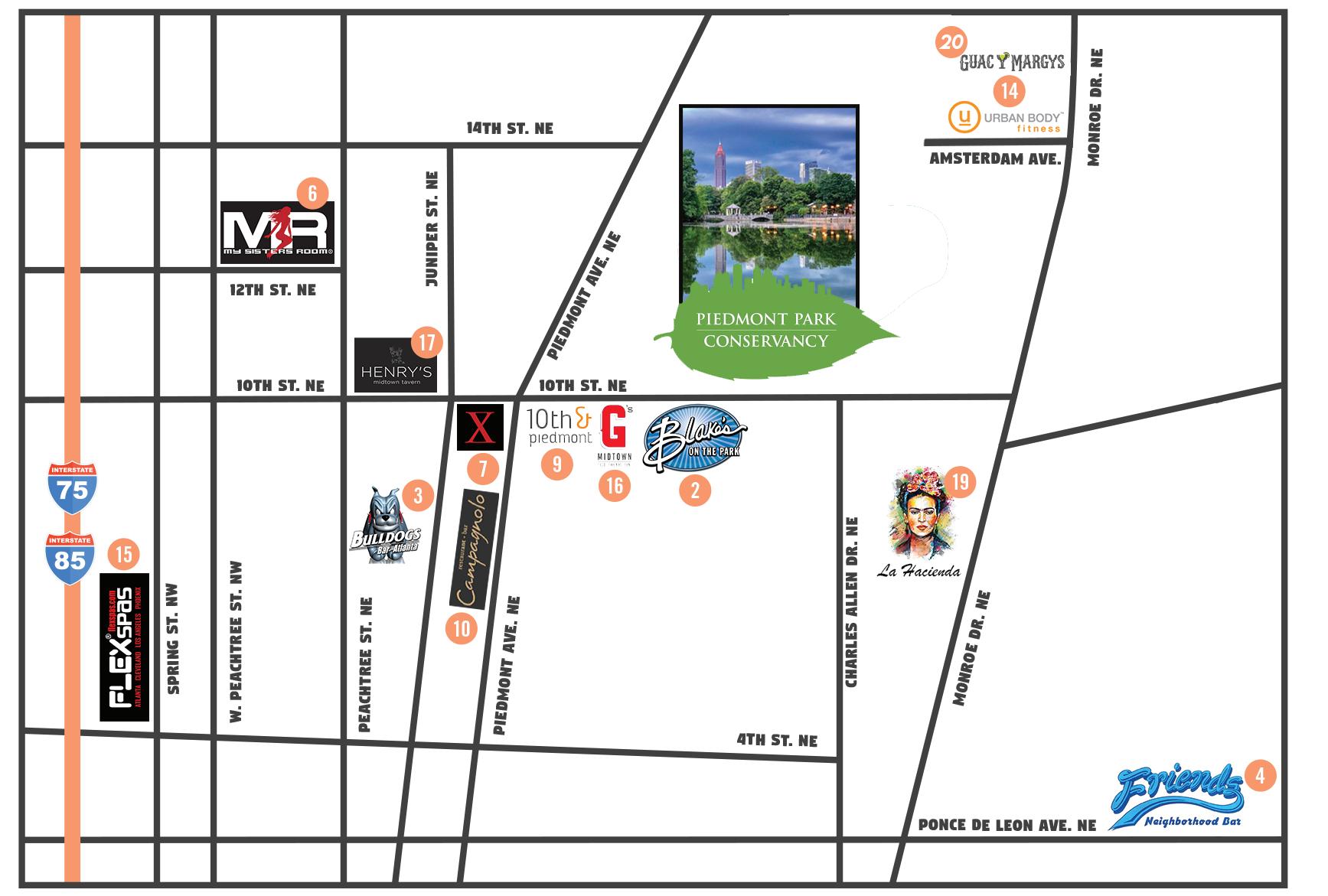








BARS & CLUBS MIDTOWN
BLAKE’S ON THE PARK blakesontheparkatlanta.com 227 10th St NE
BULLDOGS 893 Peachtree St NE
FRIENDS NEIGHBORHOOD BAR friendsonponce-atl.com 736 Ponce De Leon Ave NE
MY SISTER’S ROOM mysistersroom.com 66 12th St NE
X MIDTOWN xmidtown.com 990 Piedmont Ave NE
THE T modeltatlanta.com 465 Boulevard SE
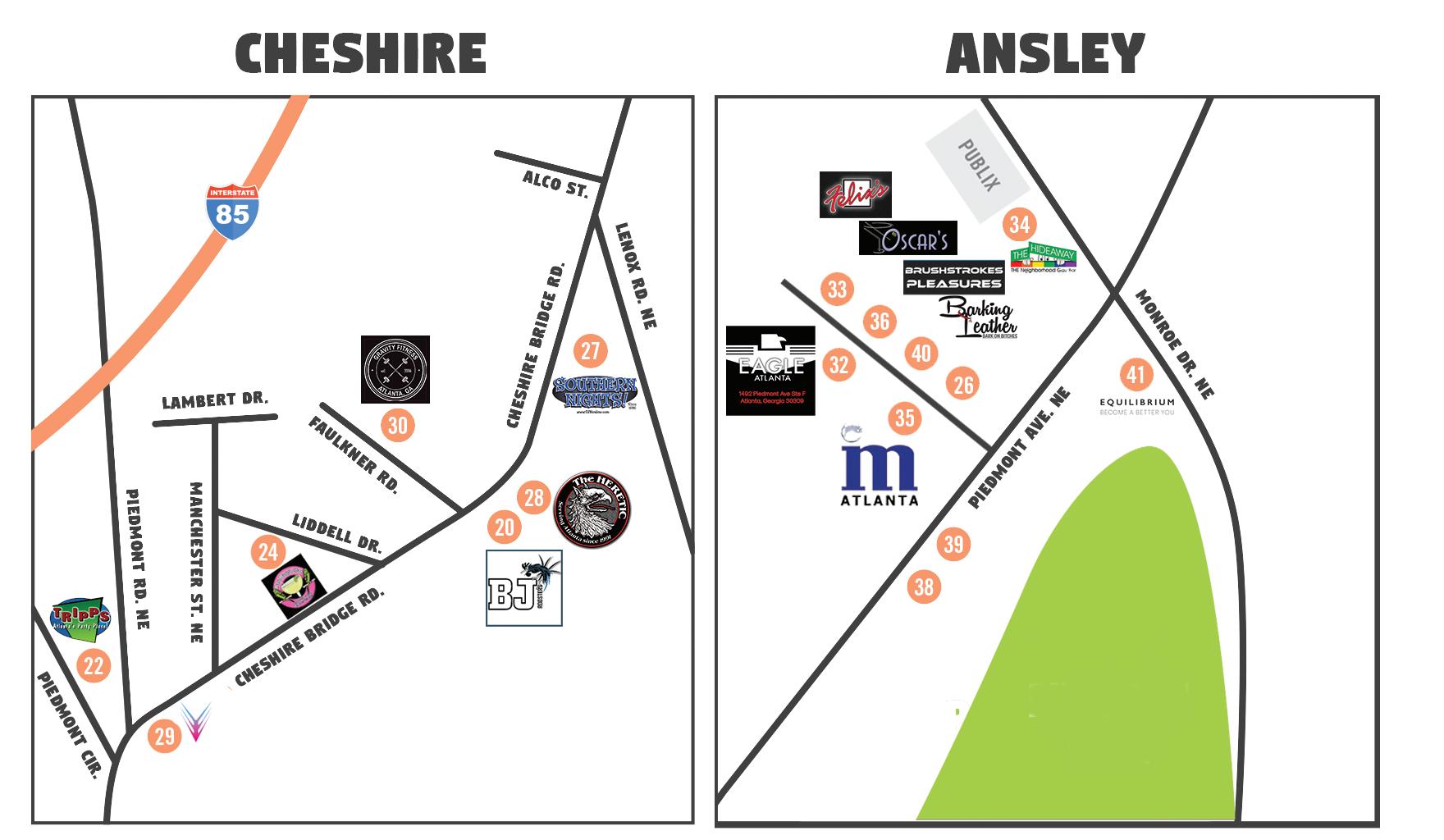
CHESHIRE
HERETIC hereticatlanta.com 2069 Cheshire Bridge Road
BJ ROOSTERS bjroosters.com 2043 Cheshire Bridge Road NE
WESTSIDE
MARQUETTE
868 Joseph E. Boone Blvd NW
840ATL 840 Joseph E. Boone Blvd NW
ANSLEY
ATLANTA EAGLE 1492 Piedmont Ave NE
FELIX’S 1510 Piedmont Ave NE
THE HIDEAWAY 1544 Piedmont Ave NE
MIXX mixxatlanta.com 1492 Piedmont Ave NE
OSCAR’S oscarsatlanta.com 1510 Piedmont Ave NE
WOOFS woofsatlanta.com 494 Plasters Ave NE
EAST ATLANTA, GRANT PARK & EDGEWOOD
MARY’S marysatlanta.com 1287 Glenwood Ave SE
SISTER LOUISA’S CHURCH sisterlouisaschurch. com 466 Edgewood Ave SE DINING MIDTOWN
CASA ALMENARA 991 Piedmont Ave NE casa-almenara.com
HENRY’S henrysatl.com
132 10th St NE
LA HACIENDA lahaciendamidtown. com 900 Monroe Dr NE
TUK TUK THAI FOOD LOFT TUKTUKATL.COM 1745 Peachtree Rd NW
LIPS ATLANTA atldragshow.com 3011 Buford Hwy NE
RETAIL
MIDTOWN
BARKING LEATHER AFTER DARK barkingleather.com 1510 Piedmont Ave NE
CHESHIRE
SOUTHERN NIGHTS VIDEO 2205 Cheshire Bridge Rd NE
ANSLEY
BOY NEXT DOOR MENSWEAR boynextdoormenswear.com 1000 Piedmont Ave NE, Ste A
GCB & PLEASURES brushstrokesatlanta. com 1510-D Piedmont Ave. NE FITNESS MIDTOWN
URBAN BODY FITNESS urbanbody tness. com
500 Amsterdam Ave N
CHESHIRE
GRAVITEE FITNESS graviteeatl.com
2201 Faulkner Rd NE
SPAS/BATHS
ADULT
FLEX SPA exspas.com 76 4th St NW

We all have those moments of ‘wait, did they just say that?’ Lucky for you, we compile the best of the best right here on this page. Want to join in on the b*tch session? Submit your own nuggets to info@davidatlanta.com.
Wearing an astrology necklace so people know in advance I’m annoying.
Sometimes I wish I could invoice people for wasting my time.
Donʼt you just hate that moment you find out your actions have consequences?
Going forward, I’m labeling all stupid work emails as spam.
Oh, you want to circle back? I think I’m just going to circle on back out of here.
I’m like Cinderella when it comes to sports – I keep running away from the ball!
Not a hugger, but for you? Still no!





Edited by Mikkel Hyldebrandt
Financial independence is a journey that requires savvy navigation, especially for LGBTQ+ individuals who often find themselves shouldering the responsibility of managing their finances alone. From savings and retirement planning to purchasing a home and car, the path to financial freedom demands finesse and foresight. While the journey may seem daunting, armed with the right knowledge and approachable strategies, achieving financial independence is within reach.
For many LGBTQ+ individuals, the reality of financial independence often means shouldering the responsibility solo. Unlike heterosexual couples who may benefit from dual incomes and shared expenses, gay men and women often find themselves managing their finances independently. This can present unique challenges, but it also offers an opportunity for personal growth and empowerment.


One of the first steps towards financial independence is learning how to budget and setting proper spending boundaries. Budgeting allows you to track your expenses, prioritize financial goals, and allocate resources effectively. Start by identifying your income sources and fixed expenses, then allocate funds for savings, debt repayment, and discretionary spending. Setting spending boundaries involves being mindful of your financial limits and making intentional choices about how you allocate your resources. It’s about finding a balance between enjoying life’s pleasures and maintaining fiscal responsibility. By mastering the art of budgeting and setting spending boundaries, you can take control of your finances and pave the way towards a more secure and prosperous future.


require careful consideration and planning, they also offer opportunities for long-term stability and growth. Research mortgage options, explore down payment assistance programs, and consider factors such as location and affordability when making these decisions.

Navigating financial independence as an LGBTQ+ individual also involves being proactive about financial education and empowerment. Take advantage of resources such as workshops, online courses, and financial literacy programs to enhance your knowledge and skills. Surround yourself with a supportive network of mentors, advisors, and peers who can offer guidance and encouragement along the way.

While the journey to financial independence may often be undertaken alone, being in a couple can offer certain financial benefits. Shared expenses, dual incomes, and combined assets can create opportunities for greater financial stability and security. However, it’s essential to approach financial planning as a team and maintain open communication about goals, priorities, and expectations.


In addition to shared expenses, couples can also leverage their combined resources to maximize savings and investment opportunities. Consider pooling funds for joint savings accounts, retirement accounts, or investment portfolios to achieve mutual financial goals. Collaborative decisionmaking and transparency are key to building a strong financial foundation as a couple.

Another important step is establishing a solid foundation of savings. Setting aside a portion of your income each month, even if it’s just a small amount, can gradually build a safety net for unexpected expenses and future goals. Consider opening a high-yield savings account or exploring investment options that align with your financial objectives.


Retirement planning is another crucial aspect of financial independence. LGBTQ+ individuals may face additional challenges in securing retirement benefits, particularly if they work for employers who do not offer inclusive policies. It’s essential to explore retirement savings options such as 401(k) plans, individual retirement accounts (IRAs), or other investment vehicles to secure your financial future.

Purchasing a home or a car can be significant milestones on the road to financial independence. While these investments


Despite the challenges and complexities, achieving financial independence as an LGBTQ+ individual is not only possible but empowering. By prioritizing financial education, establishing smart savings habits, and leveraging resources effectively, you can navigate the path to financial freedom with confidence and resilience. Remember, the journey may have its ups and downs, but with determination and perseverance, you can build a brighter and more secure financial future for yourself and your loved ones.