































By Tristan Lane
In many workplaces today, every meeting starts the same way: updates on kids, school dropoffs, playdates, youth soccer, or the latest baby milestone. It’s well-intentioned small talk warm, human, and meant to build connection. But for many LGBTQ+ professionals, it creates a subtle but persistent divide.
Because when every room defaults to parenting talk, it sends a quiet message: The “real adults” here are the ones with children. And everyone else single people, child-free people, LGBTQ+ couples, elders, or chosen-family caregivers is inadvertently positioned as an outsider. This isn’t outright discrimination. It’s not malicious. But it is a form of workplace bias— and it shapes who feels seen, who feels valued, and who is subconsciously viewed as “family material” or “leadership material.”
In corporate settings, especially in the U.S., parental identity has become a socially sanctioned badge of relatability. Parenting stories can dominate discussion, derail agendas, or even shape managerial empathy. What’s often forgotten is that:
� Not all LGBTQ+ people have children.
� Many cannot easily pursue parenthood due to financial, legal, or biological barriers.
� Some have families shaped by chosen kin, not biology.
� Some are navigating painful estrangements from biological families.
Family-centric talk doesn’t just make people feel awkward it shapes perceptions. Studies show that employees with children are often perceived as:
� more stable
� more responsible
� more deserving of flexibility
� more relatable
� more leadership-ready
Meanwhile, LGBTQ+ professionals (and anyone without children) may be subtly perceived as:

So when a meeting becomes an hour-long monologue about toddlers, it can feel alienating. Not because LGBTQ+ people dislike children but because the shared experience being privileged in the room excludes us. It also reinforces an old stereotype: LGBTQ+ lives are frivolous or incomplete unless validated by marriage and children.


� more available to take on extra work
� less in need of work-life balance
� less “mature” or “settled”
� less personally understood
This dynamic can affect promotions, workload, and how colleagues relate to us. It’s a quiet bias disguised as bonding.
Here are strategies that protect your selfworth without alienating your colleagues and help you carve space in rooms that default to heteronormative bonding.
When parenting talk monopolizes a professional discussion, you can gently steer it back: “Sounds like everyone’s had a busy morning. Should we jump into the agenda so we can stay on track?”
Professional. Neutral. Effective.
You don’t owe anyone a reproduction story or a traumatic family history. But you can humanize yourself in the ways that matter to you.






Try:
“My partner and I spent the weekend with our long term friends it was wonderful to reconnect.”
Or
“My community group had a big event this week; it reminded me why connection matters.”
You’re asserting that your life is full, meaningful, and legitimate.
3. Build Rapport Without Competing in Parent Olympics
If everyone is bonding over kids, you don’t have to sit silently. You can connect without pretending to relate:
“I don’t have children, but I love hearing how you all juggle so much. What’s the latest challenge?”
You stay included without sacrificing authenticity.


4. Name the Bias Privately, Professionally
If the meetings consistently derail or you’re consistently sidelined, a private, thoughtful conversation with a manager can help:
“I’ve noticed our meetings often shift toward parenting updates, which can unintentionally leave some of us feeling outside the circle.
Could we be more intentional about balancing personal sharing with inclusivity?”
It’s not a complaint it’s leadership.
5. Advocate for a Culture of Chosen Family
LGBTQ+ people often have powerful family and community structures outside traditional norms. Introduce that language into the workplace:
Community � Community networks
� Mentorship families
� Caregiving beyond children
balance the dynamic of a team.
The Bigger Picture: Your Identity Is Not a Second-Class
LGBTQ+ people have always built families sometimes through biology, often through resilience and love.
Our lives are not less rich. Our commitments are not less meaningful. Our stories are not secondary.
Workplaces that center only one version of “family” limit not only us, but themselves. Innovation thrives in diverse rooms. Leadership emerges from varied lived experiences.
And LGBTQ+ professionals bring empathy, adaptability, and emotional intelligence that any organization should prize.
As companies increasingly recognize LGBTQ+ inclusion as a strategic advantage, the old norms will shift. But until then, navigating rooms full of well-meaning parents requires a mix of diplomacy, strength, and self-definition. We don’t need every meeting to be about Pride, chosen family, or queer joy. We simply need space equal space to exist without feeling like the odd ones out.
Because LGBTQ+ people have been leaders, innovators, caregivers, mentors, and cultureshapers long before a single corporate meeting started with a story about a toddler’s dentist appointment.


When these concepts enter the conversation, the room expands.
6. Seek Allies Real Ones, Not Performative Ones





Find colleagues who understand inclusive culture and can help shift the tone. Not everyone will get it but some will. And their support can re-






And we always will be. L






























Edited by Mikkel Hyldebrandt
In a city where queer history is as rich and vibrant as its nightlife, few names carry as much legacy and heart as The Armorettes. For nearly half a century, this legendary camp drag troupe has mixed big wigs, bold humor, and unshakeable community care to bring laughter and meaningful impact to , that legacy comes roaring into a new year with
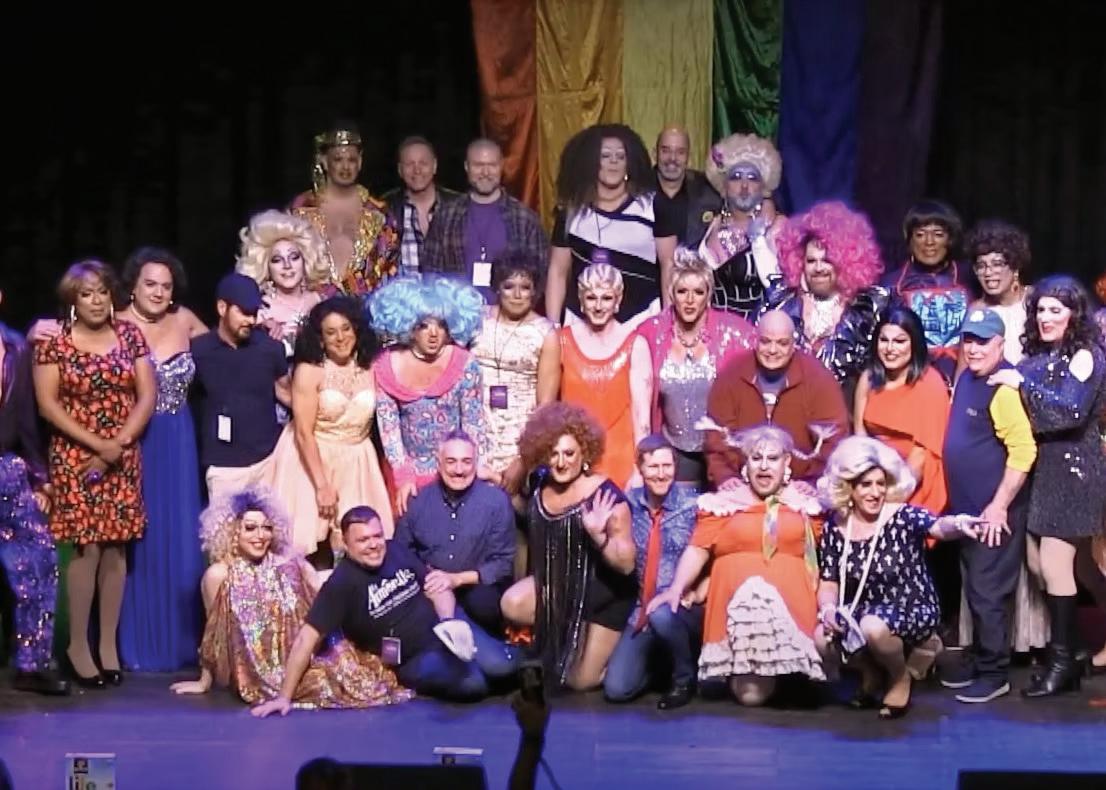
The story of The Armorettes begins in 1979, at a Midtown mainstay called The Armory Bar, where a group of friends who loved drag and softball decided to cheer on the Falcons in style. Before long, their weekend antics – campy drag performances with over-the-top costumes and infectious energy – grew into something more than entertainment. As the HIV/AIDS epidemic emerged and devastated the community in the early 1980s, these performers shifted from halftime fun to full-on activism. Their drag shows became benefit events, and a simple mission was
born: raise money to support Atlanta’s friends, lovers, and neighbors impacted by HIV/AIDS.
Over the decades, The Armorettes have raised more than $2.3 million for HIV/AIDS charities –making them not just entertainers, but pillars of queer philanthropic history in Atlanta. They have turned every laugh and wig flip into a tangible impact on people’s lives.
This January, The Armorettes invite Atlantans and allies alike to join them for a night that
blends nostalgia, performance art, and heartfelt community support. The 47th Anniversary Show takes place on Saturday, January 17th, 2026, from 7:00 p.m. to 10:00 p.m. at Heretic Atlanta.
What makes this anniversary especially powerful is its dedication to philanthropy: over $45,000 will be awarded to HIV/AIDS charities throughout the evening. It’s not just a performance – it’s a reminder that even after nearly five decades, The Armorettes are still running toward the heart of the community’s needs, not away from them.
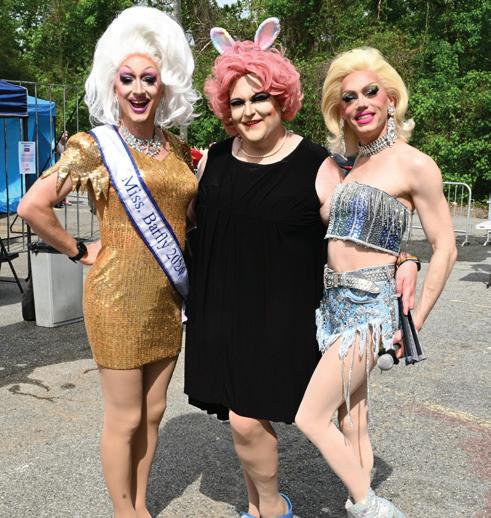
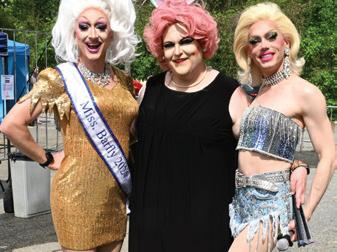
The spirit of The Armorettes comes alive not only through their mission, but through the performers themselves. This anniversary show reunites former queens with current stars, blending histories, styles, and personalities into one campfilled spectacle. Returning to the stage are beloved alumni Kitty Love-Antoinette, Roxy Cotton, and Dixie Normous – icons who helped shape what Armorettes entertainment looks like both onstage and within the community. Joining them is the current cast of fierce talent, including Nurse Holly, Baby Dee, Kellie Divine, Vivian Vallium, Trashetta Galore, Lori Divine, and Eileen Slightly. Together, they bring their own distinct brands of comedy, dance, drag flair, and heart to the stage, promising an evening that is campy, emotional, hilarious, and unforgettable.
For those unfamiliar with The Armorettes’ work, it’s easy to see their shows as pure entertainment. But behind every joke and big performance
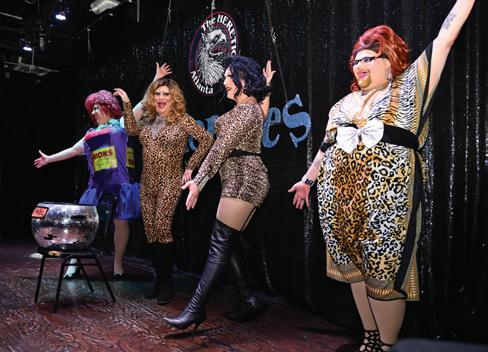
number lies years of resolute activism. When HIV/ AIDS ravaged the queer community in the 1980s, support was scarce and stigma was everywhere. The Armorettes stepped in – not just to fill dance floors, but to fill gaps in care, funding, and hope. Their drag was laughter with intention, comedy with purpose.
Their commitment continues today through partnerships with HIV/AIDS service organizations, from local care centers to grassroots outreach efforts. This is drag as community empowerment, and it’s a model that Atlanta has embraced for decades.
In a world where drag often gets reduced to fandom or pop culture moments, The Armorettes remind us that drag can also be a tool for social good – a way to gather people together, spark joy, and turn profit and talent into real-world support. They have weathered decades of change in queer culture, always standing firm in laughter and charity alike.
As the troupe enters its 47th year, the anniversary show isn’t just a look back – it’s a promise that Atlanta’s queer community will continue to celebrate, support, and uplift one another, with humor and heart front and center.
So mark your calendars and ready your cheer. On January 17, The Armorettes will once again prove that when drag meets devotion, the result is legendary.





Edited by Mikkel Hyldebrandt
There’s a persistent myth – especially in a city like Atlanta – that winter is something to endure rather than inhabit. We wait it out. We hibernate. We count the days until patio season returns and festivals take over the streets again. But winter, even a Southern winter with its wild temperature swings and unpredictable moods, deserves more than resignation. It deserves intention.
Queer life isn’t seasonal – it simply changes texture. Summer is expansive, public, flirtatious. Winter is intimate, reflective, and surprisingly rich if we let it be. Setting the winter mood isn’t about pretending it’s July. It’s about learning how to extract just as much joy, connection, and meaning from the colder months, even when Atlanta can’t decide whether it’s sweater weather or a deep freeze.
In summer, queer joy often looks outward: Pride events, rooftop parties, poolside hangs, street festivals, packed calendars. Winter invites us inward – not as a retreat, but as a shift in access. This is the season where deeper conversations happen, where chosen family gathers around kitchen tables instead of dance floors, where intimacy becomes less performative and more intentional.
Winter gives us permission to slow the pace without losing momentum. It asks us to trade spectacle for substance.
And that’s not a downgrade – it’s an expansion of how we experience community.
Atlanta winter fashion requires flexibility. One day it’s 68 degrees and sunny, the next it is icy rain cutting through every layer. Instead of fighting the inconsistency, embrace it as part of the mood-setting process.
Think of winter dressing as layering emotional armor: scarves that feel like comfort objects, jackets that make you feel held, boots that can handle whatever the day throws at you. This isn’t about chasing trends but rather about creating a sense of safety and self-expression that travels with you, regardless of temperature. When your body feels cared for, your spirit follows.
Summer thrives on movement; winter thrives on atmosphere. This is the time to make interiors matter. Candles, warm lighting, playlists that feel intentional instead of background noise. Whether you live alone, with partners, or with roommates, winter is an invitation to treat your space as a sanctuary rather than a crash pad.
Host small gatherings. Cook together. Watch something slowly instead of bingeing mindlessly. Create environments that encourage staying rather than escaping. In a season where the world can feel especially


heavy – politically, socially, emotionally – safe spaces are not indulgences; they are necessities.
The instinct in winter is often to cancel plans, and sometimes that’s exactly what you need. But isolation can creep in quietly, especially for queer folks whose social networks are lifelines. The key is to choose connection that matches the season.
Opt for fewer plans but make them meaningful. Coffee dates over crowded bars. Walks on warmer days. Game nights, movie nights, long dinners that stretch into conversations you don’t rush. Winter socializing isn’t about quantity, it’s about quality.
Winter food isn’t about restriction –it’s about warmth, grounding, and satisfaction. Soups, stews, roasted vegetables, shared meals. This is the time to honor hunger without guilt and to use food as a tool for connection rather than control.
When the weather shifts from mild to brutal overnight, our bodies crave stability. Give it to them. Nourishment in winter is emotional as much as it is physical.

Movement doesn’t disappear in winter; it simply changes tone. Summer movement is expressive— dancing, walking everywhere, being seen. Winter movement is restorative. Stretching, yoga, walking when the sun is out, even cleaning your space with intention can all count.
Atlanta’s winters may not always invite outdoor workouts, but they do invite listening to your body more closely. This is the season to move in ways that support your nervous system, not punish it. Fitness, in winter, becomes about resilience rather than performance.
The reduced daylight can be challenging, especially for those already navigating anxiety or depression. Winter moodsetting includes actively seeking light – literal and metaphorical. Open your curtains. Sit near windows. Plan things to look forward to, even small ones.

Joy in winter is often quieter, but it’s no less real. It’s found in rituals, in consistency, in showing up for yourself and others when the external world feels uncertain.
Queer people have always known how to survive – and thrive – through difficult seasons. Winter asks us to draw on that same creativity, adaptability, and care. It’s not about waiting for life to resume; it’s about recognizing that life is still happening, just under different lighting.





















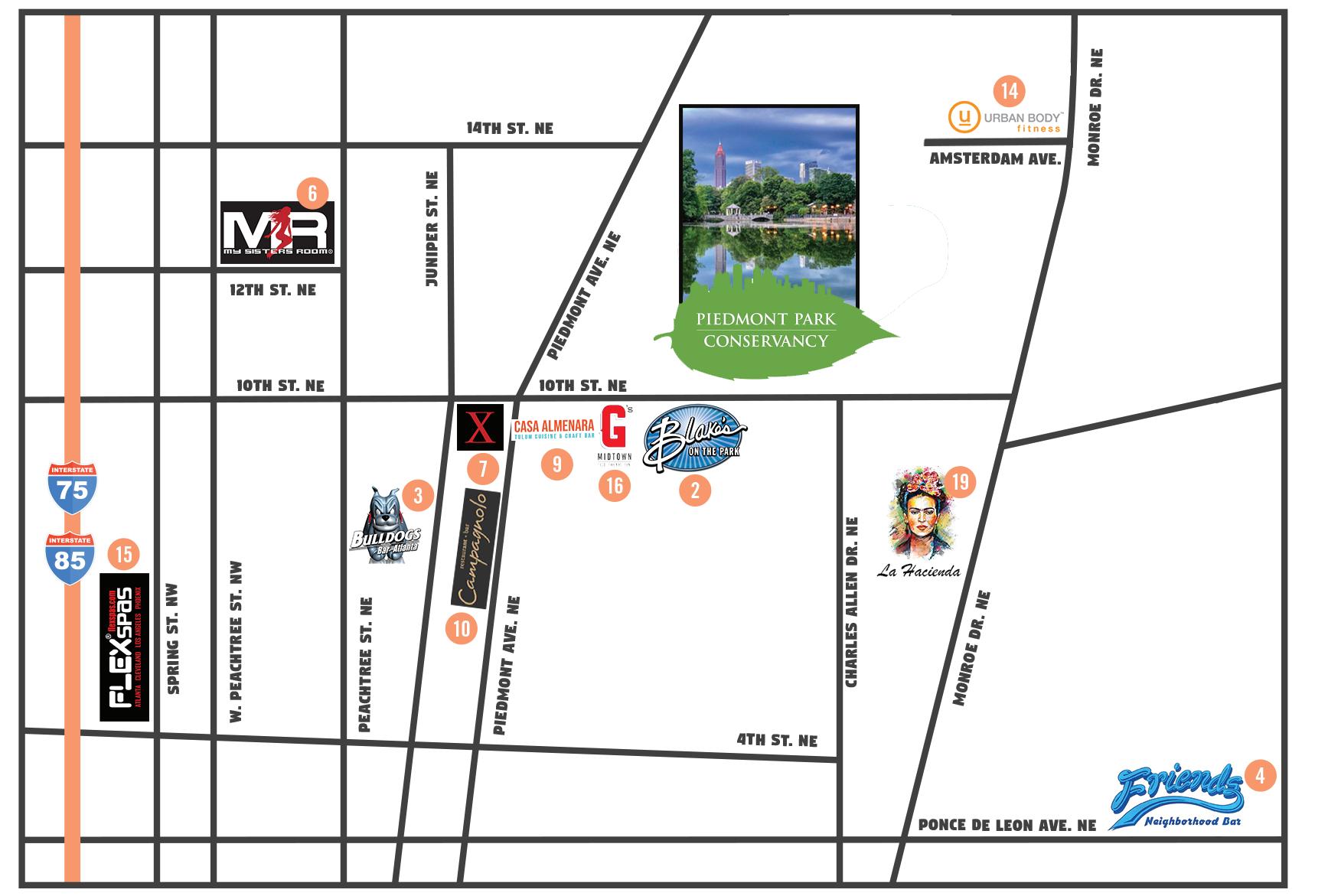






















BARS & CLUBS MIDTOWN
BLAKE’S ON THE PARK blakesontheparkatlanta.com 227 10th St NE
BULLDOGS 893 Peachtree St NE
FRIENDS NEIGHBORHOOD BAR friendsonponce-atl. com
736 Ponce De Leon Ave NE
MY SISTER’S ROOM mysistersroom.com 66 12th St NE
X MIDTOWN xmidtown.com 990 Piedmont Ave NE
THE T modeltatlanta.com 465 Boulevard SE
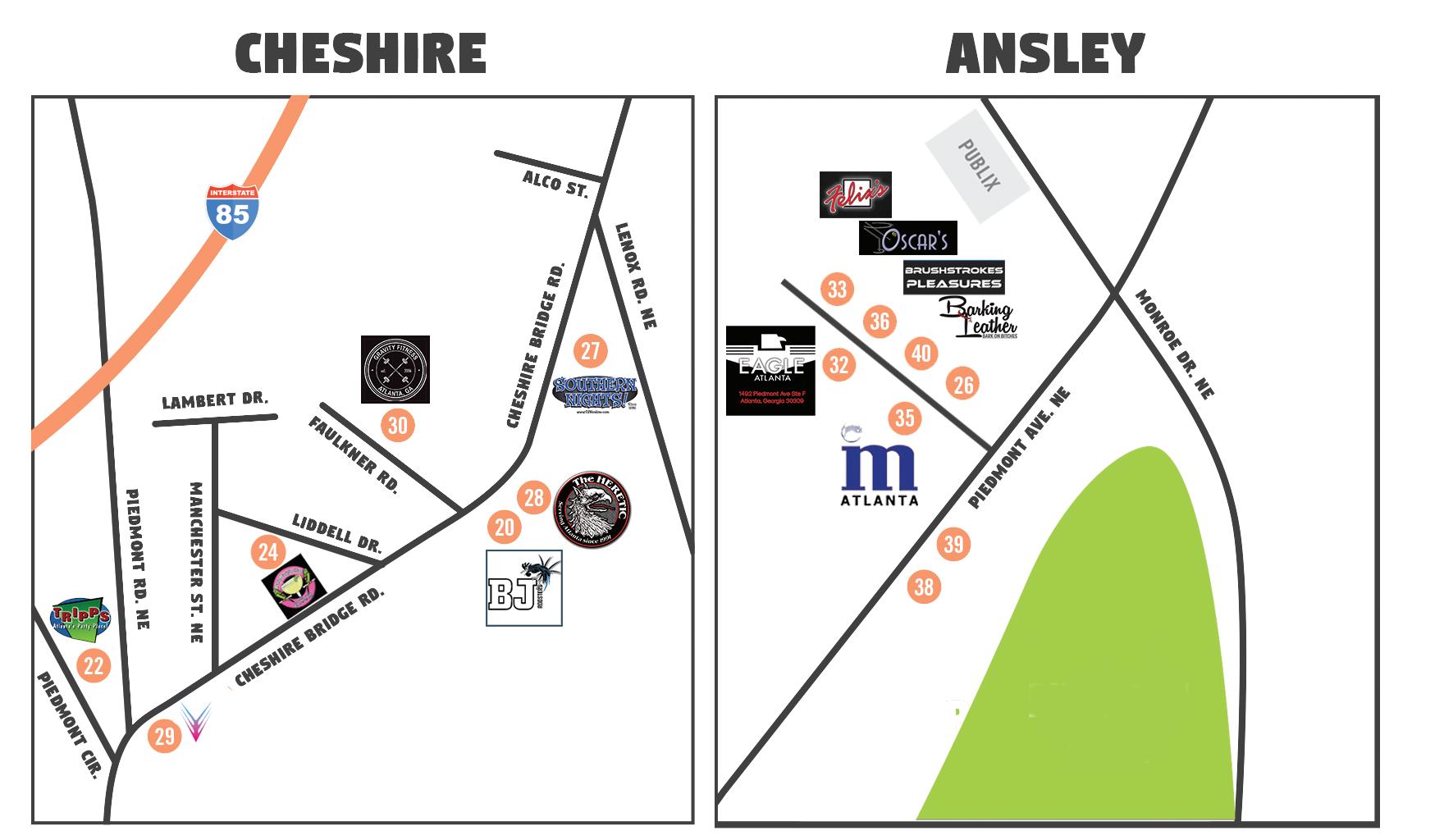
CHESHIRE
HERETIC hereticatlanta.com 2069 Cheshire Bridge Road
BJ ROOSTERS bjroosters.com 2043 Cheshire Bridge Road NE
WESTSIDE
MARQUETTE 868 Joseph E. Boone Blvd NW
840ATL 840 Ralph David Abernathy Blvd
ATLANTA EAGLE 1492 Piedmont Ave NE
FELIX’S 1510 Piedmont Ave NE
MIXX mixxatlanta.com 1492 Piedmont Ave NE
OSCAR’S oscarsatlanta.com 1510 Piedmont Ave NE
WOOFS woofsatlanta.com 494 Plasters Ave NE
TRIPPS fb: tripps-bar 1931 Piedmont Cir NE
EAST ATLANTA, GRANT PARK & EDGEWOOD
MARY’S marysatlanta.com 1287 Glenwood Ave SE
SISTER LOUISA’S CHURCH sisterlouisaschurch. com 466 Edgewood Ave SE
LORE ATLANTA loreatl.com 466 Edgewood Ave loreatl.com
DINING
MIDTOWN
CASA ALMENARA 991 Piedmont Ave NE casa-almenara.com
OLIVE BISTRO olivebistro.com 1050 Juniper St NE #4
LA HACIENDA lahaciendamidtown. com
900 Monroe Dr NE
TUK TUK THAI FOOD LOFT TUKTUKATL.COM 1745 Peachtree Rd NW
DEKALB
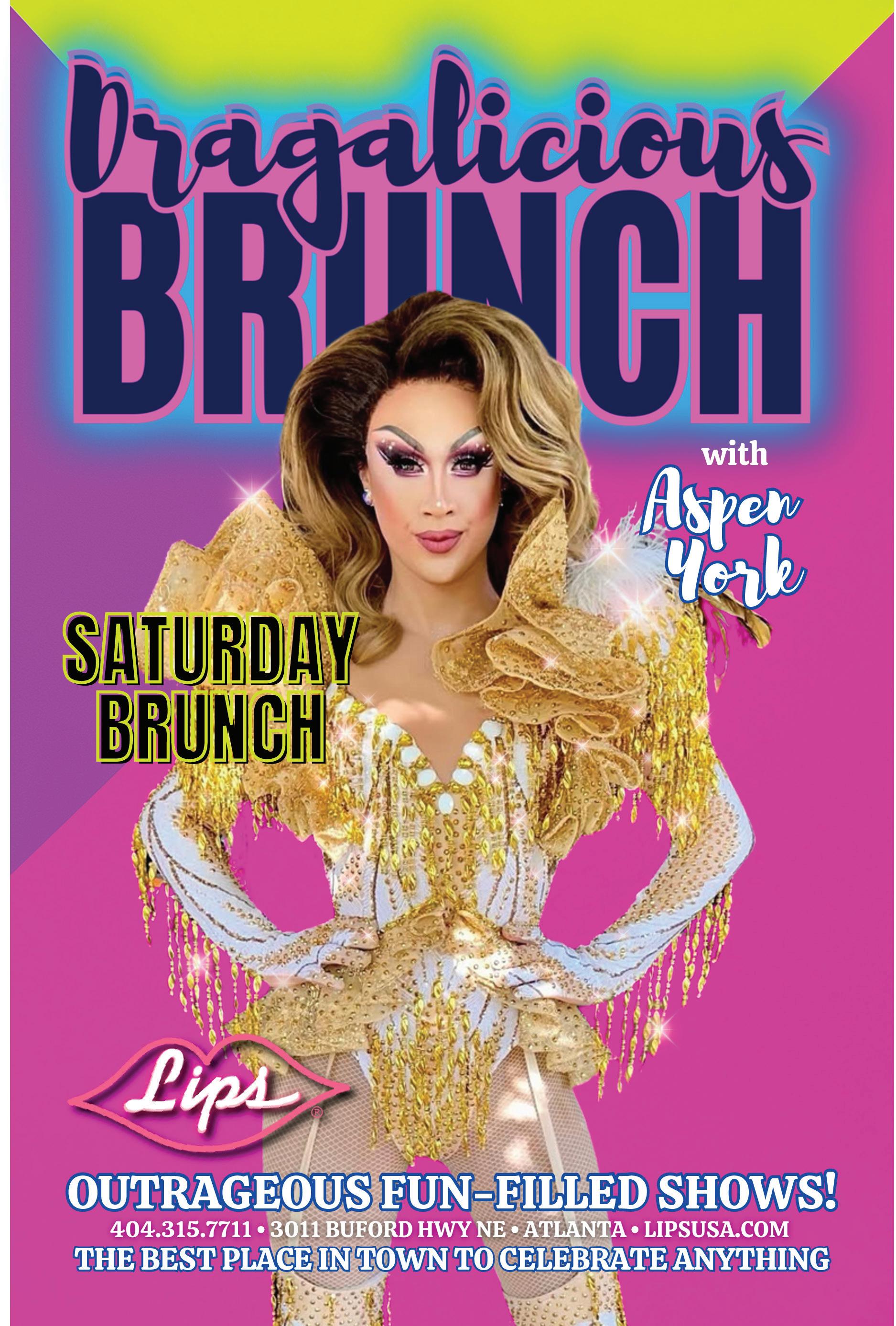
LIPS ATLANTA atldragshow.com 3011 Buford Hwy NE
RETAIL MIDTOWN
BOY NEXT DOOR MENSWEAR boynextdoormenswear.com 1000 Piedmont Ave NE, Ste A
ANSLEY
BARKING LEATHER barkingleather.com 1510 Piedmont Ave NE
GCB & PLEASURES brushstrokesatlanta. com
1510-D Piedmont Ave. NE
FITNESS MIDTOWN
URBAN BODY FITNESS urbanbody tness. com
500 Amsterdam Ave N
CHESHIRE
GRAVITY FITNESS gravity tnessatl.com 2201 Faulkner Rd NE
SPAS/BATHS ADULT
FLEX SPA exspas.com 76 4th St NW
SOUTHERN NIGHTS VIDEO
2205 Cheshire Bridge Rd NE
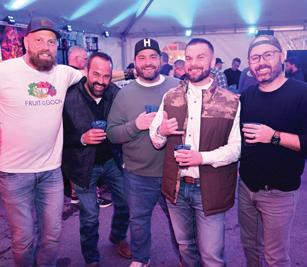
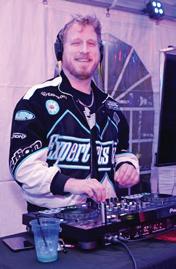
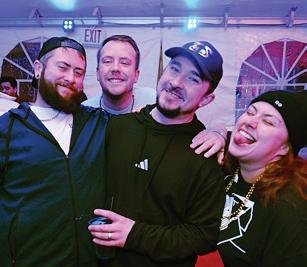
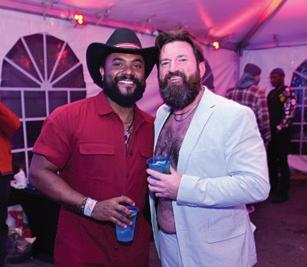



































































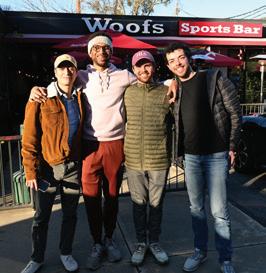





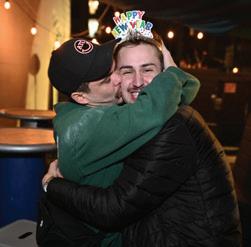
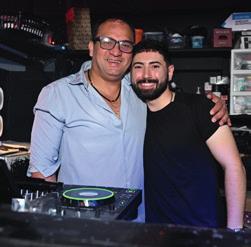
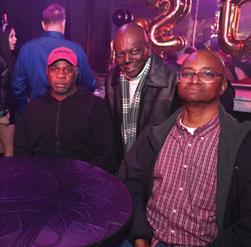
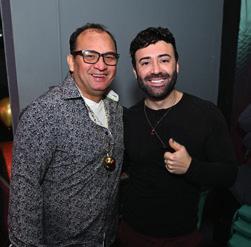

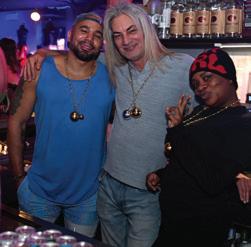





We all have those moments of ‘wait, did they just say that?’ Lucky for you, we compile the best of the best right here on this page. Want to join in on the b*tch session? Submit your own nuggets to info@davidatlanta.com.



Making my friends dance for me every time they ask for a drink.
I donʼt think I can go back to work – Iʼm too fat now.



Today, I’m going to give it my some.
When I said I like it rough, I didn t mean my entire existence.

I’m sorry if I deeply offended you – I was trying to flirt
Might quit my job, so I can focus on summer.




It’s amazing how much you can accomplish around the house under the threat of someone coming over.
My dog sighs a lot for someone who doesn’t contribute to this house or knows what politics is.