

“Excellence is being better today than I was yesterday”
“Who our students are, and who they are becoming, is important to us”
Experience consistently demonstrates that students achieve the strongest outcomes when they select subjects that align with their interests, abilities and future goals. Students intending to pursue university study should ensure they meet any prerequisite subject requirements and are ATAR eligible
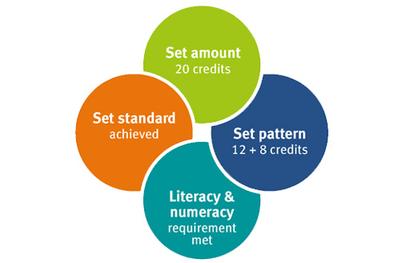
Achieving the QCE requires successful completion of approved learning. As subject changes become increasingly restricted during the senior phase, students should make considered and realistic subject selections. By the end of Year 11, students are expected to be enrolled in the subjects they will complete through to graduation and demonstrate the capacity to achieve success in those courses.
To support students and families through this important decision-making process, the College hosts a Senior Subject Selection Information Evening, providing an overview of senior pathways, subject options and the subject selection process. In addition, every family is offered an individual subject selection meeting with their student and experienced senior teachers to discuss aspirations, strengths and future pathway options Families are strongly encouraged to participate in these opportunities, as collaborative planning helps students make informed and confident decisions about their senior studies.
We encourage families to read this guide carefully and discuss the available options together before attending these events. Should you require further advice or guidance, please contact the College.

Mrs Juanita Eime
Yours sincerely,

Mrs Rebecca Bolton College Principal Deputy Principal Secondary School

Nick Brooking
Head of Mathematics & Science

Head of Technologies

Head of English, Humanities & Languages

Head of The Arts







Head of Year 10,11 & 12

Deputy Principal Secondary School
ATAR
General
Subjects Applied
Subjects
There are many ways to achieve a desired post-school pathway

English (General) recommends a C in Intro to General English
Literature recommends a B in Intro to General English.
English and Literature recommend an A result in Intro to Essential English (A meeting with the Head of Department is required in this case)
For Business, Modern History and/or Legal Studies, students must be passing at a C standard in either History, Business and Legal Studies, or Intro to General English in Year 10.
Students do not need any previous experience in Business and Legal Studies to be successful in these subjects.
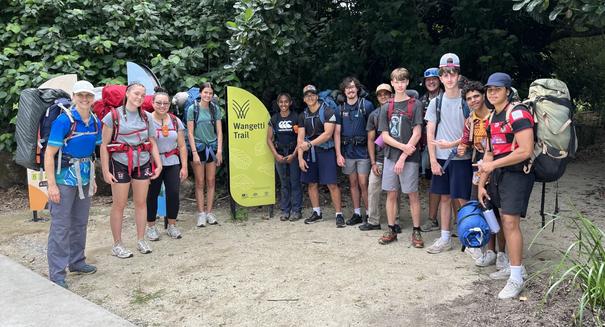
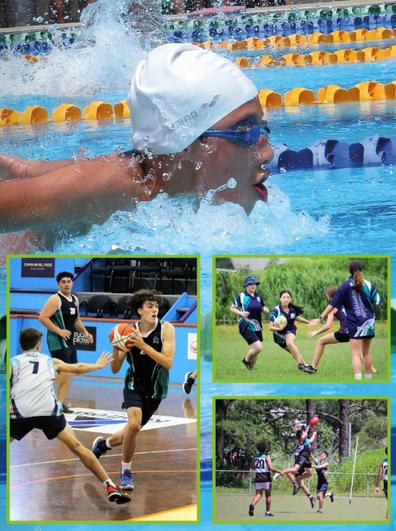
Lifelong learners are curious, inspired and adaptable
Mathematics is a unique and powerful intellectual discipline that is used to investigate patterns, order, generality and uncertainty. It is a way of thinking in which problems are explored and solved through observation, reflection and logical reasoning. It uses a concise system of communication, with written, symbolic, spoken and visual components Mathematics is creative, requires initiative and promotes curiosity in an increasingly complex and data-driven world It is the foundation of all quantitative disciplines
To prepare students with the knowledge, skills and confidence to participate effectively in the community and the economy requires the development of skills that reflect the demands of the 21st century. Students undertaking Mathematics will develop their critical and creative thinking, oral and written communication, information & communication technologies (ICT) capability, ability to collaborate, and sense of personal and social responsibility ultimately becoming lifelong learners who demonstrate initiative when facing a challenge The use of technology to make connections between mathematical theory, practice and application has a positive effect on the development of conceptual understanding and student disposition towards mathematics.
Mathematics teaching and learning practices range from practising essential mathematical routines to develop procedural fluency, through to investigating scenarios, modelling the real world, solving problems and explaining reasoning When students achieve procedural fluency, they carry out procedures flexibly, accurately and efficiently When factual knowledge and concepts come to mind readily, students are able to make more complex use of knowledge to successfully formulate, represent and solve mathematical problems. Problem-solving helps to develop an ability to transfer mathematical skills and ideas between different contexts. This assists students to make connections between related concepts and adapt what they already know to new and unfamiliar situations With appropriate effort and experience, through discussion, collaboration and reflection of ideas, students should develop confidence and experience success in their use of mathematics
The major domains of mathematics in General Mathematics are Number and algebra, Measurement and geometry, Statistics and Networks and matrices, building on the content of the P–10 Australian Curriculum. Learning reinforces prior knowledge and further develops key mathematical ideas, including rates and percentages, concepts from financial mathematics, linear and non-linear expressions, sequences, the use of matrices and networks to model and solve authentic problems, the use of trigonometry to find solutions to practical problems, and the exploration of real-world phenomena in statistics.
General Mathematics is designed for students who want to extend their mathematical skills beyond Year 10 but whose future studies or employment pathways do not require calculus. It incorporates a practical approach that equips learners for their needs as future citizens Students will learn to ask appropriate questions, map out pathways, reason about complex solutions, set up models and communicate in different forms They will experience the relevance of mathematics to their daily lives, communities and cultural backgrounds. They will develop the ability to understand, analyse and take action regarding social issues in their world. When students gain skill and self-assurance, when they understand the content and when they evaluate their success by using and transferring their knowledge, they develop a mathematical mindset.
A course of study in General Mathematics can establish a basis for further education and employment in the fields of business, commerce, education, finance, IT, social science and the arts
By the conclusion of the course of study, students will: recall mathematical knowledge use mathematical knowledge communicate mathematical knowledge evaluate the reasonableness of solutions justify procedures and decisions solve mathematical problems.
Money, measurement, algebra and linear equations
Consumer arithmetic
Shape and measurement
Similarity and scale
Algebra
Linear equations and their graphs
Applications of linear equations and trigonometry, matrices and univariate data analysis
Applications of linear equations and their graphs
Applications of trigonometry
Matrices
Univariate data analysis 1
Univariate data analysis 2
Bivariate data and time series analysis, sequences and Earth geometry
Bivariate data analysis 1
Bivariate data analysis 2
Time series analysis
Growth and decay in sequences
Earth geometry and time zones
Investing and networking
Loans, investments and annuities 1
Loans, investments and annuities 2
Graphs and networks
Networks and decision mathematics 1
Networks and decision mathematics 2
Mathematics is a unique and powerful intellectual discipline that is used to investigate patterns, order, generality and uncertainty. It is a way of thinking in which problems are explored and solved through observation, reflection and logical reasoning. It uses a concise system of communication, with written, symbolic, spoken and visual components Mathematics is creative, requires initiative and promotes curiosity in an increasingly complex and data-driven world It is the foundation of all quantitative disciplines
To prepare students with the knowledge, skills and confidence to participate effectively in the community and the economy requires the development of skills that reflect the demands of the 21st century. Students undertaking Mathematics will develop their critical and creative thinking, oral and written communication, information & communication technologies (ICT) capability, ability to collaborate, and sense of personal and social responsibility ultimately becoming lifelong learners who demonstrate initiative when facing a challenge The use of technology to make connections between mathematical theory, practice and application has a positive effect on the development of conceptual understanding and student disposition towards mathematics.
Mathematics teaching and learning practices range from practising essential mathematical routines to develop procedural fluency, through to investigating scenarios, modelling the real world, solving problems and explaining reasoning When students achieve procedural fluency, they carry out procedures flexibly, accurately and efficiently When factual knowledge and concepts come to mind readily, students are able to make more complex use of knowledge to successfully formulate, represent and solve mathematical problems. Problem-solving helps to develop an ability to transfer mathematical skills and ideas between different contexts. This assists students to make connections between related concepts and adapt what they already know to new and unfamiliar situations With appropriate effort and experience, through discussion, collaboration and reflection of ideas, students should develop confidence and experience success in their use of mathematics
The major domains of mathematics in Mathematical Methods are Algebra, Functions, relations and their graphs, Calculus and Statistics. Topics are developed systematically, with increasing levels of sophistication, complexity and connection, and build on algebra, functions and their graphs, and probability from the P–10 Australian Curriculum Calculus is essential for developing an understanding of the physical world The domain Statistics is used to describe and analyse phenomena involving uncertainty and variation Both are the basis for developing effective models of the world and solving complex and abstract mathematical problems. The ability to translate written, numerical, algebraic, symbolic and graphical information from one representation to another is a vital part of learning in Mathematical Methods.
Students who undertake Mathematical Methods will see the connections between mathematics and other areas of the curriculum and apply their mathematical skills to real-world problems, becoming critical thinkers, innovators and problem-solvers Through solving problems and developing models, they will appreciate that mathematics and statistics are dynamic tools that are critically important in the 21st century.
A course of study in Mathematical Methods can establish a basis for further education and employment in the fields of natural and physical sciences (especially physics and chemistry), mathematics and science education, medical and health sciences (including human biology, biomedical science, nanoscience and forensics), engineering (including chemical, civil, electrical and mechanical engineering, avionics, communications and mining), computer science (including electronics and software design), psychology and business.
By the conclusion of the course of study, students will: recall mathematical knowledge use mathematical knowledge communicate mathematical knowledge evaluate the reasonableness of solutions justify procedures and decisions solve mathematical problems.
Surds, algebra, functions and probability
Surds and quadratic functions
Binomial expansion and cubic functions
Functions and relations
Trigonometric functions
Probability
Calculus and further functions
Exponential functions
Logarithms and logarithmic functions
Introduction to differential calculus
Applications of differential calculus
Further differentiation
Further calculus and introduction to statistics
Differentiation of exponential and logarithmic functions
Differentiation of trigonometric functions and differentiation rules
Further applications of differentiation
Introduction to integration
Discrete random variables
internal assessment 1 (IA1) 20% Problem-solving and modelling task (PSMT)
external assessment (EA) 50% Examination - combination response
Further calculus, trigonometry and statistics
Further integration
Trigonometry
Continuous random variables and the normal distribution
Sampling and proportions
Interval estimates for proportions
Mathematics is a unique and powerful intellectual discipline that is used to investigate patterns, order, generality and uncertainty. It is a way of thinking in which problems are explored and solved through observation, reflection and logical reasoning. It uses a concise system of communication, with written, symbolic, spoken and visual components Mathematics is creative, requires initiative and promotes curiosity in an increasingly complex and data-driven world It is the foundation of all quantitative disciplines
To prepare students with the knowledge, skills and confidence to participate effectively in the community and the economy requires the development of skills that reflect the demands of the 21st century. Students undertaking Mathematics will develop their critical and creative thinking, oral and written communication, information & communication technologies (ICT) capability, ability to collaborate, and sense of personal and social responsibility ultimately becoming lifelong learners who demonstrate initiative when facing a challenge The use of technology to make connections between mathematical theory, practice and application has a positive effect on the development of conceptual understanding and student disposition towards mathematics.
Mathematics teaching and learning practices range from practising essential mathematical routines to develop procedural fluency, through to investigating scenarios, modelling the real world, solving problems and explaining reasoning When students achieve procedural fluency, they carry out procedures flexibly, accurately and efficiently When factual knowledge and concepts come to mind readily, students are able to make more complex use of knowledge to successfully formulate, represent and solve mathematical problems. Problem-solving helps to develop an ability to transfer mathematical skills and ideas between different contexts. This assists students to make connections between related concepts and adapt what they already know to new and unfamiliar situations With appropriate effort and experience, through discussion, collaboration and reflection of ideas, students should develop confidence and experience success in their use of mathematics
The major domains of mathematical knowledge in Specialist Mathematics are Vectors and matrices, Real and complex numbers, Trigonometry, Statistics and Calculus. Topics are developed systematically, with increasing levels of sophistication, complexity and connection, building on functions, calculus, statistics from Mathematical Methods, while vectors, complex numbers and matrices are introduced Functions and calculus are essential for creating models of the physical world Statistics are used to describe and analyse phenomena involving probability, uncertainty and variation. Matrices, complex numbers and vectors are essential tools for explaining abstract or complex relationships that occur in scientific and technological endeavours.
Students who undertake Specialist Mathematics will develop confidence in their mathematical knowledge and ability, and gain a positive view of themselves as mathematics learners They will gain an appreciation of the true nature of mathematics, its beauty and its power
A course of study in Specialist Mathematics can establish a basis for further education and employment in the fields of science, all branches of mathematics and statistics, computer science, medicine, engineering, finance and economics
By the conclusion of the course of study, students will: recall mathematical knowledge use mathematical knowledge communicate mathematical knowledge evaluate the reasonableness of solutions justify procedures and decisions solve mathematical problems
Specialist Mathematics is to be undertaken in conjunction with, or on completion of, Mathematical Methods.
Combinatorics, proof and vectors
Combinatorics
Introduction to proof
Vectors in the plane
Algebra of vectors in two dimensions
Circle and geometric proof
Trigonometry, functions, further vectors and integral calculus
Trigonometry and functions
Vectors in two and three dimensions Vector calculus Integration techniques
Applications of integral calculus
Matrices and complex numbers
Matrices
Further matrices
Complex numbers
Complex
arithmetic and algebra
Matrices and transformations
Further complex numbers, proof, calculus and statistical inference
Further complex numbers
Mathematical induction and trigonometric proofs
Rates of change and differential equations
Modelling motion
Statistical inference
Mathematics is a unique and powerful intellectual discipline that is used to investigate patterns, order, generality and uncertainty. It is a way of thinking in which problems are explored and solved through observation, reflection and logical reasoning. It uses a concise system of communication, with written, symbolic, spoken and visual components Mathematics is creative, requires initiative and promotes curiosity in an increasingly complex and data-driven world It is the foundation of all quantitative disciplines
To prepare students with the knowledge, skills and confidence to participate effectively in the community and the economy requires the development of skills that reflect the demands of the 21st century. Students undertaking Mathematics will develop their critical and creative thinking, oral and written communication, information & communication technologies (ICT) capability, ability to collaborate, and sense of personal and social responsibility ultimately becoming lifelong learners who demonstrate initiative when facing a challenge The use of technology to make connections between mathematical theory, practice and application has a positive effect on the development of conceptual understanding and student disposition towards mathematics.
Mathematics teaching and learning practices range from practising essential mathematical routines to develop procedural fluency, through to investigating scenarios, modelling the real world, solving problems and explaining reasoning When students achieve procedural fluency, they carry out procedures flexibly, accurately and efficiently When factual knowledge and concepts come to mind readily, students are able to make more complex use of knowledge to successfully formulate, represent and solve mathematical problems. Problem-solving helps to develop an ability to transfer mathematical skills and ideas between different contexts. This assists students to make connections between related concepts and adapt what they already know to new and unfamiliar situations With appropriate effort and experience, through discussion, collaboration and reflection of ideas, students should develop confidence and experience success in their use of mathematics
The major domains of mathematics in Essential Mathematics are Number, Data, Location and time, Measurement and Finance. Teaching and learning builds on the proficiency strands of the P–10 Australian Curriculum. Students develop their conceptual understanding when they undertake tasks that require them to connect mathematical concepts, operations and relations They will learn to recognise definitions, rules and facts from everyday mathematics and data, and to calculate using appropriate mathematical processes
Students will benefit from studies in Essential Mathematics because they will develop skills that go beyond the traditional ideas of numeracy. This is achieved through a greater emphasis on estimation, problem-solving and reasoning, which develops students into thinking citizens who interpret and use mathematics to make informed predictions and decisions about personal and financial priorities Students will see mathematics as applicable to their employability and lifestyles, and develop leadership skills through self-direction and productive engagement in their learning They will show curiosity and imagination, and appreciate the benefits of technology. Students will gain an appreciation that there is rarely one way of doing things and that real-world mathematics requires adaptability and flexibility.
A course of study in Essential Mathematics can establish a basis for further education and employment in the fields of trade, industry, business and community services. Students learn within a practical context related to general employment and successful participation in society, drawing on the mathematics used by various professional and industry groups
By the conclusion of the course of study, students will: recall mathematical knowledge use mathematical knowledge communicate mathematical knowledge evaluate the reasonableness of solutions justify procedures and decisions solve mathematical problems.
Number, data and money
Fundamental topic: Calculations Number
Representing data Managing money
Data and travel
Fundamental topic: Calculations
Data collection Graphs Time and motion
Measurement, scales and chance
Fundamental topic: Calculations Measurement
Scales, plans and models
Probability and relative frequencies
Graphs, data and loans
Fundamental topic: Calculations
Bivariate graphs
Summarising and comparing data
Loans and compound interest
The QCAA English learning area is made up of five senior secondary subjects: Essential English, English, Literature, English & Literature Extension, and English as an Additional Language. These subjects share common features that include the continuing development of students’ knowledge, understanding and skills in listening, speaking, reading, viewing, designing and writing Differences between the subjects lie in the emphasis on how language and skills are developed and the contexts in which they are applied
English learning area subjects offer students opportunities to enjoy language and be empowered as functional, purposeful, creative and critical language users who understand how texts can convey and transform personal and cultural perspectives. In a world of rapid cultural, social, economic and technological change, complex demands are placed on citizens to be literate within a variety of modes and mediums Students are offered opportunities to develop this capacity by drawing on a repertoire of resources to interpret and create texts for personal, cultural, social and aesthetic purposes. They learn how language varies according to context, purpose and audience, content, modes and mediums, and how to use it appropriately and effectively for a variety of purposes. Students have opportunities to engage with diverse texts to help them develop a sense of themselves, their world and their place in it.
The subject English focuses on the study of both literary texts and non-literary texts, developing students as independent, innovative and creative learners and thinkers who appreciate the aesthetic use of language, analyse perspectives and evidence, and challenge ideas and interpretations through the analysis and creation of varied texts.
Students have opportunities to engage with language and texts through a range of teaching and learning experiences to foster:
skills to communicate effectively in Standard Australian English for the purposes of responding to and creating literary and non-literary texts skills to make choices about generic structures, language, textual features and technologies for participating actively in literary analysis and the creation of texts in a range of modes, mediums and forms, for a variety of purposes and audiences enjoyment and appreciation of literary and non-literary texts, the aesthetic use of language, and style
creative thinking and imagination, by exploring how literary and non-literary texts shape perceptions of the world and enable us to enter the worlds of others critical exploration of ways in which literary and non-literary texts may reflect or challenge social and cultural ways of thinking and influence audiences empathy for others and appreciation of different perspectives through studying a range of literary and non-literary texts from diverse cultures and periods, including Australian texts by Aboriginal writers and/or Torres Strait Islander writers
A course of study in English promotes open-mindedness, imagination, critical awareness and intellectual flexibility - skills that prepare students for local and global citizenship, and for lifelong learning across a wide range of contexts
By the conclusion of the course of study, students will:
Use patterns and conventions of genres to achieve particular purposes in cultural contexts and social situations
Establish and maintain roles of the writer/speaker/designer and relationships with audiences
Create and analyse the ways cultural assumptions, attitudes, values and beliefs underpin texts and invite audiences to take up positions
Make use of and analyse the ways cultural assumptions, attitudes, values and beliefs underpin texts and invite audiences to take up positions
Use aesthetic features and stylistic devices to achieve purposes and analyse their effects in texts
Select and synthesise subject matter to support perspectives
Organise and sequence subject matter to support perspectives
Use cohesive devices to emphasise ideas and connect parts of texts
Make language choices for particular purposes and contexts
Use grammar choices for particular purposes and contexts
Use mode-appropriate features to achieve particular purposes
Perspectives and texts
Texts in context
Language and textual analysis
Responding to and creating texts
Texts and culture
Texts in contexts
Language and textual analysis
Responding to and creating texts
Textual connections Conversations about issues in texts
Conversations about concepts in texts
Close study of literary texts
Creative responses to literary texts
Critical response to literary texts
The QCAA English learning area is made up of five senior secondary subjects: Essential English, English, Literature, English & Literature Extension, and English as an Additional Language. These subjects share common features that include the continuing development of students’ knowledge, understanding and skills in listening, speaking, reading, viewing, designing and writing Differences between the subjects lie in the emphasis on how language and skills are developed and the contexts in which they are applied
English learning area subjects offer students opportunities to enjoy language and be empowered as functional, purposeful, creative and critical language users who understand how texts can convey and transform personal and cultural perspectives. In a world of rapid cultural, social, economic and technological change, complex demands are placed on citizens to be literate within a variety of modes and mediums Students are offered opportunities to develop this capacity by drawing on a repertoire of resources to interpret and create texts for personal, cultural, social and aesthetic purposes. They learn how language varies according to context, purpose and audience, content, modes and mediums, and how to use it appropriately and effectively for a variety of purposes. Students have opportunities to engage with diverse texts to help them develop a sense of themselves, their world and their place in it.
The subject Literature focuses on the study of literary texts, developing students as independent, innovative and creative learners and thinkers who appreciate the aesthetic use of language, analyse perspectives and evidence, and challenge ideas and interpretations through the analysis and creation of varied literary texts.
Students have opportunities to engage with language and texts through a range of teaching and learning experiences to foster:
skills to communicate effectively in Standard Australian English for the purposes of responding to and creating literary texts
skills to make choices about generic structures, language, textual features and technologies to participate actively in the dialogue and detail of literary analysis and the creation of imaginative and analytical texts in a range of modes, mediums and forms
enjoyment and appreciation of literary texts and the aesthetic use of language
creative thinking and imagination by exploring how literary texts shape perceptions of the world and enable us to enter the worlds of others
critical exploration of ways in which literary texts may reflect or challenge social and cultural ways of thinking and influence audiences
empathy for others and appreciation of different perspectives through studying a range of literary texts from diverse cultures and periods, including Australian texts by Aboriginal writers and/or Torres Strait Islander writers
A course of study in Literature promotes open-mindedness, imagination, critical awareness and intellectual flexibility - skills that prepare students for local and global citizenship, and for lifelong learning across a wide range of contexts
By the conclusion of the course of study, students will:
Use patterns and conventions of genres to achieve particular purposes in cultural contexts and social situations
Establish and maintain roles of the writer/speaker/designer and relationships with audiences
Create and analyse the perspectives and representations of concepts, identities, times and places
Make use of and analyse the ways cultural assumptions, attitudes, values and beliefs underpin texts and invite audiences to take up positions.
Use aesthetic features and stylistic devices to achieve purposes and analyse their effects in texts
Select and synthesise subject matter to support perspectives
Organise and sequence subject matter to achieve particular purposes
Use cohesive devices to emphasise ideas and connect parts of texts
Make language choices for particular purposes and contexts
Use grammar and language structures for particular purposes
Use mode-appropriate features to achieve particular purposes
Introduction to literary studies
Ways literary texts are received and responded to How textual choices affect readers
Creating analytical and imaginative texts
Intertextuality
Ways literary texts connect with each other - genre, concepts and contexts Ways literary texts connect with each other - style and structure Creating analytical and imaginative texts
Literature and identity Relationship between language, culture and identity in literary texts
Power of language to represent ideas, events and people Creating analytical and imaginative texts
Independent explorations
Dynamic nature of literary interpretation
Close examination of style, structure and subject matter
Creating analytical and imaginative texts
The QCAA English learning area is made up of five senior secondary subjects: Essential English, English, Literature, English & Literature Extension, and English as an Additional Language. These subjects share common features that include the continuing development of students’ knowledge, understanding and skills in listening, speaking, reading, viewing, designing and writing Differences between the subjects lie in the emphasis on how language and skills are developed and the contexts in which they are applied
English learning area subjects offer students opportunities to enjoy language and be empowered as functional, purposeful, creative and critical language users who understand how texts can convey and transform personal and cultural perspectives. In a world of rapid cultural, social, economic and technological change, complex demands are placed on citizens to be literate within a variety of modes and mediums Students are offered opportunities to develop this capacity by drawing on a repertoire of resources to interpret and create texts for personal, cultural, social and aesthetic purposes. They learn how language use varies according to context, purpose and audience, content, modes and mediums and how to use it appropriately and effectively for a variety of purposes. Students have opportunities to engage with diverse texts to help them develop a sense of themselves, their world and their place in it.
The subject Essential English develops and refines students’ understanding of language, literature and literacy to enable them to interact confidently and effectively with others in everyday, community and social contexts. The subject encourages students to recognise language and texts as relevant in their lives now and in the future and enables them to understand, accept or challenge the values and attitudes in these texts.
Students have opportunities to engage with language and texts through a range of teaching and learning experiences to foster:
skills to communicate confidently and effectively in Standard Australian English in a variety of contemporary contexts and social situations, including everyday, social, community, further education and work-related contexts skills to choose generic structures, language, language features and technologies to best convey meaning skills to read for meaning and purpose, and to use, critique and appreciate a range of contemporary literary and non-literary texts effective use of language to produce texts for a variety of purposes and audiences creative and imaginative thinking to explore their own world and the worlds of others active and critical interaction with a range of texts, and an awareness of how the language they engage with positions them and others empathy for others and appreciation of different perspectives through a study of a range of texts from diverse cultures, including Australian texts by Aboriginal writers and/or Torres Strait Islander writers enjoyment of contemporary literary and non-literary texts, including digital texts.
A course of study in Essential English promotes open-mindedness, imagination, critical awareness and intellectual flexibility skills that prepare students for local and global citizenship, and for lifelong learning across a wide range of contexts.
By the conclusion of the course of study, students will:
Use patterns and conventions of genres to achieve particular purposes in cultural contexts and social situations
Establish and maintain roles of the writer/speaker/designer and relationships with audiences
Create and analyse the perspectives and representations of concepts, identities, times and places
Make use of and analyse the ways cultural assumptions, attitudes, values and beliefs underpin texts and invite audiences to take up positions.
Use aesthetic features and stylistic devices to achieve purposes and analyse their effects in texts
Select and synthesise subject matter to support perspectives
Organise and sequence subject matter to achieve particular purposes
Use cohesive devices to emphasise ideas and connect parts of texts
Make language choices for particular purposes and contexts
Use grammar and language structures for particular purposes
Use mode-appropriate features to achieve particular purposes
Language that works Responding to texts Creating texts
Texts and human experiences Responding to texts Creating texts
Language that influences Creating and shaping perspectives on community, local and global issues in texts Responding to texts that seek to influence audiences
Representations and popular culture texts Responding to popular culture texts Creating representations of Australian identities, places, events and concepts
Business is multifaceted. It is a contemporary discipline with representation in every aspect of society including individuals, community and government. Business, as a dynamic and evolving discipline, is responsive to environmental changes such as emerging technologies, globalisation, sustainability, resources, economy and society
The study of business is relevant to all individuals in a rapidly changing, technology-focused and innovation-driven world. Through studying Business, students are challenged academically and exposed to authentic practices. The knowledge and skills developed in Business will allow students to contribute meaningfully to society, the workforce and the marketplace and prepare them as potential employees, employers, leaders, managers and entrepreneurs.
Students investigate the business life cycle from the seed to post-maturity stage and develop skills in examining business data and information Students learn business concepts, theories and strategies relevant to leadership, management and entrepreneurship. A range of business situations and environments is explored. Through this exploration, students investigate the influence of and implications for strategic development in the functional areas of finance, human resources, marketing and operations.
Learning in Business integrates an inquiry approach with authentic case studies Students become critical observers of business practices by applying an inquiry process in undertaking investigations of business situations. They use a variety of technological, communication and analytical tools to comprehend, analyse and interpret business data and information. Students evaluate strategies using business criteria that are flexible, adaptable and underpinned by communication, leadership, creativity and sophistication of thought.
This multifaceted course creates a learning environment that fosters ambition and success, while being mindful of social and ethical values and responsibilities Opportunity is provided to develop interpersonal and leadership skills through a range of individual and collaborative activities in teaching and learning. Business develops students’ confidence and capacity to participate as members or leaders of the global workforce through the integration of 21st century skills.
Business allows students to engage with the dynamic business world (in both national and global contexts), the changing workforce and emerging digital technologies It addresses contemporary implications, giving students a competitive edge in the workplace as socially responsible and ethical members of the business community, and as informed citizens, employees, consumers and investors.
A course of study in Business can establish a basis for further education and employment in the fields of business management, business development, entrepreneurship, business analytics, economics, business law, accounting and finance, international business, marketing, human resources management and business information systems.
By the conclusion of the course of study, students will:
Describe business situations and environments
Explain business concepts and strategies
Analyse and interpret business situations
Evaluate business strategies
Create responses that communicate meaning to suit audience, context and purpose
Legal Studies focuses on the interaction between society and the discipline of law. Students study the legal system and how it regulates activities and aims to protect the rights of individuals, while balancing these with obligations and responsibilities. An understanding of legal processes and concepts enables citizens to be better informed and able to constructively question and contribute to the improvement of laws and legal processes This is important as the law is dynamic and evolving, based on values, customs and norms that are challenged by technology, society and global influences.
Legal Studies explores the role and development of law in response to current issues.
When students begin studying Legal Studies in odd years, the subject starts with the foundations of law, focusing on civil justice systems including contract law and negligence Students then study contemporary issues of law reform and change before examining issues of governance that are the foundation of the Australian and Queensland legal systems. With increasing complexity, students explore the criminal justice system and its processes through to punishment and sentencing. The study finishes with students critically considering Australian and international human rights issues.
When students begin studying Legal Studies in even years, the subject starts with the foundations of law, focusing on criminal justice processes through to punishment and sentencing Students then study human rights issues from both an Australian and an international perspective. With increasing complexity students explore the civil justice systems with a focus on contract law and negligence. The study finishes with students exploring contemporary issues of law reform and change, followed by the critical examination of issues of governance that are the foundation of the Australian and Queensland legal systems
The primary skills of inquiry, critical thinking, problem-solving and reasoning empower Legal Studies students to make informed and ethical decisions and recommendations. Learning is based on an inquiry approach that develops reflection skills and metacognitive awareness. Through inquiry, students identify and describe legal issues, explore information and data, analyse, evaluate to make recommendations, and create responses that convey legal meaning. They improve their research skills by using information and communication technology (ICT) and databases to access research, commentary, case law and legislation Students analyse legal information to determine the nature and scope of the legal issue and examine different associated views, which are evaluated against legal criteria. These are critical skills that allow students to think strategically in the 21st century.
Knowledge of the law enables students to have confidence in approaching and accessing the legal system and provides them with an appreciation of the influences that shape the system Legal knowledge empowers students to make constructive judgments on, and knowledgeable commentaries about, the law and its processes Students examine and justify viewpoints involved in legal issues, while also developing respect for diversity. Legal Studies satisfies interest and curiosity as students question, explore and discuss tensions between changing social values, justice and equitable outcomes.
Legal Studies enables students to appreciate how the legal system is relevant to them and their communities The subject enhances students’ abilities to contribute in an informed and considered way to legal challenges and change, both in Australia and globally
A course of study in Legal Studies can establish a basis for further education and employment in the fields of law, law enforcement, criminology, justice studies and politics
By the conclusion of the course of study, students will:
Comprehend legal concepts, principles and processes
Select legal information from sources
Analyse legal issues
Evaluate legal situations
Create responses that communicate meaning to suit the intended
Balance of probabilities
Legal foundationscivil law focus
Contractual obligations
Negligence and the duty of care
Law, Governance and change Law reform within a dynamic society Governance in Australia
Beyond reasonable doubt
Legal foundationscriminal law focus
Criminal investigation process
Criminal trial process
Punishment and sentencing
Human rights in legal contexts
Human rights
Australia’s legal response to international law and human rights
Human rights in Australian contexts
Modern History is a discipline-based subject where students examine traces of humanity’s recent past so they may form their own views about the Modern World since 1750. Through Modern History, students’ curiosity and imagination is invigorated while their appreciation of civilisation is broadened and deepened Students consider different perspectives and learn that interpretations and explanations of events and developments in the past are contestable and tentative Modern History distinguishes itself from other subjects by enabling students to empathise with others and make meaningful connections between what existed previously, and the world being lived in today all of which may help build a better tomorrow.
Modern History has two main aims. First, Modern History seeks to have students gain historical knowledge and understanding about some of the main forces that have contributed to the development of the Modern World Second, Modern History aims to have students engage in historical thinking and form a historical consciousness in relation to these same forces Both aims complement and build on the learning covered in the Australian Curriculum: History 7–10. The first aim is achieved through the thematic organisation of Modern History around four of the forces that have helped to shape the Modern World ideas, movements, national experiences and international experiences. In each unit, students explore the nature, origins, development, legacies and contemporary significance of the force being examined The second aim is achieved through the rigorous application of historical concepts and historical skills across the syllabus To fulfil both aims, engagement with a historical inquiry process is integral and results in students devising historical questions and conducting research, analysing, evaluating and synthesising evidence from historical sources, and communicating the outcomes of their historical thinking.
Modern History benefits students as it enables them to thrive in a dynamic, globalised and knowledge-based world Through Modern History, students acquire an intellectual toolkit consisting of literacy, numeracy and 21st century skills This ensures students of Modern History gain a range of transferable skills that will help them forge their own pathways to personal and professional success, as well as become empathetic and critically literate citizens who are equipped to embrace a multicultural, pluralistic, inclusive, democratic, compassionate and sustainable future.
A course of study in Modern History can establish a basis for further education and employment in the fields of history, education, psychology, sociology, law, business, economics, politics, journalism, the media, writing, academia and strategic analysis.
By the conclusion of the course of study, students will:
Devise historical questions and conduct research
Comprehend terms, concepts and issues
Analyse evidence from historical sources
Evaluate evidence from historical sources
Synthesise evidence from historical sources
Communicate to suit purpose
Ideas in the Modern World Schools select two of the following topics to study in this unit:
Australian Frontier Wars, 1788 - 1930s (First Fleet arrives in Australia - Caledon Bay Crisis ends)
Age of Enlightenment, 1750s - 1789 (Encyclopedie published - French Revolution begins)
Industrial Revolution, 1760s - 1890s (Spinning Jenny inventedKinetoscope developed)
American Revolution, 17631783 (French and Indian War endsTreaty of Paris signed)
French Revolution, 1789 - 1799 (Estates General meetsNew Consulate established)
Age of Imperialism, 1848 - 1914 (Meiji Government establishedEmperor Meiji dies)
Boxer Rebellion, 1905 - 1920s (Bloody Sunday takes placeRussian Civil War ends)
Russian Revolution, 1905 - 1920s (Bloody Sunday takes placeRussian Civil War ends)
Xinhai Revolution and its aftermath, 1911 - 1916 (Wuchang Uprising begins - death of Yuan Shikai)
Iranian Revolution and its aftermath, 1977 - 1980s (antiShah demonstrations take place - Iran becomes an Islamic Republic)
Arab Spring since 2010 (Tunisian Revolution begins)
Movements in the Modern World Schools select one of the following topics in this unit:
Empowerment of First Nations
Australians since 1938 (first Day of Mourning protest takes place)
Independence movement in India, 1857 - 1947 (Sepoy Rebellion beginsIndian Independence Act 1947 becomes law)
Workers’ movement since the 1860s (Great Shoemakers Strike in New England begins)
Women’s movement since 1893 (Women’s suffrage in New Zealand becomes law)
May Fourth Movement in China and its aftermath, 1919 - 1930s (Student protests at Beijing University begin - the New Life Movement begins)
Independence movement in Algeria, 1945 - 1962 (demonstrations in Setif begin - Algerian independence declared)
Independence movement in Vietnam, 1945 - 1975 (Vietnamese independence declared - Saigon falls to North Vietnamese forces)
Anti-apartheid movement in South Africa, 1948 - 1991 (apartheid laws start - apartheid laws end)
African-American civil rights movement since 1954 (judgement in Brown v Board of Education delivered)
National experiences in the Modern World Schools select two of the following topics to study in this unit:
Australia since 1901 (Federation of Australia)
United Kingdom since 1901 (Edwardian Era begins)
France, 1799 - 1815 (Coup of 18 Brumaire beginsHundred Days end)
New Zealand since 1841 (separate colony of New Zealand established) Germany since 1914 (World War I begins) United States of America, 1917 - 1945 (entry into World War I - World War II ends)
Soviet Union, 1920s1945 (Russian Civil War ends - World War II ends)
Japan since 1931 (invasion of Manchuria begins)
China since 1931 (invasion of Manchuria begins)
Indonesia since 1947 (Indian Independence Act of 1947 becomes law)
India since 1947 (Indian Independence Act of 1947 becomes law)
Israel since 1917 (announcement of the Balfour Declaration)
South Korea since 1948 (Republic of Korea begins)
International experiences in the Modern World Schools select one of the following topics to study in this unit:
Australian engagement with Asia since 1945 (World War II in the Pacific ends)
Search for collective peace and security since 1815 (Concert of Europe begins)
Trade and commerce between nations since 1833 (Treaty of amity and Commerce between Siam and the United States of America signed)
Mass migrations since 1848 (California Gold Rush begins)
Information Age since 1936 (On Computable Numbers published)
Genocides and ethnic cleansings since the 1930s (Holocaust begins)
Nuclear Age since 1945 (first atomic bomb detonated)
Cold War and its aftermath, 1945 -2014 (Yalta Conference beginsRusso-Ukrainian War begins)
Struggle for peace in the Middle East since 1948 (Arab-Israeli War begins)
Cultural globalisation since 1956 (international broadcast of the 1956 Summer Olympics in Melbourne takes place)
Space exploration since the 1950s (publication of articles focused on space travel)
Where would you like your study to take you?
A sense of purpose and personal integrity are essential for participative and contributing members of society Religion & Ethics allows students to explore values and life choices and the ways in which these are related to beliefs and practices as they learn about religion, spirituality and ethics In addition, it enables students to learn about and reflect on the richness of religious, spiritual and ethical worldviews.
In this syllabus, religion is understood as a faith tradition based on a common understanding of beliefs and practices. In a religious sense, beliefs are tenets, creeds or faiths; religious belief is belief in a power or powers that influence human behaviours Ethics refers to a system of moral principles; the rules of conduct or approaches to making decisions for the good of the individual and society Both religion and ethics prompt questions about values, the determination of a moral course of action, and what personal and community decisions can be considered when confronted with situations requiring significant decisions.
Religion & Ethics enhances students' understanding of how personal beliefs, values, spiritual and moral identity are shaped and influenced by factors such as family, culture, gender and social issues It allows for flexible courses of study that recognise the varied needs and interests of students through exploring topics such as the meaning of life, purpose and destiny, life choices, moral and ethical issues and social justice.
Religion & Ethics focuses on the personal, relational and spiritual perspectives of human experience. It enables students to investigate and critically reflect on the role and function of religion and ethics in society and to communicate principles and ideas relevant to their lives and the world
Learning experiences should be practical and experiential in emphasis and access the benefits of networking within the community. Schools may consider involvement with religious communities, charities, welfare and service groups and organisations. The syllabus enables students to interact with the ideas and perspectives of members of the wider community who may express beliefs and values different from their own
Students develop effective decision-making skills and learn how to plan, implement and evaluate inquiry processes and outcomes, resulting in improved 21st century, literacy and numeracy skills. They examine religion and ethics information and apply their understanding and skills related to community contexts. The knowledge and skills developed in Religion & Ethics provide students with the ability to participate effectively in the changing world around them as active and engaged citizens dealing with religious, spiritual and ethical issues
A course of study in Religion and Ethics can establish a basis for further education and employment in any field. Students gain skills and attitudes that contribute to lifelong learning and the basis for engaging with others in diverse settings.
By the conclusion of the course of study, students will:
Explain religious, spiritual and ethical principles and practices
Examine religious, spiritual and ethical information
Apply religious, spiritual and ethical knowledge
Communicate responses
Evaluate projects
Project
Technique Description
Students provide a view on a scenario
Investigation Students investigate a question, opportunity or issue to develop a response
Extended Response Students respond to a stimulus related to a scenario
Response Requirements
Product/Plan/Campaign
One of the following:
Multimodal (at least two modes delivered at the same time): up to 5 minutes, or 6 A4 pages, or equivalent digital media
Spoken: up to 4 minutes, or signed equivalent
Written: up to 600 words
Evaluation
One of the following:
Multimodal (at least two modes delivered at the same time): up to 4 minutes, or 4 A4 pages, or equivalent digital media
Spoken: up to 3 minutes, or signed equivalent
Written: up to 400 words
One of the following:
Multimodal (at least two modes delivered at the same time): up to 7 minutes, or 10 A4 pages, or equivalent digital media
Spoken: up to 7 minutes, or signed equivalent
Written: up to 1000 words
One of the following:
Multimodal (at least two modes delivered at the same time): up to 7 minutes, or 10 A4 pages, or equivalent digital media
Spoken: up to 7 minutes, or signed equivalent
Written: up to 1000 words
Tourism is one of the world's largest industries and one of Australia's most important industries, contributing to gross domestic product and employment.
The term ‘tourism industry' describes the complex and diverse businesses and associated activities that provide goods and services to tourists who may be engaging in travel for a range of reasons, including leisure and recreation, work, health and wellbeing, and family
This subject is designed to give students opportunities to develop a variety of intellectual, technical, creative, operational and workplace skills. It enables students to gain an appreciation of the role of the tourism industry and the structure, scope and operation of the related tourism sectors of travel, hospitality and visitor services
In Tourism, students examine the sociocultural, environmental and economic aspects of tourism, as well as opportunities and challenges across global, national and local contexts. Tourism provides opportunities for Queensland students to develop understandings that are geographically and culturally significant to them by, for example, investigating tourism activities related to local Aboriginal communities and Torres Strait Islander communities and tourism in their own communities
The core of Tourism focuses on the practices and approaches of tourism and tourism as an industry; the social, environmental, cultural and economic impacts of tourism; client groups and their needs and wants, and sustainable approaches in tourism. The core learning is embedded in each unit. The objectives allow students to develop and apply tourism-related knowledge through learning experiences and assessment in which they plan projects, analyse challenges and opportunities, make decisions, and reflect on processes and outcomes
A course of study in Tourism can establish a basis for further education and employment in businesses and industries such as tourist attractions, cruising, gaming, government and industry organisations, meeting and events coordination, caravan parks, marketing, museums and galleries, tour operations, wineries, cultural liaison, tourism and leisure industry development, and transport and travel.
By the conclusion of the course of study, students will:
Explain tourism principles, concepts, and practices
Examine tourism data and information
Apply tourism knowledge
Evaluate projects
Communicate responses
Technique
Investigation
Project
Description
Students investigate a unit related to context by collecting and examining data and information
Students develop a traveller information package for an international tourism destination
Response Requirements
One of the following:
Multimodal (at least two modes delivered at the same time): up to 7 minutes, or 10 A4 pages, or equivalent digital media
Spoken: up to 7 minutes, or signed equivalent
Written: up to 1000 words
Product
One of the following:
Multimodal (at least two modes delivered at the same time): up to 3 minutes, or 6 A4 pages, or equivalent digital media
Spoken: up to 3 minutes, or signed equivalent
Written: up to 500 words
Evaluation
One of the following:
Multimodal (at least two modes delivered at the same time): up to 3 minutes, 4 A4 pages, or equivalent digital media
Spoken: up to 3 minutes, or signed equivalent
Written: up to 500 words
Biology provides opportunities for students to engage with living systems. In Unit 1, students develop their understanding of cells and multicellular organisms. In Unit 2, they engage with the concept of maintaining the internal environment. In Unit 3, students study biodiversity and the interconnectedness of life This knowledge is linked in Unit 4 with the concepts of heredity and the continuity of life
Students will learn valuable skills required for the scientific investigation of questions. In addition, they will become citizens who are better informed about the world around them and who have the critical skills to evaluate and make evidence-based decisions about current scientific issues.
Biology aims to develop students’: sense of wonder and curiosity about life respect for all living things and the environment understanding of how biological systems interact and are interrelated, the flow of matter and energy through and between these systems, and the processes by which they persist and change understanding of major biological concepts, theories and models related to biological systems at all scales, from subcellular processes to ecosystem dynamics appreciation of how biological knowledge has developed over time and continues to develop; how scientists use biology in a wide range of applications; and how biological knowledge influences society in local, regional and global contexts ability to plan and carry out fieldwork, laboratory and other research investigations, including the collection and analysis of qualitative and quantitative data and the interpretation of evidence ability to use sound, evidence-based arguments creatively and analytically when evaluating claims and applying biological knowledge ability to communicate biological understanding, findings, arguments and conclusions using appropriate representations, modes and genres.
A course of study in Biology can establish a basis for further education and employment in the fields of medicine, forensics, veterinary, food and marine sciences, agriculture, biotechnology, environmental rehabilitation, biosecurity, quarantine, conservation and sustainability
By the conclusion of the course of study, students will:
Describe ideas and findings
Apply understanding
Analyse data
Interpret evidence
Evaluate conclusions, claims and processes
Investigate phenomena
Chemistry is the study of materials and their properties and structure. In Unit 1, students study atomic theory, chemical bonding, and the structure and properties of elements and compounds. In Unit 2, students explore intermolecular forces, gases, aqueous solutions, acidity and rates of reaction In Unit 3, students study equilibrium processes and redox reactions In Unit 4, students explore organic chemistry, synthesis and design to examine the characteristic chemical properties and chemical reactions displayed by different classes of organic compounds
Chemistry aims to develop students’: interest in and appreciation of chemistry and its usefulness in helping to explain phenomena and solve problems encountered in their ever-changing world understanding of the theories and models used to describe, explain and make predictions about chemical systems, structures and properties understanding of the factors that affect chemical systems and how chemical systems can be controlled to produce desired products appreciation of chemistry as an experimental science that has developed through independent and collaborative research, and that has significant impacts on society and implications for decision-making expertise in conducting a range of scientific investigations, including the collection and analysis of qualitative and quantitative data, and the interpretation of evidence ability to critically evaluate and debate scientific arguments and claims in order to solve problems and generate informed, responsible and ethical conclusions ability to communicate chemical understanding and findings to a range of audiences, including through the use of appropriate representations, language and nomenclature.
A course of study in Chemistry can establish a basis for further education and employment in the fields of forensic science, environmental science, engineering, medicine, pharmacy and sports science
By the conclusion of the course of study, students will:
Describe ideas and findings
Apply understanding
Analyse data
Interpret evidence
Evaluate conclusions, claims and processes
Investigate phenomena
Physics provides opportunities for students to engage with the classical and modern understandings of the universe. In Unit 1, students learn about the concepts and theories that predict and describe the motion of objects. In Unit 2, students study physics theories and models that, despite being counterintuitive, are fundamental to our understanding of many common observable phenomena In Unit 3, students explore how scientists explain some phenomena using an understanding of energy transfer In Unit 4, students study electromagnetism and the theories describing the quantum nature of electromagnetism.
Students will learn valuable skills required for the scientific investigation of questions. In addition, they will become citizens who are better informed about the world around them, and who have the critical skills to evaluate and make evidence-based decisions about current scientific issues
Physics aims to develop students’:
appreciation of the wonder of physics and the significant contribution physics has made to contemporary society understanding that diverse natural phenomena may be explained, analysed and predicted using concepts, models and theories that provide a reliable basis for action understanding of the ways in which matter and energy interact in physical systems across a range of scales
understanding of the ways in which models and theories are refined, and new models and theories are developed in physics; and how physics knowledge is used in a wide range of contexts and informs personal, local and global issues
investigative skills, including the design and conduct of investigations to explore phenomena and solve problems, the collection and analysis of qualitative and quantitative data, and the interpretation of evidence
ability to use accurate and precise measurement, valid and reliable evidence, and scepticism and intellectual rigour to evaluate claims
ability to communicate physics understanding, findings, arguments and conclusions using appropriate representations, modes and genres.
Summative external assessment (EA) 50% Examination - combination response
Psychology provides opportunities for students to engage with concepts that explain behaviours and underlying cognitions. In Unit 1, students examine individual development in the form of the role of the brain, cognitive development, human consciousness and sleep. In Unit 2, students investigate the concept of intelligence, the process of diagnosis and how to classify psychological disorder and determine an effective treatment, and lastly, the contribution of emotion and motivation on the individual behaviour In Unit 3, students examine individual thinking and how it is determined by the brain, including perception, memory, and learning. In Unit 4, students consider the influence of others by examining theories of social psychology, interpersonal processes, attitudes and cross-cultural psychology.
Psychology aims to develop students’: interest in psychology and their appreciation for how this knowledge can be used to understand contemporary issues appreciation of the complex interactions, involving multiple parallel processes that continually influence human behaviour understanding that psychological knowledge has developed over time and is used in a variety of contexts, and is informed by social, cultural and ethical considerations ability to conduct a variety of field research and laboratory investigations involving collection and analysis of qualitative and quantitative data and interpretation of evidence ability to critically evaluate psychological concepts, interpretations, claims and conclusions with reference to evidence ability to communicate psychological understandings, findings, arguments and conclusions using appropriate representations, modes and genres.
A course of study in Psychology can establish a basis for further education and employment in the fields of psychology, sales, human resourcing, training, social work, health, law, business, marketing and education
By the conclusion of the course of study, students will:
Describe ideas and findings
Apply understanding
Analyse data
Interpret evidence
Evaluate conclusions, claims and processes
Investigate phenomena
Marine Science provides opportunities for students to study an interdisciplinary science focusing on marine environments and the consequences of human influences on ocean resources. In Unit 1, students develop their understanding of oceanography. In Unit 2, they engage with the concept of marine biology In Unit 3, students study coral reef ecology, changes to the reef and the connectivity between marine systems This knowledge is linked in Unit 4 with ocean issues and resource management where students apply knowledge from Unit 3 to consider the future of our oceans and techniques for managing fisheries. Students will learn valuable skills required for the scientific investigation of questions. In addition, they will become citizens who are better informed about the world around them and who have the critical skills to evaluate and make evidencebased decisions about current scientific issues.
Marine Science aims to develop students’: sense of wonder and curiosity about the complexity of marine life and a respect for all living things and the environment appreciation of global stewardship, which involves an understanding of the value systems associated with the marine environment and its importance in maintaining biological support systems interpretation of scientific evidence to make judgments and decisions about the effective management of the marine environment investigative skills that can be used to evaluate environmental issues and their potential to affect the fragility of marine environments understanding of how marine systems interact and are interrelated; the flow of matter and energy through and between these systems, and the processes by which they persist and change
understanding of major marine science concepts, theories and models related to marine systems at all scales, from species to ecosystem appreciation of how marine knowledge has developed over time and continues to develop; how scientists use marine science in a wide range of applications; and how marine knowledge influences society in local, regional and global contexts ability to plan and carry out fieldwork, laboratory and other research investigations, including the collection and analysis of qualitative and quantitative data and the interpretation of evidence
A course of study in Marine Science can establish a basis for further education and employment in marine biology, oceanography, fisheries science, aquaculture management or environmental consulting
By the conclusion of the course of study, students will:
Describe ideas and findings
Apply understanding
Analyse data
Interpret evidence
Evaluate conclusions, claims and processes
Investigate phenomena
Oceanography
Ocean currents
Coastlines
Coastal Impacts
Coast conservation and monitoring impacts
Marine Biology
Marine ecology and biodiversity
Marine environmental management
Marine conservation
Marine Systems
Coral reef distribution
Reefs, habitats and connectivity
Changes on the reef
Ocean Issues & Resource Management
Oceans of the future
Managing fisheries
Aquatic Practices provides opportunities for students to explore, experience and learn concepts and practical skills valued in aquatic workplaces and other settings. Learning in Aquatic Practices involves creative and critical thinking; systematically accessing, capturing and analysing information, including primary and secondary data; and using digital technologies to undertake research, evaluate information and present data
Aquatic Practices students apply scientific knowledge and skills in situations to produce outcomes. Students build their understanding of expectations for work in aquatic settings and develop an understanding of career pathways, jobs and other opportunities available for participating in and contributing to aquatic activities.
Projects and investigations are key features of Aquatic Practices Projects require the application of a range of cognitive, technical and reasoning skills and practical-based theory to produce real-world outcomes. Investigations follow scientific inquiry methods to develop a deeper understanding of a particular topic or context and the link between theory and practice in realworld and/or lifelike aquatic contexts.
By studying Aquatic Practices, students develop an awareness and understanding of life beyond school through authentic, real-world interactions to become responsible and informed citizens They develop a strong personal, socially oriented, ethical outlook that assists with managing context, conflict and uncertainty. Students gain the ability to work effectively and respectfully with diverse teams to maximise understanding of concepts, while exercising flexibility, cultural awareness and a willingness to make necessary compromises to accomplish common goals. They learn to communicate effectively and efficiently by manipulating appropriate language, terminology, symbols and diagrams associated with scientific communication
The objectives of the course ensure that students apply what they understand to explain and execute procedures, plan and implement projects and investigations, analyse and interpret information, and evaluate conclusions and outcomes.
Workplace health and safety practices are embedded across all units and focus on building knowledge and skills in working safely, effectively and efficiently in practical aquatic situations
A course of study in Aquatic Practices can establish a basis for further education and employment in the fields of recreation, tourism, fishing and aquaculture The subject also provides a basis for participating in and contributing to community associations, events and activities, such as yacht and sailing club races and competitions and boating shows.
By the conclusion of the course of study, students will:
Describe ideas and phenomena
Execute procedures
Analyse information
Interpret information
Evaluate conclusions and outcomes
Plan investigations and projects
Technique
Applied Investigation
Practical Project
Description
Students investigate research question by collecting, analysing and interpreting primary or secondary information
Students use practical skills to complete a project in response to a scenario
One of the following:
Multimodal (at least two modes delivered at the same time): up to 7 minutes, or 10 A4 pages, or equivalent digital media
Spoken: up to 7 minutes, or signed equivalent
Written: up to 1000 words
Completed project
One of the following:
Product: 1
Performance: up to 4 minutes
Documented process
Multimodal (at least two modes delivered at the same time): up to 5 minutes, 8 A4 pages, or equivalent digital media
Technologies are an integral part of society as humans seek to create solutions to improve their own and others' quality of life. Technologies affect people and societies by transforming, restoring and sustaining the world in which we live. In an increasingly technological and complex world, it is important to develop the knowledge, understanding and skills associated with traditional and contemporary tools and materials used by Australian manufacturing industries to produce products The manufacturing industry transforms raw materials into products wanted by society This adds value for both enterprises and consumers. Australia has strong manufacturing industries that continue to provide employment opportunities.
Furnishing Skills includes the study of the manufacturing and furnishing industry's practices and production processes through students' application in, and through trade learning contexts Industry practices are used by furnishing enterprises to manage the manufacture of products from raw materials Production processes combine the production skills and procedures required to produce products. Students engage in applied learning to demonstrate knowledge and skills in units that meet local needs, available resources and teacher expertise. Through both individual and collaborative learning experiences, students learn to meet customer expectations of product quality at a specific price and time.
Applied learning in manufacturing tasks supports students' development of transferable 21st century, literacy and numeracy skills relevant to future employment opportunities in the domestic, commercial and bespoke furnishing industries. Students learn to recognise and apply industry practices, interpret drawings and technical information and demonstrate and apply safe practical production processes using hand/power tools and machinery. They communicate using oral, written and graphical modes, organise, calculate, plan, evaluate and adapt production processes and the products they produce The majority of learning is done through manufacturing tasks that relate to business and industry Students work with each other to solve problems and complete practical work
A course of study in Furnishing Skills can establish a basis for further education and employment in the furnishing industry. With additional training and experience, potential employment opportunities may be found in furnishing trades as, for example, a furniture-maker, wood machinist, cabinet-maker, polisher, shopfitter, upholsterer, furniture restorer, picture framer, floor finisher or glazier
By the conclusion of the course of study, students will:
Demonstrate practices, skills and procedures
Interpret drawings and technical information
Select practices, skills and procedures
Sequence processes
Evaluate skills and procedures, and products
Adapt plans, skills and procedures
Technique Description
Practical demonstration
Project
Students perform a practical demonstration when manufacturing a unit context artefact and reflect on industry practices, and production skills and procedures
Students manufacture a product and document the manufacturing process
Practical demonstration
Practical demonstration: the skills and procedures used in 3 - 5 production processes
Documentation
Multimodal (at least two modes delivered at the same time): up to 3 minutes, or 6 A4 pages, or equivalent digital media
Product
Product: 1 unit-specific product manufactured using the skills and procedures in 5- 7 production processes
Manufacturing process
Multimodal (at least two modes delivered at the same time): up to 5 minutes, 8 A4 pages, or equivalent digital media
Technologies have been an integral part of society as humans seek to create solutions to improve their own and others' quality of life. Technologies affect people and societies by transforming, restoring and sustaining the world in which we live. The hospitality industry is important economically and socially in Australian society and is one of the largest employers in the country It specialises in delivering products and services to customers and consists of different sectors, including food and beverage, accommodation, clubs and gaming Hospitality offers a range of exciting and challenging long-term career opportunities across a range of businesses. The industry is dynamic and uses skills that are transferable across sectors and locations.
The Hospitality Practices syllabus emphasises the food and beverage sector, which includes food and beverage production and service The subject includes the study of industry practices and production processes through real-world related application in the hospitality industry context Production processes combine the production skills and procedures required to implement hospitality events. Students engage in applied learning to recognise, apply and demonstrate knowledge and skills in units that meet local needs, available resources and teacher expertise. Through both individual and collaborative learning experiences, students learn to perform production and service skills, and meet customer expectations of quality in event contexts.
Applied learning hospitality tasks supports student development of transferable 21st century, literacy and numeracy skills relevant to the hospitality industry and future employment opportunities. Students learn to recognise and apply industry practices; interpret briefs and specifications; demonstrate and apply safe practical production processes; communicate using oral, written and spoken modes; develop personal attributes that contribute to employability; and organise, plan, evaluate and adapt production processes for the events they implement. The majority of learning is done through hospitality tasks that relate to industry and that promote adaptable, competent, self-motivated and safe individuals who can work with colleagues to solve problems and complete practical work
A course of study in Hospitality Practices can establish a basis for further education and employment in the hospitality sectors of food and beverage, catering, accommodation and entertainment. Students could pursue further studies in hospitality, hotel, event and tourism or business management, which allows for specialisation.
By the conclusion of the course of study, students will:
Demonstrate practices, skills and procedures
Interpret drawings and technical information
Select practices, skills and procedures
Sequence processes
Evaluate skills and procedures, and products
Adapt plans, skills and procedures
Practical demonstration
Students produce and present an item related to the unit context in response to a brief
Practical demonstration
Practical demonstration: menu item
Planning and evaluation
Multimodal (at least two modes delivered at the same time): up to 5 minutes, or 8 A4 pages, or equivalent digital media
Project
Students plan and deliver an event incorporating the unit context in response to a brief
Investigation
Students investigate and evaluate practices, skills and processes
Practical demonstration
Practical demonstration: delivery of an event
Planning and evaluation
Multimodal (at least two modes delivered at the same time): up to 5 minutes, or 8 A4 pages, or equivalent digital media
Investigation and evaluation
One of the following:
Multimodal (at least two modes delivered at the same time): up to 7 minutes, 10 A4 pages, or equivalent digital media
Written: up to 1000 words
The knowledge, understanding and skills taught through Health and Physical Education enable students to explore and enhance their own and others’ health and physical activity in diverse and changing contexts Development of the physical, intellectual, social and emotional capacities necessary in the strands of ‘Movement and physical activity’ and ‘Personal, social and community health’ is a key component of the P–10 Australian Curriculum: Health and Physical Education It provides the foundations for learning and alignment to the Physical Education and Health senior syllabuses to build increasingly complex and developmental courses of study in the senior years.
In Physical Education, Arnold’s seminal work (1979, 1985, 1988) provides a philosophical and educative framework to promote deep learning in three dimensions: about, through and in movement contexts (Brown & Penney 2012; Stolz & Thorburn 2017) Across the course of study, students will engage in a range of physical activities to develop movement sequences and movement strategies. Students optimise their engagement and performance in physical activity as they develop an understanding and appreciation of the interconnectedness of the dimensions. In becoming physically educated, students learn to see how body and movement concepts and the scientific bases of biophysical, sociocultural and psychological concepts and principles are relevant to their engagement and performance in physical activity
The Physical Education syllabus is developmental and becomes increasingly complex across the four units. In Unit 1, students determine the psychological factors, barriers and enablers that influence their performance and engagement in physical activity. In Unit 2, students develop an understanding of the fundamental concepts and principles underpinning their learning of movement sequences and how they can enhance movement from a biomechanical perspective In Unit 3, students enhance their understanding of factors that develop tactical awareness and influence ethical behaviour of their own and others’ performance in physical activity In Unit 4, students explore energy, fitness and training concepts and principles to optimise personal performance.
Students learn experientially through three stages of an inquiry approach to ascertain relationships between the scientific bases and the physical activity contexts. Students recognise and explain concepts and principles about and through movement, and demonstrate and apply body and movement concepts to movement sequences and movement strategies Through their purposeful and authentic experiences in physical activities, students gather, analyse and synthesise data to devise strategies to optimise engagement and performance. They evaluate and justify strategies about and in movement by drawing on informed, reflective decisionmaking.
Physically educated learners develop the 21st century skills of critical thinking, creative thinking, communication, personal and social skills, collaboration and teamwork, and information and communication technologies skills through rich and diverse learning experiences about, through and in physical activity. Physical Education fosters an appreciation of the values and knowledge within and across disciplines, and builds on students’ capacities to be self-directed, work towards specific goals, develop positive behaviours and establish lifelong active engagement in a wide range of pathways beyond school.
A course of study in Physical Education can establish a basis for further education and employment in the fields of exercise science, biomechanics, the allied health professions, psychology, teaching, sport journalism, sport marketing and management, sport promotion, sport development and coaching
By the conclusion of the course of study, students will:
Demonstrate practices, skills and procedures
Interpret drawings and technical information
Select practices, skills and procedures
Sequence processes
Evaluate skills and procedures, and products
Adapt plans, skills and procedures
Sport and recreation activities are a part of the fabric of Australian life and are an intrinsic part of Australian culture. These activities can encompass social and competitive sport, aquatic and community recreation, fitness and outdoor recreation For many people, sport and recreation activities form a substantial component of their leisure time Participation in sport and recreation can make positive contributions to a person's wellbeing
Sport and recreation activities also represent growth industries in Australia, providing many employment opportunities, many of which will be directly or indirectly associated with hosting Commonwealth, Olympic and Paralympic Games. The skills developed in Sport & Recreation may be oriented toward work, personal fitness or general health and wellbeing Students will be involved in learning experiences that allow them to develop their interpersonal abilities and encourage them to appreciate and value active involvement in sport and recreational activities, contributing to ongoing personal and community development throughout their lives.
Sport is defined as activities requiring physical exertion, personal challenge and skills as the primary focus, along with elements of competition. Within these activities, rules and patterns of behaviour governing the activity exist formally through organisations Recreation activities are defined as active pastimes engaged in for the purpose of relaxation, health and wellbeing and/or enjoyment and are recognised as having socially worthwhile qualities Active recreation requires physical exertion and human activity. Physical activities that meet these classifications can include active play and minor games, challenge and adventure activities, games and sports, lifelong physical activities, and rhythmic and expressive movement activities.
Active participation in sport and recreation activities is central to the learning in Sport & Recreation Sport & Recreation enables students to engage in sport and recreation activities to experience and learn about the role of sport and recreation in their lives, the lives of others and the community.
Engagement in these activities provides a unique and powerful opportunity for students to experience the challenge and fun of physical activity while developing vocational, life and physical skills
Each unit requires that students engage in sport and/or recreation activities They investigate, plan, perform and evaluate procedures and strategies and communicate appropriately to particular audiences for particular purposes.
A course of study in Sport and Recreation can establish a basis for further education and employment in the fields of fitness, outdoor recreation and education, sports administration, community health and recreation and sport performance
By the conclusion of the course of study, students will:
Investigate activities and strategies to enhance outcomes
Plan activities and strategies to enhance outcomes
Perform activities and strategies to enhance outcomes
Evaluate activities and strategies to enhance outcomes
UnitoptionG:Eventmanagement
UnitoptionH:Fitnessforsport,fitnessandrecreation
UnitoptionI:Marketingandcommunicationinsportandrecreation
UnitoptionJ:Optimisingleadership
UnitoptionK:Outdoorleadership
UnitoptionL:Sustainableoutdoorrecreation AssessmentTechniques
Drama interrogates the human experience by investigating, communicating and embodying stories, experiences, emotions and ideas that reflect the human experience. It allows students to look to the past with curiosity, and explore inherited traditions of artistry to inform their own artistic practice and shape their world as global citizens Drama is created and performed in diverse spaces, including formal and informal theatre spaces, to achieve a wide range of purposes Drama engages students in imaginative meaning-making processes and involves them using a range of artistic skills as they make and respond to dramatic works. The range of purposes, contexts and audiences provides students with opportunities to experience, reflect on, understand, communicate, collaborate and appreciate different perspectives of themselves, others and the world in which they live
Across the course of study, students will develop a range of interrelated skills of drama that will complement the knowledge and processes needed to create dramatic action and meaning. They will learn about the dramatic languages and how these contribute to the creation, interpretation and critique of dramatic action and meaning for a range of purposes. A study of a range of forms and styles in a variety of inherited traditions, current practice and emerging trends, including those from different cultures and contexts, forms a core aspect of the learning Drama provides opportunities for students to learn how to engage with dramatic works as both artists and audience through the use of critical literacies
In Drama, students engage in aesthetic learning experiences that develop the 21st century skills of critical thinking, creative thinking, communication, collaboration and teamwork, personal and social skills, and information & communication technologies (ICT) skills. They learn how to reflect on their artistic, intellectual, emotional and kinaesthetic understanding as creative and critical thinkers and curious artists Additionally, students will develop personal confidence, skills of inquiry and social skills as they work collaboratively with others
The objectives of the Drama course are to develop students’ knowledge, skills and understanding in the making of and responding to dramatic works to help them realise their creative and expressive potential as individuals. The unique learning that takes place in Drama promotes a deeper and more empathetic understanding and appreciation of others and communities Innovation and creative thinking are at the forefront of this subject, which contributes to equipping students with highly transferable skills that encourage them to imagine future perspectives and possibilities.
A course of study in Drama establishes a basis for further education and employment across many fields, both inside the arts and culture industries and beyond. The knowledge, understanding and skills built in Drama connect strongly with careers in which it is important to understand different social and cultural perspectives in a range of contexts, and to communicate meaning in functional and imaginative ways
A course of study in Drama can establish a basis for further education and employment in the field of drama, and to broader areas in creative industries, cultural institutions, administration and management, law, communications, education, public relations, research, science and technology. The understanding and skills built in Drama connect strongly with careers in which it is important to understand different social and cultural perspectives in a range of contexts, and to communicate meaning in functional and imaginative ways
Music is a unique art form that uses sound and silence as a means of personal expression. It allows for the expression of the intellect, imagination and emotion and the exploration of values. Music occupies a significant place in everyday life of all cultures and societies, serving social, cultural, celebratory, political and educational roles
The study of music combines the development of cognitive, psychomotor and affective domains through making and responding to music. The development of musicianship through making (composition and performance) and responding (musicology) is at the centre of the study of music.
Through composition, students use music elements and concepts, applying their knowledge and understanding of compositional devices to create new music works Students resolve music ideas to convey meaning and/or emotion to an audience
Through performance, students sing and play music, demonstrating their practical music skills through refining solo and/or ensemble performances. Students realise music ideas through the demonstration and interpretation of music elements and concepts to convey meaning and/or emotion to an audience
In musicology, students analyse the use of music elements and concepts in a variety of contexts, styles and genres. They evaluate music through the synthesis of analytical information to justify a viewpoint.
In an age of change, Music has the means to prepare students for a future of unimagined possibilities; in Music, students develop highly transferable skills and the capacity for flexible thinking and doing Literacy in Music is an essential skill for both musician and audience, and learning in Music prepares students to engage in a multimodal world
A study of music provides students with opportunities to develop their intellect and personal growth and to make a contribution to the culture of their community. Students develop the capacity for working independently and collaboratively, reflecting authentic practices of music performers, composers and audiences. Studying music provides the basis for rich, lifelong learning
A course of study in Music can establish a basis for further education and employment in the field of music, and more broadly, in creative industries, cultural institutions, administration and management, health, communications, education, public relations, research, science and technology. As more organisations value work-related creativity and diversity, the processes and practices of Music develop 21 century skills essential for many areas of employment. Specifically, the student of Music helps students develop creative and critical thinking, collaboration and communication skills, personal and social skills, and digital literacy - all of which is sought after in modern workplaces
By the conclusion of the course of study, students will:
Demonstrate technical skills
Use music elements and concepts
Analyse music
Apply compositional devices
Apply literacy skills
Interpret music elements and concepts
Evaluate music
Realise music ideas
Resolve music ideas
Visual Art students have opportunities to construct knowledge and communicate personal interpretations by working as both artist and audience. In making artworks, students use their imagination and creativity to innovatively solve problems and experiment with visual language and expression Students develop knowledge and skills when they create individualised responses and meaning by applying diverse art materials, techniques, technologies and processes On their individual journey of exploration, students learn to communicate personal thoughts, feelings, ideas, experiences and observations. In responding to artworks, students investigate artistic expression and critically analyse artworks in diverse contexts. They consider meaning, purposes and theoretical approaches when ascribing aesthetic value and challenging ideas. Students interact with artists, artworks, institutions and communities to enrich their experiences and understandings of their own and others’ art practices
Visual Art uses an inquiry learning model, developing critical and creative thinking skills and individual responses through developing, researching, reflecting and resolving. Through making and responding, resolution and display of artworks, students understand and appreciate the role of visual art in past and present traditions and cultures, as well as the contributions of contemporary visual artists and their aesthetic, historical and cultural influences
This subject prepares young people for participation in the 21st century by fostering curiosity and imagination, and teaching students how to generate and apply new and creative solutions when problem-solving in a range of contexts. This learnt ability to think in divergent ways and produce creative and expressive responses enables future artists, designers and craftspeople to innovate and collaborate with the fields of science, technology, engineering and mathematics to design and manufacture images and objects that enhance and contribute significantly to our daily lives
Visual Art prepares students to engage in a multimodal, media-saturated world that is reliant on visual communication. Through the critical thinking and literacy skills essential to both artist and audience, learning in Visual Art empowers young people to be discriminating, and to engage with and make sense of what they see and experience. Visual Art equips students for a future of unimagined possibilities as they develop highly transferable communication skills and the capacity for global thinking Visual Art encourages students to reflect on and appreciate multiple perspectives and philosophies, and to confidently and creatively contribute and engage in all facets of society to sustain our diverse Australian culture
A course of study in Visual Art can establish a basis for further education and employment in the fields of arts practice, design, craft, and information technologies, and more broadly, in creative industries, cultural institutions, advertising, administration and management, communication, education, public relations, health, research, science and technology.
By the conclusion of the course of study, students will:
Implement ideas and representations
Apply literacy skills
Analyse and interpret visual language, expression and meaning in artworks and practices
Evaluate influences
Justify viewpoints
Experiment in response to stimulus
Create visual responses using knowledge and understanding of art media
Realise responses to communicate meaning
Drama exists wherever people present their experiences, ideas and feelings through reenacted stories. From ancient origins in ritual and ceremony to contemporary live and mediated presentation in formal and informal theatre spaces, drama gives expression to our sense of self, our desires, our relationships and our aspirations Whether the purpose is to entertain, celebrate or educate, engaging in drama enables students to experience, reflect on, communicate and appreciate different perspectives of themselves, others and the world they live in.
Drama in Practice gives students opportunities to make and respond to drama by planning, creating, adapting, producing, performing, interpreting and evaluating a range of drama works or events in a variety of settings A key focus of this syllabus is engaging with school and/or local community contexts and, where possible, interacting with practising artists Learning is connected to relevant industry practice and opportunities, promoting future employment and preparing students as agile, competent, innovative and safe workers, who can work collaboratively to solve problems and complete project-based work in various contexts.
As students gain practical experience in a number of onstage and offstage roles, they recognise the role drama plays and value the contribution it makes to the social and cultural lives of local, national and international communities
Students participate in learning experiences in which they apply knowledge and develop creative and technical skills in communicating ideas and intention to an audience. They also learn essential workplace health and safety procedures relevant to the drama and theatre industry, as well as effective work practices and industry skills needed by a drama practitioner. Individually and in groups, where possible, they shape and express dramatic ideas of personal and social significance that serve particular purposes and contexts They identify and follow creative and technical processes from conception to realisation, which foster cooperation and creativity, and help students to develop problem-solving skills and gain confidence and resilience.
A course of study in Drama In Practice can establish a basis for further education and employment areas across a range of fields such as creative industries, education, venue and event management, marketing, communications, humanities, health sciences and technology.
By the conclusion of the course of study, students will:
Use drama practices
Plan drama works
Communicate ideas
Evaluate drama works
Technique
Devising project
Description
Students plan, devise and evaluate a scene for a purpose and context relevant to the unit
Directorial project
Students plan, make and evaluate a director’s brief for an excerpt of a published script relevant to the unit
Devised scene
Response Requirements
Up to 4 minutes (rehearsed)
Planning and evaluation of devised scene
One of the following:
Multimodal (at least two modes delivered at the same time): up to 5 minutes, or 8 A4 pages, or equivalent digital media
Written: up to 600 words
Spoken: up to 4 minutes, or signed equivalent
Director’s brief
Multimodal (at least two modes delivered at the same time): up to 5 minutes, 8 A4 pages, or equivalent digital media
Planning and evaluation of the director’s brief
One of the following:
Multimodal (at least two modes delivered at the same time): up to 5 minutes, or 8 A4 pages, or equivalent digital media
Written: up to 600 words
Spoken: up to 4 minutes, or signed eqivalent
Performance
Students perform an excerpt of a published script or a devised scene connected to the directorial or devising project
Performance
Performance (live or recorded): up to 4 minutes
Music is a unique aural art form that uses sound and silence as a means of personal expression It is a powerful medium because it affects a wide range of human activities, including personal, social, cultural and entertainment pursuits Making music, becoming part of music and arts communities, and interacting with practising musicians and artists nurtures students' creative thinking and problem-solving skills as they follow processes from conception to realisation and express music ideas of personal significance. The discipline and commitment required in musicmaking provides students with opportunities for personal growth and development of lifelong learning skills Learning is connected to relevant industry practice and opportunities, promoting future employment and preparing students as agile, competent, innovative and safe workers, who can work collaboratively to solve problems and complete project-based work in various contexts.
In Music in Practice, students are involved in making (composing and performing) and responding by exploring and engaging with music practices in class, school and the community. They gain practical, technical and listening skills and make choices to communicate through their music Through music activities, students have opportunities to engage individually and in groups to express music ideas that serve purposes and contexts This fosters creativity, helps students develop problem-solving skills, and heightens their imaginative, emotional, aesthetic, analytical and reflective experiences.
Students learn about workplace health and safety issues relevant to the music industry and effective work practices that foster a positive work ethic, the ability to work as part of a team, and project management skills They are exposed to authentic music practices that reflect the realworld practices of composers, performers, and audiences They learn to view the world from different perspectives, experiment with different ways of sharing ideas and feelings, gain confidence and self-esteem, and contribute to the social and cultural lives of their school and local community.
A course of study in Music In Practice can establish a basis for further education and employment areas across a range of fields such as creative industries, education, venue and event management, marketing, communications, humanities, health sciences and technology
By the conclusion of the course of study, students will:
Use music practices
Plan music works
Communicate ideas
Evaluate music works
Technique
Composition
Performance
Description
Students make a composition that is relevant to the purpose and context of the unit
Students perform music that is relevant to the unit focus
Project Students plan, make and evaluate a composition or performance relevant to the unit focus
Composition
Response Requirements
Composition: up to 3 minutes, or equivalent section of a larger work
Performance
Performance (live or recorded): up to 4 minutes
Composition
Composition: up to 3 minutes, or equivalent section of a larger work OR
Performance
Performance (live or recorded): up to 4 minutes AND
Planning and evaluation of composition or performance
One of the following:
Multimodal (at least two modes delivered at the same time): up to 5 minutes, 8 A4 pages, or equivalent digital media
Written: up to 600 words
Spoken: up to 4 minutes, or signed equivalent
In Visual Arts in Practice, students respond to authentic, real-world stimulus (e.g. problems, events, stories, places, objects, the work of artists or artisans), seeing or making new links between artmaking purposes and contexts They explore visual language in combination with media, technologies and skills to make artworks Throughout the course, students are exposed to artmaking modes, selecting from 2D, 3D, digital (static) and time-based and using these in isolation or combination, as well as innovating new ways of working.
When responding, students use analytical processes to identify problems and develop plans or designs for artworks. They use reasoning and decision-making to justify their choices, reflecting and evaluating on the success of their own and others' art-making When making, students demonstrate knowledge and understanding of visual features to communicate artistic intention They develop competency with and independent selection of media, technologies and skills as they make experimental and resolved artworks, synthesising ideas developed throughout the responding phase.
Learning is connected to relevant industry practice and opportunities, promoting future employment and preparing students as agile, competent, innovative and safe workers who can work collaboratively to solve problems and complete project-based work in various contexts
A course of study in Visual Art In Practice can establish a basis for further education and employment areas across a range of fields such as creative industries, education, venue and event management, marketing, communications, humanities, health sciences and technology.
By the conclusion of the course of study, students will:
Use visual art practices
Plan artworks
Communicate ideas
Evaluate artworks
NOTE:Studentswhobeginflexibleonlinelearningandwholaterdecidetonolonger this manner are required to withdraw from the subject prior to the census date provider,toavoidincurringafee Thiscensusdateisearly,duringthefirstterm

The General subjects below have been studied online in Years 11 and 12 in previous years:
Economics
Ancient History
Dance
Marine Studies
Health
Psychology
Digital Solutions
Spanish
Chinese
Japanese
Indonesian
French
How could online learning help you achieve your goals?
The full range of QCAA Senior Syllabuses can be viewed HERE or by visiting the QCAA website.

Aviation Australia
CERT II Aircraft Line Maintenance
School-Based Traineeship / Apprenticeships / Work Expe
CERT III in Retail
CERT III in Hospitality
There are many more courses on offer. Please a How could a vocational course help you to achieve y
TAFE Queensland North Aviation Australia
CQU (Start TAFE Now)
Rosalie Allan Careers Advisor
07 4039 9000
rallan@plc.qld.edu.au
Suzanne Connelly
Flexible Learning Coordinator
07 4039 9000
sconnelly@plc.qld.edu.au
General Enquiries
07 4039 9000
admin@plc.qld.edu.au
Peace Lutheran College, Cairns
https://www.plc.qld.edu.au/