PHS

The 227th General Assembly is almost here, and we’re excited to be together in Milwaukee in just a few weeks. Take a look at this welcome video to learn more about our host city and our hopes for your experience at this year’s Assembly.
PHS
The 227th General Assembly is almost here, and we’re excited to be together in Milwaukee in just a few weeks. Take a look at this welcome video to learn more about our host city and our hopes for your experience at this year’s Assembly.
180 Day - Dec. 24, 2025
Commissioner names
120 Day - Feb. 22, 2026
Constitutional implications, all reports
60 Day - Apr. 22, 2026
All overtures and the ACC report
45 Day - May 7, 2026
All comments, concurrences, minutes
30 Day - May 22, 2026
GANC report
Commissioners ResolutionsJune 23, 2026

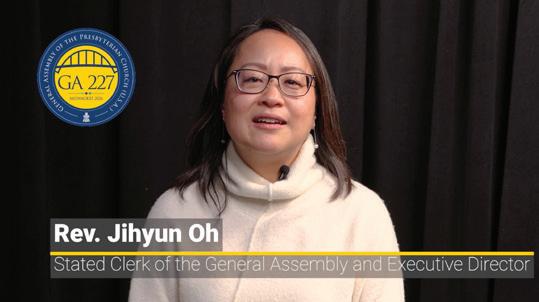
The Rev. Jihyun Oh, Stated Clerk of the General Assembly of the PC(USA), shares about the various types of important work that will take place at June’s 227th General Assembly, including how we live in community together and how we serve as witnesses to the world. She says that she is praying that we will hear God’s voice clearly through all of that work and love one another in the process. Watch to learn what else Rev. Oh is praying about as General Assembly approaches.
The Committee on Mission Responsibility Through Investment brings the following recommendations for General Assembly consideration:
• Environmental actions – CLJ-01 recommends adding ConocoPhillips and Duke Energy to the General Assembly Divestment/ Proscription list for environmental concerns and beginning focused engagement with AES and EOG Resources
• Human Rights actions – FIN-07 recommends adding GE Aerospace and Palantir Technologies to the General Assembly Divestment/Proscription list due to the companies’ products being connected to military-related production and human rights violations
• FIN-02 recommends revising the GA’s military and weapons divestment screens from a revenue-based model to a conduct-based approach to better identify companies conducting business with states involved in the commission of the worst violations of international humanitarian law.
The Rev. Chris Peters and the Rev. Rebecca Luter recently announced their intent to stand for Moderator together at the upcoming General Assembly. Peters is the senior pastor at Westminster Presbyterian Church in Lincoln, Nebraska. Luter is the head pastor at Farmington Presbyterian Church in Germantown, Tennessee.
The pair became connected through friends and colleagues after Luter first felt a call to pursue the role of Moderator.
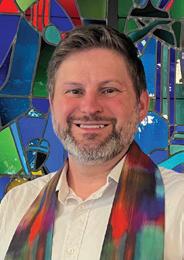
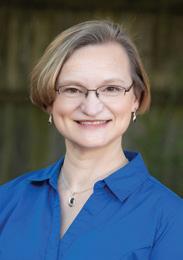
“I told Chris I am humblewhelmed,” Luter said, coining a phrase. “Both of us felt tapped and nudged in this way. It’ll be up to the Spirit whether we are elected, but I know we were called to stand.”
She said they’re both committed “to hearing the voices of all the people of the church and not coming to the role of Moderator with an agenda, but an openness to hearing where the Spirit is leading.” They’ve chosen “prepare to emerge” as their tagline.
Peters and Luter join three other pairs of Presbyterian leaders who have announced their intent to stand as Moderators: the Rev. Dr. Sean Chow and the Rev. Dr. Frances Lin, the Rev. Marta Pumroy-Cordero and the Rev. Dr. Kristopher D. Schondelmeyer, and the Rev. Dr. Bill Myers and the Rev. Dr. Barbara Barkley.
You can read more about Peters and Luter on Presbyterian News Service.
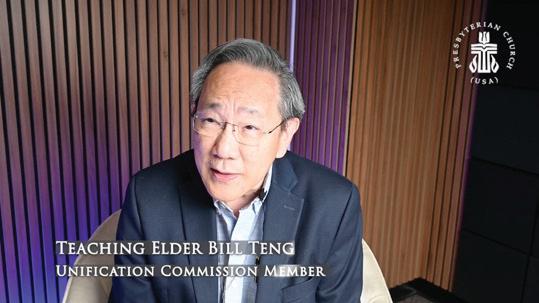
As the Unification Commission prepares to make its report to the General Assembly in a few weeks, various commission members reflect on their experience as a group and the work they’ve accomplished over the past couple of years. Through it all, they emphasize that their own commitment to sharing a common goal across differences in experience, perspective and context would be reflected in how the denomination moves into the future as a body. Watch the video to hear more of the commission’s reflections and hopes for what is to come.
Informational Sessions are presented by elected/ appointed members of committees and/or staff from agencies who have submitted business to this General Assembly. In these Informational Sessions, presenters will provide a broad overview of their work and any recommendations that are coming. This time may also include a Question and Answer period in which participants may engage with the presenters. Informational Sessions are open to all.
Registration is required to access the live event.
Recordings of Informational Sessions will be made available following the event.
This information will be available on the website by June 1st. Bookmark this page and check it regularly. More informational sessions will be added as details become available.
The sessions are all being scheduled the week of Monday June 15 thru Friday June 19, but so far we have 6 info sessions scheduled from these committees/commission that will take place on Mon, Tue, Wed that week:
• MRTI
• ACSWP
• REAC
• Unification Commission—2027--2028 Budget
• Unification Commission—Work of the UC, PL&W, and the Org for Mission
• Special Committee on the PC(USA) and Race
In April, the Rev. Dr. Bill Myers announced his intent to stand for Moderator of the General Assembly and voiced a desire to find a colleague to stand with him. Just a couple of weeks later, with resounding approval from her congregation, the Rev. Dr. Barbara Barkley announced that she would stand with Myers as a pair. Barkley is pastor of Clayton Valley Presbyterian Church in the San Francisco Bay area, where she has served for the past 11 years.
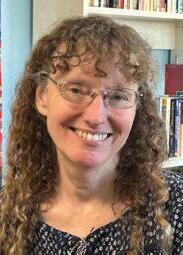
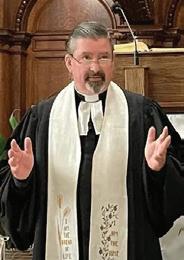
Barkley told the Presbyterian News Service that she heard the news that Myers was looking for someone to stand with him three times within one hour. She took it as a sign.
“We say we care, but do we show up for one another? Do we take the time to get to know one another?” Barkley wondered. “Do we cross boundaries enough to really understand and celebrate who others are, to recognize our connections, to see one another for the children of God we each are?”
“My call is to be part of that conversation, to insist that this conversation across our differences continues and deepens,” she said. “My call is to empower others to lean into that calling as well. … My promise is that I will show up to hear, to connect and to grow. Hopefully, in so doing I also give others the opportunity to show up, hear, connect and grow as well.”
You can read more on Presbyterian News Service.
Overtures 005 and 006, addressing the restructuring of the PC(USA)’s World Mission and calling for a new missiological statement, recall the efforts of Presbyterians inside the United States and abroad to reshape their relationships during the middle of the 20th century.
In the global political transformations just following the Second World War, Presbyterian mission workers found themselves in between declining imperial powers — chiefly Great Britain and France — and the national churches of newly independent nations. As the people with whom they worked alongside, harvested crops with, taught, and were taught by demanded independence — in Cameroon, in Lebanon and Syria, in Iraq and Iran — mission workers and administrators found the centralization of authority over missions in New York City and Atlanta to be incompatible with the new age. And so, missions changed.

to devolve responsibility and to integrate their work with local churches. Mission integration paralleled the UPCUSA’s strategy for healing divided society stateside — make an integrated Church and an equal society will emerge perforce.
Many stories of Presbyterians finding their way through an utterly changed political reality can be told. Our second installment introduces the Presbyterian mid-century in Iran.
Devolution and revolution: Mission and church in Iran
In 1958, COEMAR, the Commission on Ecumenical Mission and Relations, “handed down something close to an ultimatum” requiring mission workers
Despite entreaties from COEMAR headquarters in New York, integration of missions and churches across the Middle East was gradual. In 1959, the Syria-Lebanon Mission integrated itself with the National Evangelical Synod of Syria and Lebanon (NESSL). Property transfers continued through at least 1967; the last COEMAR representative in Beirut was the treasurer, the Rev. Ben Weir. In Iraq, mission work continued after the overthrow of King Faisal in 1958, only ending in 1969 as the Iraqi Ba’ath Party nationalized education and expelled foreign mission workers. In Iran, mission devolution began in 1958, and the final disposition of Presbyterian Church-owned property was concluded in 1985.

David Staniunas of the Presbyterian Historical Society has written a three-part series offering historical context and reflection related to business slated to come before this summer’s General Assembly. The excerpt below comes from a piece about 20thcentury church mission efforts in Iran and how that history might inform conversations around the recent restructuring of World Mission in the PC(USA). Continue reading about how mission efforts in Iran evolved on Presbyterian News Service.