
PINNACLE
Presbyterian Church of Jackson Hole ~ QUARTERLY NEWSLETTER I VOLUME NO 18
Presbyterian Churchof Jackson Hole ~ QUARTERLY NEWSLETTER | VOLUME NO 29
WINTER / SPRING 2026
THE HALL OF FAITH
PINNACLE
THE HALL OF FAITH
The Hall of Faith invites us to reflect on the great cloud of witnesses described in Hebrews 11 and 12:1-3 and the faithful people who have shaped our own journeys of faith. In this edition of The Pinnacle, we explore how stories of trust, perseverance, and quiet faithfulness—both biblical and personal—strengthen and encourage the community of Christ. As members of our congregation share about those who modeled faith through words and deeds, we are reminded that we do not run the race alone, but together, guided by those who have gone before us.
"Therefore, since we are surrounded by such a great cloud of witnesses, let us throw off everything that hinders and the sin that so easily entangles. And let us run with perseverance the race marked out for us," ~ Hebrews 12:1
› PLEASE CHECK pcjh.org CALENDAR FOR UPDATES AT TIMES PCJH EVENTS ARE SUBJECT TO CHANGE ‹
WEEKLY
TUESDAYS
7:27am Youth Group (MS Breakfast)
WEDNESDAYS
4-6pm THE FUN CLUB K-5th grade
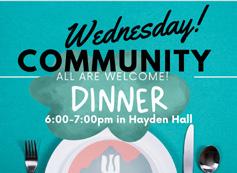
6-7pm Community Dinners
SUNDAYS
9 am New Pathfinders adult class “Gospel of John”
9:30am Worship on the Mountain Gondola Services @ JHMR
10:15am Youth Sunday School
2 pm X-Country Ski Group
6pm Ascent Bible Study
FEBRUARY
> SUMMER LAMBS 2026 <
~ Little Lambs Preschool Registration 2026-27 opens Registration OPEN! ~ Extending the Table
~ Cook Book Club
~ Wilderness Together Pinedale XC Ski
~ PCJH Belong Membership Class
11:30AM <
~ Maundy Thursday Service at Shepard of the Mountain Lutheran Church
~ Good Friday @PCJH
~ Wednesday Community Dinners Resume!
SURROUNDED BY A GREAT CLOUD OF WITNESSES
~ Rev. Ben Pascal

Most of us are familiar with the idea of a “Hall of Fame.” In sports, music, and the arts, halls of fame exist to honor those whose talent, dedication, and influence have left a lasting mark. We remember legendary athletes who changed the game, musicians whose songs shaped generations, and pioneers whose creativity opened new paths for others to follow. These halls are not simply about nostalgia; they are about memory. They remind us where we’ve been, what excellence looks like, and why certain lives are still worth talking about long after the final game is played or the last note is sung.
That instinct—to remember, to honor, to tell the stories of those who came before us—is deeply human. It is also deeply biblical. In many ways, it helps us understand what the author of Hebrews is doing in chapter 11. Scripture, too, has its own “Hall of Faith.” Yet this is not a hall that celebrates trophies, championships, or personal glory. Instead, Hebrews invites us to remember ordinary people who trusted an extraordinary God. Their stories are not preserved because they were flawless or famous, but because they lived by faith.
WHAT IS THE HALL OF FAITH?
Hebrews 11 is often called the “Hall of Faith” because it presents a sweeping narrative of faithful witnesses from Israel’s story.
Abel, Enoch, Noah, Abraham and Sarah, Moses, Rahab, the prophets, and many others appear in rapid succession. Some are named; others remain anonymous. What unites them is not their success by worldly standards, but their posture of trust toward God.
The chapter begins with a profound theological definition: “Now faith is the assurance of things hoped for, the conviction of things not seen” (Hebrews 11:1). Faith, according to Hebrews, is not mere optimism or vague belief. It is a settled confidence rooted in God’s character and promises, even when circumstances suggest otherwise. Faith is lived forward before it is understood backward.
Again and again, the phrase appears: “By faith…” By faith Abel offered. By faith Noah built. By faith Abraham went. By faith Moses chose. The repetition matters. The author is not primarily interested in the outcomes of their stories, but in the way they oriented their lives toward God.
Faith becomes the lens through which obedience, courage, endurance, and hope are made possible. Importantly, Hebrews 11 does not sanitize these stories. Many of these figures doubted, failed, hesitated, or suffered deeply. Faith does not guarantee ease or success; it guarantees relationship—life lived in response to God’s call.
"Each of us has a race—unique in terrain and tempo—but none of us runs alone. "
FROM WITNESSES TO COMPANIONS
Hebrews 11 flows directly into Hebrews 12:1, where the metaphor shifts: “Therefore, since we are surrounded by so great a clou of witnesses, let us also lay aside every weight…and let us run with perseverance the race that is set before us.” The faithful are no longer just examples from the past; they become witnesses surrounding us in the present.
This image is often misunderstood. The “cloud of witnesses” is not meant to suggest that the saints are spectators watching us from heaven like fans in a stadium. Rather, they are witnesses in the sense that their lives testify to God’s faithfulness. Their stories bear witness to what it looks like to trust God across generations.
In this way, Hebrews offers a deeply communal vision of faith. Faith is never a solo endeavor. We are shaped by those who have gone before us, and we, in turn, shape those who will come after us. The race of faith is not a sprint but a relay, with wisdom, courage, and hope passed from one generation to the next.
WHY STORIES MATTER
This is where our congregational stories matter so deeply. The Bible’s Hall of Faith does not end in Hebrews 11. It continues wherever faithful lives are lived in response to God’s grace. While Scripture is unique and authoritative, the testimony of faithful people in our own lives helps us see how biblical faith takes flesh in real time.
Many of us can point to a grandparent who prayed faithfully, a teacher who embodied quiet integrity, a friend who trusted God through suffering, or a mentor who showed us what sacrificial love looks like. These individuals may never appear in a history book, but they have shaped our faith profoundly. Through words spoken at the right moment, acts of kindness offered without fanfare, or steady presence during seasons of uncertainty, they became living testimonies to God’s work.
Telling these stories is not an exercise in nostalgia; it is an act of formation. When we share stories of faith, we remind one another that God is still at work. We discover that our struggles are not unique, that perseverance is possible, and that faithfulness often looks quieter and slower than we expect—but no less powerful.
A THEOLOGICAL INVITATION
At its heart, Hebrews is a pastoral letter written to a community tempted to grow weary. The author does not scold or shame but encourages. “Do not throw away your confidence,”
he urges, “for it has a great reward” (Hebrews 10:35). The Hall of Faith exists to strengthen tired believers, to say: you are not alone, and you are not the first to walk this road.
This theological vision resists the modern tendency to individualize faith. Christianity is not merely about my personal beliefs or private spirituality. It is about belonging to a people shaped by shared memory, shared hope, and shared commitment to follow Christ. Remembering the faithful—biblical and contemporary—anchors us in that larger story.
Moreover, Hebrews 12 ultimately directs our attention not to the witnesses, but to Jesus: “the pioneer and perfecter of our faith.” The saints point beyond themselves. Their lives, at their best, echo the life of Christ—marked by trust, obedience, humility, and love. Jesus is both the foundation and fulfillment of the faith they lived and the faith we are called to live.
LISTENING TO ONE ANOTHER
This edition of The Pinnacle invites us into holy listening. As you read the stories shared by members of our congregation, I encourage you to receive them as gifts. These testimonies are windows into one another’s lives, histories, and journeys with God. They help transform us from a gathering of individuals into a community of shared faith.
In telling and hearing these stories, we come to know one another more deeply. We learn what has sustained faith in times of joy and sorrow. We recognize how God uses ordinary people to do extraordinary work. And we are reminded that our own lives, too, are shaping someone else’s understanding of faith—often in ways we may never fully see.
RUNNING THE RACE TOGETHER
The Hall of Faith is not about admiration from a distance. It is an invitation to participation. “Let us run with perseverance the race that is set before us.” Each of us has a race—unique in terrain and tempo—but none of us runs alone. We are surrounded by witnesses who testify that God is trustworthy, that faith is worth the risk, and that perseverance bears fruit.
May these stories strengthen your resolve, deepen your gratitude, and widen your imagination for what faithful living looks like today. And may we, together, continue to add our own faithful steps to the great and unfolding story of God’s people. ✝

REV. BEN PASCAL
is the Senior Pastor of PCJH and father to Nina, Graham, and Naomi
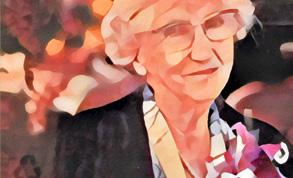
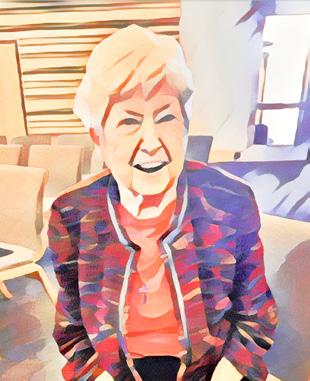
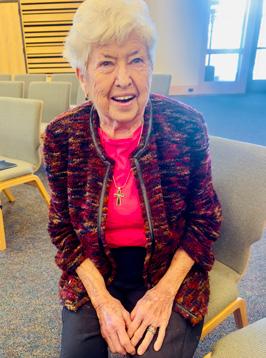
TAMMY: Bobbi, when you look back over your life, how would you describe your faith journey?
BOBBI: I’ve had an amazing, wonderful life. I was raised in the Dutch Reformed Church in Michigan, and faith was simply part of everyday life. We walked to catechism, went to Sunday school, and I learned early on what it meant to belong to God, and what it meant to give. But the Dutch Reformed Church was very strict, and I never understood why you couldn’t trust people to make choices for their lives. I wouldn’t say there was one dramatic moment when I came to faith. It was gradual—something that grew over time, through family, church, and the people who surrounded me.
TAMMY: Who were the earliest influences on your faith?
BOBBI: My mother was a huge influence. She was very positive and patient. My dad was faithful too, but more strict—very much “thou shalt not.” My mother’s faith felt gentler, steadier. I always felt like I couldn’t do enough for her. I also had wonderful Sunday school teachers. They somehow gave us a deep sense that we were the Lord’s. We felt safe and loved.
TAMMY: Was there anyone in particular who stands out from those early years?
BOBBI: Yes — a Sunday school teacher named Al Weber. He was kind and calming. You felt liked in his presence. He wasn’t always pointing out what you were doing wrong. That really shaped how I understood God.
TAMMY: Who has influenced your faith in adulthood?
BOBBI: Teachers, friends, and church community. I’ve always loved Bible study. You can study Scripture your whole life and still discover something new. I like books but there is nothing like the Bible. Also, friends like Cindy Dahlin. have been especially important. There is no one like her. She’s honest, caring, and fun.
TAMMY: How has faith sustained you through loss and pain?
BOBBI: Right now, the hardest thing in my life is family estrangement. It breaks my heart. In those moments, it’s really Christ Himself who holds me. You can talk to people, but ultimately you have to turn to Christ.
TAMMY: How did the church help form your faith as you grew older?
BOBBI: Church was a big part of life. Sundays were a full daymorning service, Sunday school, evening service, singing songs. People tell me it’s shocking that I still love church afterall that, but I do. Making my confession of faith as a teenager (confirmation) was especially meaningful. People came up afterward to hug me. I didn’t realize it meant so much to them—or to me.
TAMMY: Were there challenges that shaped you spiritually?
BOBBI: I wasn’t an easy child. I carried guilt about that for a long time. I also had speech impediment as a child, but I received help from the public school— something I’m deeply grateful for. Looking back, I see how many people quietly supported me without my fully realizing it at the time.
TAMMY: What stands out when you think about your husband, Ken?
BOBBI: Ken showed his faith through service. He gave himself quietly and faithfully to children, schools, and community, especially the school in Kelly. He spent summers fixing the playground, planting grass, building fences, even creating an ice rink for the kids. Watching that shaped me deeply.
TAMMY: As you reflect on your life now, what fills you with gratitude?
BOBBI: So much. I had a wonderful marriage, a wonderful childhood, and more support than I ever realized at the time. The good far outweighs the bad. I am deeply thankful for my life.
TAMMY: If you could name one thing that shaped your faith most, what would it be?
BOBBI: Faithful people – mainly the church - people who showed kindness, patience, and presence. My faith was shaped quietly, over many years, by people who showed me what it means to walk with God and to trust him. I carry a piece of paper in my Bible that has the following statements which have become foundational for me:
TO BELIEVE IN JESUS CHRIST IS TO HAVE A CONFIDENT CONVICTION THAT:
1. He is who the Bible says He is.
2. He will do what he promises.
3. Upon placing trust in him, I am entering into an eternal personal relationship with him– joy. Knowledge-Conviction-Trust-Sin-Salvation-Service
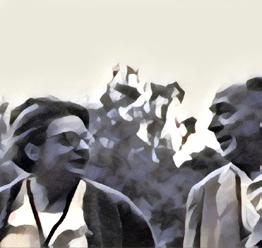
TWO OF THE DEFINING EXPERIENCES IN MY WALK WITH GOD HAVE INVOLVED MY LATE WIFE KIMBERLY COOKE BROWN.
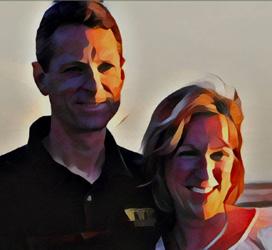
The first was my baptism. As a newly married couple, Kim and I bought a little house on Main Street in the quaint village of Cranbury, NJ. At the opposite end of Main Street was the picturesque First Presbyterian Church, with its white clapboard siding and towering steeple. At Kim’s behest, we became regular attendees and enjoyed getting to know the co-pastors Steve and Carol Lytch. In January 1985, we became members and again at Kim’s urging, I received my adult baptism. Prior to that time, I was a "C & E”—Christmas & Easter Christian. It was Kim who got me started on my intentional faith journey that continues to this day.
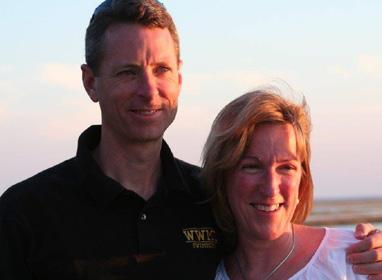
The next 25 years flew by. We moved to Connecticut, had two children, joined a Congregational Church, where we became actively engaged. Kim was a teacher by both education and occupation. She taught everything from Nursery School to 3rd grade to middle school science. And of course –Sunday School. All that time she was involved in various ways with the youth of the church – participating in “lock-ins” for the middle schoolers, leading the Youth Committee, and being in the classroom most Sundays.
It was this teaching mindset that helped me grow in my faith. She schooled me on her favorite passages in the Bible, especially Philippines 4: 6-7
“Do not be anxious about anything, but in every situation, by prayer and petition, with thanksgiving, present your requests to God. And the peace of God, which transcends all understanding, will guard your hearts and your minds in Christ Jesus.”
During the challenging times of her life, Kim leaned into her faith. When she was struggling with the demands of having two young children at home, she began meeting with a Stephen Minister at our church, providing her with a faithbased outlet for her frustrations and questions.
The ultimate test of Kim’s faith began over Labor Day weekend of September 2010. She had a stroke, which led to a CAT scan of her brain revealing a mass, and resulted in the diagnosis of a glioblastoma – a Grade IV brain tumor which has a median survival of only 15 months.
How would my spiritual mentor react to this devastating news? Would she be angry with God? Would she turn away from Him? She had received a death sentence – how was she supposed to react?
In advance of a family cross country trip in 2001 involving
traveling 7,500 miles in the car, Kim left a “just in case” letter at home in the event anything happened on the trip. Part of what she wrote was both prescient and prophetic
"If I leave this world, I leave knowing of God's perfect love for me, and I trust that I will go without fear"
Kim lived that sentence and her favorite Bible verses after her diagnosis. She was incredibly brave, facing her disease with a peace that did indeed transcend understanding. I can’t tell you how many times AFTER she was diagnosed that she said “I am so lucky”. While deeply saddened that she would miss seeing her children get married and have children of their own, she wasn’t angry with God—she accepted His path for her life and was a shining example of grace. In that difficult time, the evidence of Kim’s spiritual impact on me can be found in the pages of the online journal we wrote, keeping people apprised of Kim’s condition. It is filled with references to God and the Bible, and how we were being shepherded through that awful time by a Savior who loved us.
The joy with which Kim lived her life was due in most part to the strength of her faith. And she shared that joy of knowing and loving Christ with everyone she came in contact with. She was a powerful witness to me and to others, especially after she learned her diagnosis. Kim passed in November 2014, trusting all the while in God’s merciful grace.
Kim got me started on my faith journey in 1985 and her memory continues to inspire me. ✝

CHRIS BROWN and his partner
Kirsten Heinemann live in Teton Pines and spend time on the east coast with their children and grandchildren.
GOD’S PATIENTS, NOT YET CURED
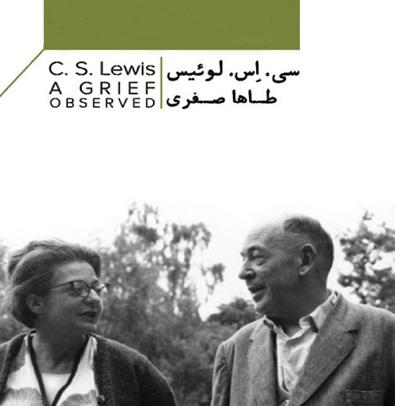
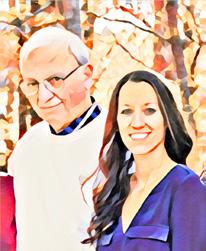
AMONTH OR SO AFTER ED, MY HUSBAND of 37 years, died, I came across a book list in The New York Times: “Seven Books on Navigating Grief." I had not read any of these books (lucky for me, I’d had no need before), but I had heard of one of them: “A Grief Observed” by CS Lewis. I decided to save this one for last because I already knew this author, and I was curious about the more contemporary authors. Each book taught me something, despite the different circumstances that inspired each author to write.
I jumped around, reading the books in no particular order, roughly guided by some cursory notes I had scribbled in the margin of my hand-written list: “Her baby son died of cancer,” “His father had a heart attack,” “His wife died by suicide.” Each book taught me something, despite the different circumstances that inspired each author to write.
A year and a half after beginning this project, I picked up the final book from that list, "A Grief Observed." I had saved this book for last because I knew it would be a good one—like saving the best bite for last. I was familiar with CS Lewis’s writing, and his ideas had played a huge role in the formation of my faith. I’d read all seven books in The Narnia Chronicles as a child, and devoured "Mere Christianity" and "The Screwtape Letters" as a new Christian in my early twenties. I had also read

"Surprised by Joy," in which Lewis details his faith journey from atheism to Christianity. I like his writing for its unflinching honesty, its wisdom, and its humility. I knew a bit about "A Grief Observed" before I read it. I knew it was born of Lewis’s journal entries written after his beloved wife, Joy, died of cancer. He and Joy had had a painfully short marriage. It was her second and his first; he was 58 years old when they married, and she was 41. She was diagnosed with terminal bone cancer less than a year after they wed, and she died just four years into their marriage. Some of Lewis’s journal entries felt familiar. They were, in fact, quite similar to my own notations scribbled after Ed’s death. Lewis wrote that his grief felt like “[…] suspense. Or like waiting; just hanging about waiting for something to happen. It gives life a permanent provisional feeling. It doesn’t seem worth starting anything. I can’t settle down. I yawn, I fidget, I smoke too much,” he wrote. My journal entry reads: “Nothing satisfies; I scroll on my phone, I prepare food I don’t want to eat, I procrastinate too much.” I’ve been told that every grief journey is unique, yet there are universal aspects. While it is true that each of us must find our own way through it, knowing that others have been there and survived is a comfort in itself.
This line also resonated with me: "We want to prove to ourselves that we are lovers on the grand scale, tragic heroes; not just ordinary privates in the huge army of the bereaved, slogging along and making the best of a bad job." I am a private in the huge army of the bereaved, but there is comfort in the company of others, especially those so much wiser than myself.
CS Lewis struggled to understand the enormity of his pain in contrast to his belief in a loving God. I appreciate knowing this. If one of the 20th century’s greatest Christian thinkers had questions, then I am certainly entitled to a few myself. Lewis made sense of his pain by comparing it to the pain inflicted by a surgeon. There are times when we must feel pain to be healed. He says, “We are God’s patients, not yet cured.” “If there is a good God, then these tortures are necessary. For no even moderately good being could possibly inflict or permit them if they were not.” Then Lewis makes me laugh when he says “What do people mean when they say, ‘I am not afraid of God because I know he is good?’ Have they never even been to a dentist?” I love this. We know our dentist is trying to help us, but we can still fear the hand that wields the drill!
I will never let go of my grief completely. Lewis likens it to a man getting his leg cut off. The continuous pain will stop. But he will never be a bipedal walker again. This I know: Grief is a universal part of love. The Master Physician is still working on me. I am not alone. Thank you once again, CS Lewis! ✝
JANE LAVINO is the Sugden Chief Curator of Education at the National Museum of Wildlife Art in Jackson, WY. She loves making fine art relevant and accessible to diverse audiences.
ARECENT PODCAST SUGGESTED THE SUBSTANTIAL ADVANCEMENTS IN MEDICINE IN THE LAST CENTURY ARE DUE TO THE RISE OF THE POST-MORTEM STUDY OF DISEASE FROM THE VANTAGE POINT OF A DIRECT EXAMINATION OF THE ORGANS … AN AUTOPSY.
We owe a huge debt of gratitude to two 19th century individuals—Karl Von Rokitansky in Vienna and Rudolf Ludwig Karl Virchow in Berlin. Between them they conducted thousands of autopsies, bringing their microscopic findings to bear on all sorts of diseases that had previously crippled the flourishing of human life.
Spiritual life, for me, while maybe not as complex as cellular pathology, could also benefit from an examination, preferably not post-mortem. The word “autopsy” has been defined to “see for oneself.” When we look deeply into our own life of the Spirit, what do we find? What are the underlying sources of why we are the way we are, of how we keep faith, of what matters to us, and of what truth guides our hearts and minds.
Is it the people we encounter who influence us toward God? Certainly. Should the layers of my faith ever be examined there would be a “great cloud of witnesses” at every sinew of my being in Christ. People. They are everywhere responsible for my mind’s consideration of the Lordship of Jesus Christ and my will to obey the call of God to seek Him. Preachers, teachers, coaches, youth leaders, colleagues in ministry, writers, musicians, relatives and random strangers are all layered in among the convictions and intentions of my deepest hopes.
Having our own Hall of Faith coincides with the apostle Paul’s understanding of the origins of belief: “How can people call for help if they do not know who to trust? And how can they know who to trust if they have not heard of the One who can be trusted? And how can they hear if nobody tells them? And how is anyone going to tell them, unless someone is sent to do it? That is why Scripture exclaims. A sight to take your breath away! Grand processions of people telling all the good things of God!” (Romans 10:14-17 The Message).
In 1956 my parents moved from the Chicago area to Pasadena, California just a few months after my mother’s parents were in a car accident that took the life of my grandfather. A year later I was born and my widowed grandmother, Mabel Rowe, moved from Kenosha, Wisconsin to a small apartment on Lake Avenue in Pasadena. That apartment became the first seminary I attended. While my mother finished her college degree, I sat at grandma’s breakfast table and memorized “my verses” before we walked the streets of Pasadena, stopping at Vande Kamps for coffee cake before gathering with her sewing circle to roll and pack bandages they had crocheted for victims of leprosy. Biblical studies and practical theology courses. It was a start.
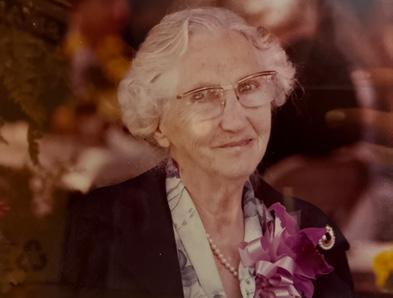
Our daughter Melissa carries her name – Rowe – in the middle of her name and keeps a photo of her great-grandma on her dresser as a reminder of her heritage in Christ. When we visit Melissa, I like to sit with the photo for a bit and take inventory of my faith. Am I still looking to Jesus, still reading my Bible, still helping those in need? Am I honoring her hopes for me?
In 1988, one year out of real seminary and serving my first pastorate, I preached at my parents’ southern California church one Sunday and grandma, almost 90 years old, was there. And I knew I would not be there without her. Soon after I conducted a service as the Rowe’s and Weber’s remembered and gave thanks for her life. I spoke of her quiet, firm, kind ways and her gentle insistence that I know Jesus as my Savior. After the service my cousins and brothers shared similar stories, which initially tempered what I assumed was my unique grandma pathology but then realized it was her unique gift of faith to us all. She, we all knew, was trustworthy and carried the story of Jesus so easily and genuinely. She was sent to us, a grandma, a widow, a believer in the grand procession of believers.
In Sheldon Vanauken’s, "A Severe Mercy", the story of his coming to faith through exchanging letters with C.S. Lewis and the influence of a small group of believing friends, he wrote of how he saw for himself how his life in Christ had been assembled. “The best argument for Christianity is Christians: their joy, their certainty, their completeness.”
How thankful I am for the “grand procession of people telling all the good things of God!” ✝

REV. STEVE WEBER is a retired pastor and Navy chaplain who lives in Teton Valley, Idaho with his wife, Cindy. They have four grown children and 11 grandchildren.
FAITH, FOR ME, HAS NEVER BEEN JUST AN idea floating in the clouds. It’s been lived out in the people around me—ordinary acts of kindness that shine like lanterns in the dark, and in my personal Hall of Faith, no one shines brighter than my sister Jenny. She has been, and still is, my First Responder. When life throws me curveballs, Jenny is the one who shows up, steady and sure, reminding me that God’s love is never far away.
Jenny’s influence didn’t appear out of nowhere. It’s rooted in the legacy of our dad, an Episcopal minister whose life was all about forgiveness and kindness. Though he passed away thirty years ago, his example still ripples through our family. He showed us that faith isn’t just proclaimed from the pulpit—it’s practiced in daily acts of grace. Jenny absorbed those lessons deeply. She learned how to forgive, how to extend compassion, and how to carry the light of Christ into the lives of others. And here’s the beautiful part: Jenny didn’t stop there. She passed those lessons on again, shaping me and especially shaping the ministry of PCJH's Senior Pastor today. So, in a way, the thread of faith runs from my dad, through Jenny, and into the life of this church via Pastor Ben.
Jenny’s care has always been practical, sometimes sweet. She taught me how to tie my shoes—patiently looping the laces until my fingers caught the rhythm. Later, she showed me how to balance a checkbook, which was less about math and more about patience. (Let’s just say numbers and I have a complicated relationship.) These weren’t just life skills; they were lessons in paying attention, in showing love through the little things. Jenny’s faith expresses itself in those everyday gestures, reminding me that God’s love often shows up unexpectedly in the details.
What has always struck me is Jenny’s steadiness. She doesn’t waver. Her faith is like a well-built house that doesn’t creak when the wind blows. She doesn’t make a spectacle of her devotion, nor does she wield scripture like a weapon. Instead, she lives it quietly, with a calm presence that speaks louder than any sermon. When others might rush to prove their righteousness, Jenny simply listens, offers a kind word, or sits beside someone who needs company. Her relationship with Christ is woven into her actions, not announced with fanfare.
Now that we’re grown, Jenny still checks on me. Living alone, I know she calls not out of duty but out of love. Her encouragement is steady, like a gentle nudge saying, “You’re not forgotten. You are loved.” Often I joke that she has a sixth

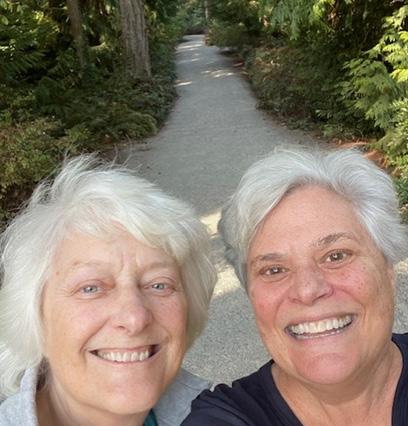
sense for when I’m discouraged—she’ll call right then, as if she’s got a direct line to the Holy Spirit. Her presence reassures me that faith isn’t a solo journey. It’s sustained by community, by family, by those who embody Christ’s compassion in tangible ways.
What makes Jenny’s role in my Hall of Faith so profound is the way she bridges past and present. She carries forward the lessons of our dad, who modeled forgiveness even in the face of challenges. I remember his kindness, his ability to see beyond faults and failures, and to extend grace where others might have withheld it. Jenny inherited that gift. She forgives quickly, encourages freely, and reminds me that faith isn’t about perfection—it’s about persistence in love. In her, I see the living continuation of our father’s ministry, not confined to a church building but alive in the everyday rhythms of relationship.
When I reflect on my Hall of Faith, Jenny’s portrait is framed by both her own actions and the legacy of our dad. Together, they remind me that forgiveness and kindness aren’t lofty ideals but daily practices. Dad planted the seeds, Jenny watered them, and now my dad’s grandson—Pastor Ben, carries that same spirit forward.
As I share this testimony with my church family, I do so with deep gratitude. I thank God for my father’s example, for Jenny’s faithful presence, and for the way their lives remind me that faith is both gift and practice. My Hall of Faith may be filled with many figures, but Jenny’s place is central. She has been my teacher, my encourager, and my reminder that God’s love is always near. For that, I give thanks—to God, to my family, and to this community of faith that continues to walk beside me. ✝
MARY WILLIAMS is a massage therapist, with over 25 years of experience in restorative bodywork, she brings the same spirit of healing to her writing, music, and painting. She is Pastor Ben’s aunt.
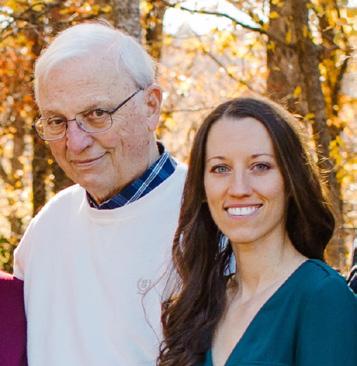
HEBREWS 11:1 SPOKE TO ME AS A TEENAGER, SO MUCH SO THAT THE VERSE WAS FRAMED IN MY BEDROOM
“Now faith is the assurance of what we hope for and the certainty of what we do not see.” “Assurance” and “certainty” were comforting words for a teenager preparing to leave the nest and navigate the very uncertain world of adulthood. Where would I go to college? What would I study? Who would I become? During the tumultuous time of young adulthood, I was fortunate to have the warmth and understanding of my dad, who was quick to find humor in tough situations and provide perspective that only someone older and wiser can.
As a kid, I viewed my father the same way I imagine a lot of kids do, all-knowing, strong, safe—the man with all the answers. He knew how to handle every situation and his decisions were always right. No doubts. No hesitation. In my life, no one embodied the calm surety of God and His promises more than my dad. What once seemed like a simple platitude, I now realize was a demonstration of his faith. Didn’t get that perfect job? “It’ll all work out.” Struggling to make ends meet? “It’ll all work out.” His faith was unwavering, the bold assurance of what he hoped for.
Dad once equated faith to the ability to hit a curveball. Just when you think all is well, life throws you a curve “and you had better have the faith to handle it!”
One such curveball in his life was an unexpected job loss. A devoted educator in Georgia for decades, he worked
hard to provide quality education to every child. He was proud of his accomplishments as school principal to integrate school programs and provide free breakfast for children in need. Stereotypes and prejudices are alive and well in the south, but he operated, unapologetically, in service to the least of these, decisions which ultimately cost him his job. He was devastated, but his reputation preceded him and within a matter of days, another local school had offered him a comparable position, where he worked for the remainder of his career and achieved a greater work/life balance than he thought possible. Ultimately, he was happier. Building a life of character and faith will never fail you. “It’ll all work out.”
Just as my father is in my Hall of Faith, his parents were certainly in his. He was raised in a big, boisterous, loving family, that was never wealthy but always had “enough.” Following the Great Depression and war, his father lost the stable job he depended on and began working in a local grocery store. When the owner decided to sell, he offered my grandfather the opportunity to purchase it. My dad, just a child at the time, remembered accompanying his father to the bank where the banker lent the money on a promissory note. He knew my grandfather was honest, hardworking, and would pay it back. That lesson, as told in Proverbs 22, stuck with my dad, “A good name is better than great riches.” My grandparents raised six children during a depression, war, and job loss, and survived because of their faith and reputation.
My father was a reserved man, not easily rattled by life’s unexpected circumstances, a quiet confidence only achieved after decades of facing and overcoming life’s hardships: the unexpected death of his brother, a business failure, a job loss of his own. Hebrews 11 states, “All these people were still living by faith when they died. They did not receive the things promised; they only saw them and welcomed them from a distance, admitting that they were foreigners and strangers on earth. They were longing for a better country—a heavenly one. Therefore God is not ashamed to be called their God, for he has prepared a city for them.” My dad’s faith was palpable when he died. There was no fear, no disbelief, only certainty of things unseen. The way he lived his life left an indelible mark on my own faith journey and I couldn’t be more proud to honor him in this issue. ✝

ELIZABETH JOHNSON is a southern gal who found her home in the Tetons. Happiest in nature, she loves adventuring with husband Adam and pup Harley.
WHEN I HEARD THE THEME OF THIS
Pinnacle edition I was a little apprehensive. I pictured a large, ornate, and seemingly endless space, and it felt daunting to fill those walls. I’ve long felt that my faith isn’t quite ‘biblical’ enough, that because I can find the words on the pages difficult to translate to a modern life, my faith doesn’t quite live up to the expectations of others, and that made me a little nervous to reflect on this.
As most things do, this turned around in my mind for a bit, and I looked with curiosity on where these feelings came from. I realized, this is my Hall of Faith, and I’m not an ornate space kind of person! I lean into cozy and bright, colorful and a little cluttered (despite my best efforts). A place with windows to look out into the world, mirrors to reflect inwards, and photos of people and places I love, reminding me of different lived experiences and perspectives. My faith doesn’t have to be measured by the amount of scripture I can quote, but rather by the choice and action to live in a way that exemplifies and amplifies the message.
AVERY KOOL Avery lives in Klamath Falls, Oregon with her husband and three daughters. She enjoys sharing food with family and friends, sports, reading, and chocolate.
I was raised with a fair amount of religion present, though no full commitment to a specific church for most of my childhood. My grandparents included Presbyterian ministers, devoted Catholics, and a pair of Unitarians. Our family was invited to attend celebrations throughout the year at the home of our Jewish neighbors. Faith trickled into our household and met us in the community. In lieu of attending a church service, on Sunday we would sit as a family and read my grandfather’s sermon for the week, the corresponding passage in the DK Illustrated Family Bible, and talk about our upcoming week.
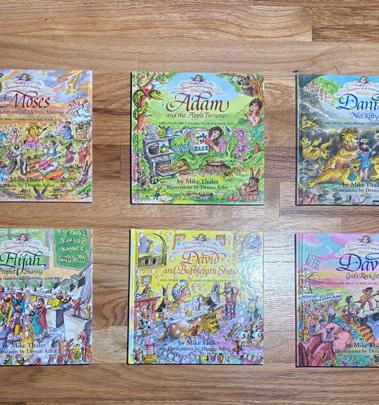
Most Sundays I would listen and look at the illustrations with a general idea of the moral of the story, trying hard to hold onto a piece of information so I could answer the inevitable, “what did you learn from that” question. I would hear the words, but the message wasn’t always apparent. At a community author night hosted by my school, that started to change. An author by the name of Mike Thaler was featured. Mike was the author of the popular ‘Black Lagoon’ picture and chapter books. That evening, he also shared a lesser-known series of books he had written, called ‘Heaven and Mirth.’
‘Heaven and Mirth’ took Bible stories and depicted them in relatable and often humorous accounts, with illustrations to match. With titles like ‘David and Bubblebath-Sheba’ and ‘Elijah: Prophet Sharing,’ each read like a bedtime story. An illustration was present at the conclusion of each story. ‘Goldie, the Miner Prophet’ shared the (golden) nugget of wisdom, the overarching theme, the big takeaway from the story, in a way that was relatable, followed by a reference to the real story.
Mike was born in 1936 in Los Angeles, and published his first book in 1961. He continued to publish through the late 1960s, then walked away from his work after a discouraging loss of funding. Encouragement from a friend led him to pursue writing for a children’s television show and in the mid-1970s, Mike shifted his focus back to writing children’s books. In 1981, Mike was partnered with illustrator Jared Lee and the two produced over 100 books together.

While my knowledge of Mike and his life is limited to the above paragraph, his impact on my faith has been much greater. When I find myself stuck, wondering how to detangle a complication, wondering how to navigate out of a maze of confusion, I think about Mike’s interpretations. He took passages from the Bible, distilled them into modern language, and added a dose of humor. His tactics taught me to take a step back, re-center, find humor where I can, and hold onto the nugget that shines through it all, a fresh reminder of Hebrews 11:1, “now faith is confidence in what we hope for and assurance about what we do not see.” ✝
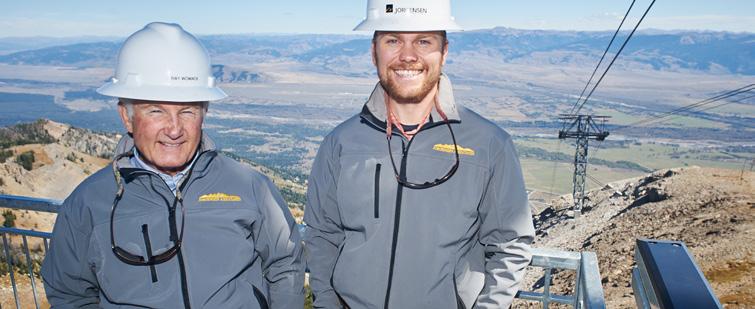
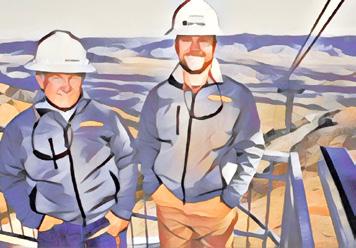
IAM A GEOTECHNICAL ENGINEER. I STUDY SOIL AND ROCKS AND LANDSCAPES TO HELP BUILD THINGS.
Jackson is an amazing place to learn about the wonders of geology, and how to build things in a variety of ground conditions. I am also a man of faith and a follower of Jesus, so Jackson is an amazing place to behold the beauty of creation, and to build a faith that will stand the test of time. This two-tone perspective of this place is part of my story. You see, I have the distinct privilege of a technical mentor and spiritual mentor in the same person.
I began my career as a geotechnical engineer under the tutelage of Ray Womack. I had little to no formal geologic training, so everything was "on the job." I learned from Ray that subsurface conditions were a puzzle to piece together, and you must balance the details with the big picture. Don’t just look at an individual soil sample 12.5 feet below the surface, ask, “How did all of this get here?” In all of it, Ray’s sense of humor (and BIG laugh) showed through. He’d pick up a rock and ask, “Do you know what this is?” Colter: “Limestone?” Ray: “Naw, it’s a chunk of chunkite.” I'd reply: ~ eyeroll ~ (even though I now use this joke on others)
Ray taught me that people are valuable and worthy of love and to be served. After taking a job with his firm and finding a place to live in Jackson, we moved here from Bozeman. Ray coordinated the PCJH Ascent group to help us unload the uHaul. We just drove into town, parked the truck, and a dozen people we had never met helped us move our belongings into our new house. Ray not only taught me jokes but truths that regularly pop into my head to this day. While moving furniture, Ray said, "God gave us internal combustion engines for a reason," or, in other words, work smarter not harder.
Ray showed me what it looked like to have a vocation as an engineer, not just a job or a career. Ray volunteered on many trips with Engineering Ministries International (eMi) using his knowledge and gifts as an engineer and geologist to benefit people outside of the United States. Ray and Meg encouraged Alli, my wife and I to take part and even sponsored us to travel on an eMi trip to Nicaragua, giving us a taste of what they had experienced. This was an incredibly eye-opening and life-changing experience to spread the love of Jesus while designing a bridge and other facilities for a Vida Joven (Young Life) camp.
Ray and I have both wrestled with faith questions like, “What does it mean to be a scientist and believe in the Bible?” We grew up in similarly conservative and strict faith traditions. Ray shared with me that, when in grad school, he met with an intellectual and spiritual crisis when he tried to reconcile the faith of his youth - which included a rigid and literal interpretation of the Bible - and the study of geology in the Rocky Mountains of Colorado.
By faith, Ray kept trusting in an almighty God that transcends human needs for certainty. Ray lives a life marked by a belief in a big, giant, all-powerful creator God who – somehow –spoke the mountains into existence and continues to move in the lives of people today. At least, that’s what I’ve learned from Ray.
By Ray’s example in work, relationships, and faith, I look forward to running this race called life with strength and perseverance. I will forever be grateful to have a mentor who pointed to the important things here in Jackson – the mountains and their roots, as well as our calling to love and serve people. ✝

COLTER LANE is an aspiring renaissance man with too many hobbies and interests. He and his wife Alli spend time with their children outside investing in green circle adventures.
Peter
Sandra

Rev.
bpascal@pcjh.org
Senior Pastor x 101
Rev. Dr. Tammy Mitchell tmitchell@pcjh.org
Associate Pastor x 104
Office
Brian Bultema bbultema@pcjh.org
Church
Cindy Dahlin
Jan
Liz
x107
cdahlin@pcjh.org
Church Administrator Assistant x109
Sarah
sbenko@pcjh.org Office
Beth
x109
communications@pcjh.org
Tori
Worship &
tlund@pcjh.org
x123
Amanda Lack alack@pcjh.org
Little Lambs Preschool Director x111
Megan Walker mwalker@pcjh.org
Youth & Young Adult Ministry Coordinator x124
Tiffany Tate ttate@pcjh.org
Children's Ministry Coordinator x103
Ruling Elders
Clerk of Session: Ken Blount 2026
Judy Kaelber Adult Ministry
Alan Lund* Personnel
Patty McDonald Assimilation & Nomination
Chris Sandvig Elder
2027
Kacy O'Hare Stewardship
Brad Herman Congregational Life
Karin Unruh Ascent Ministry
Becky Kimmel* Worship 2028
Chris Gulotta Children's Ministry
Bill Klyn Mission
Laura Soltau Youth Ministry
Ken Blount Elder at Large
Teaching Elders: Rev. Ben Pascal & Rev. Tamara Mitchell
Deacons
Class of 2026
Ponteir Sackery*
Brian Bultema*
Peter Lori
Carol Poole
Class of 2027
David Troxel
Nancy Fauntleroy
Tom Segerstrom*
Nancy Lori*
Class of 2028
Tim Rogers
Danny Weber*
Karlene Owens*
Yvette Werner*
CHRIS SANDVIG / ELDER AT LARGE
HELLO FELLOW PCJH MEMBERS AND FRIENDS!
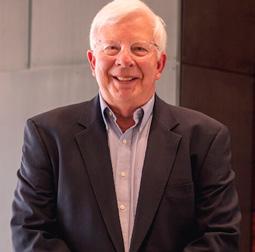
I have been asked to serve as an Elder at Large for the coming year. I look forward to serving the needs of the church and congregation. I have been a church member for a long time, and currently serve on Finance Committee, Housing Task Force and Capital Campaign. I enjoy men’s Bible study, Wednesday dinners, abundant pilgrimage opportunities and 8:00 Service with my geezer pals. I was initially attracted to PCJH by the community engagement/outreach. By way of background, I have been in Jackson for about 25 years following a career in Chicago in financial services, I claim to be a refugee. I was fortunate to land back in Wyoming following a brief career as a guide in the early 70’s. Currently I am a Husband (Louisa), professional grandfather (there are 10 of them), Father and Brother.
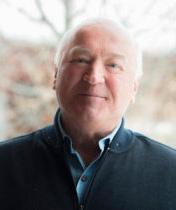
BILL KLYN / ELDER OF MISSION
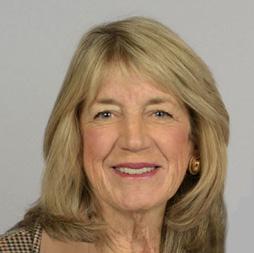
I AM SO HONORED TO HAVE BEEN CHOSEN BY YOU to head up the Mission Team at PCJH. I have previously been a Deacon and currently serve on the Nomination and Worship Team. God has blessed me, allowing me to live in His incredible creation of Jackson Hole for 50 years. During this time I was a partner with Jack Dennis Outdoor Shop, Life Link/Simms and then Patagonia for 28 years before retiring. Having been a friend of Paul Hayden for almost 15 years, I occasionally attended service when I was not frequently traveling for my work. I was blessed to have fully committed to PCJH 10 years ago. I am inspired by our incredible church community whose love and commitment to Mission and Worship personify our mission and vision statements. With our strong Mission Team, I look forward to further impacting our community and international partners.
CHRIS GULOTTA / ELDER OF CHILDREN'S MINISTRY
I WAS RAISED PRESBYTERIAN AS A CHILD AND LATER became a member of Greenfield Hill Congregational Church in Fairfield, Ct. I was a deacon and loved my involvement on all levels of church life. I have attended many Bible studies (BSF and CBS) in the past 45 years in all the five places where I lived, ranging from New Jersey, Connecticut, California, Virginia and now here in Jackson. I have found my church home at PCJH with the warm, loving and welcoming church pastors and members. I felt a calling to become more actively involved and sharing God’s gifts to me. I am happy to be a part of PCJH and will share my support and talents to help Tiffany Tate with her vision of the children’s ministry program. Above all, my prayer is to continue to grow in my faith and commitment to the Lord.
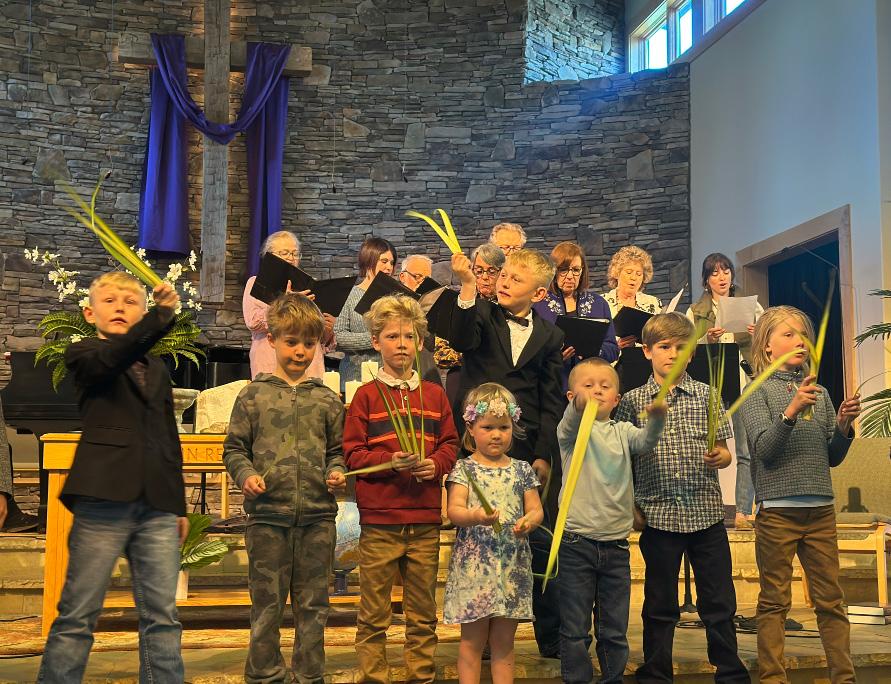
"A very large crowd spread their cloaks on the road, while others cut branches from the trees and spread them on the road. The crowds that went ahead of him and those that followed shouted,” “Blessed is he who comes in the name of the Lord!” ~ Matthew 21:7-9