Israel, Gaza, and the Prospects for Mideast Peace
By Roger Chapman, Ph.D. Professor of History, Palm Beach Atlantic University
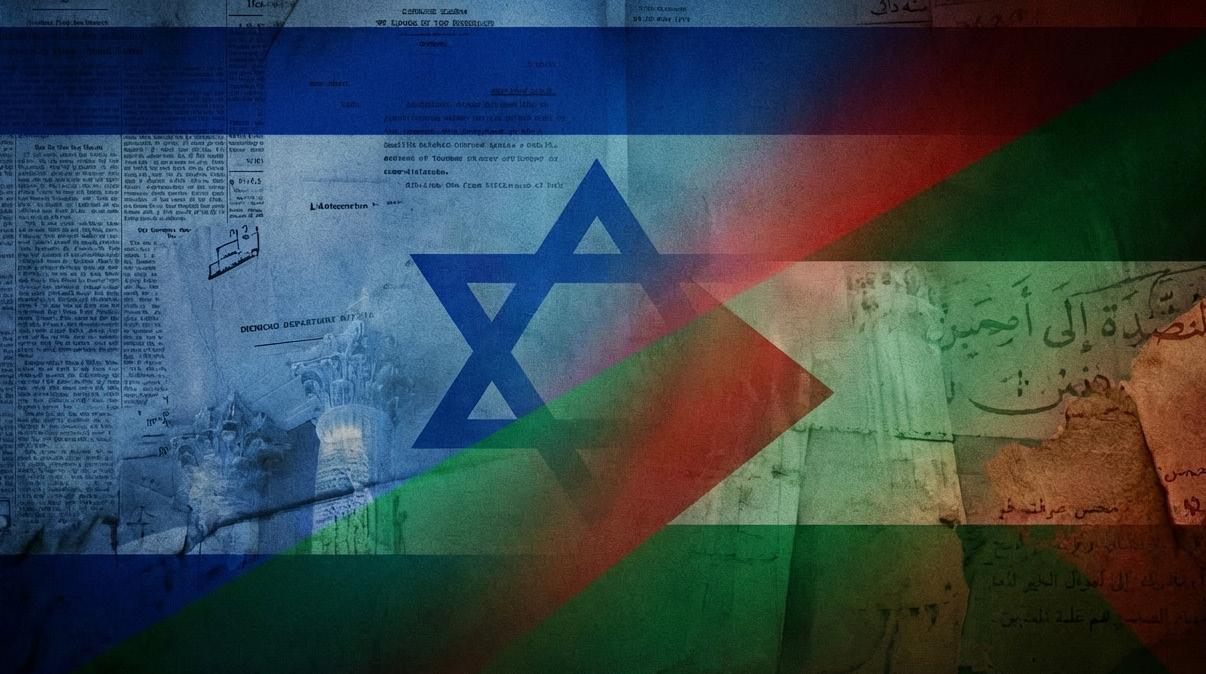
On October 7th, 2023, during the Jewish Sabbath and the holiday of Simchat Torah, Hamas and other operatives crossed the border of Gaza and entered southern Israel. Then in a series of coordinated attacks they proceeded to massacre over 1,200 individuals (women and children included)—the worst violence perpetrated upon Jews since the Holocaust. In addition, the terrorists carried back to Gaza 251 hostages, of which about 85 subsequently perished.
Israel’s violent response to October 7 was horrific as well. If the initial body count of the Gaza War holds true, 68,000 Palestinians were killed by the Israel Defense Forces (IDF), representing 7.5% of Gaza residents. Women and children represented a high number of the fatalities. In terms of proportion, what happened in Gaza was deadlier than any other recent conflict, including Ukraine, Syria, Yemen, or Sudan. Jared Kushner, the son-in-law of President Trump, viewed the rubble of Gaza and remarked, “It looked almost like a
nuclear bomb had been set off in that area.”
Israeli Prime Minister Benjamin Netanyahu is adamant that the establishment of a fully independent Palestine State would be akin to creating a “free-terror zone” on Israel’sborder. Events of October 7 only reinforced his belief that peace with Palestinians is impossible because their goal is Israel’s destruction. A counter to that argument, however, is the peace Israel achieved with bordering countries that were former enemies, namely Egypt and Jordan. Israel is in a Catch-22 situation: its tight control over Gaza and the West Bank, rationalized as a form of counterterrorism, creates what Palestinians regard as intolerable oppression, leading to outbreaks of retaliatory violence. Both sides are in a tit-for-tat spiral with competing victimization narratives. The Gaza War was launched, in the words of Netanyahu, to eradicate Hamas. Though severely weakened, Hamas remains standing: 13,000 of its estimated original 30,000 operators have survived the fighting, according to the IDF. It is probably correct to state that the eradication of the will of Palestinians is as unlikely as the eradication of Israel. It was certainly not Netanyahu’s intention to boost international
support for a Palestinian State, but that is exactly what the Gaza War achieved. A shift in opinion has occurred over the past two years, the period spanning from the Hamas-led October 7 attacks and the subsequent start of the Gaza War to the recent cease fire. With France and Great Britain now formally recognizing the State of Palestine, pressure is on Netanyahu. Today, the holdout permanent member of the United Nations Security Council not supporting the Palestinian cause is the United States. Meanwhile, American public support of Israel has slipped, especially among younger voters.
According to an October 2025 poll by the Pew Research Center, 59% of Americans have a negative view of Israel. As with much of contemporary politics, there is a partisan split: 70% of Democrats view Palestinians favorably whereas only 37% of Republicans do so. Overall American favorability toward Israelis has declined from 64% to 56% while eight in ten Americans disfavor Hamas. Clearly, Americans are distinguishing Palestinian people from Palestinian terrorists.
The war has strained relations between the United States and Israel, to the point where Trump forced Netanyahu to accept a
ceasefire in October 2025. The Trump peace plan seemingly undercuts Israel, but details are lacking. Perhaps the vagueness is built-in elasticity. While the Trump administration wishes for international support, it is unclear what say the UN Security Council would have throughout the process. The “Board of Peace” is to be headed by Trump, and it is to monitor a “temporary transitional governance of a technocratic, apolitical Palestinian committee.” Somehow the Palestinian Authority, which officially governs the West Bank, is to henceforth govern Gaza. In the meantime, it is unclear how the International Stabilization Force will see that Gaza is “a deradicalized terror-free zone.” It is also unclear what will happen if Hamas and other militants fail to demilitarize. And it is unclear how the foreign force will operate without being perceived as occupiers. The pathway for a Palestinian State remains uncertain. A truce is hardly permanent peace, but peace certainly must begin with the subsiding of bloodshed. Netanyahu doubtless believes he has been thwarted in completing his military objectives.
LeMieux Center Advisory Board
Senator George S. LeMieux Chair, LeMieux Center Gunster
Frances Fisher
Vice-Chair, LeMieux Center Dedicated Volunteer
Michael Cardone, Jr. Cardone Industries, Inc.
Kate Cotner Florida Power & Light Company
James Donnelly Castle Group
Mitzi Freidheim Dedicated Volunteer
Margie Helmholdt Lou Church Foundation
James C. Jenkins Esko, Inc.
Josh Kellam
The Garcia Companies
Paul M. Lawless Lawless, Edwards and Warren
William M. Matthews Private Investor
Mario Murgado Brickell Motors
Joe Negron GEO Group, Inc.
Dr. Robert J. Pacienza
Coral Ridge Presbyterian Church Institute for Faith and Culture
John Radtke Zeus Financial, LLC
J. Kimble Vardaman Ratliff, Jr. Southwood Family Holdings, LLC
Robert Taylor Burdette Beckmann, Inc.
Karl Watson, Jr.
Baker Construction Enterprises, Inc.
Instagram: @pbalemieuxcenter
Facebook: The LeMieux Center for Public Policy at Palm Beach Atlantic University
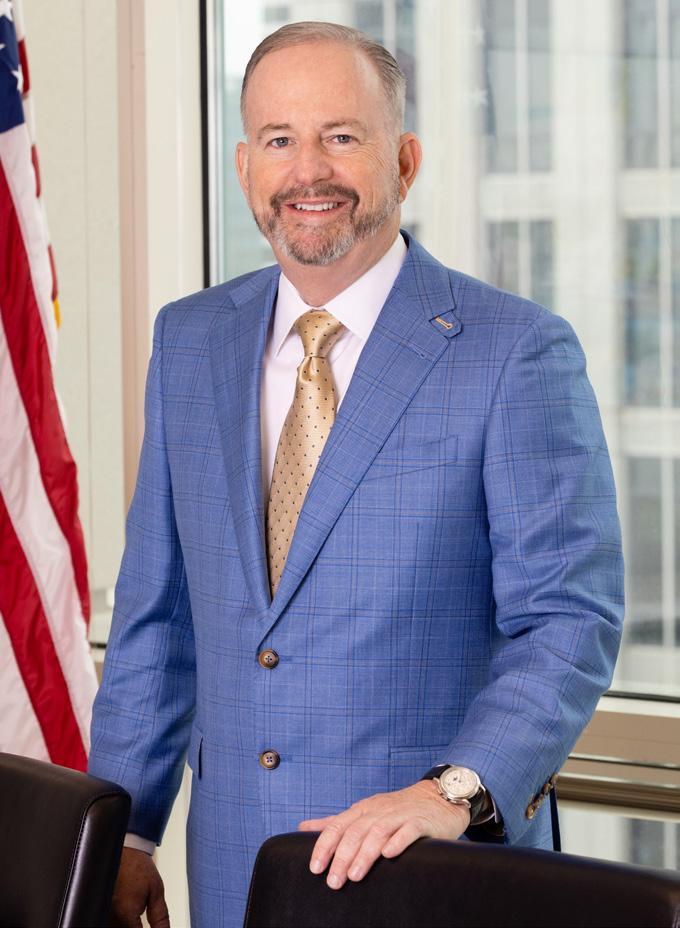
From the Desk of Senator LeMieux
Welcome to our latest edition of The Quill.
The Quill is a production of Palm Beach Atlantic University’s (PBA) LeMieux Center for Public Policy. Each issue offers clear, thoughtful commentary on key public policy issues of local and national importance, written by scholars, policymakers, journalists, and other experts who provide timely analysis on topics of current interest.
In this issue, Dr. Roger Chapman, professor of history at PBA, discusses the conflict in the Middle East in his essay, “Israel, Gaza, and the Prospects for Mideast Peace.” His thought piece examines recent events, analyzes shifting public opinion, and considers how these dynamics influence the prospects for peace in the region.
PBA’s LeMieux Center for Public Policy offers opportunities throughout the year to engage with serious ideas through writing, research, and public events. On November 19, we hosted the annual Freidheim Fellows presentations, a signature program of the Center that highlights select seniors whose research focuses on issues of great public importance. This year’s Freidheim Fellows included Anna Foreman, who presented “Endangered Entitlement: What’s Next for Social Security?” and Leah Wilhoit, who researched “Navigating the Future of AI Regulation Domestically and Internationally.” In addition to their scholarship, these students are mentored. The result reflects the investment we are making in preparing the leaders of tomorrow. We congratulate them on their outstanding work.
Looking ahead, in spring, we have an exciting lineup of speakers planned, featuring notable figures in politics and civic leadership. These events are free and offer our students and community
fresh perspectives and practical insight on the challenges shaping our world. We are also looking forward to celebrating the opening of the Center’s new location in the Marshall and Vera Lea Rinker Business Hall on PBA’s West Palm Beach campus, which will provide enhanced space for research, discussion, and engagement with public life.
Our work is possible thanks to the support of our Board of Advisors, our partners across PBA, and friends of the Center whose commitment to principled public service strengthens everything we do. We are grateful for our partnership with PBA and confident that, together, we will continue to help students and the community engage with complex issues through civil discourse. To read this and other issues of The Quill or to learn more about our programs, please visit the LeMieux Center for Public Policy page on PBA’s website.

George S. LeMieux
U.S. Senator and Founder of The LeMieux Center for Public Policy lemieuxcenter.org
Discover What’s Happening Next at the LeMieux Center for Public Policy
At the LeMieux Center, we host a dynamic range of events designed to inform, engage, and connect our community. Throughout the year, we welcome distinguished speakers, host panel discussions, and create opportunities for meaningful exchange.
Don’t miss what’s next. Subscribe to our email list for timely updates on our upcoming events.

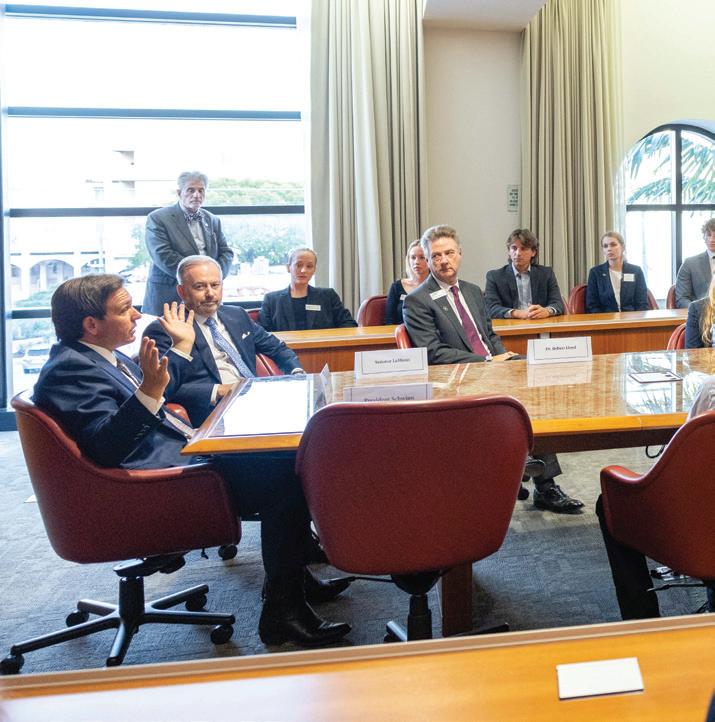
The LeMieux Center for Public Policy at Palm Beach Atlantic University provides a space for reasoned, thoughtful, and civil discourse on pressing public policy issues confronting Florida, the United States, and the world.
Your support allows the Center to continue with our mission. We invite you to give today online at pba.edu