Bridges: Spotlight on Emerging Research Spring 2026 issue – Vol.1, no.1
Editorial Board Members
Dr. Kimberly A. Bain, Editor
Dr. David Compton, Associate Editor
Dr. Ana Jaramillo De Graham, Faculty Member
Dr. Don McCulloch, Faculty Member
Hannah Hutchins, Student Member
Brandon Butzberger, Student Member
Jacob Lowinger, Student Member (ex officio)
Palm Beach Atlantic University
901 S. Flager Drive
West Palm Beach, FL USA
Editor’s Note:
Working to support faculty and student research through the inaugural issue of Bridges: Spotlight on Emerging Research, has been a great privilege. Thinking back to when Bridges was a mere concept with limited precedence, I am grateful for what it has become and how it can foster the growth of academic research and scholarship at PBA.
Being in awe of the supportive and collaborative research community that exists at the University, cultivated by Provost Stephen Johnson and Vice Provost John Simons as well as the Office of Academic Research, led by Dr. David Compton, has been a motivating factor in working to develop this publication.
Engaging in research and scholarship through a Christ-first lens is fostered by supportive efforts of an academic community that comes together to nurture the gifts that God has bestowed. Working to highlight those efforts is the aim of those who have diligently served to produce this inaugural issue. The work of Dr. Don McCulloch and Ana Jaramillo De Graham in providing faculty expertise and support in the development of this issue has been instrumental in its production. In addition, graduate students Hannah Hutchins, Brandon Butzberger, and Jacob Lowinger have been essential to providing advanced student perspectives on the work of this publication. Furthermore, the support and collaboration of Dr. David Compton, Associate Editor, remains unmatched in his unwavering commitment to academic research and scholarship that I hope lives on at PBA for years to come.
I am also very grateful to the authors of this inaugural issue. They believed in the value of the academic research community, and without their time and effort in developing their discussions, this issue would not be what it is.
My hope for this publication is that it continues to be a motivating factor in emergent research and scholarship of faculty and students. Successful research requires community, and the more opportunities that exist for research and scholarship to be spotlighted and supported at PBA, the more its members can find points of connection across the various disciplines that enrich the University.
Sincerely,
Kimberly A. Bain, PhD Editor, Bridges
Associate Editor’s Note:
The launch of Bridges: Spotlight on Emerging Research comes at a moment shaped by remarkable growth in academic inquiry and scholarship across the PBA campus. Across the campus community, we have been privileged to witness sustained expansion in research activity and an exchange of ideas on our campus and beyond. The growth is not accidental and reflects both the diversification of knowledge and a renewed sense of urgency in addressing complex multidisciplinary challenges. Indeed, the evolving PBA research landscape has stimulated more academic inquiry and driven scholarship that is interdisciplinary and publicly engaged, with an emphasis on innovative platforms for dissemination.
It is within our current academic environment that Bridges: Spotlight on Emerging Research was conceived. Through the vision and thoughtful leadership of Dr. Kimberly Bain, Bridges has emerged as a timely response to the growing need for spaces that elevate emerging voices and highlight impactful scholarship. Dr. Bain’s efforts reflect a broader movement within academia to make research more accessible, collaborative, and responsive to both our campus community and beyond.
The inaugural edition of Bridges is also the result of a dedicated team of scholars. We want to extend our sincere appreciation to Dr. Don McCulloch and Dr. Ana Jaramillo De Graham, whose considerable academic experience has helped shape the publication’s intellectual direction. Their commitment to fostering rigorous and meaningful scholarship is evident throughout these pages. Equally deserving of recognition are our talented PBA students, Brandon Butzberger, Hannah Hutchins, and Jacob Lowinger whose diligence, creativity, and editorial contributions have been instrumental in bringing this issue to life.
Together, these efforts embody the spirit of Bridges: connecting ideas, disciplines, and scholars across stages of their academic journeys. As PBA research continues to expand in scale and scope, initiatives like this serve as vital platforms for innovation and dialogue, and, hopefully, discovery.
We are proud to present this inaugural issue and look forward to the continued growth of our scholarly community.
Respectfully,
David M. Compton, PhD Associate Editor, Bridges
About the Contributors
Christine Armas, PharmD Candidate 2026, is a fourth-year student at Palm Beach Atlantic University’s Lloyd L. Gregory School of Pharmacy. Her areas of interest include hospital and clinical pharmacy practice and developing creative approaches to professional engagement and student development.
Sofia Hage, PharmD Candidate 2026, is a fourth-year student at Palm Beach Atlantic University’s Lloyd L. Gregory School of Pharmacy. Her interests include critical and emergency care pharmacy and promoting workplace cultures that value mental health and well-being.
Krisy-Ann Thornby, PharmD, BCPS, is a professor of Pharmacy Practice at Palm Beach Atlantic University’s Lloyd L. Gregory School of Pharmacy. She serves as a preceptor for Drug Information, Academia, and Medical Writing Advanced Pharmacy Practice Experience rotations.
Paul Gould, PhD, is a professor of Philosophy of Religion and the Director of the M.A. Philosophy of Religion (MAPR) program at Palm Beach Atlantic University. He received a B.A. from Miami University (Ohio), an M.A. in philosophy from Talbot School of Theology (Biola), and a Ph.D. in philosophy from Purdue University. Paul is the author or editor of fourteen scholarly and popular-level books including Philosophical Theology: A Christian Introduction, with Ross Inman (Baker, forthcoming), The Argument from Beauty, co-edited with Paul Copan (Wiley-Blackwell, forthcoming), A Good and True Story (Brazos, 2022), Cultural Apologetics (Zondervan, 2019), Philosophy: A Christian Introduction (Baker Academic, 2019) and The Story of the Cosmos (Harvest House, 2019). He has been a visiting scholar at Trinity Evangelical Divinity School’s Henry Center, working on the intersection of science and faith, and is the founder and president of the Two Tasks Institute. He is a widely sought after speaker in apologetics and philosophy. He speaks regularly at universities, churches, and ministries around the country, including Summit Ministries, Impact 360, and the C.S. Lewis Institute. He is married to Ethel and has four children.
Diogo Silveira is a senior at PBA studying engineering and working toward a concentration in computer science. His background spans full-stack development and applied artificial intelligence, with goals in the future to assist in applying AI usage to global development.
Henry Robichaud is a senior at PBA studying engineering and working toward a concentration in physics. His background spans in applied physics, modeling, simulation, and renewables, with his last research project delving into the binary photonic lattices and photon spin. He plans to work in the nuclear energy sector post-grad.
James A. Todd, JD, PhD, is an associate professor of politics. He has extensive experience teaching and researching public law and judicial behavior.
Leah Wilhoit is a senior at PBA majoring in Pre-Law and double minoring in Criminal Justice and Biology.
Pharmacy Student Perceptions of Flexible Learning at a Single Private Institution
Background
As student expectations and learning needs rapidly evolve, there has been growing research in investigating the incorporation of flexible learning strategies in higher education. Curricular flexibility has been characterized by making practical changes to time, place, pace, and pedagogical methods so that learning feels more relevant and personalized for students (El Galad et al., 2024; Barua & Lockee, 2024). Currently, there is a gap in the pharmacy education literature describing how flexible learning influences student performance and perceptions of their learning (Thornby & Cain, 2025). Therefore, this qualitative study aimed to examine Doctor of Pharmacy students’ perceptions of flexible learning strategies across all years of the professional program and their perceived impact on learning and well-being.
Methods
This study employed a cross-sectional, survey-based design and received exempt Institutional Review Board approval. All enrolled students at the Lloyd L. Gregory School of Pharmacy were eligible to participate (N = 178). Survey completion served as informed consent, and no identifying information was collected.
The 20-item survey instrument, adapted from a previously published flexible learning scale, included eight sections and was estimated to take five minutes
Krisy-Ann Thornby, PharmD, BCPS
to complete. Likert-scale items evaluated four domains of flexibility: time, content, pacing, and instructional approaches/resources. One open-ended question invited students to describe how greater curricular flexibility could support their well-being. Demographic items captured class year, commute time, and caregiving responsibilities to contextualize students’ experiences.
The survey was administered electronically using a three-phase outreach approach: class-group messaging, in-class announcements, and distribution through the school’s newsletter. Quantitative data were analyzed descriptively using Microsoft Excel. Open-ended responses (n = 50) were thematically reviewed by the research team to identify common perceptions related to flexible learning and student well-being.
Results and Discussion
A total of 111 students responded, yielding a 62% response rate, representing all four professional years. Over half (52%) commuted 15–30 minutes to campus, and one in four reported caregiving responsibilities. These contextual factors likely shape the high value students placed on time-related flexibility.
Perceptions of Time Flexibility
Time flexibility received the strongest endorsement. Almost all students (98%) agreed or strongly agreed that a weekly flexible learning day would support
Christine Armas Sofia Hage
time management, and 73.9% endorsed the value of recorded lectures and flexible deadlines. Over half supported hybrid delivery options. Time flexibility was also ranked most important among the four domains by 63.9% of respondents (mean rank = 1.57). These findings highlight the necessity, not just preference, for scheduling autonomy for students juggling academic, work, and personal demands.
Perceptions of Content Flexibility
Students also valued flexible options in course content. A majority supported alternative assignment formats, and 96.4% endorsed flexible grading policies such as dropping the lowest quiz. Many expressed interest in electives and topic selection tied to career pathways. These results suggest that content flexibility increases motivation, relevance, and perceived control, which are key drivers of engagement.
Perceptions of Pacing Flexibility
Support for pacing flexibility aligned with principles of competency-based education. Approximately 78% agreed that self-paced modular courses would be beneficial, and 71% endorsed accelerated progression contingent on demonstrated competency. Two-thirds supported substituting certain experiential activities when prior pharmacy experience was present. These findings indicate readiness among students for individualized pacing structures.
Perceptions of Instructional Approach Flexibility
Students largely favored variability in teaching methods and learning materials. About 90% agreed that exposure to multiple formats (videos, simulations, and discussions) enhanced comprehension, and 88% valued access to diverse resources such as infographics or short videos. Nearly 70% perceived that varied instructional approaches strengthened learning. Collectively, these results reflect student preference for multimodal, activelearning environments.
Perceived Curriculum Flexibility
Despite strong endorsement of flexible approaches, most students viewed the current curriculum as moderately (42.3%) or mostly rigid (27%). Only 14.4%
perceived it as mostly flexible. This disconnect suggests missed opportunities for aligning curricular design with student needs and contemporary pedagogical trends.
Qualitative Themes
Six themes emerged from qualitative responses:
1. Increased competency and enhanced learning (62%): Students felt flexibility allowed them to revisit material, self-pace, and better understand complex content.
2. Improved work–life balance (36%): Participants noted that flexible structures supported stress management and personal obligations.
3. Reduced stress and improved mental health (22%): Greater autonomy was described as a means to alleviate anxiety and cognitive overload.
4. Inclusivity and accommodation (16%): Flexibility afforded students support with caregiving duties, health challenges, or other unique circumstances.
5. Alignment with career goals (10%): Students noted their appreciation for opportunities to tailor learning to future practice interests.
6. Preference for rigidity (6%): A small subset viewed structured expectations as beneficial for accountability.
Findings generally indicated strong student support for multiple types of flexibility, reflecting broader trends in learner-centered education. Students viewed flexibility as a mechanism for improving learning quality, reducing stress, and enhancing autonomy.
Implications for Future Research
Consistent with existing literature on curricular flexibility (El Galad et al., 2024; Barua & Lockee, 2024), this study demonstrates that intentional adjustments to time, place, pace, and pedagogical methods are perceived by pharmacy students as supporting both learning and well-being. By examining student perceptions, these findings begin to address the documented gap in pharmacy education regarding the impact of flexible learning strategies. Results show that flexible learning, particularly time flexibility, may support student engagement, autonomy, inclusivity,
and mental health. However, several key questions remain.
Future research should:
1. Examine objective outcomes, including GPA, course performance, remediation rates, and experiential readiness, to determine whether perceived flexibility corresponds with academic achievement.
2. Evaluate longitudinal impacts of implementing structured flexibility (e.g., planned asynchronous days, hybrid delivery, modular pacing) on stress, retention, and student satisfaction.
3. Capture faculty perspectives, as sustainable flexibility supports both learners and instructors. Understanding faculty readiness, workload concerns, and perceived feasibility is essential.
4. Compare perceptions across institutions to determine whether findings are consistent across varying program structures, missions, and student demographics.
5. Explore implications, assessing whether flexibility differentially benefits students with caregiving responsibilities, employment, or health conditions.
Conclusion
Overall, pharmacy students at the Lloyd L. Gregory School of Pharmacy showed strong, positive perceptions on flexible learning strategies. Flexibility was viewed as an important approach to improving student well-being, reducing stress, balancing school with other responsibilities, and supporting enhanced learning. Among all domains, time flexibility was the most valued. Collectively, these findings suggest that integrating flexible learning approaches into the curriculum may foster both academic success and personal well-being when balanced with appropriate structure and accountability.
References:
• Barua, L., & Lockee, B. B. (2024). A review of strategies to incorporate flexibility in higher education course designs. Discovery Education, 3(1), 127. https://doi. org/10.1007/s44217-024-00213-8
• El Galad, A., Betts, D. H., & Campbell, N. (2024). Flexible learning dimensions in higher education: Aligning students’ and educators’ perspectives for more inclusive practices. Frontiers in Education, 9, 1347432. https://doi.org/10.3389/feduc.2024.1347432 Thornby, K. A., & Cain, J. (2025). Balancing autonomy and accountability through curricular flexibility in pharmacy education. American Journal of Pharmaceutical Education, 89(10), 101865. https://doi.org/10.1016/j.ajpe.2025.101865
Art Seeking Understanding: Experimental Theological Aesthetics
Paul Gould, PhD
Background
“What is art?” and “What is the value of art?” are two vexing questions widely discussed and debated by philosophers and theologians working in aesthetics. One answer to the question of art’s value is found through aesthetic cognitivism. According to aesthetic cognitivism, the chief value of art is to communicate understanding of God, the world, or the human experience of the world. To the extent that art reveals meaning, we can ascribe to art definitions of high, low, and even good or bad. Of course, understanding is not the only value of art: art is often valuable because it is pleasurable, beautiful, expressive of emotion, and more.
Over the past three years, I’ve been working on a Templeton-funded program exploring the connection between art and understanding.1 Broadly speaking, the goal of the program is to put aesthetic cognitivism to the test to understand how art can communicate meaning. More specifically, I’ve been working with a group of architects, theologians, and philosophers exploring how built environments, including sacred spaces, communicate and facilitate spiritual understanding across religious and non-religious populations. The goal, however, is not just to explore the connection between art, architecture, aesthetic experience and religious understanding. Rather, the project seeks to explore the nature of spiritual
understanding through architecture to develop and launch a new interdisciplinary academic field of study called Experimental Theological Aesthetics (XTA).
Discussion
Theologians and philosophers working in aesthetics largely employ an a priori approach to theory construction, valuing thought experiments, philosophical analysis, and argumentation, guided (in theology’s case) by divine revelation. More empirically based disciplines, such as empirical and experimental aesthetics, largely employ an a posteriori approach to issues in aesthetics, often without much attention given to the theoretical foundations influencing how data and empirical evidence are understood. XTA hopes to bring the theoretical and empirical disciplines together to promote understanding in aesthetics, and perhaps, to settle long-held disputes in theology and philosophy.
The working group on this Templeton-funded project defines XTA as an empirically oriented investigation of the interrelationship between God, faith, theology, philosophy, beauty, art, and human experience as follows:
Experimental Theological Aesthetics is the interconnected project of empirically testing, theologically interpreting, and creatively generating aesthetic experiences to (i) identify how such
experiences cognitively and affectively contribute to our understanding of and relating to God and/or (ii) create refined aesthetic experiences, to promote spiritual flourishing.
In a series of essays that I am writing as part of this project, I aim to probe the theological and philosophical foundations of XTA. In my essay “Experiences of Beauty in Art as Signs of Transcendence: Claims in Need of Confirmation,” I explore two claims commonly made by philosophers, theologians, apologists, and artists and show how the arguments employed in support of these claims contain empirical premises and empirically based principles in need of confirmation to render such claims persuasive. In this project, the central claims I consider are that experiences of beauty in art function (i) as a road to God and (ii) as an encounter with God. While these claims find support from theology and philosophy, XTA can help by identifying the empirical premises that support such claims and provide empirically based evidence (e.g., mobile eye-tracking data, biosensory data, narrative capture via questionnaires, and the like) that confirm or disconfirm the empirically-based premises in support of such claims. In my essay “‘Making Radiant:’ Aesthetic Experience and the Sacramental Universe,” I aim to motivate, justify, and explain how experiences of beauty in art can play a crucial role in re-enchanting the human experience of the world by cultivating attention,
calibrating the emotions, and re-presenting the world as sacred. I contend that a theological and philosophical account of aesthetic experience in conversation with XTA can provide corroboration and refinement of this thesis, further clarifying how aesthetic experiences of beauty in art can play a crucial role in helping us see, delight, and understand the world as it is.
Implications for Further Study
Why does this research matter? My answer is that beauty is crucial to human flourishing. Humanity has been created to be nourished on the good, the true, and the beautiful. Given the fact that God is the source of beauty (along with goodness and truth), to be nourished on beauty is to encounter God and to move toward God. Thus, art and beauty can play a crucial role, especially given the reductive impulses of our secular age, along with the cultural “aesthetic turn” away from religion and to art as a source of transcendence, in helping others see the goodness, truth, and beauty of Jesus through the gospel.
As the project enters its final phase, my colleagues and I hope to produce scholarly and popular resources (in print, video, and more) to share the results of our research and help others see the crucial role of beauty, art, and place in human flourishing and our journey to and with God.
Funding for XTA project:
• 2024-2027. Consultant. Templeton Religious Trust Grant, “Spiritual Understanding and Architecture: A Multi-method, Empirical Investigation Across Religious and Non-religious Populations,” Principal Investigator, Matthew Neirmann, California Baptist University ($15,000).
Vision-Guided Dual-Axis Solar Tracking Using Physics-Based Irradiance Modeling and Lightweight Neural Networks
Background
Improving the efficiency of photovoltaic (PV) systems is a central challenge in renewable energy engineering as global electricity demand continues to rise alongside decarbonization goals. While advances in solar cell materials steadily increased conversion efficiencies, a significant portion of real-world energy loss still arises from suboptimal panel orientation relative to the sun. Fixed-tilt PV installations, though mechanically simple and low-cost, are unable to maintain optimal alignment throughout the day and year, leading to substantial reductions in collected irradiance. To address this limitation, single- and dual-axis solar tracking systems have been widely adopted, with classical ephemerisbased tracking systems typically reporting energy gains of approximately 20-40% compared to fixed panels (Aggarwal et al., 2025; Peng et al., 2015).
Despite these improvements, traditional tracking approaches rely on idealized solar geometry and implicitly assume clear-sky conditions. Under partially cloudy or rapidly changing sky conditions, ephemerisbased trackers may therefore orient panels toward regions of reduced irradiance, limiting their real-world performance (Peng et al., 2015). Recent advances in artificial intelligence and computer vision have enabled solar tracking systems to “see” the sky, detect cloud
cover, and respond dynamically to changing irradiance patterns using image-based analysis (Carballo et al., 2023). However, much of the existing literature emphasizes computationally heavy models or lacks tight integration with physics-based irradiance control frameworks commonly used in solar engineering (Holmgren et al., 2018). This research addresses that gap by investigating a lightweight, real-time vision model combined with established solar geometry.
Research Discussion and Findings
This research investigates a hybrid, vision-guided solar tracking system that integrates three complementary components: physics-based solar geometry and irradiance modeling, vision-based cloud and sky segmentation, and a mechanically constrained tracking mechanism. Rather than replacing established solar position algorithms, the system builds upon them by introducing environmental awareness through realtime sky imagery. In Senior Design I, a project-oriented engineering course at PBA, our team emphasized software-first, prioritizing modeling, simulation, and digital mechanical design over immediate physical deployment. This approach allowed the feasibility of the control pipeline, spanning irradiance theory, perception, and actuation constraints. We designed a mechanical subsystem as dual-axis-ready, while
Diogo Silveira
Henry Robichaud
focusing initially on east–west (azimuthal) motion to capture the majority of daily solar gains with reduced complexity.
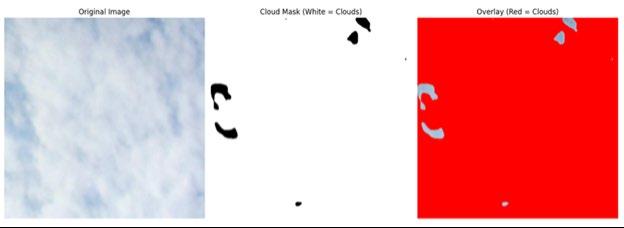
At the core of the adaptive capability is a lightweight TinyUNet convolutional neural network for cloud/sky segmentation. The architecture was selected specifically for real-time, CPU-capable inference, addressing a common limitation of prior vision-based trackers that rely on computationally intensive models (Carballo et al., 2023). The model was trained on a small, labeled skyimage dataset using a combined Binary Cross-Entropy and Dice loss function to address class imbalance between cloud and clear-sky pixels. Validation results demonstrated a Dice score of approximately 0.97, corresponding to about 97% segmentation accuracy.
The gimbal-based tracker was digitally optimized for reduced mass, structural stability, and compatibility with low-power actuators. Limiting active control to east–west tracking provides a practical first-order performance gain while minimizing mechanical complexity. When combined with vision-informed orientation decisions, modeling suggests an effective energy improvement exceeding 50% relative to a fixed panel under idealized conditions. While classical dual-axis trackers typically report 20–40% gains (Aggarwal et al., 2025), and AIbased systems show incremental improvements under cloudy skies (Peng et al., 2015), these findings indicate that lightweight vision can extend performance.
Methods of Study
The research employed a physics-based modeling approach to establish performance baselines and guide system design. Solar position and irradiance were modeled using established geometric relationships that describe the dependence of received irradiance on the angle between incoming sunlight and the panel normal. Cosine-loss effects were used to quantify how deviations from perpendicular alignment reduce effective irradiance, providing a theoretical foundation for tracking optimization (Holmgren et al., 2018). Two baseline configurations were implemented for comparison: a fixed-tilt panel with constant orientation and an ephemeris-only tracker that follows the sun’s calculated azimuth and elevation throughout the day.
These baselines reflect widely used approaches in both residential and commercial PV systems and serve as credible reference points for evaluating potential performance improvements.
Sky perception was implemented using a convolutional neural network designed for cloud and clear-sky segmentation. A labeled sky-image dataset was used to train a lightweight TinyUNet architecture, chosen to balance segmentation accuracy with computational efficiency. The training pipeline combined Binary CrossEntropy loss with Dice loss to mitigate class imbalance and emphasize pixel-level overlap accuracy, a strategy commonly adopted in segmentation tasks (Carballo et al., 2023). Model optimization was performed using the Adam optimizer, enabling stable and rapid convergence.
The mechanical design prioritized the azimuthal to capture dominant daily energy gains while preserving the ability to expand to full dual-axis motion in future work. This approach reflects established trade-offs in tracker design, balancing mechanical simplicity, reliability, and energy yield (Aggarwal et al., 2025).
Figure 1. Original sky image and corresponding cloud segmentation output produced by the TinyUNet vision model developed in this study. The left panel shows the raw sky image captured by the camera system. The center panel displays the binary cloud mask generated by the model, where white regions indicate detected cloud cover and black regions indicate clear sky. The right panel overlays the segmentation mask onto the original image, with cloud regions highlighted in red for visual clarity. This figure illustrates the model’s ability to accurately distinguish clouds from clear-sky regions in real time, enabling cloud-aware orientation decisions for the solar tracking system.
Implications for Further Study
While our Senior Design I project focused on validating the software pipeline, vision model, and mechanical feasibility in a controlled and idealized environment, the next phase of work will involve constructing a functional tracker prototype and deploying it under real outdoor conditions. Planned experimental testing will directly compare three configurations: a fixed-tilt photovoltaic panel, an ephemeris-only tracking system, and the proposed vision-guided tracker. Particular attention will be given to weather variability, as changing cloud cover
and diffuse irradiance represent the primary conditions under which vision-guided tracking is expected to outperform traditional approaches. Mechanical losses, actuator energy consumption, and system reliability will also be quantified to determine whether the energy gains justify the added complexity. More broadly, this research contributes to the growing field of AI-assisted renewable energy systems by demonstrating how compact machine learning models can be integrated with physics-based control to enhance real-world energy harvesting efficiency.
References:
• Carballo, J. A., Bonilla, J., Berenguel, M., Fernández-Reche, J., & García, G. (2023). Cloud detection and tracking based on object detection with convolutional neural networks. Algorithms, 16(10), 487. https://doi.org/10.3390/a16100487
• Holmgren, W. F., Hansen, C. W., & Mikofski, M. A. (2018). pvlib Python: A Python package for modeling solar energy systems. Journal of Open Source Software, 3(29), 884. https://doi.org/10.21105/joss.00884
• Peng, Z., Yu, D., Huang, D., Heiser, J., Yoo, S., & Kalb, P. (2015). 3D cloud detection and tracking system for solar forecast using multiple sky imagers. Solar Energy, 118, 496–507. https://doi.org/10.1016/j.solener.2015.05.037
Aggarwal, A., Himanshu, H., Sidana, M., Gupta, G., Singh Sodhi, I. & Sharma, A. (2025). Efficiency enhancement and estimation of photovoltaic energy generation using dual-axis tracking systems. Engineering Proceedings, 95(1), 4. https://doi.org/10.3390/engproc2025095004
Police Excessive Force Cases and the Scope of Judicial Decision Making
James Todd, JD, PhD
Background
Leah Wilhoit
Our theory was that a judge applying the “moment of the threat” doctrine was more likely to side with the police, even if the judge’s (liberal) sympathies were with the victim. By contrast, a judge applying the “totality of the circumstances” doctrine would have freer rein to follow his or her ideology. Even if the police officer feels momentarily threatened, other factors in the case can be emphasized to make the use of force unreasonable. With this totality doctrine, liberal judges could more easily find a civil rights violation, even as conservative judges could just as readily side with the police. In applying the framework of the 2015 study, we believed the moment of the threat doctrine operated as the more precise rule of decision compared to the relatively lax totality doctrine.
To conduct our study, we looked at all published U.S. district court excessive force decisions from the year 2000 to 2024. Our theoretical expectation was that case outcomes would generally vary according to the ideology of the district judge, either conservative (appointed by a Republican president) or liberal (appointed by a Democratic president). However, we hypothesized that when a judge applied the moment of the threat analysis, ideology would be less likely to determine the outcome in an excessive force case.
Results and Discussion
We compiled and evaluated a set of 181 cases. We first discovered that the police won more cases (54%) than plaintiffs did (46%) in the dataset.
Overall, as we predicted, the doctrine applied by a judge mattered for whether a plaintiff won an excessive force case or not. In all cases in which the “moment of the threat” doctrine was applied, the police prevailed 62% of the time. This doctrine was more beneficial for the police than for plaintiffs, as anticipated by our theory.
In all cases in which the “totality of the circumstances” doctrine was applied, the police prevailed 49% of the time. This doctrine was slightly better for plaintiffs than for the police, as predicted by our theory about Democratic judges.
According to a p-score calculator, this difference in outcomes for police between the two doctrines (62% to 49%) was statistically significant at the .05 level (p=.04006). A p-value of under .05 is strong confirmation of significance. Clearly, and as predicted, the doctrine applied in a case mattered to the outcome. The “totality” doctrine was more favorable to the plaintiff and worse for police.
Our findings about the interaction between a judge’s ideology and the doctrine applied were less robust.
Democratic-appointed judges sided with the plaintiff in 7 out of 17 “moment of the threat” cases and in 27 of 45 totality of the “circumstances” cases. The p score of .09176 is significant at the .10 level (90% confidence). This is consistent with our expectations, but the small number of “moment of the threat cases” heard by liberal judges (n=17) diminished the potency of our finding. Overall, and as we predicted, the “moment of the threat” doctrine limited a judge’s ability to side with the plaintiff. In these cases, presented before Democratic judges, the police won 59% of the time. In these cases, presented before Republican judges, the police won 65% of the time. The doctrine brought Democratic and Republican judges closer together in favor of the police; there was no statistically significant difference between Republican and Democratic judges in “moment of the threat” cases. This finding supports our theory that such a rule can bind lower court judges. Overall, as we predicted, the totality standard allowed both Democratic and Republican
judges to behave in an ideological way. In these cases, presented before Democratic judges, the police won only 40% of the time. In these cases, presented before Republican judges, the police won 54% of the time. This laxer doctrine, as predicted, brought Democratic and Republican judges further apart.
Implications of our Findings
From the standpoint of judicial behavior, the more discretion a judge is given, the more likely he is to follow his ideological leanings. Our findings support the idea that clear rules can constrain judicial discretion, while looser doctrines do not. With the Supreme Court’s 2025 adoption of the “totality of the circumstances” doctrine for all excessive force cases, we can expect more judges to side with plaintiffs against police. This is because, as we have demonstrated, the doctrine provides liberal judges more leeway to consider factors in the case that would point to the unreasonableness of the police action.
References:
• Segal, J. A., & Spaeth, H. J. (2002). The Supreme Court and the attitudinal model revisited. Cambridge University Press.
• Smith, J. L., & Todd, J. A. (2015). Rules, standards, and lower court decisions. Journal of Law and Courts, 3(2), 257–275. https://doi.org/10.1086/681544
Note: This research was funded by the PBA Summer Undergraduate Research (SUGAR) program.