Foreword
Ego, competitiveness, and creative anxiety are both individually, and combined, challenging forces that every creative person must contend with, be they an artist, actor, musician, writer, or designer, to name only a few. The ability of a work of art to exist and be both recognizable as being from a particular artist, while also simultaneously asserting its own autonomy as an object and/or experience is one of the pinnacle achievements of any artform. Marc Katano’s paintings on canvas and paper, as well as his prints, wholly embody this achievement, as noted by the late San Francisco Chronicle art critic, Kenneth Baker (1946-2021), “Like other unforgettable works [Katano’s art] generate[s] the sense of it having sprung whole into being by the magic of its maker having taken himself… out of the way.”1
I have had the privilege of knowing Marc Katano and his work for over 15 years and the consistency with which his work attains its own autonomy is truly remarkable. Very few artists I know of have achieved this feat on a consistent basis. It has been a privilege to present Katano’s first exhibition with Paul Thiebaud Gallery and to have it be one of the rare surveys of his works. In the following pages you will find an edited transcript of the illuminating artist talk Katano gave during the opening reception for his exhibition. I hope you enjoy it as much as I have.
I give great thanks to Marc Katano for his trust in representing his work and for creating the elegant works featured in the exhibition. I would also like to thank him for participating in the artist talk and for agreeing to let us publish the video on our YouTube channel and the edited transcript of it in the following pages. I would also like to give my thanks to Nicole Katano for providing the photographs of the individual works found in these pages.
Lastly, I would like to thank the Paul Thiebaud Gallery team – Colleen Casey, Matthew Miller, and Gregory Hemming – for their hard work and dedication to making this exhibition and catalogue possible.
Greg Flood, Director June 2026
1 Baker, Kenneth. “Marc Katano’s ‘perfection’ is an unforeseeable ultimate,” San Francisco Chronicle, July 4, 2014.
On Mark Making: An Artist Talk by Marc Katano
During the opening reception for the exhibition Marc Katano: Selected Paintings 19902026 at Paul Thiebaud Gallery, artist Marc Katano participated in an artist talk with gallery Director Greg Flood. The following is an edited transcript of their discussion.
Greg Flood: Good afternoon everyone and thank you for joining us for the opening of Marc Katano’s first exhibition at the gallery, a survey of selected paintings from 19902026. By way of introduction, Marc Katano was born in Tokyo, Japan in 1952. In 1975, he earned his Bachelors of Fine Art with Distinction from the California College of Arts and Crafts in Oakland (now California College of the Arts, San Francisco), and in 1981 he received the SECA Award from the San Francisco Museum of Modern Art. His paintings have been exhibited across the United States, and in Italy and Japan. His work is in the collections of the San Francisco Museum of Modern Art, Fine Arts Museums of San Francisco, Crocker Art Museum, Honolulu Museum of Art, San Jose Museum of Art, and the Zimmerli Art Museum, Rutgers University, among others. Marc, would you like to say a few words before we start in on my questions?
Marc Katano: Sure. Thank you all for coming. It is great to see all of this work up at the same time. Usually you do not get to see works from different periods of my career all up at once. This is pretty wonderful, and thank you to the gallery for doing it.
GF: Marc, for you the act of inscription has been the foundational premise behind your work from the beginning. How did you decide that was the path your work was going to take?
MK: I was born and raised in Japan. I am a U.S. Army brat, so I went to American schools, and I could not read anything in the Japanese community — Hiragana, Katakana, or Kanji. English is my first language, so all of those images were little pictograms, but they had no meaning behind them. When I started making artwork, I was just making marks to make my own pictograms. They do not have any meaning behind them, like the way I saw them during my childhood. That was the impetus and I know all of that came from living in Japan.
GF: And have you ever learned those scripts?
MK: I now know how to read Hiragana and Katakana, but not the Kanji, which are the very difficult words.
continues on pg. 12
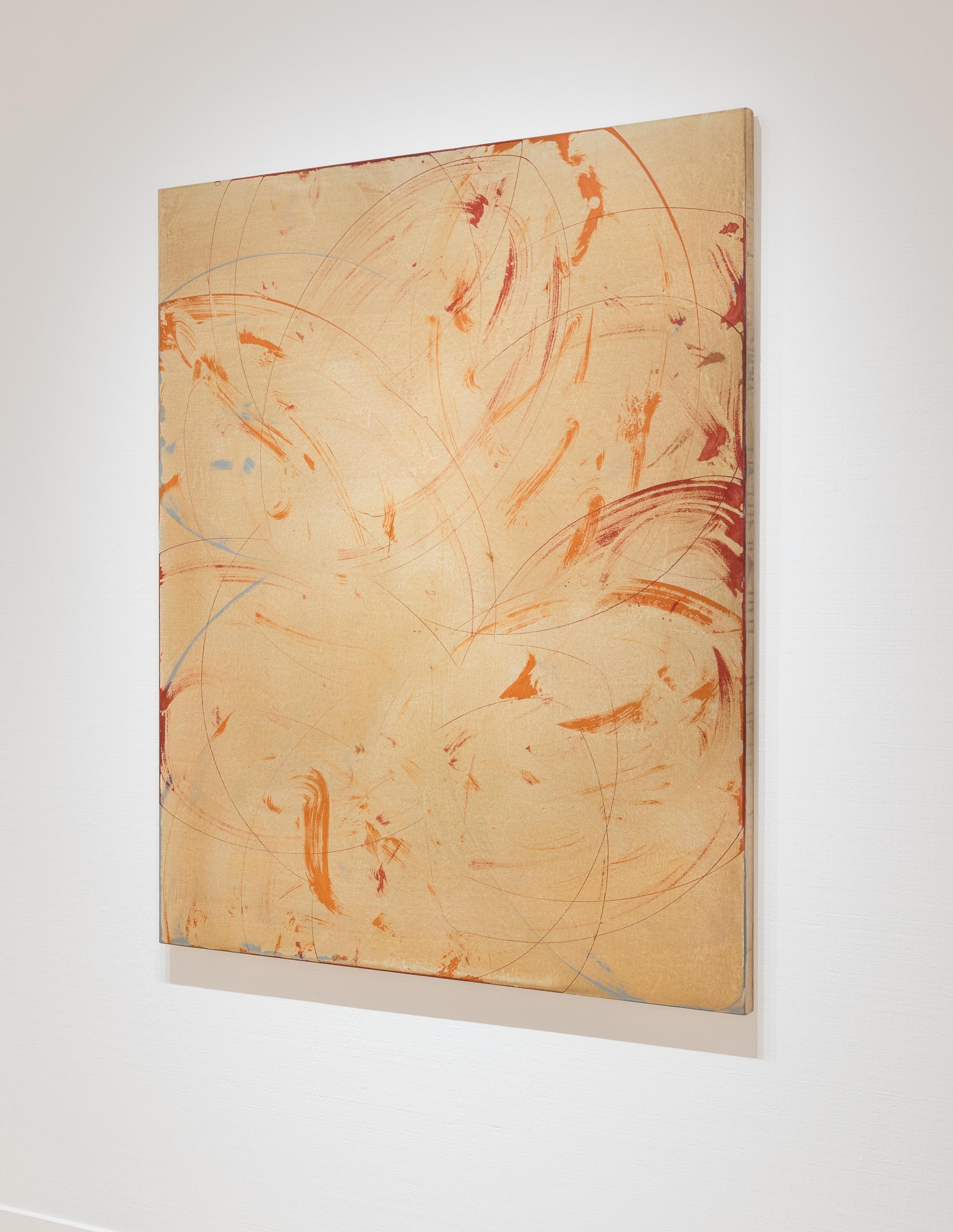
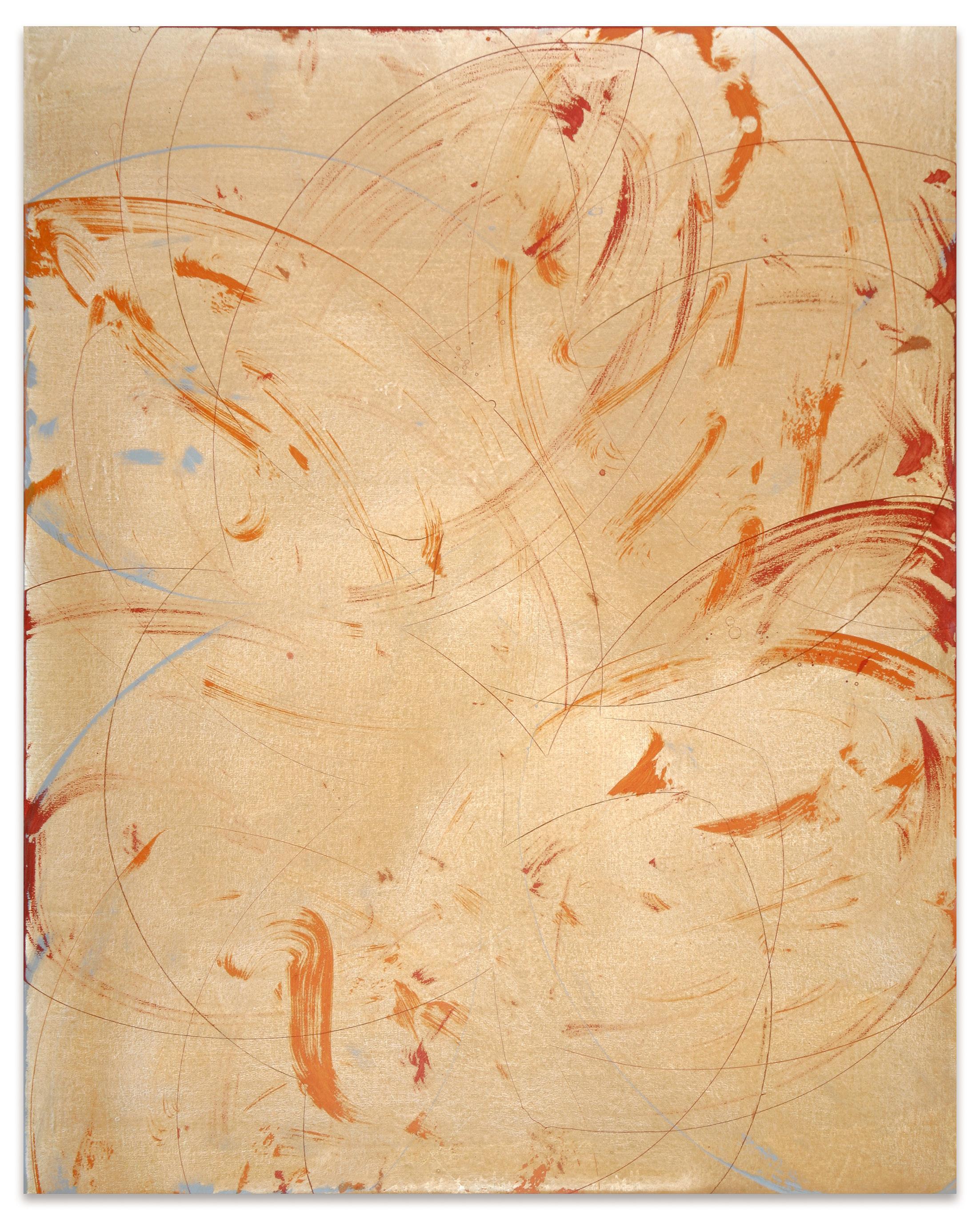
GF: In the show we have works on carved wood, canvas, and paper. How do your choices of material impact the types of marks you make?
MK: They are all different challenges. In the original paintings on wood, I was using a wood cutting tool. I have always done woodcuts between paintings. They are not always a pallet cleanser, but after I finish a series I always do woodcuts to think of what to do next. Because woodcuts are so labor intensive and I do all the printing myself, there is a lot of time to think about what I might work on.
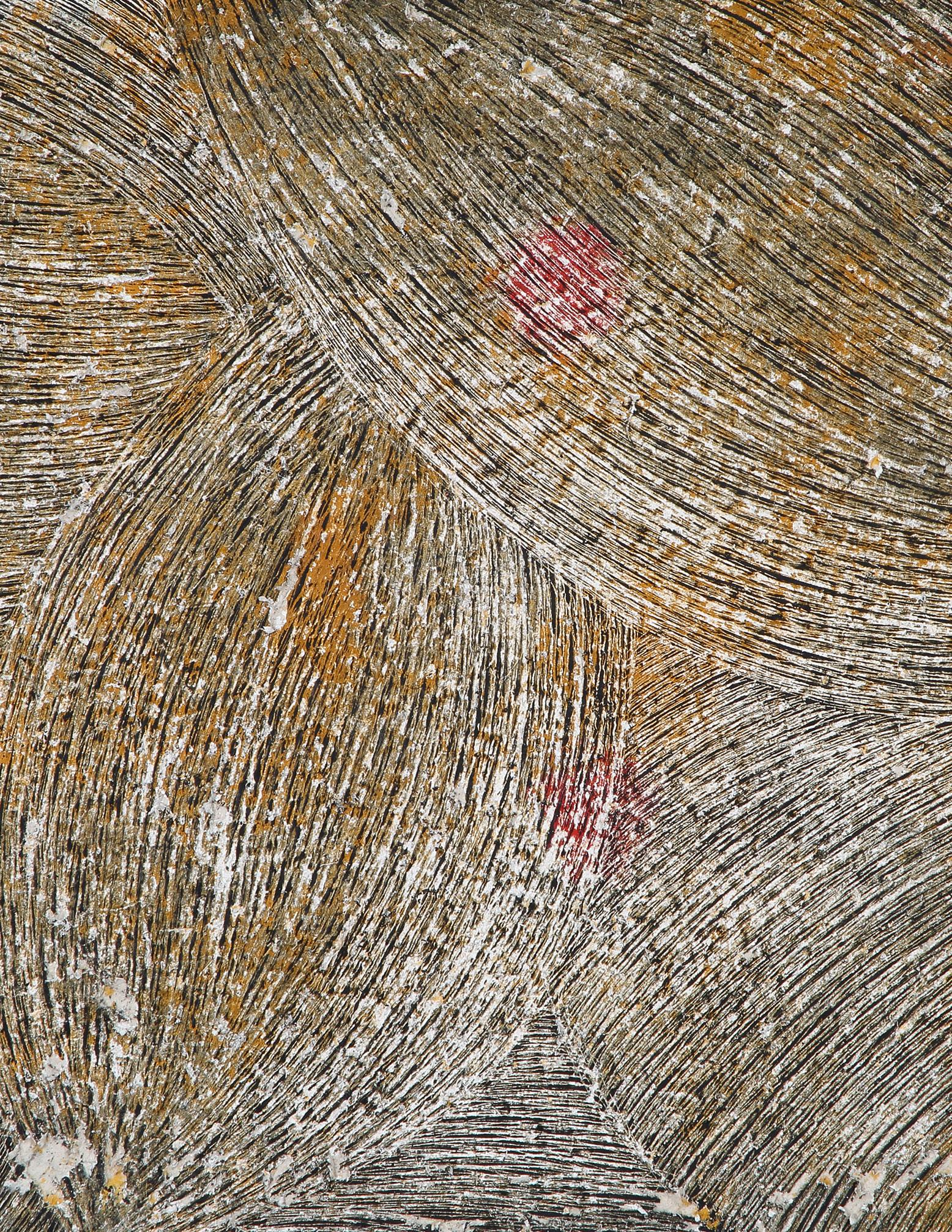
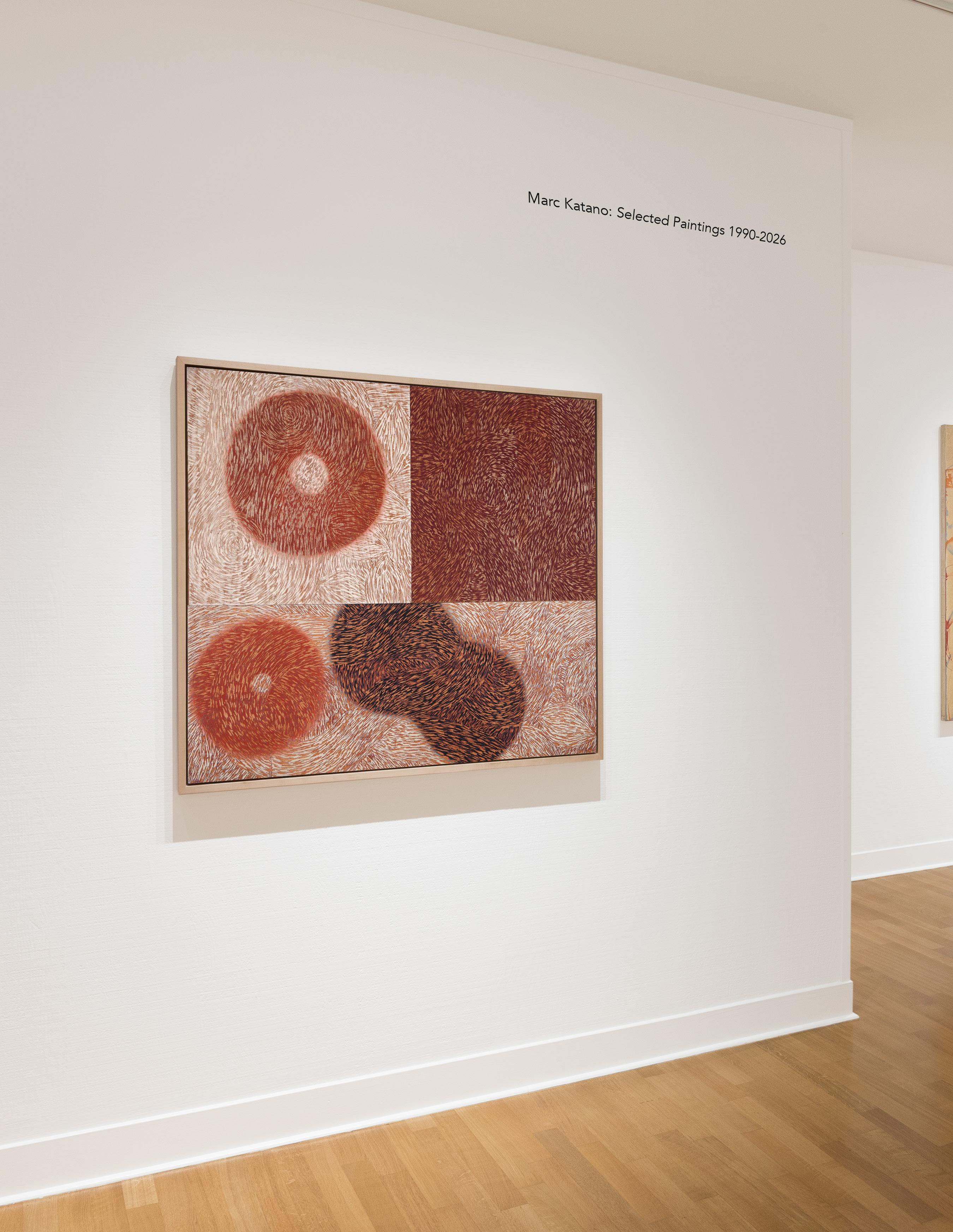
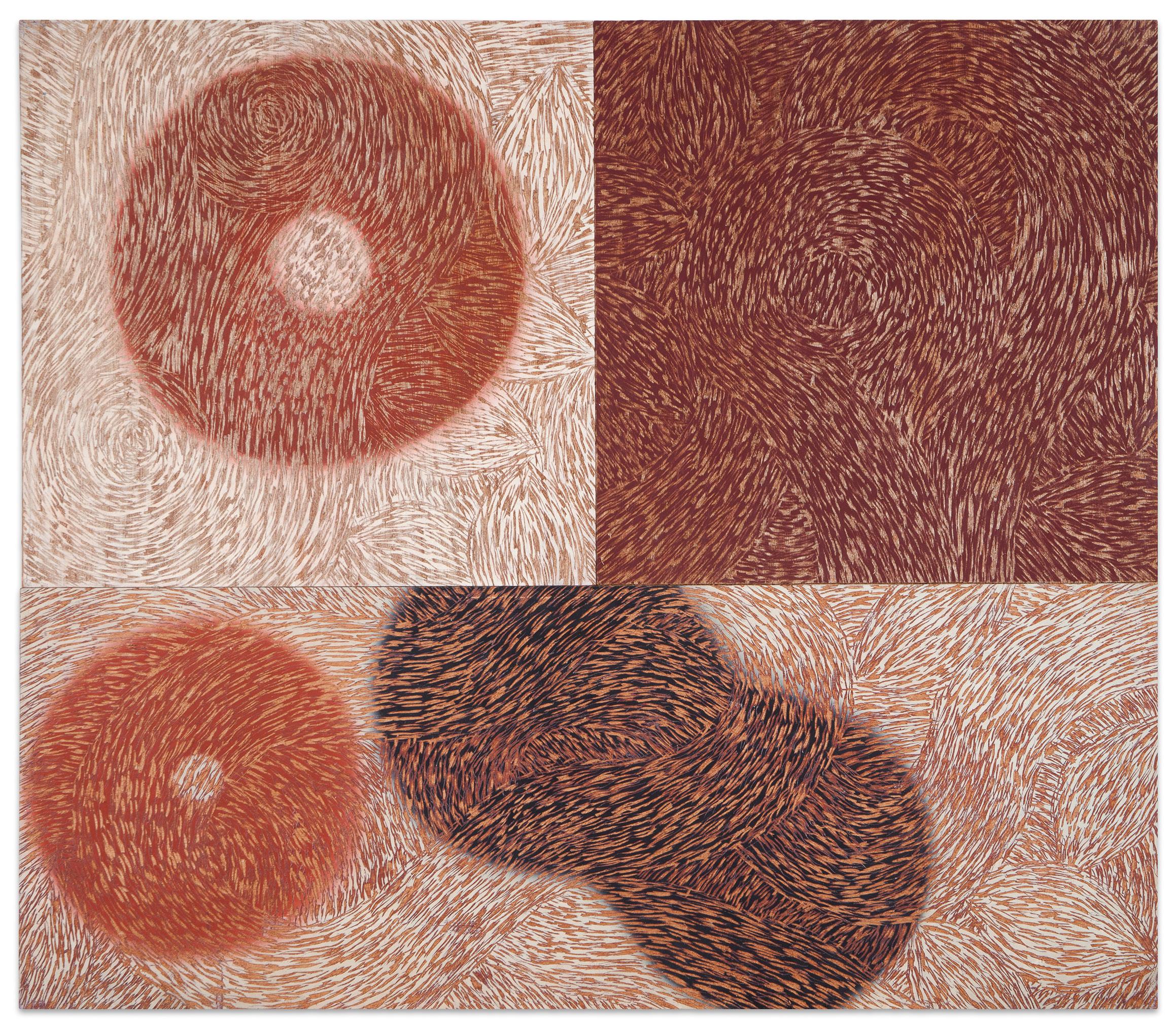
The painting around the corner on the wall ( MK 91-50 ) is oil paint on wood, incised using wood cutting tools. Afterwards, I moved on organically to my next phase of painting when I had a new idea. I will do a whole series of work, and when I finish that series and do not find it challenging anymore, I will stop and either do another series or a new woodcut.
I stopped painting on canvas around 2008. The reason is that I had so many ideas. Every time you paint on canvas, you have to make stretcher bars, gesso the canvas, and prepare the whole thing. I had all of these ideas I wanted to put out at once, so I started working on paper because I could get them out very quickly. I decided at that point to work that way primarily. I started experimenting with papers, and there is a woman in Los Angeles, Hiromi, whose company imports papers from all over the world, Japan and Nepal in particular. I started using Japanese papers, seven by seven feet, that are very beautiful, huge, and expensive. I went to Hiromi and said that I was having so many failures with the paper that I cannot use it anymore. I would walk into the studio, make marks on the paper, and it would be bad, so I would tear it up and throw it away. I asked her if there were any other papers that I could use that do not cost as much money. Her reply was that there was a Nepalese paper that comes in a roll.
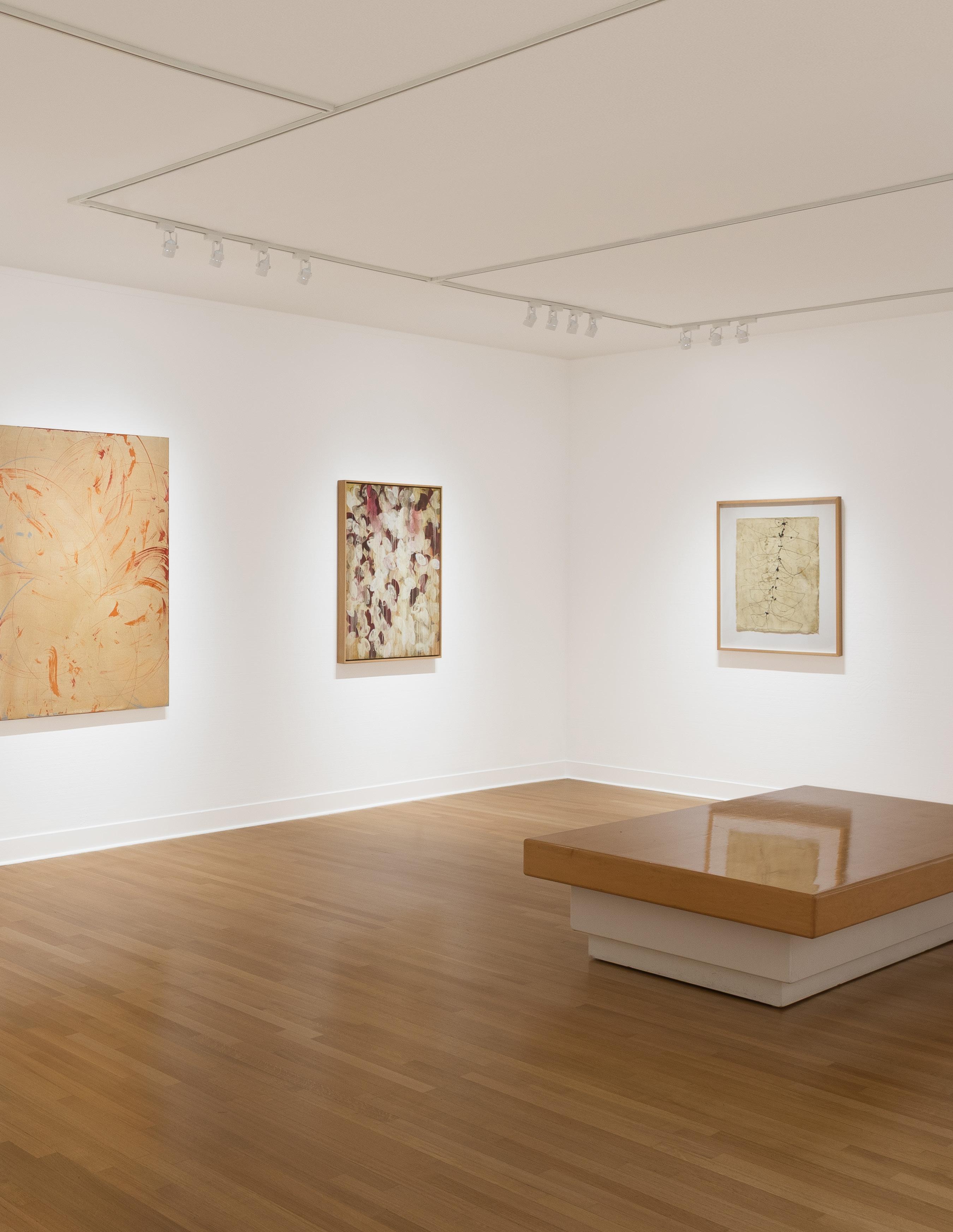
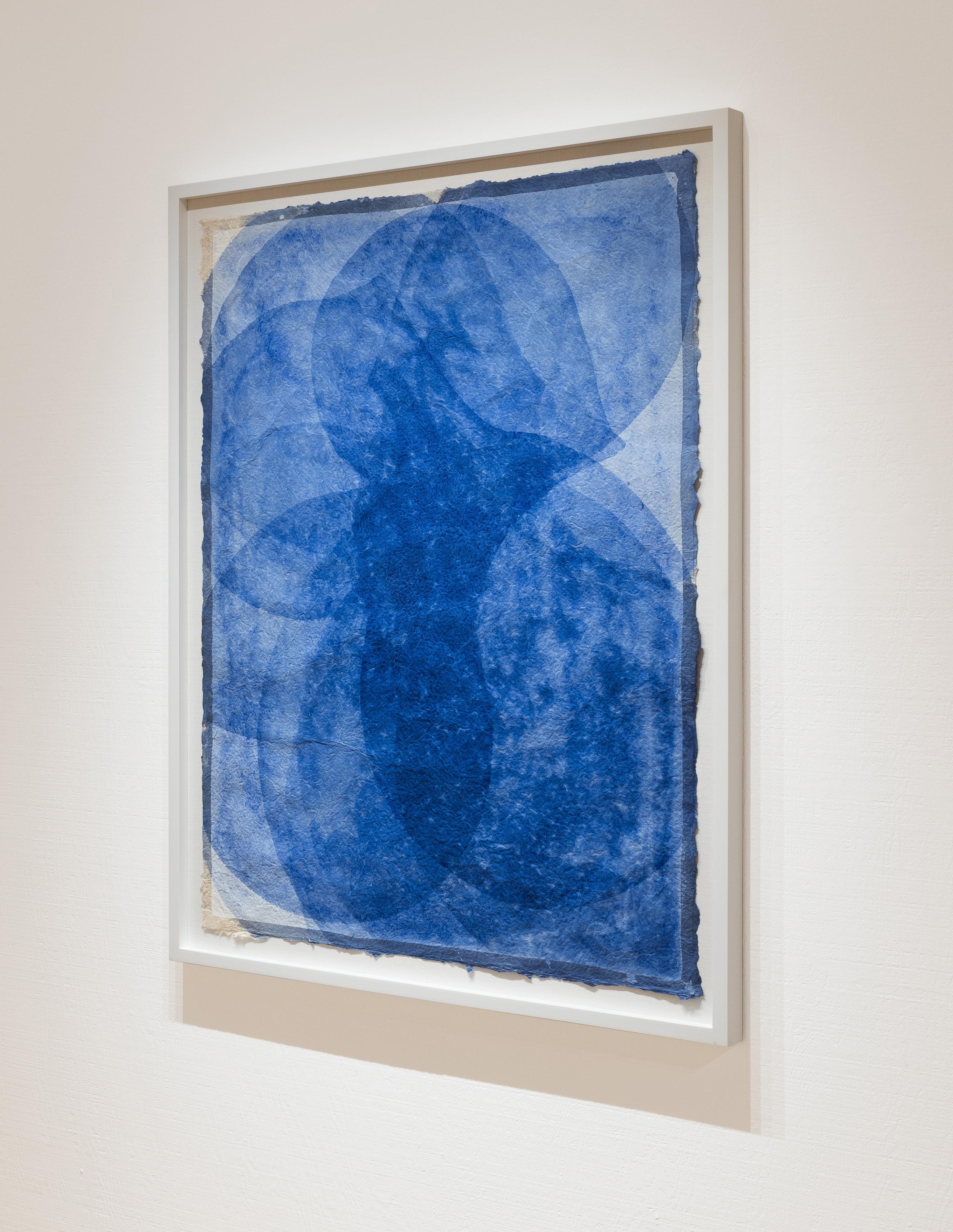
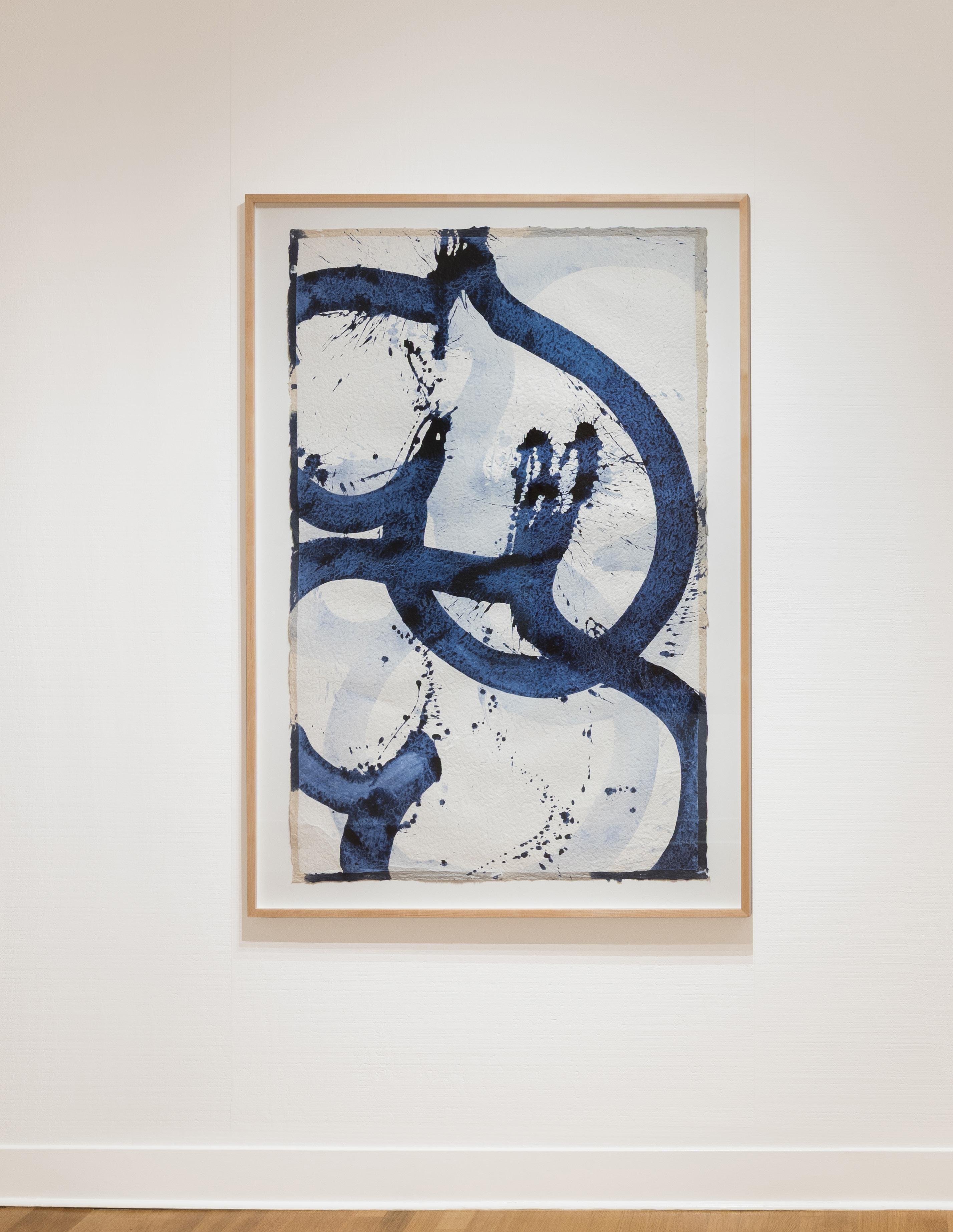
The work on the wall behind everyone (Bookmatch) is made with Nepalese paper. The reason I started using that paper was because it presented a bunch of challenges. Nepal does not have very good quality control. Each piece of paper would be thicker or thinner, absorb more ink or less ink or paint, so each time you go to the paper you have another challenge and it makes it more interesting to work.
The other story is that when I said to Hiromi that I cannot use this giant paper anymore because I have too many failures, she said to me “Richard Serra has a lot of failures.” And I said to her that I was not Richard Serra and that I do not have his bank account. *laughs* She found me this paper and it has been working out really well.
continues on pg. 15
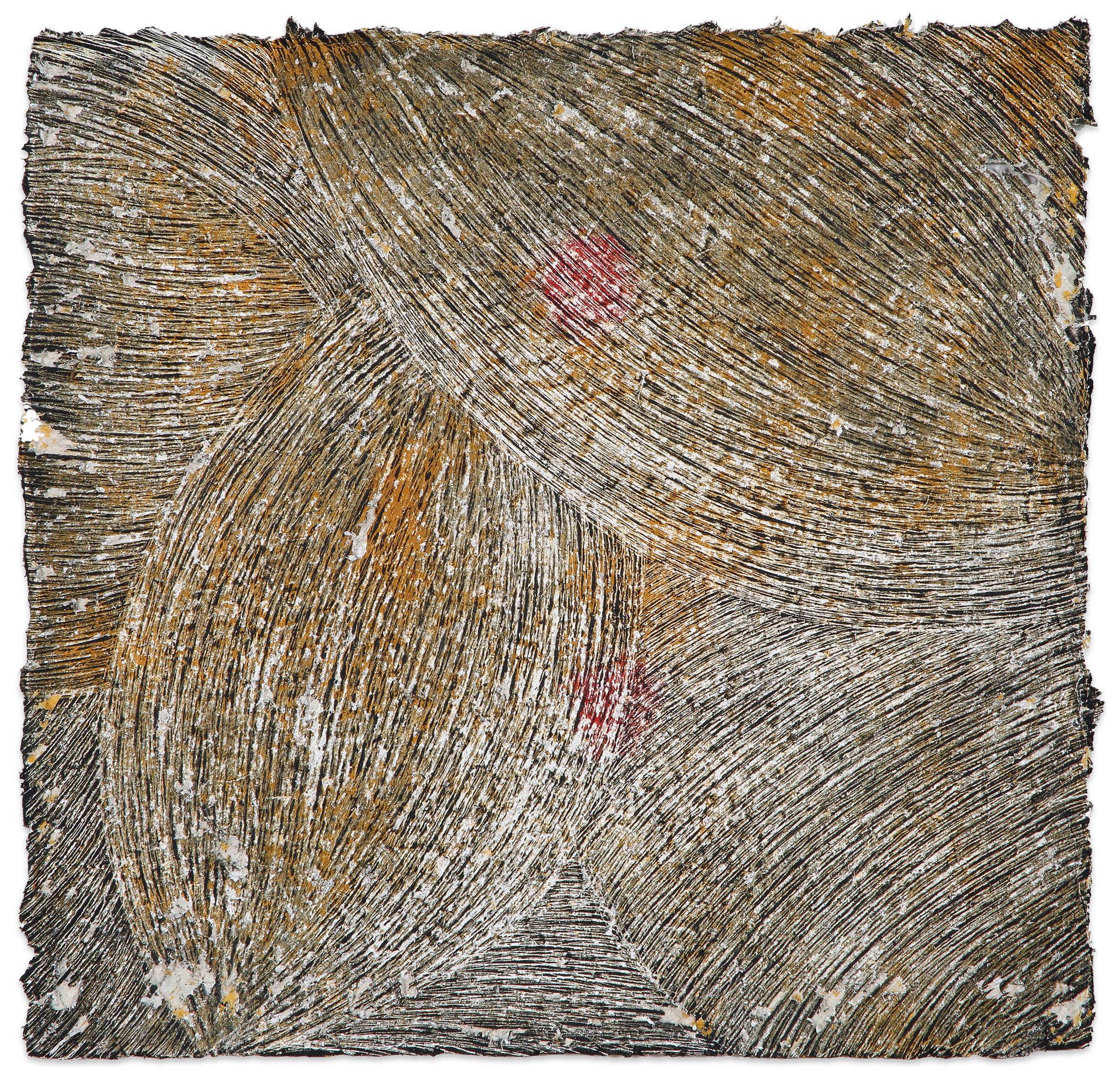
GF: It is really beautiful paper, I have to say.... Moving on to another aspect of your work. The act of erasure is an important part of your mark making, as much as what you actually put onto the paper or canvas. It is most easily seen in the carved wood piece, MK 91-50, and in Drishti 14, which bookend the period of time that this show covers. With that in mind, how important is the balance of presence and absence in your work?
MK: It is all about leaving a mark. I will tell you the story of Drishti. I was doomscrolling and I said ‘I need some focus because we cannot scroll all of the time.’ Drishti, in yoga, is the focal point in the distance that you can meditate on or focus on while doing your tree or other pose. I thought I will do these abstract paintings that have an actual purpose. I think there are 30 or 34 paintings like that, and some are larger than that piece, but they were all about making marks.
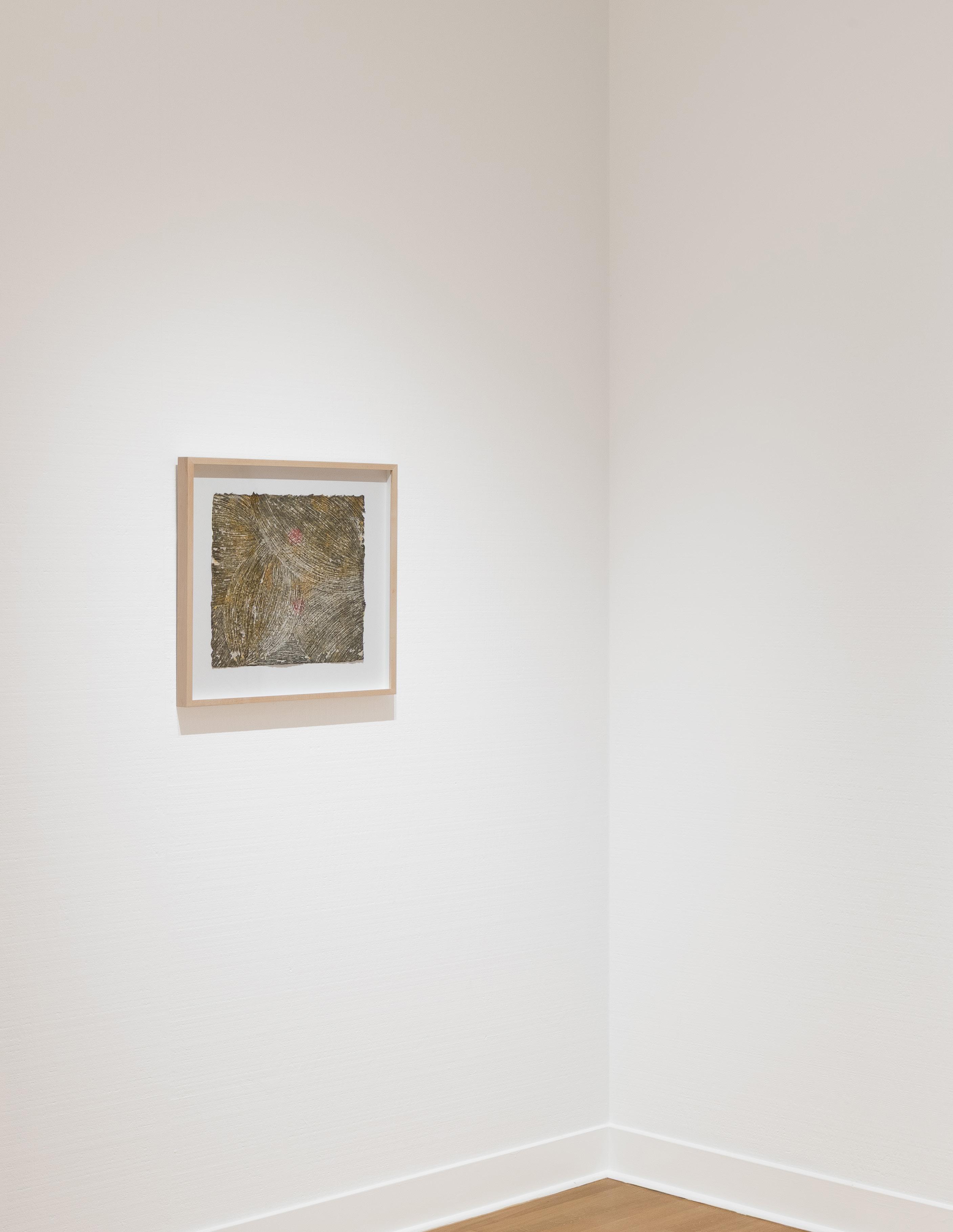
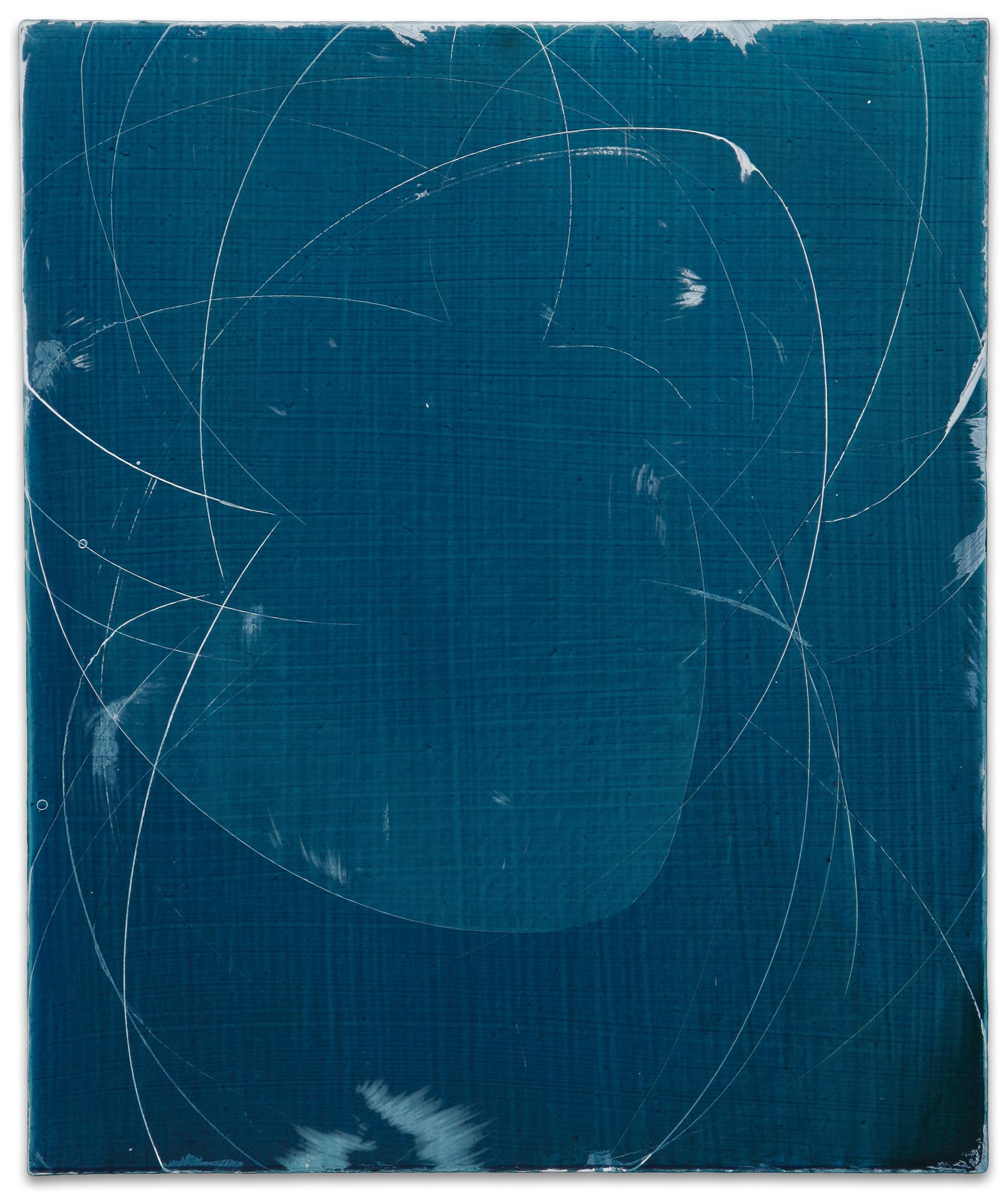
GF: With the Drishti, unlike the wood where you were using a wood cutting tool, you used a razorblade to slice away the paper to make the make.
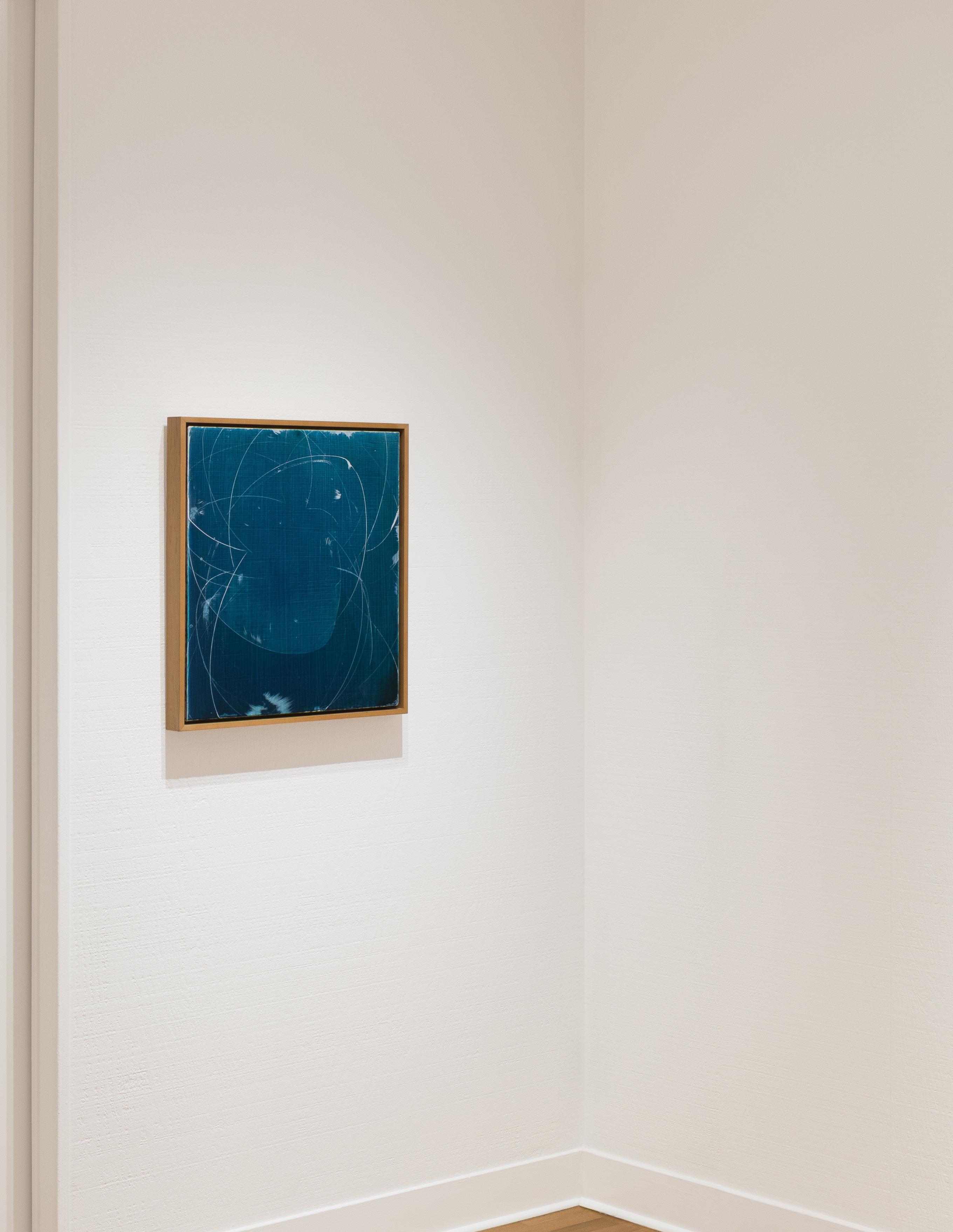
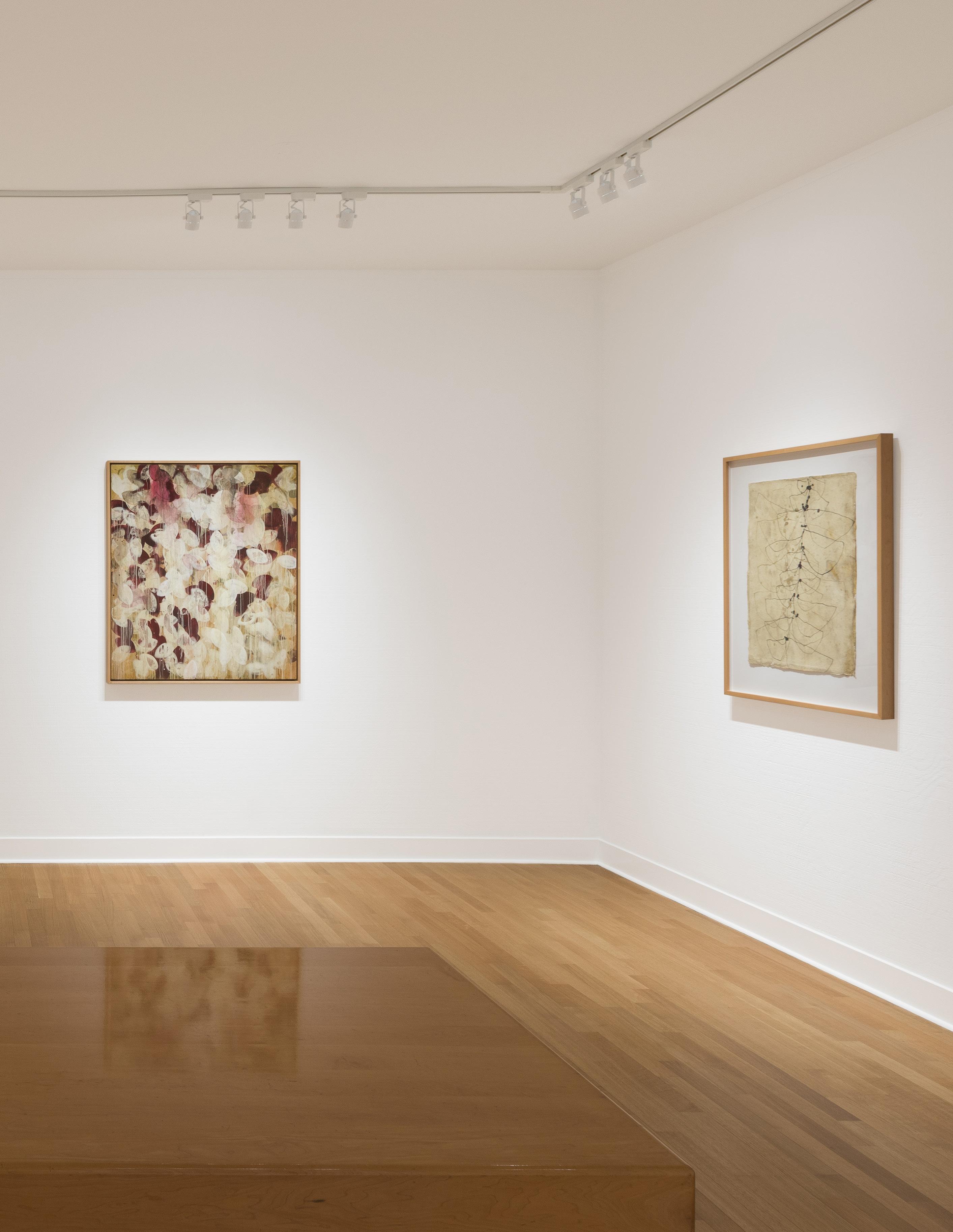
MK: When I start out with the Nepalese paper, I will splash some acrylic paint on it. On Drishti 14 you can see some yellow ochre, and that is a random mark. Then I covered the whole piece with black oil stick. I was creating my own scratchboard. I then took the blade to make the marks. The marks are an ellipse form, and they appear there and in Unfolding Bloom and Grace. They are all the same mark. The original mark was a ‘C’ and ‘D’ motion. I was not creating ellipses. I was using this motion with my arm and hand to make this form. I have used that same form for years now. It became a kind of alphabet that I repeat over and over again.
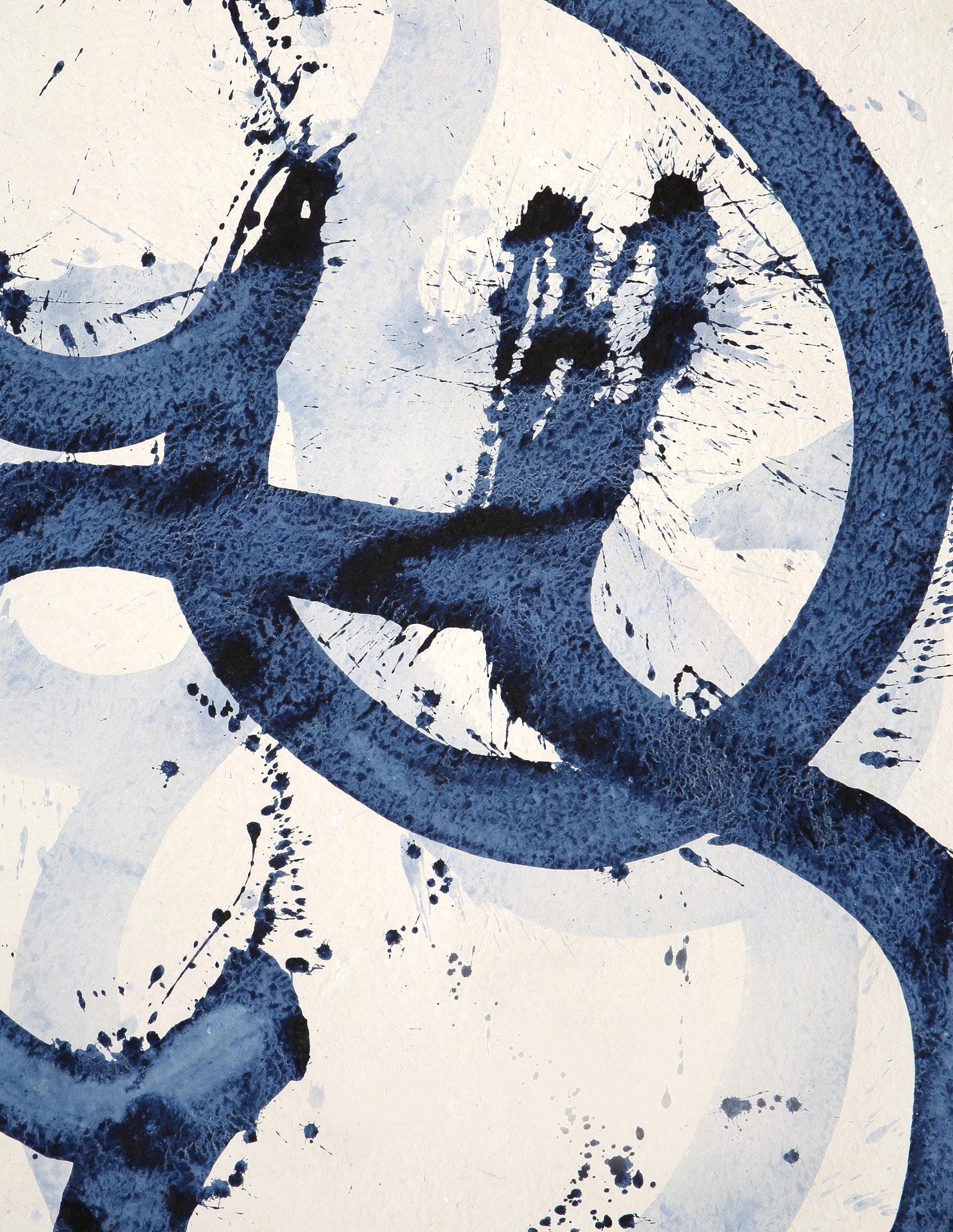
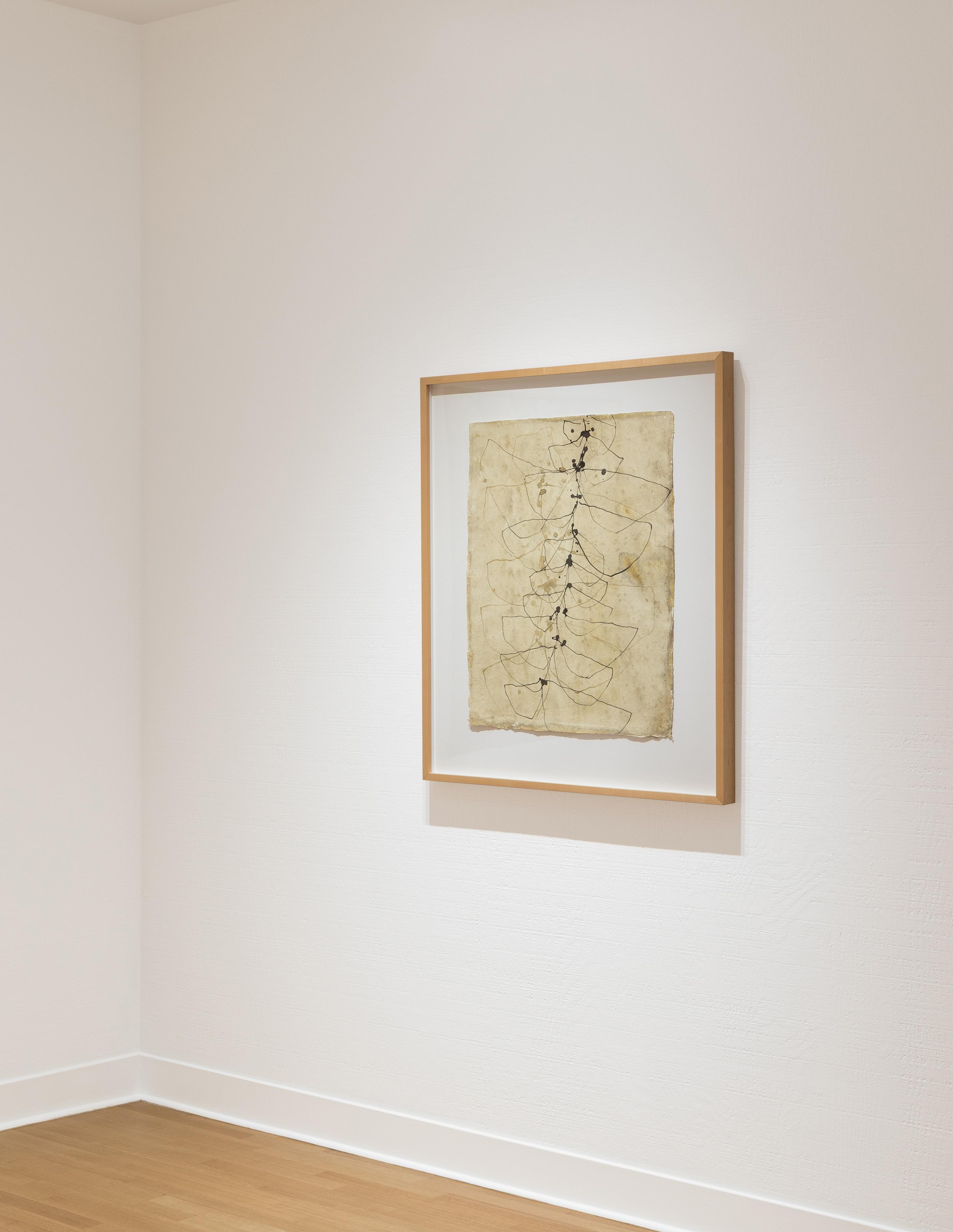
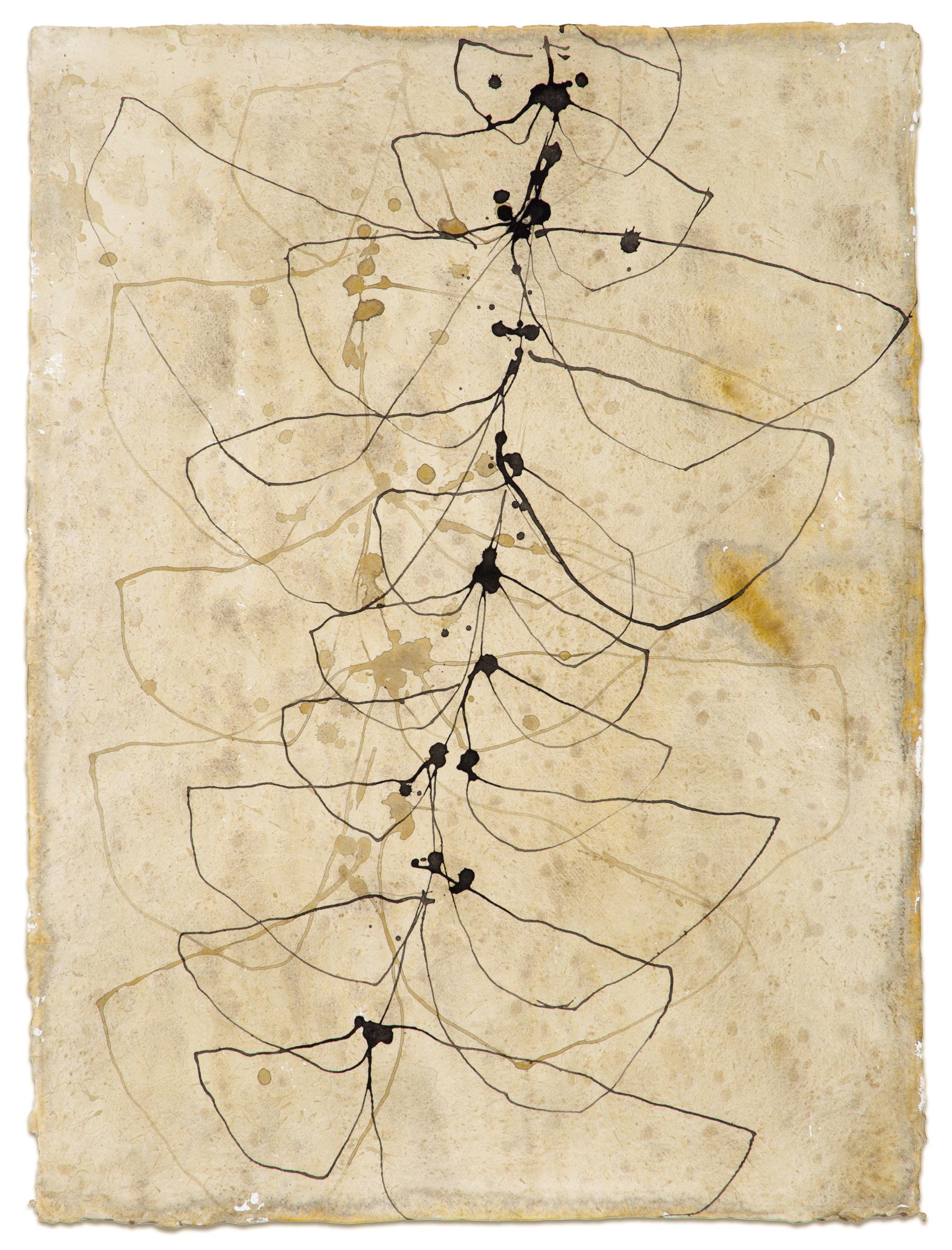
Those two paintings behind everyone (Bookmatch and See) are the same form. One is a line and the other is the form painted in. Those became two letters in my alphabet that I use over and over again. The form in Half Light 13 is also a form that appears in different series. What happened was that I started using my hand and a stick. It is the most basic thing – hand, stick, and ink. It is about going back to the basics I guess.
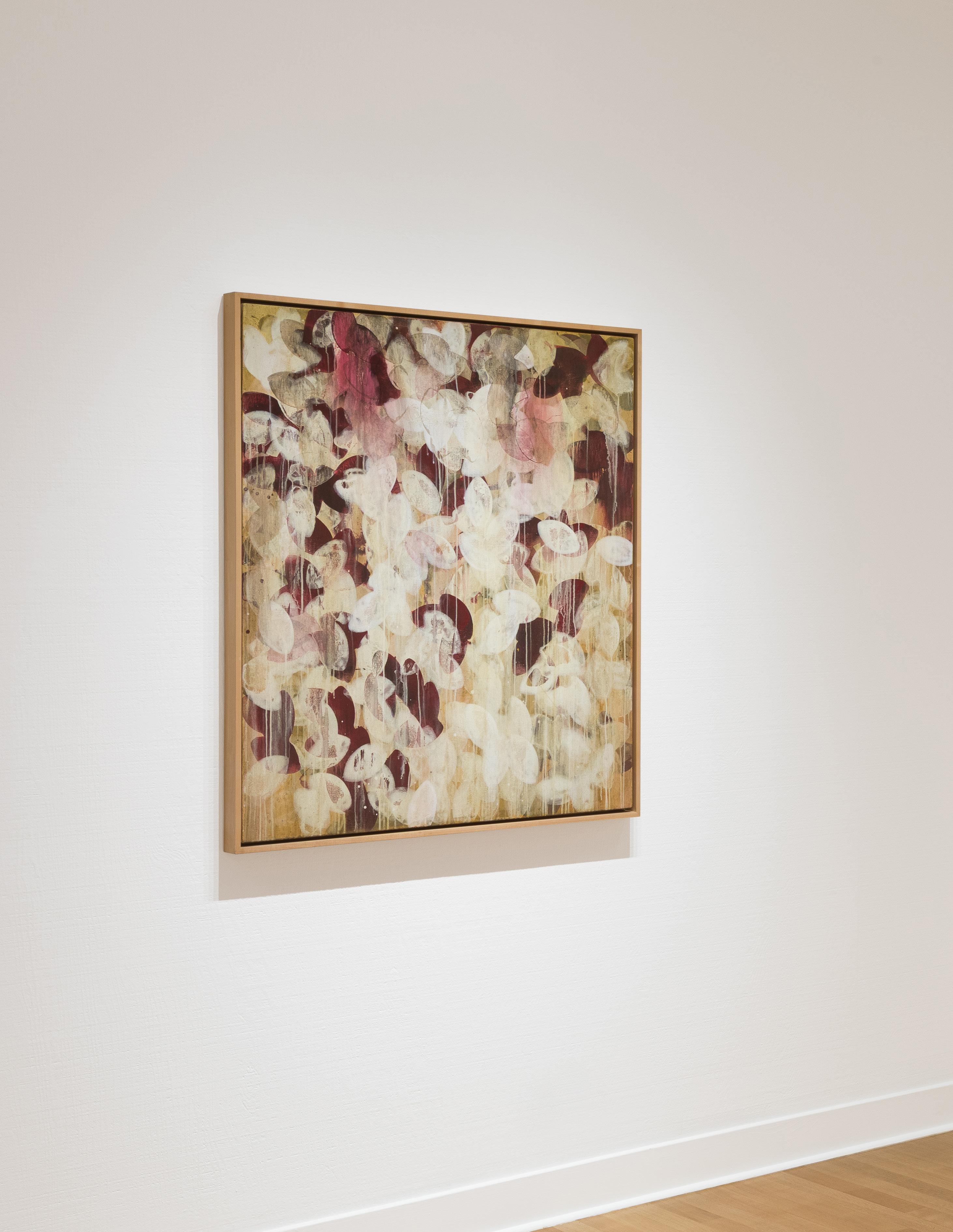
GF: The structures of your compositions has varied from very dense, like in Grace, to very open and atmospheric, like in Unfolding Bloom. How has that evolution taken place for you? Is it conscious or unconscious, or a bit of both?
MK: All of the paintings are about balance. They have to be balanced within the framework. I do not know what else to say about it.
continues on pg. 19
GF: On another thought, when you are making your work, what is your studio environment like? Are you listening to music or is it quiet. What is that like for you?
MK: I am only listening to music if I am making a repetitive movement, something like a woodcut. It is a repetitive motion and you do not have to concentrate on each stroke. If I am doing something like one line on a piece, there is no music involved in that, or sound. I am not thinking about anything else but that moment. Everyone wants to get into that zone where you do not feel time anymore, and I am really envious of some landscape or representational painters because they can be in that zone, keep painting, and have this full day of being in ‘no-time’. When I am doing my work, I get 30 seconds, maybe, of being in that position.
GF: For me, in each of these works there is a kind of emotional resonance that comes through. Some are very calm and some have more energy. They are each very different, but I love each one individually. Is that something you are aiming for?
MK: I am aiming for a balance of forms within the framework. It is not necessarily anything emotional. When there is a balance, there is a calmness. I guess that is what you are seeing.
GF: My last question is, now that you are seeing this small survey after working for almost fifty years, do you find yourself still finding new avenues to investigate that you want to go down? Or, do you find yourself re-investigating things that you have done before?
MK: As you work, things develop. You just have to keep working. It is a practice. Art is my practice. You just have to keep working and eventually something will develop. It has to develop organically. I am not going to go out and say that I am going to do cubist paintings now, or anything like that. Eventually, I will develop a new form of painting and we will see what happens.
Questions from the Audience
Q: You mentioned that it is rare to see different periods of your works all together. Is there one that is speaking to you the most when you look at them?
MK: There is no favorite. I am attached to the paintings when I start them. When they are finished, I have gotten all that I needed from that painting and I can do something else now. Those are little steps. I do not have a favorite. I am happiest when I am starting something, and I learn something or have something be a challenge.
Q: Could you tell us a bit more about making the piece that is carved?
MK: I started with a piece of plywood and then I used Paintstik, which is an oil-based form crayon, to paint the surface. I then used a wood cutting tool to cut the forms into it. There are those ellipse forms in that painting also, besides the swirls. But, the cutting motion is just a motion. I am making thousands of marks on a piece of wood, basically.
Q: What kind of paint is Unfolding Bloom?
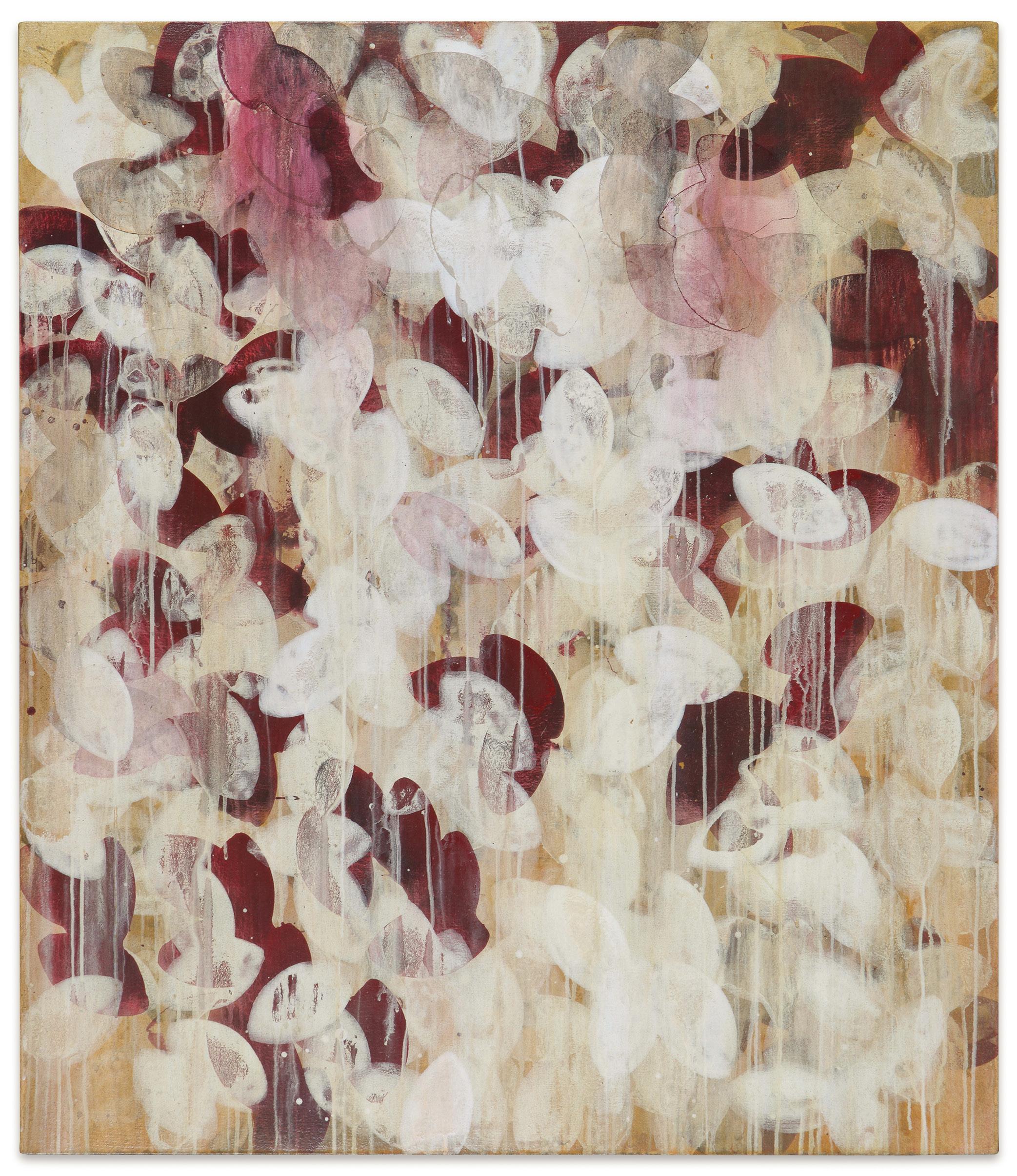
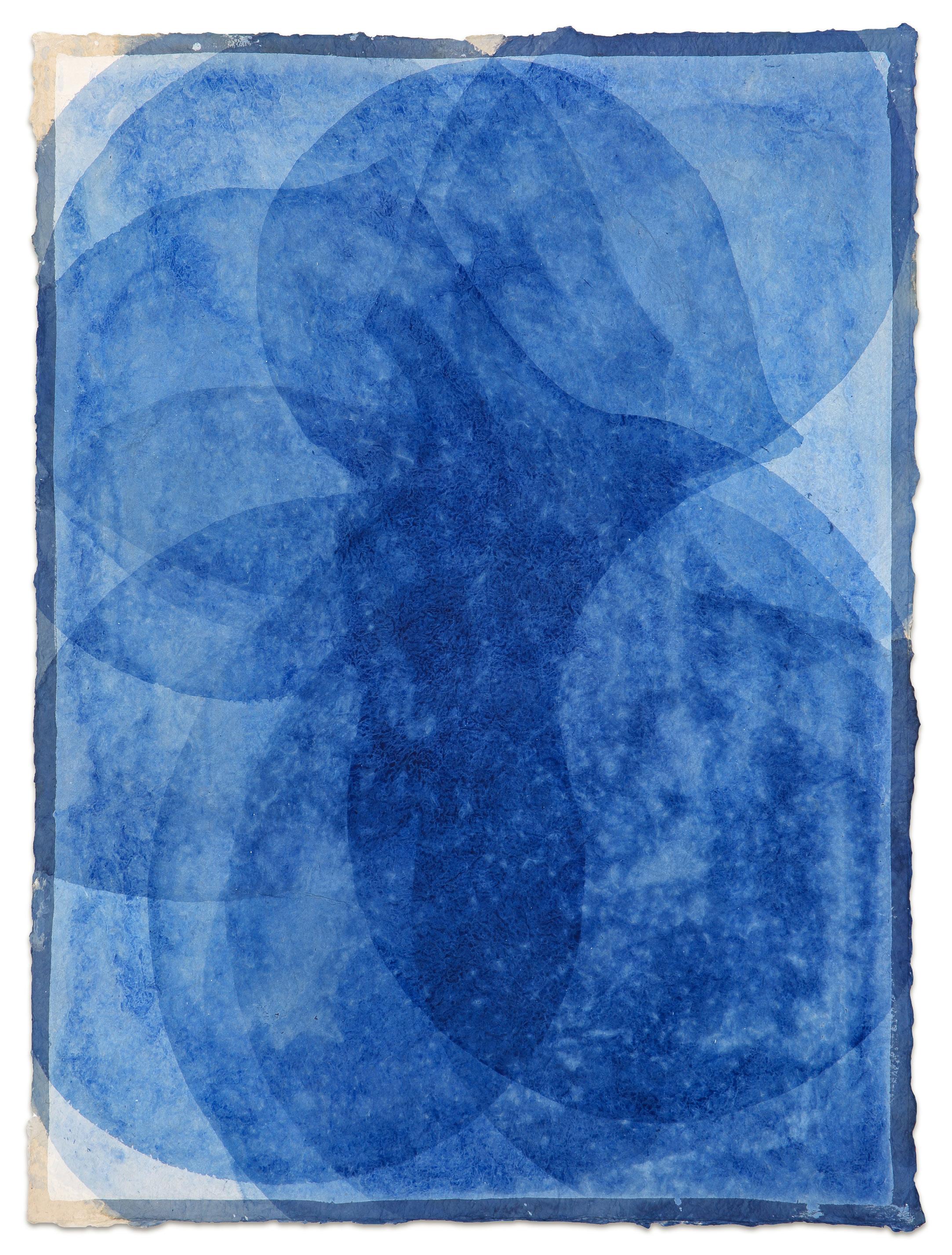
MK: This is acrylic paint. How these are made is I will paint a bunch of ellipses on the surface. These were done in L.A. and I know that in five to ten minutes all of the edges will dry first. When the edges dried, I took the painting out into the yard where I had this “toxic waste dump” as I would call it. I used a hose and washed off the painting with water, into my rock-lined pit; like 99.8% of it is off the canvas and you end up with these edge marks. These little circles are dots of paint. Like if you have a water bubble, the edges dry first and the center stays wet. That is exactly what this is. It is the same principle here. I know that after a while all of the edges will dry. I would repeat that over and over again to get the final composition.
Q: Did you have to wait until it was dry before you could paint again?
MK: Before the next layer goes on, the whole surface has to be dry.
continues on pg. 24
Q: Who are your main inspirations?
MK: I have favorite painters. My favorite is Charles Burchfield. He was an American painter who did these large watercolors. I do not have real inspirations from painters. I like Charles Burchfield because he does these large watercolors very, very well and he will add these little abstractions as sound or as heat waves, but he will make up his own little marks. I think those were pretty amazing. He was this guy making these landscape paintings and thought to put in chirping crickets, or something, and he would show the sound. It is never just one artist that I am inspired by, it is many, many, for their work ethic, their skill, or whatever.
Q: I am also thinking about the natural world. Is there something from there?
MK: That is why I mentioned the Kanji and everything I saw. There is signage for everything in Japan, but I could not read it so they were just little pictures for me. I inherited all of that I guess, and it manifested itself in these paintings. There is nothing behind the marks I have made. They may look like words or something like that, but there is nothing there other than an actual mark.
GF: Thank you, Marc.
MK: Thank you.

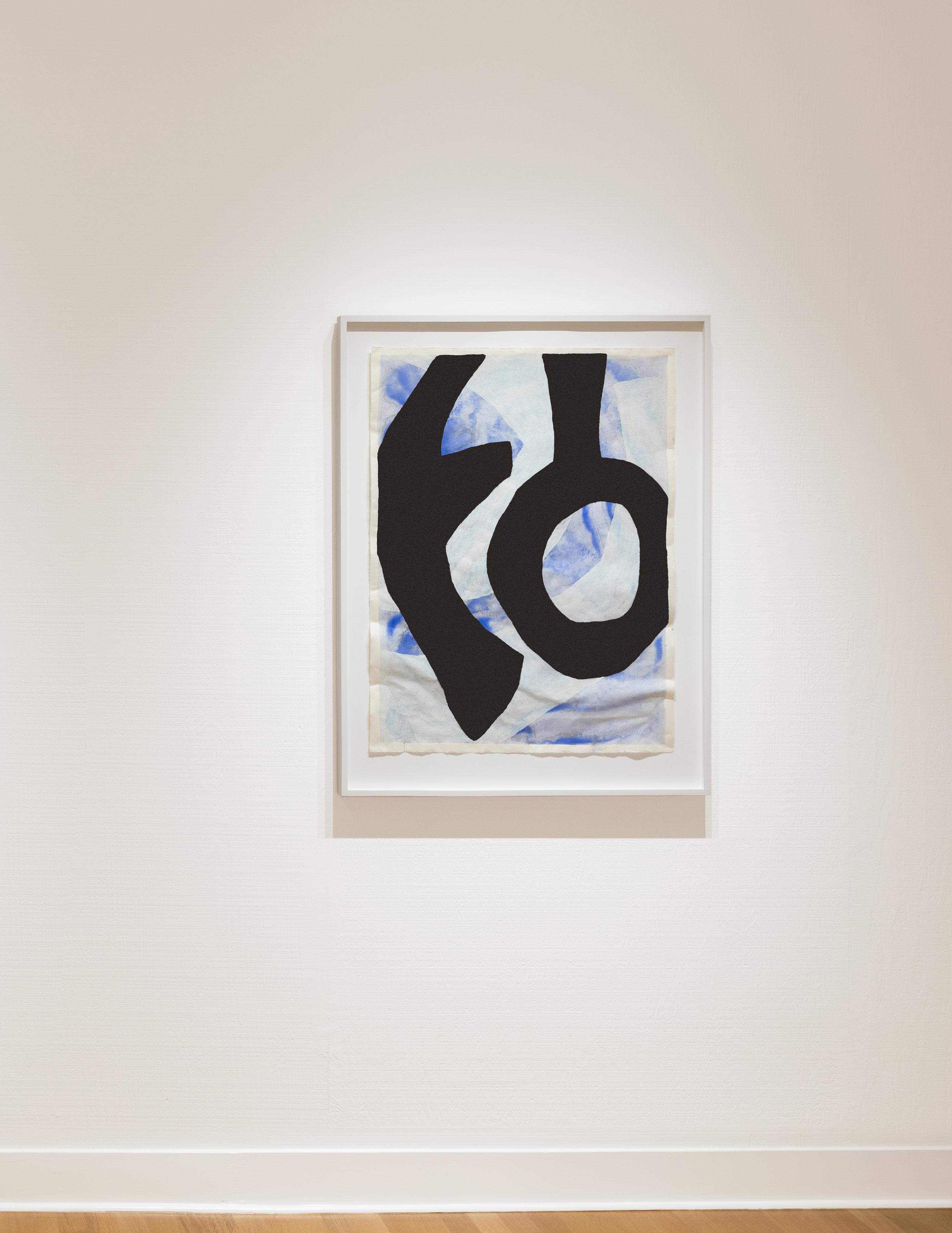
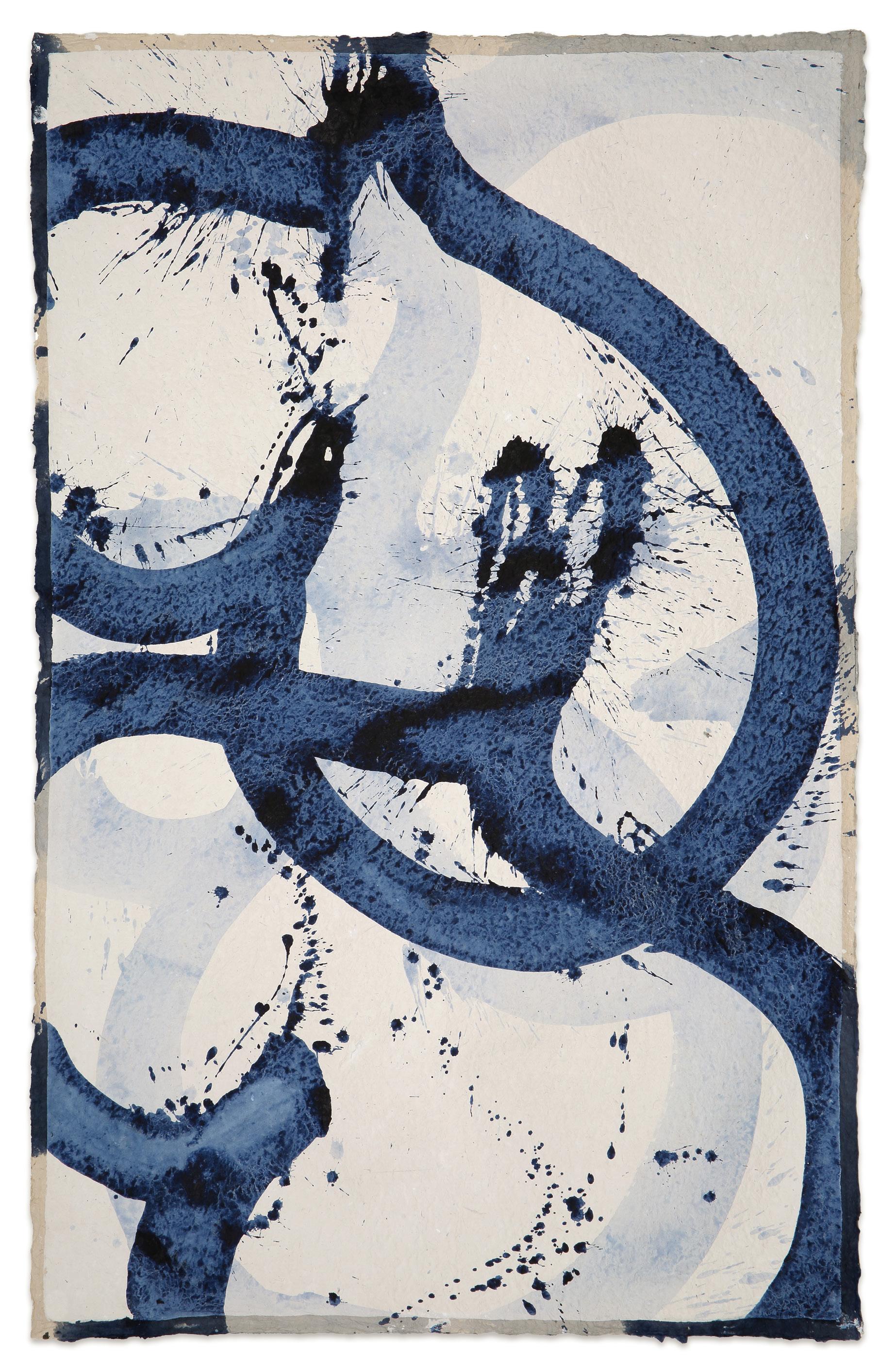
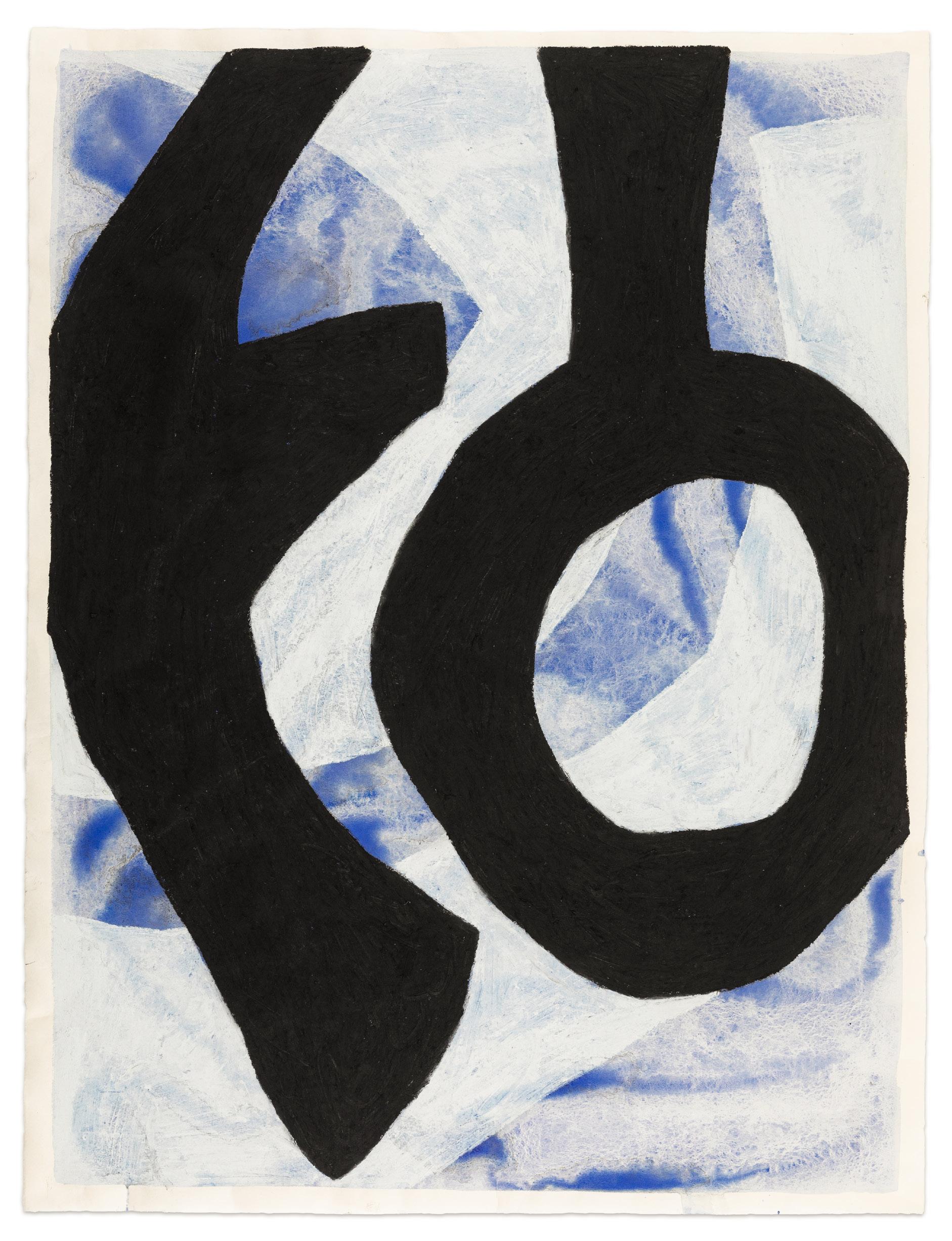
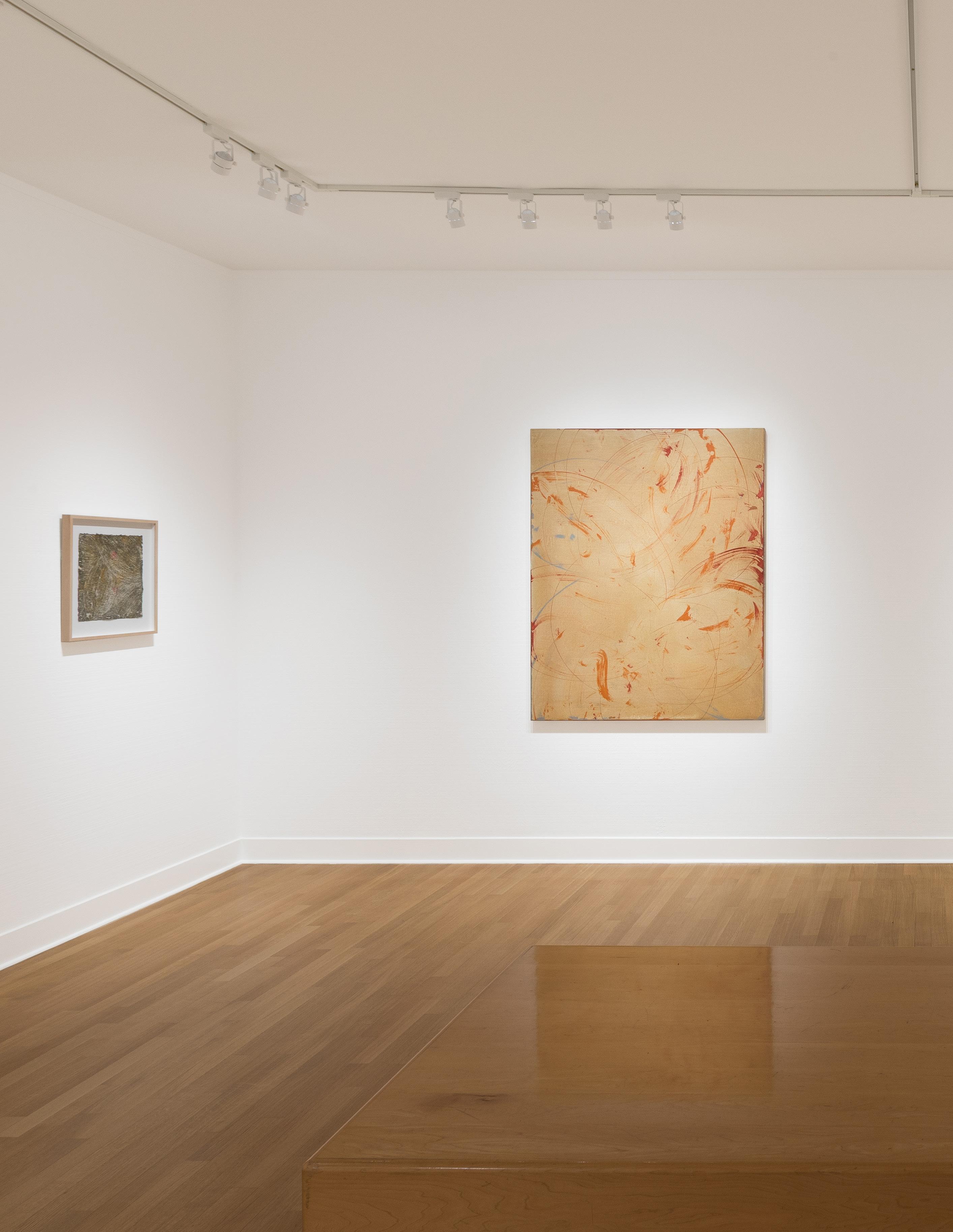
Exhibition Checklist
Plate 2: MK91-50 1991 oilstick on incised wood 42 x 48 inches
Plate 3: Drishti 14 2025
acrylic and paintstik on Nepalese paper 14 1/2 x 15 inches
Plate 4: Unfolding Bloom 2007
acrylic on canvas 60 x 48 inches
Plate 5: Grace 2000
acrylic on canvas 44 x 38 inches
Plate 6: Half Light 13 2009
acrylic and india ink on paper 30 x 22 inches
Plate 7: Sub Rosa 2008
acrylic on canvas 24 x 20 inches
Works not Exhibited
Plate 8: See 2019
acrylic on Nepalese paper
52 x 39 inches
Plate 9: Bookmatch 2017
acrylic on Nepalese paper
59 x 38 inches
Plate 10: Fool’s Errand 2024
painstik and acrylic on Okawara paper
37 x 28 inches
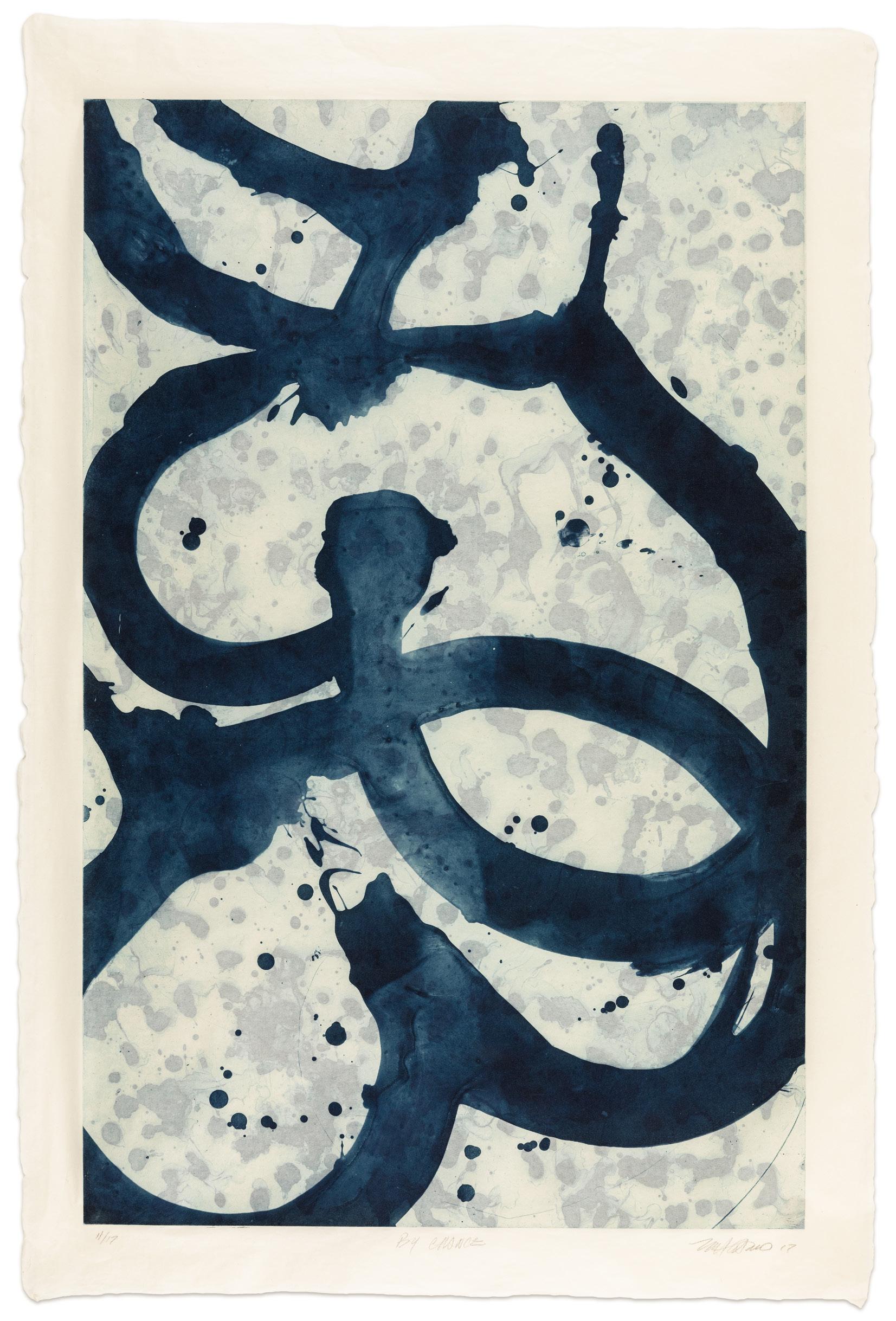
Plate 1: By Chance 2017
copperplate etching, direct gravure, on handmade Gampi and Sekishu paper, edition 11 of 17
38 1/2 x 25 1/2 inches