
Cornerstones
Robert Arneson and the Brick
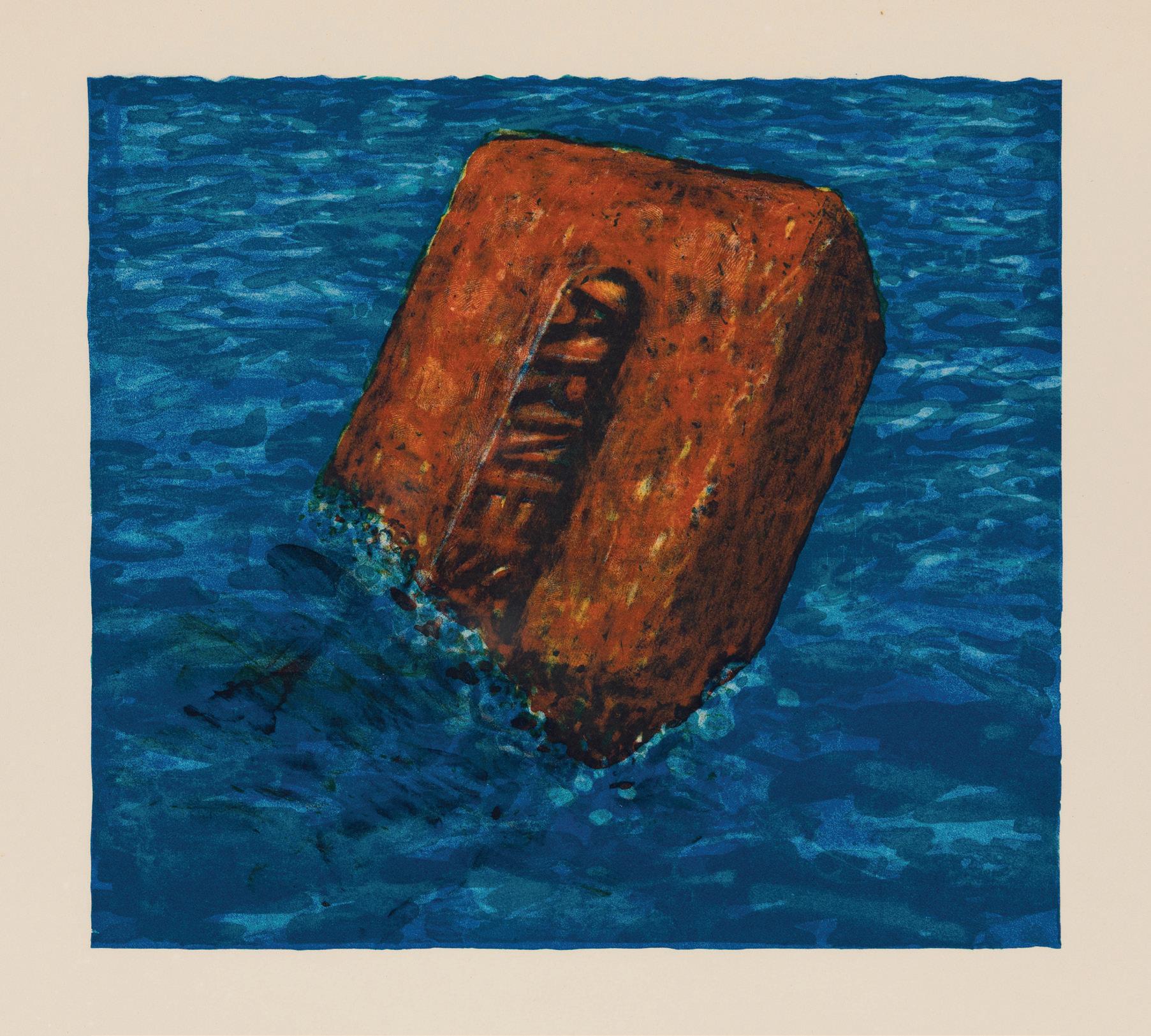
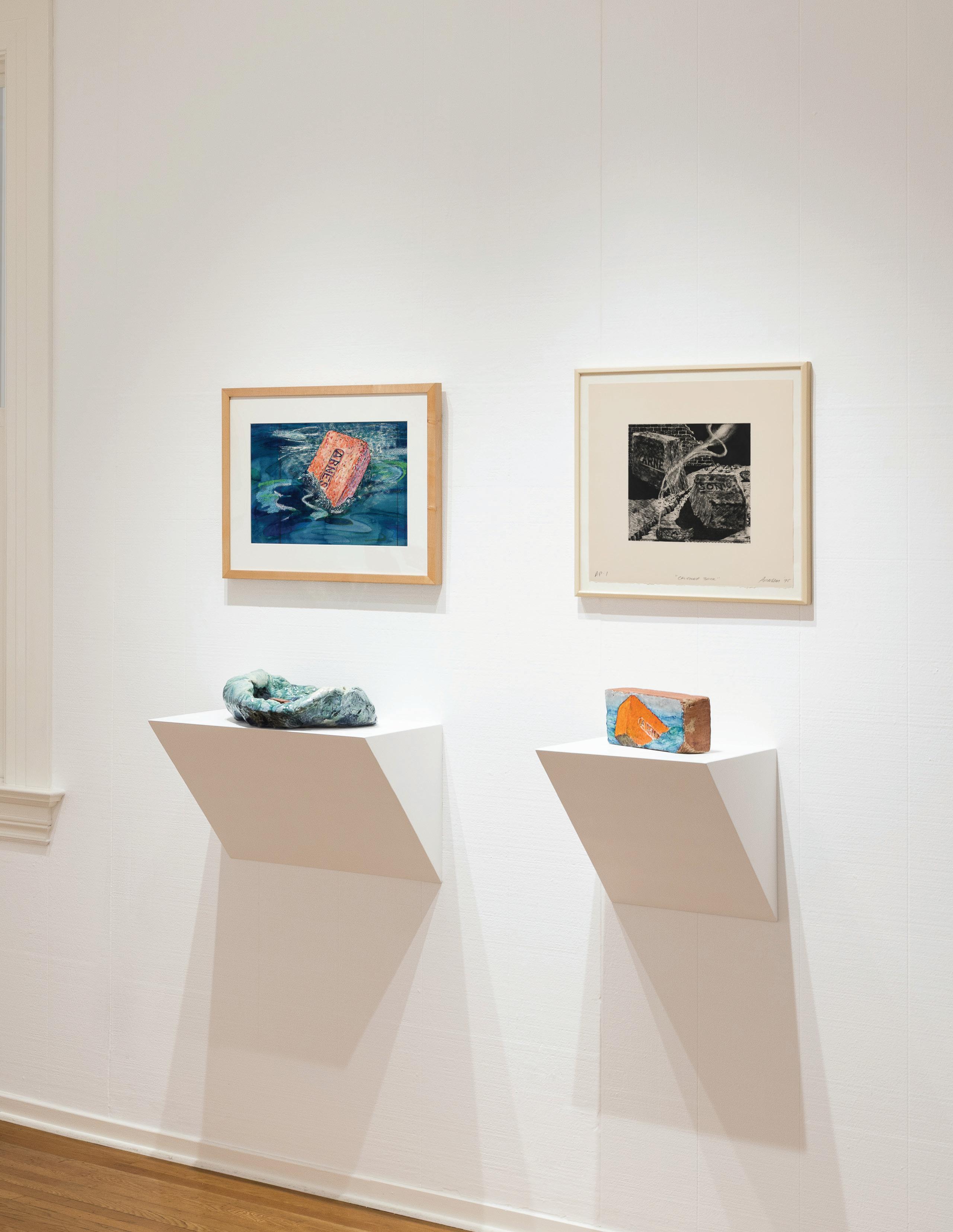
Plate 30:
Moby Brick, 1975
lithograph on paper, edition A.P. 1, 16 x 16 1/2 inches
Contributors
Linda S. Fitz Gibbon
Wanxin Zhang
Jeremiah Jenkins
Reniel Del Rosario
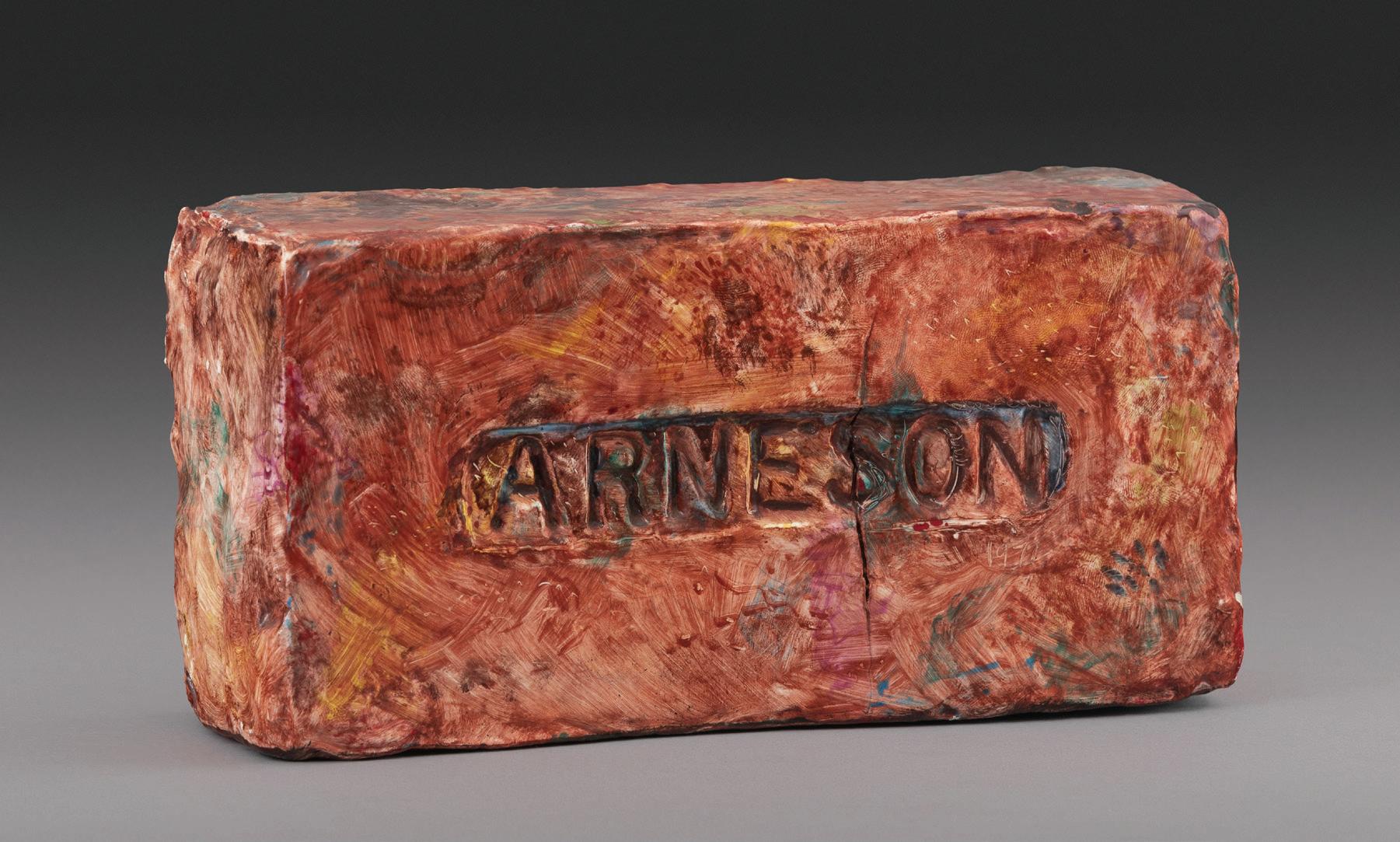
Plate 31:
Painted Brick (with crack), 1972 ceramic, 4 1/2 x 9 x 2 7/8 inches
Foreword
I have known the work of Robert Arneson for well over 20 years, and have engaged directly with it for most of that time across different positions in the Bay Area art world. He is one of the most bold, in your face, and complex artists I have ever encountered. Each of his works, even those that appear as simple as a “brick”, are never quite what they appear. Arneson layered multiple and sometimes contradictory meanings within individual works, which has opened up a wide range of engagement and allowed for multiple readings of them based on the perceptions of the viewer. This complexity of thought and feeling was key to how Arneson operated. He never wanted his art to be pinned down as one thing. Rather, he relished the freedom to explore, experiment, poke fun at, and, at times, vehemently protest against an idea, event, or person. He did so with a biting humor and wit that would take the air out of the sails of even the most serious subject or pompous individual. His humor would not only get him in trouble, but it also led many critics to not take his work seriously because it did not conform to their standards of what art should be. Arneson shrugged off and rebutted his critics both directly in individual works he made, but also more indirectly through the enormous output of sculpture, paintings, drawings, and prints that he generated during his lifetime. His evocative handling of clay, bronze, paint, and other materials in his works is a testament to his artistic mastery of the materials he employed.
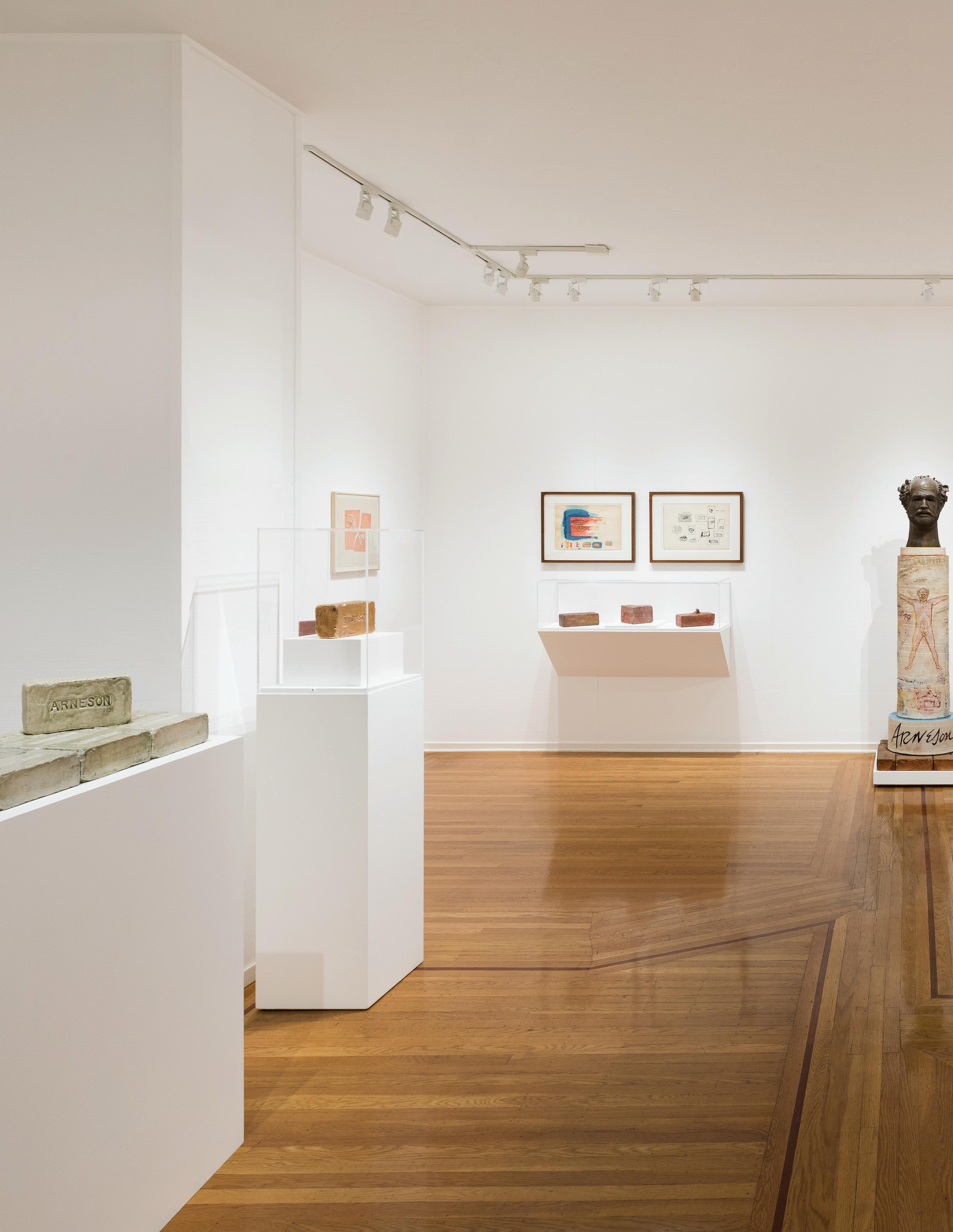
Cornerstones: Robert Arneson and the Brick is the first exhibition to focus on the brick related works Arneson began creating in 1965 and continued to make until his death in 1992. In the following pages, you will find a comprehensive essay that delves into the many ways Arneson engaged with and employed the humble terracotta brick as a vehicle for exploring his ideas. Following the exhibition plates, you will also find section looking at the lasting impact Arneson’s career and how his bricks impacted artists during his lifetime as well as those still working today.
I give my thanks to Kelly Lindner, Tenaya Arneson, Kirk Arneson, Derek Arneson, and the late Sandra Shannonhouse (1947-2025) from the Estate of Robert Arneson for their support of this show and catalogue. We at Paul Thiebaud Gallery are grateful for their trust in us with carrying forward the legacy of Robert Arneson and his works.
I would also like to thank the contributing artists to this catalogue – Wanxin Zhang, Linda S. Fitz Gibbon, Jeremiah Jenkins, and Reniel Del Rosario – who have written moving testaments to how Arneson’s works and methodologies have continued to inspire long after his passing. My thanks also go to the private collections that generously lent works to the exhibition and allowed for us to include them in this catalogue.
Lastly, I would like to acknowledge and thank the team at Paul Thiebaud Gallery – Colleen Casey, Matthew Miller, and Gregory Hemming – for their tireless hard work and dedication to making this exhibition and catalogue come off the idea board and into reality.
Greg Flood, Director May 2026
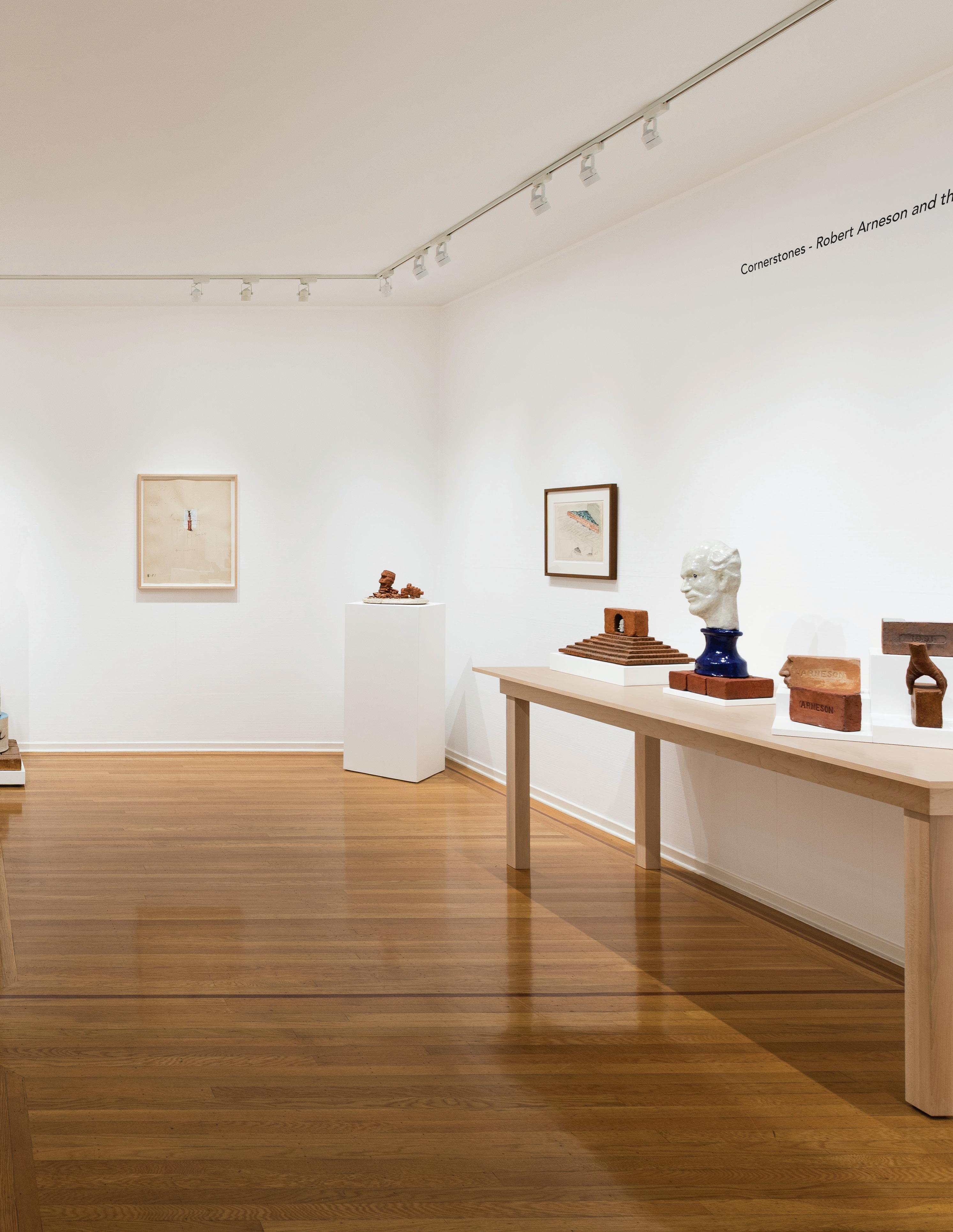
Corner Stones: Robert Arneson and the Brick
By Greg Flood
What is a brick? What is brick-ness? What is the brick about? What can a brick be? These are among the questions Robert Arneson (1930-1992) asked himself in the 1960s when he began incorporating the brick into the growing array of subject matter he was exploring. The 1960s were a formative and experimental period in Arneson’s career, much like the greater art world in the United States at that time. Arneson’s choice of the brick would prove formative and consequential, and became an integral element of his career. Before we delve into the aesthetic territory he explored with the brick, it is important to set the stage for how Arneson arrived at the brick as a vehicle for his ideas.
Prelude
Born in 1930 in Benicia, California, Robert Arneson earned his undergraduate degree from the California College of Arts and Crafts (later known as California College of the Arts) in 1954 and his MFA in ceramics from Mills College in 1958. Arneson’s training in ceramics was entirely traditional, with a heavy emphasis on mastering the techniques of throwing perfectly symmetrical vessels on the potter’s wheel as outlined by his professor Antonio Prieto (19121967). Arneson’s MFA exhibition reflected this through its presentation of plates, bowls, vases, and decorative wall plaques.
That Arneson was trained this way is not surprising. Up to that point in time, ceramics were considered a craft object meant for functional and/or decorative use, and not a material to use when making serious ‘Art’. A few years before Arneson earned his MFA, a group of ceramicists at the Otis Art Institute (now Otis College of Art and Design) led by Peter Voulkos (1924-2002) began to challenge this assumption by creating fine art sculpture with a capital ‘S’ using clay. Arneson was aware of what was happening in Los Angeles with Voulkos through magazines about ceramics while earning his MFA, but did not begin to experiment with the idea of using clay to make
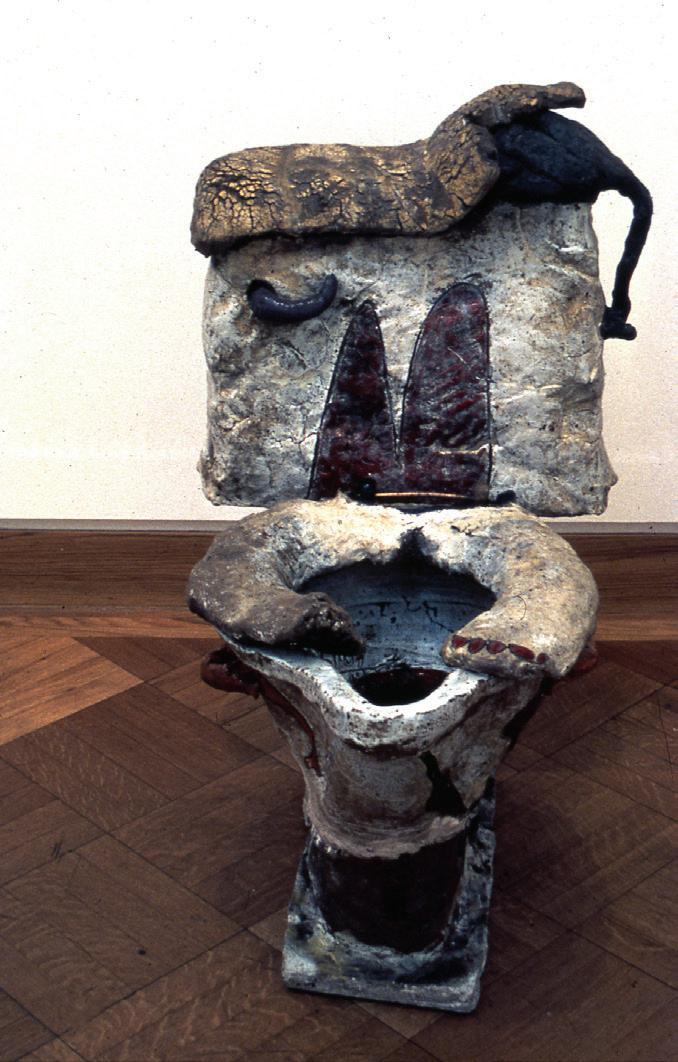
Figure 1: Funk John, 1963, glazed stoneware, 36 x 28 x 20 inches. Destroyed.
sculpture until Voulkos moved up to the U.C. Berkeley art department in 1959.
What followed for Arneson was a decade of exploration and experimentation that can be divided into two parts – an early period of 3-4 years of breaking away from his classical training in search of the sculptural form, and for the remainder of the 1960s a search for a definitive sculptural vehicle through which he could express his ideas. The early period saw riffs and aberrations on traditional vessel forms, biomorphic explorations, and a series of trophies, but Arneson was not satisfied.
At this point in the history of post-WWII American Art, Pop Art was the dominant movement and style that had emerged after Abstract Expressionism. Pop Art engaged with symbols, signage, mass produced advertising, and industrialized consumer culture. Pop artists re-presented and reinterpreted these through the language of painting and sculpture, imbuing the resulting works with a detached sense of coolness and irony. With this in mind, Arneson began intensively studying the history of ceramics from a global perspective in search of a form to reinterpret as sculpture.
One afternoon in the summer of 1963, Arneson was thinking about his “heritage as a ceramicist… about what were the ultimate ceramics in Western culture”1 while working in TB9, the ceramics building at the U.C. Davis Art Department. Needing to use the restroom, Arneson walked out of the clay studio with this question on his mind. While sitting on the commode, a light bulb went off in his mind. “Hey, man, you’re on it. This is it. This little pot has no heritage… And it is 100% ceramic!”2 From this moment of inspiration flowed a series of toilet related works, beginning with Funk John, 1963 (figure 1). These works were made in a roughhewn, visceral style that incorporated the body into the work. Arneson’s toilets drew strong reactions from critics and the public when they were exhibited, and garnered Arneson a level of notoriety he could build on.
What set Arneson’s works apart from the Pop Art coming out of New York was their lack of easily digested beauty and detachment. This is not to say Arneson’s toilets are not beautiful, but their beauty dances on the edge of the grotesque and the unsettling.
1 Robert Arneson, responses to an interview conducted at Lake Tahoe, over several days of recording during August 1981, with Mady Jones for the Archives of American Art, California Oral History Project, Smithsonian Institution, edited with annotations [in brackets] by Jonathan Fineberg and Sanda Shannonhouse, 2010, n.p.
2 Ibid.
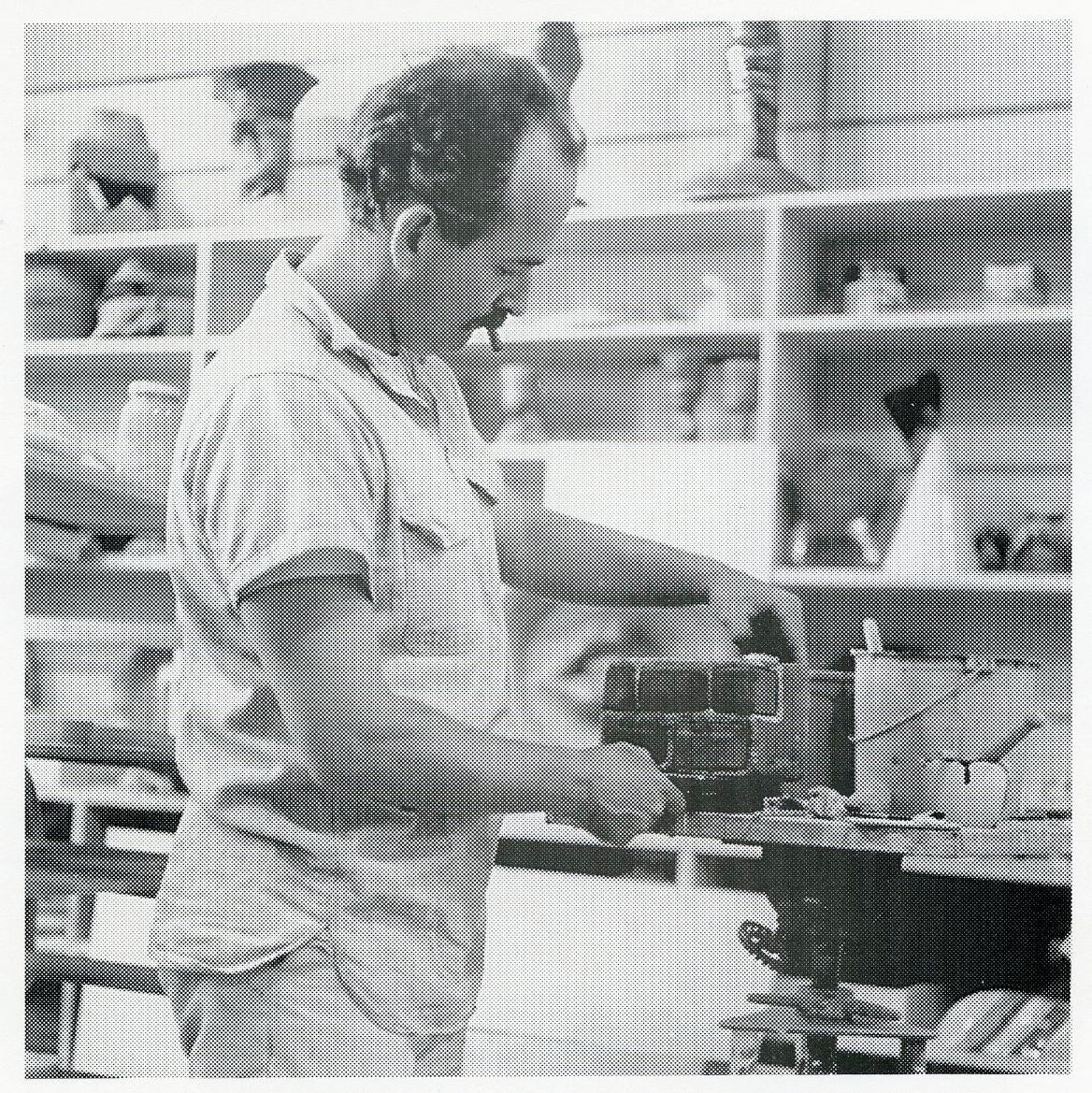
Figure 2: Robert Arneson sculpting bricks in TB9, 1966.
They did not celebrate the industrialized consumer culture of America, they investigated the weirdness and anti-humanness of it through a surreal lens. These works were later dubbed FUNK by Curator Peter Selz when he mounted an exhibition of the same name at the Berkeley Art Museum in 1967. It was a moniker Arneson never liked and often felt stifled by in the later part of his career. These works are better described as being part of West Coast Pop, a unique strain of the movement that emerged in California.
First Bricks
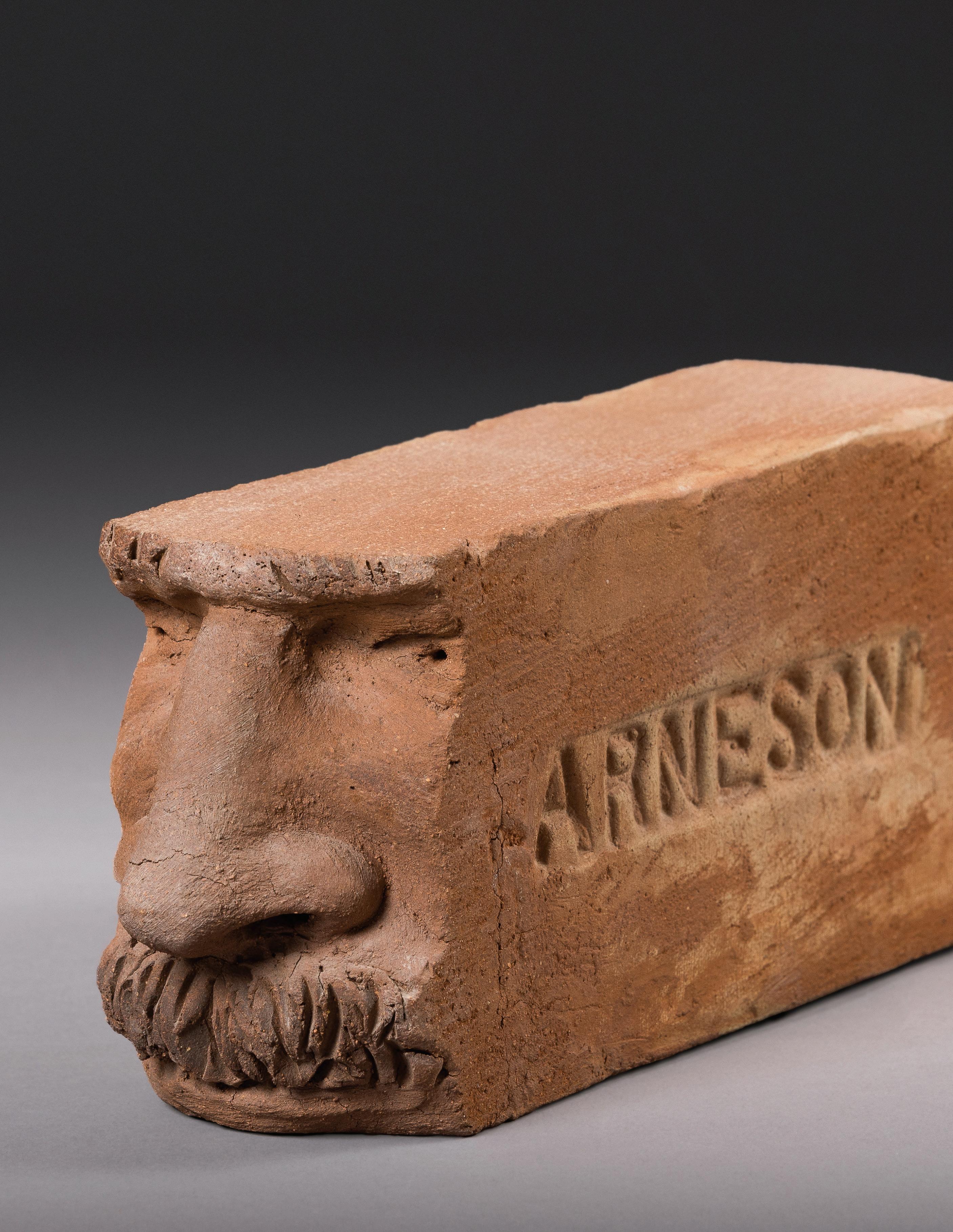
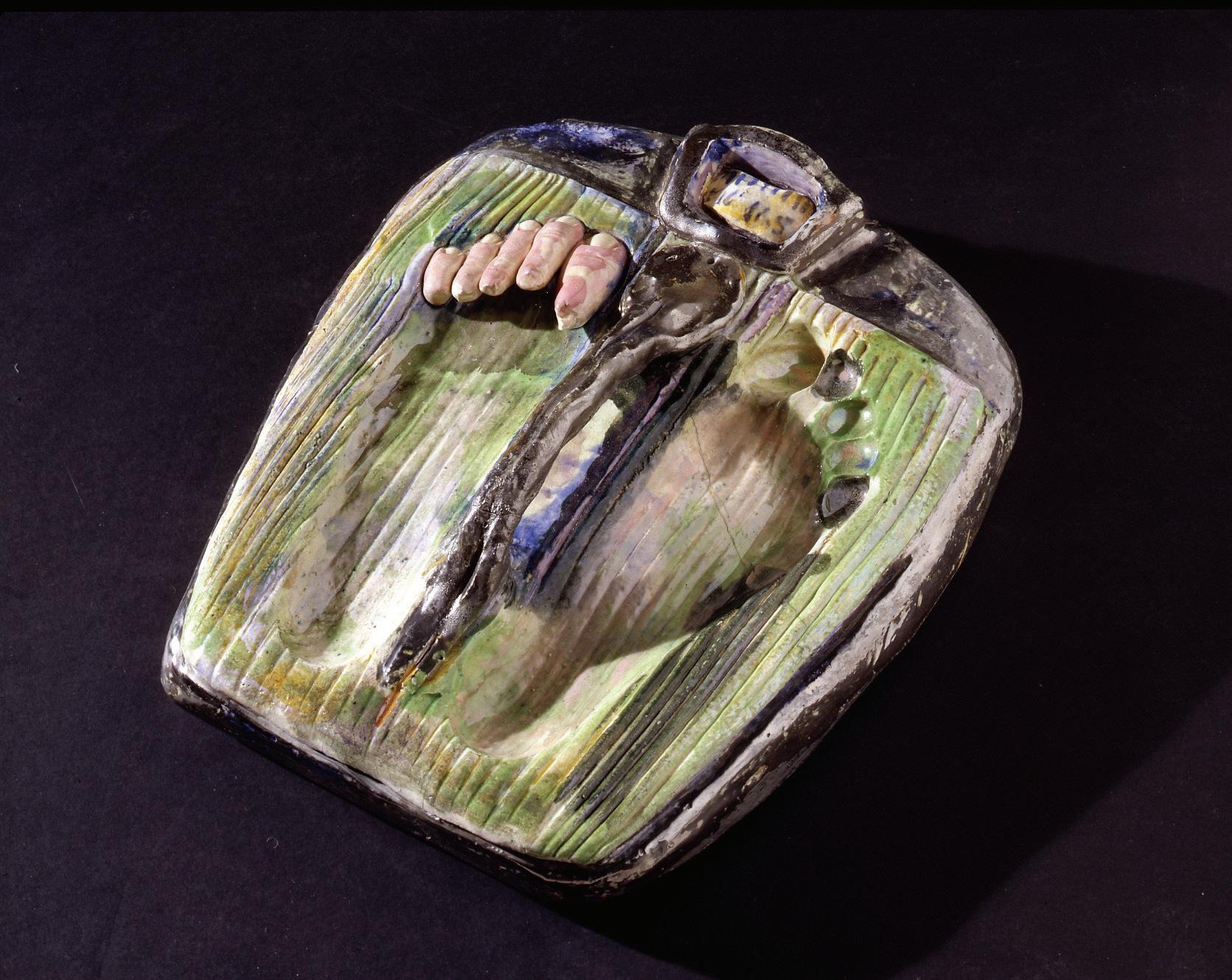
After gaining currency for his toilets, Arneson continued experimenting with ideas in his studio. During his ongoing search through the history of Western ceramics, Arneson came upon the humble terracotta brick and found it an apt medium for expressing his ideas. Among the first bricks Arneson sculpted were a pair that have fingers pushing out from their interiors, one of which is Finger Brick, c.1965 (plate 1). Another is the 17 ½ x 34 x 10 inch Brick Bricks made the same year (figure 3), which appears as one over-large brick at the right end, but as the eye travels to the left it transforms into a wall of smaller life-sized bricks. There are also two other oversized bricks, one of which is broken in half and the other is in Arneson’s words “slightly used.”3 These aesthetic gestures tie the beginning of the bricks to a previous body of surrealist inspired works, that include Typewriter #1 (Touch System), c. 1965-1966 (figure 4); Scale, 1965 (figure 5); and Toaster, 1965-1966. As works, these first bricks can be interpreted as symbols of emergence, and represent the transition to working with a new idea. Another marker of the transition is the corner shaped Brick, 1966 (plate 2). The bricks with fingers, Brick Bricks, and this first corner brick were each built by hand by Arneson without the use of a prepared mold, as belied by their smooth surfaces. Not long after they were created, Arneson began making and using molds to create the basic forms of the individual bricks, with Brick, 1966 (plate 3) being one of the first molded pieces.
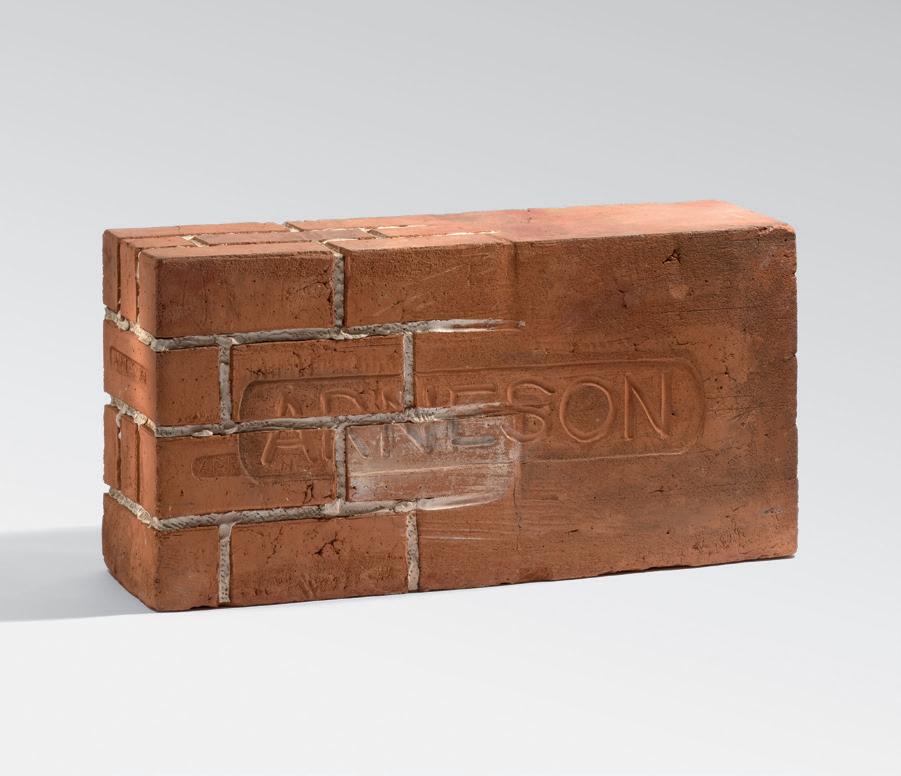
Arneson viewed the humble brick as one of “the most heroic of ceramics. You must understand that the brick – terra-cotta –just doesn’t exist in Eastern culture. It is Western. It is that ceramic element that has built the buildings of our society or culture – certainly of another epoch, not today.”4 He selected the brick because it
3 Ibid.
4 Robert Arneson, statement, Craft Horizons, Journal 6, 1977, pg 31.
Figure 3: Brick Bricks, 1965, terracotta, ceramic, 18 x 34 x 10 inches. Private Collection.
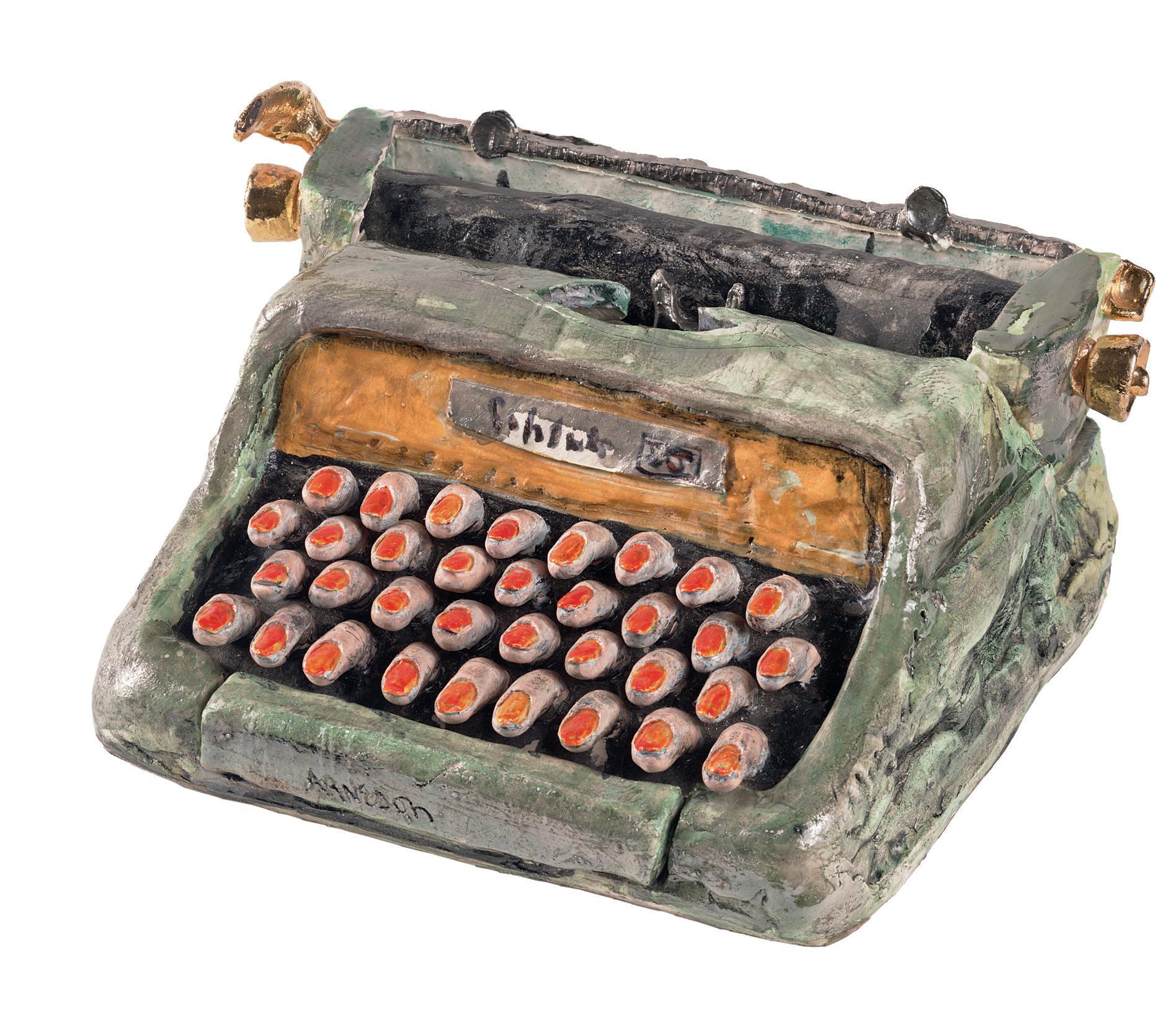
Figure 4: Typewriter #1 (Touch System), c. 1965-1966, earthenware, ceramic, and nail polish, 6 x 11 1/2 x 12 1/2 inches.
University of California, Berkeley Art Museum and Pacific Film Archive, gift of the artist, 1967.40.
5: Scale, 1965, stoneware, ceramic, 5 x 15 x 12 inches.
Collection of San Francisco Museum of Modern Art, Phyllis C. Wattis Fund for Major Accessions, 2017.390.
Figure
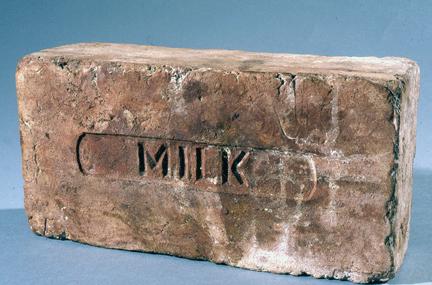
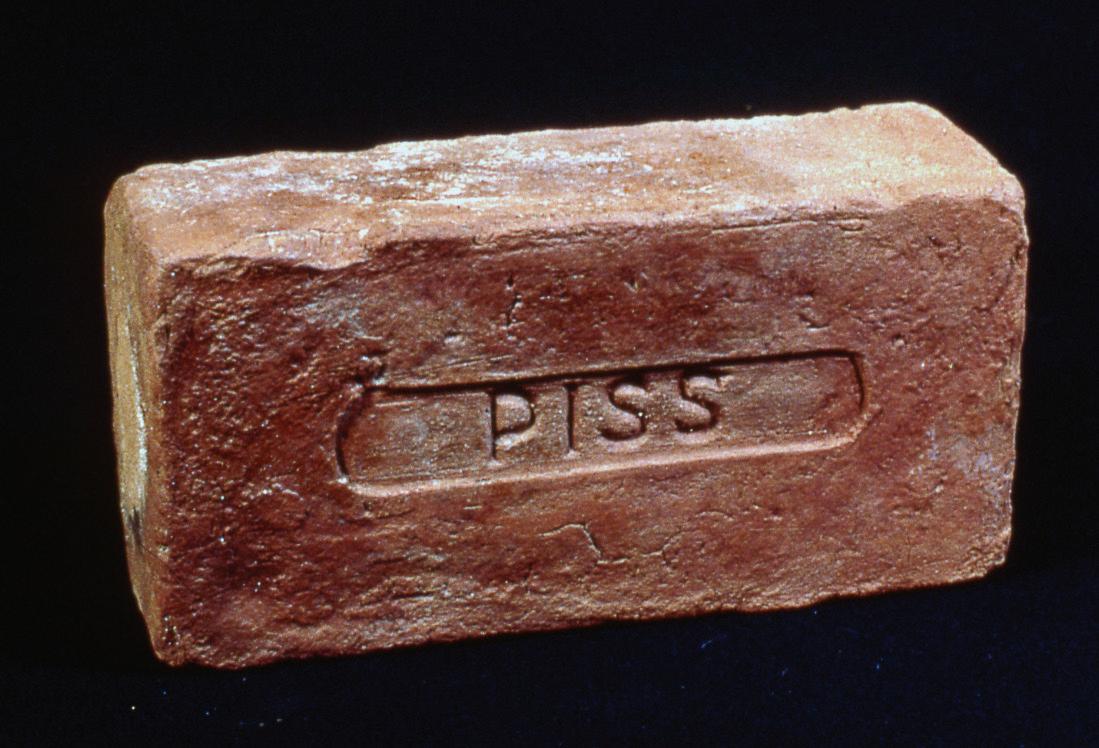
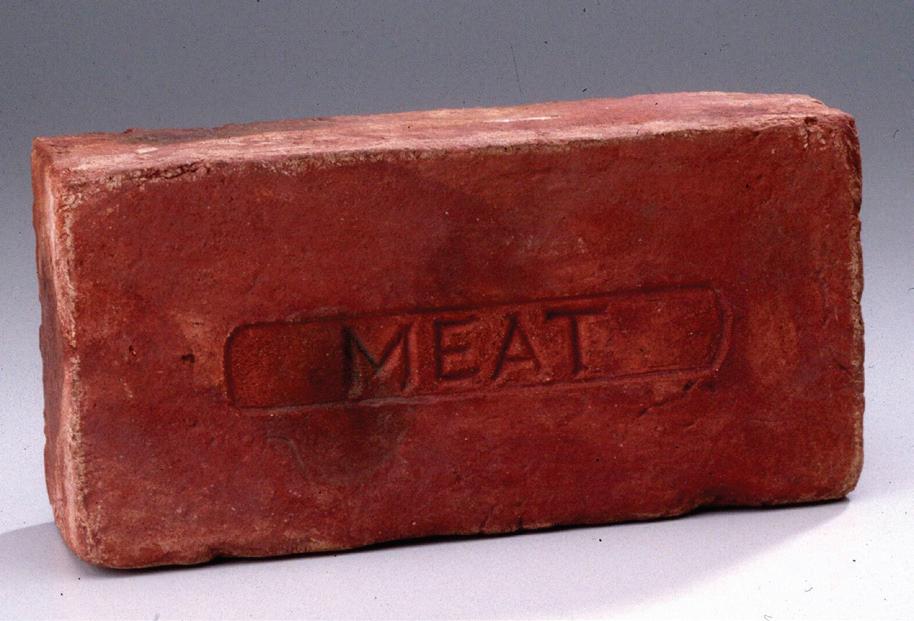
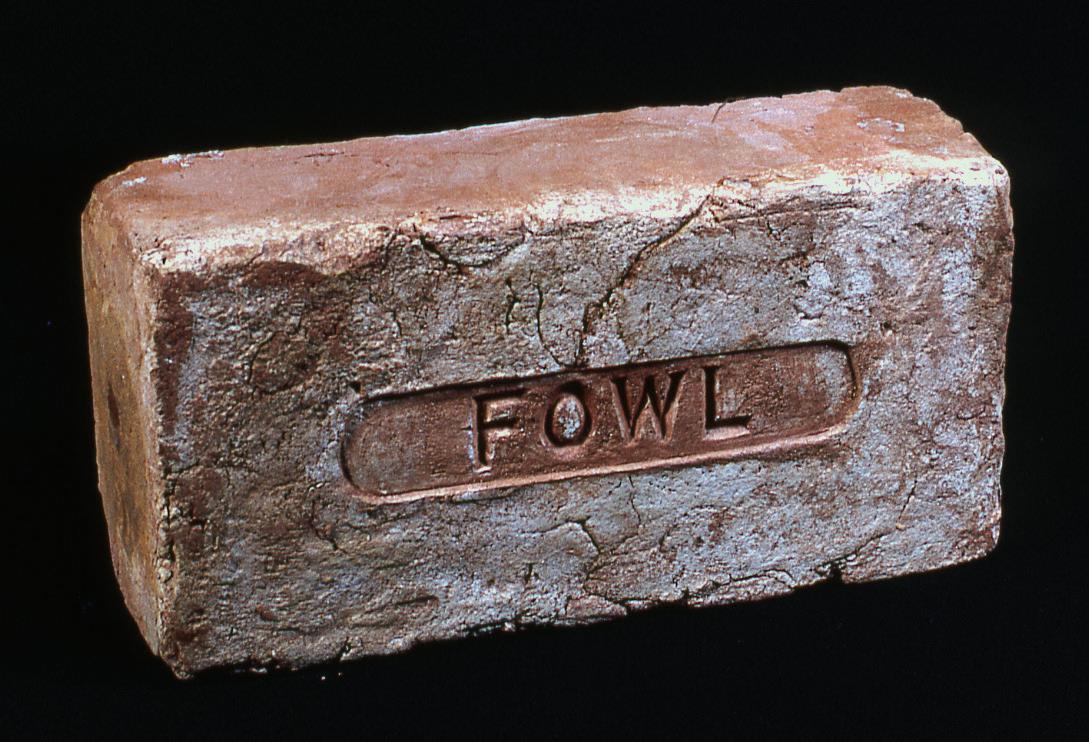
Figure 6: Milk Brick, 1969, ceramic, 4 1/2 x 8 3/4 x 2 3/4 inches, Robert Arneson Estate.
Figure 7: Piss Brick, 1969, ceramic, 4 1/2 x 8 3/4 x 2 3/4 inches, Robert Arneson Estate.
Figure 8: Meat Brick, 1969, ceramic, 4 3/8 x 9 x 2 3/4 inches, Robert Arneson Estate.
Figure 9: Fowl Brick, 1971, ceramic, 4 1/2 x 8 3/4 x 2 3/4 inches, Robert Arneson Estate.
was part of “the very basic heritage of ceramics that had no art heritage to it.”5 In fact, terracotta clay has been made and used in North America, the Mediterranean region, the Middle East, India, China, and Japan for decorative, sculptural, and architectural uses for well over two millennia. However, Arneson is correct that its use for making bricks is entirely a creation of Western culture, and a relatively recent one.
At the time that Arneson began his adventures in brick making, a series of shifts had occurred in the world of Art. New theories, movements, and methodologies had emerged in the wake of and alongside Pop Art, of which Minimalism was one. Minimalism sought to engage with simplified concepts and forms, down to their elemental essences. One of the movement’s prominent practitioners was Carl Andre (1935-2024), who stacked and arranged industrially produced bricks to make his sculptures. It is interesting to note that Andre’s earliest uses of bricks for sculpture occurred in 1966, slightly after Arneson independently arrived at the same form and explored it for very different purposes. It is not likely that Andre would have been aware of Arneson’s use of the brick until a few years later, when they began to be shown at Allan Stone Gallery in New York.
Another movement that had emerged in New York was Conceptualism. With Conceptualism, the idea behind the work of art at times became more important than its execution in physical form. In practice, it engaged artists in deep, critical thinking about ideas and how to present them to an audience. At U.C. Davis, one of the experimenters with conceptualism was Arneson’s good friend and fellow faculty member, William T. Wiley (1937-2021). Unlike many conceptual artists, Wiley blended the movement’s precepts with music, poetry, and performance to create a unique synthesis, all while interrogating the foundations of painting and sculpture. Another important practitioner of Conceptualism was Arneson’s and Wiley’s student Bruce Nauman. Among several avenues of inquiry, Nauman investigated the body, its movements, and its inputs/outputs. The presence of Wiley and Nauman in the orbit of Arneson was important to the context of what he did next with the brick.
Brick as Idea
What is a brick? What is Brick-ness? What can a brick be? What is the brick about? Questions like these were on Arneson’s mind in the late 1960s when his explorations of the brick really took hold. The answers Arneson came up with took a variety of forms.
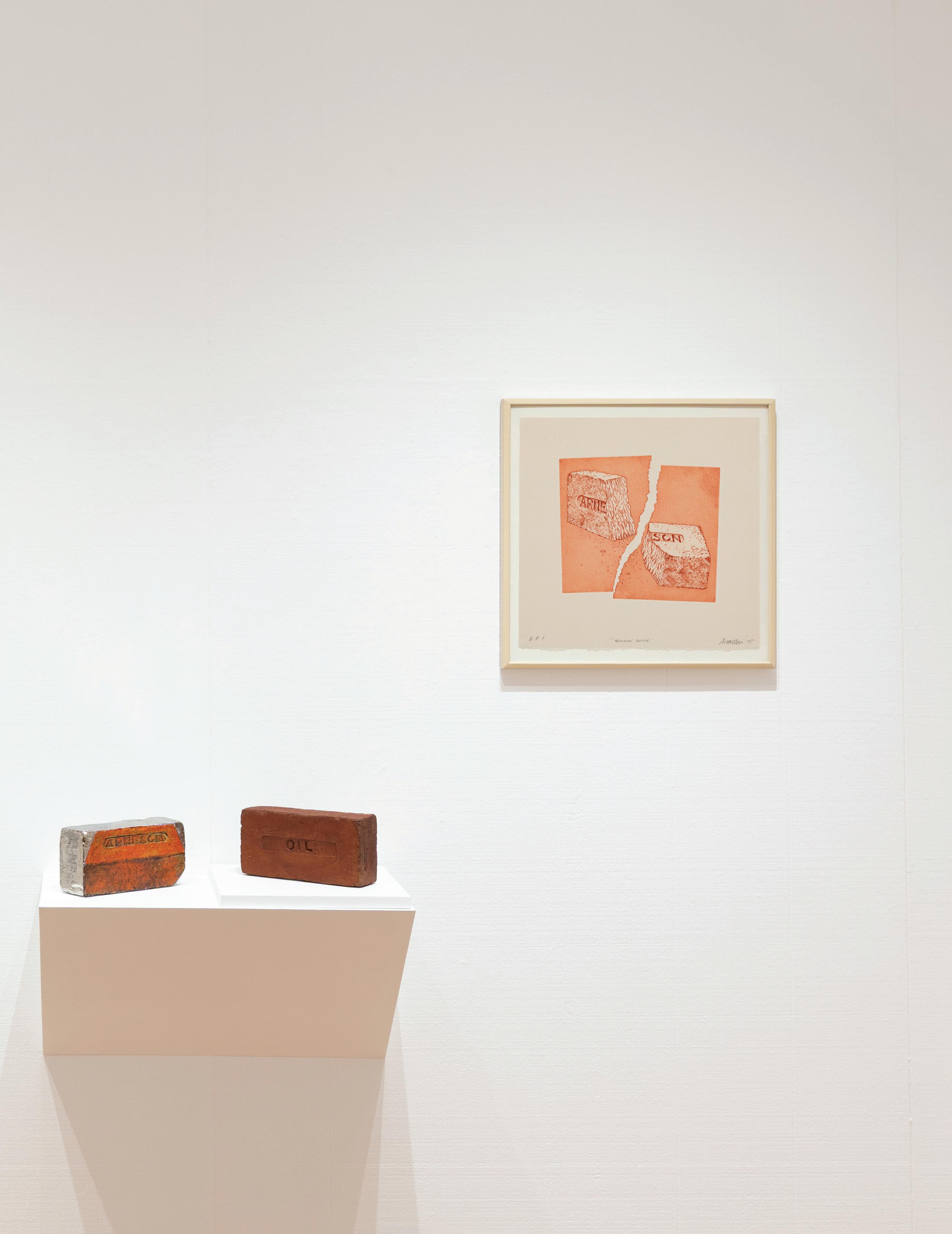
Brick as Vessel was one concept Arneson explored. When making bricks using molds, Arneson would push the clay out from the center to form the walls while leaving a hollow cavity over which he then put a piece of clay to close the final side. Into these voids Arneson would add liquids and other types of matter before closing them up. Among
5 Arneson, interview with Jones, Archives of American Art, Smithsonian Institution.
the bricks filled with liquids are Oil Brick (plate 4), Milk Brick (figure 6), and Piss Brick (figure 7), which were all made in 1969 and contained the corresponding liquid in them. The liquid would then permeate through to the surface of the brick, infusing the clay with a unique smell, patina, and texture registered when touched. The surface of Oil Brick is still sticky with oil today, for example. The bricks containing objects include Meat Brick, 1969 (figure 8) and Fowl Brick, 1971 (figure 9). Fowl Brick contains the remnants of a deceased chicken and the smell of decomposition still permeates the clay. The choices of these materials likely came from improvisation and experimentation in the TB9 classroom where he worked a lot during this period of his career. One impulse that factored into his decision making, however, was his desire to challenge and potentially shock his peers, dealers, critics, and the public itself into considering an idea and a context they had not seen before.
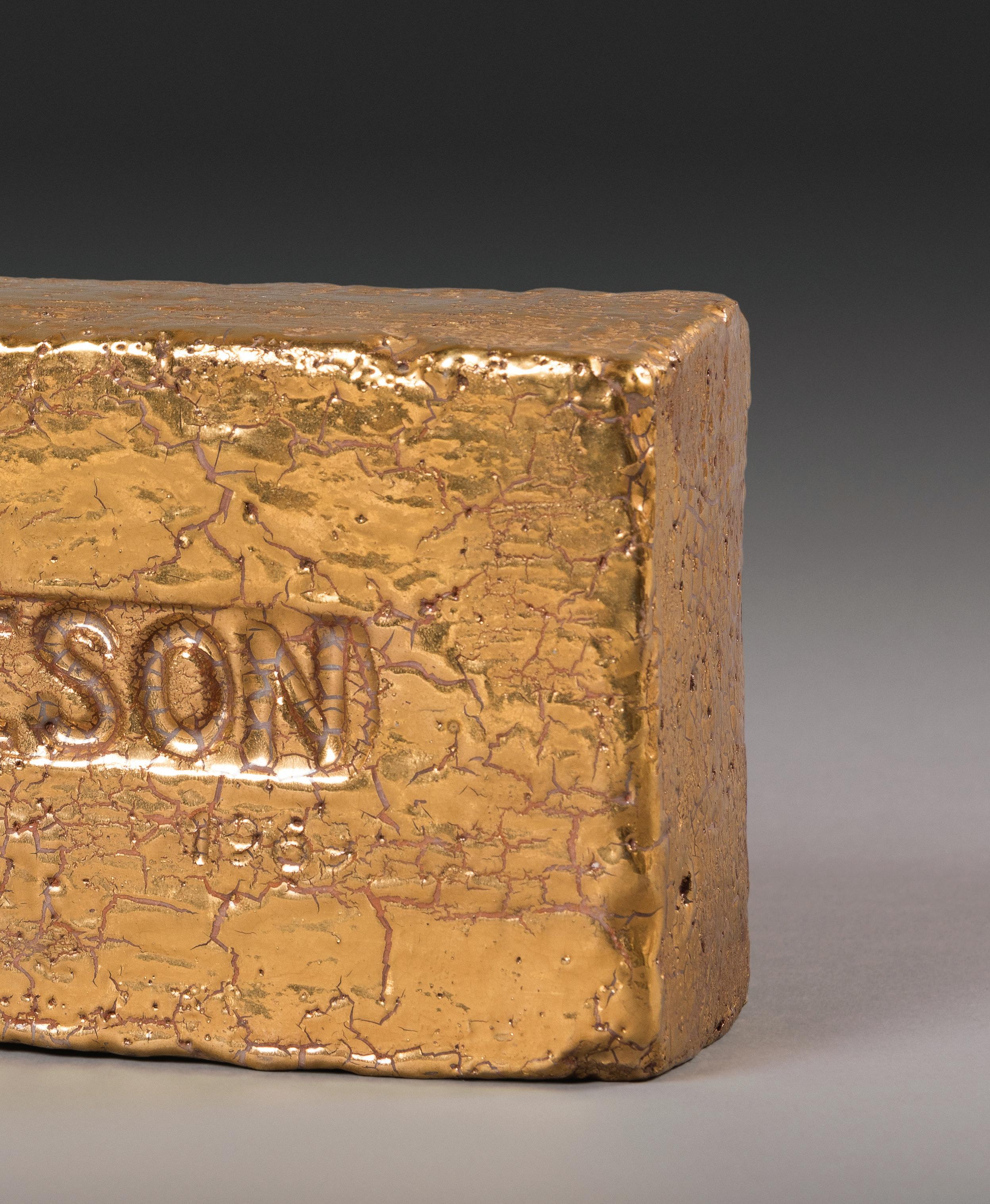
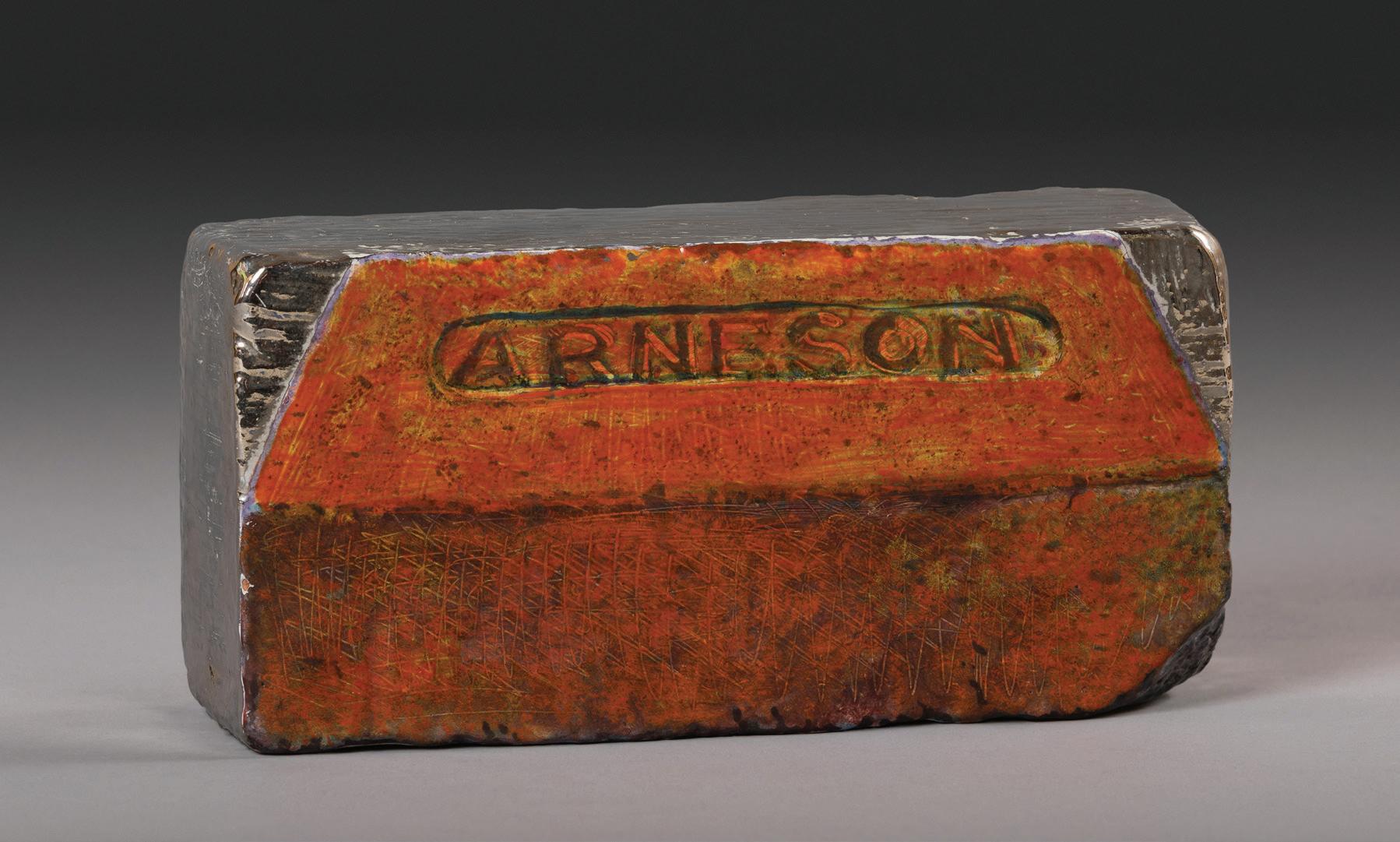
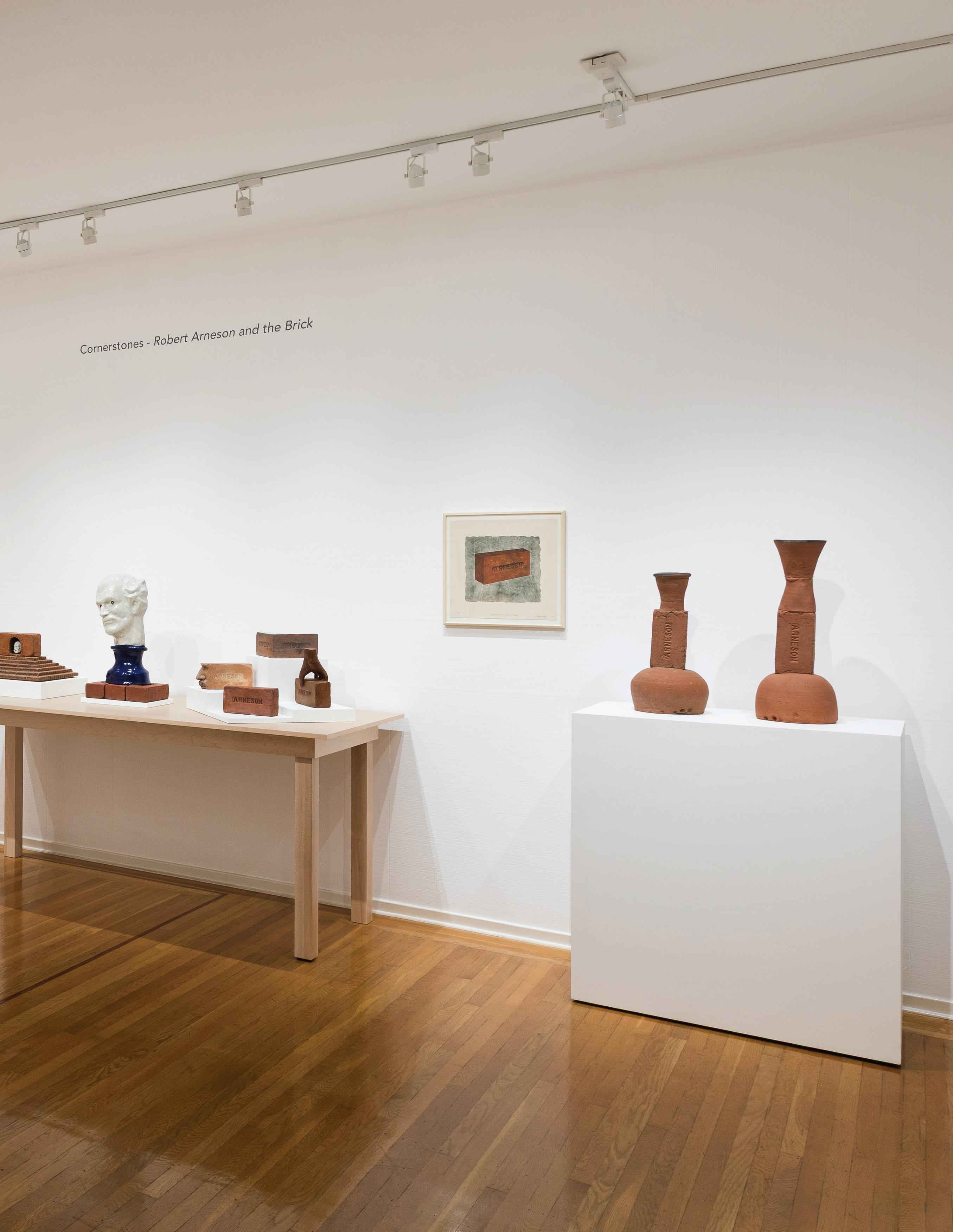
The brick as homage was another avenue Arneson explored. Gold Brick, 1969 (plate 5) is a visual pun and reference to the ingot form gold is molded into by central banks and goldsmiths to readily transport large quantities of the precious metal. Perhaps the greatest homage Arneson made, however, was the Sung Edition (1970) (plate 7). Comprised of set of ten editioned bricks made of cast porcelain with celadon green glazes, the Sung Edition pays tribute to the master ceramicists of China’s Song Dynasty (960-1279 C.E.)
Song Dynasty ceramics are regarded by many as the foremost expression of Chinese ceramic art. They are revered for their pared down forms and their monochromatic glaze surfaces, especially the celadon green pieces. Arneson’s use of the word Sung instead of Song reflects both the inter-use of both words by Western scholars in naming the period, and also his love of word play when titling his works. His simple change from a noun to an adjective changes our perception of this work.
Arneson only briefly worked with porcelain during his career, primarily in 1970. His reason for this was that no matter what you did with the porcelains they retained a feeling of preciousness, which Arneson felt got in the way of focusing on the subject matter of the work.6 Within the small number of celadon glazed works Arneson made, besides the Sung Edition, there is at least one other brick. Titled WHATEVER I ATTEMPT IT IS USUSALLY DONE WITH THE FULL FORCE OF MY…, 1970 (figure 10), the interior of the brick has been left open for viewing. Its inner surface has been embellished with a stamp mold of a smiling grape cluster and punctured with a field of pinholes. Inside, atop, and in front of the brick are various molded shapes, including a milk pitcher, a ballerina, part of a handle, and a small footed planter pot. The title of the work is stamped around the rim of the brick’s open side. The elements in this work, and the others in the celadon series, are all made from casts pulled from rejected molds made by the Duncan Molds Company in Fresno, CA. After casting a bunch of pieces, Arneson then assembled the works by attaching the elements together in a seemingly ad-hoc manner while the clay was still wet. “It would be like making a lot of junk and then assembling them at random.
6 Fineberg, Jonathan. A Troublesome Subject: The Art of Robert Arneson. Berkeley, CA: University of California Press, 2013. pg. 82.
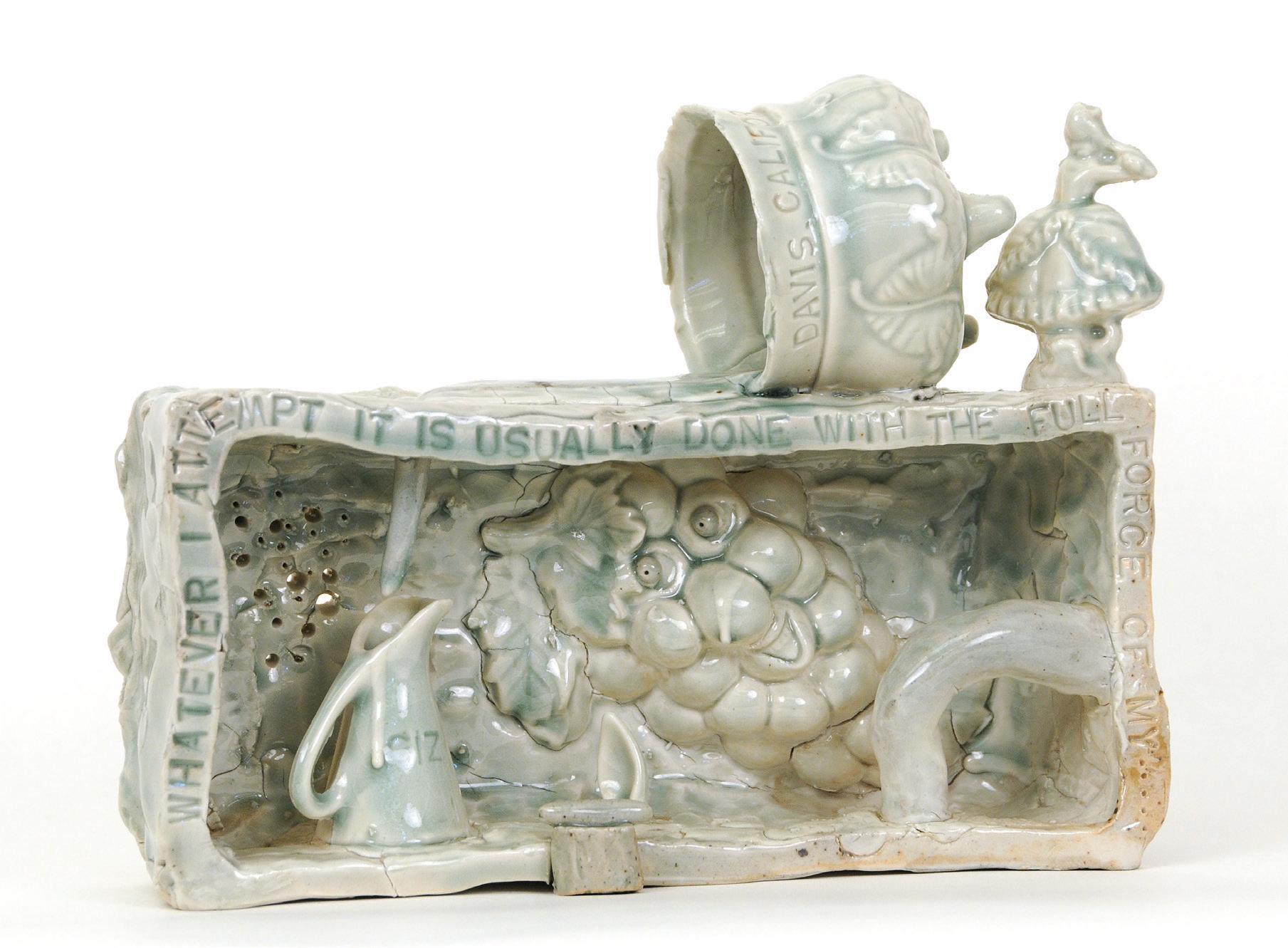
Whatever would go together, just working without thinking… With the toilets I was doing a lot of drawings, making models, thinking it out, figuring it, getting myself organized. But with these it was just free play association.”7
Brick as Canvas
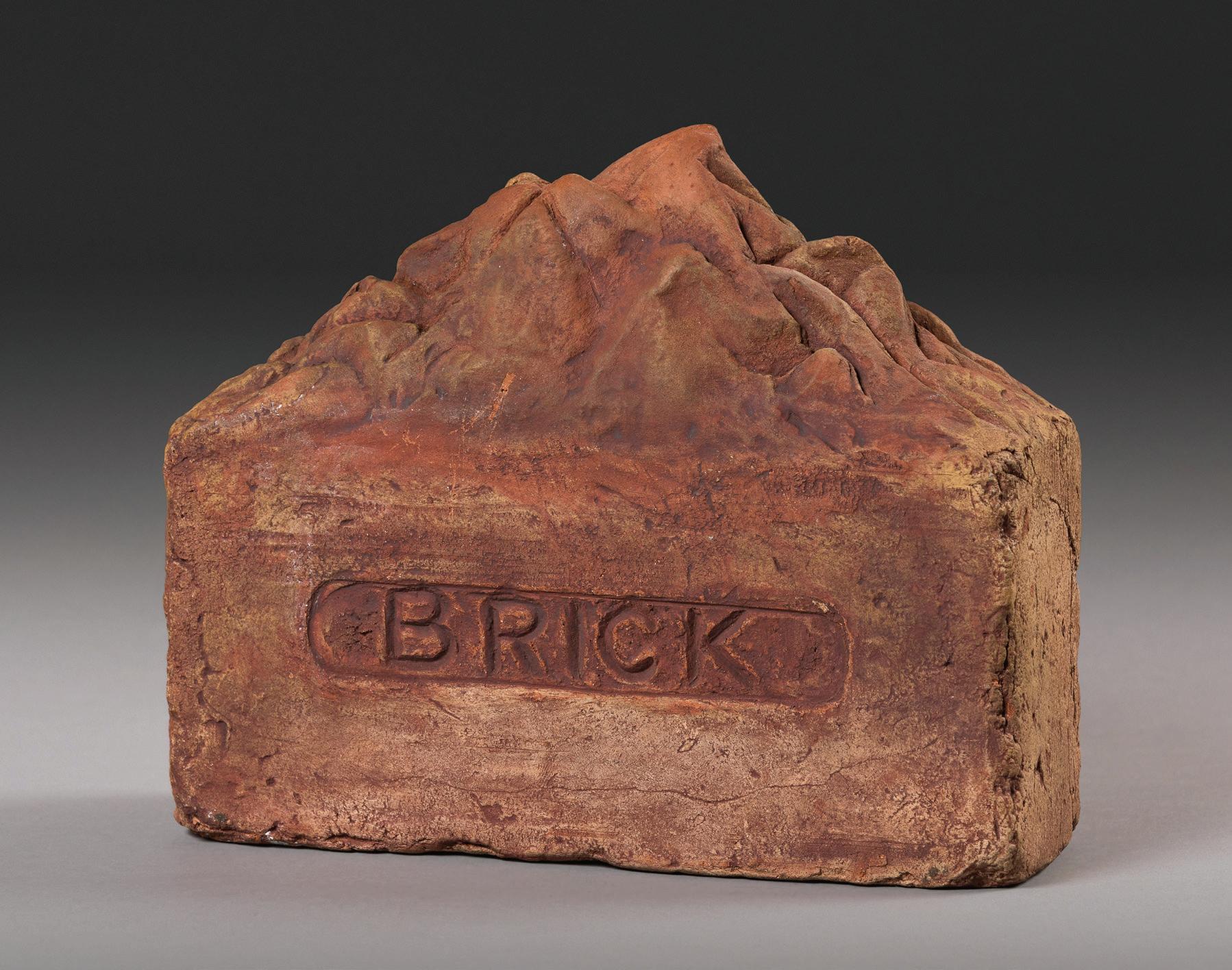
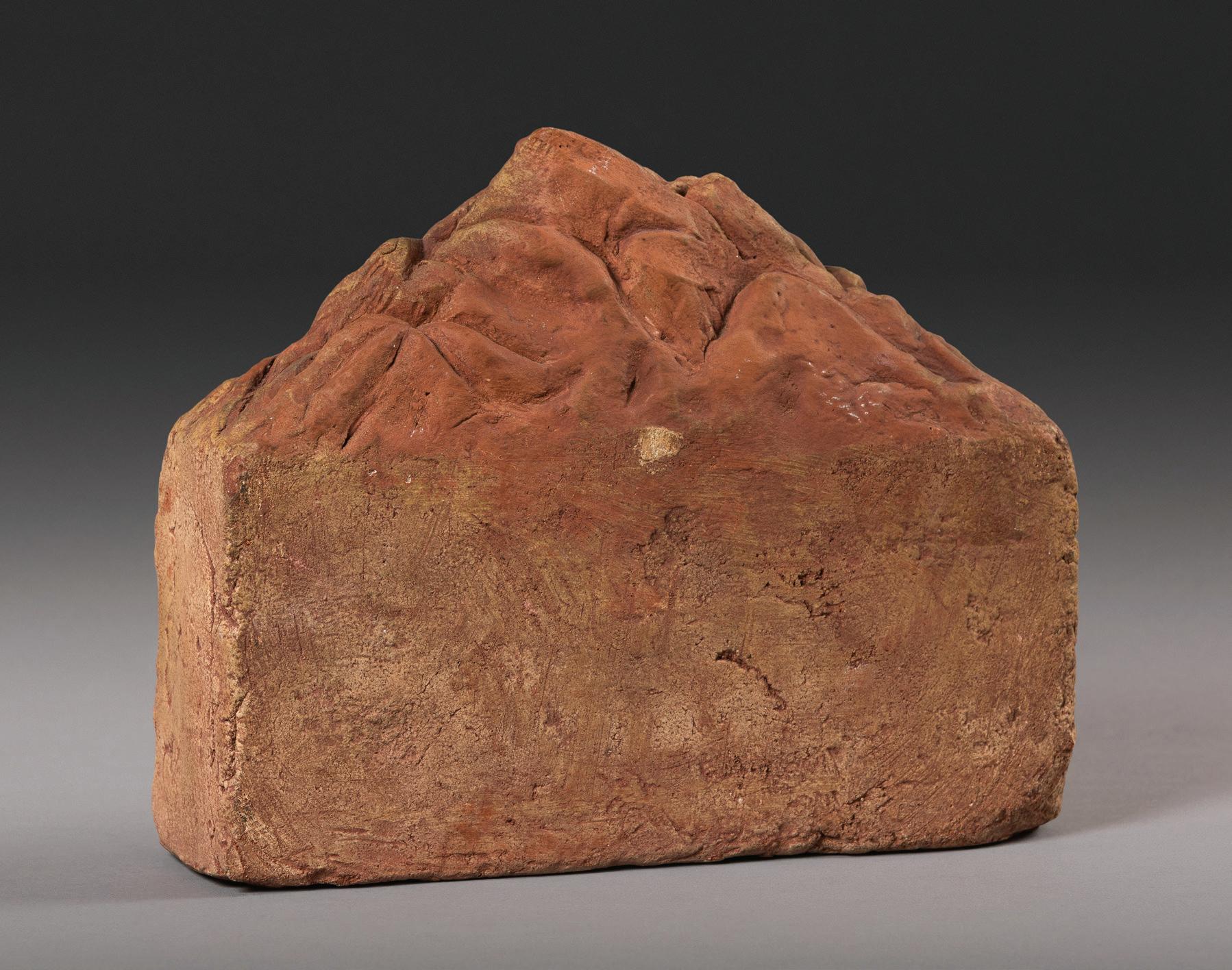
Arneson did make a few other complete body bricks using porcelain, with Painted Brick (with crack), 1972 (plate 31) being one example. Its surface covered in visible brushstrokes, Painted Brick (with crack) embodies another trajectory Arneson took – using bricks as a canvas for developing ideas. Brick with Illusion, 1975 (plate 13) is a case where Arneson embellished the surface of the brick with a painted image. On it, Arneson plays with optical perspective and illusionism by painting a brick at a different visual perspective from the physical brick it is painted on. With Mountain Brick, 1969 (plate 6), Arneson
7 Arneson, interview with Jones, Archives of American Art, Smithsonian Institution.Press and San Francisco Museum of Modern Art, 1990, pg. 182.
Figure 10: WHATEVER I ATTEMPT IT IS USUALLY DONE WITH THE FULL FORCE OF MY..., 1970, glazed porcelain, 7 x 9 1/8 x 4 1/4 inches. Collection of the Jan Shrem and Maria Manetti Shrem Museum of Art, University of California, Davis.
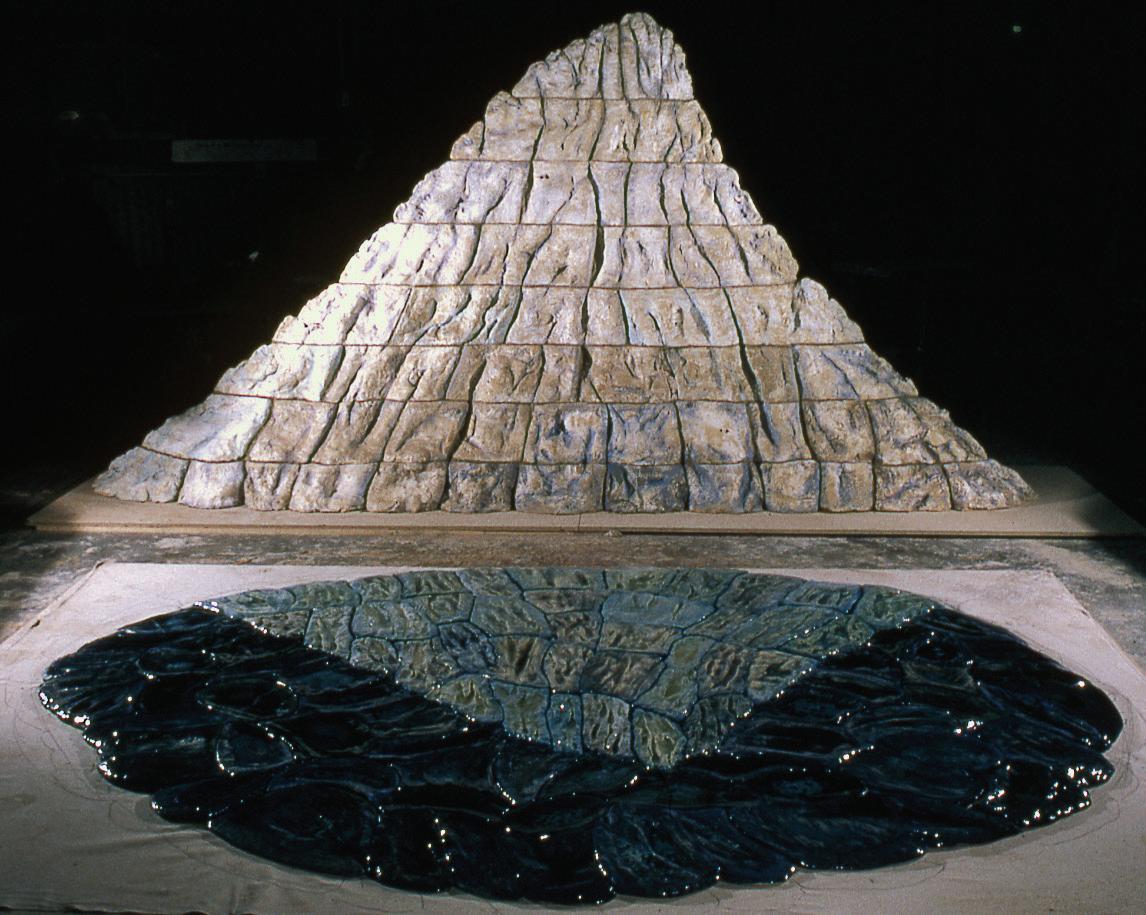
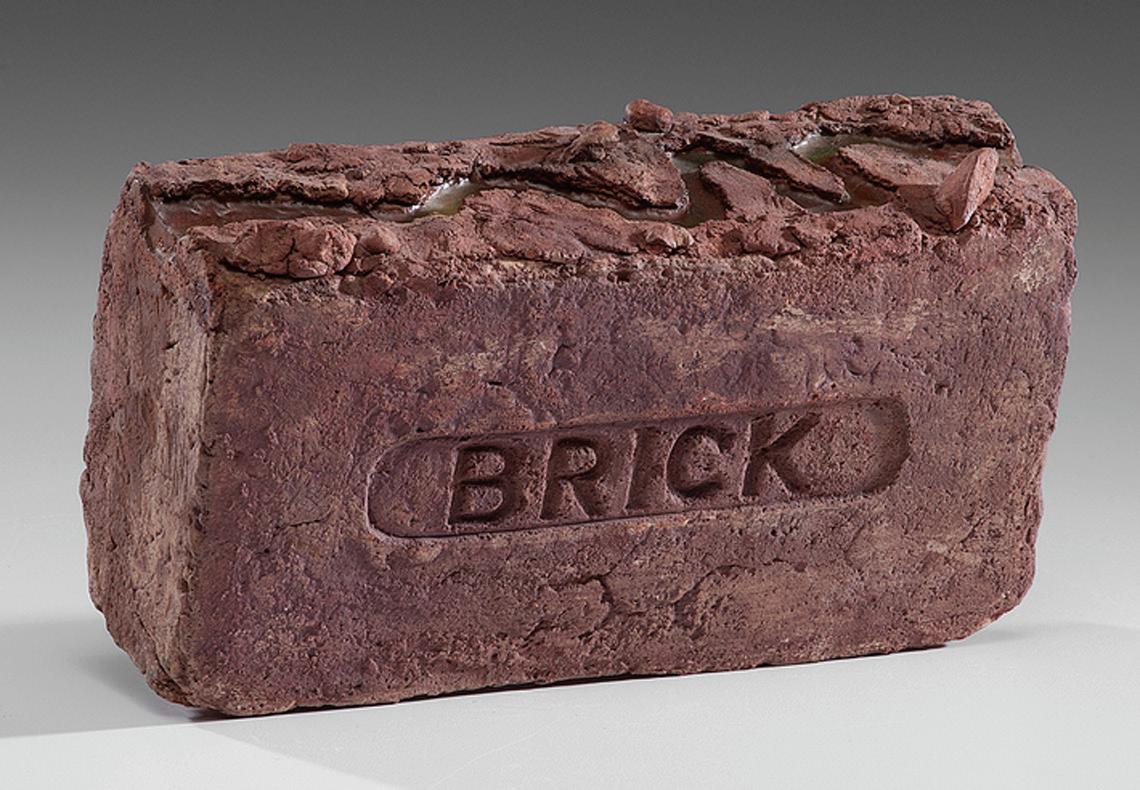
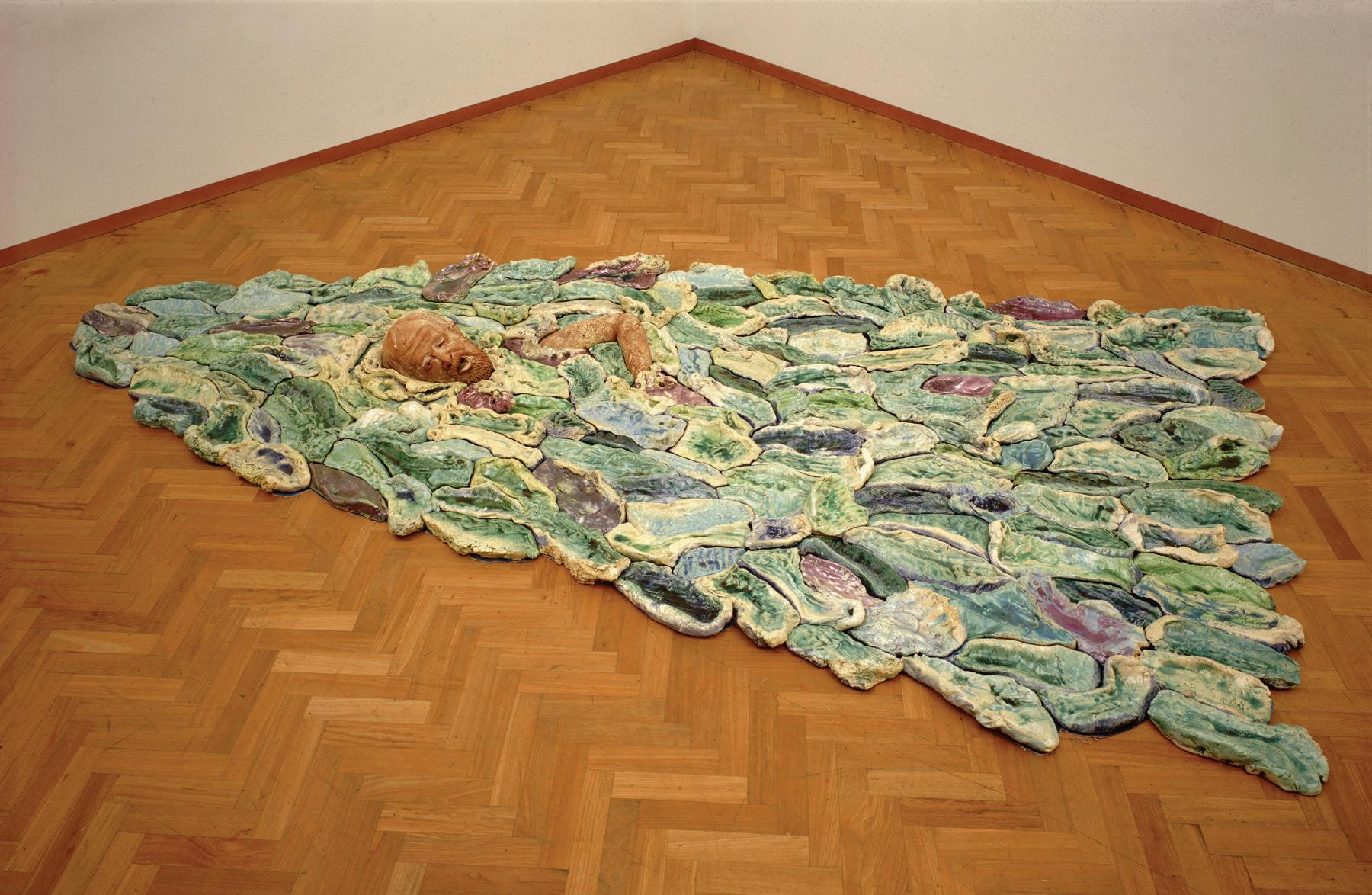
Figure 11: Mountain and Lake, 1975, glazed ceramic, mountain: 83 1/4 x 175 1/2 x 38 1/8 inches, Lake: 1 x 128 1/4 x 92 inches. Collection of Everson Museum of Art, Syracuse, New York, Museum Purchase 80.8.
Figure 12: River Brick, c. 1969, terracotta, ceramic, 5 x 9 x 3 inches. Private Collection.
added a second sculptural form onto the brick’s surface. Not long after Mountain Brick was created, Arneson began a series of rock and mountain related works inspired by trips to Yosemite, René Magritte’s use of rocks in his paintings8, and Paul Cezanne’s celebration of Mont Sainte-Victoire.9 This series culminated with Arneson’s monumental Mountain and Lake, 1975 (figure 11). An adjacent work made in the theme of landscape is River Bick, ca. 1969 (figure 12), which has a small river cut into the top of the brick that is surrounded by craggy rocks along both banks.
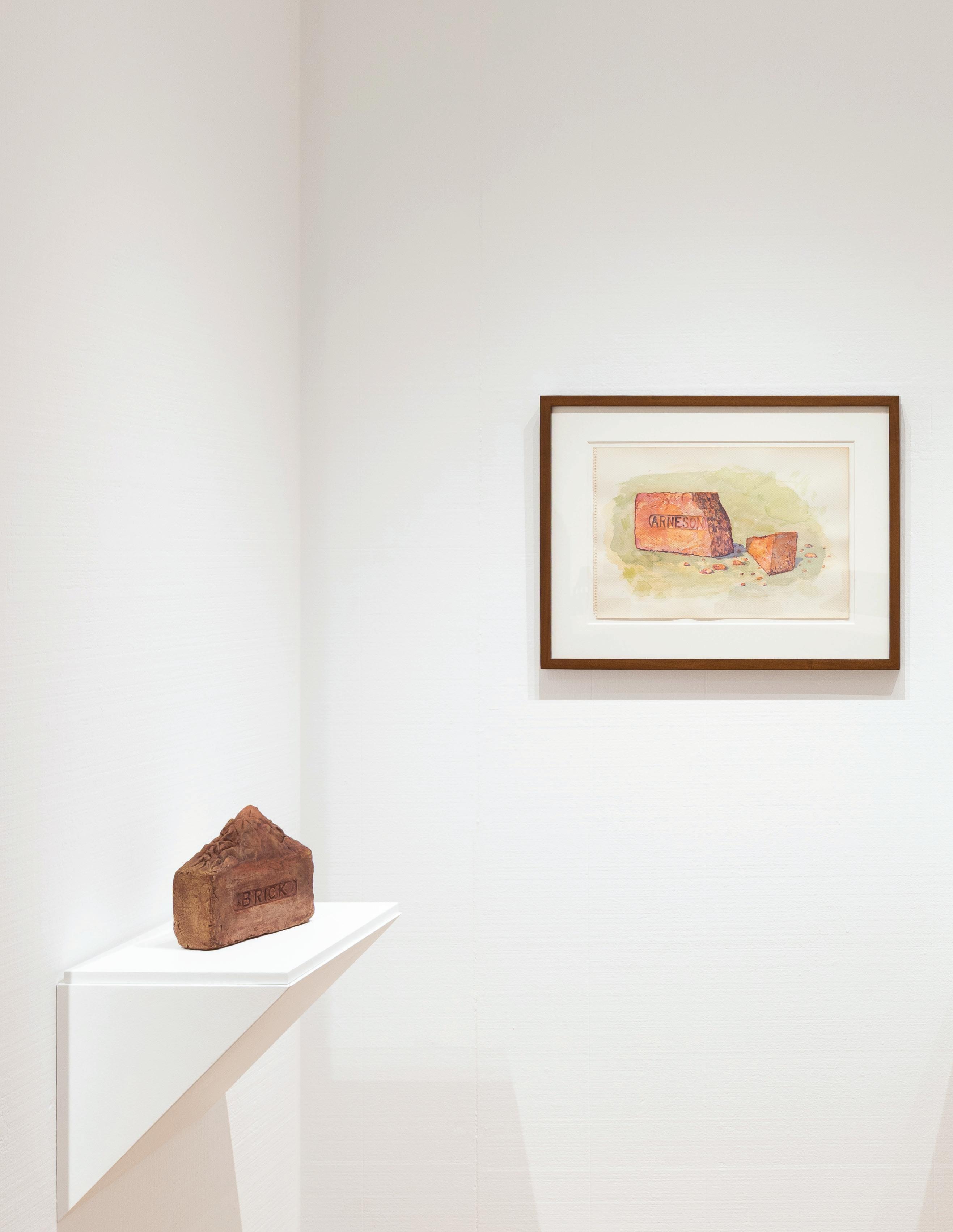
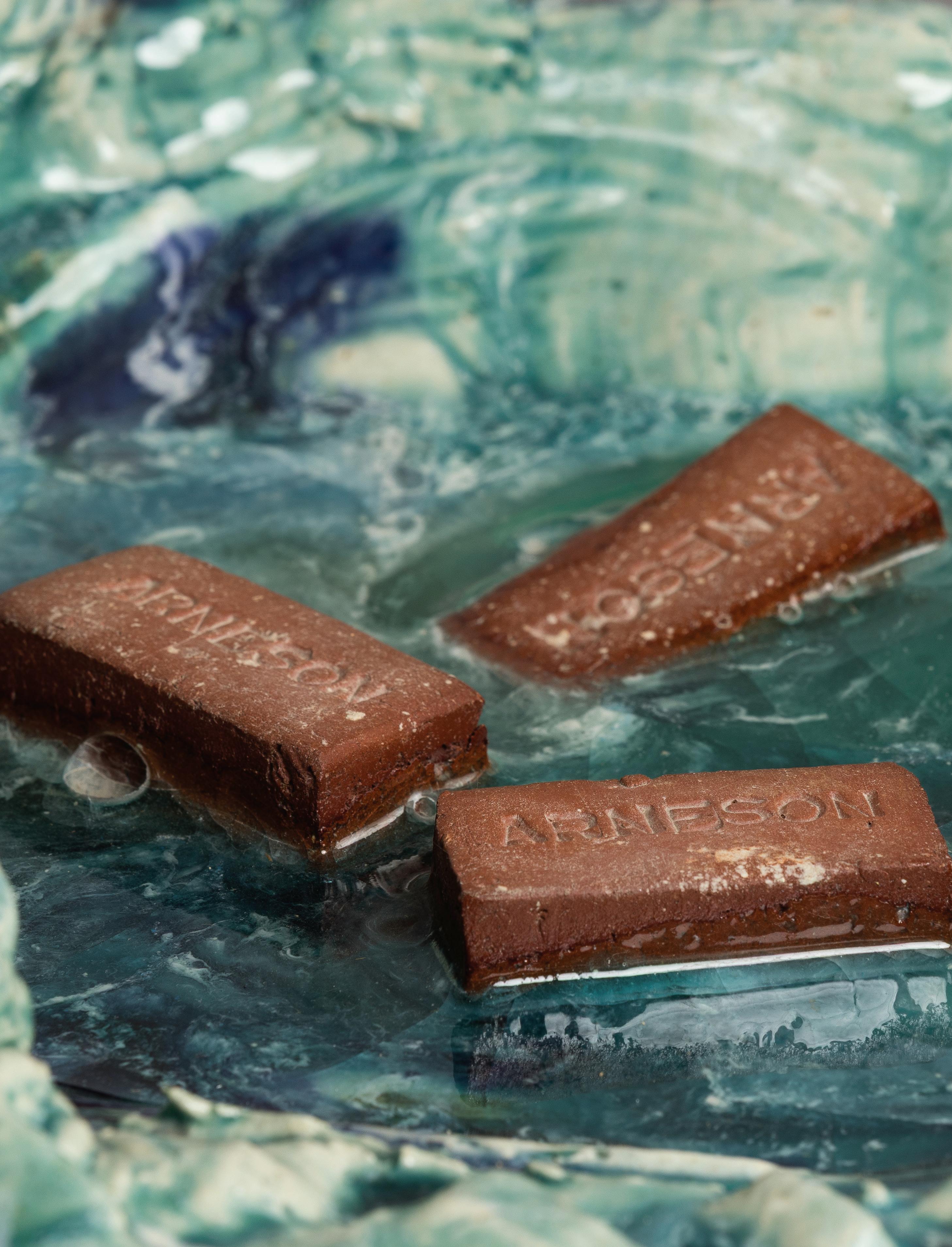
Another group of works developed, in part, by using bricks were those related to Arneson’s love of swimming. Having grown up in Benicia, CA, which is located directly on the banks of the Carquinez Strait, Arneson developed a love of swimming in its waters when he was young and made visits on an almost weekly basis until his health prevented him from going. Inspired by this, a series of works emerged in the early 1970s, which culminated in Current Event, 1973 (figure 14). Within the larger swimming series is a subset of works called ‘Sinking Bricks’. In sculpture, watercolors, drawings, and prints, Arneson depicted a terracotta brick stamped with his name “sinking” in the waters surrounding it. In the exhibition, this line of inquiry is represented by Painted Brick, 1976 (plate 22), Moby Brick, 1975 (plate 31), Sinking Brick/Brick in Space, 1976 (plate 20), and Untitled (Sinking Brick), 1976 (plate 21). To look at the water surrounding the bricks, however, it splashes about giving a sense that the bricks could actually be swimming or at least struggling to swim.
8 Arneson, lecture, Moore College, 1979.
9 Fineberg, Jonathan. A Troublesome Subject: The Art of Robert Arneson. Berkeley, CA: University of California Press, 2013. pg. 124.
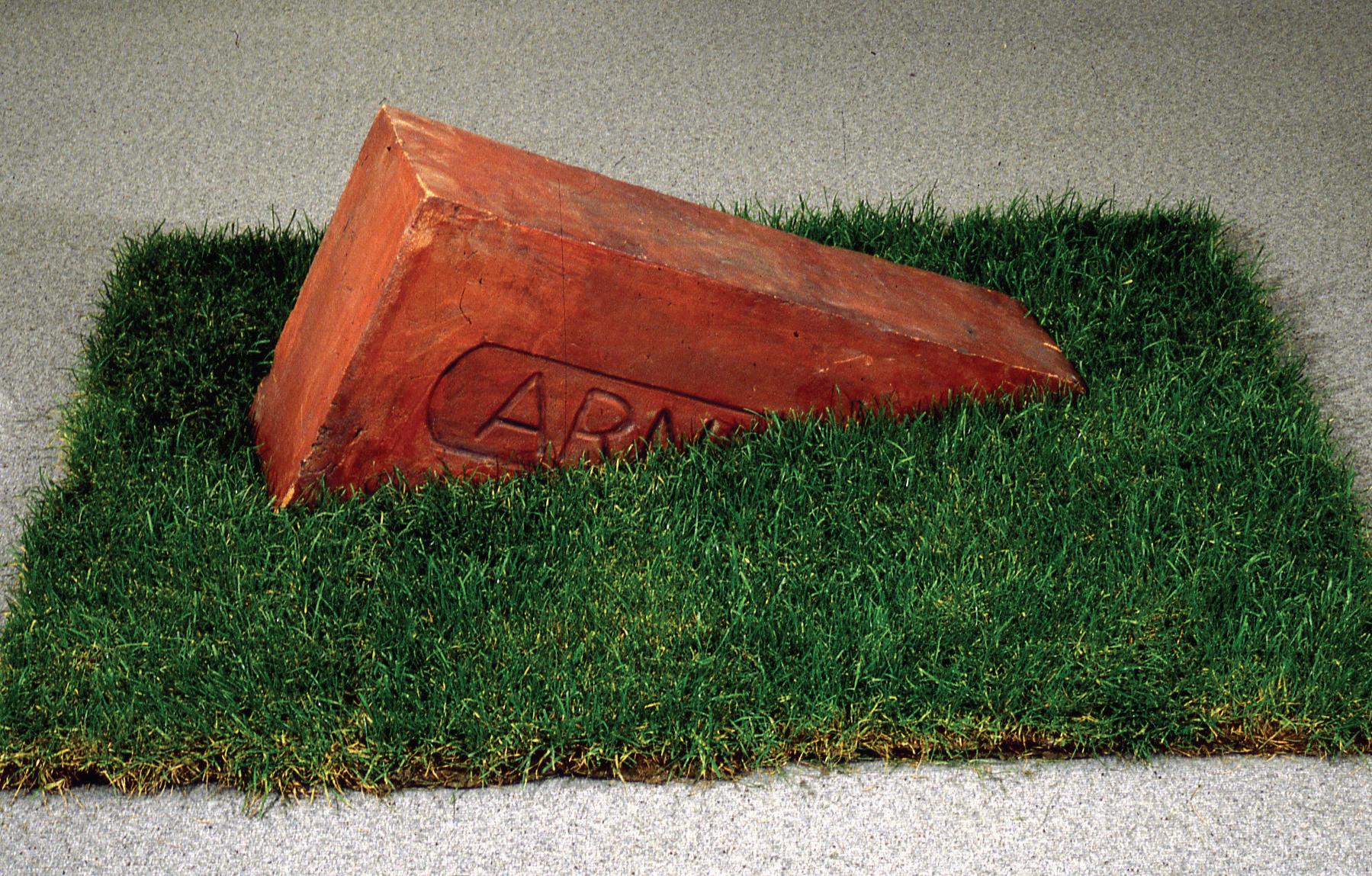
Figure 13: Sinking Brick, 1966, terracotta on artificial grass, 16 x 39 x 9 1/2 inches. San Jose Museum of Art, Gift of the Lipman Family Foundation for the Peter Selz Collection of Beat and Funk-era Art. 2008.06.
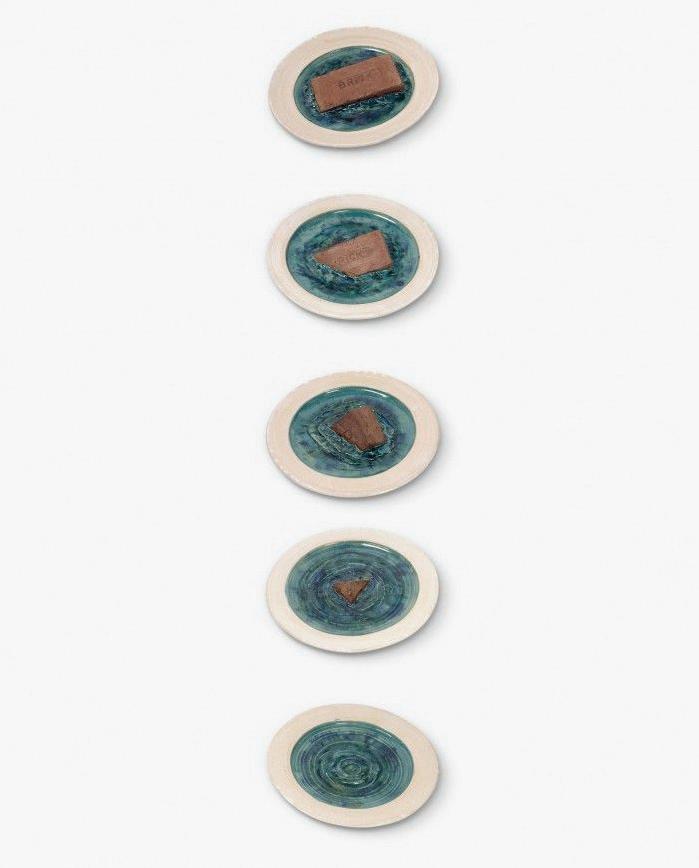
Prior to thinking about swimming for inspiration, Arneson initially came up with the concept of the sinking brick when he created the large-scale Sinking Brick, 1966 (figure 13) as part of the group of overlarge brick works he made in the early period. With this first sinking brick, Arneson has it resting on a piece of green artificial grass to give it the feeling of sinking into the ground. When Arneson returned to the sinking brick idea around 1969, he changed the context to water and made one of the most complex of the sinking brick pieces. Composed of five 19 inch in diameter plates arranged in sequence, Sinking Brick Plates, 1969 (figure 15) works in the same manner as a stop motion animation. The centers of the plates contain pools of water with bricks in various states of sinking into them. Read in order, the first plate has a full brick visible in the water. As the eye travels across the next three plates, the brick disappears more and more. The last plate shows only a swirl of water. This work was later included in the 1970 Whitney Sculpture Annual. “That was the first time I was ever in the Whitney Annual,” said Arneson. “What on earth are five dishes doing in a sculpture show? Well, that was a breakthrough… It was very significant that that was the first year the Whitney actually exhibited ceramics.”10 In this work, Arneson synthesized his conceptual and surrealist impulses in one place, while also mixing in a dose of absurdity and humor.
10
Figure 14: Current Event, 1973, glazed earthenware, 9 x 175 x 85 inches. Collection of Stedelijk Museum Amsterdam, Netherlands. BA 3515(1-178).
Arneson, interview with Jones, Archives of American Art, Smithsonian Institution.
Adjacent to the sinking brick works is Floating Bricks, 1974 (plate12). A maquette sized sculpture, the work depicts three bricks floating in a body of water as a large wave crashes over them. Floating Bricks is one of the few instances where Arneson melted glass shards onto the glaze surface before firing the work. This resulted in the brick being surrounded by a pool of clear glass that has the appearance of water. There are a couple of instances where bubbles formed in the glass while it was molten, with some of them bursting when they broke through the surface of the glass. Exactly why Arneson chose to interpret this work as floating instead of sinking is unclear, but it certainly reveals a change in his thinking about his bricks in context of water and swimming.
15:
Figure
Sinking Brick Plates, 1969, glazed ceramic, Five plates: 3 x 19 inches, 3 1/4 x 19 inches, 4 1/4 x 18 7/8 inches, 2 1/2 x 18 3/4 inches, 1 5/8 x 18 5/8 inches diameter. Anderson Collection at Stanford University, Gift of Harry W. and Mary Margaret Anderson, and Mary Patricia Anderson Pence. 2014.1.020.
The Body
Explorations of the body and its functions had been a consistent theme in Arneson’s art for nearly a decade when he began to apply those ideas to bricks in both obvious and more cerebral ways. Brick Pair, 1969 (figure 17) is an early example. Here, Arneson took two bricks and respectively gave them male and female genitalia that would interlock if united together. Made the same year he met and began his relationship with his second wife, the artist Sandra Shannonhouse (1947-2025), Arneson’s provocative, boundary pushing stance against societal norms is mixed together with his own biography in this work. At the time this piece was made, vice squads were still enforcing morality codes across the country, with potential jail time looming if caught. It was not until Miller v. California was decided in 1973, that a work like this could safely be shown in public.11
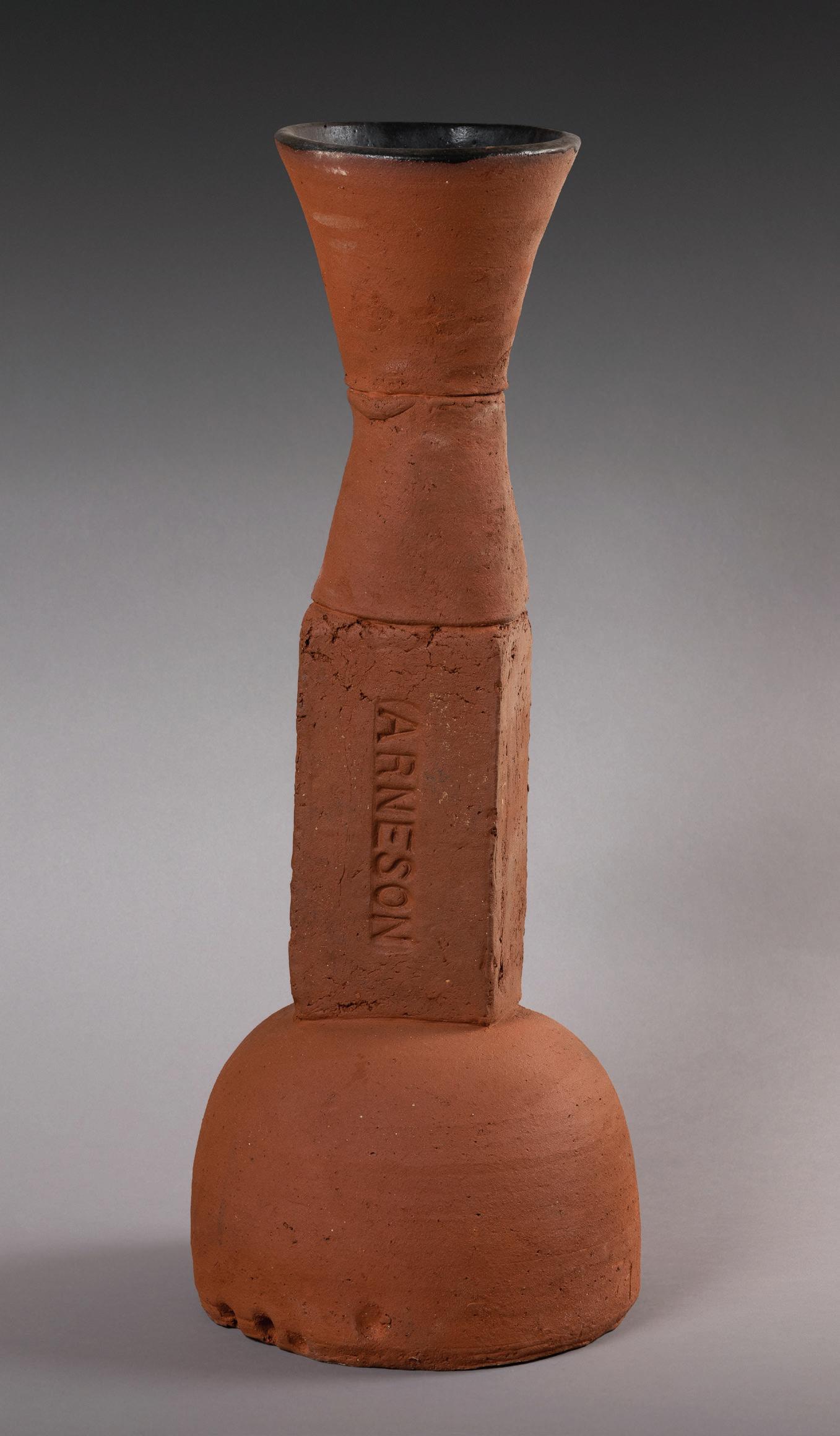
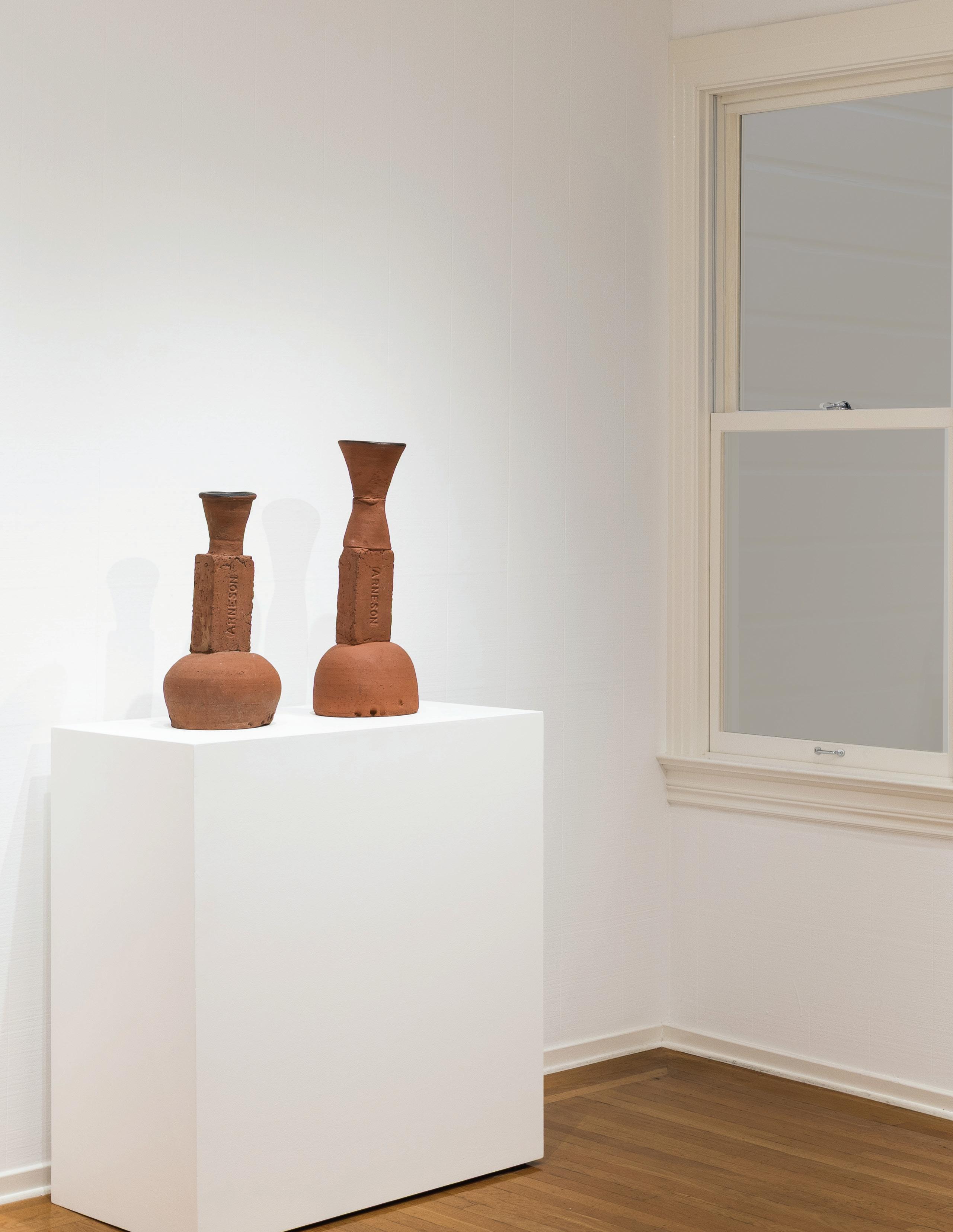
More subtle and conceptual in nature are Arneson’s pair of Brick Vase works, both from 1974, (plates 10 and 11). Likely formed through Arneson experimenting with combining different forms he had lying around the studio (much like in the celadon works), each of the brick vases can be viewed as a conceptually abstracted female body. Their darkly glazed rims and interiors, as well as their bulging bases, impart a sexual charge to each form. The history of associating flowers and vases with female anatomy is long and deep, but this is the first case this writer knows of where a brick is involved.
A more surreal take, though no less graphic is Travelin’ Art Show , 1973 (figure 18). Viewed by some as a private comment on his retrospective at the Museum of Contemporary Art Chicago in 1974, the work is composed of two penis/oxen pulling a brick on wheels.12 Two celadon glazed porcelain fingers hold the reins. The brick is stamped with Arneson’s name on one side and the phrase “Art Works” on the other. Arneson borrowed this insignia from his friend, the artist Stephen Kaltenbach, who had made a series of bronze plaques with the same words in an identical font. With a variety of surreal and psychological readings possible, Arneson has left the interpretation of this work up to the viewer to decide for themselves.
11 Arneson, lecture, Moore College, 1979.
12 Fineberg, Jonathan. A Troublesome Subject: The Art of Robert Arneson. Berkeley, CA: University of California Press, 2013. pg. 124.
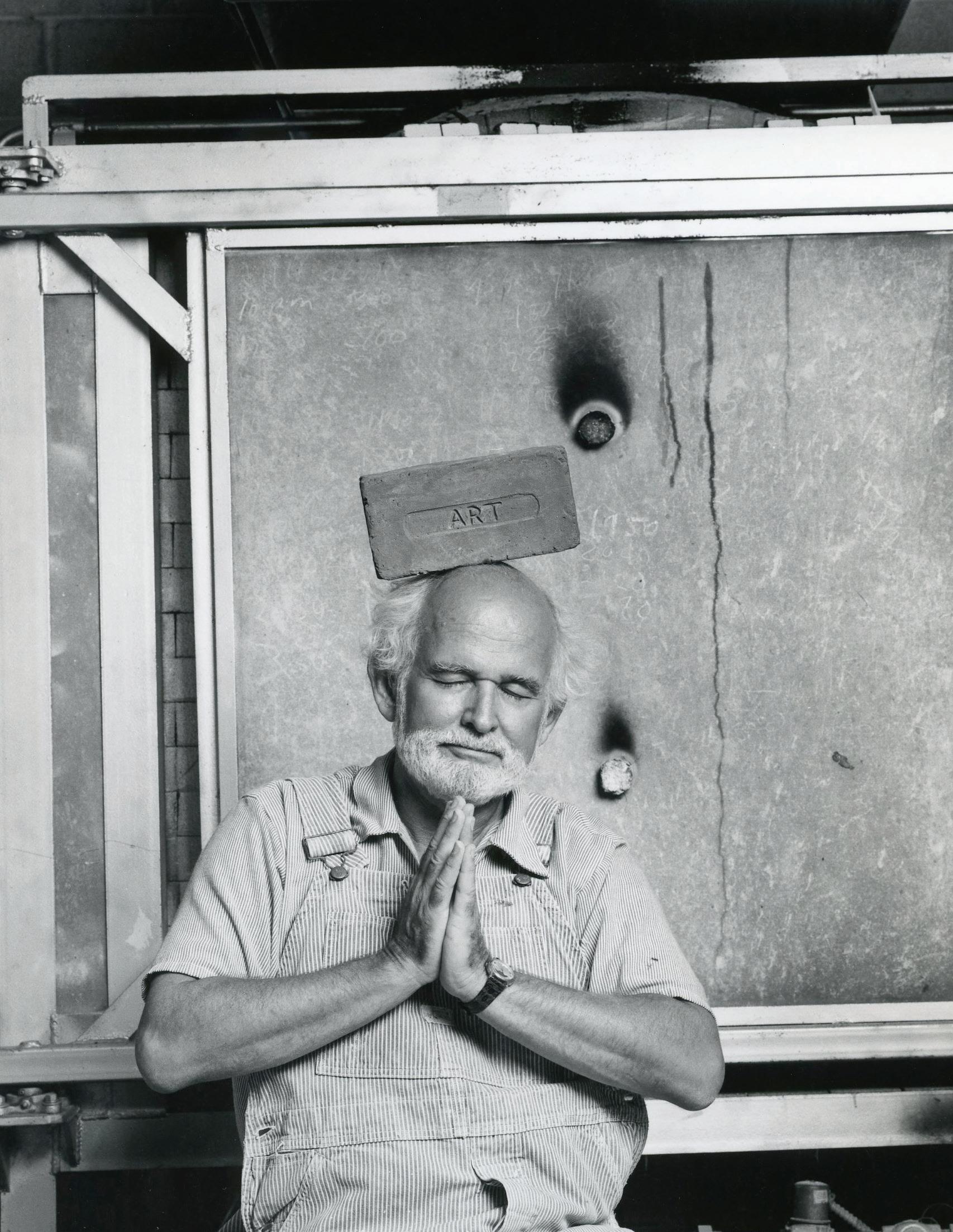
Figure 16: Robert Arneson balancing a brick for Balancing Act, 1974.
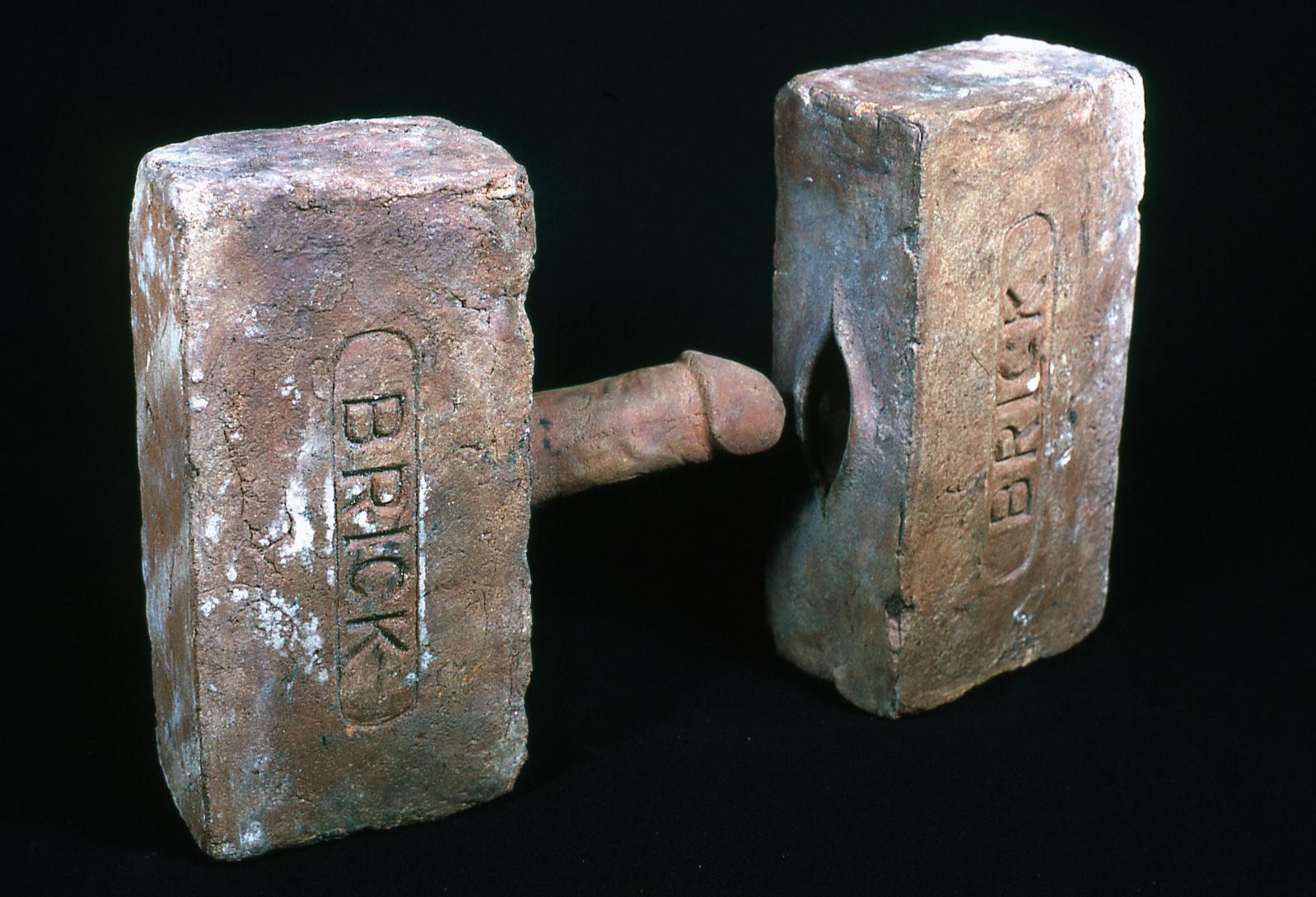
Figure 17: Brick Pair, 1969, ceramic, A: 8 3/4 x 4 3/8 x 2 3/4 inches, B: 8 1/2 x 8 3/8 x 2 3/4 inches. Collection of Hammer Museum, Los Angeles, Gift of Patti and Frank Kolodny. AH.2010.78.4A-B.
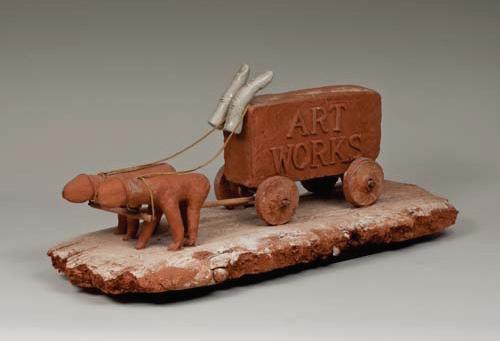
Figure 18: Travelin’ Art Show, 1973, glazed earthenware, porcelain, wood, leather, 10 x 23 x 9 inches. Private Collection, Chicago, IL.
Portraiture/Self-Portraiture
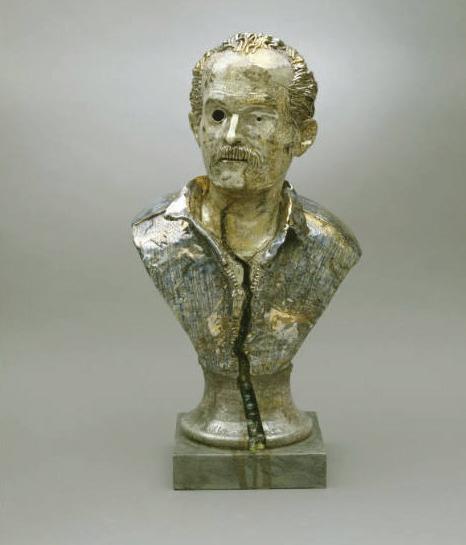
Perhaps the most consequential use of the brick by Arneson was as a vehicle for self-portraiture. Portraiture and selfportraiture would become a defining legacy of Arneson’s career, especially in the later half. In 1965 that direction was not a certainty yet, but it was on his mind. Alongside the large-scale and ‘finger’ bricks created that year, Arneson’s first self-portrait appeared. Titled Self Portrait of The Artists Losing His Marbles, 1965 (figure 19), it became a masterful and complex work once completed after multiple kiln firings. But, in the context of Arneson’s wide ranging experimentation during this period, it was only one idea of many he was considering. It would be five years before he would create another self-portrait in his own likeness, but the idea never fully left his mind during the interval.
Arts & Design,
With the emergence of the brick pieces, Arneson’s choice to stamp his name into them turned the brick into a conceptual self-portrait of himself. The dimensions of this go beyond a Surrealist or even Dada interpretation, though. In his interview with Mady Jones for the Archives of American Art in 1981, Arneson said, “They were imprinted with the factory name of Arneson on the side,” when describing the early bricks. Likening himself and his studio to a factory takes on the idea of being a business doing mass production, creating a distance for himself away from the work. This distance would prove important when the portraits emerged en masse.
As the 1970s began, Arneson settled on portraiture and self-portraiture as a primary vehicle for expressing his ideas. Many viewers and critics of his self-portraits then and now read these works as expressions and statements about the artist’s own ego. However, they are much more complicated than that. “I never did a self-portrait,” said Arneson, “I always used the self-portrait as a mask.”13. In this context, Arneson’s self-portraits become detached, objectified images.14 “So you use yourself,” as Arneson once explained, “but this self is not the inner self. You end up acting, becoming someone else although you
13 Robert Arneson, “Alice Street and After: Faculty Research Lecture,” University of California, Davis, 1989, transcribed by Jonathan Fineberg (using annotations by Sandra Shannonhouse), in the papers of the Estate of Robert Arneson.
14 Fineberg, Jonathan. A Troublesome Subject: The Art of Robert Arneson. Berkeley, CA: University of California Press, 2013. pg. 97.
15 Robert Arneson, “The Spirit of the Work,” Ceramics Monthly 39 (April 1991): pg. 52.
Figure 19: Self-Portrait of the Artist Losing His Marbles, 1965, glazed earthenware, luster glaze, marbles, pigments, hand-built, 31 x 17 1/2 x 9 1/2 inches. Museum of
New York, Gift of the Johnson Wax Company through the American Craft Council, 1977.
use your own features.”15 Works such as Hand Brick, 1991 (plate 27) and Brick Punch, 1974 (figure 20), which both depict the artist’s hand interacting with the brick form, have this detached, dis-embodied feeling to them. With other works, the reading is much more personal and tied to events in his life.
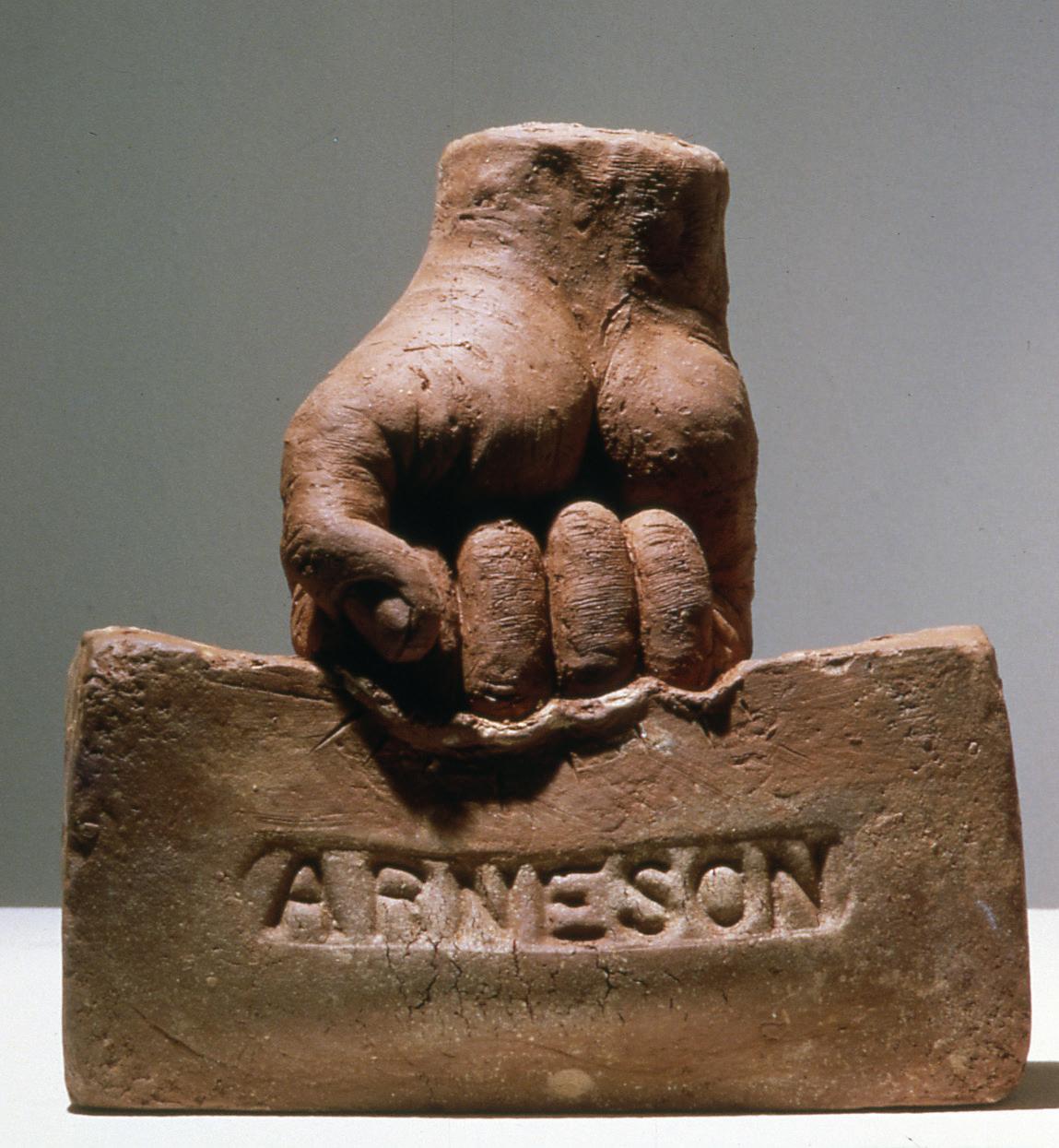
Figure 20: Brick Punch, 1974, earthenware and glazes, 9 x 10 x 3 inches. Seattle Art Museum, Gift of Robert and Honey Dootson Collection, 2010.37.21.
Among the first group of self-portraits made in 1971 is Kiln Man (figure 21). Standing three feet tall and twelve inches in diameter, Kiln Man depicts a traditional kiln form made out of bricks at a miniature scale with Arneson’s head incorporated into the tall chimney. Through the doorway into the interior we can see two shelves of Arneson self-portraits that have just been glaze fired. Arneson’s transformation of himself into the kiln form reads as both a statement of him embracing self-portraiture, but also his situating his identity within the process of creating his sculpture or, put another way, as a ‘factory’ man. “The Kiln becomes oneself, as one identifies with it being the essential tool that creates the work,” Arneson later said.16
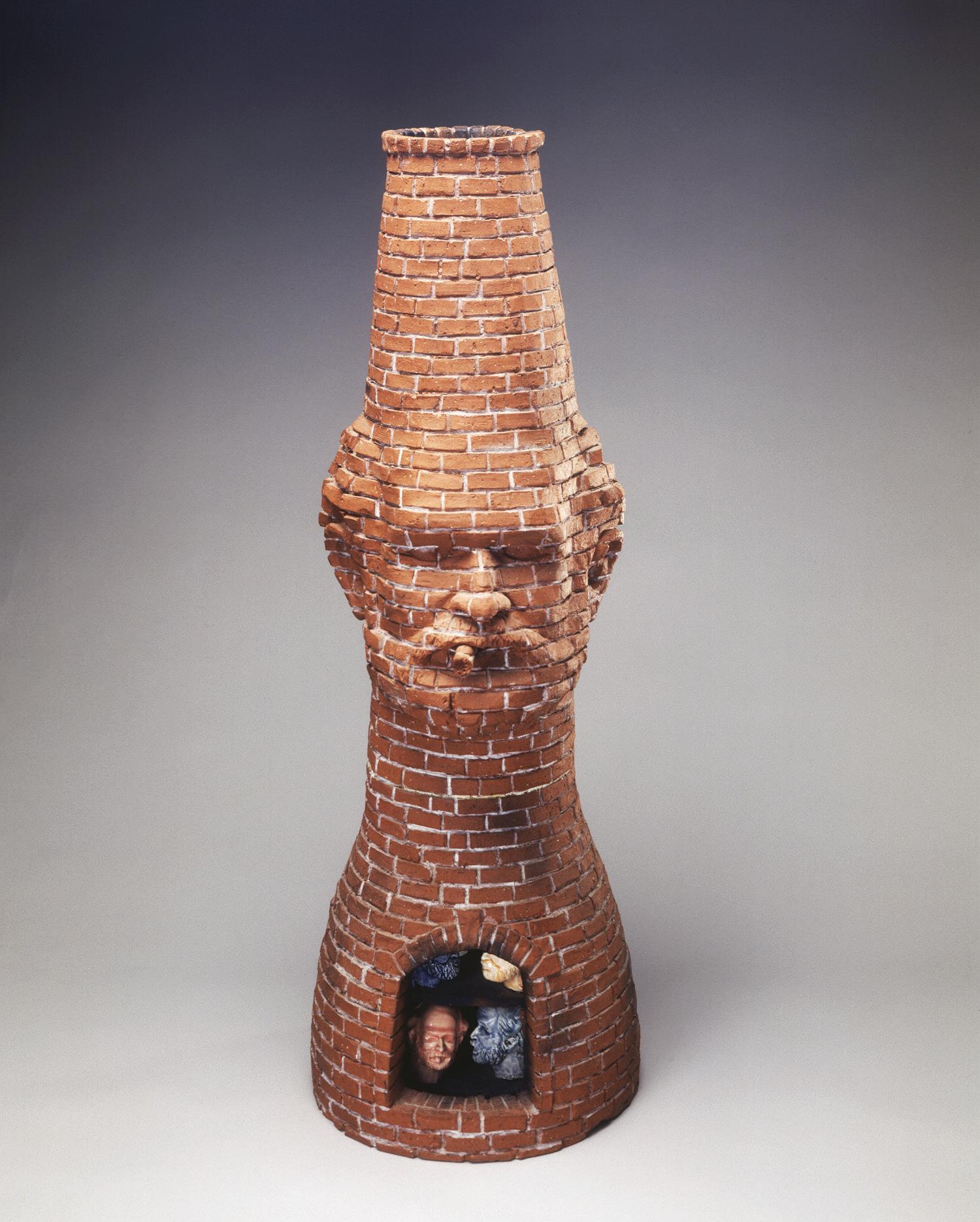
Figure 21: Kiln Man, 1971, glazed earthenware and paint, 36 x 12 x 12 inches. Hirshhorn Museum and Sculpture Garden, Smithsonian Institution, Washington D.C., Joseph H. Hirshhorn Bequest Fund, 1998.
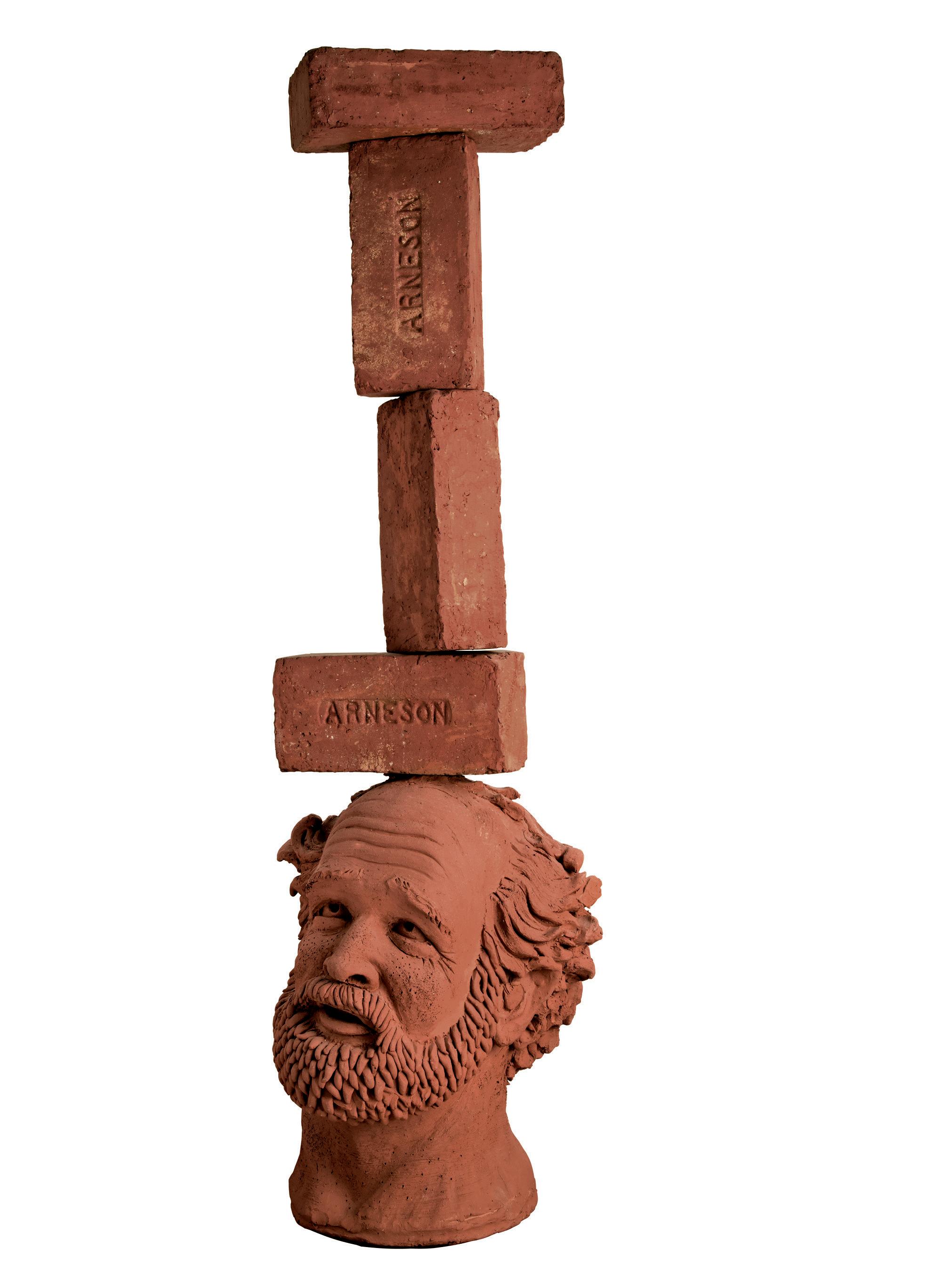
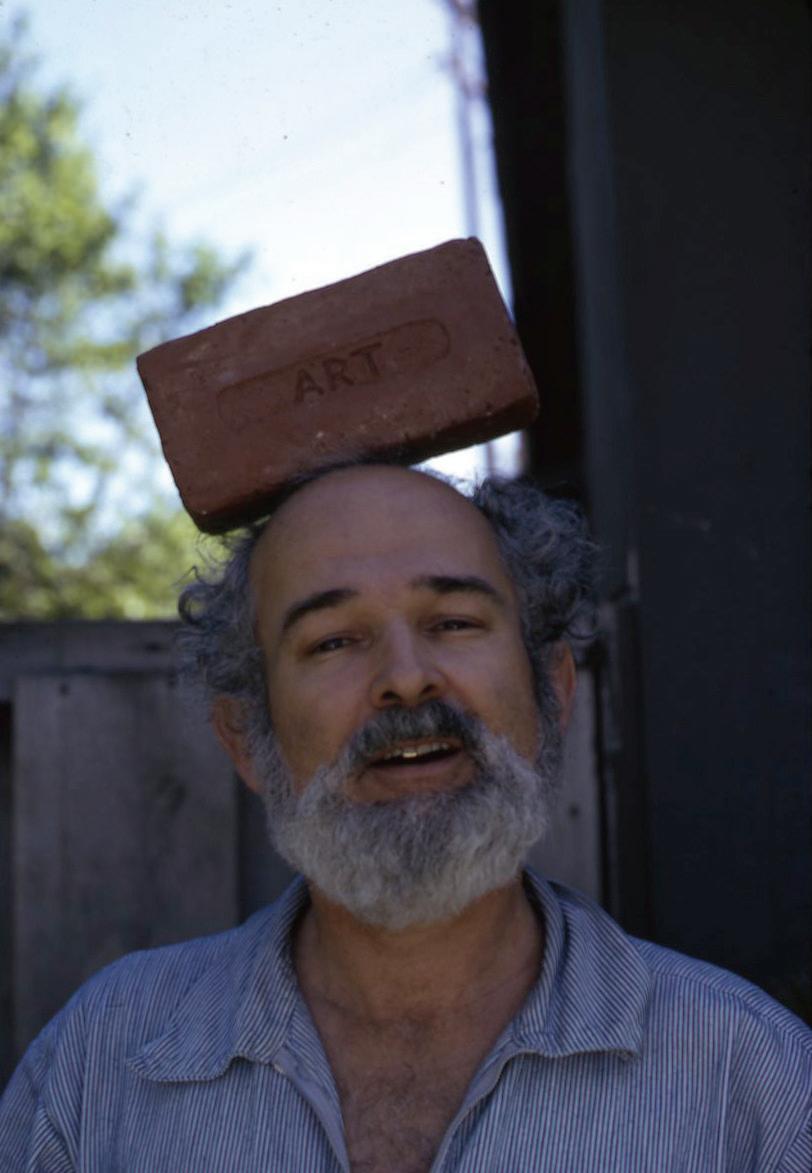
A more personal reading can be made about Balancing Act , 1974 (figure 22). In this work, balanced atop an Arneson self-portrait head are four bricks stacked one on the other. Humorous in appearance, the work initially brings to mind a circus performer in the middle of an absurd performance. However, one can also interpret this work within the context of the artist’s life. Arneson had four energetic, rambunctious sons with first wife Jeanette, and, after their divorce in 1972, he had custody of them. With this in mind, Balancing Act takes on a different light. With each son symbolically represented by one of the bricks, Arneson is commenting on the challenges of being both a father and an artist.
16 Arneson, “Alice Street and After,” 1989.
Figure 22: Balancing Act, 1974, unglazed earthenware, 42 x 13 1/2 x 13 1/2 inches. Private Collection.
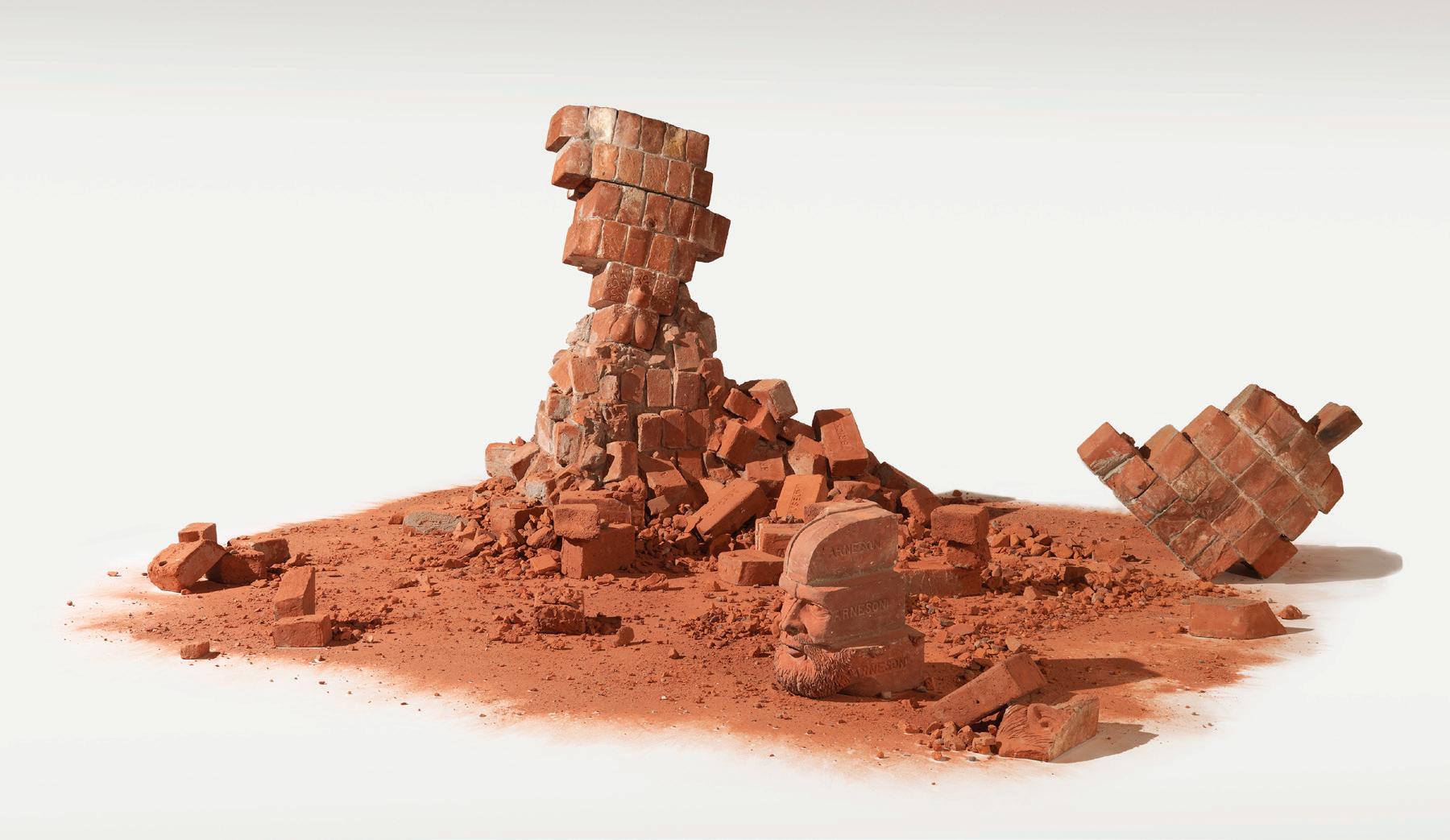
Arneson’s Interest in the idea of artistic ego and how it expresses itself became an important theme within his self-portraits. One of the most significant in this line of inquiry was Fragment of Western Civilization, 1972 (figure 23), of which the exhibition includes the maquette (plate 8). A monumental installation measuring just under four feet tall with a footprint of ten feet square, it is comprised of a destroyed monument lying in ruins surrounded by fragments of the bricks it was made of. Resting prominently in front is a dismembered self-portrait made of bricks. During its creation, Arneson constructed the piece to a certain point and realized it was getting too serious looking in its presentation. At that point, he toppled over what he had made and was much happier with the result. “When I got halfway through Fragment of Western Civilization, I decided that I ought to bring in the hoards (sic) of conquerors to dispose of the edifice. There’s the yin and yang. I’m not making any social commentary whatsoever, unless it is only within the aspect of my own self-survival, from an environmental point of view.”17 Arneson was always conscious of and worked against his art being too stiff or full of itself. His thinking is related to the saying “within seriousness there is little room for play, but within play there is tremendous room for seriousness.” To this the artist Carrie Mae Weems later appended, “It is really through the act of serious play that wonderful ideas are born”18
17 Robert Arneson, statement, Craft Horizons, Journal 6, 1977, pg 31.
18 Helga Davis. “Visual artist Carrie Mae Weems on grace and inclusion.” Helga. New York, NY: WNYC Studios. Air Date: December 27, 2022. https://www.wnycstudios.org/podcasts/helga/episodes/carrie-mae-weems-1
Figure 23: Fragment of Western Civilization, 1972, earthenware, wood, motar, and wire mesh, 41 x 120 x 120 inches. National Gallery of Australia, Purchased 1978, NGA 1979.1266.A-B. IRN 116224.
By toppling the monument over and making the ruins the finished work, Arneson not only inverted the Western idea of what a monument should be, he asks us to seriously consider the humor in puncturing the hubris of the human ego.
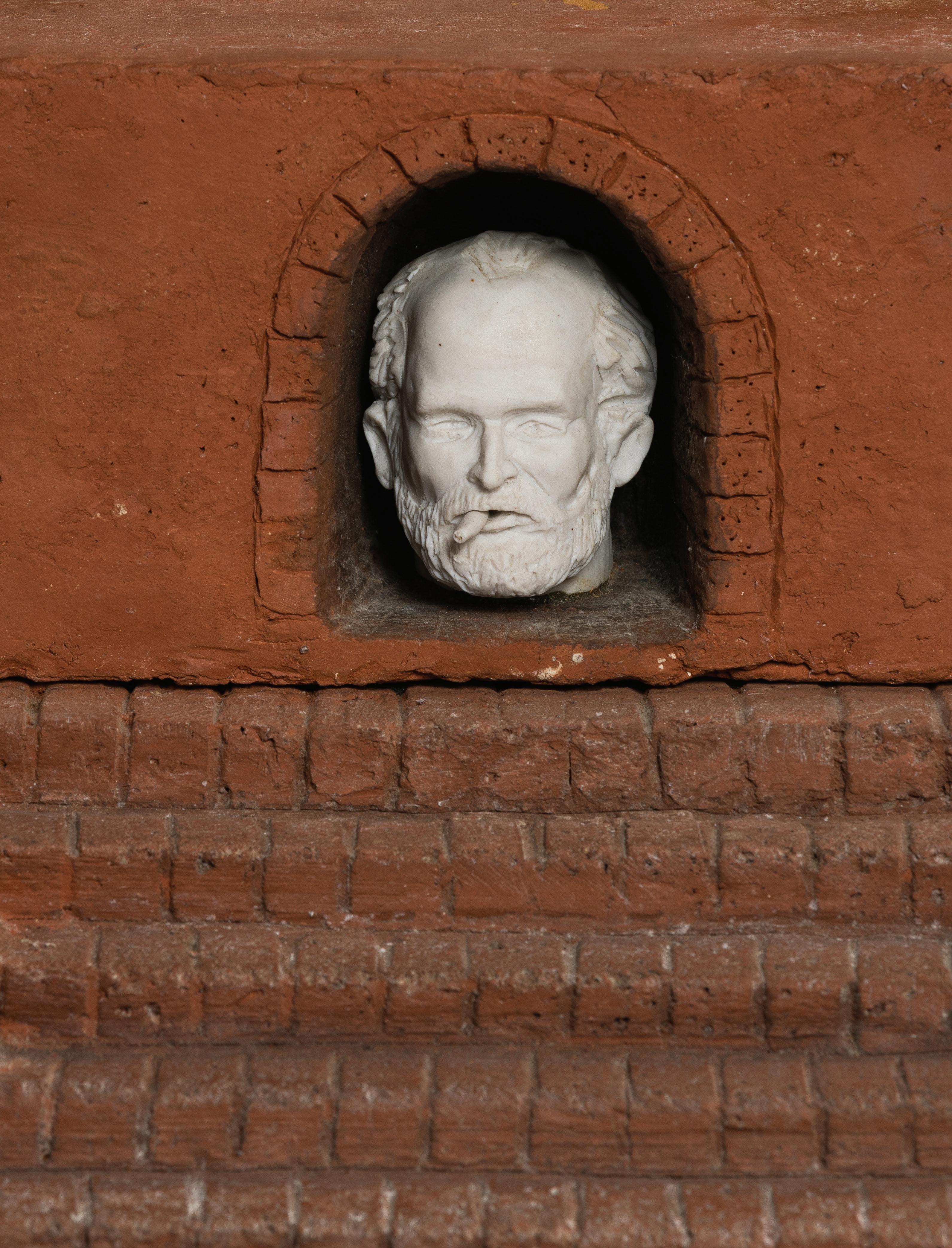
The same year Fragment of Western Civilization took shape in his studio, Arneson created a maquette for another monumental sculpture that was never realized. Memorial for Bob, 1972 (plate 9) is composed of a brick large enough in scale that it would tower over a human standing in front of it, resting on a raised dais made of bricks arranged in stepped layers. Cut in the large brick is a deep niche in which a self-portrait head of the artist smoking a cigar is glazed in all white. The backside of the brick has Arneson’s name stamped into it. Arneson’s self-portraits in white always represent moments when he is contemplating his own mortality, with this being one of the earliest depictions of this motif. Compared to Fragment of Western Civilization however, here the traditional norms of monument building are observed and upheld. In the context of a memorial monument of this type, where Arneson could have been buried if it had been realized, the sense of ego is less and the mood more solemn. This likely accounts for its traditional presentation at this small scale. If this work had been realized at full-scale, there is a high probability that Arneson would have modified its appearance during construction.
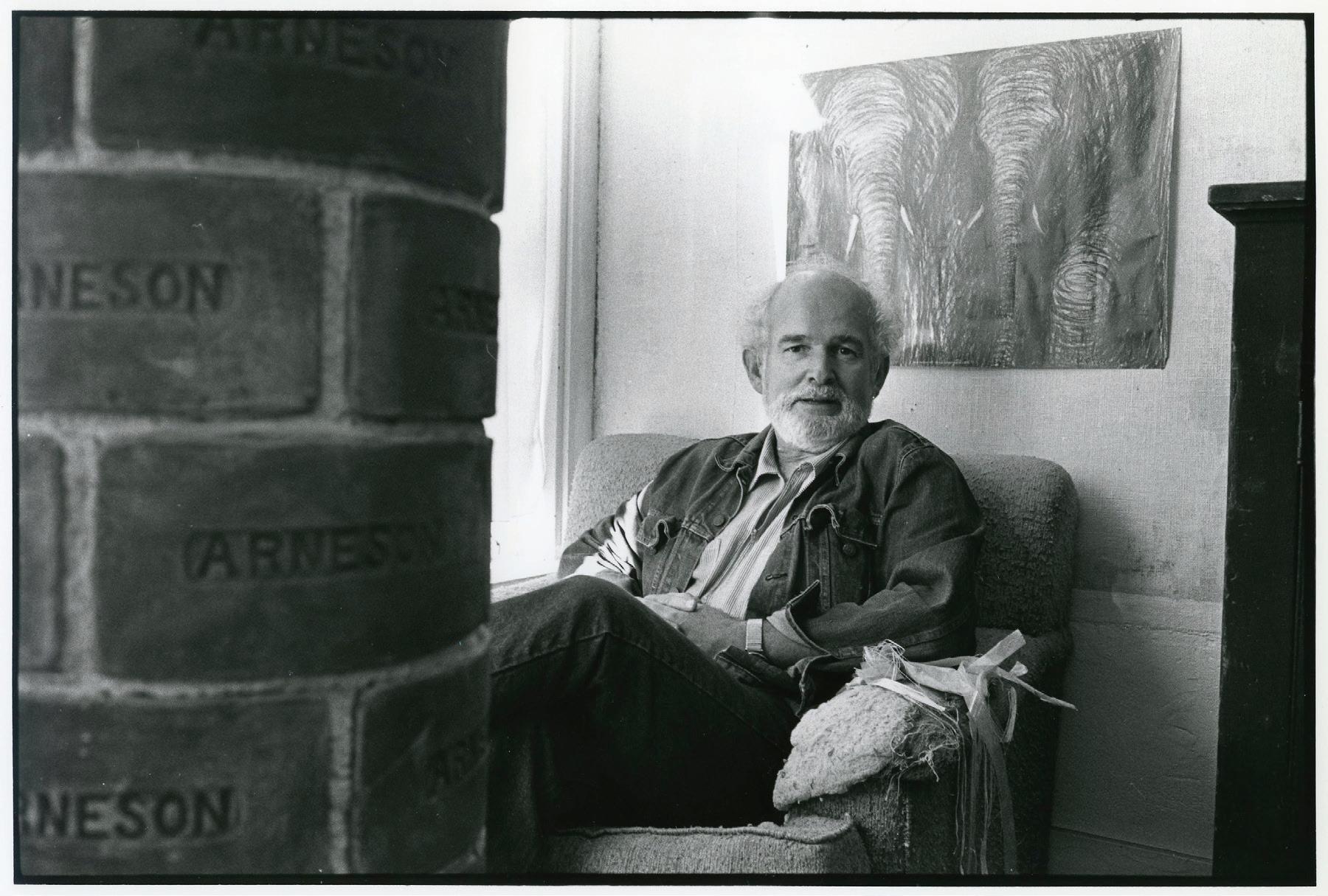
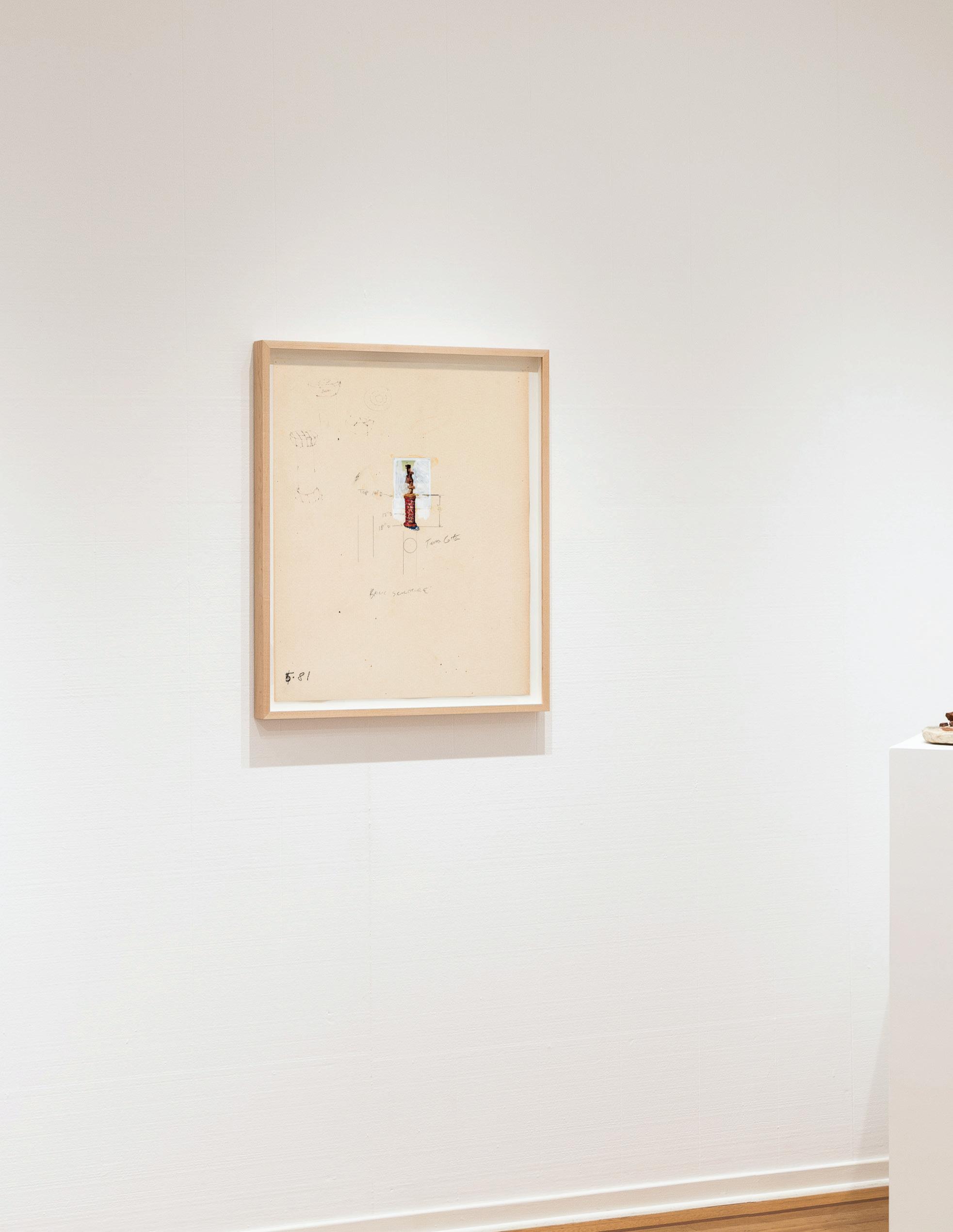
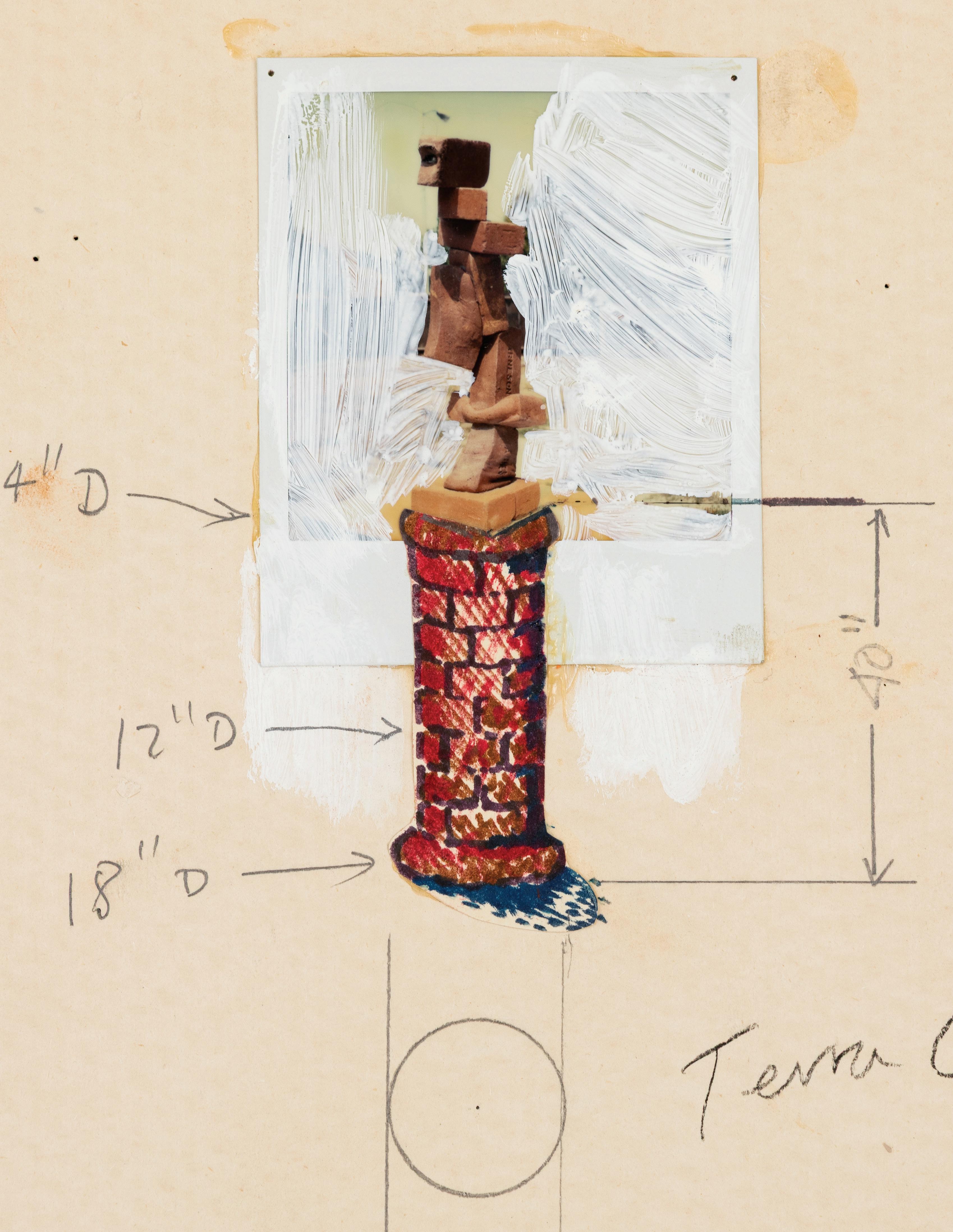
At the beginning of the 1980s, Arneson created a small group of self-portraits standing around three feet tall made of bricks that are stacked in unique arrangements. These portraits were then displayed on columnar pedestals made out of bricks themselves. Each of these arranged portraits appears more like an abstract sculpture than as a portrait, until you notice facial features jutting and peering out from the short ends of unconnected bricks – an eye in one, an ear on another, a nose or mouth on yet others. Their overall appearance is surreal, recalling Pablo Picasso’s paintings of nude females in the 1920s and 1930s. Study for Brick Sculpture, 1981 (plate 25) is a
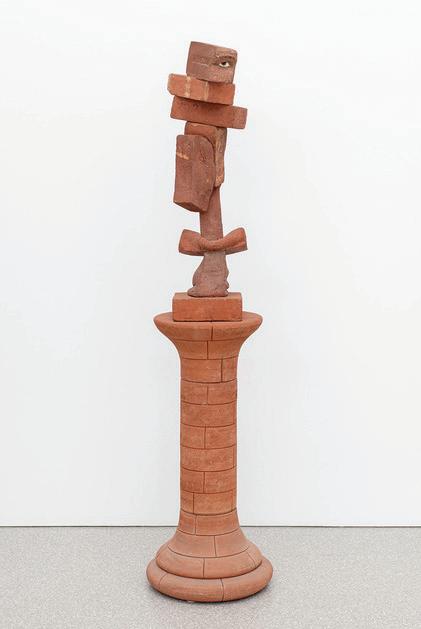
Figure 24: Brick Sculpture with Pedestal (1 Eye), 1981, unglazed ceramic, 68 x 15 x 15 inches. Private Collection.
preparatory drawing for Brick Sculpture with Pedestal (1 Eye), 1981 (figure 24), which is shown in a polaroid photograph Arneson taped to paper and drew over while figuring out how the base would look. In addition to these large pieces, Arneson made a number of small-scale brick portraits, where he employed up to four bricks in their creation, as well as a number of single brick works with his facial features carved into their short ends. Face Brick, 1981 (plate 24) is one such work.
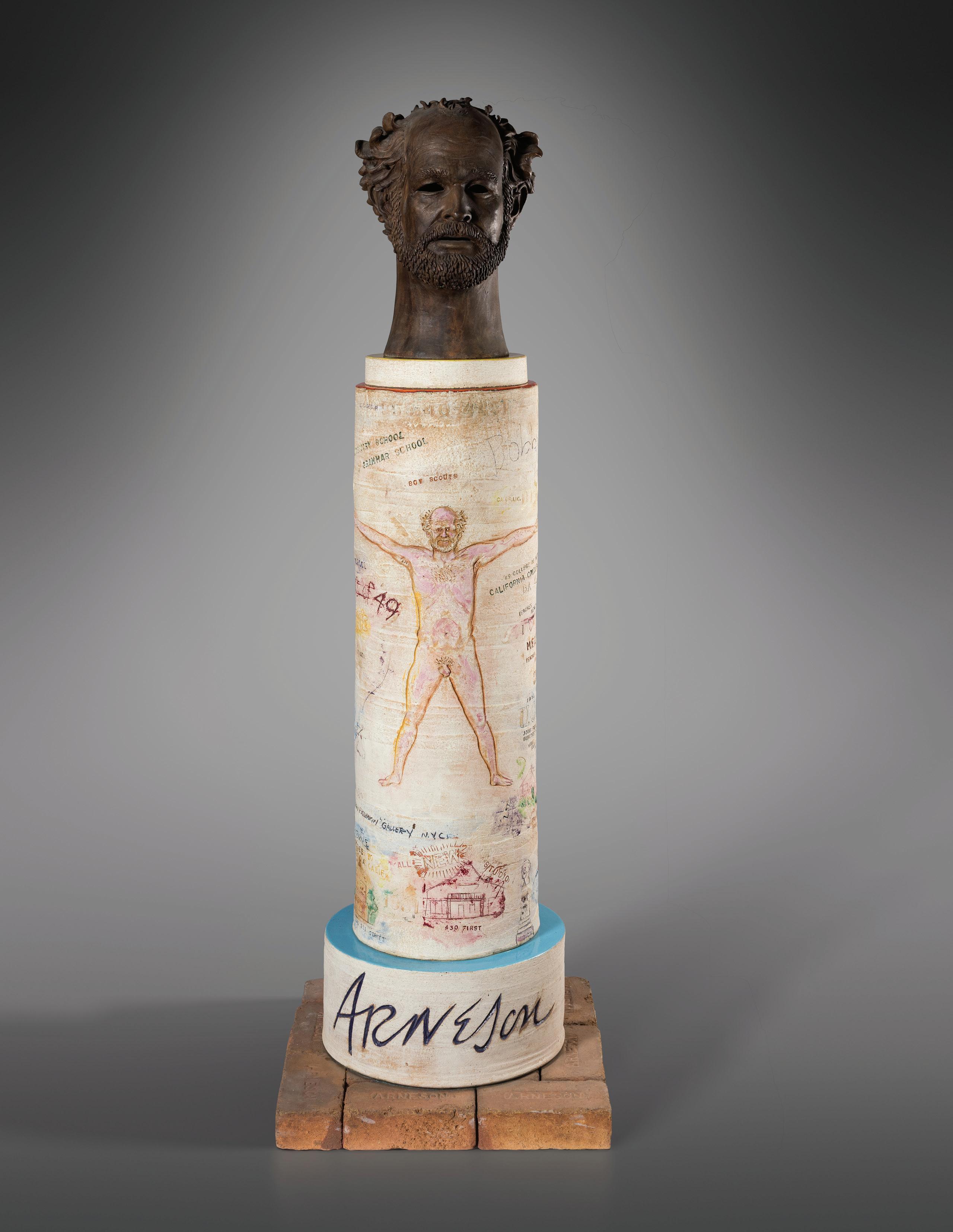
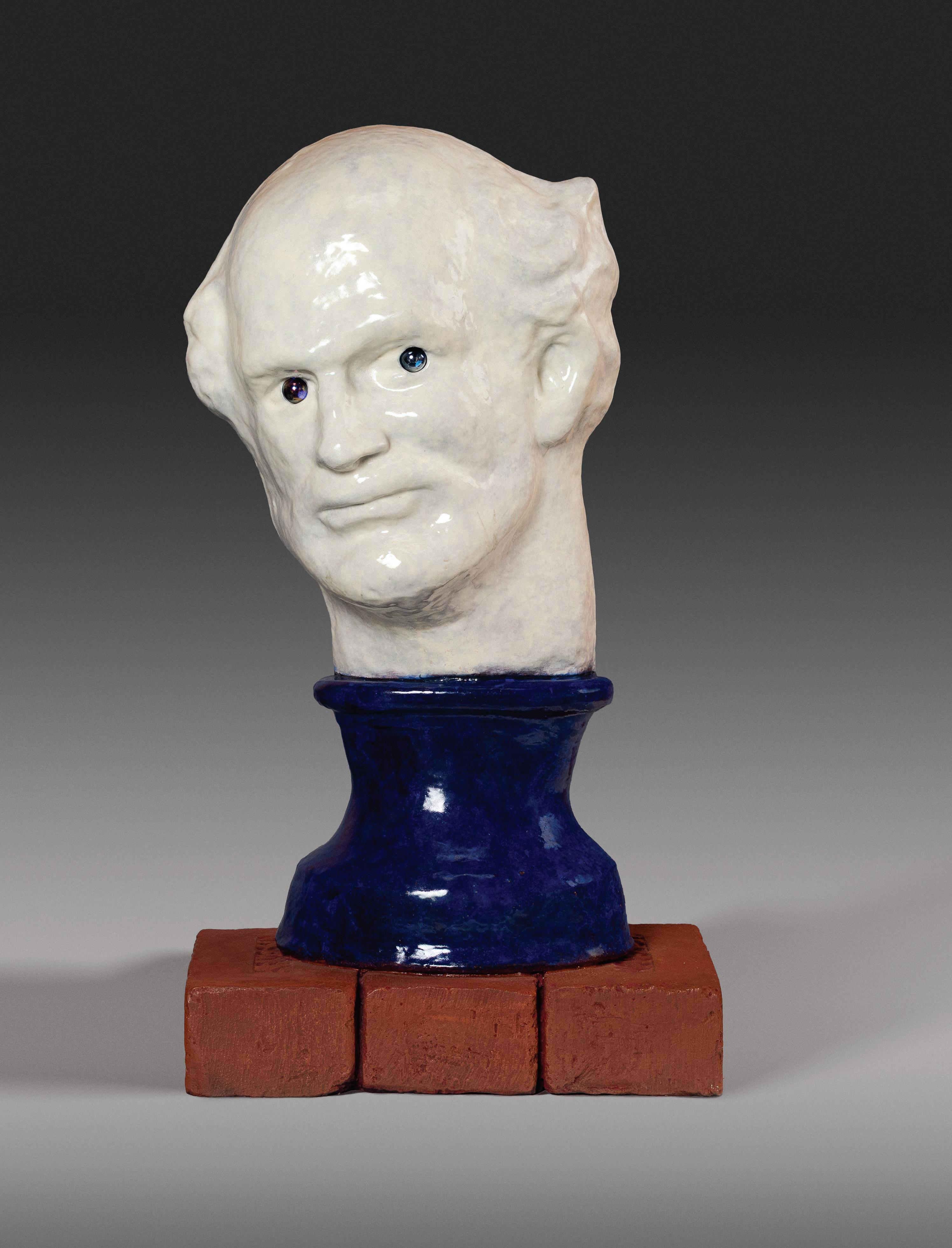
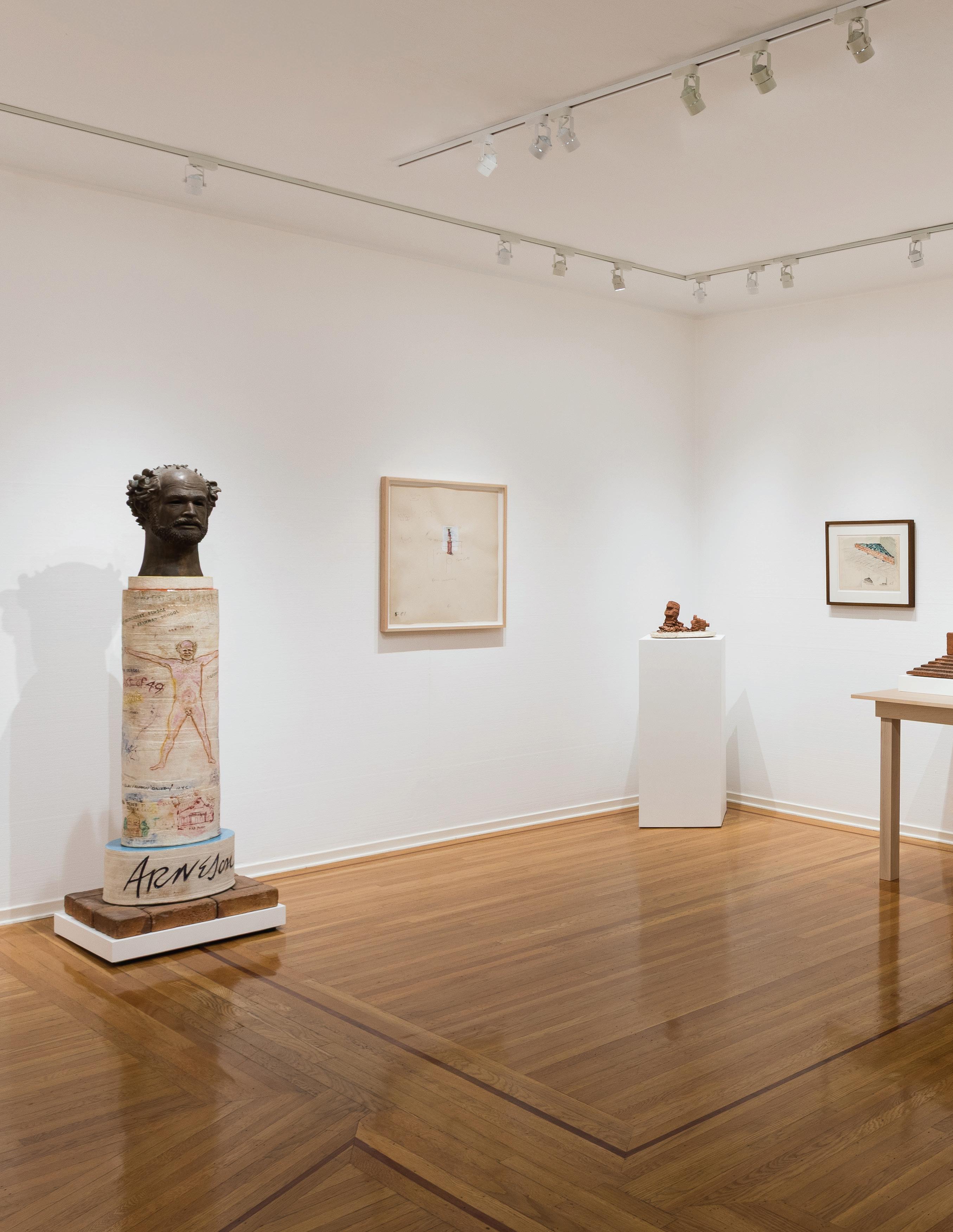
At this moment in his life, Arneson was at a high point professionally in both teaching and his career, and his new studio in Benicia would be completed by the end of 1981. Shadowing all of this were his ongoing health issues from being diagnosed with bladder cancer in 1975, which led him to reflect on his life and the achievements he had made. In 1982, Bio Bob (plate 26) appeared in his studio, having been put together in part using the artist’s proof from a bronze edition cast of his own head at close to life-size. The head sits on a unique ceramic columnar pedestal, which itself rests on a field of bricks at its base. Inscribed and glazed into the surface of the pedestal are many of the important moments and milestones of his life to that point – the year he was born, the schools and colleges he attended, the creation of the new studio, his marriages, the births of his children, and the famous Moscone commission among them. (Arneson would later add the birth date of his daughter when she was born in 1986.) These life markers surround nude full-figure portraits of the artist – one from the front and one from the back – situated at center height on the column. Arguably, this is the most complex self-portrait Arneson ever created. Each layer – head, column, and brick base – embodies a different approach Arneson used in his self-portraits, now all synthesized into one work.
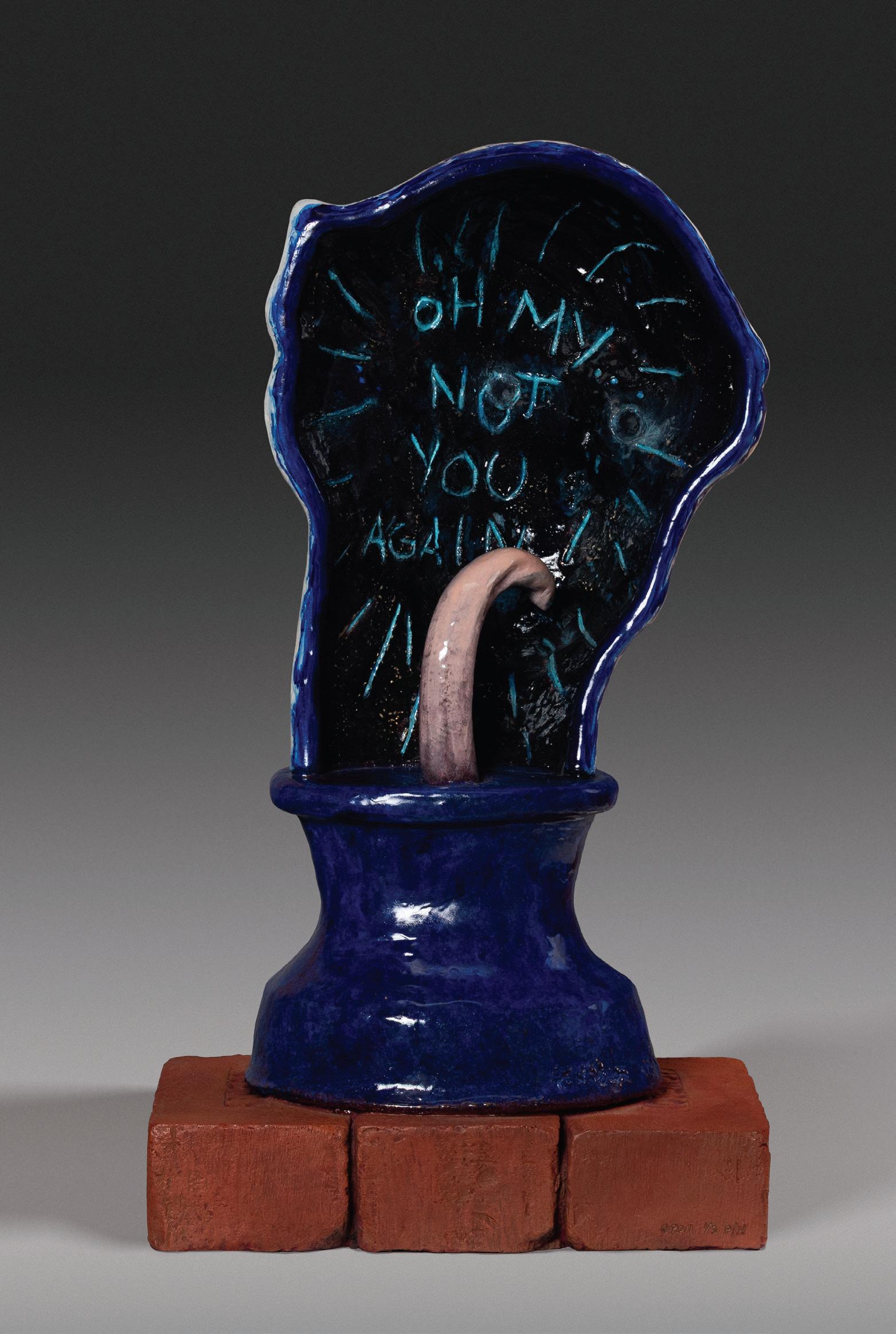
Arneson would repeat this layered structure in one of the final self-portraits he made, titled Blue Eyes, 1991 (plate 29). A cast bronze portrait with blue marbles for eyes, its ghostly white patina reflects Arnesons reconning with his mortality as his health was failing. (He would pass away the following year.) The portrait head sits on a short, undecorated pedestal, which has three bricks beneath it, also cast in bronze. The marble eyes in this work tie it to Self-Portrait of the Artist Losing His Marbles both materially and symbolically. Here, Arneson gazes out through the marbles he was losing in his earlier work. Unlike most of his free-standing portraits, Blue Eyes does not have a full head in the round. Instead, Arneson’s face is in the form of a mask. Viewed from the back, a tongue like element emerges from the base and angles towards where the mouth would be. Etched into the inside surface of the face is the phrase ”OH MY… NOT YOU AGAIN!”, a reference to the cancer that had returned to his body and had been abruptly discovered the year before.
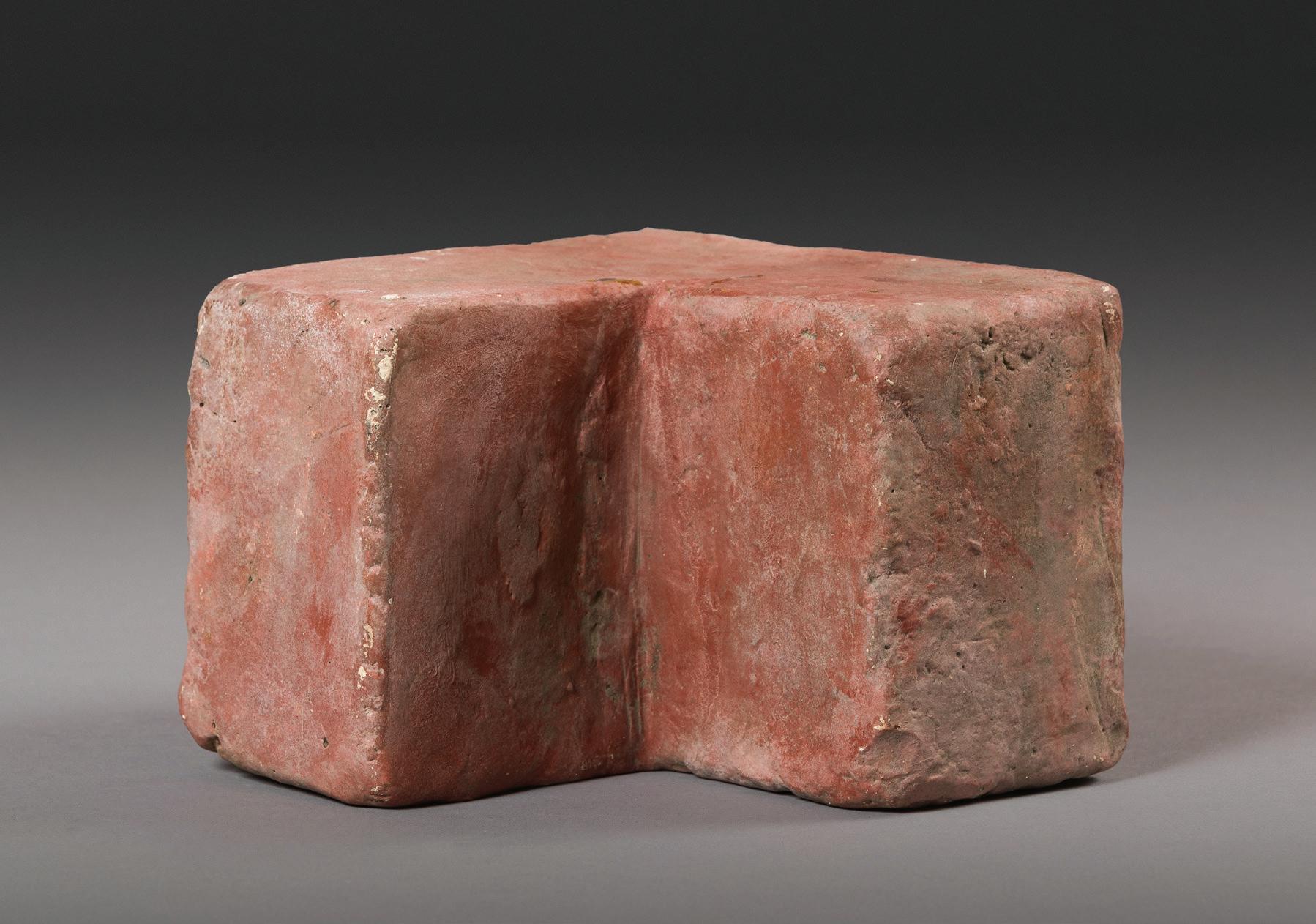
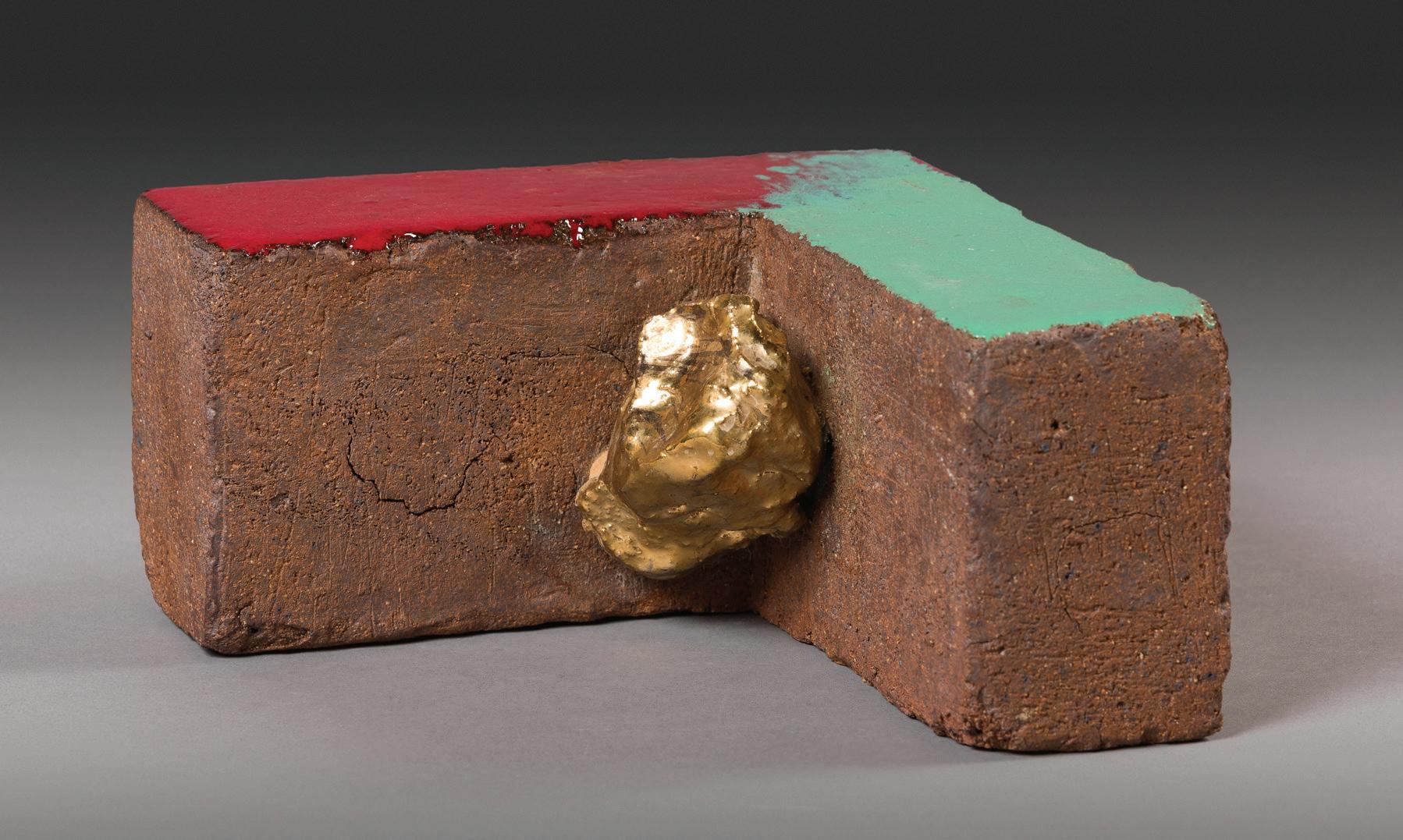
One of the final terracotta bricks Arneson made was Corner Stone, 1991 (plate 28). This angled brick is glazed on its top surface with red on one side and green on the other. The colors blend into each other where they meet at the angle’s vertex. On the outside
of the angle, Arneson has stamped his name on one side and the year 1991 on the other. On the inner side of the angle, Arneson attached a gold luster glazed nugget. While Arneson’s specific intention for this was not stated, the nugget may symbolize the idea that the treasure in life is found where things meet. Corner Stone is also symbolic as the capstone companion to the 1966 angled brick in the exhibition, made in the first years of the series. It this way, it serves as the end point of these works and of his life.
Robert Arneson’s use of the humble terracotta brick was thought provoking, humorous, poignant, surreal, conceptual, honorific, monumental, and personal. Throughout his explorations, he challenged himself and viewers with his wit and humor to think about complex ideas both big and small, and what they meant. If he took the air out of his own ego and/or someone else’s with a laugh along the way, even better.
Figure 25: Robert Arneson sitting next to Brick Self-Portrait, 1981
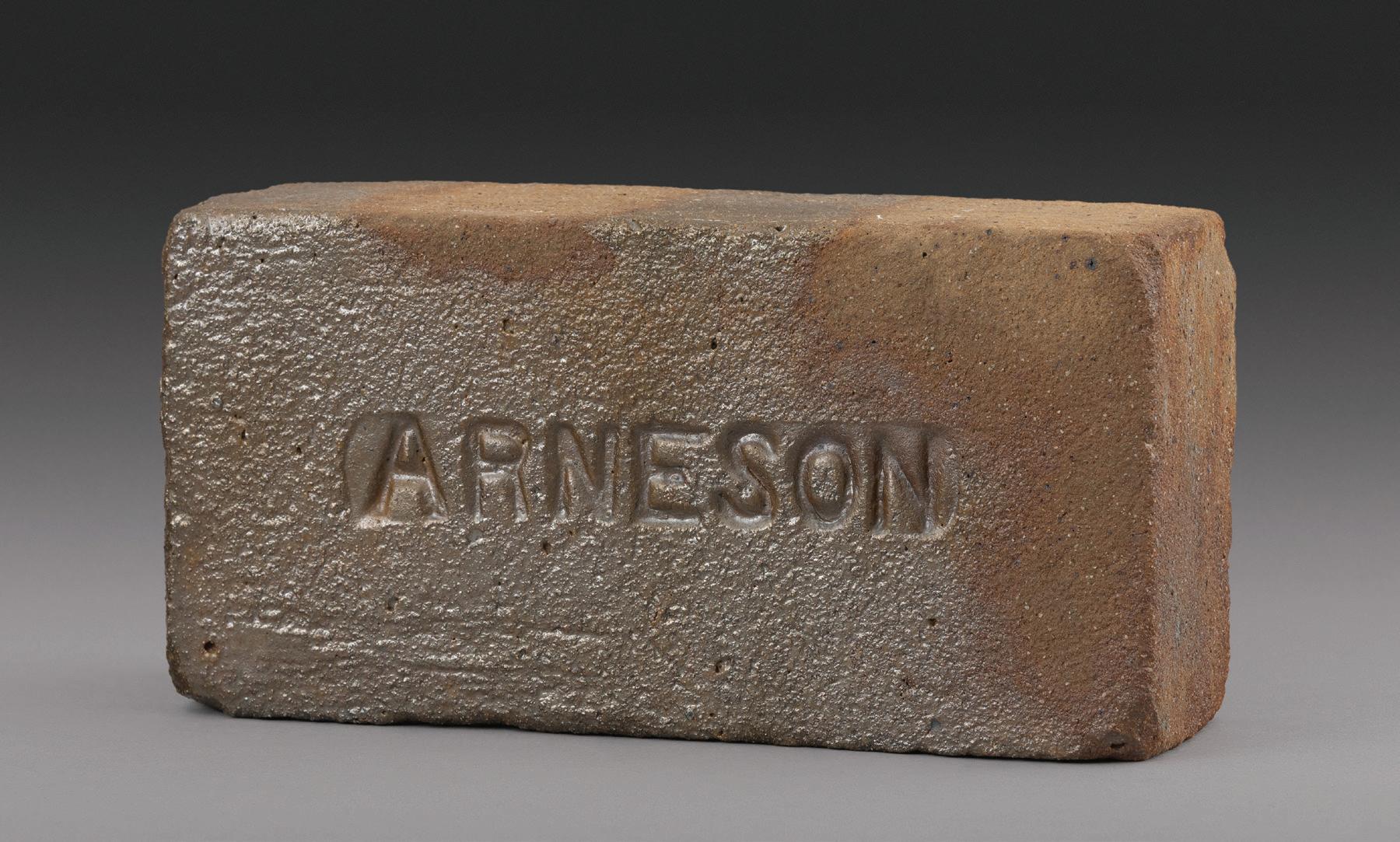
Plate 32:
Untitled (Brick), 1981 glazed ceramic, 4 3/8 x 9 x 2 7/8 inches
Plates
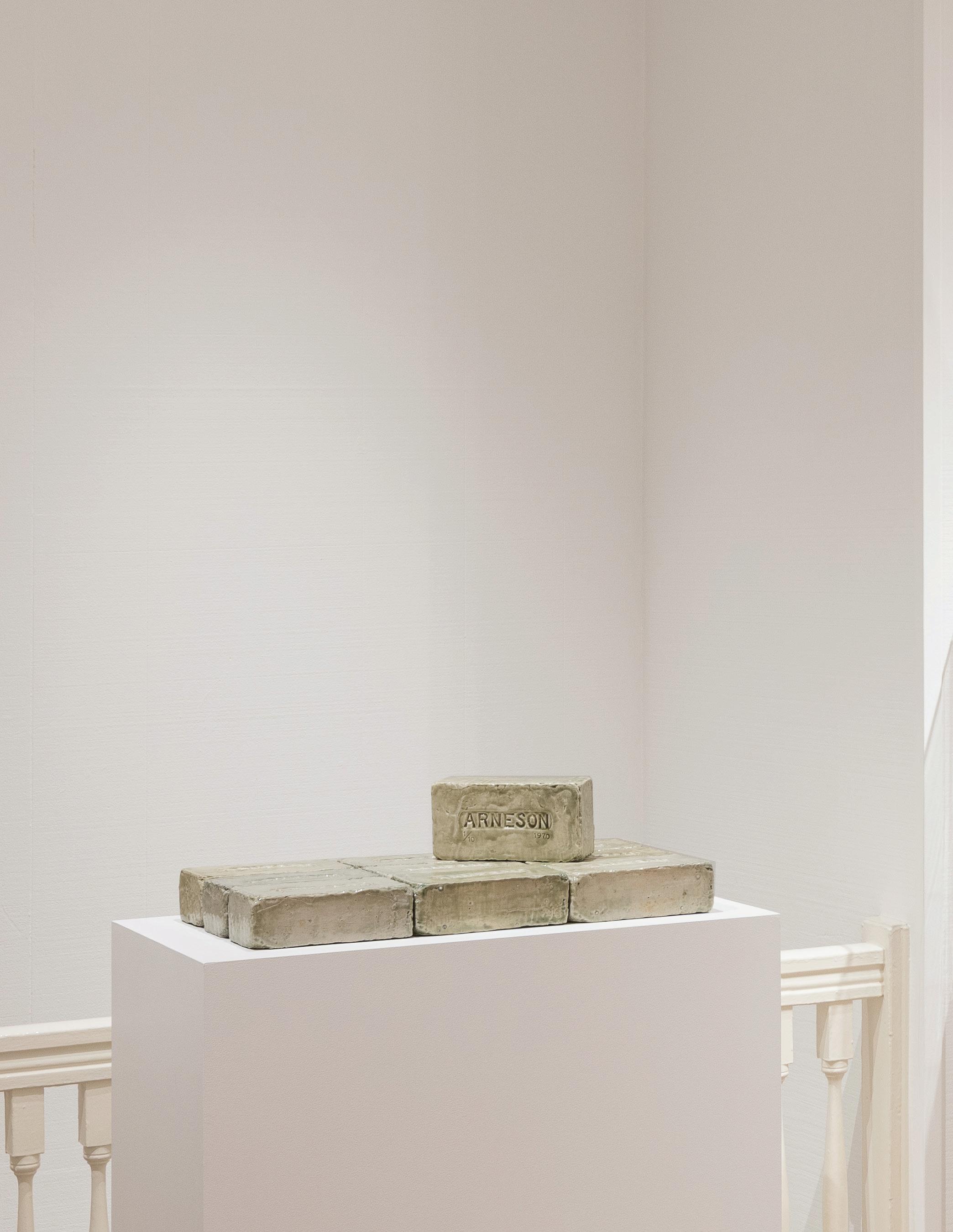
Plate 1:
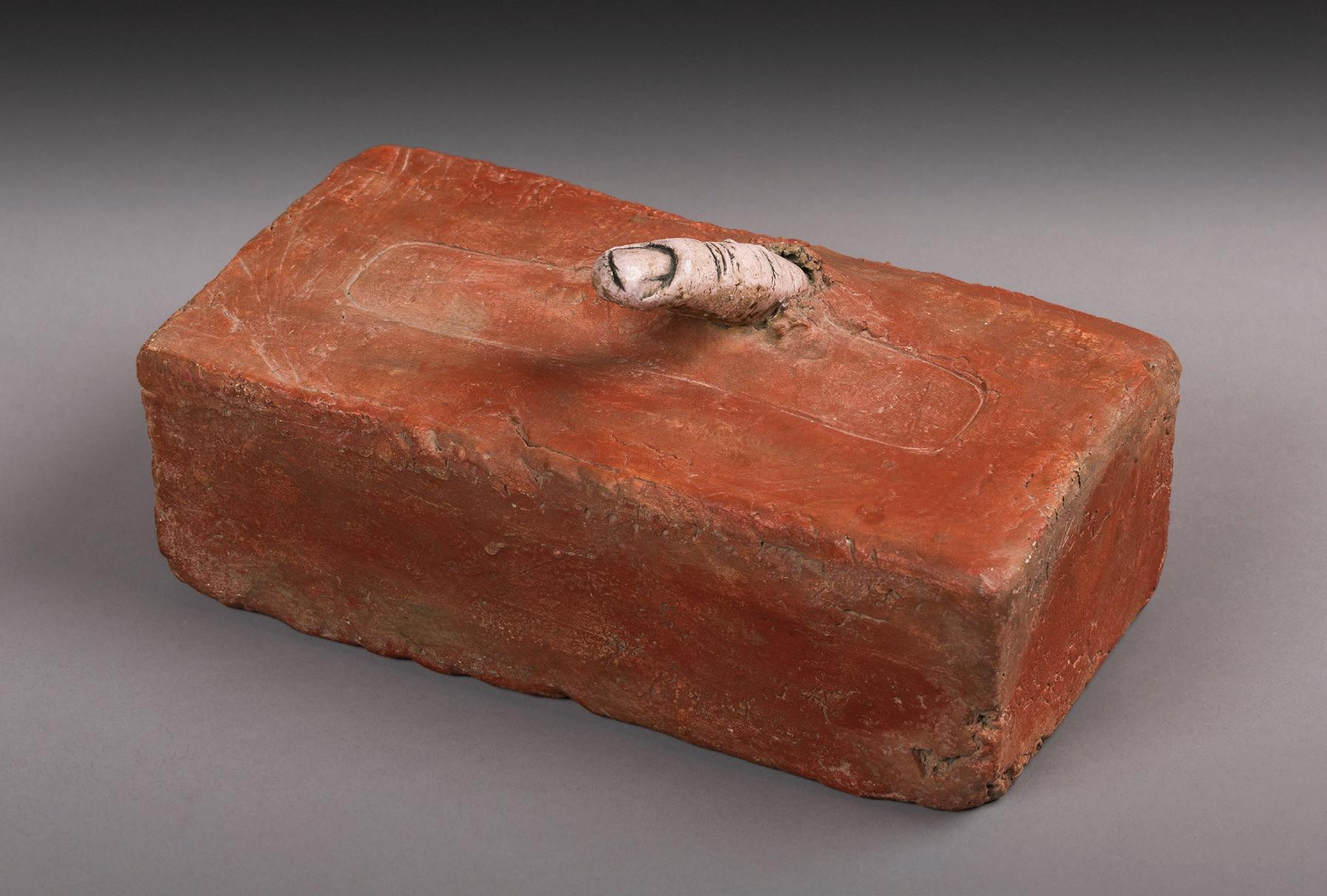
Finger Brick, c. 1965 ceramic with appendage, 5 3/8 x 9 1/2 x 4 3/4 inches opposite: (verso)
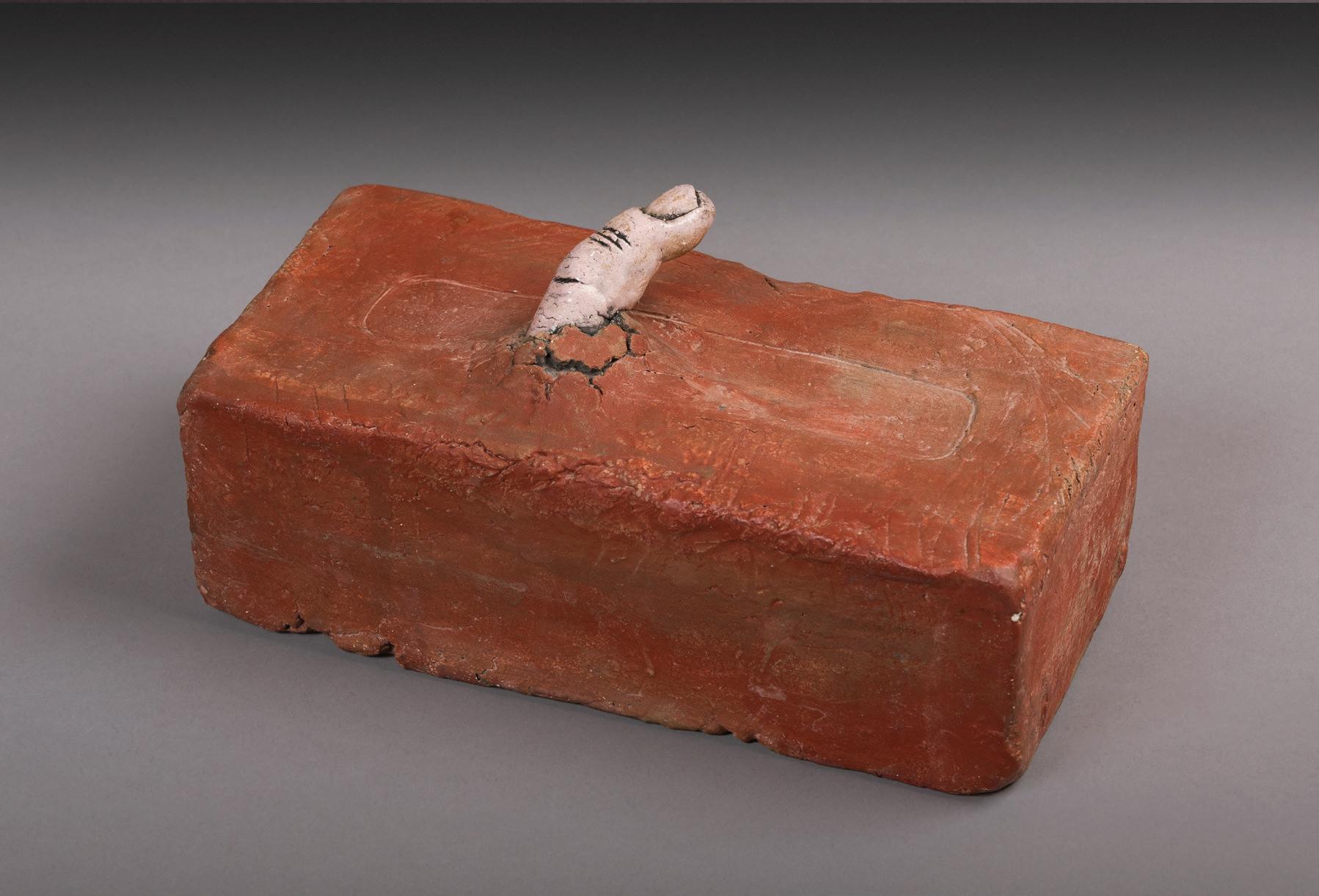
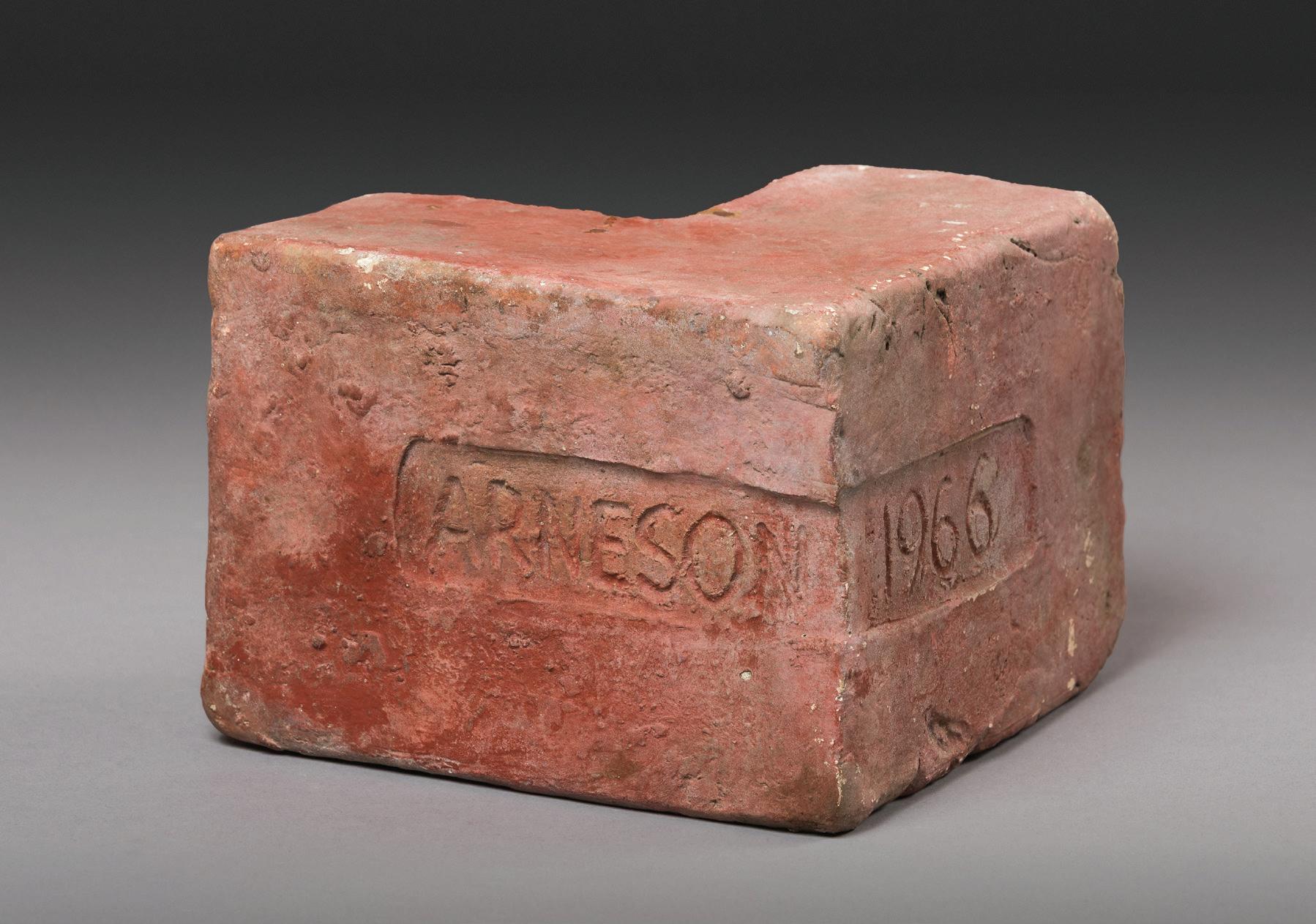
Plate 2:
Brick, 1966
ceramic, 4 1/2 x 8 1/2 x 6 1/2 inches opposite: (verso)
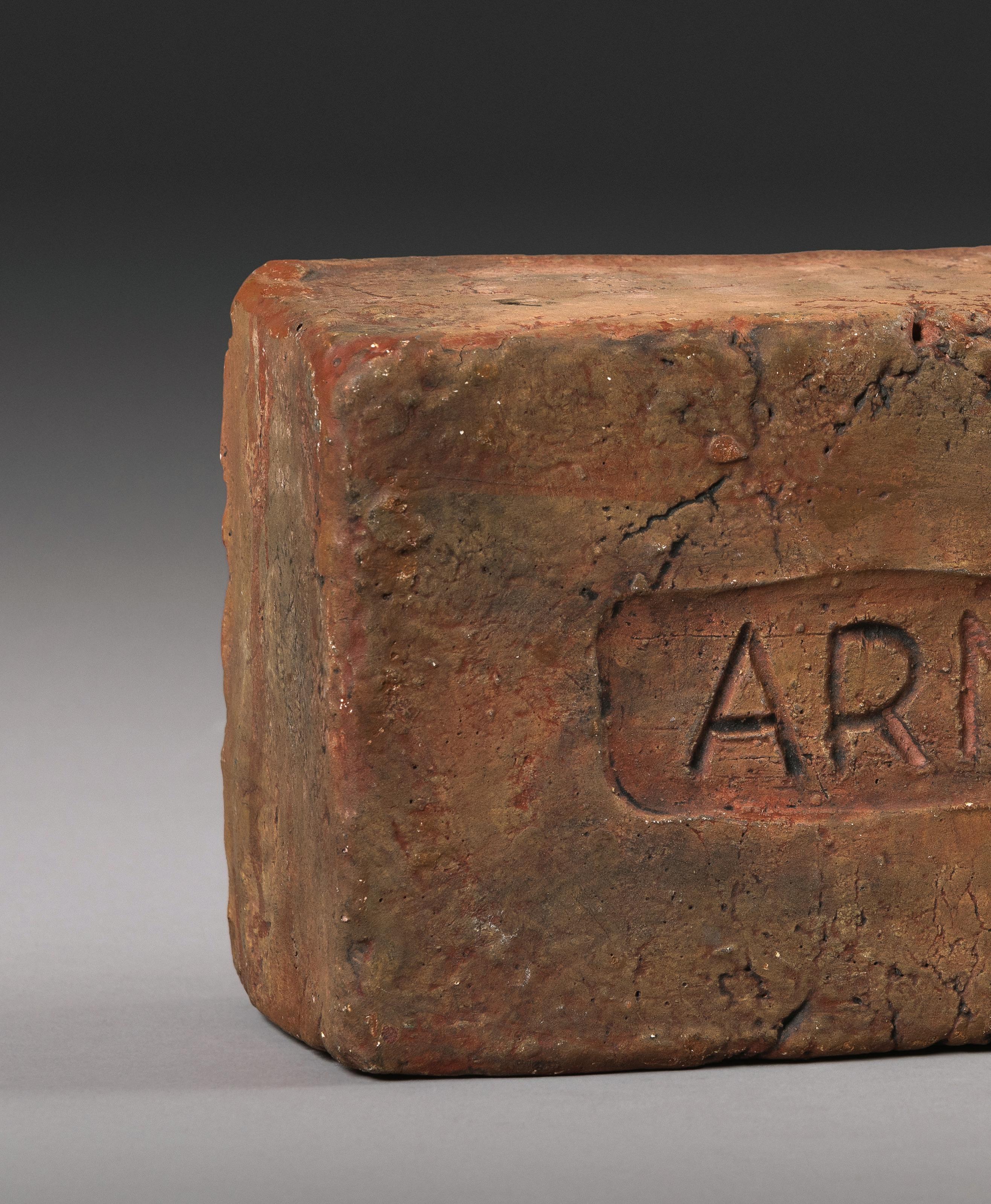
Brick, 1966
ceramic, 4 5/8 x 9 1/4 x 3 1/8 inches
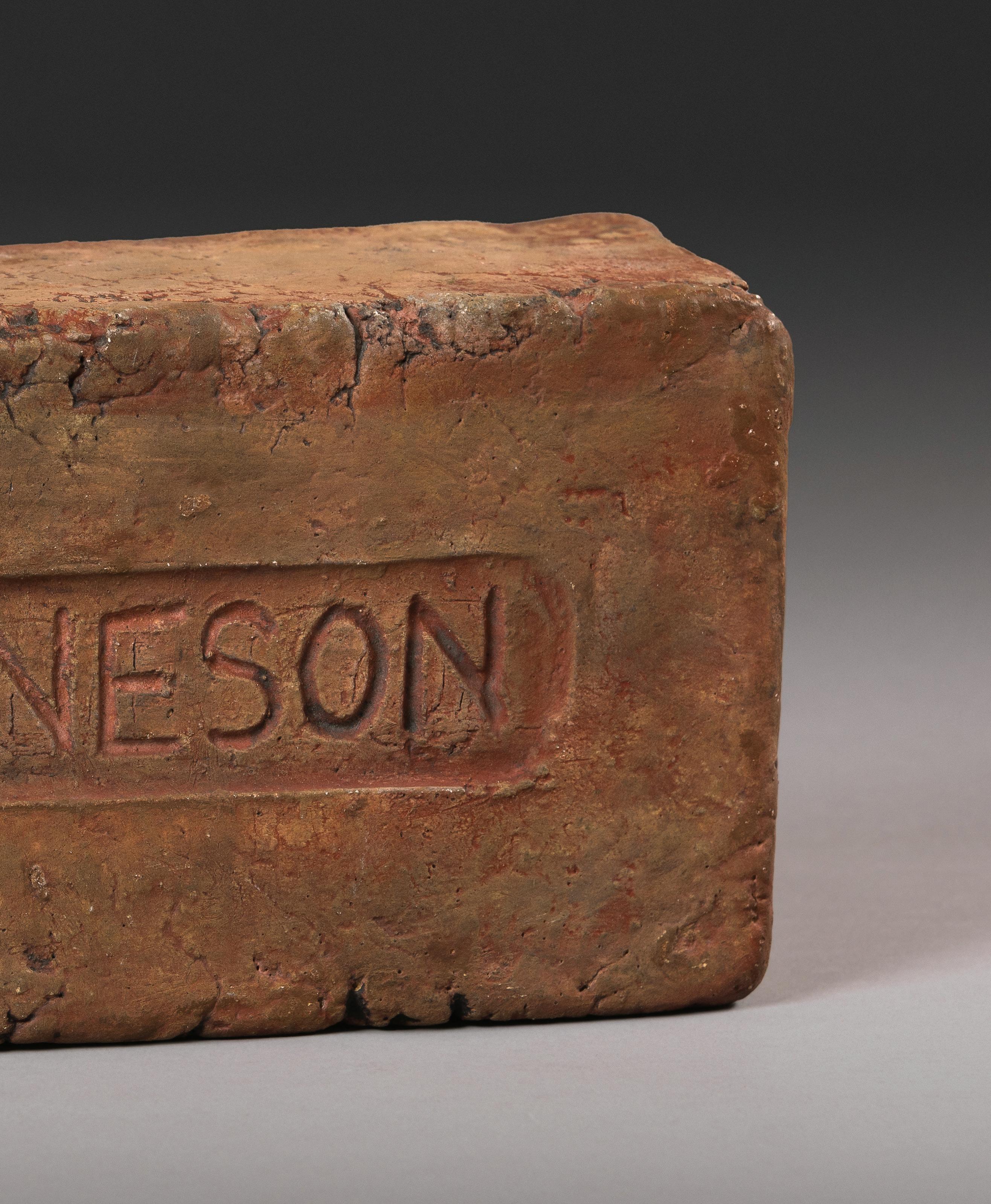
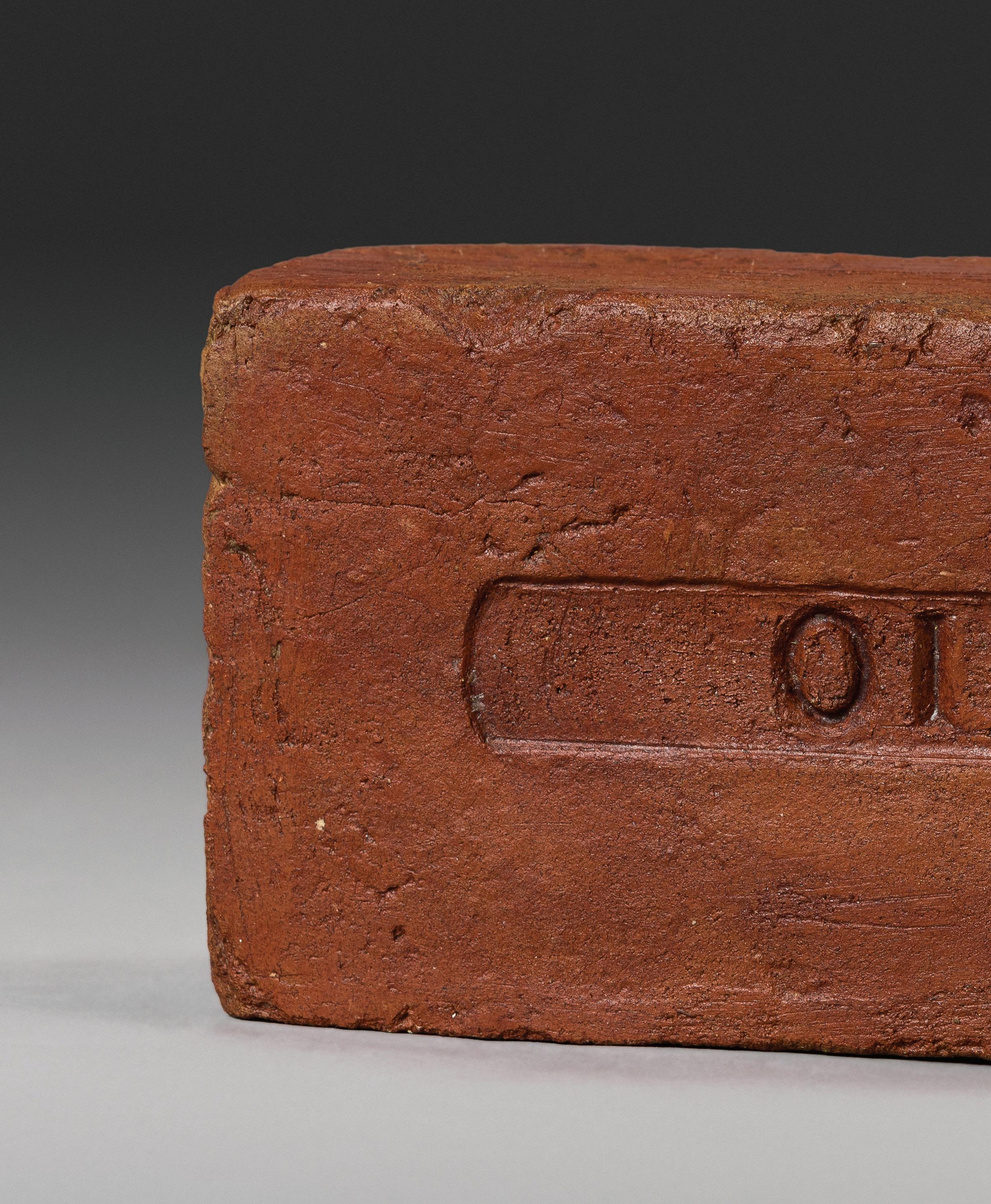
Plate 4:
Oil Brick, 1969
ceramic and oil, 4 1/4 x 8 3/4 x 2 3/4 inches
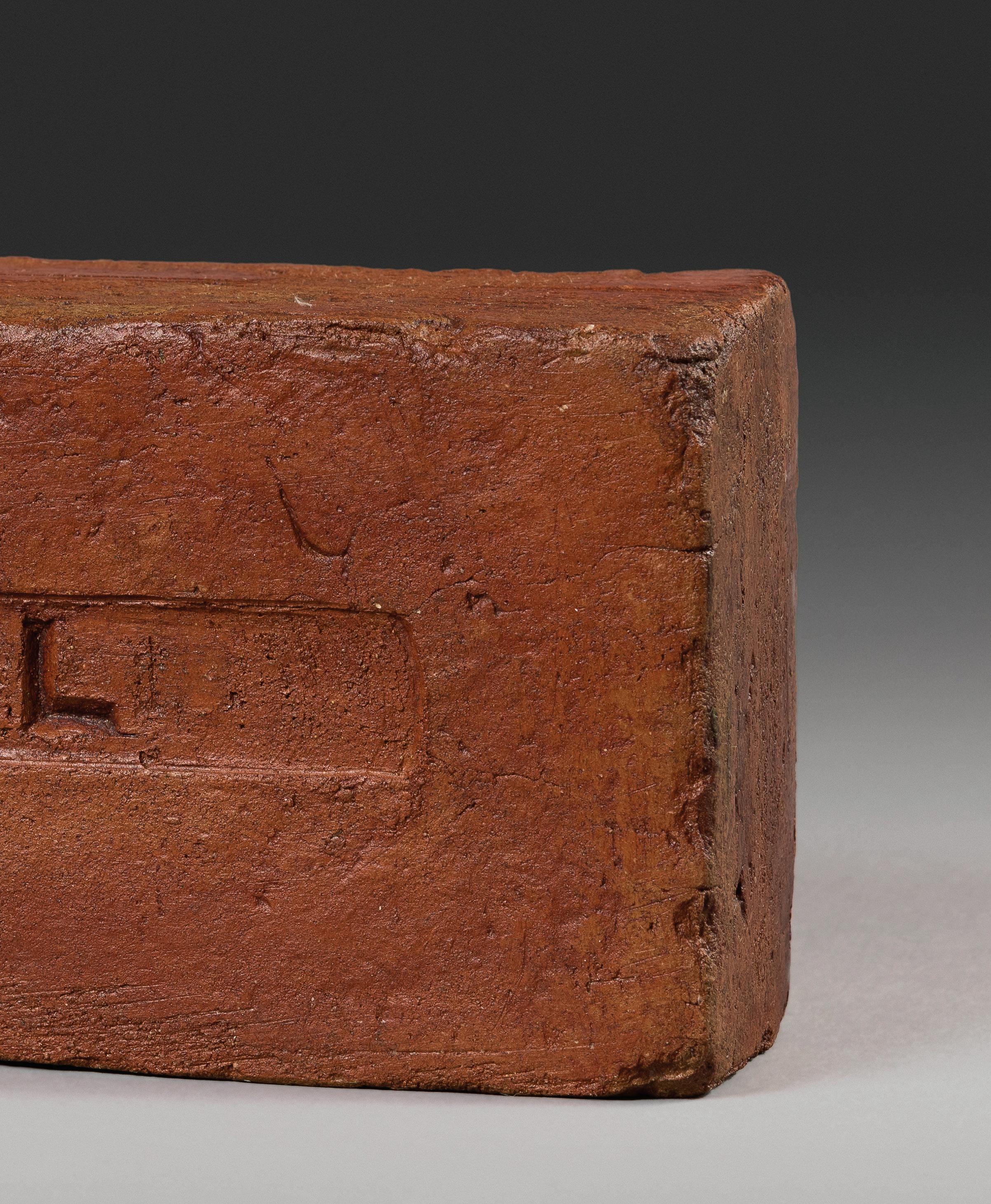
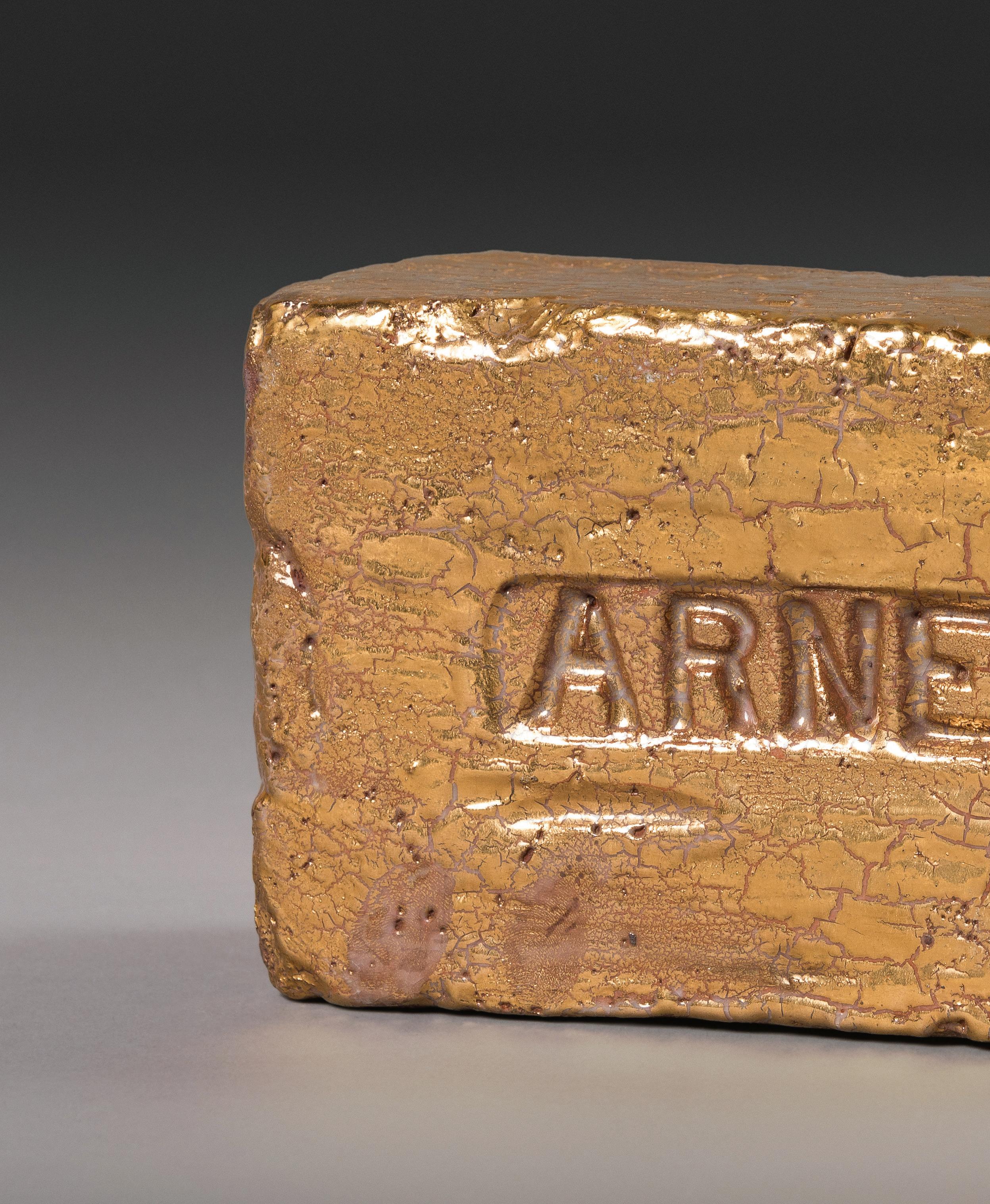
Gold Brick, 1969
glazed ceramic, 4 1/4 x 8 5/8 x 2 3/4 inches
6:
Plate
Mountain Brick, 1969
ceramic, 7 3/4 x 8 3/4 x 2 7/8 inches opposite: (verso)
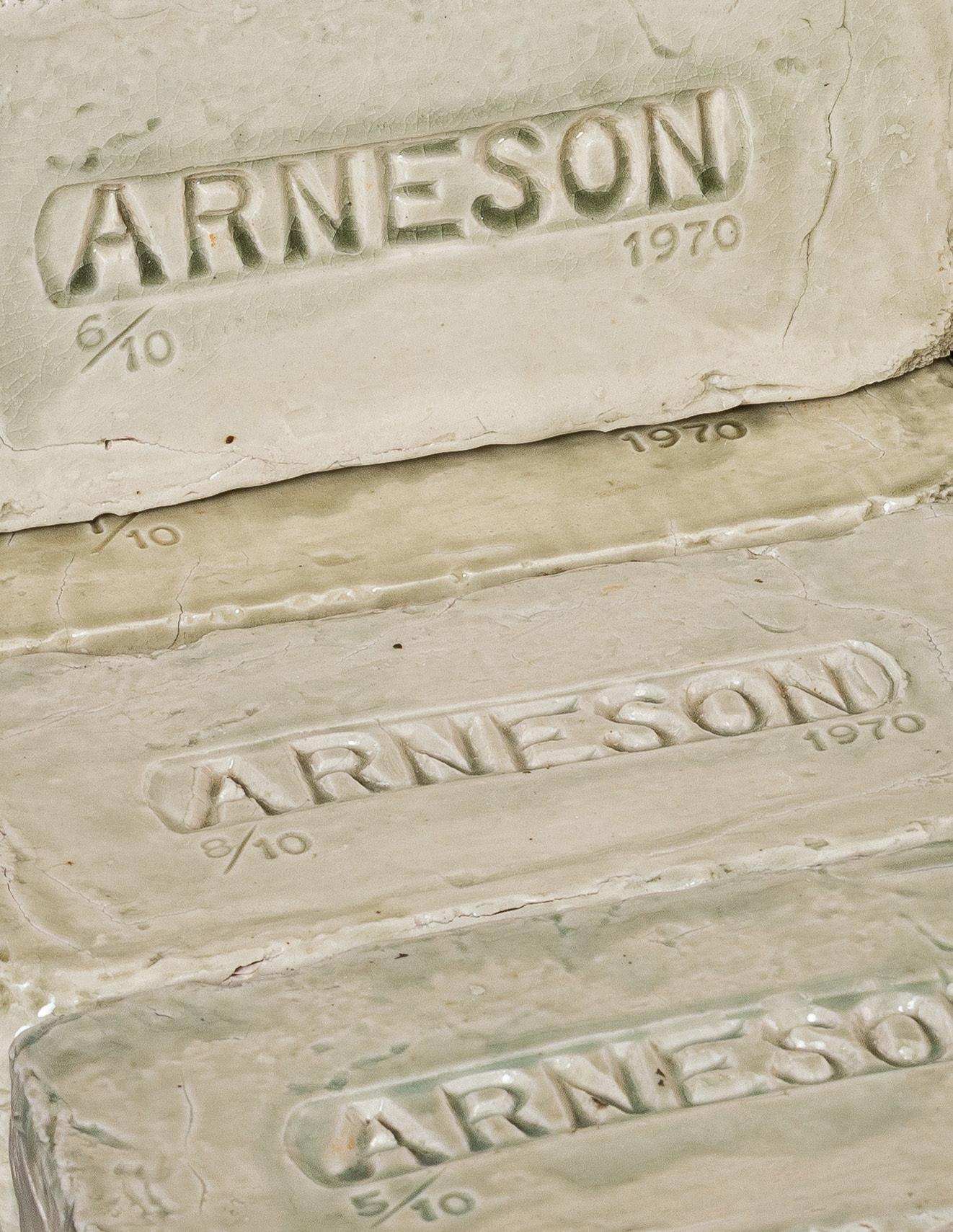
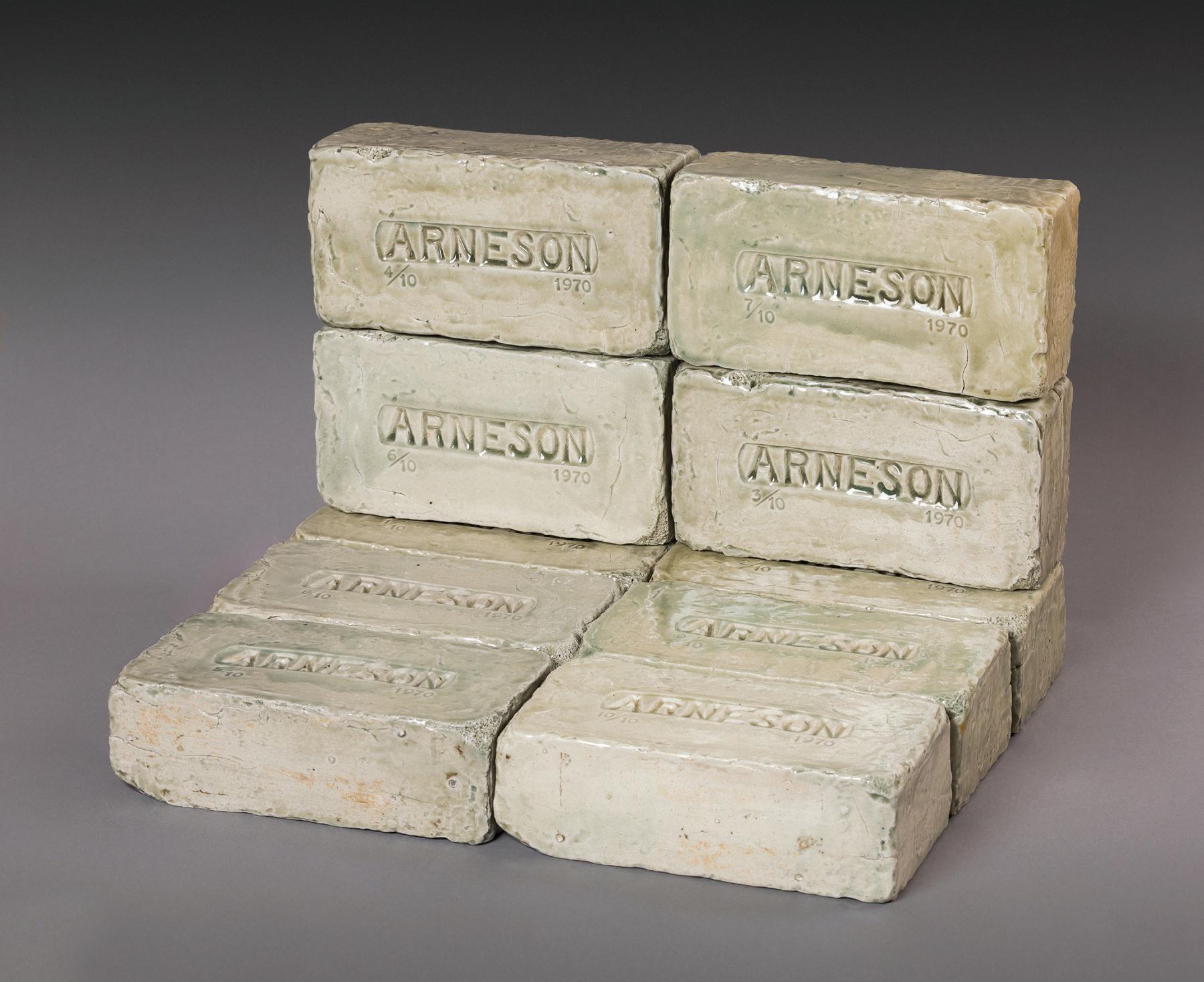
Sung Edition, 1970 glazed porcelain, editions 1-10 of 10, (10) bricks: each 4 1/2 x 9 x 2 3/4 inches, overall dimensions variable opposite: Sung Edition (detail)
Plate
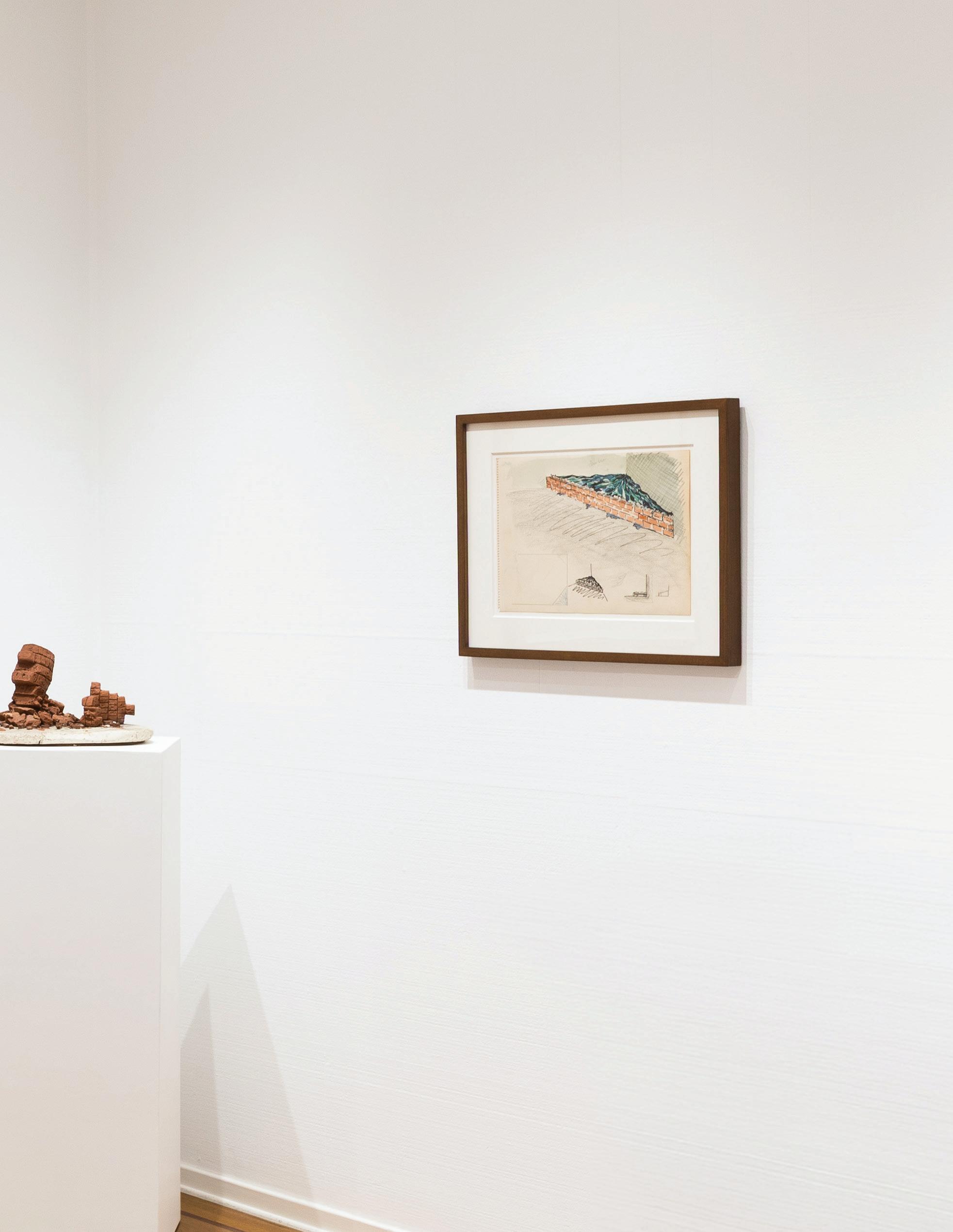
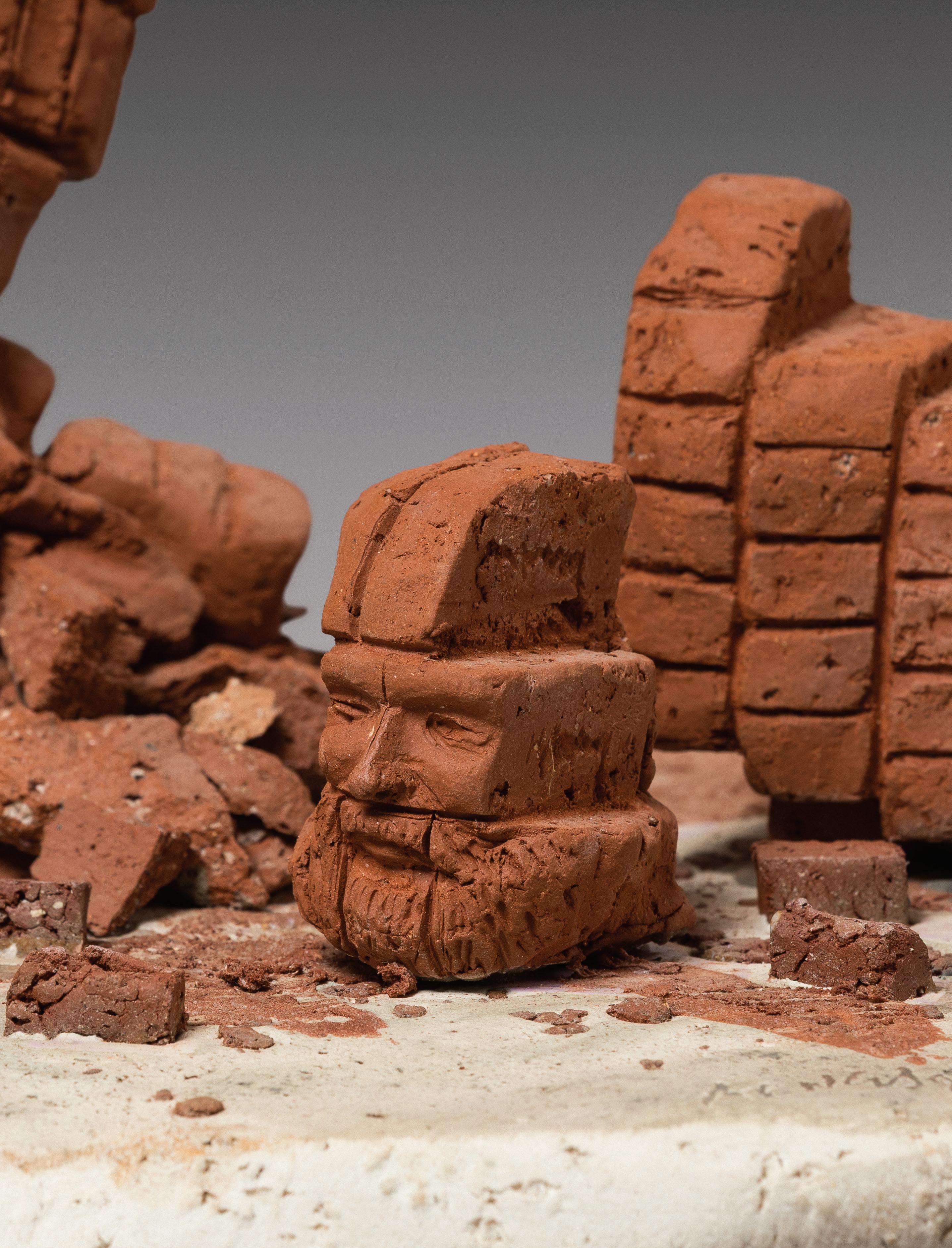
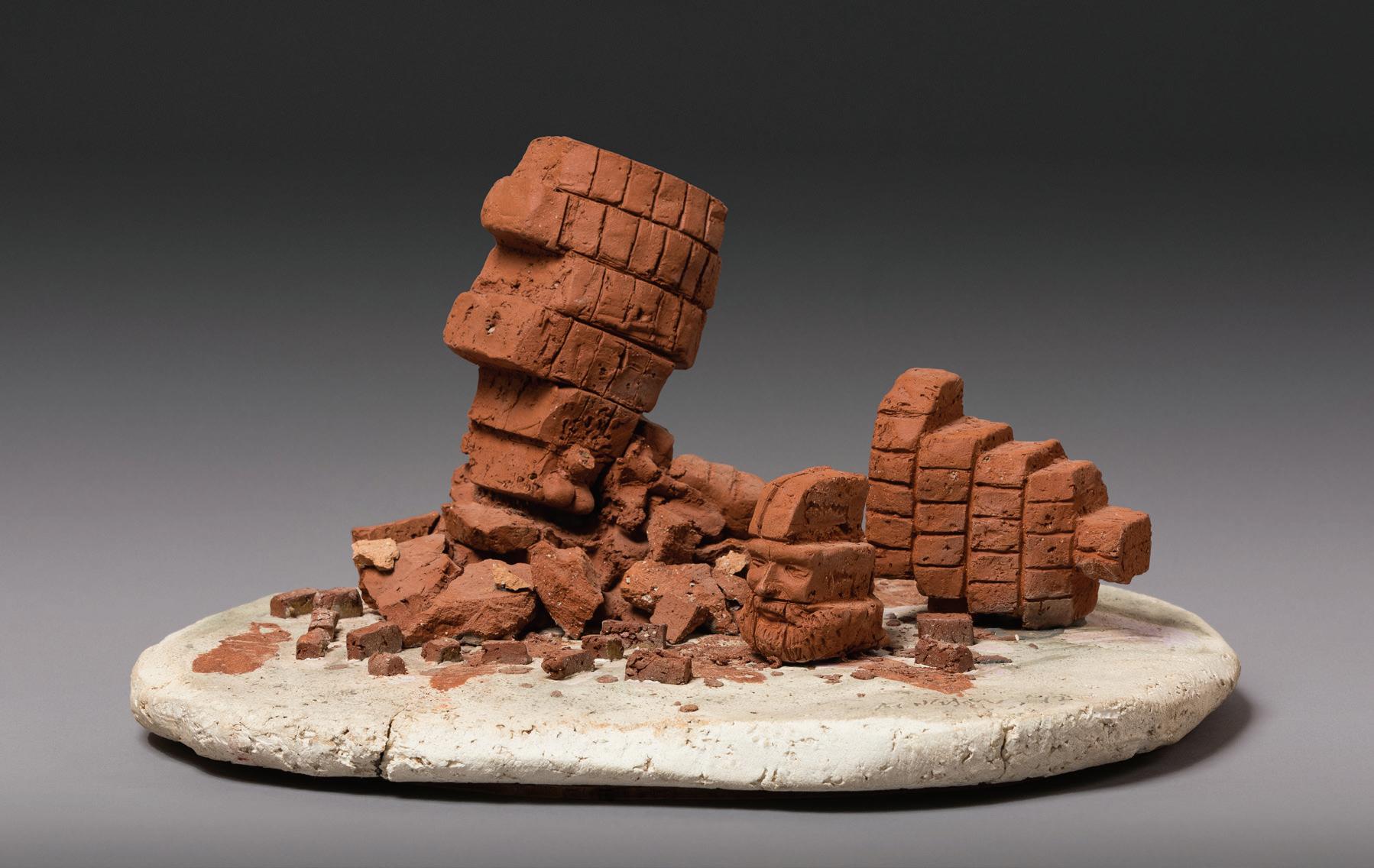
Model for “Fragment of Western Civilization”, 1972 glazed ceramic, 8 x 15 x 11 inches opposite: Model for “Fragment of Western Civilization” (detail)
Plate 9:
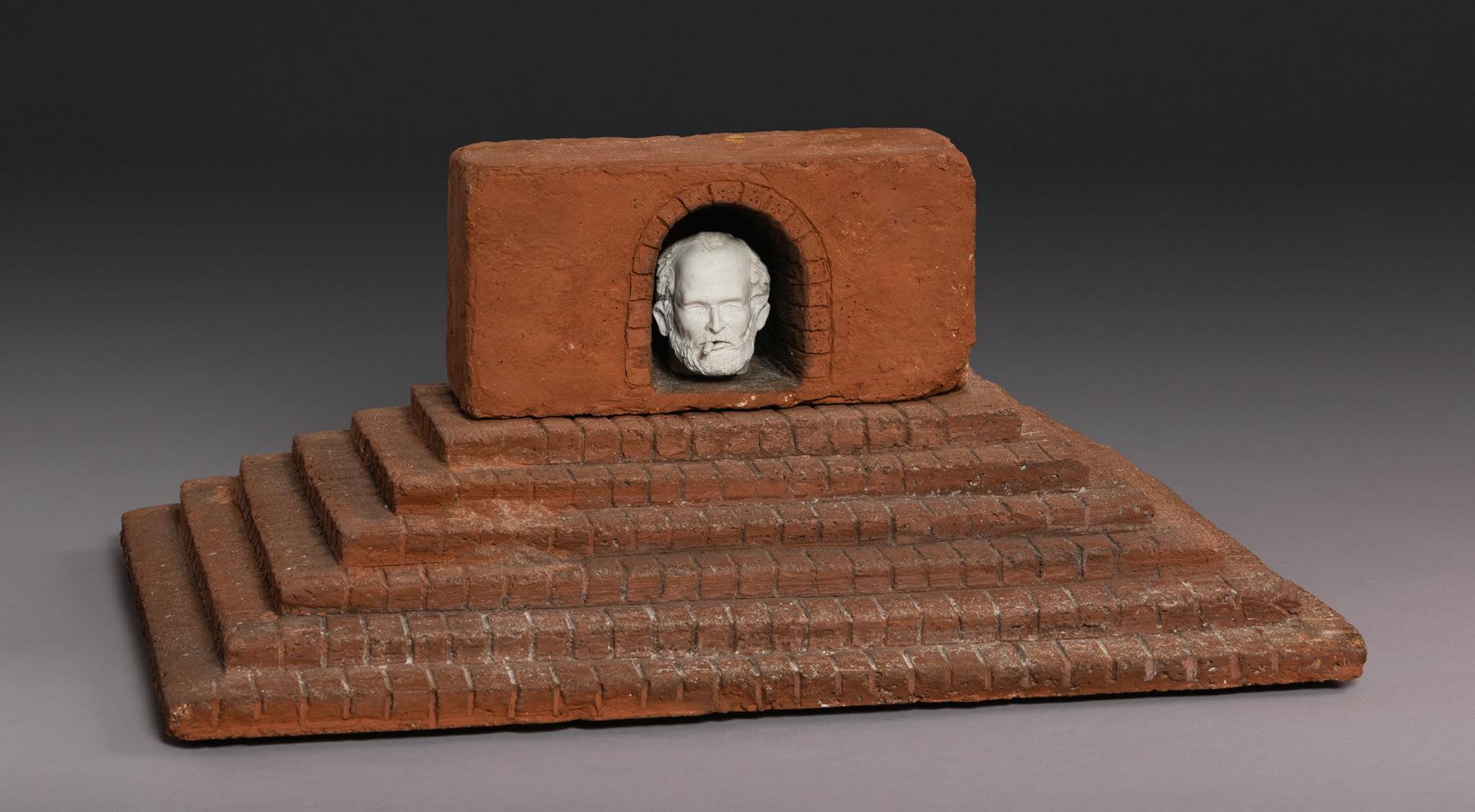
Memorial for Bob, 1972
terracotta and ceramic, 8 1/2 x 19 3/4 x 14 inches
opposite: Memorial for Bob (detail)
10:
Plate
Brick Vase, 1974
terracotta with glaze, 24 1/4 x 9 1/2 x 9 1/2 inches opposite: (verso)
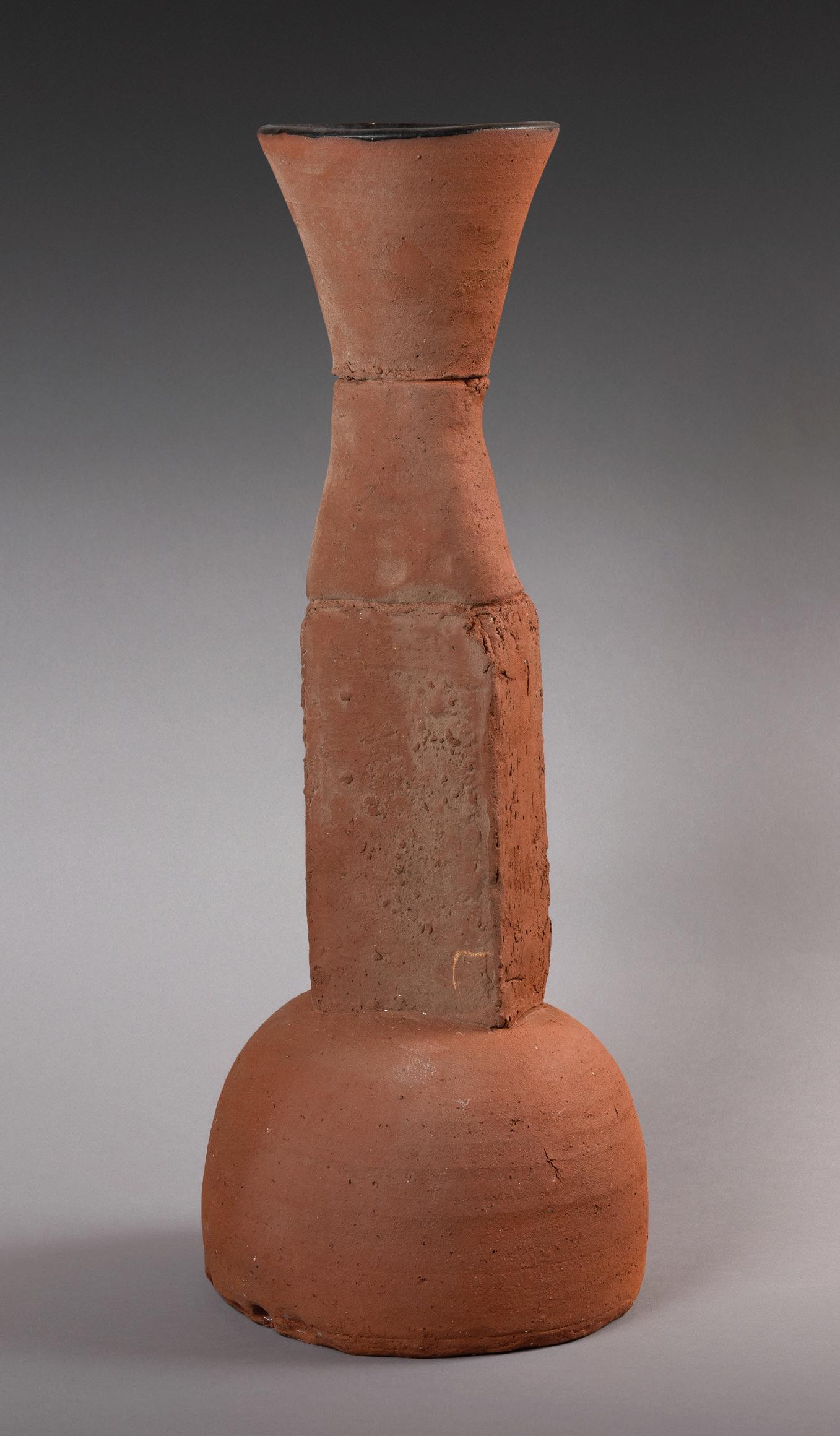
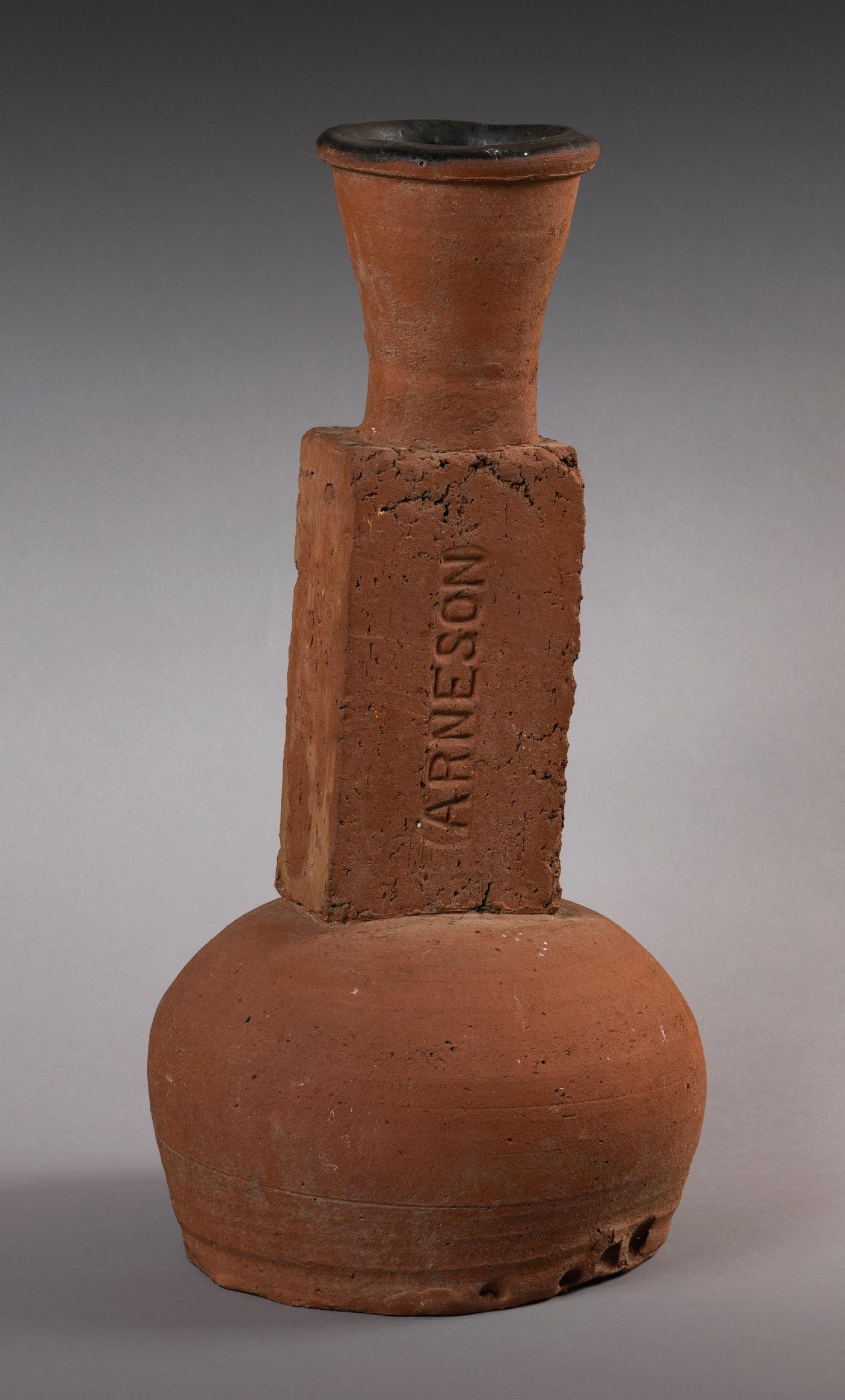
Plate 11:
Brick Vase, 1974
terracotta with glaze, 20 x 9 1/2 x 9 1/2 inches opposite: (verso)
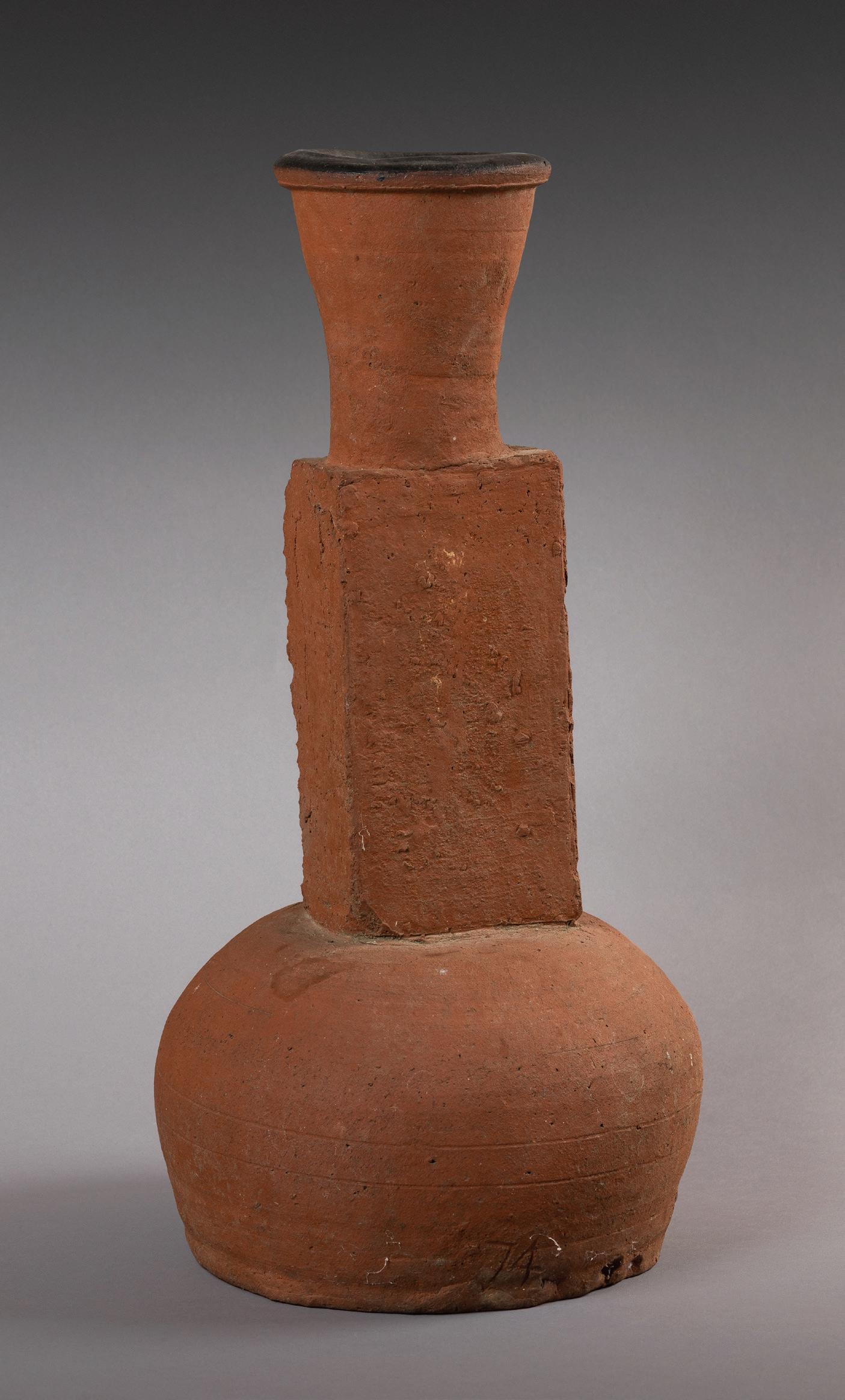
Plate 12:
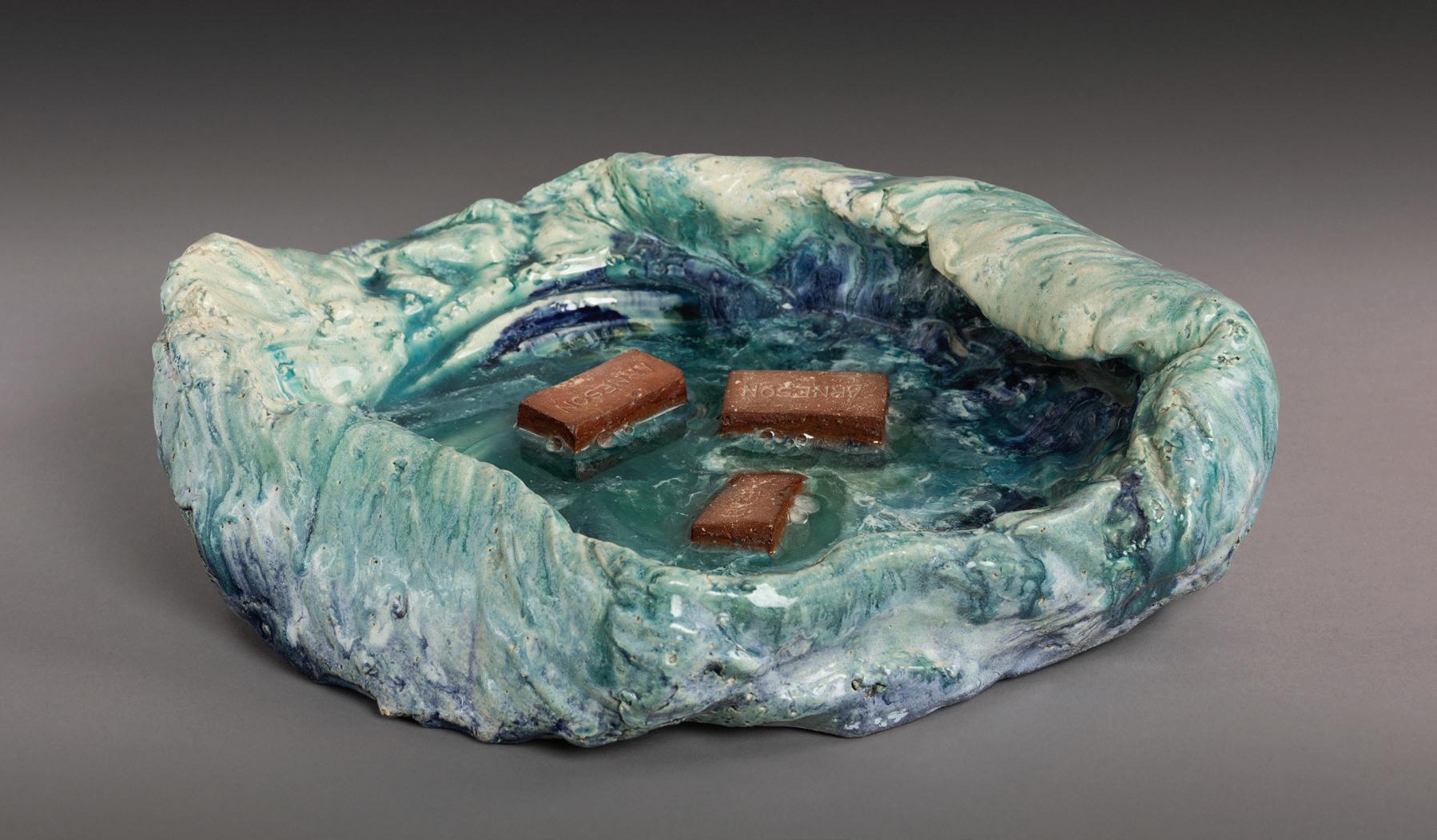
Floating Bricks, 1974
glazed ceramic, 4 x 15 1/2 x 13 1/2 inches opposite: Floating Bricks (detail)
13:
Plate
Brick with Illusion, 1975
glazed ceramic, 4 1/4 x 8 3/4 x 2 3/4 inches opposite: (verso)
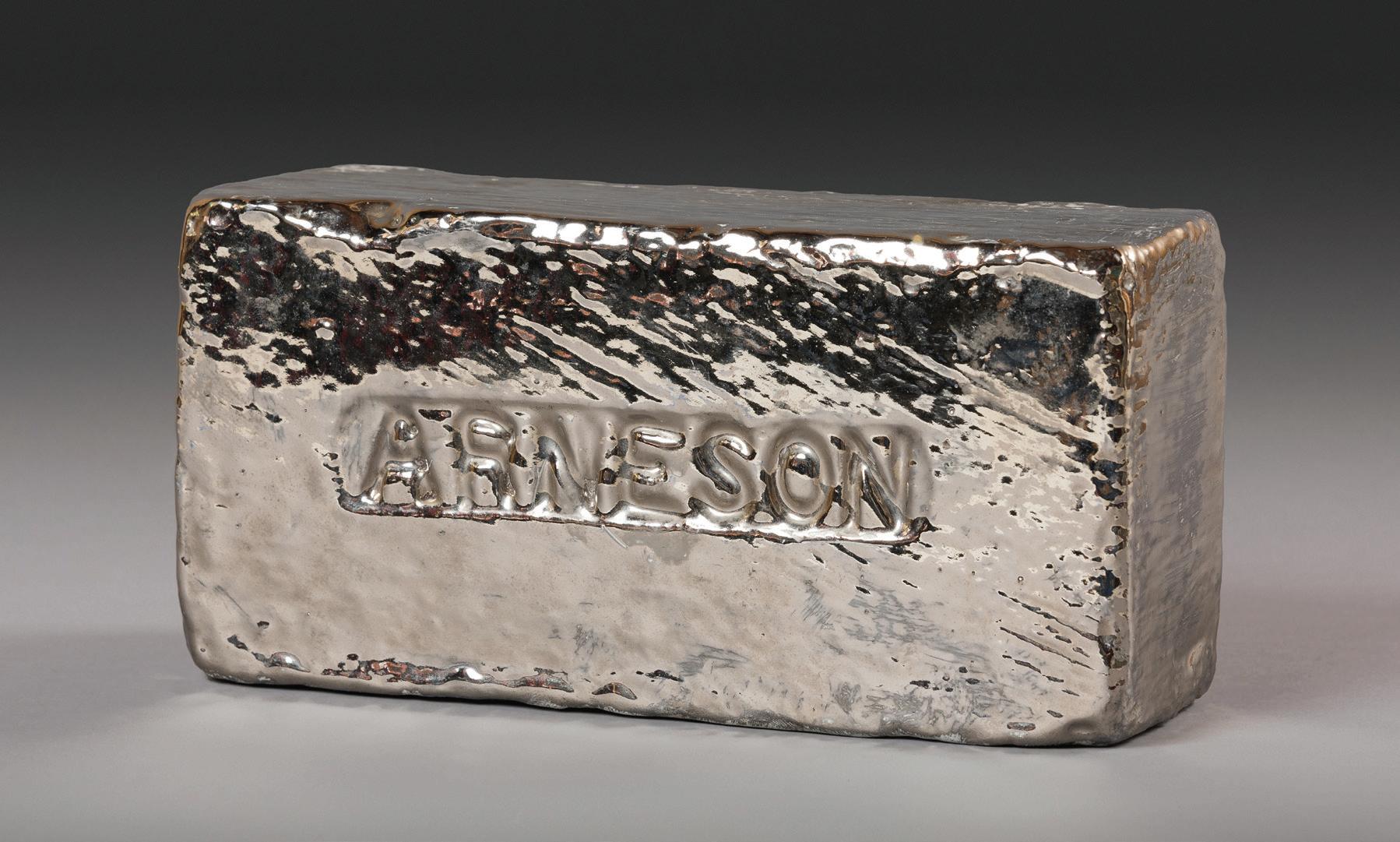
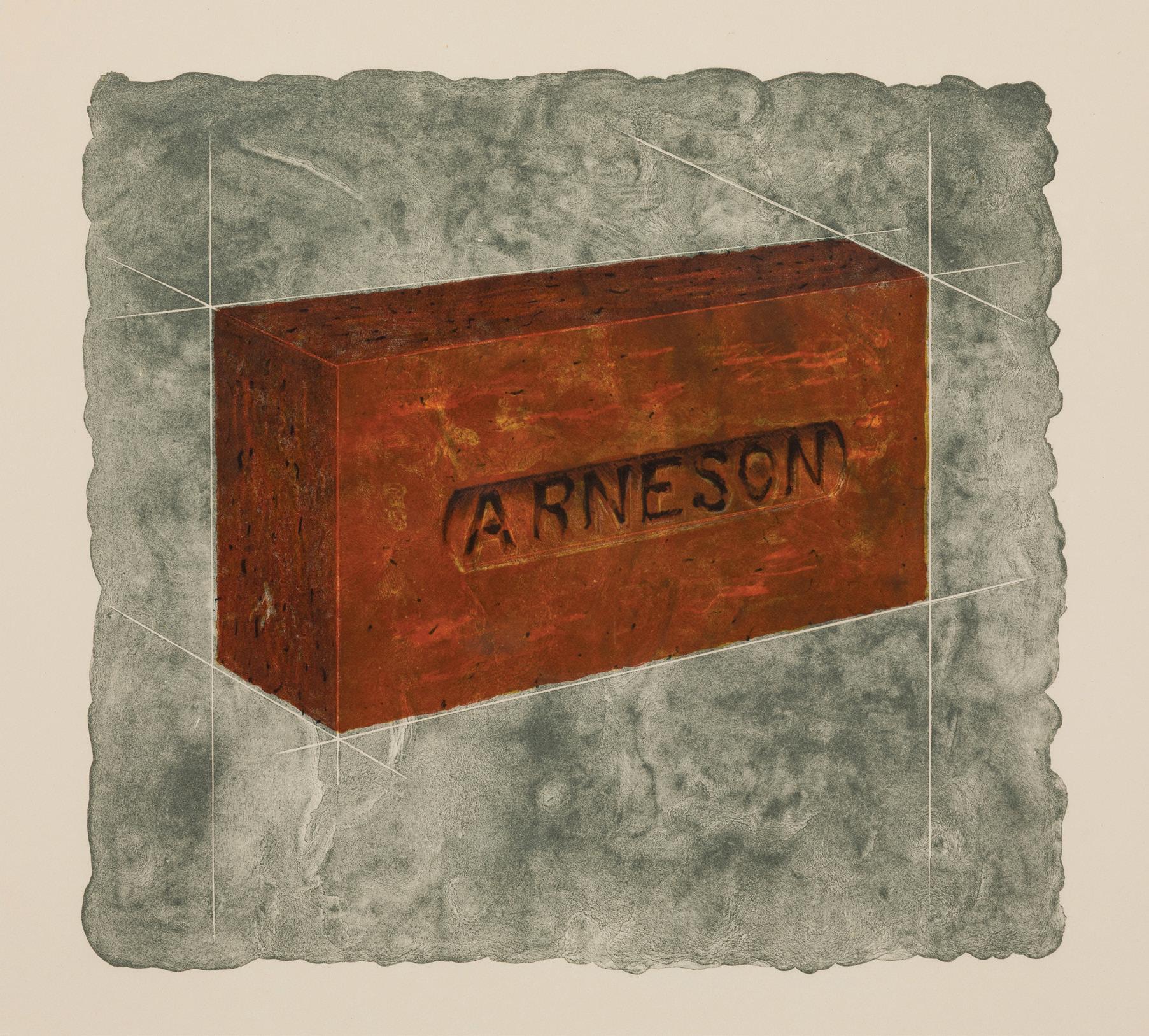
Plate 14:
New Brick/Old Stone, 1975 lithograph on paper, edition A.P. 1, 16 x 16 1/2 inches
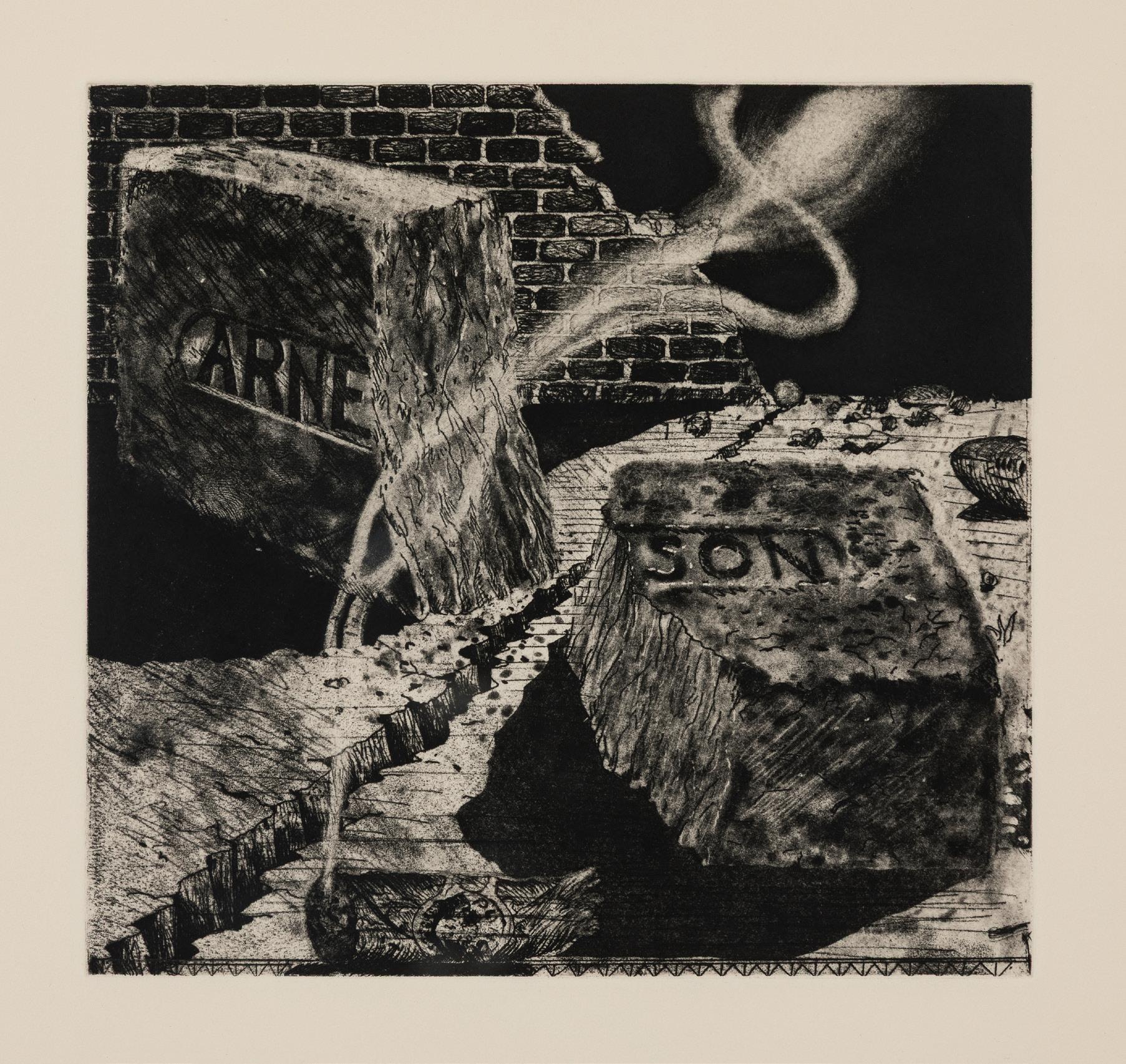
California Brick, 1975 etching on paper, edition A.P. 1, 16 x 16 1/2 inches
Plate 16:
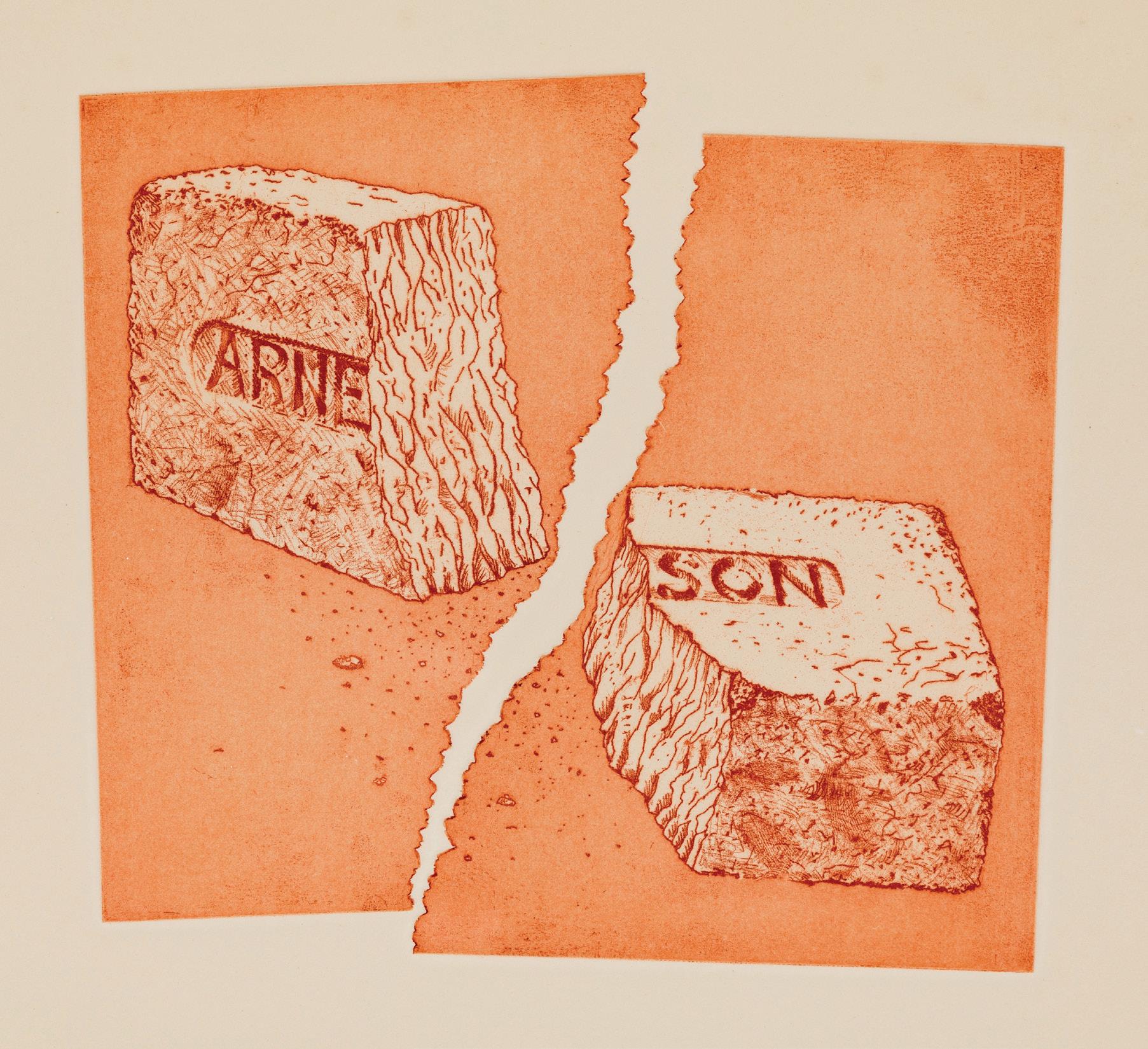
Broken Brick, 1975 etching on paper, A.P. 1, 16 x 16 1/2 inches
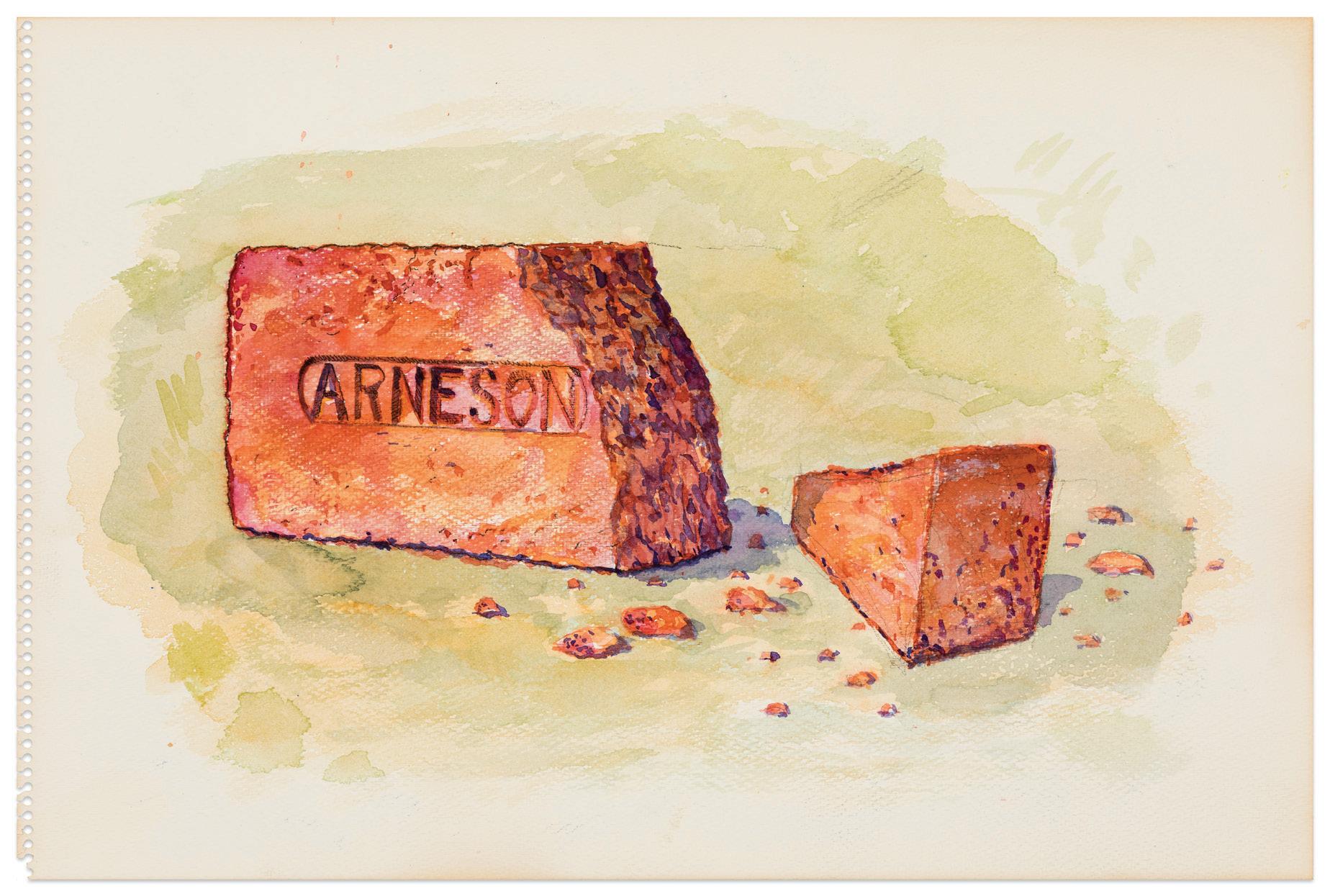
Untitled (Brick), 1976 watercolor on paper, 12 x 17 3/4 inches
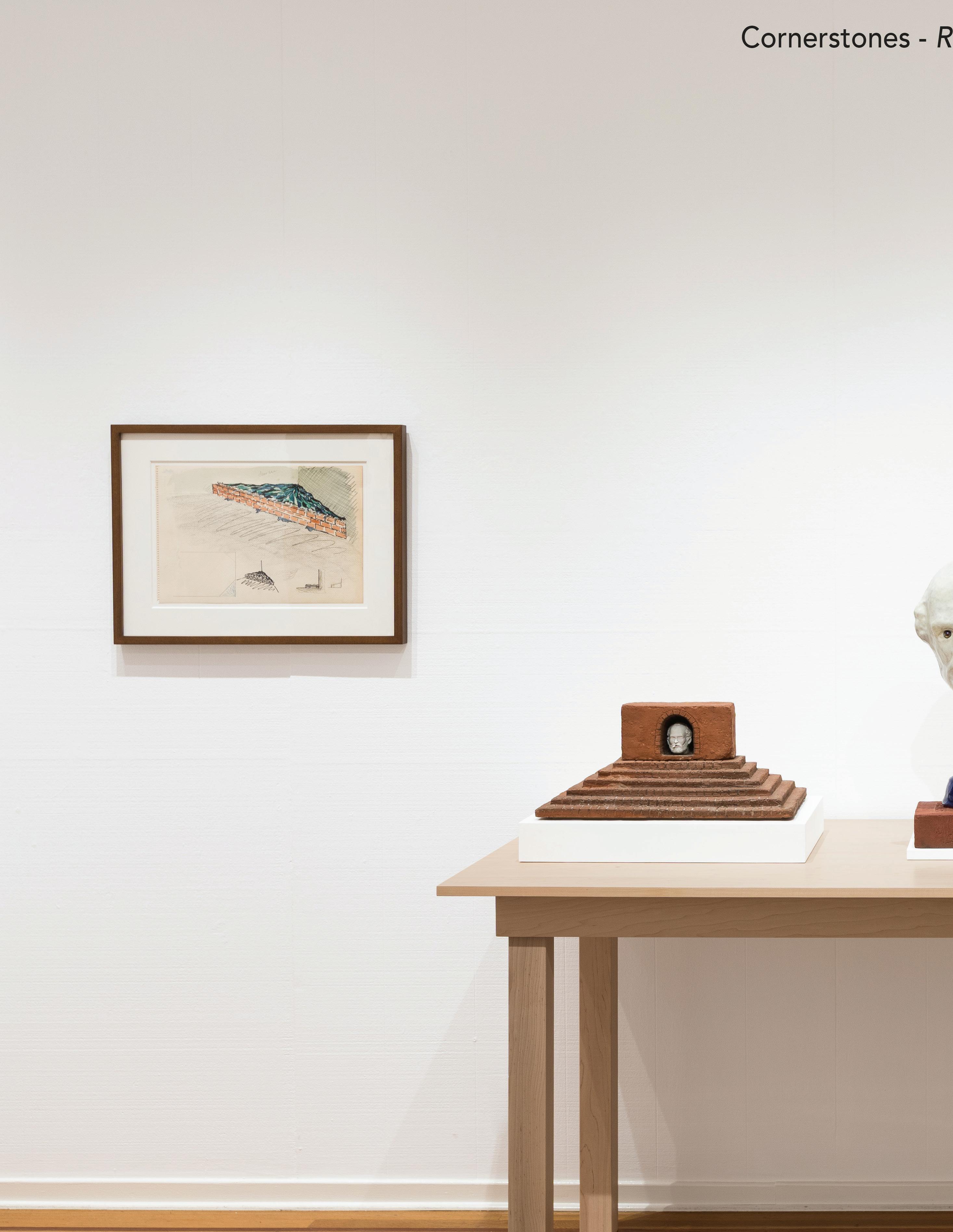
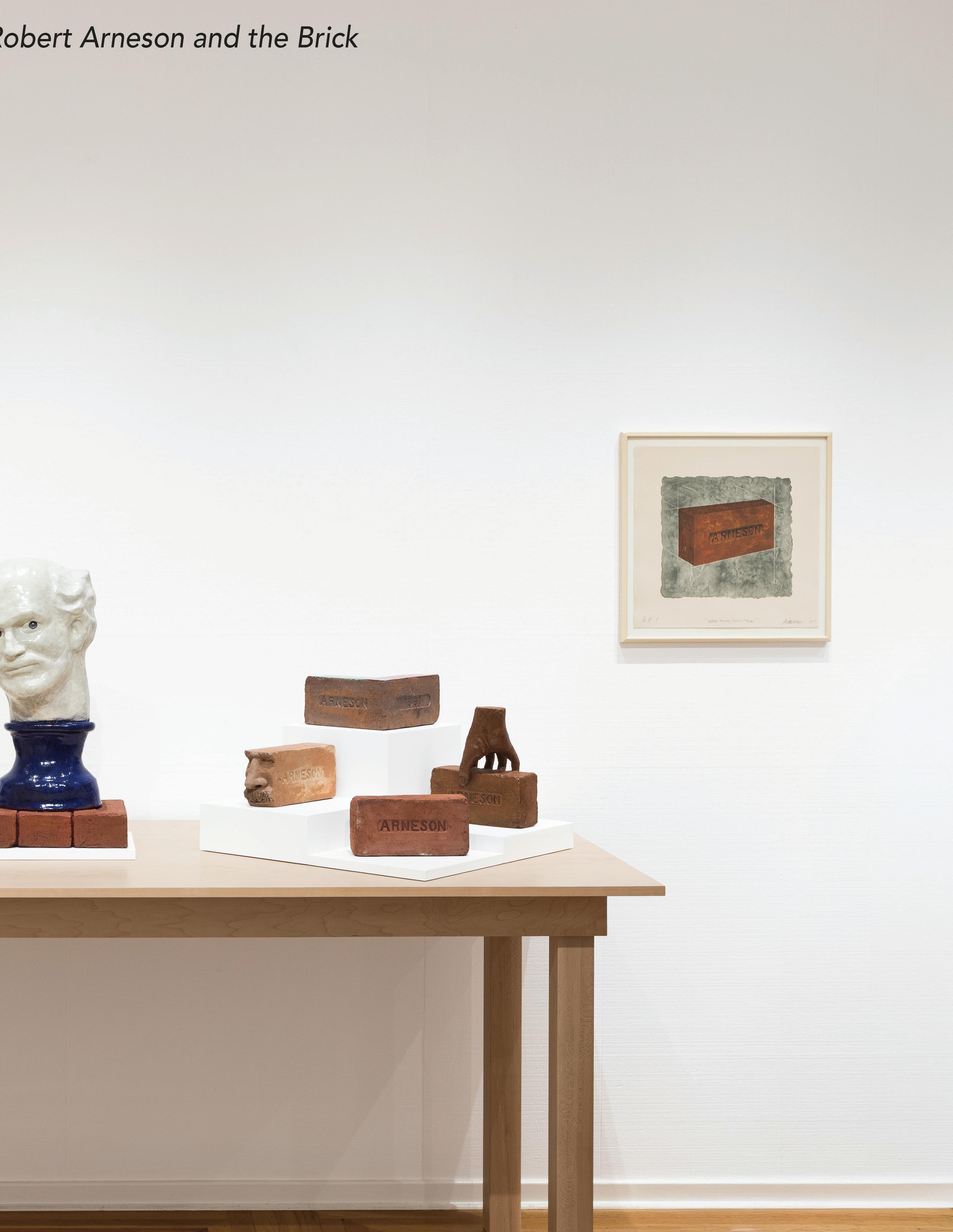
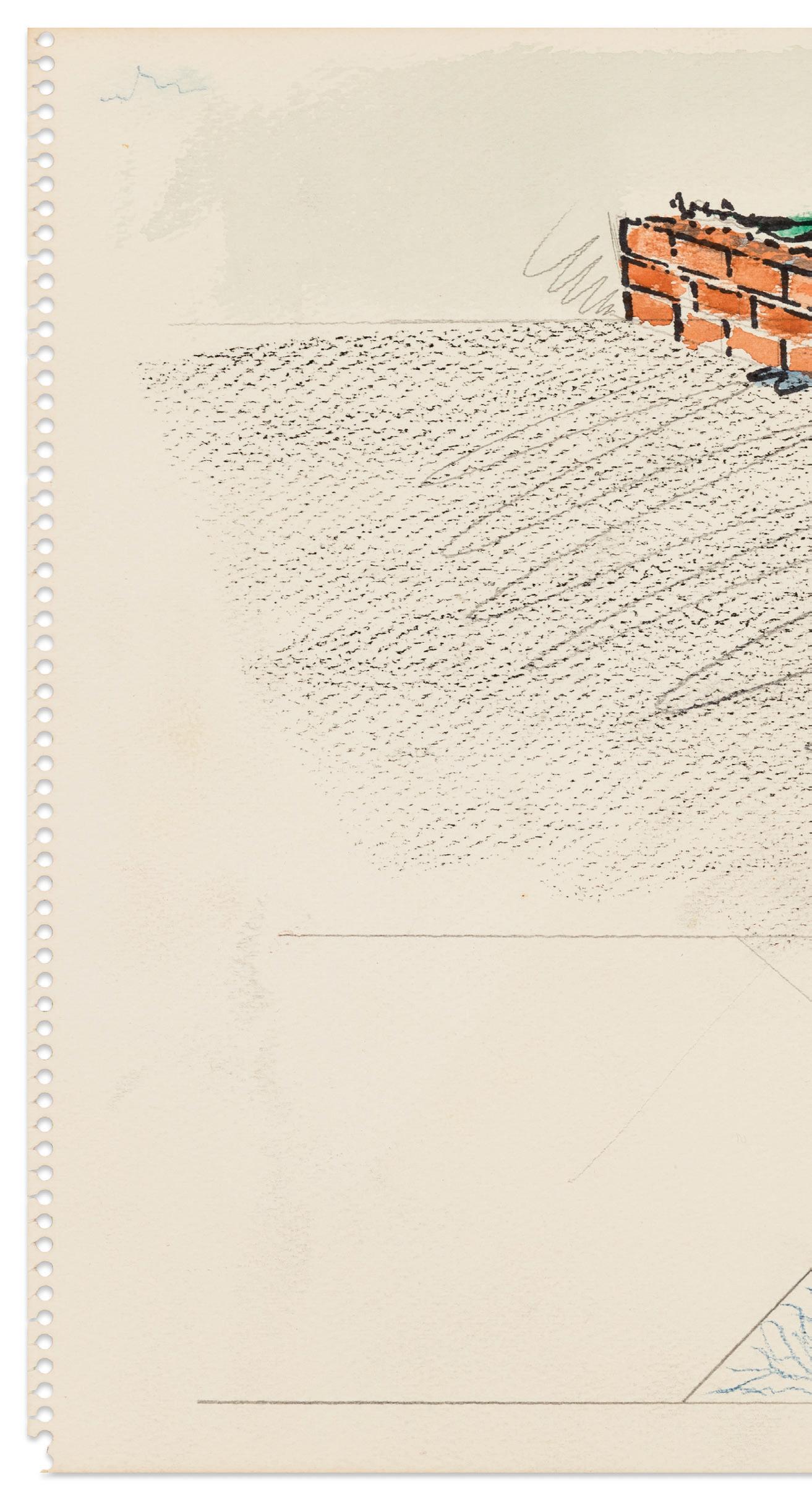
Plate 18:
Untitled, 1976
ink, watercolor, pencil, and conte on paper, 12 x 17 3/4 inches
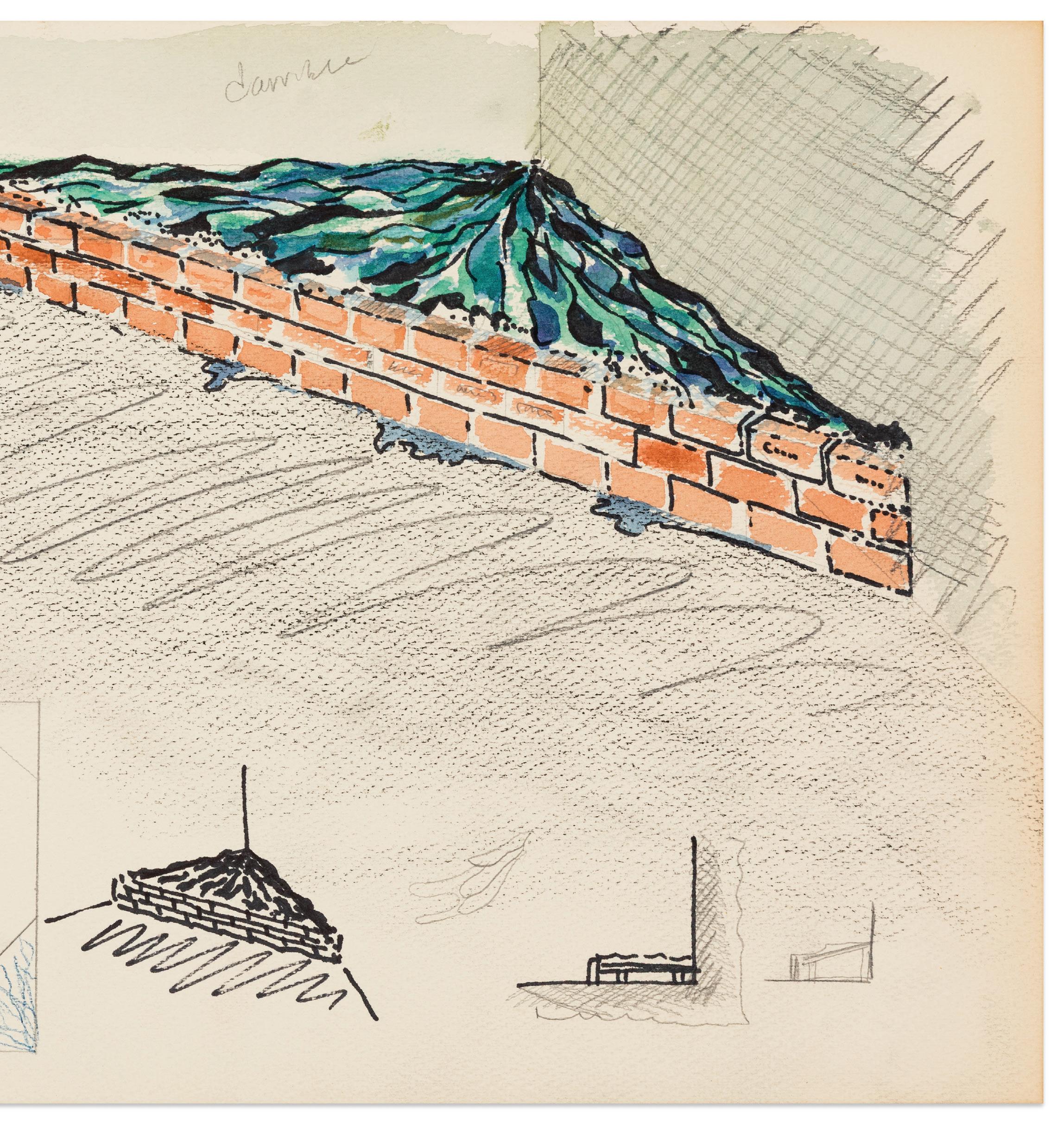
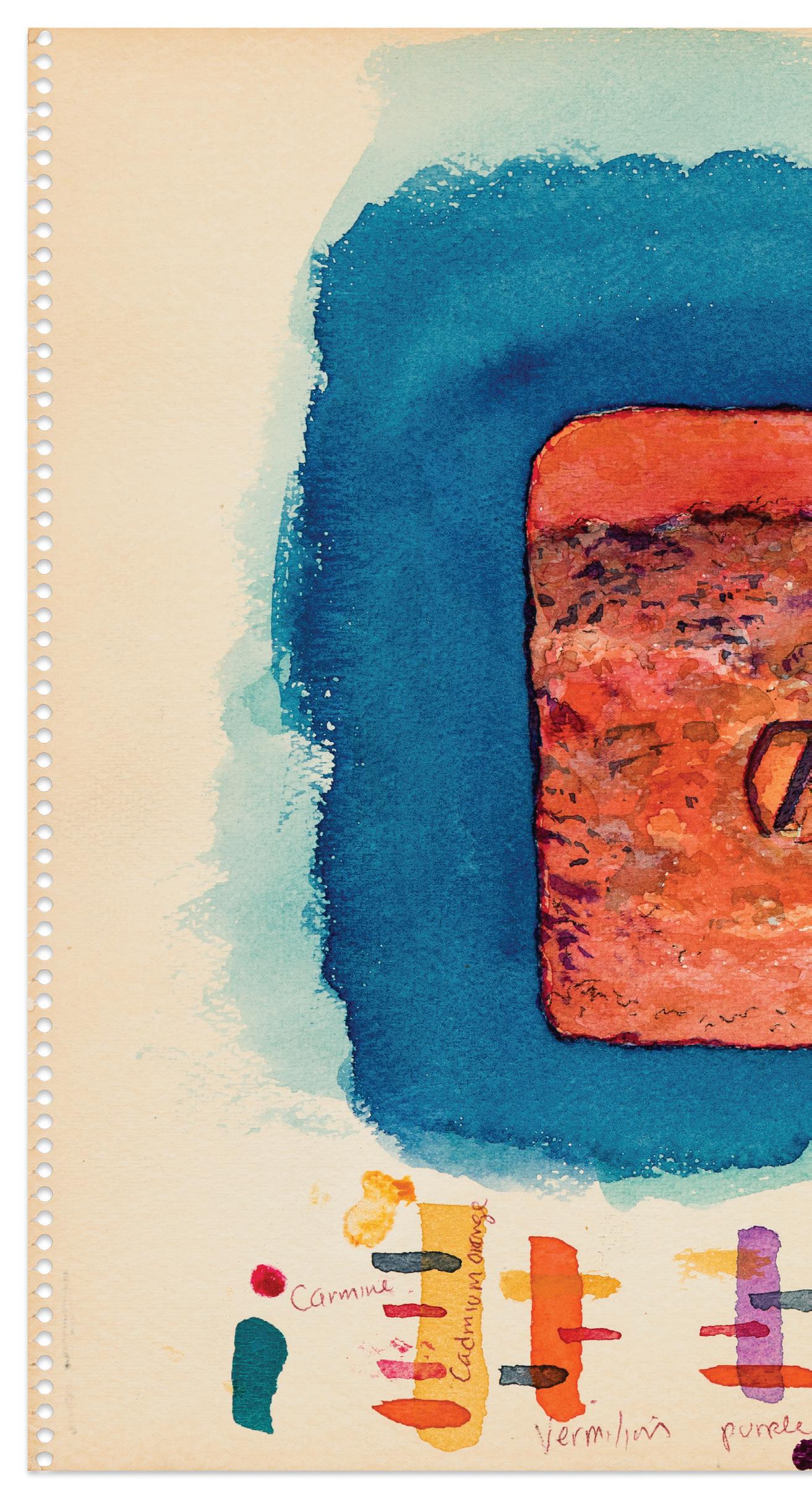
Plate 19:
Untitled (Brick), 1976 watercolor on paper, 12 x 17 3/4 inches
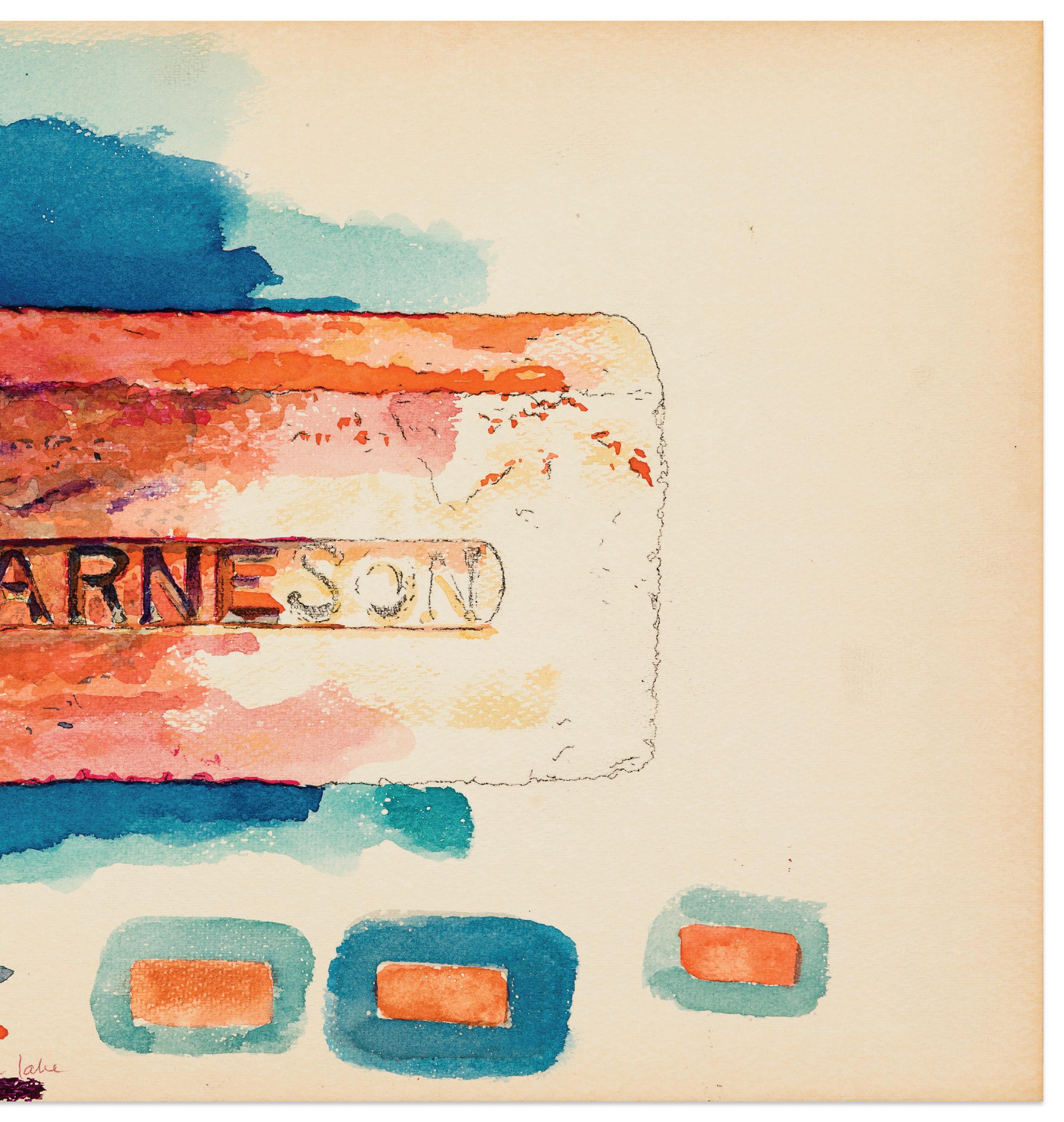
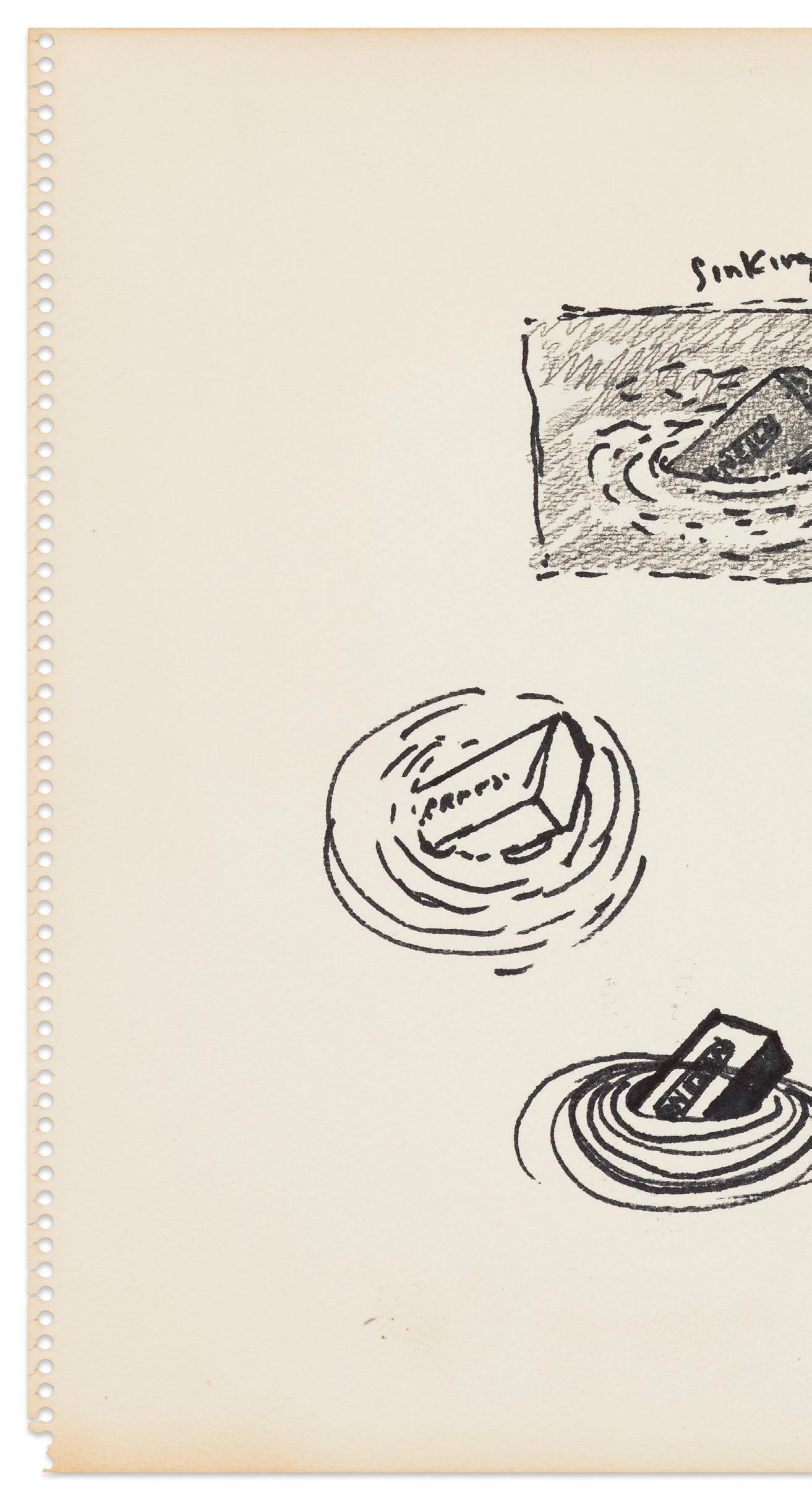
Plate 20:
Sinking Brick/Brick in Space, 1976 ink on paper, 12 x 17 3/4 inches
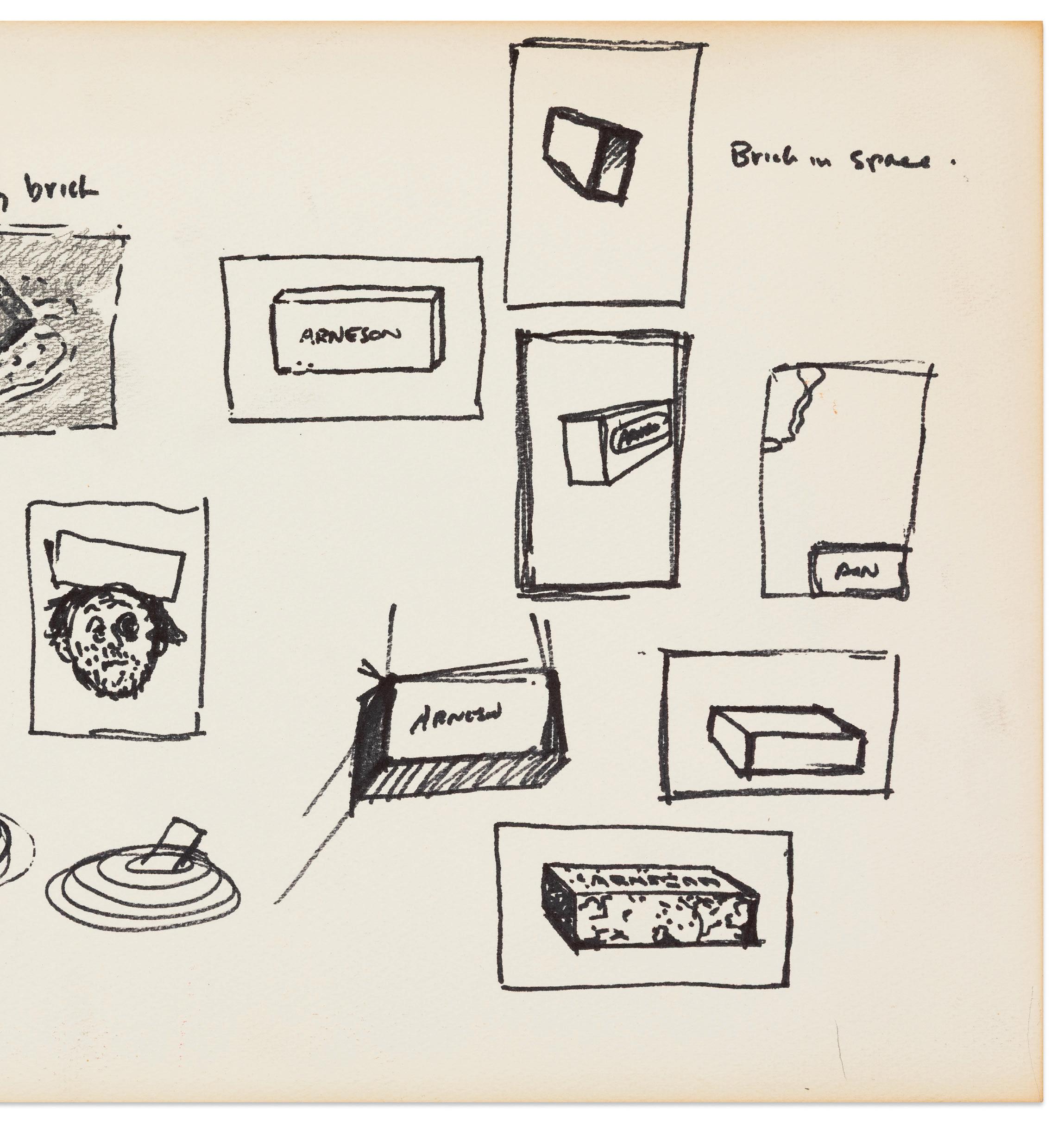
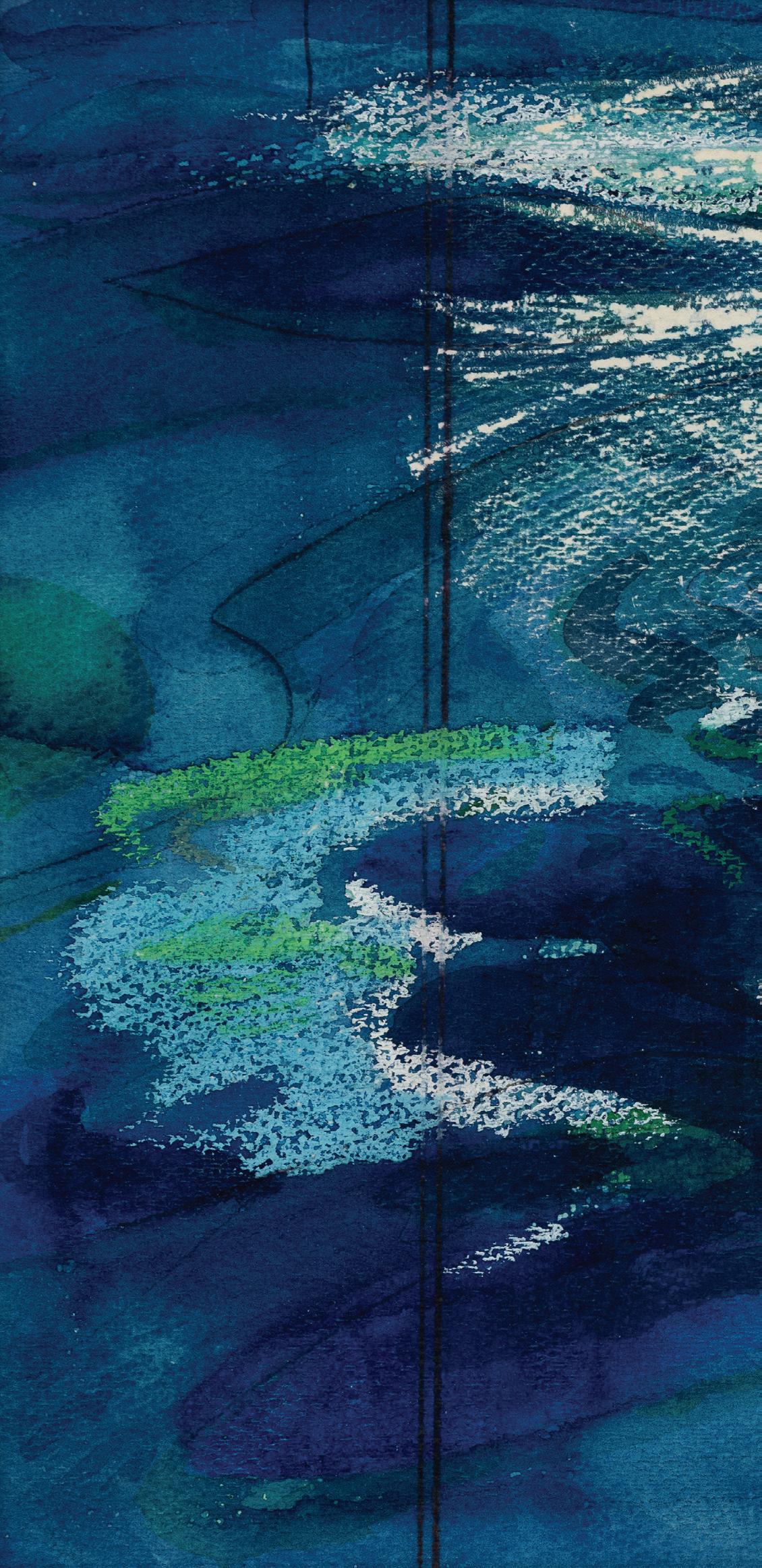
Plate 21:
Untitled (Sinking Brick), 1976
watercolor on paper, 12 x 17 3/4 inches
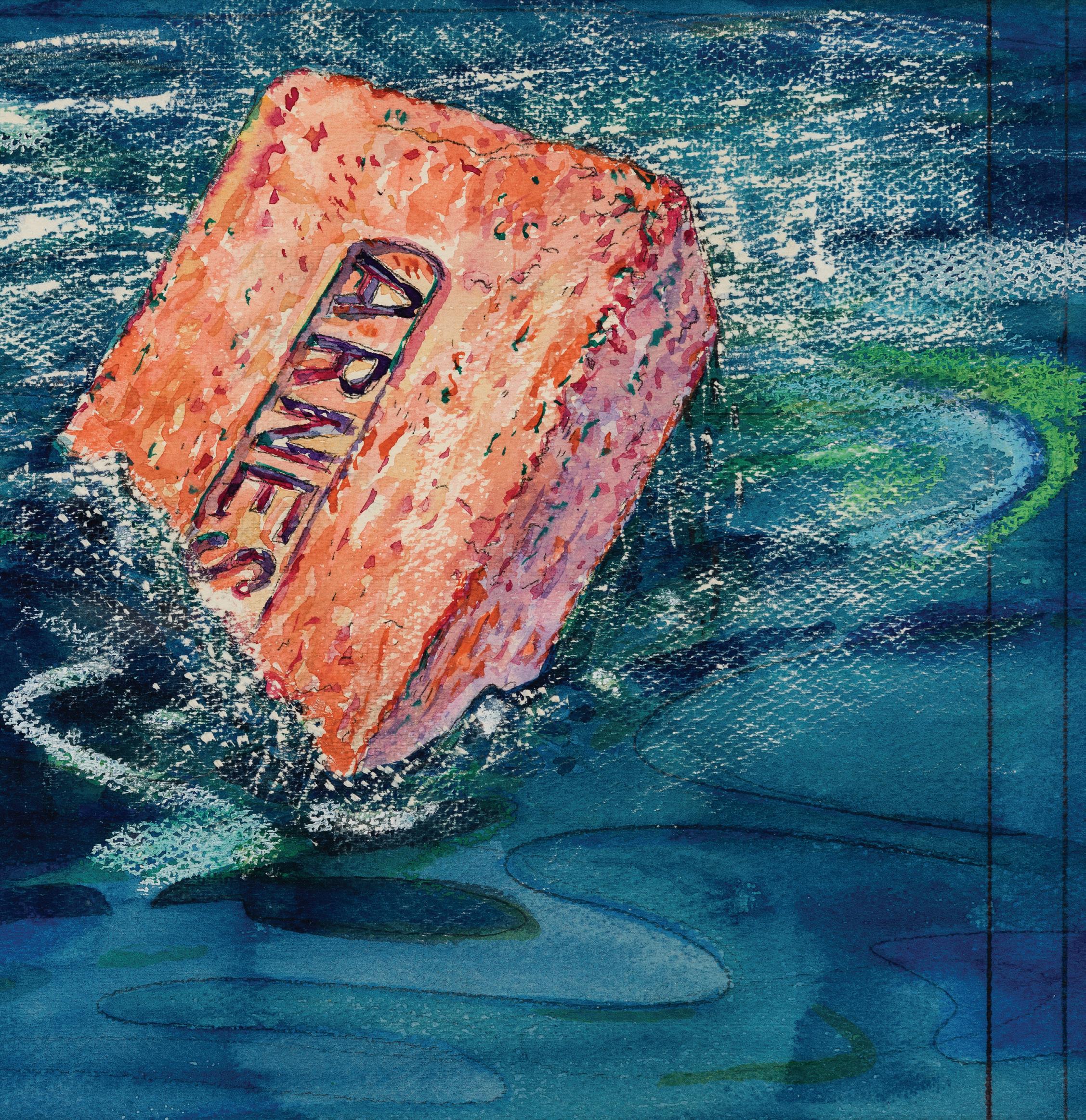
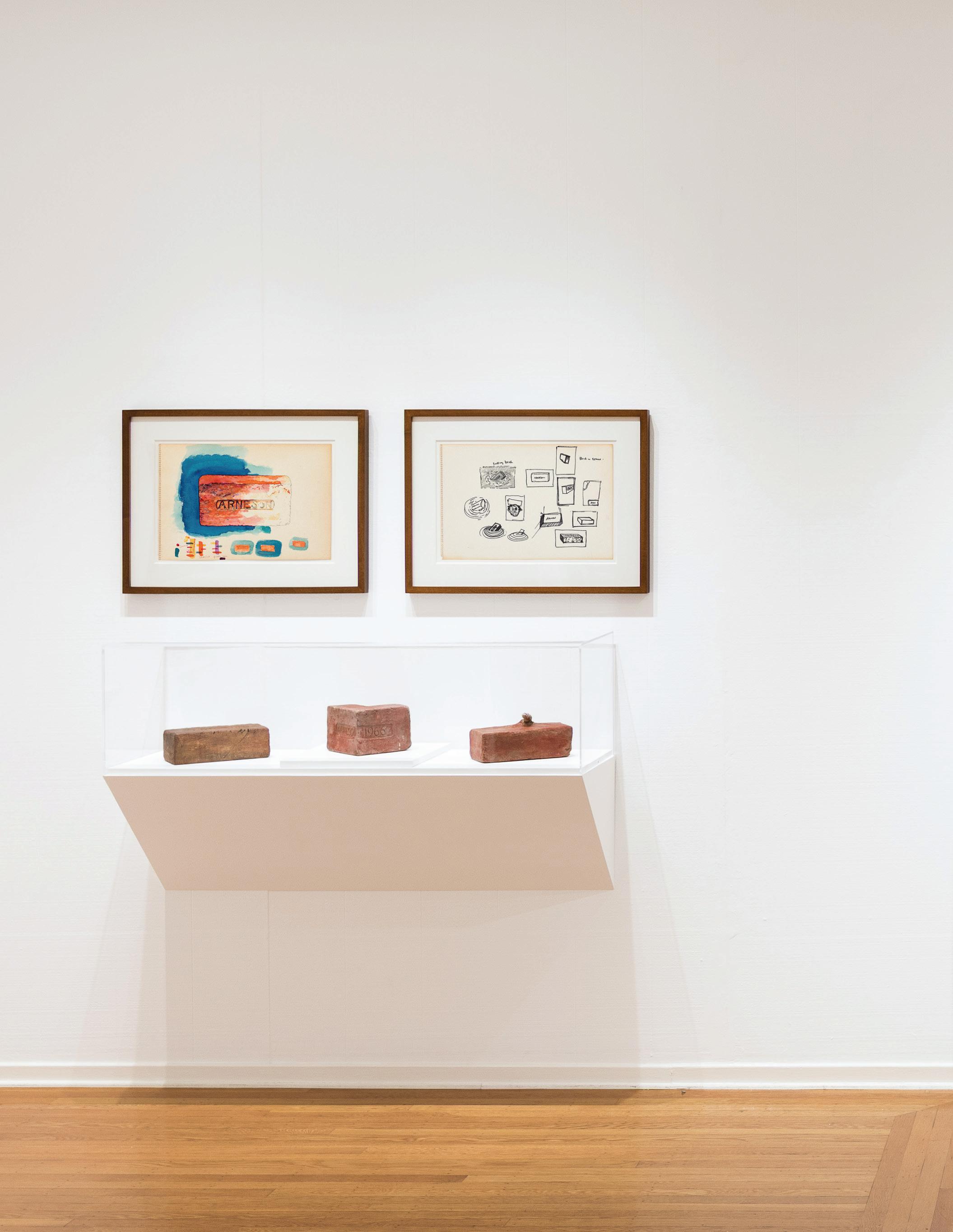
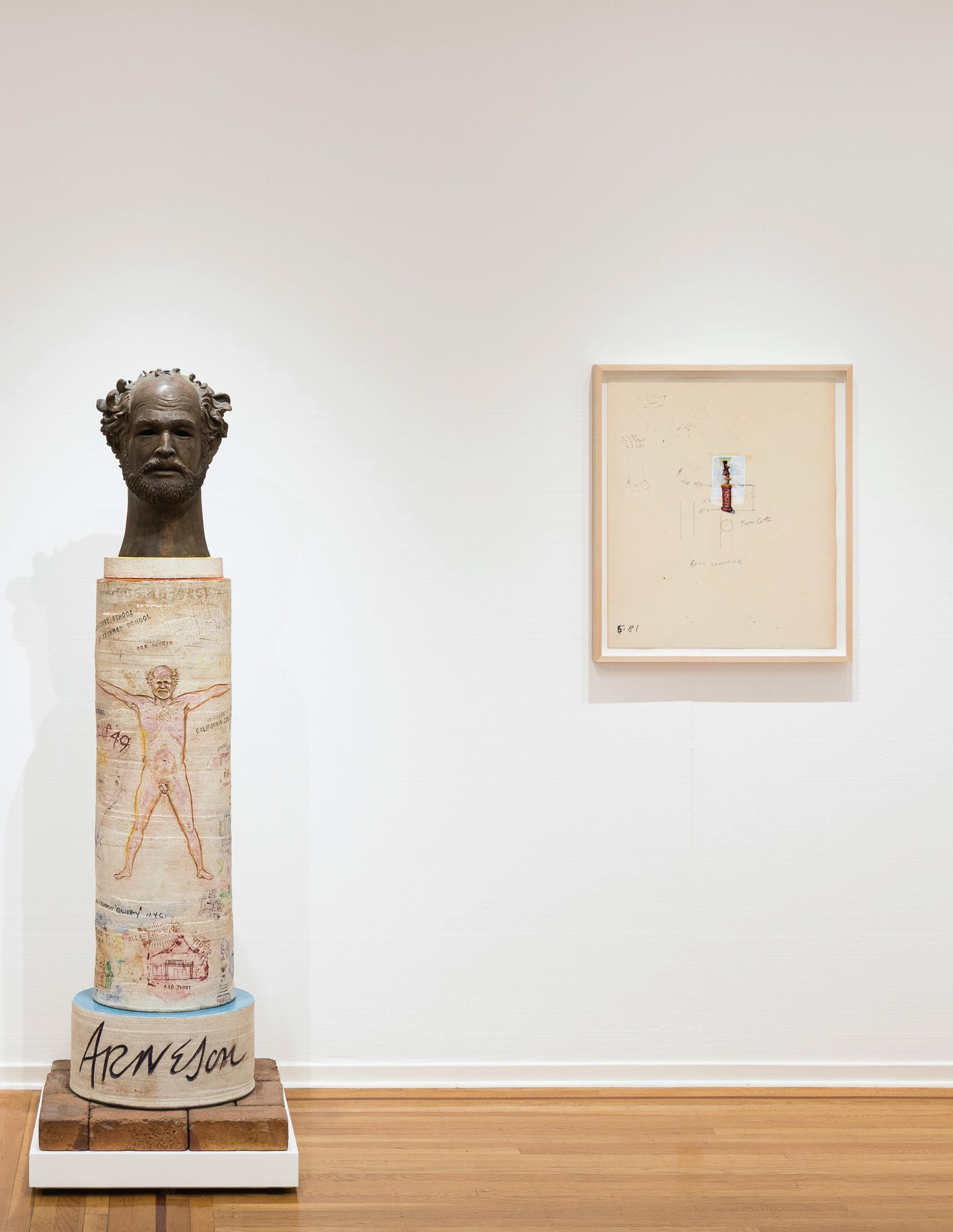
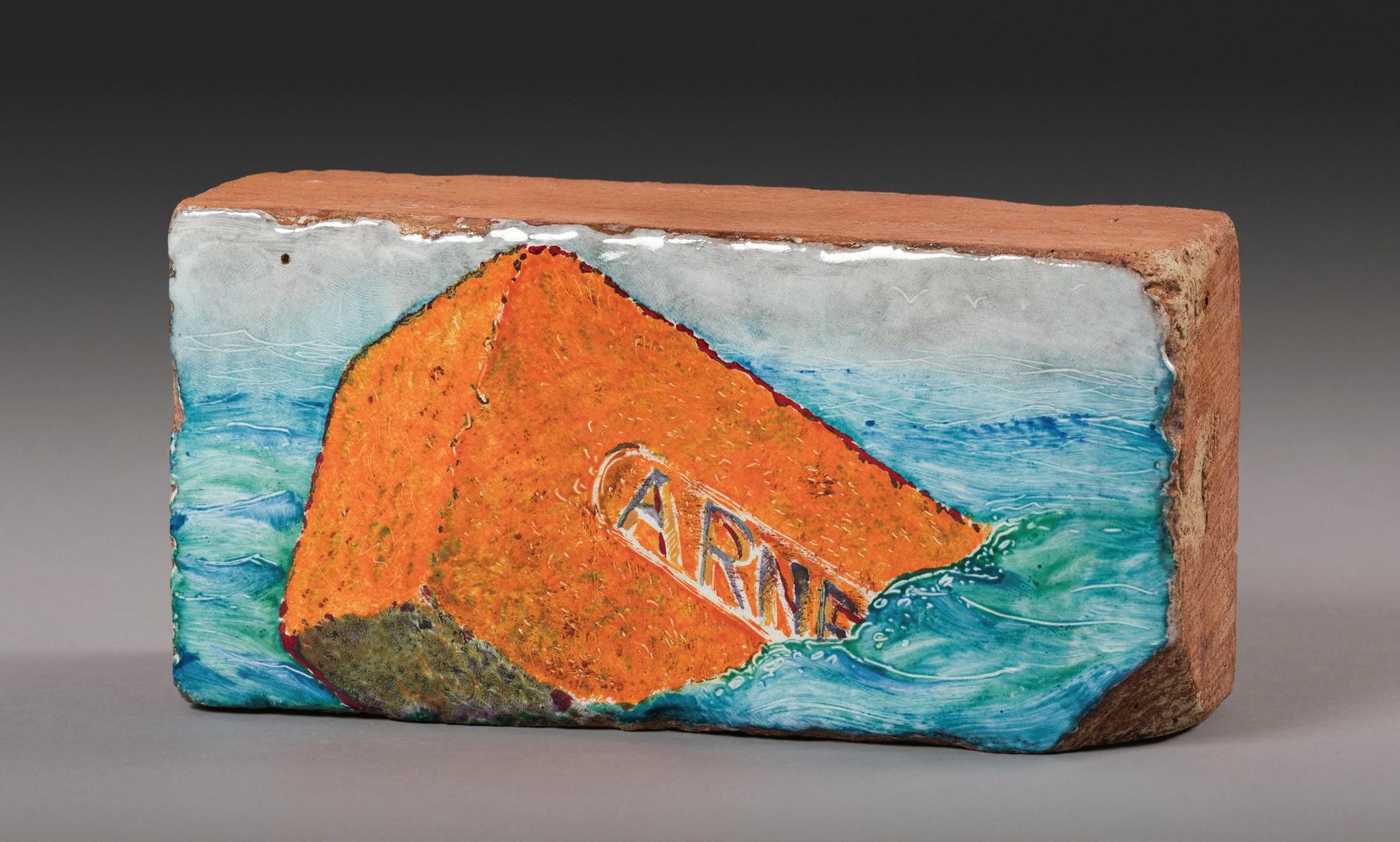
Plate 22:
Painted Brick, 1976
china painted ceramic, 4 1/4 x 8 1/2 x 2 3/4 inches opposite: (verso)
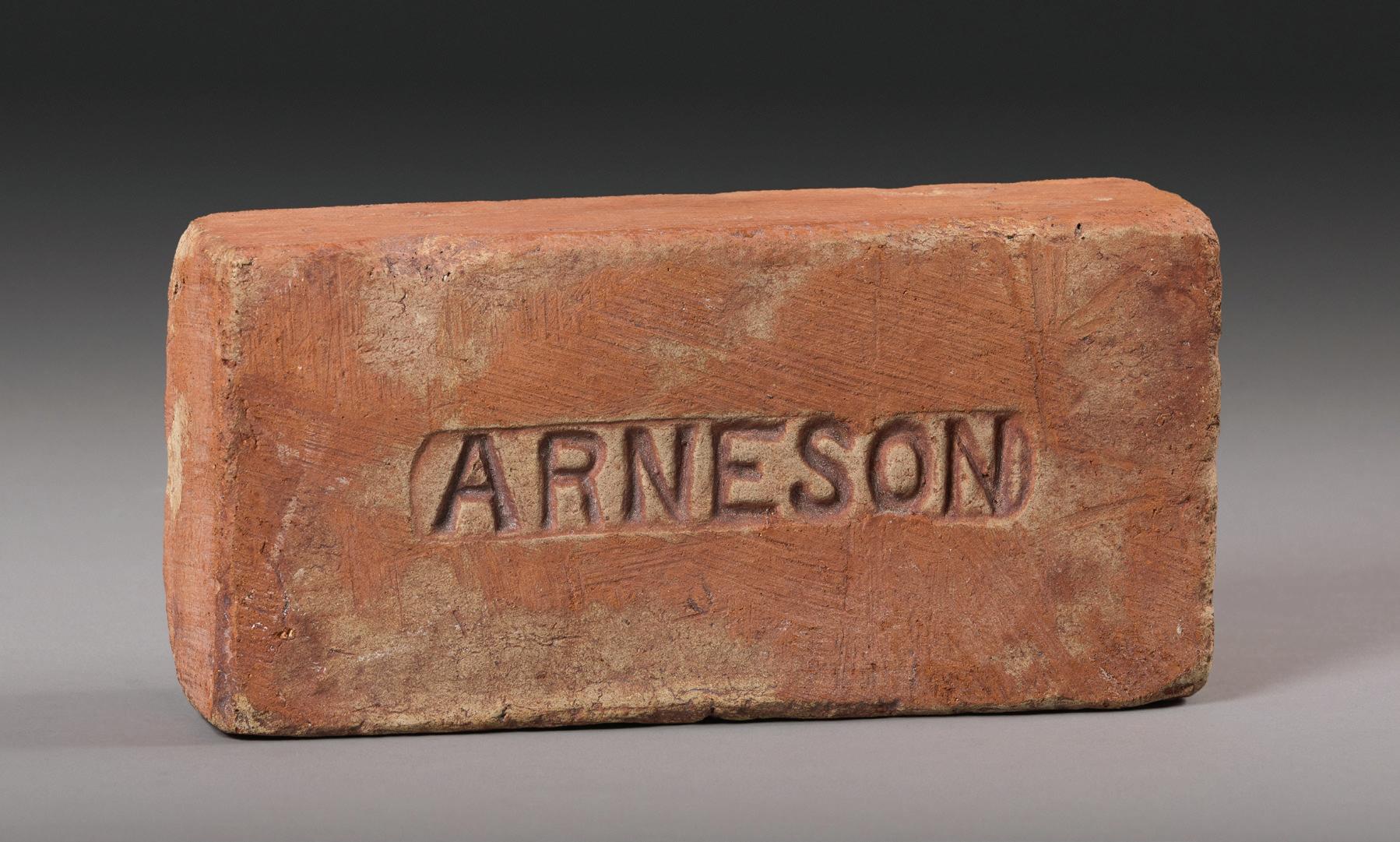
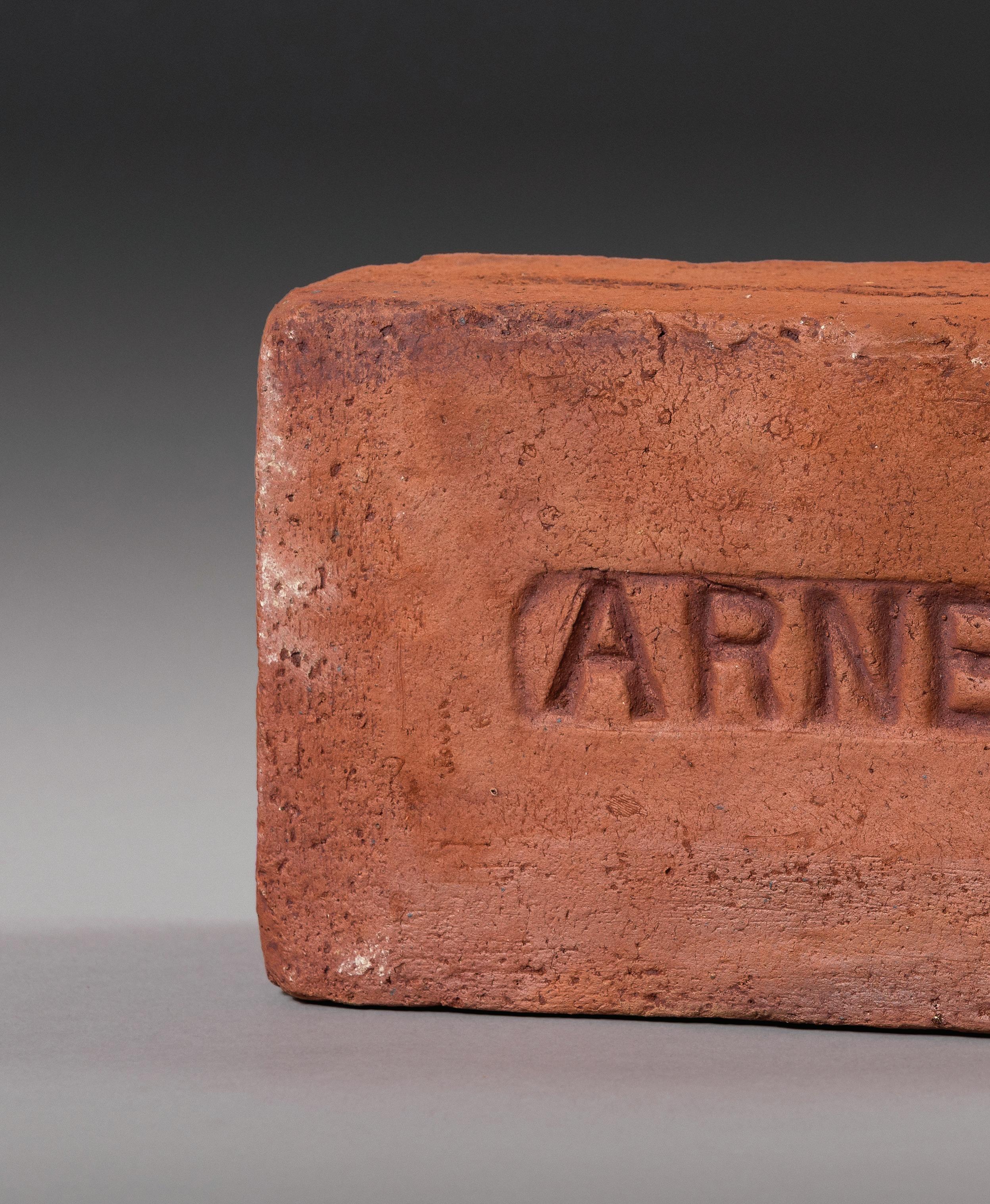
Plate 23:
Brick, 1976
terracotta, edition 23 of 50, 4 1/4 x 8 3/4 x 2 3/4 inches
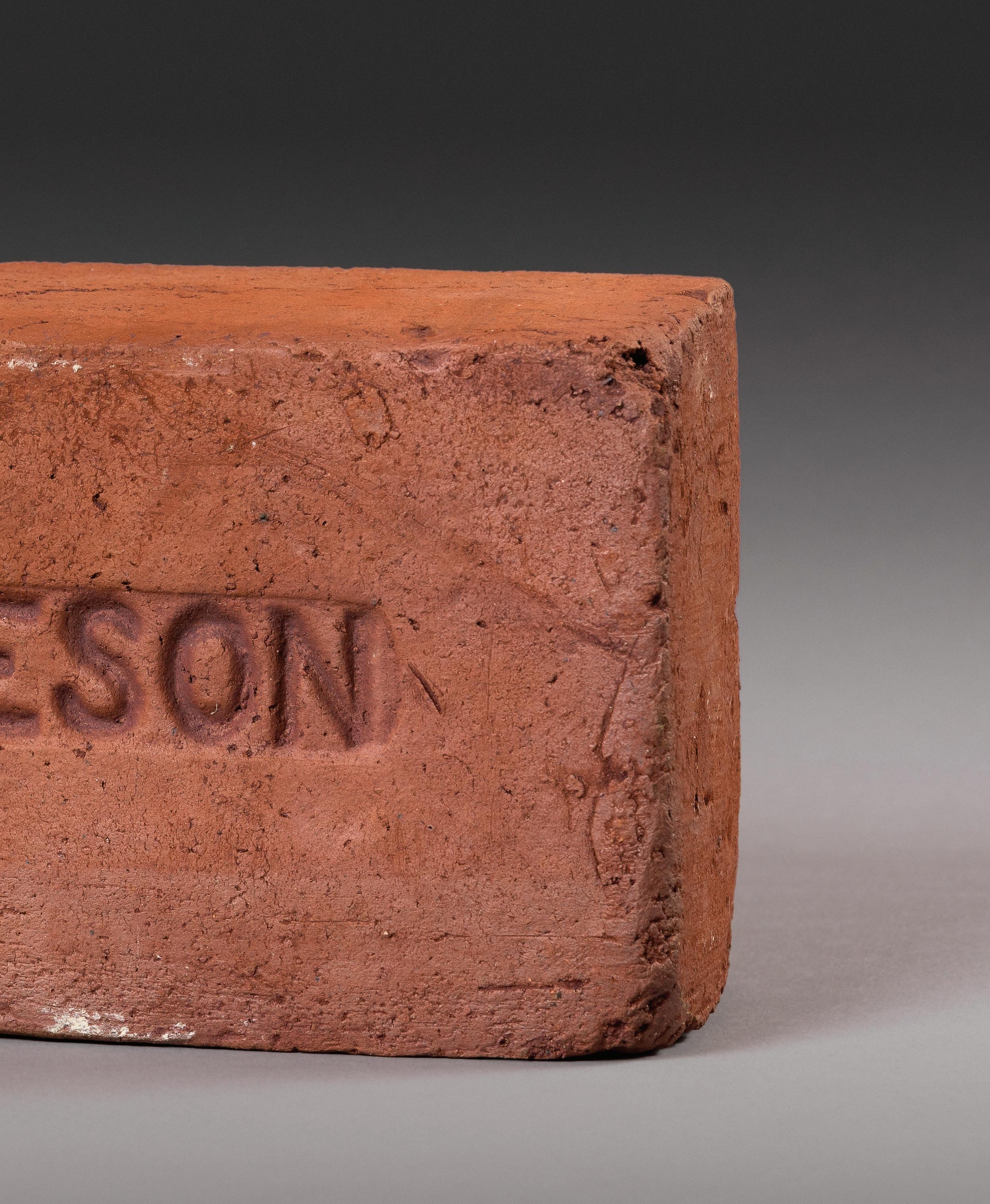
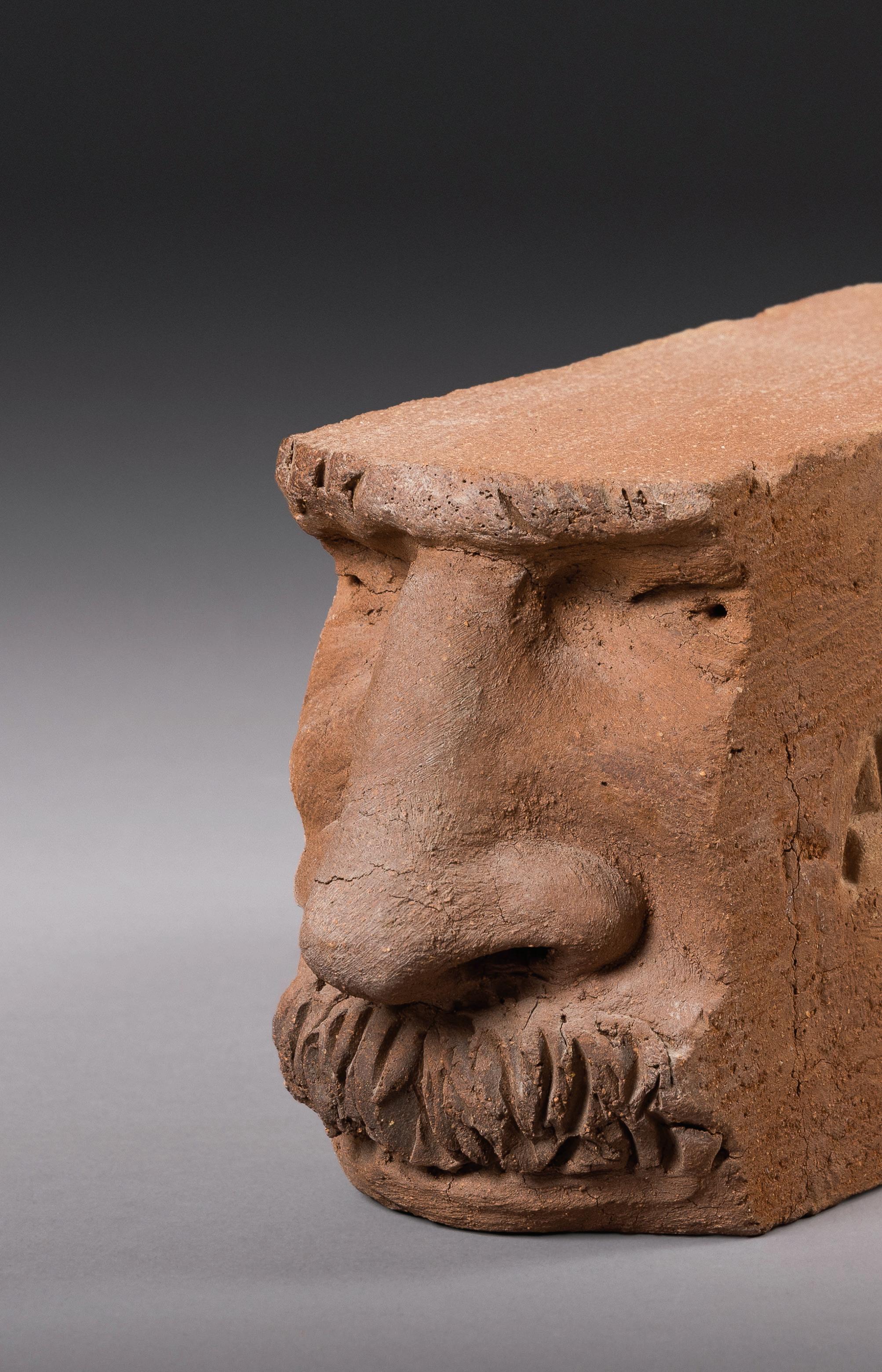
Plate 24:
Face Brick, 1981
ceramic, 4 1/4 x 9 1/4 x 2 3/4 inches
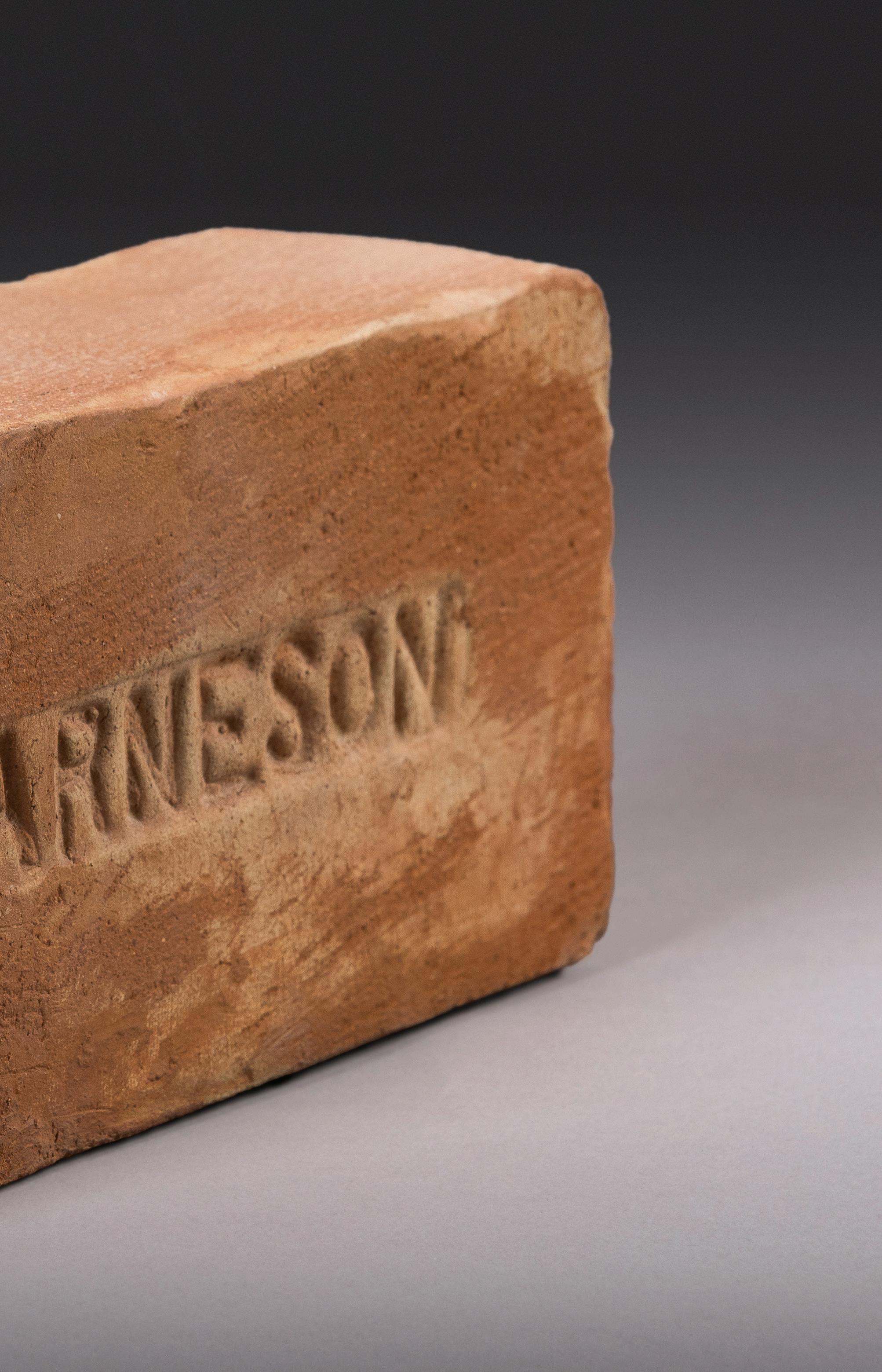
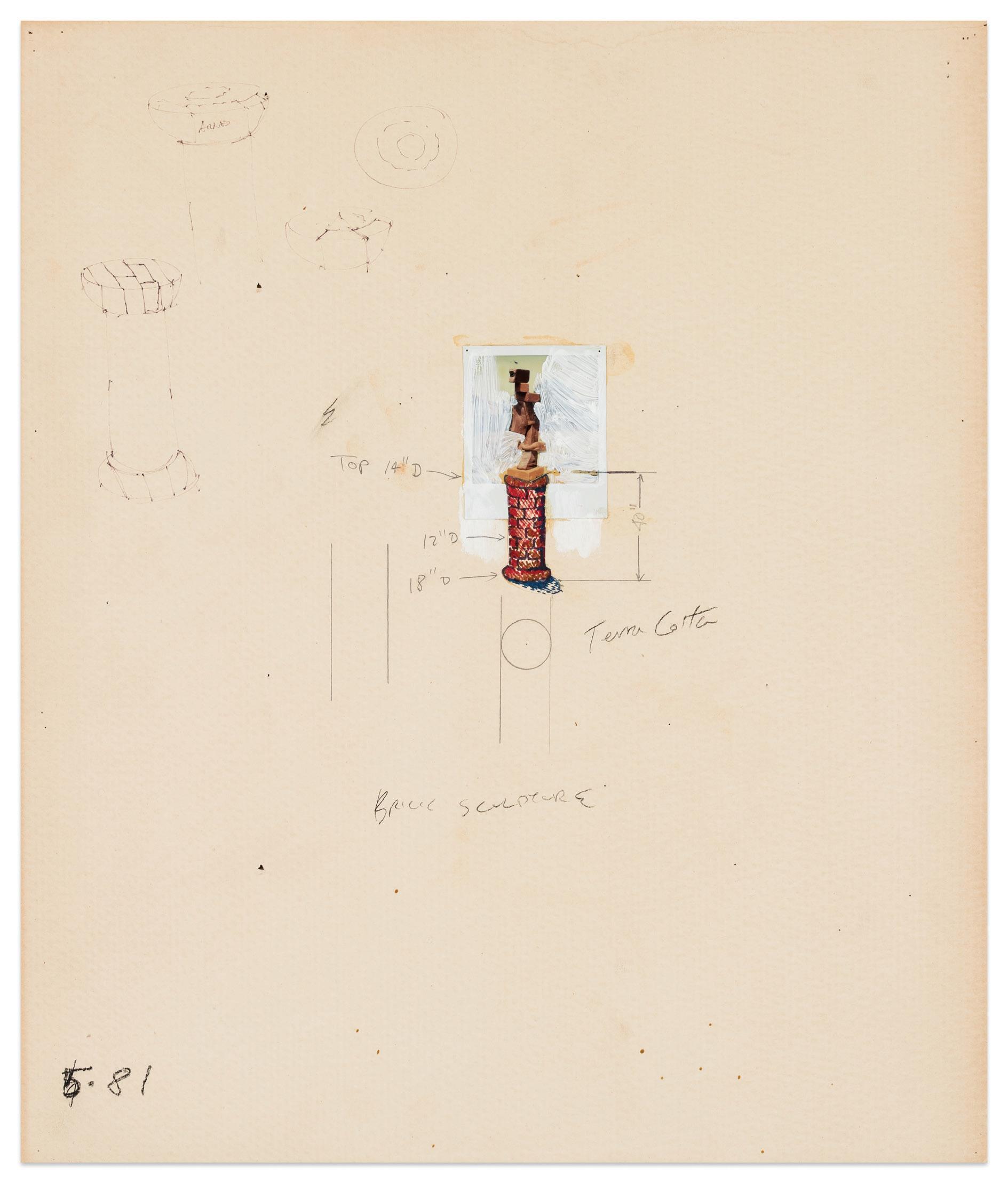
Plate 25:
Study for Brick Sculpture, 1981 mixed media and collage on paper, 28 x 23 3/4 inches opposite: Study for Brick Sculpture (detail)
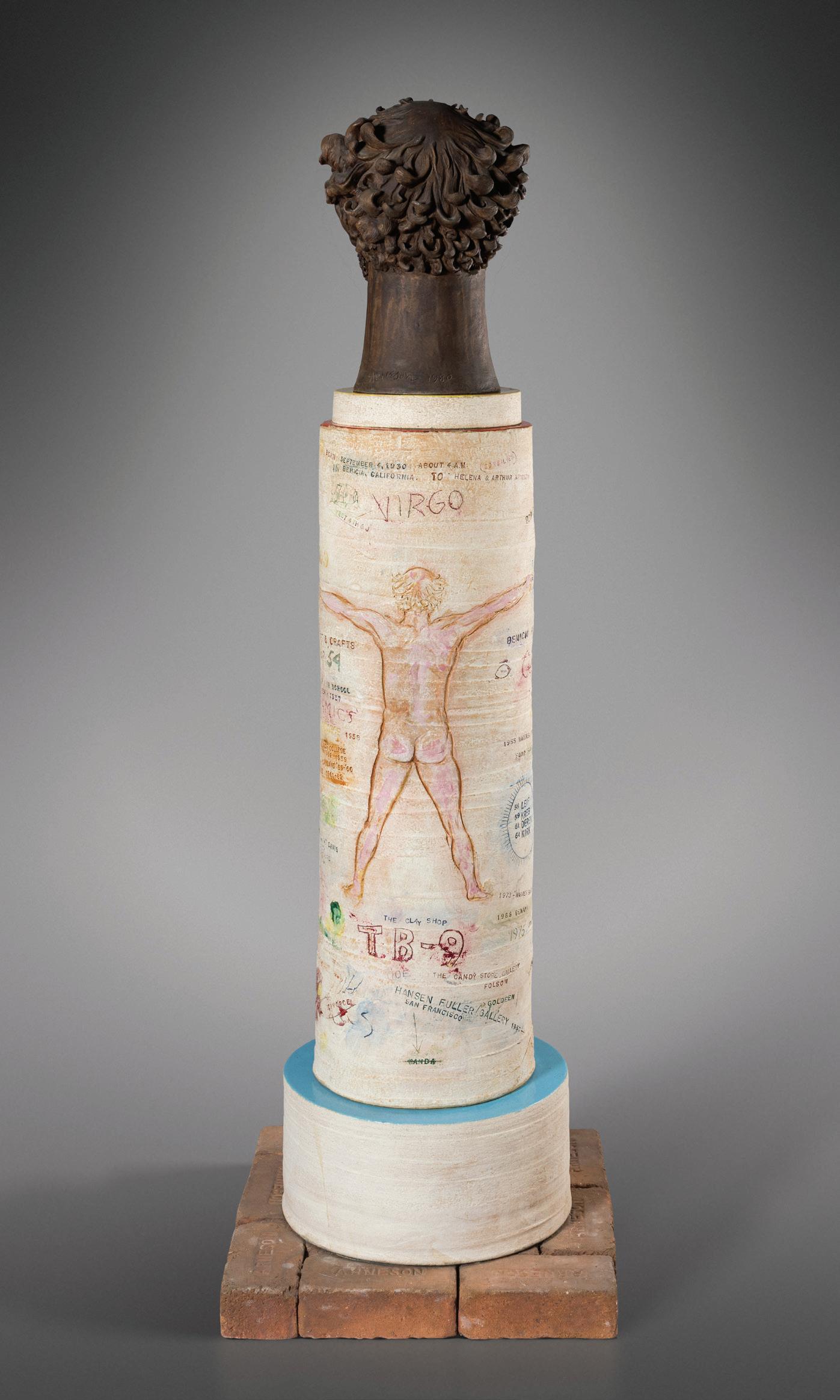
Bio Bob, 1982
bronze, A.P. 1, with unique ceramic pedastal, 70 3/4 x 22 1/2 x 22 1/2 inches above: (verso)
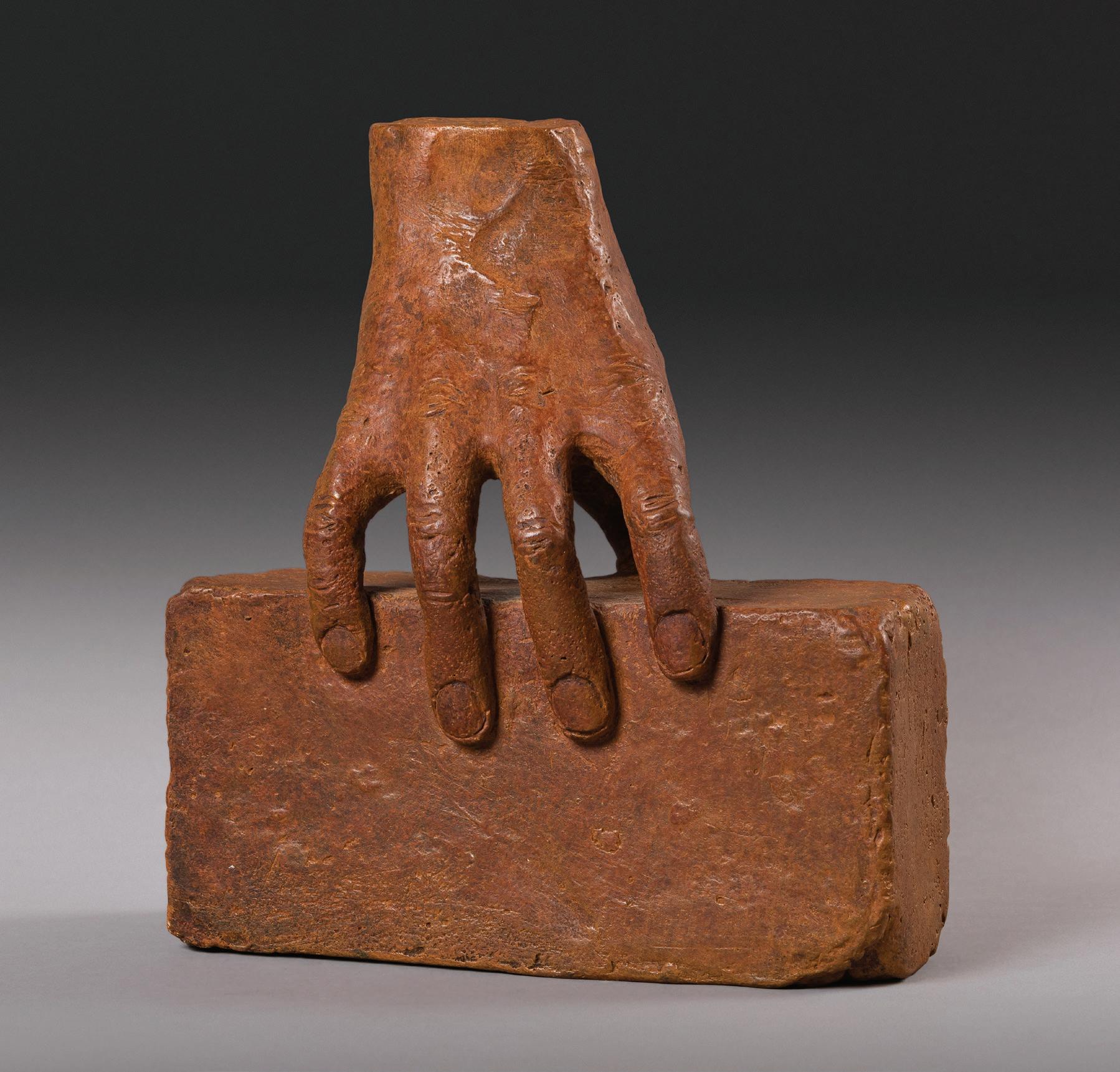
Plate 27:
Hand Brick, 1991
bronze, edition 2 of 3 + 1 A.P., 9 1/2 x 8 1/2 x 4 inches above: (verso)
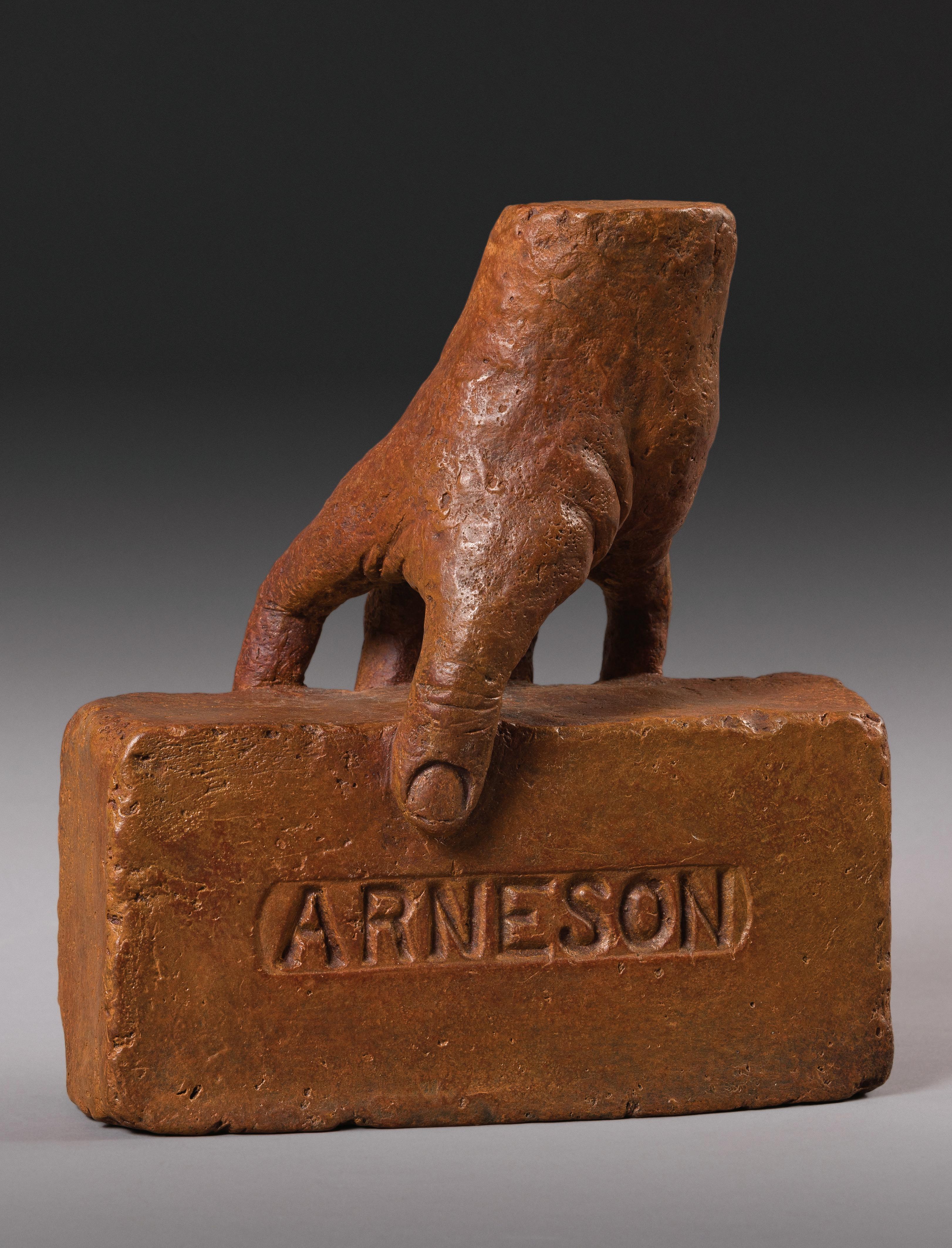
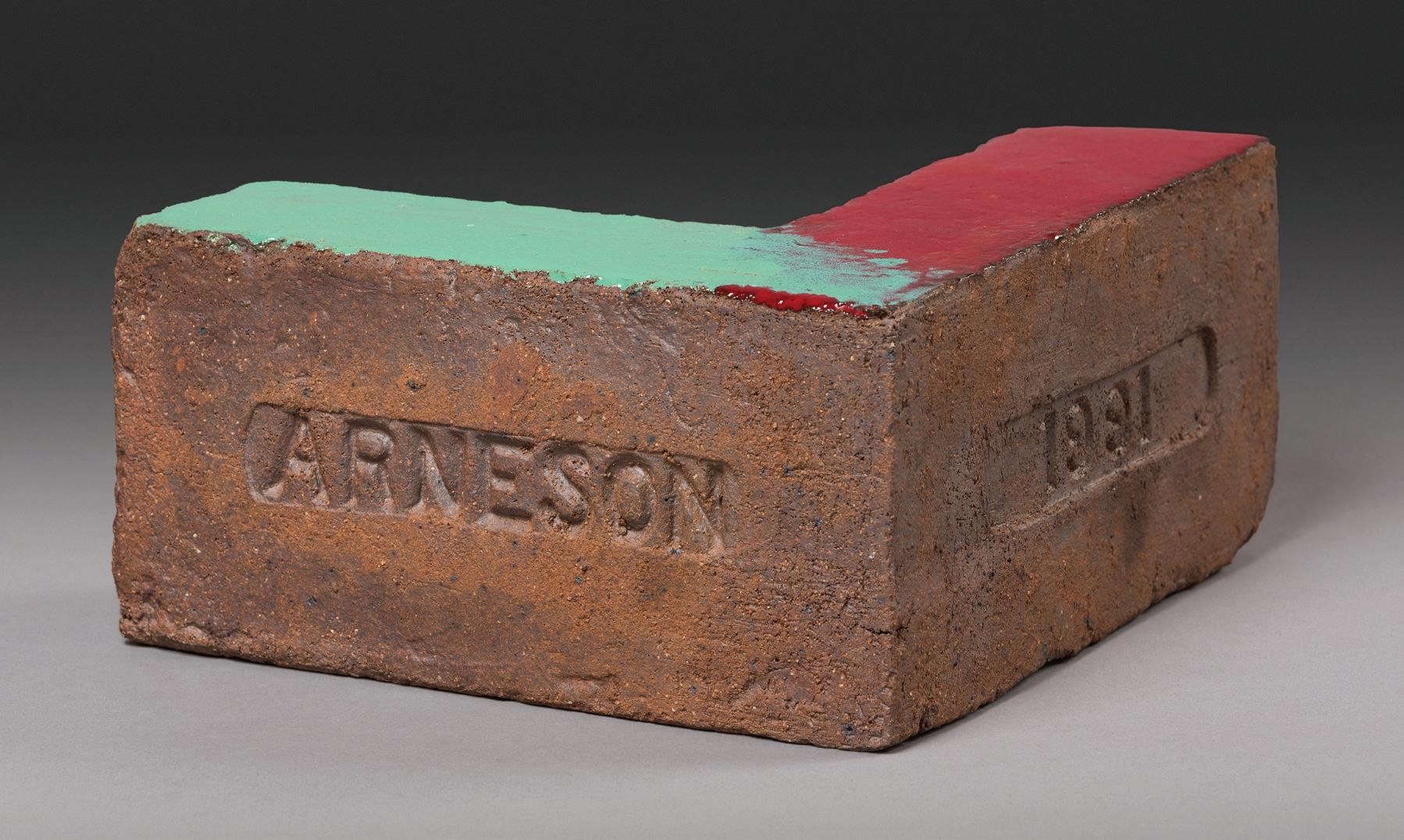
Plate 28:
Corner Stone, 1991
glazed ceramic, 4 1/2 x 11 1/4 x 8 inches opposite: (verso)
Plate
Blue Eyes, 1991 bronze and marbles, edition 1 of 3 + 1 A.P., 23 1/2 x 12 3/4 x 8 1/2 inches above: (verso)
Legacy
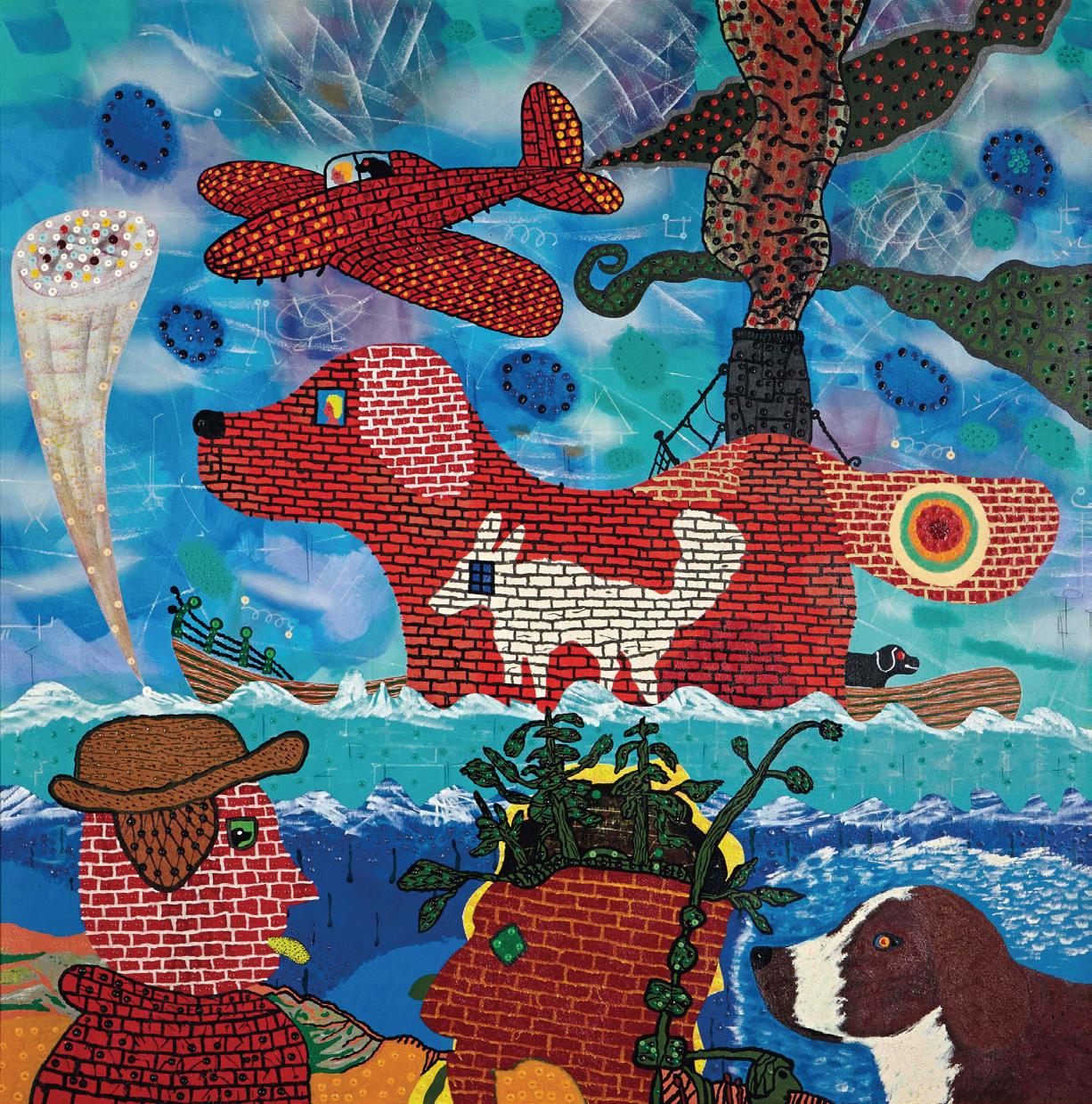
The impact of Robert Arneson’s career on the course and trajectory of Western Sculpture and Ceramics cannot be underestimated. His use of the brick within this context had ripple effects while he was alive and they are still spreading today. Arneson’s close friend and fellow Art Department faculty member at U.C. Davis, Roy De Forest (1930-2007), created a series of paintings in the early 1970s with brick pattern motifs prominently featured in their compositions, often in unusual ways. De Forest’s The Newfound Brickland Odyssey, 1973, and Hans Bricker In The Tropics, 1974, at the Anderson Collection at Stanford University are examples from the series.
In the mid-1980s, British sculpture Sir Antony Gormley proposed a 120 foot tall sculpture of a human figure made of bricks for the city of Leeds, England. While not realized at full scale as of this writing, a human sized maquette was created. Since then, Gormely has continued to use bricks in stacks and specific arrangements as a way of abstractly representing the body.
Among the ceramic sculptors working today, Wanxin Zhang has engaged with brick forms in his work in relation to his Chinese heritage. Trans artist Nicki Green has employed bricks as a foil to the mycelium inspired forms that encapsulate them in her sculptures as an act of transformation. Jeremiah Jenkins has explored the brick as a medium of protest and political action. Reniel Del Rosario’s fascination with knock off culture in the Philippines has led him to make bad copies of other artists works, including Arneson bricks, as a way of engaging with ideas about labor, authenticity, and cultural appropriation. Lastly, Linda Fitz Gibbon’s career as a whole has been greatly impacted by Arneson’s aesthetic and conceptual explorations in clay. In the following pages are contributions by Zhang, Jenkins, Del Rosario, and Fitz Gibbon about Arneson’s influence on their work.
opposite: Figure 26: Robert Arneson balancing a brick, 1986
Figure 27: Roy De Forest, The Newfound Brickland Odyssey, 1973, acrylic on canvas, 66 1/2 × 66 1/2 inches. Private Collection.
Linda S. Fitz Gibbon
After moving to Davis in the late 1980’s, Arneson’s work and person loomed large over my decision to switch from a career in book design to the more visceral and hands-on medium of clay. The irreverence of his sculpture, “poke in the eye” whit, breaking down of norms, and physicality of the work were formative for me at a time during which I was examining my own life and place in it, as a young mother in a crumbling marriage. There are several broad aspects of Arneson’s influence that can be seen in my ceramic work to this day: the visible mark of the hand, the thematization of the destructive forces in personal narratives, and the use of everyday household objects and food items in still life. His food plates from the 70’s (Dirty Plates included) and monumental Smorgi-Bob, Capt’n Ace, the Trophy Series, and his Describing the Diameter of a Plate can be seen as direct references, especially in some of my earlier works. Following Arneson’s use of rupture in his portraits and art historical references, the mash up of cultural references in my work similarly connects contemporary struggles, such as the gun violence epidemic, with historical periods. Working from a feminist standpoint, my sculpture references domestic life, raising children, and food culture, along-side classical pottery such as Wedgwood and Willowware – forms that are often scaled up, run over, stepped on, and punctured, all of which evoke the collision of creative and destructive forces. *
Born in New York, Linda S. Fitz Gibbon has an MFA in Visual Arts from the Art Institute of Boston (Lesley College of Art + Design), and BA from Yale University. With an active studio practice in Woodland, CA, she is currently Art Faculty at Cosumnes River College, Sacramento, and Teaching Artist at Esparto Elementary School. Fitz Gibbon has been artist in residence at the Anderson Ranch Art Center and Vermont Studio Center. Her works are held in the collections of the Crocker Art Museum, Sacramento; Manetti Shrem Museum of Art at UC Davis; Arizona State University Museum, Tempe; Butler Institute of American Art, Youngstown, OH; and the Yale University Art Gallery, New Haven, CT. Fitz Gibbon’s ceramic sculptures have been featured in a range of publications such as The Society of Arts + Crafts: Narrative Clay Today, Confrontational Ceramics, 500 Figures in Clay: Volumes I & II, Ceramics Art and Perception, and Ceramics Monthly. In 2025, she installed two large scale public art ceramic commissions: at the California State Library, Sacramento and the Woodland Public Library.
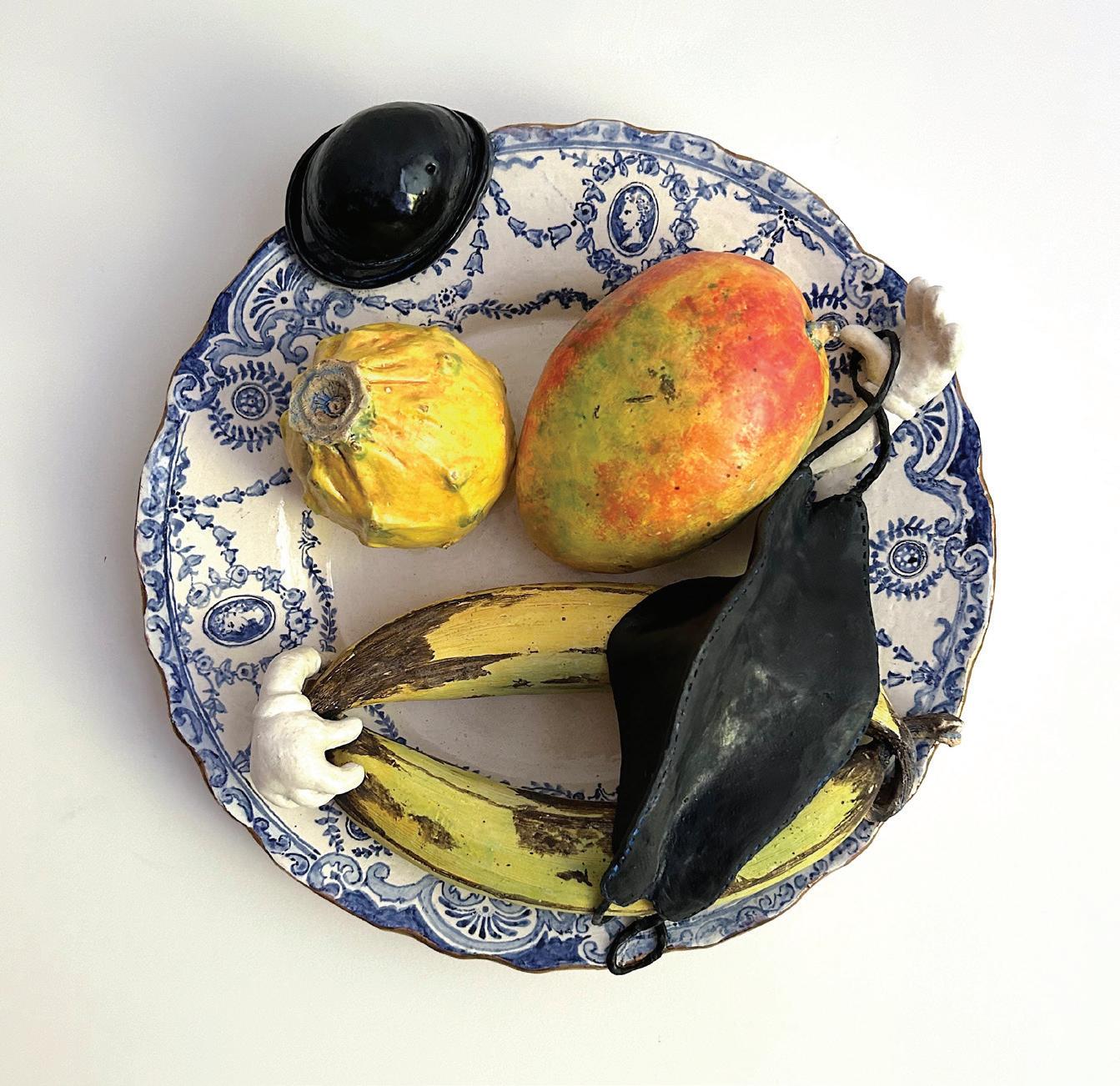
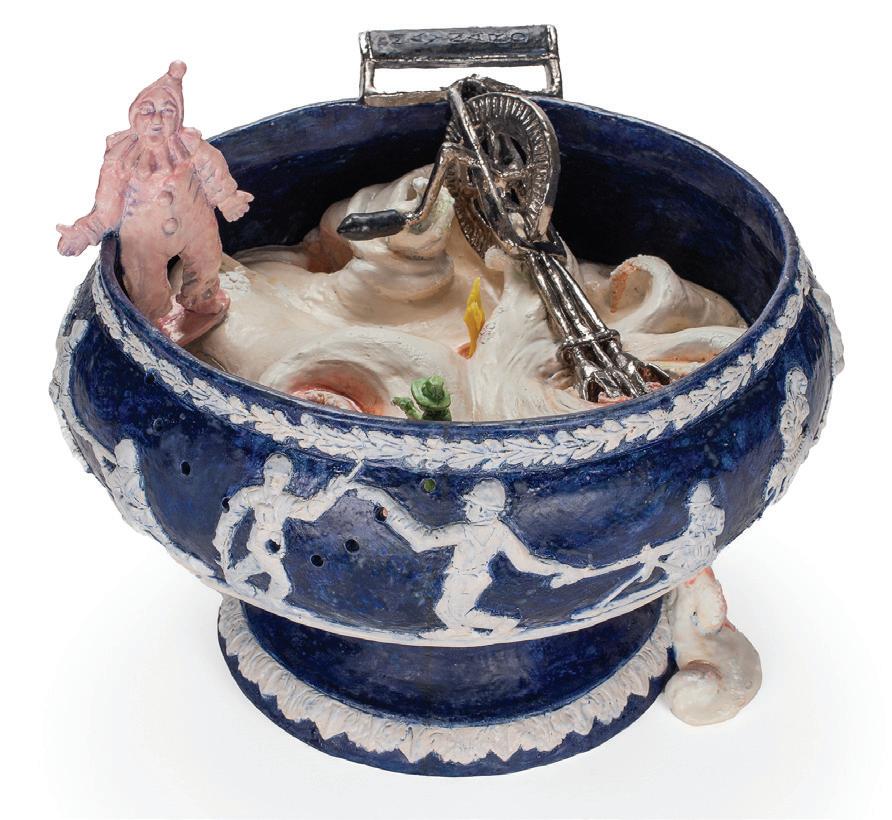
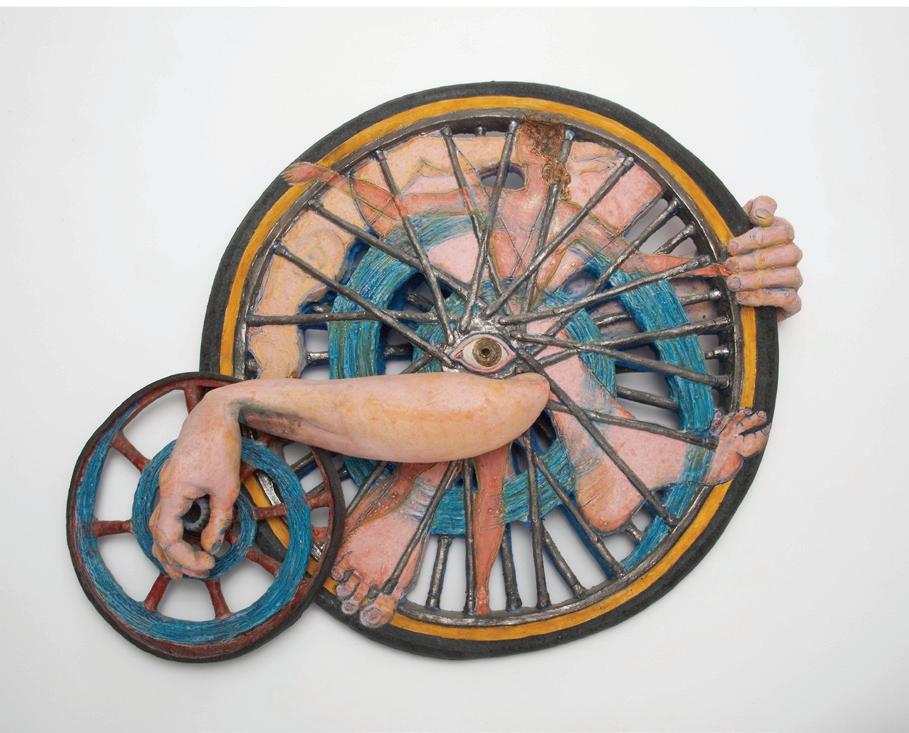
Figure 29: Linda S. Fitz Gibbon, Measure of a Woman, 2005, ceramic, 24 x 28 x 6 inches.
Figure 28: Linda S. Fitz Gibbon, Ring Around the Rosie, 2024, ceramic and found object, 16 x 16 x 13 inches.
Figure 27: Linda S. Fitz Gibbon, Mask Off, 2023, ceramic, 14 1/2 x 14 1/2 x 4 1/2 inches.
Wanxin Zhang
Since 2007, I have worked with bricks as both material and metaphor in my art practice. The brick functions not merely as a physical object, but as a spiritual and psychological surface — a site for reflecting on history, ideology, and the present moment. It becomes a diary, a canvas upon which to write, carve, apply decals, and inscribe memory. Each brick records a specific time, much like a journal entry embedded in clay.
One of my works is a single brick carved with two phrases in Chinese Han characters on opposing sides: “Red Guard” and “Qin Guard”. The Qin Guard refers to the soldiers who built the Terracotta Army and Great Wall under Emperor Qin, the first emperor of China, more than two thousand years ago; the Red Guard evokes the youth movement of the Cultural Revolution in the 1960s and 1970s. A single brick connects two eras separated by millennia — two political moments and two ideological systems, both shaped by structures of power and collective belief. The brick becomes a bridge across time.
Another of my bricks bears the inscription “Stay Home,” accompanied by floral decals. During the COVID-19 pandemic, this phrase became a global imperative — at once protective and isolating. Here, the brick records not only language but atmosphere. Unlike the earlier work, this brick is slightly unstable in form, subtly disrupted. Its structural imperfection reflects the emotional and social fragility of that period. The brick becomes a sculptural embodiment of collective vulnerability.
*
Wanxin Zhang, whose personal and artistic journey has taken him from Manchuria to California, has spent more than 30 years living and working in the Bay Area. He has rightfully earned the distinction of being a California artist. His sculpture blends historical references with contemporary cultural context, often carrying powerful social and political commentary.
Zhang received the 2006 Virginia A. Groot Foundation Grant and the 2004 Joan Mitchell Foundation Painters and Sculptors Grant. In 2019, he was the subject of a major midcareer retrospective, accompanied by the monograph Wanxin Zhang: The Long Journey, at the Museum of Craft and Design in San Francisco.
His work is included in the collections of the Asian Art Museum, Arizona State University Art Museum, American Museum of Ceramic Art, Berkeley Art Museum and Pacific Film Archive, Crocker Art Museum, Cantor Arts Center, and the Fine Arts Museums of San Francisco, as well as the Renwick Gallery of the Smithsonian American Art Museum in Washington, D.C. His work is also held by the Annie Wong Art Foundation in Hong Kong and the National Art Museum of China in Beijing.
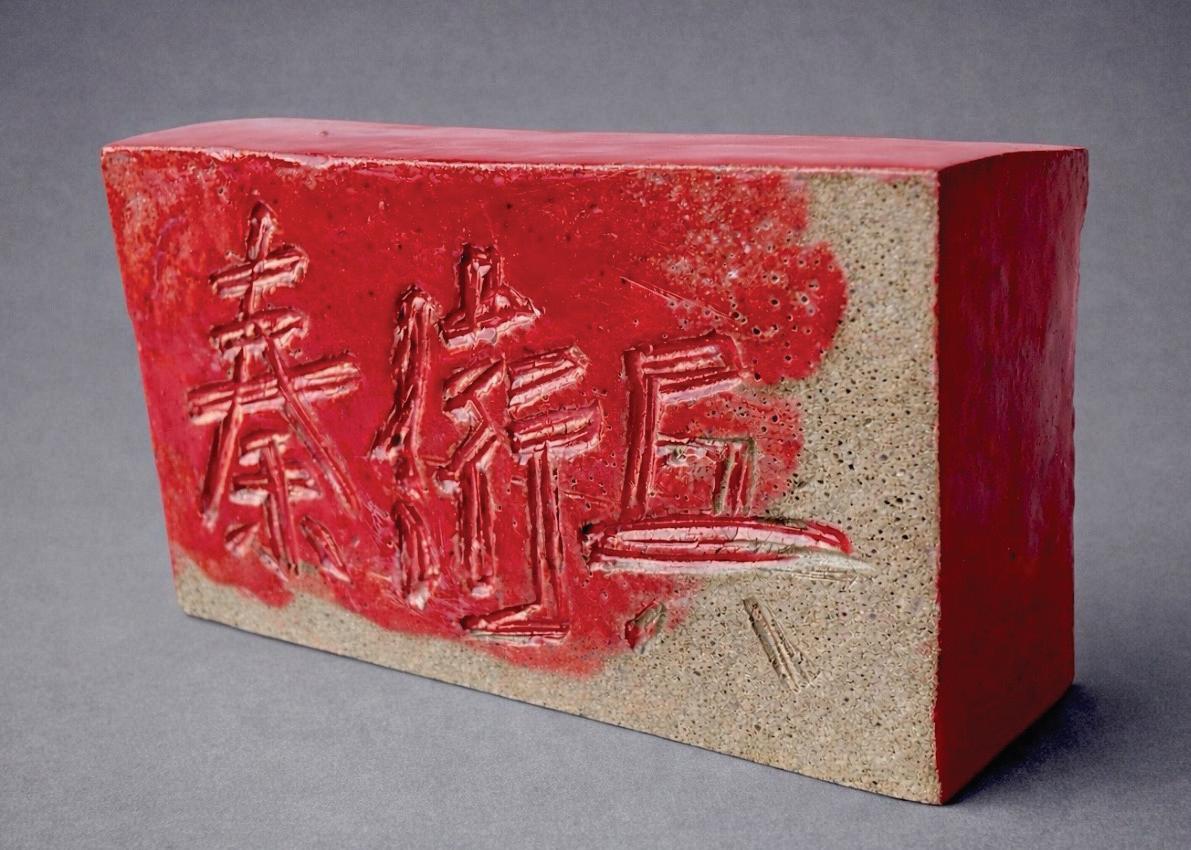
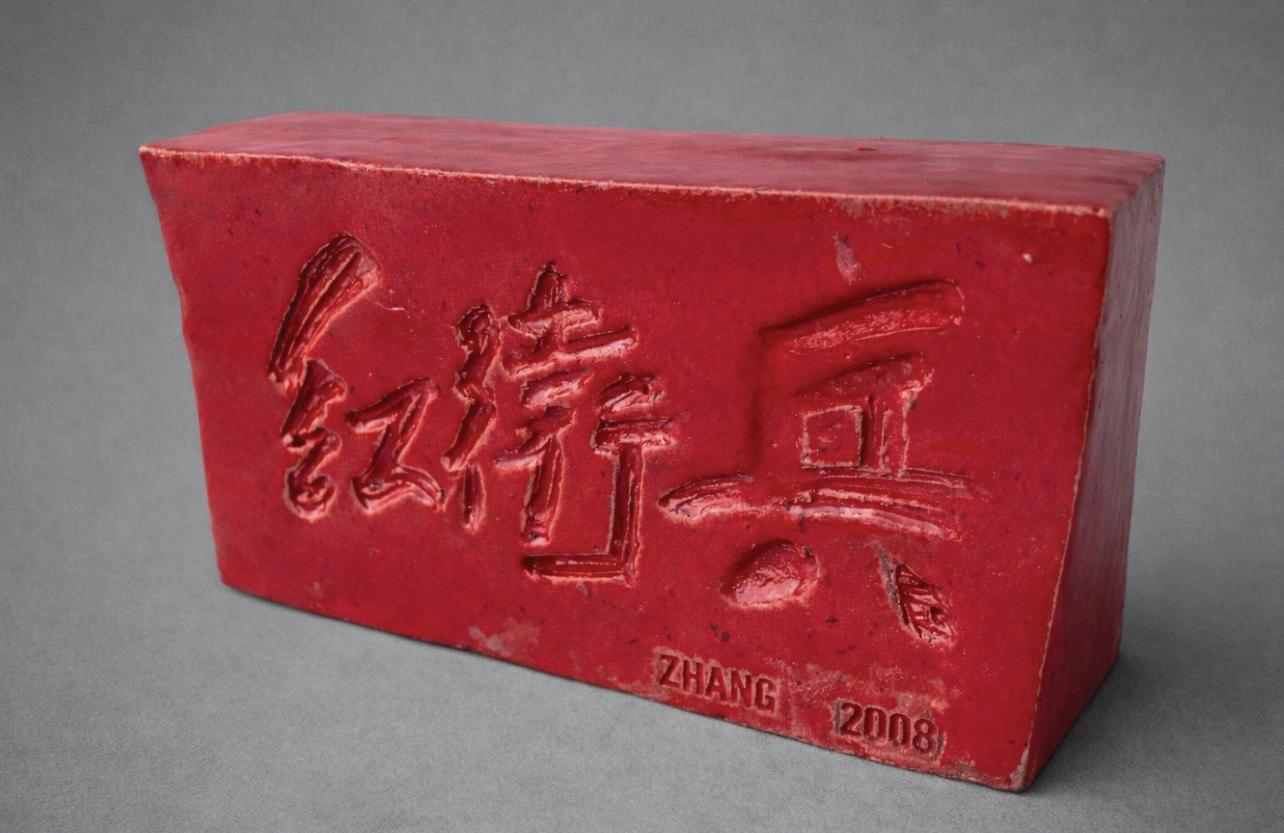
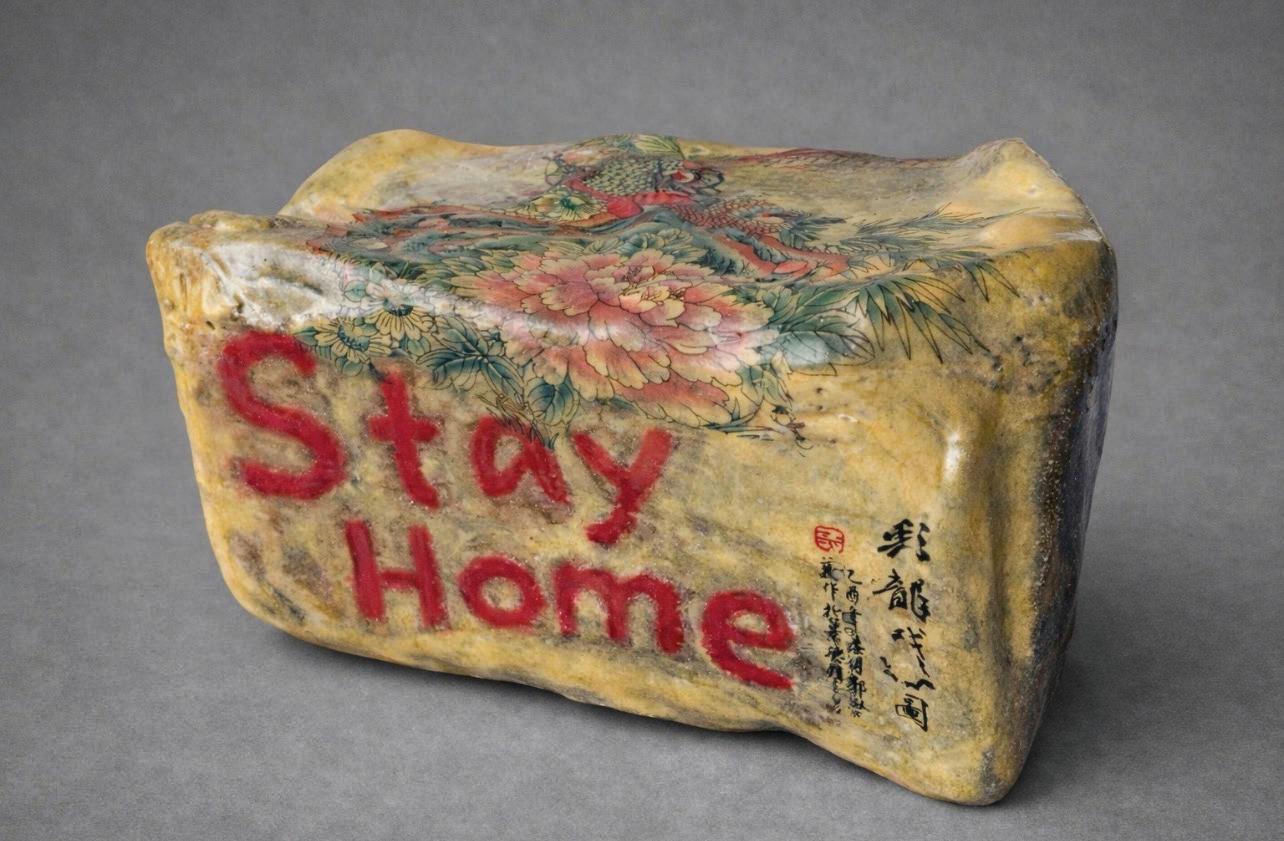
Figure 30: Wanxin Zhang, Double Guard, 2008, stoneware with glaze, 9 x 2 x 5 inches Right: (verso).
Figure 31: Wanxin Zhang, Stay Home, 2022, stoneware with glaze, 10 x 6 x 7 inches.
Jeremiah Jenkins
Robert Arneson has influenced me as an artist through of his strategic mix of humor and craft. Like Arneson, I love a good joke and have always wanted to be on Saturday Night Live. I have done stand up and improv, and cannot get through a conversation without trying to get a laugh or two. Going to art school I discovered Arneson and other Californian artists making far funnier jokes than anything traditional comedic formats could do. The way Arneson and other California FUNK and Nutt artists embraced absurdity for the sake of absurdity opened the door for artists who use humor as a medium. While his jokes are ridiculous and silly, his humor is not cheap. Arneson’s level of ceramic craft elevates his comedic impulses and gives them a kind of prestige, which actually makes them even funnier.
A good joke relies on a familiar setup with an unexpected twist that produces the punchline. Arneson uses traditional ceramic forms like portrait busts, teapots, and bricks but distorts them: faces are squished, teapots become adult-themed, and bricks turn into faces, among other transformations. The result is a punchline that consistently lands. I use this same structure – setup, twist, punchline! – in my own artwork. Humor can make an important message more easily digestible and hard conversations possible. More than that, for people like myself and Arneson, humor and jokes are impulses and they cannot really be controlled.
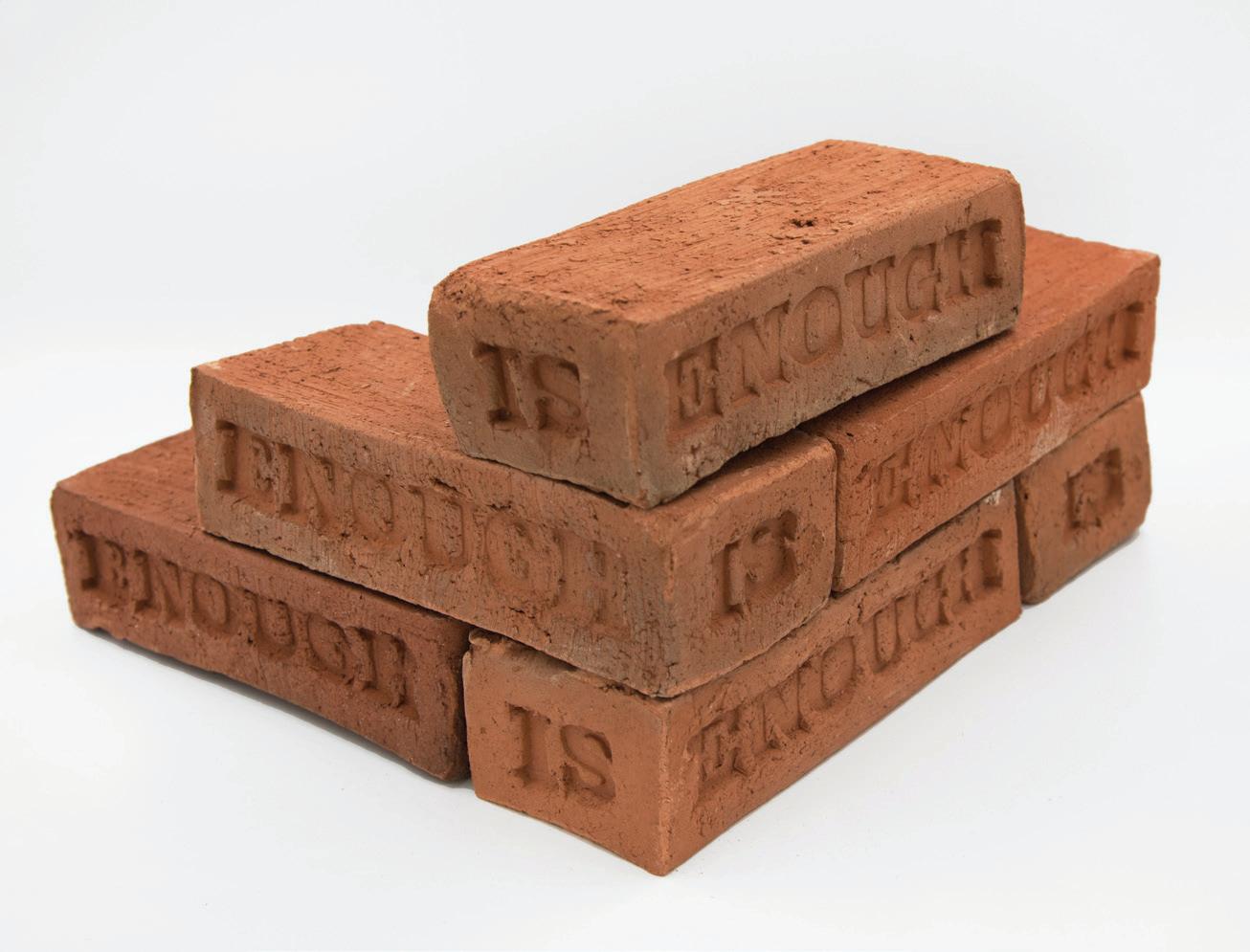
I found particular common ground with Arneson in my 2017 piece Enough is Enough. Like him, I used the form of a brick to make a point. As fine artists we often separate ourselves from artisans like brickmakers, but when you fully commit to a concept those boundaries dissolve. You start thinking about the ideal brick color, how to make the surface just right, and come up with other highly intellectualized approaches to the process, but at the end of the day you are making bricks. Exploring such a common method for uncommon purposes is sort of a joke in and of itself.
With Arneson, it is hard to say whether I am most inspired by his technical skill, his conceptual flexibility, or his unwavering commitment to the bit. I think it is probably the last one, though. Got to love a good bit.
*
Jeremaih Jenkins received his MFA from the San Francisco Art Institute in 2007 and has worked in the Bay Area ever since. He has exhibited with Evergold Projects, Bedford Gallery, Hashimoto Contemporary, and more. He is currently running the Ceramics and Sculpture program at Chabot College.
(stacked presentation).
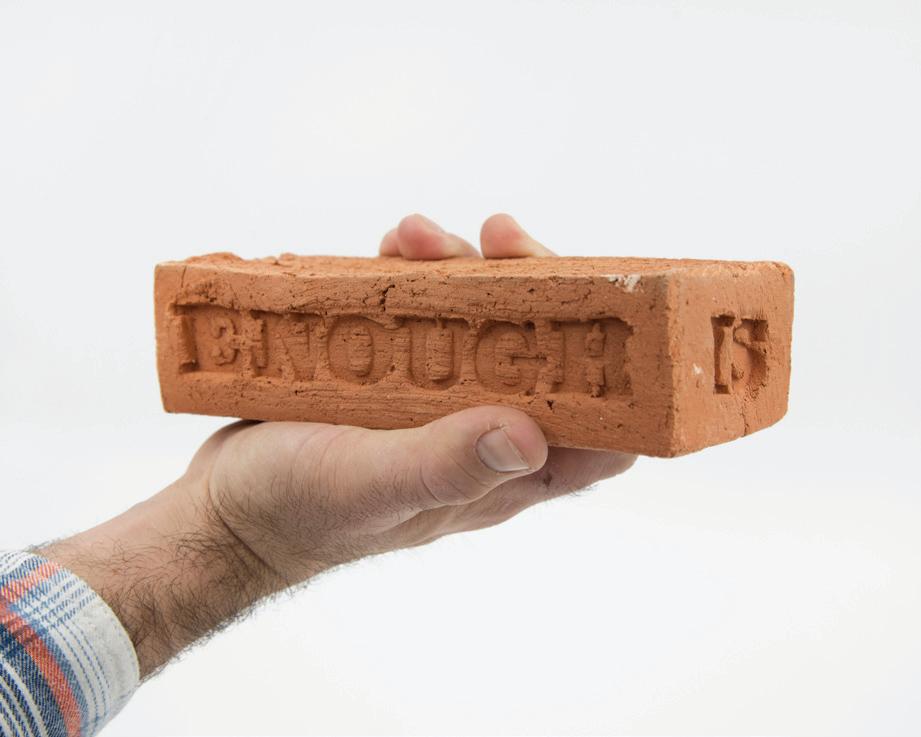
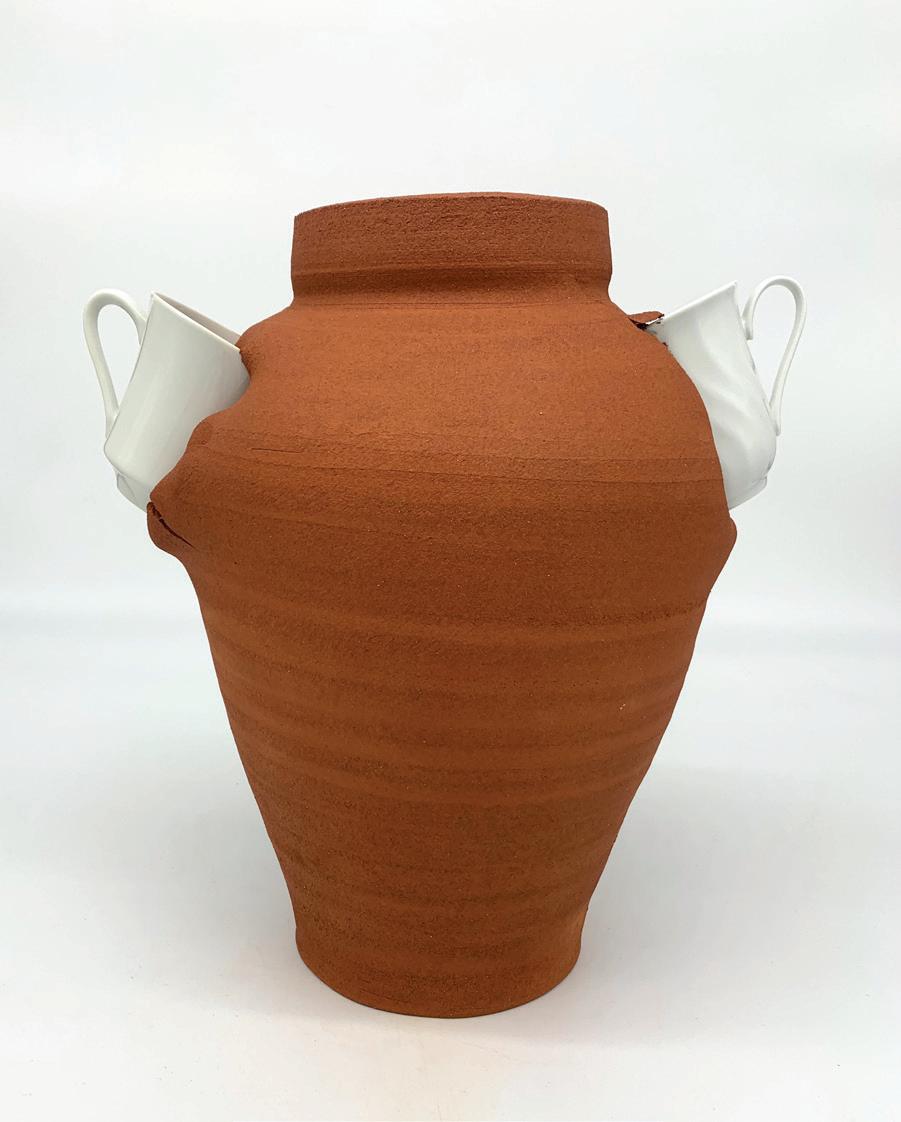
Figure 35: Jeremiah Jenkins, Future’s Past, 2024, ceramic, approx. 16 x 12 x 9 inches.
Figure 33: Jeremiah Jenkins, Enough is Enough, 2017, ceramic bricks, edition of 100, 8 x 3 x 2 inches, each.
Figure 34: Jeremiah Jenkins, Enough is Enough, 2017, ceramic brick, edition of 100, 8 x 3 x 2 inches.
Reniel Del Rosario
My family made its ties to the Bay Area like many other Filipino families — by locating to wherever a naval base was positioned. For my family, our destination became Vallejo, CA, which possessed the Mare Island Naval Base. A handful of my extended family were stationed there, ultimately leading to the majority of my father’s side immigrating over. I grew up going to the neighboring town of Benicia often as a child — I was dropped off plenty of weekends to hang out with my cousin. On these many trips, we wandered down to First Street, grabbed ice cream at Double Rainbow, and wandered around the shops and waterfront. It was only later in college that I would realize that I have been haunted by Robert Arneson, a Benicia native, my whole life. It began in Benicia when I walked on his bricks and sat on his bench with my family, then when I looked at his eggheads biking alongside my friends at U.C. Davis when I visited, and finally at U.C. Berkeley where my painting professor (and his former student) Craig Nagasawa formally introduced me to his work.
The first Arneson works I truly got introduced to were drawings and sketches. They were unlike any kind of drawing I did in the margins of my notebooks throughout my S.T.E.M. oriented middle and high school. The linework, color, and, most important of all, the subject matter was captivating out of awe and often out of disgust: depictions of him drowning, vomiting, gouging out his own eye, picking his nose, the list goes on. It was towards the end of that semester that I got introduced to his ceramic works and a bit of historical context by Craig — it felt like a reveal of some omnipotent being always being there with the realization I walked and sat on his work as a child, hung around them with my friends in high school and early college, and it was revealed all at once. I learned about his work in a larger context just in time for the opening of the Manetti Shrem Museum of Art, which exhibited his crass and crude toilets, as well as the 2016 exhibition Berkeley Eye: Perspectives on the Collection at the Berkeley Art Museum and Pacific Film Archive, which exhibited his surreal typewriter. In these confrontations with Arneson, I felt amazed to see them in-person and was teeming with excitement to see them. Never before in my life did I realize the art that I would learn about could be seen until I saw his work.
Knowing his work much more as an adult and younger artist, I felt a link to him that no other artist really had on me. He was from the Northern Bay Area and with that I felt a kind of kinship — Arneson felt instinctual to love as he and his work were my neighbors to some degree. His work was goofy, odd, and fearless of being such (he was as well, as I came to learn). As odd as it sounds, it felt culturally Filipino to me — reminiscent of the uncles and their familial proteges who often act as comedic relief at every family party constantly cracking jokes about anything and everything. He and his approach added a complexity to being an artist and making art that I did not realize at the beginning of my art career: you can be yourself. You could approach subject matter the way you wanted, depict what you wanted, and did not have to sit on a high horse of grandeur. He said, ‘make toilets out of this purist material, make ugly things out of something expected to be
beautiful, and make light of the serious.’ This embrace of the silliness, the funkiness, the whatever-you-want-to-call-it, motivated me to throw oil paint tomatoes at my canvasses, make wonky bootlegs of famous artwork, play make-believe within my installations, and make fun of things in general a lot more. I would not have landed at my artistic approach without that kind of motivation and realization that it has its own place in the art world. And for that, I have nothing but thanks to give to Arneson for haunting me my whole life.
*
Reniel Del Rosario (b. Iba, Philippines) is an artist that primarily uses ceramics, quantity, and installation to discuss themes of commodification and value. He holds a BA in Art Practice from the University of California at Berkeley. He is a 2019 recipient of the Center for Craft’s Windgate-Lamar fellowship, a 2022 SFMOMA Artists Soapbox Derby racer, and a 2025 National Council on Education for the Ceramic Arts Emerging Artist. His work has been featured in writings such as ARTFORUM, Sculpture Magazine, and Bon Appetit. Del Rosario’s work has been exhibited extensively at venues such as the Contemporary Art Museum St. Louis, Catharine Clark Gallery, The American Museum of Ceramic Art, Praise Shadows Art Gallery, the San Francisco Museum of Modern Art, Jane Lombard Gallery, and simply on the public sidewalk. In addition to artwork, Del Rosario is also a curator and has curated exhibitions such as the 81st Scripps Ceramic Annual Means to an End at the Ruth Chandler Williamson Gallery and Giant Steps at Personal Space Gallery.
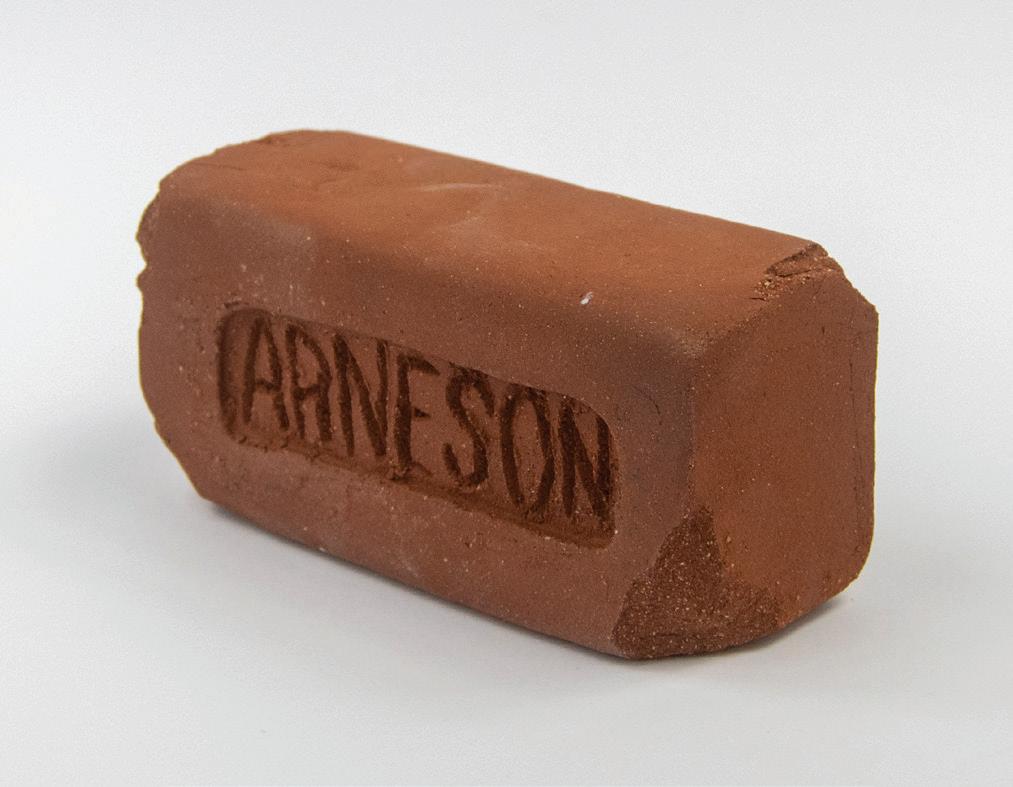
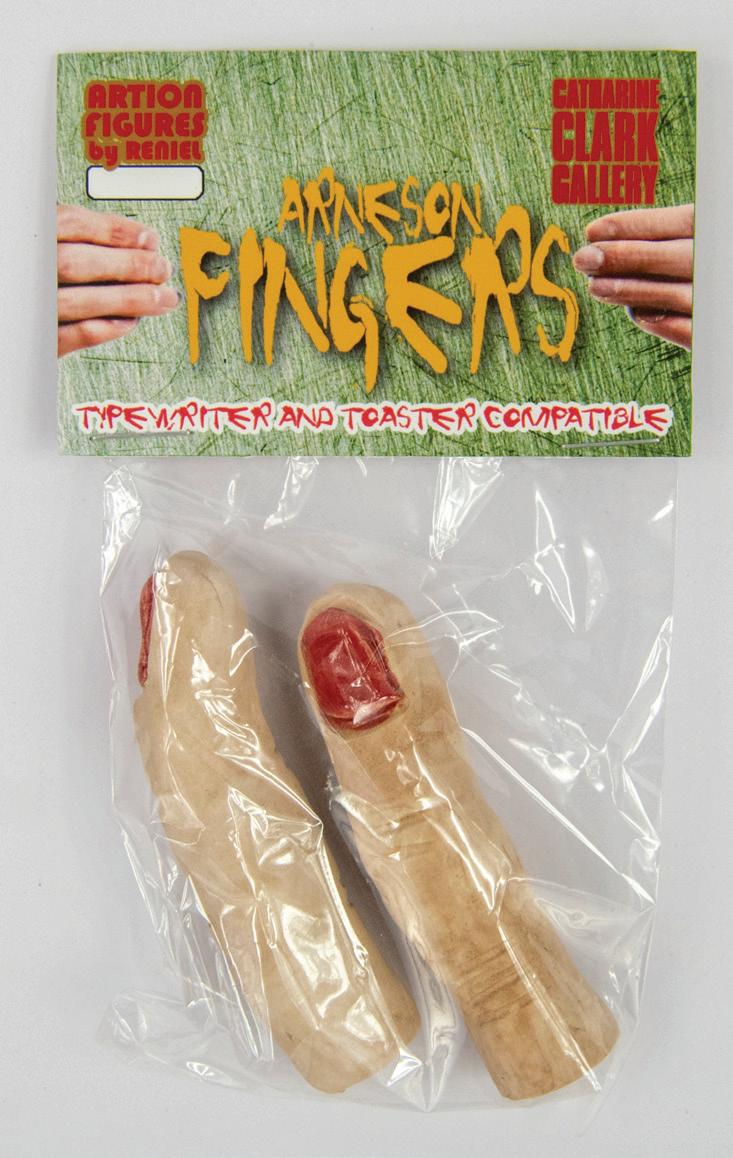
Figure 36: Reniel Del Rosario, Bob’s Bricks, 2021, stoneware, 2 1/2 x 5 x 2 inches.
Figure 37: Reniel Del Rosario, Arneson Fingers, 2021, stoneware and artist-fabricated packaging, 5 1/2 x 3 x 1/2 inches
Exhibition Checklist
Plate 1: Finger Brick c. 1965
ceramic with appendage
5 3/8 x 9 1/2 x 4 3/4 inches
Plate 2: Brick 1966 ceramic
4 1/2 x 8 1/2 x 6 1/2 inches
Plate 3: Brick 1966 ceramic
4 5/8 x 9 1/4 x 3 1/8 inches
Plate 4: Oil Brick 1969
ceramic and oil
4 1/4 x 8 3/4 x 2 3/4 inches
Plate 5: Gold Brick 1969
glazed ceramic
4 1/4 x 8 5/8 x 2 3/4 inches
Plate 6:
Mountain Brick 1969
ceramic
7 3/4 x 8 3/4 x 2 7/8 inches
Plate 7:
Sung Edition 1970
glazed porcelain, editions 1-10 of 10 (10) bricks: each 4 1/2 x 9 x 2 3/4 inches
Plate 8:
Model for “Fragment of Western Civilization” 1972
glazed ceramic
8 x 15 x 11 inches
Plate 9: Memorial for Bob 1972
terracotta and ceramic
8 1/2 x 19 3/4 x 14 inches
Plate 10: Brick Vase 1974
terracotta with glaze
24 1/4 x 9 1/2 x 9 1/2 inches
Plate 11: Brick Vase 1974
terracotta with glaze 20 x 9 1/2 x 9 1/2 inches
Plate 12: Floating Bricks 1974
glazed ceramic 4 x 15 1/2 x 13 1/2 inches
Plate 13: Brick with Illusion 1975
glazed ceramic 4 1/4 x 8 3/4 x 2 3/4 inches
Plate 14: New Brick/Old Stone 1975
lithograph on paper, edition A.P. 1 16 x 16 1/2 inches
Plate 15: California Brick 1975
etching on paper, A.P. 1 16 x 16 1/2 inches
Plate 16: Broken Brick 1975 etching on paper, A.P. 1 16 x 16 1/2 inches
Plate 17: Untitled (Brick) 1976
watercolor on paper 12 x 17 3/4 inches
Plate 18: Untitled 1976 ink, watercolor, pencil, and conte on paper 12 x 17 3/4 inches
Plate 19: Untitled (Brick) 1976
watercolor on paper 12 x 17 3/4 inches
Plate 20:
Sinking Brick/Brick in Space 1976
watercolor on paper 12 x 17 3/4 inches
Exhibition Checklist (cont.)
Plate 21:
Untitled (Sinking Brick) 1976 watercolor on paper 12 x 17 3/4 inches
Plate 22: Painted Brick 1976
china painted ceramic 4 1/4 x 8 1/2 x 2 3/4 inches
Plate 23: Brick 1976
terracotta, edition 23 of 50 4 1/4 x 8 3/4 x 2 3/4 inches
Plate 24: Face Brick 1981 ceramic
4 1/4 x 9 1/4 x 2 3/4 inches
Plate 25:
Study for Brick Sculpture 1981 mixed media and collage on paper 28 x 23 3/4 inches
Plate 26: Bio Bob 1982
bronze, A.P. 1, with unique ceramic pedestal 70 3/4 x 22 1/2 x 22 1/2 inches
Plate 27: Hand Brick 1991
bronze, edition 2 of 3 + 1 A.P. 9 1/2 x 8 1/2 x 4 inches
Plate 28: Corner Stone 1991
glazed ceramic 4 1/2 x 11 1/4 x 8 inches
Plate 29: Blue Eyes 1991
bronze and marbles, edition 1 of 3 + 1 A.P. 23 1/2 x 12 3/4 x 8 1/2 inches
Works not Exhibited
Plate 30:
Moby Brick 1975
lithograph on paper, edition A.P. 1 16 x 16 1/2 inches
Plate 31: Painted Brick (with crack) 1972 ceramic
4 1/2 x 9 x 2 7/8 inches
Plate 32: Untitled (Brick) 1981 glazed ceramic
4 3/8 x 9 x 2 7/8 inches
ROBERT ARNESON
Born 1930 in Benicia, CA
Died 1992 in Benicia, CA
EDUCATION
1958 MFA, Mills College, Oakland CA
1954 BA, California College of Arts and Crafts, Oakland, CA
TEACHING
1962-1991 Faculty, University of California, Davis
SELECTED SOLO EXHIBITIONS
2026 Cornerstones: Robert Arneson and the Brick, Paul Thiebaud Gallery, San Francisco, CA
2024 Hatched: The Making of Robert Arneson’s Eggheads, Manetti Shrem Museum of Art, Davis, CA
2023
Robert Arneson: Astonishing Possibilities for Self-Expression, George Adams Gallery, New York, NY; Minnesota Street Project, San Francisco, CA
2019 Robert Arneson: The Anti-War Works 1982-1986, George Adams Gallery, New York, NY
2017
Robert Arneson and William T Wiley, George Adams Gallery, New York, NY
2016 Robert Arneson: Guardians of the Secret II, Brian Gross Fine Art, San Francisco, CA
2014-2015
2013
2012
2010
Fatal Laughs: The Art of Robert Arneson, Cantor Arts Center, Stanford University, Stanford, CA
Robert Arneson: Troublesome Subjects: Three Decades of Paintings, Sculpture, and Works on Paper, George Adams Gallery, New York, NY
Robert Arneson: Playing Dirty, Allan Stone Gallery, New York, NY
Robert Arneson: Installation of Works from the Collection, San Francisco Museum of Modern Art, San Francisco, CA
Robert Arneson: Self Portraits in Bronze, Brian Gross Fine Art, San Francisco, CA
Robert Arneson: Founding Funk: Sculptures and Drawings 1956-66, George Adams Gallery, New York, NY
2008 From the 60’s, Brian Gross Fine Art, San Francisco, CA
2007 Robert Arneson: The Black Series, Selected Works 1988-1990, George Adams Gallery, New York, NY
2006 Robert Arneson: Sculpture, Paintings and Drawings 1958-1992, George Adams Gallery at the ADAA Art Show, Seventh Regiment Armory, New York, NY
2004 Political Drawings, Brian Gross Fine Art, San Francisco, CA
Arneson and the Object, Palmer Museum of Art, The Pennsylvania State University, University Park, PA; Greenville County Museum of Art, Greenville, SC; George Adams Gallery, NY
2003 Big Idea: The Maquettes of Robert Arneson, Palo Alto Art Center, Palo Alto, CA; Iris & B. Gerald Cantor Art Gallery, College of the Holy Cross, Worcester, MA; The Contemporary Museum, Honolulu, HI; Museum of Glass, Inter national Center for Contemporary Art, Tacoma, WA; Sheldon Memorial Art Gallery and Sculpture Garden, Lincoln, NE; David and Alfred Smart Museum, Chicago, IL, 2003.
2000 “This Head is Mine,” The Contemporary Museum, Honolulu, HI
1999 Robert Arneson: Double Portraits, Brian Gross Fine Art, San Francisco, CA
Robert Arneson: Bronze Self-Portraits and Drawings, DeCordova Museum and Sculpture Park, Lincoln, MA; travelling to George Adams Gallery, New York, NY
Robert Arneson: Painting into Sculpture, Suzanne H. Arnold Art Gallery, Lebanon Valley College, Annville, PA
Arizona Collects Arneson, Phoenix Art Museum, AZ
1998 Robert Arneson: Guardians of the Secret II, George Adams Gallery, New York, NY
1997 Robert Arneson: Self-Reflections, San Francisco Museum of Modern Art, CA
1996
Robert Arneson: Drawing, George Adams Gallery, New York, NY
1995 Robert Arneson: The Late Bronzes, Frumkin/Adams Gallery, New York, NY
1993 Arneson and Politics: A Commemorative Exhibition, M.H. de Young Memorial Museum, San Francisco, CA
Memorial Museum, California Palace of the Legion of Honor, San Francisco, CA
A Memorial Exhibition, Frumkin/Adams Gallery, New York, NY
Robert Arneson: Two-dimensional Works, Johnson County Community College, Overland Park, KS
Robert Arneson: The Last Works, John Berggruen Gallery, San Francisco, CA
1992
1991
Robert Arneson: Guardians of the Secret II, Institute of Contemporary Art, University of Pennsylvania, Philadelphia, PA
Earthly Delights & Self-Abuse, Dorothy Goldeen Gallery, Santa Monica, CA
Masks, Frumkin/Adams Gallery (Drawing Gallery), New York, NY
Me and Jackson: Robert Arneson Interprets Jackson Pollock, Pollock-Krasner House, East Hampton, New York, NY
Robert Arneson: The Jackson Pollock Series, List Visual Arts Center, Massachusetts Institute of Technology, Cambridge, MA
Robert Arneson: ‘Guardians of the Secret II,’ Museum of Fine Arts, Springfield, MA
Robert Arneson: New and Selected Work, Sawhill Gallery, James Madison University, Harrisonburg, VA
1990 Black, Frumkin/Adams Gallery, New York, NY
Death of Pollock, Candy Store Gallery, Folsom, CA
Guardians of the Secret II, Frumkin/Adams Gallery, New York, NY
Robert Arneson/ Matrix 110: From the Jackson Pollock Series, Wadsworth Atheneum, Hartford, CT, 1990.
1988 J.P., Dorothy Goldeen Gallery, Santa Monica, CA
1987-1988
1987
1986-1987
Robert Arneson: Art and Artists, Fuller Gross Gallery, San Francisco, CA
Robert Arneson, Dunlop Art Gallery, Regina Public Library, Regina, Saskatchewan; Charles Scott Gallery, Emily Carr College of Art, Vancouver, Canada; The Nickle Arts Museum, The University of Calgary, Calgary, Canada
Robert Arneson – Sculpture, Paintings, Drawings, Payne Gallery, Moravian College, Bethlehem, PA
Robert Arneson – Portrait Sculpture, Cleveland Museum of Art, Cleveland, OH
Robert Arneson: A Retrospective, Des Moines Art Center, Des Moines, IA; Hirshhorn Museum and Sculpture Garden, Washington, D.C.; Portland Art Museum, Portland, OR; Oakland Museum, Oakland, CA
1986 Nuclear Visions, Krannert Art Museum, University of Illinois, Urbana-Champaign, IL
Robert Arneson: Points of View, Pittsburgh Center for the Arts, Pittsburgh, PA
Robert Arneson, University of the Pacific, Stockton, CA
1985
1984
Robert Arneson: Sculpture and Works on Paper, Fuller Goldeen Gallery, San Francisco, CA
Robert Arneson, Fuller Goldeen Gallery, San Francisco, CA
Robert Arneson: Ground Zero, Frumkin Struve Gallery, Chicago, IL
Moscone Bust Exhibition, Triton Museum of Art, Santa Clara, CA; Crocker Art Museum, Sacramento, CA; Fresno Art Center, Fresno, CA; Fountain Gallery, Portland, OR
Robert Arneson, Lowe Art Museum, University of Miami, Coral Gables, FL
Robert Arneson: ‘Masks,’ Karl Oskar Gallery, Westwood Hills, KS
1983 Masks and Portraits, organized by Landfall Press
Robert Arneson Drawings, Crocker Museum of Art, Sacramento, CA
Robert Arneson: Selected Works, Riva Yares Gallery, Scottsdale, AZ
Robert Arneson: War Heads and Others, Allan Frumkin Gallery, New York, NY
1982 Robert Arneson, Hansen Fuller Golden Gallery, San Francisco, CA
Alice Street House, Richard Nelson Gallery, University of California, Davis, CA
1981-1982 Portrait of George, Installations at San Francisco Museum of Art, San Francisco, CA; Oakland Museum, Oakland, CA
1980 Suspects and Witnesses, Hansen Fuller Goldeen Gallery, San Francisco, CA
Robert Arneson, Frumkin Struve Gallery, Chicago, IL
Robert Arneson, Fendrick Gallery, Washington, D.C.
SELECTED SOLO EXHIBITIONS (cont.)
1979 Robert Arneson, Memphis Academy of Art, Memphis, TN
Robert Arneson: Self Portraits, Moore College Art Gallery, Philadelphia, PA
1978 New Ceramic Sculpture, Allan Frumkin Gallery, Chicago, IL
1976
1975
1974
1973
1972
1970-1972
Robert Arneson: Works from 1956-1976, Memorial Union Art Gallery, University of California, Davis, CA
Robert Arneson, Allan Frumkin Gallery, Chicago, IL
Robert Arneson, Fendrick Gallery, Washington, D.C.
Western Association of Art Museums Touring Exhibition
Allan Frumkin Gallery, New York, NY, 1975, 1977, 1979, 1981, 1984, 1987
Robert Arneson: Sculpture Show, Deson-Zaks Gallery, Chicago, IL
Retrospective Exhibition, Museum of Contemporary Art, Chicago, IL; San Francisco Museum of Art, San Francisco, CA
Church Fine Arts Gallery, University of Nevada, Reno, NV
Robert Arneson and William T. Wiley, Manolides Gallery (with William T. Wiley), Seattle, WA
Porcelains: Robert Arneson, Fresno State College Art Gallery, Fresno, CA; University of Calgary, Alberta, Canada; Miami-Dade Community College Art Gallery, Miami, FL
1969 Candy Store Gallery, Folsom, CA, 1969, 1970, 1971, 1972, 1974, 1975
Robert Arneson: Recent TEA POTS and other ceramic wonderments, Allan Stone Gallery, New York, NY
1968 Hansen-Fuller Gallery, San Francisco, CA, annually 1968-77.
1967 Ceramic Sculpture, The Hansen Galleries, San Francisco, CA
1966
Arts of San Francisco: Robert Arneson, San Francisco Museum of Art, San Francisco, CA
Robert Arneson, Allan Stone Gallery, New York, NY
1964 Arneson Sculpture, Cellini Gallery, San Francisco, CA
Recent Clay & Pottery Objects, University of California, Davis, CA
Robert Arneson: recent sculpture, Allan Stone Gallery, New York, NY
1963 Bob Arneson: Clay Sculpture, Richmond Art Center, Richmond, CA
1962 Bob Arneson, Barrios Gallery, Sacramento, CA
Robert Arneson: Ceramics, Drawings, and Collages, M.H. de Young Memorial Museum, San Francisco, CA
1960 Ceramics and Sculpture by Robert Arneson, Oakland Art Museum, Oakland, CA
SELECTED GROUP EXHIBITIONS
2026
2025-2026
Fertile Ground: U.C. Davis Faculty & Alumni, Paul Thiebaud Gallery, San Francisco, CA
Sixties Surreal, Whitney Museum of American Art, New York, NY
2025 Staff Picks: 60 Years of Bay Area Art, George Adams Gallery, New York, NY
Early/Middle/Late, George Adams Gallery, New York, NY
RBG at 50: Focus on Ceramics, Rena Bransten Gallery, SanFrancisco, CA
80th Scripps College Ceramic Annual: In the Hands of the Collector, Ruth Chandler Williamson Gallery, Claremont, CA
2024 Politics and Daily Life, Palmer Museum of Art, University Park, PA
Poke in the Eye: Art of the West Coast Counterculture, Seattle Art Museum, Seattle, WA
Clayscapes, Everson Museum of Art, Syracuse, NY
Going Our Way: Art from the San Francisco Bay Area, 1960’s – 1970’s – 1980’s, George Adams Gallery, New York, NY
2023-2024
Nuts and Who’s: A Candy Store Sampler, San Jose Museum of Art, San Jose, CA 2023 TWENTY-FIVE TREASURES SUMMER 2023, Paul Thiebaud Gallery, San Francisco, CA
Funk You Too!: Humor and Irreverence in Ceramic Sculpture, Museum of Arts and Design, New York, NY
78th Scripps College Ceramic Annual – Handle Carefully: The Power of Words and Clay, Ruth Chandler Williamson Gallery, Claremont, CA
2022-2023
Bay Area Stories: Joan Brown and Friends, San Francisco Museum of Modern Art, San Francisco, CA
2022 Framed: Works by Peter Alexander, Robert Arneson, Andrew Belschner, Roy De Forest, Adam Fowler, Dana Hart-Stone, Robert Hudson, Ed Moses, Ruth Pastine, Paul Sarkisian and Andrea Way, Brian Gross Fine Art, San Francisco, CA
The Candy Store: Funk, Nut, and Other Art with a Kick, Crocker Art Museum, Sacramento, CA
Everything is Possible, Nothing is Probable: The Legacy of the Candy Store Gallery, CSUS University Galleries, Sacramento, CA
America. Between Dreams and Realities: Selections from the Hirshhorn Museum and Sculpture Garden Collection, Musee National des Beaux-Arts du Quebec, Quebec, Canada
Nothing is to be Done for William T. Wiley, Parker Gallery, Los Angeles, CA
(m)ad-libs, George Adams Gallery, New York, NY
Framed 2, Brian Gross Fine Art, San Francisco, CA
GESTURE/COLOR/FORM, Brian Gross Fine Art, San Francisco, CA
2021-2022 Selected Works from the Anderson Family Collection, Foundry Vineyards Gallery, Walla Walla, WA
Sheldon Statewide, Charon State College, Chadron, NE; Prairie Arts Center, North Platte, NE; Museum of High Plains, McCook, NE; Marxhausen Gallery of Art, Seward, NE; Cornerstone Bank, York, NE; Gallery 1516, Omaha, NE; Beatrice Public Library, Beatrice, NE; Gallery 92 West, Fremont, NE
{not} Quiet on the Western Front, Belger Arts Center, Kansas City, MO
2021 A Chronicle of Modern Crafts: Works from the National Museum of Modern Art, Kyoto Collection, National Museum of Modern Art, Kyoto, Japan
The Incorrect Museum: Vignettes from the di Rosa Collection, di Rosa Center for Contemporary Art, Napa, CA
Shapes from Out of Nowhere: Ceramics from the Robert A. Ellison Jr. Collection, Metropolitan Museum of Art, New York, NY
Objects: USA 2020, R + Company, New York, NY
2020-2021 Examining Identity Construction: Selections from the Mott-Warsh Collection, MW Gallery, Flint, MI
Gesture: The Human Figure After Abstraction, Jan Shrem and Maria Manetti Shrem Museum of Art, Davis, CA
2020 30th Anniversary Exhibition, Brian Gross Fine Art, San Francisco, CA
Duchamp Threads The Needle, David Nolan Gallery, New York
Stephen Kaltenbach: The Beginning and The End, Manetti Shrem Museum of Art, Davis, CA
Clay (&c), Petaluma Arts Center, Petaluma, CA
2019-2020 OBJECTS REDUX: 50 Years After OBJECTS: USA Defined American Craft, Racine Art Museum, Racine, WI
Making, Knowing: Craft in Art, 1950-2019, Whitney Museum of American Art, New York, NY
2019 About Face: Contemporary Ceramic Sculpture, Montgomery Museum of Fine Art, Montgomery, AL; Art Museum of South Texas, Fort Worth, TX; Figge Art Museum, Davenport, IA
Slant Step Forward, Verge Center for the Arts, Sacramento, CA
Landscape Without Boundaries, Jan Shrem and Maria Manetti Shrem Museum of Art, Davis, CA
Building a Different Model: Selections from the di Rosa Collection, di Rosa Center for Contemporary Art, Napa, CA
2018-2019 HINDSIGHT/INSIGHT: Reflecting on the Collection, University of New Mexico Art Museum, Albuquerque, NM
The Incongruous Body American Museum of Ceramic Art, Pomona, CA
2018 30 Years: Frumkin/Adams – George Adams Gallery, George Adams Gallery, New York, NY
40 by 40, Sonoma State University Art Gallery, Rohnert Park, CA
Rise Up! Social Justice In Art From the J. Michael Bewley Collection, San Jose Museum of Art, San Jose, CA
2017-2018
Figuratively Speaking, Michael Rosenfeld Gallery, New York
2017 Piss and Vinegar – Two Generations of Provocateurs, New York Academy of Fine Art, New York, NY
2016-2017 Out Our Way, Manetti Shrem Museum of Art, University of California, Davis, CA
2017 Bay Area Clay: A Legacy of Social Consciousness, Arts Benicia, Benicia CA
2016 Over the Golden Gate: 1960-1990, Tajan ArtStudio, Paris, FR
The Butterfly Effect: Art in 1970s California, Palo Alto Art Center, Palo Alto, CA
The Ceramic Presence in Modern Art, Yale University Art Gallery, New Haven, CT
Mustard Road, The Battery SF, San Francisco, CA
2015-2016 Art and Ceramics, Rodin to Schutte, Bonnefanten Museum, Maastricht 2014-2015 Fertile Ground: Art and Community in California, Oakland Museum of California (organized with SFMOMA), Oakland, CA
2014 What Nerve! Alternative Figures in American Art, 1960 to the Present, RISD Museum, Providence, RI
2007 Jackson, Contemporary Art Galleries, University of Connecticut, Storrs, CT
Dialogues: The Enigmatic Object, George Adams Gallery, New York, NY
Inside/Outside, George Adams Gallery, New York, NY
CCA at di Rosa Preserve: Art & Nature, Gatehouse Gallery, Napa, CA
2006 2006 Collector’s Show & Sale, Arkansas Art Center, Little Rock, AR
The Artful Jester, The Painting Center, New York, New York; Brattleboro Museum and Art Center, VT
2005-06 Art of Engagement: Paintings, Drawings, Prints, and Sculpture, Jack Rutberg Fine Arts, Los Angeles, CA
2005 Fired at Davis: Figurative Ceramic Sculpture from the Paula and Ross Turk Collection, Cantor Arts Center, Stanford, CA
Body Language, George Adams Gallery, New York, NY
Paint on Metal: Modern and Contemporary Explorations and Discoveries, Tucson Museum of Art, AZ
2004–05
The True Artist is an Amazing Luminous Fountain: Selections from The di Rosa Preserve — Art and Nature, The Kreeger Museum, Washington, DC; di Rosa Preserve, Napa, CA; Palm Springs Desert Museum, Palm Springs, CA; Santa Cruz Museum of Art and History, Santa Cruz, CA
2004 “Bush-Whack!”, George Adams Gallery, New York, NY
2001 Poetics of Clay: An International Perspective, Philadelphia Art Alliance, Philadelphia, PA
1999 The Art of Craft: Contemporary Works from the Saxe Collection, M.H. de Young Memorial Museum, San Francisco, CA
1998 Leonardo Lives: The Codex Leicester and Leonardo Da Vinci’s Legacy of Art and Science, Seattle Art Museum, WA
1995 Facing Eden: 100 Years of Landscape Art in the Bay Area, M.H. de Young Memorial Museum, San Francisco, CA
Inside Out: Psychological Self-Portraiture, Aldrich Museum of Contemporary Art, Ridgefield, CT
1994 Black Male: Representations of Masculinity, Whitney Museum of American Art, New York, NY Elvis + Marilyn: 2 X Immortal, Institute of Contemporary Art, Boston, MA; travelled
1992 Arneson, De Forest, Hudson, Wiley, San Jose Museum of Art, CA
1986 California Figurative Sculpture, Palm Springs Desert Museum, CA
1984 The Human Condition: Biennial III, San Francisco Museum of Modern Art, CA
1981 Ceramic Sculpture: Six Artists, Whitney Museum of American Art, NY
1980 Sculpture in California 1975-1980, San Diego Museum of Art, CA
1979 West Coast Ceramics, Stedelijk Museum, Amsterdam
A Century of Ceramics in the United States, 1878-1978, Everson Museum of Art, Syracuse, NY; travelled
1977 Sculpture: American Directions 1945-75, National Collection of Fine Arts, Smithsonian Institution, Washington, DC
1970 Annual Exhibition: Contemporary American Sculpture, Whitney Museum of American Art, NY
1969 The Spirit of Comics, Institute of Contemporary Art, University of Pennsylvania, Philadelphia
1968 Dada, Surrealism, & Their Heritage, Museum of Modern Art, New York, NY
1967 Funk Art, University Art Museum, University of California, Berkeley, CA Arts of San Francisco, San Francisco Museum of Modern Art, CA
SELECTED PUBLIC COLLECTIONS
Aichi Prefectural Ceramic Museum, Aichi, Japan
Akron Art Museum, OH
Allen Memorial Art Museum, Oberlin, OH
American Museum of Ceramic Art, Pomona, CA
Anderson Collection at Stanford University, Palo Alto, CA
Arizona State University Art Museum, Tempe, AZ
Arkansas Arts Center, Little Rock
Art Institute of Chicago, IL
Berkeley Art Museum and Pacific Film Archive, CA
Birmingham Museum of Art, AL
Boise Art Museum, ID
Cleveland Museum of Art, OH
Cornell Fine Arts Museum, Winter Park, FL
Crocker Art Museum, Sacramento, CA
The de Groot Foundation, Chicago, IL
Denver Art Museum, CO
Des Moines Art Center, IA
di Rosa Center for Contemporary Art, Napa, CA
Everson Museum of Art, Syracuse, NY
Fine Arts Museums of San Francisco, CA
The Guggenheim Museum and Foundation, New York, NY
Hammer Museum at University of California Los Angeles
Hirshhorn Museum and Sculpture Garden, Washington, D.C.
Honolulu Museum of Art, HI
Iris and B. Gerald Cantor Center for Visual Arts at Stanford University, Palo Alto, CA
Jan Shrem and Maria Manetti Shrem Museum, University of California at Davis
Jewish Museum, New York, NY
Jordan Schnitzer Family Foundation, Portland, OR
Krannert Art Museum, University of Illinois, Champaign-Urbana
Lannan Foundation, Santa Fe, NM
Los Angeles County Museum of Art, CA
Lowe Art Museum, University of Miami, Coral Gables, FL
Memphis Brooks Museum of Art, Memphis, TN
Mildura Arts Center, Mildura, Australia
Milwaukee Art Museum, WI
Minnesota Museum of American Art, Saint Paul Museum of Arts and Design, New York, NY
Museum of Contemporary Art Chicago, IL
Museum of Contemporary Art, Los Angeles, CA
Museum of Fine Arts, Boston, MA
Museum of Fine Arts, Budapest, Hungary
Museum of Modern Art, Shiga, Japan
Museum of Sonoma County, Santa Rosa, CA
National Gallery of Australia, Parkes, Australia
National Gallery of Art, Washington, DC
National Museum of Modern Art, Kyoto, Japan
Nelson-Atkins Museum of Art, Kansas City, KS
Neuberger Museum, State University of New York, Purchase, NY
Nora Eccles Harrison Museum of Art, Utah State University, Logan, UT
Oakland Museum of California, CA
Orange County Museum of Art, Newport Beach, CA
Palm Springs Art Museum, CA
Philadelphia Museum of Art, PN
Phoenix Art Museum, AZ
Pollock-Krasner Study Center, East Hampton, New York, NY
RISD Museum, Rhode Island School of Design, Providence, RI
San Francisco Museum of Modern Art, CA
San Jose Museum of Art, CA
Santa Barbara Museum of Modern Art, CA
Seattle Art Museum, WA
Shigaraki Ceramic Cultural Park, Japan
Smart Museum of Art, University of Chicago, IL
Smithsonian American Art Museum, Washington, DC
Saint Louis Art Museum, MO
Stedelijk Museum, Amsterdam, Netherlands
Stedelijk Museum, ‘s-Hertogenbosch, Netherlands
The Flood Family Collection, San Francsico, CA
The Metropolitan Museum of Art, New York, NY
The Museum of Modern Art, New York, NY
Toledo Museum of Art, OH
University of California, Davis
University of Iowa Museum of Art, Iowa City
University of New Mexico, Albuquerque University of Washington, Seattle, WA
Utah Museum of Fine Arts, University of Utah, Salt Lake City, UT
Virginia Museum of Fine Arts, Richmond, VA
Virlane Foundation, New Orleans, LA
Wadsworth Atheneum, Hartford, CT
Frederick R. Weisman Foundation, Los Angeles, CA
Walker Art Center, Minneapolis, MN
Whitney Museum of American Art, New York, NY
Yale University Art Gallery, New Haven, CT
Figure 38: Fragment of Western Civilization (detail), 1972, earthenware, wood, motar, and wire mesh, 41 x 120 x 120 inches. National Gallery of Australia, Purchased 1978, NGA 1979.1266.A-B. IRN 116224.
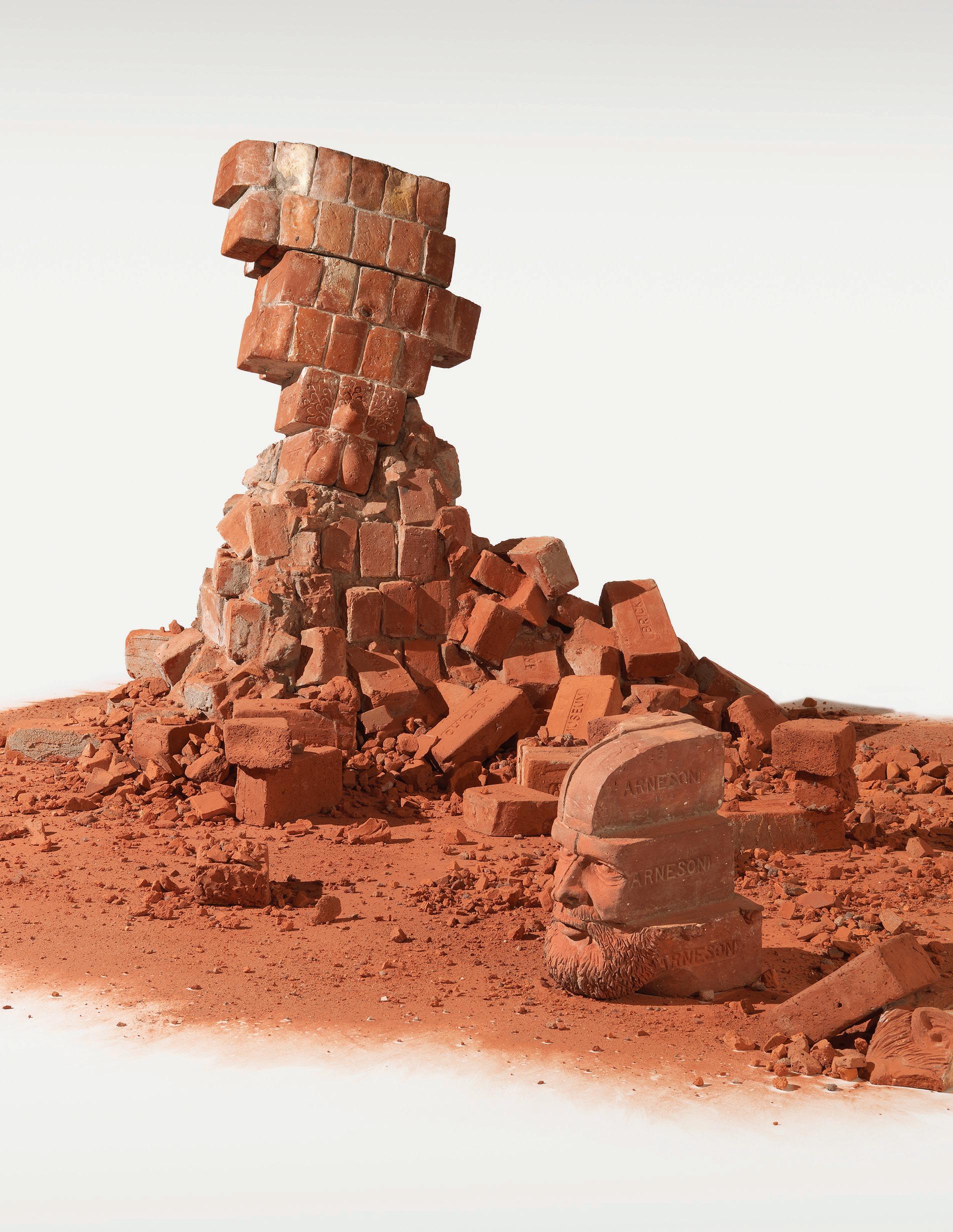
Cover: Face Brick (detail), 1981
Rear Cover: Bio Bob (detail), 1982
Copyright 2026 Paul Thiebaud Gallery. All Rights Reserved.
Images
front cover, pgs. 4, 6, 10-14, 17-29, 31-32, 34-101, 110-111, 123 back cover - Images Copyright 2026 Estate of Robert Arneson / Artists Rights Society (ARS) NY.
pg. 101 - Copyright 2026 Estate of Roy De Forest / Artists Rights Society (ARS) NY. pg. 103 - Copyright 2026 Linda S. Fitz Gibbon, photo: courtesy of the artist.
pg. 105 - Copyright 2026 Wanxin Zhang, photo: courtesy of the artist and Catharine Clark Gallery. pg. 107 - Copyright 2026 Jeremiah Jenkins, photo: courtesy of the artist. pg. 109 - Copyright 2026 Reniel Del Rosario, photo: courtesy of the artist.
Image credits
front cover, pgs. 4, 6, 8-9, 32, 34-99,110-111, back cover - photo: Matthew Miller. pgs. 10-14, 17-29, 31, 100, 123 - photo: courtesy of the Estate of Robert Arneson.
Text Copyright 2026 Linda S. Fitz Gibbon.
Text Copyright 2026 Wanxin Zhang.
Text Copyright 2026 Jeremiah Jenkins.
Text Copyright 2026 Reniel Del Rosario.
Design: Greg Flood and Matthew Miller.
No portion of this document may be reproduced or stored without the express written permission of the copyright holder(s).
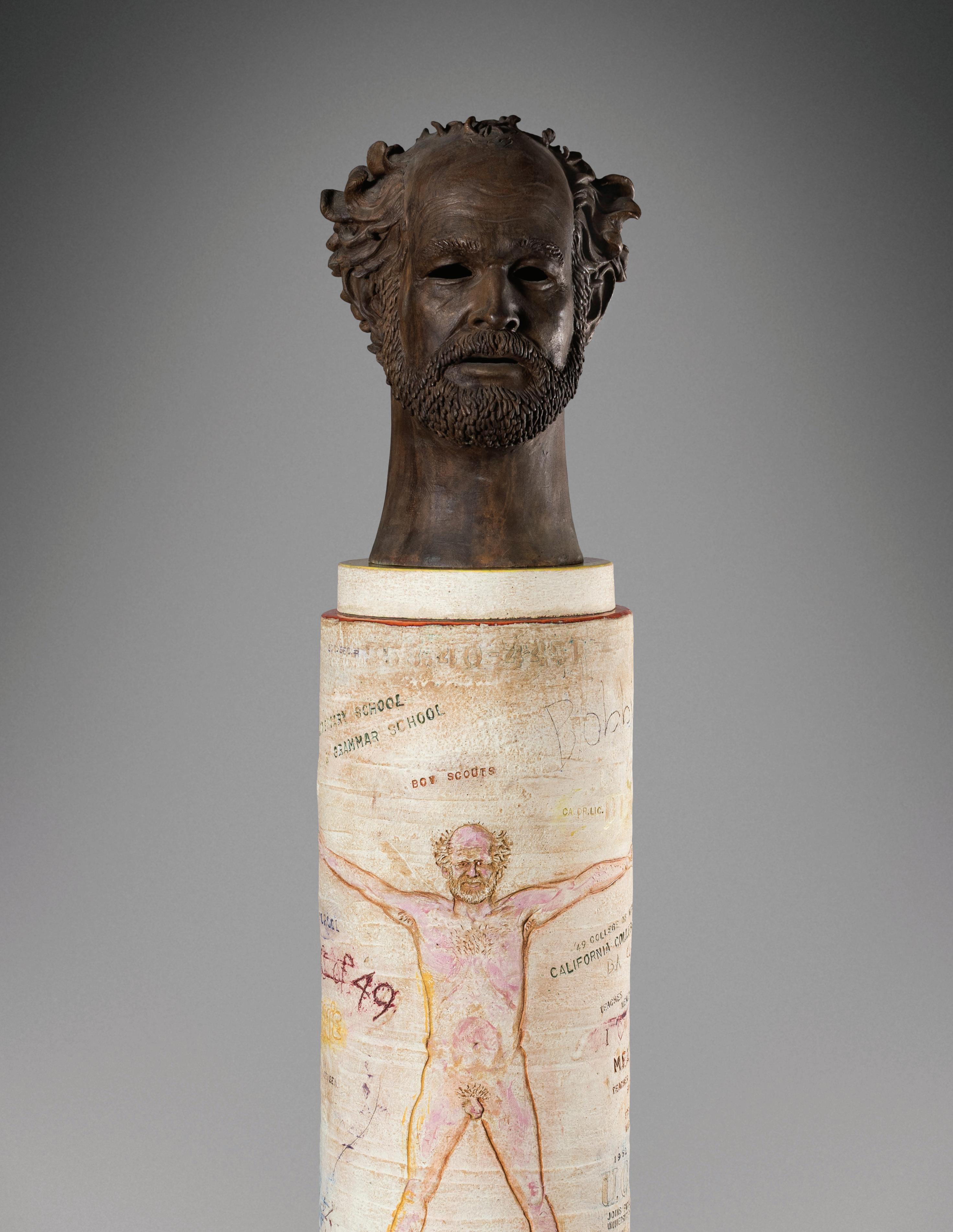
PAUL THIEBAUD GALLERY