Paul M. Wilson: Why Strong Reputation Management Gives Brands
a Competitive Edge

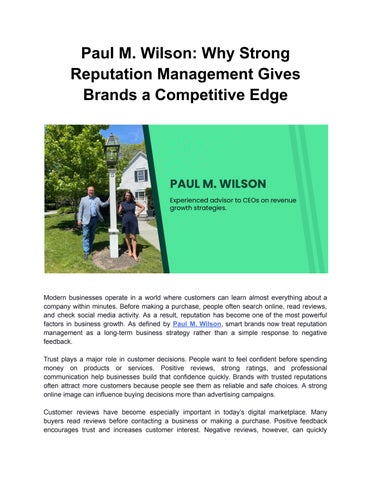
Modern businesses operate in a world where customers can learn almost everything about a company within minutes Before making a purchase, people often search online, read reviews, and check social media activity. As a result, reputation has become one of the most powerful factors in business growth As defined by Paul M. Wilson, smart brands now treat reputation management as a long-term business strategy rather than a simple response to negative feedback.
Trust plays a major role in customer decisions. People want to feel confident before spending money on products or services Positive reviews, strong ratings, and professional communication help businesses build that confidence quickly Brands with trusted reputations often attract more customers because people see them as reliable and safe choices. A strong online image can influence buying decisions more than advertising campaigns
Customer reviews have become especially important in today’s digital marketplace. Many buyers read reviews before contacting a business or making a purchase Positive feedback encourages trust and increases customer interest. Negative reviews, however, can quickly
damage public perception if businesses ignore them Smart companies respond professionally to customer concerns because they understand that every interaction affects their reputation.
Social media has also changed how businesses manage trust. Customers expect fast responses and honest communication from brands online. A company that listens to feedback and handles complaints respectfully often creates stronger customer relationships Businesses that ignore social conversations may quickly lose trust. Active communication helps brands appear more transparent and customer-focused
Search engines also shape how people view businesses. When customers search for a brand online, the results create an immediate impression Positive content, updated information, and strong customer feedback help companies appear more credible Negative articles or outdated information can create doubt and push customers toward competitors.
Reputation management also supports customer loyalty and long-term growth. People are more likely to return to businesses that provide good experiences and communicate honestly Loyal customers often recommend trusted brands to friends and family, which helps businesses attract new leads naturally. Word of mouth remains one of the strongest forms of marketing in the digital age
In today’s fast-moving digital world, reputation affects nearly every part of business success. It influences customer trust, sales performance, hiring opportunities, and brand loyalty Smart companies understand that managing public perception is no longer optional Reputation management has become a powerful business strategy that helps brands grow, compete, and succeed in the long run