Patrick Wentland : Designing Better Customer Experiences for Long-Term Loyalty

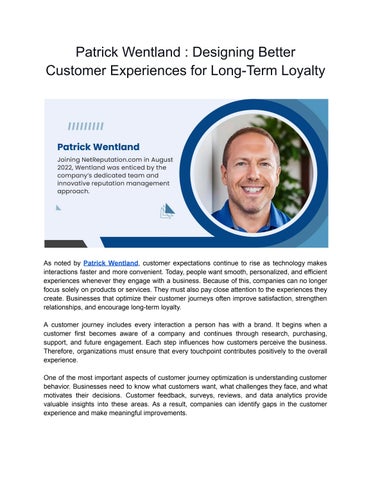
As noted by Patrick Wentland, customer expectations continue to rise as technology makes interactions faster and more convenient. Today, people want smooth, personalized, and efficient experiences whenever they engage with a business Because of this, companies can no longer focus solely on products or services They must also pay close attention to the experiences they create. Businesses that optimize their customer journeys often improve satisfaction, strengthen relationships, and encourage long-term loyalty
A customer journey includes every interaction a person has with a brand. It begins when a customer first becomes aware of a company and continues through research, purchasing, support, and future engagement. Each step influences how customers perceive the business. Therefore, organizations must ensure that every touchpoint contributes positively to the overall experience
One of the most important aspects of customer journey optimization is understanding customer behavior Businesses need to know what customers want, what challenges they face, and what motivates their decisions. Customer feedback, surveys, reviews, and data analytics provide valuable insights into these areas As a result, companies can identify gaps in the customer experience and make meaningful improvements
Personalization has become a major driver of customer satisfaction People appreciate brands that understand their needs and provide relevant recommendations. When businesses tailor their communication and services to individual preferences, customers feel recognized and valued. Consequently, personalized experiences often lead to stronger engagement and deeper customer relationships.
In addition to personalization, convenience plays a crucial role in shaping customer perceptions. Customers prefer simple processes that save time and reduce frustration Complicated websites, lengthy checkout procedures, and delayed responses can create negative experiences. Therefore, businesses should continuously evaluate their processes and remove unnecessary obstacles A smoother journey often results in higher satisfaction and increased customer retention
Consistency is equally important Customers interact with brands through multiple channels, including websites, social media platforms, email, and customer support teams. They expect the same quality of service across all of these channels When businesses deliver consistent messaging and reliable support, they build credibility and trust Furthermore, consistency helps customers feel more confident in their decisions.
Technology also supports customer journey optimization in powerful ways Businesses can use customer relationship management systems, artificial intelligence, and analytics tools to better understand customer needs and improve communication These technologies help organizations respond more quickly and deliver more relevant experiences As a result, customers receive timely assistance and enjoy a more seamless journey.
Another essential element involves actively listening to customers. Feedback provides valuable information about what works well and what needs improvement Businesses that respond to customer suggestions demonstrate that they value customer opinions Moreover, this commitment to improvement often strengthens customer trust and loyalty.
Optimizing customer journeys is an ongoing process rather than a one-time project Customer preferences evolve, and businesses must adapt to changing expectations. Companies that regularly review and improve customer experiences position themselves for long-term success Ultimately, a well-designed customer journey enhances satisfaction, encourages loyalty, and creates lasting relationships. By focusing on every stage of the customer experience, businesses can build stronger connections and achieve sustainable growth