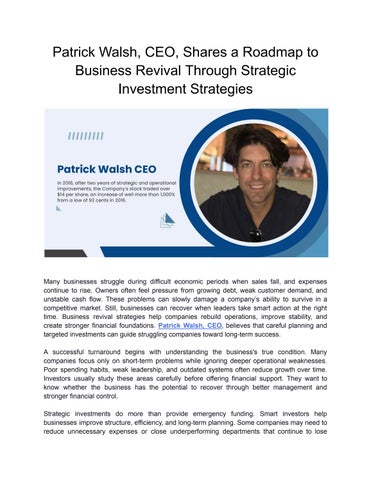
Patrick Walsh, CEO, Shares a Roadmap to Business Revival Through Strategic Investment Strategies

Many businesses struggle during difficult economic periods when sales fall, and expenses continue to rise Owners often feel pressure from growing debt, weak customer demand, and unstable cash flow These problems can slowly damage a company’s ability to survive in a competitive market. Still, businesses can recover when leaders take smart action at the right time Business revival strategies help companies rebuild operations, improve stability, and create stronger financial foundations Patrick Walsh, CEO, believes that careful planning and targeted investments can guide struggling companies toward long-term success.
A successful turnaround begins with understanding the business's true condition. Many companies focus only on short-term problems while ignoring deeper operational weaknesses Poor spending habits, weak leadership, and outdated systems often reduce growth over time Investors usually study these areas carefully before offering financial support. They want to know whether the business has the potential to recover through better management and stronger financial control
Strategic investments do more than provide emergency funding Smart investors help businesses improve structure, efficiency, and long-term planning. Some companies may need to reduce unnecessary expenses or close underperforming departments that continue to lose
money These changes may feel difficult at first, but they often prevent greater financial damage later. A focused recovery plan gives businesses a better chance of stabilizing operations and regaining customer trust
Cash flow management is one of the most important parts of business revival. Many struggling companies spend more money than they earn each month This pattern creates constant financial pressure and limits growth opportunities. Investors often help businesses create realistic budgets and improve financial discipline Better spending controls allow companies to focus resources on areas that support recovery and future growth
Strong leadership also plays a major role during a turnaround process Employees often lose confidence when the company direction feels unclear or unstable Investors sometimes recommend experienced managers who can guide the business with confidence and structure. Clear leadership improves teamwork and helps employees stay motivated during difficult periods. A strong management team also makes faster, smarter decisions when challenges arise
Technology upgrades can also support business recovery. Many failing businesses rely on outdated systems that reduce productivity and increase operational costs Modern tools help companies improve communication, customer service, inventory tracking, and financial reporting. Better technology allows businesses to operate more efficiently while creating stronger customer experiences These improvements often increase long-term competitiveness in fast-changing markets
Marketing strategies also need attention during a business turnaround A company may offer strong products or services, but weak marketing can limit customer growth. Investors often encourage businesses to improve online visibility, customer engagement, and brand communication Social media campaigns and digital marketing tools can help companies reconnect with old customers while attracting new buyers. Strong customer relationships support long-term stability and growth
Patience is essential during the recovery process. Most businesses do not recover immediately after receiving financial support Owners must stay focused on steady progress and continue improving operations over time. Small gains in customer satisfaction, employee morale, and financial control often lead to larger improvements later. Businesses that remain flexible and open to change usually build stronger foundations for future success
Corporate turnaround planning continues to help struggling businesses regain stability and move toward profitable growth Strategic investments provide more than financial relief because they also bring structure, guidance, and long-term direction. Companies that accept change, improve leadership, and focus on careful recovery strategies often discover new opportunities in competitive markets and create a stronger future for their business