Land as Liberation: Visualizing
Resurgence
Design & Urban Ecologies Studio 2
Mujeres en Movimiento

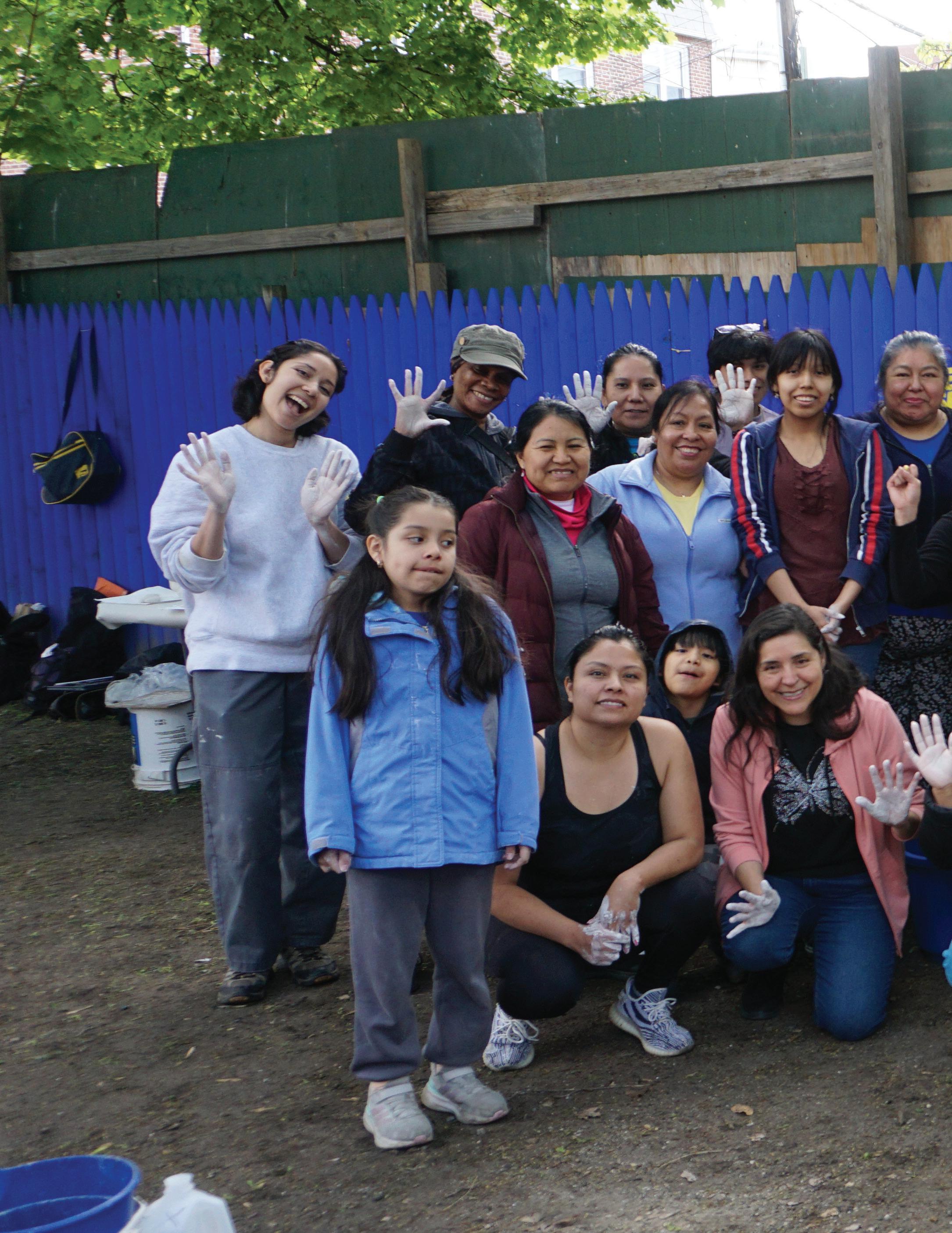
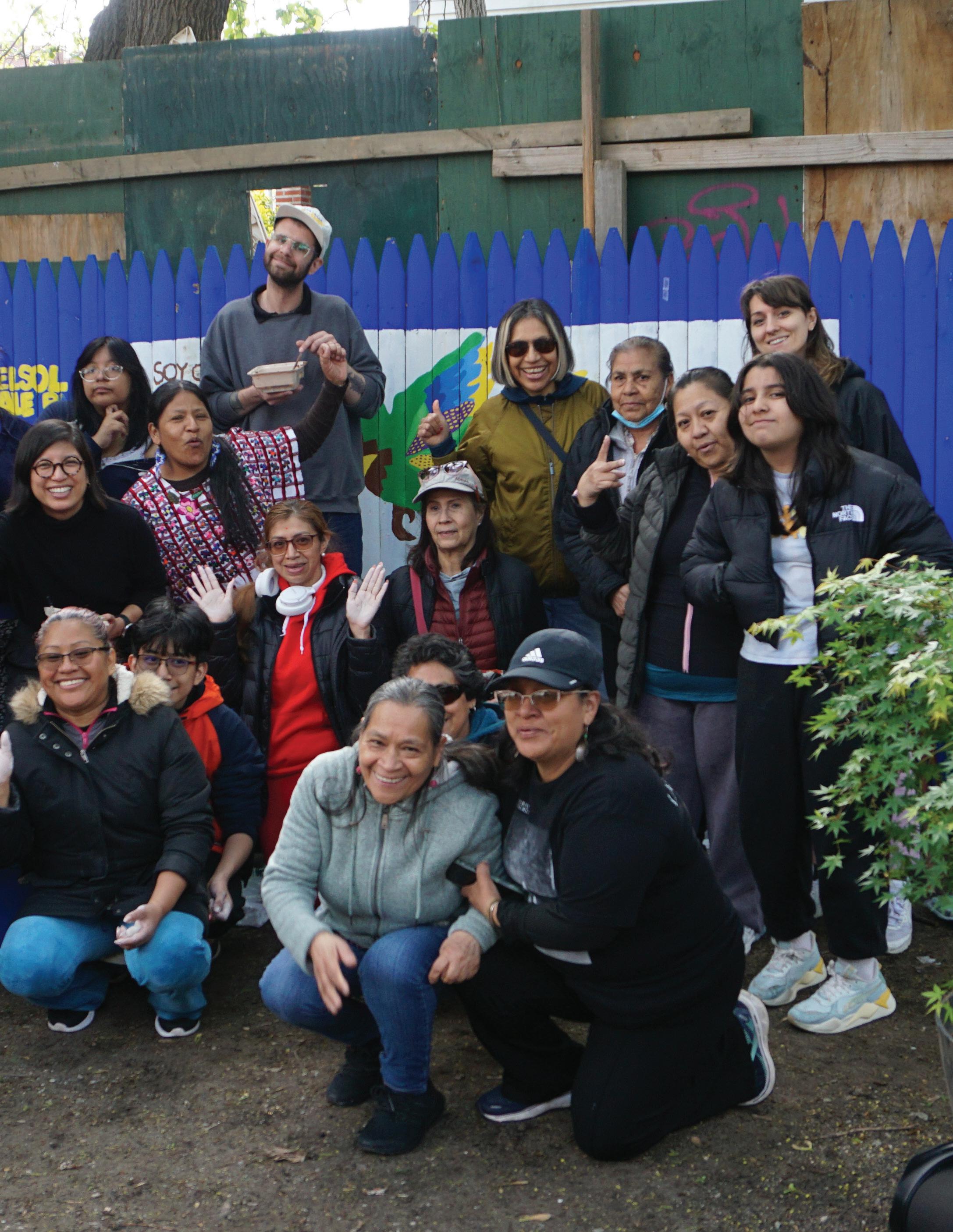
Mujeres en Movimiento
Design & Urban Ecologies
Studio 2
Jan - May 2026
Claudia Tomateo
Studio Instructor, Project Design, and Coordination
Estudio de Diseño y Ecologías
Enero – mayo del 2026
Docente a cargo, diseño y coordinación del proyecto
Mae Francke
Project Coordination, Workshop Facilitation, Poster Design, and Tour Support Coordinación del proyecto, facilitación de talleres, diseño de afiche y apoyo en el recorrido
Becca Williams, Christian D’Ostilio, Ismail Khadar, Jared Watson, Madelyn Capozzi, Victoria Bruno, Zane Elias
Research, Workshop Facilitation, Design, Studio Publication, and Tour Design Investigación, facilitación de talleres, diseño, publicación del estudio y diseño del recorrido
Veronica Ramirez, Glendi López, Monica Bunay, Roselvia Vargas, Gloria Assad, Camelia Ramirez, Emma Ortega, Eufemia Torres (Gemma), Maritza Campiz, Estrellita Sampayo, Juana Hernández, Patricia Rivera, and Araceli Vargas
Mujeres en Movimiento, Knowledge holders, Territorial Guides, Design Collaborators Mujeres en Movimiento, guardianas de saberes, guías territoriales, co-diseñadoras
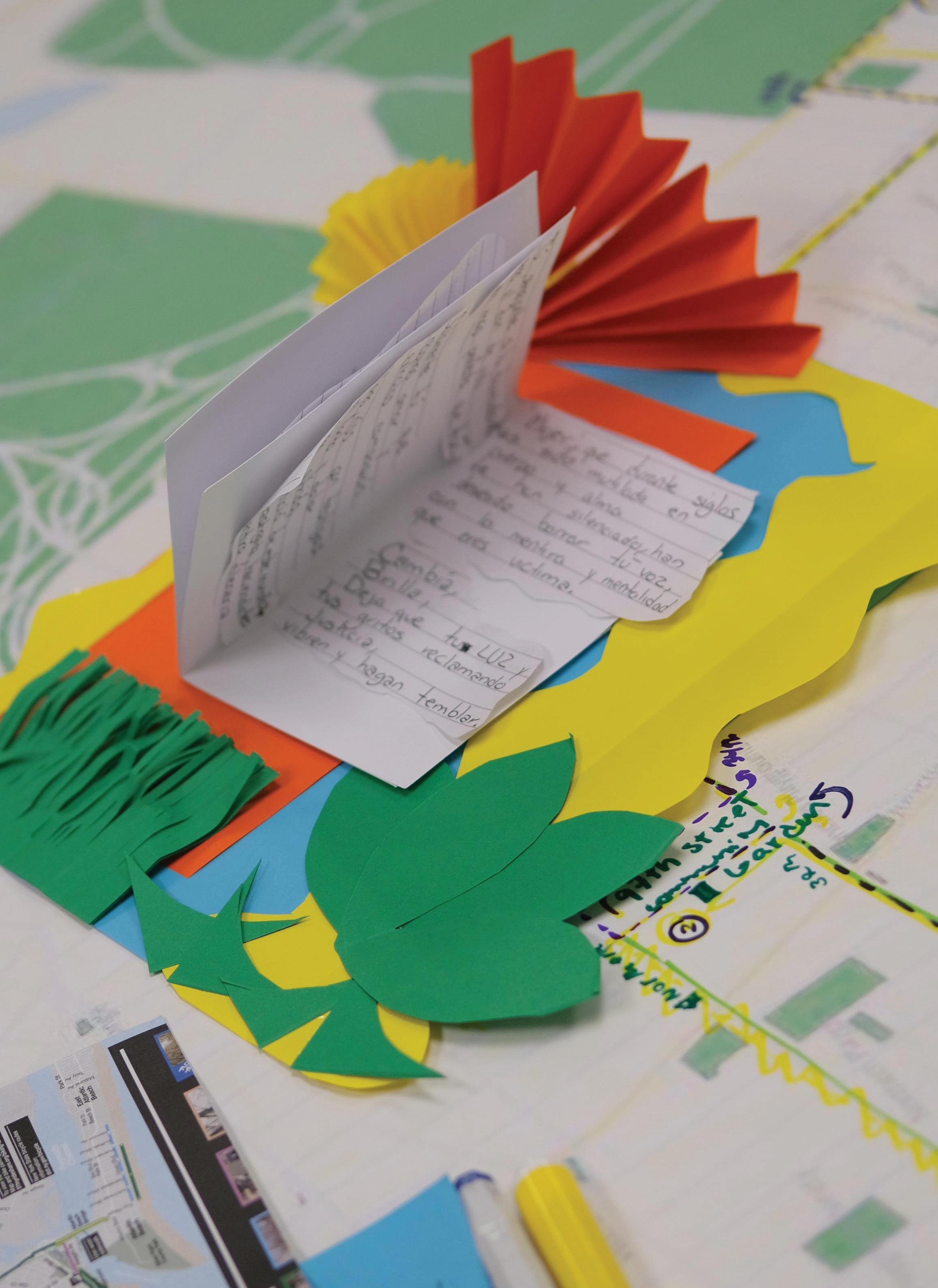
(Source: Mae Francke)
Memorias
Introducción al tour de bicicleta
Conexiones afectivas con la tierra
La migración como práctica de solidaridad ancestral
Reconexión multiespecie en el jardín
La naturaleza nos sostiene
El movimiento como encarnación colectiva
Tour a pie
Agradecimientos
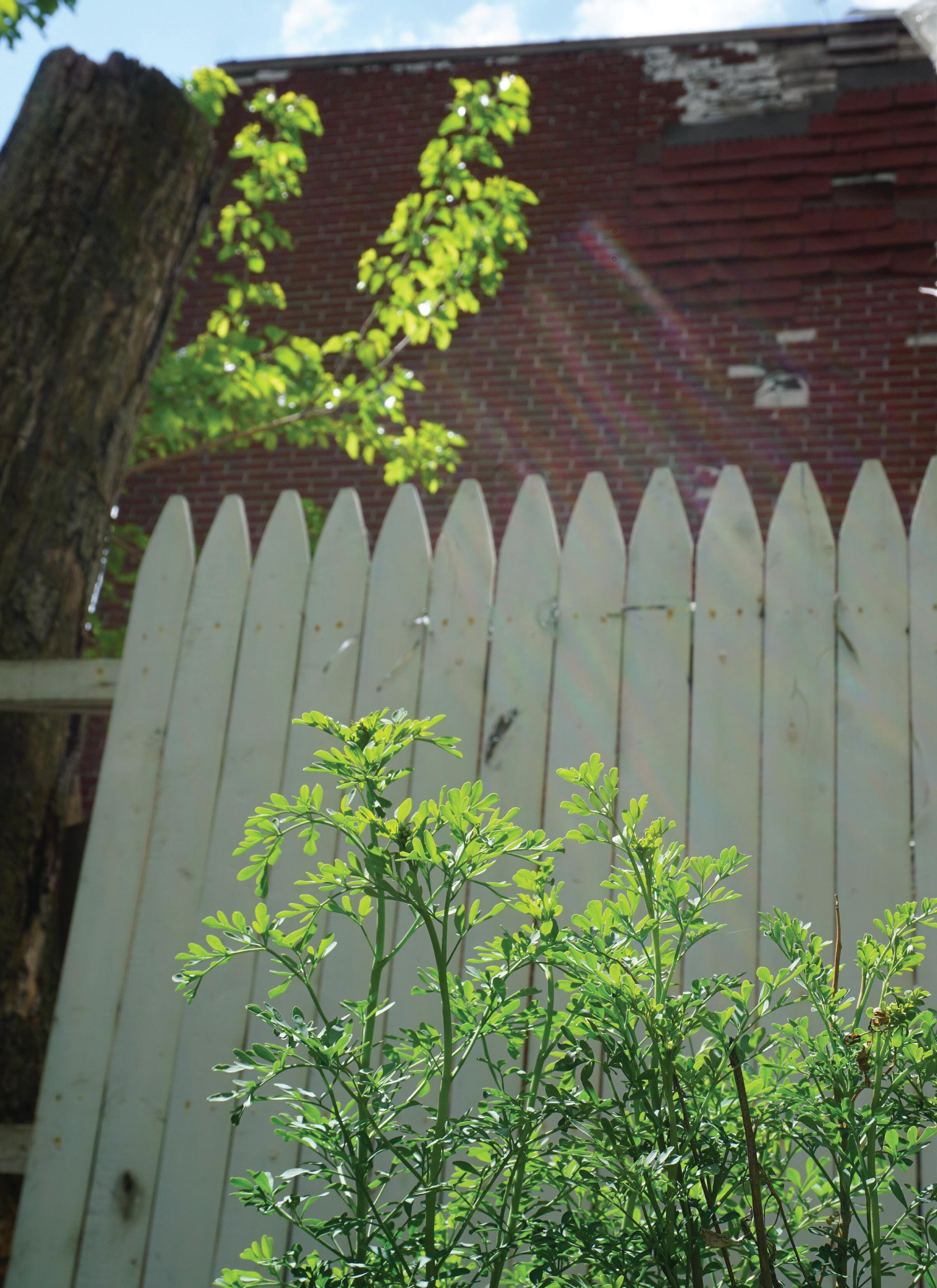
(Source: Madelyn Capozzi)
Corona and Flushing, Queens. Lenapehoking. 2026
In recognition of the land where our feet have walked, where our bodies have danced, and along paths where we have biked together, we acknowledge our position as guests among the unceded Lenape-Munsee territories, presently known as the neighborhoods of Corona and Flushing.
These lands have endured over 400 years marked by dispossession by European settlers who viewed the land as a commodity, over 200 years of industrial contamination by commercial manufacturing plants and the United States Military, and over 100 years of pollution in the air from the circulation of commerce and gasoline dependent vehicles. Over 50 years of ongoing displacement and divestment practices continue. Still the heart which gives life to land continues to beat, the sea continues to lap the shore, rain and snow continue to renew us through the seasons, the sun gives us light and the tree gives us shade. We breathe in, life, we breathe out, life. In recognition of the atrocities that our peoples have committed against the land which sustains us today, we stand alongside stewards and caretakers, alongside our friends and neighbors who live within diverse conditions, and alongside those this country has dispossessed, still today. We acknowledge an everlasting relationship to this land which continues to be a part of us, whose ancestral name is Lenapehoking.
Corona and Flushing, Queens. Lenapehoking. 2026
En reconocimiento a la tierra por la que han caminado nuestros pies, donde nuestros cuerpos han bailado y por los senderos por los que hemos pedaleado juntos, reconocemos nuestra condición de invitados en los territorios no cedidos de los Lenape-Munsee, conocidos actualmente como los barrios de Corona y Flushing.
Estas tierras han soportado más de 400 años marcados por el despojo de los colonos europeos, quienes consideraban la tierra como una mercancía; más de 200 años de contaminación industrial por parte de las plantas de fabricación comercial y el ejército de los Estados Unidos; y más de 100 años de contaminación del aire por la circulación del comercio y los vehículos que dependen de la gasolina. Continúan las prácticas de desplazamiento y desinversión que se han prolongado por más de 50 años. Aún así, el corazón que da vida a la tierra sigue latiendo, el mar sigue recorriendo la orilla, la lluvia y la nieve siguen renovándonos a través de las estaciones, el sol nos da luz y los árboles nos dan sombra. Inhalamos vida, exhalamos vida. En reconocimiento de las atrocidades que nuestros pueblos han cometido contra la tierra que nos sustenta hoy, nos ponemos del lado de los guardianes y cuidadores, del lado de nuestros amigos y vecinos que viven en diversas condiciones, y del lado de aquellos a quienes este país ha desposeído, aún hoy. Reconocemos una relación eterna con esta tierra que sigue siendo parte de nosotros, cuyo nombre ancestral es Lenapehoking.
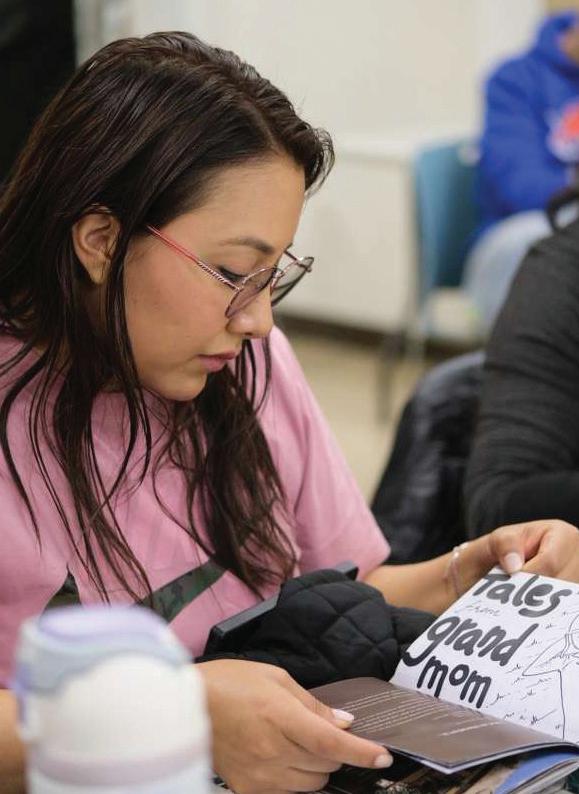
“Land as Liberation: Visualizing Resurgence”, what does that mean to you?
We in the last class of the Design and Urban Ecologies program invite you to explore that question with us. Throughout this experience in studio 2 we have read and explored numerous texts regarding Indigenous concepts and philosophies on the land and ‘ecologies’. In thinking on resurgence, a pivotal text has been Leanne Simpson’s Theory of Water.
Nibi (water), as it is known in Nishnaabeg, is central to life on this planet we call home. As I am (Ismail) writing this the spring rains are steadily falling across Manna-hata ushering in the green foliage. Through the rains of spring, the frosts of winter, the clinging humidity of summer, and the westerlies flung from the oceans currents, we are living within the cycle that is water.
In a class where we look at land as liberation, water is the radical promise of change. As we compile this work there are radical changes coming to the Design and Urban Ecologies program at Parsons. As we have seen with water there is potential for bountiful growth and utter destruction. Yet, as this program is caught in the currents of this season, we invite you to join us in our praxis. Join us is reclamation of space, recognition of history, work rooted in community, and radical visions of the future. Within this publication you will find beyond just our methodology, the work we’ve done with our community partners, land lexicons, land memories, and more. So, please join us in this celebration of a cycle.
“La tierra como liberación: visualizando el resurgimiento”… ¿qué significa eso para ti?
Nosotros, la última generación del programa de Diseño y Ecologías Urbanas, te invitamos a explorar esa pregunta con nosotrxs. A lo largo de esta experiencia en el Estudio 2, hemos leído y trabajado con varios textos que abordan conceptos y filosofías Indígenas sobre la tierra y las “ecologías”. Al pensar en el resurgimiento, un texto clave para nosotros ha sido Teoría del agua de Leanne Simpson.
El nibi (agua), como se le conoce en lengua Nishnaabeg, es fundamental para la vida en este planeta que llamamos hogar. Mientras escribo esto (Ismail), las lluvias de primavera caen de manera constante sobre Manna-hata, dando paso al verde que vuelve a crecer. A través de las lluvias de primavera, las heladas del invierno, la humedad que se pega en el verano y los vientos del oeste que llegan con las corrientes del océano, vivimos dentro de ese ciclo que es el agua.
En una clase donde entendemos la tierra como liberación, el agua representa una promesa radical de cambio. Mientras reunimos este trabajo, también se vienen cambios importantes para el programa de Diseño y Ecologías Urbanas en Parsons. Como vemos con el agua, hay potencial tanto para un crecimiento abundante como para una destrucción total. Aun así, mientras este programa navega las corrientes de este momento, te invitamos a ser parte de nuestra praxis. Acompáñanos en la recuperación del espacio, en el reconocimiento de la historia, en un trabajo arraigado en la comunidad y en imaginar futuros radicales.
En esta publicación encontrarás no solo nuestra metodología, sino también el trabajo que hemos hecho con nuestras comunidades aliadas, léxicos de la tierra, memorias del territorio y mucho más. Así que te invitamos a sumarte a esta celebración de un ciclo.
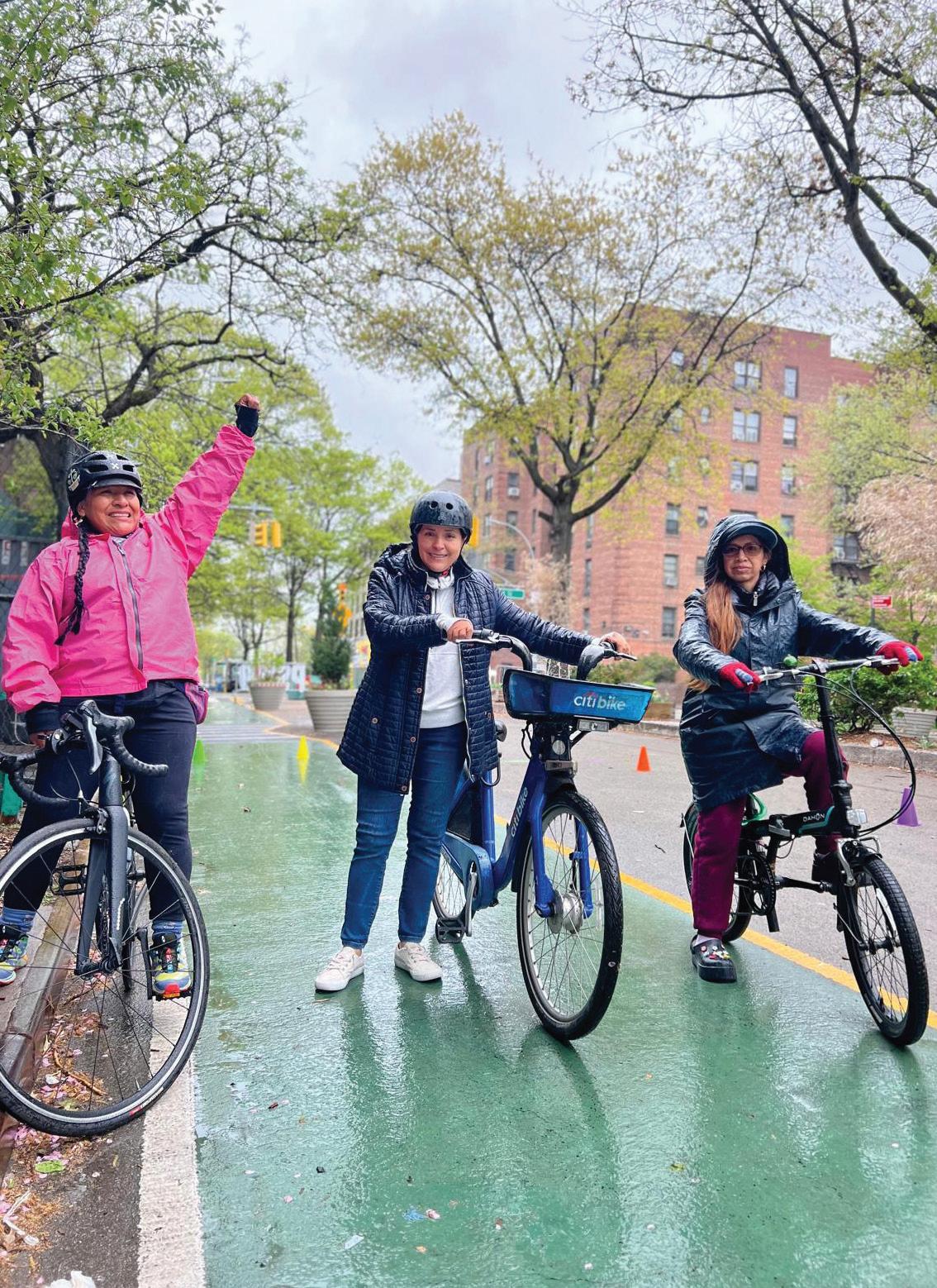
(Source: Mae Francke)
In 2012, Mujeres en Movimiento was created to generate new spaces for civic and political participation in Corona, centering the voices of immigrant women as agents of transformation.
Using artivism and dance, the organization seeks to promote the empowerment and liberation of women, creating safe spaces that foster healing as a collective act and reclaim the daily lives of Corona residents.
In 2014, Mujeres en Movimiento, along with a group of local organizations, launched a long campaign to transform 111th Avenue and create a bike path to make transit safer and Flushing Park more accessible. After three years of campaigning, which included harassment and racism from city authorities, the group successfully convinced city officials and Mayor Bill de Blasio to approve the reconstruction of the avenue.
Since then, Mujeres en Movimiento has continuously worked to create community, open, and green spaces for local immigrant communities, aiming to address growing inequalities in the neighborhood. Their commitment to social justice and the wellbeing of their neighborhood has been a great inspiration for many immigrant women and mothers in Queens and across the city.
Their latest project focuses on transforming an abandoned lot into the Huerto Comunitario Salud en Movimiento (Health in Movement Community Garden), turning it into a vital community resource that unites women and local communities in pursuit of a better future for themselves and future generations.
This text is excerpted from Mae Francke’s thesis for the Design & Urban Ecologies program.
En 2012, Mujeres en Movimiento fue creado para generar nuevos espacios de participación cívica y política en Corona, Queens, centrando las voces de las mujeres inmigrantes como agentes de transformación.
A través del artivismo y la danza, la organización busca promover el empoderamiento y la liberación de las mujeres, creando espacios seguros que fomentan la sanación como un acto colectivo y permiten recuperar la vida cotidiana de los residentes de Corona.
En 2014, Mujeres en Movimiento, junto con un grupo de organizaciones locales, lanzó una campaña a largo plazo para transformar la Avenida 111 y crear una ciclovía que hiciera el tránsito más seguro y el acceso a Flushing Park más fácil. Después de tres años de campaña, que incluyeron acoso y racismo por parte de autoridades de la ciudad, el grupo logró convencer a funcionarios municipales y al alcalde Bill de Blasio de aprobar la reconstrucción de la avenida. Desde entonces, Mujeres en Movimiento ha seguido trabajando para crear espacios comunitarios, abiertos y verdes para las comunidades inmigrantes locales, con el objetivo de enfrentar las crecientes desigualdades en el vecindario. Su compromiso con la justicia social y el bienestar de su comunidad ha sido una gran inspiración para muchas mujeres inmigrantes y madres en Queens y en toda la ciudad.
Su proyecto más reciente se enfoca en transformar un lote abandonado en el Huerto Comunitario Salud en Movimiento, convirtiéndolo en un recurso vital que une a mujeres y comunidades locales en la búsqueda de un mejor futuro para ellas y para las próximas generaciones.
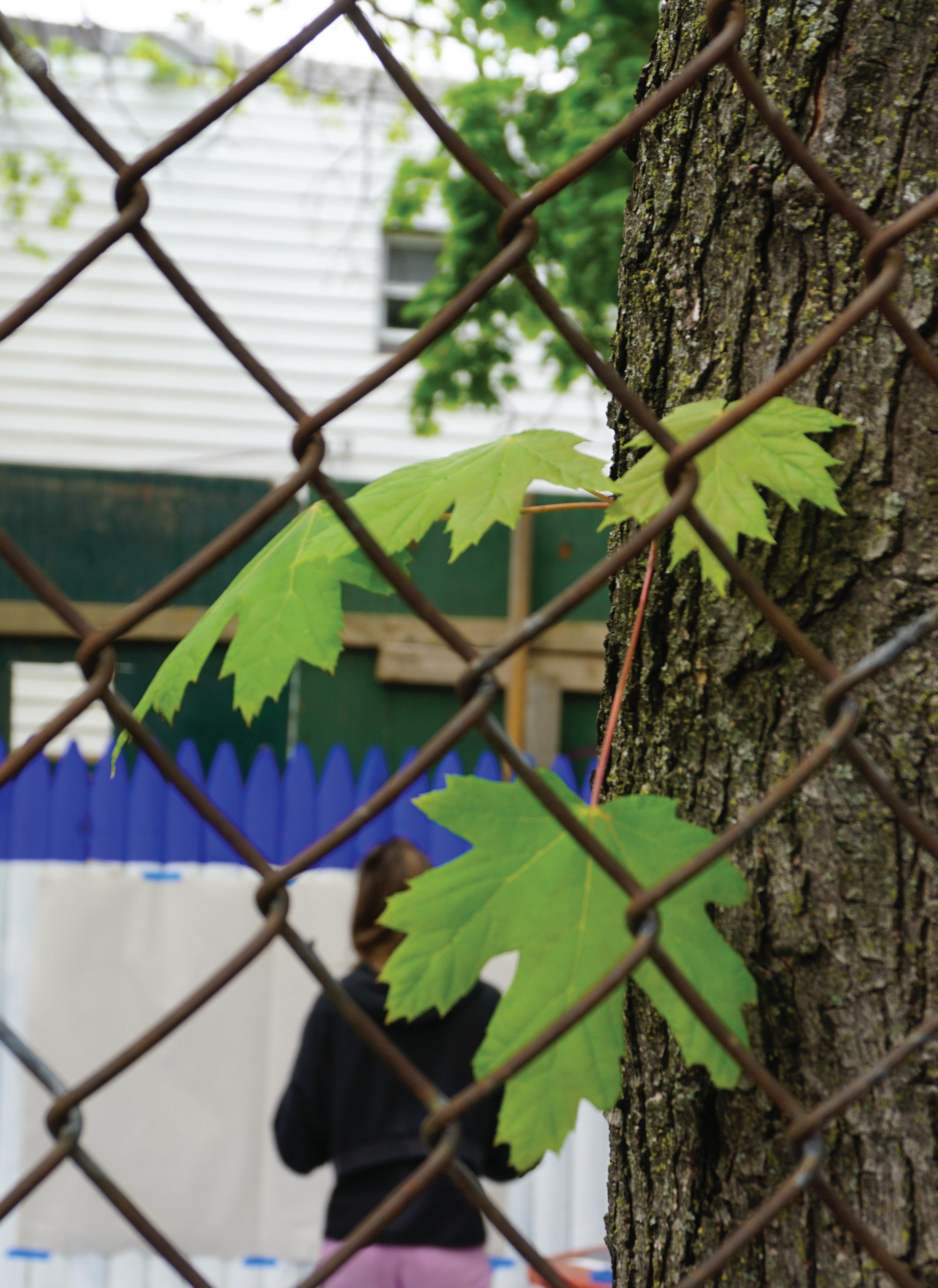
(Source: Ismail
Our work this term as a studio focused on the land and the people of Queens, New York. We considered not just the city as it exists today, but its long history.
We acknowledged the land and its history of stewardship and dispossession. We named Indigenous communities who lived alongside the land for generations. We conducted desire-based research, equipped with a collection of generative refusals. We developed a series of workshops with our community partner, Mujeres en Movimiento. We danced and learned about bailotherapia with them. We drew, talked about green space in our city, worked with clay, took photos, spoke Spanish, and learned how to ride bikes in a group.
And we created this. We created a print booklet to share our work together with our community partners. We hope that our work this term will inspire others to engage with the land and with people who make New York what it is in both big ways and small.
We grounded our work in relationality, drawing on Shawn Wilson’s work. We understood that knowledge comes from relationality and does not belong to just one individual. Our work with Mujeres en Movimiento was collaborative rather than extractive. We were active participants in their work and they in ours.
This collective knowledge we built together was more than any one person’s contribution. Ours was a project which could only have been built together. This was a process of mutual learning.
We were informed by Eve Tuck and K Wayne Yang’s concept of generative refusal. We were committed to being neither extractive nor harmful and to treating our community partner with full dignity and respect rather than simply as data points to collect. We thought deeply about what it means to refuse harmful practices, inspiring us to think and work creatively. We hope that our refusals as laid out in this publication help to show how this methodology informed our outcomes.
We explored and experienced Leanne Betasamosake Simpson’s argument that land is not a setting for learning but the source of it. We walked and we biked and we ate and we listened to Queens. These were not small supplemental exercises but at the core of our methodology. We understood that, to truly get to know a community and to be in community with our partners, we needed to leave Manhattan and learn from the streets and the people of Queens.
Finally, as bell hooks reminds us, we recognize that sharing these stories here with you is itself a way of building collective understanding. In producing this document, we hope to make the knowledge we built with Mujeres en Movimiento accessible and generative toward future deeper understanding. Our semester is over but our work is never finished and these stories do not belong to us alone. This publication is not meant to be final but, instead is simply a piece of what we created with our community partner.
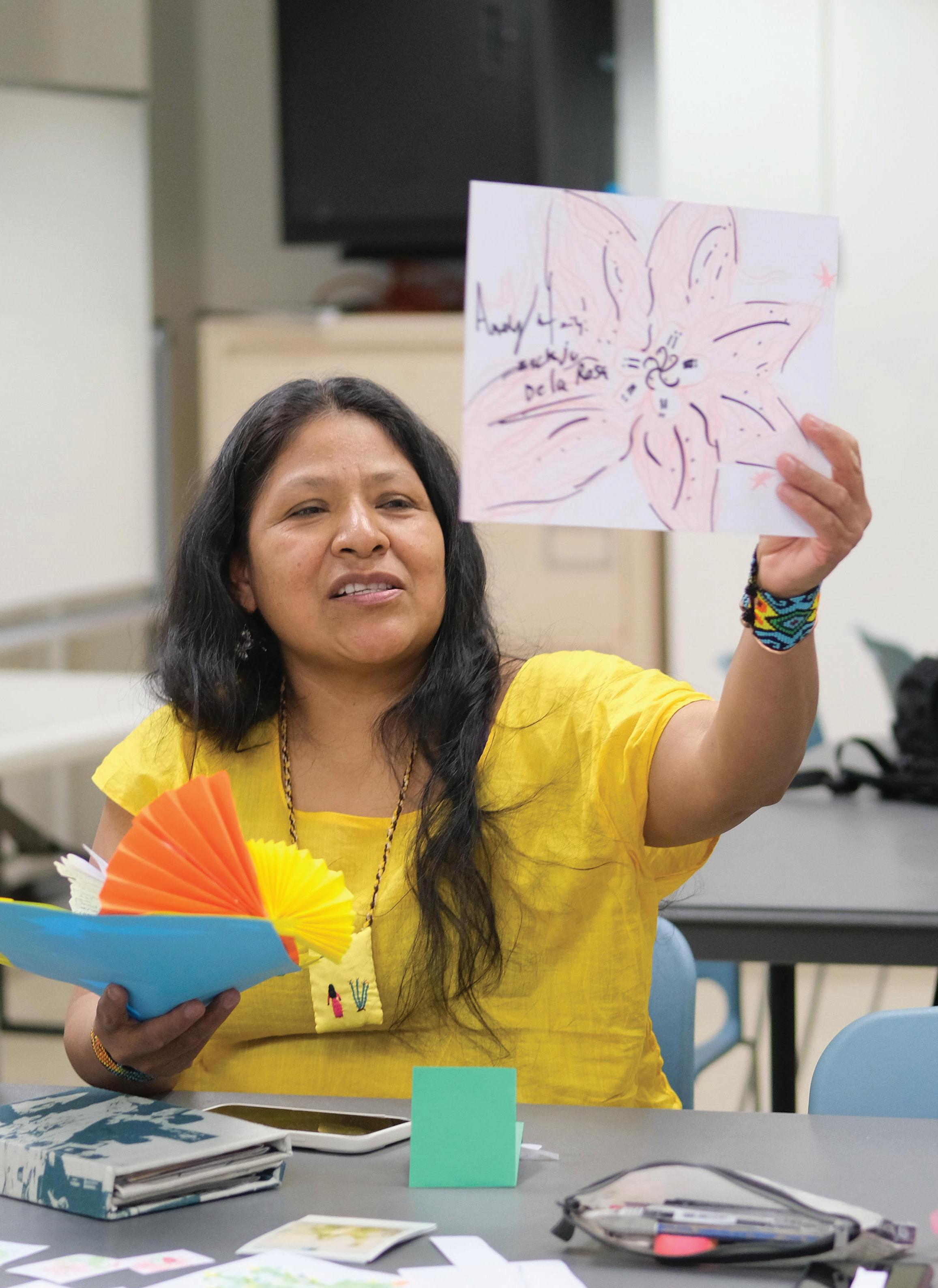
(Source: Mae Francke)
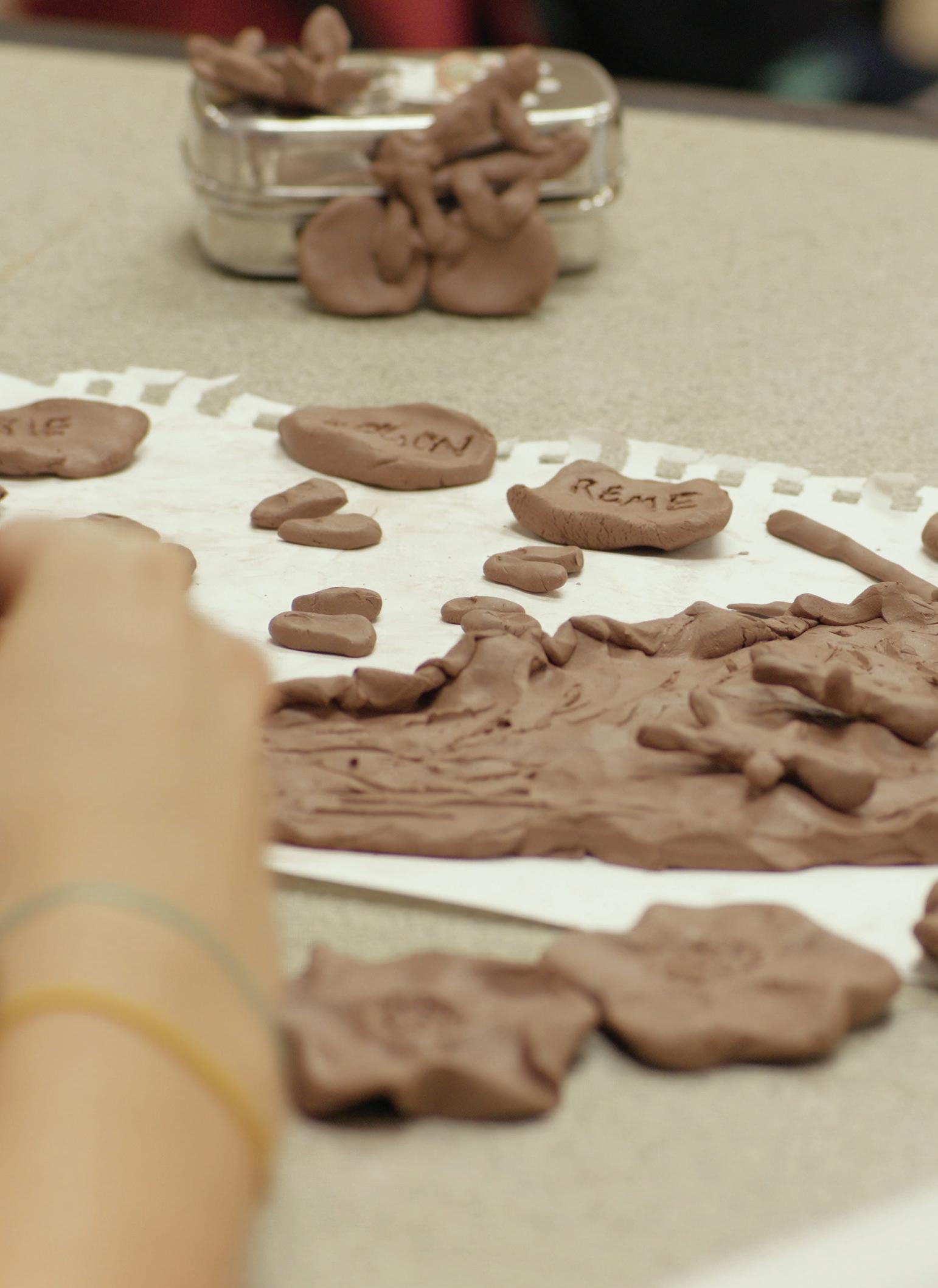
(Source:
The complexities of our world are often far grander than language can conceive. The land lexicon is an attempt to communicate concepts and feelings that we’ve noticed.
During our time in class, we’ve examined various methodologies and philosophies around relationships to land, in particular Indigenous philosophies. This reflection on ‘land’ has helped us reconsider the colonial paradigms we’ve all inherited. Throughout this process, we have ideated and created our own ‘lexicon’ or body of terms describing concepts that are known and felt, but may not yet have language in English. We all wish to share two examples from the each of us with you. This is not an objective practice and we do not seek to canonize any of these terms rather this is an exercise we seek to share.
Madelyn Capozzi
I feel liberated with land when we spend time getting to know each other, merging our concerns without erasing our differences, blurring the boundaries between individuals. I am liberated when I learn and am learned: my needs, their needs; their quirks, my routines; my joys, their sorrows. Lines we don’t cross, soft spots we tread lightly around, places of wounding that slowly regenerate through gentle touch and mindful presence.
(Source: Madelyn Capozzi)
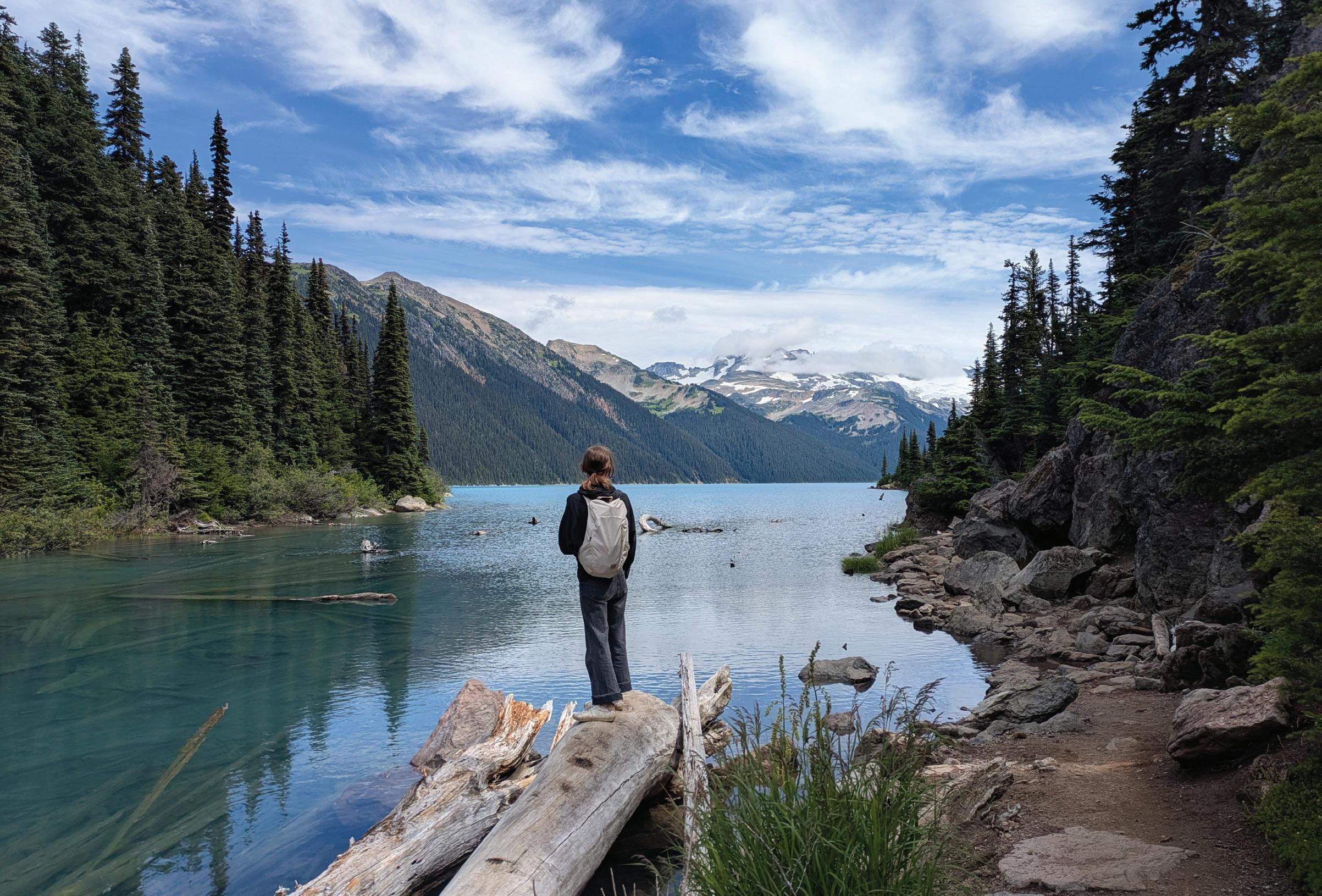
Madelyn Capozzi
I feel liberated with land when we are involved in processes that serve life, working together and alongside each other like water and the sun. When the land hosts a diverse ecosystem of plants, animals, fungi and microbes, my gaze softens and I breathe a little easier. Similarly, when my body is engaged in a rich variety of movements, conversations, activities and flows of energy, I imagine the land relaxing too, heaving a sigh of relief and sinking a little deeper into the clay and the mud.
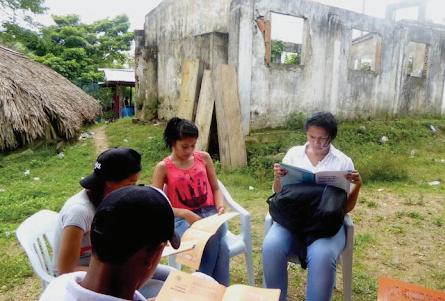
(Source: Angela J. Lederach
Christian D’Ostilio
Land is deeply tied to the everyday seeds we cultivate for peace. We cultivate the land through relationality between people, the commons, and the environment. I’ve been continually learning from the “slow peace ecologies” inspired by campesino peacebuilder Jorge Peréz who was a pioneer peacebuilder of the Montes de María of the caribbean coast of Colombia. In the campesinos, these communities hold true the slow ecologies of peace well understand the importance of relationality, importance of presence, and essentialness of dialogue. The land liberates us for grounding our presence through slowness and regeneration.
(Source: Nate Holland / Unsplash)
(Source: Christian D’Ostilio)
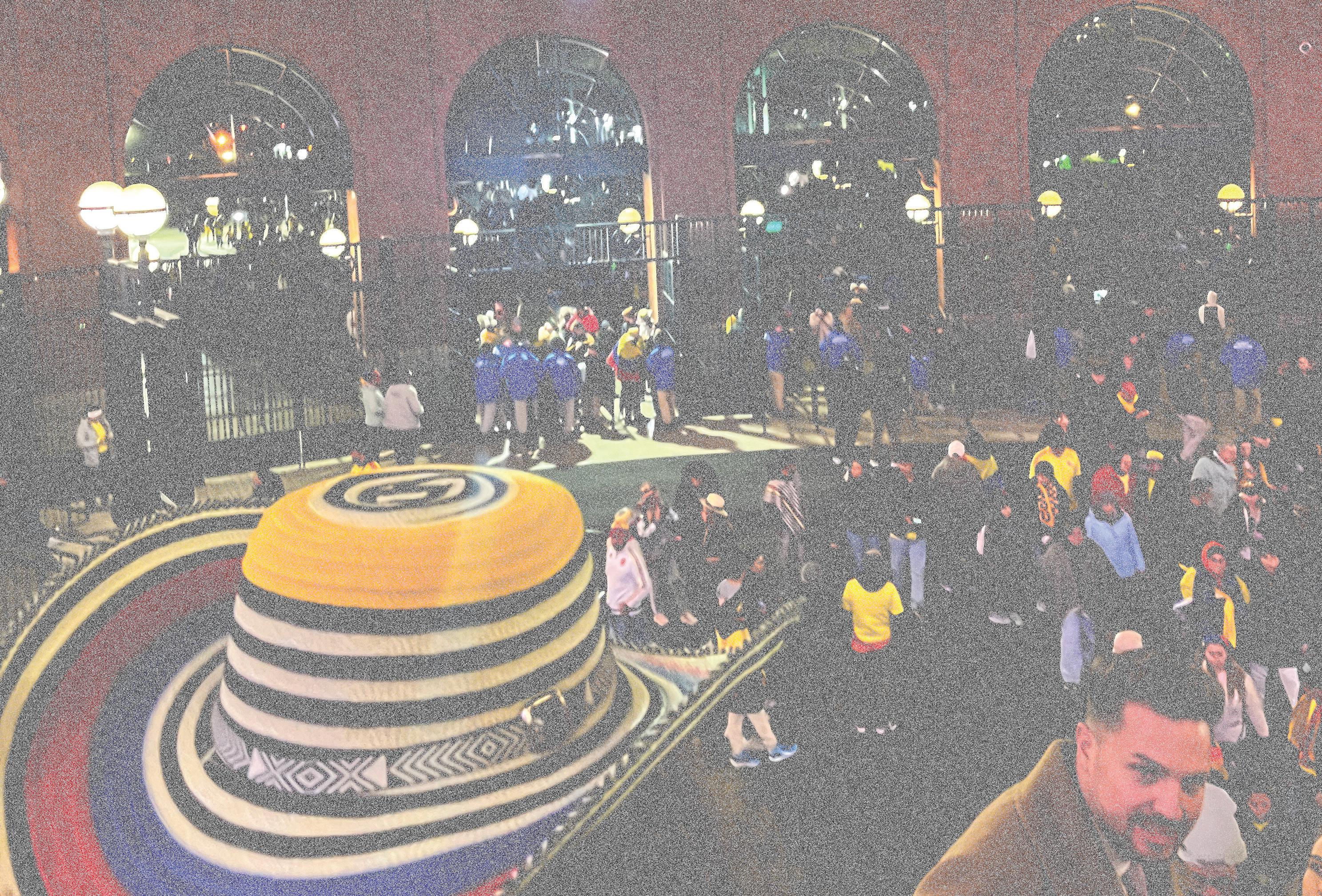
Christian D’Ostilio
I feel liberated with the land when I spread my roots in a community whose existence is an act of reclamation against the colonial power. The cultural melting pot of Queens shows community and placemaking of enclaves whose collective agency of the public space is resistance to the colonial powers that have subjected them to their displacement. The land does not forget, and I believe the land is happy when the public sphere is harnessed by immigrant diaspora sharing a global struggle.
(Source: Lonely Planet)
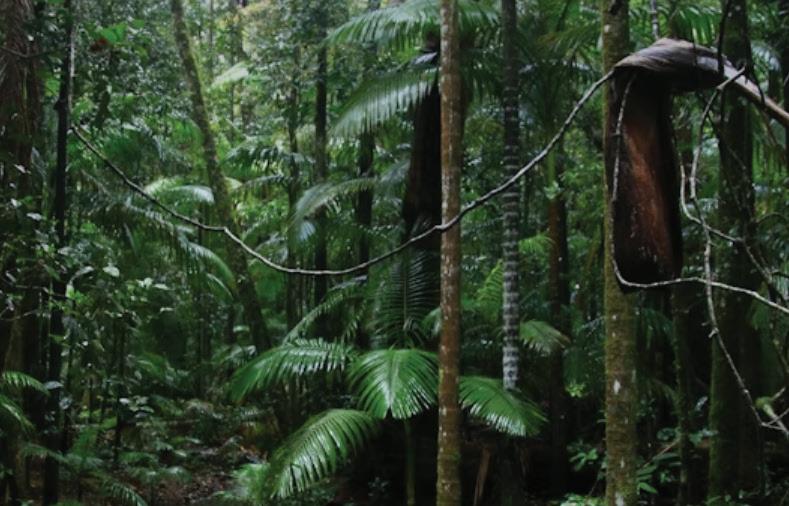
Ismail Khadar
A Mende phrase and also place meaning “strange, weird, wonderful, magical ect.” It’s also used as a reduplication method “kama kama” to emphasize something. As a noun “Kama” or more specifically “Kamala” is the gateway to the Poro/secret bush used by secret societies in Sierra Leone. I think in our modern/western contexts we treat space as more or less inert. The Kamala is a place that is both ‘wonderful’ and ‘dangerous’. Like the anthropological meaning of liminal, you cannot leave this place unchanged.
(Source: Nate Holland / Unsplash)
(Source: Stock Cake)
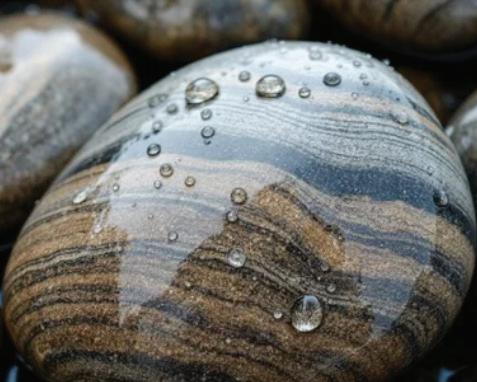
Ismail Khadar
From the Anglo-Saxon term ‘Scir-Stan’, Scring evokes the ephemeral act of seeing a glinting stone in the soil or water. Like the smell of petrichor, it foretells something that has either yet to come/already past/ or is ongoing. The action of scring communicates to us visually the bounty and treasure of the earth through the off chance of catching a stone’s lustre.
(Source: Jored Watson)
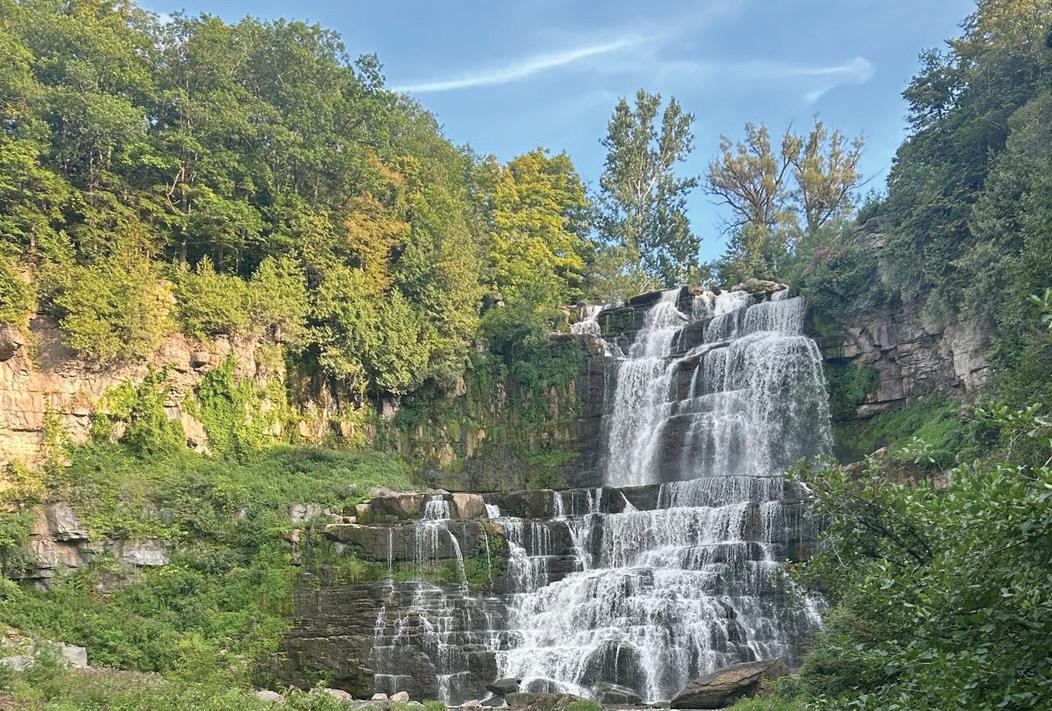
Jared Watson
The Chittenango ovate amber snail, about the size of your pinky nail, only lives below Chittenango Falls and nowhere else in the world. We were glad to be able to visit the falls, that it was open to everybody but didn’t know about the snail until a few years ago.
(Source: Nate Holland / Unsplash)
(Source: Jared Watson)
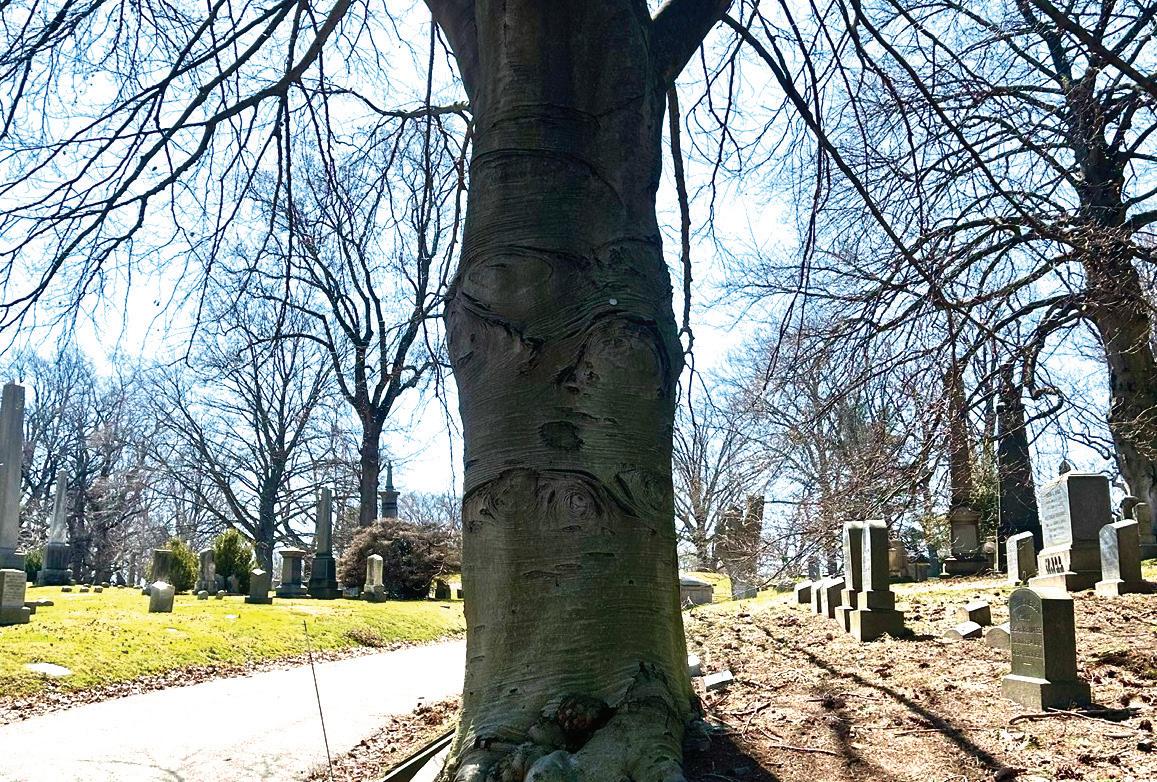
Jared Watson
Every now and again, Evan’s and my day off will line up and we’ll spend most of the day wandering around the neighborhood and running errands together. With nowhere to be urgently, the neighborhood stretches out toward coffee, toward laundry, down footpaths through the cemetery which loop around and put you back out on 4th Avenue. It’s all there on the days I have to rush past it but I’m not going to see it if I don’t have the time to slow down. It is in these long days spent without getting on the train that I am reminded to breathe.
(Source: Becca Williams)
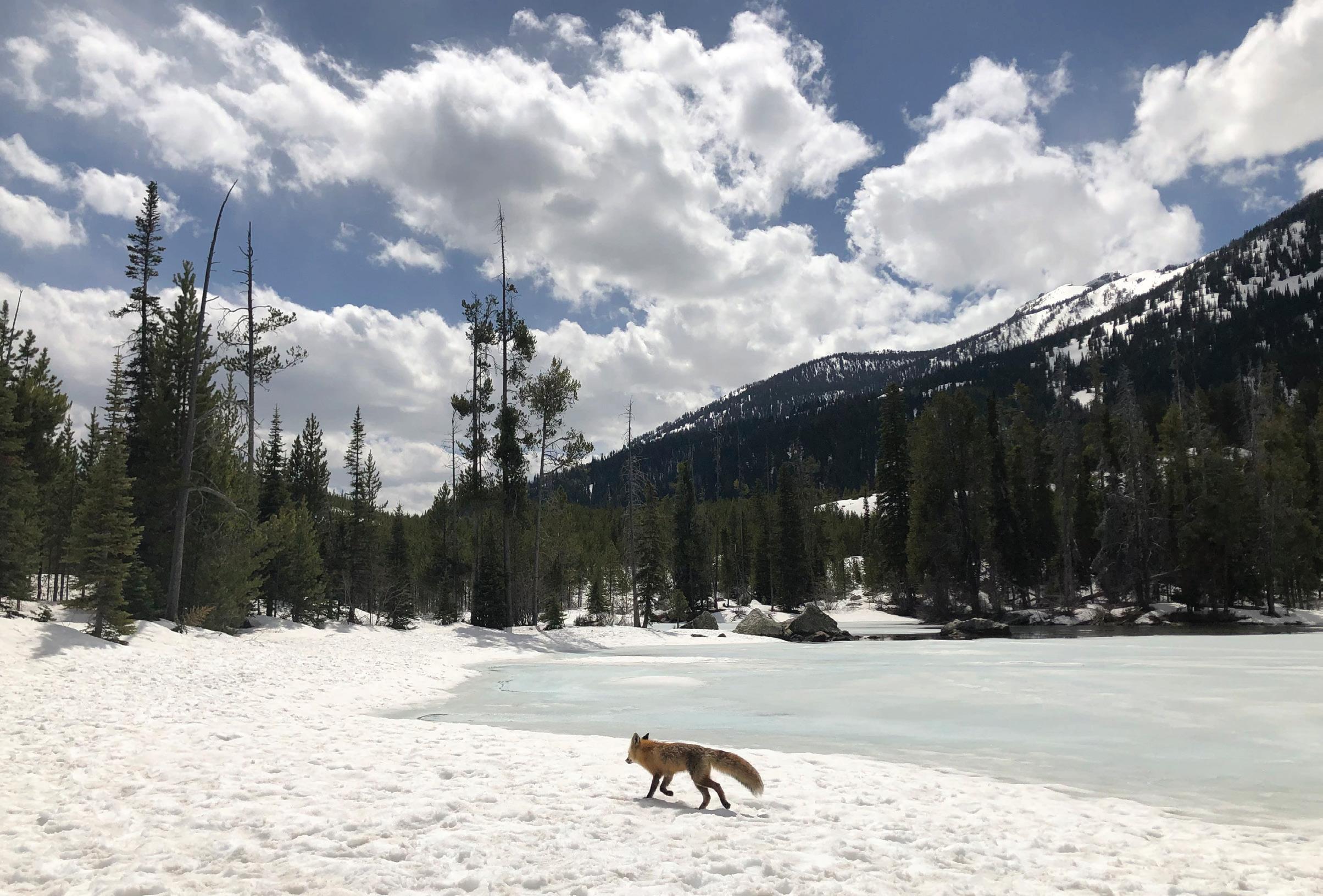
Becca Williams
I’ve lived in many places and have moved 10 times over the course of the last 10 years. For an autistic person, this is particularly jarring and destabilizing. But in moving so many times, perhaps looking for a more perfect community, I have learned that communities are all imperfect, and the task at hand is to build upon relationships to understand ourselves and our surrounding environment better. The trees, mushrooms, and birds have a lot to teach if we root ourselves long enough to understand them.
(Source: Nate Holland / Unsplash)
(Source: Becca Williams)
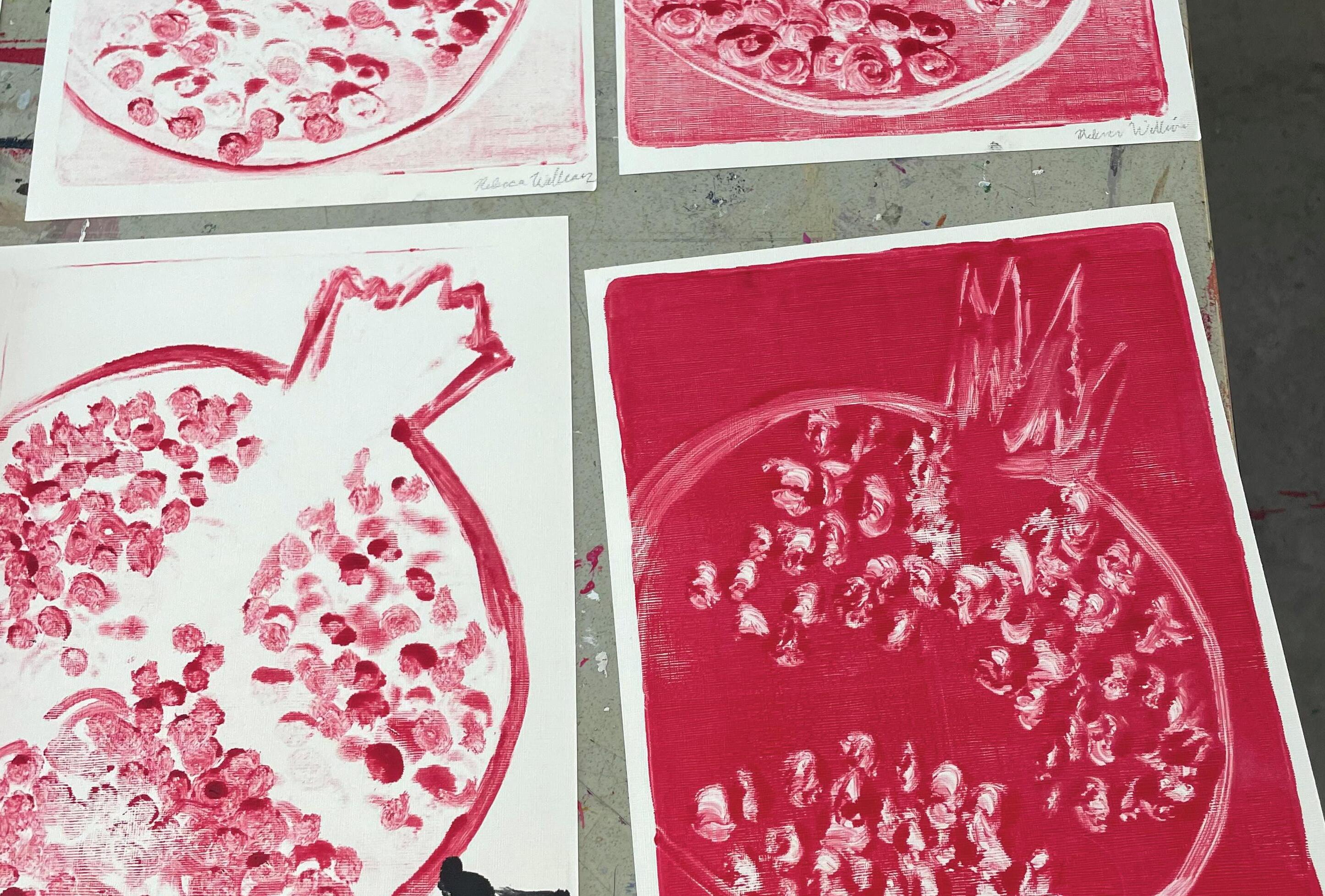
Becca Williams
We are a part of the land. The things we make are a part of the land. To resist the notion of untouched, pristine landscapes as superior is resistance. We must all move forward together. The word Chai means “life” in hebrew. As an anti-zionist Jew, it is more important to me now than ever that we hold and protect each other in human and nonhuman communities.
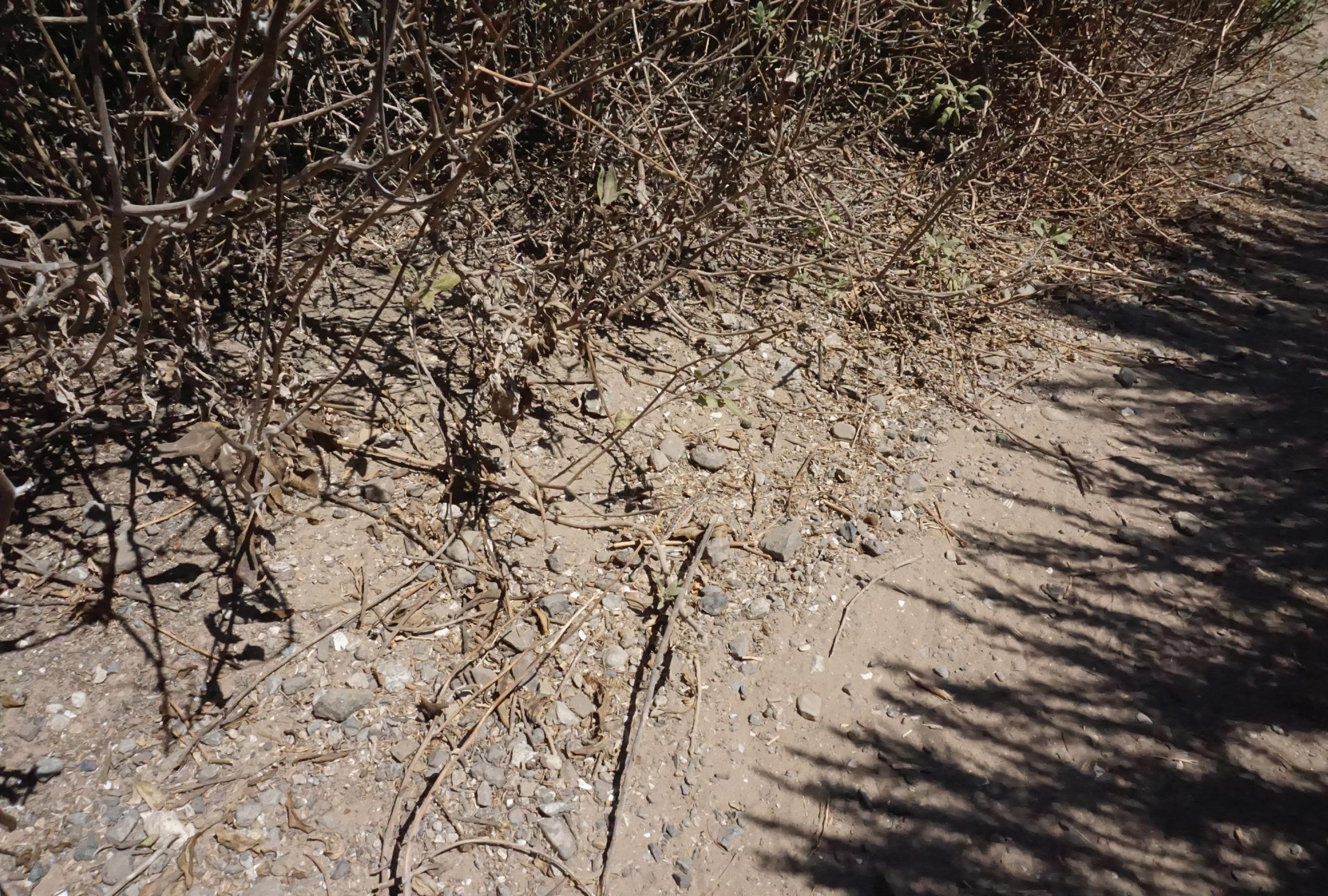
(Source: Victoria Bruno)
Victoria Bruno
Our feet are here on the ground and we are remembering our dance again.
We express the means of our liberation in relation to where we come from, and in motion alongside emergent ways of being. This action requires an awareness of our identities (collective and individual), and a shared understanding of our co-dependencies to one another and to the spaces we inhabit.
(Source: Nate Holland / Unsplash)
(Source: Victoria Bruno)
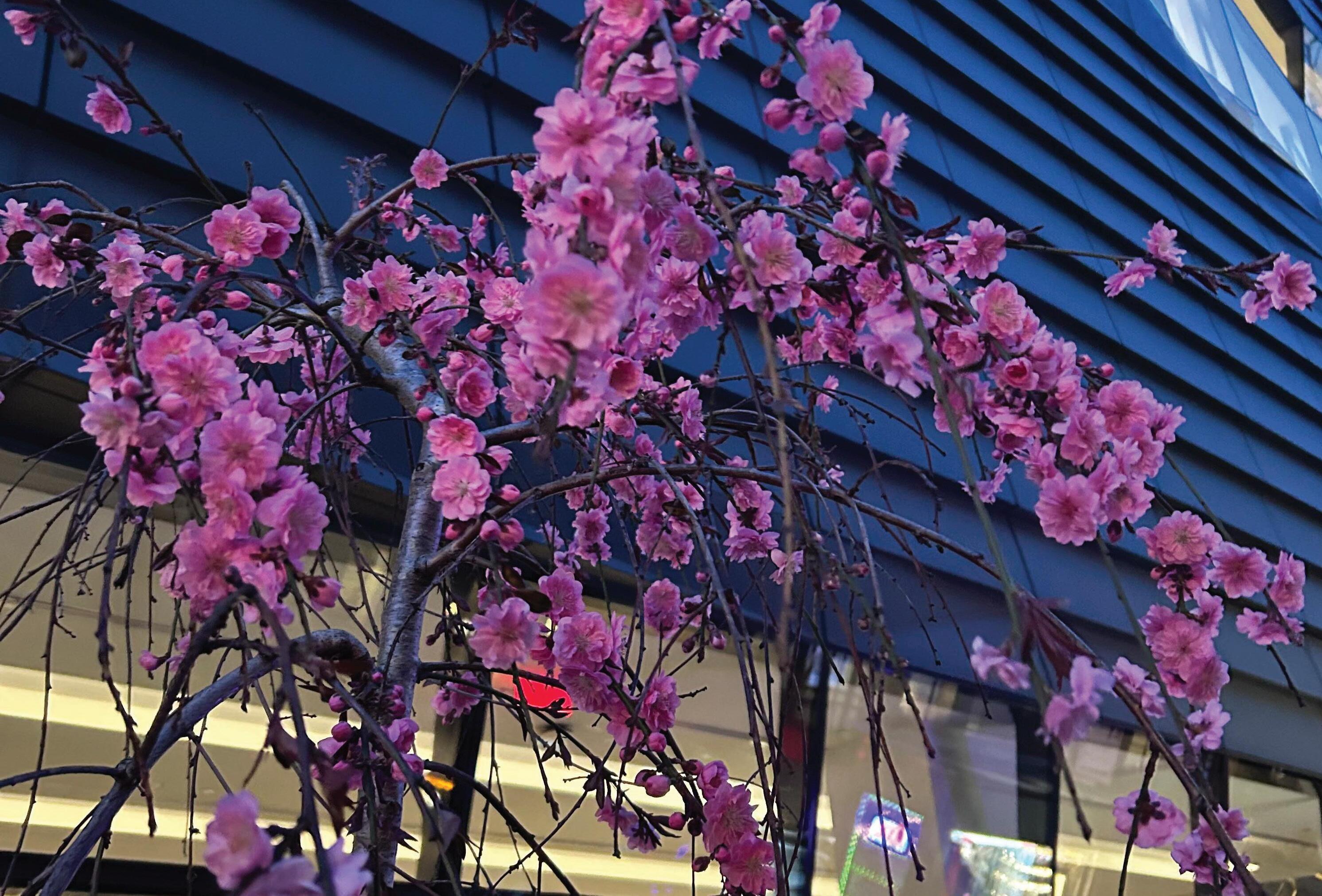
Victoria Bruno
Estoy aquí porque quiero estar aquí. Estamos aquí para aprender cómo crear juntos. Incluso cuando somos imperfectxs.
Continuing to connect with the relationships that remind us of home. Building the relationships that expand our foundations, our bedrock. We remember our ancestors’ histories, continuing generations’ work of healing, seeking balance, and finding ways to express love freely, clearly, softly, wildly.
We are learning to forgive, to be open to liberation again. We know where we come from. Surrender to the seasons. We stay firmly planted where we are, because we have come a long way to get here. There are brighter times ahead, stay the course.
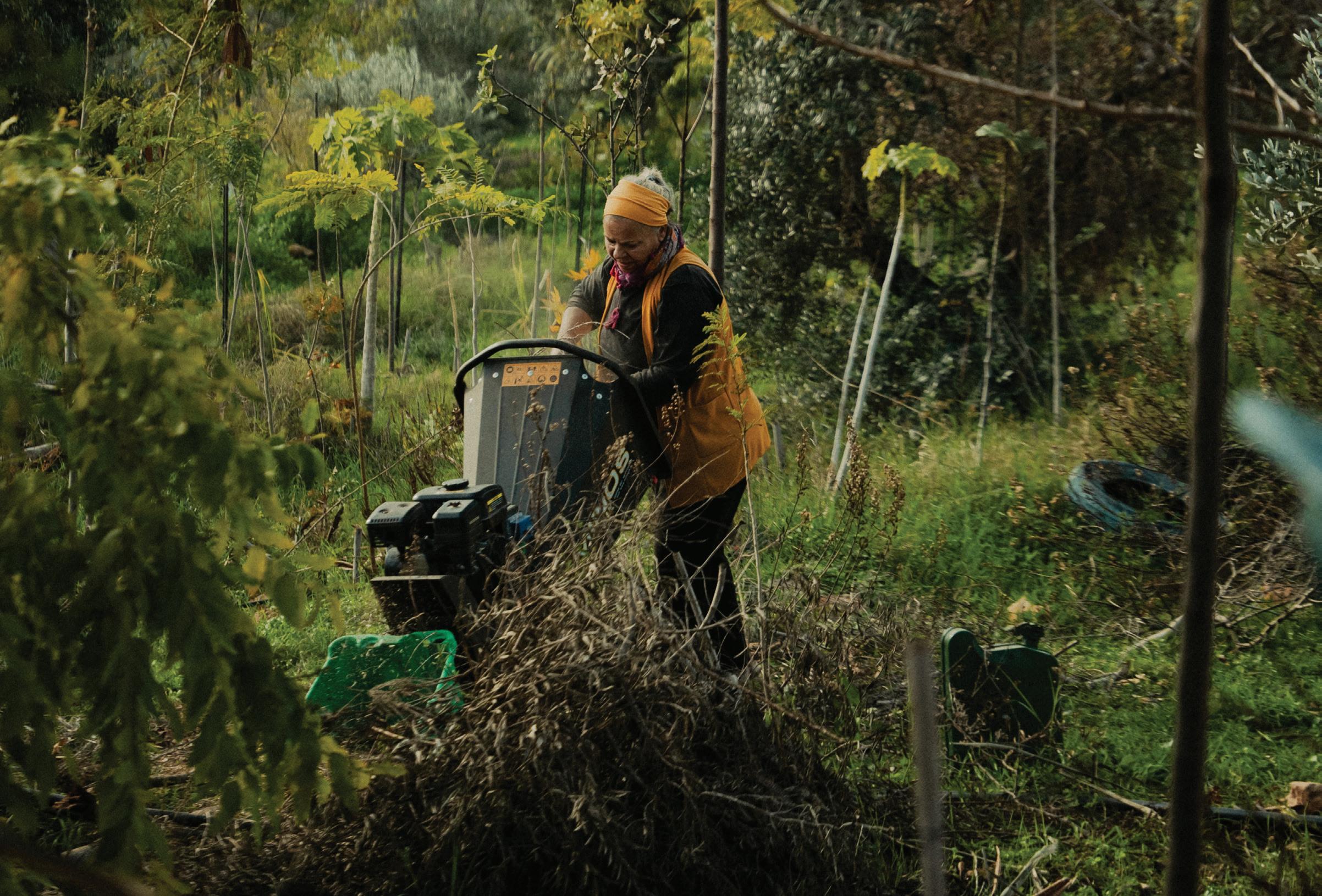
(Source: Zane Elias)
Zane Elias
Land as liberation is tied to sumud (sumud is a phrase, and cultural idea of steadfastness, firmness and belief. It is something we learn from the land, from the insistence of the olive tree who grows back even in the harshest conditions, against all odds. The land liberates us, and in turn we protect it with our blood, nourish it with our sweat, and cleanse it with our tears.
(Source: Nate Holland / Unsplash)
(Source: Zane Elias)

Zane Elias
One of my fondest memories of the water was simple. The cool water was tempered by the hot sun. The waves were fantastic, and I was sat on my friends boat. We were lucky to live that life and I knew it. This was in the beginning of learning how to surf, but I knew that moment would live with me forever. It felt as though in the moment that I took to rest and look out at my friend in the white water, the ocean, insisted that I remember this moment, not to forget it.
It is in this recollection that I realize the waters are insistent, that they flow, that they moisten dry soil, nourish roots, find their ways to the sky. A wave insists on being felt, on reverberating and vibrating. It embues the land with this character. If land is liberatory, it is liberatory because it insists and it insists because of the water that shapes it.
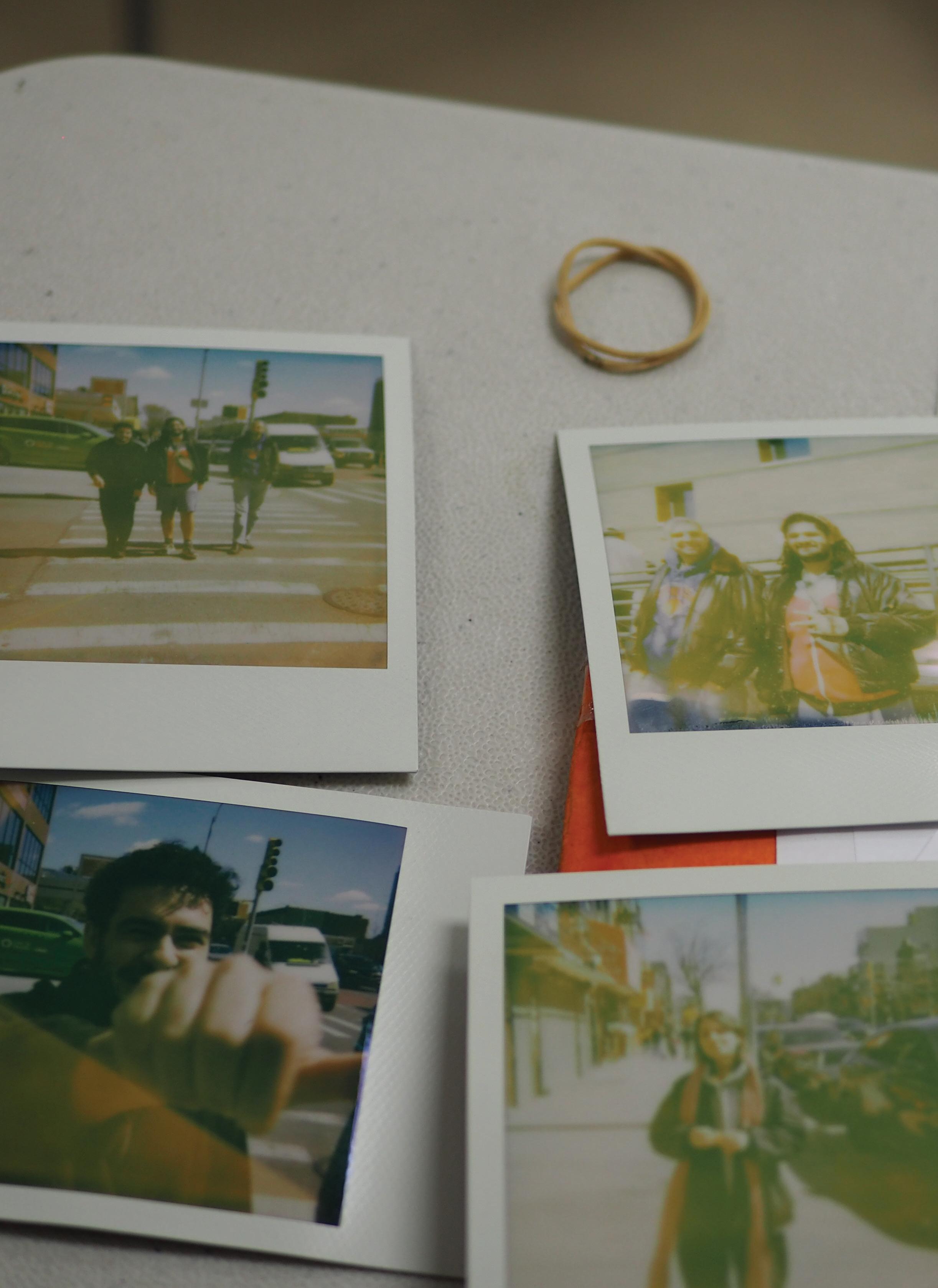
(Source: Zane Elias and friends)
In our studio we asked ourselves how we relate to land using storytelling.
We first took a minute to remember spaces we have a relationship to, and what we feel when we are present with land. Telling stories about nature outside our windows, people who lived before us, large bodies of water, and the feeling of the air when it rains. We talked about who we were with in these memories, what we have learned, and what is lost only to be buried into the soil again.
When we tell these stories, we are sharing where we are from, what we yearn for, how much time has passed, and the ways we have been shaped by places which have nourished, challenged, and embraced us. We reached into rooted memories where we have ventured out, and where we were able to locate a sense of knowing home.
Sharing our stories with one another is a practice of “soul retrieval”, in which we share a part of what sustains us, and places where we come from (bell hooks, p. 51). To tell our story is to know ourselves. To tell your story is an act of love, of trust, and openness to being received. We tell our stories with hopes that they will help others understand what we know to be true. We get to decide how we share our stories and who gets to hear them. We get to shape and reshape characters, or directly honor characters in the story to the best of our ability- we hope nothing important is left out. When everything around us changes, our stories become living testimony. When our cities become unrecognizable, and when enough time has passed that some of us start to forget, it is the stories we tell and the art we leave behind that reminds us how we have survived time
En nuestro estudio nos preguntamos cómo nos relacionamos con la tierra a través de la narración de historias. Primero nos tomamos un momento para recordar los espacios con los que tenemos una relación y lo que sentimos cuando estamos en contacto con la tierra. Contamos historias sobre la naturaleza que vemos desde nuestras ventanas, las personas que vivieron antes que nosotros, las grandes masas de agua y la sensación del aire cuando llueve. Hablamos de con quién estábamos en esos recuerdos, qué hemos aprendido y qué se ha perdido para quedar enterrado de nuevo en la tierra.
Cuando contamos estas historias, compartimos de dónde venimos, qué anhelamos, cuánto tiempo ha pasado y las formas en que nos han moldeado los lugares que nos han nutrido, desafiado y acogido. Nos adentramos en recuerdos arraigados donde nos hemos aventurado y donde pudimos encontrar la sensación de saber qué es un hogar.
Compartir nuestras historias entre nosotros es una práctica de “recuperación del alma”, en la que compartimos una parte de lo que nos sostiene y los lugares de donde venimos (bell hooks, p. 51).
Contar nuestra historia es conocernos a nosotros mismos. Contar tu historia es un acto de amor, de confianza y de apertura a ser recibido. Contamos nuestras historias con la esperanza de que ayuden a otros a comprender lo que sabemos que es verdad. Nosotros decidimos cómo compartimos nuestras historias y quién las escucha. Podemos dar forma y remodelar a los personajes, o honrar directamente a los personajes de la historia lo mejor que podamos; esperamos que no se omita nada importante.
Cuando todo a nuestro alrededor cambia, nuestras historias se convierten en un testimonio vivo. Cuando nuestras ciudades se vuelven irreconocibles y ha pasado tanto tiempo que
and time again. When we know our stories, and when we sit to hear stories from one another, we connect with the part of ourselves where we are no longer strangers, we become relatives who are tied to a shared place.
We all read our stories (professor included) in class as a way to introduce ourselves through the lenses of land. We invite you to read our stories to know who we are, and where we come from. You are welcome to leave your own story behind as well. We hope these stories offer insight into how we continue to move from this place together.
We shared this methodology with our community partner, Mujeres en Movimiento. Their own stories informed our work throughout the semester and our upcoming collaborative tour through Corona.
algunos de nosotros empezamos a olvidar, son las historias que contamos y el arte que dejamos atrás lo que nos recuerda cómo hemos sobrevivido una y otra vez. Cuando conocemos nuestras historias y nos sentamos a escucharlas unas de otras, conectamos con esa parte de nosotres mismes en la que ya no somos extrañas, nos convertimos en parientes unidas por un lugar compartido.
Todes leímos nuestras historias (incluida la profesora) en clase como una forma de presentarnos a través de la perspectiva de la tierra. Te invitamos a leer nuestras historias para saber quiénes somos y de dónde venimos. También les invitamos a dejar sus propias historias. Esperamos que estas historias ofrezcan una perspectiva de cómo seguimos avanzando juntos desde este lugar.
Compartimos esta metodología con nuestra organización colaboradora, Mujeres en Movimiento. Sus propias historias han influido en nuestro trabajo a lo largo del semestre y en nuestro próximo tour a través de Corona.
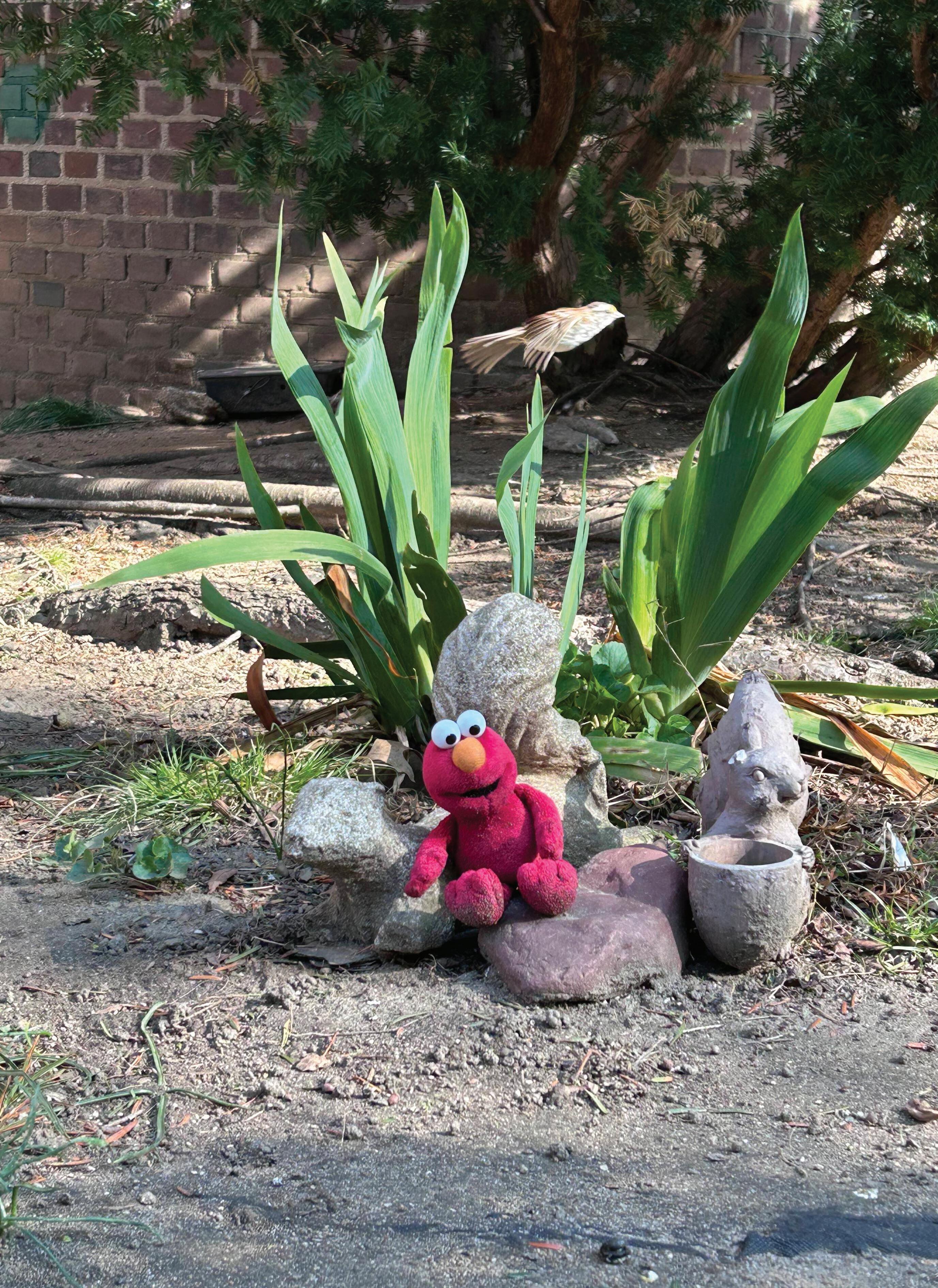
(Source: Victoria Bruno)
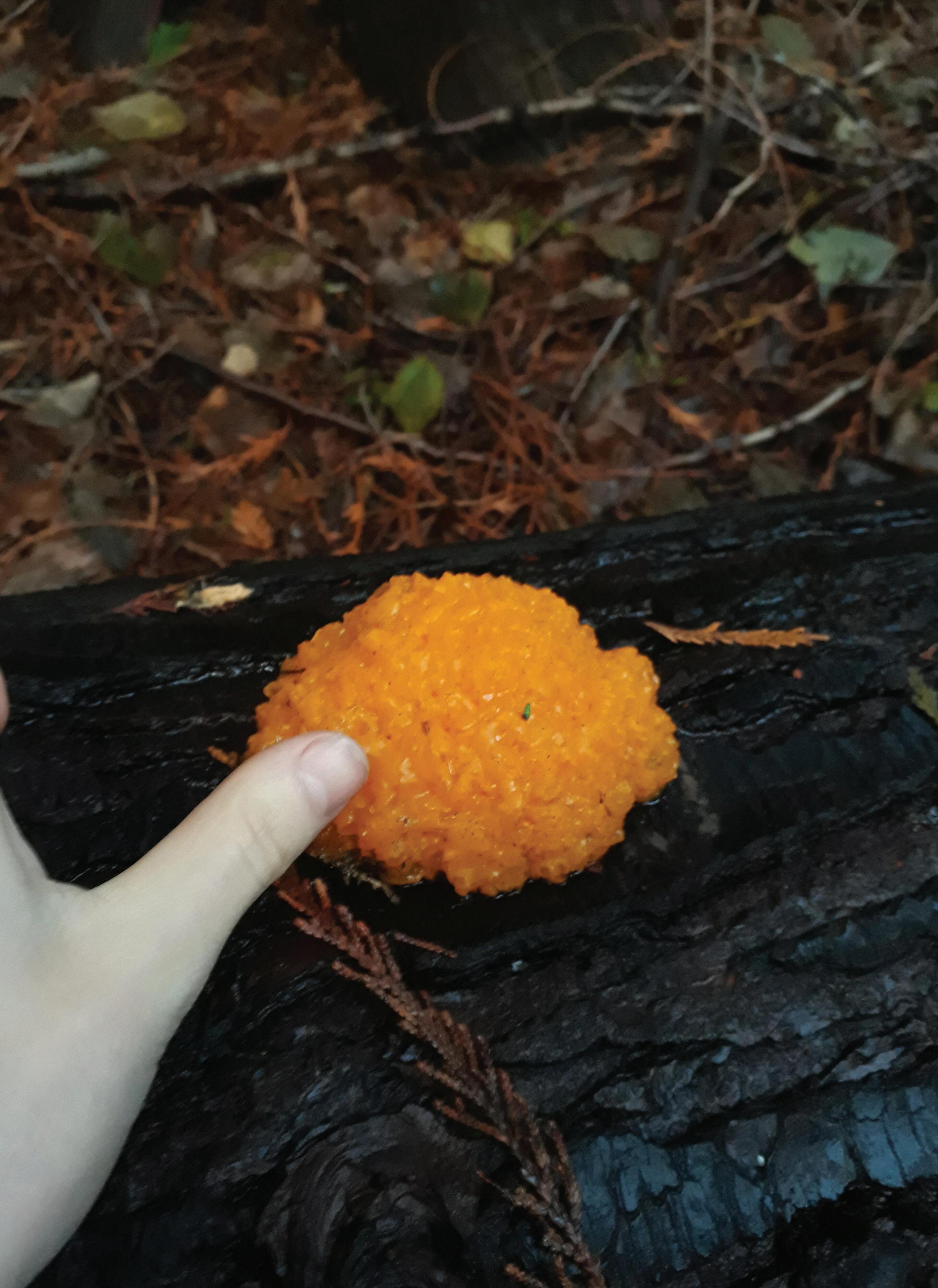
(Source: Madelyn Capozzi)
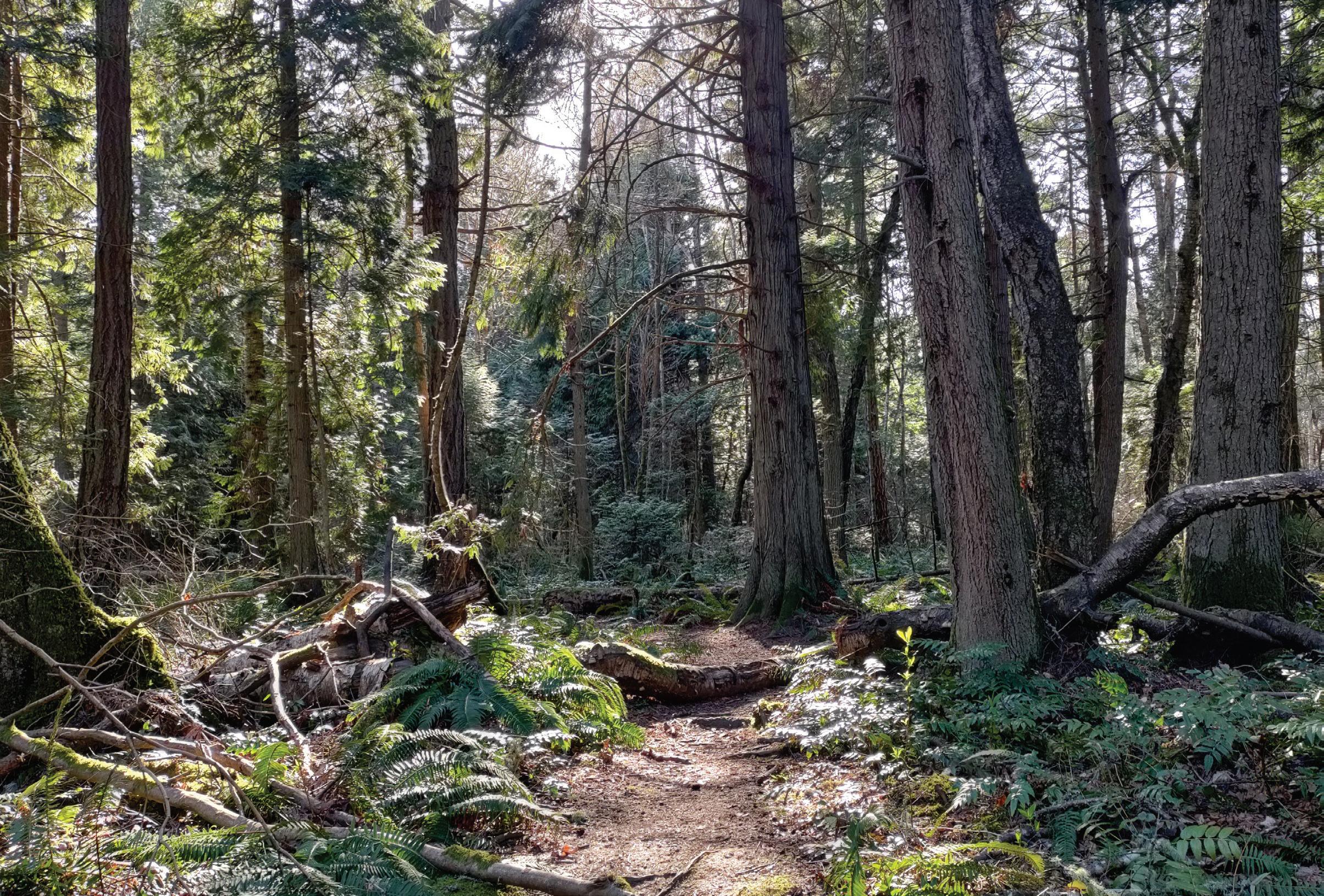
The land I call home is in Point Roberts, where my dad lives on the edge of a forest we know as Lily Point. Growing up, I remember playing in the woods with the distant sound of power tools in the background from my dad building the house. Back then the forest was a wonder that occupied all my attention, until the Internet became that wonder and I forgot about it. As a child I played in the forest, sometimes to my detriment. Once I was hit in the head by a rock and ran home crying. Another time I went looking for a baby eagle that someone told me was injured somewhere in Lily Point, and ended up scouring a remote part of the forest, arriving home with my legs all scratched up by blackberry bushes. During the pandemic I spent the fall there, and started foraging mushrooms. Rather than staying on the trails as I usually would, I waded into the center, using my hands to brush aside leaves in search of chanterelles and walking along fallen trees to reach spots otherwise inaccessible, examining them for oysters. This really changed how I experience the forest. Rather than a place I would go, I began to perceive it as a friend I would spend time with. The forest felt more alive to me. I got to know the insects and their tastes in mushrooms. I became enthralled with the smell of earth. Concerned about only taking from the forest, I sought ways to give back, pulling English ivy off trees and collecting bits of plastic and trash. I wanted to spend hours in the forest during this period and I felt much more connected to the land.
Most years I only go back for a few weeks in summer or winter. Busy with family, I haven’t gotten so much time in with the forest since then. But I miss it. I dream of reconnecting with the land in this way - not just for a few months during lockdown, but in my everyday life. I think the forest misses me too.
La tierra que llamo hogar está en Point Roberts, donde vive mi padre al borde de un bosque que conocemos como Lily Point. Al crecer, recuerdo jugar en el bosque con el sonido lejano de herramientas eléctricas de fondo, mientras mi padre construía la casa. En aquel entonces, el bosque era una maravilla que ocupaba toda mi atención, hasta que Internet se convirtió en esa maravilla y me olvidé de él.
De niña, jugaba en el bosque, a veces en detrimento propio. Una vez me golpeó una piedra en la cabeza y corrí a casa llorando. Otra vez fui a buscar un águila bebé que alguien me dijo que estaba herida en algún lugar de Lily Point, y terminé recorriendo una parte remota del bosque, volviendo con las piernas todas arañadas por arbustos de mora. Durante la pandemia pasé allí el otoño y empecé a recolectar hongos. En lugar de quedarme en los senderos como solía hacer, me adentraba en el centro, usando las manos para apartar hojas en busca de rebozuelos y caminando sobre troncos caídos para llegar a lugares de otro modo inaccesibles, examinándolos en busca de ostras. Esto cambió mucho mi manera de experimentar el bosque. En lugar de ser un lugar al que iba, empecé a percibirlo como un amigo con el que pasaba tiempo. El bosque se sentía más vivo para mí. Llegué a conocer los insectos y sus gustos por los hongos. Me fascinaba el olor de la tierra. Preocupada por no solo tomar del bosque, busqué formas de devolverle algo, quitando hiedra inglesa de los árboles y recogiendo trozos de plástico y basura. Quería pasar horas en el bosque durante ese periodo y me sentía mucho más conectada a la tierra.
La mayoría de los años solo vuelvo por unas semanas en verano o invierno. Ocupada con la familia, no he pasado tanto tiempo en el bosque desde entonces. Pero lo extraño. Sueño con reconectarme con la tierra de esta manera — no solo por unos meses durante el confinamiento, sino en mi vida cotidiana. Creo que el bosque también me extraña.
(Source: Christian D’Ostilio)
The reality is that this love letter is addressed to an unknown love—to which I feel drawn— to distant, foreign lands where I did not grow up. Recognizing that God, nature, and people are but a single essence, I know that this relationship is full and complete within me. I feel the seeds being sown and the anchors being cast wherever I go.
I have always been deeply moved by those whose experiences in the United States—where their joy for the land was born out of resistance and survival—are shaped by the fact that their native homeland lies far away. I have never felt this land to be a true “homeland,” and—like so many others in the United States—I was never given the choice to embark on this journey. I am grateful to the East Coast and the West Coast for allowing me to put down some roots, and to New York—the only place that has ever remotely felt like “home.” New York taught me how to truly love; it revealed to me almost everything I know today about people, place, and culture. I know that I love a distant neighborhood—one I have yet to discover.
“Dear Medellín: I plan to see you someday, to tell you everything about myself... and about us.”
My love for my culture is a love for the land, and for the resilience of the blood that flows within me—a love directed toward a family I may never meet, yet one I often contemplate when I look at myself. I visualize them all—my entire lineage— reflected in the features I see in the mirror; and as I do so, I visualize that unknown land, imagining what both might be—and perhaps, that is precisely what they are.
The process of coming to know the land, nature, God, and people is a difficult, lifelong journey— yet it is a commitment to myself that I refuse to ever fully abandon.
La realidad es que esta carta de amor es para un amor desconocido, por el que me siento atraído, tierras lejanas, extranjeras en las que no crecí. Al ver que Dios, la naturaleza y las personas son una sola esencia, sé que esta relación es plena y completa dentro de mí. Siento las semillas que se siembran y las anclas que se tiran dondequiera que voy.
Siempre me han impactado aquellos cuyas experiencias en Estados Unidos, donde su alegría por la tierra ha nacido como resistencia/ supervivencia, ya que su tierra natal está lejos. Nunca he sentido a esta tierra como una “patria” y, como muchos en Estados Unidos, no tuve la opción de elegir hacer este viaje. Estoy agradecido con la Costa Este y la Costa Oeste por haber forjado algunas raíces, y con Nueva York, el único lugar que remotamente he sentido como un “hogar”. Nueva York me enseñó a amar de verdad y me mostró casi todo lo que sé hoy sobre la gente, el lugar y la cultura. Sé que amo un barrio lejano que aún no conozco.
“Querido Medellín, planeo verte algún día y contarte todo sobre mí y sobre nosotros”.
El amor por mi cultura es amor por la tierra y la resistencia de la sangre que llevo dentro, hacia una familia que nunca conoceré, pero en la que a menudo pienso al mirarme. Los visualizo a todos y a mi linaje a través de los rasgos reflejados en el espejo, y al hacerlo, la tierra desconocida, imaginando lo que ambos podrían ser, y tal vez eso es lo que son.
El proceso de conocer la tierra, la naturaleza, a Dios y a la gente es un proceso difícil y que dura toda la vida, pero es un compromiso conmigo mismo que me niego a abandonar por completo.
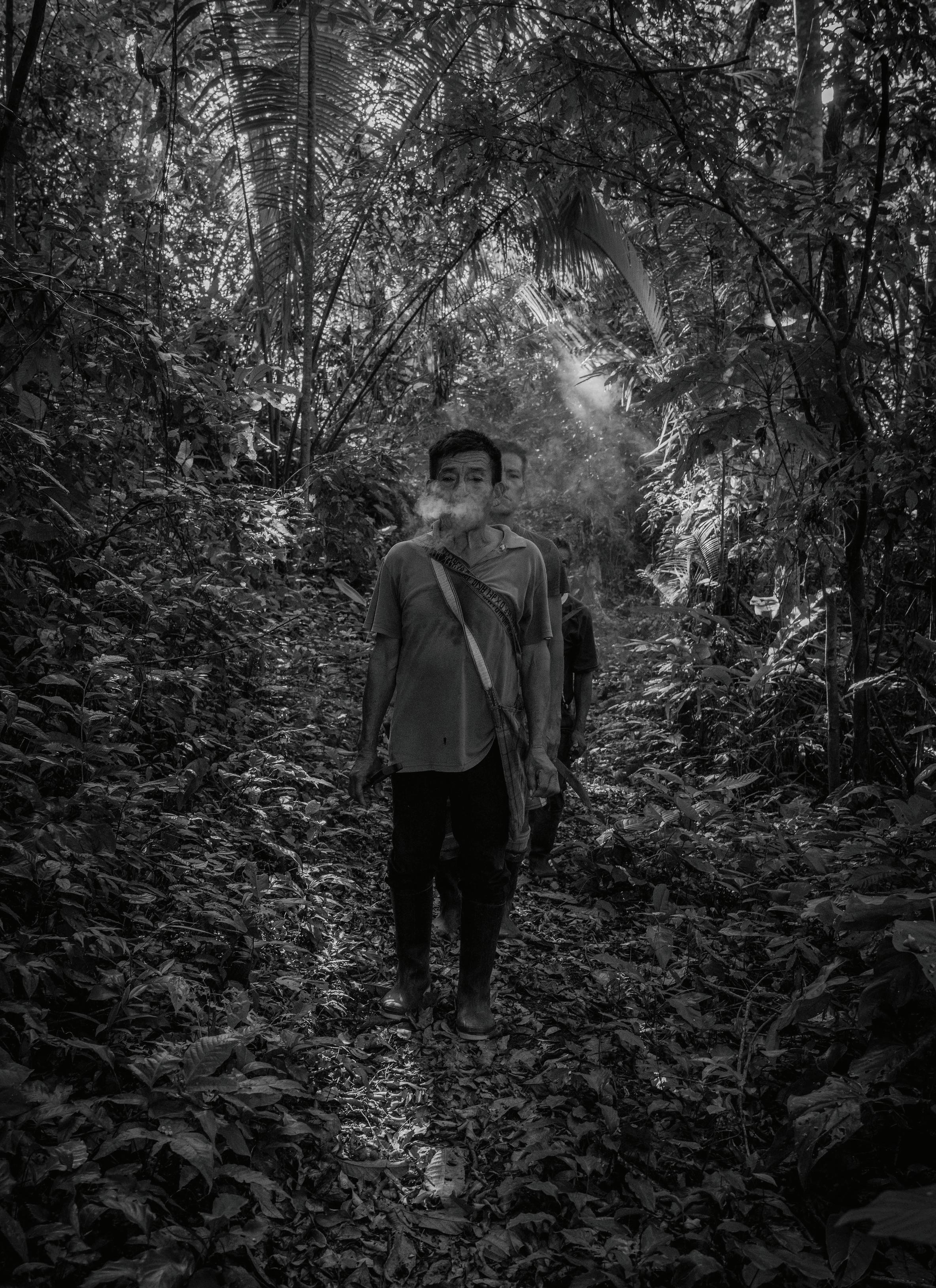
(Source:
Every time I go to the forest, I learn something new.
Back in January, I decided to follow the comuneros of the community of Chirik Sacha eight hours into the forest to clean the pathways that connect different areas of their territory. We left Michel’s house at 4:30 a.m. and began the journey together with Dylan and Esser. As we walked, I could hear only the sound of the mule’s hooves striking rocks and mud, and the soft buzz of insects. Everything was dark. It was the time of the llullu killa, or “green moon.”
Esser, the Apu of the community, said, “Today is a great night to go hunting. With a green moon, the animals cannot see you.”
I asked him, “Are you ever afraid?” I had heard many stories of spirits and mystical beings that inhabit the forest and take away those who do not respect it. He answered, “No. I have been coming here since I was twelve years old and nothing has ever happened to me. I always bring my mapacho (tobacco cigarette) and my purga (medicinal drink)… Anyway, I don’t need to worry because I know the forest—and the forest also knows me.”
My skin prickled. I smiled to myself and simply replied, “That’s right, the forest knows you.” I let Esser’s words sink in as we walked in silence for the next few minutes. How could this be my so-called research? It felt much bigger than an academic effort. It was about getting to know my roots in this world, about recovering something that had been taken from me. For reasons I may never fully understand, my Indigeneity was hidden from me for much of my life. It took me a long time to recognize it, despite my closeness to it. Both of my paternal grandparents are Indigenous; their first language is Quechua, and they grew up in the mountains of Apurímac. This is a different
Cada vez que voy al bosque, aprendo algo nuevo.
En enero, decidí acompañar a los comuneros de la comunidad de Chirik Sacha en una caminata de ocho horas hacia el bosque para limpiar los senderos que conectan distintas áreas de su territorio. Salimos de la casa de Michel a las 4:30 a.m. y comenzamos el recorrido junto a Dylan y Esser. Mientras caminábamos, solo se escuchaba el sonido de las patas de la mula golpeando las rocas y el barro, y el zumbido suave de los insectos. Todo estaba oscuro. Era tiempo de llullu killa, o “luna verde”.
Esser, el Apu de la comunidad, dijo: “Hoy es una gran noche para ir de caza. Con luna verde, los animales no pueden verte”.
Le pregunté: “¿Alguna vez tienes miedo?” Había escuchado muchas historias sobre espíritus y seres misteriosos que habitan el bosque y se llevan a quienes no lo respetan. Él respondió: “No. Vengo aquí desde que tenía doce años y nunca me ha pasado nada. Siempre traigo mi mapacho (cigarro de tabaco) y mi purga (bebida medicinal)… Además, no tengo de qué preocuparme porque conozco el bosque—y el bosque también me conoce a mí”.
Se me erizó la piel. Sonreí para mí misma y simplemente respondí: “Así es, el bosque te conoce”. Dejé que las palabras de Esser resonaran en mí mientras caminábamos en silencio durante los siguientes minutos. ¿Cómo podía ser esto mi supuesta investigación? Se sentía mucho más grande que un esfuerzo académico. Se trataba de conocer mis raíces en este mundo, de recuperar algo que me había sido arrebatado.
Por razones que quizá nunca llegue a comprender del todo, mi indigeneidad me fue ocultada durante gran parte de mi vida. Me tomó mucho tiempo reconocerla, a pesar de mi cercanía con ella. Mis dos abuelos paternos son Indígenas; su primera lengua es el Quechua, y
story, but I only learned about my ancestors in adulthood, almost by chance. I am deeply grateful that I did. It felt as if all the fragments floating around in my mind finally found a place. Things began to make sense. I began to feel understood.
Now, let me return to the forest.
It was through walking in the forest, through touching the land with my hands, and through conversations with Esser that I came to understand mutual recognition. This idea is present in many Indigenous worldviews: humans are not the only ones who know things. The more-than-human world also sees us and feels us. To be recognized by the forest as a friend, one must be in tune with it.
This is why Esser smokes tobacco before entering, and why he drinks his medicine made from tree bark—because he needs to become part of the forest in order to be recognized by it. He needs to become sacha runa, a forest person.
Since then, I have carried my tobacco and my medicinal drink with me every time I enter the forest.
crecieron en las montañas de Apurímac. Esa es otra historia, pero solo supe de mis ancestros en la adultez, casi por casualidad. Estoy profundamente agradecida de haberlo hecho. Fue como si todos los fragmentos que flotaban en mi mente finalmente encontraran un lugar. Las cosas comenzaron a tener sentido. Empecé a sentirme comprendida.
Ahora, vuelvo al bosque.
Fue caminando en el bosque, tocando la tierra con mis manos y a través de las conversaciones con Esser que llegué a comprender el reconocimiento mutuo. Esta idea está presente en muchas cosmovisiones Indígenas: los humanos no somos los únicos que sabemos. El mundo más-que-humano también nos ve y nos siente. Para que el bosque te reconozca como amigo, es necesario estar en sintonía con él.
Por eso Esser fuma tabaco antes de entrar, y por eso bebe su medicina hecha de corteza de árbol—porque necesita volverse parte del bosque para ser reconocido por él. Necesita convertirse en sacha runa, una persona del bosque.
Desde entonces, llevo conmigo mi tabaco y mi medicina cada vez que entro al bosque.
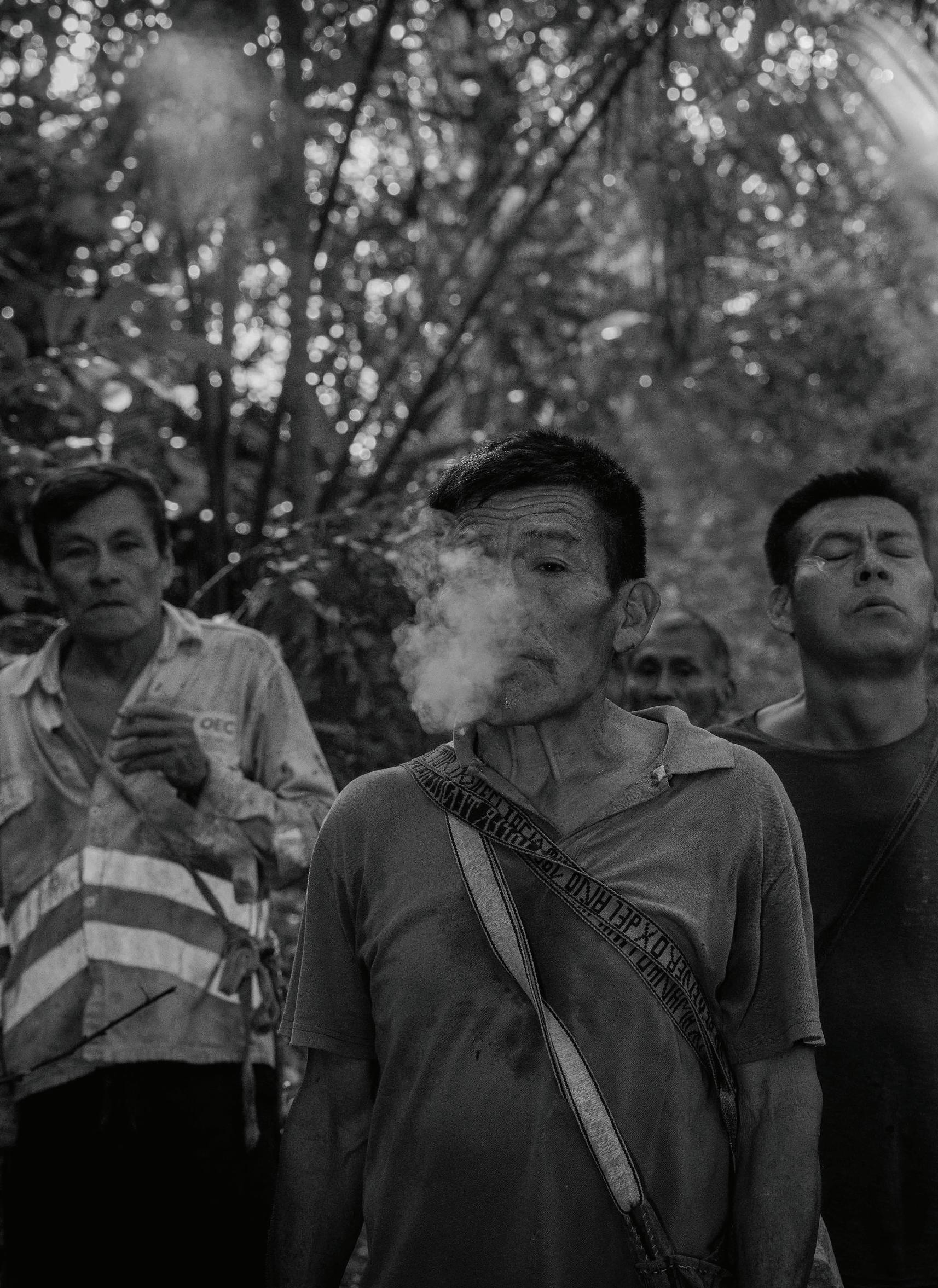
(Source: Jasmin Ramirez Romero)
I grew up near a lot of woods. Once my friends and I got older and had access to cars, we would go to Green Lakes State park to get lost and wander around. This was before any of us had smartphones so, although it never reached a point where any of us were gone for long enough that anybody had reason to worry, we did have to think “how did I find myself here” and “how will I ever find my way out”. This will still happen to me sometimes in the financial district or downtown Brooklyn, where streets don’t fit our neat numbered grid system and my maps app will get confused and tell me I’m a block and a half from where I really am, facing a different direction. We would often sneak into the back end of the park, through a residential development, to find “Africa”, or a grassy area with a lone tree standing away from trails and the lakes themselves. I don’t know where the name came from and I’m left to assume that the sparse tree cover in the area reminded somebody of photos or maybe VHS box art or magazine covers depicting the sahel. We got lost many times on the way to and from “Africa”.
As time has passed and the city has spread out into the suburbs and rural areas, the patch of land I grew up on has become a different place than what I remember from my childhood. As such, this is a place that now only exists in my memory. I can’t go back to where we would wander through uncleared land. There are houses there now. That’s somebody’s backyard and I’m not allowed there. It wouldn’t be the same anyway.
The village I grew up outside of developed initially as a kind of truck stop along the Erie Canal. People would stop to buy food and supplies and be on their way out further toward the Great Lakes. There is a small cemetery near my parents’ house, above an embankment and behind a hay field where headstones have worn away from the rain, broken and fallen over. Everybody buried back there had their own lives and com-
Crecí cerca de muchos bosques. Cuando mis amigos y yo crecimos y tuvimos acceso a autos, íbamos al Green Lakes State Park a perdernos y deambular. Esto fue antes de que ninguno de nosotros tuviera teléfonos inteligentes, así que, aunque nunca llegamos a estar fuera el tiempo suficiente como para que alguien se preocupara, sí teníamos que pensar “¿cómo terminé aquí?” y “¿cómo encontraré la salida?”. Esto todavía me pasa a veces en el Financial District o en Downtown Brooklyn, donde las calles no se ajustan a nuestro pulcro sistema de cuadrícula numerada y mi aplicación de mapas se confunde y me dice que estoy a una cuadra y media de donde realmente estoy, mirando en una dirección diferente. A menudo nos colábamos en la parte trasera del parque, a través de una urbanización, para encontrar “África”, o una zona de césped con un árbol solitario alejado de los senderos y los lagos. No sé de dónde viene el nombre y me quedo con la suposición de que la escasa vegetación de la zona le recordó a alguien fotos, o tal vez portadas de VHS o de revistas que representaban el Sahel. Nos perdimos muchas veces de camino a “África” y de regreso.
Con el paso del tiempo, a medida que la ciudad se ha expandido hacia los suburbios y las zonas rurales, el pedazo de tierra donde crecí se ha convertido en un lugar muy diferente al que recuerdo de mi infancia. Por eso, ahora solo existe en mi memoria. No puedo volver a donde solíamos vagar por terrenos sin cultivar. Ahora hay casas. Es el patio trasero de alguien y no tengo permiso para entrar. De todos modos, no sería lo mismo.
El pueblo de las afueras donde crecí se desarrolló inicialmente como una especie de parada de camiones a lo largo del Erie Canal. La gente paraba para comprar comida y provisiones y luego continuaba su viaje hacia los Great Lakes. Hay un pequeño cementerio cerca de la casa de mis padres, sobre un terraplén y detrás de un campo de heno, donde las lápidas se han desgastado por la lluvia, están rotas y caídas. Cada persona enterrada allí tuvo su propia vida, con sus complejidades y matices, que se han perdido
I don’t, as far as I know, have any indigenous ancestry, just the family legend that a great uncle somewhere was Seneca, as is, I think, common among white Americans with squishy ethnic background. As far as I know, my family has been in this country and Canada since before there were good records and before there was a real distinction between these two places. As such, if I belong to anywhere, it’s to the woods of Central and Northern New York, where my family were, again as far as I know, tenant farmers for the better part of 400 years. This leaves us with little in the way of, say, real estate transaction records, so most of what we have are stories. My brother recently bought us all tubes to spit in for Christmas and I’m expecting to hear back soon. I don’t know what I’ll learn about myself by confirming that I’m descended from people somewhere in Northwestern Europe that I can’t know from my grandparents’ English and French names, but it was a nice gift. Here in New York, it’s less the land itself and more the people and the stories that they tell that affect me. You see an airplane fly overhead and think that every person on that plane has their own past and future and life and hopes and disappointments, as detailed and complex as my own. What’s more, they are on their way to somewhere, from somewhere. They are creating stories I will never hear. There is this electricity to it all, invisible wires connecting everybody you pass on the street, creating this buzz, this hum. This is the cemetery again, except that these stories are still being developed. Every person you pass on the street is a repository for years and years of inherited memories, built on and misinterpreted and iterated, a game of telephone played in the mind.
It all makes me think of my dad, who grew up where I did. Like a lot of older men, he will talk
para siempre. No conozco ningún mapa donde aparezca el cementerio. Cuando era joven, solía ir a ese cementerio cuando necesitaba dar un paseo y salir de casa. Sentía que éramos los únicos en el mundo que lo conocíamos.
Todo esto me hace pensar en mi padre, que creció donde yo crecí. Como muchos hombres mayores, te hablará sin parar sobre cómo eran las cosas antes, dónde estaban las cosas y cómo son ahora. Al escribir todo esto, me doy cuenta de que plexities and nuances, which are lost to us forever. I don’t know of any map with the cemetery on it. When I was younger, I would wander over to that cemetery when I needed to take a walk and get out of the house. It felt like we were the only people in the world who knew about it.
Que yo sepa, no tengo ascendencia Indígena, solo la leyenda familiar de que un tío abuelo era seneca, algo común, creo, entre los estadounidenses blancos con orígenes étnicos poco definidos. Que yo sepa, mi familia ha estado en este país y en Canadá desde antes de que existieran buenos registros y antes de que hubiera una distinción clara entre estos dos lugares. Por lo tanto, si pertenezco a algún lugar, es a los bosques del centro y norte de Nueva York, donde mi familia fue, de nuevo, que yo sepa, arrendataria durante casi 400 años. Esto nos deja con pocos registros, por ejemplo, de transacciones inmobiliarias, así que la mayor parte de lo que tenemos son historias. Mi hermano nos regaló tubos para escupir en Navidad y espero tener noticias pronto. No sé qué aprenderé sobre mí mismo al confirmar que desciendo de gente del noroeste de Europa que no puedo conocer por los nombres ingleses y franceses de mis abuelos, pero fue un bonito regalo.
Aquí en Nueva York, lo que más me impacta no es tanto el lugar en sí, sino la gente y las historias que cuentan. Ves un avión sobrevolar y piensas que cada persona a bordo tiene su propio pasado, futuro, vida, esperanzas y decepciones, tan detalladas y complejas como las mías. Además, van camino a algún lugar, desde algún lugar. Están creando historias que jamás escucharé. Hay una electricidad en todo esto, cables invisibles que conectan a todos con los que te cruzas en la calle, creando un zumbido, un murmullo. Es como volver al cementerio, solo que estas historias aún se están desarrollando. Cada persona con la que te cruzas en la calle es un depósito de años y años de recuerdos heredados, construidos, malinterpretados y repetidos, un juego de teléfono descompuesto en la mente.
your ear off about what things used to be, what used to be where and what’s this now instead. In typing this all out, I realize that I am doing the same thing. I don’t remember all of it and I don’t know how much of it will be repeated once he’s gone. Is it of any real significance that the casino now sits where we used to have an Ames department store or is that just something I’ll tell people whenever we drive by, for the rest of my life? Will anybody remember that we used to buy last minute Christmas gifts there? I don’t remember anything I ever bought there but I know I was there, shopping on Christmas Eve.
estoy haciendo lo mismo. No lo recuerdo todo y no sé cuánto se repetirá cuando él ya no esté. ¿Tiene alguna importancia que el casino ahora esté donde antes había unos grandes almacenes Ames, o es algo que simplemente les contaré a las personas cada vez que pasemos por allí, durante el resto de mi vida? ¿Alguien recordará que solíamos comprar allí los regalos de Navidad de última hora? No recuerdo nada de lo que compré allí, pero sé que estuve allí, de compras en Nochebuena.
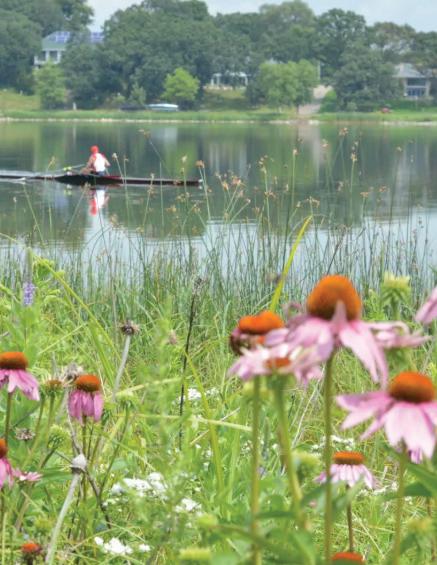
(Source: Ramsey-Washington Metro Watershed District)
I grew up near a lake (like many Minnesotans). This lake, called Lake Phalen has had a impact on my life and my relationship with the city, its people, and what I consider nature. Growing up I took the lake in as something eternal and unchanged. It wasn’t until I got older that I learned more about its history/hydrology. The lake is not ‘natural’ but man-made when the settlers blocked the creek that originally fed into the river. Furthermore, the lake is named after a settler, the first murderer in what is now Saint Paul.
There is a movement now to daylight the creek by Indigenous organizers and organizations in Saint Paul. This has created something of a disjunction in myself and I assume others. The area of Saint Paul i’m from, the East Side, has been the first place where many immigrants and refugees come to first. Right now there is a large South East Asian community primarily composed of Hmong and Karen people. In their settlement of the East Side they have found various ways to interact with the ecology of the city and it’s not uncommon to see Hmong and Karen elders foraging native plants and fishing in the lakes and rivers. There is even a dragon boat festival that occurs at Lake Phalen and claims that a dragon lives within its waters amongst the Hmong folks.
All of this is to say, it is fascinating to think of this settler incursion, which is physically blocking the water to make this space has turned into a nexus and cultural hub for new peoples. How do we move into a more equitable future whilst also honoring the people who were here before us?
Crecí cerca de un lago (como muchos en Minnesota). Este lago, llamado Lake Phalen, ha tenido un impacto fuerte en mi vida y en mi relación con la ciudad, su gente y lo que entiendo como naturaleza. De niño, yo veía el lago como algo eterno, como si siempre hubiera sido así. No fue hasta que crecí que empecé a aprender más sobre su historia y su hidrología. El lago no es “natural”, sino que fue creado cuando colonos bloquearon el arroyo que originalmente alimentaba el río. Además, el lago lleva el nombre de un colono, quien fue el primer asesino en lo que hoy conocemos como Saint Paul.
Hoy en día hay un movimiento, impulsado por organizadores y organizaciones Indígenas en Saint Paul, para destapar ese arroyo y devolverle su curso original. Esto me ha generado una especie de tensión interna, y creo que no soy la única persona que lo siente así. La zona de Saint Paul de donde soy, el East Side, ha sido históricamente el primer lugar al que llegan muchos inmigrantes y refugiados. Actualmente hay una comunidad grande del sudeste asiático, principalmente compuesta por personas Hmong y Karen. En su manera de habitar el East Side, estas comunidades han encontrado distintas formas de relacionarse con la ecología de la ciudad. No es raro ver a personas mayores Hmong y Karen recolectando plantas nativas o pescando en los lagos y ríos. Incluso hay un festival de botes dragón que se celebra en Lake Phalen, y dentro de la comunidad hmong existe la creencia de que un dragón vive en sus aguas.
Todo esto me hace pensar en cómo esta intervención colonial—que originalmente bloqueó el agua para crear este espacio—terminó convirtiéndose en un punto de encuentro y un centro cultural para nuevas comunidades. ¿Cómo avanzamos hacia un futuro más justo, mientras también honramos a las personas que estaban aquí antes que nosotros?
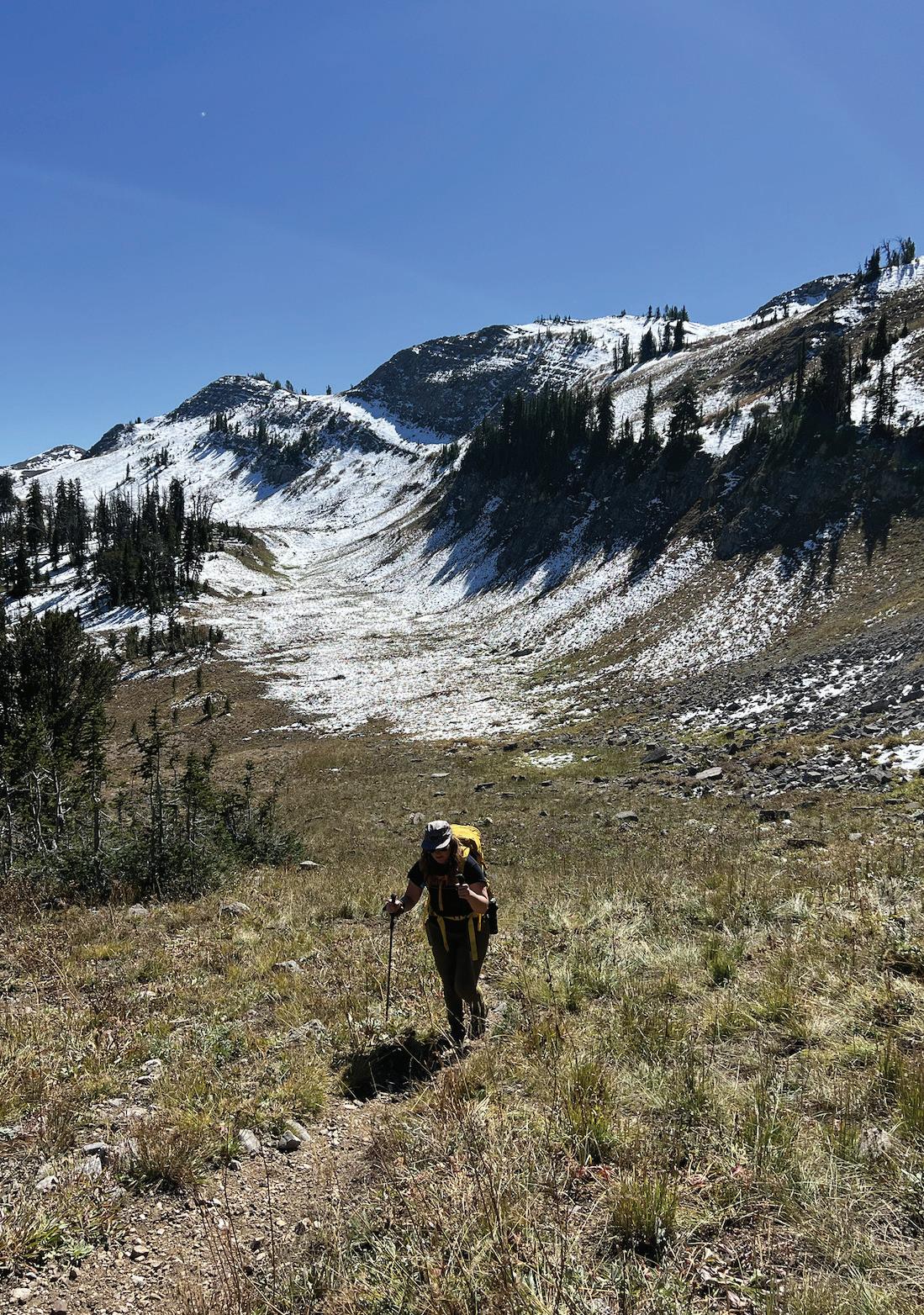
(Source: Becca Williams)
I woke up with the sun and turned over in my sleeping bag to see my Sagebrush loving (but allergic) friend, Char, sitting outside of our tent. She was reading a book called “One Day at Teton Marsh” by Sally Carrigher. I’d fallen asleep to her reciting her favorite passage from the book about an Osprey, perched on a dead cottonwood adjacent to a marsh. As I slowly adjusted my eyes to the morning light, I could see she was sitting in the Sage, her light sunshirt and rain pants the only things preventing her from breaking out in hives. Soon after I sat up, she got up to start boiling water for tea. Halle, her dog, poked her nose into the tent, checking to see that I would come out and join them for breakfast.
I heard Char gently calling my name as I emerged from the polyester front door. She was pointing at something that I couldn’t quite see in the distance. I grabbed my binoculars, which I’d borrowed from my last workplace and still planned to return, so that I could get a closer look. As I began to hear the howling in the distance, I knew even before I peered through the lenses, that there was a small pack of coyotes waking up right above us, hidden in the brush. We observed silently as we finished our lemon tea, sweetened with Vermont’s Untapped ginger flavored maple syrup.
I’d lived in Wyoming for 5 years, but was moving to Brooklyn after having quit my job and undergone a lifesaving surgery. After my mom entered remission from Ovarian cancer, I found out I too had the BRCA 2 gene. I decided to get a preventative double mastectomy per the doctor’s recommendation. Losing a part of my body that I didn’t even particularly like was a jarring experience. I spent that winter in tears, but I did not understand what I could possibly be grieving. Maybe a lack of choice. When they remove all of your breast tissue, I learned that the doc-
Me desperté con el sol y me di la vuelta en mi bolsa de dormir para ver a mi amiga Char, amante de la artemisa (aunque alérgica), sentada afuera de nuestra tienda. Estaba leyendo un libro llamado One Day at Teton Marsh de Sally Carrigher. Me había quedado dormide mientras ella recitaba su pasaje favorito del libro sobre un águila pescadora, posada en un álamo seco junto a un pantano. Mientras mis ojos se acostumbraban lentamente a la luz de la mañana, pude ver que estaba sentada entre la artemisa, con una camiseta ligera de sol y pantalones impermeables como las únicas cosas que evitaban que le salieran ronchas. Poco después de que me senté, se levantó para empezar a hervir agua para el té. Halle, su perra, metió el hocico en la tienda, revisando si yo saldría a acompañarlas para el desayuno.
Escuché a Char llamarme suavemente mientras salía por la puerta de poliéster. Señalaba algo que no alcanzaba a ver en la distancia. Agarré mis binoculares, que había tomado prestados de mi último trabajo y que aún planeaba devolver, para poder mirar mejor. Cuando empecé a escuchar los aullidos a lo lejos, supe incluso antes de mirar por los lentes que había una pequeña manada de coyotes despertando justo arriba de nosotras, escondida entre el matorral. Observamos en silencio mientras terminábamos nuestro té de limón, endulzado con jarabe de maple con jengibre de Vermont.
Había vivido en Wyoming durante cinco años, pero me estaba mudando a Brooklyn después de haber renunciado a mi trabajo y de haber pasado por una cirugía que me salvó la vida. Después de que mi mamá entró en remisión de cáncer de ovario, descubrí que yo también tenía el gen BRCA2. Decidí hacerme una mastectomía doble preventiva por recomendación médica. Perder una parte de mi cuerpo que ni siquiera me gustaba particularmente fue una experiencia desconcertante. Pasé ese invierno llorando, pero no entendía qué era exactamente lo que estaba
tors want a plan for how you’ll replace what’s “missing”. I was forced to think about what type of reconstruction I wanted from the doctors in a matter of weeks. I could get implants of many different sizes, shapes and materials, or I could have another surgery to use the fat on my body to reconstruct breasts. “What if I don’t want anything?” I remember asking. The doctor assured me that implants were the safest option. “You will feel weird with a flat chest,” he let me know. What I understand from that comment is that implants make everyone else more comfortable, because no one has to look at me and know there might be something different. I remember waking up in the hospital, and tears streaming down my face, feeling confused by the feeling of having foreign objects in my body. The doctors perceived me as “a girl”. A girl “should” want implants. I don’t. Am I a girl? I’d never particularly related to “being a girl.” I didn’t have a problem with my body before, but I also didn’t feel attached to it, or my gender. I just thought everyone else also felt like some sort of amorphous blob. Apparently not.
For a year, I had been scheming a trip to play in the Gros Ventre mountains and swim in Turquoise Lake, which was named aptly for its color. Seeing me sink into a hole of confusion and loss, and watching me give up on my plan to see Turquoise Lake before moving, Char packed our bags for us, and mapped the route, ensuring that we would spend a couple more nights outside together before I left.
As we had walked miles and miles through fields of Paintbrush, Smokeweed and Lupine we expressed gratitude for existing together in this place. Char recalled a time, one which I had forgotten, when we had encountered a moose on a hike. She recalled that I allowed her to stand behind me, because I knew how scared she was of moose. A bull moose had charged her earlier in the summer. Her recollection and appreciation she had placed on this moment completely surprised me and began to bring me back into my body for the first time in months. And in a weird way, I began to feel grateful for the gene,
perdiendo. Tal vez el no poder elegir. Cuando te quitan todo el tejido mamario, aprendí que los doctores quieren un plan para reemplazar lo que “falta”. Me vi obligade a decidir en cuestión de semanas qué tipo de reconstrucción quería. Podía ponerme implantes de distintos tamaños, formas y materiales, o hacer otra cirugía para usar grasa de mi propio cuerpo para reconstruir senos. “¿Y si no quiero nada?”, recuerdo haber preguntado. El doctor me aseguró que los implantes eran la opción más segura. “Te vas a sentir rarx con el pecho plano”, me dijo. Lo que entendí de ese comentario es que los implantes hacen que las demás personas se sientan más cómodas, porque nadie tiene que mirarme y notar que hay algo diferente. Recuerdo despertar en el hospital, con lágrimas corriendo por mi cara, confundide por la sensación de tener objetos extraños en mi cuerpo. Los doctores me percibían como “una chica”. Una chica “debería” querer implantes. Yo no. ¿Soy una chica? Nunca me identifiqué particularmente con “ser una chica”. No tenía un problema con mi cuerpo antes, pero tampoco me sentía apegade a él ni a mi género. Pensaba que todo el mundo se sentía como una especie de masa amorfa. Al parecer, no.
Durante un año había estado planeando un viaje a las montañas Gros Ventre para nadar en el Lago Turquesa, llamado así por su color. Al verme caer en un estado de confusión y pérdida, y al ver que abandonaba mi plan de ir antes de mudarme, Char empacó nuestras cosas y trazó la ruta, asegurándose de que pasáramos unas noches más al aire libre antes de mi partida.
Mientras caminábamos millas y millas entre campos de pincel indio, hierba de humo y lupinos, expresamos gratitud por existir juntes en ese lugar. Char recordó un momento que yo había olvidado, cuando nos encontramos con un alce en una caminata. Recordó que le permití ponerse detrás de mí, porque sabía lo asustada que estaba. Un alce macho la había embestido a principios del verano. Su recuerdo y la importancia que le daba a ese momento me sorprendieron profundamente y comenzaron a traerme de vuelta a mi cuerpo por primera vez en meses. Y de una forma extraña, empecé a sentir gratitud por el gen, porque me dio el espacio y el tiempo para pensar en lo que mi
because it allowed me the space and time to think about what my body can be. I had always preferred to go to the woods alone, much like Mary Oliver. But as I saw my life seemingly exploding around me, the world reminded me that it is our communities that will hold our hands as we regain our footing. My body and spirit were still there, and were willing to see me to the other side of the confusion and pain I was feeling if I could spend time rebuilding. And I would need help from my friends.
As we reflected on our time together in the mountains before I left Wyoming for Brooklyn, we both felt such immense gratitude for each other and this place. It brought me back to being a child, when existing was just enough. The land helps us with that. Experiencing gratitude I mean. You have all the time in the world when you’re in the mountains amongst the 100 year old ponderosas and 1000 year old blue spruce trees. In our gratitude we also experienced a deep sadness, the forest service was considering building a ski resort that would cut into this trail. There are barren patches along the trail, from huge wildfires, resulting from a century of fire suppression. Colonizers and the Rockefellers had violently stolen the land from the Shoshone peoples some years ago, and turning public land into private would be another deep loss for the community and its people. But if the forest has taught me anything, it is resilience. It’s still standing. Tree cores display a ring for each year of its life, telling us wise stories of strife and abundance. Ponderosa pine trees evolved to create serotinous cones, distributing seeds only after being activated by heat, allowing the forest to begin rebuilding post fire. In a year of immense grief and transition, the forest would stand with me and my community, seeds would continue to germinate and grow, and the coyotes would keep howling and playing in the sage.
cuerpo puede ser. Siempre había preferido ir sola al bosque, como Mary Oliver. Pero cuando sentí que mi vida explotaba a mi alrededor, el mundo me recordó que son nuestras comunidades las que nos sostienen mientras recuperamos el equilibrio. Mi cuerpo y mi espíritu seguían ahí, dispuestos a acompañarme al otro lado de la confusión y el dolor si podía dedicar tiempo a reconstruirme. Y necesitaría ayuda de mis amigxs.
Al reflexionar sobre nuestro tiempo juntes en las montañas antes de que me fuera de Wyoming a Brooklyn, sentimos una enorme gratitud por nosotres y por ese lugar. Me devolvió a la infancia, cuando existir era suficiente. La tierra nos ayuda con eso, con sentir gratitud. Tienes todo el tiempo del mundo cuando estás en las montañas, entre pinos ponderosa de cien años y abetos azules de mil años. En nuestra gratitud también apareció una profunda tristeza: el servicio forestal estaba considerando construir una estación de esquí que cortaría este sendero. Hay parches áridos a lo largo del camino, producto de grandes incendios forestales tras un siglo de supresión del fuego. Colonizadores y la familia Rockefeller habían arrebatado violentamente estas tierras al pueblo Shoshone años atrás, y convertir tierras públicas en privadas sería otra gran pérdida para la comunidad. Pero si el bosque me ha enseñado algo, es la resiliencia. Sigue en pie. Los anillos de los árboles cuentan la historia de cada año de su vida, historias sabias de dificultad y abundancia. Los pinos ponderosa evolucionaron para crear conos serótinos, liberando semillas solo cuando el calor los activa, permitiendo que el bosque se regenere después del fuego. En un año de duelo y transición, el bosque estaría conmigo y con mi comunidad: las semillas seguirían germinando y creciendo, y los coyotes continuarían aullando y jugando entre la artemisa.
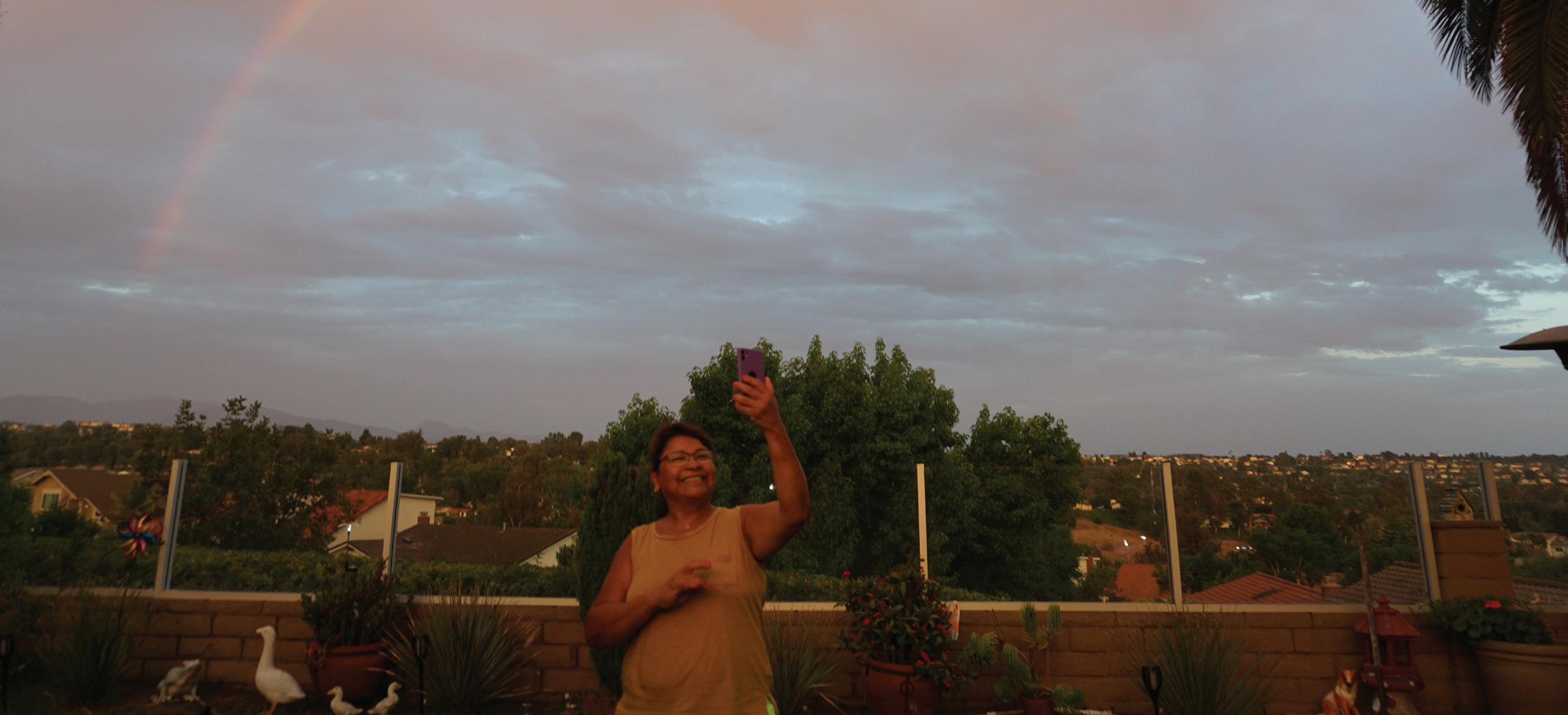
I remember gardening with my mother, Sixta. Gardening meant we would go into our backyard, oftentimes a rectangular plot on the side of the house we lived in or the rose bed at the front of the house. We would go out one or two or three days a season, to pull out grasses, spurges, and thistles until it got too dark to see. We would sweat, and talk, and make plans for what we dreamed to see grow, how we could make it all happen. But mostly we would pull weeds year after year. I remember taking my shoes off and gripping the soil with my toes. I’d stay out last to play with worms. Being in the garden gave me energy, I could stay there all night.
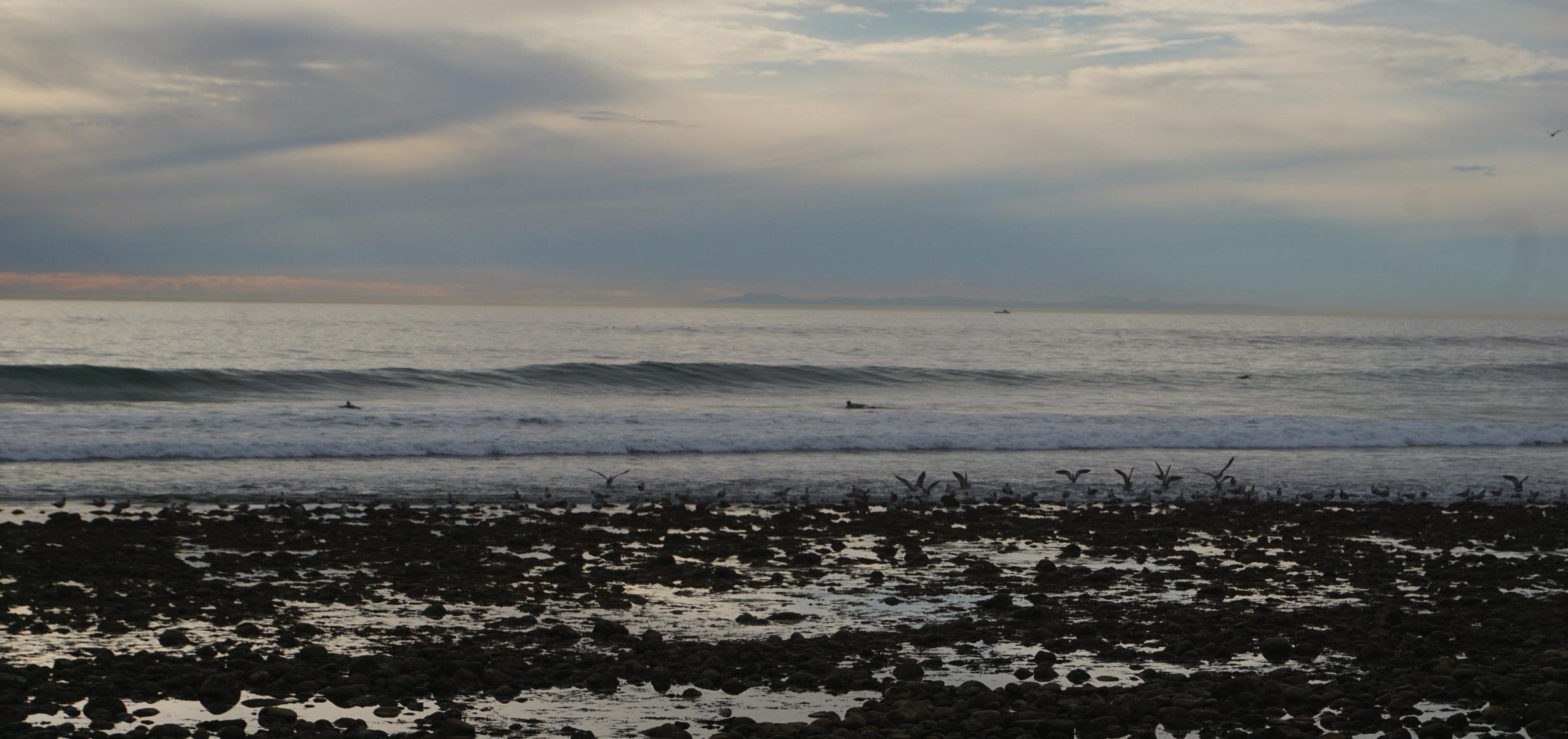
My dad, José, taught me how to ride a bike, and how to dive under or float above big waves in the ocean. I remember going out into the deep, feeling the cool sea beneath me. I remember going out with my friend Utah, we went into the ocean together but they went out the farthest and stayed there in the coolness floating under the sun.
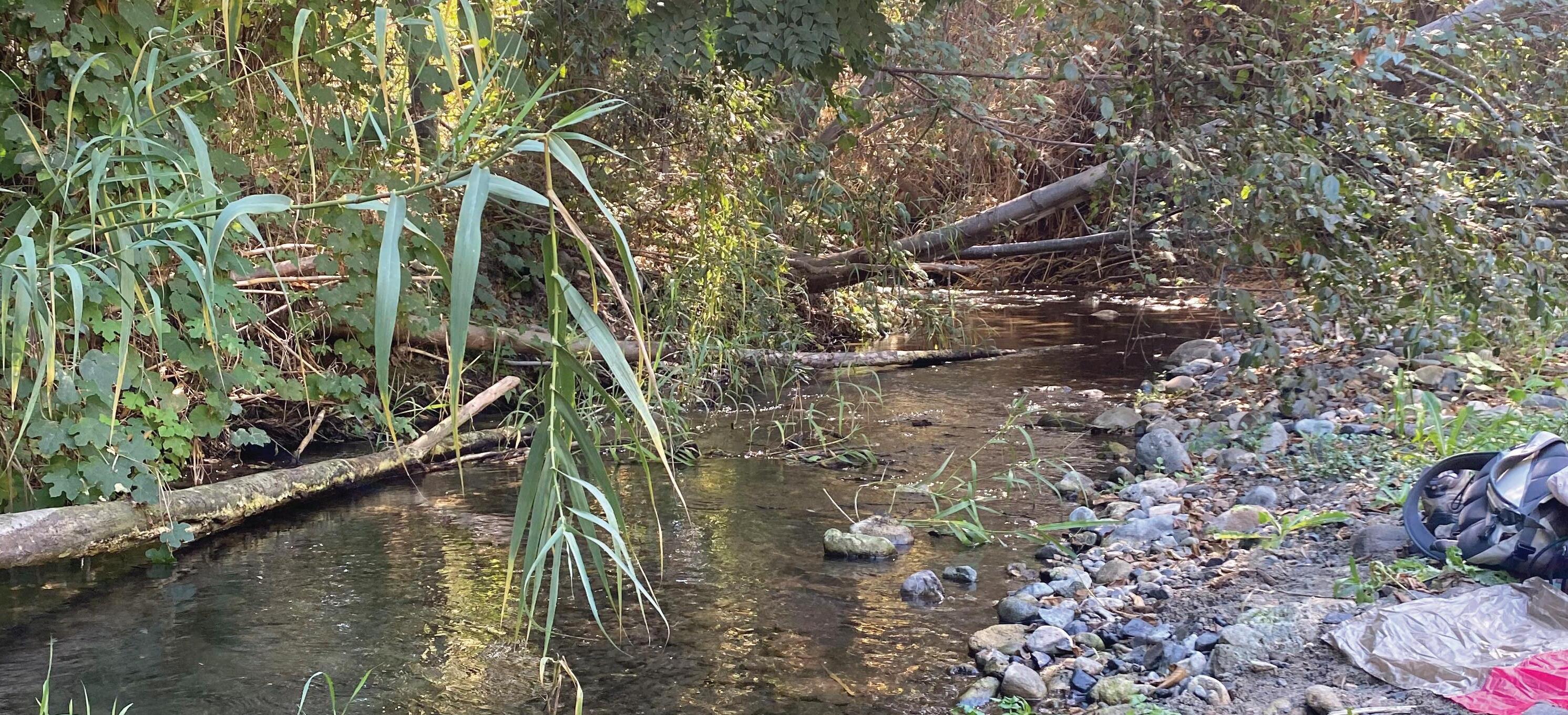
In the spring, the creek is surrounded by golden hillsides. They say Spanish missionaries sowed black mustard seed to mark the road to the missions. The mustard’s flower turns neon yellow and, bile-colored, and in the summer it’s dry stalk becomes fire starter. The cracked earth holds onto the summer heat. There is shade among the lasting old growth. Mountain lions and Bobcats live here, there are tadpoles and quails. To reach the creek, we take a back path behind a baseball field, there I met longlimbed oak wood, sycamore trees, and beds of mugwort. There live a world of gentle faces that have been living here for much longer than my family and I. We crossed the running stream carefully and with steady feet. It’s quiet there, and still today the water flows freely.
Recuerdo trabajar en el jardín con mi madre, Sixta, en nuestro patio trasero, o en el rosal que teníamos en frente de la casa. Salíamos una, dos o tres veces por temporada para arrancar hierbas, euforbias y cardos, hasta que oscureció demasiado para ver. Sudábamos, conversábamos y hacíamos planes sobre lo que soñábamos ver crecer y sobre cómo podríamos hacerlo realidad. Pero, sobre todo, año tras año nos dedicábamos a arrancar malas hierbas. Recuerdo quitarme los zapatos y aferrarme a la tierra con los dedos de los pies. Yo solía ser la última en irme, pues me quedaba jugando con las lombrices. Estar en el jardín me llenaba de energía; puedo quedarme allí toda la noche.
Mi padre, José, me enseñó a andar en bicicleta y a sumergirme bajo las grandes olas del océano o a flotar sobre ellas. Recuerdo adentrarme en lo profundo, sintiendo la frescura del mar bajo mis pies. Recuerdo salir con mi amigo Utah; entrábamos juntos al océano, pero él se aventuraba mucho más lejos y se quedaba allí, disfrutando de la frescura mientras flotaba bajo el sol.
En primavera, el arroyo se ve rodeado por laderas doradas. Cuentan que los misioneros españoles sembraron semillas de mostaza negra para marcar el camino hacia las misiones. Las flores de la mostaza adquieren un tono amarillo neón, de un color semejante al de la bilis, y, cuando llega el verano, sus tallos secos se convierten en yesca para iniciador de fuego. La tierra agrietada retiene el calor del verano. Bajo la sombra del bosque antiguo se respira un ambiente fresco. Aquí habitan pumas y linces; también hay renacuajos y codornices. Para llegar al arroyo, tomamos un sendero detrás de un campo de béisbol; allí me encuentro con robles de largas ramas, sicomoros y lechos de artemisa. En ese lugar habita un mundo de rostros benevolentes que han vivido allí mucho más tiempo que mi familia y yo. Cruzábamos la corriente del arroyo con cuidado y paso firme.
Allí reina el silencio, y todavía hoy el agua sigue fluyendo libremente.
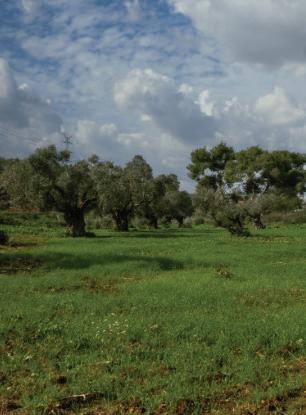
My land memory feels fleeting, feels surreal it feels tangible and equally distant. Three years ago, upon my first visit back to Palestine after a roughly 4 year gap I found myself harvesting olives with my family. This practice, was nothing new, it is always special. The weather was fair, warm sunlight paired with a crisp breeze and a gentle, persistent wind would pick up the scent of soil and jasmine. Our farm is situated in a highly urbanized landscape, nestled in between a highway, tall buildings, and unofficial/official dirt roads. The visuals, and smells are only matched by the contradictory sounds of cows mooing, egrets and military jets compose a strange symphony. The land is all at once beautiful and hostile.
The harvest day is long and the work is somewhat arduous. After harvest I found myself drenched in sweat, and ready to go home. At the same moment, in a dirt covered, sweat layered state I see another family member approaching - fearing that they would ask us to go help them on their plot of land - I felt my stomach sink to the soil. I could not tell you my joy, when instead of calls for help they parked near the biggest olive tree, and under the canopy pulled out a fold out table, a tablecloth and pulled together some plastic chairs strewn around from my neighbours place. In a flash that felt almost instantaneous, my aunts, nephews and uncles brought out a huge, overflowing pot of malfouf.
The moment I remember is sitting underneath the olive tree, in the perfect sun, held by the breeze eating Malfouf. Mashallah, may it continue.
Mi memoria de la tierra se siente fugaz, se siente surreal, se siente tangible y a la vez distante. Hace tres años, en mi primera visita de regreso a Palestina después de aproximadamente cuatro años, me encontré cosechando aceitunas con mi familia. Esta práctica no era nada nuevo, pero siempre es especial. El clima era agradable: la luz cálida del sol combinada con una brisa fresca, y un viento suave y persistente que arrastraba el aroma de la tierra y el jazmín. Nuestra finca está situada en un paisaje altamente urbanizado, encajada entre una autopista, edificios altos y caminos de tierra, tanto oficiales como informales. Las imágenes y los olores solo se comparan con los sonidos contradictorios: el mugido de las vacas, las garzas y los aviones militares componen una extraña sinfonía. La tierra es, al mismo tiempo, hermosa y hostil.
El día de la cosecha es largo y el trabajo es algo arduo. Después de la cosecha, me encontré empapada en sudor y lista para volver a casa. En ese mismo momento, en ese estado cubierto de tierra y sudor, vi acercarse a otro miembro de la familia —temiendo que nos pidiera ayuda en su parcela— sentí que el estómago se me hundía. No podría describir la alegría que sentí cuando, en lugar de pedir ayuda, estacionaron cerca del olivo más grande y, bajo su sombra, sacaron una mesa plegable, un mantel y reunieron unas sillas de plástico esparcidas del lugar de mis vecinos. En un instante que se sintió casi inmediato, mis tías, sobrinos y tíos sacaron una enorme olla rebosante de malfouf.
El momento que recuerdo es estar sentaoa debajo del olivo, bajo el sol perfecto, sostenioa por la brisa, comiendo malfouf. Mashallah, que continúe.
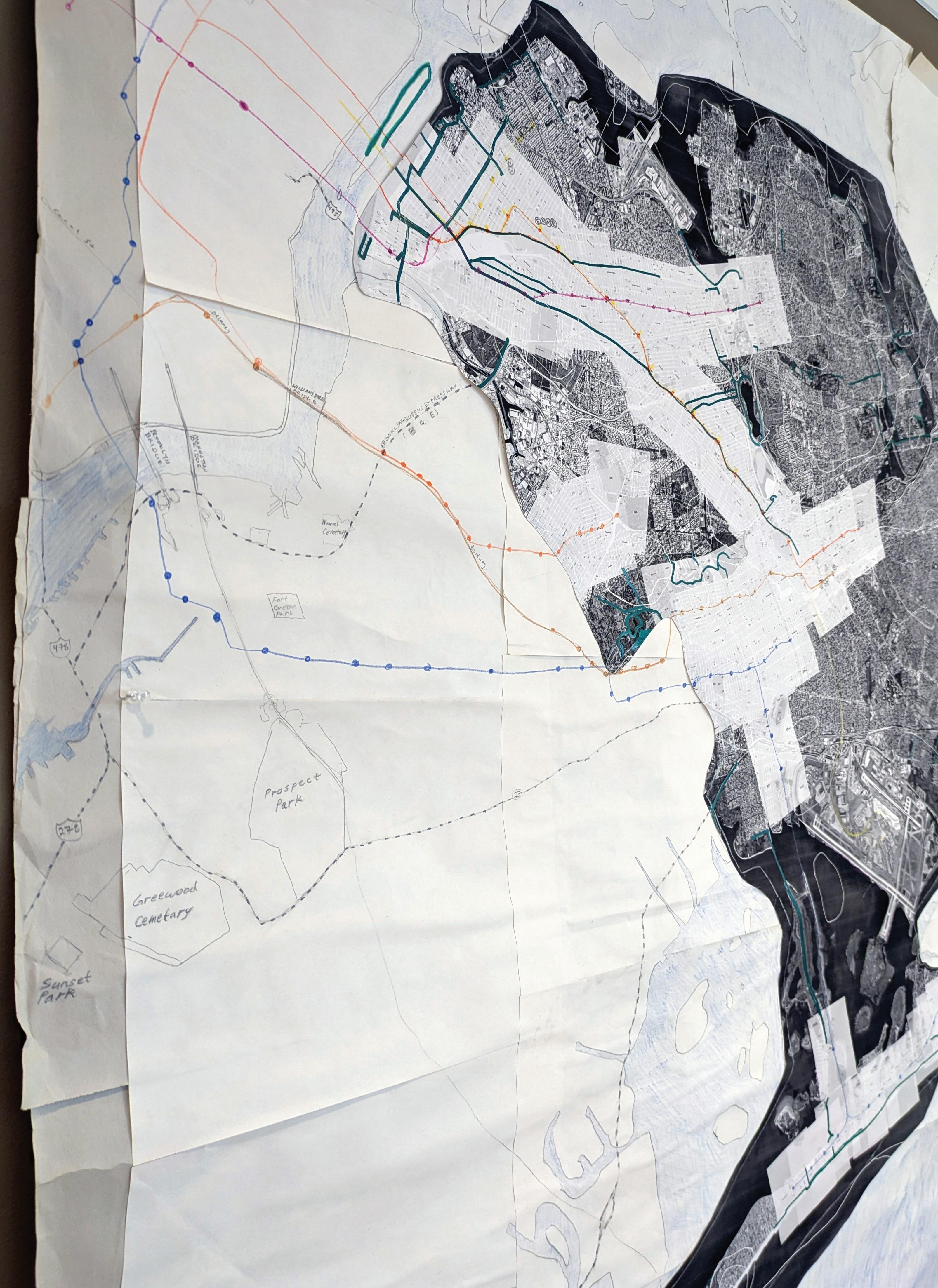
In the first half of the semester, our class studied New York City’s bike lanes, greenways, open streets, and community gardens as part of a much longer history of land transformation—one that begins in Lenapehoking and continues through colonization, industrialization, racialized planning, and contemporary climate and mobility policy.
Collectively, we identified themes that were important to research at the city scale; we explored movement in connection to land that can be seen through different lenses such as cycling infrastructure, greenways, migration, open streets and community gardens, and archival and Indigenous history. These formed the basis to understand land, and the infrastructure that allows people to experience it. Each person in our studio designed at least one spread for the publication that summarized their topic of research.
(Source: Zane Elias and friends)
Madelyn Capozzi
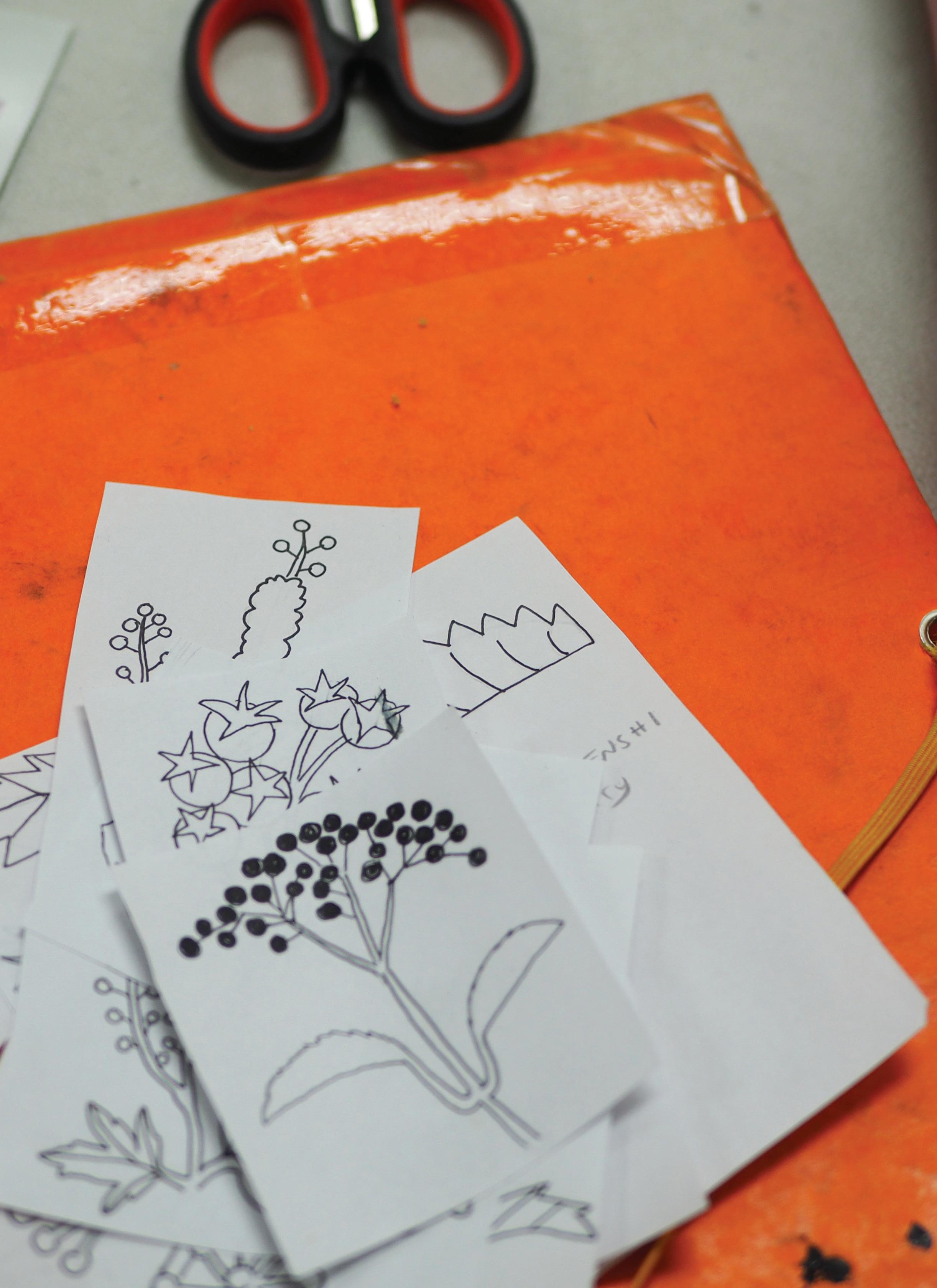
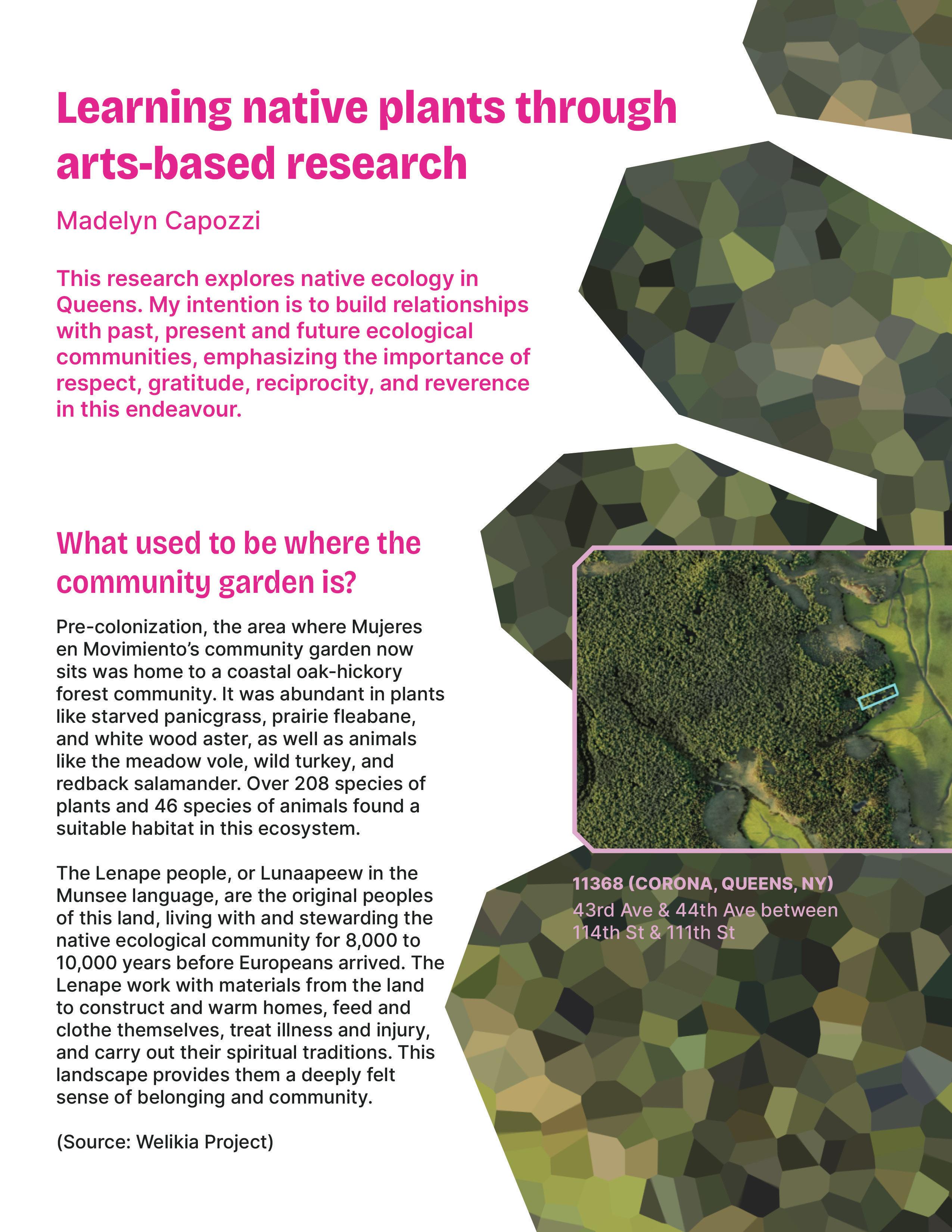
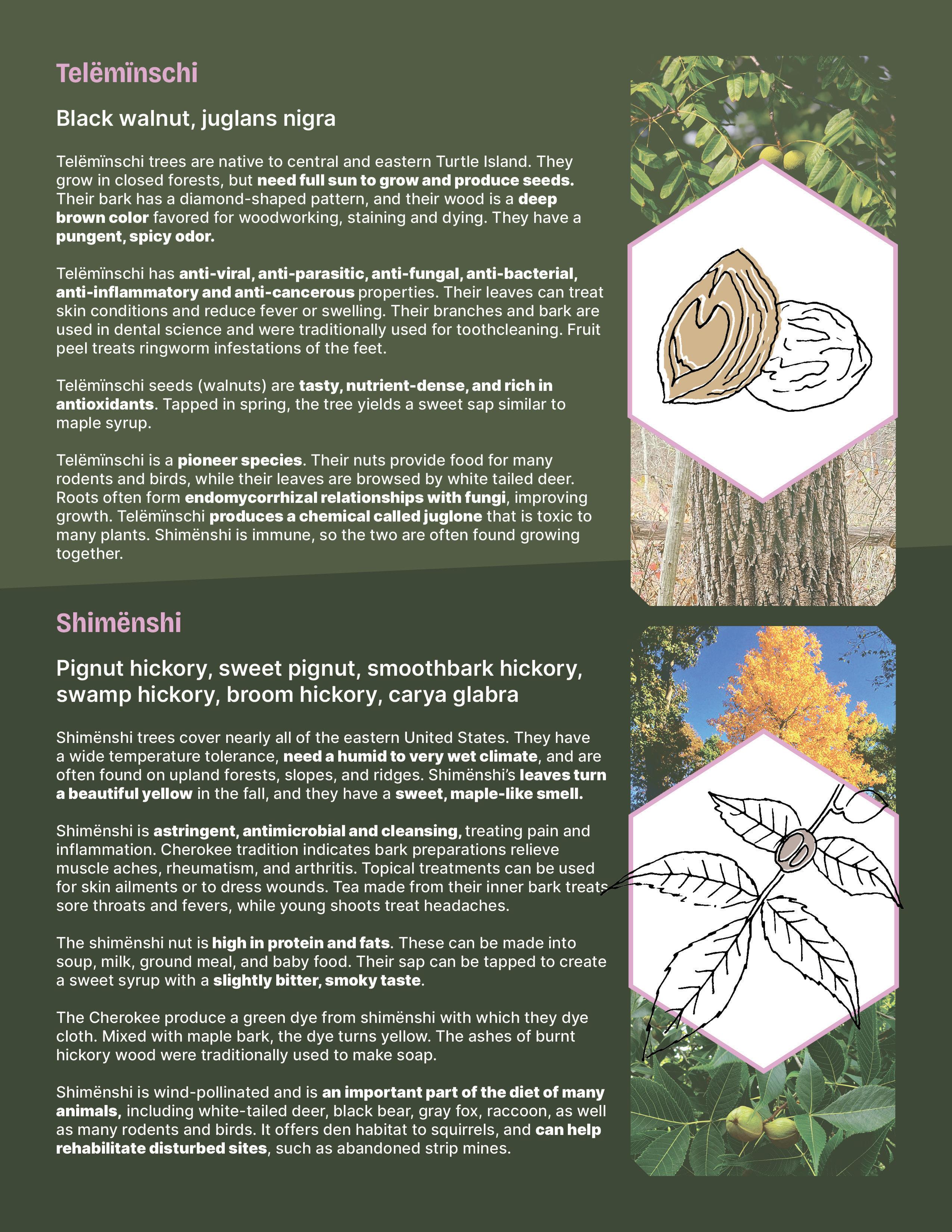
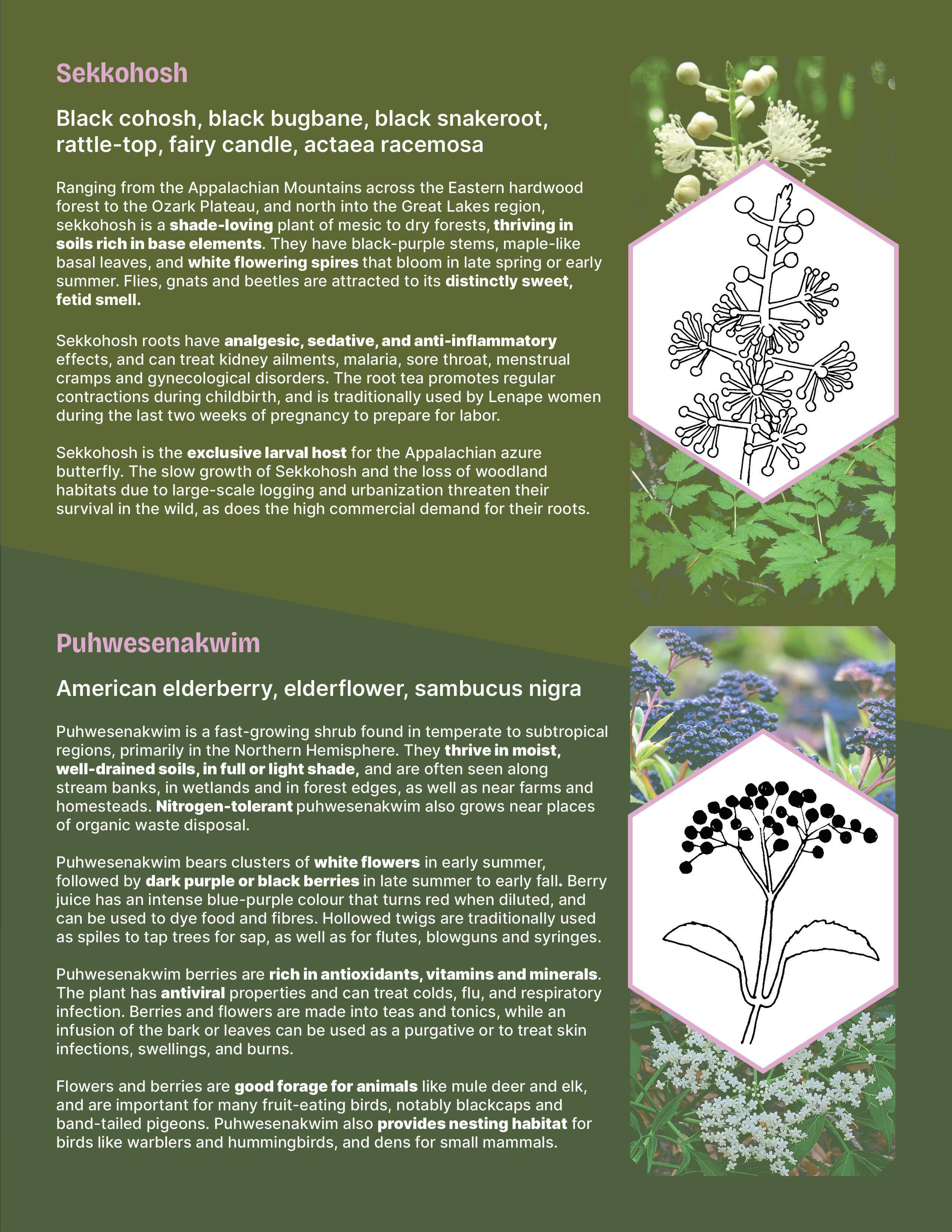
This research explores the ecological communities of Queens, Lenape history, and relationships with plants and ecology. It presents research and visuals on 5 native plants, looking at their names; needs; and aesthetic, nutritional, medicinal, and relational qualities.
I refuse the rational-scientific gaze and its reductive approach to research that objectifies lifeforms and depoliticizes inquiry while making false claims on objectivity.
I refuse academia’s fixation on writing as the output-of-choice for research. I see that writing favors certain ways of learning and knowing at the expense of others. I embrace arts-based methods as an alternative more befitting to my needs and aspirations as a researcher situated within a community-based project.
I refuse to overrepresent the histories of dispossession of Indigenous peoples in my work, centering Lenape knowledge and relationships to land and place as continuous, enduring and of utmost relevance to settler-descendents committed to ecological and social justice.
I refuse the fantasy that conducting a brief research project on plants and ecological communities in Queens constitutes forming deep and embodied relationships with them, or makes me any kind of authority on the topic. I acknowledge that, as a transient visitor whose interactions are mediated by systems designed for settler-colonial knowledge production, this land remains largely unknown and unknowable to me.
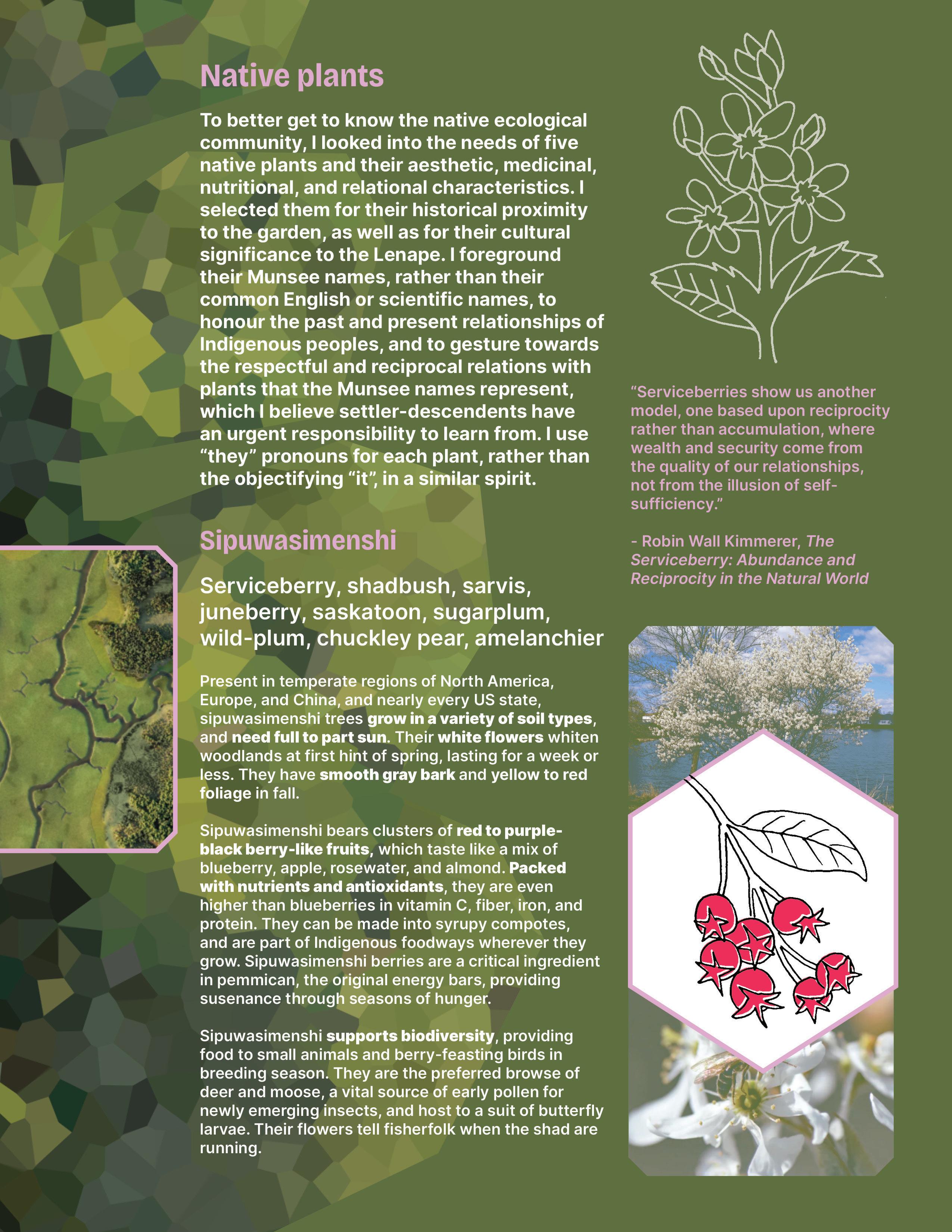
Sipuwasimenshi / Serviceberry
Kimmerer, Robin Wall. “The Serviceberry.” Native NY Gardens, https://www.nativenygardens.com/plant-profiles/service-berryamelanchier-species-22-3-2018/. Accessed 27 Feb. 2026.
“Amelanchier (Serviceberry / Juneberry).” Backyard Forager, https://backyardforager.com/amelanchier-serviceberry-juneberry/. Accessed 27 Feb. 2026.
“Serviceberry (Amelanchier spp.).” University of Wisconsin–Madison Extension, https://hort.extension.wisc.edu/articles/serviceberry-amelanchier-spp/. Accessed 27 Feb. 2026.
Sekkohosh / Cohosh
“Black Cohosh (Actaea racemosa).” Virginia Native Plant Society, https://vnps.org/wildflowers-of-the-year-2/wildflower-of-the-year-2017actaea-racemosa-black-cohosh/. Accessed 27 Feb. 2026.
“Black Cohosh.” Maine Organic Farmers and Gardeners Association, https://www.mofga.org/resources/herbs/black-cohosh/. Accessed 27 Feb. 2026.
“Black Cohosh.” National Center for Complementary and Integrative Health, https://www.nccih.nih.gov/health/black-cohosh. Accessed 27 Feb. 2026
Puhwesenakwim / Elderberry
Hill, Sarah. Delaware Ethnobotany. Delaware Tribe, https://delawaretribe.org/wp-content/uploads/DEL-ETHNOBOTANY-Hill. pdf. Accessed 27 Feb. 2026.
“Lenape Garden.” West Windsor History Museum, https://www.westwindsorhistory.com/lenapegarden.html. Accessed 27 Feb. 2026.
“Elderberry.” Adkins Arboretum, https://www.adkinsarboretum.org/programs_events/ipp/elderberry.html. Accessed 27 Feb. 2026.
“Sambucus nigra L.” U.S. Forest Service, https://www.fs.usda.gov/wildflowers/plant-of-the-week/sambucus_ nigra_l.shtml. Accessed 27 Feb. 2026.
Telëmïnschi / Black Walnut
“Juglans regia and Related Species: Health Effects.” National Center for Biotechnology Information, https://pmc.ncbi.nlm.nih.gov/articles/PMC9510174/. Accessed 27 Feb. 2026.
“Black Walnut Identification.” Growing Fruit Forum, https://growingfruit.org/t/black-walnut-identification/67570. Accessed 27 Feb. 2026.
“Walnuts: Nutrition, Benefits, and Downsides.” Healthline, https://www.healthline.com/nutrition/foods/walnuts. Accessed 27 Feb. 2026.
“4 Health Benefits of Walnuts and How Much You Should Eat.” UC Davis Health, Feb. 2024, https://health.ucdavis.edu/blog/good-food/4-health-benefits-of-walnutsand-how-much-you-should-eat/2024/02. Accessed 27 Feb. 2026.
“Black Walnut.” YouTube, https://www.youtube.com/watch?v=mp9CCiCo3tA. Accessed 27 Feb. 2026.
Shimënshi / Pignut Hickory
“Pignut Hickory.” The Tree Center, https://www.thetreecenter.com/pignut-hickory/. Accessed 27 Feb. 2026.
“Carya glabra.” U.S. Forest Service Fire Effects Information System, https://research.fs.usda.gov/feis/species-reviews/cargla. Accessed 27 Feb. 2026.
“Hickory.” Adkins Arboretum, https://www.adkinsarboretum.org/programs_events/ipp/hickory.html. Accessed 27 Feb. 2026.
Jared Watson
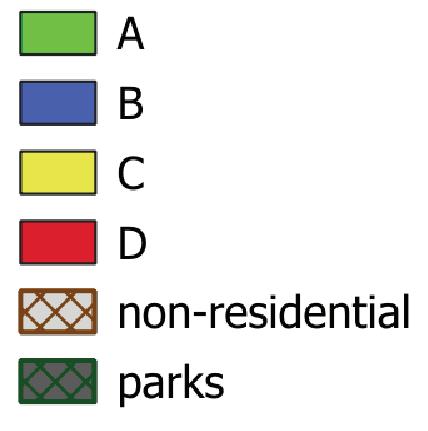
Redlining was a discriminatory practice in which banks and government agencies denied mortgages and loans to residents of certain neighborhoods based on race. Beginning in 1933, the term comes from the Home Owners’ Loan Corporation (HOLC), a New Dealera federal agency which drew red lines on maps around Black and immigrant communities, indicating risk for lenders on a scale of A through D. Although outlawed by the Fair Housing Act of 1968, the scars this practice left on our city can still be seen today.
We can see that much of the green space in Queens is in the northern part of the borough. Communities in Notheast Queens benefit from particularly strong access to green space, in addtion to there being historically little risk assigned here. Also note that much of the borough which is furthest from substantial green space is historically redlined.
I refuse to treat poverty as a natural characteristic of Queens neighborhoods and communities. It will instead be understood as a policydriven extraction of value.
I refuse to use green gentrification as an excuse to deny green infrastructure to redlined areas.
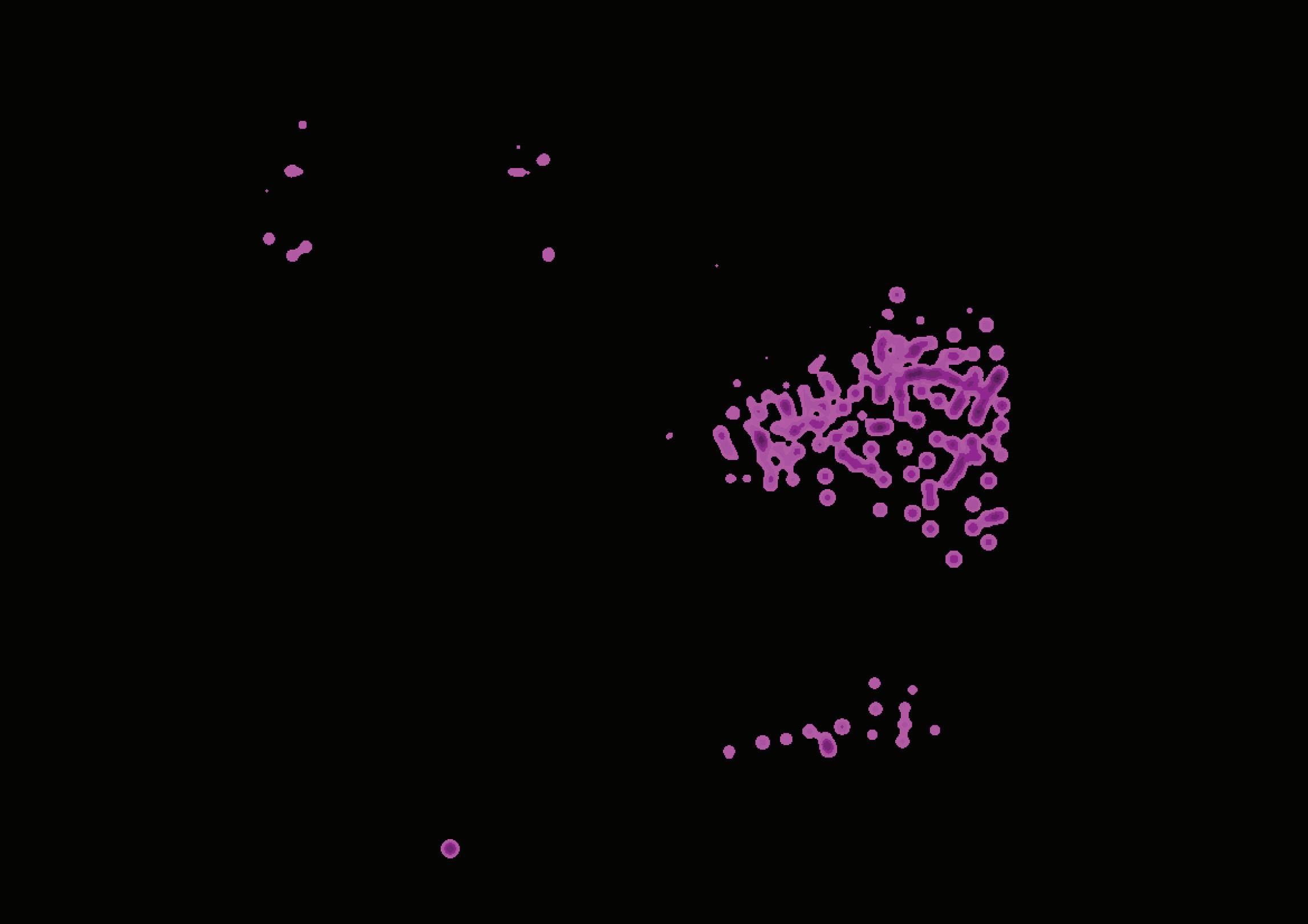
Today, much of the Black population of Queens is concentrated in the southeast. In overlaying race data by census tract on top of our redlining map, we can see that higher percentages of Black Queens residents remain in and around historically redlined zones in neighborhoods like Jamaica and Far Rockaway. Here we can see this illustrated in our heat map.
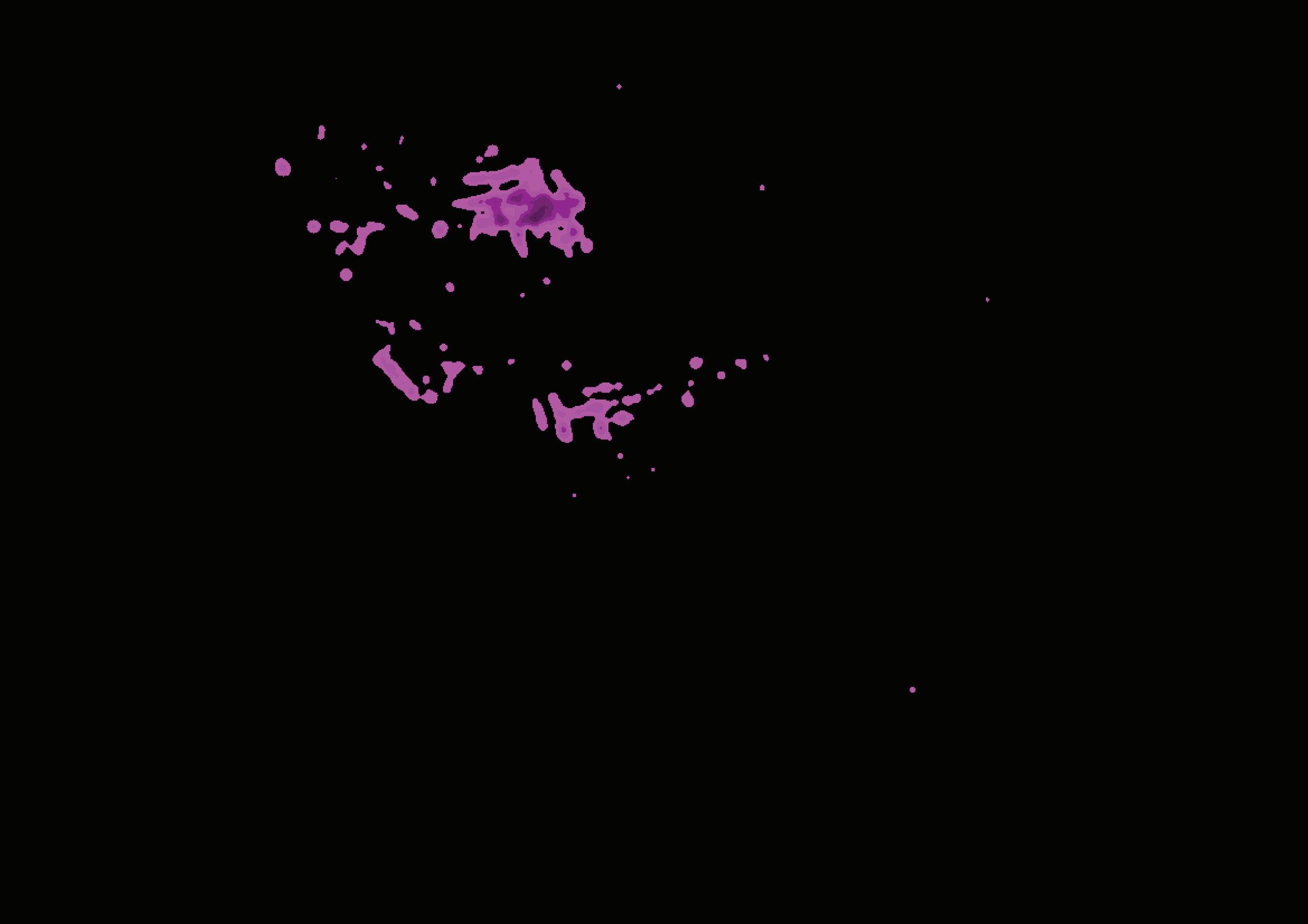
Our neighborhoods in Northern Queens, redlined or otherwise, have relatively low Black populations. Neighborhoods like Astoria or Flushing have instead been defined by different immigrant populations from Asia, Latin America, and Europe. Here we can see in our heat map that much of the borough’s Hispanic population is concentrated right here, in and around Corona.
Our map of median income in Queens shows us, to the census tract, how wealth is distributed across the borough, with darker circles indicating higher wealth concentration. Notably, here in 2026, much of the formerly-industrial Queens waterfront has been developed into expensive new contruction housing. We can also see how some of the highest income areas of Queens remain in formerly-blue zones as well as out east toward the Nassau County line.
Comprehensive resources showing parks access in New York City are hard to come by. Flushing Meadows Corona Park sits adjacent to Corona but is sadly lacking in accessibility for neighborhood residents. Here we have shown in green each pedestrian entrance to the park, as determined by walking its perimeter and observing satellite imagery. While it is all very accessible by car, much of the park is fenced off from the street or separated by highway.
HOLC Redlining Map
“Mapping Inequality: Redlining in New Deal America.” American Panorama. Robert K. Nelson, LaDale Winling, Richard Marciano, and Nathan Connolly, eds. https://dsl.richmond.edu/panorama/redlining/data.
Census Tract Median Income, % Black, % Hispanic (Queens)
U.S. Census Bureau. “American Community Survey 5-Year Estimates.” Data. census.gov. https://data.census.gov.
Street Grid
New York City Department of Information Technology and Telecommunications. “NYC Street Centerline (CSCL).” NYC Open Data. https:// data.cityofnewyork.us.
Queens Parks Map
New York City Department of Parks and Recreation. “Parks Properties.” NYC Open Data. https://data.cityofnewyork.us.
Ismail Khadar
The purpose of this project is to ideate on and reconcile upon both current footpaths/pedestrian routes and pre-colonial footpaths with the goal of conceptualizing seasonal ‘green pedestrian malls’ where bikers, skaters, walkers, and vendors can utilize a network of locomotion that has minimal contact with both the streets and subway system.
This new modality/overlay will not only act as a new way for people to safely traverse the city, it will also be an opportunity for vendors to participate in seasonal commercial enterprise. A main focus point of this project is not only recognition and identification of Indigenous Lenape footpaths but also a remediation of pre-colonial plantlife.
I also propose a more tangible recognition of the peoples that inhabited what we now know as Manhattan namely the Lenape, Munsee, Mohican, Mohawk (Kanien’kehá:ka), Oneida, Onondaga, Cayuga, Seneca, Tuscarora, Shinnecock, and Unkechaug peoples and others. This proposal would see this new land use’s apportionment of tax revenue put in a trust owned and controlled by the descendants of these peoples.
I refuse to compromise on the aspects of Indigenous soverignty and rights to the fruits wrought by their displacement at the hands of the genocidal regimes of colonialism
I refuse to flatten the history and context of the land by proposing a use that seeks to revert land to a historic time and place. While unknowable harms have been enacted upon the peoples of this land, further displacement will not remedy these wrongs.
Pedestrian malls as a concept have a long and debated history within urban design. The fundamental idea is one where pedestrians are separated from wheeled traffic in designated zones. In this proposal for footpath remediation via green pedestrian malls, I seek to address three issues in New York City:
1. Rampant pedestrian deaths/injuries occurring in high traffic areas,
2. The lack of completely pedestrian spaces,
3. Remediation and reparations for Lenape modes of transportation.
In a 2017 brief from the EPI on pedestrian fatalities in NYC, there are clear correlations with age, distance walked, and neighborhood poverty. That is, our elders living in poorer neighborhoods are disproportionately more likely to be hit and killed by traffic.
In order to combat this public health issue, I am putting forth a proposal to create green pedestrian malls within the different boroughs of the city. These paths would be predetermined and follow old Lenape footpaths that existed within the city’s bounds. The purpose of remediating Lenape footpaths into green pedestrian malls is three-fold:
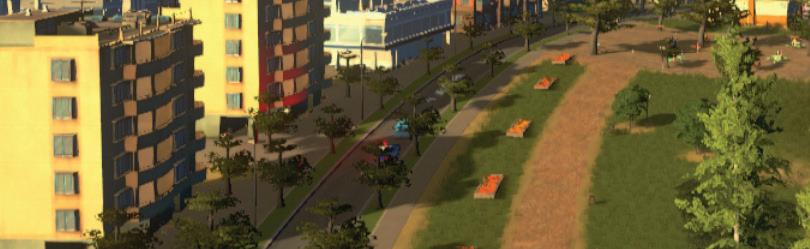
1. These footpaths were used to create major byways and streets used today and are thus logical
2. This is an opportunity to not only enact ecological restoration with native plants but also go beyond land recognition in creation of a new land-use category that can repatriate Indigenous groups
3. This new ‘artery’ has potential to become a new transportation system that is safe from traffic, pedestrian oriented, and a new space for small scale commercial ventures
The primary source for the location of these footpaths was found in R.P. Bolton’s book “Indian Paths in the Great Metropolis”. In this text from 1922, Bolton retraces footpaths used by the Indigenous Lenape in Manhattan, The Bronx, Richmond, Queens, and Kings counties. Examples of prominent footpaths include one that went down Bowery in Manhattan, the now heavily industrialized Maspeth creek that went from Flushing to Greenpoint, and the recognized Red Hook Lane Heritage Trail. These paths are now either roads we use today or streams that have been heavily distorted.
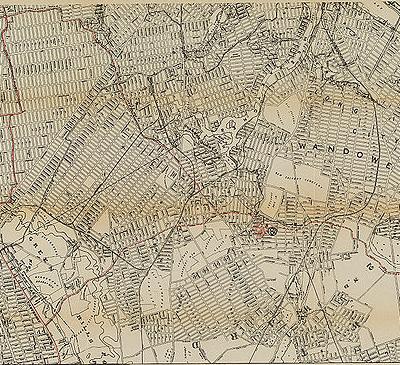
It is easy to visualize a green pedestrian mall as just an extension of the park’s trails. In this proposal I would like to stress the importance of this space as more than just public-leisure space. By allowing for small businesses such as carts, food trucks, and kiosks we are opening up a new commercial avenue that aligns with the idea of a mall. There are great examples of ‘greenways’ such as Minneapolis’s. The large issue that these projects face are upkeep by the parks system/public works and issues of public safety. In exploring new ownership models, I would argue for a public-commons split. That is, both the public sphere (local government) and the commons (neighbors and transient business owners) to steward the space. In the realm of public safety, it is better to have an active and usable space, where there is an engaged community that not only is in the vicinity but also knows one another and has a sense of ownership over the space.
In further exploring the potential for a network of green pedestrian malls, I propose an ownership model that not only is a publiccommons one, but is also a model that attempts to pursue real reparations for displaced Indigenous Communities. In a city such as New York, where capitalism is, for lack of a better term, manufactured, the financial and cultural loss the Lenape have endured cannot be quantified. With that being said, it is worthwhile to look into and implement novel forms of reparations, such as voluntary land taxes. It could take the form of an additional land tax that is given to the various Lenape-Musee nations for their own discretion.
Bolton, R. P., & Ohman, A. R. (1912). Indian paths in the Great Metropolis. Museum of the American Indian, Heye Foundation.
New York City Department of Health and Mental Hygiene. (2017). (rep.). EPI Data Brief: Pedestrian Fatalities in New York City. Retrieved 2026, from chromeextension://efaidnbmnnnibpcajpcglclefindmkaj/https://www.nyc.gov/ assets/doh/downloads/pdf/epi/databrief86.pdf.
Giefer, L. (2023, March 31). Voluntary land taxes. Native Governance Center. https://nativegov.org/news/voluntary-land-taxes/
Becca Williams
This research explores the ecological communities of Queens and the way in which that can inform our practices and goals for disability access in public spaces.
I refuse to...
Position accessibility as secondary or “special accommodation” rather than foundational to the project. The tour and research will center accessibility from conception, not retrofit it later.
Separate “nature” from disability. I refuse colonial frameworks that construct outdoor space as something disabled people are inherently excluded from, rather than examining the designed barriers that create that exclusion.
Extract Indigenous ecological knowledge without acknowledging sovereignty and ongoing colonization. I will cite Indigenous scholars and acknowledge that learning from Indigenous ecology requires understanding Indigenous land rights and resistance.
Romanticize or flatten Indigenous ecological knowledge. I will avoid presenting Indigenous relationships to land as metaphor or past tense, and will recognize the specificity and complexity of different Indigenous practices.
Treat disabled people or community gardeners as research subjects to be observed. If conducting interviews, I will approach conversations as collaborative knowledge-sharing, not data extraction.
Assume accessibility is one-size-fits-all. I will acknowledge the diversity of access needs and avoid presenting singular solutions.
Create research that doesn’t materially contribute to accessibility. The goal is actionable recommendations for the tour and Queens gardens, not abstract theorizing.
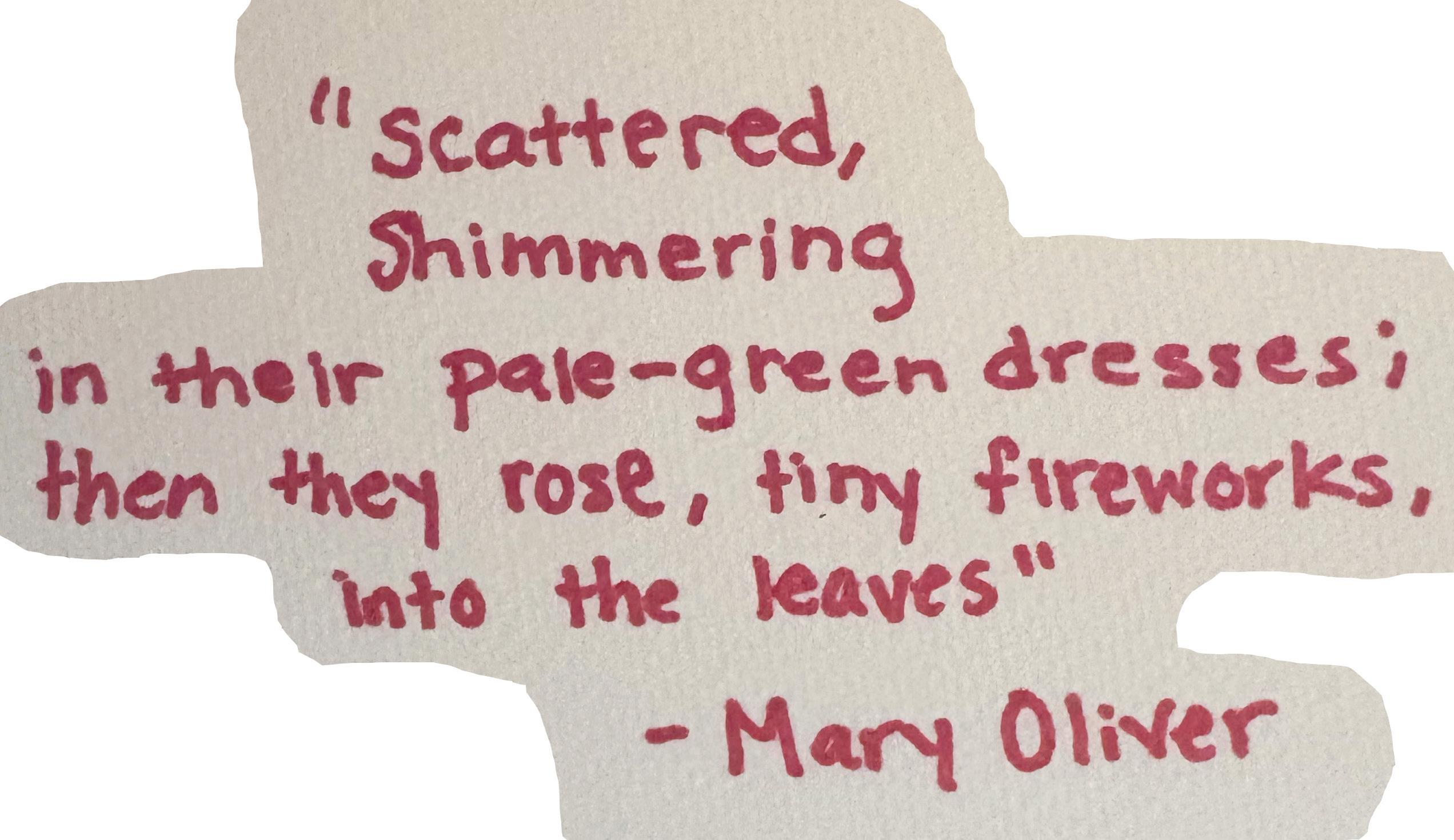
Indigenous ecological knowledge has long understood keystone interdependence in ways that wesern science is only recently acknowledging. The Ruby Throated Hummingbird is an excellent example.
Hummingbirds have the fastest metabolism of any bird, constantly moving and feeding. However, at night, they must enter torpor (a deep rest state similar to hibernation). This is a way for hummingbirds to conserve the energy that they need to survive during the day. Torpor offers a powerful metaphor for the rest needs that are so often dismissed in productivity-driven societies. Supporting different energy needs and rest patterns across our populations might make an entirely new way of living possible.
Hummingbirds don’t flock, they are solitary birds, yet they are deeply interdependent within their ecosystems. This is one example of how interdependence thrives on difference. Without hummingbirds, the broader food web, including hawks and jays, would be destabilized.
The Ruby Throated Hummingbird is a migratory bird that spends summers in various parts of North America, such as NYC, and travels to Central and South America for the winter. It relies on a variety of food sources, including tiny spiders, other small insects, and wildflowers. Some of the wildflowers that hummingbirds eat and pollinate include Cardinal Flower, Bee Balm, Trumpet Creeper and Spotted Jewelweed. Twenty percent of native plants rely on the hummingbirds’ long bill for pollination, and without the Ruby Throated Hummingbird, the biodiversity in the flower population would decrease drastically.
A hummingbird’s nest is created by the female, often constructed of thistle, plant down, spider webs, and lichen, primarily found in deciduous trees. Their nests are a model of care infrastructure or community-built systems of resource sharing that disability communities have long advocated for.
Hummingbirds are keystone species; their presence actively shapes and sustains the ecosystems around them. The same is true of human biodiversity. When we support the full range of human difference, we don’t just accommodate but we also strengthen the whole.
b y T h r o a ted H
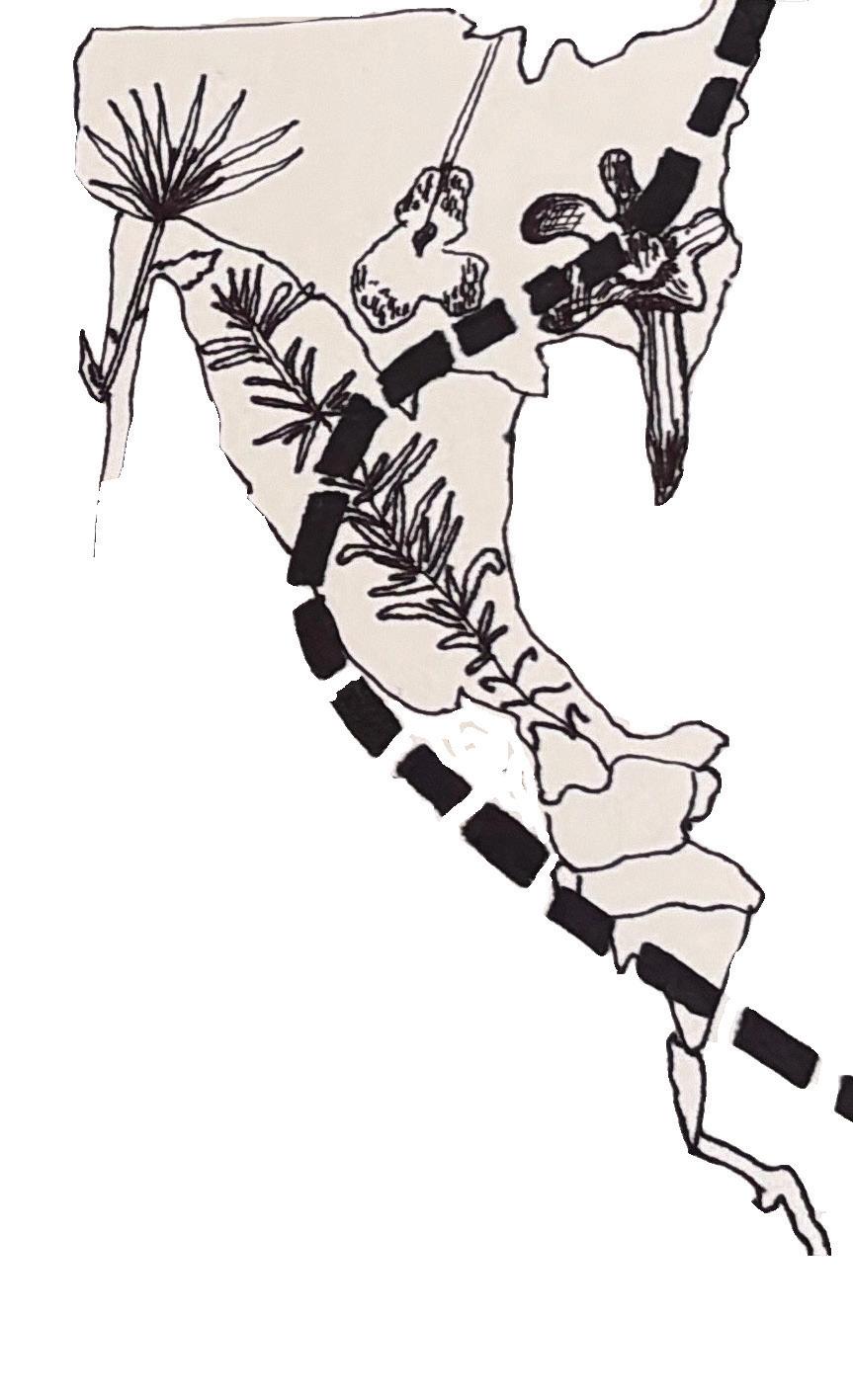
Leanne Betasamosake Simpson. Theory of Water: Nishnaabe Maps to the Times Ahead. Haymarket Books, 2025.
Kovach, Margaret. Indigenous Methodologies: Characteristics, Conversations, and Contexts. University of Toronto Press, 2009.
Leah Lakshmi Piepzna-Samarasinha. Care Work: Dreaming Disability Justice. Arsenal Pulp Press, 2018.
Weilekia. “Website.” Weilekia, https://weilekia.org (accessed 28 Apr. 2026).
Brooklyn Botanic Garden. “Website.” Brooklyn Botanic Garden, https://www.bbg. org (accessed 28 Apr. 2026).
Victoria Bruno
In efforts to make sense of where it is that we’ll be riding, I’ve chosen to make a map of mobility infrastructure and landscape forms throughout the boundaries of the Queens borough. I’m working with satellite imagery, topography, MTA subway lines, bus neighborhood maps, and bike lanes.
Refusal 1 Any people or groups identified as potential collaborators outside of city or federally funded departmental work will not be included in the research by name or location. Instead we may opt to reach out directly and share information about our position as students and about our project background, inviting engagement in the tour.
Refusal 2 I refuse to take photographs of people’s faces without their written, informed consent. I will not use or take photographs of people or places without offering to distribute copies of images to the people and places (connecting with a representative of a place or space) and sharing the images in use to the people involved. Collective ownership of our own identities and the ways it is captured is significant to my understanding of building relationships.
Refusal 3 I refuse to claim models or representations of land as absolute or one definite truth. I recognize that places are reproduced in each moment and change can happen rapidly or nearly unseen, taking place at a geological pace over time. I recognize that places hold a multitude of identities and that the borders or stratifications shown lack a complete representation of the experience formed through direct relationship within a place.
¡Hola! Encantada de conocerte, soy nueva en la ciudad. Estoy en la búsqueda de comprender las redes y los sistemas existentes que dan forma a la movilidad a escala humana en el borough de Queens. Al
visualizar redes y seguir trayectorias mediante el acto de trazar, creé un modelo físico del paisaje (urbano y ambiental) utilizando mi cuerpo. Esta investigación encarnada busca acercarse a las siguientes preguntas: ¿Cómo se distribuye el acceso a nuestra tierra? ¿Quién tiene voz en la configuración de la movilidad dentro de nuestrxs sistemas ecológicos? Y, dirigiéndome a los miembrxs de la comunidad: ¿cuáles son sus deseos relacionado con al acceso y la conexión?
Hi! Nice to meet you, I’m new to the city. I am seeking to understand existing networks and systems which shape human scale mobility with the Queens Borough. Visualizing networks and following along pathways through the act of tracing, I created a physical model of the landscape (urban and environmental) using my body. This embodied research seeks to approach the following questions: How is access to our land being distributed? Who gets a say in shaping mobility within our ecological systems? And to direct members of the community- what are your desires related to access and connection?
Observations
• The 7 line is not directly connected to the bike protected lane network.
• There are many interesting parks and ecological reserves near LaGuardia, down near the shore in Jamaica Bay, and the Rockaways. These areas have segments of protected bike lanes, though are often still difficult to access by foot, bike, bus or subway.
• Largest green spaces within Queens are difficult to access by non car modes. Ex) Two stops along the 7 line at 111th Street and Metts- Willets Point (Citi Field) reach Flushing Meadows Park @Jared how was your walking perspective, any photos?
• Queens // Brooklyn connections are limited.
• There are many islands.
• Eastern Queens is fairly disconnected from the subway line. Ex) Queens Botanical Garden, Queens Community Garden, Bayside, Little Neck Bay. There may be buses and trains to access where people need to go, moving by bike or by foot is possible.
• The topography is relatively flat with a series of hills forming from Eastern Queens, through and along Forest Park.
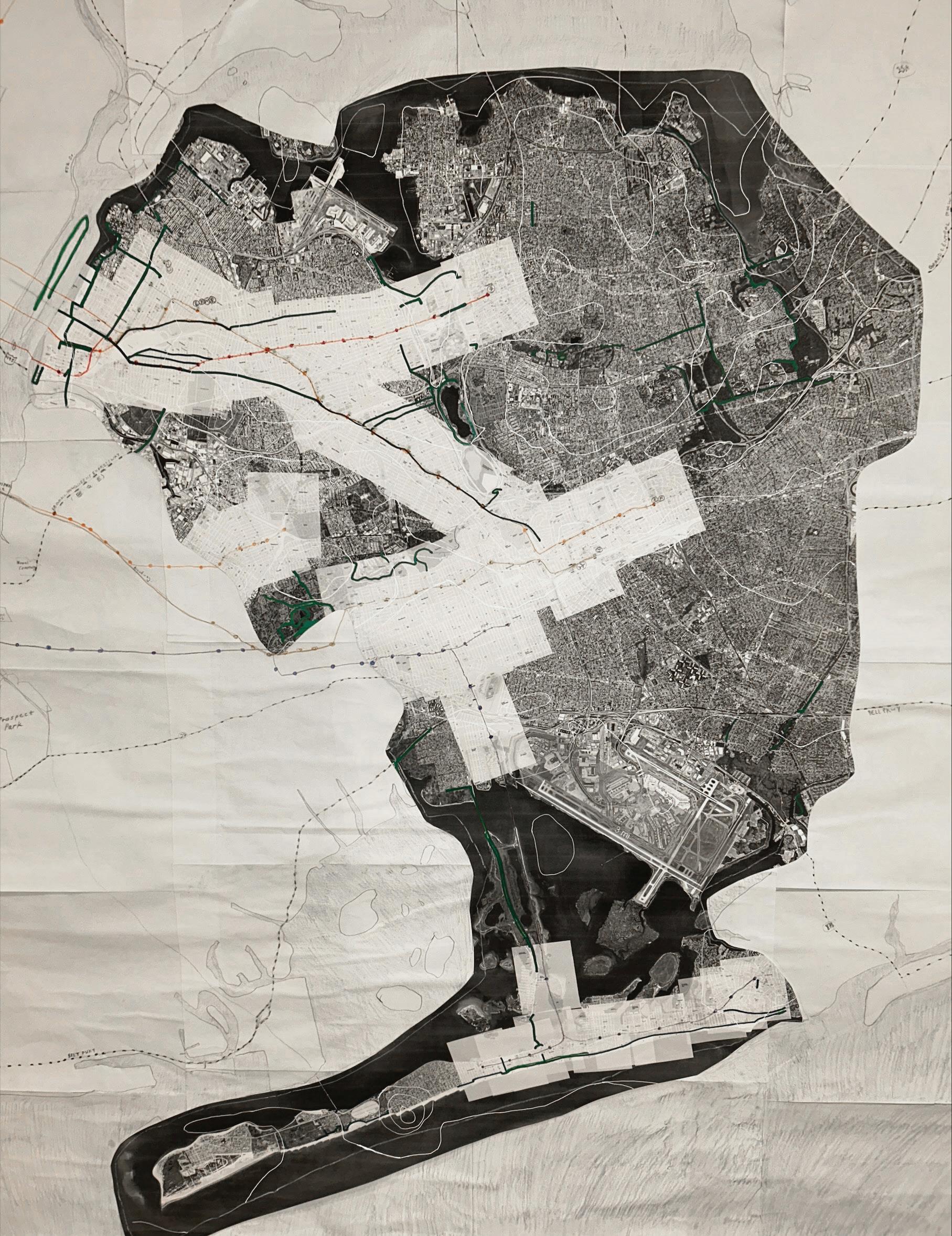

Protected Bike Lanes

N, W line
F, M, line
7 line
J line
A line
Leanne Betasamosake Simpson. Theory of Water: Nishnaabe Maps to the Times Ahead. Haymarket Books, 2025.
Kovach, Margaret. Indigenous Methodologies: Characteristics, Conversations, and Contexts. University of Toronto Press, 2009.
Leah Lakshmi Piepzna-Samarasinha. Care Work: Dreaming Disability Justice. Arsenal Pulp Press, 2018.
Weilekia. “Website.” Weilekia, https://weilekia.org (accessed 28 Apr. 2026).
Brooklyn Botanic Garden. “Website.” Brooklyn Botanic Garden, https://www.bbg. org (accessed 28 Apr. 2026).
(Source: Center for Migration Studies)
As New York shifts with the climate the inevitable will come to pass, the waters and lands -which were brutishily, ignorantly built over - will flow again. My research revealed that Corona park and flushing bay will be two highly prone sights to flooding. Originally, built over marshland hosting a vast biodiversity of flora and fauna, the landscape effortlessly existed in cohesion with myriad life. Early on in the project of the American empire and NYC, this land was one of the first sites to be settled. Eventually, the marshland was paved over in favor of concrete. As it stands the park faces consistent flooding already, but against the forecast of the next 500 years we see the park will be completely flooded.
This complete flooding poses serious significance for the communities around it. One such community are cyclists and outdoors people, where the park is reprieve. It is not a stretch, or outlandish claim to say that it will be these communities who will be the first to witness the waters return. Not only will they bear witness, it is a chance to honor the waters that flowed, it is a chance to honor the present and the future which marches on. There are a multitude of ways to act in light of what they will see. What this research presents nonetheless is the basis for action, and a glimpse into one future.
I refuse to characterize the waters as ends or beginnings I refuse to personify the land and its people as victims
1. Sanderson, Eric W., et al. Welikia Map Explorer. The Welikia Project / Wildlife Conservation Society, 2020, www.welikia.org/map-explorer.
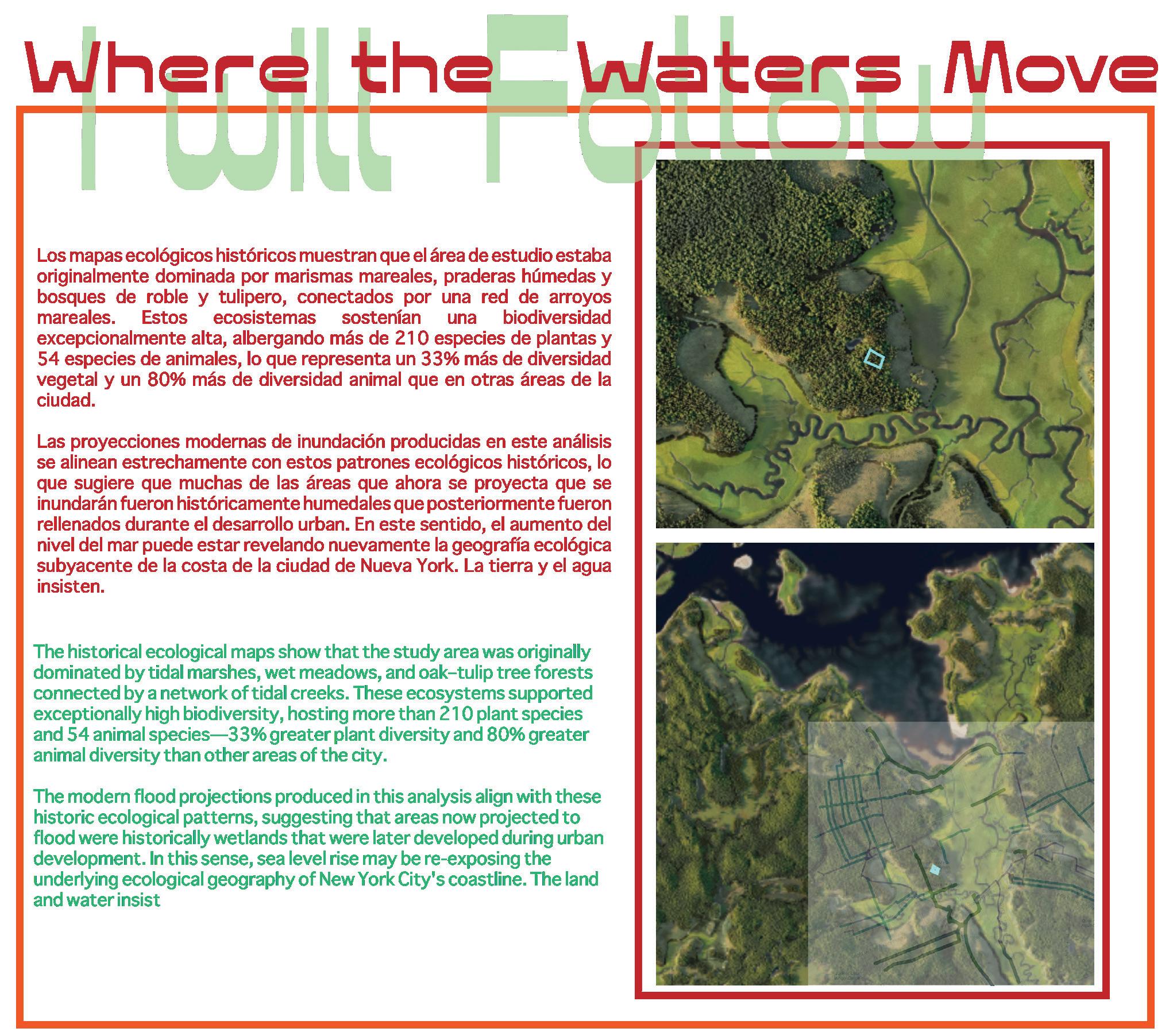
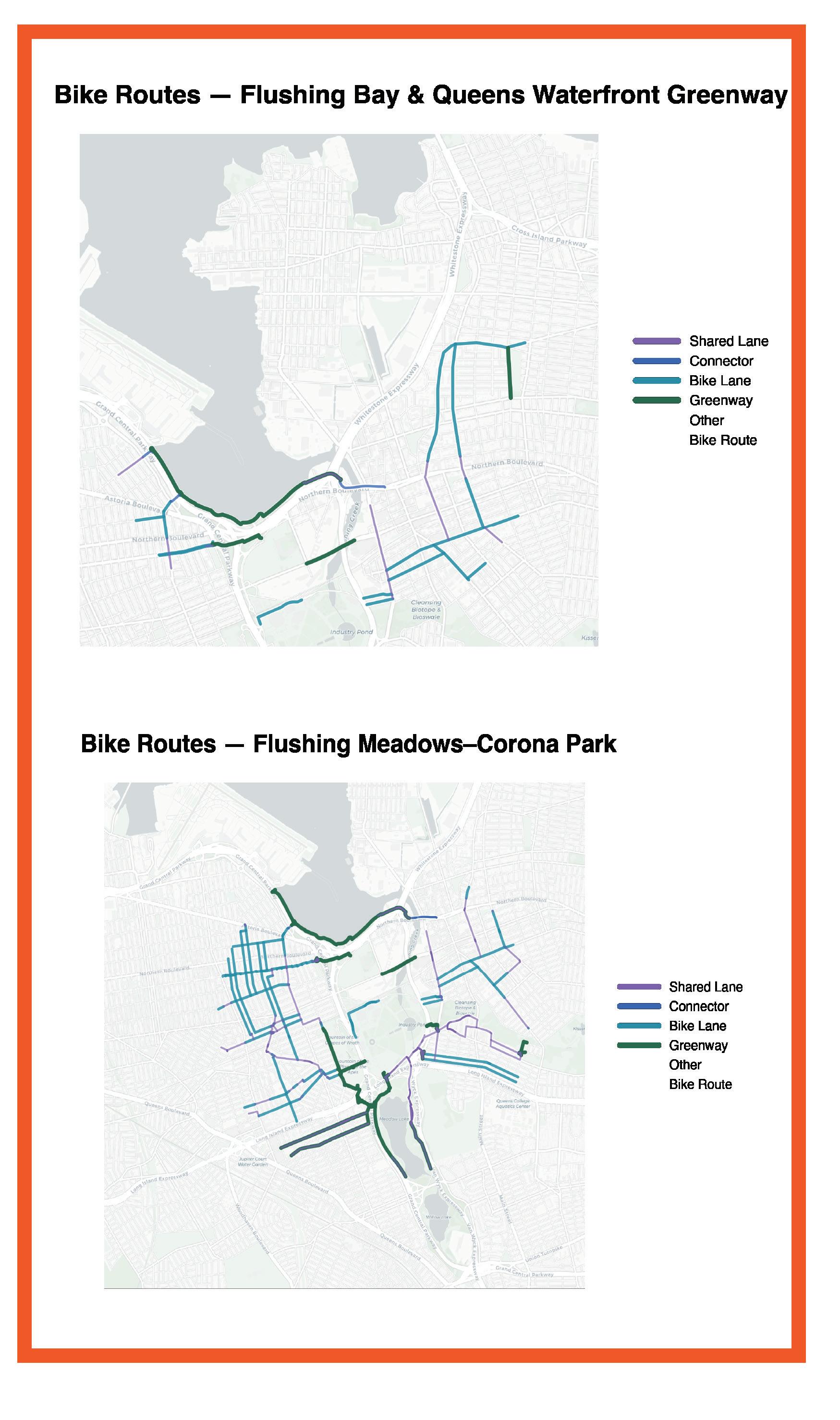
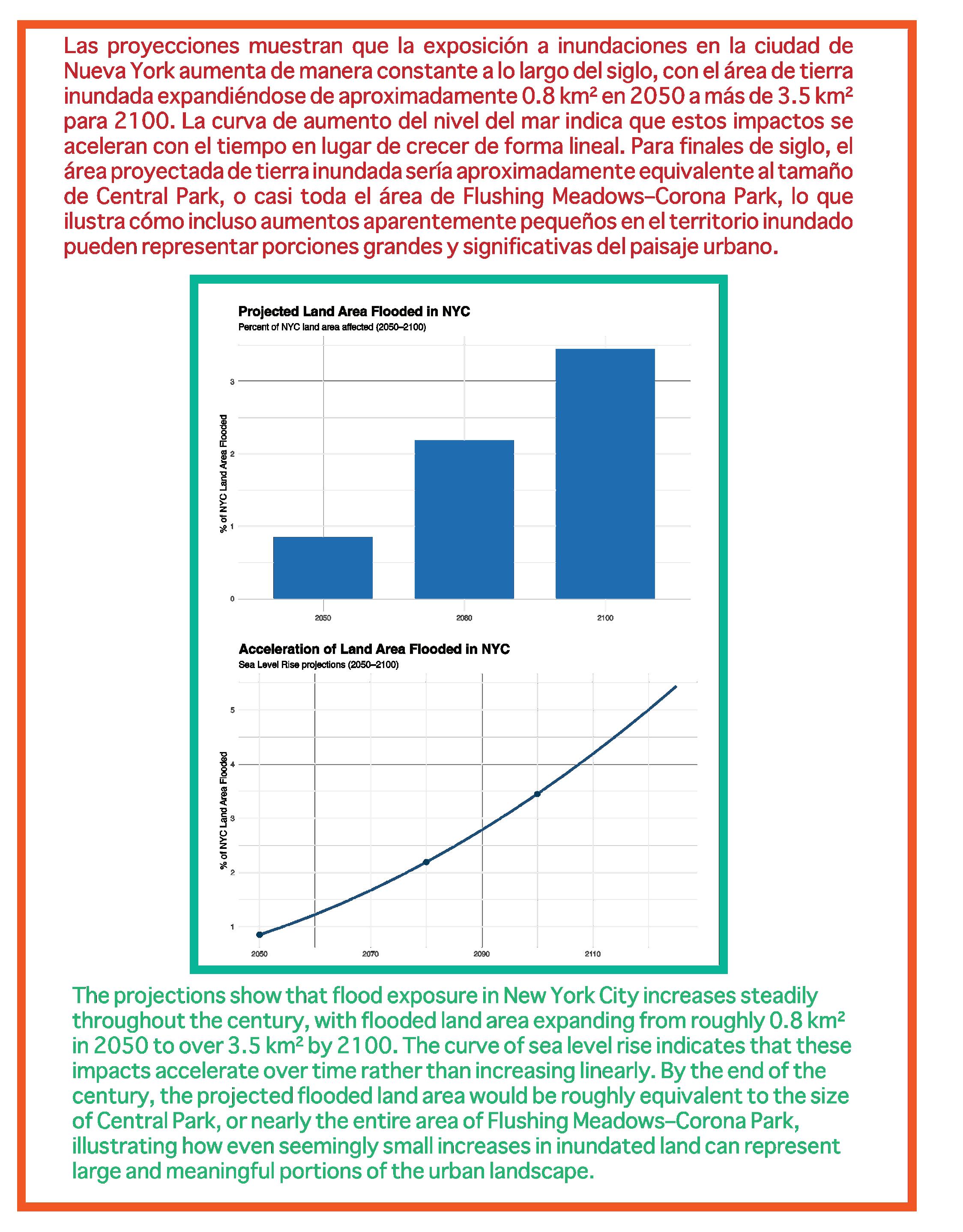
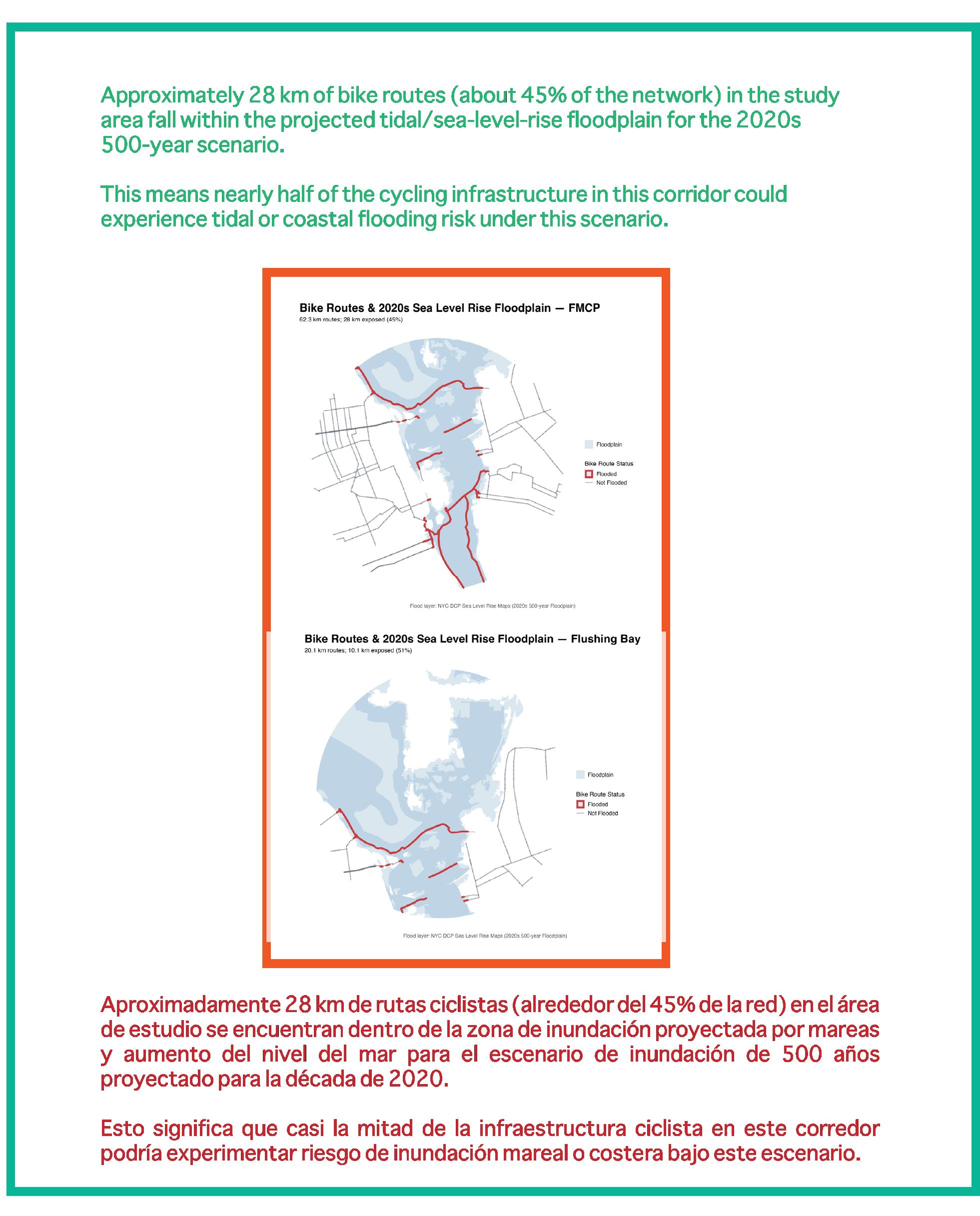
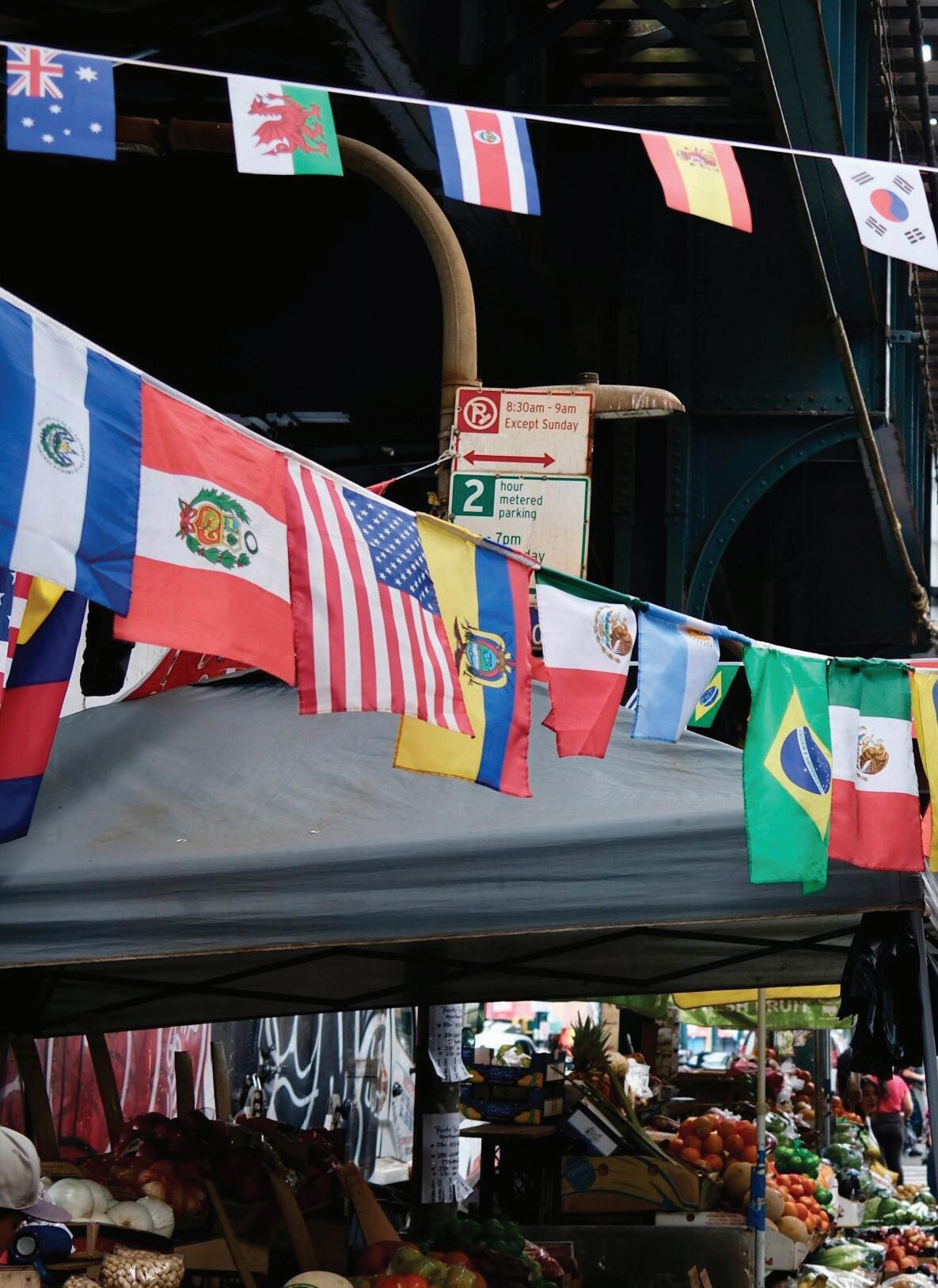
(Source: Center for Migration Studies)
Christian D’Ostilio
My research surrounded a central theme of the reclamation against the colonial power. The cultural melting pot of Queens shows community and placemaking of enclaves whose collective agency of the public space is resistance to the colonial powers that have subjected them to their displacement. The land does not forget, and I believe the land is happy when the public sphere is harnessed by immigrant diasporas sharing a global struggle recheck.
Acknowledging the colonial violence and exploitation of indigenous land, I refuse to focus the story mapping on sites that obscure the resilience of the indigenous cultures
I refuse the limitations of settler attitudes in the pursuit of presenting the land information of past/present/future as focused on places of culturally activation/ resilience
Christian D’Ostilio
This research explores the ecological context of Queens as before colonization and urbanization. My intention was to choose three neighbourhoods that show strong immigrant social networks.
Unearthing the cityscape seeks to understand the history and connections of the land and culture pre-colonization. New York City was referred to regionally as Lenapehoking (Land of the Lenape) and Manahatta (the Island of Many Hills). Looking at the borough of Queens specifically, the three main types of ecologies are coastal oak heath forest, oaktulip tree forest, and low salt marsh land. The immigrant diaspora in Queens is notable for its strong relational and community support systems. These communities are resilient today and have worked hard to establish a distinctive culture and resilience across gentrification and discrimination. A common theme in understanding the immigrant ecologies in New York is understanding the essential connection to public space. Whether for culture, street vending, dance, the use of space for relationality, connectivity, and community share an important factor in urban living.
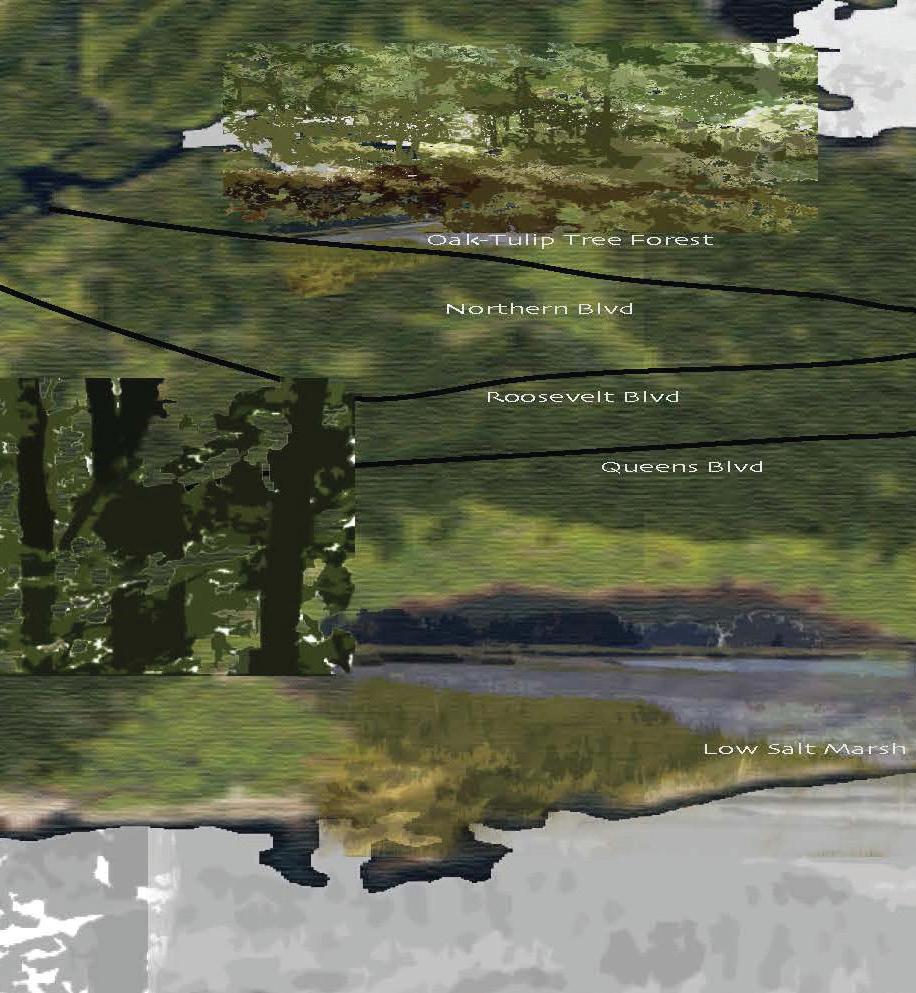
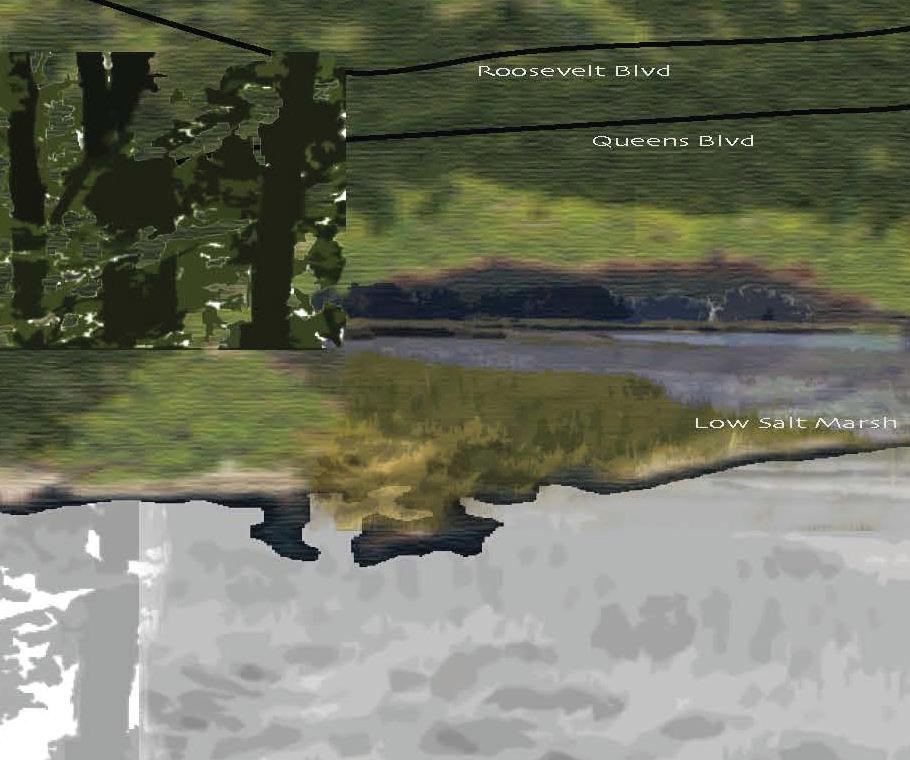
It is bordered by Elmhurst on the west, Northern Boulevard on the north, the Long Island Expressway on the south, and Flushing Meadows Corona park on the East.
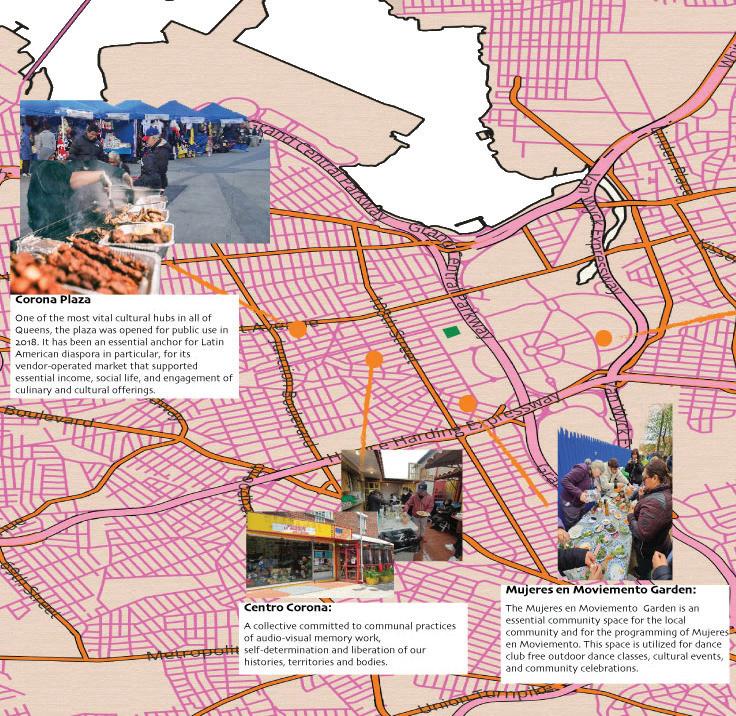
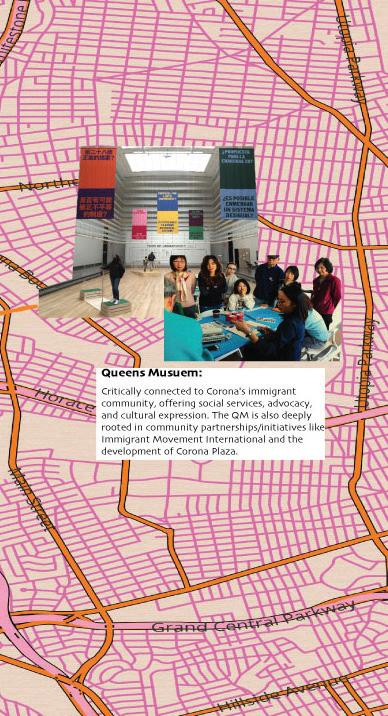
Corona developed in the late 1800’s largely due to the Flushing Railroad service. It was first named West Flushing and was renamed Corona, crown of Queens county, by developer Thomas Waite Howard after seeing the future proposers of the area.
Corona has a 55-60% foreign-born resident population. It has one of the largest Mexican diasporas in all of New York city with other prominent groups such from Ecuador, the Dominican Republic, Colombia, and Peru.
Roosevelt Avenue and Junction Boulevard are two anchoring streets for family-owned, immigrantowned restaurants, grocery stores, bakeries, and street-level retail and vending.
Sources: New York City Department of Small Business Services. (2020). Neighborhood 360° Commercial District Needs Assessment: Corona, Queens. New York, NY
New York City Department of Small Business Services. (2020). Neighborhood 360° Commercial District Needs Assessment: Flushing, Queens.
New York, NY. Kaebnick, R. (2014). Last stop on the “International Express,” first stop of a cultural journey: Flushing, Queens. New Women New Yorkers.
Flushing is situated off the Flushing Creek and the Whitestone expressway. The neighborhood is buffered by the water and Flushing Meadows park to the west. Its northward waterfront is industrial while its east and south is residential.
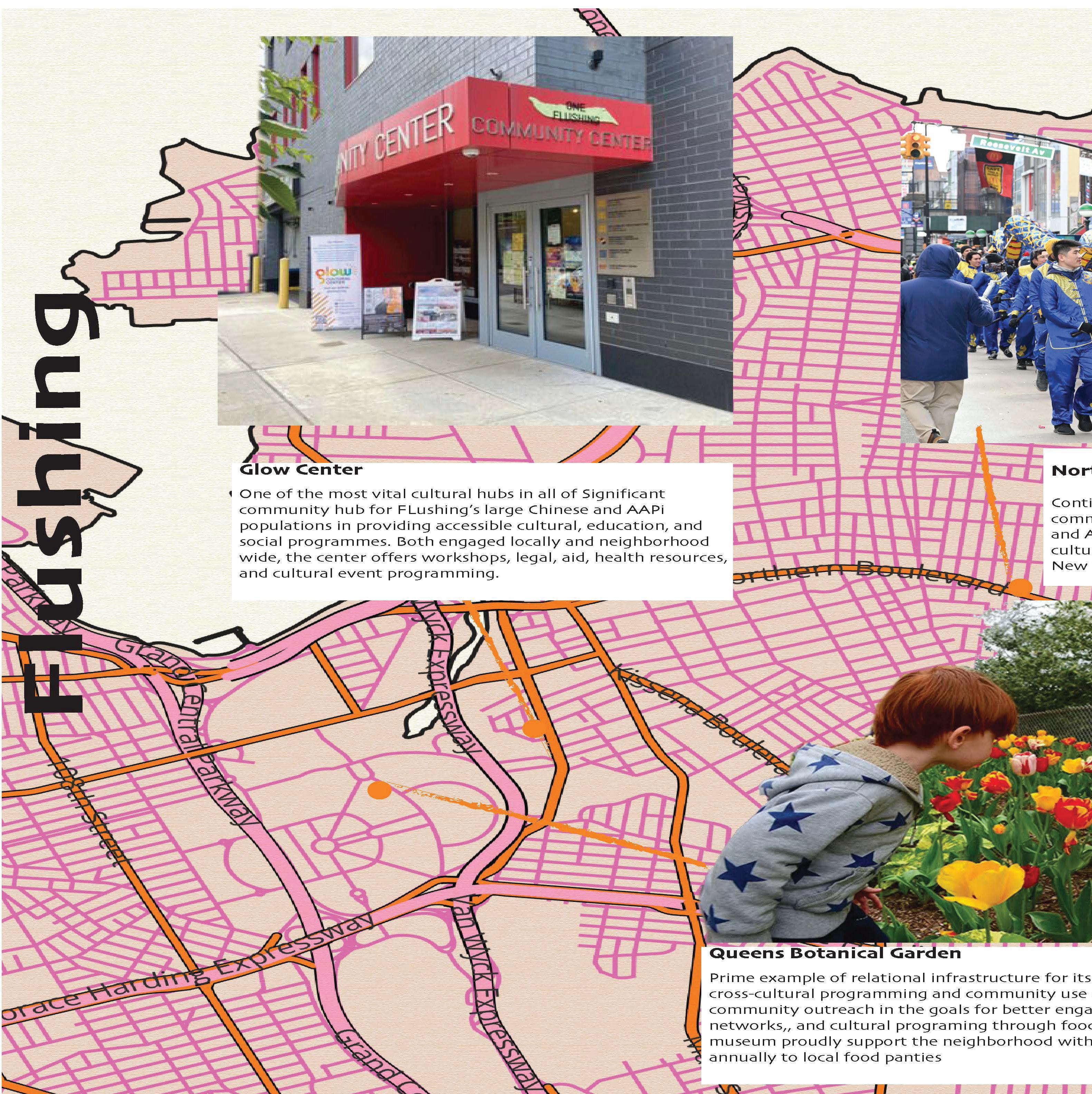
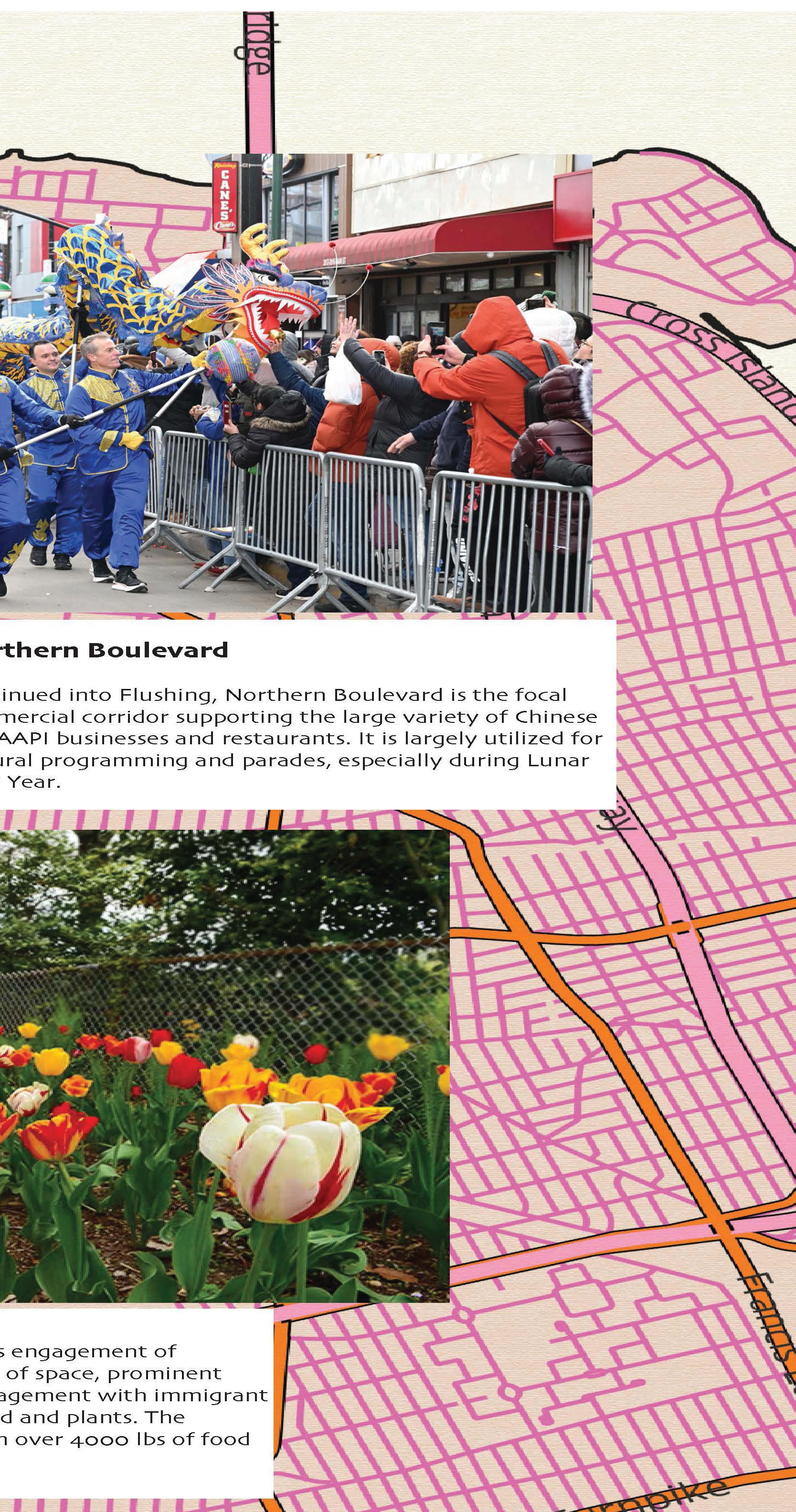
Flushing is another major immigrant neighborhood with around 58-67% of residents being foreign-born. Roughly 179-200 languages are spoken in the area. Major diaspora includes Chinese, Korean, Indian, Pakistani, Filipino, and Afghan with some Latin American groups. Flushing is known as one of the most robust Chinatowns in the world.
Main Street comprises downtown flushing and the central commercial heart of the neighborhood. Roosevelt Avenue continues into Flushing, where street vending and small retail shops are an essential part of the street life. Northern Boulevard is known for street programming such as during Lunar New Year and other cultural pride events.
Sources:New York City Department of Small Business Services. (2020). Neighborhood 360° Commercial District Needs Assessment: Flushing, Queens. New York,
NY. Kaebnick, R. (2014). Last stop on the “International Express,” first stop of a cultural journey: Flushing, Queens. New Women New Yorkers.
Jackson Heights is situated in Northwest Queens between Astoria/East Elmhurst and Corona. It runs north-south from Nothern Blvd and Roosevelt.
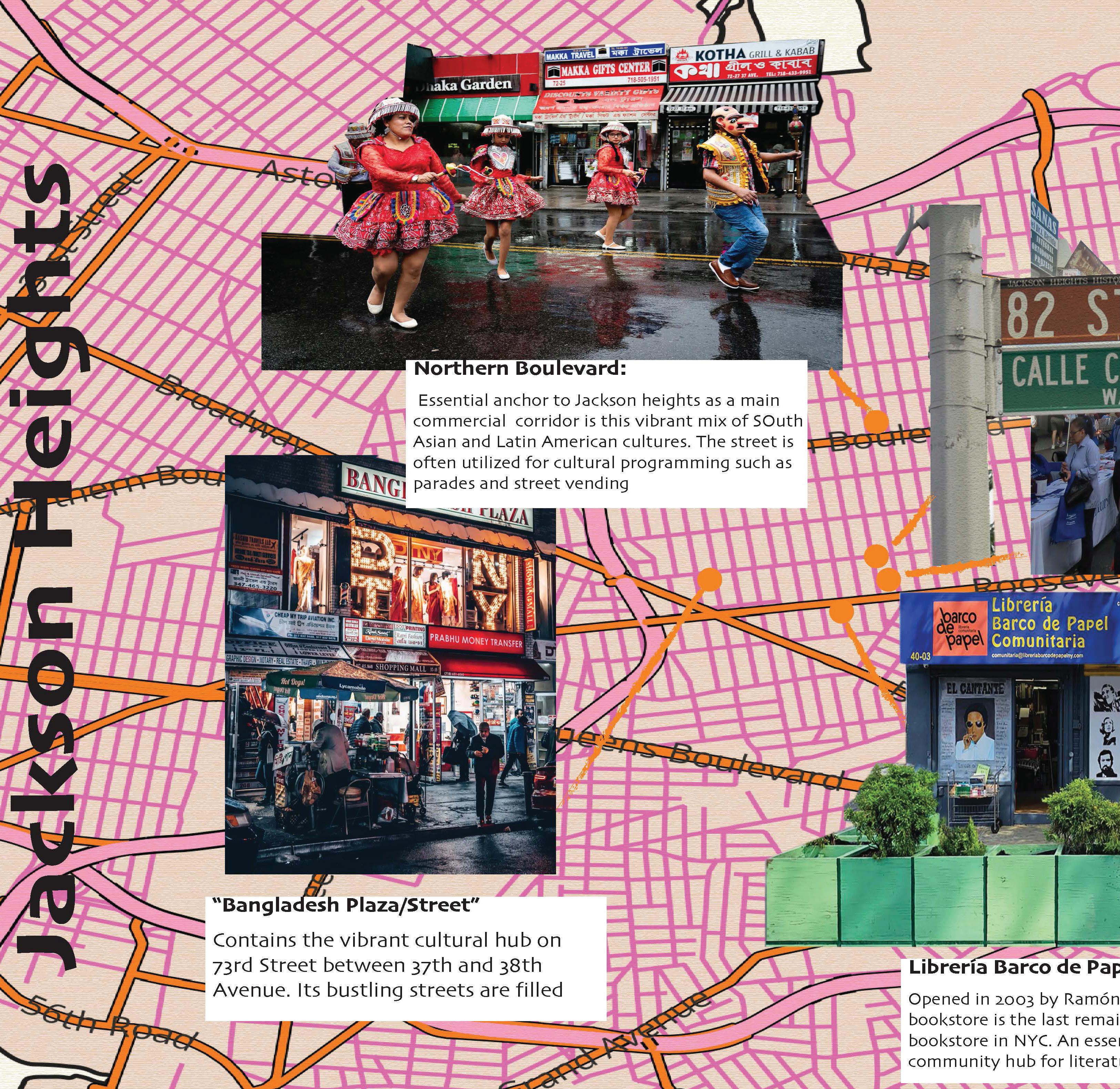
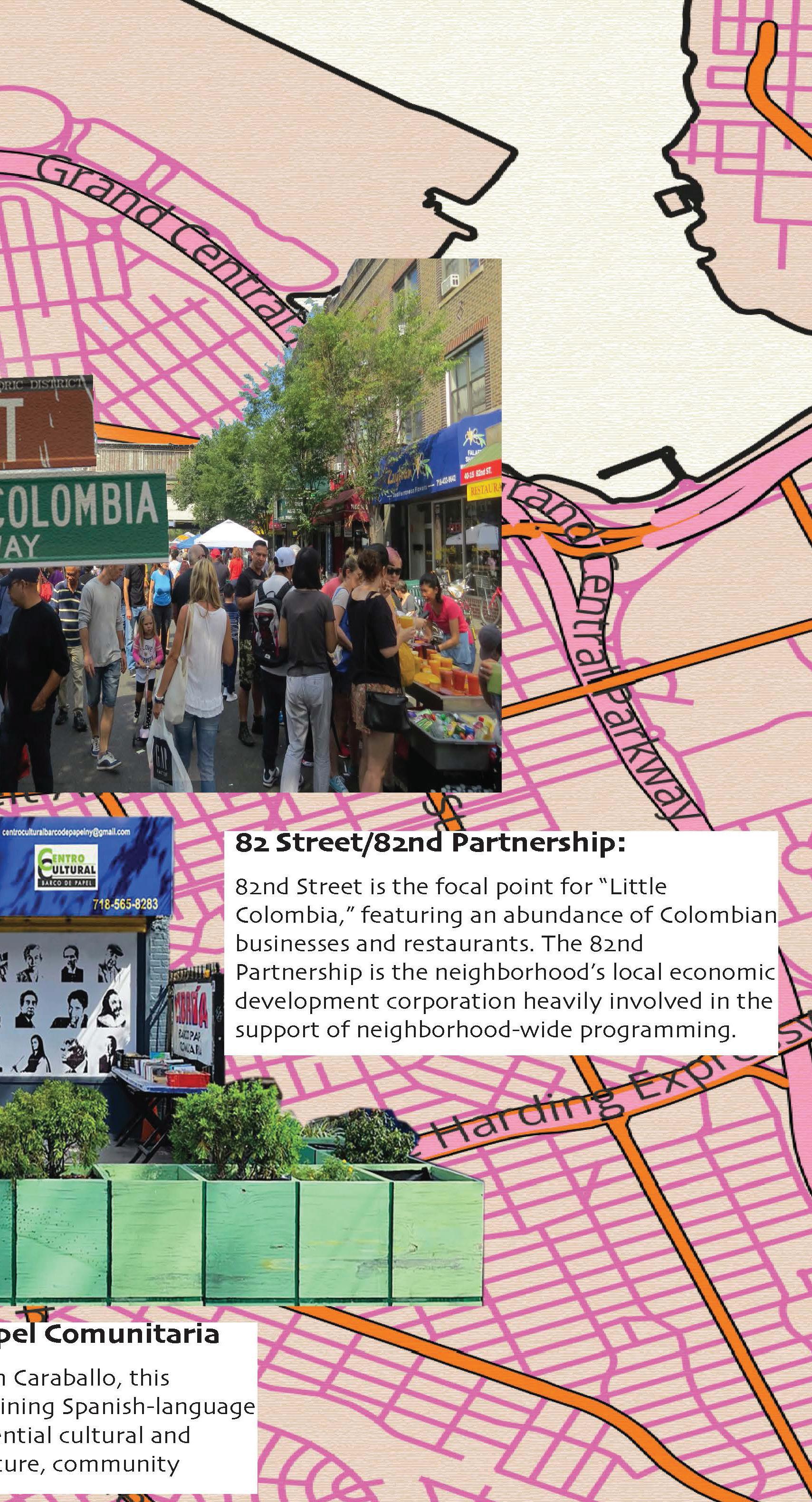
Jackson Heights is one of the most linguistically diverse neighborhoods in the world. Strong social, cultural, economic, and religious enclaves form essential infrastructure for immigrants. One of the most linguistically diverse neighborhoods in the world. Strong social, cultural, economic, and religious enclaves form essential infrastructure for immigrants. Majority of Jackson Heights residents 60-64%, are immigrants. Roughly 60-65% of these residents are Hispanic/Latino. Major diaspora is from Ecuador, Colombia, Mexico, Dominican Republic, Bangladesh, Nepal, Tibet, China, and Peru.
Small business ownership and vending is an essential economic backbone to immigrant residents as nearly 90% of self-employed residents are immigrants.. Roosevelt Ave has a strong Latin American and South Asian Presence. 74th St is known as “Little” Idea with a prominence of South Asian Businesses. 37th Avenue is an important historic commercial corridor with many immigrant-owned shops
Sources: New York City Department of Small Business Services. (2019). Avenue NYC Commercial District Needs Assessment: Jackson Heights, Queens. “Jackson Heights.” (n.d.). CityNeighborhoods.NYC.
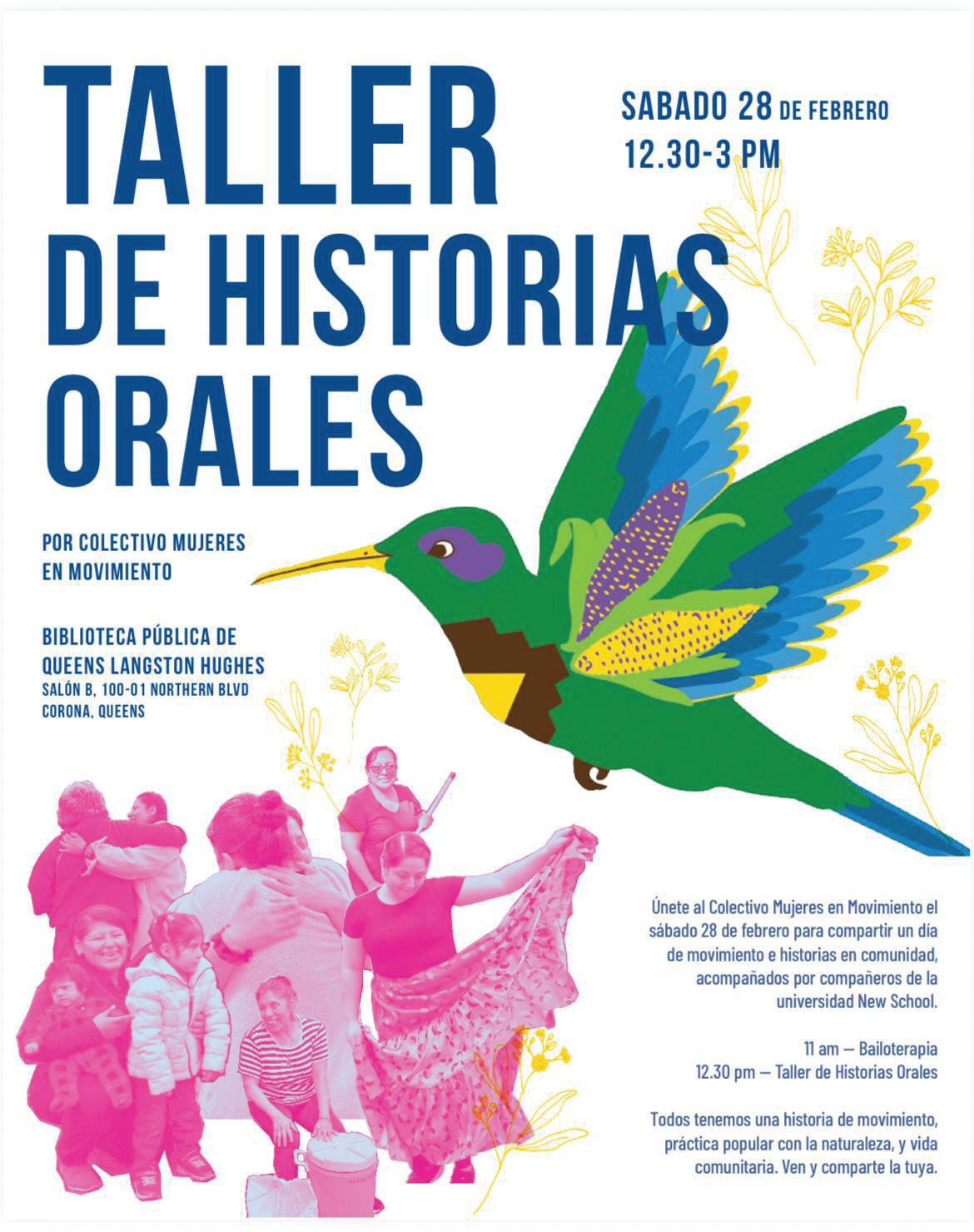
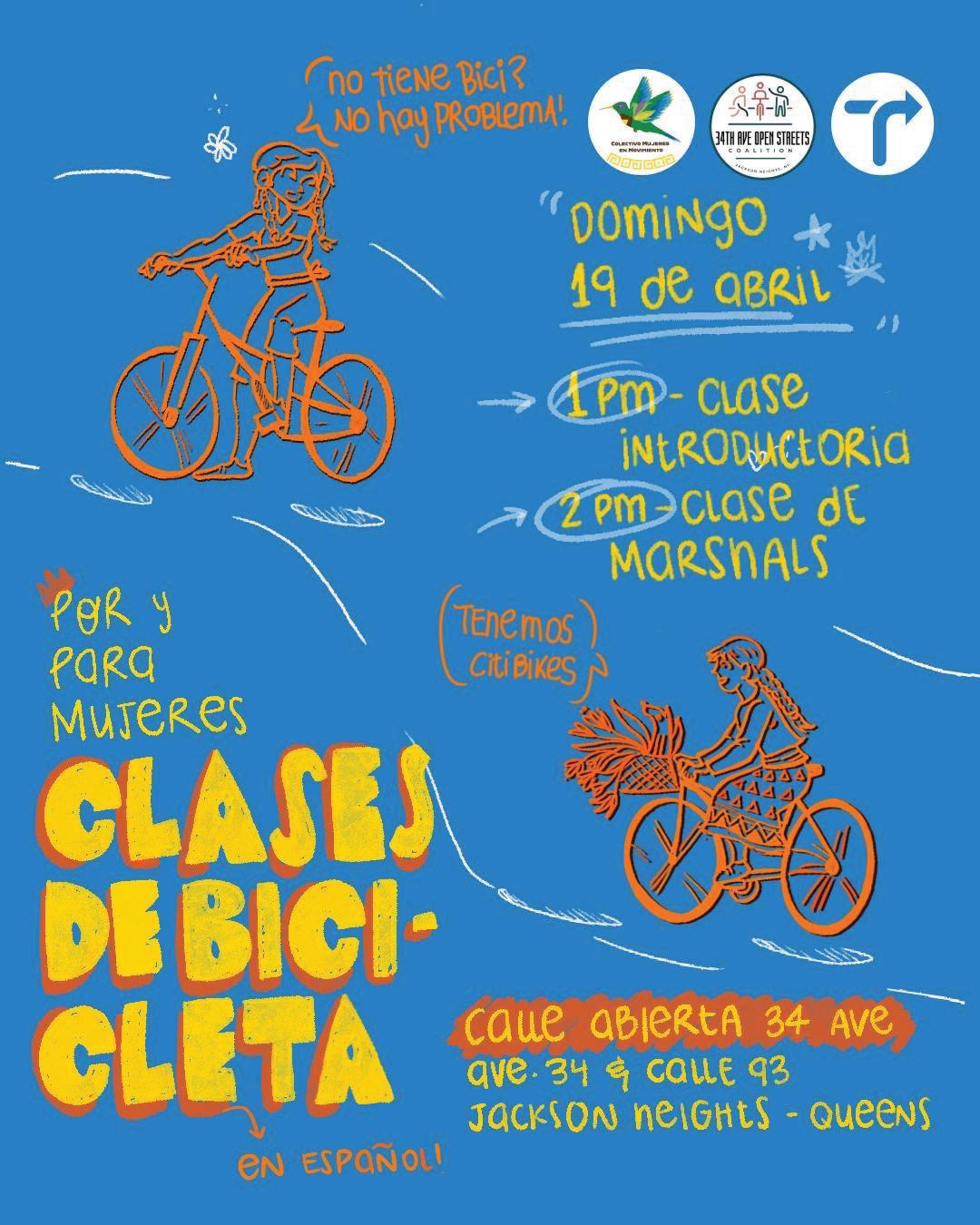
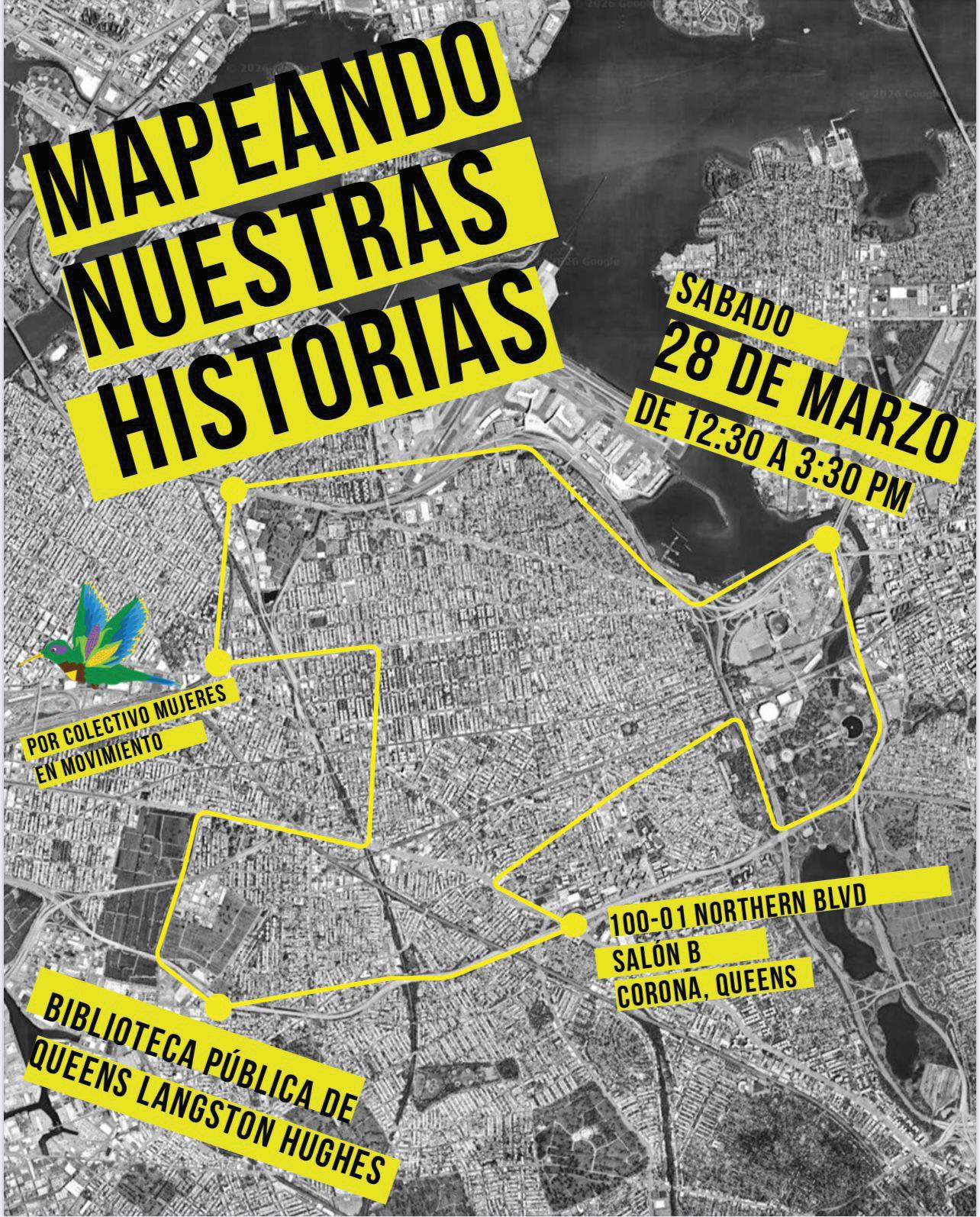
(Source: Mae Francke)
To understand land in relation to movement and liberation practices, we organized several workshops and visits to Queens.
We knew there were things we could not learn while contained within The New School institutional space. Together with Mujeres en Movimiento, the Studio, and Mae Francke, we conducted a total of three workshops: to gather land memories, to map those land memories in space as the anchor points for the cycling tour, and to work with clay and paint in the community garden.
Additional activities include testing the tour’s route, and –in collaboration with Mae and Transportation Alternatives– cycling classes. These activities represent a core component of our work as a Studio and in collaboration with Mujeres en Movimiento. Through these visits we danced together, we shared our stories, and we nurtured our relationships. In this section, we will share more about each visit to Queens.
February 28, 2026
In our first workshop, the goal was to begin forming relationships with one another. When our studio class arrived in Queens, we began the day together with Bailoterapia. We cut up pieces of fabric into small strips, and everyone at the workshop wrote or drew one thing that they appreciate about their community and one thing that they bring to the community. We all went around and introduced ourselves and shared our pieces. As everyone shared, we tied our pieces of fabric together, forming a banner to hang in the garden.
After we finished introductions, we moved into the land memory exercise. Design and Urban Ecology students brought pencils, papers, markers, scissors, glue and clay for people to choose from and use to tell a story about a memory with land. We spent the next hour writing and creating together. Once everyone finished, people had an opportunity to share stories with one another. Women shared about their relationships with their lands, the sounds of animals, and their families. All of these stories were used to shape the final bike tour.
(Source: Zane Elias)
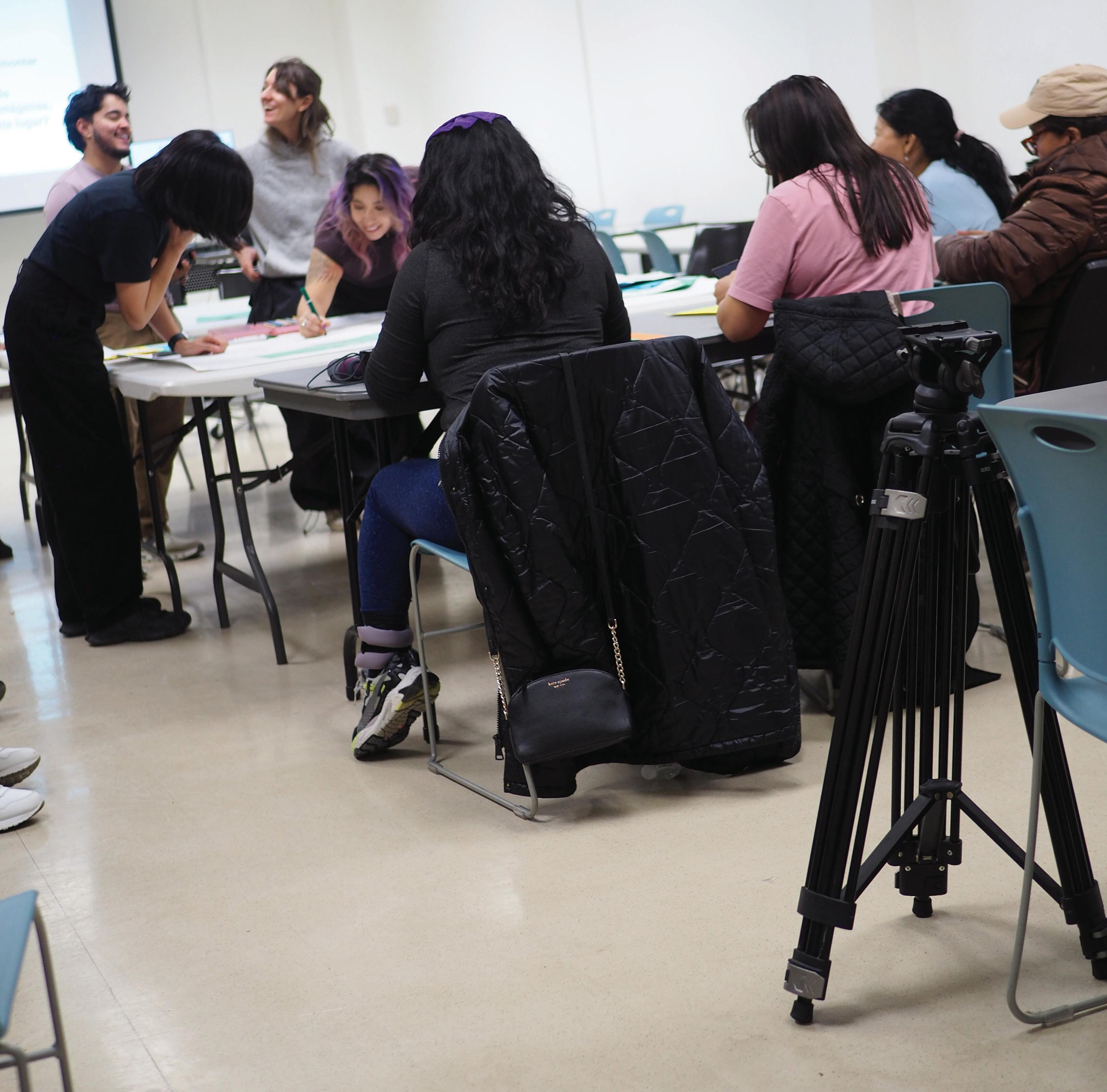
For our second workshop with Mujeres En Movimiento we came one step closer to our May 17th bike tour by collectively designing and mapping the route out. Before getting to work though, we started the morning with a 1 and a half hour long Bailoterapia session.
Afterwards, in our sweaty, somewhat hungry yet energized state we each introduced ourselves, our identities. In a circle we each shared personal stories of the people, and places that raised us. Rested, and familiar with one another, Zane introduced the photovoice element of the project to warm reception.
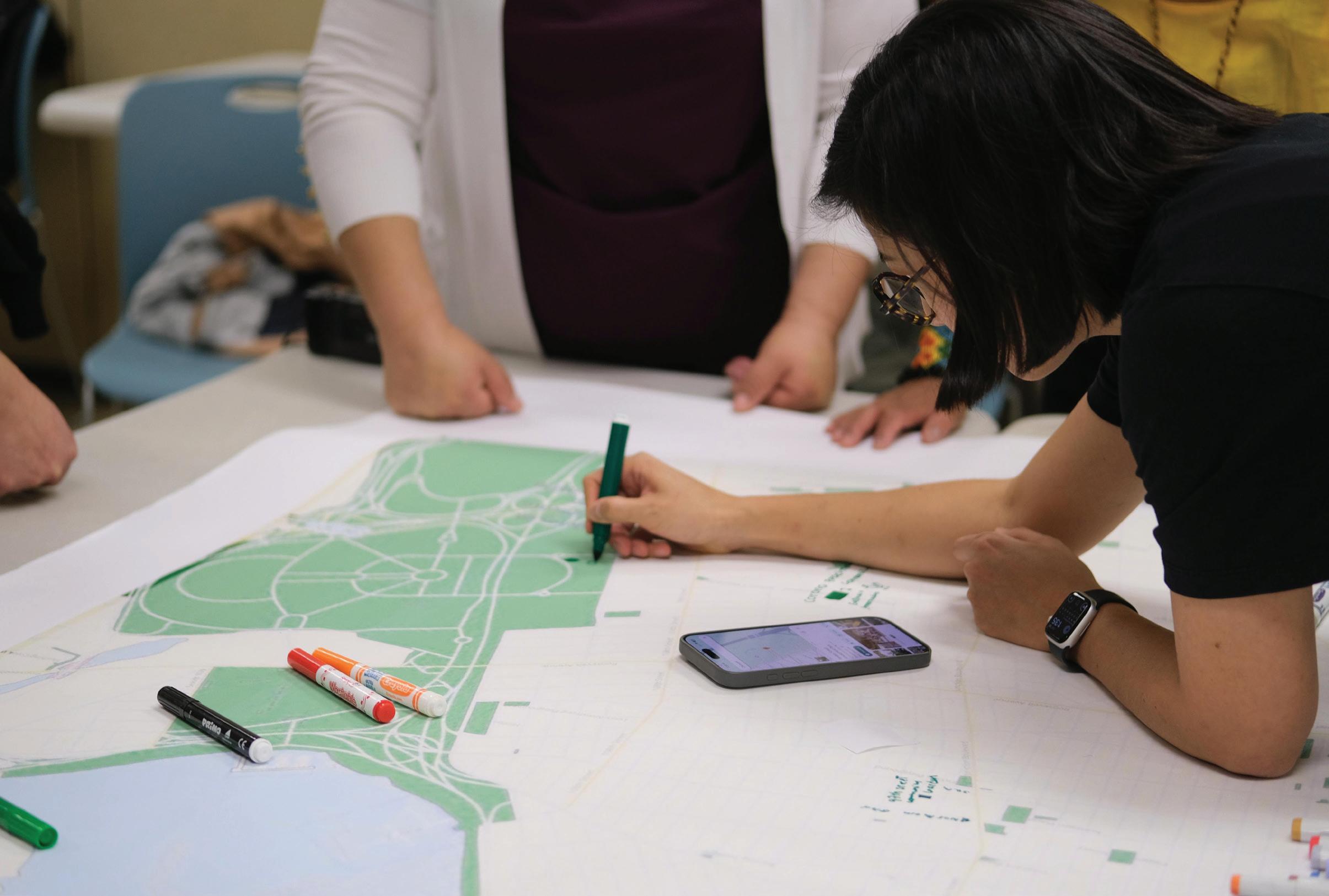
(Source: Zane Elias and friends)
As everyone settled in, the maps came out accompanied by pens and a flurry of ideas. Collectively, we all focused our attention away from one another and onto the map on the table. Ultimately we decided that the - open to the public - tour spans a 2 hour ride aimed at highlighting the critical community infrastructures of Corona Queens. After discussions, mapping and re-mapping we decided the day will begin at Travers Park, a central community green space, the park will serve as the launch point for the tour and a chance to meet one another, share about our work, share gifts and go over safety. After this the tour will take both walking, and biking participants to the 97th street community garden, Stephanie’s bakery, the Peach Tree and Sparrows Nest community garden to Corona Meadows Flushing Park and finish at the Mujeres en Movimiento community garden. At the end of the ride participants can celebrate with music, food, painting plant pots and dancing.
Overall, this workshop went smoothly and everyone was actively engaged in parsing out how exactly the route would be realized. That said, there were hurdles worth mentioning, the first being a shortage of bikes. After some deliberation Mae proposed they would use a masterkey provided by their work to unlock Citbikes for our tour. Secondly, members of Mujeres En Movimiento pointed out that not every member is a confident cyclist. In response, we set aside a day to teach cycling and train Marshalls to ensure that the route is not as easy as possible and equally safe. This also meant mapping out, and understanding what sections of the route have protected bike lanes, and what is exposed or shared with cars. As of now the route is mostly protected with some shared sections. Nonetheless this was a critical first step, and moving forward the DUE cohort decided to test feasibility of the route by putting rubber on the road.
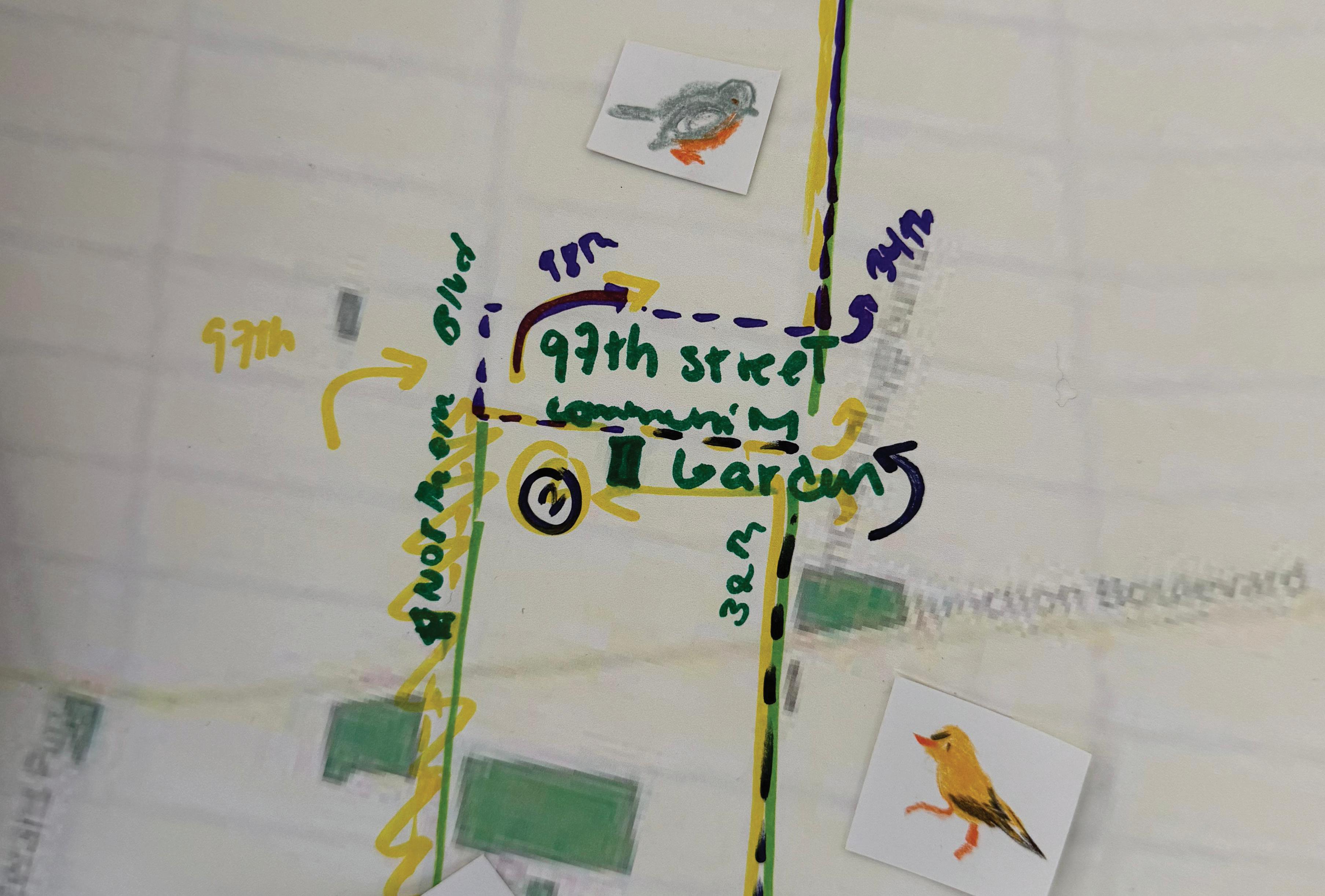
(Source: Zane Elias and friends)
April 10th, 2026
In order to plan for our bike tour with Mujeres in Movimiento, on April 17th, we moved our class to Queens. We got on citibikes, and biked the route that we were hoping to take for our final tour. We took notes on each of the stops, took photos to use for our book, and familiarized ourselves with the route. We ended up making a few alterations, and used this day to make a map for the tour. At the end of the day, we ate Dominican food in the park and discussed our visions for the final tour together as a class.
April 19th, 2026
New York’s spring has been one for the books. Fluctuating between highs, lows and torrential rain all within the span of a week, and some times of day you never know how the day will receive you. It just so happens that on the day of our much anticipated cycling lessons we were met with a consistent cold rain, and an adamant, unrelenting cold breeze. Amid the harsh weather, Mujeres en Movimiento, our group, and local cyclist organizations showed up to ensure the day went as smoothly as possible.
The class was undeniably exceptional to say the least. Mae said it best: what makes these classes special is they were classes for women, led by women. In preparation for the bike tour it was critical that those who chose to bike would be as comfortable as possible on their two-wheeled chariots. The tour is no joke. At least an hour and a half of biking and multiple stops on roads of varying exposure to traffic means cyclists have to be confident.
People of all ages and skill levels grabbed hot tamales, donated helmets and made their way on to the frames. The bikes were an eclectic assortment of citibikes, pedal assist bikes and smaller frame bikes. One by one they worked under supervision, weaving through cones, practicing their handling and control. Regardless of the wet asphalt and cold wind, everyone got to moving. There were a couple of tumbles, but nothing too serious. Ultimately, the cycle classes were a success. For the second half of the class Mae led a talk on safety and bike marshaling. While we are confident in the bike route, this class was critical to ensure the tour itself will pan out as smooth as we might hope.
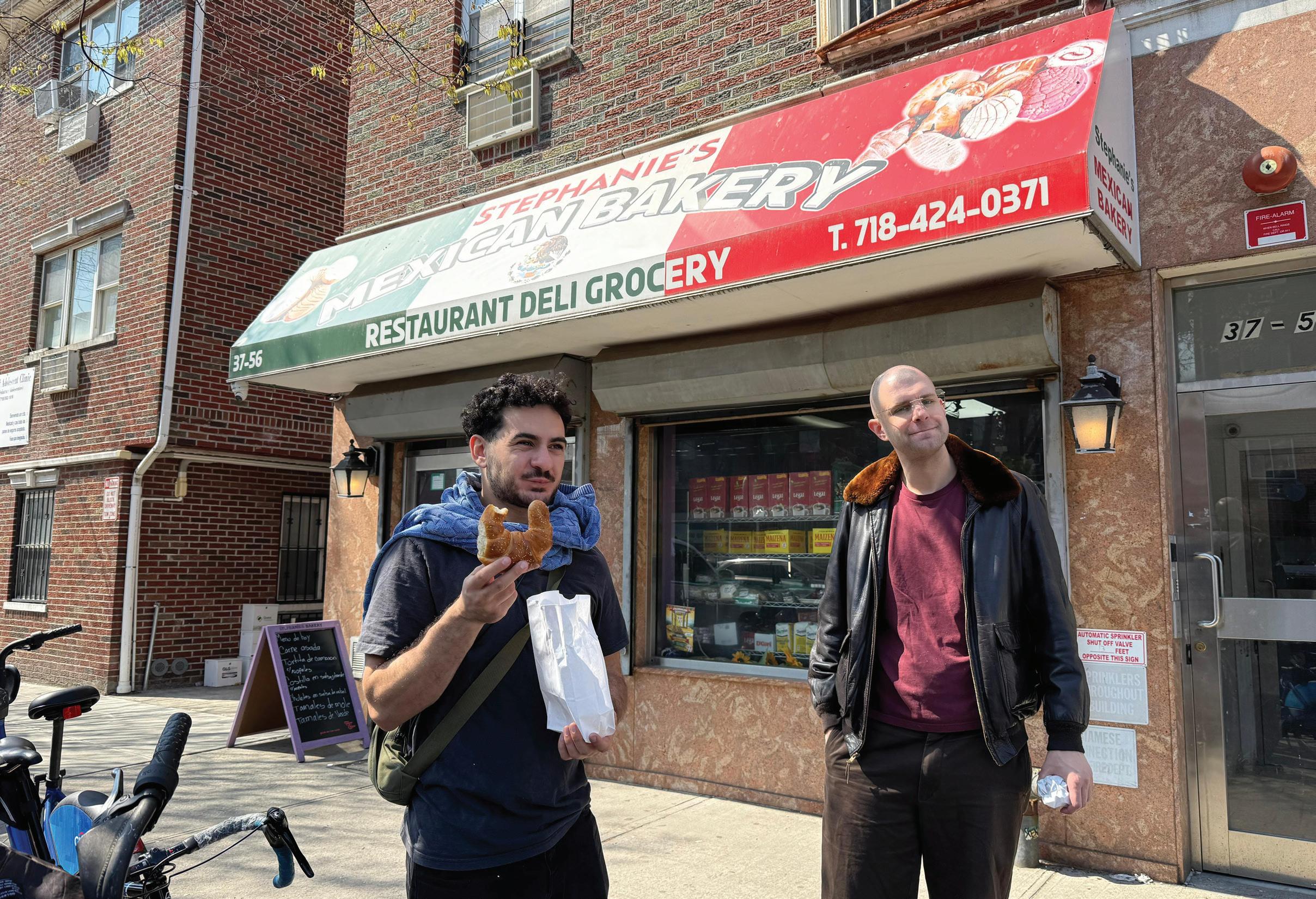
(Source: Claudia Tomateo)
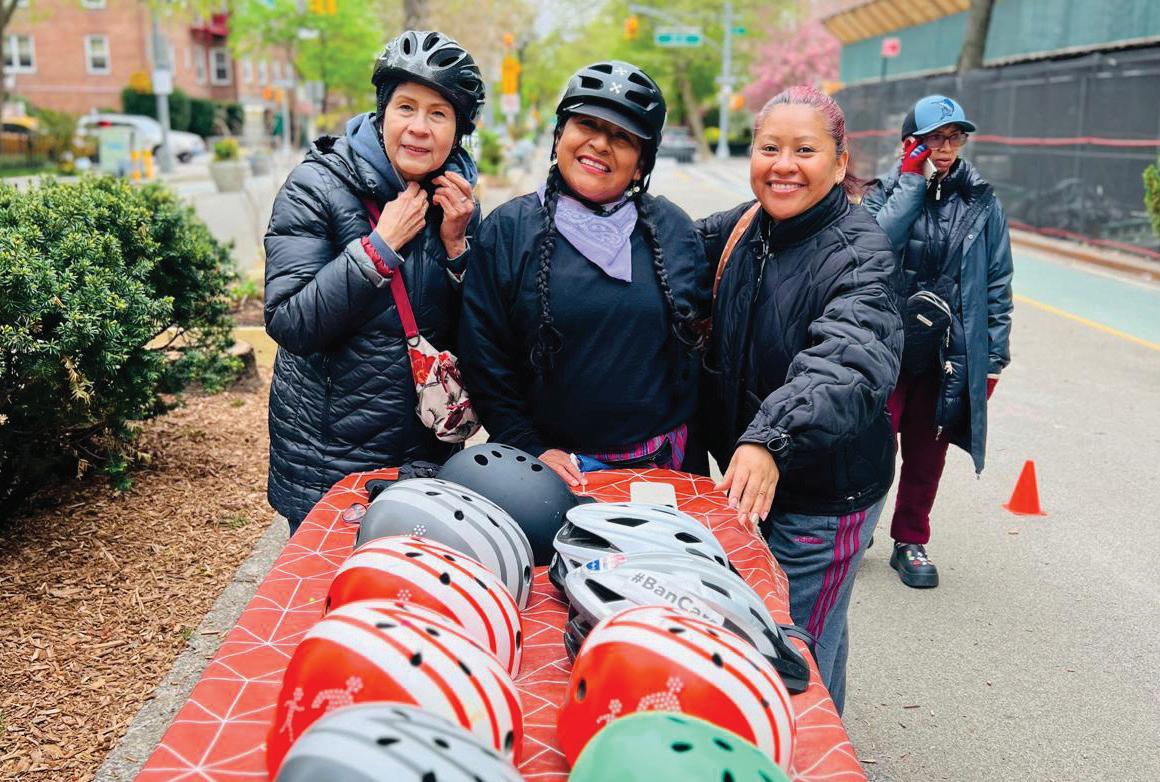
(Source: Mae Francke)
May 2nd, 2026
Under the shade of the surrounding trees we have planned to meet with Mujeres en Movimiento in the garden to have an afternoon of art making, after a morning of dance. Students in the studio course shared their own art practices. Namely, the practice of working with clay and printmaking.
The workshop started out being held to paint the mural of the Mujeres logo that was designed in last year’s collaborative studio with the 2026 cohort of the Design and Urban Ecology program. We expanded the workshop to contain clay and printmaking, as students expressed unique skill sets we each held and would like to share with Mujeres en Movimento during a zoom exercise that took place at the start of the semester.
The garden is longer than it is wide. It sits on a street corner connected to the lot of an older community member’s home. A wooden fence with painted planks communicates whose side is whose, and a metal chain link fence encloses the garden. On the wooden fence is a white patch where the group has decided their hummingbird and phrases which represent their group will be painted.
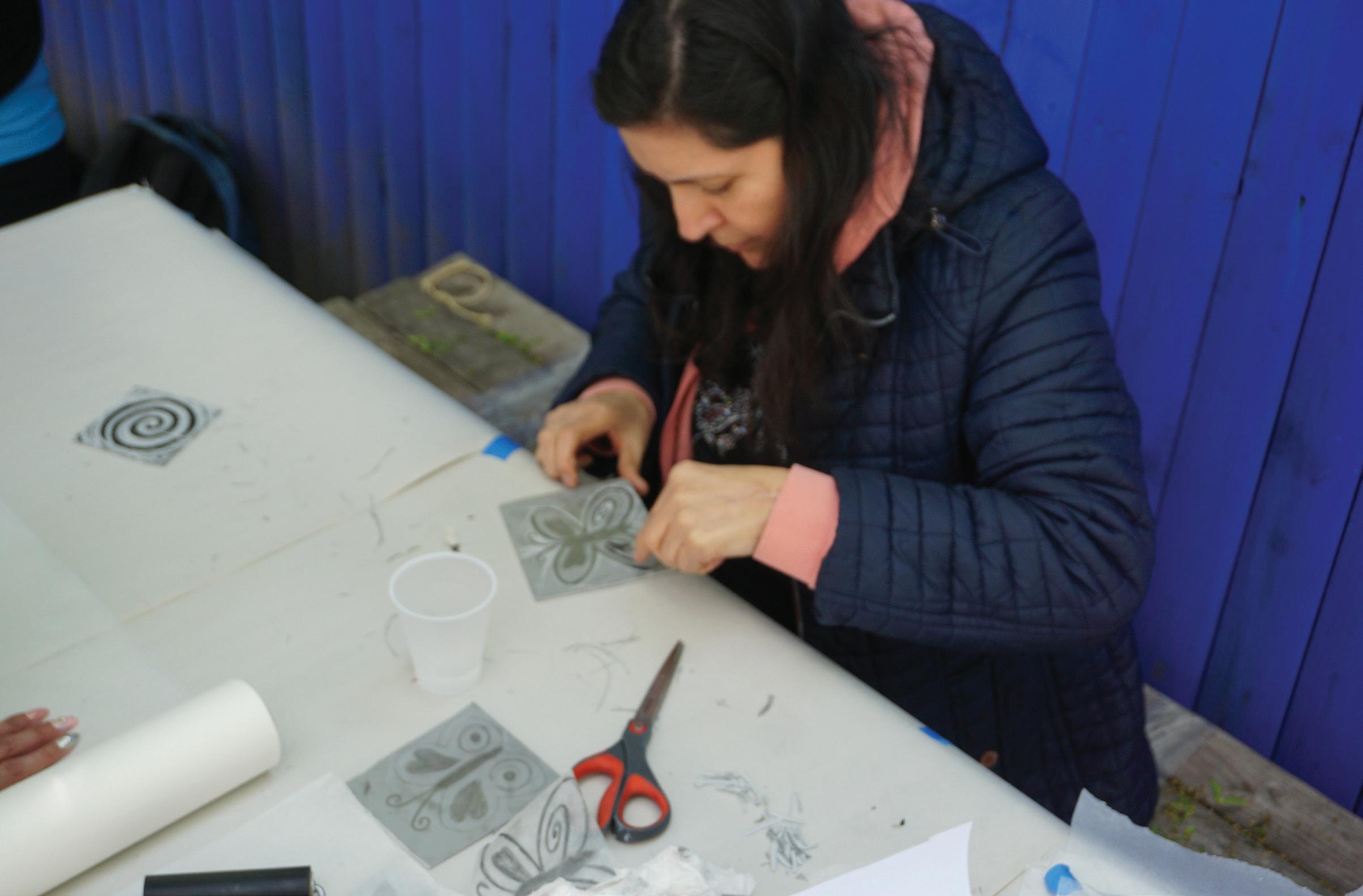
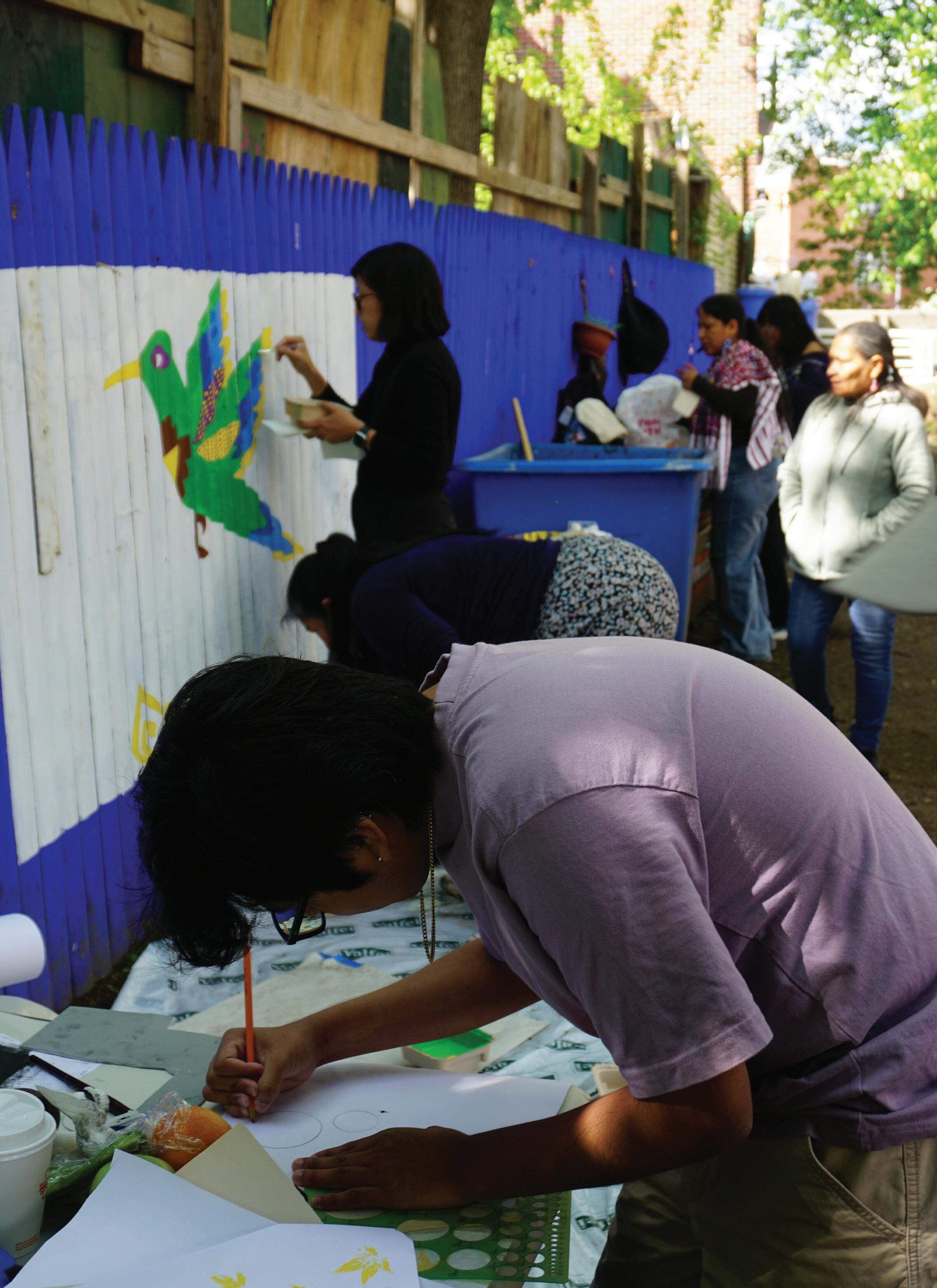
(Source: Ismail Khadar)
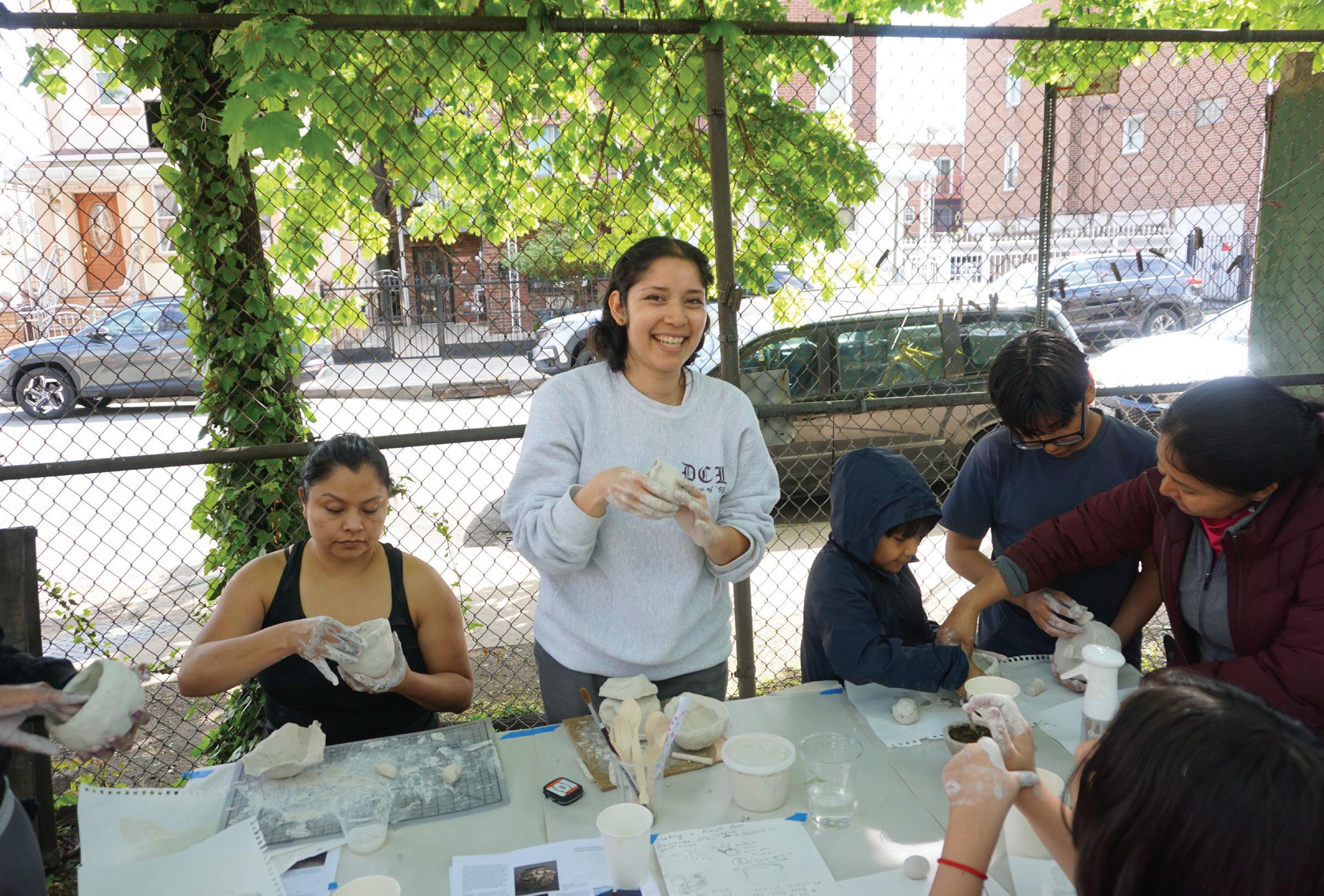
When the women in the group heard about working with clay, they let us know it was something they would like to do with us. To work with clay is such a gift because clay is a medium older than us made from the earth that holds onto our impressions, allowing us to see ourselves and preserve our fingerprints. We can create objects with clay that tell stories about who we are, and what we can imagine. Looking at the history of ceramics through an anthropological lens, we shared context of earthen works found throughout Abya Yala and their lasting significance during the workshop. We sincerely look forward to spending time creating in the garden with las mujeres as we create something lasting together.
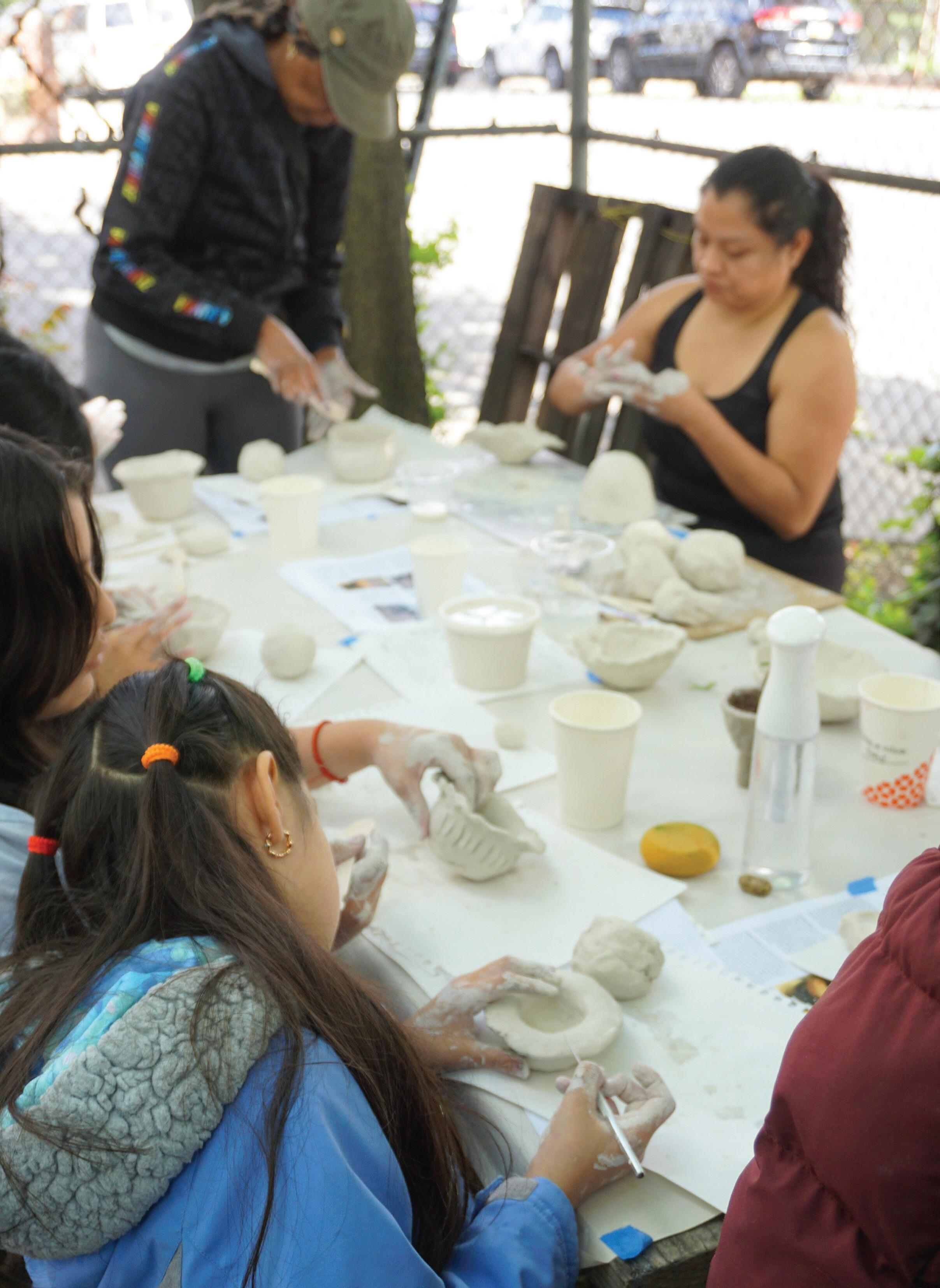
(Source: Ismail Khadar)
Pottery is one of the oldest crafts in human history. It is through the advent of agriculture and even pre-agriculture that humans needed vessels to carry and store things such as grain, produce, liquids, seeds, and even ritual objects. As material culture evolved, so did the utility for ceramics. It is primarily ceramics through which archeologists determine the boundaries of material culture. There are countless ceramic cultures in this short writeup. I would like to focus on four Indigenous American cultures and how they expressed themselves through these utilitarian and artistic practices.
Zuni pottery
The Zuni are an Indigenous tribe associated with the Pueblo cultures of modern-day New Mexico and Arizona. They, along with the Hopi, Keres, and many others. Their ingenious use of water and architecture allowed them to farm in the deserts of the South-West for millenia. The Zuni are especially famous for their artistic pottery that is traditionally used to store water and grain. Zuni pottery is traditionally made by women. When the clay is gathered, there is a ritual to give thanks to the earth mother (Awidelin Tsitda). It is painted with organic dyes using the yucca stem, and decorated depending on its intended purpose.
Muisca pottery
The Muisca Confederation located in the northern most part of the Andes of what is now called Colombia. The Muisca were a complex civilization famed for their material culture, especially their gold sculpturework was renowned for its craftsmanship. In fact, it’s believed that the Muisca were the origin for the story of El Dorado. While their ceramic culture is less well known, the ample supply of clay from the mountain rivers and streams allowed for very expressive pottery used for both everyday life and ritual purposes. A very typical motif in Muisca pottery is anthropomorphic figures characterized by sharp noses and slit eyes.
Muisca pot date unknown
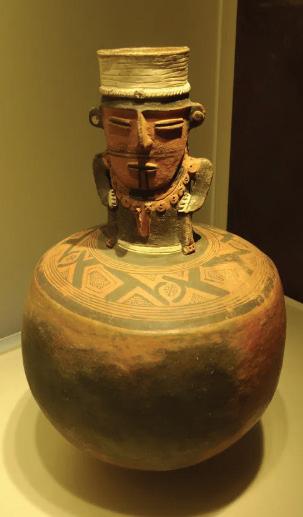
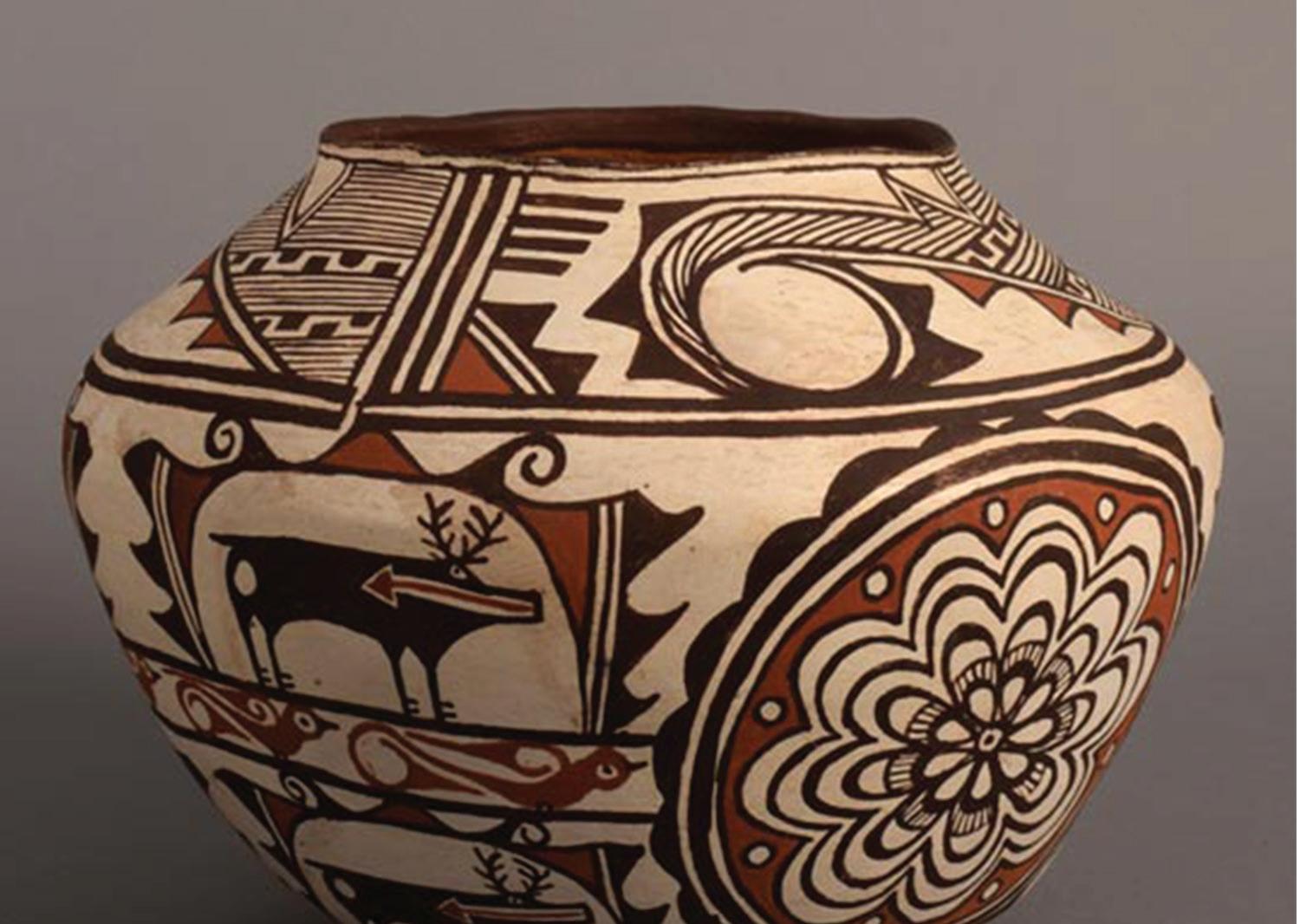
Is a kind of human made soil common in the Amazon basin. It was created by Indigenous Amazonians, specifically of the Marajoa culture, as a way to farm in the nutrient-poor soil of the rainforest. Created over centuries, terra preta is called so because of its black colour. It is composed of three primary materials: charcoal, pottery shards, and animal feces and bones. mostly fish bones. Unlike the infertile soil common to most of the Amazon, terra preta can regenerate itself at a rate of 1 centimeter a year. The current day descendants of the Marajoan civilization are among certain Kalina groups due to colonialism and forced displacement.
(Source: Zane Elias)
As every session progresses with MeM we are realizing the opportunity to support the telling of the group’s histories is not only a privilege, but critical.
Throughout our meetings every member has generously shared their incredible stories. In turn the mosaic of what makes MeM the spectacular phenomenon that it is, is becoming even clearer, even undeniable. A central question as we tell this story, is how can we capture this in our medium of choice, on film? In response, our cohort has decided to turn to photo voice and collective video production.
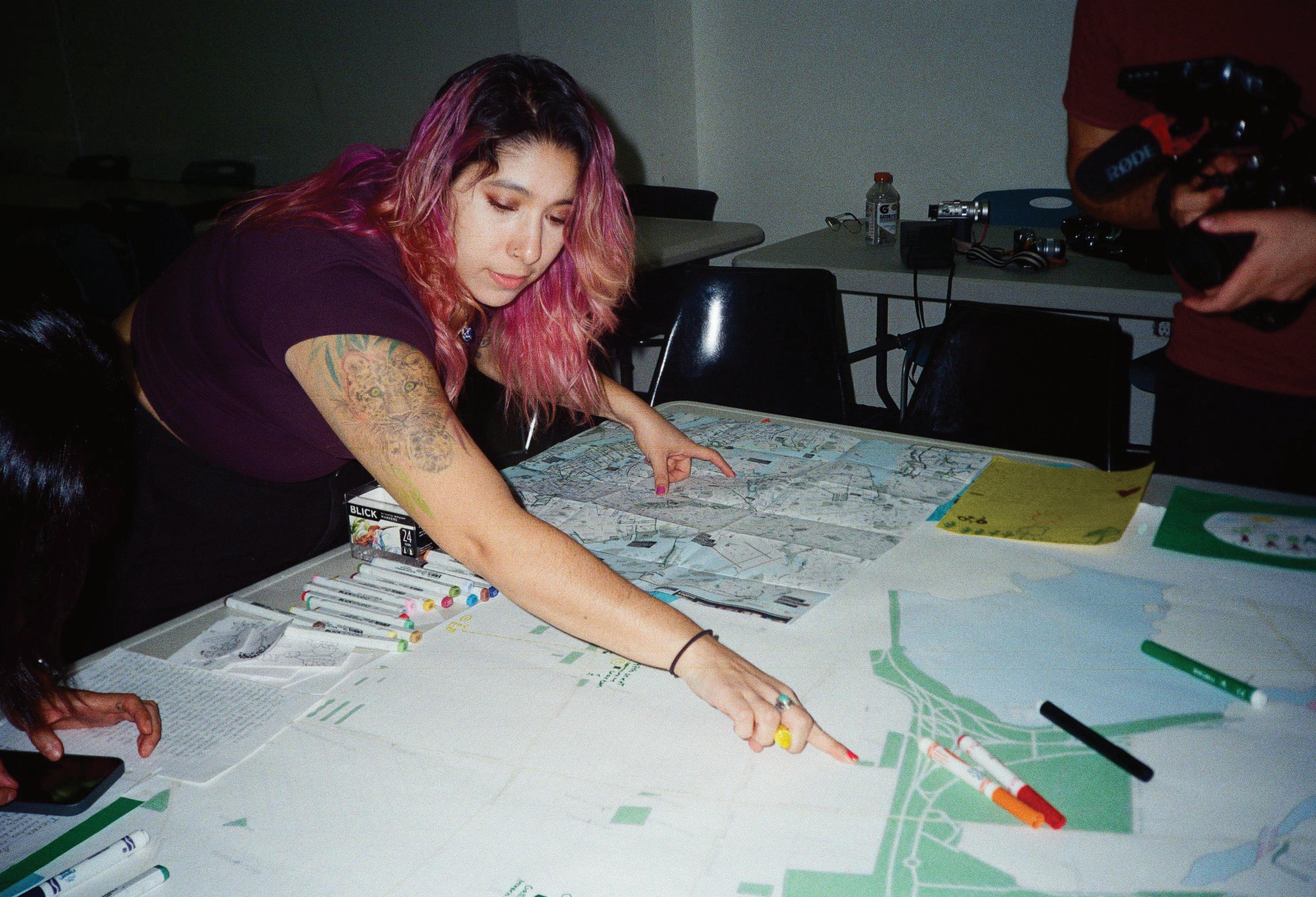
(Source: Zane Elias and friends)
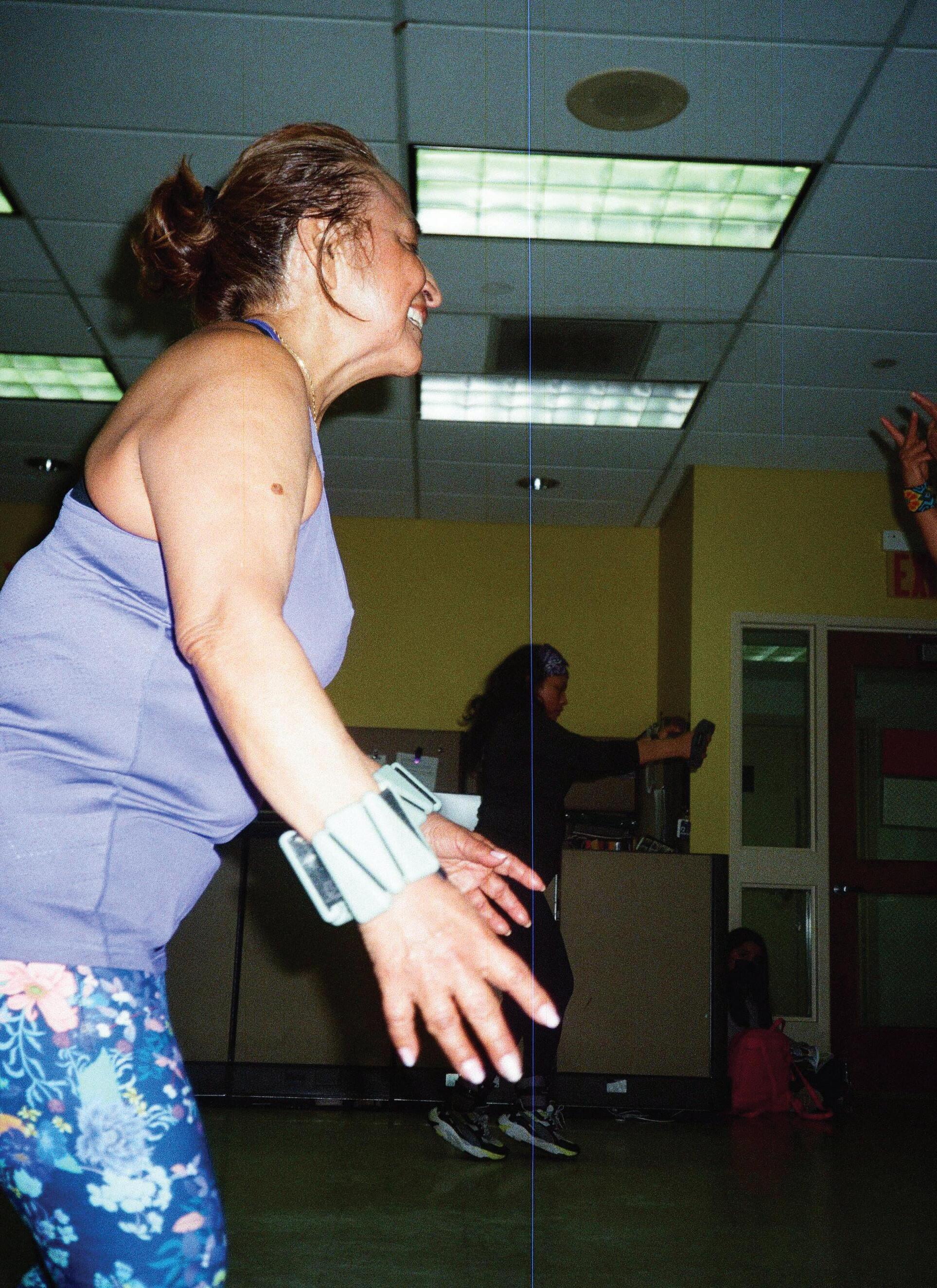
(Source: Zane Elias and friends)
This means, that throughout the process of filming, and editing MeM will not only provide feedback after the fact, they will actively shape the story by being a part of its creation. The camera in this case, is not “pointed at the subject” rather it is a tool anyone can pick up if they feel compelled, and capture parts of the story they deem critical. Whether that is photo or video the principle stands, the camera and its images is not a one sided tool. In this spirit, Zane - one of the leads on this part of the project - has offered a range of cameras that have a lower point of entry, and are easier to use. This includes a modified Handicam, and a range of point and shoot cameras. Ultimately, this method of storytelling in film has posed some challenges, but nothing so daunting that it needs re-examination. The benefit, and potential of communal storytelling far surpasses any technical hurdle, and currently is one of the only feasible ways to accurately capture a story of this magnitude, and beauty. As the saying goes: for us by us.
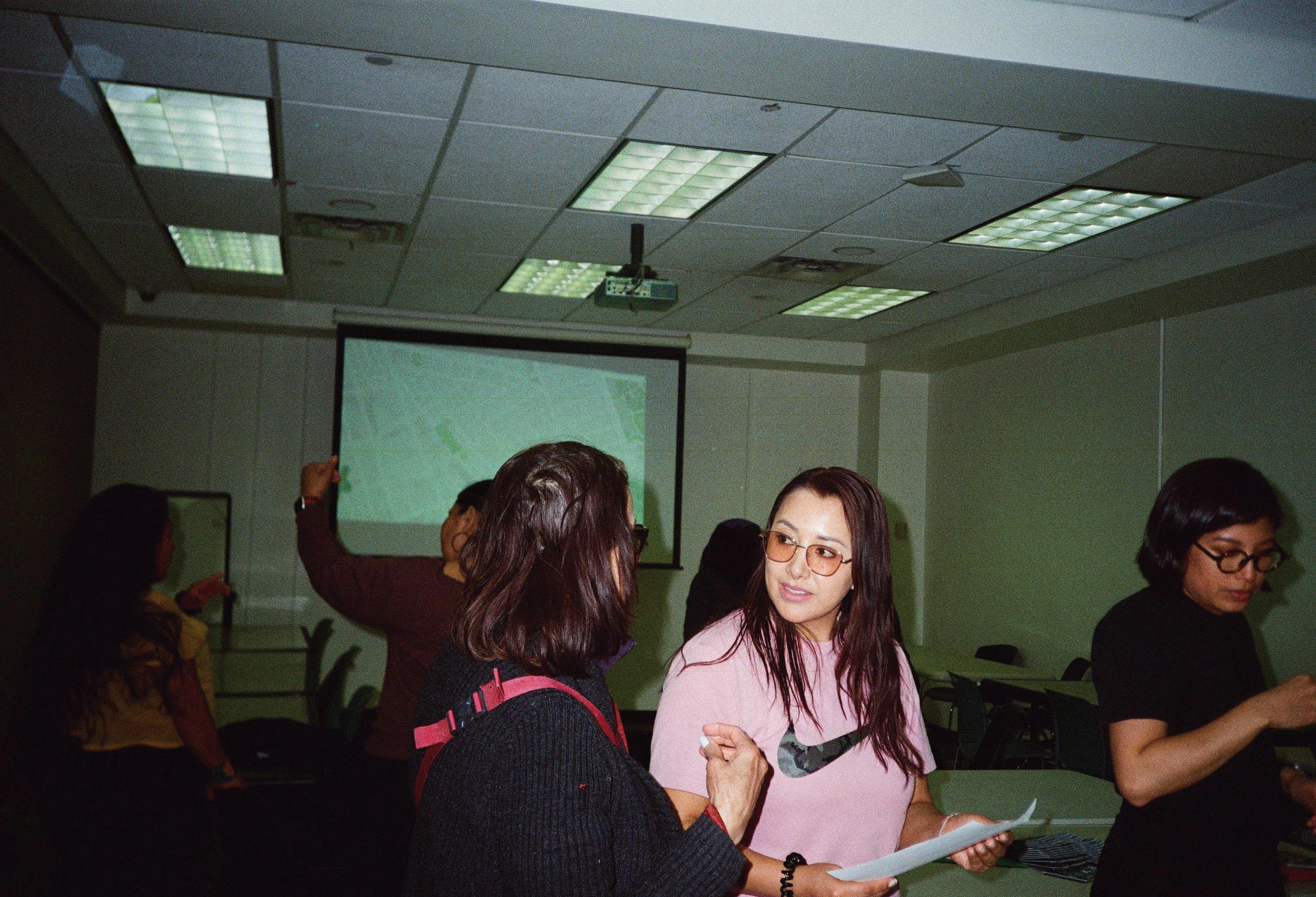
(Source: Zane Elias and friends)
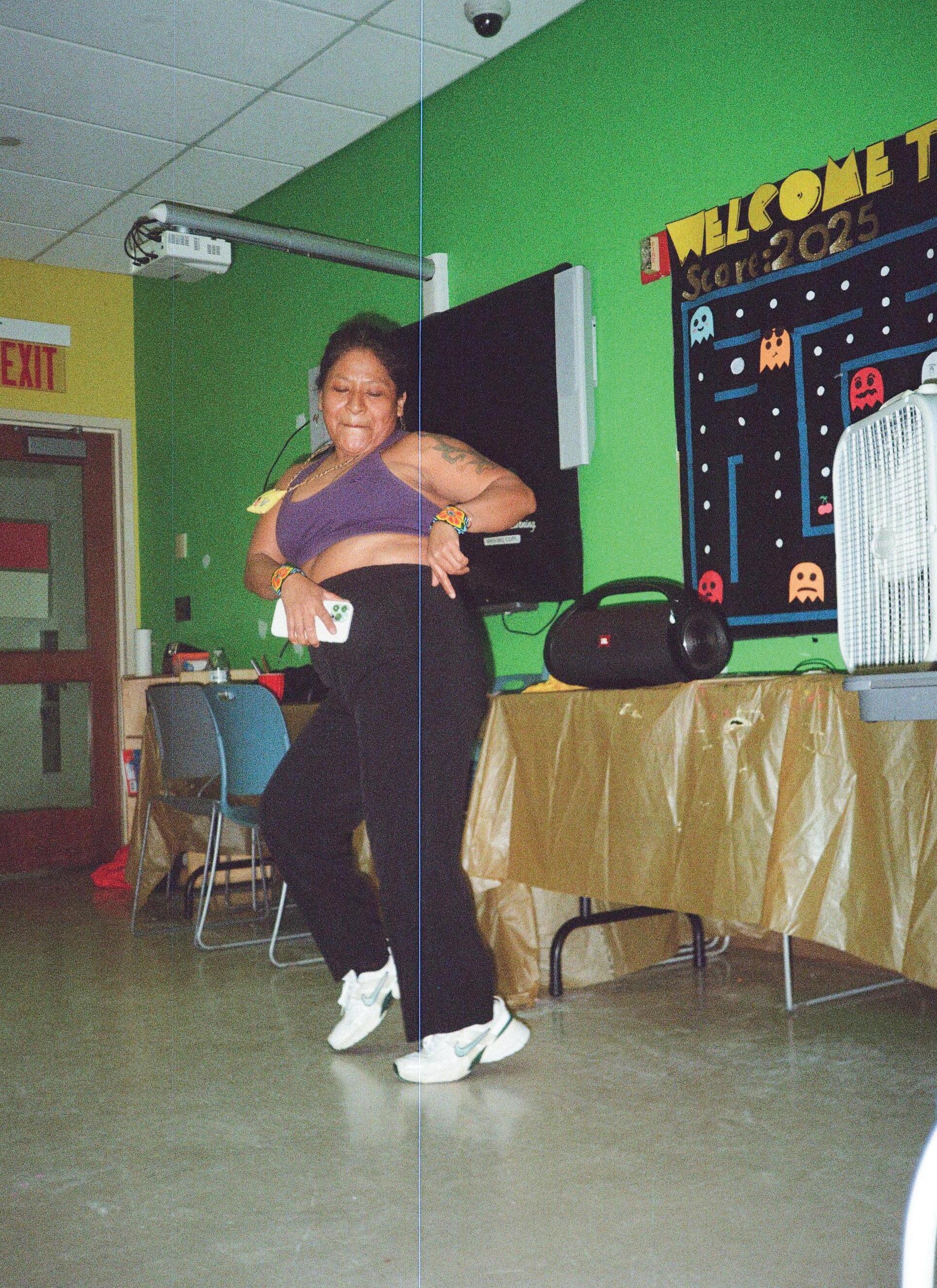
(Source: Zane Elias and friends)

In the months of January and February, the organizing team got on several calls to imagine ways in which we could bring together oral histories, land as liberation, movement, and transportation themes.
Collectively, Veronica Ramirez (Mujeres en Movimiento), Mae Francke (Transportation Alternatives), and Claudia Tomateo (Parsons School of Design) arrived at the idea of co-designing a bike tour grounded in understandings of movement within the urban environment; ranging from bike lanes and greenways to immigration, everyday mobility, and dancing as a liberatory practice.
The tour emerged as a collaborative process shaped by the experiences and knowledges of Mujeres en Movimiento members. Workshops, conversations, and rides became spaces to map stories, trace meaningful sites, and reflect on how bodies move through and transform land, and how land in turn transforms ourselves.
Students from the DUE Studio 2 course contributed through research, workshop facilitation, design, and the development of the tour route and publication.
This tour is an effort to archive, honor, and share the stories of Mujeres en Movimiento members, situating their experiences as central to how we understand the city, movement, and collective liberation.
This publication invites readers to re-enact the tour in their own time. As you move through each stop, we encourage you to imagine the voices of Mujeres en Movimiento, reflect on what resonates with you, and embody what the land shares.
En enero y febrero, el equipo organizador sostuvo una serie de conversaciones para imaginar cómo las historias orales, la tierra como liberación, el movimiento y el transporte podían entrelazarse.
Colectivamente, Veronica Ramirez (Mujeres en Movimiento), Mae Francke (Transportation Alternatives) y Claudia Tomateo (Parsons School of Design) llegaron a la idea de co-diseñar un recorrido en bicicleta basado en entendimientos del movimiento dentro del entorno urbano; abarcando desde ciclovías y corredores verdes hasta inmigración, movilidad cotidiana y la danza como práctica liberadora.
El recorrido surgió como un proceso colaborativo moldeado por las experiencias y saberes de las integrantes de Mujeres en Movimiento. Los talleres, conversaciones y recorridos en bicicleta se convirtieron en espacios para mapear historias, trazar sitios significativos y reflexionar sobre cómo los cuerpos se mueven a través de la tierra y la transforman, y cómo la tierra, a su vez, nos transforma a nosotres. Estudiantes del curso DUE Etudio 2 contribuyeron a través de investigación, facilitación de talleres, diseño y el desarrollo de la ruta y la publicación.
Este recorrido es un esfuerzo por archivar, honrar y compartir las historias de las integrantes de Mujeres en Movimiento, situando sus experiencias como centrales para entender la ciudad, el movimiento y la liberación colectiva.
Esta publicación invita a les lectores a recrear el recorrido en su propio tiempo. A medida que atraviesen cada parada, les invitamos a imaginar las voces de Mujeres en Movimiento, reflexionar sobre aquello que resuena con ustedes y encarnar lo que la tierra comparte.

97th Street
-> Turn right on Northern Blvd
-> Turn right on 98th st
-> Turn left on 34th Ave
Community Garden
97th St, Corona, NY 11368
-> Turn left on 97th st
-> Turn left on 102nd St
Corona Peachtree
Community Garden Ave, Corona, NY 11368
Sparrow’s Nest
Community Garden
54-01 101st St, Corona, NY 11368
-> Turn right on 108th St
Stephanie’s Bakery
37-56 108th St, Corona, NY 11368
-> Turn right on 42nd Ave
-> Turn left on 104th St
Flushing Meadows
Corona Park
United Nations Ave S, Corona, NY 11368
-> Turn right on Alstyne Ave
-> Turn left on Corona Ave 111th St 52nd Ave Otis Ave
-> Turn left on Martense Ave
Huerto Comunitario 55-25 Van Cleef St, Flushing, NY 11368

Mujeres en Movimiento





The 97th St Community Garden has been in operation since 1979 and offers fresh produce and public art. It is maintained by NYC Parks GreenThumb.
Aside from being a space where community members can convene and grow their own food, community gardens are part of a long lineage of Indigenous foodways.
El jardín comunitario de la calle 97 ha estado en funcionamiento desde 1979 y ofrece productos frescos y arte público. Es mantenido por NYC Parks GreenThumb.
Además de ser un espacio donde los miembros de la comunidad pueden reunirse y cultivar sus propios alimentos, los jardines comunitarios forman parte de una larga tradición de prácticas alimentarias indígenas.
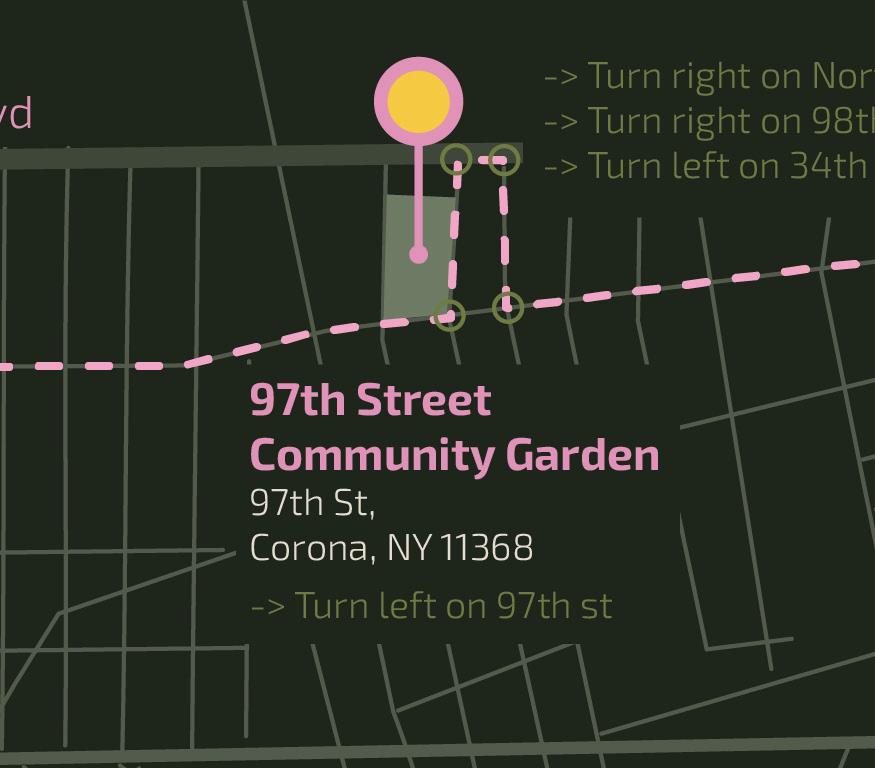
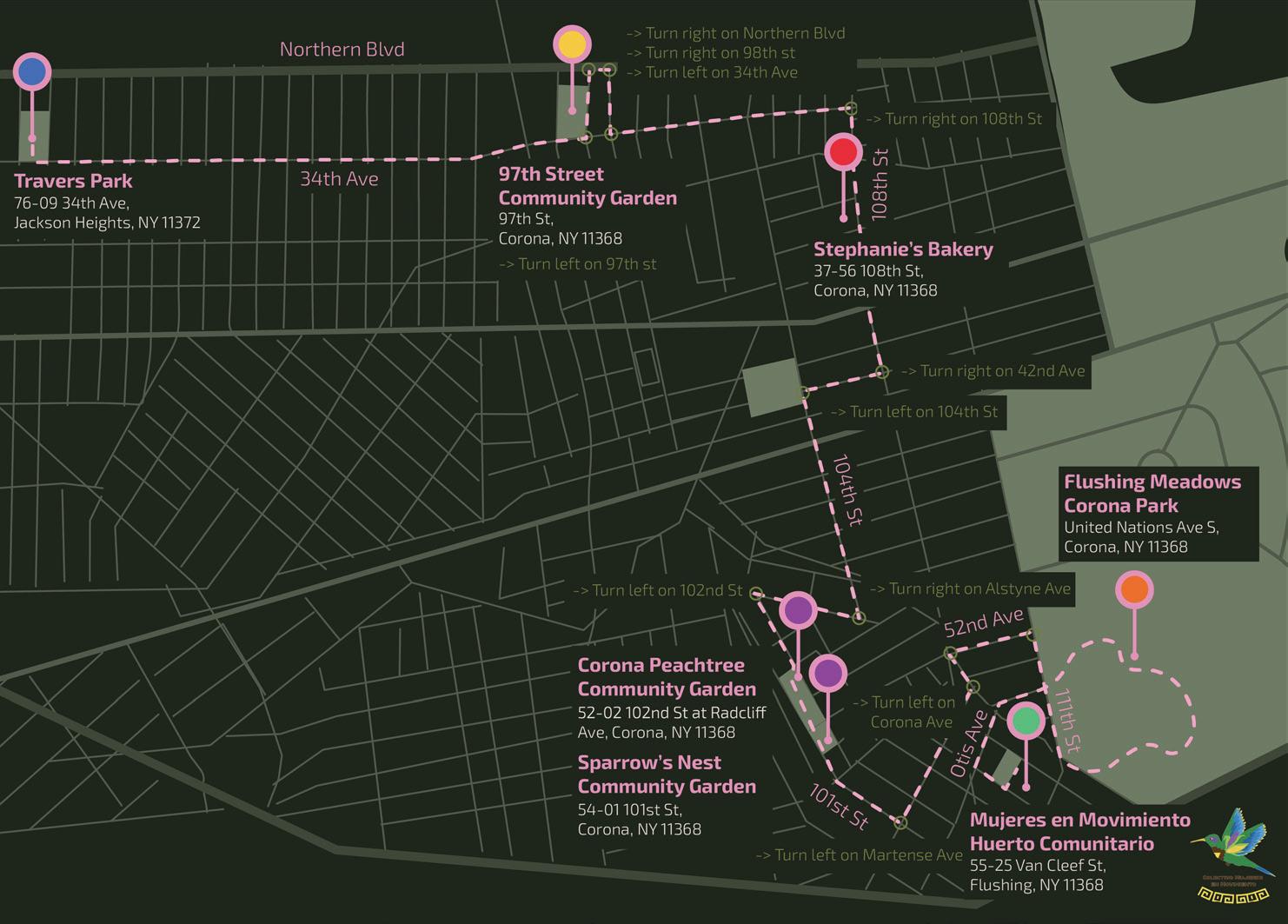
Among Indigenous cultures worldwide, especially those in the Americas and Australia, footpaths served not only as a means to move around, but also as agricultural spaces, the sophistication of which is still being unpacked to this day. For example, in the city of Perth, Australia, the Aboriginal Noongar people are taking the lead in biophillic landscape design. 1
Entre muchas culturas indígenas en todo el mundo— especialmente en las Américas y en Australia—los senderos no solo servían para moverse de un lugar a otro, sino también como espacios agrícolas, cuya complejidad todavía se sigue entendiendo hoy en día. Por ejemplo, en la ciudad de Perth, Australia, el pueblo aborigen Noongar está liderando propuestas de diseño de paisajes biofílicos.
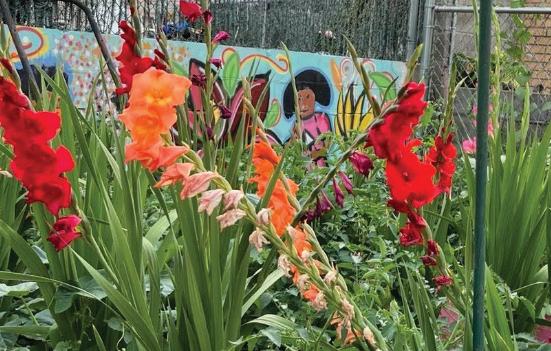
(Source: 97th St Garden/ Instagram)
As a people who have inhabited Gondwana (the nation now known as Australia) for at least 60,000 years, they have an intimate relationship and knowledge of the environment. Traditional Noongar calendars are divided into six seasons through which their botanical knowledge is based upon. This system was disrupted by European settlers who saw things like intentional footpaths and land/wildlife management as ‘wilderness’ that needed to be tamed. Efforts by researchers and the Noongar have restored some of these areas through reintroduction of indigenous plantlife which provides not only food but water and erosion control.
Como un pueblo que ha habitado Gondwana (lo que hoy se conoce como Australia) por al menos 60,000 años, tienen una relación muy cercana y un conocimiento profundo del entorno natural. Los calendarios tradicionales Noongar se dividen en seis estaciones, y su conocimiento botánico se basa en este sistema. Este sistema fue interrumpido por los colonizadores europeos, quienes veían elementos como los senderos intencionales y el manejo de la tierra y la vida silvestre como “naturaleza salvaje” que había que domesticar. Hoy en día, esfuerzos de investigadores junto con el pueblo Noongar han logrado restaurar algunas de estas áreas mediante la reintroducción de plantas indígenas, las cuales no solo proveen alimento, sino también ayudan a retener agua y a controlar la erosión.
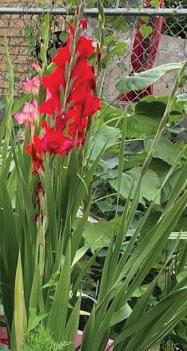
1 Cabanek, A., Newman, P., & Nannup, N. (2023). Indigenous landscaping and biophilic urbanism: Case studies in Noongar six seasons. Sustainable Earth Reviews, 6(1). https://doi.org/10.1186/s42055-023-00054-7
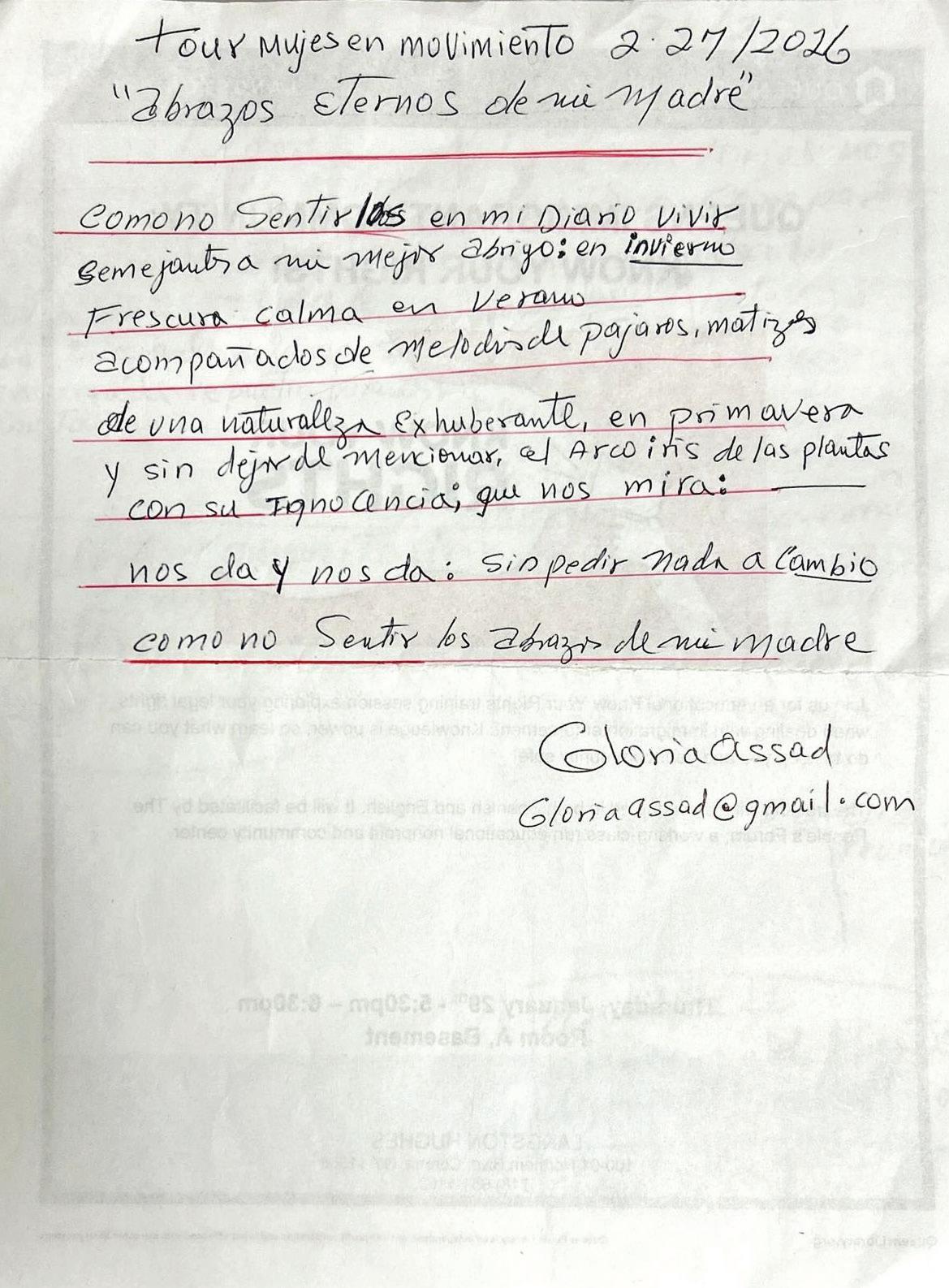
Gloria Assad
“Eternal Hugs from My Mother”
How could I not have them in my daily life? They were like my best coat: in winter Calm coolness in summer
Accompanied by birdsong, nuances of nature, exuberant, in spring
And not forgetting, the rainbow of plants with their innocence; that looks at us: gives and gives: without asking for anything in return
How could I not feel my mother’s hugs
“Abrazos Eternos de mi Madre”
Como no tenerlos en mi diario vivir asemejaba a mi mejor abrigo: en invierno
Frescura calma en verano acompañados de melodía de pájaros, matices de una naturaleza, exuberante, en primavera y sin dejar de mencionar, el arcoiris de las plantas con su inocencia; que nos mira: nos da y nos da: sin pedir nada a cambio como no sentir los abrazos de mi madre
That vague memory, whose appearance I didn’t understand, has been the clearest memory of my connection to the land. What a treasured memory. My grandmother leading me by the hand on that mountain, under the sun, the dry earth leaving my shoes ashen. She carried her woven bag, always wearing her apron and shawl. Arriving at this imposing cactus, whose name I didn’t know at the time, “El Maguey.” My grandmother inserting this kind of tube to extract the sap, which would become pulque after a fermentation process. At the time, as a child, I didn’t know how important this experience would be in my life. Not only the connection to the land, but to my roots, to my mother, to my childhood, and to the soil I leave behind, which I want to return to before leaving this world.
Aquel recuerdo vago en mi memoria del cual no entendía su aparición. Ha sido el recuerdo más claro de mi conexión con la tierra. Que atesorado recuerdo. Mi abuelita llevándome de la mano en ese monte, bajo el sol la tierra seca dejando mis zapatos cenizos. Ella cargando su ayate, siempre vistiendo su mandil y rebozo. Llegar a este imponente cactus del cual no conocía su nombre en ese momento, “El Maguey”. Mi abuela introduciendo esta especie de tubo para extraer el aguamiel. La cual se convertiría en pulque después de un proceso de fermentación. En el momento de vivirlo siendo una niña no sabía lo importante que esta experiencia en mi vida. No solo la conexión a la tierra si no a mis raíces, a mi madre, a mi infancia y el suelo que dejó y al cual quiero regresar antes de dejar este mundo.
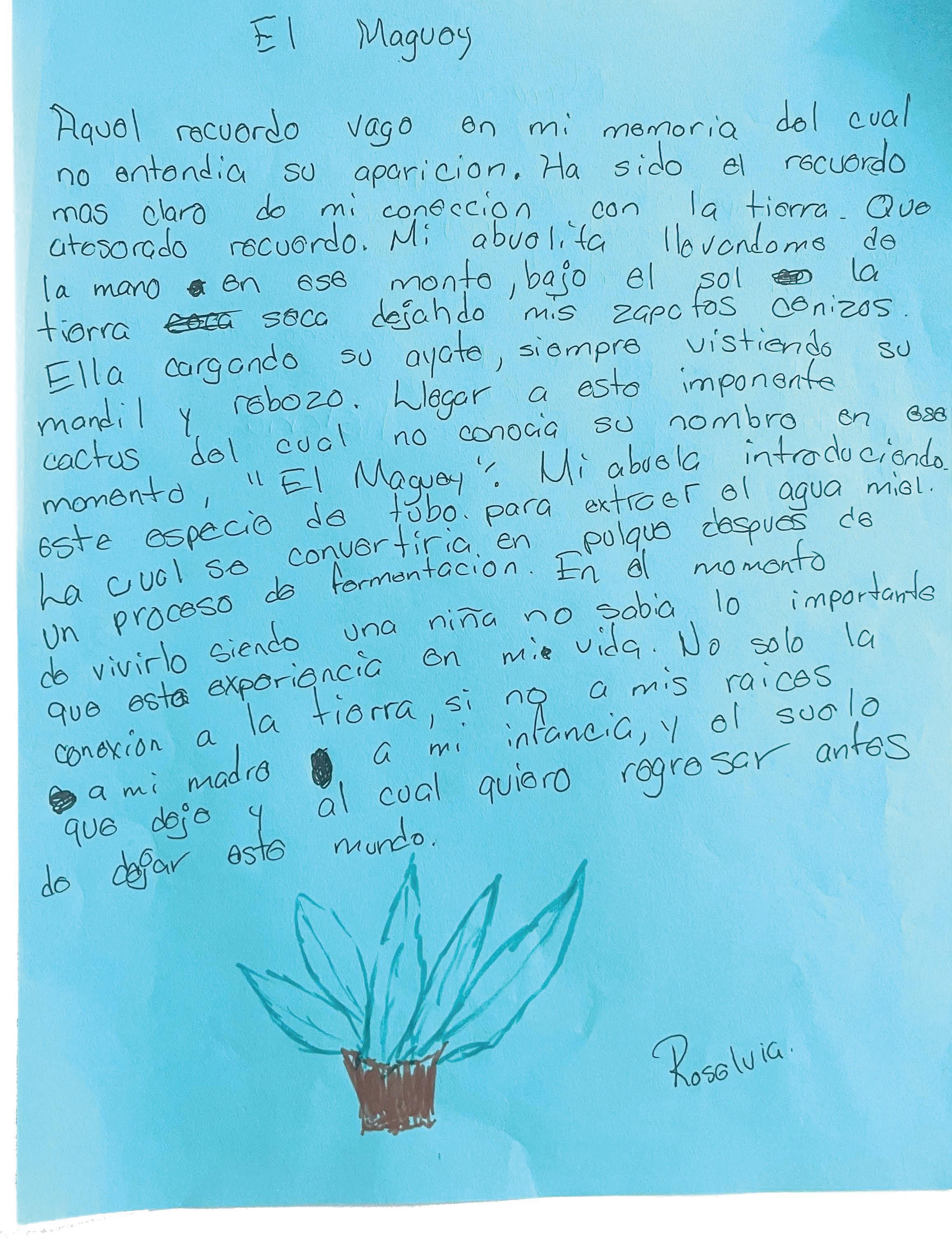
Stephanie’s Bakery is a second home to many in the community.
It specializes in Mexican sweet bread, offers handmade tortilla, authentic meals, and cultural significance with specialty pastries and their celebrated image of La Virgen De Guadalupe. Throughout the pandemic, this space was more than a bakery; it was a community pillar, offering free food and meals. The staff is highly supportive of all immigrant rights and activism efforts.
Stephanie’s es como un segundo hogar para muchos miembros de la comunidad.
Está especializada en pan dulce mexicano, ofrece tortillas artesanales y platos auténticos, y tiene un gran valor cultural gracias a sus pasteles especiales y a su famosa imagen de la Virgen de Guadalupe. Durante la pandemia, este local fue más que una panadería: se convirtió en un pilar de la comunidad, ofreciendo comida y comidas gratuitas. El personal apoya firmemente todos los derechos de los inmigrantes y las iniciativas de activismo.
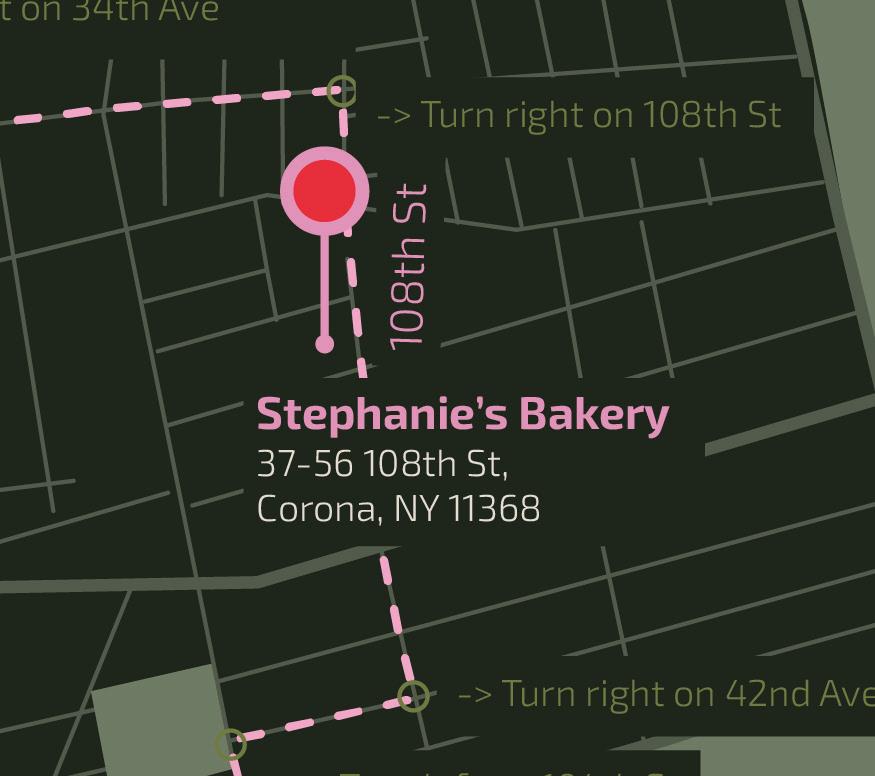
Corona is an important anchor for newly arriving New Yorkers. Corona has the culture and the economy of the world. More than half of the neighborhood’s population is foreign-born.
Solidaridad con los inmigrantes en Corona: Corona es un punto de referencia importante para los neoyorquinos recién llegados. Corona cuenta con una cultura y una economía cosmopolitas. Más de la mitad de la población del barrio es de origen extranjero.
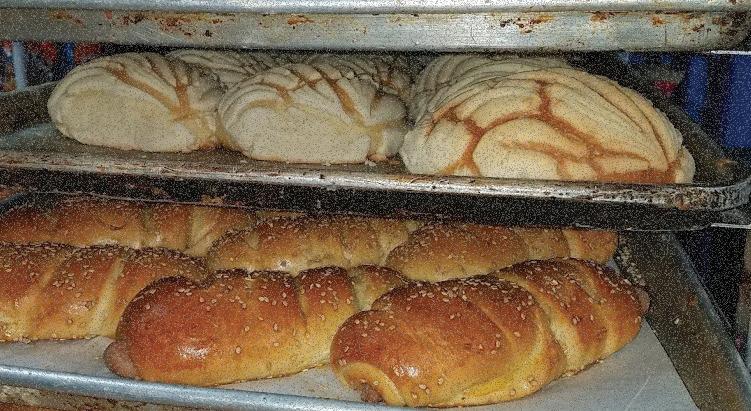
(Source: Roberto Cruz Gúzman)
(Source: Jared Cohee)
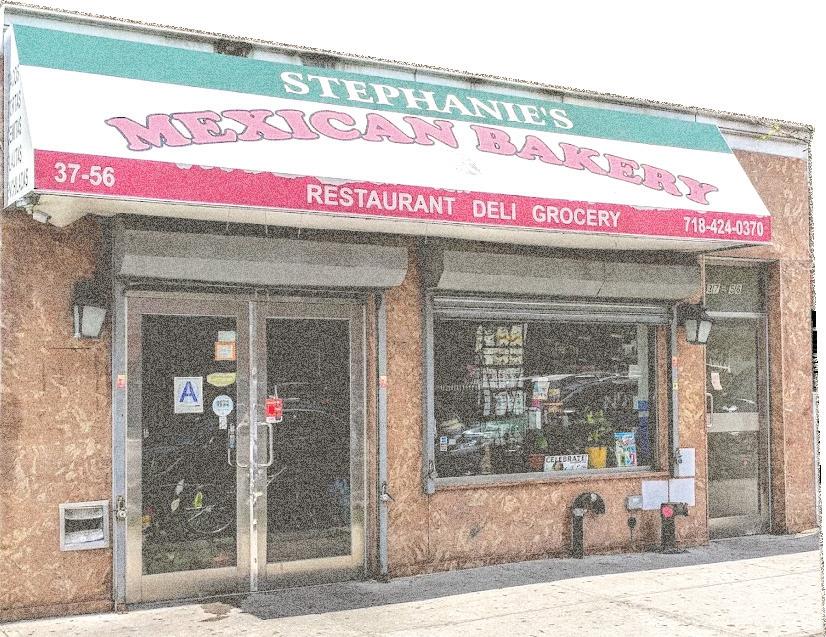
The network of mutual aid and solidarity networks in Corona is expansive. Some of the Immigrant solidarity organizations surrounding legal advice, cultural revitalization, and various forms of mutual aid include Make the Road NYC, NICE (New Immigrant Community Empowerment, Dominico-American Society of Queens, Queens Neighborhoods United (QNU), Catholic Migration Services. Two of the neighborhood’s most important stories of resilience are the Street Vendor Project and the Immigrant Movement International (now Centro Corona) community hub.
La red de ayuda mutua y solidaridad en Corona es muy amplia. Algunas de las organizaciones de solidaridad con los inmigrantes que se dedican al asesoramiento legal, la revitalización cultural y diversas formas de ayuda mutua incluyen Make the Road NYC, NICE (New Immigrant Community Empowerment), la Sociedad Dominico-Americana de Queens, Queens Neighborhoods United (QNU) y Catholic Migration Services. Dos de las historias de resiliencia más importantes del barrio son el Street Vendor Project y el centro comunitario Immigrant Movement International (ahora Centro Corona).
Street Vendor Project/Corona Plaza, Corona Vendors Association
It is estimated that 95% of NYC street vendors are immigrants; In Corona, this economy is an essential economic lifeline. During the pandemic, Corona Plaza became a self-governed marketplace of vendors who came in numbers to the plaza, vitalizing the public space. The heightened use of the plaza put Corona on the map making the NYT’s top 100 places to eat in 2023.
Se estima que el 95 % de los vendedores ambulantes de Nueva York son inmigrantes; en Corona, esta actividad es un sustento económico esencial. Durante la pandemia, Corona Plaza se convirtió en un mercado autogobernado de vendedores que acudieron en masa a la plaza, revitalizando el espacio público. El aumento del uso de la plaza puso a Corona en el mapa, situándola entre los 100 mejores lugares para comer en 2023 según el NYT.
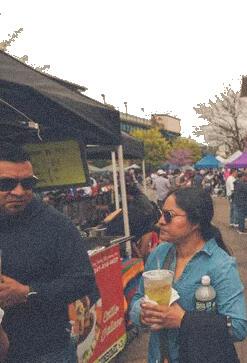
(Source: The New York Times)
In July of 2023, however, the city cracked down on vendors with stricter policing surrounding permitting and licensing and shut down the thriving, mostly unlicensed market. A monthslong fight of protests and demonstrations pushed the city to return to the market that following November through the support of The Street Vendor Project and the Queens Economic Development Corp (QEDC). The Street Vendor Project is a nonprofit that aims to reduce the barriers for NYC’s street vendors through direct legal aid, small business training and organizing, and legislative advocacy, partnered with the QEDC to create a self-a utonomous vendor association (AVA) and NYC’s first Community Vending Market.” This network of community support through the street vendor association has provided a city-wide model to follow.
Sin embargo, en julio de 2023, el Ayuntamiento tomó medidas drásticas contra los vendedores ambulantes, aplicando una política más estricta en materia de permisos y licencias, y cerró el próspero mercado, en su mayoría sin licencia. Una lucha de varios meses, marcada por protestas y manifestaciones, obligó al Ayuntamiento a reabrir el mercado en noviembre de ese mismo año, gracias al apoyo de The Street Vendor Project y la Corporación de Desarrollo Económico de Queens (QEDC). The Street Vendor Project es una organización sin ánimo de lucro que tiene como objetivo reducir las barreras a las que se enfrentan los vendedores ambulantes de Nueva York mediante asistencia jurídica directa, formación y organización de pequeñas empresas, y defensa legislativa. Se asoció con la QEDC para crear una asociación autónoma de vendedores (AVA) y el primer mercado comunitario de venta ambulante de Nueva York. Esta red de apoyo comunitario a través de la asociación de vendedores ambulantes ha proporcionado un modelo a seguir para toda la ciudad.
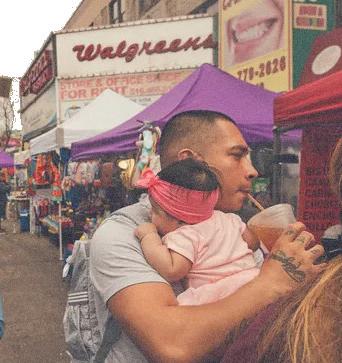
Sources:
Abello, O. P. (2021). Once upon a pandemic, NYC stopped antagonizing street vendors. Next City.
Public Realm Lab (@ Parsons School of Design, The New School). “Watch / Public Programs & Media.” Accessed April 2026.
Street Vendor Project. “Corona Plaza Is Back! A Testament to the Power of Organizing.” December 20, 2023.
Queens Economic Development Corporation. “Neighborhood Development.” Accessed April 2026.
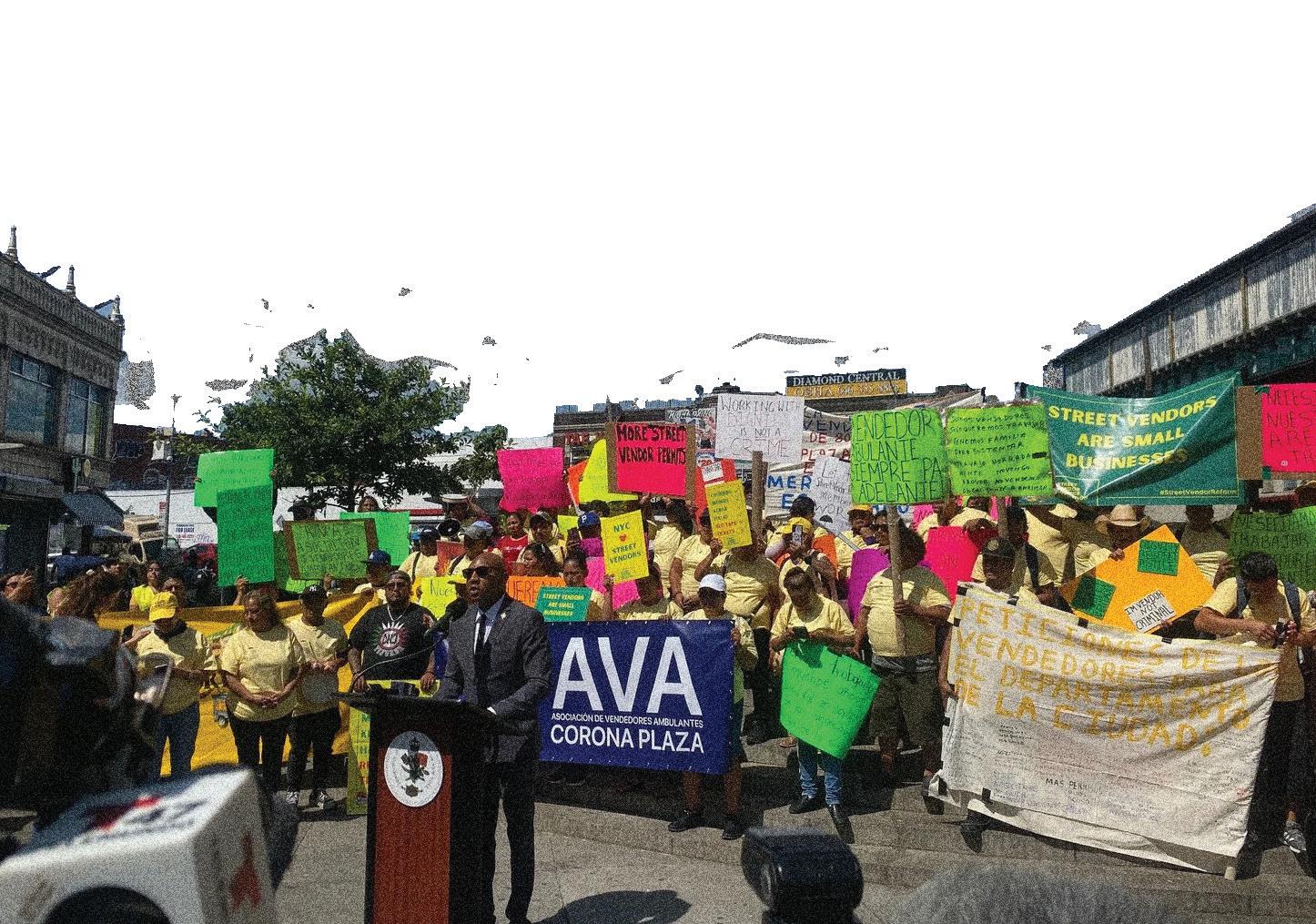
(Source: Ryan Schwach)
Created by Tania Bruguera, this space was a crucial hub for cultural, social, economic, and political organizing initiatives that often served the direct needs of the immigrant community. IMI helped develop grassroots movements and alliances in the community. It was also the birthing place of Mujeres en Movimento, who used this space for workshops, classes, mutual aid, and events like We Bike NYC and who would carry the legacy of IMI after it closed.
Creado por Tania Bruguera, este espacio fue un centro neurálgico para iniciativas de organización cultural, social, económica y política que, a menudo, respondían a las necesidades directas de la comunidad inmigrante. El IMI contribuyó al desarrollo de movimientos de base y alianzas en la comunidad. También fue el lugar donde nació «Mujeres en Movimiento», que utilizó este espacio para talleres, clases, actividades de ayuda mutua y eventos como «WE Bike NYC», y que continuaría con el legado del IMI tras su cierre.
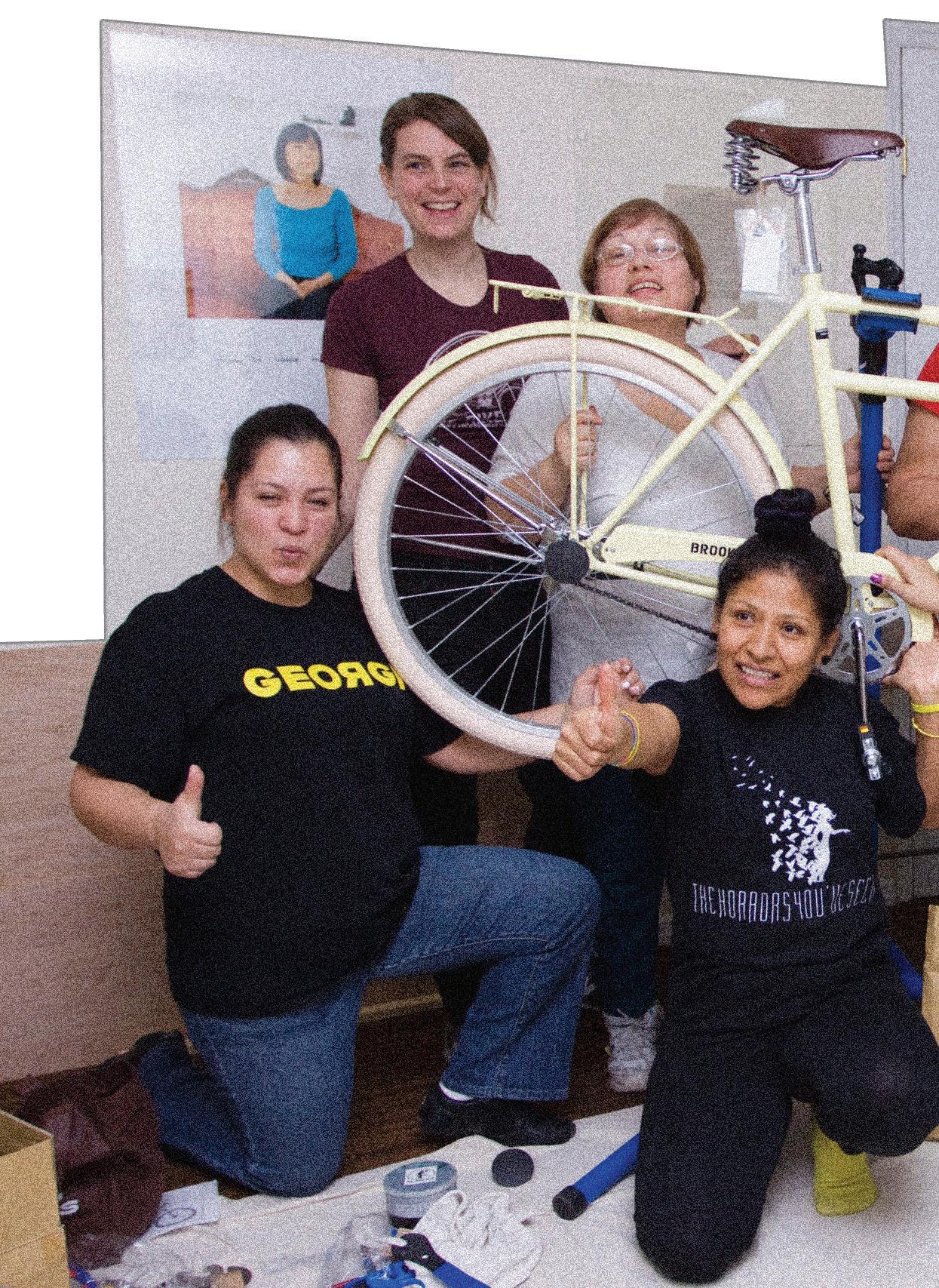
New York City Department of Transportation. (2016, October 19). NYC DOT announces updated transportation safety improvement project for 111th Street in Corona, Queens
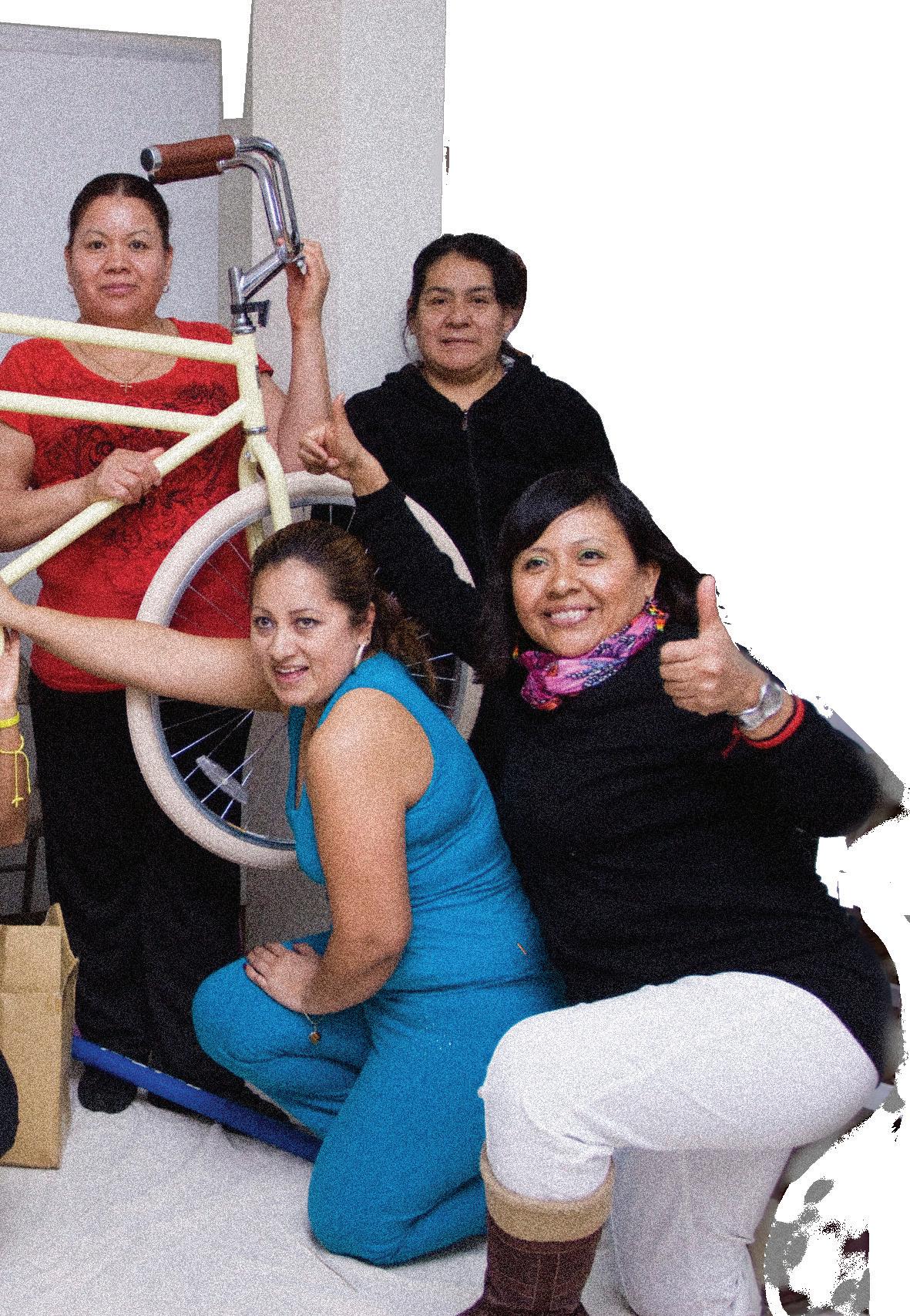
IMI, Mujeres en Movimento, Make the Road NY, and Transportation Alternatives, Make Queens Safer, alongside the Corona residents who were the backbone of the fight for the safety improvement campaign beginning around 2014. In 2017, thanks to the mobilization of Corona residents and grassroots advocacy efforts, 111th st was implemented with a two-way protected bike lane, additional on-street parking spaces, shortened pedestrian crossing distances, and reduced travel lanes per direction to reduce speeding and collisions.
IMI, Mujeres en Movimiento, Make the Road NY y Transportation Alternatives, Make Queens Safer, junto con los vecinos de Corona, que fueron el pilar de la lucha por la campaña de mejora de la seguridad iniciada alrededor de 2014. En 2017, gracias a la movilización de los residentes de Corona y a los esfuerzos de defensa de base, se implementaron en la calle 111 un carril bici protegido de doble sentido, plazas de aparcamiento adicionales en la vía pública, acortamiento de las distancias de los pasos de peatones y reducción del número de carriles de circulación en cada sentido para reducir el exceso de velocidad y las colisiones.
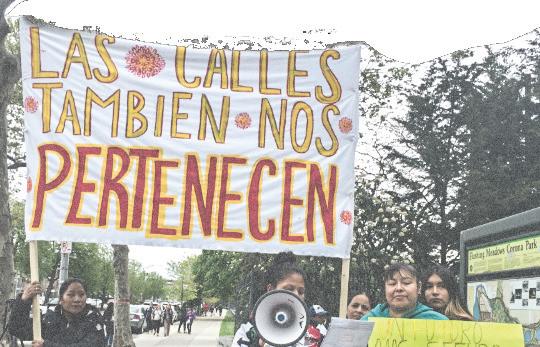
Monica Bunay
Azogues
You are a small but great city!
You are surrounded by green and towering mountains!
The great Burgay River flows at your feet!
From afar, we can see our magnificent Franciscan Sanctuary, where our Heavenly Mother, the Virgin of the Cloud, awaits us. When we visit her, she rekindles our faith and hope. You are a town where hardworking, dreamy, kind, and happy people were born. I am from here, and I will return there. I will climb the trees again, contemplate your fertile lands, enjoy your fragrant gardens, and raise many farm animals…
Meanwhile…
I keep thinking of you as I walk the streets of New York…!
Azogues
Eres una pequeña y gran ciudad!
¡Estas rodeada de verdes y elevadas montañas!
¡A tus plantas corre el gran río Burgay! Desde lejos podemos contemplar nuestro gran Santuario Franciscano. Donde nos espera nuestra Madre Celestial, Virgen de la Nube, Que cuando la visitamos nos aviva la fe, la esperanza. Eres un pueblo donde nacimos las personas trabajadoras, soñadoras, amables y felices. De aquí soy, allá regresaré, volveré a treparme en los árboles, contemplaré tus tierras fértiles, disfrutaré de tus huertos aromáticos, criaré muchos animalitos granjeros…
Mientas tanto...
Te sigo recordando por las calles de New York…!
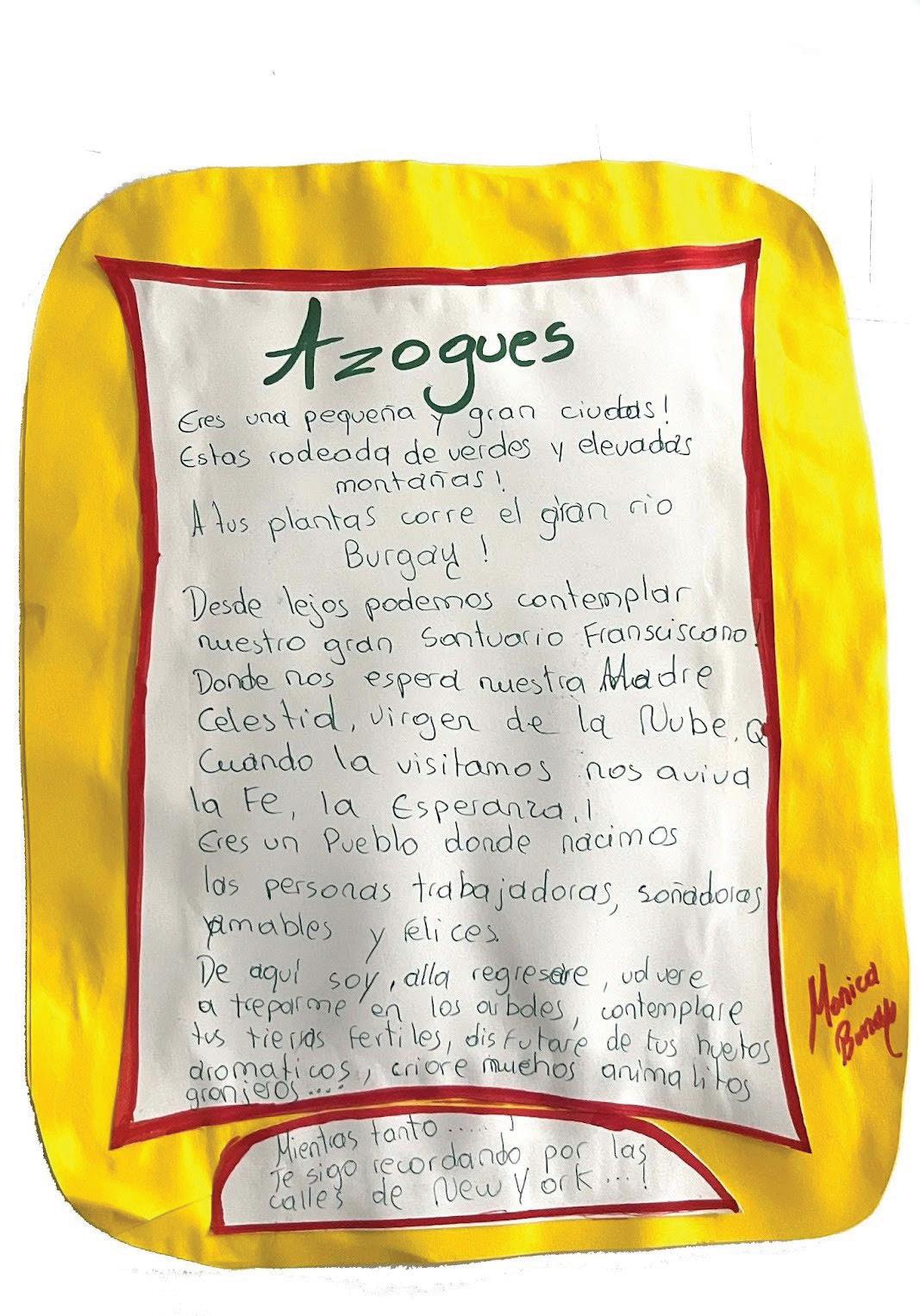
Camelia Ramírez
My hometown: Aztla Tlaponala, Mexico, with only 480 inhabitants,
Located among hills large and small.
When I was a child, my thoughts toward you, my dear and longed-for town, were that in those times I didn’t know how fortunate I was; your riches cannot be bought with money. I miss the smell of damp earth, the cicadas with their deafening sound, which I now see as music for the soul. And that’s not all; I also miss the song of the black magpies perched on the mesquite tree in my yard at night. Listen to the croaking of the toads, yes! They were toads, not frogs, because to many people toads might seem horrible and frogs more beautiful. However, their croaking was music that lulled me to sleep on my hot nights, because in my beloved town there is no winter, but there is plenty of rain, heat, and wind.
Since I was 23, I ventured out to see and discover what lay beyond the hills that surround my town. I found many beautiful things, but most of them are material possessions, and I am grateful for that. But I miss the free things of my roots, including gazing at the star-filled sky, my people, and the smell of damp earth.
In New York, there is beautiful nature, but my mind yearns to feel the essence of my childhood again. Hope dies last.
Mi pueblo natal: Aztla Tlaponala Mexico, de tan apenas 480 habitantes,
Localizado entre cerros grandes y pequeños cuado era una niña mi pensamiento hacia ti, mi querioa y añorado pueblo, era que en esos tiempos no sabía de lo afortunada que era, tus riquezas con dinero no se pueden comprar; extraño el olor a tierra húmeda, las chicharras con su sonido ensordecedor, que ahora lo veo como música para el alma y no queda ahí todo, también el canto de la urracas negras paradas sobre el árbol de mezquite de mi patio, por la noche, escucha el croar de los sapos, si! Eran sapos y no ranas por que a la vista de muchos los sapos les pueden parecer horribles y las ranas mas bellas mas sin embargo ese croar fue música que arrulló y veló mi sueño en mis noches calurosas porque en mi añorado pueblo no existe el invierno pero si, mucha lluvia, calor, vient.o
Desde mis 23 años me aventuré a ver y descubrir que había más allá de los cerros que cubren mi pueblo, encontré muchas cosas bellas pero en su mayoría son cosas materiales y estoy agradecida por ello, pero extraño las cosas gratis de mis raíces entre ellas contemplar el cielo lleno de estrellas mi gente y el olor a tierra húmeda.
En NY se encuentra naturaleza bella, pero mi mente reclama el volver a sentir la esencia de mi niñez, la esperanza muere al ultimo.
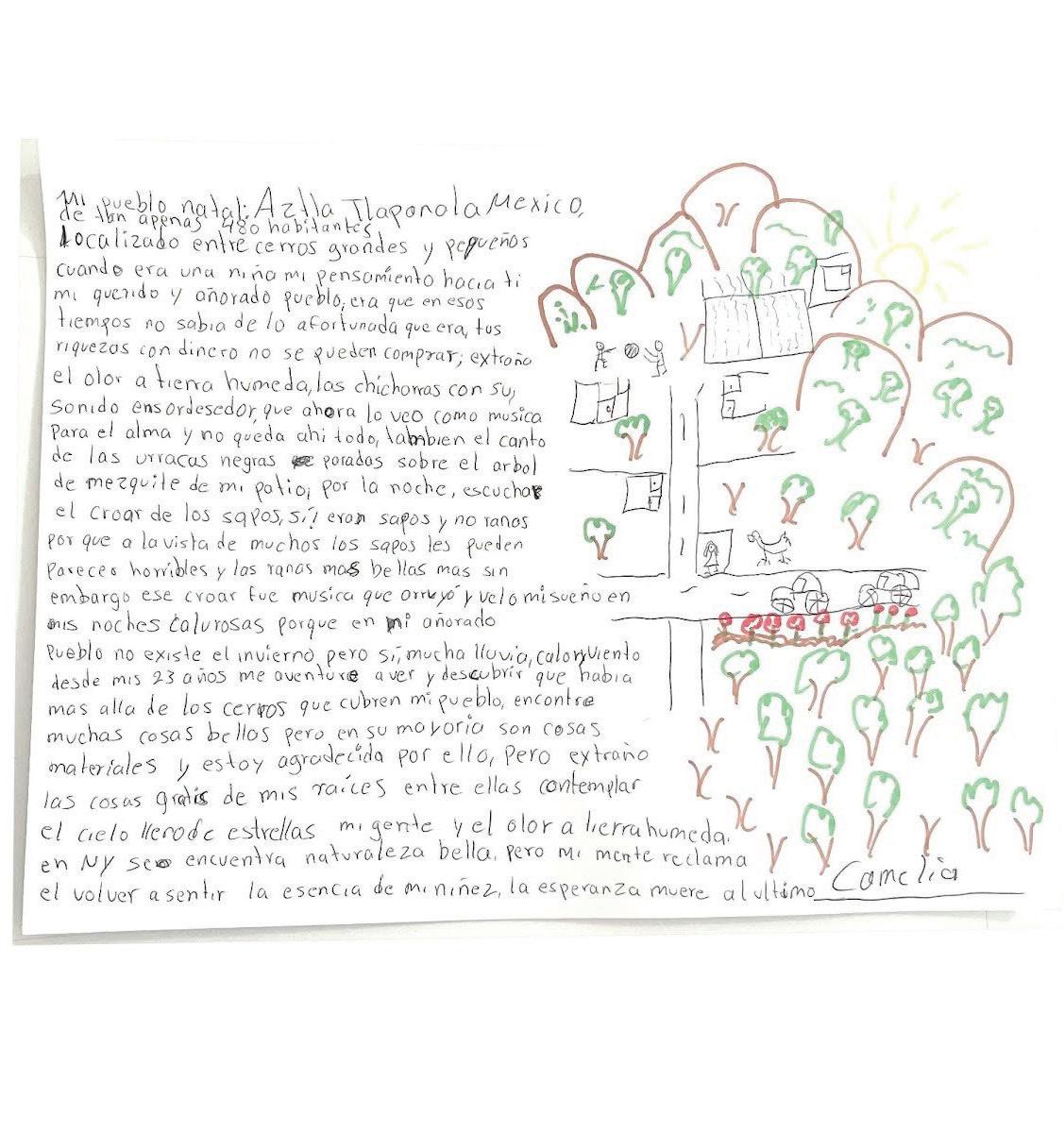
Sparrow’s Nest and Peach Tree are volunteer-run eco-friendly green spaces.
Peachtree Garden is a relaxing oasis next to Louis Simone Park. It includes composting, chickens, gardening, and places to sit and enjoy the sun, and attracts local birds such as sparrows, starlings and raptors.
Sparrow’s Nest Garden is known for having been formed in vacant lots as a result of communityled efforts. It provides organic foods and was an effort to clean up neglected neighborhood space.
Sparrow’s Nest y Peachtree son espacios verdes ecológicos gestionados por voluntarios.
El jardín Peachtree es un oasis tranquilo junto al parque Louis Simone. Incluye compostaje, gallinas, áreas de cultivo y espacios para sentarse y disfrutar del sol, y atrae aves locales como gorriones, estorninos y rapaces.
El jardín Sparrow’s Nest es conocido por haberse formado en lotes vacantes gracias a esfuerzos impulsados por la comunidad. Proporciona alimentos orgánicos y surgió como una iniciativa para limpiar espacios abandonados del vecindario.
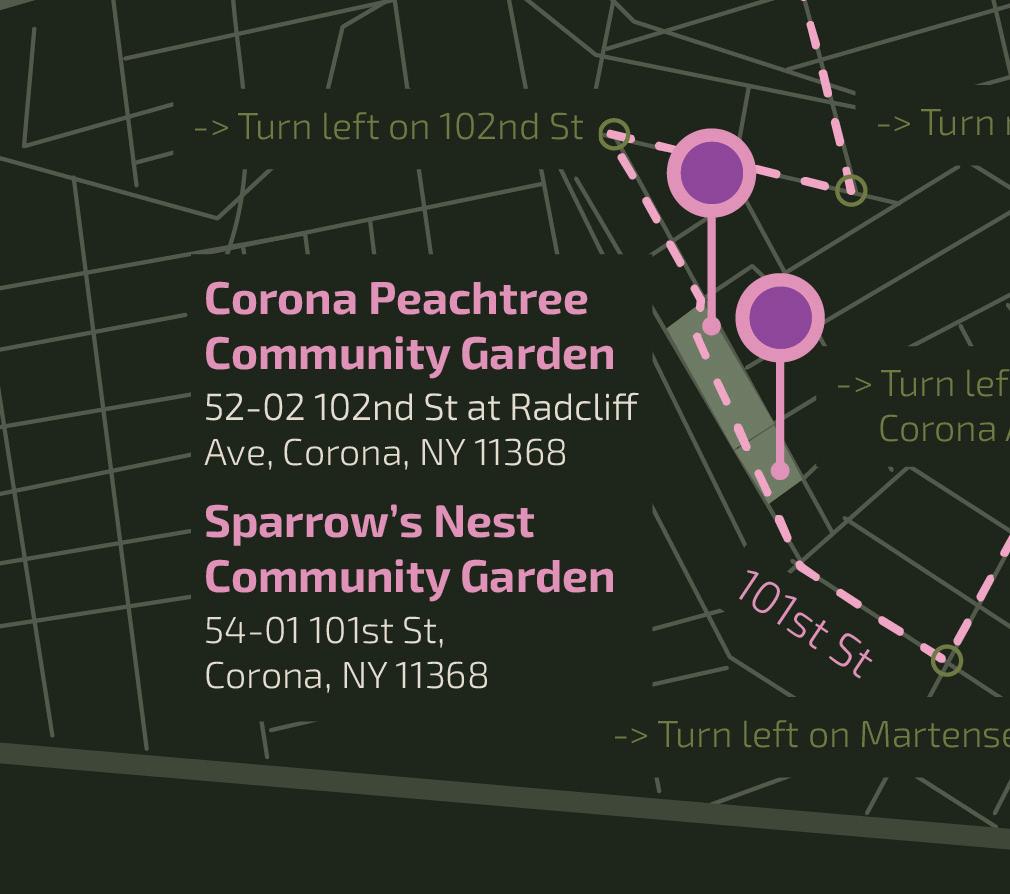
Many of the gardens in Queens are tended by women from the surrounding community. Our ancestors and our immigrant communities have brought seeds and plant knowledge from their home countries, continuing traditions of cultivation that span generations and continents. Alongside these migrant plant practices, the garden also grows indigenous species that have long supported local ecosystems; they provide food and habitat for pollinators and other wildlife.
This intersection of Indigenous and diasporic plant knowledge is an example of multispecies reconnection: the practice of restoring relationships between people, plants, and animals that urbanization has disrupted. When we engage in community gardens we tend both community resources and living reminders that immigrants and Indigenous communities have always been stewards of the land, carrying ecological knowledge that cities need now more than ever.
Muchos de los huertos de Queens son cuidados por mujeres de la comunidad. Nuestros antepasados y nuestras comunidades de inmigrantes han traído semillas y conocimientos botánicos de sus países de origen, dando continuidad a tradiciones de cultivo que abarcan generaciones y continentes. Junto a estas prácticas botánicas de los migrantes, en el huerto también crecen especies autóctonas que desde hace mucho tiempo sustentan los ecosistemas locales; alimentan y sirven como hábitat para los polinizadores y otros animales que viven aquí.
Esta intersección entre el conocimiento botánico Indígena y el de la diáspora es un ejemplo de reconexión multiespecífica: la práctica de restaurar las relaciones entre las personas, las plantas y los animales que la urbanización ha interrumpido. Cuando participamos en huertos comunitarios, cuidamos tanto los recursos de la comunidad como al conocimiento vivo de que las comunidades de inmigrantes e Indígenas siempre han sido guardianas de la tierra, portadoras de un conocimiento ecológico que las ciudades necesitan ahora más que nunca.
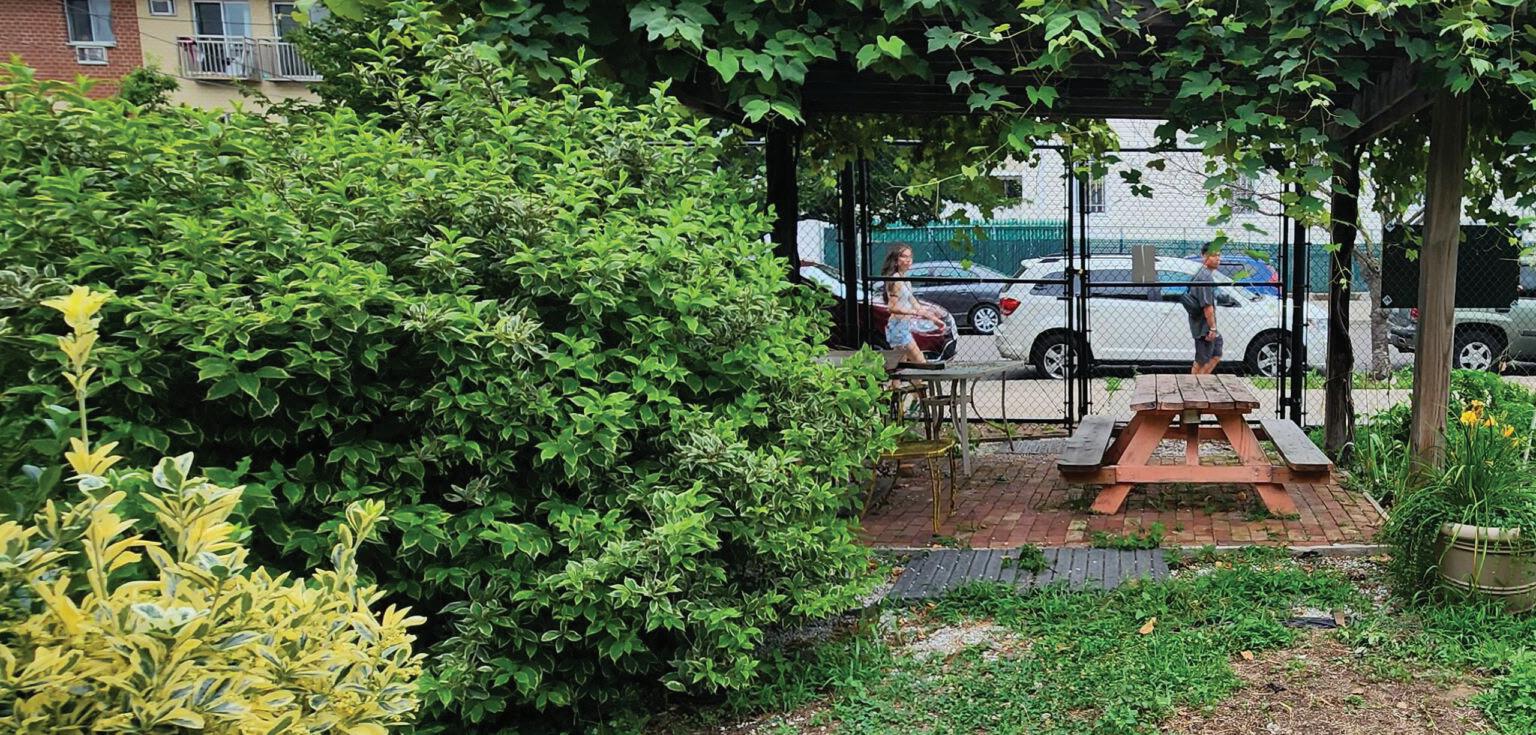
Maddy continues with her learnings about the black walnut in her printingmaking class. The design tells the story of how the black walnut has a relationship with animal and human life; how the form of its leaves, seed and shell symbolize the cycle of return; and how its roots form relationships with fungi in the soil. The black walnut is one plant of many whose existence has evolved alongside the landscape and its people.
Maddy sigue profundizando en sus conocimientos sobre el nogal negro en su clase de serigrafía. El diseño narra la historia de cómo el nogal negro está relacionado con la vida animal y humana, cómo la forma de sus hojas, la pulpa y la cáscara de la nuez simbolizan el ciclo del retorno, y cómo sus raíces establecen relaciones con los hongos del suelo. El nogal negro es una de las muchas plantas cuya existencia ha evolucionado junto al paisaje y sus habitantes.
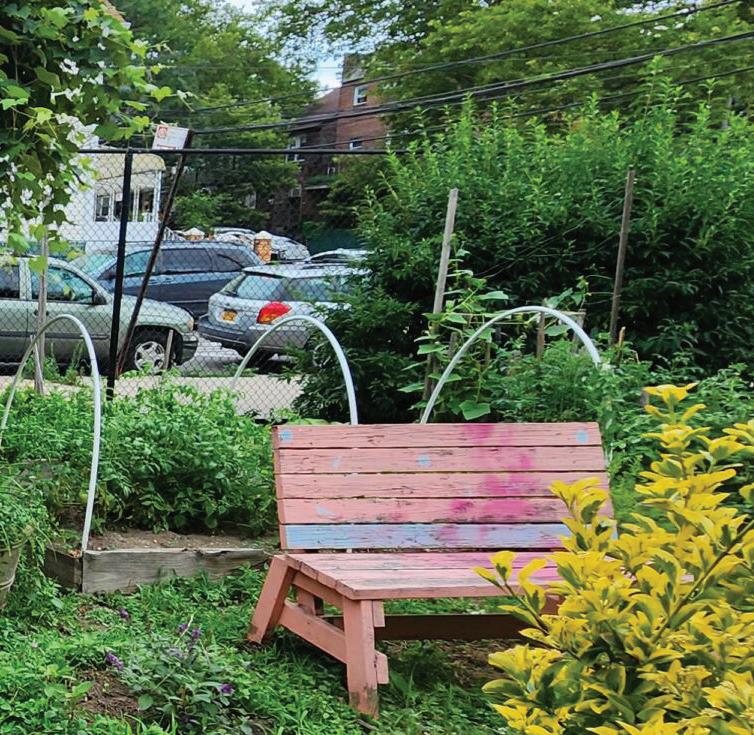
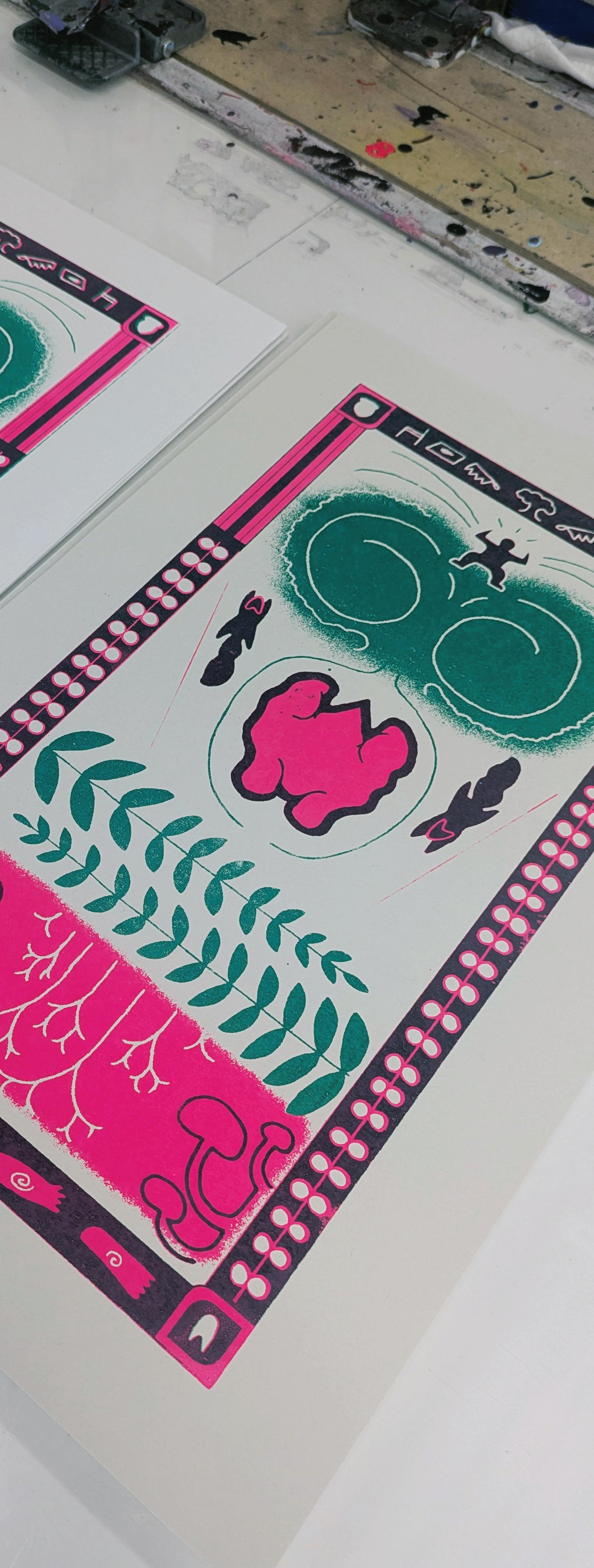
(Source: Madelyn Capozzi)
Emma Ortega
Year after year, trees wait for spring to bloom. This is the cycle of life that heals. You must get to the root of the wound and heal it from start to finish; hold on tightly to your pain. Planting flowers in the garden has helped flowers grow within me. So bloom with beauty, with strength in the face of danger. Bloom gently, even if all you need is to simply bloom.
The invisible air
Listen, try to perceive the air—the presence and beauty of the air—that we all receive to keep living. When we inhale, the air feels fresh; when we exhale, it feels warm and calms the mind, and after many breaths in and out, your mind feels calm and free, and sometimes in motion, like a bird flying high into the sky, losing itself among the clouds carried high by the air. And they disappear, sometimes with gentle calm, like music in my ears. Wonderful air that you are in my life, sometimes like a furious storm that frightens me, or perhaps makes me a little anxious. Wonderful, invisible air, a breath of freshness with every inhalation, a breeze that moves us, a silence that envelops us, a dance, endless.
Juntas florecemos
Año tras año, los árboles esperan la primavera para florecer. Este es el ciclo de la vida para sanar. Tienes que llegar a la raíz de la herida y sanarla de principio a fin, resiste con fuerza tu dolor. Plantar flores, en el jardín me ha ayudado a que crezcan flores en mí. Así que florece con belleza, con peligro con fuerza Florece, con suavidad, aunque lo que necesites sea sólo florecer.
El aire invisible
Escuchan, alcanzan a percibir el aire, la atención y la belleza del aire, que todos y todas recibimos para seguir viviendo. Cuando inspiramos el aire se siente fresco cuando expiramos se siente, tibio y cálma la mente, y después de muchas inspiraciones y exhalaciones tu mente se siente en calma libre, y aveces en movimiento, como una ave que vuela alto hasta el cielo, perdiéndose entre las nubes por el aire que las eleva alto. y desaparecen, a veces con calma suave, como música en mis oídos. maravilloso aire que eres en mi vida, a veces como una tormenta furiosa que me asusta, o quizás me pone un poco ansiosa. maravilloso, invisible aire, un abrazo de frescura en cada inhalación, un soplo que nos mueve un silencio que nos envuelve una danza, sin fin.
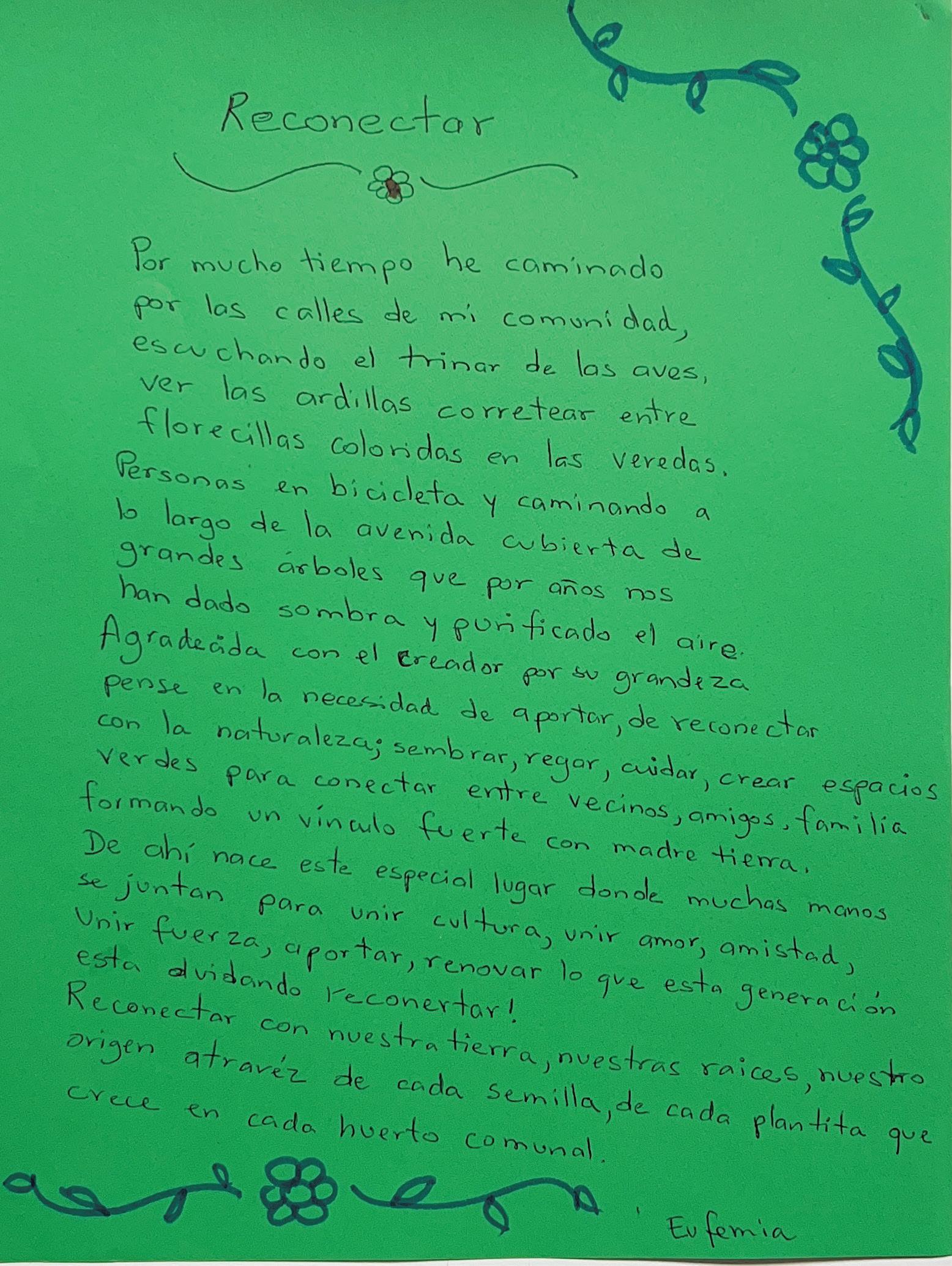
For a long time, I’ve walked along the streets of my community, listening to the birds chirping, watching the squirrels scamper among the colorful wildflowers on the sidewalks. People cycling and walking along the avenue lined with large trees that have for years provided us shade and purified the air. Grateful to the Creator for His greatness, I felt the need to contribute, to reconnect with nature; to plant, water, care for, and create green spaces to connect neighbors, friends, and family, forging a strong bond with Mother Earth.
From this, this special place was born, where many hands come together to unite culture, unite love, friendship, to unite strength, to contribute, and to renew what this generation is forgetting. Reconnect!
Reconnecting with our land, our roots, our origin, through each seed, each little plant that grows in each community garden.
Por mucho tiempo he caminado por las calles de mi comunidad, escuchando el trinar de las aves, ver las ardillas corretear entre florecillas coloridas en las veredas Personas en bicicleta y caminando a lo largo de la avenida cubierta de grandes árboles que por años nos han dado sombra y purificado el aire.
Agradecida con el Creador por su grandeza pensé en la necesidad de aportar, de reconectar con la naturaleza; sembrar, regar, cuidar, crear espacios
verdes para conectar entre vecinos, amigos, familia
formando un vínculo fuerte con madre tierra. De ahí nace este especial lugar donde muchas manos
se juntan para unir cultura, unir amor, amistad, unir fuerza, aportar, renovar lo que esta generación está olvidando. reconectar!
Reconectar con nuestra tierra, nuestras raíces nuestro origen a través de cada semilla, de cada plantita que crece en cada huerto comunal.
Flushing Meadows Corona Park is an extraordinarily popular spot in the community of Corona and Flushing on the weekends.
The courts were created in 2013, and are ADA accessible, with paved pathways through the park. There are BBQ’s available for public use, and many food vendors use the space regularly for their businesses. The courts cost 450,000 USD to build. Families come to the park in both formal and informal ways; teaching kids to ride a bike or hosting family gatherings.
Flushing Meadows Corona es un lugar extraordinariamente popular en la comunidad de Corona y Flushing durante los fines de semana.
Las canchas se construyeron en 2013 y cuentan con acceso para personas con discapacidad, además de senderos pavimentados que recorren el parque. Hay parrillas disponibles para uso público, y muchos vendedores de comida utilizan el espacio con regularidad para sus negocios. La construcción de las canchas costó 450,000 dólares. Las familias vienen al parque tanto para actividades formales como informales, ya sea para enseñar a los niños a andar en bicicleta o para celebrar reuniones familiares.
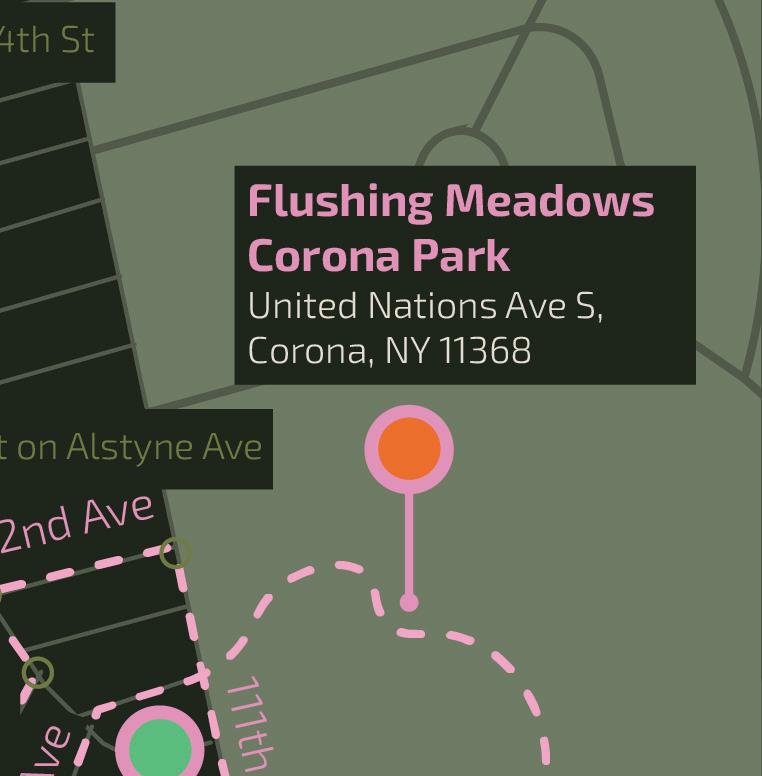
During the tour we stopped and listened as Veronica told the story of how a coalition of community members and partners organized to push for safer streets in their own neighborhood.
Durante el tour, paramos para escuchar a Verónica contar cómo una coalición de vecinos y colaboradores se organizó para promover la seguridad vial en su propio barrio.
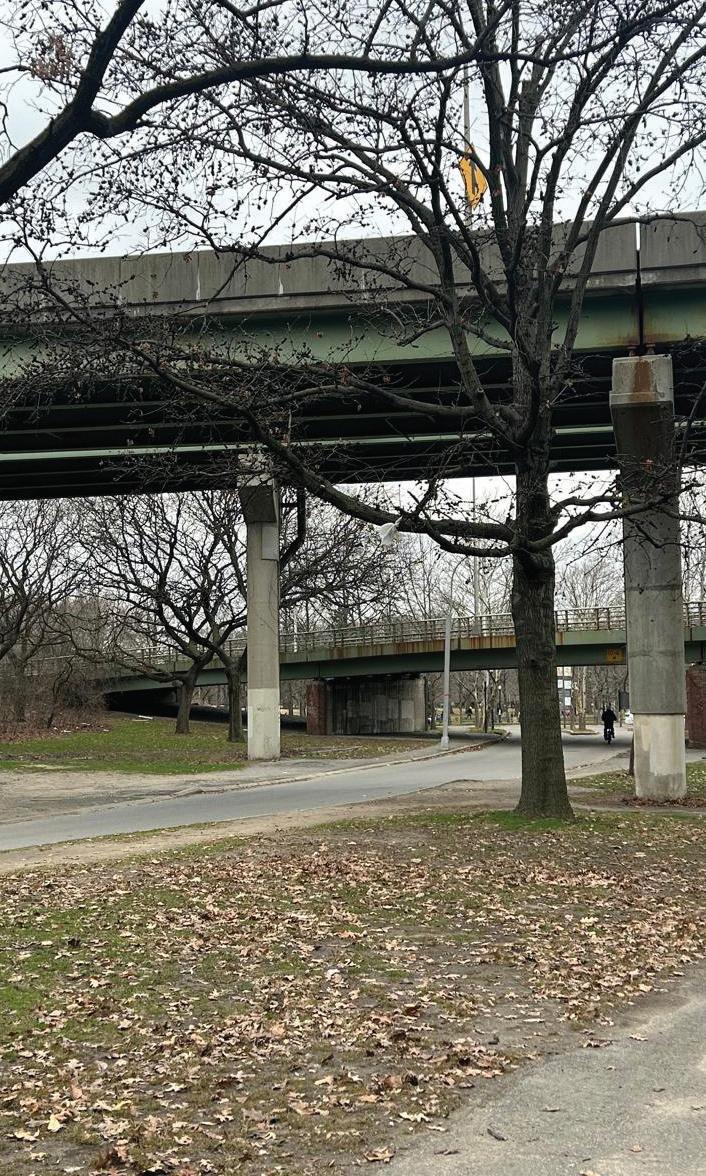
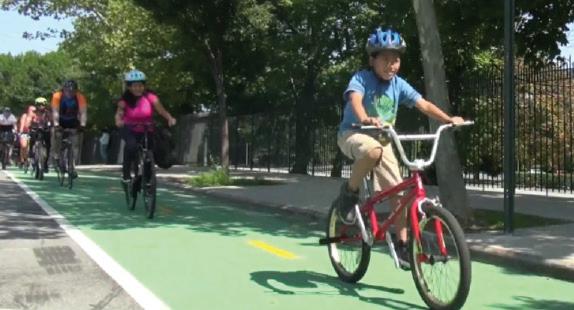
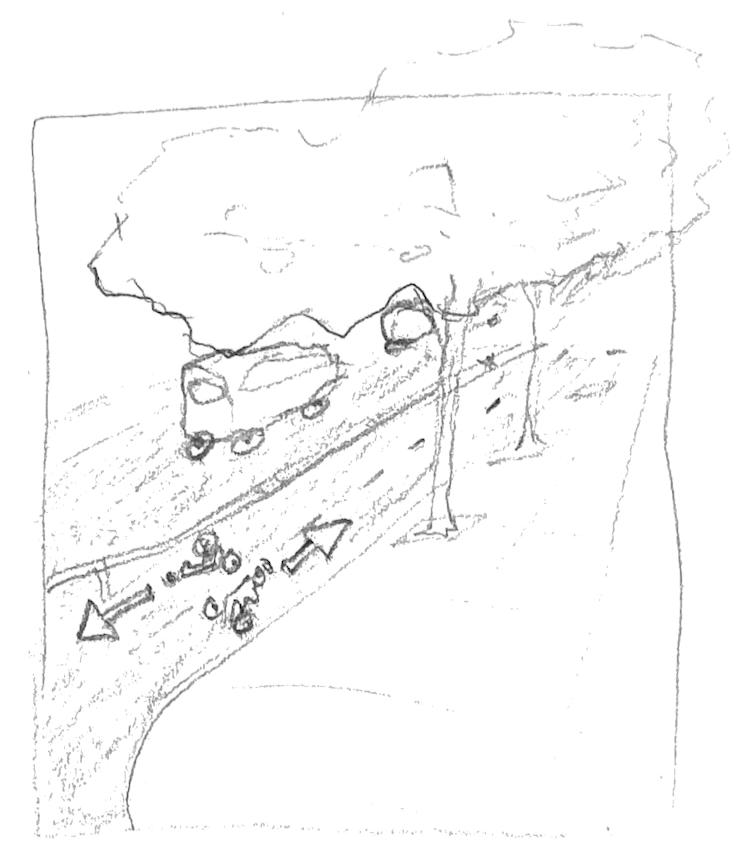
Protected Bike Lanes
Camino protegido para bicicletas
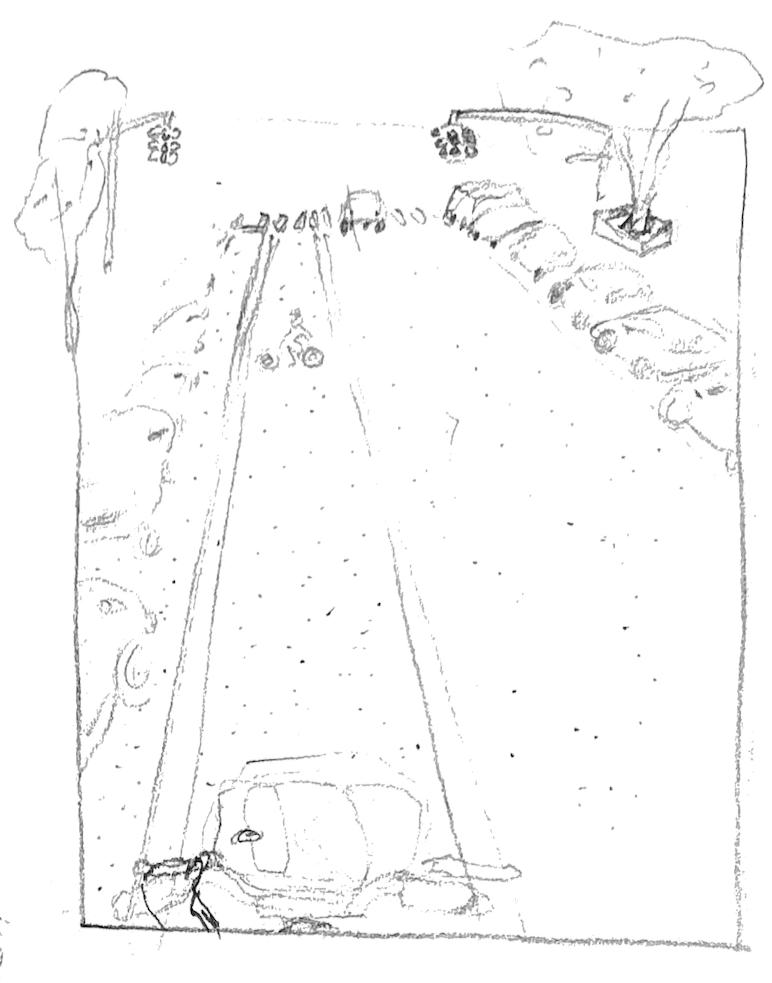
Conventional Bike Lanes
Carril para bicicletas
Having access to open spaces, through integrated and protected bike lane networks, is something that allows our relationship with the land that constitutes our sense of home to develop freely. The freedom we feel on a bike returns each time we ride, like the feeling of being in water, or moving to beautiful music with friends.
El acceso a los espacios abiertos, a través de redes de ciclovías integradas y protegidas, es algo que nos permita desarrollar una relación libremente con el territorio que constituye nuestrx sentido de hogar. La libertad que sientimos sobre una bicicleta regresa cada vez que salimos a rodar, como la sensación de estar en el agua o moviéndose al ritmo de música hermosa con amigas y amigos.
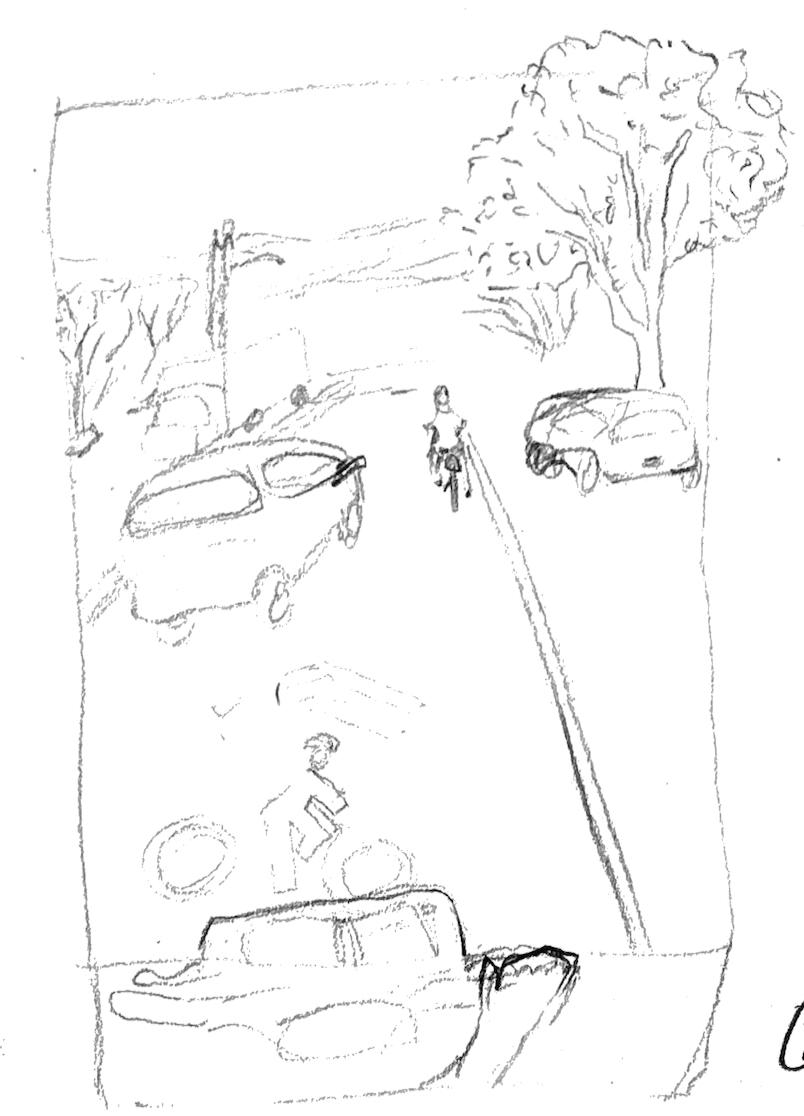
Shared Lanes Carril compartido
While New York City parks are all publicly accessible, just access has eluded many communities. Here in Corona, although we are immediately adjacent to Flushing Meadows Corona Park, pedestrian access is limited to a handful of points which are not fenced off, or blocked by highway. Just as safe pedestrian crossings are necessary for proper accessibility, so too is green infrastructure which prioritizes pedestrians and not just cars.
Si bien todos los parques de la ciudad de Nueva York son de acceso público, el acceso en sí mismo sigue siendo un problema para muchas comunidades. Aquí en Corona, aunque estamos justo al lado del parque Flushing Meadows Corona, el acceso peatonal se limita a unos pocos puntos que no están cercados ni bloqueados por la carretera. Así como los cruces peatonales seguros son necesarios para una accesibilidad adecuada, también lo es la infraestructura verde que prioriza a los peatones y no solo a los automóviles.
Sources: Wise, Alana. “How ‘Transportation Racism’ Shaped America.” NPR, July 5, 2020. https://www.npr.org/2020/07/05/887386869/how-transportationracism-shaped-america.
Rodriguez, ET. “DOT Hosts First Rounds of Community Engagement for Cross Bronx Expressway Study.” Bronx Times, February 14, 2023. https://www. bxtimes.com/community-engagement-cross-bronx-expressway/.
“The Cross Bronx Expressway.” Segregation by Design. Accessed April 29, 2026. https://www.segregationbydesign.com/the-bronx/the-cross-bronxexpressway.
“The Story of the BQE Documentary Showcases Epic Neighborhood Destruction.” Brooklyn Eagle. https://brooklyneagle.com/303109/ the-story-of-the-bqe-documentary-showcases-epic-neighborhooddestruction/.
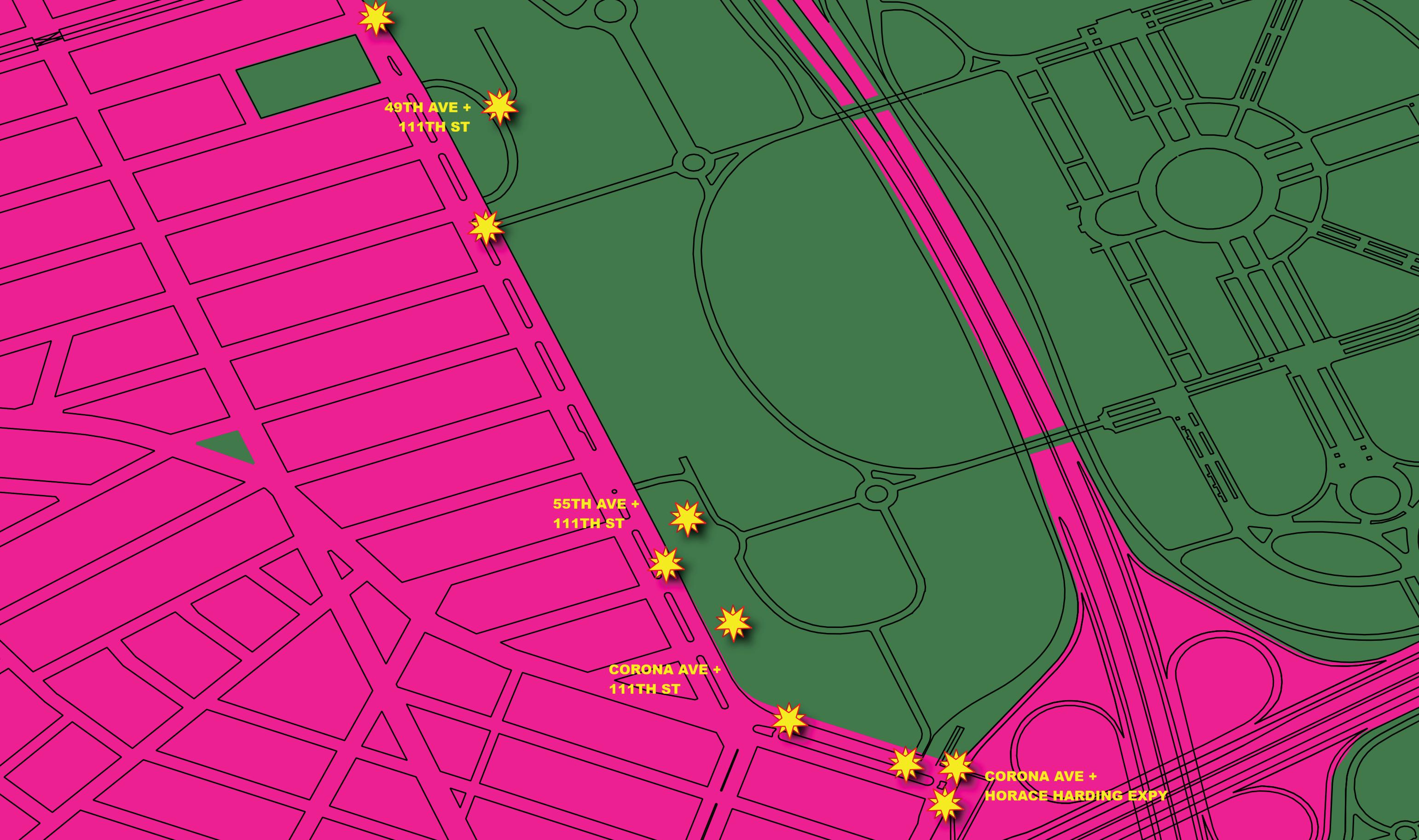
Here we can see how, although Flushing Meadows Corona Park is immediately adjacent to Corona, pedestrian access is sadly limited to four main clusters along the park’s western edge.
In fact, highway development has often been at the expense of communities of color and the working class. The Cross-Bronx Expressway, developed under Robert Moses, displaced ethnically-diverse working class communities along its path.
In Brooklyn, the Brooklyn-Queens Expressway displaced immigrant communities–Black, Hispanic, Jewish, and Italian–and created a permanent barrier to pedestrians. To this day, these monuments to disparity contribute to higher levels of asthma where they pass through neighborhoods.
What might a more just redesign look like? Where have neighborhood residents created informal paths to get around present design limitations?
Aquí podemos ver cómo, aunque el Flushing Meadows Corona Park está justo al lado de Corona, el acceso peatonal se limita, lamentablemente, a cuatro zonas principales a lo largo del borde oeste del parque.
De hecho, el desarrollo de las autopistas a menudo se ha realizado a expensas de las comunidades de color y la clase trabajadora. La Cross-Bronx Expressway, construida bajo la dirección de Robert Moses, desplazó a comunidades obreras de gran diversidad étnica a lo largo de su trazado.
En Brooklyn, la Brooklyn-Queens Expressway desplazó a comunidades inmigrantes — afroamericanas, hispanas, judías e italianas— y creó una barrera permanente para los peatones. Hasta el día de hoy, estos monumentos a la desigualdad contribuyen a mayores índices de asma en los barrios por donde pasan.
¿Cómo sería un rediseño más equitativo?
¿Dónde han creado los vecinos senderos informales para sortear las limitaciones de diseño actuales?
Growing up I was privileged to learn that there are ways to define life through ends, and through beginnings. This choice is not mutually exclusive. We can define our experience with a song for example through its inevitable end. Conversely, but not independently, we can choose to define our experience with a song not through ends, but in the spectrum of transmutation, as a continuous melody in a chorus.
We can take this perspective for how we experience and design for flooding. Through the lens of eurocentric planning the flooding, the insistence of water is villainized. When any force anti-thetical to colonial dominian - be it water or fire, life or death - shows its face on the urban fabric the colonial projects logics falter. It is a strange position to take, in Corona for example much of the park that faces flooding was a wetland populated by soils and plants familiar with the embrace of the tidal estuary before it was filled in with concrete.
Donde las aguas fluyen
Al crecer, tuve el privilegio de aprender que existen formas de definir la vida a través de sus finales y a través de sus comienzos. Esta elección no es mutuamente excluyente. Podemos definir nuestra experiencia con una canción, por ejemplo, a través de su inevitable final. Por el contrario, aunque no de manera independiente, podemos optar por definir nuestra experiencia con una canción no a través de sus finales, sino dentro del espectro de la transmutación: como una melodía continua en un coro.
Podemos adoptar esta misma perspectiva para la forma en que experimentamos las inundaciones y diseñamos en respuesta a ellas. A través de la lente de la planificación eurocéntrica, las inundaciones,
esa insistencia del agua, son demonizadas. Cuando cualquier fuerza antitética al dominio colonial, ya sea el agua o el fuego, la vida o la muerte, asoma su rostro en el tejido urbano, la lógica del proyecto colonial se tambalea. Es una postura
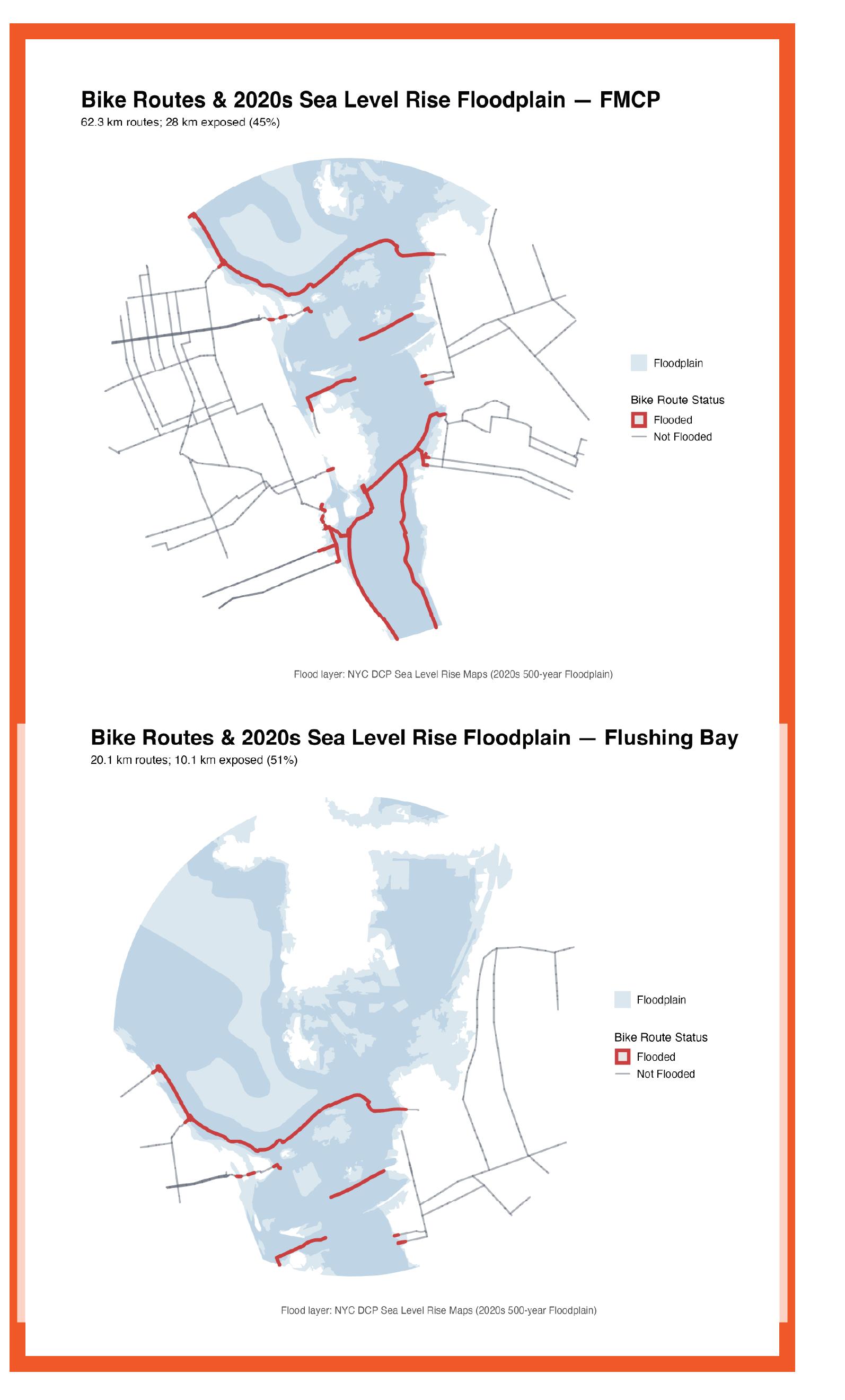
extraña; en Corona, por ejemplo, gran parte del parque que hoy enfrenta las inundaciones fue en su día un humedal, poblado por suelos y plantas familiarizados con el abrazo del estuario mareal, antes de ser rellenado de cemento.
My research does not aim to villainize this experience. Rather, in an act of radical futuring, the research reveals where we are headed and who will be the first to witness
change. Mujeres En Movimiento represents a special cross section of witnesses. As folks both from the global majority, who know what it means to be displaced but also as folks who insist in constant communication with nature, they will be the first to experience what these floods mean, how the waters will move. The floods, when they arrive, will compromise 80% of bike paths in Corona-Flushing meadows.
How we define the embrace of water is up to groups who move, who belong to diaspora and their homes, who commune with nature, who understand both the legacies of colonialism and the liberators future. It is on their terms whether we define the embrace of tides as an ends, or a new beginning.
Mi investigación no pretende demonizar esta experiencia. Por el contrario, en un acto de proyección radical hacia el futuro, la investigación revela hacia dónde nos dirigimos y quiénes serán los primeros en presenciar el cambio. Mujeres En Movimiento representa una sección transversal única de testigos: personas que, al formar parte de la mayoría global, saben lo que significa ser desplazado, pero que también insisten en mantener una comunicación constante con la naturaleza; serán ellas las primeras en experimentar el significado de estas inundaciones y la forma en que se desplazarán las aguas. Cuando lleguen, estas inundaciones comprometerán el 80 % de los carriles bici en Corona-Flushing Meadows.
La forma en que definamos el abrazo del agua depende de aquellos grupos que están en movimiento, que pertenecen a la diáspora y a sus hogares, que comulgan con la naturaleza y que comprenden tanto los legados del colonialismo como el futuro liberador. Queda en sus manos decidir, bajo sus propios términos, si definimos el abrazo de las mareas como un fin o como un nuevo comienzo.
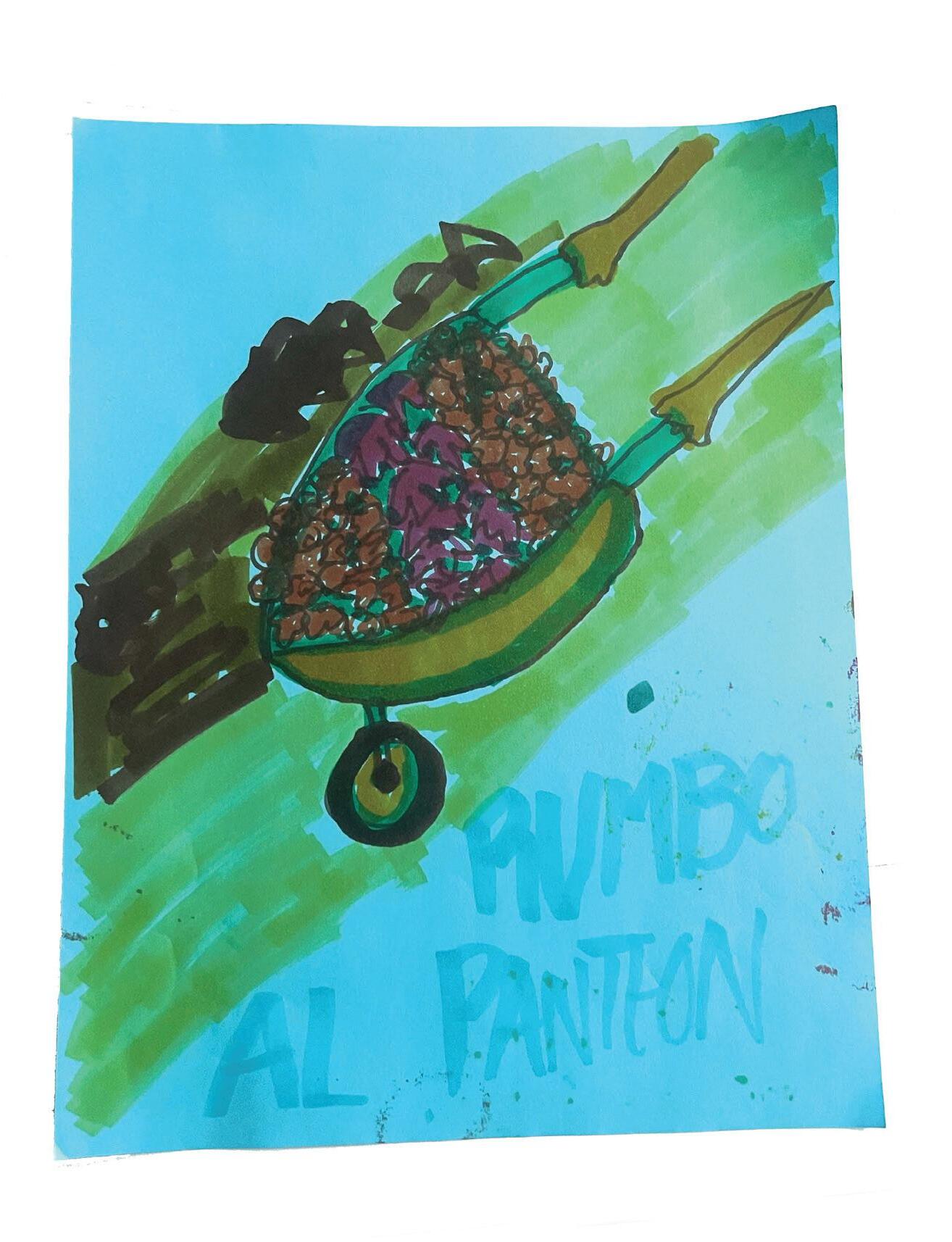
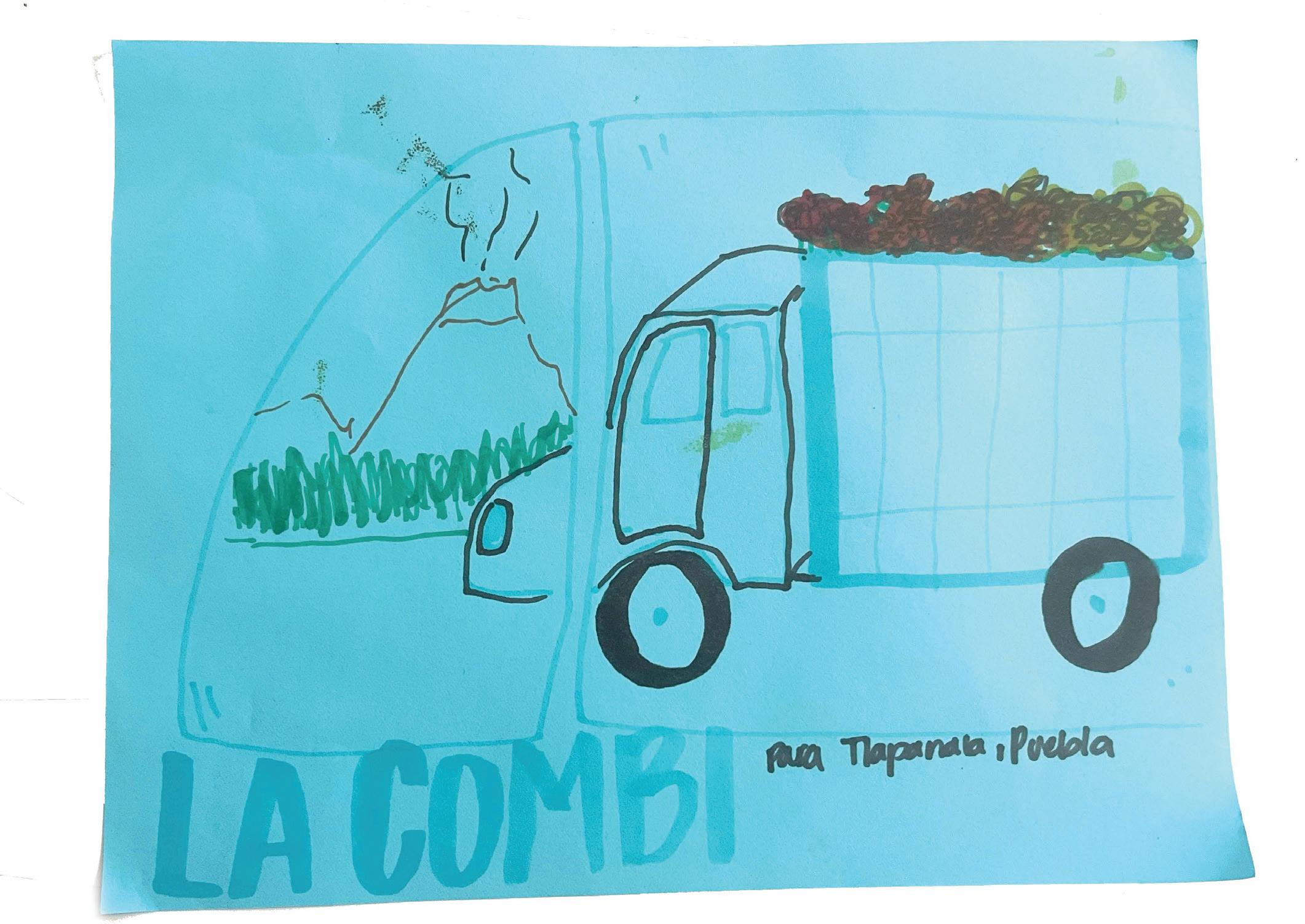
THE BUS: To Tlapanala, Puebla
LA COMBI: para Tlapanala, Puebla
HEADING TO THE CEMETERY
RUMBO AL PANTEON
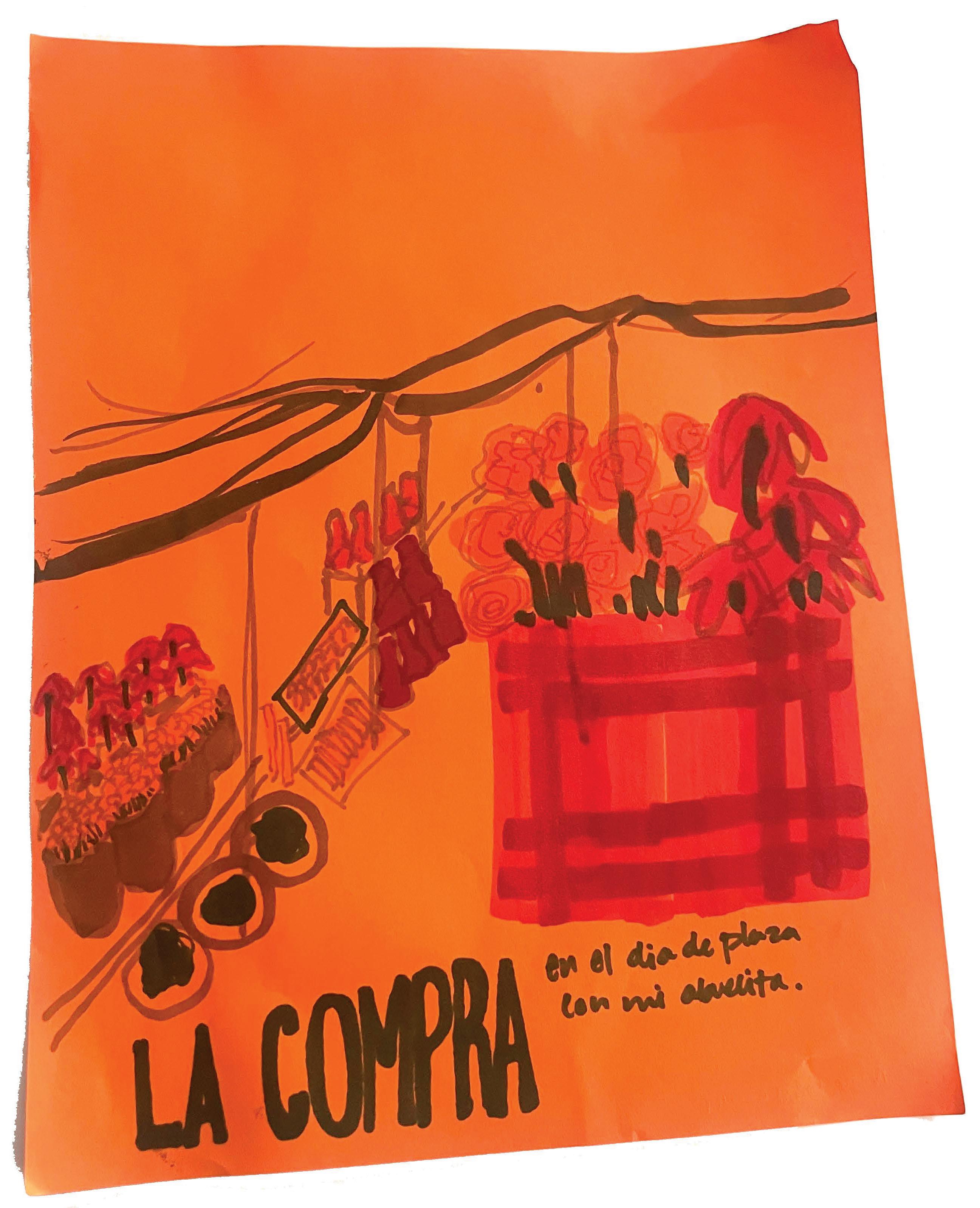
THE MARKET: Market day with my grandma LA COMPRA: en el dia de plaza con mi abuelita
Estrellita Sampayo
A note dedicated to Mother Nature
Today I woke up with a calm soul and a grateful heart.
I opened my eyes and silently whispered: Thank you, God, for giving me another day of life.
The morning began with love… a kiss, an “I love you,” smiles that warm the soul. We shared bread, time, and joy, because there is no greater wealth than being together.
Then, the path led us to the dock, where the wind gently caresses and life moves without haste.
The lake shone like a mirror of the sky, the trees whispered ancient stories, and I… simply observed, marveling at such beauty.
Breathing the pure air, feeling the wind brush against my skin, hugging a tree as if embracing life itself, lying down on the green grass
Nota dedicada a nuestra madre naturaleza
Hoy desperté con el alma en calma y el corazón agradecido.
Abrí mis ojos y, en silencio, susurré: gracias, Diosito, por regalarme un día más de vida.
La mañana comenzó con amor… un beso, un “te amo”, sonrisas que abrazan el alma.
Compartimos el pan, el tiempo y la alegría, porque no hay riqueza más grande que estar juntos.
Luego, el camino nos llevó junto al muelle, donde el viento acaricia suave y la vida camina sin prisa. El lago brillaba como un espejo del cielo, los árboles susurraban historias antiguas, y yo… solo observaba, maravillada ante tanta belleza.
Respirar el aire puro, sentir el viento rozar mi piel, abrazar un árbol como si abrazara la vida, recostarme en el pasto verde
and listening to the water sing as it touches the stones… all of this is a gift.
The ducks traced paths on the water, the cherry blossoms bloomed like promises, and the birds filled the sky with music.
And in that moment I understood… that happiness lives in simplicity, in what cannot be bought, in what can only be felt.
Mother Nature, you are living poetry, you are peace, you are home.
Thank you, God, for this gift so perfect, so pure, so eternal.
Thank you for the earth that sustains us and for the beauty that teaches us to love.
Live, smile, feel… run free like the wind, rest like the earth, and bloom like the trees in spring.
Love deeply, always be grateful,
and never forget that the most valuable thing in this life… is priceless.
y escuchar el canto del agua al tocar las piedras… todo eso es un regalo.
Los patos dibujaban caminos en el agua, los cerezos florecían como promesas, y las aves llenaban el cielo de música. Y en ese instante entendí… que la felicidad vive en lo sencillo, en lo que no se compra, en lo que solo se siente.
Madre naturaleza, eres poesía viva, eres paz, eres hogar.
Gracias, Dios, por este regalo tan perfecto, tan puro, tan eterno.
Gracias por la tierra que nos sostiene y por la belleza que nos enseña a amar.
Vivan, sonrían, sientan… corran libres como el viento, descansen como la tierra, y florezcan como los árboles en primavera.
Amen profundamente, agradezcan siempre, y nunca olviden que lo más valioso en esta vida… no tiene precio.
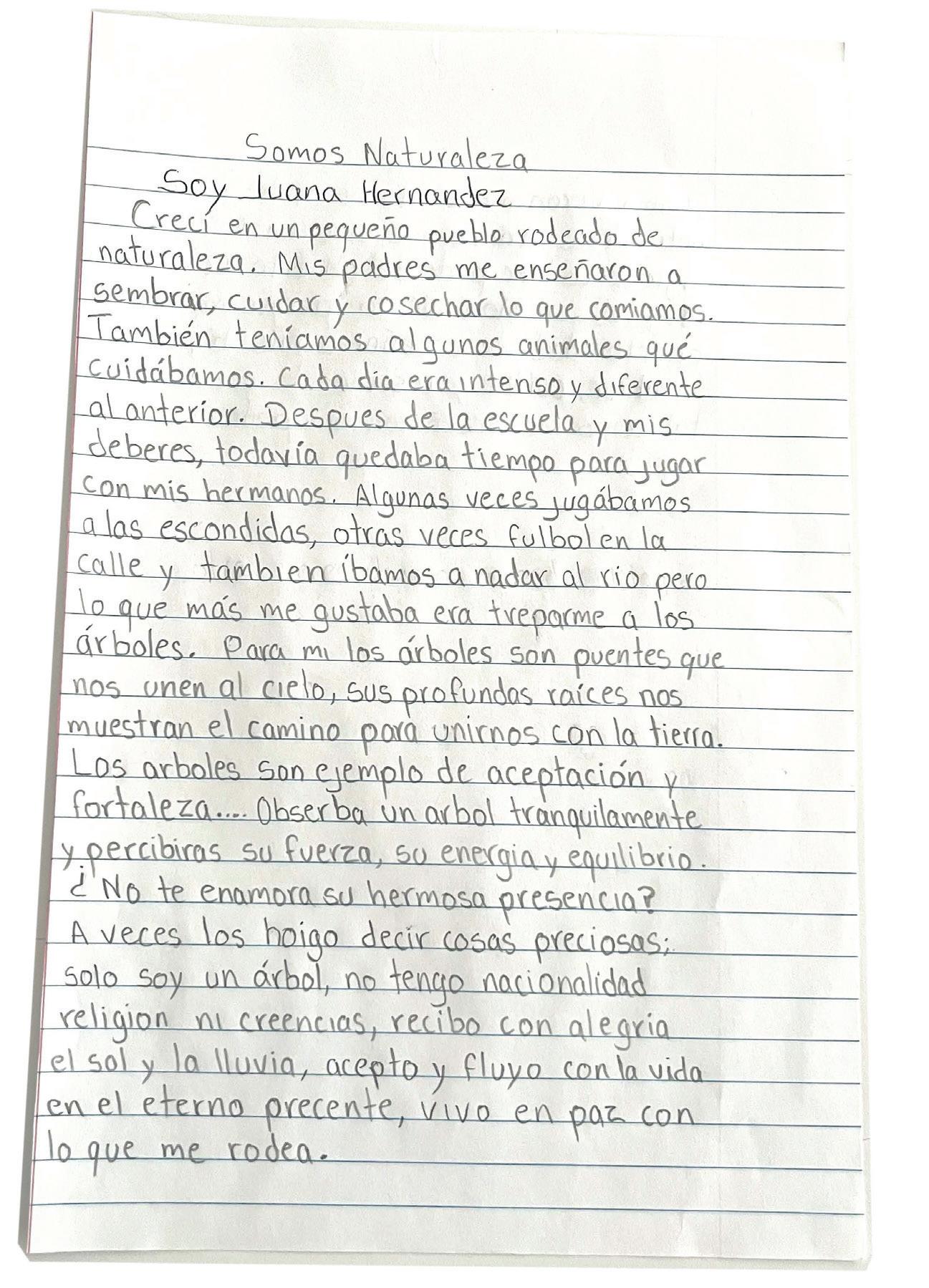
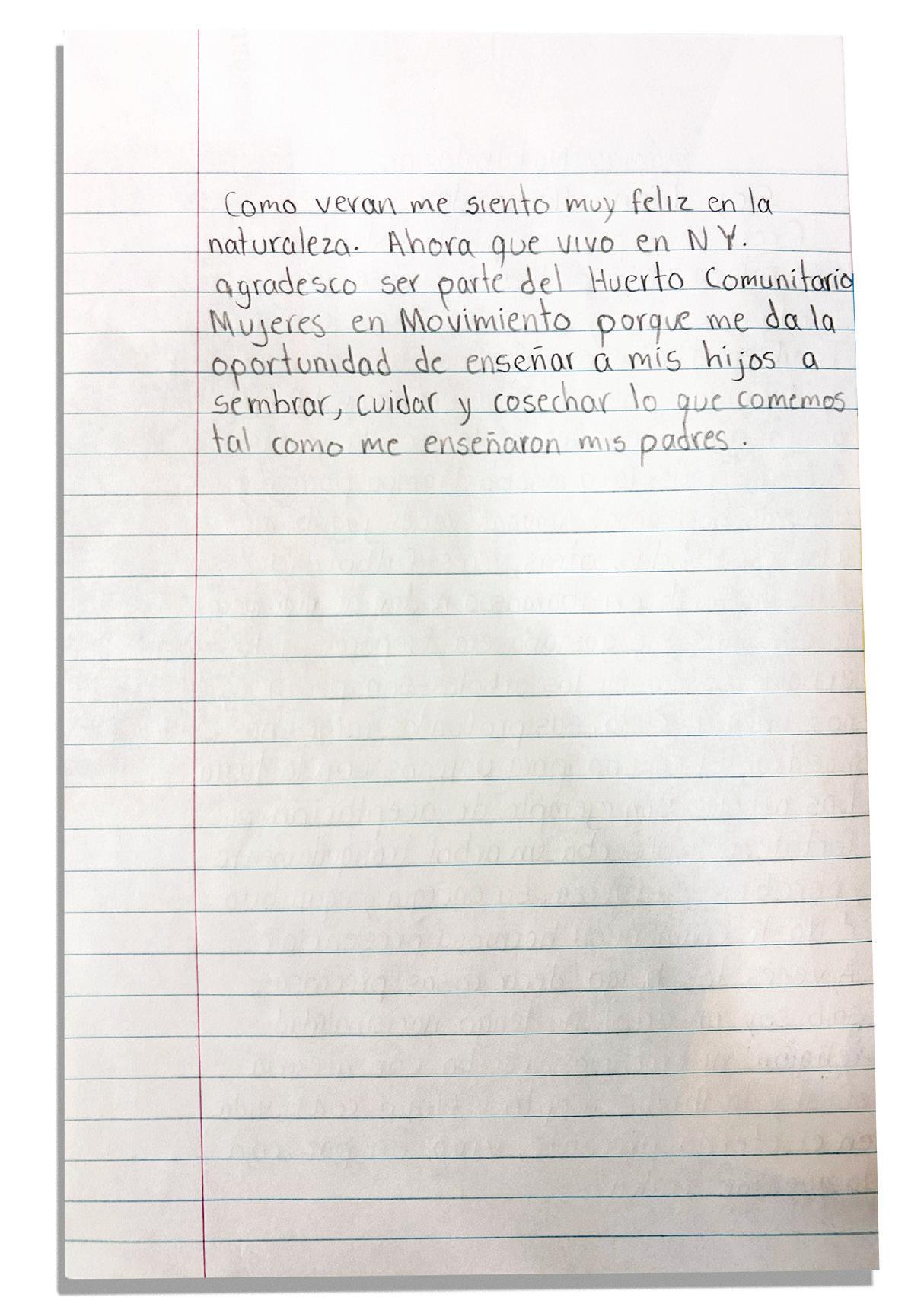
I am Juana Hernández
I grew up in a small town surrounded by nature.
My parents taught me to plant, care for, and harvest what we ate.
We also had some animals that we looked after. Every day was intense and different from the last.
After school and my chores, there was still time to play with my siblings.
Sometimes we played hide-and-seek, other times we played soccer in the street, and we also went swimming in the river, but what I liked most was climbing trees.
For me, trees are bridges that connect us to the sky; their deep roots show us the way to connect with the earth.
Trees are an example of acceptance and strength…
Observe a tree calmly and you will perceive its strength, its energy, and balance.
Doesn’t its beautiful presence captivate you?
Sometimes I hear them say beautiful things: I am just a tree, I have no nationality, religion, or beliefs, I joyfully receive the sun and the rain, I accept and flow with life in the eternal present, I live in peace with what surrounds me.
As you can see, I feel very happy in nature.
Now that I live in NY, I’m grateful to be part of the Mujeres en Movimiento Community Garden because it gives me the opportunity to teach my children to plant, care for, and harvest what we eat, just as my parents taught me.
Soy Juana Hernández
Crecí en un pequeño pueblo rodeado de naturaleza.
Mis padres me enseñaron a sembrar, cuidar, y cosechar lo que comíamos.
También teníamos algunos animales que cuidábamos.
Cada día era intenso, y diferente al anterior.
Después de la escuela y mis deberes, todavía quedaba tiempo para jugar con mis hermanos.
Algunas veces jugábamos a las escondidas, otras veces fútbol en la calle y también íbamos a nadar al río pero lo que más me gustaba era treparme a los árboles.
Para mí, los árboles son puentes que nos unen al cielo, sus profundas raíces nos muestran el camino para unirnos con la tierra.
Los árboles son ejemplo de aceptación y fortaleza…
Observa un árbol tranquilamente y percibirás su fuerza, su energía, y equilibrio.
¿No te enamora su hermosa presencia?
A veces les oigo decir cosas preciosas; solo soy un árbol, no tengo nacionalidad, religión ni creencias, recibo con alegría el sol y la lluvia, acepto y fluya con la vida en el eterno presente, vivo en paz con lo que me rodea.
Como verán me siento muy feliz en la naturaleza.
Ahora que vivo en NY agradezco ser parte del Huerto Comunitario Mujeres en Movimiento porque me da la oportunidad de enseñar a mis hijos a sembrar, cuidar, y cosechar lo que comemos tal como me enseñaron mis padres.
Mujeres en Movimiento is a community driven initiative in Queens.
It was started through WhatsApp as a way to bring Latina community members together to strengthen relationships and mental health within the community. The group of women were able to secure a community garden to expand into their own physical space offering opportunities for food security and outside exploration.
Mujeres in Movimiento es una iniciativa impulsada por la comunidad en Queens.
Ella surgió a través de WhatsApp como una forma de reunir a las integrantes de la comunidad latina para fortalecer las relaciones y la salud mental dentro de ella. Este grupo de mujeres logró conseguir un jardín comunitario para expandirse hacia su propio espacio físico, ofreciendo así oportunidades para la seguridad alimentaria y la exploración al aire libre.
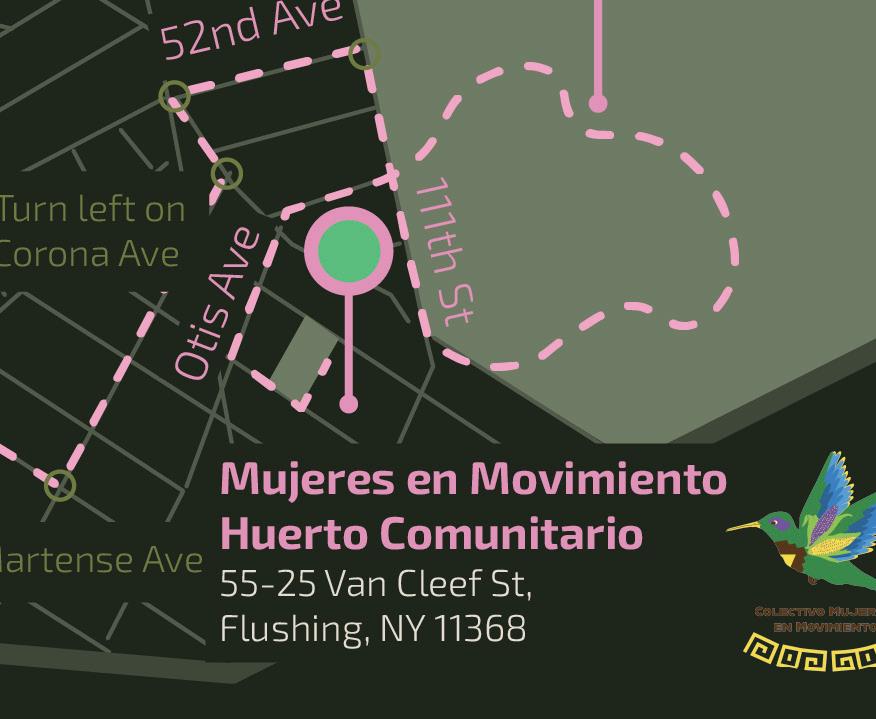
Throughout the beginning of the semester, we explored what Indigenous methodologies are as a class. In her book, Indigenous Methodologies, Margaret Kovach discusses the idea of research through storytelling or “yarning”. Watching the Mujeres group support each other over the last few weeks was the best possible way for us to learn this methodology. While Mujeres is not a group that is formally a part of academia, you have done so much work as a community to make sure peoples’ stories are told and appreciated.
My (Becca Williams) research for this class centered around ecology and the hummingbird. Some of the things that I did not know about hummingbirds, but learned through last year's cohort, were that the hummingbird symbolizes strength, resilience, and rebirth, and is associated with the Aztec warrior god Huitzilopochtli.
A lo largo del inicio del semestre, exploramos como clase qué son las metodologías indígenas. En su libro Indigenous Methodologies, Margaret Kovach habla sobre la idea de investigar a través de la narración de historias, o “yarning”. Observar cómo el grupo Mujeres se ha apoyado mutuamente durante las últimas semanas fue la mejor manera posible de aprender esta metodología. Aunque Mujeres no es un grupo que forme parte formalmente de la academia, han hecho un gran trabajo como comunidad para asegurarse de que las historias de las personas sean contadas y valoradas.
Mi (Becca Williams) investigación para esta clase se centró en la ecología y el colibrí. Algunas cosas que no sabía sobre los colibríes, pero que aprendí del grupo que trabajó con Mujeres en Movimiento el año pasado, fueron que el colibrí simboliza la fuerza, la resiliencia y el renacimiento, y que está asociado con el dios guerrero mexica Huitzilopochtli.
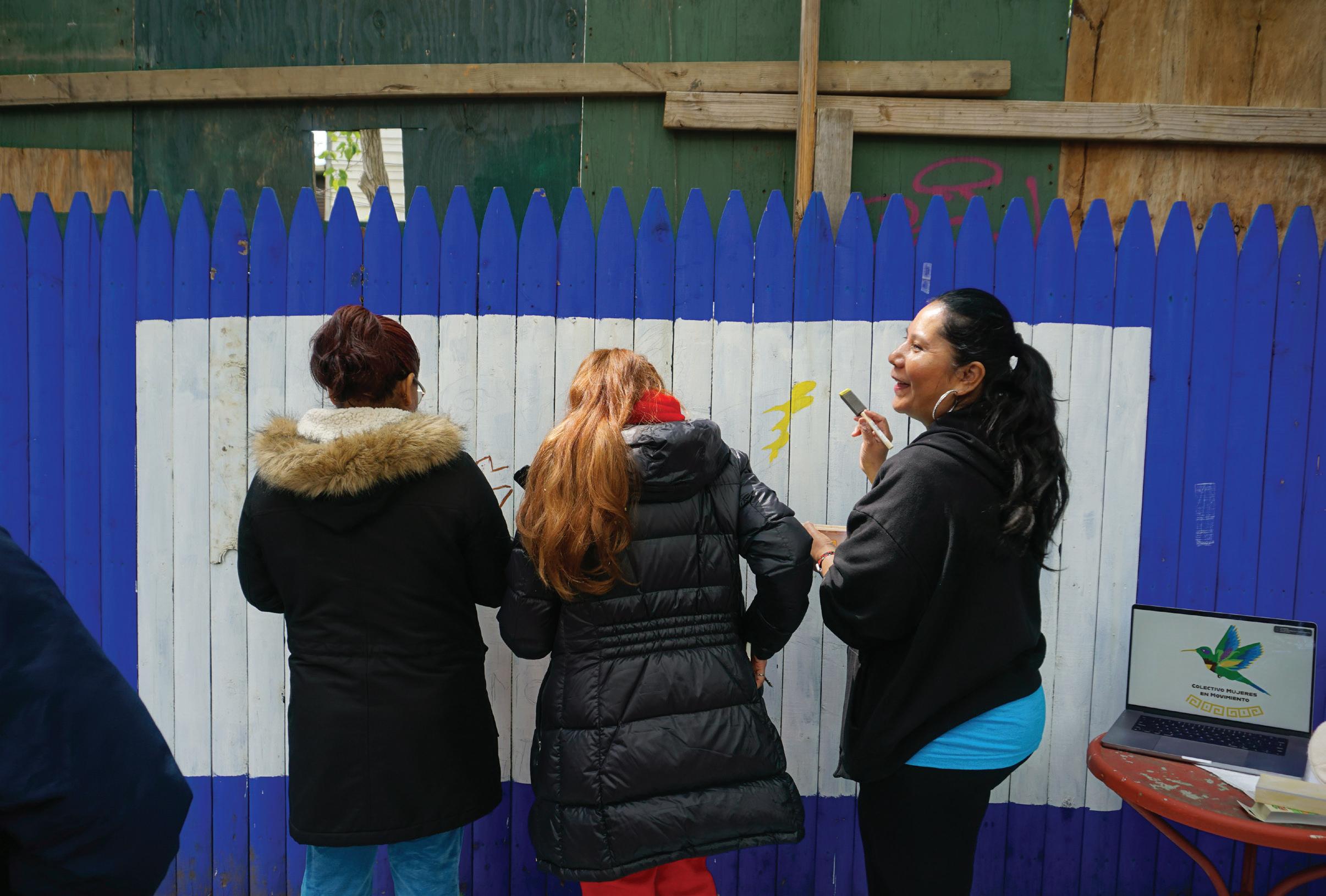
(Source: Ismail Khadar)
(Source: Ismail Khadar)
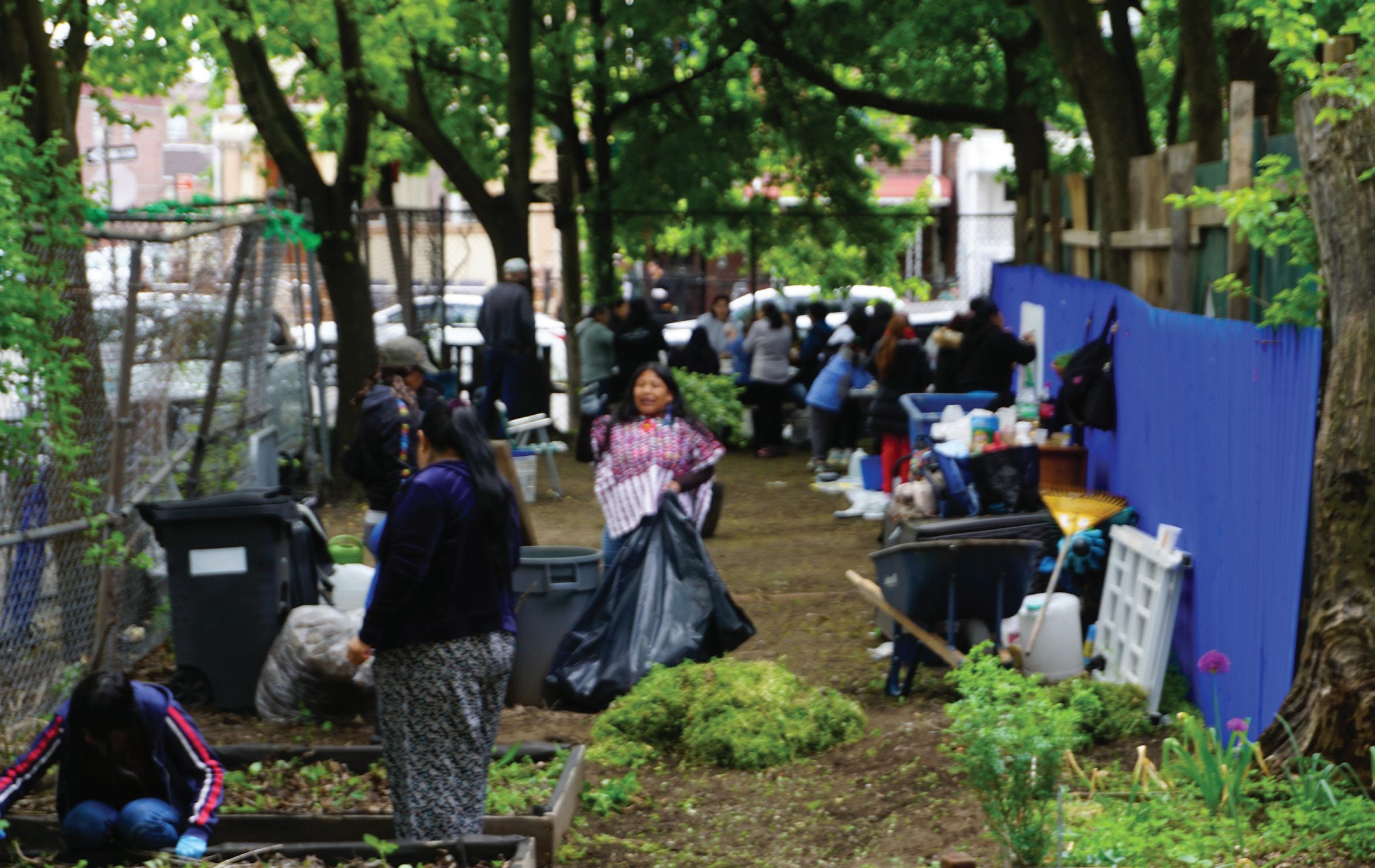
In the stories we will hear at this stop, many of the women talk about the strength of being a woman. I think a lot of that strength comes from community care and a deep sense of connection to the land. It is no accident that Mujeres en Movimiento is such a powerful and supportive group, as you are rooted in ancestral knowledge that comes from our ecosystem. The hummingbird would not exist without a food source, and likewise many of our flower species in NYC would cease to exist without the hummingbird.
In that same vein, as I studied ecology and the ways in which hummingbirds support their communities, I was also researching community care through the human lens. One of the things that I was interested in studying is disability access. I am currently in a class all about designing for disability, and it pushed me to reflect on the ways that our society expects and supports only one type of body and mind that is able bodied and neurotypical.
En las historias que escucharemos en esta parada, muchas de las mujeres hablan sobre la fortaleza de ser mujer. Creo que gran parte de esa fortaleza proviene del cuidado comunitario y de un profundo sentido de conexión con la tierra. No es casualidad que Mujeres en Movimiento sea un grupo tan fuerte y solidario, ya que están arraigadas en conocimientos ancestrales que provienen de nuestro ecosistema. El colibrí no existiría sin una fuente de alimento, y de la misma manera, muchas de nuestras especies de flores en Nueva York dejarían de existir sin el colibrí.
En esa misma línea, mientras estudiaba la ecología y las formas en que los colibríes apoyan a sus comunidades, también estaba investigando el cuidado comunitario desde una perspectiva humana. Una de las cosas que me interesaba estudiar es el acceso para personas con discapacidad. Actualmente estoy en una clase enfocada en el diseño para la discapacidad, y esto me llevó a reflexionar sobre las maneras en que nuestra sociedad espera y apoya solo a un tipo de cuerpo y mente: aquellos que son físicamente capaces y neurotípicos.
I began to research how this translates to outdoor spaces, and found that many are inaccessible. Almost immediately, I realized that it would be important to offer an accessible option for our bike tour. Many people can not use CitiBike for a variety of reasons and so I wanted to make sure there was an alternative. I looked into whether or not CitiBike offers any other types of bikes for disabled users, but they do not. I decided to look into offering a walking tour instead.
One of the main pillars of my research explained that it is important to center disability from the outset, rather than include it as an afterthought. So I wanted to think intentionally about how a walking tour might be both accessible and informative in ways that might not be possible on the bike tour. While biking, it can be challenging to stop and observe. However, while on the bus or walking, there is time for observation and discussion. I decided it would be a wonderful opportunity to build on this opportunity that walking provides.
We brought field guides and binoculars for the people who walked, as well as paper and pencils to take notes. While there is still more work to be done in terms of educating our communities, and adjusting physical spaces in society to be more accessible, we can offer options for different types of bodies and minds, that might actually bring up new and exciting ideas for everyone.
Comencé a investigar cómo esto se refleja en los espacios al aire libre y descubrí que muchos de ellos son inaccesibles. Casi de inmediato, me di cuenta de que sería importante ofrecer una opción accesible para nuestro recorrido en bicicleta. Muchas personas no pueden usar Citi Bike por diversas razones, así que quise asegurarme de que hubiera una alternativa. Investigué si Citi Bike ofrecía otros tipos de bicicletas para personas con discapacidad, pero no es así. Entonces decidí considerar la opción de ofrecer un recorrido a pie.
Uno de los pilares principales de mi investigación plantea que es importante centrar la discapacidad desde el inicio, en lugar de incluirla como algo secundario. Por eso quise pensar de manera intencional en cómo un recorrido a pie podría ser accesible e informativo de formas que quizás no son posibles en el recorrido en bicicleta. Mientras se anda en bicicleta, puede ser difícil detenerse y observar. Sin embargo, al ir en autobús o caminando, hay más tiempo para la observación y la conversación. Decidí que sería una excelente oportunidad para aprovechar lo que ofrece el recorrido a pie.
Llevamos guías de campo y binoculares para las personas que caminaron, así como papel y lápices para tomar notas. Aunque todavía queda mucho trabajo por hacer en cuanto a la educación de nuestras comunidades y la adaptación de los espacios físicos para que sean más accesibles, podemos ofrecer opciones para diferentes tipos de cuerpos y mentes, que incluso pueden generar ideas nuevas y emocionantes para todas las personas.
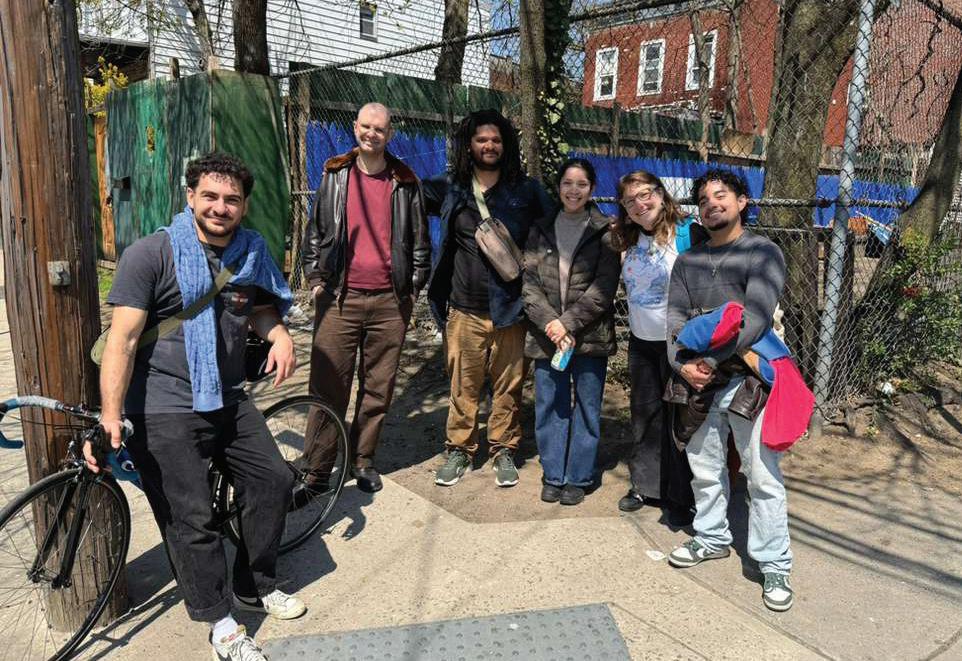
(Source: Claudia Tomateo)
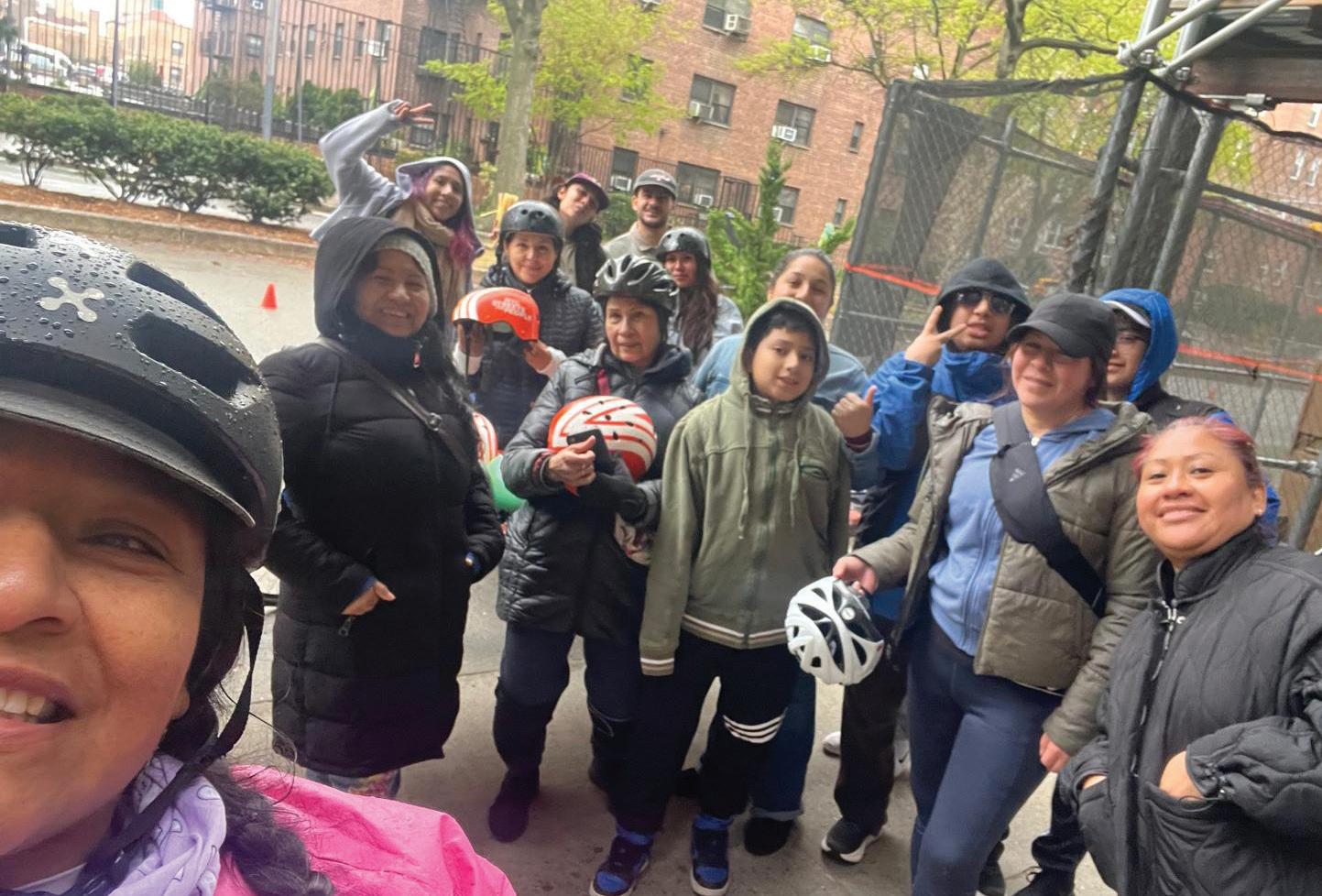
(Source: Veronica Ramirez)
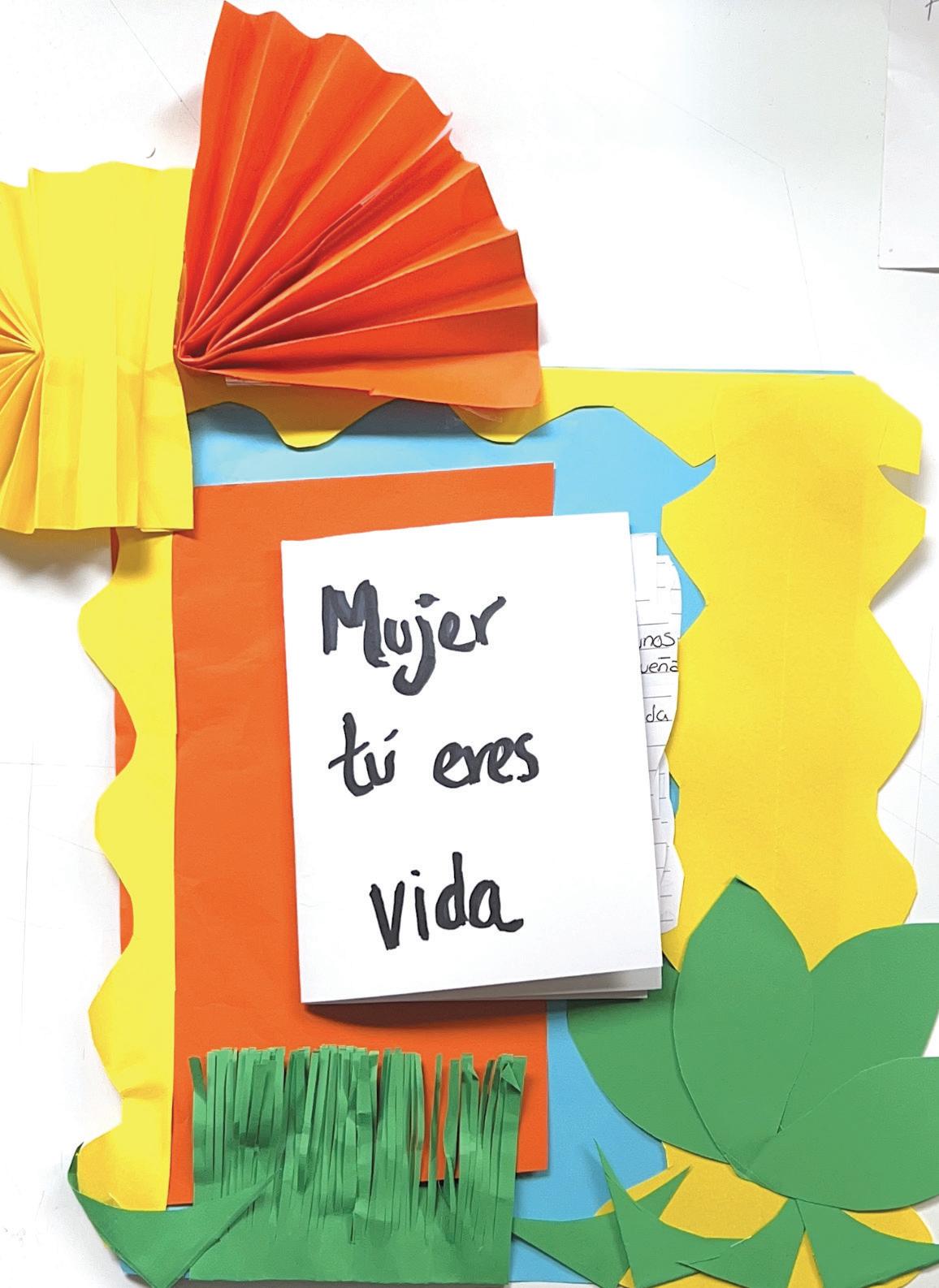
Patricia Rivera
These words are for you, who to some may seem small, but reality says otherwise and clearly declares that you are everything. You, who over time have written our history, and with each sunrise in your eyes, a breath in your chest, and hope in your hands, you build our future.
Mujer, tú eres vida Estas palabras son para tí que, para algunos pareciera que eres pequeña pero, la realidad dice lo contrario y dicta sin duda que significas todo.
Aquella que durante el paso del tiempo ha escrito nuestra historia y con cada amanecer en tus ojos, suspiro en tu pecho y esperanza en tus manos, construyen nuestro futuro.
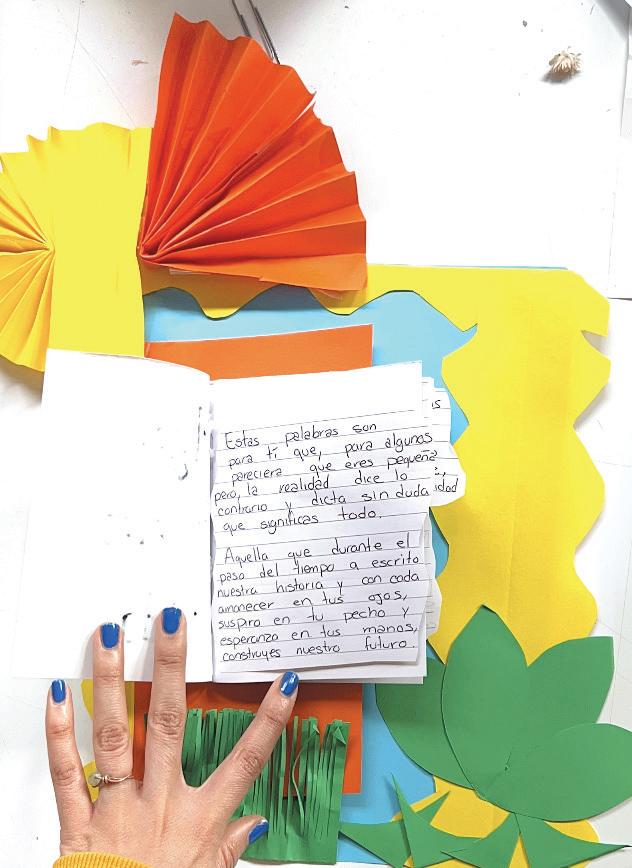
You, akin to the divine, have the gift of life. Who could be more perfect than you?
Only you, who inhale love and exhale compassion. Seas and rivers bear witness to the tears and pain you have endured since the beginning of this world: judged, punished, made to believe an ancient lie.
Tú, semejante a la divinidad, tienes el don de vida. Quien más perfecta que tú. Solamente tú que respiras amor y exhalas compasión.
Mares, ríos son testigos del llanto y dolor que has sufrido, desde el inició de este mundo.
Señalada, castigada, haciéndote creer una mentira milenaria.
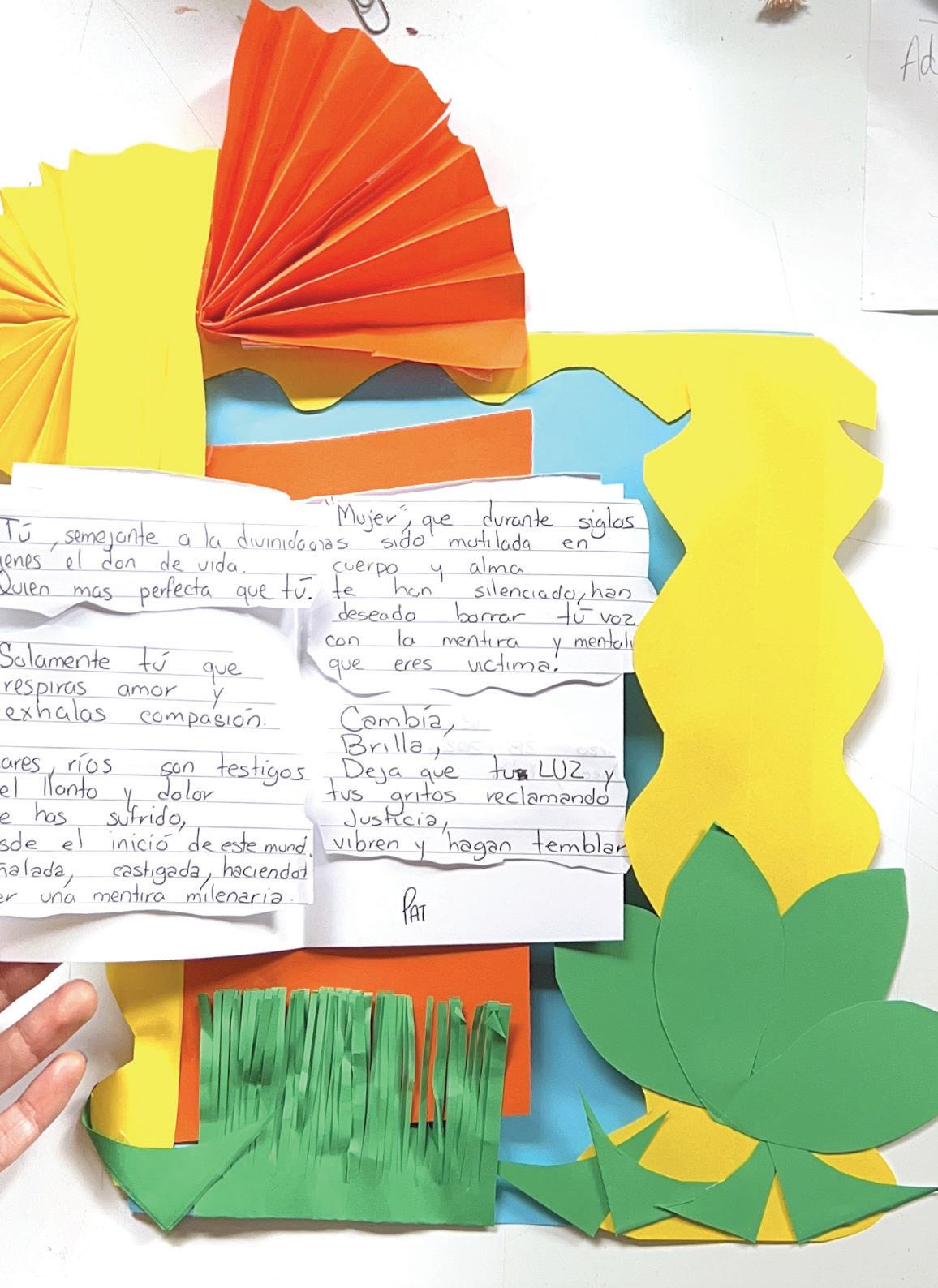
“Woman,” who for centuries has been mutilated in body and soul—you have been silenced, they have tried to erase your voice with the lie and the mindset that you are a victim. Change, shine, let your light and your cries demanding justice vibrate and shake the world.
“Mujer”, que durante siglos has sido mutilada en cuerpo y alma te han silenciado, han deseado borrar tú voz con la mentira y mentalidad que eres víctima.
Cambia, Brilla, Deja que tu LUZ y tus gritos reclamando Justicia, vibren y hagan temblar.
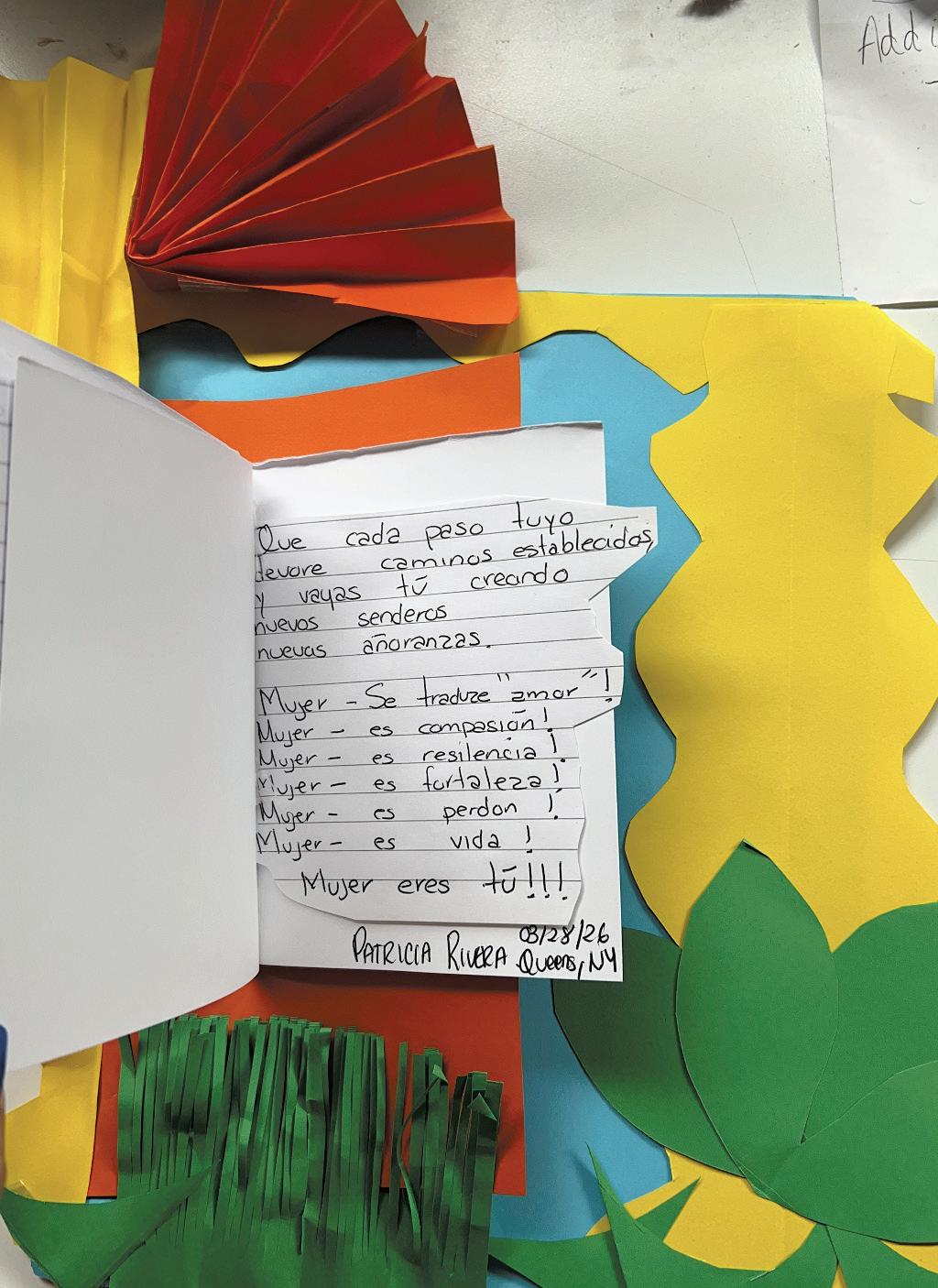
Let every step you take devour established paths, as you create new roads, new longings.
Woman — translates to “love.”
Woman — is compassion.
Woman — is resilience.
Woman — is strength.
Woman — is forgiveness.
Woman — is life.
Woman — is you.
03/28/26
Queens, NY
Que cada paso tuyo devore caminos establecidos, y vayas tú creando nuevos senderos nuevas añoranzas.
Mujer - se traduce “amor”!
Mujer - es compasión!
Mujer - resiliencia!
Mujer - es fortaleza!
Mujer - es perdon!
Mujer - es vida!
Mujer - eres tú!
03/28/26
Queens, NY
Drawing by Amely and Itzayana
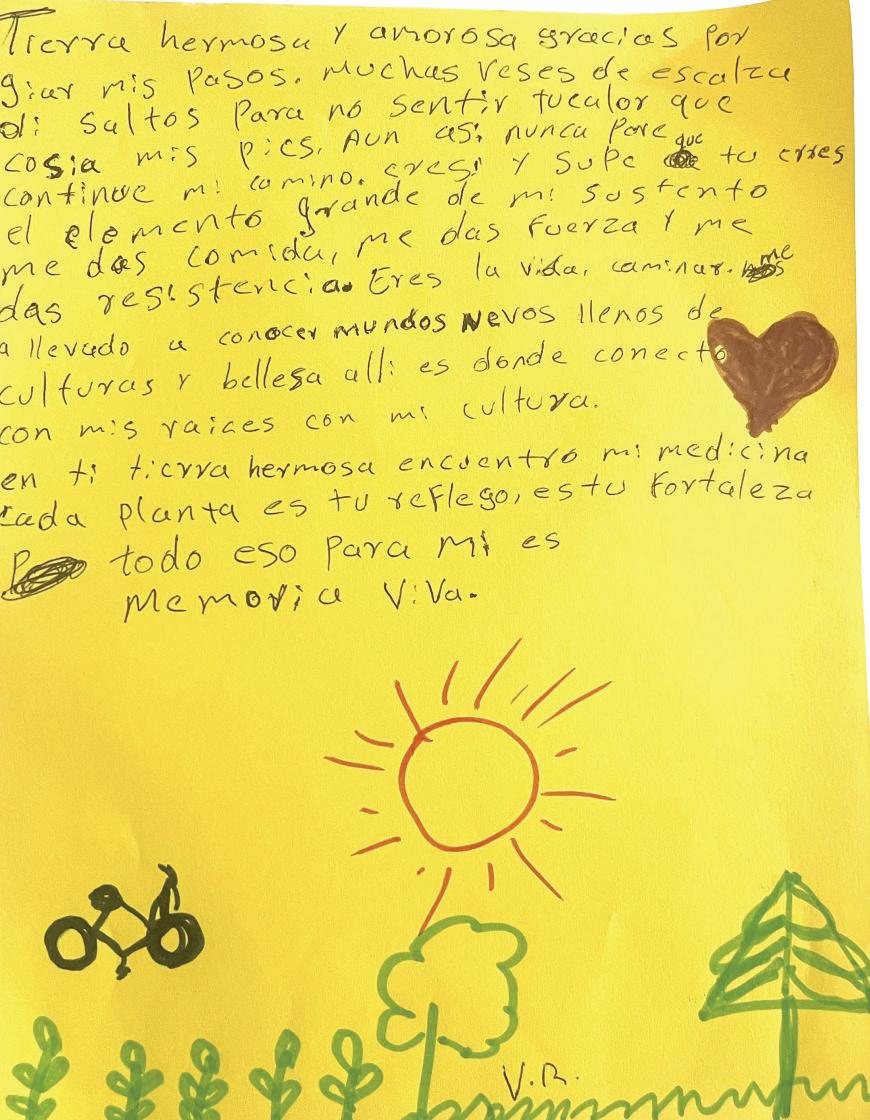
Veronica Ramirez
Beautiful and loving Earth, thank you for guiding my steps. Many times, barefoot, I skipped to avoid feeling your heat that cooked my feet. Even so, I never stopped; I continued on my path. I grew and learned that you are the great element of my sustenance; you give me food, you give me strength, and you give me resilience. You are life. Walking has led me to discover new worlds full of cultures and beauty; there I connect with my roots, with my culture.
In you, beautiful Earth, I find my medicine. Each plant is your reflection, your strength. All of this, for me, is living memory.
Tierra hermosa y amorosa gracias por guiar mis pasos. Muchas veces descalza di saltos para no sentir tu calor que cosía mis pies. Aún así nunca paré continué mi camino. Crecí y supe que tu eres el elemento grande de mi sustento, me das comida, me das fuerza y me das resistencia. Eres la vida. caminar. Me ha llevado a conocer mundos nuevos llenos de culturas y belleza, allí es donde conecto con mis raíces, con mi cultura.
En ti tierra hermosa encuentro mi medicina
Cada planta es tu reflejo, es tu fortaleza Todo eso para mí es memoria viva.
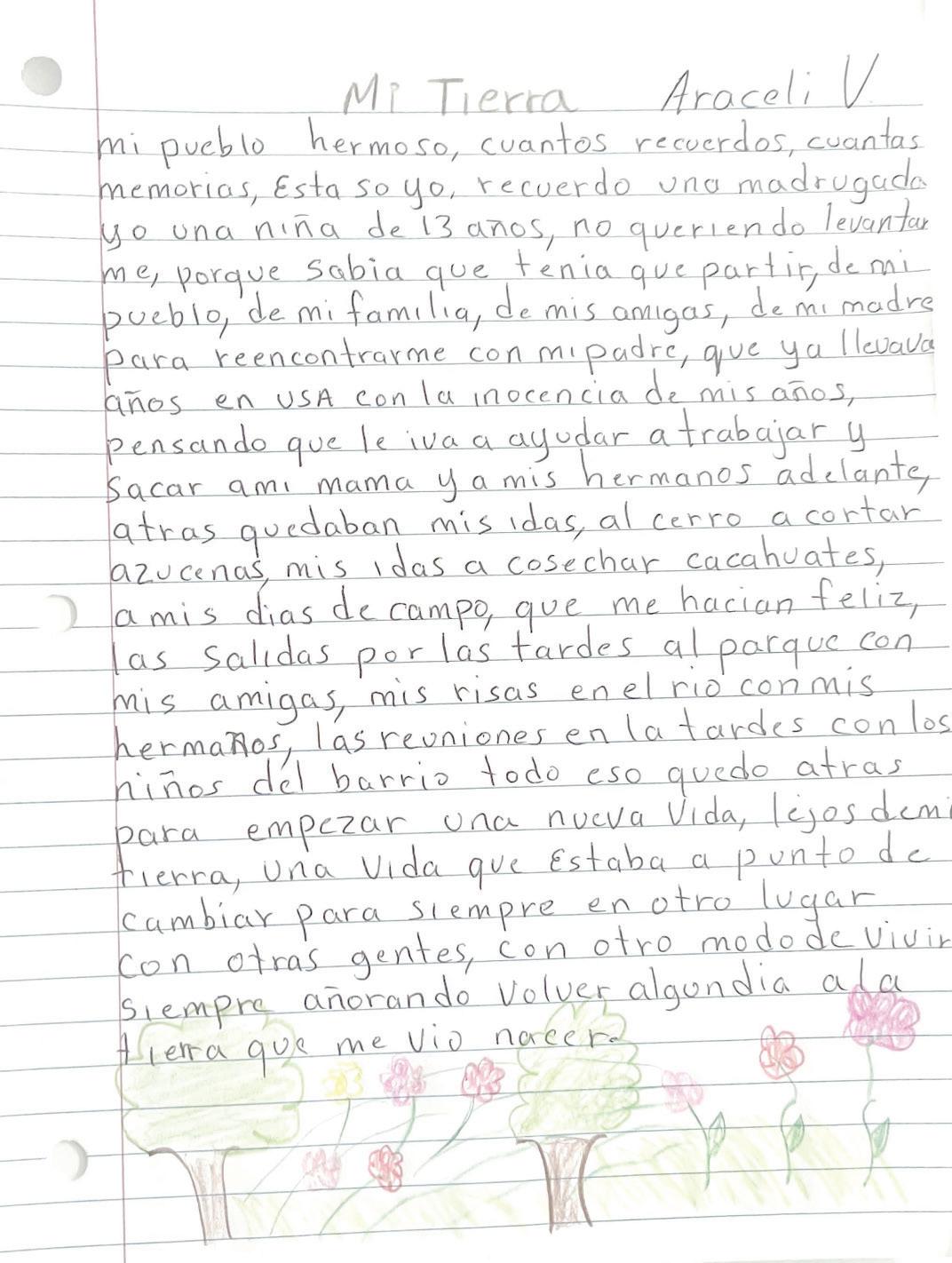
My beautiful town, so many memories, so many memories. This is me. I remember one early morning, a 13-year-old girl, not wanting to get up because I knew I had to leave my family, my friends, my mother, to reunite with my father, who had already been in the USA for years. With the innocence of my youth, I thought I would help him work and support my mother and siblings. Behind me were my trips to the hill to pick lilies, my trips to harvest peanuts, my days in the countryside that made me happy, the afternoon outings to the park with my friends, my laughter by the river with my siblings, the afternoon gatherings with the neighborhood children—all of that was left behind to begin a new life, far from my homeland, a life that was about to change forever in another place with other people, with another way of living, always longing to return someday to the land where I was born.
Mi pueblo hermoso, cuantos recuerdos, cuantas memorias, esta syo yo, recuerdo una madrugada yo una niña de 13 años, no queriendo levantarme, porque sabia que tenia que partir, de mi familia, de mis amigas, de mi madre para reencontrarme con mi padre, que ya llevaba años en USA con la inocencia de mis años, pensando que le iba a ayudar a trabajar y sacar a mi mamá y a mis hermanos adelante, atrás quedaban mis idas, al cerro a cortar azucenas, mis idas a cosechar cacahuates, a mis días de campo, que me hacian feliz, las salidas por las tardes al parque con mis amigas, mis risas en el rio con mis hermanos, las reuniones en la tardes con los niños del barrio todo eso quedo atrás paar empezar una nueva vida, lejos de mi tierra, una vida que estaba a punto de cambiar para siempre en otro lugar con otras gentes, con otro modo de vivir siempre añorando volver algun dia a la tierra que me vio nacer.
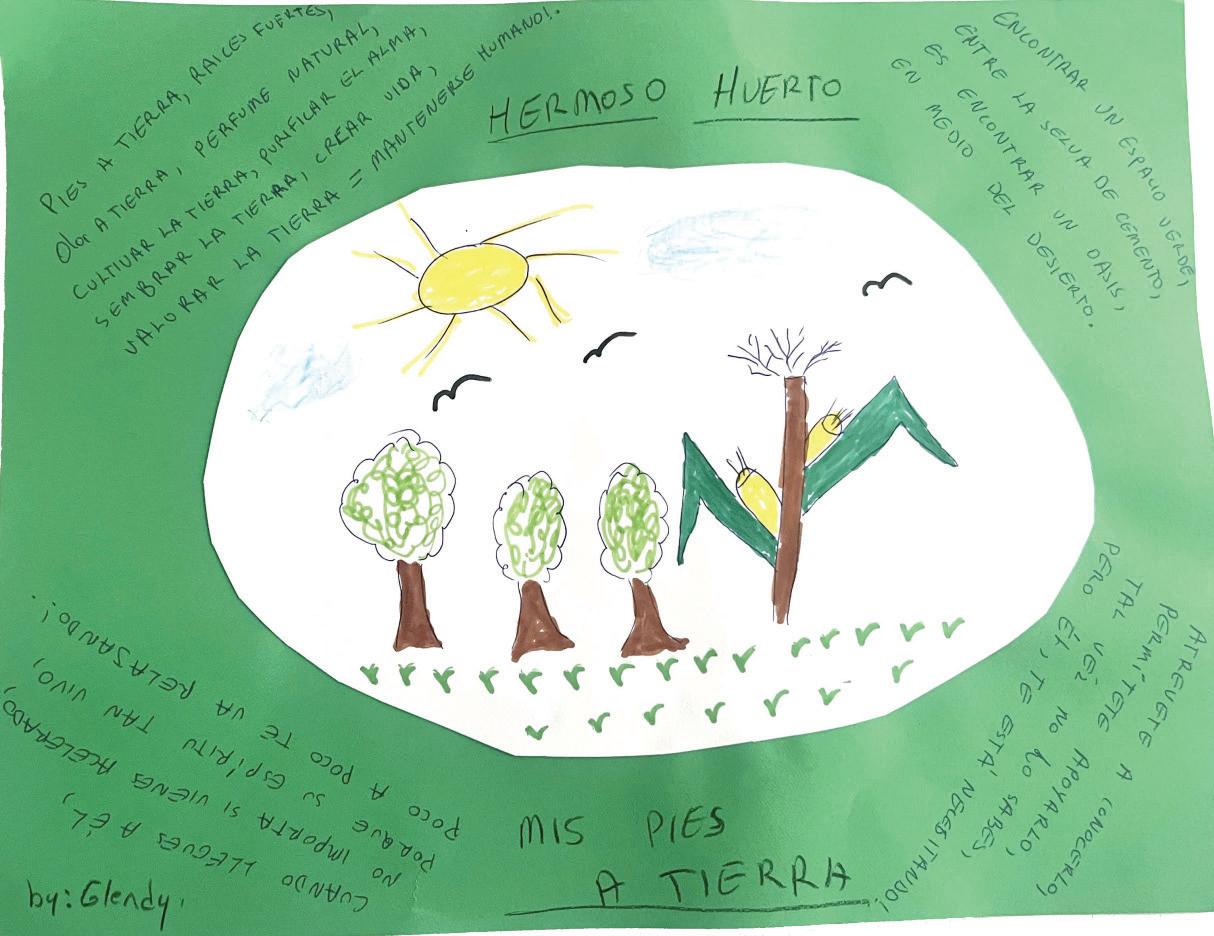
Glendi López
BEAUTIFUL GARDEN
Feet on the ground, strong roots, the smell of earth, natural perfume, cultivating the land, purifying the soul, sowing the earth, creating life, valuing the earth = staying human
Finding a green space,
Amidst the concrete jungle, Is finding an oasis, In the middle of the desert.
When you arrive there,
HERMOSO HUERTO
Pies a tierra, raíces fuertes, olor a tierra, perfume natural, cultivar la tierra, purificar el alma, sembrar la tierra, crear vida, valorar la tierra = mantenerse humano
Encontrar un espacio verde,
Entre la selva de cemento, Es encontrar un oasis, En medio del desierto.
Cuando llegues a él,
It doesn’t matter if you come in a rush,
Because its spirit, so alive, Little by little will help you relax!
Dare to get to know it, Allow yourself to support it, Maybe you don’t realize it, But it needs you!
“A Mother Sustaining Our Lives”
On this occasion, I would like to call upon our fellow companions present in this space to relax just a little—to let go, for a few minutes, of those emotional burdens that accompany us wherever we go.
I invite you to take a very deep breath and to open your senses; I invite each of you to visualize in your mind’s eye that “MOTHER EARTH” who was entrusted to us so very long ago. In the Beginning of Time— so the story goes She was created with the sole purpose of being a “mother.” She was a young mother—fresh, healthy, pure; a mother brimming with life, a mother bursting with color; a mother who yielded healthy, sweet fruits— clean and of great nourishment for all to consume.
No importa si vienes acelerado, Porque su espíritu tan vivo, Poco a poco, te va relajando!
Atrévete a conocerlo, Permítete apoyarlo, Tal vez no lo sabes, Pero él te está necesitando!
“Una Madre Sosteniendo Nuestras Vidas”
En esta oportunidad quisiera hacer un llamado a nuestros compañeros y compañeras presentes en este espacio, a relajarnos un poquito, a soltar por unos minutos esas cargas emocionales que a todos lados nos acompañan.
Los invito a hacer una respiración muy profunda ya abrir sus sentidos, los invito a imaginar cada uno en nuestra mente; a esa “MADRE TIERRA”, que se nos fue entregada hace mucho tiempo. En el principio de los Tiempos cuenta la historia; Ella fue creada con el fin de ser “madre”, fue una madre joven, fresca, sana, pura, una madre llena de vida, una madre llena de colores, una madre que daba frutas saludables y dulces, limpios y de gran provecho para consumirlos.
In short, she was like any good “mother”—always ready and wholly devoted to her children— or, in this case, to her inhabitants.
But since nothing perfect lasts forever, there came to her her most ambitious son— the most unruly, and the most dangerous!
This son was not content with the bounties she offered. With every passing moment, he wanted more and more!
And so, the more he learned and developed, the more he wounded his mother. This son grew incredibly greedy; he seized his mother’s riches, claiming to be their sole owner and rightful heir— disregarding her rights as well as those of the other inhabitants. Little by little, he has worn her down; and very few have been the times she has risen to defend herself. Nowadays, she is no longer so young; nowadays, she asks for help to sustain herself.
Nowadays, she still holds the hope that her Rebellious son will listen to her—for inevitably, terrible will be the days
En fin era como toda buena “madre”, siempre dispuesta y entregada totalmente a sus hijos, en este caso a sus habitantes.
Pero como nada Perfecto dura para siempre, llegó a ella su hijo más ambicioso, el más revoltoso y el más peligroso!
Este hijo no se conforma con las bondades que ella ofrecía. Cada vez quería mas y mas!. Entonces cuanto más aprendía y se desarrollaba, más lastimaba a su madre.
Este hijo se volvió muy codicioso, se apoderó de las riquezas de su madre, alegando ser el dueño y el merecedor de ellas, irrespetando los derechos de ella y el de los demás habitantes.
Poco a poco le ha ido debilitando y han sido muy contadas las veces que ella se ha defendido.
Hoy en dia ella ya no está tan joven, hoy en dia pide ayuda para sostenerse, hoy en día todavía tiene la esperanza que su hijo Rebelde la escuche, porque irremediablemente Terribles serán los días que
when she loses her Great Virtue: that of Giving Us Life!
My beautiful Mother Earth, in my most spiritual moments, I love to gaze upon you and perceive you as one of the many Branches bound to our Creator— just like the water, the air, the Fire, the animals, and the plants. I look at you and admire you in this way because you possess life; because simply placing my bare feet upon you is enough for you to cleanse and restore the Natural balance of my Body and Spirit.
Simply entrusting you with a few seeds is enough for you to later provide me with sustenance; simply dedicating myself to Cultivating you is enough for you to become my great Teacher. You teach me to cultivate patience; you open my senses; you show me the cycle of Life: TO BE BORN, TO GROW, TO REPRODUCE, AND TO DIE (and repeat)! You teach me to find balance: Not so much that I overwhelm you, nor so little that you go wanting!
You are truly Wise, for you were here long—long—before I was!
ella pierda su Gran Virtud, que es la Darnos Vida!!!
Mi hermosa madre Tierra, en mi momento más espiritual me gusta verte y percibir, como una de las tantas Ramas Ligadas a nuestro Creador; como el agua, el aire, el Fuego, los animales, las plantas.
Te miro y te admiro de esa forma, porque tienes vida, porque basta con poner mis pies descalzos sobre ti, para que limpies y recargues el balance Natural de mi Cuerpo y Espíritu.
Basta con dejarte unas semillas para que me proveas después el alimento, basta con dedicarme a Cultivarte para que seas mi gran Maestra, y me enseñas a cultivar mi paciencia, para que abras mis sentidos, me enseñas el ciclo de la Vida NACER, CRECER, REPRODUCIRSE Y MORIR (repetir)!. Me enseñas a tener balance.
Ni tanto que te rebase, ¡Ni tan poco que te falte!.
Eres Muy Sabia, pues estuviste mucho pero mucho antes que Yo!!.
Thank you for so much, Mother Earth.
Gracias por tanto Madre Tierra.








As an alternative to the bike tour, it was important to our class that we offer a walking tour.
Many of New York’s public spaces are inaccessible to the general public, largely due to a lack of disability awareness or accommodation. Disability is not a deficit and should not be viewed as one. Different people need different things, and that is something that our society neglects to acknowledge. When we view disability as a deficit we miss an opportunity to gain wisdom and new opportunities from the diversity of bodies and minds our society has to offer. For example, while we cannot make it to as many stops on the walking tour as we would if we were biking, we can bring binoculars and field guides to identify birds and flowers as we walk. While the experience might be different, there are benefits to doing both options. Our walking tour will be stopping at 3 locations rather than 6, and will meet up with the biking tour.
Como alternativa al recorrido en bicicleta, fue importante para nuestra clase ofrecer un recorrido a pie.
Muchos de los espacios públicos de Nueva York son inaccesibles para el público en general, en gran parte debido a la falta de conciencia o de adaptaciones para la discapacidad. La discapacidad no es un déficit y no debe verse como tal. Diferentes personas necesitan cosas distintas, y eso es algo que nuestra sociedad suele ignorar. Cuando vemos la discapacidad como un déficit, perdemos la oportunidad de adquirir sabiduría y de abrir nuevas posibilidades a partir de la diversidad de cuerpos y mentes que existen en nuestra sociedad. Por ejemplo, aunque no podemos visitar tantas paradas en el recorrido a pie como lo haríamos en bicicleta, podemos llevar binoculares y guías de campo para identificar aves y flores mientras caminamos. Aunque la experiencia puede ser diferente, ambas opciones tienen sus propios beneficios. Nuestro recorrido a pie se detendrá en 3 ubicaciones en lugar de 6, y se reunirá con el recorrido en bicicleta.
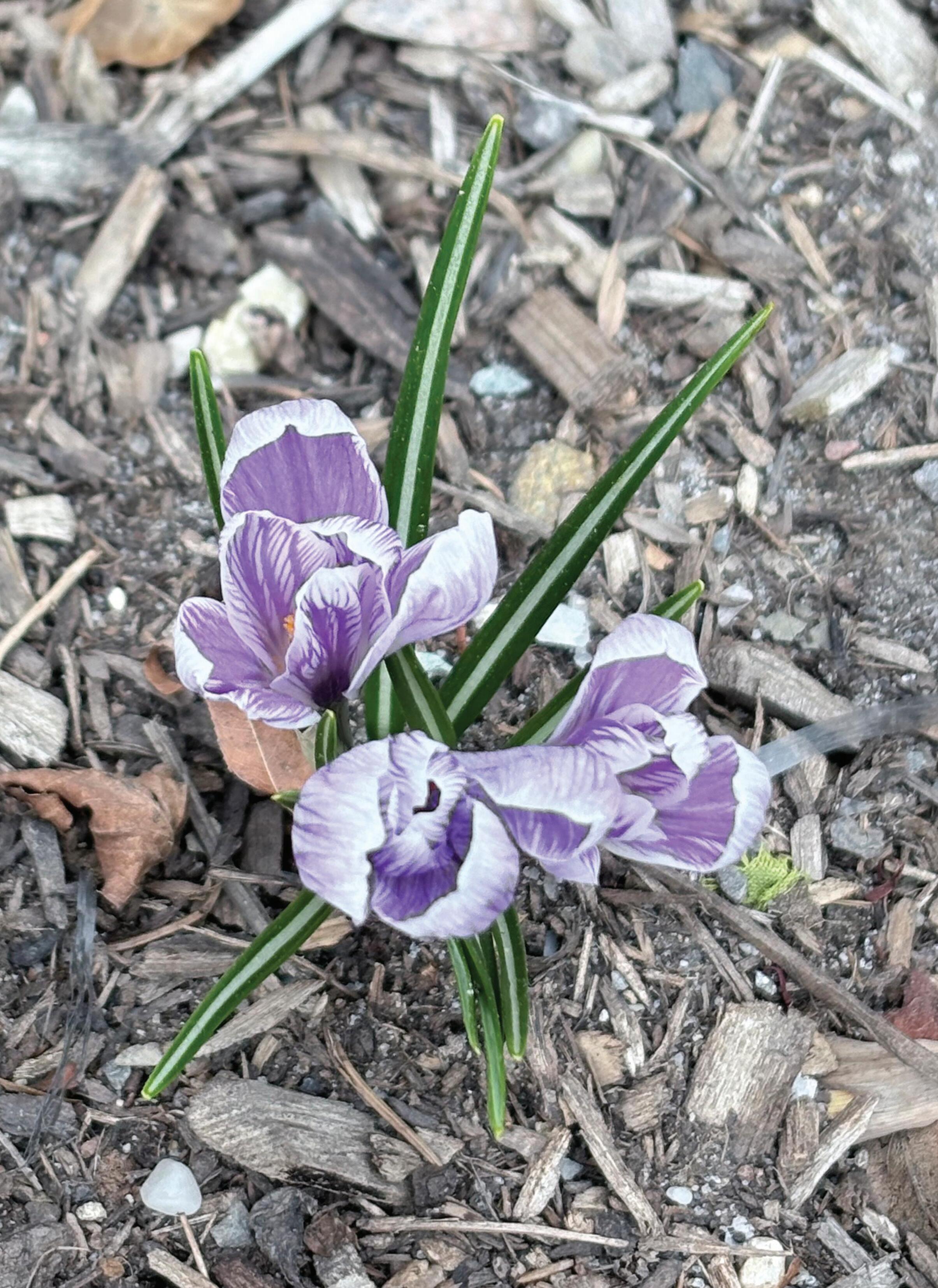
Thank you for your openness in sharing your experiences, knowledge, and stories. Your willingness to engage with us created a meaningful learning environment that went far beyond what we could gain in a classroom. We deeply appreciate the trust you placed in us and the time you took to connect with us. Learning about the ways in which movement enhances our mental health has been an incredible opportunity to integrate learning with embodiment.
Being in your space allowed us not only to learn, but also to reflect and begin building relationships grounded in respect and mutual understanding. The experience has had a lasting impact, and we will carry these lessons you helped us to learn on how to build community moving forward.
In our other classes, we have done very similar projects, but did not get to connect to the people we were working with. This partnership made an incredible difference and this was why we wanted to be in graduate school.
You all chose the hummingbird to be your logo, and one of the things that we have learned throughout this project is that hummingbirds are keystone species, meaning that their impact is felt throughout the entire ecosystem. The ways in which you all care for and value each other demonstrates a way of knowing that suggests we are all keystone species. Each one of us holds inherent value and should be cherished and welcomed.
We are grateful for the opportunity to learn from you and hope to continue nurturing the connections that began during our time together.
Thank you for everything!!
Gracias por su apertura al compartir sus experiencias, conocimientos e historias. Su disposición para involucrarse con nosotros creó un entorno de aprendizaje significativo que fue mucho más allá de lo que podríamos haber obtenido en un aula. Apreciamos profundamente la confianza que depositaron en nosotros y el tiempo que dedicaron a conectarse con nosotros. Aprender sobre las formas en que el movimiento fortalece nuestra salud mental ha sido una oportunidad increíble para integrar el aprendizaje con la experiencia corporal.
Estar en su espacio nos permitió no solo aprender, sino también reflexionar y comenzar a construir relaciones basadas en el respeto y el entendimiento mutuo. Esta experiencia ha tenido un impacto duradero, y llevaremos con nosotros estas enseñanzas sobre cómo construir comunidad en el futuro.
En otras clases hemos realizado proyectos muy similares, pero no tuvimos la oportunidad de conectarnos con las personas con quienes trabajábamos. Esta colaboración marcó una diferencia enorme y nos recordó por qué quisimos estar en la escuela de posgrado
Ustedes eligieron el colibrí como su símbolo, y una de las cosas que aprendimos a lo largo de este proyecto es que los colibríes son especies clave, lo que significa que su impacto se siente en todo el ecosistema. Las maneras en que ustedes se cuidan y se valoran mutuamente demuestran una forma de conocimiento que sugiere que todos somos especies clave. Cada uno de nosotros tiene un valor inherente y merece ser apreciado y acogido.
Agradecemos la oportunidad de aprender de ustedes y esperamos seguir cultivando las conexiones que comenzaron durante nuestro tiempo compartido. ¡Gracias por todo!