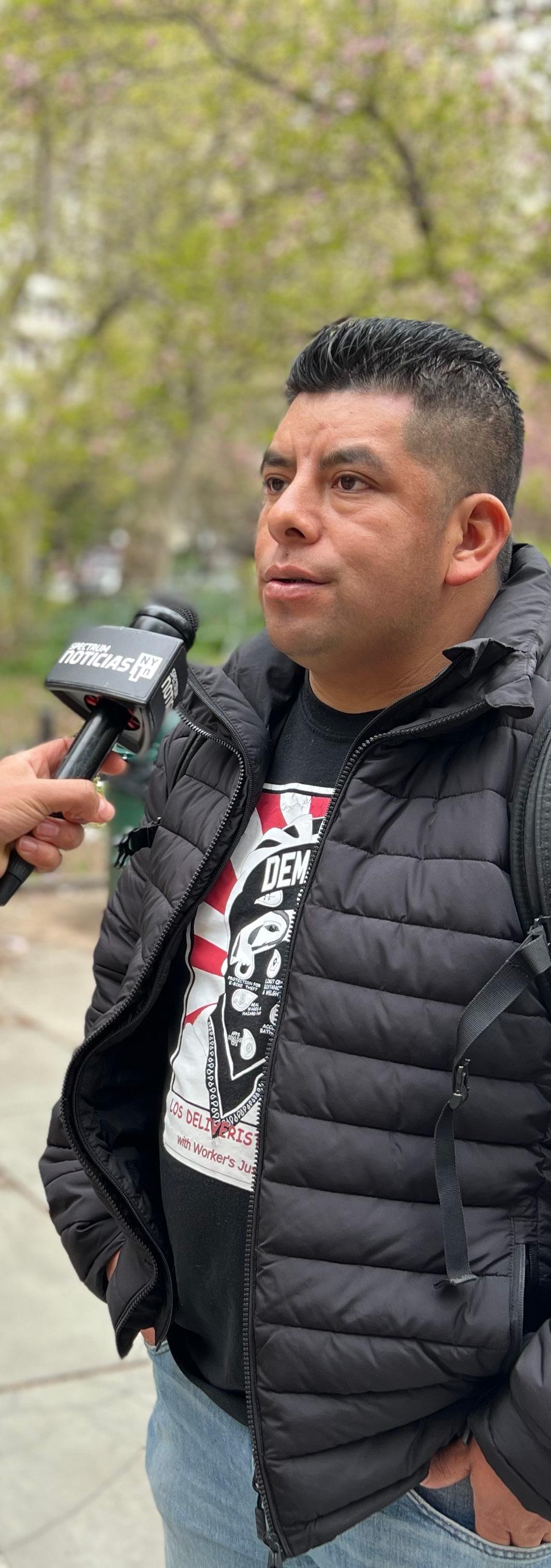
A. Problem Statement: Essential Workers are Vital But Neglected by the City
B. Economy
C. Thesis Purpose
D. Theoretical Framework
E. Methodology
F. Design Project
G. Thesis Relevance
A. Online retail and its impact on NYC Last-mile facilities/ecosystem Impact on Ecologies:
Environmental impact
Transportation Safety Concerns
B. Online retail’s impact on labor: Los Deliveristas + Workers Justice Project
The Deliveristas Worker’s Justice Project Ecosystem Diagram
First Gig Economy report Gig Economy
C. Public space, services, and infrastructure The framework of NYC for temporary structures (regulations)
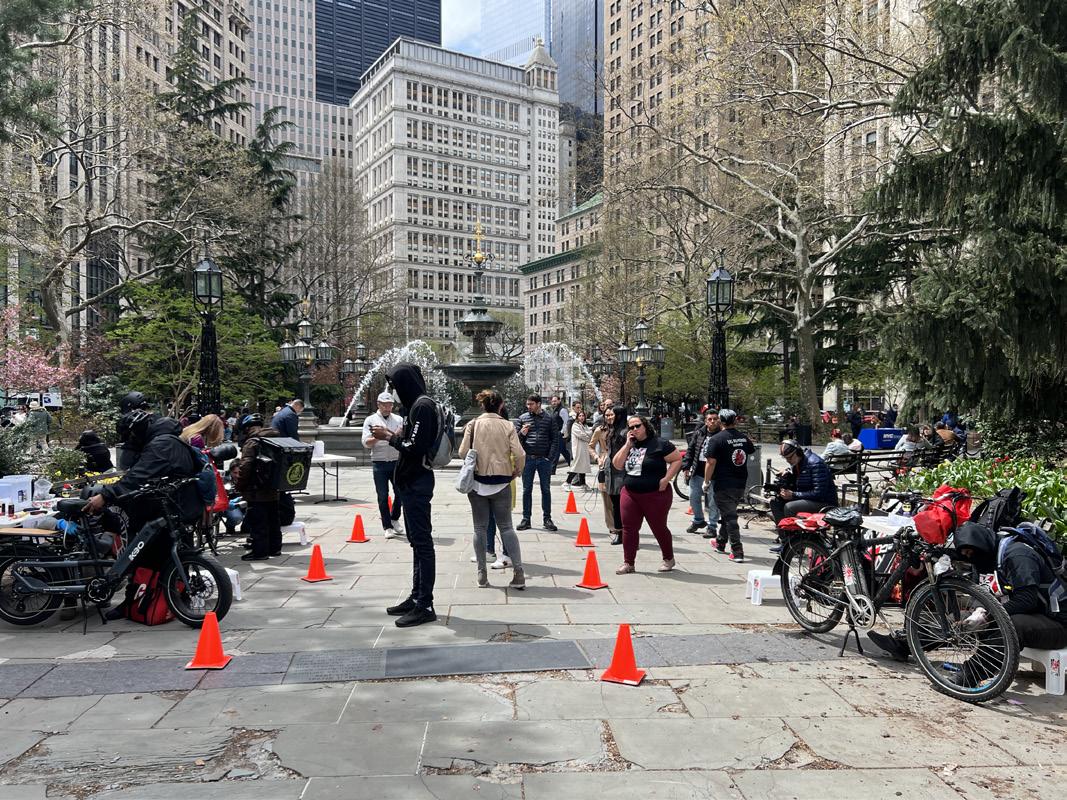
D. On ground + Ethnographic research
A. Problems or gaps
B. Goals
C. Design Strategy Num. 1: Workers Center
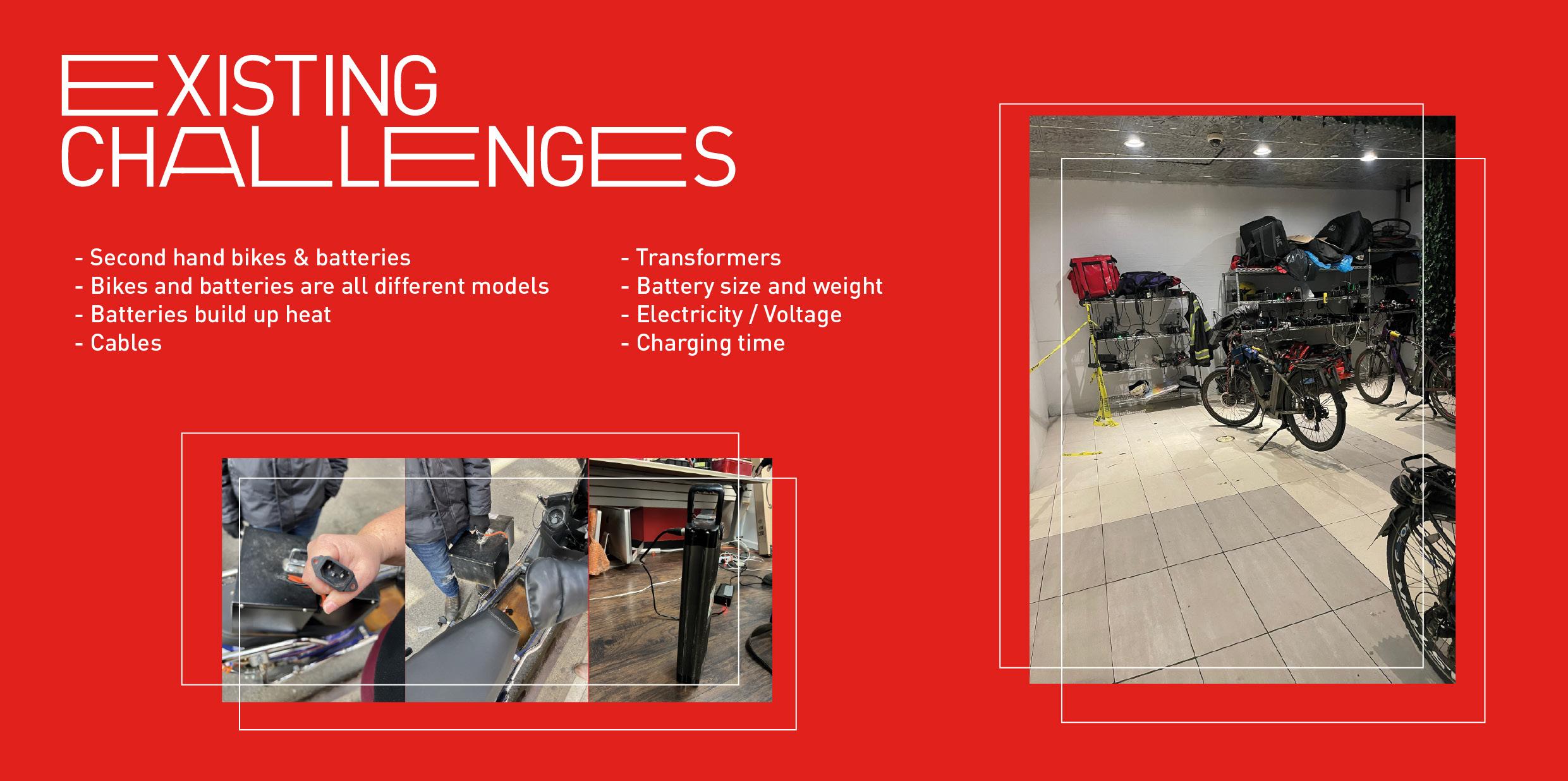
Existing challenges
Stakeholders involved
Tool System Guide: Phases
Design feedback from the Deliveristas
D. Design Strategy Num. 2: Support Hubs
Objective
Vision
Motivation
Existing challenges
Potential Stakeholders Tool System Guide: Phases
A. Implementation Plan - Workers Center: : Strategy N01 Partnership constellations
B. Implementation Plan - Support Hubs: Strategy N02 Partnership constellations
THESIS JOURNEY
1. INTRODUCTION
PROBLEM STATEMENT: ESSENTIAL WORKERS ARE VITAL BUT NEGLECTED BY THE CITY ECONOMY
The logistics of the movement evolution of the lastmile facility storage is a new situation of mobility that this paper explains. How the storage warehouses are moving back into the cities, the land selection, and what does this change imply. Present times are evolving to move faster, adaptable, and flexible to adversity and survival. Covid-19 has changed consumers' behaviors, and shopping has shifted entirely online; the digital world is quickly arising. Therefore big online retail businesses have to respond quickly to consumer demands. This issue is solved by having sameday deliveries or deliveries within hours of the request, so how is this possible?
It is by moving storage and warehouses back into the cities. This movement manifests directly into the city’s environment, affecting the population and its nature. In October 2009, the e-commerce giant Amazon introduced a same-day delivery service. Initially, it restricted orders after a specific time of the day and was only limited to seven cities, including New York. Same-day deliveries have become vital for online retail platforms, building new customer expectations, creating new labor issues, and reconfiguring the geography of how things move from one place to another.
New York has experienced uncountable severe episodes of air pollution throughout history, for example, the air pollution incident in November 1953. Concentrations of sulfur dioxide were considerably more significant than those of the previous day and above the range which was considered normal for New York City's air. The major air-pollution episode and environmental disaster in 1966, where smog covered the city and the surrounding areas with toxic pollutants at a very high level. That was the third major smog event in New York City. For three days, the city was covered by a black cloud of carbon monoxide, sulfur dioxide, smoke, and haze. After these terrible tragedies, the Clean Air Act was created due to heightened public concerns about deteriorating the city air, the natural areas littered with debris, and the urban water supplies contaminated with dangerous impurities.
Presently, densely built cities are being reconfigured to meet spatial challenges imposed by the logistics of delivering more goods in less time. Historically, there has been an established system of large-scale, pancake-style warehouses occupying multiple acres of land in the suburbs or along highways; nowadays, this does not function anymore. Many empty, vertical urban warehouses and factories were renovated into self-storage facilities because of the new demand for instant satisfaction. The old factory spaces are now back in the real estate market in the service of high-speed urban logistics. Everything is about consumers and where they consume. These free benefits come with a hidden environmental cost that does not appear on the daily page. Faster shipping means that packages may not be as consolidated as possible, leading to more cars and trucks required to deliver them. Consequently, increased packaging waste, which researchers have found, adds more congestion to our cities, pollutants to our air, and cardboard to our landfills.
As e-commerce continues to grow and expand across the New York City region, more and more companies are looking toward moving their storage facilities to the cities. This will add nightmarish traffic and truck pollution, which contributes to industrial areas having some of the worst asthma rates in the nation. Furthermore, industrial areas in New York are filled with warehouses, factories, and last-mile facilities polluting the soil with metals and all types of pollutants throughout history. These areas are classic examples where black and Hispanic residents experience insidious environmental inequalities; there is a current racial-ethnic disparity in pollution.
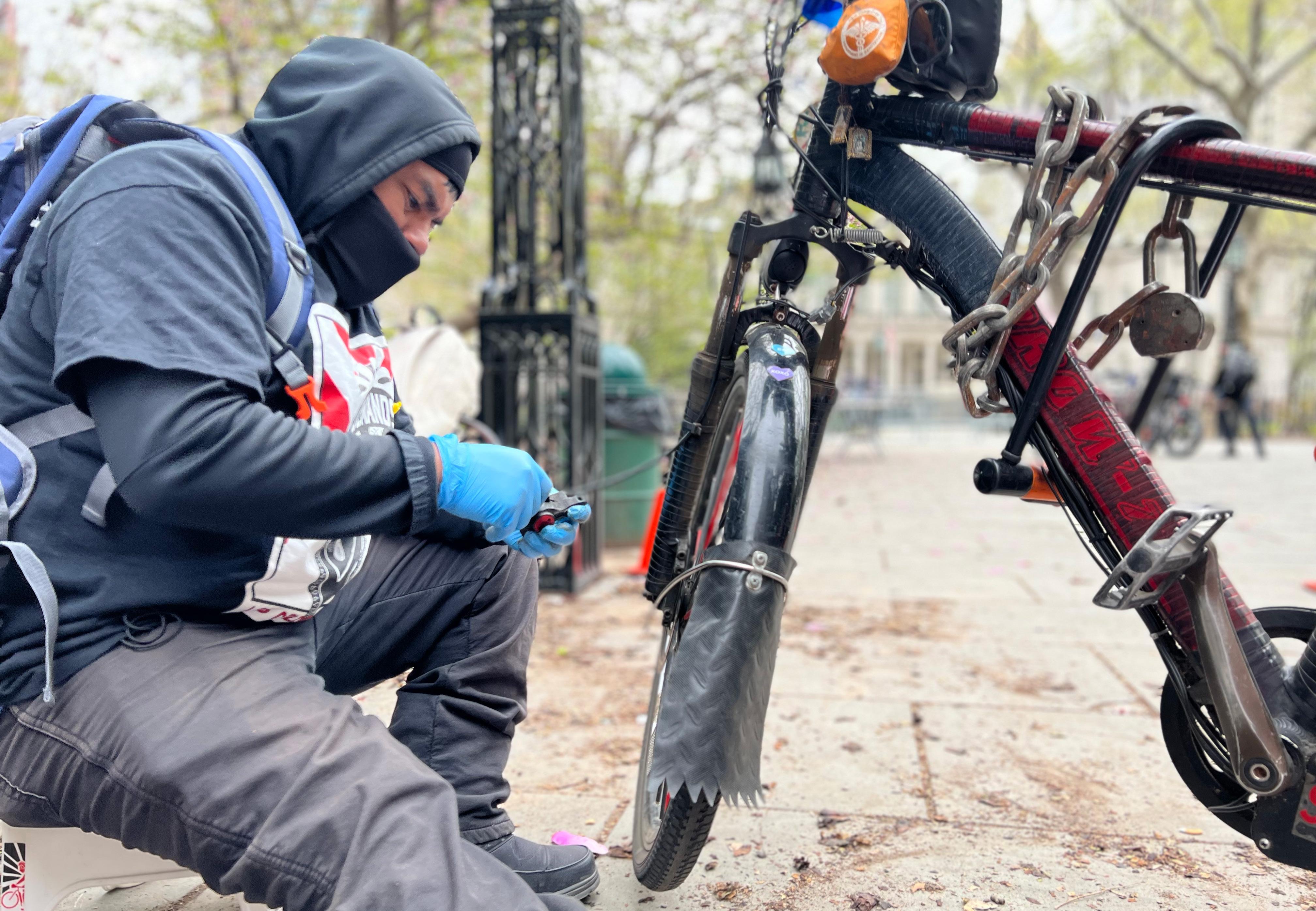
When the pandemic struck New York City, the online retail demand increase created the need for more delivery workers; these workers became frontline and essential workers, which put their physical bodies and minds in danger to fulfill other people’s demands. It shows this new human infrastructure created, a new reliance system. They are utilizing the theory of the spatial contract by Alex Shafran. Consequently, these workers are all hired by different big tech companies, making them independent contractors. They are exploited and do not receive any benefits or basic needs such as resting and comfort stations, to be able to fulfill their jobs in normal human conditions.
THESIS PURPOSE:
Due to the increasing delivery workers' exploitation, this research wants to assist the workers to obtain the rights they deserve. To aid them not just to survive but to be a baseline system of the city. The research aims to make this a formal urban system by showing how the population relies on the new system.
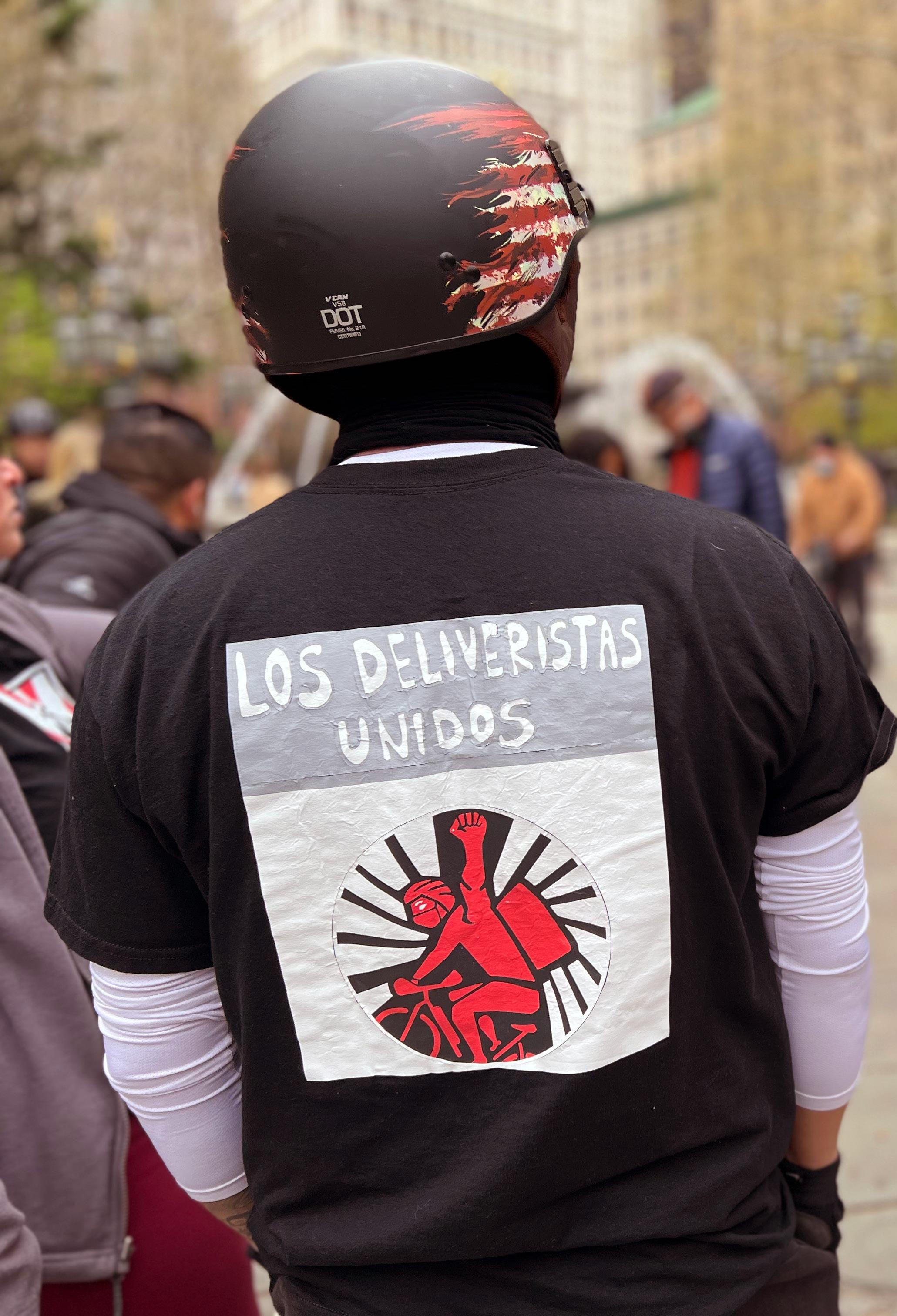
This thesis investigates the impact of increased online retail on the urban space and labor force in NYC. Based on a local worker rights organization's (Los Deliveristas) demands’ I want to explore how the fourth demand –a physical public space to eat, rest, and be protected from extreme weather– can be spatialized. This organization was created by the Workers Justice Project to represent all these delivery workers that have been exploited throughout the last two years.
The thesis also seeks to find ways to use public spaces as a public good for the delivery workers to receive basic necessities and make this exploited hidden periphery of delivery workers visible in the urban system. There is an urgent need to make the delivery workers visible in the urban environment. The research started when covid hit New York City as there was an urban ecology rapture, and the whole city was put on lockdown. Consequently, the term “frontline and essential workers” became a central topic on the news. Referring to the delivery workers' infrastructure, Who are these frontline workers? Where do they come from? What is their income level? Where do they live? Are they being
recognized and visible in the urban system? Whom are they hired by? Are they being protected?
These are the first research questions in the investigation, followed by questions regarding the urban infrastructure; Is the city’s bike infrastructure prepared to accommodate a rising gig economy? Do these workers have shelter infrastructure to fulfill their basic needs such as resting, eating, and charging their phones? Are the city public spaces working as a public good for these workers? Is there enough public space? All these questions will be answered in the following sections. As a result, the research revealed many issues regarding the city and this new human infrastructure growing.
THEORETICAL FRAMEWORK:
I use the theory of the Spatial Contract by Alex Shafran as the main theoretical framework to show this new human infrastructure that is created, a new reliance system. The terms he utilizes in his literature, such as spatial contract, social contract, human capabilities, capacities, human agency, collective role, and systems of provisions, all define the key concepts of the last-mile facilities, and the worker's infrastructure around them, for a greater understanding of the system. It proposes relations between the terms to explain better the problems I detect. Why do things bite back?
Technology and the Revenge of Unintended Consequences by Edward Tenner is also part of the theoretical framework to explain the interdependence between infrastructures on how businesses adapt and the creation of last miles because of covid-19. Fassin and Harcourt in A Time To Critique is also part of the theory to show and make visible the “voice of the oppressed” addressing all the labor workers that are being exploited and referring to the hidden infrastructure that is now foreground.
METHODOLOGY:
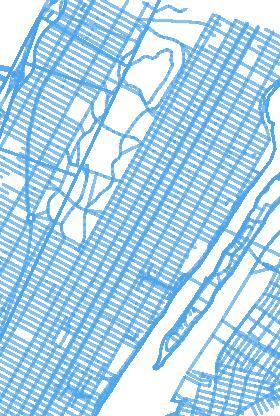
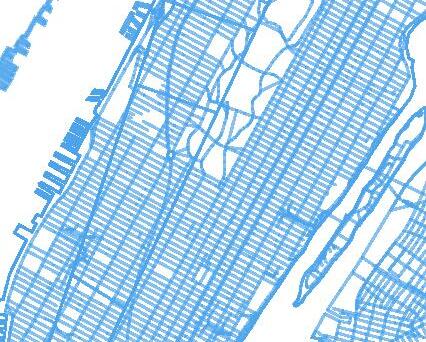
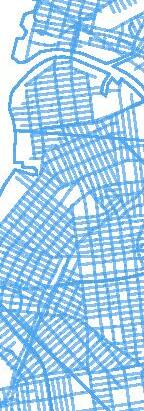
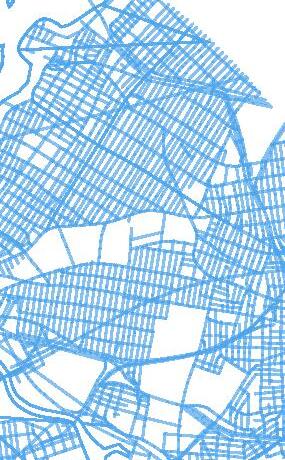
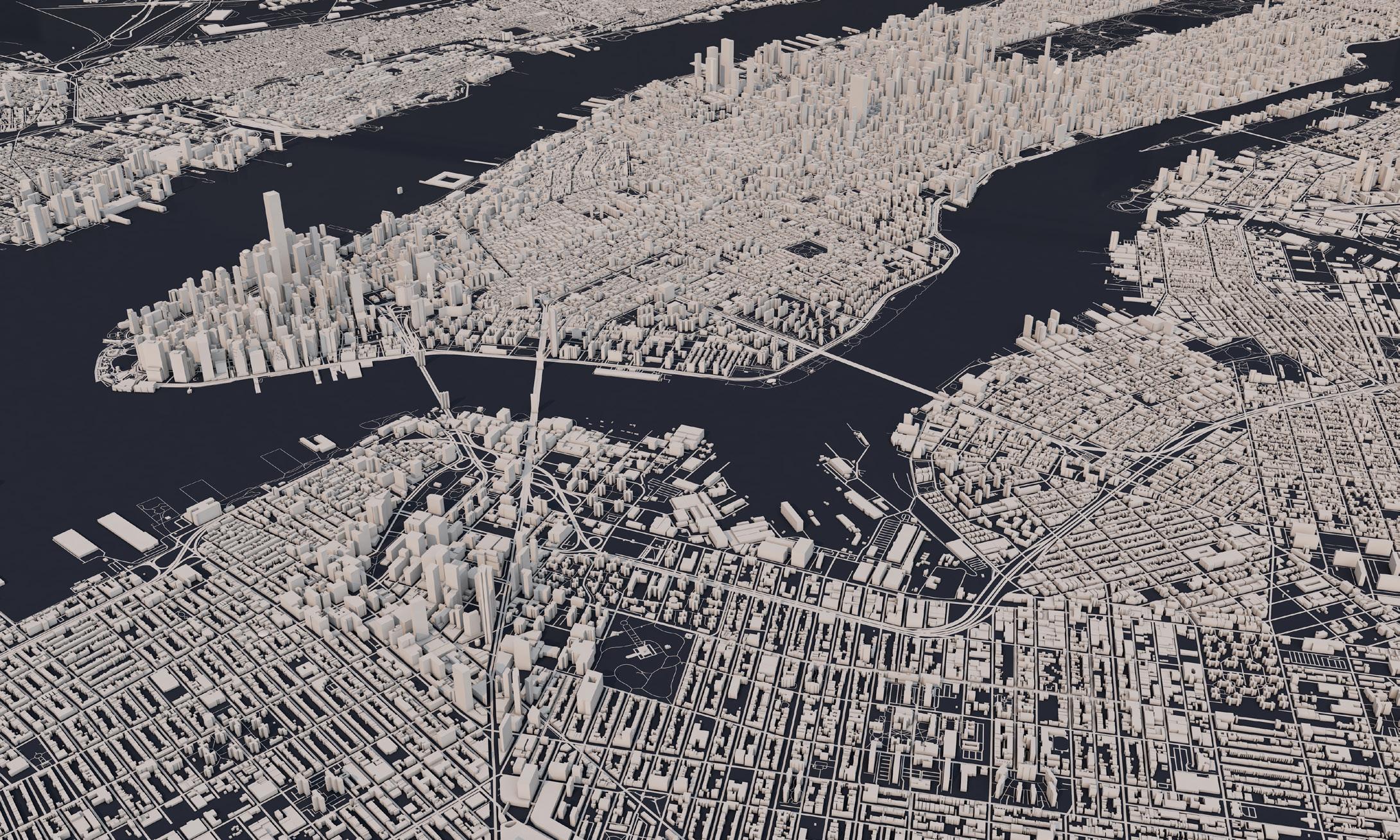
The methodology is the steps taken in the research and design proposal. In this case, interviews, surveys, and ethnography are part of the methodology. Also, the creation of maps to visualize existing infrastructures or potential spaces to design comfort stations or public hubs to fulfill the basic needs of the delivery workers. Firstly, the creation of maps to show New York City’s city and bike infrastructure; bike racks, bike lane conditions, distribution, city public parks, and spaces. It will also develop environmental-focused New York City maps to describe and support the six last-mile facilities' impacts on the city’s ecosystem; asthma rates, race and ethnic distribution, last-mile facilities distribution, and track routes.
The thesis uses two different types of interviews, one directed at the delivery workers and the other aiming at managers and workers of The Deliveristas Unidos Organization. It will utilize ethnographic research to describe and interpret the new labor pool arising in the current situation through the naturalism method, observing the research variables –delivery workers–in their natural environment to identify and record behavioral patterns. The participant observation method will also be
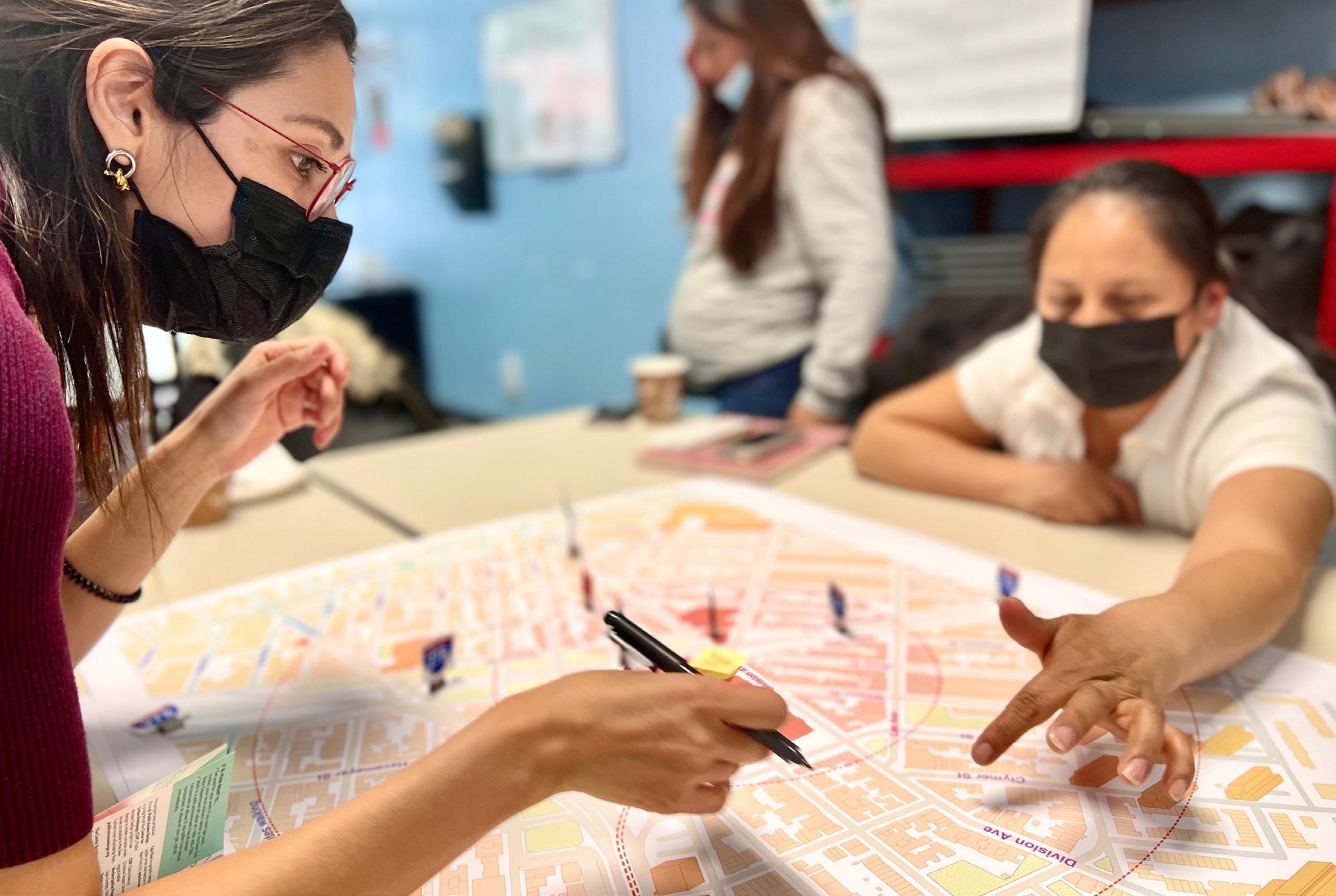
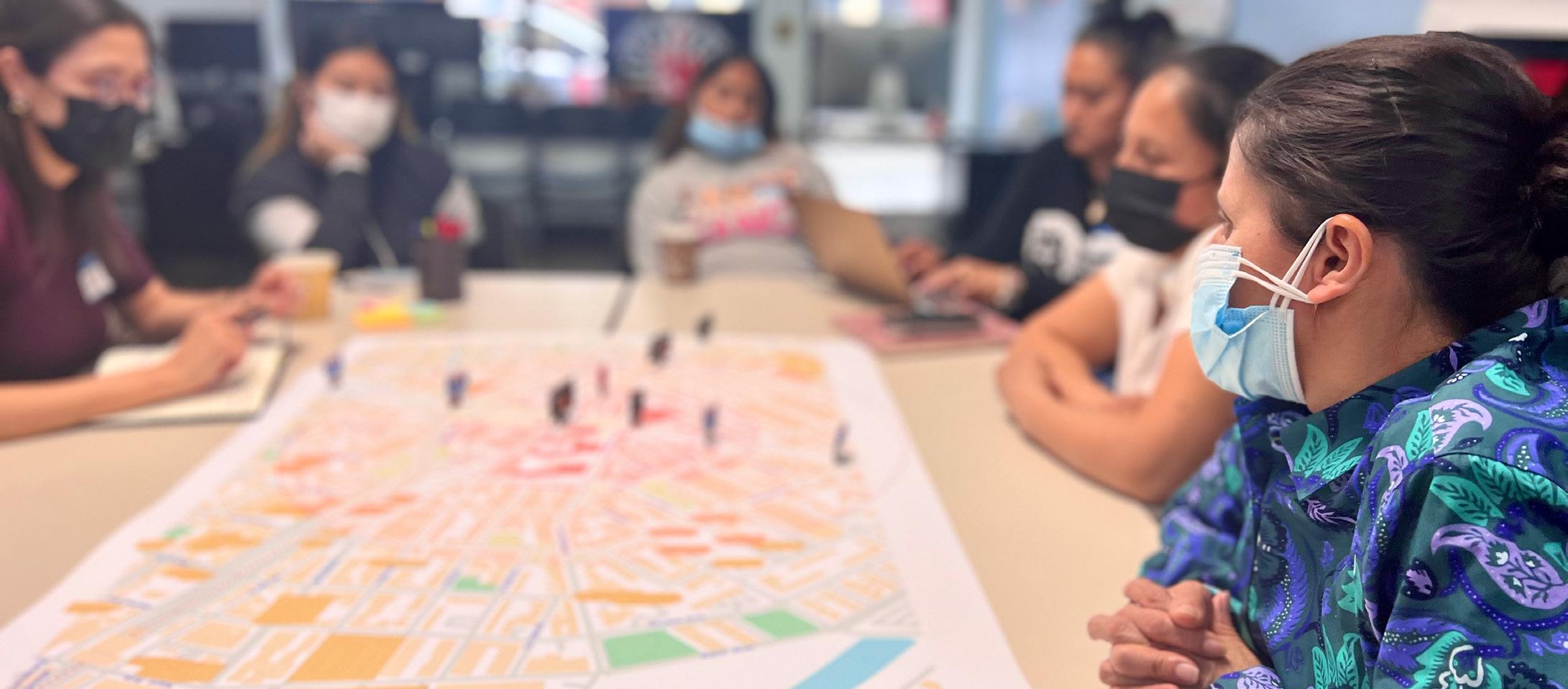
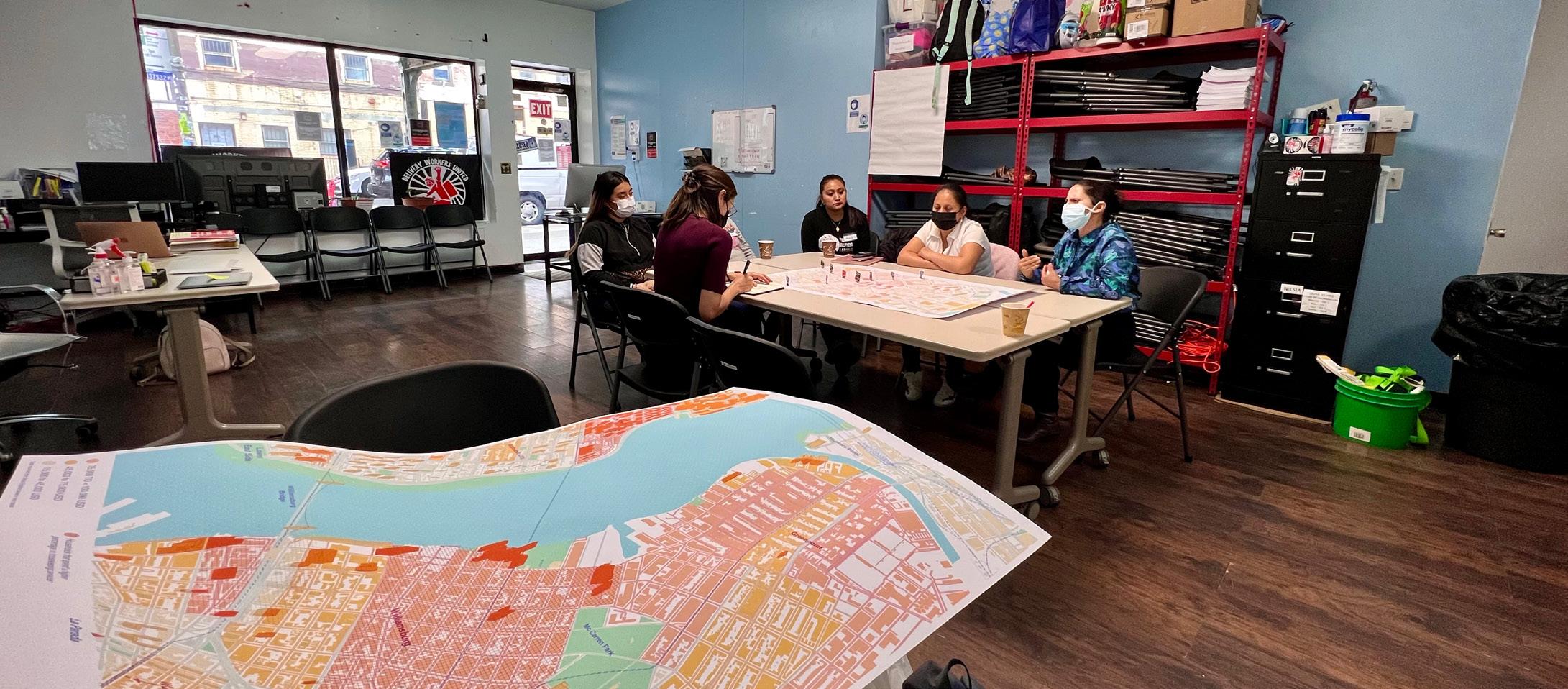
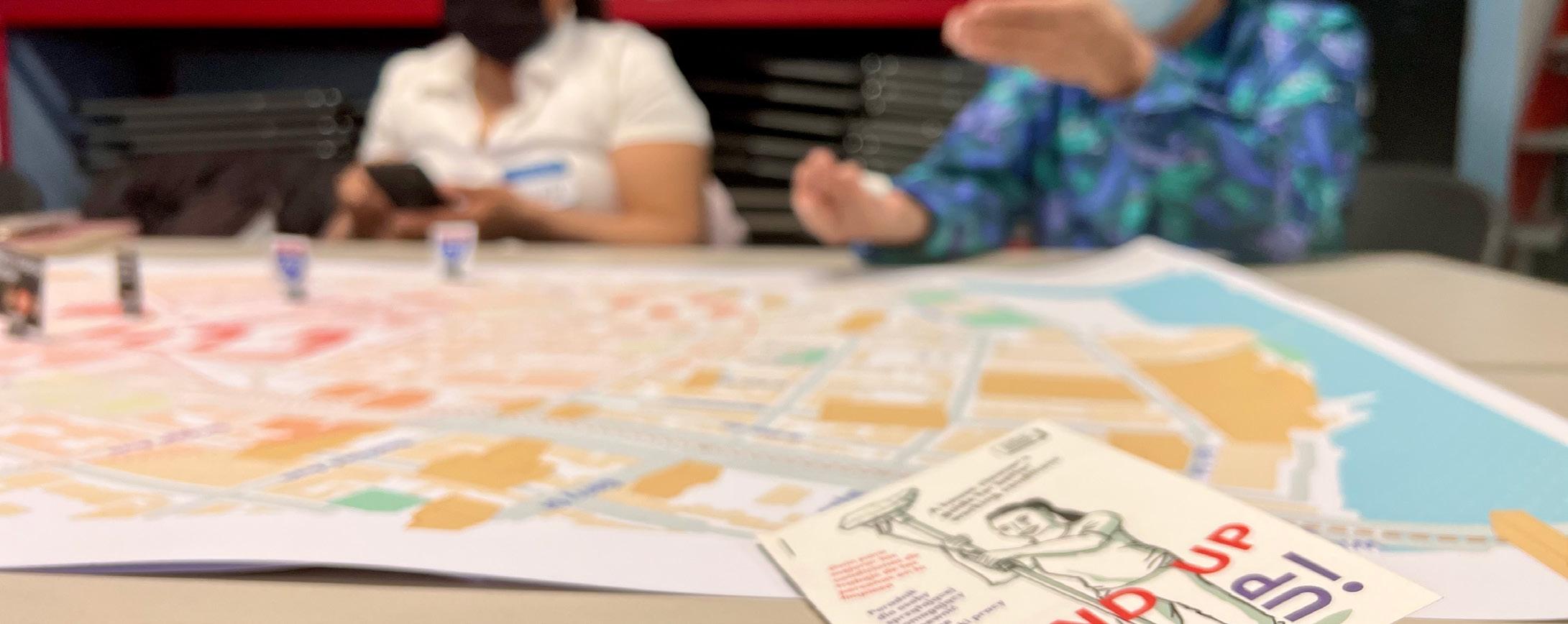
utilized, disguised or undisguised, to observe and collect data about the research variables. Subsequently, this is a present issue, and there are matters still being figured out regarding laws, regulations, wages, and workers' benefits. There will be a development of a series of interviews and workshops working together with The Deliveristas organization to evaluate their needs and collect data regarding bike routes and worker centers.
DESIGN PROJECT:
The research started looking at the urban ecology rapture that was created when the Covid-19 pandemic struck the world. That is to say that long-term structural changes started to occur because the online retail demand started growing exponentially, driving the last-mile facility storage to move back into the cities to keep up with the same-day delivery service. This urban mobility transition created six environmental impacts: environmental impact, waste outcome, labor, land use, public health, and transportation safety concerns. Consequently, the research focused on the labor impact. The main interest is building strategies to facilitate the urban environment for the workers, which continuously risk their lives to facilitate the functioning of the city’s systems and infrastructures.
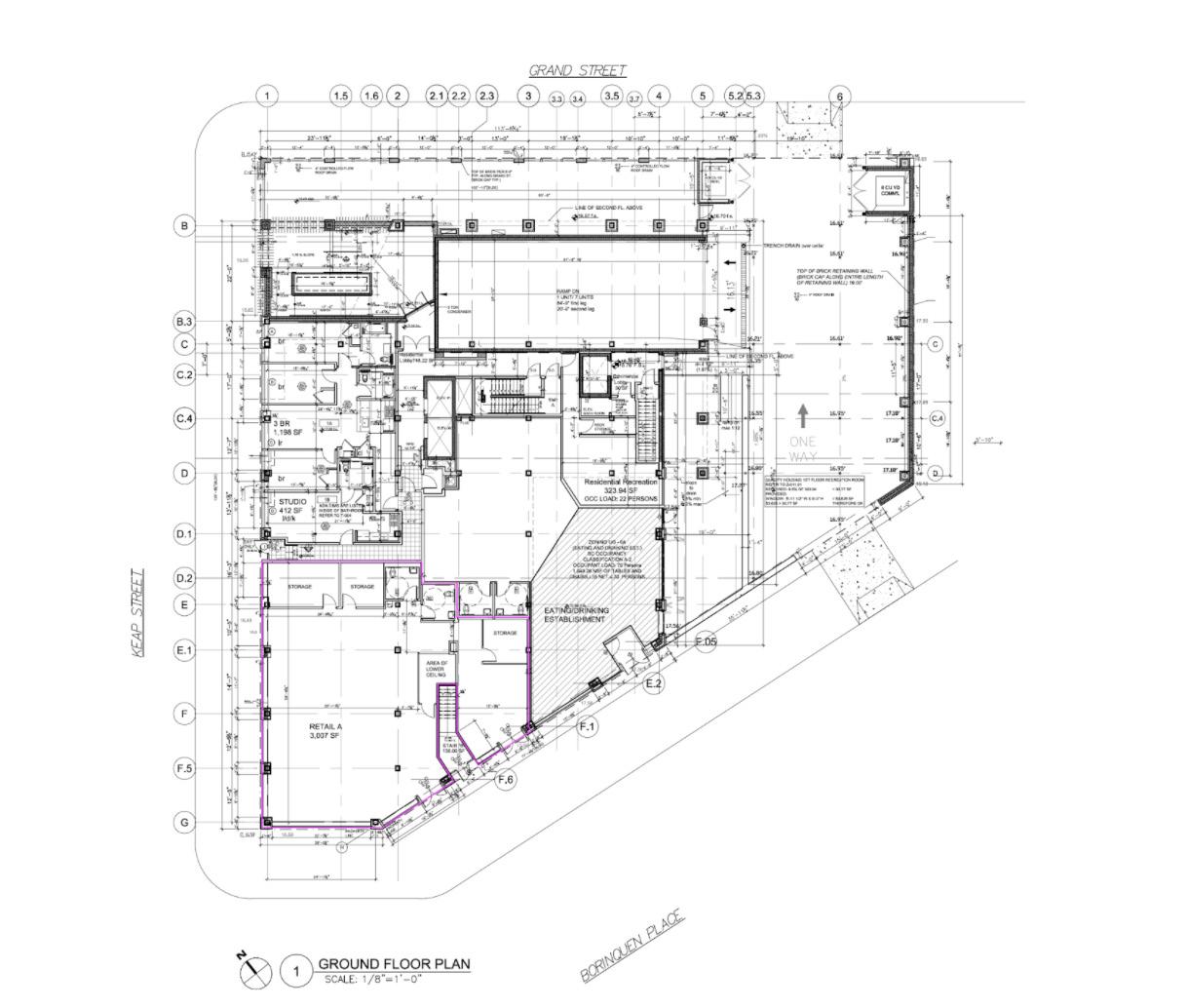
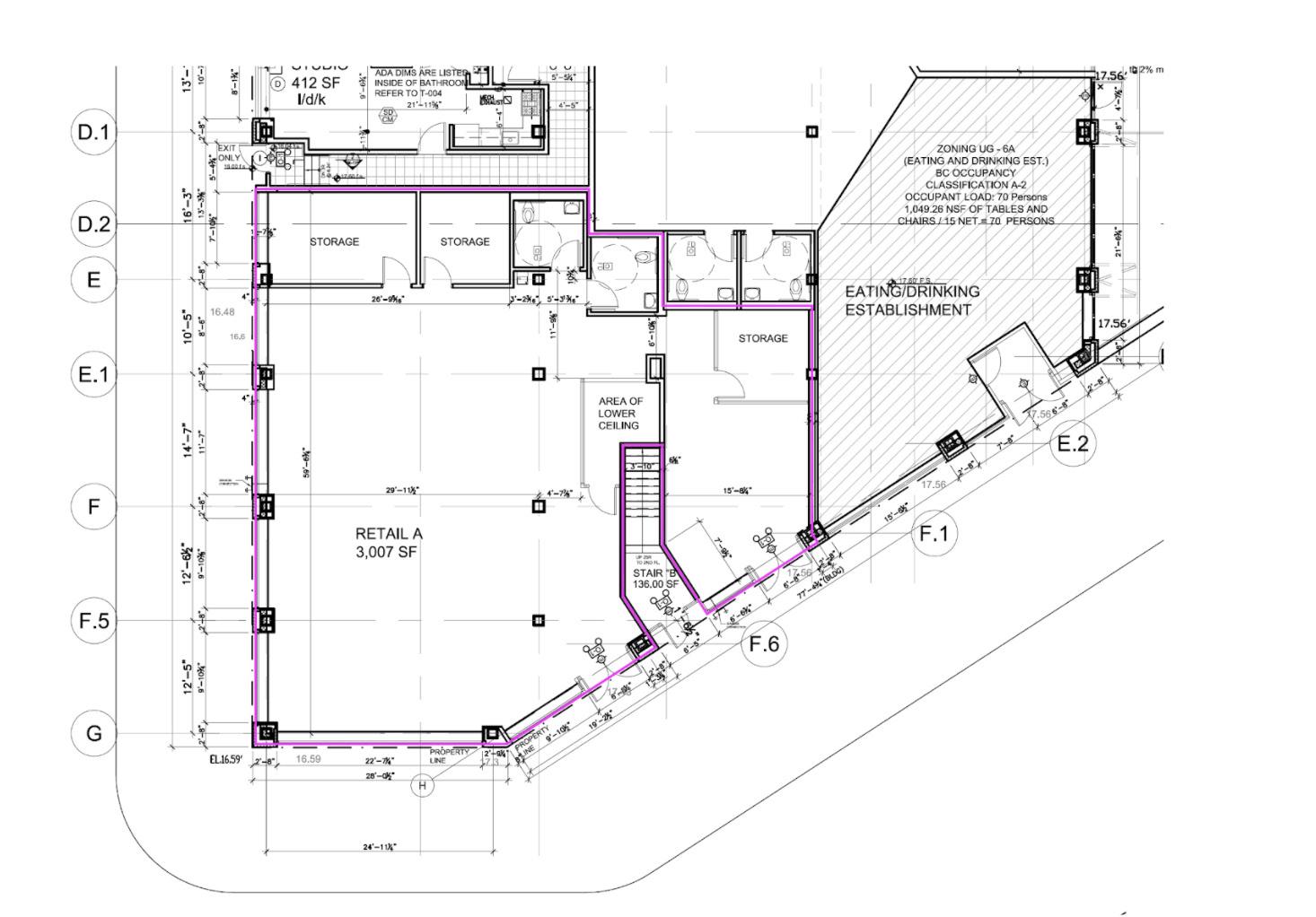
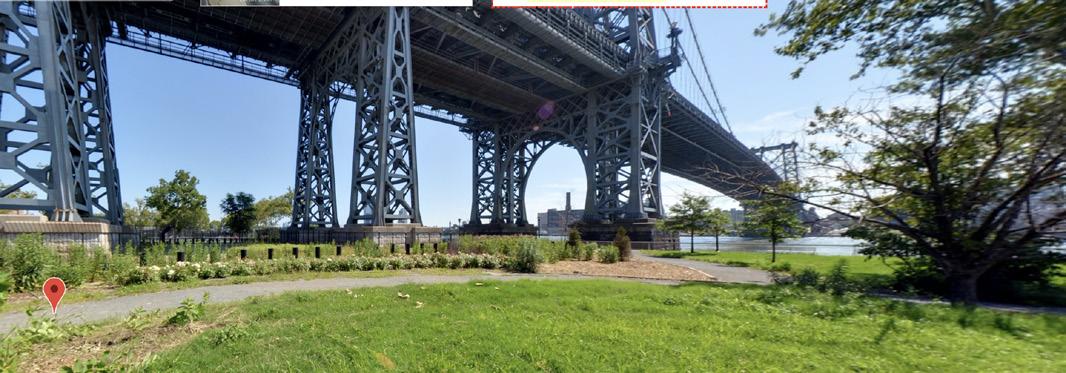
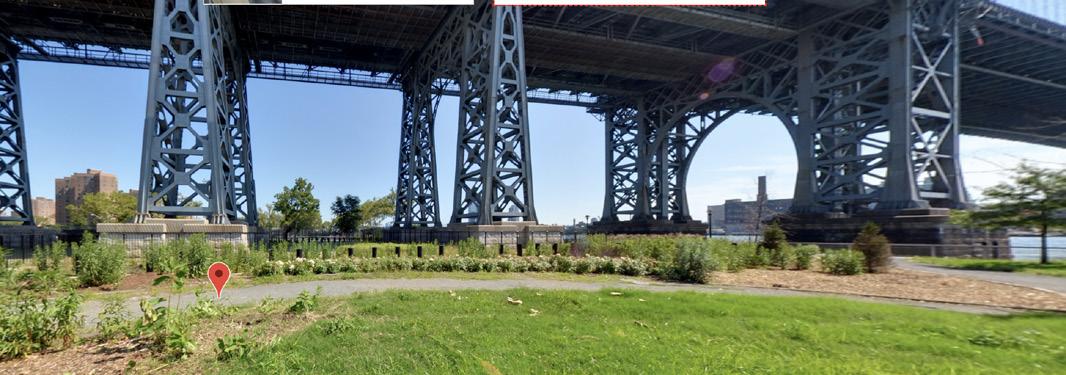
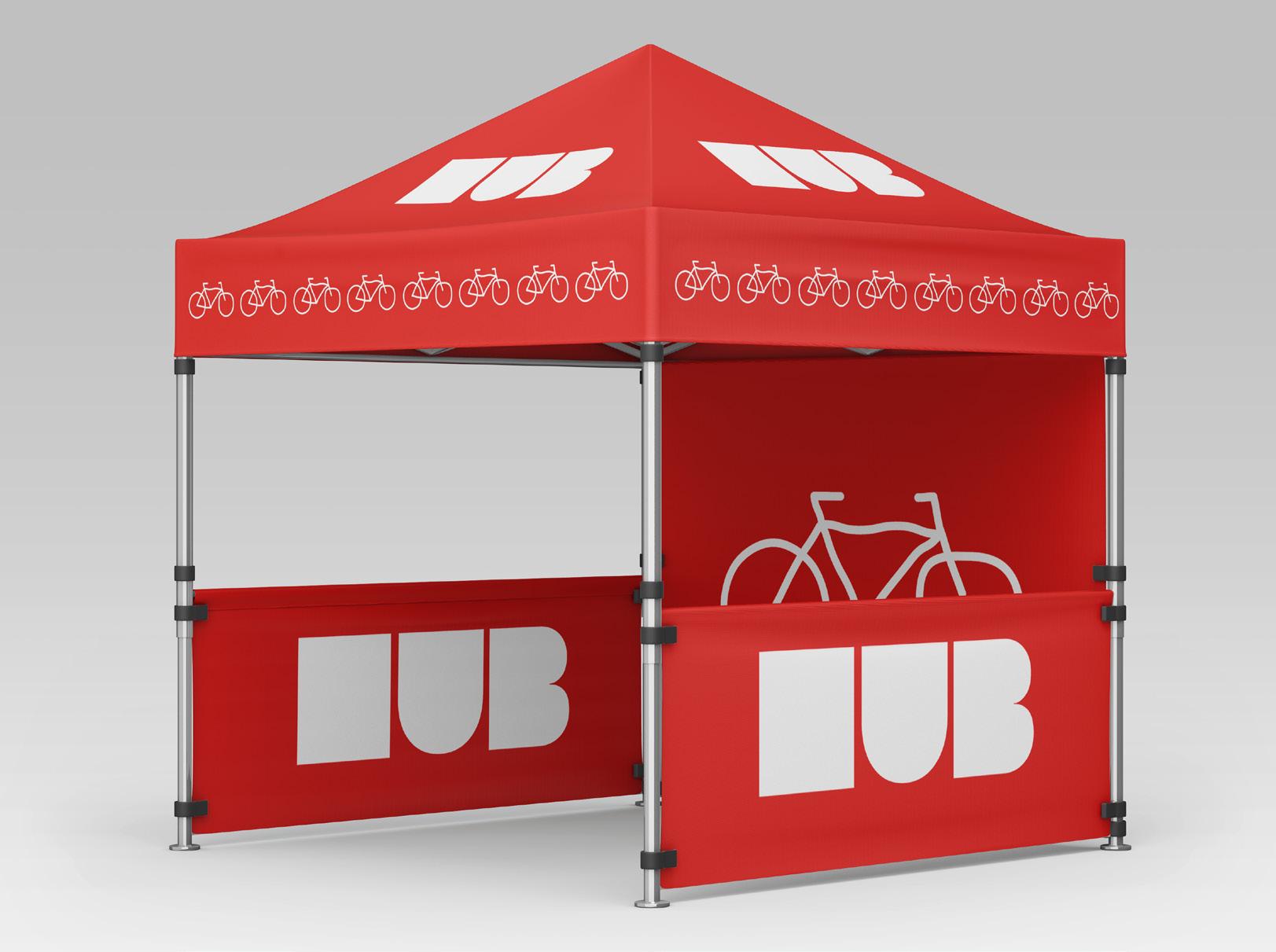
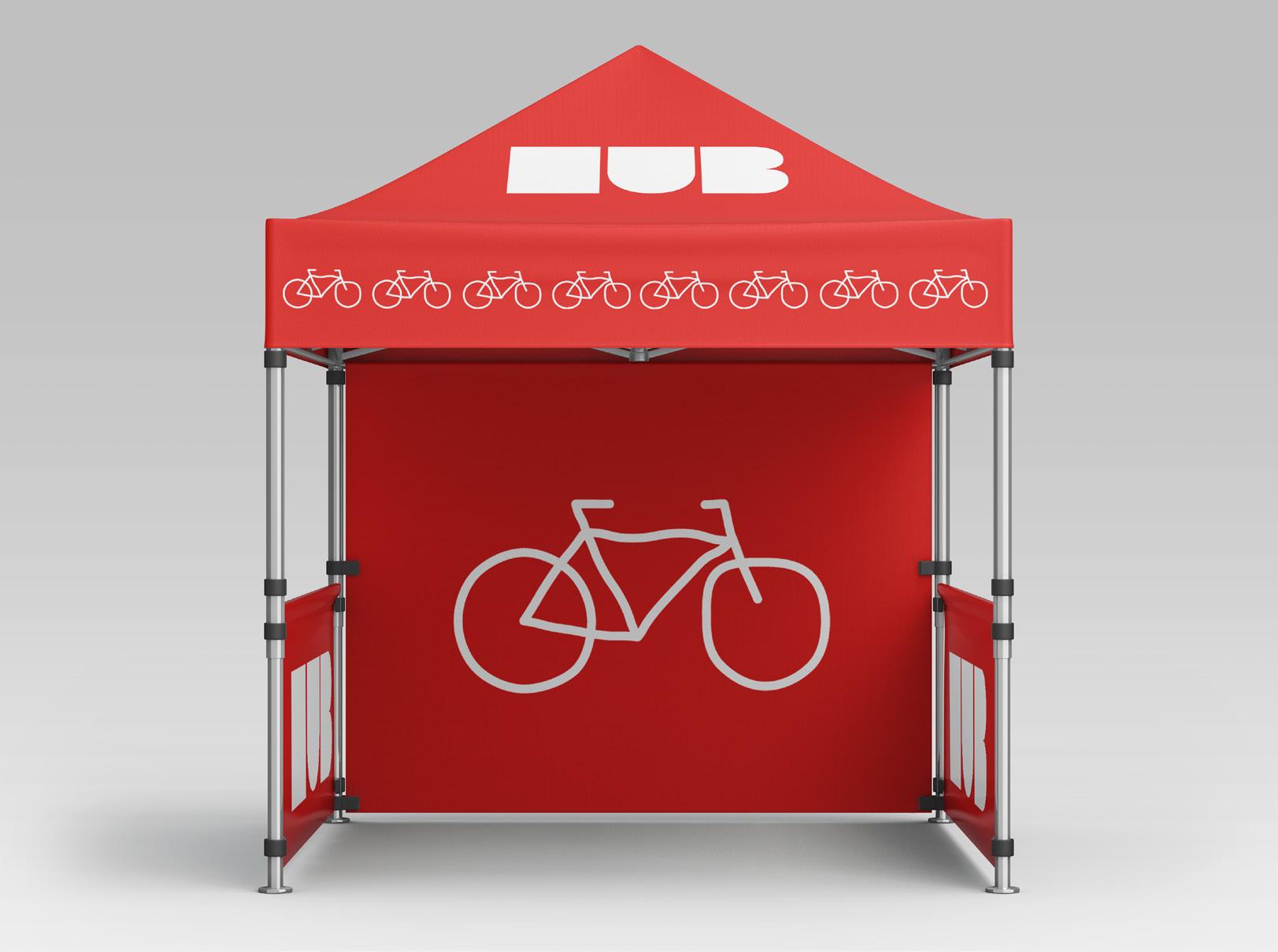
The work in progress is currently studying Long Island City as a possible project site. It all started because 40% of all available land was rezoned for new development and waterfronts turned into luxury buildings and pseudo-public spaces that mainly were privately owned. The project is a Strategic Planning Proposal regarding Lo Deliveristas demand number 4; The right to use a physical public space–To eat, rest, and be protected from extreme weather. It explores how the fourth demand is spatialized. The design proposal involves a strategic plan including different stakeholders, which will lead to the creation of a (1) workers center and (2) comfort stations that will serve as recreation hubs called “Support Hubs.” The worker's center is envisioned to work as a shelter where the delivery workers can stop, charge their bikes, go to the bathroom, and rest.
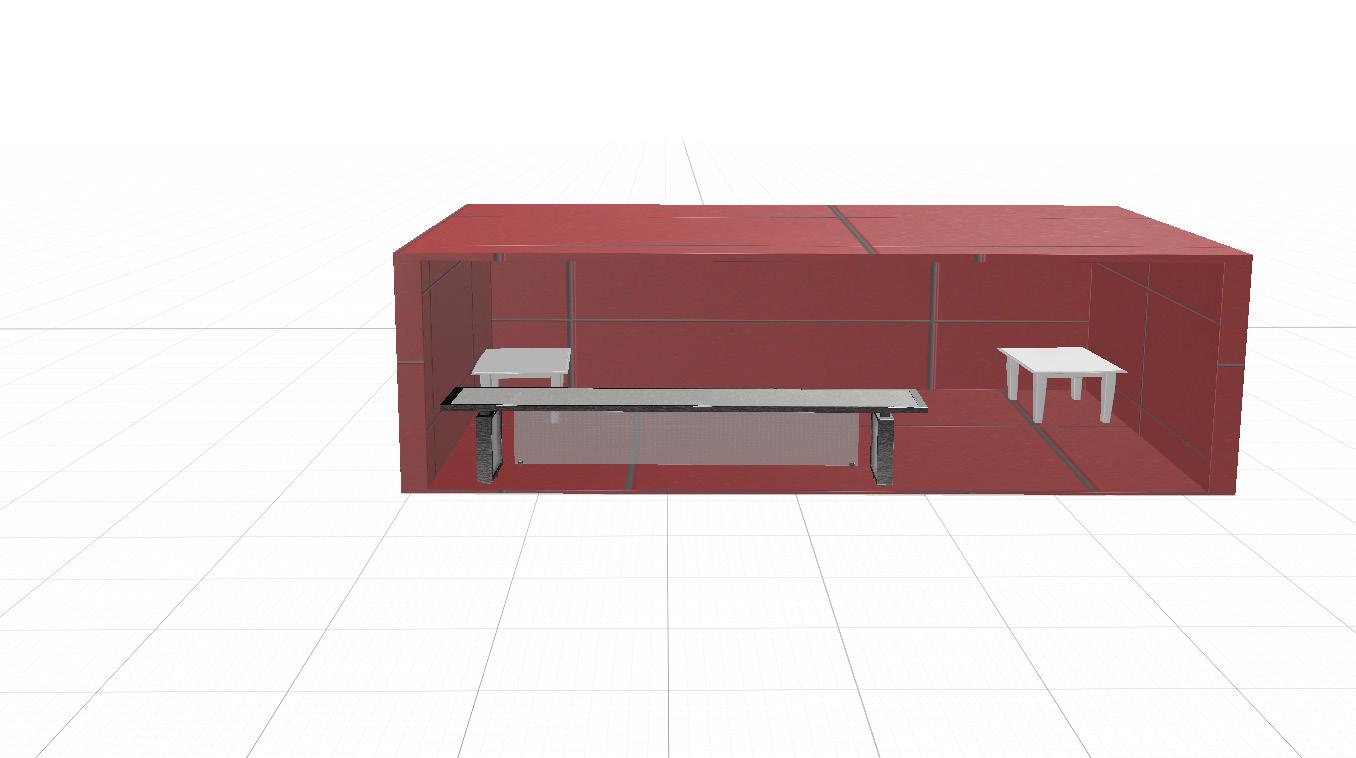
On the other hand, the comfort stations will serve as a physical public space to eat, rest, and be protected from extreme weather. These can be permanent structures through shipping container conversion. There will be a movable option, too, being a truck that moves around the city and can be located through the support hubs app. The ideal is a co-design process with the people who developed these demands. Based on the outcome of these conversations, this can be an advocacy resource for them and help them deliver a proposition for the city agencies (DOT and Department of city planning).
The stakeholders involved in this project are the public entities, such as; the NYC Government (City Hall), the Department of City Planning, the Department of Transportation (DOT), the Local Government, and the Department of Buildings. On the other hand, there are the private entities, the app-based companies, such as; Doordash, Uber Eats, GrubHub, and Postmates. The most important part of this ecosystem is
the city civic organizations, such as; Los Deliveristas Unidos working under the Workers Justice Project, Flushing workers center, Transportation Alternatives, Intersectional Riding, and Day Laborer Centers. The primary partnership to develop the design proposal is with the Workers Justice Project and Los Deliveristas Unidos, representing the essential workers. It benefits the gig economy by benefiting all the delivery workers in the city. The Workers justice project and Los Deliveristas are crucial parts of this, and the main collaborators are the DOT and the Department of city planning.
THESIS RELEVANCE:
It is a significant and relevant project for New York City that addresses an issue that started in the last two years since the pandemic struck the world. As it is so new, even the governments and local organizations are struggling to make decisions on this matter. Last-mile facilities moving back to the cities and the gig economy growing so fast complicate the government’s development of the necessary laws and regulations for this phenomenon. Bureaucracy and city planning are long processes that move slower than the exponentially growing gig economy, so delivery workers are being exploited, and a change needs to happen urgently.
The online retail demand will keep growing as the digital economy stays. Hence, the city infrastructure needs to adapt slowly, and the human infrastructure is the motor to the spinning wheel that powers the gig economy to function. Delivery workers are vulnerable to exploitation because the law classifies them as independent contractors. Secondly, they are primarily immigrants, having language barriers that the app-based companies take advantage of by creating confusing legal binding agreements.
2. THEORETICAL FRAMEWORK
In this chapter, the theory directs the research and identifies what will be explored and described. Hence, just as the research started, it will first explain the last-mile ecosystem.
A last-mile facility is a spatial contract as it is a constantly evolving series of collective settlements governing the re/ production and management of human freedom. The human capabilities are the actions taken by the workers to reproduce this reliance system of last-mile facilities, that is to say, the labor. It is the human agency of production and reproduction. During the pandemic, all of the city was in lockdown, and only essential workers were working to deliver the goods to the well economically positioned part of the population. They are part of the resilience of human infrastructure (frontline workers).
The last mile is a working ecosystem driven by consumer demand, and it is necessary to “see like a settlement,” as Alex Schafran invites us to do in The Spatial Contract. Our reliance systems must be constantly reproduced no matter how stable we think they may be. The thesis is going to talk about the infrastructure system of last-mile facilities. As stated in the spatial contract, we rely on water, housing, healthcare, education, energy, and waste disposal systems, “but not just to live, but to be able to act” (Schafran 2020, 1). Our daily actions rely on our capacity to act is our agency.
Consequently, the reliance system is where the human agency is registered; they are collectively built and complex networks. In this case, human agency is done by the lastmile workers and the consumer. We have two sides playing: the service side and the consuming side. Collective means each person has a collective role, and an individual role, by collective Schafran states, is non-individualistic. The lastmile facilities infrastructure is a spatial contract between the capabilities (labor) and the reliance on the space and place (spatial). The research looks into labor history to understand the production/reproduction of systems -social contractspatial contract.
Reliance systems signify infrastructure in The Spatial Contract because it emphasizes the link between “material system” and “human agency.” Schafran quotes Cowen to explain that reliance systems have been exploited and are captured by many unsustainable practices. It is related to lastmile facilities and the phenomenon the research is looking into. It observes six environmental impacts: environmental impact, waste outcome, labor, land use, public health, and transportation safety concerns. By focusing on the systems that allow human action, the spatial contract is directed to a positive politics of human capacities. It means members of communities have to understand what it means to be political if the spatial contract requires the provisioning of human agency. What the research says regarding this matter is that in last-mile facilities ecosystems, there are parts of this deal that are failing. What should be taken into consideration for the last mile infrastructure is the spatial contract that combines the social and material nature of these politics. With three interrelated things: 1) Develop a political framework (because each contract is unique, he invites not to generalize and standardize) it may not have a preconceived political solution. 2) Inherent spatiality (because our settlements are intricate assemblages of reliance systems) and 3) Material and geographical specificity of each system (inherent relation between systems and settlements, not sufficient one size fits
all politics). A healthy spatial contract refers to the detailed understanding of the specific system in a specific place and time in history. It has two common forms: 1) Institutions (the state or the market) and 2) Scale (regional or national). In the case of the last mile infrastructure, it is driven by the supply and demand in the market of online retail but also now, as this new phenomenon has arisen, the state has to start creating laws to regulate this system. The government must control the exponential growth of these last-mile infrastructures in different neighborhoods to contain its environmental impacts and enhance sustainability practices.
When we look at systems of provisions and supply and demand relationships, what is substitutable and not changed. Some changes go beyond consumer preferences, demand, and supply. For example, as Schafran illustrates, the demand for electricity does not drop during a hurricane. It is the ecosystem that fails. Demand for housing does not drop during a natural disaster like the covid pandemic in 2020. Simply the ability to access this system under current rules. The system perspective forces a re-evaluation of what is substitutable for what when provisioning human freedoms, as Schafran states. When the pandemic struck, and all the system’s perspectives changed, including human actions and materials, this is when the last mile infrastructure was created. It generated many “spillovers” terms used by Brett M Frischmann in “Infrastructure: The Social Value of Shared Resources.” The high-income populations form the consuming community, and at the cost of many minorities and low-income communities that become frontline workers, exposing themselves to get the job done, so the wealthy become wealthier. A large portion of society is exploited, usually minority groups. Will it become institutionalized?
We have to look at the last mile facilities first because it is where people can rely on. When we look at the system itself, the material is the settlement, the spatial contract is the last mile territory, and the last mile is the urban space. The entire agency is indirect because there is a capabilities agenda. In the mesoscale view, how do we increase our capabilities? The thesis looks at this phenomenon reversing the story, from the generator looking up, from the end (last mile) to the beginning.
In 2020 the world faced one of the most challenging situations, which was and still is COVID. The pandemic struck and affected all the networks of systems that build the world infrastructures on all the different scales. The thesis looks at the evolution of the last-mile facility storage logistics movement and how the storage warehouses are moving back into the cities, the land selection, and what these changes imply. This movement manifests directly into the city’s environment, affecting the population and its nature.
Covid is considered a natural disaster, causing injuries and deaths indirectly by the effects on infrastructures. For example, health care infrastructures cannot handle the number of patients, routes, and streets and cannot handle the high demand for online shopping delivered by trucks. Edward Tenner calls these “revenge effects” because of the interdependence between infrastructures. Such as, businesses adapt and create last-miles because of covid, so these infrastructures move back into the cities to low-
income residential areas, directly affecting minority groups (mostly Latin and Black people), attacking the health care infrastructures in those underdeveloped areas. So here we are facing a fundamental matter about environmental racism as a side effect of this problem. Last-mile facility storages are near city centers to respond quicker to same-day deliveries, so their main goal is to find low-cost land to settle the storage facilities. Last-mile distribution is a big business across the globe.
According to Fassin and Harcourt in “A time to critique,” the authors speak of “solidarity,” “freedom,” “hope,” “community,” “justice,” “fairness,” “dignity,” “humiliation,” “decency,” and “deservingness,” and make references to “democracy,” “safety,” and “the collective.” On the other hand, in present times, we face dangers and crises regarding the environment, humans, politics, economic disasters, and now the pandemic. According to Webb Keane in “For the slow work of critique in critical times,” critique is presently a luxury. The problems previously mentioned are becoming obvious that require minimal reflection, so he posts fascinating questions that are as follows: What is the purpose of critique in a moment like this? What does it propose, and whom does it address? What is the critique work, and what are its possibilities and limits? “Fassin stresses the need for a middle way, between the voices of the oppressed and those who view their condition from a distance. He wants to define a critical practice that can “acknowledge the social intelligence of agents and recognize the need for an intellectual autonomy of social scientists.” Each perspective has to be involved; neither is uniquely privileged.”
As this is a very modern problem, there are no government regulations regarding this issue nor health reports advocacy for the affected areas. So how can this be controlled? It is something that is still being figured out. With all these changes happening so fast, serious side effects start rising, such as how do we deal with waste from delivery packages? Food deliveries or even returned packages? As well as increased traffic, packed sidewalks, air, noise, and visual pollution. Regarding the different scales of this problem, we start observing how, from the macro view, political and economic changes start to affect the mesoscale regarding retail businesses infrastructures and finally directly impact the micro-scale of social individuals' behaviors.
In conclusion, The Spatial Contract, written by Alex Schafran, is critical for understanding the research because it describes the process and network of the last-mile facilities and the gigeconomy, that is, the human power and actions to make the wheel turn and function. In this case, the last-mile territory is the spatial contract, so the contract is significant to have a healthy system and infrastructure benefiting the workers and the urban space. On the other hand, this brings to the foreground the issues regarding the spatial contract in the last mile, showing how the human agency workers are being exploited. From this, we understand that the high-income populations that form the consumer community, benefit at the cost of many minorities groups. They often become frontline workers exposing their bodies for the wealthy to become wealthier; that is why Brett M Frischmann in “Infrastructure: The Social Value of Shared Resources” is essential for understanding this problem that I am addressing.
3. METHODOLOGY
New
ETHNOGRAPHIC RESEARCH M APS
Participant observation method
Interviews Workshops Data collection
The methodology carried out is regarding qualitative and quantitative research, and it is divided into two parts. Firstly, the creation of maps regarding New York City’s city and bike infrastructure; bike racks, bike lane conditions, distribution, city public parks, and spaces. It is done with NYC Open Data, QGIS, and hard statistics data. It also presents environmentalfocused New York City maps to describe and support the six last-mile facilities' impacts on the city’s ecosystem; asthma rates, race and ethnic distribution, last-mile facilities distribution, and track routes. It is done through data from NYC Open Data and NYC Core Data. It supports the problem statement and shows the significant impact of the rise of online retail demand on labor in NYC. These methodologies will also help evaluate the best ways to solve the mentioned problem and support the purpose of helping the essential workers. This part of the methodology also analyzes possible public space sites such as Long Island City and New York City to be able to relocate to fulfill delivery workers’ basic needs. On the other hand, the thesis presents on-ground and
ethnographic research, that is to say, interviews with delivery workers and others aimed at managers and workers of The Deliveristas Unidos Organization. It utilizes ethnographic research to describe the current situation with delivery workers by observing them through the Deliveristas Unidos. It observes delivery workers', research variables in their natural environment. It will look at how they develop in their space, the worker’s center, and their relationship with the organization's managers. It will also use the participant observation method, disguised or undisguised, to observe and collect data about the research variables. Subsequently, this is a present issue, and there are matters still being figured out regarding laws, regulations, wages, and workers' benefits. The research develops a series of interviews and workshops to work with The Deliveristas organization. There will be an evaluation and data collection regarding bike routes and the worker center. The information collected about the worker center will be used to develop the strategy and the project.
York City’s city and bike infrastructure
4. RESEARCH
The research begins by looking into the last-mile facilities' movement into the cities by studying Amazon’s behavior and how Covid plays a significant role in this phenomenon. The social effect of the rise of online retail demand due to the pandemic is also significant to understand this thesis work.
The research focuses on quantitative data collection regarding New York City and Long Island City, to locate possible sites and fulfill delivery workers’ basic needs. Subsequently, the research centers on the ethnographic and on-ground exploration of the delivery workers in the Deliveristas Unidos organization.
1. ONLINE RETAIL AND ITS IMPACT IN NYC
LAST-MILE FACILITIES/ECOSYSTEM:
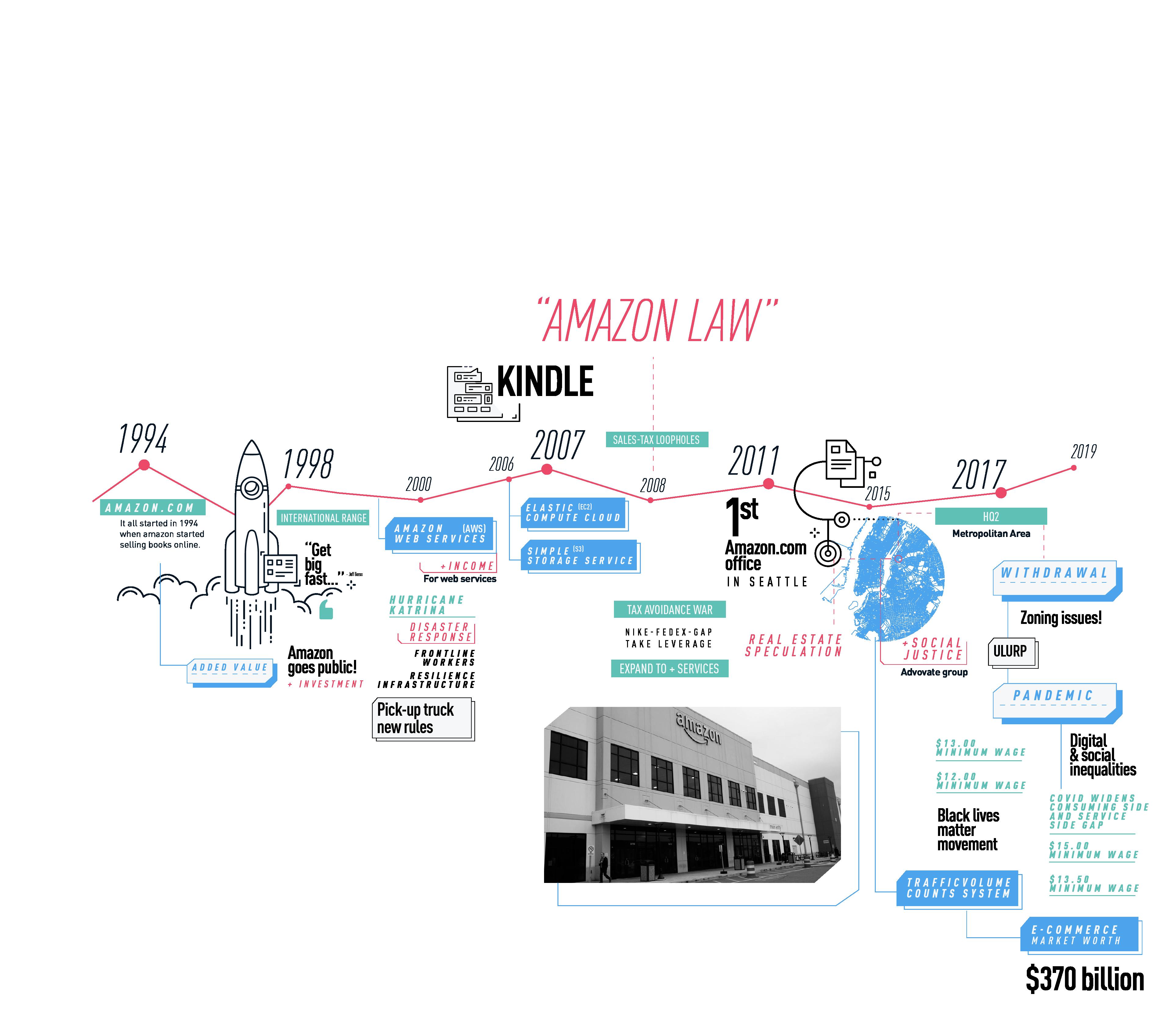
It all started in 1994 when Amazon started selling books online. Jeff Bezos realized that the best way to succeed online was to grow big and fast. Amazon was created in 2005, and it was supposed to be called “Cadabra.” Amazon was registered in November 1994, he had the name, but the question was, what to sell? He knew he wanted to be an online retail business, but he started selling books, as it was effortless to package, transport, and source. In parallel, a business called Computer Literacy also sells books online. The difference was that Amazon was more efficient and convenient, as it delivered books directly to customers’ addresses anywhere in the world.
Jeff Bezos had a vision of the company being technological, simplifying online transactions for its customers. The added value of Amazon compared to any other online retail business was the convenience it presented.
In 1998, the company started selling computer games and music, following Bezos' business model. Amazon acquired an international range by buying other online book businesses in Germany and UK. By 2000, Amazon sold electronic products, software, video games, toys, games, and home products. As Bezos wanted to make Amazon a tech company instead of online retail only, the company launched Amazon Web Services (AWS), which provides on-demand cloud computing platforms and APIs to businesses, individuals, and governments. By 2006 Amazon expanded and created Elastic Compute Cloud (EC2) and then followed by Simple Storage Service (S3), storage for the internet, making web-scale computing more accessible. In other words, a simple web interface to store or retrieve data anytime and anywhere. Today, this is what brincardboarEverything.
In 2007, the invention of the kindle replaced physical books with an electronic tablet. “The Kindle's success led to Amazon entering the e-book publishing market in 2011 with its Amazon Publishing service. That same year Amazon announced that e-book sales on its site were outselling traditional printed books.”1 Subsequently, Amazon expanded into many other services like fresh produce shipping, drone delivery, and technological inventions. Bezos maintained that it needed to get big fast to succeed, “By December of 1996, the company's customer base had grown to an impressive 180,000. By October of the following year, this figure had leaped to around 1,000,000 registered accounts.”2 Amazon, at that point, was a private company, so Bezos realized he would need more than private investment, so in 1997 it went public.
A concept that arose from many online reail businesses was the sales-tax loopholes. Amazon refused to pay sales tax to any government because the company does not benefit
directly from public services in most states. “Amazon’s refusal to collect sales tax in most states hurts state and local government's ability to finance education, health care, and other services (...) They also claimed that the company obtains no meaningful benefits from states in which it maintains no facilities, and therefore should not have to collect taxes for those states.”3 In 2008, the tax avoidance war started because New York enacted a new law, called at that time, the “Amazon law.” It effectively considers a retailer to have a physical presence within the state when it has independent "affiliate" websites in the state promoting sales on its behalf. Amazon directly opposed the New York law in court and is still present that the company minimizes the number of states in which it has to charge sales tax. Amazon is not the only big company that has practiced tax avoidance. Big companies like Nike, FedEx, Gap, and more have acted in different ways to avoid taxation. It directly affects low-income residential areas, as their factories and manufacturing facilities are located in poor areas in underdeveloped countries. Big companies leverage low sales taxes and cheap labor industries that prevail in these areas in many different ways. This concept will be further expanded in the following sections.
Jeff Bezos’s first office for Amazon.com was in Seattle. In 2011, Amazon had 30,000 full-time employees in the US, and by the end of 2016, it had 180,000 employees. In September 2017, Amazon announced plans to locate headquarters in a metropolitan area. The project was called HQ2, and the $5 billion second headquarters was going to be built in downtown Seattle. In November 2018, Amazon announced it would open its new headquarters, known as (HQ2) in Long Island City, Queens, New York City, and Arlington, Virginia's Crystal City neighborhood. New York City’s Economic Development Corporation (NYCEDC) announced that 23 separate neighborhoods have explained why they wanted to be home for the HQ2 new headquarters. On October 10, 2017 “Gov. Andrew Cuomo and Mayor Bill de Blasio announce that the city has submitted its HQ2 bid, naming four different areas—Long Island City, the Financial District, Midtown West, and the “Brooklyn Tech Triangle” (an area comprising Downtown Brooklyn, Dumbo, and the Brooklyn Navy Yard)— as possible sites. “The case for New York City is simple: we are the global capital of commerce, culture, and innovation,” de Blasio said in a letter to Bezos.”4 At the same time, a group of social justice advocates (Make the Road New York and Showing Up for Racial Justice groups) rose and opposed these changes demanding Amazon improve its business model and its relation with communities and workers. There were many speculations about the land selection for the
HQ2 location until the company announced that it will split between two locations: Long Island City and Crystal City. In November 2018 the first of many protests against HQ2 started. Consequently, “The Wall Street Journal reported that a handful of Amazon employees purchased condos in Long Island City before the HQ2 deal was made public, giving its critics even more fodder that it would drive up home prices and real estate speculation in the neighborhood.”5 De Blasio and Cuomo formed a community advisory committee and after the HQ2 public announcement, StreetEasy showed how home prices in Long Island City reached its pike. After infinite back and forths between opponents and allies of the deal, after sanctioning laws to prevent disadvantages...etc on February 14th, 2019 Amazon announced its withdrawal of the HQ2 offer because of the lack of positive and collaborative attitude of the state and local governments, although the company had the public approval (based on the results of a poll of the Siena College). Amazon has warehouses and fulfillment centers already in New York, the largest one located in Staten Island, allowing it to be closer to a metropolitan and global area of North America, reaching all its customers fast and offering convenience.
When the Covid-19 pandemic struck the entire world, it affected all the networks of systems that build the world's infrastructures on all the different scales. Last-mile delivery logistics started before the pandemic hit but increased significantly in covid times. COVID-19 is generating shortterm disruptions and longer-term structural changes because e-commerce is growing exponentially in new online genres which are groceries and home care. Lastmile facilities increase pressure on cities “Rising last-mile demand could boost the number of delivery vehicles in the top 100 cities globally by 36% through 2030. Without effective interventions, emissions and traffic congestion would likely increase over 30% in these cities globally”6 Covid will increase emissions; therefore air quality decreases and goes against decarbonization. The online spending increase is attributed to many consumers turning to “retail therapy” to alleviate pandemic-induced anxiety. It brings many digital inequalities and social inequalities and exposes vulnerable groups such as socially isolated populations, older adults, digitally disadvantaged students, and last-mile workers. The ongoing pandemic is showing the axes of social differentiation that were previously hidden.
A present example of this situation is that Amazon will open a 21 million warehouse in Tijuana, Mexico, in the middle of a slum (informal settlement) made of cardboard and wood scraps. Amazon warehouses in Mexico often rely on subcontracted labor, and overtime work, and make dismissals without compensation. This strategic location close to the border of the United States brings many advantages for the company but severely abuses minority groups and socially disadvantaged communities. This relates to the concept before mentioned with big companies like Nike and Gap. Low residential areas and communities will remain excluded, and there will never be equal distribution of wealth, contributing to the ongoing environmental racism.
Coming back to New York, Amazon opened many last-mile facilities to be able to deal with the increasing demand for online retail and online groceries shopping. It is not about
the warehouse speed but the proximity. The central locations are distributed between Midtown Manhattan, South Bronx, Staten Island, Queens, and Carl Place in Long Island for groceries delivery, generally near highways or quick access for truck routes. There are also last-mile facilities called Amazon Flex –infrastructures for outsourced individual delivery transports through the Amazon Flex app–, locker hubs –smaller infrastructures distributed all over new york to deal with same-day deliveries–, Amazon Fesh and Amazon Go last-mile deliveries –food shipping–. Amazon's increasing dominance takes down any competitor in the e-commerce and online selling world. Focusing on Amazon Fresh is not about winning in grocery services. It is about dominating the market in same-day deliveries. However, where does Amazon Fresh food come from? Food and goods are stored in Amazon's massive groceries distribution centers (a large warehouse that serves as the hub for receiving and shipping the groceries that stock all locations where Amazon teams prepare the online orders for the customers). Amazon logistics provides a web of delivery services to reach nearby destinations in as little as 24 hours. The company has ties with local grocery stores and third-party brands, including Amazon's private labels
IMPACT ON ECOLOGIES:
The last mile’s impact will be shown this way: multiple impacts that go on multiple scales.
1A.
ENVIRONMENTAL IMPACT:
New York City suffered from many dramatic situations regarding air pollution, such as the "Killer smog cloud" and the "NYC Soot cloud." The high air pollution concentration led to many deaths due to the impossibility of breathing. The government and the EPA have taken severe measures to clean the air in NYC, but there is still a lot to be done. It happened back in 1966 in New York, when the whole city was covered in a black smog cloud, followed by the Clean Air Act in 1970 to renew and clean the city's air. While air pollution has been decreasing in NYC over time, some specific communities, particularly those that already have higher than average amounts of pollutants from traffic and other sources, may not benefit from this trend to a higher degree than others. Even more now, last-mile facility storage is growing in lockstep with demand in those industrial neighborhoods.
Currently, densely built cities are reconfigured to meet spatial challenges imposed by the logistics of delivering more goods in less time. Everything is about consumers and where they consume. These free benefits come with a hidden environmental cost that does not appear on the daily page. The supply needs of the large metropolitan cities produce a significant amount of traffic congestion that leads to a remarkable increase in air pollution and carbon emissions, and noise and visual pollution. Regardless of the current advantage of last-mile facilities and their quick response to consumer demand, their contribution to supply chain emissions will climb. When the number of delivery trucks increases, carbon dioxide emissions rise, creating a high volume of greenhouse gas emissions. More demand brings more vehicles, leading to more emissions. This non-stop cyclical process increased significantly during the overnight hours, with an overall traffic increase between 10 and 40 percent.
As stated in a McKinsey report, increased truck traffic leads to a 25% increase in carbon dioxide emissions in city centers. Concentrating on fast delivery service brings great distress to the environment and an avalanche of dangerous and damaging practices. Sometimes a single online retail order can arrive in multiple different shipments. Trucks utilize longer routes to coup with the same or next-day delivery and worsen carbon emissions. Same-day delivery is the fastest-growing part of the last-mile ecosystem, and it is increasing by 36% and 17% annually (World Economic Forum, Jan 2020, 8).
It is essential to distinguish between the products delivered because that is what determines the type of truck or transportation method needed. For example, if the delivery products are perishable, it needs refrigeration, so special refrigerated delivery trucks are required. These types of trucks use up more energy, which creates more emissions than non-refrigerated ones. Refrigerated trucks use more gas than ordinary trucks, and besides all of this, there are chemicals utilized for these refrigerated deliveries called
hydrofluorocarbons that cause great ozone harm.
The World Economic Forum conducted a simulation and quantitative modeling of the congestions; therefore, emissions are forecasted for 2030. They used real-time traffic and infrastructure data from cities using two archetypes: a suburban/urban sprawling metropolitan area and a dense, inner-core metropolitan area. The forecast for an unguided scenario was that “cities will mainly be affected along three main dimensions (Figure 6). First, the number of delivery vehicles on the road will increase by 36% between 2019 and 2030 (top 100 cities globally). Second, these vehicles will emit an additional 6 million tonnes of CO2, putting additional pressure on cities’ and automotive OEMs’ decarbonization targets. Third, cities will burden with even more congestion. Our research has shown that the average commute time could increase by 21% (purely last-mile delivery induced), equalling an additional 11 minutes of commute time for each passenger every day by 2030. This modeling outcome is very much aligned with what we have seen in real life in recent years, increasing commute times of between 20% and 35% since 2010 in cities such as Los Angeles, Chicago, Beijing, and New York City.” (World Economic Forum, Jan 2020, 10).
Shipment delivery takes up to 85% of the total delivery range mileage (World Economic Forum, 2020). Many sustainable practices are being implemented or tested, but it also happens that the city infrastructures are not prepared for the changes; for example, special bike lanes for e-bikes, charging stations for electric trucks, drones, and droids on pavements.
ANNUAL MEAN
PM 2.5 CONCENTRATION BY NEIGHBORHOOD
1B. WASTE OUTCOME:
There are hundreds of thousands of available products, including vegan and organic options. The problem here is lightweight plastic mailers, which enable the company to squeeze more packages into delivery trucks and planes. However, environmental activists and waste experts say the new plastic sacks, which are not recyclable in curbside recycling bins, have a negative effect. There is little information regarding the food waste management of Amazon Fresh, however, “there is Footage and photographs of Amazon’s Dunfermline depot in Fife, taken by one of its workers, appear to show boxes of groceries, including crisps, tinned food, and soft drinks, being earmarked as waste. They included products with intact packaging that had not passed their best-before date”7 This happened in Seattle and the UK. Amazon reveals little information about food waste.
The waste outcome is because the package's waste creates immense quantities of paper and plastic, and consequently, not everything can be recycled. It increases the amount of waste in volume and can be seen reflected clearly in the environment. The waste outcome also targets the reverse last mile, the product return. It is now so readily available that it has become a relevant problem. It includes delivery drivers returning to a sorting center with products from a failed delivery attempt; or a customer returning a product in-store, which then is sent back to a warehouse. 49% of retailers offer free return shipping, and 79% of consumers report wanting free return shipping. Reverse last mile has many challenges as:
CONSUMER SATISFACTION: If this returns process is not simple, the customer will instead be frustrated and angry, leading to poor reviews and a loss of loyalty.
TRIAGE: This has to do with resorting the packages when they go back to the logistics line to be resorted to customers quickly and not have to go back further away in the logistics back to the distribution centers.
VOLUME: A significant number of goods go in reverse logistics, so how is there room on the truck and in warehouses for this “unexpected'' volume of returns?
SCHEDULING: How to schedule trucks going backward if the time or quantity of returns are not known? How plan to fill an entire truck based on location and timing when the returns process is flexible and unstable?
SHIPPING COSTS: Not only do consumers want free shipping, but they also want free return shipping.
ENVIRONMENT: Returns create two-way shipping, and there is no profit for the company and no goods for the consumer.
Most of the time, goods cannot be relocated, and sometimes the companies end up destroying the stock, so waste increases significantly.
1C. LAND USE:
According to land use, warehouses move into neighborhoods where the land costs less and the space can be provided. It results in low-income residential areas being the most impacted. It brings many difficulties for these types of neighborhoods because it decreases the quality of life for the inhabitants and it reduces the freedom of safely transiting the area. There is a long-term effect of lowering the life quality of these neighborhoods and it reduces freedom of transiting the neighborhoods for children, for example.
It also reflects the racial-ethnic disparities in pollution, as minority and low-income populations live in these neighborhoods. A vital note is that the zoning for storage facilities is often granted to these industrial areas, making it even easier for all the last mile to concentrate in those areas. The site selection for the warehouses is strategical where rent is cheaper and access for trucks is easy.
Last-mile facility storages are near city centers to respond quicker to same-day deliveries, so their main goal is to find low-cost land to settle the storage facilities. Last-mile distribution is a big business across the globe. Nearly 25% of consumers in China, Germany, and the U.S. will pay significant premiums for same-day or instant delivery, according to a 2016 report from McKinsey & Co.
1D. PUBLIC HEALTH:
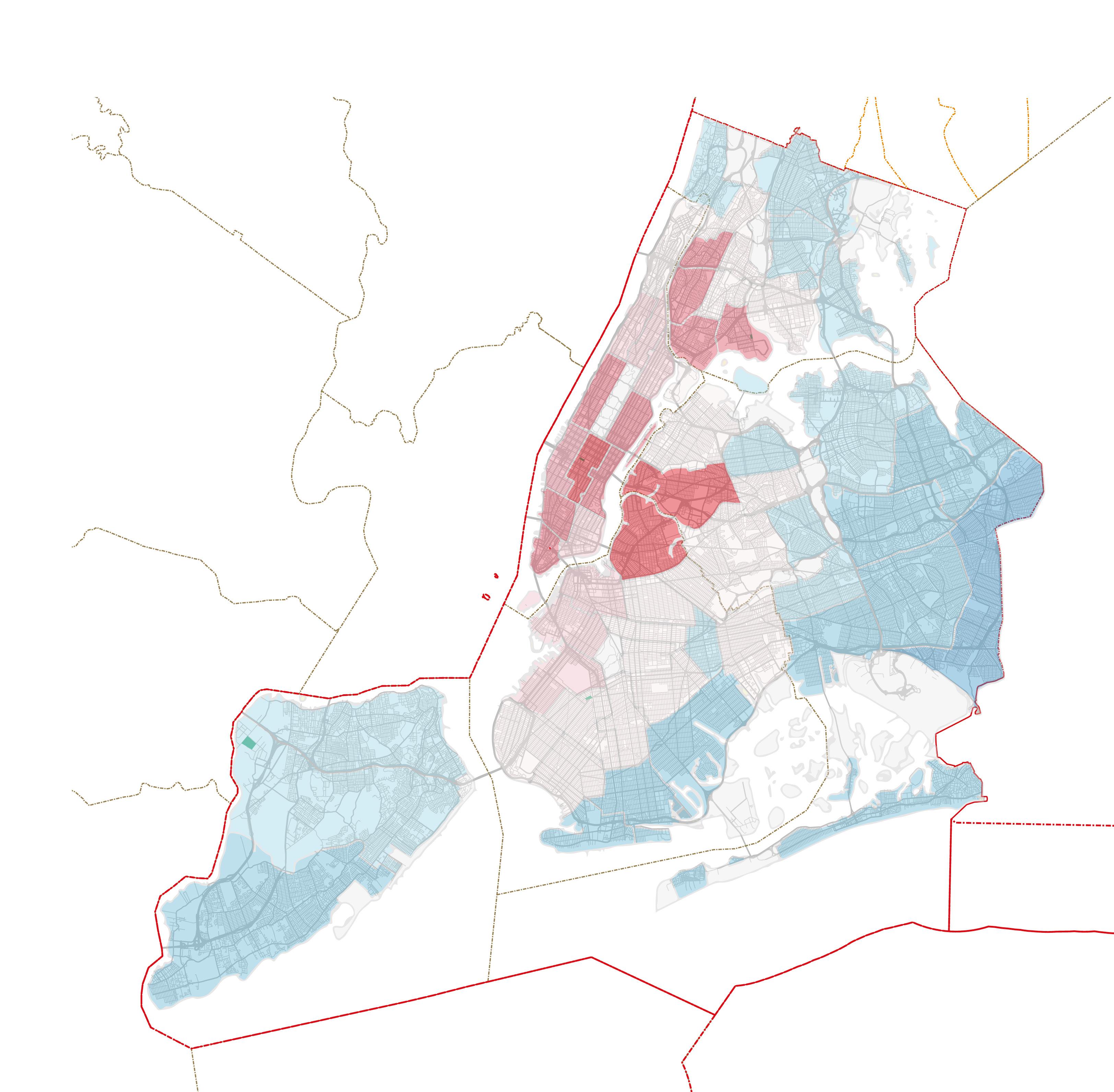
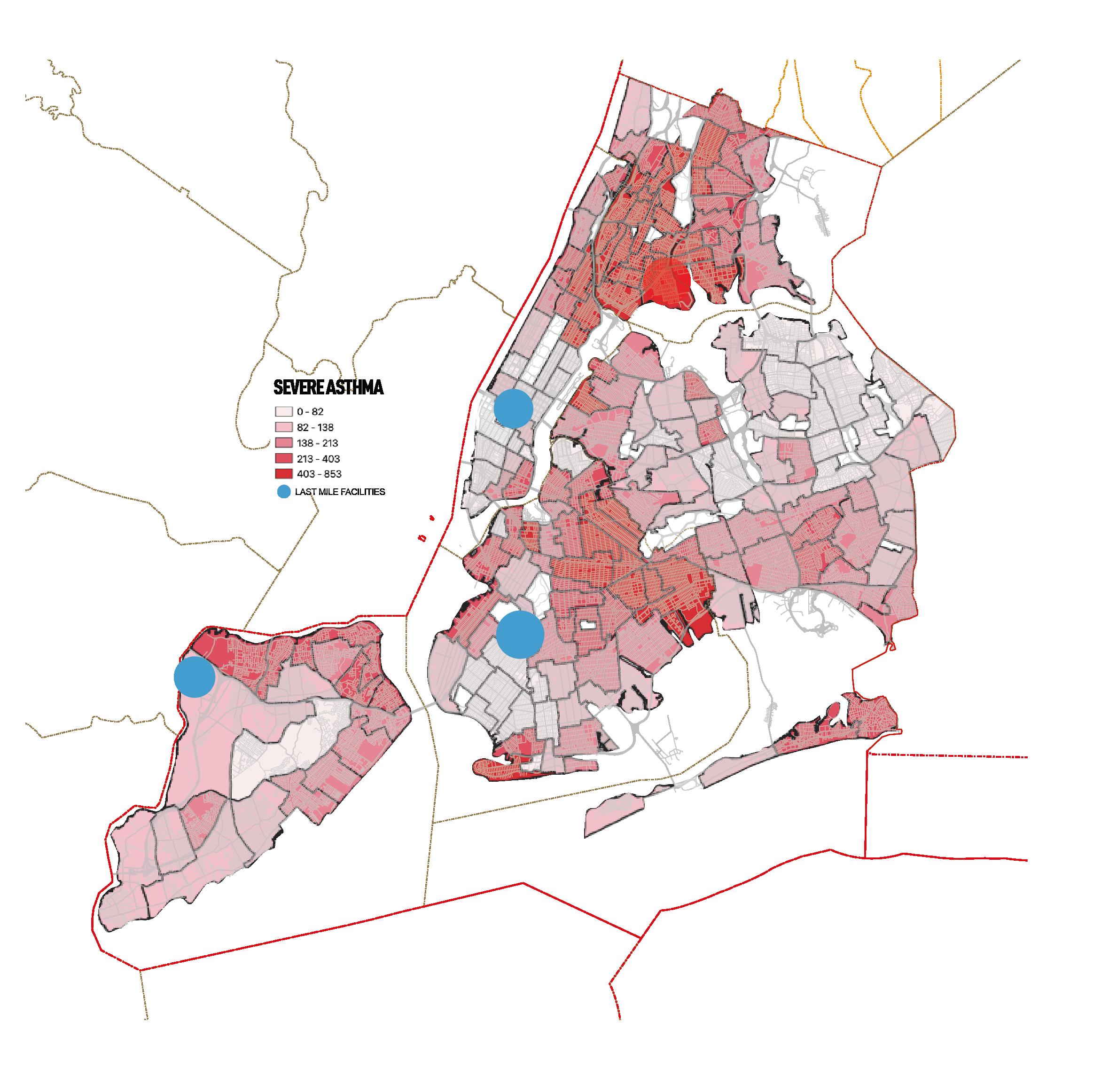
The map shows the asthma rates throughout New York, and in blue, it shows the zoning for storage facilities locations. Higher asthma rates in all neighborhoods coincide with the storage facilities’ zoning. It means that all low-income residential areas surrounding industrial zones are affected by more air pollution. It again shows environmental racism,
1F. TRANSPORTATION SAFETY CONCERNS:
Regarding the transportation safety concerns, it significantly increases the truck traffic and reduces the safety of pedestrians where last-mile facilities are located. Congestion blocks car circulation and increases car crashes. There is no clear signage specifically for truck parking or loading zones, which creates double-lane parking, blocks vision and brings about traffic problems blocking sidewalks for pedestrians. For example, two-way streets (in Sunset Park) make the truck loading even more complicated. Accidents on the road happen more often because of an increased volume of trucks and cars, leading to a significant load on the infrastructure itself and not to mention the blocked bike lanes by trucks.
Last-mile is driven by the supply and demand in the market of online retail. While cities can take steps to mitigate freight transportation issues, some experts say the problem also calls for consumers to take a close look at the way they order goods and their preferences for online shopping and preference for same-day delivery services. It is not like there are many trucks with no connection to us. All the truck traffic in our neighborhoods is serving us. People are quick to blame truck drivers for traffic and safety issues without considering the role they might play in bringing those same trucks to their streets.
Is the government controlling the exponential growth of these last-mile infrastructures in different neighborhoods
to maintain safety and enhance sustainability practices? For example, the Red Hook zoning issues are neighborhood zoning that allows logistics centers to be built as-of-right. Red Hook cannot prevent more distribution centers from coming to the area because its zoning allows delivery hubs to be constructed without special permits or environmental impact studies. Locals have petitioned the city to amend the neighborhood’s zoning. They are also requesting a comprehensive traffic study to determine the neighborhood's potential impact and call for a moratorium on new last-mile warehouses.
Truck driving provides a lot of good-paying jobs to folks of low education levels and limited English proficiency; that is why most of the workers are immigrants.
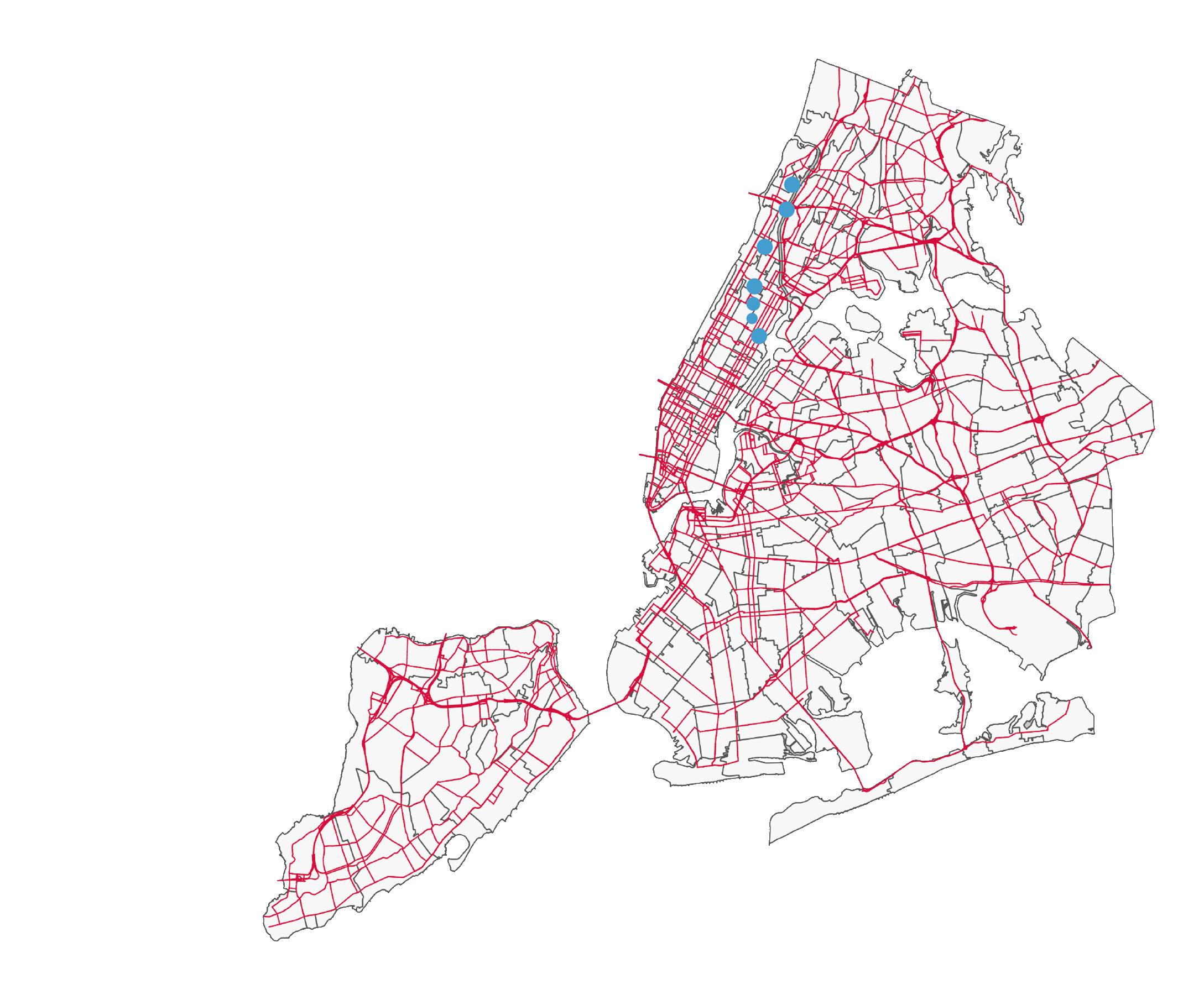
TRUCK ROUTES AND ACCESSES TO THE CITY
Access to the city Truck routes
1G. LABOR:
It forms the resilience infrastructure; in the pandemic, workers were forced to go to work, becoming frontline workers. They became essential workers that are the first responders to the last mile, and these workers are almost all immigrants and minority groups. One big issue regarding immigrant workers is that they need access to technology, such as phones and tablets, to log in to some warehouses. Immigrant workers primarily live in low-income residential areas. They do not have the necessary capital to access technology, leading to no access to the internet on smartphones, the absence of credit cards, and many more issues.
On the other hand, a big issue regarding labor is Amazon and other large companies' pressure on small businesses. During the pandemic, big companies demonstrated they were helping smaller businesses. Nevertheless, in reality, “The mantra is not so much “move fast and break things.” It is “grow as fast and as big as you can so that you can then act as a gatekeeper and make others bend to your will.” But do it with a smile, and pretend you are a pal.”8 Amazon, directly and indirectly, impacts inflation, jobs, and investments. Companies see
themselves forced to adapt or close; there are even a dozen or so big companies that amazon is slaying this year. The media is calling it death by Jeff. A new coalition formed with Main Street businesses has emerged to target this issue called “Small Business Rising.” It shows the magnitude of small businesses' cost because of Amazon’s unstoppable growth. This has highly affected restaurants and small grocery stores because of Amazon's same-day delivery service. It has also been a way of exploiting essential workers, particularly during the pandemic with a high demand for different products.
How are the working conditions for this new human infrastructure in the last mile?
It was a hidden periphery that now has become the foreground. Their workload increased significantly when the pandemic struck, so are they being protected? The pandemic has negatively impacted workers, so they need to be taken care of. It is the new normal, and there is a new labor pool arising. It has to be taken by companies, but is this newly created human infrastructure going to be permanently accepted?
2. ONLINE RETAIL’S IMPACT ON LABOR: LOS DELIVERISTAS + WORKERS JUSTICE PROJECT
The research and project focus is on the labor impact because, during the pandemic, there was an increased need for public space. With the increase in online retail demand and movement of goods, delivery workers have become essential workers. This hidden issue has now become the foreground, and The Deliveristas Unidos organization is fighting for labor rights regarding their right to use public space and public services. These refer to comfort stations, bike paths, and resting spots. With covid, the online retail demand increased exponentially, mainly with food delivery courier services, delivery workers became essential workers. With this, many issues arose. For example, no protection exists for essential workers, the minimum wage is not enough, and they do not receive basic needs and services to fulfill their delivery job. This project wants to provide the workers with the rights they deserve. The existing conditions require public space. The services can not only be for workers but can target the general public, and workers can be accommodated in it.
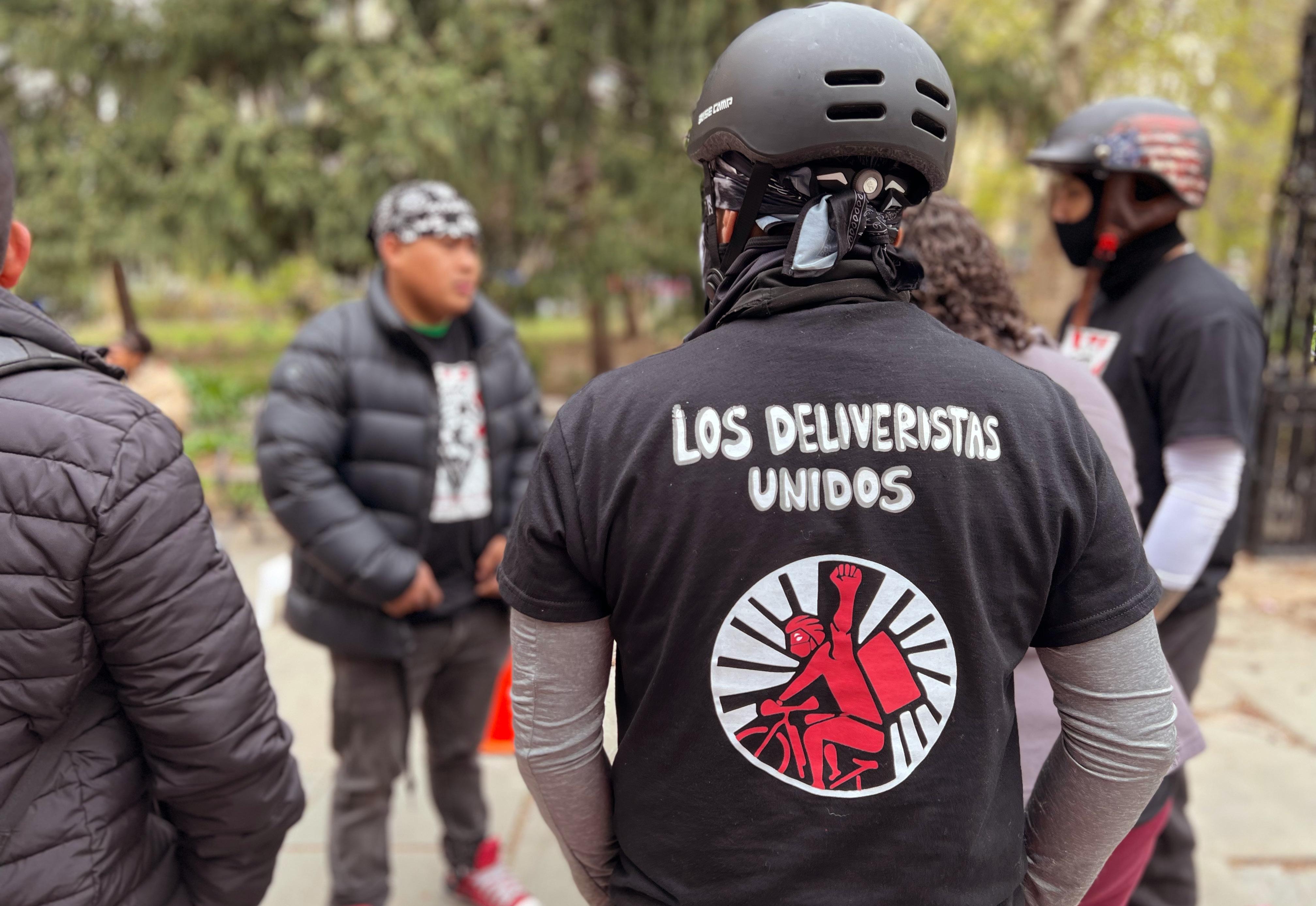
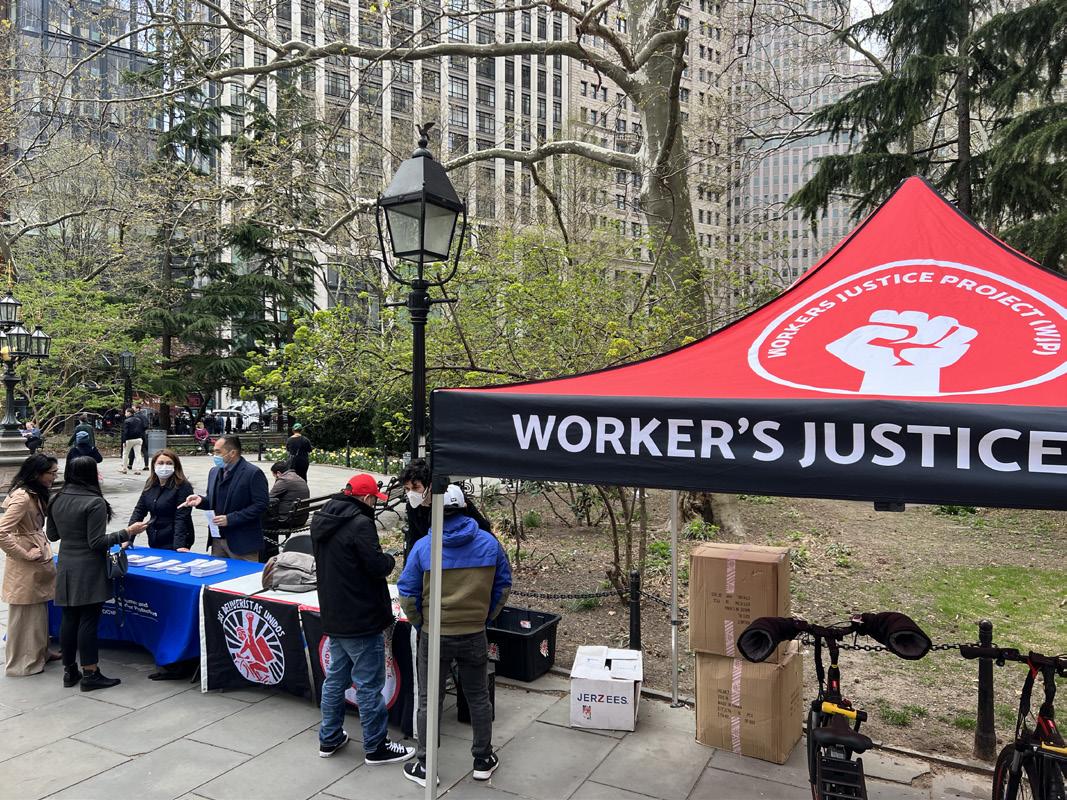
WORKERS JUSTICE PROJECT
It is a community-based non-profit organization that fights for change. They launched the Los Deliveristas Unidos campaign to advance essential workers' rights and help them fight to achieve basic needs and protections in their jobs. They are seeking:
- The right to access restaurants bathrooms
- A minimum wage
- Protection of tips
- Increase security to stop bike theft
- Access to benefits in case of accidents
- The ability to appeal in case of being banned from an app
- Access to PPE to help prevent the spread of covid
LOS DELIVERISTAS
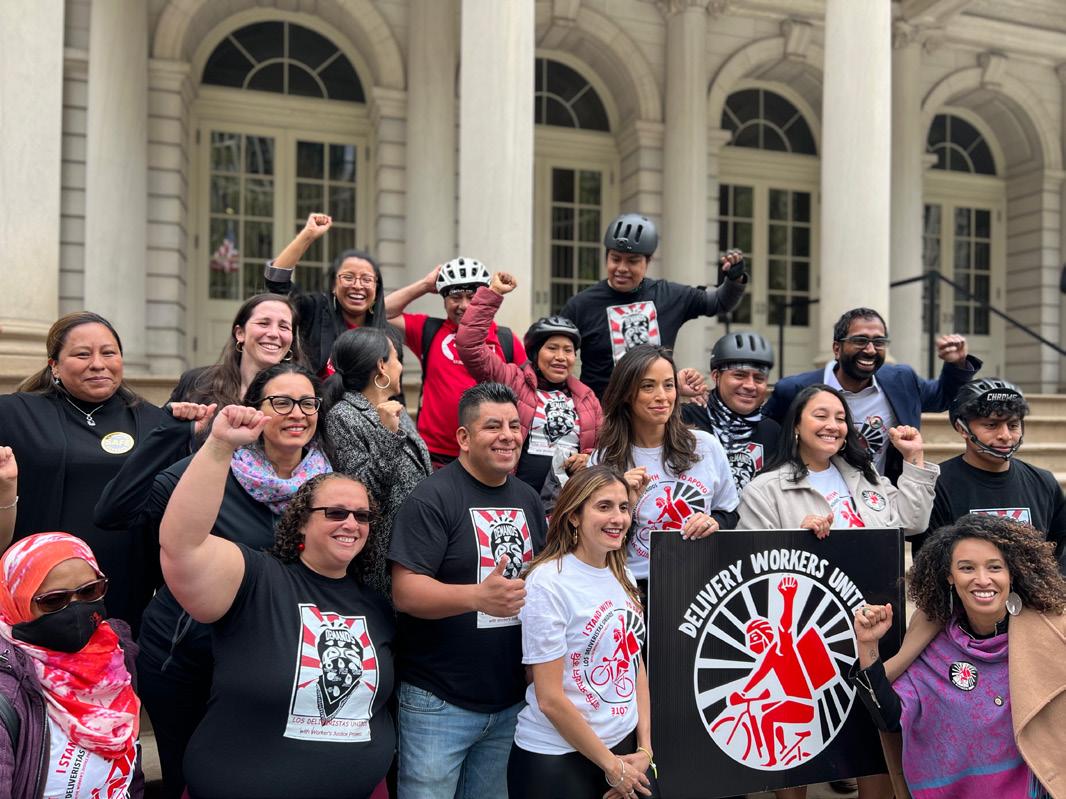
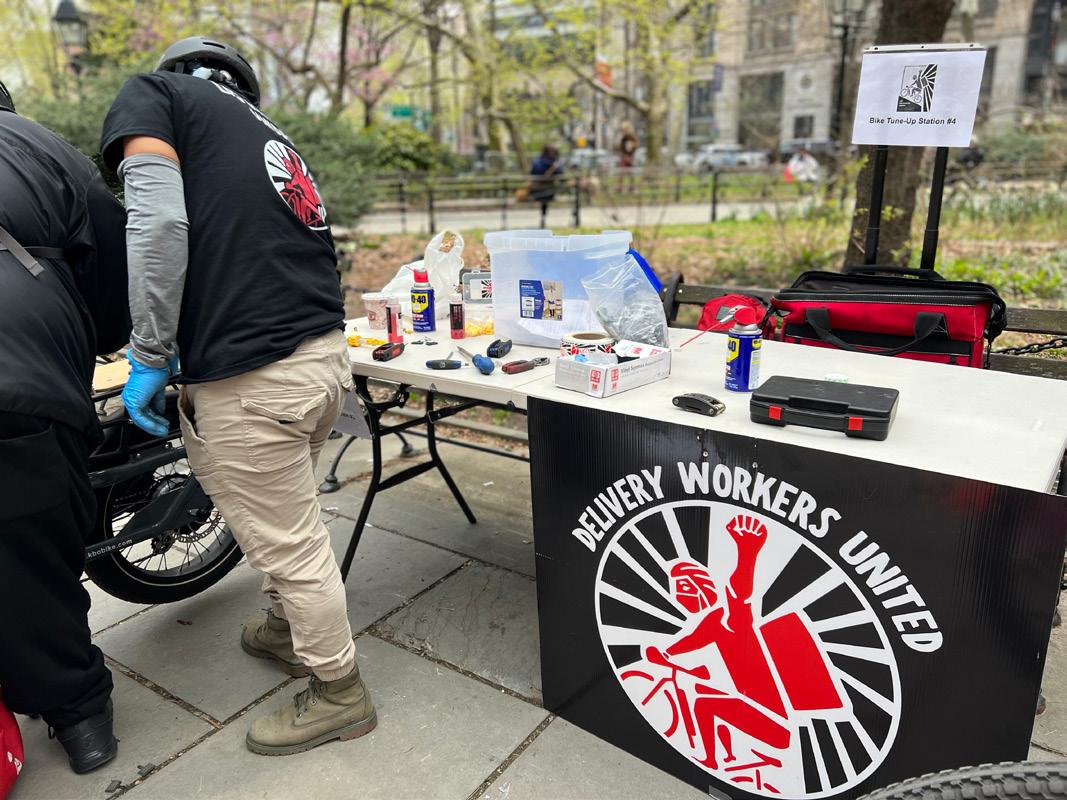
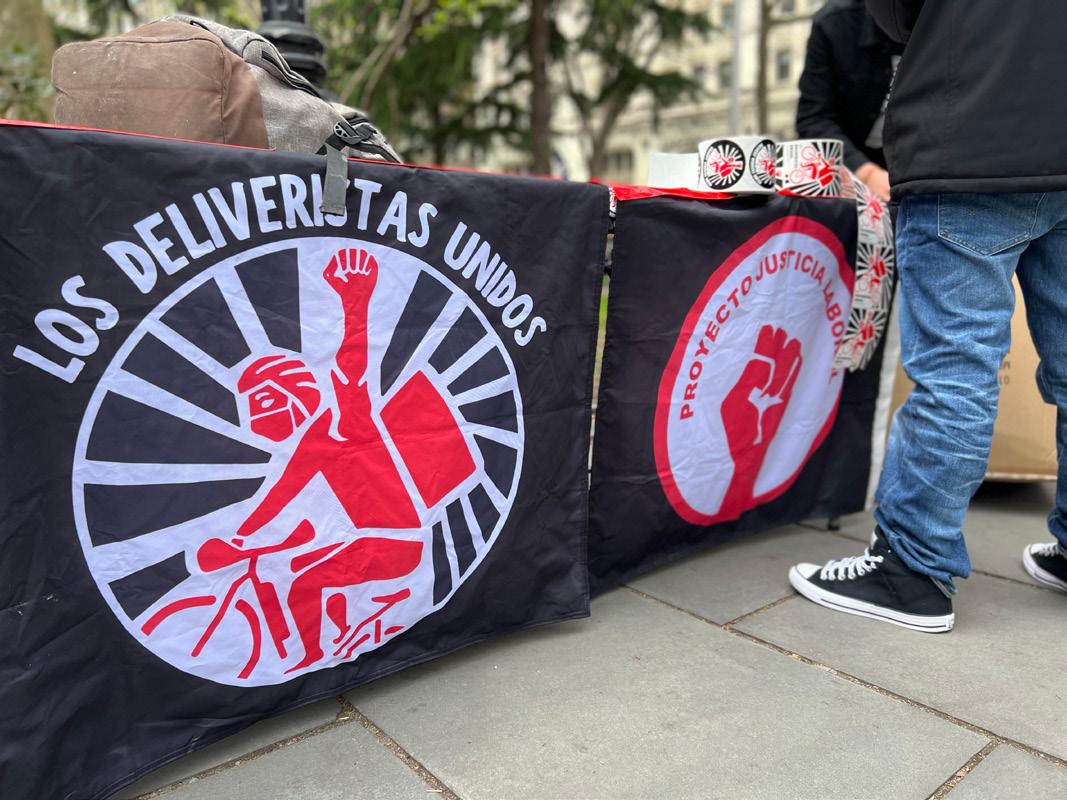
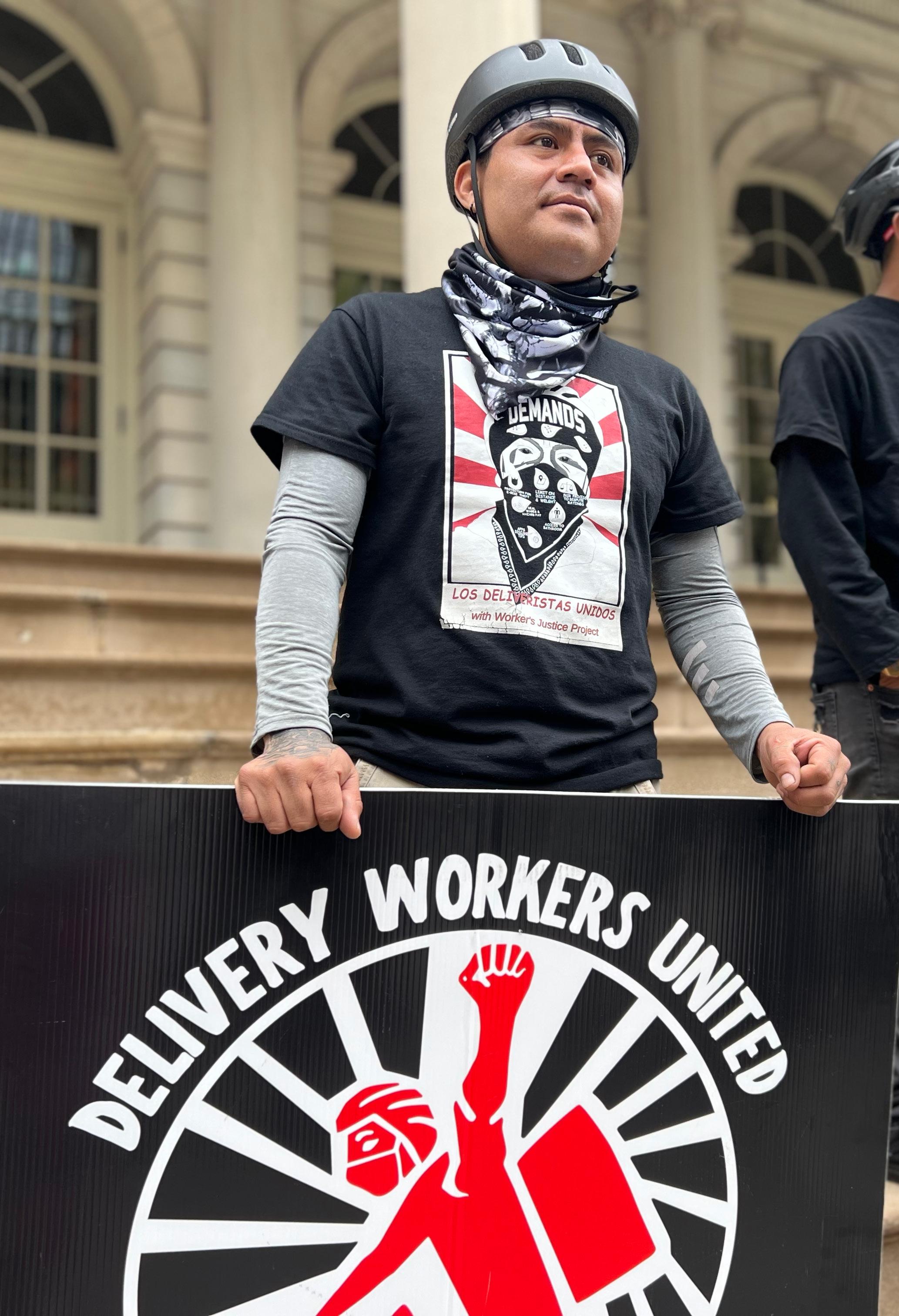
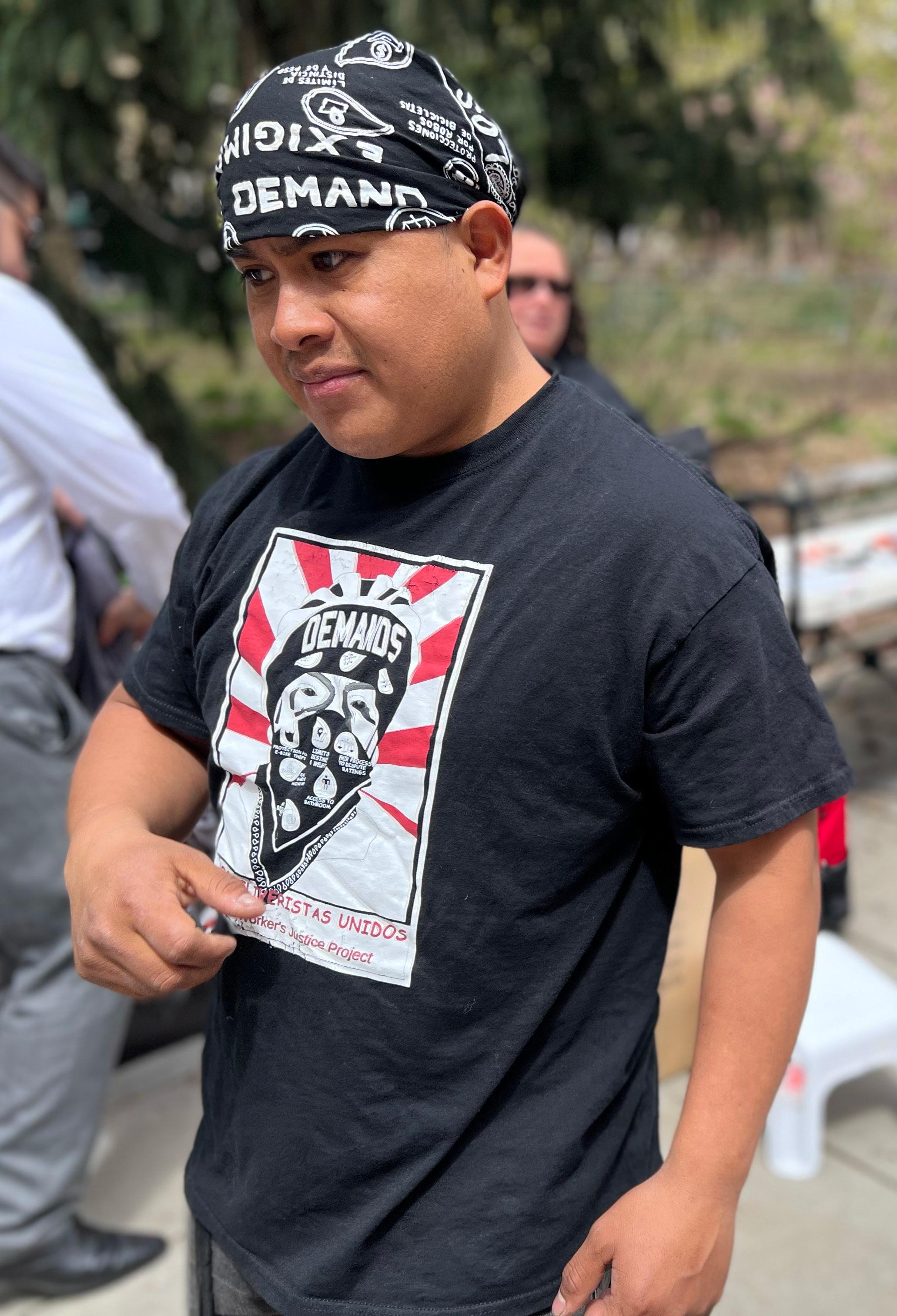
It is a collective of primarily immigrant app delivery workers who are fighting for justice. It is a new organization created by the Workers Justice Project “to give this vulnerable group of gig workers access to basic rights, such as the right to use the bathroom and a minimum wage. The bitter truth is that many food delivery workers can work 12 hours a day in the cold or rain for multiple food service apps and still not make enough to feed their own families.
Many food workers lost their jobs when the restaurants that employed them were forced to close due to the COVID-19 pandemic. Their only option has been to work through a delivery app, such as GrubHub, DoorDash, Relay, and UberEats. Today, New York City has as many as 65,000 appbased food delivery workers, who continue to keep the city fed.” (Retrieved from their website).
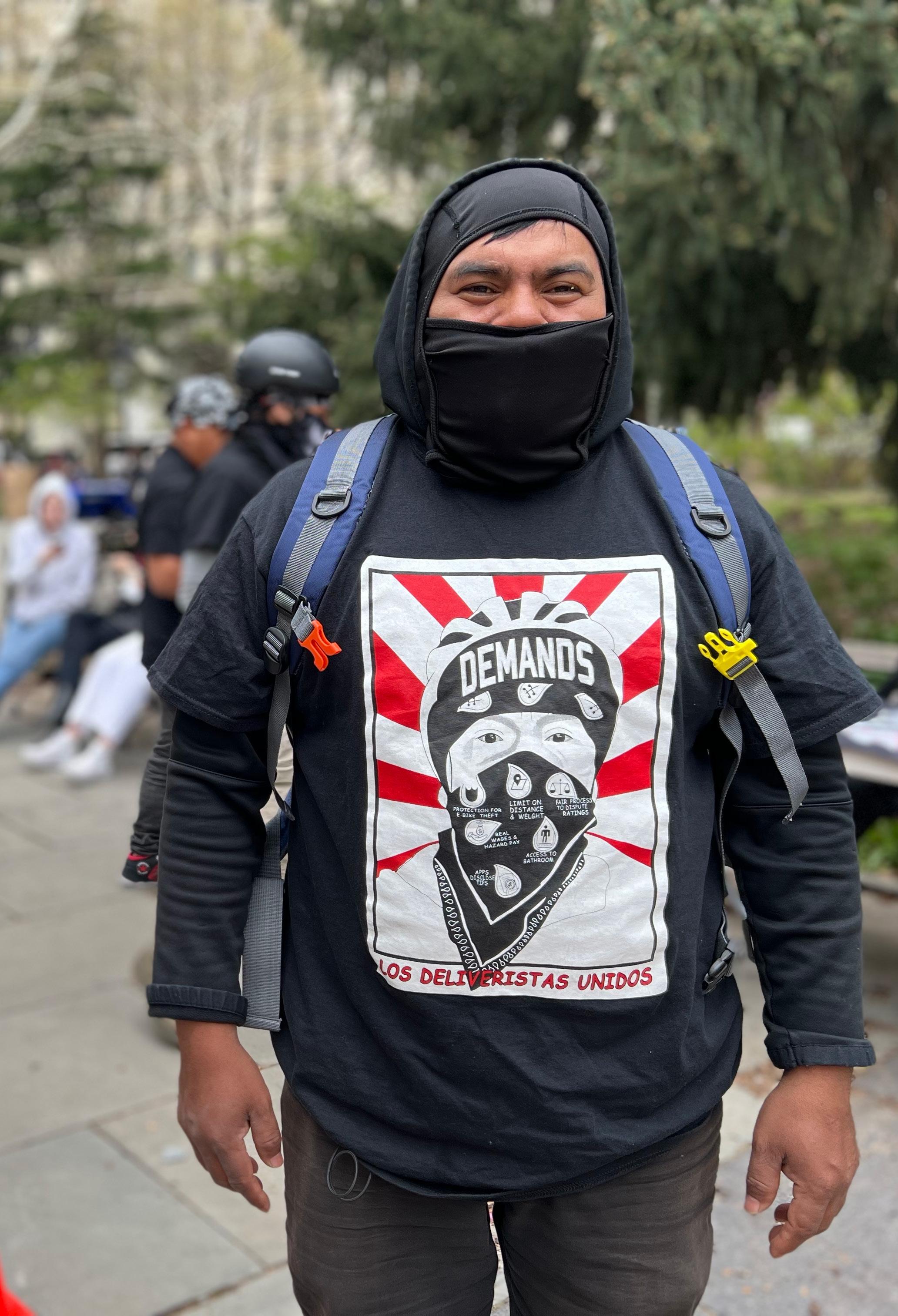
started organizing the app delivery workers. Their values are to promote justice, develop equality for vulnerable exploited gig workers, advocate for fundamental rights and highlight the lack of transparency in the app-based companies industry. Their demands are:
1. The right to access restrooms from the restaurants.
2. The right to a living wage and hazard pay.
3. Essential protections from e-bike robberies, wage theft, and health and safety hazards.
4. The right to use a physical public space to eat, rest, and be protected from extreme weather.
5. The right to organize.
The thesis looks at this from the generator back, delivering the last mile first. Now that it comes first, other things have to be reset. Delivery workers want to be visualized differently in the infrastructure; they want to reposition themselves. This working class wants to be part of the reliance system, formalizing the system of relationships between the apps, the restaurants, and the delivery people. 2 different systems run on to each other, commuters and deliveries and last-mile first coming into play.
When the pandemic struck in 2020, many restaurants closed, leaving workers out of their jobs. The only available option was to work through delivery apps (like GrubHub, DoorDash, UberEats, and Relay, among others). There was an emerging app labor force with virtually no rights or protections as lacking access to protective equipment, a minimum wage, or even the use of a bathroom. They work for a tech industry with unregulated practices that skip common employment laws and regulations. So in March 2020, Workers Justice Project
The research explores how the fourth demand can be spatialized. The ideal is a co-design process with the people who developed these demands from the Deliveristas group.
Based on these conversations and the outcome, this can be an advocacy resource for them and help them deliver a proposition for the city agencies (DOT and Department of city planning). It focuses on the spatial contract with workers, solidifies streets logistics, and sees it on different terms.
Fig. 4.6
FIRST GIG ECONOMY REPORT
Worker’s Justice Project, Los Deliveristas Unidos, and Cornell ILR release the first-of-its-kind gig economy report findings. It is a participatory action research project that examined NYC app-delivery workers' working and living conditions. The report was based on a survey of over 500 app-based delivery workers in New York City. The survey and report detailed the conditions gig-delivery workers experience in New York City. The authors (Maria Figueroa, Ligia Guallpa, Hildalyn Colon-Hernandez, Glendy Tsitouras, Andrew Wolf) found that app-based delivery workers experienced low pay and a large number of incidents of physical assault and racial discrimination.
They also show that app-delivery work became the main immigrant job during COVID. “For delivery workers, the workplace comprises the city streets, the restaurants where they pick up food, customers’ front doors, and building lobbies and elevators. Although delivery workers are considered essential workers, they lack basic safeguards and sanitary
conditions at work. So parts of the gears of the human infrastructure and the reliance system to work are missing.
The most basic need that remains unmet for delivery workers is access to bathrooms in restaurants or public spaces. 83% of the survey participants reported that they had been denied use of a bathroom at restaurants. They state to explore investment in public infrastructure to improve the safety of delivery workers and the public. Encourage traffic safety training at no cost for delivery workers.” (Los Deliveristas Report).
GIG ECONOMY
Professor Andrew Wolf9 stated that he worked with The Deliveristas as part of the surveys for the Report "Essential but Unprotected: App-based Food Couriers in New York City." He says there are two elements to the physical infrastructure: better bike infrastructure in general and on the other hand, what happened with these companies, is that they have privatized the needs of the workers, so before when everyone was employed as delivery workers by the restaurants’ companies, bathrooms were provided as well as the bikes. Therefore, all the regulations were written assuming that the restaurant was providing these needs and the delivery persons were their employees. So currently, the issue is that restaurants do not want to provide bathrooms now that most delivery people are working on the apps. This problem got even worse during the pandemic, as restaurants did not want the delivery workers coming in because it was a health hazard. Consequently, what really exacerbated the problem with the pandemic was that the public restrooms were not open as much as they usually are, as the city was closed for health reasons and the park clean-up stopped. There is also the issue of how the apps work by putting pressure on the employees not to take bathroom breaks.
In particular, they are pushing for more formalized facilities that would be more city and worker-controlled, where people can take a break and store their bikes, and maybe have bathrooms and something to eat. On the other hand, they are pushing to have better bike lanes as he previously stated, they need to be wider as more people, not just delivery workers, more people, in general, are turning to e-bikes and the bike lanes we currently have are not designed for this new assumption. He thinks it’s a good idea to spot the infrastructures and the fourth demand of The Deliveristas. Andrew Wolf worked as a delivery person for three of the apps and was part of the organization as part of his own research, but none of this data is on the report. He did this because it helped him know better what to ask the workers. The report was from a survey they conducted.
Before the apps came around, restaurants employed someone to do their food deliveries. So whereas on the apps, you go to many restaurants in one night, so restaurants stopped employing people and started using the apps. A direct employee should provide a bathroom to its workers, so now, because of the independent contractor, they are misclassified, in his opinion, so delivery workers were not given the right to use their bathrooms. This was often due to racial discrimination, they are much more likely to say no to a Latino worker than a native-born worker. The new law that the city passed says that restaurants are not allowed to say no to delivery people when they come to the restaurant to use the bathroom. The Deliveristas are overwhelmed with requests, but it’s potentially something they would be interested in if they had the time. They just had a meeting that was reported with Senator Schumer, and he was talking about building rest stops for them.
The gig economy is growing faster than the regulatory system of the city, so what are the regulatory actions that are taking
place and will take place to control this phenomenon? In theory, existing laws have to be reinforced. The companies claim that they are independent contractors, but it is also the companies that decide if someone is an employee or not. It supposedly has to be done by the court and the regulators. Therefore, the initial failure was not saying to these new companies that the employees are under the law. The law states that someone is an employee if someone directs and controls their work, so the fact that the apps punish the employees if they don’t accept too many orders, then the orders say where the delivery worker should go, they are constantly being told how to do the work properly. They are trying to use technology to avoid labor law. They claim that the innovations they provide mean they do not have to follow the law. So in that sense, they have to reinforce existing laws, but where there are differences, there are electronic raises, the bathroom problem that is confused with safety. All the safety laws are written for the restaurants to provide the workers with reflective equipment, so with the apps, it has to be clear who provides that, who is responsible for the workers to get the training. Thus there has to be an update, but this is just about applying existing laws correctly and not letting this new technology company stay away from the law.
What is his future view? He assumes that this will continue worrying workers in the US. He does not think there is a functioning federal government, so he does not see anything happening at the federal level. Thus in certain cities and states, we will see some workers get specific rights, and then in other places, there will not be any changes. He states the most significant thing with these apps, is that they have not shown a way to make money, so he cannot see what will happen for them in the long-term future. Wolf states that there will be benefits in moving to a more consistent employment model because then companies can manage the number of workers they have, and they would be able to invest in quality. The companies are short-sided about what they give up by not admitting they have all the control. He states that more workers' will attempt to create collaborations. A point he notes about the Deliveristas is that it is not only the worker’s rights but also the restaurant’s rights because the apps also take a significant part of the restaurants' profits. Thus when the Deliveristas were pushing their bills, surprisingly, the restaurants said they wanted protection as well. He denotes a unique ability for the two sides to come together and make positive changes.
Wolf states that The Deliveristas have come back and forth with the idea of becoming a labor union or labor force. He explains a Workers Center that seeks to represent workers. These centers are prevalent for more informal immigrant sectors as delivery workers, where they attempt to provide legal support and services and fight for policy reforms. These centers do not go all the way to formally unionizing; these are more movement-focused centers and organizations because they do not want to get caught in the legal system and bargaining if creating a formal labor union. He says independent contractors do not have the right to unionize
because the employment status of the workers would have to be addressed first. He states that they are already a union, but if they wanted to become formal, there would have to be court cases or legal changes to the employee’s status.
Professor Andrew Wolf notes that four years ago, the city was fighting against the delivery workers; they were viewed as a problem because of the rise of the e-bike. There was this lack of understanding of why people were turning to e-bikes. The food app companies push delivery workers to get the e-bikes, and they are more expensive than standard bikes. So there was this misunderstanding about why workers were getting these bikes, and the upper-class population did not like the e-bikes couping the whole city. So, the city was going after the delivery people, therefore giving the police the ability to overly criminalize e-bikes. Thus, it is very remarkable that four years later, we are now at this point where the city is celebrating and passing on this lawsuit (minimum wage for delivery workers). Andrew says it is fascinating that the biking infrastructure has become more of a working thing; people now are biking for the job rather than just for commuting or pleasure. Also, there is a massive disconnect between all the best bike lanes in the city in the upper-class neighborhoods, and there are no excellent pathways to get people from the working-class neighborhood to the city. So there is a significant equity problem as the city puts together its master plan for the next few years of bike lane development too.
Consequently, in an interview with Mr. Do Jun Lee10, creator of Intersectional Riding, he mentioned the e-bike policing issue that became legal before the pandemic for deliveries to be faster and coup with consumers' demand. He states that more workers are working for the apps than for the restaurants; hence, workers cannot use the restaurant’s facilities. A common problem all researchers denote is that apps misclassify workers as independent contractors, hitting the cost of bathrooms and e-bikes chargers; this is how apps get away with it. A fundamental issue Do Lee marks is that workers do not know what happens with the data they produce; they are not aware of what happens with the customer data. The Workers Justice Project creates The Deliveristas to tackle the working conditions in the gig economy.
Mr. Do Lee notes that The Deliveristas are currently focusing on securing funding –meeting with Senator Schumer– for a Worker’s Center located in South Manhattan to gather, organize and rest (this is what they refer to as infrastructure). They are also looking for apps to fund this, to pay for the cost of the non-provided worker's benefits, and get away with it. Professor Do Lee indicates the issues with building new permanent infrastructures as comfort stations because influential neighborhoods often object to this type of project because of the construction noise. They see it as a threat to their space. He distinguished that a movable idea (less permanent) would work more efficiently than a permanent one. So based on this, movable stations would work as a truck, parking and moving through different parts of the city, being located by an app. The truck could move based on where delivery workers are or vice versa. Mr. Lee marks how the problem of gig economy workers' benefits hits any independent contractor, such as canners. We are facing this new era where informalized work wants to be formalized.
3. PUBLIC SPACE, SERVICES, AND INFRASTRUCTURE:
In the Digitally Mediated Urban Spaces chapter, I want to show how “Wiring the streets, Surging the Squares,” written by Timothy Jachna, he explains how public spaces are denominated by being de facto or de jure. It means some public spaces are public because they are determined by the official degree and design; meanwhile, other public spaces are public because they fall into systems of control and ownership and are “made public.” Private activities usually filter these public spaces (capital dynamics and community interests); therefore, public life also filters private and commercial spaces that are also filled with digital technologies of communication and networks of connection. Consequently, Jachna states how using these technologies is involved in reconfiguring public spatial practice.
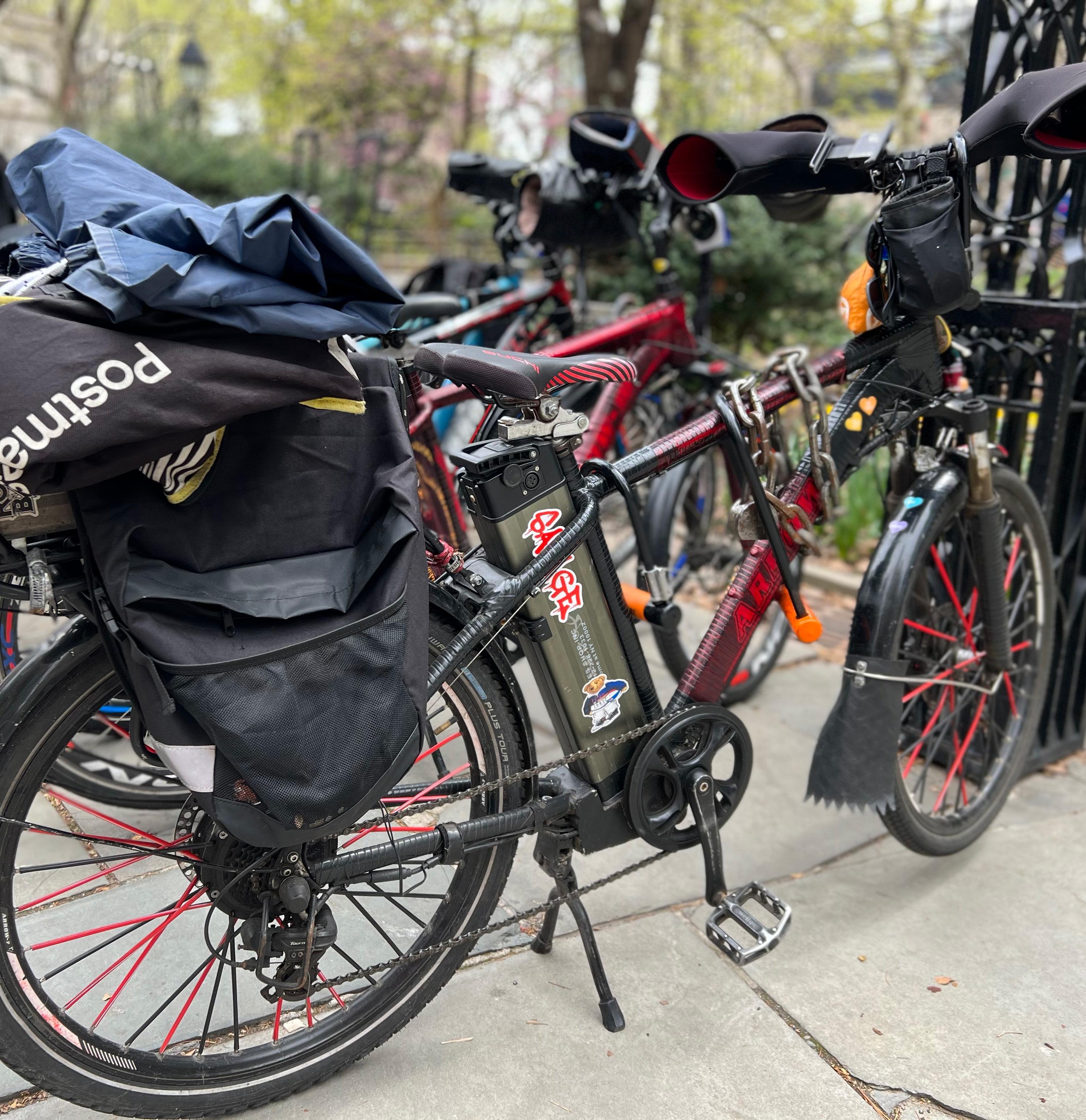
It relates to the research topic because the development of the new technology companies that grew exponentially during covid changed the public spatial practice. It concerns streets, bike lanes, parks, and the behavior of the population towards the public realm. In this case, technology reconfigures the use of bike lanes, as it allows for the increase of demand in delivery orders through the apps. More demand requires more delivery workers, leading to more congested bike lanes and streets. As well, for the orders to be delivered faster, some workers are using e-bikes; this brings other issues to the table; for example, the bike lanes are not suited for this type of bike. Electric bikes are bigger and faster, it is in between bikes and motorcycles, so now e-bikes have become a de facto job requirement for some apps. “Delivery workers now move faster than anything else in the city. They keep pace with cars and weave between them when traffic slows, vigilant for opening taxi doors and merging trucks. They know they go too fast, any worker will say, but it is a calculated risk. Slowing down means being punished by the apps.”11 E-bikes are causing more accidents and need more space, wider lanes completely change the public spatial practice. “Today, delivery workers have an overwhelmingly preferred brand: the Arrow, essentially a rugged battery-powered mountain bike that tops out at around 28 miles per hour.”12
Parks are also affected by the new technology apps because delivery workers require more parks and public space due to the working contract methods that the gig economy has in most cases. All delivery workers are independent contractors. This eliminates the need for the app companies to pay minimum wage, offer benefits, or provide office space, and this saves them up to 30-40% of labor costs. Experts state that one out of every ten workers are considered independent contractors; these figures changed exponentially after covid when the online retail demand skyrocketed. Having said this, gig economy workers do not rely on office space or any benefits provided by the companies, so parks have been reconfigured, and it also works as resting spots and shelter for delivery workers.
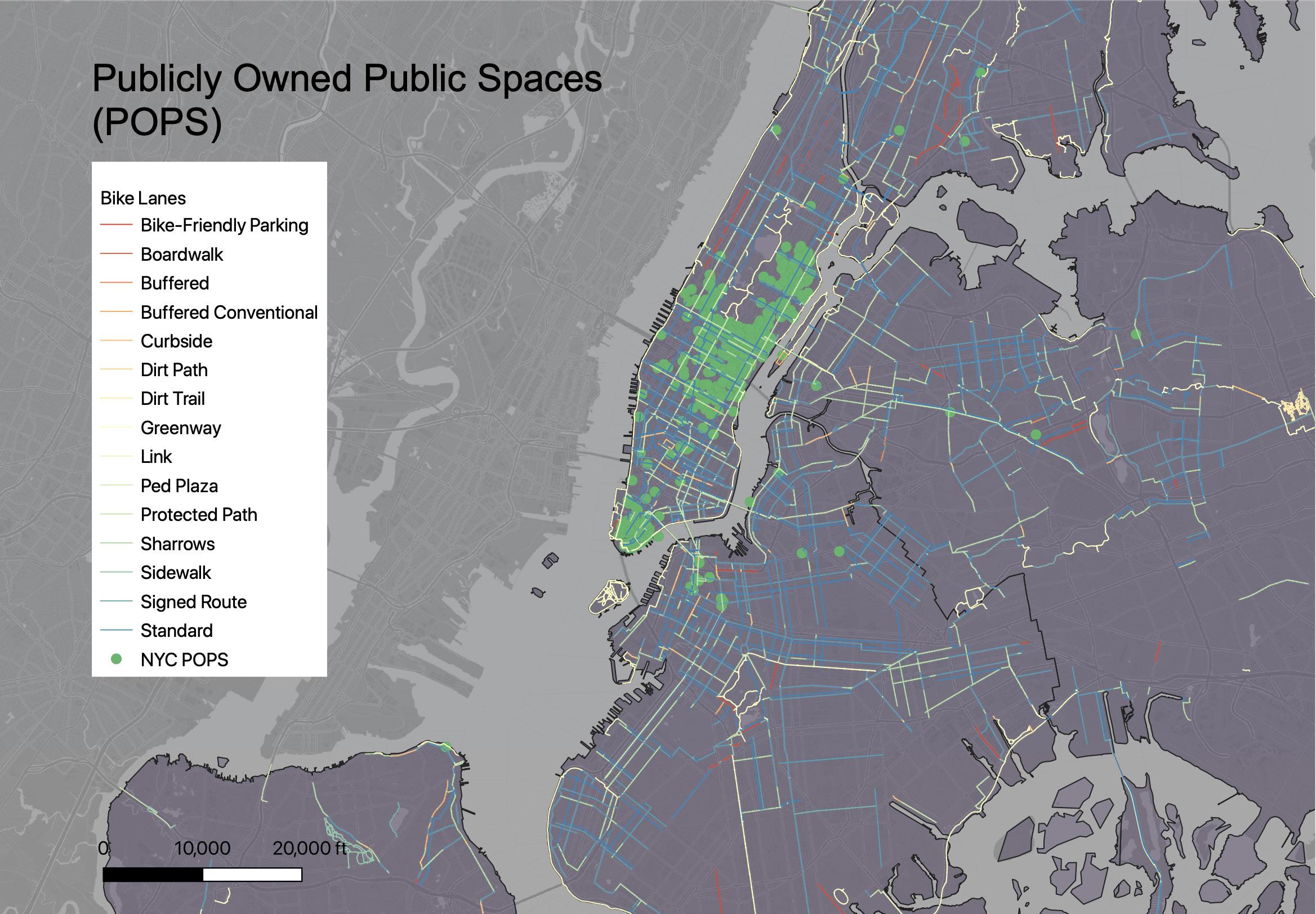
Public space as a public good is biased; there is a total of 7.2 acres of public property mismanaged. There is a transfer of ownership of public properties to private, for-profit
developers. They will be a development of public property by LIC private developers, proposing a mixture of land uses. It is what is currently occurring in Long Island City. During the pandemic, there is an increased need for public space, and with the increase in online retail demand, the movement of goods, delivery workers’ have become essential workers. This hidden issue has now become the foreground, and The Deliveristas Unidos organization is fighting for labor rights regarding their right to use public space and public services. These refer to comfort stations, bike paths, and resting spots. The Deliveristas have a list of demands, and this thesis concentrates on their fourth point, being “The right to use a physical public space to eat, rest, and be protected from extreme weather.” the thesis focuses on the spatial contract with workers, solidify logistics on streets and see it on different terms. There is an existing problem between the private and the public, and instead of allowing the wealthy to become wealthier, they have to concentrate on giving out public goods to the public. As there is ample opportunity on this site for public land directed to public uses, core housing is a significant point to build hubs for delivery workers (permanent or movable) and provide the public service lacking in the area. It requires a process to be followed about how this service will be developed. How it is going to be maintained, how this demand for “physical public space to eat, rest, and be protected” will be visualized, and what will be the normative. This space will require a normative even though it is of public use; there must be a spatial contract between the worker’s capabilities and the space.
There is an existing problem between the private and the public and the government. Instead of allowing the wealthy to become wealthier, they have to concentrate on giving out public goods to the public. This requires a process to be followed about how this service is going to be developed, how it is going to be maintained, how this demand for “physical public space to eat, rest and be protected” is going to be visualized, spatialized, and what is going to be normative. This space will require a normative even though it is of public use, there has to be a spatial contract between the worker’s capabilities and the space. Currently, the public spatial practice is being redefined and reevaluated because the development of the new technology companies that grew exponentially during covid changed the use of the public spatial.
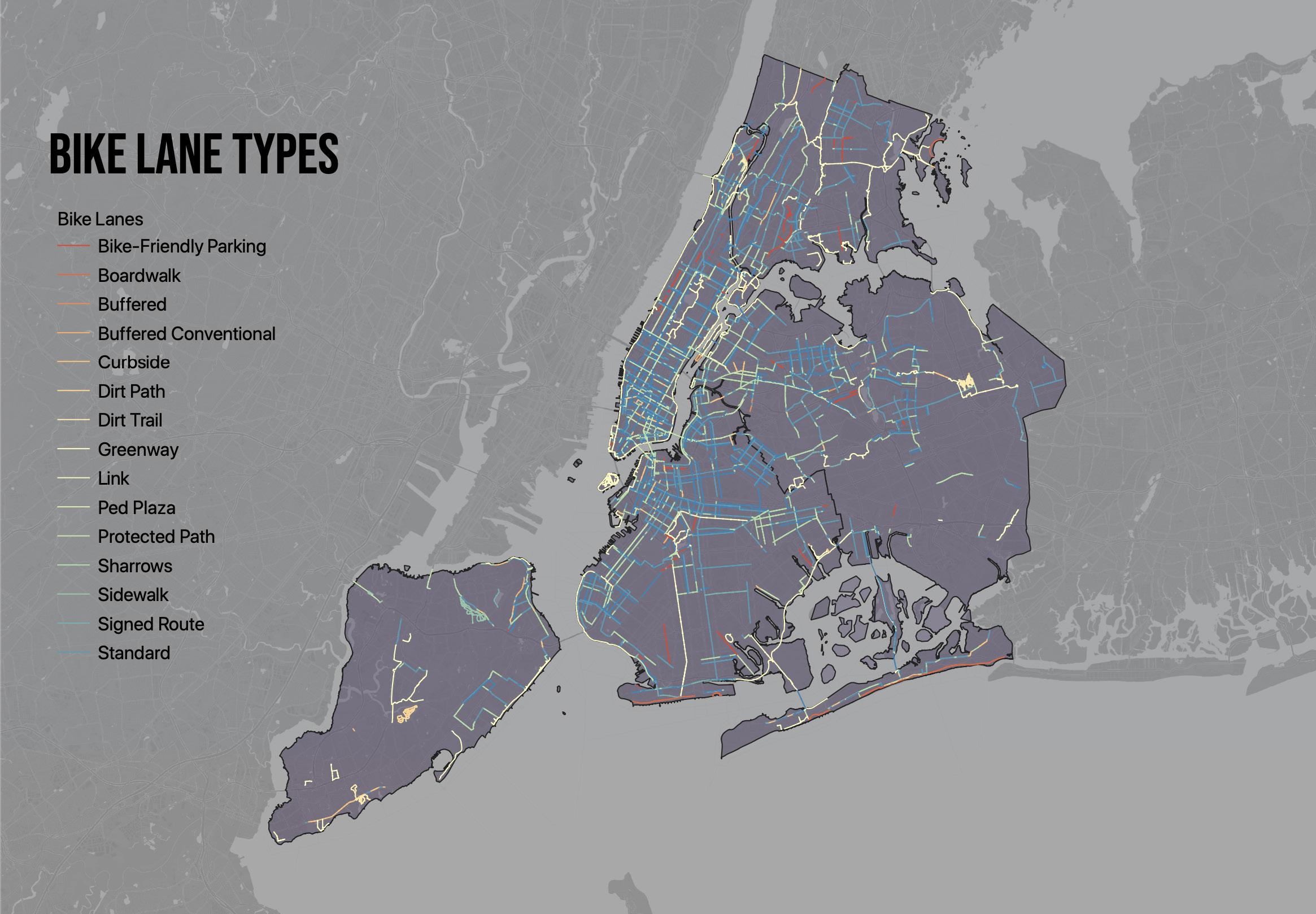
BIKE LANES:
In this case, technology reconfigures the use of bike lanes, as it allows for the increase of demand in delivery orders through the apps. More demand requires more delivery workers, leading to more congested bike lanes and streets. For the orders to be delivered faster, some workers are using e-bikes; this brings other issues to the table; for example, the bike lanes are not suited for this type of bike.
Electric bikes are more prominent and faster, causing more accidents and needing more space and broader lanes, changing the public spatial practice.
MAPS:
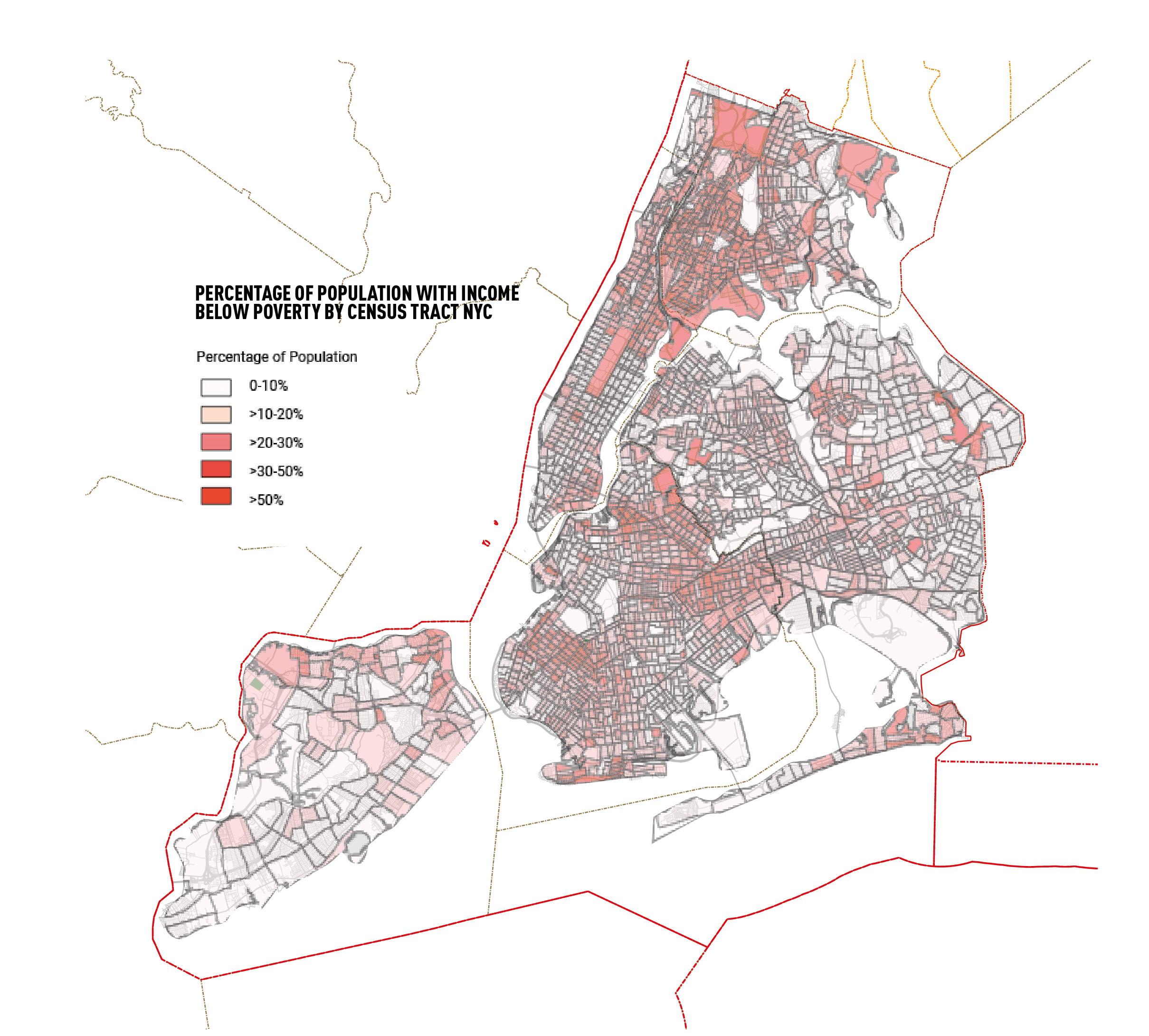
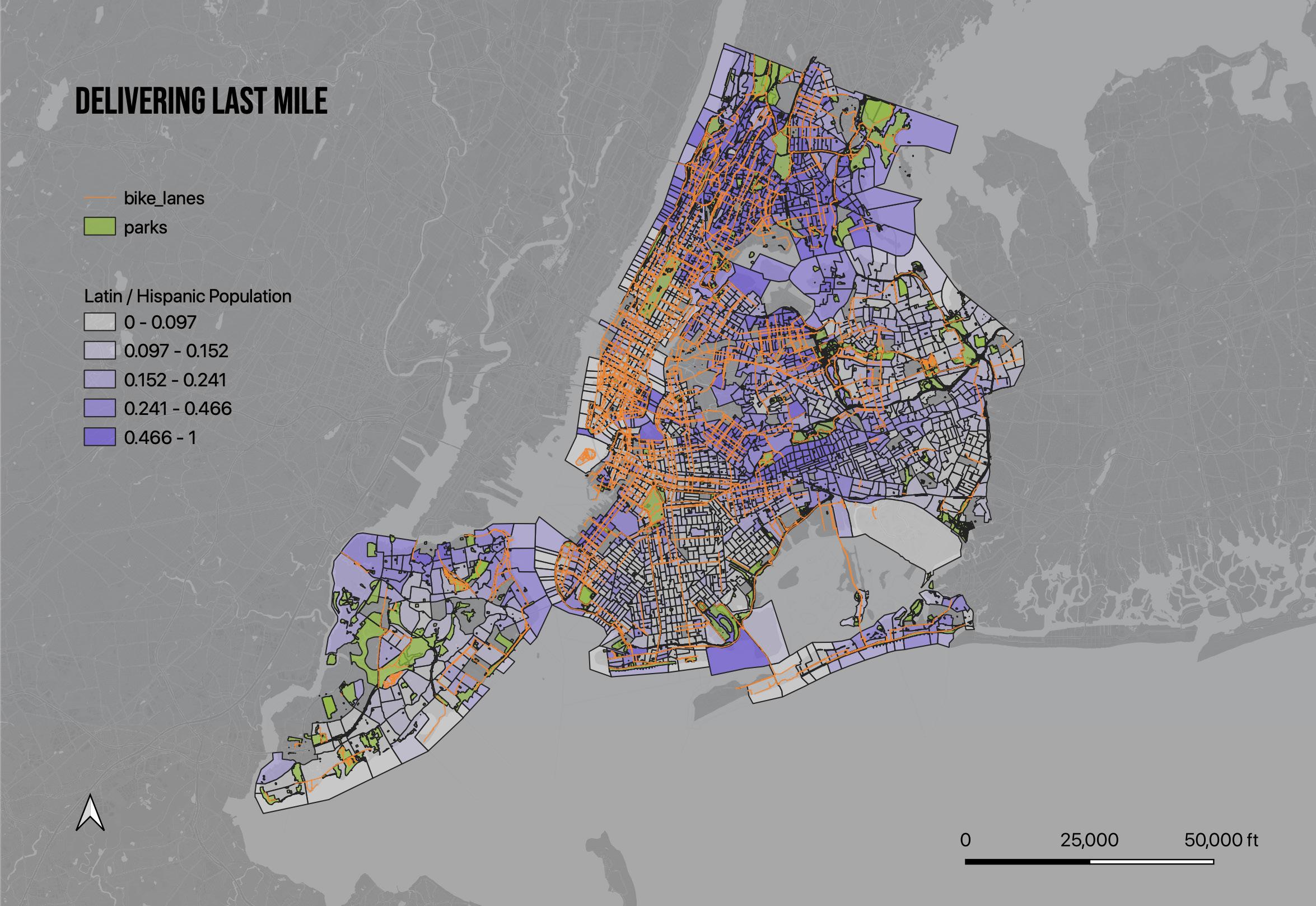
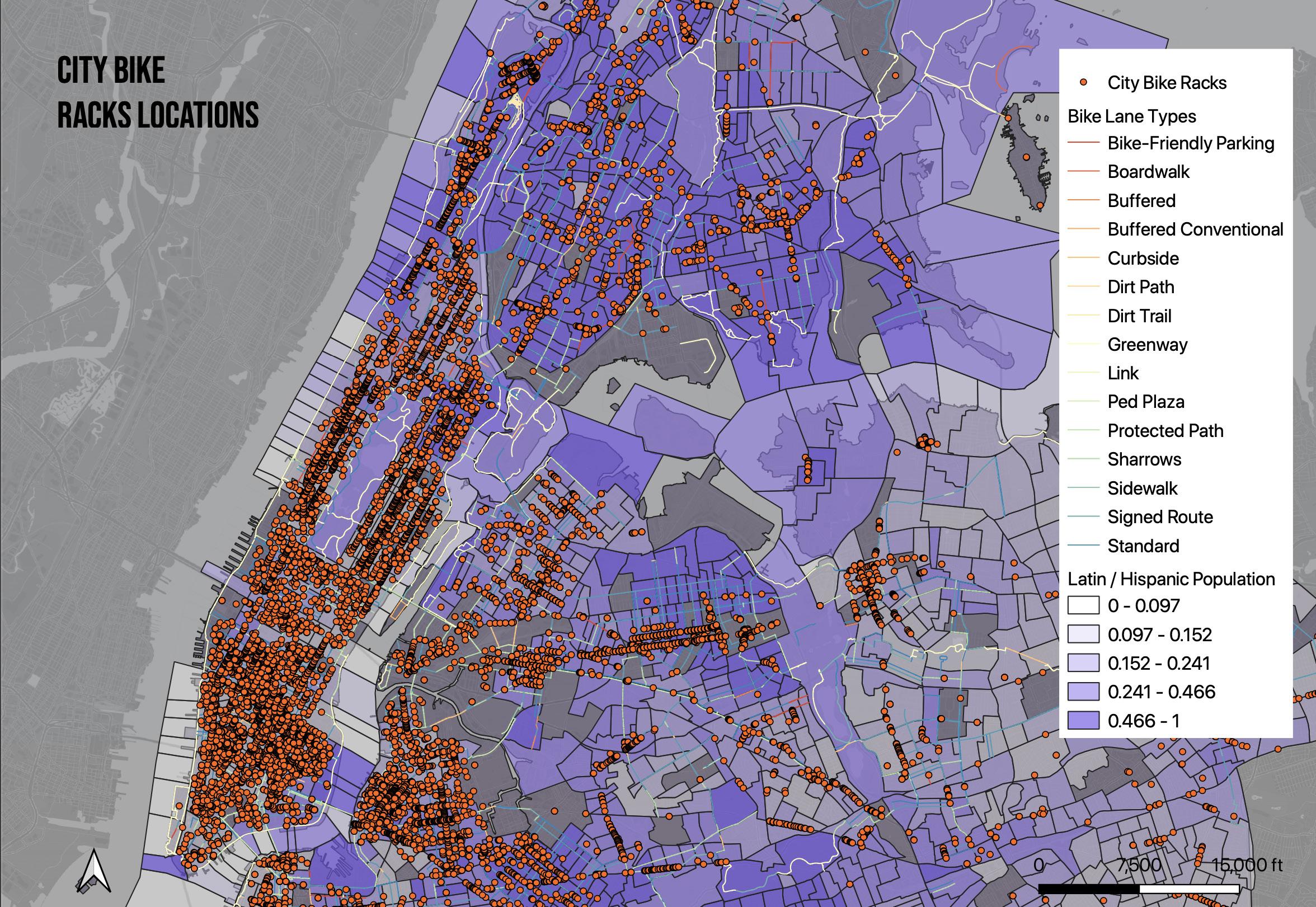
This reevaluation of the spatial practice is seen because, as shown in the maps, most of the working-class population are Latin/Hispanic immigrants who mainly inhabit the suburbs
and areas outside the city. So, moving out of the city, there are fewer bike lanes and fewer bike racks; clearly, there is more delivery work in the city, but these workers go home when they finish the shift. So what happens then?
So with this research, core infrastructure issues appear to affect the working class, which is currently seeking to become a formal urban system.
Fig. 4.8
Fig. 4.10
Fig. 4.9
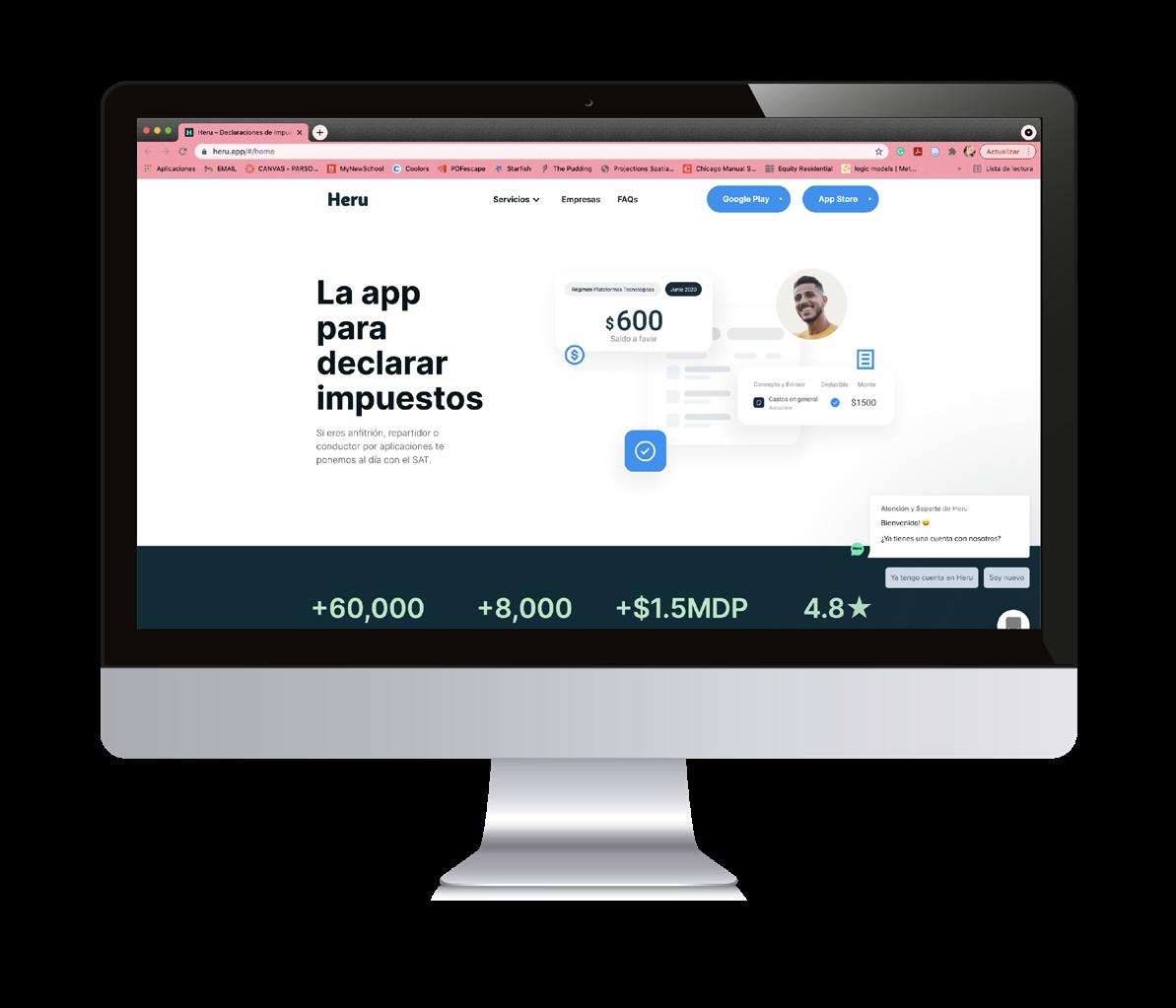
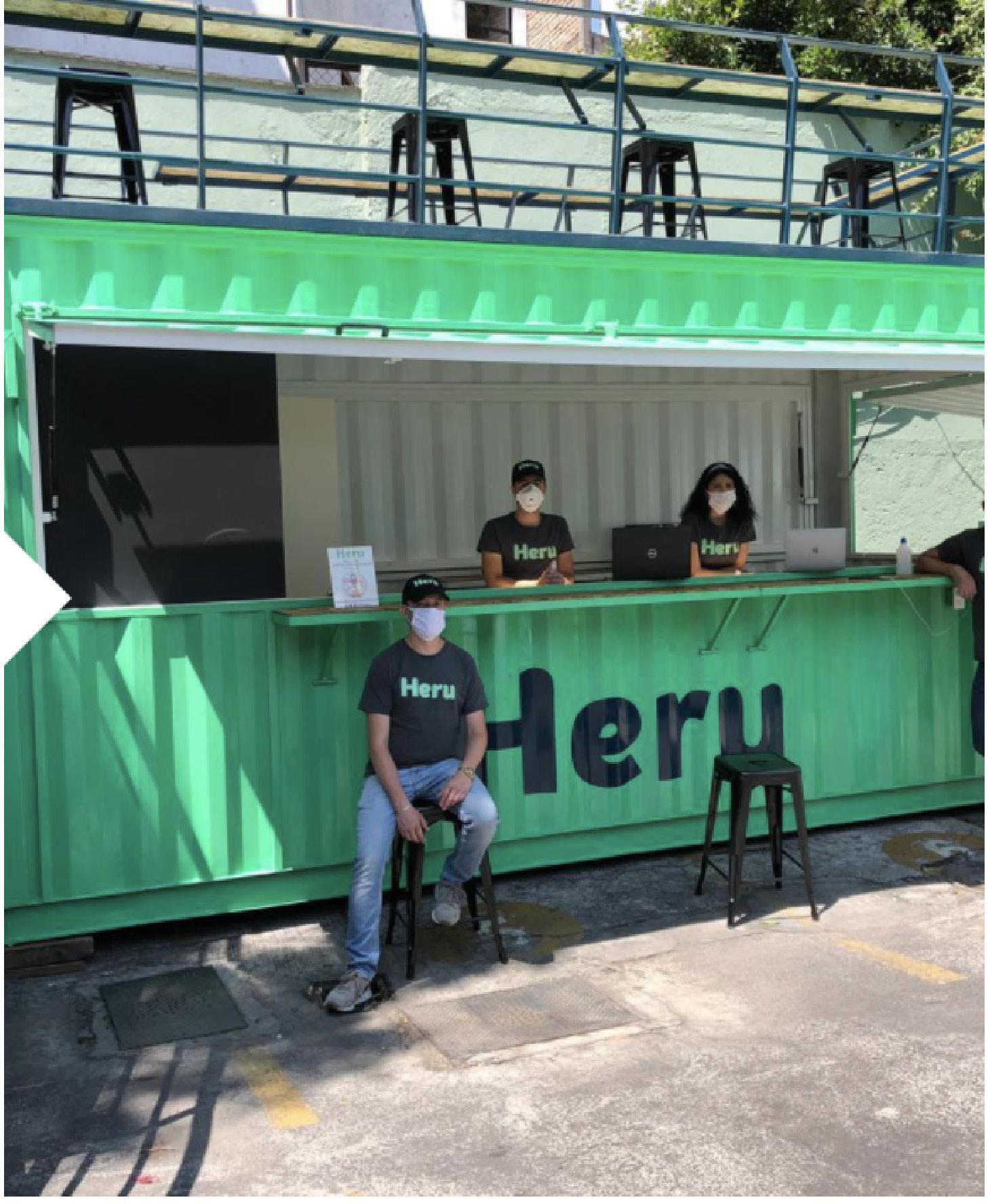
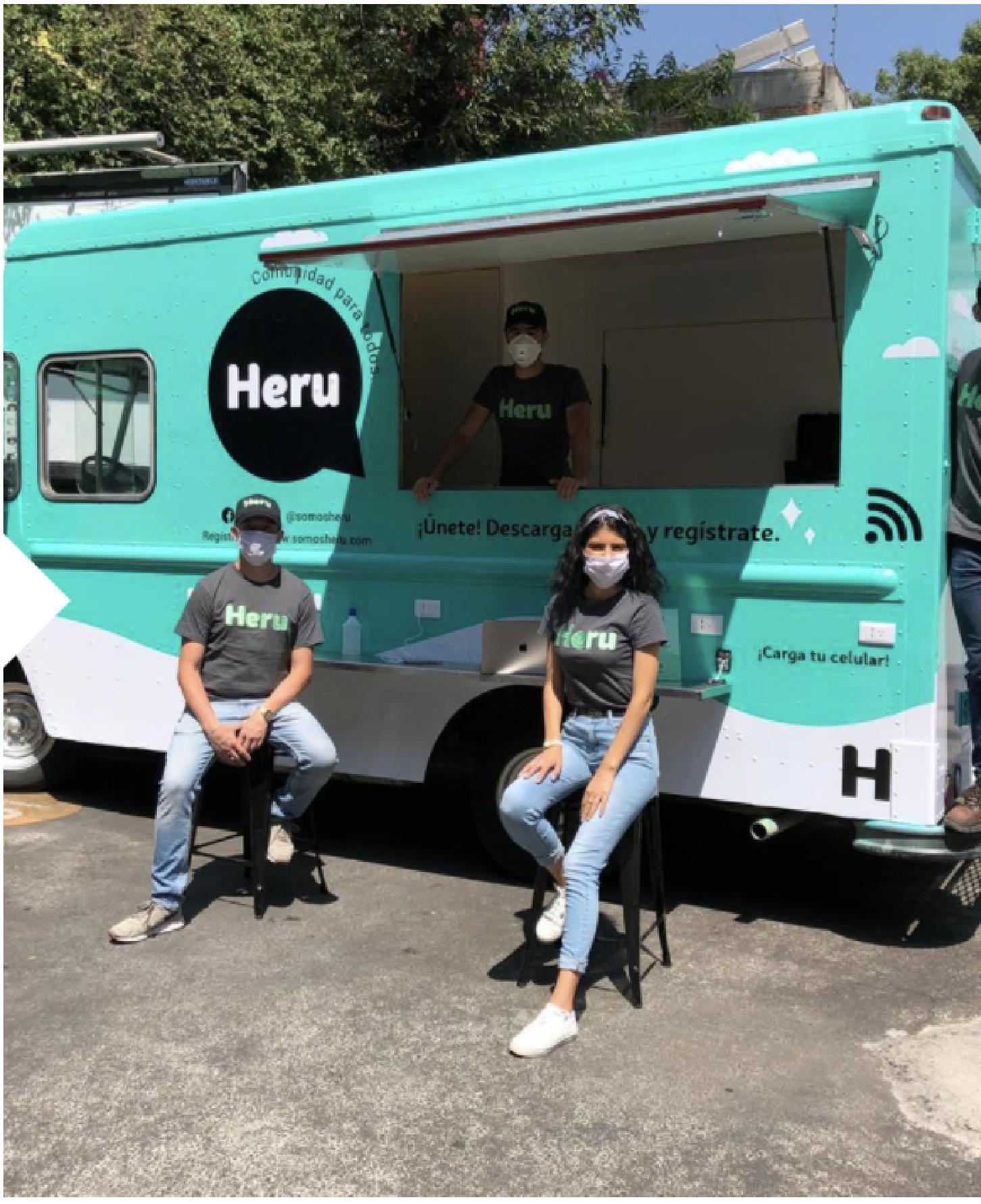
Heru casas was discovered to learn from other emerging models; a technology company focused on providing services and benefits to independent workers. Delivery workers now have hydration and recharging spaces around the city. This app also provides financial and insurance options designed for workers’ lifestyles and working ways. This app is in charge of doing workers' tax returns while working. The founders of this app are two ex-uber employees; the app is based in Mexico. In addition to building its app, the startup put together several so-called “Heru Casas,” places where gig workers can recharge their phones and use a bathroom. To help the startup find early users, the app is needed to enter a Heru Casa. Currently, all Heru Casas are located in Mexico City. The startup is not sure about expanding that part to more cities because it is hard for the physical building; software has much more rapid expansion.
NYC'S FRAMEWORK FOR TEMPORARY STRUCTURES (REGULATIONS):
If there is any promotional or commercial activity on a city street, sidewalk, or curb lane, there needs to be a Street Event permit application. The Plaza Event permit is needed if it is on the pedestrian plaza. The permit is from the Street Activity Permit Office (SAPO). “SAPO requires insurance for all commercial/promotional events and street festivals. Block parties wishing to have rides must also provide insurance. A certificate of liability with the City of New York, listed as an additional insured for a minimum of $1 million, is required” (NYC Mayors Office).
PERMISSION PROCESSES:
The Street Activity Permit Office (SAPO) permits activities by the event type: Block Parties, Clean Ups, Farmers Markets, Health Fairs, Mobile Units, Plaza Events, Press Conferences, Production Events, Rallies and Demonstrations, Religious Events, Single Block Festivals, Street Events, Street Festivals. There is an application fee of $25, and the organization has to go through the permit process online. It has to be done more or less 60 days prior to the event, but this varies depending on the event. There are primary permitting agencies and supporting permitting agencies.
The Department of Buildings (DOB) “promotes the safety
of all people that build, work, and live in New York City by regulating the lawful use of over one million buildings and construction sites across the five boroughs. With a focus on safety, service, and integrity, the Department enforces the City's Construction Codes, Zoning Resolution, and the New York State Multiple Dwelling Law” (NYC Mayors Office). The DOB permits include:
Temporary Place of Assembly Permit (TPA): This is for temporary premises where 75 or more public members gather indoors or 200 or more gather outdoors for religious, recreational, educational, political, or social purposes or to consume food or drink. A TPA is issued for events lasting less than 30 days.
Temporary Structure Permit: To obtain a DOB Alteration Type 2 or 3 permit if it is intended to build a temporary structure for a special event.
Crane and Derrick Permit: This permit is needed if any cranes are required during the construction or duration of your event.
After Hours Variances: An After-Hours Variance is needed to perform construction after hours, which are between 6 pm and 7 am on weekdays or any time on weekends
Fig. 4.12
Fig. 4.15
4. ON GROUND + ETHNOGRAPHIC RESEARCH:
It started by making contact with Los Delieristas Unidos organization (LDU). Los Deliveristas is a bustling organization, so it was very complicated to make contact with them. There were various intents to reach out to them through different means until, through Linkedin, I made contact with one of the leaders, Ligia Guallpa. After this, the communication was redirected to Hildalyn Colon Hernandez through email messages and in the Spanish language. Hence, the research was presented and progress was made. I was granted the opportunity to send my resume and a cover letter to work as a volunteer in their organization. They seemed very interested in the work and were excited about aiding them in reaching their goals.
As soon as I started working with them, I was introduced to Elsa Ponce, the architect in charge of building the worker’s center. She is an external employee in charge of the construction and design of the new center for The Deliveristas in Williamsburg. The organization’s structure is leaded by four main women: Hildalyn Colón Hernández, Maria Valdez, Wendy Prudencio, and Ligia Guallpa, the leaders of the Worker’s Justice Project. Consequently, all the delivery workers form the labor union and force.
The relationship between the leaders and the workers is very close. The workers come to the current center which is located at 365 Broadway, Williamsburg, Brooklyn, for any issues regarding their work, such as a bike or electric bike issues and accidents. Gig-workers are received in the center and assisted immediately. The current workers' center is strategically located in Williamsburg, near the Williamsburg bridge, for quick access to the city and the suburbs. The current space is small and very basic; it only functions for the workers to have a space to turn to if any issue arises; they have where to go to report their problems. The need for a new space is urgent. The current center lacks a welcoming entrance; it is tough to distinguish the door with no signage. The reception is not different from the waiting area; it lacks kitchen tools and goods, furniture, computers, charging spots, fix stations for batteries, and bikes. The signage inside the space is very precarious.
The deliveristas are working on a new workers center located at 42 Grand Street Williamsburg, Brooklyn. Here the space is located on the map.
The new workers center is also located strategically in Williamsburg with quick access to the city and suburbs. The new workers center will be equipped with all the basic needs for the delivery workers, entrance, reception, kitchenette, bike maintenance, charging stations, waiting area, communal room, two bathrooms, a classroom, an open office, and printing space, private office, and storage. Here are the floor plans for the space.
The main issue or challenge for the new space is the charging stations because there is a need to have inside and outside charging spots. It is a new issue arising, where a universal long-term battery system solution does not yet exist. There are many laws and regulations regarding this matter due to safety concerns to avoid electrical problems that could lead to fires. So whatever plan and design we come up with will be the pilot project for future solutions to this problem.
Regarding the observations and based on the worker's answers about the bike's questions, they currently utilize second-hand batteries bought from the Chinese shops, which they call “los chinitos,” between them. These Chinese shops also have their own illegal charging stations inside. It means that all the batteries and bikes they use are different, so it is very challenging to carry out a universal pilot plan now. The delivery workers stated that the batteries cost almost $550 and $70 for the transformer. The batteries take 4 hours to charge, so they usually have three batteries each to rotate between them. The workers who live far away from the area they work charge their batteries in the illegal Chinese stations because they just leave the empty batteries and take the charged ones. On the other hand, some other delivery workers use electric motorbikes, so in this case, the bikes cost $1.300, the batteries cost $500, and they last 6 hours. In colder weather, the batteries are emptied faster.
Fig. 4.19
Fig. 4.20
Fig. 4.21
Regarding the leaders and managers in the organization, they do not want an open process where the delivery workers are part of every decision-making process because many workers work for countless hours. It is complicated to bring them all together. The leaders emphasized the significant number of hours these delivery workers worked and stated that government organizations do not consider this matter. On the other hand, managers want openness within the leadership; they say that decision-making processes should be done with their participation.
In conclusion, since the pandemic struck, the last-mile ecosystem has affected the urban environments in various ways. The urban rapture that covid-19 caused brought many issues that require urgent attention. Amazon's increasing dominance is taking down all competitors in the e-commerce and online selling world; small businesses struggle. The demand for online e-commerce is increasing exponentially. Therefore companies need to adapt to this pace. New York City is experiencing environmental racism because the storage warehouses move to low-income residential areas, directly affecting minority groups.
On the other hand, the increasing demand for online retail strongly impacts labor and the gig economy. Based on this issue, a new labor pool arose; delivery workers were the most vulnerable and exploited in the system. This system has to be formalized and provide these workers with the basic needs they deserve. The gig-workers expose themselves to providing a service for the population and do not receive any benefit. Delivery workers are primarily all immigrants, so big app-based companies take advantage of the language barriers and confuse workers with complicated agreements.
DELIVERISTA: CELSO
He lives in Astoria, so he charges his bike in the “Chinitos” place because it is much more convenient. He has three batteries and an electric bike. He also has a transformer to be able to plug his batteries into the outlets. He was agitated because he said
"...NO RESTAURANTS LET DELIVERISTAS UTILIZE THEIR BATHROOMS; THEY SAY IT IS ONLY FOR CLIENTS."
5. DESIGN STRATEGY PLANNING PROCESS
PROBLEMS OR GAPS: GOALS:
The project focuses on a hidden human infrastructure that became the foreground, the delivery workers that became essential workers. They are the most vulnerable and exploited because no protection exists. The minimum wage is not enough, and they do not receive basic needs and services to fulfill their delivery job. Consequently, the law classifies them as independent contractors. Because they are primarily immigrants, they have language barriers that the app-based companies take advantage of by creating confusing legal binding agreements.
The project investigates the impact of increased online retail on the urban space and labor force in NYC. Based on a local worker rights organization's (Los Deliveristas) demands’ I want to explore how the fourth demand can be spatialized.
THE PROJECT IS A STRATEGIC PLANNING OR PROTOTYPE DESIGN FOR TWO OPTIONS:
1) Workers Center
2) Comfort stations - "Support hubs"
Which can be permanent structures through shipping container conversion. There will be a movable option, too; being a truck that moves around the city, the location is shown through the support hubs app.
WORKERS CENTER
EXISTING CHALLENGES
STAKEHOLDERS INVOLVED
TOOL SYSTEM GUIDE: PHASES
TOOL SYSTEM GUIDE: PHASES
1. ASSET EVALUATION:
In this phase, develop an asset evaluation to check and account for the current assets in the current center on 365 Broadway, Williamsburg. It is to estimate what will be reutilized in the new center and what will have to be discarded, along with a total value estimate of the new assets needed. Many materials have become old and obsolete, and some can be fixed and reused. A list will be created with all the assets and their respective conditions. Then it will be presented to the leaders for decision-making about what stays and needs to be bought.
There is a Furniture, Fixtures, and Equipment schedule (FFE) to be completed, listing the Items, Suppliers, SKU numbers, Quantity needed, Cost per unit, Total Cost, Dimensions, Lead time, Images, Web links, and Supplier contacts. There is also a Staff Needs sheet listing the staff, the needed space, and electrical equipment. It is done by the architect Elsa Ponce and the leaders of the Deliveristas.
2. PROGRAM INFRASTRUCTURE:
In this phase, develop a Program Distribution sheet with the main functions and areas in the space. The main areas in the building are the following:
-Entrance
- Reception
- Member Intake
- Waiting Area
- Bike maintenance
- Kitchenette
- Communal room
- Bathroom Classroom
- Open office + Printing Private office
- Storage
A Program Criteria Matrix is in the process of completion, denoting each area of the building –shown in the Program Distribution– and the characteristics of each space. It refers to special considerations of the space if the area needs special equipment, technical matters, lighting, accesses, and measurements. It is done by the architect Elsa Ponce and designer Roberta Werthein, together with the leaders of the Deliveristas.
3. SITE ANALYSIS: 442 GRAND ST.
In this phase, conduct the site analysis for 442 Grand St. It is the new location for the Workers Center. Architect Elsa Ponce does the architectural plan and design. The new site is a strategic location because it has quick access to the city, is near the Williamsburg bridge, and is surrounded by MTA stations to travel easily anywhere. Brooklyn is also the middle area between the city and queens; that is where most all the Hispanic Latino delivery workers live.
New Workers Center (442 Grand St.)
WJP, current Workers Center (365 Broadway)
La Parada (The Liberty Cleaners Division)
La Parada is a spanish word for "The Stop." It is an intersection between highways in Brooklyn, where cleaning ladies stand and wait for the employers to pass with their cars and hire them for house cleaning jobs. The space has no roof, no protection from extreme weathers, so the ladies don't have any of the basic needs to be able to survive.
The cleaning ladies are all mostly immigrants that do not speak english, so they are constantly abused and exploited in all forms. There is no need in mentioning that they do not know where the employer's are taking them, so the safety of these people is the main concern.
2.0 MILES - 12 MINUTE CYCLING
Fig. 5.2
4. EXTERNAL USE OF SPACE
The new Workers Center location has two external spaces near the building that The Deliverisas Unidos want to utilize to manage the use of space efficiently. Plaza No1 will be used as external bike charging stations for the delivery workers, with solar electric panels for energy, bike parking, and external gatherings or events. Plaza No2 will be used for the Liberty Cleaners division as a space to replace "La Parada," because it is near the center where they can protected from extreme weathers, and taken care by the sercurity. In this phase, a partnership with the Department of Transportation (DOT) is needed to use the space. The partnership is currently in process; the meeting will be scheduled for the next month.
External spaces; potential plazas.
Space potentially dedicated for Deliveristas Unidos bike charging and resting spots.
Space potentially dedicated for Liberty Cleaners division, to replace the current "La Parada"
New Workers Center - WJP HUB
PLAZA 1
PLAZA 2
5. BATTERY SYSTEM: CHARGING STATIONS PILOT PLAN
This phase is to create indoor bike charging stations. This matter is a current issue because there have been past fire accidents, so indoor charging has become illegal. Bike batteries are dangerous when charging because they produce heat and sometimes release smoke.
This phase starts with profound ethnographic research on the batteries used by the delivery workers through interviews, observations, and surveys. Some key findings of the research revealed that most workers buy batteries in second-hand shops run by Chinese people. Consequently, all delivery workers have different bikes and, therefore, different
batteries, making it impossible to create a universal bike charging system of rotating batteries now. So the question is, how can the workers charge their bikes inside the building now?
This phase develops the pilot plan to present to the DOT for indoor charging stations. It is a pilot project for New York as no current system is working on this matter. The system proposal is called Indoor Battery Charging Rack. It will be presented to the DOB and DOT on May 5th. On the other hand, external charging spots with solar charging panels will also be presented to the DOT for outdoor bike charging.
6. CONSTRUCTION:
In this phase, develop the construction for the new building of the workers center in 442 Grand St. The Deliveristas are outsourcing this phase to the landlord to reduce the cost of the building and only take care of paying the price of the rent. The current status of this phase is that the organization is still negotiating the lease price with the landlord. The Deliveristas broker carries this out with the landlord broker.
7. VISUAL IDENTITY: WJP HUB
In this phase, develop the visual concept for the new building. It is the creation of a visual identity to create a space of interaction, not only a transactional space as the current center. The center has to invite workers to stay and feel safe. The bases for the visual identity are made by the organization's leaders, with the help of some selected workers. The visual identity design shows the three sections of the organization, signage, iconography, fonts, imagery, murals, and more.
COLOR PALETTE:
The color palette remains black, red and white as it has been since the worker's union started. The bright colors portray the strength and the vibrance that the organization has on the streets of New York. The black and white are neutral colors that represent the streets, the red is the pasion and force of the union and the white color.
3 SUBSYSTEMS: SECTIONS
VISUAL IDENTITY:
INSTITUTIONAL SYSTEM
FONT:
The font selected is classic geometric and brings about more direct and serious communication to take the organization seriously. Furthermore, the font is designed for the posters to create a more playful and friendly perspective as it is an urban labor force union organization; however still shows seriousness.
CONSTRUCTION WORKERS
LOS DELIVERISTAS
3 SUBSYSTEMS Sections of organization:
- Los Deliveristas
INSTITUTIONAL SYSTEM:
LOGO DESIGN:
- Construction Workers
- Liberty Cleaners WJP HUB logo
The logo’s shape represents the WJP Hub. It contains big planes transmitting a sense of hub and container. It shows how the new center will contain and bring together all the organization’s sections to provide a shelter and a place to stay and interact, as the leaders in The Deliveristas expressed. The logo also conveys the empowerment and presence of the organization with the big color planes blocks.
LIBERTY WORKERS
STATIONARY:
For the institutional visual system it varies between the three different colors planes and the logo.
SIGNAGE & ICONOGRAPHY:
The iconography and signage present an irregular outline that brings about a human trace and vibe to refer to the human labor, far from digital and geometric outlines. All the iconography is visual signs that any language can understand and read. The Deliveristas Unidos are all primarily Hispanic and Latino and therefore speak Spanish, but now they are incorporating Asian people as well. So the necessity for universal language signage is fundamental in the space.
SIGNAGE:
TYPOGRAPHY:
3 SUBSYSTEMS: SECTIONS
TEXTURES:
The logo intervened with different textures, represented by different images or icons to reinforce the concept of the different tools that the different sections of the organization utilizes in the different environments where the workers develop.
ICONOGRAPHY:
LOS DELIVERISTAS:
LIBERTY WORKERS:
CONSTRUCTION WORKERS:
CLEANERS:
SECTIONS: BANNER
SECTIONS: FENCE
SECTIONS: OUTDOOR
SECTIONS: INDOOR DIVIDERS
DESIGN FEEDBACK FROM LOS DELIVERISTAS
The design process was shared with the delvieristas and they are thrilled to implement this into the new Workers Justice Project Hub. They want to add a turquoise colour for the Liberty Cleaners section. They like the logo and think that a new more corporate and serious visual identity will serve perfectly for the new space.
There will also be an addition of products like stickers for the deliveristas unidos that will convey a more urban image, as they call themselves the “Kings of the streets,” but still having the new visual identity. The same for the Liberty Cleaners.
COMFORT STATIONS - SUPPORT HUBS
The ideal is a co-design process with the people who developed these demands. Based on the outcome of these conversations, this can be an advocacy resource for them and help them deliver a proposition for the city agencies (DOT and Department of city planning).
OBJECTIVE
The design project provides the workers with the rights they deserve. To help them survive and be a baseline system of the city. It wants to make this a formal urban system. Delivery workers are essential workers benefiting the quality of life of the New York City population, and the big app-based companies are exploiting them. The project wants to aid the gig-economy workers in achieving their basic needs to fulfill their jobs.
It looks at where public land can be directed to public use. It looks at “core housing” to build hubs for delivery workers and provide the lack of public service for gig workers.
VISION
We are facing this new era where informalized work wants to be formalized. It wants to be part of the infrastructure (reliance system).
POTENTIAL STAKEHOLDERS
The project wants to provide basic needs and services to this hidden working class. It emphasizes the importance of essential workers by giving them the public goods they deserve and providing them with the public space they presently lack.
When covid struck, many new measures happened to control the situation and help the most vulnerable population; for example, the Lab Q tents as testing spots on the sidewalks, the movable trucks around the city, and more. So now, the same situation is occurring to the delivery workers, who are the most vulnerable and affected by the last-mile ecosystem and need these spaces. With the same logic and rationale, we can build something to assist them and return the cost they have been paying all this time.
EXISTING CHALLENGES MOTIVATION
Permissions for temporary structures take time
Site selection
Maintainance
Hiring personnel
TOOL SYSTEM GUIDE: PHASES
TOOL SYSTEM GUIDE: PHASES
1. SITE ANALYSIS:
In this phase, develop the site analysis to evaluate public spaces for the location of the Support Hubs. A potential partnership is with Design Trust for Public Space because of the “Under the Elevated Project” to detect spaces under bridges, highways, or railways. In this phase, neglected spaces of the city with strategic location are evaluated, as they have the potential to be transformed.
VACANCY & INFRASTRUCTURE:
New Workers Center (442 Grand St.)
WJP, current Workers Center (365 Broadway)
La Parada (The Liberty Cleaners Division)
Possible sites for "Support Hubs"
2. ROUTE DELIVERY ANALYSIS:
In this phase, from the data gathered by The Deliveristas, evaluate the worker's most common routes and journeys. This data is provided by the leaders of The Deliveristas and some of the workers.
3. VACANCY & INFRASTRUCTURE:
This phase will locate possible sites for the Support Hubs, distinguishing between the tents, stations, and movable trucks, utilizing the Pop-up, Pilot (short term strategies), Permanent (long term strategies) framework approach from under the elevated. As the pilot project, the first pop-up temporary structure will be under the Williamsburg Bridge, near the coast, in an empty, neglected space with no current use.
POP-UP, PILOT FRAMEWORK FROM“UNDER THE ELEVATED”
- Pilot project: Pop-up temporary structure under willamsburg bridge.
Fig. 5.8
4. INSTALLATION PLANNING & REGULATIONS:
In this phase, evaluate all regulations regarding these three design plans.
FOR THE SUPPORT HUB TENT SPOTS:
5. APP DESIGN: MOVABLE SUPPORT HUB LOCATOR
Visit the Framework of NYC for temporary structures of DOB Apply for SAPO
TPA permits in DOB
FOR THE SUPPORT HUB STATIONS:
01. 01.
Container conversion planning structure
Evaluate and study core Housing units
05. 02. 02. 06. 03. 03. 07. 04.
Visit the “Development HUB step by step process” on the NYC Buildings website
MOVABLE SUPPORT HUB TRUCK:
01.
Study emerging models of covid testing moving stations as LabQ.
This phase is regarding the app to locate the movable truck through the city. In this phase, develop a work plan for the app's Minimum Variable Product (MVP) to locate the movable truck. Here define the minimum interfaces and actions needed for the basic functioning of the app and be able to release it. The app also indicates the number of workers in each station to reduce congestion in the support hubs during any time of the day.
Visit The HUB on the DOB website, and read the Development HUB User Guide.
Visit the “HUB consultation request.”
Visit how to register for the eFilling
The application process for “DevelopmentHUB:” To use HUB services, an eFilling account is needed.
To work with the Development Hub, you must be registered to electronically file documents with the Development Hub page on the Department's website.
DELIVERISTA
CONSTRUCTOR
CLEANERS
Fig. 5.9
6. CREATION OF
SUPPORT HUBS OFFICE
(S.H.O.)
In this phase, the Support Hubs Office (S.H.O.) is created; this office will be part of The Deliveristas Unidos organization; therefore, it will be managed by them. It is necessary to hire personnel to assist the delivery workers in the stations –Support hub tents, Support hub stations, and Support hub trucks– this will provide job opportunities. The job applications are received in the S.H.O. The new employees will be selected and trained. The S.H.O. has a section in charge of the repair and maintenance of the Hubs.
The logo is following the line of the Deliveristas Unidos current visual identity, where it shows clear plane color areas of white, red and black. The leaders clearly remarked that the identity has to only limit to these three colors.
7. PAYMENT SYSTEM:
In this phase, the Support Hub Office (S.H.O.) will carry out the payment enrollment for the Support Hub workers.
8. SPATIALIZATION:
In this phase, develop the construction plan renders and spatial design of the Support hub tents, Support hub stations, and Support hub trucks. Consequently, partner with the private companies to build and construct. The container conversion company and the testing trucks are adapted to comfort stations.
Fig.
9. REPAIR AND MAINTENANCE:
In this phase, the Support Hub Office (S.H.O.) has a repair and maintenance team to fix infrastructure issues in the hubs. The team is also in charge of restocking coffee, food, and snacks in the stations. There is also an IT team for software problems in the movable support hub locator app in the office. All of this will be provided by the infrastructure of the Deliveristas Unidos organization and the Workers Justice Project.
10. FUNDRAISING:
In this phase, develop profiles with visual graphics from personal stories of the delivery workers from interviews to show their stories. Visual campaign remarking the importance of their job for our society, showing how the gig-workers are exploited and how they became essential.
The private sector of app-based companies will provide the funding. They have to pay the cost of the damage they have caused and redeem how they take advantage of the gigworkers. Finally, federal funding from the government will also be part of the fundraising phase.
6. IMPLEMENTATION
IMPLEMENTATION PLAN - WORKERS CENTER STRATEGY
The project will be an advocacy resource for The Deliveristas to use and implement. Alternatively, use it to be able to push other similar projects and make them real. The main collaborators are the Workers Justice Project and The Deliveristas. We have to build the Support Hub Office (S.H.O.).
The implementation plan shows how each phase of the design strategy number one planning proccess is put into practice. Each step of the implementation plan contains one or two phases of the design strategy plan.
1. ENGAGEMENT:
Introduction and stakeholders engagement
2. LAUNCHING:
PHASE 0: Role assignment and work plan preparation with the development of the S.H.O.
3. ANALYSIS & PROGRAM:
PHASE 1: Asset evaluation
PHASE 2: Program infrastructure
4. SITE DEVELOPMENT:
PHASE 3: Site analysis 442 Grand st. PHASE 4: External use of space
5. BUILDING & REGULATIONS:
PHASE 5: Battery system, charging stations PHASE 6: Construction
6. IDENTITY:
PHASE 7: Visual identity development
PARTNERSHIP CONSTELLATIONS:
Available resources for the Workers Center (Strategy N1).
PUBLIC ENTITY:
DOB Department of buildings
DOT Department of transportation
RESOURCES:
For inside charging stations: Permit for charging station maybe as a storage room for hazardous materials.
For the use of two external plazas: permission to utilize external plazas may be for external charging stations or stops for food or phones.
PRIVATE ENTITY: RESOURCES:
Building owner
Architect Elsa Ponce
Designer Robert Werthein
For lease of space: And construction, so there is no need for external contractors.
Construction plans: Architect developing space and building construction
Visual Identity: developing the visual identity of the space to create a sense of belonging
Charging stations: developing a plan for the outside and inside charging stations
WORKSHOP - LIBERTY CLEANERS DIVISION:
Workshop facilitated by arquitect Elsa Ponce for the Liberty Cleaners for the transfer of "La Parada." to 442 Grand St.
The objective was to listen to the cleaners experience in the current "Parada," to create the new space suitable for them.
My role was to aid arquitect Elsa Ponce in the development of the workshop, create content and footage about the event.
Fig. 6.2
IMPLEMENTATION PLAN - SUPPORT HUBS
STRATEGY N ° 2
The implementation plan shows how each phase of the design strategy number two planning proccess is put into practice. Each step of the implementation plan contains one or two phases of the design strategy plan.
1. LAUNCHING:
PHASE 0: Introduction; meet with the Workers Justice Project and the Deliveristas Unidos to propose > Creation of the Support Hub Office (S.H.O.)
2. RESEARCH & ANALYSIS:
PHASE 1: Conduct the site analysis
PHASE 2: Conduct the route delivery analysis; produce a participatory workshop with the Deliveristas.
Time is limited, so the workshop has to be done in several sessions. Participants are active.
SESSION 1: Planning
Topic: focusing on the fourth demand of The Deliveristas organization
Audience: The people who developed these demands of The Deliveristas
- Where are they starting from?
- What has their experience been?
- What do they expect as comfort stations?
SESSION 2: Research data
1. Quick introduction
- Presentation of people involved (name, career, brief experience)
2. Define co-leaders or co-facilitators
3. Present data collection of delivery routes and potential sites
4. Brainstorming ideas to start sketching infrastructure plans and design
SESSION 3: Infrastructure design
1. Present sketches and plans
2. Receive feedback from The Deliveristas
3. Correct and make changes
4. Final review
3. PLANNING & REGULATIONS:
PHASE 3: Conduct the vacancy & Infrastructure
PHASE 4: Conduct the installation plans & regulations
PHASE 5: Conduct the APP design - movable support hub locator
4. PROJECT MANAGEMENT:
PHASE 6: Creation of Support Hubs Office (S.H.O.)
PHASE 7: Conduct the payment system
5. STRATEGY DEVELOPMENT:
PHASE 8: Conduct the spatialization process
PHASE 9: Repair and maintenance
6. BUDGETING:
PHASE 10: Conduct fundraising; visual campaign
PARTNERSHIP CONSTELLATIONS:
N1).
PUBLIC ENTITY:
DOB Department of buildings
RESOURCES:
1. Framework of NYC for temporary structures: If there is any type of promotional or commercial activity on a city street, sidewalk, or curb lane, there needs to be an application for a Street Event permit.
2. The permit is from the Street Activity Permit Office (SAPO): “SAPO requires insurance for all commercial/promotional events and all Street Festivals. Block parties wishing to have rides must also provide insurance. A certificate of liability with the City of New York, listed as an additional insured for a minimum of $1 million, is required.”
The Street Activity Permit Office (SAPO) permits activities by the event type: Block Parties, Clean Ups, Farmers Markets, Health Fairs, Mobile Units, Plaza Events, Press Conferences, Production Events, Rallies and Demonstrations, Religious Events, Single Block Festivals, Street Events, Street Festivals. There is an application fee of $25, and the organization has to go through the permit process online. It has to be done more or less 60 days prior to the event, but this varies depending on the event. There are primary permitting agencies and supporting permitting agencies.
The Department of Buildings (DOB) “promotes the safety of all people that build, work, and live in New York City by regulating the lawful use of over one million buildings and construction sites across the five boroughs. With a focus on safety, service, and integrity, the Department enforces the City's Construction Codes, Zoning Resolution, and the New York State Multiple Dwelling Law” (NYC Mayors Office). The DOB permits include:
- Temporary Place of Assembly Permit (TPA): This is for temporary premises where 75 or more public members gather indoors or 200 or more gather outdoors for religious, recreational, educational, political, or social purposes or to consume food or drink. A TPA is issued for events lasting less than 30 days.
- Temporary Structure Permit: To obtain a DOB Alteration Type 2 or 3 permit if it is intended to build a temporary structure for a special event.
- Crane and Derrick Permit: This permit is needed if any cranes are required during the construction or duration of your event.
- After Hours Variances: An After-Hours Variance is needed to perform construction after hours between 6 pm and 7 am on weekdays or any time on weekends.
3. The HUB: To accelerate the approval process for submission of standard plan examination and professionally certified applications for construction projects. Read the Development
Available resources for the Workers Center (Strategy
Design Trust for Public Space and the DOT
HUB User Guide. THREE TYPES: Development HUB, HUB Self-Service, HUB Full-Service.
Benefits: faster approvals, fewer office visits, and reduction of paper submissions.
The application process for “DevelopmentHUB:” To use HUB services an eFilling account is needed. Moreover, the project has to be an application for a new building (NB) or Alternation type 1 (Alt 1) project. It is talking about an Alt1 or NB project because the “Support Hubs” is changing the Certificate of Occupancy (C of O) by adding a new building or changing an existing one.
ADDITIONAL RESOURCES:
- Visit the “Development HUB step by step process” on the NYC Buildings website.
- Visit the “HUB consultation request” to work with the Development Hub you must be registered to electronically file documents with the Development Hub page on the Department's website.
- Visit how to register for the eFilling
1. Under the elevated project: Design Trust partnered with the NYC Department of Transportation (NYC DOT) to reclaim and transform the public space under New York City's elevated highways, subway and rail lines, and bridges. The project has two phases, and it is a two-year report called “Under the Elevated: Reclaiming Space, Connecting Communities,” studying the spaces under the bridges of NYC. There are 700 miles of space under the bridges. The project started with preliminary research, then defined the scope, assembled the team, formed the advisory committee, conducted the research, gathered community input, tested, synthesized the research, and released the findings.
Specific locations used as case studies include Broadway Junction in Brooklyn, Division Street below the Manhattan Bridge, the Van Wyck Expressway at the Kew Gardens Interchange in Queens, and Southern Boulevard under the 2 and 5 subway lines at Freeman Street in the Bronx.
PRIVATE ENTITY:
Uber, Doordash, Uber Eats, GrubHub, Postmates:
Transportation company to provide truck: Summit Bodyworks company
Container conversion company builder: Craftsmen company
CITY CIVIC ORGANIZATION:
Hiring all delivery workers by independent contractors agreements and managing them through the apps.
Testing trucks that can be adapted to comfort stations because they already have the equipment and electricity needed. These trucks are also hybrid or all-electric to be sustainable for the environment. “Flexibility. Adaptability. Mobility. These things are no longer luxuries in today's fast-paced world — they are necessities.” Their installers and designers will create the perfect custom vehicle. For example: Lab Q covid testing spots.
Shipping container conversion is a straightforward construction; it can be ready in a concise time. It is a cost-effective, reliable, and secure structure used for functional mobile space. It can be used as a semi-permanent solution to field operations. Wherever it needs to go, the container-based workstation can be taken. It is a safe way to build and store things because it is tough to break in. It is a more sustainable way of building as well.
RESOURCES: RESOURCES:
1. Labor force union: the organization represents mostly all delivery workers, provides strength, union to defend their rights, public media representation. It has the power to be seen and appear on the news to make the issue visible to the population.
Los Deliveristas Unidos
& NEXT STEPS
THESIS JOURNEY:
STUDIO 2 - SEMESTER NO2
Situation of Mobility > Transportation Logistics
Unflattening logistics history
Warehouse storage facilities
COVID Impact on urban ecology:
- Online retail demand infrastructure rising
- Warehouse movement back into cities
Last-Mile facilities location
- Amazon new delivery station in South Bronx
Last-Mile facilities impact on climate and pollution outcome
- 2 sustainable strategies:
- Soil Remediation
- Transportation
STUDIO 3 - SEMESTER NO3
COVID Impact on urban ecology
- Online retail demand infrastructure rising
- Delivery workers become frontline workers
Last-Mile impact
- Online retail demand infrastructure rising
- I decide to focus on LABOR
Last-Mile comes first
- From the generator looking up
- New Human Infrastructure
Labor seeks spatial justice
- The Deliveristas Demand number 4
- The Deliveristas + WJP
From informal to a formal urban system
- Gig economy workers fight for labor rights
Emerging models for worker benefits
- Heru
System proposal:
- Satisfy workers basic needs
- Design public space as public good
STUDIO 4 - SEMESTER NO4
FEBRUARY 1-11
System proposal, 2 strategies:
1. Support Hubs
2. Workers center - WJP HUB
Explore two systems simultaneously
FEBRUARY 14-18
Contact The Deliveristas
FEBRUARY 21-25
Start to plan questions and Workshop
MARCH 1-11
Start to develop Workshop
MARCH 14-18
Identify the design criteria
- Framework of nyc for temporary structures
- Permission processes
- Look at city design limits (regulations)
MARCH 21-25
Identify specific location
MARCH 28-1
Create proposal for both workers center and hubs
APRIL 4-8
Present proposal & get feedback
-Battery Safety Commete meeting created (Elsa Ponce and Roberta Werthein + LDU)
- Research on Battery Charging System
APRIL 11-15
- Presentation with Deliverista to talk more about Battery Charging System
APRIL 18-22
-Battery Safety Commete meeting
-Battery Charging System pilot project presentation to DOB
MAY
- Creation of Battery Charging System Pilot Project booklet
JUNE
- Start construction of WJP Hub
JULY - AUGUST
- Visual identity applications
8. CONCLUSION
After the pandemic, delivery workers became essential, solidifying their vital status for New York City’s function. Despite their crucial role, they are being neglected by the city’s economy. The Deliveristas labor force, started as a group chat between delivery people; mostly Hispanic, and Latinos, and became one of the biggest organizations fighting for gig worker rights in less than two years. When all restaurants closed during quarantine, they denied restroom access to delivery workers and created unfair and unreasonable job conditions for the very people that came to support the Nation in time of need. The Deliveristas went out to the streets, putting their lives at risk to keep the city fed. The Deliveristas continuously faced non-payment or underpayment, unsafe working conditions, and an increased threat of violence. All gig workers face continuous dangers every day; danger from traffic in congested streets, discrimination from the very people they serve as well as poverty from underpayment and low wages.
No labor protections exist in the digital gig economy world for delivery workers. These people fall in grey areas of unclear legal agreements and frameworks. Their employment status with the apps remains unregulated. Even before covid-19, these workers faced unfair legal agreements and payments, and the competition between the employer apps makes it even more difficult for workers to make a living.
This thesis is a year of research starting from the movement of storage warehouses into the cities to be able to meet the one-day delivery service. This movement creates several different impacts, one of them being on the labor of the gig economy. The delivery workers that became frontline workers, exposing themselves to health dangers for the benefit of others deserve to be seen and heard. This project aids them not just to survive but to be a baseline system of the city. It enables the visualization of the informalities, such as second-hand batteries and charging spots, that have to be formalized in this urban system.
The two design strategies proposed in this project will provide the basic needs that this new human infrastructure of gig workers needs. Strategy number one; the workers center (WJP HUB) is already moving forward in the production and will provide the Workers Justice Project and Deliveristas Unidos, with a central hub to be able to utilize as a safe space for interaction, battery charging, and fixing. Strategy number two; the Support Hubs will provide delivery workers with strategically located stops throughout the city for them to be able to have shelter from extreme weather conditions and meet basic needs of snacks, charging phones, and rest.
9. APPENDIX
END NOTES:
1. Christopher McFadden, “A Very Brief History of Amazon: The Everything Store,” Interesting Engeneering, Feb 17, 2021, https://interestingengineering.com/a-very-brief-history-of-amazon-the-everything-store.
2. McFadden, “A Very Brief History of Amazon.”
3. Michael Mazerov, “Amazon’s Arguments Against Collecting Sales Taxes Do Not Withstand Scrutiny,” Center on budget and poliicy priorities, Nov 29, 2010, https://www.cbpp.org/research/amazons-arguments-against-collecting-sales-taxes-donot-withstand-scrutiny.
4. Amy Plitt, “Amazon HQ2 and NYC: A timeline of the botched deal,” Curbed New York, Feb 18, 2019, https://ny.curbed. com/2019/2/18/18226681/amazon-hq2-new-york-city-timeline.
5. Plitt, “Amazon HQ2 and NYC.”
6. McKinsey & Company, “Rethinking last-mile logistics, post-COVID-19: Facing the ‘next normal,” Automotive World, June 9, 2020, https://www.automotiveworld.com/articles/rethinking-last-mile-logistics-post-covid-19-facing-the-next-normal/.
7. Zoe Wood, “Charities call for ‘Amazon anti-waste law’ after firm denies destroying in-date food,” Jul 23, 2021, https:// www.theguardian.com/business/2021/jul/23/charities-call-for-amazon-anti-waste-law-after-firm-denies-destroying-indate-food.
8. Emily Stewart, “How big business exploit small business,” June 30, 2021, https://www.vox.com/the-goods/22550608/ how-big-business-exploits-small-business.
11. Josh Dzieza, “Revolt of the Delivery Workers.” The Verge, 13 Sept. 2021, www.theverge.com/22667600/delivery-workersseamless-uber-relay-new-york-electric-bikes-apps.
12. Josh Dzieza, “Revolt of the Delivery Workers.”
INTERVIEWS:
9. Andrew Wolf, interview by Roberta Werthein, New York, November, 2021. He is a sociology professor at the City University of New York’s School of Labor and Urban Studies. He received his PhD in Sociology at the University of Wisconsin-Madison in 2021. His research interests are work and labor. He studies how the labor movement and governments are responding to emerging labor market forms such as the gig economy, and is involved as one of the author’s in the Deliveristas Report. His research is based on two years of ethnographic and survey work with two immigrant Workers’ Centers in New York City and he has also worked as an app based food delivery worker. He focuses on the impacts of app based employment for immigrant populations. His research has helped inform the New York City Council on legislation to provide minimum standards for appdelivery workers.
10. Do Jun Lee is the author of Intersectional Riding. He is an Assistant Professor at Queens College in the Urban Studies department and he is a bike activist with the Biking Public Project. He completed his dissertation with distinction for a PhD in environmental psychology at The Graduate Center of the City University of New York. His research interests critically examine the connections of social justice, bicycling and sustainability. His dissertation research focuses on a participatory action research project with food delivery cyclists in NYC to examine the cycling and working experience in the streets of NYC from the food delivery perspective. This work investigates the intersections of low-wage informal employment, bicycling, immigration, policing, and street planning.
BIBLIOGRAPHY:
Dzieza, Josh. “Revolt of the Delivery Workers.” The Verge, 13 Sept. 2021, www.theverge.com/22667600/delivery-workersseamless-uber-relay-new-york-electric-bikes-apps.
Frischmann, Brett M. Infrastructure. Oxford University Press, 2013.
Harcourt, Bernard E., and Didier Fassin. A Time for Critique. Columbia University Press, 2019.
Jachna, Timothy. Wiring the Streets, Surfing the Square. Springer Nature, 2021.
Mazerov Michael, “Amazon’s Arguments Against Collecting Sales Taxes Do Not Withstand Scrutiny,” Center on budget and poliicy priorities, Nov 29, 2010, https://www.cbpp.org/research/amazons-arguments-against-collecting-salestaxes-do-not-withstand-scrutiny
McFadden Christopher, “A Very Brief History of Amazon: The Everything Store,” Interesting Engeneering, Feb 17, 2021, https://interestingengineering.com/a-very-brief-history-of-amazon-the-everything-store
McKinsey & Company, “Rethinking last-mile logistics, post-COVID-19: Facing the ‘next normal,” Automotive World, June 9, 2020, https://www.automotiveworld.com/articles/rethinking-last-mile-logistics-post-covid-19-facing-the-nextnormal/
Plitt Amy, “Amazon HQ2 and NYC: A timeline of the botched deal,” Curbed New York, Feb 18, 2019, https://ny.curbed. com/2019/2/18/18226681/amazon-hq2-new-york-city-timeline
Schafran, Alex, Matthew Noah Smith, and Stephen Hall. The Spatial Contract. Manchester University Press, 2020.
Stewart Emily, “How big business exploit small business,” June 30, 2021, https://www.vox.com/the-goods/22550608/ how-big-business-exploits-small-business
Tenner, Edward. Why Things Bite Back. Vintage, 1997.
Wood Zoe, “Charities call for ‘Amazon anti-waste law’ after firm denies destroying in-date food,” Jul 23, 2021, https:// www.theguardian.com/business/2021/jul/23/charities-call-for-amazon-anti-waste-law-after-firm-denies-destroyingin-date-food
LIST OF FIGURES:
Photo taken by Roberta Werthein of the Deliveristas on the stairs of the City Hall with council members in the Mayor's City Hall event on April 21st, 2022.
Photo taken by Roberta Werthein of the Deliveristas on the stairs of the City Hall with council members in the Mayor's City Hall event on April 21st, 2022.
Photo taken by Roberta Werthein of the Deliveristas on the stairs of the City Hall with the Mayor of NYC in the Mayor's City Hall event on April 21st, 2022.
THEORETICAL FRAMEWORK:
Figure 2.1
INTRODUCTION: RESEARCH:
Diagram to explains the theoretical framework concept
Figure 4.15
Part of timeline to explain the resarch by unflattening history
Map that shows the annual mean PM 2.5 concentration by neighborhood
Map that shows percentage of population with income below poverty by census tract NYC
Map that shows the level of asthma by neighborhood
Map that shows the truck routes and accesses to the city
Photo take by Roberta Werthein in a workshop developed by Elsa Ponce with the Liberty Cleaners.
Photo taken by Roberta Werthein of the Deliveristas in the Mayor's City Hall event on April 21st, 2022.
Map that shows the Latin / Hispanic population by neighborhood, the parks and bike lanes.
Map that shows the types of bike lanes
Map that shows the city bike racks locations
Map that shows POPS and bike lane types
Image that shows the Heru websie.
Image that shows the Heru Casas.
Image that shows the Heru Casas.
Photo taken by Roberta Werthein of the Deliveristas Stand in the Mayor's City Hall event on April 21st, 2022.
4.16
4.18
4.20
4.21
4.22
Photo taken by Roberta Werthein of the Deliveristas Stand in the Mayor's City Hall event on April 21st, 2022.
Photo taken by Roberta Werthein of the Deliveristas Stand in the Mayor's City Hall event on April 21st, 2022.
Photo taken by Roberta Werthein of the Deliveristas Stand in the Mayor's City Hall event on April 21st, 2022.
Map that shows La Parada, WJP Hub and tbe current center.
WJP Hub, new center building plan
WJP Hub, new center building plan
Photo taken by Roberta Werthein of a Deliveristas in the Mayor's City Hall event on April 21st, 2022.
Photo taken by Roberta Werthein of a Deliveristas in the Mayor's City Hall event on April 21st, 2022.
Map that shows La Parada, WJP Hub and tbe current center.
Photo taken by Roberta Werthein of a Deliveristas battery in the current workers center.
Photo taken by Roberta Werthein of an illegal battery charging station in Manhattan
Photo taken by Roberta Werthein of a Deliveristas bike in the Mayor's City Hall event on April 21st, 2022.
Photo taken by Roberta Werthein of a Deliveristas in the Mayor's City Hall event on April 21st, 2022.
Photo taken by Roberta Werthein of a Deliverista fixing a bike in the Mayor's City Hall event on April 21st, 2022.
Photo from Google Street, showing a support hub location
Map that shows Support hub movable truck moving
Render for Support Hub
Render for Support Hub
Photo taken by Roberta Werthein of a Deliverista fixing a bike in the Mayor's City Hall event on April 21st, 2022.
6.1
Photo taken by Roberta Werthein of workshop facilitated by arquitect Elsa Ponce for the Liberty Cleaners
Photo taken by Roberta Werthein of workshop facilitated by arquitect Elsa Ponce for the Liberty Cleaners
Photo taken by Roberta Werthein of workshop facilitated by arquitect Elsa Ponce for the
Figure 6.4 Figure 6.5 Figure 6.6
Photo taken by Roberta Werthein of workshop facilitated by arquitect Elsa Ponce for the Liberty Cleaners
Photo taken by Roberta Werthein of a Deliveristas in the Mayor's City Hall event on April 21st, 2022
Photo taken by Roberta Werthein of the first Deliverista in the Mayor's City Hall event on April 21st, 2022
DUE - THE NEW SCHOOL, PARSONS SCHOOL OF DESIGN "DELIVERING THE LAST MILE"