


Project Overview
Project Overview
Context & Problem Framing
Research & Insights
Expert Interviews
Workshop Findings
Concept & Intervention
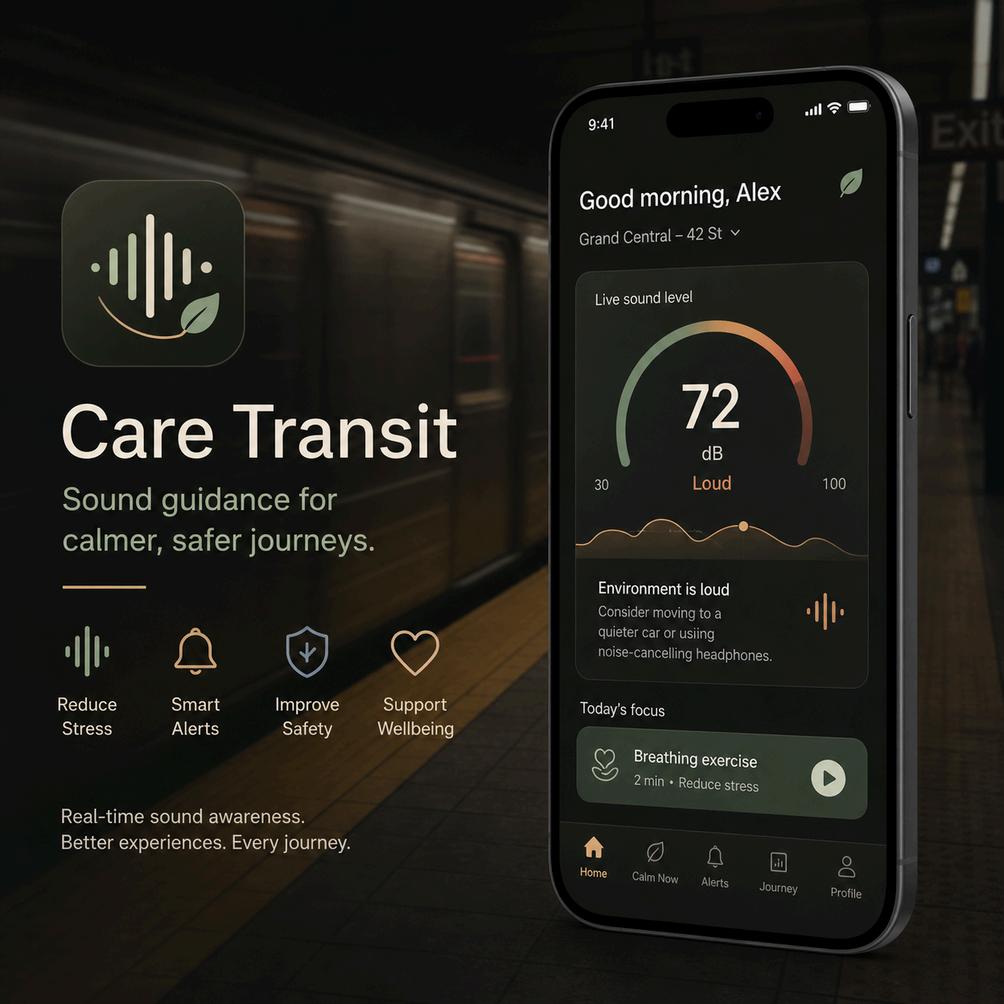
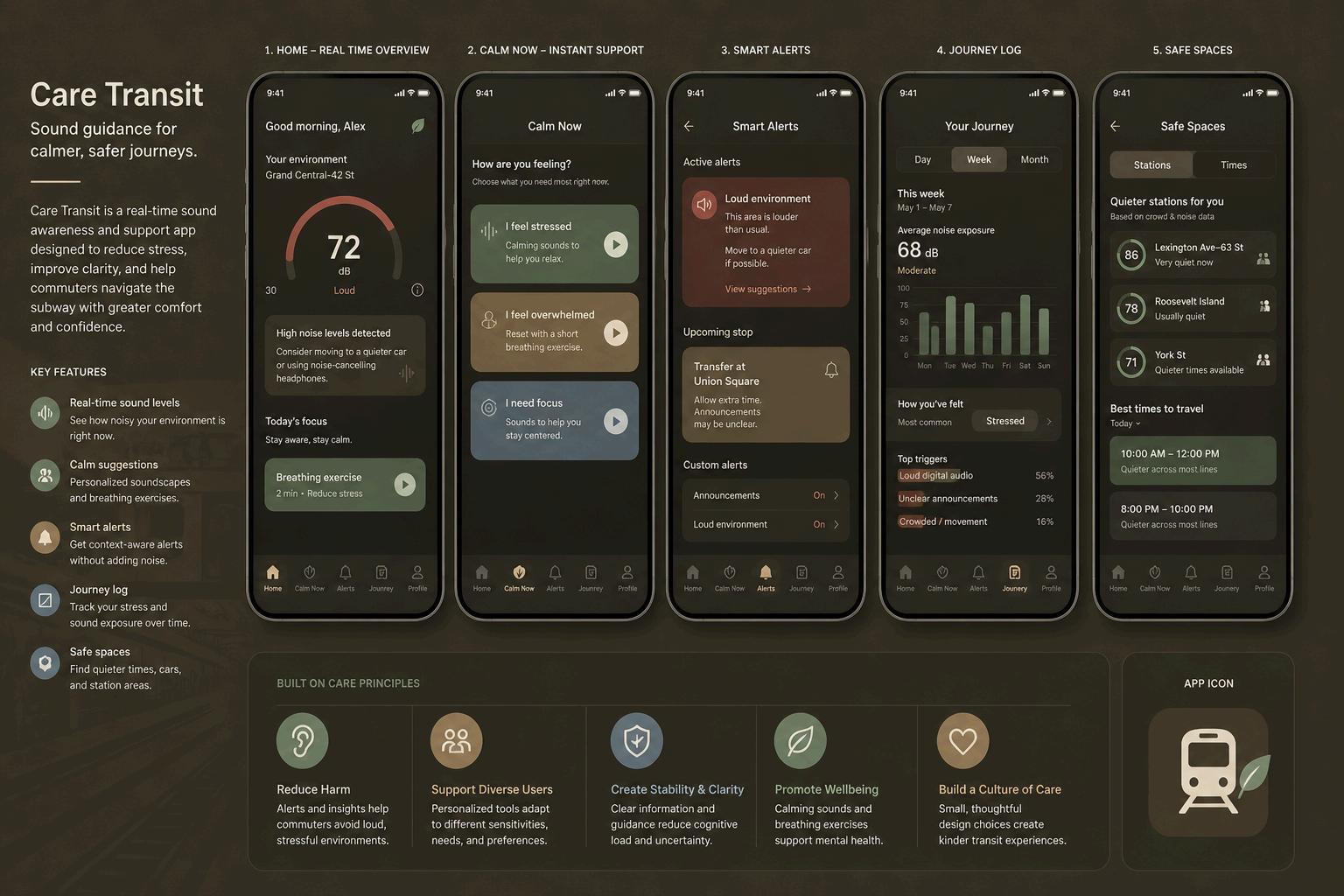
Prototype (App + System)
Impact & Systems Thinking
Market Landscape Implementation & Scaling
In the US, ~10 million adults under 70 have hearing loss attributed to noise pollution.
thats 6% of the population!
~17% of teens (12–19 years) show signs of noise-induced hearing loss (NIHL)
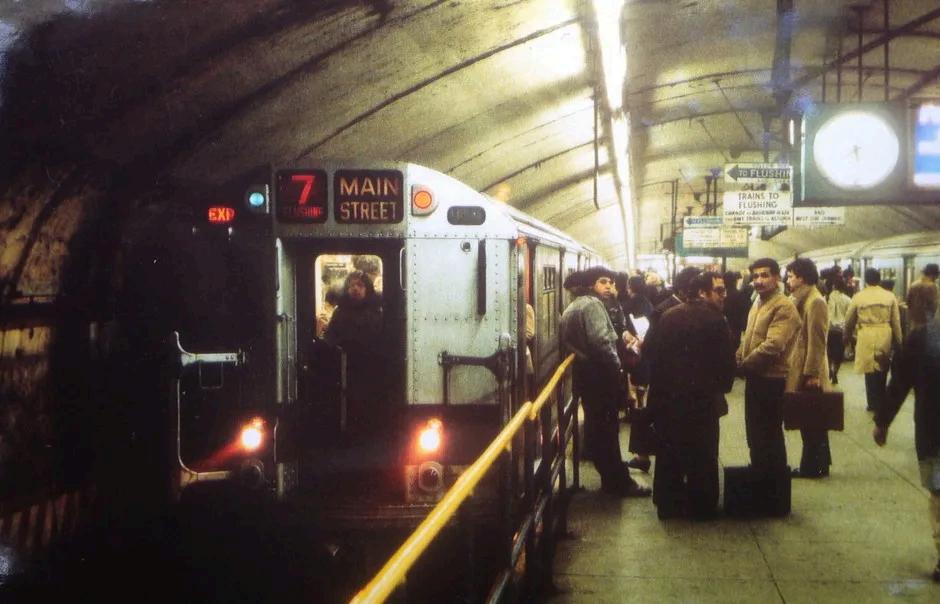
Urban transit systems (NYC subway) expose commuters to chronic sensory overload, especially noise
Long-term health impacts Leads to:
Increased stress + fatigue
Reduced emotional regulation
Invisible + normalized Problem is:
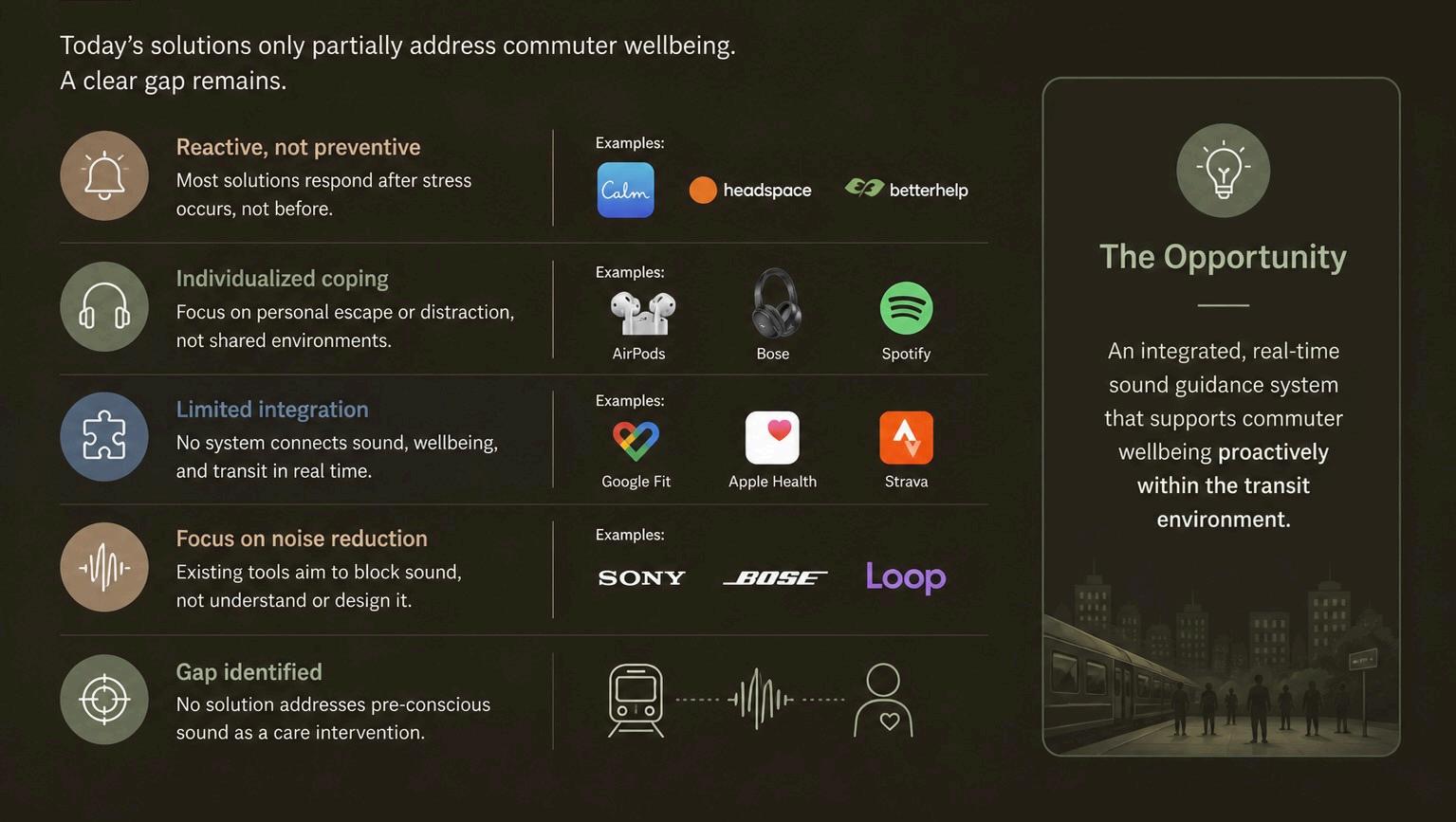
Most solutions today either:
Ask individuals to cope (like headphones), or Focus only on infrastructure fixes What’s missing is a shared, preventive care approach.
Noise exposure in cities is not only a it is a public health issue.
Research shows chronic environme contributes to:
Elevated stress hormones
Sleep disturbance
Cognitive fatigue
Cardiovascular risk
Reduced emotional regulation
How might we design urban transit environments that reduce chronic sensory overload and support emotional regulation as a form of preventive care?
Conduct secondary research (articles, casestudies).
Identify key stakeholders and participants.
Landscape Analysis
Workshops & Engagement
Conduct primary research
1:1 expert interviews
Workshop 1
Consumer experiences, trust, and brainstroming/co-design.
Workshop 2
Future scenarios, co-design solutions, and feedback.
Synthesis & system-level concept
Analyze insights from workshops and secondary research.
Develop key recommendations for ethical innovation.
Prepare final deliverables (report, presentation).
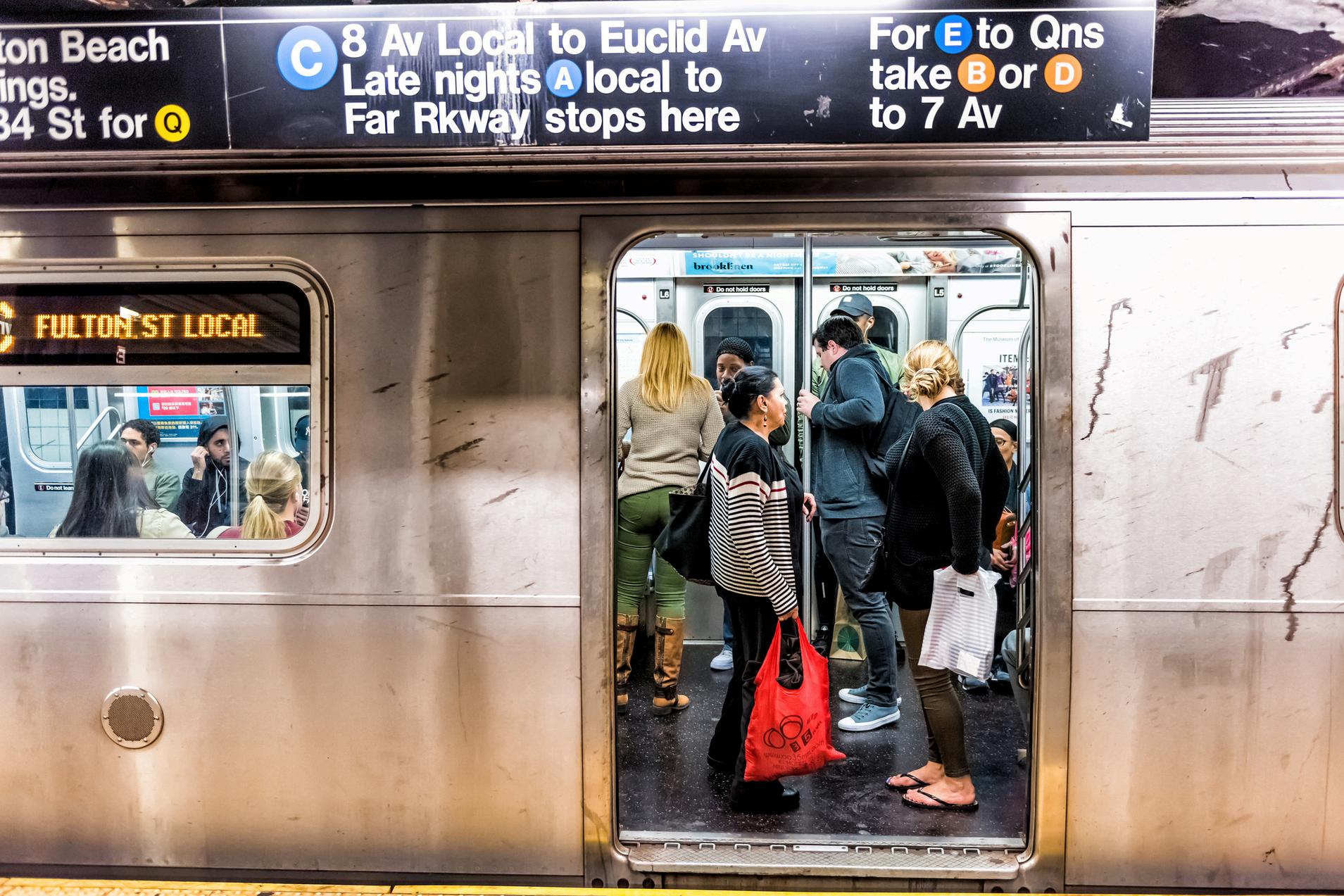
Our research identified four key sound stress points during a typical subway journey:
1.Platform waiting
2.Train movement
3.Inside the train
4.Transfer corridors These repeated exposures create cumulative sensory strain over time.
Our Secondary Research shows:
Long term sound polution affects health
Music can be used as a solution to physiologically change body state
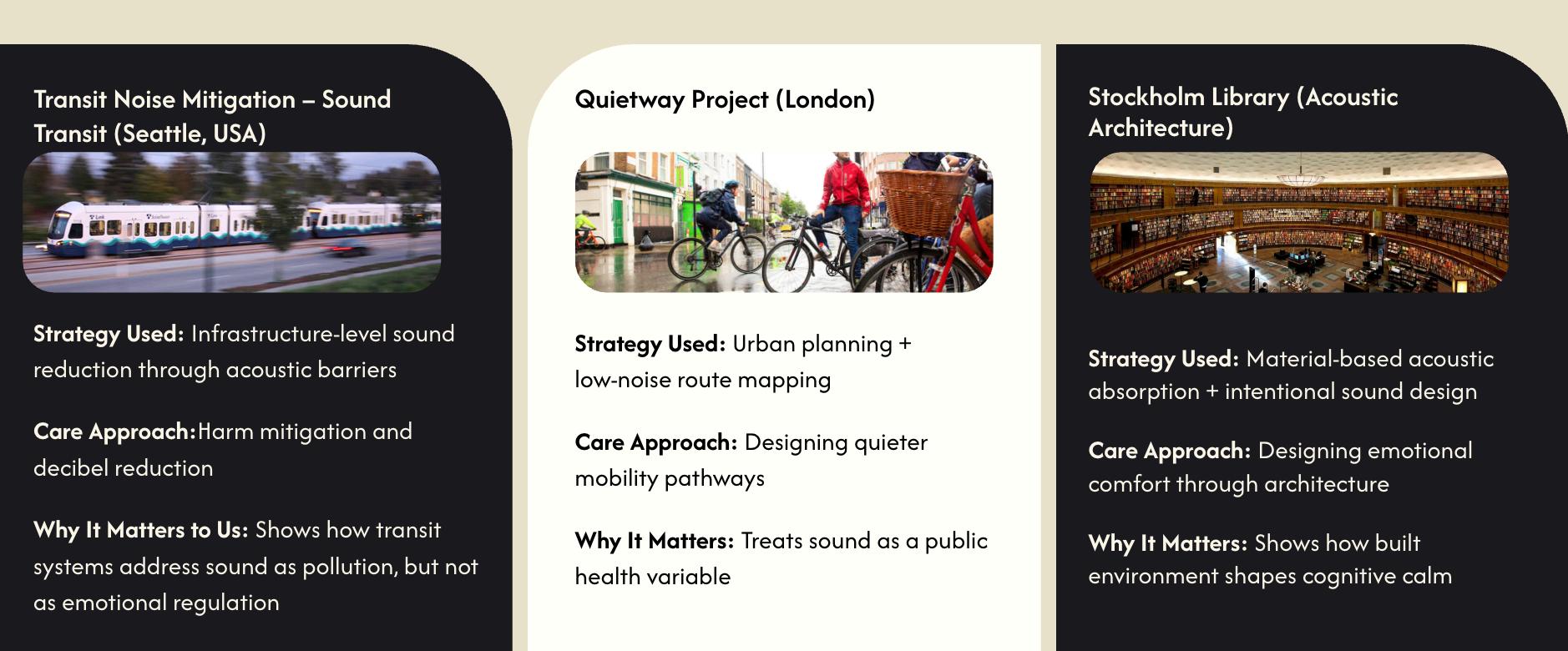
Our Landscape Analysis shows:
Transit solutions focus only on reducing noise, not designing with it
Very few examples explore intentional sound environments for emotional regulation in shared infrastructure.
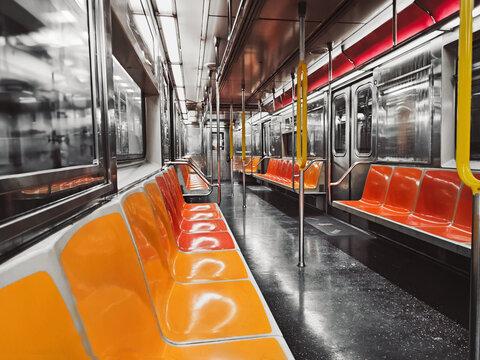
This gap presents an opportunity for preventative design innovation.
Initial Concept Idea:
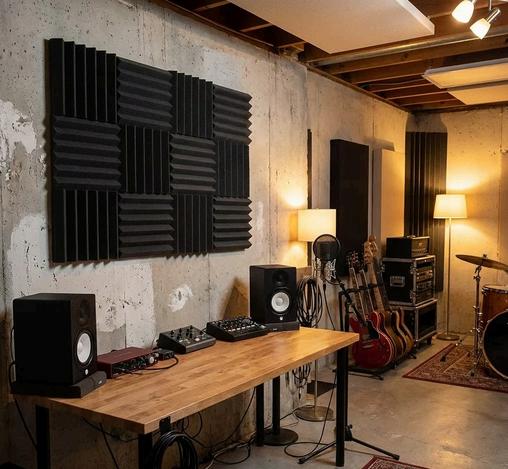
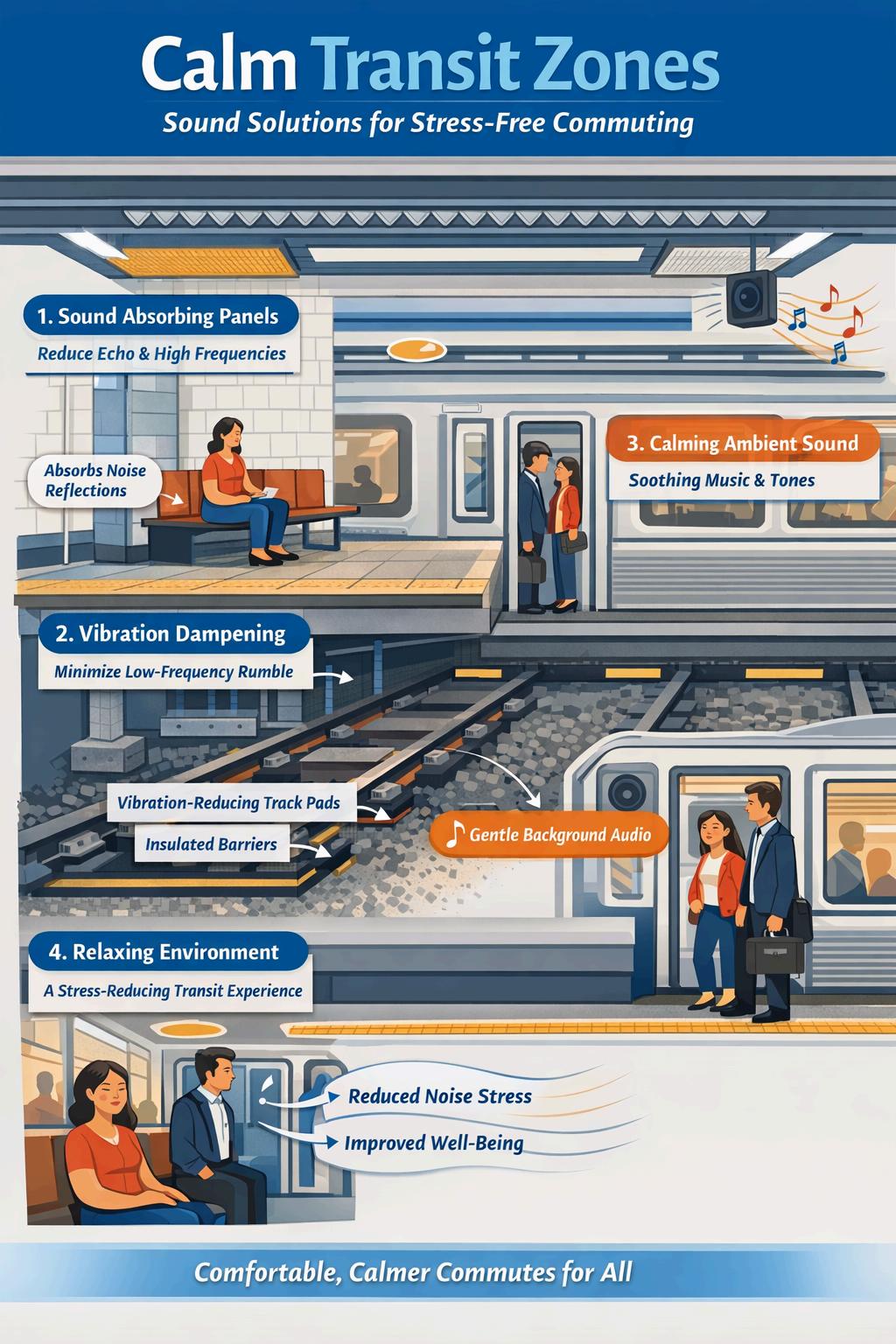
Create designated “calm transit zones” that reduce noise and vibration while introducing subtle ambient sound to lower stress and improve commuter well-being.


BrianMcGrath
ProfessorofUrbanDesign
ParsonsSchoolofDesgn

NickTyler
ProfessorofCivilEngineering
UnverstyCollegeLondon
Infrastructure shapes wellbeing unevenly, transit systems often place the greatest sensory and environmental stress on those with the least control. Design must act as a corrective system reducing sensory harm and embedding care into the environments people cannot opt out of.
Sound in transit isn’t something to “fix,” but something to reveal and reframe, prioritizing user agency, awareness, and multi-sensory design over control.
Transit sound should be designed as a pre-conscious, orienting layer that reduces stress and supports navigation rather than simply being treated as noise to eliminate.

JohnRoach
SoundExpert
ParsonsSchoo ofDesign
Understand lived experiences of subway sound
Identify stress points and coping behaviors
Explore relationship between sound, safety, and control
Method
1:1 short interviews with commuters
8 structured questions per participant
Focus on real-time recall of journeys
Mixed participants (routes, times, behaviors)


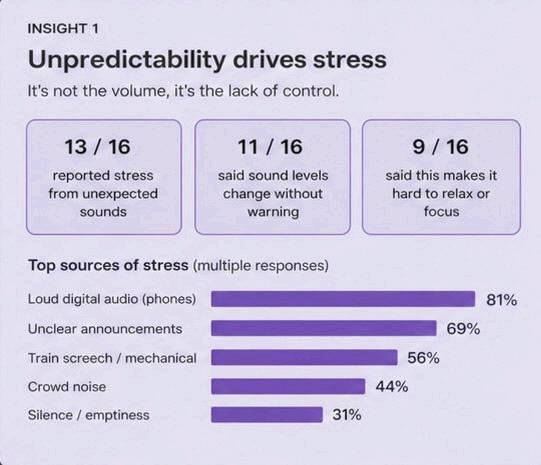
Noise ≠ main issue → unpredictability is
Digital audio (phones) most disruptive
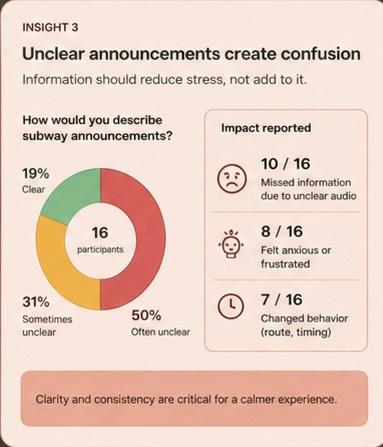
Announcements unclear → causes stress
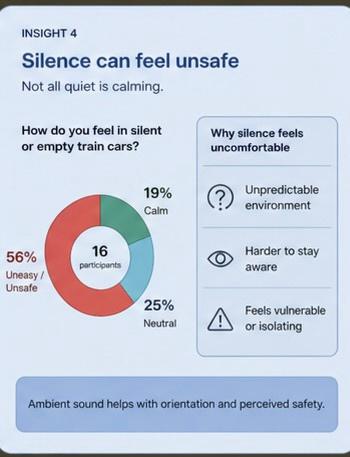
Silence can feel unsafe
Behaviour Patterns
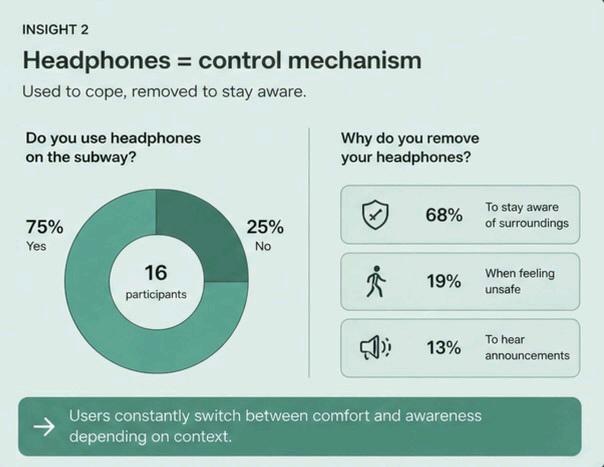
Headphones = control mechanism
Removed for safety awareness
Constant switching between comfort and alertness
Design Implications
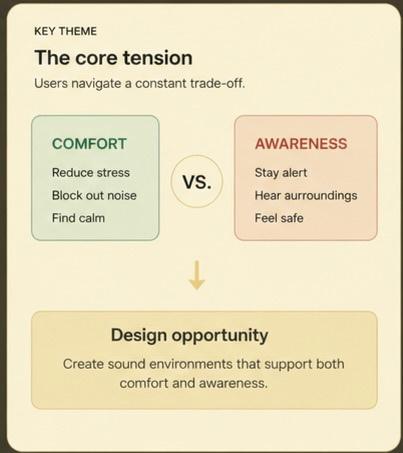
Sound must guide, not overwhelm
Balance comfort with awareness
Design for variability, not uniform silence
Sound = tool for navigation + safety
Test how sound impacts the body in real time
Compare commute with vs. without sound intervention
Generate insights grounded in lived + measured experience
Method
3 participants using wearables (Apple Watch, Fitbit, Oura)
2-phase subway commute:
Phase 1: No sound (natural environment)
Phase 2: With music/audio
Data collected:
Heart Rate (HR)
Mood (1–5 scale)
Emotional state + reflections

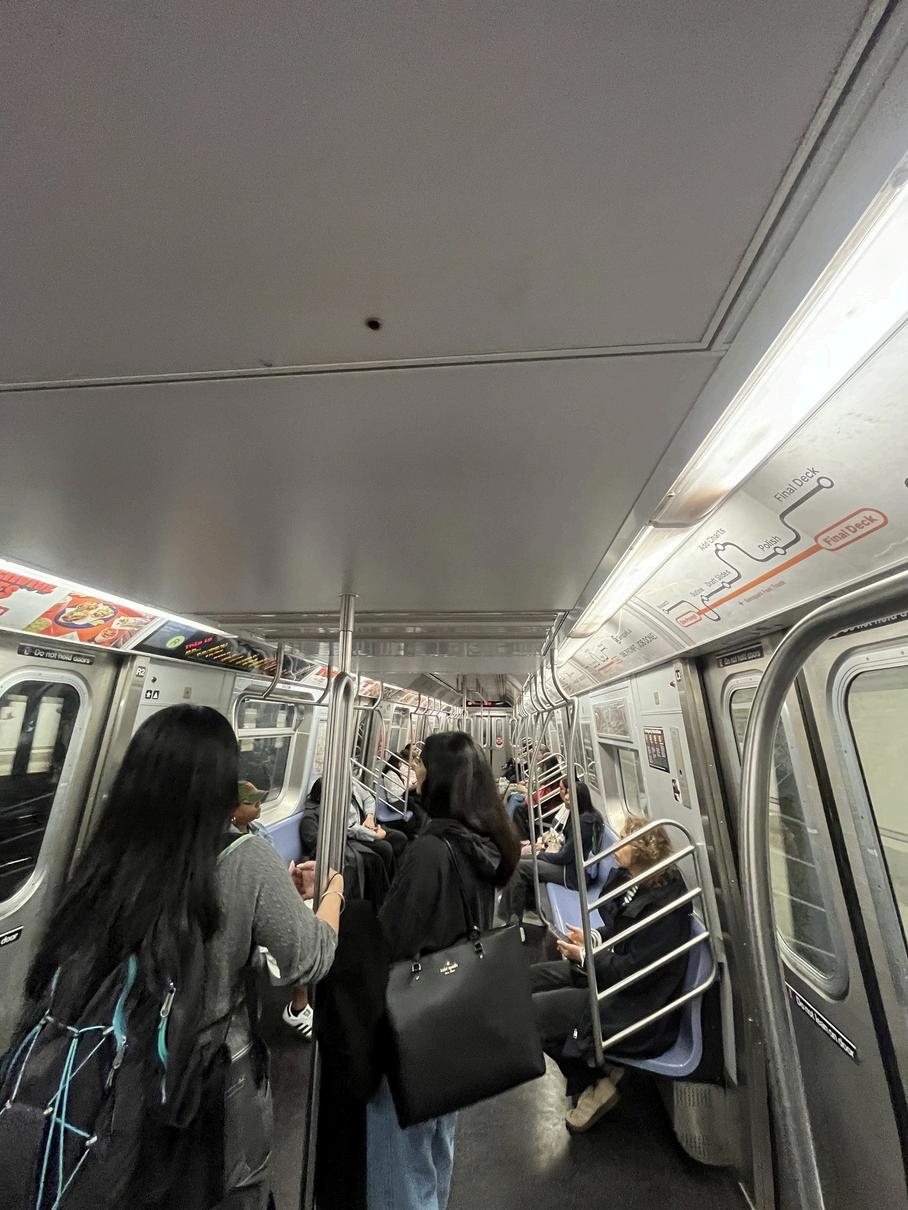
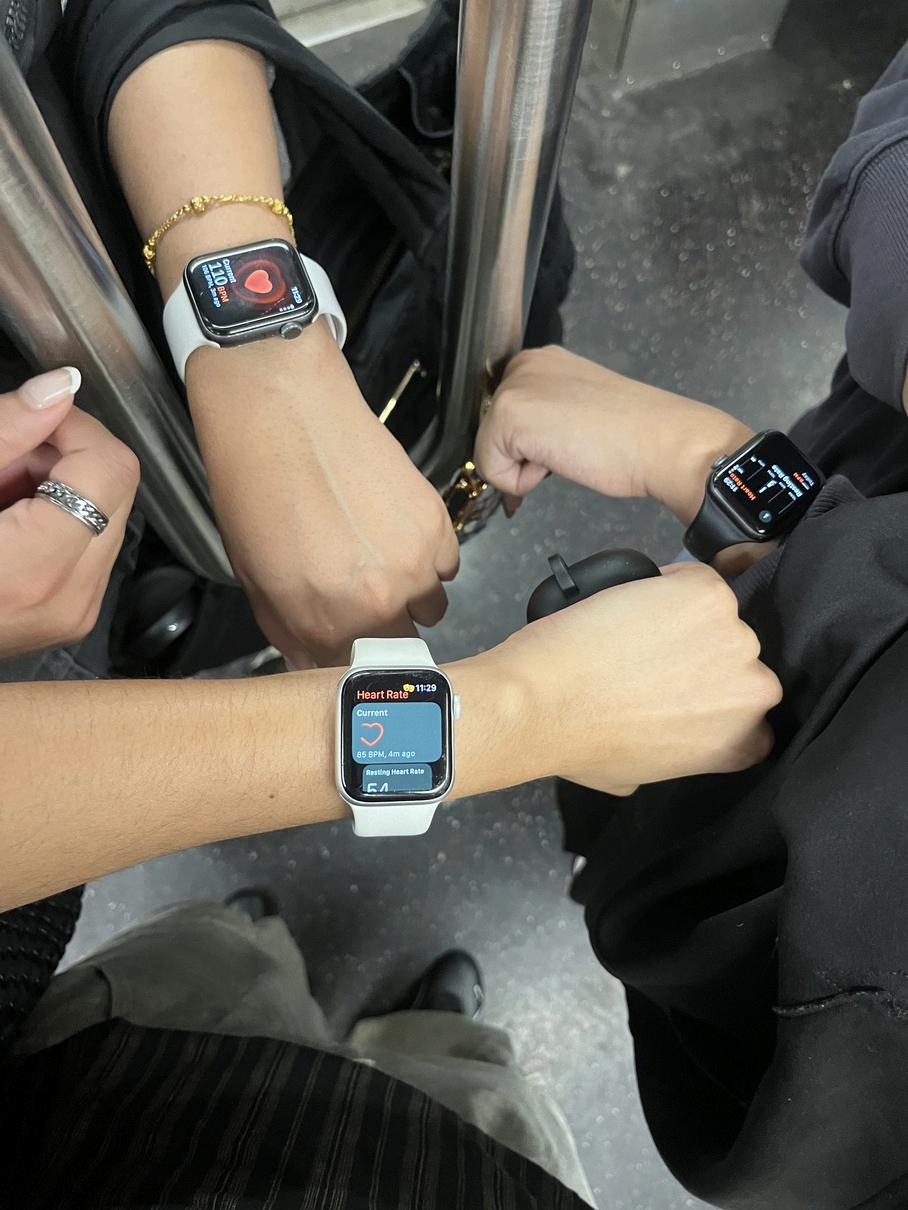
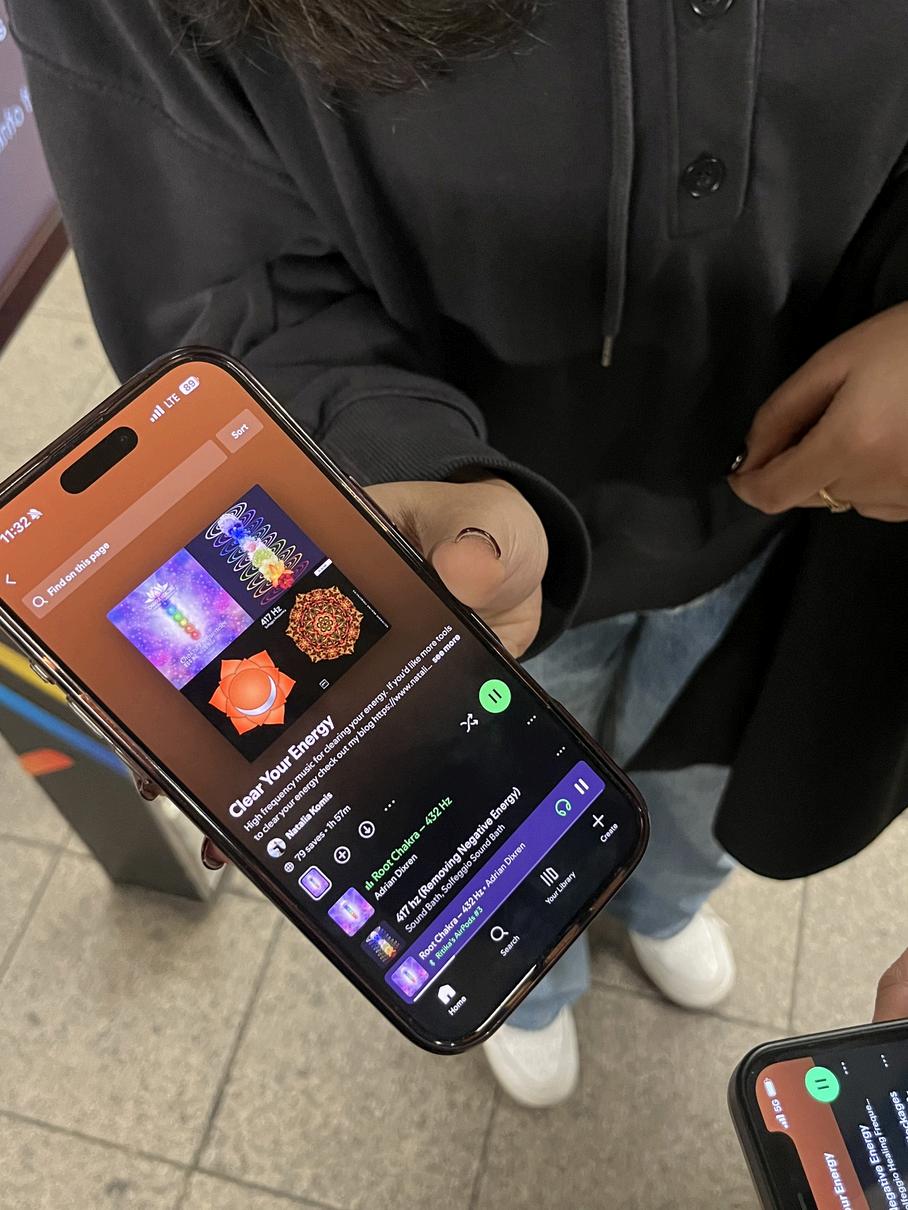
Sound shifted experience from overwhelm → regulation
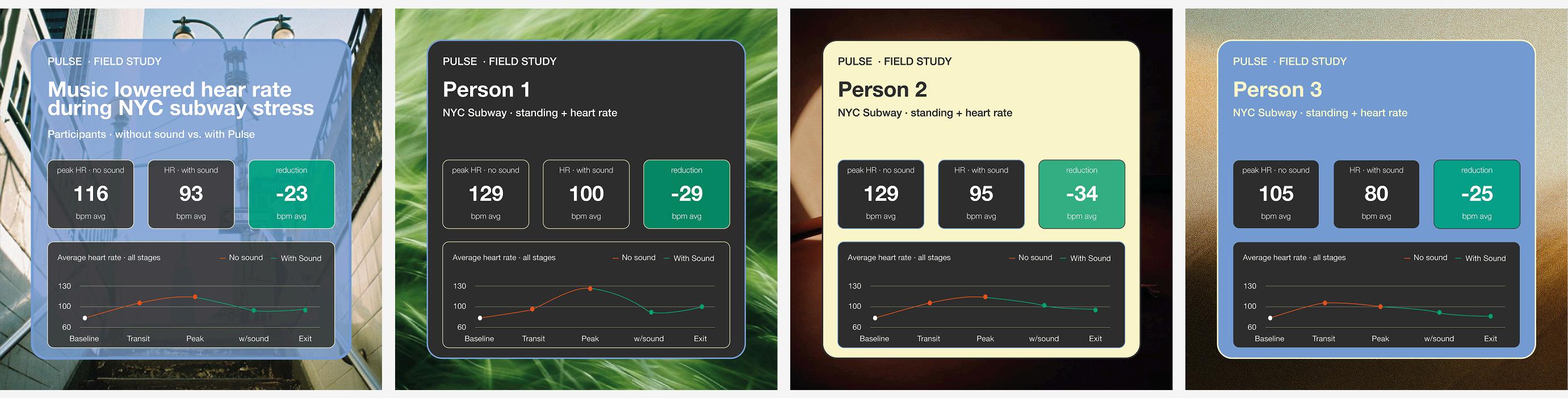
HR generally decreased with audio, but influenced by external factors (heat, movement, crowding) Music acted as: Escape Support for breathing + focus → Design for choice, awareness, and reduced sensory load
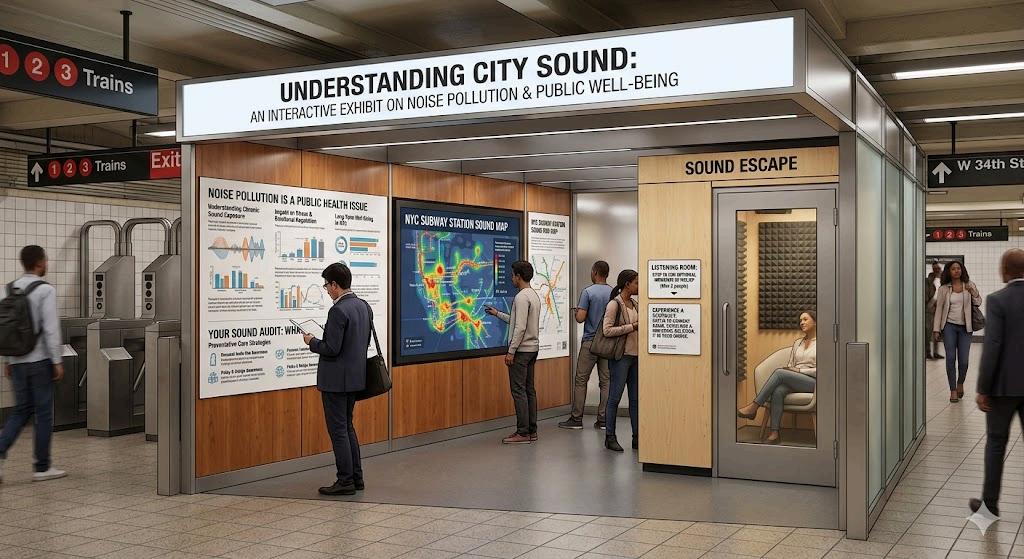
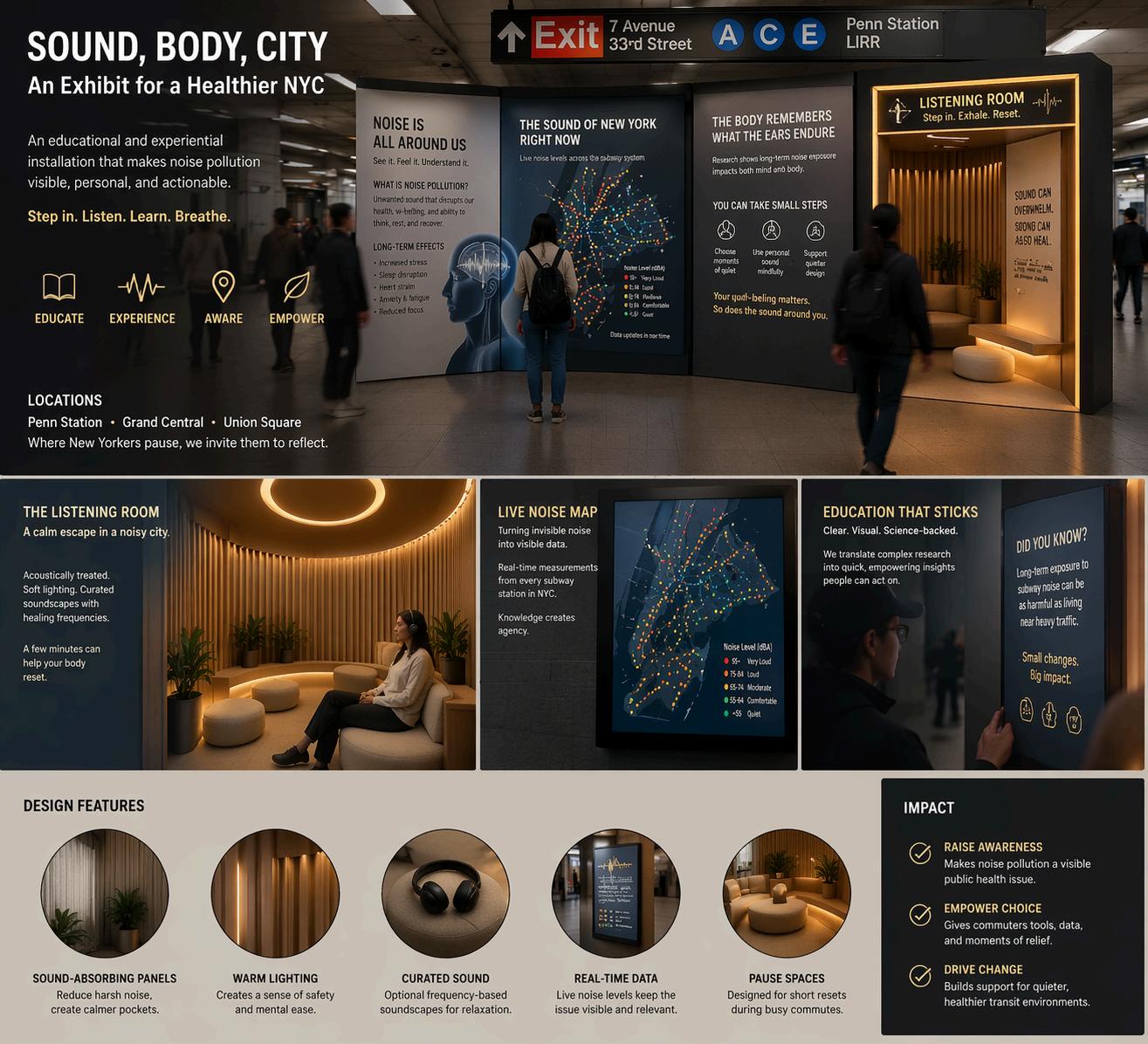
An educational + experiential installation in hightraffic subway stations that helps commuters understand and manage the impact of noise on their well-being.
Core Components:
Noise Awareness Exhibit
OPPORTUNITY THIS CREATES:
Shift from controlling sound to creating awareness, choice, and moments of care
Makes invisible stress visible, measurable, and understandable
Embeds preventive care into everyday commuting routines
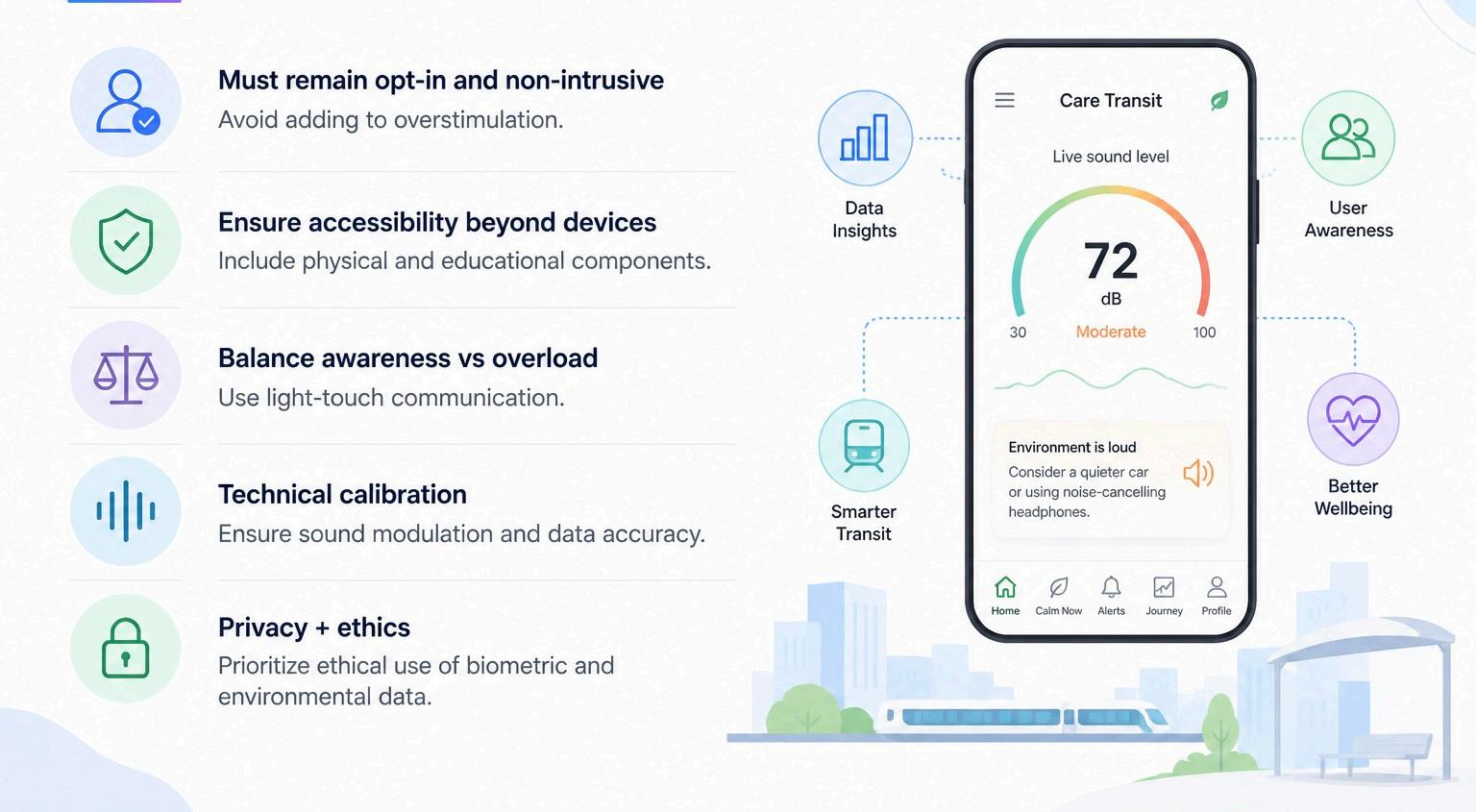
Empowers commuters with real-time awareness and informed choice
Supports both comfort and safety through pre-conscious sound guidance
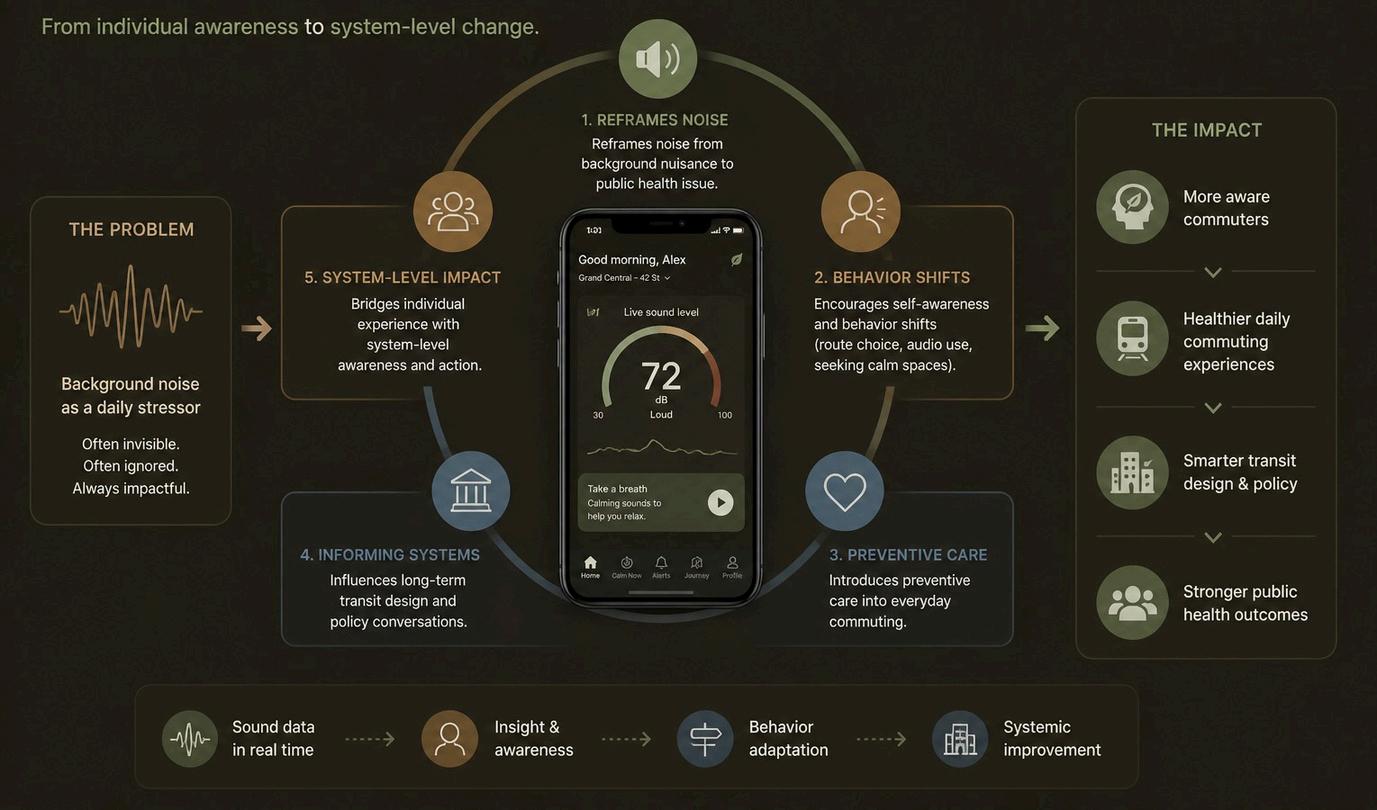
Positions transit noise as a public health issue, not background condition
Enables real-time awareness → behavioural adaptation
Embeds preventive care within daily mobility systems
Influences future infrastructure and policy thinking
Bridges personal data with systemic change
Start with pilot in high-traffic stations (Union Square, Penn Station, Grand Central)
Use existing infrastructure (screens, ads, QR codes) for awareness
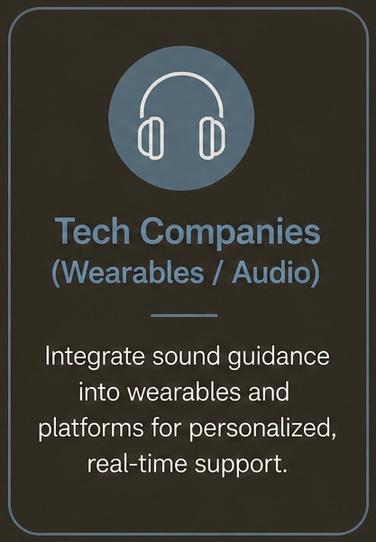
Integrate with wearables + mobile platforms
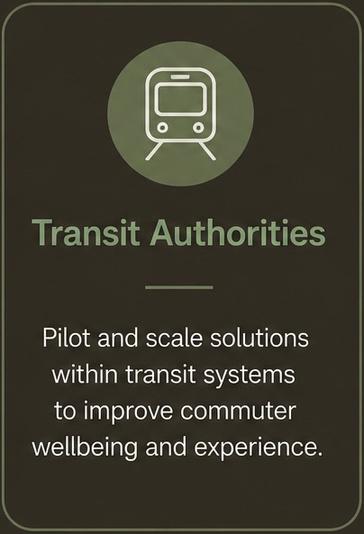
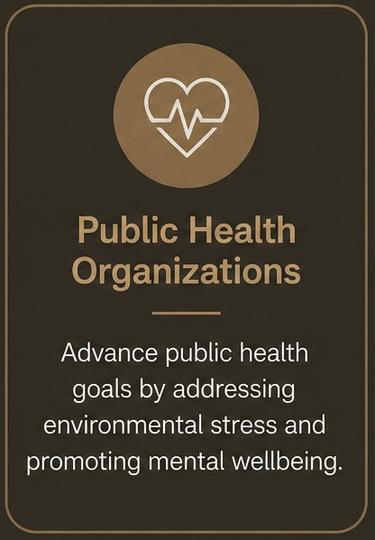
Commuters are willing to engage if value is clear and low-effort
Increased awareness leads to behavior change + agency
Wearables + phones are widely adopted enough for scaling
Small interventions can meaningfully impact perceived stress
Transit authorities are open to pilot + public health framing
Google Doc - HERE
includes: Overview, Reserach, Workshops, Interviews, Concept Development, Project Updates
Bibliography
Designing Sound as Preventive Care Infrastructure. Tech and Care Project, Parsons School of Design, 2026.
World Health Organization. Environmental Noise Guidelines for the European Region. 2018.
World Health Organization. Night Noise Guidelines for Europe. 2009.
Federal Transit Administration. Transit Noise and Vibration Impact Assessment Manual. 2018.
New York City Department of Environmental Protection. NYC Noise Code and Residential Noise Control Guidance.
National Institute for Occupational Safety and Health (NIOSH). Occupational Noise Exposure: Revised Criteria.
Occupational Safety and Health Administration (OSHA). Occupational Noise Standards.
Basner, M., et al. “Auditory and Non-Auditory Effects of Noise on Health.” The Lancet.
Zwicker, E., & Fastl, H. Psychoacoustics: Facts and Models.
Bernardi, L., et al. “Cardiovascular, Cerebrovascular, and Respiratory Changes Induced by Different Types of Music.”
Kang, J., et al. “Soundscape Studies and Urban Design.”
Zhou, J., et al. “Effects of Pink Noise on Sleep Stability.” Journal of Theoretical Biology.
Leventhall, G. “Low Frequency Noise and Annoyance.”