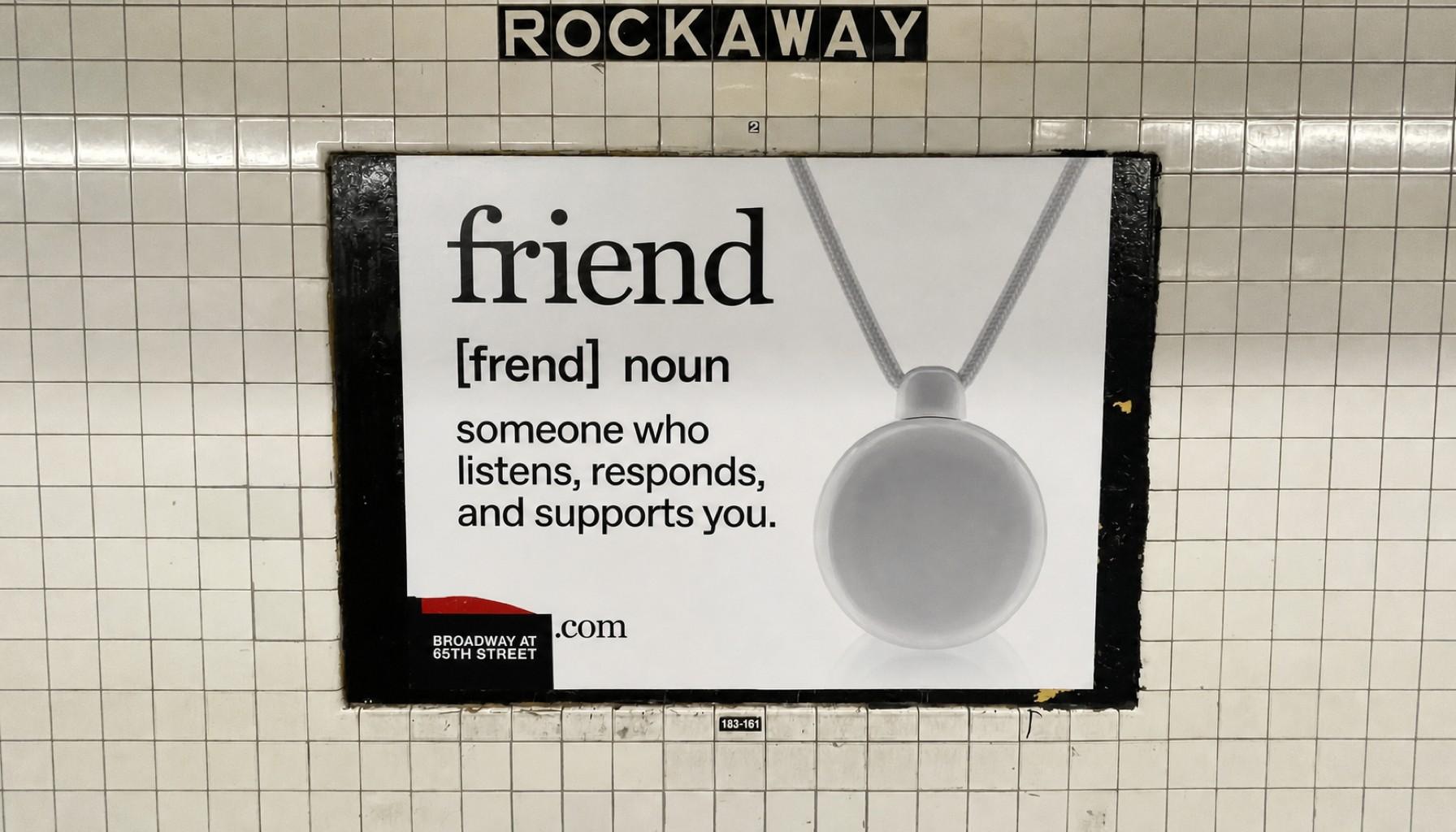
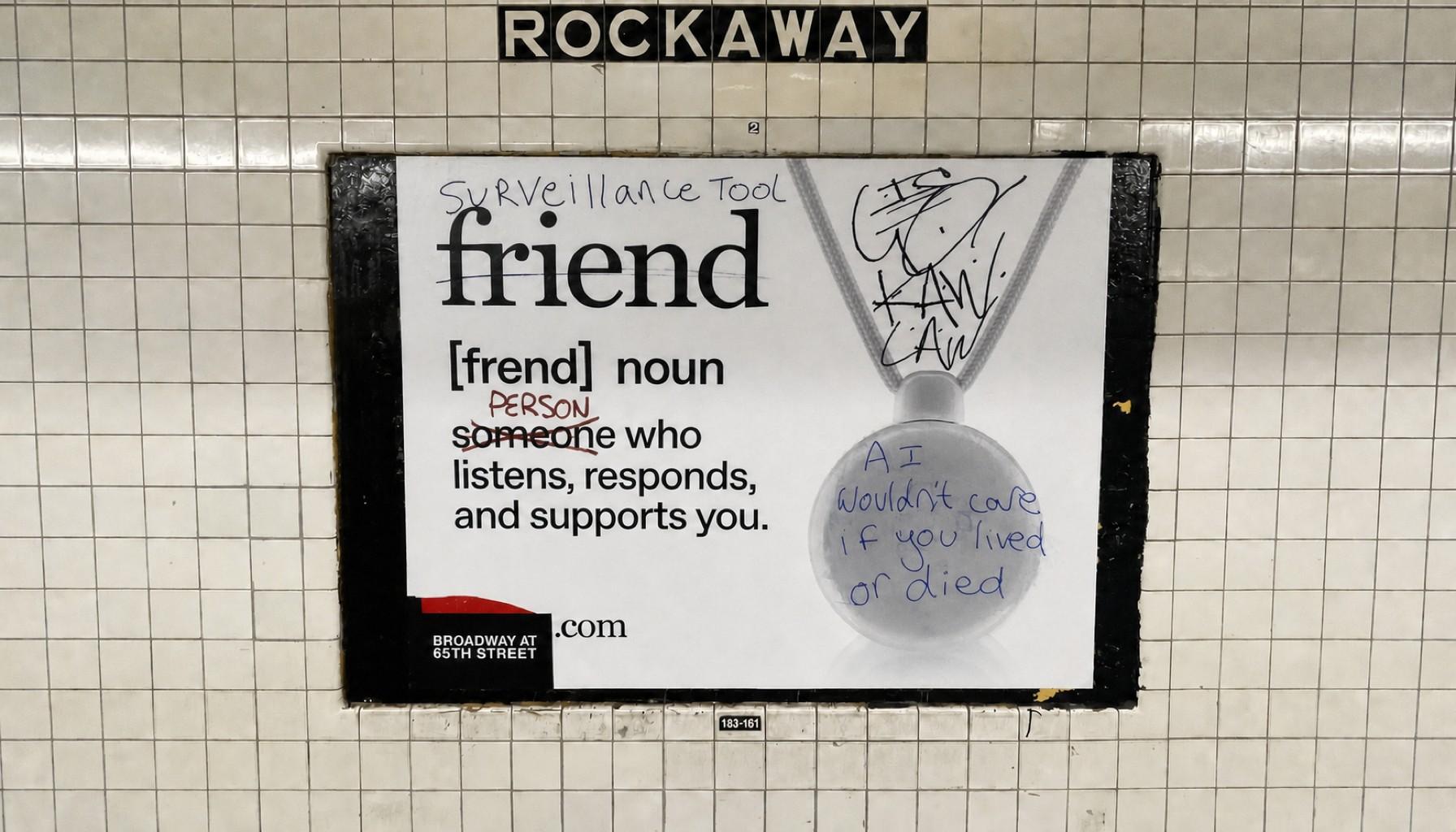
Broadway at 65th Street, New York City

Broadway at 65th Street, New York City
From AI Companionship to Human Connection
Sheldon & Paloma
CareLab | Spring 2026 | Parsons School of Design

50%+
of New Yorkers feel lonely
NYC DOH, 2024
15 cigarettes/day equivalent health impact
Holt-Lunstad, 2010

#1 age group for psychological distress: 18-24
NYC DOH, 2024

What it can do
• Reduce momentary loneliness
• Make people feel "heard"
• Effects comparable to human strangers
Lizardo/HBS 2025 | Yin/PNAS 2024
What's broken underneath

• Engagement-maximizing business models
• Heavier use greater loneliness →
• The business model profits when loneliness persists
Muldoon & Parke 2025 | MIT Media Lab 2025
Loneliness is not just about being alone. It is about lacking the right kind of responsive care at the right moment.
The question is not whether technology can replace human care, but whether it can help make care more reachable, consistent, and emotionally safe.
Simmel 1903 | Harvard MCC 2024

Secondary Research
Landscape Scan
• 17 products scanned
• 33 user voices (8 platforms)
• 15 academic precedents
• 10 research briefs
• IRL Virtual ↔
• Coping Bonding ↔
• Ecosystem mapping
• Gap identification
Community Engagement
• 2 workshops • ~30 participants total
• Indoor + Outdoor
• Co-design + lived experience
Students
● New York City
● Technology experiment experience seeking emotional connection
● Young adults aged 20–35
● Socially active but lack deep-rooted, nonconditional support systems nearby.
Participants in our workshop
Care-organization founder
Lonelinessfocused culinary designer
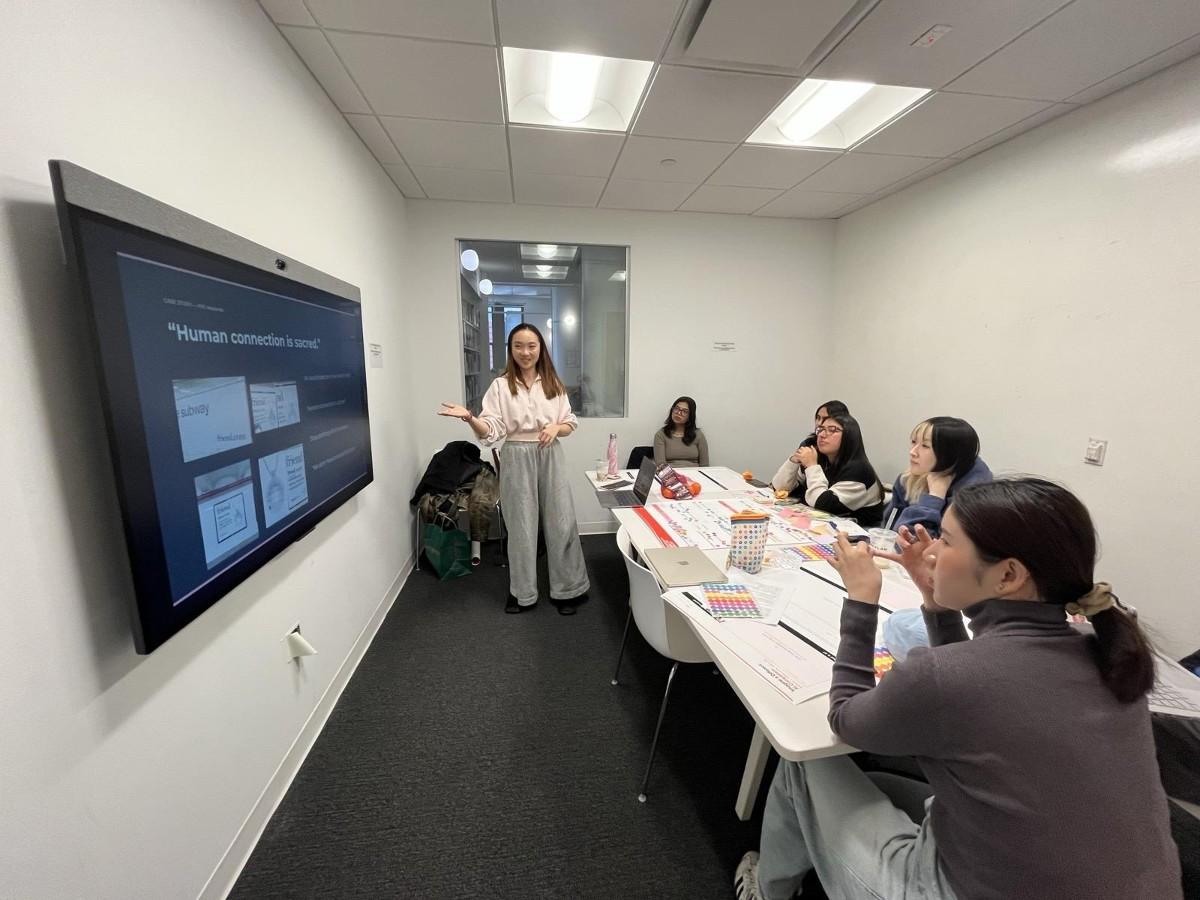
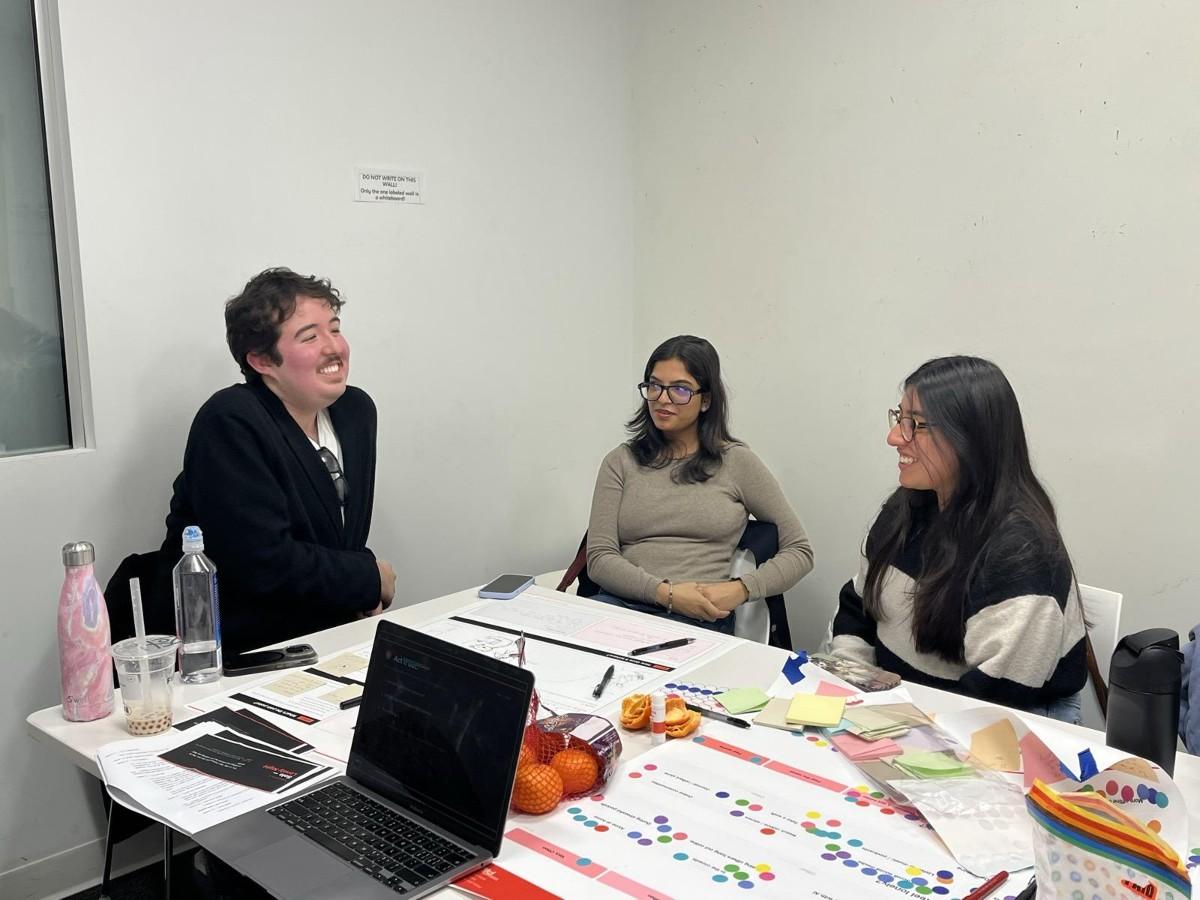
Workshop I
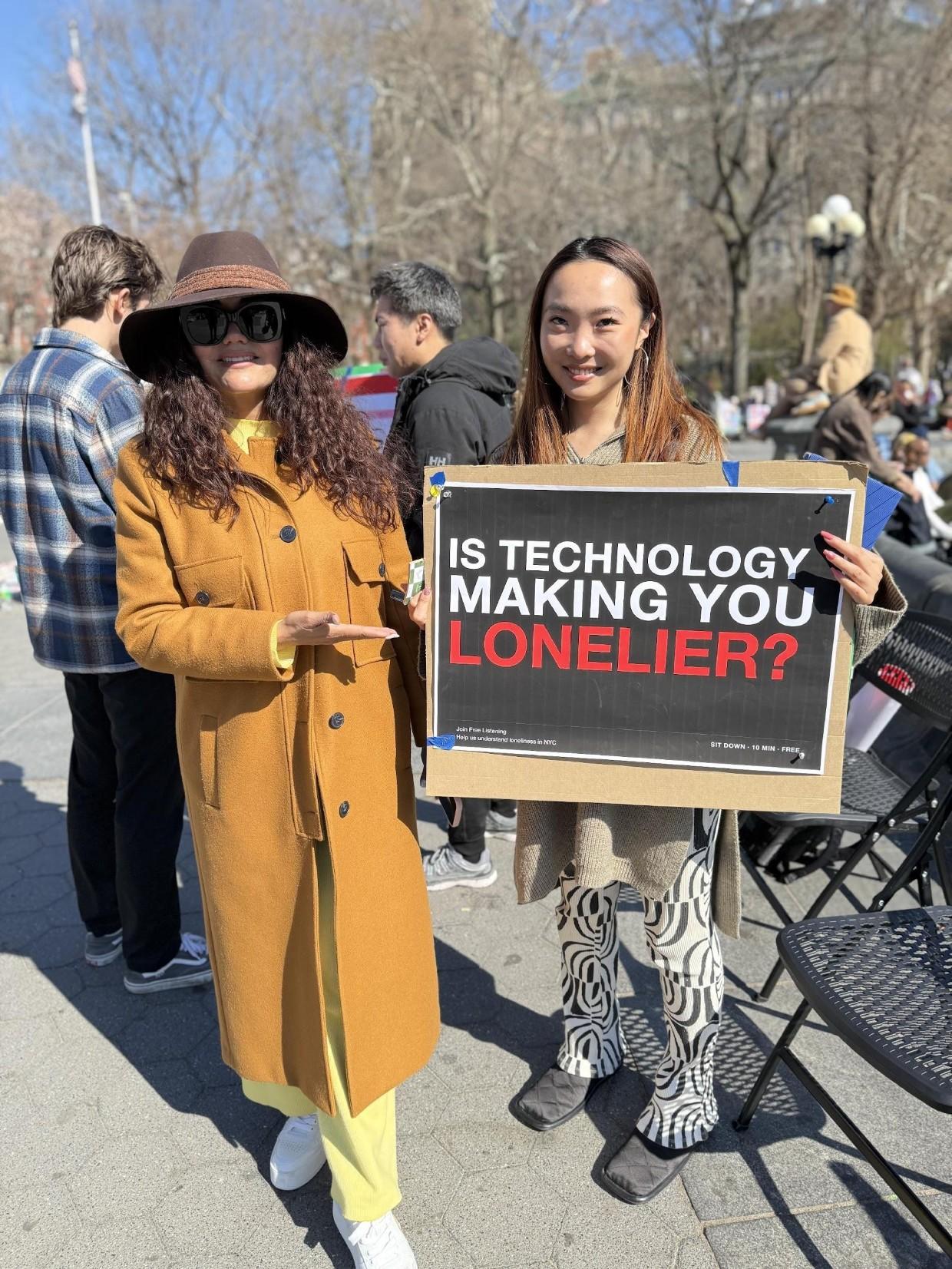
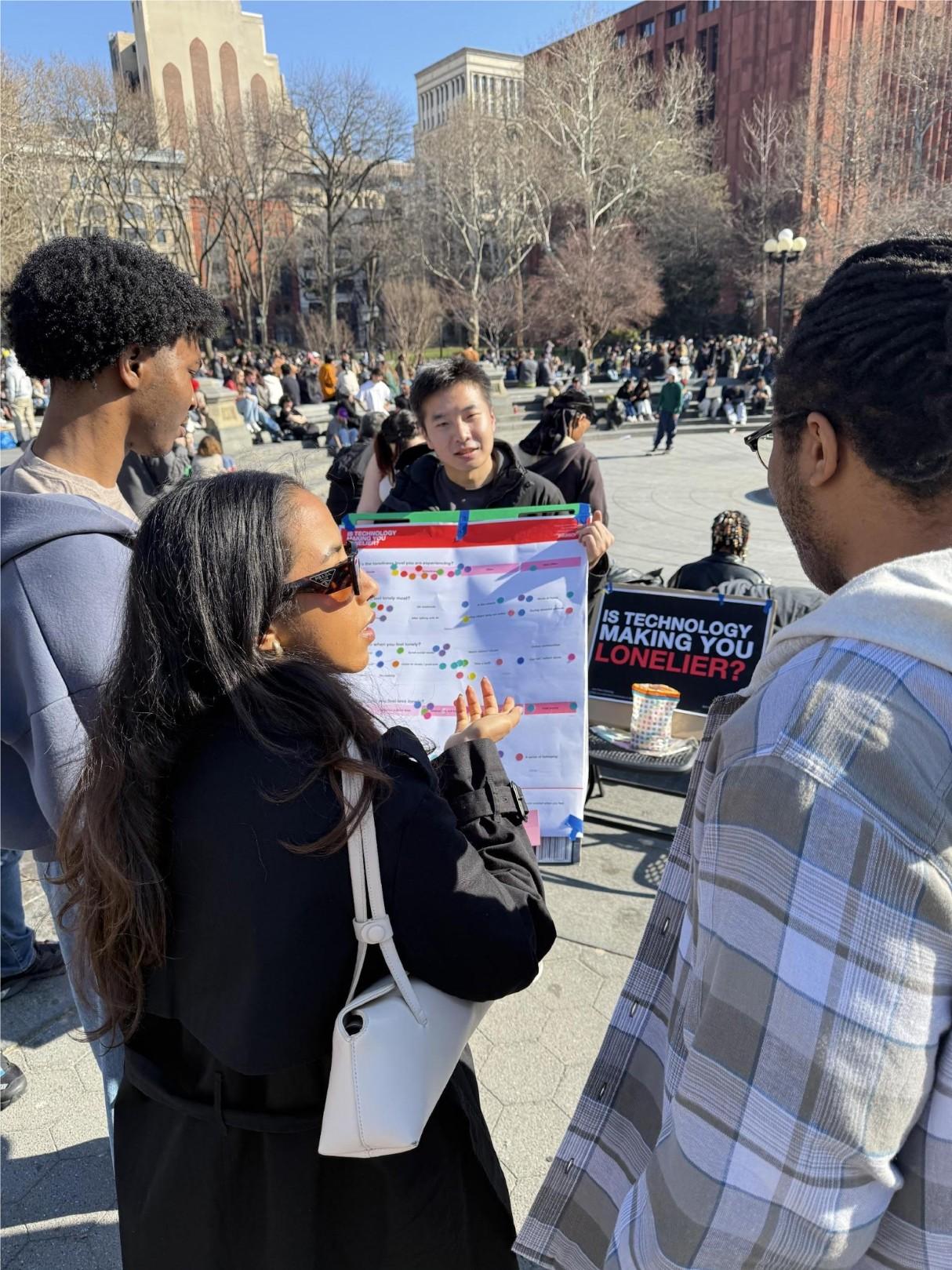
Workshop II April 6 | ~7 participants
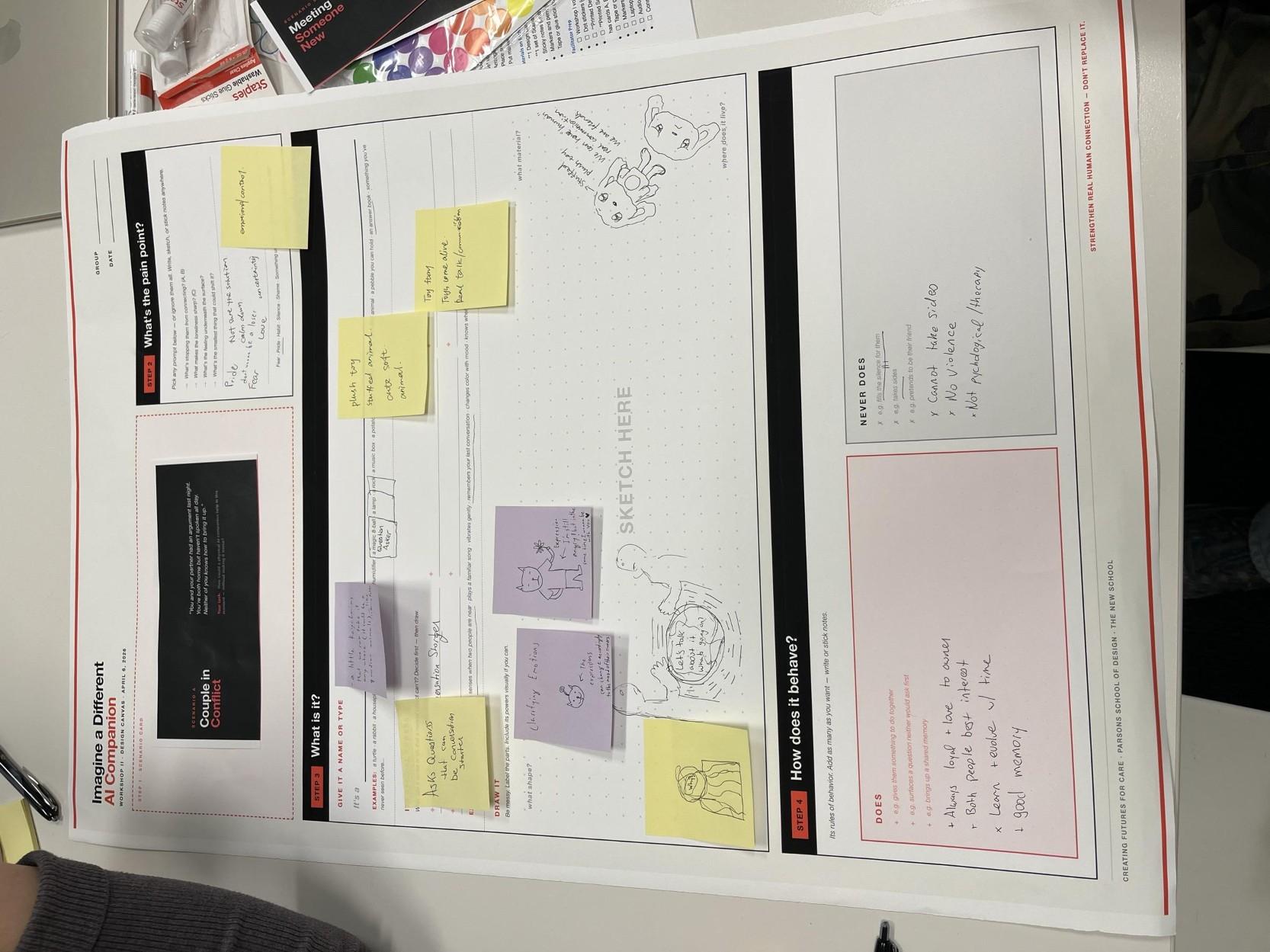


“It’s not going to make a solution for your loneliness — it’s going to be with you.”
Workshop II, Group C
“It should be confidential for each. It cannot say it. But it can help prompt them to say it out loud themselves.”
Workshop II, Group A
“When you feel a heartbeat, it’s more human, more than a toy. The existence.”
Workshop II, Group C
“Loneliness is internal. Bringing more people to a party still doesn’t solve it.”
Workshop II participant
What we heard / found


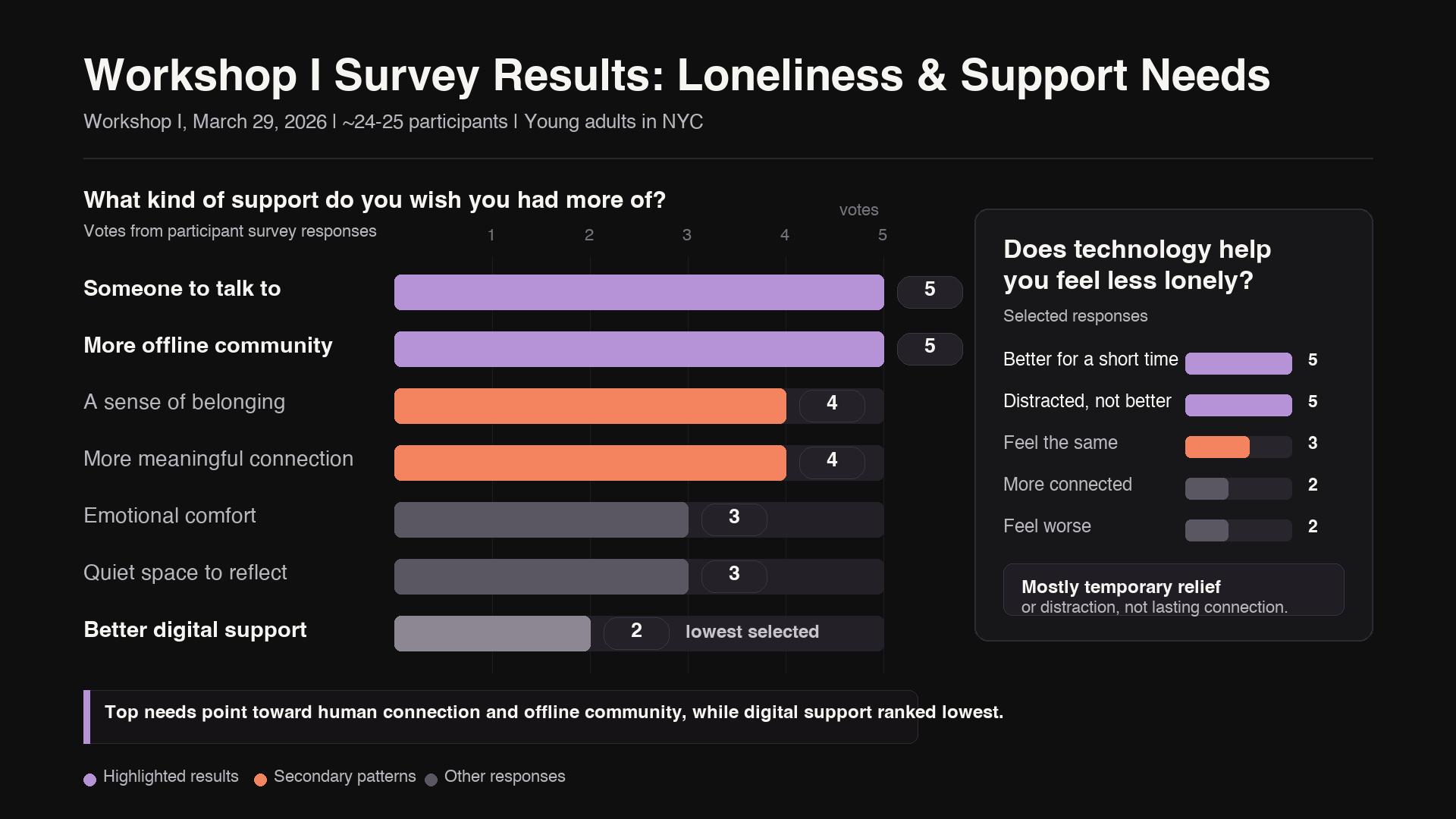
"Someone to talk to" ranked #1; "digital support" ranked last
Design constraint
Facilitate humans, don’t replace them
"Heartbeat makes it more human"
Heavier AI use greater loneliness (MIT 2025) →
"It’s not going to give solutions — just be with you"
EASE works because it ends in 7 sessions (WHO 2023)
Mental model at first contact shapes outcomes
(Pataranutaporn 2023)
Body channel, not just voice
Anti-engagement by design
Minimum intervention
Bounded, not unlimited
Physical form IS the frame

Anti-engagement design
Minimum necessary intervention
Bounded support
Structural framing
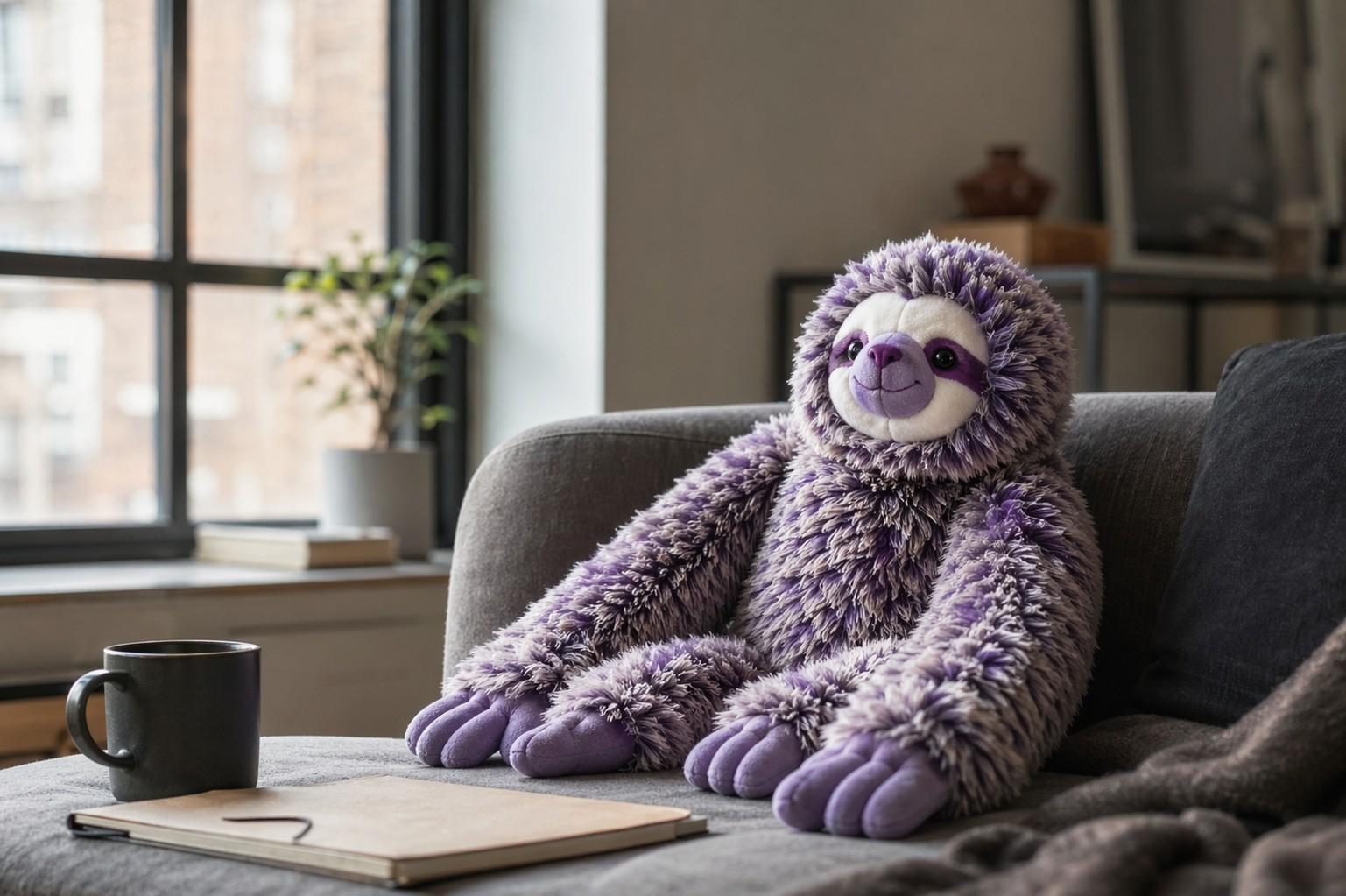
A soft AI companion for adults.
No screen. No app. No therapy claim. How you hold it determines what it becomes.
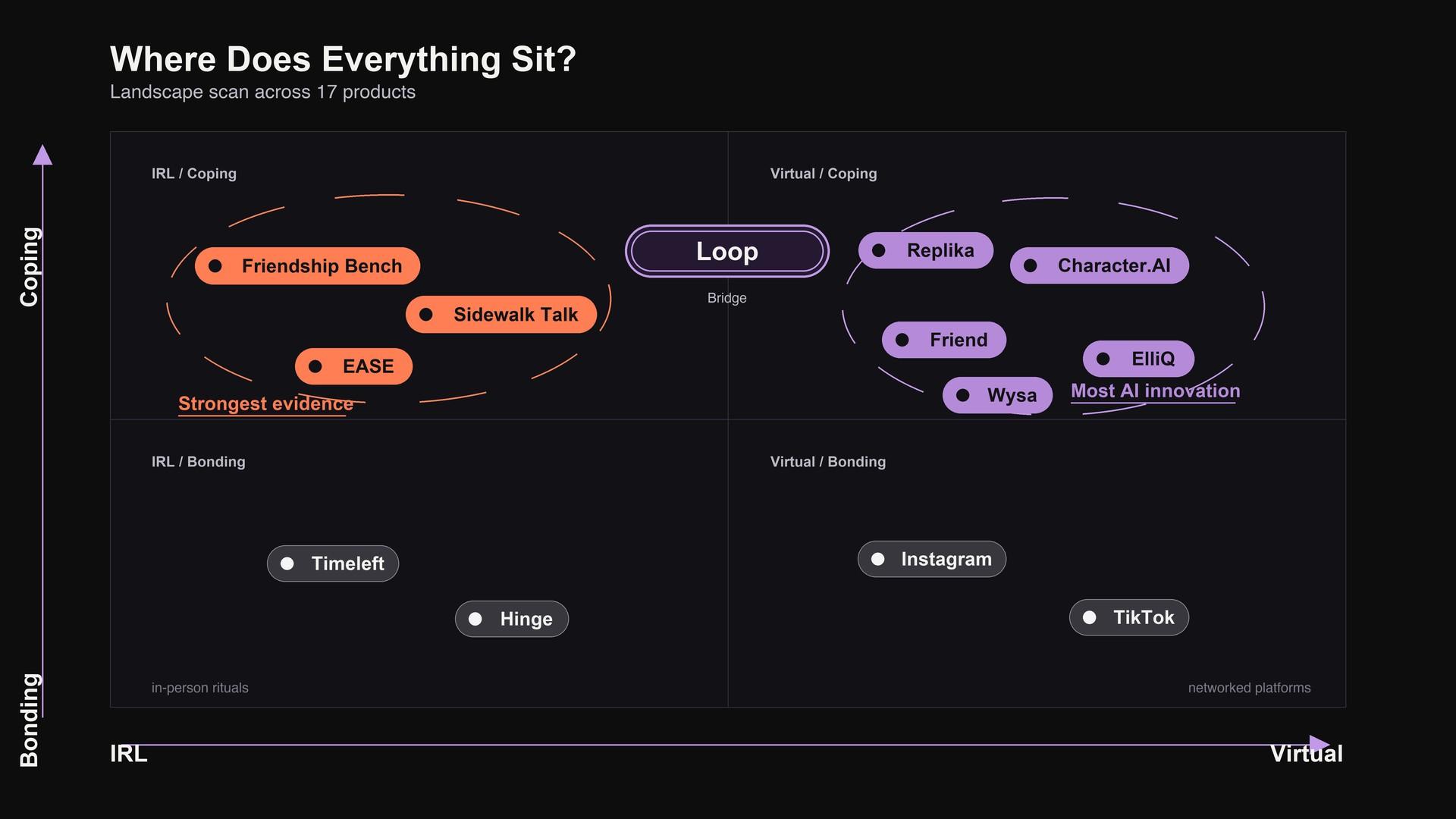
No existing product combines physical form, AI facilitation, dyadic conversation, and intentional disengagement.
17 products scanned across 4 categories. This gap is structural, not accidental.
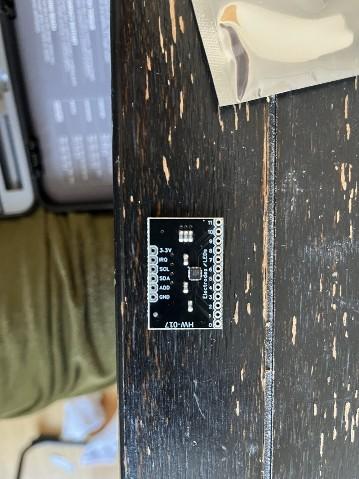
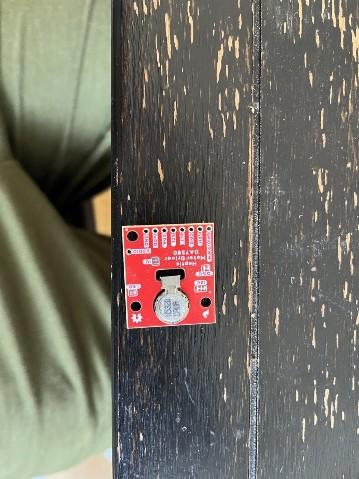
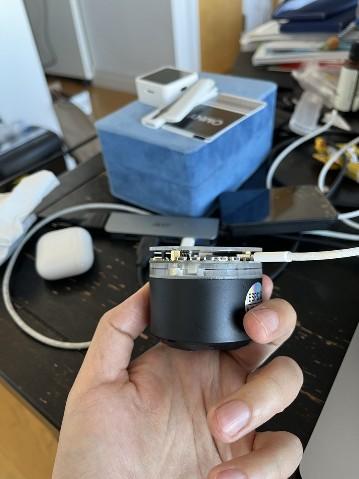
Body: haptic heartbeat, warmth
Voice: reflective questions, not advice
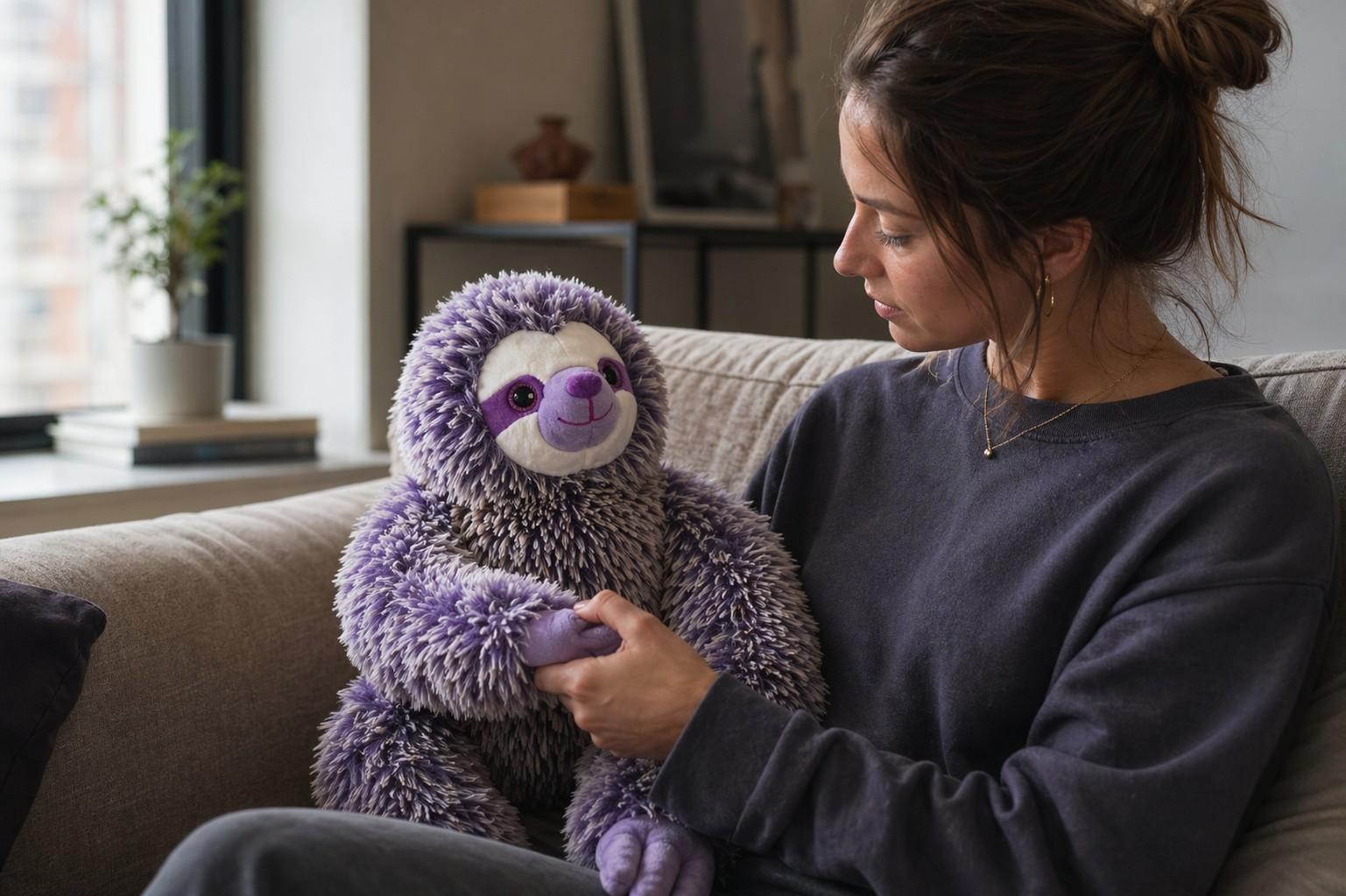
“It’s not going to make a solution — it’s going to be with you.”
Workshop II participant
DYADIC MODE
The goal is not for both people to talk to Loop. The goal is for them to talk to each other.
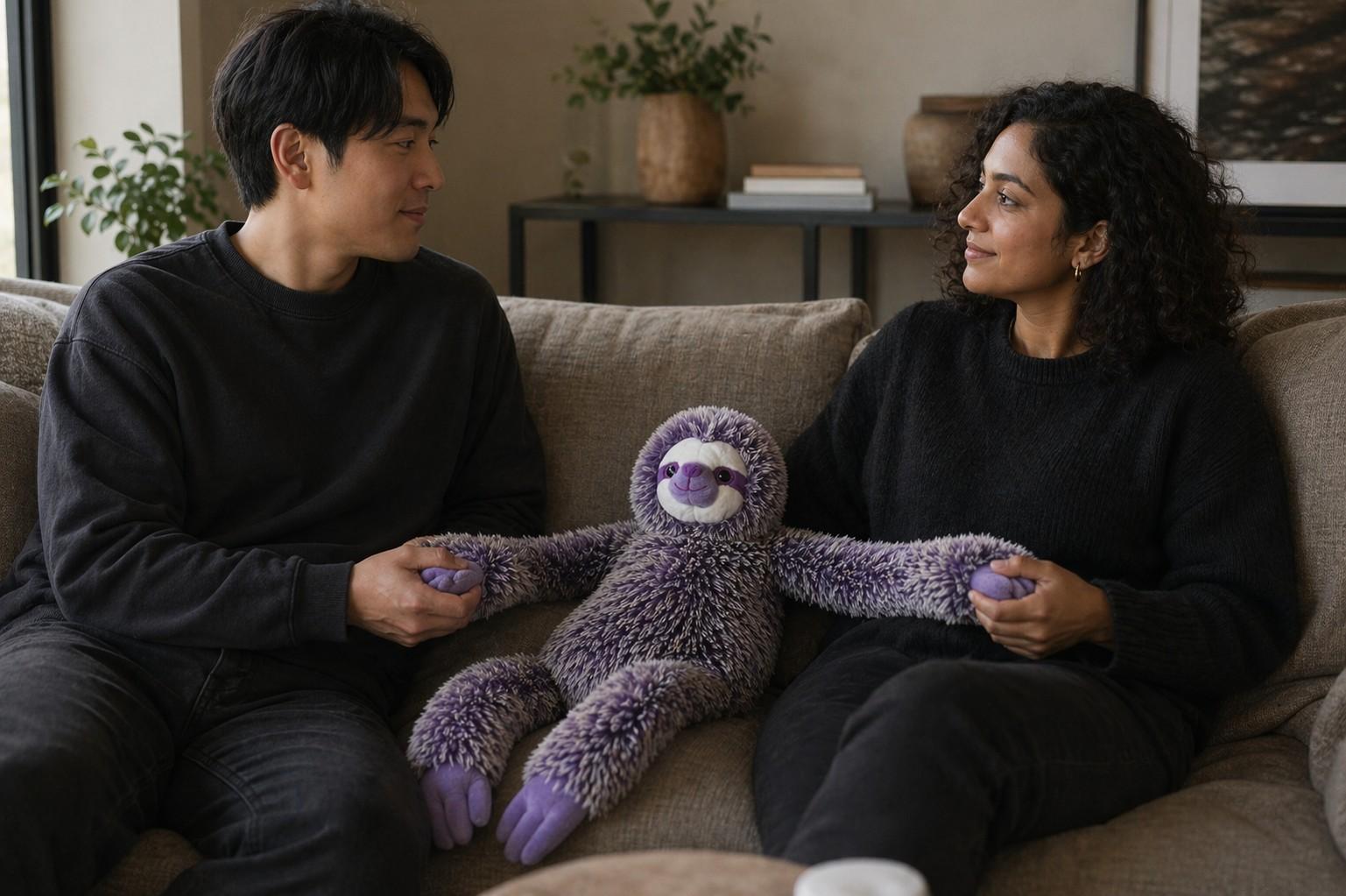
“It should be confidential for each.”
Workshop II, Group A
The circuit closes.
The object’s ‘aliveness’ is gated on human-to-human contact.
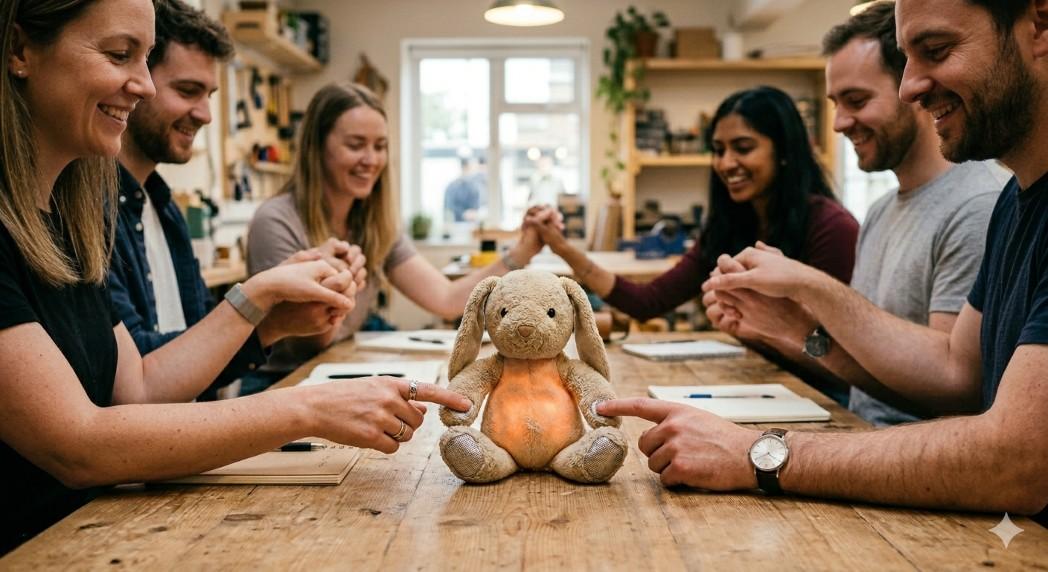
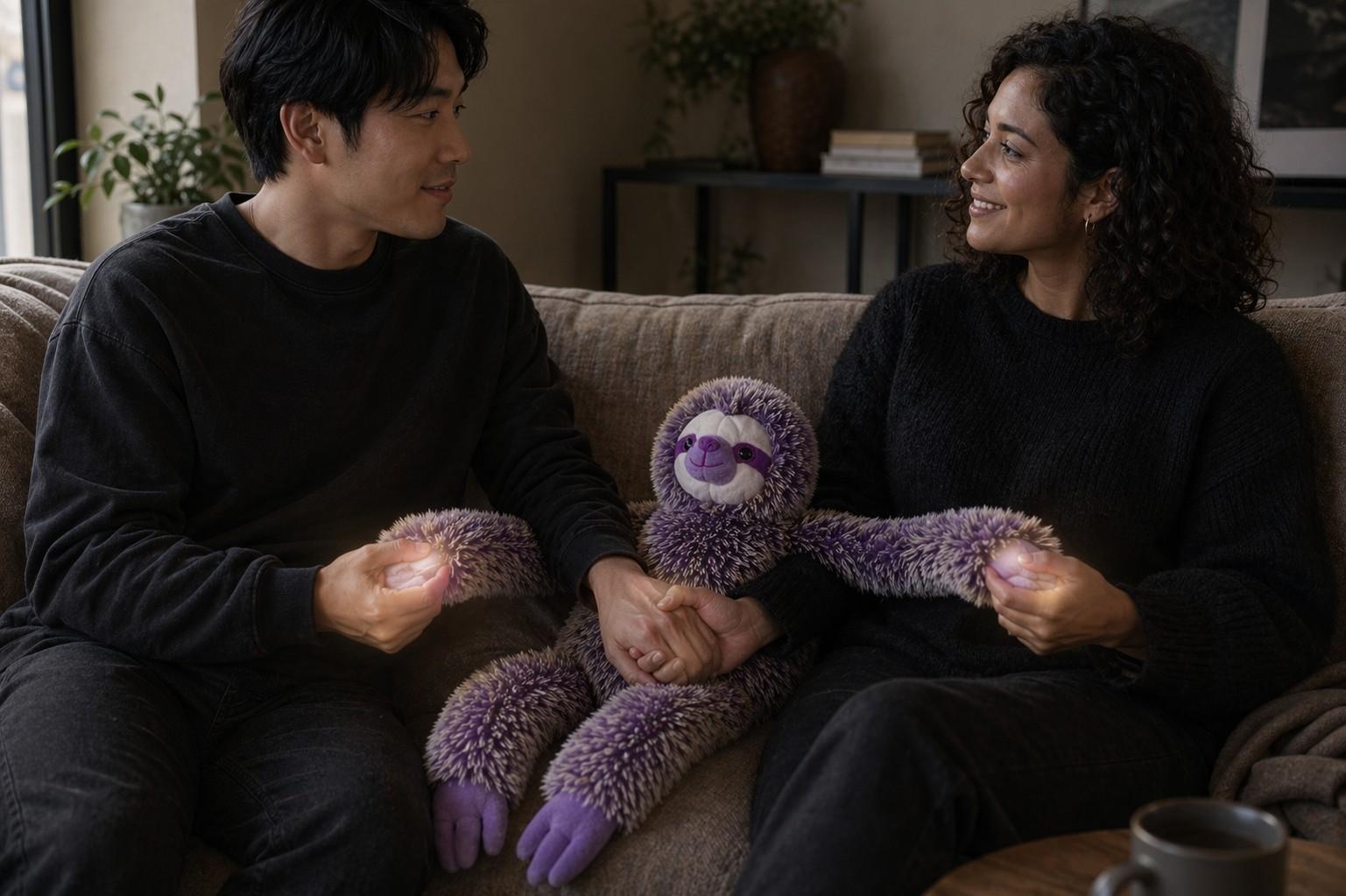
Origin: circuit-closing
rabbit
Parsons toy design class
It is not 24/7 emotional availability.
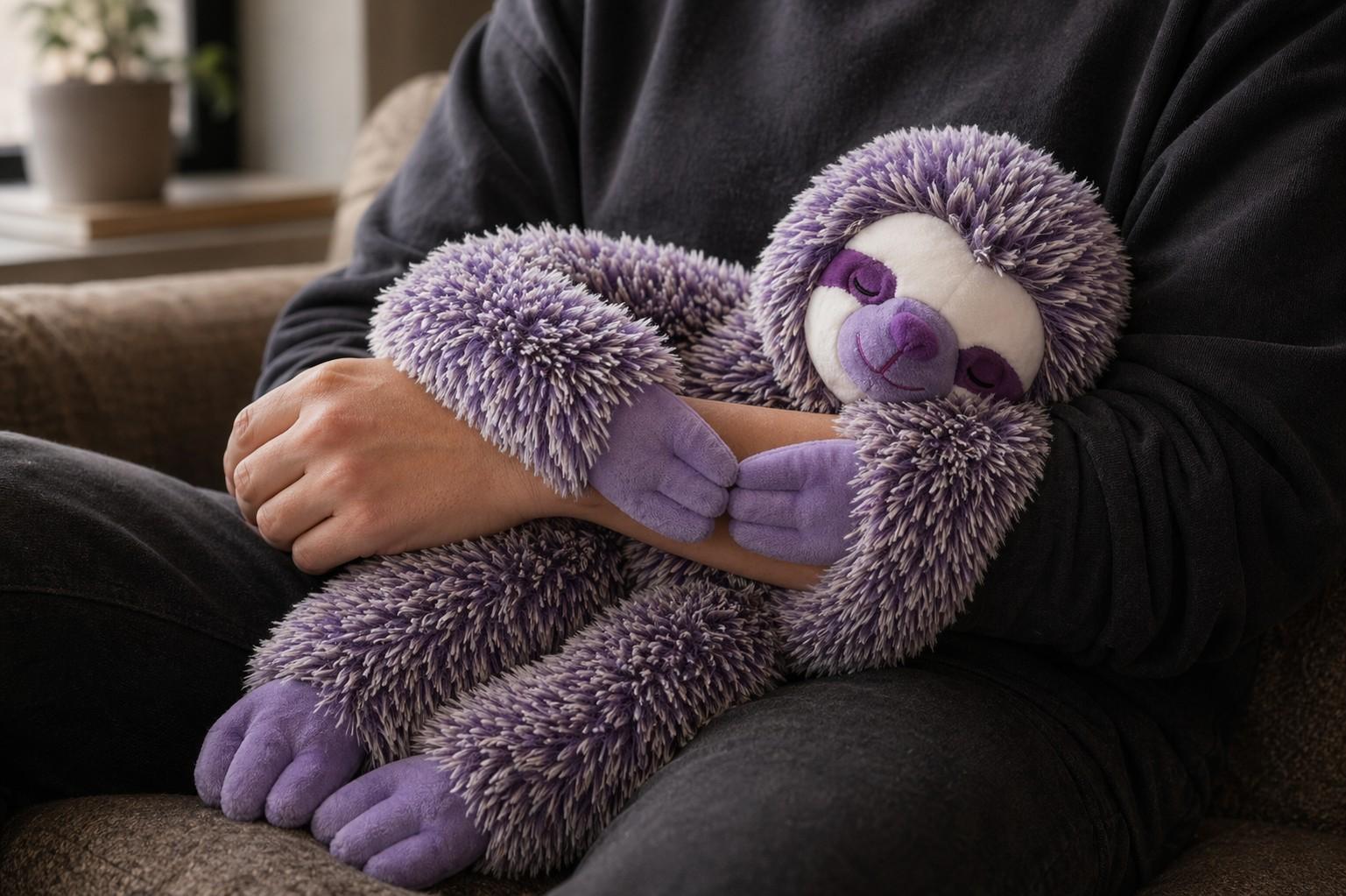
Attachment is welcome.
Dependence is the failure mode.
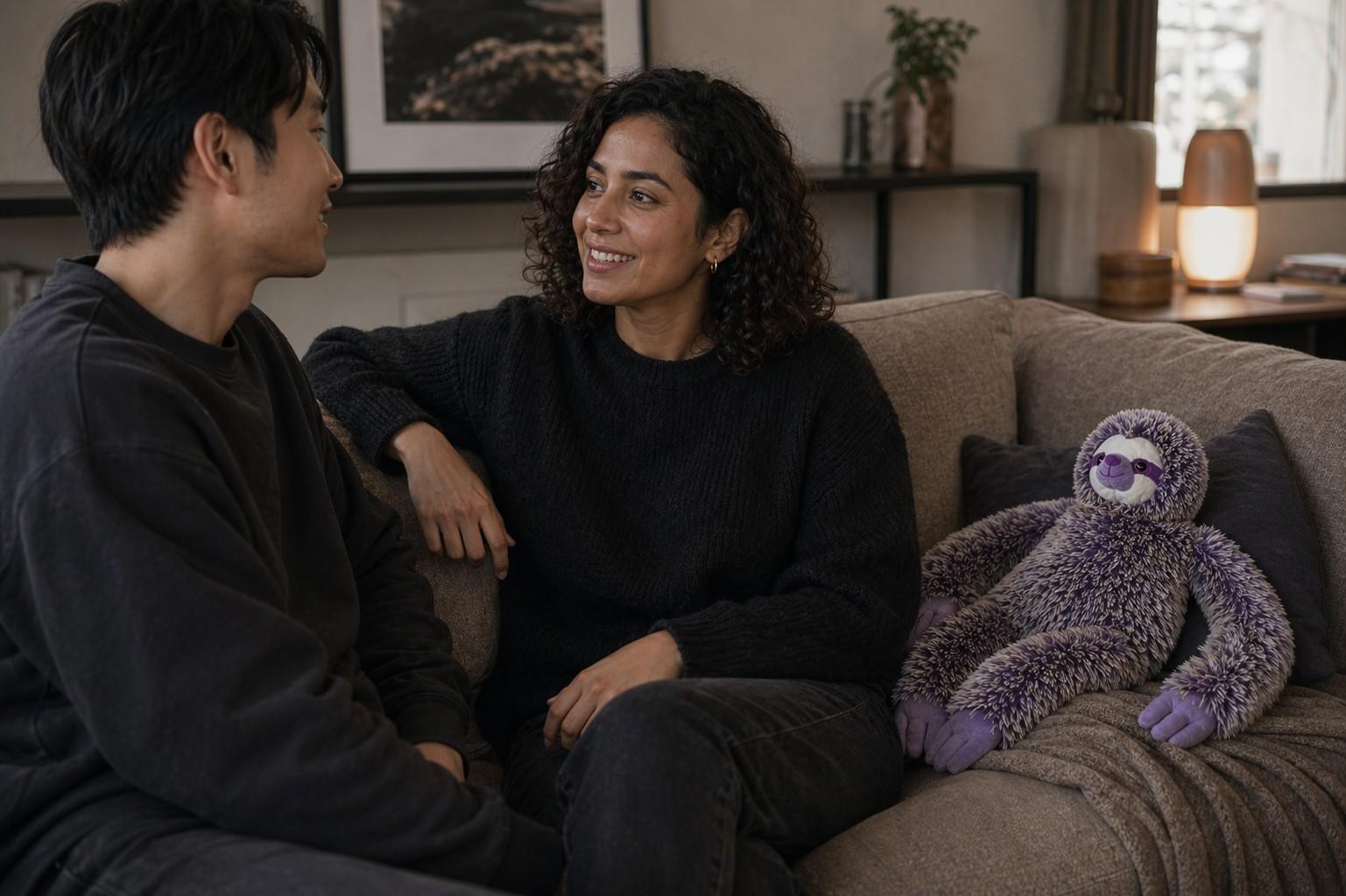
Our success metric is the opposite of every AI companion on the market.

Individual
Healthier relationship with loneliness
Deeper conversations, new ways to connect
Community
Shared objects in public spaces
Challenge the engagement paradigm
Scaling is not sell more units. It is demonstrating a different relationship between AI and care.
Working
First public introduction: today.

Toy Design
Physical form, manufacturing
AI Research Conversation system, question library
Psychology Evaluation framework, ethical boundaries
Community Orgs Deployment sites, cultural adaptation

We assume
• People will trust a toy with vulnerability
We risk
• Over-attachment despite anti-dependency design
• "Talking to a toy" resistance can be overcome
• Both people opt into Dyadic mode
• Emotional disclosures beyond its capacity
• Blurring support and therapy
Mitigation: 33 safety rules, crisis detection, non-clinical language, sleep mechanism
Next Steps
• Expert consultations (clinical psychologists, MIT Media Lab Fluid Interfaces)
• Wizard-of-Oz user testing with real pairs
• Community deployment pilot (library, community center)
• Ethical evaluation framework development
Business Model Direction

B2B: Community Spaces as Buyer Libraries, community centers, and co-working spaces purchase Loop as shared infrastructure — like libraries buying books.
The buyer is the community, not the lonely individual. This aligns incentives with wellbeing, not engagement.
• Toy Design physical form + manufacturing
• AI Research conversation system + question library
• Psychology evaluation framework + ethical boundaries
• Community Orgs deployment sites + cultural adaptation
Allcott et al. (2022). AER
Chibanda et al. (2016). JAMA
De Freitas et al. (2024). HBS
Holt-Lunstad et al. (2010). PLOS Medicine
Illich (1973). Tools for Conviviality
Kozima et al. (2022). Academia
Liu et al. (2025). MIT Media Lab
Lizardo et al. (2025). HBS
Masi et al. (2011). Meta-analysis
Muldoon & Parke (2025). New Media & Society
NYC DOH (2024). Mental Health Report
Pataranutaporn et al. (2023). Nature MI
Przybylski & Weinstein (2013). Phone presence
Sacra. Character.AI market report
Shamekhi et al. (2018). CHI
Simmel (1903). Metropolis and Mental Life
U.S. Surgeon General (2023). Social Connection
Vygotsky (1978). Scaffolding theory
Weiser & Brown (1995). Calm technology
WHO/UNICEF (2023). EASE protocol
Yin et al. (2024). PNAS
Harvard MCC (2024). Loneliness in America
We don't know if Loop is the right answer. But we'd rather explore our own question than settle for the one the market already gave us.