
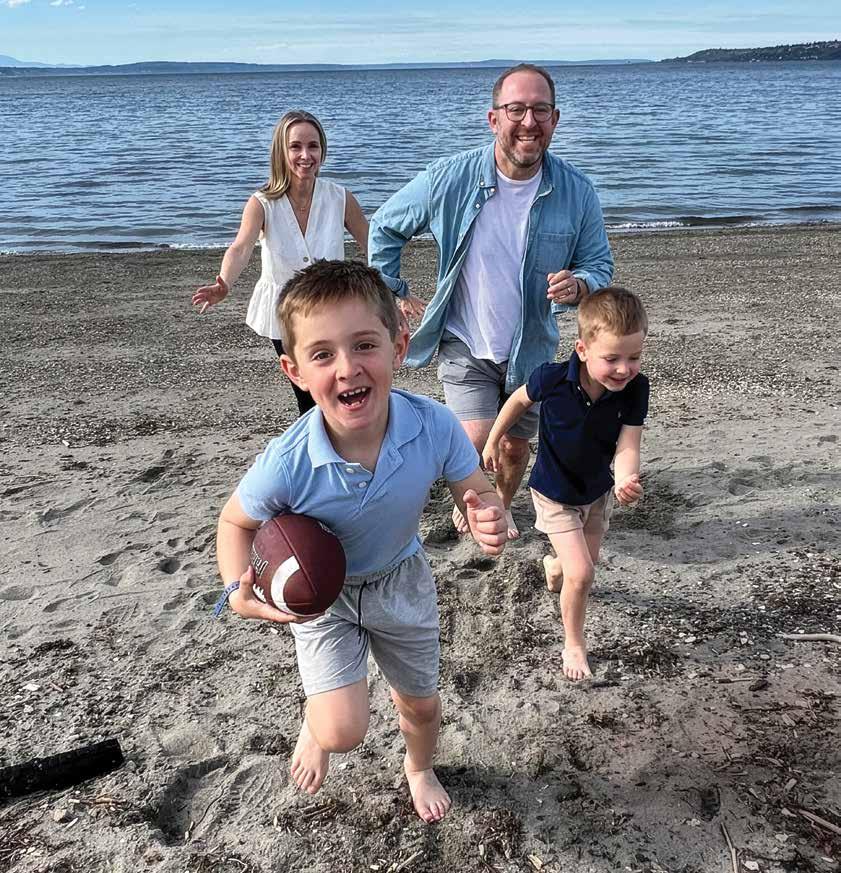

Private Jewish day school is now shockingly affordable.




Families making up to $350k are eligible.
See how affordable it is samisfoundation.org/jewish-day-school-affordability-seattle/

Private Jewish day school is now shockingly affordable.
Families making up to $350k are eligible.
See how affordable it is samisfoundation.org/jewish-day-school-affordability-seattle/
In Every Issue Play List 30
Local Resources
Schools + Preschools 10
Birthdays 15
Camps + Activities 19
EDUCATION
5 Fresh-Air Adventures 11
Essential outdoor outings for families, each paired with a new children’s book
BIRTHDAYS
A Little Bit of Birthday Magic 15
Fun and free treats that help kids celebrate another trip around the sun
HEALTH + WELLNESS
New Children’s Hospital
Opens in Tacoma 16
Mary Bridge Children’s brings cutting-edge tech and much-needed services to local families
Water Safety 101 19
Tips every family needs to make summer a splashing success
The Skill That Could Save Your Child’s Life 21
One mom’s mission to ensure all parents learn (and know) CPR
RAISING GREAT KIDS
The Power of Trusted
Adults 24
How parents can build a surefire safety net for kids in the digital age

The Eastside’s Forgotten Pools 7
For generations kids have learned to swim at the Midlakes pools, but now low enrollment is leaving them at risk
COMMUNITY
Rise and Dine 12
Chef Joel Gamaron shares easy recipes kids can make that dads love, just in time for Father’s Day
OUT + ABOUT
Mico Outings With Big Payoffs 27
Family activities scaled to match working parents’ limited time and energy
June Play List 30
Summer’s just getting started with festivals, fairs and FIFA World Cup fever
“Really
once
Joel Gamoran learned at a young age that meals were about more than eating; they were about connection.


Have you heard about the restaurant on the moon? Great food, no atmosphere.

Why did the chicken cross the playground? To get to the other slide!

What is Beethoven’s favorite fruit?
Ba-na-na-naaaa!
EDITORIAL
HEAD OF CONTENT + BRAND STRATEGY
Kristen Russell
MANAGING EDITOR
Allison Sutcliffe
CONTENT EDITOR
Kari Hanson
FAMILY FUN EDITOR
Meredith Charaba
CALENDAR EDITOR
Julie Dodobara
PRODUCTION COORDINATOR
CONTENT
Onkarpreet Chatha
COPY EDITOR
Kari Hanson
CONTRIBUTORS
Gemma Alexander, Shannon Dean, Rebecca Hastings, Kellie Schmitt, Cerise Woodard
DIGITAL MARKETING
MARKETING DIRECTOR
Lindsey Carter
MARKETING DESIGN SPECIALIST
Angela Goodwin
MARKETING COMMUNICATIONS SPECIALIST
Devon Hammer
SOCIAL MEDIA SPECIALIST
Brooke Collins
ADVERTISING SALES + PARTNERSHIPS
DIRECTOR OF COMMUNITY
PARTNERSHIPS + ADVERTISING SALES
Jessica Collet

Why do teenage girls walk in groups of 3, 5 and 7?
Because they literally can’t even.

I don’t trust stairs. They’re always up to something.

JUNE 2026, VOL. 23, NO. 6
PUBLISHER
Alayne Sulkin
CONTACT INFORMATION
Advertising information
206-709-9026 or advertising@parentmap.com Fax 206-709-9031
Calendar submissions
calendar@parentmap.com
Editorial submissions editor@parentmap.com
Distribution distribution@parentmap.com
ParentMap is published monthly.
PMB #190, 7683 S.E. 27th St., Mercer Island, WA 98040
All rights reserved; reproduction in whole or part without permission is prohibited. © ParentMap 2026 • printed in Oregon
DIRECTOR OF STRATEGIC
PARTNERSHIP SALES
Stephanie Kakon
SENIOR ADVERTISING AND PARTNERSHIPS MANAGER
Ida Wicklund
EVENTS + COMMUNITY
PARTNERSHIPS SPECIALIST
Brenna McCown
ADVERTISING CLIENT SERVICES SPECIALIST
Mallory Dehbod
CLIENT SERVICES
ADMINISTRATIVE ASSISTANT
Bronwyn Jones
DIGITAL ADVERTISING + MARKETING SPECIALIST
Taryn Weiner
PRODUCTION COORDINATOR
Tamryn Nell
ART + PRODUCTION
SENIOR DESIGNER
Amy Chinn
ADMINISTRATION
HEAD OF FINANCE + OPERATIONS
Carolyn Brendel
OPERATIONS ASSISTANT
Erika Widjaja



Which days are the strongest? Saturday and Sunday. The rest are weekdays.


I ordered a chicken and an egg from Amazon. I’ll let you know. — Erika Widjaja, operations assistant



































From the first kick to the big day, we believe every moment of your pregnancy is worth celebrating. Our expert care teams are by your side every step of the way, welcoming you and your growing family with warmth and expertise you can trust.
Learn more at vmfh.org/baby
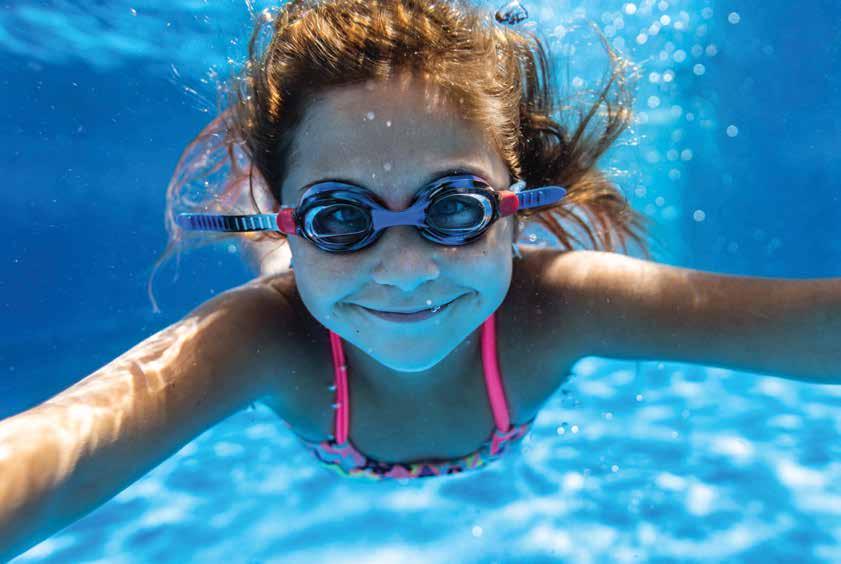
The Eastside’s Midlakes pools are on the brink of extinction
By Gemma Alexander
In a region defined by water — where ferries crisscross the Sound and rain fills our lakes and rivers — it’s surprisingly hard to find a place for kids to swim. The beaches are cold, private lessons cost a fortune, and municipal
pools are few and far between. But tucked into Eastside neighborhoods, the Midlakes pools quietly keep a summer tradition afloat.
Twenty-six pools scattered from Kirkland to Renton make up the Midlakes Swim League, which organizes competitions in swimming, diving and water polo. Some of the pools are managed by country clubs or homeowners’ associations, with restricted access to membership. But membership to many Midlakes pools is open to anyone. These community pools have provided families with summer fun
while quietly shaping generations of kids who learned to swim, joined competitive teams and even gained work experience as lifeguards or teachers at their neighborhood pool.
Pools play an important role in our communities
Many of the pools were built in the 1960s, when civic and community engagement was much higher than it is today. Studies show a 25 percent to 50 percent decline in traditional club and organization membership since the 1960s. That cultural shift, combined with post-COVID changes, rising
continued from page 7
FEATURE costs, aging infrastructure and reduced visibility are all challenges faced by these pools, which are run by volunteer boards and supported exclusively by membership fees. But for families in the know, community pools provide both good value and something priceless — a noncommercial third place where friendships and life skills can grow.
Although they are community-based, the pools still must meet Department of Health standards, and all water programs coaches must be lifeguard and CPR certified by Red Cross. With a few exceptions, Midlakes pools are only open seasonally — an intentional choice to keep the pools fun and low-pressure in an era of hypercompetitive kids sports.
“We were looking for something that we didn’t have to join year-round back in 2013. I have three kids that are doing lots of different sports. We didn’t want to have to do this four times a week and pay fees every month. We wanted, when it’s sunny and nice in the summer, to teach our kids some sport and have some playtime, some unstructured time, that is the niche of summer,” says Erin Fields, parent swim team liaison at Phantom Lake Club and also vice president of its board.
All the pools are heated and most of them are outdoors, although some have a bubble — a temporary structure that covers pools and tennis courts. Several have tennis courts, and some offer so many amenities and programs they essentially serve as community centers. With so many variations among them, it’s impossible to describe a typical Midlakes pool. But there are about half a dozen classic, open-membership community pools, of which Phantom Lake Club is a good example. Opened in 1960, it is still managed by a board that is responsive to the membership’s programming requests. Phantom Lake
used to close after Labor Day.
“We had some members come to us and say, ‘We want one of our coaches to teach a fall weekend program for six or eight weeks.’ They made this proposal and brought it to the board. And the board said that sounds like a great idea and it was piloted,” says Claudia Stern, club manager at Phantom Lake. Now the pool is open from mid-May through September.
and we have a bocce ball league. We have table tennis, we have cornhole, we have a giant checkers. This is an unstructured space to bring back play. This is for everyone to go down and use and just have fun,” says Stern.
If the year-round club teams of the Olympic Cascade Aquatics league are analogous to soccer’s select or premier leagues, Midlakes is designed to be the rec league for swimmers, emphasizing confidence and fun over elite competition.
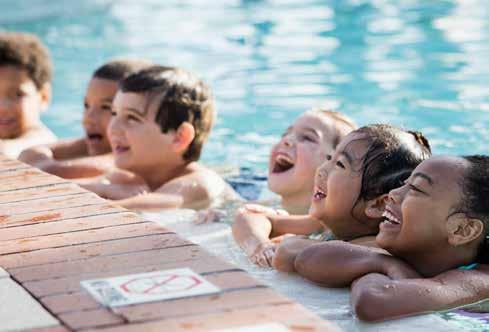
During their season, Phantom Lake offers adult swim, open swim, competitive youth teams (ages 4–18) in swimming, diving and water polo, and swimming lessons for adults and kids (membership is not required for lessons). The club owns more than four acres in East Bellevue, which it utilizes fully.
Designing the ultimate ‘backyard’ “We have a lot of community events. The goal was to make an ultimate backyard that’s available to every single one of our members. We have gazebos that you can use to host your book club or just have a family dinner or a party. We built a bocce ball court,
“Summer swim — you know I can only speak for Phantom — is not built to be uber competitive. It’s built to foster longtime love of swimming,” says Fields.
Stern agrees, “Over the years, I’ve seen sports programs get more intensive. The season stretches so that seasons overlap. We are asking our kids to do more activities, more homework. Kids, like adults, are just getting busier, but this is a place you don’t have to try out, you can just register. You have to be able to safely get across the pool to compete and the rest we’ll teach you. A lot of pools still do tryouts and that’s another stress for

these busy kids. This is a place where you can have fun. That’s our number one priority so you can learn to love this sport and make friends.”
Water polo is coed, and boys and girls train together at most of the pools, including Phantom Lake, although swimming and diving competitions are age- and gender-segregated.
Stern adds, “I’ve raised three kids that are all adults now, and they were very athletic. This is where my kids learned true sportsmanship. My kids learned that celebrating someone else’s accomplishments doesn’t detract from your own.”
Stern shared the story of her youngest daughter, who competed against her best friend in swimming: “They were always kind of neck and neck. One race, one would win, the next time, the other would. They would swim their hardest and then they would get out of the pool and say, ‘Let’s go get a snack and play cards.’ That is a hugely valuable lesson to know as a human being.”
The swim teams also have a buddy program that pairs younger swimmers with more experienced ones.
“When my daughter was 8, she was paired with a senior in high school, and they are still in touch,” says Stern.











• Parent Partnership program
• In-person Monday and Tuesday (drop-o )
• At home Wednesday, Thursday and Friday
• Videos for at home subjects
• Art, music, and drama included


Discover the best summer camps around Seattle and Puget Sound at ParentMap.com/camps.
continued from page 9
Aiming for longevity with families
Every pool has its own fee structure, but as a not-for-profit supported by membership fees, Phantom Lake is representative, with annual memberships for individuals ($530), couples ($690) and families ($850). There is a $200 initiation fee for the first season. Lessons are discounted for members.
“We want you to stay connected to this pool by choice from when you are a baby to when you’re an adult. Our head coach grew up at the pool. Now she’s in her thirties and teaching here. Our dive liaison not only grew up at Phantom Lake, but she was the dive coach and is now a member of our board. And her children are here. It’s this full circle,” says Stern.
But fewer new families are joining the league these days.
“Busyness seems to be pushing these community pools to the wayside, because soccer and other things are going to dominate. But there’s a huge importance in being able to swim. This is a lifelong skill that everyone should have access to. And these communities are offering such an amazing value. We can be that safe space for you to learn a life skill and just slow down a little bit. Swim team is very fun. But also come to the pool on Friday night with your dinner and just connect with family. That is just as valuable,” says Fields.
Families can find their nearest pool and learn more about the individual pools through the Midlakes League website. They can sign up just for swim lessons or try a summer membership for full access to their pool’s programs. The Midlakes League competitive season started May 18, but it’s never too late to join in the fun.
“We’re working so hard to create the place where you can make friends whether you’re 4 or you’re 40,” says Fields. ■
Seattle-based freelance writer Gemma Alexander has been writing at the intersection of parenting and the arts for more than 13 years. Her ParentMap feature, “Middle Earth Adventures: A Family Guide to New Zealand’s Wonders and Challenges,” won the 2025 Gold Award for travel writing from Parenting Publications of America.
By Allison Sutcliffe
I may be biased, but I’m pretty sure it doesn’t get any better than summer in the Pacific Northwest. When those blue skies finally appear even the most introverted homebodies and kids on screens feel compelled to shed their couch potato vibes and get out in search of rocky beaches, forested trails and expansive parks. So the next time you find yourself unable to resist nature’s call, try one of these outdoor activities you can do as a family. I’ve paired each with a recently released children’s book. Happy exploring!
Go birding
While you may think birding is an activity that’s reserved for people who are most certainly older than you are, your kids know birding is cool. The National Audubon Society’s Puget Loop guidebook maps out some of the best spots to spy bald eagles, pileated woodpeckers, chickadees, hummingbirds and other species that call the Sound home.
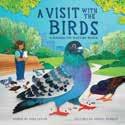
Read: “A Visit With the Birds” by Sara Levine
This interactive picture book is set in an urban park, and features all kinds of birds your kids might recognize from their own park adventures.
Recommended ages: 3–8
Hike a forested trail
A staple activity for many Pacific Northwest families, getting out on a trail is easy, even if the sun doesn’t make an appearance. All you need is the Ten Essentials tucked away in your daypack, sturdy shoes and a sense of curiosity.
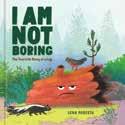
Read: “I Am Not Boring” by Lena Podesta
After reading this justreleased book, kids will learn that logs are anything but boring. So the next time they come across one in the forest, they’ll have a much better understanding of how these castoffs contribute to the forest’s lifecycle.
Recommended ages: 3–5
Dig for clams or play on the beach
When it comes to quintessentially Pacific Northwest activities, clam digging is way up there. In addition to a bucket, boots and a license, you’ll need just enough research to make you dangerous for this simple activity. And knowing how to spot a clam burrowed in the sand is important too. But once your kids get the hang of it, you’ll have your fill in no time. Final step: finding a good recipe.
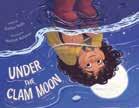
Read: “Under the Clam Moon” by Kaitlyn Wells
This beautifully illustrated children’s book is based on Kaitlyn Wells’ own clamming experiences as a child growing up in the Seattle area. Even if your family digs during the day, they’ll relate to her excitement at finding a “doughnut,” and learn more about clams with the helpful explainer in the back of the book.
Recommended ages: 3–6
Stargaze on a clear night
Even city kids can get out and stargaze on a summer night in Greater Seattle.
If you want some help, and access to stargazing equipment, join the Seattle Astronomical Society during one of their events.

Read: “Why Space Will Freak You Out” by Dr. Kimberly
K. Arcand
Watzke
and Megan
Written by two NASA scientists, this book will answer some of the questions your kids may ask after your stargazing adventure. Colorful illustrations and photos help tell the story of outer space in a kid-friendly way.
Recommended ages: 6–10
Get out on (or into) the water
You don’t need a boat (or a friend with a boat) to enjoy water activities. Rent a free peapod boat on Lake Union, bring stand-up paddleboards or kayaks to any of our many lakes and rivers, or just wade into the icy waters of Puget Sound.
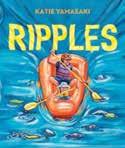
Read: “Ripples” by Katie Yamasaki
Ride along with a young girl and her auntie as they make their way down a stream in
this new picture book. Just like your waterway adventure, this one includes observations of the natural world.
Recommended ages: 4–8 ■
Allison Sutcliffe is ParentMap’s managing editor and a mom to three spirited kids. She has spent nearly 15 years reporting and writing about issues that matter most to parents.
Local Chef Joel Gamoran shares easy recipes kids can make that Dad will love
By Allison Sutcliffe

While growing up on Mercer Island, Joel Gamoran learned at a young age that meals were about more than eating; they were about connection. It’s a lesson he strives to instill in his own family and is one of the driving forces behind his cooking show “Homemade Live!,” filmed locally in the Seattle area.
On the show, Chef Joel cooks alongside celebs such as Clinton Kelly, Sunny Hostin and Crystal Kung Minkoff, but at his West Seattle home, his two sons, Jonah and Benji, are his star souschefs. Chef Joel knows that cooking with kids is an easy way to foster important connections. He and his boys make a game of it, “cracking eggs, stirring, even picking herbs from our little backyard garden. I find that when kids help make the meal, they’re more excited to try it.”
He expands on the lessons kids learn in the kitchen — patience, creativity and teamwork — noting that mistakes come with the territory because “food is about joy and exploration, not perfection.” In the end, he’s observed that cooking is a way to teach kids to care for others and the planet.
Chef Joel’s expertise as an innovative chef and experienced dad are what inspired me to ask him for some Father’s Day recipe recommendations. My criteria were simple: easy, healthy recipes my kids could help make. Not only did his ideas hit the mark, they raised the bar, elevating typical “dad meals” with creative twists I didn’t see coming. So as you plan your Father’s Day menu, I hope Chef Joel’s recipes help to make the day a special one for your family.

Chef Joel’s vegan Carrot Cake Pancakes are spiced, fluffy and full of shredded carrot, and are topped with a tangy, sweet orange-maple cashew cream that tastes like frosting, but is way more brunch appropriate.
Carrot Cake Pancakes
Servings: 4 (makes about 8 pancakes) Prep time: 15 minutes Cook time: 15 minutes
FOR THE PANCAKES
Dry ingredients:
• 1 cup all-purpose flour (or sub half oat flour for a heartier vibe)
• 2 tsp baking powder
• 1/2 tsp baking soda
• 1 tsp cinnamon
• 1/2 tsp ground ginger
• 1/4 tsp nutmeg
• 1/4 tsp salt
Wet ingredients:
• 1/2 cup unsweetened vegan yogurt
• 1/2 cup water or plant-based milk
• 2 tbsp maple syrup
• 1 tsp vanilla extract
• 2 tbsp neutral oil (like grapeseed or sunflower)
FOLD-INS
• 1 cup finely grated carrot
• 1/4 cup chopped walnuts or pecans (optional)
• 2 tbsp raisins or chopped dates (optional)
FOR THE MAPLE CASHEW CREAM
• 1/2 cup raw cashews (soaked 4+ hours or simmered 10 mins, then drained)
• 1/4 cup vegan cream cheese (tangy, plain)
• 2–3 tbsp maple syrup
• 1 tbsp lemon juice
• 1/2 tsp vanilla extract
• 1 tsp finely grated orange zest
• Pinch of salt
• 2–4 tbsp water (adjust for consistency)
INSTRUCTIONS
1/ Make the maple cashew cream. Blend all cream ingredients until silky-smooth, scraping down sides as needed. Start with 2 tablespoons of water and add more if you want a thinner, drizzle-able sauce. Chill while you make the pancakes.
2/ Make the pancake batter. In a medium bowl, whisk together the vegan yogurt, water or milk, maple syrup, vanilla and oil. In a large bowl, whisk together the dry ingredients. Pour wet into dry and stir gently until just combined. Fold in the grated carrots, nuts and dried fruit (if using). Let the batter rest for 5 minutes while your skillet heats.
3/ Cook the pancakes. Heat a nonstick skillet or griddle over medium. Lightly oil the surface. Scoop approximately 1/4 cup batter per pancake. Cook 2–3 minutes until bubbles form and edges are set. Flip and cook for 2 more minutes, until golden.
4/ Serve. Stack pancakes warm with a generous spoonful (or drizzle) of maple cashew cream. Top with extra zest, chopped nuts or maple syrup if you like a little drama.

Level up Dad’s dinner with an atypical burger and kid-friendly salad
If there’s one thing you can count on everyone in the family enjoying on a summer evening, it’s a hearty burger. Chef Joel suggests changing up your burger routine by cooking his Crispy Salmon Burgers with Summer Herb Aioli and Grilled Tomatoes for Father’s Day. Serve it with his Praiseworthy Caesar Salad to finish off the meal. It’s one salad every kid seems to like. Really!
Crispy Salmon Burgers With Summer Herb Aioli and Grilled Tomatoes
Servings: 4
Prep time: 20 minutes
Cook time: 15 minutes
INGREDIENTS
FOR THE SALMON BURGERS
• 1 lb Bluehouse salmon fillets
• 1/2 cup panko breadcrumbs
• 1 egg, lightly beaten
• 1/4 cup finely chopped red onion
• 1/4 cup finely chopped fresh parsley
• 1 tbsp Dijon mustard
• 1 tbsp lemon juice
• 1 tsp garlic powder
• Salt and pepper to taste
• Olive oil for frying
• 4 burger buns, toasted
• Lettuce leaves
• Thinly sliced red onion (optional)
FOR THE SUMMER HERB AIOLI
• 1/2 cup mayonnaise
• 1 clove garlic, minced
• 1 tbsp lemon juice
• 1 tbsp finely chopped fresh basil
• 1 tbsp finely chopped fresh dill
• 1 tbsp finely chopped fresh chives
• Salt and pepper to taste
FOR THE GRILLED TOMATOES
• 2 large tomatoes, thickly sliced
• Olive oil
• Salt and pepper
1/ Prepare the salmon burgers. In a large bowl, combine the finely chopped salmon, panko breadcrumbs, egg, red onion, parsley, Dijon mustard, lemon juice, garlic powder, salt and pepper. Mix until well combined. Form the mixture into four equal-sized patties. Heat a drizzle of olive oil in a large skillet over medium heat. Cook the salmon patties for about 3–4 minutes per side, or until golden brown and cooked through. Transfer to a plate lined with paper towels to drain any excess oil.
2/ Make the summer herb aioli. In a small bowl, whisk together the mayonnaise, minced garlic, lemon juice, basil, dill, chives, salt and pepper. Adjust seasoning to taste. Set aside.
3/ Grill the tomatoes. Preheat a grill or grill pan over medium-high heat. Lightly brush the tomato slices with olive oil and season with salt and pepper. Grill the tomatoes for about 2 minutes per side, or until grill marks appear and the tomatoes are slightly softened. Remove from the grill and set aside.
4/ Assemble the burgers. Spread a generous amount of the summer herb aioli on the bottom half of each toasted bun. Place a lettuce leaf on top, followed by a crispy salmon patty. Add a few grilled tomato slices and, if desired, some thinly sliced red onion. Top with the remaining half of the bun.

continued from page 13
Praiseworthy Caesar Salad
Servings: 4
Prep time: 15 minutes
Cook time: 10 minutes
INGREDIENTS
FOR THE DRESSING (makes about 1 cup)
• 1/2 cup plain Greek yogurt (2% or whole)
• 2 tbsp extra-virgin olive oil
• 2 tbsp lemon juice
• 2 tsp Dijon mustard
• 2 tsp Worcestershire sauce
• 2 tbsp grated Parmesan
• 1–2 tbsp cold water (to loosen)
• Salt and freshly cracked black pepper, to taste
FOR THE BREADCRUMBS
• 2 tbsp olive oil
• 3 anchovy fillets, finely chopped
• 1 cup fresh breadcrumbs (torn from a rustic loaf)
• 1/2 tsp black pepper
• Pinch of salt
FOR THE SALAD
• 4–5 heads Little Gem lettuce, outer leaves removed, inner leaves separated but kept whole (you want the cupped shape)
• Shaved Parmesan, for topping
• Lemon wedges, for serving
1/ Make the dressing. In a bowl, whisk together Greek yogurt, olive oil, lemon juice, Dijon, Worcestershire and Parmesan. Season with salt and pepper. Add water one tablespoon at a time until the dressing is pourable but still clings to a spoon — think spoonable drizzle.
2/ Make the anchovy breadcrumbs. Heat olive oil in a skillet over medium heat. Add chopped anchovies and stir until they melt into the oil, about 1 minute. Toss in breadcrumbs and pepper and cook, stirring, until golden and crispy, about 5–6 minutes. Finish with a pinch of salt. Set aside to cool.
3/ Assemble the salad. Toss Little Gem leaves in the dressing until evenly coated. Arrange them cup-side up, on a large platter or individual plates. Scatter anchovy breadcrumbs over the top, tucking some into the leaves for texture in every bite. Finish with shaved Parmesan and fresh cracked pepper, and serve with lemon wedges for squeezing over. ■
Allison Sutcliffe is ParentMap’s managing editor and a mom to three spirited kids. She has spent nearly 15 years reporting and writing about issues that matter most to parents for local and national publications, specializing in education, activities, media and family travel.
By Kari Hanson
Birthday expenses can add up fast. Between gifts, the party venue and the dreaded goodie bags, it’s easy to blow right past your budget. This year, why not start a new family tradition? On your child’s birthday, pile into the car and head out to see how many birthday freebies you can score.
Birthday meals on the house
• IHOP: Start your day with a free stack of pancakes
• Firehouse Subs: Pick up a free medium sub
• Red Robin: Receive a free milkshake
• Chuck E. Cheese: Get 30 free minutes of game play and free cotton candy
• Chipotle: Pick out a free reward
Free treats worth celebrating
• Baskin Robbins: Get a free scoop of ice cream
• Starbucks: Get a free beverage, food item or bottled drink
• Dairy Queen: Get a free surprise
• Barnes & Noble: Premium members get a free B&N Café treat and Paper Source craft
• The Cheesecake Factory: Get a free slice of cheesecake
• Bucca di Beppo: Get a free Colossal Brownie Sundae
• AMC Theatres: Stub Hub insiders receive a free large popcorn
• A&W: Get a free root beer float
• Nothing Bundt Cakes: Receive a free bundtlet
• Krispy Kreme Doughnuts: Pick up a free doughnut
Tips and tricks for parents
• Plan ahead! Most businesses require you to sign up ahead of time.
• Timing matters. Some rewards are only redeemable on your child’s birthday; others may be redeemed during their birthday week or month.
• Read the fine print. Some offers require a purchase or are available for dine-in only.
• Many reward programs allow kids ages 13 and older to register, adult permission may be required.
• Identification is sometimes required to redeem free birthday gifts, so plan accordingly. ■
Kari Hanson is ParentMap’s content editor.


Hospital
By Kellie Schmitt
When it comes to medical care, children aren’t little adults.
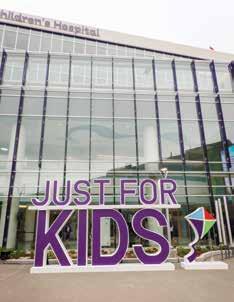
“Kids are different and hospitals should be, too,” says Andrew Canning, a spokesman for Mary Bridge Children’s Hospital in Tacoma. “That’s why it’s so important to have a hospital set up to take care of kids.”
Mary Bridge opened its 82-bed children’s hospital, the centerpiece of a $500 million investment that expands pediatric capacity in the Tacoma area and beyond, on May 16. The new facility offers additional resources in areas like pediatric surgery, behavioral health and neonatal care. With 250 new jobs, the effort also boosts the area’s supply of medical specialists geared toward the region’s youngest patients.
Sponsored by

Our values are at the forefront of every decision we make at MultiCare Mary Bridge Children’s Hospital & Health Network. They serve as our constant guide for how we behave, how we treat our colleagues and how we interact with those we are privileged to serve, from our patients and their families to our valued community partners.
See it on Instagram!
The just-opened modern complex houses eight operating rooms, a pediatric intensive care unit, an infusion center, and an interventional cardiology and radiology suite. The pediatric Emergency Department contains 38 treatment rooms as well as a mental health crisis stabilization unit.
“We will care for the smallest baby that’s born premature to the adolescent with specialized equipment, training and talent we can centralize in one awesome facility,” says Jeff Poltawsky, the President and Market Leader of Mary Bridge Children’s Hospital & Health Network.
Culmination of a long journey
While the six-story tower and expanded outpatient center are new, Mary Bridge Children’s Hospital has supported Tacoma for 70 years. The original 1955 facility existed as a standalone building. As it grew, the children’s hospital integrated with Tacoma General Hospital in the 1980s.
Over the years, sharing equipment and waiting rooms between children and adult patients posed logistical challenges.
“You’re mixing the populations and trying to serve both the best you can,” Poltawsky explains.
The idea of returning to the standalone roots made sense, especially in
by Brent Looyenga
a region with growing medical demand. The timing, though, proved to be tricky. The health system embarked on the design process just before the COVID-19 pandemic. Supply chain shortages drove up construction prices, and the initial bid came in well over budget. The team regrouped and went back to the drawing board.
“It added a year, but we weathered the COVID storm and got a beautiful space where every square foot is dedicated to infants, children and adolescents,” Poltawsky says.
The evolution from shared spaces to a specialized environment is well worth the effort. The child focus dramatically transforms a patients’ experiences, he said, pointing to the example of imaging. In the current space, children share equipment and waiting rooms with adults. Helping a child or infant through adult-oriented medical equip-
ment like an MRI can prove timeconsuming and require sedation.
Now, the new space offers child-friendly projection goggles to distract from being in a tube, as well as warm blankets and the option to bring a stuffy along for the scan. Those details may improve a young child’s experience to the point where they might not need sedation, he added.
Intentional design improves experiences Other measures throughout the facility are similarly aimed at easing hospital anxieties. The hospital has just one easy-to-find entrance, which also simplifies security. Everyone who enters will be screened and given a name badge.
“Parents can’t be with their children 24 hours a day,” he says. “This will give parents the security to know their child is safe.”

Inside, a 10-person team is devoted to the patient experience, helping children feel knowledgeable and comfortable about their treatment and procedures.
There are playrooms on each floor, a teen space and a special room that includes child-size imaging machines for stuffed animals. Practicing and understanding a procedure can go a long way in easing anxieties, Poltawsky noted.
Throughout the building, small design details cultivate a child-friendly environment. Take the intentional curves — instead of sharp edges — on desks that protect toddlers. The spacious rooms themselves keep families’ comfort at the forefront, with a pull-out double bed and a private bathroom with a walk-in shower.
Young patients can order fresh food right from their rooms using the television controller. Meals are prepared on-
site, and designed to appeal to children as well as families, visitors and staff. The hospital’s caffeinated offerings reflect the region’s coffee culture with locally roasted beans and coffee poured from a purple espresso machine.
“These little touches make it special,” he says. “We’re celebrating our local heritage.”
Reaping the healing benefits of nature
Family gathering spaces dot the campus, including several outdoor green spaces. Each floor evokes a natural theme such as mountains, rivers, shoreline and forest. Local artists crafted works that reflect those Pacific Northwest motifs.
“We’re really celebrating the communities where we come from,” he says. “We wanted to make sure all the families and children could see themselves in the spirit of the building.”








At Mary Bridge Children’s, we offer kids expert care from A to Z. And now, we’re proud to announce our new hospital campus in Tacoma is officially open.
Explore it for yourself at marybridge.org/new-hospital










WELLNESS
continued from page 17
Architects designed the building itself with the goal of maximizing the sun’s daily movements. Enormous windows embrace the light, brightening the rooms and corridors. They also showcase striking views of Mount Rainier and the Olympic Mountains as well as the urban cityscapes just below. Lush landscaping — including a rose garden — beckons from patients’ windows.
The distinct wall art is captivating and interactive. Astute young observers may spot a hidden moose or slugs camouflaged among the pine trees of the forest floor.
“Looking at the graphics will really spark a child’s imagination,” he says. “It’s a peaceful environment with pops of color.”
An outdoor playground within the facility allows patients to enjoy fresh air and the Pacific Northwest’s occasional sunshine. That way, children can reap the physical and mental health benefits of being outside.
“You’re not confined to an enclosed space,” he says. “Both our indoor and outdoor spaces will promote healing. We want to lift spirits and calm anxiety.”
Mary Bridge Children’s Hospital by the numbers
• 262,000 square feet: Combined size of the new hospital tower and expanded medical center
• 256: New jobs created, with more projected
• $100 million: Portion of the nearly $500M total project funded through donations
• 800: Parking spots housed in two distinct structures, one for patients and visitors, and another for staff and providers ■
Kellie Schmitt is an award-winning health reporter based in Edmonds, Washington. She covers health policy, public health and children’s health for a variety of publications including the Johns Hopkins University Public Health Magazine and USC’s Center for Health Journalism.
By Rebecca Hastings
There’s something magical about cooling off and splashing in the water that kids and parents love. But it can also be tricky to navigate. Reluctant swimmers, lessons, age-appropriate activities and swim safety make it essential to have a game plan for summer swimming.
Safety first
Safe swimming is the foundation for a successful swim experience for everyone. While we all have different experiences, there are a few safety musts for all swimmers.
• Never swim alone: Having another person there helps reduce the risk of drowning.
• Ideally, have a lifeguard or designated person to watch the water: This helps to have a bird’s-eye view of everything happening in the water.
• Be realistic about abilities: Know people’s abilities in the water and keep them in mind when around any bodies of water, including pools, lakes and the ocean.
• Know CPR: It’s easy to think you know what to do in an emergency, but official CPR training will help eliminate hesitation when seconds count.
• Have a phone: Keep a phone nearby to call 911 quickly in an emergency.
• Use approved devices: Ensure you and your child wear approved life jackets.
Addressing issues
Swimming and water play aren’t fun for everyone. Sometimes kids are reluctant to be near the water or have fears based on previous experiences. The best solution is to address water issues honestly and with patience.
• Reluctant swimmers: Take a calm, nonpressured approach to water exposure and learning. Find an instructor who has experience with reluctant swimmers to help. Exposing kids in a safe, encouraging way is the most beneficial approach.
• Refusal to swim: Learning basic water skills is a lifelong safety lesson. If your child refuses to try, it can be tempting to give in, thinking it’s not essential. Be firm in your resolve to walk through this with your child so they have what they need to be safe in a water situation.
• Fear after a water event: If your child experiences or sees a scary water event, it can feel hard for them to try
swimming again. Consider talking to your pediatrician or a counselor to help process the event and how to move forward.
Whether you are at the pool, a lake or the ocean, swimming should be fun! These tips will help you ensure water play is something you and your child look forward to in the summer. ■
Rebecca Hastings is a former teacher who is passionate about faith and family. Her books are available on Amazon and her work has been featured on websites such as The Washington Post and Parents. In real life, she can often be found typing words, driving her kids places or wherever there is chocolate. Connect with her at RebeccaHastings.net and on Instagram @myinkdance.























A local mom shares her story and explains why every parent should learn CPR
By Gemma Alexander
“The 911 dispatch officer said we need to start CPR and both my husband and I just looked at each other. I don’t know CPR. Do you know it? Who’s going to do this?” recalls Jenn DiBona of the night her son Miles’ heart stopped working. That night, DiBona had fallen asleep in her son’s room, and her husband did not wake her when he went to bed. Thanks to those coincidences, DiBona was able to call 911 right away when her 13-yearold shot straight up in bed, took a big gasp of air and collapsed unconscious.
Sponsored by
The American Heart Association is committed to turning a nation of bystanders into a Nation of Lifesavers™ with the long-term goal to ensure that in the face of a cardiac emergency, anyone, anywhere, is prepared and empowered to perform CPR and become a vital link in the chain of survival. Thank you to Mary Bridge Children’s Hospital for their support of Live Fierce, Take Action.
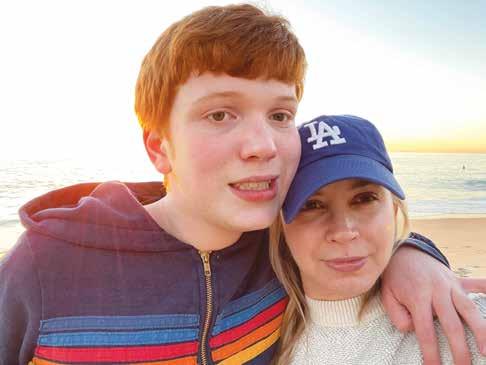
“The responder was very calm and said, ‘Here’s what we’re going to do and walked my husband through CPR,” says DiBona. Her husband continued CPR for 10 minutes until first responders arrived and took over. It saved Miles’ life.
“You do not think about cardiac arrest with children. You think about choking, that’s common, and you think about drowning, that’s common, but this was just not on anyone’s radar,” says DiBona.
Parents worry about a lot of things, but few parents think about CPR for kids. Yet, more than 23,000 children and adolescents experience sudden cardiac arrest each year in the U.S. It can stem from undiagnosed structural heart issues or arrhythmias, but most often arises from noncardiac causes, particularly progressive respiratory failure or shock. In some cases, like
Miles,’ there is no obvious cause. When performed immediately, CPR can double — or even triple — a cardiac arrest victim’s chance of survival.
Although CPR is simple, bystanders only attempt CPR 46 percent of the time, and the reasons people give for holding back are rooted in fear. Mostly, people are afraid of doing it wrong or performing CPR when it’s not the right response. The American Heart Association’s Nation of Lifesavers initiative, locally sponsored by Mary Bridge Children’s Hospital, is designed to turn bystanders into lifesavers, so that anyone, anywhere is prepared to provide CPR in the face of a cardiac emergency.
“If one parent is going to learn it, both parents should learn it. If you have older children, have everybody learn it. Because if you need it, you might




continued from page 21
have to say, ‘Now I’m exhausted, you go next.’ You might have to take turns performing CPR until the first responders get there. Take a Saturday and go learn this together,” says DiBona.
While problems like choking or anaphylactic shock are more common than cardiac arrest, a child will usually be conscious as symptoms worsen. Similarly, heart attack victims will usually remain conscious, at least for a while, and experience severe chest pain and discomfort.
“With cardiac arrest it is man down. There’s no breath, there’s no heartbeat. It is like the person is gone,” says DiBona.
Especially with children, people also fear that they will cause harm, like breaking a rib. But DiBona says that’s the wrong way to look at it.
“The other side of that coin is instant death. So, it can’t hurt to try, even if you aren’t certified. My husband did it. He wasn’t certified. He saved a life.”
Partner with 911 and first responders In any emergency, the first step should always be to call 911 to dispatch first responders.
“That night, I didn’t want to overreact. I thought, ‘Oh, maybe he’s just having a nightmare. I don’t want to call 911 and then be like, ‘Oh, sorry.’ But if you think that someone needs medical intervention, always call 911. That time is valuable. Every second matters,” says DiBona.
If there’s no breath, the 911 dispatcher will recommend CPR, and if you are in a place where an Automated External Defibrillator is available, you may be told to use it in addition to CPR.
There are three main types of CPR:
1/ Traditional CPR combines chest compressions two inches in depth at the rate of 100–120 beats per minute with two breaths. This is no longer the recommended approach for nonprofessionals attempting CPR.
2/ Hands-only CPR is chest compression-only CPR for adults and teens, and is now the recommended approach. It has been shown to be equally effective as traditional CPR in the first few minutes of emergency response, without the discomfort that comes from sharing breath. The two steps to save a life with Hands-Only CPR are to call 911, then push hard and fast in the center of the chest until help arrives.
3/ Infant and child CPR is similar to traditional CPR but has some key differences that allow for smaller body size and softer, growing bones. Child CPR is performed with 30 chest compressions at the depth of two inches with one or two hands, followed by two breaths. Infant CPR is performed with 30 chest compressions at the depth of 1 1/2 inches with two fingers, followed by two breaths.
Although AEDs come with clear instructions and 911 can guide you through CPR, it is still much better to have some knowledge of CPR in advance. There are several options for learning CPR, including online CPR courses and instructional videos. You can even buy hands-only CPR training kits to practice at home. But the best option is to take a Heartsaver certification course.
Save a life
Research shows that high-quality CPR improves survival. King County has the highest survival rate in the country for out-of-hospital cardiac arrest — 62 percent compared to a 9 percent national average. Our impressive survival rate is attributed to high public AED access, quality early emergency response systems, and a robust community CPR education program. If more people learned CPR, the survival rate in King County could be even higher.
Certification classes will teach you how to do traditional and infant CPR, and how to use an AED. Practicing on a mannikin will teach you exactly how hard to push to be effective — something that’s easier to experience than communicate. You are also less likely to panic in a real emergency when you’ve practiced in a low-risk environment. And if you do experience a real emergency, whatever the outcome, you won’t have to wonder what would have happened if you had known what to do.
“Really it’s two hours out of your day, and once you’ve learned it, it’s such a basic skill,” says DiBona. ■
Seattle-based freelance writer Gemma Alexander has been writing at the intersection of parenting and the arts for more than 13 years. Her ParentMap feature, “Middle Earth Adventures: A Family Guide to New Zealand’s Wonders and Challenges,” won the 2025 Gold Award for travel writing from Parenting Publications of America.

When children know they’re not alone, they’re far less vulnerable to harm
By Cerise Woodard

Keeping children safe is one of the most important roles adults play. Today’s kids face risks that extend far beyond their neighborhood or school. With more time spent online, greater exposure to strangers through social media and gaming platforms, and growing mental health stressors, protection can’t rely on rules and monitoring alone. What truly helps keep children safe is connection.
Prevention science shows that children who feel safe talking to adults, who are encouraged to use their voice and who
know how to identify trusted people in their lives are less vulnerable to manipulation, grooming and exploitation. This “protection connection” is built through relationships — not fear — and strengthened when kids know they are not alone.
Why connection protects children
Children who trust the adults in their lives are more likely to ask questions when something feels confusing, share when something feels uncomfortable and seek help when they are unsure or scared.
Predators and groomers look for the opposite: isolation, secrecy, unmet emotional needs and silence. They often present themselves as the one person who “understands” the child. A child who has strong relationships with safe adults is harder to isolate or control.
Connection works as prevention by building emotional safety and creating multiple paths to help. It means creating an environment where a child knows, “If something happens, I have people I can talk to.”
Barriers to building connection
Some children face additional challenges. Experiences such as trauma, abuse, neglect, family instability or housing insecurity can make it harder to trust adults or speak up, especially if a child fears getting in trouble for telling the truth or is unsure of how adults will respond. These children may be more vulnerable to someone who offers attention, affection or understanding.
This is why prevention must be relationship-based, not just rule-based. When adults rely only on control or warnings, children may learn how to hide concerns instead of how to reach out. Connection teaches something different: that kids’ feelings matter, their voice matters and they will be supported when they speak up.
How the digital world changes risk
Today, children and teens build friendships online as easily as they do in
Protection does not require special training. It requires intentional connection. That connection can be built in simple, everyday ways:
• Start conversations early. Talk about bodies, boundaries and safety using age-appropriate language.
• Create emotional safety. Let children know they will not get in trouble for telling the truth, even if they made a mistake.
• Identify safe adults together. Help children name three to five trusted adults they could talk to when they need help or support.
• Talk about online relationships. Ask who they’re talking to and what they enjoy about those interactions.
• Watch for changes. Notice withdrawal, secrecy, fearfulness or sudden mood shifts.
• Model help-seeking. Normalize asking for help by doing it yourself.
person. While technology can be positive, it also allows strangers to reach kids in ways that feel normal and private. Grooming often begins as conversation, compliments, shared secrets or sympathy.
The scale of this risk is growing rapidly. The National Center for Missing & Exploited Children reports that online enticement increased more than 300 percent between 2021 and 2023, with over 186,800 reports in 2023 alone. In 2024, through early October, NCMEC had already received over 456,000 reports of online enticement. These numbers underscore how common exploitative approaches have become for children and teens.
Moving from warning to partnership Instead of only cautioning “Be careful online,” adults can help by talking to kids about how people may not be who they claim to be online, normalizing coming to an adult with screenshots or messages and teaching kids that secrecy is a red flag — not something to seek or trust.
The goal is not surveillance. It is partnership. When kids understand risks and feel supported, they are more likely to slow down, think critically and reach out.
In some families or cultures, children are taught not to question adults or to stay quiet about uncomfortable topics. While respect is important, silence can be dangerous. Children need to know they can say no, change their mind, tell an adult even if someone said not to and be believed and supported.
kids use their voices
One of the most protective lessons we can give children is that their body, feelings and safety matter — even when cultural or generational expectations tell them to stay quiet or compliant.
Reading books about boundaries, role-playing scenarios (“What would you do if …?”), and practicing how to ask for help all make it easier for kids to use their voice when it matters most.
Protection takes a community Not every child has a consistent parent in their life. Some live with grandparents, relatives, foster families or experience housing instability. That makes community even more important. Schools, religious institutions, youth programs and neighbors all play a role in building a protective web around children.
The Centers for Disease Control and Prevention identifies safe, stable and nurturing relationships as key factors in preventing abuse and exploitation. These protective relationships buffer stress, reduce vulnerability and increase the likelihood that a child will disclose concerns before harm escalates.
When children know they have trusted adults to turn to, they are more likely to speak up and less likely to be isolated or exploited.
Connection does not guarantee that harm will never happen. But it lowers risk and increases the chance that a child will speak up before a situation becomes dangerous.
Rules can be broken. Apps can be hidden. But relationships, when nurtured, create something far stronger: trust.
By talking, listening and surrounding children with safe adults, we do not just protect them from harm. We give them confidence, resilience and the knowledge that they are worthy of safety and care.
That is the true power of the protection connection. ■
Cerise Woodard is a forensic nurse, speaker and advocate who educates families and communities on preventing exploitation and building safe, healthy relationships.


















•







By Shannon Dean
Most parents enter summer already juggling too much. Work doesn’t pause just because school does. Vacation days are limited. Camps are expensive. And somewhere between the end-ofyear field trips and the back-to-school sales, many families wonder how to give their kids a magical summer without blowing the budget or exhausting themselves.
The good news is that children don’t measure summer in plane tickets or price tags. They measure it in how different it feels. They remember the popsicle that melted too fast, the late light stretching across the yard, and the way bedtime shifted just enough to
feel like a rule had softened.
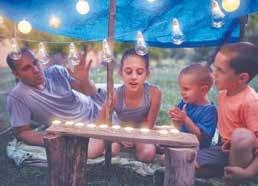
Summer doesn’t have to be big to be meaningful. It just has to be intentional. That’s where micro-adventures come in. A micro-adventure is a small, lowcost experience that breaks routine and creates a shared memory. It doesn’t require time off work, reservations or a huge amount of effort. It simply requires a little willingness to lean into the season you’re already in.
What does summer feel like to a child? Before planning anything, it helps to understand what actually creates that “summer” feeling for children. It’s often simple things like light that lingers
continued from page 27
longer than usual, fun that happens outdoors and a subtle loosening of the schedule.
Children aren’t tracking how far you travel. They’re tracking how present you feel. They’re noticing whether evenings hold a little more breathing room. They’re sensing whether something about this season feels softer and less rushed.
When we shift from “How do I create an epic summer?” to “How do I create small moments of delight?” the pressure eases. And the magic becomes more accessible.
Weeknight micro-adventures (low effort, high impact)
You don’t need to wait for weekends to make memories. Weeknights are ripe with opportunity, as follows:
• Sunset popsicle walks. Keep a box of popsicles in the freezer. After dinner, take a short walk around the block together while the sky changes color and you enjoy a simple treat to beat the heat.
• Backyard camp night, no packing required. Pitch a tent in the yard, even on a weeknight. Tell stories by flashlight. Roast marshmallows over a grill or make them in the oven. If everyone moves back inside at 10 p.m., it still counts. It’s still fun.
• Breakfast picnic before work. Spread a blanket in the yard, eat cereal outside and tell silly jokes or read silly stories. Even 20 minutes outdoors before the workday begins can shift the tone of the entire day.
• Sprinkler hour. No pool membership required. A hose and a sprinkler can turn an ordinary Tuesday into something memorable.
• Driveway art show. Set up folding chairs. Let your children create chalk murals or paintings and “open” their gallery for the family. Applaud loudly.
None of these requires vacation time. All of them interrupt routines, which children notice in the best way.
Saturday mini-escapes (without the big expense) Weekends can hold slightly bigger micro-adventures that are still inexpensive and manageable.
• Visit a park across town you’ve never tried before. The novelty of a new playground often feels like a mini vacation.
• Create a library scavenger hunt. Give each child a list (a book with a blue cover, a story about an animal, a book set in another country) and let them search.
• Wake up early for a short nature walk before the heat sets in. Bring doughnuts or bagels and call it “Sunrise Saturday.”
• Try a dollar-store creativity challenge. Give each child five dollars for supplies to create something new.
• Let your child plan a “Yes Hour.” Within reasonable limits, say yes to their ideas for 60 minutes. Children feel powerful when they’re invited to lead.
It’s not the scale of the activities that matters. It’s the shift in rhythm.
The power of predictable rituals
While novelty sparks excitement, repetition builds memory. When something happens every week, children begin to anticipate it. Anticipation creates its own kind of joy. Maybe Friday becomes “movie night outside,” with blankets in the yard and a simple projector. Maybe
Tuesday is taco or pizza night, and everyone assembles their own plate. Maybe Sunday evenings include a short “summer reflection,” where each family member shares their favorite moment of the week.
These rituals don’t cost much. But they tell children: This season is special. We are marking it together. In a world that often moves too fast, that sense of marking time can feel fantastic.
One-on-one micro moments
For working parents, the guilt can feel heavy. We may worry we aren’t doing enough. But connection doesn’t require hours. It requires presence.
Invite one child to run a quick errand with you and stop for a small treat afterward. Read one chapter outside together before bed. Take a 10-minute bike ride around the block. Just the two of you. These small moments communicate that your child matters enough for you to pause.
Releasing the pressure
It’s easy to feel as though everyone else is doing more. Social media can amplify the highlight reels of beach trips, elaborate camps and cross-country adventures.
But comparison has a way of stealing the joy from what is already good. A meaningful summer isn’t built on spectacle. It’s built on shared laughter, predictable rituals and moments where everyone feels a little less rushed.
When we let go of the idea that summer must be extravagant and exaggerated, we make space for it to be personal. Often, the summers children remember most clearly aren’t the biggest ones. They’re the ones where someone said, “Let’s go outside,” and meant it.
15 Micro summer adventures under $10
1/ Backyard picnic dinner
2/ Flashlight tag at dusk
3/ Watch the sunrise together
4/ Make homemade lemonade
5/ Neighborhood nature scavenger hunt
6/ Read a chapter outside
7/ Stargazing on a blanket
8/ DIY ice cream sundaes at home
9/ Water balloon toss
10/ Porch board game night
11/ Cook a new recipe together
12/ Family talent show
13/ Outdoor story time
14/ Sidewalk obstacle course
15/ Evening dance party in the yard ■
Shannon Dean is a freelance writer and the mother of two sons. She specializes in writing about families and women’s health.
















Check out many more happenings online at parentmap.com/calendar
By Julie Dodobara

Get ready, parents — June is here and summer is beckoning. The end of the school year is nigh and it’s time to take full advantage of long, warm days. So, make plans for plenty of fun outings from a Father’s Day car show and Juneteenth celebration to fairs, fishing and fests of all kinds!
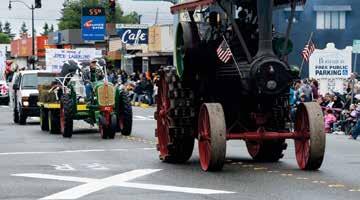
� The celebration of the Eastside’s agricultural past and present turns 50 this year, so make tracks to the lower Snoqualmie Valley for Duvall Days. The action kicks off with a fun run and live music Friday evening, and culminates with the Grand Parade, kids zone, music, car show and fireworks on Saturday. Join the festivities Friday–Saturday, June 5–6. Activities are free except for the fun run.
� Scaled back in recent years, Bicycle Weekends — when a section of Lake Washington Boulevard is closed off to cars — are back and expanded with dates
every weekend (except during SeaFair) through Labor Day! So, load up your bikes, grab helmets and take a ride, Saturdays and Sunday in June. Free.
� It’s a bird? No, it’s a plane! Paine Field Community Day is back, where your flight-obsessed kids can meet local pilots and see amazing aircraft displays. Make your way to the tarmac, Saturday, June 6, 9 a.m.–5 p.m. for this free high-flying event.
� Fishing for a good time? Free Fishing Weekend is the perfect opportunity to spend some quality time with the kids and teach
them to catch a fish. Cast a line Saturday–Sunday, June 6–7, when adults can fish without a fishing license (youth ages 14 and younger can always fish without a license). Gear up and reel one in at a lake near you. Pro tip: Entry to Washington State Parks is free June 6–7 in honor of Free Fishing Day! Note: All other fishing rules and regulations still apply.
� Have a field day in the Central Meadow at Chambers Regional Park during the Kidz Kraze Children’s Festival, Saturday, June 13, 10 a.m.–2 p.m. There’s bound to be endless fun outside with lawn games, bounce houses, arts
June 19–21 | Friday–Sunday
Federal Way Performing Arts and Event Center
and crafts, and food from local vendors. It’s also a chance to learn about community resources and meet other local families. Free.
� Honor the unique culture of Seattle’s Indigenous communities at Seattle Center’s Indigenous People Festival. Part of the Seattle Center Festál, come celebrate through art, dance, food and the sharing of Indigenous knowledge. Saturday, June 13; free entry.

� The largest Juneteenth celebration in Washington state returns to a new location this year — Haub Family Field at LeMay Car Museum — Friday, June 19, noon–6 p.m. Round up the family and join the free celebration and enjoy live music, community resources, kids play zone, food trucks, a car show and more.
� Excitement has been brewing for months. Whether you have tickets or not to the highly anticipated Seattle-hosted FIFA World Cup games, the whole family can celebrate soccer mania
at Kickin’ It, a three-day fest with a watch party, live music, soccer clinics, games and more, Friday–Sunday, June 19–21. Convene with other superfans at the Federal Way Performing Arts and Event Center in Federal Way for this free event.
� To me, summer means sweet, juicy local strawberries. So, fellow strawberry enthusiasts, snack on shortcake, prepare for jammaking, cuddle baby animals, watch a parade and more at a June strawberry fest near you. You’ll find no shortage of opportunities to celebrate this flawless fruit in Snohomish, Shoreline, Marysville, Fircrest, Burlington and Burien.
� It’s time to release your inner free spirit and join the colorful Seattle summer tradition: the Fremont Fair and Solstice Parade, June 20–21. The Saturday Solstice Parade (1 p.m.) features giant puppets, stilt walkers, floats and those “free-spirited” bicyclists. The Sunday dog parade is at 2 p.m. Free.
� Cruise on over to Fenders on Front Street in Issaquah for Father’s Day fun that will please dads, grandpas and kids too! Admire classic cars, trucks and motorcycles, plus partake in kids activities and food truck fare. Sunday, June 21, 8 a.m.–3 p.m. Free, donations welcome.
June 21 | Sunday Seattle Glow Seattle Center
� Experience a glow-up like you’ve never seen before — a hot air balloon spectacular where 100-foot-tall inflatables stay on solid ground and light up the night like magical, colorful lanterns. Worth the late night with the kids, head to Seattle Center’s Fisher Pavilion, Sunday, June 21, 8–10 p.m.
� The free, one-of-a-kind Arts in Nature Festival invites everyone to get “Dancing with Nature” through performances, art and interactive activities, all set within one of Seattle’s most beloved outdoor spaces. The festivities take place Saturday, June 27, 10 a.m.–8 p.m. at Camp Long.
� Pridefest, our area’s Pride extravaganza and one of the nation’s largest, is back at the Seattle Center with activities and entertainment for all ages. So, don your rainbow threads and cele-
June 27 | Saturday
Arts in Nature Festival Camp Long

brate all types of families and all manner of love on Sunday, June 28, noon–8 p.m. Free.
� Kids and adults alike can explore Japanese art and culture through hands-on exhibits and workshops, special performances, and local vendors at Japan Fair, a free two-day cultural immersion. Experience some 20 performances, 10 cultural workshops and more than 100 participating organizations at the Meydenbauer Center in Bellevue, Saturday–Sunday, June 27–28. ■
Julie Dodobara is ParentMap’s calendar editor.
SPONSORED EVENT

June 13, 2026
To celebrate the start of the global soccer tournament, the City of Tukwila invites you to this family-friendly block party along Baker Boulevard. Tukwila26.com/events


Watch together. Cheer together. Come celebrate the world’s largest soccer tournament at events throughout Tukwila.
FREE FEATURED EVENTS:
Tukwila United Viewing Lounge
Westfield Southcenter Mall
Opens June 11 and runs all tournament long.
Tukwila United Block Party
Baker Blvd, Southcenter District
June 13 | Noon–9 PM


