Private Jewish day school is now shockingly affordable.
Families making up to $350k are eligible.
See how affordable it is samisfoundation.org/jewish-day-school-affordability-seattle/
July 2026
Local Resources
Camps + Activities 19
Schools + Preschools 28
Parenting
CAMPS + ACTIVITIES
Annual Activities
Cheat Sheet 19
This simple, seasonal planner ensures you never miss a registration date again
RAISING GREAT KIDS
First Night Away From
My Toddler 21
It wasn’t easy, but one mom finally carved out “me time” and it made all the difference
EDUCATION
5 Tips for Raising Scientifically Literate Kids 28 AI’s advent is making this pursuit more challenging — and more essential — than ever before
SEATTLE CHILDREN’S
Good Growing Newsletter 15
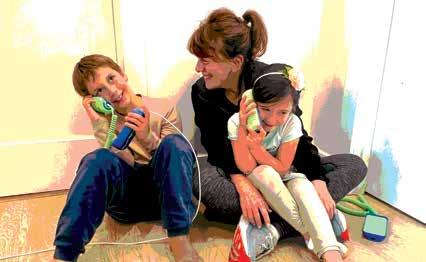
The Smartphone Cure 6 Seattle dad Chet Kittleson on why his Wi-Fi landline Tin Can is resonating with parents right now
The Surprising Science Behind Boredom 12 If your kids are bemoaning downtime this summer, don’t panic — it’s actually a good thing
Family Fun
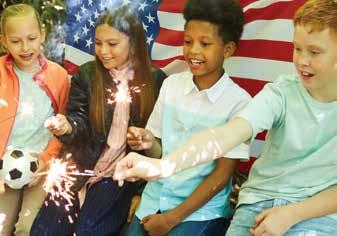
OUT + ABOUT Semiquincentennial Celebrations 25 Creative ways for families to ponder and party on the eve of our country’s birthday
15 Ways to Activate Summer Energy 30 Grab the kids and make a break for it with beach time, bargain movies and a shoestring circus
Cover photo by Laura Prudhomme
Play Is the Point
Summer has always been childhood’s greatest laboratory.
It’s the season of scraped knees, lemonade stands, long bike rides, backyard adventures and that magical phrase parents often dread hearing: “I’m bored.” As it turns out, boredom may be one of the best gifts we can give our children. In this issue, we explore why downtime fuels creativity, resilience and imagination — and why every unfilled hour doesn’t need a screen, a schedule or an adult plan.
That theme of reclaiming childhood runs through these pages.
When I spoke with Tin Can cofounder Chet Kittleson about how a simple childhood landline shaped his own youth, I found myself reflecting on what kids have lost, and what they still desperately need. Parents know smartphones open doors, but we also know they unlock distractions, pressures and risks long before many children are ready. Kittleson’s answer isn’t nostalgia for a bygone era. It’s a practical reminder that children need safe ways to build independence, friendships and confidence. They need to reach out, make plans and strengthen relationships without a screen mediating every interaction.
As bubbie to two enthusiastic Tin Can users — Levi, age 7, and Stella, age 5 — I see this every week. They live just a 10-minute walk away, and their calls arrive full of urgency and delight: Can you come jump on the trampoline? Can Papa tell us a story? Can we have a sleepover? No algorithms. No scrolling. Just connection.
You’ll also find plenty of inspiration for making the most of summer’s playful spirit: 15 ways to burn off that endless kid energy, a can’t-miss activities planner, ideas for celebrating America’s 250th birthday, and even tips for raising scientifically literate kids in an age when AI is reshaping how we learn, think and discover.
At ParentMap, we believe play is not the opposite of learning. Play is learning. It’s where confidence grows, friendships deepen, curiosity ignites and childhood unfolds.
Here’s to a summer of a little more boredom, a little less scrolling and a whole lot more play.
Warmly,
— Alayne Sulkin, ParentMap publisher and bubbie to Levi and Stella, is reminded every day that the best technology in the world will never replace a conversation with someone you love.
DIRECTOR OF COMMUNITY PARTNERSHIPS + ADVERTISING SALES
Jessica Collet
DIRECTOR OF STRATEGIC PARTNERSHIP SALES
Stephanie Kakon
SENIOR ADVERTISING AND PARTNERSHIPS MANAGER
Ida Wicklund
EVENTS + COMMUNITY
PARTNERSHIPS SPECIALIST
Brenna McCown
SALES OPERATIONS MANAGER
Mallory Dehbod
CLIENT SERVICES ADMINISTRATIVE ASSISTANT
Bronwyn Jones
DIGITAL ADVERTISING + MARKETING SPECIALIST
Taryn Weiner
PRODUCTION COORDINATOR
Tamryn Nell
ART + PRODUCTION
SENIOR DESIGNER
Amy Chinn
ADMINISTRATION
BUSINESS MANAGER
Carolyn Brendel
OPERATIONS ASSISTANT
Erika Widjaja
or
Battleship with Levi (age 7)
Top 3: Tsuro, Skull King and Monopoly Deal
I love Clue!
Cribbage, 5 Crowns and Hearts
Catan
Monopoly
Smartphones Broke Childhood —
Chet Kittleson Thinks He Can Fix It
Before we start our interview, I play Chet Kittleson a voicemail. It’s from my 5-year-old granddaughter Stella, calling from the Tin Can I’d ordered for her house. Her little voice, rambling and joyful, fills the room. Kittleson smiles the way someone does when they’ve heard a story a thousand times, and it still gets them.
Tin Can, cofounded in 2024 by Seattle friends Kittleson, Max Blumen and Graeme Davies, makes a kids phone that works like the house phone you grew up with. It’s corded, plugs into the wall and has real buttons and no screen. The phones cost $100, come in four colors and can call other Tin Cans for free; a monthly plan for $9.99 al-
The
Tin Can cofounder built the smartphone antidote parents crave
By Alayne Sulkin
lows Tin Cans to send and receive calls to other phone types. The company has sold hundreds of thousands of units across all 50 states and Canada, with preorders open in the U.K., Australia and New Zealand.
I sat down with Kittleson to talk about the childhood landline he says saved him, the conversation that sparked the company and the Christmas morning that nearly broke it.
ParentMap: Most founders talk about the market opportunity. You went somewhere much more personal when I asked about your origin story. Tell us about the childhood that shaped you.
Chet Kittleson: My dad was 22 years older than my mom and wasn’t a great guy — I still have a hard time saying that, because he’s still my dad. He’s passed now. But he struggled with addiction, and the first few years of my life were unstable. We lived in trailers, moved around. My mom left him when I was 4, and there were a couple of years of real tumult — we lived with my uncle in Vegas while she tried to find her way. She had a GED and no clear path to support me and my older sister.
I share that because I think it launched me into a major generalized anxiety and panic disorder that I’ve dealt with my whole life — to a lesser degree now, but it’s always been there. And here’s
Alayne Sulkin with her grandchildren
Tin Can cofounder Chet Kittleson on the phone he wishes he could have handed his younger self.
FEATURE TIN CAN
continued from page 7
what’s interesting: The landline became a genuine lifeline for me. It was literally the only way I stayed connected to my dad. He’d call me “Randy,” his other son’s name, instead of Chet — that’s a whole thing — but that phone was the thread between us.
And then my mom found her footing, met my stepdad, and we ended up in this small residential community called Shelter Bay. It was the kind of place where kids could roam free. Every morning I’d wake up and call Bryce or Mark or one of my friends and say, “Where are we meeting up today?” I really believe that saved me. The landline gave me agency, connection and joy at a time when I needed all three.
“... there is a foundation on San Juan Island that got Tin Cans for hundreds of kids across the whole island ...”
PM: Fast forward to the moment Tin Can was born. What happened?
CK: It percolated for a long time before it became a business. The spark was a park conversation during COVID — I’d bike up to get my kids from school every day, and I really needed those 20 or 30 minutes talking with other parents. I’m an extrovert; it was survival. One afternoon, a group of us got onto the topic of playdate planning, and one mom said, “I feel like an executive assistant for my kid.” There was so much laughter and frustration and guilt all at once — this tension between not wanting to hand over a smartphone yet and also not wanting your kid to feel stranded.
And I said, almost offhandedly — it wasn’t a business idea, it was just a comment — “When we were kids, our first social network was the landline.” And everyone lit up. We started reciting our best friends’ phone numbers from childhood. I walked away thinking, “That’s interesting. I wonder if there’s something there.” But I didn’t run home and build it. It percolated for about two and a half years. I read Jonathan Haidt’s book [“The Anxious Generation”] at that time. And somewhere in that stretch, I thought — this might be more than a playdate planning tool. This might really be something.
PM: You handed the first prototypes to your daughter and her friends. What happened?
CK: We built maybe five or 10 units and delivered them to two small networks of kids — friends of my oldest daughter and oldest son. I hand-delivered each one, met the families and set everything up. And three things became immediately clear.
First, what kids have been asking for when they ask for a phone is simply a portal into their best friend’s bedroom or their grandma’s house. That’s all they want. And you could see it in their faces the moment the first call came through — this giddy, emotional joy. It was a superpower for them.
Second, the landline design, which we chose very deliberately for its simplicity, was actually cool to kids. I was genuinely worried they’d think it was some
old antique. Instead, they were like, “This is the most amazing thing you could have given me.” Like bell bottoms coming back. New to them.
Third, it spread on its own immediately. The only way to get a Tin Can in those early days was to text me directly. I’d leave one house and have five messages from parents saying, “My friend Josie wants one, can you set her up?” We have never once had to figure out
how to promote Tin Can. It has always just moved on its own.
PM: There’s a moment in a lot of cultural shifts when people go from quietly suspecting something is wrong to truly knowing it — and feeling like they have to act. Jonathan Haidt’s work felt like one of those moments for millions of parents. You’ve compared it to the cigarette-and-cancer reckoning. Tell us about that.
CK: I think Jonathan probably felt the way we feel — he thought he had something important in his research and couldn’t have predicted how quickly it would catalyze into a movement. But here’s the thing: People already knew. I use this metaphor a lot — it was a little like cigarettes. For a long time, people thought, “Inhaling this thing that makes me feel weird is probably not great.” And then someone said cancer. In this case, Jonathan said mental health, suicide
continued from page 9 and self-harm. And once you know, you have to act. People were hungry for someone to make them really know. And then they were hungry for something to do about it. Tin Can arrived right at that moment when parents were asking, “What do I do?” And we were there.
PM: How are you thinking about getting Tin Can into schools and communities, and what have you built to make that more possible for families at every income level?
CK: Tin Can gets better with more friends on it — that’s just obvious and true. And from the very beginning we had community leaders reaching out wanting to do something bigger than a single family. For example, there is a foundation on San Juan Island [in Washington state] that got Tin Cans for hundreds of kids across the whole island, and families showed up to this event we attended — it was extraordinary. And there’s a mom in Kansas City who raised money from local businesses and bought Tin Cans for an entire elementary school.
So we built a community program. A community leader can now create a group, invite families via email, and once they accept, all the Tin Cans in that community are automatically whitelisted and appear as contacts. If you already have a Tin Can, you can join a community group with your email. If you don’t, you buy one through the portal at up to 35 percent off. It solves the discovery problem, the setup problem and the cost problem all at once. We’re getting applications every day now from schools, teams and neighborhoods that want to do this.
PM: Many founders get a moment that reveals who they really are under pressure. For you, it came at 4:30 on Christmas morning. What happened, and looking back, what are you most proud of about how you handled it?
CK: Our original purchase order was for 3,000 units. We sold orders of magnitude beyond that. We kept pushing back delivery dates as volume grew, which was always a hard call. And we pushed right to the edge of the holidays — we wanted to make it so badly that we shipped before the hardware was fully tested the way it should have been.
Last Christmas morning, at 4:30 a.m., the alerts started. New York hit Christmas first. Customer support requests went from 10 to 20 to 100 to 500 to 1,000 — this relentless, terrifying ramp. Everything broke. It was, honestly, one of the hardest nights of my life.
What I learned — and I’ll credit my mom for this — is that being an emotionally available person in life translates directly into being a good leader. I sent very personal, honest emails to our customers about what went wrong and what we were doing about it. It turns out that’s what people actually want. Pure-hearted vulnerability and honesty go very far. We paused the billing. We communicated constantly. And I think we came out of that holiday with more customer trust than we walked in with. It was hard. I’d never want to do it again. But it showed us — and our customers — who we are.
PM: If you could say one thing to every parent, educator and coach who is lying awake right now worrying about their kid’s loneliness, their screen time, their disconnection — what would it be?
CK: We didn’t abandon our kids on purpose. When we left the landline behind, we had no idea we were taking away their first social network — the thing that gave them agency, independence and the ability to reach out to the people they love without asking an adult for permission. That was an accident. And we don’t need to carry guilt about it.
But here’s what I want every parent to hear: There is a way back. You can hand your child something pure and joyful and completely free of the things that keep you up at night. It isn’t addictive. It doesn’t have an algorithm designed to steal their attention. Talking on the phone is actually tiring — kids hang up and go outside. And what happens when they have it is something I’ve watched hundreds of thousands of times now, and it still gets me. Kids light up. They feel trusted and connected at an age when that feeling can change everything.
We didn’t know what we took from them. Now we do. And we can give it back. ■
Alayne Sulkin is publisher and CEO of ParentMap. She is the mother of three grown children and bubbie to three busy, adorable grandchildren.
Boredom Isn’t the Enemy
How to guide kids into a more meaningful summer
By Shannon Dean
The words arrive somewhere between breakfast and lunch, often when the summer day stretches wide and unstructured ahead: “I’m bored.”
For parents, this phrase can feel like a problem to solve quickly. Or a signal that something has gone wrong. But what if boredom isn’t a problem at all? What if it’s the beginning of something beneficial?
The surprising science of boredom
There is a growing body of research that suggests boredom plays a powerful role in childhood development. When children are not immediately entertained, their brains begin to search, imagine and create.
Neuroscience research shows that during moments of boredom, the brain’s default mode engages in activities associated with daydreaming, problem-solving and creativity.
Although boredom may initially appear to be wasting time, it is often productive in ways we cannot always see.
Child development researchers have long observed positive patterns associated with boredom. In one classic study, children who were given time for unstructured play came up with significantly more creative uses for everyday objects than those who were given instructions or structure.
And according to researcher Jamie Jirout at the University of Virginia, curiosity often begins with a simple gap. Not knowing what to do can be the very thing that motivates children to explore and learn. Boredom can help kids “figure out who they are, what they want to become and what they want to learn,” she notes.
So when a child says they are bored, it may actually be the first step toward deeper engagement.
Why summer makes things harder
Summer intensifies everything. The days are longer, routines loosen and expectations shift.
One study found that kids complain about boredom multiple times a week during summer break, and many parents feel pressure to keep them constantly entertained.
The case for letting kids figure it out
Research shows that free play supports social skills, resilience and even cognitive development. Children learn how to negotiate, collaborate and persist through challenges when they are directing their own activities.
There is also evidence that boredom itself builds independence. When children are not given immediate solutions, they begin to generate their own ideas. They learn to tolerate discomfort, problem-solve and create something new from very little.
One analysis of more than 100 studies found that free play contributes to everything from creativity and collaboration to emotional well-being and stress reduction.
That is a huge return for something that looks, on the surface, like doing nothing.
So what should parents actually do?
Addressing summer boredom does not mean you have to completely embrace or banish it. Balance is usually the best call. Here are a few ways to guide the process.
1/ Pause before you solve: When your child says, “I’m bored,” resist the urge to immediately offer options. Instead, try a simple response like, “I wonder what you could come up with.”
2/ Offer invitations, not instructions: Children do not always need a plan, but they often benefit from a starting point.
Research supports this approach. When children have control over their play, they tend to engage more deeply and develop stronger problem-solving skills.
3/ Make space for “slow” activities: Not every summer moment needs to be exciting. Try slow activities like reading in a quiet corner, watching clouds or watering plants. These pared-down experiences give children time to think, reflect and reset.
4/ Protect daily free play time: It can help to think of unstructured play time as something worth protecting, not something to squeeze in.
Even an hour a day of child-led play makes a difference, as studies suggest that free play supports creativity, independence and emotional regulation.
5/ Reframe the narrative: Perhaps the most powerful shift is internal. Instead of viewing boredom as something to eliminate, see it as part of the rhythm of a healthy summer childhood.
There will be moments of restlessness, complaints and even a little frustration. That’s part of the process.
A summer that feels different
When we step back just enough, something in our children changes.
They begin to invent games that stretch across entire afternoons. They build, create, negotiate and imagine in ways that no preplanned activity could replicate. They surprise themselves. And us.
Sometimes, the most meaningful parts of childhood begin in the quiet spaces where nothing is planned, nothing is scheduled and a child is left, for just a moment, to wonder what comes next. ■
Shannon Dean is a freelance writer and the mother of two sons. She specializes in writing about families and women’s health.
Good Growing
Practicing
E ective Praise
When you praise your child, your words can boost their confi dence and selfesteem. Praise can also encourage a child and reinforce positive behavior.
The most e ective praise is specifi c, timely and sincere. Think of it as ‘catching your child in the act’ of behaving well — and telling them so. You are reporting to them exactly what they did and how their actions refl ect their positive qualities. And when praise is personal and specifi c, it strengthens your connection.
Below are some examples of what e ective praise might sound like.
Praise for a young child could be: “I appreciate that you’re putting away your toys where they belong. It’s a big job, and you’re getting it done!” Or: “I’m noticing how you are sharing with your friends; that’s a kind and generous thing to do.”
For school-age kids, it might sound like: “I admire the e ort you’re putting into this school assignment. You’re taking the time to be thorough and thoughtful.” Or: “I am so impressed with how you’re working through your music lesson; that takes a lot of patience and determination.” And praise can motivate a child to keep going even if they’re feeling discouraged: “I know you’d like more playing time this season, yet you always give 100% e ort and you’re a positive, supportive teammate.”
Teens crave praise, too! Let them know how you feel. “I appreciate you being back home on time tonight without a reminder; it shows that you’re responsible and
respectful.” Or: “I know it’s not always easy to sit through dinner without your phone, and I appreciate how you prioritize our family time.”
You’ll note that the examples above start with “I” rather than “you.” That’s because you’re sharing your own observation. Getting into this habit when you praise a child also helps to avoid vague ‘label’ praise such as “You’re so smart!” or “You’re so fast!” And it’s much more meaningful than automatic, empty praise such as “Great job!”
Praise is best when it’s focused on a child’s e ort and persistence, rather than the outcome. The most e ective praise reinforces a child’s strong character and values. This is more helpful than an achievement-focused comment such as “You made the honor
roll!” Your child won’t always achieve everything they attempt, but they can always feel proud of their diligence and dedication.
It’s satisfying to use this powerful parenting tool. You’re helping your child develop and strengthen the positive qualities that will benefit them their entire life.
SCAN FOR PARENTING RESOURCES
Playground Safety
Playgrounds are where kids have fun, socialize, learn to solve problems, grow skills and gain confidence — all while moving their bodies. Playgrounds are also where many injuries happen, which is why it’s important to keep the following safety tips in mind.
• Use age-appropriate play areas and supervise your child.
• Ensure that kids take turns and never push or roughhouse on play structures.
• Teach them to stay away from the fronts and backs of swings while in use.
• Don’t allow ‘riding double’ on swings, slides and other equipment.
• Check the temperature of metal slides before using.
• Remove necklaces, purses, scarves or clothing with drawstrings that can get caught on equipment and be a strangulation hazard. Even helmets can be dangerous on a playground, so save those for bikes.
• Check play equipment for exposed bolt heads, sharp edges and places where fi ngers can get pinched. Don’t use damaged equipment and report any hazards.
• Avoid playgrounds with non-impactabsorbing surfaces. Wood chips and other soft surfaces are safest.
SCAN FOR INJURY PREVENTION RESOURCES
Drowning Facts and Prevention
For children ages 1 to 4, drowning is the number-one cause of injury-related death. When we expand the age range to kids 19 and under, it’s the third-leading cause of injury-related death.
Drowning is preventable — and close supervision is key. For parents and caregivers, building awareness and changing behaviors is crucial.
Drowning is often fast and silent. Drowning can happen in as fast as 30 seconds. And it’s usually quiet — with no splashing, waving or yelling.
Children who drown are usually not alone. A shocking 88% of child drownings happen with at least one adult present. When children drown, 50% are within 25 yards of a parent or adult. And 23% of child drownings happen during a family pool gathering.
Having adults present isn’t enough. Adults must be distraction-free — no phones, books or multi-tasking — and fully focused when kids are in or near water. (Among toddlers, 70% of drownings happen during non-swim times, when the child isn’t expected to be in the water.)
Use touch supervision. When young children, weak swimmers and nonswimmers are in the water, an adult must always be within literal arm’s reach.
Practice the ‘5 Layers of Protection.’
Because any single drowning-prevention strategy can fail, 5 layers of protection are needed: Barriers & Alarms, Close Supervision, Water Competency, Life Jackets and Emergency Preparation.
SCAN TO LEARN MORE
Sibling Fighting
For kids, summer brings less structure, more free hours and more time spent with brothers and sisters. One result is that sibling fighting may increase in both frequency and intensity. While it’s normal for siblings to fight, it can be draining for both kids and parents.
What action should parents take? Remain calm and don’t take sides. Whenever possible, stay out of it unless there’s danger of physical harm or the same child is always the victim. Keep in mind that when parents step away, the fight may end sooner due to lack of an audience.
Sibling spats can teach kids some important life skills. They learn to compromise, solve their own problems, and cope when they don’t get their way. Agree on some family rules for disagreements: we keep our hands to ourselves, we don’t call names or curse, we don’t yell. Learning to control ourselves — especially when we’re angry — is another valuable life skill.
SCAN FOR PARENTING RESOURCES
Plan for Thoughtful Media Use
Summer is a great time to make or update your family’s media-use plan. It’s a chance to align your usage with your family’s values and your household routines. Your plan is easy to create with a free online tool developed by the American Academy of Pediatrics. Set up a profile for each family member (including adults) and then defi ne your family’s priorities to create a customized plan, which includes helpful tips. You can make a full plan or choose just a few parts that matter most to you. Clear expectations around screens and digital media have a way of reducing conflict within a family, and this tool can help!
Journaling for Mental Health
As parents, we want to encourage our kids to adopt healthy habits and activities. Journaling can be a free and simple way to reduce stress and increase selfawareness. It’s a helpful way for kids to process emotions, events and the choices they make. Plus, journal-keeping can be a creative outlet — a powerful form of self-expression they can practice into adulthood.
There are several ways to keep a journal. Some kids may like the convenience and security of a digital diary on their phone or laptop. Others may prefer a physical journal with pages they can touch and leaf through. And for kids who don’t like the idea of keeping their private thoughts in physical form, they can write on colorful scraps of paper that can be shredded into confetti.
A journal can be much more than a place for words. It can contain doodles, sketches, photos, collages, ticket stubs, inspiring quotes and passages from favorite books. For kids who want to keep a physical journal, they’ll enjoy gathering materials that inspire them. Help them fi nd just the right notebook or sketchbook, colorful pens and pencils, stickers and other supplies.
What kids choose to write about is of course up to them. Some fi nd it helpful to write every day around the same time, and others choose to write when the mood strikes. Journaling doesn’t require long paragraphs or a big commitment of time. Short, simple entries are all that’s needed. For example, before bed each night they can quickly note three things for which they’re grateful; this simple daily ritual can help people of all ages feel calm and optimistic.
Journaling is a type of meditation with rich rewards. The source linked below has more on the positive e ects of journaling, ideas for topics or prompts, plus tips to help ensure a child’s privacy and mental well-being.
SCAN TO LEARN MORE
SCAN TO LEARN MORE
Classes and Events
Please check seattlechildrens.org/classes for the latest information. Scholarships are available. If you would like to ask about a scholarship, use the contact information for the class you’re interested in to connect with the registrar.
PARENTING CLASSES
Behavior Basics
Learn more about this free, on-demand, selfpaced class for parents and caregivers of children ages 5 to 12 with disruptive behaviors at seattlechildrens.org/classes.
Conversations About Autism
A series of 60-minute sessions created for providers and caregivers of children with autism. In these sessions, experts and advocates share their knowledge and perspectives on autism as well as helpful tips for supporting a child, adolescent or young adult with autism. Find a link to view past sessions at seattlechildrens. org/classes.
Introduction to Autism Video Series
These videos provide science- and evidence-based information about autism spectrum disorder (ASD). Watch at seattlechildrens.org/clinics/autismcenter/patient-family-resources/videos.
Finding Mental Health Care in Washington State: A Class on Where to Start
This free, on-demand, self-paced class is available in English and Spanish. Learn more and watch a recording at seattlechildrens.org/classes.
Youth Mental Health First Aid
Funded by the King County MIDD Behavioral Health Sales Tax, supporting behavioral health and recovery. Learn more, view dates and register at seattlechildrens.org/classes.
Your Child With Disabilities Is Turning 18
Learn more and watch this free class in English, Spanish or Vietnamese at seattlechildrens.org/ classes.
CHILD, PRETEEN AND TEEN CLASSES
Better Babysitters
Choose a virtual or in-person class in Bellevue, Everett, Federal Way or Seattle. Learn more, view dates and register at seattlechildrens.org/ classes.
The Chat Workshop Series (Is Puberty Weird?; Body Basics; More Body Basics; Crushes, Consent, and Other Conversations; Our Sexual Selves)
Choose virtual or in-person in Bellevue or Seattle. Learn more, view dates and register at seattlechildrens.org/classes. See a trailer for The Chat at greatconversations.com.
Sibshops for Siblings of Children With Special Health and Developmental Needs
Learn more, view dates and register at seattlechildrens.org/classes.
EVENTS
Alyssa Burnett Adult Life Center Classes and Outings
Check out the lifelong learning opportunities for people 18 and older with intellectual and/or developmental disabilities. Visit seattlechildrens. org/clinics/alyssa-burnett-adult-life-center.
Free Car-Seat Checks
Seattle: Saturday, Sept 19
Bellevue: Second and fourth Tuesday of every month
Federal Way: Second Thursday of every month
Learn how to install and use your child’s car seat or booster seat in your car and learn about general road safety from child-passenger safety experts. Parents and caregivers with kids of all ages are welcome. Registration required. Learn more and register for an appointment at seattlechildrens.org/carseatchecks.
Free Virtual Car-Seat Checks
King County Certifi ed Child-Passenger Safety Technicians o er free virtual car-seat check appointments via video-chat platforms. For more information, email Laura Miccile at laura. miccile@kingcounty.gov or call 206-477-8664.
South County Fire and Safe Kids Snohomish County o er free virtual car-seat classes. Registration is required. Visit southsnofi re.org/ community-programs/classes/car-seats.
About Good Growing
Heather Cooper is the Editor of Good Growing, which is produced four times a year by the Marketing Communications Department of Seattle Children’s. You can find Good Growing in the January, April, July and October issues of ParentMap and on our website seattlechildrens.org. For permission to reprint articles for noncommercial purposes or to receive Good Growing in an alternate format, call 206-987-5323. The inclusion of any resource or website does not imply endorsement. Your child’s needs are unique. Before you act or rely upon information, please talk with your child’s healthcare provider.
Richmond Pediatrics University Place Pediatric Clinic
Hospital Numbers
206-987-2000
866-987-2000 (toll-free)
Online Resources
Visit seattlechildrens.org for:
Child health advice
Healthy Tides newsletter
Doctor Finder
The Autism Blog
Medical condition information
Health and safety information
Giving to Seattle Children’s Research Institute information
Activity Sign Up Cheat Sheet
By Allison Sutcliffe
When it comes to the world of kids camps and activities, registration can be brutal, so I thought a cheat sheet would help. Whether you snap a pic, put this on the fridge or set reminders in your online calendar, these are the dates you don’t want to miss.
Winter
Summer camp: Start stalking the most popular camps or those that open registration early. Mid-winter and spring break camps should also be on your radar.
Spring sports: Register for spring sports such as baseball, track, lacrosse and soccer.
Arts programs: Theater groups hold spring production auditions in the winter. Many class-based music programs open for registration in early winter.
Session-based activities: Activities such as gymnastics, karate, ice skating and
dance often open registration in January.
Spring
Swim lessons: Popular community programs through Seattle Parks & Recreation, the City of Bellevue, Parks Tacoma and others open registration in early spring.
Summer camps: Now is also the time to sign up for summer camp. Most camps open registration by March.
Performing arts programs: Registration for summer intensives open in the spring.
Summer sports and clubs: Sign up now for summer sports such as baseball, soccer and multisport programs.
Summer
Fall sports: Don’t forget about registering for fall sports like soccer, flag football, volleyball and basketball while you’re on vacation.
After-school programs: Sign up for cod-
ONLINE MORNING MATH CAMP
Sharpen your math skills this summer—with or without an abacus!
• Master multiplication facts
• Strengthen mental math skills
• Grades K–8 welcome
August 3–7
August 10–14
8–8:30 AM
Fun, focused online sessions designed to build confidence, speed, and math fluency. Register today!
ing, STEM, art, chess or cooking classes that begin in fall.
Performing arts programs: If a winter production is on your mind, late summer is usually when auditions happen.
Swim lessons: Community pools open fall registration in the summer.
Session-based programs: Check in with your favorite activities and programs. This is their prime sign-up time.
Fall
Ski and snowboard lessons: Multiweek lesson packages sell out quickly, so jump on this early.
Winter sports: Indoor sports like basketball and ice hockey open registration in the fall.
Winter break camps: Start looking into camps to fill kids’ days over winter break. ■
Raising Great Kids
My First Night Away
After initially feeling hesitant, one mom finally took the plunge and thinks you should too
By Cheyenne Elwell
I didn’t take my first solo overnight away until my son was well into toddlerhood. As someone who usually recharges best on my own, I hadn’t expected the wait to be so long. But becoming a first-time mom without family nearby made even the idea of taking time for myself feel complicated. Between the logistics, the guilt and the emotional shifts that came with early motherhood, getting away felt far harder than I had ever thought it would be.
Experts say that hesitation is common and often reflects the emotional transition parents are navigating more than a child’s actual readiness for separation. For parents considering that first night away, readiness often has less to do with a child’s age and more to do with the emotional and practical groundwork happening behind the scenes.
continued from page 21
Why does the first overnight feel so hard?
It’s common for new parents to feel hesitant about spending time away from their child, even briefly. The pressure to always be available can make even one night away feel surprisingly emotionally charged.
Andrea Wetterau, a Seattle-based LICSW and LMHC specializing in pregnancy, postpartum and parenthood, says many of her clients feel shame around prioritizing their own needs. “Self-care can be seen as selfish or almost indulgent,” she explains. That pressure can make handing over caregiving responsibilities especially difficult for first-time parents, often bringing up deeper fears around trust, control and attachment.
According to Santiago Delboy, a Chicago-based psychotherapist and founder of Fermata Psychotherapy, some parents worry that time apart could somehow damage their bond with their child. “There can be a fear of hurting the relationship with the child emotionally or psychologically if I’m not there,” he says. But Delboy says those feelings do not necessarily mean a parent isn’t ready. In many cases, they reflect a deeper psychological shift that often begins with parenthood.
The identity shift no one warns you about Between nursing sessions every two hours, trying to get my son to sleep and learning what every cry meant, I was deeply immersed in caretaking, simply trying to make it through each day and often each night. In that season, there was little time and space left for myself.
According to Delboy, that experience is more than emotional: “When we have a child, our whole psychology is reorganized around parenthood.” That shift, he says, can make separation feel far
more emotionally complicated than many parents expect.
Melissa Schulz, a parenting coach who works with families around the world, including many in the Seattle area, puts it more simply: When a baby is born, a parent is born too. She says many parents become so focused on caring for their child that they slowly lose touch with hobbies, friendships and routines that once helped them feel grounded.
“Secure attachment is not fully accomplished without experiences of separation and reunion — without experiences of rupture and repair.”
Delboy says maintaining interests, relationships and a sense of self outside of caregiving can ultimately benefit both parent and child.
Learning to create small, intentional moments of separation can help parents begin reconnecting with themselves in meaningful ways.
In my own life, that didn’t start with an overnight. It started much smaller. My husband and I began having weekly date nights after what was supposed to be a one-time babysitter arrangement turned into a recurring Thursday evening outing. It ended up being one of the best things we’ve done for our marriage. Having dedicated time together each week gave us space to connect not only as parents, but as a couple.
I also have a mother’s helper who comes a couple of mornings each week. While I’m still home, I’m no longer the primary caregiver during those hours. Early on, I felt a need to be present for everything and had a hard time letting go. Over time, accepting help
allowed me to take a walk, focus on my writing or simply take care of myself without feeling responsible for every moment of my son’s day.
What can children and parents actually gain?
For parents who still feel guilty walking out the door, therapists say time apart can actually strengthen the parent-child bond rather than weaken it.
According to Delboy, secure attachment is built not only through closeness, but through separation and reunion. “Secure attachment is not fully accomplished without experiences of separation and reunion — without experiences of rupture and repair,” he says.
Delboy says it can also be healthy for children to see their parents as whole people with friendships, interests and relationships outside of caregiving. Over time, children learn that love and connection can remain strong even when a parent steps away. Time apart can also create space for children to bond with other trusted caregivers, whether that’s a grandparent, close friend, partner or another member of their parenting village.
For parents, the benefits can be just as meaningful. Wetterau says time apart can help parents prioritize personal well-being outside of caregiving, while also nurturing important relationships. “Just to really take care of yourself so that you are more able to be the parent you want to be when you’re with your child,” she says.
How to prepare for your first overnight and know if you’re ready
If you’re waiting until you feel completely ready to spend a night away from your child, Delboy says that moment may never fully come. Instead, readiness may look more like noticing a desire to reconnect with interests and needs that may have been pushed
aside during early parenthood. That could mean friendship, hobbies, rest, your relationship or simply solitude.
My readiness didn’t happen all at once. After becoming a mom, my first night away was for a belated anniversary celebration with my husband, followed by an overnight work trip with my best friend. Looking back, part of what made those trips feel possible was that they had a purpose. I wasn’t leaving simply for myself; I had a reason to go.
Over time, smaller moments away helped me build confidence. Weekly date nights, a mother’s helper a few times a week, and short periods of time focused on my own needs made time away from my child feel manageable and possible.
At the same time, Wetterau says some parents may benefit from extra sup-
port before spending a night apart from their child. “If you feel like you’re white-knuckling through every day, if you’re in tears, if you’re so anxious, if you’re having intrusive thoughts ... I would encourage anyone to reach out,” she says.
A local perinatal support group also encouraged me to take a self-care inventory and think about what actually felt restorative during this season of motherhood.
With limited child care and a full-time working husband, I kept my first overnight close to home at Salish Lodge & Spa. Knowing I wasn’t far from home helped ease my anxiety, while one quiet night, a spa treatment and the peaceful setting near Snoqualmie Falls gave me the space to fully exhale. I also knew that if something truly went wrong, I could easily drive home.
When I returned, I felt exactly what the experts described: more rested, more present and more like myself again. It wasn’t that anything in my life had changed overnight. I simply felt like I had enough space to come back to my family with a fuller cup.
For many parents, the first step isn’t suddenly feeling completely ready. It’s the realization that love, trust and attachment can still hold, even when you step away. ■
Cheyenne Elwell is a Seattle-based freelance writer covering lifestyle, parenting, wine and travel. Her work has appeared in Business Insider and The Spruce Eats. When she’s not writing, she’s usually exploring the Pacific Northwest and beyond with her husband and toddler son. Find more of her work at Baked Brewed Beautiful.
days
Out + About
America’s Big Birthday
Events celebrating the 250th anniversary of the Declaration of Independence are happening across the state this summer
By Tiffany Doerr Guerzon
This year, America is celebrating its semiquincentennial, the 250th anniversary of the adoption of the Declaration of Independence. It was on this day that the 13 colonies declared themselves to be an independent nation, separating from Great Britain.
While these historic events were happening on the East Coast, Washington wasn’t a state yet, and wouldn’t be for another 100-plus years. Two-hundred fifty years ago, the land that is now Washington was inhabited by dozens of Indigenous nations (since
time immemoriam). This anniversary is a time to reflect on our history and recognize all of those who contributed to our state and the country we are today. To be a part of the future, we need to understand our past.
To mark this occasion, the Washington State Semiquincentennial Committee has organized programming to help connect Washingtonians to their history, their roots and each other, mindfully recognizing the sovereignty of tribal nations, their presence, impact, contributions and sufferings in our state.
continued from page 25
Nationwide, the date is being marked by traveling museum exhibits, parades and celebrations ranging from huge events to neighborhood picnics. Here’s where local families can connect.
“Out of Many, One,” Wing Luke Museum in Seattle
Dates: Through Dec. 31, 2026
Families will enjoy walking through the fully preserved Chinese American import-export shop at the Wing Luke Museum. This exhibit represents the Chinese, Filipino and Japanese immigrant community’s experience through the typical American experience of operating small businesses.
“An American Experiment (Washington’s Version),” Washington State History Museum in Tacoma
Dates: Through Nov. 15, 2026
In this exhibit, explore connections between America’s founding documents — the U.S. Constitution, the Bill of Rights and the Declaration of Independence — and Washington State’s Constitution at the Washington State History Museum. Through interactive installations, archival materials and “lab reports,” visitors can learn about how the Washington framers built on, and sometimes reimagined, our civic life.
“Voices of Valor: Honoring 250 Years with Untold Stories of Early America,”
Steilacoom Pierce County Library
Date: June 25
Learn about the untold perspectives of early America, shining a light on the women, Black Americans and Indigenous people who helped shape our country’s foundation at the Steilacoom library. This talk is best for high school students and older.
Down Home Fourth of July: Issaquah Chalk Art Festival, Issaquah
Date: July 2
Between noon and 4 p.m. on Thursday,
families can create their own chalk drawing (chalk provided) that explores the theme of “America 250.” Enjoy watching professional chalk artists, clowns, stilt walkers and a band as you eat ice cream and play lawn games at the Issaquah Community Center.
4th of July Kid and Pet Parade, Gig Harbor
Date: July 4
Head to the harbor on Independence Day to celebrate America’s 250th alongside local residents. This familyfriendly celebration is held on the waterfront at Skansie Brothers Park from 10 a.m. to 2 p.m. Kids can join the parade (starting at 10 a.m.), eat their fill in a pie-eating contest and spend the afternoon doing hands-on activities like making a fingerprint flag in the kids corner.
Celebrate America 250 at Music in the Park, Fife
Date: July 7
This free concert at Dacca Park features the Chris Eger Band and a patriotic celebration. Grab a free mini flag to wave along to everyone’s favorite Americana tunes.
Brigade Encampment, Fort Nisqually in Tacoma
Dates: July 18 and 19
Families can step back in time to 1855, when Angus McDonald and his fur brigade’s visit to Fort Nisqually is recreated. See contests between trappers and traders, and visit living historians to sample period food and get hands-on experience with the skills needed to live in this era. Kids can see what life was like before smartphones and iPads. Events run from 11 a.m. to 5 p.m., and admission is free.
“Freedom Plane National Tour: Documents That Forged a Nation,” MOHAI in Seattle
Dates: July 30–Aug. 16
The Freedom Plane, a Boeing 737 in Freedom Plane livery, is landing at MOHAI for the final stop on its eight-city tour. Some of the original founding-era documents on loan from the National Archives will be displayed in the exhibit, including the original engraving of the Declaration of Independence and the Articles of Association, 1774, which urged colonists to boycott British goods.
The Spirit of ’76 Living History Museum, Edmonds Summer Market
Date: Aug. 22
Families can experience what life was like during the Revolutionary War when the Spirit of ’76 Living History Museum group joins the Edmonds Summer Market. In period costumes with accessories to match, the living history members bring history to life with demonstrations of 18th-century crafts, music, camps and parades.
America 250: A Patriotic Celebration Concert, Evergreen State Fair Park in Monroe
Date: Sept. 4
Starting at 7 p.m., the program will include a variety of musical performances featuring familiar American songs in recognition of the 250th anniversary of the United States. This community concert is free with paid fair admission.
Tiffany Doerr Guerzon is an essayist, book author, freelance writer, writing instructor and mixed media artist. Her work has been featured ParentMap magazine, CNN.com, Parents.com, Grown and Flown, two Chicken Soup for the Soul anthologies, Motherwell, Sky Island Journal, Hippocampus Magazine and many more publications.
In Washington, there are four key dates designated by the commission this summer: Day of Service on June 14, Independence Day on July 4, Museum Day on Aug. 8 and the Day of Civic Engagement on Sept. 17.
Day of Service
This year, Washington has declared a statewide Day of Service on Flag Day as a part of the larger America Gives program. It’s a time to make a difference by helping out in your own neighborhood with any number of projects, which can be big or small, and can involve a whole team or just your family. It’s a great way to teach kids about giving back. Projects don’t have to take place on June 14; any day in 2026 can be part of the celebration of service.
As another way to celebrate, communities are encouraged to create “Museums of Service,” in which locals known for giving back to others are honored with posters displayed in public spaces. The National Museum and Center for Service, which originated this initiative, has a toolkit for creating your own museum. Kids will love helping to make posters highlighting the service of excellent local role models.
Independence Day
On July 4, folks in Washington are encouraged to incorporate the 250th anniversary into existing activities. Fun ideas include retiring a flag, planting a tree, or hosting or joining a community potluck. The committee is encouraging everyone to go outside and wave an American flag at 2:50 p.m. PT. There are so many creative ways to get involved. And if you run out of time on July 4 amid all the parades, fireworks and festivals, join others across the nation for America’s Potluck on July 5.
Museum Day
Museums across the state will offer free or reduced admission on Aug. 8 so families can learn about local history. Out of Many, One is an initiative inviting museums to partner with their communities to identify and exhibit an object, image or artwork from their collections that reflects the American experience. See what’s happening across the state by visiting an interactive online map. Displays will be shown in communities throughout summer 2026.
Day of Civic Engagement
September 17, Constitution Day, has been designated as a statewide Day of Civic Engagement. The day is designed to encourage civic participation in local communities, and families are encouraged to try one of the suggested activities. For example, older kids and their caregivers could attend a local town hall meeting or a candidates’ forum to ask questions, support a citizenship ceremony, or join a local teen advisory board. ■
How to Raise Scientifically Literate Kids
By Sandi Schwartz
As parents, we’re used to answering a never-ending stream of “why” questions. But lately, our kids are no longer turning to us or a textbook for answers. Instead, they’re asking AI.
When an AI bot summarizes scientific information, it can sometimes miss important details, context and nuances, which could result in misinformation or more confusion for our kids who are trying to learn.
Fortunately, you don’t need a doctorate degree to nurture this mindset at home. You can encourage scientific literacy and raise curious, critical thinkers with some practical, everyday techniques.
How to raise scientifically literate children
Neil deGrasse Tyson is an American astrophysicist, cosmologist, author and science communicator — and also a father. During an interview a few years ago, he explained the
world works. He emphasized that if children do not grow up to be scientifically literate, they will be disenfranchised from the democratic process.
As parents we have the power to raise educated children who have the ability to evaluate the information presented to them. Here are some ways that you can instill a sense of inquisitiveness and scientific literacy in your children.
Read: From a very young age, read books about science topics to your children to encourage their curiosity and broaden their knowledge base. As they get older, encourage them to read about science topics that interest them, whether it be dinosaurs, outer space, climate or computers.
Watch: Seek out children’s television programming and videos that focus on science. My children loved watching ”Sid the Science Kid” on PBS when they were younger, which is all about the scientific discovery process. Now that they are older, they enjoy watching Discovery Channel shows such as “Mythbusters,” which tests scenes from books or movies using experiments.
Take your children to awe-inspiring places where they can learn about science, such as museums, planetariums, botanical gardens, aquariums, nature centers and zoos. During these activities, encourage your children to ask questions about what they observe
and enjoy a back-and-forth discussion.
Experiment: Set up your own experiments. It can be as simple as filling up the kitchen sink with water and testing different items to see what sinks and what floats. Be sure to ask your children to predict what will happen before doing the test and ask why they thought it happened after their observations.
Attend: Sign up your kids for extracurricular science and technology classes or summer camp. A few summers ago my son enjoyed a week at Camp Invention, and he also took coding classes online for a few years. These have been wonderful opportunities for him to learn in depth about science topics that especially interest him.
Create: By incorporating simple sciencebased activities and lessons into your children’s daily life, you can inspire their interest in and love for science. Spend time together in the kitchen baking and explaining how measuring works and why baked goods rise in the oven. Plant a family garden and appreciate spending time outside learning about nature and then enjoying the food that grows. When your children need to take medicine, explain how important it is to follow the directions on the bottle and how chemicals affect us.
As you can see, there are endless opportunities to bring science to the forefront of your children’s lives so they begin to see the world through a scientifically literate lens. And when you learn together, you make it incredibly meaningful. Most of all, have fun! ■
Sandi Schwartz is a freelance writer and mother of two. She has written extensively about parenting, wellness and environmental issues.
•
•
•
•
•
July Play List
Summer
is in full swing — now’s the time to get in on
the action
Check out many more happenings online at parentmap.com/calendar
By Julie Dodobara
July has arrived and, with it, the promise of long, warm days and school-free hours aplenty to fill. I’ve lined up 15 of the best activities for peak summer fun for families, including everything from FIFA watch parties and festivals to beach time and bargain movies. It’s time to play — won’t you join me?
� Discover marine critters that normally live beneath seawater at a local beach during extra-low-tide days as you walk, inspect, touch and learn more about what you see from trained beach naturalists. Programs take place at beaches along the shorelines of Seattle, Olympia, Tacoma and Burien on select dates throughout the summer, starting July 1. Free.
� Always a winner on a hot summer day, treat the kids to a daytime movie in a cool, air-conditioned theater. And it’s budget-friendly, too, thanks to cheap movies from AMC, Regal and Cinemark, happening
Monday through Thursday mornings this summer. Book your $1–$3 tickets online for participating theaters.
� FIFA fever has hit an all-time high, striking every corner of the Puget Sound. Whether or not you have tickets to the highly anticipated Seattle-hosted FIFA games, the whole family can enjoy a watch party near you including live music, games, food and more. Dates occur throughout July until the final on July 19, and most events are free.
� The circus is coming to town! Head to the big tent and witness stunning feats
of balance, daring and comedy by the captivating Shoestring Circus, a Bellingham-based troupe of talented performers. Performances take place Friday–Sunday, July 3–5 and Thursday–Sunday, July 9–12 at McMillin Farm in Puyallup. Shows then move to the Big Top in Queen Anne Friday–Sunday, July 31–Aug. 2. Tickets are $35 for teens and adults, and $17 for kids ages 3–12. Ages 2 and younger are free.
� Happy 250th birthday, America! Celebrate this historic Fourth of July with sparkles and booms raining down over almost every town. Plenty of festivities take
place during the day on July 4 as well, with many celebrations offering extra-special commemorative activities, if late-night fireworks shows are less compatible with your family’s bedtime routine.
� The Snoqualmie Pass ski area is not just for snow bunnies and boarders.
During the summer, chairlifts become a super-scenic ride up the side of the mountain for a memorable family outing. Book your tickets to enjoy as many round-trip rides as you like on the Pacific Crest Chair. Weekends through Labor Day; $24 for teens and adults; $17 for youth ages 6–12; ages 5 and younger are free.
� Quick! Book your tickets to the Island of Sodor to meet the “real” Thomas the Tank Engine. Snoqualmie’s Northwest Railway Museum serves as Sodor, hosting Sir Topham Hatt while your crew catches a ride on a train car pulled by Thomas himself, July 10–12, 17–19 and 24–26. Tickets cost $34; babies younger than 1 ride free.
� A summertime staple, there’s nothing quite like the old-school fun of the King County Fair. It’s the oldest fair west of the Mississippi River! Highlights include pogo stunts, carnival rides, a petting zoo and rodeo — not to mention the yummy fair food. Find all this fun at the Enumclaw Fair-
grounds, Thursday–Sunday, July 16–19. Tickets are $10–$15, some activities have an additional fee.
� The annual Seafair Indian Days Powwow gathers local Native American tribes and those from across the continent to celebrate and showcase their varied traditions. The public is invited to experience Indigenous food, music, arts and dancing. Events take place Friday–Sunday, July 17–19, at Daybreak Star Center in Discovery Park. Free entry; donations are welcome.
� Line the streets of Seattle’s ChinatownInternational District for the annual Seafair Chinatown Parade and catch a glimpse of the 100-foot dragon and Chinese Community Drill Team among the participating performance groups. What better way to experience this vibrant neighborhood and its rich history and culture? The parade takes place Sunday, July 19, 7–9 p.m.
� Bring your crew’s bikes to the Marymoor Velodrome for thrilling Marymoor Grand Prix action. Kids can ride the Kiddie Kilo on the velodrome track, then fasten your seat belts to watch ultra-tactical, ultra-fast velodrome bike racing by the pros. Friday–Saturday, July 24–25; $5 to spectate, and kids ages 15 and younger watch and ride free.
� Get ready for some toe-tapping fun — it’s a barnyard dance at Auburn’s Mary Olson Farm! Enjoy live music, line dancing and delicious eats at this historic site, where your crew can get a peek at local family farm life in the late 1800s and meet donkeys and other barnyard friends. It’s all free Friday, July 24, 5–8 p.m. Preregister.
� The Bellevue Arts Museum welcomes kids for free hands-on art projects, games and activities at the youth-oriented portion of the award-winning artsand-crafts summer staple, BAM Arts Fair. Just-for-kids highlights include a chalk art station, live performances and an ongoing craft station. Get artsy Friday–Sunday, July 24–26.
� Kitsap Forest Theater invites families for an
enchanting, kid-friendly outdoor theater experience. This summer’s second show marks the long-awaited return of the musical, “Oliver!,” which you’ll enjoy outside, surrounded by towering trees. Performances take place Saturday–Sunday, July 25–Aug. 16, at 2 p.m. Tickets are $12–$30; ages 5 and younger are free.
� Snohomish is getting a glow-up this summer at Kla Ha Ya Days Balloon Glow, where massive hot-air balloons stay on solid ground and light up the night in a magical illuminated show. The fun starts at 4:30 p.m. on Saturday, July 25, at Harvey Airfield with live music, a kids zone, a vendor market and more. Tickets are $18; ages 17 and younger are free. ■
Julie Dodobara is ParentMap’s calendar editor.
SPONSORED EVENT
Tukwila United Viewing Lounge
June 11-July 19, 2026
Your home to watch every match of the global soccer tournament. Free to enter and hosted at Westfield Southcenter all tournament long. Tukwila26.com/events