

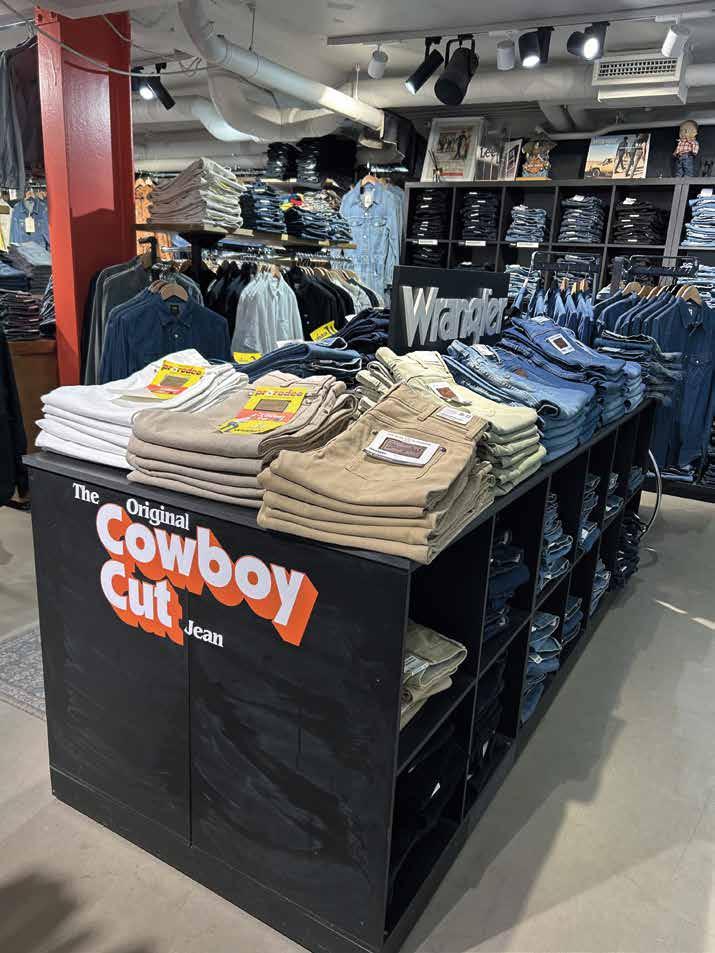
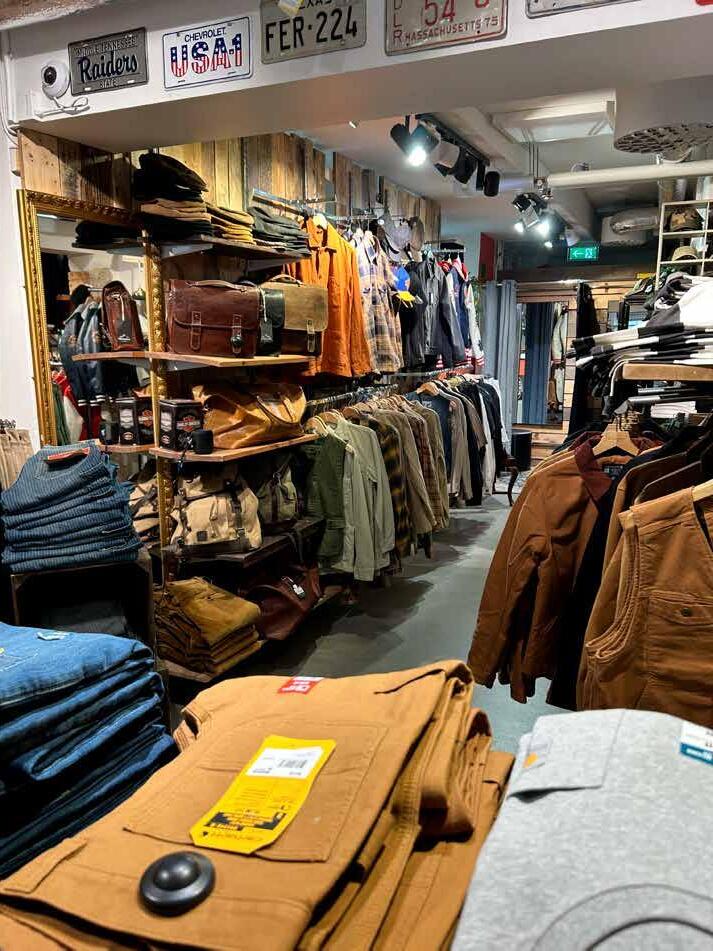
DENIM, FOOTWEAR, WORK & STREET WEAR, HEADWEAR, MUSIC, MAGAZINES, BOOKS, ACCESSORIES AND MORE
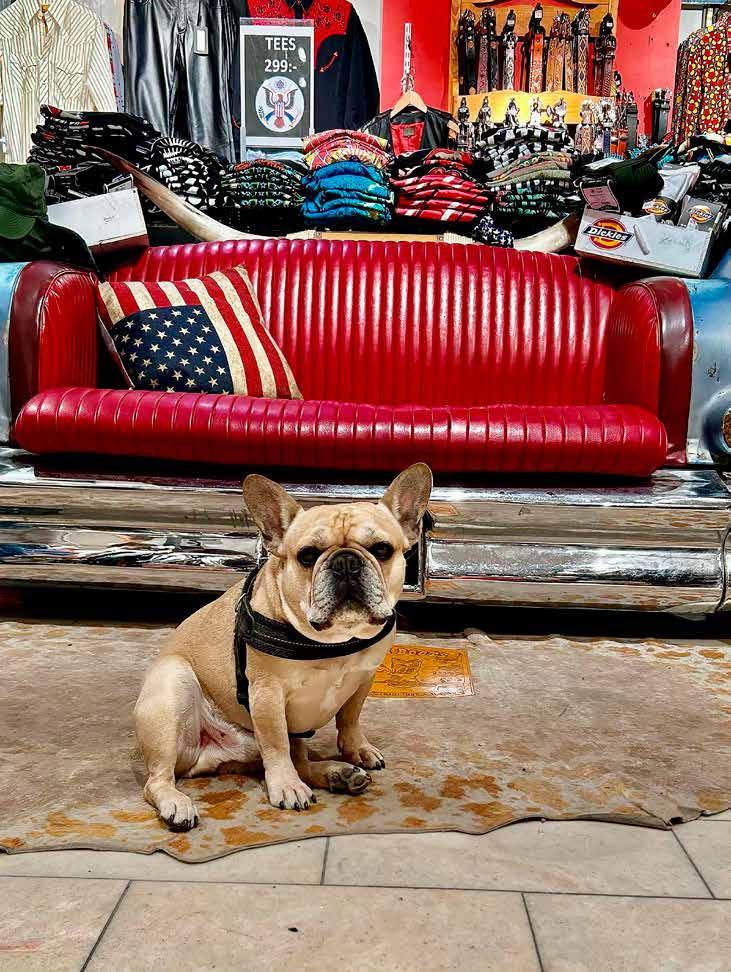

Gamla Brogatan 34,
Gamla Brogatan 34, Stockholm
Gamla Brogatan 23,
Iadmit it, there are a few things I’m afraid of. Maybe that goes for anyone, but have any of you faced your fears? Apparently, that’s what you’re supposed to do. I got over my fear of spiders after living in the south of France one spring. They have bigger, creepier bugs there than spiders.
Staff Photographer Anders Bergersen and I went on a big trip around the US last summer. I got the chance to challenge myself several times over on that one. In Fort Myers – great place – I waded around in a mangrove swamp, what a nightmare. Imagine how many horrible things hide in that murky water! I survived, but I’m not sure I’m cured of my fish phobia. We continued on to Seattle and Washington State. That was fine, our road trip through Eastern Washington wasn’t scary at all. Small towns, beautiful landscapes, great people, and breweries are all things I can handle.
In Mariposa, just outside of Yosemite National Park, we spent our days exploring the town and its surroundings. That was fine, too. But why on Earth would anyone first go to a climbing museum and then visit lookouts that stare straight into the abyss? I get uncomfortable just standing on a chair. Despite that, both the museum (Thanks, Ken, for the excellent tour) and the views were fantastic.
Maybe I’m a little tougher now. The future will tell. Speaking of the future, we’ll be celebrating our 20th issue this fall! That calls for a celebration – we’re not sure how just yet, but it probably won’t be on a mountaintop. But it sure feels inconceivable that we’ve produced so many issues. We’re happy to see that more people are discovering us, it feels like we’ve passed a threshold in the collective conscious. When we talk about the magazine these days, most people have heard of it. That wasn’t the case five or six years ago.
We’ve also started an Americana club together with the management company Icons Creating Evil Art and the bar-slash-guitar shop Twang in Stockholm, Sweden. This is part of our efforts to be more than just a magazine. We have more events coming up. Scan the QR code and sign up for our newsletter to stay in the loop.
Never fear, American Trails has your back. Welcome to issue #18!
Happy reading!
Jonas Larsson | Editor-in-Chief | Master of all fears

FREDRIK AND CO. VISITED PORTLAND ON THEIR ROADTRIP, SEE PAGE 126. SOME YEARS AGO, WE VISITED THE SMALL TOWN OF ASTORIA, ONE OF OUR ALL-TIME FAVORITES. PAGE 56.
IN THIS ISSUE, WE'RE IN YOSEMITE IN TWO ARTICLES! YES, WE LOVE THE PLACE. BUT WE'VE ALSO EXPLORED OTHER PARTS OF THE GOLDEN STATE. PAGES 84 AND 126.
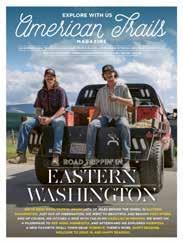
THERE’S NOT MUCH THAT CAN BEAT GOATS, UNLESS IT’S THE WINE THEY HELP MAKE. FOLLOW US ON A ROAD TRIP THROUGH EASTERN WASHINGTON. PAGE 20.
FLAT AND SALTY—NO, IT'S NOT ITALIAN HAM; IT'S THE ULTIMATE SPEEDWAY: THE SALT FLATS. PAGE 192.
TEXAS
SHOEMAKER, STICK TO YOUR LAST. WE VISITED WHAT BASICALLY FEELS LIKE A SANCTUARY FOR US: THE RED WING FACTORY IN—YOU GUESSED IT—RED WING. PAGE 208.
IT'S THE FIRST TIME WE HAVE BEEN IN OHIO. THEREFORE, WE DID A DOUBLE-TAKE AND VISITED THE TWINS FESTIVAL IN TWINSBURG. PAGE 178.
CAJSA LANDIN DIGS INTO SOME PIEROGI AT THE CLASSIC UKRAINIAN SPOT VESELKA IN THE EAST VILLAGE. PAGE 164.
MASSACHUSETTS
IN MICKE LUNDSTRÖM’S NEW BOOK, OVERBURDEN, WE FOLLOW THE LIVES OF PEOPLE IN THE COAL-MINING TOWNS OF APPALACHIA. PAGE 106.
WE’RE BACK IN CLARKSDALE, THE BIRTHPLACE OF THE BLUES. YEP, IT’S DEFINITELY A PLACE WORTH VISITING MORE THAN ONCE. PAGE 146.
HOP INTO TAD’S OLD CADILLAC AND RIDE ALONG AS WE EXPLORE MEMPHIS WITH A LOCAL. PAGE 72.
THE WEST COAST ISN’T JUST ABOUT GREAT SUNSETS. FORT MYERS IS A FULL-ON PARADISE WITH TONS TO DO. PAGE 58.

5. TWIST AND TURN
Issue 18, the goat issue. On our ramblings through North America, we stumble, sometimes literally, on goats. Goats are one of the coolest, toughest, and fiercest animals on this planet. They are also our sign. We are born under the star constellation, “The Goat”.
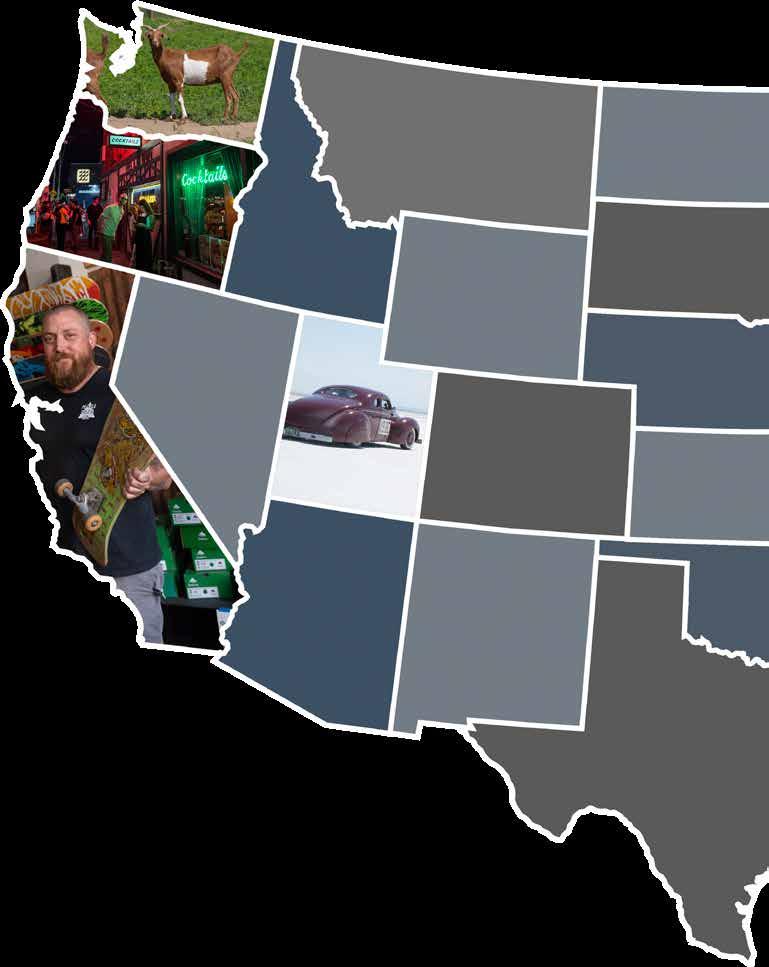
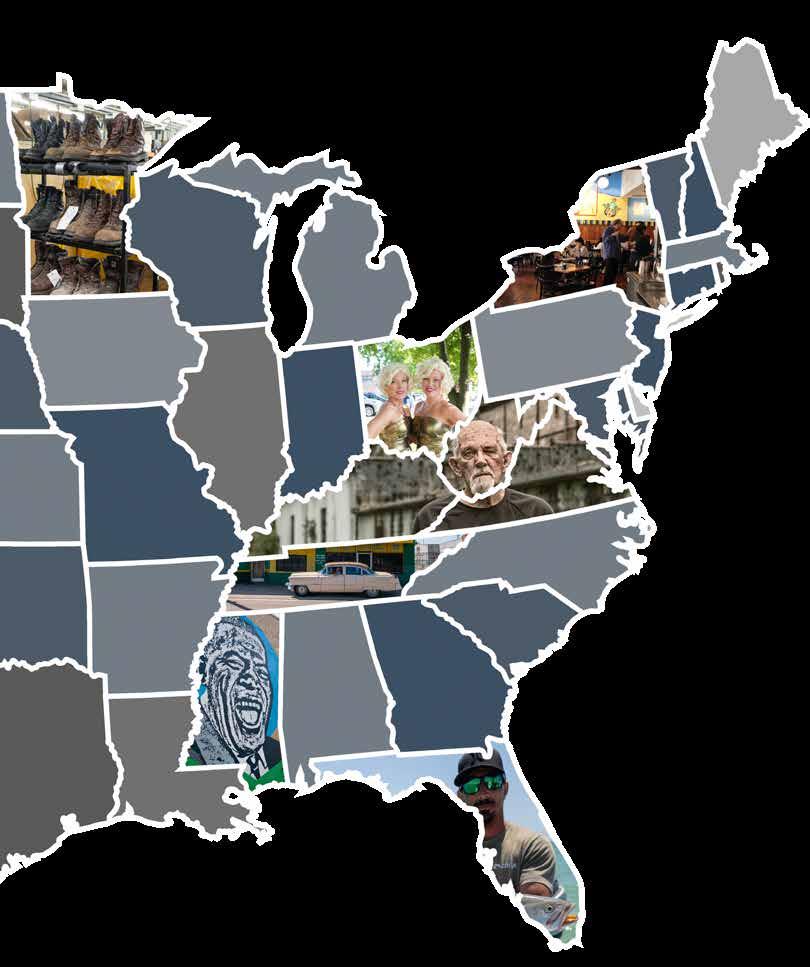
6. THE MAP
See where we have been this time. American Trails never stop exploring.
13. CONTRIBUTORS
Say hello to our friends, who are the best writers and photographers are there.
14. BIG GUS | GRANTSBURG | WISCONSIN
A big, humble Swede has become a legend in this Wisconsin town.
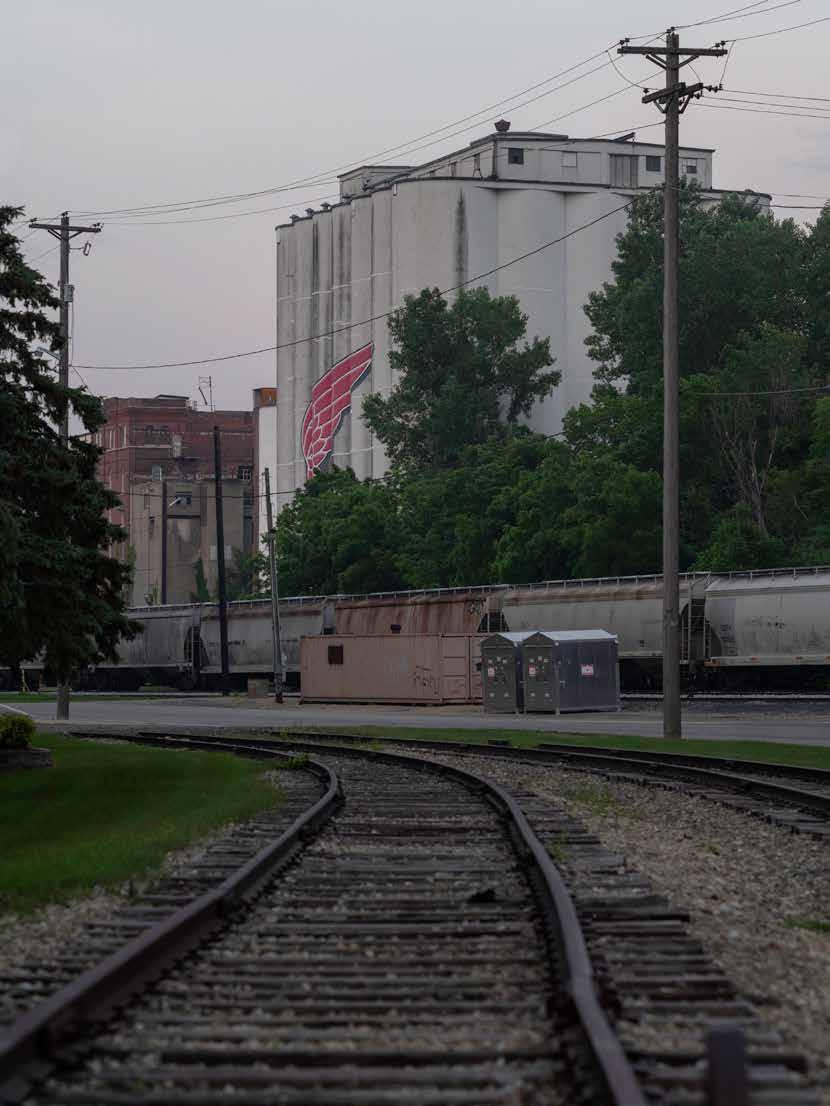
16. GUARDIANS OF THE LAND | REARDAN | WASHINGTON
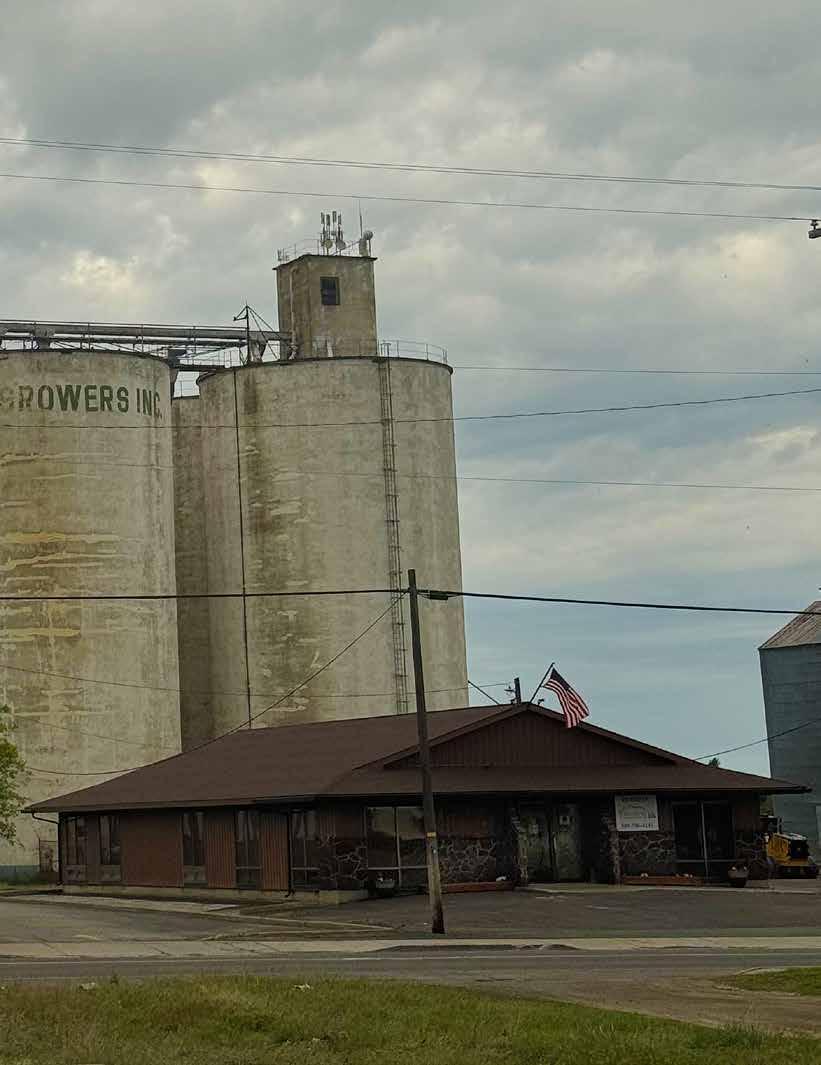
Sometimes buildings become sculptures, like these silos.
18. NOT YOUR ORDINARY LIBRARY PORTLAND | OREGON
This is my favorite library. Unfortunately, you can’t just borrow the whiskey.
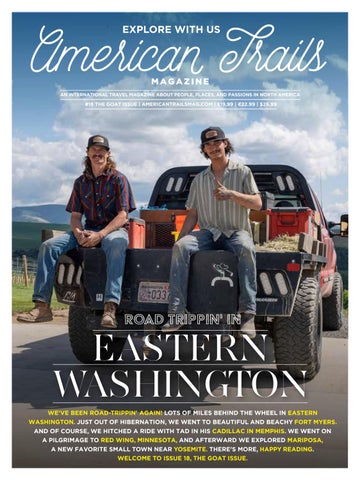
20. A ROAD TRIP IN EASTERN WASHINGTON, PART 1
What a road trip! 10 days on the road in the Cascades and Eastern Washington. That’s a true adventure.
56. HILL COUNTRY | ASTORIA | OREGON
We love small towns. Astoria is one of our favorites, as it lies at the mouth of the Columbia River.
58. FISH, FEARS, AND FORT MYERS | FLORIDA
A paradise must be the best place to face your phobias.
72. TAD TALK | MEMPHIS | TENNESSEE
This is how you should explore a city. With a local in an old Cadillac. Tad’s our man in Memphis!
84. BUTTERFLY TOWN | MARIPOSA | CALIFORNIA
This small town at the gates of Yosemite is a gem. Make sure to book a couple of extra nights to explore the town and its surroundings. This was our third time, and we’re coming back.
106. OVERBURDEN | VIRGINIA WEST VIRGINIA | KENTUCKY
Photographer Micke Lundström’s book Overburden is about the mining towns in the Appalachians and their people. A true work of art.
126. ROAD TRIP | CALIFORNIA AND OREGON
Our colleague Fredrik and his friends explored the west coast and their friendship. They made it!
146. THE DELTA BLUES EPICENTER REVISITED | CLARKSDALE | INDIANAOLA | MISSISSIPPI
We never get tired of the Delat blues. We just had to go back.
148. PETER'S PICKIN' | WRONG SIDE OF THE ROAD
Let us introduce a brand new section. Peter Eriksson presents his favorite Americana artists with his own brilliant photos and words.
164. VESELKA | EAST VILLAGE | NEW YORK CITY
This Ukrainian deli is a legend in the East Village. Cajsa Landin, a true fan, made a visit.
176. TO DIVE FOR | LONG BEACH TAVERN | WASHINGTON
A great name for this friendly tavern in Long Beach, at the very south of Washington state.
178. DOUBLE TROUBLE IN TWINSBURG | OHIO
No, you don’t see double; it’s just the Twin Festival going on.
192. PORTFOLIO | SALT FLATS RACING | UTAH
Chrestians Willhans is a true petrol head. Take a look at his photos from his pilgrimage to the Salt Flats.
208. BOOT CAMP | RED WING | MINNESOTA
Red Wing boot company is, and has always been, located in the town of Red Wing. Of course, we wanted to know the town that produces our boots.
224. CAR CEMETERIES
We love to go to church, our God lives in the car cemeteries in all the back yards we pass during our adventures.
EDITORIAL
JONAS LARSSON EDITOR IN CHIEF AND PUBLISHER LARSSON@AMTRAILSMAG.COM
BO SANDLUND ART DIRECTOR INFO@AMTRAILSMAG.COM
ANDERS BERGERSEN STAFF PHOTOGRAPHER INFO@AMTRAILSMAG.COM
NATHALIE WOLF DESIGNER N.WOLF@AMTRAILSMAG.COM
CHRESTIAN WILLHANS DESIGNER WILLHANS@AMTRAILSMAG.COM
FREDRIK LUNDGREN DIGITAL CONTENT DIRECTOR LUNDGREN@AMTRAILSMAG.COM
CAJSA LANDIN TRANSLATOR INFO@AMTRAILSMAG.COM
American Trails Magazine is a biannual publication and an online community, which focuses on people, places, and passions. We distribute the international edition in Europe and the USA.
We do not accept responsibility for the loss of unsolicited materials. Permission is granted to quote and praise us as long as the source is identified. For permission to use any of our photos or stories, please contact the editors.
ISSN 2002-7842
PER WOLF CEO P.WOLF@AMTRAILSMAG.COM
JOHAN LETH PROJECT MANAGER | EDITOR LETH@AMTRAILSMAG.COM
ADVERTISING AND PARTNERSHIPS
NIKLAS JEHRLANDER JEHRLANDER@AMTRAILSMAG.COM
TEL: +46 73 507 10 48
OFFICE
PAPER HEART PUBLISHING TUNSTAVÄGEN 18, S-793 40 INSJÖN, SWEDEN

COLOPHON
PAPER
COVER: EDIXION OFFSET 300G
INLAY: MUNKEN ELK S PVA 120 G
FONTS
TITLES: ACIER BAT, AW CONQUEROR DIDOT AND HEROE PRO BODY TEXT: ADOBE CASLON PRO 10/12
QUOTES: GOTHAM BOLD
CAPTIONS: MUSEO SLAB 700
PRINT MULTIPLY


Meet our dedicated trailblazers: four guys with a passion for Americana culture, music, and road tripping. Interested in joining us? info@amtrailsmag.com


MICKE LUNDSTRÖM
According to Lundström, the hardest but most important thing in photography is to openly take in what you experience and then interpret it personally and without compromise. For him, the image is emotional and should move you rather than impress you with cleverness, photography's closest relative, in Lundström's view, is music. His most important piece of equipment is, he'll tell you: his eyes. Micke's attraction to worn-down places with a story resulted in the photo book Overburden. See some of the photos from the book, starting on page 106.
JEAN-MARC GIBOUX, CHICAGO, USA
Born in France and based in Chicago, JMG established himself as an editorial photographer covering news, social issues, and cultural trends for magazines and publications. His photographic career took him to over 60 countries around the globe, and Jean-Marc still enjoys discovering hidden stories in the good old USA.
THOMAS LUNDVALL, STOCKHOLM, SWEDEN
Thomas has dedicated his life and career to the world of words, working as an editor for magazines, newspapers, books, and advertising. Now, with the right of age, he is pursuing his passions: music, film, art, and travel. Recently, he visited Nashville, New Orleans, and other musical gems. In this issue, he shares his experiences exploring the heart of the blues in the Mississippi Delta. Join Thomas on his journey to Clarksdale and Indianola.
PETER ERIKSSON, STOCKHOLM, SWEDEN
Photographer, writer, and occasional graphic designer. Based in Tyresö outside Stockholm, with constant dreams of traveling and music – mainly melancholy old-school country/blues/jazz/singer-songwriter. He finds inspiration in photographers Bryan Schutmaat and Matthew Genitempo, whose beautiful portraits of people on the margins of U.S. society. Always inspired by the sounds of Tom Waits. Web: petere.se | Instagram: photographerpeter
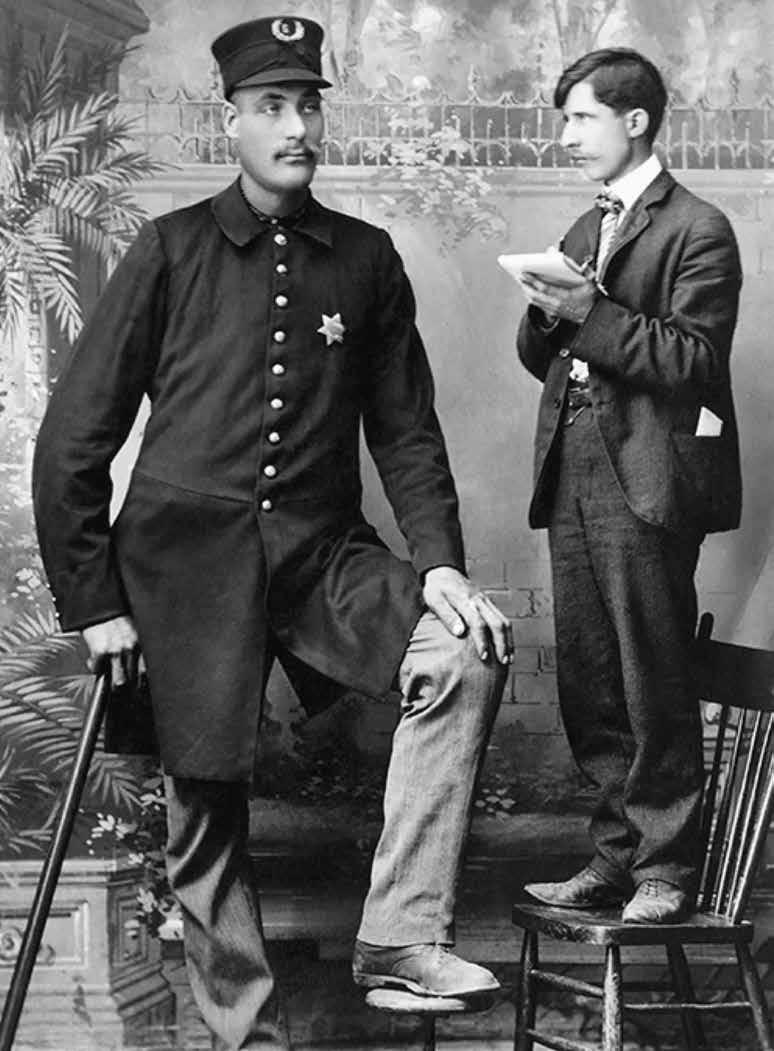
In Grantsburg, Wisconsin, you might hear about Big Gust, the town’s towering legend. Born Anders Gustaf Anderson in Sweden, Gust stood 7.5 feet tall and weighed around 360 pounds (229 cm and 163 kg). But don’t let that size fool you, he was as gentle as they come.
For years, he kept the peace as village marshal. Gust also served as fire chief, road supervisor, and even dog-catcher. Locals adored him for his fairness, his quiet strength, and his big heart.
Today, you can check out a life-sized wooden statue of Big Gust on Pine Street inside a glass shelter. It’s a fun stop for visitors—a chance to see just how big he really was, and to remember a man whose character loomed even larger than his legendary height.
WORDS AND PHOTO BY JONAS LARSSON
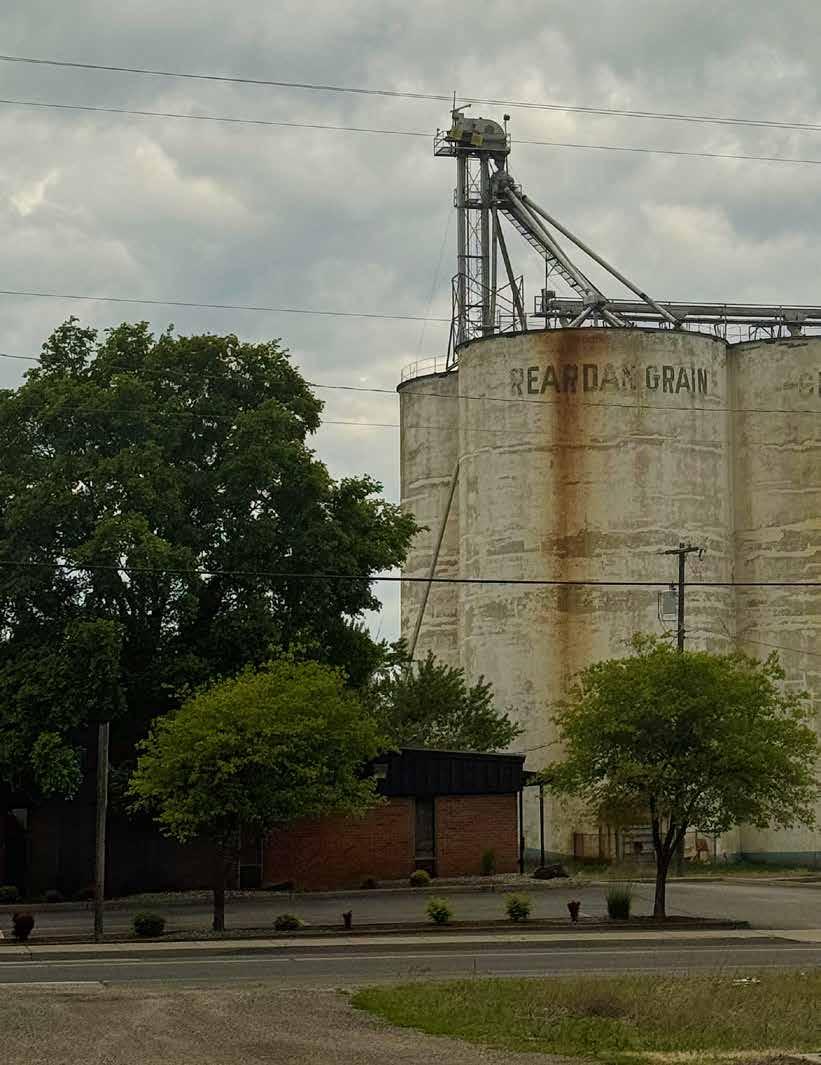
There’s something special about old industrial buildings — or, in this case, agricultural ones. We’re on a road trip through eastern Washington. As we drive into the small town of Reardan, we see them right away: a few gigantic silos standing there like a medieval fortress. They dominate the whole view with their sheer size.
I think of them as guardians of this farming landscape that sits on the divide between the drainage basins of the Columbia River and the Spokane River.
In fact, they’re owned by the farmers’ cooperative Reardan Grain Growers Inc. The local farmers joined forces to build them. About 600 people live in Reardan — here, you have to stick together to get by. The silos are like a monument to that sense of community — and they’re beautiful.
MULTNOMAH WHISKEY LIBRARY | PORTLAND | OREGON
WORDS AND PHOTO BY JONAS LARSSON
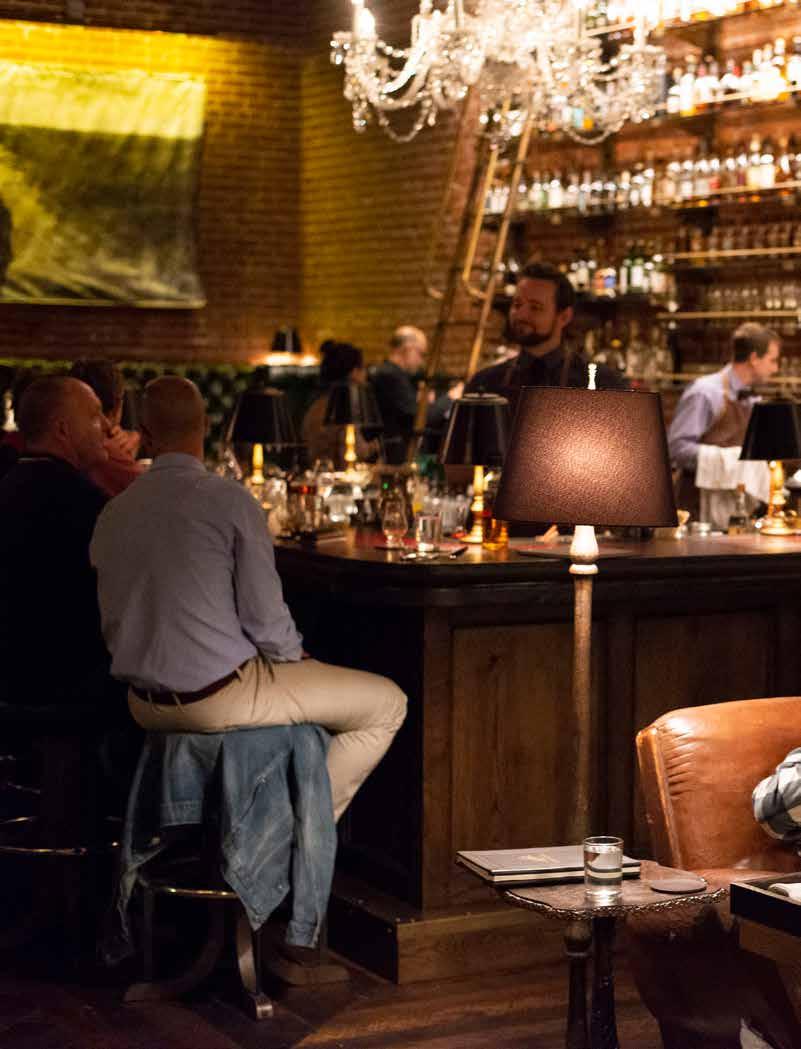
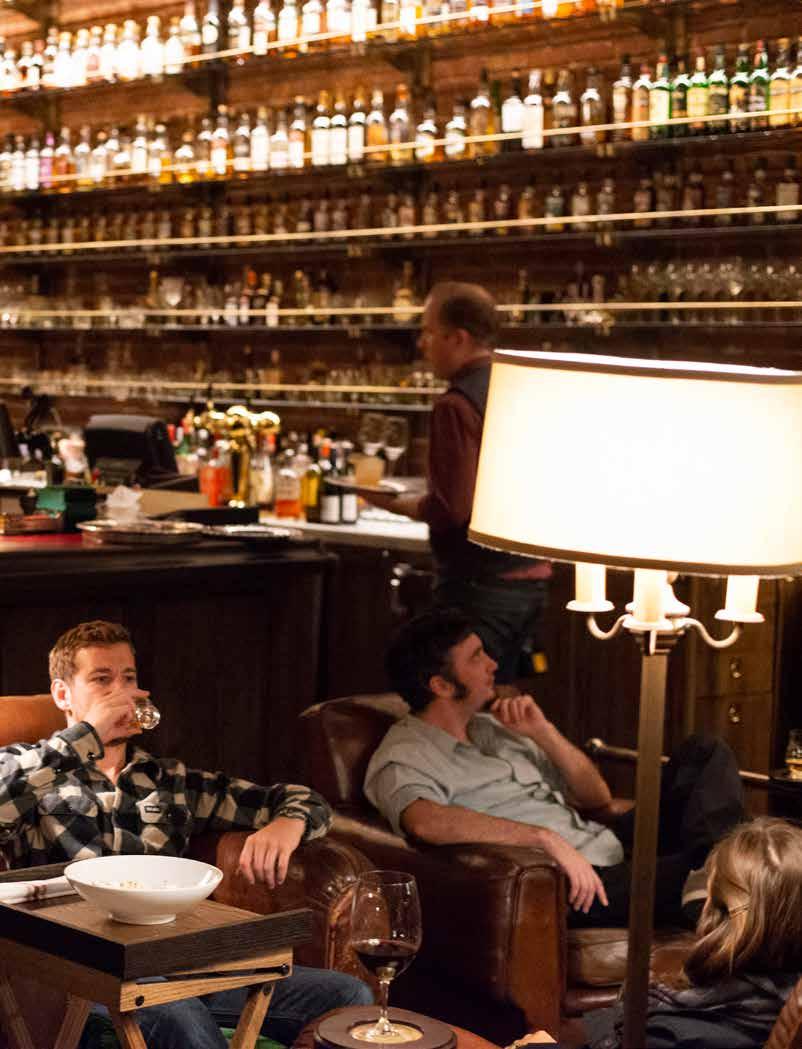
You've never been to a more inspiring library, believe me. Books are wonderful, of course, but it's even better to sit in a large leather armchair, listening to the murmur of the other guests, the clink of ice in glasses, and the crackling of the fire. The new Old World is the motto at the Multnomah Whiskey Library on Alder Street in downtown Portland, Oregon.
The motto fits the place well. It feels almost like an English gentlemen's club, and yes, you have to be a member to get in. You must be recommended by another member or have contributed to the city in various ways. Volunteer work, donations, activism, or anything else that has benefited the Portland community.
It's a wonderful place with thousands of bottles on the shelves. Mostly whiskey, but there is also tequila, aquavit, mescal, and other spirits.
Not a member? Fear not, as a temporary visitor to the city, you can enter on a temporary “Hall Pass.” But book well in advance.
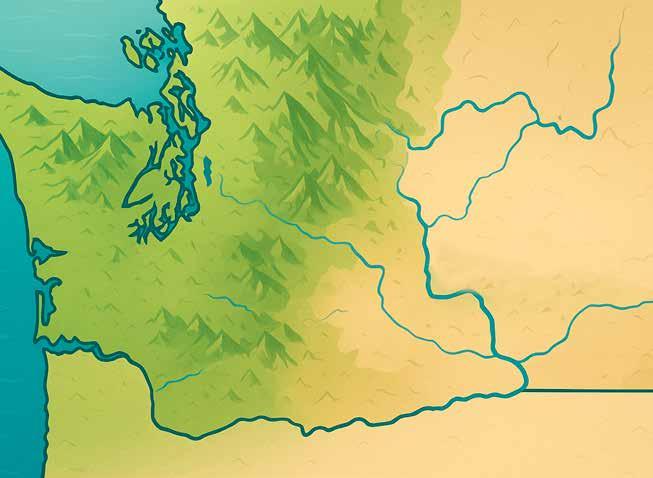
Washington State is a Kinder Egg. Coast and ocean, mountains and forests, and the great plains to the east. The Cascades divide the state like a knife edge. The coast is green and lush, while the east side is drier, with vast plains filled with fruit, wine, and hop farms—and small towns, which are our favorites. Hop in the rental car as we explore Eastern Washington!
WORDS BY JONAS LARSSON | PHOTOS BY ANDERS BERGERSEN
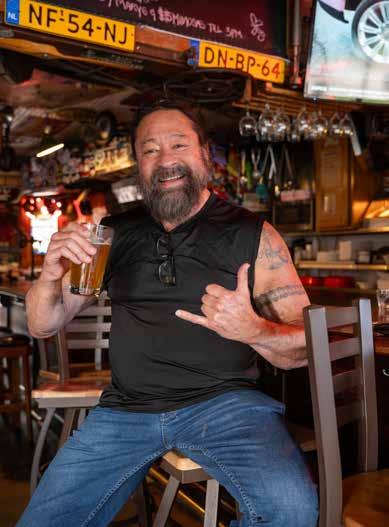
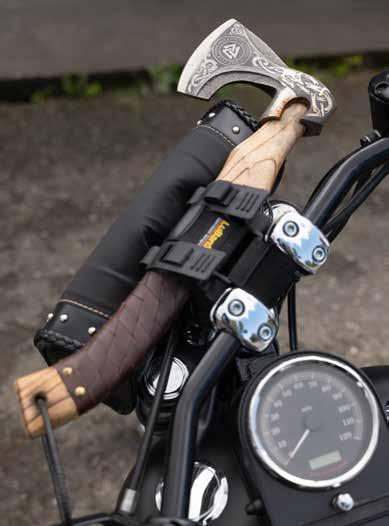
Jeff looks a lot more dangerous than he actually is. In fact, Jeff turns out to be a really nice guy. Even when he brings us out of the Last Frontier Saloon in Fall City to show us the axe strapped to his Harley’s handlebars.
“Look, runes! You’re from Scandinavia, you must like that!”
“Absolutely, he he!”
We return to the bar. Jordan at the helm serves us each a Rainier beer. Rainier isn’t my favorite beer, but when you hang with the locals, you drink like the locals.
The Last Frontier is a dream for a dive-bar sucker like myself. Considering it’s over 100 years old, it’s holding up well. There are knickknacks everywhere, regulars at the bar, good mood all around, even though the afternoon still has a long way left till evening. Jeff and I swap Viking stories and order yet another Rainier before it’s time to go check in.
Anders and I had left Seattle behind us earlier that day, getting on the eastbound I-90. Within just half an hour, the landscape had changed drastically. We’re at the foot of the mighty Cascades Mountain Range, which runs northsouth and splits Washington state in a western half and an eastern half. The east side is larger, drier, and with a totally different climate than the lush west side, where the coastal climate brings forestland and foliage.
There are a few towns here that we’ve heard might be interesting. Fall City, Snoqualmie, North Bend, and Issaquah. Most people just drive straight through on their
way to the mountain pass and on to Eastern Washington. They’re missing out, believe me.
We leave I-90 and roll into the Treehouse Point. A village underneath the thick canopy. We have looked forward to this for a long time but are told we’re early. That’s when we head to Fall City and meet Jeff at the Last Frontier. Once we return from our dive bar diversion, we can check in. I’m given the “Upper Pond”, a cute little house high up in a tree. From my deck, I see Anders’s house a few yards away in another tree. It’s magical. It feels like we’re in a story, like we’re larping Tom Bombadil and Frodo, fighting against Old Man Willow.
After settling in, we go for a walk around the little village. Paths weave through the thick bush. The treehouses hang high over our heads, each one with its own unique look. It’s a dream. I lose track of Anders; I think we’re both so fascinated by the whole thing that we’ve wondered off in opposite directions.
I’ve reached a brook when I hear Anders calling me. I also hear something coming down the path in the dusky twilight. Is it a bear? No, it’s Pete Nelson, his hair on end and his arms gesticulating wildly while he explains something to Anders.
“You must be Jonas?” he says, stretching out his hand. Pete Nelson talks constantly, using his whole, long body to make his point. He’s fantastic.
Pete, together with a team, built the Treehouse Point. He gives us the most amazing and enthusiastic tour you could ask for. But he’s a busy man, so after the tour he has to head off. He does promise we’ll see him tomorrow – and we do
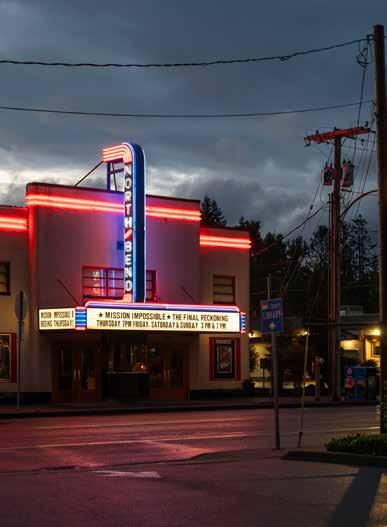
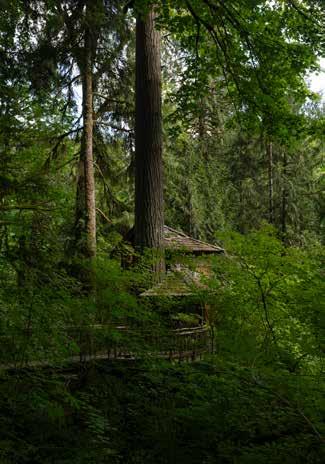
All the tree houses are different and incredibly fascinating.
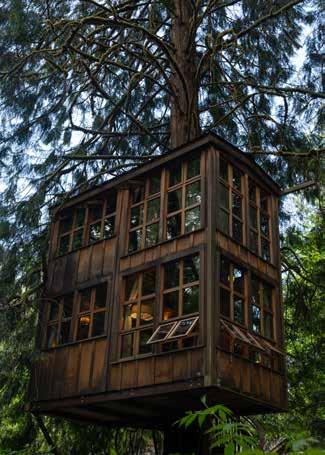
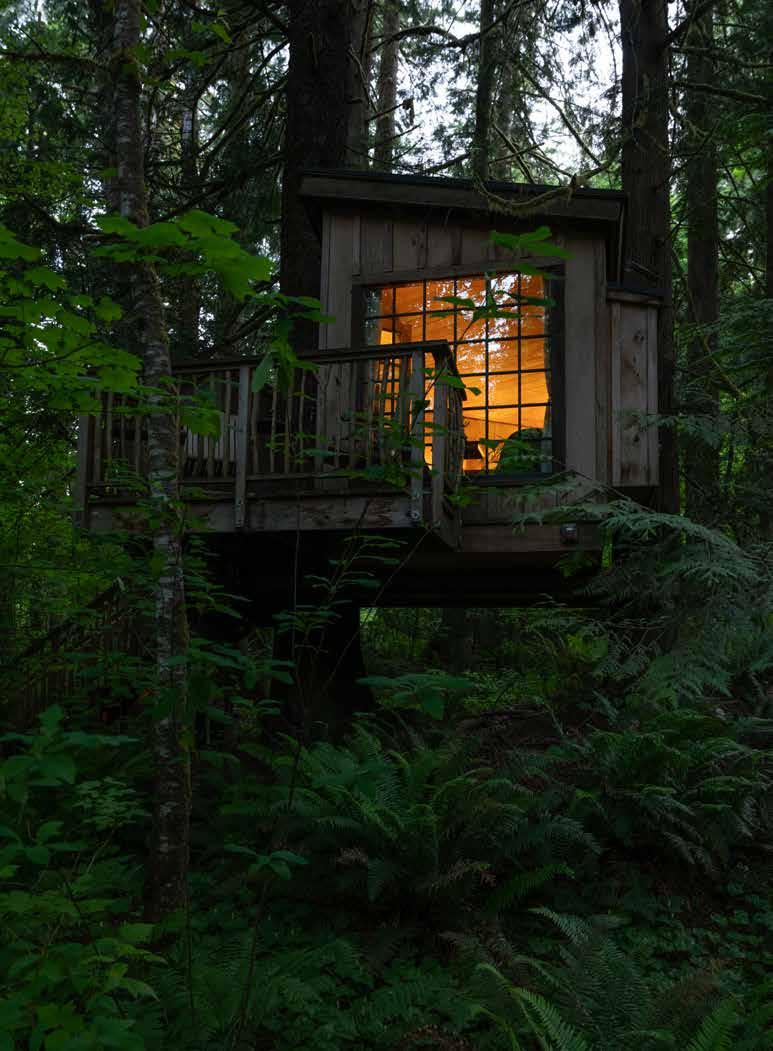
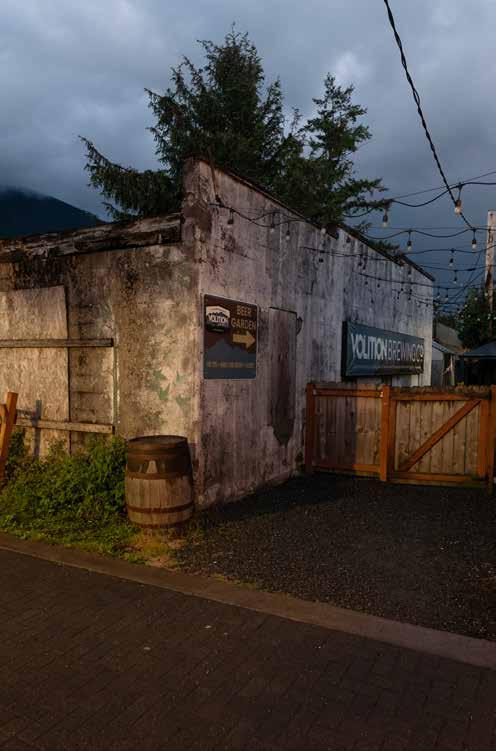
We’re a little tired, and the sun has set. The houses glow warm in the deep twilight. We’re torn between wanting to chill on one of the house decks or exploring and taking pictures. Two minds – one wants to shoot, one wants to absorb. We quickly decide that I’ll pop off and buy wine and beer in the lodge before it closes, while Anders does his thing and snaps some gorgeous shots. A win-win. But I’m a curious lad, so once I’ve taken the drinks up to Upper Pond, I go exploring. It’s like being eight years old again, playing hide-and-seek in the forest, but better. The little pond is full of trout. I stop to admire them, quickly becoming a fan. There’s a little machine where you can get fish food to feed them. These might be the fattest trout in the PNW by now.
Soon enough, it’s too dark for photographs, and we return to my cabin. The evening ends with wine-soaked plans of treehouses in both Norway and Sweden before it’s time for bed.
The next morning, I’m devouring the breakfast buffet in the lodge. While I love an American pancake and a hashbrowns, it’s a joy for both stomach and tastebuds to fill your plate with yoghurt, nuts, fruit, croissants, juice, and a cup of strong, delicious coffee. After all, we’re only an hour away from the capital of modern coffee.
There’s something about people with a passion and a vision. Treehouse Point is one of those thoroughly good places. Things move slowly here, in the good way. The staff must be cherry picked; they’re nice without being ingratiating. Your blood pressure comes right down. The ideal stay would be at least three days. You want to hang out at Treehouse Point, but you’ll also quickly realize there’s a lot to discover nearby, if only you lift that cedar branch.
”Through the darkness of future past
The magician longs to see One chants out between Fire, walk with me.”
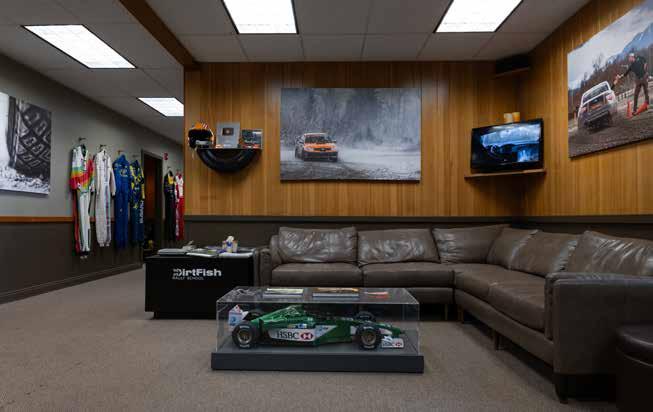
Yes sir, we’re in Twin Peaks country now. For real. The weird but cult classic TV show by David Lynch was filmed nearby. Arriving at the DirtFish Rally School, it turns out their offices are in the same building where the show’s Sheriff Harry S. Truman (played by Michael Ontkean) resided with his unforgettable secretary Lucy Brennan (played by Kimmy Robertson).

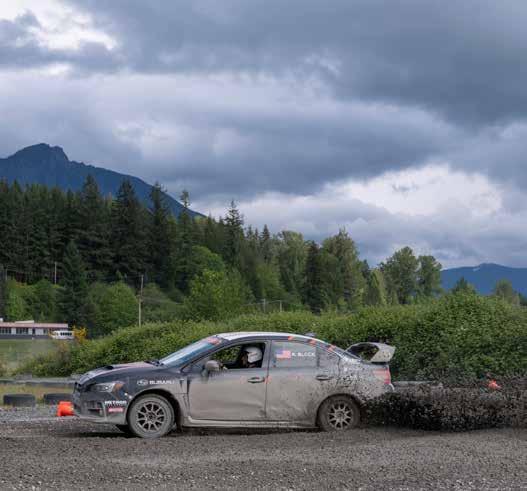
I start touching things when I think no one is watching. I lightly run my hands over the original wood paneling, the counter behind which they found Lucy. I don’t know why, but I feel like I have to do it. I’m probably not the first. But my reverie is interrupted when Kip and Jack come in, asking who wants to drive a rally car today. They’re super cool, playing a sort of good cop bad cop. Kip wears aviators, and is tall and sinewy, his mouth constantly talking. Jack is cool, confident, calm.
I stand there thinking about who I’d prefer to ride with. Pros and cons to both. Kip pats me on the shoulder and says I’m riding with him.
Bad cop turns out to be a hell of a driver. We may not catch up with Anders and Jack – good cop – but what a ride! Two laps around the old sawmill that was at the heart of the Twin Peaks series. Kip drives the car like he stole it, while describing everything he’s doing. “In second gear, pedal to the metal, hairpin turn – parking brake – full speed ahead.” It’s been a long time since I had that much fun sober.
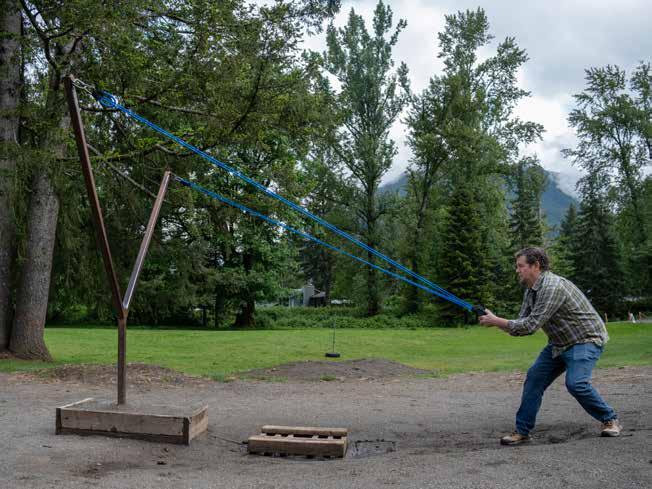
Our day is packed. But that’s how it goes when you have the world’s greatest job. Meeting passionate people gives so much energy and creativity. We have lunch at South Fork in North Bend. Their motto is: Eat – Drink – Gather. That’s a totally apt description of this place. Yet again we meet a person truly passionate about what he does and about helping other people have a good time, a person who can see beyond his own gains. Contributing to the community in various ways to help people live better lives. And boy is Luke Talbott good at it. He reminds me of Pete Nelson with his unwavering enthusiasm. We like the guy, and the place, right away. But when he shows us the gigantic slingshot, seven feet high and wide, that you can load up with tennis balls and shoot off over a lawn that stretches to infinity, that’s when I know he’s my kind of guy.
“Run Forrest, Run!” I shout at Anders as I give him a helpful kick in the rear. I do a practice shot, it flies high above him. He smirks. Bad idea. I collect myself and pull it back again. Well slap me around and call me Charlie if it
doesn’t miss him by barely a foot. It was luck, all luck, that his stubborn Norwegian being didn’t meet a real Swedish tennis ball. I think we could’ve done this all day if it wasn’t for the fact that we had to hit the road.
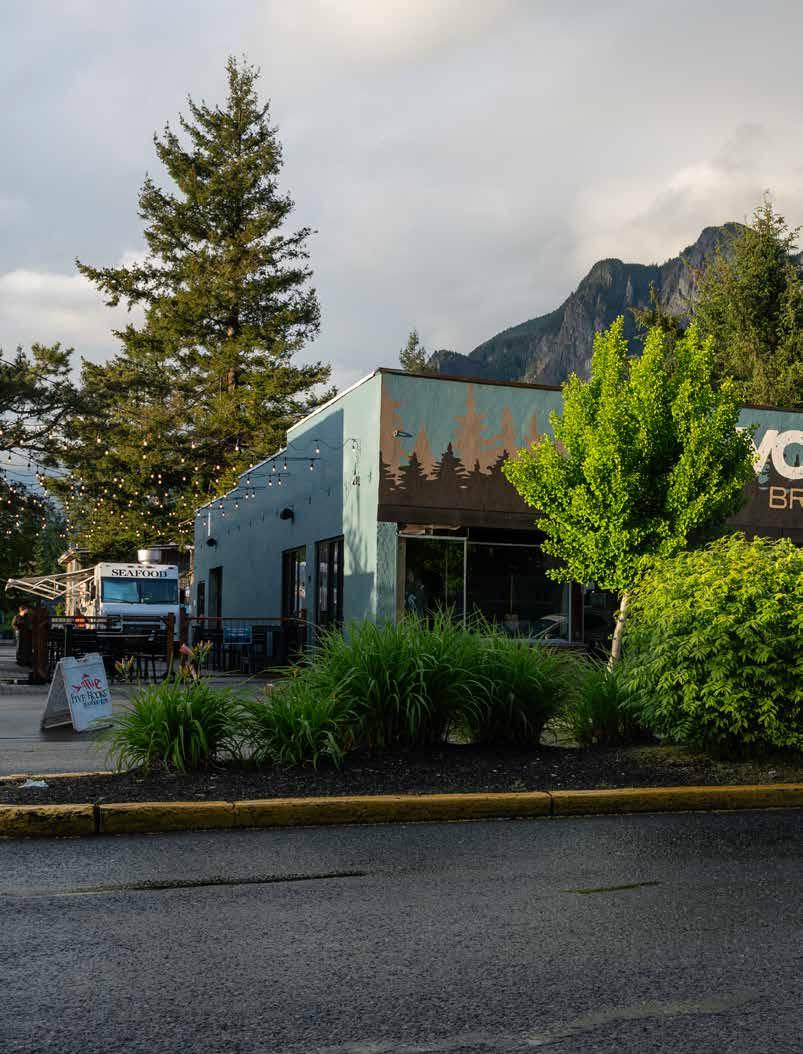
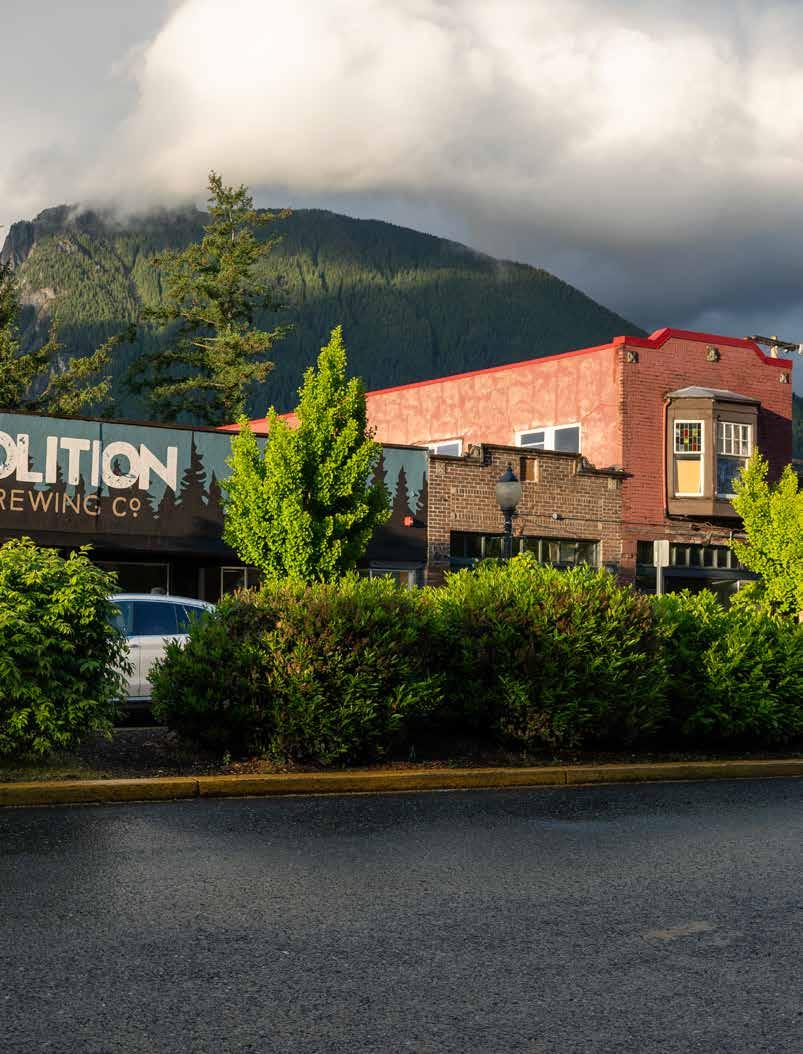
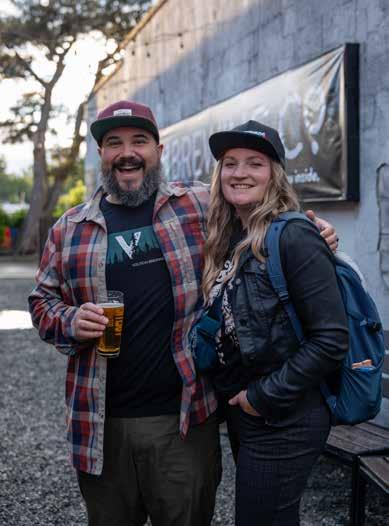
We drive back into North Bend. It’s cute. We both get the feeling that this is a place you could live. That’s before we sit down at Volition Brewing and start looking at house prices.
I don’t know if it’s something in the air, maybe all those Cottonwood seeds drifting around us all the time, or if it’s something in the water. Maybe it’s just that creative, warm people are drawn to others like themselves. I leave my thoughts there. Lucas at Volition places a beer in front of me. That’s a good move.
Washington State has a fairly long and excellent tradition of making wine and beer. On the other side of the Cascades, they grow enough hops to provide all of America and large parts of the rest of the world with top-class hops – more on that in a minute – and the vineyards are
plenty. Some of the hops, pretty sure the top-of-the-crop, have ended up at Volition. That or Lucas is just really good at making beer. In any case, it’s delicious.
But that’s not enough. A lot of people can make good beer. Volition has succeeded at what others have tried. The decorations feel personal, cozy, the lounge corner where we immediately settle in has a Star Wars theme, with a carbonite-frozen Han Solo. At the other end of the room is a pinball machine. My god, I’d probably be here all the time if I lived in North Bend. There’s a firepit outside. Maybe I’m unaccustomed to this warm feeling that is everywhere here, everyone I meet no matter what they do for work is eager to talk about the outdoors, hiking, and how grateful they are to live at the foot of the mountains. It’s Twin Peaks, but without weird guys in the mirror, dwarves and giants appearing in dreams, and, as far as I know, no occult murders were committed while we were there.
We thank Lucas and Jamie. It’s nighttime, we’re in Twin Peaks country. Might be best to go to the hotel and lock the doors.
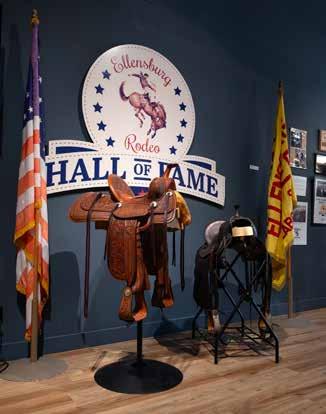
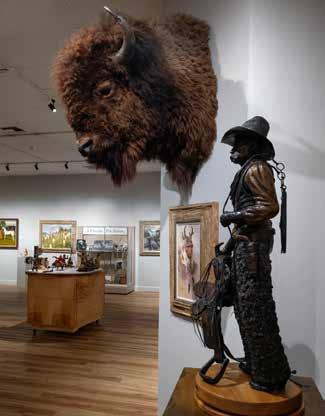
SIT’S IMPRESSIVE TO SEE WHAT THEY’VE ACHIEVED WITH JUST WILLPOWER AND COLLABORATION. WE VISIT THE RODEO MUSEUM, WHICH IS AN ABSOLUTE MUST, IT’S FANTASTIC. WE ALSO HAVE TIME FOR A FEW INTERESTING GALLERIES.
We arrive at the Salish Lodge later than we’d hoped, but the bar is still open a little longer. We check in, haul our bags to the rustic but sumptuous rooms, and head there.
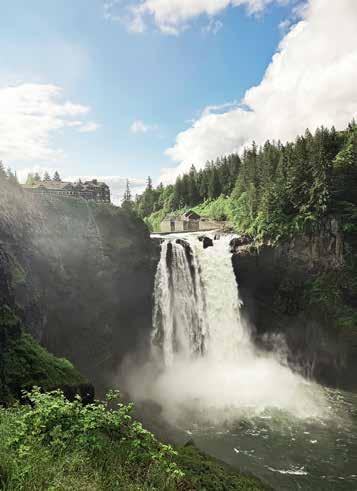
We have a lot to discuss, it’s been a long day with a lot of impressions, and now we’re at the hotel featured at the beginning of every Twin Peaks episode. Salish Lodge overlooks a double waterfall and is a must. At least one night, but two or more is better.
Sitting at the bar, I’m surprised we aren’t accompanied by a Ralph Lauren crew shooting for the catalogue. It’s super American in a great way.
We talk, mostly laugh, remind each other of things that happened and people we met during the day. We feel insufficient. How can we convey this feeling? We’re doing our best.
Early morning, coffee in the car. We drive through Snoqualmie Pass at 3,015 feet (919 meters) on I-90. Lush green views turn into parched vistas broken up by crop fields. Soon, we’ll be in Ellensburg.
Ellensburg is where large parts of my family have lived for many years. It’s a wonderful little town whose university influences the town with a good dose of creativity. Downtown is full of beautiful old buildings, little shops, and bars.
Normally when I visit, we’d hang out at aunt Monica and Uncle Mike’s. Mostly in Mike’s garage, drinking Coors Lite and talking about fishing, hunting, nonsense. It’s always delightful. Unfortunately, my aunt has passed, and Mike has become a snowbird, moving to Arizona in the winter.
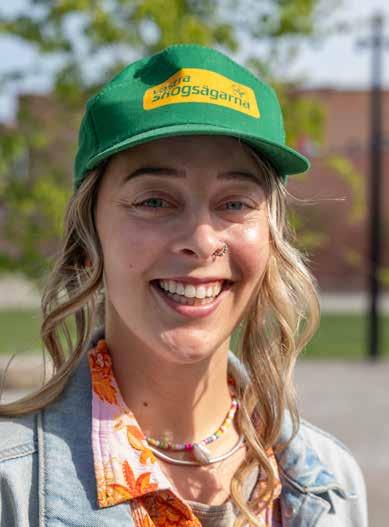
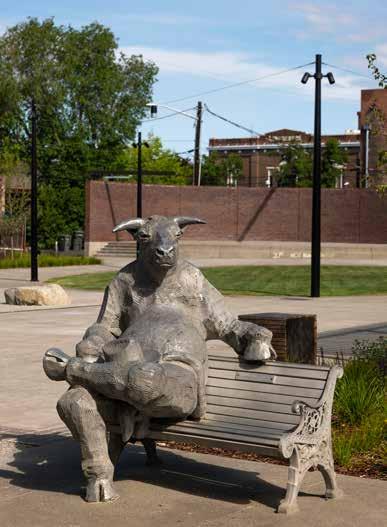
My cousin TJ and uncle Tom are still here, though. We stay at TJ’s, sitting in his garage, telling stories with my family half the night.
What is now Ellensburg was previously inhabited by the indigenous tribes that together made Yakima nation. The first settlements and a shop, Robber’s Roost, were here by 1870. A man named John Alden Shoudy bought Robber’s Roost and some land and started city planning. He named it Ellensburgh after his wife, Mary Ellen.
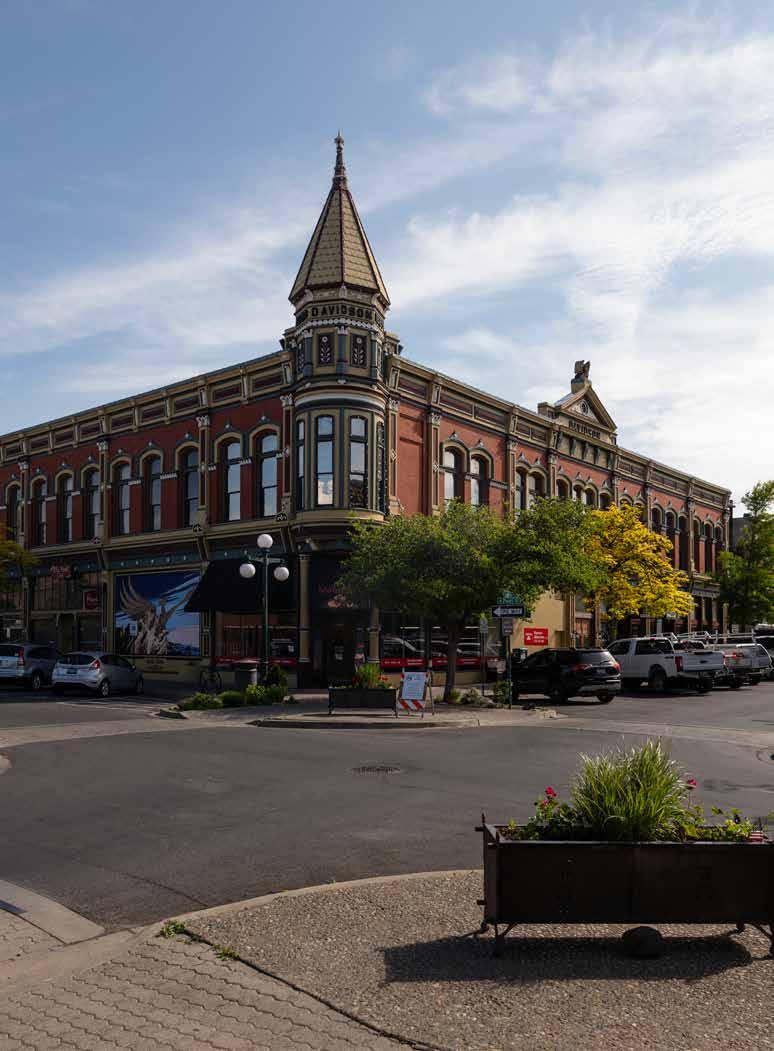
On July 4, 1889, the city was ravaged by fire, and most of it burned down. It was quickly rebuilt, this time by brick to protect against fire. You can still see it in many buildings downtown. It’s a beautiful part of town, where art is alive and thriving.
We meet Kelle Vandenberg at Unity Park. It’s a newly built square where recent efforts by various organizations, the city itself, and the university to promote art and creativity are reflected in a great way. An Instagram-friendly, bronze cow sculpture chills on a couch with a cowboy hat in its lap. The purpose of these efforts is to make it easier for artists and creative entrepreneurs to establish themselves in Ellensburg. But it also pays off for the local economy and is a boost for tourism.
“So as we’re talking about that creative economy, the creative sector makes up about 20% of our gross regional product. And Ellensburg’s creative economy is about a 34-million-dollar industry, and we employ about 1200 people. We are really focusing on the artisans of food, wine, beer, distilleries, and then also the artists themselves that have the multiple mixtures. That’s what makes up the gig,” .
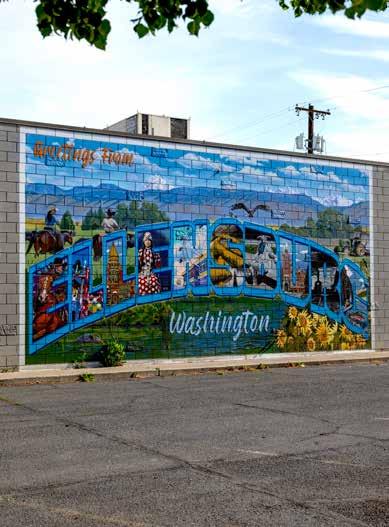
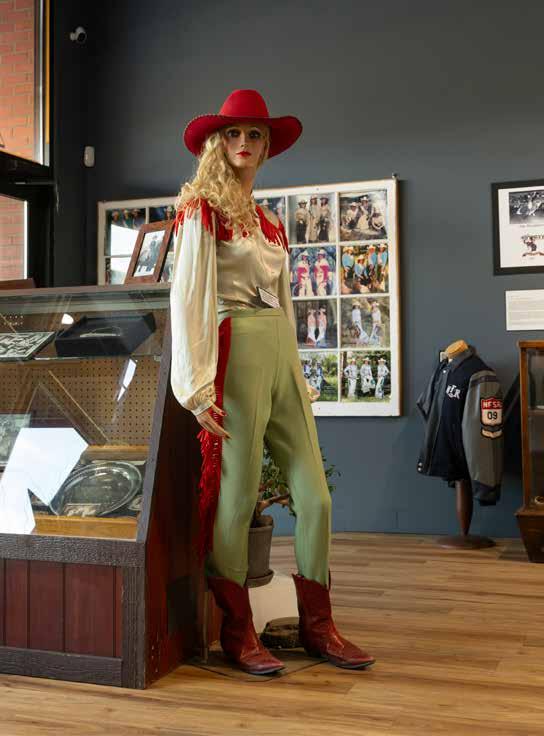
It’s impressive to see what they’ve achieved with just willpower and collaboration. We visit the rodeo museum, which is an absolute must, it’s fantastic. We also have time for a few interesting galleries. On our way to the Fitterer Building, an old furniture store-turned-creative shops hub, we sneak in a mural walk. Kelle tells us that several different groups have come together to preserve old advertisement signs, so-called “ghost signs”, painted on firewalls throughout the neighborhood.
“We’re trying to start a mural society, get a group together. There’s a lot of different groups that want to be involved in murals and like restoration or new murals and things that highlight the heritage of our downtown and our community,” Kelle says.
The old furniture store has been transformed into a hub for entrepreneurs and little creative shops. We visit Woody’s Classic Man, a paradise for any mindful man. Especially one who likes plaid shirts, grooming products, whiskey, and accessories. Woody’s has a cool, Eastern Washington feel about it. It’s upgraded workman’s clothes and hunting clothes – think Robert De Niro in Deer Hunter before they head to Vietnam. But you can also get your hair cut here or get a craft whiskey cocktail. Anders and I drool our way through the store.
The drooling continues as we step into the Grazing Table on 4th. In this charming space, Dana and Rob Henning have built a dreamy little delicatessen. Local ingredients are in focus, and this side of the mountains has a lot of that. It’s mainly charcuterie and cheeses, but you can find anything you need for a picnic, charcuterie board, or tasteful gift (whether it’s for yourself or for someone else).
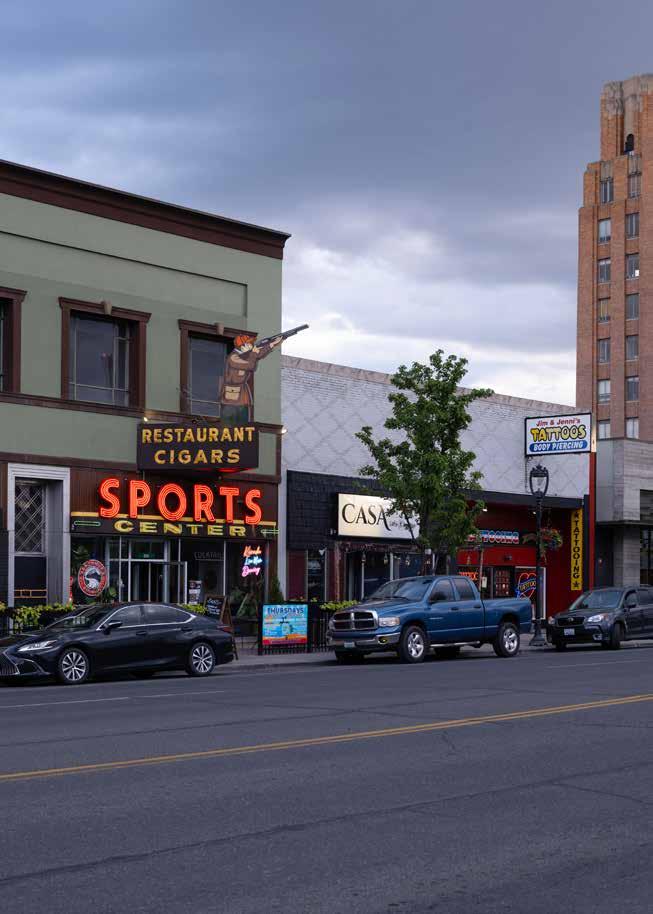
Sports Center must be the most deceiving name on a dive bar. But it's one of
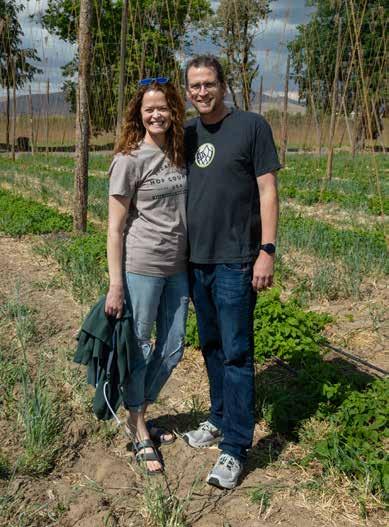
Bale Breaker’s hopgrowing, beer-brewing family. Four generations. Endless passion. Absolutely incredible beer.
WE HAVE AN ENORMOUS ADVANTAGE IN THAT WE GROW OUR OWN HOPS. WE HAVE ACCESS TO FRESHER HOPS AND DON’T HAVE TO DEAL WITH THE LOGISTICS OF ORDER AND DELIVERY. AND OBVIOUSLY WE’RE A HOP-FORWARD BREWERY.
They contacted local farmers who sold their products at the Ellensburg farmers market, asking if they’d be interested in selling their products year-round in their store. Now, the shelves are overflowing with local goodies. But they also bring in other products that fit the small-town vibe. I pick up a book about living in, you guessed it, a small town. Ellensburg has wrapped me in another layer of its charm. The next time I come for a family visit, I will make time to explore the art and culture, not to mention the dive bar The Tav, which it was regrettably too early for us to see this time around.
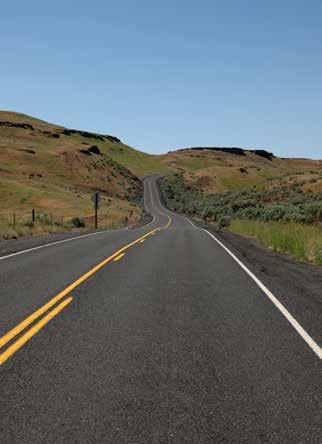
Hands down, the most beautiful road between Ellensburg and Yakima is SR 821. It winds through a canyon along the Yakima River. If you ride motorcycles, this is a dream, but even in our rental car, it’s a sight.
Like many towns this side of the mountains, Yakima is surrounded by farmland. It’s full of fruit orchards, mainly apple, but the big thing here is hops. Hops is that bitter flavor in beer that makes it taste good. Brewers may also play around with dry hopping or trying different varietals. It’s a fact that a lot of the world’s best hops is grown around Yakima. And yes, obviously we’re headed to a brewery. Just outside the city center, we park at Bale Breaker Brewing Company.
Meghann Quinn, one of the owners, greets us. She tells us that the brewery sits in the middle of the family hops farm, four generations in the making. These days, the whole family is involved in the process. Her little brother,
Kevin “Smitty” Smith, is master brewer; her husband, Kevin Quinn, has left the brewing to handle distribution and sales; her older brother Patrick Smith manages both of the family farms, where hops are grown alongside apples and cherries. Their dad still helps out. It’s a real family business. The family started growing hops nearly a century ago, when Prohibition ended in 1932.
“We started the brewery in 2013 and since then, it’s exploded. We had to build out our tap room several times. Production is up too, so now we are the fifth largest craft brewery in Washington and among the 120 biggest in the country. We even have a tap room in Ballard, in Seattle.”
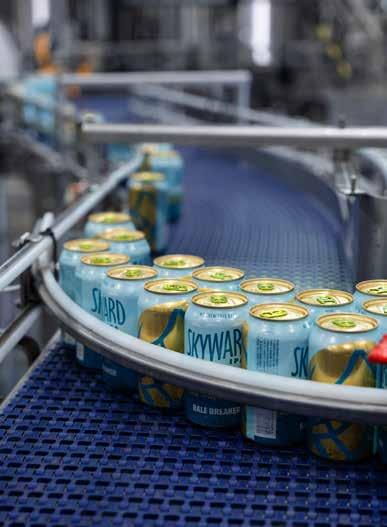
We get a tour of the brewery. Towers of blank cans everywhere, a maze of tracks where beer cans scuttle around. It looks totally confusing to me, but the employees seem to be completely in control.
“Do you know a lot about hops farming?” I waver. While I do have an agriculture degree, I’ve only ever planted hops as decoration – and it hasn’t gone well.
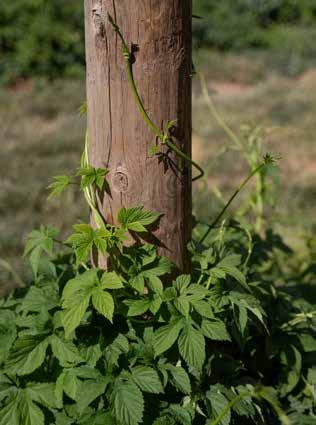
Meghann tells us that right now, at the end of May, the hops just started growing, and it grows fast. Within a month, it’ll be 7-10 feet tall, fluffing out in July and producing its cone-shaped flowers by August. By September it’s time for harvest.
“We have an enormous advantage in that we grow our own hops. We have access to fresher hops and don’t have to deal with the logistics of order and delivery. And obviously we’re a hop-forward brewery.”
Meghann brings us out of the brewery, and the silence relative to in there is a shock to the system. We sit down
US
is
Our road trip so far has been exciting. In the next issue, we will continue our travels in
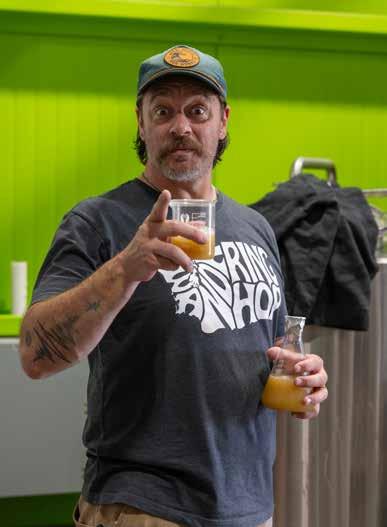
WE STARTED BREWING THIS BEER IN 2017, AND IT’S A COLLABORATION BETWEEN TWO MEXICAN AND TWO CALIFORNIAN CRAFT BREWERIES, AND US. WE WANT TO SHOW OUR APPRECIATION FOR THE MEXICAN IMMIGRANT WORKERS. WE WOULDN’T EXIST WITHOUT THEM
in a shady spot of the brewery’s outdoor seating. It’s time for some real work: tasting the brews.
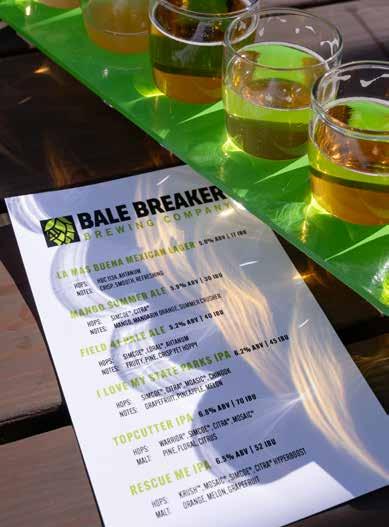
“I thought we’d start with two of our seasonals, move on to two of our flagship varieties, and finish with two specials. The first is a Mexican lager, La Mas Buena. There’s a lot of Hispanic people working in agriculture, and they usually come in asking for Mexican beer, so that inspired us to make this one. It doesn’t have as much hops as our other beers, but we’ve been trying out a new varietal, called HBC 1134 Athanum.”
“It’s reminiscent of European hops. More floral, grassy, with an elegant lemon finish,” Kevin adds.
La Mas Buena, which means “the best”, lives up to its name. Especially in this moment, when the thermometer is creeping close to 90 degrees (30 C) in the shade. We work our way through the rest of the flight. Mango Summer Ale glides down with a cheesy grin, it’s so good, but it also has an interesting story.
“We started brewing this beer in 2017, and it’s a collaboration between two Mexican and two Californian craft breweries, and us. We want to show our appreciation for the Mexican immigrant workers. We wouldn’t exist without them. These are hardworking people who come help us with the harvest and in taking care of the farms. We donate some of our profits to a nonprofit that has a help program for the workers,” Kevin tells us.
We continue our own field work with a Field 41 Pale ale and an I love My State Parks IPA. It seems all their names have a story. We’re actually tasting these brews in Field 41, and part of the profits from the I Love My State Parks IPA goes to an organization that works to maintain Washington State Parks. They are both flagship
beers, both with that elegant hoppiness that is Bale Breaker Brewing’s signature. We round off with a Topcutter IPA and a Rescue Me IPA.
After the last beer, I really don’t want anyone to rescue me. I’d prefer ordering another flight. But we know our limits. Meghann does make sure we get another couple of samples before we say our goodbyes and catch a ride to the hotel.
A feeling brews in me as we head back to the hotel. I sit quietly pondering. Is it something about the air in these small towns, or is it just generations of hardworking farmers, fishermen, lumberjacks, and others, passing down this sense of generosity and helping others? We find it again and again, this sense of community. It’s nice.
While Anders is busy sorting through the day’s photos, I do what I love best: go exploring. As per usual, we’ve crammed a little too much into our schedule, and I don’t have a lot of time before we’re due for dinner at Crafted, one of the more popular restaurants in town. Downtown is pretty small, as it should be, but like so many places we visit, it’s full of interesting architecture and iconic Americana views. My inner Charles Bukowski alarm blares when I spot a gorgeous neon sign. Restaurants, Cigars, Sport Center the sign says, topped with a hunter holding his gun at the ready. In the window, three slightly newer signs: Karaoke –Live Music – Dancing. What more could you want?
If I haven’t made this clear before, I love an old bar, and especially a dive. With a blackboard telling me it’s Happy Hour Now and that this place is Family Friendly until 8:30 PM, I walk through the doors.
WE HIT THE GAS. THE ROAD BEGINS TO TILT UPWARDS. WE SEE SOMETHING THAT LOOKS AS IF A LARGE, OUTDOORS AQUARIUM HAD LANDED AT THE TOP OF THE HILL. ECHOLAND WINERY, ESTABLISHED IN 2017, HAS A GORGEOUS TASTING ROOM AND RESTAURANT.
Paradise! A long bar, pool table, a few steady locals. I sit down and order a beer. The bartender tells me that come evening, the bar will be full of people, dancing, live music. Right now, it’s quiet, nice. But it would’ve been fun to be here for a karaoke night.
I meet up with Anders at Crafted. Their approach is farm to fork, meaning they work with local farmers and food artisans. The menu changes regularly based on their access to ingredients, sometimes in the middle of the day.
Considering we’re in the middle of farmland, with the coast barely an hour away, our expectations are high. We order a round of sharables – oysters, asparagus, local goodies – and wash them down with wine from nearby vineyards. It’s modern, delicious, and a great example of contemporary American cuisine.
We finish the evening with an after-dinner drink at Sports Center, which turns out to be the odd but real name of the bar with the funny neon sign.
The next day, we drive through the fertile Yakima Valley. Everywhere you turn, something is growing. Hops, wine, apples, cherries. We see countless trucks full of fruit crates. The landscape along the river is all rolling hills, simply beautiful.
Interspersed at random, but fairly often, are car cemeteries. In the yard behind some house, there’s inevitably a pickup truck shouting our names. It’s hard not to stop, it becomes a treasure hunt, a foraging excursion. “Look! Over there!” “Did you see that old Ford pickup?” For car enthusiasts like us, it’s practically painful to not stop and have a chat with the car owner.
We cross the mighty Columbia River at Pasco, and soon we’re also crossing the Snake River getting onto Old Highway 12. A sign along the side of the road warns us of severe side winds ahead, and we see the remains of old telephone poles which have clearly seen better days. Still, the image is iconic.
The drive between Yakima and Walla Walla normally takes about two hours, but ours is constantly interrupted by photo ops. It’s so hard not to stop. We’re on our way to meet some wine folks at Echoland Winery just northeast of Walla Walla, right at the foot of the mountains.
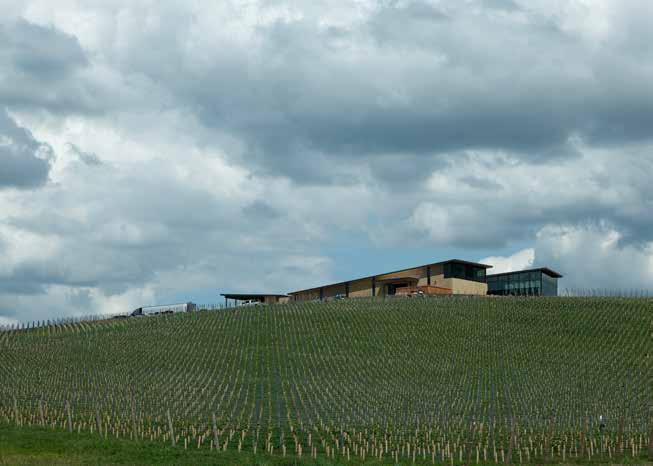
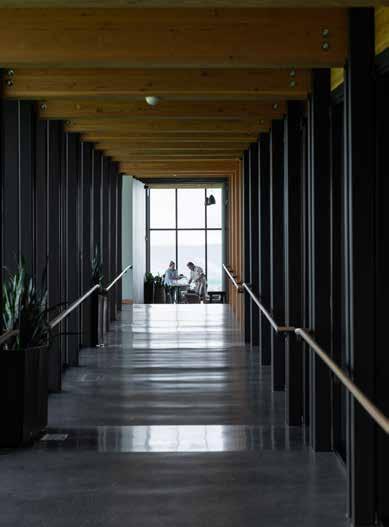
We hit the gas. The road begins to tilt upwards. We see something that looks as if a large, outdoors aquarium had landed at the top of the hill. Echoland Winery, established in 2017, has a gorgeous tasting room and restaurant. A long hallway leads us up and into a large room with panoramic windows in three directions. The style is minimalist, but the feeling is warm. Just like our new wine friends.
We say hi to winemaker and general manager, Brian Rudin, and Bea Murray, who works with their marketing. They ask if we want a tour before we start the wine tasting. Reluctantly, we leave the beautiful room. I’ve visited a lot of wineries, and they’re all fascinating in their own way. What I find with most newer American wine producers is that they’ve really thought things through.
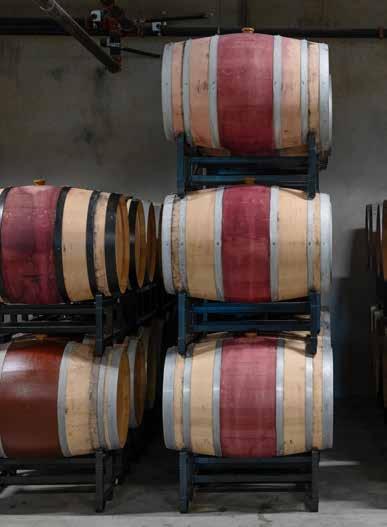
Brian tells us they started the vineyard in 2018. Their first vintage is from 2021. They’re constantly striving to become better at organic and regenerative farming. They avoid working the soil, plant cover crops between the vines, and use organic material for fertilizer. But, best of
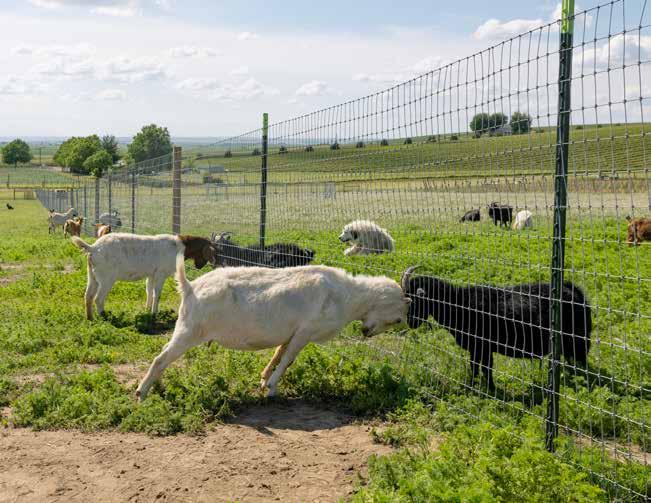
all, they have sheep and goats grazing the cover crops, and we’re about to meet them. I love goats – I love pretty much all animals – but goats are so cool. Mega opportunists, cocky, playful, and obstinate. These goats, however, are kept in line by two determined Great Pyrenees dogs. Related to mastiffs, the breed can reach 130 pounds, but they mostly look like overgrown, shaggy Golden Retrievers.
Even though they know Brian and Bea well, they stand up and growl as we approach. But soon, they come up to say hi, still always with one eye on the flock.
“They work in pairs, and their separate roles are clear. If a predator approaches, one of them attacks the predator while the other dog stays to protect the flock. As they’re growing up, you can’t cuddle them, that’ll imprint them on humans. We want them imprinted on the flock. It’s hard. They’re cute now but you should see them as puppies.”
The goats are curious and come up to nibble at our pant legs. A few of them even let us cuddle them. Two of the goats, one on each side of the fence, start to butt heads. Immediately, one of the dogs shows up to separate them. Fascinating.
“There’s mountain lions and coyote here. They’d love to snatch a sheep or a goat, but they’re no match for our dogs.”
It’s hard to leave the animals, but we soon find ourselves back in the panorama room. The atmosphere here really is nice, I think to myself as I look out across the room. Besides the panoramic windows in three directions, the ceiling is probably 20 feet high. This makes everything else look small, tables and people both, but it creates a nearly sacred mood. Kurt Gillen is a wine educator and a gentleman. Gently guides us to a table with a view (they all have a view). It’s time to try some wines.
About 15,000 years ago, an ice dam that held Glacial Lake Missoula ruptured, causing the Missoula Floods. For over a year, immense amounts of water flooded the Pacific Northwest, changing it forever. A lot of nutrient-rich sediment remained after the flood dried out, and today it creates rich farmland here and in Oregon.
“Previously, these were heavily sprayed wheat fields, the remains of which are now in the soil. We could’ve sprayed another chemical to get rid of their toxins, but we chose a
longer route for sustainability purposes. We grow arugula here, which absorbs the chemicals and breaks it down. The sheep love it. We grow beets and other root vegetables. The sheep and the goats eat the leaves while the rest stays in the ground, adding nutrients. We use holistic farming methods, growing Sudan grass really tall before cutting it down and letting it rot into the soil. But also wheat and peas. In order to get really good grapes, you need good soil, especially when you’re in what was previously conventional farmland. It takes time to achieve, but it’s worth it.
“The room we’re in is 95% powered by solar panels. Production water, from washing the floors or cleaning the tanks, runs into tanks full of wood chips and a certain kind of water-cleaning worms before being used to irrigate the vineyard. It takes three years to earn organic certification, and we’re on our third year. But we’re taking it a step further to become an organic and regenerative wine producer. We work a lot with improving soil quality.”
We taste our way through the wines. They’re young, but complex and promising. You can sense the thoughtful craft. Most of them are ready to drink now, but I have to come back in a few years to see how they’ve developed –they’re well-made and will age well.
The phone rings. “Hi, this is Karrie at GG’s, just checking in on your schedule and what time you’ll get here.”
Dammit, late again!
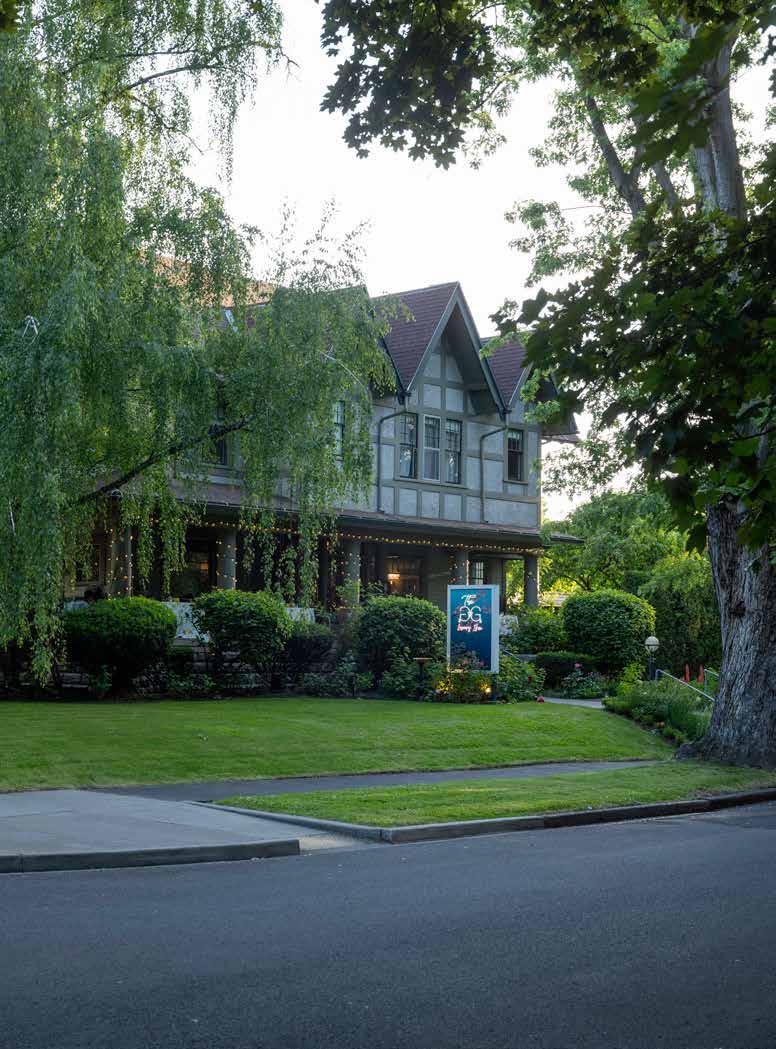
“Hi, sorry, wine tasting, lost track of time, yada yada…” We quickly say our goodbyes to Kurt and the rest of the crew, soon arriving in a tree-lined, quiet neighborhood at the edge of downtown Walla Walla. We turn the corner and stare slack-jawed at the house that is to be our home for much too short a time. Two real sweethearts greet us in the Japanese-inspired garden. Karrie and Brian are two of the most kind, funny, and interesting hosts you could have. We sense it immediately, since they’ve been waiting
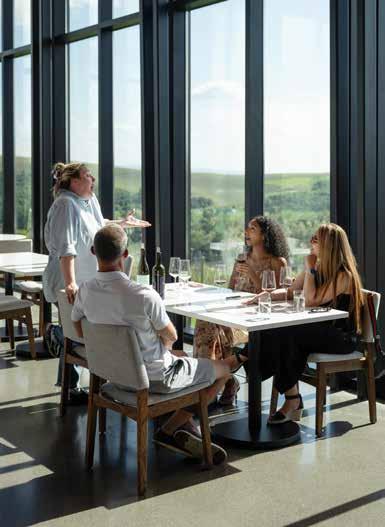
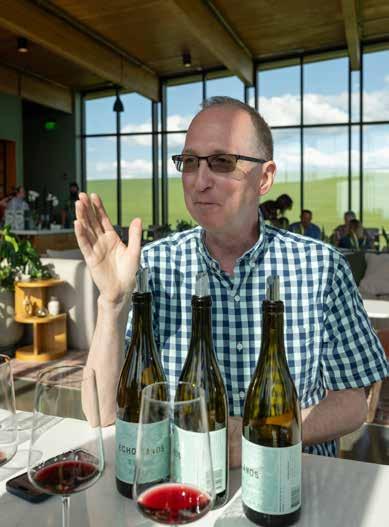
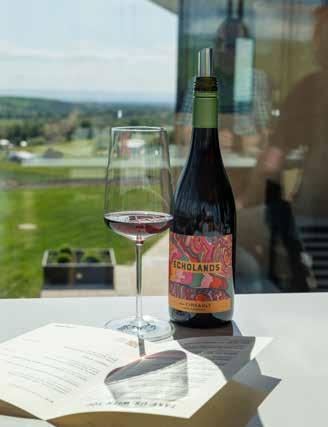
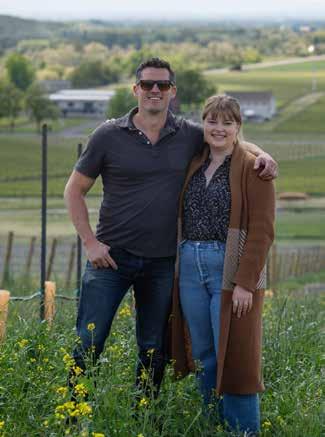
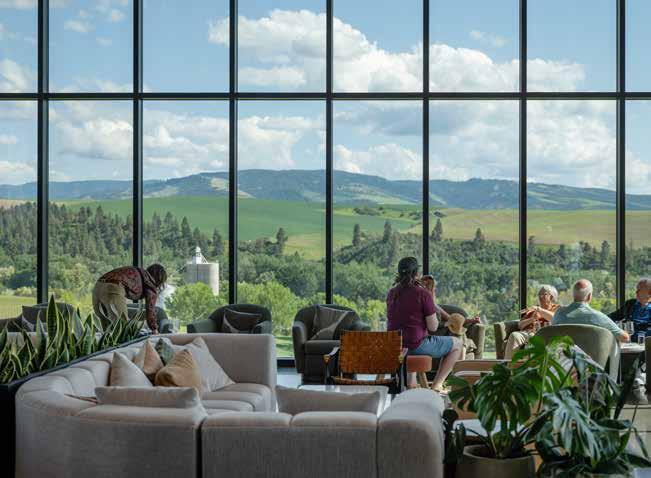
The tasting room has quite a view. You can spend a whole day here with your designated driver.
for us with a chilled bottle of champagne (the guilt!!), but it’s also confirmed several times throughout the evening and next day.
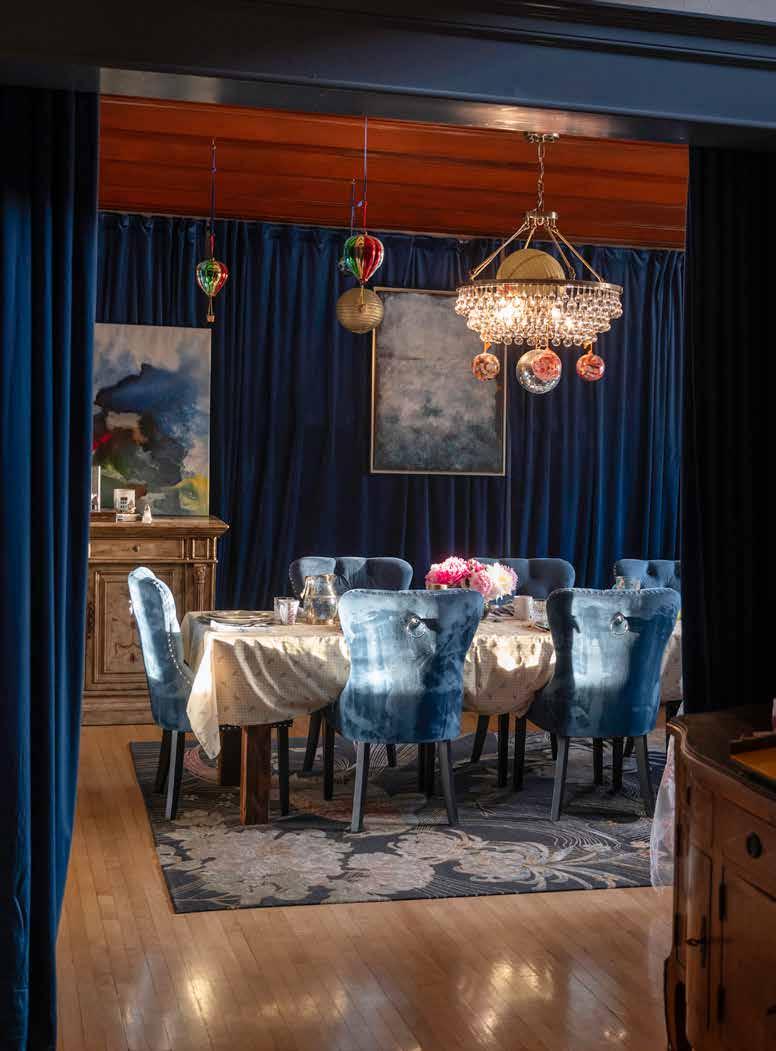
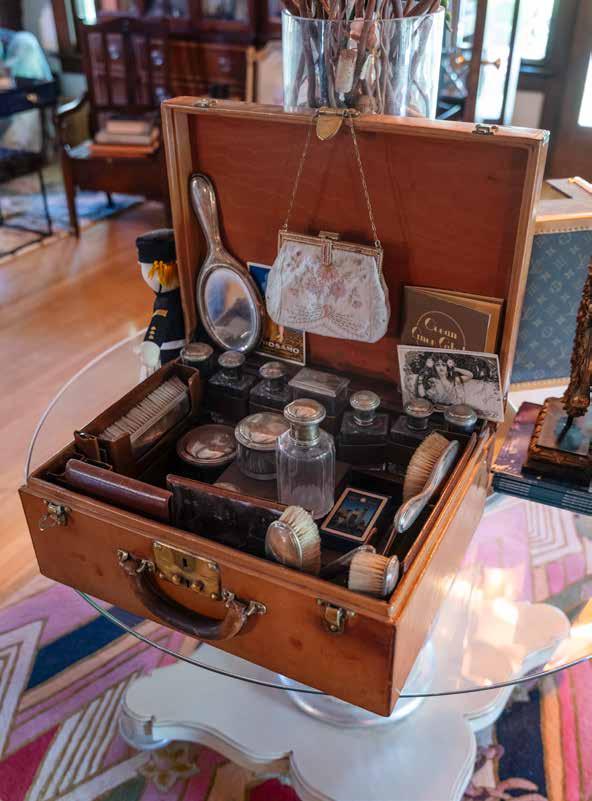
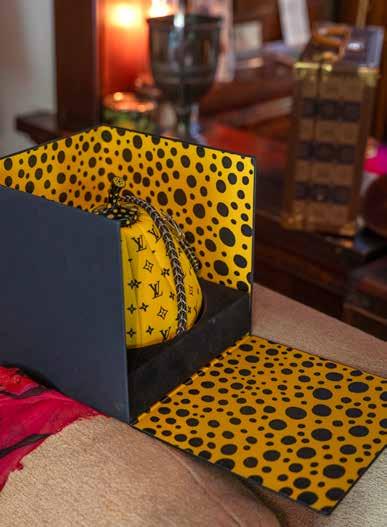
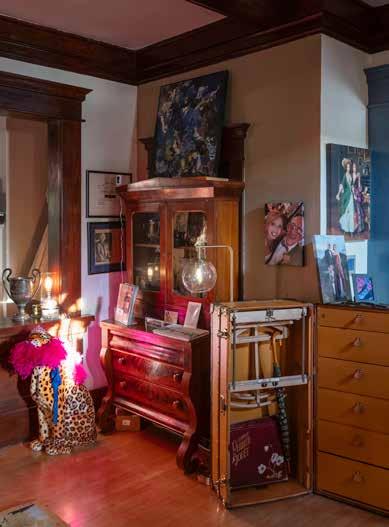
The GG Mansion & Inn is a dream. Karrie turns out to be a lover and collector of all things Louis Vuitton, particularly bags and luggage. The whole gorgeous house from 1909 is decorated in an eclectic fashion, which is to say a wild, crazy, and wonderful mix of things, based in Louis Vuitton through the eras. We get a guided tour of the collection. She shows me a bag that looks like a house.
“This is Louis Vuitton’s family home. Can you imagine how much fun they must have in the design department?”
“I use them, when I go to their shows, I always bring a bag. I meet other people with the same interest there, it’s like a club. When we meet up, we’re always chatting – ‘Oh, you have one of those, wow!’”
“This one is from 1920, it was one of their first toiletry bags. Smell this,” she says and picks up an empty perfume bottle from the bag. “That’s a scent from 1910.”
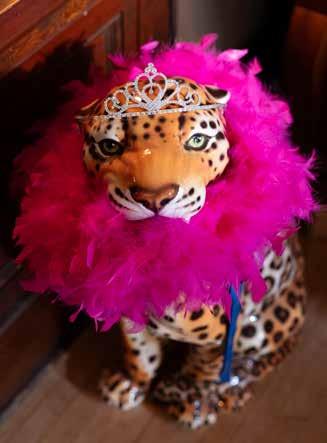
It’s truly lovely. I am particularly enamored with a porcelain panther wearing a tiara on its head and a pink boa around its neck. Karrie in a nutshell. We laugh so much this evening.
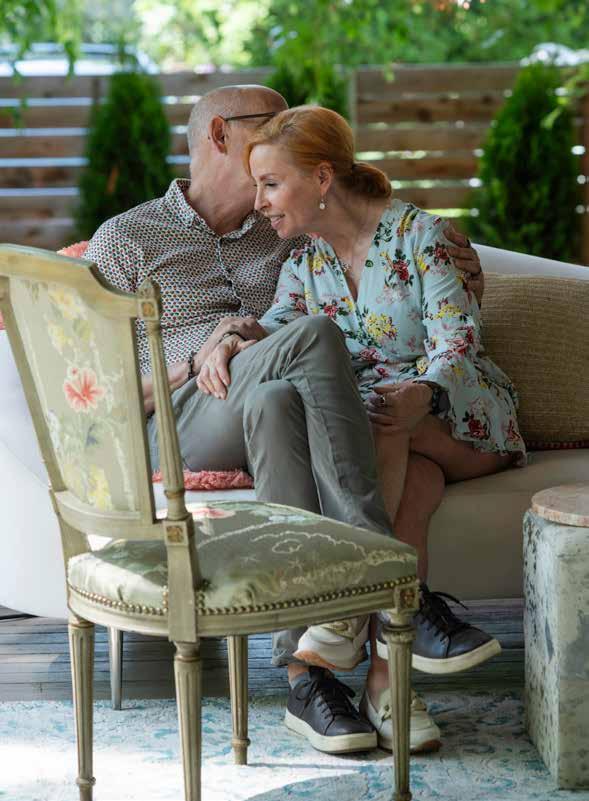
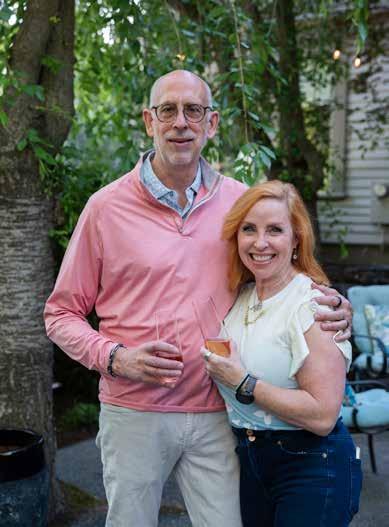
Brian and Karrie tell us about their relatively new love story. Karrie is bursting with joy at the retelling. Brian’s dark, serious eyes get misty on the regular – ours too. It’s a beautiful story about never giving up hope on true love, on taking the risk and going for it. It’s so cute. They’re like two besotted teenagers.
The evening grows dark. We could’ve stayed here talking all night, but we want to explore downtown Walla Walla, which we passed through earlier in the day. Even then, the small-town charm gripped our hearts and minds, but now it’s our bellies leading us to the nearest charming restaurant. We’re late, again, we become a little desperate before finding a restaurant where the kitchen is still open: Brasserie Four.
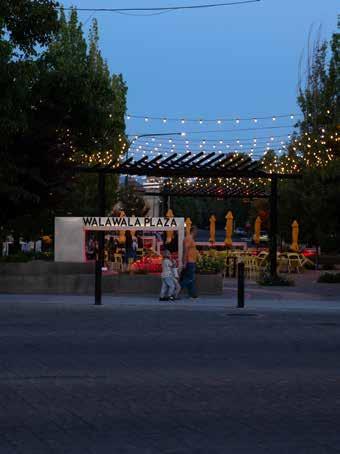
Even though it’s dark, the evening temperature is comfortable. We sip Old Fashioneds while waiting for dinner. Main street is full of people, even though it’s early in the week. Open-air restaurants glitter like diamond necklaces along the sidewalk.
Downtown Walla Walla is a veritable Mecca for anyone interested in wine. A lot of the local vineyards have wine
bars here – Echoland being one of them – but there’s a lot of brew pubs and solid restaurants too, provided you show up on time. Just like in Yakima, there’s plenty of locally produced food and drink.
Over and over, we tell each other that we have to come back and spend more time here, as we saunter through the summer evening back to The GG. I sleep like a baby in my flowery room. It’s cozy, beautiful with a twist. Finesse.
BREAKFAST WITH A SURPRISE
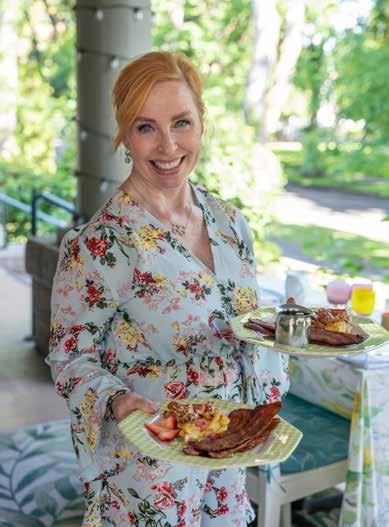
Anders is already up, talking to Karrie when I get downstairs. Juice, croissants, coffee, and toast are all spread out. It looks like a turn-of-the-century painting. Karrie leaves us alone to enjoy breakfast in peace. We just look at each other grinning. I can read Anders’s thoughts, and I’m sure he can read mine. Our two thoughts are as one, and they say, “I love you buddy, but this would’ve been so much better with my partner/wife.” It’s a tough job, but someone’s gotta do it.
The shade on the porch, the scent of the flowers, the coffee, I’m sleepy again. “Do you want anything else?” Our consummate hostess Karrie sweeps up behind us. We say
we’re fully satisfied. Karrie smiles her wide smile and says, “Then I think you should come with me. I have something to show you that I think you’ll like.”
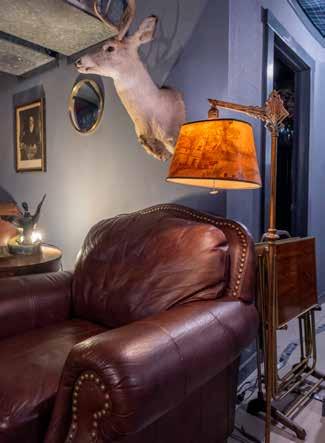
We go down to the basement to find an English gentleman’s club speakeasy. Chesterfield sofas, dark wood. It’s incredible. Myself, I have a horror show of a basement, but now I think I have to turn it into a speakeasy. Karrie and Brian never cease to amaze us, and we realize that we need to see both them and their unbelievable house again.
We part from Karrie and Brian with a lump in our throats and a tear in our eyes. Some people really leave an impression.
The GPS lady directs us out of town, and we set our sights north. It’s time for mountains, wilderness – and horseback riding. There’s room for a couple of enormous steaks, ice cold mountain-lake dips, and coastal adventures, too, and it’s all in the next issue.
WORDS AND PHOTO BY
JONAS LARSSON
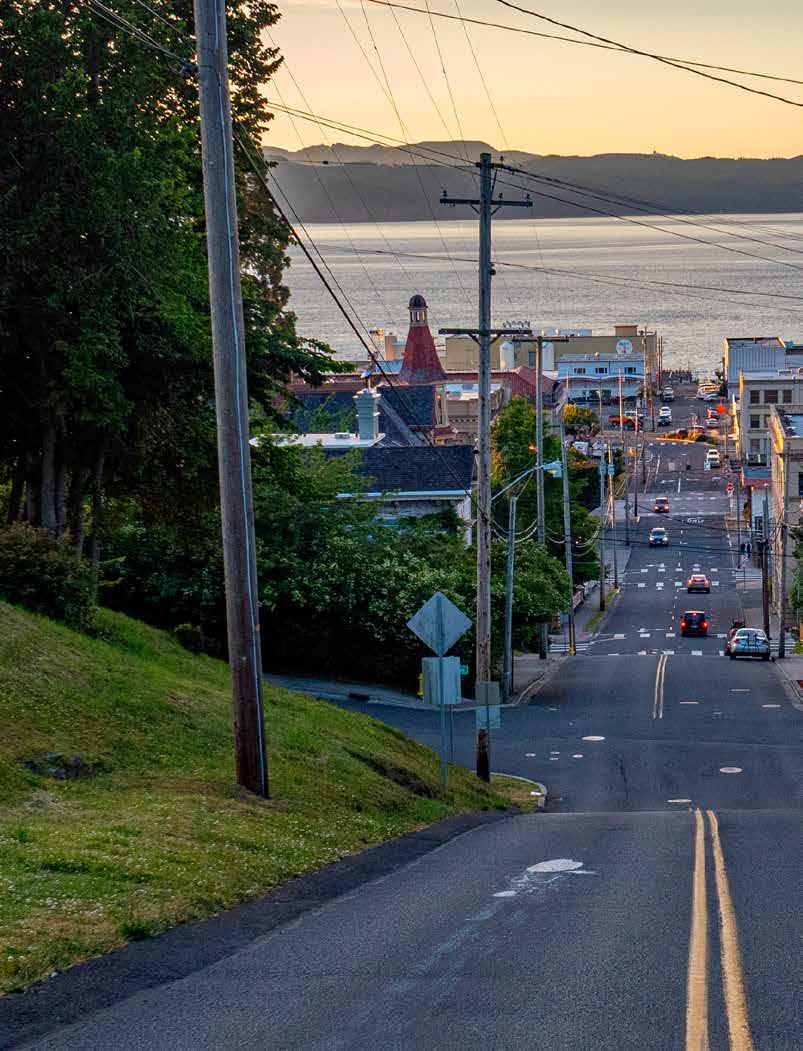
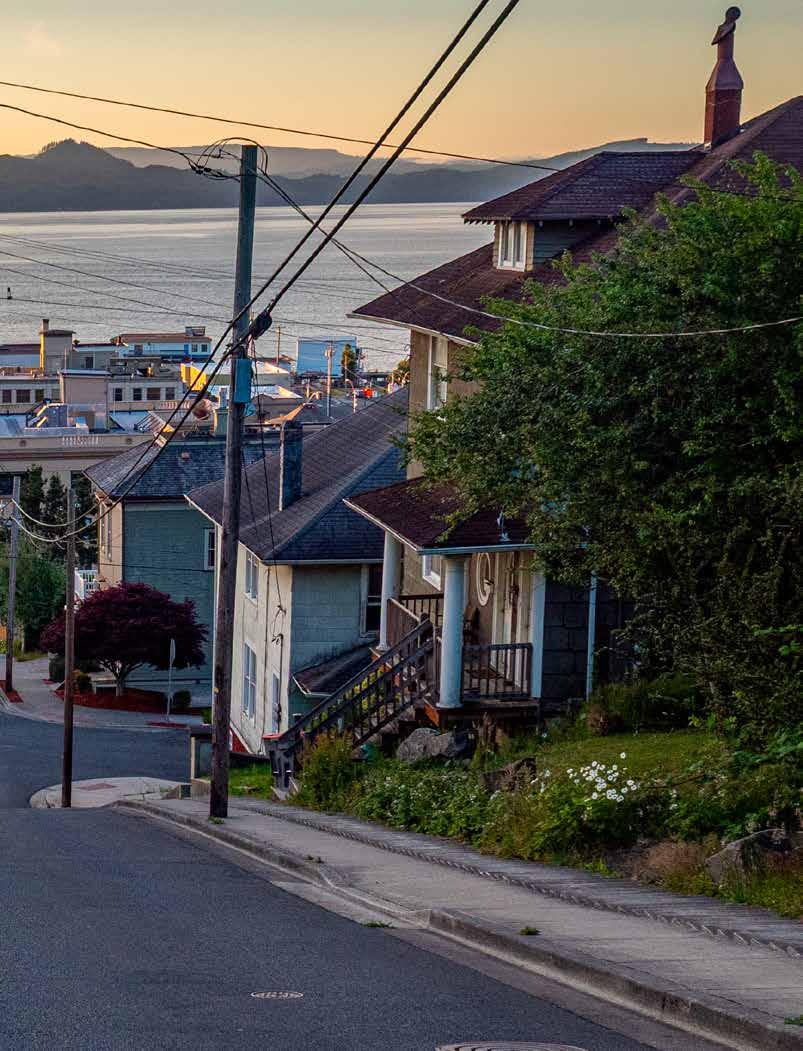
Set at the meeting point of the Columbia River and the Pacific, Astoria has become one of Oregon’s most soughtafter places to call home. The town’s rise in popularity comes from a distinctive mix of maritime history, scenic surroundings, and a steadily growing cultural scene. Founded in 1811 as the first permanent U.S. settlement on the West Coast, Astoria still reflects its fishing and shipping past. Weathered piers, hillside homes, and sweeping river views give the city a sense of place that’s hard to replicate.
Recently, a wave of new bars, breweries, and restaurants has added fresh momentum. Locally crafted beer, seafoodfocused menus, and neighborhood taverns make Astoria’s social life both relaxed and lively. The restaurant scene celebrates the Pacific Northwest’s ingredients while staying true to the town’s maritime charm. Culture is thriving as well. The historic Liberty Theatre brings concerts and performances to the downtown core, while galleries and studios showcase a growing community of makers. Seasonal festivals, highlighting music, film, and regional craft add to the year-round energy. For newcomers, the appeal is clear: Astoria offers natural beauty, deep-rooted history, and an increasingly vibrant cultural heartbeat, all wrapped in the welcoming pace of a small coastal town.here old stories linger, and where new chapters are written every day along the river’s edge.

Western Florida is a special place. Relaxed energy, sandy beaches, good food, and chill people. No stress. We went to Fort Myers to greet spring and meet people, but also to cure my phobia of giant fish, swamps, and weird waters.
WORDS BY JONAS LARSSON | PHOTOS BY ANDERS BERGERSEN
So, you’re meant to challenge yourself, right? I carefully step out of the canoe, a slight give to the sand beneath my feet. I shiver. What on Earth am I doing this for?
Cut to three hours earlier: “I know you’re going to laugh and make fun of me, but consider it a gift from me to you, Anders.” My photographer’s eager smile nearly had me regretting it.
“I got scared as a kid by a book about fish. I know it sounds weird, but you should have seen that damn catfish slither across the whole page with its long barbels. I asked dad if there were any in the lake by our summer house, and in a teachable moment he read the book and said there certainly could be. I didn’t go swimming any more that summer. Instead, we watched horror movies on TV. Great. Creature from the Black Lagoon, dammit! What I’m trying to say is I have a deep-seated fear of dark waters, swamps, fish, and bodies of water in general.”
“So it’s a good thing we’re about to paddle through mangrove swamps, around catfish, saltwater crocodiles, and other sea monsters, isn’t it, Jonas?” Anders smirks at me.
“Right, and then out to fish for tarpon, a fish which hasn’t changed in millions of years and which looks like a mix between a T-rex and a garbage truck. It’s going to be great. Did I mention I get nauseous on boats, too…?”
Anders just smiles, shakes his head, and empties his coffee cup.
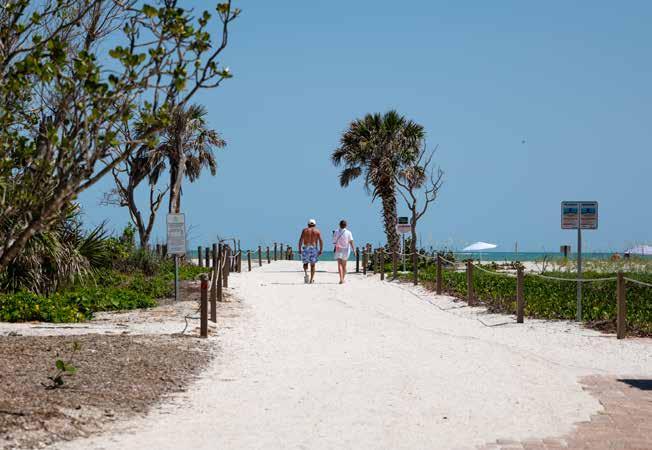
We’re in Fort Myers, on Florida’s west coast. The beaches are long, white. The water is warm, the air is warm, the drinks are cold and also delicious. We stand on the beach watching the sun set in the Gulf of Mexico with giant grins on our faces. Maybe one of the best sunsets I’ve seen. It’s my first time on this side of Florida, and I’ve been looking forward to it. No shade on Miami, I love it, but what I like here is the smaller scale of things, the people being so relaxed.
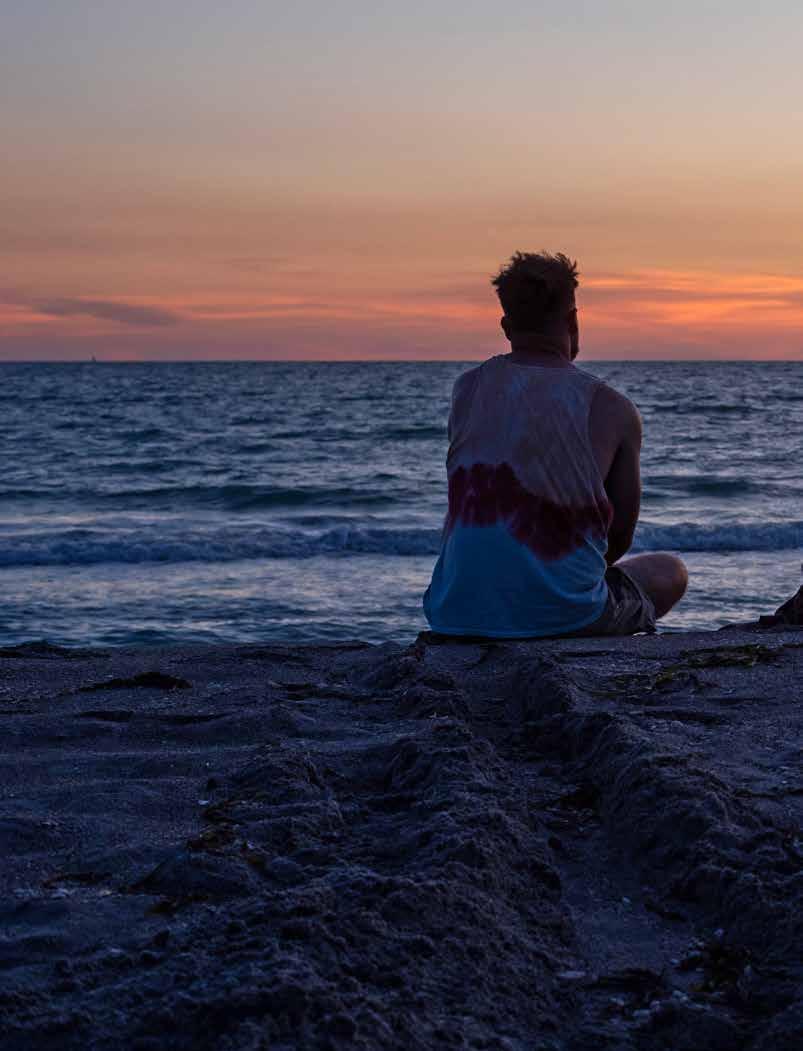
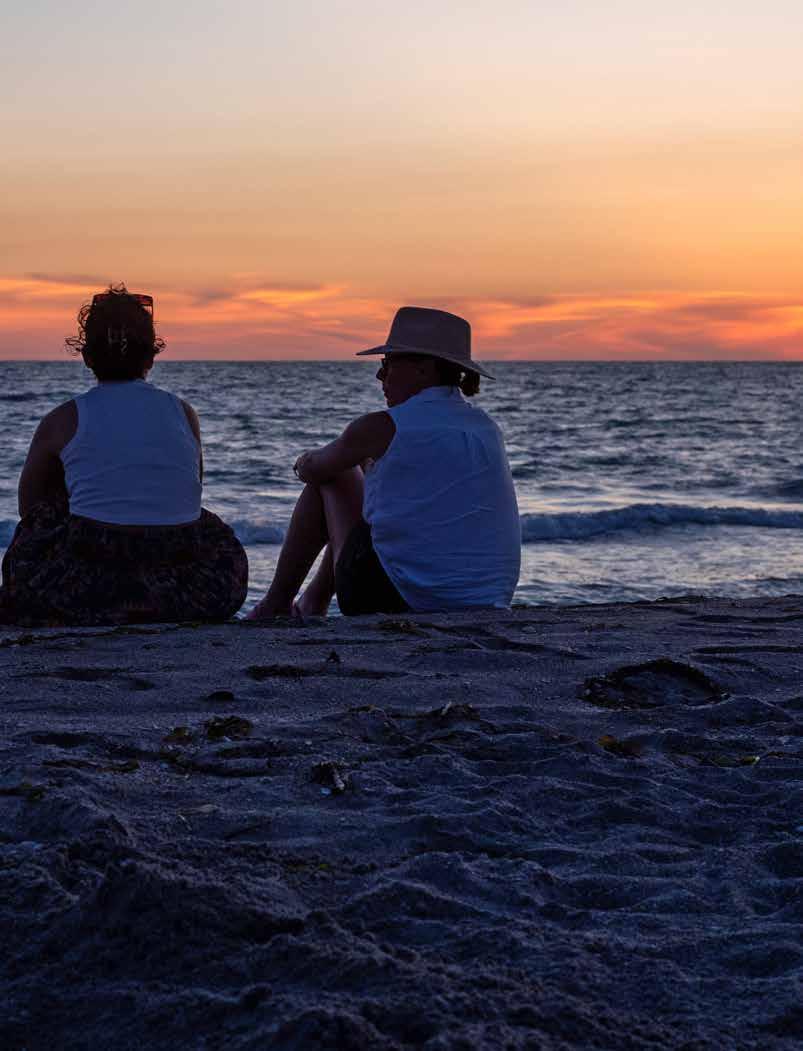
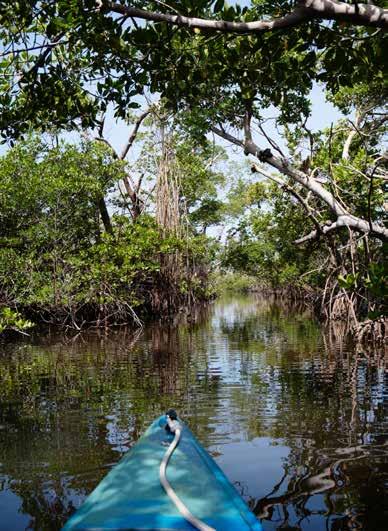
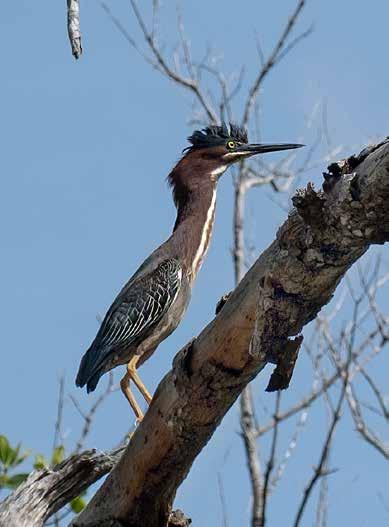
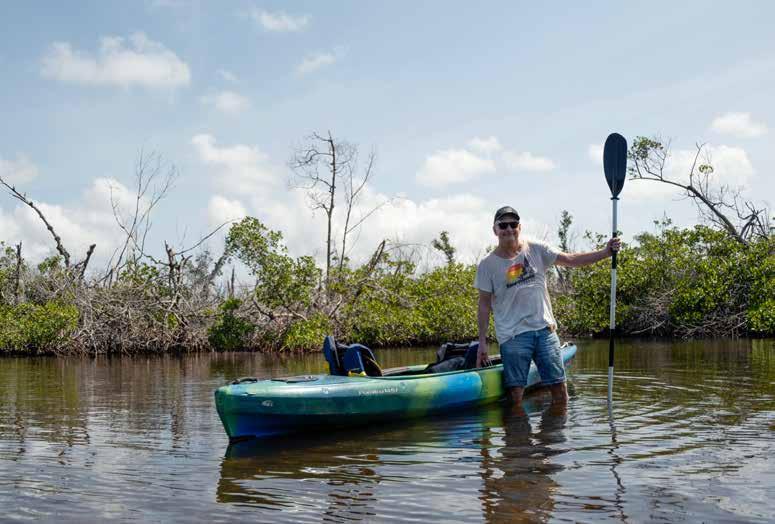
Yours truly, facing his fears with a stern grin.
I’M
TOTALLY FOCUSED ON CATCHING ANY MOVEMENT IN THE WATER. WE HAD HOPED TO SEE THE GUARDIANS OF THE MANGROVE FORESTS – THE MILDMANNERED, BEAUTIFUL, AND ABSOLUTELY ENORMOUS MANATEES. BUT RIGHT NOW, I DON’T WANT TO SEE THEM OR ANYTHING THAT MOVES IN THE WATER.
Fort Myers takes us by storm. Or maybe it’s that we just left one. Four dark months in the North leaves a mark. The warmth – from both sunshine and people – feels so good. Not everyone agrees. A lady gets into the elevator on the second floor, and when I say, “Nice and warm, huh?” she just says, “I hate this.” So much for small talk.
Fort Myers was established for defense when the U.S. Government fought the indigenous Seminole in the Seminole Wars. The Fort got its name from Brevet Colonel Abraham Charles Myers. It also played a significant role in the Civil War.
In 1885, the perpetually bright Thomas Alva Edison visited Fort Myers. He came to like what had by now become small town. He bought land and built himself a winter estate. Edison also built a laboratory where he could work on his experiments. During World War I, Edison worried about the availability of imported rubber. With Harvey Firestone and Henry Ford, he managed to develop a rubber plant that could be grown in the U. S. A tire maker, a car maker, and a genius – of course they’d figure it out. Henry Ford got so enamored with the town that he bought the house next to Edison’s.
Today, Fort Myers is the county seat of Lee County and a large small town, or maybe a small big city. We can’t decide. It’s pretty big if you include suburbs, but the feeling is small-town. It’s nice, you run into the same people day after day. Fort Myers has character. For a town with lots of snowbirds and tourists, it’s managed to hold on to a genuine feeling and charm.
MANGROVE MADNESS
But back to me, standing in the mangroves, water to my knees. Anders is grinning, while I’m totally focused on catching any movement in the water. We had hoped to see the guardians of the mangrove forests – the mild-mannered, beautiful, and absolutely enormous manatees. But right now, I don’t want to see them or anything that moves in the water. The reason we’ve hopped out is that it’s so warm we wanted to cool our feet. At least that’s what Anders said.
“Alright, time to get back in the boat, we’re on a schedule!” Do I see right through it? Sure, but it’s all in good fun.
Despite my phobias, it’s always been a dream of mine to paddle through a mangrove forest. These swamps create mazes among the mangrove trees, roots reaching like powerful arms into the ground. We see oysters on the roots, which means it’s low tide. Sure, the route is clearly marked with signs. But our usual ”What’s the worst that could happen?”-attitude still has us ignoring them and happily weaving through the maze on a whim.
The winged wildlife is intense. Beautiful and crazy birds with big beaks observe us from the treetops. It’s really fascinating, but no manatees yet. No monsters, catfish, or saltwater crocodiles either, though, so that’s good.
We started early and were alone in the labyrinth, but now we’re meeting more and more people on their way in. We decide to follow the signs back. Pull up the boats, change our clothes. Sunburned, happy, and a little sore, we look out over the lagoon in front of the boat rental. Suddenly they appear: two enormous manatees. The skittish
animals swim around the lagoon, almost like they wanted to show off. It’s amazing.
Now that I’ve faced my fears, I vow to come back and see them up close.
North of Sanibel is Captiva Island, a narrow, green island and a refuge from the busy mainland. We’re greeted by white beaches, swaying palm trees, and unrivaled sunsets.
Captiva has a relaxed, Caribbean atmosphere, with little art galleries, bike paths winding their way in between hibiscus and seaweed, and restaurants where you can sit with your bare feet in the sand and eat freshly caught fish. The island is known for its laidback tempo and proximity to nature; dolphins are often seen swimming near the shore, and pelicans glide over the bay like they own it.
It's said that Captiva captures anyone who comes here – that’s how it gets its name. And it’s true: once you’ve seen the sun set in the Gulf of Mexico, you’ll always long to come back.
But sunset is still far away. It’s lunchtime. The best kind of lunchtime: margarita lunch. We’re parked at one of the island’s best bars, The Green Flash, each with a cocktail in hand.
It’s a good name for a bar. Superhero vibes. Having made it through the mangrove maze I feel like a bit of a hero myself.
My grilled prawns arrive on a bed of spinach. Onion, pine nuts, and spinach in a bacon and mandarin dressing make the prawns soar. Further proof that American food is more than just burgers and fries.
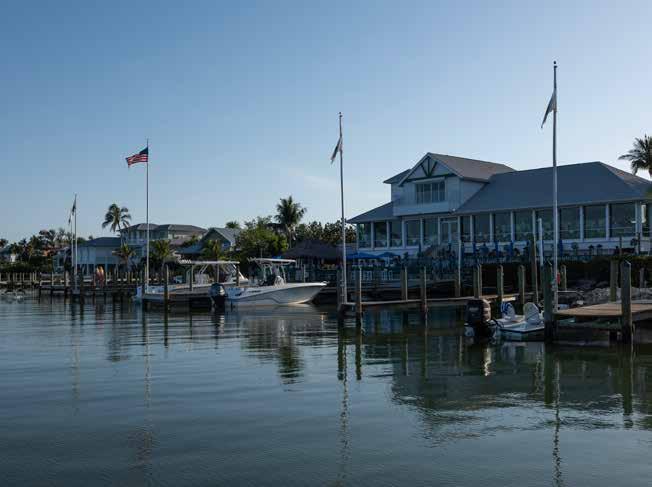
Out on the water, a boat is quickly approaching. It’s our fishing guide Andre coming to pick us up. We meet him on the dock next to the restaurant.
“Hey guys, ready for some fishing?” We are. We jump onboard, and Andre casts off.
“Alright guys, hold on tight, we’re about to speed up. We have a ways to go so I’m going to crank it.”
We smile wide and hold on. Bouncing across the waves in the 85-degree heat feels great. We look out over turquoise waters and long, bright white beaches with their palm trees waving. Andre slows down and takes us to shallower waters, a sandbar in the middle of the bay.
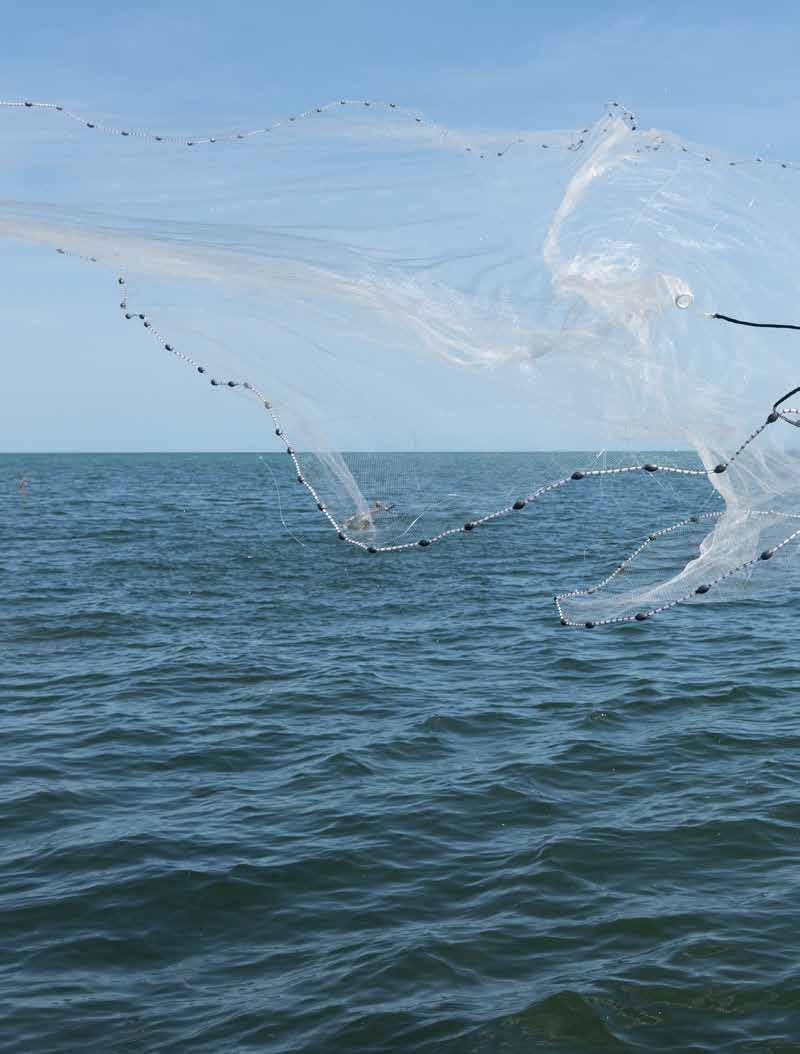
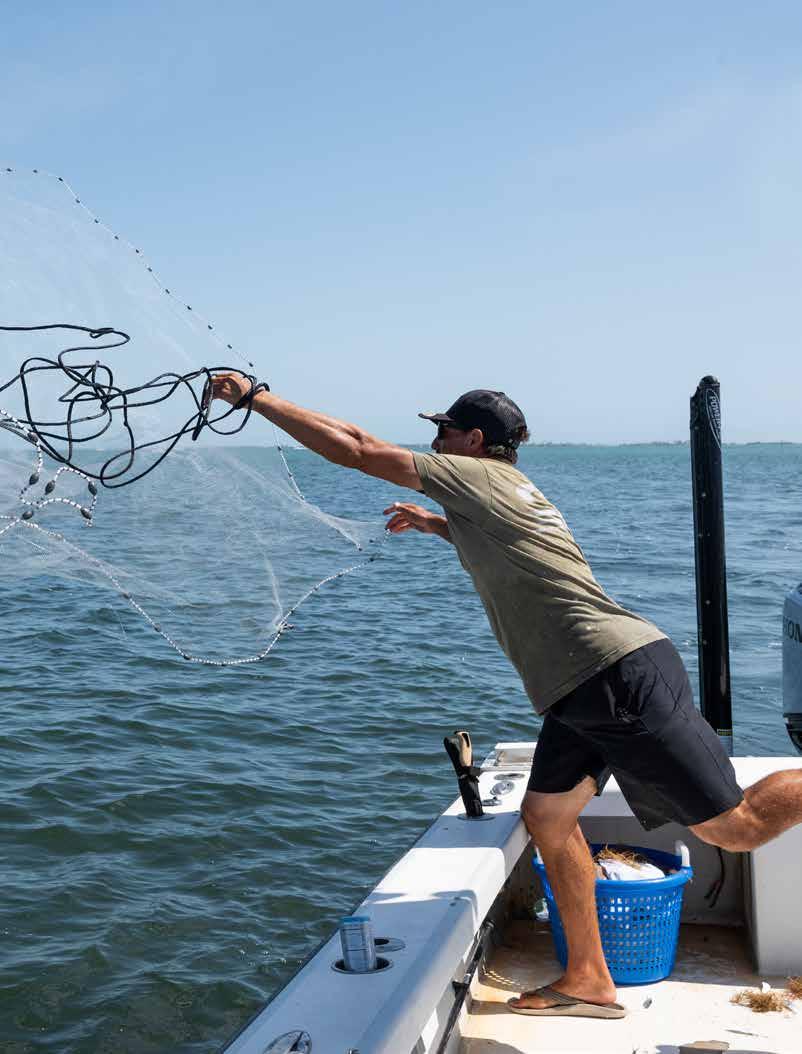
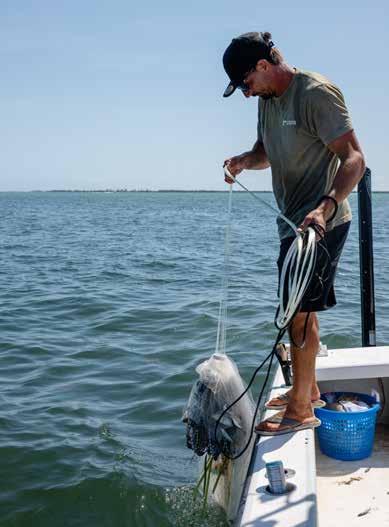
He brings out a net and throws it with an experienced hand. “It’s in the hip,” he says. “It’s like playing golf, you have to get your hip into the throw.” Soon, the net is back up again, gleaming with little fish which are quickly dumped into the livewell.
“How do you know where to find the baitfish?”
“I look to see where the birds are feeding, there’s always fish there,” he says.
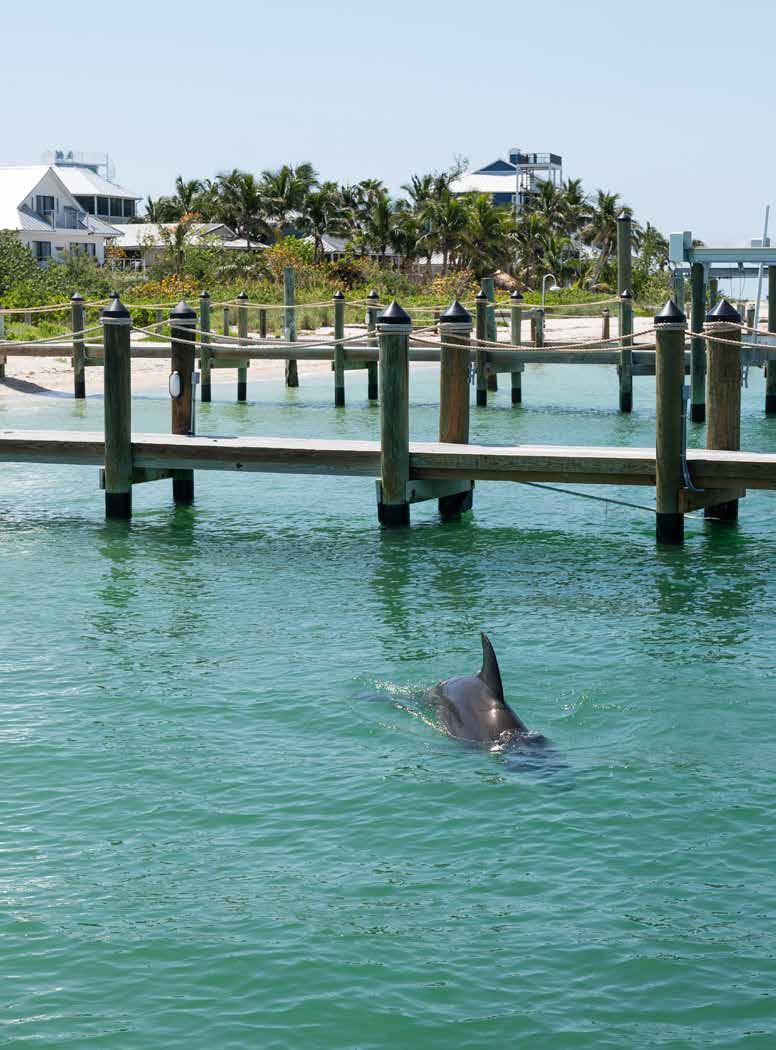
“Oh look!” I exclaim. “A dolphin!”
“He’ll ruin our fishing,” Andre says.
There’s a tug at my line, I tug back and can feel that the fish is on the hook. As I’m reeling it in, the dolphin suddenly appears and tries to take my fish. I pull up so the fish jumps above the surface, the dolphin quickly follows but misses. I get the fish into the boat – a six-pound
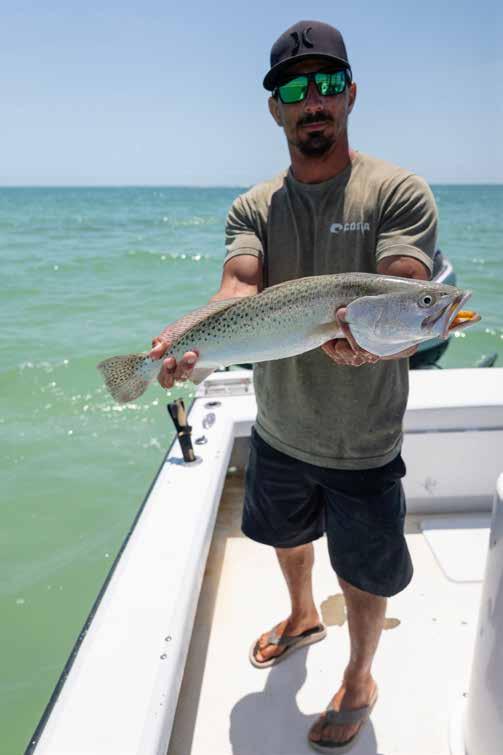
spotted seatrout. Nice fish, but we have to return it to the sea, right?
I let it go into the water – where it immediately turns into dolphin lunch. The opportunistic dolphin had been waiting, ready for us to throw it back in. Smart.
We try another couple of spots. Anders and I both catch plenty of fish of a few pounds, but without our guide we would have had a tough time. Andre loves fishing and knows exactly where they wait. He looks offensively good and healthy, and he’s deathly serious about fishing. He tells me that he’s been fishing since he was a kid, and now he works as a fishing guide with his own boat. The dream job.
It turns out this was only a warm-up. It’s time to try for the real fish: tarpons. This ancient monster can weigh up to 280 pounds and reach 8 feet in length.
There’s something undeniably dramatic about the tarpon. Its slender, silvery body and acrobatic moves have
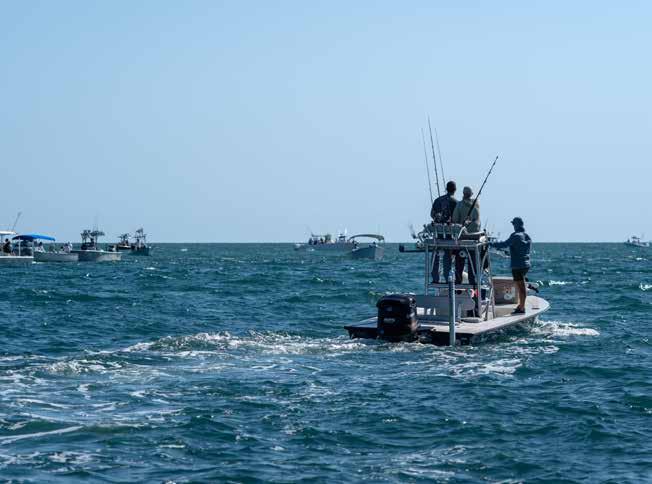
HIS FISHING ROD WARPS INTO A BOW, AND IT’S CLEAR HE’S MAKING A HUGE EFFORT. WE AND OTHERS IN THE NEARBY BOATS FOLLOW THE SHOW WITH A MIX OF ENVY AND EXCITEMENT. AFTER ABOUT 20 MINUTES, THE FISH BREAKS FREE. BUT ON THE BOAT, IT’S ALL SMILING FACES AND HIGH FIVES.
earned it the nickname, the “Silver King” – king of sport fishing. The Atlantic tarpon (Megalops atlanticus) is one of only two species in the Megalopidae family, and it’s been swimming the seas for over 100 million years. There were tarpon-like fish swimming around during the age of the dinosaurs.
In the 19th century, it became popular among sport fishermen. Back in 1885, the American architect William Halsey Wood caught a 93-pounder in southwestern Florida. That’s the first documented tarpon catch by fishing rod.
Around the turn of the 20th century, the tarpon was more than just a fish. It was a phenomenon. Fishing guides, small boats, enthusiasts from the North coming to Florida for tarpon season – it was as much a ritual as it was a sport.
It’s not just about the size. It’s the jumps, the flicks of silver beneath the surface, and the long, intense battle that makes every catch unforgettable. As a veteran fisherman once said, “Catching a tarpon feels like getting hit by lightning – and living to tell the tale.”
Today, most tarpon are released after being caught. They’ve become symbols of sustainable fishing.
SILVER KING SEASON IS HERE
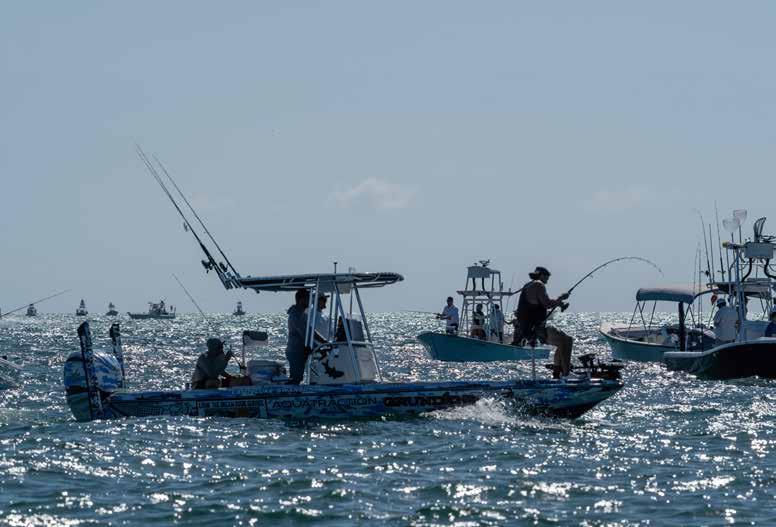
And they’re in season. Even from a distance, we spot 50 or so boats. They’re like the birds showing Andre where to cast his net. We settle in the sound and bait the hooks with little crabs.
“Let them sink all the way to the bottom, and be ready if you feel a tug,” Andre says. A few giant fish break the surface and leap into the air just a few feet away from
the boat. Adrenaline shoots through our bodies. The fish gleam like silver. They’ve very, very large.
But the tarpons seem to enjoy teasing us. They leap and splash between the boats, often as many as five or six at a time. Still, not a single boat seems to get lucky. But then, suddenly, a guy in the next boat over catches something. His fishing rod warps into a bow, and it’s clear he’s making a huge effort. We and others in the nearby boats follow the show with a mix of envy and excitement. After about 20 minutes, the fish breaks free. But on the boat, it’s all smiling faces and high fives.
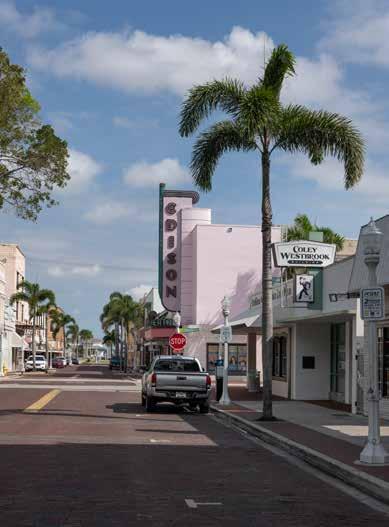
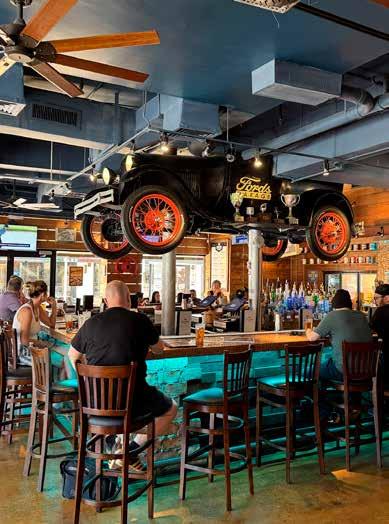
We’ve been out a long time before blasting back to shore. We fared pretty well – and what a day Andre treated us to. By evening, we’re back in Fort Myers. We sit at Ford’s Garage, a bar on 1st Street, in the city’s downtown bar and restaurant district. A T-Ford hangs above the bar (with Firestone tires, of course). Around the corner is the Edison Theater, a former movie theater in art deco style.
We order chicken wings, grilled salmon, and a Smoked Old Fashioned each, raising a glass to the three inventors. But what we would really like to do is toast the guy who invented the ice rail along the bar which keeps our cocktails cold.
https://greenflashcaptiva.com/
https://fordsgarageusa.com/locations/fort-myers/
So close! The guy on the
didn't get it in the
but it was a
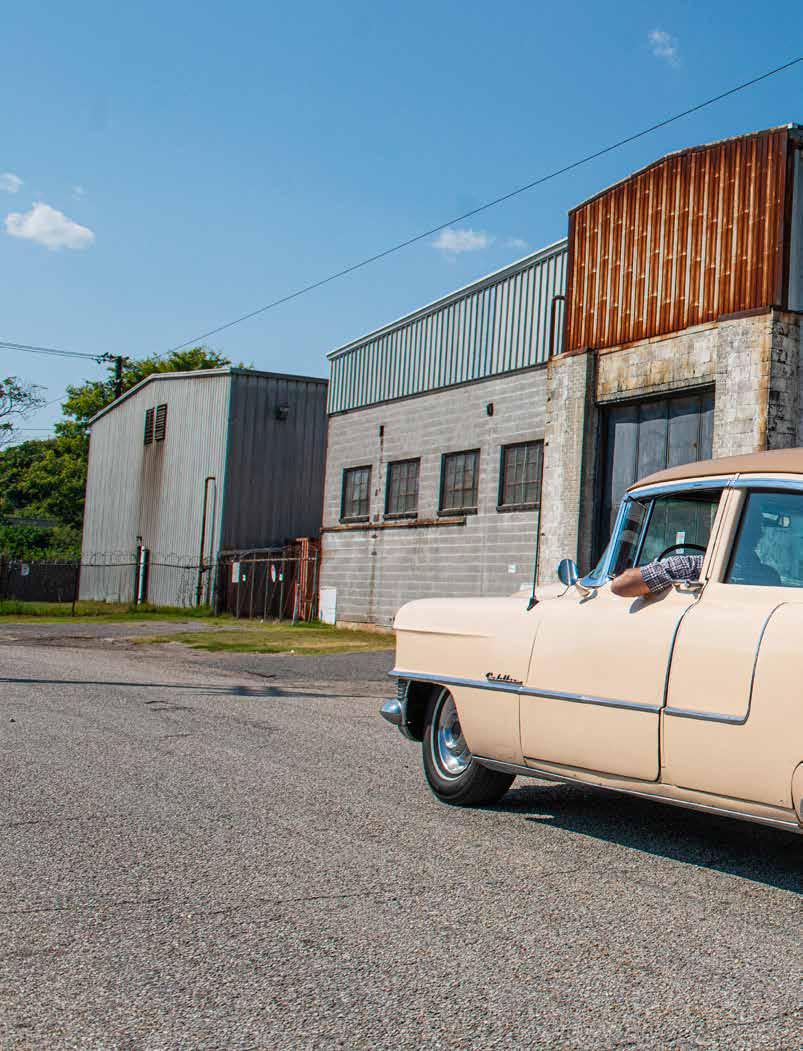
Do you want to see the real Memphis, the one that lies beyond the tourist traps? Do you also want to hear a bunch of great stories from a cool dude as he drives you around in a ’56 Cadillac? Then you gotta call Tad.
WORDS BY JONAS LARSSON | PHOTOS BY FREDRIK
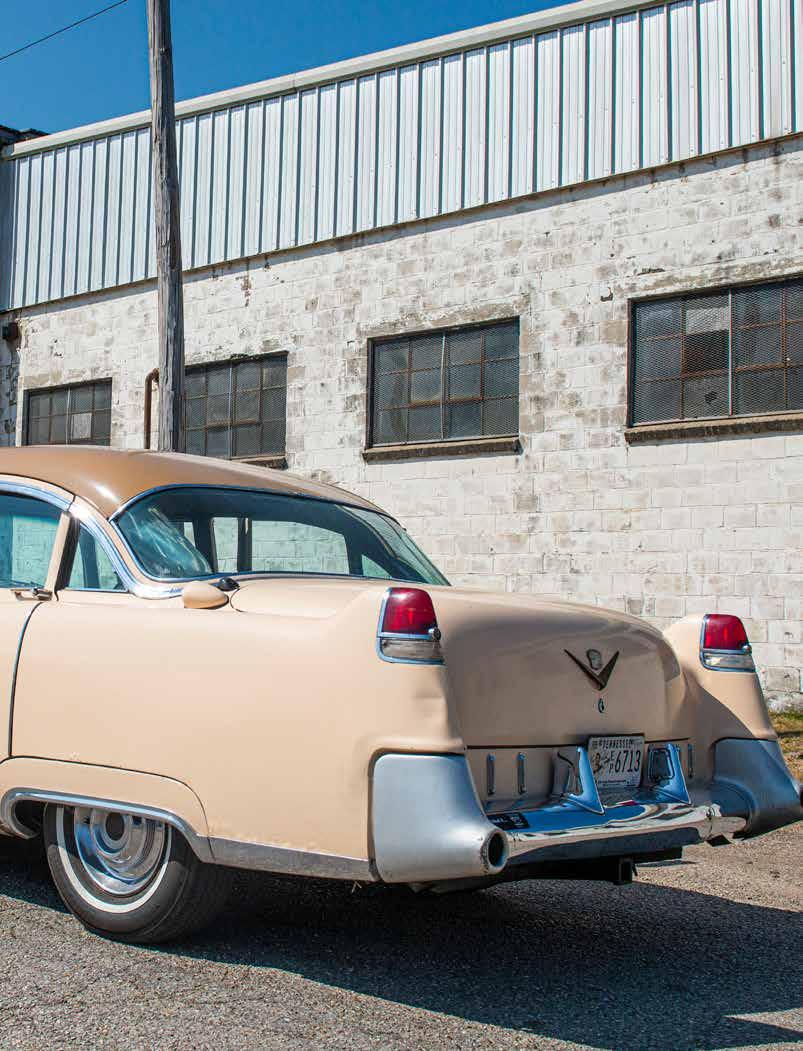
We’re spending this day after cruising around town in a ride from the ‘50s. That suits us perfectly since we’re both a little mangled from last night.
I step out of the hotel, Fred and Tad are already there, chatting. Tad is a big guy in the prime of his life, an easy attitude and solid hairline. He looks like he has a story or two to tell. Boy, am I right.
“You don’t need me to show you Beale Street or Graceland, but I can show you the public housing where Elvis grew up, bring you to clubs and juke joints that aren’t in the guidebooks. That’ll give you the basics of Memphis culture, so you can experience Beale Street and the rest of Memphis with a base knowledge and get so much more out of it. That’s what I want my tours to be,” Tad says. Before we even jump into the behemoth car, with its questionable pink-beige finish, (what Tad calls “Faded Glory”), Tad gives us a quick architectural history lesson right on the corner where we stand. I think to myself, this’ll be good.
Memphis’s population is 60% Black. The African American culture influence is clear. Exploring that culture, music, and food becomes part of the tourist experience. Elvis loved rhythm & blues – Black music – and made white America accept it.
Civil Rights history is big here, of course. This is where Martin Luther King, Jr., was murdered by James Earl Ray on April 4, 1968. The shot rang out while King stood on the balcony of the Lorraine Motel where he was staying. Today, the motel is a national shrine, housing the National Civil Rights Museum since 1991.
Despite this history, Memphis is the most colorblind city in the United States. People, regardless of skin color, are kind and helpful. Black people have a better chance at a good life here than in many other places, and you can
really tell. I’ve seen a lot of the U.S., and have thankfully been spared the worst of racism, but segregation still lingers and is tangible in many places. Memphis, however, is different. That feels good.
A car pulls up beside us at the light. “What year?” “It’s 2025?! I’m just kidding, it’s a ’55.” The old Cadillac shakes with laughter. Tad’s a funny guy who seems to know everyone. “I started out in my uncle’s 1950 Buick, but I didn’t want to wear it out. Family heirlooms, all that. But I still have it,” he tells us.
Tad is a fantastic guide. We haven’t so much as sat down yet and he’s already feeding us memorable quotes.
“As a photographer, Memphis and the Mississippi Delta are amazing, with their old signs and worn buildings – ‘Faded Glory’. I run my mouth, and sometimes it gets me in trouble. A few years ago, I guided a USA Today journalist, and told him that, and then I said something like, ‘Memphis is a broken city that can’t get its act together, that’s what makes it cool.’ And then the quote they printed was ‘Memphis is a broken city that can’t get its act together.’ He didn’t include the last bit. The department of tourism wasn’t so pleased with me,” he says, laughing. “You know, anyways, rock on.”
Tad tells us he’s been doing this since September of 1995. Thirty years. He had worked as an English teacher in Africa, Asia, and other places. In Indonesia in 1989, he met a French couple whose dream was to drive through the U.S. in an old Cadillac and see the sights, like in the movies. Done and done. Tad got a hold of a Caddie and took his friends on an all-American tour. Grand Canyon, Rocky Mountains, Route 66, and other iconic spots. Thanks to them, he got an outside perspective on his home country. When he moved to Memphis a while later, he started tour guiding in earnest.
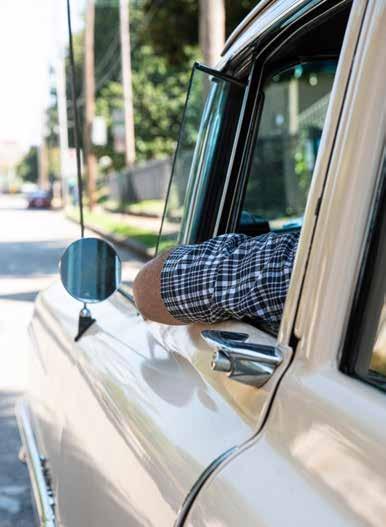
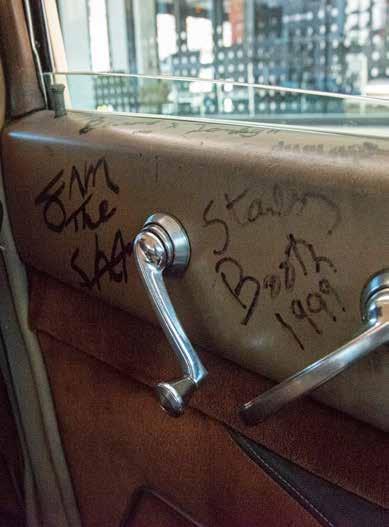
We stop to take a few pictures. Fredrik behind the camera gets into a fight with the door handle. No matter how he twists it, it won’t open. Tad takes care of things, shows us how it’s done. The Caddie has its quirks, but it’s a dream to ride in.
ELVIS’S FIRST APARTMENT
Tad stops outside a modest two-story, brown-brick apartment building.
“This is where Elvis lived when he was in high school. A small three-bedroom apartment. You know, Elvis and his family were poor, they squeezed the whole family into that little apartment – including grandma. His mom worked as a waitress and kept the family afloat. Elvis was very shy and different, and of course the bullies at school were after him.
“One day when he was getting beaten up in the bathroom, the big tough guy Red West came in. A street fighter and a bad ass, Red felt bad for the little kid on the floor and gave the bullies a taste of their own medicine. After that, he and Elvis were friends and remained that way for life.”
This was in 1953. Three years later, he was topping the charts with Hound Dog, a single with two A sides (!). “Don’t be cruel” was the other song. Suddenly he was a big star, and in 1957 he bought Graceland for 100,000 dollars. For people from the upper classes and cotton wealth, these areas were poor, bad. They saw Elvis shake his hips on TV and said, “That boy is an embarrassment to us.”
Suddenly Elvis and the blues were on Beale Street. The tourism offices wanted to showcase that, of course. The rich thought it was wrong to show what they considered the worst of Memphis culture, but that’s what people wanted to see.
The Cadillac’s low rumbling across Memphis’s streets is like a lullaby, but Tad keeps us awake with his brilliant stories.
“I always thought of it like this: blues is often considered guitar-based music. You have BB King, Single String, Stevie Ray Vaughan, and Eric Clapton. They’re all
great guitarists, but the number of people who can sing is mind-blowing. I went to a blues club with a couple guests from D.C., and one guy went up and did a cover of Sam Cooke’s “A Change is Gonna Come”, and one of my clients started to cry. But other than that, the audience was pretty unimpressed. I told a Black friend of mine about it. He said, ‘Yeah, but that’s because at least six of the people in the audience thought they could do it better!’”
I say Memphis reminds me of New Orleans. “Absolutely, both are places where you can grow your sins and bad habits and still be a person of Faith. You can drink in the middle of the day without anyone batting an eye. I grew up in the Midwest, and drinking in the middle of the day was unheard of. Here and in New Orleans, it’s a requirement, it’s accepted, and then on Sunday you go to church and repent. New Orleans has voodoo, Memphis has gospel, is what we say.”
Memphis, Nashville, and Muscle Shoals are usually called the Music Triangle. These days, that usually includes New Orleans. They’re the epicenter for blues, country, and rock’n’roll. Including New Orleans means adding other genres, like jazz, R&B, gospel, and Cajun music. This trip gives us our missing piece: Memphis.
So when did Beale Street become the music street we know today, I wonder. “MLK was shot in 1968, in the early 70s the street was run-down, many of the buildings were chained and shut. Elvis died in 1977. Then the Peabody Hotel reopened in 1981, and that was the same year Beale Street opened as an entertainment avenue.”
During the segregation of the 20s and 30s, Beale Street was a shopping street for Black people, particularly Black farm workers from Clarksdale and other nearby towns.
It was exciting for them to come to Memphis, where they could go to the movies and go shopping without being harassed.
We drive north, toward the old industrial areas where Dupont, Firestone, and International Harvester once were.
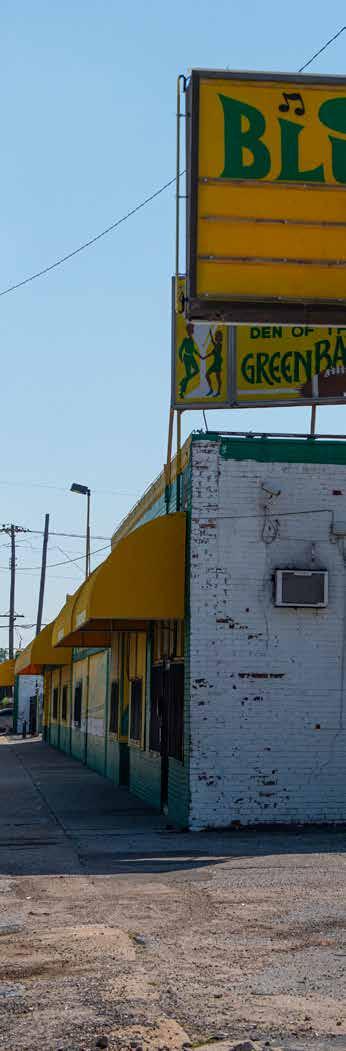
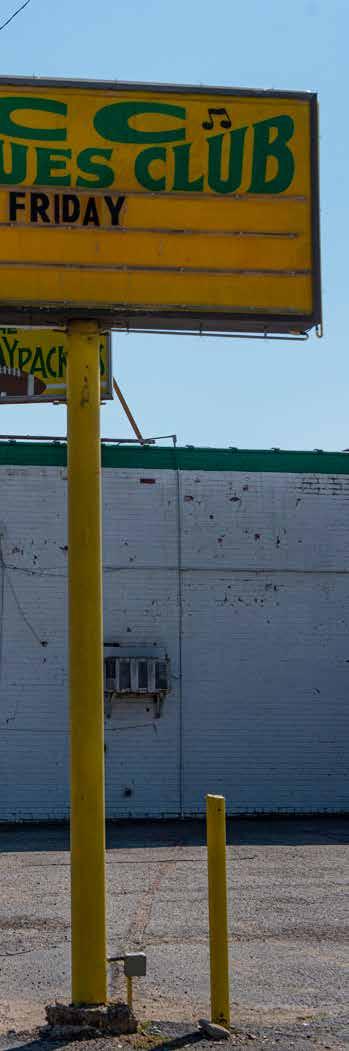
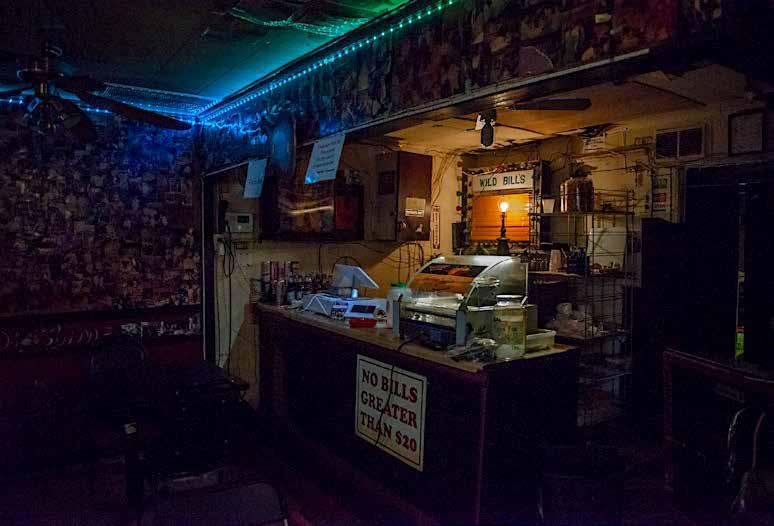
We drive down Thomas Street. Little industries and empty lots line the street. We stop at 1427, and Tad shows us CC Blues Club, a tiny juke joint. “This is CC Blues Club. Do you see the sign on the wall? ‘28 years or older, must have ID.’ They don’t want the hip hop kids here, this is an adult venue,” he laughs.
It’s the middle of the day, and closed, but Tad tells us that this place focuses on cool contemporary blues and soul blues, with a disco ball in the ceiling. The owner, LD, also owns LD’s Catfish and Pizza across the street. Both buildings are painted yellow and green, team colors of LD’s favorites, the Green Bay Packers.
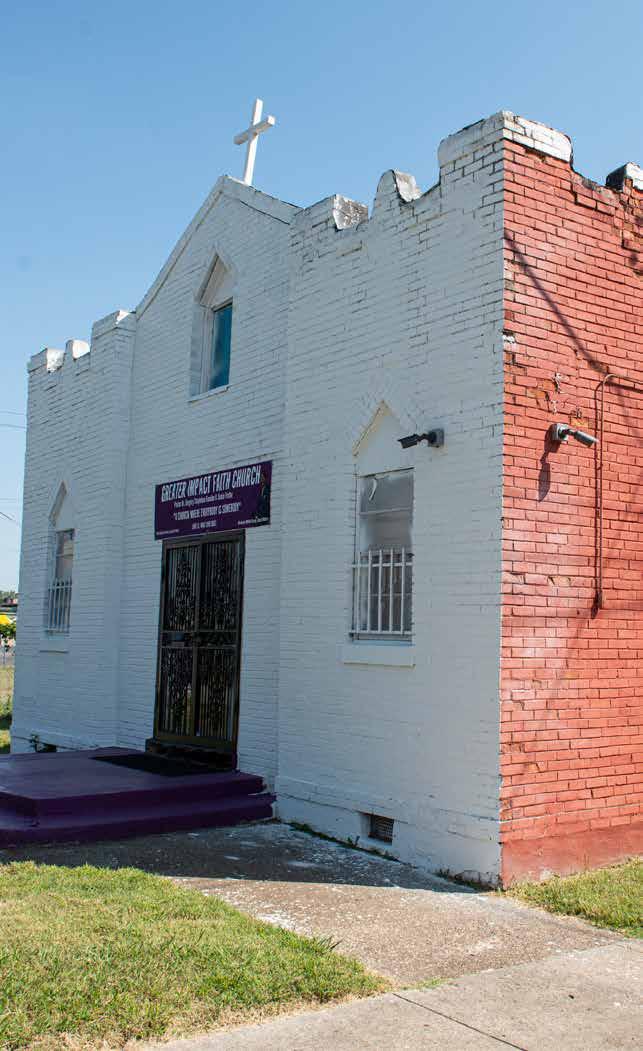
At the other end of the street is a little church, Greater Impact Faith Church. Tad tells us about the church’s role
I’LL
SET UP A BIG CIRCUS TENT AND BUILD A FIRE PIT HERE IN THE PARKING LOT. THIS IS MY HOLE IN THE WALL. I WANTED SOMETHING HERE I N THE HOOD WHERE PEOPLE CAN COME AND EAT AND DRINK WITHOUT IT COSTING TOO MUCH. HERE THEY CAN LISTEN TO MUSIC AND HAVE FUN.
in African American culture. “You have a church here and a blues club here, right next to each other. That wouldn’t work in a white neighborhood in the Midwest where I’m from. During slavery, Sunday was the only day when the slaves could be a little free and on their own. They met in church for spiritual fulfillment, but also to socialize. Singing and dancing were a big part of Church Sunday. After church, you ate together and spent time together. Church is so much more than religion in that culture. White men had social clubs, they had church to talk and meet. The church and the bar don’t compete, but it’s sort of the same premise.”
We turn the corner and hop back on Thomas Street again. We’re back near CC’s when a guy on the other side of the street shouts, “Hey man!” We roll up to the car wash and get out to say hi to Bob Cat, Manny, and Dave, who are waiting for customers.
THE WISDOM OF BOB CAT
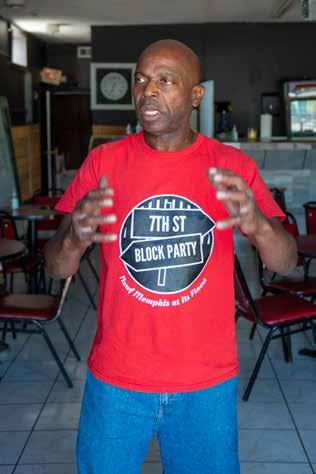
“How’s it going, man? I saw you rolling down the road a while ago,” Bob Cat says. “Yeah, I’m driving these two journalists from Sweden, showing them the real Memphis.”
Bob Cat is a guy with a lot of ideas, great thoughts, and the gift of the gab. He’s a joy to listen to.
“Let’s go across the street,” he continues. We go into a small building. He shows us around and says he’s going to open a juke joint. “Do you own this?” I ask. “No, LD owns it, I rent from him.” The question was unnecessary, since the whole building is painted yellow and green. Bob Cat describes how he’ll fix up the place, grill burgers, drink beer and listen to blues.
“I’ll set up a big circus tent and build a fire pit here in the parking lot. This is my hole in the wall. I wanted something here in the hood where people can come and
eat and drink without it costing too much. Here they can listen to music and have fun. People who live here aren’t wealthy. I think we could bring the world together if we went back to farm-to-table and respecting each other and ending war and shit. What this city needs is an out-of-the-box experience. We who live here have to work together. Community. Come as you are. I want to do this for everyone, for anyone who struggles. White, Black, rich, poor, I don’t care, everyone’s welcome. Do you dream with me? I believe we can do it this time.”
We stand there a little perplexed. The speech is beautiful, passionate, and came sort of out of nowhere. But he’s right, about all of it. I feel uplifted.
“How long are you here for?”
“We leave Wednesday.”
“Man that’s a bummer, I’m throwing a big party on the 29th.”
“If you come back, remember, Bob Cat.”
Tad drops us off near Beale Street. We thank him for an incredible day. The Cadillac gives a final cough and disappears around the corner in all its faded glory. I think back to Bob Cat’s words, if you come back… It’s more of a when we come back. We’ve experienced so much in these few days, but it feels like we need several more days in Tad’s Cadillac. Memphis has charmed our socks off and we want a top up.
Most people know about Yosemite National Park
– it’s a fantastic place that should be on everyone’s bucket list. But here’s the real power move: tack on a few days in Mariposa, the small goldmining town just west of the valley. You won’t be sorry.
WORDS BY
JONAS LARSSON | PHOTOS BY ANDERS BERGERSEN
We take the long way from the Fresno airport to Mariposa. The journey is the destination. Last time we were here, the world was lush and green.
Now, in early June, the valley glows in flaxen hues, the white oak trees like proud guardians in the field. It’s the Golden State. We get it.
Ben Hur Road winds its way along Becknell Creek, and we cry, “Wow!”, at every turn. It’s incredibly beautiful. Dramatic. We constantly have to stop for pictures.
“Wait, what’s that? Stop the car!” My shouting has Anders practically run us off the road. We stop and stare as a group of wild turkeys stare back at us from the shoulder.
MARIPOSA, THE EPICENTER
We spotted the Yosemite Valley on our flight in from Seattle. El Capitan, Half Dome, all of it. Seeing the valley
from above is magnificent, but being in the valley itself is frankly even more impressive. We’ve planned the trip to spend a few days in the old Western town of Mariposa before we go off on a hike.
This little town is a natural starting point for any visit to the Yosemite Valley. It’s also a great starting point for day trips in the area. There’s Mariposa Grove, the fascinating forest with its enormous trees; Glacier Point and Sentinel Dome with their mind-blowing views; or Highway 49, the old gold-miner route along the foot of the Sierra Nevadas, starting in Oakhurst in the South and ending up in Vinton. Mariposa is only one of many mining towns along its route (see issue XX).
We want to give Mariposa its own shout-out, though. If you like a small town, like we do, this is the place for you. We always make sure to set aside a couple of extra days to just hang out here.
Here’s how it usually goes down: excursions and shopping during the day; restaurants, breweries, and bars at night. The town has a certain charm that it’s managed to
ALTHOUGH HIS CAREER ONLY SPANNED SOME TEN YEARS, "BIG DADDY'S" INFLUENCE IN WHAT HAS LATER BEEN IDENTIFIED AS POP SURREALISM CANNOT BE DENIED.
NEITHER CAN HIS INFLUENCES IN THE WORLD OF HOT RODS AND CUSTOM CARS, ALL OVERFLOWING WITH CREATIVITY AND GROUND BREAKING DESIGN
keep a secret until quite recently. People who’ve been here before tend to come back. We got to know several locals last time we were here, but they had sadly moved away before we came back. So on this trip, we met new ones!
The vibe of the city is open, friendly. Simply wandering around with the sun hanging low in the late afternoon, taking it all in, is one of my new favorite hobbies. I always have to see the beautiful County Courthouse, always have to get a Happy Burger burger, and a stroll along Mariposa Creek is a no-brainer.
YOSEMITE CLIMBING MUSEUM
Yosemite is a legendary climbing destination. Personally, I get dizzy just stepping up on a chair, and I don’t quite see the charm in risking my life to scale a steep rock wall like El Capitan or Half Dome.
That is, until I meet Ken Yager. A legend in the climbing world, he manages the Yosemite Climbing Museum, which he co-founded with Mike Corbett.
When climbers arrived here in the 70s and 80s, they weren’t particularly popular among rangers in the park. They slept underneath the cars, ate coffeeshop leftovers and were generally regarded as mess-makers. But really, all they wanted to do was climb. Ken Yager was one of them. The difference was, Ken loved the whole park. These days, he organizes an annual event called “Facelift”, where volunteers come to clean the park and its surroundings each September. They pick up trash, clean up the area. The small but well-organized museum is in downtown Mariposa.
“John Muir climbed Cathedral Park in 1869, but the first to scale it with the help of rope was George Anderson
in 1875. He ascended Half Dome, taking the same path that to this day guides hikers, now with steel cables. This is one of the iron spikes from his climb.”
Alright Ken, you have our attention. Knowledge – any knowledge – is interesting. Besides, he mentioned John Muir, the infamous 19th century naturalist who we have to thank for the existence of national parks in America. He also founded the Sierra Club, a well-known conservation organization. This story can only get better. And believe me, it does.
Ken gives us a very interesting tour around the little museum. Even a climbing novice like myself is enraptured by Ken’s enthusiastic (but demure) tales of technique, tools, and above all, early climbers. People who built their own gear, styles which later became climbing staples.
“Belaying was unheard of here in the US until the 1930s, when American climbers brought the technique back from Europe. Among other things, they used a technique called ‘The Running Belay’. Back then, ropes were made of hemp. If someone fell, you had to let them fall and gently slow the rope with your hands so it didn’t break.” Ken is full of insight and stories. It’s exciting to listen to – but also confirms that this is not the sport for me.
ROYAL, LIZ AND WARREN
“Now we’ve come to the 60s. Royal Robbins and Warren Harding were two of the most prominent climbers. The day after my 16th birthday, my new driver’s license in hand, I drove out to go climbing. On my way home, I picked up a hitchhiker who looked like a real bum. It was Warren Harding! You can imagine how starstruck I was. I started climbing with him. My dream was to scale
The County Courthouse is a
when you're in
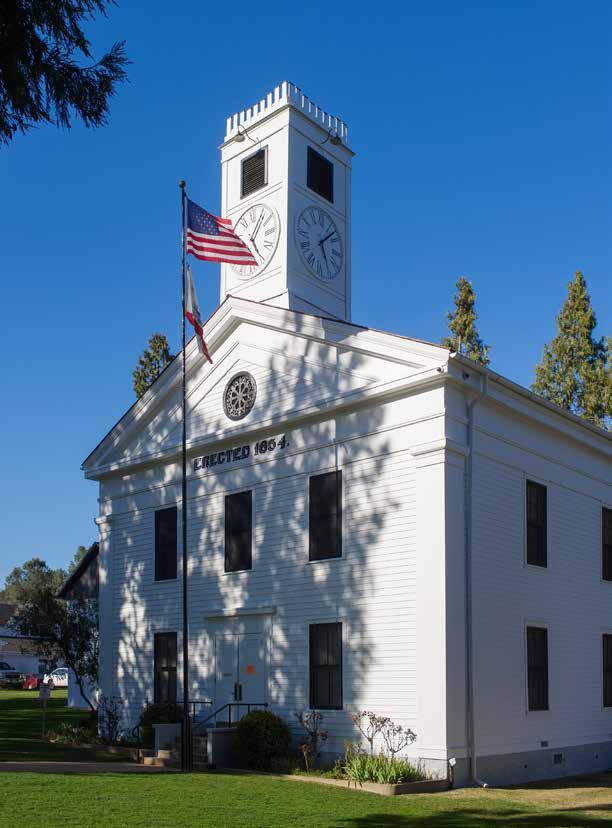
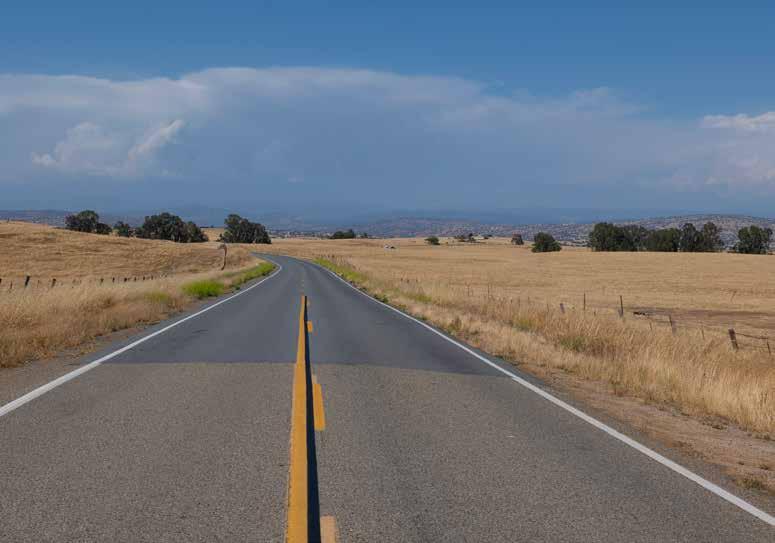
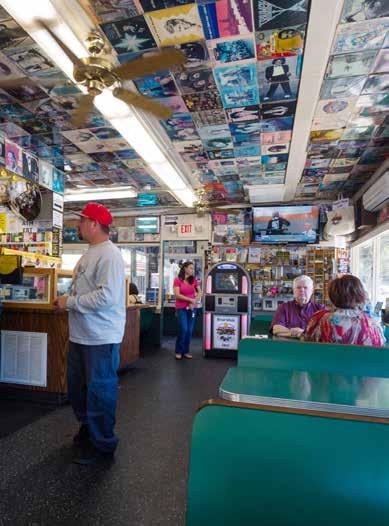
No trip to Mariposa is complete without making a stop at Happy Burger! Trust me, you won't want to miss out on this delicious experience.
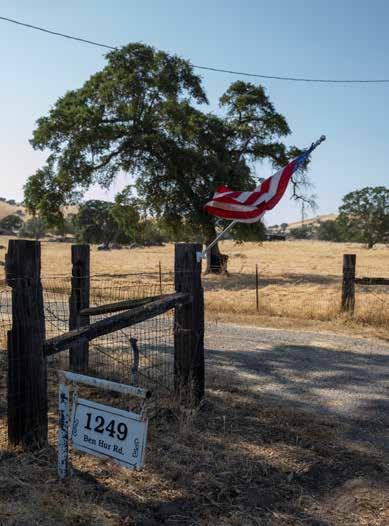
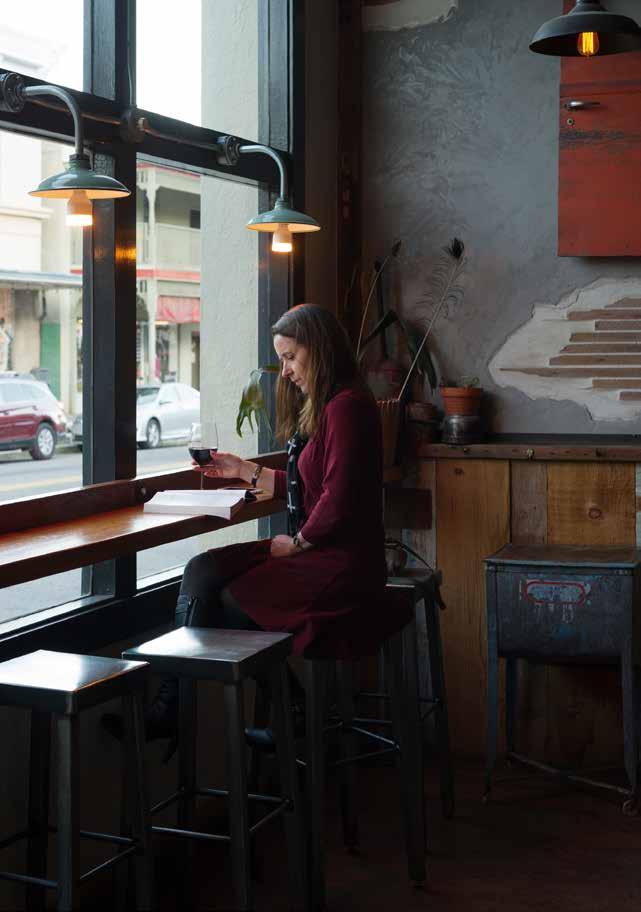
are surprisingly many
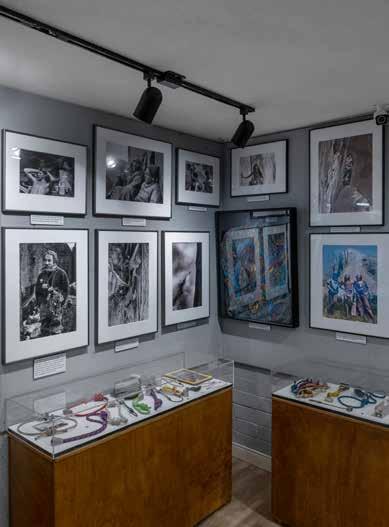
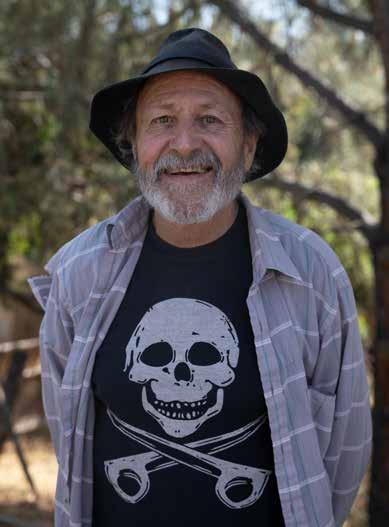
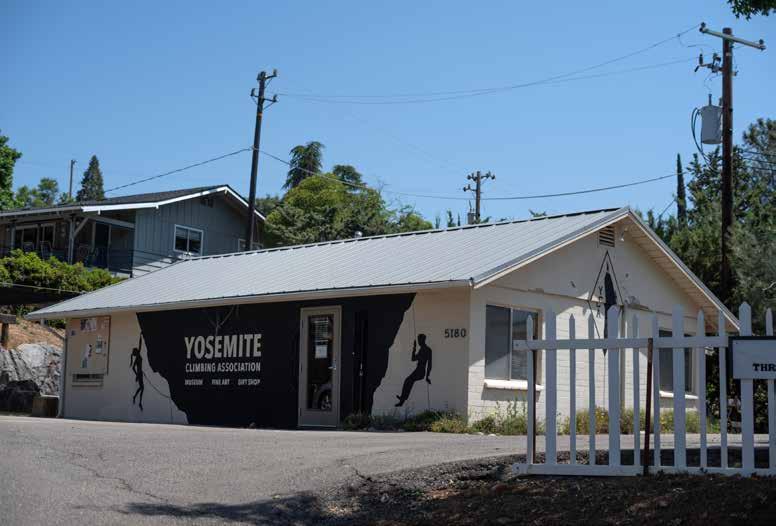
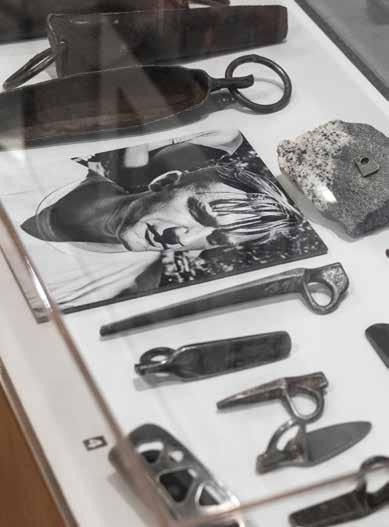
“NOW WE’VE COME TO THE 60S. ROYAL ROBBINS AND WARREN HARDING WERE TWO OF THE MOST PROMINENT CLIMBERS. THE DAY AFTER MY 16TH BIRTHDAY, MY NEW DRIVER’S LICENSE IN HAND, I DROVE OUT TO GO CLIMBING.
ON MY WAY HOME, I PICKED UP A HITCHHIKER WHO LOOKED LIKE A REAL BUM. IT WAS WARREN HARDING! YOU CAN IMAGINE HOW STARSTRUCK I WAS.
El Cap, I couldn’t have been happier. Unfortunately, he was better at drinking than at climbing in those days. I wasn’t too bad at that myself. One night we got a little carried away at a bar and ended up with a $140 bar tab. That was a lot back then! But Warren covered it, so it was all good. Royal and Warren did first ascents all over the park. A lot of people thought they were enemies, but they were good friends. They just had different ambitions and didn’t climb together.”
Ken also tells us that several of the early climbers were women. Like Liz Robbins, Bev Johnson, and many others. Today, their legacy continues in climbers like Libby Sauter and Mayan Smith-Gobat, who beat the female record in fastest El Capitan ascent in 2014. Her record of 4 hours and 43 minutes still stands. As so often is the case, they’ve been relegated to the shadows behind the male climbers, but in the museum, they’re given the same esteemed positions.
Thanks to Ken’s connections, the museum has a completely unique collection of climbing gear and photographs. The pictures from early climbing days of the 60s and 70s are so cool. The styles! I’ll never scale a mountain, but don’t be surprised if I show up in a 1970s puffer vest, tiny knit hat, and a pair of round sunglasses, climber style.
I’m much better with animals than with heights. We swing by the experience farm Happy Goat just outside of town. A very handsome cowboy greets us. Jesse Fouch is one of the owners and the ranch manager overseeing this lovely multipurpose farm. Situated beautifully on a hillside, it overlooks the golden land below.
“We’re a non-profit that does a lot of different things. At our core, we grow vegetables that we give to people in need. A lot of it gets sent to senior homes, or to elderly people unable to get to the grocery store. But we also send produce to veteran homes, homeless shelters, recovery shelters, and schools,” he tells us.
“The reason we started this is that we only had 2,000 acres. That’s not enough to be competitive in California. We had to specialize in something. I talked to my business partner, and we met with a family foundation. In that meeting, they said, ‘If you grow vegetables to give to the needy, you won’t have to worry about money.’ Now we have two family foundations supporting us, and we’re hoping for more tourists so we can expand, hire more people, and grow more produce to give away. Right now, we produce about 200–1500 pounds (90–700 kg) a week.”
Happy Goat is so many things. You can visit the farm to learn about regenerative farming and animals, but you can also get a beer, have dinner, or host an event in beautiful surroundings. Most importantly, you can snuggle goats.
Besides being adorable, the goats graze the underbrush, helping the farm and its neighbors reduce wildfire risk.
But are they happy? The pigs sure are. They roll around in mud puddles, nip at my ankles, chase away sheep from the food, and keep tabs on a large group of cackling geese.
Yuki, a Great Pyrenees watchdog, watches over the flock and protects it against coyotes, bears, and mountain lions. These dogs grow up with the goats and seem to think they are goats. Just part of the family. Yuki likes us, but the goats are hesitant at first. One by one, though,
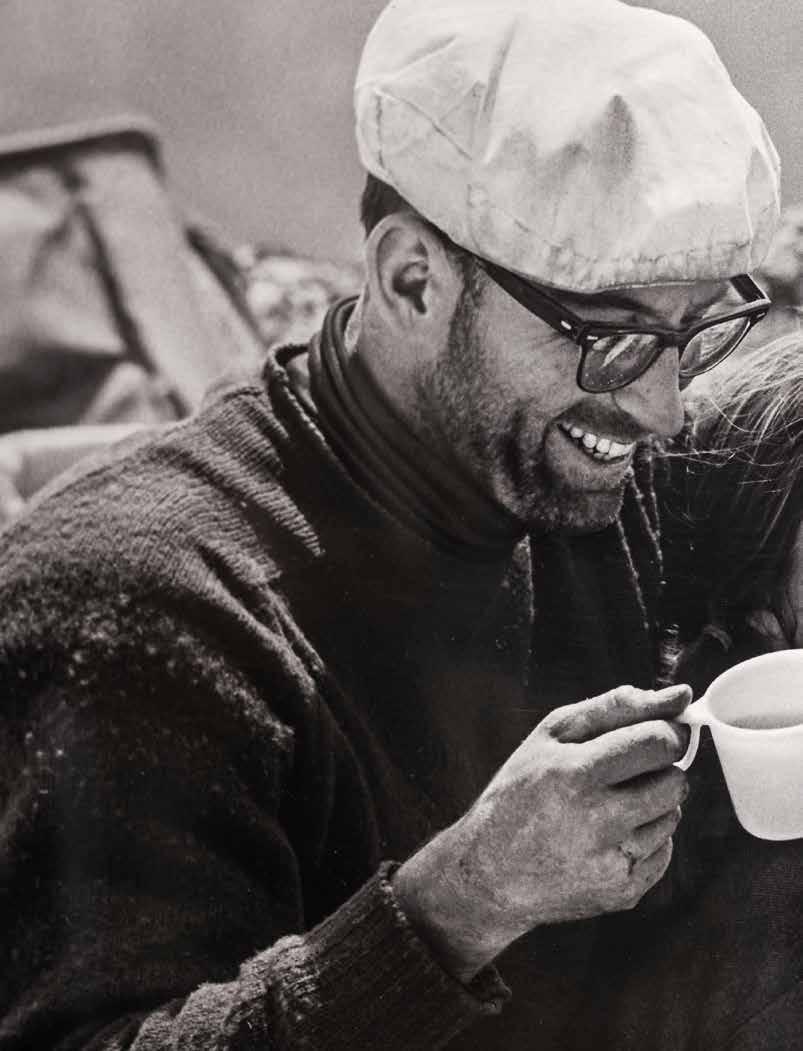
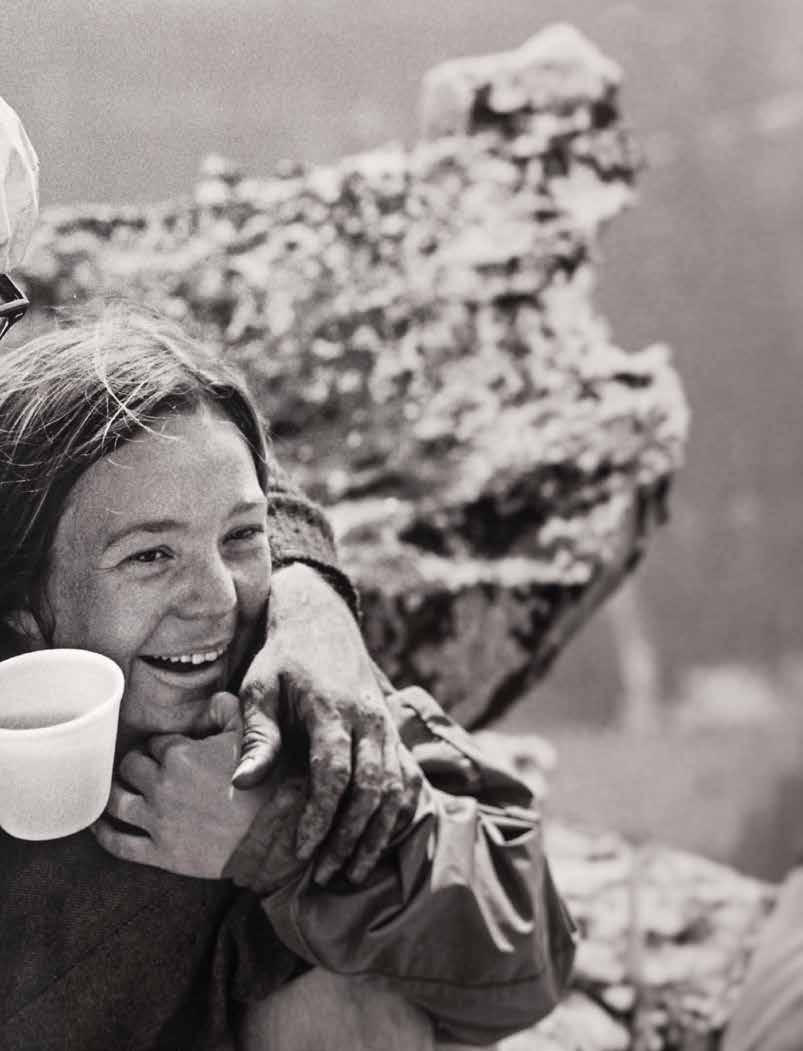
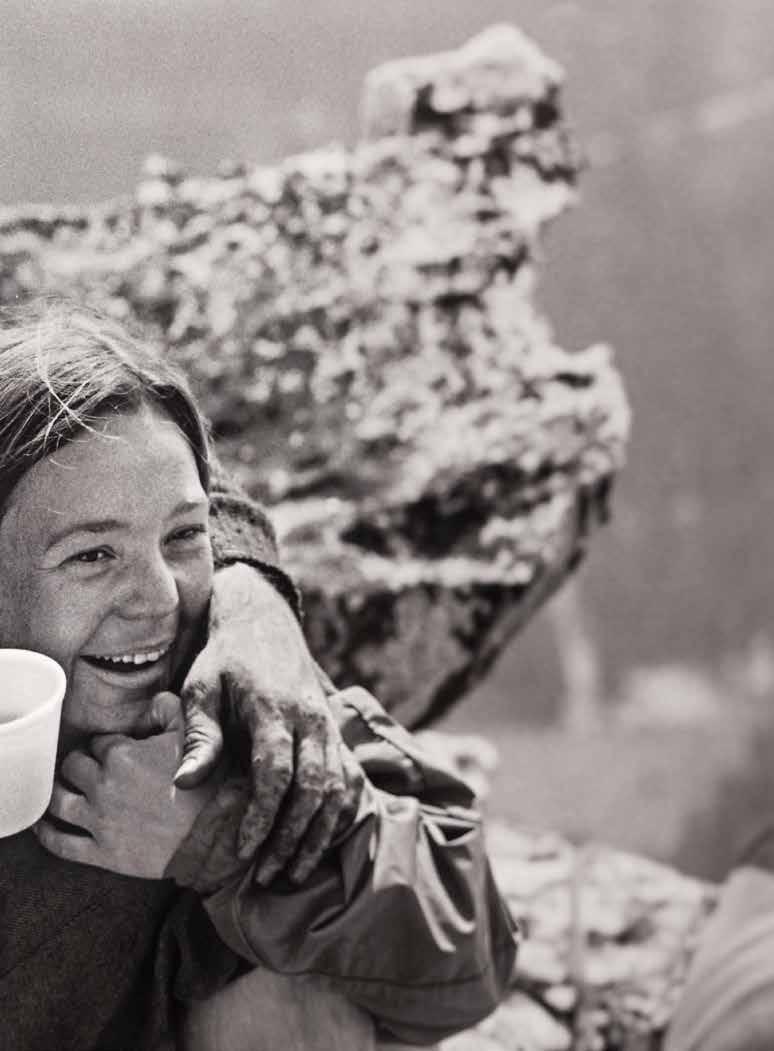
BY GLEN DENNY.
A visit to Happy Goat is a perfect day trip. Here you can pet goats and other animals.
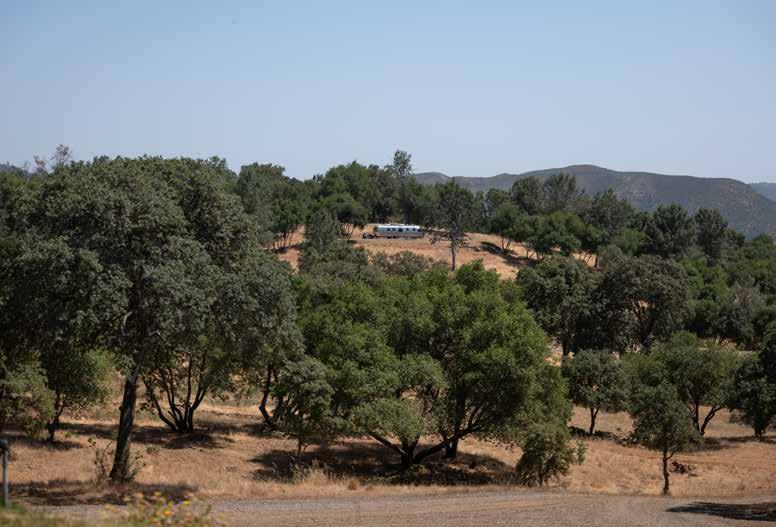
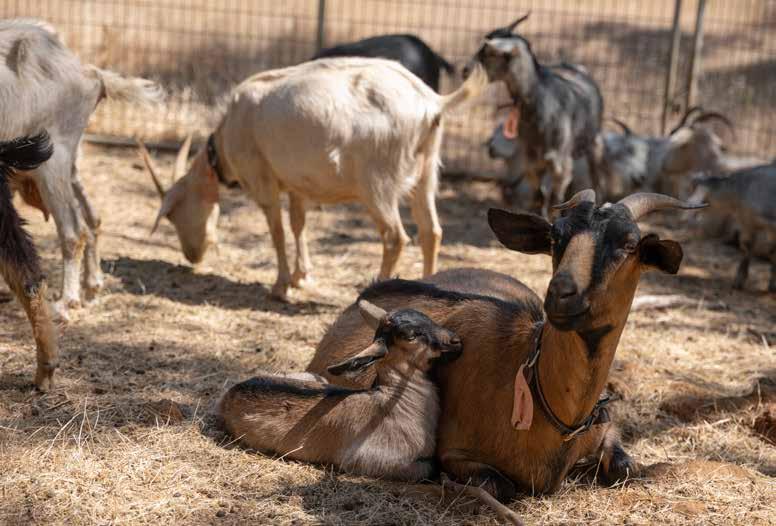
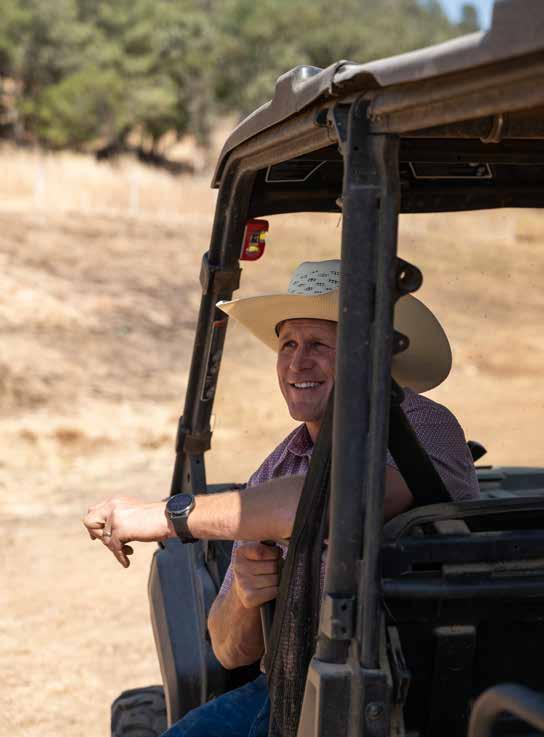
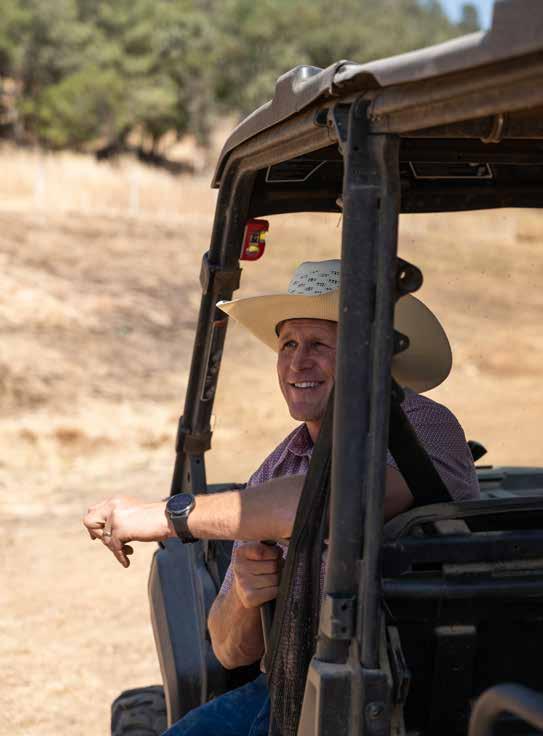
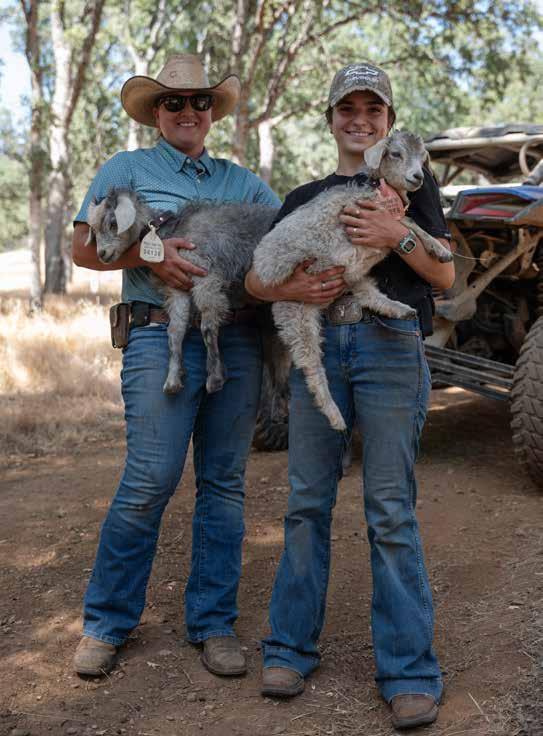
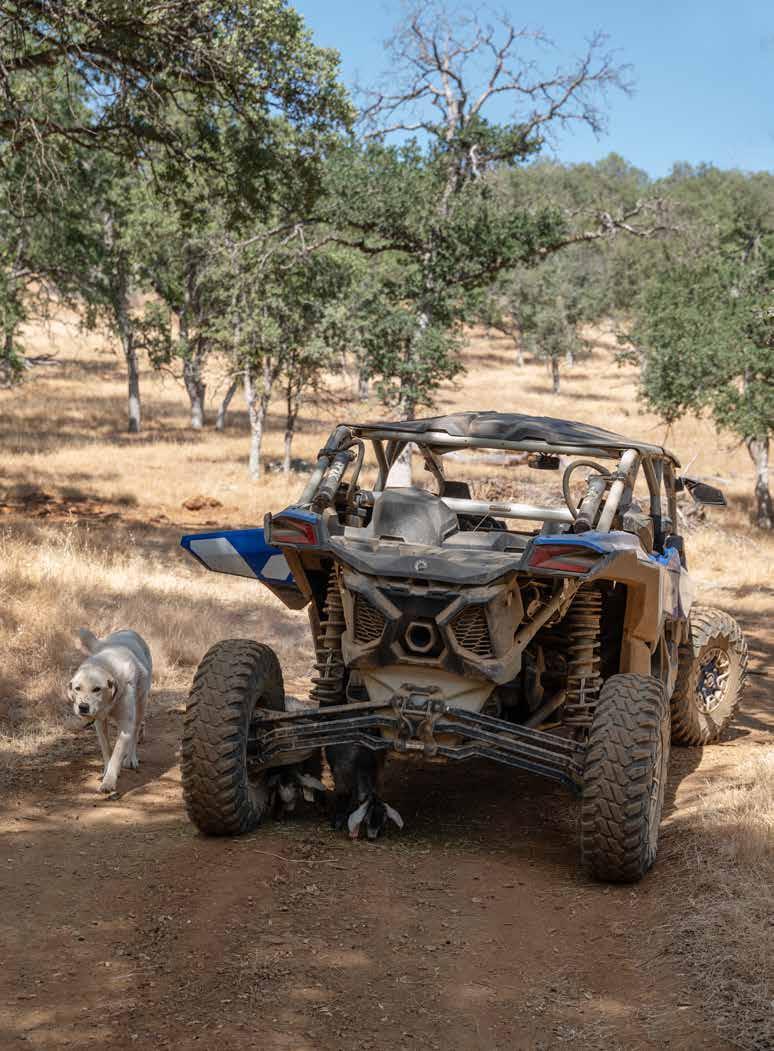
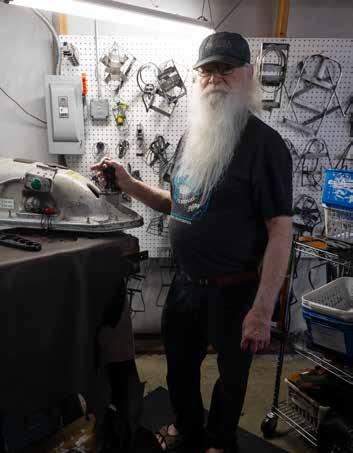
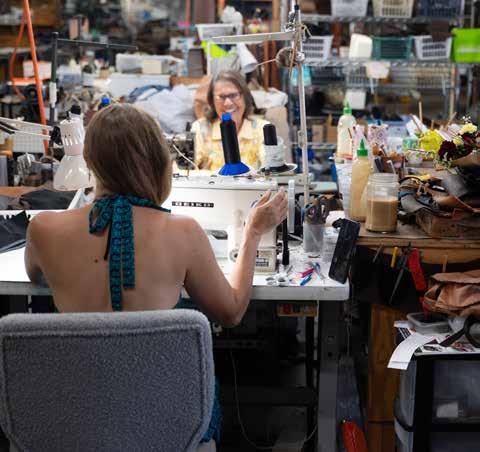
they cave to their curiosity, and before long we’re in the middle of a head-butting competition. A goat the size of modestly-sized dining room furniture – an Alpine –heads straight for the sole of my foot, which is presently trying to keep it at bay. Lucky for me, its horns have been removed. The more I struggle, the more the goat tries. In the end, I give up, doubled over laughing. We’re shown the gate by the goat and his friend, and we take our cue to go. Just make sure to never turn your back on a large goat who just won a head-butting showdown. I back slowly out of the pasture, still laughing. So yes, the goats are happy. They have a good life, here.
BBQ LUNCH
It’s time for lunch, and Kim brings us to Smokin’ Oak BBQ in Mariposa. A relatively new place. Pitmaster Jay is outside, looking California cool in his dreadlocks while working the brisket, which is slowly smoking in the portable smoker. A lot has happened on the Mariposa dining scene since we
were here last, and we haven’t been to this spot before. Next door is Twisted Cedar, their tap house. We get a table, and I gobble up a fantastic brisket and wash it down with a local pint without hesitation. Top class.
IT’S A FAMILY AFFAIR
Next stop is Native Earth. Barbara is waiting for us – a friendly, clear, and knowledgeable guide.
“We mainly make everyday leather shoes,” she tells us. “We also make custom, Landsknecht, Gypsy, and Tudor shoes, William Wallace boots, Buccaneer/Cavalier style, and several styles of button and lace boots from the ankle up to the knee, to sell at Renaissance Fairs, which is our specialty.”
The original crew at Native Earth was husband and wife team Jim and Lee Ann, with their mother Jocelyn and sister Barbara. Jim had worked with shoes for most of his life. It’s a true family affair.
We enter the production space, a large room with high ceilings, making our way around sewing machines
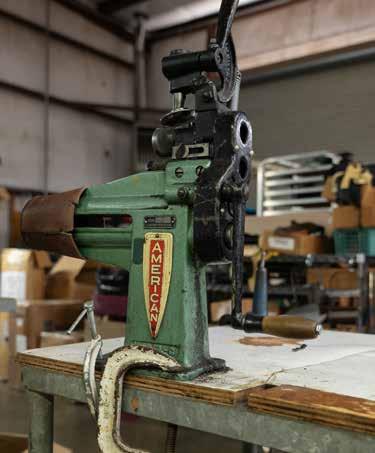
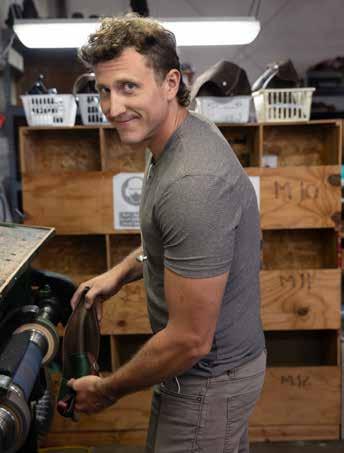
that look more like medieval torture devices. About a dozen people work here. Among them are Sarah and Diane. Anders brings out his camera. Sarah ducks, to no avail.
“Diana and Sarah sew everything here. Diana’s been here since 2009.”
“Eight!”
“Okay, 2008, sorry! She usually brings work home with her to work there. She’s been here a while now and is thinking about retiring.”
”I’m done,” Diana says. “I keep saying: I’m retiring, I’m retiring, but they don’t let me out of this place.” The mood is familial to say the least. Barbara jokes with everyone and knows everything.
A man with a long, gray beard stands next to another machine.
“This is Clifford. He worked for us a million years ago, and now we needed his expertise again, so he came back just to help us.”
Ethan is at another machine, polishing soles.
“Ethan can do every part of production. He’s been here since 2013. He’s amazing!” Barbara says enthusiastically.
“After everything’s been sewn and glued, I do the final touches,” he tells us. “Normally the process takes five days from start to finish. We switch tasks and everybody is trained on everything, so we can do anything. Still, people might be better at this or that task.”
Sue finishes bags and shoes. Adds laces and sews buttons. I ask Barbara if everything is done by hand.
“Yes, they’re all done by hand, boy, every single one of them. I sat a whole summer just sewing buttons, eight hours a day. I woke up every morning to bloody fingers,” she tells me with a smile.
The handiwork is impressive, and the Native Earth family now encompasses many more than the original family members.
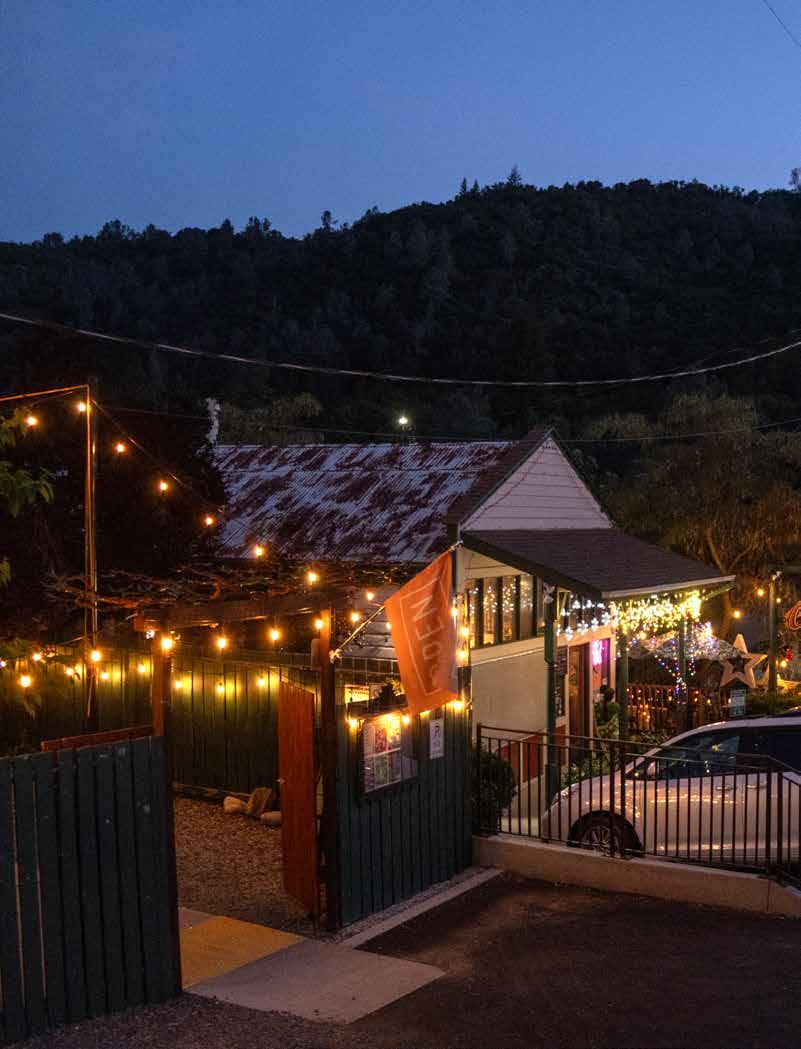
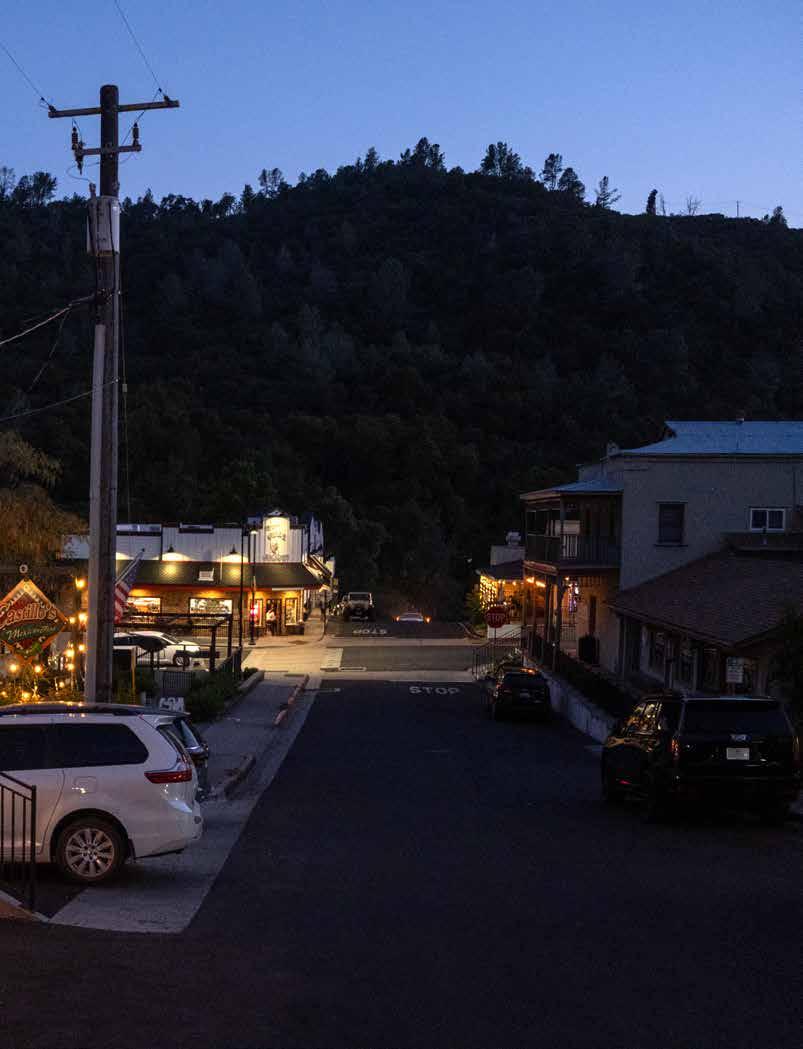
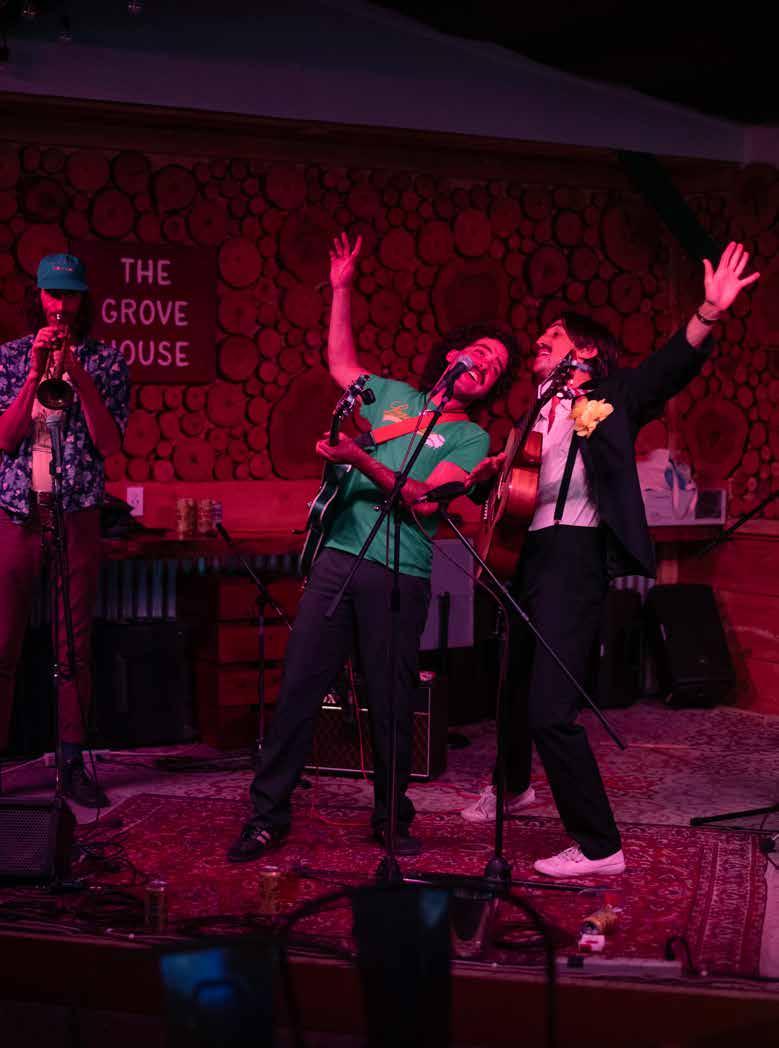
THE EVENING IS NICE AND WARM, SO A LOT OF PEOPLE ARE HANGING OUT OUTSIDE, BUT WE HEAD INSIDE TO SEE THE BAND. KIM IS AT A TABLE, SEATED NEXT TO KEN FROM THE CLIMBING MUSEUM. AT THE BAR IS ETHAN FROM NATIVE EARTH. WE FEEL LIKE LOCALS ALREADY. NICE.
“You are the tannest Swedish people I ever met in my life!” Dom laughs at us. He can’t believe his eyes. Apparently, he’s only ever met very pale Swedes. But let’s start at the beginning.
Even though Mariposa is small, and we have a GPS, it takes us a minute to find The Grove House, a self-proclaimed family-friendly and dog-friendly place. The confusion is probably because we’ve had a long day. We are meant to meet Kim. The evening is nice and warm, so a lot of people are hanging out outside, but we head inside to see the band. Kim is at a table, seated next to Ken from the climbing museum. At the bar is Ethan from Native Earth. We feel like locals already. Nice.
The place is fairly big, full of people of all ages: parents with kids and dogs, 30-somethings, everything in between. We’re still full from our barbecue lunch but nibble at some nachos alongside the local brew.
JOHNNY AND DOM SHOW
And then suddenly they take the stage: Johnny Franco and his real brother Dom. Absolute clowns! They’re great, it’s so much more show than concert. Johnny Franco looks like a Mexican villain in a 50s Western, or like a tango king. His brother, Dom, looks like the type of person who would roller skate along the Venice Beach promenade in 1970s Los Angeles. In actuality, they’re from São Paolo, Brazil.
This evening, they’ve brought a drummer and a guy on winds. It’s a unique crew. Johnny Franco’s talk is as entertaining as the songs, which are a mix of styles and peppered with humor.
That our tan skin is Scandinavian is revealed during the break. “Dom” thinks it’s exotic. These guys are just as chill off the stage as on.
I ask how they got started. Dom says, “It was borne of envy. One of us starts playing something, and then the other one wants to do it better.”
“He says it’s envy, I say it’s loneliness,” says Johnny. “I needed someone to play with, and it ended up being my brother.”
“What brought you to the US?”
“A woman,” Johnny answers.
“Me too, a woman… same woman…” Dom laughs.
“Her name was Elizabeth. We drove all over the country but didn’t find anywhere we wanted to live. We ended up in Portland, Oregon, because we hadn’t been there before. And then we stayed,” Dom tells us.
The guys are on their way up to do their last set. We’ve already finished ours. This wonderful day has finally worn us out, and it’s time to get back to the motel. Tomorrow, we’re climbing mountains. Not like Ken, but it’ll be hard enough.
That’s a story you can read about in the next issue.
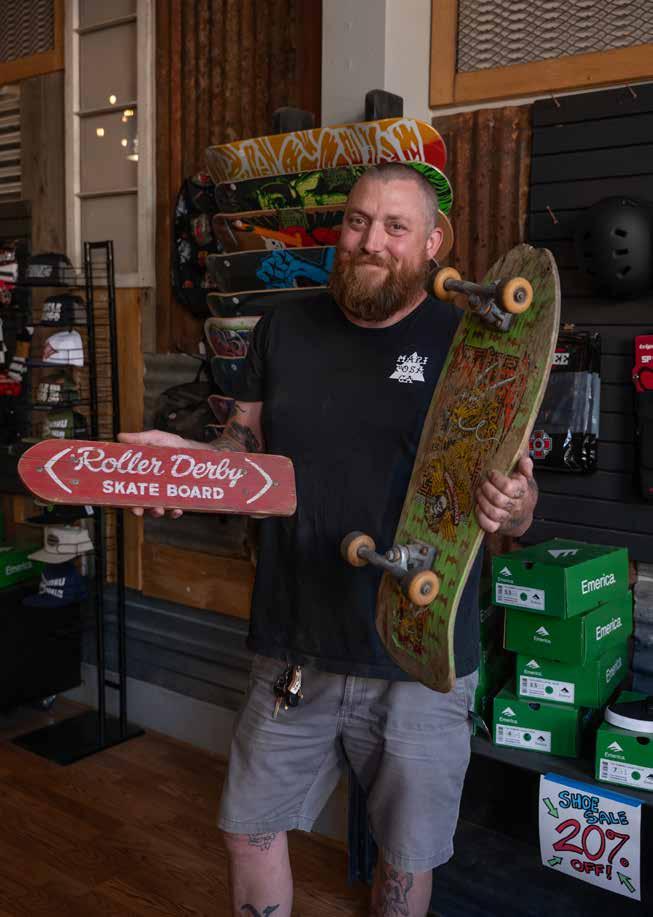
OVERBURDEN | A BOOK BY MICKE LUNDSTRÖM AND PO TIDHOLM
Take a photographer obsessed with mountain music and a journalist who loves rural areas, put them in a can along with some miners, mountains, and life stories, and shake it all up. Out comes one of the most beautiful and melancholic photo books in a long time. Accompany us to some Company Towns in the Appalachians.
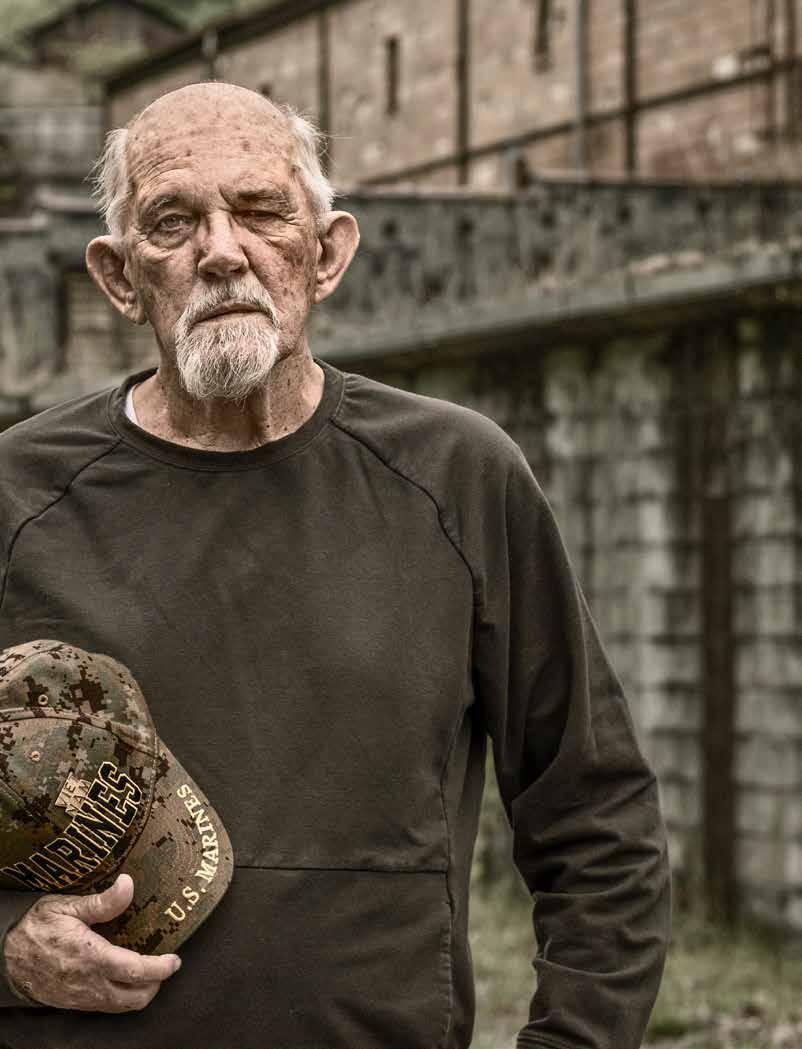
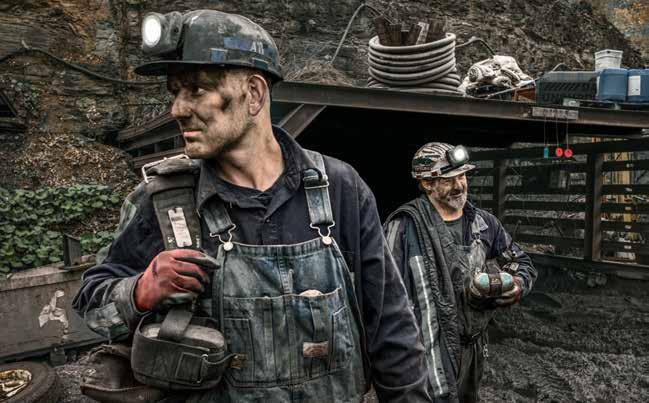
You can’t help but like people who both think and know how to photograph. Micke Lundström is exactly that kind of person. After getting hooked on mountain music and zydeco at a young age, he’s made countless trips to Appalachia and New Orleans. In the mountains, he’s met miners and communities that are now slowly disappearing as the mines shut down. Together with journalist Po Tidholm, he’s releasing the book Overburden in February 2026. It’s filled with fascinating and beautiful images of a society and culture that provoke reflection and offer hope.
We sat down for a cup of coffee at Södermalm in Stockholm on a gray, chilly November day that reminded me a bit of the mood in his photographs.
How did you come up with the idea for the book?
Thirty years ago, I made a trip down there. It was me, Per J. Andersson, David Lagercrantz, and an assistant. The idea was mine. I wanted to go because of the music, mountain music, the country music from that region. I pushed hard for us to do a story about Hank Williams’
last journey. It started in Montgomery, Alabama, and took him through Tennessee and West Virginia. He died in the backseat of his car outside Charleston, West Virginia, at a place called the Skyline Bar.
How did he die?
An overdose of something like horse medicine, they say. He had serious back problems. He was traveling from Montgomery for a New Year’s Eve show, I think it was in Canton, Ohio. You’ll have to fact-check that. He got sick along the way. They stopped by a doctor, or maybe it was a veterinarian, the stories vary, and he got something for the pain. He was already in terrible shape from years of alcohol and drug abuse.
The driver, a college student named Charles Carr, was behind the wheel. In the middle of the night, he got hungry and stopped at Skyline Bar just outside Charleston. He stepped out to get some coffee, and when he came back, Hank Williams was dead in the car. Maybe he’d been gone an hour, no one knows.
We traveled along that same route as Hank did. I became completely absorbed by the landscape. I felt, this is where the music comes from. You can both hear it and see it in the place.
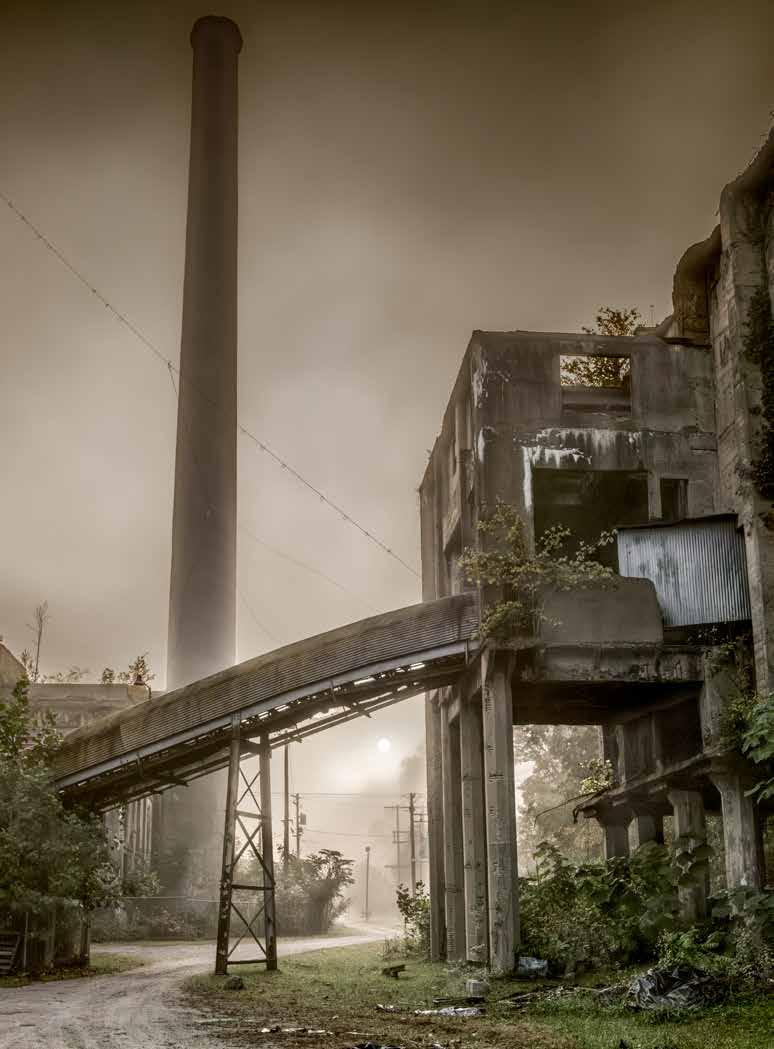
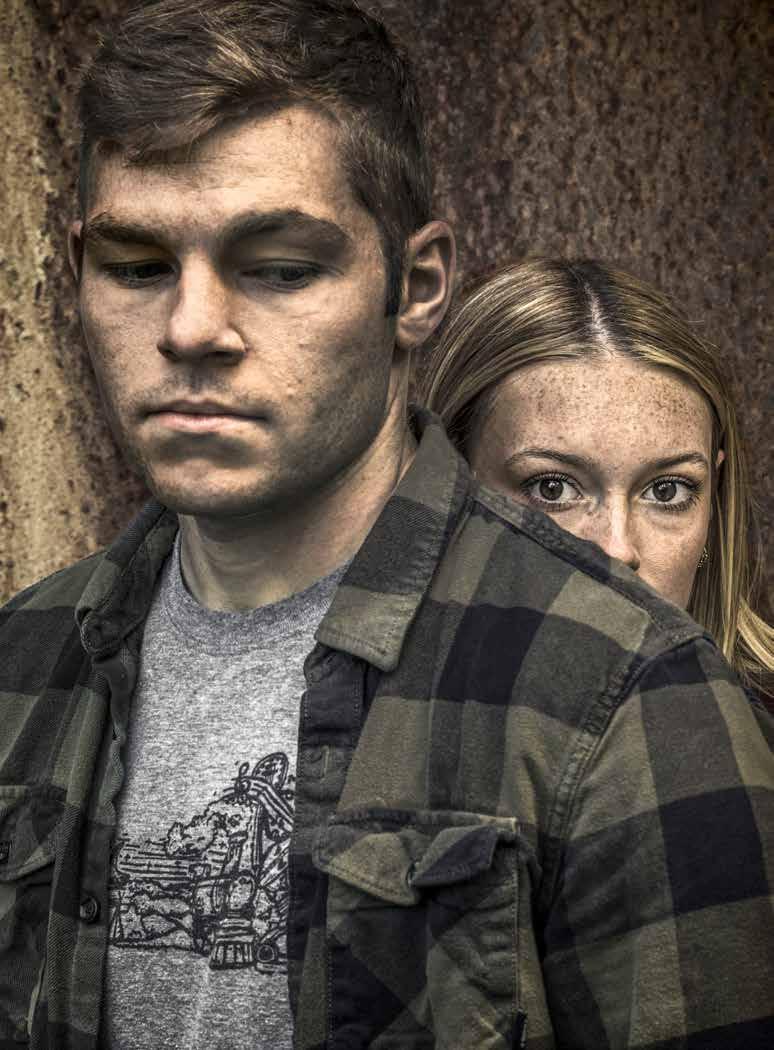
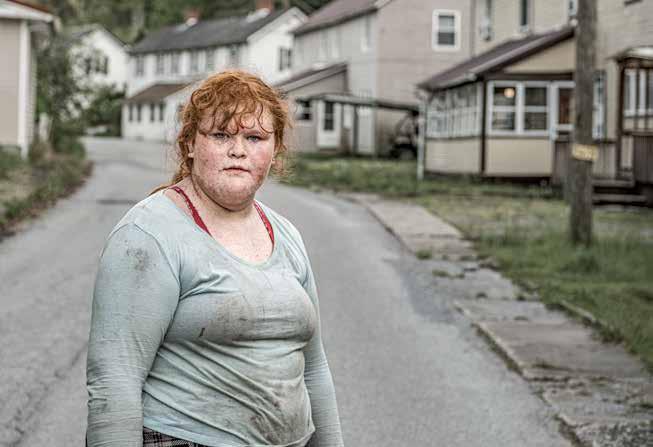
WE TRAVELED ALONG THAT SAME ROUTE, AND I BECAME COMPLETELY ABSORBED BY THE LANDSCAPE. I FELT, THIS IS WHERE THE MUSIC COMES FROM. YOU CAN BOTH HEAR IT AND SEE IT IN THE PLACE.
I knew I had to come back. Then I had kids, life happened, but when they moved out I finally could.
I read a lot about the area. I was looking for the coal mines and the old company towns, isolated communities built and run by the coal companies. A lot of the music comes from those places.
I went deep into the core of Appalachia: West Virginia, eastern Kentucky, western Virginia, and northern Tennessee. That’s inner Appalachia, the part people mean when they talk about the soul of the mountains. Here it’s steep and high, up to around 5,000 feet.
How did you start liking this kind of music?
God… I think it goes back to photo school. I had a friend, Peter Söderström, who constantly played country and roots music from the U.S. It hit me, really hit me. It wasn’t just
pretty; it moved me. The lyrics, the melodies. They sing about their lives, disappointments, joy. Sometimes political, sometimes not.
It’s really a kind of folk music. Much of it comes from Irish and English traditions. Many songs we think of as classic country tunes are reworked British folk songs. Like Fair and Tender Ladies. It’s fun once you start hearing the connections.
How were you received with a camera?
Incredibly well. I don’t think I’ve ever met more friendly and helpful people anywhere.
It’s a poor area, and not a lot of African Americans, right? There are African Americans, but fewer now. I met one who was the mayor. I can’t speak for others, but I didn’t see or hear racism. The stereotypes don’t really hold.
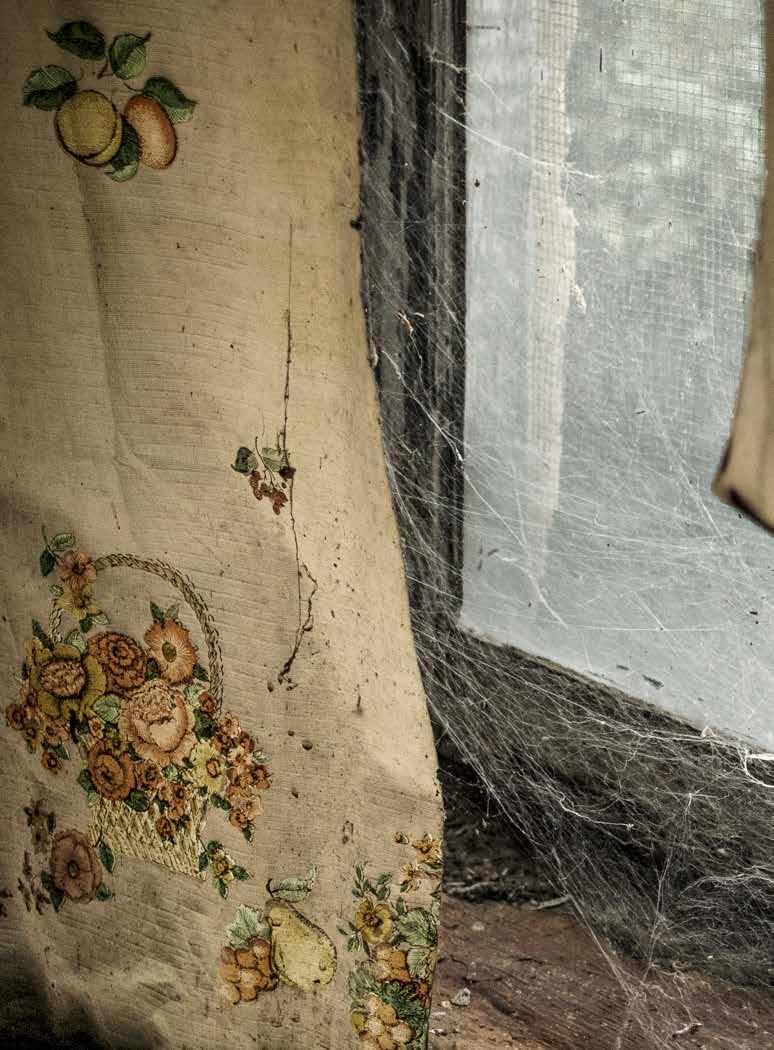

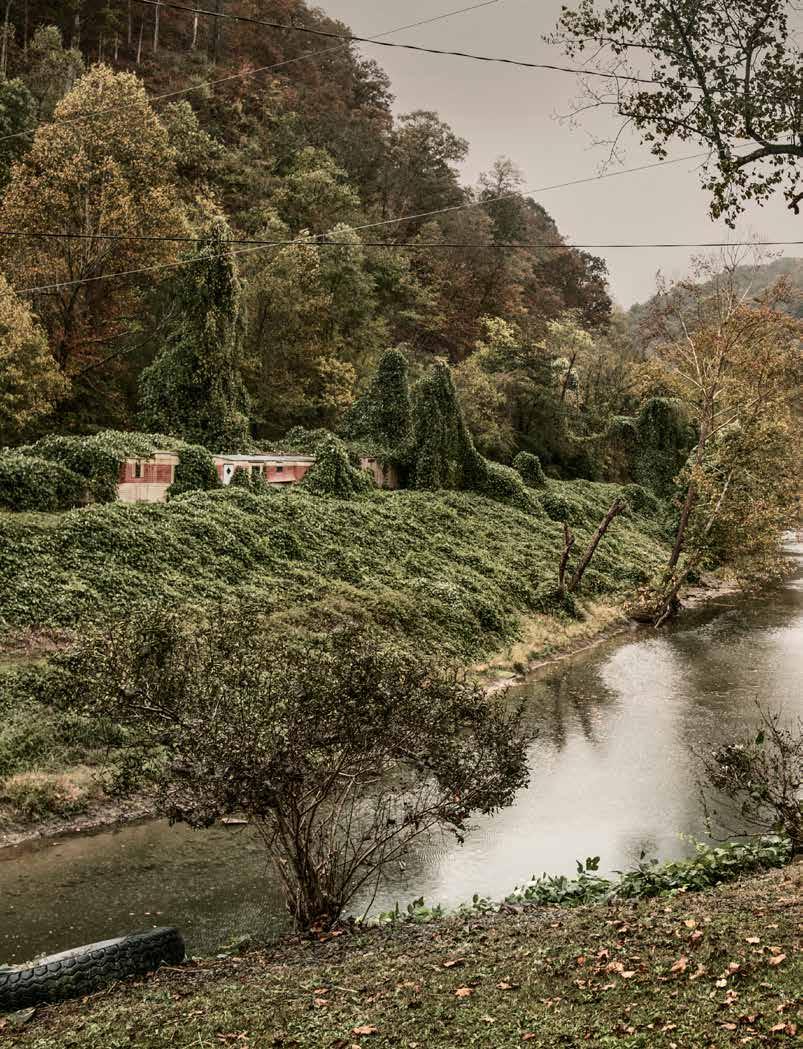
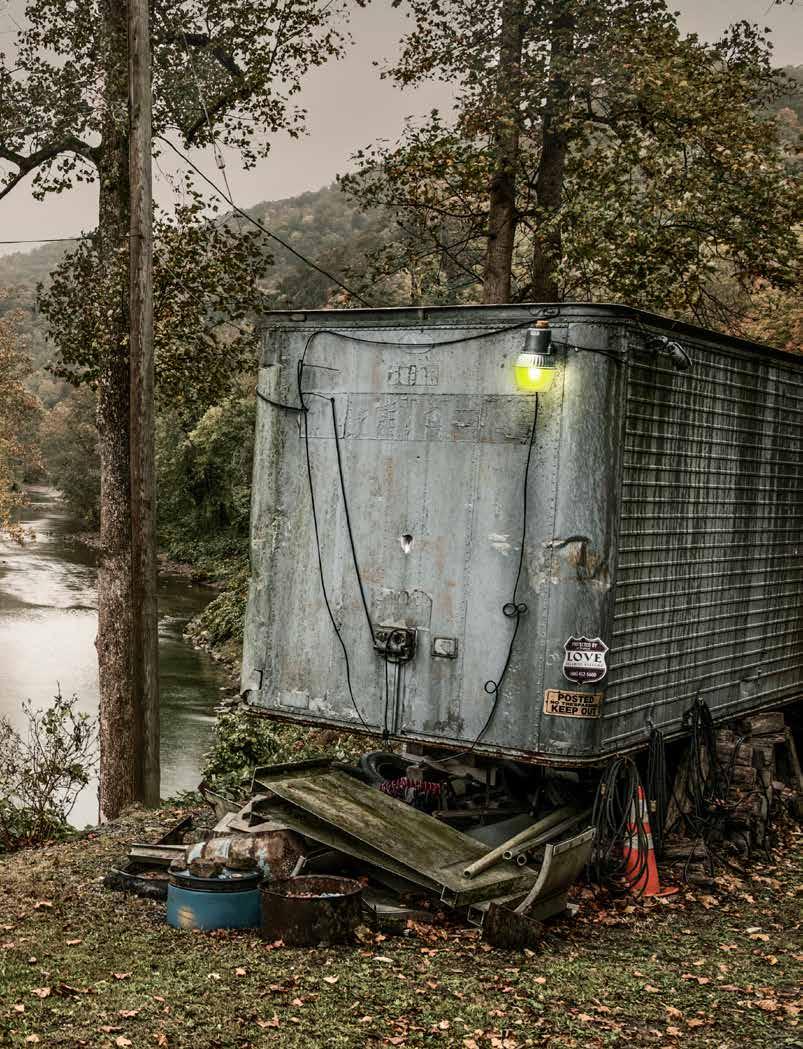
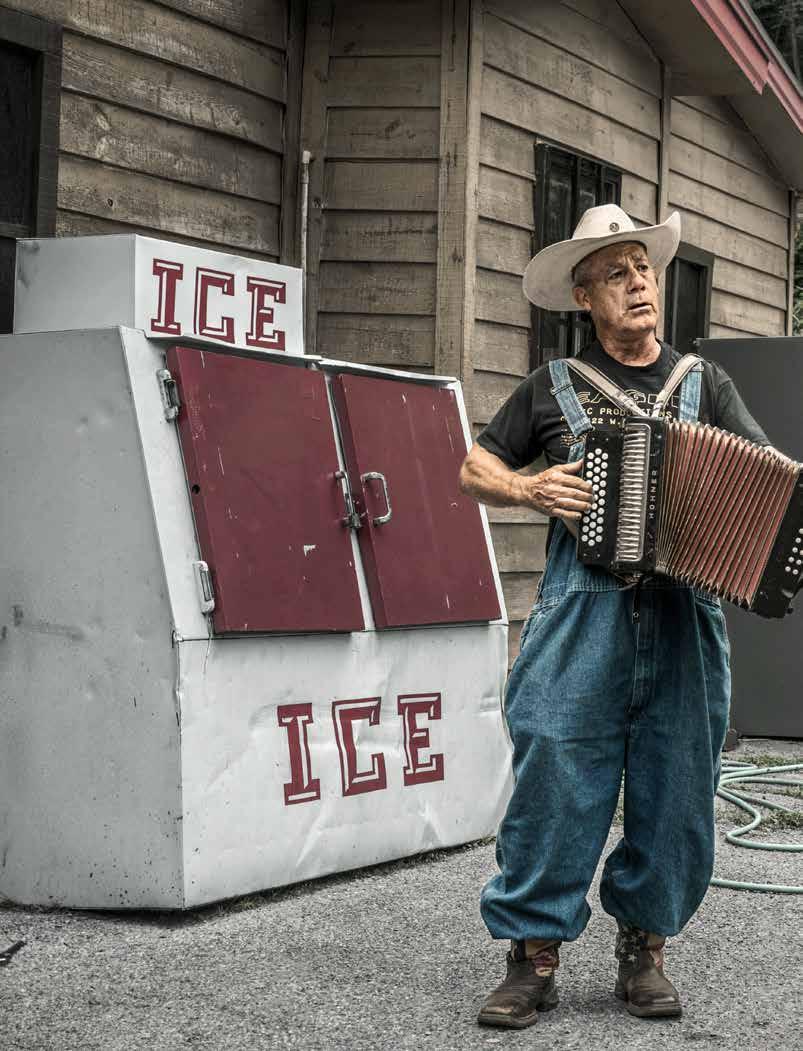
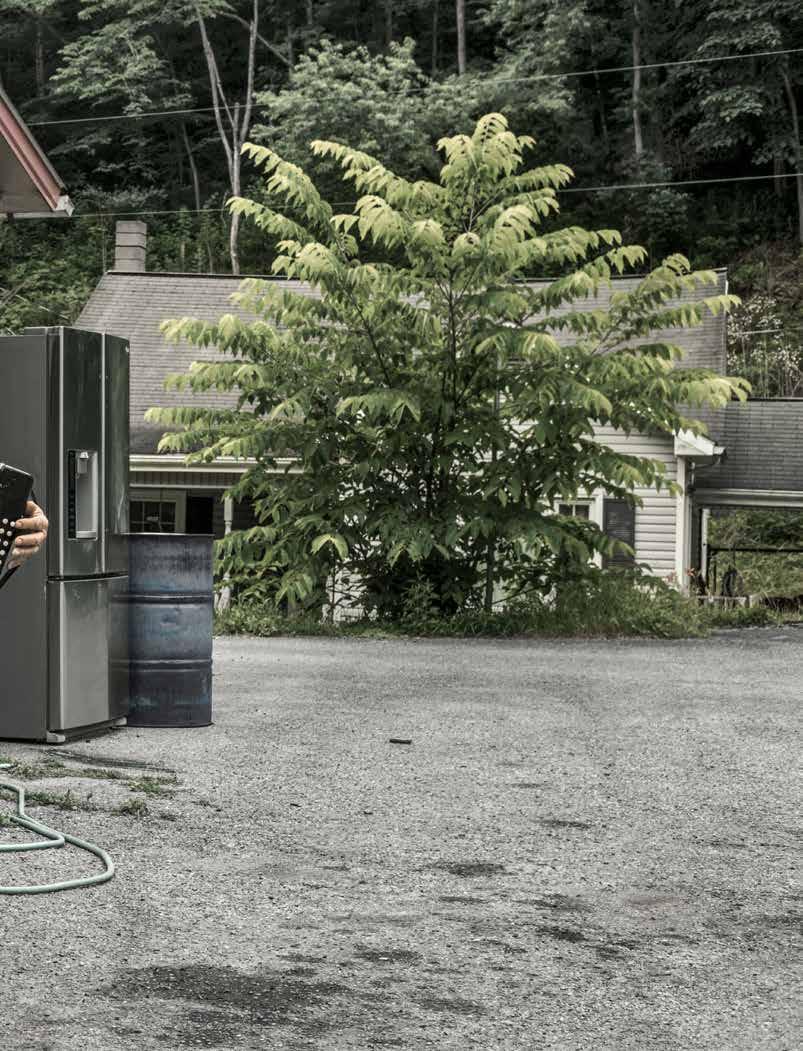
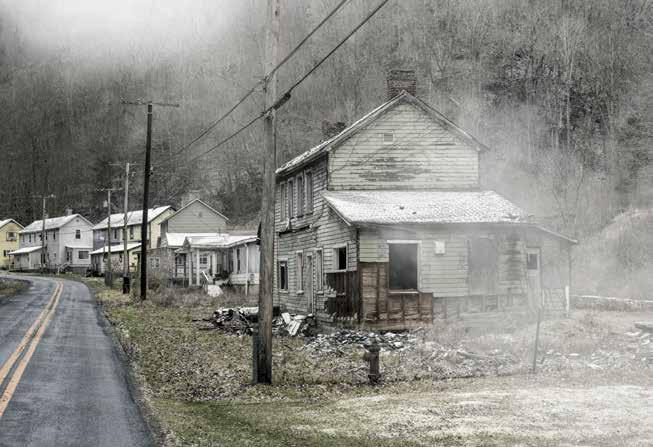
Historically, many Black workers were in the mines. After slavery was abolished, especially in Alabama, Black workers had a really hard time finding jobs, so many moved north along the mountain chain. In the mines, people worked side by side, Irish, English, Germans, Poles, and Black workers.
Someone told me: Your life depends on the others doing their job. You don’t care what color they are.
It influenced the culture. Sure, there are separate Black and white churches, but I saw plenty of mixed congregations. And it’s an extremely religious region. Don’t forget: the abolitionists who fought to end slavery were deeply religious.
This shot is taken in a “holler,” a road that dead-ends in the mountains. They’re sung about all the time. They start off wide and narrow toward the end. People say the top of a holler can be dangerous because those who want to be left alone, or are struggling mentally, tend to live there. I never experienced that.
The images are beautiful but show a life and culture we’re not used to. Were you trying to document the culture, or were you mainly after strong images?
I’d be lying if I said I didn’t care about the images. But I never would’ve gone if it weren’t for the music and the culture.
I shot at the times of day that gave the mood I wanted. The place is almost unintentionally beautiful.
The portraits are very personal. Were these people you got to know during the trips there?
Most of them, yes. Not all. But I’ve been to places where everyone except two people wanted to be photographed. No one asked what the images were for. It’s a very open culture. “If you want a picture of me, go ahead.”
It’s extremely poor. Many live on food stamps and still don’t get by. And there’s a cultural poverty too, not in terms of music, but in a general underdog mentality: “We were left behind in the mountains.” Houses are never torn down, just abandoned to decay. Land is abundant; people just move farther out.
They’ve also historically been exploited by capital. The coal companies owned everything: the stores, the bars, the garages. They paid wages and took the same money back through their own shops. Classic setup.
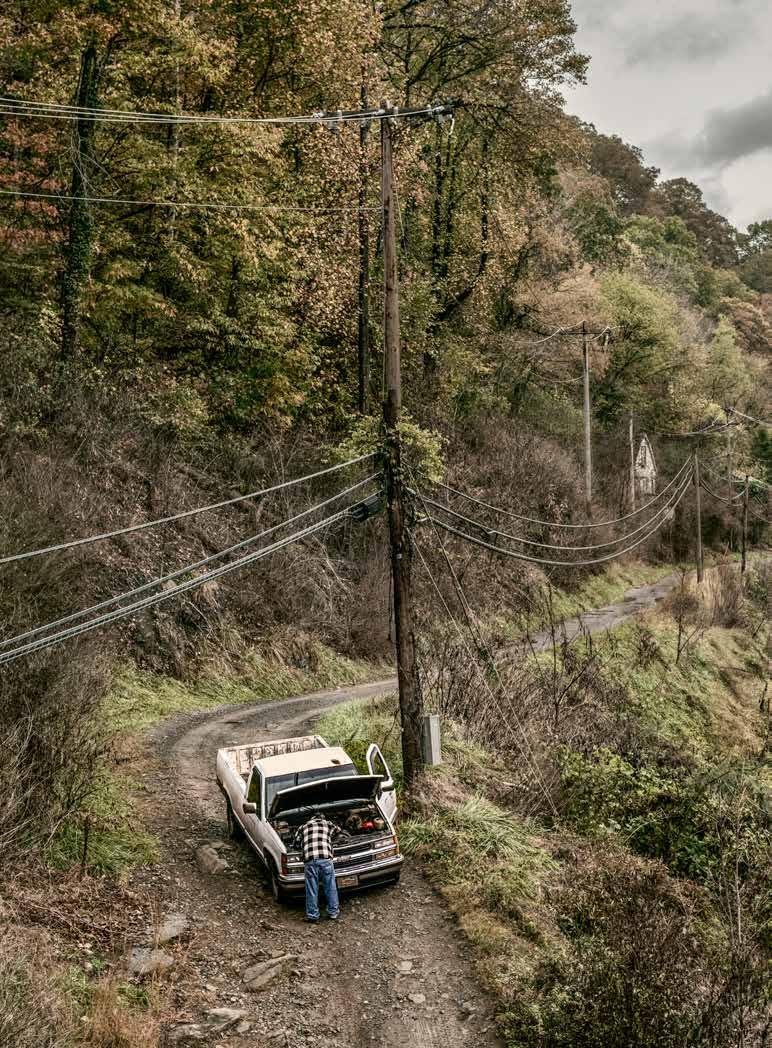
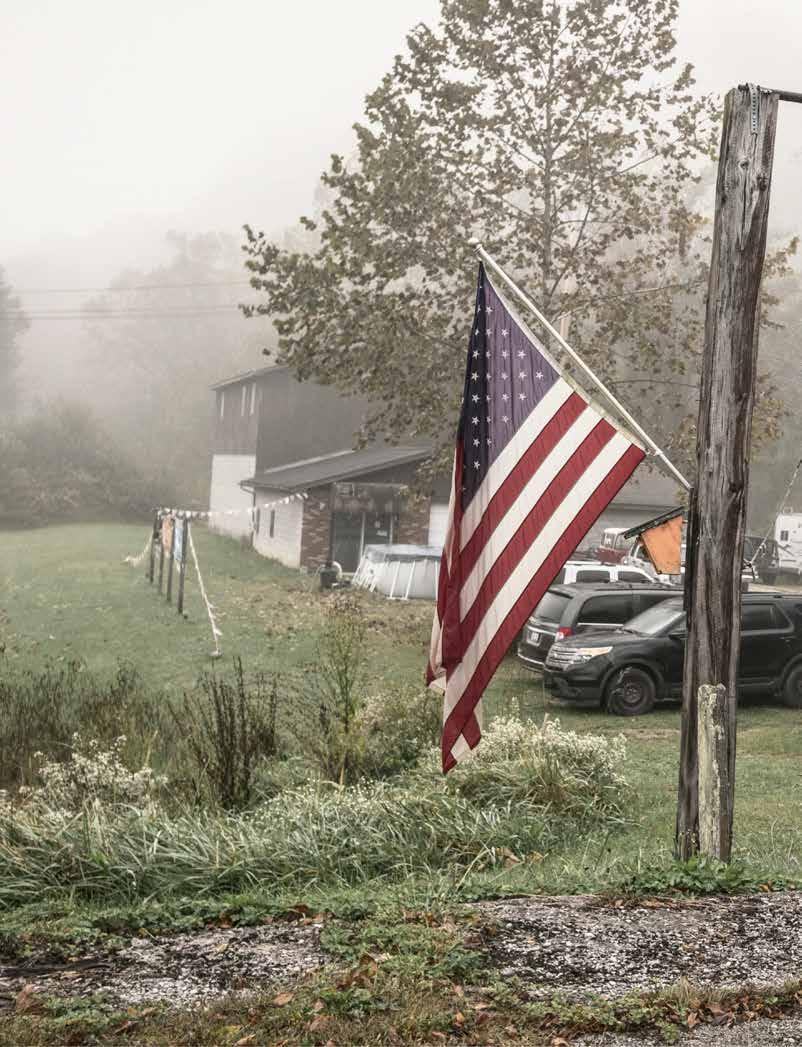
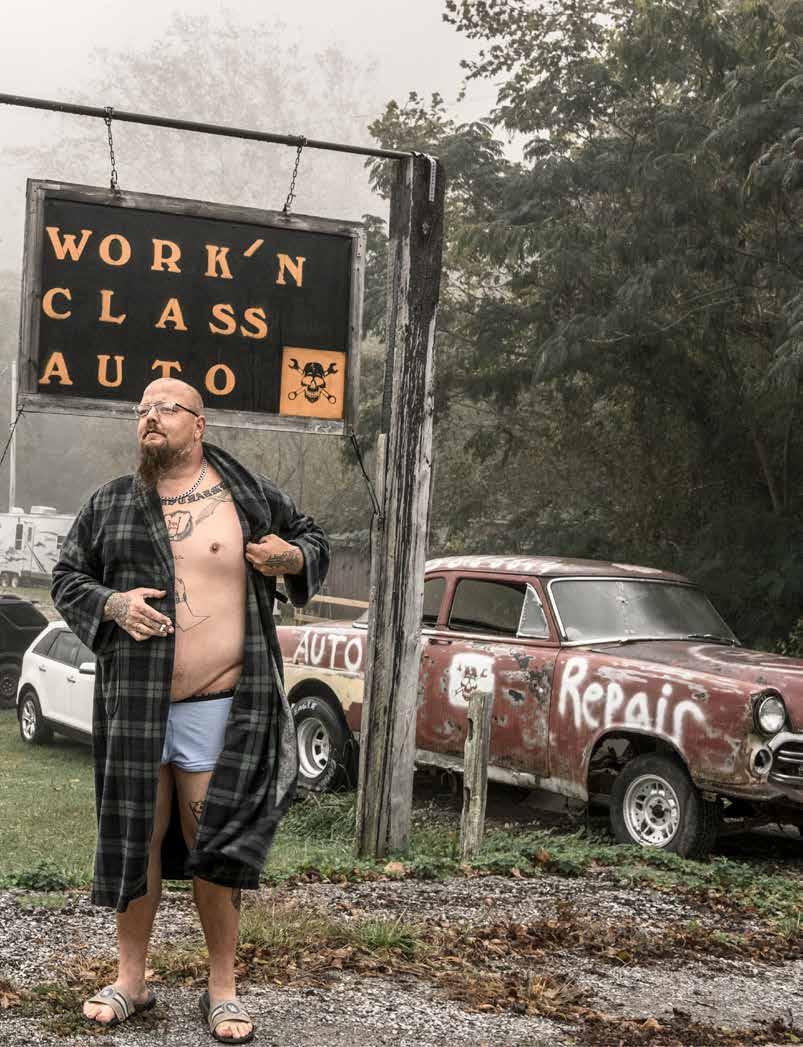
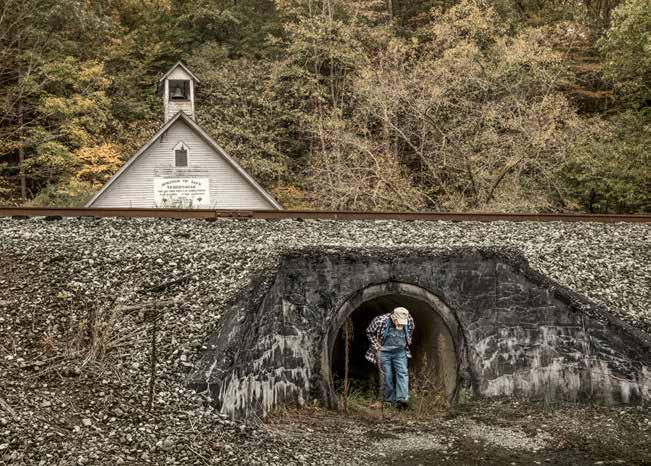
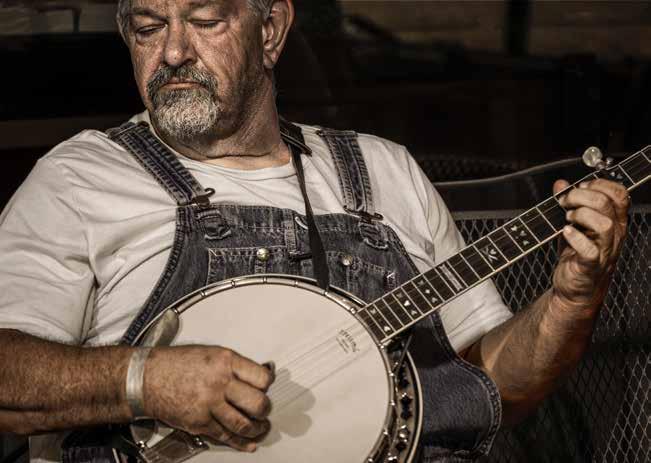
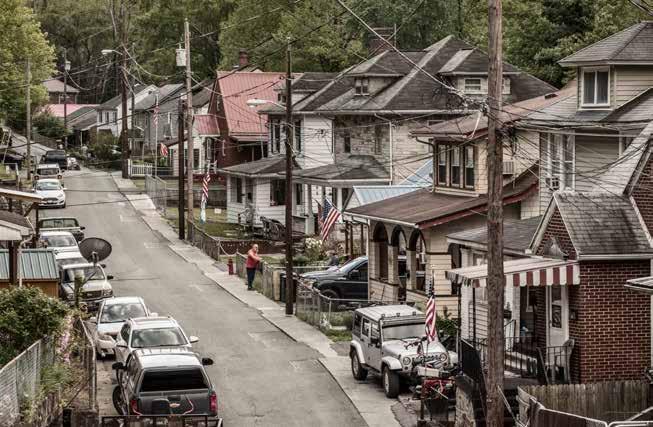
Even now, people live in collapsing houses on land still technically owned by the old companies’ trusts, and they have to pay fees every year, despite being dirt poor. It’s heartbreaking. Around 70,000 miners have died in accidents, and many more from black lung. Life expectancy is low and falling, partly due to the opioid crisis.
The title Overburden, please explain it. Overburden is the material you remove when you open a mine. When you close a mine, the leftover wood, slag heaps, debris, they’re also overburden. It fits, because the people are overburden too: the ones left behind.
Most people don’t know the word. It also means a weight too heavy to carry. Which they certainly have. And symbolically, it means the residue, what’s left.
What do people live on now?
Inner Appalachia is emptying out. Towns like Lynch had 35,000 people in the ’60s; now they’re around 1,400. Welsh and Gary the same. A 95% population drop. Everything depends on the few remaining mines. Around each mining job you get four or five support jobs: hospitals, fast food, services. When the last mine shuts down, especially in West Virginia, I genuinely don’t know what will happen.
This photo of the man coming out of a culvert, did you ask him to walk through it?
Yes. I got to know him. We were going to see a church and came from the other side of the road. I asked how to get across, and he showed me the tunnel. Then I had him walk back and forth many times.
What’s your next project?
I want to follow the Mississippi River from south to north. It cuts through the continent like a knife: from New Orleans with its French heritage, up through the agricultural heartland’s endless emptiness, and on to Minnesota near the Canadian border. I’d love to witness a river baptism in Mississippi. There are old abandoned industrial landscapes farther north. I want to show the time, geography, and people along the river.
Do you want to get your hands on a copy of Micke's book Overburden? Scan the qr-codes.
bokus.com kerberverlag.com
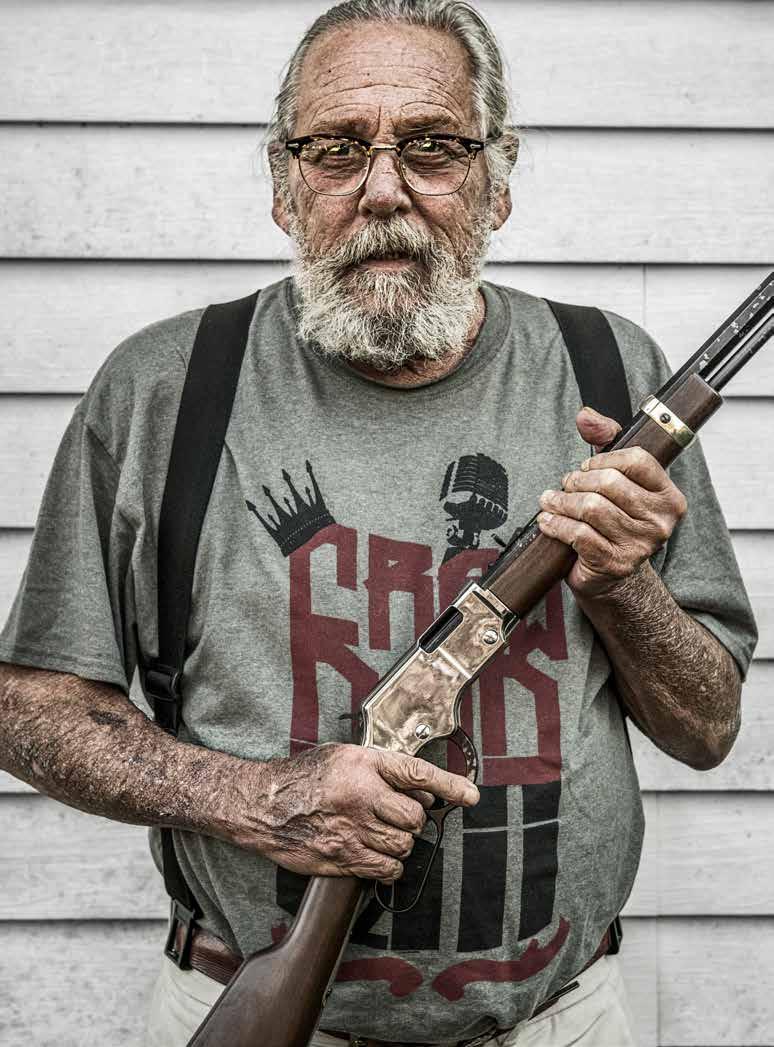
I’ll write captions for all the photos below, and you can then decide whether to include them or not. The translator is free to change them so that they work in English.
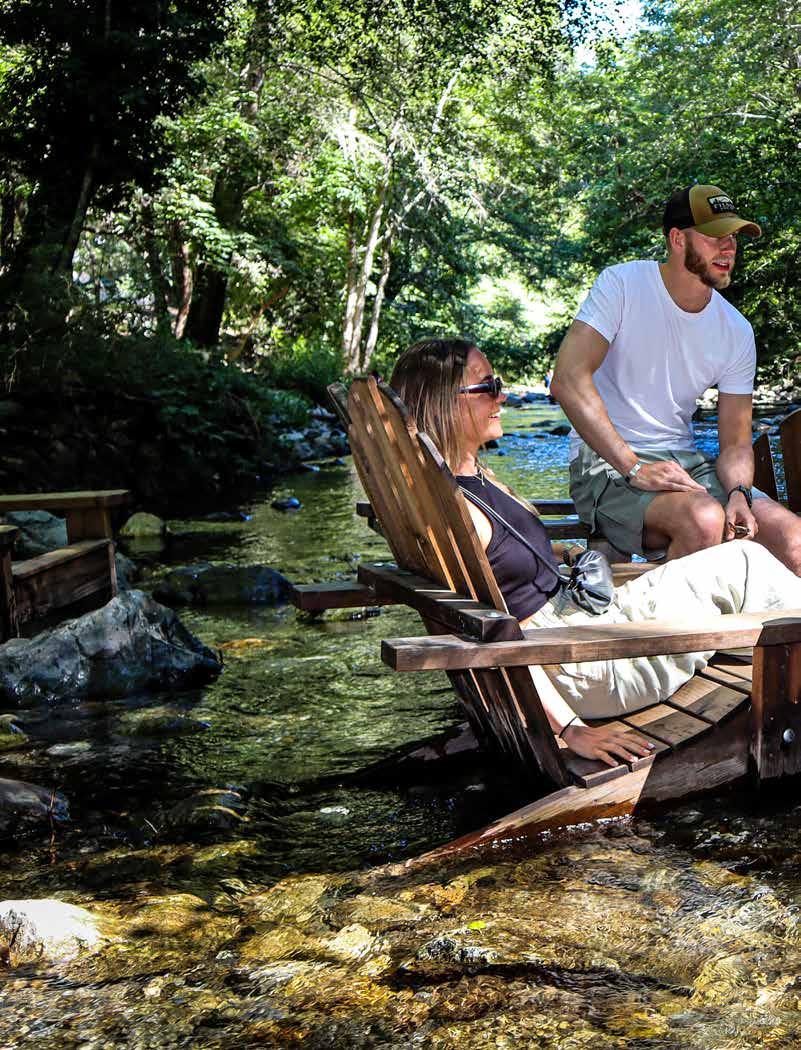
A really long road trip with your best friends has to be the world’s greatest stress test. We sent out our most humble colleague with his entourage, to see what the road may bring and how strong a friendship could be. This is their report.
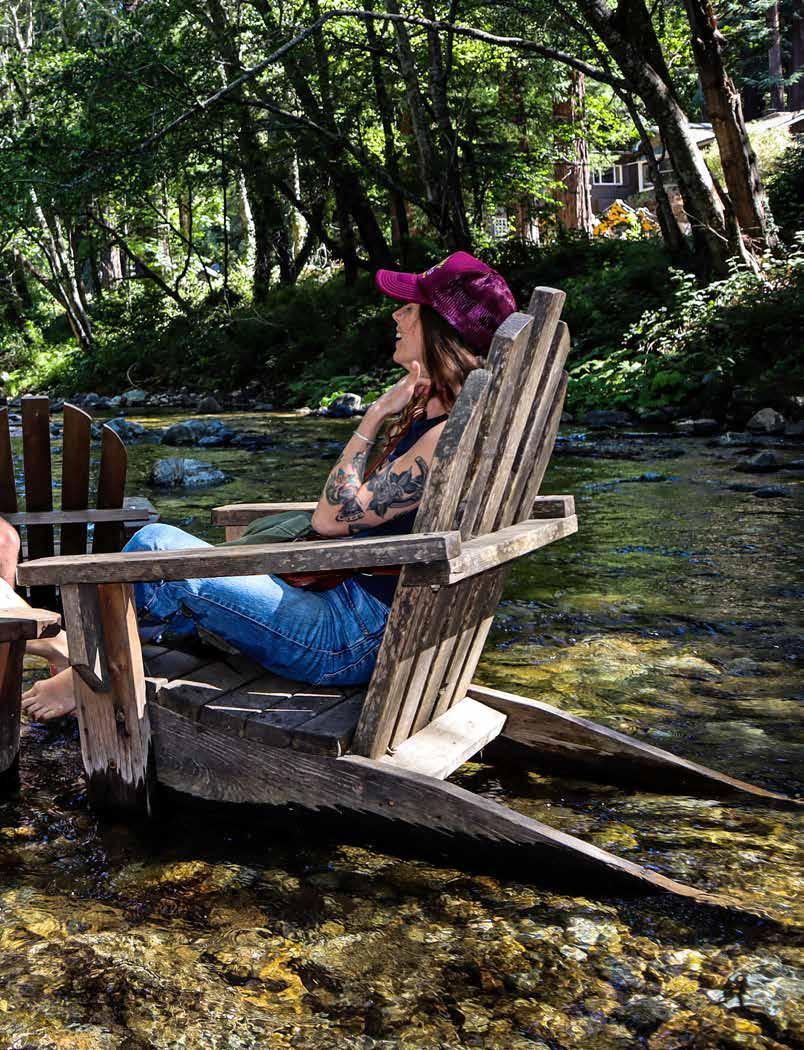
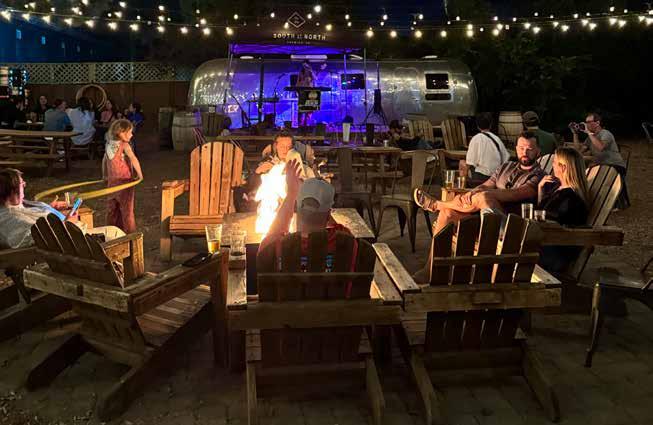
Everything in California begins with a road. Construction on the Pacific Coast Highway, officially, Highway 1 – began in the 1930s, partly using labor from the Great Depression’s Civilian Conservation Corps. It winds its way 1000 kilometers (650 miles) along the coast, from San Diego in the south to Leggett up north. The road is engineering ingenuity in a constant battle with erosion, landslides, and the wear of the ocean. The fact that it still exists at all is a sort of defiance to its geography.
As we drive out of San Diego, the light falls softly over the ocean. The palm trees along the streets look almost too perfect, and the highway north opens up in one straight line. This is the beginning of several weeks of four people, one car, and countless miles.
The road lies ahead: Santa Barbara, Big Sur, Redwood, on to the Oregon Coast and Portland, before turning
south again through mountain lakes, granite valleys, and national parks.
A road trip on this route is more than just a vacation. It’s a test. You’re sharing tight spaces, the same playlists, the same bathrooms, potentially bad decisions regarding when and where to eat. At the end of it, you may make it out as better friends than ever. Or…?
We decide it’s a risk worth taking.
SANTA BARBARA SUNSHINE AND CHEAP TEQUILA
Ocean on one side, rolling hills on the other, we pass little places where time stands still. Gas stations where the signs have looked the same for 50 years, diners featuring the same five breakfast items since 1973. Surf shops with sun-bleached logos and staff who look like they’d rather be anywhere than behind the counter.
When Santa Barbara appears, the mood changes. The white stucco, Spanish Colonial architecture, the red tile roofs, the palm tree-lined beach promenade, everything
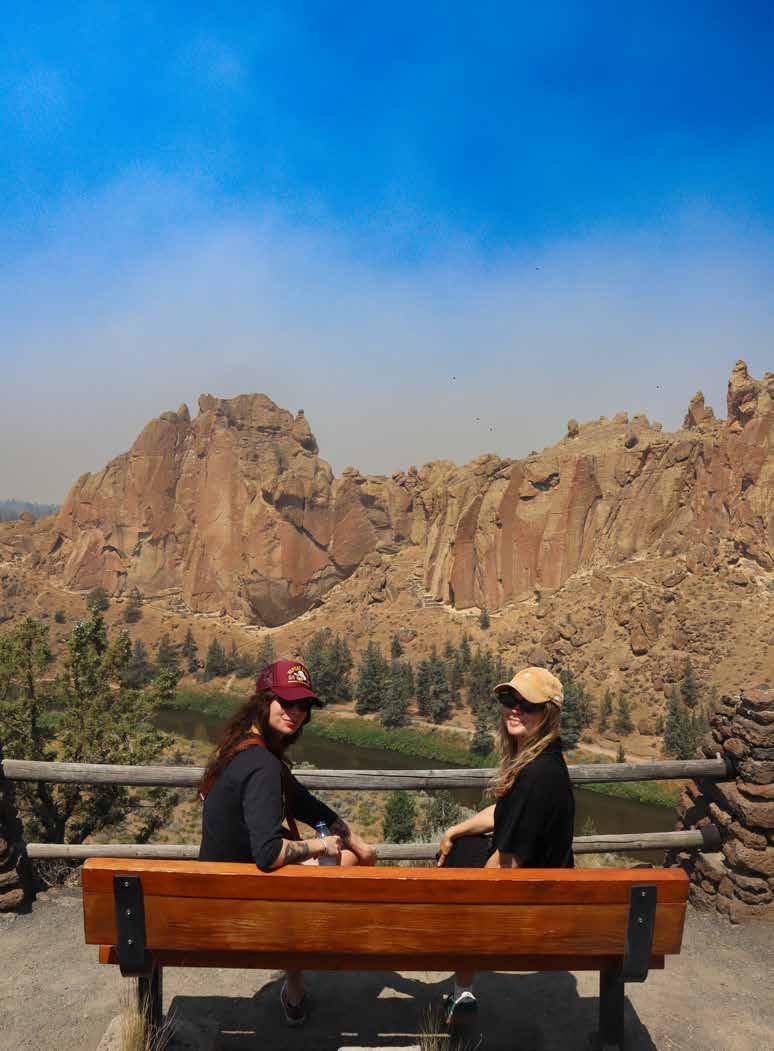
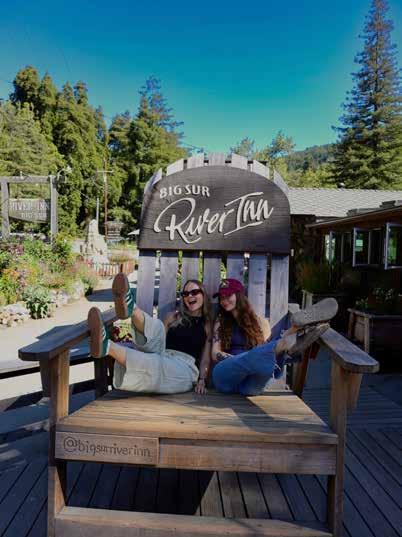
The California coastline is quite magnificent.
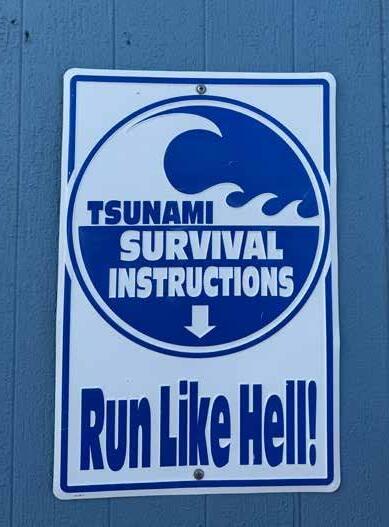
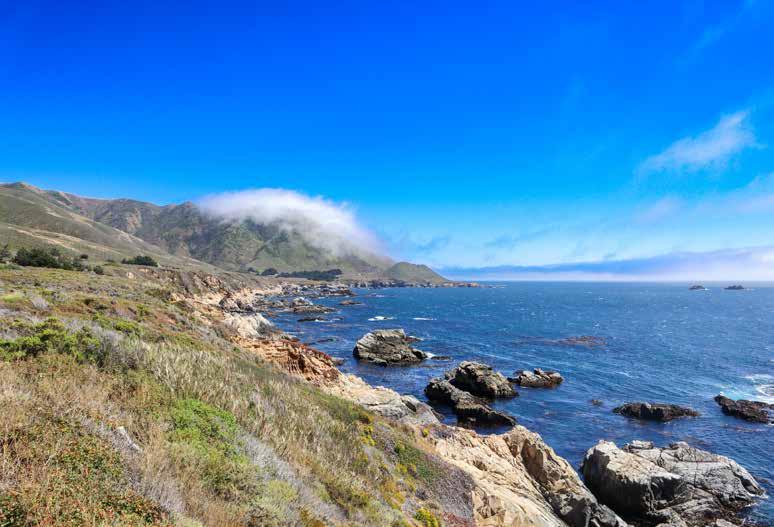
WE STOP AT A LITTLE PARKING LOT. JUST A FEW STEPS INTO THE WOODS, AND THE TRAFFIC IS GONE. WHAT REMAINS IS THE SOUNDS OF BIRDS AND THAT REALLY HEAVY SILENCE YOU ONLY FIND IN TRULY OLD FORESTS. IT’S NOT A MUSEUM, BUT THE FEELING IS ALMOST THE SAME – YOU WANT TO WHISPER SO AS NOT TO DISTURB ANYTHING.
looks like it was built for endless afternoons. At Stearns Wharf, people with take-out coffee cups rest their eyes on fishing boats gliding into the harbor. Along Cabrillo Boulevard, runners, bikers, and people who seem like they’re in no hurry pass by.
“It feels like no one works in Santa Barbara,” someone said as we arrived. We heard it again, later in the trip, from a Portland man who described his love for the town with those very words.
“In Santa Barbara, no one is going anywhere.”
A few blocks away, in the Funk Zone, the atmosphere is different. Art galleries, wine bars, food trucks, and the scent of barbecue mingle with freshly baked bread from little bakeries. West Beach is open and inviting, but the water is colder than it looks. Kids and dogs leap fearlessly into the waves, and after a while, so do we.
As the afternoon sun sets, we feel the sea air roll in over the town. One frozen margarita down and the chill is considerable – it’s hard to say if it’s the weather or the drink that has us shivering beneath the palm trees. The next day, curing any cocktail blues that may have appeared overnight is best done at Joe’s Café. It’s one of the city’s oldest diners, established in 1928.
Santa Barbara offers just the right amount: enough to make us want to stay longer, but not so much that we feel stressed about trying to fit everything in.
The road slowly pulls us closer to the stretch that everyone talks about – but few people actually fully drive – Big Sur. The hills billow up, steep against the ocean, the highway grows narrower, more precarious. The only thing keeping
us from the sharp cliffs is a guardrail, and sometimes the paved road looks like a thin strip, waiting for the next landslide to pull it into the ocean. It feels like the road is testing us. Like it wants to know how much focus we have left after hours of driving.
The fog comes and goes. One minute, the horizon is gone, as though the world ends a few feet ahead. The next minute, a view opens up like an offering: the ocean, steel blue, profound, as if to remind us that Asia is beyond that line, even though the distance is too great to grasp.
We don’t drive fast. You can’t. The road winds like a nerve along the mountain, and you feel every turn in the steering wheel. Little pockets pop up here and there, viewpoints built out of rocks, and they’re hard to pass up. We stop at pretty much all of them. At Bixby Creek Bridge, we take a break. The bridge, opened in 1932, is one of the tallest concrete arch spans in the world, and it was built during the Great Depression, a time when unemployment was over 25 percent. It looks almost fragile as it spans the ravine, but it’s survived for nearly a hundred years. Further north lie the McWay Falls, a waterfall that tumbles straight onto a beach where no person is allowed. The spot is heavily patrolled, and maybe that’s why the spot looks so untouched. A reminder that there are still parts of California that have not been turned into a backdrop for human needs.
THE ART OF TAKING A BREAK
In the middle of all this drama, there’s room for breathers. We turn out at Big Sur River Inn, a Highway 1 classic. Even if you’re not staying the night, it’s worth it just to park your car, walk down to the river, and sink into one of the beach chairs in the middle of the water. The stream
cools your legs, the sun warms your shoulders, and suddenly, the winding road feels less taxing. For those who wish to dig deeper, Pfeiffer Beach is a quick detour, known for its purple sand and dramatic cliff formations, standing like portals into the sea. The beach is slightly hidden, but well worth the effort. That’s what Big Sur is, a mix of infamous postcard views and tiny secrets just waiting for you to take the time.
The sign “Redwood State Park” appears at last, but we already knew we were there. The air becomes cooler, the pine scent clearer. The Redwood trees are the world’s tallest. Some grow over a hundred meters (300 feet), older than entire cities. Some sprouted when Vikings sailed across the North Atlantic. These are numbers you can read on an info plaque, but it feels different when you stand at the trunk of a tree so wide that four people barely reach around it.
We drive into the Avenue of the Giants, a 31-mile scenic route through the forest. The trees grow right up to the road, sometimes so close that the side-view mirrors seem in trouble. We stop at a little parking lot. Just a few steps into the woods, and the traffic is gone. What remains is the sounds of birds and that really heavy silence you only find in truly old forests. It’s not a museum, but the feeling is almost the same – you want to whisper so as not to disturb anything.
On our way north, we stop at Navarro Vineyards & Winery in Anderson Valley. You just can’t drive through northern California without stopping in at a winery. We
each get a glass of white wine, crisp and clear, and are surprised by how great it tastes.
North of the Redwoods, California is more raw than romantic. The fog lies like a carpet over the coastline, and the sea only blinks by in little openings between the trees. In the middle of this, Fairhaven appears, a place that feels more like an afterthought than a town. The wood houses, once painted in bright colors, have been reduced to shades of wind, salt, neglect. The fishing boats in the harbor seem to survive on sheer stubbornness alone.
We go down to the water, but the ocean is freezing. We still jump in, if only to prove something to ourselves. An older man walks by, raises his beer, and says, “You’re not from around here, are ya? No locals swim in this water.”
We don’t know if he’s talking about the temperature or sharks. Maybe both. We happily reply, “We’re Scandinavian!” “Yeah, that explains it,” he says, already moving on. We laugh, too, but our teeth are chattering.
Our Airbnb is an old officer’s barracks from World War II. Once simple sleeping quarters, now they’re airy rooms with big windows facing the ocean. The smell of seaweed makes its way in even with the windows shut. There’s a bar in the building, and the bartender seems to make drinks where strong is the main ingredient – you get more liquor than fluff. No one in the group is complaining.
This is also where we meet Justin. A 26-year-old firefighter in San Francisco who grew up in Nebraska. He’s celebrating his birthday alone, but alone isn’t the way to describe him. He arrives at our table like we already
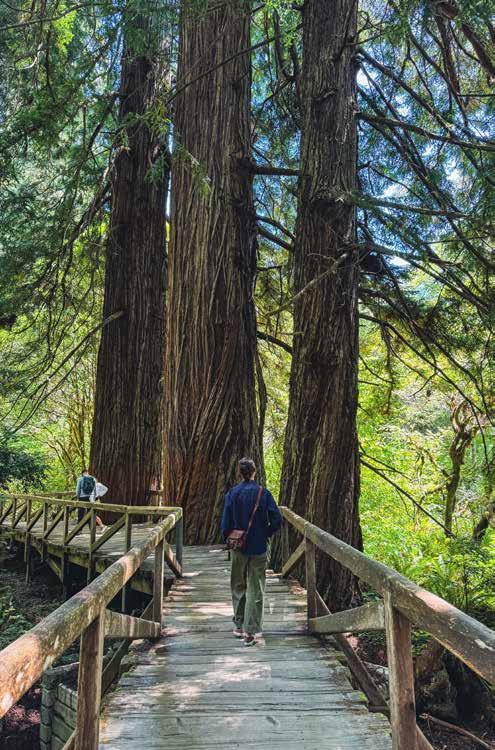
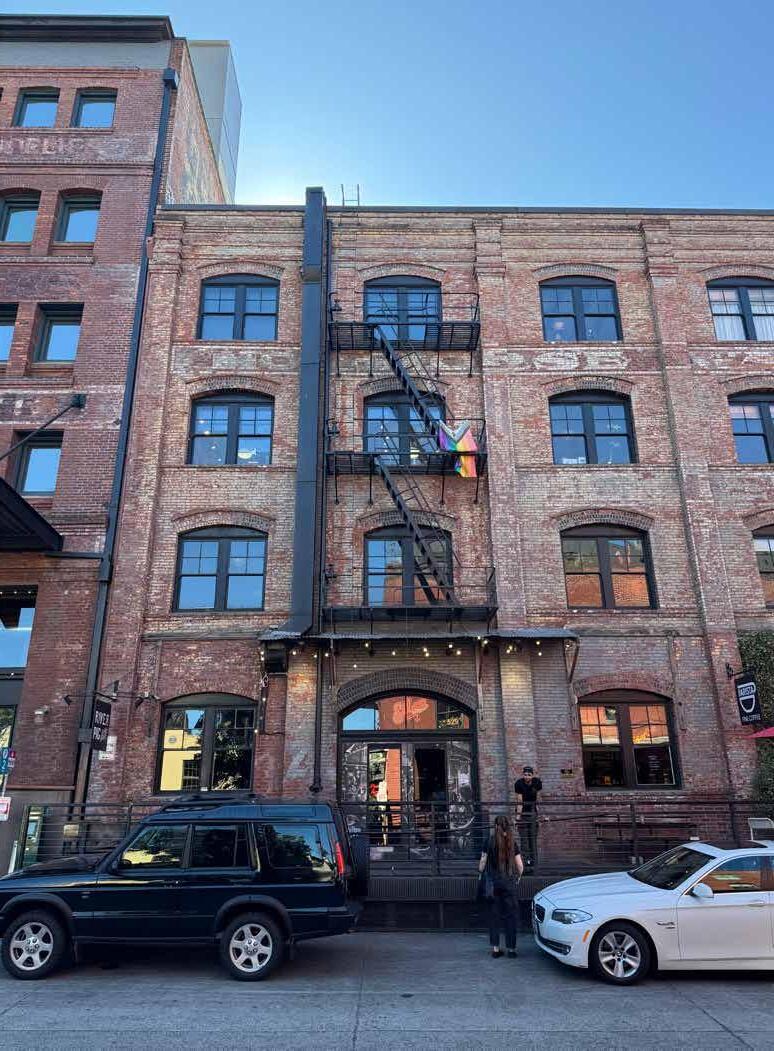
AS EVENING FALLS ON EAST BURNSIDE, THE STREET COMES ALIVE. IT’S ONE BAR AFTER ANOTHER, MORE MICROBREWERIES THAN YOU CAN COUNT. WE SIT DOWN AT PAADEE, A PLACE THAT GIVES THAI STREET FOOD A NEW EDGE. THE SPICE BITES, THE BEER DISAPPEARS QUICKER THAN PLANNED – THE WHOLE PLACE FEELS LIKE A REMINDER OF WHY PORTLAND IS CALLED A FOODIE TOWN.
know each other. When we sing “Happy Birthday”, he twirls around in a pirouette, and soon we’re chanting, “Justin! Justin! Justin!” In just a few minutes he’s got himself a Swedish hype gang. He tells us a few short anecdotes from his life before disappearing to order another round.
When the fog rolls in from the sea at night, the world outside becomes a solid gray wall. In the bar, old soul is playing, glasses are filled quicker than they’re emptied, and no one seems in a hurry to get anywhere. The bartender, who is also pretty tipsy by now, says the bar closes when the guests feel ready. Fairhaven feels like a place you don’t go for anything in particular – you just go here, and the night takes care of the rest.
It really does feel like the Last Bar on Earth.
Driving into Portland feels like changing records. There are more bikes than cars, food carts are lined up in clusters, and coffee is always served with a lecture on origin and brewing method. The city knows its reputation as a hipster mecca and lives up to it, but Portland doesn’t make a fuss. It moseys along at an even pace, from old ivy-covered warehouse neighborhoods to streets full of colorful food carts. You plan your day here not by the time, but by where your next cup of coffee will come from, and it’s easy to understand why so many people stay here longer than they intended.
Portland is also one of the country’s most LGBTQ+ friendly cities. Pride flags adorn windows year-round, queer bars mingle with bookshops, and there’s a feeling that you’re
allowed to be whoever you want to be. Black Lives Matter flags fly high, next to weathered Pride flags that never come down. A constant reminder that freedom isn’t something to take for granted, and that in this current climate, it’s needed more than ever.
A good place to start is the Pearl District and the blocks around Burnside, where Powell’s City of Books takes up a whole block. It’s the world’s largest independent bookstore, a multi-leveled maze. Portland is also known for its food carts, often rounded up in pods, little areas with common seating. Perfect when a garoup can’t make up its mind. One person gets ramen, another tacos, a third Indian, all within a few steps.
The shops are another part of the charm. Filson, Pendleton, American institutions for waxed jackets and plaid button-downs to last for decades. We try on pieces that feel like they were made to survive hunts and blizzard, even though we’re only taking them back to the car.
The city is often called Bridgetown, and it’s easy to see why, when you see the 12 bridges spanning the Willamette River. We cross Broadway Bridge one afternoon, the river below and the horizon in the east. To the west, parks and hills lie waiting, to the east a mix of little cafés, breweries, and vintage shops. If you need a break from the metropolis, go to Washington Park. Here you’ll find the International Rose Test Garden. Free to visit, and with rows upon rows of roses, which fill the air with their scents in summer.
We choose Multnomah Falls, instead, driving to see Oregon’s most photographed waterfall. Technically requiring
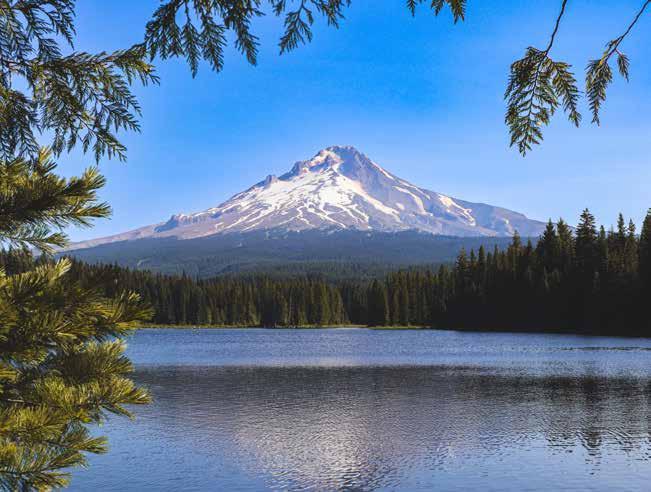
a day pass, we sneak in, stopping only briefly in the pressing July heat. On our way back, we leap into the Columbia River, which also serves as the border to Washington State. Back in town, we check in on our to-do list. Cheese & Crack, an ice cream parlor where the soft serve comes with a chocolate cowboy hat for a buck fifty. Holman’s Bar, a dive bar of sticky tables and a leaning pool table. We play a few rounds against two bikers from L.A. We don’t play well, but we have a laugh.
It's no real trip if you don’t lose something. In this case, my wallet is stolen. I leave a few bucks in the account to see where it’s used. Within the hour, a charge appears: at a McDonald’s nearby. I run over, ask around. I need my driver’s license. No one knows anything. A man shows up, offering to “help”. He starts to call me “Fred the Entertainer”, pulls me around like he owns the place and yells to the manager, ”Show us the goddamned CCTV!” Around the time he pulls out a crack pipe it becomes clear that he might be the offender. I leave it be. The thief got a hot meal. I cancel my cards and walk out.
As evening falls on East Burnside, the street comes alive. It’s one bar after another, more microbreweries than you can count. We sit down at Paadee, a place that gives Thai street food a new edge. The spice bites, the beer disappears quicker than planned – the whole place feels like a reminder of why Portland is called a foodie town. The next day we discover Luce, an Italian pearl that feels more like a neighborhood original than a restaurant. The pasta is simple but perfect, the space crowded and full of details. It’s half trattoria, half store.
Portland doesn’t need sights to impress. It offers you a bridge walk just as the clouds part, a bookstore to get lost in, an unexpected meal. And sometimes a lost wallet and a found nickname.
South of Portland, the landscape shifts like a fast-forwarded slideshow. We stop at Trillium Lake, bring out a box from Voodoo Donuts (less bakery, more Portland
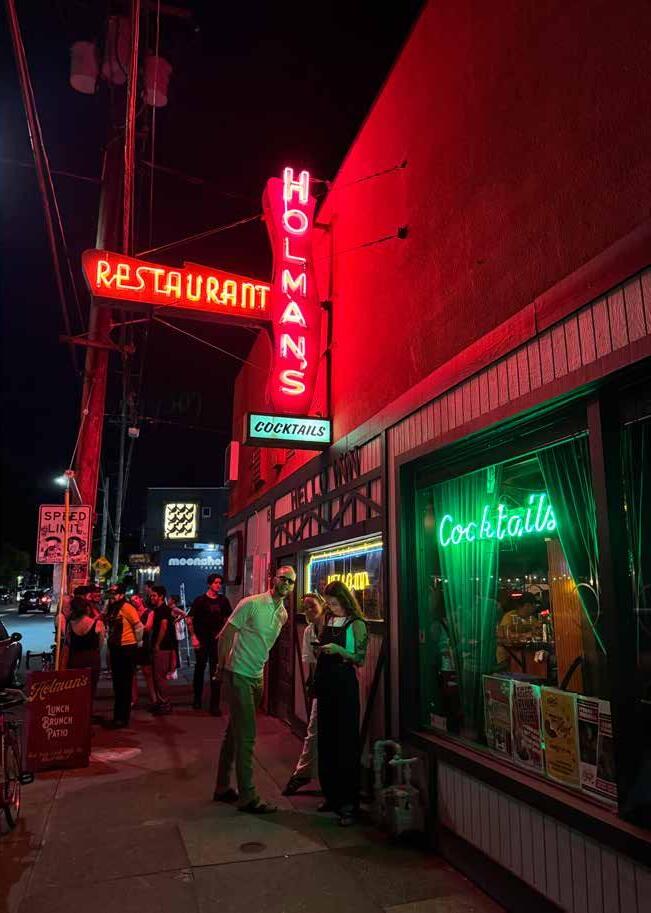
institution), and sit down by the water. The donuts are glazed in colors that shouldn’t exist. Grotesque, and delicious. Jumping in the lake after feels like a cleanse. The water is cold enough to clear our heads and make the rest of the trip bearable.
Further south, we make a quick stop at Smith Rock State Park. Cliffs rise out of the plains like stone guardians, red and barren, as weighty as the backdrop to an old Western movie. It feels like the kind of place where horses stand tied to a pole, dusty cowboys drinking tepid water out of waterskins. We look down toward Crooked River, as it cuts through the landscape like a vein. It’s easy to imagine guns being drawn, that the echoes between the rocks still carry remnants of settled scores.
After many hours of driving, Lake Tahoe appears. It’s hard to grasp its scale. The lake is so deep that the Stockholm archipelago could disappear here, and no one would notice. It’s just as hard to understand how clear the water is.
We start with a hike. Tahoe is full of trails, short paths for morning walks, and day trips over granite blocks. We choose the Cascade Falls Trail, stopping at the end to dip our feet and rest. I walk barefoot further up, past the little waterfalls, mostly to feel the ground. A German teenager runs up, out of breath, panic in his eyes. “Don’t go further,” he says with a German accent. “Black bear.” His family follows, just as wound up. A black bear has been sighted 50 meters ahead. No drama – the bears are everywhere here – but it’s a reminder that this is no backdrop.
Baldwin Beach makes a great stop on the way back. A wide, gravelly beach, framed by mountains. The water is chilly, and we run straight into it, fast enough that we can’t change our minds. It’s brutal, but after a few minutes, our bodies and brains feel brighter.
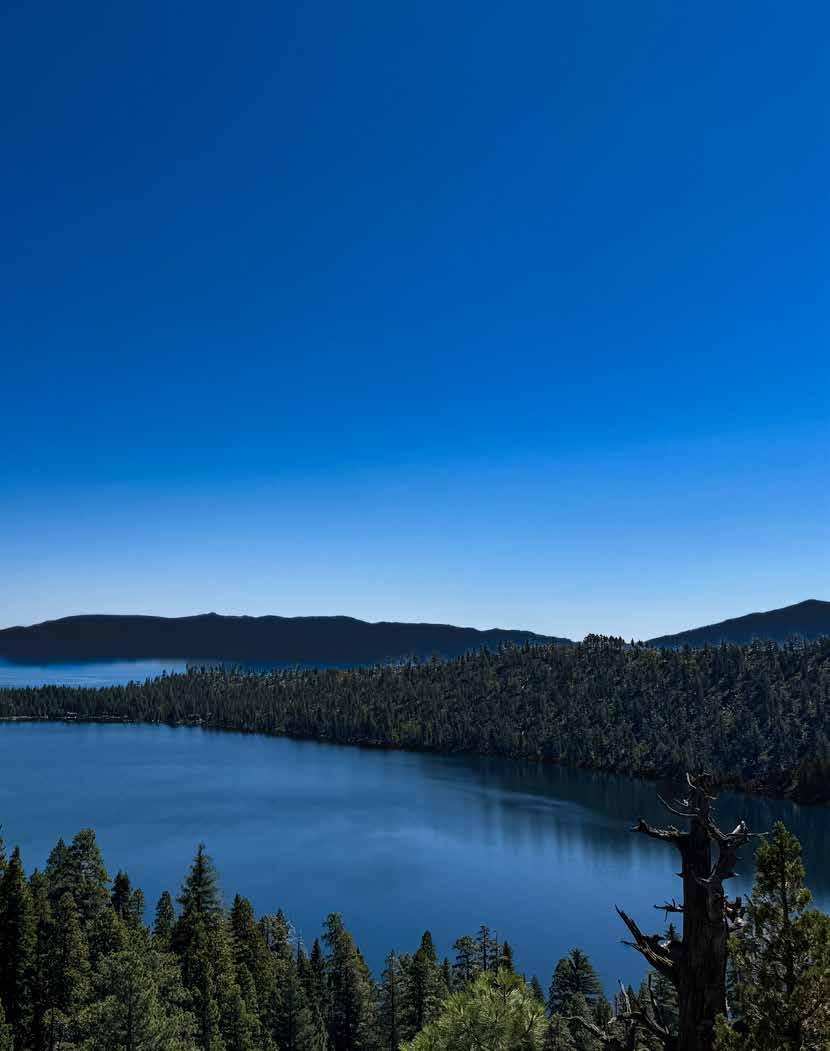
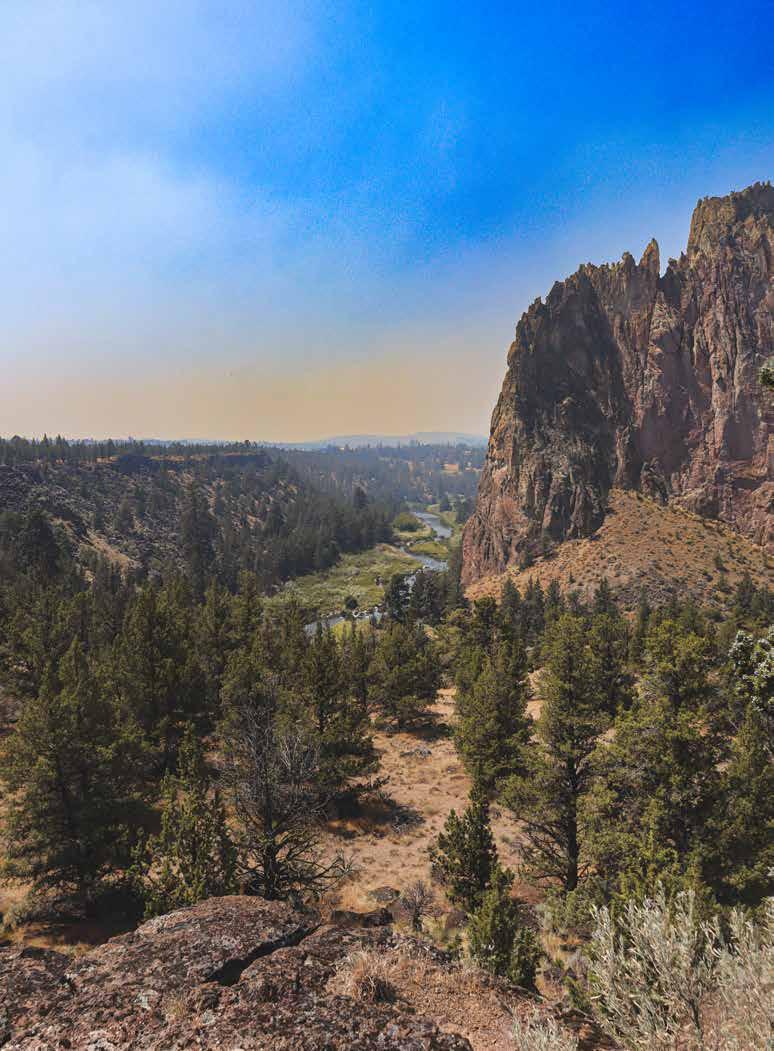
We try another beach later, in South Lake Tahoe. More people, more cafés, more movement. Paddleboards glide by, dogs chase sticks along the shoreline. Tourists sit down with coffees to go. It’s a different energy, more casual, but just as easy to get swept up in.
Evenings are easy, nice. South Lake Tahoe has bars and breweries for days. We end up at South of North Brewing Co., a brewery that is both backyard and stage. Live music is playing, the tables are full of pints, someone’s rounding up a crew for cornhole. A ping-pong table stands at a tilt but is still played with the same enthusiasm as a world championship game.
Tahoe is a place to chill. There’s no room for grand gestures. You hike, swim, eat, hang out. Well enough.
This is my third time in Yosemite. We’ve written about it countless times, but you just can’t get sick of it. Granite walls shoot to the sky right as you drive in, so high they seem to belong to a different scale than the rest of the world. In the valley, the Merced River flows gently, while the waterfalls thunder down from heights that look made up. Tunnel View is a must. El Capitan to your left, Half Dome in the distance, Bridal Veil Falls to your right. Everyone’s seen the picture, but no picture does this reality justice. It's five a.m., and we’re taking the Four Mile Trail up to Glacier Point. We’re heading out early to beat the crowds, avoid the toll, and just be able to find a parking spot. At the beginning of the trail is a whiteboard: instructions on what to do if you meet a bear. There’s a lot of them here. The road serpentines up, step by step. We’re alone in the park. The air is cool, the ground dusty. After an hour
or so, we hear a loud rustle in the bushes around a corner. Instinctively, we start calling out, “heeeeye, haaaaaay, haaaaw!” in unison, clapping our hands, and gathering close together. It’s dead quiet.
After a few seconds, one of us says, “Is someone there?”
“…Yeah?” a voice replies, confounded. Sitting around the corner are two confused dudes. Meanwhile, we’re hysterically laughing, red in the face. “Sorry, we thought you were a bear.” They shake their heads and smile. “You did everything right, but you don’t have to worry about bears this high up.” We blame it on being Swedish, but it didn’t need saying. This moment speaks for itself.
The path carries on upward, switchback upon switchback, and after several hours we reach Glacier Point at last. From here, we see the whole valley. Half Dome from the side, the river like a silver thread, the Sierra Nevada mountain ridges reaching into eternity. We don’t say anything, stand completely still. This view will silence even the most talkative.
For anyone not looking for a full day’s hike, there are shorter trails. Lower Yosemite Falls takes you directly to the bottom of the waterfall. Cook’s Meadow Loop is flat and offers views of both Half Dome and Sentinel Rock, often with deer grazing in the background. Each season has its character – spring brings rushing rivers; fall has its clear air and fewer visitors. Yosemite stays with you – in images, stories, and in that little jolt in your stomach when you realize you were actually there.
When San Diego pops up, it’s like recognizing a familiar face in a crowd. The beaches are where they’ve always
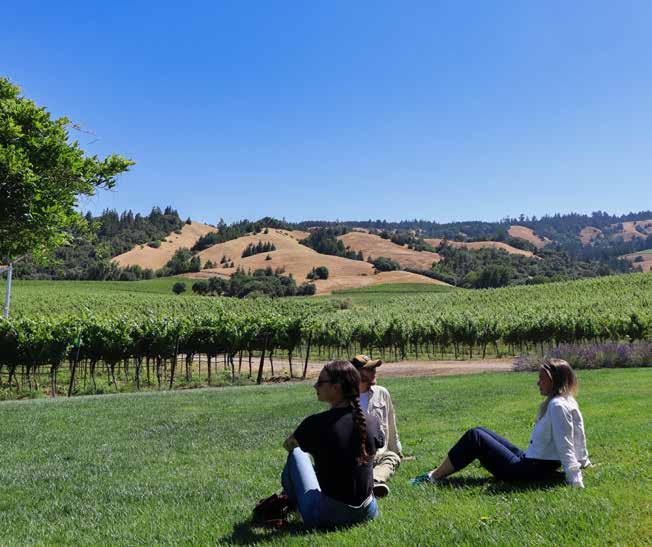
been, surfers waiting for the right wave, runners on the boardwalk in the evening light, people who want to watch the sun sink into the ocean before dinner. Pacific Beach is the same mix of tourists, locals, and dreamers as ever. Mission Beach is as much a beach as it is an amusement park. Coronado lies across the bridge, its sand glittering.
THE TACO TUESDAY RITUAL
La Jolla is next. We rent kayaks and paddle out to the caves, see sea lions rest like over-fed dogs on the rocks, seals that don’t move no matter how close we get. The dolphins are quicker, dark crescents near the surface before disappearing again. The water is clear. Paddlers glide silently around, and it feels more like being a visitor in someone’s living room than a tourist.
San Diego is also a beer town. We try our way through a few of the local breweries, Ballast Point being the clear
highlight. IPAs that taste like pine needles, tropical fruit, and citrus all at once, served in glasses so big that it’s hard to drink slowly.
And the food? Say no more than tacos. At Duck Dive in Pacific Beach, Taco Tuesday is not a meal, it’s a ritual. Beer glasses are filled as plates are stacked; the mood is more block party than restaurant. North Park and South Park get down to details – tiny restaurants that mix Mexican with local ingredients – you basically can’t find a bad taco in San Diego.
It's my fiancé’s birthday, so we do the only logical thing. We plop down on the beach and order a Mega Margarita each while the sun smolders on the horizon. The salt from the sea lingers on our lips, the tequila hits our bloodstream, and the birthday feels easy. When it gets dark, we switch the sea breeze for neon lights. Moonshine Flats is no ordinary bar; it’s an explosion. The floorboards vibrate
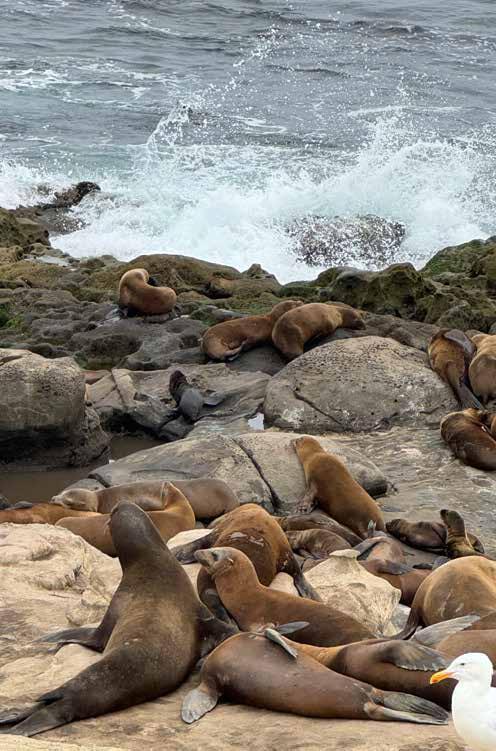
Celebrating Dirty Thirty(one).
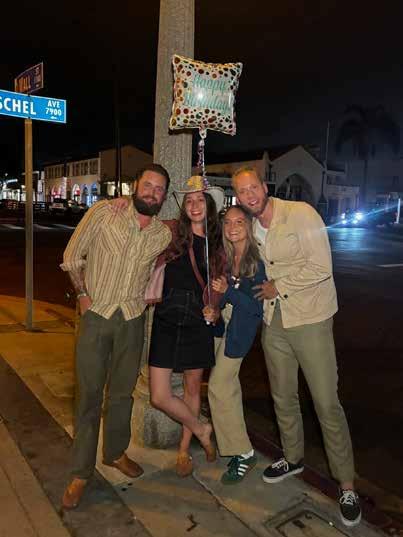
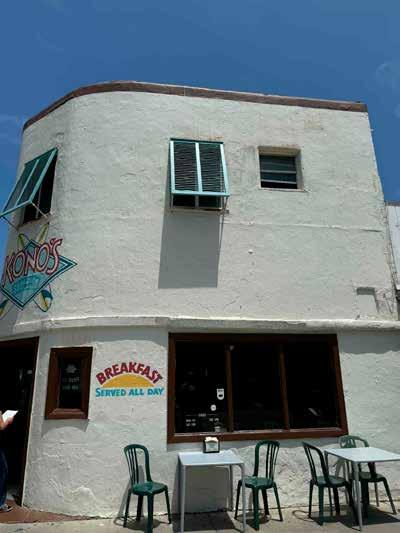
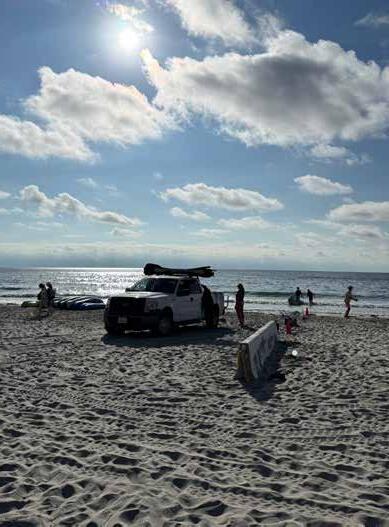
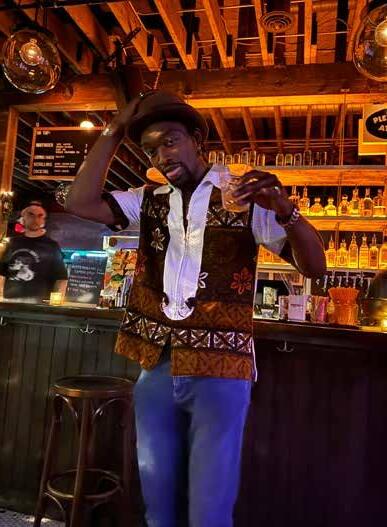
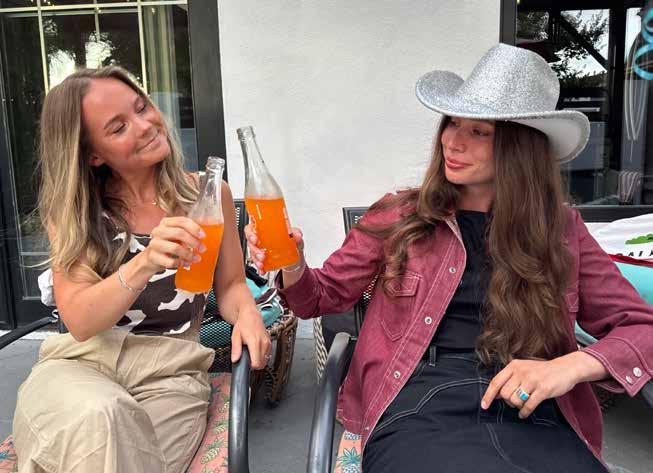
THE
NEXT DAY, WE LET THE PARTY FUMES EVAPORATE IN HILLCREST, THE NEIGHBORHOOD WHERE EVERYONE IS WELCOME.
PRIDE ISN’T A WEEKEND ON A CALENDAR HERE, IT’S LIFE.
underneath the boots, speakers blasting out country rock while hundreds of dancers move to the same steps, as coordinated as a parade. We throw ourselves into the line, lose the beat immediately but laugh our way through every step. No one cares that we mess up. Moonshine Flats takes in anyone who dares to step onto the floor and spits you out happier than before.
The next day, we let the party fumes evaporate in Hillcrest, the neighborhood where everyone is welcome. Pride isn’t a weekend on a calendar here, it’s life. Balconies are covered in color, coffeeshops are full of conversation, and the streets hum with a sort of natural freedom. We sit down at an outdoor restaurant, order a coffee, and let the afternoon pass. Hillcrest isn’t a neighborhood among the
rest. It’s the heart of San Diego, and it beats for everyone.
We started with one car, four people, and a vague plan: north along the coast, as far as we can make it, and back againa.
The trip wasn’t just a checklist of sights to see. It became a test of patience, endurance, and friendship. We shared a car, food, music, silence. We laughed at the wrong things, fought about the little things, and ended up in places we didn’t know existed.
That’s all you can really ask of a trip: that it changes something. The road sheds what is not important. Either it breaks, or it survives, stronger than before.
We survive. Better friends than ever.
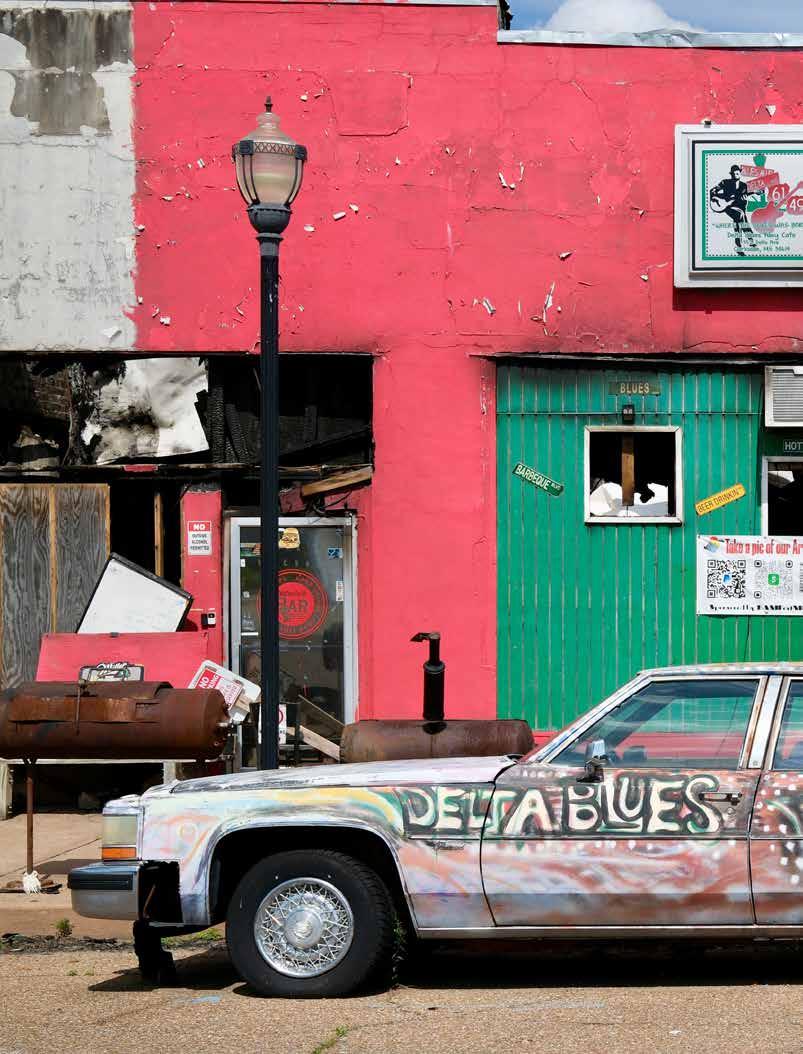
I’m trying to get people to see that we are our brother’s keeper. Red, white, black, brown or yellow, rich or poor, we all have the blues. The words belong to B.B. King. What culture shaped blues artists like him? Thomas Lundvall goes to the blue heart of the Mississippi Delta to find the core of the blues.
WORDS
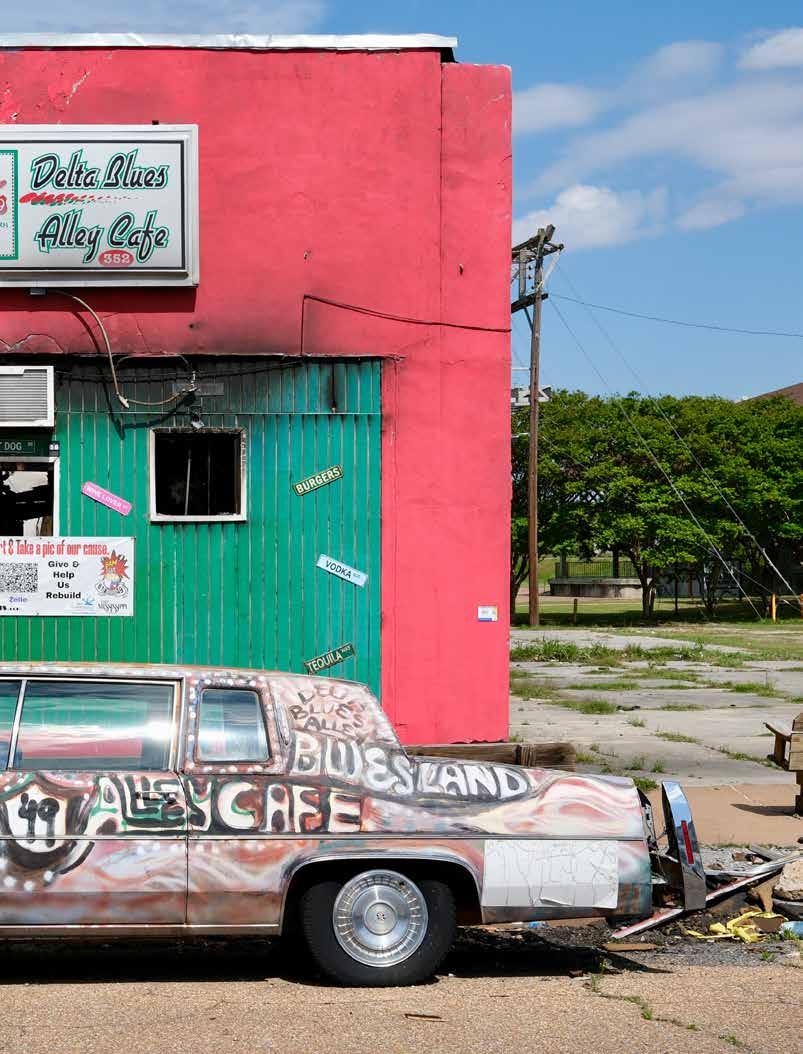
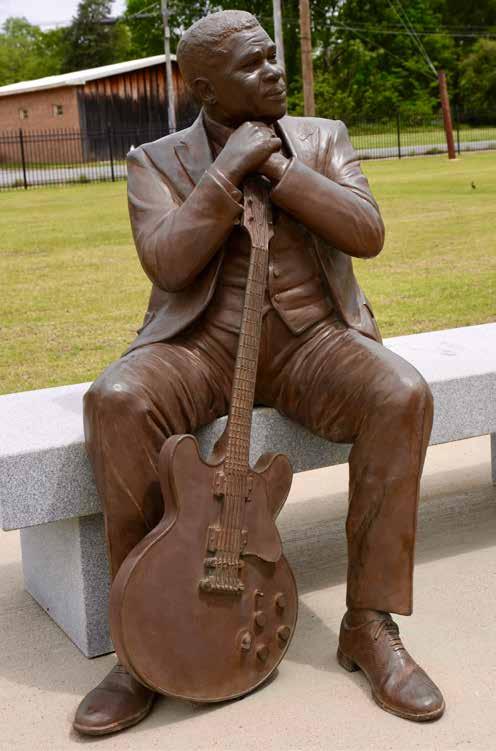
Highway 61 cuts straight through the landscape. Wide open fields. Utility poles made crooked by the wind. Little churches with hand-painted signs, like pages in a book no one could be bothered to finish. There’s no good blues on the radio, so we pick our own. Sharp guitars, heart-wrenching voices. No need to ask when these songs are from – they carry the patina of time as clearly as rust on an old sign. Clarksdale appears without much fanfare. Brick buildings in washed-out colors, a street corner where the low sun shines on nearly empty streets. The town doesn’t hide its wear. But between the flaking buildings, something is stirring: a newly opened café, two breweries (Red Panther Brewing and Smelter Town Brewery). Traveler Hotel is a modern hotel in an old industrial building. Tall windows, soft light. Simple and straightforward, you pour your own coffee or beer. The hotel was started by a non-profit, Coahoma Collective, an organization of architects and artists who wanted to revitalize downtown Clarksdale.
The Mississippi Delta. This is where the blues was born. Robert Johnson’s name is still whispered at the Crossroads – the junction where legend says he sold his soul to the Devil to play guitar like no one else.
Muddy Waters grew up on a cotton farm just outside of town and brought the sound to Chicago, where he electrified it. John Lee Hooker, Son House, and many others walked the same earth, breathed the same heat, filled the same night air.
The sun hangs heavy on the streets. Here, in the depths of the Delta, two of the South’s most prominent voices meet: the playwright Tennessee Williams and the blues singer Bessie Smith. Two different stories, tied together by this small town on Highway 61. As a boy, Williams lived with his grandparents in the rectory of St. George Episcopal Church, where his grandfather was a priest. The house filled with voices and characters who would later reappear in his plays. Today, the building is known as the Tennessee Williams Rectory Museum, a place where visitors can walk through the same rooms that once shaped one of the 19th century’s biggest playwrights.
Only a few blocks away is the Riverside Hotel. Formerly a hospital for African Americans, this is where the blues singer Bessie Smith was taken after her car accident in 1937. She died that same night, and her last moments of life were written into Clarksdale history.
In 1944, the building was turned into a hotel and was one of few places where Black musicians could stay during segregation. Big names like Muddy Waters, Ike Turner, and Sam Cooke have all slept here between sets.
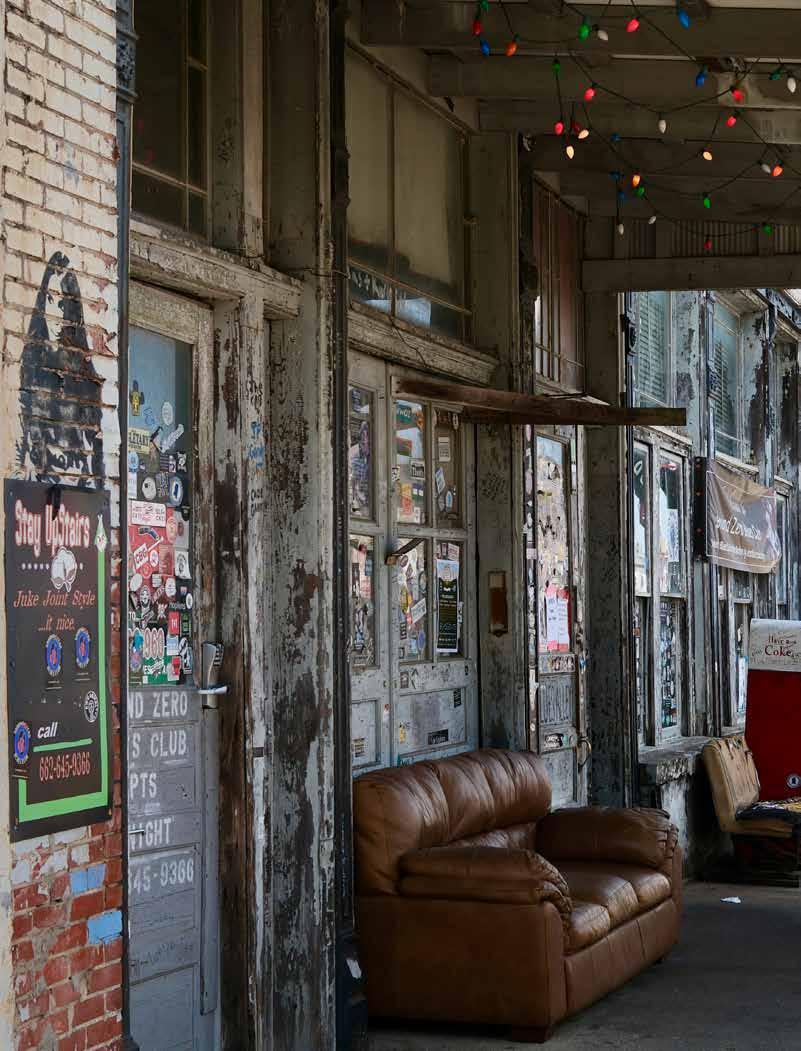
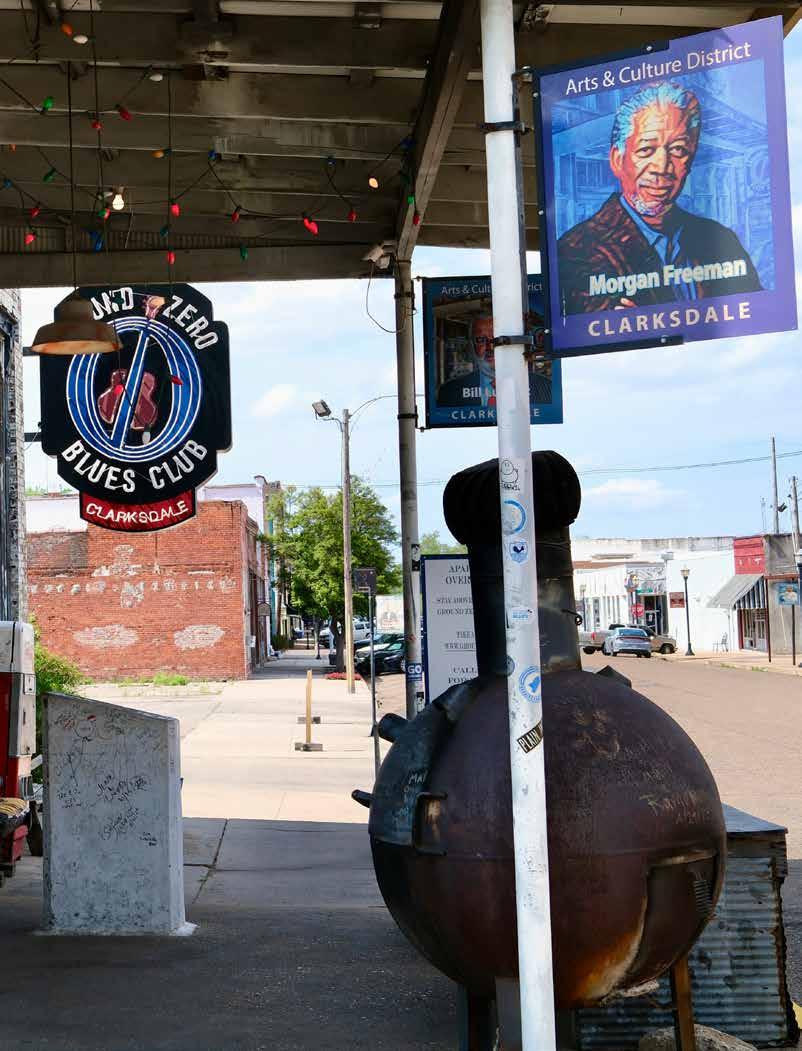
These days, Clarksdale is a spot for both literature lovers and blues fans. Williams’s poetic drama meets the sad sounds of the blues, two art forms created in the same soil. The bars still play the music night after night, and stories of the people who put the South on the map float through the old houses. Clarksdale isn’t just a town in Mississippi – it’s a stage where drama and music continue to play together, long after the curtain is down and the last few bars have faded away.
You find the whole story at the Delta Blues Museum, where voices no longer with us still sing. A block away is the Ground Zero Blues Club, owned by Morgan Freeman, the actor. The walls are covered in names, the air is thick with barbecue, beer, and dust. It’s Tuesday afternoon –closed. The seven or eight other juke joints in town are smaller, simpler. We end up at the Hambone Gallery, an art gallery-turned-living room. Alessandro Ponti and the Bonesmen stand on a makeshift stage, letting it rip. The music is right up close. It has the same mix of pride and vulnerability as the rest of the town.
We start Wednesday morning at the pleasant Yazoo Café. Stop at the Crossroads before continuing south. Is the legend true? It might just be a yarn of old folk tales and the blues’ own flair for the dramatic. But standing there, while the traffic light slowly changes and the wind sweeps across the open street, it’s easy to understand how the legend still lingers.
We carry on, home to B.B. King.
The road takes us to Indianola, Mississippi. One of the greats was born a few miles from town, in Berclair. B.B. King – or Riley B. King, as was his given name. His childhood was tough, sparse, shaped by the hard labor of farming and the music of church. Indianola became his real home. This is where he, as a young man, played on the streets, dreamed big, and worked his way towards stardom. This is where he found his first real audience, people who could sense the truth in his voice.
Even once fame brought him to the biggest stages around the world, he always returned to Indianola. With every tour, every accolade, and every new chapter in his
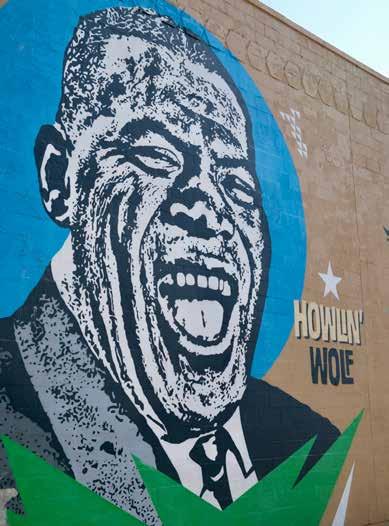
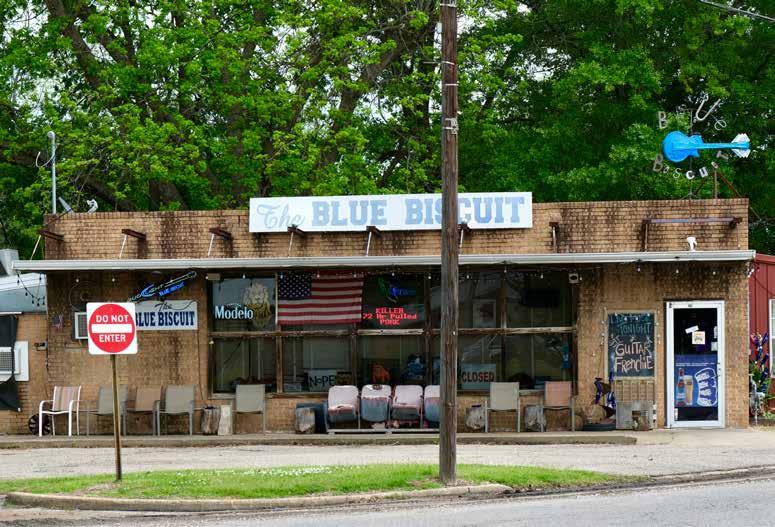
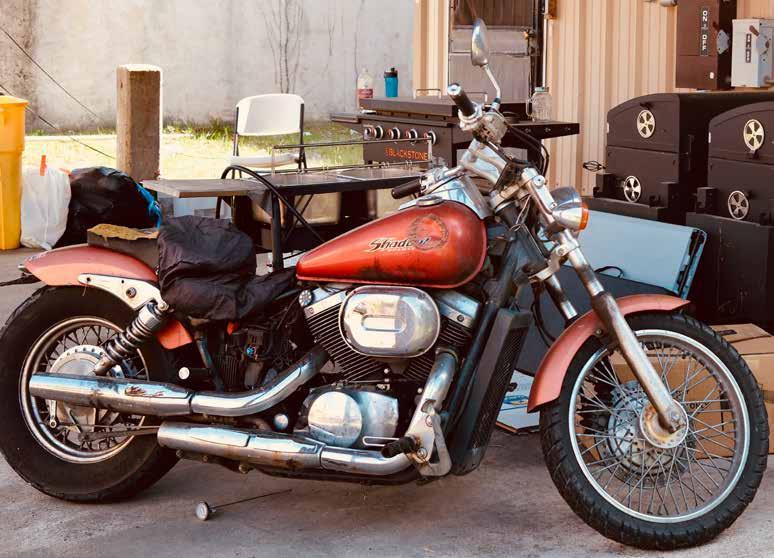
What else do you need?
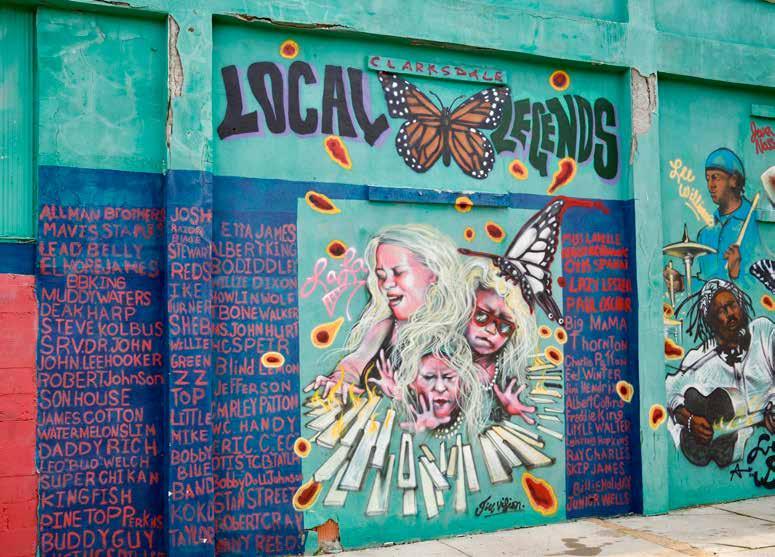
life, the town remained, a reliable comfort. In this town, he played to friends and neighbors – no fuss, no barriers – just music, straight from the heart. Rolling into Indianola is like stepping into the story of his life. A small town in the middle of the Mississippi Delta. We’re head for the B.B. King Museum and Delta Interpretive Center. This place has music pulsing through its walls: from his dusty youth, past the first trembling guitar notes, to the arenas where Lucille sang to thousands.
Lucille was B.B. King’s guitar. In the 1950s, King was performing in Twist, Arkansas, when a fight broke out, knocking over a kerosene heater barrel, which set the building on fire. King ran back in to save his guitar. After learning that the fight was about a woman named Lucille, he decided to name all his guitars Lucille, as a reminder to never do something so stupid again. Lucille became his voice and his soul, carrying the whole history of Mississippi in her melodies. She was always at his side, from small clubs to the greatest stages of the world.
Just a few steps away, in a sunny patch at the museum’s side, is where the King was laid to rest. His grave is simple, but powerful – a silent reminder that even the greats one day return home. Standing there in stillness, with the wind as your only accompaniment, you can hear the echo of a guitar tune that never truly dies.
Indianola is more than a place on the map. It’s a living celebration of a man who brought the Delta to the world, and the world to the Delta. It’s a place where history, music, and memories meet – and you leave it with the feeling that the blues is still alive and well.
Definitely worth the detour.
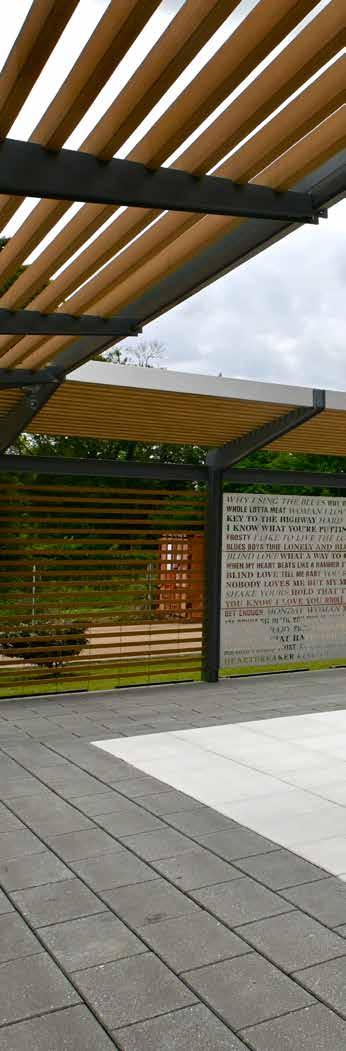
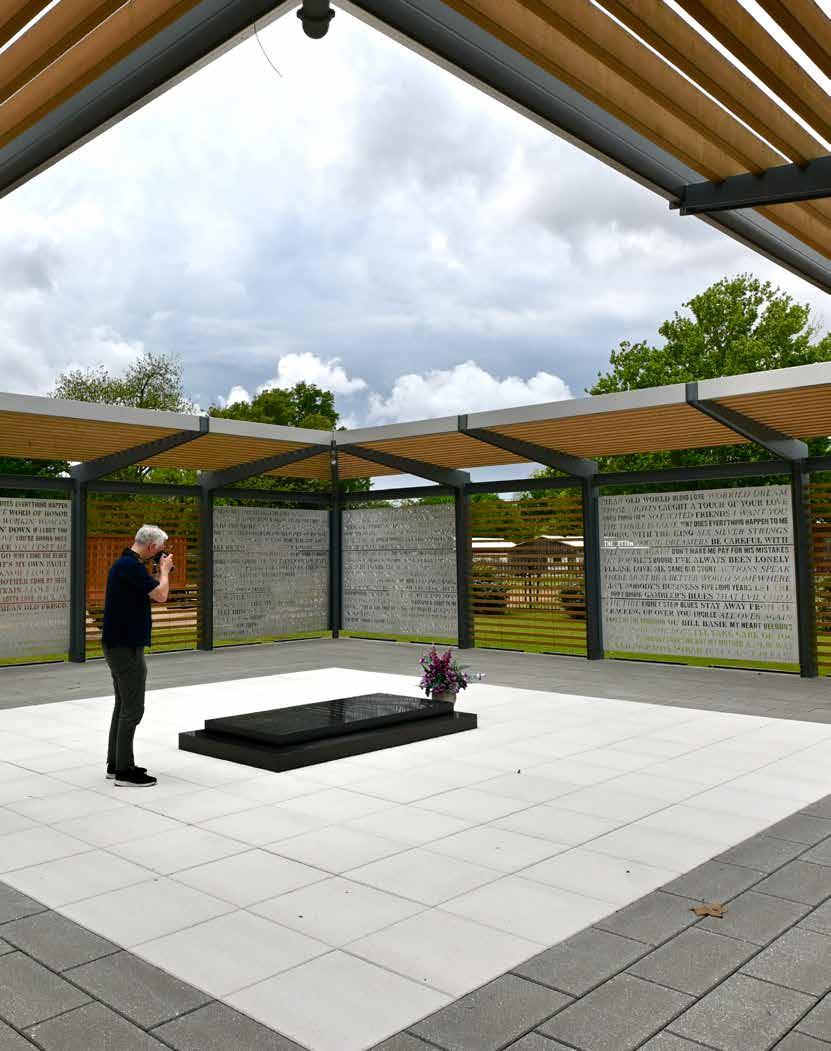
What could be better than a bit of melancholy on vinyl, shattered dreams, and lives on the wrong side of the road, as Tom Waits would put it? Our colleague and photographer Peter Eriksson is on the right side of the road but swears by lyrics about dogs that have passed away, wives who have left, and an unhealthy relationship with whiskey and cheap beer. Starting with this issue, his strong interest in music will have a permanent place in the magazine, along with his brilliant portraits of the Americana artists he writes about.
WORDS AND
PHOTOS
BY PETER ERIKSSON | @PHOTOGRAPHERPETER
My first clear musical memories are of sometimes having to choose between listening to one of my mother’s old Elvis singles or hearing a bedtime story. In my memory, but certainly not in reality, I decided the music just as often as the story; standing there swinging my arms in my dad’s old headphones (the kind with separate volume controls on each of the giant ear cups) was like being transported to another world; Don’t Be Cruel, Teddy Bear, or my favorite, King Creole (which is still just as good) were listened to countless times, and when I got a little older, the album Elvis in Memphis was just as popular.
Since then, I’ve been hooked on music. After Elvis came different periods: ABBA in elementary school, of course, then a lot of reggae in middle school, but also Johnny Cash. The first English lyrics I really understood were “A Boy Named Sue,” which I thought was the hardest song in the world. Junior high school was lost in the eighties music I don’t really want to admit to today, and in high school, I discovered punk and post-punk. A little later came my own generation’s grunge wave, which was fed into the stereo day in and day out. But then, in the mid-nineties, I discovered Wilco, which brought me back to music with roots in the same folk tradition as when I first started listening to Elvis. Since then, I’ve mainly been digging into that musical soil; it’s Americana, blues, and country-inspired music that
keeps me going—in recent years, jazz has also started to creep in, but jazz as it sounded in the 1920s and 1930s (even if it’s been newly recorded). Standing and browsing through vinyl records at a record fair or flea market may not be quite the same thrill for the 57-year-old I am today as it was for the 17-year-old I once was. Still, it’s not far off when you finally find that record you’ve been looking for for so long, that surprise you didn’t expect to find, or that cool cover that makes you just HAVE to listen to the record.
My absolute favorite musician, Tom Waits, said in his speech when he was inducted into the Rock and Roll Hall of Fame, in his ingenious way, “Songs are really just very interesting things to be doing with the air.” I think it’s that simple and that difficult with music. Creating a sound is not difficult, but then shaping those sounds with a combination of hand, heart, and brain into something that a listener on the other side of the world can receive and make part of themselves is something that is genuinely not given to everyone—and it’s probably the most enviable thing I can imagine.
I am thrilled to become a music writer in collaboration with American Trails Magazine. Not only will I have the opportunity to write about my favorite artists, but I will also show the photos I have taken of them. Additionally, I will create a playlist for each issue. I almost feel envious of myself!
Scan the qr-code to check out Peter´s playlist on Spotify.
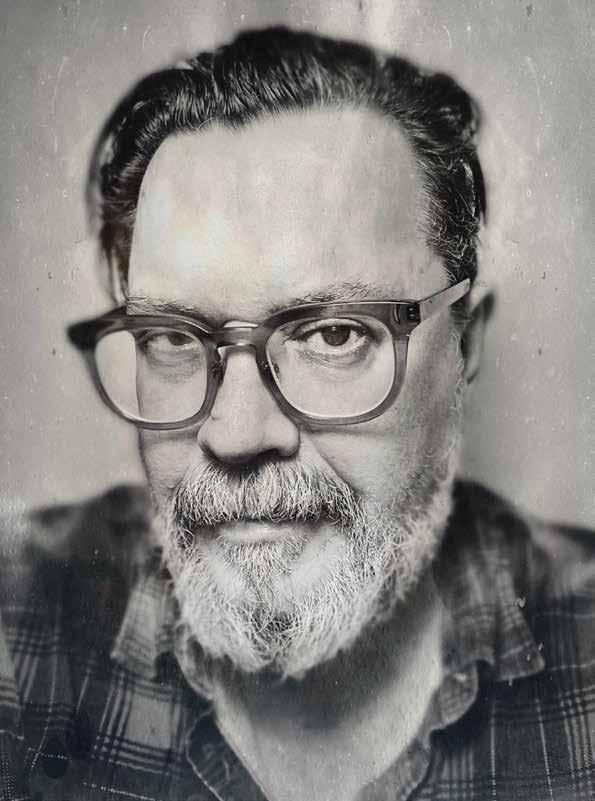
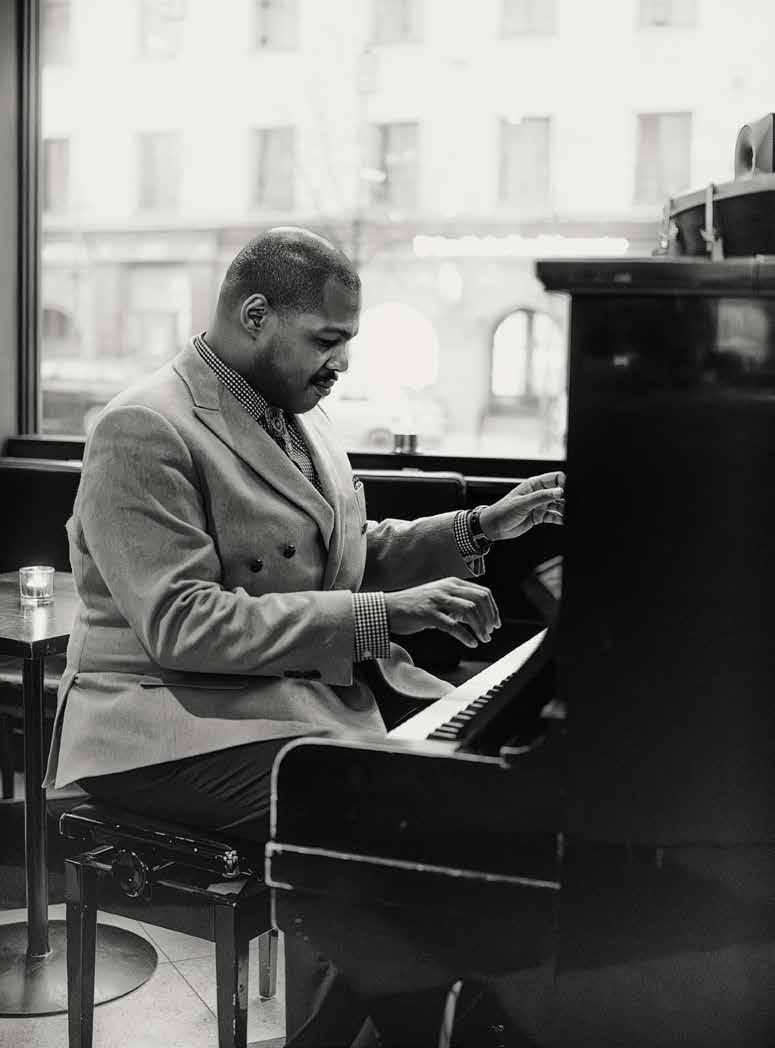
When I meet Jerron Paxton for a photo shoot, he has just greeted Eric Bibb, Sweden’s own (well, he lives here anyway) blues legend, with a huge smile and a big hug. When he realizes who I am, he smiles broadly and says, “I’ll give you a hug too,” with an equally broad smile, and soon after, I find myself pressed against his broad chest. And that’s how Jerron feels on stage too, warm and ready to smile—and full of anecdotes about music and its history. Watching him perform is like getting a lesson in black American music history as he alternates between his old banjo, guitar, harmonica, and piano. Simply a wonderful guy.
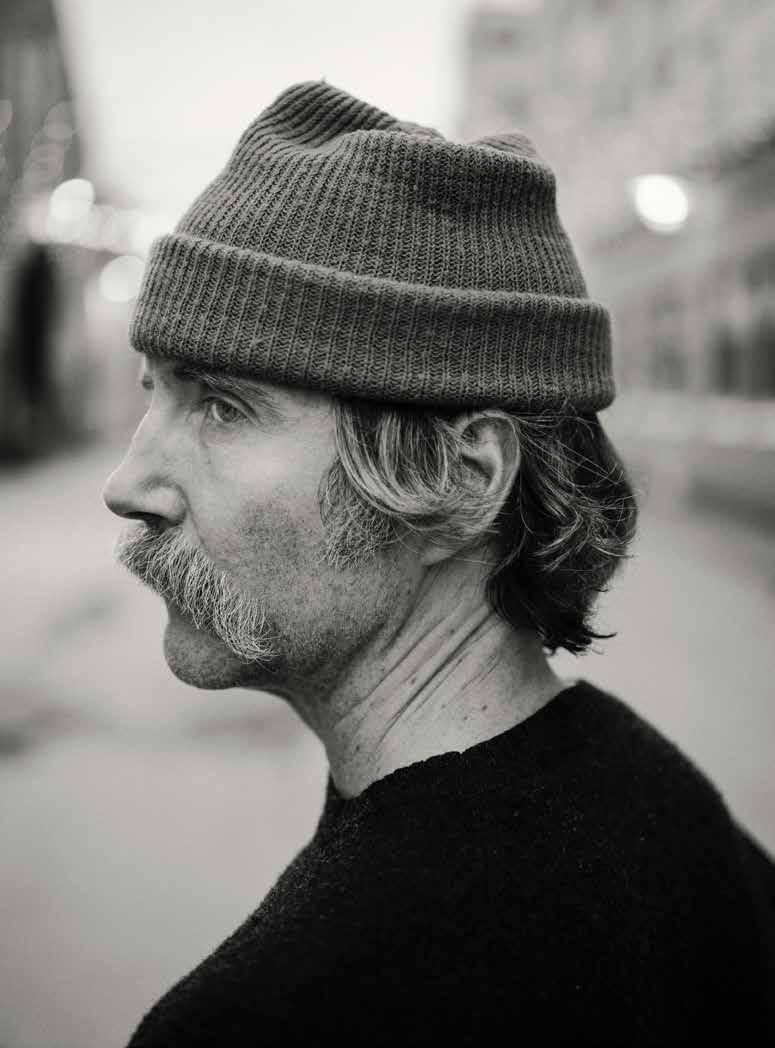
Dean spent years serving beer behind the bar at Al’s Tavern in Seattle. At the same time, he played with his friends in The Sons of Rainier s. Rumors spread that he was one of the best songwriters in town, but it wasn’t until he recorded the fantastic song Faraway Skies acoustically for Western as Fuck (check out their YouTube channel for some great stuff) that he had his own small-scale breakthrough. It wasn’t until he was fifty that he released his first solo album in 2023, which already has a follow-up. With a twinkle in his eye, he writes and sings melancholic songs with his “high lonesome” voice about hiding his tears, cowboy dreams, or smashing TVs to find some copper. Check it out!
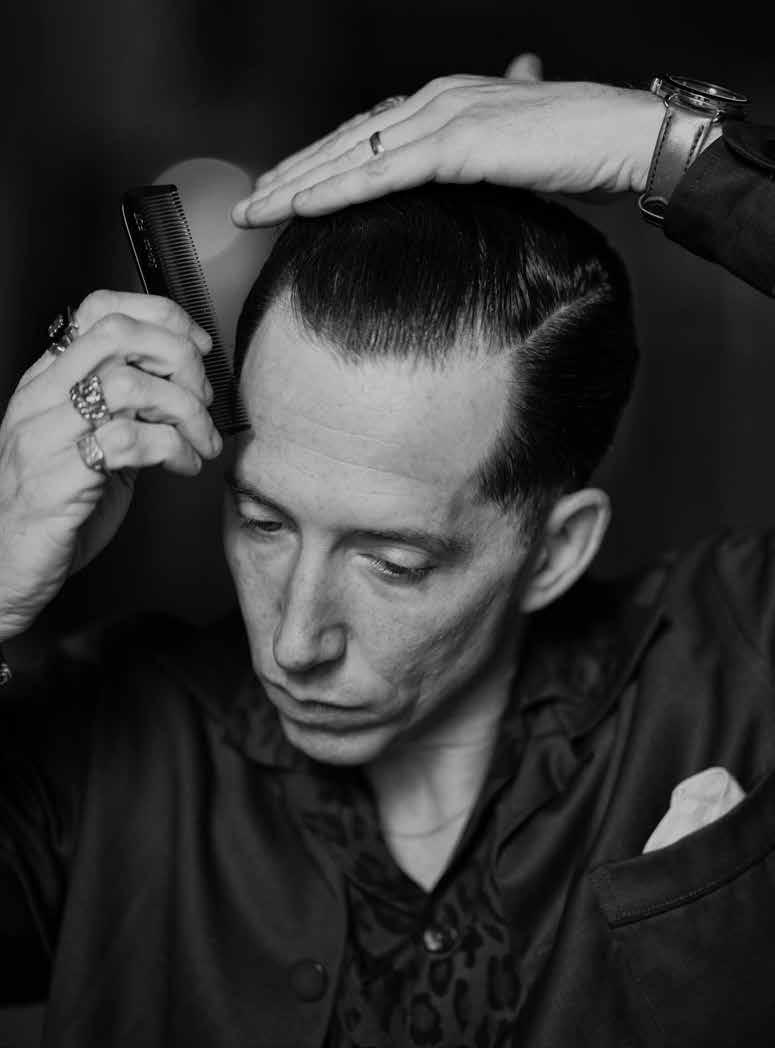
Pokey, born Andrew Heissler, could illustrate the concept of anachronism with his mere appearance: everything about his music, hairstyle, clothes, and general appearance exudes the 1920s to 1950s. After first becoming interested in old blues by artists such as Skip James and Sleepy John Estes as a young man, he later took a step towards bluegrass through “The father of bluegrass”, Bill Monroe, and has since continued to explore what is now broadly known as Old Time
Music. His music is an amalgam of all types of older American music, including blues, bluegrass, country, western swing, ragtime, jazz, Appalachian folk music, rockabilly, etcetera, all performed with the same joy and enthusiasm. He is best experienced live, barely standing still for a second, constantly smiling with pleasure, and with a sweat-glistening forehead. A force of nature, don’t miss him if you have the opportunity to see him on stage!
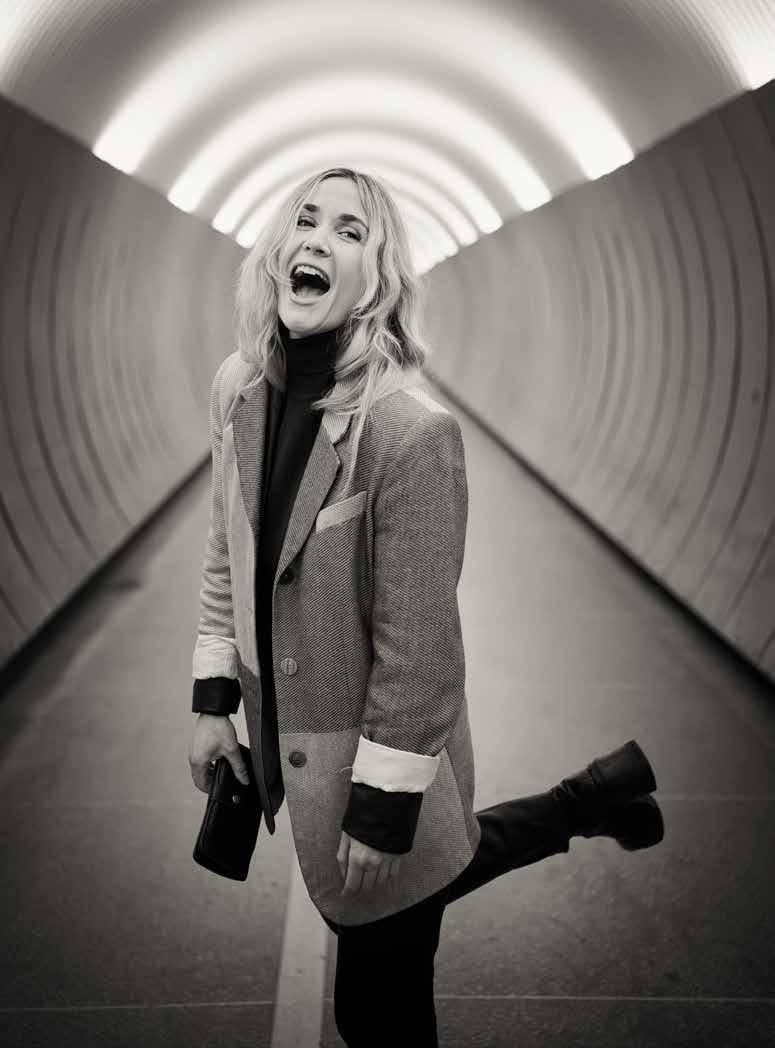
I’ll try Ketamine, it could be a provocative way to start a song about misery and addiction. Still, instead, Esther uses the word in a beautiful love song from her latest, equally stunning, album. Although Esther has stayed true to the same musical style throughout her career, she has also taken significant steps forward. Something that is evident on her album covers: on her folk-inspired lo-fi debut, This Time Last Night from 2017, where she sits by a campfire
playing acoustic guitar, while on her latest (fifth) album, she appears in two versions, one in innocent white and the other in sinful black body-tight latex. The sound is as far from her debut as her clothes are. And just like Dean Johnson (who also guests on the latest album), she has a twinkle in her eye that means listeners are never quite sure where they stand with her – in a good way. She's someone you should keep an eye out for in the future!
Ask any New Yorker and they’ll tell you: Veselka is an institution. Nestled on a busy corner in Manhattan’s East Village, this Ukrainian diner has fed late-night noshers, hung-over college students, and Ukrainian regulars for over 70 years. Third-generation owner Jason Birchard knows the secret is in the details.
WORDS AND PHOTOS BY CAJSA LANDIN
Spring is in the air, a bright sun lighting up the Slava Ukraini stencil on the Second Avenue sidewalk. New York beams with that feeling of potential that only exists just before summer arrives; in yellow and blue planters, new-green leaves flutter on the trees. Even though it’s the middle of the day, a steady stream of patrons trickles by on their way into the restaurant on the corner.
“My grandfather started this as a Ukrainian bodega in 1954,” Jason says as we take a seat at one of the outdoor tables on East 9th Street. His grandparents, Wolodymyr and Olha Darmochwal, had come over from Europe a few
years earlier, refugees from that generation’s war. At the time, this part of the East Village was heavily Ukrainian, hints of which are still dotted around the neighborhood like little jewels: the Ukrainian church, butcher, credit union, and National Home were here long before the punks, creatives, and free spirits moved in. A festival celebrating Ukrainian culture takes place around the corner every year. The restaurant’s name, Veselka, means rainbow in Ukrainian.
“He was just selling cigarettes, newspapers, things like that,” Jason continues, “and had a very small menu. My father is who introduced a larger family menu.” Tom Birchard found himself brought into the fold when he married the Darmochwals’ daughter, Marta. “My dad always says he’s
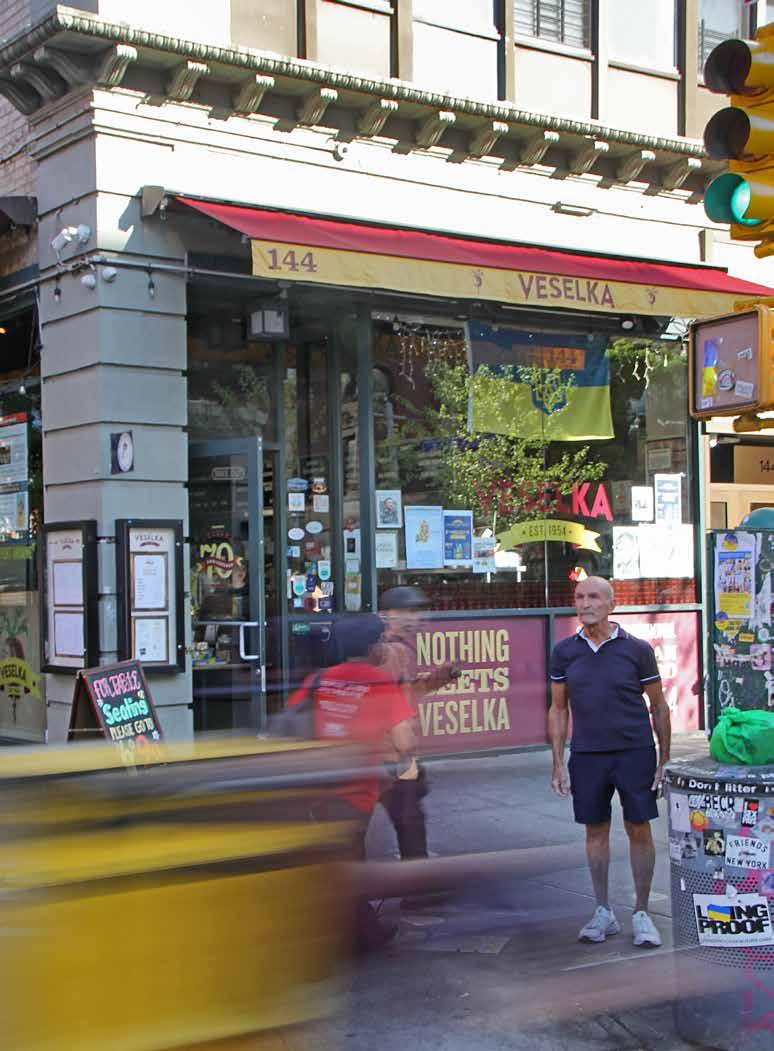
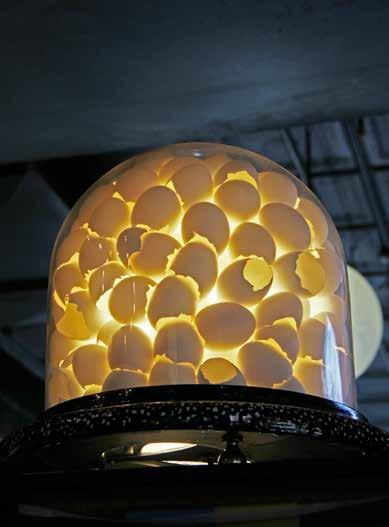
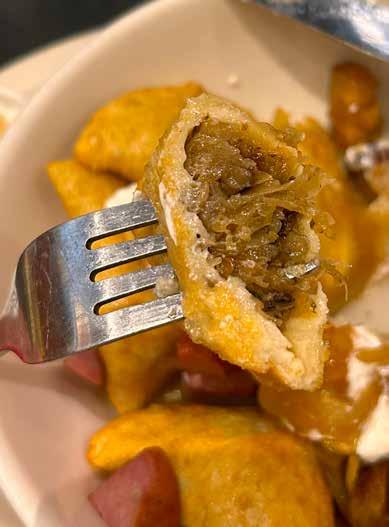
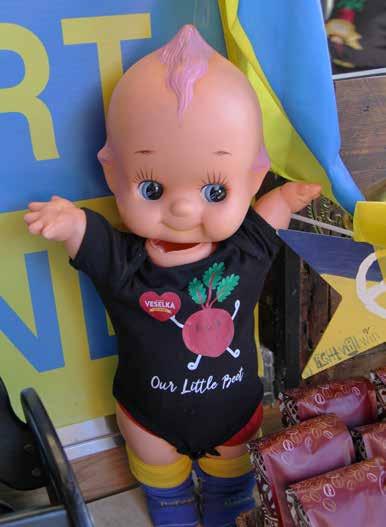
HE PARTNERED WITH THE ST. GEORGE UKRAINIAN CHURCH DOWN THE STREET TO COORDINATE SUPPLY DONATIONS. HE ALSO DECIDED THAT PROCEEDS FROM ONE OF THEIR OG MENU ITEMS, BORSCHT, WOULD GO TO UKRAINIAN RELIEF EFFORTS. TO DATE, VESELKA HAS DONATED OVER ONE MILLION DOLLARS TO THE CAUSE.
not Ukrainian by blood, but by persuasion,” Jason says with a laugh. “I’m sure my grandparents envisioned my mom marrying another Ukrainian, but my grandfather took him under his wing.” When Wolodymyr suddenly passed away from a heart attack in 1975, Tom took over. Though the marriage didn’t last, he ran the restaurant until Jason took over a few years ago.
I’ve been coming to Veselka as long as I can remember, after arriving in New York in my early twenties. Post-bar, onthe-way-home bites, awkward dates in the outdoor seating of the early pandemic, and comfort food on rainy Sundays when five blocks north was about as much as I could muster, the restaurant on the corner never wavered, never failed.
It was Jason who in the 90s turned Veselka into the 24-hour haven we later transplants have always known it as. Having grown up just a few blocks up the street, he already knew what this vibrant neighborhood was like and that the streets are full of characters around the clock.
“Growing up here was a great experience,” he tells me. “You learn quickly about the way life is, the neighborhood was so eclectic. When we first opened up overnight ¬– I took those shifts myself before we got a night manager – it was immediately popular. It was a lot of weirdos, for sure, sometimes it would be nothing but a couple old guys playing cards in the corner, sucking down a cup of coffee for three hours. Between 4-6 a.m., it was bartenders who wanted to come and sit. But we also got people looking for a good meal after a show.”
Veselka’s regulars have come to rely on the restaurant year-round. “We just started closing on Christmas Day,
but we’re open on all the other holidays. Sometimes there’s movie shoots, but we try not to close down. The regulars get real mad when we do,” Jason says.
Here, in the homey buzz of the busy restaurant, it's hard to picture Jason’s intended life track, but just like his father, running Veselka sort of happened to him. His plan was to work on Wall Street and make the big bucks.
“But then I did this internship. And just looking at computer screens and analyzing numbers and cold calling people, it wasn’t very engaging.” He took some time after college to bum around Europe, and when he came back, he didn’t have a job. “My father said, why don’t you come back to help? And I thought, alright, I’ll try it for a while.”
That was over 30 years ago, and he’s never looked back.
A young woman at the next table is eating pierogi. I talk to her later, after Jason’s gone off to tackle his never-ending to-do list. Her name is Sydney, and she tells me she comes in from Brooklyn specifically to pick up food here. “I’m going to dinner in an hour,” she says between bites, “but you can always sneak in a little pierogi snack.”
That’s a pro-tip to remember. (Her favorite is the arugula goat cheese.)
WAR COMES TO THE CORNER
As a tribute to his father, Jason and a filmmaker/frequent restaurant guest had been working on a small documentary to commemorate Tom’s legacy. Then, Russia invaded Ukraine, and the focus of the film quickly shifted.
“When something like that happens, people want to commiserate, share their love, show support. And we’re open late, we’re here all day. Suddenly we became a place where people donated supplies and toys.” Jason knew they
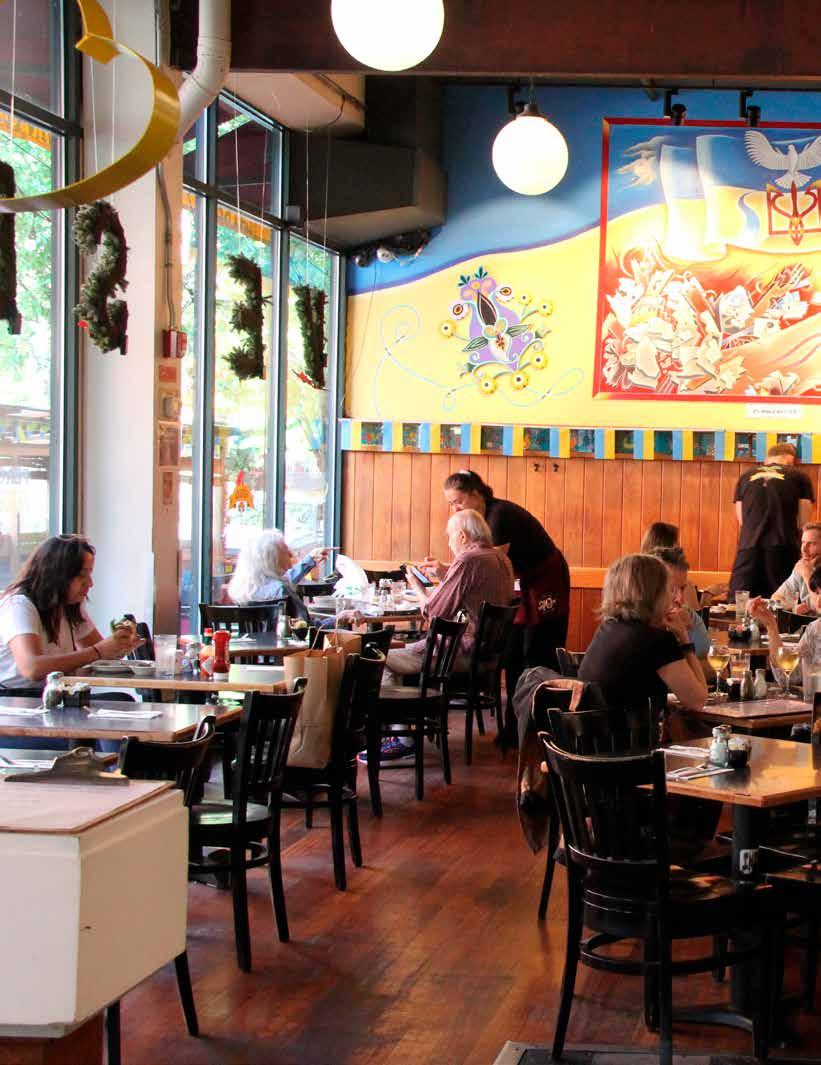
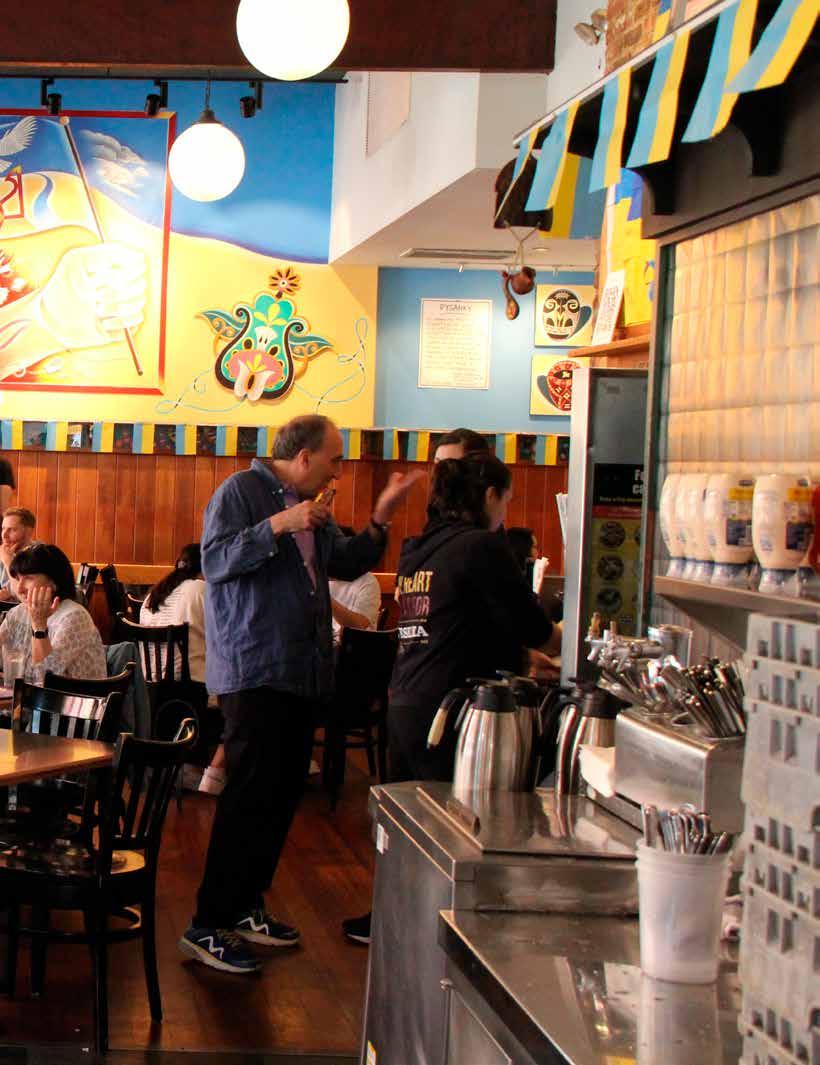
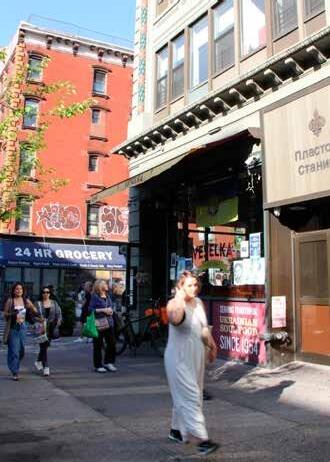
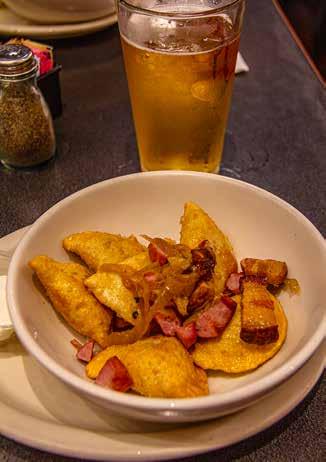
were a meeting point for people, but also that he wasn’t equipped to handle all the support pouring in. Veselka was already partnered with Razom for Ukraine, a local non-profit focusing on humanitarian relief efforts, and steered donations to them. He partnered with the St. George Ukrainian church down the street to coordinate supply donations. He also decided that proceeds from one of their OG menu items, borscht, would go to Ukrainian relief efforts. To date, Veselka has donated over one million dollars to the cause.
A self-proclaimed introvert, Jason quickly had to learn how to speak with the news media and be the voice for not just the staff, but on a larger scale for Ukrainians in New York. The film, Veselka: The Rainbow on the Corner at the Center of the World, follows the Birchards, the Veselka staff, and their families as they not only run a restaurant, but navigate their people’s fight for freedom.
“Before the war, maybe everyone didn’t know we were Ukrainian specifically,” Jason says. “Maybe they just thought Eastern European. But now they know. And Ukrainians are a strong people, you know, they believe in a free and democratic country. That’s what the war is about.” He beams with pride. “They said Kiev was going to fall in three days, now it’s been over three years.”
But Veselka isn’t just a support for people in the neighborhood, it’s been a lifeline for the mostly Ukrainian staff.
"The war has been a tragic scenario for the staff. A lot of them have family there, and our staff members are like family to me,” Jason says. As a result, Veselka has sponsored several of the staff’s family members to come over to the U.S. Most of them now work at the restaurant.
“I have a very deep connection with my staff, I couldn’t do any of this without them. And I’m a yes man. So if someone needs me to do something to get their parents over from Ukraine, I feel that’s the right thing to do.”
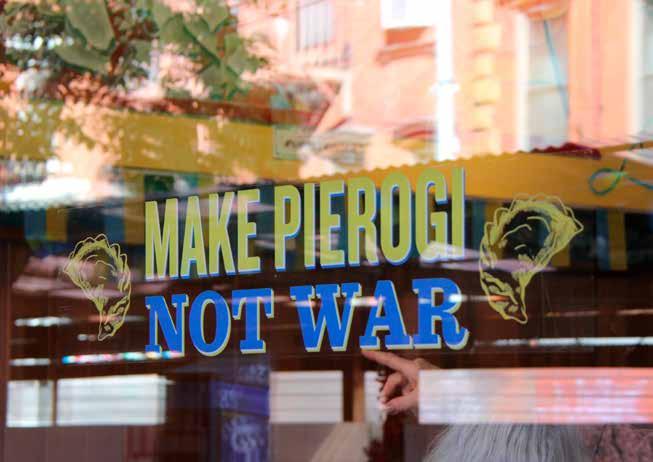
The war wasn’t Veselka’s first time as an anchor in a storm. They worked hard to stay open through the pandemic, at a time when New York was a locked-down ghost town trying to keep 8 million people six feet apart. They lost power when Superstorm Sandy made landfall in 2012 and the East Village turned into a low-tech, offgrid community of neighbors looking out for neighbors. Veselka stayed open as best they could, serving cold food and supporting the police and fire departments. They were there on 9/11.
“People like to have a place where it’s not only about food, but there’s a community. Just seeing other people and enjoying comfort food, people like that,” Jason says and continues, “I know we’re not 5-star Michelin dining. Ukrainian food is peasant food. But it’s that connection you might have with an old grandma or somebody that, you would go to their house, and they'd give you a plate of food and they would feel insulted if you didn't finish it, whether it was pierogi or chicken soup or potato pancakes.
That’s who we are. We say it’s Ukrainian soul food in the heart of the East Village.”
A few days later, I have a hankering for varenyky (Ukrainian for pierogi) again. The weather turned suddenly, bringing spring gusts and dark clouds: my favorite meat-and-potatoes weather. I order a mix of the fried pierogi – always potato, always cheese, always short rib, so help me – and a bowl of borscht. It’s a bold move; three pierogi in, I’m already feeling the dumpling sweats. The dining room is buzzing, patrons are anything from 20-year-old transplants to old neighborhood stalwarts. It takes a certain kind of person to age in New York, but it also gives you a certain aura of invincibility. They sit there like immovable role models. I take notes.
Sitting next to me is Leah, a former East Villager who left New York for Mexico City a few years ago. She says there’s “no way” she’d come to town without swinging by
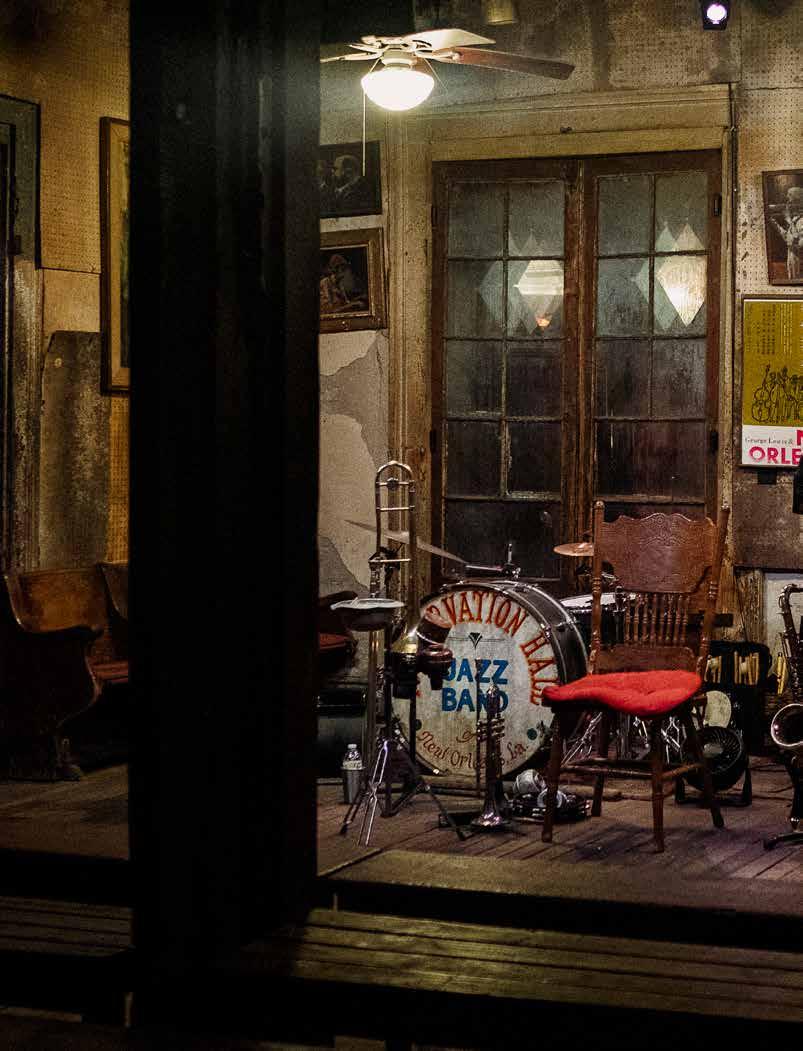
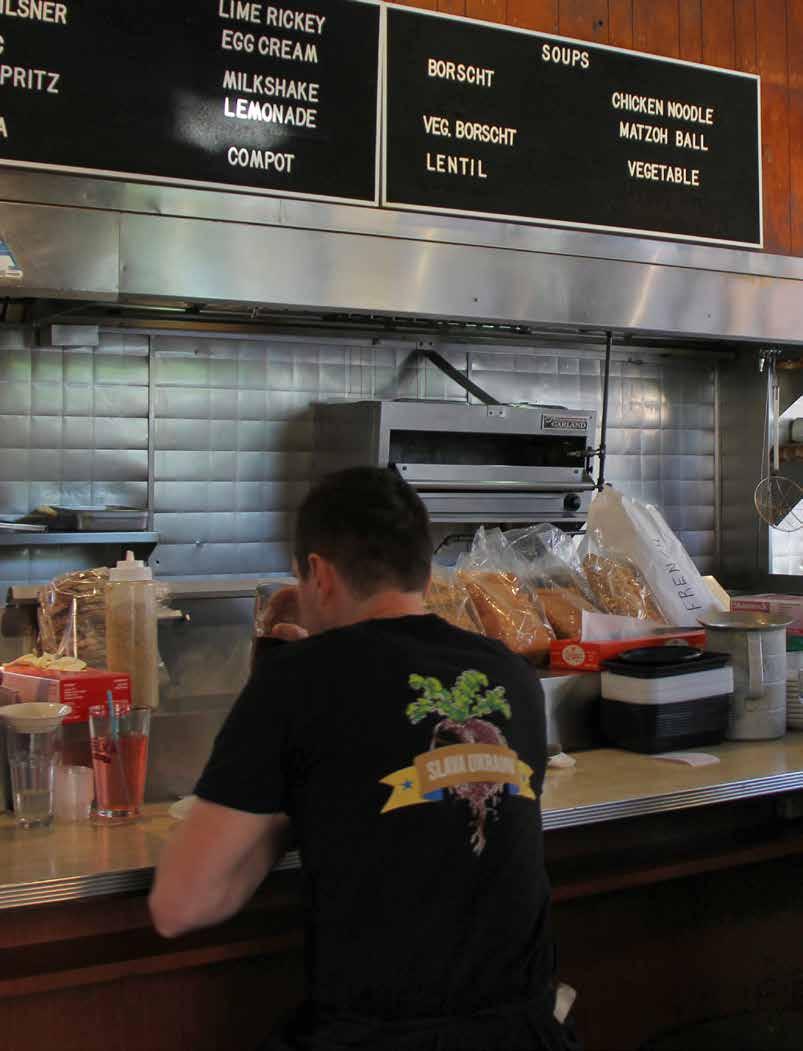
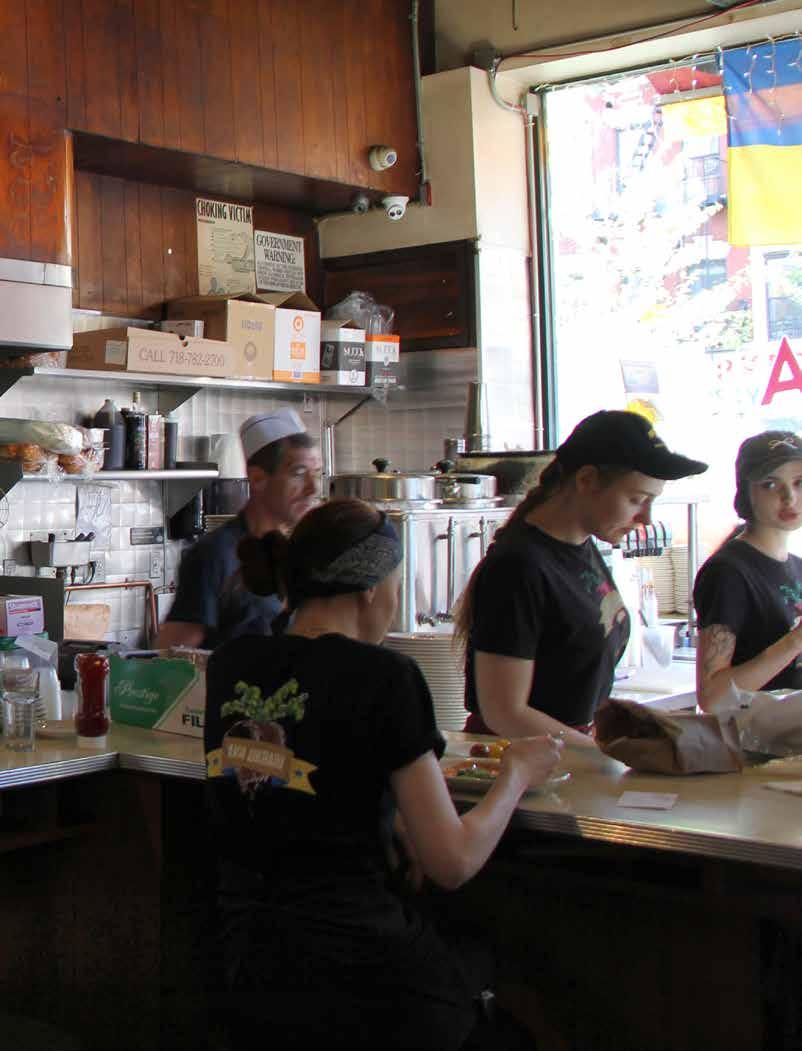
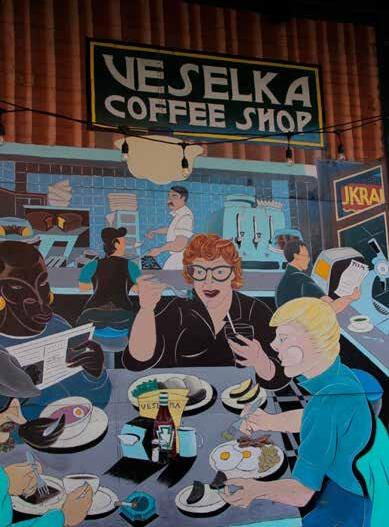
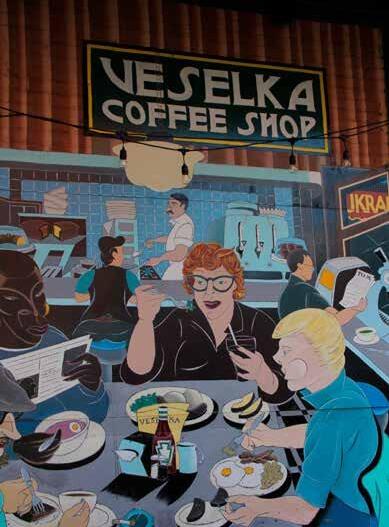
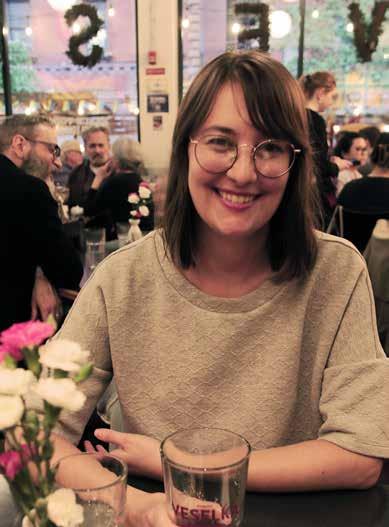
SHE SAYS THERE’S “NO WAY” SHE’D COME TO TOWN WITHOUT SWINGING BY VESELKA FOR SOME PIEROGI. “AND MAYBE A MIXED UKRAINIAN GRILL IF I HAPPEN TO BE STARVING.” SHE TELLS ME THAT HER
SO
Veselka for some pierogi. “And maybe a Mixed Ukrainian Grill if I happen to be starving.” She tells me that her family heritage is part Polish, so the food here makes her think of at-home, family cooking.
We meander through polite conversation about menu picks. Suddenly she’s telling me a story of a late night out, when she had gone home to bed before everyone else.
“In the middle of the night, one of my roommates comes in to tell me that my boyfriend’s been arrested,” she says, “because he couldn’t find his keys and kicked the door to get someone to open. Well, a neighbor called the cops, thinking he was trying to break in.”
My borscht-spoon is hanging mid-air, mouth agape.
“We didn’t know what to do, but my first thought in a panic was to go to Veselka, because it felt like home and family. We went there for beers and burgers at 2 a.m. and tossed around drunken ideas of how to get my boyfriend out of jail.”
I think, they couldn’t get better marketing than that.
At the far end of the dimly lit room, a large wall mural by the artist Arnie Charnick beams like a beacon. In a dark time, its symbolism of the resilience and strength of the Ukrainian people is a reminder of hope, of the value in keeping up the good fight. A reminder that’s much needed here on Second Avenue these days. Jason’s last words from our meeting linger.
“You know, people ask me all the time, ‘Why do you do what you do?’ And I get it, we’ve taken a lot of hits,” he told me then. “Running a restaurant in New York is
hard. But I see the glass as half full, not half empty. There’s something very special about this corner. I don’t know what it is, but I feel very blessed. My dad taught me early on, it’s all in the details, it’s in being consistently good. At our core, we’re a mom-and-pop restaurant. I don’t ask my staff to do anything I won’t do.” (He cut himself off then, adding, “Except crimp the pierogi. These ladies are making nearly 5,000 of them a day. For every one pierogi I crimp, they’ll do ten!”)
And sure, there’s been an upswing in notoriety with their efforts in the war, and there’s a certain level of clout that comes with being where cool characters eat in a Hollywood film. But at the end of the day, it’s just a reliable comfort. “We want you to feel a moment of love,” Jason says, and I think maybe that’s the actual secret. For a moment, any one of us can have a Ukrainian grandmother at the corner of Second and 9th.
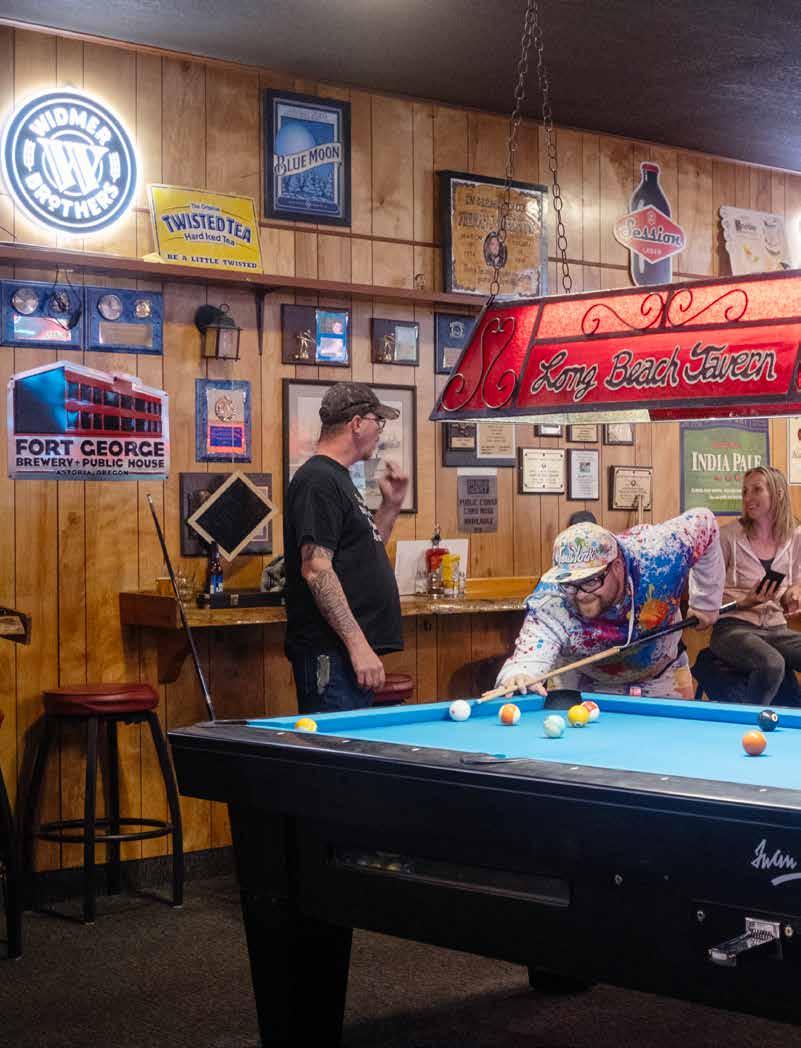
by
TO DIVE FOR LONG BEACH TAVERN | WASHINGTON
WORDS
BY
JONAS LARSSON |
PHOTO BY ANDERS
BERGERSEN
This bar is everything you want from a proper dive bar. Great selection of beers, with all the classics like Modelo, Rainier, and Coors Light, but also good IPAs and local beers. Of course, there are a couple of pool tables, burgers, and pizza on the menu, and it's always crowded.
Long Beach, by the ocean close to the Oregon border, is a classic strip of sand that has been a getaway for Seattleites for ages.
At Long Beach Tavern, locals mix with visitors in a beautiful mix. Do not miss this gem when you come to visit. A word of advice: the chiliburger is not a spicy burger; it's a chili stew with bread. Not bad, but good to know..
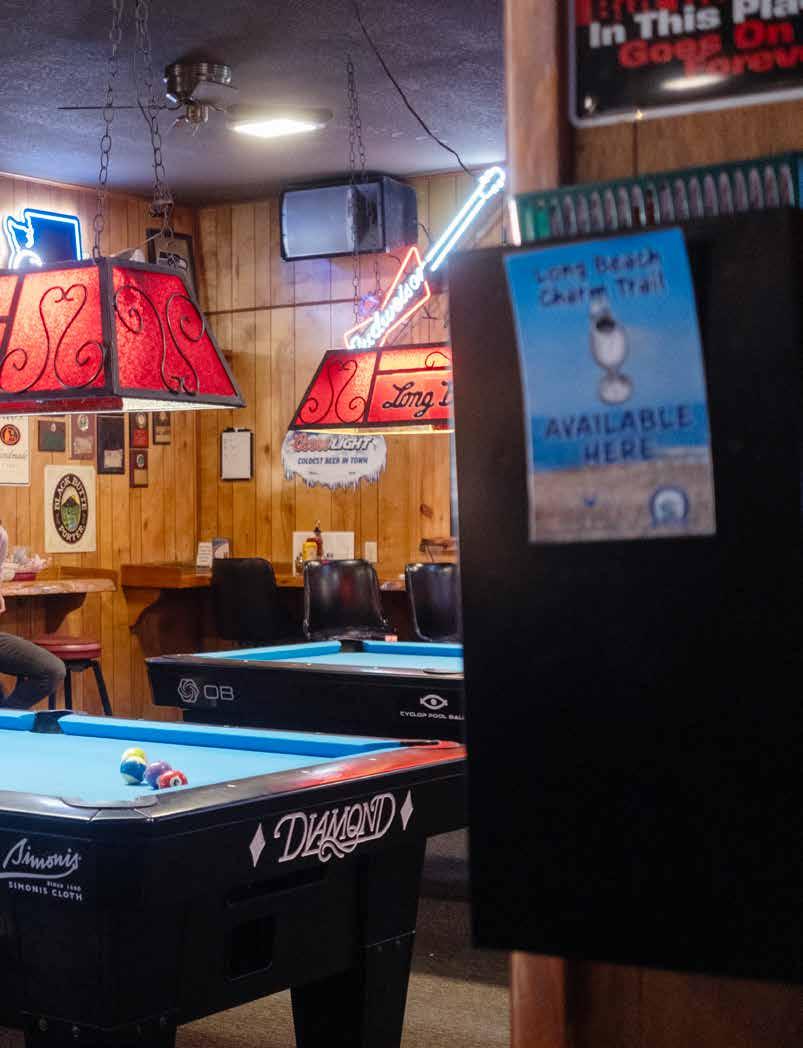
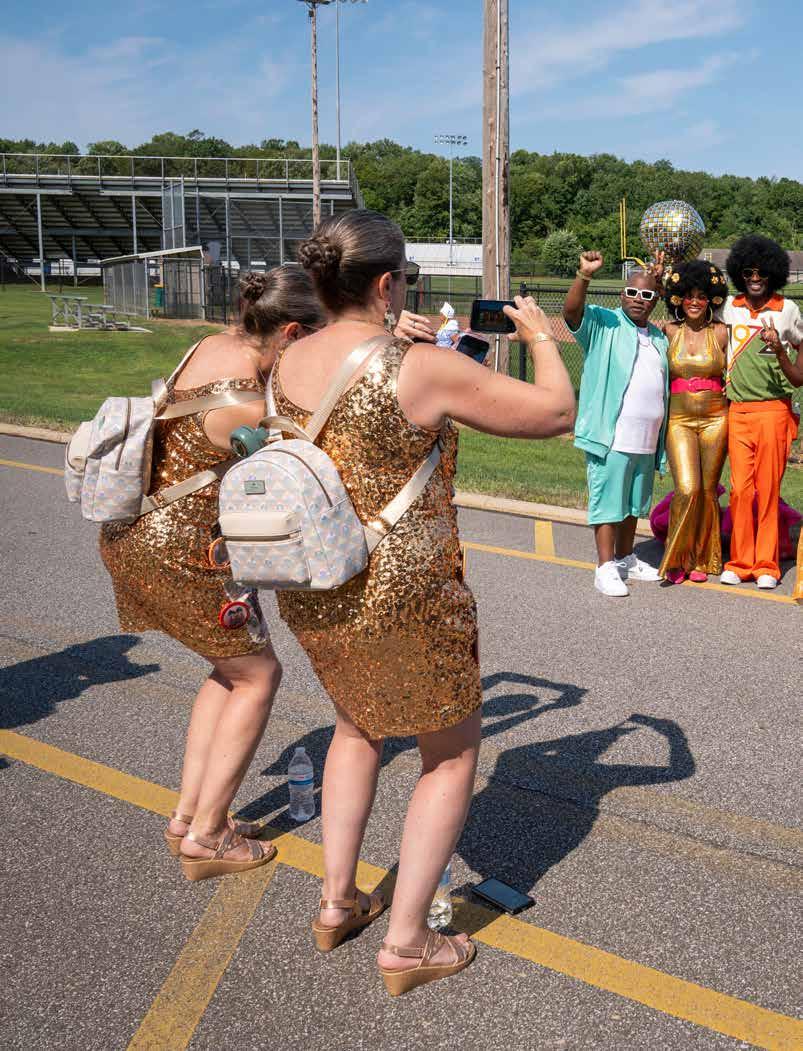
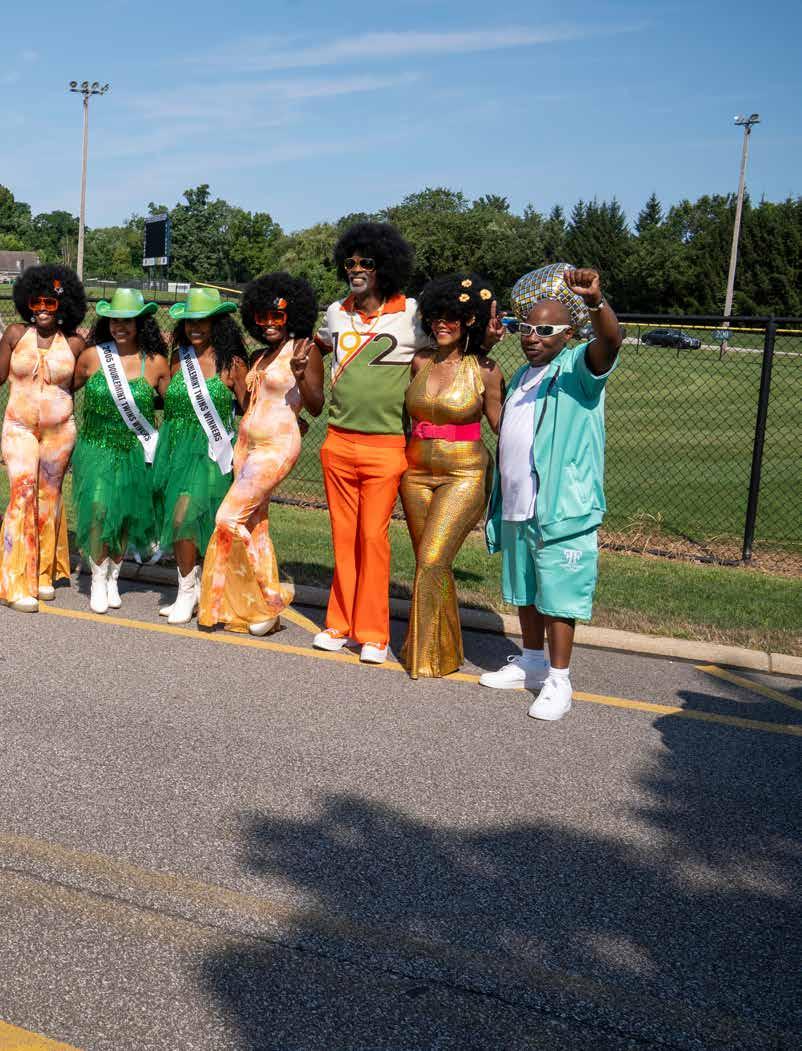
Once a year, everyone sees double in Twinsburg, Ohio. Since 1976, the Twin Day Festival has been held over three days. Twins from both North America and other parts of the world gather to celebrate their siblings. But it's more than a parade, it's a pilgrimage.
AND PHOTOS BY JEAN-MARC GIBOUX
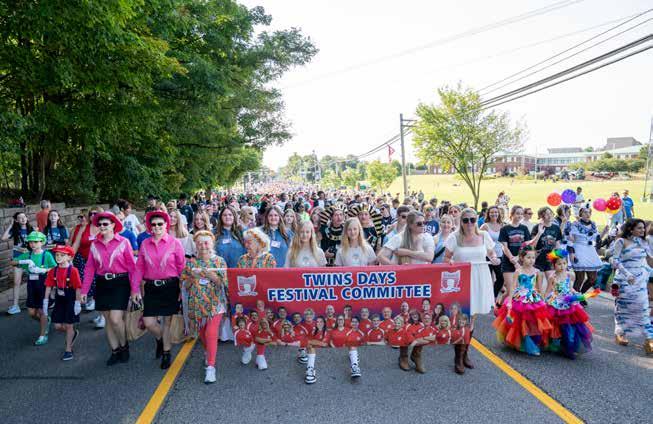
Fifteen years ago, while waiting for a flight home to Pennsylvania, Ben T. idly picked up a magazine at the airport newsstand. Inside was a story that stopped him cold. It told of a twin who had just lost his brother, returning alone to the annual Twinsburg Twins Festival in Ohio, a gathering the two had always attended together. The man described walking through the crowds of identical faces, surrounded by twins who understood his grief without words.
The story hit home. Ben had a twin brother, Glenn. Over the years, careers, marriages, and miles had carried them in different directions. “Glenn had been a part of my life from the moment we were born,” Ben said, “but somewhere along the way, we drifted.”
He called his brother that same day. They agreed it was time to reconnect, to carve out something that was just theirs. The following summer, they drove to Twinsburg together to attend the festival for the first time. “We needed something to celebrate being twins,” Ben said.
That weekend, they met another set of brothers, Chad and Mike, who, by uncanny coincidence, had read the very same magazine story and been inspired for the same
reason. The four became close friends. When I met them this year, they had just returned from a family trip to France, families traveling together, arriving home just in time for the parade that kicks off a weekend of mirrored faces and easy laughter.
For many, Twins Days is more than a festival. It’s a pilgrimage—an annual homecoming to a place where everyone instantly understands what it means to live in duplicate. This year, a record 2,560 sets of twins and multiples registered for the event.
The town itself owes its name to a pair of brothers. In 1818, identical twins Moses and Aaron Wilcox left Killingworth, Connecticut, and bought 4,000 acres of farmland in northern Ohio. They sold parcels cheaply to attract settlers, donating six acres for a public square and twenty dollars for the first school, with one condition: the town had to change its name from Millville to Twinsburg
The Wilcox brothers’ lives were eerily parallel. They married sisters, had the same number of children, shared everything they owned, and died within hours of each other at 55. Two centuries later, their symmetry echoes through the place they named.
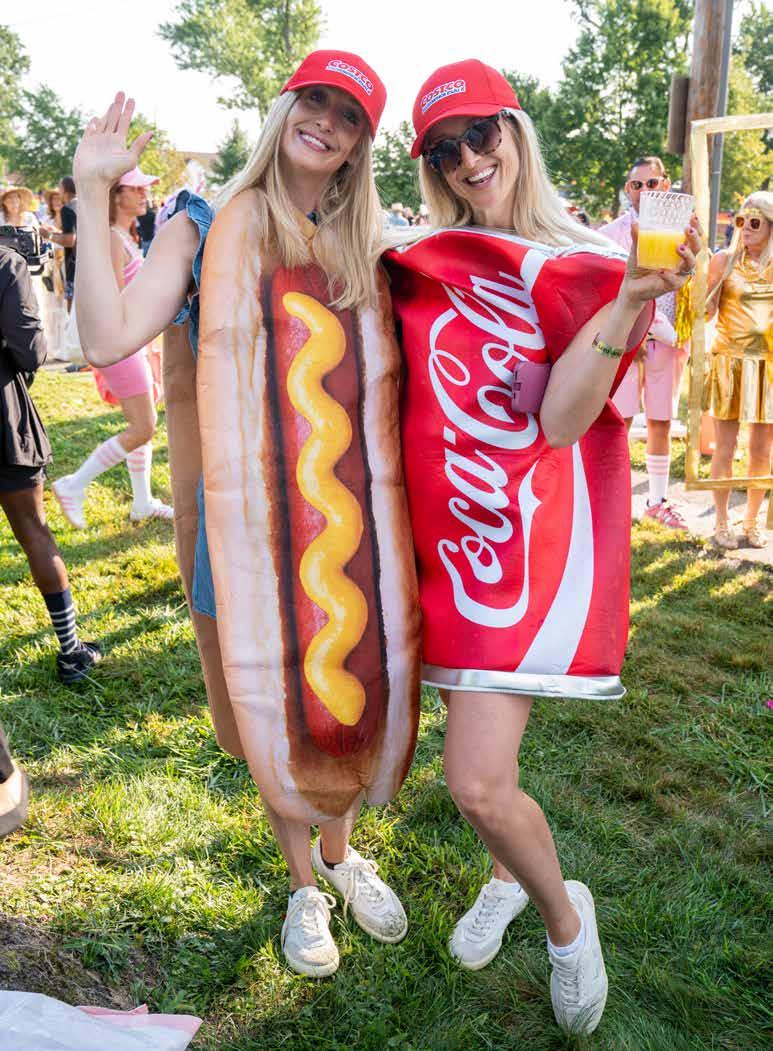
The Twins Days Festival 2025 theme was Cheers to 50 Years! celebrating the event's golden anniversary, encouraging attendees to dress up as their favorite past themes, from the '70s to superheroes or hot dogs.
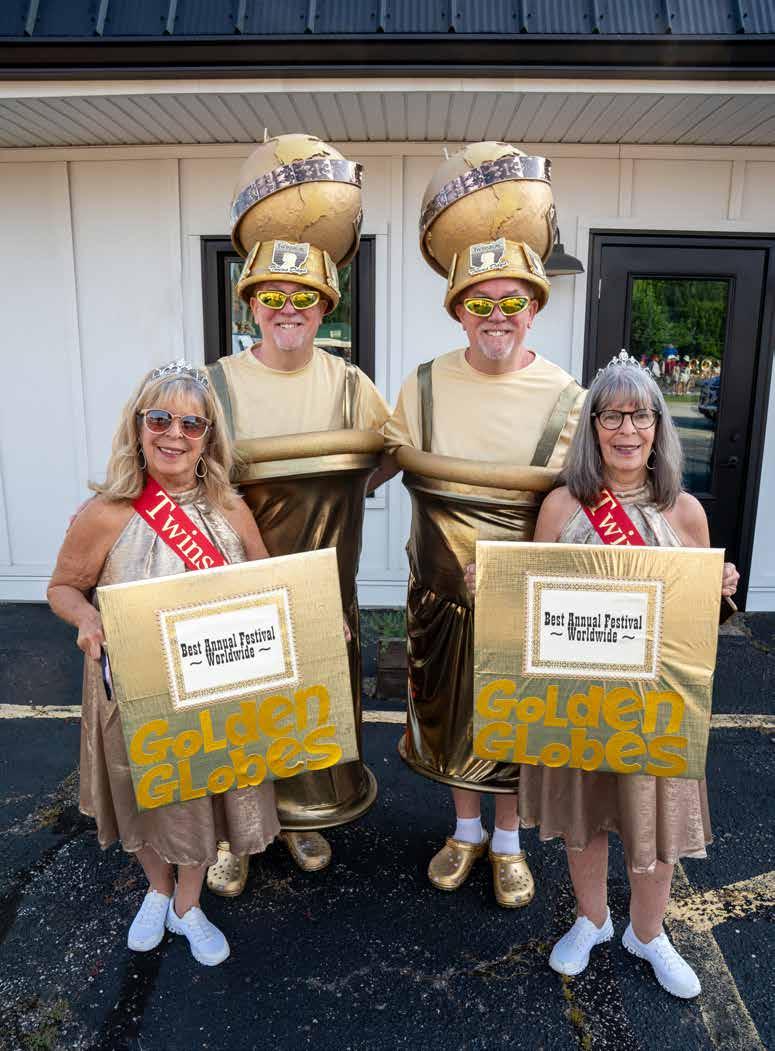
There's certainly no lack of creativity at the festival.
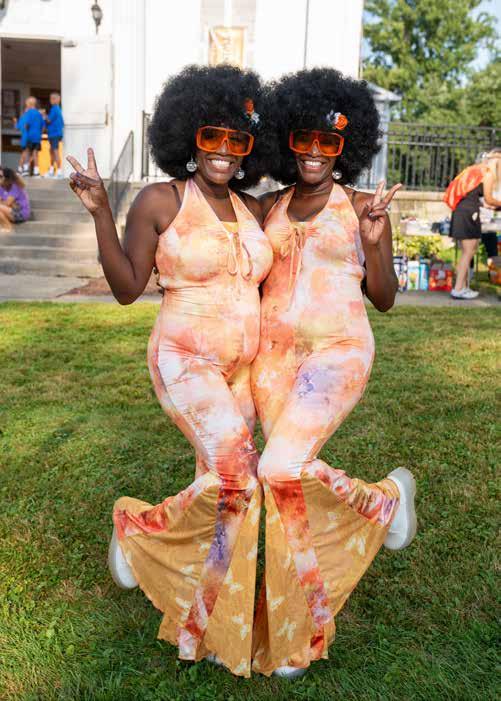
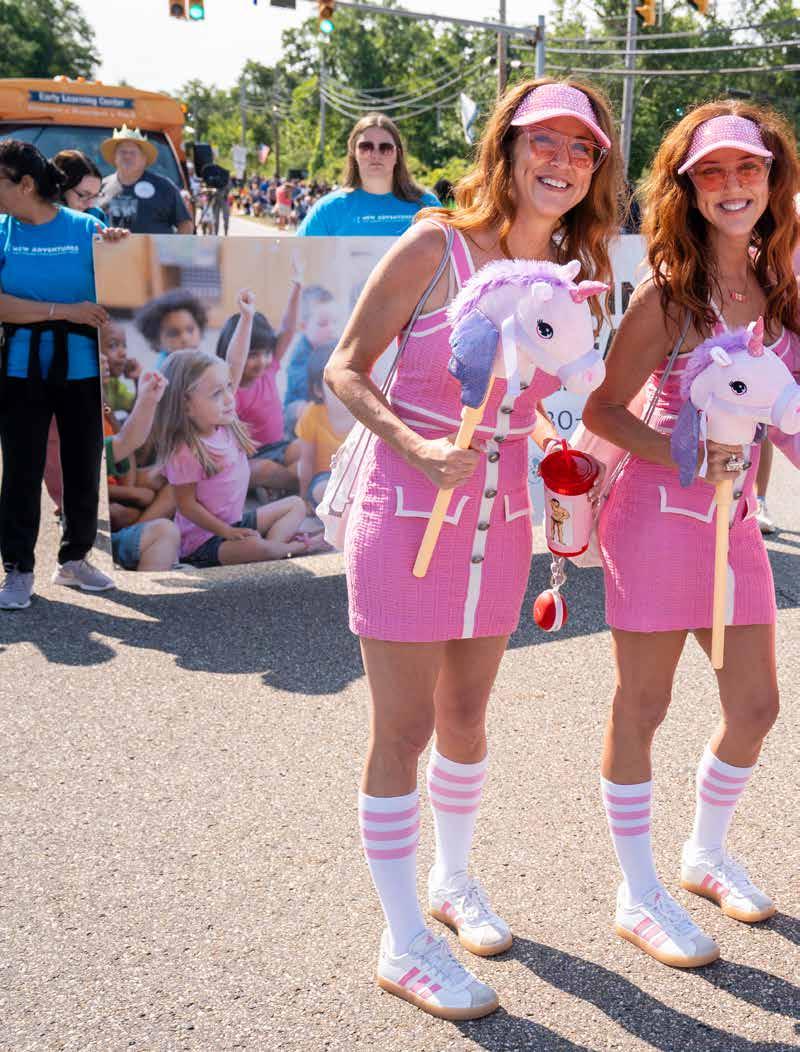
”What are you going to wear? I think I'll go for pink this year.” Always make sure you coordinate with your sibling.
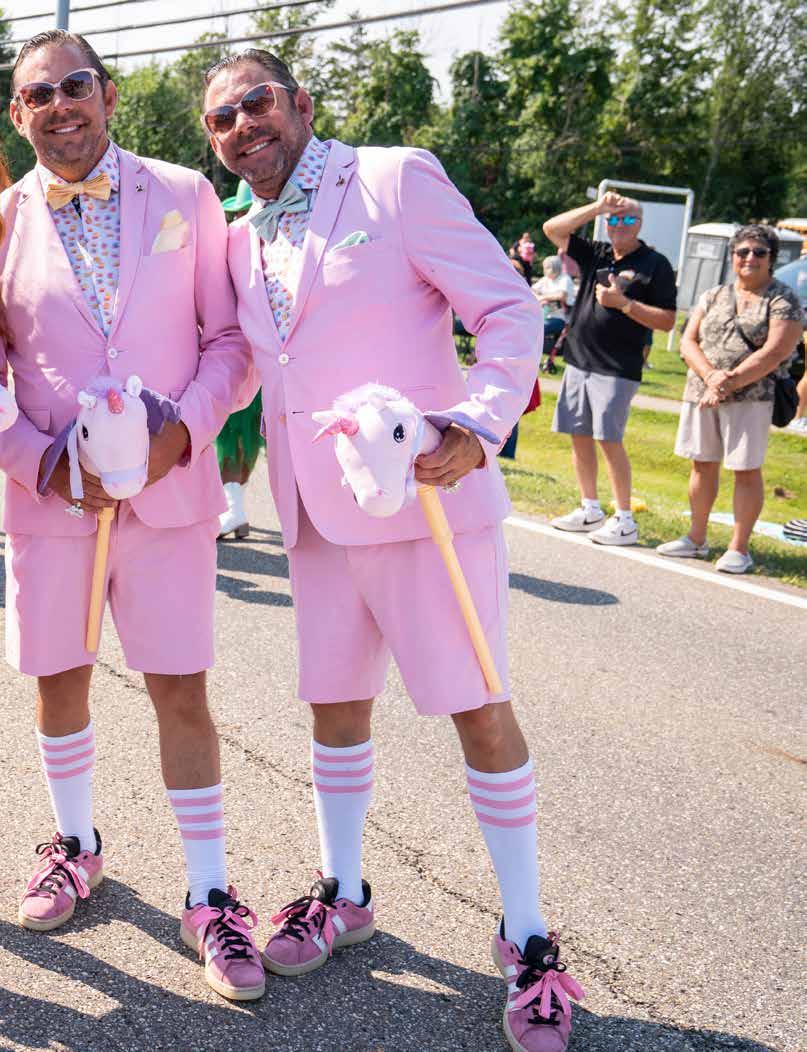
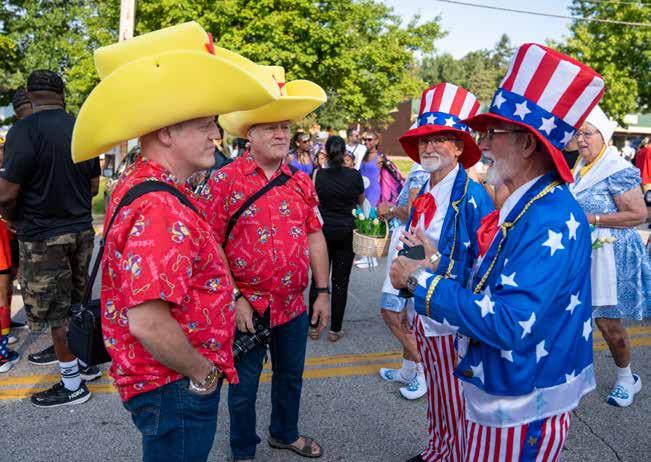
FOR
MANY, TWINS DAYS IS MORE THAN A FESTIVAL. IT’S A PILGRIMAGE— AN ANNUAL HOMECOMING TO A PLACE WHERE EVERYONE INSTANTLY UNDERSTANDS WHAT IT MEANS TO LIVE IN DUPLICATE.
Today, Twinsburg is a town of about 20,000 people, nestled between Cleveland and Akron. Once a quiet farming community, it’s now best known for hosting the Twins Days Festival, the largest annual gathering of twins in the world, recognized by Guinness World Records.
Every August, Twinsburg becomes a kaleidoscope of likeness. Saturday morning begins with the “Double Take” parade, as thousands of twins, dressed in coordinated costumes or matching T-shirts, march down Main Street to the cheers of spectators. The weekend unfolds with look-alike contests, talent shows, research tents, fireworks, and the simple pleasure of being understood without explanation.
This year marks the festival’s 50th anniversary. I first visited Twinsburg in 1997, and returning nearly three decades later, I was struck by how little had changed. Smartphones have replaced disposable cameras, but the spirit feels timeless. Twins, it seems, are unusually open, quick to talk, quick to laugh, and eager to share their stories. Their experiences are distinct, yet familiar to everyone around them. It’s a place where belonging is built into the DNA.
Scientists and psychologists flock to the festival, too. Research teams study twins to better understand genetics, personality, and human development. Even the FBI has conducted facial recognition studies here. Many twins volunteer, curious to explore the mysteries of what makes them both identical and unique.
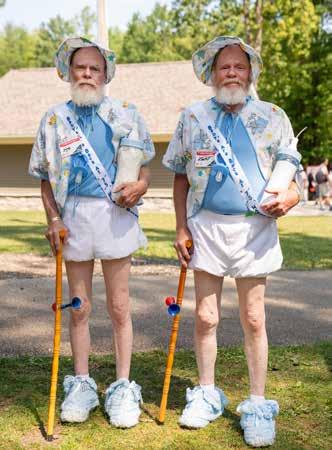
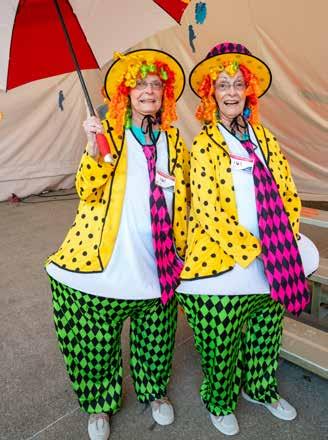
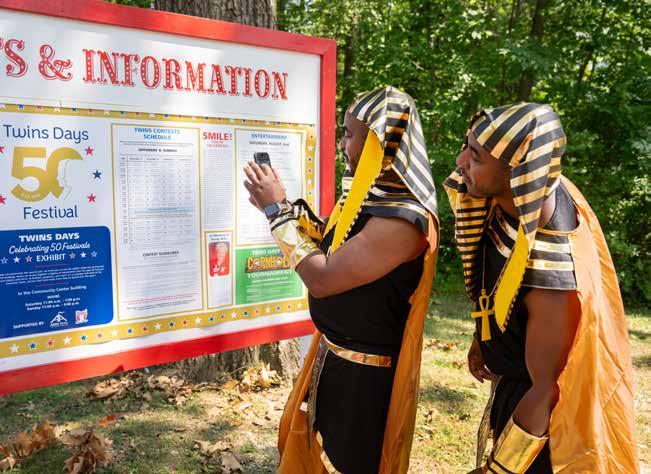
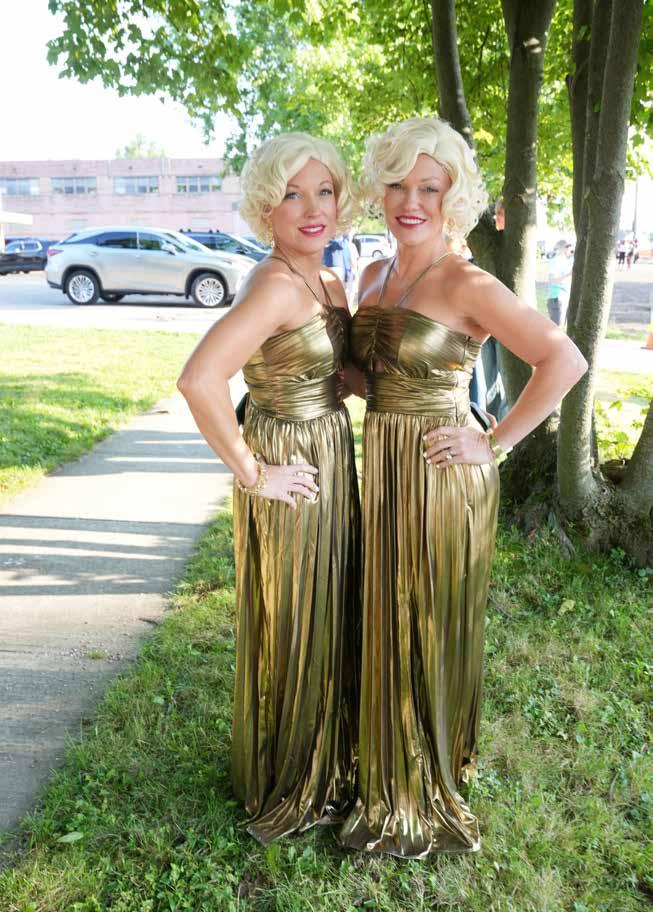
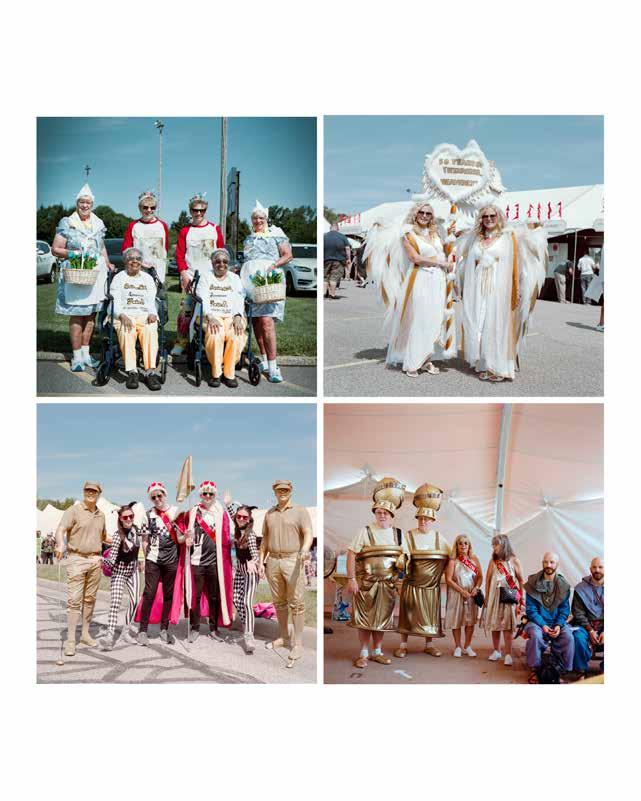
There are many activities during Twin Days: cornhole tournaments, Children's field games, and much more.
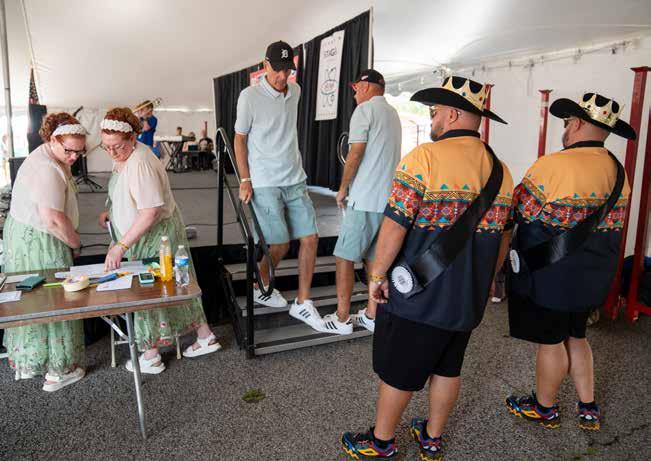
THEY WERE JUST A COUPLE OF OLD FARMERS, ONE LONGTIME FESTIVALGOER REMEMBERED. “YOU’D NEVER GUESS THEY HAD TWO CENTS TO RUB TOGETHER. THEY WERE SHY, RAISED PIGS, AND MOSTLY KEPT TO THEMSELVES. EXCEPT AT TWINS DAYS THERE, THEY CAME ALIVE.
THE REIFF BROTHERS’ GIFT
Few stories capture the devotion of this community like that of John and William Reiff, identical twin farmers from Pennsylvania who began attending the festival in the late 1970s. Slight, bespectacled, and soft-spoken, the Reiffs dressed alike, talked alike, and often dated other twins. They were recognized by Guinness World Records as the world’s most identical twins, a distinction they wore lightly.
“They were just a couple of old farmers,” one longtime festivalgoer remembered. “You’d never guess they had two cents to rub together. They were shy, raised pigs, and mostly kept to themselves. Except at Twins Days there, they came alive.”
Each summer they arrived on a tandem bicycle, pedaling slowly through the crowds, stopping to greet other
twins. The festival, more than anything else, was their world. When William died in 2000 and John followed five years later, the community learned just how deeply that connection ran: the brothers had left nearly their entire estate, about $4 to $5 million, to the Twins Days Festival. They also left $250,000 to four local churches. None of their surviving sisters were named in the will.
“They only had time for other twins,” someone said at the time. Perhaps that was true. In giving their fortune to the festival, the Reiffs ensured that the place that had given their lives meaning would continue to celebrate others like them. Two centuries after Moses and Aaron Wilcox gave Twinsburg its name, and fifty years after the first Twin Days parade, the spirit of duality still shapes this Ohio town.
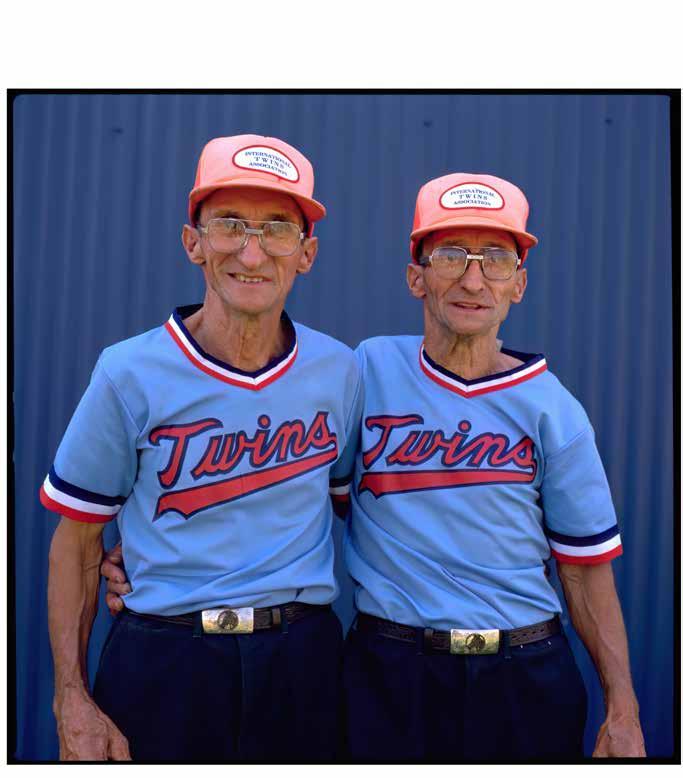
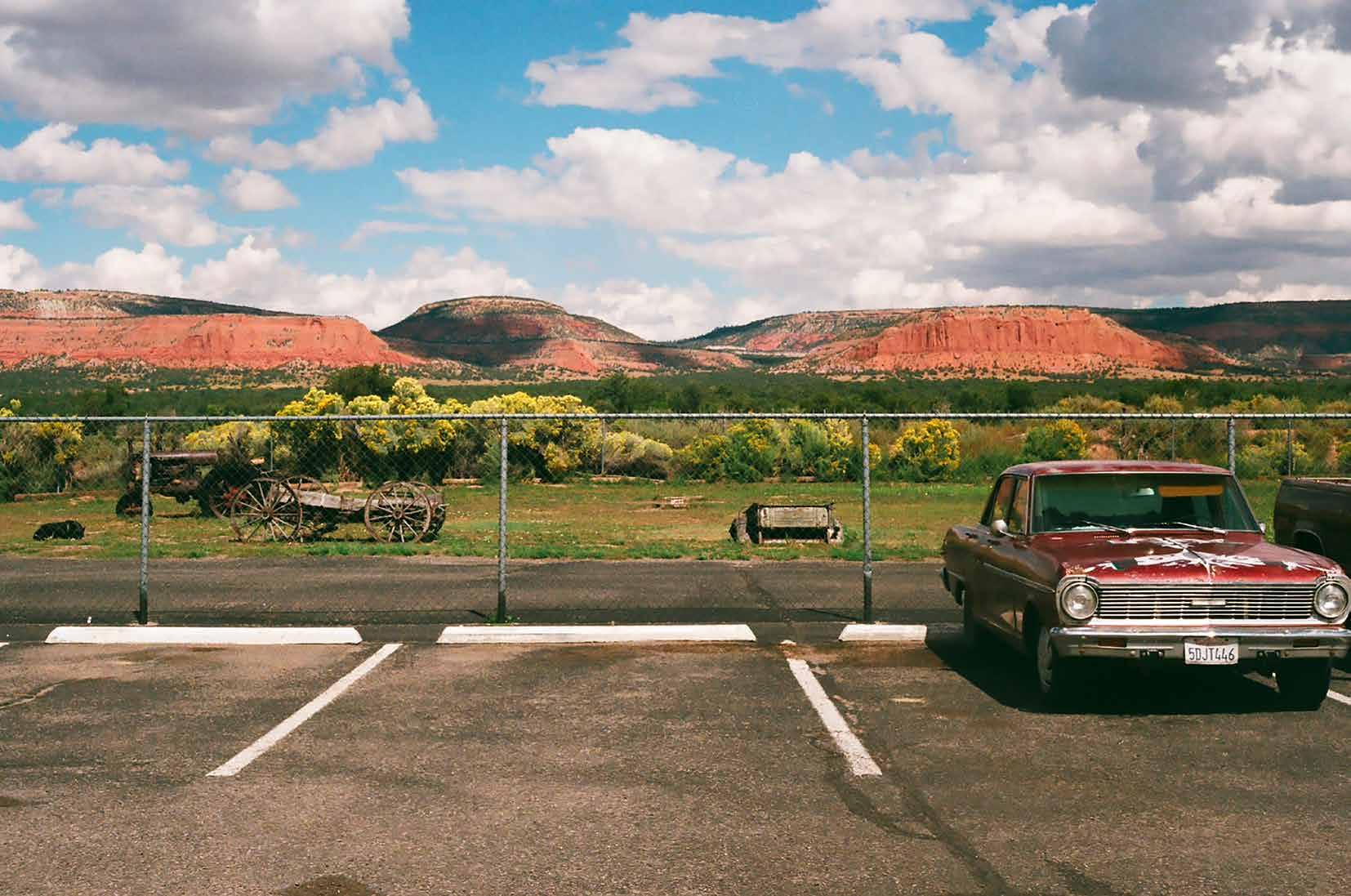
SEEN TROUGH THE LENS OF CHRESTIAN WILLHANS
INSTAGRAM: @ CHRESTIAN_WILLHANS
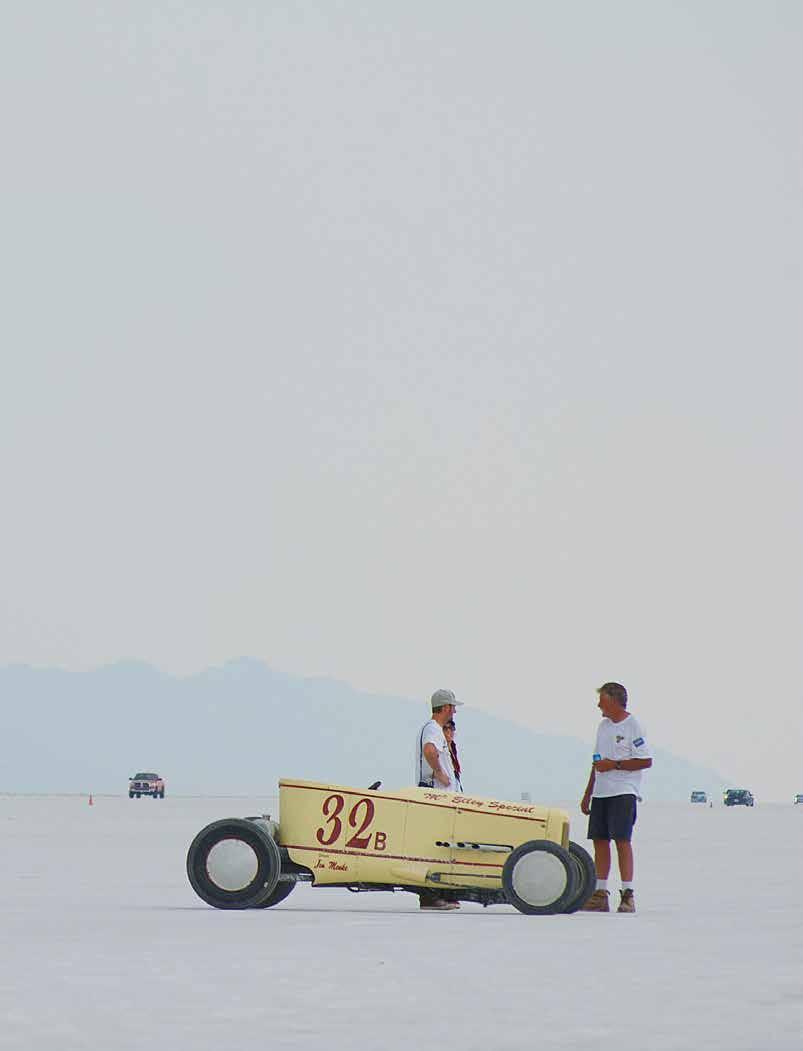
I was five years old and confused. Dad’s American auto magazine featured a group of guys standing on a frozen lake, checking out super cool cars. They were only wearing shorts and t-shirts. “Aren’t they freezing?” I asked my dad. He laughed and told me, “That’s not snow, that’s Bonneville, a dried up salt lake. That’s where you go if you want to drive really fast.” That was the day I decided: one day I’d go there, too. It took 37 years, but I eventually got there, and it was just as magical as five-year-old me had imagined. It’s an unforgiving place. Not even insects live in the salt desert. We showed up with nothing but photo equipment and a cooler full of beer. We parked our car next to another small group, who just shook their heads and said, “Without shade, you’ll be dead by lunch. Come sit in our tent.” We bribed them with beer so we could stay. The next day, we brought a tent of our own. The salt is hard, rough, and completely flat, perfect for speed racing. It’s been the scene of broken records since the 1910s. The event I always longed for was Bonneville Speed Week, a whole week of racing historic vehicles – old, but not slow. Several vehicles have been developed and refined since as far back as the 60s, many vehicles originate from the 30s or earlier. They often reach speeds well over 200 miles per hour (320 km/hr). The fastest anyone has ever driven on the Bonneville Salt Flats is Gary Gabelich in his “Blue Flame” rocket car; he drove it over 630 mph (1014 km/hr) in October, 1970. If you’ve seen the film, The World’s Fastest Indian, it took place on the Bonneville Salt Flats. Where Burt Munro sat a speed record on his ancient Indian motorcycle. An interesting anecdote is that his record from 1967 still stands, not because it’s hard to beat, but because no one wants to be the person to take it away from him. Now, Bonneville is endangered. Industries extract potash out of the salt, and motor enthusiast have been fighting for this unique land since the 80s, since the flat ground and the vast space are particularly well suited for speed racing and records. Today, there’s legislation in place for companies to return the salt after it’s been processed, but the salt crust is still getting thinner every year.
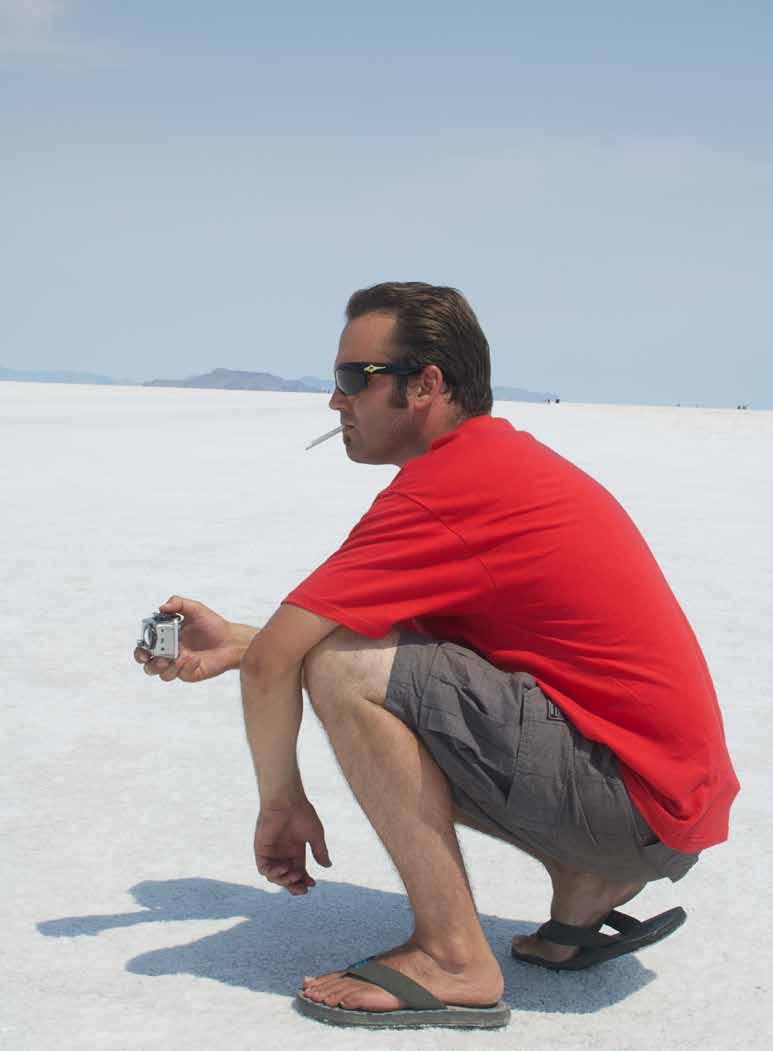
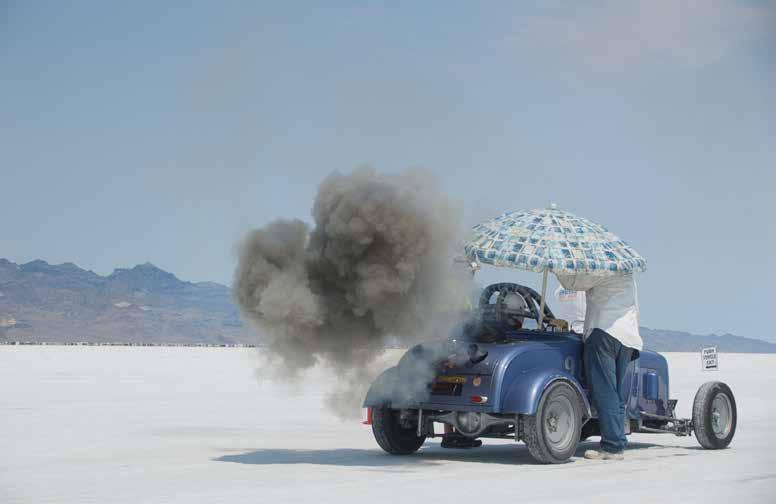
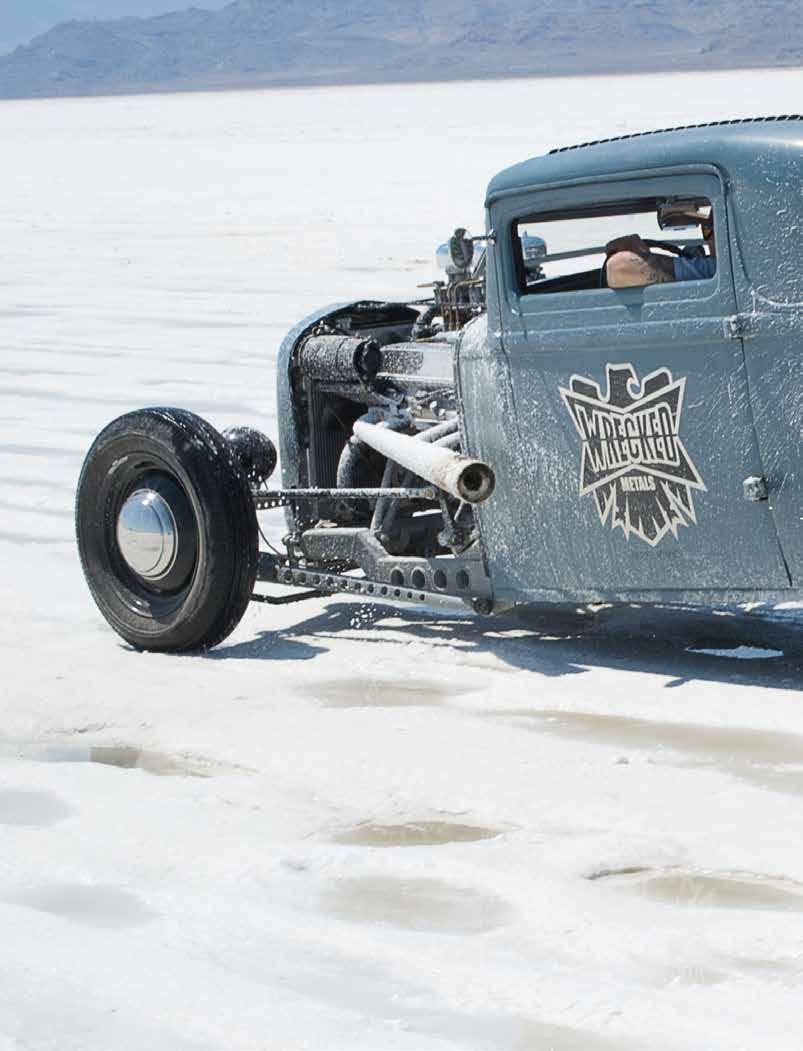
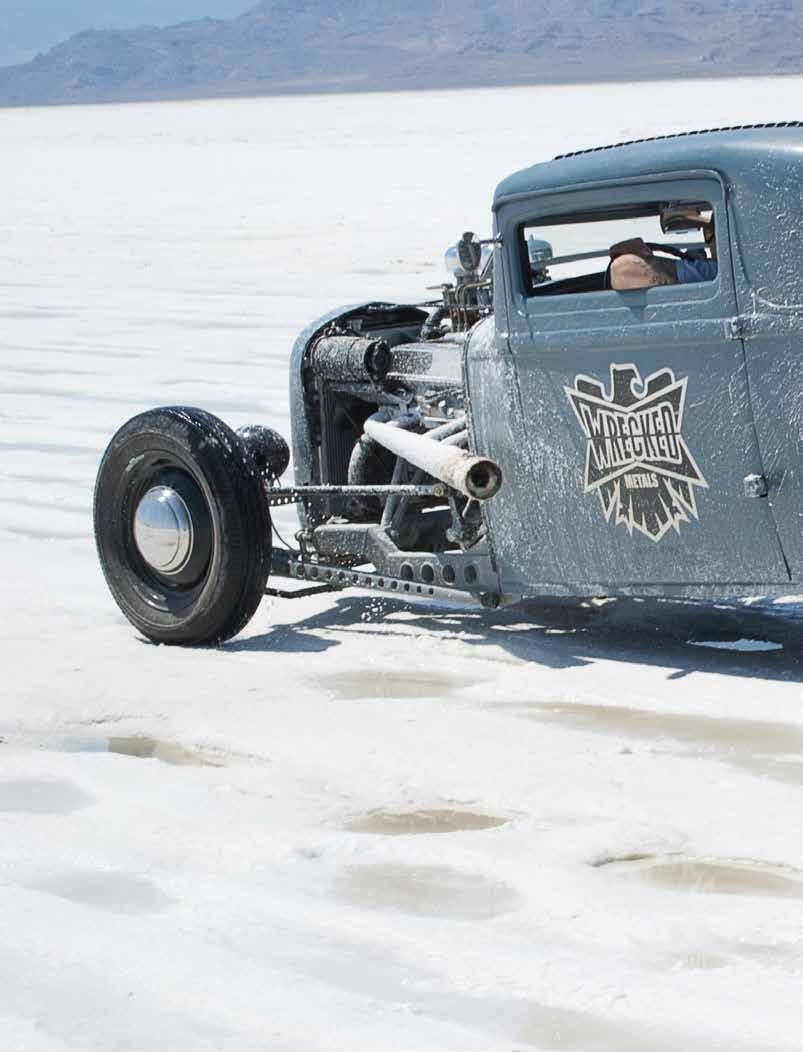
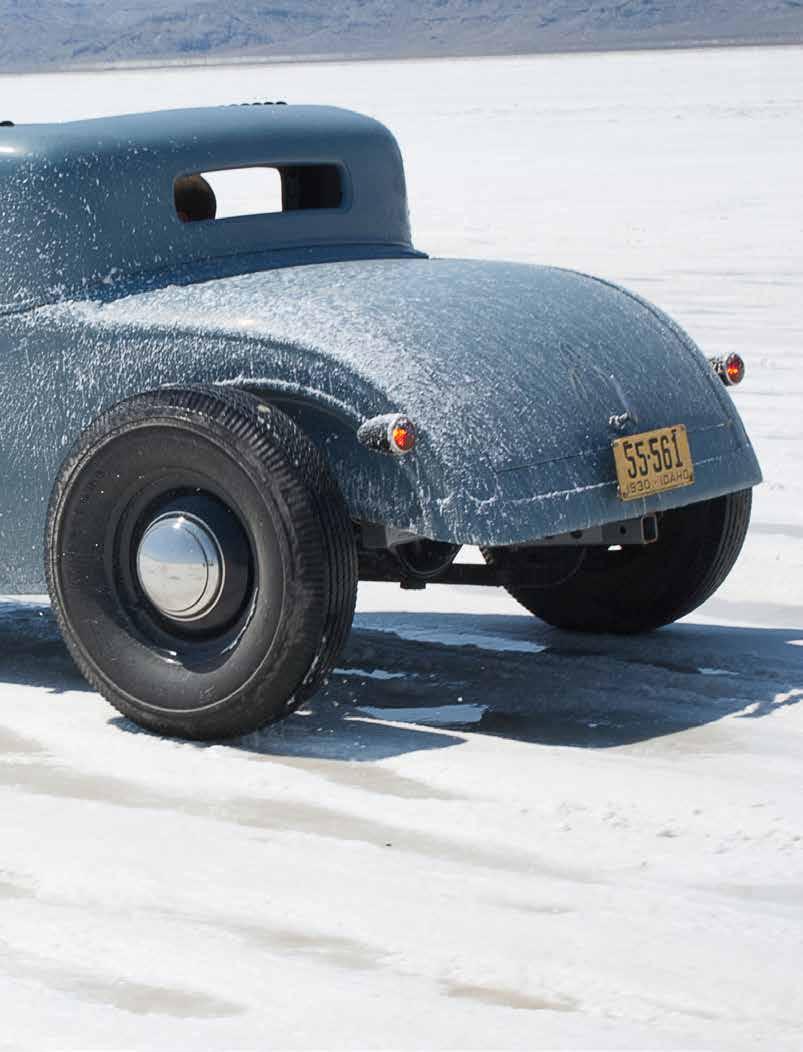
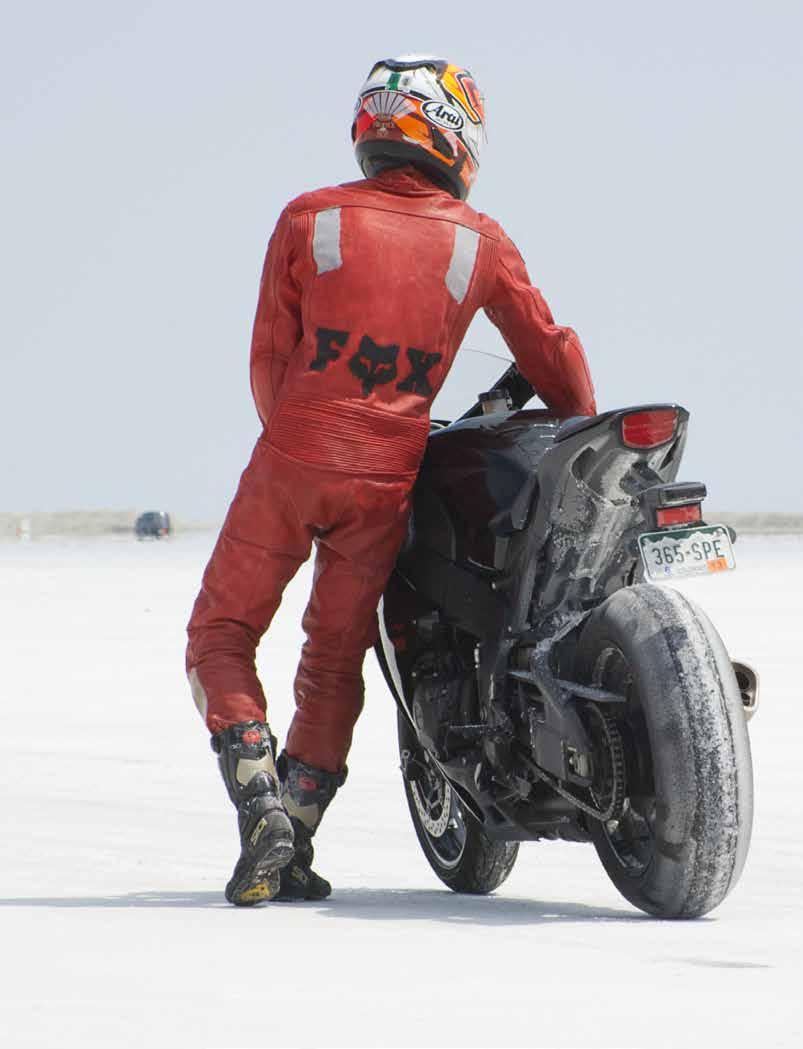
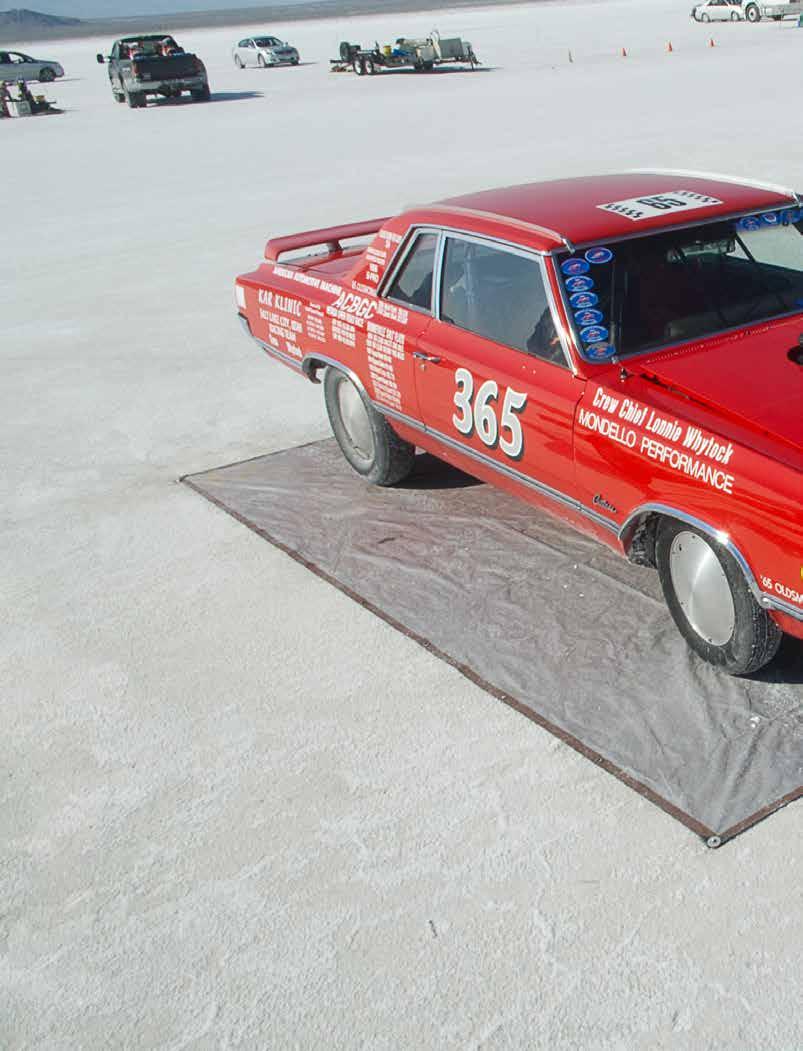
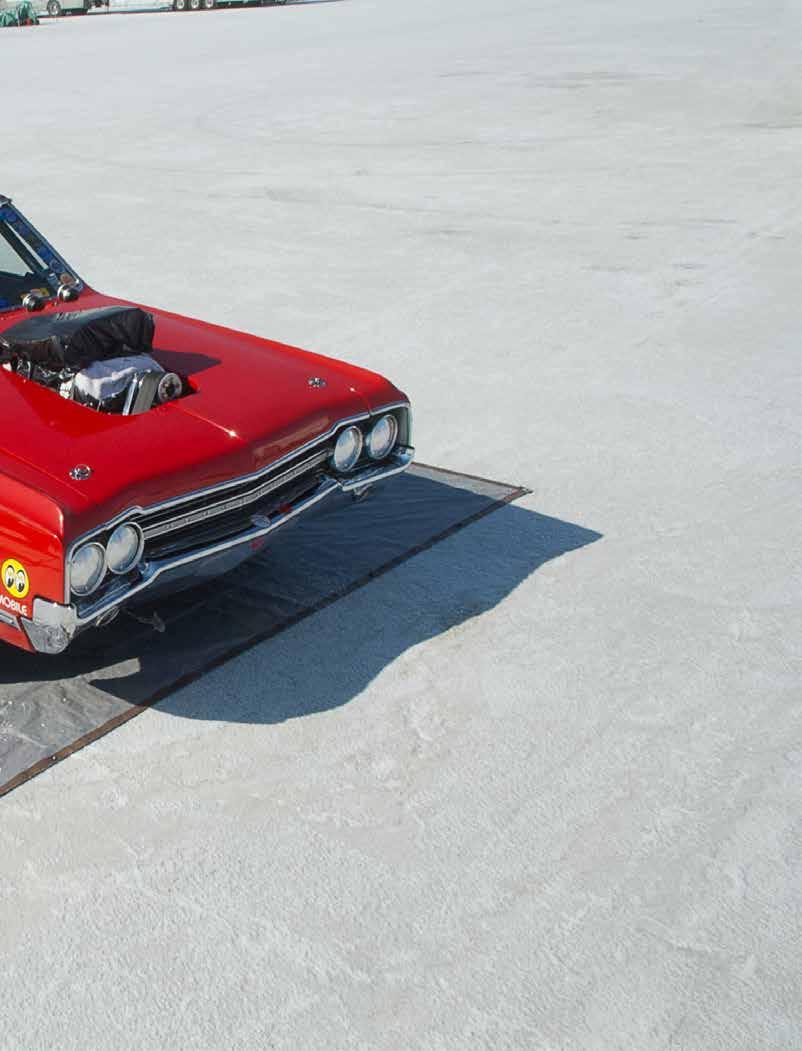
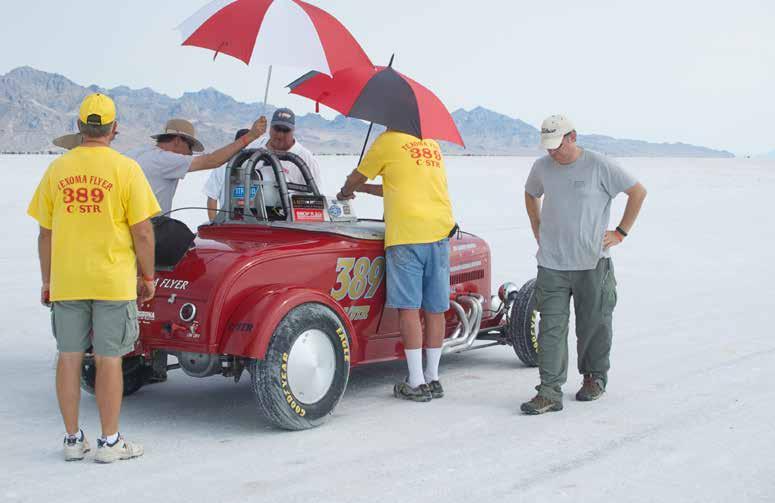
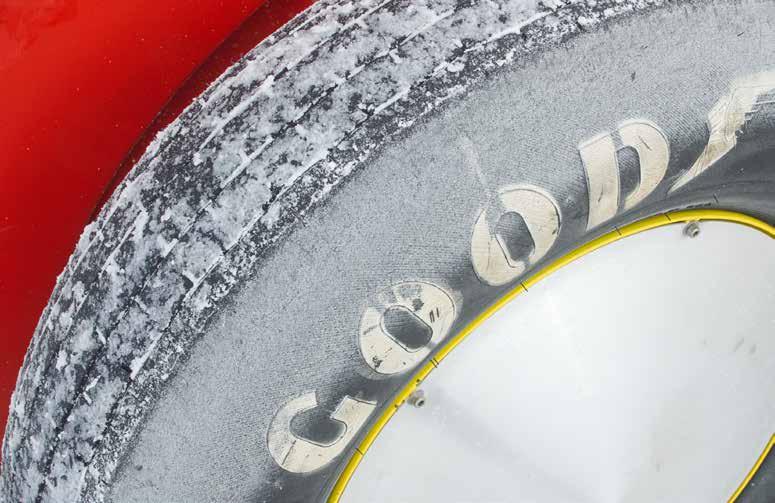
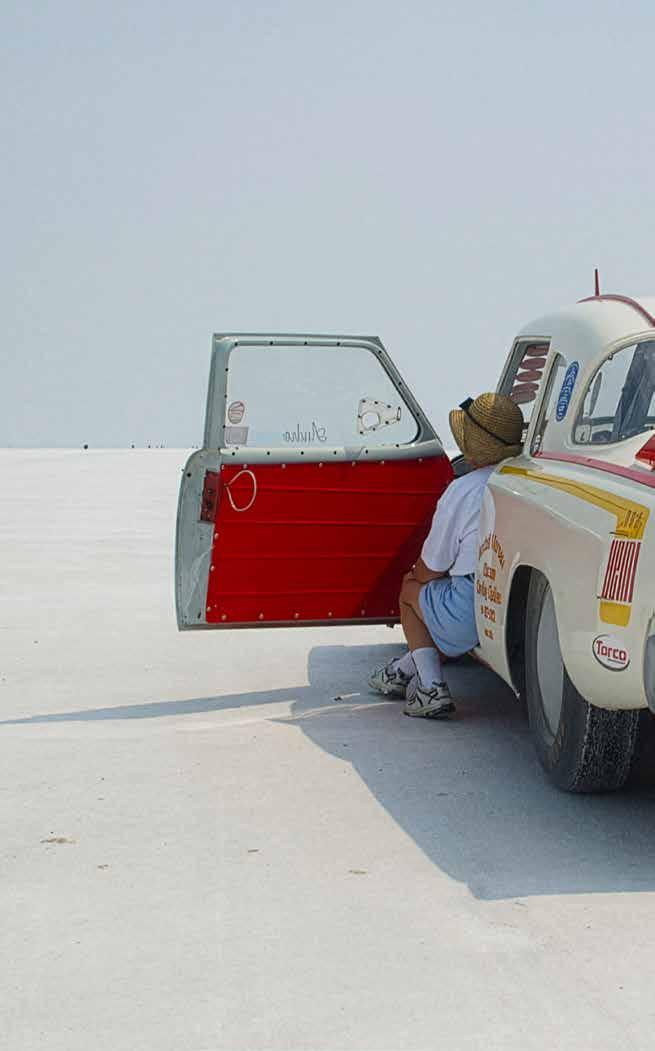
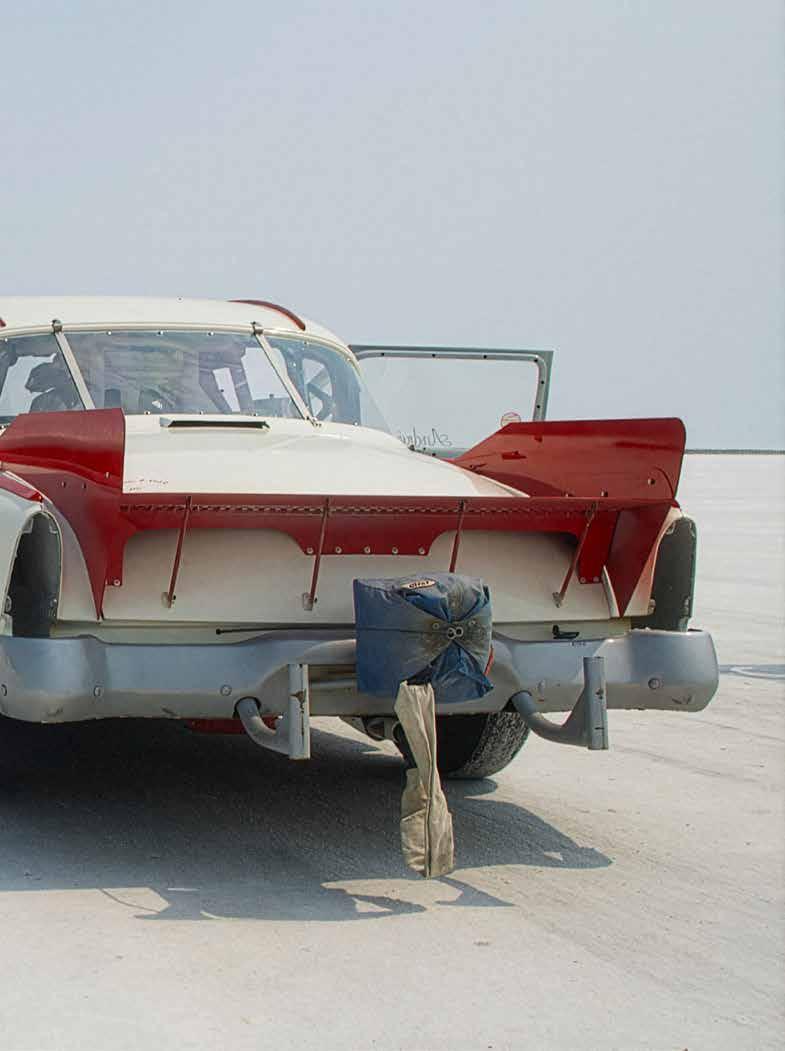
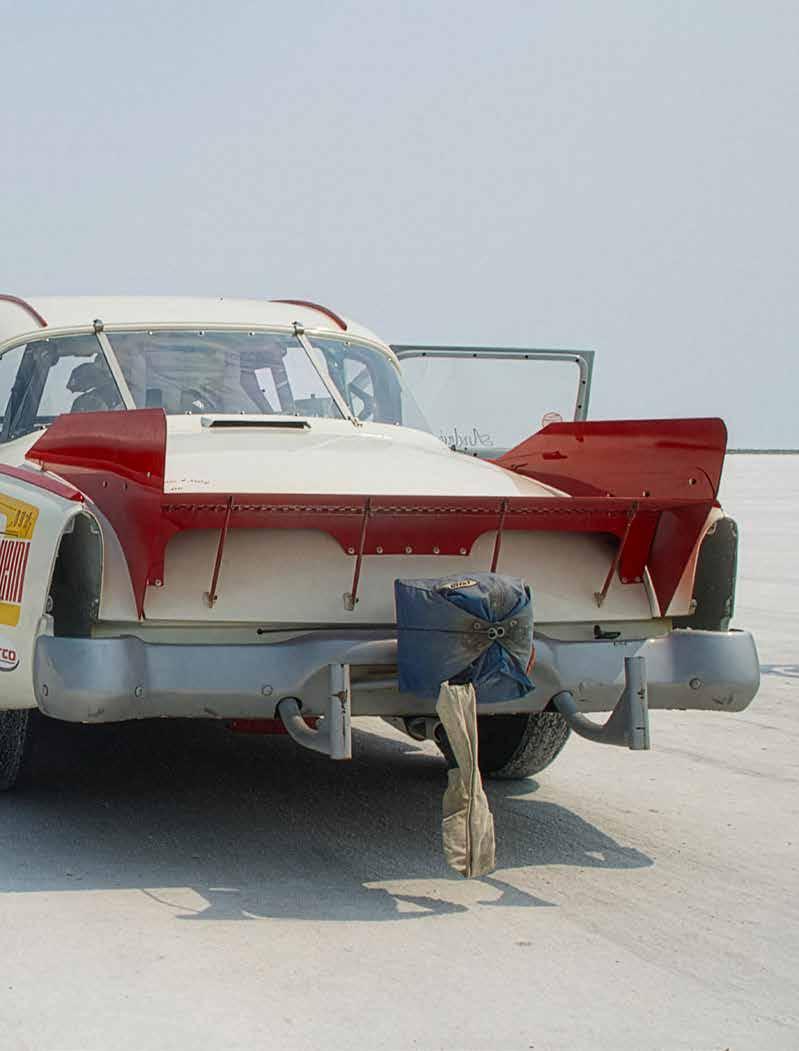
We really like quality and craftsmanship. For years, we walked around in our Red Wings, wondering when we’d get to see the factory where they’re made. We’re nerds, and now we’re about to visit a sacred site. We are very, very excited.
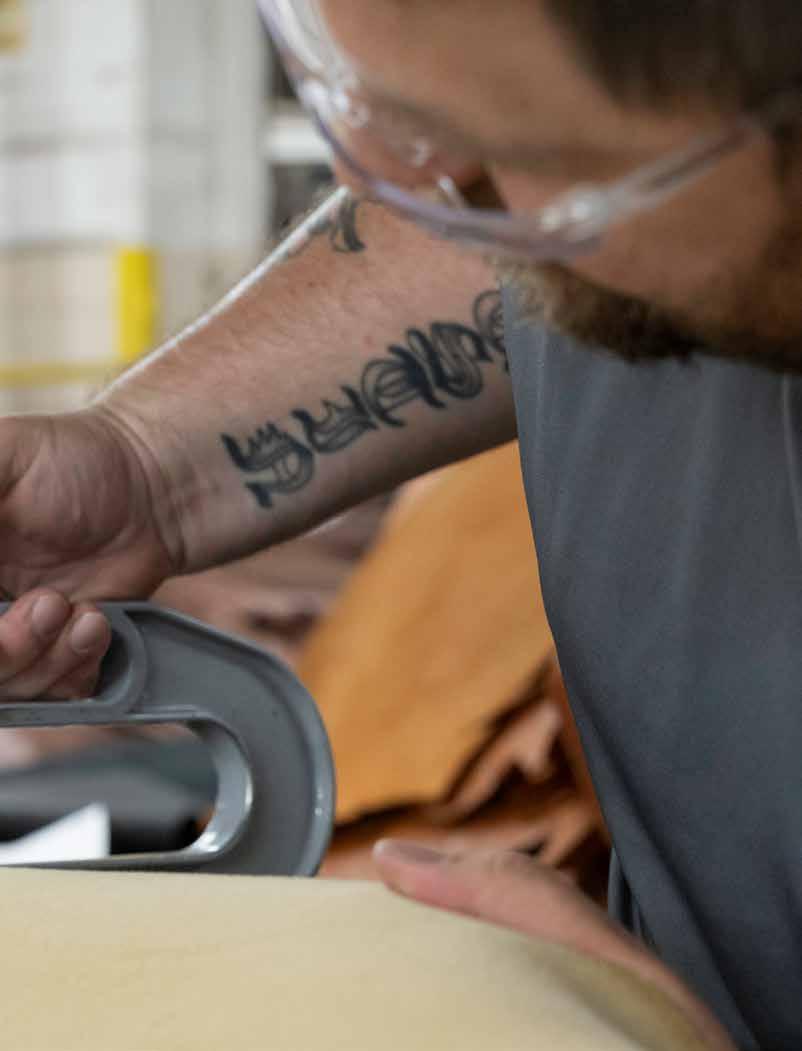
Apilgrimage? Yes, in a way. Our curiosity runs high as we drive into the little town of Red Wing, Minnesota. Having walked many a mile in my moc toes, and having done plenty of deep dives into the company’s long history – not to mention all that hanging out with cobblers – it’s finally time to visit the factory where the boots are made and the tannery that delivers their leather.
It's a warm, humid afternoon, and the Mississippi River flows lazily below the train tracks. A red wing has been painted on several gigantic silos.
This is a town that to a large extent relies on the Red Wing factory and the connected tannery. The company owns the St. James Hotel, where we’re staying, and many of the town’s 16,000 residents either work for Red Wing or get their income indirectly from it, thanks to a large portion of production remaining here.
The afternoon slowly turns into evening as we go exploring. Close to the hotel is the original Red Wing factory, Plant 1. Today, it houses the company offices. We’re lured toward the river. A freight train thunders by. Nothing
to do but wait. There’s a path along the Mississippi River. We decide to see where it goes.
A lot of people like to vacation on white, sandy beaches. Me, too, sometimes – but there’s something about American small towns with their train tracks, rivers, and old industrial neighborhoods that hits a particularly beautiful, melancholy tone in my heart. The small-town charm. And yes, maybe I have a penchant for movies like Deer Hunter, Beautiful Girls, Twin Peaks, and other films that take place in American small towns, where everyone walks about in plaid shirts, drives 70s trucks, and meets up at the local dive bar. That’s Red Wing.
In 1905, a boot maker in Red Wing decided that America’s workers deserved better shoes. Charles Beckman had a vision about crafting boots so well-made that they would last a lifetime. As luck would have it, there was already a tannery in town, Trout Brook Tanning, (the now S.B. Foot Tanning Company), started by jack-of-all-trades, Silas Buck Foot. Silas and Charles started working together in a partnership that is now going on over a hundred years. Red Wing Shoes bought the tannery in 1986. This tells you something about the company’s devotion to tradition and quality.
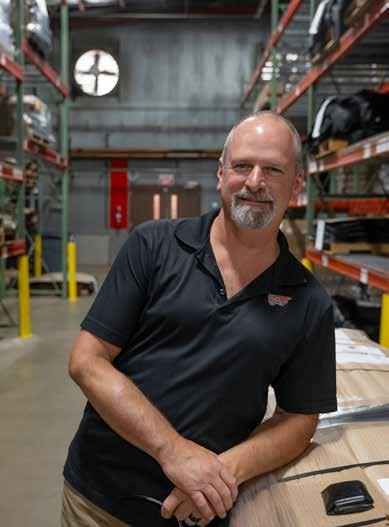
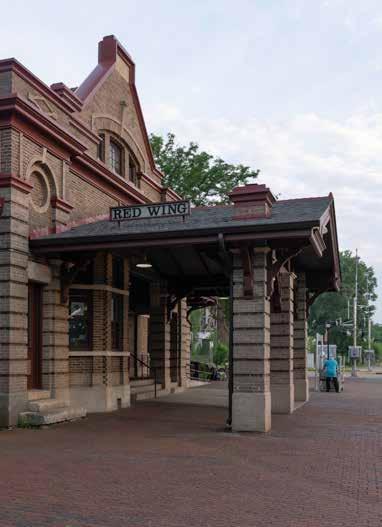
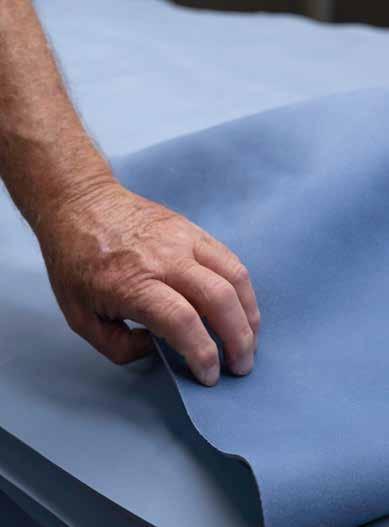
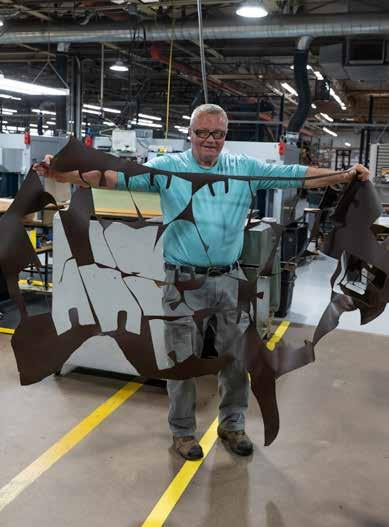
What started as a small factory with only 14 employees would soon become one of America’s most enduring symbols of honest work and craftsmanship.
Charles Beckman was a practical sort of man, who had spent many years in the shoe business and seen workers struggle through long days in boots that would fall apart before the season was over. He had a simple philosophy: if you’re going to do something, do it right. Doing it right meant using the finest leather, hiring skilled craftspeople, and never taking shortcuts.
The first boots were made for farmers, miners, and other workers, people who built railroads and cleared forests. The boots were not fashion pieces, they were tools, as important as a hammer or a plow. And like all good tools, they had to be reliable.
When the United States entered World War I, Red Wing transitioned into making military boots. After the war, Red Wing grew alongside the nation, transitioning again out of the war economy.
The Roaring Twenties brought new prosperity, and the company expanded their range. But it was under the Great Depression that Red Wing truly showed its courage.
While other manufacturers shut their doors or compromised on quality in order to stay afloat, Red Wing stayed steady. The company survived thanks to the same principle that started it: producing something so good that people will always need it.
Something interesting happened in the 1950s. The boots, which had up until then been strictly functional, suddenly became iconic. Oil rig workers in Texas were loyal customers. Loggers in the Pacific Northwest wouldn’t wear anything else. Tough guys in motorcycle gangs discovered that the same boots that were built for construction workers worked just as well on the highway – and they looked cool, too.
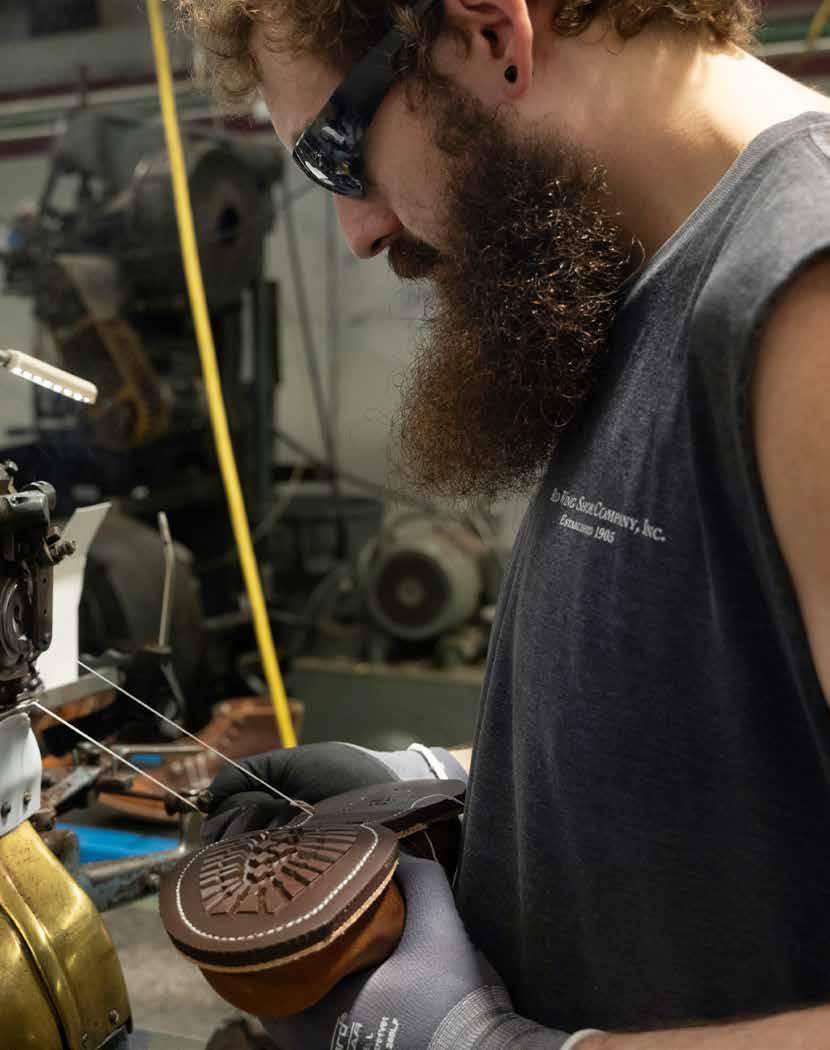
Some Iron Rangers are about to be completed.
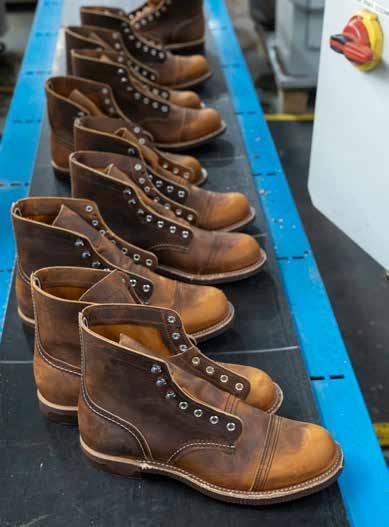
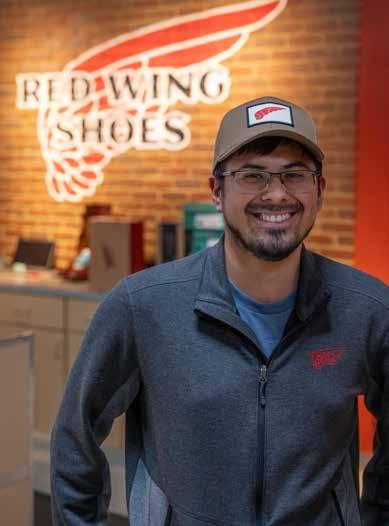
In addition to friendly
and a
and
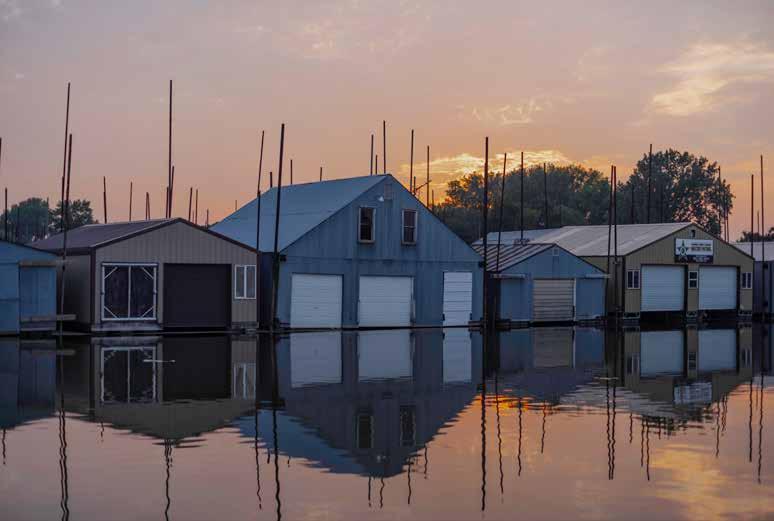
WHO
MANY
IN THE
THROUGH LONG DAYS IN BOOTS THAT WOULD FALL APART BEFORE THE SEASON WAS OVER. HE HAD A SIMPLE PHILOSOPHY: IF YOU’RE GOING TO DO SOMETHING, DO IT RIGHT. DOING IT RIGHT MEANT USING THE FINEST LEATHER, HIRING SKILLED CRAFTSPEOPLE, AND NEVER TAKING SHORTCUTS.
In 1952, the brand introduced the Irish Setter, with its characteristic russet leather. These boots were no longer just workmen’s boots; they became a statement about who you were and what you stood for.
When you step into a Red Wing store today, you’ll find something as rare as boots made to be repaired, not replaced. They still use traditional methods, like the Goodyear welt, which means the boots can easily be resoled. The company has partnerships with certified cobblers around the world who can resole or repair the boots in an approved way.
Today, Red Wing boots have moved beyond their working-class roots without abandoning them. You see them on oil rigs and in Brooklyn coffeeshops, on Montana ranches and at Tokyo fashion shows. They’ve become what vintage Americana is all about: authenticity in a world where authenticity is scarce.
We pass a large “parking lot” for boats. Metal boat houses line the ramps like garages in long rows along the water. Finally, we reach a street teeming with bars.
We’re tired, but we still slip into Bayside Saloon and Grill. Locals sit chatting at the bar. We grab a beer but realize that what we should be doing is go to bed. It’s been a long day.
Red Wing is no bigger than that you can walk pretty much everywhere. We stroll back to St. James along empty streets. The temperature is still mild.
The next morning, we head to S.B. Foot Tanning Company at the edge of town. We’re there for a tour, but it feels more like going to church.
The tannery is split into two plants. The hides are tanned, sorted, dyed, and prepared at the Blue Plant, and are then sent to the other for finishing touches or patterns. It’s a complicated procedure, requiring experienced hands to get the quality they’re aiming for.
In short, tanning hide to turn it into leather requires converting animal proteins to a stable material that won’t break down or rot easily. Once this process is done, the leather is processed to achieve the pliability, water resistance, or texture one is looking for. If it’s done properly, tanned leather can maintain these properties for over 50 years.
At S.B. Foot Tanning Company, they use the chrome tanning method, after which the hides are placed in large wood drums with various ingredients, like tree oils, dyes, and chemicals to reach the best results.
We pass through the different stations. Everyone who works here rotates their station. The work can be heavy.
”These guys handle maybe 1000-1200 hides a day. The guy over there does it twice over, since he has to put the hides in and take them out. It gets pretty heavy after a while.
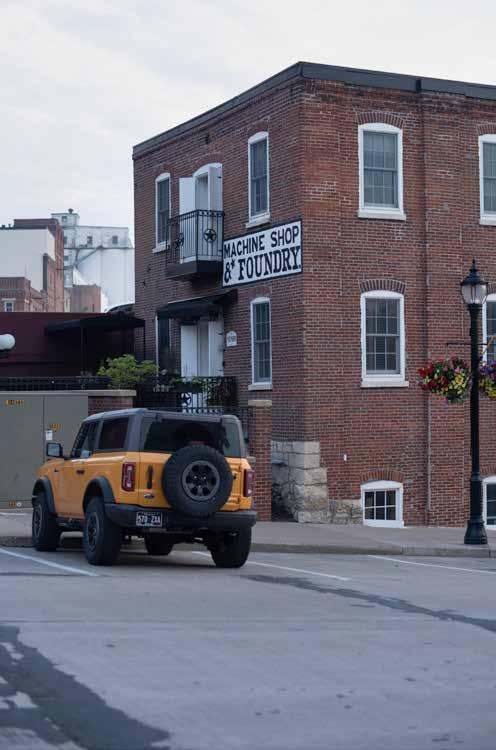
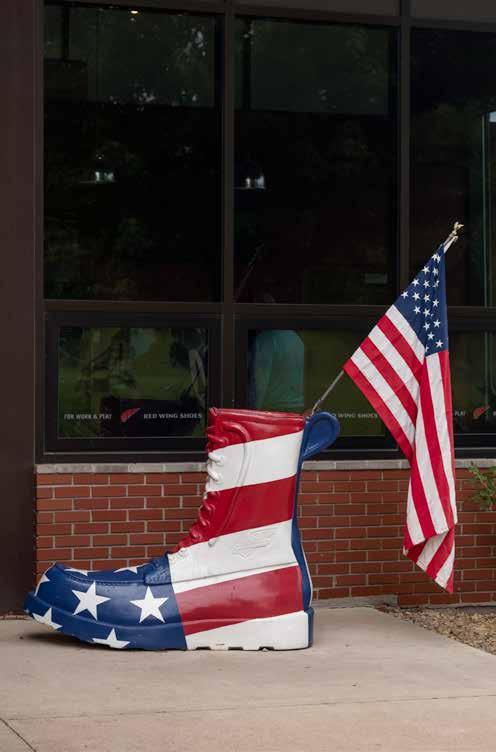
“The tannery and the shoe factory are both big employers in the area. A total of 100 people work here. Bob and Dean, who run the green buffing machine, have worked here around 35-40 years. Back then, you’d finish high school and go straight to work here at the tannery or at Red Wing.
“It’s the kind of job to be passed down from generation to generation. We have a couple of employees here now representing two generations of the same family. One guy, Eugene, was a buffer towards the end, and at that time both his father and his son worked here. Three generations at once.”
He continues, “These are washing machines for the hides. They’re Italian, two Italian guys came to install them. Neither of them spoke English, and none of us speak Italian, but we did alright. You get far with just some good will and sign language. We’ve named them Luigi and Mario after those guys.”
We go to the other plant and meet Ryan. He is as enthusiastic as everyone we’ve met so far. He shows us a machine that works sort of like a screen print press and can print three different colors. During our visit, it’s busy making a camouflage pattern. They also have machines that emboss patterns into the leather, on footballs for instance.
“This is our newest machine. Just like they call their washing machines Luigi and Mario, we call this one Godzilla,” Ryan says with a laugh, pointing to one of the machines.
The quality control is meticulous. Anything that doesn’t measure up is sorted and sold to companies that don’t need big leathers, like watchmakers or craftspeople. For Red Wing Heritage, only the best quality leathers, without scratches or flaws, will do.
Our guide tells us that the large building is unusually quiet. It’s a family day, so many of the employees are down by the river, playing with their kids and eating food. This is where they make both work boots and the Heritage collection.
“Heritage are the shoes we used to make. They were work boots, like Iron Ranger and all the others, they weren’t fashion shoes like they are today. They’re so old that they’re new,” says Dave and continues, “The big difference is that they come in more colors now. It used to be black or brown. We have a lab where we test our own products, but also others’. There are those who claim to be better than us, but we prove them wrong. The shoes
are carefully tested, the details, down to the laces. They’re threaded through the shoe eyelets for four days, 400,000 times in total, to see when they wear out.”
If this hasn’t already been made clear, quality is this company’s top priority. This is why a Red Wing boot is going to cost more than one you can find at a general chain.
“The thing about Red Wing is you can get them custom tailored to your foot. We have our own stores. You sit down, we measure your foot, we have modern machines that can measure it precisely. If you take good care of a pair of our boots, they will last forever.
I like when I’m out among people, wearing my Red Wing clothes and boots. People always come up and ask if I work for Red Wing. They’ll say things like, ‘I have a pair just like them, they’re my grandfather’s old work boots.’”
“I have noticed onsocial media that your'e big in Japan?”
“Yes, Japan have a huge secondhand market. If I sent these to Japan, I could sell them immediately. It’s a goldmine. They like the new ones, too. There’s a guy in Japan who makes new boots look old. People bring him their brand-new boots and he manipulates them to look old. Just like people do with jeans.
“We get broken shoes here and fix them. 300 a day. You can’t do that with glued shoes. It’s mostly work boots, less so Heritage boots. People who have invested in a pair of boots take better care of them. Usually they come in to be resoled. The fact that people prefer to repair their boots rather than buy new ones is proof that we make shoes that people love.
“When someone has broken in a pair of boots, they don’t want to buy a new pair. They want the ones they’ve already broken in. That’s why they send them to us. We have the know-how and the machines to do it properly, that’s important.”
We walk around the machines where the Heritage collection is produced. It’s a mix of really old machinery and completely new, computer-programmed machines. We see shoes in various stages of production. It feels curious to know that my own moc toes were made here. A couple of Iron Rangers stand on a shelf, waiting for soles.
“A high-quality, sewn shoe is made of an insole, an upper, and an outer sole. The insole is like a house’s basement; if the basement isn’t level, the house won’t work. You take the insole, attach the upper to it by sewing a welt onto it. A welt is a strip of material, typically leather,
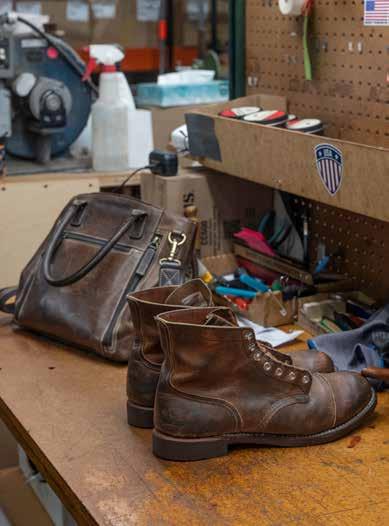
A lot of people are sending their boots to be resoled or repaired. When you broken in a boot, you stick to it.
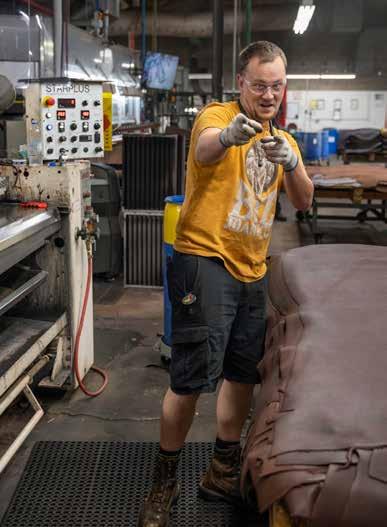
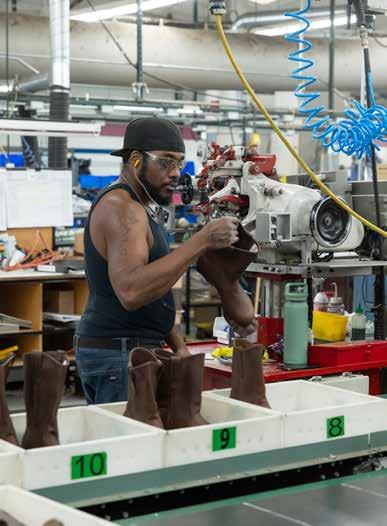
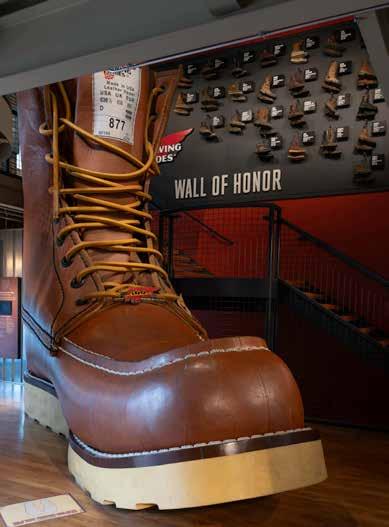
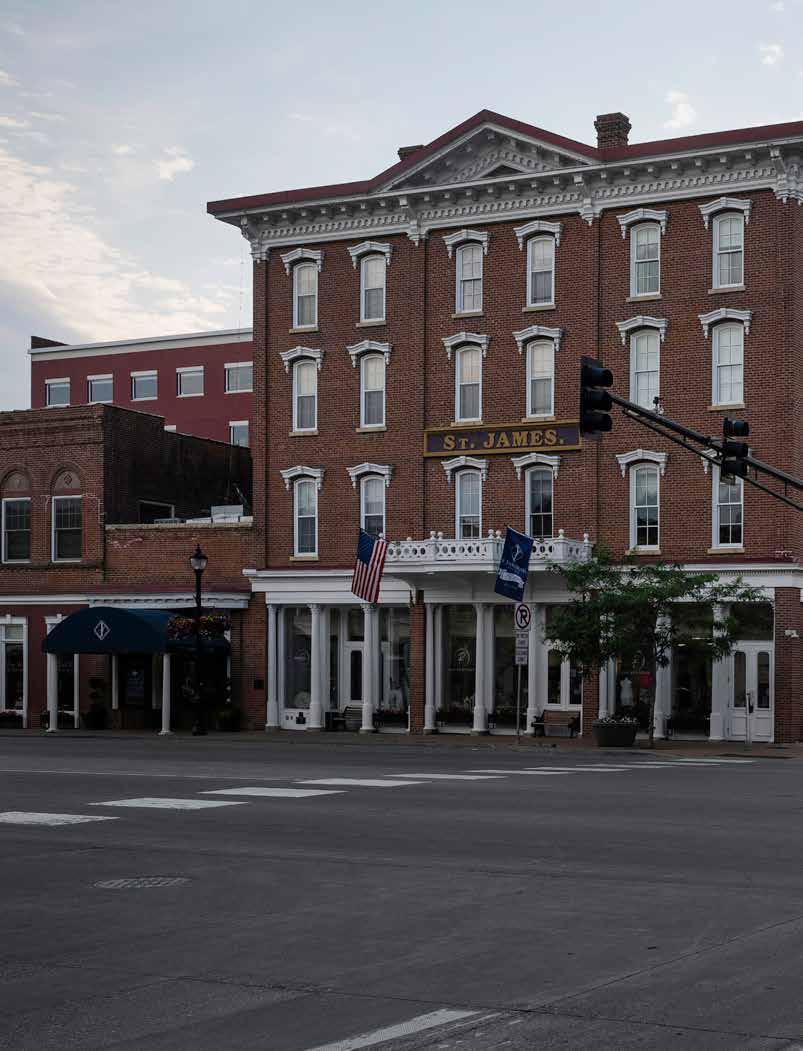
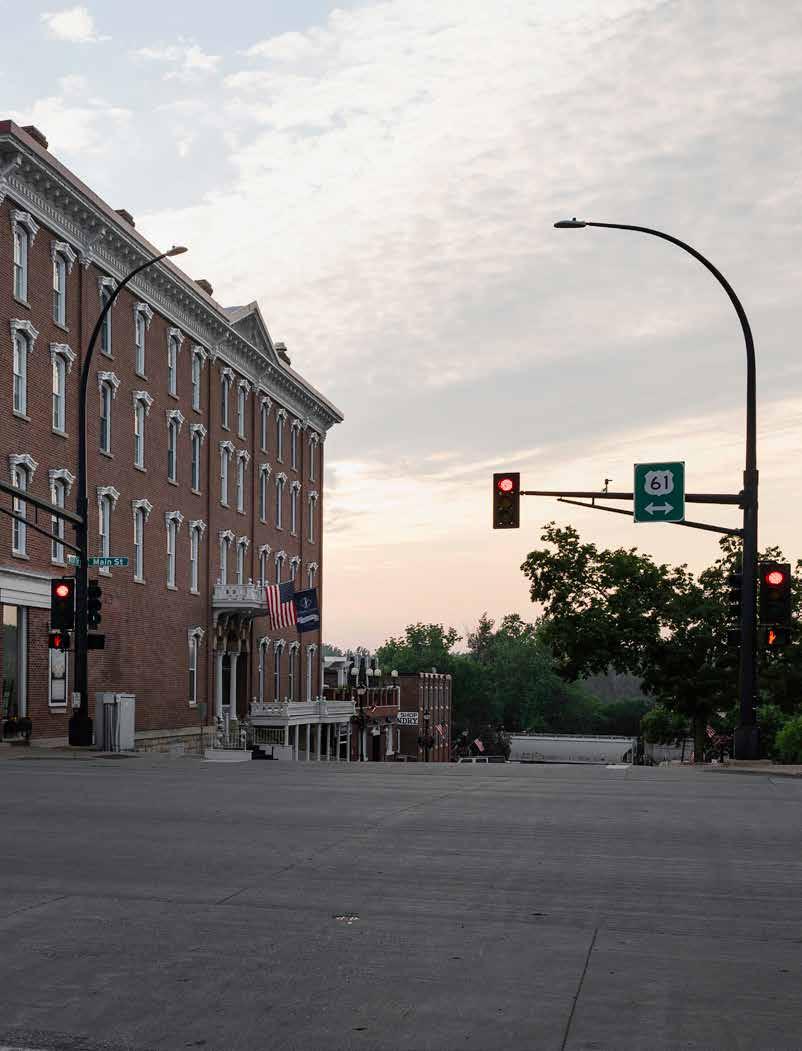
HERITAGE ARE THE SHOES WE USED TO MAKE. THEY WERE WORK BOOTS, LIKE IRON RANGER AND ALL THE OTHERS, THEY WEREN’T FASHION
SHOES LIKE THEY ARE TODAY. THEY’RE SO OLD THAT THEY’RE NEW,” SAYS OUR GUIDE AND CONTINUES, “THE BIG DIFFERENCE IS THAT THEY COME IN MORE COLORS NOW. IT USED TO BE BLACK OR BROWN.
used to sew the sole to the upper, which makes the shoe more durable, and easier to repair. The shoe is sewn, not glued, which is a far superior, but slightly more expensive, method.”
I long for my Red Wings now, I want to examine them, check out the welt, the seams, the sole. I’m slightly ashamed of the glued Blundstones I’m wearing. I would’ve liked to wear my moc toes, of course, but our trip will last well over a month. That’s a lot of flights and a lot of security controls for taking shoes on and off, so the easily removed Chelsea boots made sense. It’s a bad excuse, I know.
TRADITION AND FUTURES
Thirty or forty years ago, working here required a different type of experience to maximize the use of each hide. You had to learn how to cut it effectively to make the most of it. Today, we use computers to calculate the cuts, which requires a different set of skills. The best part of each hide is the butt. Those parts go to the boot toes. That’s the first thing you look at when you look at shoes.
On the screen, the computer marks which parts of the hide will be used for what. A barcode collects all the information about each hide. You can enter what you need, and the computer will go through the hides and cut out what you need. It has revolutionized this part of the process.
“One of our trademark looks is our triple stitch. Look at this old sewing machine. It’s a Puritan three-needle stitcher. I think it came over on the Mayflower,” our guide laughs.
We’re pretty overwhelmed and stuffed with new knowledge when we finally say goodbye to our guides and leave the factory. We have a really good meal at the Port Cocktail Lounge in the hotel’s basement. The place has the same style as the rest of the hotel – it feels more
like an elevated English pub or a gentlemen’s club than an American basement bar. We like it here.
THE WORLD’S BIGGEST BOOT
The next day, it’s time for us to reluctantly leave what has become yet another American small-town favorite. But we can’t go without visiting the flagship store, of course. This is the home of the world’s largest Red Wing boot, and it is big. It’s a size 638 ½ D and 20 feet (about 6 meters) high. I’m grateful that the guy who lost it doesn’t work here. Besides being a shoe store, this place also has an inviting museum upstairs.
We say goodbye to Red Wing, for now, and I realize I will never be a shoemaker. It’s significantly more complicated than I thought. A shoemaker should stick to their last, and my last is to make magazines. It’s been an eye-opening visit, and our pilgrimage was way better than expected. We didn’t just visit a sacred site in the world of heritage fashion, we also discovered a very charming small town.
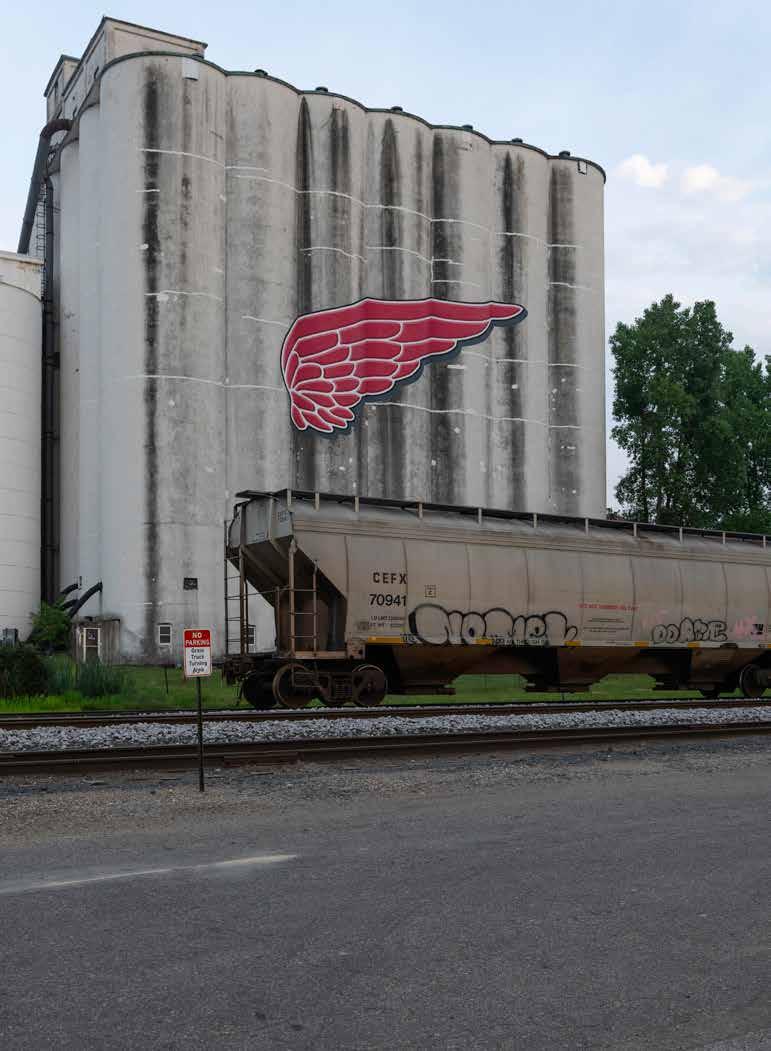
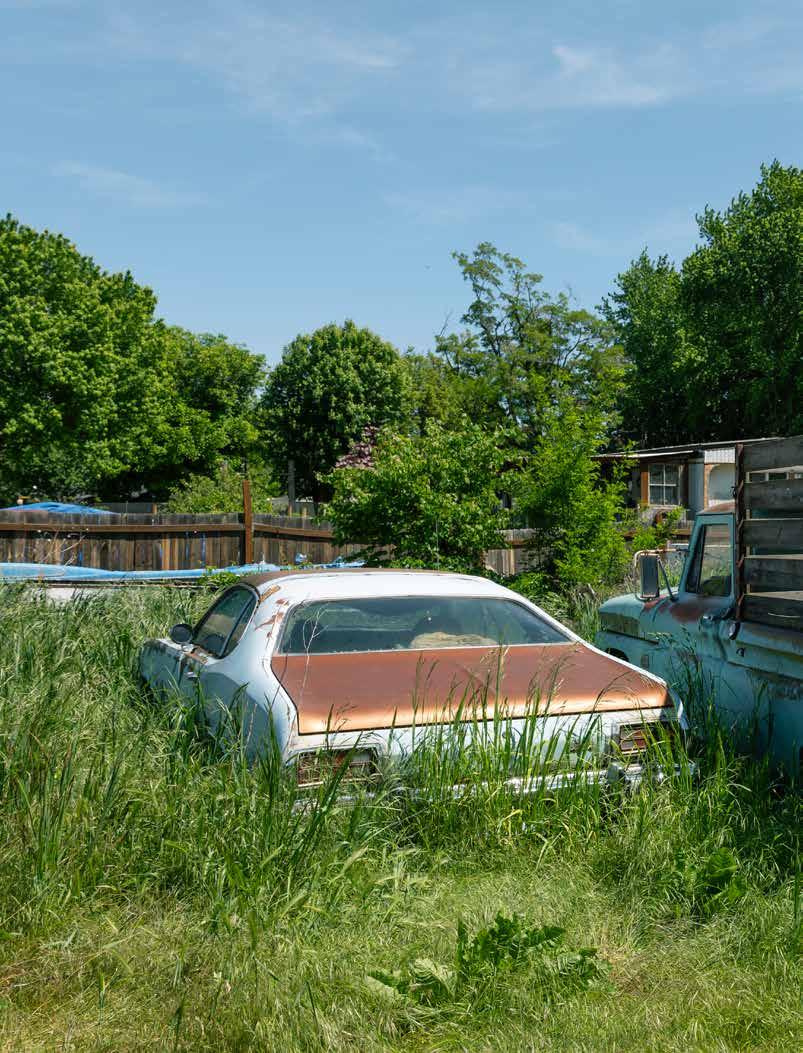
WORDS BY JONAS LARSSON | PHOTO BY ANDERS BERGERSEN
Sunburned, abandoned, and overgrown they stand along the road, the car cemeteries. If you've ever taken a road trip through rural America, you've seen them. Doesn't matter if it's Washington or Virginia, car graveyards always turn up in someone's yard or behind a barn out in the country.
For a car lover, a hoarder, and someone with the incurable belief that everything can be fixed, I start sweating every time we drive past those old wrecks. Over there, a Buick Riviera that probably just needs a little fresh oil and some wax and she'll purr like a kitten. And over there, a Chevy pickup covered in moss — bet you could get that one cheap. The list of wrecks I want to rescue and bring home could go on forever. But for the sake of my own finances and peace of mind, they're probably better off staying right there in the tall grass, getting more beautiful with every passing year.
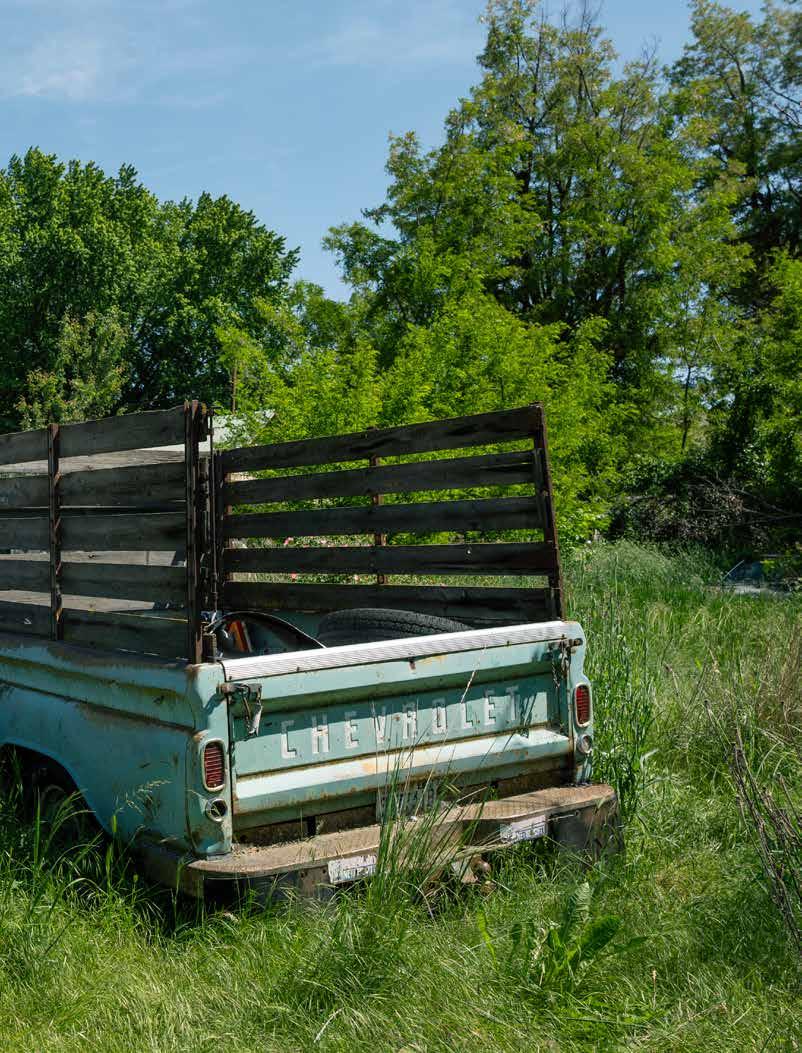
Get American Trails Magazine delivered to your door twice a year. Nearly 2 lbs of inspiration and travel tips. Discover a world of Americana culture with each issue. The bookazine is featuring 228 pages of stunning photos and articles printed on heavy matte paper.
Starting in 2025, the publication will be released twice a year, in late May and late October.
Subscribing not only guarantees you regular access to your favorite magazine but also saves you money and time. Don't miss out on this exclusive deal—subscribe today! €69|$80|£59 WE ARE PLEASED TO OFFER FREE WORLDWIDE DELIVERY FOR ALL SUBSCRIPTION ORDERS. Scan the qr-code or go to: americantrailsmag.com