is the publisher of PANSW Police News. The Police Association does not accept any responsibility to any advertiser or consumer in respect to advertising appearing in PANSW Police News. For enquiries re advertising in this publication, please contact the publishers via: elyssa.king@pansw.org.au
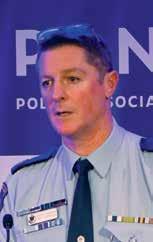
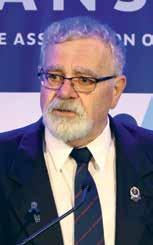
Executive Member / Paul Ireland p2
President's Message p3
Extended Court Hours & Bail Division p4-5
Retention remains top priority p6-7
Conference's Clout p9-11
Branch Official of the Year Award (25-26) p13
Ben Bryant p15
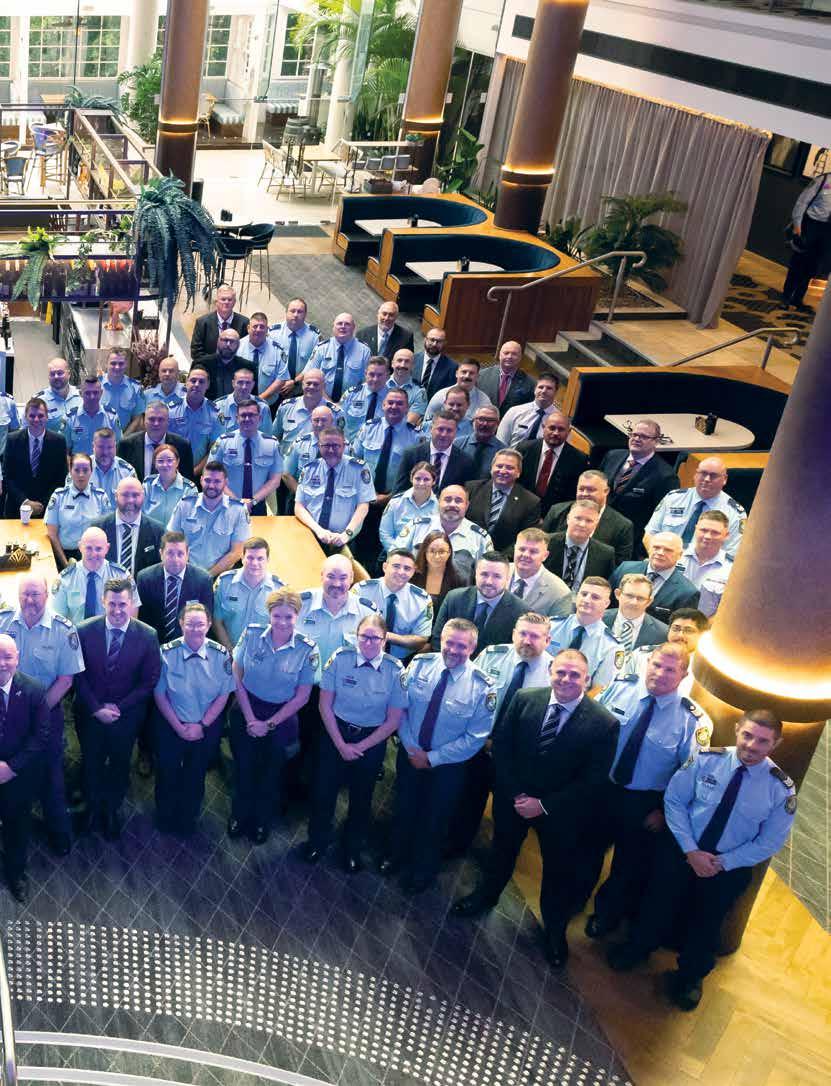
Assembled Delegates of Conference p16-17
Conference Presentations (summary) p18-19
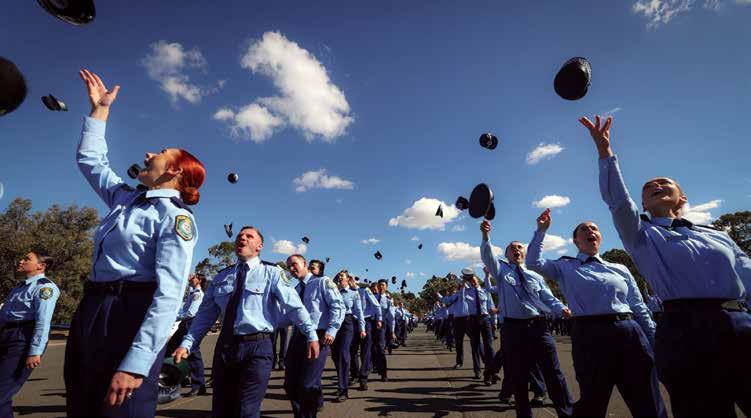
Welcoming the largest class in history p20-21
Money Matters / Spending Fatigue p23
Phil Powell / Legacy p25
Associates p26-31
Police Medal Recipients p32
Crossword33
Disclaimer: Police Association of New South Wales (“Publisher”) advises that the contents of this publication are the sole discretion of the Police Association of New South Wales and the publication is
for information purposes only. The publication has been formulated in good faith and the Publisher believes its contents to be
the contents do not amount to a recommendation (either expressly or by implication) and should not be relied upon in lieu of
professional advice. The Publisher disclaims all responsibility for any loss or damage which may be incurred by any reader relying upon the information contained in the publication whether that loss or damage is caused by any fault or negligence on the part of the publisher, its directors and employees. Copyright: All advertisements appearing in this publication are subject to copyright and
Executive Officers
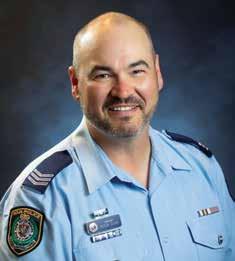
Executive Member Northern Region Area 1
Paul Ireland
■ Stop me if you’ve heard this one … Three officers walk into a bar. One works in a metro area, one in a regional area, and one at a remote station.
The metro officer says, “I’ve got it the worst. We’re flat out all the time—traffic everywhere, media everywhere, new staffing orders every week. And don’t even get me started on the cost of living and house prices.”
The regional officer jumps in: “Yeah, but… regional areas have some of the highest rates of property and violent crime, and we just don’t have the numbers to keep up. Most NSW Police policy is written with metro in mind, so we’re constantly trying to make it work without access to specialist units.”
Then the remote officer says, “Hold my beer… At least you’ve got backup nearby—within a few postcodes. Your radios and phones actually work. Your houses aren’t falling down around you. Your kids can go to decent schools and still live at home. And if you need medical help? That’s not a flight away.” Honestly, this could be a conversation happening anywhere across the state.
And it’s something that really hit home for me at Conference 2026.
Every part of the NSW Police Force is crying out for help—and for good reason. The challenges might look different depending on where you work, but they’re real, and they matter. The question is, what makes one set of problems more important than another?
That’s where the PANSW comes in.
They represent all of us, working to push for solutions. We might not be the ones making final decisions, but we can shine a spotlight on the issues and apply pressure where it counts—whether that’s on departments or political leaders—to help drive real outcomes.
At Conference 2026, that’s exactly what the delegates have done. We’ve worked together to set clear priorities for the next two years so we can keep moving forward as an organisation.
I’m genuinely proud to have stepped up as a delegate and to play a small part in supporting my fellow brothers and sisters in blue. And if you’re reading this and thinking about getting involved—do it. Take that next step. Get active in your
branch. Put your hand up. You might just find yourself becoming a future delegate too.
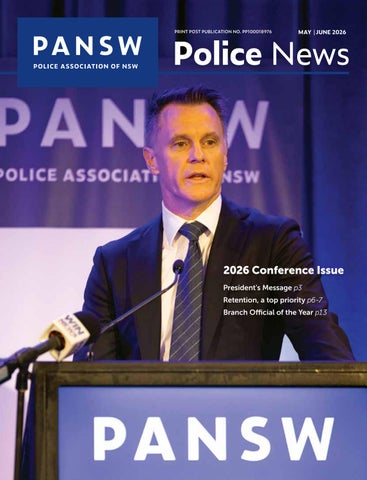
PANSW President Kevin Morton
The road ahead with a Full Tank
Goals and direction coming from Conference
■ As I address you in my column for this edition of the Police News, I do so with the utmost gratitude and humility.
During the PANSW Biennial Conference 2026, which was held in late May, I stood for re-election as your President. I was re-elected unopposed by the delegates in attendance. I'm also pleased to announce that my Vice President Ian Allwood and Treasurer Roger Campton were elected unopposed and will continue to undertake the work they do for the Police Association standing with me for the next four years. I speak for all three of us when I thank you all for entrusting us with the stewardship of this organization. There is much to be done.
As you will have already read in the Around The Grounds published not long after the Conference, we have a number of new Executive members. We see faces who are familiar to our readers in returning Executive Member Darren McCaughey and former Organiser Nikki Lucaci. We also welcome newer faces in Samuel Davis and Justin Saunders. Over the coming editions, we will introduce them through an article so that you know who they are and what they represent for the Police Association.
extra class graduating from the Academy is proof that he has listened to our calls for more boots on the ground to alleviate the strain on our current workforce.
But we have seen long speeches filled with praise and admiration for our police officers amount to nothing more than a well-liked social media post and no follow-through behind closed doors before. This is a commendable acknowledgement of our progress and the seriousness with which our ongoing
strategic direction. It is reassuring to know that this is the direction where I want to go as well.
Focus groups held during Conference again provided invaluable information which will form the basis of planning. Over the next two years, this will shape the content delivered and discussions that will take place at region forums that will be held across the state.
advocacy is considered, but resolving our long-standing issues in the retention space will require this Government to answer to much more for our members.
Traditionally this edition of the Police News represents the post Conference wrap up of what was presented and delivered to your elected delegates during those four days. It highlights the key issues on our agenda including prisoner transport and management, our role in mental health incidents, workforce allocation and, most importantly, retention.
With the Premier, Police Minister and Commissioner of Police in attendance, I spoke about the long-suffering weight of these issues, stressing that for me personally and for you importantly there needs to be urgency in implementing meaningful change. The Premier recognizes this; the announcement of an
Conversations and meetings are ongoing but it is the results that matter; the actions taken for your betterment. With a state election pending, I am committed along with the Executive to push harder than ever with all political parties to ensure that your needs are met with respect to these issues and many more.
As the driving force behind the NSWPF, our success depends on your ability to keep the wheel and propel us into the future of policing. Through your delegates representing your interests, Conference 2026 gave us a clear steer on the issues that are affecting you in the workplace, on priorities to be added to the log of claims for our next Award negotiation and the road ahead our
Conference is also an important opportunity to recognize the outstanding contributions of our longserving delegates. We were thrilled to recognize Detective Sergeant Stephen McDonald with life membership of the Police Association of New South Wales. Along with 38 years of commitment to serving the people of NSW as a serving member of the NSWPF, Stephen has been the long-serving Executive member in the Association’s 106 year history – with 26 continuous years of service. As a passionate Branch Official and Executive Member for Non LAC 1, he never shied away from representing members’ interests in often complex matters during numerous Award negotiations including the introduction of the Detectives pay scale in the early 2000s. Among his achievements, he acted as the members’ voice on the Detective’s Board since its inception, played a pivotal role in the PANSW’s Legal Appeals Committee and many more. Thank you Stephen for your unwavering service, integrity and leadership.
In future editions, you will read the stories of committed delegates, Executive members and long-serving staff who have dedicated their time and efforts to championing the cause of our membership. But for now, as always, you remain the heartbeat of our state and the focus of our advocacy; in the streets, in the media, behind closed doors on Macquarie Street.
We continue to fight. Now on with the work.
CONTINUING THE WORK AT PANSW'S 2026 CONFERENCE
Elyssa King PANSW Media & Communications Officer
Extended Court Hours & Bail Division
PANSW calls for changes to justice system
■ PANSW President Kevin Morton has called for court hours to be extended in an urgent reform to the justice system that would best serve its primary users; police officers who continue to carry the load in managing bail refused offenders. In regional and metropolitan areas, the burden placed on police officers in managing bail refused prisoners continues to grow.
Extended court hours for bail applications already exist in other Australian jurisdictions. It’s time for NSW to modernise the court system.
Police have a duty to put offenders before the courts as quickly as possible. They are tasked with the load of interview and processing the offender, managing the paperwork for the court and organising a connection to legal representation in a secure room. If they are unable to achieve this within the set timeframe, the case won’t be heard until the following day.
staff are unavailable to attend. In metropolitan areas, the lack of availability of beds can be an issue, while in regional locations police are at times carrying prisoners hundreds of kilometres in a police car, taking them away from their core duties performing first response policing.
dispensing it are disconnected from both.”
There was a trial of extended court sitting hours in Blacktown Local Court in 1986 but was discontinued. A parliamentary inquiry found that a lack of legal professionals available to work extended hours was a key reason for its failure.
Offenders, including potentially vulnerable people suffering from mental health issues, are being held in a police cell for extended periods while awaiting their appearance before a Local Court Judge. In recent times, this has seen overcrowding in cells where multiple individuals are sharing thread-bare thin beds overnight while awaiting their first bail hearing. This creates a risk for the police officers managing their custody and also for the offender.
At times, this can also involve police being required to transport the offender to and from prison where correctional
In his speech to Conference 2026, PANSW President Kevin Morton said that change was needed.
"They need court systems that operate with the realities of 24-hour policing in mind," he said.
"In dispensing justice, it is wrong to expect those charged to languish in cells, due to the current court sitting hours, then expect our members to take the responsibility and consequences of these prisoners being held in not-fit-forpurpose complexes."
“Those that can afford justice get it, those that can’t don’t, those that are
Speaking to media afterward his speech, President Morton said that changes in the landscape of policing and enhancements in technology meant that it was important to revisit the concept.
“Policing is 24 hours and our court sitting hours just don't reflect what we have at the moment," President Morton told media after his address.
"That trial [was] 40 years ago; we have technology that can assist now. It's one of the reforms that should be looked at seriously."
This is not the first time that the PANSW has called for changes to the court system to reflect the 24/7 nature of policing. Following the introduction of the Centralised Bail Division, the PANSW said that the Attorney General and Chief Justice had ignored issues raised by law enforcement and legal representatives and pushed back on arbitrary deadlines for bail applications that would increase the administrative burden on police officers and see prisoners held in cells at police stations until the following day, putting the police officers in charge of custody and the prisoner at risk.
With crime occurring at all hours, police officers and Corrective Services officers’ operate 24 hours a day. The PANSW
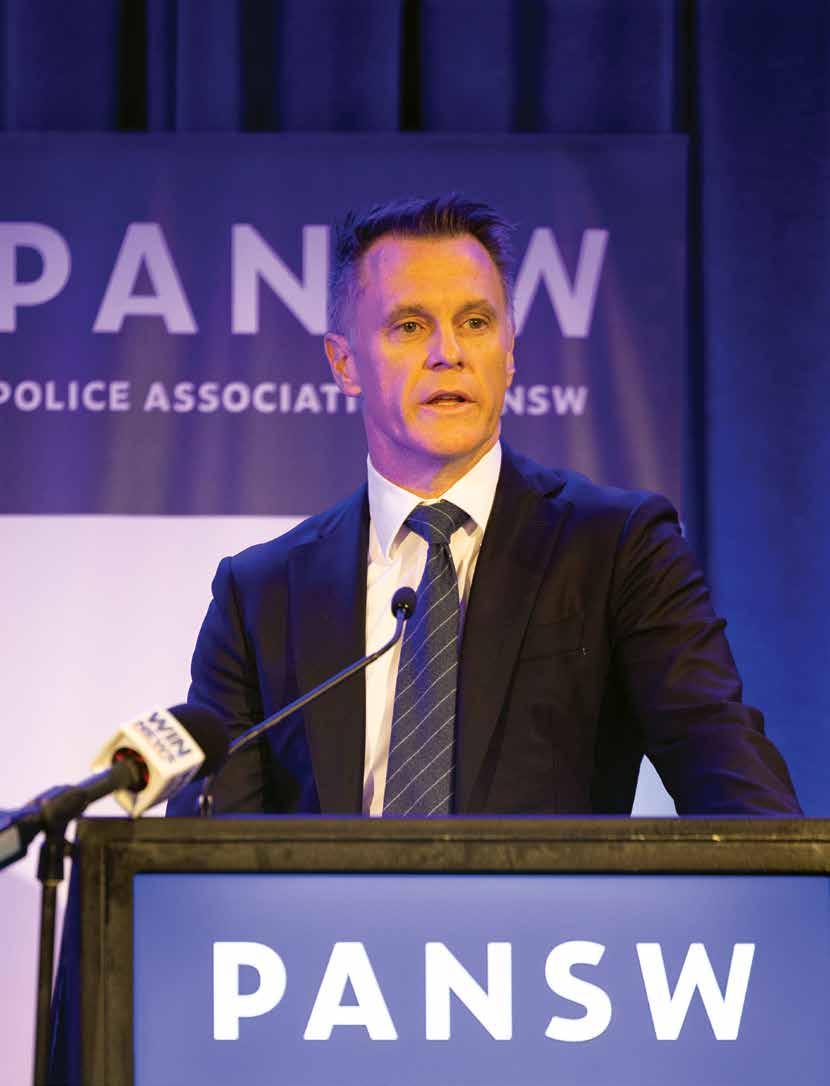
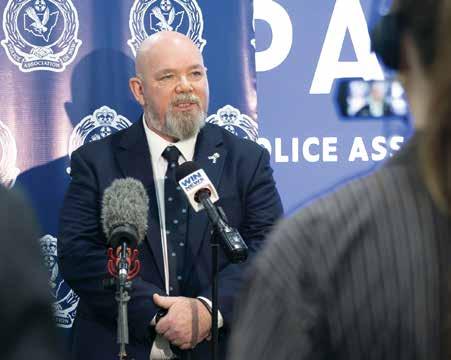
PANSW PRESIDENT KEVIN MORTON SPEAKING TO ASSEMBLED MEDIA ON CONFERENCE'S SECOND DAY
"We don't dismiss the calls, the requests, the demands of the Police Association because in the past we've grabbed their initiatives and they've made a difference" - Minns
argued that this was not reflected in the operating hours of the courts, which should be extended to reflect this and dispense justice in a timely fashion.
Operating 10am to 4pm (with morning tea and lunch) reduced access to justice for police and accused persons and shifted risk and unnecessary burden back onto police officers.
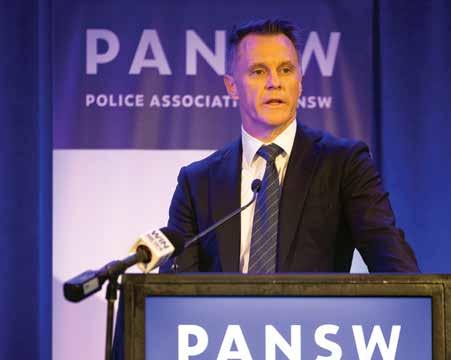
Following the Conference, when speaking to the media, Premier Chris Minns said that he would consider the request in relation to the establishment of the extended hours court.
“We don’t have immediate plans to do that, but we have taken in the past the Police Association’s calls for commonsense reforms that have actually helped police to do their job.” He said.
"We don't dismiss the calls, the requests, the demands of the Police Association because in the past we've grabbed their initiatives and they've made a difference."
Enforcement Command Branch (PPLEC) of the PANSW raised motions that would improve staffing conditions for their members. The movers spoke passionately on behalf of their members about the impact of the increased workload on prosecutors and the need for support with additional resources.
Practitioners positions, rather than the continued reliance on trainee prosecutor positions to service what is a permanent and specialist operational function. The Branch highlighted that the current model masks true resourcing needs and is not appropriate for the ongoing demands of Bail Division.
In a press conference after President Morton’s speech, Commissioner Lanyon said that police were doing a remarkable job of putting offenders before the courts and would work with the judiciary to improve efficiencies in the court system.
Changes to these systems will continue to affect workload given current staffing levels. Your delegates remained focused on calling for changes to entitlements and conditions that would allow you to perform your duties to the best of your ability.
During Conference, representatives from the Police Prosecutions Licencing
The endorsed motions included increasing staffing levels within the Bail Division, noting that current members are required to attend court five days per week without adequate respite, creating an unacceptable risk for burnout and fatigue. The Branch called for a staffing model that enables equitable sharing of the workload and provides appropriate relief or rotation arrangements to ensure the wellbeing and sustainability of Bail Division Court List Practitioners.
The PPLEC Branch also called for the creation and approval of dedicated authorised Bail Division Court List
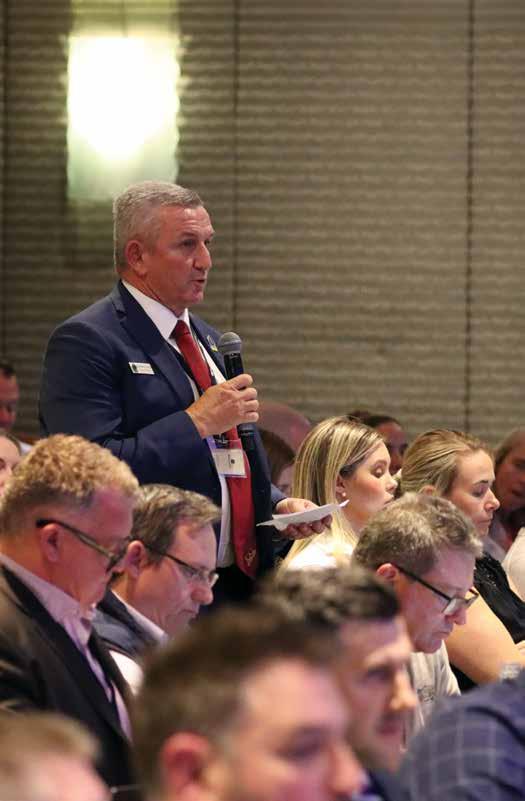
On Thursday, a motion of urgency arising from the presentations and focus groups was spoken to by Executive Member Paul Ireland calling on the Executive to commence negotiations with the NSW Attorney General to expand Bail Court sitting hours with a view to reducing the current backlog and extended detention of offenders in not fit for purpose police cells due to the ongoing risk caused to members.
With a particular focus on regional areas currently operating under the Bail Division 7 days per week he said that the current cut off time for paperwork meant that courts were sitting until later in the day attempting to clear the number of bail refused prisoners being held in police custody. This system is placing increasing pressure on prosecutors who are completing their duties late into the day. A later sitting court time would allow for additional planning time and ease the burden on them, while also ensuring that the risk to police managing the custody of bail refused prisoners in their stations across PAC and PD would also be reduced.
NSW PREMIER CHRIS MINNS ADDRESSING A ROOM FULL OF PANSW DELEGATES, ASSOCIATES AND LIFE MEMBERS
Elyssa King PANSW Media & Communications Officer
Retention remains top priority
To ensure the retention of our currently serving members, recruitment remains an important part of the Police Association’s ongoing strategy over the next four years.
■ Our members need to be rewarded for their professionalism and remain happy and healthy at work to ensure that they continue to thrive while performing their duties. But on its own it won’t address the shortfall in staffing numbers we are currently experiencing.
The exhaustion being experienced by those serving on the frontline is visible. With the rigours of managing an everincreasing number of duties and ongoing scrutiny from media and oversight agencies, police are stretched thin and overworked, watching their colleagues with years of experience and knowledge walk away from the profession.
If we reduce attrition to a manageable rate, we will reduce the numbers of police officers exiting the job from 1200 to 500-600 per year. Early signs show that we are on track to achieve this in 2026, and it is significant to ensure that we balance preserving our experienced officers with accelerated recruitment in order to reach authorised strength in the long term.
We need to continue to get more boots on the ground more quickly to address the workflow overload that you continue to manage relentlessly.
In his initial speech after being elected in 2022, President Morton said that the first step was to reduce financial barriers that would prevent potential recruits from joining the ranks. This would be achieved by revisiting an existing strategy to create a new pathway to attract and retain the best and brightest to this profession. “We need to once again recruit people with life experience. The only way to do this is to pay as they learn. You shouldn’t have to choose between paying a mortgage and supporting a young family or joining our job.”
As a result of ongoing advocacy from the PANSW, the NSW Government implemented the pay to train model for student police officers at the NSW Police Academy in October 2023 to address the critical shortfall in police numbers across the state. The years following have seen
some of the largest classes graduate from the Academy in recent memory.
In 2026, the need for real change is more urgent than ever.
In his speech to Conference, re-elected President Morton said that the work that he commenced at the beginning of his tenure in the recruitment and retention space is only just beginning. “Together, we have put retention, staffing and office welfare at the centre of the public
PANSW has prioritised three overarching strategies to address increasing workloads and staff shortages
conversation where it belongs. But our work is not finished. In many ways, it is only just beginning. The next four years cannot be about defending policing. It must be about rebuilding it. We need more police on the road, faster.”
In his response, The Premier replied that he had listened to the PANSW and accepted the drastically transformed nature of modern policing and the exhaustion that comes with it. “We need more police officers in New South Wales. That means more recruits coming through the Academy; more experienced officers joining up perhaps from other jurisdictions and fewer experienced officers burning out and leaving the force because it’s exhausting and it’s a difficult job.”
At Conference, the Premier announced in his speech that that the Minns Labor Government has called for more recruits to join the NSW Police Force, with a new Police Academy class to be added this year, giving more people the opportunity to join the force and protect their communities.
The NSW Police Academy will move from three attestation classes to four, creating a larger, faster pipeline of new probationary constables for commands across NSW. This follows the recent attestation at the Police Academy of another record-breaking class, with Class 368 being the largest in more than 13 years – underscoring the Government’s commitment to rebuilding and strengthening frontline policing across the state.
The new class will be backed in with a new advertising campaign, calling on the community to sign up and be a part of the best police force in the country. “We’ve still got a long way to go, and I’m not here to do a victory lap, or declare that it’s mission accomplished. But we do believe that it’s progress.” Premier Minns said. “More people are signing up, we think the incentives are beginning to work.”
“Since the payment was introduced, we’ve had 6,700 applications – a seventy percent increase. And not just the payments – but our campaign to poach officers from other states; and our new pathway to help new recruits work in their hometown is making a difference too. They are about building the kind of force that embraces officers and keeps them on board for the long run.”
It is important to ensure that experienced police are passing on their invaluable knowledge and educating the incoming tranche that will make up the future of policing in our state. As always, your Delegates at Conference remained focused on ensuring that currently serving members are supported in training the next generation of police officers.
A motion of urgency passed on the final day of Conference directly related to the workload of officers training the incoming classes at the Academy.
Officers currently working at the Academy are training to full capacity. With an increase in student numbers, the workload requirements on these officers to mentor and teach will increase significantly. PACS and PDs would be required to release operational staff to meet these requirements are already stretched thin. The motion called for the PANSW to advocate for a dedicated NSW Police Academy secondee allowance to officers performing those duties.
With the current environment of staffing crisis at PACS/PDs, the current experienced officers that perform the secondment duties is reducing based on several factors. To achieve the NSWPF recruitment goals, we need to retain the experienced and trained officers we have in this field as well as recruiting additional
officers to perform these roles.
Officers seconded to the Academy are currently provided with first-class rail travel in lieu of the kilometres taken to travel, substandard accommodation while onsite, and an incidental allowance to cover their lengthy absence from their permanent residence/location.
In return, the officers sacrifice significant personal comfort, flexibility, loss of income with the removal of shift penalties, overtime, and an absence from their normal working location while working away from home. With the explosion in costs of living, the firstclass rail fare is inadequate in addition to the requirement to attend the Academy for weeks on end to train which has increased the financial burden on officers over the years, in effect, seeing experienced officers stop performing these roles with many withdrawing their OSI accreditations. This motion is aimed at all officers who are seconded
to the NSW Police Academy, for example academic instructors, PDT and OSI operators.
Spoken to by Executive Member Paul Ireland, the motion seeks to provide officers on secondment to the Academy an appropriate allowance to recognise and support the additional financial, personal, and professional demands associated with these roles. This will ensure we get the right police to the Academy to undertake these roles which is the future of the organisation.
Ensuring adequate support for seconded staff is critical to sustaining the NSWPF recruitment objectives. Retaining and increasing the number of experienced officers undertaking these secondments will directly contribute to delivering high-quality training and assessment for recruits during their time at the Academy.
EXECUTIVE MEMBER PAUL IRELAND SPEAKS TO THE MOTION SEEKING OFFICERS ON SECONDMENT TO THE ACADEMY BE GIVEN AN APPROPRIATE ALLOWANCE
2026 Biennial Conference Sponsors
With thanks to all Sponsors and partners for their support throughout conference
Gold Sponsor
Platinum Sponsors
Silver Sponsors
Bronze Sponsors
Angus Skinner PANSW Engagement Manager
Members The driving Force
Conference has always been a key date on the PANSW calendar. Now
it’s also
a key date in NSW politics and policing
■ “What’s the most important thing that happened at Conference 2026?” - I took every opportunity to ask Delegates that question. One of my favourite answers was; 'Like minded people, coming together to come up with solutions and options to help police officers.'
I couldn’t have said it better. That's what Conference has always been about. I've always been so impressed by those officers that put their hand up to be Branch Officials, Delegates and Executive members of the PANSW. They spend so much of their own time because they believe it’s the right thing to do.
No where is this more on show than at Conference. These are Police officers who are committed and passionate about helping their colleagues, to make policing as safe and rewarding for every person that puts on the uniform, now and in the future.
But this year it wasn’t just committed Delegates that saw Conference as an important date on the calendar, to come together and set the agenda for the PANSW.Everyone in NSW politics and policing saw it that way. A chance for the key decision makers in NSW policing to join President Kevin Morton and the PANSW Delegates, to set the agenda for the future of policing in NSW.
Alleviating workload, retaining experienced officers, recruiting new officers to fill vacancies, and keeping officers healthy and happy in the workplace were the primary focuses of Conference 2026, and these are the big challenges facing policing right now in NSW, and around Australia and the world. The official party at this Conference included:
• The Premier, the Hon. Chris Minns MP,
• The Treasurer, the Hon. Daniel Mookhey, MLC,
• Minister for Police and Counterterrorism, the Hon. Yasmin Catley, MP,
• Leader of the Opposition, Ms Kellie Sloane, MP,
• Shadow Minister for Police and Counter-terrorism, The Hon. Anthony Roberts, MP,
• Commissioner of Police, Commissioner Mal Lanyon APM,
• Deputy Commissioner David Hudson APM,
• Deputy Commissioner Dean Smith APM, and
• Seven Assistant Commissioners or Superintendents with high levels of responsibility on important projects.
Conference opened with PANSW President Kevin Morton addressing Delegates and delivering a strong message to the politicians and senior police in the room: there Delegates would judge their presence at Conference at a high standard:
'We need more police on the road, faster. We need stronger retention strategies that value experience and reward commitment. We need mental health reforms that stop police becoming the default response for every crisis. We need less blue tape and more time for real policing. We need technology that protects our members instead of systems that slow them down. We need Legislative reform that reflects the realities of frontline work, not theories written far away from it. We need urgency ... because while
committees talk, our members carry the consequences. While bureaucracy sometime delays, our officers absorb the pressure. While systems stall, our people continue answering the next job, and the next, and the next. If process is the problem, streamline it. If funding is the problem, fund it. If leadership is the problem, fix it. Our members cannot wait any longer And let me say this clearly to every elected official and every decision-maker here today: support for police cannot exist only in speeches, press conferences and social media posts.'
After President Morton’s speech, the Premier, Minister of Police, Leader of the Opposition, and Commissioner, all outlined their plans to meet the challenges currently facing police officers in NSW.
After the speeches, I ask another Delegate my repeated question: “what’s the most important thing to happen at Conference 2026?” He said: “during the official opening, the support shown by the Commissioner and the Premier for the police moving forward.”
He is right. This Conference, the politicians and senior police arrived knowing they could not just come here and give the typical platitudes in a speech about policing, they had to articulate concrete actions that Delegates could assess and consider in their focus groups.
Going back to the Conference priorities: alleviating workload, retaining experienced officers, recruiting new officers to fill vacancies, and keeping officers healthy and happy in the workplace; the politicians and senior officers stuck to the assignment and talked to those issues directly.
Don’t get me wrong, they didn’t promise the world, and the PANSW will still have a big job on its hands over the coming years to hold the Government and NSWPF to account, to ensure they show sufficient urgency and a concrete plan for these challenges. But the point is, it was clear at this Conference that
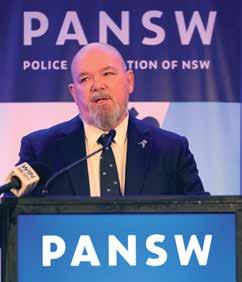
PANSW PRESIDENT KEVIN MORTON ADDRESSING CONFERENCE
It wasn’t a roadshow for the senior officers in NSWPF to sell a message -
the Government and NSWPF see your elected officials in the PANSW as a crucial part of meeting those challenges. President Morton and Commissioner Lanyon address the gathered media at Conference 2026, discussing police workload, extending court hours to free up police and holding cells, reducing police attendance at mental health incidents.
As we got further into the Conference agenda, Delegates were privy to detailed information provided from senior police officers specifically relevant to the focuses of Conference (alleviating workload, retaining experienced officers, recruiting new officers to fill vacancies, and keeping officers healthy and happy in the workplace).
But it wasn’t a roadshow for the senior officers in NSWPF to sell a message. Immediately after the presentations, your Delegates would break off into smaller focus groups, to outline their priorities for the PANSW to pursue on those issues. And if they disagreed with what they saw in the presentations, they made that clear in the focus groups, and were happy to give feedback to pursue a course of action to rectify that.
It was clear in those presentations that the senior officers were well aware the Delegates would be analysing their presentations in the focus groups, and saw that feedback from Delegates as valuable in assisting the NSWPF to formulate solutions to some these highly complex and consequential tasks.
There are PANSW Delegates and staff that have been to many more Conferences than I have, but I have been to my fair share, and at Conference 2026 I saw, stronger than any previous: politicians saw the gathering of Delegates as a key decision making body for policing. NSW police hierarchy saw this as a hugely useful source of vision and ideas for solutions.
As members, you have a voice in the PANSW. And what’s clear from Conference 2026 is: that voice is highly influential.
- immediately after the presentations Delegates would break into focus groups to outline their priorities
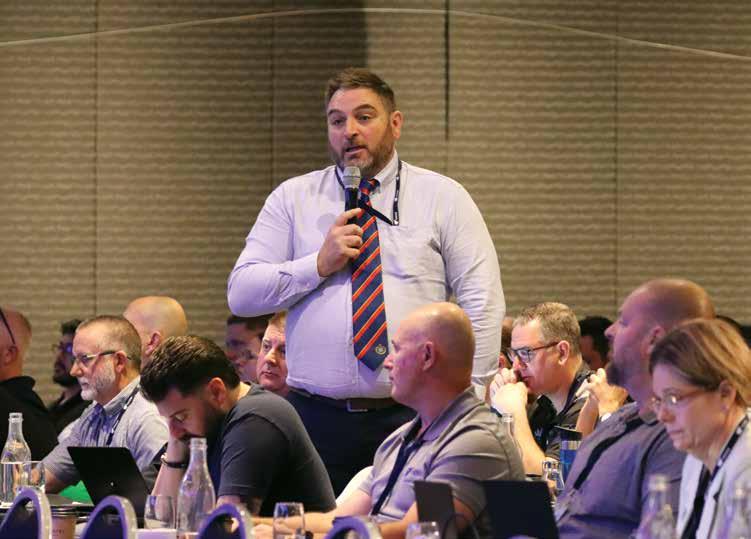
CONFERENCE DELEGATES PROPOSING & DEBATING MOTIONS THAT WILL GIVE DIRECTION TO PANSW INTO THE FUTURE
Elyssa King PANSW Media & Communications Officer
2024 Branch Official of the Year Elise-Hulley Thomas
The Branch Official of the Year Award is a significant acknowledgement of the outstanding contribution of our Branch Officials
■ The Branch Official of the Year Award is a significant acknowledgement of the outstanding contribution of our Branch Officials.
The later half of 2024 saw an increasing number of police going off on sick leave within a very short period of time. The impact on those colleagues who remained behind was immediate; managing an overflowing workload and fighting against the low ebb of morale that comes with being understaffed.
In Campbelltown City PAC, 16 officers went off sick within two weeks. As a member of this Command, Elise Hulley-Thomas recognized that something needed to be done.
Discussions with officers within the Command revealed that police were being required to carry the load for other government agencies that didn’t operate 24/7, such as welfare checks for hospitals, animal related captures, truancy checks for schools, prisoner transfers among others.
Within 24 hours of meeting with PANSW Organiser Rod Sheraton, she had consulted members in the workplace to identify the non-core duties that they would no longer be attending until they had returned to operational strength. She also contacted Branch Officials from the neighbouring Camden PAC, who were experiencing similar staffing and workload issues.
More than 100 members packed out the main meeting room at Campbelltown Police Station for a special meeting. United, the Branch members firmly agreed that this could not continue.
The motion’s message: police would always respond when there was a risk to life or injury, but would triage non-core
duties and redirect them back to other agencies.
Elise and her Chairperson Cory Lay met with their Commander to share that the motion had been passed with 15 points of work which were the responsibility of other agencies and other non-urgent day to day duties that would be unable to be completed by the reduced workforce. In the background, work had been completed with the Legal, Industrial and Organising teams at the Police Association to ensure that members’ psychosocial wellbeing would be protected.
In solidarity, the Camden Branch passed their own motions.
Police at Campbelltown immediately began to see the effect of their activism. There was a noticeable reduction in workload, allowing the members to focus on calls for assistance and emergency response. Elise and Cory continued to support the members with the implementation of the process, meeting regularly with management to mitigate evolving issues but also remaining firm in
maintaining the type of work that members would attend.
The message began to spread across the South West metropolitan, with Auburn also passing motions. As support for the movement built, more than 30 individual branches would pass similar motions across the state, showing that the issues were deeply held and widely felt.
Media interest was generated by the push back, with the PANSW President supporting the advocacy from the South-West Branches for changes. This was not Industrial Action, or linked to the upcoming Award negotiations, but immediate action that was long overdue.
The Commissioner responded. The NSWPF would work with the PANSW and the Government to ensure the smooth implementation of the changes across Branches around the state. Commissioner Webb also said that significant work was being done internally to reduce the workload on frontline police, including ascertaining whether jobs were being appropriately triaged and pushed back to other police.
“I am humbled but this award shouldn’t be just mine because there were a lot of people involved in those motions. I also want to thank the Executive members who pushed these motions through their Branches.” Elise said.
“At Campbelltown we are continuing to push back, particularly in the mental health space. Do not underestimate the power of a strong Branch; you will always win if you have a strong Branch. There is strength in unity, and these motions were a demonstration of that.”
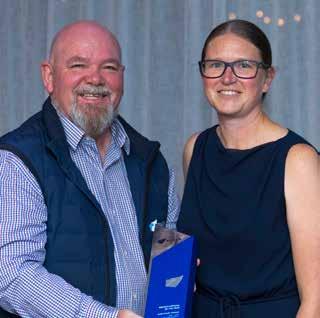
PANSW PRESIDENT KEVIN MORTON PRESENTS ELISE HULLEY-THOMAS HER AWARD
■ On Friday 5 June, Sergeant Benedict Bryant was sentenced to a two-year Intensive Corrections Order with 500 hours of community service and a three year disqualification of his driver’s license.
Elyssa King PANSW Media & Communications Officer
“Could this happen to me?”
PANSW members look at this case and see themselves
The matter arises from a collision in Alexandria in February 2022 involving an unmarked police vehicle and a stolen motorcycle ridden by 16-year-old Jai Kalani Wright, who later died in hospital from his injuries. Sergeant Bryant pleaded not guilty to dangerous driving occasioning death and was convicted on 28 November 2025.
The verdict was handed down after nearly four hours of sentencing remarks from District Judge Culver at the Down Centre in Sydney. The court room, along with an overflow room, were filled with members of the deceased’s family who cheered as the sentencing was handed down.
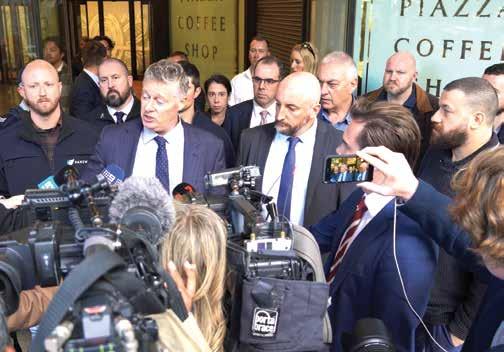
Sergeant Bryant remained composed and professional throughout the extensive deliberation. He was supported by members, friends and representatives from the PANSW including Executive Member Samuel Davis and Assistant Secretary of Legal Services Ben Lee. The highly publicized case has attracted sustained scrutiny by the media throughout its duration. Outside of the court, Bryant’s legal representative Paul McGirr told the awaiting reporters and cameras that an appeal had been lodged. “This decision fails the pub test,” he said. “The court has found my client should
have known the young person wouldn’t stop – even though he didn’t know how young he was. My client should have known the young person would try to mount the lane … that he would lose control, fly through the air and hit a police car that was coming to a stop.
“I don’t want to add grief to the family, a life has been lost. I’m not trying to rub salt into the wounds, (but) if people were at home, not doing home invasions and stealing vehicles, we wouldn’t be here. This tragedy could have been avoided.”
PANSW President Kevin Morton delivered the below message to members in an internal communications statement: 'Today’s sentencing outcome will be met with mixed emotions. For many police officers, the concerns raised by this matter remain unresolved. Over recent years I have spoken to members from every corner of this State. The message has been remarkably consistent.
Many members look at this case and see themselves. They see a police officer performing duties in difficult and dynamic circumstances. They
see decisions being made in real time. They see the realities of operational policing. Most importantly, they ask whether they would receive the same support and understanding if they found themselves in similar circumstances.' The answer from your Association is simple. Yes. We stand behind our members. We stand behind Sergeant Benedict Bryant. We will continue supporting him as appeal proceedings are considered and progressed.
The issues raised by this matter go beyond one officer. They go to confidence. They go to decision-making. They go to the willingness of police officers to continue acting decisively when circumstances demand it.
The people of New South Wales deserve police officers who are prepared to step forward when others step back. The Association will continue fighting to ensure members can perform that role with confidence. This matter is not over. Neither is our support.
The Police Association of NSW remains unwavering in its support for Sergeant Benedict Bryant. Our legal team will continue working alongside Sergeant Bryant’s legal representatives to ensure every available avenue is explored.
The Association's concern extends beyond Sergeant Bryant as an individual. This matter raises broader issues about police confidence, operational decisionmaking and community safety.
(L>R) PANSW EXECUTIVE MEMBER SAMUEL DAVIS, PANSW'S HEAD OF LEGAL BEN LEE, AND ELYSSA KING / MEDIA & COMMS LEAVE COURT WITH SERGEANT BENEDICT BRYANT POST SENTENCING. BRYANT'S COUNSEL PAUL McGIRRE SPEAKS TO THE AWAITING MEDIA.
Assembled Delegates of the PANSW 2026 Biennial Conference
Summaries of NSWPF reports to your Conference Delegates on key issues effecting all members
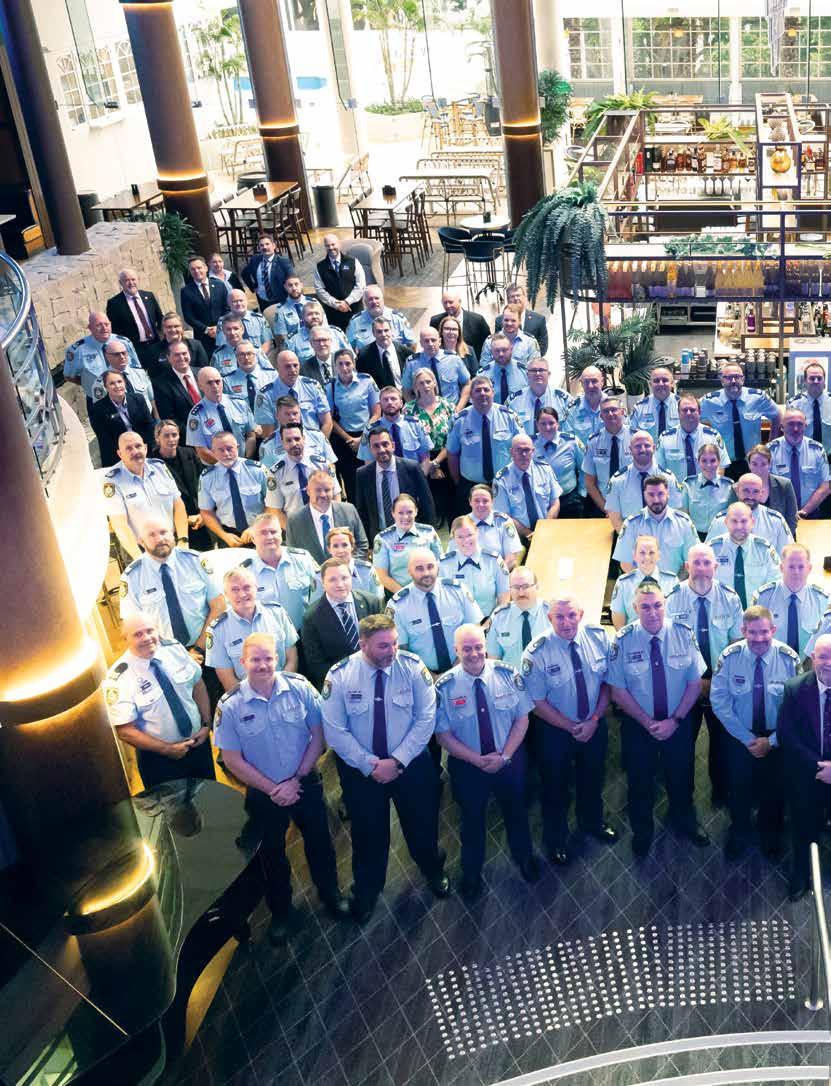
■ Getting police numbers back to where they need to be, reducing workload, and keeping officers healthy and happy in the workplace. These were the primary focuses of Conference 2026, and the subject of commitments from the Premier and Leader of the Opposition, the presentation of detailed information by senior police officers, 21 focus groups with your elected Delegates, and debating and voting on over 130 motions from Branches to Conference.
Here, we give you a summary of the presentations by senior officers in the NSWPF that updated Delegates on the current state of play.
After each of these speaker sessions, your elected delegates then worked on strategies to resolve these challenges and achieve further progress.
Getting police numbers back to where they need to be
Police numbers are the lowest they have been in almost 20 years, and thousands of officers below authorised strength. That’s the results of retention and recruitment over the last 5 years looking like this: on average, each year:
• 1,215 officers left the NSWPF,
• 908 new probationary constables attested from the Academy.
That’s the simple numbers behind the net loss of officers each year. The PANSW is advocating that the NSW Government and NSW Police Force target a rebalancing of that retention and recruitment equation at:
• reducing the number of officers leaving each year to a 500-600, to slow the losses.
• Increasing the number of new officers joining each year to 1,600, to fill the large number of vacancies.
That equation would represent a net gain of approximately 1,000 officers per year, and address the staff shortages as quickly as possible.
So what was the NSWPF update given to Delegates at Conference?
2026 is projected to be an improved rate of new officers of 1,100, and improve retention rate, with 600-700 current officers projected to leave the NSWPF. That’s a net gain of around 400500 officers. A positive improvement, but still lots more hard work to be done.
Retention
Receiving presentation from Deputy Commissioner Dean Smith and Assistant Commissioner Brett Greentree, the data for the current year shows a trend that may meet the PANSW target in the very near future.
That is not reason to stop treating this issue with urgency: a single year of projected figures should not override a five-year trend of significant losses. The PANSW will be continue to push the NSW Government and NSWPF to treat retention as an urgent issue until we see a sustained improvement.
We will be armed with the data from your Delegates’ focus groups, and the motions passed by Conference.
Recruitment
On the recruitment side, it was a mixed bag. Premier Chris Minns announced that the Police Academy will increase its output to 4 classes per year. If all classes are at full capacity, that would achieve the PANSW target of 1,600 new officers per year.
However the NSWPF presentation did highlight that significant challenges remain in attracting sufficient numbers to fill that capacity of classes.
Workforce allocation
The principle of using data driven decision making to put the right people in the right place at the right time is something everyone would agree with in principle, but the PANSW is skeptical about how much workload analysis and workforce allocation can address increasing workload pressure when police numbers are many thousands down, and every Command is way below target capacity.
Moving officers around based on assessment of who has the biggest shortfall of staff to workload doesn’t achieve much when everyone has a staffing shortfall.
We will continue to work with the NSWPF on this because a workforce allocation model has the potential to impact officers significantly, but the PANSW will not accept moving positions until a return to authorised strength is achieved.
Reducing workload on police Mental health incident response
The PANSW has campaigned to transition the primary responsibility to respond to mental health incidents from NSWPF to NSW Health. That would represent a huge reduction in workload for police, and more appropriate service delivery for people with mental illness.
NSW agreed to this objective in principle in 2024 off the back of PANSW advocacy, but actual implementation has been gradual while ensuring sufficient health resources to take on the work.
However, Deputy Commissioner Hudson and Superintendent Hales’ update to Delegates indicated that progress will speed up considerably, and we are nearing a new MoU with NSW Health that would begin actual implementation of the new policy objective.
Prisoner transport and custody management
This issue has been the subject of a huge amount of hard work and prioritisation from the PANSW and NSWPF, but it is impossible not to acknowledge there is still much improvement required.
Delegates received an update from Acting A/C Andrew Koutsoufis and Superintendent Duane Carey regarding Custody Corrections and Bail Division.
The PANSW and NSWPF are pushing hard for extension of court hours, for a reinforcement of Corrective Services’ responsibilities, and improvements in Bail Determination paper work.
Using technology to free police up from administrative and procedural tasks
Assistant Commissioner Stacey Maloney and Assistant Commissioner Jason Weinstein presented to Delegates on the work being done to reduce police workload, through improvements to systems, removal of inefficiencies, and new technology.
Notable, organisation wide improvements identified in the presentation included:
• Bringing more currently fragmented systems into a single solution to create a single experience point of officers,
• More functions accessible on MobiPOL
• Digital statements.
While the presentation did demonstrate improvements, and increases in investment into police technology, the focus groups did show that there are still a large number of police systems, procedures and technologies absorbing
police time and increasing workloads and frustration.
Health and wellbeing
Deputy Commissioner Dean Smith and Assistant Commissioner Raschelle Conroy presented to Delegates the work of the Health, Safety and Wellbeing Command. The Command was tasked with utilising $79 million of Pulse funding.
For years now, the PANSW has advocated for the NSW Police Force and Government to make it an urgent priority to: reduce injury rates, improve return to work outcomes, and significantly reduce medical discharge numbers.
These key indicators for police health and wellbeing are incredibly meaningful: they represent the level of harm that the job does to officers, and a loss of police work capacity and experience at a time when we are in a staffing crisis.
The NSWPF has performed poorly since 2015.But on current projections for 2026, there is finally a cause for optimism.
The number of psychological injury notifications reduced from 120 per month to 60 per month. Medical discharges are projected to drop to approximately 200-300, down from 1,233 in 2025. The number of police officers on long term sick leave is significantly reducing.
This is a projection for 1 year, on the back of a 10 year trend of poor performance, so we cannot let the pressure off the NSW Government and Police Force yet.
We know that officers are overworked, stressed and burnt out, and that prevents officers being healthy and happy in the workplace.
The NSWPF presenters at Conference openly acknowledged, that leadership practices in some Commands are still damaging people.
We will continue to advocate for the NSWPF and NSW Government that resolving those issues is one of the most pressing issues for rebuilding the capacity of the NSWPF.
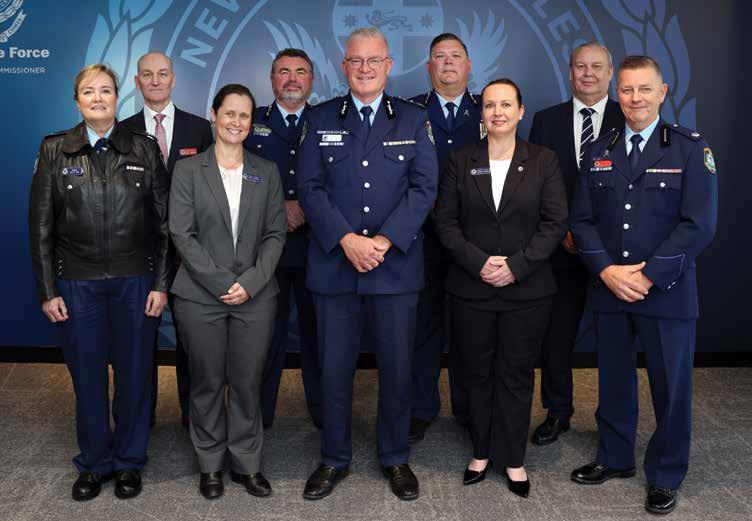
TOP LEFT, CLOCKWISE: CoP MAL LANYON, DEPT COMM DAVID HUDSON, SUPT KIRSTY HALES, DEPT COMM DEAN SMITH, ASST COMM BRETT GREENTREE, BOTTOM ROW (R>L) BOB MORGAN, JOCELYN NOBLE, ASST COMM RASHELLE CONROY, ASST COMM STACEY MALONEY, DET SUPT DONNA McCARTHY
Peter Gurr Executive Member
Welcoming the largest class in our history
Class 368 proudly breaks a record ahead of taking its place within NSW Police Force
■
On Friday, 1 May, the NSW Police Force welcomed 349 new probationary constables as Class 368 attested from the NSW Police Academy in Goulburn. It is a significant moment for the probationary constables, who have lost sleep spending late night’s studying the curriculum, overcome fatigue and injuries while pushing their bodies to their physical limits and sacrificed time away from their loved ones to gain acceptance into a new career and the in-built family that comes with putting on the uniform.
Every attestation parade, I take a moment to reflect on my own parade more than 20 years ago—the pride and excitement, mixed with nerves and trepidation. I still remember walking into my station for the first time: the weight of the uniform, the responsibility that came with it, and the quiet determination to do the job well and do right by the community.
It was the moment the training became real—when the expectations shift from the classroom to the community, and when new officers learn quickly that policing is never done alone. It is in those first weeks that their crew, supervisors and mentors become vital—offering guidance, setting standards and helping them find their confidence.
There will be challenging days ahead, but also moments of immense purpose, when a calm word, a thorough investigation, or simply turning up when someone needs help makes all the difference. For Class 368, that same moment is now only days away, marking the beginning of a career defined by service, teamwork and resilience. As they step into their first shift, I encourage them to stay curious, back each other, learn from their peers, and hold fast to the values that brought them to this profession.
This also marks an important milestone for the future of policing in NSW. This is the largest class to graduate in 13 years.
A new class
The graduating students of Class 368
will begin their first day as sworn officers on Monday 4 May 2026. They will be the last class to graduate with Charles Sturt University, before the program begins with Western Sydney University.
In recognition of the long-standing relationship between the NSW Police Force and Charles Sturt University, a lecture hall at the NSW Police Force Academy has been renamed after the university.
Commissioner Lanyon said he was incredibly proud to welcome Class 368 to the NSWPF. “It is my privilege today to welcome part of a new generation of officers who will shape the future of the NSW Police Force,” He said.
“Each recruit has already shown discipline, courage and commitment to becoming a police officer and I’m confident in their ability to serve the communities they have been placed in. I am proud to welcome the recruits to a career that will demand a lot of them but one that will make an impact.”
Cadet Traineeship Program
The date also marks another significant milestone in the future of the NSWPF: nine cadets began their training in
police stations next Monday as part of the police cadetship program – the first since 1977. This 12-month Cadet Traineeship Program gives school leavers and young adults hands-on experience and early exposure to policing culture, values and expectations.
Cadets will complete 12 months of field-based learning, rotating through four placements, including six months in general duties, two months with Traffic and Highway Patrol Command, two months with the detectives unit and two months with the crime prevention unit.
At the end of the 12 months, cadets will obtain a Certificate III in business and be able to apply to undertake further study and training at the Goulburn Police Academy.
The cadets – all aged 17 and 18 – have spent the last four weeks undergoing an induction.For the next 12 months, they will be placed at The Hills and Sutherland Shire Police Area Commands, where they will undergo paid experience, learning firsthand what life as a police officer involves. The field-based training will rotate through four placements, including six months in general duties, two months with Traffic and Highway Patrol Command, two months with the detectives unit and two months with the crime prevention unit.
Over this period, they will complete onthe-job training and study by distance education. At the end, they will officially graduate with an Associate Degree in Policing Practice and will be confirmed to the rank of Constable.
The first intake of cadet trainees in 50 years will prepare to start in our police stations in May under the NSW Police Force Cadet Traineeship Program.
New facilities to better support police recruits
At the end of April, two new facilities worth more than $10 million were officially opened at the Academy, enhancing the state-of-the-art training
Class 368 comprises recruits from diverse backgrounds, including 20 First Nations recruits and 39 born overseas
facilities available to the students.
Students at the Academy will now have access to a new skid pan and a refurbish and modernised fitness centre. Upgrades to the Academy Fitness Centre include a new gym floor, modern equipment, office space and bathroom facilities. The modernised centre has increased in size by 40 per cent with the latest gym and fitness equipment.
Fitness and conditioning are an important part of the program for prospective police officers, with strength and conditioning training integral to preparing students for the physical demands of operational policing. The facility also includes a new social recreation area with tennis, basketball, netball and pickleball courts. New lighting in the outdoor recreation area will allow for expanded use by students after hours.
A new, state-of-the-art skid pan has also been built at the nearby Police Driver Training complex, which includes facilities for driver training, operational
safety training, firearms training and specialised training for tactical police units.
The new skid pan is a purpose-built driving circuit with a low-friction surface designed to safely simulate loss of traction. The expanded circuit cost $5 million to construct.
Students learn complex driving skills on the course, including traveling at speed, evasive braking, vehicle manoeuvring, driving in wet conditions and controlling a vehicle under intense steering and braking.
The next chapter
The graduating students will report to stations in the below regions around the state including:
Central Metropolitan Region – 89
South West Metropolitan Region – 72
North West Metropolitan Region – 66
Northern Region – 62
Southern Region – 31
Western Region – 29
The youngest is 19 and the oldest is 46. Class 368 comprises recruits from
diverse backgrounds, including 20 First Nations recruits and 39 born overseas. The graduating cohort speaks 12 languages other than English, including Assyrian, Cantonese, Arabic, Vietnamese, Korean, Macedonian, Kurdish, Afrikaans, Malayalam, Bengali and Dari.
“We are immensely proud to congratulate these Probationary Constables on reaching this important milestone as they complete their training and prepare to join our serving policing family.” PANSW President Kevin Morton said. “Coming from many different walks of life, each of these men and women has chosen to set aside what came before and answer a new calling in public service. Policing will test their resolve and sharpen their finest qualities—calling on them to act with courage, integrity and compassion in protecting their communities.”
“The Police Association of New South Wales looks forward to standing beside you, supporting and advocating for you throughout your service.”
Policing isn’t your average 9 to 5. So we’re not your average bank. Banking built for you, not for everyone.
What you get with Police Bank:
• Work with NSW Police? Get paid a day early when you bank with Police Bankyes, you read that right!
• No monthly or annual fees on our Easy Access Account
• Your
when you want to borrow.
Scan the QR code to find out more.
Greg McKenna, CEO of Police Bank
Fatigue Spending Why it happens, and how to stay in control
The psychology of money under stress: fatigue spending is real.
■ If you’ve ever finished a long shift, felt completely spent, and then found yourself hitting “buy now” on something you didn’t plan for , you’re not alone. There’s a name for it: fatigue spending. Policing places unique demands on the people who do it. Long shifts, disrupted sleep and exposure to difficult situations can wear you down over time and that can flow through to your finances. When you’re tired, it’s easier to spend without thinking. Recognising that pattern is the first step to getting back in control.
Why fatigue spending happens
When you’re tired or stressed, your brain’s decision making capacity drops. The part responsible for planning, discipline and long term thinking steps back, while the part that seeks quick relief takes over.
That might look like ordering takeaway instead of cooking, buying things online late at night, upgrading gear or tech you don’t really need, or saying “yes” to expenses you’d normally question. In the moment, these decisions feel reasonable. Your brain is trying to solve a problem: “I’m exhausted – how do I feel better quickly?” Spending can feel like the easiest answer. Over time, though, these small decisions can add up, especially alongside the cost of living pressures many households are already dealing with.
Why it can hit police harder
From working closely with NSW Police members, we see a few patterns that make fatigue spending more likely: Shift work disrupts routine: budgeting habits can fall away when your schedule isn’t consistent
Sleep deprivation affects judgement: even one poor night’s sleep impacts decision-making
Emotional load is high: after difficult jobs, it’s natural to seek some form of reward
Time pressure: convenience often wins when energy is low.
This isn’t about discipline. It’s human behaviour, particularly in demanding roles like yours.
Practical ways to stay in control
It’s not about getting everything right. It’s about setting up a few simple systems in place so that when you’re tired, and that happens to all of us, your finances are still looked after.
1. Automate your essentials
When your bills, savings and loan repayments are automatic, you remove the need to make decisions when you’re not at your best. Automation bridges the gap between intention and action.
2. Create a “no-guilt” spending buffer
Set aside a fixed amount each pay cycle as your discretionary spending. This gives you flexibility when you need it, without derailing your longer-term goals.
3. Put friction on impulse spending
Small barriers can make a big difference, like removing saved card
details from apps, introducing a 24-hour pause before non-essential purchases, or avoiding late night browsing where possible. When spending takes more effort, you’re more likely to stop and think.
4. Plan for reality, not perfection
Budgeting for takeaway, convenience, or small rewards isn’t failure, it’s realistic. If you know certain weeks will be tougher, build that into your plan rather than fighting it.
5. Focus on the bigger picture
Some pay cycles won’t go to plan. That’s okay. What matters is the overall direction, finishing the year with more saved and less owed.
A final word
At Police Bank, we see firsthand the realities of policing life. We understand that fatigue, stress and unpredictable schedules are part of the job. That’s why our focus is on practical, supportive solutions that work in the real world, not perfect scenarios.
If you recognise yourself in this, you’re responding to a demanding role. The key is putting a few guardrails in place so that even on your toughest days, your financial future stays on track.
If you’d like support reviewing your spending or setting up simple systems, we’re here to help.
For more tips on managing your finances, visit www.policebank.com.au or follow us on our socials.
77 th Commissioned Officers Dinner
On behalf of the Executive and Management of the Police Association of NSW, you’re invited to join us at the upcoming 77th Commissioned Officers Dinner
Friday, 23 October 2026
Three course dinner and beverages, Police Band, Dinner guest speaker and Pre-dinner beverages
Location: Grand Ballroom, Sheraton Grand Sydney Hyde Park
161 Elizabeth Street, Sydney
Time: 7.00pm for 7.30pm
Attire: Mess Dress, Miniatures and other Decorations or Black Tie
Tickets: $120 for Members & Associates (and their partners) or $150 for non-members
Book now: QR code (below) or https://www.trybooking.com/events/landing/1581818
Tim Sinclair NSWPL Marketing & Commnications Manager
Phil Powell All in the family
No one is surprised that 'Sweet Chilli Phil' stepped up to serve
■ Phil Powell says he doesn’t have a lot of vivid memories of his father, Sergeant Murray Powell, who died when he was a young child. But it’s clear he’s had an enormous influence on Phil’s life, and the lives of his whole family. When we talk to Phil, it’s one week after his Attestation to the NSW Police Force, where he was joined after the ceremony by older siblings from NSW Police Force, Tasmania Police Force, and the Australian Defence Force.
Family is everything to Phil. His Attestation was attended by 27 family members in total, including siblings and their partners, Phil’s partner and her family, and his grandmother. No surprise, then, that Phil views his fellow Police Legatees as part of his extended family. Having been involved with Police Legacy for most of his life, Phil has attended dozens of camps and events, and has grown very close with the legatees who attended alongside him.
“It was just unreal seeing the connection of all these kids from all these different walks of life. All there for a sad reason, but they’ve all got something in common, and have that connection.”
New Zealand, Uluru, the Gold Coast, Papua New Guinea to walk the Kokoda Track… amongst all these experiences,
does he have any favourite camp memories?
“I have a lot of them. They’re pretty loose ones though, so we’ll keep them out of the interview,” he laughs. “It’s not about the big trips Legacy took us on though. We could all just be sitting at a bus stop, and we’ll be having the best time ever… it’s that tight connection with everyone!”
One of his closest Police Legacy connections is Paul Martin, camp supervisor and de facto camp dad to a whole generation of Police Legatees. On the day that Phil put in his application to join the NSW Police he called Paul to let him know. Paul asked if he’d mind if he put him on FaceTime, which is when Phil realised that Paul was actually on the bus at a Police Legacy camp, and everyone was joining in the call. He was chuffed to see all those familiar faces again.
And as for Academy life? He had a blast. Despite how hard they got worked. Or, we suspect, because of it. A few years ago he did the Police Legacy Defensive Driver Training, which he loved, but didn’t prepare him for being thrown around in the back of a high-speed police car at the Academy. “I have to admit I spewed in a bag in the back seat after doing that for eight hours,” he chuckles. A mishap
with a sweet chili sauce bottle during lunchbreak earned him the nickname Sweet Chili Philly, which might have made some people cringe, but Phil only seems entertained by it.
On graduation, it seemed like Phil’s family grew yet again. He was surprised and gratified to receive messages from officers – some very highly ranked –congratulating him on his new career, and passing on stories of having served with his father, back in the day. “They were saying what a good leader he was, and how supportive he was, and all that… That’s the Blue Family, right there!”
Phil completed a cabinet making apprenticeship after high school, and worked in that trade for several years as his “back up plan”, but always intended to join the force. And he has zero regrets. “I’ve only done four days on the truck so far,” he says. “They’ve all been fun. It’s been awesome.”
And as for the future? “I'm just happy to stick with general duties, and just nail down being a good police officer and getting that perfect before I start specialising in anything.”
Once a craftsman, always a craftsman. We think the community is in very good hands.
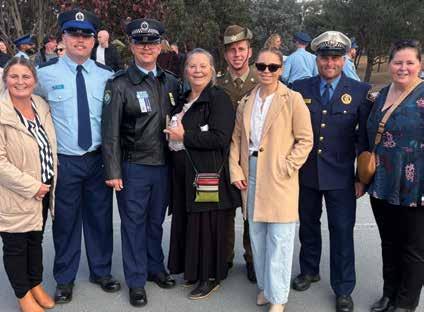
(left - L>R) PHIL WITH HIS FATHER MURRAY / (right - 2nd from Left) PHIL AT HIS ATTESTATION witnessed by his OLDER BROTHERS REPRESENTING NSWPF, ARMY, TAS-POLICE, with PARTNERS and FAMILY
Jon Goddard PANSW Lead Organiser
Vale Peter Walsh
Mentor,
leader, and trusted mate
■ We are saddened to acknowledge the passing of retired Senior Assistant Commissioner Peter Walsh, registered number 11722.
He joined the NSW Police Force in 1965, retiring in 2003 following 38 years of service and was a member of the Police Association of NSW for 62 years.
Peter dedicated his life to serving the people of New South Wales; he spent many years as a member of the Volunteer Rescue Association (VRA) and was even a flight crew member with the Westpac Rescue Helicopter whilst attached to the Northern Region.
Over a distinguished career, he earned the respect of colleagues across the
organisation, leading through such incidents as the 1991 Strathfield massacre, which saw the murder of seven people and the 1995 ambush murders of two officers in his Command, Senior Constables Robert Spears and Peter Addison, at Crescent Head near Kempsey.
Beyond his rank and achievements, Peter was a mentor, a leader, and a trusted mate to many. We extend our sincere condolences to Peter’s family, friends and former colleagues. Our thoughts are with you during this difficult time.
His funeral was held on Friday 8 May at 2pm at St Agnes Catholic Church (47 Hay Street) in Port Macquarie.
Mick Timms PPN Writer
Remembering Mrs Joy Masters 1922-2026
Mrs Joy Masters, widow of Ralph Masters QPM, has passed away at the age of 103. Joy was one of the oldest NSW Police Legatees.
■ Mrs Joy Masters, widow of Ralph Masters QPM, has passed away at the age of 103. Joy was one of the oldest NSW Police Legatees.
In the March-April 2025 issue of PANSW Police News , we reported on a special lunch held in honour Joy. Her husband Ralph, who died in 1996, was a retired senior police officer and PANSW Life Member.
The lunch, held on 14 January 2025, was organised by the Hunter Retired and Former Police Association/Northern PANSW Associates Branch, and held at Pelican RSL near Swansea, one of Joy’s favourite lunch venues.
Asked about her secret to long life during the lunch, Joy replied, “Half a glass of red wine topped up with lemonade.”
A private family celebration of Joy’s life was held according to her wishes.
Brian Breakspear Life Member NSWPCC & ANZPCC
Cricket Champions Reunite
Reunion of the NSW Police Cricket Association Shield Champions of the 1977 inaugural Australian Police Cricket Championship Canberra ACT
■ The 1997 Australian Police Cricket Championship was held in Canberra, ACT to mark the occasion of the 50th year celebration of the ACT Police Cricket Club.
An invitation was forwarded to all States and Territory to compete in a cricket competition for a perpetual shield that was sponsored by Tooheys. The competing States were, NSW, Victoria, Queensland, South Australia and the Commonwealth Polices.
The competition final was played between NSW and Victoria at Manuka Oval, Canberra in which NSWPCA defeated Victoria by three runs with five wickets in hand from the 50 Over match fixture.
In 1991 New Zealand Police accepted an invitation to participate and have been a member of such, now known as the Australian-New Zealand Police Cricket Championship, ANZPCC for short, giving international status to the event.
The Championship has been played every two years since 1977 with the exception for a special request by VPCC for the Victoria Biennial Commemoration in 1984, as well as the intervention of the Covid19 pandemic that had delay the 2020 Championship.
Western Australia Police Cricket Association then hosted the 24th Championship (2024) after the Covid19 crisis had allowed safe passage for the teams from NSW, Victoria, South Australia, Western Australia, Queensland, AFP, Tasmania and New Zealand to compete again.
The AFP have accepted an invitation to host the 25th A-NZ Police Cricket Championship commencing 7 November to 13 November 2026 in Canberra, ACT. This marks a significant occasion, for this is where the Championship was inaugurated in 1977, a time past of fifty years ago.
Expressions of interest
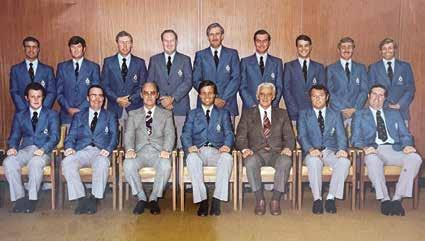
It is appropriate, that those members of the 1977 NSWPCA Championship side be invited to Canberra for this special Championship. After NSWPCC Life Members Induction Day February 2024, I had a brief conversation with former team members Darcy Cluff, Gary Bowden and Bob Myatt regarding a 1977 Team Reunion. The conversation was very positive. Therefore, I have managed to contact our Team Captain Dick Rowlands, Vice/Capt. Darcy Cluff, past Secretary, Bob Myatt, Garry Bowden. I have attached a photo of the 1977 Team for reference. Sadly, we have lost along the way John Loughman, John Currie and Ron Cahill.
Information has come to hand, that the Victorian Police Cricket Club intend to organise their 1977 team to be present during the Championship and at the Final Dinner.
Members of the victorious NSW team are: Back row: Brian Breakspear, Michael Café, late John Currie, John Magee (Asst. Manager), late John Loughman, Eric Dulciewitz, Ian Parker, Alan Wilton, Ken Lamb. Seated: Garry Bowden, Darcy Cluff (V/Capt.), J. T. Lees (Deputy Comm.), Dick Rowlands (Capt.), M. Wood (Comm. of Police), Brian Mays and John Thompson. Absent: Late Ron Cahill, Bob Myatt, John Cosgrove and Ray Heading. I invite those team members in the
photo as well as I have listed, to sincerely communicate with me, and discuss organising some days to get together in Canberra at the 2026 Cricket Championship, as well as attending the Championship Dinner. I’m organising a special presentation to be made to each 1977 NSWPCC Team Member. It is proposed to organise a table at the 2026 Championship Dinner of the 1977 and meet the current NSWPCC Committee and players. I am aware that my South Australian colleague will also be organising those remaining members of their 1977 team who were in Canberra at the ‘77 Championship to also be at the 2026 Championship and the Championship Dinner.
For further information I can be contacted at: bgbreakspear@gmail.com. I would be delighted to hear from you. Brian Breakspear, Life Member NSWPCC & ANZPCC.
59 year Reunion Class 106 of 1966
When: 11th and 12th September, 2025. Where: Central Coast. Venue to be determined. Contacts: Lee Rankin 0407206327
RSVP: Please advise if interested so a booking can be made. An information package for venue, accommodation and times will be available as soon as numbers are confirmed.
MEMBERS OF THE VICTORIOUS TEAM of the INAUGURAL POLICE CRICKET CHAMPIONSHIP ARE LISTED IN FULL BELOW
Sonia Roberts PPN Writer
Moments In Time
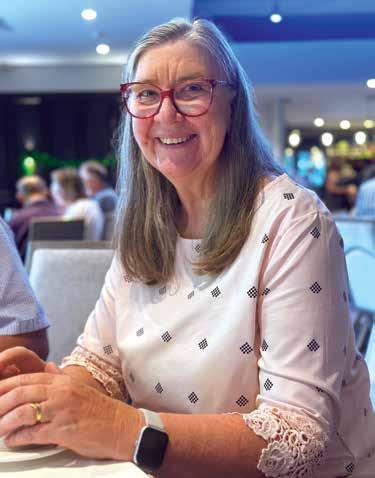
Sonya Mathews reflects on a life in, and alongside the NSWPF
■ A suggestion from an Australian Air Force recruiter led to Sonya Mathew joining the NSW Police Force and changing the course of her life. She had applied to the Air Force for a policing role, but they suggested she seek work within the civilian police force to gain some experience.
“I was 18 at the time. So I joined NSW Police at the age of 19, met my husband and stayed,” she said.
Sonya started at the Police Academy in September 1980 and graduated three months later. She resigned in 1987. At the time she held the rank of PW First Class Constable (1 stripe). At that time policewomen were required to put the letters ‘PW’ before their rank.
She was to spend six years at Bass Hill Police Station, while her husband Mick was based at Revesby. Mick and his offsider were the first police at the scene of the 1984 Milperra Massacre. On that day, Sonya was working station duties at Bass Hill.
being supplied a handbag to carry her notebook and baton as the uniform of the day had no pockets.
“It was terrifying, not being able to communicate with him (no mobile phones those days), the radio had switched channels, so I wasn't able to listen to any transmissions,” Sonya said.
“The contrast between the support offered to first responders on that day and seeing everyone come together to help the first responders at Bondi Beach shows how far we have come. I hope this progress in helping our first responders never stops.”
Sonya was a member of Class 169 which had 32 women in its ranks. One of the things that still makes her smile is
“The skirts were tight fitting and climbing into the old F100 trucks was at times difficult,” Sonya said. “We had a five shot Smith and Wesson revolver while the male police had six shot Smith and Wesson revolvers.
“I had short hair and was told to have it trimmed as it was over my collar, but in saying that it was the same rule for the men. After graduating, I was stationed at Bankstown and was the second female general duties officer there. The first was a woman from Class 168. Our locker room was the cleaners’ room.”
Sonya recently attended the 45-year reunion for her class, and it was heartwarming for her to hear about where
everyone had been, their experiences and where they are now.
“I am fortunate to belong to a group from my old division, some my husband and I had worked with and others before and after our time there,” she said.
Thank you
Police Legacy
After her youngest child started school, Sonya returned to work securing a job with NSW Police as an administration officer. She stayed for almost 12 years working at various Local Area Commands, Police Aviation Support and APEC 2007.
One of the biggest influences on Sonya has been the work of NSW Police Legacy. Her husband Mick passed away in 1993, leaving Sonya to raise their three sons who were aged seven, five and one at the time.
“That's when Police Legacy stepped in and offered ongoing support, which I still receive 33 years later,” Sonya said.
“My children attended school holiday camps twice a year and each participated on overseas hiking trips as young teenagers and later they all completed the Kokoda Track as young adults.
“Each time they were supervised by serving police officers who would donate their holiday leave time to go on the camps and still do to this day.
“I am grateful for the wonderful two careers I had with NSW Police and also proud to be a part of NSW Police Legacy today.”
Mick Timms PPN Writer
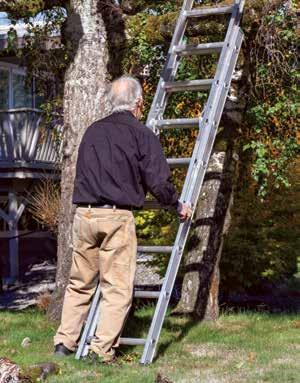
Ladders The most dangerous tool in the shed
A new awareness campaign about the risks and consequences of falls from heights is targeting retired and former police, with health data indicating the risk of falling from ladders rises sharply with age.
■ A new awareness campaign about the risks and consequences of falls from heights is targeting retired and former police, with health data indicating the risk of falling from ladders rises sharply with age.
The campaign, Look down, Step Up, No Ladders, is an initiative of the Retired and Former Police Association (RFPA).
“Sadly, every year the RFPA lose members, and by extension the Police Association lose associate members, to preventable trips, falls, and incidents involving ladders,” Mr Ian Lovell APM, RFPA State Secretary and PANSW Associate member said.
“People aged 65 and older are almost 12 times as likely to be hospitalised due to a fall as adults aged 25-44.
At the centre of the campaign is a bright blue silicone wristband carrying the Look down, Step Up, No Ladders message. The wristbands have proved popular following early trials across several RFPA branches.
one serious fall, it’s worth it.
“The wristbands act as a constant visual cue during everyday tasks, prompting safer decisions and sparking conversations with family, friends, and fellow members,” Mr Dave Whiteman, Northern Beaches RPFA Chairman, said.
Dave and the Northern Beaches RFPA branch were the driver behind the campaign, with death and injury from ladder falls affecting their group.
I’ve just ordered another 1,000 wristbands, and they will be made available at RFPA branch meetings,” Dave said.
“Wristbands will be provided free of charge to any RFPA member requesting one - if a wristband can prevent even
Dr John Crozier is a leading Sydneybased trauma surgeon. Older men who have fallen from ladders come into his care all too often.
“The most dangerous tool in the shed, if you are a male aged over 50, is a ladder or step ladder,” Dr Crozier told PANSW Police News
“The most common preventable death from injury, which as a trauma surgeon, I review in Hospital Trauma Death Audits, involves males over fifty old who have fallen from ladders.
“I include step ladders as they are associated with indoor usage where unsuspecting victims can strike their heads on tables etc as they fall.
“With long ladders, outside falls can break ribs and major bones. Even if
someone thinks they are okay, they could have uncontrolled internal bleeding, which is exacerbated by any blood thinning medications they may be taking.
“In medical consultations, I often counsel retired males to sell their ladders on the internet via Gumtree or Facebook Marketplace – for a reasonable price, to avoid temptation Ian Lovell concurs with Dr Crozier’s advice, having put his ladder out with the garbage collection several years ago.
Ian believes the Look Down, Step Up, No Ladders campaign is also relevant to PANSW members who may be approaching retirement, as well as those with older parents in the 65+ demographic. This initiative is not exclusively for police, and has been shared across service clubs, Veterans groups, retirement villages and old golfers at present.
“This could be the difference between enjoying the retirement you planned for, or having your world turned upside down,” Ian said.
“My first job attended as a probationary constable some years ago involved a retired bank manager who fell painting his guttering on the first Monday of his retirement. That fall proved fatal.”
“The RFPA encourages all retired and former police to wear the wristbands proudly — not only as a safety reminder, but as a symbol of ongoing connection to the policing family.
Information on Look Down, Step Up, No Ladders, as well as a fact sheet on preventing injuries from falls, can be found on the RFPA websitehttps://www.retiredpolice.com.au/.
Sonia Roberts PPN Writer
Always on the Beat
■ On the outside “The Wexfords” look like a pub band you would find anywhere in the state, but their story stretches from the heady days of Sydney nightclubs in the 1970s to years of policing in NSW. Lead vocalist and rhythm guitarist Danny Doherty and bass player Bob Barnett are two of the band’s founding members. Danny retired from NSW Police at the rank for Detective Superintendent last year after 40 years’ service.
At the age of 29, Bob found his way to the NSW Police Force where he remained for 31 years until his retirement in 2013 at the rank of Detective Superintendent.
While Bob and Danny worked together at Liverpool Detectives, they did not start playing open mic nights at a local club as a duo until around 2013/2014. Former Detective Sergeant Les Green was The Wexfords first lead guitarist. “A bit later we were joined by Bob’s then son in law as a drummer to make a trio and the Wexfords were loosely formed as a band. We then started getting offers to perform gigs and we got another guitarist in,” Danny said. “Calling ourselves “The Wexfords” was a nod to my dad who was born in Wexford in Ireland, and we had originally played some Irish rock songs, but we changed to playing general Aussie pub rock cover songs but kept the Wexford’s name.”
Hey, Mr Bass Man
Bob has been playing and performing bass guitar since he was 15. His first band – “Elmtree” – formed in the late 1960s and was made up of transplants from the United Kingdom. Four of them had met in high school one of the guys was good friends with John Young, a fellow Scott. John was a year older than us and had already started his apprenticeship as a sheet metal worker.
After the band members left school, they became apprentices by day and musicians by night. They were signed with the booking agent DME (Dal Myles Enterprises). Dal Myles was the Channel 10 weatherman at the time and had a number of bands on his books. These musicians went on to form bands like
AC/DC, TMG (Ted Mulry Gang) and in the case of Elmtree - John Paul Young.
During the Vietnam War, Sydney was filled with American soldiers in the Harbour City for rest and recreation leave. For the members of Elmtree that meant residencies at clubs that became part of Sydney folklore including Whiskey A Go Go, The Cheeta Room and Electric Circus. On top of all that, Elmtree were also finding time to perform in regional areas. “During this period, we were introduced to singer song writer named Ted Mulry and we became his backing band. Ted had just released his first song Julia, and we backed him on his very first public appearance at the Trocadero, Geroge Street, Sydney,” Bob said. “Elmtree released their first and only record, "Rainbow" a song written by the UK band Marmalade, and the B side was a song penned by Ted Mulry. "Lonely Nights'. It got a little air play but never charted.
“We won a heat of the Hoadley's Battle of Sounds and made it into the Sydney Grand Final. My memory of that event is a little foggy, but I was recently told that the La de das won that event. We had been working as Elmtree for about five years, when Albert’s publishers approached John (Young) to do a vocal session with the song writers Vanda and Young. “The song was "Pasadena" The publishers offered the song to Elmtree to release under their name, but we had gone down another music path and declined the offer. The song was offered to John and that was the start of his 50year career as a performer.”
Elmtree did not last much longer after that. John Paul Young went into Jesus Christ Superstar, and his evolving solo career and other members went onto to form the progressive rock group, "Jupitar". As for Bob, he went to work with a country and western travelling show for a couple of years, playing bass.
Good for the soul
For Danny, the biggest benefit of playing in a band is being able to share in the universal love of music. “Music is a great outlet and extremely rewarding when you get positive crowd interaction.
It is good for the mind and for the soul,” Danny said. “We are most definitely playing for fun.”
Bob believes a crucial factor in The Wexford’s success and longevity is having a group of people who really enjoy playing together. “Our first gig was for an organised fund raiser, Sleep Out for homeless persons, was held at the Harlequins football ground in Campbelltown in the middle of winter,” Bob said. “Danny and I did a set of songs for the sleep out, performing under the name of "Danny & Bob" it was a cold, chilly night and I could hardly move my fingers. Danny stayed the night in the below zero temperatures.
“A fellow police officer at the time, Glenn Keighran, had a part time gig running the Open Mic nights at the Camden Sports Club, he must have been desperate for performers so "Danny & Bob" got an invite to perform a set of songs. “We got positive reviews and generated a bit of an audience and things developed from there on. At some stage, my son-in-law at the time Goran, who is a proficient drummer, having played with a variety of bands, joined us on drums. The following year we did do a second Sleep Out gig as the ‘Danny Doherty Trio’.” Since retiring, Bob got work as a bass player with a number of cover bands, including "Saturday Night Rewind." The current lineup of The Wexfords also includes members of Saturday Night Rewind, which gives them a greater variety of song choices.
Was that my phone?
Until his 2025 retirement, there were moments while Danny was on stage with the band, where he found himself in the middle of a juggling act rather than a set list. “It was always a juggle to find time to practice while I was working. That said, it was a great outlet to be able to get out there and play songs,” Danny said.
“The phone used to ring in my pocket, and I would be checking it in between songs, and on the odd occasion, make sure that I could finish the set before having to ring back work.”
MAIN - DANNY DOHERTY (LEFT) & BOB BARNETT (RIGHT) AT A RECENT GIG WITH THE WEXFORDS. INSERT ABOVE – AFTER A CONCERT AT SYDNEY’S CAPITOL THEATRE TO MARK JOHN PAUL YOUNG’S 40TH ANNIVERSARY AS A PERFORMER BOB BARNETT (LEFT) & DRUMMER / FILM MAKER, PHILLIP EDWARDS (RIGHT) CONGRATULATED THEIR FORMER ELMTREE BAND MATE JOHN PAUL YOUNG (CENTRE).
King's Birthday Honours List
Eight NSW Police officers have been honoured with an Australian Police Medal in recognition of their years of dedicated service to the community and policing.
■ Eight NSW Police officers have been honoured with an Australian Police Medal in recognition of their years of dedicated service to the community and policing. The NSW Police Force APM recipients include:
• Detective Sergeant Lorenda Barber
• Detective Sergeant Laura Beacroft
• Superintendent Darren Brand
• Sergeant Sally Cox
• Detective Superintendent Adam Johnson
• Chief Inspector Paul Martin
• Detective Chief Inspector Terrance O'Neill
• Detective Inspector Nigel Warren
The recipients are from the State Crime Command’s Child Abuse Squad,
State Crime Command’s Sex Crimes Squad, Lake Illawarra Police District, Nepean Police Area Command, Central Metropolitan Region, Liverpool Police Area Command, Learning Development and Delivery Command and State Crime Command’s Unsolved Homicide Team.
NSW Police Commissioner Mal Lanyon said the recipients should be very proud to receive an Australian Police Medal.
“An Australian Police Medal recognises extraordinary service and every officer honoured today has demonstrated unwavering commitment to the safety and wellbeing of the people of New South Wales. The Australian Police Medal is one of the highest acknowledgements of policing excellence and the officers receiving it have earned that distinction through decades of professional-
ism, integrity and leadership. Policing is demanding and often confronting work and these officers have consistently gone above and beyond for the community and to support their colleagues. Thank you to these officers for their contribution to the NSW Police Force.”
The King’s Birthday 2026 Honours List recognises 949 Australians, including awards in the Order of Australia (General and Military Divisions), meritorious awards and recognition for conspicuous service.
Congratulations to former NSWPF Deputy Commissioner Gary Worboys APM who was named a Member of the Order of Australia for significant service to the community through emergency response organisations.
Elyssa King PANSW Media & Communications Officer
1. Money repaid for an expense you've already paid for (13)
2. A person who requires financial support from you (8)
3. The flow of money coming into government or business (7)
4. Allowable claim which reduces your tax (10)
5. A financial statement lodged annually with the ATO (6)
6. An organisation that takes donations to do good (7)
7. An entity that hires employees (8)
8. Post-work life where hobbies become important (10)
9. Additional payments to a wage for hardship or extra duties (10)
12. Your retirement savings fund (14)
14. An amount of money borrowed which needs to be repaid (4)
15. Stuff representing value, used to buy valuable stuff (5)
19. Financial institution that holds your money (4)
23. A thing purchased specifically to grow in value (10)
24. Payment for job-related labour (4)
26. Excess wealth used to generate more wealth (7)
27. Official determination by the ATO on your tax (10)
28. An amount of money owed by you (9)
30. Amount earned on savings, or charged on borrowings (8)
ACROSS
10. Transaction withdrawing money from your account (5)
11. Formal examination of financial records (5)
13. Periodically paid to service a debt (9)
14. One-off payment settling an entire debt (4,3)
16. Voluntary payments made into a fund or scheme (13)
17. You pay to government through wages, or goods & services (3)
18. Earnings off which tax is assessed (6)
20. A person entitled to receive funds or inheritance (11)
21. Our national health scheme funded partly by a levy (8)
22. The gradual decline of an asset's value (12)
25. Professional who prepares your financial records (10)
29. A relationship recognised other than marriage, as the same (7)
31. Your proof of a purchase, often needed an audit (7)