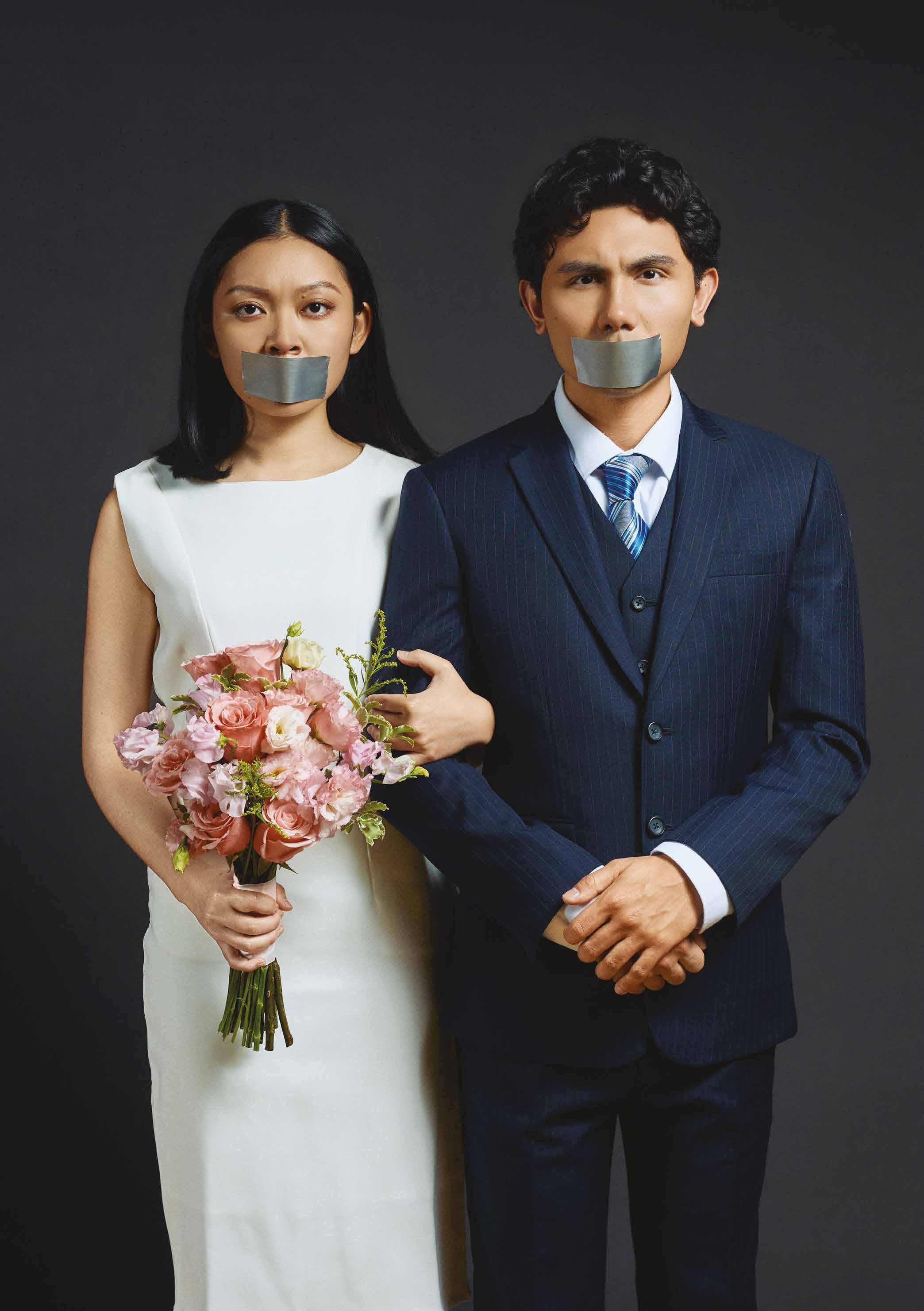
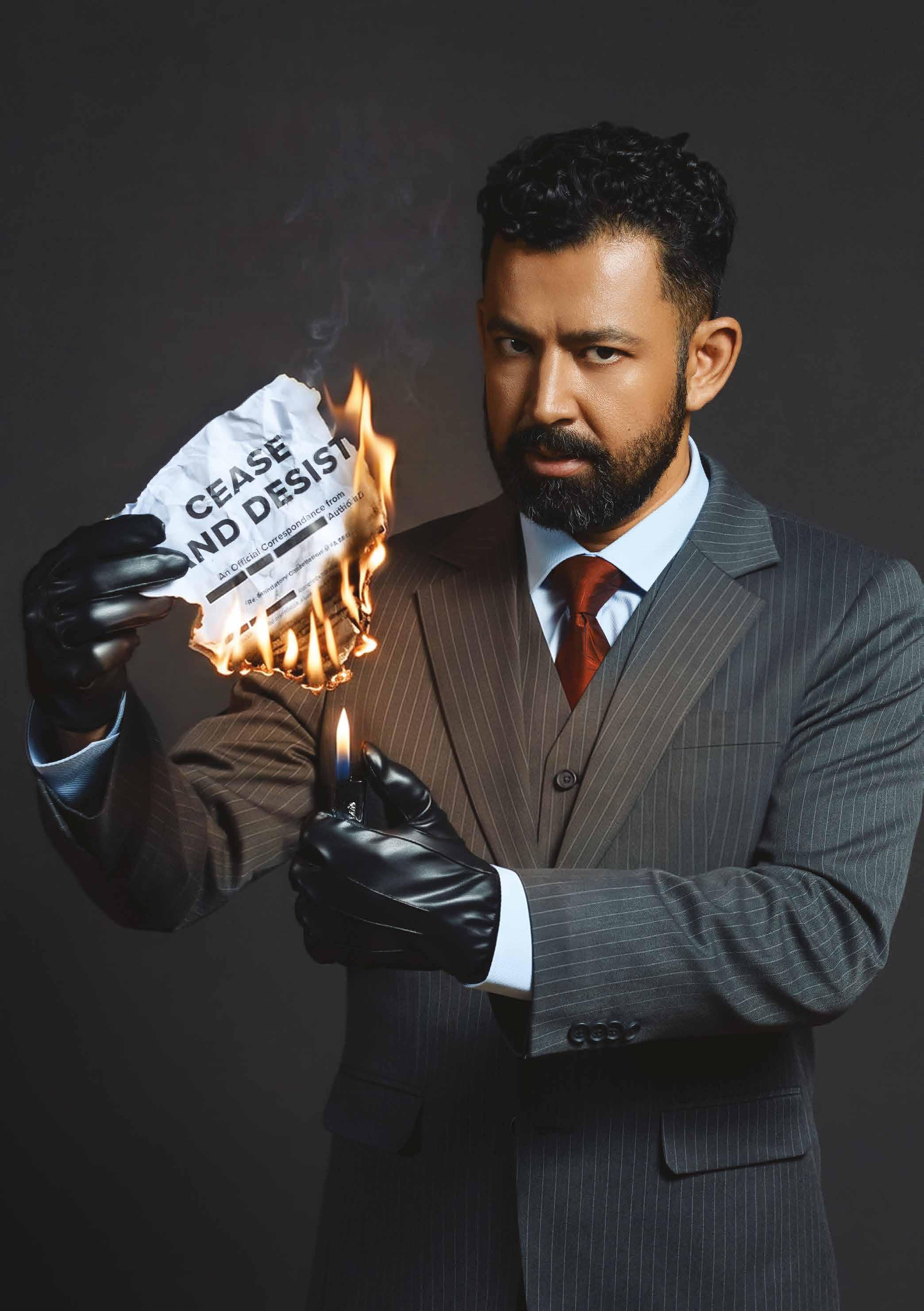
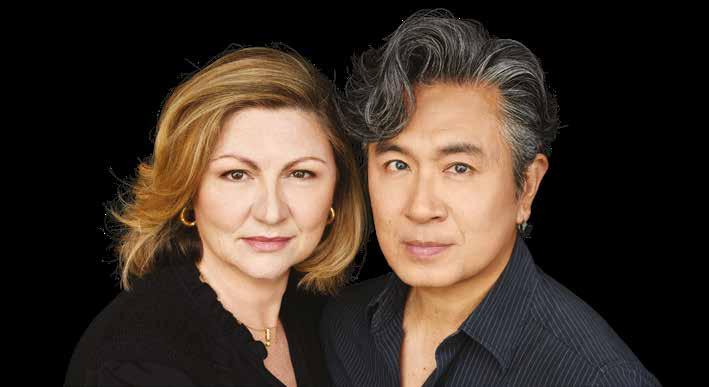
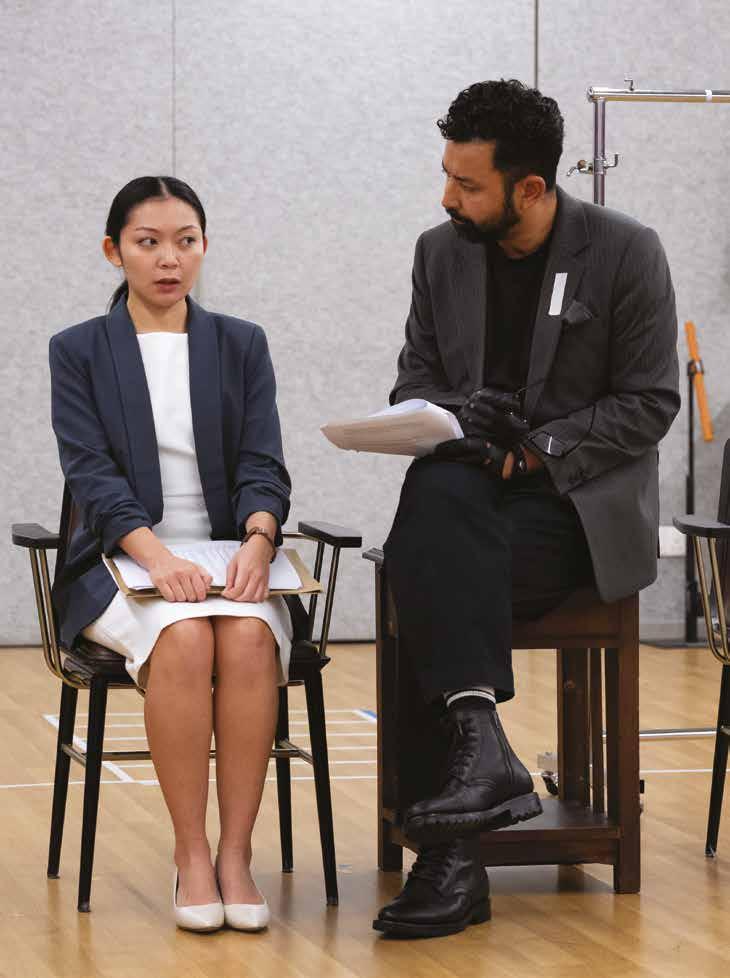
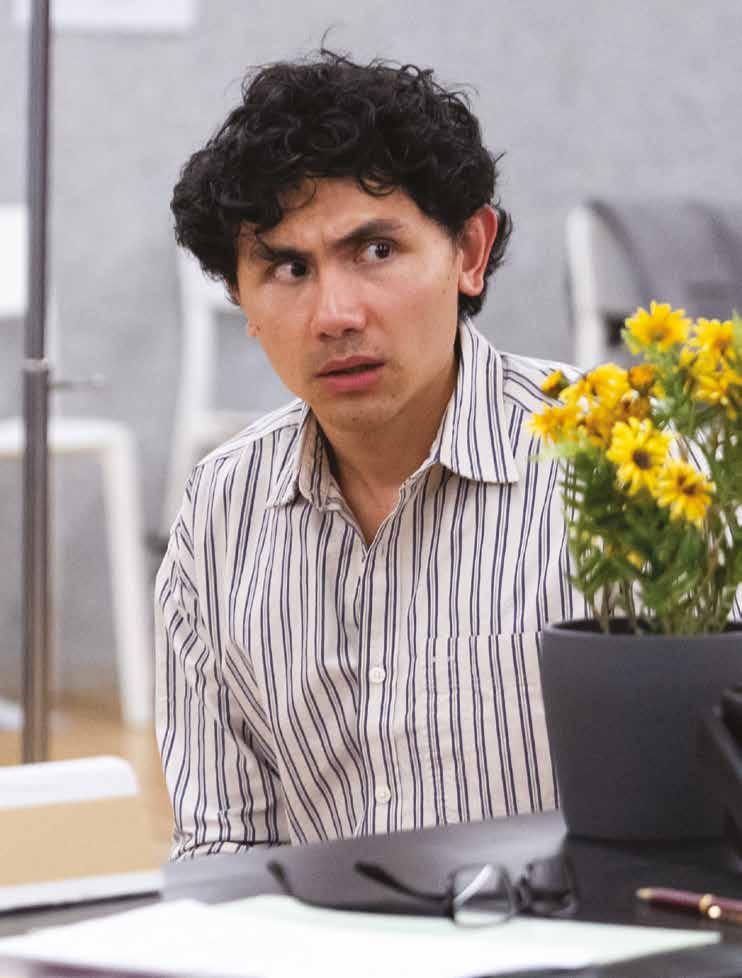
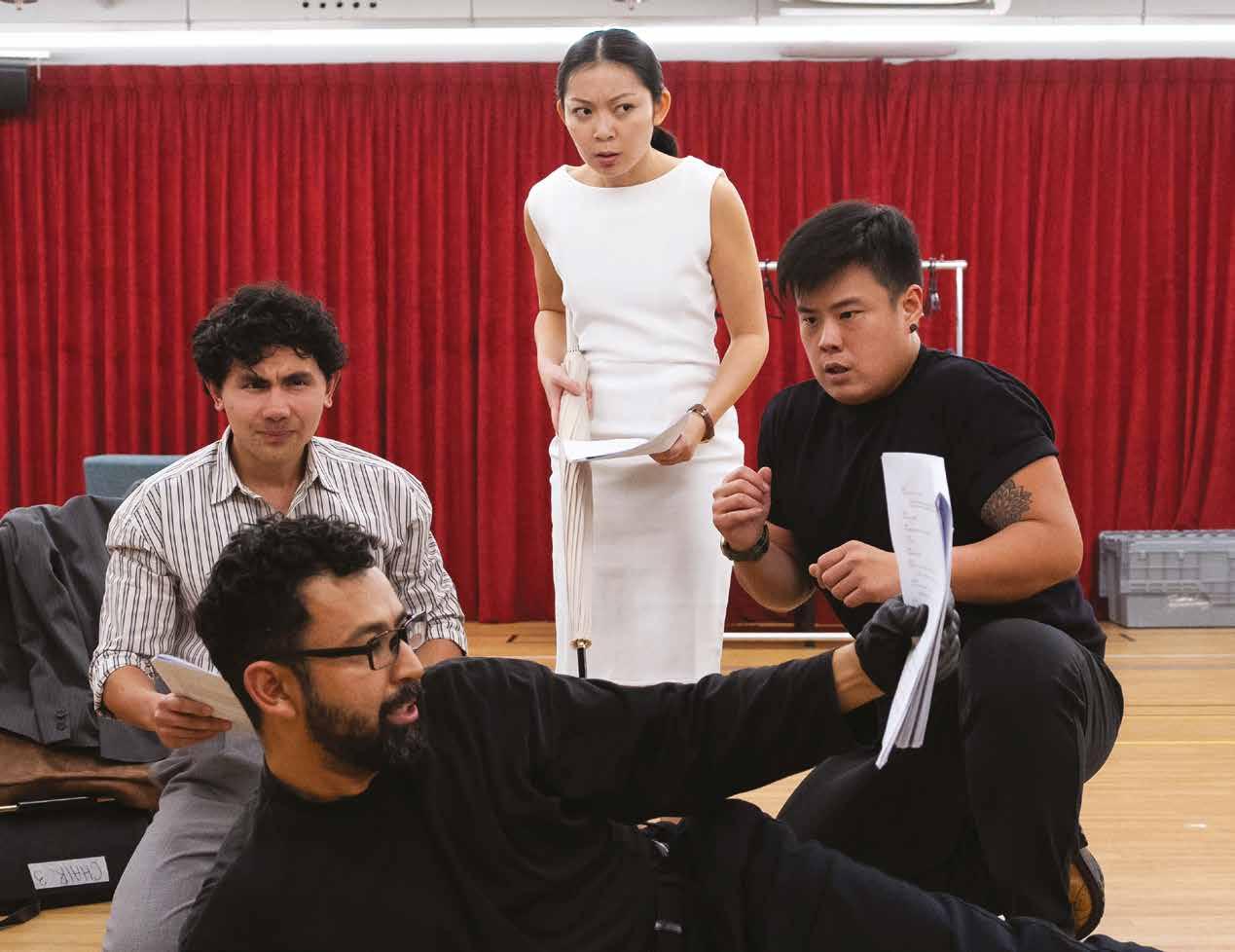
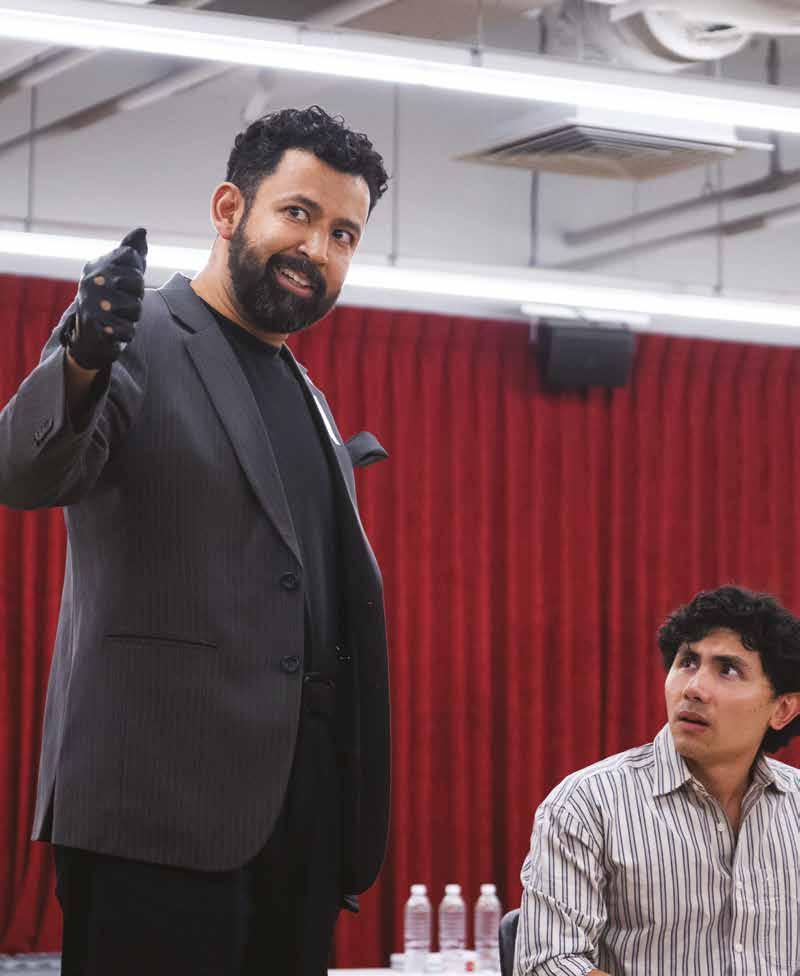
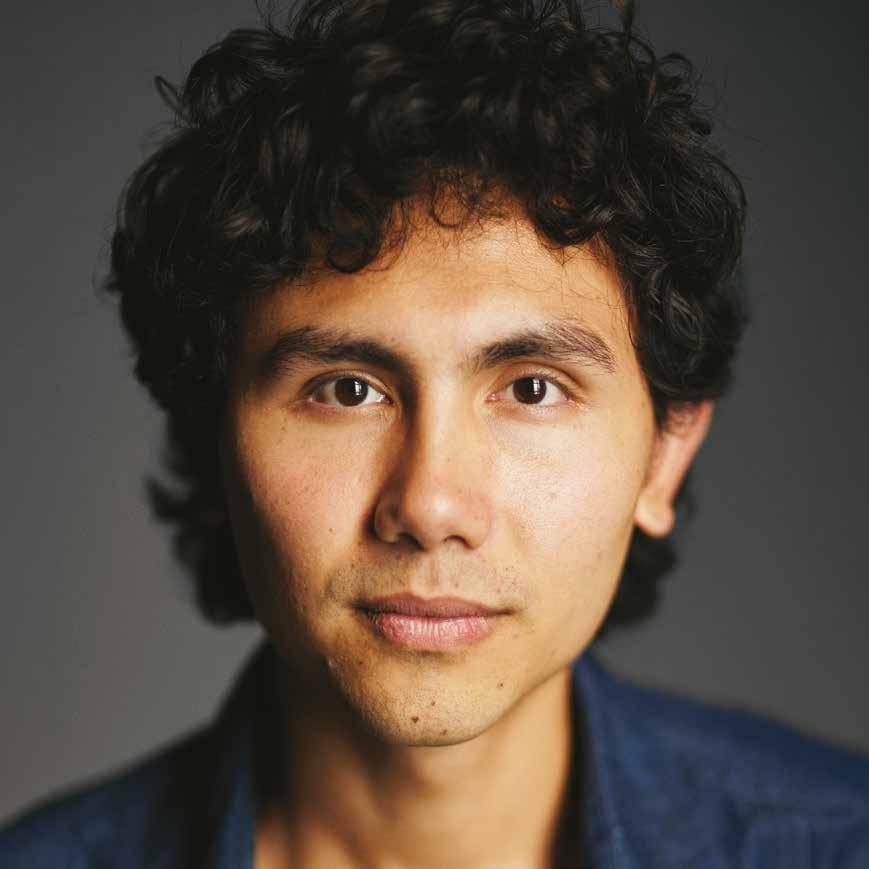
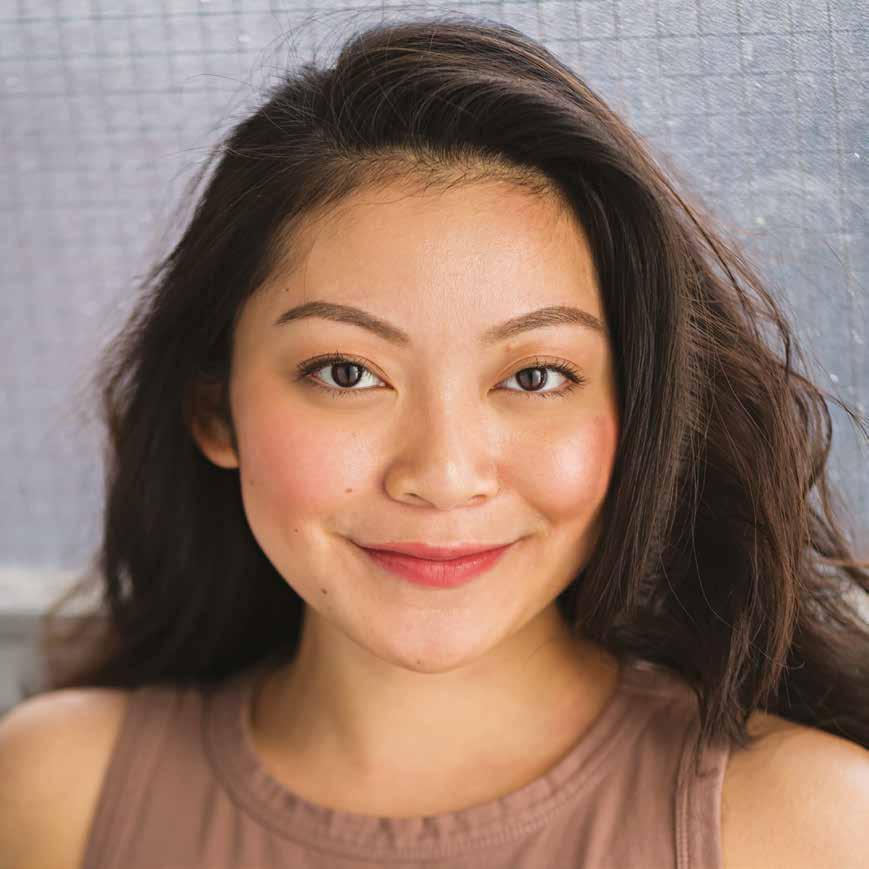
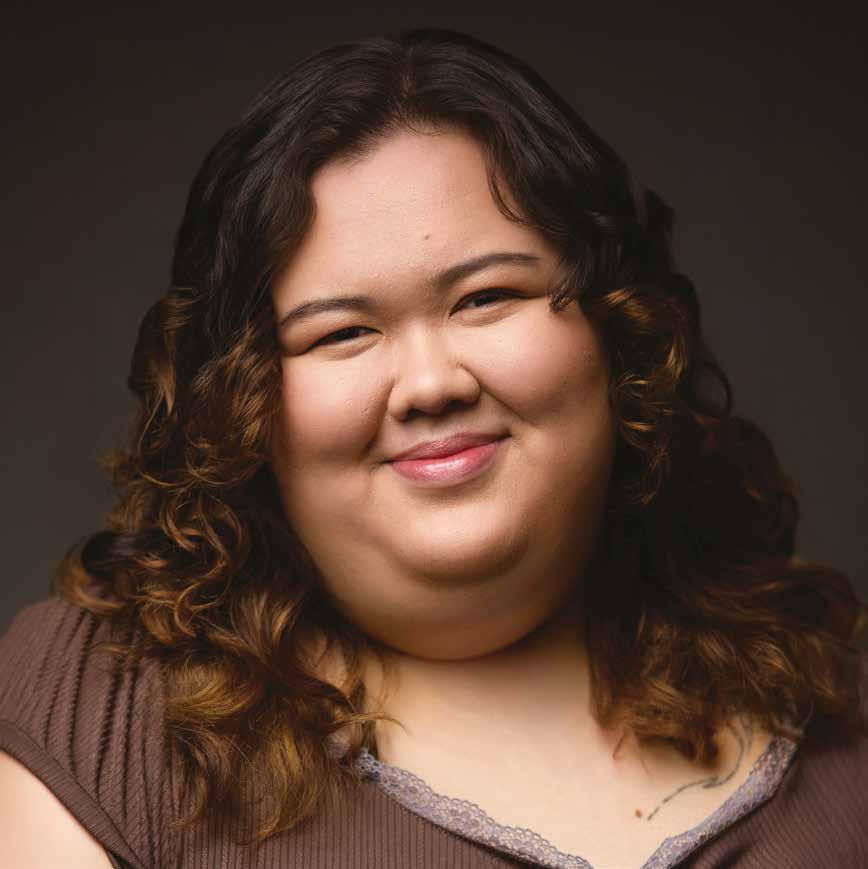
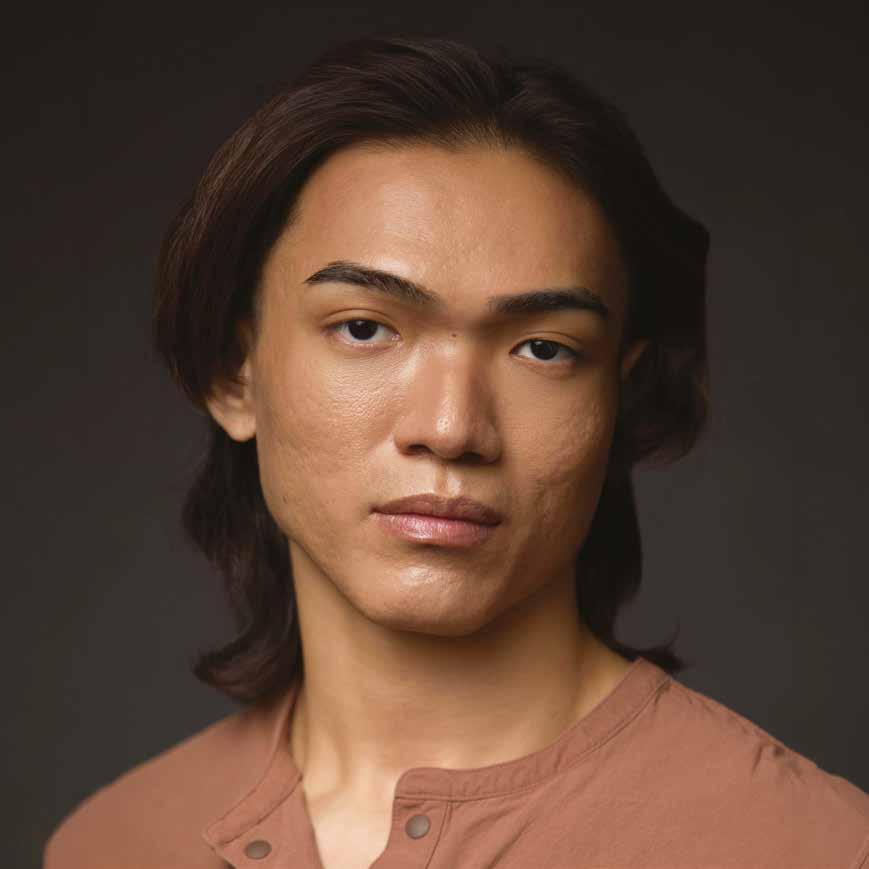
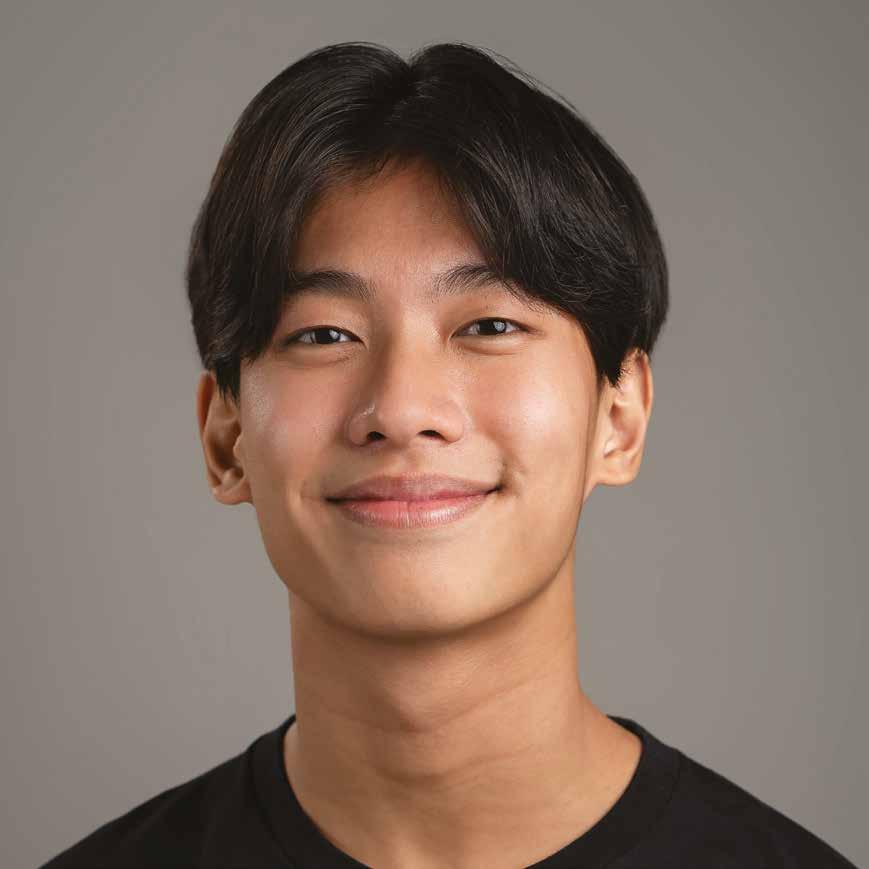
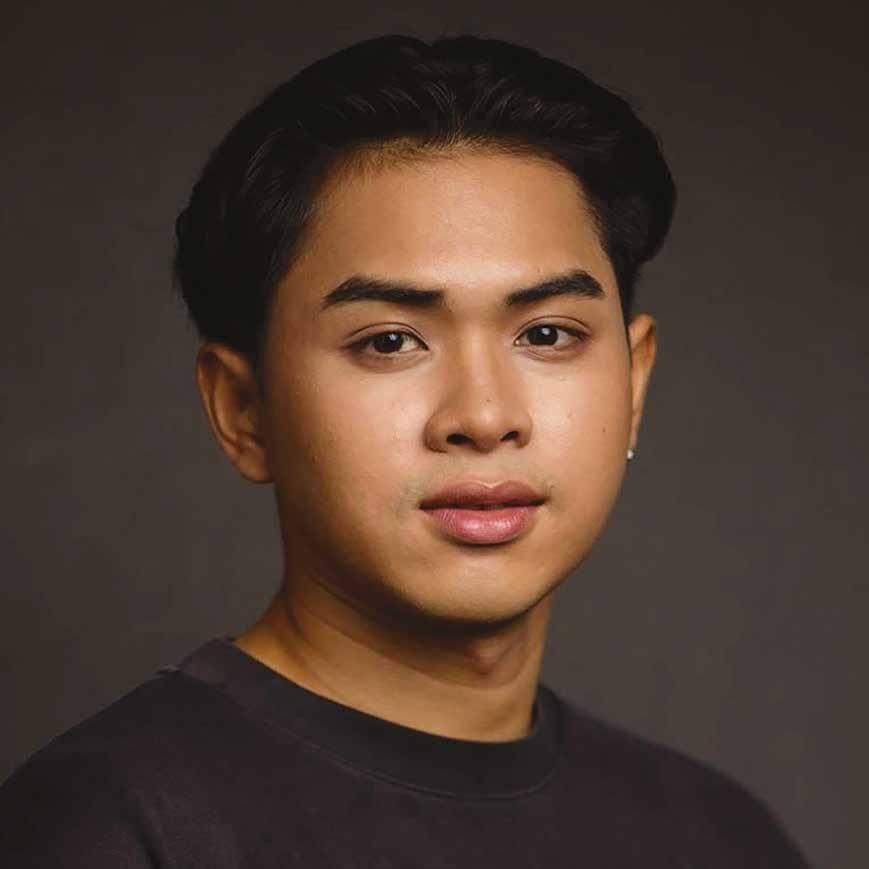
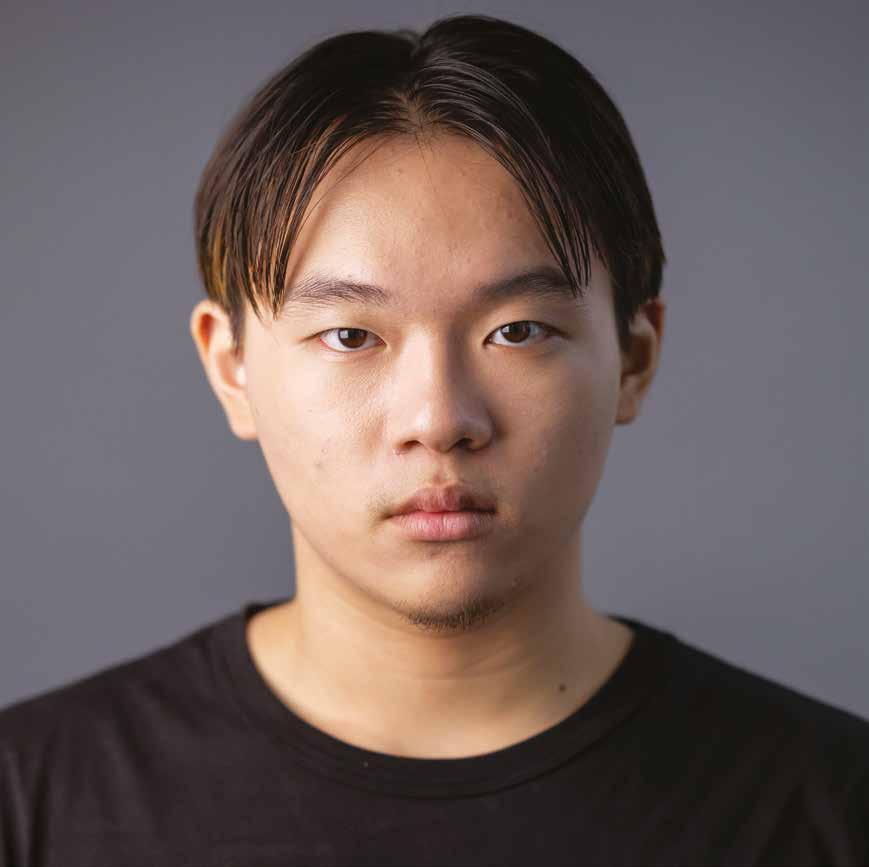
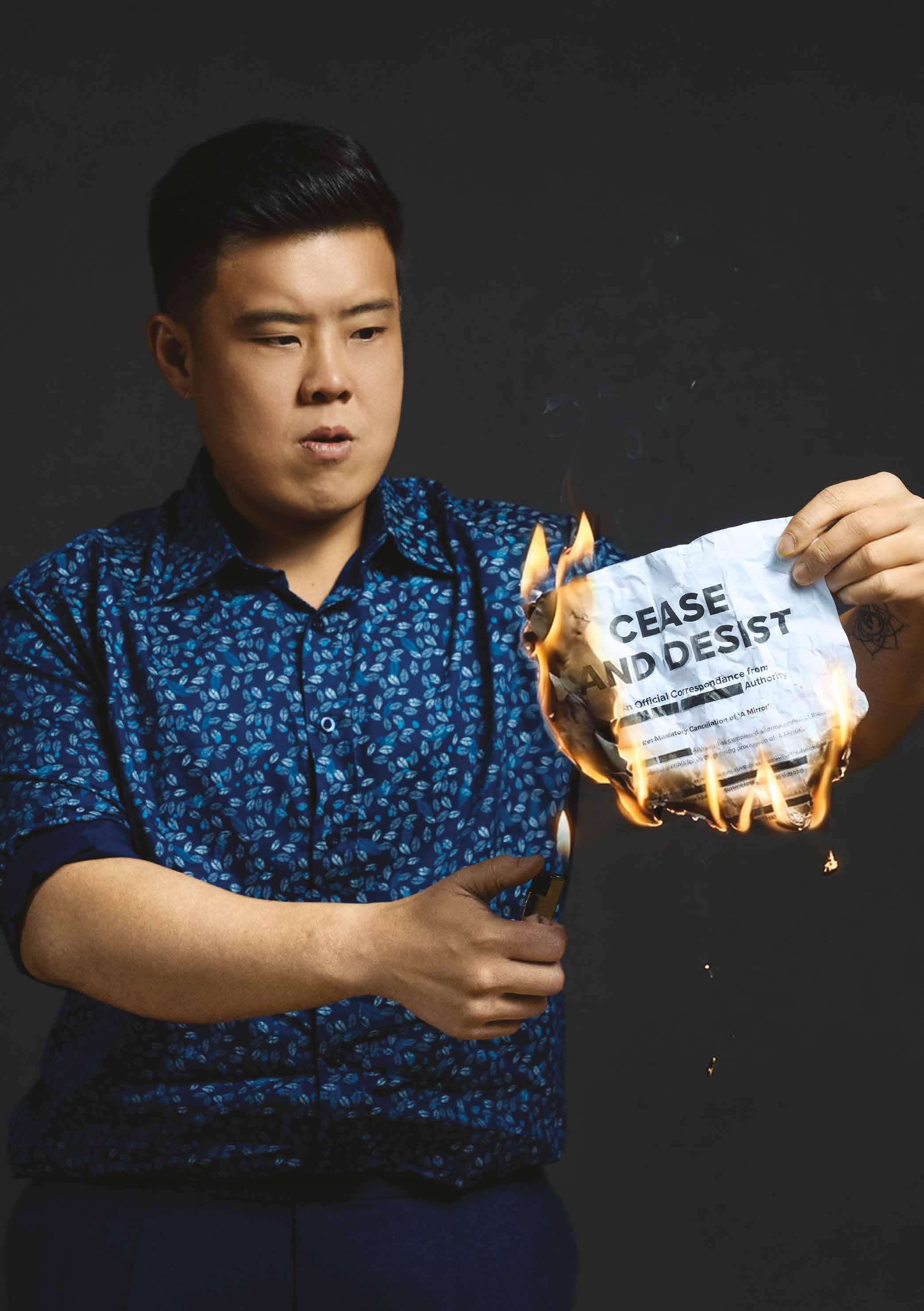
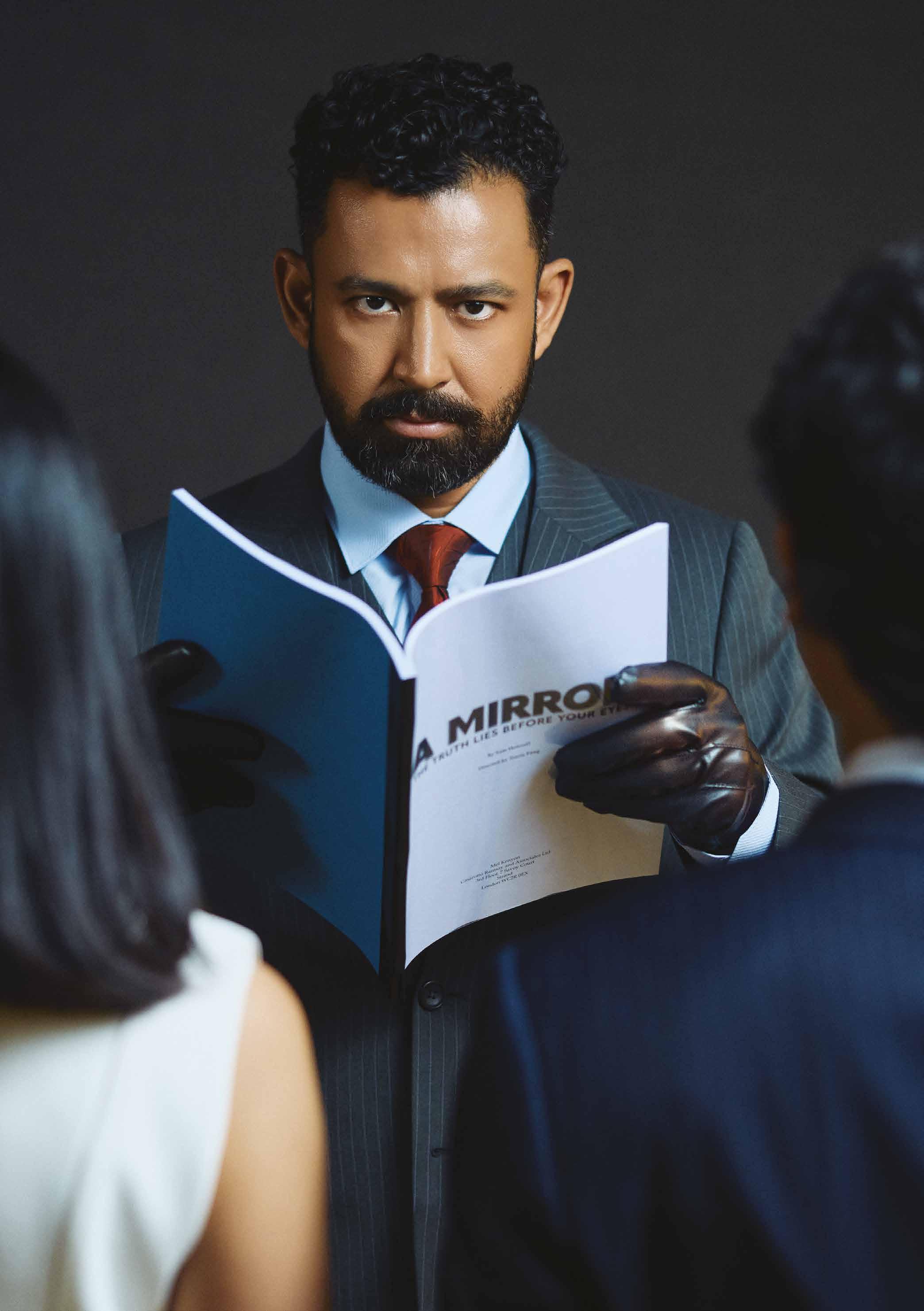
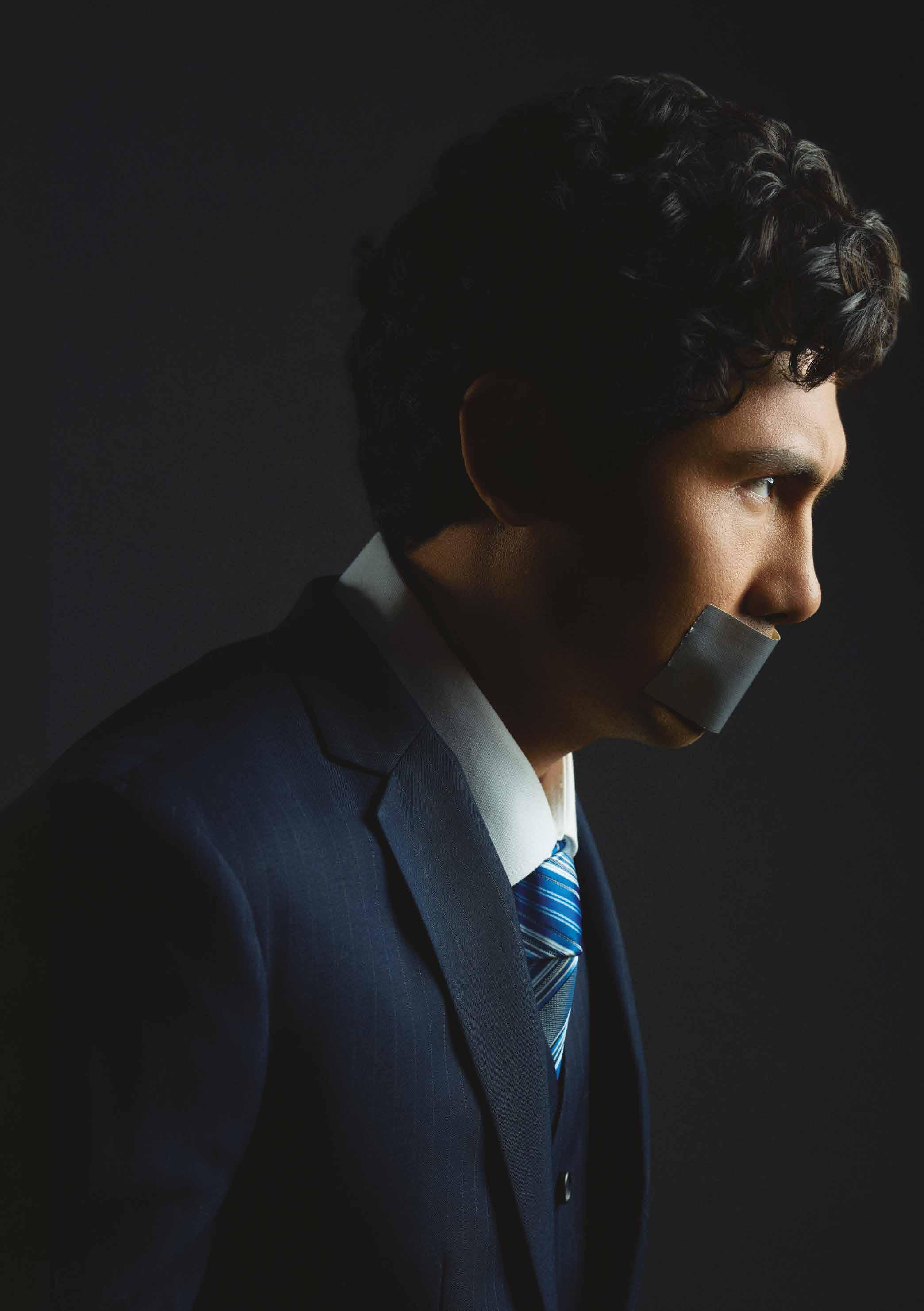
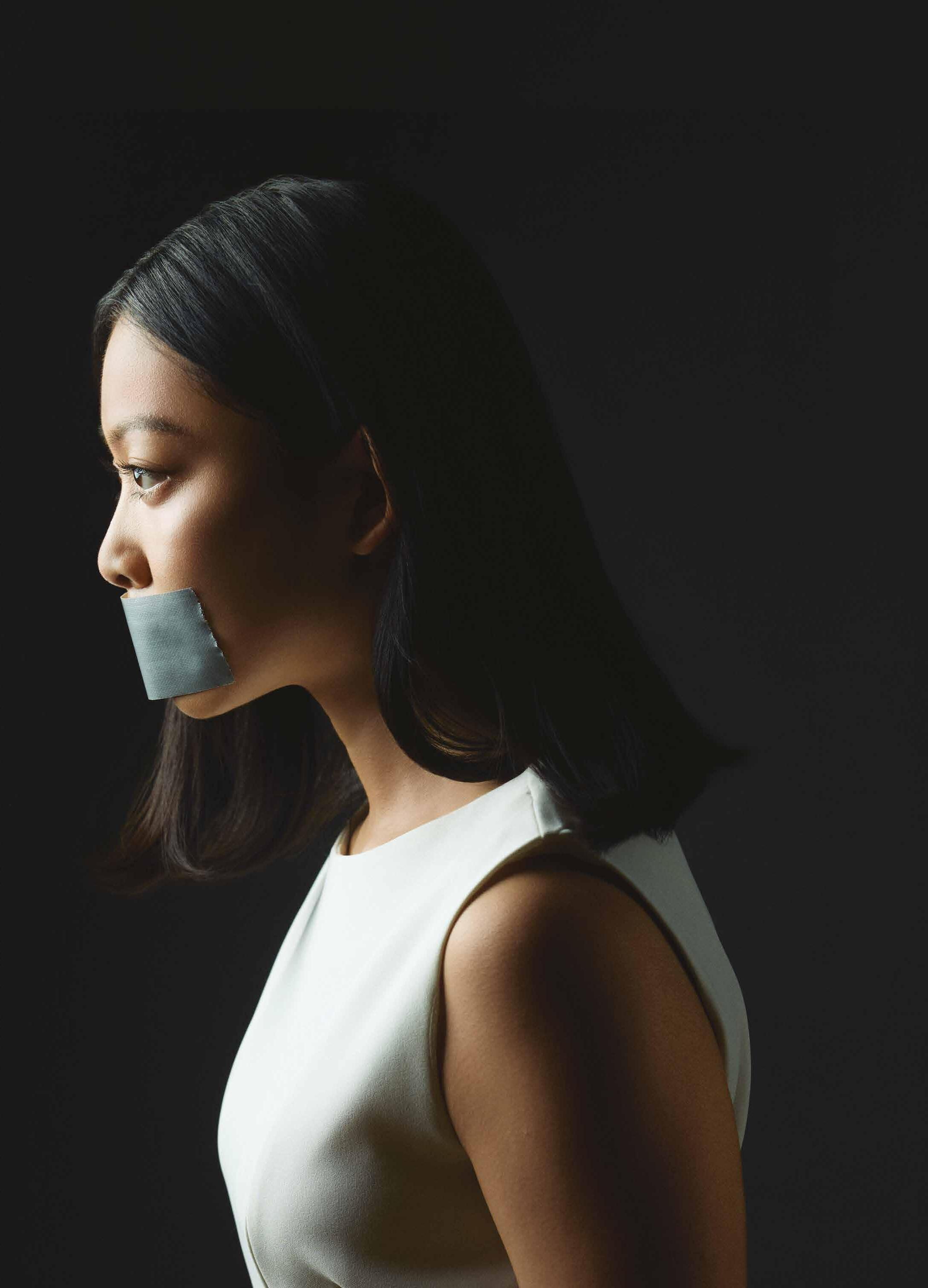
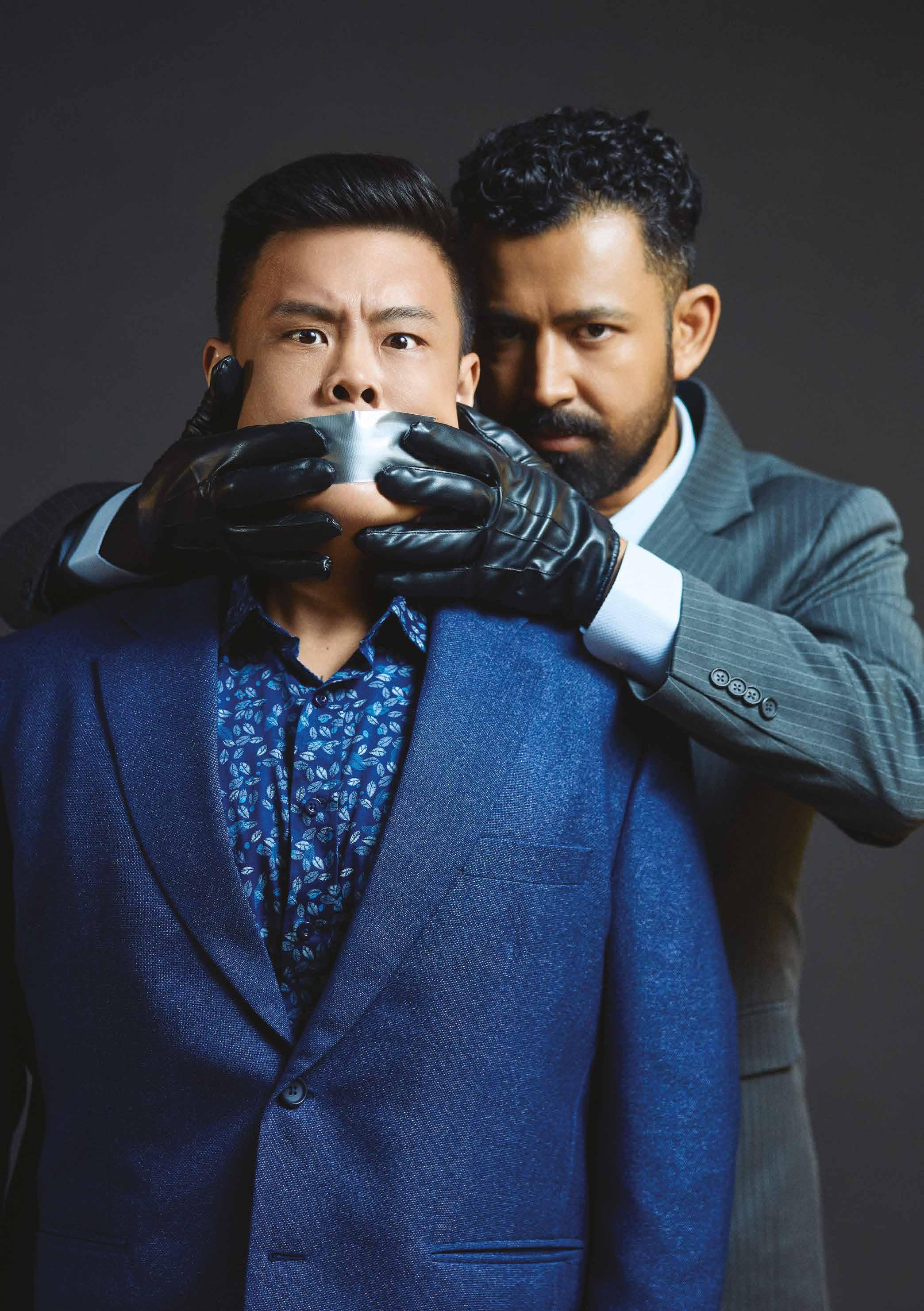
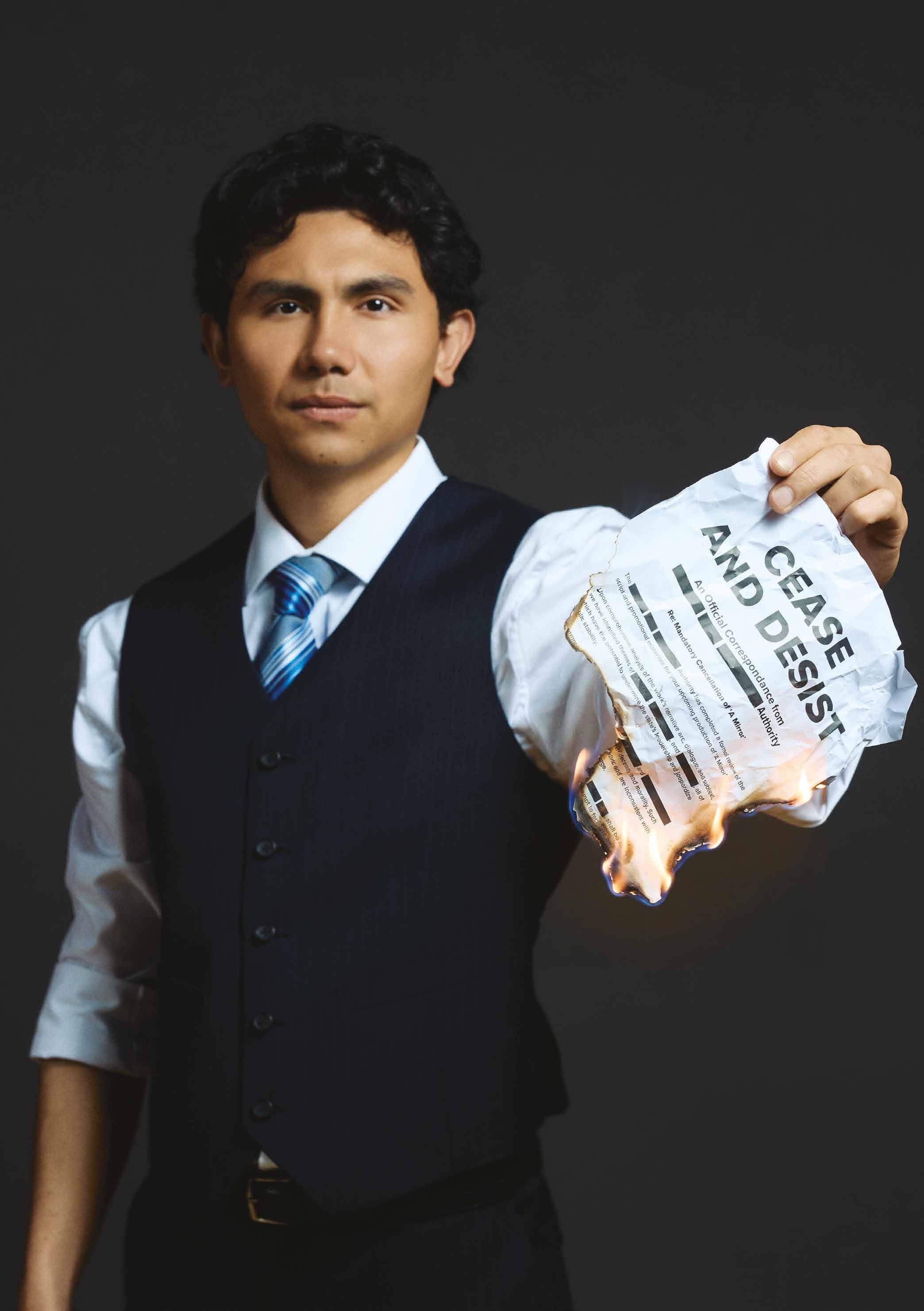
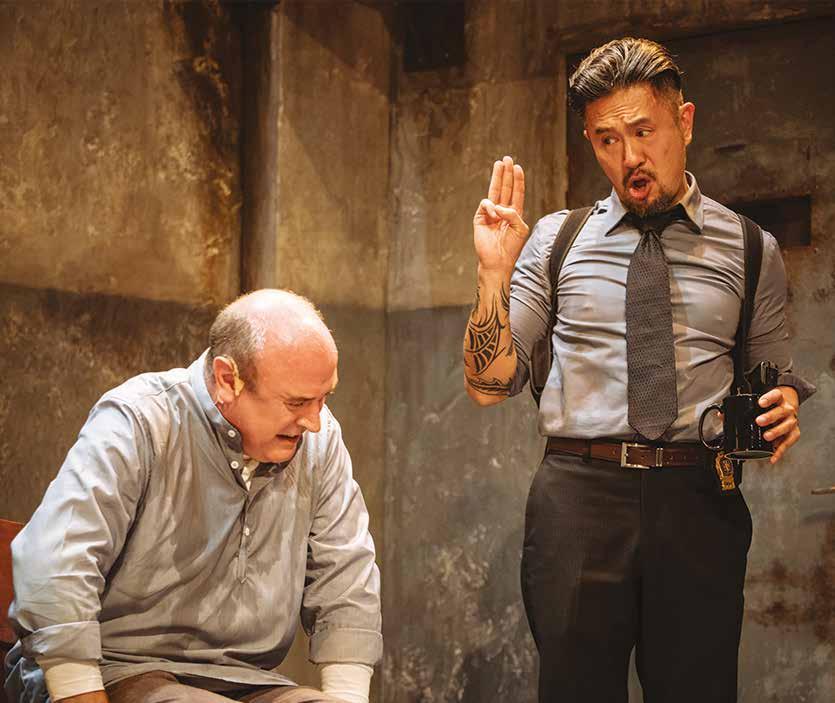
CHARLOTTE GREENALL PHUA YAO TING (YT) SETH ARRI AZHAR
LUCAS WAN SIM KEE JOO KJ
ASSISTANT DIRECTOR TIMOTHY KOH
SOUND DESIGNER & CO-COMPOSER JING NG
INTIMACY DIRECTOR RAYANN CONDY
SET DESIGNER EUCIEN CHIA
COSTUME DESIGNER L.A.C
ASSOCIATE SET DESIGNER SCOTT LEE
PLAYWRIGHT SAM HOLCROFT
DIRECTED BY TRACIE PANG
PRODUCED BY TRACIE PANG & ADRIAN PANG
LIGHTING DESIGNER JAMES TAN
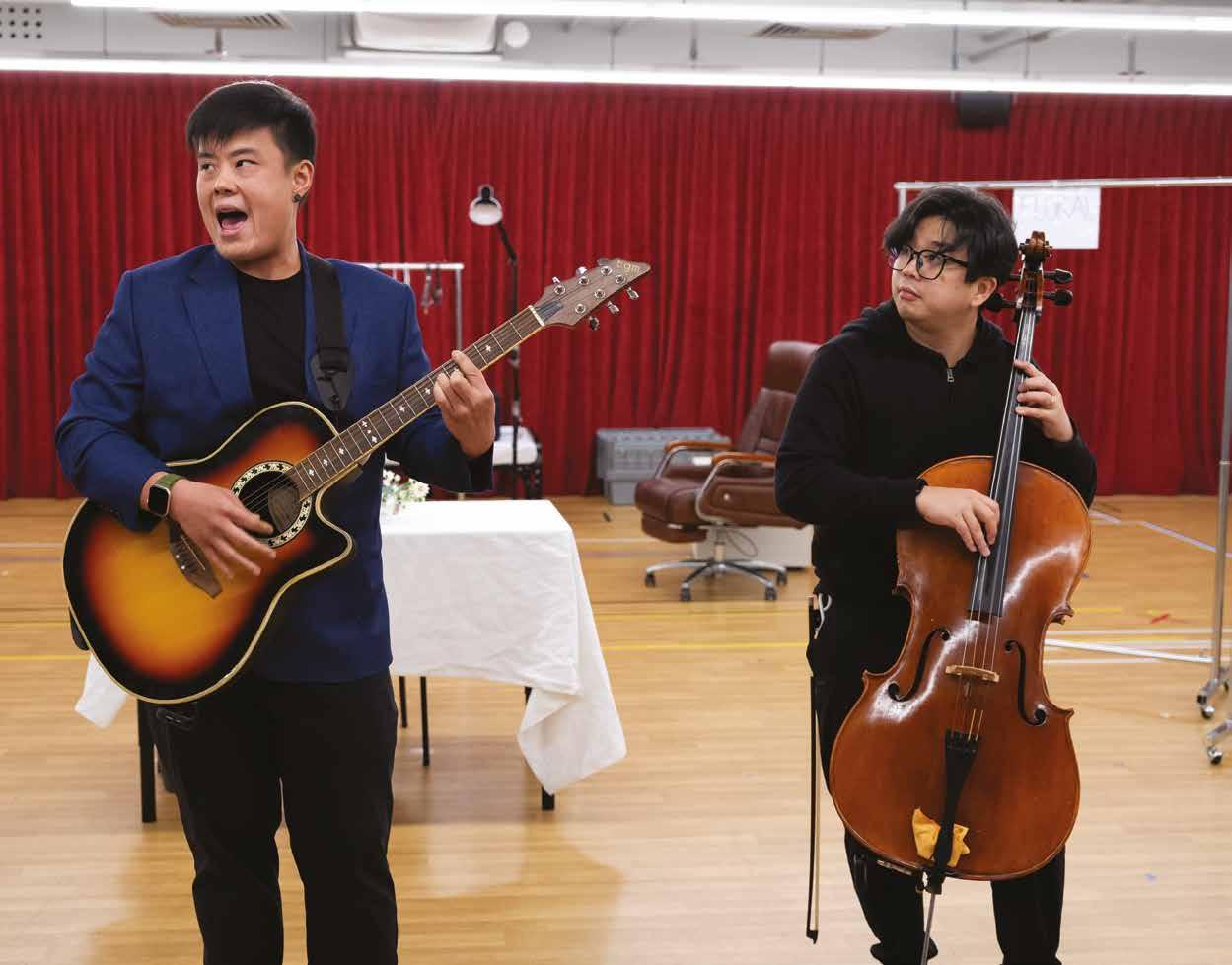
ASSOCIATE SOUND DESIGNER JEAN YAP MUSICIAN & CO-COMPOSER VICK LOW
The duration of this performance is approximately 2 hours 30 minutes with no intermission.
ARTISTIC SUICIDE, LIKE CHARITY, BEGINS AT HOME.
WE KILL THE ARTISTS WITHIN OURSELVES IN THE QUEST TO GET BY, TO WALK WITHIN THE LINES, TO MIND OUR MANNERS.
— MARLON BRANDO
Easy for him to mumble.
The fact is, in just about every society, there are prescribed and perceived lines for all artists to walk within. Art has the power to advocate, activate, motivate, influence, inspire, some say incite. And thus, many artists are under threat of censorship by the powers that be. While extreme and explicit forms of state censorship exist in countries around the world, censorship takes many forms. It’s not just a question of art being cancelled or banned – it can be subtle and opaque, with concerns around job security, funding, or the threat of public outcry, all contributing to a system of self-censorship.
There are those who fight the system. Visual artist Ai Wei Wei is infamous for creating works of art that are highly critical of the Chinese government. Some of Pablo Picasso’s most iconic works were commentaries on the Spanish ruling party of his time.
In the world of theatre, Belarus Free Theatre directors Natalia Kaliada and Nicolai Khalezin stage underground performances in defiance of the Lukashenka regime, functioning as a "theatre of resistance" against state suppression.Russian director Kirill Serebrennikov endured politically motivated persecution, including house arrest, due to his work challenging the Russian government's artistic restrictions. Swiss theatremaker Milo Rau is known for confronting censorship by staging “guerilla” theatre, such as a banned play based on a sensitive violent true story.
Singaporean Chinese contemporary theatre in the 1960s and 70s was influenced by the turbulent state reforms after Singapore's independence, and the increasingly political and revolutionary climate internationally, especially the Chinese Cultural Revolution, which viewed art, literature and drama as weapons of struggle and tools of social change. Singapore theatre pioneer Kuo Pao Kun's plays written from the late 1960s to the mid-70s were deemed "highly politicised" and "critical of social issues". One of his plays, The Struggle (1969), was meant to reflect the social turmoil resulting from rapid urban reconstruction and inflow of multinational investment, but its performance was banned by the authorities. Critics also noted that Kuo's early plays characteristically displayed a clear cut distinction between the "good" (tradition and class unity) and the "bad" (exploitative capitalists).
The growing force and increasingly political nature of Chinese theatre in Singapore culminated in the 1976 leftist purge, where many, including Kuo, were detained without trial under the Internal Security Act. Kuo spent four years and seven months in detention, and his citizenship was revoked. Kuo described the detention as "a moment of humbleness" and "a very sobering experience – you get cut down, you know that you don't know enough."
The Singapore theatre scene has undoubtedly evolved over the decades, with a discernible “lightening up” of social mores.
However, certain trigger points hold fast, and since Kuo, there have been numerous instances of Singapore theatremakers being held accountable for certain productions deemed to be against the public interest.
Specifically, any piece of theatre examining race (shock!), religion (horror!), drug use (paracetamol!), politics (umbrage!) or LGBTQ+ themes (101 damnations!) is considered having the potential to upset the delicate balance of Singapore society, and will be held under particular scrutiny.
The scripts of all plays to be performed in Singapore must be vetted in advance by Infocomm Media Development Authority (IMDA), and subject to the following ratings:
General: Content suitable for a general audience, including young children
Advisory: Contains some mature content for which parental guidance is advised
Advisory 16: Contains content with mature themes which are more suitable for audiences 16 years and above
Restricted 18: Content restricted to audiences 18 years and above
Refusal of Classification: In rare cases, a performance may be "refused classification," which effectively bans it from public staging.
Following the above guidelines, certain productions in the last few decades have been dealt outright bans; while there have been cases showcasing creative compromise: the 2016 touring production of Les Misérables at the Esplanade got into a pickle due to a quick peck on the lips between two male characters during a comic song. Following complaints by a few misérables audience members who got more for their money than the advertised “General” rated performance, IMDA reviewed the show, concluded that the kiss had not been highlighted in the script submitted for classification, and that its inclusion in performance meant that it should be rated "Advisory" (read reduced ticket sales).
To maintain the "G" rating for the remainder of the run, the show’s producer$ agreed to replace the offensive kiss with a "long hug". Power to the people named Karen.
The IMDA peeps are just doing their job. As are we.
We are happy to report that Pangdemonium and IMDA have always engaged in candid and constructive negotiation regarding ratings for our productions, often yielding telling insights and outcomes. For example, for our most recent family drama Force Majeure we graciously accepted that, purely due to a scripted kiss between two women, it would be rated R18; while for our 2017 production of The Pillowman we were able to convince IMDA that a kiss between two brothers was purely, erm, brotherly, and so the play (also containing depictions of physical violence, child torture, and 197 F-bombs) was gently slapped on the wrist with an Advisory 16. The power of negotiation.
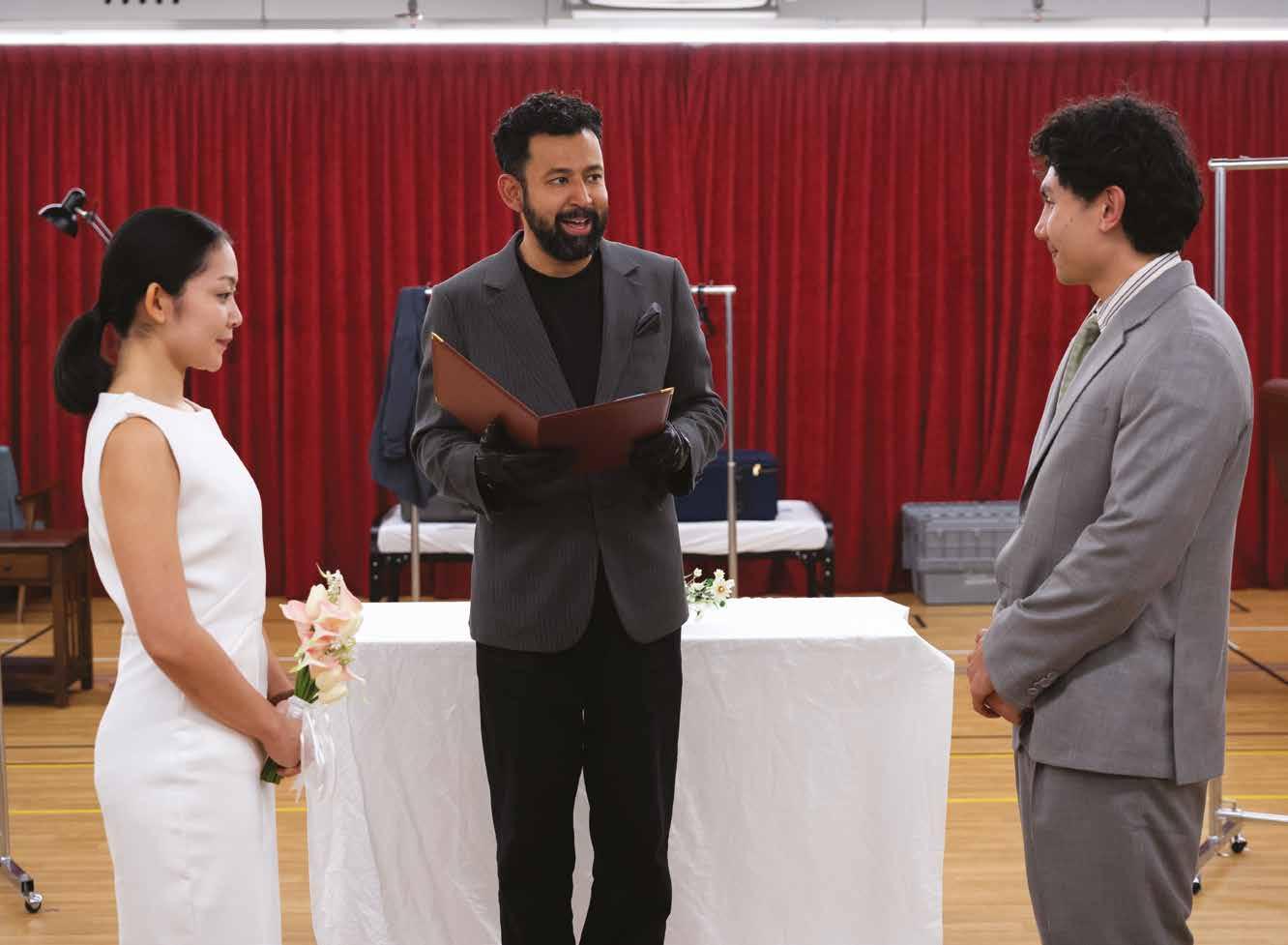
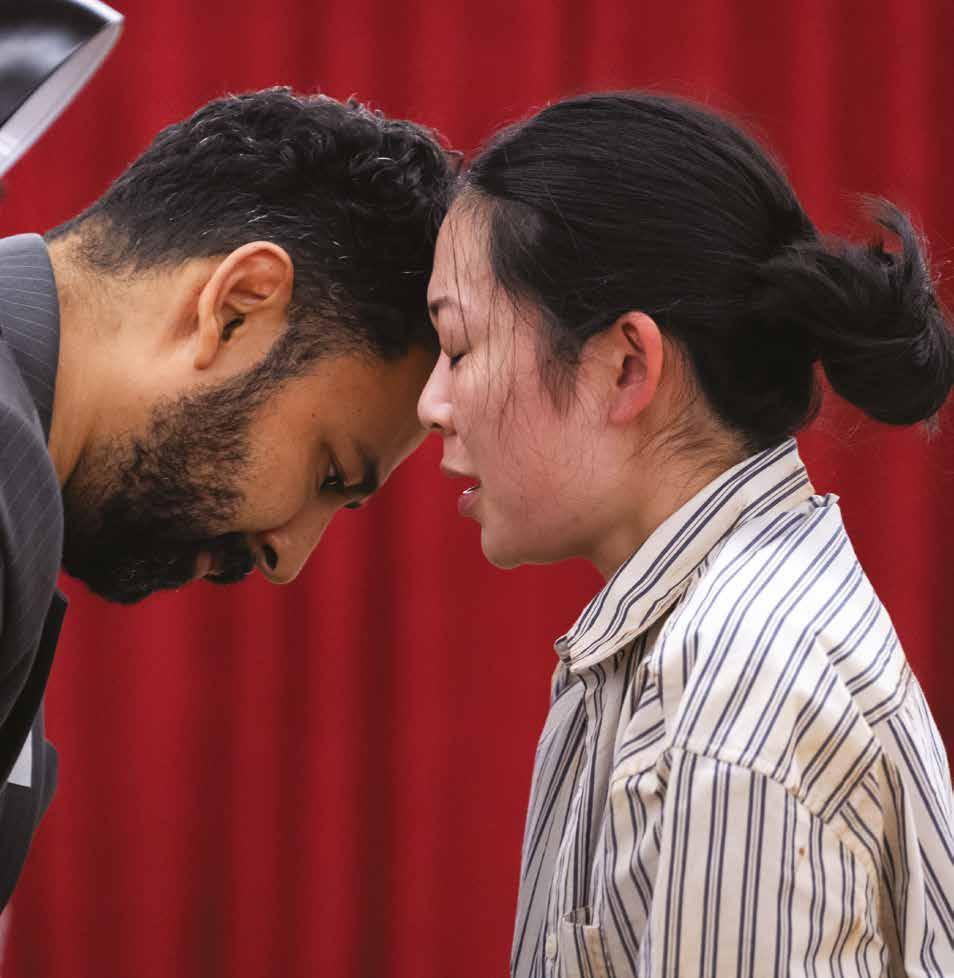
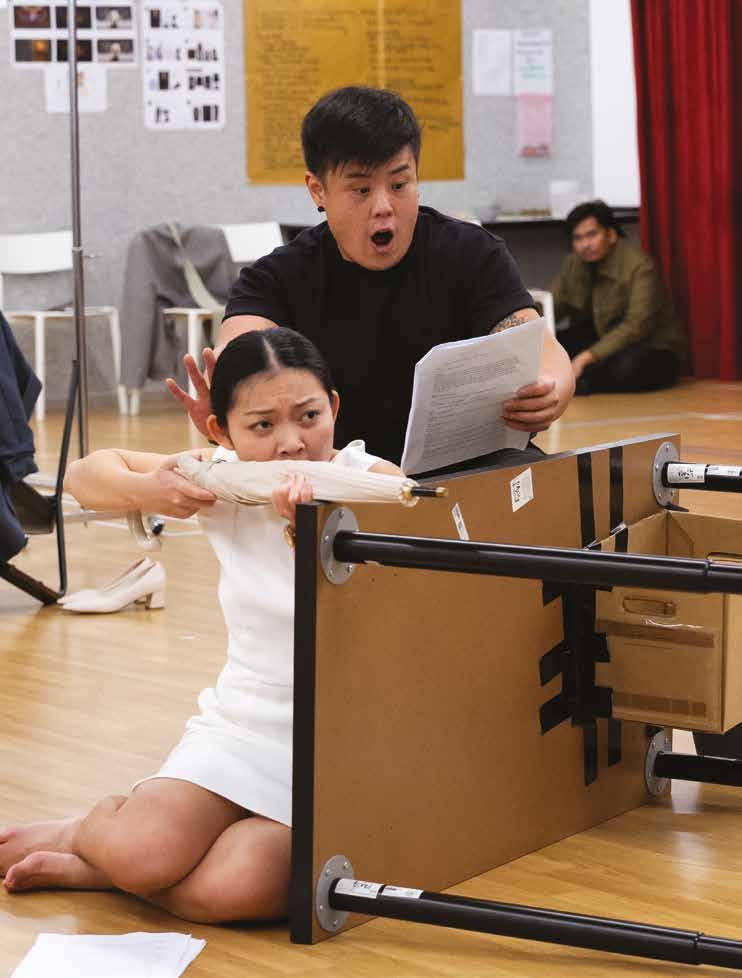
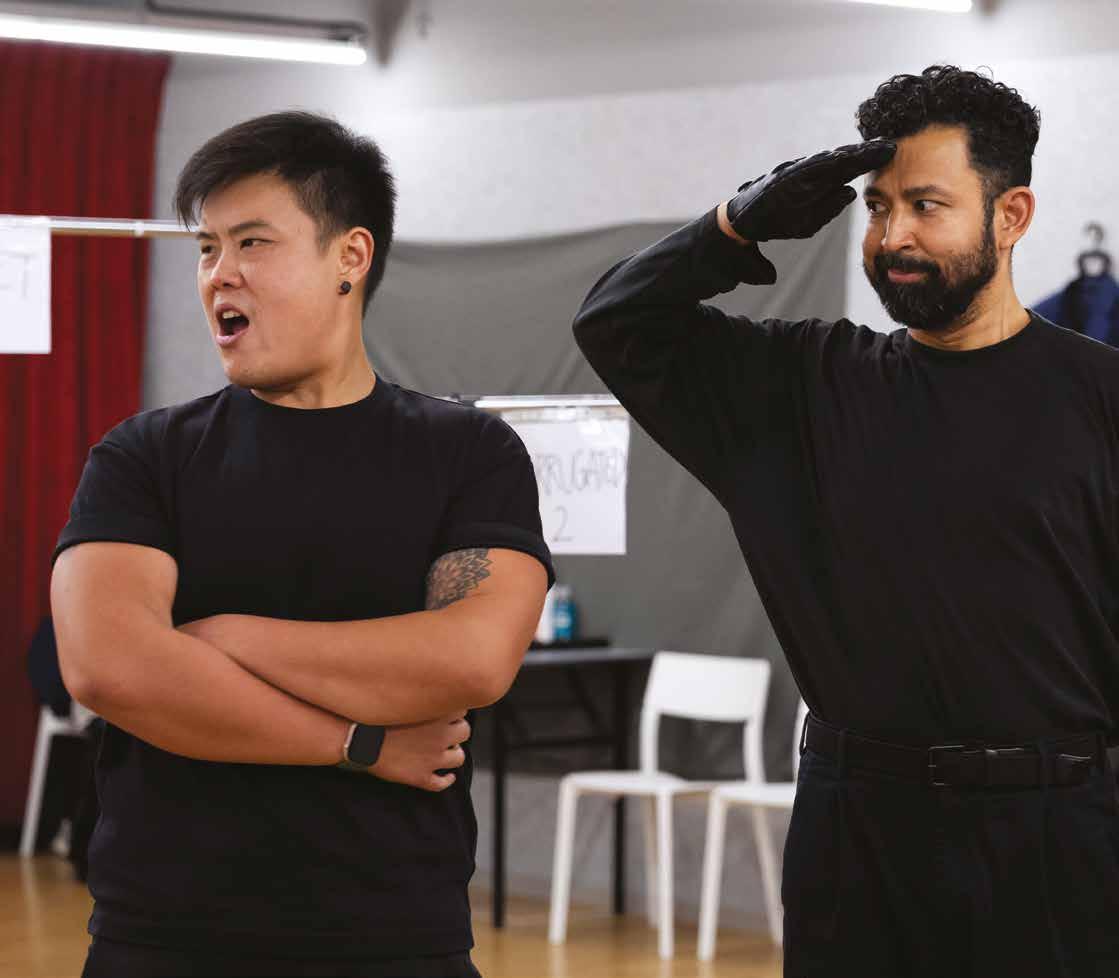
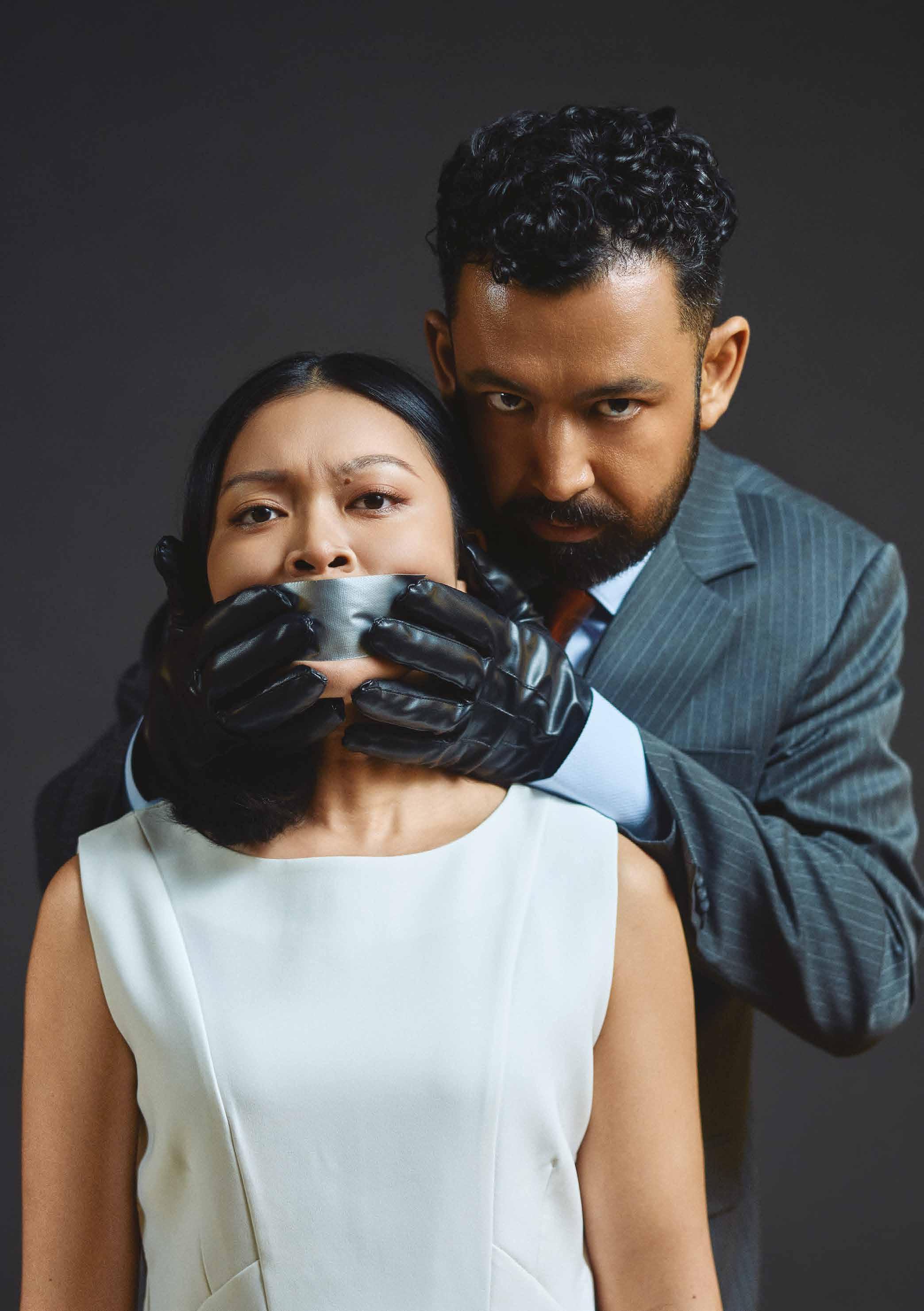
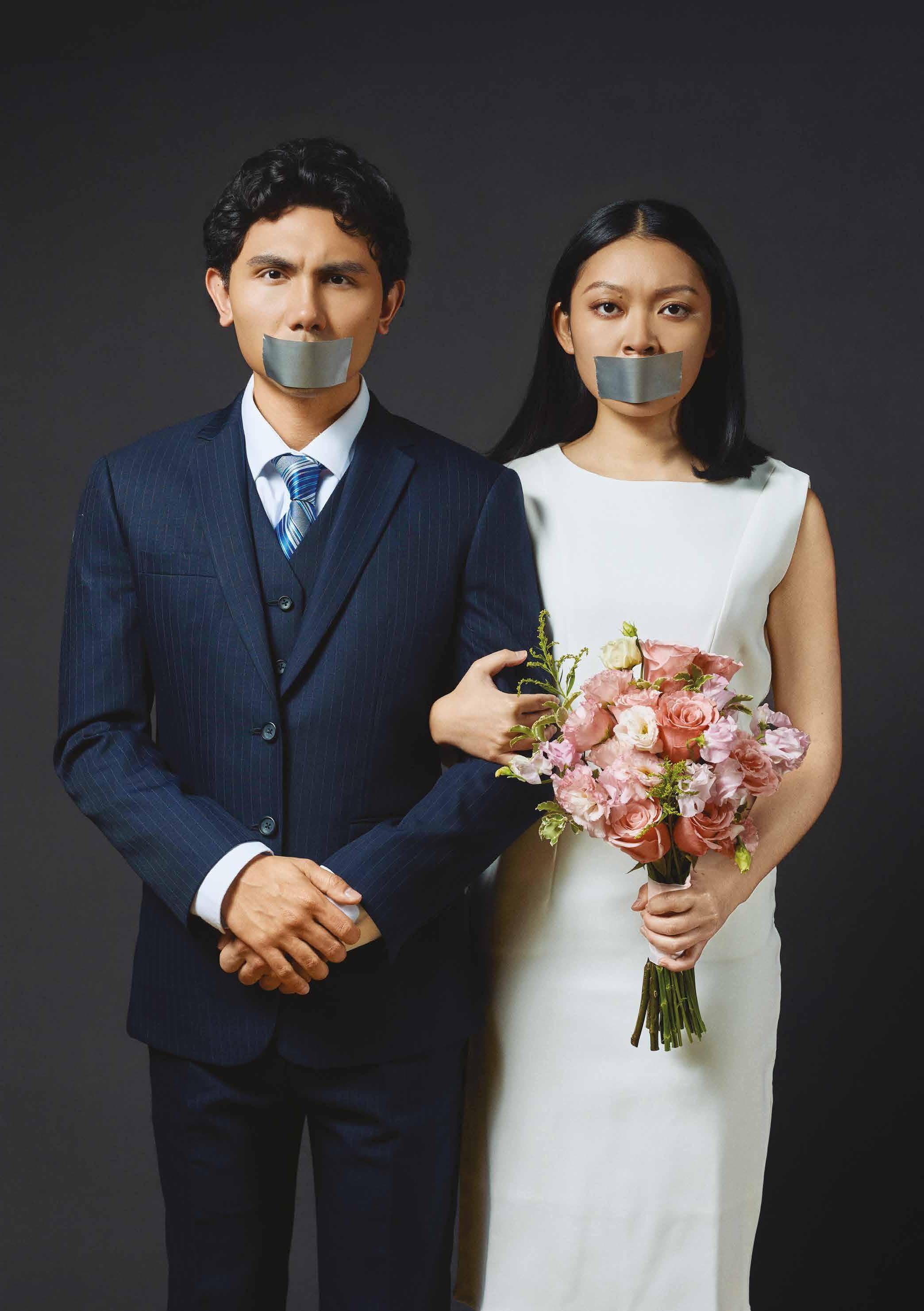
A Mirror depicts an unnamed, fictionalised country in which plays must be submitted to an official state censor, with harsh consequences for those who cross the strict lines. We repeat: “unnamed”, “fictionalised”, “mirror”. No same-sex kissing. So why the “Advisory 16” rating? Well, as they say, there’s always politics. But be advised that this production is so ass-kicking that your buttocks will be refused classification. Don’t say we neh say.
Thanks to our cast, creatives, production/technical/ stage management teams – all bold and brilliant artists – for navigating numerous prescribed lines and fighting the good fight to make great art.
To the Pangdemonium family – we love you.
Sincere gratitude to our wonderful Friends of Pangdemonium and Corporate Donors for your support of our work and Singapore theatre.
And as this is Pangdemonum’s penultimate production, many thanks to IMDA for the open negotiations over the years about how best to navigate the lines. It’s been an irRit18 experience.
And heartfelt thanks to YOU – even if you’re a Karen.
Lots of love,
TRACIE PANG & ADRIAN PANG ARTISTIC DIRECTORS
I RISK ABRUISED EGO. THEY RISK A BRUISED
FACE AND BROKEN BONES.
An interview with Sam Holcroft, playwright of A Mirror.
Five years ago, playwright Sam Holcroft was diagnosed with autism. It came quite out of the blue, off the back of reading an article her husband stumbled upon over breakfast. But the diagnosis has really helped Holcroft to unlock the way she fits into the world: her longstanding obsession with theatre and human behaviour; and the reason, perhaps, that lots of her works hover at the edges of things.
“It’s only since being diagnosed with autism that I retrospectively wonder if the form of theatre has been one of my special interests,” she says. “A symptom of having an autism spectrum condition can be that you have special interests –things that you fixate on and focus on and can think about with a hyper focus for hours on end. I am coming to wonder whether one of mine is theatrical form.”
Mystery and dual realities shimmer through most of Holcroft’s writing. In her early work, Cockroach, the school biology lab and battlefield literally bleed into each other. Comedy thriller Edgar and Annabel is about a couple under surveillance, while Rules of Living explored the unspoken rules by which we all live.
A Mirror was partly inspired by a “lifechanging” trip to North Korea that Holcroft took in 2011, alongside her husband and fellow playwright Al Blyth.
The trip was sanctioned by the government and was, says Holcroft, “a piece of theatre like nothing I’ve ever seen”. The couple were put up in a hotel on an island in the middle of Pyongyang city and told to stay inside. Desperate for exercise, Holcroft’s husband marched up and down the stairs of their tower block… only to stumble upon a corridor packed with people with headphones listening in.
Holcroft and Blyth returned home to the UK shaken –and seriously questioning their work as writers. These questions grew louder when Holcroft travelled to Beirut with the Royal Court International Department writers’ programme from 2013 to 2015. Holcroft worked with playwrights from Lebanon and Syria, all of whom would expect to submit their work to the censorship bureau of their countries. On the night of the performance, some of the writers grew terrified there would be secret police in the audience and tore chunks out of their scripts, in fear of causing offence.
Later that night, Holcroft found herself crying in the toilets.
“I remember feeling ashamed by my tears,” she says.
“I think in the west we flatter ourselves that we’re quite brave as writers. But when I compare myself to these writers I met in Beirut, the risk I take is really no risk at all. I risk a bruised ego. They risk a bruised face and broken bones.”
Their bravery of those writers stayed with Holcroft and forced her to confront some difficult questions: “Would I write in the same circumstances? I really don’t know if I would. I have two little girls and I don’t know if there’s anything I could ever write that could justify orphaning them or abandoning them. But I wanted to write about it because I was fascinated by the question and I wanted the audience to ask it, too.”
WEAPONS OF
MASS DISRUPTION
For artists around the world, censorship can take many forms, from overt interference and the pressure to self-censor to the grey areas that can restrict artistic freedom. Theatremakers from countries including Hong Kong, Turkey, Serbia, Hungary and Belarus explain how artists are fighting back.
In the UK, for more than half a century following the passing of the Theatres Act 1968, theatremakers have had the right of free expression enshrined in law.
Before that, since 1737, the Lord Chamberlain had the authority to veto new plays that were deemed indecent or posed a threat to public order.
If theatres staged work that had been refused a licence, they could be prosecuted. Things started to shift in the 1960s, with private clubs allowing writers to perform their play in a ‘private’ setting as a way of getting around the censor. The late Edward Bond’s 1965 play Saved was among those staged in this way. Although the creators were eventually prosecuted, this only highlighted how dated the system was and paved the way for the passing of the Theatres Act. The American countercultural musical Hair was the first show to benefit from the new law, opening in the West End the night after the act was passed.
In the years since, however, a number of highprofile incidents in the UK have raised the question of just how free artists are in what they can put on stage. The 1980 National Theatre production of Howard Brenton’s The Romans in Britain was famously subject to an unsuccessful public prosecution for gross indecency and, in 2004, Gurpreet Kaur Bhatti’s play Behzti was
cancelled by Birmingham Rep following protests from the local Sikh community.
Recently in Germany, an “anti-discrimination clause” was introduced by the Berlin senator for culture and social cohesion, which applicants for cultural funding were required to sign.
It made a commitment to the International Holocaust Remembrance Alliance definition of antisemitism – widely considered controversial – a prerequisite for accessing cultural funding. In response, 6,000 cultural producers signed an open letter expressing concern that this clause was essentially a means of excluding criticism of the Israeli
DISRUPTION
government’s policies and the war in Gaza from public discourse and, by extension, a form of censorship.
In many places, restrictions to artistic freedom can take multiple forms.
In countries such as Iran, which has a state censor, everyone knows what they are dealing with. In Turkey, things are less clear-cut. The lack of legal clarity surrounding censorship leads to grey areas that can be exploited by the government.
Public order and terrorism prevention legislation can be used to legitimise censorship and limit artistic freedom, and the way in which these rules are applied can feel quite arbitrary.
Grey areas exist in many countries, and it is important to be mindful of the topics a government deems sensitive at any given moment.
When Berlin’s Schaubühne took the original German production of An Enemy of the People to China in 2018, the engagement was cut short.
The show contains a section in which audience members are invited to debate, and at the performance in Beijing, the audience openly criticised the Chinese government. Subsequent performances in Nanjing were cancelled for “technical reasons”.
In Hong Kong, the passing of the National Security Law in 2020 has had a significant impact on theatre and the arts, explains theatremaker Jeffrey Lin.
“Prior to the NSL, Hong Kong’s performance arts scene was celebrated for its dynamism and diversity,” he says. “The enactment of the NSL introduced a climate of uncertainty and caution within the performance arts sector.” Since the law was passed, there have been several instances in which performances were either “cancelled or altered due to concerns over content that could be perceived as violating the NSL”.
Artists in Hong Kong, he explains, “now face a precarious situation where their career can be jeopardised by any actions in their lifetime, including social media posts criticising the government, participation in political protests or their involvement in productions deemed politically sensitive or contrary to the ideology of the Chinese government”.
People are encouraged to inform anonymously on those deemed in breach of the law, leading to “the emergence of a culture of informants or a ‘snitch culture’ within the arts community”, Lin says. “This environment has led to a heightened sense of vulnerability among artists.” Productions are often abruptly cancelled, causing financial loss to the artist, explains Lin.
As in Turkey, there is ambiguity around what is permissible. This creates a climate of uncertainty.
In the absence of clear guidelines, says Lin, “the arts community must navigate this ambiguity, often looking to past incidents of complaints, legal actions or controversies as indicators of what might be considered crossing the line”.
Democratic backsliding tends to walk hand-inhand with an increase in state interference in the arts, as can be seen in several central and eastern European countries.
While there is no overt censorship in Hungary, the cultural sector depends financially on the policies of Viktor Orban’s government, which, as critic Jászay Tamás explains, “believes only in the centralisation and concentration of power and does not resist the temptation to assert its financial influence”.
“The state not only provides the necessary financial means, but also has an active say in how and in what way artists use them,” he says.
“In other words, if the state doesn’t like your art, it will not ‘order’ it.”
As a result, more than 30 years after the fall of communism, he says, “caution is becoming more and more conspicuous in theatre programming policy”. Even if a city’s government is liberal, the main priority is to avoid scandal. “A light comedy or operetta is less risky than a devised show about the conditions of living in today’s Hungary,” he says. “It can always be argued that audiences go to the theatre to be entertained, not to confront their otherwise unhappy lives, but there are two faces to the process: if we don’t even try to move the audience out of their comfort zone, we will never know what they are really interested in.”
A combination of factors result in work that errs on the side of safety, whereas directors such as former director of Hungary’s National Theatre Róbert Alföldi, who is openly gay and politically on the left, “can now work in almost only two private theatres in Hungary – the others dare not or will not invite him”, says Tamás. Actors have also found their opportunities of employment limited after speaking at opposition demonstrations, he explains.
This form of financial censorship has hit the independent scene particularly hard. Few independent artists can afford to be openly political.There are exceptions, he says, citing Béla Pintér, who in a performance “called the prime minister, opposition leaders and other public figures by their names, inviting his audiences to a grotesque and bizarre cabaret-style danse macabre”. The Hungarian independent scene “has traditionally been a non-political zone: while right-wing governments have openly seen independent theatremakers as enemies for a decade and a half, they have nothing to fear, as independent voices are quiet and reach few people compared to the state propaganda machine”.
Slovakia has recently implemented troubling new policies designed to limit freedom of expression.
The Ministry of Culture is run by the ruling party and, according to critic Daria Fojtíková Fehérová, it has “slowly started changing leaderships of subsidised culture institutions and there is a new law on the table that suggests that the minister can withdraw any managing director of any state culture institution without any reason. The new laws they want to introduce will help them put their own people everywhere”.
The ministry has already stopped funding independent non-governmental organisations that deal with LGBT+ issues, but the impact is being felt more widely, with other NGOs also being affected. Once again, a climate of uncertainty leads to concerns about where ‘the line’ lies in terms of what work will be supported.
In Serbia, a system of selfcensorship has operated since the time of the former Yugoslavia, explains theatre scholar and critic Ivan Medenica.
While Yugoslav artists had comparative autonomy, there were limits.
When the then president Josip Broz Tito attacked a production at the Yugoslav Drama Theater that dealt with the then-taboo topic of labour camps for political prisoners, it was the actors – all members of the Communist Party – who called for the play to be cancelled.
This culture of self-censorship persists in Serbian theatre today. “Political criticism in Serbian performance is first of all realised through indirect means,” he explains. “Oliver Frljić has said that he would only direct in Serbia again if it was to do a play about [Serbian president] Aleksandar Vučić. He never received that invitation...”
For work to be presented at Belarus state theatres, it has to be put before several censorship committees. The restrictions placed on the independent sector are even more severe, making it all but impossible to operate. Previously, they explain, you only had to get permission from the city council, but now you have to receive an official registration from the Ministry for Culture. Only if you pass all its checks can you apply for permission from the city council, with further checks on artists and texts.
Censorship is a sliding scale and the bead can shift quickly. Vigilance is required to stop rights to free expression being quietly eroded. While a lot of these examples concern grey areas and pressures to self censor, explicit state censorship does still exist. And there are artists who live in constant fear.
As expressed by a Belarusian theatre artist who asked to remain anonymous:
“You become paranoid and begin to suspect everyone and be afraid of everything, while still trying to realise some underground, non-dangerous activities in order to keep on going, to survive and preserve what we can.”
Ghafir is a Malaysian actor and director recently seen in Teater Ekamatra’s Tiger of Malaya (World Theatre Festival Shizuoka) and as ‘Macbeth’ (Singapore Repertory Theatre –Shakespeare in the Park). He is a two-time The Straits Times Life Theatre Award Best Actor recipient for his roles in A Midsummer Night’s Dream (Singapore Repertory Theatre) and Accidental Death of an Activist (Wild Rice).
Selected credits include Disgraced; Julius Caesar; Guards at the Taj (Singapore Repertory Theatre), HOTEL; An Inspector Calls; MERDEKA/獨立/சுதந்திரம் (Wild Rice), Three Years in the Life and Death of Land; Acting Mad; Civilised (The Necessary Stage), Kingdoms Apart (Esplanade Presents), Temple; Being Haresh Sharma; Medea (Cake Theatrical Productions), Entourage (Dramalab), and Gold Rain and Hailstones (Instant Café Theatre).
Ghafir holds an MFA in Acting (Asolo Conservatory/Florida State University) and a BA in Theatre Performance (Western Michigan University).
CAST
(IN ALPHABETICAL ORDER)
ANDREW MARKO
Andrew is an award-winning stage and screen actor, voice-over artist and musician who would not be where he is today if not for Pangdemonium. May the ass-kicking adventures remain alive in our hearts and souls until the end of all time!
Other notable theatre credits include: Into The Woods; Urinetown; RENT; Peter and the Starcatcher; End of the Rainbow; Falling (Pangdemonium), Title of Show; Little Shop of Horrors; I Love You, You’re Perfect, Now Change (Sing’theatre), Lord of the Flies (Sightlines), National Day Charade; Peter Pan in Serangoon Gardens; Mama White Snake (Wild Rice), Every Brilliant Thing (Bhumi Collective), Electra; Rubber Girl Is On The Loose (Cake Theatre).
BAX / BEST MAN
ZACHARY PANG
ADEM / GROOM
Zachary is a London-born actor who grew up in Singapore and graduated from the BA Acting course at Mountview (London).
Theatre credits include: Kimberly Akimbo (Pangdemonium Theatre Company); Dear Evan Hansen (Pangdemonium Theatre Company); Aladdin (Assembly Halls Theatre); Storehouse (Sage & Jester); Julie: The Musical (Le Gasp! Productions); Snow White (Theatre Royal Bury St Edmunds); The Son; Spring Awakening; The Full Monty (all for Pangdemonium Theatre Company); Macbeth (SRT).
Theatre whilst training include: Oh! What a Lovely War; Boy; Circle, Mirror, Transformation; Mojo; and Julius Caesar.
Screen credits include: Zack & Xander Can! (Disney Channel Asia); Forensik; Code of Law (both for Weiyu Films); Me Myself and Isaac (Papahan Films); and Super4orce (Monochromatic Pictures).
Zachary is extremely excited to be back in Singapore to perform in A Mirror.
COCO WANG LING
MEI / BRIDE
Coco (she/they) is a multidisciplinary theatremaker and actor who graduated from the Victorian College of the Arts with a Bachelor of Fine Arts (Theatre) in 2022. Her creative practice focuses on play, world-building, and making connections.
She was most recently awarded The Straits Times Life Theatre Award for Best Actress for her lead role in The Serangoon Gardens Techno Party of 1993 (Wild Rice). Her other credits include: HOTEL (Wild Rice); Threads: The Emperor’s New Clothes Musical (Singapore Repertory Theatre, The Little Company); White, All White (The Necessary Stage); Mosaic (Esplanade), and many more.
She’s also still figuring things out, and loving it.
CHARLOTTE GREENALL
WEDDING GUEST
Charlotte is a multiracial performer and writer, recently graduating with a Diploma in Performance from LASALLE College of the Arts. Her theatre credits include The Laramie Project (Pangdemonium); Shakespeare in the Park – Macbeth (Singapore Repertory Theatre) and The Good Citizen (Wild Rice). She was nominated for Best Lead Performance at the 9th National Youth Film Awards for her role in After Still (Viddsee). This production marks Charlotte’s first and final mainstage appearance with Pangdemonium. She is grateful for the opportunity to work alongside the company, and would like to thank her parents for their unwavering support in letting her dream big without limits.
AGENT
Phua Yao Ting (YT) is a bilingual actor proficient in both film and theatre. He holds a BA(Hons) in Acting from LASALLE College of the Arts, where he previously earned a Diploma in Performance. In 2024, he completed Wild Rice's "Young and Wild" program, led by Edith Podesta. He has strong interest in any forms of theatre, especially forum theatre and Drama therapy.
Selected theatre credits: "Hock" in PEOPLE (Young & Wild), "Mrs X" in The Stronger and "Mr B" in The Ring, presented as the double bill SAKE and PLAY (Theatre Boleh).
PHUA YAO TING (YT)
SETH ARRI AZHAR
AGENT
Seth Arri Azhar is a young Singaporean thespian with a passion for devised theatre and collaborative storytelling. He brings energy, creativity and curiosity into his work. Seth was part of the inaugural batch of Pangdemonium’s Very Youthful Company as well as the 2023 batch of Triple Threats programme.
He has contributed to productions such as Schooled; Monster in the Mirror (2021); Crack the Case: Backstage Betrayal and The Paper Bride. Beyond the stage, Seth has experience emceeing over 50 events, and facilitating interactive experiences, expanding his skills in audience engagement and live performance settings.
Kee Joo (KJ) recently graduated with a Diploma in Performance from LASALLE College of the Arts, and will continue his training with BA(Hons) Acting later this year. He made his professional debut as ‘Thet Tun’ in Radin Mas, Who? (Toy Factory), and also starred as ‘Fleance’ in Shakespeare in the Park –Macbeth (Singapore Repertory Theatre). He also acts for the screen, most notably in Lion Mums Season 3. He was nominated for Best Performance at the 8th National Youth Film Awards for his role in Go Home. This is KJ’s first performance with Pangdemonium, and he is honoured to be a part of this production.
SIM KEE JOO KJ
AGENT
LUCAS WAN
AGENT
A studying actor, vocalist and writer, Lucas has had a deep love for music and theatre since secondary school. He is waiting to start his third year in LASALLE’s Diploma in Performance, and is self-studying musical theatre, playwriting, and composing on the side. Lucas has been in several teen productions: ‘Ram Sweeney’ in Heathers directed by Caleb Goh (Pangdemonium) and ‘Nick Piazza’ in Fame! Jr. the Musical directed by Ali Tompkins (Centre Stage).
CREATIVES
TRACIE PANG
DIRECTOR
Tracie trained at Croydon College, London, and has clocked up more than 35 years working in theatre throughout the UK and Asia. In Singapore, she set up The Little Company, for whom she wrote and directed numerous productions for children aged 3 –14. She was Associate Artistic Director for Singapore Repertory Theatre from 2006 – 2010.
In 2010 Tracie founded Pangdemonium Theatre Company with her husband Adrian. At the Straits Times Life Theatre Awards, she won the Best Director Award for Pangdemonium’s Falling (2016), and received nominations for Pangdemonium’s The Full Monty; Dealer’s Choice; Rabbit Hole; Next to Normal; Fat Pig; Tribes and Dragonflies, and also for SRT’s The Dresser; The Snow Queen and The Pillowman.
Other productions she has directed for Pangdemonium include Closer; Spring Awakening; Swimming with Sharks; Gruesome Playground Injuries; The Rise & Fall of Little Voice; Frozen; Circle Mirror Transformation; Chinglish; The Effect; Rent; The Pillowman;
Tango; Fun Home; The Father; Peter and the Starcatcher; Late Company; This is What Happens to Pretty Girls; Urinetown: The Musical; The Son; Girls and Boys; The Mother; The Glass Menagerie; End of the Rainbow; People, Places & Things; Into the Woods, Falling (2024), the Southeast Asian premiere of Dear Evan Hansen, Kimberly Akimbo and Force Majeure.
Tracie was awarded the 2015 AWA International Woman of the Year for The Arts, and the 2017 Women’s Weekly “Great Women of our Time” Award for Media and the Arts. It has been the greatest of privileges growing Pangdemonium and sharing our work with you, our audience over the last 16 years. Thank you for watching.
TIMOTHY KOH
ASSISTANT DIRECTOR
Directing: Singapore, Michigan (Best Director nomination, Life Theatre Awards); Who’s Afraid of Virginia Woolf?; Doubt: A Parable (Best Director and Production of the Year nominations, Life Theatre Awards), and more.
Assistant Directing: Lincoln Center Theater, Manhattan Theatre Club. Fellowship at Playwrights Horizons. BFA from NYU.
EUCIEN CHIA
SET DESIGNER
Eucien is a long-time Pangdemonium collaborator, having designed over twenty of their productions since 2011 including Kimberly Akimbo; Dear Evan Hansen; Doubt; The Glass Menagerie; The Mother; Urinetown; and Spring Awakening.
Accolades: ST Life Theatre Awards Best Set Design winner for The Almighty Sometimes (Singapore Repertory Theatre); Company (Dream Academy); Dealer's Choice (Pangdemonium); December Rains (Toy Factory).
Original creative team for new commissioned works: Singapore, Michigan (Pangdemonium); Kingdoms Apart; A Good Death (Esplanade); The Commission (SIFA); Normal (Checkpoint); H is for Hantu (STAGES); A $ingapore Carol; The Emperor’s New Clothes (Wild Rice); Sleepless Town; Shanghai Blues (Toy Factory).
Selected design credits: Cinderella (Singapore Ballet); Falling (2024); Into The Woods; RENT; This is What Happens to Pretty Girls; End of the Rainbow; The Pillowman (Pangdemonium); La Cage Aux Folles (2017); Boeing Boeing (2017)(Wild Rice); Sing To The Dawn (I-Theatre); Tick, Tick... Boom! (Sight Lines).
Eucien thanks God for his amazing family.
JAMES
TAN
LIGHTING DESIGNER
A Mirror marks James' final outing with the Pangdemonium family. Thank you, to the awesome “backstage technical personnel” for your professional company over the years, including but not limited to past and present production managers, venue production coordinators, stage managers, lighting programmers, lighting crew, followspot operators, lighting apprentices; and basically anyone who has been through the gruelling and extreme long hours of technical theatre work.
Since 2018, under the guidance of Tracie and Adrian, together with the support of the Victoria Lim, Sunitha Nayar and Leah Sim, Pangdemonium’s “Lighting Design Apprenticeship Programme” was born. The programme was collectively developed to support emerging talents in the field of Theatre Lighting Design, a sometimes overlooked theatre occupation that is seemingly not recognised amidst the glitz and glamour of successful productions. It is in good faith that the positive design and technical production practices that were once developed here will somehow find a life and place in the local theatre industry.
I sincerely thank Tracie and Adrian, for being one of the few theatre companies to actually reply that cold email pitch from this noob-ish fresh grad in 2012. Thanks for taking me on an ass-kicking adventure for over 35 main stage productions.
JING NG Awarded the National Arts Council Scholarship, Jing graduated with first class honours from Rose Bruford College (U.K.) specialising in Performance Sound. Having designed for various companies and productions over 10 years of practice, he aspires to provide a wholesome sonic experience for the audience – what, why and how you listen through a live performance.
As an arts educator at NAFA since 2017, Jing has been teaching the core principles and techniques of production sound design. These modules fosters future practitioners in developing a deeper uderstanding of sound in various artistic mediums and discovering the infinite possibilities of sonic arts.
He was nominated for Best Sound Design in the 2014 Off West End Theatre Awards, and the 2018, 2022 – 2026 Singapore Straits Times Life Theatre Awards – winning both 2025 and 2026 editions.
Vick Low is a Singaporebased sound designer and composer whose work centres on crafting immersive sonic environments for theatre and performance. Trained in music technology and grounded in a background as a cellist, his practice combines acoustic instrumentation, cello, and electronic processes to shape rhythm, atmosphere, and psychological space.
His credits include Kwa Geok Choo and Titoudao (Toy Factory Productions), God of Carnage and Everything For You (Nine Years Theatre), and Third Man Syndrome (Gateway Arts), alongside Theatre for Young Audiences works such as Karung Guni Boy (Esplanade PLAYtime!, 2025) and The Dragon’s Dentist
His interdisciplinary works include Windward Side of the Mountain and I Am Seaweed, presented at the M1 Singapore Fringe Festival and Melbourne Fringe Festival. Internationally, his work has been presented at the Edinburgh Festival Fringe and Australia’s AWESOME Festival. He was also a resident artist at the National Gallery Singapore.
RAYANN CONDY
INTIMACY DIRECTOR
Rayann (she/her) is a certified Intimacy Coordinator with Intimacy Directors and Coordinators (USA). She is the first qualified intimacy professional in Singapore. As a very new role in Singapore she is honored to have worked on projects who are leading the industry to foster accountable, consent informed spaces that allow storytelling to flourish. Highlights to date include The Serangoon Gardens Techno Party of 1993 (Wild Rice); The Season (Hulu); multi-award swimming short film Buah.
Rayann has a BA Hons in Acting at LASALLE College of the Arts and an MA Culture and Communication at Malmö University (Sweden). She also works across film/ tv and theater as a director, casting director, producer and educator. Rayann volunteers with AWARE and is a lead facilitator of its Sexual Assault First Responder Training.
CAST (IN ALPHABETICAL ORDER)
Celik / Registrar
Bax / Best Man
Adem / Groom
Mei / Bride
Wedding Guest Agent Agent Agent Agent
Musician
CREATIVE TEAM
Director
Assistant Director
Playwright
Set Designer
Associate Set Designer
Lighting Designer
Sound Designer & Co-composer
Associate Sound Designer
Costume Designer Co-composer
Intimacy Director
GHAFIR AKBAR
ANDREW MARKO
ZACHARY PANG
COCO WANG LING
CHARLOTTE GREENALL
PHUA YAO TING (YT)
SETH ARRI AZHAR
SIM KEE JOO KJ
LUCAS WAN
VICK LOW
TRACIE PANG
TIMOTHY KOH
SAM HOLCROFT
EUCIEN CHIA
SCOTT LEE
JAMES TAN
JING NG
JEAN YAP
L.A.C
VICK LOW
RAYANN CONDY
PRODUCTION & STAGE MANAGEMENT TEAM
Production Manager
Associate Production Manager
Technical Manager
Stage Manager
Assistant Stage Manager
Assistant Stage Manager
Props Master
Props Assistant
Costume Coordinator
Dresser
Sound Operator 1
Sound Operator 2
Lighting Programmer
Production Apprentice
Make-up Consultant
LEAH SIM
OTHMAN M. YUSOF
NUR ALIFF
KOH YI WEI
ZAI
MARA KARMA
DANIEL SIM
GERALYN TOH
TAN JIA HUI
DILYS ANG
YAT
TAN SUET PENG
WEE (CTRL FRE@K)
DILAISYA SUAL
BOBBIE NG (THE MAKE UP ROOM)
THE TEAM
PANGDEMONIUM TEAM
Artistic Director / Managing Director
Artistic Director / Producer
General Manager
Associate Director
Production Manager
Associate Production Manager
Company Stage Manager
Marketing Manager
Marketing Executive
Relationship Manager
Ticketing Manager
Admin & HR Manager
Accounting Manager
Production Apprentice
Ticketing & Customer Service Assistant
Associate Artist
TRACIE PANG
ADRIAN PANG
RENEE TAN
TIMOTHY KOH
LEAH SIM
OTHMAN M. YUSOF
KOH YI WEI
KRISTAL ZHOU
DEBBIE NG
GUINEVIERE LOW
MICHELLE SEETOH
HILMI SHUKUR
MARIEM TOUAHRIA
DILAISYA SUAL
JOSH HUANG CHU SI
JAMES TAN
PANGDEMONIUM BOARD
JOHN CURRIE
DR. JADE KUA
JACQUELINE CHAN
HANMING WANG
BEATRICE CHIA-RICHMOND
TRACIE PANG
ADRIAN PANG
THANK YOU FOR BEING OUR FRIENDS!
WHITE KNIGHTS
Shaw Foundation
WINGED CRUSADERS
Holywell Foundation
HCS Engineering Pte Ltd
Jacqueline Ho, Esq.
The Diana Koh Foundation
The Grace, Shua and Jacob Ballas II Charitable Trust
CRUSADERS
BinjaiTree Foundation
Chew How Teck Foundation
Dharmendra Yadav
Irene Wee & Wee Chwee Heng
Piyush Gupta
Valerie Velasco, Esq.
SUPERHEROES
Adeline & Timothy
Clarence & Amelia
Dr Jade Kua & Marion Isabelle Teo
Esmond Loon
Goh Swee Chen
Meng
Russell H K Heng
Shiv Dewan
Shivani Manohara
Sze Wei Goh
Tania Wee
HEROES
Amith Narayan
Agnus
Capt. Rahul & Smita Choudhuri
CK & Sylvia
David & Thuan Forrester
Dr Irene Lim &
Prof David Stringer
Dr Lena Lee
Jacqueline Chan
James & Rebecca Orme
John Currie & Hong Sun Chee
Katherine A Krummert & Shawn Galey
Kelvin, Kayla & Natasha
Ken Cambie & Shou Sen Cheam
Kok Aun Koh
LAKE
Mr & Mrs Victor and Michelle Sassoon
Rachel & Wen Juin
SL Chan
CHAMPIONS
Aileen Tang
Ajai Kaul
Ajit Nayak & Subhadra Sethuraman
AK & SC
Alois Schiessl
Angela Yap
Anjali Kuperan & Adrian Allen Joseph
Audrey Chng
Ben, Sharon, Goku & Bulma Low
Berlinda Gooi & Frank Schuurmans
Bernice & Alzone Ang
Beth Hollahan
Charles Koh
Chewng Wen Zhao
Christopher Pang
Claire McColl
Daniela
Daryl Lim
David & Jessica Neo
Dominik von Wantoch-Rekowski
Dr Christopher Chen
Dr Mandy Zhang
Dr Tan Eng Thye Jason
Drs Lim Kay Kiat & Nicola Ngiam
Ee Yee
Emmett, Hazel, Emeric & Ethel Wong
Eugene Lee
Fam Hui Jiung
Foo Yee Ling
Gerry & Sharon Craggs
Goh Meixuan
Greg Walters
In memory of KC Kok
Joanne Pek
Kelvin Tan & Sandy Chan
Kevin Ong SH
Low Eng Teong
Lynce Tan
Magnus Edison Tan
Matt Wong
Matthew Flaherty
Mattopher
Melanie Tan
Michael Wong
Michelle Shek & Harry Brilliant
Mingcheng Lim
Ng Yichun
Nithia Devan
Ojas Nitin Doshi
Ong Pei San
Pang Siu Mei
Pauline Lim
Pierre Colignon
Rita E Silver
Ronald & Janet Stride
Saahil & Divya Patel
Sabrina Soh
Sandra Gwee
Sardool Singh
Sehr & Ashnil Dixit
Sharon Tan
Sumitra & Pramod
Susan Sim
Suzanne Lim
Tanya Tan
Thara Gopalan
Toh Bao-En
Vanessa Seah
Wilhem Lee
Wu Peihui
Yan Zhiyan & Lim Hweeyong
Yvonne Soh
PANGDEMANIACS
A & D
AB & J
AC
Adrian Toh
Ahmed Bahajjaj
Andre Gerard Ballesteros
Audrey Phua
Barry & YT Clarke
Ben Veron
Brian Selby & Angelina Chang
Caleb & Gayle
Charmaine
Cheng Yiling
Chiat Sian
Chin Jin Kiat
Chloe Goh
CHPY
Christopher Raj Rajadhran
Clarence Ng
Cynthia
Cynthia Wong
D Cheong
Daniel Chai
Dawn Seow
Denise Asmira
Dennis
Desmond Ho
Dhiraj & Chloe
Doreen Quiaoit
Dr Francis Chin
Dr Teo Kien Boon
Drs Sylvia & Javier
Edwin Tan
Eugene Ang
Ferlicia Ma
Geoffrey Baker
Goh Siu Kiat (SK)
Gunjali
Hasan Orkan Akcan
HL
Isabel Ong
Jacq & Fel
Jane Hayes
Janice Goh
Janice Low
Jason Chee
Jennifer King
Joel Loong
Jolyn Moh
Jolyn Teh
Jorin Ng
Joyce Tan Soo Yuen
Juliana
Jun Shea
Justin Edward Chong
Ken
Kenneth Ong & Coral Yuen
Koon
Kristy
Lance Lim
Lau Chee Chong
Laura L
Lee Wen Long
Li Zhijing
Lionel Heng & Chen Weiling
Liwen & Joee
Lim Qian Ru
Lim Wei Ping
Loh Soon Hui
Lone
Lynn
Mikail Kalimuddin
mOOn
Nadia Ingrida
Nathan Ong
Ng Hian Hui
Ng Yew Hoon
Nguyen Trung Huan
Nicolas Fanchon
Nigel Ng
Ong Ai Ghee
Ong Hwee Suan
Paul Gosling
Preston Soh
Rainnie Zhou
Ramesh Shahdadpuri
Sarah Mei Ismail
Sebastian
See Kuo Min Matthew
Sera Foo
Serene Thain
Shanti & Rajesh Achanta
Siok Chen
Steven Wong
Suen JM
Sze Shiang
Tamara & Cara Chang
Tan Hian Hong
Tan Siong Min Benjamin
Tan Tiat Hern David
Teo Xi Hui
The CheuNgs
Thechanmaleechans
Toh Wei Seng
Tok Li
Tommy Koh
Usha Joyrama & Samant Jain
Venetia Shio
Wang Wei-lung
Wee Cathleen
Wen
Yap Zhi Jia
Yong Hui Chua & Jia Qi Chua
Zhenlin Lee
We would like to express our sincere thanks to our new Friends who made their kind donations after this list went to print.
FRIENDS OF PANGDEMONIUM
As a proudly Singaporean theatre company, it has been a journey of a lifetime for us, making theatre for you, being a part of Singapore's arts industry, and giving towards our community. Your support as a Friend of Pangdemonium has been indispensable in keeping us going as a theatre company.
Even as Pangdemonium journeys through our final year, we graciously welcome every donation until 31 August –every single cent goes directly into producing our Finale Season to the very
that we have always held ourselves to. As a registered charity, if there are any surplus funds at the end of our Season, they will go
towards further supporting other charities within our theatre industry. So you are contributing towards the further development of the entire arts ecosystem in Singapore.
If you wish to make a donation in support of Pangdemonium’s Finale 2026 season, please scan the QR code above.
On behalf of the Pangdemonium family, for your faith, patronage and friendship, we THANK YOU.
See you at the theatre and beyond, and we wish you ass-kicking adventures in life.
Pangdemonium Theatre Company Ltd is a registered charity with IPC status (UEN.: 201229915M). Donations above $50 entitles you to a tax deduction 2.5 times the value of your donation.
Donate today at giving.sg/organisation/profile/ pangdemonium
For more information, please visit pangdemonium.com/support-us/fop, or write to fundraiser@pangdemonium.com.
UNDER 25 YOUTH FUND
At Pangdemonium, the heart of our work is growing a vibrant theatre community — on stage, behind the scenes, and in the audience.
The Under 25 Youth Fund provides affordable access to live theatre for young people aged 25 and below, ensuing that cost is never a barrier to experience the power of live theatre.
Under this scheme, eligible youths can purchase a ticket for just $25, thanks to the generous subsidies provided by donations from foundations. We are deeply grateful to the Shaw Foundation, Chew How Teck Foundation, and BinjaiTree Foundation for their support as we launch the second production of our 2026 Season, A Mirror.
Contact renee@pangdemonium.com for corporate giving, sponsorship opportunities, and in-kind donations.
For more information, please contact guineviere@pangdemonium.com
Tracie and Adrian would like to say a big thank you to the following for creating further pangdemonium with us on our production of A MIRROR .
CORPORATE DONORS SUPPORTED BY
UNDER 25 PARTNERS
PROUD PARTNER OF
Pangdemonium Theatre Company Ltd is supported by the National Arts Council under the Major Company Scheme. A Mirror is supported by the Cultural Matching Fund.