HEALTH & WELLBEING
TERM 3 2026
Issue 78 No 3
The Journal of the Federation of Parents & Citizens Associations of NSW
VOLUNTEERING WITH P&C ASSOCIATIONS
SUPPORTING STUDENT WELLBEING
BUILDING INCLUSIVE P&CS

TERM 3 2026
Issue 78 No 3
The Journal of the Federation of Parents & Citizens Associations of NSW
VOLUNTEERING WITH P&C ASSOCIATIONS
SUPPORTING STUDENT WELLBEING
BUILDING INCLUSIVE P&CS
THE P&C FEDERATION is dedicated to representing and supporting P&C Associations and working on behalf of publicschool parents, carers, students, and school communities.
To stay up to date with us, subscribe to our fortnightly bulletin. It contains the latest news, events, grants, and information for P&C Associations. Log into our website to subscribe.
If you need support in running your P&C Association you can find all of our resources by logging into our website. If you’re still looking for help and support you can call or email us, Monday to Friday from 9am to 4pm –we’d love to hear from you.
We’re proud of the great work P&C Associations do throughout NSW public schools. If you have any feedback on the journal or need a resource that doesn’t currently exist, just get in touch and let us know. Enjoy this journal and share it with your school community.
CONTRIBUTIONS & FEEDBACK journal@pandc.org.au
QUESTIONS & SUPPORT 1300 885 982 mail@pandc.org.au
• Claymore Public School P&C Association
• Rossmore Public School P&C Association
• Lake Illawarra High School P&C Association
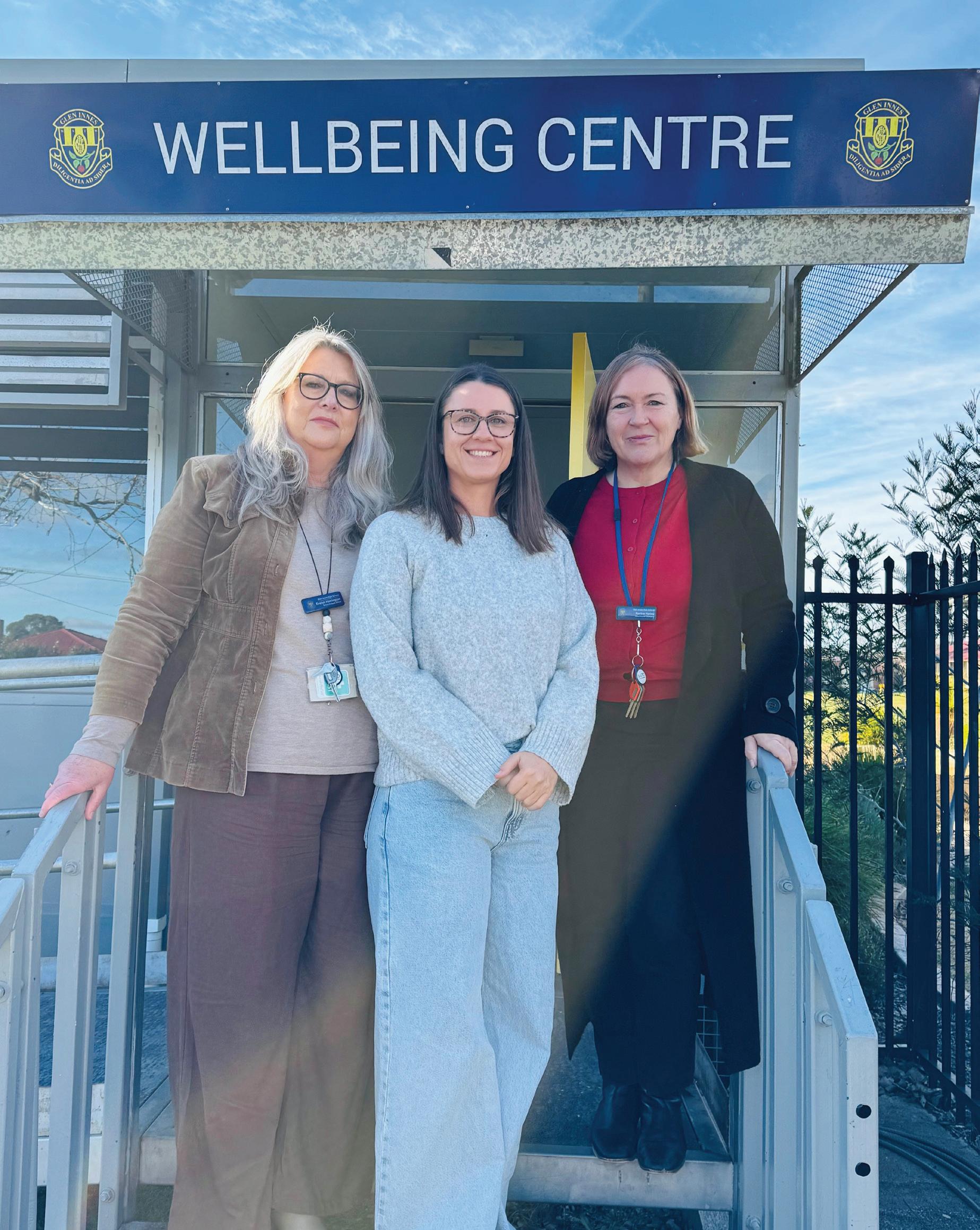
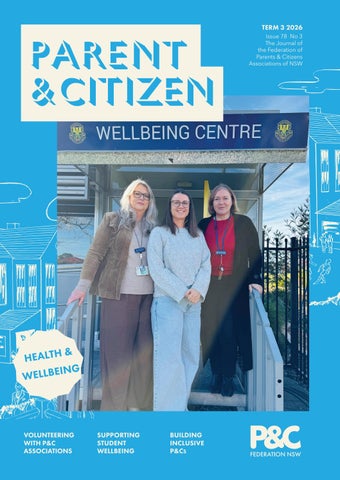
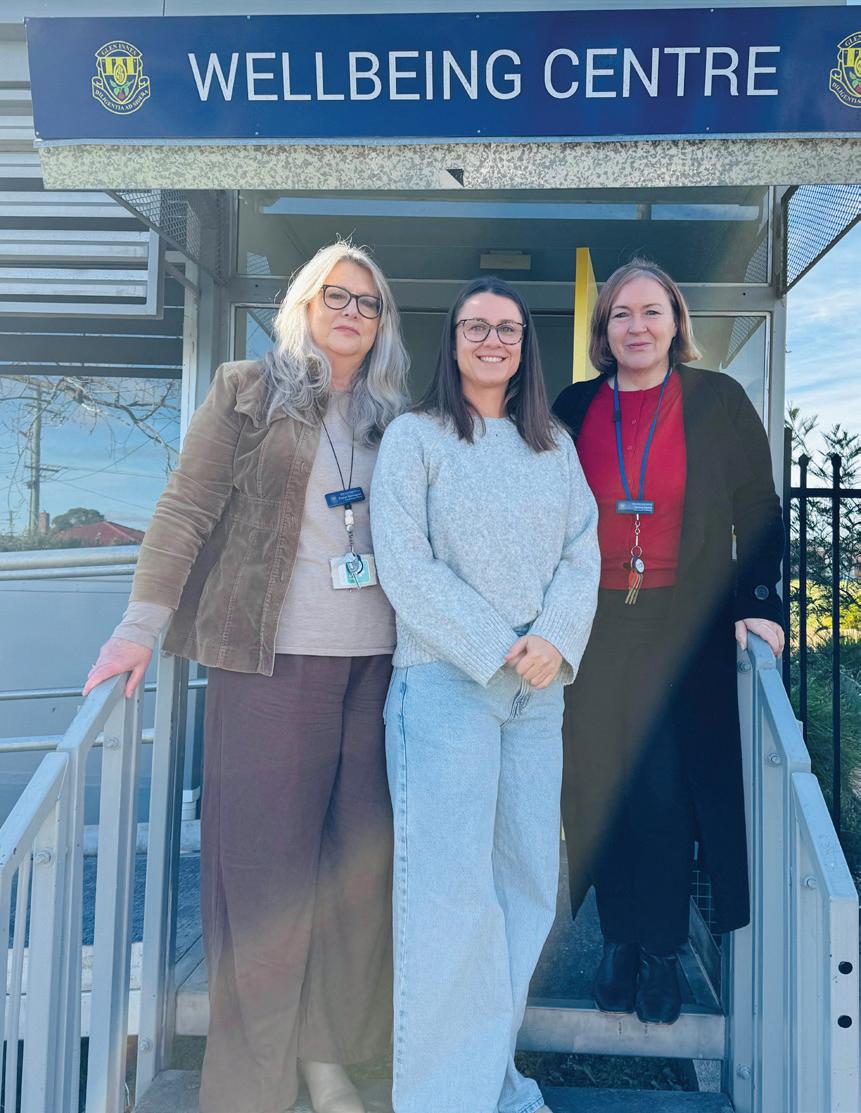
Glen Innes High School’s Wellbeing Centre provides a welcoming space where students can access support, guidance and assistance when they need it most.
We love to hear your stories. The Parent & Citizen Journal is published once a term and is a great way to showcase what your P&C Association and school community is up to. If your school, parents or P&C Association is doing something special this year, share your story and photos with us and fellow school communities. Scan the QR code to share.
• Warwick Farm Public School P&C Association
• Gledswood Hills Public Shoool P&C Association
BY KAITLIN SERRANO President, Federation of Parents & Citizens Associations of NSW
There is something special about the people who make up our P&C communities. Every day, parents and carers give their time, energy and passion to support their schools. Not because they have to, but because they believe in the power of community and in the future of every child who walks through the school gates.
On behalf of the Federation, I want to begin this edition with a sincere thank you. The work you do matters. Whether you’re organising a fundraiser, advocating for your school or lending a hand where needed, you are helping create stronger school communities.
This edition of the Journal focuses on Health & Wellbeing, a theme that feels particularly important for those of us who volunteer our time in service of others. In the busyness of school terms, meetings, events, fundraising and advocacy, it can be all too easy to place our own wellbeing at the bottom of the list. But sustainable service begins with looking after ourselves. Volunteer burnout is real, and the invisible load carried by many parents, carers and community volunteers can quietly take its toll.
Like many volunteers, I have experienced first-hand how easy it is to keep giving long after your cup is empty. Just this term, I decided to take a short step back and focus on refilling mine.
My six-year-old son regularly checks in on me by asking, “Is it overflowing yet?” Not quite, but I’m getting there. His simple question has become a powerful reminder that caring for ourselves is essential. We cannot give our best to our families, our schools, our communities or our causes if we are running on empty. And sometimes, the most responsible thing we can do is pause, rest and allow ourselves the space to recover.
Every person who gives their time to a P&C deserves to do so in a psychologically safe environment where they feel respected, included and valued. Healthy organisations are built through trust, kindness, clear communication and a shared commitment to supporting one another.
Across NSW, I've seen that the strongest P&Cs are not necessarily those with the largest budgets or biggest events. They are the ones where people feel connected, supported and united by a common purpose. When volunteers feel valued, communities flourish.
As you read through this edition, I hope you find something that speaks to you. Perhaps it will be a practical idea to take back to your committee, a reminder to prioritise your own wellbeing, or simply the reassurance that you are not alone in this work.
If you need help and support, reaching out is a sign of strength. The Centre for Volunteering, Beyond Blue and Parent Line NSW all offer valuable resources and support for those who need them.
Thank you for everything you do for public education, for your school communities, and for each other.
Take care of yourselves and one another – because that’s how we build P&Cs and school communities, and thrive.

BY MURAT DIZDAR Secretary, NSW Department of Education
Public Education Week is in full swing from 3-7 August, and I’m excited to be celebrating with school communities all over NSW.
This year’s theme is Inspiring Excellence, which captures something I see every time I step inside one of our school gates. Excellence comes in many forms. It might be a student discovering a love of reading. It might be a young person finding the confidence to perform on stage, representing their school in sport, making a discovery in STEM, stepping forward as a leader, or simply backing themselves to try something new.
One of the great strengths of public education is that excellence is not reserved for a select few. Our schools are places where every child is encouraged to aim high and reach their potential, regardless of where they come from or where they want to go in life.
Our schools are celebrating Public Education Week in all sorts of ways. There are open classrooms, assemblies, student showcases, performances and community events that bring families together to celebrate some truly inspiring achievements.
Thank you to all the parents, carers and community members who have been part of these celebrations. Your involvement helps create the sense of community that sits at the heart of every great school.
That contribution is on full display through the Parent and Volunteer of the Year Awards, presented as part of the 2026 Public Education Awards at Sydney Town Hall. The recipients come from different communities and backgrounds, but they share a commitment to making school life better for everyone. My heartfelt congratulations go out to all the winners. You can read more about them on the Public Education Foundation’s website.
Throughout Term 2, I joined members of the Executive team on our annual Schools Roadshow, visiting schools in Broken Hill, Forbes, Griffith, Goulburn, the Central Coast, Port Macquarie and Lismore, as well as across metropolitan Sydney. These visits are always a highlight. They provide an opportunity to connect directly with principals, school leaders, staff and students, and to see firsthand the breadth of opportunities available in public education. Across the State, we saw students learning through agriculture, music, literacy, numeracy, languages and vocational education, and we heard directly from young people about their experiences at school and their aspirations for the future.
Student wellbeing and academic achievement are deeply connected. Students learn best when they are happy, healthy, and feel a genuine sense of belonging at school.
That is why we have placed a strong focus on behaviour and wellbeing this year, including the introduction of a NSW Anti-Bullying Framework and a revised Student Code of Conduct that all schools will implement by the end of 2026. Every child deserves to feel safe at school – just as every parent and carer deserves confidence that concerns will be taken seriously, and addressed promptly.
We have a great deal to celebrate in public education. Our system-wide focus on explicit teaching is helping bring greater consistency to classroom practice. We are seeing encouraging improvements in early literacy, with more Year 1 students achieving at or above the expected standard in phonics. Schools are continuing to expand opportunities for high potential and gifted students through our Inspire program, and NSW continues to lead other states on key measures like attendance and NAPLAN performance.
These results reflect the work happening in classrooms every day and the partnership between schools and families that supports student success.

Thank you for everything you do to support your child’s learning and your school community.
I wish you and your family a cracking Public Education Week and Term 3.
BY TIM SPENCER
Interim CEO, Federation of Parents & Citizens Associations of NSW
Wellbeing is the quiet thread that runs through everything our school communities do, and this edition of the Journal brings it into the light. The more I read across these pages, the clearer one idea becomes: the wellbeing of our children and the wellbeing of the adults around them are inseparable.
We see it first in our children, who learn best when they feel safe, heard, and that they belong. The friendship, resilience and student-voice initiatives featured in this edition all point to the same truth – connection is what helps a young person thrive. But children learn as much from what they see as from what they are taught, and that is where we, as adults, come in.
Every time we treat one another with patience and respect, we model the very behaviour we hope our children will carry into the world. Supporting each other, then, is not a ‘nice to have’, it is a vital requirement. The strongest communities are those where people look
out for one another, share the load, and step in before someone is left running on empty. The invisible load carried by parents and carers is real, and so is the risk of burnout.
That is why making our P&Cs inclusive, welcoming and safe places matters so much. When people can ask questions, raise concerns and disagree respectfully without fear, we make our schools safer places, for children and volunteers alike. It does not happen by accident, it is built deliberately, through kindness, clear roles and genuine care for one another.
The Federation is here to help your P&C build it. So, as you read on, look after your own wellbeing as carefully as you look after everyone else’s, and lean on one another. Reaching out for support is a strength, never a weakness.
Take care of yourselves, and take care of each other.

Volunteering for a P&C Association can be a very rewarding experience: knowing that you're helping others, contributing to a thriving and engaged school community and role-modelling to children the value of volunteering your time with kindness and empathy for no self-serving or financial gain. A committed team of P&C volunteers goes a long way to creating a memorable and positive school experience for students, teachers, staff and, of course, parents and carers.
The Centre for Volunteering’s 2025 NSW State of Volunteering Report lists the following Top 5 volunteer motivations for the benefit of others: to help others, because I can, to use my skills and experience, to support or learn more about a cause, and to help during a crisis. The report also lists the Top 5 volunteer motivations for personal reasons: a sense of purpose, friendship, enjoyment, social and community connection and to learn new skills. The Australian Bureau of Statistics’ 2025 General Social Survey reported, ‘to help others or community’ and ‘for personal satisfaction or to do something worthwhile’ as the two most common reasons for participation in volunteering.
If you're reading this, chances are you’re already on ‘Team P&C’ (or are seriously considering it) and many of the motivations mentioned will have resonated with you as benefits you have gained from your volunteering; and you’ve already experienced those feelings of giving back and being part of something bigger that benefits the community that your family is a part of. But potentially, you’ve also encountered the downsides of P&C volunteering: dealing with difficult people, anxiety, stress and burnout.
Like your workplaces, being part of an organisation which requires groups of people to collaborate and work towards a common set of goals, comes with its challenges … and hazards. Psychosocial hazards are as prevalent in a volunteer organisation as they are in a paid work environment. It could be argued that they are more likely to be prevalent because P&Cs can vary in the extent to which they are formally governed, managed and led.
Safe Work Australia lists 14 psychosocial hazards that employers (and employees) are obliged to manage (as with any hazards that fall under the NSW Work Health and Safety (WHS) Act); and although the WHS Act may not apply to your P&C (this primarily depends on number of paid staff) it is still good practice to comply with WHS duties. Common law duty of care to volunteers also applies (see the Volunteering Rights and Responsibilities page on the Centre for Volunteering
website). Although all the listed psychosocial hazards could be prevalent in many P&Cs, the most common are:
• High work demands
• Lack of role clarity
• Poor organisational (P&C) change management
• Relationship-based conflict
Most P&Cs are entirely, or almost entirely, run by volunteers and so are less likely to have formal training in employing processes and responses to minimise the impact of these psychosocial hazards. Role overload, lack of well-defined role descriptions, poor (or no) handover from previous P&C leadership and managing conflict between community members who are passionate about their school, are all too common in P&Cs.
Psychological safety is a shared belief that your P&C is safe for interpersonal risk-taking – where people can ask questions, raise concerns, share ideas, or admit mistakes without fear of negative consequences.
So how do you ensure that your P&C is a psychologically safe environment and psychosocial hazards are mitigated? Here are some tips to get you started:
1. Make psychological safety a priority for your P&C
a. Psychologically safe behaviours should be part of the DNA of your P&C and include: ensuring roughly equal talking time for each speaker during discussions, listening to understand (rather than to correct), assuming positive intent and ensuring that conflict is respectful and productive.
2. Be aware of your P&C volunteers’ capacity (especially yours!)
a. Your volunteers’ time is limited. Think about what is realistically possible to achieve with your P&C human resources and aim for impact, not perfection.
3. Make time for planning
a. Make space for dedicated planning sessions so that your P&C Executive/Committee (and school community) is clear on your objectives. This assists with prioritisation when faced with multiple demands. Re-plan when circumstances change.
4. Outsource expertise
a. Don’t leave all the P&C work to two or three (or less!) people. Tap into the expertise that exists
Continued next page
From previous page
in your school’s parent and carer community by promoting joining the P&C as attractive, being aware of the different motivations for volunteering.
5. Embrace diversity and embed inclusivity
a. Aim for your P&C to be an inclusive space where diverse perspectives are invited, considered and acted upon when there is clear alignment with strategic objectives and resourcing capacity and capabilities.
In addition to the support provided by the NSW P&C Federation, the Volunteering National Knowledge Base has resources to assist all ‘volunteer involving’ organisations (including P&Cs) to manage themselves and their volunteers. Resources include articles, templates, videos, eLearning and research reports that have been produced in collaboration with the Australian State and Territory volunteering peak bodies.
Being an active contributing member of your school P&C should be a fulfilling, meaningful and fun experience. Creating and maintaining a psychologically
safe environment will significantly contribute to the ‘wellbeing benefits’ of volunteering being realised and ensuring that burnout and stress are effectively managed.
Jason Wong
Manager, Policy, Advocacy & Research, The Centre for Volunteering and formerly Secretary, P&C Federation of NSW, Vice-President, Northern Sydney District Council of P&Cs, and President, Lindfield Learning Village P&C









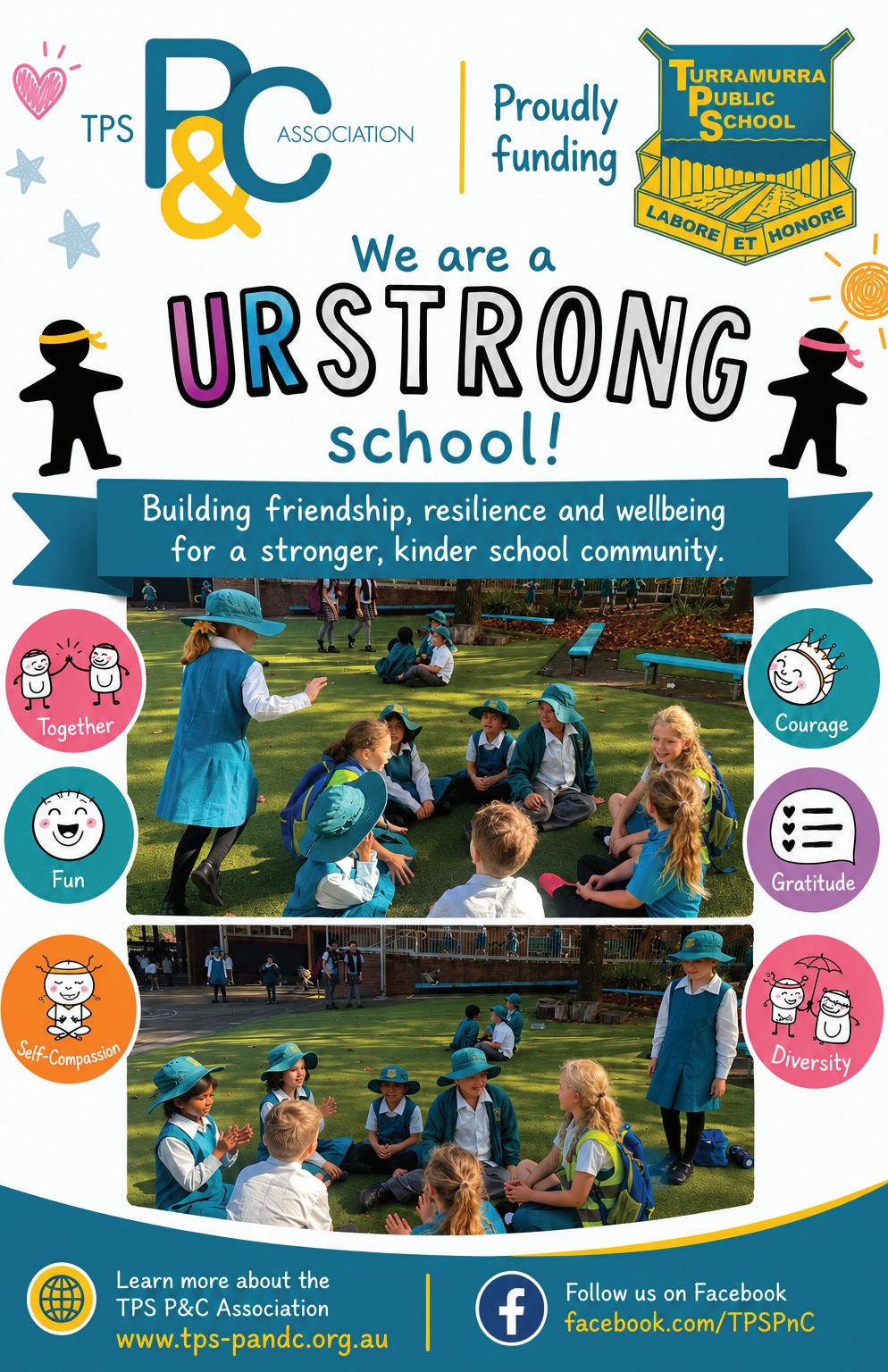
Turramurra Public School P&C Association is proud to support student wellbeing initiatives that help foster a positive, inclusive and connected school community.
As a P&C, we recognise that wellbeing and learning go hand in hand. Helping students build confidence, resilience, respectful relationships and a strong sense of belonging is just as important as supporting academic opportunities. With this goal in mind, the Turramurra Public School (TPS) P&C has invested in friendship and wellbeing programs within the school, including supporting the implementation of the URSTRONG friendship framework.
The initiative has helped provide students, teachers and families with a shared language around friendship, kindness, conflict resolution and emotional resilience. Importantly, it has also strengthened the connection between school and home by encouraging consistent conversations around respectful relationships and social wellbeing.
URSTRONG is an international friendship program that empowers children with friendship skills to create communities of kindness, inclusion and belonging in schools and has become a key foundation of our approach to student wellbeing at TPS. With the support of the P&C, the school has been able to deliver a range of initiatives that engage students, staff and families alike. This includes the Language of Friendship parent-child workshops, which provide families and teachers with a shared language to discuss friendships, conflict and social challenges. These sessions have been extremely well received, strengthening family engagement and helping parents continue important friendship conversations at home.
For our younger students, the school has also delivered Fuzzies and Friends workshops, where children learn what is normal in friendships, the importance of trust and respect, and how to identify healthy and unhealthy friendships using tools such as the Friendo-meter. In addition, the P&C has supported access to the Friendology curriculum and educator training, enabling teachers to consistently embed friendship skills, emotional literacy and conflict-resolution strategies across classrooms. Together, these initiatives ensure students experience a common language and approach to wellbeing throughout their school journey.
Recognising that student wellbeing extends beyond the playground, the TPS P&C has also invested in complementary wellbeing initiatives, including a comprehensive e-safety education program delivered by YSafe. This whole-school program provides ageappropriate digital safety sessions for students, educational workshops for parents, professional learning
for staff and ongoing access to online safety resources. As children increasingly navigate friendships both online and offline, programs such as URSTRONG and YSafe help equip students with the skills, confidence and resilience needed to build healthy relationships and make safe, responsible choices in the digital world.
At TPS, our P&C is passionate about funding initiatives that support the whole child – academically, socially and emotionally – and help create a school environment where students feel supported, connected and empowered to thrive.
We are incredibly proud to work collaboratively with our school community to continue investing in programs and opportunities that strengthen student wellbeing and foster a culture of inclusion, care and connection across the school.
Kat Mawer President, Turramurra Primary School P&C Association

BY THE P&C FEDERATION NSW TEAM
A P&C Association is at its best when every parent and carer feels they belong, and when the group is run in a way that everyone can trust. Two practical foundations sit beneath a healthy, happy P&C: inclusion, so that everyone feels welcome, and good governance, so that everyone knows how things work and are treated fairly. Get these right, and your P&C becomes a place people want to be part of.
Building an inclusive P&C
Inclusion is not a slogan; it is the everyday work of removing the barriers that keep people on the sidelines. Across NSW, P&Cs are tackling this in practical ways by offering hybrid or online meeting options, varying meeting days and times, providing childcare or a childfriendly space, and writing communications in plain language across more than one channel. Some run a simple ‘buddy’ system, so a newcomer has a friendly face at their first meeting, alongside a clear, jargon-free explanation of how to get involved.
The aim is to reflect the whole school community, including working parents or grandparents, culturally and linguistically diverse families, and families of children with disability. Each brings different skills, perspectives and, importantly, different amounts of time to volunteer. Recognising those differing motivations and capacities is part of being welcoming. Aim for impact, not perfection, and value every contribution, however small.
An inclusive, well-governed P&C is a healthier and happier one - for its members today, and for the school community it builds for tomorrow.
The benefits flow in every direction. An inclusive membership means more hands and a wider range of skills, which eases the load on the few and reduces burnout. It leads to better decisions that genuinely reflect the community. It builds the connection and belonging that underpins members’ wellbeing. And it models, for the children watching, exactly the kindness and respect for difference we hope they will carry into the world. A P&C with a broad, welcoming base is also a more sustainable one as there is always someone ready to step in.
Good governance: how a healthy P&C works If inclusion is about who is in the room, governance is about how the room runs. Clear, respectful governance gives members confidence that their P&C is fair, transparent and well-managed.
It starts with understanding the difference between the membership and the executive: the members – every
parent and carer who joins – are the decision-makers. At meetings, they set the direction and make the key decisions. The Executive and Office Bearers carry out those decisions and manage the day-to-day duties. In other words, the Executive serves the members; it does not rule them.
That principle shapes the role of the Office Bearers. The President chairs the meeting and guides the group, but the President is the Chair, not the boss. A good chair facilitates rather than dictates, keeping to the agenda, making sure every voice is heard, and acting on the decisions the members make together. The Secretary keeps the records and communications flowing, and the Treasurer safeguards the finances, each a steward of the members’ trust.
Respectful engagement
Holding it all together is good P&C etiquette – the basic courtesies of respectful governance.
None of this is bureaucracy for its own sake. It keeps a P&C calm, fair and focused, and it models the very behaviour we want our children to learn.
Respectful engagement is crucial to a P&C Association’s sustainability, for the simple reason that P&Cs rely on volunteers who see it as an enjoyable and worthwhile place to spend their time.
Even something as easy as starting the meeting by thanking all the attendees for making time to be there can go a long way to turning the P&C into a welcoming place.
When problems arise
Members are free to have different views on P&C business, such as what the P&C should prioritise or how it should be run. These can be discussed in P&C meetings, with decisions usually settled by a majority vote. If disagreements are respectful, there should be no issue.
Personal disputes about individual conduct are best addressed outside of a P&C meeting. Having a solid code of conduct and complaints handling process will provide a useful framework for the P&C Executive Committee to address such cases, in a fair manner. If necessary, the committee can also seek assistance from a third party to resolve the issue.
If there is problematic behaviour in a P&C meeting, the Chair has discretion to remind attendees to behave respectfully, to insist on sticking to substantive P&C business if discussions are going off topic, or not to spend too long on certain agenda items.
If necessary, they can ask members to leave or close a meeting early.
Remember why you’re there
P&Cs are ultimately there to help make the school a better place for the students. Sometimes, taking a step back to keep that larger purpose in mind can put everything in perspective, help resolve any disagreements quickly and respectfully, and ensure that everyone works collaboratively.
We’re here to help
The P&C Federation offers governance guidance, meeting and role templates, training, and direct member support to help your P&C be both welcoming and well-run. You can also call or email the Federation’s Member Support team, Monday to Friday from 9am4pm on 1300 885 982 or mail@pandc.org.au
The Executive Committee of a P&C Association consists of Office Bearers and up to six additional Executive members.
Office Bearer roles are: President, two VicePresidents, Secretary and Treasurer. These are outlined in the Constitution (Clause 5a); they cannot be amended or changed.
Additional Executive member roles may be appointed to assist with operations/tasks, such as Assistant Treasurer, Canteen Co-Ordinator, Fundraising Co-Ordinator. However, these roles cannot act as financial signatories on any P&C bank accounts.
A P&C’s general (or financial) members are the association’s decision makers. The Executive Committee’s role is to carry out the decisions of the general members. This means they are generally not permitted to make decisions without members’ approval at a properly convened P&C meeting.
The main mechanism for making decisions in a P&C Association is by a vote of members at a properly convened P&C Association meeting.
It is important to understand how voting takes place, who can vote, and how to keep it efficient.
There are some simple steps that can help make a P&C a welcoming place for volunteers:
• Listening: give others the opportunity to express their thoughts without interruption.
• Courtesy: be polite and considerate in your interactions with others.
• Open-mindedness: be receptive to different perspectives and ideas.
• Constructive communication: express opinions and feedback in a constructive manner.
• Acknowledgement: recognise the contributions of others.
• Speak one at a time and give everyone roughly equal airtime.
• Disagree about ideas, not people, and assume positive intent.
• Make decisions through proper process, a motion, a discussion, a vote and record them in the minutes.
• Declare any conflict of interest, respect confidences, and work within your constitution and the Department of Education’s requirements.

At Glen Innes High School, we know that student wellbeing is at the heart of student success. For many years, our school has maintained a dedicated Wellbeing Centre, providing a welcoming space where students can access support, guidance and assistance when they need it most.
The Wellbeing Centre is home to our Student Support Officer, who works closely with students and families to address a range of wellbeing needs, helping young people remain engaged, connected and ready to learn. As student needs continued to evolve, the school identified an opportunity to further strengthen this support through the creation of a Head Teacher Wellbeing position to oversee wellbeing programs, coordinate support services and lead initiatives across the school.
This important role required the right person with the right skills, experience and passion for supporting young people. Throughout the recruitment process, the Glen Innes High School P&C Association worked alongside the school to ensure we found the best possible candidate. The position was advertised three separate times, with the selection panel meeting on multiple occasions to carefully consider applicants and discuss the needs of our school community.
We were fortunate to have a dedicated and supportive P&C representative who generously contributed their time throughout the recruitment process, attending panel meetings, working collaboratively with school staff. Their commitment ensured that the perspectives of our families and wider community were represented every step of the way.
This strong partnership between the school and P&C ultimately led to the appointment of a highly suitable Head Teacher Wellbeing who has already made a positive impact within our school community.
As a direct result of this collaboration and commitment to student wellbeing, the school has also been able to establish a targeted School Learning Support Officer (SLSO) position within the Wellbeing Centre. This role supports the school’s wellbeing initiatives while also assisting in the development of whole-school attendance procedures, helping students remain connected to their learning and school community.
Together, these additional supports have strengthened our ability to deliver targeted wellbeing programs, provide early intervention, and offer assistance to students requiring additional support. The positive
impact is already evident. In 2025, the school recorded 57 suspensions. In 2026, that number has reduced significantly to just 18 suspensions. While student wellbeing is influenced by many factors, these encouraging results reflect the value of investing in relationships, support structures and proactive wellbeing initiatives.
This achievement demonstrates what can be accomplished when schools and communities work together with a shared vision. The Glen Innes High School P&C has been an invaluable partner in helping us create an environment where every student feels supported, valued and empowered to succeed.
We thank our P&C for their ongoing commitment to our students and look forward to continuing this important partnership as we work together to build an even stronger school community.
Natalie Hill
Relieving Principal, Glen Innes High School

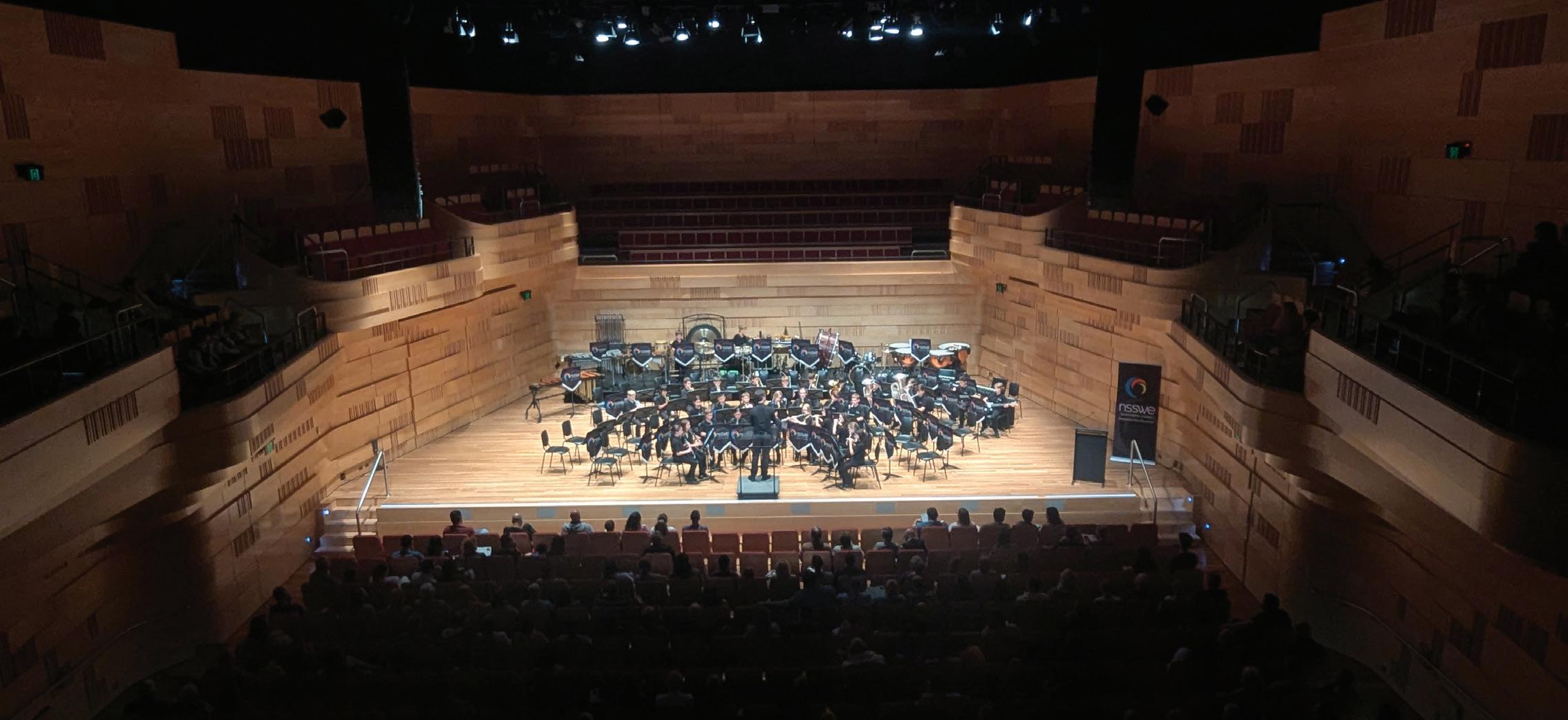
The Cammeray Public School (CPS) Band Program was established in 1999 as a P&C Association initiative. It is run by a Band Committee of volunteer parents, a subcommittee of the P&C, in conjunction with a Musical Director (engaged by the Committee) and school staff representatives.
The program comprises five bands: Junior Band (for beginner players, generally in Year 3), Intermediate Band (mostly Year 4 students), Concert Band (generally Years 5 and 6), plus two smaller extension jazz ensembles. No musical experience is required to join the Junior Band. There are 158 students in the Band program this year, representing about 30% of the school’s students. Most families hire their child’s instrument and have it serviced through the Band Program.
To help prepare for large performances and eisteddfods and to encourage belonging, the Band Program hosts some intensive rehearsals in addition to regular weekly rehearsals: weekend workshops held at the school for the Junior Band and the smaller jazz ensembles, and an overnight camp held off-site for the Intermediate Band and Concert Band.
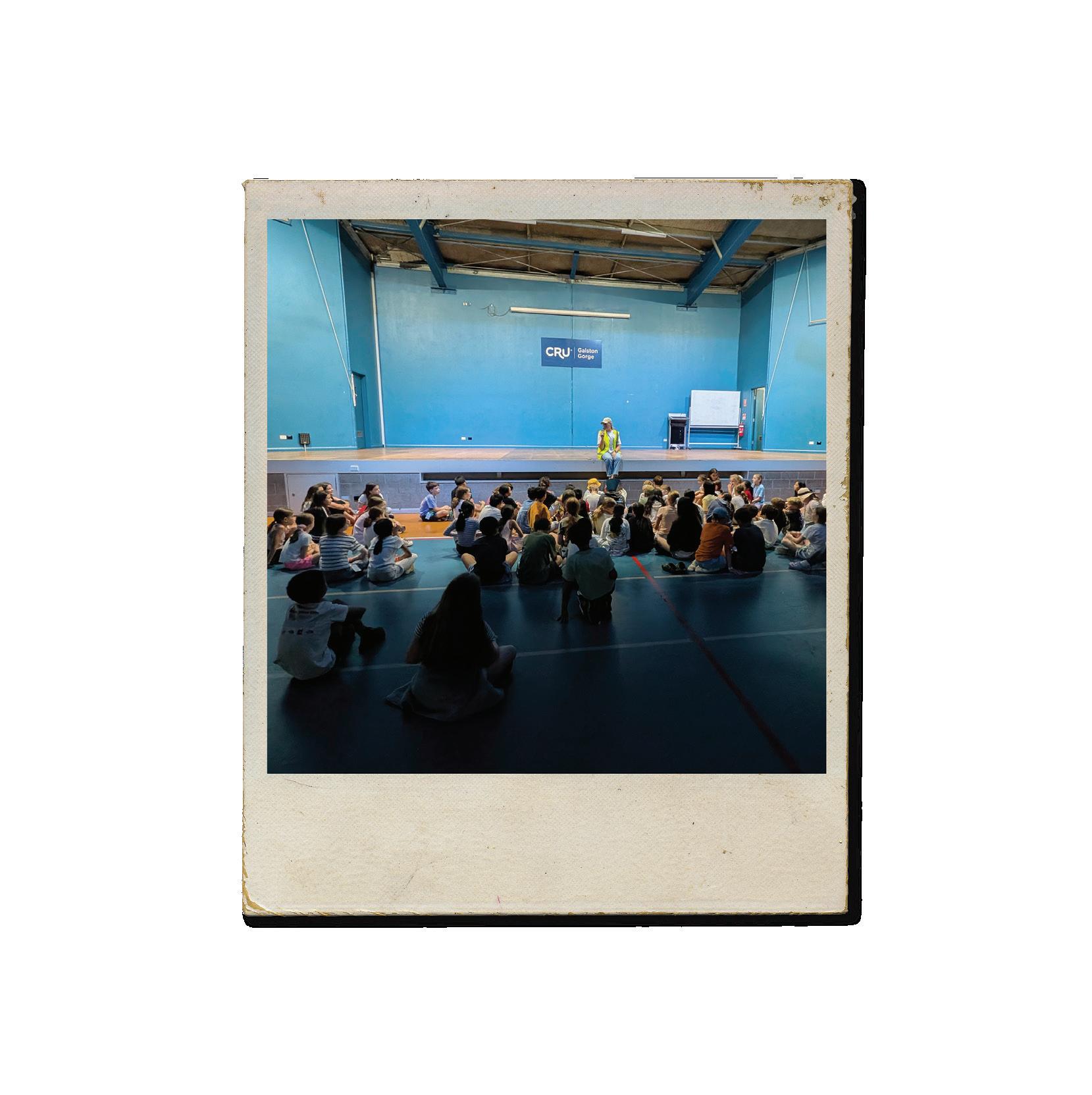
This year’s overnight camp saw 90 students from Years 4, 5 and 6 attend CRU Galston Gorge Camp & Conference Centre, near Sydney, for two days of focused music and fun. The weekend balances full band rehearsals with instrument-specific small group tutorials. We bring in several private tutors to the camp and keep rehearsals short and the timetable moving to ensure the students are engaged but not overwhelmed. The weekend concludes with a concert for parents and carers.
There is a huge amount of planning required for any extra-curricular/non-school-run event, particularly an overnight camp. We book the venue two to three years
ahead, and planning begins about six months before the event. The committee has well-established workflows in shared drives which we build on each year to help manage the planning. Tasks are divided between committee members, with specific roles allocated depending on availability, interest and experience. We are grateful for the CPS teachers who attend the camp in a voluntary capacity, and all planning is done in close consultation with the school. The school office is integral in gathering permissions, managing supervision requirements and booking buses.
We ask Band parents and carers to assist across the weekend in a range of specific roles. Each volunteer is given an information pack about their role ahead of the event, including a personalised timetable so they know where they need to be and when. They can also attend an optional virtual meeting if they have any specific questions. During the camp, all volunteers are part of a group chat for task updates, timetable changes etc.
At the end of each camp, we seek feedback from the volunteers and school on what worked well or what could be done differently. We also create a log during the weekend about things which might be changed next time. Simple changes each year help streamline the event and reduce the work required by each volunteer.
The overnight camp is such an exciting opportunity for the students. For the Year 4 students, it is their first overnight camp! Band is a team sport. The overnight camp really helps build the students’ sense of belonging in the Band, builds deep friendships across year groups, and accelerates their musical growth.
Christina Thackray, Summeet Seyan and Claudia Stanford Cammeray PS P&C Band Executive Committee
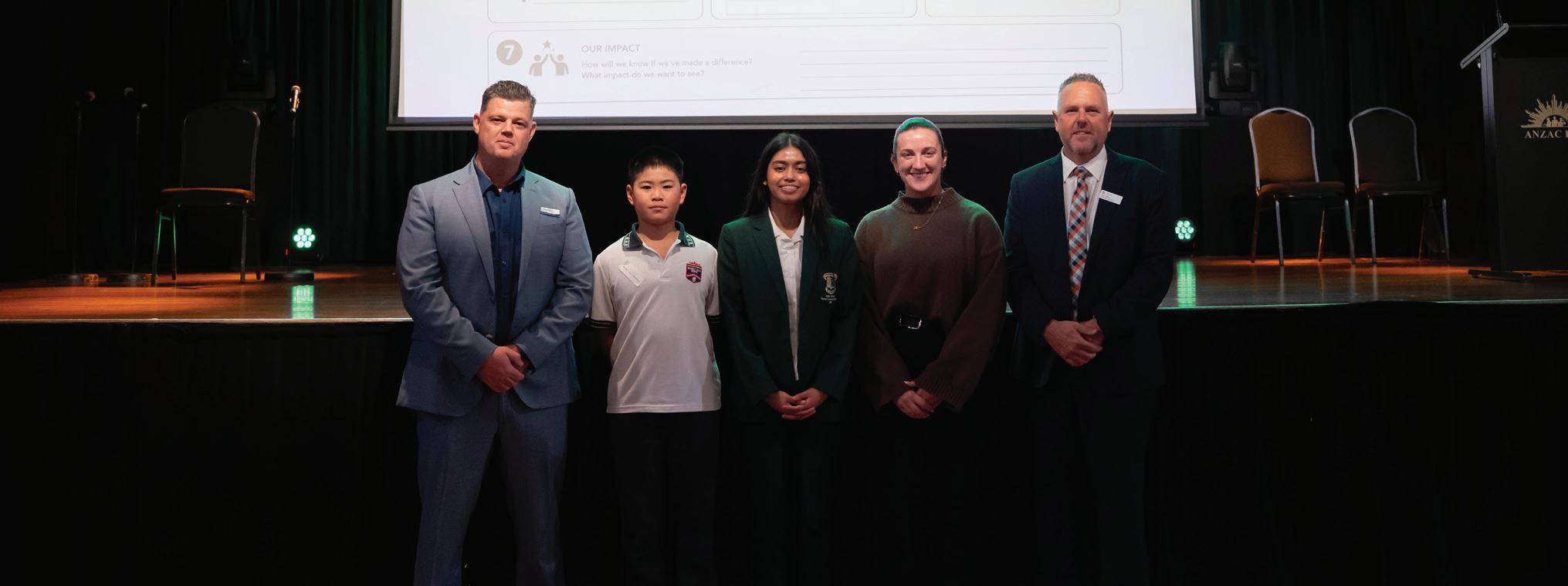
Student voice and agency are becoming increasingly important priorities across NSW Public Schools, with growing recognition that giving students meaningful opportunities to lead, contribute and be heard can strengthen both leadership skills and a sense of belonging.
That focus was on display at the inaugural ELEVATE Student Leadership Initiative, which brought together 200 Stage 3 (Years 5 and 6) student leaders from across the Beverly Hills Network to develop leadership skills, connect with peers and share their voice.
The day was built around four structured sessions covering communication, teamwork, leadership, identity and some very honest conversation about the transition from primary to high school.
One of the event organisers, Hannans Road Public School Assistant Principal Curriculum and Instruction, Michael Dickson, said it gave primary school students an opportunity to tap into what they can bring to the table as future leaders.
“I want them to think more about their potential and what they could do to change within their school community. I want to move away from the idea that being a leader means wearing a badge and putting up flags,” Mr Dickson said.
The connection between student voice and wellbeing is increasingly recognised in education. When students feel heard, respected and involved in decisions that affect them, they are more likely to develop a strong sense of belonging. That sense of connection can improve engagement, confidence and overall wellbeing,
creating school environments where students feel safe and valued.
A defining feature of the ELEVATE initiative was the involvement of student mentors from Years 9, 10 and 11. Working alongside primary students throughout the day they guided activities and helped capture something that has traditionally been hard to pin down: what Year 6 students are genuinely feeling about moving to high school.
Rather than that information passing through teachers, it came directly from students to students.
Jessica Donohue, a teacher at Beverly Hills Girls High School, said it was immediately apparent that information channelled through peers could remove barriers and encourage more honest feedback.
“I think they’re a lot more honest when it’s not a teacher asking,” she said.
The ELEVATE conference is only the beginning. Over the next two terms, students will return to their schools to design and implement leadership projects before reconvening later in the year to showcase their achievements.
The insights gathered during these conversations will also be shared with school leaders and future year advisers, helping schools better understand student concerns and strengthen transition support programs.
Developing healthy habits early in life supports children’s learning, wellbeing and long-term health. Live Life Well @ School is a free NSW Health program delivered in partnership with NSW Department of Education for nearly 15 years.
This is an optional program and available to all NSW primary schools. Live Life Well @ School helps create environments that support healthy eating and physical activity throughout the school day, enabling children to learn, grow and thrive.
A whole-school approach to healthy living
Live Life Well @ School supports schools to make healthy choices easier for students. Local Health Promotion Officers work with schools to embed healthy eating and physical activity across school policies, teaching and the wider school community.
Schools can:
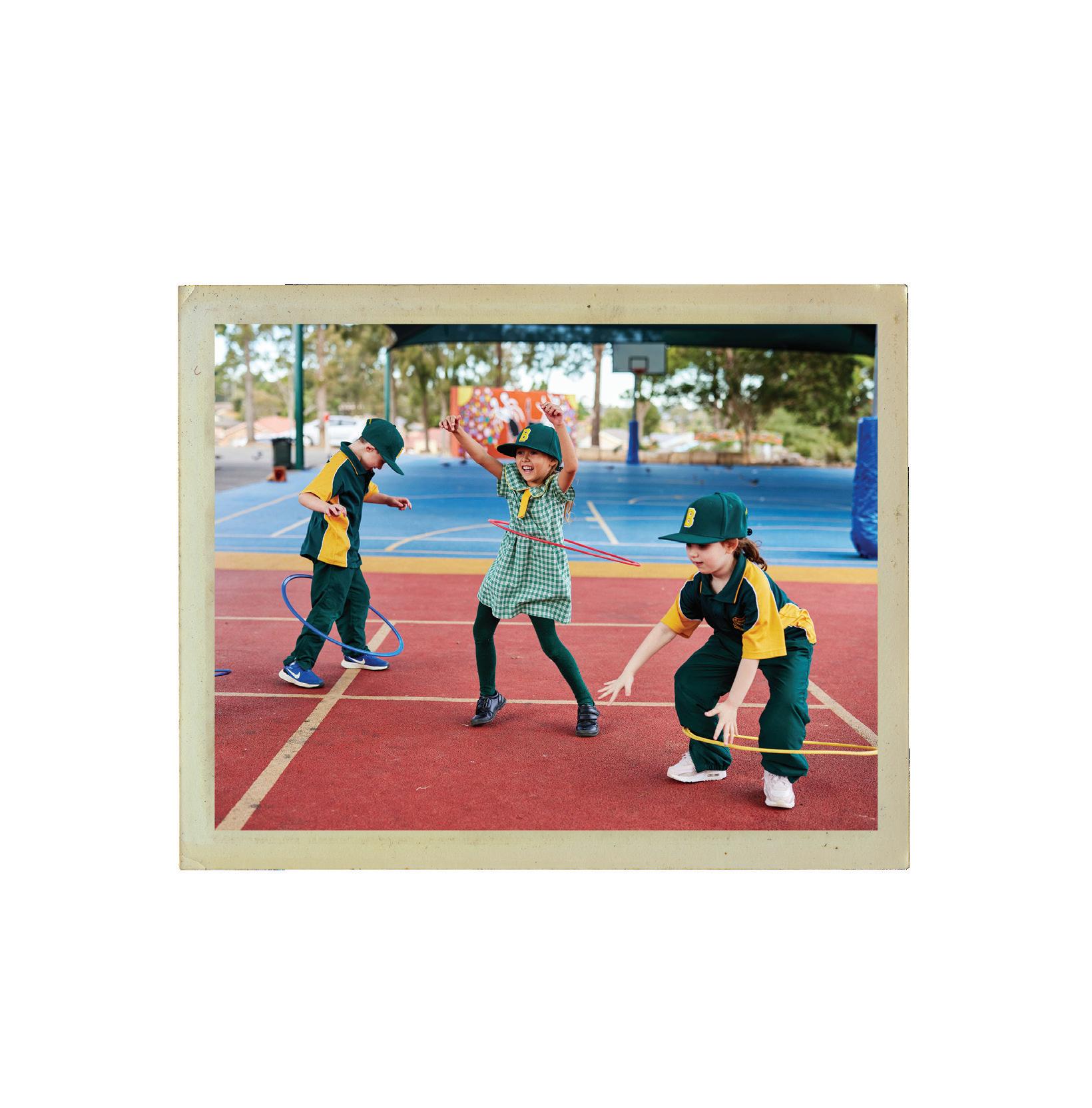
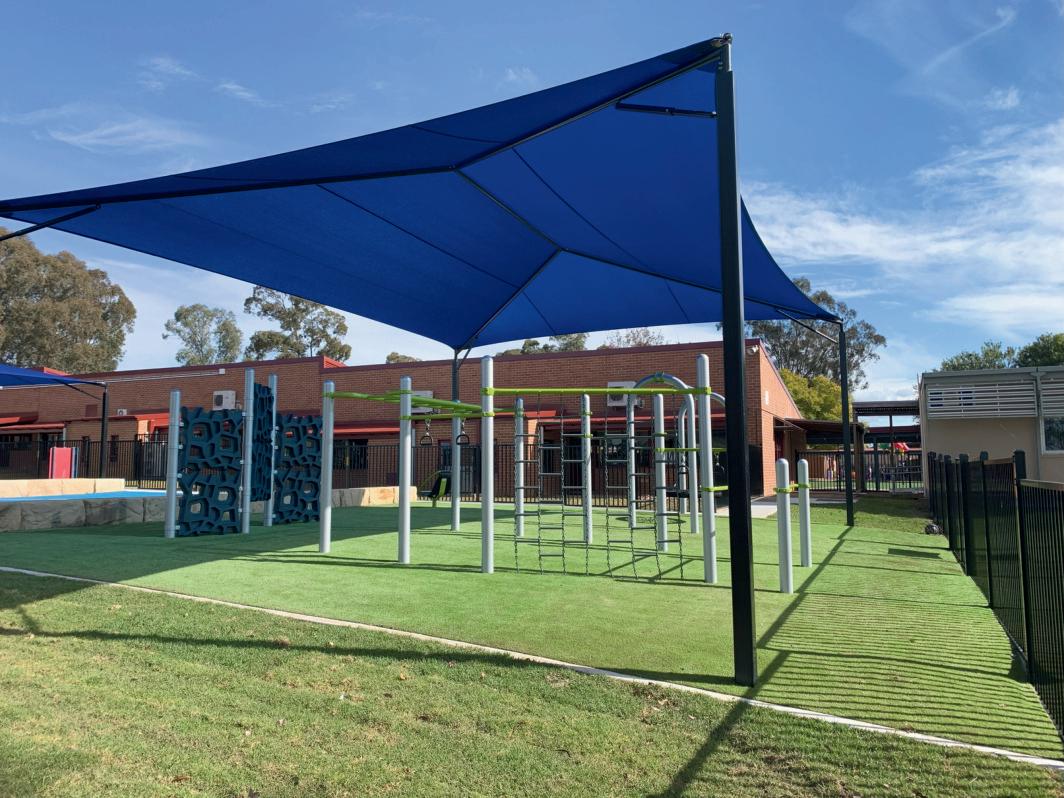
• Increase opportunities for physical activity, including active playgrounds.
• Teach fundamental movement skills as part of the Personal Development, Health and Physical Education (PDHPE) curriculum.
• Promote active travel, such as walking or cycling to and from school.
• Encourage students to eat vegetables and fruit and drink water during the day.
• Support healthy school canteens to provide food and drinks consistent with the NSW Healthy School Canteen Strategy.
Practical support for children to eat well and be active
Live Life Well @ School helps children build healthy habits through practical changes at school and support for families at home. Schools receive tailored support from local Health Promotion Officers, including:
• professional learning and teacher training
• curriculum-aligned resources
• practical advice to plan and implement activities
• tools and resources to engage families and the broader school community.
This support helps schools create healthy environments where children can be active, eat well and develop healthy habits every day.
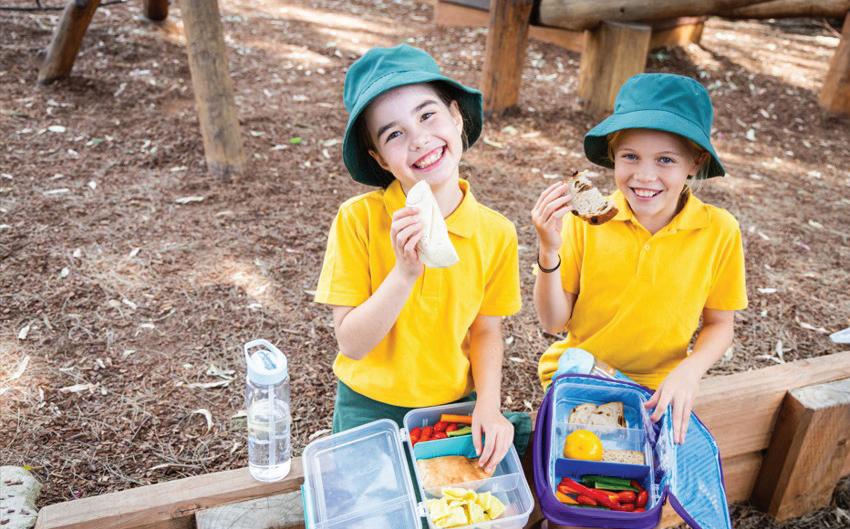
Healthy eating and regular physical activity are essential for children’s growth, development and wellbeing. Schools, families and communities all play important roles in supporting children to establish these behaviours early in life.
By working together, we can help children across NSW develop the healthy habits they need for lifelong health and wellbeing.
Parents, carers and school communities can support healthy eating and active living by working with their school and participating in initiatives that promote student wellbeing. Parents and Citizens (P&C) Associations can also play a vital role by supporting activities and improvements that encourage healthy eating and physical activity within the school community.
For practical ideas to support healthy habits at home, including healthy lunchbox inspiration and ways to help children be active every day, scan the QR code below.
Live Life Well @ School is free and available to all NSW primary schools, with flexible support to suit each school’s needs. To learn more or connect with your local Health Promotion team, contact the NSW Health Live Life Well @ School team at moh-llws@health.nsw.gov.au
The Live Life Well @ School Team NSW Health
At Elanora Heights Public School, we believe that healthy food and happy children go hand in hand. Our P&C Association-run canteen, and particularly our canteen manager Erin Needs, is committed to providing nutritious, delicious meals that fuel learning. Erin keeps our menu exciting and enjoyable for students.
Guided by the Live Life Well @ School program (see previous page), our P&C has created a menu that makes it easier for children to choose healthy options.
Some of our most popular healthy menu items include snack cups filled with hummus and fresh vegetables, boiled eggs, fruit cups, sushi, salad sandwiches, dried fruit packs and yoghurt.
We also know that healthy eating isn’t boring, and Erin is always finding creative ways to make nutritious meals more fun. Weekly favourites include Mexican wraps packed with beans and vegetables, delicious katsu chicken salad bowls, and homemade spaghetti bolognese with plenty of wholesome ingredients. This one is such a hit, many of the staff also order it for lunch.
Healthy eating is something we encourage beyond the canteen as well. Our older students play an important role by assisting in the canteen, not with food handling, but with canteen sales and helping younger children choose nutritious snacks. It is a wonderful opportunity for them to learn about healthy food, develop leadership skills and positively influence their peers.
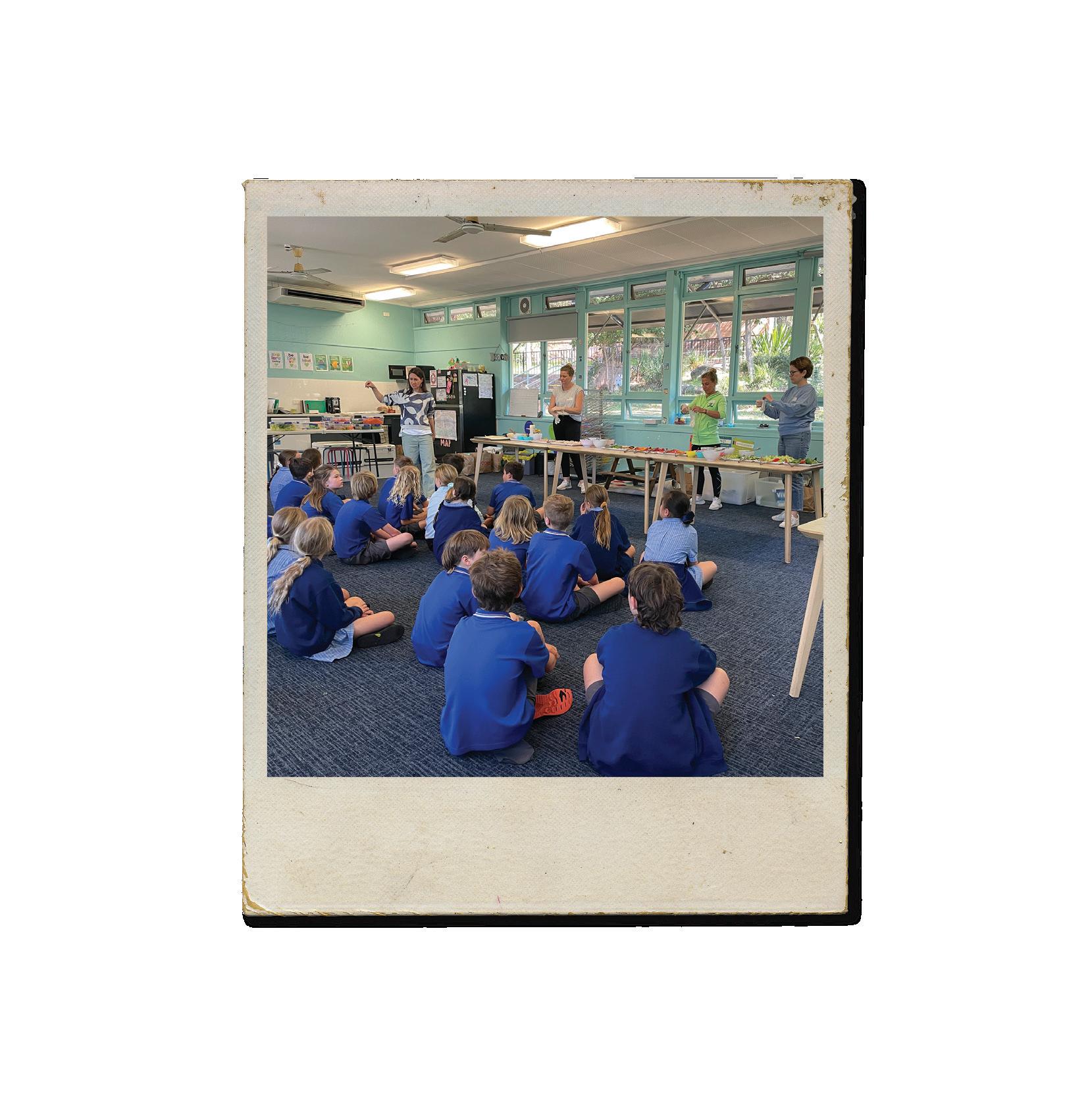
The school, with the help of parent and carer volunteers, also runs two healthy food initiatives for students – Eat a Rainbow and Make My Own Lunch. Eat A Rainbow teaches K-2 students about nutrition by creating and eating visually vibrant, colourful food. Make My Own Lunch is a nutrition program provided by parent and carer volunteers over the past 10 years. All Years 3-6 students participate in a nutrition lesson and then make their own healthy wrap or salad jar from an array of fresh, nutritious foods.
A healthy canteen is about more than just what’s on the menu – it’s about building a school community where healthy choices are easy, enjoyable and something everyone can be proud of.
Jessie Evans President, Elanora Heights Public School P&C Association
We are incredibly proud of the culture we have created around food at our school. By offering nutritious, tasty options and helping students understand the importance of making healthy choices, we are supporting lifelong habits that benefit both their wellbeing and their learning.
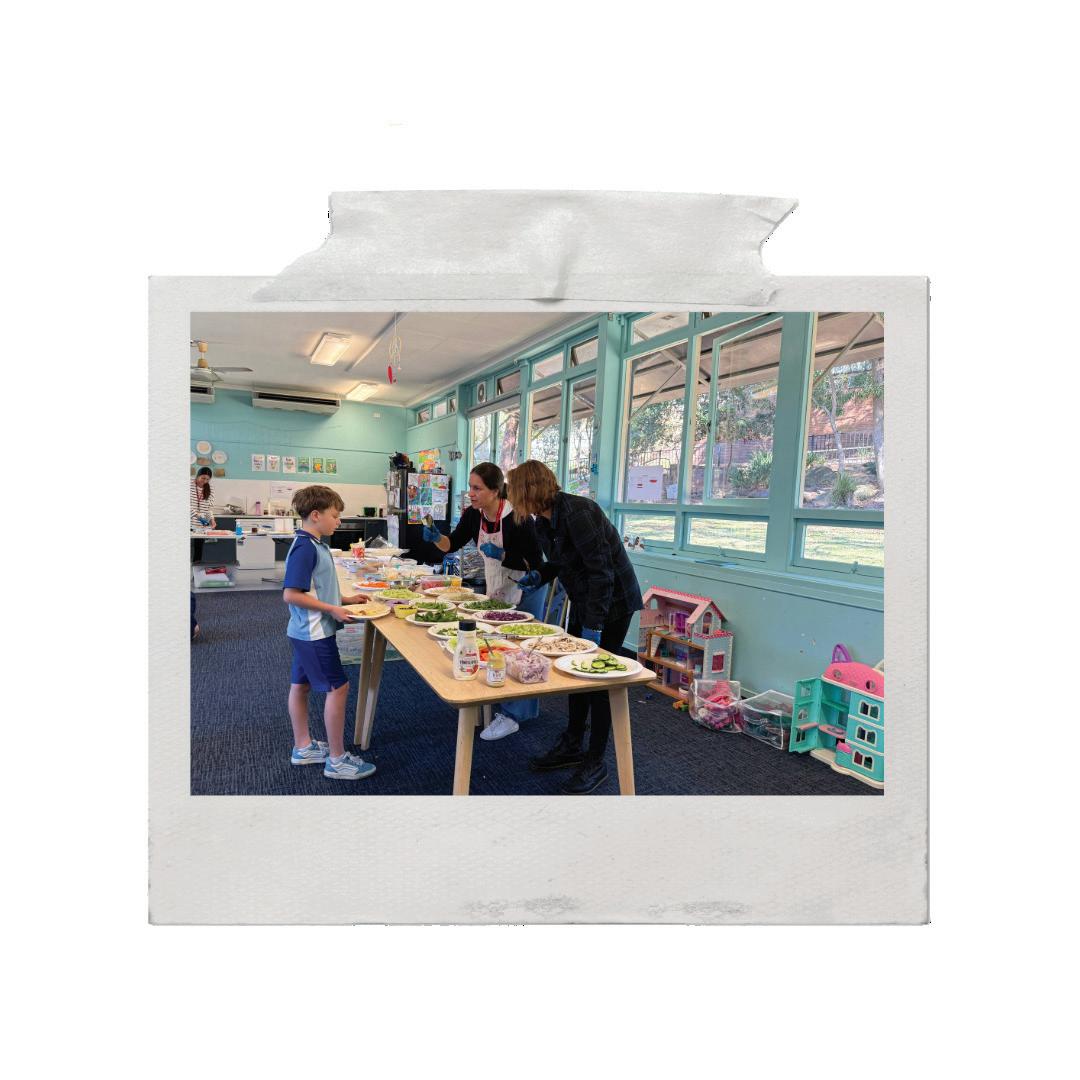
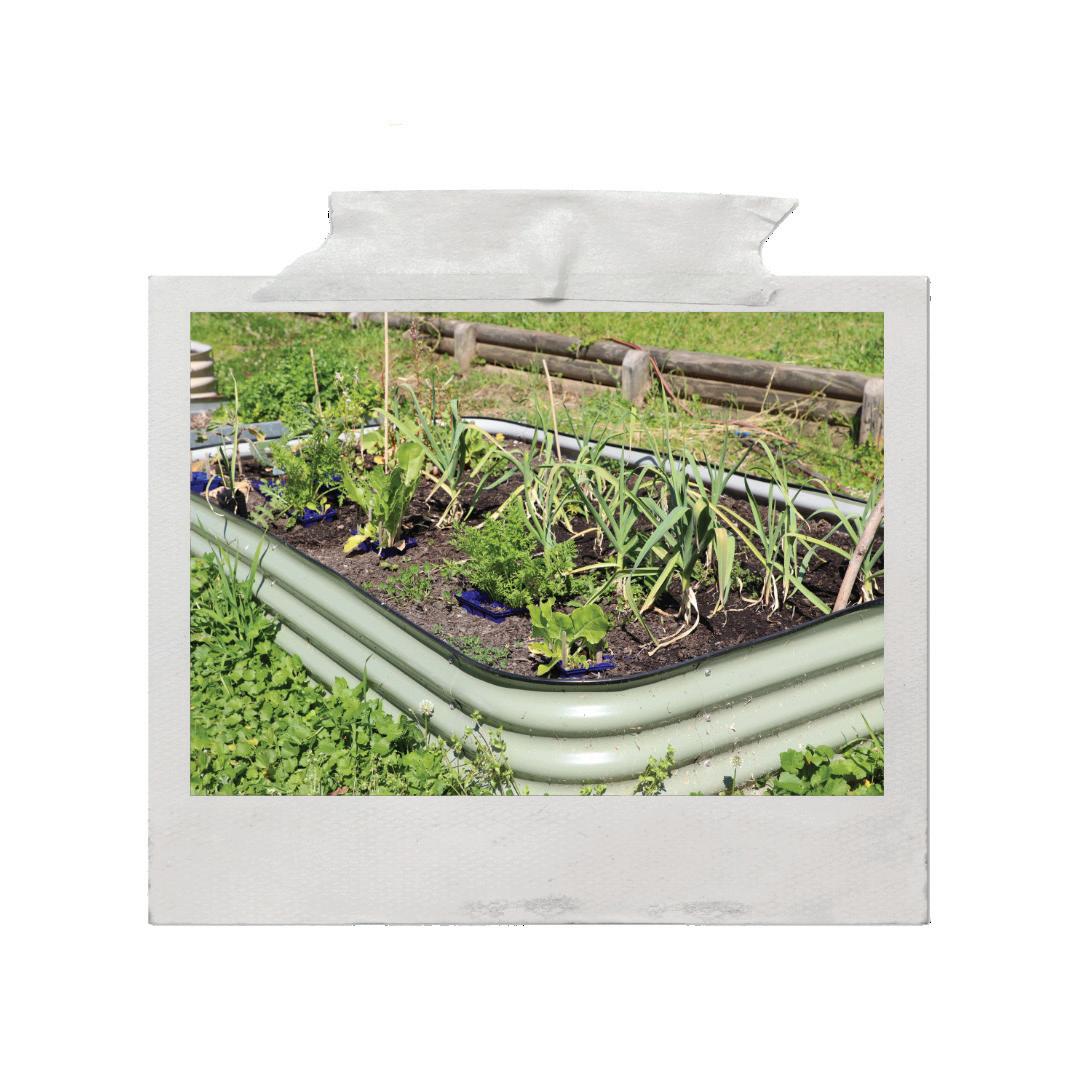
At Elanora Heights Public School, students learn about nutrition by growing vegetables in the school garden, preparing healthy food, and enjoying nutritious options from the school canteen
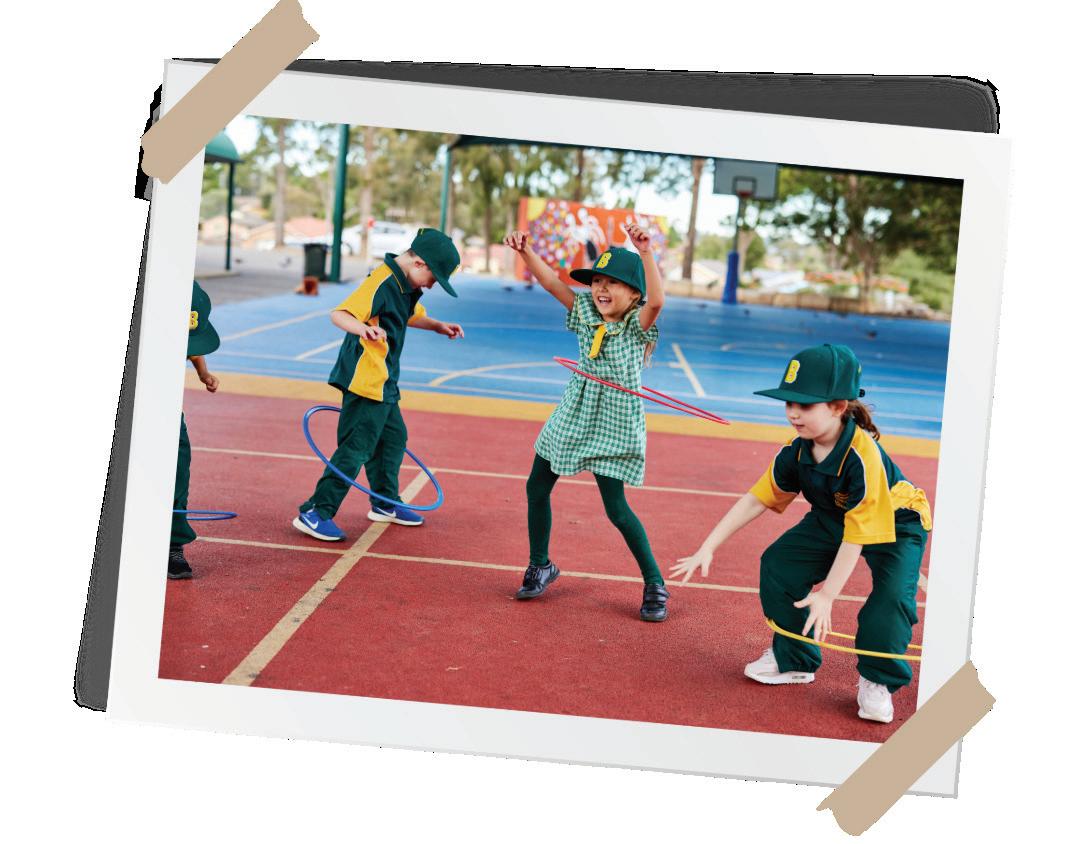
As parents, we all want our children to be healthy, happy and ready to learn. Increasingly, research is showing that physical activity is not just important for physical health – it also plays a significant role in supporting children’s wellbeing, confidence and success at school.
The NSW Department of Education’s Sport and Physical Activity School Health Check is helping schools take a whole-school approach to creating active, healthy learning environments. The evidence-informed self-assessment tool supports schools to reflect on their current practices and identify opportunities to strengthen sport and physical activity across the school community.
Research shows that physically active children experience a range of positive outcomes, including increased cognitive function, higher school attendance, improved self-esteem and greater resilience. These benefits extend well beyond the sporting field and contribute to each student's overall health, wellbeing and engagement in learning.
The department's Health Check provides schools with a practical roadmap to review and enhance their sport and physical activity programs. It encourages schools to consider how physical activity is embedded across the school day and how it can support student wellbeing outcomes for all learners. Rather than focusing on individual programs or events, the approach looks at the broader school environment, helping schools build sustainable practices that encourage every child to be active and connected.
The impact of this work is already being recognised by educators across NSW. More than 200 teachers, deputy principals and principals have participated in the department's Health Check implementation training, with 97% reporting a stronger understanding of the relationship between physical activity and wellbeing.
How can parents support and get involved?
For families, this focus on physical activity is good news. Schools that prioritise movement and active participation are helping students develop healthy habits that can last a lifetime. Physical activity supports not only physical health, but also social connection, emotional wellbeing and readiness to learn. It can help children build confidence, develop resilience, strengthen friendships and feel a greater sense of belonging in their school community.
By working together, schools and families can create positive opportunities for children to be active every day. You can also support your school by providing feedback, volunteering during sport events, or simply celebrating your child’s achievements, no matter how big or small.
If you want to know more about your school’s sport and physical activity programs, ask them if they have used the department's Sport and Physical Activity School Health Check. Together, we can ensure our schools are vibrant, healthy environments where every child thrives.
NSW Department of Education

Rocksteady Music School is a global provider of in-school rock and pop band programs for primary-aged children.
NOW IN SYDNEY!
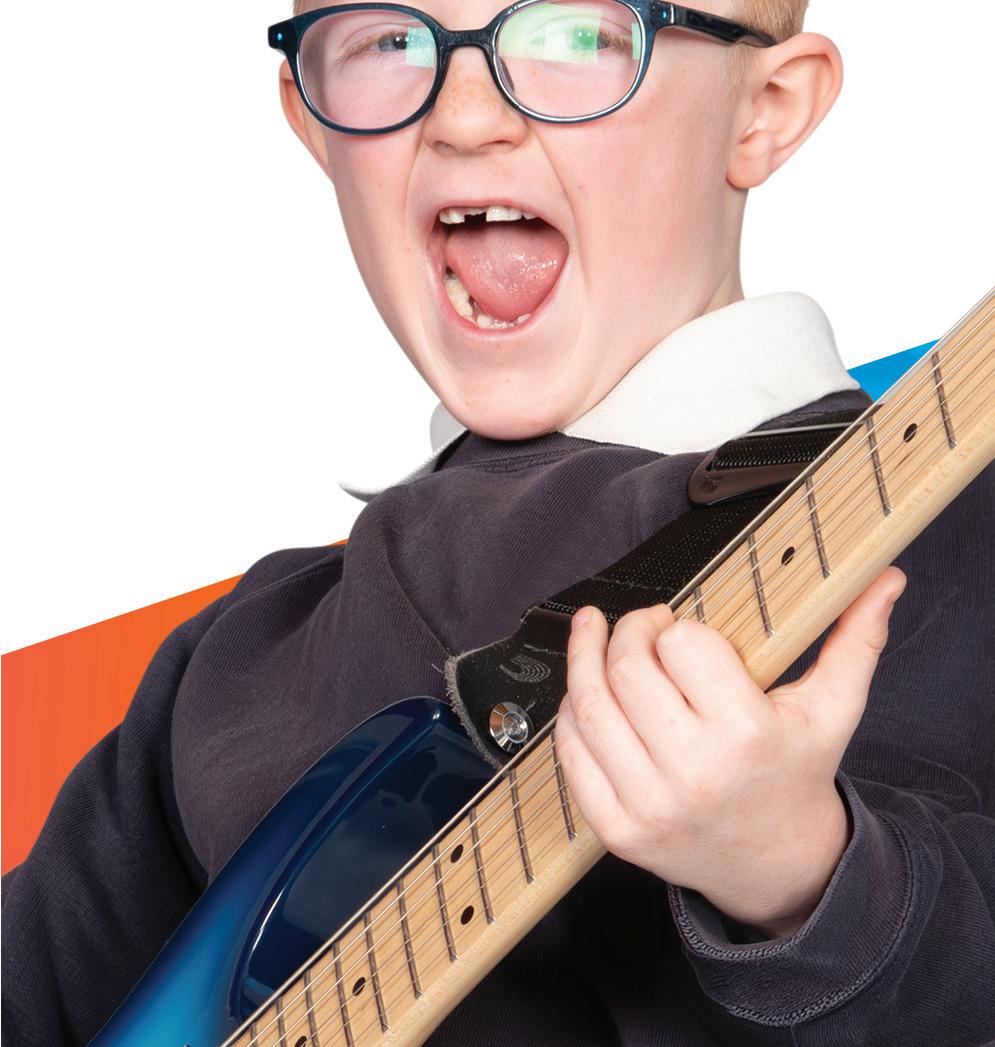



Through a unique, proven and child-centered pedagogy, students learn to play and perform an instrument in a band alongside their friends! It’s designed to grow confidence, support wellbeing and ignite a lasting love for music.
• All instruments for lessons are provided and there’s no experience necessary.
• Rocksteady teachers are highly trained musicians.
• We handle all admin, parent billing and communication.

BUILDING SELF-BELIEF
98% of teachers say Rocksteady boosts their pupils’ confidence. Insights from 513 teachers
SEE IT IN ACTION: BOOK A FREE INCURSION FOR YOUR SCHOOL

rocksteadymusicschool.com.au (02) 4703 7007 (Mon-Fri 9am-5pm, local rate) schools@rocksteadymusicschool.com.au